EP3545079B2 - Regulierbare transkription - Google Patents
Regulierbare transkription Download PDFInfo
- Publication number
- EP3545079B2 EP3545079B2 EP17807909.1A EP17807909A EP3545079B2 EP 3545079 B2 EP3545079 B2 EP 3545079B2 EP 17807909 A EP17807909 A EP 17807909A EP 3545079 B2 EP3545079 B2 EP 3545079B2
- Authority
- EP
- European Patent Office
- Prior art keywords
- inducible
- genetic
- cells
- gene
- cell
- Prior art date
- Legal status (The legal status is an assumption and is not a legal conclusion. Google has not performed a legal analysis and makes no representation as to the accuracy of the status listed.)
- Active
Links
Images












Classifications
-
- A—HUMAN NECESSITIES
- A61—MEDICAL OR VETERINARY SCIENCE; HYGIENE
- A61K—PREPARATIONS FOR MEDICAL, DENTAL OR TOILETRY PURPOSES
- A61K35/00—Medicinal preparations containing materials or reaction products thereof with undetermined constitution
- A61K35/12—Materials from mammals; Compositions comprising non-specified tissues or cells; Compositions comprising non-embryonic stem cells; Genetically modified cells
- A61K35/48—Reproductive organs
- A61K35/54—Ovaries; Ova; Ovules; Embryos; Foetal cells; Germ cells
- A61K35/545—Embryonic stem cells; Pluripotent stem cells; Induced pluripotent stem cells; Uncharacterised stem cells
-
- A—HUMAN NECESSITIES
- A61—MEDICAL OR VETERINARY SCIENCE; HYGIENE
- A61P—SPECIFIC THERAPEUTIC ACTIVITY OF CHEMICAL COMPOUNDS OR MEDICINAL PREPARATIONS
- A61P43/00—Drugs for specific purposes, not provided for in groups A61P1/00-A61P41/00
-
- C—CHEMISTRY; METALLURGY
- C07—ORGANIC CHEMISTRY
- C07K—PEPTIDES
- C07K14/00—Peptides having more than 20 amino acids; Gastrins; Somatostatins; Melanotropins; Derivatives thereof
- C07K14/435—Peptides having more than 20 amino acids; Gastrins; Somatostatins; Melanotropins; Derivatives thereof from animals; from humans
- C07K14/46—Peptides having more than 20 amino acids; Gastrins; Somatostatins; Melanotropins; Derivatives thereof from animals; from humans from vertebrates
- C07K14/47—Peptides having more than 20 amino acids; Gastrins; Somatostatins; Melanotropins; Derivatives thereof from animals; from humans from vertebrates from mammals
- C07K14/4701—Peptides having more than 20 amino acids; Gastrins; Somatostatins; Melanotropins; Derivatives thereof from animals; from humans from vertebrates from mammals not used
- C07K14/4702—Regulators; Modulating activity
-
- C—CHEMISTRY; METALLURGY
- C07—ORGANIC CHEMISTRY
- C07K—PEPTIDES
- C07K14/00—Peptides having more than 20 amino acids; Gastrins; Somatostatins; Melanotropins; Derivatives thereof
- C07K14/435—Peptides having more than 20 amino acids; Gastrins; Somatostatins; Melanotropins; Derivatives thereof from animals; from humans
- C07K14/705—Receptors; Cell surface antigens; Cell surface determinants
- C07K14/72—Receptors; Cell surface antigens; Cell surface determinants for hormones
- C07K14/721—Steroid/thyroid hormone superfamily, e.g. GR, EcR, androgen receptor, oestrogen receptor
-
- C—CHEMISTRY; METALLURGY
- C12—BIOCHEMISTRY; BEER; SPIRITS; WINE; VINEGAR; MICROBIOLOGY; ENZYMOLOGY; MUTATION OR GENETIC ENGINEERING
- C12N—MICROORGANISMS OR ENZYMES; COMPOSITIONS THEREOF; PROPAGATING, PRESERVING, OR MAINTAINING MICROORGANISMS; MUTATION OR GENETIC ENGINEERING; CULTURE MEDIA
- C12N15/00—Mutation or genetic engineering; DNA or RNA concerning genetic engineering, vectors, e.g. plasmids, or their isolation, preparation or purification; Use of hosts therefor
- C12N15/09—Recombinant DNA-technology
- C12N15/11—DNA or RNA fragments; Modified forms thereof; Non-coding nucleic acids having a biological activity
-
- C—CHEMISTRY; METALLURGY
- C12—BIOCHEMISTRY; BEER; SPIRITS; WINE; VINEGAR; MICROBIOLOGY; ENZYMOLOGY; MUTATION OR GENETIC ENGINEERING
- C12N—MICROORGANISMS OR ENZYMES; COMPOSITIONS THEREOF; PROPAGATING, PRESERVING, OR MAINTAINING MICROORGANISMS; MUTATION OR GENETIC ENGINEERING; CULTURE MEDIA
- C12N15/00—Mutation or genetic engineering; DNA or RNA concerning genetic engineering, vectors, e.g. plasmids, or their isolation, preparation or purification; Use of hosts therefor
- C12N15/09—Recombinant DNA-technology
- C12N15/11—DNA or RNA fragments; Modified forms thereof; Non-coding nucleic acids having a biological activity
- C12N15/113—Non-coding nucleic acids modulating the expression of genes, e.g. antisense oligonucleotides; Antisense DNA or RNA; Triplex- forming oligonucleotides; Catalytic nucleic acids, e.g. ribozymes; Nucleic acids used in co-suppression or gene silencing
-
- C—CHEMISTRY; METALLURGY
- C12—BIOCHEMISTRY; BEER; SPIRITS; WINE; VINEGAR; MICROBIOLOGY; ENZYMOLOGY; MUTATION OR GENETIC ENGINEERING
- C12N—MICROORGANISMS OR ENZYMES; COMPOSITIONS THEREOF; PROPAGATING, PRESERVING, OR MAINTAINING MICROORGANISMS; MUTATION OR GENETIC ENGINEERING; CULTURE MEDIA
- C12N15/00—Mutation or genetic engineering; DNA or RNA concerning genetic engineering, vectors, e.g. plasmids, or their isolation, preparation or purification; Use of hosts therefor
- C12N15/09—Recombinant DNA-technology
- C12N15/63—Introduction of foreign genetic material using vectors; Vectors; Use of hosts therefor; Regulation of expression
- C12N15/79—Vectors or expression systems specially adapted for eukaryotic hosts
- C12N15/85—Vectors or expression systems specially adapted for eukaryotic hosts for animal cells
-
- C—CHEMISTRY; METALLURGY
- C12—BIOCHEMISTRY; BEER; SPIRITS; WINE; VINEGAR; MICROBIOLOGY; ENZYMOLOGY; MUTATION OR GENETIC ENGINEERING
- C12N—MICROORGANISMS OR ENZYMES; COMPOSITIONS THEREOF; PROPAGATING, PRESERVING, OR MAINTAINING MICROORGANISMS; MUTATION OR GENETIC ENGINEERING; CULTURE MEDIA
- C12N15/00—Mutation or genetic engineering; DNA or RNA concerning genetic engineering, vectors, e.g. plasmids, or their isolation, preparation or purification; Use of hosts therefor
- C12N15/09—Recombinant DNA-technology
- C12N15/63—Introduction of foreign genetic material using vectors; Vectors; Use of hosts therefor; Regulation of expression
- C12N15/79—Vectors or expression systems specially adapted for eukaryotic hosts
- C12N15/85—Vectors or expression systems specially adapted for eukaryotic hosts for animal cells
- C12N15/86—Viral vectors
-
- C—CHEMISTRY; METALLURGY
- C12—BIOCHEMISTRY; BEER; SPIRITS; WINE; VINEGAR; MICROBIOLOGY; ENZYMOLOGY; MUTATION OR GENETIC ENGINEERING
- C12N—MICROORGANISMS OR ENZYMES; COMPOSITIONS THEREOF; PROPAGATING, PRESERVING, OR MAINTAINING MICROORGANISMS; MUTATION OR GENETIC ENGINEERING; CULTURE MEDIA
- C12N5/00—Undifferentiated human, animal or plant cells, e.g. cell lines; Tissues; Cultivation or maintenance thereof; Culture media therefor
- C12N5/06—Animal cells or tissues; Human cells or tissues
- C12N5/0602—Vertebrate cells
- C12N5/0603—Embryonic cells ; Embryoid bodies
- C12N5/0606—Pluripotent embryonic cells, e.g. embryonic stem cells [ES]
-
- C—CHEMISTRY; METALLURGY
- C12—BIOCHEMISTRY; BEER; SPIRITS; WINE; VINEGAR; MICROBIOLOGY; ENZYMOLOGY; MUTATION OR GENETIC ENGINEERING
- C12N—MICROORGANISMS OR ENZYMES; COMPOSITIONS THEREOF; PROPAGATING, PRESERVING, OR MAINTAINING MICROORGANISMS; MUTATION OR GENETIC ENGINEERING; CULTURE MEDIA
- C12N5/00—Undifferentiated human, animal or plant cells, e.g. cell lines; Tissues; Cultivation or maintenance thereof; Culture media therefor
- C12N5/06—Animal cells or tissues; Human cells or tissues
- C12N5/0602—Vertebrate cells
- C12N5/0607—Non-embryonic pluripotent stem cells, e.g. MASC
-
- C—CHEMISTRY; METALLURGY
- C12—BIOCHEMISTRY; BEER; SPIRITS; WINE; VINEGAR; MICROBIOLOGY; ENZYMOLOGY; MUTATION OR GENETIC ENGINEERING
- C12N—MICROORGANISMS OR ENZYMES; COMPOSITIONS THEREOF; PROPAGATING, PRESERVING, OR MAINTAINING MICROORGANISMS; MUTATION OR GENETIC ENGINEERING; CULTURE MEDIA
- C12N5/00—Undifferentiated human, animal or plant cells, e.g. cell lines; Tissues; Cultivation or maintenance thereof; Culture media therefor
- C12N5/06—Animal cells or tissues; Human cells or tissues
- C12N5/0602—Vertebrate cells
- C12N5/0618—Cells of the nervous system
- C12N5/0622—Glial cells, e.g. astrocytes, oligodendrocytes; Schwann cells
-
- C—CHEMISTRY; METALLURGY
- C12—BIOCHEMISTRY; BEER; SPIRITS; WINE; VINEGAR; MICROBIOLOGY; ENZYMOLOGY; MUTATION OR GENETIC ENGINEERING
- C12N—MICROORGANISMS OR ENZYMES; COMPOSITIONS THEREOF; PROPAGATING, PRESERVING, OR MAINTAINING MICROORGANISMS; MUTATION OR GENETIC ENGINEERING; CULTURE MEDIA
- C12N5/00—Undifferentiated human, animal or plant cells, e.g. cell lines; Tissues; Cultivation or maintenance thereof; Culture media therefor
- C12N5/06—Animal cells or tissues; Human cells or tissues
- C12N5/0602—Vertebrate cells
- C12N5/0652—Cells of skeletal and connective tissues; Mesenchyme
- C12N5/0658—Skeletal muscle cells, e.g. myocytes, myotubes, myoblasts
-
- C—CHEMISTRY; METALLURGY
- C12—BIOCHEMISTRY; BEER; SPIRITS; WINE; VINEGAR; MICROBIOLOGY; ENZYMOLOGY; MUTATION OR GENETIC ENGINEERING
- C12N—MICROORGANISMS OR ENZYMES; COMPOSITIONS THEREOF; PROPAGATING, PRESERVING, OR MAINTAINING MICROORGANISMS; MUTATION OR GENETIC ENGINEERING; CULTURE MEDIA
- C12N9/00—Enzymes; Proenzymes; Compositions thereof; Processes for preparing, activating, inhibiting, separating or purifying enzymes
- C12N9/14—Hydrolases (3)
- C12N9/16—Hydrolases (3) acting on ester bonds (3.1)
- C12N9/22—Ribonucleases [RNase]; Deoxyribonucleases [DNase]
-
- G—PHYSICS
- G01—MEASURING; TESTING
- G01N—INVESTIGATING OR ANALYSING MATERIALS BY DETERMINING THEIR CHEMICAL OR PHYSICAL PROPERTIES
- G01N33/00—Investigating or analysing materials by specific methods not covered by groups G01N1/00 - G01N31/00
- G01N33/48—Biological material, e.g. blood, urine; Haemocytometers
- G01N33/50—Chemical analysis of biological material, e.g. blood, urine; Testing involving biospecific ligand binding methods; Immunological testing
- G01N33/5005—Chemical analysis of biological material, e.g. blood, urine; Testing involving biospecific ligand binding methods; Immunological testing involving human or animal cells
-
- C—CHEMISTRY; METALLURGY
- C12—BIOCHEMISTRY; BEER; SPIRITS; WINE; VINEGAR; MICROBIOLOGY; ENZYMOLOGY; MUTATION OR GENETIC ENGINEERING
- C12N—MICROORGANISMS OR ENZYMES; COMPOSITIONS THEREOF; PROPAGATING, PRESERVING, OR MAINTAINING MICROORGANISMS; MUTATION OR GENETIC ENGINEERING; CULTURE MEDIA
- C12N2310/00—Structure or type of the nucleic acid
- C12N2310/10—Type of nucleic acid
- C12N2310/20—Type of nucleic acid involving clustered regularly interspaced short palindromic repeats [CRISPR]
-
- C—CHEMISTRY; METALLURGY
- C12—BIOCHEMISTRY; BEER; SPIRITS; WINE; VINEGAR; MICROBIOLOGY; ENZYMOLOGY; MUTATION OR GENETIC ENGINEERING
- C12N—MICROORGANISMS OR ENZYMES; COMPOSITIONS THEREOF; PROPAGATING, PRESERVING, OR MAINTAINING MICROORGANISMS; MUTATION OR GENETIC ENGINEERING; CULTURE MEDIA
- C12N2501/00—Active agents used in cell culture processes, e.g. differentation
- C12N2501/999—Small molecules not provided for elsewhere
-
- C—CHEMISTRY; METALLURGY
- C12—BIOCHEMISTRY; BEER; SPIRITS; WINE; VINEGAR; MICROBIOLOGY; ENZYMOLOGY; MUTATION OR GENETIC ENGINEERING
- C12N—MICROORGANISMS OR ENZYMES; COMPOSITIONS THEREOF; PROPAGATING, PRESERVING, OR MAINTAINING MICROORGANISMS; MUTATION OR GENETIC ENGINEERING; CULTURE MEDIA
- C12N2506/00—Differentiation of animal cells from one lineage to another; Differentiation of pluripotent cells
- C12N2506/02—Differentiation of animal cells from one lineage to another; Differentiation of pluripotent cells from embryonic cells
-
- C—CHEMISTRY; METALLURGY
- C12—BIOCHEMISTRY; BEER; SPIRITS; WINE; VINEGAR; MICROBIOLOGY; ENZYMOLOGY; MUTATION OR GENETIC ENGINEERING
- C12N—MICROORGANISMS OR ENZYMES; COMPOSITIONS THEREOF; PROPAGATING, PRESERVING, OR MAINTAINING MICROORGANISMS; MUTATION OR GENETIC ENGINEERING; CULTURE MEDIA
- C12N2506/00—Differentiation of animal cells from one lineage to another; Differentiation of pluripotent cells
- C12N2506/03—Differentiation of animal cells from one lineage to another; Differentiation of pluripotent cells from non-embryonic pluripotent stem cells
-
- C—CHEMISTRY; METALLURGY
- C12—BIOCHEMISTRY; BEER; SPIRITS; WINE; VINEGAR; MICROBIOLOGY; ENZYMOLOGY; MUTATION OR GENETIC ENGINEERING
- C12N—MICROORGANISMS OR ENZYMES; COMPOSITIONS THEREOF; PROPAGATING, PRESERVING, OR MAINTAINING MICROORGANISMS; MUTATION OR GENETIC ENGINEERING; CULTURE MEDIA
- C12N2506/00—Differentiation of animal cells from one lineage to another; Differentiation of pluripotent cells
- C12N2506/45—Differentiation of animal cells from one lineage to another; Differentiation of pluripotent cells from artificially induced pluripotent stem cells
-
- C—CHEMISTRY; METALLURGY
- C12—BIOCHEMISTRY; BEER; SPIRITS; WINE; VINEGAR; MICROBIOLOGY; ENZYMOLOGY; MUTATION OR GENETIC ENGINEERING
- C12N—MICROORGANISMS OR ENZYMES; COMPOSITIONS THEREOF; PROPAGATING, PRESERVING, OR MAINTAINING MICROORGANISMS; MUTATION OR GENETIC ENGINEERING; CULTURE MEDIA
- C12N2510/00—Genetically modified cells
-
- C—CHEMISTRY; METALLURGY
- C12—BIOCHEMISTRY; BEER; SPIRITS; WINE; VINEGAR; MICROBIOLOGY; ENZYMOLOGY; MUTATION OR GENETIC ENGINEERING
- C12N—MICROORGANISMS OR ENZYMES; COMPOSITIONS THEREOF; PROPAGATING, PRESERVING, OR MAINTAINING MICROORGANISMS; MUTATION OR GENETIC ENGINEERING; CULTURE MEDIA
- C12N2750/00—MICROORGANISMS OR ENZYMES; COMPOSITIONS THEREOF; PROPAGATING, PRESERVING, OR MAINTAINING MICROORGANISMS; MUTATION OR GENETIC ENGINEERING; CULTURE MEDIA ssDNA viruses
- C12N2750/00011—Details
- C12N2750/14011—Parvoviridae
- C12N2750/14111—Dependovirus, e.g. adenoassociated viruses
- C12N2750/14141—Use of virus, viral particle or viral elements as a vector
- C12N2750/14143—Use of virus, viral particle or viral elements as a vector viral genome or elements thereof as genetic vector
-
- C—CHEMISTRY; METALLURGY
- C12—BIOCHEMISTRY; BEER; SPIRITS; WINE; VINEGAR; MICROBIOLOGY; ENZYMOLOGY; MUTATION OR GENETIC ENGINEERING
- C12N—MICROORGANISMS OR ENZYMES; COMPOSITIONS THEREOF; PROPAGATING, PRESERVING, OR MAINTAINING MICROORGANISMS; MUTATION OR GENETIC ENGINEERING; CULTURE MEDIA
- C12N2800/00—Nucleic acids vectors
- C12N2800/10—Plasmid DNA
- C12N2800/106—Plasmid DNA for vertebrates
- C12N2800/107—Plasmid DNA for vertebrates for mammalian
-
- C—CHEMISTRY; METALLURGY
- C12—BIOCHEMISTRY; BEER; SPIRITS; WINE; VINEGAR; MICROBIOLOGY; ENZYMOLOGY; MUTATION OR GENETIC ENGINEERING
- C12N—MICROORGANISMS OR ENZYMES; COMPOSITIONS THEREOF; PROPAGATING, PRESERVING, OR MAINTAINING MICROORGANISMS; MUTATION OR GENETIC ENGINEERING; CULTURE MEDIA
- C12N2800/00—Nucleic acids vectors
- C12N2800/80—Vectors containing sites for inducing double-stranded breaks, e.g. meganuclease restriction sites
-
- C—CHEMISTRY; METALLURGY
- C12—BIOCHEMISTRY; BEER; SPIRITS; WINE; VINEGAR; MICROBIOLOGY; ENZYMOLOGY; MUTATION OR GENETIC ENGINEERING
- C12N—MICROORGANISMS OR ENZYMES; COMPOSITIONS THEREOF; PROPAGATING, PRESERVING, OR MAINTAINING MICROORGANISMS; MUTATION OR GENETIC ENGINEERING; CULTURE MEDIA
- C12N2830/00—Vector systems having a special element relevant for transcription
- C12N2830/001—Vector systems having a special element relevant for transcription controllable enhancer/promoter combination
- C12N2830/002—Vector systems having a special element relevant for transcription controllable enhancer/promoter combination inducible enhancer/promoter combination, e.g. hypoxia, iron, transcription factor
- C12N2830/003—Vector systems having a special element relevant for transcription controllable enhancer/promoter combination inducible enhancer/promoter combination, e.g. hypoxia, iron, transcription factor tet inducible
-
- G—PHYSICS
- G01—MEASURING; TESTING
- G01N—INVESTIGATING OR ANALYSING MATERIALS BY DETERMINING THEIR CHEMICAL OR PHYSICAL PROPERTIES
- G01N2800/00—Detection or diagnosis of diseases
Definitions
- the present invention relates to a stable ex vivo method for introducing at least one inducible cassette into a pluripotent stem cell, and permitting controllable transcription from within that inducible cassette wherein said method is for forward programming of said pluripotent stem cells.
- the method may be used for any pluripotent stem cell, from any eukaryotic organism, such as animal or human pluripotent stem cells (hPSCs).
- the inducible cassette is controllably inserted in such a way to ensure that the genetic material it contains is not silenced or subject to negative influences from the insertion site, and transcription of the genetic material is controlled.
- stem cell research holds great promise for research of human development, regenerative medicine, disease modelling, drug discovery, and cell transplantation.
- stem cell-derived cells enable studying physiological and pathological responses of human cell populations that are not easily accessible. This often entails the study of genes (and other forms of regulatory mechanisms encoded in non-protein-coding RNAs - ncRNAs). Unfortunately, controllable transcription or expression of genetic information in human cells has been proven to be particularly difficult.
- This reprogramming involves the forced expression of key lineage transcription factors (or non-coding RNAs, including IncRNA and microRNA) in order to convert the stem cell into a particular mature cell type.
- key lineage transcription factors or non-coding RNAs, including IncRNA and microRNA
- controllable expression of genetic information in human cells has been challenging.
- forward programming protocols are largely based on lentiviral transduction of cells, which results in variegated expression or complete silencing of randomly inserted inducible cassettes. This results in additional purification steps in order to isolate a sub-population expressing the required transcription factors. Thus, further refinements of these methods are clearly required.
- inducible expression of transgenes it is very desirable to be able to control knockdown and knockout of genes or other coding sequences in cells, to allow loss of function studies to be carried out.
- Loss of function studies in stem cells and mature cell types provide a unique opportunity to study the mechanisms that regulate human development, disease and physiology.
- current techniques do not permit the easy and efficient manipulation of gene expression.
- the current techniques to introduce material such as inducible short hairpin RNAs (shRNA) into stem cells to trigger gene knockdown suffer from many of the drawbacks seen with the forward reprogramming discussed above, such as transgene silencing and positional effects limiting activity.
- shRNA short hairpin RNAs
- any refinements to the above methods must ensure that stable transcription of the genetic material contained within the inducible cassette, such as a transgene, is achieved which is resistant to silencing and other negative integration site-related influences.
- Silencing may be caused by multiple epigenetic mechanisms, including DNA methylation or histone modifications.
- the cells obtained are a heterogeneous population with the transgene expressed fully, partially or silenced. Clearly, this is not desirable for many applications.
- Viral vectors demonstrate a tendency to integrate their genetic material into transcriptionally active areas of the genome, thus increasing the potential for oncogenic events due to insertional mutagenesis.
- an inducible cassette may be turned on as required and transcribed at particular levels, including high levels. This cannot be achieved if the insertion of the inducible cassette is random in the genome.
- the inventors have thus developed an ex vivo method for enabling the stable introduction of an inducible cassette into the genome of a cell, whilst being able to control the transcription of that inducible cassette.
- This has benefits in any cell type in which it is desired to introduce an inducible cassette and control transcription of the inserted genetic material, in particular in pluripotent stem cells.
- the inducible cassette may include any genetic material capable of transcription, for example a transgene or a non-coding RNA (ncRNA).
- ncRNA non-coding RNA
- the inventors have found that it is possible to insert an inducible cassette and control transcription of the genetic material wherein said genetic material is a transgene encoding a protein, within that inducible cassette by using a dual genomic safe harbour targeted system herein described wherein said method is for forward programming of said pluripotent stem cells.
- Such a method is highly desirable, since there is reduced risk of epigenetic silencing of the inserted genetic material, and it is possible to obtain a homogenous population of cells wherein said cell is a pluripotent stem cell transcribing the inducible cassette.
- the present invention thus relates to an ex vivo method for controlling the transcription of a genetic sequence in a cell, comprising the following steps:
- GSHs genomic safe harbour sites
- a useful safe harbour must permit sufficient transcription of the inserted genetic sequence to yield desired levels of the protein (via further translation) or non-coding RNA.
- a GSH also must not predispose cells to malignant transformation nor alter cellular functions" ( Sadelain et al., 2012, Nature Reviews Cancer, 12(1), 51-8. doi:10.1038/nrc3179 ).
- the first genetic safe harbour site is utilised to introduce a gene encoding at least a transcriptional regulator protein.
- a transcriptional regulator protein (or transcription factor) increases gene transcription of a gene.
- Most transcriptional regulators are DNA-binding proteins that bind to enhancers or promoter-proximal elements operably linked to the gene.
- the transcriptional regulator protein is constitutively expressed, and is permanently expressed in a cell.
- the transcriptional regulator protein may thus be operably linked to a constitutive promoter.
- Constitutive promoters direct gene expression uniformly in most tissues and cells at all stages of growth and development. Constitutive promoters confer high levels of gene expression when used in the methods of the present invention.
- genes may be inserted into the first GSH with the transcriptional regulator protein.
- genes may include one or more markers such as green fluorescent protein (GFP) which can be used to show, for example, that the transcriptional regulator protein has been successfully inserted.
- GFP green fluorescent protein
- Other options include genes that allow gene editing, for example Cas9 and derivatives or CasL and derivatives, and reporter sequences that can be used to assay endogenous or exogenous expression of specific genes in the cell.
- the second GSH is utilised to introduce an inducible cassette in which the desired genetic sequence is operably linked to an inducible promoter.
- a promoter enables transcription only when correctly induced by the transcriptional regulator protein.
- the transcriptional regulator protein may be controlled by a substance which is exogenously supplied to the cell. Thus, the presence of the exogenous substance may permit or block expression from the inducible promoter.
- An example of such controllable expression is the Tet-ON system which is described further herein.
- GSHs are distinct from the first and second GSH mentioned above.
- One or more genetic sequences may be controllably transcribed from within the second and/or further GSH.
- the inducible cassette may contain 1, 2, 3, 4, 5, 6, 7, 8, 9 or 10 genetic sequences which it is desired to insert into the GSH and the transcription of which be controllably induced.
- the genetic sequence wherein said genetic sequence is a transgene encoding a protein, or sequences which it is desired to insert into the GSH or GSHs are present within the inducible cassette, operably linked to an inducible promoter.
- These genetic sequences can be any suitable sequence, which are capable of being transcribed into RNA once the activity of the promoter has been induced.
- Suitable genetic sequences are transgenes (protein coding genes, in which the RNA produced is messenger RNA (mRNA) is translated into a polypeptide).
- the inducible cassettes may include additional genetic material to be inserted into the second or further GSH.
- additional genetic material may include one or markers such as green fluorescent protein (GFP) to indicate that the transcription is occurring.
- GFP green fluorescent protein
- genes such as antibiotic or drug resistance genes may allow for selection of successfully inserted inducible cassettes.
- the inducible expression of a particular gene to study its function or of sequences that will interfere with its function may be desirable. Equally, expression of genes to enhance or obstruct biological functions of the cell or influencing cells in other part of the organism may be desirable, including the expression of growth factors, peptide hormones, including insulin etc.
- the insertions into the first and/or second GSH may occur on one chromosome, or on both chromosomes.
- the GSH exists at the same genetic loci on both chromosomes of diploid organisms. Insertion within both chromosomes is advantageous since it may enable an increase in the level of transcription from the inserted genetic material within the inducible cassette, thus achieving particularly high levels of transcription.
- the insertions into the GSHs may be controlled by specific insertion of genetic material into the particular GSH based upon customised site-specific generation of DNA double-strand breaks (DSB) at the GSH may be achieved.
- the genetic material may then be introduced using any suitable mechanism, such as homologous recombination. Any method of making a specific DSB in the genome may be used, but preferred systems include CRISPR/Cas9 and modified versions thereof, ZFNs and the TALEN system.
- the insertion of the transcriptional regulator and/or inducible cassette can be designed to be reversible and the inserted genetic material may be removed and/or replaced with and alternative transcriptional regulator/inducible cassette as appropriate.
- Methods of replacing the transcriptional regulator and/or inducible cassette form part of the invention. Such replacement may be useful where a culture of cells has been modified successfully with one transcriptional regulator and/or one inducible cassette, and it is desirable to replace the transcriptional regulator and/or inducible cassette. This takes advantage of the already successful insertion and may allow for larger insertions to be made.
- the insertions may include cleavable sequences to allow for the removal of all or part of the insertion from the GSH, such as a portion of the insertion.
- Preferred methods of removal or replacement include recombinational approaches.
- the invention relates to the vectors suitable for insertion of the transcriptional regulator and/or inducible cassette into the GSH.
- the present invention provides an ex vivo method for controlling the expression of a transgene in a cell, comprising the following steps:
- the inducible cassette described previously comprises a transgene operably linked to an inducible promoter.
- the desired genetic sequence included within the inducible cassette is a transgene, preferably a protein-encoding gene.
- the transcription and translation (expression) of the transgene may be controlled within the cell.
- the advantage of the present method is that it permits overexpression of the transgene, if required.
- a further identical or different transgene may be inserted into a further GSH, which is different to the first and second GSH.
- a transgene is operably linked to an inducible promoter as described above.
- the present invention provides an ex vivo method for the forward programming of pluripotent stem cells, comprising the steps of:
- the forward programming of pluripotent stem cells into particular mature cell types is highly desirable and can be achieved using the dual-targeting platform of the present invention. Particular methods for certain cell types are described below.
- the present invention provides an ex vivo method for the production of myocytes from pluripotent stem cells, comprising the steps of:
- the MYOD1 gene is the gene encoding the Myogenic Differentiation 1 protein.
- the retinoic acid (RA) is all-trans RA.
- the RA is all-trans RA.
- the cells are overexpressing MYOD1.
- the present invention provides an ex vivo method for the production of oligodendrocytes from pluripotent stem cells, comprising the steps of:
- the SOX-10, OLIG2, NKX2.2, NKX6.2 genes encode the transcription factor SOX-10, OLIG2, NKX2.2, AND NKX6.2, respectively.
- the inventors have developed an ex vivo method that is useful for inducible transcription of genetic sequences comprised within inducible cassettes in eukaryotic cells, wherein said genetic sequence is a transgene encoding a protein, wherein said cell is a pluripotent stem cell, and wherein said method is for forward programming of said pluripotent stem cell.
- This method is based upon the at least dual targeting of safe harbour sites in the genome of the pluripotent stem cell, with the system for induced transcription split over two or more GSH.
- one GSH is modified to contain a transcriptional regulator that is required to induce transcription of the genetic sequence contained within the inducible cassette inserted into a different GSH elsewhere in the genome.
- the transcriptional regulator is preferably constitutively expressed. It is preferred that an exogenous substance/agent has to be supplied in order to control the activity of the transcriptional regulator protein and thus control expression of the inducible cassette. Since at least two separate GSH are used in the method of the invention, there are a total of four possible insertion loci, since each GSH exists on both chromosomes of a diploid organism.
- the method of the invention uses at least two different GSH sites. It will be understood that further GSH sites could be used to introduce further transcriptional regulators, inducible cassettes or any other genetic material including, but not limited to selectable markers, antibiotic or drug resistance genes, genes relating to the CRISPR/Cas9 system or genes of unknown function.
- the present invention relates to an ex vivo method for controlling the expression of an inserted genetic sequence in a cell, comprising the following steps:
- a further identical or different inducible cassette may be inserted into a further GSH, which is different to the first and second GSH.
- Such an inducible cassette is as described herein.
- Insertions specifically within genetic safe harbour sites is preferred over random genome integration, since this is expected to be a safer modification of the genome, and is less likely to lead to unwanted side effects such as silencing natural gene expression or causing mutations that lead to cancerous cell types.
- a genetic safe harbour (GSH) site is a locus within the genome wherein a gene or other genetic material may be inserted without any deleterious effects on the cell or on the inserted genetic material. Most beneficial is a GSH site in which expression of the inserted gene sequence is not perturbed by any read-through expression from neighbouring genes and expression of the inducible cassette minimizes interference with the endogenous transcription programme. More formal criteria have been proposed that assist in the determination of whether a particular locus is a GSH site in future ( Papapetrou et al, 2011, Nature Biotechnology, 29(1), 73-8.
- These criteria include a site that is (i) 50 kb or more from the 5' end of any gene, (ii) 300 kb or more from any gene related to cancer, (iii) 300 kb or more from any microRNA (miRNA), (iv) located outside a transcription unit and (v) located outside ultraconserved regions (UCR). It may not be necessary to satisfy all of these proposed criteria, since GSH already identified do not fulfil all of the criteria. It is thought that a suitable GSH will satisfy at least 2, 3, 4 or all of these criteria.
- Any suitable GSH site may be used in the method of the invention, on the basis that the site allows insertion of genetic material without deleterious effects to the cell and permits transcription of the inserted genetic material.
- Those skilled in the art may use this simplified criteria to identify a suitable GSH, and/or the more formal criteria set out above.
- GSH sites For the human genome, several GSH sites have been identified, and these include the AAVS1 locus, the hROSA26 locus and the CLYBL gene.
- the CCR5 gene and HPRT gene have also been mooted as possible GSHs, and further investigation may identify one or more of these as GSHs in the human genome.
- AAVS1 The adeno-associated virus integration site 1 locus (AAVS1) is located within the protein phosphatase 1, regulatory subunit 12C (PPP1R12C) gene on human chromosome 19, which is expressed uniformly and ubiquitously in human tissues. This site serves as a specific integration locus for AAV serotype 2, and thus was identified as a possible GSH.
- AAVS1 has been shown to be a favourable environment for transcription, since it comprises an open chromatin structure and native chromosomal insulators that enable resistance of the inducible cassettes against silencing. There are no known adverse effects on the cell resulting from disruption of the PPP1R12C gene. Moreover, an inducible cassette inserted into this site remains transcriptionally active in many diverse cell types. AAVS1 is thus considered to be a GSH and has been widely utilized for targeted trangenesis in the human genome.
- the hROSA26 site has been identified on the basis of sequence analogy with a GSH from mice (ROSA26-reverse oriented splice acceptor site #26). Although the orthologue site has been identified in humans, this site is not commonly used for inducible cassette insertion. The present inventors have developed a targeting system specifically for the hROSA26 site and thus were able to insert genetic material into this locus.
- the hROSA26 locus is on chromosome 3 (3p25.3), and can be found within the Ensembl database (GenBank:CR624523). The exact genomic co-ordinates of the integration site are 3:9396280-9396303: Ensembl.
- the integration site lies within the open reading frame (ORF) of the THUMPD3 long non-coding RNA (reverse strand). Since the hROSA26 site has an endogenous promoter, the inserted genetic material may take advantage of that endogenous promoter, or alternatively may be inserted operably linked to a promoter.
- Intron 2 of the Citrate Lyase Beta-like (CLYBL) gene was identified as a suitable GSH since it is one of the identified integration hot-spots of the phage derived phiC31 integrase. Studies have demonstrated that randomly inserted inducible cassettes into this locus are stable and expressed. It has been shown that insertion of inducible cassettes at this GSH do not perturb local gene expression ( Cerbibi et al, 2015, PLOS One, DOI:1O.1371 ). CLYBL thus provides a GSH which may be suitable for use in the present invention.
- CCR5 which is located on chromosome 3 (position 3p21.31) is a gene which codes for HIV-1 major co-receptor. Interest in the use of this site as a GSH arises from the null mutation in this gene that appears to have no adverse effects, but predisposes to HIV-1 infection resistance. Zinc-finger nucleases that target the third exon have been developed, thus allowing for insertion of genetic material at this locus. Given that the natural function of CCR5 has yet to be elucidated, the site remains a putative GSH which may have utility for the present invention.
- hypoxanthine-guanine phosphoribosyltransferase (HPRT ) gene encodes a transferase enzyme that plays a central role in the generation of purine nucleotides through the purine salvage pathway.
- HPRT hypoxanthine-guanine phosphoribosyltransferase
- GSH in other organisms have been identified and include ROSA26, HPRT and Hipp11 (H11) loci in mice.
- Mammalian genomes may include GSH sites based upon pseudo attP sites. For such sites, hiC31 integrase, the Streptomyces phage-derived recombinase, has been developed as a non-viral insertion tool, because it has the ability to integrate a inducible cassette-containing plasmid carrying an attB site into pseudo attP sites.
- GSH are also present in the genomes of plants, and modification of plant cells can form part of the present invention. GSH have been identified in the genomes of rice ( Cantos et al, Front. Plant Sci., 26 June 2014, Volume 5, Article 302, http://dx.doi.org/10.3389/fpls.2014.00302 ).
- insertions occur at different GSH, thus at least two GSH are required for the method of the invention.
- the first GSH is modified by insertion of a transcriptional regulator protein.
- the second GSH is modified by the insertion of an inducible cassette which comprises a genetic sequence operably linked to an inducible promoter.
- Other genetic material may also be inserted with either or both of these elements.
- the genetic sequence operably linked to an inducible promoter within the inducible cassette is preferably a DNA sequence.
- the genetic sequence(s) of the inducible cassette preferably encode an RNA molecule, and are thus capable of being transcribed. The transcription is controlled using the inducible promoter.
- the RNA molecule may be of any sequence, but is preferably a mRNA encoding a protein, a shRNA or a gRNA.
- the first GSH can be any suitable GSH site.
- it is a GSH with an endogenous promoter that is constitutively expressed; which will result in the inserted transcriptional regulator protein being constitutively expressed.
- a suitable GSH is the hROSA26 site for human cells.
- the inserted transcriptional regulator protein is operably linked to a promoter, preferably a constitutive promoter.
- a constitutive promoter can be used in conjunction with an insertion in the hROSA26 site.
- a transcriptional regulator protein is a protein that bind to DNA, preferably sequence-specifically to a DNA site located in or near a promoter, and either facilitating the binding of the transcription machinery to the promoter, and thus transcription of the DNA sequence (a transcriptional activator) or blocks this process (a transcriptional repressor). Such entities are also known as transcription factors.
- the DNA sequence that a transcriptional regulator protein binds to is called a transcription factor-binding site or response element, and these are found in or near the promoter of the regulated DNA sequence.
- Transcriptional activator proteins bind to a response element and promote gene expression. Such proteins are preferred in the methods of the present invention for controlling inducible cassette expression.
- Transcriptional repressor proteins bind to a response element and prevent gene expression.
- Transcriptional regulator proteins may be activated or deactivated by a number of mechanisms including binding of a substance, interaction with other transcription factors (e.g., homo- or hetero-dimerization) or coregulatory proteins, phosphorylation, and/or methylation.
- the transcriptional regulator may be controlled by activation or deactivation.
- the transcriptional regulator protein is a transcriptional activator protein
- the transcriptional activator protein requires activation. This activation may be through any suitable means, but it is preferred that the transcriptional regulator protein is activated through the addition to the cell of an exogenous substance.
- the supply of an exogenous substance to the cell can be controlled, and thus the activation of the transcriptional regulator protein can be controlled.
- an exogenous substance can be supplied in order to deactivate a transcriptional regulator protein, and then supply withdrawn in order to activate the transcriptional regulator protein.
- the transcriptional regulator protein is a transcriptional repressor protein
- it is preferred that the transcriptional repressor protein requires deactivation.
- a substance is supplied to prevent the transcriptional repressor protein repressing transcription, and thus transcription is permitted.
- transcriptional regulator protein Any suitable transcriptional regulator protein may be used, preferably one that is activatable or deactivatable. It is preferred that an exogenous substance may be supplied to control the transcriptional regulator protein. Such transcriptional regulator proteins are also called inducible transcriptional regulator proteins.
- Tetracycline-Controlled Transcriptional Activation is a method of inducible gene expression where transcription is reversibly turned on or off in the presence of the antibiotic tetracycline or one of its derivatives (e.g. doxycycline which is more stable).
- the transcriptional activator protein is tetracycline - responsive transcriptional activator protein (rtTa) or a derivative thereof.
- the rtTA protein is able to bind to DNA at specific TetO operator sequences. Several repeats of such TetO sequences are placed upstream of a minimal promoter (such as the CMV promoter), which together form a tetracycline response element (TRE).
- TRE tetracycline response element
- tetracycline or a derivative thereof binds rtTA and deactivates the rtTA, rendering it incapable of binding to TRE sequences, thereby preventing transcription of TRE-controlled genes.
- This system was first described in Bujard, et al (1992). Proc. Natl. Acad. Sci. U.S.A. 89 (12): 5547-51 .
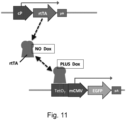
- the Tet-On system is composed of two components; (1) the constitutively expressed tetracycline - responsive transcriptional activator protein (rtTa) and the rtTa sensitive inducible promoter (Tet Responsive Element, TRE).
- rtTa constitutively expressed tetracycline - responsive transcriptional activator protein
- TRE rtTa sensitive inducible promoter
- dox doxycycline
- the transcriptional regulator protein may thus be tetracycline-responsive transcriptional activator protein (rtTa) protein, which can be activated or deactivated by the antibiotic tetracycline or one of its derivatives, which are supplied exogenously.
- rtTa transcriptional activator protein
- the transcriptional regulator protein is rtTA
- the inducible promoter inserted into the second GSH site includes the tetracycline response element (TRE).
- TRE tetracycline response element
- the exogenously supplied substance is the antibiotic tetracycline or one of its derivatives.
- rtTa proteins may be used in the methods of the invention, these include Tet-On Advanced transactivator (also known as rtTA2S-M2) and Tet-On 3G (also known as rtTA-V16, derived from rtTA2S-S2.
- Tet-On Advanced transactivator also known as rtTA2S-M2
- Tet-On 3G also known as rtTA-V16, derived from rtTA2S-S2.
- the tetracycline response element generally consists of 7 repeats of the 19bp bacterial TetO sequence separated by spacer sequences, together with a minimal promoter. Variants and modifications of the TRE sequence are possible, since the minimal promoter can be any suitable promoter. Preferably the minimal promoter shows no or minimal expression levels in the absence of rtTa binding.
- the inducible promoter inserted into the second GSH may thus comprise a TRE.
- a modified system based upon tetracycline control is the T-REx TM System (Thermofisher Scientific), in which the transcriptional regulator protein is a transcriptional repressor protein, TetR.
- the components of this system include (i) an inducible promoter comprising a strong human cytomegalovirus immediate-early (CMV) promoter and two tetracycline operator2 (TetO2) sites, and a Tet repressor (TetR).
- CMV human cytomegalovirus immediate-early
- TetO2 tetracycline operator2
- TetR Tet repressor
- the Tet repressor In the absence of tetracycline, the Tet repressor forms a homodimer that binds with extremely high affinity to each TetO2 sequence in the inducible promoter, and prevent transcription from the promoter. Once added, tetracycline binds with high affinity to each Tet repressor homodimer rendering it unable to bind to the Tet operator.
- the Tet repressor: tetracycline complex then dissociates from the Tet operator and allows induction of expression.
- the transcriptional regulator protein is TetR and the inducible promoter comprises two TetO2 sites.
- the exogenously supplied substance is tetracycline or a derivative thereof.
- OPTtetR codon-optimised tetR
- This entity was generated using mulitparameter-optimisation of the bacterial tetR cDNA sequence.
- OPTtetR allows a ten-fold increase in the tetR expression when compared to the standard sequence (STDtetR).
- STDtetR standard sequence
- Homozygous OPTtetR expression of tetR was sufficient to prevent shRNA leakiness whilst preserving knockdown induction in the Examples.
- the sequence for OPTtetR is included here, with the standard sequence shown as a comparison.
- Sequences with at least 75%, 80%, 85% or 90% homology for this sequence are hereby claimed, more particularly 91, 92, 93, 94, 95, 96, 97 or 99% homology.
- Residues shown to be changed between STDtetR and OPTtetR have been indicated in the sequences, and it is preferred that these residues are not changed in any derivative of OPTtetR since these are thought to be important for the improved properties. Any derivative would optionally retain these modifications at the indicated positions.
- inducible expression systems are known and can be used in the method of the invention. These include the Complete Control Inducible system from Agilent Technologies. This is based upon the insect hormone ecdysone or its analogue ponasterone A (ponA) which can activate transcription in mammalian cells which are transfected with both the gene for the Drosophila melongaster ecdysone receptor (EcR) and an inducible promoter comprising a binding site for the ecdysone receptor.
- the EcR is a member of the retinoid-X-receptor (RXR) family of nuclear receptors. In humans, EcR forms a heterodimer with RXR that binds to the ecdysone-responsive element (EcRE). In the absence of PonA, transcription is repressed by the heterodimer.
- the transcriptional regulator protein can be a repressor protein, such as an ecdysone receptor or a derivative thereof.
- a repressor protein such as an ecdysone receptor or a derivative thereof.
- examples of the latter include the VgEcR synthetic receptor from Agilent technologies which is a fusion of EcR, the DNA binding domain of the glucocorticoid receptor and the transcriptional activation domain of Herpes Simplex Virus VP16.
- the inducible promoter comprises the EcRE sequence or modified versions thereof together with a minimal promoter. Modified versions include the E/GRE recognition sequence of Agilent Technologies, in which mutations to the sequence have been made.
- the E/GRE recognition sequence comprises inverted half-site recognition elements for the retinoid-X-receptor (RXR) and GR binding domains.
- the exogenously supplied substance is ponasterone A, which removes the repressive effect of EcR or derivatives thereof on the inducible promoter
- inducible systems may be based on the synthetic steroid mifepristone as the exogenously supplied substance.
- a hybrid transcriptional regulator protein is inserted, which is based upon a DNA binding domain from the yeast GAL4 protein, a truncated ligand binding domain (LBD) from the human progesterone receptor and an activation domain (AD) from the human NF- ⁇ B.
- LBD truncated ligand binding domain
- AD activation domain
- This hybrid transcriptional regulator protein is available from Thermofisher Scientific (Gene Switch TM ). Mifepristone activates the hybrid protein, and permits transcription from the inducible promoter which comprises GAL4 upstream activating sequences (UAS) and the adenovirus E1b TATA box.
- UAS GAL4 upstream activating sequences
- UAS adenovirus E1b TATA box
- the transcriptional regulator protein can thus be any suitable regulator protein, either an activator or repressor protein.
- Suitable transcriptional activator proteins are tetracycline - responsive transcriptional activator protein (rtTa) or the Gene Switch hybrid transcriptional regulator protein.
- Suitable repressor proteins include the Tet-Off version of rtTA, TetR or EcR.
- the transcriptional regulator proteins may be modified or derivatised as required.
- the inducible promoter can comprise elements which are suitable for binding or interacting with the transcriptional regulator protein.
- the interaction of the transcriptional regulator protein with the inducible promoter is preferably controlled by the exogenously supplied substance.
- the exogenously supplied substance can be any suitable substance that binds to or interacts with the transcriptional regulator protein. Suitable substances include tetracycline, ponasterone A and mifepristone.
- the transcriptional regulator protein gene may be provided for insertion with other genetic material.
- Such material includes genes for markers or reporter molecules, such as genes that induce visually identifiable characteristics including fluorescent and luminescent proteins. Examples include the gene that encodes jellyfish green fluorescent protein (GFP), which causes cells that express it to glow green under blue/UV light, luciferase, which catalyses a reaction with luciferin to produce light, and the red fluorescent protein from the gene dsRed.
- GFP jellyfish green fluorescent protein
- luciferase which catalyses a reaction with luciferin to produce light
- red fluorescent protein from the gene dsRed Such markers or reporter genes are useful, since the presence of the reporter protein confirms protein expression from the first GSH, indicating successful insertion.
- Selectable markers may further include resistance genes to antibiotics or other drugs. Markers or reporter gene sequences can also be introduced that enable studying the expression of endogenous (or exogenous genes).
- Cas proteins including CasL, Cas9 proteins that enable excision of genes of interest, as well as Cas-Fusion proteins that mediate changes in the expression of other genes, e.g. by acting as transcriptional enhancers or repressors.
- non-inducible expression of molecular tools may be desirable, including optogenetic tools, nuclear receptor fusion proteins, such as tamoxifen-inducible systems ERT, and designer receptors exclusively activated by designer drugs.
- sequences that code signalling factors that alter the function of the same cell or of neighbouring or even distant cells in an organism, including hormones autocrine or paracrine factors may be co-expressed from the same GSH as the transcriptional regulator protein.
- the further genetic material may include sequences coding for non-coding RNA, as discussed herein.
- examples of such genetic material includes genes for miRNA, which may function as a genetic switch.
- the gene encoding the transcriptional regulator protein is operably linked to a constitutive promoter.
- the first GSH can be selected such that it already has a constitutive promoter than can also drive expression of the transcriptional regulator protein gene and any associated genetic material.
- Constitutive promoters ensure sustained and high level gene expression. Commonly used constitutive promoters, including the human ⁇ -actin promoter (ACTB), cytomegalovirus (CMV), elongation factor-la, (EF1 ⁇ ), phosphoglycerate kinase (PGK) and ubiquitinC (UbC).
- ACTB human ⁇ -actin promoter
- CMV cytomegalovirus
- EF1 ⁇ elongation factor-la
- PGK phosphoglycerate kinase
- UbC ubiquitinC
- the CAG promoter is a strong synthetic promoter frequently used to drive high levels of gene expression and was constructed from the following sequences: (C) the cytomegalovirus (CMV) early enhancer element, (A) the promoter, the first exon and the first intron of chicken beta-actin gene, and (G) the splice acceptor of the rabbit beta-globin gene.
- C the cytomegalovirus
- A the promoter, the first exon and the first intron of chicken beta-actin gene
- G the splice acceptor of the rabbit beta-globin gene.
- the transcriptional regulator plus any further genetic material may be provided together with cleavable sequences.
- sequences are sequences that are recognised by an entity capable of specifically cutting DNA, and include restriction sites, which are the target sequences for restriction enzymes or sequences for recognition by other DNA cleaving entities, such as nucleases, recombinases, ribozymes or artificial constructs.
- At least one cleavable sequence may be included, but preferably two or more are present.
- These cleavable sequences may be at any suitable point in the insertion, such that a selected portion of the insertion, or all of the insertion, can be selectively removed from the GSH.
- the method can thus extend to removal and/or replacement of the insertion or a portion thereof from the GSH.
- the cleavable sites may thus flank the part/all of the insertion that it may be desired to remove.
- the transcriptional regulator and/or the further genetic material may be removed using this method.
- a portion of the insertion may be any part up to 99% of the insertion - i.e. 1-99%, 90%., 80%, 70%, 60%, 50%, 40%, 30%, 20%, 10% or less than 10%.
- the portion of the insertion flanked by the cleavable sites includes the constitutive promoter.
- the constitutive promoter is not included in the portion flanked by the cleavable sequences.
- a preferred cleavable sequence is the IoxP site for Cre recombinase as it allows direct replacement of the removed insertion.
- the cleavable sequence is the rox site for Dre recombinase.
- the insertion at the first GSH occurs at both loci in the genome, thus each allele is modified by insertion. This permits greater expression from the gene encoding the transcriptional regulator and any associated genetic material.
- the second GSH can be any suitable GSH site. It may be preferred that the second GSH site is not associated with an endogenous promoter, such that the expression of the inserted inducible cassette is solely under control of the transcriptional regulator protein.
- the genetic sequence comprised within the inducible cassette may be a synthetic sequence.
- the inducible cassette may thus include be any genetic sequence wherein the genetic sequence is a transgene encoding a protein, the transcription of which it is desired to control within the cell pluripotent stem.
- the inducible cassette may include a genetic sequence encoding a key lineage specific master regulator, abbreviated here are master regulator.
- Master regulators may be one or more of: transcription factors, transcriptional regulators, cytokine receptors or signalling molecules and the like.
- a master regulator is an expressed gene that influences the lineage of the cell expressing it. It may be that a network of master regulators is required for the lineage of a cell to be determined.
- a master regulator gene that is expressed at the inception of a developmental lineage or cell type, participates in the specification of that lineage by regulating multiple downstream genes either directly or through a cascade of gene expression changes. If the master regulator is expressed it has the ability to re-specify the fate of cells destined to form other lineages.
- master regulators include the myogenic transcription factor MyoD and the hematopoietic transcription factor SCL. Particularly, master regulators include, but are not limited to:
- Pancreatic cell types PDX1 andGATA6.
- the inducible cassette includes a genetic sequence operably linked to an inducible promoter.
- a "promoter” is a nucleotide sequence which initiates and regulates transcription of a polynucleotide.
- An "inducible promoter” is a nucleotide sequence where expression of a genetic sequence operably linked to the promoter is controlled by an analyte, co-factor, regulatory protein, etc. In the case of the present invention, the control is effected by the transcriptional regulator protein. It is intended that the term “promoter” or “control element” includes full-length promoter regions and functional (e.g., controls transcription or translation) segments of these regions.
- “Operably linked” refers to an arrangement of elements wherein the components so described are configured so as to perform their usual function.
- a given promoter operably linked to a genetic sequence is capable of effecting the expression of that sequence when the proper enzymes are present.
- the promoter need not be contiguous with the sequence, so long as it functions to direct the expression thereof.
- intervening untranslated yet transcribed sequences can be present between the promoter sequence and the genetic sequence and the promoter sequence can still be considered “operably linked” to the genetic sequence.
- the term “operably linked” is intended to encompass any spacing or orientation of the promoter element and the genetic sequence in the inducible cassette which allows for initiation of transcription of the inducible cassette upon recognition of the promoter element by a transcription complex.
- genes may also be operably linked to the inducible promoter.
- Further genetic material may include genes, coding sequences for RNA, genetic material, such as markers or reporter genes. Such additional genetic material has been discussed previously.
- it may be desirable to include a suicide gene in the inducible cassette should the genetic sequence itself not be a suicide gene for cancer gene therapy.
- the suicide gene may use the same inducible promoter within the inducible cassette, or it may be a separate inducible promoter to allow for separate control. Such a gene may be useful in gene therapy scenarios where it is desirable to be able to destroy donor/transfected cells if certain conditions are met.
- Suicide genes are genes that express a protein that causes the cell to undergo apoptosis, or alternatively may require an externally supplied co-factor or co-drug in order to work.
- the co-factor or co-drug may be converted by the product of the suicide gene into a highly cytotoxic entity.
- the inducible cassette may include cleavable sequences.
- sequences are sequences that are recognised by an entity capable of specifically cutting DNA, and include restriction sites, which are the target sequences for restriction enzymes or sequences for recognition by other DNA cleaving entities, such as nucleases, recombinases, ribozymes or artificial constructs.
- At least one cleavable sequence may be included, but preferably two or more are present.
- These cleavable sequences may be at any suitable point in the cassette, such that a selected portion of the cassette, or the entire cassette, can be selectively removed from the GSH.
- the method can thus extend to removal and/or replacement of the cassette or a portion thereof from the GSH.
- the cleavable sites may thus flank the part/all of the genetic sequence that it may be desired to remove.
- the method may result in removal of the inducible cassette and/or the further genetic material.
- a portion of the cassette may be any part up to 99% of the cassette - i.e. 1-99%, 90%., 80%, 70%, 60%, 50%, 40%, 30%, 20%, 10% or less than 10%.
- the portion of the insertion flanked by the cleavable sites includes the promoter operably linked to the genetic sequence.
- the promoter operably linked to the genetic sequence is not included in the portion flanked by the cleavable sequences.
- a preferred cleavable sequence is the IoxP site for Cre recombinase as it allows direct replacement of the removed insertion.
- the cleavable site may be the rox site for Dre recombinase.
- the transcriptional regulator protein and the inducible cassette, together with any associated genetic material, are inserted into different GSH within the genome of the cell.
- the insertions into the GSH are preferably specifically within the sequence of the GSH as described previously. Any suitable technique for insertion of a polynucleotide into a specific sequence may be used, and several are described in the art. Suitable techniques include any method which introduces a break at the desired location and permits recombination of the vector into the gap. Thus, a crucial first step for targeted site-specific genomic modification is the creation of a double-strand DNA break (DSB) at the genomic locus to be modified.
- DSB double-strand DNA break
- Distinct cellular repair mechanisms can be exploited to repair the DSB and to introduce the desired sequence, and these are non-homologous end joining repair (NHEJ), which is more prone to error; and homologous recombination repair (HR) mediated by a donor DNA template, that can be used to insert inducible cassettes.
- NHEJ non-homologous end joining repair
- HR homologous recombination repair
- ZFNs zinc finger nucleases
- TALENs transcription activator-like effector nucleases
- CRISPR/Cas9 clustered regularly interspaced short palindromic repeats/ CRISPR associated protein
- Zinc finger nucleases are artificial enzymes which are generated by fusion of a zinc-finger DNA-binding domain to the nuclease domain of the restriction enzyme Fokl.
- the latter has a non-specific cleavage domain which must dimerise in order to cleave DNA. This means that two ZFN monomers are required to allow dimerisation of the Fokl domains and to cleave the DNA.
- the DNA binding domain may be designed to target any genomic sequence of interest, is a tandem array of Cys 2 His 2 zinc fingers, each of which recognises three contiguous nucleotides in the target sequence. The two binding sites are separated by 5-7bp to allow optimal dimerisation of the Fokl domains.
- the enzyme thus is able to cleave DNA at a specific site, and target specificity is increased by ensuring that two proximal DNA-binding events must occur to achieve a double-strand break.
- Transcription activator-like effector nucleases are dimeric transcription factor/nucleases. They are made by fusing a TAL effector DNA-binding domain to a DNA cleavage domain (a nuclease). Transcription activator-like effectors (TALEs) can be engineered to bind practically any desired DNA sequence, so when combined with a nuclease, DNA can be cut at specific locations.
- TALEs Transcription activator-like effectors
- TAL effectors are proteins that are secreted by Xanthomonas bacteria, the DNA binding domain of which contains a repeated highly conserved 33-34 amino acid sequence with divergent 12th and 13th amino acids. These two positions are highly variable and show a strong correlation with specific nucleotide recognition.
- TALENs are thus built from arrays of 33 to 35 amino acid modules, each of which targets a single nucleotide. By selecting the array of the modules, almost any sequence may be targeted.
- the nuclease used may be Fokl or a derivative thereof.
- the CRISPR/Cas9 system (type II) utilises the Cas9 nuclease to make a double-stranded break in DNA at a site determined by a short guide RNA.
- the CRISPR/Cas system is a prokaryotic immune system that confers resistance to foreign genetic elements.
- CRISPR are segments of prokaryotic DNA containing short repetitions of base sequences. Each repetition is followed by short segments of "protospacer DNA" from previous exposures to foreign genetic elements.
- CRISPR spacers recognize and cut the exogenous genetic elements using RNA interference.
- the CRISPR immune response occurs through two steps: CRISPR-RNA (crRNA) biogenesis and crRNA-guided interference.
- CrRNA molecules are composed of a variable sequence transcribed from the protospacer DNA and a CRISP repeat. Each crRNA molecule then hybridizes with a second RNA, known as the trans-activating CRISPR RNA (tracrRNA) and together these two eventually form a complex with the nuclease Cas9.
- the protospacer DNA encoded section of the crRNA directs Cas9 to cleave complementary target DNA sequences, if they are adjacent to short sequences known as protospacer adjacent motifs (PAMs).
- PAMs protospacer adjacent motifs
- the CRIPSR type II system from Streptococcus pyogenes may be used.
- the CRISPR/Cas9 system comprises two components that are delivered to the cell to provide genome editing: the Cas9 nuclease itself and a small guide RNA (gRNA).
- the gRNA is a fusion of a customised, site-specific crRNA (directed to the target sequence) and a standardised tracrRNA.
- a donor template with homology to the targeted locus is supplied; the DSB may be repaired by the homology-directed repair (HDR) pathway allowing for precise insertions to be made.
- HDR homology-directed repair
- Cas9D10A Mutant forms of Cas9 are available, such as Cas9D10A, with only nickase activity. This means it cleaves only one DNA strand, and does not activate NHEJ. Instead, when provided with a homologous repair template, DNA repairs are conducted via the high-fidelity HDR pathway only.
- Cas9D10A Cong L., et al, al. (2013) Science, 339, 819-823 ) may be used in paired Cas9 complexes designed to generate adjacent DNA nicks in conjunction with two sgRNAs complementary to the adjacent area on opposite strands of the target site, which may be particularly advantageous.
- the elements for making the double-strand DNA break may be introduced in one or more vectors such as plasmids for expression in the cell.
- any method of making specific, targeted double strand breaks in the genome in order to effect the insertion of a gene/inducible cassette may be used in the method of the invention. It may be preferred that the method for inserting the gene/inducible cassette utilises any one or more of ZFNs, TALENs and/or CRISPR/Cas9 systems or any derivative thereof.
- the gene/inducible cassette for insertion may be supplied in any suitable fashion as described below.
- the gene/inducible cassette and associated genetic material form the donor DNA for repair of the DNA at the DSB and are inserted using standard cellular repair machinery/pathways. How the break is initiated will alter which pathway is used to repair the damage, as noted above.
- the transcriptional regulator protein and the inducible cassette may be supplied for the method of the invention on separate vectors.
- a "vector” is a nucleic acid molecule, such as a DNA molecule, which is used as a vehicle to artificially carry genetic material into a cell.
- the vector is generally a nucleic acid sequence that consists of an insert (such as an inducible cassette or gene for a transcriptional regulator protein) and a larger sequence that serves as the "backbone" of the vector.
- the vector may be in any suitable format, including plasmids, minicircle, or linear DNA.
- the vector comprises at least the gene for the transcriptional regulator or inducible cassette operably linked to an inducible promoter, together with the minimum sequences to enable insertion of the genes into the relevant GSH.
- the vectors also possess an origin of replication (ori) which permits amplification of the vector, for example in bacteria.
- the vector includes selectable markers such as antibiotic resistance genes, genes for coloured markers and suicide genes.
- the cell used in the method of the invention may be any human or animal cell. It is preferably a mammalian cell, such as a cell from a rodent, such as mice and rats; marsupial such as kangaroos and koalas; non-human primate such as a bonobo, chimpanzee, lemurs, gibbons and apes; camelids such as camels and llamas; livestock animals such as horses, pigs, cattle, buffalo, bison, goats, sheep, deer, reindeer, donkeys, bantengs, yaks, chickens, ducks and turkeys; domestic animals such as cats, dogs, rabbits and guinea pigs.
- the cell is preferably a human cell. In certain aspects, the cell is preferably one from a livestock animal,
- the type of cell used in the method of the invention will depend upon the application of the cell once insertion of the genetic material into the GSH sites is complete.
- Pluripotent stem cells have the potential to differentiate into almost any cell in the body.
- pluripotent stem cells There are several sources of pluripotent stem cells.
- Embryonic stem cells ES cells
- iPSCs Induced pluripotent stem cells
- iPSCs are adult cells that have been genetically reprogrammed to an embryonic stem cell-like state by being forced to express genes and factors important for maintaining the defining properties of embryonic stem cells.
- genes which may be contained in the reprogramming factors include Oct3/4, Sox2, Sox1, Sox3, Sox15, Sox17, KIf4, Klf2, c-Myc, N-Myc, L-Myc, Nanog, Lin28, Fbx15, ERas, ECAT15-2, Tcl1, beta-catenin, Lin28b, Sall1, Sall4, Esrrb, Nr5a2, Tbx3 and Glis1, and these reprogramming factors may be used singly, or in combination of two or more kinds thereof.
- the cell is an iPSC derived from that individual.
- iPSC iPSC derived from that individual.
- the cells may be a tissue-specific stem cell which may also be autologous or donated. Suitable cells include epiblast stem cells, induced neural stem cells and other tissue-specific stem cells.
- the cell used is an embryonic stem cell or pluripotent stem cell line.
- Numerous embryonic stem cell lines are now available, for reference only, WA01 (H1) and WA09 (H9) can be obtained from WiCell, and KhES-1, KhES-2, and KhES-3 can be obtained from Institute for Frontier Medical Sciences, Kyoto University (Kyoto, Japan).
- the embryonic stem cell is derived without destruction of the embryo, particularly where the cells are human, since such techniques are readily available ( Chung, Young et al., Cell Stem Cell , Volume 2, Issue 2,113 - 117 .) Stem cell lines which have been derived without destroying an embryo are also available. the invention does not extend to any methods which involve the destruction of human embryos.
- a preferred aspect of the present invention is the forward programming of pluripotent stem cells into mature cell types.
- the method of the invention can be used for the manufacture of mature cell types from pluripotent stem cells.
- the inducible cassette for insertion into the second GSH is preferably one or more master regulators as discussed previously. These inducible cassettes may enable the cell to be programmed into a particular lineage, and different inducible cassettes will be used in order to direct differentiation into mature cell types. Any type of mature cell is contemplated, including but not limited to nerve cells, myocytes, osteocytes, chondrocytes, epithelial cells, secretory cells, and/or blood cells.
- the inventors of the present application have developed a rapid, efficient and scalable method for the generation of virtually any mature cell type. Such a simple and cheap method will have particular value for regenerative medicine.
- Previous forward programming techniques utilised the Tet-On system, but attempted to include all the material into one vector/site (The all-in-one Tet-On) or tried to insert the inducible cassette into one AAVS1 allele and the control system into the other AAVS1 allele ( DeKelver et al, 2010, Genome Res., 20, 1133-43 and Qian et al, 2014, Stem Cells, 32, 1230-8 ).
- the dual GSH targeting method developed and described here has many unforeseen advantages.
- the pluripotent stem cells may be cultured to enable forward programming to take place. These culturing conditions may be specific for the type of pluripotent stem cell being used, or may depend upon the ultimate mature cell type. Whatever culturing conditions are used, the exogenous substance will control expression of the genetic sequence within the inducible cassette; and may either be supplied continuously and then withdrawn in order to induce transcription or supplied as transcription is required, dependent upon its mode of action, as previously discussed.
- the aim is to program a stem cell, it may be advantageous to provide that cell with extracellular prompts to aid differentiation in conjunction with the supply of inducible cassettes encoding master regulators.
- Cellular reprogramming strategies can be enhanced by combining master regulator or transcription factor overexpression with extracellular signalling cues.
- it may be possible to perform systematic screen for pro-differentiation factors by modulating major signalling cascades that are implicated in development of that particular mature cell type. An instance of this is seen in Example 3.
- the present invention provides an ex vivo method for the production of myocytes from pluripotent stem cells, comprising the steps of:
- the MYOD1 gene is the gene encoding the Myogenic Differentiation 1 protein.
- the retinoic acid (RA) is all-trans RA.
- the RA is all-trans RA.
- the cell is overexpressing MYOD1.
- the present invention provides an ex vivo method for the production of oligodendrocytes myocytes from pluripotent stem cells, comprising the steps of:
- the cells used for this may be animal or human cells. If the cells are animal, it is preferred that the animal is a livestock animal as previously defined.
- the SOX-10 gene encodes the transcription factor SOX-10.
- the retinoic acid (RA) is all-trans RA.
- the cell used in the methods of the invention is pluripotent, and the resultant cell may be a lineage restricted-specific stem cell, progenitor cell or a mature cell type with the desired properties, by expression of a master regulator.
- lineage-specific stem cells, progenitor or mature cells may be used in any suitable fashion.
- the mature cells may be used directly for transplantation into a human or animal body, as appropriate for the cell type.
- the cells may form a test material for research, including the effects of drugs on gene expression and the interaction of drugs with a particular gene.
- the cells for research can involve the use of an inducible cassette with a genetic sequence of unknown function, in order to study the controllable expression of that genetic sequence. Additionally, it may enable the cells to be used to produce large quantities of desirable materials, such as growth factors or cytokines.
- the cells produced according to any of the methods of the invention have applications in diagnostic and therapeutic methods.
- the cells may be used in vitro to study cellular development, provide test systems for new drugs, enable screening methods to be developed, scrutinise therapeutic regimens, provide diagnostic tests and the like.
- the cells may be transplanted into a human or animal patient for diagnostic or therapeutic purposes.
- the cells may be allogeneic (i.e. mature cells removed, modified and returned to the same individual) or from a donor (including a pluripotent stem cell line).
- Feeder- and serum-free hESC (H9 line; WiCell) and hiPSC ( Cheung et al, Nat. Biotechnol. 30, 165-173 (2012 )) culture was performed. Briefly, cells were plated on gelatin/MEF media-coated culture dishes [MEF-media consisted of Advanced DMEM/F12 (90%, Gibco), fetal bovine serum (10%, Gibco), L-Glutamine (1 mM, Gibco), 2-Mercaptoethanol (0.1 mM, Sigma-Aldrich) and Penicillin/Streptomycin (1%, Gibco)], and cultured in chemically defined media [CDM, consisting of IMDM (50%, Gibco), F12 (50%, Gibco), concentrated lipids (100x, Gibco), monothioglycerol (450 ⁇ M, Sigma-Aldrich), insulin (7 ⁇ g/ml, Roche), transferrin (15 ⁇ g/ml, Roche), bovine serum albumin fraction V (5 mg/ml), and Penicillin
- hPSCs Differentiation of hPSCs into the germ layers was induced in adherent hESC cultures according to previously published directed differentiation protocols for endoderm, lateral plate mesoderm, and neuroectoderm ( Touboul, T. et al, al. Hepatology 51, 1754-1765 (2010 ), Cheung et al, al, (2012) and Douvaras, P. et al, al.
- definitive endoderm was derived by culturing hPSCs for 3 days in CDM-PVA (without insulin) supplemented with FGF2 (20ng/ml), Activin-A (100ng/ml), BMP4 (10ng/ml, Marko Hyvonen, Dept. of Biochemistry, University of Cambridge), and LY-294002 (10 ⁇ M, Promega) 3.
- hPSCs were cultured for 6 days in CDM-BSA supplemented with SB-431542 (10 ⁇ M, Tocris), LDN-193189 (0.1 ⁇ M, Tocris) and RA (0.1 ⁇ M, Sigma) 4.
- Lateral plate mesoderm was obtained by culturing hPSCs for 36h in CDMPVA supplemented with FGF2 (20 ng/ml), 10ng/ml BMP4 (R&D), and LY294002 (10 ⁇ M), and for 3.5 subsequent days in CDM-PVA supplemented with FGF2 (20ng/ml) and BMP4 (50ng/ml).
- hESCs Differentiation of hESCs. Differentiation was initiated in adherent cultures of hESCs 48h following passaging. Media changes were generally performed daily, and volumes were adjusted for cell density. Mature cell types were obtained using methods previously described in the art. Mature cell types obtained included neural cells, osteocytes, chondrocytes, smooth muscle, cardiac fibroblasts, cardiomyocytes, intestine, pancreas, hepatocytes, cholangiocytes or lung.
- hROSA26 gRNA and Cas9n expression plasmids design and construction of the hROSA26 gRNA and Cas9n expression plasmids is described here: A CRISPR/Cas9n based strategy to specifically target the hROSA26 locus and to insert inducible cassettes using homologous recombination. To induce a genomic DSB at the correct integration site, a CRISPR/Cas9 nickase system was designed. In contrast to the commonly used wild-type Cas9 nuclease which is let by a single gRNA to its genomic target site, the D10A mutant Cas9 nickase (Cas9n) is directed by a pair of appropriately designed gRNAs to simultaneously introduce single-stranded cuts on both strands of the target DNA.
- Cas9n D10A mutant Cas9 nickase
- CRISPR Design Tool was used to define potential target sites for crRNA-guided nucleases that are close to the integration site. Within a sequence stretch of 250 bp around the target site (125 bp on each site of the actual integration site), the top hit yielded a pair of gRNAs that collectively reached a "high quality" score of 97, with no predicted off target effects.
- the gRNAs [gRNA-A 5'-GTCGAGTCGCTTCTCGATTA-(TGG)-3' and gRNA-B 5'-GGCGATGACGAGATCACGCG-(AGG)-3' (PAM sites in parenthesis) were synthesised de novo and ligated into expression vectors.
- the final plasmids encode for either of the two gRNAs, respectively, and the Cas9n D10A-mutant ( Figures 20 and 21 ).
- a donor plasmid was constructed that serves as a template DNA to facilitate homology directed repair of a Cas9n-induced DSB.
- Two hROSA26 homology arms were generated by high-fidelity PCR amplification. Genomic DNA that was isolated from H9 hESCs served as a template. The 5' and 3'homolgy arms were 904bp and 869bp in length, respectively. Both were subsequently inserted into the multiple cloning site of the pUC19 vector.
- To target the hROSA26 locus cells were transfected with the plasmid, the two gRNA/Cas9n construct and the EGFP donor plasmid ( Figure 22 )
- the pR26_CAG-rtTA targeting vector ( figure 23 ) was constructed by cloning the coding sequence of a third generation rtTA (PCR-amplified from pLVX-Tet3G) into the BamHI/Mlul sites of pR26_CAG-EGFP thus replacing the EGFP sequence.
- AAVS1 ZFN expression plasmids were a generous gift of Dr. Kosuke Yusa (Wellcome-Trust Sanger Institute).
- the inducible EGFP AAVS1 targeting vector was constructed by Gibson Assembly (New England Biolabs) in which three inserts were ligated into the EcoRI/HindIII sites of the multiple cloning site of the pUC19 vector (Thermo Fisher Scientific):
- the first insert comprised the upstream AAVS1 homology arm, a splice acceptor, a T2A-site and the puromycin resistance cassette (PCR-amplified from pTRE-EGFP; addgene 22074, deposited by Rudolf Jaenisch).
- the second insert contained the inducible TRE3G promoter (PCR-amplified from pLVX-TRE3G).
- the third insert comprised the EGFP expression cassette and the AAVS1 downstream homology arm (PCR-amplified from pTRE-EGFP; addgene 22074, deposited by Rudolf Jaenisch).
- the resulting plasmid was termed pAAV TRE-EGFP ( Figure 32 ).
- the pAAV_TRE-NGN2 and pAAV_TRE-MYOD1( Figure 33 ) targeting vectors were constructed by cloning the NGN2 and MYOD1 coding sequence, respectively (NGN2: PCR-amplified from pLVX-TRE-NGN2, gift from Oliver Brüstle; MYOD1: PCR-amplified from a commercially available cDNA plasmid, Open Biosystems MHS6278-202832821, Accession: BC064493, Clone ID: 5022419) into the Spel/EcoRI sites of pAAV_TRE-EGFP, thus replacing the EGFP sequence.
- Plasmids were also created using similar methods, and all plasmids used are depicted in Figures 20 to 33 . These plasmids were either created or generously donated.
- the plasmids used in the Examples include (in order of figures 20 - 33 ): pSpCas9n(BB),_R26-R, pSpCas9n(BB) (the combination of these two plasmids is predicted to induce a specific double strand break in the intron between exons 1 and 2 of THUMPDS3-AS1 on chromosome 3 (ROSA26 locus)),_R26-L pR26_CAG_EGFP, pR26_CAG_rtTA, pZFN-AAVS1-L-ELD (zinc finger nuclease left), pZFN-AAVS1-R-KKR (zinc finger nuclease right), pAAV CAG_EGFP (donor), pR26-Neo_
- PSCs Human pluripotent stem cells
- TrypLE Select Gibco
- 2 ⁇ 10 6 cells were nucleofected (100 ⁇ l reaction volume; total of 12 ⁇ g of DNA, which was equally divided between the two gRNA/Cas9n plasmids and the targeting vector) using the Lonza P3 Primary Cell 4D-Nucleofector X Kit and cycle CA-137 of the Lonza 4D-Nucleofector System.
- Nucleofected hPSCs were plated onto irradiated multi-drug resistant (DR4) mouse embryonic fibroblasts and cultured in KSR media [consisting of Advanced DMEM/F12 (80%), knock-out serum replacer (20%, Gibco), L-Glutamine (1 mM), 2-Mercaptoethanol (0.1 mM) and Penicillin/Streptomycin (1%)] supplemented with FGF2 (4ng/ml, Department of Biochemistry, University of Cambridge).
- Y-27632 (5 ⁇ M, Tocris) was added for 24h before and after nucleofection to promote cell survival.
- neomycin-resistant hPSCs were selected by adding G418 (50 ⁇ g/ml, Sigma-Aldrich) for 7-10 days. Subsequently, individual clones were picked, expanded in feeder-free conditions and finally analyzed by genotyping.
- Targeting of the AAVS1 locus was also performed by lipofection.
- Human PSCs were seeded in feeder-free conditions in 6-well plates, and transfected 48h after passaging. Transfection was performed in Opti-MEM (Gibco) supplemented with Lipofectamine2000 (10 ⁇ l/well, Thermo Fisher Scientific) and a total of 4 ⁇ g of DNA (equally divided between the two AAVS1 ZFN plasmids and the targeting vector) for 24h. After 3-5 days, resistant hPSCs were selected by adding puromycin (1 ⁇ g/ml, Sigma-Aldrich) for 5-8 days. Subsequently, individual clones were picked, expanded and analyzed by genotyping. Antibiotic resistance can be used to select clonal lines.
- Drug-resistant hPSC clones from targeting experiments were screened by genomic PCR to verify site-specific inducible cassette integration, to determine the number of targeted alleles, and to exclude off-target integrations. PCRs were performed with LongAmp Taq DNA Polymerase (New England Biolabs). Table 2 reports the primer combinations used for the various targeting vectors. The results of all targeting experiments are summarized in Table 1. Karyotype analysis was performed by standard G banding techniques (Medical Genetics Service, Cambridge University Hospitals).
- AAVS1 targeting was performed by lipofection as previously described. Briefly, hPSCs were seeded feeder-free in 6-well plates, and transfected 48 h following cell passaging with 4 ⁇ g of DNA (equally divided between the two AAVS1 ZFN plasmids and the targeting vector) using 10 ⁇ l per well of Lipofectamine 2000 in Opti-MEM media (Gibco) for 24 h, all according to manufacturer's instructions. After 4 days, 1 ⁇ g ml-1 of Puromycin was added to the culture media, and individual clones were picked and expanded following 7-10 days of selection.
- AAVS1 targeting was performed by nucleofection.
- hESCs pre-treated for 16 h with 10 ⁇ M Y-27632 (Tocris) were dissociated to clumps of 2-8 cells using Accutase (Gibco), and 2 x 10⁶ cells were nucleofected in 100 ⁇ 1 with a total of 12 ⁇ g of DNA (4 ⁇ g each for the two ZFN plasmids, and 2 ⁇ g each for the two targeting vectors) using the Lonza P3 Primary Cell 4D-Nucleofector X Kit and the cycle CA-137 on a Lonza 4D-Nucleofector System, all according to manufacturer's instructions.
- Nucleofected hESCs were plated onto a feeder layer of irradiated DR4 (puromycin and neomycin resistant) mouse embryonic fibroblasts and cultured in KSR media supplemented with 4 ng ml-1 FGF2 and 10 ⁇ M Y-27632 (this last only for the first 24 h). After 4 days, hPSC colonies carrying both puromycin and neomycin resistance gene were selected for 7-10 days with 25 ⁇ g ml-1 of Geneticin (G418 Sulfate, Gibco) and 0.5 ⁇ g ml-1 Puromycin. Individual clones were then picked and expanded in feeder-free conditions.
- AAVS1-EGFP, ROSA26-EGFP, ROSA26-STDtetR, ROSA26-OPTtetR, and ROSA26-EGFPd2 hESCs were generated by lipofection (AAVS1 locus) or nucleofection (ROSA26 locus) of the targeting vectors with AAVS1 ZFN or ROSA26 CRISPR/Cas9n pairs (as described above). 2 ⁇ g ml-1 Blasticidin S-HCl (Gibco) was used for pR26-Bsd_CAG-EGFPd2 plasmid.
- inducible EGFP overexpression hESCs carrying ROSA26-rtTA and AAVS1-TRE-EGFP transgenes is described elsewhere. Briefly, cells were sequentially gene targeted first by nucleofection of pR26-Neo_CAG-rtTA with ROSA26 CRISPR/Cas9n plasmids, then by lipofection of pAAVPuro_ TRE-EGFP with AAVS1 ZFN plasmids.
- Gene targeted hPSC clonal lines were screened by genomic PCR to verify site-specific targeting, determine the number of alleles targeted, and exclude off-target integrations of the targeting plasmid (see Fig. 16A ).
- tetracycline hydrochloride (sigma-Aldrich) was used at 1 ⁇ g ml -1 to induce gene knockdown or knockout.
- Pluripotent OPTi-NGN2 cells were dissociated into single cells with TrypLE and plated onto Matrigel (35 ⁇ g/cm 2 , Scientific Laboratory Supplies) coated dishes at a density of 75.000 cells per well of a 12 well plate. Forward programming was initiated 24-48 hours after the split. Unless stated otherwise, the induction was performed in DMEM/F12 (Gibco) supplemented with Glutamax (100x, Gibco), Non-Essential Amino Acids (100x, Gibco), 2-Mercaptoethanol (50 ⁇ M), Penicillin/Streptomycin (1%), and doxycycline (1 ⁇ g/ml).
- the medium was switched to Neurobasal-medium supplemented with Glutamax (100x), B27 (50x, Gibco), BDNF (10 ng/ml, Peprotech), NT3 (10 ng/ml, R&D Systems), Penicillin/Streptomycin (1%), and doxycycline (1 ⁇ g/ml).
- Pluripotent OPTi-MYOD1 cells were dissociated into single cells with TrypLE and plated onto gelatine/MEF-medium coated dishes at a density of 100.000 cells per well of a 12 well plate. Forward programming was initiated 24-48 hours after the split. Unless stated otherwise, the induction was performed in DMEM (Sigma-Aldrich) supplemented with L-Glutamine (2 mM), 2-Mercaptoethanol (50 ⁇ M), Penicillin/Streptomycin (1%), insulin (7 ⁇ g/ml), all-trans retinoic acid (1 ⁇ M, Sigma-Aldrich), and doxycycline (1 ⁇ g/ml). After 5 days of induction, the medium was supplemented with CHIR99021 (3 ⁇ M, Tocris) and heat-inactivated horse serum (2%, Gibco) to enhance maturation.
- CHIR99021 3 ⁇ M, Tocris
- horse serum 2%, Gibco
- Pluripotent OLIG2-2A-SOX10 OPTi-OX hPSCs were grown in colonies on gelatine/MEF coated culture dishes. Before the start of induction they were treated with SB and LDN overnight. The following day induction was initiated in CDM supplemented with doxycycline (1 ⁇ g/ml) and RA (0.1 ⁇ M). One day after induction, cells were split in CDM supplemented with RA (0.1 ⁇ M), PM (1 ⁇ M), and Y-27632 (5 ⁇ M), PDGFaa (20 ng/ml, Peprotech), FGF2 (5 ng/ml) onto PDL/laminin coated culture dishes (100.000 cells per well of a 12 well-plate).
- oligodendrocyte media consisting of DMEM/F12, supplemented with Glutamax (100x), Non-Essential Amino acids (100x), 2-Mercaptoethanol (1000x), Penicillin-Streptomycin (100x), N2 Supplement (100x), B27 Supplement (50x), Insulin 7 ⁇ g/ml (Marko Hyvonnen), T3 60 ng/ml (Sigma), Biotin 100 ng/ml (Sigma), db-cAMP 1 ⁇ M (Sigma).
- Oligodendrocyte medium was supplemented with dox (1 ⁇ g/ml), PDGFaa (20 ng/ml), FGF2 (5 ng/ml), RA (0.1 ⁇ M) and PM (1 ⁇ M). Seven days post induction RA and PM was withdrawn. To keep induced cells in a proliferative state, cells were passaged every 4 days (75.000 cells per well of a 24 well plate) in the continued presence of the mitogens PDGFaa and FGF2. For differentiation of proliferative oligodendrocyte precursors, PDGFaa and FGF2 were withdrawn. Human recombinant NT3 (5 ng/ ⁇ l, R&D Systems) was added to enhance cell survival.
- EGFP expression cells were harvested with TrypLE Select (Gibco) for 5-10minutes at 37°C to obtain a single cell suspension. Following a wash with PBS, cells were resuspended in ice-cold PBS supplemented with DAPI (10 ⁇ g/ml), and incubated for 5 minutes on ice. Cells were analyzed using a Cyan ADP flow-cytometer to determine the levels of EGFP expression of viable cells (DAPI negative). For staining and analysis of myosin heavy chain expression cells were harvested with TrypLE Select (as for EGFP expression analysis), washed once with PBS, and fixed and permeabilized with Cytofix/Cytoperm solution (BD Biosciences).
- Membranes were washed with PBST, incubated with HRP-conjugated secondary antibodies (Sigma-Aldrich) in PBST 4% milk, incubated with Pierce ECL2 Western Blotting Substrate (Thermo Fisher Scientific), and exposed to X-Ray Super RX Films (Fujifilm).
- the cells were incubated for 1 hour at room temperature with corresponding donkey fluorophore-conjugated secondary antibodies (Alexa Fluor 488, 555, 568, and/or 647) in PBS supplemented with 1% donkey serum. Nuclei were visualized with 4',6-diamidino-2-phenylindole (DAPI, Thermo Fisher Scientific). EGFP expression and immunostainings were imaged using a Zeiss LSM 700 confocal microscope (Leica). The percentage of ⁇ III-tubulin positive cells was calculated by determining ⁇ III-tubulin expression in at least 50 randomly selected DAPI-positive cells in 3 visual fields of 3 biological replicates using an inverted Olympus IX71 fluorescence microscope.
- DAPI 4',6-diamidino-2-phenylindole
- Example 2 Derivation of excitatory cortical neurons from hESC and hiPSC
- NGN2 induction resulted in rapid downregulation of pluripotency factors ( Figure 7 ) and initiation of a neuronal transcriptional program ( Fig. 2b ).
- Induced cells exhibited neuronal processes as early as three days post induction (data not shown). After one week, all cells displayed a neuronal morphology and expressed pan-neuronal marker proteins, such as ⁇ III-tubulin and MAP2 ( Figure 2c ).
- Quantitative RT-PCR revealed strong induction of typical forebrain markers such as BRN2 and FOXG1, and of glutamatergic neurons including GRIA4 and VGLUT2 ( Fig. 2b ), indicative of an excitatory cortical neuronal identity.
- MYOD1 The transcription factor MYOD1 is known to induce myogenic transdifferentiation when overexpressed in a variety of somatic cell types, however, the ability of hPSCs to undergo MYOD1-induced myogenic forward programming is currently debated.
- OPTi -MYOD1 hPSCs Table 1
- induction of MYOD1 expression following doxycycline treatment resulted in near complete cell death within 3-5 days in a broad range of culture conditions that were suggested previously to facilitate the conversion of hPSCs into skeletal myocytes.
- OPTi-OX hPSCs bearing inducible SOX10 either alone or in combination with OLIG2 in form of a bicistronic expression cassette.
- OPC oligodendrocyte precursor
- OPTi-OLIG2-SOX10 hPSCs induced in oligodendrocyte media Douvaras et al. 2014
- the mitogens PDGFaa and FGF2 first passed through an OPC-like stage in which they were highly proliferative and in which they co-expressed PDGFRA, A2B5, and O4.
- These cells were highly proliferative and could be maintained for at least three passages ( Fig 12b ) by culturing them in the presence of mitogens. We therefore named these cells i-OPCs, for induced OPCs.
- i-OPCs readily differentiated in approximately one week into mature oligodendrocytes expressing the major myelin proteins CNP, PLP, MAG, MOG and MBP ( Fig 12c-12d ) that were capable of myelin sheath formation (data not shown).
- Table 2 List of primers used for genotyping PCR Locus PCR type Primer binding site Primer sequence hROSA26 Locus PCR Genome (5') GAGAAGAGGCTGTGCTTCGG Genome (3') ACAGTACAAGCCAGTAATGGAG 5'-INT PCR Genome (5') GAGAAGAGGCTGTGCTTCGG Splice Acceptor AAGACCGCGAAGAGTTTGTCC 3'-INT PCR rtTA GAAACTCGCTCAAAAGCTGGG Genome (3') ACAGTACAAGCCAGTAATGGAG 3'-BB PCR rtTA GAAACTCGCTCAAAAGCTGGG Vector Backbone (3') TGACCATGATTACGCCAAGC AAVS1 Locus PCR Genome (5') CTGTTTCCCCTTCCCAGGCAGGTCC Genome (3') TGCAGGGGAACGGGGCTCAGTCTGA 5'-INT PCR Genome (5') CTGTTTCCCCTTCCCAGGCAGGTCC Puromycin TCGTCGC
- Fig. 14B We generated hESC lines in which an EGFP transgene could be silenced in an inducible fashion. For that, we targeted: (1) a CAG-tetR expression cassette into the ROSA26 locus; and (2) a CAG-EGFP transgene plus an inducible EGFP shRNA cassette into the AAVS1 locus ( Fig. 14A,B ). To express higher levels of the tetR protein to more strongly repress shRNA expression in the absence of tetracycline.
- inducible EGFPd2 knockout hESCs did not show any significant decrease neither in the proportion of EGFPd2 positive cells nor in their fluorescence after prolonged culture in the absence of tetracycline, even when several gRNA copies were used. This demonstrated that the inducible gRNA expression was tightly controlled. Finally, testing of additional gRNAs against EGFPd2 revealed that the speed and efficiency of inducible knockout strongly relied on the gRNA. Indeed, an optimal sequence allowed up to 90% knockout after only 2 days of induction.
Landscapes
- Health & Medical Sciences (AREA)
- Life Sciences & Earth Sciences (AREA)
- Engineering & Computer Science (AREA)
- Genetics & Genomics (AREA)
- Biomedical Technology (AREA)
- Chemical & Material Sciences (AREA)
- Organic Chemistry (AREA)
- Zoology (AREA)
- Biotechnology (AREA)
- Bioinformatics & Cheminformatics (AREA)
- Wood Science & Technology (AREA)
- General Engineering & Computer Science (AREA)
- General Health & Medical Sciences (AREA)
- Biochemistry (AREA)
- Microbiology (AREA)
- Molecular Biology (AREA)
- Cell Biology (AREA)
- Developmental Biology & Embryology (AREA)
- Physics & Mathematics (AREA)
- Biophysics (AREA)
- Plant Pathology (AREA)
- Immunology (AREA)
- Medicinal Chemistry (AREA)
- Reproductive Health (AREA)
- Rheumatology (AREA)
- Gynecology & Obstetrics (AREA)
- Virology (AREA)
- Urology & Nephrology (AREA)
- Hematology (AREA)
- Neurology (AREA)
- Neurosurgery (AREA)
- Veterinary Medicine (AREA)
- Public Health (AREA)
- Animal Behavior & Ethology (AREA)
- Pharmacology & Pharmacy (AREA)
- Epidemiology (AREA)
- Tropical Medicine & Parasitology (AREA)
- Pathology (AREA)
- Food Science & Technology (AREA)
- Analytical Chemistry (AREA)
Claims (12)
- Ex-vivo-Verfahren zur Steuerung der Transkription einer genetischen Sequenz in einer Zelle, umfassenda) gezieltes Einfügen eines Gens, das ein Transkriptionsregulatorprotein codiert, in einen ersten Ort des genetisch sicheren Hafens; undb) gezieltes Einfügen einer induzierbaren Kassette in einen zweiten Ort des genetisch sicheren Hafens, wobei die induzierbare Kassette die genetische Sequenz umfasst, die funktionell mit einem induzierbaren Promotor verknüpft ist, und der Promotor durch das Transkriptionsregulatorprotein reguliert wird;wobei der erste und der zweite Ort des genetisch sicheren Hafens unterschiedlich sind, undwobei das Verfahren keinen Prozess zum Modifizieren der genetischen Keimbahnidentität eines Menschen umfasst,wobei die genetische Sequenz ein Transgen ist, das ein Protein codiert,wobei die Zelle eine pluripotente Stammzelle ist, und wobei das Verfahren zur Vorwärtsprogrammierung der pluripotenten Stammzelle dient.
- Ex-vivo-Verfahren nach Anspruch 1, wobei die Aktivität des Transkriptionsregulatorproteins durch eine exogen zugeführte Substanz gesteuert wird.
- Ex-vivo-Verfahren nach Anspruch 1 oder 2, wobei das Transkriptionsregulatorprotein konstitutiv exprimiert wird.
- Ex-vivo-Verfahren nach einem der vorhergehenden Ansprüche, wobei das Transkriptionsregulatorprotein ausgewählt ist aus einem von: Tetracyclin-responsivem Transkriptionsaktivatorprotein (rtTa), Tetracyclin-Repressor (Te-tR), synthetischem VgEcR-Rezeptor oder einem hybriden Transkriptionsregulatorprotein, das eine DNA-Bindungsdomäne aus dem Hefe-GAL4-Protein, eine verkürzte Liganden-Bindungsdomäne aus dem menschlichen Progesteronrezeptor und eine Aktivierungsdomäne aus dem menschlichen NF-κB umfasst.
- Ex-vivo-Verfahren nach Anspruch 4, wobei die Aktivität von rtTA durch Tetracyclin oder ein Derivat davon, gegebenenfalls Doxycyclin, gesteuert wird, und wobei der induzierbare Promotor ein Tet-Responsive-Element (TRE) umfasst.
- Ex-vivo-Verfahren nach einem der vorhergehenden Ansprüche, wobei der erste und der zweite Ort des genomischen sicheren Hafens ausgewählt sind aus beliebigen zwei des hROSA26-Lokus, des AAVS1-Lokus, des CLYBL-Gens oder des CCR5-Gens.
- Ex-vivo-Verfahren nach einem der vorhergehenden Ansprüche, wobei zusätzliches genetisches Material an dem ersten und/oder dem zweiten Ort des genomischen sicheren Hafens eingefügt wird, optional eines oder mehrere der folgenden:a) Suizidgen;b) selektierbarer Marker;c) Reportergen; und/oderd) Gen für eine nichtcodierende RNA.
- Ex-vivo-Verfahren nach einem der vorhergehenden Ansprüche, wobei die Zelle eine menschliche, Beuteltier-, nichtmenschliche Primaten-, Kamelidenoder Nutztierzelle ist.
- Ex-vivo-Verfahren nach Anspruch 1, wobei das Verfahren zur Programmierung von pluripotenten Stammzellen in definierte reife Zellen dient.
- Ex-vivo-Verfahren nach Anspruch 1, wobei die Zelle eine pluripotente Stammzelle ist und die genetische Sequenz ein Transgen ist, das einen oder mehrere Hauptregulatoren, optional einen Transkriptionsfaktor, codiert und wobei die Transkription der Gensequenz optional zur Vorwärtsprogrammierung der Zelle in einen definierten reifen Zelltyp führt.
- Ex-vivo-Verfahren zur Herstellung von Myozyten aus pluripotenten Stammzellen, umfassend die Schritte:a) gezieltes Einfügen eines Gens, das ein Transkriptionsregulatorprotein codiert, in einen ersten Ort des genetisch sicheren Hafens; undb) gezieltes Einfügen des MYOD1-Gens, das funktionell mit einem induzierbaren Promotor verbunden ist, in einen zweiten Ort des genetisch sicheren Hafens, wobei der induzierbare Promotor durch das Transkriptionsregulatorprotein reguliert wird; wobei der erste und der zweite Ort des genetischen sicheren Hafens unterschiedlich sind,und Kultivieren der Zellen in Gegenwart von Retinsäure, wobei das Verfahren keinen Prozess zum Modifizieren der genetischen Keimbahnidentität eines Menschen umfasst.
- Ex-vivo-Verfahren zur Herstellung von Oligodendrozyten aus pluripotenten Stammzellen, umfassend die Schritte:a) gezieltes Einfügen eines Gens, das ein Transkriptionsregulatorprotein codiert, in einen ersten Ort des genetisch sicheren Hafens; undb) gezieltes Einfügen der Gene SOX-10 und OLIG2, die jeweils funktionell mit einem induzierbaren Promotor verbunden sind, in einen zweiten Ort des genetisch sicheren Hafens, wobei der induzierbare Promotor durch das Transkriptionsregulatorprotein reguliert wird; wobei der erste und der zweite Ort des genetischen sicheren Hafens unterschiedlich sind,und Kultivieren der Zellen in Gegenwart von Retinsäure, wobei das Verfahren keinen Prozess zum Modifizieren der genetischen Keimbahnidentität eines Menschen umfasst.
Priority Applications (8)
| Application Number | Priority Date | Filing Date | Title |
|---|---|---|---|
| RS20220597A RS63330B1 (sr) | 2016-11-24 | 2017-11-24 | Kontrolisana transkripcija |
| HRP20220836TT HRP20220836T1 (hr) | 2016-11-24 | 2017-11-24 | Upravljiva transkripcija |
| SM20220256T SMT202200256T1 (it) | 2016-11-24 | 2017-11-24 | Trascrizione controllabile |
| EP24213635.6A EP4516914A3 (de) | 2016-11-24 | 2017-11-24 | Steuerbare transkription |
| EP25155270.9A EP4529958A3 (de) | 2016-11-24 | 2017-11-24 | Steuerbare transkription |
| SI201731178T SI3545079T1 (sl) | 2016-11-24 | 2017-11-24 | Transkripcija, ki jo je mogoče nadzorovati |
| EP22205237.5A EP4186972A1 (de) | 2016-11-24 | 2017-11-24 | Steuerbare transkription |
| EP22166198.6A EP4092110A1 (de) | 2016-11-24 | 2017-11-24 | Steuerbare transkription |
Applications Claiming Priority (2)
| Application Number | Priority Date | Filing Date | Title |
|---|---|---|---|
| GBGB1619876.4A GB201619876D0 (en) | 2016-11-24 | 2016-11-24 | Controllable transcription |
| PCT/GB2017/053531 WO2018096343A1 (en) | 2016-11-24 | 2017-11-24 | Controllable transcription |
Related Child Applications (8)
| Application Number | Title | Priority Date | Filing Date |
|---|---|---|---|
| EP24213635.6A Division-Into EP4516914A3 (de) | 2016-11-24 | 2017-11-24 | Steuerbare transkription |
| EP24213635.6A Division EP4516914A3 (de) | 2016-11-24 | 2017-11-24 | Steuerbare transkription |
| EP22205237.5A Division-Into EP4186972A1 (de) | 2016-11-24 | 2017-11-24 | Steuerbare transkription |
| EP22205237.5A Division EP4186972A1 (de) | 2016-11-24 | 2017-11-24 | Steuerbare transkription |
| EP22166198.6A Division-Into EP4092110A1 (de) | 2016-11-24 | 2017-11-24 | Steuerbare transkription |
| EP22166198.6A Division EP4092110A1 (de) | 2016-11-24 | 2017-11-24 | Steuerbare transkription |
| EP25155270.9A Division-Into EP4529958A3 (de) | 2016-11-24 | 2017-11-24 | Steuerbare transkription |
| EP25155270.9A Division EP4529958A3 (de) | 2016-11-24 | 2017-11-24 | Steuerbare transkription |
Publications (3)
| Publication Number | Publication Date |
|---|---|
| EP3545079A1 EP3545079A1 (de) | 2019-10-02 |
| EP3545079B1 EP3545079B1 (de) | 2022-04-06 |
| EP3545079B2 true EP3545079B2 (de) | 2025-06-11 |
Family
ID=58073446
Family Applications (5)
| Application Number | Title | Priority Date | Filing Date |
|---|---|---|---|
| EP22166198.6A Pending EP4092110A1 (de) | 2016-11-24 | 2017-11-24 | Steuerbare transkription |
| EP17807909.1A Active EP3545079B2 (de) | 2016-11-24 | 2017-11-24 | Regulierbare transkription |
| EP22205237.5A Pending EP4186972A1 (de) | 2016-11-24 | 2017-11-24 | Steuerbare transkription |
| EP24213635.6A Pending EP4516914A3 (de) | 2016-11-24 | 2017-11-24 | Steuerbare transkription |
| EP25155270.9A Pending EP4529958A3 (de) | 2016-11-24 | 2017-11-24 | Steuerbare transkription |
Family Applications Before (1)
| Application Number | Title | Priority Date | Filing Date |
|---|---|---|---|
| EP22166198.6A Pending EP4092110A1 (de) | 2016-11-24 | 2017-11-24 | Steuerbare transkription |
Family Applications After (3)
| Application Number | Title | Priority Date | Filing Date |
|---|---|---|---|
| EP22205237.5A Pending EP4186972A1 (de) | 2016-11-24 | 2017-11-24 | Steuerbare transkription |
| EP24213635.6A Pending EP4516914A3 (de) | 2016-11-24 | 2017-11-24 | Steuerbare transkription |
| EP25155270.9A Pending EP4529958A3 (de) | 2016-11-24 | 2017-11-24 | Steuerbare transkription |
Country Status (26)
| Country | Link |
|---|---|
| US (5) | US11697823B2 (de) |
| EP (5) | EP4092110A1 (de) |
| JP (2) | JP7748174B2 (de) |
| KR (3) | KR102500322B1 (de) |
| CN (3) | CN110249045B (de) |
| AU (2) | AU2017363950A1 (de) |
| BR (1) | BR112019010692A2 (de) |
| CA (1) | CA3044628A1 (de) |
| CY (1) | CY1125251T1 (de) |
| DK (1) | DK3545079T4 (de) |
| EA (1) | EA201991255A1 (de) |
| ES (1) | ES2918013T5 (de) |
| FI (1) | FI3545079T4 (de) |
| GB (1) | GB201619876D0 (de) |
| HR (1) | HRP20220836T1 (de) |
| HU (1) | HUE059163T2 (de) |
| IL (1) | IL266832A (de) |
| LT (1) | LT3545079T (de) |
| MX (1) | MX2019006025A (de) |
| MY (1) | MY204429A (de) |
| PL (1) | PL3545079T5 (de) |
| PT (1) | PT3545079T (de) |
| RS (1) | RS63330B1 (de) |
| SI (1) | SI3545079T1 (de) |
| SM (1) | SMT202200256T1 (de) |
| WO (1) | WO2018096343A1 (de) |
Families Citing this family (80)
| Publication number | Priority date | Publication date | Assignee | Title |
|---|---|---|---|---|
| GB201210857D0 (en) * | 2012-06-19 | 2012-08-01 | Cambridge Entpr Ltd | Transcription factor mediated programming towards megakaryocytes |
| GB201619876D0 (en) | 2016-11-24 | 2017-01-11 | Cambridge Entpr Ltd | Controllable transcription |
| CA3067872A1 (en) | 2017-07-31 | 2019-02-07 | Regeneron Pharmaceuticals, Inc. | Cas-transgenic mouse embryonic stem cells and mice and uses thereof |
| WO2019169232A1 (en) * | 2018-03-02 | 2019-09-06 | Generation Bio Co. | Identifying and characterizing genomic safe harbors (gsh) in humans and murine genomes, and viral and non-viral vector compositions for targeted integration at an identified gsh loci |
| EP3592140A1 (de) | 2018-03-19 | 2020-01-15 | Regeneron Pharmaceuticals, Inc. | Transkriptionsmodulation bei tieren unter verwendung von crispr/cas-systemen |
| JP7291217B2 (ja) * | 2018-11-08 | 2023-06-14 | イッサム・リサーチ・ディベロップメント・カンパニー・オブ・ザ・ヘブルー・ユニバーシティ・オブ・エルサレム・リミテッド | 足場非依存性細胞およびその使用 |
| EP3990636A1 (de) * | 2019-06-28 | 2022-05-04 | CRISPR Therapeutics AG | Materialien und verfahren zur steuerung der geneditierung |
| CN110592014A (zh) * | 2019-08-14 | 2019-12-20 | 广东美赛尔细胞生物科技有限公司 | 一种在nk细胞治疗中免辐照体外体内持续去除饲养细胞的方法 |
| BR112022014118A2 (pt) * | 2020-01-17 | 2022-09-27 | Sana Biotechnology Inc | Interruptores de segurança para regulação da expressão gênica |
| AU2021235252A1 (en) | 2020-03-11 | 2022-10-06 | Bit Bio Limited | Method of generating hepatic cells |
| WO2021181110A1 (en) | 2020-03-11 | 2021-09-16 | Bit Bio Limited | Method of generating hepatic cells |
| CN112342196A (zh) * | 2020-08-18 | 2021-02-09 | 未来智人再生医学研究院(广州)有限公司 | 一种免疫兼容可逆的通用型多能干细胞及其应用 |
| EP4212620A4 (de) * | 2020-09-10 | 2024-10-23 | JSR Corporation | Verfahren zur herstellung oligodendrozyten-ähnlicher zellen |
| CN114350611A (zh) * | 2020-09-28 | 2022-04-15 | 未来智人再生医学研究院(广州)有限公司 | 表达靶向pd-1/pd-l1的效应rna分子的多能干细胞及其衍生物 |
| CN114350612A (zh) * | 2020-09-28 | 2022-04-15 | 未来智人再生医学研究院(广州)有限公司 | 表达靶向CTLA-4的shRNA/shRNA-miR的多能干细胞或其衍生物 |
| CN114276996A (zh) * | 2020-09-28 | 2022-04-05 | 未来智人再生医学研究院(广州)有限公司 | 一种表达pd-1/pd-l1阻断物的多能干细胞衍生物及应用 |
| CN114276995A (zh) * | 2020-09-28 | 2022-04-05 | 未来智人再生医学研究院(广州)有限公司 | 一种表达ctla-4阻遏分子的多能干细胞及其衍生物 |
| WO2022072822A1 (en) * | 2020-10-01 | 2022-04-07 | The Trustees Of Columbia University In The City Of New York | Method of generating multipotent stem cells |
| CN114426953A (zh) * | 2020-10-29 | 2022-05-03 | 未来智人再生医学研究院(广州)有限公司 | 一种表达il-12的多能干细胞衍生物及应用 |
| CN114507643A (zh) * | 2020-10-29 | 2022-05-17 | 未来智人再生医学研究院(广州)有限公司 | 一种表达il-2的多能干细胞衍生物及应用 |
| CN114525257A (zh) * | 2020-10-30 | 2022-05-24 | 未来智人再生医学研究院(广州)有限公司 | 一种表达Tim-3阻断物的多能干细胞或其衍生物及应用 |
| CN114457023A (zh) * | 2020-10-30 | 2022-05-10 | 未来智人再生医学研究院(广州)有限公司 | 一种表达cd28激活型抗体的多能干细胞及其衍生物与应用 |
| CN114525256A (zh) * | 2020-10-30 | 2022-05-24 | 未来智人再生医学研究院(广州)有限公司 | 一种表达Siglec-15阻断物的多能干细胞或其衍生物及应用 |
| CN114457021A (zh) * | 2020-10-30 | 2022-05-10 | 未来智人再生医学研究院(广州)有限公司 | 一种表达cd47抗体的多能干细胞及其衍生物与应用 |
| CN114457034A (zh) * | 2020-10-30 | 2022-05-10 | 未来智人再生医学研究院(广州)有限公司 | 一种表达il-1阻断物的多能干细胞衍生物及其应用 |
| CN114457035A (zh) * | 2020-10-30 | 2022-05-10 | 未来智人再生医学研究院(广州)有限公司 | 一种表达lag-3阻断物的多能干细胞或其衍生物及应用 |
| CN114457028A (zh) * | 2020-10-30 | 2022-05-10 | 未来智人再生医学研究院(广州)有限公司 | 一种表达cd38抗体的多能干细胞及其衍生物与应用 |
| CN114457024A (zh) * | 2020-10-30 | 2022-05-10 | 未来智人再生医学研究院(广州)有限公司 | 一种表达IL-4Rα阻断物的多能干细胞或其衍生物及应用 |
| CN114457022A (zh) * | 2020-10-30 | 2022-05-10 | 未来智人再生医学研究院(广州)有限公司 | 一种表达ox40激活型抗体的多能干细胞及其衍生物与应用 |
| CN114525254A (zh) * | 2020-10-30 | 2022-05-24 | 未来智人再生医学研究院(广州)有限公司 | 一种表达fgf-21的多能干细胞或其衍生物及应用 |
| CN114457032A (zh) * | 2020-10-30 | 2022-05-10 | 未来智人再生医学研究院(广州)有限公司 | 一种表达b7-h4阻断物的多能干细胞或其衍生物及应用 |
| CN114525255A (zh) * | 2020-10-30 | 2022-05-24 | 未来智人再生医学研究院(广州)有限公司 | 一种表达il-11的多能干细胞衍生物及其应用 |
| CN114457029A (zh) * | 2020-10-30 | 2022-05-10 | 未来智人再生医学研究院(广州)有限公司 | 一种表达vegf-a阻断物的多能干细胞或其衍生物及应用 |
| CN114457030A (zh) * | 2020-10-30 | 2022-05-10 | 未来智人再生医学研究院(广州)有限公司 | 一种表达IgE阻断物的多能干细胞或其衍生物及应用 |
| CN114457027A (zh) * | 2020-10-30 | 2022-05-10 | 未来智人再生医学研究院(广州)有限公司 | 一种表达Amyloidβ抗体的多能干细胞及其衍生物与应用 |
| CN114525258A (zh) * | 2020-10-30 | 2022-05-24 | 未来智人再生医学研究院(广州)有限公司 | 一种表达pcsk9阻断物的多能干细胞或其衍生物及应用 |
| CN114457031A (zh) * | 2020-10-30 | 2022-05-10 | 未来智人再生医学研究院(广州)有限公司 | 一种表达b7-h5阻断物的多能干细胞或其衍生物及应用 |
| CN114457025A (zh) * | 2020-10-30 | 2022-05-10 | 未来智人再生医学研究院(广州)有限公司 | 一种表达btla阻断物的多能干细胞或其衍生物及应用 |
| CN114457026A (zh) * | 2020-10-30 | 2022-05-10 | 未来智人再生医学研究院(广州)有限公司 | 一种表达4-1bb激活型抗体的多能干细胞及其衍生物与应用 |
| CN114457033A (zh) * | 2020-10-30 | 2022-05-10 | 未来智人再生医学研究院(广州)有限公司 | 一种表达il-6阻断物的多能干细胞衍生物及其应用 |
| CN114517184A (zh) * | 2020-10-30 | 2022-05-20 | 未来智人再生医学研究院(广州)有限公司 | 一种表达adipsin的多能干细胞或其衍生物及应用 |
| CN112430624B (zh) * | 2020-11-25 | 2023-08-18 | 汕头大学 | 一种斑马鱼肌肉特异诱导型表达载体及应用 |
| KR20230118887A (ko) | 2020-12-03 | 2023-08-14 | 센츄리 쎄라퓨틱스 인코포레이티드 | 유전자 조작 세포 및 이의 용도 |
| US11661459B2 (en) | 2020-12-03 | 2023-05-30 | Century Therapeutics, Inc. | Artificial cell death polypeptide for chimeric antigen receptor and uses thereof |
| WO2022118972A1 (ja) * | 2020-12-04 | 2022-06-09 | 国立大学法人神戸大学 | 高発現高制御性遺伝子スイッチ |
| CN114107211B (zh) * | 2020-12-04 | 2025-09-30 | 未来智人再生医学研究院(广州)有限公司 | 一种多能干细胞及其衍生物 |
| CN116635064A (zh) | 2020-12-18 | 2023-08-22 | 世纪治疗股份有限公司 | 具有适应性受体特异性的嵌合抗原受体系统 |
| CN114645020A (zh) * | 2020-12-21 | 2022-06-21 | 未来智人再生医学研究院(广州)有限公司 | 一种表达靶向nr4a1抑制因子的多能干细胞及其衍生物与应用 |
| CN114645021A (zh) * | 2020-12-21 | 2022-06-21 | 未来智人再生医学研究院(广州)有限公司 | 一种表达靶向cd47抑制因子的多能干细胞及其衍生物与应用 |
| CN114657133A (zh) * | 2020-12-22 | 2022-06-24 | 未来智人再生医学研究院(广州)有限公司 | 一种表达靶向IL-4 Rα的shRNA和/或shRNA-miR的多能干细胞 |
| CN114657138A (zh) * | 2020-12-22 | 2022-06-24 | 未来智人再生医学研究院(广州)有限公司 | 一种表达靶向B7-H4的shRNA和/或shRNA-miR的多能干细胞或其衍生物 |
| CN114657135A (zh) * | 2020-12-22 | 2022-06-24 | 未来智人再生医学研究院(广州)有限公司 | 一种表达Tim-3靶向抑制因子的多能干细胞及其衍生物与应用 |
| CN114657137A (zh) * | 2020-12-22 | 2022-06-24 | 未来智人再生医学研究院(广州)有限公司 | 一种表达靶向BTLA的shRNA和/或shRNA-miR的多能干细胞或其衍生物 |
| CN114717232A (zh) * | 2020-12-22 | 2022-07-08 | 未来智人再生医学研究院(广州)有限公司 | 表达irf-1靶向抑制因子的多能干细胞及其衍生物与应用 |
| CN114657130A (zh) * | 2020-12-22 | 2022-06-24 | 未来智人再生医学研究院(广州)有限公司 | 一种表达vegf-a靶向抑制因子的多能干细胞及其衍生物与应用 |
| CN114657139A (zh) * | 2020-12-22 | 2022-06-24 | 未来智人再生医学研究院(广州)有限公司 | 一种表达lag-3靶向抑制因子的多能干细胞及其衍生物与应用 |
| CN114657136A (zh) * | 2020-12-22 | 2022-06-24 | 未来智人再生医学研究院(广州)有限公司 | 一种表达靶向PCSK9的shRNA和/或shRNA-miR的多能干细胞或其衍生物 |
| CN114657131A (zh) * | 2020-12-22 | 2022-06-24 | 未来智人再生医学研究院(广州)有限公司 | 一种表达尿酸氧化酶的多能干细胞或其衍生物 |
| CN114657134A (zh) * | 2020-12-22 | 2022-06-24 | 未来智人再生医学研究院(广州)有限公司 | 一种表达靶向IgE的shRNA和/或shRNA-miR的多能干细胞或其衍生物 |
| CN114717192A (zh) * | 2020-12-22 | 2022-07-08 | 未来智人再生医学研究院(广州)有限公司 | 一种表达Amyloidβ靶向抑制因子的多能干细胞及其衍生物与应用 |
| CN114717193A (zh) * | 2020-12-22 | 2022-07-08 | 未来智人再生医学研究院(广州)有限公司 | 一种表达靶向B7-H5的shRNA和/或shRNA-miR的多能干细胞或其衍生物 |
| CN114657132A (zh) * | 2020-12-22 | 2022-06-24 | 未来智人再生医学研究院(广州)有限公司 | 一种表达Siglec-15靶向抑制因子的多能干细胞及其衍生物与应用 |
| JP7536245B2 (ja) * | 2021-01-26 | 2024-08-20 | アイ ピース,インコーポレイテッド | オリゴデンドロサイトの作製方法 |
| GB202112937D0 (en) | 2021-09-10 | 2021-10-27 | Cambridge Entpr Ltd | Production of hepatocytes |
| CA3231125A1 (en) | 2021-10-19 | 2023-04-27 | Joshua MARCH | Plant base/animal cell hybrid meat substitute |
| WO2023067090A1 (en) | 2021-10-20 | 2023-04-27 | Roslin Technologies Limited | Ipsc induction and progeny derivation |
| WO2023135318A1 (en) * | 2022-01-17 | 2023-07-20 | Westfälische Wilhelms-Universität Münster | Method for expression of a transgene of interest from neural precursor cells |
| GB202206113D0 (en) | 2022-04-27 | 2022-06-08 | Cambridge Entpr Ltd | Novel method |
| EP4342979A1 (de) | 2022-09-20 | 2024-03-27 | Bit Bio Discovery GmbH | Neues verfahren |
| AU2024222968A1 (en) * | 2023-02-15 | 2025-08-28 | Meatable B.V. | Maturation of skeletal muscle cells |
| CN121175408A (zh) * | 2023-02-15 | 2025-12-19 | 米塔布尔有限公司 | 骨骼肌细胞的成熟 |
| WO2024252001A1 (en) | 2023-06-08 | 2024-12-12 | Meatable B.V. | Methods for culturing cells |
| WO2025022129A1 (en) * | 2023-07-27 | 2025-01-30 | Bit Bio Limited | Method of generating adipocytes |
| WO2025078824A1 (en) | 2023-10-10 | 2025-04-17 | Bit Bio Limited | Novel method to modulate expression of an endogenous gene in a somatic cell |
| GB202316503D0 (en) | 2023-10-27 | 2023-12-13 | Clock Bio Ltd | Novel cells and methods |
| WO2025099413A1 (en) | 2023-11-06 | 2025-05-15 | Bit Bio Limited | Method of generating pancreatic beta cells |
| WO2025141211A1 (en) * | 2023-12-29 | 2025-07-03 | Meatable B.V. | Cells for forward programming |
| WO2025141193A1 (en) | 2023-12-29 | 2025-07-03 | Meatable B.V. | Adipocyte maturation |
| WO2025224346A1 (en) * | 2024-04-25 | 2025-10-30 | Meatable B.V. | Adipocyte maturation |
| WO2025257694A1 (en) * | 2024-06-10 | 2025-12-18 | Università Degli Studi Di Torino | Cell differentiation through multimodal tuning of gene expression |
Family Cites Families (28)
| Publication number | Priority date | Publication date | Assignee | Title |
|---|---|---|---|---|
| EP0910652B1 (de) * | 1996-04-05 | 2014-10-08 | The Salk Institute For Biological Studies | Hormon-vermittelte methoden zur beeinflussung der expression exogener gene in säugetiersystemen und damit verbundene produkte |
| JPH1080274A (ja) | 1996-09-06 | 1998-03-31 | Hirofumi Hamada | 核移行シグナルを結合したテトラサイクリン・トランスアクチベーター |
| US20070134796A1 (en) | 2005-07-26 | 2007-06-14 | Sangamo Biosciences, Inc. | Targeted integration and expression of exogenous nucleic acid sequences |
| US20090210955A1 (en) | 2005-06-09 | 2009-08-20 | Artemis Pharmaceuticals Gmbh | Shrna and sirna expression in a living organism under control of a codon-optimized repressor gene |
| EP2118278A4 (de) | 2007-01-19 | 2010-04-14 | Sinai School Medicine | Gezielte genmodifikation bei stammzellen |
| US8227247B2 (en) | 2007-12-20 | 2012-07-24 | Wisconsin Alumni Research Foundation | Method of generating myelinating oligodendrocytes |
| GB0905331D0 (en) | 2009-03-27 | 2009-05-13 | Avecia Biolog Ltd | Expression process |
| CA2756833C (en) * | 2009-04-09 | 2019-11-19 | Sangamo Biosciences, Inc. | Targeted integration into stem cells |
| MX2014009835A (es) | 2012-02-15 | 2014-12-08 | Mice With Horns Llc | Animales transgénicos con características personalizables. |
| KR101535070B1 (ko) | 2014-07-16 | 2015-07-10 | 서울대학교산학협력단 | 혈관성장인자 유전자의 형질전환을 위한 재조합 발현 벡터 및 이를 이용한 혈관성장인자 발현 줄기세포주 |
| WO2016143826A1 (ja) | 2015-03-09 | 2016-09-15 | 学校法人慶應義塾 | 多能性幹細胞を所望の細胞型へ分化する方法 |
| JP2018513686A (ja) | 2015-04-10 | 2018-05-31 | シンガポール科学技術研究庁Agency for Science, Technology and Research | 幹細胞からの機能性細胞の生成 |
| JP2018515139A (ja) | 2015-05-08 | 2018-06-14 | プレジデント アンド フェローズ オブ ハーバード カレッジ | 万能ドナー幹細胞および関連する方法 |
| US11136548B2 (en) | 2015-06-24 | 2021-10-05 | Whitehead Institute For Biomedical Research | Culture medium for generating microglia from pluripotent stem cells and related methods |
| JP6713691B2 (ja) | 2015-08-20 | 2020-07-01 | 大学共同利用機関法人情報・システム研究機構 | 動物細胞ゲノム部位特異的外来dna挿入方法及び前記挿入方法を用いて得られる細胞 |
| US11851653B2 (en) | 2015-12-01 | 2023-12-26 | Crispr Therapeutics Ag | Materials and methods for treatment of alpha-1 antitrypsin deficiency |
| MX2018007840A (es) | 2015-12-23 | 2019-05-02 | Crispr Therapeutics Ag | Materiales y metodos para el tratamiento de la esclerosis lateral amiotrofica y/o la degeneracion lobar frontotemporal. |
| CN105505880B (zh) | 2015-12-29 | 2016-11-09 | 苏州系统医学研究所 | 一种用于筛选流感病毒聚合酶组装抑制剂的细胞系及其构建方法 |
| WO2017141109A1 (en) | 2016-02-18 | 2017-08-24 | Crispr Therapeutics Ag | Materials and methods for treatment of severe combined immunodeficiency (scid) or omenn syndrome |
| US11083799B2 (en) | 2016-03-16 | 2021-08-10 | Crispr Therapeutics Ag | Materials and methods for treatment of hereditary haemochromatosis |
| GB201619876D0 (en) | 2016-11-24 | 2017-01-11 | Cambridge Entpr Ltd | Controllable transcription |
| EP3589293A4 (de) | 2017-02-28 | 2020-12-16 | The Regents of the University of California | Differenzierung und verwendung menschlicher mikroglia-ähnlicher zellen aus pluripotenten stammzellen und hämatopoietischen vorläuferzellen |
| DK3607055T3 (da) | 2017-04-05 | 2025-08-18 | Asgard Therapeutics Ab | Sammensætninger til omprogrammering af celler til dendritiske celler eller antigenpræsenterende celler, fremgangsmåder og anvendelser deraf |
| WO2018204262A1 (en) | 2017-05-01 | 2018-11-08 | President And Fellows Of Harvard College | Transcription factors controlling differentiation of stem cells |
| EP3957721A1 (de) | 2020-08-20 | 2022-02-23 | Life & Brain GmbH | Schnelle herstellung von menschlichen neuronalen kulturen mit hoher einzelzellauflösung |
| CN112852877A (zh) | 2021-04-07 | 2021-05-28 | 成都中科奥格生物科技有限公司 | 质粒载体及其在靶向猪col1a1位点定点整合外源基因中的应用 |
| US20250263655A1 (en) | 2022-04-22 | 2025-08-21 | President And Fellows Of Harvard College | Methods and compositions for producing microglia |
| EP4342979A1 (de) | 2022-09-20 | 2024-03-27 | Bit Bio Discovery GmbH | Neues verfahren |
-
2016
- 2016-11-24 GB GBGB1619876.4A patent/GB201619876D0/en not_active Ceased
-
2017
- 2017-11-24 SM SM20220256T patent/SMT202200256T1/it unknown
- 2017-11-24 DK DK17807909.1T patent/DK3545079T4/da active
- 2017-11-24 CA CA3044628A patent/CA3044628A1/en active Pending
- 2017-11-24 CN CN201780084210.5A patent/CN110249045B/zh active Active
- 2017-11-24 LT LTEPPCT/GB2017/053531T patent/LT3545079T/lt unknown
- 2017-11-24 HU HUE17807909A patent/HUE059163T2/hu unknown
- 2017-11-24 EP EP22166198.6A patent/EP4092110A1/de active Pending
- 2017-11-24 ES ES17807909T patent/ES2918013T5/es active Active
- 2017-11-24 BR BR112019010692A patent/BR112019010692A2/pt unknown
- 2017-11-24 EP EP17807909.1A patent/EP3545079B2/de active Active
- 2017-11-24 MY MYPI2019002896A patent/MY204429A/en unknown
- 2017-11-24 PL PL17807909.1T patent/PL3545079T5/pl unknown
- 2017-11-24 PT PT178079091T patent/PT3545079T/pt unknown
- 2017-11-24 US US16/463,829 patent/US11697823B2/en active Active
- 2017-11-24 WO PCT/GB2017/053531 patent/WO2018096343A1/en not_active Ceased
- 2017-11-24 RS RS20220597A patent/RS63330B1/sr unknown
- 2017-11-24 EP EP22205237.5A patent/EP4186972A1/de active Pending
- 2017-11-24 CN CN202311512591.6A patent/CN117512009A/zh active Pending
- 2017-11-24 FI FIEP17807909.1T patent/FI3545079T4/fi active
- 2017-11-24 KR KR1020197017574A patent/KR102500322B1/ko active Active
- 2017-11-24 KR KR1020237005016A patent/KR102622856B1/ko active Active
- 2017-11-24 EP EP24213635.6A patent/EP4516914A3/de active Pending
- 2017-11-24 SI SI201731178T patent/SI3545079T1/sl unknown
- 2017-11-24 MX MX2019006025A patent/MX2019006025A/es unknown
- 2017-11-24 JP JP2019527857A patent/JP7748174B2/ja active Active
- 2017-11-24 CN CN202311511165.0A patent/CN117587067A/zh active Pending
- 2017-11-24 AU AU2017363950A patent/AU2017363950A1/en not_active Abandoned
- 2017-11-24 HR HRP20220836TT patent/HRP20220836T1/hr unknown
- 2017-11-24 EA EA201991255A patent/EA201991255A1/ru unknown
- 2017-11-24 EP EP25155270.9A patent/EP4529958A3/de active Pending
- 2017-11-24 KR KR1020247000164A patent/KR20240007714A/ko not_active Ceased
-
2019
- 2019-05-23 IL IL266832A patent/IL266832A/en unknown
-
2022
- 2022-06-15 CY CY20221100414T patent/CY1125251T1/el unknown
-
2023
- 2023-05-31 US US18/203,913 patent/US20240002880A1/en active Pending
- 2023-05-31 US US18/203,919 patent/US20230392165A1/en active Pending
- 2023-06-20 JP JP2023100448A patent/JP2023134465A/ja active Pending
- 2023-12-18 US US18/543,249 patent/US20240200098A1/en active Pending
-
2024
- 2024-05-17 AU AU2024203288A patent/AU2024203288A1/en active Pending
- 2024-11-08 US US18/941,863 patent/US12454703B2/en active Active
Non-Patent Citations (2)
| Title |
|---|
| CAREY, B. ET AL.: "Single- gene transgenic mouse strains for reprogramming adult somatic cells", NAT METHODS, vol. 7, no. 1, 2010, pages 56 - 59, XP055074655, DOI: 10.1038/nmeth.1410 † |
| LI, S. ET AL.: "Overview of the reporter genes and reporter mouse models", ANIMAL MODEL EXP MED, vol. 1, no. 1, 2018, pages 29 - 35, XP093000732, DOI: 10.1002/ame2.12008 † |
Also Published As
Similar Documents
| Publication | Publication Date | Title |
|---|---|---|
| US12454703B2 (en) | Controllable transcription | |
| Merkl et al. | Efficient generation of rat induced pluripotent stem cells using a non-viral inducible vector | |
| US20250333691A1 (en) | Novel method | |
| HK40122857A (en) | Controllable transcription | |
| HK40122856A (en) | Controllable transcription | |
| HK40091850A (en) | Controllable transcription | |
| HK40084242A (en) | Controllable transcription | |
| HK40014277B (en) | Controllable transcription | |
| HK40014277A (en) | Controllable transcription | |
| NZ794568A (en) | Controllable transcription | |
| WO2025099413A1 (en) | Method of generating pancreatic beta cells | |
| WO2025078824A1 (en) | Novel method to modulate expression of an endogenous gene in a somatic cell | |
| WO2025022129A1 (en) | Method of generating adipocytes | |
| WO2025257695A1 (en) | Growth factor-free stem cell expansion and differentiation | |
| Yamarte | Generating Inducible Vector Systems for Controlling Pluripotent Stem Cell Fate |
Legal Events
| Date | Code | Title | Description |
|---|---|---|---|
| REG | Reference to a national code |
Ref country code: HR Ref legal event code: TUEP Ref document number: P20220836T Country of ref document: HR |
|
| STAA | Information on the status of an ep patent application or granted ep patent |
Free format text: STATUS: UNKNOWN |
|
| STAA | Information on the status of an ep patent application or granted ep patent |
Free format text: STATUS: THE INTERNATIONAL PUBLICATION HAS BEEN MADE |
|
| PUAI | Public reference made under article 153(3) epc to a published international application that has entered the european phase |
Free format text: ORIGINAL CODE: 0009012 |
|
| STAA | Information on the status of an ep patent application or granted ep patent |
Free format text: STATUS: REQUEST FOR EXAMINATION WAS MADE |
|
| 17P | Request for examination filed |
Effective date: 20190621 |
|
| AK | Designated contracting states |
Kind code of ref document: A1 Designated state(s): AL AT BE BG CH CY CZ DE DK EE ES FI FR GB GR HR HU IE IS IT LI LT LU LV MC MK MT NL NO PL PT RO RS SE SI SK SM TR |
|
| AX | Request for extension of the european patent |
Extension state: BA ME |
|
| DAV | Request for validation of the european patent (deleted) | ||
| DAX | Request for extension of the european patent (deleted) | ||
| TPAC | Observations filed by third parties |
Free format text: ORIGINAL CODE: EPIDOSNTIPA |
|
| REG | Reference to a national code |
Ref country code: HK Ref legal event code: DE Ref document number: 40014277 Country of ref document: HK |
|
| STAA | Information on the status of an ep patent application or granted ep patent |
Free format text: STATUS: EXAMINATION IS IN PROGRESS |
|
| 17Q | First examination report despatched |
Effective date: 20200921 |
|
| REG | Reference to a national code |
Ref country code: DE Ref legal event code: R079 Ref document number: 602017055646 Country of ref document: DE Free format text: PREVIOUS MAIN CLASS: C12N0005073500 Ipc: A61P0043000000 |
|
| GRAP | Despatch of communication of intention to grant a patent |
Free format text: ORIGINAL CODE: EPIDOSNIGR1 |
|
| STAA | Information on the status of an ep patent application or granted ep patent |
Free format text: STATUS: GRANT OF PATENT IS INTENDED |
|
| GRAJ | Information related to disapproval of communication of intention to grant by the applicant or resumption of examination proceedings by the epo deleted |
Free format text: ORIGINAL CODE: EPIDOSDIGR1 |
|
| RIC1 | Information provided on ipc code assigned before grant |
Ipc: C12N 15/86 20060101ALI20210915BHEP Ipc: C12N 15/85 20060101ALI20210915BHEP Ipc: A61P 43/00 20060101AFI20210915BHEP |
|
| GRAP | Despatch of communication of intention to grant a patent |
Free format text: ORIGINAL CODE: EPIDOSNIGR1 |
|
| INTG | Intention to grant announced |
Effective date: 20211012 |
|
| INTG | Intention to grant announced |
Effective date: 20211027 |
|
| GRAS | Grant fee paid |
Free format text: ORIGINAL CODE: EPIDOSNIGR3 |
|
| GRAA | (expected) grant |
Free format text: ORIGINAL CODE: 0009210 |
|
| STAA | Information on the status of an ep patent application or granted ep patent |
Free format text: STATUS: THE PATENT HAS BEEN GRANTED |
|
| AK | Designated contracting states |
Kind code of ref document: B1 Designated state(s): AL AT BE BG CH CY CZ DE DK EE ES FI FR GB GR HR HU IE IS IT LI LT LU LV MC MK MT NL NO PL PT RO RS SE SI SK SM TR |
|
| REG | Reference to a national code |
Ref country code: GB Ref legal event code: FG4D |
|
| REG | Reference to a national code |
Ref country code: CH Ref legal event code: EP |
|
| REG | Reference to a national code |
Ref country code: AT Ref legal event code: REF Ref document number: 1480741 Country of ref document: AT Kind code of ref document: T Effective date: 20220415 |
|
| REG | Reference to a national code |
Ref country code: IE Ref legal event code: FG4D |
|
| REG | Reference to a national code |
Ref country code: DE Ref legal event code: R096 Ref document number: 602017055646 Country of ref document: DE |
|
| REG | Reference to a national code |
Ref country code: NL Ref legal event code: FP |
|
| REG | Reference to a national code |
Ref country code: DK Ref legal event code: T3 Effective date: 20220608 Ref country code: NO Ref legal event code: T2 Effective date: 20220406 |
|
| REG | Reference to a national code |
Ref country code: FI Ref legal event code: FGE |
|
| REG | Reference to a national code |
Ref country code: RO Ref legal event code: EPE |
|
| REG | Reference to a national code |
Ref country code: SE Ref legal event code: TRGR |
|
| REG | Reference to a national code |
Ref country code: PT Ref legal event code: SC4A Ref document number: 3545079 Country of ref document: PT Date of ref document: 20220707 Kind code of ref document: T Free format text: AVAILABILITY OF NATIONAL TRANSLATION Effective date: 20220701 |
|
| REG | Reference to a national code |
Ref country code: ES Ref legal event code: FG2A Ref document number: 2918013 Country of ref document: ES Kind code of ref document: T3 Effective date: 20220713 |
|
| REG | Reference to a national code |
Ref country code: EE Ref legal event code: FG4A Ref document number: E022409 Country of ref document: EE Effective date: 20220615 |
|
| REG | Reference to a national code |
Ref country code: GR Ref legal event code: EP Ref document number: 20220401234 Country of ref document: GR Effective date: 20220707 |
|
| REG | Reference to a national code |
Ref country code: SK Ref legal event code: T3 Ref document number: E 40087 Country of ref document: SK |
|
| REG | Reference to a national code |
Ref country code: HR Ref legal event code: T1PR Ref document number: P20220836 Country of ref document: HR |
|
| REG | Reference to a national code |
Ref country code: HU Ref legal event code: AG4A Ref document number: E059163 Country of ref document: HU |
|
| REG | Reference to a national code |
Ref country code: HR Ref legal event code: ODRP Ref document number: P20220836 Country of ref document: HR Payment date: 20221026 Year of fee payment: 6 |
|
| REG | Reference to a national code |
Ref country code: DE Ref legal event code: R026 Ref document number: 602017055646 Country of ref document: DE |
|
| PLBI | Opposition filed |
Free format text: ORIGINAL CODE: 0009260 |
|
| PLAX | Notice of opposition and request to file observation + time limit sent |
Free format text: ORIGINAL CODE: EPIDOSNOBS2 |
|
| 26 | Opposition filed |
Opponent name: OETKE, CORNELIA Effective date: 20230105 |
|
| PLBB | Reply of patent proprietor to notice(s) of opposition received |
Free format text: ORIGINAL CODE: EPIDOSNOBS3 |
|
| P01 | Opt-out of the competence of the unified patent court (upc) registered |
Effective date: 20230503 |
|
| REG | Reference to a national code |
Ref country code: HR Ref legal event code: ODRP Ref document number: P20220836 Country of ref document: HR Payment date: 20231106 Year of fee payment: 7 |
|
| REG | Reference to a national code |
Ref country code: AT Ref legal event code: UEP Ref document number: 1480741 Country of ref document: AT Kind code of ref document: T Effective date: 20220406 |
|
| REG | Reference to a national code |
Ref country code: HR Ref legal event code: ODRP Ref document number: P20220836 Country of ref document: HR Payment date: 20241028 Year of fee payment: 8 |
|
| APBP | Date of receipt of notice of appeal recorded |
Free format text: ORIGINAL CODE: EPIDOSNNOA2O |
|
| APAH | Appeal reference modified |
Free format text: ORIGINAL CODE: EPIDOSCREFNO |
|
| PGFP | Annual fee paid to national office [announced via postgrant information from national office to epo] |
Ref country code: HU Payment date: 20241113 Year of fee payment: 8 |
|
| PGFP | Annual fee paid to national office [announced via postgrant information from national office to epo] |
Ref country code: LT Payment date: 20241018 Year of fee payment: 8 |
|
| PGFP | Annual fee paid to national office [announced via postgrant information from national office to epo] |
Ref country code: DE Payment date: 20241122 Year of fee payment: 8 |
|
| PGFP | Annual fee paid to national office [announced via postgrant information from national office to epo] |
Ref country code: MC Payment date: 20241119 Year of fee payment: 8 Ref country code: NO Payment date: 20241120 Year of fee payment: 8 |
|
| PGFP | Annual fee paid to national office [announced via postgrant information from national office to epo] |
Ref country code: DK Payment date: 20241120 Year of fee payment: 8 |
|
| PGFP | Annual fee paid to national office [announced via postgrant information from national office to epo] |
Ref country code: BE Payment date: 20241119 Year of fee payment: 8 Ref country code: PL Payment date: 20241028 Year of fee payment: 8 Ref country code: FI Payment date: 20241120 Year of fee payment: 8 Ref country code: GR Payment date: 20241115 Year of fee payment: 8 |
|
| PGFP | Annual fee paid to national office [announced via postgrant information from national office to epo] |
Ref country code: GB Payment date: 20241118 Year of fee payment: 8 |
|
| PGFP | Annual fee paid to national office [announced via postgrant information from national office to epo] |
Ref country code: FR Payment date: 20241115 Year of fee payment: 8 Ref country code: BG Payment date: 20241119 Year of fee payment: 8 |
|
| PGFP | Annual fee paid to national office [announced via postgrant information from national office to epo] |
Ref country code: LV Payment date: 20241119 Year of fee payment: 8 Ref country code: EE Payment date: 20241127 Year of fee payment: 8 |
|
| PGFP | Annual fee paid to national office [announced via postgrant information from national office to epo] |
Ref country code: IS Payment date: 20241121 Year of fee payment: 8 Ref country code: AT Payment date: 20241119 Year of fee payment: 8 |
|
| APBU | Appeal procedure closed |
Free format text: ORIGINAL CODE: EPIDOSNNOA9O |
|
| PGFP | Annual fee paid to national office [announced via postgrant information from national office to epo] |
Ref country code: CZ Payment date: 20241025 Year of fee payment: 8 Ref country code: HR Payment date: 20241028 Year of fee payment: 8 Ref country code: IE Payment date: 20241119 Year of fee payment: 8 |
|
| PGFP | Annual fee paid to national office [announced via postgrant information from national office to epo] |
Ref country code: RO Payment date: 20241029 Year of fee payment: 8 Ref country code: SK Payment date: 20241030 Year of fee payment: 8 |
|
| PGFP | Annual fee paid to national office [announced via postgrant information from national office to epo] |
Ref country code: IT Payment date: 20241119 Year of fee payment: 8 Ref country code: ES Payment date: 20241213 Year of fee payment: 8 Ref country code: RS Payment date: 20241028 Year of fee payment: 8 Ref country code: SM Payment date: 20241128 Year of fee payment: 8 |
|
| PGFP | Annual fee paid to national office [announced via postgrant information from national office to epo] |
Ref country code: SE Payment date: 20241119 Year of fee payment: 8 |
|
| PGFP | Annual fee paid to national office [announced via postgrant information from national office to epo] |
Ref country code: MT Payment date: 20241105 Year of fee payment: 8 Ref country code: CH Payment date: 20241201 Year of fee payment: 8 |
|
| PGFP | Annual fee paid to national office [announced via postgrant information from national office to epo] |
Ref country code: TR Payment date: 20241107 Year of fee payment: 8 |
|
| PGFP | Annual fee paid to national office [announced via postgrant information from national office to epo] |
Ref country code: AL Payment date: 20241105 Year of fee payment: 8 |
|
| PGFP | Annual fee paid to national office [announced via postgrant information from national office to epo] |
Ref country code: SI Payment date: 20241104 Year of fee payment: 8 |
|
| PUAH | Patent maintained in amended form |
Free format text: ORIGINAL CODE: 0009272 |
|
| STAA | Information on the status of an ep patent application or granted ep patent |
Free format text: STATUS: PATENT MAINTAINED AS AMENDED |
|
| 27A | Patent maintained in amended form |
Effective date: 20250611 |
|
| AK | Designated contracting states |
Kind code of ref document: B2 Designated state(s): AL AT BE BG CH CY CZ DE DK EE ES FI FR GB GR HR HU IE IS IT LI LT LU LV MC MK MT NL NO PL PT RO RS SE SI SK SM TR |
|
| REG | Reference to a national code |
Ref country code: DE Ref legal event code: R102 Ref document number: 602017055646 Country of ref document: DE |
|
| PGFP | Annual fee paid to national office [announced via postgrant information from national office to epo] |
Ref country code: CY Payment date: 20241029 Year of fee payment: 8 |
|
| REG | Reference to a national code |
Ref country code: NL Ref legal event code: FP |
|
| REG | Reference to a national code |
Ref country code: SE Ref legal event code: RPEO |
|
| REG | Reference to a national code |
Ref country code: DK Ref legal event code: T4 Effective date: 20250806 |
|
| REG | Reference to a national code |
Ref country code: GR Ref legal event code: EP Ref document number: 20250401386 Country of ref document: GR Effective date: 20250808 |
|
| REG | Reference to a national code |
Ref country code: ES Ref legal event code: DC2A Ref document number: 2918013 Country of ref document: ES Kind code of ref document: T5 Effective date: 20250901 |
|
| REG | Reference to a national code |
Ref country code: HR Ref legal event code: PBON Ref document number: P20220836 Country of ref document: HR Effective date: 20171124 |
|
| PG25 | Lapsed in a contracting state [announced via postgrant information from national office to epo] |
Ref country code: BG Free format text: LAPSE BECAUSE OF NON-PAYMENT OF DUE FEES Effective date: 20250912 |
|
| REG | Reference to a national code |
Ref country code: HK Ref legal event code: AM43 Ref document number: 4001427 Country of ref document: HK |
|
| PG25 | Lapsed in a contracting state [announced via postgrant information from national office to epo] |
Ref country code: SK Free format text: LAPSE BECAUSE OF FAILURE TO SUBMIT A TRANSLATION OF THE DESCRIPTION OR TO PAY THE FEE WITHIN THE PRESCRIBED TIME-LIMIT Effective date: 20250611 |
|
| PGFP | Annual fee paid to national office [announced via postgrant information from national office to epo] |
Ref country code: MK Payment date: 20241028 Year of fee payment: 8 |
|
| REG | Reference to a national code |
Ref country code: CH Ref legal event code: U11 Free format text: ST27 STATUS EVENT CODE: U-0-0-U10-U11 (AS PROVIDED BY THE NATIONAL OFFICE) Effective date: 20251201 |
|
| PGFP | Annual fee paid to national office [announced via postgrant information from national office to epo] |
Ref country code: PT Payment date: 20251113 Year of fee payment: 9 |
|
| PGFP | Annual fee paid to national office [announced via postgrant information from national office to epo] |
Ref country code: NL Payment date: 20251121 Year of fee payment: 9 Ref country code: LU Payment date: 20251121 Year of fee payment: 9 |