EP3522706B1 - Bacillus thuringiensis rti545 zusammensetzungen und verfahren zur verwendung zur förderung des pflanzenwachstums und zur bekämpfung von pflanzenschädlingen - Google Patents
Bacillus thuringiensis rti545 zusammensetzungen und verfahren zur verwendung zur förderung des pflanzenwachstums und zur bekämpfung von pflanzenschädlingen Download PDFInfo
- Publication number
- EP3522706B1 EP3522706B1 EP17787765.1A EP17787765A EP3522706B1 EP 3522706 B1 EP3522706 B1 EP 3522706B1 EP 17787765 A EP17787765 A EP 17787765A EP 3522706 B1 EP3522706 B1 EP 3522706B1
- Authority
- EP
- European Patent Office
- Prior art keywords
- plant
- rti545
- seed
- spp
- bacillus thuringiensis
- Prior art date
- Legal status (The legal status is an assumption and is not a legal conclusion. Google has not performed a legal analysis and makes no representation as to the accuracy of the status listed.)
- Active
Links
Images



Classifications
-
- A—HUMAN NECESSITIES
- A01—AGRICULTURE; FORESTRY; ANIMAL HUSBANDRY; HUNTING; TRAPPING; FISHING
- A01N—PRESERVATION OF BODIES OF HUMANS OR ANIMALS OR PLANTS OR PARTS THEREOF; BIOCIDES, e.g. AS DISINFECTANTS, AS PESTICIDES OR AS HERBICIDES; PEST REPELLANTS OR ATTRACTANTS; PLANT GROWTH REGULATORS
- A01N63/00—Biocides, pest repellants or attractants, or plant growth regulators containing microorganisms, viruses, microbial fungi, animals or substances produced by, or obtained from, microorganisms, viruses, microbial fungi or animals, e.g. enzymes or fermentates
- A01N63/20—Bacteria; Substances produced thereby or obtained therefrom
- A01N63/22—Bacillus
- A01N63/23—B. thuringiensis
-
- A—HUMAN NECESSITIES
- A01—AGRICULTURE; FORESTRY; ANIMAL HUSBANDRY; HUNTING; TRAPPING; FISHING
- A01N—PRESERVATION OF BODIES OF HUMANS OR ANIMALS OR PLANTS OR PARTS THEREOF; BIOCIDES, e.g. AS DISINFECTANTS, AS PESTICIDES OR AS HERBICIDES; PEST REPELLANTS OR ATTRACTANTS; PLANT GROWTH REGULATORS
- A01N53/00—Biocides, pest repellants or attractants, or plant growth regulators containing cyclopropane carboxylic acids or derivatives thereof
-
- A—HUMAN NECESSITIES
- A01—AGRICULTURE; FORESTRY; ANIMAL HUSBANDRY; HUNTING; TRAPPING; FISHING
- A01P—BIOCIDAL, PEST REPELLANT, PEST ATTRACTANT OR PLANT GROWTH REGULATORY ACTIVITY OF CHEMICAL COMPOUNDS OR PREPARATIONS
- A01P21/00—Plant growth regulators
-
- A—HUMAN NECESSITIES
- A01—AGRICULTURE; FORESTRY; ANIMAL HUSBANDRY; HUNTING; TRAPPING; FISHING
- A01P—BIOCIDAL, PEST REPELLANT, PEST ATTRACTANT OR PLANT GROWTH REGULATORY ACTIVITY OF CHEMICAL COMPOUNDS OR PREPARATIONS
- A01P3/00—Fungicides
-
- A—HUMAN NECESSITIES
- A01—AGRICULTURE; FORESTRY; ANIMAL HUSBANDRY; HUNTING; TRAPPING; FISHING
- A01P—BIOCIDAL, PEST REPELLANT, PEST ATTRACTANT OR PLANT GROWTH REGULATORY ACTIVITY OF CHEMICAL COMPOUNDS OR PREPARATIONS
- A01P5/00—Nematocides
-
- A—HUMAN NECESSITIES
- A01—AGRICULTURE; FORESTRY; ANIMAL HUSBANDRY; HUNTING; TRAPPING; FISHING
- A01P—BIOCIDAL, PEST REPELLANT, PEST ATTRACTANT OR PLANT GROWTH REGULATORY ACTIVITY OF CHEMICAL COMPOUNDS OR PREPARATIONS
- A01P7/00—Arthropodicides
-
- C—CHEMISTRY; METALLURGY
- C12—BIOCHEMISTRY; BEER; SPIRITS; WINE; VINEGAR; MICROBIOLOGY; ENZYMOLOGY; MUTATION OR GENETIC ENGINEERING
- C12N—MICROORGANISMS OR ENZYMES; COMPOSITIONS THEREOF; PROPAGATING, PRESERVING, OR MAINTAINING MICROORGANISMS; MUTATION OR GENETIC ENGINEERING; CULTURE MEDIA
- C12N1/00—Microorganisms; Compositions thereof; Processes of propagating, maintaining or preserving microorganisms or compositions thereof; Processes of preparing or isolating a composition containing a microorganism; Culture media therefor
- C12N1/20—Bacteria; Culture media therefor
- C12N1/205—Bacterial isolates
-
- C—CHEMISTRY; METALLURGY
- C12—BIOCHEMISTRY; BEER; SPIRITS; WINE; VINEGAR; MICROBIOLOGY; ENZYMOLOGY; MUTATION OR GENETIC ENGINEERING
- C12R—INDEXING SCHEME ASSOCIATED WITH SUBCLASSES C12C - C12Q, RELATING TO MICROORGANISMS
- C12R2001/00—Microorganisms ; Processes using microorganisms
- C12R2001/01—Bacteria or Actinomycetales ; using bacteria or Actinomycetales
- C12R2001/07—Bacillus
- C12R2001/075—Bacillus thuringiensis
Definitions
- compositions comprising an isolated Bacillus thuringiensis bacterial strain for application to plant seeds and roots, and the soil surrounding plants to benefit plant growth and to control plant pests.
- beneficial plant associated bacteria both rhizospheric and endophytic
- beneficial plant associated bacteria are known to provide a multitude of benefits to host plants that ranges from resistance to diseases and insects pests and tolerance to environmental stresses including cold, salinity and drought stress.
- the plants with inoculated plant growth promoting bacteria acquire more water and nutrients from soils, e.g. due to a better developed root system, the plants grow healthier and are less susceptible to biotic and abiotic stresses.
- the microbial compositions of the present invention can be applied alone or in combination with current crop management inputs such as chemical fertilizers, herbicides, and pesticides to maximize crop productivity. Plant growth promoting effects translate into faster growing plants and increase above ground biomass, a property that can be applied to improve early vigor.
- One benefit of improved early vigor is that plants are more competitive and out-compete weeds, which directly reduces the cost for weed management by minimizing labor and herbicide application. Plant growth promoting effects also translate into improved root development, including deeper and wider roots with more fine roots that are involved in the uptake of water and nutrients. This property allows for better use of agricultural resources, and a reduction in water used in irrigation needs and/or fertilizer application. Changes in root development and root architecture affect the interactions of the plant with other soil-borne microorganisms, including beneficial fungi and bacteria that help the plant with nutrient uptake including nitrogen fixation and phosphate solubilization. These beneficial microbes also compete against plant pathogens to increase overall plant health and decrease the need for chemical fungicides and pesticides. A more developed root system also allows for improved yields when pests are present.
- Botrytis spp. e.g. Botrytis cinerea
- Fusarium spp. e.g. F. oxysporum and F. graminearum
- Rhizoctonia spp. e.g. R. solani
- Magnaporthe spp. Mycosphaerella spp.
- Puccinia spp. e.g. P. recondita
- Phytopthora spp. and Phakopsora spp. e.g. P. pachyrhizi
- P. pachyrhizi are one type of plant pest that can cause servere economic losses in the agricultural and horticultural industries.
- Chemical agents can be used to control fungal phytopathogens, but the use of chemical agents suffers from disadvantages including high cost, emergence of resistant strains of pests, and potentially undesirable environmental impacts. In addition, such chemical treatments may adversely affect beneficial bacteria, fungi, and arthropods in addition to the plant pest at which the treatments are targeted.
- a second type of plant pest are bacterial pathogens, including but not limited to Erwinia spp. (such as Erwinia chrysanthemi ), Pantoea spp. (such as P. citrea ), Xanthomonas (e.g. Xanthomonas campestris ), Pseudomonas spp. (such as P.
- Viruses and virus-like organisms comprise a third type of plant disease-causing agent that is hard to control, but to which bacterial microorganisms can provide resistance in plants via induced systemic resistance (ISR).
- ISR induced systemic resistance
- microorganisms that can be applied as biofertilizer and/or biopesticide to control pathogenic fungi, viruses, and bacteria are desirable and in high demand to improve agricultural sustainability.
- a final type of plant pathogen includes plant pathogenic nematodes and insects, which can cause severe damage and loss of plants and reductions in yield.
- WO2013/178648 , WO178664 , WO2013/178649 , WO2016/115476 and WO2009/126473 are useful in understanding the present invention.
- a method for one or both of benefiting growth of a plant or conferring protection against a plant pest in a susceptible plant, the method comprising delivering a composition comprising a biologically pure culture of Bacillus thuringiensis RTI545 deposited as ATCC No. PTA-122161, to a plant, plant part, seed of the plant, roots of the plant, soil or growth medium surrounding the plant or the seed of the plant, or soil or growth medium before planting the plant or sowing seed of the plant, in an amount suitable to benefit the plant growth and/or to confer protection against the plant pest in the susceptible plant.
- a biologically pure culture of Bacillus thuringiensis RTI545" refers to one or a combination of: a culture supernatant of a biologically pure fermentation culture of the bacterial strain, and a cell-free extract of a biologically pure fermentation culture of the bacterial strain.
- the Bacillus thuringiensis RTI545 strain is shown to benefit plant growth and confer control against plant pests including rootworms such as Southern corn rootworm (SCRW), wireworms such as wheat wireworms and corn wireworms, white grub complex pests, soil-dwelling maggots such as seed corn maggots and seed maggots, plant bugs such as Western plant bug (WPB), nematodes and fungal pathogens such as Rhizoctonia spp.
- seed treatment with the Bacillus thuringiensis RTI545 strain provided equivalent or superior results as compared to commercially available products based on a combination of biological and chemical active agents or chemical active agents alone.
- Table VI compares the repellent effect on SCRW of kanosamine and B. thuringiensis strains RTI545 and FD30, showing that repellent behavior of RTI545 against insects may be due to production of kanosamine.
- EXAMPLE 8 describes the positive effect on growth and yield in field and greenhouse trials under insect pressure by treating corn and soybean seed with spores of B. thuringiensis RTI545. The effects on growth, yield, and control of corn pests, wireworm and seed maggot, were measured in field trials in Wisconsin. Additional experiments were performed in the greenhouse to measure the effect on early plant growth in the presence of wireworm.
- EXAMPLE 10 describes experiments performed to investigate the effect on emergence, root disease, and yield in cotton in the presence of Rhizoctonia disease pressure when seeds were treated with the RTI545 strain in addition to chemical active agents for pathogen control.
- EXAMPLE 11 describes experiments to investigate the effect on growth and yield under insect pressure by wheat seed treated with spores of B . thuringiensis RTI545 and seeds treated with RTI545 plus chemical active agents for pathogen control. More specifically, the effects on growth, yield, and control of wheat pests, wireworm and white grub, were measured in field trials in Wisconsin. Wheat seeds were treated with slurries containing: 1) chemical fungicide base difenoconazole/tebuconazole/TPM/mefenoxan (referred to as "FC"); 2) FC + spores of B .
- FC chemical fungicide base difenoconazole/tebuconazole/TPM/mefenoxan
- RTI545 (RTI545 1 ⁇ 10 6 cfu/g seed); 3) FC + bifenthrin (20g/seed); 4) FC + bifenthrin (20g/seed) + RTI545 1 ⁇ 10 6 cfu/g seed; 5) FC + bifenthrin (50g/seed); and 6) FC + bifenthrin (50g/seed) + RTI545 1 ⁇ 10 6 cfu/g seed.
- Table XVI Seed treatment with each of the B .
- RTI545 spores thuringiensis RTI545 spores
- treatment with the RTI545 spores with either the fungicide base alone or in combination with the insecticide, bifenthrin resulted in significant improvements in percent emergence, vigor, control of wireworm and white grub, and yield.
- inclusion of the RTI545 spores in the wheat seed treatment resulted in significant improvements in growth, vigor, pest control, and yield.
- EXAMPLE 13 shows the impact of RTI545 corn seed treatment on growth and yield against wireworms and seed maggots.
- Table XVIII shows that RTI545 provides some protection and enhances insecticidal protection against theses pests when added to chemical insecticides such as chlothinidin, bifenthrin and chlorantraniliprole.
- EXAMPLE 15 shows the impact of RTI545 peanut seed treatment on growth and yield against the Rhizoctonia fungal pathogen.
- Table XXI shows a comparison of RTI545 added to a base chemical seed treatment compared to the base treatment alone. Addition of RTI545 to the base chemical treatment resulted in significant increases in stand, vigor and yield compared to the chemical base.
- EXAMPLES 18 and 19 show suspension concentrate formulations of RTI545 (Table XXV) and RTI545 plus bifenthrin (Tables XXVI and XXVII).
- Table XXVIII shows that the spores in an SC formulation remained stable over two weeks of storage at elevated temperature
- composition in one embodiment, includes a biologically pure culture of Bacillus thuringiensis RTI545 deposited as ATCC No. PTA-122161, for application to a plant for one or both of benefiting plant growth or conferring protection against a plant pest in a susceptible plant.
- compositions and methods of the present invention are beneficial to a wide range of plants including, but not limited to, monocots, dicots, cereals such as corn, sweet corn, popcorn, seed corn, silage corn, field corn, rice, wheat, barley, sorghum, asparagus, berries such as blueberry, blackberry, raspberry, loganberry, huckleberry, cranberry, gooseberry, elderberry, currant, caneberry, bushberry, brassica vegetables such as broccoli, cabbage, cauliflower, brussels sprouts, collards, kale, mustard greens, kohlrabi, cucurbit vegetables such as cucumber, cantaloupe, melon, muskmelon, squash, watermelon, pumpkin, eggplant, bulb vegetables such as onion, garlic, shallots, citrus such as orange, grapefruit, lemon, tangerine, tangelo, pummelo, fruiting vegetables such as pepper, tomato, ground cherry, tomatillo, okra, grape, herbs, spices, leafy vegetables such as lettuce, celery,
- insects include Western plant bug, Southern corn rootworm, corn wireworm, seedcorn maggot, seed maggot, wheat wireworm and white grub.
- Notable nematodes include root-knot nematodes ( Meloidogyne spp.), lesion nematodes, ( Paratylenchus spp.) and cyst nematodes (Heterodera spp. and Globodera spp.).
- a Phomopsis spp. an Alternaria spp., a Pseudomonas spp., a Phytophthora spp., a Phakopsora spp., an Aspergillus spp., a Uromyces spp., such as Uromyces appendiculatus, a Cladosporium spp., a Rhizopus spp., a Penicillium spp., a Rhizoctonia spp., Macrophomina phaseolina, a, a Mycosphaerella spp., a Magnaporthe spp., such as Magnaporthe oryzae or Magnaporthe grisea, a Monilinia spp., a Colletotrichum spp., a Diaporthe spp., a Corynespora spp., a Gymn
- Notable fungal pathogens include Aspergillus flavus, Botrytis spp. such as Botrytis cinerea, Fusarium spp., such as Fusarium colmorum, Fusarium oxysporum or Fusarium virguliforme, Phytophthora spp. such as Phytophthora capsici, Rhizoctonia spp. such as Rhizoctonia solani, Magnaporthe spp., such as Magnaporthe grisea and Magnaporthe oryzae, and Pythium spp. such as Pythium aphanidermatum and Pythium sylvatium, Monilinia spp.
- the compositions including the RTI545 strain can be in the form of a liquid, a suspension concentrate, an oil dispersion, a dust, a dry wettable powder, a spreadable granule, or a dry wettable granule.
- the Bacillus thuringiensis RTI545 can be present in the composition at a concentration of from about 1.0 ⁇ 10 8 CFU/ml to about 1.0 ⁇ 10 12 CFU/ml.
- the Bacillus thuringiensis RTI545 can be present in an amount of from about 1.0 ⁇ 10 8 CFU/g to about 1.0 ⁇ 10 12 CFU/g.
- the Bacillus thuringiensis RTI545 can be in the form of spores or vegetative cells.
- the composition can further include one or a combination of an additional agricultural agent, such as an insecticide, fungicide, nematicide, bacteriocide, biostimulant, herbicide, plant extract, microbial extract, plant growth regulator, fertilizer or crop nutrient product present in an amount suitable to benefit the plant growth and/or to confer protection against the plant pest in the susceptible plant.
- an additional agricultural agent such as an insecticide, fungicide, nematicide, bacteriocide, biostimulant, herbicide, plant extract, microbial extract, plant growth regulator, fertilizer or crop nutrient product.
- any of the additional agricultural agents may be a biological agent or a chemical agent.
- the composition comprising the RTI545 strain is formulated separately from the additional agricultural agent, which may also be formulated, and then mixed with the additional agricultural agent, such as in a tank mix.
- the fertilizer can be a liquid fertilizer.
- liquid fertilizer refers to a fertilizer in a fluid or liquid form containing various ratios of nitrogen, phosphorous and potassium (for example, but not limited to, 5 to 15 %, such as 10%, of nitrogen, 20 to 50 %, such as 34%, of phosphorous and 0 to 15 %, such as 0%, of potassium) and optionally secondary nutrients and/or micronutrients, commonly known as starter fertilizers that are high in phosphorus and promote rapid and vigorous root growth.
- biostimulant refers to a substance or microorganism applied to plants with the aim of enhancing nutrient uptake, nutrition efficiency, and/or abiotic stress tolerance to improve crop vigor, yields and/or crop quality traits such as nutritional content, appearance and shelf-life, regardless of its nutrient content. Biostimulants operate through different mechanisms than fertilizers and do not have direct action against pest or diseases.
- composition including the biologically pure culture of Bacillus thuringiensis RTI545 further comprises the chemical insecticide bifenthrin.
- Mixtures of microbial strains can be used to enhance activity against specific target pests, but can also be used to enhance the spectrum of utility.
- combining a strain with strong activity against soil insects with other strains that have strong activity against nematodes, fungi, or strong plant growth benefits can be combined.
- such mixtures of strains can also be combined with synthetic (chemical) pesticides for added benefits.
- the composition including the biologically pure culture of Bacillus thuringiensis RTI545 further comprises a strain previously identified as Bacillus amyloliquefaciens RTI301 deposited as ATCC No. PTA-121165 (See US2016/0186273 ). This strain has recently been reclassified as a Bacillus velezensis strain. In the remainder of this specification, the strain deposited as ATCC No. PTA-121165 will be referred to as "RTI301" or "Bacillus velezensis RTI301".
- a method for one or both of benefiting growth of a plant or conferring protection against a plant pest in a susceptible plant, the method comprising: delivering to a plant, plant part, seed of the plant, roots of the plant, soil or growth medium surrounding the plant or the seed of the plant, or soil or growth medium before planting the plant or sowing seed of the plant, a combination of: a composition comprising a biologically pure culture of Bacillus thuringiensis RTI545 deposited as ATCC No.
- PTA-122161 in an amount suitable to benefit the plant growth and/or to confer protection against the plant pest in the susceptible plant; and one or a combination of additional agricultural agents such as an insecticide, fungicide, nematicide, bacteriocide, herbicide, plant extract, plant growth regulator, or fertilizer as described herein in an amount suitable to benefit the plant growth and/or to confer protection against the plant pest in the susceptible plant.
- additional agricultural agents may be a biological agent or a chemical agent.
- the composition including the biologically pure culture of Bacillus thuringiensis RTI545 and the one or a combination of additional agricultural agent(s) as described herein, are delivered separately to the susceptible plant, rather than from a single formulation.
- the composition including the biologically pure culture of Bacillus thuringiensis RTI545 is delivered in combination with a liquid fertilizer to: plant, plant part, seed of the plant, roots of the plant, soil or growth medium surrounding the plant or the seed of the plant, or soil or growth medium before planting the plant or sowing seed of the plant.
- the composition including the biologically pure culture of Bacillus thuringiensis RTI545 is delivered in combination with the chemical insecticide, bifenthrin, and with the liquid fertilizer to: plant, plant part, seed of the plant, roots of the plant, soil or growth medium surrounding the plant or the seed of the plant, or soil or growth medium before planting the plant or sowing seed of the plant.
- a plant seed is provided that is coated with a composition comprising an additional biological agricultural agent, such as: spores of a biologically pure culture of Bacillus velezensis RTI301 deposited as ATCC No. PTA-121165, present in an amount suitable to benefit plant growth and/or to confer protection against a plant pest in a susceptible plant.
- the composition can include an amount of Bacillus velezensis spores from about 1.0 ⁇ 10 2 CFU/seed to about 1.0 ⁇ 10 9 CFU/seed.
- the coated seed compositions of the present invention are beneficial to a wide range of plant seeds including, but not limited to, the seed of monocots, dicots, cereals such as corn, sweet corn, popcorn, seed corn, silage corn, field corn, rice, wheat, barley, sorghum, asparagus, berries such as blueberry, blackberry, raspberry, loganberry, huckleberry, cranberry, gooseberry, elderberry, currant, caneberry, bushberry, brassica vegetables such as broccoli, cabbage, cauliflower, brussels sprouts, collards, kale, mustard greens, kohlrabi, cucurbit vegetables such as cucumber, cantaloupe, melon, muskmelon, squash, watermelon, pumpkin, eggplant, bulb vegetables such as onion, garlic, shallots, citrus such as orange, grapefruit, lemon, tangerine, tangelo, pummelo, fruiting vegetables such aspepper, tomato, ground cherry, tomatillo, okra, grape, herbs, spices, leafy vegetables such
- the composition further comprises one or a combination of additional agricultural agent(s) as described herin present in an amount suitable to benefit plant growth and/or to confer protection against the plant pest in the susceptible plant.
- the method further includes delivering a liquid fertilizer to the coated seed of the plant, soil or growth medium surrounding the coated seed of the plant, or soil or growth medium before planting the coated seed of the plant.
- the plant seed is coated with the composition further comprising an additional biological agricultural agent, such as Bacillus velezensis RTI301 deposited as ATCC No. PTA-121165.
- an additional biological agricultural agent such as Bacillus velezensis RTI301 deposited as ATCC No. PTA-121165.
- the combination of the RTI545 and the RTI301 strains extends the benefit to plant growth and protection against plant pests by widening and increasing the temperature range in which one or both of the strains provide maximum protection against plant pests, including plant fungal pathogens.
- seed refers not only to true seeds but also other plant parts for propagating the plant such as seedlings, transplants, cuttings (e.g. stems, roots, leaves, and the like), spores, setts (e.g. of sugarcane), bulbs, corms, rhizomes, tubers, or portions thereof, or other plant tissue from which a complete plant can be obtained.
- cuttings e.g. stems, roots, leaves, and the like
- spores e.g. of sugarcane
- setts e.g. of sugarcane
- bulbs corms, rhizomes, tubers, or portions thereof, or other plant tissue from which a complete plant can be obtained.
- the composition can include a fungicide.
- the fungicide can include an extract from Lupinus albus.
- the fungicide can include a BLAD polypeptide.
- the BLAD polypeptide can be a fragment of the naturally occurring seed storage protein from sweet lupine ( Lupinus albus ) that acts on susceptible fungal pathogens by causing damage to the fungal cell wall and disrupting the inner cell membrane.
- the compositions can include about 20% of the BLAD polypeptide.
- israeltaki Bacillus thuringiensis, Beauveria, Beauveria bassiana, betacyfluthrin, biologicals, bisultap, brofluthrinate, bromophos-e, bromopropylate, Bt-Corn-GM, Bt-Soya-GM, capsaicin, cartap, celastrus-extract, chlorantraniliprole, chlorbenzuron, chlorethoxyfos, chlorfluazuron, chlorpyrifos-e, cnidiadin, cryolite, cyanophos, cyantraniliprole, cyclaniliprole, cyhalothrin, cyhexatin, cypermethrin, dacnusa, DCIP, dichloropropene, dicofol, diglyphus, diglyphus+dacnusa, dimethacarb, dithioether, dodecyl-acetate, emamectin,
- Bacillus thuringiensis RTI545 strain with other biocontrol strains including Bacillus subtilis strains such as CH201, Bacillus licheniformis strains such as CH200, other Bacillus thuringiensis strains such as Bacillus thuringiensis subsp. aizawai, Bacillus thuringiensis subsp. kurstaki, or combinations thereof for insect control.
- Bacillus subtilis strains such as CH201
- Bacillus licheniformis strains such as CH200
- other Bacillus thuringiensis strains such as Bacillus thuringiensis subsp. aizawai, Bacillus thuringiensis subsp. kurstaki, or combinations thereof for insect control.
- the composition can include a chemical insecticide.
- the chemical insecticide can include a pyrethroid such as bifenthrin, tefluthrin, zeta-cypermethrin, cyfluthrin; an organophosphate such as chlorethoxyphos, chlorpyrifos, tebupirimphos, fiproles such as fipronil; neonicotinoids such as imidacloprid, thiamethoxam, clothianidin; diamides such as chlorantraniliprole, cyantraniliprole, cyclaniliprole; or mixtures thereof.
- a pyrethroid such as bifenthrin, tefluthrin, zeta-cypermethrin, cyfluthrin
- an organophosphate such as chlorethoxyphos, chlorpyrifos, tebupirimphos, fiproles such as fipronil
- Preferred are mixtures of the Bacillus thuringiensis RTI545 strain with chemical insect control agents comprising chlorantraniliprole, chlorethoxyfos, chlorpyrifos-e, cyantraniliprole, cyclaniliprole, cypermethrin, dichloropropene, flupyradifurone, gamma-cyhalothrin, profenofos, tebupirimfos, tefluthrin, kappa-bifenthrin, kappa-tefluthrin, carbofuran, carbosulfan, oxamyl, thiodicarb, chlorpyrifos, chlorpyrifos-e, chlorpyrifos-methyl, diazinon, phorate, terbufos, fipronil, acetamiprid, clothianidin, imidacloprid, thiacloprid, thiamethoxam, ab
- the chemical insecticide includes bifenthrin. In one embodiment, the chemical insecticide includes bifenthrin and the composition further includes a hydrated aluminum-magnesium silicate, and at least one dispersant selected from the group consisting of a sucrose ester, a lignosulfonate, an alkylpolyglycoside, a naphthalenesulfonic acid formaldehyde condensate and a phosphate ester.
- the bifenthrin insecticide can be present at a concentration ranging from 0.1g/ml to 0.2g/ml.
- the bifenthrin insecticide can be present at a concentration of 0.17g/ml.
- the rate of application of the bifenthrin insecticide can be in the range of from about 0.1 gram of bifenthrin per hectare (g ai/ha) to about 1000 g ai/ha, more preferably in a range of from about 1 g ai/ha to about 100 g ai/ha.
- Fungicides B0) benzovindiflupyr, anitiperonosporics (such as ametoctradin, amisulbrom, benthiavalicarb, cyazofamid, cymoxanil, dimethomorph, ethaboxam, famoxadone, fenamidone, flumetover, flumorph, fluopicolide, iprovalicarb, mandipropamid, valifenalate, benalaxyl, benalaxyl-M, furalaxyl, metalaxyl, and metalaxyl-M), ametoctradin, amisulbrom, copper salts (e.g., copper hydroxide, copper oxychloride, copper sulfate, copper persulfate), boscalid, thiflumazide, flutianil, furalaxyl, thiabendazole, benodanil, mepronil, isofeta
- Bacillus thuringiensis RTI545 strain with other biocontrol strains including Bacillus subtilis strains such as CH201 or QST713 or MBI600 or RTI477, Bacillus licheniformis strains such as CH200 or RTI184, Bacillus velezensis strains such as RTI301, Bacillus subtilis var. amyloliquefaciens FZB24, or Bacillus amyloliquefaciens D747, or combinations thereof for fungal disease control.
- Bacillus subtilis strains such as CH201 or QST713 or MBI600 or RTI477
- Bacillus licheniformis strains such as CH200 or RTI184
- Bacillus velezensis strains such as RTI301
- Bacillus subtilis var. amyloliquefaciens FZB24 Bacillus amyloliquefaciens D747, or combinations thereof for fungal disease control.
- the composition can include a chemical fungicide.
- Preferred are mixtures of the Bacillus thuringiensis RTI545 strain with chemical fungal control agents comprising thiabendazole, fluxapyroxad, penflufen, sedaxane, bitertanol, cyproconazole, difenoconazole, fluquinconazole, flutriafol, ipconazole, myclobutanil, prothioconazole, triadimefon, triadimenol, tebuconazole, triticonazole, prochloraz, imazalil, benomyl, carbendazim, hymexazole, azoxystrobin, fluoxastrobin, pyraclostrobin, trifloxystrobin, carboxin, flutolanil, metalaxyl, mefenoxam, penthiopyrad, fluopyram, silthiofam, fluazinam, pyrimethanil, fludiox
- sulfonamides such as florasulam, flumetsulam or metosulam
- sulfonylureas such as amidosulfuron, azimsulfuron, bensulfuron-methyl, chlorimuron-ethyl, chlorsulfuron, cinosulfuron, cyclosulfamuron, ethametsulfuron-methyl, ethoxysulfuron, flazasulfuron, halosulfuron-methyl, imazosulfuron, metsulfuron-methyl, nicosulfuron, primisulfuron-methyl, prosulfuron, pyrazosulfuron-ethyl, rimsulfuron, sulfometuron-methyl, thifensulfuron-methyl, triasulfuron, tribenuron-methyl, triflusulfuron-methyl, tritosulfuron,
- mitosis inhibitors for example carbamates, such as asulam, carbetamid, chlorpropham, orbencarb, pronamid (propyzamid), propham or tiocarbazil; dinitroanilines, such as benefin, butralin, dinitramin, ethalfluralin, fluchloralin, oryzalin, pendimethalin, prodiamine or trifluralin; pyridines, such as dithiopyr or thiazopyr; or butamifos, chlorthal-dimethyl (DCPA) or maleic hydrazide; C11) protoporphyrinogen IX oxidase inhibitors, for example diphenyl ethers, such as acifluorf
- Nematicides or bionematicides benomyl, cloethocarb, aldoxycarb, tirpate, diamidafos, fenamiphos, cadusafos, dichlofenthion, ethoprophos, fensulfothion, fosthiazate, heterophos, isamidofof, isazofos, phosphocarb, thionazin, imicyafos, mecarphon, acetoprole, benclothiaz, oxamyl, chloropicrin, dazomet, fluensulfone, 1,3-dichloropropene (telone), dimethyl disulfide, metam sodium, metam potassium, metam salt (all MITC generators), methyl bromide, biological soil amendments (e.g., mustard seeds, mustard seed extracts), steam fumigation of soil, allyl isothiocyanate (AITC), dimethyl sulfate, furfural
- Suitable plant growth regulators of the present invention include the following: Plant Growth Regulators: D1) Antiauxins, such as clofibric acid, 2,3,5-tri-iodobenzoic acid; D2) Auxins such as 4-CPA, 2,4-D, 2,4-DB, 2,4-DEP, dichlorprop, fenoprop, IAA, IBA, naphthaleneacetamide, ⁇ -naphthaleneacetic acids, 1-naphthol, naphthoxyacetic acids, potassium naphthenate, sodium naphthenate, 2,4,5-T; D3) cytokinins, such as 2iP, benzyladenine, 4-hydroxyphenethyl alcohol, kinetin, zeatin; D4) defoliants, such as calcium cyanamide, dimethipin, endothal, ethephon, merphos, metoxuron, pentachlorophenol, thidiazuron, tribufos; D5) ethylene
- Chemical formulations of the present invention can be in any appropriate conventional form, for example an emulsion concentrate (EC), a suspension concentrate (SC), a suspo-emulsion (SE), a capsule suspension (CS), a water dispersible granule (WG), an emulsifiable granule (EG), a water in oil emulsion (EO), an oil in water emulsion (EW), a micro-emulsion (ME), an oil dispersion (OD), an oil miscible flowable (OF), an oil miscible liquid (OL), a soluble concentrate (SL), an expandable foam (EF) suspension, an ultra-low volume suspension (SU), an ultra-low volume liquid (UL), a dispersible concentrate (DC), a wettable powder (WP), granules (G) of various sizes that, in embodiments, may be deposited at the time of planting, or any technically feasible formulation in combination with agriculturally acceptable adjuvants.
- EC emulsion concentrate
- SC suspension concentrate
- the adjuvant may be selected from the group consisting of liquid carriers, solid carriers, surface acting agents (surfactants), viscosity modifiers, thickeners, rheology additives, structuring agents, preservatives, biocides or biostatic agents, antifreezes, crystallization inhibitors, suspending agents, dyes, anti-oxidants, foaming agents, light absorbers, mixing auxiliaries, antifoams, complexing agents, neutralizing or pH-modifying substances and buffers, corrosion inhibitors, fragrances, wetting agents, take-up enhancers, micronutrients, plasticizers, glidants, lubricants, and dispersants.
- surfactants surface acting agents
- viscosity modifiers thickeners
- rheology additives structuring agents
- preservatives biocides or biostatic agents
- antifreezes crystallization inhibitors
- suspending agents dyes, anti-oxidants, foaming agents, light absorbers, mixing auxiliaries, antifoams, complexing agents, neutralizing or
- Carriers can be liquid or solid.
- Adjuvants that may be used in such formulations include surface active agents, viscosity modifiers such as thickeners, preservatives, biocides or biostatic agents, antifreezes, crystallization inhibitors, suspending agents, dyes, anti-oxidants, foaming agents, light absorbers, mixing auxiliaries, antifoams, complexing agents, neutralizing or pH-modifying substances and buffers, corrosion inhibitors, fragrances, wetting agents, take-up enhancers, micronutrients, plasticizers, glidants, lubricants, dispersants, and also liquid and solid fertilizers.
- viscosity modifiers such as thickeners, preservatives, biocides or biostatic agents, antifreezes, crystallization inhibitors, suspending agents, dyes, anti-oxidants, foaming agents, light absorbers, mixing auxiliaries, antifoams, complexing agents, neutralizing or pH-modifying substances and buffers, corrosion inhibitors, fragrances, wetting agents, take
- compositions of this invention may be formulated as a suspension concentrate (SC), wettable powder (WP) or wettable granule (WG).
- SC suspension concentrate
- WP wettable powder
- WG wettable granule
- Other formulations types include water disperable powders for slurry treatment (WS), oil dispersions (OD), granules for broadcast applications (GR), capsule suspensions (CS), emulsifiable concentrates (EC), emulsions in water (EW), soluble concentrates (SL), mixed formulations of a CS and an SC (ZC), mixed formulations of an SC and an EW as suspo-emulsions (SE), an expandable foam (EF) suspension, or mixed formulations of a CS and an EW (ZW).
- SC suspension concentrate
- WP wettable powder
- WG wettable granule
- Other formulations types include water disperable powders for slurry treatment (WS), oil dispersions (OD), granules
- compositions may be formulated as dusts, or powders, or garanules that can be applied to the plant, plant part, seed, or soil as a dry formulation (e.g. a dry seed coating on peanuts or a dust, powder or granules of various sizes for incorporation into soil).
- a dry formulation e.g. a dry seed coating on peanuts or a dust, powder or granules of various sizes for incorporation into soil.
- Liquid carriers include solvents and co-solvents including water, petroleum ether, vegetable oils, acid anhydrides, amyl acetate, butylene carbonate, cyclohexane, cyclohexanol, diacetone alcohol, 1,2-dichloropropane, diethanolamine, diethylene glycol, diethylene glycol abietate, diethylene glycol butyl ether, diethylene glycol ethyl ether, diethylene glycol methyl ether, 1,4-dioxane, dipropylene glycol, dipropylene glycol methyl ether, dipropylene glycol dibenzoate, diproxitol, alkylpyrrolidone, 2-ethylhexanol, ethylene carbonate, 1,1,1-trichloroethane, alpha-pinene, d-limonene, ethyl lactate, ethylene glycol, ethylene glycol butyl ether, ethylene glycol methyl ether, gamm
- Suitable solid carriers include, for example, carbohydrates including mono or di carbohydrates such as sucrose, oligo or poly-saccharides such as maltodextrin or pectin, talc, titanium dioxide, pyrophyllite clay, attapulgite clay, kieselguhr, silica (silicon dioxide), limestone, bentonite, calcium montmorillonite water soluble salts such as sodium, potassium, magnesium, calcium or ammonium salts of acetate, carbonate, chloride, citrate, phosphate, or sulfate such as calcium carbonate, cottonseed husks, wheat flour, soybean flour, pumice, wood flour, ground walnut shells, lignin and similar substances, yeast extracts, fish meal, or mixtures thereof.
- Notable solid carriers include maltodextrin, silica, calcium carbonate, or any mixtures thereof.
- Surface active agents including surfactants, dispersants and emulsifiers, viscosity enhancing agents, solvents and other adjuvants independently may constitute between about 0.1 % to about 25% of the final formulation by weight.
- compositions may contain a surface-active substance (surfactants, dispersants and emulsifiers) from a very large variety of substances known in the art that are also commercially available.
- Surface-active substances (described herein generally as surfactants) may be anionic, cationic, non-ionic or polymeric and they can be used as surfactants, dispersants, emulsifiers, wetting agents or suspending agents or for other purposes.
- Surfactants belong to different classes such as cationic surfactants, anionic surfactants, non-ionic surfactants, ionic surfactants, and amphoteric surfactants.
- the surfactant can be any surfactant or combination of two or more surfactants useful to disperse the biological active ingredients in the formulation or tank mix for application.
- the amounts of the surfactant in the compositions of this invention may range from about 1 to about 15 %, or about 1 to about 10%, preferably about 3 to about 8%, and more preferably about 5 to about 7% w/w.
- Examples of some preferred surfactants include cationic, non-ionic, anionic and/or amphoteric surfactants.
- Non-ionic surfactants suitable for this invention include ethoxylated linear alcohols, ethoxylated alkyl phenol, alkyl EO/PO copolymer, polyalkylene glycol monobutyl ether ethoxylated fatty acids/oils, sorbitan laurate, polysorbate, sorbitan oleate, ethoxylated fatty acid alcohols, or alkyl phenols, alkanolamides or alkyloamides (such as diethanolamide, lauric acid monoisopropanolamide, and ethoxylated myristamide), xyethylene fatty acid esters, polyoxyethylene fatty alcohol ethers (such as alkylaryl polyglycol ethers), alkylphenol/alkylene oxide addition products, such as nonylphenol ethoxylate; alcohol/alkylene oxide addition products, such as tridecylalcohol ethoxylate.
- ethoxylated linear alcohols eth
- Anionic surfactants include alkyl-, alkylaryl- and arylsulfonates or salts thereof (such as sodium, potassium or calcium salts of lauryl sarcosinate, alkylbenzenesulfonate, dodecylbenzenesulfonate, alkylnaphthalenesulfonates such as dibutylnaphthalenesulfonate, or C 14-16 olefin sulfonates), alkyl-, alkylaryl- and arylsulfates or salts thereof (such as sodium, potassium or calcium salts of tridedeth sulfate, lauryl sulfate, decyl sulfate, and diethanolammonium lauryl sulfate) protein hydrolysates, derivatives of polycarboxylic acid (such as ammonium lauryl ether carboxylate), olefin sulfonates (such as sodium alpha olefin s
- Cationic surfactants include alkylbenzyltrimethylammonium chloride, ammonium lauryl sulfate and lauramine oxide.
- surfactants may be used as foaming agents allowing the formulation to be foamable for applying to the seed or in-furrow at the time of planting.
- the foamable composition can be optionally diluted with water and mixed with a pressurized gas such as air in a foaming chamber comprising a foaming medium such as a plurality of glass beads.
- Suitable foaming agents may be nonionic surfactants including alkanolamides or alkyloamides (such as cocamide diethanolamide, lauric acid monoisopropanolamide, and ethoxylated myristamide), xyethylene fatty acid esters, polyoxyethylene fatty alcohol ethers (such as alkylaryl polyglycol ethers) and fluorocarbons (such as ethoxylated polyfluorinated alcohol); anionic surfactants including alkyl-, alkylaryl- and arylsulfonates (such as sodium lauryl sarcosinate and such as sodium alkylbenzenesulfonate), alkyl-, alkylaryl- and arylsulfates, protein hydrolysates, derivatives of polycarboxylic acid (such as ammonium lauryl ether carboxylate), olefin sulfonates (such as sodium alpha olefin sulfonate), sarco
- foaming agents include sodium dodecylbenzene sulfonate (ex. Bio-Soft ® D-40), sodium C 14-16 olefin sulfonate (ex. Bioterge ® AS-40), lauramine oxide (ex. Ammonyx ® DO, Ammonyx ® LO), ammonium lauryl sulfate (ex. Steol ® ), sodium (Cedepal ® TD-407) and alkyl sulfates (ex Polystep ® B-25).
- the total concentration of foaming agents in the formulation will be dependent on the foaming agents used and may comprise between about 0.1% and about 50% of the concentratedfoamable formulation, preferably between about 0.3% and about 30% more preferably between about 5% and 25% and even more preferably between about 17% and about 23%.
- Notable embodiments include those wherein the volume of the foam generated by the formulation is reduced by 25% (or less) after about 45 minutes or greater.
- Other surface active substances include soaps, such as sodium stearate; dialkyl esters of sulfosuccinate salts, such as sodium di(2-ethylhexyl)sulfosuccinate; sorbitol esters, such as sorbitol oleate; quaternary amines, such as lauryltrimethylammonium chloride, polyethylene glycol esters of fatty acids, such as polyethylene glycol stearate; block copolymers of ethylene oxide and propylene oxide; and salts of mono- and di-alkylphosphate esters.
- silicone surfactants especially polyalkyl-oxide-modified heptamethyltriloxanes which are commercially available e.g. as Silwet L-77 ® , and also perfluorinated surfactants.
- non-ionic linear or branched alcohol ethoxylate surfactants examples include non-ionic linear or branched alcohol ethoxylate surfactants, anionic phosphoric acid ester surfactants (sometimes referred to as "phosphate ester” surfactants), and cationic ethoxylated tallow amine surfactants.
- anionic phosphoric acid ester surfactants sometimes referred to as "phosphate ester” surfactants
- cationic ethoxylated tallow amine surfactants cationic ethoxylated tallow amine surfactants.
- Notable surfactants comprise at least one alkyl alkylpolyglycoside, preferably comprising C 8 -C 14 alkyl groups.
- the Agnique ® products of BASF Corporation (Cognis) are representative.
- the alkyl d-glycopyranoside surfactant includes a mixture of C 8 -C 10 alkyl d-glucopyranosides, such as Agnique ® PG8105-G.
- the alkyl d-glucopyranoside surfactant includes a mixture of C 9 -C 11 alkyl d-glucopyranosides.
- a preferred product is Agnique ® PG9116 which is a mixture of C 9 -C 11 alkyl d-glucopyranosides, having a degree of polymerization of about 1.6 and a hydrophilic-lipophilic balance (HLB) of about 13.1.
- HLB hydrophilic-lipophilic balance
- Phosphate ester surfactants may comprise phosphate esters of alcohols, ethoxylated alcohols or ethoxylated phenol. They can be in the free acid form or neutralized as the sodium, potassium or ammonium salts.
- the Dextrol ® products of Ashland Corporation are representative, such as Dextrol ® OC-180.
- the phosphate ester is preferably selected from a nonyl phenol phosphate ester and a tridecyl alcohol ethoxylated phosphate potassium salt.
- the composition may contain a thickener, viscosity modifier, rheology additive or structuring agent that stabilize formulations such as suspension concentrates or oil dispersionsagainst settling or sedimentation.
- Suitable thickeners are rice, starch, gum arabic, gum tragacanth, guar flour, British gum, starch ethers and starch esters, gum resins, galactomannans, magnesium aluminum silicate, xanthan gum, carrageenan, cellulose derivatives, methyl cellulose, carboxymethylcellulose, alginates and combinations thereof.
- Other known commercial products may include Lattice NTC 50, Lattice NTC 60, methocel, clay, and veegum silica.
- compositions of this invention may contain an antifreeze agent such as glycerine, ethylene glycol, propylene glycol, urea, calcium chloride, sodium nitrate, magnesium chloride and ammonium sulfate.
- an antifreeze agent such as glycerine, ethylene glycol, propylene glycol, urea, calcium chloride, sodium nitrate, magnesium chloride and ammonium sulfate.
- Suitable preservatives include but are not limited to C 12 to C 15 alkyl benzoates, alkyl p-hydroxybenzoates, aloe vera extract, ascorbic acid, benzalkonium chloride, benzoic acid, benzoic acid esters of C 9 to C 15 alcohols, butylated hydroxytoluene, butylated hydroxyanisole, tert-butylhydroquinone, castor oil, cetyl alcohols, chlorocresol, citric acid, cocoa butter, coconut oil, diazolidinyl urea, diisopropyl adipate, dimethyl polysiloxane, DMDM hydantoin, ethanol, ethylenediaminetetraacetic acid, fatty acids, fatty alcohols, hexadecyl alcohol, hydroxybenzoate esters, iodopropynyl butylcarbamate, isononyl iso-nonanoate, jojoba oil,
- Antifoam agents such as Xiameter AFE-100, Dow Corning AFs, Dow Corning 1520, 1530, or 1540 may also be used in the presently claimed formulations.
- the liquid composition may be a suspension concentrate comprising from 0.5 to 20 weight % of a biologically pure culture of Bacillus thuringiensis RTI545; 1 to 5 weight % of one or more surface active agent; and at least one thickener, solvent, preservative, antifreeze agent, or antifoam agent each independently comprising up to about 1 weight % of the composition.
- the composition can be in the form of a dust, powder, granule, a dry wettable powder, a spreadable granule, or a dry wettable granule and the biologically pure culture of Bacillus thuringiensis RTI545 can be present in an amount of from about 1.0 ⁇ 10 8 CFU/g to about 5 ⁇ 10 13 CFU/g.
- the composition comprises: 5-40% of a biologically pure culture of not less than about 1 ⁇ 10 11 CFU/g; and maltodextrin, silica, calcium carbonate, or any mixtures thereof. In embodiments, the composition comprises 5-15% of maltodextrin.
- the composition may comprise by weight °/: 5-40 % of a biologically pure culture of not less than about 1 ⁇ 10 11 CFU/g Bacillus thuringiensis RTI545; 5-15% maltodextrin; 35-45% calcium carbonate; and 5-15% silica.
- the composition may be a wettable powder formulation.
- the composition is useful in either plant seed treatment or in-furrow applications for conferring protection against or controlling plant fungal pathogenic infection.
- a solution or suspension of the composition can be applied to seed using standard seed treatment procedures.
- the composition may be applied to untreated seeds or seeds that have been treated with at least one additional crop protection agent as described herein.
- the composition may also be mixed with an additional crop protection agent for seed treatment or in-furrow applications.
- the composition may be applied to the foliage of the plant to be protected, optionally mixed with an additional crop protection agent.
- the composition further includes one or a combination of additional agricultural agent(s) such as an insecticide, fungicide, nematicide, bacteriocide, herbicide, plant extract, plant growth regulator, or fertilizer as described herein present in an amount suitable to benefit plant growth and/or to confer protection of the plant against a plant pest.
- additional agricultural agent may be a microbial agent, a biological agent, or a chemical agent.
- the composition can be formulated for compatibility with a liquid fertilizer.
- the formulation compatible with a liquid fertilizer can include a hydrated aluminum-magnesium silicate and at least one dispersant.
- the term "in a formulation compatible with a liquid fertilizer” as used throughout the specification and claims is intended to mean that the formulation is capable of dissolution or dispersion or emulsion in an aqueous solution to allow for mixing with a fertilizer for delivery to plants in a liquid formulation.
- the formulation compatible with a liquid fertilizer can include bifenthrin, such as a composition comprising bifenthrin; a hydrated aluminum-magnesium silicate; and at least one dispersant selected from a sucrose ester, a lignosulfonate, an alkylpolyglycoside, a naphthalenesulfonic acid formaldehyde condensate and a phosphate ester.
- the bifenthrin can be preferably present in a concentration of from 1.0% by weight to 35% by weight, more particularly, from 15% by weight to 25% by weight based upon the total weight of all components in the composition.
- the bifenthrin insecticide composition can be present in the liquid formulation at a concentration ranging from 0.1g/ml to 0.2g/ml.
- the bifenthrin insecticide may be present in the liquid formulation at a concentration of 0.17 g/ml.
- the dispersant or dispersants can preferably be present in a total concentration of from about 0.02% by weight to about 20% by weight based upon the total weight of all components in the composition.
- the hydrated aluminum-magnesium silicate may be selected from the group consisting of montmorillonite and attapulgite.
- the phosphate ester may be selected from a nonyl phenol phosphate ester and a tridecyl alcohol ethoxylated phosphate potassium salt.
- the hydrated aluminum-magnesium silicate can be selected from the group consisting of montmorillonite and attapulgite.
- the phosphate ester can be selected from a nonyl phenol phosphate ester and a tridecyl alcohol ethoxylated phosphate potassium salt.
- inventions can further include at least one of an anti-freeze agent, an anti-foam agent and a biocide.
- compositions may be prepared by a process following the steps of combining the biological active ingredients in effective amounts with carriers and adjuvants as described herein.
- the formulated compositions can be prepared e.g. by mixing the biological active agents with the formulation components in order to obtain compositions in the form of finely divided solids, granules or dispersions.
- the active ingredients can also be formulated with other components, such as finely divided solids, mineral oils, oils of vegetable or animal origin, modified oils of vegetable or animal origin, organic solvents, water, surface-active substances or combinations thereof.
- the components of the formulation can be dry mixed, or solid and liquid components may be blended together in a homogenizer or other suitable mixing vessel. Simple mixing of the ingredients by homogenization may be preferable to any form of grinding.
- the mixture may further undergo a milling process, such as dry milling or wet milling, until suitable particle sizes ranging from about 1 to about 250 microns are obtained.
- the composition may have particle sizes of less than 250, less than 100 or preferably less than 50 microns.
- the mixture is homogenized or milled until 90% of the particle size (D90) is less than about 50 microns.
- One embodiment is directed to a composition
- a composition comprising: i) the Bacillus thuringiensis RTI545 deposited as ATCC No. PTA-122161; and ii) at least one formulation component selected from the group consisting of adjuvants for an SC formulation; adjuvants for a WP formulation; and adjuvants for a WG formulation.
- composition in the form of an SC, such as one comprising water and at least one surfactant, and one or more additional adjuvants selected from thickeners, solvents, preservatives, antifreeze agents, pH-modifiers, and antifoam agents.
- SC such as one comprising water and at least one surfactant, and one or more additional adjuvants selected from thickeners, solvents, preservatives, antifreeze agents, pH-modifiers, and antifoam agents.
- the SC comprises from 1 to 20 weight % of Bacillus thuringiensis RTI545 deposited as ATCC No. PTA-122161; 1 to 5 weight % of one or more surfactants; and optionally at least one thickener, solvent, preservative, antifreeze agent, or antifoam agent; and water.
- the optional thickener, solvent, preservative, antifreeze agent, or antifoam agent may each independently comprise up to about 1 weight % of the SC formulation.
- the SC comprises water in a complementary amount to all the other components to bring the total composition to 100 weight % (qs).
- the composition may be in solid form, for example a dust, powder, granule, WP or WG formulation.
- WP or WG formulations comprise at least one solid carrier as described above.
- WP or WG formulations may comprise from about 1 to about 50 weight %, such as from 1 to 10, 5 to 10, or 5 to 50, or 7 to 50, or 10 to 50 weight %, of Bacillus thuringiensis RTI545 deposited as ATCC No. PTA-122161; and at least one solid carrier selected from the group consisting of maltodextrin, calcium carbonate and silica.
- Wettable granule formulations are similar to wettable powder formulations, except that the powder is formed into larger granules, for example by diluting the powder in water optionally with additional dispersant, and forming granules by agglomeration, spray drying or extrusion.
- the composition may comprise from 5 to 60 (such as 40 °/) Bacillus thuringiensis RTI545 deposited as ATCC No. PTA-122161; from about 30 to about 50 (such as 40 °/) weight % of maltodextrin, about 10 to 20 (such as 16 °/) weight % of calcium carbonate and about 0.5 to about 5 (such as 4 °/) weight % of silica.
- the composition may be useful in either plant seed treatment or in-furrow applications.
- seed treatment a solution, slurry, paste, gel or moistened solid of the composition can be applied to seed using standard seed treatment procedures.
- the composition may be applied to untreated seeds or seeds that have been treated with at least one additional crop protection agent as described herein.
- the composition may also be mixed with an additional crop protection agent for seed treatment or in-furrow applications.
- the formulated compositions can be in the form of concentrates that are diluted prior to use, although ready-to-use formulations can also be made. Whereas commercial products will preferably be formulated as concentrates, the end user will normally employ dilute formulations for application to the soil or plant.
- the dilutions can be made, for example, with water, liquid fertilizers, micronutrients, biological organisms, oil or solvents.
- strain RTI545 against major plant pathogens was measured in plate assays.
- a plate assay for evaluation of antagonism against plant fungal pathogens was performed by growing the bacterial isolate and pathogenic fungi side by side on 869 agar plates at a distance of 3-4 cm. Plates were incubated at room temperature and checked regularly for up to two weeks for growth behaviors such as growth inhibition, niche occupation, or no effect.
- the pathogen was first spread as a lawn on 869 agar plates. Subsequently, 20 ⁇ l aliquots of a culture of RTI545 were spotted on the plate.
- Indole-3-Acetic Acid 20 ⁇ l of a starter culture in rich 869 media was transferred to 1ml 1/10 869 Media supplemented with 0.5g/l tryptophan (Sigma Aldrich T0254). Cultures were incubated for 4-5 days in the dark at 30°C, 200 RPM. Samples were centrifuged and 0.1ml supernatant was mixed with 0.2ml Salkowski's Reagent (35% perchloric acid, 10mM FeCl 3 ). After incubating for 30 minutes in the dark, samples resulting in pink color were recorded positive for IAA synthesis.
- Phosphate Solubilizing Test Bacteria were plated on Pikovskaya (PVK) agar medium consisting of 10g glucose, 5g calcium triphosphate, 0.2g potassium chloride, 0.5g ammonium sulfate, 0.2g sodium chloride, 0.1g magnesium sulfate heptahydrate, 0.5g yeast extract, 2mg manganese sulfate, 2mg iron sulfate and 15g agar per liter, pH7, autoclaved. Zones of clearing were indicative of phosphate solubilizing bacteria ( Sharma et al., 2011, Journal of Microbiology and Biotechnology Research 1: 90-95 ).
- Protease Activity Bacteria were plated on 869 agar medium supplemented with 10% milk. Clearing zones indicated the ability to break down proteins suggesting protease activity ( Sokol et al., 1979, Journal of Clinical Microbiology. 9: 538-540 ).
- Assays with vegetative cells of RTI545 were performed using seeds from corn.
- RTI545 was plated onto 869 media from a frozen stock and grown overnight at 30°C. An isolated colony was taken from the plate and inoculated into a 50mL conical tube containing 20mL of 869 broth. The culture was incubated overnight with shaking at 30°C and 200 RPM. The overnight culture was centrifuged at 10,000 RPM for 10 minutes. Supernatant was discarded and pellet was resuspended in MgSO 4 to wash. The mixture was centrifuged again for 10 minutes at 10,000 RPM. The supernatant was discarded and the pellet was resuspended in Modified Hoagland's solution. The mixture was then diluted to provide an initial concentration.
- the effect of application of the bacterial isolate on early plant growth and vigor in corn was determined.
- the experiment was performed by inoculating surface sterilized germinated corn seeds for 2 days in a suspension of 10 8 CFU/ml of the bacterium at room temperature under shaking (a control was also performed without bacteria). Subsequently, the innouculated seeds were planted in 1 gallon pots filled with PROMIX BX which was limed to a pH of 6.5. For each treatment 9 pots were seeded with a single corn seed. Pots were incubated in the greenhouse at 22°C with light and dark cycle of 14/10 hrs and watered twice a week as needed.
- RTI545 Bacillus thuringiensis RTI545 provided no significant mortality to WPB when applied in both direct spray and in no-choice feeding assays; however, unexpectedly, RTI545 displayed a repellent behavior at 124 hours after WPB were placed into choice assay arenas. Specifically, when the WPB were placed into a container containing a treated and a non-treated food source, WPB were observed to be feeding only on the untreated food source (data not shown).
- both halves of the filter paper were treated with water only.
- One germinated corn seed was situated on each moist filter paper half.
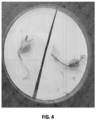
- FIG. 4 An image of the plate assay with the RTI545 cells after 6 days is shown in FIG. 4 , and the data from all of the plate assays are summarized in Table IV below.
- the RTI545 unexpectedly repelled, but did not kill the SCRW larvae.
- the RTI545 cultures were excellent at repelling the SCRW larvae; 100% of the larvae were present on the water-treated half of the filter paper and none of the larvae on the RTI545 treated paper. In contrast, the larvae were statistically evenly divided between treatment and water control for the HD-1 strain.
- the bifentrin chemical control resulted in about 19% of the larvae present on the CAPTURE LFR -treated filter paper.
- Table IV Percent of living SCRW larvae located on the treatment and water-treated halves of the filter paper after 6 days in a choice feeding assay on corn.
- israeltaki HD-1 (HD-1), were evaluated in comparison to a water control after 3 days in the assay. Again, the RTI545 cultures were excellent at repelling the SCRW larvae; 96% of the larvae were present on the water-treated half of the filter paper and only 4% on the half containing the RTI545 cells. In contrast, the larvae were again statistically evenly divided between treatment and water control for the HD-1 strain (53% on non-treated side of plate). Table V. Percent of living SCRW larvae located on the non-treated half of filter paper after 3 days in a choice feeding assay on corn. Bacterial Strain Cry % of larvae on non-treated side Bacillus thuringiensis RTI545 - 96 Bacillus thuringiensis subsp. kurstaki HD-1 + 53
- RTI545 provides a repellent effect to SCRW larvae when placed on the midline between treated and non-treated filter papers.
- FD30 Bacillus thuringiensis
- SCRW avoidance was observed when kanosamine was combined with the FD30 strain.
- repellent effects by kanosamine at all dilution rates between 0.1 ⁇ g/ml and 100.0 ⁇ g/ml, were observed at 24h.
- kanosamine treated filter paper at 10 and 100 ⁇ g/ml provided ⁇ 80% avoidance response to SCRW.
- minimal feeding damage was observed on corn located on the kanosamine treated side.
- FD30 had a non-statistical 20% difference in the number of larvae located on the treated and untreated filter paper at 3 d; noticeable feeding damage to corn was seen on both sides of the FD30 choice assay.
- filter paper treated with 30.0 ug/ml of kanosamine provided complete repellency out to 5 days (data not shown). Based on these results, the ability of RTI545 to repel insect species such as WPB and SCRW may be due to its production of kanosamine.
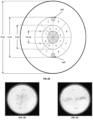
- the test arena is shown schematically in Fig. 6 .
- Nine-cm-diameter Petri dishes were filled with 15 ml 0.75% Phytagel (including 0.1% MgSO 4 .7H 2 O).
- Magnesium Sulfate Heptahydrate MgSO 4 .7H 2 O was used, instead of water agar, so that nematode tracks could be observed under a microscope.
- Wells of 0.5 cm diameter which can accommodate approximately 50 ⁇ l of solution were made at opposite sides of the dishes at 2 cm from the center.
- the test samples were applied in the wells and left to diffuse for 1 hour with lids on the dishes, so a gradient around the wells could be established.
- the test arena was divided into sixteen zones, designated as 1-8 for attractive zones and a-h for repellent zones as shown in Fig. 6A .
- Nematodes attracted to the test substance would tend to move to the numbered (attractive) zones, resulting in clustering along the axis parallel to the orientation of the wells.
- Repelled nematodes would tend to move to the lettered (repellant) zones, resulting in clustering along the axis perpendicular to the orientation of the wells.
- the chemotaxis factor (Cf) was calculated by dividing the total number of nematodes in the attractant zones by the total number of nematodes in the repellent zones.
- a Cf greater than 2 meant attraction for the nematodes, while lower than 0.5 indicated repellence, and 0.5 to 2 was considered neutral.
- the results are shown in Table VII.
- Acetic acid at 1% showed repellency to RKN J2 (Cf ⁇ 0.5) at 3h and 5h from initiation of the test.
- the Cf for acetic acid at early evaluation time point of 2h was neutral (data not shown), probably as a result of slow diffusion of the chemical into the Phytagel medium and/or delayed nematode response to the chemical.
- FIG. 6B is a photograph of an assay of kanosamine tested at 100 ⁇ g/ml, wherein dots representing nematode locations indicate neutral distribution.
- Fig. 6C is a photograph of an assay of RTI545 supernatent tested at 100 % strength, wherein dots representing nematode locations indicate repellant distribution.
- Table VII The chemotaxis of root knot nematode ( Meloidogyne spp.) in the presence of RTI545 supernatant.
- RTI545 Bacillus thuringiensis
- RKN root knot nematode
- one loop ( ⁇ 10 ⁇ l) of the RTI545 strain was grown for 16h in 5 ml of 869 medium at 200 rpm at 30°C.
- the bacterial culture was started in 250 ml fermentation flasks in 25 ml of 869 medium at an initial OD of 0.01. Bacteria were grown overnight (for 16h) at 200 rpm at 30 °C. Two ml of bacterial culture was saved to measure the OD and colony forming units (CFU).
- the remaining culture was centrifuged (2500 rpm, 15 min) and the supernatant was filter-sterilized through a 0.22 ⁇ m filter.
- the hatching assay was initiated within 4h from the supernatant collection.
- the supernatant was kept at 4°C until the initiation of the bioassay.
- Kanosamine (10 mg) was dissolved in 1ml of deionized water to obtain 10mg/ml stock solution. To obtain 200 ⁇ g/ml concentration, 20 ⁇ l of concentrated stock (10mg/ml) was added to 990 ml of water. Serial dilutions were then made to create concentrations of 20 ⁇ g/ml and 2 ⁇ g/ml of kanosamine respectively.
- a mixed culture of root knot nematodes ( Meloidogyne incognita and M. hapla ) was used. Nematode eggs were extracted from tomato roots by bleaching and cleaned using an Opti-prep centrifugation step followed by two washes in water. Before setting up the hatching assay, the percentage of early (eggs with a visible embryo) and late eggs (eggs with differentiated juveniles inside; J1 or J2 stages) were established by counting the eggs under a microscope. Only fresh eggs (collected at the day of the initiation of the assay) were used for the bioassay.
- the assay was performed in 24-well tissue culture plates. In each well 75 ⁇ l of egg solution in 2% methyl cellulose (approximately 100 eggs per well) was mixed with 75 ⁇ l of antibiotic solution (300 mg/L streptomycin + 300 mg/L penicillin) and 150 ⁇ l of each treatment. Antibiotics were suspended in sterile distilled water. The final concentration of antibiotics in testing plates was 75 mg/L of penicillin and 75 mg/L of streptomycin. All treatments contained 2% methyl cellulose (RKN eggs were suspended in methyl cellulose prior to exposure to treatment). The addition of methyl cellulose increases the accuracy of adding the same number of inoculum to each treatment. The treatments were set up in 6 replications.
- MAXIM SYNGENTA CROP PROTECTION, INC
- A.I. fludioxonil
- thuringiensis RTI545 and a chemical insecticide such as bifenthrin significantly improves insect control over inclusion of chemical insecticide alone and is superior to commercially available products for some types of insect control.
- Table IX Control of wireworm and seed maggot in corn field trials after seed treatment with a combination of chemical insecticide and spores of RTI545 as compared to PONCHO VOTIVO.
- FC Emerge Stand Wireworm Seed Maggot Vigor TREATMENT % % % Damage % Damage 1-5 1 FC* 70 78 26 14 3 3 3 2 FC+Bifenthrin 81 85 13 11 3.8 4 4 3 FC+Poncho 1250 Votivo 91 93 6.2 5.4 4 4.3 4.5 4 FC+PONCHO 250 80 89 14 11 3.8 4 4 5 FC+Poncho 500 Votivo 85 89 14 7.4 4 4 4 6 FC+Bifenthrin+RTI545 92 96 5.6 3.2 4.5 4.8 5 *FC is the fungicide check applied to all treatments containing fludioxonil and Mefenoxam to provide disease protection
- corn seeds were first treated with the seed treatment slurries as described as follows and then planted in soil infested with the pest wireworm (10 wireworms per pot with one seed), along with a control set where the soil did not contain wireworm.
- FC chemical control MAXIM + APRON XL
- FC chemical control MAXIM + APRON XL
- FC FC
- FC + bifenthrin (0125 mg/seed for all treatments treated)
- FC+ bifenthrin + RTI545 5.0 ⁇ 10 6 5) FC+ bifenthrin + RTI545 5.0 ⁇ 10 6 and heat-treated
- the treated seeds were were evaluated for percent emergence.
- a RTI545 spore concentrate (1.0 ⁇ 10 10 cfu/ml) in water was applied at an amount of 1.0 ⁇ 10 6 cfu/seed.
- FC is a formulation containing fludioxonil, TPM, and mefenoxam which was applied to seed at 2.5 g/100g seed (fludioxonil), 10 g/100g (TPM), and 7.5 g/100g seed (mefenoxam).
- Thiamethoxam was applied to seed at 50 g/100g seed.
- soybean seeds were mixed with a solution containing: 1) chemical control fludioxonil/TPM/mefenoxam ("FC"); 2) FC+ insecticide thiamethoxam; and 3) FC + thiamethoxam + spores of B. thuringiensis RTI545.
- FC chemical control fludioxonil/TPM/mefenoxam
- FC+ insecticide thiamethoxam FC + insecticide thiamethoxam + spores of B. thuringiensis RTI545.
- FC chemical control fludioxonil/TPM/mefenoxam
- FC+ insecticide thiamethoxam insecticide thiamethoxam
- FIG. 1A is a schematic diagram that shows insect control with a chemical insecticide alone, (i.e. without RTI545).
- FIG.1A shows on the far left a plant seed (inner circle) coated with a chemical insecticide (dark band surrounding inner circle), which is surrounded by plant insect pests in the plant rhizosphere represented by horizontal marks.
- the middle portion of the diagram shows the sprouted plant seed with difused insecticide protecting the roots of the plant seed from the insect pests (protection represented by the "X" marks).
- FIG. 1B shows how addition of Bacillus thuringiensis RTI545 spores to the coating on the plant seed (or in furrow application of RTI545 spores around the time of planting) improves insect control over use of the insecticide coating alone.
- the far right side of the FIG. 1B diagram shows continued protection of the roots of the plant seed from the insect pests even as the roots grow beyond the diffusion zone of the chemical insecticide as a result of the establishment of Bacillus thuringiensis RTI545 in the plant rhizosphere.
- the products were applied at the rates designated on the product labels.
- the number of cysts per gram of root biomass for the soil treated with RTI545 cells was significantly reduced compared to all of the treatments including the products containing chemical active ingredients.
- an experiment in cotton was set up as follows: 1) seed was untreated (UTC); 2) seed was treated with a base combination of Fludioxonil + Mefenoxam + Imidacloprid according to manufacturer label (referred to as "B”); 3) seed was treated with base plus 5 ⁇ 10 +5 cfu/seed of RTI545 (B + RTI545); and 4) seed was treated with base plus VIBRANCE (active ingredient sedaxane; SYNGENTA CROP PROTECTION, INC) according to label instructions (B + VIBRANCE). Field trials were performed in Georgia. The trials were inoculated with Rhizoctonia by mixing the dried inoculum with the seed at the time of planting to a prescribed rate to provide infection when the seed commenced to grow. The average percent cotton emergence is presented in Table XV below.
- Table XV The results in Table XV show that treating with RTI545 spores in addition to the base resulted in significant improvement in percent emergence over that of the chemical base alone (67% versus 45% for base alone).
- treatment with RTI545 performed as well as the base plus commercial product VIBRANCE with chemical active.
- seed treatment with RTI545 can provide significant improvement in emergence even under conditions of severe pathogen pressure.
- Table XV Cotton emergence in Rhizoctonia -inoculated soil from seeds treated with RTI545. Treatment % Emergence 1 Untreated control 23 2 B 45 3 B + RTI545 (5x10 5 CFU/seed) 67 4 B + VIBRANCE 63
- the treated wheat seed were planted in field trials in Wisconsin in soil infested with the insect pests wireworm and white grub. Ratings collected and analyzed were % emergence, % wireworm damage, % grub damage, plant vigor and yield. Insect feeding damage severity was rated by visual inspection 35 days after planting, and plant vigor was ranked on a scale of 1 to 5, with 1 being low and 5 representing highly vigorous.
- Soybean seeds of the soybean variety cv. Pioneer 93Y92 were treated with separate slurries being prepared for the chemical and biological treatments which were simultaneously applied to the seed. Seeds were placed in a jar which was shaken on a modified paint shaker until the product was uniformly coated on the seeds.
- the base chemical treatment comprised four actives comprising 1) 12.8 g/L of fludioxonil, 2) 38.4 g/L of mefenoxam, 3) 38.4 g/L of thiophanate-methyl (TPM) and 4) 256 g/L of thiamethoxam as a single formulation and applied at 41.4 mL/140,000 seeds.
- Vibrance 500 g/L of sedaxane was applied separately as a seed treatment to the positive control treatment. Dry technical of the strain RTI545 was used and diluted in water to achieve an application rate of 5 ⁇ 10 5 cfu/seed. Products were slurried with water to at least to 65 mL/140,000 seeds to ensure uniform application. The trial comprised randomized complete block tests (4 replicates) being 1.8 meters by 9 meters plots. Seeds of the soybean variety cv. Treated and untreated seeds were planted in sandy soil using a cone planter at a seeding rate of 13 seeds/meter at a depth of 2.5 cm and row spacing of 90 cm. Inoculum of Rhizoctonia was mixed and planted with the seed.
- Rhizoctonia The impact of Rhizoctonia is to reduce stand, reduce vigor and lower yields. Inoculation was effective in view of the base treatment being significantly improved over the untreated seed for all plant counts, vigor and yield assessments.
- RTI545 The addition of RTI545 to the chemical base resulted in significant increase in stand at all 3 assessment timings, vigor to increase significantly at 2 assessment timings and numerically higher yield compared to the chemical base. Reduced stand and vigor ratings may be due to plants dying off.
- RTI545 addition was similar to the sedaxane treatment for all ratings demonstrating this strain equal effectiveness in reducing damage from Rhizoctonia in this trial.
- Corn seeds (variety cv. Ag Venture G5891) were treated with separate slurries being prepared for the chemical and biological treatments which were simultaneously applied to the seed. Seeds were placed in a jar which was shaken on a modified paint shaker until the product was uniformly coated on the seeds.
- the base chemical treatment comprised three commercial formulations comprising 1) 40.3 % of fludioxonil, 2) 33.3 % of mefenoxam, 3) 18.4 % of chlorantraniliprole, 4) 600 g/L of clothianidin, and 5) 400 g/L of bifenthrin. Dry technical of the strain RTI545 was used and diluted in water to achieve an application rate 1 ⁇ 10 6 cfu/seed.
- Treatment 13 is Base + Clothianidin 1.25 mg/seed as a positive control for a high level of wireworm protection.
- the trial comprised randomized complete block tests (4 replicates) of 3 meters by 15 meters plots.
- the corn seeds were planted in Milford silty clay loam soil using a cone planter at a seeding rate of 93,900 seeds/hectare, a depth of 6.25 cm and row spacing of 75 cm. Manure was spread on top of plots after seeding to attract seed maggots to lay eggs in the plots.
- the plots and corn plants were treated under generally accepted agronomic conditions for corn including minimum tillage with rainfall being average to above average for the area.
- wireworm feeding The impact of wireworm feeding is to reduce stand, reduce vigor and stunt plants by root pruning, damage roots and reduce yields. Seed maggots can also reduce stand and feed on seed, causing stunting.
- RTI545 to clothianidin (treatments 3 and 4 respectively) applied at 0.25 mg/seed significantly increased emergence at all 4 assessment timings, significantly increased vigor at all 3 assessment timings, reduced feeding damage caused by seed maggot and wireworm and significantly increased yield.
- RTI545 to chlorantraniliprole (0.25 mg/seed for treatments 7 and 8 respectively) significantly increased emergence at 3 assessment timings and significantly increased yield.
- RTI545 to chlorantraniliprole (0.5 mg/seed for treatments 9 and 10 respectively) significantly increased emergence at all 4 assessment timings, significantly increased vigor at all 3 assessment timings, reduced significantly feeding damage caused by seed maggot, reduced numerically wireworm feeding damage and significantly increased yield.
- RTI545 to a chlorantraniliprole and bifenthrin combination (treatments 9 and 10 respectively) significantly increased emergence at all 4 assessment timings, significantly increased vigor at all 3 assessment timings, reduced significantly feeding damage caused by seed maggot and wireworm and significantly increased yield.
- Yield data from 7 wireworm trials indicate treatments containing RTI545 show a slight advantage over bifenthrin alone and commercial standard tefluthrin at its highest rate.
- Data from 18 trials for corn rootworm indicate yields from treatments containing RTI545 show yields equal to or slightly higher than bifenthrin alone, and tefluthrin at its highest rate.
- Data from these 18 trials also indicate that corn treated with RTI545 in combination with an insecticide resulted in less root damage to corn in corn rootworm infested soil than the industry standard of tefluthrin at its maximum rate or bifenthrin at maximum rate or when RTI545 was applied alone as a treatment.
- a field trial was conducted in Georgia to test the efficacy of the biological combination of the invention as a seed treatment of peanut inoculated with Rhizoctonia solani.
- Peanut seeds were treated with a dry dust formulation with a final application rate of 200 g/100 kg of seed containing RTI545, resulting in an application of RTI545 at 3.0 ⁇ 10 6 CFU/g of seed, and simultaneous applied with DYNASTY PD, a United States registered peanut product containing fludioxonil (2%), mefenoxam (0.4%) and azoxystrobin (3.2%) with an application of 195 g/100 kg of seed. Seeds were placed in a jar and shaken until the product was uniformly coated on the seeds.
- All seed treatments had a higher stand than the untreated control (UTC) at all 3 assessment timings. At all three assessment timings, the treatment including RTI545 provided the best emergence. The untreated seed had the lowest vigor at all 3 assessment timings. The treatment including RTI545 provided stronger vigor than the UTC and the base chemical treatment. All products provided significantly higher yield than the UTC. The treatment including RTI545 outperformed base chemical treatment.
- Soil assays on seed-treated corn to assess activity against lesion nematode were conducted in a greenhouse.
- Corn (cv. Viking) seeds were treated with a base seed treatment of fludioxonil (1.1 ml/SU) and metalaxyl-M (1.1 ml/SU) (all seeds). Some seeds were also treated with PONCHO/VOTIVO (clothianidin + B.
- the treated seeds were planted in cone-shaped containers in 90 ml of soil (80.4% sand, 14.8% silt, 4.8% clay, organic matter 1.1%, pH 6.9). After planting the seeds, the soil was inoculated on the same day with 4000 nematodes (mixed stages: J2-adults) per seed in 200 ⁇ l of carrier (2% methyl cellulose). A control used seeds with the base seed treatment in non-inoculated soil. The test plantings were top watered using a mist sprinkler. The test was evaluated at 2 (data not shown) and 7 days after emergence for total root length using WinRhizo TM software.
- Treatment % Root length Increase vs inoculated control Base seed treatment, inoculated 0 Base seed treatment, non-inoculated 18 Base seed treatment + PONCHO/VOTIVO 19 Base seed treatment + RTI545 (5 x 10 5 CFU/seed) 30 Base seed treatment + RTI545 (1 x 10 6 CFU/seed) 34
- Inoculation of corn seedlings with lesion nematodes numerically reduced total root length.
- the total root length of seedlings treated with PONCHO/VOTIVO (commercial standard) was greater than the non-treated inoculated seedlings and similar to non-treated non-inoculated seedlings.
- the total root length of RTI545-treated seedlings was significantly increased when compared with non-treated inoculated seedling (30-34%) and was statistically similar but numerically greater than the total root length of seedlings treated with PONCHO/VOTIVO.
- RTI545 seed treatment increases plant tolerance to nematode infestation by sustaining plant growth in the presence of nematode pests.
- RTI545 was used at the lower rate in combination with other strains: RTI545 (1 ⁇ 10 5 CFU/seed) + Bacillus subtilis strain CH201 (2.5 ⁇ 10 6 CFU/seed) + Bacillus licheniformis strain CH200 (2.5 ⁇ 10 6 CFU/seed), or RTI545 (1 ⁇ 10 5 CFU/seed)+RTI301 (5 ⁇ 10 5 CFU/seed) + Bacillus licheniformis strain CH200 (2.5 ⁇ 10 6 CFU/seed).
- RTI545 seed treatment at a high rate (1.0 ⁇ 10 6 CFU/seed) provided very good control of lesion nematodes (50% reduction of nematode numbers in the roots). PONCHO/VOTIVO did not reduce nematode numbers in roots. Table XXIII. The effect of RTI545 seed treatment in corn on fresh top weight and nematode counts in roots after inoculation with lesion nematode.
- Base seed treatment inoculated -- 6.5 Base seed treatment, non-inoculated 0 12.8 Base seed treatment + PONCHO/VOTIVO No control 8.5 Base seed treatment + RTI545 (5 x 10 5 CFU/seed) 8 11.6 Base seed treatment + RTI545 (1 x 10 6 CFU/seed) 49 13.3 Base seed treatment + RTI545 (5 x 10 5 CFU/seed) + CH200(2.5 x 10 6 CFU/seed) + CH201 (2.5 x 10 6 CFU/seed) 12 13.2 Base seed treatment + RTI545 (5 x 10 5 CFU/seed) + RTI301 (5 x 10 5 CFU/seed) + CH200 (2.5 x 10 6 CFU/seed) 6 12.1
- RTI545 reduced nematode cyst numbers up to 66%. There was no clear dose response between the rates tested and activity. The activity of RTI545 was not statistically different from the biological standard VENERATE XC. Chemical standard abamectin had the highest activity. The rate of 0.01 mg/plant provided 79% reduction and 0.1 mg/plant provided 96% reduction.
- suspension concentrates comprising Bacillus thuringiensis RTI545 are summarized in Table XXV. They were prepared by mixing spores of RTI545 with the other components in a suitable mixing vessel or homogenizer. Table XXV. Suspension Concentrate Formulations Example 18A 18B Component Function % (w/w) RTI545 3x0 11 cfu/g Active ingredient 5.25 9.59 Ammonium sulfate Antifreeze 9.5 Glycerol (86.5%) Antifreeze 48 Attapulgite (20-35 % aq. suspension) Thickener 9.0 Alkyl polyglycosides, mixture Dispersant 8.0 Anionic Phosphate ester surfactants, mixture Dispersant 7.0 Aq. Dispersion of ethylene vinyl acetate copolymer Dispersant 0.89 silicone emulsion antifoam 0.3 Potassium sorbate Preservative 0.1 0.2 Water Diluent 59.54 38.82
- Example 19C is a foamable composition that can be applied as a foam to seeds or in-furrow at time of planting.
- the foamable composition 19C can be optionally diluted with water and mixed with a pressurized gas such as air in a foaming chamber comprising a foaming medium such as a plurality of glass beads to prepare a foam.
- Example 19D 19E Component Function % (w/w) Technical Bifenthrin Active ingredient (99%) 17.4 16.6 RTI545 3x10 11 cfu/g Active ingredient 5.0 10 Ammonium sulfate Antifreeze 11.2 10.6 Alkyl polyglycosides, mixture Dispersing agent 12.9 12.3 Anionic Phosphate ester surfactants, mixture Dispersing agent 1.3 1.2 silicone emulsion Antifoam 0.3 0.3 Potassium sorbate Preservative 0.1 0.1 Sodium benzoate Preservative 0.1 0.1 Citric acid Diluent 0.8 0.7 H 3 PO 4 Diluent 0.4 0.5 Water Diluent 50.4 47.5
Landscapes
- Life Sciences & Earth Sciences (AREA)
- Engineering & Computer Science (AREA)
- Zoology (AREA)
- Health & Medical Sciences (AREA)
- Wood Science & Technology (AREA)
- Chemical & Material Sciences (AREA)
- General Health & Medical Sciences (AREA)
- Plant Pathology (AREA)
- Environmental Sciences (AREA)
- Pest Control & Pesticides (AREA)
- Biotechnology (AREA)
- Microbiology (AREA)
- Dentistry (AREA)
- Agronomy & Crop Science (AREA)
- Virology (AREA)
- Bioinformatics & Cheminformatics (AREA)
- Organic Chemistry (AREA)
- Genetics & Genomics (AREA)
- General Chemical & Material Sciences (AREA)
- Chemical Kinetics & Catalysis (AREA)
- Biochemistry (AREA)
- General Engineering & Computer Science (AREA)
- Tropical Medicine & Parasitology (AREA)
- Medicinal Chemistry (AREA)
- Biomedical Technology (AREA)
- Mycology (AREA)
- Botany (AREA)
- Insects & Arthropods (AREA)
- Agricultural Chemicals And Associated Chemicals (AREA)
- Micro-Organisms Or Cultivation Processes Thereof (AREA)
- Pretreatment Of Seeds And Plants (AREA)
- Toxicology (AREA)
Claims (11)
- Zusammensetzung, umfassendeine biologisch reine Kultur von Bacillus thuringiensis RTI545, hinterlegt als ATCC No. PTA-122161, undein landwirtschaftlich unbedenkliches Adjuvans;zur Anwendung auf eine Pflanze zur Förderung des Pflanzenwachstums und/oder zum Schutz einer anfälligen Pflanze vor einem Pflanzenschädling.
- Zusammensetzung nach Anspruch 1, wobei die biologisch reine Kultur von Bacillus thuringiensis RTI545 in Form von Sporen vorliegt.
- Verfahren zur Förderung des Pflanzenwachstums und/oder zum Schutz einer anfälligen Pflanze vor einem Pflanzenschädling, wobei das Verfahren die Verabreichung einer eine biologisch reine Kultur von Bacillus thuringiensis RTI545, hinterlegt als ATCC No. PTA-122161, umfassenden Zusammensetzung nach Anspruch 1 oder 2 an: die Pflanze, den Pflanzenteil, den Samen der Pflanze, die Wurzeln der Pflanze, den die Pflanze umgebenden Boden oder das die Pflanze umgebende Wachstumsmaterial oder Boden oder Wachstumsmaterial vor dem Einpflanzen der Pflanze oder dem Säen von Samen der Pflanze in einer zur Förderung des Pflanzenwachstums und/oder zum Schutz einer anfälligen Pflanze vor einem Pflanzenschädling geeigneten Menge umfasst.
- Verfahren nach Anspruch 3, umfassend: das Pflanzen eines mit einer Zusammensetzung nach Anspruch 1 oder 2 beschichteten Samens.
- Verfahren nach Anspruch 3 oder Anspruch 4, wobei die Pflanze Mais, Sojabohne, Kartoffel, Baumwolle, Tomate, Paprika, Kürbis, Zuckerrohr, Erdnuss oder Weizen umfasst.
- Verfahren nach einem der Ansprüche 3-5, wobei der Pflanzenschädling ein Insekt ausgewählt aus der aus Lygus spp., Coleoptera, Diabrotica spp., Melanotus spp., Phyllophaga spp., Limonius spp., Agriotes spp., Lepidoptera, Peridroma spp., Euxoa spp., Agrotis spp., Diptera, Hylemya spp., Tetanops sp., Hemiptera, Pemphigus sp., Aphis sp., Agonoderus sp., Feltia spp. oder Kombinationen davon bestehenden Gruppe umfasst.
- Verfahren nach Anspruch 6, wobei der Pflanzenschädling eine Pflanzenwanze, einen Wurzelbohrer, einen Drahtwurm, eine bodenbewohnende Made oder einen Komplex weißer Larven verschiedener Scarabaeidae (White Grub Complex) umfasst.
- Verfahren nach einem der Ansprüche 3-5, wobei der Pflanzenschädling eine pflanzenpathogene Nematode ausgewählt aus der aus Rotlyenchulus spp., Xiphinema spp., Hoplolaimus spp., Paratylenchus spp., Criconemoides spp., Meloidogyne spp., Hemicycliophora spp., Helicotylenchus spp., Trichodorus spp., Heterodera spp., Belonolaimus spp., Tylenchorhynchus spp., Globodera spp. oder Kombinationen davon bestehenden Gruppe umfasst.
- Verfahren nach Anspruch 8, wobei die Nematode eine Meloidogyne spp.-Nematode, Pratylenchus spp.-Nematode, Globodera spp.-Nematode oder Heterodera spp.-Nematode umfasst.
- Pflanzensamen, beschichtet mit einer Zusammensetzung nach Anspruch 1 oder 2, umfassend Sporen einer biologisch reinen Kultur von Bacillus thuringiensis RTI545, hinterlegt als ATCC No. PTA-122161, die in einer zur Förderung des Pflanzenwachstums und/oder zum Schutz einer anfälligen Pflanze vor einem Pflanzenschädling geeigneten Menge vorliegen.
- Pflanzensamen nach Anspruch 10, wobei der Samen den Samen von Mais, Sojabohne, Kartoffel, Baumwolle, Tomate, Paprika, Kürbis, Zuckerrohr, Erdnuss oder Weizen umfasst.
Priority Applications (3)
| Application Number | Priority Date | Filing Date | Title |
|---|---|---|---|
| HRP20230952TT HRP20230952T1 (hr) | 2016-10-05 | 2017-10-05 | Pripravak bacillus thuringiensis rti545 i postupci upotrebe za poboljšanje rasta biljaka i kontrolu biljnih štetočina |
| EP23169387.0A EP4234724A3 (de) | 2016-10-05 | 2017-10-05 | Bacillus thuringiensis rti545 zusammensetzungen und verfahren zur verwendung zur förderung des pflanzenwachstums und zur bekämpfung von pflanzenschädlingen |
| SI201731399T SI3522706T1 (sl) | 2016-10-05 | 2017-10-05 | Sestavki, ki vsebujejo bacillus thuringiensis RTI545 in postopki uporabe, ki koristijo rasti rastlin in za zatiranje rastlinskih škodljivcev |
Applications Claiming Priority (2)
| Application Number | Priority Date | Filing Date | Title |
|---|---|---|---|
| US201662404275P | 2016-10-05 | 2016-10-05 | |
| PCT/US2017/055338 WO2018067815A1 (en) | 2016-10-05 | 2017-10-05 | Bacillus thuringiensis rti545 compostions and methods of use for benefiting plant growth and controlling plant pests |
Related Child Applications (2)
| Application Number | Title | Priority Date | Filing Date |
|---|---|---|---|
| EP23169387.0A Division EP4234724A3 (de) | 2016-10-05 | 2017-10-05 | Bacillus thuringiensis rti545 zusammensetzungen und verfahren zur verwendung zur förderung des pflanzenwachstums und zur bekämpfung von pflanzenschädlingen |
| EP23169387.0A Division-Into EP4234724A3 (de) | 2016-10-05 | 2017-10-05 | Bacillus thuringiensis rti545 zusammensetzungen und verfahren zur verwendung zur förderung des pflanzenwachstums und zur bekämpfung von pflanzenschädlingen |
Publications (2)
| Publication Number | Publication Date |
|---|---|
| EP3522706A1 EP3522706A1 (de) | 2019-08-14 |
| EP3522706B1 true EP3522706B1 (de) | 2023-06-07 |
Family
ID=60153499
Family Applications (2)
| Application Number | Title | Priority Date | Filing Date |
|---|---|---|---|
| EP17787765.1A Active EP3522706B1 (de) | 2016-10-05 | 2017-10-05 | Bacillus thuringiensis rti545 zusammensetzungen und verfahren zur verwendung zur förderung des pflanzenwachstums und zur bekämpfung von pflanzenschädlingen |
| EP23169387.0A Withdrawn EP4234724A3 (de) | 2016-10-05 | 2017-10-05 | Bacillus thuringiensis rti545 zusammensetzungen und verfahren zur verwendung zur förderung des pflanzenwachstums und zur bekämpfung von pflanzenschädlingen |
Family Applications After (1)
| Application Number | Title | Priority Date | Filing Date |
|---|---|---|---|
| EP23169387.0A Withdrawn EP4234724A3 (de) | 2016-10-05 | 2017-10-05 | Bacillus thuringiensis rti545 zusammensetzungen und verfahren zur verwendung zur förderung des pflanzenwachstums und zur bekämpfung von pflanzenschädlingen |
Country Status (23)
| Country | Link |
|---|---|
| US (2) | US10390535B2 (de) |
| EP (2) | EP3522706B1 (de) |
| JP (1) | JP7086060B2 (de) |
| KR (1) | KR102465155B1 (de) |
| CN (1) | CN110087460B (de) |
| AR (1) | AR110637A1 (de) |
| AU (1) | AU2017340623C1 (de) |
| CA (1) | CA3039531A1 (de) |
| CL (1) | CL2019000891A1 (de) |
| CO (1) | CO2019004483A2 (de) |
| DK (1) | DK3522706T5 (de) |
| EC (1) | ECSP19030467A (de) |
| ES (1) | ES2954666T3 (de) |
| HR (1) | HRP20230952T1 (de) |
| HU (1) | HUE064143T2 (de) |
| LT (1) | LT3522706T (de) |
| MA (1) | MA46458A (de) |
| MX (1) | MX387446B (de) |
| PE (2) | PE20191352A1 (de) |
| PL (1) | PL3522706T3 (de) |
| PT (1) | PT3522706T (de) |
| SI (1) | SI3522706T1 (de) |
| WO (1) | WO2018067815A1 (de) |
Families Citing this family (53)
| Publication number | Priority date | Publication date | Assignee | Title |
|---|---|---|---|---|
| MX387446B (es) | 2016-10-05 | 2025-03-18 | Fmc Corp | Composiciones de bacillus thuringiensis rti545 y metodos para usar para beneficiar el crecimiento de plantas y el control de plagas de plantas. |
| WO2019081551A1 (en) * | 2017-10-26 | 2019-05-02 | Merck Patent Gmbh | METHOD FOR REALIZING A CHEMOTAXIS ASSAY ON A POROUS WET SURFACE |
| CN109362789A (zh) * | 2018-11-28 | 2019-02-22 | 湖北工程学院 | 解淀粉芽孢杆菌d2wm在促进蔬菜生长中的应用 |
| CN109554317B (zh) * | 2018-12-29 | 2022-04-01 | 陕西省微生物研究所 | 贝莱斯芽孢杆菌及其在小麦纹枯病防病促生中的应用 |
| ES3049805T3 (en) * | 2019-01-08 | 2025-12-18 | Oro Agri Inc | A liquid anti-pathogenic agricultural composition |
| CN110129239B (zh) * | 2019-05-31 | 2021-06-04 | 河南科技大学 | 具有多种防病作用的贝莱斯芽孢杆菌及其应用、生防菌剂 |
| CN110317735B (zh) * | 2019-08-15 | 2020-10-13 | 江苏省农业科学院 | 生防寡雄腐霉菌及应用 |
| IL292092B2 (en) * | 2019-10-18 | 2026-02-01 | Fmc Corp | Insecticidal mixtures of bifenthrin and chloranthrilyprol |
| JP7442785B2 (ja) * | 2019-12-06 | 2024-03-05 | 株式会社Hirotsuバイオサイエンス | 走性解析方法、がん評価方法、走性解析システム及びプログラム |
| CN111040976B (zh) * | 2020-01-06 | 2021-04-13 | 安徽农业大学 | 一株解淀粉芽孢杆菌及其应用 |
| CN111269851B (zh) * | 2020-01-20 | 2021-03-23 | 安徽农业大学 | 一种贝莱斯芽孢杆菌及其在小麦全蚀病防治中的应用 |
| CN111172080B (zh) * | 2020-02-24 | 2021-05-18 | 山东农业大学 | 一株贝莱斯芽孢杆菌及其应用 |
| CN111296382B (zh) * | 2020-03-13 | 2025-01-14 | 青岛森昌源园林工程有限公司 | 一种防治松材线虫病的智能生态防疫罩 |
| MX2022016222A (es) * | 2020-06-17 | 2023-04-04 | Bioconsortia Inc | Microbios, composiciones microbianas y consorcios beneficiosos para la agricultura. |
| CN112430554B (zh) * | 2020-11-27 | 2022-03-11 | 山东省科学院生态研究所(山东省科学院中日友好生物技术研究中心) | 一种瓜果猝倒病生防细菌BTh05及其菌剂、菌剂制备方法和应用 |
| CN112493256B (zh) * | 2020-12-03 | 2022-09-02 | 重庆谷百奥生物研究院有限公司 | 一种促进番茄生长和防治番茄炭疽病的绿僵菌制剂 |
| KR102706795B1 (ko) * | 2020-12-30 | 2024-09-19 | 경북대학교 산학협력단 | 포자 형성속도가 빠르며 나방목 해충에 살충 효과를 가지는 바실러스 투린지엔시스 아종 쿠르스타키(Bacillus thuringiensis subsp. kurstaki) KNU-25 균주 및 이의 용도 |
| KR102757825B1 (ko) * | 2020-12-30 | 2025-01-21 | 경북대학교 산학협력단 | 포자 형성속도가 빠르며 파리목 해충에 살충 효과를 가지는 바실러스 투린지엔시스 아종 이스라엘렌시스(Bacillus thuringiensis subsp. israelensis) KNU-26 균주 및 이의 용도 |
| CN113068716B (zh) * | 2021-04-06 | 2021-12-07 | 河北农业大学 | 一种促进马铃薯幼苗生长的复配剂及其应用 |
| CN113151075B (zh) * | 2021-04-09 | 2022-02-15 | 安徽农业大学 | 一种解淀粉芽孢杆菌or2-30菌株及其应用 |
| WO2022226608A1 (pt) * | 2021-04-30 | 2022-11-03 | Total Biotecnologia Indústria E Comércio S/A | Ativação das funções bionematicida e promotora do crescimento vegetal em uma solução biotecnológica |
| CN113278551B (zh) * | 2021-05-20 | 2022-05-24 | 福建省农业科学院植物保护研究所 | 一株伯克霍尔德氏菌、包括伯克霍尔德氏菌的菌剂、菌肥及制备方法和应用 |
| CN113355262A (zh) * | 2021-05-20 | 2021-09-07 | 福建省农业科学院植物保护研究所 | 一株伯克霍尔德氏菌、包括伯克霍尔德氏菌的菌剂、菌肥及制备方法和应用 |
| JP7611615B2 (ja) * | 2021-06-02 | 2025-01-10 | 株式会社エス・ディー・エス バイオテック | 農園芸用殺虫組成物及び農園芸害虫の防除方法 |
| CN113373091A (zh) * | 2021-06-28 | 2021-09-10 | 福建农林大学 | 一株防治水稻纹枯病的生防菌株苏云金芽孢杆菌fj2b-25 |
| CN113598196A (zh) * | 2021-07-28 | 2021-11-05 | 广州毅田生物技术有限公司 | 一种苏云金杆菌复合生物杀虫剂及其制备方法 |
| CN113789179B (zh) * | 2021-10-09 | 2022-09-16 | 万物生(深圳)生物科技控股有限公司 | 一种基于植物干细胞技术的土壤改良剂及其制备方法 |
| CN113785842A (zh) * | 2021-10-20 | 2021-12-14 | 海南大学 | 用于防治植物真菌病害的农药组合物及其制备方法 |
| WO2023091342A1 (en) * | 2021-11-16 | 2023-05-25 | Phibro Animal Health Corporation | Preservation system for stabilizing spore-forming microbials |
| CN114058541B (zh) * | 2021-11-17 | 2022-10-28 | 河北农业大学 | 耐受农药酷拉斯的小麦纹枯病生防贝莱斯芽孢杆菌及应用 |
| CN114230681A (zh) * | 2021-11-26 | 2022-03-25 | 中国农业科学院植物保护研究所 | 一种胞外多糖提取物、胞外多糖及其应用 |
| CN114015624B (zh) * | 2021-12-15 | 2023-07-07 | 郑州轻工业大学 | 一种芽孢杆菌及其在鹰嘴豆种子培育中的应用 |
| CA3242055A1 (en) | 2021-12-16 | 2023-06-22 | United Industries Corporation | Ready-to-use barrier and knockdown pesticides |
| CN114606155B (zh) * | 2022-01-25 | 2023-08-04 | 云南大学 | 苏云金芽孢杆菌Bt79和/或Bt80菌株在防治植物南方根结线虫中的应用 |
| CN114437978A (zh) * | 2022-02-10 | 2022-05-06 | 深圳市爱格丽生物科技有限公司 | 一种用于甘蔗种植的微生物复合菌剂及其制备方法 |
| CN115093983A (zh) * | 2022-04-21 | 2022-09-23 | 云南农业大学 | 一种促生抗病生物菌剂 |
| WO2023219482A1 (es) * | 2022-05-09 | 2023-11-16 | Becerra Carranza Luis Rodrigo | Cepa aislada bacillus thuringiensis var israelensis, mezcla y método, para el control biológico de bacterias fitopatógenas |
| CN115572688B (zh) * | 2022-07-18 | 2026-02-10 | 华中农业大学 | 一种对植物寄生线虫高毒杀活性的蜡状芽胞杆菌及其应用 |
| CN115997797A (zh) * | 2023-01-03 | 2023-04-25 | 沈阳农业大学 | 一种环保型害虫防治组合物及其制备方法和应用 |
| CN116268008B (zh) * | 2023-03-16 | 2024-09-20 | 山东省烟台市农业科学研究院(山东省农业科学院烟台市分院) | 一种防治果树绿盲蝽的植物源农药及其制备方法 |
| CN116573965A (zh) * | 2023-04-19 | 2023-08-11 | 广东新景象生物工程有限公司 | 一种防控蔬菜黄曲条跳甲的药肥及制备方法 |
| CN116622581B (zh) * | 2023-06-08 | 2023-10-03 | 秦皇岛禾苗生物技术有限公司 | 一种贝莱斯芽孢杆菌hm-3及其应用 |
| CN117603878B (zh) * | 2023-12-01 | 2024-04-30 | 秦皇岛禾苗生物技术有限公司 | 一种复合微生物菌剂及其制备方法和应用 |
| WO2025131903A1 (en) | 2023-12-21 | 2025-06-26 | Chr. Hansen A/S | Priestia megaterium and uses thereof |
| CN117903951B (zh) * | 2023-12-25 | 2025-03-21 | 陕西省微生物研究所 | 一株淡紫拟青霉jbc033及其菌剂与应用 |
| WO2025157988A1 (en) | 2024-01-26 | 2025-07-31 | Chr. Hansen A/S | Phytoprotective combinations of bacilli that thrive under low temperature conditions |
| WO2025183135A1 (ja) * | 2024-02-28 | 2025-09-04 | 四国ケージ株式会社 | 植物の成長阻害物質の低減用製剤、及び植物の成長阻害物質の低減方法 |
| CN120829847A (zh) * | 2024-04-18 | 2025-10-24 | 湖北省农业科学院植保土肥研究所 | 一种贝莱斯芽孢杆菌及其应用 |
| CN118318545A (zh) * | 2024-05-17 | 2024-07-12 | 西北农林科技大学 | 一种缺乏营养元素的葡萄种植土壤的改良方法 |
| CN118222460B (zh) * | 2024-05-22 | 2024-07-26 | 山东省科学院生态研究所(山东省科学院中日友好生物技术研究中心) | 一种降解磺胺类抗生素的苏云金芽孢杆菌z03-j001及其菌剂和应用 |
| CN118947419A (zh) * | 2024-08-28 | 2024-11-15 | 江西省经济作物研究所 | 一种茶园扁刺蛾的生态防控方法 |
| CN121294289A (zh) * | 2025-12-10 | 2026-01-09 | 中科生物技术(山东)有限公司 | 一株苏云金芽孢杆菌zksw003及其菌剂和应用 |
| CN121450552A (zh) * | 2026-01-08 | 2026-02-03 | 山东碧蓝生物科技有限公司 | 一株苏云金芽孢杆菌、菌剂、复合杀虫剂及其应用 |
Family Cites Families (12)
| Publication number | Priority date | Publication date | Assignee | Title |
|---|---|---|---|---|
| US5986177A (en) | 1997-01-10 | 1999-11-16 | Agricultural Genetic Engineering Research Institute | Bacillus thuringiensis isolates with broad spectrum activity |
| CA2720739C (en) * | 2008-04-07 | 2020-04-21 | Bayer Cropscience Lp | Stable aqueous bacillus firmus-containing spore formulations |
| US10306889B2 (en) * | 2012-05-30 | 2019-06-04 | Bayer Cropscience Ag | Compositions comprising a biological control agent and an insecticide |
| AU2013269723B2 (en) * | 2012-05-30 | 2016-12-15 | Bayer Cropscience Ag | Composition comprising a biological control agent and a fungicide |
| KR20150023299A (ko) * | 2012-05-30 | 2015-03-05 | 바이엘 크롭사이언스 아게 | 생물학적 방제제 및 에르고스테롤 생합성의 억제제로부터 선택된 살진균제를 포함하는 조성물 |
| NZ742943A (en) | 2012-05-30 | 2019-04-26 | Bayer Cropscience Ag | Compositions comprising a biological control agent and a fungicide from the group consisting of inhibitors of the respiratory chain at complex i or ii |
| CN104286041A (zh) * | 2014-09-30 | 2015-01-21 | 胡伟东 | 一种玉米杀虫剂及其制备方法 |
| AR103290A1 (es) | 2014-12-29 | 2017-04-26 | Fmc Corp | Composiciones de bacillus amyloliquefaciens rti301 y métodos de uso para beneficiar el crecimiento de las plantas y el tratamiento de enfermedades de las plantas |
| UY36335A (es) | 2014-12-29 | 2017-04-28 | Fmc Corp | Composiciones microbianas destinadas a ser utilizadas en combinación con insecticidas para suelos, para beneficiar el crecimiento de las plantas |
| US20160205945A1 (en) * | 2015-01-16 | 2016-07-21 | Valent Biosciences Corporation | Bacillus thuringiensis subsp. kurstaki and bacillus thuringiensis subsp. aizawai combination formulations |
| CN105838634B (zh) * | 2015-04-09 | 2019-05-03 | 河北省农林科学院植物保护研究所 | 一种苏云金芽孢杆菌及其应用 |
| MX387446B (es) | 2016-10-05 | 2025-03-18 | Fmc Corp | Composiciones de bacillus thuringiensis rti545 y metodos para usar para beneficiar el crecimiento de plantas y el control de plagas de plantas. |
-
2017
- 2017-10-05 MX MX2019004016A patent/MX387446B/es unknown
- 2017-10-05 WO PCT/US2017/055338 patent/WO2018067815A1/en not_active Ceased
- 2017-10-05 DK DK17787765.1T patent/DK3522706T5/da active
- 2017-10-05 CN CN201780075453.2A patent/CN110087460B/zh active Active
- 2017-10-05 PE PE2019000767A patent/PE20191352A1/es unknown
- 2017-10-05 SI SI201731399T patent/SI3522706T1/sl unknown
- 2017-10-05 HR HRP20230952TT patent/HRP20230952T1/hr unknown
- 2017-10-05 PL PL17787765.1T patent/PL3522706T3/pl unknown
- 2017-10-05 US US15/726,053 patent/US10390535B2/en not_active Ceased
- 2017-10-05 LT LTEPPCT/US2017/055338T patent/LT3522706T/lt unknown
- 2017-10-05 PE PE2024000207A patent/PE20240726A1/es unknown
- 2017-10-05 CA CA3039531A patent/CA3039531A1/en active Pending
- 2017-10-05 MA MA046458A patent/MA46458A/fr unknown
- 2017-10-05 AR ARP170102782A patent/AR110637A1/es unknown
- 2017-10-05 PT PT177877651T patent/PT3522706T/pt unknown
- 2017-10-05 EP EP17787765.1A patent/EP3522706B1/de active Active
- 2017-10-05 KR KR1020197012843A patent/KR102465155B1/ko active Active
- 2017-10-05 AU AU2017340623A patent/AU2017340623C1/en active Active
- 2017-10-05 EP EP23169387.0A patent/EP4234724A3/de not_active Withdrawn
- 2017-10-05 ES ES17787765T patent/ES2954666T3/es active Active
- 2017-10-05 HU HUE17787765A patent/HUE064143T2/hu unknown
- 2017-10-05 JP JP2019518220A patent/JP7086060B2/ja active Active
-
2019
- 2019-04-03 CL CL2019000891A patent/CL2019000891A1/es unknown
- 2019-04-29 EC ECSENADI201930467A patent/ECSP19030467A/es unknown
- 2019-04-30 CO CONC2019/0004483A patent/CO2019004483A2/es unknown
-
2020
- 2020-01-22 US US16/749,275 patent/USRE49311E1/en active Active
Also Published As
Similar Documents
| Publication | Publication Date | Title |
|---|---|---|
| USRE49311E1 (en) | Bacillus thuringiensis RTI545 compositions and methods of use for benefiting plant growth and controlling plant pests | |
| CA2970688C (en) | Microbial compositions and methods of use for benefiting plant growth and treating plant disease | |
| US20190216091A1 (en) | Bacillus licheniformis rti184 compositions and methods of use for benefiting plant growth | |
| US20180195138A1 (en) | Bacillus amyloliquefaciens rti301 compositions and methods of use for benefiting plant growth and treating plant disease | |
| US20180020676A1 (en) | Bacillus velezensis rti301 compositions and methods of use for benefiting plant growth and treating plant disease | |
| US20170196226A1 (en) | Bacillus amyloliquefaciens rti472 compositions and methods of use for benefiting plant growth and treating plant disease | |
| US20190191707A1 (en) | Compositions comprising bacillus licheniformis and bacillus subtilis and methods of use for controlling fungal pathogens | |
| US20160183532A1 (en) | Microbial compositions for use in combination with soil insecticides for benefiting plant growth | |
| US20160183535A1 (en) | Bacillus pumilus rti279 compositions and methods of use for benefiting plant growth | |
| WO2026003713A1 (en) | Microbial compositions and methods of use for benefiting plant growth and treating plant disease | |
| BR112019006915B1 (pt) | Composição compreendendo uma cepa rti545, métodos para um ou ambos dentre beneficiar o crescimento de um vegetal, semente de vegetal revestida e uso da composição compreendendo uma cepa rti545 |
Legal Events
| Date | Code | Title | Description |
|---|---|---|---|
| REG | Reference to a national code |
Ref country code: HR Ref legal event code: TUEP Ref document number: P20230952T Country of ref document: HR |
|
| STAA | Information on the status of an ep patent application or granted ep patent |
Free format text: STATUS: UNKNOWN |
|
| STAA | Information on the status of an ep patent application or granted ep patent |
Free format text: STATUS: THE INTERNATIONAL PUBLICATION HAS BEEN MADE |
|
| PUAI | Public reference made under article 153(3) epc to a published international application that has entered the european phase |
Free format text: ORIGINAL CODE: 0009012 |
|
| STAA | Information on the status of an ep patent application or granted ep patent |
Free format text: STATUS: REQUEST FOR EXAMINATION WAS MADE |
|
| 17P | Request for examination filed |
Effective date: 20190417 |
|
| AK | Designated contracting states |
Kind code of ref document: A1 Designated state(s): AL AT BE BG CH CY CZ DE DK EE ES FI FR GB GR HR HU IE IS IT LI LT LU LV MC MK MT NL NO PL PT RO RS SE SI SK SM TR |
|
| AX | Request for extension of the european patent |
Extension state: BA ME |
|
| RIN1 | Information on inventor provided before grant (corrected) |
Inventor name: FUDALI-ALVES, SYLWIA LIDIA Inventor name: OBEL, ANDERS Inventor name: TAGHAVI, SAFIYH Inventor name: MCLEOD, RODERICK G. Inventor name: SPADAFORA, VINCENT JAMES Inventor name: BROST, KEVIN R.J. Inventor name: LEE, JAEHEON Inventor name: DEVINE, ANTHONY Inventor name: CALDWELL, NATHAN Inventor name: VAN DER LELIE, DANIEL Inventor name: PYE, MATTHEW FRANCIS Inventor name: PETERSEN, GORM VANG Inventor name: KIBBEE, JOHN E. Inventor name: TIRRELL, CHELSEA EILEEN Inventor name: WANG, GUOZHI Inventor name: ALBRIGHT, ROBERT B. |
|
| RAV | Requested validation state of the european patent: fee paid |
Extension state: MA Effective date: 20190417 |
|
| STAA | Information on the status of an ep patent application or granted ep patent |
Free format text: STATUS: EXAMINATION IS IN PROGRESS |
|
| 17Q | First examination report despatched |
Effective date: 20200904 |
|
| REG | Reference to a national code |
Ref country code: DE Ref legal event code: R079 Free format text: PREVIOUS MAIN CLASS: A01N0025000000 Ipc: A01N0063230000 Ref country code: DE Ref legal event code: R079 Ref document number: 602017069727 Country of ref document: DE Free format text: PREVIOUS MAIN CLASS: A01N0025000000 Ipc: A01N0063230000 |
|
| GRAP | Despatch of communication of intention to grant a patent |
Free format text: ORIGINAL CODE: EPIDOSNIGR1 |
|
| STAA | Information on the status of an ep patent application or granted ep patent |
Free format text: STATUS: GRANT OF PATENT IS INTENDED |
|
| RIC1 | Information provided on ipc code assigned before grant |
Ipc: C12R 1/07 20060101ALI20221129BHEP Ipc: C12N 1/20 20060101ALI20221129BHEP Ipc: C12N 1/04 20060101ALI20221129BHEP Ipc: A01P 7/04 20060101ALI20221129BHEP Ipc: A01P 7/02 20060101ALI20221129BHEP Ipc: A01P 21/00 20060101ALI20221129BHEP Ipc: A01P 5/00 20060101ALI20221129BHEP Ipc: A01P 3/00 20060101ALI20221129BHEP Ipc: A01N 53/00 20060101ALI20221129BHEP Ipc: A01N 51/00 20060101ALI20221129BHEP Ipc: A01N 43/56 20060101ALI20221129BHEP Ipc: A01N 25/00 20060101ALI20221129BHEP Ipc: A01N 63/23 20200101AFI20221129BHEP |
|
| INTG | Intention to grant announced |
Effective date: 20221216 |
|
| GRAS | Grant fee paid |
Free format text: ORIGINAL CODE: EPIDOSNIGR3 |
|
| GRAA | (expected) grant |
Free format text: ORIGINAL CODE: 0009210 |
|
| STAA | Information on the status of an ep patent application or granted ep patent |
Free format text: STATUS: THE PATENT HAS BEEN GRANTED |
|
| RAP1 | Party data changed (applicant data changed or rights of an application transferred) |
Owner name: FMC AGRICULTURAL SOLUTIONS A/S |
|
| AK | Designated contracting states |
Kind code of ref document: B1 Designated state(s): AL AT BE BG CH CY CZ DE DK EE ES FI FR GB GR HR HU IE IS IT LI LT LU LV MC MK MT NL NO PL PT RO RS SE SI SK SM TR |
|
| REG | Reference to a national code |
Ref country code: GB Ref legal event code: FG4D |
|
| REG | Reference to a national code |
Ref country code: CH Ref legal event code: EP Ref country code: AT Ref legal event code: REF Ref document number: 1571936 Country of ref document: AT Kind code of ref document: T Effective date: 20230615 |
|
| REG | Reference to a national code |
Ref country code: DE Ref legal event code: R096 Ref document number: 602017069727 Country of ref document: DE |
|
| P01 | Opt-out of the competence of the unified patent court (upc) registered |
Effective date: 20230530 |
|
| REG | Reference to a national code |
Ref country code: PT Ref legal event code: SC4A Ref document number: 3522706 Country of ref document: PT Date of ref document: 20230831 Kind code of ref document: T Free format text: AVAILABILITY OF NATIONAL TRANSLATION Effective date: 20230824 |
|
| REG | Reference to a national code |
Ref country code: DK Ref legal event code: T3 Effective date: 20230829 |
|
| REG | Reference to a national code |
Ref country code: NL Ref legal event code: FP Ref country code: RO Ref legal event code: EPE |
|
| PG25 | Lapsed in a contracting state [announced via postgrant information from national office to epo] |
Ref country code: SE Free format text: LAPSE BECAUSE OF FAILURE TO SUBMIT A TRANSLATION OF THE DESCRIPTION OR TO PAY THE FEE WITHIN THE PRESCRIBED TIME-LIMIT Effective date: 20230607 Ref country code: NO Free format text: LAPSE BECAUSE OF FAILURE TO SUBMIT A TRANSLATION OF THE DESCRIPTION OR TO PAY THE FEE WITHIN THE PRESCRIBED TIME-LIMIT Effective date: 20230907 |
|
| REG | Reference to a national code |
Ref country code: HR Ref legal event code: ODRP Ref document number: P20230952T Country of ref document: HR Payment date: 20230831 Year of fee payment: 7 |
|
| REG | Reference to a national code |
Ref country code: SK Ref legal event code: T3 Ref document number: E 42255 Country of ref document: SK |
|
| REG | Reference to a national code |
Ref country code: HR Ref legal event code: T1PR Ref document number: P20230952 Country of ref document: HR |
|
| PG25 | Lapsed in a contracting state [announced via postgrant information from national office to epo] |
Ref country code: RS Free format text: LAPSE BECAUSE OF FAILURE TO SUBMIT A TRANSLATION OF THE DESCRIPTION OR TO PAY THE FEE WITHIN THE PRESCRIBED TIME-LIMIT Effective date: 20230607 Ref country code: LV Free format text: LAPSE BECAUSE OF FAILURE TO SUBMIT A TRANSLATION OF THE DESCRIPTION OR TO PAY THE FEE WITHIN THE PRESCRIBED TIME-LIMIT Effective date: 20230607 |
|
| REG | Reference to a national code |
Ref country code: GR Ref legal event code: EP Ref document number: 20230401521 Country of ref document: GR Effective date: 20231113 |
|
| PG25 | Lapsed in a contracting state [announced via postgrant information from national office to epo] |
Ref country code: FI Free format text: LAPSE BECAUSE OF FAILURE TO SUBMIT A TRANSLATION OF THE DESCRIPTION OR TO PAY THE FEE WITHIN THE PRESCRIBED TIME-LIMIT Effective date: 20230607 |
|
| PG25 | Lapsed in a contracting state [announced via postgrant information from national office to epo] |
Ref country code: IS Free format text: LAPSE BECAUSE OF FAILURE TO SUBMIT A TRANSLATION OF THE DESCRIPTION OR TO PAY THE FEE WITHIN THE PRESCRIBED TIME-LIMIT Effective date: 20231007 |
|
| PG25 | Lapsed in a contracting state [announced via postgrant information from national office to epo] |
Ref country code: SM Free format text: LAPSE BECAUSE OF FAILURE TO SUBMIT A TRANSLATION OF THE DESCRIPTION OR TO PAY THE FEE WITHIN THE PRESCRIBED TIME-LIMIT Effective date: 20230607 Ref country code: IS Free format text: LAPSE BECAUSE OF FAILURE TO SUBMIT A TRANSLATION OF THE DESCRIPTION OR TO PAY THE FEE WITHIN THE PRESCRIBED TIME-LIMIT Effective date: 20231007 Ref country code: EE Free format text: LAPSE BECAUSE OF FAILURE TO SUBMIT A TRANSLATION OF THE DESCRIPTION OR TO PAY THE FEE WITHIN THE PRESCRIBED TIME-LIMIT Effective date: 20230607 |
|
| REG | Reference to a national code |
Ref country code: HU Ref legal event code: AG4A Ref document number: E064143 Country of ref document: HU |
|
| REG | Reference to a national code |
Ref country code: DE Ref legal event code: R097 Ref document number: 602017069727 Country of ref document: DE |
|
| PLBE | No opposition filed within time limit |
Free format text: ORIGINAL CODE: 0009261 |
|
| STAA | Information on the status of an ep patent application or granted ep patent |
Free format text: STATUS: NO OPPOSITION FILED WITHIN TIME LIMIT |
|
| 26N | No opposition filed |
Effective date: 20240308 |
|
| PG25 | Lapsed in a contracting state [announced via postgrant information from national office to epo] |
Ref country code: MC Free format text: LAPSE BECAUSE OF FAILURE TO SUBMIT A TRANSLATION OF THE DESCRIPTION OR TO PAY THE FEE WITHIN THE PRESCRIBED TIME-LIMIT Effective date: 20230607 |
|
| REG | Reference to a national code |
Ref country code: CH Ref legal event code: PL |
|
| PG25 | Lapsed in a contracting state [announced via postgrant information from national office to epo] |
Ref country code: LU Free format text: LAPSE BECAUSE OF NON-PAYMENT OF DUE FEES Effective date: 20231005 |
|
| PG25 | Lapsed in a contracting state [announced via postgrant information from national office to epo] |
Ref country code: LU Free format text: LAPSE BECAUSE OF NON-PAYMENT OF DUE FEES Effective date: 20231005 |
|
| PG25 | Lapsed in a contracting state [announced via postgrant information from national office to epo] |
Ref country code: CH Free format text: LAPSE BECAUSE OF NON-PAYMENT OF DUE FEES Effective date: 20231031 |
|
| PG25 | Lapsed in a contracting state [announced via postgrant information from national office to epo] |
Ref country code: CH Free format text: LAPSE BECAUSE OF NON-PAYMENT OF DUE FEES Effective date: 20231031 |
|
| REG | Reference to a national code |
Ref country code: DK Ref legal event code: T5 Effective date: 20240828 |
|
| PG25 | Lapsed in a contracting state [announced via postgrant information from national office to epo] |
Ref country code: IE Free format text: LAPSE BECAUSE OF NON-PAYMENT OF DUE FEES Effective date: 20231005 |
|
| REG | Reference to a national code |
Ref country code: HR Ref legal event code: ODRP Ref document number: P20230952 Country of ref document: HR Payment date: 20240918 Year of fee payment: 8 |
|
| PG25 | Lapsed in a contracting state [announced via postgrant information from national office to epo] |
Ref country code: IE Free format text: LAPSE BECAUSE OF NON-PAYMENT OF DUE FEES Effective date: 20231005 |
|
| REG | Reference to a national code |
Ref country code: AT Ref legal event code: UEP Ref document number: 1571936 Country of ref document: AT Kind code of ref document: T Effective date: 20230607 |
|
| PG25 | Lapsed in a contracting state [announced via postgrant information from national office to epo] |
Ref country code: CY Free format text: LAPSE BECAUSE OF FAILURE TO SUBMIT A TRANSLATION OF THE DESCRIPTION OR TO PAY THE FEE WITHIN THE PRESCRIBED TIME-LIMIT; INVALID AB INITIO Effective date: 20171005 |
|
| PGFP | Annual fee paid to national office [announced via postgrant information from national office to epo] |
Ref country code: PT Payment date: 20250918 Year of fee payment: 9 |
|
| PGFP | Annual fee paid to national office [announced via postgrant information from national office to epo] |
Ref country code: LT Payment date: 20250918 Year of fee payment: 9 |
|
| PGFP | Annual fee paid to national office [announced via postgrant information from national office to epo] |
Ref country code: PL Payment date: 20250918 Year of fee payment: 9 Ref country code: TR Payment date: 20250925 Year of fee payment: 9 |
|
| PGFP | Annual fee paid to national office [announced via postgrant information from national office to epo] |
Ref country code: HR Payment date: 20250929 Year of fee payment: 9 |
|
| PGFP | Annual fee paid to national office [announced via postgrant information from national office to epo] |
Ref country code: CZ Payment date: 20250924 Year of fee payment: 9 |
|
| PGFP | Annual fee paid to national office [announced via postgrant information from national office to epo] |
Ref country code: RO Payment date: 20250925 Year of fee payment: 9 |
|
| REG | Reference to a national code |
Ref country code: HR Ref legal event code: ODRP Ref document number: P20230952 Country of ref document: HR Payment date: 20250929 Year of fee payment: 9 |
|
| PGFP | Annual fee paid to national office [announced via postgrant information from national office to epo] |
Ref country code: SK Payment date: 20250919 Year of fee payment: 9 |
|
| PGFP | Annual fee paid to national office [announced via postgrant information from national office to epo] |
Ref country code: SI Payment date: 20250917 Year of fee payment: 9 |
|
| PGFP | Annual fee paid to national office [announced via postgrant information from national office to epo] |
Ref country code: HU Payment date: 20250923 Year of fee payment: 9 |
|
| PGFP | Annual fee paid to national office [announced via postgrant information from national office to epo] |
Ref country code: NL Payment date: 20251026 Year of fee payment: 9 |
|
| PGFP | Annual fee paid to national office [announced via postgrant information from national office to epo] |
Ref country code: DE Payment date: 20251029 Year of fee payment: 9 |
|
| PGFP | Annual fee paid to national office [announced via postgrant information from national office to epo] |
Ref country code: GB Payment date: 20251027 Year of fee payment: 9 |
|
| PGFP | Annual fee paid to national office [announced via postgrant information from national office to epo] |
Ref country code: AT Payment date: 20251029 Year of fee payment: 9 |
|
| PGFP | Annual fee paid to national office [announced via postgrant information from national office to epo] |
Ref country code: DK Payment date: 20251027 Year of fee payment: 9 Ref country code: IT Payment date: 20251021 Year of fee payment: 9 |
|
| PGFP | Annual fee paid to national office [announced via postgrant information from national office to epo] |
Ref country code: FR Payment date: 20251027 Year of fee payment: 9 |
|
| PGFP | Annual fee paid to national office [announced via postgrant information from national office to epo] |
Ref country code: BE Payment date: 20251027 Year of fee payment: 9 Ref country code: GR Payment date: 20251029 Year of fee payment: 9 |
|
| PGFP | Annual fee paid to national office [announced via postgrant information from national office to epo] |
Ref country code: BG Payment date: 20251016 Year of fee payment: 9 |
|
| PGFP | Annual fee paid to national office [announced via postgrant information from national office to epo] |
Ref country code: ES Payment date: 20251103 Year of fee payment: 9 |
|
| VS25 | Lapsed in a validation state [announced via postgrant information from nat. office to epo] |
Ref country code: MA Free format text: LAPSE BECAUSE OF FAILURE TO SUBMIT A TRANSLATION OF THE DESCRIPTION OR TO PAY THE FEE WITHIN THE PRESCRIBED TIME-LIMIT Effective date: 20230607 |