EP3481206B1 - Verbesserte bäckereizusammensetzung - Google Patents
Verbesserte bäckereizusammensetzung Download PDFInfo
- Publication number
- EP3481206B1 EP3481206B1 EP17749368.1A EP17749368A EP3481206B1 EP 3481206 B1 EP3481206 B1 EP 3481206B1 EP 17749368 A EP17749368 A EP 17749368A EP 3481206 B1 EP3481206 B1 EP 3481206B1
- Authority
- EP
- European Patent Office
- Prior art keywords
- monoglycerides
- enzyme
- temperature higher
- protease
- composition
- Prior art date
- Legal status (The legal status is an assumption and is not a legal conclusion. Google has not performed a legal analysis and makes no representation as to the accuracy of the status listed.)
- Active
Links
Images
Classifications
-
- A—HUMAN NECESSITIES
- A21—BAKING; EDIBLE DOUGHS
- A21D—TREATMENT OF FLOUR OR DOUGH FOR BAKING, e.g. BY ADDITION OF MATERIALS; BAKING; BAKERY PRODUCTS
- A21D8/00—Methods for preparing or baking dough
- A21D8/02—Methods for preparing dough; Treating dough prior to baking
- A21D8/04—Methods for preparing dough; Treating dough prior to baking treating dough with microorganisms or enzymes
- A21D8/042—Methods for preparing dough; Treating dough prior to baking treating dough with microorganisms or enzymes with enzymes
-
- A—HUMAN NECESSITIES
- A21—BAKING; EDIBLE DOUGHS
- A21D—TREATMENT OF FLOUR OR DOUGH FOR BAKING, e.g. BY ADDITION OF MATERIALS; BAKING; BAKERY PRODUCTS
- A21D10/00—Batters, dough or mixtures before baking
- A21D10/002—Dough mixes; Baking or bread improvers; Premixes
- A21D10/005—Solid, dry or compact materials; Granules; Powders
-
- A—HUMAN NECESSITIES
- A21—BAKING; EDIBLE DOUGHS
- A21D—TREATMENT OF FLOUR OR DOUGH FOR BAKING, e.g. BY ADDITION OF MATERIALS; BAKING; BAKERY PRODUCTS
- A21D13/00—Finished or partly finished bakery products
-
- A—HUMAN NECESSITIES
- A21—BAKING; EDIBLE DOUGHS
- A21D—TREATMENT OF FLOUR OR DOUGH FOR BAKING, e.g. BY ADDITION OF MATERIALS; BAKING; BAKERY PRODUCTS
- A21D2/00—Treatment of flour or dough by adding materials thereto before or during baking
- A21D2/08—Treatment of flour or dough by adding materials thereto before or during baking by adding organic substances
- A21D2/14—Organic oxygen compounds
- A21D2/16—Fatty acid esters
-
- A—HUMAN NECESSITIES
- A21—BAKING; EDIBLE DOUGHS
- A21D—TREATMENT OF FLOUR OR DOUGH FOR BAKING, e.g. BY ADDITION OF MATERIALS; BAKING; BAKERY PRODUCTS
- A21D8/00—Methods for preparing or baking dough
- A21D8/02—Methods for preparing dough; Treating dough prior to baking
- A21D8/04—Methods for preparing dough; Treating dough prior to baking treating dough with microorganisms or enzymes
-
- C—CHEMISTRY; METALLURGY
- C12—BIOCHEMISTRY; BEER; SPIRITS; WINE; VINEGAR; MICROBIOLOGY; ENZYMOLOGY; MUTATION OR GENETIC ENGINEERING
- C12Y—ENZYMES
- C12Y304/00—Hydrolases acting on peptide bonds, i.e. peptidases (3.4)
- C12Y304/21—Serine endopeptidases (3.4.21)
- C12Y304/21111—Aqualysin 1 (3.4.21.111)
Definitions
- the present invention relates to the improvement of the short bite of bakery products.
- WO2009138447 describes the use of an intermediate thermostable or thermostable serine or metallo-protease to improve the short bite of bakery products.
- EP1350432A1 discloses a method for retarding staling of bakery products by adding a thermostable protease and another anti-staling additive, preferably monoglycerides, diglycerides and/or stearoyllactylates.
- a thermostable protease and another anti-staling additive preferably monoglycerides, diglycerides and/or stearoyllactylates.
- the use of an intermediate thermostable or a thermostable serine or metallo-protease improves the short bite of bakery products to a certain extent, but this improvement of short bite is somehow limited as high amounts of enzyme tend to be detrimental to other bakery product properties, such as the crumbliness and the resiliency.
- the present invention relates to a composition
- a composition comprising:
- the present invention relates to the use of a composition as disclosed herein in bakery applications.
- the composition as disclosed herein is used in bread improvers.
- the composition as disclosed herein is used in soft bakery products and crusty bakery products, preferably bread, soft rolls, donuts, buns, microwavable buns, Danish pastry, croissants, hamburger rolls, pizza and pita bread and cake.
- the present invention relates to a bread improver comprising the composition as disclosed herein.
- the present invention relates to a method for preparing a baked product, comprising the steps of adding to the dough or batter, prior to baking:
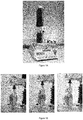
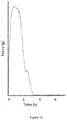
- Figures 1A-1C represent different aspects of the evaluation of the short bite with the aid of a texture analyser.
- Figure 1A represents a texture analyser equipped with a pizza tensile rig (2 probes with pins.
- Figure 1B represents the actual measurement setup, wherein a bun is attached to the pizza tensile rig and wherein the upper probe is moved up at a constant speed until the bun breaks.
- Figure 1C shows a typical graph of the measurement wherein the needed force expressed in gram (g) is measured in function of time (s).
- Short bite also sometimes referred to as opposite to chewiness and/or to toughness, is used to designate the force needed to break a sample of a bakery product and/or the number of chews needed to masticate a bakery product sample until a consistency that makes it ready to swallow.
- Short bite can be easily measured by a trained taste panel of people and can be reasonably quantified using an arbitrary short bite scale.
- organoleptic testing Such techniques are well known in the food industry and are generally referred to as organoleptic testing.
- an initial training session is organized to familiarize the panellists with the range of products that will be tested.
- reference standards are presented to train the panellists to recognize the differences between the product attributes that are to be measured.
- the panellists receive a number or products they have to score on short bite, on a scale from 0 to 10.
- Short bite may also be evaluated with the aid of a texture analyser, as depicted in Figure 1 .
- a bun is attached to a pizza tensile rig (2 probes with pins (see figure 1A )).
- the upper probe will move up at a constant speed and in this way break the bun (see figure 1B ).
- the needed force expressed in gram (g) is measured by the texture analyser. Throughout this process, the required force will increase until the bun breaks and the force decreases.
- a typical graph of this measurement in shown in figure 1C .
- the maximum force (F max ) measured is a common parameter for evaluating short bite.
- thermophilic serine protease and a sufficient amount of monoglycerides in a dough before baking shows an unexpected synergistic effect on the improvement of the short bite in the baked product.
- said monoglycerides are added in powder form and at least 70% of said powder is made of particles with a size lower than 200 ⁇ m, preferably lower than 160 ⁇ m, even more preferably lower than 120 ⁇ m and wherein said monoglycerides have an iodine value lower or equal to 5, preferably lower or equal to 2.
- the present invention relates to a composition comprising:
- said first enzyme is a thermophilic serine protease having an optimum activity at a temperature higher than 70°C, preferably at a temperature higher than 75°C and more preferably at a temperature higher than 80°C.
- thermophilic serine protease as referred to herein has an optimum activity at a temperature higher than 70°C, preferably at a temperature higher than 75°C and more preferably at a temperature higher than 80°C.
- protease refers generally to enzymes (also referred to as peptidases or proteinases) that hydrolyse the peptide bonds that link amino acids together in a polypeptide chain preferably as defined by enzyme entry EC 3.4. They are classified in several classes according to their catalytic residues.
- serine proteases are proteases that cleave peptide bonds in proteins, in which serine serves as the nucleophilic amino acid at the active site.
- Serine proteases are defined by enzyme entry EC 3.4.21.
- Serine proteases may be further sub classified according to their substrate specificity as trypsin-like, chymotrypsin-like, thrombin-like, elastase-like or subtilisin like.
- the protease activity is measured using azurine crosslinked casein (AZCL-casein) as a substrate. Hydrolysis by proteases produces water soluble dyed fragments, and the rate of release of these (e.g.
- protease activity can be measured directly to enzyme activity (Protazyme AK Tablets, Megazyme, Ireland). More details on the protease activity measurement are given in the examples.
- the protease activity can also be measured with other assays for protease activity known by persons skilled in the art. Among these is the calorimetric method using casein as substrate followed by the detection of the released amino acids with the Folin & Ciocalteu's Phenol reagent.
- thermalophilic and in particular "thermophilic protease” as used herein, refers to proteases active at elevated temperatures.
- thermophilic protease(s) has an activity optimum at a temperature higher than 70°C, preferably at a temperature higher than 75°C and more preferably at a temperature higher than 80°C.
- the term "monoglycerides” refers generally to a class of glycerides which are composed of a molecule of glycerol linked to a fatty acid via an ester bond.
- Monoglycerides are one of the many types of emulsifiers used in bakery applications: among these are monoglycerides (or mixtures of monoglycerides and diglycerides; referred as E471 by the International Numbering System for Food Additives (INS) or as 184.1505 by the US Food and Drug Agency), monoglycerides derivatives (as for example succinylated lactylated or acetylated monoglycerides, diacetyl tartaric acid esters of monoglycerides (DATEM), glycerol monostearate (GMS), propylene glycol monoester, Among, sorbitan emulsifiers (sorbitan monostarate), polysorbates, sodium stearoyl lactylate (SSL), polyglycerol esters, sucrose esters and lecithin.
- monoglycerides or mixtures of monoglycerides and diglycerides; referred as E471 by the International Numbering System for Food Add
- the composition as disclosed herein provides that said first enzyme is a thermophilic serine protease wherein the ratio between the protease activity at optimum temperature and the protease activity at 25°C is higher than 10, preferably higher than 15.
- the thermophilic serine protease as used herein provides that improved effects on short bite are obtained.
- the composition as disclosed herein provides that said first enzyme is obtained by extraction from naturally-occurring eukaryotic or prokaryotic organisms, by synthesis or by genetic engineering.
- said first enzyme is a neutral or an alkaline thermophilic serine protease.
- the composition as disclosed herein provides that said first enzyme is a Taq protease, preferably isolated from Thermus aquaticus, preferably aqualysin I or aqualysin II, more preferably aqualysin I, and even more preferably aqualysin I isolated from Thermus aquaticus LMG8924.
- said first enzyme, preferably aqualysin I is present in an amount of 100 to 1200 units / 100 kg of flour, preferably at 200 to 900 units / 100 kg of flour, more preferably at 350 to 700 units / 100 kg of flour.
- Aqualysin I is advantageously added to the dough/batter at 100 to 1200 units / 100 kg of flour, preferably at 200 to 900 units / 100 kg of flour, more preferably at 350 to 700 units / 100 kg of flour, the enzyme activity being obtained using the method described herein.
- the monoglycerides (E471) are any type of monoglycerides.
- the one or more monoglycerides as referred to herein are fully hydrogenated with an iodine value below 5, preferably below 2.5, more preferably lower or equal to 2 and, when the composition is in powder form, at least 70% of the monoglycerides have a particle size lower than 200 ⁇ m, preferably lower than 160 ⁇ m, more preferably lower than 120 ⁇ m. It has been found that the synergistic effect that is referred to herein is particularly present with monoglycerides as referred to herein having these iodine value and particle size as defined above.
- the iodine value is advantageously determined using an assay derived from the method of Wijs - Hoffmann - Green as described herein.
- the particle size is advantageously determined by laser diffraction method as described herein.
- Monoglycerides are advantageously added to the dough in a concentration between 100 and 2000 g / 100 kg of flour, preferably between 200 and 1500 g / 100 kg of flour, more preferably between 400 and 1200 g / 100 kg of flour.
- the composition comprises between 0.29 units and 1.87 units of said first enzyme, preferably aqualysin I / g of monoglycerides.
- the composition as disclosed herein is a bread improver, a patisserie mix or a patisserie premix, preferably a bread improver.
- “Bread improvers” also referred to as “dough conditioners”, “dough improvers” or “improving agent” or “flour treatment agent” are typically added to the dough during baking in order to improve texture, volume, flavour and freshness of the baked product as well as to improve machinability and stability of the dough.
- a bread improver comprises or consists of: one or more enzymes (such as e.g.
- amylases such as xylanases, phospholipases, oxidases, lipases, lipoxygenases, dehydrogenases and laccases
- one or more oxidizing or reducing agents such as e.g. ascorbic acid, glutathione, cysteine
- one or more emulsifiers such as e.g.
- monoglycerides derivatives as for example succinylated lactylated or acetylated monoglycerides, diacetyl tartaric acid esters of monoglycerides (DATEM), glycerol monostearate (GMS), propylene glycol monoester, ...), sorbitan emulsifiers (sorbitan monostarate), polysorbates, sodium stearoyl lactylate (SSL), polyglycerol esters, sucrose esters and lecithin), one or more lipid materials (such as e.g. margarine, butter, oil, shortening), one or more vitamins (such as e.g.
- Patisserie mixes typically comprise all the ingredients of a patisserie product recipe with the exception of water, fat (oil, butter, margarine) and eggs. Patisserie premixes are typically patisserie mixes where all or part of the flour and sugar has been removed.
- composition as disclosed herein is a dough or batter comprising flour and at least one first enzyme, wherein said first enzyme is a thermophilic serine protease preferably having an optimum activity at a temperature higher than 70°C, preferably at a temperature higher than 75°C and more preferably at a temperature higher than 80°C; and; one or more monoglycerides as referred to herein.
- first enzyme is a thermophilic serine protease preferably having an optimum activity at a temperature higher than 70°C, preferably at a temperature higher than 75°C and more preferably at a temperature higher than 80°C; and; one or more monoglycerides as referred to herein.
- composition as disclosed herein may further comprise appropriate amounts of one or more enzymes (such as e.g. amylases, xylanases, phospholipases, lipases, oxidases, lipoxygenases, dehydrogenases and laccases), one or more oxidizing or reducing agents (such as e.g. ascorbic acid, glutathione, cysteine), one or more emulsifiers (such as e.g.
- enzymes such as e.g. amylases, xylanases, phospholipases, lipases, oxidases, lipoxygenases, dehydrogenases and laccases
- oxidizing or reducing agents such as e.g. ascorbic acid, glutathione, cysteine
- emulsifiers such as e.g.
- monoglycerides derivatives as for example succinylated lactylated or acetylated monoglycerides, diacetyl tartaric acid esters of monoglycerides (DATEM), glycerol monostearate (GMS), propylene glycol monoester, ...), sorbitan emulsifiers (sorbitan monostarate), polysorbates, sodium stearoyl lactylate (SSL), polyglycerol esters, sucrose esters and lecithin), one or more lipid materials (such as e.g. margarine, butter, oil, shortening), one or more vitamins (such as e.g. pantothenic acid and vitamin E), one or more gums, and/or one or more sources of fibre (such as e.g. oat fibre).
- DATEM diacetyl tartaric acid esters of monoglycerides
- GMS glycerol monostearate
- propylene glycol monoester
- the present invention relates to the use of a composition as disclosed herein in bakery applications.
- bakery applications refer to applications related to both bread and patisserie products.
- said bakery products are soft bakery products and/or crusty bakery products, preferably bread, soft rolls, donuts, buns, microwavable buns, Danish pastry, croissants, hamburger rolls, pizza and pita bread and cake.
- the use of the composition as disclosed herein in bread improvers, in patisserie mixes or in patisserie premixes is provided.
- compositions according to the present invention to improve the short bite of bakery products which comprise the step of adding to the dough before baking a sufficient amount of one or more thermophilic serine protease(s) and a sufficient amount of one or more monoglycerides as referred to herein.
- the composition as disclosed herein is used for the improvement of short bite in baked products.
- a method for preparing a baked product comprising the steps of adding to the dough or batter, prior to baking:
- the method as disclosed herein provides that said first enzyme is a thermophilic serine protease wherein the ratio between the protease activity at optimum temperature and the protease activity at 25°C is higher than 10, preferably higher than 15.
- the thermophilic serine protease as used herein provides that improved effects on short bite are obtained.
- the method as disclosed herein provides that said first enzyme is obtained by extraction from naturally-occurring eukaryotic or prokaryotic organisms, by synthesis or by genetic engineering.
- the composition as disclosed herein provides that said first enzyme is a neutral or an alkaline thermophilic serine protease.
- the method as disclosed herein provides that said first enzyme is a Taq protease, preferably isolated from Thermus aquaticus, preferably aqualysin I or aqualysin II, more preferably aqualysin I, and even more preferably aqualysin I isolated from Thermus aquaticus LMG8924.
- said first enzyme, preferably aqualysin I is added to the dough or batter in an amount of 100 to 1200 units / 100 kg of flour, preferably at 200 to 900 units / 100 kg of flour, more preferably at 350 to 700 units / 100 kg of flour.
- Aqualysin I is advantageously added to the dough/batter at 100 to 1200 units / 100 kg of flour, preferably at 200 to 900 units / 100 kg of flour, more preferably at 350 to 700 units / 100 kg of flour, the enzyme activity being obtained using the method described herein.
- appropriate amounts of enzymes and monoglycerides may be added directly to the dough or the batter during its preparation or before mixing of the ingredients.
- the enzymes and the monoglycerides may be added as part of an (bread) improver, a patisserie mix or premix, preferably as part of a bread improver.
- the enzymes and the monoglycerides or the bread improver are added before proofing.
- the monoglycerides (E471) are any type of monoglycerides.
- said monoglycerides are fully hydrogenated with an iodine value below 5, preferably below 2.5, more preferably lower or equal to 2 and, when the composition is in powder form, at least 70% of the monoglycerides have a particle size lower than 200 ⁇ m, preferably lower than 160 ⁇ m, more preferably lower than 120 ⁇ m..
- said monoglycerides are added in powder form and wherein at least 70% of said powder is made of particles with a size lower than 200 ⁇ m, preferably lower than 160 ⁇ m, even more preferably lower than 120 ⁇ m, and wherein said monoglycerides have an iodine value below 5, preferably below 2.5, more preferably lower or equal to 2.
- a method for preparing a baked product comprising the steps of adding to the dough or batter, prior to baking:
- the method as disclosed herein provides that said baked product shows improved short bite, preferably wherein the maximum force needed to break a baked product, prepared using at least one first enzyme being a thermophilic serine protease having an optimum activity at a temperature higher than 70°C, preferably at a temperature higher than 75°C and preferably at a temperature higher than 80°C, and using at least one monoglyceride as referred to herein; is reduced with at least 15% compared to a reference baked product prepared using none of said first enzyme or at least one monoglyceride as referred to herein.
- the maximum force needed to break a baked product prepared using at least one first enzyme being a thermophilic serine protease having an optimum activity at a temperature higher than 70°C, preferably at a temperature higher than 75°C and preferably at a temperature higher than 80°C, and using at least one monoglyceride as referred to herein; is reduced with at least 15% compared to a reference baked product prepared using none of said first enzyme or at least
- the maximum force needed to break a baked product using said first enzyme and at least one monoglyceride as referred to herein is reduced with at least 20% compared to a reference baked product prepared using none of said first enzyme or at least one monoglyceride as referred to herein.
- the maximum force needed to break a baked product using said first enzyme and said one or more monoglycerides as referred to herein is reduced with at least 25% compared to a reference baked product prepared using none of said first enzyme or at least one monoglyceride, particularly at least one monoglyceride having a iodine value greater than 5 or wherein less than 70% of said one or more monoglyceride have a particle size lower than 200 ⁇ m or 160 ⁇ m..
- the method as disclosed herein provides that said baked product shows improved short bite, preferably wherein the maximum force needed to break a baked product, prepared using at least one first enzyme being a thermophilic serine protease having an optimum activity at a temperature higher than 70°C, preferably at a temperature higher than 75°C and preferably at a temperature higher than 80°C, and using at least one monoglyceride as referred to herein; is reduced with at least 10% compared to a reference baked product prepared using either said first enzyme or said at least one monoglyceride as referred to herein.
- the maximum force needed to break a baked product prepared using at least one first enzyme being a thermophilic serine protease having an optimum activity at a temperature higher than 70°C, preferably at a temperature higher than 75°C and preferably at a temperature higher than 80°C, and using at least one monoglyceride as referred to herein; is reduced with at least 10% compared to a reference baked product prepared using either said first enzyme or said at least
- the maximum force needed to break a baked product using said first enzyme and said at least one monoglyceride as referred to herein is reduced with at least 15% compared to a reference baked product prepared using either said first enzyme or said at least one monoglyceride as referred to herein.
- the short bite is measured the day after baking.
- the method as disclosed herein provides that no adverse effects on dough rheology, on the crumb structure and on the volume of the resulting bakery product are observed.
- the present invention relates to a baked product prepared from a dough or batter comprising the composition as disclosed herein.
- a baked product is a bakery or patisserie product known in the art, such as for instance those selected from the group comprising bread, soft rolls, bagels, donuts, Danish pastry, hamburger rolls, pizza, pita bread, ciabatta, sponge cakes, cream cakes, pound cakes, muffins, cupcakes, steamed cakes, waffles, brownies, cake donuts, yeast raised donuts, baguettes, rolls, crackers, biscuits, cookies, pie crusts, rusks and other baked products. More preferably the present invention refers to bread, baguettes and rolls.
- said baked product is a soft bakery products and crusty bakery products, preferably bread, soft rolls, donuts, buns, microwavable buns, Danish pastry, croissants, hamburger rolls, pizza and pita bread and cake.
- protease activity is measured on azurine crosslinked casein (AZCL-casein). It is prepared by dyeing and crosslinking casein to produce a material which hydrates in water but is water-insoluble. Hydrolysis by proteases produces water soluble dyed fragments, and the rate of release of these (increase in absorbance at 590 nm) can be related directly to enzyme activity (Protazyme AK Tablets, Megazyme, Ireland). A protazyme AK tablet is incubated in 100 mM Na 2 HPO 4 .2H 2 O; pH 7.0 at 60°C for 5 min. An aliquot of enzyme (1.0 ml) is added and the reaction is allowed to continue for exactly 10 min.
- AZCL-casein azurine crosslinked casein
- the reaction is terminated by the addition of tri-sodium phosphate (10 ml, 2% w/v, pH 12.3).
- the tube stands for approx. 2 min at room temperature and the content is filtered.
- the absorbance of the filtrate is measured at 590 nm against a substrate blank.
- the activity is expressed as: mU (milli Units)/ml (34.2 * (Abs590 enzyme - Abs590 blank) +0. 6) / dilution.
- One unit corresponds to 1000 mU.
- the method is based on the official methods AOCS Cd 1-25 and AOAC 981.11 with some modifications.
- a sample of about 1 g is weighed and melted at max.10 °C above the melting point of the fat.
- 15 ml of Carbon tetrachloride CCl4 and 15 ml of Diethyl ether are added.
- a blank sample is prepared with the reagents but without the sample.
- 25.0 ml of Wijs solution is added to the sample in a flask, followed by shaking. The flasks are put in a dark environment during 1 hour. After this, 3 g of potassium iodide and 150 ml of water are added.
- the solution is then titrated with continuous shaking with a 0.1N sodium thiosulfate solution to a light yellow colour.
- Starch indicator soluble starch
- the Iodine value expressed in g I 2 /100 g of product is equal to ((B-T)/P)*1.269 where B is the amount of ml sodium thiosulfate for the blank T is the amount of ml sodium thiosulfate for the sample P is the weight of the sample in g 1.269 is the molecular weight of iodine / 100
- the particle size is measured with a Lazer Diffractor LS 200 (Beckman Coulter) using the recommendations of the supplier.
- Example 2 Soft Buns prepared with Multec Mono 9402 sfp and Thermus aquaticus Taq1 protease.
- Soft buns were prepared using the dough compositions of Table 1.
- the protease and the monoglycerides used were the following:
- the ingredients are mixed for 2 min at low and 6 min at high speed in a spiral mixer type Diosna (SP24).
- the final dough temperature is 27°C.
- a 1500 g dough is rounded and proofed during 10 min at bakery temperature (25°C) and humidity (50-55%).
- 50 g dough pieces are made up using a Eberhardt moulder. These dough pieces are proofed at 35°C for 85 min at 95% relative humidity in a Koma proofbox.
- the buns are then baked at 250°C during 9 min in a Miwe Condo deck oven without steam. It is obvious to one skilled in the art that same end results can be obtained by using equipment of other suppliers.
- the short bite of the buns was evaluated with a TA-XT2TM texture analyser equipped with a pizza tensile rig used at a speed of 20 mm/sec. This allows the measurement of the force (maximum force needed to break the bun expressed in grams (g)). As factors such as batch of flour, ambient temperature and humidity, and time between baking and test may affect said parameters, measures are compared to a reference using the same ingredients, baked and tested in parallel. For every test, 10 buns are evaluated. The standard deviation of the measurement (after removal of the outliers) was 21. The confidence interval was calculated by multiplying the standard deviation with the Student's law coefficient obtained by using an ⁇ -risk value of 5% and a number of degrees of liberty equal to 5. The confidence interval was 55.
- Two ingredients act synergistically if the effect of the simultaneous use of the two ingredients is bigger than the sum of the effects of the ingredients taken individually, taking into account a 95% confidence interval. In other words, there is a synergy when the effect of (x g ingredient A + y g ingredient B) is bigger than the sum of the effect of x g ingredient A and the effect of y g ingredient B.
- the results show that the actual reduction of force obtained when a thermophilic serine protease and the monoglycerides are combined is lower than the lower limit of the confidence interval of the theoretical value (additive effect), demonstrating a synergistic effect on short bite.
- the short bite of the buns was also evaluated by a trained panel of bakery experts. They were asked to mark the products according to a reference on a 0 to 10 points line scale with 0 being the low end (chewy) and 10 the high end (short). The standard deviation of the sensorial short bite measurement is 0.2.
- the confidence interval was calculated by multiplying the standard deviation with the Student's law coefficient using an ⁇ -risk value of 5% and a number of degrees of liberty equal to 5. The confidence interval was 0.64.
- thermophilic protease and the monoglycerides are combined is higher than the higher limit of the confidence interval of the theoretical value (additive effect), demonstrating a synergistic effect on short bite.
- Example 3 Soft buns prepared with Multec Mono 9602 msp and Thermus aquaticus Taq1 protease
- Soft buns were prepared according to the recipe and the process of example 2 using the enzyme combinations listed in Table 4.
- the ingredients used were the following:
- thermophilic serine protease Synergistic effect of the combination of a thermophilic serine protease and monoglycerides is observed.
- Example 4 Soft buns prepared with Dimodan PH200 and Thermus aquaticus Taq1 protease (comparative example)
- Soft buns were prepared according to the recipe and the process of example 2 using the ingredients combinations listed in Table 7.
- the ingredients used were the following:
- Example 5 Soft buns prepared with Multec mono MM 9202 spw and Thermus aquaticus Taq1 protease (comparative example).
- Soft buns were prepared according to the recipe and the process of example 2 using the ingredients combinations listed in Table 9. The ingredients used were the following:
- thermophilic serine protease obtained with the combination of a thermophilic serine protease and the Multec mono MM 9202 spw monoglycerides (particle size: 30% ⁇ 200 ⁇ m)
- the actual reduction is above the lower limit of this confidence interval.
- Example 6 Soft buns prepared with Dimodan PH110 and Thermus aquaticus Taq1 protease (comparative example).
- Soft buns were prepared according to the recipe and the process of example 2 using the ingredients combinations listed in Table 11.
- the ingredients used were the following:
Landscapes
- Life Sciences & Earth Sciences (AREA)
- Engineering & Computer Science (AREA)
- Food Science & Technology (AREA)
- Microbiology (AREA)
- Bakery Products And Manufacturing Methods Therefor (AREA)
- General Preparation And Processing Of Foods (AREA)
- Enzymes And Modification Thereof (AREA)
Claims (15)
- Zusammensetzung, umfassend:- wenigstens ein erstes Enzym, wobei das erste Enzym eine thermophile Serinprotease mit einer optimalen Aktivität bei einer Temperatur von höher als 70 °C, vorzugsweise bei einer Temperatur von höher als 75 °C und stärker bevorzugt bei einer Temperatur von höher als 80 °C, ist; und- ein oder mehrere Monoglyceride, wobei die Monoglyceride einen Iodwert von kleiner als oder gleich 5 aufweisen und wobei, wenn die Zusammensetzung in Pulverform vorliegt, wenigstens 70 % der Monoglyceride eine Partikelgröße von kleiner als 200 µm aufweisen.
- Zusammensetzung gemäß Anspruch 1, wobei das erste Enzym eine thermophile Serinprotease ist, wobei das Verhältnis zwischen der Proteaseaktivität bei optimaler Temperatur und der Proteaseaktivität bei 25 °C größer als 10, vorzugsweise größer als 15, ist.
- Zusammensetzung gemäß Anspruch 1 oder 2, wobei das erste Enzym eine neutrale oder eine alkalische thermophile Serinprotease ist, vorzugsweise eine Taq-Protease, vorzugsweise isoliert aus Thermus aquaticus, vorzugsweise Aqualysin I oder Aqualysin II, stärker bevorzugt Aqualysin I, noch stärker bevorzugt Aqualysin I isoliert aus Thermus aquaticus LMG8924.
- Zusammensetzung gemäß einem der Ansprüche 1 bis 3, wobei das erste Enzym in einer Menge von 100 bis 1200 Einheiten/100 kg Mehl, vorzugsweise 200 bis 900 Einheiten/100 kg Mehl, stärker bevorzugt 350 bis 700 Einheiten/100 kg Mehl, vorhanden ist.
- Zusammensetzung gemäß einem der Ansprüche 1 bis 4, wobei die Monoglyceride einen Iodwert von kleiner als oder gleich 2 aufweisen.
- Zusammensetzung gemäß einem der Ansprüche 1 bis 5, wobei die Zusammensetzung in Pulverform vorliegt und wobei wenigstens 70 % der Monoglyceride eine Partikelgröße von kleiner als 160 µm, stärker bevorzugt kleiner als 120 µm, aufweisen.
- Verwendung einer Zusammensetzung gemäß Ansprüchen 1 bis 6 bei Backanwendungen.
- Verwendung gemäß Anspruch 7 in Brotverbesserungsmitteln.
- Verwendung gemäß Ansprüchen 7 oder 8 in weichen Backwaren und knusprigen Backwaren, vorzugsweise Brot, weichen Brötchen, Doughnuts, Brötchen, mikrowellengeeigneten Brötchen, Plundergebäck, Croissants, Hamburgerbrötchen, Pizza- und Pitabrot und Kuchen.
- Brotverbesserungsmittel, umfassend die Zusammensetzung gemäß einem der Ansprüche 1 bis 6.
- Verfahren zur Herstellung einer Backware, umfassend die Schritte des Zugebens zu dem Teig oder Backteig vor dem Backen:- wenigstens eines ersten Enzyms, wobei das erste Enzym eine thermophile Serinprotease mit einer optimalen Aktivität bei einer Temperatur von höher als 70 °C, vorzugsweise bei einer Temperatur von höher als 80 °C, ist; und- eines oder mehrerer Monoglyceride; wobei das eine oder die mehreren Monoglyceride einen Iodwert von kleiner als oder gleich 5 aufweisen und wobei, wenn in Pulverform zugegeben, wenigstens 70 % des einen oder der mehreren Monoglyceride eine Partikelgröße von kleiner als 200 µm aufweisen.
- Verfahren gemäß Anspruch 11, wobei die Monoglyceride in Pulverform zugegeben werden und wobei wenigstens 70 % des Pulvers aus Partikeln mit einer Größe von kleiner als 160 µm, stärker bevorzugt kleiner als 120 µm, bestehen.
- Verfahren gemäß Anspruch 11 oder 12, wobei die Backware einen verbesserten kurzen Biss aufweist, wobei die größte Kraft, die zum Brechen einer Backware erforderlich ist, die unter Verwendung wenigstens eines ersten Enzyms, das eine thermophile Serinprotease mit einer optimalen Aktivität bei einer Temperatur von höher als 70 °C, vorzugsweise bei einer Temperatur von höher als 80 °C, ist, und unter Verwendung eines oder mehrerer Monoglyceride hergestellt ist, um wenigstens 15 % gegenüber einer Referenzbackware verringert ist, die unter Verwendung weder des ersten Enzyms noch des einen oder der mehreren Monoglyceride hergestellt ist.
- Verfahren gemäß einem der Ansprüche 11 bis 13, wobei keine ungünstigen Wirkungen auf die Teigrheologie, auf die Krumenstruktur und auf das Volumen der erhaltenen Backware beobachtet werden.
- Backware, hergestellt aus einem Teig oder Backteig, der die Zusammensetzung gemäß einem der Ansprüche 1 bis 6 umfasst.
Priority Applications (1)
| Application Number | Priority Date | Filing Date | Title |
|---|---|---|---|
| PL17749368T PL3481206T3 (pl) | 2016-07-11 | 2017-07-10 | Ulepszona kompozycja piekarnicza |
Applications Claiming Priority (2)
| Application Number | Priority Date | Filing Date | Title |
|---|---|---|---|
| BE2016/5578A BE1024782B1 (nl) | 2016-07-11 | 2016-07-11 | Verbeterde samenstelling voor bakkerijproducten |
| PCT/EP2017/067212 WO2018011118A1 (en) | 2016-07-11 | 2017-07-10 | Improved bakery composition |
Publications (2)
| Publication Number | Publication Date |
|---|---|
| EP3481206A1 EP3481206A1 (de) | 2019-05-15 |
| EP3481206B1 true EP3481206B1 (de) | 2020-04-22 |
Family
ID=57184265
Family Applications (1)
| Application Number | Title | Priority Date | Filing Date |
|---|---|---|---|
| EP17749368.1A Active EP3481206B1 (de) | 2016-07-11 | 2017-07-10 | Verbesserte bäckereizusammensetzung |
Country Status (15)
| Country | Link |
|---|---|
| US (1) | US11252969B2 (de) |
| EP (1) | EP3481206B1 (de) |
| JP (1) | JP7046904B2 (de) |
| CN (1) | CN109414029B (de) |
| AU (1) | AU2017295752B2 (de) |
| BE (1) | BE1024782B1 (de) |
| BR (1) | BR112019000507B1 (de) |
| DK (1) | DK3481206T3 (de) |
| ES (1) | ES2798427T3 (de) |
| MX (1) | MX390342B (de) |
| PL (1) | PL3481206T3 (de) |
| PT (1) | PT3481206T (de) |
| RU (1) | RU2747287C2 (de) |
| WO (1) | WO2018011118A1 (de) |
| ZA (1) | ZA201900451B (de) |
Families Citing this family (3)
| Publication number | Priority date | Publication date | Assignee | Title |
|---|---|---|---|---|
| BE1024782B1 (nl) * | 2016-07-11 | 2018-07-02 | Puratos Nv | Verbeterde samenstelling voor bakkerijproducten |
| BE1031246B1 (nl) * | 2023-01-10 | 2024-08-06 | Puratos | Verbeterde producten op basis van filodeeg |
| BE1031247B1 (nl) * | 2023-01-10 | 2024-08-06 | Puratos | Verbeterde producten op basis van strengen van beslag |
Family Cites Families (27)
| Publication number | Priority date | Publication date | Assignee | Title |
|---|---|---|---|---|
| US3743512A (en) * | 1970-09-16 | 1973-07-03 | F Hansen | Monoglyceride product and method of preparing the same |
| US3908665A (en) * | 1974-05-20 | 1975-09-30 | John A Moses | Oro-pharyngeal airway |
| GB1581331A (en) * | 1976-05-03 | 1980-12-10 | Grindstedvaerket As | Bread and other farinaceous products |
| JP2566835B2 (ja) * | 1990-04-11 | 1996-12-25 | 鐘淵化学工業株式会社 | 油脂組成物 |
| JP2980517B2 (ja) * | 1994-05-20 | 1999-11-22 | 花王株式会社 | 肉の軟化改質剤及び軟化処理した食用肉または肉製品 |
| JPH0856664A (ja) * | 1994-08-17 | 1996-03-05 | Kao Corp | プロテアーゼ及び肉軟化剤 |
| ATE212189T1 (de) * | 1995-12-01 | 2002-02-15 | Unilever Nv | Mikrowellen erhitzbare knusperige brötchen |
| RU2140740C1 (ru) | 1997-07-10 | 1999-11-10 | Ассоциация "Ассоя" | Способ производства хлеба |
| CN1151253C (zh) * | 2001-01-10 | 2004-05-26 | 中国科学院微生物研究所 | 海藻糖基水解酶及其制备和用途 |
| FI118558B (fi) * | 2001-05-11 | 2007-12-31 | Cerefi Oy | Menetelmä vähärasvaisten juustojen valmistamiseksi |
| AUPR610601A0 (en) * | 2001-07-04 | 2001-07-26 | Famoice Technology Pty Ltd | Event based message alerting system and method |
| US20030152667A1 (en) * | 2002-02-14 | 2003-08-14 | Goedeken Douglas Lee | Dough, products and methods |
| EP1350432A1 (de) * | 2002-04-05 | 2003-10-08 | Puratos N.V. | Verfahren zur Verlangsamung des Altbackenwerdens von Bäckereiprodukten durch Zugabe von einer thermostabilen Protease |
| JP4740531B2 (ja) * | 2003-09-30 | 2011-08-03 | 雪印乳業株式会社 | 骨吸収抑制剤 |
| EP1547467A1 (de) | 2003-12-22 | 2005-06-29 | Puratos N.V. | Flüssige Backtriebzusammensetzung |
| GB0405637D0 (en) * | 2004-03-12 | 2004-04-21 | Danisco | Protein |
| MX2008005945A (es) * | 2005-11-07 | 2008-10-17 | Kerry Group Services Int Ltd | "composiciòn que mejora el pan, la cual comprende un emulsificador y un estabilizador". |
| CN101243843B (zh) * | 2007-02-15 | 2016-07-06 | 太阳化学株式会社 | 含有有机酸单甘油酯的饮食品 |
| EP1982597A1 (de) * | 2007-04-20 | 2008-10-22 | Puratos N.V. | Fettaustauscher für Bäckerei- und Konditoreianwendungen |
| PL2180792T3 (pl) * | 2007-08-13 | 2012-11-30 | Puratos Nv | Pączek z proszkiem do pieczenia gotowany na parze |
| EP2123163A1 (de) * | 2008-05-16 | 2009-11-25 | Puratos N.V. | Verfahren und Zusammensetzung für verbesserte Weichheit von Gebäck |
| CN102308971B (zh) * | 2011-08-02 | 2013-06-05 | 福建农林大学 | 一种蒸煮酶解法制备鳗鱼调味汁的方法 |
| CN102948493A (zh) * | 2011-08-25 | 2013-03-06 | J-制油株式会社 | 煮饭用油脂组合物及米饭类食物的烹制方法 |
| CN104822829A (zh) * | 2012-11-20 | 2015-08-05 | 丹尼斯科美国公司 | 具有产麦芽糖特性的淀粉酶 |
| CN105053558A (zh) * | 2015-07-22 | 2015-11-18 | 合肥莱斯生物工程有限公司 | 一种抗动物肺炎的酵母膏及其制备方法 |
| BE1024782B1 (nl) * | 2016-07-11 | 2018-07-02 | Puratos Nv | Verbeterde samenstelling voor bakkerijproducten |
| CN106259750A (zh) * | 2016-08-10 | 2017-01-04 | 孔令娇 | 一种火龙果饼干 |
-
2016
- 2016-07-11 BE BE2016/5578A patent/BE1024782B1/nl active IP Right Grant
-
2017
- 2017-07-10 EP EP17749368.1A patent/EP3481206B1/de active Active
- 2017-07-10 JP JP2019501662A patent/JP7046904B2/ja active Active
- 2017-07-10 US US16/312,711 patent/US11252969B2/en active Active
- 2017-07-10 RU RU2019102085A patent/RU2747287C2/ru active
- 2017-07-10 CN CN201780041463.4A patent/CN109414029B/zh active Active
- 2017-07-10 WO PCT/EP2017/067212 patent/WO2018011118A1/en not_active Ceased
- 2017-07-10 PT PT177493681T patent/PT3481206T/pt unknown
- 2017-07-10 PL PL17749368T patent/PL3481206T3/pl unknown
- 2017-07-10 BR BR112019000507-2A patent/BR112019000507B1/pt active IP Right Grant
- 2017-07-10 MX MX2018016275A patent/MX390342B/es unknown
- 2017-07-10 DK DK17749368.1T patent/DK3481206T3/da active
- 2017-07-10 AU AU2017295752A patent/AU2017295752B2/en active Active
- 2017-07-10 ES ES17749368T patent/ES2798427T3/es active Active
-
2019
- 2019-01-22 ZA ZA2019/00451A patent/ZA201900451B/en unknown
Non-Patent Citations (1)
| Title |
|---|
| None * |
Also Published As
| Publication number | Publication date |
|---|---|
| CN109414029A (zh) | 2019-03-01 |
| BR112019000507B1 (pt) | 2022-08-09 |
| RU2019102085A3 (de) | 2020-11-11 |
| US20190208795A1 (en) | 2019-07-11 |
| EP3481206A1 (de) | 2019-05-15 |
| RU2747287C2 (ru) | 2021-05-04 |
| MX2018016275A (es) | 2019-05-20 |
| ES2798427T3 (es) | 2020-12-11 |
| WO2018011118A1 (en) | 2018-01-18 |
| DK3481206T3 (da) | 2020-05-18 |
| AU2017295752B2 (en) | 2021-06-24 |
| PL3481206T3 (pl) | 2020-10-19 |
| RU2019102085A (ru) | 2020-08-13 |
| AU2017295752A1 (en) | 2019-01-24 |
| CN109414029B (zh) | 2022-09-09 |
| US11252969B2 (en) | 2022-02-22 |
| PT3481206T (pt) | 2020-06-18 |
| BE1024782B1 (nl) | 2018-07-02 |
| JP7046904B2 (ja) | 2022-04-04 |
| CA3029475A1 (en) | 2018-01-18 |
| MX390342B (es) | 2025-03-20 |
| JP2019520834A (ja) | 2019-07-25 |
| BR112019000507A2 (pt) | 2019-05-14 |
| BE1024782A1 (nl) | 2018-06-27 |
| ZA201900451B (en) | 2022-01-26 |
Similar Documents
| Publication | Publication Date | Title |
|---|---|---|
| EP3481205B1 (de) | Verbesserte bäckereizusammensetzung | |
| EP2293674B1 (de) | Verfahren und zusammensetzung zur verbesserung des kurzen bisses von backwaren | |
| EP3481206B1 (de) | Verbesserte bäckereizusammensetzung | |
| JP7489923B2 (ja) | ベーキングに使用するための固形酵素物品 | |
| CA3029475C (en) | Improved bakery composition | |
| US20170273316A1 (en) | Combination of glucose oxidases for improvements in baking | |
| EP4648615A1 (de) | Verbesserte produkte auf basis von filoteig | |
| EP4648616A1 (de) | Verbesserte teigstrangprodukte | |
| BR112018077255B1 (pt) | Composição compreendendo uma serina protease termofílica e lipase, uso da referida composição, melhorador de pão, método para melhorar a mordida curta de um produto assado e produto assado |
Legal Events
| Date | Code | Title | Description |
|---|---|---|---|
| STAA | Information on the status of an ep patent application or granted ep patent |
Free format text: STATUS: UNKNOWN |
|
| STAA | Information on the status of an ep patent application or granted ep patent |
Free format text: STATUS: THE INTERNATIONAL PUBLICATION HAS BEEN MADE |
|
| PUAI | Public reference made under article 153(3) epc to a published international application that has entered the european phase |
Free format text: ORIGINAL CODE: 0009012 |
|
| STAA | Information on the status of an ep patent application or granted ep patent |
Free format text: STATUS: REQUEST FOR EXAMINATION WAS MADE |
|
| 17P | Request for examination filed |
Effective date: 20190211 |
|
| AK | Designated contracting states |
Kind code of ref document: A1 Designated state(s): AL AT BE BG CH CY CZ DE DK EE ES FI FR GB GR HR HU IE IS IT LI LT LU LV MC MK MT NL NO PL PT RO RS SE SI SK SM TR |
|
| AX | Request for extension of the european patent |
Extension state: BA ME |
|
| DAV | Request for validation of the european patent (deleted) | ||
| DAX | Request for extension of the european patent (deleted) | ||
| GRAP | Despatch of communication of intention to grant a patent |
Free format text: ORIGINAL CODE: EPIDOSNIGR1 |
|
| RIC1 | Information provided on ipc code assigned before grant |
Ipc: A21D 13/00 20170101ALI20191011BHEP Ipc: A21D 10/00 20060101ALI20191011BHEP Ipc: A21D 8/04 20060101AFI20191011BHEP Ipc: A21D 2/16 20060101ALI20191011BHEP |
|
| STAA | Information on the status of an ep patent application or granted ep patent |
Free format text: STATUS: GRANT OF PATENT IS INTENDED |
|
| INTG | Intention to grant announced |
Effective date: 20191121 |
|
| GRAS | Grant fee paid |
Free format text: ORIGINAL CODE: EPIDOSNIGR3 |
|
| GRAA | (expected) grant |
Free format text: ORIGINAL CODE: 0009210 |
|
| STAA | Information on the status of an ep patent application or granted ep patent |
Free format text: STATUS: THE PATENT HAS BEEN GRANTED |
|
| AK | Designated contracting states |
Kind code of ref document: B1 Designated state(s): AL AT BE BG CH CY CZ DE DK EE ES FI FR GB GR HR HU IE IS IT LI LT LU LV MC MK MT NL NO PL PT RO RS SE SI SK SM TR |
|
| REG | Reference to a national code |
Ref country code: CH Ref legal event code: EP |
|
| REG | Reference to a national code |
Ref country code: IE Ref legal event code: FG4D |
|
| REG | Reference to a national code |
Ref country code: DE Ref legal event code: R096 Ref document number: 602017015326 Country of ref document: DE |
|
| REG | Reference to a national code |
Ref country code: AT Ref legal event code: REF Ref document number: 1258867 Country of ref document: AT Kind code of ref document: T Effective date: 20200515 |
|
| REG | Reference to a national code |
Ref country code: DK Ref legal event code: T3 Effective date: 20200514 |
|
| REG | Reference to a national code |
Ref country code: PT Ref legal event code: SC4A Ref document number: 3481206 Country of ref document: PT Date of ref document: 20200618 Kind code of ref document: T Free format text: AVAILABILITY OF NATIONAL TRANSLATION Effective date: 20200612 |
|
| REG | Reference to a national code |
Ref country code: NL Ref legal event code: FP |
|
| REG | Reference to a national code |
Ref country code: GR Ref legal event code: EP Ref document number: 20200401865 Country of ref document: GR Effective date: 20200916 |
|
| REG | Reference to a national code |
Ref country code: LT Ref legal event code: MG4D |
|
| PG25 | Lapsed in a contracting state [announced via postgrant information from national office to epo] |
Ref country code: IS Free format text: LAPSE BECAUSE OF FAILURE TO SUBMIT A TRANSLATION OF THE DESCRIPTION OR TO PAY THE FEE WITHIN THE PRESCRIBED TIME-LIMIT Effective date: 20200822 Ref country code: SE Free format text: LAPSE BECAUSE OF FAILURE TO SUBMIT A TRANSLATION OF THE DESCRIPTION OR TO PAY THE FEE WITHIN THE PRESCRIBED TIME-LIMIT Effective date: 20200422 Ref country code: NO Free format text: LAPSE BECAUSE OF FAILURE TO SUBMIT A TRANSLATION OF THE DESCRIPTION OR TO PAY THE FEE WITHIN THE PRESCRIBED TIME-LIMIT Effective date: 20200722 Ref country code: FI Free format text: LAPSE BECAUSE OF FAILURE TO SUBMIT A TRANSLATION OF THE DESCRIPTION OR TO PAY THE FEE WITHIN THE PRESCRIBED TIME-LIMIT Effective date: 20200422 Ref country code: LT Free format text: LAPSE BECAUSE OF FAILURE TO SUBMIT A TRANSLATION OF THE DESCRIPTION OR TO PAY THE FEE WITHIN THE PRESCRIBED TIME-LIMIT Effective date: 20200422 |
|
| PG25 | Lapsed in a contracting state [announced via postgrant information from national office to epo] |
Ref country code: LV Free format text: LAPSE BECAUSE OF FAILURE TO SUBMIT A TRANSLATION OF THE DESCRIPTION OR TO PAY THE FEE WITHIN THE PRESCRIBED TIME-LIMIT Effective date: 20200422 Ref country code: RS Free format text: LAPSE BECAUSE OF FAILURE TO SUBMIT A TRANSLATION OF THE DESCRIPTION OR TO PAY THE FEE WITHIN THE PRESCRIBED TIME-LIMIT Effective date: 20200422 Ref country code: HR Free format text: LAPSE BECAUSE OF FAILURE TO SUBMIT A TRANSLATION OF THE DESCRIPTION OR TO PAY THE FEE WITHIN THE PRESCRIBED TIME-LIMIT Effective date: 20200422 Ref country code: BG Free format text: LAPSE BECAUSE OF FAILURE TO SUBMIT A TRANSLATION OF THE DESCRIPTION OR TO PAY THE FEE WITHIN THE PRESCRIBED TIME-LIMIT Effective date: 20200722 |
|
| REG | Reference to a national code |
Ref country code: ES Ref legal event code: FG2A Ref document number: 2798427 Country of ref document: ES Kind code of ref document: T3 Effective date: 20201211 |
|
| PG25 | Lapsed in a contracting state [announced via postgrant information from national office to epo] |
Ref country code: AL Free format text: LAPSE BECAUSE OF FAILURE TO SUBMIT A TRANSLATION OF THE DESCRIPTION OR TO PAY THE FEE WITHIN THE PRESCRIBED TIME-LIMIT Effective date: 20200422 |
|
| REG | Reference to a national code |
Ref country code: DE Ref legal event code: R097 Ref document number: 602017015326 Country of ref document: DE |
|
| PG25 | Lapsed in a contracting state [announced via postgrant information from national office to epo] |
Ref country code: SM Free format text: LAPSE BECAUSE OF FAILURE TO SUBMIT A TRANSLATION OF THE DESCRIPTION OR TO PAY THE FEE WITHIN THE PRESCRIBED TIME-LIMIT Effective date: 20200422 Ref country code: EE Free format text: LAPSE BECAUSE OF FAILURE TO SUBMIT A TRANSLATION OF THE DESCRIPTION OR TO PAY THE FEE WITHIN THE PRESCRIBED TIME-LIMIT Effective date: 20200422 Ref country code: CZ Free format text: LAPSE BECAUSE OF FAILURE TO SUBMIT A TRANSLATION OF THE DESCRIPTION OR TO PAY THE FEE WITHIN THE PRESCRIBED TIME-LIMIT Effective date: 20200422 |
|
| PG25 | Lapsed in a contracting state [announced via postgrant information from national office to epo] |
Ref country code: SK Free format text: LAPSE BECAUSE OF FAILURE TO SUBMIT A TRANSLATION OF THE DESCRIPTION OR TO PAY THE FEE WITHIN THE PRESCRIBED TIME-LIMIT Effective date: 20200422 Ref country code: MC Free format text: LAPSE BECAUSE OF FAILURE TO SUBMIT A TRANSLATION OF THE DESCRIPTION OR TO PAY THE FEE WITHIN THE PRESCRIBED TIME-LIMIT Effective date: 20200422 |
|
| PLBE | No opposition filed within time limit |
Free format text: ORIGINAL CODE: 0009261 |
|
| REG | Reference to a national code |
Ref country code: CH Ref legal event code: PL |
|
| STAA | Information on the status of an ep patent application or granted ep patent |
Free format text: STATUS: NO OPPOSITION FILED WITHIN TIME LIMIT |
|
| 26N | No opposition filed |
Effective date: 20210125 |
|
| PG25 | Lapsed in a contracting state [announced via postgrant information from national office to epo] |
Ref country code: CH Free format text: LAPSE BECAUSE OF NON-PAYMENT OF DUE FEES Effective date: 20200731 Ref country code: LI Free format text: LAPSE BECAUSE OF NON-PAYMENT OF DUE FEES Effective date: 20200731 Ref country code: LU Free format text: LAPSE BECAUSE OF NON-PAYMENT OF DUE FEES Effective date: 20200710 |
|
| PG25 | Lapsed in a contracting state [announced via postgrant information from national office to epo] |
Ref country code: SI Free format text: LAPSE BECAUSE OF FAILURE TO SUBMIT A TRANSLATION OF THE DESCRIPTION OR TO PAY THE FEE WITHIN THE PRESCRIBED TIME-LIMIT Effective date: 20200422 |
|
| PG25 | Lapsed in a contracting state [announced via postgrant information from national office to epo] |
Ref country code: IE Free format text: LAPSE BECAUSE OF NON-PAYMENT OF DUE FEES Effective date: 20200710 |
|
| PG25 | Lapsed in a contracting state [announced via postgrant information from national office to epo] |
Ref country code: MT Free format text: LAPSE BECAUSE OF FAILURE TO SUBMIT A TRANSLATION OF THE DESCRIPTION OR TO PAY THE FEE WITHIN THE PRESCRIBED TIME-LIMIT Effective date: 20200422 Ref country code: CY Free format text: LAPSE BECAUSE OF FAILURE TO SUBMIT A TRANSLATION OF THE DESCRIPTION OR TO PAY THE FEE WITHIN THE PRESCRIBED TIME-LIMIT Effective date: 20200422 |
|
| PG25 | Lapsed in a contracting state [announced via postgrant information from national office to epo] |
Ref country code: MK Free format text: LAPSE BECAUSE OF FAILURE TO SUBMIT A TRANSLATION OF THE DESCRIPTION OR TO PAY THE FEE WITHIN THE PRESCRIBED TIME-LIMIT Effective date: 20200422 |
|
| P01 | Opt-out of the competence of the unified patent court (upc) registered |
Effective date: 20230403 |
|
| REG | Reference to a national code |
Ref country code: AT Ref legal event code: UEP Ref document number: 1258867 Country of ref document: AT Kind code of ref document: T Effective date: 20200422 |
|
| PGFP | Annual fee paid to national office [announced via postgrant information from national office to epo] |
Ref country code: GB Payment date: 20250619 Year of fee payment: 9 Ref country code: DK Payment date: 20250619 Year of fee payment: 9 |
|
| PGFP | Annual fee paid to national office [announced via postgrant information from national office to epo] |
Ref country code: NL Payment date: 20250620 Year of fee payment: 9 Ref country code: BE Payment date: 20250619 Year of fee payment: 9 |
|
| PGFP | Annual fee paid to national office [announced via postgrant information from national office to epo] |
Ref country code: PT Payment date: 20250624 Year of fee payment: 9 |
|
| PGFP | Annual fee paid to national office [announced via postgrant information from national office to epo] |
Ref country code: FR Payment date: 20250620 Year of fee payment: 9 |
|
| PGFP | Annual fee paid to national office [announced via postgrant information from national office to epo] |
Ref country code: GR Payment date: 20250623 Year of fee payment: 9 |
|
| PGFP | Annual fee paid to national office [announced via postgrant information from national office to epo] |
Ref country code: TR Payment date: 20250623 Year of fee payment: 9 |
|
| PGFP | Annual fee paid to national office [announced via postgrant information from national office to epo] |
Ref country code: ES Payment date: 20250801 Year of fee payment: 9 |
|
| PGFP | Annual fee paid to national office [announced via postgrant information from national office to epo] |
Ref country code: DE Payment date: 20250620 Year of fee payment: 9 |
|
| PGFP | Annual fee paid to national office [announced via postgrant information from national office to epo] |
Ref country code: PL Payment date: 20250701 Year of fee payment: 9 Ref country code: IT Payment date: 20250619 Year of fee payment: 9 |
|
| PGFP | Annual fee paid to national office [announced via postgrant information from national office to epo] |
Ref country code: AT Payment date: 20250623 Year of fee payment: 9 |
|
| PGFP | Annual fee paid to national office [announced via postgrant information from national office to epo] |
Ref country code: RO Payment date: 20250707 Year of fee payment: 9 |