EP3371307B1 - Paenibacillus und bacillus spp. mannanasen - Google Patents
Paenibacillus und bacillus spp. mannanasen Download PDFInfo
- Publication number
- EP3371307B1 EP3371307B1 EP16798334.5A EP16798334A EP3371307B1 EP 3371307 B1 EP3371307 B1 EP 3371307B1 EP 16798334 A EP16798334 A EP 16798334A EP 3371307 B1 EP3371307 B1 EP 3371307B1
- Authority
- EP
- European Patent Office
- Prior art keywords
- mannanase
- variant
- seq
- amino acid
- mannanases
- Prior art date
- Legal status (The legal status is an assumption and is not a legal conclusion. Google has not performed a legal analysis and makes no representation as to the accuracy of the status listed.)
- Active
Links
Images

Classifications
-
- C—CHEMISTRY; METALLURGY
- C12—BIOCHEMISTRY; BEER; SPIRITS; WINE; VINEGAR; MICROBIOLOGY; ENZYMOLOGY; MUTATION OR GENETIC ENGINEERING
- C12N—MICROORGANISMS OR ENZYMES; COMPOSITIONS THEREOF; PROPAGATING, PRESERVING, OR MAINTAINING MICROORGANISMS; MUTATION OR GENETIC ENGINEERING; CULTURE MEDIA
- C12N9/00—Enzymes; Proenzymes; Compositions thereof; Processes for preparing, activating, inhibiting, separating or purifying enzymes
- C12N9/14—Hydrolases (3)
- C12N9/24—Hydrolases (3) acting on glycosyl compounds (3.2)
- C12N9/2402—Hydrolases (3) acting on glycosyl compounds (3.2) hydrolysing O- and S- glycosyl compounds (3.2.1)
- C12N9/2477—Hemicellulases not provided in a preceding group
- C12N9/2488—Mannanases
- C12N9/2494—Mannan endo-1,4-beta-mannosidase (3.2.1.78), i.e. endo-beta-mannanase
-
- A—HUMAN NECESSITIES
- A23—FOODS OR FOODSTUFFS; TREATMENT THEREOF, NOT COVERED BY OTHER CLASSES
- A23K—FODDER
- A23K20/00—Accessory food factors for animal feeding-stuffs
- A23K20/10—Organic substances
- A23K20/189—Enzymes
-
- A—HUMAN NECESSITIES
- A23—FOODS OR FOODSTUFFS; TREATMENT THEREOF, NOT COVERED BY OTHER CLASSES
- A23K—FODDER
- A23K50/00—Feeding-stuffs specially adapted for particular animals
- A23K50/40—Feeding-stuffs specially adapted for particular animals for carnivorous animals, e.g. cats or dogs
-
- A—HUMAN NECESSITIES
- A23—FOODS OR FOODSTUFFS; TREATMENT THEREOF, NOT COVERED BY OTHER CLASSES
- A23L—FOODS, FOODSTUFFS OR NON-ALCOHOLIC BEVERAGES, NOT OTHERWISE PROVIDED FOR; PREPARATION OR TREATMENT THEREOF
- A23L33/00—Modifying nutritive qualities of foods; Dietetic products; Preparation or treatment thereof
- A23L33/10—Modifying nutritive qualities of foods; Dietetic products; Preparation or treatment thereof using additives
-
- C—CHEMISTRY; METALLURGY
- C11—ANIMAL OR VEGETABLE OILS, FATS, FATTY SUBSTANCES OR WAXES; FATTY ACIDS THEREFROM; DETERGENTS; CANDLES
- C11D—DETERGENT COMPOSITIONS; USE OF SINGLE SUBSTANCES AS DETERGENTS; SOAP OR SOAP-MAKING; RESIN SOAPS; RECOVERY OF GLYCEROL
- C11D3/00—Other compounding ingredients of detergent compositions covered in group C11D1/00
- C11D3/16—Organic compounds
- C11D3/38—Products with no well-defined composition, e.g. natural products
- C11D3/386—Preparations containing enzymes, e.g. protease or amylase
-
- C—CHEMISTRY; METALLURGY
- C11—ANIMAL OR VEGETABLE OILS, FATS, FATTY SUBSTANCES OR WAXES; FATTY ACIDS THEREFROM; DETERGENTS; CANDLES
- C11D—DETERGENT COMPOSITIONS; USE OF SINGLE SUBSTANCES AS DETERGENTS; SOAP OR SOAP-MAKING; RESIN SOAPS; RECOVERY OF GLYCEROL
- C11D3/00—Other compounding ingredients of detergent compositions covered in group C11D1/00
- C11D3/16—Organic compounds
- C11D3/38—Products with no well-defined composition, e.g. natural products
- C11D3/386—Preparations containing enzymes, e.g. protease or amylase
- C11D3/38636—Preparations containing enzymes, e.g. protease or amylase containing enzymes other than protease, amylase, lipase, cellulase, oxidase or reductase
-
- C—CHEMISTRY; METALLURGY
- C12—BIOCHEMISTRY; BEER; SPIRITS; WINE; VINEGAR; MICROBIOLOGY; ENZYMOLOGY; MUTATION OR GENETIC ENGINEERING
- C12N—MICROORGANISMS OR ENZYMES; COMPOSITIONS THEREOF; PROPAGATING, PRESERVING, OR MAINTAINING MICROORGANISMS; MUTATION OR GENETIC ENGINEERING; CULTURE MEDIA
- C12N9/00—Enzymes; Proenzymes; Compositions thereof; Processes for preparing, activating, inhibiting, separating or purifying enzymes
- C12N9/14—Hydrolases (3)
- C12N9/24—Hydrolases (3) acting on glycosyl compounds (3.2)
- C12N9/2402—Hydrolases (3) acting on glycosyl compounds (3.2) hydrolysing O- and S- glycosyl compounds (3.2.1)
- C12N9/2477—Hemicellulases not provided in a preceding group
- C12N9/2488—Mannanases
-
- C—CHEMISTRY; METALLURGY
- C12—BIOCHEMISTRY; BEER; SPIRITS; WINE; VINEGAR; MICROBIOLOGY; ENZYMOLOGY; MUTATION OR GENETIC ENGINEERING
- C12Y—ENZYMES
- C12Y302/00—Hydrolases acting on glycosyl compounds, i.e. glycosylases (3.2)
- C12Y302/01—Glycosidases, i.e. enzymes hydrolysing O- and S-glycosyl compounds (3.2.1)
- C12Y302/01078—Mannan endo-1,4-beta-mannosidase (3.2.1.78), i.e. endo-beta-mannanase
-
- A—HUMAN NECESSITIES
- A23—FOODS OR FOODSTUFFS; TREATMENT THEREOF, NOT COVERED BY OTHER CLASSES
- A23V—INDEXING SCHEME RELATING TO FOODS, FOODSTUFFS OR NON-ALCOHOLIC BEVERAGES AND LACTIC OR PROPIONIC ACID BACTERIA USED IN FOODSTUFFS OR FOOD PREPARATION
- A23V2002/00—Food compositions, function of food ingredients or processes for food or foodstuffs
Definitions
- compositions containing the mannanases are suitable for use as detergents and for cleaning fabrics and hard surfaces, as well as in a variety of other industrial applications.
- Mannanase enzymes including endo- ⁇ -mannanases, have been employed in detergent cleaning compositions for the removal of gum stains by hydrolyzing mannans.
- a variety of mannans are found in nature, such as, for example, linear mannan, glucomannan, galactomannan, and glucogalactomannan. Each such mannan is comprised of polysaccharides that contain a ⁇ -1,4-linked backbone of mannose residues that may be substituted up to 33% with glucose residues ( Yeoman et al., Adv Appl Microbiol, 70:1, 2010, Elsevier ).
- WO 2015/022428 discloses methods for producing a coffee extract which comprises use of an enzyme having ⁇ -1,3-galactanase activity and to a coffee extract which comprises at least 20% based on the total weight of soluble coffee solids of total galactose.
- Chandra et al. J. Korean Soc. Appl. Biol. Chem. 54, 325-331, 2011 ) describes the isolation, purification and characterisation of a thermostable ⁇ -mannanase from Paenibacillus sp. DZ3 and describes its optimal temperature and pH for mannanase activity as well as its mannanase activity towards glucomannan and galactomannan.
- WO 2016/007929 discloses certain endo- ⁇ -mannanases from Paenibacillus and Bacillus spp., compositions comprises such endo- ⁇ -mannanases and methods of use thereof.
- Variants, compositions and methods disclosed herein relate to recombinant glycosyl hydrolase family 5 (GH5) mannanases, or recombinant polypeptides or active fragments thereof.
- GH5 mannanases recombinant glycosyl hydrolase family 5 (GH5) mannanases, or recombinant polypeptides or active fragments thereof.
- the Paenibacillus sp. PspMan4 mannanase SEQ ID NO:2
- SEQ ID NO:2 which is a wild-type mannanase more fully described in PCT/US15/40057 filed July 10, 2015 (subsequently published as WO2016/007929 )
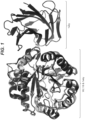
- GH5 mannanase that has the expected activity for a mannanase and displays high structural similarities with other GH5 members when the three dimensional structures are compared.
- PspMan118 SEQ ID NO:6
- PspMan148 SEQ ID NO:7
- PspMan118 SEQ ID NO:6
- PspMan148 SEQ ID NO:7
- PspMan118 SEQ ID NO:6
- PspMan148 SEQ ID NO:7
- B B .
- agaradhaerens PB entry 2WHL_A
- QSYEX6 SEQ ID NO: 9
- the GH5 mannanases BspMan5 (SEQ ID NO:16), WO2015022428-0015 (SEQ ID NO:8), residues 32-330 of US6566114-002 (SEQ ID NO:15) and residues 32-340 of US6566114-002 (SEQ ID NO:17) all have greater than 90% amino acid sequence identity to the amino acid sequence of 1WKY_A (SEQ ID NO: 10), and as a result many of the sites explored in the mannanase variants described herein have the same amino acid at each structurally corresponding position in, for example, the 2WHL_A (SEQ ID NO:9), 1WKY_A (SEQ ID NO: 10), PspMan4 (SEQ ID NO:2) and other NDL-clade mannanases, BspMan5 (SEQ ID NO:16), WO2015022428-0015 (SEQ ID NO:8), US6566114-002 (residues 32-330) (SEQ ID NO
- the mannanase variant has at least 91%, 92%, 93%, 94%, 95%, 96%, 97%, 98%, or 99% amino acid sequence identity with the amino acid sequence of SEQ ID NO: 2.
- endo- ⁇ -mannanases from Paenibacillus or Bacillus spp., polynucleotides encoding such endo- ⁇ -mannanases, cleaning compositions containing such mannanases, and methods of use thereof.
- the Paenibacillus or Bacillus spp. endo- ⁇ -mannanases described herein may have glycosyl hydrolase activity and/or are stable in the presence of a cleaning composition and/or protease.
- mannan endo-1,4- ⁇ -mannosidase refers to an enzyme capable of the random hydrolysis of 1,4- ⁇ -D-mannosidic linkages in mannans, galactomannans and glucomannans.
- Endo-1,4- ⁇ -mannanases are members of several families of glycosyl hydrolases, including GH26 and GH5.
- endo- ⁇ -mannanases constitute a group of polysaccharases that degrade mannans and denote enzymes that are capable of cleaving polyose chains containing mannose units (i.e., are capable of cleaving glycosidic bonds in mannans, glucomannans, galactomannans and galactogluco-mannans).
- endo- ⁇ -mannanases may possess additional enzymatic activities (e.g ., endo-1,4- ⁇ -glucanase, 1,4- ⁇ -mannosidase, and cellodextrinase activities).
- mannanase refers to an enzyme, polypeptide, or protein that can degrade mannan.
- the mannanase enzyme may, for example, be an endo- ⁇ -mannanase, an exo- ⁇ -mannanase, or a glycosyl hydrolase.
- mannanase activity may be determined according to any procedure known in the art ( See , e.g., Lever, Anal. Biochem, 47:273, 1972 ; Eriksson and Winell, Acta Chem. Scand., (1968), 22:1924 ; US 6602842 ; and WO9535362A1 ).
- mannans are polysaccharides having a backbone composed of ⁇ -1,4-linked mannose
- glucomannans are polysaccharides having a backbone of more or less regularly alternating ⁇ -1,4 linked mannose and glucose
- galactomannans and galactoglucomannans are mannans and glucomannans with alpha-1,6 linked galactose side-branches. These compounds may be acetylated. The degradation of galactomannans and galactoglucomannans is facilitated by full or partial removal of the galactose side-branches.
- acetylated mannans, glucomannans, galactomannans and galactoglucomannans is facilitated by full or partial deacetylation.
- Acetyl groups can be removed by alkali or by mannan acetylesterases.
- the oligomers that are released from the mannanases or by a combination of mannanases and alpha-galactosidase and/or mannan acetyl esterases can be further degraded to release free maltose by ⁇ -mannosidase and/or ⁇ -glucosidase.
- modification refers to any change or alteration in an amino acid sequence, including the substitution of an amino acid at the identified position of the amino acid sequence of interest with an amino acid that is different from the starting amino acid, deletion of an amino acid at the identified position of the amino acid sequence of interest, insertion of an amino acid at the identified position of the amino acid sequence of interest, replacement of an amino acid side chain in the amino acid sequence of interest, and or chemical modification of the amino acid sequence of interest.
- catalytic activity or "activity” describes quantitatively the conversion of a given substrate under defined reaction conditions.
- residual activity is defined as the ratio of the catalytic activity of the enzyme under a certain set of conditions to the catalytic activity under a different set of conditions.
- specific activity describes quantitatively the catalytic activity per amount of enzyme under defined reaction conditions.
- pH-stability describes the ability of a protein to withstand a limited exposure to pH-values significantly deviating from the pH where its stability is optimal (e.g ., more than one pH-unit above or below the pH-optimum), without losing its activity under conditions where its activity is measurable.
- detergent stability refers to the stability of a specified detergent composition component (such as a hydrolytic enzyme) in a detergent composition mixture.
- perhydrolase refers to an enzyme capable of catalyzing a reaction that results in the formation of a peracid suitable for applications such as cleaning, bleaching, and disinfecting.
- aqueous refers to a composition that is made up of at least 50% water.
- An aqueous composition may contain at least 50%, 60%, 70%, 80%, 90%, 95%, 97%, 98%, or 99% water.
- surfactant refers to any compound generally recognized in the art as having surface active qualities. Surfactants generally include anionic, cationic, nonionic, and zwitterionic compounds, which are further described, herein.
- surface property is used in reference to electrostatic charge, as well as properties such as the hydrophobicity and hydrophilicity exhibited by the surface of a protein.
- chelator stability refers to endo- ⁇ -mannanases of the present disclosure that retain a specified amount of enzymatic activity over a given period of time under conditions prevailing during the mannosidic, hydrolyzing, cleaning, or other process disclosed herein, for example while exposed to or contacted with chelating agents.
- the mannanase retains at least about 50%, about 60%, about 70%, about 75%, about 80%, about 85%, about 90%, about 92%, about 95%, about 96%, about 97%, about 98%, or about 99% mannanase activity after contact with a chelating agent over a given time period, for example, at least about 10 minutes, about 20 minutes, about 40 minutes, about 60 minutes, about 100 minutes, etc.
- thermo stability and “thermostable” refer to mannanases that retain a specified amount of enzymatic activity after exposure to elevated temperatures over a given period of time under conditions prevailing during the mannosidic, hydrolyzing, cleaning, or other process, for example, while exposed to elevated temperatures.
- the mannanase retains at least about 50%, about 60%, about 70%, about 75%, about 80%, about 85%, about 90%, about 92%, about 95%, about 96%, about 97%, about 98%, or about 99% mannanase activity after exposure to elevated temperatures, for example, at least about 50°C, about 55°C, about 60°C, about 65°C, or about 70°C, over a given time period, for example, at least about 5 minutes, 10 minutes, 15 minutes, 20 minutes, 30 minutes, 40 minutes, 50 minutes, 60 minutes, 120 minutes, 180 minutes, 240 minutes, 300 minutes, etc.
- cleaning activity refers to the cleaning performance achieved by an endo- ⁇ -mannanase under conditions prevailing during the mannosidic, hydrolyzing, cleaning, or other process disclosed herein.
- cleaning performance is determined using the Microswatch Assay described in Example 1. Also described herein are various cleaning assays concerning enzyme sensitive stains arising from food products, household agents or personal care products.
- stains include, for example, ice cream, ketchup, BBQ sauce, mayonnaise, soups, chocolate milk, chocolate pudding, frozen desserts, shampoo, body lotion, sun protection products, toothpaste, locust bean gum, or guar gum as determined by various chromatographic, spectrophotometric or other quantitative methodologies after subjection of the stains to standard wash conditions.
- exemplary assays include, but are not limited to those described in WO99/34011 , US 6,605,458 , and US 6,566,114 , as well as those methods described in the Examples.
- clean surface and “clean textile” refer to a surface or textile respectively that has a percent stain removal of at least 10%, preferably at least 15%, 20%, 25%, 30%, 35%, or 40% of a soiled surface or textile.
- mannanase variant or recombinant polypeptide or active fragment thereof refers to the quantity of mannanase variant or recombinant polypeptide or active fragment thereof needed to achieve the desired level of enzymatic activity in the specified cleaning composition.
- effective amounts are readily ascertained by one of ordinary skill in the art and are based on many factors, such as the particular mannanase variant or recombinant polypeptide or active fragment thereof that is used, the cleaning application, the specific composition of the cleaning composition, and whether a liquid or dry (e.g ., granular, bar, powder, solid, liquid, tablet, gel, paste, foam, sheet, or unit dose) composition is required.
- adjunct ingredient when used in conjunction with a cleaning composition means any liquid, solid or gaseous material selected for the particular type of cleaning composition desired and the form of the product (e.g., liquid, granule, powder, bar, paste, spray, tablet, gel, unit dose, sheet, or foam composition), which materials are also preferably compatible with the mannanase variant or recombinant polypeptide or active fragment thereof used in the composition.
- granular compositions are in "compact” form, while in other embodiments, the liquid compositions are in a "concentrated” form.
- cleaning compositions and “cleaning formulations” refer to admixtures of chemical ingredients that find use in the removal of undesired compounds (e.g ., soil or stains) from items or surfaces to be cleaned, such as, for example, fabric, dishes, contact lenses, solid surfaces, hair, skin, and teeth.
- the compositions or formulations may be in the form of a liquid, gel, granule, powder, bar, paste, spray tablet, gel, unit dose, sheet, or foam, depending on the surface or item to be cleaned and the desired form of the composition or formulation.
- Detergent composition and “detergent formulation” refer to mixtures of chemical ingredients intended for use in a wash medium for the cleaning of soiled objects.
- Detergent compositions/formulations generally include at least one surfactant, and may optionally include hydrolytic enzymes, oxido-reductases, builders, bleaching agents, bleach activators, bluing agents, fluorescent dyes, caking inhibitors, masking agents, enzyme activators, antioxidants, and solubilizers.
- dishwashing composition refers to all forms of compositions including, for example, granular, unit-dose, and liquid forms for cleaning dishware and cutlery.
- the dishwashing composition is an "automatic dishwashing" composition that finds use in automatic dishwashing machines.
- dishwashing refers to dishes (e.g ., plates, cups, glasses, bowls, and containers) and cutlery (e.g ., utensils including, but not limited to spoons, knives, and forks) of any material, including but not limited to ceramics, plastics, metals, china, glass, and acrylics.
- bleaching refers to the treatment of a material (e.g ., fabric, laundry, pulp, etc.) or surface for a sufficient length of time and under appropriate pH and temperature conditions to effect a brightening (i.e., whitening) and/or cleaning of the material.
- a material e.g ., fabric, laundry, pulp, etc.
- chemicals suitable for bleaching include but are not limited to ClO 2 , H 2 O 2 , peracids, and NO 2 .
- wash performance of a mannanase variant or recombinant polypeptide or active fragment thereof refers to the contribution of the variant or recombinant polypeptide or active fragment thereof to washing that provides additional cleaning performance to the detergent composition. Wash performance is compared under relevant washing conditions.
- relevant washing conditions is used herein to indicate the conditions, particularly washing temperature, time, washing mechanics, suds concentration, type of detergent, and water hardness, actually used in households in a dish or laundry detergent market segment.
- the term "disinfecting” refers to the removal of contaminants from the surfaces, as well as the inhibition or killing of microbes on the surfaces of items.
- inorganic filler salts are conventional ingredients of detergent compositions in powder form.
- the filler salts are present in substantial amounts, typically about 17 to about 35% by weight of the total composition.
- the filler salt is present in amounts not exceeding about 15% of the total composition.
- the filler salt is present in amounts that do not exceed about 10%, or more preferably, about 5%, by weight of the composition.
- the inorganic filler salts are selected from the alkali and alkaline-earth-metal salts of sulfates and chlorides.
- a preferred filler salt is sodium sulfate.
- fabric refers to, for example, woven, knit, and non-woven material, as well as staple fibers and filaments that can be converted to, for example, yarns and woven, knit, and non-woven fabrics.
- the term encompasses material made from natural, as well as synthetic ( e.g ., manufactured) fibers.
- a nucleic acid or polynucleotide is “isolated” when it is at least partially or completely separated from other components, including but not limited to, for example, other proteins, nucleic acids, and cells.
- a polypeptide, protein or peptide is “isolated” when it is at least partially or completely separated from other components, including but not limited to, for example, other proteins, nucleic acids, and cells.
- an isolated species is more abundant than are other species in a composition.
- an isolated species may comprise at least about 60%, 65%, 70%, 75%, 80%, 85%, 90%, 91%, 92%, 93%, 94%, 95%, 96%, 97%, 98%, 99%, or 100% (on a molar basis) of all macromolecular species present.
- the species of interest is purified to essential homogeneity (i.e., contaminant species cannot be detected in the composition by conventional detection methods).
- Purity and homogeneity can be determined using a number of techniques well known in the art, such as agarose or polyacrylamide gel electrophoresis of a nucleic acid or a protein sample, respectively, followed by visualization upon staining.
- a high-resolution technique such as high performance liquid chromatography (HPLC) or a similar means can be utilized for purification of the material.
- purified as applied to nucleic acids or polypeptides generally denotes a nucleic acid or polypeptide that is essentially free from other components as determined by analytical techniques well known in the art (e.g., a purified polypeptide or polynucleotide forms a discrete band in an electrophoretic gel, chromatographic eluate, and/or a media subjected to density gradient centrifugation).
- a nucleic acid or polypeptide that gives rise to essentially one band in an electrophoretic gel is "purified.”
- a purified nucleic acid or polypeptide is at least about 50% pure, usually at least about 60%, 65%, 70%, 75%, 80%, 85%, 90%, 91%, 92%, 93%, 94%, 95%, 96%, 97%, 98%, 99%, 99.5%, 99.6%, 99.7%, 99.8% or more pure (e.g., percent by weight on a molar basis).
- a composition is enriched for a molecule when there is a substantial increase in the concentration of the molecule after application of a purification or enrichment technique.
- the term "enriched" refers to a compound, polypeptide, cell, nucleic acid, amino acid, or other specified material or component that is present in a composition at a relative or absolute concentration that is higher than in a starting composition.
- polypeptide refers to a molecule comprising a plurality of amino acids linked through peptide bonds.
- polypeptide refers to a molecule comprising a plurality of amino acids linked through peptide bonds.
- proteins may optionally be modified (e.g ., glycosylated, phosphorylated, acylated, farnesylated, prenylated, and sulfonated) to add functionality. Where such amino acid sequences exhibit activity, they may be referred to as an "enzyme”.
- the conventional one-letter or three-letter codes for amino acid residues are used, with amino acid sequences being presented in the standard amino-to-carboxy terminal orientation (i.e., N ⁇ C).
- polynucleotide encompasses DNA, RNA, heteroduplexes, and synthetic molecules capable of encoding a polypeptide. Nucleic acids may be single-stranded or doublestranded, and may have chemical modifications. The terms “nucleic acid” and “polynucleotide” are used interchangeably. Because the genetic code is degenerate, more than one codon may be used to encode a particular amino acid, and the present compositions and methods encompass nucleotide sequences which encode a particular amino acid sequence. Unless otherwise indicated, nucleic acid sequences are presented in a 5'-to-3' orientation.
- wild-type and parental refer to a naturally-occurring polypeptide that does not include a man-made substitution, insertion, or deletion at one or more amino acid positions.
- wild-type and parental refer to a naturally-occurring polynucleotide that does not include a man-made substitution, insertion, or deletion at one or more nucleosides.
- a polynucleotide encoding a wild-type or parental polypeptide is not limited to a naturally-occurring polynucleotide, and encompasses any polynucleotide encoding the wild-type or parental polypeptide.
- naturally-occurring refers to anything (e.g ., polypeptide or nucleic acid sequences) that is found in nature.
- non-naturally occurring refers to anything that is not found in nature (e.g ., recombinant nucleic acids and polypeptide sequences produced in the laboratory or modification of the wild-type sequence).
- reference refers to a naturally-occurring polypeptide that does not include a man-made substitution, insertion, or deletion at one or more amino acid positions, as well as a naturally-occurring or synthetic polypeptide that includes one or more man-made substitutions, insertions, or deletions at one or more amino acid positions.
- a polynucleotide refers to a naturally-occurring polynucleotide that does not include a man-made substitution, insertion, or deletion of one or more nucleosides, as well as a naturally-occurring or synthetic polynucleotide that includes one or more man-made substitutions, insertions, or deletions at one or more nucleosides.
- a polynucleotide encoding a wild-type or parental polypeptide is not limited to a naturally-occurring polynucleotide, and encompasses any polynucleotide encoding the wild-type or parental polypeptide.
- variant(s) when used in the phrase “one or more variations versus SEQ ID NO:2" encompasses each amino acid that is different from the amino acid present at the corresponding position in SEQ ID NO:2.
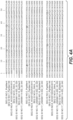
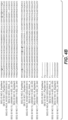
- sequence of the variant of interest is aligned with SEQ ID NO:2 according to the alignment set forth in Figures 4A-B and each position in the variant compared to SEQ ID NO:2 to identify the amino acids at each position that are different from the amino acid present at the corresponding positions in SEQ ID NO:2 and each amino acid that is different from the corresponding amino acid in SEQ ID NO:2 is a variation.
- the one letter code "Z" identifies an insertion or deletion in a parent or reference amino acid sequence.
- the one letter code "Z" is on the left side of the position number and further includes a number (e.g., .01) before each amino acid being inserted therein to indicate the order of the insertions.
- the insertion of a one amino acid, glutamine (Q), at position 298 would be depicted as "Z298.01Q”; the insertion of one amino acid, X (where X can be any amino acid) at position 298 would be depicted as "Z298.01X”; and the insertion of three amino acids alanine (A), serine (S) and tyrosine (Y) between position 87 and 88 would be depicted as "Z87.01A/Z87.02S/Z87.03Y”.
- the one letter code "Z” is on the right side of the position number.
- the deletion of an alanine (A) from position 100 would be depicted as A100Z.
- a combination of some the above insertions and deletions would be depicted as: "G87S/Z87.01A/Z87.02S/Z87.03Y/A100Z”.
- amino acid substitutions described herein use one or more of following nomenclatures: position or starting amino acid:position:substituted amino acid(s).
- Reference to only a position encompasses any starting amino acid that may be present in a reference polypeptide, parent or benchmark molecule at that position and any amino acid with which such starting amino acid may be substituted (i.e., the substituted amino acid necessarily excludes the starting amino acid of such reference polypeptide, parent or benchmark molecule).
- Reference to a substituted amino acid may be further expressed as several substituted amino acids separated by a foreslash ("/").
- X130A/N-209-213 represents a three amino acid substitution combination, wherein X is any starting amino acid at position 130 that can be substituted with an alanine (A) or an asparagine (N); 209 represents a position where any starting amino acid can be substituted with an amino acid that is not the starting amino acid; and 213 represents a position where any starting amino acid can be substituted with an amino acid that is not the starting amino acid.
- S101F/G/H/T/V represents five possible substitutions at position 101, wherein the starting amino acid serine (S) can be substituted with a phenylalanine (F), glycine (G), histidine (H), threonine (T), or valine (V).
- mannanase variant refers to a polypeptide that is derived from a reference polypeptide by the substitution, addition, or deletion, of one or more amino acids, typically by recombinant DNA techniques.
- a mannanase variant may differ from a reference polypeptide by a small number of amino acid residues and may be defined by the level of primary amino acid sequence homology/identity with the reference polypeptide over the length of the catalytic domain.
- a mannanase variant has at least 59%, 60%, 65%, 70%, 75%, 80%, 81%, 82%, 83%, 84%, 85%, 86%, 87%, 88%, 89%, 90%, 91%, 92%, 93%, 94%, 95%, 96%, 97%, 98%, or 99% amino acid sequence identity with a reference polypeptide.
- the reference polypeptide includes naturally occurring and recombinant mannanases within the GH5_8 sub family of mannanases (endo-1,4 ⁇ -mannosidases, EC 3.2.1.78).
- GH5_8 sub family is more fully described in Aspeborg et al (2012), "Evolution, substrate specificity and subfamily classification of glycosyl hydrolase family 5 (GH5)", BMC Evolutionary Biology, 12:186 .
- Exemplary GH5_8 bacterial mannanases include, for example, NDL-Clade mannanases, such as, for example, PspMan4 (SEQ ID NO:2); and other mannanases such as, for example, BspMan5 (SEQ ID NO:16) and variants thereof, Bac. sp. 1WKY_A (BAD99527.1)(SEQ ID NO:10), B.
- agaradhaerens 2WHI,_A (residues 30-330 of QSYEX6)(SEQ ID NO:9), WO2015022428-0015 (SEQ ID NO:8), residues 32-330 of US6566114-002 (SEQ ID NO:15), and residues 32-340 of US6566114-002 (SEQ ID NO:17).
- the NDL-Clade of mannanases is more fully described in International Patent Application No. PCT/US15/40057, filed July 10, 2015 , which subsequently published as WO2016/007929 .
- variant polynucleotide refers to a polynucleotide that encodes a mannanase variant, has a specified degree of homology/identity with a parent polynucleotide, or hybridizes under stringent conditions to a parent polynucleotide or the complement thereof.
- a variant polynucleotide has at least 59%, 60%, 65%, 70%, 75%, 80%, 81%, 82%, 83%, 84%, 85%, 86%, 87%, 88%, 89%, 90%, 91%, 92%, 93%, 94%, 95%, 96%, 97%, 98%, or 99% nucleotide sequence identity with a parent polynucleotide.
- Sequence identity may be determined using known programs such as BLAST, ALIGN, and CLUSTAL using standard parameters.
- BLAST Altschul etal. [1990] J. Mol. Biol. 215:403-410 ; Henikoff et al. [1989] Proc. Natl. Acad. Sci. USA 89:10915 ; Karin et al. [1993] Proc. Natl. Acad. Sci. USA 90:5873 ; and Higgins etal. [1988] Gene 73:237-244 ).
- Software for performing BLAST analyses is publicly available through the National Center for Biotechnology Information (NCBI). Databases may also be searched using FASTA ( Pearson etal. [1988] Proc.
- polypeptides are substantially identical.
- the first polypeptide is immunologically cross-reactive with the second polypeptide.
- polypeptides that differ by conservative amino acid substitutions are immunologically cross-reactive.
- a polypeptide is substantially identical to a second polypeptide, for example, where the two peptides differ only by a conservative substitution.
- Another useful algorithm for comparison of multiple protein sequences is the MUSCLE program from Geneious software (Biomatters Ltd.) ( Robert C. Edgar, "MUSCLE: multiple sequence alignment with high accuracy and high throughput", Nucl. Acids Res. (2004) 32 (5): 1792-1797 ).
- derived from encompasses the terms “originated from,” “obtained from,” “obtainable from,” “isolated from,” and “created from” and generally indicates that one specified material find its origin in another specified material or has features that can be described with reference to the another specified material.
- hybridization refers to the process by which a strand of nucleic acid joins with a complementary strand through base pairing, as known in the art.
- hybridization conditions refers to the conditions under which hybridization reactions are conducted. These conditions are typically classified by degree of “stringency” of the conditions under which hybridization is measured.
- the degree of stringency can be based, for example, on the melting temperature (T m ) of the nucleic acid binding complex or probe. For example, “maximum stringency” typically occurs at about T m -5°C (5°C below the T m of the probe); “high stringency” at about 5-10°C below the T m ; “intermediate stringency” at about 10-20°C below the T m of the probe; and “low stringency” at about 20-25°C below the T m .
- maximum stringency conditions may be used to identify nucleic acid sequences having strict identity or near-strict identity with the hybridization probe; while high stringency conditions are used to identify nucleic acid sequences having about 80% or more sequence identity with the probe.
- it is typically desirable to use relatively stringent conditions to form the hybrids e.g., relatively low salt and/or high temperature conditions are used).
- substantially similar and “substantially identical” in the context of at least two nucleic acids or polypeptides means that a polynucleotide or polypeptide comprises either a sequence that has at least about 90%, 91%, 92%, 93%, 94%, 95%, 96%, 97%, 98%, or 99% identity to a parent or reference sequence, or a sequence that includes amino acid substitutions, insertions, deletions, or modifications made only to circumvent the present description without adding functionality.
- expression vector refers to a DNA construct containing a DNA sequence that encodes the specified polypeptide and is operably linked to a suitable control sequence capable of effecting the expression of the polypeptides in a suitable host.
- control sequences include a promoter to effect transcription, an optional operator sequence to control such transcription, a sequence encoding suitable mRNA ribosome binding sites, and sequences which control termination of transcription and translation.
- the vector may be a plasmid, a phage particle, or simply a potential genomic insert. Once transformed into a suitable host, the vector may replicate and function independently of the host genome, or may, in some instances, integrate into the genome itself.
- recombinant refers to genetic material (i.e., nucleic acids, the polypeptides they encode, and vectors and cells comprising such polynucleotides) that has been modified to alter its sequence or expression characteristics, such as by mutating the coding sequence to produce an altered polypeptide, fusing the coding sequence to that of another gene, placing a gene under the control of a different promoter, expressing a gene in a heterologous organism, expressing a gene at a decreased or elevated levels, expressing a gene conditionally or constitutively in manner different from its natural expression profile, and the like.
- recombinant nucleic acids, polypeptides, and cells based thereon have been manipulated by man such that they are not identical to related nucleic acids, polypeptides, and cells found in nature.
- signal sequence refers to a sequence of amino acids bound to the N-terminal portion of a polypeptide, and which facilitates the secretion of the mature form of the protein from the cell.
- the mature form of the extracellular protein lacks the signal sequence which is cleaved off during the secretion process.
- selectable marker refers to a gene capable of expression in a host cell that allows for ease of selection of those hosts containing an introduced nucleic acid or vector.
- selectable markers include but are not limited to antimicrobial substances (e.g., hygromycin, bleomycin, or chloramphenicol) and/or genes that confer a metabolic advantage, such as a nutritional advantage, on the host cell.
- selectable gene product refers to a gene that encodes an enzymatic activity that confers resistance to an antibiotic or drug upon the cell in which the selectable marker is expressed.
- regulatory element refers to a genetic element that controls some aspect of the expression of nucleic acid sequences.
- a promoter is a regulatory element which facilitates the initiation of transcription of an operably linked coding region. Additional regulatory elements include splicing signals, polyadenylation signals and termination signals.
- host cells generally refers to prokaryotic or eukaryotic hosts which are transformed or transfected with vectors constructed using recombinant DNA techniques known in the art. Transformed host cells are capable of either replicating vectors encoding the protein variants or expressing the desired protein variant. In the case of vectors which encode the pre- or pro-form of the protein variant, such variants, when expressed, are typically secreted from the host cell into the host cell medium.
- the term "introduced" in the context of inserting a nucleic acid sequence into a cell means transformation, transduction, or transfection.
- Means of transformation include protoplast transformation, calcium chloride precipitation, electroporation, naked DNA, and the like as known in the art. (See, Chang and Cohen [1979] Mol. Gen. Genet. 168: 111-115 ; Smith et al. [1986] Appl. Env. Microbiol. 51:634 ; and the review article by Ferrari et al., in Harwood, Bacillus, Plenum Publishing Corporation, pp. 57-72, 1989 ).
- Variants, compositions and methods disclosed herein relate to a recombinant mannanase, or a recombinant polypeptide or an active fragment thereof comprising one or more substitutions at one or more positions, wherein such variants are generated through conventional molecular biology techniques (see, e.g., Sambrook et al, Molecular Cloning: Cold Spring Harbor Laboratory Press ).
- the mannanase variant of the invention is set forth in the claims.
- An embodiment is directed to a mannanase variant comprising an amino acid sequence comprising one or more substitutions at one or more positions selected from P19E, T38E, N67D, Y129M, Q184L, K244L, S258D, and N261R; wherein the amino acid positions of the variant or recombinant polypeptide or active fragment thereof are numbered by correspondence with the amino acid sequence of SEQ ID NO:2, as set forth in the claims.
- Another embodiment is directed to an NDL-Clade of mannanases comprising one or more mannanase variants set forth in the claims wherein said variant further comprises one or more motifs selected from a: WX a KNDLXXAI (SEQ ID NO:11) motif at positions 31-40, wherein X a is F or Y and X is any amino acid ("Motif 1"); LDXXXGPXGXLT (SEQ ID NO:12) motif at positions 263-274, wherein X is any amino acid (“Deletion Motif 1"); LDX 1 V/AT/AGPX 2 GX 3 LT (SEQ ID NO:13) motif at positions 263-274, wherein X 1 is an M or L, X 2 is N, A or S and X 3 is S, T or N (“Deletion Motif 2"); and LDM/LATGPN/AGS/TLT (SEQ ID NO:14) motif at positions 263-274 (“Deletion Motif 3”), where
- a yet further embodiment is directed to an NDL-Clade of mannanases comprising one or more mannanase variants set forth in the claims, wherein said variant further comprises one or more motifs selected from a: WX a KNDLXXAI (SEQ ID NO:11) motif at positions 31-40, wherein X a is F or Y and X is any amino acid; LDXXXGPXGXLT (SEQ ID NO:12) motif at positions 263-274, wherein X is any amino acid; LDX 1 V/AT/AGPX 2 GX 3 LT (SEQ ID NO:13) motif at positions 263-274, wherein X 1 is an M or L, X 2 is N, A or S and X 3 is S, T or N; and LDM/LATGPN/AG S/TLT (SEQ ID NO:14) motif at positions 263-274, wherein the amino acid positions of the variant or recombinant polypeptide or active fragment thereof are numbered by correspondence with the amino acid sequence
- a further embodiment is directed to an NDL-Clade of mannanases comprising one or more mannanase variants set forth in the claims, wherein said variant further comprises a WX a KNDLXXAI (SEQ ID NO:11) motif at positions 31-40, wherein X a is F and X is any amino acid, wherein the amino acid positions of the variant are numbered by correspondence with the amino acid sequence of SEQ ID NO:2, with the proviso that the variant, or recombinant polypeptide or active fragment thereof is not ACU308431, ETT37549, WP_036608478, WP_036670707, WP_017688745, WP_053782127, WP_024633848, AAX87003, or AEX60762.
- WX a KNDLXXAI SEQ ID NO:11
- a still further embodiment is directed to an NDL-Clade of mannanases comprising one or more mannanase variants set forth in the claims, wherein said variant further comprises a WX a KNDLXXAI (SEQ ID NO:11) motif at positions 31-40, wherein X a is F and X is any amino acid, wherein the amino acid positions of the variant are numbered by correspondence with the amino acid sequence of SEQ ID NO:2, with the proviso that the variant is not ACU308431, ETT37549, WP_036608478, WP_036670707, WP_017688745, WP_053782127, WP_024633848, AAX87003, AEX60762, PamMan2, PamMan3, PtuMan2, PpaMan2, or PspMan9.
- WX a KNDLXXAI SEQ ID NO:11
- the NDL-Clade of mannanases comprises one or more mannanase variants set forth in the claims, wherein said variant further comprises a LDX 1 V/AT/AGPX 2 GX 3 LT (SEQ ID NO:13) or LDM/LATGPN/AGS/TLT (SEQ ID NO:14) motif at positions 263-274, wherein X 1 is an M; X 2 is N, A or S; and X 3 is S, T or N, wherein the amino acid positions of the variant are numbered by correspondence with the amino acid sequence of SEQ ID NO:2, with the proviso that the variant thereof is not ACU30843, ETT37549, WP_036608478, WP_036670707, WP_017688745, or WP_046214462.
- the NDL-Clade of mannanases comprises one or more mannanase variants set forth in the claims, wherein said variant further comprises a LDX 1 V/AT/AGPX 2 GX 3 LT (SEQ ID NO:13) or LDM/LATGPN/AGS/TLT (SEQ ID NO:14) motif at positions 263-274, wherein X 1 is an M; X 2 is N, A or S; and X 3 is S, T or N, wherein the amino acid positions of the variant are numbered by correspondence with the amino acid sequence of SEQ ID NO:2, with the proviso that the variant is not ACU30843, ETT37549, WP_036608478, WP_036670707, WP_017688745, WP_046214462, or PamMan2.
- the NDL-Clade of mannanases comprises one or more mannanase variants set forth in the claims, wherein said variant further comprises (i) a WX a KNDLXXAI (SEQ ID NO: 11) motif at positions 31-40, wherein X a is F and X is any amino acid, and (ii) a LDX 1 V/AT/AGPX 2 GX 3 LT (SEQ ID NO: 13) or LDM/LATGPN/AGS/TLT (SEQ ID NO: 14) motif at positions 263-274, wherein X 1 is an M; X 2 is N, A or S; and X 3 is S, T or N, wherein the amino acid positions of the variant are numbered by correspondence with the amino acid sequence of SEQ ID NO:2, with the proviso that the variant is not ACU30843, ETT37549, WP_036608478, WP_036670707, or WP_017688745.
- the NDL-Clade of mannanases comprises one or more mannanase variants set forth in the claims, wherein said variant further comprises (i) a WX a KNDLXXAI (SEQ ID NO: 11) motif at positions 31-40, wherein X a is F and X is any amino acid, and (ii) a LDX 1 V/AT/AGPX 2 GX 3 LT (SEQ ID NO:13) or LDM/LATGPN/AGS/TLT (SEQ ID NO:14) motif at positions 263-274, wherein X 1 is an M; X 2 is N, A or S; and X 3 is S, T or N, wherein the amino acid positions of the variant are numbered by correspondence with the amino acid sequence of SEQ ID NO:2, with the proviso that the variant, or recombinant polypeptide or active fragment thereof is not ACU30843, ETT37549, WP_036608478, WP_036670707,
- Another embodiment is directed to a mannanase variant comprising an amino acid sequence having at least 91%, 92%, 93%, 94%, 95%, 96%, 97%, 98%, or 99% amino acid sequence identity to the amino acid sequence of SEQ ID NO:2, as set forth in the claims.
- the mannanase are isolated. In other embodiments, the mannanase variants described herein are endo- ⁇ -mannanases. In further embodiments, the mannanase variants described herein have mannanase activity. In still other embodiments, the mannanase variants described herein have mannanase activity in the presence of a surfactant. In some embodiments, the mannanase activity is activity on mannan gum, locust bean gum galactomannan, and/or konjac glucomannan. In additional embodiments, the mannanase variants described herein have cleaning activity in a detergent composition.
- Still other embodiments are directed to mannanase variants that have mannanase activity in the presence of a protease. Further embodiments are directed to mannanase variants that hydrolyze a substrate selected from the group consisting of guar gum, locust bean gum, and combinations thereof. In some embodiments, the mannanase variants described herein do not comprise a carbohydrate-binding module.
- the mannanase variant has enzymatic activity over a broad range of pH conditions. In certain embodiments, the mannanase variant has enzymatic activity from a pH of about 4.0 to about 11.0. In further embodiments, the mannanase variants thereof have at least 50%, 60%, 70%, 80%, 90%, 95%, or 100% mannanase activity at a pH of from about 4.0 to about 11.0, about 4.5 to about 9.0, about 5.5 to about 8.5, or about 6.0 to about 7.5.
- the mannanase variants have mannanase activity at a temperature ranging from 20°C to about 90°C, about 30°C to about 80°C, about 20°C to about 50°C, or about 30°C to about 66°C. In certain embodiments, the mannanase variants have at least 50%, 60%, 70%, 80%, 90%, 95%, or 100% mannanase activity at a temperature range from about 20°C to about 90°C, about 30°C to about 80°C, about 20°C to about 50°C, or about 30°C to about 66°C.
- Yet still further embodiments are directed to mannanase variants described herein, wherein the variant or recombinant polypeptide or active fragment thereof retains at least 70% of its maximal mannanase activity at a pH range of 4.5-9.0, 5.5-8.5, or 6.0-7.5.
- Some embodiments are directed to mannanase variants described herein, wherein the variant retains at least 70% of its maximal mannanase activity at a pH above 3.0, 3.5, 4.0 or 4.5 or at a pH below 9.0, 9.5, or 10.0.
- the mannanase variant retains at least 10%, 20%, 30%, 40% or 50% residual mannanase activity at a temperature of from about 20-70°C, about 30-70°C, about 40-70°C, about 45-65°C, about 50-60°C, about 60-70°C, or about 60°C. In even further embodiments, the mannanase variant retains at least 70% of its maximal mannanase activity at a temperature range of about 40-70°C, about 45-75°C, about 45-65°C, about 50-60°C, or about 60-70°C.
- the mannanase variant retains at least 70% of its maximal mannanase activity at a temperature above 20°C, 25°C, 30°C, 35°C, or 40°C or at a temperature below 60°C, 65°C, 70°C, 75°C, or 80°C.
- the amount of maximal mannanase activity retained is determined over a time period of 5 minutes.
- the mannanase variants described herein include substitutions that do not substantially affect the structure and/or function of the polypeptide.
- Exemplary substitutions are conservative mutations, as summarized in Table I.
- Table I. Amino Acid Substitutions Original Residue Code Acceptable Substitutions Alanine A D-Ala, Gly, beta-Ala, L-Cys, D-Cys Arginine R D-Arg, Lys, D-Lys, homo-Arg, D-homo-Arg, Met, Ile, D-Met, D-Ile, Orn, D-Orn Asparagine N D-Asn, Asp, D-Asp, Glu, D-Glu, Gln, D-Gln Aspartic Acid D D-Asp, D-Asn, Asn, Glu, D-Glu, Gln, D-Gln Cysteine C D-Cys, S-Me-Cys, Met, D-Met, Thr, D-Thr
- the mannanase variants have 1,4- ⁇ -D-mannosidic hydrolase activity, which includes mannanase, endo-1,4- ⁇ -D-mannanase, exo-1,4- ⁇ -D-mannanase galactomannanase, and/or glucomannanase activity.
- 1,4- ⁇ -D-mannosidic hydrolase activity can be determined and measured using the assays described herein, or by other assays known in the art.
- a polypeptide of the present invention has activity in the presence of a detergent composition.
- the mannanase variants described herein are produced as an N-and/or C-terminal fusion protein, for example, to aid in extraction, detection and/or purification and/or to add functional properties to the variant.
- fusion protein partners include, but are not limited to, glutathione-S-transferase (GST), 6XHis, GAL4 (DNA binding and/or transcriptional activation domains), FLAG, MYC, BCE103 ( WO 2010/044786 ), or other tags well known to anyone skilled in the art.
- GST glutathione-S-transferase
- 6XHis GAL4 (DNA binding and/or transcriptional activation domains)
- FLAG FLAG
- MYC MYC
- BCE103 WO 2010/044786
- a proteolytic cleavage site is provided between the fusion protein partner and the protein sequence of interest to allow removal of fusion protein sequences.
- the fusion protein does not hinder the activity of the mannanase
- the mannanase variants described herein are fused to a functional domain including a leader peptide, propeptide, one or more binding domain (modules) and/or a catalytic domain.
- Suitable binding domains include, but are not limited to, carbohydrate-binding modules (CBM) of various specificities, providing increased affinity to carbohydrate components present during the application of the mannanase variants or recombinant polypeptides or active fragments thereof described herein.
- CBM carbohydrate-binding modules
- the CBM and catalytic domain of a polypeptide of the present invention are operably linked.
- a CBM is defined as a contiguous amino acid sequence within a carbohydrate-active enzyme with a discreet fold having carbohydrate-binding activity.
- CBMs in cellulosomal scaffold in proteins and rare instances of independent putative CBMs.
- the requirement of CBMs existing as modules within larger enzymes sets this class of carbohydrate-binding proteins apart from other non-catalytic sugar binding proteins such as lectins and sugar transport proteins.
- CBMs were previously classified as cellulose-binding domains (CBDs) based on the initial discovery of several modules that bound cellulose ( Tomme et al., Eur J Biochem, 170:575-581, 1988 ; and Gilkes et al., J Biol Chem, 263:10401-10407, 1988 ).
- CBDs cellulose-binding domains
- additional modules in carbohydrate-active enzymes are continually being found that bind carbohydrates other than cellulose, yet otherwise meet the CBM criteria, hence the need to reclassify these polypeptides using more inclusive terminology.
- Previous classification of cellulose-binding domains was based on amino acid similarity. Groupings of CBDs were called "Types" and numbered with roman numerals (e.g. Type I or Type II CBDs).
- Families 1 to 13 are the same as Types I to XIII ( Tomme et al., in Enzymatic Degradation of Insoluble Polysaccharides (Saddler, J.N. & Penner, M., eds.), Cellulose-binding domains: classification and properties, pp. 142-163, American Chemical Society, Washington, 1995 ).
- a detailed review on the structure and binding modes of CBMs can be found in Boraston et al., Biochem J, 382:769-81, 2004 .
- CBMs The family classification of CBMs is expected to aid in the identification of CBMs, predict binding specificity, aid in identifying functional residues, reveal evolutionary relationships, and possibly be predictive of polypeptide folds. Because the fold of proteins is better conserved than their sequences, some of the CBM families can be grouped into superfamilies or clans. The current CBM families are 1-63. CBDs are found at the N-and C-termini of proteins or are internal.
- Enzyme hybrids are known in the art (See e.g ., WO9000609 and WO9516782 ) and may be prepared by transforming into a host cell a DNA construct comprising at least a fragment of DNA encoding the cellulose-binding domain ligated, with or without a linker, to a DNA sequence encoding a mannanase variant or recombinant polypeptide or active fragment thereof described herein and growing the host cell to express the fused gene.
- Enzyme hybrids may be described by the following formula: CBM-MR-X or X-MR-CBM, wherein CBM is the N-terminal or the C-terminal region of an amino acid sequence corresponding to at least the carbohydrate-binding module; MR is the middle region (the linker), and may be a bond, or a short linking group of from about 2 to about 100 carbon atoms, from about 2 to about 40 carbon atoms, from about 2 to about 100 amino acids, or from about 2 to about 40 amino acids; and X is an N-terminal or C-terminal region of a mannanase variant or recombinant polypeptide or active fragment thereof described herein that has mannanase catalytic activity.
- a mannanase may contain more than one CBM or other module(s)/domain(s) of non-glycolytic function.
- module and “domain” are used interchangeably in the present disclosure.
- catalytic domains include: cellulases; hemicellulases, such as xylanase; exo-mannanases; glucanases; arabinases; galactosidases; pectinases; and/or other activities such as proteases, lipases, acid phosphatases and/or others or functional fragments thereof.
- Fusion proteins are optionally linked to a mannanase variant or recombinant polypeptide or active fragment thereof described herein through a linker sequence that simply joins the mannanase variant or recombinant polypeptide or active fragment thereof and the fusion domain without significantly affecting the properties of either component, or the linker optionally has a functional importance for the intended application.
- proteins of interest include: acyl transferases, amylases, alpha-amylases, beta-amylases, alpha-galactosidases, arabinases, arabinosidases, aryl esterases, beta-galactosidases, beta-glucanases, carrageenases, catalases, cellobiohydrolases, cellulases, chondroitinases, cutinases, endo-beta-1, 4-glucanases, endo-beta-mannanases, exo-beta-mannanases, esterases, exo-mannanases, galactanases, glucoamylases, hemicellulases, hyaluronidases, keratinases,
- a mannanase variant is fused to a signal peptide for directing the extracellular secretion of the variant or polypeptide or active fragment thereof.
- the signal peptide is the native signal peptide of the mannanase described herein.
- the signal peptide is a non-native signal peptide such as the B . subtilis AprE signal peptide.
- a polypeptide of the present invention is expressed in a heterologous organism, i.e., an organism other than Paenibacillus spp.
- exemplary heterologous organisms are Gram(+) bacteria such as B. subtilis, B. licheniformis, B. lentus, B. brevis, Geobacillus (formerly Bacillus ) stearothermophilus, B. alkalophilus, B. amyloliquefaciens, B. coagulans, B. circulans, B. lautus, B. megaterium, B. thuringiensis, S. lividans, or S. murinus; Gram(-) bacteria such as E. coli; yeast such as Saccharomyces spp.
- a mannanase variant described herein is expressed in a heterologous organism as a secreted polypeptide, in which case, the compositions and method encompass a method for expressing the variant as a secreted polypeptide in a heterologous organism.
- Yet another embodiment is directed to a polynucleotide that encodes a mannanase variant described herein.
- the polynucleotide is contained in an expression vector contained in a heterologous organism, such as those identified, herein.
- the polynucleotide may be operably-linked to regulatory elements (e.g ., a promoter, terminator, enhancer, and the like) to assist in expressing the encoded variants or recombinant polypeptides or active fragments thereof described herein.
- Some embodiments are directed to a polynucleotide that encodes a variant set forth in the claims, which has at least 90%, 91%, 92%, 93%, 94%, 95%, 96%, 97%, 98%, or 99% amino acid sequence identity to the amino acid sequence of SEQ ID NO:2.
- the polynucleotide is codon-optimized for expression in a different host, mutated to introduce cloning sites, or otherwise altered to add functionality.
- the polynucleotide that encodes a mannanase variant described herein is fused downstream of a coding sequence of a signal peptide that directs the extracellular secretion of variant.
- Expression vectors may be provided in a heterologous host cell suitable for expressing a variant or recombinant polypeptide or active fragment thereof described herein, or suitable for propagating the expression vector prior to introducing it into a suitable host cell.
- a polynucleotide that encodes a variant hybridizes to the polynucleotide of SEQ ID NO:1 or the complement thereof under specified hybridization conditions.
- exemplary conditions are stringent condition and highly stringent conditions, which are described, herein.
- DNA that encodes a mannanase variant or recombinant polypeptide or active fragment thereof described herein can be chemically synthesized from published sequences or obtained directly from host cells harboring the gene (e.g., by cDNA library screening or PCR amplification).
- a polynucleotide is included in an expression cassette and/or cloned into a suitable expression vector by standard molecular cloning techniques.
- Such expression cassettes or vectors contain sequences that assist initiation and termination of transcription (e.g ., promoters and terminators), and generally contain a selectable marker.
- the expression cassette or vector is introduced into a suitable expression host cell, which then expresses the corresponding mannanase variant or recombinant polypeptide or active fragment thereof described herein.
- suitable expression hosts are bacterial expression host genera including Escherichia (e.g., E. coli), Pseudomonas (e.g., P. fluorescens or P. stutzerei), Proteus (e.g., P. mirabilis), Ralstonia (e.g., R. eutropha), Streptomyces, Staphylococcus (e.g., S. carnosus), Lactococcus (e.g., L.
- Escherichia e.g., E. coli
- Pseudomonas e.g., P. fluorescens or P. stutzerei
- Proteus e.g., P. mirabilis
- Ralstonia e.g., R
- yeast expression hosts such as S. cerevisiae, S. pombe, Y. lipolytica, H. polymorpha, K. lactis or P. pastoris.
- fungal expression hosts such as C.lucknowense, Aspergillus (e.g., A. oryzae, A. niger, A. nidulans, etc.) or T. reesei.
- mammalian expression hosts such as mouse ( e.g., NS0), Chinese Hamster Ovary (CHO) or Baby Hamster Kidney (BHK) cell lines.
- eukaryotic hosts such as insect cells or viral expression systems (e.g ., bacteriophages such as M13, T7 phage or Lambda, or viruses such as Baculovirus) are also suitable for producing a mannanase variant or recombinant polypeptide or active fragment thereof described herein.
- insect cells or viral expression systems e.g ., bacteriophages such as M13, T7 phage or Lambda, or viruses such as Baculovirus
- viruses such as Baculovirus
- Promoters and/or signal sequences associated with secreted proteins in a particular host of interest are candidates for use in the heterologous production and secretion of mannanases in that host or in other hosts.
- the promoters that drive the genes for cellobiohydrolase I (cbh1), glucoamylase A (glaA), TAKA-amylase (amyA), xylanase (exlA), the gpd-promoter cbh1, cbhll, endoglucanase genes EGI-EGV, Cel61B, Cel74A, egl1-egl5, gpd promoter, Pgk1, pki1, EF-1alpha, tef1, cDNA1 and hex1 are particularly suitable and can be derived from a number of different organisms ( e.g., A.
- the polynucleotide is recombinantly associated with a polynucleotide encoding a suitable homologous or heterologous signal sequence that leads to secretion of a mannanase variant described herein into the extracellular (or periplasmic) space, thereby allowing direct detection of enzyme activity in the cell supernatant (or periplasmic space or lysate).
- a suitable homologous or heterologous signal sequence that leads to secretion of a mannanase variant described herein into the extracellular (or periplasmic) space, thereby allowing direct detection of enzyme activity in the cell supernatant (or periplasmic space or lysate).
- coli other Gram negative bacteria and other organisms known in the art include those that drive expression of the HlyA, DsbA, Pbp, PhoA, PelB, OmpA, OmpT or M13 phage Gill genes.
- particularly suitable signal sequences further include those that drive expression of AprE, NprB, Mpr, AmyA, AmyE, Blac, SacB, and for S. cerevisiae or other yeast, include the killer toxin, Bar1, Suc2, Mating factor alpha, Inu1A or Ggplp signal sequence.
- Signal sequences can be cleaved by a number of signal peptidases, thus removing them from the rest of the expressed protein.
- the rest of the polypeptide is expressed alone or as a fusion with other peptides, tags or proteins located at the N- or C-terminus (e.g., 6XHis, HA or FLAG tags).
- Suitable fusions include tags, peptides or proteins that facilitate affinity purification or detection (e.g., BCE103, 6XHis, HA, chitin binding protein, thioredoxin or FLAG tags), as well as those that facilitate expression, secretion or processing of the target mannanase.
- Suitable processing sites include enterokinase, STE13, Kex2 or other protease cleavage sites for cleavage in vivo or in vitro.
- a mannanase variant or recombinant polypeptide or active fragment thereof described herein can be introduced into expression host cells by a number of transformation methods including, but not limited to, electroporation, lipid-assisted transformation or transfection ("lipofection"), chemically mediated transfection (e.g., CaCl and/or CaP), lithium acetate-mediated transformation (e.g., of host-cell protoplasts), biolistic "gene gun” transformation, PEG-mediated transformation (e.g., of host-cell protoplasts), protoplast fusion (e.g., using bacterial or eukaryotic protoplasts), liposome-mediated transformation, Agrobacterium tumefaciens, adenovirus or other viral or phage transformation or transduction.
- electroporation lipid-assisted transformation or transfection
- CaCl and/or CaP chemically mediated transfection
- lithium acetate-mediated transformation e.g., of host-cell protoplasts
- a mannanase variant or recombinant polypeptide or active fragment thereof described herein can be expressed intracellularly.
- a permeabilisation or lysis step can be used to release the polypeptide into the supernatant.
- the disruption of the membrane barrier is effected by the use of mechanical means such as ultrasonic waves, pressure treatment (French press), cavitation or the use of membrane-digesting enzymes such as lysozyme or enzyme mixtures.
- the polynucleotides encoding a mannanase variant or recombinant polypeptide or active fragment thereof described herein can be expressed by use of a suitable cell-free expression system.
- the polynucleotide of interest is typically transcribed with the assistance of a promoter, but ligation to form a circular expression vector is optional.
- RNA is exogenously added or generated without transcription and translated in cell free systems.
- Another embodiment is directed to a cleaning composition comprising a mannanase variant and methods for using such compositions in cleaning applications.
- Cleaning applications include, but are not limited to, laundry or textile cleaning, laundry or textile softening, dishwashing (manual and automatic), stain pre-treatment, and the like.
- mannans e.g. , locust bean gum, guar gum, etc.
- mannans e.g. , locust bean gum, guar gum, etc.
- Cleaning compositions typically include an effective amount of a mannanase variant or recombinant polypeptide or active fragment thereof described herein, e.g., at least 0.0001 weight percent, from about 0.0001 to about 1, from about 0.001 to about 0.5, from about 0.01 to about 0.1 weight percent, or even from about 0.1 to about 1 weight percent, or more.
- An effective amount of a mannanase variant or recombinant polypeptide or active fragment thereof in the cleaning composition results in the mannanase variant or recombinant polypeptide or active fragment thereof having enzymatic activity sufficient to hydrolyze a mannan-containing substrate, such as locust bean gum, guar gum, or combinations thereof.
- Some embodiments are directed to a cleaning composition in a form selected from powder, liquid, granular, bar, solid, semi-solid, gel, paste, emulsion, tablet, capsule, unit dose, sheet, and foam.
- the cleaning composition is a detergent composition.
- the cleaning composition or detergent composition is selected from a laundry detergent, a fabric softening detergent, a dishwashing detergent, and a hard-surface cleaning detergent.
- all component or composition levels provided herein are made in reference to the active level of that component or composition, and are exclusive of impurities, for example, residual solvents or by-products, which may be present in commercially available sources.
- Enzyme component weights are based on total active protein. All percentages and ratios are calculated by weight unless otherwise indicated. All percentages and ratios are calculated based on the total composition unless otherwise indicated.
- the enzymes levels are expressed by pure enzyme by weight of the total composition and unless otherwise specified, the detergent ingredients are expressed by weight of the total compositions.
- the cleaning compositions described herein further comprise a surfactant.
- the surfactant is selected from a non-ionic, ampholytic, semi-polar, anionic, cationic, zwitterionic, and combinations and mixtures thereof.
- the surfactant is selected from an anionic surfactant, a cationic surfactant, a zwitterionic surfactant, and combinations thereof.
- the cleaning compositions described herein comprise from about 0.1% to about 60%, about 1% to about 50%, or about 5% to about 40% surfactant by weight of the composition.
- Exemplary surfactants include, but are not limited to sodium dodecylbenzene sulfonate, C12-14 pareth-7, C12-15 pareth-7, sodium C12-15 pareth sulfate, C14-15 pareth-4, sodium laureth sulfate (e.g., Steol CS-370), sodium hydrogenated cocoate, C 12 ethoxylates (Alfonic 1012-6, Hetoxol LA7, Hetoxol LA4), sodium alkyl benzene sulfonates (e.g., Nacconol 90G), and combinations and mixtures thereof.
- sodium dodecylbenzene sulfonate C12-14 pareth-7, C12-15 pareth-7, sodium C12-15 pareth sulfate, C14-15 pareth-4, sodium laureth sulfate (e.g., Steol CS-370), sodium hydrogenated cocoate, C 12 ethoxylates (Alfonic 1012-6,
- Anionic surfactants include but are not limited to linear alkylbenzenesulfonate (LAS), alpha-olefinsulfonate (AOS), alkyl sulfate (fatty alcohol sulfate) (AS), alcohol ethoxysulfate (AEOS or AES), secondary alkanesulfonates (SAS), alpha-sulfo fatty acid methyl esters, alkyl- or alkenylsuccinic acid, or soap.
- LAS linear alkylbenzenesulfonate
- AOS alpha-olefinsulfonate
- AS alkyl sulfate
- AEOS or AES alcohol ethoxysulfate
- SAS secondary alkanesulfonates
- alpha-sulfo fatty acid methyl esters alkyl- or alkenylsuccinic acid, or soap.
- Nonionic surfactants include but are not limited to alcohol ethoxylate (AEO or AE), carboxylated alcohol ethoxylates, nonylphenol ethoxylate, alkylpolyglycoside, alkyldimethylamine oxide, ethoxylated fatty acid monoethanolamide, fatty acid monoethanolamide, polyhydroxy alkyl fatty acid amide (e.g., as described in WO9206154 ), polyoxyethylene esters of fatty acids, polyoxyethylene sorbitan esters (e.g., TWEENs), polyoxyethylene alcohols, polyoxyethylene isoalcohols, polyoxyethylene ethers (e.g., TRITONs and BRIJ), polyoxyethylene esters, polyoxyethylene-p-tert-octylphenols or octylphenyl-ethylene oxide condensates (e.g., NONIDET P40), ethylene oxide condensates with fatty alcohols (e.g., LUBROL),
- the detergent compositions disclosed herein further comprise a surfactant mixture that includes, but is not limited to 5-15% anionic surfactants, ⁇ 5% nonionic surfactants, cationic surfactants, phosphonates, soap, enzymes, perfume, butylphenyl methylpropionate, geraniol, zeolite, polycarboxylates, hexyl cinnamal, limonene, cationic surfactants, citronellol, and benzisothiazolinone.
- a surfactant mixture that includes, but is not limited to 5-15% anionic surfactants, ⁇ 5% nonionic surfactants, cationic surfactants, phosphonates, soap, enzymes, perfume, butylphenyl methylpropionate, geraniol, zeolite, polycarboxylates, hexyl cinnamal, limonene, cationic surfactants, citronellol, and benzisothi
- the cleaning compositions described herein may additionally include one or more detergent builders or builder systems, a complexing agent, a polymer, a bleaching system, a stabilizer, a foam booster, a suds suppressor, an anti-corrosion agent, a soil-suspending agent, an anti-soil redeposition agent, a dye, a bactericide, a hydrotope, a tarnish inhibitor, an optical brightener, a fabric conditioner, and a perfume.
- the cleaning compositions described herein may also include additional enzymes selected from proteases, amylases, cellulases, lipases, pectin degrading enzymes, xyloglucanases, or additional carboxylic ester hydrolases.
- the cleaning composition described herein further comprises from about 1%, from about 3% to about 60% or even from about 5% to about 40% builder by weight of the cleaning composition.
- Builders may include, but are not limited to, the alkali metals, ammonium and alkanolammonium salts of polyphosphates, alkali metal silicates, alkaline earth and alkali metal carbonates, aluminosilicates, polycarboxylate compounds, ether hydroxypolycarboxylates, copolymers of maleic anhydride with ethylene or vinyl methyl ether, 1,3,5-trihydroxy benzene-2,4,6-trisulphonic acid, and carboxymethyloxysuccinic acid, the various alkali metals, ammonium and substituted ammonium salts of polyacetic acids such as ethylenediamine tetraacetic acid and nitrilotriacetic acid, as well as polycarboxylates such as mellitic acid, succinic acid, citric acid
- the builders form water-soluble hardness ion complexes (e.g., sequestering builders), such as citrates and polyphosphates (e.g., sodium tripolyphosphate and sodium tripolyphospate hexahydrate, potassium tripolyphosphate, and mixed sodium and potassium tripolyphosphate, etc.).
- sequestering builders such as citrates and polyphosphates (e.g., sodium tripolyphosphate and sodium tripolyphospate hexahydrate, potassium tripolyphosphate, and mixed sodium and potassium tripolyphosphate, etc.).
- Any suitable builder can find use in the compositions described herein, including those known in the art (See, e.g., EP2100949 ).
- the cleaning compositions described herein further comprise an adjunct ingredient including, but not limited to surfactants, builders, bleaches, bleach activators, bleach catalysts, other enzymes, enzyme stabilizing systems, chelants, optical brighteners, soil release polymers, dye transfer agents, dye transfer inhibiting agents, catalytic materials, hydrogen peroxide, sources of hydrogen peroxide, preformed peracids, polymeric dispersing agents, clay soil removal agents, structure elasticizing agents, dispersants, suds suppressors, dyes, perfumes, colorants, filler salts, hydrotropes, photoactivators, fluorescers, fabric conditioners, hydrolyzable surfactants, solvents, preservatives, anti-oxidants, anti-shrinkage agents, anti-wrinkle agents, germicides, fungicides, color speckles, silvercare, anti-tarnish and/or anti-corrosion agents, alkalinity sources, solubilizing agents, carriers, processing aids, pigments, and pH control agents (
- one or more adjunct is incorporated for example, to assist or enhance cleaning performance, for treatment of the substrate to be cleaned, or to modify the aesthetics of the cleaning composition as is the case with perfumes, colorants, dyes or the like.
- Any such adjunct ingredient is in addition to the mannanase variant or recombinant polypeptide or active fragment thereof described herein. The precise nature of these additional components, and levels of incorporation thereof, will depend on the physical form of the composition and the nature of the cleaning operation for which it is to be used.
- adjunct ingredient is not compatible with the mannanase variant or recombinant polypeptide or active fragment thereof
- suitable methods can be employed to keep the cleaning adjunct ingredient and mannanases separated (i.e., not in contact with each other) until combination of the two components is appropriate.
- separation methods include any suitable method known in the art (e.g., gelcaps, encapsulation, tablets, physical separation, etc.).
- suitable adjunct ingredients is readily made by considering the surface, item, or fabric to be cleaned, and the desired form of the composition for the cleaning conditions during use (e.g., through the wash detergent use).
- the cleaning compositions described herein are advantageously employed for example, in laundry applications, hard surface cleaning, dishwashing applications, as well as cosmetic applications.
- the polypeptides of the present invention may find use in granular and liquid compositions.
- a mannanase variant or recombinant polypeptide or active fragment thereof described herein may also find use in cleaning additive products.
- the additive is packaged in a dosage form suitable for addition to a cleaning process.
- the additive is packaged in a dosage form for addition to a cleaning process where a source of peroxygen is employed and increased bleaching effectiveness is desired.
- Any suitable single unit dosage form finds use with the present disclosure, including but not limited to pills, tablets, gelcaps, or other single unit dosage form such as pre-measured powders or liquids.
- filler(s) or carrier material(s) are included to increase the volume of such compositions.
- Suitable filler or carrier materials include, but are not limited to various salts of sulfate, carbonate, and silicate as well as talc, clay, and the like.
- Suitable filler or carrier materials for liquid compositions include, but are not limited to water or low molecular weight primary and secondary alcohols including polyols and diols. Examples of such alcohols include, but are not limited to methanol, ethanol, propanol, and isopropanol. In some embodiments, the compositions contain from about 5% to about 90% of such materials. Acidic fillers find use to reduce pH. Alternatively, in some embodiments, the cleaning additive includes one or more adjunct ingredients.
- the cleaning composition or cleaning additive contains an effective amount of a mannanase variant described herein, optionally in combination with other mannanases and/or additional enzymes.
- the additional enzymes include, but are not limited to, at least one enzyme selected from acyl transferases, amylases, alpha-amylases, beta-amylases, alpha-galactosidases, arabinases, arabinosidases, aryl esterases, beta-galactosidases, beta-glucanases, carrageenases, catalases, cellobiohydrolases, cellulases, chondroitinases, cutinases, endo-beta-1, 4-glucanases, endo-beta-mannanases, exo-beta-mannanases, esterases, exo-mannanases, galactanases, glucoamylases, hemicellulases,
- the cleaning compositions herein are typically formulated such that, during use in aqueous cleaning operations, the wash water will have a pH of from about 3.0 to about 11.
- Liquid product formulations are typically formulated to have a neat pH from about 5.0 to about 9.0.
- Granular laundry products are typically formulated to have a pH from about 8.0 to about 11.0.
- Techniques for controlling pH at recommended usage levels include the use of buffers, alkalis, acids, etc., and are well known to those skilled in the art.
- Suitable low pH cleaning compositions typically have a neat pH of from about 3.0 to about 5.0 or even from about 3.5 to about 4.5.
- Low pH cleaning compositions are typically free of surfactants that hydrolyze in such a pH environment.
- surfactants include sodium alkyl sulfate surfactants that comprise at least one ethylene oxide moiety or even from about 1 to about 16 moles of ethylene oxide.
- Such cleaning compositions typically comprise a sufficient amount of a pH modifier, such as sodium hydroxide, monoethanolamine, or hydrochloric acid, to provide such cleaning composition with a neat pH of from about 3.0 to about 5.0.
- Such compositions typically comprise at least one acid stable enzyme. In some embodiments, the compositions are liquids, while in other embodiments, they are solids.
- the pH of such liquid compositions is typically measured as a neat pH.
- the pH of such solid compositions is measured as a 10% solids solution of the composition wherein the solvent is distilled water. In these embodiments, all pH measurements are taken at 20°C, unless otherwise indicated.
- Suitable high pH cleaning compositions typically have a neat pH of from about 9.0 to about 11.0, or even a neat pH of from 9.5 to 10.5.
- Such cleaning compositions typically comprise a sufficient amount of a pH modifier, such as sodium hydroxide, monoethanolamine, or hydrochloric acid, to provide such cleaning composition with a neat pH of from about 9.0 to about 11.0.
- Such compositions typically comprise at least one base-stable enzyme.
- the compositions are liquids, while in other embodiments, they are solids.
- the pH of such liquid compositions is typically measured as a neat pH.
- the pH of such solid compositions is measured as a 10% solids solution of said composition wherein the solvent is distilled water. In these embodiments, all pH measurements are taken at 20°C, unless otherwise indicated.
- the mannanase variant is in the form of an encapsulated particle to protect it from other components of the granular composition during storage.
- encapsulation is also a means of controlling the availability of the mannanase variant or recombinant polypeptide or active fragment thereof during the cleaning process.
- encapsulation enhances the performance of the mannanase variant and/or additional enzymes.
- the mannanase variant is encapsulated with any suitable encapsulating material known in the art.
- the encapsulating material is water-soluble and/or water-dispersible.
- the encapsulating material has a glass transition temperature (Tg) of 0°C or higher.
- the encapsulating material is typically selected from carbohydrates, natural or synthetic gums, chitin, chitosan, cellulose and cellulose derivatives, silicates, phosphates, borates, polyvinyl alcohol, polyethylene glycol, paraffin waxes, and combinations thereof.
- carbohydrate it is typically selected from monosaccharides, oligosaccharides, polysaccharides, and combinations thereof.
- the encapsulating material is a starch (See, e.g., EP0922499 and US4977252 , US5354559 , and US5935826 ).
- the encapsulating material is a microsphere made from plastic such as thermoplastics, acrylonitrile, methacrylonitrile, polyacrylonitrile, polymethacrylonitrile, and mixtures thereof; commercially available microspheres include, but are not limited to those supplied by EXPANCEL ® (Stockviksverken, Sweden), and PM6545, PM6550, PM7220, PM7228, EXTENDOSPHERES ® , LUXSIL ® , Q-CEL ® , and SPHERICEL ® (PQ Corp., Valley Forge, PA).
- plastic such as thermoplastics, acrylonitrile, methacrylonitrile, polyacrylonitrile, polymethacrylonitrile, and mixtures thereof
- commercially available microspheres include, but are not limited to those supplied by EXPANCEL ® (Stockviksverken, Sweden), and PM6545, PM6550, PM7220, PM7228, EXTENDOSPHERES ® ,
- granular composition refers to a conglomeration of discrete solid, macroscopic particles. Powders are a special class of granular material due to their small particle size, which makes them more cohesive and more easily suspended.
- Concentrations of detergent compositions in typical wash solutions throughout the world vary from less than about 800 ppm of detergent composition ("low detergent concentration geographies”), for example about 667 ppm in Japan, to between about 800 ppm to about 2000 ppm ("medium detergent concentration geographies"), for example about 975 ppm in U.S. and about 1500 ppm in Brazil, to greater than about 2000 ppm ("high detergent concentration geographies”), for example about 4500 ppm to about 5000 ppm in Europe and about 6000 ppm in high suds phosphate builder geographies.
- low detergent concentration geographies for example about 667 ppm in Japan
- intermediate detergent concentration geographies for example about 975 ppm in U.S. and about 1500 ppm in Brazil
- high detergent concentration geographies for example about 4500 ppm to about 5000 ppm in Europe and about 6000 ppm in high suds phosphate builder geographies.
- the detergent compositions described herein may be utilized at a temperature of from about 10°C to about 60°C, or from about 20°C to about 60°C, or from about 30°C to about 60°C, from about 40°C to about 60°C, from about 40°C to about 55°C, or all ranges within 10°C to 60°C.
- the detergent compositions described herein are used in "cold water washing" at temperatures of from about 10°C to about 40°C, or from about 20°C to about 30°C, from about 15°C to about 25°C, from about 15°C to about 35°C, or all ranges within 10°C to 40°C.
- Water hardness is usually described in terms of the grains per gallon mixed Ca 2+ /Mg 2+ .
- Hardness is a measure of the amount of calcium (Ca 2+ ) and magnesium (Mg 2+ ) in the water. Most water in the United States is hard, but the degree of hardness varies. Moderately hard (60-120 ppm) to hard (121-181 ppm) water has 60 to 181 parts per million (parts per million converted to grains per U.S. gallon is ppm # divided by 17.1 equals grains per gallon) of hardness minerals. Table II.
- European water hardness is typically greater than about 10.5 (for example about 10.5 to about 20.0) grains per gallon mixed Ca 2+ /Mg 2+ (e.g., about 15 grains per gallon mixed Ca 2+ /Mg 2+ ).
- North American water hardness is typically greater than Japanese water hardness, but less than European water hardness.
- North American water hardness can be between about 3 to about 10 grains, about 3 to about 8 grains or about 6 grains.
- Japanese water hardness is typically lower than North American water hardness, usually less than about 4, for example about 3 grains per gallon mixed Ca 2+ /Mg 2+ .
- a mannanase variant described herein is comparable in wash performance to commercially available mannanases. In some embodiments, a mannanase variant described herein exhibits enhanced wash performance as compared to commercially available mannanases. In some embodiments, a mannanase variant exhibits enhanced oxidative stability, enhanced thermal stability, enhanced cleaning capabilities under various conditions, and/or enhanced chelator stability. In addition, a mannanase variant described herein may find use in cleaning compositions that do not include detergents, again either alone or in combination with builders and stabilizers.
- any other suitable mannanase may find use in the compositions described herein either alone or in combination with the variants or recombinant polypeptides or active fragments thereof described herein.
- Suitable mannanases include, but are not limited to, mannanases of the GH26 family of glycosyl hydrolases, mannanases of the GH5 family of glycosyl hydrolases, acidic mannanases, neutral mannanases, and alkaline mannanases.
- alkaline mannanases examples include those described in US6060299 , US6566114 , and US 6602842 ; and WO9535362 , WO9964573 , WO9964619 , and WO2015022428 . Additionally, suitable mannanases include, but are not limited to those of animal, plant, fungal, or bacterial origin. Chemically or genetically modified mutants are encompassed by the present disclosure.
- mannanases examples include Bacillus endo- ⁇ -mannanases such as B. subtilis endo- ⁇ -mannanase (See, e.g., US 6,060,299 and WO9964573 ), Bacillus sp. I633 endo- ⁇ -mannanase (See, e.g., US 6,566,114 and WO9964619 ), Bacillus sp. AAI12 endo- ⁇ -mannanase (See, e.g., US 6,566,114 and WO9964619 ), B. sp.
- Bacillus endo- ⁇ -mannanases such as B. subtilis endo- ⁇ -mannanase (See, e.g., US 6,060,299 and WO9964573 ), Bacillus sp. I633 endo- ⁇ -mannanase (See, e.g., US 6,566,114 and WO9964619 ), Bacillus
- licheniformis endo- ⁇ -mannanase See, e.g., US 6,566,114 and WO9964619A1
- Humicola endo- ⁇ -mannanases such as H. insolens endo- ⁇ -mannanase (See, e.g., US 6,566,114 and WO9964619 )
- Caldocellulosiruptor endo- ⁇ -mannanases such as C. sp. endo- ⁇ -mannanase (See, e.g., US 6,566,114 and WO9964619 ).
- mannanases i.e., endo- ⁇ -mannanases and exo- ⁇ -mannanases find use in some embodiments of the present disclosure, including but not limited to A. bisporus mannanase (See, Tang et al., [2001] Appl. Environ. Microbiol. 67:2298-2303 ), A. tamarii mannanase (See, Civas et al., [1984] Biochem. J. 219:857-863 ), A. aculeatus mannanase (See, Christgau et al., [1994] Biochem. Mol. Biol. Int. 33:917-925 ), A.
- awamori mannanase See, Setati et al., [2001] Protein Express Purif. 21:105-114 ), A. fumigatus mannanase (See, Puchart et al., [2004] Biochimica et biophysica Acta. 1674:239-250 ), A. niger mannanase (See, Ademark et al., [1998] J. Biotechnol. 63:199-210 ), A. oryzae NRRL mannanase (See, Regalado et al., [2000] J. Sci. Food Agric. 80:1343-1350 ), A.
- B. circulans K-1 mannanase See, Yoshida etal., [1998] Biosci. Biotechnol. Biochem. 62(3):514-520
- B. polymyxa mannanase See, Araujo and Ward, [1990] J. Appl. Bacteriol. 68:253-261
- Bacillus sp JAMB-750 mannanase See, Hatada et al., [2005] Extremophiles. 9:497-500
- Bacillus sp. M50 mannanase See, Chen et al., [2000] Wei Sheng Wu Xue Bao.
- subtilis BM9602 mannanase See, Cui et al., [1999] Wei Sheng Wu Xue Bao. 39(1):60-63 ), B. subtilis SA-22 mannanase (See, Sun etal., [2003] Sheng Wu Gong Cheng Xue Bao. 19(3):327-330 ), B. subtilis168 mannanase (See, Helow and Khattab, [1996] Acta Microbiol. Immunol. Hung. 43:289-299 ), B. ovatus mannanase (See, Gherardini etal., [1987] J. Bacterial. 169:2038-2043 ), B.
- ruminicola mannanase See, Matsushita et al., [1991] J. Bacterial. 173:6919-6926 ), C . cellulovorans mannanase (See, Sunna et al., [2000] Appl. Environ. Microbiol. 66:664-670 ), C . saccharolyticus mannanase (See, Morris et al., [1995] Appl. Environ. Microbiol. 61: 2262-2269 ), C . saccharolyticum mannanase (See, Bicho et al., [1991] Appl. Microbiol. Biotechnol.
- tertium mannanase See, Kataoka and Tokiwa, [1998] J. Appl. Microbiol. 84:357-367 ), C . thermocellum mannanase (See, Halstead et al., [1999] Microbiol. 145:3101-3108 ), D. thermophilum mannanase (See, Gibbs et al., [1999] Curr. Microbiol. 39(6):351-357 ), Flavobacterium sp. mannanase (See, Zakaria et al., [1998] Biosci. Biotechnol. Biochem. 62:655-660 ), G.
- Exemplary commercially available mannanases include, but are not limited to endo- ⁇ -mannanases such as HEMICELL ® (Chemgen); GAMANASE ® and MANNAWAY ® , (Novozymes A/S, Denmark); EFFECTENZ TM M 1000, PREFERENZ ® M 100, PURABRITE TM and MANNASTAR TM (DuPont); and PYROLASE ® 160 and PYROLASE ® 200 (Diversa).
- endo- ⁇ -mannanases such as HEMICELL ® (Chemgen); GAMANASE ® and MANNAWAY ® , (Novozymes A/S, Denmark); EFFECTENZ TM M 1000, PREFERENZ ® M 100, PURABRITE TM and MANNASTAR TM (DuPont); and PYROLASE ® 160 and PYROLASE ® 200 (Diversa).
- the composition described herein comprises one or more mannanase variant described herein and one or more additional enzyme.
- the one or more additional enzyme is selected from acyl transferases, alpha-amylases, beta-amylases, alpha-galactosidases, arabinosidases, aryl esterases, beta-galactosidases, carrageenases, catalases, cellobiohydrolases, cellulases, chondroitinases, cutinases, endo-beta-1, 4-glucanases, endo-beta-mannanases, esterases, exo-mannanases, galactanases, glucoamylases, hemicellulases, hyaluronidases, keratinases, laccases, lactases, ligninases, lipases, lipoxygenases, additional mannanases, metalloproteases, oxida
- Some embodiments are directed to a combination of enzymes (i.e., a "cocktail”) comprising conventional enzymes like amylase, protease, lipase, cutinase and/or cellulase in conjunction with one or more mannanase variant described herein and/or one or more additional mannanase.
- a "cocktail” comprising conventional enzymes like amylase, protease, lipase, cutinase and/or cellulase in conjunction with one or more mannanase variant described herein and/or one or more additional mannanase.
- the cleaning compositions described herein further comprise a protease.
- the composition comprises from about 0.00001% to about 10% protease by weight of the composition.
- the cleaning composition comprises from about 0.0001% to about 10%, about 0.001% to about 5%, about 0.001% to about 2%, or about 0.005% to about 0.5% protease by weight of the composition.
- the protease is a serine protease. Suitable proteases include those of animal, vegetable or microbial origin. In some embodiments, the protease is a microbial protease. In other embodiments, the protease is a chemically or genetically modified mutant. In another embodiment, the protease is an alkaline microbial protease or a trypsin-like protease. Exemplary alkaline proteases include subtilisins derived from, for example, Bacillus (e.g., subtilisin, lentus, amyloliquefaciens, subtilisin Carlsberg, subtilisin 309, subtilisin 147 and subtilisin 168).
- Bacillus e.g., subtilisin, lentus, amyloliquefaciens, subtilisin Carlsberg, subtilisin 309, subtilisin 147 and subtilisin 168.
- Exemplary additional proteases include but are not limited to those described in WO9221760 , WO9523221 , WO2008010925 , WO09149200 , WO09149144 , WO09149145 , WO 10056640 , WO10056653 , WO20100566356 , WO11072099 , WO201113022 , WO11140364 , WO 12151534 , WO2015038792 , WO2015089447 , WO2015089441 , WO2015/143360 , WO2016 061438 , WO2016069548 , WO2016069544 , WO2016069557 , WO2016069563 , WO2016 069569 , WO2016069552 , WO2016145428 , US Publ.
- PCT/US16/32514 and PCT/US2016/038245 as well as metalloproteases described in WO1999014341 , WO1999033960 , WO1999014342 , WO1999 034003 , WO2007044993 , WO2009058303 , WO2009058661 , WO2014071410 , WO2014 194032 , WO2014194034 , WO2014194054 , and WO2014 194117 .
- Exemplary proteases include, but are not limited to trypsin (e.g., of porcine or bovine origin) and the Fusarium protease described in WO8906270 .
- Exemplary commercial proteases include, but are not limited to MAXATASE ® , MAXACAL TM , MAXAPEM TM , OPTICLEAN ® , OPTIMASE ® , PROPERASE ® , PURAFECT ® , PURAFECT ® OXP, PURAMAX TM , EXCELLASE TM , PREFERENZ TM proteases (e.g. P100, P110, P280), EFFECTENZ TM proteases (e.g. P1000, P1050, P2000), EXCELLENZ TM proteases (e.g.
- the cleaning compositions described herein further comprise a suitable amylase.
- the composition comprises from about 0.00001% to about 10%, about 0.0001% to about 10%, about 0.001% to about 5%, about 0.001% to about 2%, or about 0.005% to about 0.5% amylase by weight of the composition.
- Any amylase e.g., alpha and/or beta
- suitable for use in alkaline solutions may be useful to include in such composition.
- An exemplary amylase can be a chemically or genetically modified mutant.
- Exemplary commercial amylases include, but are not limited amylases described in GB1296839 , WO91 00353 , WO9402597 , WO94183314 , WO9510603 , WO9526397 , WO9535382 , WO9605295 , WO9623873 , WO9623874 , WO9630481 , WO9710342 , WO9741213 , WO9743424 , WO98 13481 , WO9826078 , WO9902702 , WO9909183 , WO9919467 , WO9923211 , WO9929876 , WO9942567 , WO9943793 , WO9943794 , WO9946399 , WO0029560 , WO0060058 , WO00 60059 , WO0060060 , WO0114532 , WO0134784
- Exemplary commercial amylases include, but are not limited to AMPLIFY ® , AMPLIFY PRIME ® , BAN TM , DURAMYL ® , TERMAMYL ® , TERMAMYL ® ULTRA, FUNGAMYL ® , STAINZYME ® , STAINZYME PLUS ® , STAINZYME ULTRA ® , and STAINZYME EVITY ® (Novozymes); EFFECTENZ TM S 1000, POWERASE TM , PREFERENZ TM S 100, PREFERENZ TM S 110, EXCELLENZ TM S 2000, RAPIDASE ® and MAXAMYL ® P (DuPont).
- the cleaning compositions described herein further comprise a suitable pectin degrading enzyme.
- pectin degrading enzyme(s) encompass arabinanase (EC 3.2.1.99), galactanases (EC 3.2.1.89), polygalacturonase (EC 3.2.1.15) exo-polygalacturonase (EC 3.2.1.67), exo-poly-alpha-galacturonosidase (EC 3.2.1.82), pectin lyase (EC 4.2.2.10), pectin esterase (EC 3.1.1.11), pectate lyase (EC 4.2.2.2), exo-polygalacturonate lyase (EC 4.2.2.9) and hemicellulases such as endo-1,3- ⁇ -xylosidase (EC 3.2.1.32), xylan-1,4- ⁇ -xylosidase (EC 3.2.1.37) and ⁇ -L-arabin
- Pectin degrading enzymes are natural mixtures of the above mentioned enzymatic activities.
- Pectin enzymes therefore include the pectin methylesterases which hydrolyse the pectin methyl ester linkages, polygalacturonases which cleave the glycosidic bonds between galacturonic acid molecules, and the pectin transeliminases or lyases which act on the pectic acids to bring about non-hydrolytic cleavage of ⁇ -1,4 glycosidic linkages to form unsaturated derivatives of galacturonic acid.
- Suitable pectin degrading enzymes include those of plant, fungal, or microbial origin. In some embodiments, chemically or genetically modified mutants are included.
- the pectin degrading enzymes are alkaline pectin degrading enzymes, i.e., enzymes having an enzymatic activity of at least 10%, at least 25%, or at least 40% of their maximum activity at a pH of from about 7.0 to about 12. In certain other embodiments, the pectin degrading enzymes are enzymes having their maximum activity at a pH of from about 7.0 to about 12.
- Alkaline pectin degrading enzymes are produced by alkalophilic microorganisms e.g., bacterial, fungal, and yeast microorganisms such as Bacillus species.
- the microorganisms are B. firmus, B. circulans, and B. subtilis as described in JP 56131376 and JP 56068393 .
- Alkaline pectin decomposing enzymes may include but are not limited to galacturan-1,4- ⁇ -galacturonidase (EC 3.2.1.67), poly-galacturonase activities (EC 3.2.1.15, pectin esterase (EC 3.1.1.11), pectate lyase (EC 4.2.2.2) and their iso enzymes.
- Alkaline pectin decomposing enzymes can be produced by the Erwinia species.
- the alkaline pectin decomposing enzymes are produced by E.chrysanthemi, E.carotovora, E.amylovora, E.herbicola, and E.dissolvens as described in JP 59066588 , JP 63042988 , and in World J. Microbiol. Biotechnol. (8, 2, 115-120) 1992 .
- the alkaline pectin enzymes are produced by Bacillus species as disclosed in JP 73006557 and Agr. Biol. Chem. (1972), 36 (2) 285-93 .
- the cleaning compositions described herein further comprise about 0.00001% to about 10%, about 0.0001% to about 10%, about 0.001% to about 5%, about 0.001% to about 2%, or about 0.005% to about 0.5% of pectin degrading enzyme by weight of the composition.
- the cleaning compositions described herein further comprise a suitable xyloglucanase.
- Suitable xyloglucanases include, but are not limited to those of plant, fungal, or bacterial origin. Chemically or genetically modified mutants are included in some embodiments.
- xyloglucanase(s) encompass the family of enzymes described by Vincken and Voragen at Wageningen University [Vincken et al (1994) Plant Physiol., 104, 99-107 ] and are able to degrade xyloglucans as described in Hayashi et al (1989) Annu. Rev. Plant. Physiol. Plant Mol. Biol., 40, 139-168 .
- the cleaning compositions described herein further comprise from about 0.00001% to about 10%, about 0.0001% to about 10%, about 0.001% to about 5%, about 0.001% to about 2%, or about 0.005% to about 0.5% xyloglucanase by weight of the composition.
- xyloglucanases for specific applications are alkaline xyloglucanases, i.e., enzymes having an enzymatic activity of at least 10%, at least 25%, or at least 40% of its maximum activity at a pH ranging from 7 to 12. In certain other embodiments, the xyloglucanases are enzymes having a maximum activity at a pH of from about 7.0 to about 12.
- the detergent compositions described herein further comprise a suitable cellulase.
- the composition comprises from about 0.00001 % to about 10%, 0.0001% to about 10%, about 0.001% to about 5%, about 0.001% to about 2%, or about 0.005% to about 0.5% cellulase by weight of the composition.
- Any suitable cellulase may find use in a composition described herein.
- An exemplary cellulase can be a chemically or genetically modified mutant.
- Exemplary cellulases include but are not limited, to those of bacterial or fungal origin, such as, for example, is described in WO2005054475 , WO2005056787 , US 7,449,318 , US 7,833,773 , US 4,435,307 ; EP 0495257 ; and US Provisional Appl. No. 62/296,678 .
- Exemplary commercial cellulases include, but are not limited to CELLUCLEAN ® , CELLUZYME ® , CAREZYME ® , ENDOLASE ® , RENOZYME ® , and CAREZYME ® PREMIUM (Novozymes); REVITALENZ TM 100, REVITALENZ TM 200/220, and REVITALENZ ® 2000 (DuPont); and KAC-500(B) TM (Kao Corporation).
- cellulases are incorporated as portions or fragments of mature wild-type or variant cellulases, wherein a portion of the N-terminus is deleted (see, e.g., US 5,874,276 ).
- the detergent compositions described herein further comprise a suitable lipase.
- the composition comprises from about 0.00001 % to about 10%, about 0.0001 % to about 10%, about 0.001% to about 5%, about 0.001% to about 2%, or about 0.005% to about 0.5% lipase by weight composition.
- An exemplary lipase can be a chemically or genetically modified mutant.
- Exemplary lipases include, but are not limited to, e.g., those of bacterial or fungal origin, such as, e.g., H. lanuginosa lipase (see, e.g., EP 258068 and EP 305216 ), T.
- lanuginosus lipase see, e.g., WO 2014/059360 and WO2015/010009
- Rhizomucor miehei lipase see, e.g., EP 238023
- Candida lipase such as C. antarctica lipase (e.g., C. antarctica lipase A or B) (see, e.g., EP 214761 ), Pseudomonas lipases such as P. alcaligenes and P. pseudoalcaligenes lipase (see, e.g., EP 218272 ), P. cepacia lipase (see, e.g., EP 331376 ), P.
- C. antarctica lipase e.g., C. antarctica lipase A or B
- Pseudomonas lipases such as P. alcaligenes and P. pseudoalcaligenes lipase
- stutzeri lipase see, e.g., GB 1,372,034 ), P . fluorescens lipase, Bacillus lipase (e.g., B. subtilis lipase ( Dartois et al., Biochem. Biophys. Acta 1131:253-260 (1993 )), B. stearothermophilus lipase (see, e.g., JP 64/744992 ), and B. pumilus lipase (see, e.g., WO 91/16422 )).
- Bacillus lipase e.g., B. subtilis lipase ( Dartois et al., Biochem. Biophys. Acta 1131:253-260 (1993 )
- B. stearothermophilus lipase see, e.g., JP 64/744992
- B. pumilus lipase see, e.g., WO
- Exemplary cloned lipases include, but are not limited to Penicillium camembertii lipase (See, Yamaguchi et al., Gene 103:61-67 (1991 )), Geotricum candidum lipase (See, Schimada et al., J. Biochem., 106:383-388 (1989 )), and various Rhizopus lipases, such as, R. delemar lipase (See, Hass et al., Gene 109:117-113 (1991 )), R. niveus lipase ( Kugimiya et al., Biosci. Biotech. Biochem. 56:716-719 (1992 )) and R .
- Penicillium camembertii lipase See, Yamaguchi et al., Gene 103:61-67 (1991 )
- Geotricum candidum lipase See, Schimada et al., J. Biochem., 106:383
- lipolytic enzymes such as cutinases
- Other lipolytic enzymes may also find use in one or more composition described herein, including, but not limited to, e.g., cutinase derived from Pseudomonas mendocina ( see, WO 88/09367 ) and/or Fusarium solani pisi ( see, WO90/09446 ).
- Exemplary commercial lipases include, but are not limited to M1 LIPASE TM , LUMA FAST TM , and LIPOMAX TM (DuPont); LIPEX ® , LIPOCLEAN ® , LIPOLASE ® and LIPOLASE ® ULTRA (Novozymes); and LIPASE P TM (Amano Pharmaceutical Co. Ltd).
- cleaning compositions described herein further comprise peroxidases in combination with hydrogen peroxide or a source thereof (e.g., a percarbonate, perborate or persulfate).
- oxidases are used in combination with oxygen. Both types of enzymes are used for "solution bleaching" (i.e., to prevent transfer of a textile dye from a dyed fabric to another fabric when the fabrics are washed together in a wash liquor), preferably together with an enhancing agent (See, e.g., WO94/12621 and WO95/01426 ).
- Suitable peroxidases/oxidases include, but are not limited to those of plant, bacterial or fungal origin.
- the cleaning compositions of the present disclosure further comprise from about 0.00001% to about 10%, about 0.0001% to about 10%, about 0.001% to about 5%, about 0.001% to about 2%, about 0.005% to about 0.5% of peroxidase and/or oxidase by weight of the composition.
- cleaning compositions described herein further comprise additional enzymes, including but not limited to perhydrolases (See, e.g., WO 05/056782 ). Some embodiments are directed to mixtures of one or more above mentioned protease, amylase, lipase, mannanase, and/or cellulase.
- Some embodiments are directed to cleaning compositions such as, for example, those described in US 6,605,458 .
- the cleaning compositions described herein are compact granular fabric cleaning compositions, while in other embodiments the composition is a granular fabric cleaning composition useful in the laundering of colored fabrics.
- the composition is a granular fabric cleaning composition which provides softening through the wash capacity, and in additional embodiments the composition is a heavy duty liquid (HDL) fabric cleaning composition.
- the cleaning compositions described herein are fabric cleaning compositions such as, for example, those described in US 6,610,642 and 6,376,450 .
- the cleaning compositions described herein are suitable hard surface cleaning compositions.
- Suitable hard surface cleaning compositions include, for example, those described in US 6,610,642 ; 6,376,450 ; and 6,376,450 .
- the cleaning compositions described herein are dishwashing compositions.
- the compositions described herein are oral care compositions such as, for example, those described in US 6,376,450 and 6,605,458 .
- the formulations and descriptions of the compounds and cleaning adjunct materials contained in the aforementioned US 6,376,450 ; 6,605,458 ; and 6,610,642 find use with a polypeptide of the present invention.
- the cleaning compositions described herein are fabric softening compositions such as, for example, those described in GB 400898 , GB 514 276 , EP0011340 , EP0026528 , EP0242919 , EP0299575 , EP0313146 , and US 5,019,292 .
- the cleaning compositions described herein can be formulated into any suitable form and prepared by any process chosen by the formulator, non-limiting examples of which are described in US 5,879,584 ; 5,691,297 ; 5,574,005 ; 5,569,645 ; 5,565,422 ; 5,516,448 ; 5,489,392 ; and 5,486,303 .
- the pH of such composition is adjusted via the addition of a material such as monoethanolamine or an acidic material such as HCl.
- the cleaning compositions described herein are provided in unit dose form, including tablets, capsules, sachets, pouches, sheets, and multi-compartment pouches.
- the unit dose format is designed to provide controlled release of the ingredients within a multi-compartment pouch (or other unit dose format). Suitable unit dose and controlled release formats are known in the art ( See e.g., EP2100949 , EP2100947 , WO02/102955 , WO04/111178 , WO2013/165725 , and US 4,765,916 and 4,972,017 ).
- the unit dose form is provided by tablets wrapped with a water-soluble film or water-soluble pouches.
- the cleaning compositions described herein further comprise at least one chelating agent.
- Suitable chelating agents may include, but are not limited to copper, iron, and/or manganese chelating agents, and mixtures thereof.
- the cleaning compositions of the present disclosure comprise from about 0.1% to about 15% or even from about 3.0% to about 10% chelating agent by weight of the cleaning composition.
- the cleaning compositions described herein further comprise at least one deposition aid.
- Suitable deposition aids include, but are not limited to, polyethylene glycol, polypropylene glycol, polycarboxylate, soil release polymers such as polyterephthalic acid, clays such as kaolinite, montmorillonite, attapulgite, illite, bentonite, halloysite, and mixtures thereof.
- the cleaning compositions described herein further comprise at least one anti-redeposition agent.
- the anti-redeposition agent is a non-ionic surfactant, such as, for example, described in EP2100949 .
- non-ionic surfactants are used as surface modifiers, in particular for sheeting, to avoid filming and spotting and to improve shine.
- the cleaning compositions described herein further comprise one or more dye transfer inhibiting agents.
- Suitable polymeric dye transfer inhibiting agents include, but are not limited to, polyvinylpyrrolidone polymers, polyamine N-oxide polymers, copolymers of N-vinylpyrrolidone and N-vinylimidazole, polyvinyloxazolidones, and polyvinylimidazoles, or mixtures thereof.
- the cleaning compositions described herein comprise from about 0.0001% to about 10%, from about 0.01% to about 5%, or even from about 0.1% to about 3% dye transfer inhibiting agent by weight of the cleaning composition.
- the cleaning compositions described herein further comprise one or more silicates.
- sodium silicates e.g., sodium disilicate, sodium metasilicate, and crystalline phyllosilicates
- the cleaning compositions described herein comprise from about 1% to about 20% or from about 5% to about 15% silicate by weight of the composition.
- the cleaning compositions described herein further comprise one or more dispersant.
- Suitable water-soluble organic materials include, but are not limited to the homo- or co-polymeric acids or their salts, in which the polycarboxylic acid comprises at least two carboxyl radicals separated from each other by not more than two carbon atoms.
- the enzymes used in the cleaning compositions are stabilized by any suitable technique.
- the enzymes employed herein are stabilized by the presence of water-soluble sources of calcium and/or magnesium ions in the finished compositions.
- the enzyme stabilizers include oligosaccharides, polysaccharides, and inorganic divalent metal salts, including alkaline earth metals, such as calcium salts. It is contemplated that various techniques for enzyme stabilization will find use in the present disclosure.
- the enzymes employed herein are stabilized by the presence of water-soluble sources of zinc (II), calcium (II), and/or magnesium (II) ions in the finished compositions, as well as other metal ions (e.g., barium (II), scandium (II), iron (II), manganese (II), aluminum (III), tin (II), cobalt (II), copper (II), nickel (II), and oxovanadium (IV)). Chlorides and sulfates also find use in some embodiments.
- oligosaccharides and polysaccharides are known in the art (see, e.g., WO07/145964 ).
- reversible protease inhibitors such as boron-containing compounds (e.g., borate, 4-formyl phenyl boronic acid) and/or a tripeptide aldehyde find use to further improve stability.
- the cleaning compositions described herein further comprise one or more bleach, bleach activator, and/or bleach catalyst.
- the cleaning compositions described herein comprise inorganic and/or organic bleaching compound(s).
- Inorganic bleaches may include, but are not limited to perhydrate salts (e.g., perborate, percarbonate, perphosphate, persulfate, and persilicate salts).
- inorganic perhydrate salts are alkali metal salts.
- inorganic perhydrate salts are included as the crystalline solid, without additional protection, although in some other embodiments, the salt is coated. Suitable salts include, for example, those described in EP2100949 .
- Bleach activators are typically organic peracid precursors that enhance the bleaching action in the course of cleaning at temperatures of 60°C and below.
- Bleach activators suitable for use herein include compounds which, under perhydrolysis conditions, give aliphatic peroxycarboxylic acids having preferably from about 1 to about 10 carbon atoms, in particular from about 2 to about 4 carbon atoms, and/or optionally substituted perbenzoic acid.
- Suitable bleach activators include, for example, those described in EP2100949 .
- Bleach catalysts typically include, for example, manganese triazacyclononane and related complexes, and cobalt, copper, manganese, and iron complexes, as well as those described in US 4,246,612 ; 5,227,084 ; 4,810,410 ; and WO99/06521 and EP2100949 .
- the cleaning compositions described herein further comprise one or more catalytic metal complex.
- a metal-containing bleach catalyst finds use.
- the metal bleach catalyst comprises a catalyst system comprising a transition metal cation of defined bleach catalytic activity (e.g., copper, iron, titanium, ruthenium, tungsten, molybdenum, or manganese cations), an auxiliary metal cation having little or no bleach catalytic activity (e.g., zinc or aluminum cations), and a sequestrate having defined stability constants for the catalytic and auxiliary metal cations, particularly ethylenediaminetetraacetic acid, ethylenediaminetetra (methylenephosphonic acid) and water-soluble salts thereof are used (See, e.g., US 4,430,243 ).
- the cleaning compositions described herein are catalyzed by means of a manganese compound.
- a manganese compound Such compounds and levels of use are well known in the art (See, e.g., US 5,576,282 ).
- cobalt bleach catalysts find use in the cleaning compositions described herein.
- Various cobalt bleach catalysts are known in the art (See, e.g., US 5,597,936 and 5,595,967 ) and are readily prepared by known procedures.
- the cleaning compositions described herein further comprise a transition metal complex of a macropolycyclic rigid ligand (MRL).
- MRL macropolycyclic rigid ligand
- the compositions and cleaning processes provided herein are adjusted to provide on the order of at least one part per hundred million of the active MRL species in the aqueous washing medium, and in other embodiments, provide from about 0.005 ppm to about 25 ppm, from about 0.05 ppm to about 10 ppm, or from about 0.1 ppm to about 5 ppm of the MRL in the wash liquor.
- the transition-metal in the instant transition-metal bleach catalyst include, but are not limited to manganese, iron, and chromium.
- MRI,s include, but are not limited to special ultra-rigid ligands that are cross-bridged (e.g., 5,12-diethyl-1,5,8,12-tetraazabicyclo[6.6.2] hexadecane).
- Suitable transition metal MRLs are readily prepared by known procedures (See, e.g., WO 2000/32601 and US 6,225,464 ).
- the cleaning compositions described herein further comprise a metal care agent.
- Metal care agents are used to prevent and/or reduce tarnishing, corrosion, and/or oxidation of metals, including aluminum, stainless steel, and non-ferrous metals (e.g., silver and copper). Suitable metal care agents include those described in EP2100949 , WO94/26860 , and WO94/26859 ).
- the metal care agent is a zinc salt.
- the cleaning compositions described herein comprise from about 0.1% to about 5% by weight of one or more metal care agent.
- the cleaning compositions described herein can be used to clean a surface, dishware, or fabric. Typically, at least a portion of the surface, dishware, or fabric is contacted with at least one (i) variant or recombinant polypeptide or active fragment thereof described herein, or (ii) at least one cleaning composition described herein, and then the surface, dishware, or fabric is optionally washed and/or rinsed.
- "washing" includes but is not limited to, scrubbing and mechanical agitation.
- the cleaning compositions are typically employed at concentrations of from about 500 ppm to about 15,000 ppm in solution.
- the wash solvent is water
- the water temperature typically ranges from about 5°C to about 90°C and, when fabric is involved, the water to fabric mass ratio is typically from about 1:1 to about 30:1.
- Some embodiments are directed to a method of cleaning comprising contacting an effective amount of (i) a mannanase variant as set forth in the claims, or (ii) a cleaning composition as set forth in the claims with an item or surface comprising a soil or stain comprising mannan to hydrolyze the mannan contained in the soil or stain.
- one or more mannanase variant or recombinant polypeptide or active fragment thereof described herein is used to prevent, reduce and/or remove a biofilm on one or more item selected from a textile and fabric.
- One or more mannanase variant or recombinant polypeptide or active fragment thereof described herein hydrolyzes polysaccharide chains containing mannose units, including, but not limited to, mannans, galactomannans, and glucomannans, making such polypeptides particularly useful for performing mannan hydrolysis reactions involving polysaccharide substrates containing 1,4- ⁇ -D-mannosidic linkages.
- a donor molecule is incubated in the presence of a mannanase variant or recombinant polypeptide or active fragment thereof described herein under conditions suitable for performing a mannan hydrolysis reaction, followed by, optionally, isolating a product from the reaction.
- the product may become a component of the foodstuff without isolation.
- the donor molecule is a polysaccharide chain comprising mannose units, including but not limited to mannans, glucomannans, galactomannans, and galactoglucomannans.
- one or more mannanase variants or recombinant polypeptide or active fragment thereof described herein is used in a process for extracting palm kernel oil. Also disclosed is a process for extracting palm kernel oil from palm kernels or a palm kernel meal, comprising providing palm kernels and/or palm kernel meal and treating said seeds or cake with one or more mannanase variant or recombinant polypeptide or active fragment thereof described herein.
- a composition comprising a mannanase variant or recombinant polypeptide or active fragment thereof described herein is used to process and/or manufacture animal feed or food for humans.
- a mannanase variant or recombinant polypeptide or active fragment thereof described herein can be an additive to feed for non-human animals.
- a mannanase variant or recombinant polypeptide or active fragment thereof described herein can be useful for human food, such as, for example, as an additive to human food.
- plant material containing oligomannans such as mannan, galactomannan, glucomannan and galactoglucomannan can reduce an animal's ability to digest and absorb nutritional compounds such as minerals, vitamins, sugars, and fats.
- oligomannans such as mannan, galactomannan, glucomannan and galactoglucomannan can reduce an animal's ability to digest and absorb nutritional compounds such as minerals, vitamins, sugars, and fats.
- mannanase variant or recombinant polypeptide or active fragment thereof described herein can break down the mannan-containing polymers into simpler sugars, which can be more readily assimilated to provide additional energy.
- animal feed containing plant material is incubated in the presence of a mannanase variant or recombinant polypeptide or active fragment thereof described herein under conditions suitable for breaking down mannan-containing polymers.
- a bread improver composition comprises a mannanase variant or recombinant polypeptide or active fragment thereof described herein, optionally in combination with a source of mannan or glucomannan or galactomannan, and further optionally in combination with one or more other enzymes.
- non-human animal includes all non-ruminant and ruminant animals.
- the non-ruminant animal is selected from the group consisting of, but is not limited to, horses and monogastric animals such as, but not limited to, pigs, poultry, swine and fish.
- the pig may be, but is not limited to, a piglet, a growing pig, and a sow;
- the poultry may be, but is not limited to, a turkey, a duck and a chicken including, but not limited to, a broiler chick and a layer;
- fish may be, but is not limited to salmon, trout, tilapia, catfish and carps; and crustaceans including but not limited to shrimps and prawns.
- the ruminant animal is selected from the group consisting of, but is not limited to, cattle, young calves, goats, sheep, giraffes, bison, moose, elk, yaks, water buffalo, deer, camels, alpacas, llamas, antelope, pronghorn, and nilgai.
- a mannanase variant or recombinant polypeptide or active fragment thereof described herein is used to pretreat feed instead of as a feed additive. Also disclosed, a mannanase variant or recombinant polypeptide or active fragment thereof described herein is added to, or used to pretreat, feed for weanling pigs, nursery pigs, piglets, fattening pigs, growing pigs, finishing pigs, laying hens, broiler chicks, and turkeys.
- a mannanase variant or recombinant polypeptide or active fragment thereof described herein is added to, or used to pretreat, feed from plant material such as palm kernel, coconut, konjac, locust bean gum, gum guar, soy beans, barley, oats, flax, wheat, corn, linseed, citrus pulp, cottonseed, groundnut, rapeseed, sunflower, peas, and lupines.
- plant material such as palm kernel, coconut, konjac, locust bean gum, gum guar, soy beans, barley, oats, flax, wheat, corn, linseed, citrus pulp, cottonseed, groundnut, rapeseed, sunflower, peas, and lupines.
- a mannanase variant or recombinant polypeptide or active fragment thereof described herein is thermostable, and as a result, a mannanase variant or recombinant polypeptide or active fragment thereof described herein can be used in processes of producing pelleted feed in which heat is applied to the feed mixture before the pelleting step.
- a mannanase variant or recombinant polypeptide or active fragment thereof described herein is added to the other feed ingredients either in advance of the pelleting step or after the pelleting step (i.e., to the already formed feed pellets).
- food processing or feed supplement compositions that contain a mannanase variant or recombinant polypeptide or active fragment thereof described herein may optionally further contain other substituents selected from coloring agents, aroma compounds, stabilizers, vitamins, minerals, and other feed or food enhancing enzymes. This applies in particular to the so-called pre-mixes.
- a food additive may be combined in an appropriate amount with other food components, such as, for example, a cereal or plant protein to form a processed food product.
- a animal feed composition and/or animal feed additive composition and/or pet food may comprise a polypeptide described herein.
- Disclosed herein is a method for preparing an animal feed composition and/or animal feed additive composition and/or pet food comprising mixing a mannanase variant or recombinant polypeptide or active fragment thereof described herein with one or more animal feed ingredients and/or animal feed additive ingredients and/or pet food ingredients.
- a mannanase variant or recombinant polypeptide or active fragment thereof described herein to prepare an animal feed composition and/or animal feed additive composition and/or pet food.
- the phrase "pet food” means food for a household animal such as, but not limited to, dogs; cats; gerbils; hamsters; chinchillas; fancy rats; guinea pigs; avian pets, such as canaries, parakeets, and parrots; reptile pets, such as turtles, lizards and snakes; and aquatic pets, such as tropical fish and frogs.
- animal feed composition feedstuff and fodder are used interchangeably and may comprise one or more feed materials selected from the group comprising a) cereals, such as small grains (e.g., wheat, barley, rye, oats and combinations thereof) and/or large grains such as maize or sorghum; b) by-products from cereals, such as corn gluten meal, Distillers Dried Grain Solubles (DDGS) (particularly corn based Distillers Dried Grain Solubles (cDDGS)), wheat bran, wheat middlings, wheat shorts, rice bran, rice hulls, oat hulls, palm kernel, and citrus pulp; c) protein obtained from sources such as soya, sunflower, peanut, lupin, peas, fava beans, cotton, canola, fish meal, dried plasma protein, meat and bone meal, potato protein, whey, copra, and sesame; d) oils and fats obtained from vegetable and animal sources; and e) minerals and vitamins.
- the food composition or additive may be liquid or solid.
- a food composition disclosed herein can be a beverage, including, but not limited to, a fermented beverage such as beer and wine.
- the term "fermented beverage” is meant to comprise any beverage produced by a method comprising a fermentation process, such as a microbial fermentation, such as a bacterial and/or yeast fermentation.
- a fermented beverage can be beer.
- beer is meant to comprise any fermented wort produced by fermentation/brewing of a starch-containing plant material. Often, beer is produced from malt or adjunct, or any combination of malt and adjunct as the starch-containing plant material.
- malt is understood as any malted cereal grain, such as malted barley or wheat.
- adjunct refers to any starch and/or sugar containing plant material which is not malt, such as barley or wheat malt.
- adjuncts include, for example, common corn grits, refined corn grits, brewer's milled yeast, rice, sorghum, refined corn starch, barley, barley starch, dehusked barley, wheat, wheat starch, torrified cereal, cereal flakes, rye, oats, potato, tapioca, cassava and syrups, such as corn syrup, sugar cane syrup, inverted sugar syrup, barley and/or wheat syrups, and the like may be used as a source of starch.
- the term "mash” refers to an aqueous slurry of any starch and/or sugar containing plant material such as grist, e. g. comprising crushed barley malt, crushed barley, and/or other adjunct or a combination hereof, mixed with water, later to be separated into wort and spent grains.
- wort refers to the unfermented liquor run-off following extracting the grist during mashing.
- Also disclosed herein is a method of preparing a fermented beverage such as beer comprising mixing a mannanase variant or recombinant polypeptide or active fragment thereof described herein with a malt and/or adjunct.
- Exemplary beers include, but are not limited to full malted beer, beer brewed under the "Rösgebot", ale, IPA, lager, bitter, Happoshu (second beer), third beer, dry beer, near beer, light beer, low alcohol beer, low calorie beer, porter, bock beer, stout, malt liquor, non-alcoholic beer, non-alcoholic malt liquor, as well as alternative cereal and malt beverages such as fruit flavoured malt beverages, e. g. citrus flavoured, such as lemon-, orange-, lime-, or berry-flavoured malt beverages; liquor flavoured malt beverages, e. g. , vodka-, rum-, or tequila-flavoured malt liquor; or coffee flavoured malt beverages, such as caffeine-flavoured malt liquor.
- fruit flavoured malt beverages e. g. citrus flavoured, such as lemon-, orange-, lime-, or berry-flavoured malt beverages
- Also disclosed herein is a use of a mannanase variant or recombinant polypeptide or active fragment thereof described herein in the production of a fermented beverage, such as a beer.
- Also disclosed herein is a method of providing a fermented beverage comprising the step of contacting a mash and/or wort with a mannanase variant or recombinant polypeptide or active fragment thereof described herein.
- a method of providing a fermented beverage comprising the steps of: (a) preparing a mash, (b) filtering the mash to obtain a wort, and (c) fermenting the wort to obtain a fermented beverage, such as a beer, wherein a mannanase variant or recombinant polypeptide or active fragment thereof described herein is added to: (i) the mash of step (a) and/or (ii) the wort of step (b) and/or (iii) the wort of step (c).
- a fermented beverage such as a beer
- a method comprising the step(s) of (1) contacting a mash and/or a wort with a mannanase variant or recombinant polypeptide or active fragment thereof described herein; and/or (2) (a) preparing a mash, (b) filtering the mash to obtain a wort, and (c) fermenting the wort to obtain a fermented beverage, such as a beer, wherein a mannanase variant or recombinant polypeptide or active fragment thereof described herein is added to: (i) the mash of step (a) and/or (ii) the wort of step (b) and/or (iii) the wort of step (c).
- a mannanase variant or recombinant polypeptide or active fragment thereof described herein may also be used for hydrolyzing galactomannans present in liquid coffee extracts.
- a mannanase variant or recombinant polypeptide or active fragment thereof described herein is used to inhibit gel formation during freeze drying of liquid coffee extracts. The decreased viscosity of the extract reduces the energy consumption during drying.
- a polypeptide of the present inventions is applied in an immobilized form in order to reduce enzyme consumption and avoid contamination of the coffee extract. This use is further disclosed in EP676145 .
- the coffee extract is incubated in the presence of a mannanase variant or recombinant polypeptide or active fragment thereof described herein under conditions suitable for hydrolyzing galactomannans present in liquid coffee extract.
- baked products comprising addition of a mannanase variant or recombinant polypeptide or active fragment thereof described herein to dough, followed by baking the dough.
- baked products are well known to those skilled in the art and include breads, rolls, puff pastries, sweet fermented doughs, buns, cakes, crackers, cookies, biscuits, waffles, wafers, tortillas, breakfast cereals, extruded products, and the like.
- a mannanase variant or recombinant polypeptide or active fragment thereof described herein may be added to dough as part of a bread improver composition.
- Bread improvers are compositions containing a variety of ingredients, which improve dough properties and the quality of bakery products, e.g. bread and cakes.
- Bread improvers are often added in industrial bakery processes because of their beneficial effects e.g. the dough stability and the bread texture and volume.
- Bread improvers usually contain fats and oils as well as additives like emulsifiers, enzymes, antioxidants, oxidants, stabilizers and reducing agents.
- enzymes which may also be present in the bread improver or which may be otherwise used in conjunction with any of the polypeptides of the present invention include amylases, hemicellulases, amylolytic complexes, lipases, proteases, xylanases, pectinases, pullulanases, nonstarch polysaccharide degrading enzymes and redox enzymes like glucose oxidase, lipoxygenase or ascorbic acid oxidase.
- a mannanase variant or recombinant polypeptide or active fragment thereof described herein may be added to dough as part of a bread improver composition which also comprises a glucomannan and/or galactomannan source such as konjac gum, guar gum, locust bean gum (Ceratonia siliqua), copra meal, ivory nut mannan (Phytelephas macrocarpa), seaweed mannan extract, coconut meal, and the cell wall of brewer's yeast (may be dried, or used in the form of brewer's yeast extract).
- a glucomannan and/or galactomannan source such as konjac gum, guar gum, locust bean gum (Ceratonia siliqua), copra meal, ivory nut mannan (Phytelephas macrocarpa), seaweed mannan extract, coconut meal, and the cell wall of brewer's yeast (may be dried, or used in the form of brewer's yeast extract).
- mannan derivatives for use in the current invention include unbranched ⁇ -1,4-linked mannan homopolymer and manno-oligosaccharides (mannobiose, mannotriose, mannotetraose and mannopentoase).
- a mannanase variant or recombinant polypeptide or active fragment thereof described herein can be further used either alone, or in combination with a glucomannan and/or galactomannan and/or galactoglucomannan to improve the dough tolerance; dough flexibility and/or dough stickiness; and/or bread crumb structure, as well as retarding staling of the bread.
- the mannanase hydrolysates act as soluble prebiotics such as manno-oligosaccharides (MOS) which promote the growth of lactic acid bacteria commonly associated with good health when found at favourable population densities in the colon.
- the dough to which any polypeptide of the invention is added comprises bran or oat, rice, millet, maize, or legume flour in addition to or instead of pure wheat flour (i.e., is not a pure white flour dough).
- a mannanase variant or recombinant polypeptide or active fragment thereof described herein may be added to milk or any other dairy product to which has also been added a glucomannan and/or galactomannan.
- Typical glucomannan and/or galactomannan sources are listed above in the bakery aspects, and include guar or konjac gum.
- mannanase variant or recombinant polypeptide or active fragment thereof described herein with a glucomannan and/or galactomannan releases mannanase hydrolysates (mannooligosaccharides) which act as soluble prebiotics by promoting the selective growth and proliferation of probiotic bacteria (especially Bifidobacteria and Lactobacillus lactic acid bacteria) commonly associated with good health when found at favourable population densities in the large intestine or colon.
- probiotic bacteria especially Bifidobacteria and Lactobacillus lactic acid bacteria
- Another aspect relates to a method of preparing milk or dairy products comprising addition of a mannanase variant or recombinant polypeptide or active fragment thereof described herein and any glucomannan or galactomannan or galactoglucomannan.
- a mannanase variant or recombinant polypeptide or active fragment thereof described herein is used in combination with any glucomannan or galactomannan prior to or following addition to a dairy based foodstuff to produce a dairy based foodstuff comprising prebiotic mannan hydrolysates.
- the thusly produced mannooligosacharide-containing dairy product is capable of increasing the population of beneficial human intestinal microflora
- the dairy based foodstuff may comprise a mannanase variant or recombinant polypeptide or active fragment thereof described herein together with any source of glucomannan and/or galactomannan and/or galactoglucomannan, and a dose sufficient for inoculation of at least one strain of bacteria (such as Bifidobacteria or Lactobacillus ) known to be of benefit in the human large intestine.
- the dairy-based foodstuff is a yoghurt or milk drink.
- the mannanase variant or recombinant polypeptide or active fragment thereof described herein finds further use in the enzyme aided bleaching of paper pulps such as chemical pulps, semi-chemical pulps, kraft pulps, mechanical pulps, and pulps prepared by the sulfite method.
- paper pulps are incubated with a mannanase variant or recombinant polypeptide or active fragment thereof described herein under conditions suitable for bleaching the paper pulp.
- the pulps may be chlorine free pulps bleached with oxygen, ozone, peroxide or peroxyacids.
- a mannanase variant or recombinant polypeptide or active fragment thereof described herein is used in enzyme aided bleaching of pulps produced by modified or continuous pulping methods that exhibit low lignin contents.
- a mannanase variant or recombinant polypeptide or active fragment thereof described herein is applied alone or preferably in combination with xylanase and/or endoglucanase and/or alpha-galactosidase and/or cellobiohydrolase enzymes.
- Galactomannans such as guar gum and locust bean gum are widely used as thickening agents e.g., in food (e.g., ice cream) and print paste for textile printing such as prints on T-shirts.
- a mannanase variant or recombinant polypeptide or active fragment thereof described herein also finds use in reducing the thickness or viscosity of mannan-containing substrates.
- one or more mannanase variant or recombinant polypeptide or active fragment thereof described herein is used to hydrolyze galactomannans in a food (e.g., ice cream) manufacturing waste stream.
- a mannanase variant or recombinant polypeptide or active fragment thereof described herein is used for reducing the viscosity of residual food in processing equipment thereby facilitating cleaning after processing. Also disclosed herein, a mannanase variant or recombinant polypeptide or active fragment thereof described herein is used for reducing viscosity of print paste, thereby facilitating wash out of surplus print paste after textile printings.
- a mannan-containing substrate is incubated with a mannanase variant or recombinant polypeptide or active fragment thereof described herein under conditions suitable for reducing the viscosity of the mannan-containing substrate.
- one or more mannanase variant or recombinant polypeptide or active fragment thereof described herein can be used in the oil and gas industry to, for example, control the viscosity of drilling fluids; increase the rate at which the fluids used in hydraulic fracturing create subterranean fractures that exend from the borehole into the rock; clean the borehole filter cake; and combinations thereof.
- assays are standard assays used in the examples described below. Occasionally specific protocols call for deviations from these standard assays. In those cases, deviations from these standard assay protocols below are identified in the examples.
- the performance index (PI) of an enzyme compares the performance of the variant (measured value) with the parent enzyme (theoretical value or measured value) at the same protein concentration.
- Theoretical values for the cleaning performance of the parent enzyme can be calculated using the parameters extracted from a Langmuir fit of a standard curve of the parent enzyme.
- Protein concentration determination was performed using a high performance liquid chromatography (HPLC) method measuring integrated peak area to determine levels of protein expression in supernatants from cultures grown in 96-well micro-titer plates (MTPs). Samples were obtained from filtered culture supernatants and prepared as 4-fold dilutions in 25 mM Tris-HCl buffer, pH 7.5. Reversed-phase HPLC was carried out on an Agilent 1200 Series HPLC system equipped with a Poroshell 300SB-C8 column (2.1 ⁇ 75 mm) using a gradient elution composed of water and acetonitrile solvents, each supplemented with 0.1% TFA. Samples were eluted at 50°C, at a flow rate of 2 mL/min.
- HPLC high performance liquid chromatography
- Proteins were detected by measuring absorbance at 220 nm, and peaks were integrated using ChemStation software (Agilent Technologies). The protein concentration of samples was determined based on a standard curve of purified parent protein (e.g. PspMan4 (SEQ ID NO:2 or BspMan5 (SEQ ID NO:16)).
- PspMan4 SEQ ID NO:2
- BspMan5 SEQ ID NO:16
- the mannanase activity of the mannanase variants described in the Examples that follow were tested by measuring the hydrolysis of locust bean gum (LBG) galactomannan (Sigma G0753) in solution (approximately 0.3% (w/v) LBG substrate).
- the reagent solutions used were 50 mM Tris-HCl buffer, pH 7.5 (substrate dilution buffer), and 50 mM MOPS buffer, pH 7.2, containing 0.005% TWEEN ® -80 (enzyme dilution buffer).
- the LBG powder Product No. G0753, Sigma-Aldrich, St. Louis, MO
- Enzymes were diluted into enzyme dilution buffer (50 mM MOPS, pH 7.2, 0.005% TWEEN ® -80) and aliquots of the diluted enzyme solutions were added to the wells of a flat-bottom clear polystyrene MTP containing the LBG substrate solution. The plates were sealed and incubated at 40°C with agitation at 900 rpm for 10 min (e.g. in an iEMS incubator/shaker, Thermo Fisher Scientific, Waltham, MA).
- the released reducing sugars were quantified using the BCA reagent assay (Catalog No. 23225, Thermo Scientific Pierce, Rockford, IL). Specifically, aliquots from each well of the LBG assay plate were added to a PCR plate containing BCA working reagent solution (prepared according to the manufacturer's instructions); the sample to working reagent ratio was 1:9 (v/v). The plates were sealed and incubated in a thermocycler (e.g. Tetrad2 Peltier Thermal Cycler, Bio-Rad Laboratories, Hercules, CA) at 95°C for 2-3 min.
- a thermocycler e.g. Tetrad2 Peltier Thermal Cycler, Bio-Rad Laboratories, Hercules, CA
- the reaction solution was transferred to a fresh flat-bottom clear polystyrene MTP (e.g. Costar 9017) and absorbance was measured at 562 nm in a plate reader spectrophotometer (e.g. SpectraMax Plus 384, Molecular Devices, Sunnyvale, CA).
- a plate reader spectrophotometer e.g. SpectraMax Plus 384, Molecular Devices, Sunnyvale, CA.
- the absorbance value of a sample not containing mannanase (blank) was subtracted from the absorbance values of the mannanase-containing samples.
- the resulting absorbance was taken as a measure of mannanase activity.
- the specific activity of the parent mannanase and variants thereof was calculated by dividing the resulting absorbance by the protein concentration calculated from the protein determination assay. Mannanase activity PI values were calculated by dividing the mannanase specific activity of the variants by that of the parent.
- the stability of the mannanase variants described in the Examples that follow was tested under the stress condition in 50 mM MOPS buffer, pH 7.2, 0.005% TWEEN ® -80 at 57°C by measuring the residual activity of samples after incubation at elevated temperature for 5 min.
- the enzyme samples were diluted in 50 mM MOPS buffer, pH 7.2, 0.005% TWEEN ® -80 and assayed immediately for activity on LBG using the assay described under "Mannanase Activity Assay" section above.
- thermocycler Tetrad2 Peltier Thermal Cycler, Bio-Rad Laboratories, Hercules, CA
- % residual activities were calculated by taking a ratio of the stressed to unstressed activity and multiplying by 100.
- Stability PI values were obtained by dividing the residual activity of variants by that of the parent.
- Cleaning performance was measured using a high throughput assay developed to measure galactomannan removal from technical soils.
- the assay measures the release of LBG from the technical soils containing LBG.
- the BCA reaction using a commercially available reagent (Catalog No. 23225, Thermo Scientific Pierce, Rockford, IL) is used to measure reducing ends of oligosaccharides in solution in the presence of enzyme, compared to a blank control. This measurement correlates with the cleaning performance of the enzyme.
- a commercially available reagent Catalog No. 23225, Thermo Scientific Pierce, Rockford, IL
- This measurement correlates with the cleaning performance of the enzyme.
- oligosaccharides of varying lengths with reducing ends are presumably released from the cotton swatch.
- the bicinchoninic acid in the BCA reagent then allows for the highly sensitive colorimetric detection of Cu 1+ formed by the reduction of Cu 2+ .
- SELs Site evaluation libraries for PspMan4 were generated using standard molecular biology protocols to introduce single amino acid substitutions into the PspMan4 protein sequence.
- a template plasmid containing the PspMan4 gene (SEQ ID NO: 1) was constructed.
- SELs were produced at preselected positions in the mature region of PspMan4 (SEQ ID NO:2).
- Forward and reverse NNS oligomers for each amino acid site in the SELs and the outside primers were ordered from Eurofins Genomics, Huntsville, AL, USA.
- the expression cassette consisted of the promoter (SEQ ID NO:3) and signal peptide (SEQ ID NO:4) from the B. subtilis aprE gene, the PspMan4 gene (SEQ ID NO: 1), and the terminator (SEQ ID NO: 5) from the B. amyloliquefaciens BPN' gene. Polymerase chain reactions (PCRs) with appropriate primer pairs and the template plasmid were performed to generate the variant genes.
- PCRs Polymerase chain reactions
- the PCR fragments were assembled and a suitable B. subtilis strain was transformed with the assembled DNA.
- the transformed cells were plated on Luria's Agar with 5 ppm chloramphenicol.
- the nucleotide sequence for each of the variants was confirmed by Next Generation DNA analysis (Illumina, San Diego, CA).
- the nucleic acid sequence for the PspMan4 gene used to generate the SELs is set forth as SEQ ID NO: 1.
- the amino acid sequence of the PspMan4 protein encoded by the PspMan4 gene is set forth as SEQ ID NO:2.
- the nucleic acid sequence for the aprE promoter from B. subtilis is set forth as SEQ ID NO:3.
- the nucleic acid sequence for the aprE signal peptide from B. subtilis is set forth as SEQ ID NO:4.
- the nucleic acid sequence for aprE Terminator from B. subtilis is set forth as SEQ ID NO:5.
- Combinable mutations can be described as those substitutions in a molecule that can be used to make combinatorial variants. Combinable mutations are ones that improve at least one desired property of the molecule, while not significantly decreasing either: expression, activity, or stability. Productive positions are described as those positions within a molecule that are most useful for making combinatorial variants exhibiting an improved characteristic, where the position itself allows for at least one combinable mutation.
- Clarified culture supernatant samples for PspMan4 variants were tested using the methods described in Example 1: Mannanase Activity Assay, Stability Assay, Cleaning Performance Assay, and Protein Concentration. PI values were calculated as described in Example 1, using PspMan4 as the parent (SEQ ID NO:2) for comparison.
- Combinable mutations in PspMan4 were identified using the following criteria: a) protein expression >140 ppm; b) PI ⁇ 0.7 for all of mannanase activity, cleaning performance, and stability; and c) PI for at least one of mannanase activity, cleaning performance, and stability ⁇ 1.0.
- the sites in PspMan4 that meet the combinable mutation criteria are set forth in Table 1.
- Productive positions in PspMan4 include: 10, 19, 38, 59, 60, 62, 63, 66, 67, 68, 70, 71, 74, 75, 78, 79, 80, 97, 129, 131, 135, 136, 143, 167, 168, 184, 213, 214, 225, 228, 235, 242, 244, 258, 259, 261, and 283, wherein the amino acid positions of PspMan4 are numbered by correspondence with the amino acid sequence of SEQ ID NO:2.
- PspMan148 (SEQ ID NO:7) with mutations: N10T/P19E/S30T/T38E/S59V/L60Q/ K63R/N67D/N97D/Y129M/K143Q/P168S/Q184L/G225P/T228V/Y23SL/K244L/S258D/ N261R/Z298.01Q (wherein the amino acid positions are numbered by correspondence with the amino acid sequence of SEQ ID NO:2), was crystallized using the hanging drop method starting with a 1% protein solution in 50 mM MES buffer, pH 6.0 with 50 mM sodium chloride.
- PspMan118 was determined using molecular replacement with the coordinates of residues 27-326 from Bacillus sp. JAMB-602 mannanase (accession number BAD99527.1, PDB entry 1WKY_A) as a starting model.
- the model was fitted using the Coot software package [ Emsley, P. et al (2010), Acta Cryst. D; 66:486-501 ].
- the structure of PspMan148 was determined using molecular replacement with the coordinates of PspMan118 as a starting model. The coordinates were adjusted to accommodate the electron density for the additional substitutions and fitted using the Coot software package. Sparse, weak density was observed for the additional residue, Q, inserted at the C-terminus of PspMan148. After fitting and refitting adjustments, the coordinates for both structures were refined using the REFMAC program with standard default settings in the CCP4 software suite.
- the coordinates of the PspMan118 monomers superpose with the catalytic domains of two other mannanase structures: Bacillus sp. strain JAMB-602 mannanase (PDB entry 1WKY_A) and B. agaradhaerens strain NCIMB 40482 mannanase (PDB entry 2WHL_A), with an overall rms deviation of 0.38 ⁇ and 0.42 ⁇ , respectively, using all common atoms.
- PspMan118 monomers superpose with the catalytic domains of two other mannanase structures: Bacillus sp. strain JAMB-602 mannanase (PDB entry 1WKY_A) and B. agaradhaerens strain NCIMB 40482 mannanase (PDB entry 2WHL_A), with an overall rms deviation of 0.38 ⁇ and 0.42 ⁇ , respectively, using all common atoms.
- PspMan4 all three mannana
- Figure 1 depicts a structural comparison of the 1WKY_A mannanase to the PspMan118 mannanase variant, where the main chain folding of 1WKY_A (shown in grey) is compared to the main chain folding of PspMan118 (shown in black).
- Figure 1 shows that PspMan118 shares a common cation binding site with 1 WKY A, and that 1WKY_A has an additional carbohydrate binding domain.
- the cation binding site that PspMan118 shares with 1WKY_A is formed by the carbonyl oxygen of Gly225 residue, the side chain of Asp231, the carbonyl oxygen of Thr232, and the side chain of Glu234.
- PspMan118 and PspMan148 can be further characterized by two motifs: (i) an NDL motif at positions N34D35L36, and (ii) a deletion motif spanning positions 263-274 (wherein the amino acid positions are numbered by correspondence with the amino acid sequence of SEQ ID NO:2) relative to other GH5 mannanase sequences such as those exemplified by 1WKY_A) and 2WHL_A.
- Figure 2 depicts a further structural comparison of PspMan118 to 1WKY_A, wherein this comparison shows that the residues encompassing the NDL and Deletion motifs of PspMan1 18 are in close proximity to each other.
- the B. agaradhaerens 2WHL _A mannanase structure has been reported as a mannotriosyl-enzyme complex.
- the structure of PspMan148 was aligned with 2WHL_A to study the location of the variant sites with respect to the mannotriose bound in the active site.
- PspMan148 was chosen for comparison as it includes all 10 substitutions present in PspMan118, as well as nine additional substitutions and one insertion at the C-terminus.
- PspMan1 18 it is possible to align the structure of PspMan148 with that of 2WHL_A, resulting in an overall rms deviation of 0.405 ⁇ for 1660 common atoms.
- the superposition of the PspMan148 and 2WHI, structures is depicted in Figures 3A-3C .
- FIG. 3B shows the superposition of the PspMan148 and 2WHL_A structures with the substrate binding site substitutions shown as black spheres.
- L60Q introduces a side chain that can be seen at homologous positions in both the 1WKY_A and 2WHL_A structures.
- the mannotriosyl moiety bound to the mannanase in the 2WHL_A structure is shown as gray sticks to indicate the relative location of the substrate binding site.
- the positions of the seven substitutions (S30T, S59V, L60Q, K63R, T228V, S258D and N261R) around and near the substrate binding site in PspMan148 are shown as black spheres.
- the remaining twelve substitutions in PspMan148 are distributed on the surface of the molecule (shown as black spheres).
- Q184L and G225P are of particular interest.
- the Q184L substitution introduces a leucine side chain that shields a salt bridge between Arg149 and Glut 82, thereby stabilizing the protein.
- the G225P substitution introduces a rigidifying proline residue where the main chain carbonyl oxygen forms a ligand to the cation (a calcium ion in PspMan148), thereby potentially stabilizing the bound calcium, which would make the enzyme less sensitive to chelants present in detergent formulations.
- Figures 4A-B depict the multiple sequence alignment using MUSCLE software of the mannanase domains of PspMan4 (SEQ ID NO:2), PspMan148 (SEQ ID NO:7), BspMan5 (SEQ ID NO:16), US6566114-002 (residues 32-330)(SEQ ID NO:15), US6566114-002 (residues 32-340)(SEQ ID NO:17), WO2015022428-0015 (SEQ ID NO:8), and 2WHL_A (SEQ ID NO:9) with productive positions in PspMan4 being underlined and in bold font.
- BspMan5 (SEQ ID NO:16) is a variant of US6566114-002 (residues 32-340)(SEQ ID NO:17), wherein the amino acid sequence of BspMan5 has mutation: P85L and amino acids AGK inserted at the N-terminus, wherein the amino acid positions are numbered by correspondence with the amino acid sequence of SEQ ID NO:2.
- the gene encoding the BspMan5 (SEQ ID NO:16) mannanase was synthesized and inserted into expression vector p2JM103BBI ( Vogtentanz, Protein Expr Purif, 55:40-52, 2007 ) by Generay (Shanghai, China), resulting in an expression vector containing: an aprE promoter, an aprE signal sequence (used to direct target protein secretion in Bacillus subtilis ) an oligonucleotide named AGK-proAprE that encodes peptide Ala-Gly-Lys to facilitate the secretion of the target protein, and the synthetic nucleotide sequence encoding the mature region of the mannanase gene of interest.
- Generay (Shanghai, China) produced ten single point variants of the BspMan 5 parental gene, and cloned them into the same expression vector.
- a suitable B. subtilis host strain was transformed with each of the expression plasmids and the transformed cells were spread on Luria Agar plates supplemented with 5ppm chloramphenicol.
- B. subtilis transformants containing the plasmids were grown in a 250 ml shake flask in a MOPS based defined medium, supplemented with additional 5 mM CaCl 2 .
- the nucleotide sequence of the parental BspMan5 mannanase gene inserted in the expression plasmid is set forth as SEQ ID NO: 18.
- the gene has an alternative start codon (GTG) and an oligonucleotide encoding the three residue addition (AGK) at the 5' end of the gene.
- GTG start codon
- AGK oligonucleotide encoding the three residue addition
- the amino acid sequence of the BspMan5 precursor protein expressed from the p2JM plasmid is set forth as SEQ ID NO: 19.
- the amino acid sequence of the predicted mature protein, BspMan5, expressed from the plasmid is set forth as SEQ ID NO: 16.
- BspMan5 variants were generated by making point mutations on the BspMan5 gene using molecular biology techniques known in the art. The properties of each of the variants were explored in subsequent examples.
- the list of BspMan5 variants is set forth in Table 4 with the substitutions listed relative to each specifed parent, wherein the amino acid positions are numbered by correspondence with the amino acid sequence of SEQ ID NO:2.
- the amino acid sequences of the mature BspMan5 variants: BspMan 6-15 are set forth in SEQ ID NOs: 20-29.
- BspMan 5-15 were purified from clarified B. subtilis culture broth. A combination column chromatography including ion exchange, hydrophobic interaction or sizing fractionation resins was used. The fractions containing the mannanase were identified by testing their activities on LBG via the PAHBAH (p-hydroxy benzoic acid hydrazide) assay ( Lever, Anal Biochem, 47:248, 1972 ). The fractions of interest were pooled, concentrated using a 10K Amicon Ultra device, and the samples were adjusted to 40% glycerol and stored at -20°C for long-term storage.
- PAHBAH p-hydroxy benzoic acid hydrazide
- Thermostability was evaluated by determining the T50 value, which is defined as the temperature at which the enzyme retains 50% activity under the conditions of the assay. Each enzyme was incubated for 2 hours in a thermocycler in 50 mM sodium citrate buffer pH 6.0 containing 0.005% Tween-80, at the following temperatures: 40, 41.7, 44.7, 49.4, 55, 59.7, 63, 65, 67, and 70°C. The activity of the enzymes was measured using LBG as the substrate (0.45% LBG solution in 50 mM sodium citrate buffer pH 6.0) after a 10 min incubation at 50°C.
- the released reducing sugar was quantified in a PAHBAH (p-Hydroxy benzoic acid hydrazide) assay ( Lever, Anal. Biochem, 47:273, 1972 ). Aliquots of each enzyme sample that were maintained on ice were tested to determine the 100% activity values. The T50 temperature values were measured after a 2 hour incubation to determine the remaining activity. The data was plotted to determine the T50 value for each enzyme sample, shown in Table 5.
- PAHBAH p-Hydroxy benzoic acid hydrazide
- the cleaning performance of BspMan 5-15 mannanases was assessed in a microswatch assay which measures the release of LBG from a technical soil.
- the released reducing sugar was quantified using the PAHBAH (p-Hydroxy benzoic acid hydrazide) assay ( Lever, Anal. Biochem, 47:273, 1972 ).
- PAHBAH p-Hydroxy benzoic acid hydrazide
- Two CS-73 microswatches (5.5 cm in diameter) (CFT, Vlaardingen, Holland) were placed into each well of a flat-bottom, non-binding 96-well assay plate. Enzyme samples were diluted in deionized water. Table 6 lists the detergents used, and the place of purchase.
- Table 7 lists the detergent conditions used, including: dose, pH, buffer system (if used), hardness (3:1 Ca:Mg; ppm), temperature (°C) and wash time (min) for the cleaning assays.
- Diluted enzyme at a final dose of 2.5 ppm and detergent solution was added into each well to a total volume of 100 ⁇ l. Plates were sealed and incubated under respective cleaning conditions of the detergents. After the cleaning evaluation time ended, 10 ⁇ l of each reaction mixture was transferred to a PCR plate containing 100 ⁇ l PAHBAH solution per well. Plates were sealed and incubated in a PCR machine at 95°C for 5 min.
- Table 6 Commercial Laundry Detergents Detergent name Type Manufacturer Country of Purchase Year Purchased Kirkland Signature Ultra Clean HDL Private label USA 2016 Una Color HDL Private label Netherlands 2016 ECE-2 without bleach HDD WFK Germany 2015
- Table 7 Conditions for Cleaning Assays Detergent name Detergent dose pH; buffersystem Hardness (3:1 Ca:Mg, ppm) T (°C) Wash time (min) Kirkland Signature Ultra Clean 0.71 g/L 8.23; 5 mM HEPES 150 20 15 Una color 7.5 mL/L 8.19; 5 mM HEPES 250 25 15 ECE-2 without bleach 2 g/L 10.97 150 20 20
- Table 8 Stain Removal Results for CS-73 LBG shown as PI compared to BspMan5 Parent Mannanase Una Color Kirkland Signature Ultra Clean ECE2 without bleach BspMan5 1.0 1.0 1.0 1.0 BspMan6 1.0 1.1 1.1 BspMan7 1.1 1.0 1.0 BspMan8 1.1
Landscapes
- Chemical & Material Sciences (AREA)
- Life Sciences & Earth Sciences (AREA)
- Engineering & Computer Science (AREA)
- Organic Chemistry (AREA)
- Health & Medical Sciences (AREA)
- Wood Science & Technology (AREA)
- Zoology (AREA)
- Genetics & Genomics (AREA)
- Bioinformatics & Cheminformatics (AREA)
- General Health & Medical Sciences (AREA)
- General Engineering & Computer Science (AREA)
- Biochemistry (AREA)
- Polymers & Plastics (AREA)
- Biotechnology (AREA)
- Microbiology (AREA)
- Medicinal Chemistry (AREA)
- Molecular Biology (AREA)
- Biomedical Technology (AREA)
- Food Science & Technology (AREA)
- Oil, Petroleum & Natural Gas (AREA)
- Chemical Kinetics & Catalysis (AREA)
- Animal Husbandry (AREA)
- Mycology (AREA)
- Nutrition Science (AREA)
- Birds (AREA)
- Enzymes And Modification Thereof (AREA)
- Detergent Compositions (AREA)
- Micro-Organisms Or Cultivation Processes Thereof (AREA)
- Coloring Foods And Improving Nutritive Qualities (AREA)
- Jellies, Jams, And Syrups (AREA)
- Preparation Of Compounds By Using Micro-Organisms (AREA)
- Feed For Specific Animals (AREA)
- Fodder In General (AREA)
Claims (14)
- Mannanasevariante, umfassend eine Aminosäuresequenz, die eine oder mehrere Variationen gegenüber SEQ ID NO:2 umfasst, die ausgewählt sind aus:X19E, X38E, X67D, X129M, X168S, X184L, X225P, X244L, X258D und X261R;wobei X für eine beliebige Aminosäure steht;wobei die Aminosäurepositionen der Variante in Entsprechung mit der Aminosäuresequenz unter SEQ ID NO:2 nummeriert sind;wobei die Mannanasevariante eine Identität von wenigstens 90 % mit SEQ ID NO: 2 aufweist undwobei die Mannanasevariante eine oder mehrere verbesserte Eigenschaften gegenüber einem Referenzpolypeptid mit der Aminosäuresequenz unter SEQ ID NO: 2 aufweist, wobei die verbesserte Eigenschaft aus thermischer Stabilität, Detergensstabilität, spezifischer Aktivität gegenüber einem Mannansubstrat und wie mit dem in Beispiel 1 beschriebenen Microswatch Assay bestimmter Reinigungsleistung ausgewählt ist,mit der Maßgabe, dass die Mannanasevariante nicht die Aminosäuresequenz gemäß einer von SEQ ID NO: 62, 63, 65, 66, 67, 80 und 82 in WO 2016/007929 aufweist.
- Mannanasevariante nach Anspruch 1, wobei die Variante eine oder mehrere Variationen gegenüber SEQ ID NO:2 umfasst, die ausgewählt sind aus:
P19E, T38E, D/H/N67D, F/Y129M, P168S, L/Q184L, G/H225P, K/R/Y244L, P/S/T258D und D/E/N261R. - Mannanasevariante nach einem vorhergehenden Anspruch, wobei die Variante ferner ein oder mehrere Motive umfasst, die aus einem
(i) Motiv WXaKNDLXXAI (SEQ ID NO:11) an Position 31-40, wobei Xa für F oder Y steht und X für eine beliebige Aminosäure steht, (ii) Motiv LDXXXGPXGXLT (SEQ ID NO:12) an Position 263-274, wobei X für eine beliebige Aminosäure steht, (iii) Motiv LDX1V/AT/AGPX2GX3LT (SEQ ID NO:13) an Position 263-274, wobei X1 für ein M oder L steht, X2 für N, A oder S steht und X3 für S, T oder N steht, und (iv) Motiv LDM/LATGPN/AG S/TLT (SEQ ID NO:14) an Position 263-274 ausgewählt sind. - Mannanasevariante nach einem vorhergehenden Anspruch, wobei die Mannanasevariante eine Aminosäuresequenzidentität von wenigstens 91 %, 92 %, 93 %, 94 %, 95 %, 96 %, 97 %, 98 % oder 99 % mit der Aminosäuresequenz unter SEQ ID NO: 2 aufweist.
- Mannanasevariante nach einem vorhergehenden Anspruch, wobei die Mannanasevariante Mannanase-Aktivität aufweist, wobei die Mannanase-Aktivität in Gegenwart eines Tensids und/oder einer Protease vorliegt.
- Mannanasevariante nach einem vorhergehenden Anspruch, wobei die Mannanasevariante weiter kein kohlenhydratbindendes Modul umfasst,
- Reinigungszusammensetzung, umfassend die Mannanasevariante nach einem der Ansprüche 1-6, ferner umfassend wenigstens ein Tensid und gegebenenfalls ferner umfassend wenigstens ein Ion, das aus Calcium und Zink ausgewählt ist; wenigstens einen Zusatzstoff; wenigstens einen Stabilisator; etwa 0,001 % bis etwa 1,0 Gew.-% der Mannanasevariante nach einem der Ansprüche 1-6; wenigstens ein Bleichmittel; und/oder wenigstens ein Enzym oder Enzymderivat, das aus Acyltransferasen, Amylasen, Alpha-Amylasen, Beta-Amylasen, Alpha-Galactosidasen, Arabinasen, Arabinosidasen, Arylesterasen, Beta-Galactosidasen, Beta-Glucanasen, Carrageenasen, Katalasen, Cellobiohydrolasen, Cellulasen, Chondroitinasen, Cutinasen, Endo-beta-1,4-Glucanasen, Endo-beta-Mannanasen, Exo-beta-Mannanasen, Esterasen, Exomannanasen, Galaktanasen, Glucoamylasen, Hemicellulasen, Hyaluronidasen, Keratinasen, Laccasen, Lactasen, Ligninasen, Lipasen, lipolytischen Enzymen, Lipoxygenasen, Mannanasen, Oxidasen, Pektatlyasen, Pektinacetylesterasen, Pektinasen, Pentosanasen, Perhydrolasen, Peroxidasen, Phenoloxidasen, Phosphatasen, Phospholipasen, Phytasen, Polygalacturonasen, Proteasen, Pullulanasen, Reduktasen, Rhamnogalacturonasen, Beta-Glucanasen, Tannasen, Transglutaminasen, Xylan-Acetylesterasen, Xylanasen, Xyloglucanasen, Xylosidasen, Metalloproteasen und einer Kombination davon ausgewählt ist.
- Reinigungszusammensetzung nach Anspruch 7, wobei die Reinigungszusammensetzung:(i) eine Waschmittelzusammensetzung ist, die aus einem Wäschewaschmittel, einem Weichspülmittel, einem Geschirrspülmittel und einem Reinigungsmittel für harte Oberflächen ausgewählt ist; und/oder(ii) in einer Form vorliegt, die aus einer Flüssigkeit, einem Pulver, einem granulierten Feststoff, einer Tablette, einem Tuch und einer Einheitsdosis ausgewählt ist; und/oder(iii) Phosphat enthält oder phosphatfrei ist und/oder Bor enthält oder borfrei ist.
- Verfahren zur Reinigung, umfassend In-Kontakt-Bringen einer einen Mannan enthaltenden Schmutz oder Fleck umfassenden Oberfläche oder Sache mit (i) der Mannanase-Variante nach einem der Ansprüche 1-6 oder (ii) der Reinigungszusammensetzung nach einem der Ansprüche 7-8, wobei das in dem Schmutz oder Fleck enthaltene Mannan hydrolysiert wird.
- Verfahren nach Anspruch 9, wobei es sich bei der Sache um Geschirr oder Textilien handelt.
- Polynukleotid, umfassend eine Nukleinsäuresequenz, die die Mannanasevariante nach einem der Ansprüche 1-6 codiert.
- Expressionsvektor, umfassend das Polynukleotid nach Anspruch 11.
- Wirtszelle, umfassend den Expressionsvektor nach Anspruch 12.
- Verfahren zur Herstellung der Mannanasevariante nach einem der Ansprüche 1-6, umfassend:(a) stabiles Transformieren der Wirtszelle nach Anspruch 13 mit dem Expressionsvektor nach Anspruch 12;(b) Kultivieren der transformierten Wirtszelle unter Bedingungen, die zur Produktion der Mannanasevariante durch die Wirtszelle geeignet sind; und(c) Gewinnen der Mannanasevariante.
Priority Applications (1)
| Application Number | Priority Date | Filing Date | Title |
|---|---|---|---|
| EP24210995.7A EP4483721A3 (de) | 2015-11-05 | 2016-11-07 | Paenibacillus und bacillus spp. mannanasen |
Applications Claiming Priority (3)
| Application Number | Priority Date | Filing Date | Title |
|---|---|---|---|
| US201562251516P | 2015-11-05 | 2015-11-05 | |
| US201662278383P | 2016-01-13 | 2016-01-13 | |
| PCT/US2016/060850 WO2017079756A1 (en) | 2015-11-05 | 2016-11-07 | Paenibacillus and bacillus spp. mannanases |
Related Child Applications (1)
| Application Number | Title | Priority Date | Filing Date |
|---|---|---|---|
| EP24210995.7A Division EP4483721A3 (de) | 2015-11-05 | 2016-11-07 | Paenibacillus und bacillus spp. mannanasen |
Publications (2)
| Publication Number | Publication Date |
|---|---|
| EP3371307A1 EP3371307A1 (de) | 2018-09-12 |
| EP3371307B1 true EP3371307B1 (de) | 2024-12-04 |
Family
ID=57349138
Family Applications (2)
| Application Number | Title | Priority Date | Filing Date |
|---|---|---|---|
| EP24210995.7A Pending EP4483721A3 (de) | 2015-11-05 | 2016-11-07 | Paenibacillus und bacillus spp. mannanasen |
| EP16798334.5A Active EP3371307B1 (de) | 2015-11-05 | 2016-11-07 | Paenibacillus und bacillus spp. mannanasen |
Family Applications Before (1)
| Application Number | Title | Priority Date | Filing Date |
|---|---|---|---|
| EP24210995.7A Pending EP4483721A3 (de) | 2015-11-05 | 2016-11-07 | Paenibacillus und bacillus spp. mannanasen |
Country Status (5)
| Country | Link |
|---|---|
| US (1) | US20180320158A1 (de) |
| EP (2) | EP4483721A3 (de) |
| JP (1) | JP7364330B2 (de) |
| CN (1) | CN108603183B (de) |
| WO (1) | WO2017079756A1 (de) |
Families Citing this family (15)
| Publication number | Priority date | Publication date | Assignee | Title |
|---|---|---|---|---|
| MX2018014768A (es) | 2016-05-31 | 2019-03-06 | Danisco Us Inc | Variantes de proteasa y sus usos. |
| DK3409768T3 (da) * | 2017-05-30 | 2020-05-18 | Ab Enzymes Oy | Mannanase-varianter |
| US10501730B2 (en) | 2017-05-30 | 2019-12-10 | Ab Enzymes Oy | Mannanase variants |
| WO2019068713A1 (en) | 2017-10-02 | 2019-04-11 | Novozymes A/S | POLYPEPTIDES HAVING MANNANASE ACTIVITY AND POLYNUCLEOTIDES ENCODING THESE POLYPEPTIDES |
| MX2020003411A (es) * | 2017-10-02 | 2020-07-20 | Novozymes As | Polipeptidos que tienen actividad de mananasa y polinucleotidos que los codifican. |
| US11866748B2 (en) | 2017-10-24 | 2024-01-09 | Novozymes A/S | Compositions comprising polypeptides having mannanase activity |
| EP3775190A1 (de) | 2018-03-29 | 2021-02-17 | Novozymes A/S | Mannanase-varianten und dafür codierende polynukleotide |
| CN108559739B (zh) * | 2018-05-11 | 2021-03-26 | 中国农业科学院北京畜牧兽医研究所 | 耐热性提高的甘露聚糖酶PMan5A突变体及其基因和应用 |
| US20200199493A1 (en) * | 2018-12-21 | 2020-06-25 | Henkel IP & Holding GmbH | Unit dose detergent with zinc ricinoleate |
| CN113748192B (zh) | 2019-04-12 | 2023-08-29 | 埃科莱布美国股份有限公司 | 抗微生物多用途清洁剂及其制备和使用方法 |
| EP4034651A1 (de) * | 2019-09-23 | 2022-08-03 | Basf Se | Mannanase für formulierungen mit ph-wert von 5-12 |
| EP4204553A1 (de) | 2020-08-27 | 2023-07-05 | Danisco US Inc. | Enzyme und enzymzusammensetzungen zur reinigung |
| KR102721718B1 (ko) | 2022-01-26 | 2024-10-24 | 씨제이제일제당 주식회사 | 만난아제 활성을 갖는 변이형 폴리펩티드 |
| CN118974227A (zh) | 2022-03-01 | 2024-11-15 | 丹尼斯科美国公司 | 用于清洁的酶和酶组合物 |
| CN116463320B (zh) * | 2022-07-13 | 2024-10-11 | 中南大学 | 一种矿山排水宏基因组来源的β-甘露聚糖酶及其基因、酶制剂和应用 |
Citations (1)
| Publication number | Priority date | Publication date | Assignee | Title |
|---|---|---|---|---|
| WO2015022428A1 (en) * | 2013-08-15 | 2015-02-19 | Novozymes A/S | Method for producing a coffee extract employing enzymes having beta-1,3-galactanase activity |
Family Cites Families (211)
| Publication number | Priority date | Publication date | Assignee | Title |
|---|---|---|---|---|
| GB400898A (en) | 1932-07-13 | 1933-11-02 | Chem Fab Buckau | Process for the production of rubber chloride |
| GB514276A (en) | 1938-04-29 | 1939-11-03 | Betterwear Products Ltd | Improvements in or relating to combined combs and brushes |
| GB1296839A (de) | 1969-05-29 | 1972-11-22 | ||
| GB1372034A (en) | 1970-12-31 | 1974-10-30 | Unilever Ltd | Detergent compositions |
| ATE1863T1 (de) | 1978-11-20 | 1982-12-15 | The Procter & Gamble Company | Reinigungsmittelzusammensetzung mit textilweichmachereigenschaften. |
| GB2048606B (en) | 1979-02-28 | 1983-03-16 | Barr & Stroud Ltd | Optical scanning system |
| DE3069767D1 (en) | 1979-09-29 | 1985-01-17 | Procter & Gamble | Detergent compositions |
| JPS582673B2 (ja) | 1979-11-09 | 1983-01-18 | 工業技術院長 | 好アルカリ性バチルス属菌によるペクチン酸リア−ゼの製造法 |
| JPS56131376A (en) | 1980-03-17 | 1981-10-14 | Agency Of Ind Science & Technol | Method for reducing nonwoody cellulosic fiber to pulp |
| DK187280A (da) | 1980-04-30 | 1981-10-31 | Novo Industri As | Ruhedsreducerende middel til et fuldvaskemiddel fuldvaskemiddel og fuldvaskemetode |
| GR76237B (de) | 1981-08-08 | 1984-08-04 | Procter & Gamble | |
| JPS5857836A (ja) | 1981-09-30 | 1983-04-06 | Nec Corp | 予測符号化装置 |
| JPS5966588A (ja) | 1982-10-08 | 1984-04-16 | 工業技術院長 | 分繊化したペクトセルロ−ス系繊維の製造方法 |
| US4760025A (en) | 1984-05-29 | 1988-07-26 | Genencor, Inc. | Modified enzymes and methods for making same |
| US5763257A (en) | 1984-05-29 | 1998-06-09 | Genencor International, Inc. | Modified subtilisins having amino acid alterations |
| US5972682A (en) | 1984-05-29 | 1999-10-26 | Genencor International, Inc. | Enzymatically active modified subtilisins |
| DK154572C (da) | 1985-08-07 | 1989-04-24 | Novo Industri As | Enzymatisk detergentadditiv, detergent og fremgangsmaade til vask af tekstiler |
| EP0218272B1 (de) | 1985-08-09 | 1992-03-18 | Gist-Brocades N.V. | Lipolytische Enzyme und deren Anwendung in Reinigungsmitteln |
| DK122686D0 (da) | 1986-03-17 | 1986-03-17 | Novo Industri As | Fremstilling af proteiner |
| GB8609883D0 (en) | 1986-04-23 | 1986-05-29 | Procter & Gamble | Softening detergent compositions |
| JPS6342988A (ja) | 1986-08-08 | 1988-02-24 | 工業技術院長 | じん皮繊維の改良酵素パルプ化法 |
| EP0258068B1 (de) | 1986-08-29 | 1994-08-31 | Novo Nordisk A/S | Enzymhaltiger Reinigungsmittelzusatz |
| GB8629837D0 (en) | 1986-12-13 | 1987-01-21 | Interox Chemicals Ltd | Bleach activation |
| US4972017A (en) | 1987-03-24 | 1990-11-20 | The Clorox Company | Rinse soluble polymer film composition for wash additives |
| US4765916A (en) | 1987-03-24 | 1988-08-23 | The Clorox Company | Polymer film composition for rinse release of wash additives |
| ATE113070T1 (de) | 1987-05-29 | 1994-11-15 | Genencor Int | Cutinase haltige reinigungsmittelzusammensetzungen. |
| US5019292A (en) | 1987-06-30 | 1991-05-28 | The Procter & Gamble Company | Detergent compositions |
| EP0299575B1 (de) | 1987-07-14 | 1994-01-12 | The Procter & Gamble Company | Detergenszusammensetzungen |
| ES2076939T3 (es) | 1987-08-28 | 1995-11-16 | Novo Nordisk As | Lipasa recombinante de humicola y procedimiento para la produccion de lipasas recombinantes de humicola. |
| JPS6474992A (en) | 1987-09-16 | 1989-03-20 | Fuji Oil Co Ltd | Dna sequence, plasmid and production of lipase |
| DE3881329T3 (de) | 1987-10-19 | 2002-05-23 | The Procter & Gamble Company, Cincinnati | Reinigungsmittel. |
| EP0471265B1 (de) | 1988-01-07 | 1995-10-25 | Novo Nordisk A/S | Spezifische Protease |
| JP3079276B2 (ja) | 1988-02-28 | 2000-08-21 | 天野製薬株式会社 | 組換え体dna、それを含むシュードモナス属菌及びそれを用いたリパーゼの製造法 |
| US4977252A (en) | 1988-03-11 | 1990-12-11 | National Starch And Chemical Investment Holding Corporation | Modified starch emulsifier characterized by shelf stability |
| US5137819A (en) | 1988-07-08 | 1992-08-11 | University Of British Columbia | Cellulose binding fusion proteins for immobilization and purification of polypeptides |
| WO1990009446A1 (en) | 1989-02-17 | 1990-08-23 | Plant Genetic Systems N.V. | Cutinase |
| US5364782A (en) | 1989-06-29 | 1994-11-15 | Gist-Brocades N.V. | Mutant microbial α-amylases with increased thermal, acid and/or alkaline stability |
| US5427936A (en) | 1990-04-14 | 1995-06-27 | Kali-Chemie Aktiengesellschaft | Alkaline bacillus lipases, coding DNA sequences therefor and bacilli, which produce these lipases |
| US5354559A (en) | 1990-05-29 | 1994-10-11 | Grain Processing Corporation | Encapsulation with starch hydrolyzate acid esters |
| CA2092556C (en) | 1990-09-28 | 1997-08-19 | Mark Hsiang-Kuen Mao | Polyhydroxy fatty acid amide surfactants to enhance enzyme performance |
| ATE219136T1 (de) | 1991-01-16 | 2002-06-15 | Procter & Gamble | Kompakte waschmittelzusammensetzungen mit hochaktiven cellulasen |
| GB9108136D0 (en) | 1991-04-17 | 1991-06-05 | Unilever Plc | Concentrated detergent powder compositions |
| US5340735A (en) | 1991-05-29 | 1994-08-23 | Cognis, Inc. | Bacillus lentus alkaline protease variants with increased stability |
| WO1994002597A1 (en) | 1992-07-23 | 1994-02-03 | Novo Nordisk A/S | MUTANT α-AMYLASE, DETERGENT, DISH WASHING AGENT, AND LIQUEFACTION AGENT |
| US5965510A (en) | 1992-12-01 | 1999-10-12 | Novo Nordisk A/S | Enhancement of enzyme reactions |
| US5646101A (en) | 1993-01-18 | 1997-07-08 | The Procter & Gamble Company | Machine dishwashing detergents containing an oxygen bleach and an anti-tarnishing mixture of a paraffin oil and sequestrant |
| AU682863C (en) | 1993-02-11 | 2003-05-08 | Genencor International, Inc. | Oxidatively stable alpha-amylase |
| CA2162460A1 (en) | 1993-05-08 | 1994-11-24 | Juergen Haerer | Corrosion inhibitors for silver (i) |
| HU218008B (hu) | 1993-05-08 | 2000-05-28 | Henkel Kg. Auf Aktien | Ezüst korróziója ellen védő szerek (I) és ezeket tartalmazó gépi tisztítószerek |
| DK77393D0 (da) | 1993-06-29 | 1993-06-29 | Novo Nordisk As | Aktivering af enzymer |
| US5698504A (en) | 1993-07-01 | 1997-12-16 | The Procter & Gamble Company | Machine dishwashing composition containing oxygen bleach and paraffin oil and benzotriazole compound silver tarnishing inhibitors |
| US5486303A (en) | 1993-08-27 | 1996-01-23 | The Procter & Gamble Company | Process for making high density detergent agglomerates using an anhydrous powder additive |
| CN1189558C (zh) | 1993-10-08 | 2005-02-16 | 诺沃奇梅兹有限公司 | 淀粉酶变体 |
| DE4342680A1 (de) | 1993-12-15 | 1995-06-22 | Pfeiffer Erich Gmbh & Co Kg | Austragvorrichtung für Medien |
| US5861271A (en) | 1993-12-17 | 1999-01-19 | Fowler; Timothy | Cellulase enzymes and systems for their expressions |
| US5691295A (en) | 1995-01-17 | 1997-11-25 | Cognis Gesellschaft Fuer Biotechnologie Mbh | Detergent compositions |
| ES2364776T3 (es) | 1994-02-24 | 2011-09-14 | HENKEL AG & CO. KGAA | Enzimas mejoradas y detergentes que las contienen. |
| ATE512227T1 (de) | 1994-02-24 | 2011-06-15 | Henkel Ag & Co Kgaa | Verbesserte enzyme und detergentien damit |
| DE69534464T2 (de) | 1994-03-29 | 2006-09-28 | Novozymes A/S | Alkalische amylase aus bacellus |
| US5686014A (en) | 1994-04-07 | 1997-11-11 | The Procter & Gamble Company | Bleach compositions comprising manganese-containing bleach catalysts |
| EP0676145B1 (de) | 1994-04-07 | 1999-09-01 | Societe Des Produits Nestle S.A. | Hydrolyse von Kaffee mit immobilisierter Beta-Mannanase |
| CA2193117C (en) | 1994-06-17 | 2007-10-30 | Roelck Anneke Cuperus | Cleaning compositions containing plant cell wall degrading enzymes and their use in cleaning methods |
| AU685638B2 (en) | 1994-06-17 | 1998-01-22 | Genencor International, Inc. | Novel amylolytic enzymes derived from the b. licheniformis alpha-amylase, having improved characteristics |
| GB2294268A (en) | 1994-07-07 | 1996-04-24 | Procter & Gamble | Bleaching composition for dishwasher use |
| PL318209A1 (en) | 1994-08-11 | 1997-05-26 | Genencor Int | Improved cleaning composition |
| US5879584A (en) | 1994-09-10 | 1999-03-09 | The Procter & Gamble Company | Process for manufacturing aqueous compositions comprising peracids |
| US5489392A (en) | 1994-09-20 | 1996-02-06 | The Procter & Gamble Company | Process for making a high density detergent composition in a single mixer/densifier with selected recycle streams for improved agglomerate properties |
| US5516448A (en) | 1994-09-20 | 1996-05-14 | The Procter & Gamble Company | Process for making a high density detergent composition which includes selected recycle streams for improved agglomerate |
| US5691297A (en) | 1994-09-20 | 1997-11-25 | The Procter & Gamble Company | Process for making a high density detergent composition by controlling agglomeration within a dispersion index |
| ATE190090T1 (de) | 1994-12-09 | 2000-03-15 | Procter & Gamble | Diacylperoxydteilchen enthaltende zusammensetzungen für automatische geschirreinigung |
| ES2390901T3 (es) | 1995-02-03 | 2012-11-19 | Novozymes A/S | Método para diseñar mutantes de alfa-amilasa con propiedades predeterminadas |
| AR000862A1 (es) | 1995-02-03 | 1997-08-06 | Novozymes As | Variantes de una ó-amilasa madre, un metodo para producir la misma, una estructura de adn y un vector de expresion, una celula transformada por dichaestructura de adn y vector, un aditivo para detergente, composicion detergente, una composicion para lavado de ropa y una composicion para la eliminacion del |
| US5534179A (en) | 1995-02-03 | 1996-07-09 | Procter & Gamble | Detergent compositions comprising multiperacid-forming bleach activators |
| US5574005A (en) | 1995-03-07 | 1996-11-12 | The Procter & Gamble Company | Process for producing detergent agglomerates from high active surfactant pastes having non-linear viscoelastic properties |
| EP0815193A1 (de) | 1995-03-24 | 1998-01-07 | Genencor International Inc. | Amylase enthaltendes verbessertes textilwasmittel |
| US5569645A (en) | 1995-04-24 | 1996-10-29 | The Procter & Gamble Company | Low dosage detergent composition containing optimum proportions of agglomerates and spray dried granules for improved flow properties |
| US5597936A (en) | 1995-06-16 | 1997-01-28 | The Procter & Gamble Company | Method for manufacturing cobalt catalysts |
| EP0832176B1 (de) | 1995-06-16 | 2001-07-11 | The Procter & Gamble Company | Maschinengeschirrspülmittel, die kobaltkatalysatoren enthalten |
| US5565422A (en) | 1995-06-23 | 1996-10-15 | The Procter & Gamble Company | Process for preparing a free-flowing particulate detergent composition having improved solubility |
| US5576282A (en) | 1995-09-11 | 1996-11-19 | The Procter & Gamble Company | Color-safe bleach boosters, compositions and laundry methods employing same |
| CA2231843A1 (en) | 1995-09-13 | 1997-03-20 | Genencor International, Inc. | Alkaliphilic and thermophilic microorganisms and enzymes obtained therefrom |
| BR9610507A (pt) | 1995-09-18 | 1999-05-04 | Procter & Gamble | Sistemas de liberação |
| DK0904360T3 (en) | 1996-04-30 | 2013-10-14 | Novozymes As | Alpha-amylasemutanter |
| US5763385A (en) | 1996-05-14 | 1998-06-09 | Genencor International, Inc. | Modified α-amylases having altered calcium binding properties |
| US6211134B1 (en) | 1996-05-14 | 2001-04-03 | Genecor International, Inc. | Mutant α-amylase |
| EP0939801A1 (de) | 1996-09-26 | 1999-09-08 | Novo Nordisk A/S | Enzym mit amylase-aktivität |
| AU1461497A (en) | 1996-12-09 | 1998-07-03 | Genencor International, Inc. | Proteins Having Increased Stability |
| DE69830574T2 (de) | 1997-03-07 | 2006-05-04 | The Procter & Gamble Company, Cincinnati | Verbesserte verfahren zur herstellung von vernetzt verbrückten macropolycyclen |
| US6008026A (en) | 1997-07-11 | 1999-12-28 | Genencor International, Inc. | Mutant α-amylase having introduced therein a disulfide bond |
| GB2327947A (en) | 1997-08-02 | 1999-02-10 | Procter & Gamble | Detergent tablet |
| US6376445B1 (en) | 1997-08-14 | 2002-04-23 | Procter & Gamble Company | Detergent compositions comprising a mannanase and a protease |
| US6080568A (en) | 1997-08-19 | 2000-06-27 | Genencor International, Inc. | Mutant α-amylase comprising modification at residues corresponding to A210, H405 and/or T412 in Bacillus licheniformis |
| GB9719637D0 (en) | 1997-09-15 | 1997-11-19 | Genencor Int Bv | Proteases from gram-positive organisms |
| GB9719636D0 (en) | 1997-09-15 | 1997-11-19 | Genencor Int Bv | Proteases from gram-positive organisms |
| ES2322825T3 (es) | 1997-10-13 | 2009-06-29 | Novozymes A/S | Mutantes de alfa-amilasa. |
| AR016969A1 (es) | 1997-10-23 | 2001-08-01 | Procter & Gamble | VARIANTE DE PROTEASA, ADN, VECTOR DE EXPRESIoN, MICROORGANISMO HUESPED, COMPOSICIoN DE LIMPIEZA, ALIMENTO PARA ANIMALES Y COMPOSICIoN PARA TRATAR UN TEXTIL |
| CA2845178A1 (en) | 1997-10-30 | 1999-05-14 | Novozymes A/S | .alpha.-amylase mutants |
| US5935826A (en) | 1997-10-31 | 1999-08-10 | National Starch And Chemical Investment Holding Corporation | Glucoamylase converted starch derivatives and their use as emulsifying and encapsulating agents |
| AU1225099A (en) | 1997-11-21 | 1999-06-15 | Novo Nordisk A/S | Protease variants and compositions |
| WO1999034011A2 (en) | 1997-12-24 | 1999-07-08 | Genencor International, Inc. | Method of assaying for a preferred enzyme and/or detergent |
| GB9727471D0 (en) | 1997-12-30 | 1998-02-25 | Genencor Int Bv | Proteases from gram positive organisms |
| GB9727464D0 (en) | 1997-12-30 | 1998-02-25 | Genencor Int Bv | Proteases from gram positive organisms |
| KR20010040517A (ko) | 1998-02-18 | 2001-05-15 | 피아 스타르 | 알칼리성 bacillus 아밀라제 |
| CA2320813A1 (en) | 1998-02-27 | 1999-09-02 | Novo Nordisk A/S | Amylolytic enzyme variants |
| CA2759907A1 (en) | 1998-02-27 | 1999-09-02 | Novozymes A/S | Maltogenic alpha-amylase variants |
| CA2323068A1 (en) | 1998-03-09 | 1999-09-16 | Novo Nordisk A/S | Enzymatic preparation of glucose syrup from starch |
| US6060299A (en) | 1998-06-10 | 2000-05-09 | Novo Nordisk A/S | Enzyme exhibiting mannase activity, cleaning compositions, and methods of use |
| EP1086211B1 (de) | 1998-06-10 | 2011-10-12 | Novozymes A/S | Neuartige mannasen |
| US6376450B1 (en) | 1998-10-23 | 2002-04-23 | Chanchal Kumar Ghosh | Cleaning compositions containing multiply-substituted protease variants |
| US6197565B1 (en) | 1998-11-16 | 2001-03-06 | Novo-Nordisk A/S | α-Amylase variants |
| JP2002531457A (ja) | 1998-11-30 | 2002-09-24 | ザ、プロクター、エンド、ギャンブル、カンパニー | 架橋テトラアザマクロサイクル類の製造方法 |
| DE60034558T2 (de) | 1999-03-30 | 2007-12-27 | Novozymes A/S | Alpha-amylase-varianten |
| CN1234854C (zh) | 1999-03-31 | 2006-01-04 | 诺维信公司 | 具有碱性α-淀粉酶活性的多肽以及编码该多肽的核酸 |
| EP1169434B1 (de) | 1999-03-31 | 2009-02-11 | Novozymes A/S | Polypeptide mit alkaliner alpha-amylase-aktivität und für diese kodierende nukleinsäuren |
| CN1240832C (zh) | 1999-08-20 | 2006-02-08 | 诺维信公司 | 碱性芽孢杆菌淀粉酶 |
| CN1654641A (zh) | 1999-11-10 | 2005-08-17 | 诺维信公司 | Fungamyl样α-淀粉酶变体 |
| EP1261698A1 (de) * | 2000-03-01 | 2002-12-04 | Novozymes A/S | Xyloglucanasen der familie 5 |
| AU3724801A (en) | 2000-03-03 | 2001-09-12 | Novozymes A/S | Polypeptides having alkaline alpha-amylase activity and nucleic acids encoding same |
| AU2001240473A1 (en) | 2000-03-08 | 2001-09-17 | Novozymes A/S | Variants with altered properties |
| AU2001258229A1 (en) | 2000-05-12 | 2001-11-26 | Novozymes A/S | Alpha-amylase variants with altered 1,6-activity |
| WO2001096537A2 (en) | 2000-06-14 | 2001-12-20 | Novozymes A/S | Pre-oxidized alpha-amylase |
| CA2702204C (en) | 2000-08-01 | 2011-09-06 | Novozymes A/S | Alpha-amylase mutants with altered properties |
| AU2002210380A1 (en) | 2000-10-13 | 2002-04-22 | Novozymes A/S | Alpha-amylase variant with altered properties |
| WO2002092797A2 (en) | 2001-05-15 | 2002-11-21 | Novozymes A/S | Alpha-amylase variant with altered properties |
| GB0114847D0 (en) | 2001-06-18 | 2001-08-08 | Unilever Plc | Water soluble package and liquid contents thereof |
| ATE347591T1 (de) | 2002-12-17 | 2006-12-15 | Novozymes As | Thermostabile alpha-amylase |
| EP1618182B1 (de) | 2003-04-30 | 2013-07-10 | Genencor International, Inc. | NEUE BACILLUS-CELLULASE mHKcel |
| ATE387487T1 (de) | 2003-05-23 | 2008-03-15 | Procter & Gamble | Waschmittelzusammensetzung zum gebrauch in einer textilwasch- oder geschirrspülmaschine |
| WO2004113551A1 (en) | 2003-06-25 | 2004-12-29 | Novozymes A/S | Process for the hydrolysis of starch |
| CA2538349C (en) | 2003-06-25 | 2014-08-12 | Novozymes A/S | Polypeptides having alpha-amylase activity and polynucleotides encoding same |
| EP1648996B1 (de) | 2003-06-25 | 2012-03-14 | Novozymes A/S | Enzyme zur stärkeverarbeitung |
| CA2534935C (en) | 2003-08-22 | 2012-07-17 | Novozymes A/S | Process for preparing a dough comprising a starch-degrading glucogenic exo-amylase of family 13 |
| WO2005019443A2 (en) | 2003-08-22 | 2005-03-03 | Novozymes A/S | Fungal alpha-amylase variants |
| DE602004031662D1 (de) | 2003-12-03 | 2011-04-14 | Procter & Gamble | Perhydrolase |
| CN1902315B (zh) | 2003-12-03 | 2012-05-02 | 明治制果药业株式会社 | 内切葡聚糖酶stce和含有内切葡聚糖酶的纤维素酶配制品 |
| ATE522612T1 (de) | 2003-12-08 | 2011-09-15 | Meiji Seika Pharma Co Ltd | Tensid-tolerante cellulase sowie verfahren zur umwandlung davon |
| CA2552729C (en) | 2004-01-08 | 2013-07-16 | Novozymes A/S | Amylase |
| CN107151662B (zh) | 2004-07-05 | 2021-06-29 | 诺维信公司 | 具有改变特性的α-淀粉酶变异体 |
| WO2006012902A2 (en) | 2004-08-02 | 2006-02-09 | Novozymes A/S | Creation of diversity in polypeptides |
| US20080032024A1 (en) | 2004-08-02 | 2008-02-07 | Lars Beier | Maltogenic Alpha-Amylase Variants |
| JP5345781B2 (ja) | 2004-09-10 | 2013-11-20 | ノボザイムス ノース アメリカ,インコーポレイティド | バイオフィルムの防止、除去、低減又は破壊方法 |
| WO2006063594A1 (en) | 2004-12-15 | 2006-06-22 | Novozymes A/S | Alkaline bacillus amylase |
| WO2006066596A2 (en) | 2004-12-22 | 2006-06-29 | Novozymes A/S | Hybrid enzymes consisting of an endo-amylase first amino acid sequence and a carbohydrate -binding module as second amino acid sequence |
| US20090275078A1 (en) | 2004-12-23 | 2009-11-05 | Novozymes A/S | Alpha-Amylase Variants |
| CA2612811A1 (en) | 2005-06-24 | 2006-12-28 | Novozymes A/S | Amylases for pharmaceutical use |
| EP2390321B1 (de) | 2005-10-12 | 2014-11-26 | The Procter & Gamble Company | Verwendung und Herstellung lagerstabiler neutraler Metalloprotease |
| CA2652678A1 (en) | 2006-06-05 | 2007-12-21 | The Procter & Gamble Company | Detergent compositions comprising polysaccharides as enzyme stabilizers |
| EP2038410A1 (de) | 2006-06-30 | 2009-03-25 | Novozymes A/S | Varianten von bakteriellen alpha-amylasen |
| WO2008010925A2 (en) | 2006-07-18 | 2008-01-24 | Danisco Us, Inc., Genencor Division | Protease variants active over a broad temperature range |
| PL2052078T3 (pl) * | 2006-07-18 | 2013-09-30 | Basf Se | Mannanazy |
| JP2010512787A (ja) | 2006-12-21 | 2010-04-30 | ダニスコ・ユーエス・インク、ジェネンコー・ディビジョン | バシルス(Bacillus)種195のアルファ‐アミラーゼポリペプチドの組成物と使用。 |
| CN101600794A (zh) | 2007-02-01 | 2009-12-09 | 诺维信公司 | α-淀粉酶及其用途 |
| US8021863B2 (en) | 2007-02-19 | 2011-09-20 | Novozymes A/S | Polypeptides with starch debranching activity |
| KR20100014954A (ko) | 2007-03-09 | 2010-02-11 | 다니스코 유에스 인크. | 호알칼리성 바실러스 종 α-아밀라아제 변이체, α-아밀라아제 변이체를 함유하는 조성물 및 사용 방법 |
| KR20100075986A (ko) | 2007-10-31 | 2010-07-05 | 다니스코 유에스 인크. | 시트레이트-안정성 중성 메탈로프로테아제의 제조 및 용도 |
| CN101868538B (zh) | 2007-11-01 | 2013-07-10 | 丹尼斯科美国公司 | 嗜热菌蛋白酶及其变体的生产和在液体洗涤剂中的用途 |
| WO2009061379A2 (en) | 2007-11-05 | 2009-05-14 | Danisco Us Inc., Genencor Division | Alpha-amylase variants with altered properties |
| EP2215202B2 (de) | 2007-11-05 | 2024-01-10 | Danisco US Inc. | Alpha-amylase-varianten des bacillus sp. ts-23 mit veränderten eigenschaften |
| DK2245130T3 (da) | 2008-02-04 | 2021-01-18 | Danisco Us Inc | Ts23 -alpha-amylasevarianter med ændrede egenskaber |
| WO2009108941A2 (en) | 2008-02-29 | 2009-09-03 | University Of Central Florida Research Foundation, Inc. | Production and use of plant degrading materials |
| EP2100947A1 (de) | 2008-03-14 | 2009-09-16 | The Procter and Gamble Company | Waschmittelzusammensetzung für Spülmaschinen |
| US8530216B2 (en) | 2008-05-16 | 2013-09-10 | Novozymes A/S | Polypeptides having alpha-amylase activity and polynucleotides encoding same |
| RU2541786C2 (ru) | 2008-06-06 | 2015-02-20 | ДАНИСКО ЮЭс ИНК. | Композиции и способы, включающие варианты микробных протеаз |
| PL2297313T3 (pl) | 2008-06-06 | 2015-08-31 | Danisco Us Inc | Warianty alfa-amylazy z Bacillus subtilis i sposoby ich zastosowania |
| JP5740308B2 (ja) | 2008-10-15 | 2015-06-24 | ダニスコ・ユーエス・インク | 修飾変異ボウマンブリックプロテアーゼインヒビター |
| WO2010056656A2 (en) | 2008-11-11 | 2010-05-20 | Dr. Reddy's Laboratories Ltd. | Preparation of crystalline palonosetron hydrochloride |
| US20100192985A1 (en) | 2008-11-11 | 2010-08-05 | Wolfgang Aehle | Compositions and methods comprising serine protease variants |
| WO2010056653A2 (en) | 2008-11-11 | 2010-05-20 | Danisco Us Inc. | Proteases comprising one or more combinable mutations |
| US20100152088A1 (en) | 2008-11-11 | 2010-06-17 | Estell David A | Compositions and methods comprising a subtilisin variant |
| CN102292444A (zh) | 2008-11-20 | 2011-12-21 | 诺维信股份有限公司 | 具有淀粉分解增强活性的多肽和编码该多肽的多核苷酸 |
| WO2010088447A1 (en) | 2009-01-30 | 2010-08-05 | Novozymes A/S | Polypeptides having alpha-amylase activity and polynucleotides encoding same |
| WO2010091221A1 (en) | 2009-02-06 | 2010-08-12 | Novozymes A/S | Polypeptides having alpha-amylase activity and polynucleotides encoding same |
| CN102341495A (zh) | 2009-03-10 | 2012-02-01 | 丹尼斯科美国公司 | 巨大芽孢杆菌菌株DSM90相关的α-淀粉酶及其使用方法 |
| CN102378813B (zh) | 2009-04-01 | 2014-05-14 | 丹尼斯科美国公司 | 包含具有改变的性质的α-淀粉酶变体的组合物和方法 |
| BRPI1012590A2 (pt) | 2009-04-08 | 2015-09-22 | Danisco Us Inc Genencor Div | alfa-amilases relacionadas à cepa wdg-195 de halomonas e métodos de uso das mesmas |
| EP2279804A1 (de) | 2009-07-28 | 2011-02-02 | Koninklijke Philips Electronics N.V. | Wasch- und Sterilisationseinheit |
| MX338884B (es) | 2009-12-09 | 2016-05-04 | Danisco Us Inc | Composiciones y metodos que comprenden variantes de proteasa. |
| WO2011076897A1 (en) | 2009-12-22 | 2011-06-30 | Novozymes A/S | Use of amylase variants at low temperature |
| CN102791854A (zh) | 2009-12-22 | 2012-11-21 | 诺维信公司 | 普鲁兰酶变体及其用途 |
| US20120270267A1 (en) | 2010-01-04 | 2012-10-25 | Novozymes A/S | Alpha-Amylases |
| MX369096B (es) | 2010-02-10 | 2019-10-29 | Novozymes As | Variantes y composiciones que comprenden variantes con alta estabilidad en presencia de un agente quelante. |
| CN102933708A (zh) | 2010-05-06 | 2013-02-13 | 丹尼斯科美国公司 | 包含枯草杆菌蛋白酶变体的组合物和方法 |
| CN103502445A (zh) * | 2011-04-29 | 2014-01-08 | 丹尼斯科美国公司 | 包含芽孢杆菌甘露聚糖酶的洗涤剂组合物及其使用方法 |
| US9856466B2 (en) | 2011-05-05 | 2018-01-02 | Danisco Us Inc. | Compositions and methods comprising serine protease variants |
| CA2850079A1 (en) | 2011-10-28 | 2013-05-02 | Danisco Us Inc. | Variant maltohexaose-forming alpha-amylase variants |
| US20130284637A1 (en) | 2012-04-30 | 2013-10-31 | Danisco Us Inc. | Unit-dose format perhydrolase systems |
| CA2874061A1 (en) | 2012-06-08 | 2014-01-09 | Danisco Us Inc. | Variant alpha amylases with enhanced activity on starch polymers |
| US10023851B2 (en) | 2012-10-12 | 2018-07-17 | Danisco Us Inc. | Compositions and methods comprising a lipolytic enzyme variant |
| US20160060611A1 (en) | 2012-11-05 | 2016-03-03 | Danisco Us Inc. | Compositions and methods comprising thermolysin protease variants |
| US20150344858A1 (en) * | 2012-12-19 | 2015-12-03 | Danisco Us Inc. | Novel mannanase, compositions and methods of use thereof |
| EP3354728B1 (de) | 2012-12-21 | 2020-04-22 | Danisco US Inc. | Alpha-amylase-varianten |
| WO2014164777A1 (en) | 2013-03-11 | 2014-10-09 | Danisco Us Inc. | Alpha-amylase combinatorial variants |
| EP3260538B1 (de) | 2013-05-29 | 2021-04-14 | Danisco US Inc. | Neuartige metalloproteasen |
| US20160122738A1 (en) | 2013-05-29 | 2016-05-05 | Danisco Us Inc. | Novel metalloproteases |
| WO2014194117A2 (en) | 2013-05-29 | 2014-12-04 | Danisco Us Inc. | Novel metalloproteases |
| EP3004314B1 (de) | 2013-05-29 | 2018-06-20 | Danisco US Inc. | Neuartige metalloproteasen |
| WO2015010009A2 (en) | 2013-07-19 | 2015-01-22 | Danisco Us Inc. | Compositions and methods comprising a lipolytic enzyme variant |
| JP6678108B2 (ja) | 2013-09-12 | 2020-04-08 | ダニスコ・ユーエス・インク | Lg12−系統群プロテアーゼ変異体を含む組成物及び方法 |
| JP6560214B2 (ja) | 2013-11-20 | 2019-08-14 | ダニスコ・ユーエス・インク | プロテアーゼ開裂に対する感受性を低減した変異体α−アミラーゼ、及びその使用方法 |
| WO2015089447A1 (en) | 2013-12-13 | 2015-06-18 | Danisco Us Inc. | Serine proteases of the bacillus gibsonii-clade |
| TR201906371T4 (tr) | 2013-12-13 | 2019-05-21 | Danisco Inc | Bacillus türlerinin serin proteazları. |
| EP3587569B1 (de) | 2014-03-21 | 2022-08-03 | Danisco US Inc. | Serinproteasen aus einer bacillus-spezies |
| WO2016007929A2 (en) | 2014-07-11 | 2016-01-14 | Danisco Us Inc. | Paenibacillus and bacillus spp. mannanases |
| WO2016061438A1 (en) | 2014-10-17 | 2016-04-21 | Danisco Us Inc. | Serine proteases of bacillus species |
| DK3212662T3 (da) | 2014-10-27 | 2020-07-20 | Danisco Us Inc | Serinproteaser |
| DK3212780T3 (da) | 2014-10-27 | 2020-03-23 | Danisco Us Inc | Serinprotease |
| WO2016069548A2 (en) | 2014-10-27 | 2016-05-06 | Danisco Us Inc. | Serine proteases |
| EP4403631A3 (de) | 2014-10-27 | 2024-10-30 | Danisco US Inc. | Serinproteasen |
| EP3212782B1 (de) | 2014-10-27 | 2019-04-17 | Danisco US Inc. | Serinproteasen |
| EP3224357A1 (de) | 2014-10-27 | 2017-10-04 | Danisco US Inc. | Serinproteasen aus einer bacillus-spezies |
| DK3268471T3 (da) | 2015-03-12 | 2019-12-02 | Danisco Us Inc | Sammensætninger og fremgangsmåder omfattende lg12-clade-proteasevarianter |
-
2016
- 2016-11-07 CN CN201680077805.3A patent/CN108603183B/zh active Active
- 2016-11-07 US US15/773,340 patent/US20180320158A1/en not_active Abandoned
- 2016-11-07 EP EP24210995.7A patent/EP4483721A3/de active Pending
- 2016-11-07 JP JP2018522947A patent/JP7364330B2/ja active Active
- 2016-11-07 EP EP16798334.5A patent/EP3371307B1/de active Active
- 2016-11-07 WO PCT/US2016/060850 patent/WO2017079756A1/en not_active Ceased
Patent Citations (1)
| Publication number | Priority date | Publication date | Assignee | Title |
|---|---|---|---|---|
| WO2015022428A1 (en) * | 2013-08-15 | 2015-02-19 | Novozymes A/S | Method for producing a coffee extract employing enzymes having beta-1,3-galactanase activity |
Non-Patent Citations (3)
| Title |
|---|
| DATABASE Geneseq [online] 10 March 2016 (2016-03-10), "Paenibacillus sp. endo-beta-mannanase (PamMan3) precursor protein SEQ 62.", retrieved from EBI accession no. GSP:BCK93931 Database accession no. BCK93931 * |
| DATABASE Geneseq [online] 21 January 2010 (2010-01-21), "Plant biomass degradation related protein SEQ ID NO:410.", retrieved from EBI accession no. GSP:AXR38272 Database accession no. AXR38272 * |
| DATABASE Geneseq 10 March 2016 (2016-03-10), "Paenibacillus sp. A1 mature endo-beta-mannanase (PspMan4), SEQ 52." * |
Also Published As
| Publication number | Publication date |
|---|---|
| CN108603183B (zh) | 2023-11-03 |
| US20180320158A1 (en) | 2018-11-08 |
| JP7364330B2 (ja) | 2023-10-18 |
| WO2017079756A1 (en) | 2017-05-11 |
| CN108603183A (zh) | 2018-09-28 |
| BR112018009050A8 (pt) | 2019-02-26 |
| EP3371307A1 (de) | 2018-09-12 |
| BR112018009050A2 (pt) | 2018-11-06 |
| EP4483721A2 (de) | 2025-01-01 |
| EP4483721A3 (de) | 2025-04-16 |
| JP2019504616A (ja) | 2019-02-21 |
Similar Documents
| Publication | Publication Date | Title |
|---|---|---|
| JP7269907B2 (ja) | パエニバチルス(Paenibacillus)及びバチルス(Bacillus)種のマンナナーゼ | |
| EP3371307B1 (de) | Paenibacillus und bacillus spp. mannanasen | |
| EP3371308B1 (de) | Paenibacillus sp. mannanasen | |
| US8986970B2 (en) | Detergent compositions containing Bacillus agaradhaerens mannanase and methods of use thereof | |
| US20140135252A1 (en) | Detergent compositions containing geobacillus tepidamans mannanase and methods of use thereof | |
| US20140073548A1 (en) | Detergent compositions containing bacillus sp. mannanase and methods of use thereof | |
| CN103502445A (zh) | 包含芽孢杆菌甘露聚糖酶的洗涤剂组合物及其使用方法 | |
| CN103608356A (zh) | 包含黏琼脂芽孢杆菌(Bacillus agaradhaerens)甘露聚糖酶的洗涤剂组合物及其使用方法 | |
| CN103534266A (zh) | 包含喜温地芽孢杆菌(geobacillus tepidamans)甘露聚糖酶的洗涤剂组合物及其使用方法 | |
| WO2024050339A1 (en) | Mannanase variants and methods of use | |
| BR112018009050B1 (pt) | Variantes de mananases, seu método de produção, composição de limpeza, método de limpeza, polinucleotídeo, vetor de expressão e célula hospedeira | |
| BR112018008946B1 (pt) | Variante de mananase ou um polipeptídeo recombinante, método de produção dos mesmos, composição de limpeza, método de limpeza, polinucleotídeo, vetor de expressão e célula hospedeira |
Legal Events
| Date | Code | Title | Description |
|---|---|---|---|
| STAA | Information on the status of an ep patent application or granted ep patent |
Free format text: STATUS: UNKNOWN |
|
| STAA | Information on the status of an ep patent application or granted ep patent |
Free format text: STATUS: THE INTERNATIONAL PUBLICATION HAS BEEN MADE |
|
| TPAC | Observations filed by third parties |
Free format text: ORIGINAL CODE: EPIDOSNTIPA |
|
| PUAI | Public reference made under article 153(3) epc to a published international application that has entered the european phase |
Free format text: ORIGINAL CODE: 0009012 |
|
| STAA | Information on the status of an ep patent application or granted ep patent |
Free format text: STATUS: REQUEST FOR EXAMINATION WAS MADE |
|
| 17P | Request for examination filed |
Effective date: 20180510 |
|
| AK | Designated contracting states |
Kind code of ref document: A1 Designated state(s): AL AT BE BG CH CY CZ DE DK EE ES FI FR GB GR HR HU IE IS IT LI LT LU LV MC MK MT NL NO PL PT RO RS SE SI SK SM TR |
|
| AX | Request for extension of the european patent |
Extension state: BA ME |
|
| DAV | Request for validation of the european patent (deleted) | ||
| DAX | Request for extension of the european patent (deleted) | ||
| STAA | Information on the status of an ep patent application or granted ep patent |
Free format text: STATUS: EXAMINATION IS IN PROGRESS |
|
| 17Q | First examination report despatched |
Effective date: 20190408 |
|
| P01 | Opt-out of the competence of the unified patent court (upc) registered |
Effective date: 20230530 |
|
| RAP3 | Party data changed (applicant data changed or rights of an application transferred) |
Owner name: DANISCO US INC. |
|
| GRAP | Despatch of communication of intention to grant a patent |
Free format text: ORIGINAL CODE: EPIDOSNIGR1 |
|
| STAA | Information on the status of an ep patent application or granted ep patent |
Free format text: STATUS: GRANT OF PATENT IS INTENDED |
|
| INTG | Intention to grant announced |
Effective date: 20240625 |
|
| GRAS | Grant fee paid |
Free format text: ORIGINAL CODE: EPIDOSNIGR3 |
|
| GRAA | (expected) grant |
Free format text: ORIGINAL CODE: 0009210 |
|
| STAA | Information on the status of an ep patent application or granted ep patent |
Free format text: STATUS: THE PATENT HAS BEEN GRANTED |
|
| AK | Designated contracting states |
Kind code of ref document: B1 Designated state(s): AL AT BE BG CH CY CZ DE DK EE ES FI FR GB GR HR HU IE IS IT LI LT LU LV MC MK MT NL NO PL PT RO RS SE SI SK SM TR |
|
| REG | Reference to a national code |
Ref country code: GB Ref legal event code: FG4D |
|
| REG | Reference to a national code |
Ref country code: CH Ref legal event code: EP |
|
| REG | Reference to a national code |
Ref country code: DE Ref legal event code: R096 Ref document number: 602016090517 Country of ref document: DE |
|
| REG | Reference to a national code |
Ref country code: IE Ref legal event code: FG4D |
|
| REG | Reference to a national code |
Ref country code: LT Ref legal event code: MG9D |
|
| REG | Reference to a national code |
Ref country code: NL Ref legal event code: MP Effective date: 20241204 |
|
| PG25 | Lapsed in a contracting state [announced via postgrant information from national office to epo] |
Ref country code: HR Free format text: LAPSE BECAUSE OF FAILURE TO SUBMIT A TRANSLATION OF THE DESCRIPTION OR TO PAY THE FEE WITHIN THE PRESCRIBED TIME-LIMIT Effective date: 20241204 |
|
| PG25 | Lapsed in a contracting state [announced via postgrant information from national office to epo] |
Ref country code: FI Free format text: LAPSE BECAUSE OF FAILURE TO SUBMIT A TRANSLATION OF THE DESCRIPTION OR TO PAY THE FEE WITHIN THE PRESCRIBED TIME-LIMIT Effective date: 20241204 |
|
| PG25 | Lapsed in a contracting state [announced via postgrant information from national office to epo] |
Ref country code: BG Free format text: LAPSE BECAUSE OF FAILURE TO SUBMIT A TRANSLATION OF THE DESCRIPTION OR TO PAY THE FEE WITHIN THE PRESCRIBED TIME-LIMIT Effective date: 20241204 |
|
| PG25 | Lapsed in a contracting state [announced via postgrant information from national office to epo] |
Ref country code: ES Free format text: LAPSE BECAUSE OF FAILURE TO SUBMIT A TRANSLATION OF THE DESCRIPTION OR TO PAY THE FEE WITHIN THE PRESCRIBED TIME-LIMIT Effective date: 20241204 |
|
| PG25 | Lapsed in a contracting state [announced via postgrant information from national office to epo] |
Ref country code: NO Free format text: LAPSE BECAUSE OF FAILURE TO SUBMIT A TRANSLATION OF THE DESCRIPTION OR TO PAY THE FEE WITHIN THE PRESCRIBED TIME-LIMIT Effective date: 20250304 |
|
| PG25 | Lapsed in a contracting state [announced via postgrant information from national office to epo] |
Ref country code: GR Free format text: LAPSE BECAUSE OF FAILURE TO SUBMIT A TRANSLATION OF THE DESCRIPTION OR TO PAY THE FEE WITHIN THE PRESCRIBED TIME-LIMIT Effective date: 20250305 Ref country code: LV Free format text: LAPSE BECAUSE OF FAILURE TO SUBMIT A TRANSLATION OF THE DESCRIPTION OR TO PAY THE FEE WITHIN THE PRESCRIBED TIME-LIMIT Effective date: 20241204 |
|
| PG25 | Lapsed in a contracting state [announced via postgrant information from national office to epo] |
Ref country code: RS Free format text: LAPSE BECAUSE OF FAILURE TO SUBMIT A TRANSLATION OF THE DESCRIPTION OR TO PAY THE FEE WITHIN THE PRESCRIBED TIME-LIMIT Effective date: 20250304 |
|
| PG25 | Lapsed in a contracting state [announced via postgrant information from national office to epo] |
Ref country code: NL Free format text: LAPSE BECAUSE OF FAILURE TO SUBMIT A TRANSLATION OF THE DESCRIPTION OR TO PAY THE FEE WITHIN THE PRESCRIBED TIME-LIMIT Effective date: 20241204 |
|
| REG | Reference to a national code |
Ref country code: AT Ref legal event code: MK05 Ref document number: 1748197 Country of ref document: AT Kind code of ref document: T Effective date: 20241204 |
|
| PG25 | Lapsed in a contracting state [announced via postgrant information from national office to epo] |
Ref country code: SM Free format text: LAPSE BECAUSE OF FAILURE TO SUBMIT A TRANSLATION OF THE DESCRIPTION OR TO PAY THE FEE WITHIN THE PRESCRIBED TIME-LIMIT Effective date: 20241204 |
|
| PG25 | Lapsed in a contracting state [announced via postgrant information from national office to epo] |
Ref country code: PL Free format text: LAPSE BECAUSE OF FAILURE TO SUBMIT A TRANSLATION OF THE DESCRIPTION OR TO PAY THE FEE WITHIN THE PRESCRIBED TIME-LIMIT Effective date: 20241204 |
|
| PG25 | Lapsed in a contracting state [announced via postgrant information from national office to epo] |
Ref country code: IS Free format text: LAPSE BECAUSE OF FAILURE TO SUBMIT A TRANSLATION OF THE DESCRIPTION OR TO PAY THE FEE WITHIN THE PRESCRIBED TIME-LIMIT Effective date: 20250404 |
|
| PG25 | Lapsed in a contracting state [announced via postgrant information from national office to epo] |
Ref country code: PT Free format text: LAPSE BECAUSE OF FAILURE TO SUBMIT A TRANSLATION OF THE DESCRIPTION OR TO PAY THE FEE WITHIN THE PRESCRIBED TIME-LIMIT Effective date: 20250404 |
|
| PG25 | Lapsed in a contracting state [announced via postgrant information from national office to epo] |
Ref country code: EE Free format text: LAPSE BECAUSE OF FAILURE TO SUBMIT A TRANSLATION OF THE DESCRIPTION OR TO PAY THE FEE WITHIN THE PRESCRIBED TIME-LIMIT Effective date: 20241204 |
|
| PG25 | Lapsed in a contracting state [announced via postgrant information from national office to epo] |
Ref country code: RO Free format text: LAPSE BECAUSE OF FAILURE TO SUBMIT A TRANSLATION OF THE DESCRIPTION OR TO PAY THE FEE WITHIN THE PRESCRIBED TIME-LIMIT Effective date: 20241204 Ref country code: AT Free format text: LAPSE BECAUSE OF FAILURE TO SUBMIT A TRANSLATION OF THE DESCRIPTION OR TO PAY THE FEE WITHIN THE PRESCRIBED TIME-LIMIT Effective date: 20241204 |
|
| PG25 | Lapsed in a contracting state [announced via postgrant information from national office to epo] |
Ref country code: SK Free format text: LAPSE BECAUSE OF FAILURE TO SUBMIT A TRANSLATION OF THE DESCRIPTION OR TO PAY THE FEE WITHIN THE PRESCRIBED TIME-LIMIT Effective date: 20241204 |
|
| PG25 | Lapsed in a contracting state [announced via postgrant information from national office to epo] |
Ref country code: CZ Free format text: LAPSE BECAUSE OF FAILURE TO SUBMIT A TRANSLATION OF THE DESCRIPTION OR TO PAY THE FEE WITHIN THE PRESCRIBED TIME-LIMIT Effective date: 20241204 |
|
| PG25 | Lapsed in a contracting state [announced via postgrant information from national office to epo] |
Ref country code: IT Free format text: LAPSE BECAUSE OF FAILURE TO SUBMIT A TRANSLATION OF THE DESCRIPTION OR TO PAY THE FEE WITHIN THE PRESCRIBED TIME-LIMIT Effective date: 20241204 |
|
| REG | Reference to a national code |
Ref country code: DE Ref legal event code: R097 Ref document number: 602016090517 Country of ref document: DE |
|
| PG25 | Lapsed in a contracting state [announced via postgrant information from national office to epo] |
Ref country code: SE Free format text: LAPSE BECAUSE OF FAILURE TO SUBMIT A TRANSLATION OF THE DESCRIPTION OR TO PAY THE FEE WITHIN THE PRESCRIBED TIME-LIMIT Effective date: 20241204 |
|
| PG25 | Lapsed in a contracting state [announced via postgrant information from national office to epo] |
Ref country code: DK Free format text: LAPSE BECAUSE OF FAILURE TO SUBMIT A TRANSLATION OF THE DESCRIPTION OR TO PAY THE FEE WITHIN THE PRESCRIBED TIME-LIMIT Effective date: 20241204 |
|
| PLBE | No opposition filed within time limit |
Free format text: ORIGINAL CODE: 0009261 |
|
| STAA | Information on the status of an ep patent application or granted ep patent |
Free format text: STATUS: NO OPPOSITION FILED WITHIN TIME LIMIT |
|
| PGFP | Annual fee paid to national office [announced via postgrant information from national office to epo] |
Ref country code: FR Payment date: 20250930 Year of fee payment: 10 |
|
| 26N | No opposition filed |
Effective date: 20250905 |