EP3295807B1 - Gemischtes zuckergranulatpulver und verfahren zur herstellung davon - Google Patents
Gemischtes zuckergranulatpulver und verfahren zur herstellung davon Download PDFInfo
- Publication number
- EP3295807B1 EP3295807B1 EP16792881.1A EP16792881A EP3295807B1 EP 3295807 B1 EP3295807 B1 EP 3295807B1 EP 16792881 A EP16792881 A EP 16792881A EP 3295807 B1 EP3295807 B1 EP 3295807B1
- Authority
- EP
- European Patent Office
- Prior art keywords
- saccharide
- powder
- mixed
- granule
- psicose
- Prior art date
- Legal status (The legal status is an assumption and is not a legal conclusion. Google has not performed a legal analysis and makes no representation as to the accuracy of the status listed.)
- Active
Links
Images



Classifications
-
- A—HUMAN NECESSITIES
- A23—FOODS OR FOODSTUFFS; TREATMENT THEREOF, NOT COVERED BY OTHER CLASSES
- A23L—FOODS, FOODSTUFFS OR NON-ALCOHOLIC BEVERAGES, NOT OTHERWISE PROVIDED FOR; PREPARATION OR TREATMENT THEREOF
- A23L27/00—Spices; Flavouring agents or condiments; Artificial sweetening agents; Table salts; Dietetic salt substitutes; Preparation or treatment thereof
- A23L27/10—Natural spices, flavouring agents or condiments; Extracts thereof
-
- A—HUMAN NECESSITIES
- A23—FOODS OR FOODSTUFFS; TREATMENT THEREOF, NOT COVERED BY OTHER CLASSES
- A23L—FOODS, FOODSTUFFS OR NON-ALCOHOLIC BEVERAGES, NOT OTHERWISE PROVIDED FOR; PREPARATION OR TREATMENT THEREOF
- A23L27/00—Spices; Flavouring agents or condiments; Artificial sweetening agents; Table salts; Dietetic salt substitutes; Preparation or treatment thereof
- A23L27/30—Artificial sweetening agents
-
- C—CHEMISTRY; METALLURGY
- C13—SUGAR INDUSTRY
- C13B—PRODUCTION OF SUCROSE; APPARATUS SPECIALLY ADAPTED THEREFOR
- C13B50/00—Sugar products, e.g. powdered, lump or liquid sugar; Working-up of sugar
-
- C—CHEMISTRY; METALLURGY
- C13—SUGAR INDUSTRY
- C13B—PRODUCTION OF SUCROSE; APPARATUS SPECIALLY ADAPTED THEREFOR
- C13B50/00—Sugar products, e.g. powdered, lump or liquid sugar; Working-up of sugar
- C13B50/004—Agglomerated sugar products; Agglomeration
-
- C—CHEMISTRY; METALLURGY
- C13—SUGAR INDUSTRY
- C13K—SACCHARIDES OBTAINED FROM NATURAL SOURCES OR BY HYDROLYSIS OF NATURALLY OCCURRING DISACCHARIDES, OLIGOSACCHARIDES OR POLYSACCHARIDES
- C13K1/00—Glucose; Glucose-containing syrups
-
- C—CHEMISTRY; METALLURGY
- C13—SUGAR INDUSTRY
- C13K—SACCHARIDES OBTAINED FROM NATURAL SOURCES OR BY HYDROLYSIS OF NATURALLY OCCURRING DISACCHARIDES, OLIGOSACCHARIDES OR POLYSACCHARIDES
- C13K13/00—Sugars not otherwise provided for in this class
Definitions
- the present invention relates to a granular form of mixed saccharide composition comprising a mixed saccharide containing psicose as a main ingredient and a method for preparing the same, and more particularly to a granule of a mixed saccharide containing psicose with improved sweetness quality and physical properties and a method for preparing the same, as defined in the appended claims.
- Sugar is one of the representative sweeteners that add sweetness to food.
- Sugar has been considered as the most preferable sweetener which improves the taste of food and increases the taste as added in various foods and processed foods, etc. from the past, since it has excellent sweetness.
- problems have been raised as the harmfulness of sugar continues to be revealed, and specifically, excessive intake of sugar is pointed out as a major cause of various kinds of diseases such as obesity, diabetes as well as cavities, etc. Therefore, the need to develop a sweetener that can replace sugar is becoming global issue.
- D-psicose is one kind of rare saccharides that can be enzymatically produced by epimerase from D-fructose, which is contained in a small amount in molasses or isomerized glucose syrup, and it is expected to be applied to various foods, since physiological functions such as inhibiting accumulation of body fat are expected and moreover, it has sweetness of 70% of sugar and almost zero calorie and excellent solubility.
- D-psicose is used as a food sweetener
- the amount of D-psicose used is increased in order to obtain the required level of sweetness in that psicose has a relatively low sweetness as compared with sugar, and there is a problem such as excessively high thickness of psicose or late increase of sweetness, etc., and therefore, the mixed use is more preferable.
- a method to achieve desired sweetness quality by preparing a mixed saccharide by adding different kinds of saccharides into psicose or forming a chemical bond has been attempted, and for example, there is a method of adding a high-intensity sweetener such as steviol glycoside, sucralose, aspartame, Siraitia grosvenorii extract, licorice extract, thaumatin and agave syrup, etc.
- a high-intensity sweetener such as steviol glycoside, sucralose, aspartame, Siraitia grosvenorii extract, licorice extract, thaumatin and agave syrup, etc.
- One example of a method for preparing a mixed saccharide can be observed by taking a glance at a method of simply 'mixing' crystalline sugar and powdered xylose as a method of adding xylose into sugar.
- a particulate or powdery food composition which is composed by mixing two or more ingredients, 'whether ingredients are homogenously mixed or not' and 'whether ingredients are re-separated after mixing or not' are very important problems.
- WO2015/028784A1 relates to free-flowing edible compositions and a method for their preparation, wherein said compositions comprise materials of distinct function-release profiles, such as sucrose and allulose (D-psicose).
- US2008/292775A1 discloses granular free-flowing and non caking products, obtained by co-crystallising a sweetener composition with a sugar or polyol, before agglomerating the obtained co-crystallised particles.
- An object of the present invention is to provide a mixed saccharide granule comprising psicose and a method for preparing the same, which solve a problem that the finer the sugar powder particle is, the lower the flowability is, thereby lowering the lower the convenience in use on the process aspect, and it is difficult to maintain the powder state due to the hygroscopicity of psicose, and heterogeneous mixing or occurrence of re-separation, as one of the problems of the prior art.
- Another object of the present invention is to provide a mixed saccharide granule comprising psicose with improved physical properties and sweetness quality of only psicose and a method for preparing the same.
- Further object of the present invention is to provide a mixed saccharide granule and a method for preparing the same, which can form a mixed saccharide granule with a uniform distribution while being less influenced by moisture and improve dispersibility and flowability to enable various packaging.
- An embodiment of the present invention relates to a mixed saccharide granule comprising (a) a first saccharide powder containing psicose, and (b) a second saccharide powder which has 30 to 170 of a ratio of an average particle diameter or preferably 90 to 170 of the ratio, based on 100 of an average particle diameter of the first saccharide powder, and is at least one selected from the group consisting of monosaccharides other than psicose and disaccharides, and a method for preparing the same.
- Hygroscopicity of the mixed saccharide granule according to the present invention is 90 or less, for example, 50 to 90, based on 100 of hygroscopicity of psicose powder.
- the flowability of the mixed saccharide granule is preferably 120 to 200, 120 to 195, 120 to 190, 120 to 185, preferably 120 to 180, based on 100 of the flowability of the psicose powder.
- Another embodiment of the present invention relates to a method for preparing a mixed saccharide granule comprising a step of granulating carried out by adding a binding agent into (a) a first saccharide powder containing psicose, and (b) a second saccharide powder which has 30 to 170 of a ratio of an average particle diameter, based on 100 of an average particle diameter of the first saccharide powder, and is at least one selected from the group consisting of monosaccharides other than psicose and disaccharides, wherein an average particle diameter of the mixed saccharide granule is 100 to 200, based on 100 of an average particle diameter of the first saccharide powder, and hygroscopicity of the mixed saccharide granule is 90 or less, based on 100 of hygroscopicity of psicose powder.
- a food composition comprising the mixed granular sugar, which is sweetened food, drugs, oral composition, etc.
- examples of food include general composition of sweetness products such as beverages, candies, ices, yogurt, chocolates, etc.
- powdery food instant powdery food
- powdery formulations vitamin, lactobacillus powder, extract powder, etc.
- Granulation is to make drugs or foods as a granular form, which means to prepare particles of large particular diameter by equally mixing and drying the powdery mixture of the granular form itself or adding a binding agent.
- the mixed saccharide granule of the present invention has solved problems of lowered convenience in use because the finer the sugar powder particle is, the worse the flowability, difficulty of maintaining a powdery state due to hygroscopicity of psicose, and occurrence of heterogeneous mixing or reseparation, and the psicose with improved physical properties and sweetness quality than a single psicose.
- the mixed saccharide granule of the present invention is advantageous in that it can form a mixed saccharide granule with uniform distribution while being less influenced by moisture and dispersiblity and flowability are improved to enable various packaging.
- the present invention relates to a mixed saccharide granule comprising (a) a first saccharide powder containing psicose, and (b) a second saccharide powder which has 30 to 170 of a ratio of an average particle diameter, based on 100 of an average particle diameter of the first saccharide powder, preferably 90 to 170 of the ratio, and is at least one selected from the group consisting of monosaccharides other than psicose and disaccharides.
- Hygroscopicity of the mixed saccharide granule according to the present invention is 90 or less, for example, 50 to 90, based on 100 of hygroscopicity of psicose powder.
- the flowability of the mixed saccharide granule is preferably 120 to 200, 120 to 195, 120 to 190, 120 to 185, preferably 120 to 180, based on 100 of the flowability of the psicose powder.
- the average particle diameter of the mixed saccharide granule may be 100 to 250, based on 100 of the average particle diameter of psicose, which is the first saccharide powder.
- the average particle diameter of the first saccharide powder may be 50 to 300 ⁇ m
- the average particle diameter of the second saccharide powder may be 50 to 700 ⁇ m.
- the first saccharide powder and the second saccharide powder may be subjected to classification treatment before granulation to reduce the standard deviation of the average particle diameter.
- the mixed weight ratio of the first saccharide powder and the second saccharide powder may be 70:30 to 5:95, for example, 50:50 to 10:90, considering giving a physiological activity effect of psicose, and improvement of flowability and sweetness quality of the granule.
- the second saccharide powder is at least one selected from the group consisting of monosaccharides other than psicose and disaccharides.
- the psicose may be added as powder, or a mixed saccharide including together with other saccharides except psicose.
- the psicose may use psicose powder, for example, 90% or higher purity of psicose as powder, or be a mixed saccharide comprising additional other saccharides than psicose, and examples of the mixed saccharide may further comprise at least onse selected from the group consisting of fructose, glucose, and oligosaccharide.
- the mixed saccharide may contain 1 to 99.9 parts by weight of psicose based on 100 parts by weight of the total solid content of the mixed saccharide, and may further comprise at least one selected from the group consisting of fructose, glucose, and oligosaccharide.
- the specific example of the mixed saccharide containing psicose may comprise 2 to 55 parts by weight of psicose, 30 to 80 parts by weight of fructose, 2 to 60 parts by weight of glucose, and 0 to 15 parts by weight of oligosaccharide, based on 100 parts by weight of the total solid content of the mixed saccharide, and may not contain oligosaccharide.
- the psicose, fructose and glucose are preferably all D type-isomers.
- the psicose may be prepared according to a chemical synthesis, or a biological method using a psicose epimerase, or preferably the biological method.
- the psicose may be prepared by reacting a composition for producing psicose containing at least one selected from the group consisting of a psicose epimerase, a microbial cell of strain producing the epimerase, a culture of the strain, a lysate of the strain, and an extract of the lysate or culture, with a fructose-containing raw material.
- Also disclosed for information purpose but not forming part of the invention is a method for preparing psicose according to a biological method, by culturing a strain producing a psicose epimerase or a recombinant strain in which a gene encoding a psicose epimerase is introduced, and reacting a psicose epimerase obtained thereby with a fructose-containing raw material.
- the response of the psicose epimerase and the fructose-containing raw material may be conducted as a liquid state or a solid state using an immobilized enzyme.
- it may be prepared by obtaining a strain producing a psicose epimerase or a recombinant strain in which a gene encoding a psicose epimerase is introduced, and reacting a composition for producing psicose containing one or more kinds selected from the group consisting of a psicose epimerase, a microbial cell of strain producing the epimerase, a culture of the strain, a lysate of the strain, and an extract of the lysate or culture with a fructose-containing raw material. It may be conducted as a liquid state reaction or a solid state reaction using an immobilized microbial cell when psicose is prepared by using a microbial cell of the strain producing a psicose epimerase.
- a strain producing a psicose epimerase may be a strain which has a high stability and can produce a psicose epimerase with high yield.
- the recombinant strain may use various host cells, for example, E. coli, Bacillus sp. strain, Salmonella sp. strain and Corynebacterium sp. strain, etc., but preferably it may be Corynebacterium sp. strain, which is a GRAS strain, and may be Corynebacterium glutaricum.
- a psicose epimerase can use an encoding gene of enzymes derived from various strains, and for example, it may be an enzyme derived from Treponema monia disclosed in Korean Patent Publication No. 2014-0021974 , an enzyme derived from Ruminococcus torques disclosed in Korean Patent Publication No. 2014-0080282 and an enzyme derived from Clostridium scindens disclosed in Korean Patent No. 10-1318422 , and may also be an enzyme derived from Ensifer adhaerens.
- the psicose epimerase may be an enzyme derived from Clostridium scindens.
- the enzyme derived from Clostridium scindens may comprise an amino acid sequence of SEQ ID NO: 7, and may be encoded by a base sequence comprising a nucleic acid sequence of SEQ ID NO: 8 or SEQ ID NO: 9.
- the nucleic acid sequence of SEQ ID NO: 8 is E. coli optimized nucleic acid sequence
- SEQ ID NO: 9 is a nucleic acid sequence modified appropriately for Corynebacterium.
- expression of an enzyme can be regulated using a regulatory sequence positioned on the top of the nucleic acid sequence encoding psicose epimerase, and the regulatory sequence essentially comprises a transcriptional promoter, and it may further comprise a ribosome-binding region and/or a spacer sequence.
- the elements constituting the regulatory sequence may be directly linked or linked by including one or more linkers of a nucleic acid sequence having 1 to 100 bases, for example, 5 to 80 bases.
- the transcriptional promoter may be a nucleic acid molecule expressing a nucleic acid sequence encoding a psicose epimerase in a Corynebacterium sp. strain, but may be tac1, tac2, trc, sod promoter.
- the sod promoter is derived from Corynebacterium glutaricum, and preferably comprises the nucleic acid sequence of SEQ ID NO: 1 as a core region.
- the trc promoter is an E. coli-derived promoter and is prepared by the combination of trp promoter and lac UV5 promoter.
- the tacl promoter is an E. coli-derived promoter and is prepared by the combination of trp promoter and lac UV5 promoter.
- the tac2 promoter is an E. coli-derived promoter and is prepared by the combination of trp promoter and lac UV5 promoter, and is an optimized form by modifying the sequence of Tac 1 promoter.
- the ribosome binding region and spacer may be chemically linked directly or indirectly linked by interposing a linker nucleic acid sequence in between.
- the ribosome binding region and spacer sequence may comprise one oligonucleotide sequentially linked in the 5' to 3' order.
- the nucleic acid sequences of promoter sequence, ribosome binding region and spacer sequence are shown in the following Table 1. The bold underlined portions in Table 1 indicate ribosome binding region, spacer sequence, linker sequence, etc. in the regulatory sequence. [Table 1] SEQ ID NO.
- the psicose epimerase is excellent in enzyme activity and thermal stability, and the combination of a transcriptional promoter or a regulatory sequence with a gene encoding a psicose epimerase, and all of tac1, tac2, trc, trip, sod promoters can provide more than adequate protein expression with the psicose epimerase disclosed herein, and particularly, when sod promoter is used, it is more preferable, as the result that protein folding is robust and thermal stability is high can be obtained.
- a method for producing psicose using a recombinant strain, etc. may be conducted by methods disclosed in Korean Patent Publication No. 2014-0021974 , Korean Patent Publication No. 2014-0080282 and Korean Patent No. 10-1318422 , but not particularly limited thereto.
- the concentration of fructose used as a substrate may be 40 to 75%(w/v), for example, 50 to 75%(w/v) based on the total reactants. Since when the concentration of fructose is lower than the above range, the economy is lowered, and when it is higher than the above range, the fructose is not dissolved well, the concentration of fructose is preferable within the above range.
- the fructose may be used in the form of a solution dissolved in a buffer solution or water (for example, distilled water).
- the second saccharide powder according to the present invention may be one or more kinds selected from the group consisting of glucose, sugar, lactose, maltose, galactose, tagatose, xylose, mannose, allose and fructose specifically.
- the second saccharide powder is preferably sugar and glucose, and considering use or functionality, it may further comprise various saccharides.
- the glucose may be anhydrous glucose or hydroglucose.
- the sugar may be white sugar, brown sugar, etc. according to the refinement degree, and may be refined sugar, granulated sugar, caster sugar, and powder sugar according to the average particle diameter.
- the mixed saccharide granule according to the present invention may further comprise a binding agent of the sugar powder, and the content of the binding agent in the total weight of the finally obtained mixed saccharide granule may be 0.1 to 5 % by weight.
- the example of the binding agent may be one or more kinds selected from the group consisting of water, C 1 -C 6 alcohol, aqueous solution of C 1 -C 6 alcohol, maltodextrin, indigestible maltodextrin, Hydroxypropyl methylcellulose (HPMC) and starch.
- the granulating step may be carried out by mixing and drying the first saccharide powder and the second saccharide powder, or by fluidizing in a fluidized bed granulator, and in the granulating process, the binding agent may be added so that the content of the binding agent in the total weight of the mixed saccharide granule is 0.1 to 5 % by weight.
- the binding agent may be added by spraying into a raw material powder, and the binding agent may be sprayed while mixing the raw material powder, or may be sprayed after mixing the raw material powder, but not particularly limited.
- the amount of treatment may be increased so that the residual quantity of the binding agent is 0.1 to 5 % by weight, since the residual quantity is not large in case of a volatile alcohol or an aqueous solution comprising thereof, and for example, the added amount may be 10 to 20 % by weight in the total weight of the mixed saccharide granule.
- Another embodiment of the present invention relates to a method for preparing a mixed saccharide granule comprising a step of granulating carried out by adding a binding agent into (a) a first saccharide powder containing psicose, and (b) a second saccharide powder which has 30 to 170 of a ratio of an average particle diameter, based on 100 of an average particle diameter of the first saccharide powder, and is at least one selected from the group consisting of monosaccharides other than psicose and disaccharides.
- the properties of the obtained mixed saccharide granule are as same as described above.
- the average particle diameter of the prepared mixed saccharide granule is 100 to 200 based on 100 of the average particle diameter of the first saccharide powder
- hygroscopicity of the mixed saccharide granule is 90 or less, for example 50 to 90, based on 100 of hygroscopicity of psicose powder.
- the flowability of the mixed saccharide granule may be 120 to 200 based on 100 of flowability of psicose powder.
- a fluidized bed granulator since the granulating process may be conducted by mixing and drying a raw material powder in a mixer thereby conducting granulation, or by fluidizing a raw material powder in a fluidized bed granulator.
- a binding agent when a binding agent is added in a state where the powder moves from the bottom to the top, granules are formed as surfaces of many fluidized powders melt due to the force (frictional force) that the raw material powder moves upward and downward and powders are bonded to each other, and in addition, flowability is further improved as surfaces of granulated fluidized powders are smooth due to friction.
- in case of conducting granulation by mixing and drying a raw material powder in a mixer it may be carried out by mixing the first saccharide powder and the second saccharide powder and hot air drying at a temperature in the range of 40 to 70 °C (for example, 45 °C (Example 3)).
- a raw material powder in case of conducing granulation by fluidizing the first saccharide powder and the second saccharide powder in a fluidized bed granulator while spraying a binding agent, may be fluidized by providing an air of 25 to 50% RH, 40 to 70 °C of temperature and 30 to 150 m 3 /h of pressure to the fluidized bed granulator.
- a food composition comprising the mixed saccharide granule, wherein the mixed saccharide granule is advantageous in that it has not only low hygroscopicity, improved flowability but also improved sweetness quality compared with single psicose, and thus it can be used for the same use as sugar or sweetener, and it can be applied to various foods.
- the mixed saccharide granule in the food composition may be 0.01 to 50 % by weight.
- the present invention can compensate for the problems that may occur during packaging, distribution, or long-term storage of powdered products, by preparing a mixed saccharide granule of psicose with other saccharides, thereby maintaining uniformity of granular sweetness quality and properties and preventing reseparation, and improving flowability and hygroscopicity.
- An encoding gene of a psicose epimerase derived from Clostridium scindens (Clostridiuim scindens ATCC 35704) (DPE gene; Gene bank: EDS06411.1) was synthesized as a modified form of polynucleotide by optimizing for E. coli and called CDPE.
- sod promoter and T7 terminator obtained from pET21a vector were obtained as each template through PCR, and these were linked as one template by overlap PCR method and cloned into pGEM T-easy vector through T-vector cloning, thereby confirming sod promoter (SEQ ID NO: 1), optimized CDPE sequence (SEQ ID NO: 8) and a sequence of a polynucleotide comprising T7-terminator.
- the entire confirmed polynucleotide was inserted into the same restriction enzyme site of an expression vector pCES208 ( J. Microbiol. Biotechnol., 18:639-647, 2008 ) using restriction enzymes NotI and XbaI(NEB), and a recombinant vector pCES208/ psicose epimerase (pCES_sodCDPE) was prepared.
- pCES_sodCDPE The cleavage map of the prepared recombinant vector (pCES_sodCDPE) was shown in FIG. 10 .
- Corynebacterium glutaricum was transformed with the prepared recombinant vector (pCES_sodCDPE) plasmid using electroporation. Colonies were picked and inoculated in 4 ml of LB medium (tryptone 10 g/L, NaCl 10g/L, yeast extract 5g/L) supplemented with Kanamycin at a final concentration of 15ug/ml, and then cultured for approximately 16 hrs at the culture conditions of 30°C and 250rpm. Then, 1ml of the culture was collected and inoculated in 100ml LB medium comprising 15ug.ml of Kanamycin, and the culture was continued for over 16 hrs.
- LB medium tryptone 10 g/L, NaCl 10g/L, yeast extract 5g/L
- the collected microbial cells were mixed with D.W. to a final microbial cell concentration of 5% (v/v), and 4% (v/v) of alginic acid dissolved in water and 5% (v/v) of the collected microbial cells were mixed at 1:1, and it was refrigerated at 4 °C to remove bubbles generated during mixing.
- the refrigerated mixture solution was injected through Neddel (inner diameter 0.20 to 0.30mm) and formed into a droplet shape, and dropped by weight, and the dropped mixture solution was dropped into a previously prepared 100mM calcium chloride (CaCl 2 ) solution and cured, and spherical or elliptical beads (diameter 2.0 to 2.2mm) were formed.
- the formed beads were soaked in a 100mM calcium chloride solution and mixed evenly by a stirrer so as to be further cured.
- the beads were further cured while being refrigerated for 4 to 6 hrs, and then cured for approximately 6 hrs in a refrigerated state by replacing a new 100mM calcium chloride solution. After beads completely cured were skimmed and moisture was completely removed, water was added 3 times as much as the volume of the beads and then it was stirred for 10 minutes, and the calcium chloride solution was removed by treating the beads with this process 3 times.
- reaction substrate comprising 10mM manganese was added at 3 times volume of bead volume, and then stirred for 10 minutes, and it was replaced with the reaction substrate comprising 10mM manganese by repeating this treatment 3 times or more.
- the reaction substrate was adjusted to pH 6.8 to 7.2 with 3N NaOH, and liquid fructose or crystalline fructose can be the substrate depending on the kind of product.
- the beads completely soaked have a reduced diameter of approximately 1.6 to 1.8mm and its strength was also increased. After removing the substrate of beads completely soaked, they were filled in an immobilized reaction column and then used for the production of a psicose syrup.
- a raw material whose raw material solution comprised 75% of solid and the fructose content was 92 parts by weight when the total solid content was 100 parts by weight was provided, thereby preparing a psicose syrup.
- the 25(w/w)% psicose syrup in which the weight ratio of glucose:fructose:psicose:oligosaccharide is 6:67:25:2 was collected from the reaction solution.
- the psicose syrup obtained from Preparative Example 1-2 was passed through at a rate of 2 times (once or two times) volume of the ion exchange resin per hour in a column at the room temperature which was filled with resin in which anion exchange resin and cation and anion exchange resin were mixed and desalted, and then a high-purity psicose solution was separated and collected using chromatograph which was filled with an ion exchange resin of the calcium (Ca 2+ ) type.
- the high-purity psicose syrup was concentrated at a concentration of 82Bx (%,w/w) (80 to 83Bx), and cooled from 35 °C (35 °C to 40 °C) of temperature to become a supersaturated state to 10°C (10 to 15 °C) of temperature gradually, thereby forming crystals.
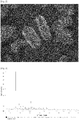
- the average particle size of the obtained psicose crystal powder was 237 ⁇ m, and its range of particle diameter was distributed in 74 to 428 ⁇ m, and the crystal structure had a long rectangular parallelepiped shape with an orthorhombic system.
- the width X length diameter ratio of the rectangular parallelepiped crystal is 1 X 4 on average, and has a diameter in the range of 1 X 1.5 to 6.9.
- SEM scanning electron micrograph
- X400 magnification X400 magnification
- Example 1 Preparation of mixed granule of psicose and glucose
- the alcohol was advantageous in that it was volatilized when sprayed and did not exist in the powder, so it did not affect the content.
- the internal temperature was slowly cooled to below 30°C when all alcohols were sprayed, the granular powder was taken out od the equipment and collected.
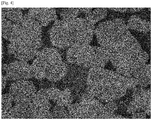
- a stereoscopic microscope photograph (X400 magnification) of the obtained mixed granular powder of psicose and anhydrous glucose was shown in FIG. 4 .
- Example 1-1 After mixing 150 g of each the psicose powder prepared in Preparative Example 1-3 and a hydroglucose in which the average particle size is 261 ⁇ m in a ratio of 1:1 (w/w), a granule was prepared in substantially the same manner as Example 1-1.
- Example 1 After mixing 150 g of each the psicose powder prepared in Preparative Example 1-3 and a powder sugar (which is prepared by pulverizing sugar and is disclosed in Table 1) in which the average particle size is 72 ⁇ m in a ratio of 1:1 (w/w), a granular powder was prepared in the same manner as Example 1.
- Example 1 After mixing 150 g of each the psicose powder prepared in Preparative Example 1-3 and a ultra-finely granulated sugar(caster sugar) in which the average particle size is 230 ⁇ m in a ratio of 1:1 (w/w), a granular powder was prepared in the same manner as Example 1.
- Example 1 After mixing 150 g of each the psicose powder prepared in Preparative Example 1-3 and a finely-granulated sugar in which the average particle size is 392 ⁇ m in a ratio of 1:1 (w/w), a granular powder was prepared in the same manner as Example 1.
- Example 1 After mixing 150 g of each the psicose powder prepared in Preparative Example 1-3 and a granulated white sugar(general sugar) in which the average particle size is 684 ⁇ m in a ratio of 1:1 (w/w), a granular was prepared in the same manner as Example 1.
- Example 3 Preparation of mixed granule of psicose and sugar using binding agent
- DE12 maltodextrin In order to form granules between powder particles evenly, as binding agents, DE12 maltodextrin, natural water-soluble dietary fiber, modified starch, and hydroxypropyl methylcellulose (HPMC) were prepared.
- a solution was prepared by dissolving maltodextrin into water to be 30Bx concentration, and a solution was prepared by dissolving indigestible maltodextrin as a natural water-soluble dietary fiber into water to be 30Bx concentration, and a solution was prepared by dissolving alpha-starch as a modified starch into water to be 10% concentration, and a solution was prepared by dissolving HPMC into a fermentation alcohol having a purity of 95% to be 5 % by weight concentration.
- particles in the powder form were bound by passing through a 20mesh sieve. In this state, after hot air drying at 45 °C for 30 to 50 minutes, granules were sieved evenly and collected.
- maltodextrin, indigestible maltodextrin and HPMC were added so that the final content of the binding agent in the total weight of granules was 1 % by weight, and alpha-starch was added so that the final content of the binding agent in the total weight of granules was 0.2 % by weight.
- Particle size analysis equipment (equipment name Mastersizer 2000, manufacturer Malvern) is to measure the size of particle using laser diffraction technology, and it is analyzed in the manner of calculating the particle size by measuring the intensity of light scattered when the laser beam passes the dispersed fine particle sample.
- the particle size of each mixed ingredient was measure using the equipment, and the result was disclosed in the following Table 2.
- Test Example 2 Analysis of mixing level of mixed granule
- Test Example 3 Sensory evaluation of psicose mixed granular powder
- Granular powder samples for sensory evaluation of the mixed saccharide granules of psicose and sugar were prepared by a simple granulation method using a binding solution as a fermentation alcohol.
- the powder of psicose of Example 1-3 was mixed with sugar, caster sugar to be a ratio of 9:1, 7:3, 5:5 (w/w) respectively.
- a fermentation alcohol with a purity of 95% to 5 ⁇ 10% of the weight by mixing 100g each particles in the powder form were bound each other by passing through a 20mesh sieve. In this state, after hot air drying at 45 °C for 30 to 60 minutes, granules were sieved evenly and collected.
- the collected mixed saccharide was named SP91, SP73 and SP55 according to the ratio of 9:1, 7:3, 5:5 (w/w), according to the mixing ratio of psicose powder and sugar.
- Granular powder samples for sensory evaluation of the mixed saccharide granules of psicose and glucose were prepared by a simple granulation method using a binding solution as a fermentation alcohol.
- the powder of psicose of Example 1 was mixed with anhydrous glucose to be a ratio of 7:3, 5:5 3:7 (w/w) respectively.
- particles in the powder form were bound each other by passing through a 20mesh sieve. In this state, after hot air drying at 45 °C for 30 to 60 minutes, granules were sieved evenly and collected.
- the collected mixed saccharide was named GP73, GP55 and GP37 according to the ratio of 7:3, 5:5, 3:7 (w/w), according to the mixing ratio of psicose powder and anhydrous glucose.
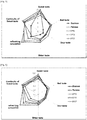
- Table 5 is the result of sensory evaluation of psicose/sugar mixed saccharide
- Table 6 is the result of sensory evaluation of psicose/glucose mixed saccharide.
- psicose has sweetness equivalent to 70% of sugar, but it has late sweetness increase or bitter taste or bad taste at the tail. Therefore, by mixing sugar or glucose at a certain ratio, a sweetener with improved taste can be provided by overcoming disadvantages of sweetness quality of psicose. As shown in the table of result of sensory evaluation, it was demonstrated that sweet taste was increased than psicose alone, and bad taste and bitter taste were alleviated, and particularly continuity of sweet taste was significantly increased than the conventional sugar, due to mixing of psicose and sugar.
- Test Example 4 Physical properties of psicose mixed saccharide granule
- the hygroscopicity of the mixed saccharide granule exhibited low hygroscopicity of 84 to 56% or less based on 100% of single psicose powder. That hygroscopicity was low means that the risk of caking phenomenon that the powder is hardened or dampening depending on the surrounding environment was lowered, when the powdery product was shipped and stored for a long period.
- Test Example 5 Differential scanning calorimeter (DSC) analysis of mixed saccharide granule and composed sugar powder
- DSC differential scanning calorimeter
Landscapes
- Chemical & Material Sciences (AREA)
- Life Sciences & Earth Sciences (AREA)
- Food Science & Technology (AREA)
- Engineering & Computer Science (AREA)
- Health & Medical Sciences (AREA)
- Organic Chemistry (AREA)
- Biochemistry (AREA)
- Nutrition Science (AREA)
- Polymers & Plastics (AREA)
- Proteomics, Peptides & Aminoacids (AREA)
- Emergency Medicine (AREA)
- General Health & Medical Sciences (AREA)
- Seasonings (AREA)
- Medicinal Preparation (AREA)
- Dairy Products (AREA)
Claims (18)
- Gemischtes Saccharidgranulat, umfassend:(a) ein erstes Saccharidpulver, das Psicose enthält; und(b) ein zweites Saccharidpulver, das 30 bis 170 von einem Verhältnis von einem durchschnittlichen Partikeldurchmesser, basierend auf 100 von einem durchschnittlichen Partikeldurchmesser des ersten Saccharidpulvers aufweist und mindestens ausgewählt ist von einem aus der Gruppe bestehend aus Monosacchariden, mit Ausnahme von Psicose und Disacchariden, wobei eine Hygroskopizität von dem gemischten Saccharidgranulat 90 oder weniger beträgt, basierend auf 100 von der Hygroskopizität des Psicosepulvers.
- Gemischtes Saccharidgranulat nach Anspruch 1, wobei die Rieselfähigkeit des gemischten Saccharidgranulats 120 bis 200 beträgt, basierend auf 100 von der Rieselfähigkeit des Psicosepulvers.
- Gemischtes Saccharidgranulat nach Anspruch 1, wobei das gemischte Gewichtsverhältnis von dem ersten Saccharidpulver und dem zweiten Saccharidpulver (dem ersten Saccharidpulver: dem zweiten Saccharidpulver) 70:30 bis 5:95 beträgt.
- Gemischtes Saccharidgranulat nach Anspruch 1, wobei der durchschnittliche Partikeldurchmesser von dem gemischten Saccharidgranulat 100 bis 250, basierend auf 100 von dem durchschnittlichen Partikeldurchmesser des ersten Saccharidpulvers, beträgt.
- Gemischtes Saccharidgranulat nach Anspruch 1, wobei der durchschnittliche Partikeldurchmesser von dem ersten Saccharidpulver 50 bis 300 µm beträgt.
- Gemischtes Saccharidgranulat nach Anspruch 1, wobei das zweite Saccharidpulver mindestens ein Saccharid ist, das ausgewählt ist aus der Gruppe bestehend aus Glucose, Saccharose, Lactose, Maltose, Galactose, Tagatose, Xylose, Mannose, Allose und Fructose.
- Gemischtes Saccharidgranulat nach Anspruch 1, wobei das gemischte Saccharidgranulat durch einen Granulierungsschritt in Anwesenheit eines Bindemittels hergestellt wird, wobei der Granulierungsschritt durch Mischen und Trocknen des ersten Saccharidpulvers und des zweiten Saccharidpulvers durchgeführt wird.
- Gemischtes Saccharidgranulat nach Anspruch 7, wobei Mischen und Trocknen in einem Fließbettgranulierer durchgeführt werden.
- Gemischtes Saccharidgranulat nach Anspruch 1, wobei das gemischte Saccharidgranulat weiter ein Bindemittel aus Saccharidpulvern umfasst.
- Gemischtes Saccharidgranulat nach Anspruch 9, wobei das Bindemittel aus einer oder mehreren Arten besteht, die ausgewählt sind aus der Gruppe bestehend aus Wasser, C1-C6-Alkohol, einer wässrigen Lösung aus C1-C6-Alkohol, Maltodextrin, unverdaulichem Maltodextrin, Hydroxypropylmethylcellulose (HPMC) und Stärke.
- Gemischtes Saccharidgranulat nach Anspruch 9, wobei das gemischte Sacchardigranulat 0,1 bis 5 Gew.-% des Bindemittels in dem Gesamtgewicht des Granulats umfasst.
- Gemischtes Saccharidgranulat nach Anspruch 1, wobei die Psicose durch ein gemischtes Saccharid, das 1 bis 99,9 Gewichtsteile von Psicose umfasst, basierend auf 100 Gewichtsteilen von dem gesamten Festgehalt des gemischten Saccharids, bereitgestellt ist und weiter mindestens ein Saccharid umfasst, das ausgewählt ist aus der Gruppe bestehend aus Fructose, Glucose und Oligosaccharid.
- Verfahren zum Herstellen eines gemischten Saccharidgranulats, umfassend,
das Herstellen eines gemischten Saccharidgranulats durch Granulieren, welches durch den Zusatz eines Bindemittels in (a) ein erstes Saccharidpulver, das Psicose enthält, und (b) ein zweites Saccharidpulver, das 30 bis 170 von einem Verhältnis eines durchschnittlichen Partikeldurchmessers, basierend auf 100 von einem durchschnittlichen Partikeldurchmesser des ersten Saccharidpulvers, aufweist, und mindestens eines, das ausgewählt ist aus der Gruppe bestehend aus Monosacchariden, mit Ausnahme von Psicose und Disacchariden, ist,
wobei ein durchschnittlicher Partikeldurchmesser von dem gemischten Saccharidgranulat 100 bis 200 beträgt, basierend auf 100 von einem durchschnittlichen Partikeldurchmesser des ersten Saccharidpulvers, und eine Hygroskopizität von dem gemischten Saccharidgranulat 90 oder weniger beträgt, basierend auf 100 von einer Hygroskopizität des Psicosepulvers. - Verfahren zum Herstellen eines gemischten Saccharidgranulats nach Anspruch 13, wobei der Granulierungsschritt durch Mischen des ersten Saccharidpulvers und des zweiten Saccharidpulvers und Warmlufttrocknen bei einer Temperatur im Bereich von 40 bis 70°C durchgeführt wird.
- Verfahren zum Herstellen eines gemischten Saccharidgranulats nach Anspruch 13, wobei der Granulierungsschritt durch Verflüssigen des ersten Saccharidpulvers und des zweiten Saccharidpulvers in einem Fließbettgranulierer mit Sprühen des Bindemittels durchgeführt wird.
- Verfahren zum Herstellen eines gemischten Saccharidgranulats nach Anspruch 13, wobei das gemischte Gewichtsverhältnis des ersten Saccharidpulvers und des zweiten Saccharidpulvers (dem ersten Saccharidpulver: dem zweiten Saccharidpulver) 70:30 bis 5:95 beträgt.
- Verfahren zum Herstellen eines gemischten Saccharidgranulats nach Anspruch 13, wobei ein Bindemittel zugesetzt wird, sodass der Inhalt des Bindemittels in dem Gesamtgewicht des gemischten Saccharidgranulats 0,1 bis 5 Gew.-% beträgt.
- Verfahren zum Herstellen eines gemischten Saccharidgranulats nach Anspruch 13, wobei das Bindemittel aus einer oder mehreren Arten besteht, die ausgewählt sind aus der Gruppe bestehend aus Wasser, C1-C6-Alkohol, einer wässrigen Lösung aus C1-C6-Alkohol, Maltodextrin, unverdaulichem Maltodextrin, Hydroxypropylmethylcellulose (HPMC) und Stärke.
Applications Claiming Priority (2)
| Application Number | Priority Date | Filing Date | Title |
|---|---|---|---|
| KR1020150066926A KR101617379B1 (ko) | 2015-05-13 | 2015-05-13 | 혼합당 과립 분말 및 이의 제조방법 |
| PCT/KR2016/004474 WO2016182235A1 (ko) | 2015-05-13 | 2016-04-28 | 혼합당 과립 분말 및 이의 제조방법 |
Publications (3)
| Publication Number | Publication Date |
|---|---|
| EP3295807A1 EP3295807A1 (de) | 2018-03-21 |
| EP3295807A4 EP3295807A4 (de) | 2018-12-19 |
| EP3295807B1 true EP3295807B1 (de) | 2021-06-09 |
Family
ID=56021769
Family Applications (1)
| Application Number | Title | Priority Date | Filing Date |
|---|---|---|---|
| EP16792881.1A Active EP3295807B1 (de) | 2015-05-13 | 2016-04-28 | Gemischtes zuckergranulatpulver und verfahren zur herstellung davon |
Country Status (8)
| Country | Link |
|---|---|
| US (1) | US10851429B2 (de) |
| EP (1) | EP3295807B1 (de) |
| JP (1) | JP6698152B2 (de) |
| KR (1) | KR101617379B1 (de) |
| CN (1) | CN107635412B (de) |
| HU (1) | HUE055430T2 (de) |
| IL (1) | IL255538B (de) |
| WO (1) | WO2016182235A1 (de) |
Families Citing this family (29)
| Publication number | Priority date | Publication date | Assignee | Title |
|---|---|---|---|---|
| KR101695831B1 (ko) | 2015-05-15 | 2017-01-12 | 주식회사 삼양사 | 감미질 및 결정화가 개선된 사이코스 혼합당 조성물 |
| KR101876534B1 (ko) * | 2016-09-02 | 2018-07-13 | 주식회사 삼양사 | 비알코올성 지방간 질환의 예방 또는 개선용 조성물 |
| KR101920404B1 (ko) * | 2016-09-21 | 2018-11-20 | 주식회사 삼양사 | 균일한 감미질을 갖는 입상 감미 조성물 및 이의 제조방법 |
| WO2018066835A1 (ko) * | 2016-10-07 | 2018-04-12 | 씨제이제일제당(주) | 알룰로스 및 염을 포함하는 미질이 개선된 감미료 조성물 및 염을 이용한 알룰로스의 미질 개선 방법 |
| KR102679582B1 (ko) | 2016-10-28 | 2024-06-27 | 테이트 앤드 라일 솔루션스 유에스에이 엘엘씨 | 알룰로오스 결정의 제조방법 |
| CN110113951A (zh) | 2016-11-01 | 2019-08-09 | 株式会社三养社 | 具有改进的可加工性的巧克力组合物及其制备方法 |
| KR101874928B1 (ko) | 2016-11-01 | 2018-07-05 | 주식회사 삼양사 | 저칼로리 커피 음료 조성물 |
| US11191285B2 (en) | 2016-12-26 | 2021-12-07 | Cj Cheiljedang Corporation | Allulose-containing composition for promoting excretion of vegetable lipids from the body |
| JP2018183078A (ja) * | 2017-04-25 | 2018-11-22 | 株式会社ヤマホ | 食品用結着剤及び食品 |
| EP3634154A4 (de) * | 2017-06-08 | 2021-03-03 | International Flavors & Fragrances Inc. | Auf kohlenhydrat basierende aromahaltige granulate und verfahren zur herstellung davon |
| KR102016701B1 (ko) * | 2017-06-30 | 2019-09-06 | 주식회사 삼양사 | 결정형 기능성 감미료의 제조방법 |
| KR101988442B1 (ko) * | 2017-06-30 | 2019-06-12 | 주식회사 삼양사 | 결정형 기능성 감미료 |
| WO2019004554A1 (ko) * | 2017-06-30 | 2019-01-03 | 주식회사 삼양사 | 결정형 기능성 감미료의 제조방법 |
| CN111511372A (zh) | 2017-10-27 | 2020-08-07 | 株式会社三养社 | 预防或减轻非酒精性脂肪肝疾病的组合物 |
| MX2020008430A (es) | 2018-02-12 | 2020-12-10 | Samyang Corp | Metodo para producir edulcorante cristalino funcional. |
| JP7390689B2 (ja) * | 2018-03-29 | 2023-12-04 | Dm三井製糖株式会社 | 砂糖に被覆されたd-アルロース顆粒物 |
| US20210244057A1 (en) * | 2018-06-28 | 2021-08-12 | Samyang Corporation | Sweetener powder composition and preparation method therefor |
| KR102326587B1 (ko) * | 2018-06-28 | 2021-11-15 | 주식회사 삼양사 | 콩취가 감소된 저칼로리 두유 |
| CN112543596A (zh) * | 2018-08-10 | 2021-03-23 | 株式会社三养社 | 包含功能性甜味剂的口香糖 |
| CN112566504B (zh) * | 2018-08-10 | 2024-03-01 | 株式会社三养社 | 人参干燥制品 |
| WO2020032299A1 (ko) * | 2018-08-10 | 2020-02-13 | 주식회사 삼양사 | 과채 드링크 |
| KR102414674B1 (ko) * | 2018-08-10 | 2022-06-29 | 주식회사 삼양사 | 감미료 분말 조성물 및 이의 제조 방법 |
| AU2018435851B2 (en) | 2018-08-10 | 2022-10-27 | Samyang Corporation | Nutritional drink |
| WO2020032303A1 (ko) | 2018-08-10 | 2020-02-13 | 주식회사 삼양사 | 커피 유음료 조성물 |
| WO2021192360A1 (ja) * | 2020-03-25 | 2021-09-30 | 日清食品ホールディングス株式会社 | サイリウム種皮造粒物及びその製造方法、並びにサイリウム種皮造粒物を含む粉末飲料 |
| WO2021192663A1 (ja) * | 2020-03-25 | 2021-09-30 | 日清食品ホールディングス株式会社 | サイリウム種皮造粒物及びその製造方法、並びにサイリウム種皮造粒物を含む粉末飲料 |
| JP2023157589A (ja) * | 2022-04-15 | 2023-10-26 | 松谷化学工業株式会社 | D-アルロース顆粒物の製造方法 |
| WO2025076075A1 (en) * | 2023-10-03 | 2025-04-10 | Corn Products Development, Inc. | Methods of making solid sweeteners and solid sweetener blends |
| WO2026047097A1 (en) * | 2024-08-28 | 2026-03-05 | Savanna Ingredients Gmbh | Crystallization of allulose from supersaturated solutions |
Family Cites Families (25)
| Publication number | Priority date | Publication date | Assignee | Title |
|---|---|---|---|---|
| JPS5435224A (en) | 1977-08-19 | 1979-03-15 | Nissin Sugar Mfg | Method of preventing sugar blocking |
| JPS6274276A (ja) | 1985-09-30 | 1987-04-06 | Mitsui Seito Kk | 粉糖の固結防止法 |
| JPH0638800A (ja) | 1991-05-01 | 1994-02-15 | F O Bio Kk | 甘味料組成物 |
| DE19514187C1 (de) | 1995-04-21 | 1996-05-15 | Degussa | Verfahren und Vorrichtung zur Herstellung von Granulaten durch Wirbelschicht-Sprühgranulation |
| JP4473980B2 (ja) * | 1999-06-24 | 2010-06-02 | 株式会社林原生物化学研究所 | 糖質複合体結晶とその製造方法 |
| US7198653B2 (en) * | 2003-07-31 | 2007-04-03 | Delavau Llc | Calcium carbonate granulation |
| DE102004021384A1 (de) | 2004-04-30 | 2005-11-24 | Henkel Kgaa | Verfahren zur Herstellung von Granulaten mit verbesserter Lagerstabilität und Abriebfestigkeit |
| WO2006093292A1 (ja) | 2005-03-04 | 2006-09-08 | National University Corporation Kagawa University | D-プシコースとd-アロースの複合体結晶性糖質およびその製造方法 |
| KR100750072B1 (ko) | 2005-12-30 | 2007-08-21 | 한완택 | 복합조미료의 제조방법 |
| KR20100018568A (ko) | 2007-05-18 | 2010-02-17 | 마쓰다니가가꾸고오교가부시끼가이샤 | 슈크로오스성 감미질을 가지는 신규 감미료, 그 제조법 및 용도 |
| US20080292775A1 (en) | 2007-05-22 | 2008-11-27 | The Coca-Cola Company | Delivery Systems for Natural High-Potency Sweetener Compositions, Methods for Their Formulation, and Uses |
| KR101041917B1 (ko) | 2009-06-25 | 2011-06-15 | 우송대학교 산학협력단 | 함초함량 및 용해성이 높은 소금대체용 과립형 함초분말 제조방법 |
| KR101189640B1 (ko) * | 2010-03-26 | 2012-10-12 | 씨제이제일제당 (주) | D-사이코스 결정을 제조하는 방법 |
| JP5859191B2 (ja) * | 2010-09-29 | 2016-02-10 | 松谷化学工業株式会社 | 高甘味度甘味料に対する呈味改良組成物およびその応用 |
| GB2497933B (en) * | 2011-12-21 | 2014-12-24 | Londonpharma Ltd | Drug delivery technology |
| JP6099870B2 (ja) | 2012-01-06 | 2017-03-22 | 松谷化学工業株式会社 | スクロースとd−プシコースを含む新規甘味料 |
| CN104769125B (zh) | 2012-08-10 | 2018-10-23 | 株式会社三养社 | 阿洛酮糖差向异构酶及使用其的用于转变为阿洛酮糖的组合物 |
| KR20140080282A (ko) | 2012-12-20 | 2014-06-30 | 주식회사 삼양제넥스 | D-사이코스 3-에피머화 효소를 이용한 과당으로부터 사이코스의 제조방법 |
| GB201309076D0 (en) * | 2013-03-15 | 2013-07-03 | Tate & Lyle Ingredients | Improved sweetener |
| GB201309079D0 (en) * | 2013-03-15 | 2013-07-03 | Tate & Lyle Ingredients | Improved sweetner |
| KR101318422B1 (ko) | 2013-04-09 | 2013-10-15 | 주식회사 삼양제넥스 | D-사이코스 에피머화 효소, 및 이를 이용하는 사이코스 생산방법 |
| CN105452478B (zh) * | 2013-07-09 | 2019-10-08 | 东丽株式会社 | 糖液的制造方法 |
| JP2015027255A (ja) * | 2013-07-26 | 2015-02-05 | サムソン エレクトロ−メカニックス カンパニーリミテッド. | 並列構造電力装置およびその制御方法 |
| GB201316450D0 (en) * | 2013-08-26 | 2013-10-30 | Tate & Lyle Ingredients | Method of preparing edible composition |
| CN104026549A (zh) | 2014-05-30 | 2014-09-10 | 翁源广业清怡食品科技有限公司 | 一种粒状三氯蔗糖的制备方法 |
-
2015
- 2015-05-13 KR KR1020150066926A patent/KR101617379B1/ko active Active
-
2016
- 2016-04-28 US US15/567,167 patent/US10851429B2/en active Active
- 2016-04-28 WO PCT/KR2016/004474 patent/WO2016182235A1/ko not_active Ceased
- 2016-04-28 HU HUE16792881A patent/HUE055430T2/hu unknown
- 2016-04-28 CN CN201680027762.8A patent/CN107635412B/zh active Active
- 2016-04-28 EP EP16792881.1A patent/EP3295807B1/de active Active
- 2016-04-28 JP JP2018509719A patent/JP6698152B2/ja active Active
-
2017
- 2017-11-08 IL IL255538A patent/IL255538B/en active IP Right Grant
Non-Patent Citations (1)
| Title |
|---|
| None * |
Also Published As
| Publication number | Publication date |
|---|---|
| HUE055430T2 (hu) | 2021-11-29 |
| IL255538A (en) | 2018-01-31 |
| JP2018514233A (ja) | 2018-06-07 |
| JP6698152B2 (ja) | 2020-05-27 |
| US20180179604A1 (en) | 2018-06-28 |
| KR101617379B1 (ko) | 2016-05-02 |
| EP3295807A4 (de) | 2018-12-19 |
| CN107635412A (zh) | 2018-01-26 |
| US10851429B2 (en) | 2020-12-01 |
| IL255538B (en) | 2020-02-27 |
| EP3295807A1 (de) | 2018-03-21 |
| CN107635412B (zh) | 2021-09-24 |
| WO2016182235A1 (ko) | 2016-11-17 |
Similar Documents
| Publication | Publication Date | Title |
|---|---|---|
| EP3295807B1 (de) | Gemischtes zuckergranulatpulver und verfahren zur herstellung davon | |
| EP3815540B1 (de) | Süssstoffpulverzusammensetzung und verfahren zu ihrer herstellung | |
| EP3295808B1 (de) | Saccharid-mischung enthaltend psicose mit verbesserter süsse qualität und kristallisierung | |
| JP4473980B2 (ja) | 糖質複合体結晶とその製造方法 | |
| US6506434B1 (en) | Process for coating N-[N-(3,3-dimethylbutyl)-L-α-aspartyl]-L-phenylalanine 1-methyl ester onto a carrier | |
| EP0447125B1 (de) | Verfahren zur Herstellung eines Pulvers/mit erhöhtem Gehalt an Lactosucrose und Verwendung dieses Pulvers | |
| JP2015061871A (ja) | 2−O−α−D−グルコシル−L−アスコルビン酸無水結晶含有粉末とその製造方法並びに用途 | |
| KR101703264B1 (ko) | 저장 안정성이 증강된 저칼로리 유산균 발효유 음료 및 이의 제조방법 | |
| EP2716771B1 (de) | Verfahren zur herstellung eines feststoffs aus einer saccharidlösung und feststoff | |
| KR101709256B1 (ko) | 감미질 및 성형성이 우수한 저칼로리 하드 캔디 | |
| AU2019377241B2 (en) | Water soluble silicon-containing granulate | |
| CN101106912B (zh) | 糖醇共晶体及其制备方法 | |
| KR20160143070A (ko) | 몰드 이형성 및 식감이 우수한 구미 캔디 및 그 제조방법 | |
| KR100350845B1 (ko) | 결정말토실글루코시드,그제조방법및그것을함유한음식물 | |
| EP1772461A1 (de) | Kristalline lactosaccharose oder molassehaltiger kristall, in dem diese enthalten ist, und verwendung davon | |
| JPH03290197A (ja) | ラクトスクロース含有粉末の製造方法とその粉末の用途 | |
| WO2005103276A1 (ja) | ラクトスクロース高含有糖質とその製造方法並びに用途 | |
| JP2001186861A (ja) | トレハロース含有水性組成物 |
Legal Events
| Date | Code | Title | Description |
|---|---|---|---|
| STAA | Information on the status of an ep patent application or granted ep patent |
Free format text: STATUS: THE INTERNATIONAL PUBLICATION HAS BEEN MADE |
|
| TPAC | Observations filed by third parties |
Free format text: ORIGINAL CODE: EPIDOSNTIPA |
|
| PUAI | Public reference made under article 153(3) epc to a published international application that has entered the european phase |
Free format text: ORIGINAL CODE: 0009012 |
|
| STAA | Information on the status of an ep patent application or granted ep patent |
Free format text: STATUS: REQUEST FOR EXAMINATION WAS MADE |
|
| 17P | Request for examination filed |
Effective date: 20171024 |
|
| AK | Designated contracting states |
Kind code of ref document: A1 Designated state(s): AL AT BE BG CH CY CZ DE DK EE ES FI FR GB GR HR HU IE IS IT LI LT LU LV MC MK MT NL NO PL PT RO RS SE SI SK SM TR |
|
| AX | Request for extension of the european patent |
Extension state: BA ME |
|
| DAV | Request for validation of the european patent (deleted) | ||
| DAX | Request for extension of the european patent (deleted) | ||
| RIC1 | Information provided on ipc code assigned before grant |
Ipc: C13B 50/00 20110101ALI20181107BHEP Ipc: A23L 27/10 20160101AFI20181107BHEP Ipc: C13K 1/00 20060101ALI20181107BHEP Ipc: A23L 27/30 20160101ALI20181107BHEP Ipc: C13K 13/00 20060101ALI20181107BHEP |
|
| A4 | Supplementary search report drawn up and despatched |
Effective date: 20181115 |
|
| STAA | Information on the status of an ep patent application or granted ep patent |
Free format text: STATUS: EXAMINATION IS IN PROGRESS |
|
| 17Q | First examination report despatched |
Effective date: 20200721 |
|
| GRAP | Despatch of communication of intention to grant a patent |
Free format text: ORIGINAL CODE: EPIDOSNIGR1 |
|
| STAA | Information on the status of an ep patent application or granted ep patent |
Free format text: STATUS: GRANT OF PATENT IS INTENDED |
|
| INTG | Intention to grant announced |
Effective date: 20201202 |
|
| GRAS | Grant fee paid |
Free format text: ORIGINAL CODE: EPIDOSNIGR3 |
|
| GRAA | (expected) grant |
Free format text: ORIGINAL CODE: 0009210 |
|
| STAA | Information on the status of an ep patent application or granted ep patent |
Free format text: STATUS: THE PATENT HAS BEEN GRANTED |
|
| AK | Designated contracting states |
Kind code of ref document: B1 Designated state(s): AL AT BE BG CH CY CZ DE DK EE ES FI FR GB GR HR HU IE IS IT LI LT LU LV MC MK MT NL NO PL PT RO RS SE SI SK SM TR |
|
| REG | Reference to a national code |
Ref country code: GB Ref legal event code: FG4D |
|
| REG | Reference to a national code |
Ref country code: CH Ref legal event code: EP Ref country code: AT Ref legal event code: REF Ref document number: 1399745 Country of ref document: AT Kind code of ref document: T Effective date: 20210615 |
|
| REG | Reference to a national code |
Ref country code: DE Ref legal event code: R096 Ref document number: 602016059175 Country of ref document: DE |
|
| REG | Reference to a national code |
Ref country code: IE Ref legal event code: FG4D |
|
| REG | Reference to a national code |
Ref country code: NL Ref legal event code: FP |
|
| REG | Reference to a national code |
Ref country code: LT Ref legal event code: MG9D |
|
| PG25 | Lapsed in a contracting state [announced via postgrant information from national office to epo] |
Ref country code: FI Free format text: LAPSE BECAUSE OF FAILURE TO SUBMIT A TRANSLATION OF THE DESCRIPTION OR TO PAY THE FEE WITHIN THE PRESCRIBED TIME-LIMIT Effective date: 20210609 Ref country code: LT Free format text: LAPSE BECAUSE OF FAILURE TO SUBMIT A TRANSLATION OF THE DESCRIPTION OR TO PAY THE FEE WITHIN THE PRESCRIBED TIME-LIMIT Effective date: 20210609 Ref country code: BG Free format text: LAPSE BECAUSE OF FAILURE TO SUBMIT A TRANSLATION OF THE DESCRIPTION OR TO PAY THE FEE WITHIN THE PRESCRIBED TIME-LIMIT Effective date: 20210909 Ref country code: HR Free format text: LAPSE BECAUSE OF FAILURE TO SUBMIT A TRANSLATION OF THE DESCRIPTION OR TO PAY THE FEE WITHIN THE PRESCRIBED TIME-LIMIT Effective date: 20210609 |
|
| REG | Reference to a national code |
Ref country code: AT Ref legal event code: MK05 Ref document number: 1399745 Country of ref document: AT Kind code of ref document: T Effective date: 20210609 |
|
| REG | Reference to a national code |
Ref country code: HU Ref legal event code: AG4A Ref document number: E055430 Country of ref document: HU |
|
| PG25 | Lapsed in a contracting state [announced via postgrant information from national office to epo] |
Ref country code: GR Free format text: LAPSE BECAUSE OF FAILURE TO SUBMIT A TRANSLATION OF THE DESCRIPTION OR TO PAY THE FEE WITHIN THE PRESCRIBED TIME-LIMIT Effective date: 20210910 Ref country code: LV Free format text: LAPSE BECAUSE OF FAILURE TO SUBMIT A TRANSLATION OF THE DESCRIPTION OR TO PAY THE FEE WITHIN THE PRESCRIBED TIME-LIMIT Effective date: 20210609 Ref country code: RS Free format text: LAPSE BECAUSE OF FAILURE TO SUBMIT A TRANSLATION OF THE DESCRIPTION OR TO PAY THE FEE WITHIN THE PRESCRIBED TIME-LIMIT Effective date: 20210609 Ref country code: SE Free format text: LAPSE BECAUSE OF FAILURE TO SUBMIT A TRANSLATION OF THE DESCRIPTION OR TO PAY THE FEE WITHIN THE PRESCRIBED TIME-LIMIT Effective date: 20210609 Ref country code: NO Free format text: LAPSE BECAUSE OF FAILURE TO SUBMIT A TRANSLATION OF THE DESCRIPTION OR TO PAY THE FEE WITHIN THE PRESCRIBED TIME-LIMIT Effective date: 20210909 |
|
| PG25 | Lapsed in a contracting state [announced via postgrant information from national office to epo] |
Ref country code: EE Free format text: LAPSE BECAUSE OF FAILURE TO SUBMIT A TRANSLATION OF THE DESCRIPTION OR TO PAY THE FEE WITHIN THE PRESCRIBED TIME-LIMIT Effective date: 20210609 Ref country code: CZ Free format text: LAPSE BECAUSE OF FAILURE TO SUBMIT A TRANSLATION OF THE DESCRIPTION OR TO PAY THE FEE WITHIN THE PRESCRIBED TIME-LIMIT Effective date: 20210609 Ref country code: SM Free format text: LAPSE BECAUSE OF FAILURE TO SUBMIT A TRANSLATION OF THE DESCRIPTION OR TO PAY THE FEE WITHIN THE PRESCRIBED TIME-LIMIT Effective date: 20210609 Ref country code: SK Free format text: LAPSE BECAUSE OF FAILURE TO SUBMIT A TRANSLATION OF THE DESCRIPTION OR TO PAY THE FEE WITHIN THE PRESCRIBED TIME-LIMIT Effective date: 20210609 Ref country code: PT Free format text: LAPSE BECAUSE OF FAILURE TO SUBMIT A TRANSLATION OF THE DESCRIPTION OR TO PAY THE FEE WITHIN THE PRESCRIBED TIME-LIMIT Effective date: 20211011 Ref country code: RO Free format text: LAPSE BECAUSE OF FAILURE TO SUBMIT A TRANSLATION OF THE DESCRIPTION OR TO PAY THE FEE WITHIN THE PRESCRIBED TIME-LIMIT Effective date: 20210609 Ref country code: ES Free format text: LAPSE BECAUSE OF FAILURE TO SUBMIT A TRANSLATION OF THE DESCRIPTION OR TO PAY THE FEE WITHIN THE PRESCRIBED TIME-LIMIT Effective date: 20210609 Ref country code: AT Free format text: LAPSE BECAUSE OF FAILURE TO SUBMIT A TRANSLATION OF THE DESCRIPTION OR TO PAY THE FEE WITHIN THE PRESCRIBED TIME-LIMIT Effective date: 20210609 |
|
| PG25 | Lapsed in a contracting state [announced via postgrant information from national office to epo] |
Ref country code: PL Free format text: LAPSE BECAUSE OF FAILURE TO SUBMIT A TRANSLATION OF THE DESCRIPTION OR TO PAY THE FEE WITHIN THE PRESCRIBED TIME-LIMIT Effective date: 20210609 |
|
| REG | Reference to a national code |
Ref country code: DE Ref legal event code: R097 Ref document number: 602016059175 Country of ref document: DE |
|
| PLBE | No opposition filed within time limit |
Free format text: ORIGINAL CODE: 0009261 |
|
| STAA | Information on the status of an ep patent application or granted ep patent |
Free format text: STATUS: NO OPPOSITION FILED WITHIN TIME LIMIT |
|
| PG25 | Lapsed in a contracting state [announced via postgrant information from national office to epo] |
Ref country code: DK Free format text: LAPSE BECAUSE OF FAILURE TO SUBMIT A TRANSLATION OF THE DESCRIPTION OR TO PAY THE FEE WITHIN THE PRESCRIBED TIME-LIMIT Effective date: 20210609 |
|
| 26N | No opposition filed |
Effective date: 20220310 |
|
| PG25 | Lapsed in a contracting state [announced via postgrant information from national office to epo] |
Ref country code: AL Free format text: LAPSE BECAUSE OF FAILURE TO SUBMIT A TRANSLATION OF THE DESCRIPTION OR TO PAY THE FEE WITHIN THE PRESCRIBED TIME-LIMIT Effective date: 20210609 |
|
| PG25 | Lapsed in a contracting state [announced via postgrant information from national office to epo] |
Ref country code: MC Free format text: LAPSE BECAUSE OF FAILURE TO SUBMIT A TRANSLATION OF THE DESCRIPTION OR TO PAY THE FEE WITHIN THE PRESCRIBED TIME-LIMIT Effective date: 20210609 Ref country code: LU Free format text: LAPSE BECAUSE OF NON-PAYMENT OF DUE FEES Effective date: 20220428 |
|
| P01 | Opt-out of the competence of the unified patent court (upc) registered |
Effective date: 20230602 |
|
| PG25 | Lapsed in a contracting state [announced via postgrant information from national office to epo] |
Ref country code: MK Free format text: LAPSE BECAUSE OF FAILURE TO SUBMIT A TRANSLATION OF THE DESCRIPTION OR TO PAY THE FEE WITHIN THE PRESCRIBED TIME-LIMIT Effective date: 20210609 Ref country code: CY Free format text: LAPSE BECAUSE OF FAILURE TO SUBMIT A TRANSLATION OF THE DESCRIPTION OR TO PAY THE FEE WITHIN THE PRESCRIBED TIME-LIMIT Effective date: 20210609 |
|
| PG25 | Lapsed in a contracting state [announced via postgrant information from national office to epo] |
Ref country code: MT Free format text: LAPSE BECAUSE OF FAILURE TO SUBMIT A TRANSLATION OF THE DESCRIPTION OR TO PAY THE FEE WITHIN THE PRESCRIBED TIME-LIMIT Effective date: 20210609 |
|
| PGFP | Annual fee paid to national office [announced via postgrant information from national office to epo] |
Ref country code: DE Payment date: 20250305 Year of fee payment: 10 |
|
| PGFP | Annual fee paid to national office [announced via postgrant information from national office to epo] |
Ref country code: HU Payment date: 20250425 Year of fee payment: 10 |
|
| PGFP | Annual fee paid to national office [announced via postgrant information from national office to epo] |
Ref country code: CH Payment date: 20250501 Year of fee payment: 10 |
|
| PGFP | Annual fee paid to national office [announced via postgrant information from national office to epo] |
Ref country code: GB Payment date: 20260309 Year of fee payment: 11 |
|
| PGFP | Annual fee paid to national office [announced via postgrant information from national office to epo] |
Ref country code: IE Payment date: 20260305 Year of fee payment: 11 |
|
| PGFP | Annual fee paid to national office [announced via postgrant information from national office to epo] |
Ref country code: BE Payment date: 20260305 Year of fee payment: 11 Ref country code: IT Payment date: 20260306 Year of fee payment: 11 |
|
| PGFP | Annual fee paid to national office [announced via postgrant information from national office to epo] |
Ref country code: NL Payment date: 20260305 Year of fee payment: 11 |
|
| PGFP | Annual fee paid to national office [announced via postgrant information from national office to epo] |
Ref country code: FR Payment date: 20260309 Year of fee payment: 11 |
|
| PGFP | Annual fee paid to national office [announced via postgrant information from national office to epo] |
Ref country code: TR Payment date: 20260324 Year of fee payment: 11 |