EP3277379B1 - Aldehyde compounds for treating pulmonary fibrosis, hypoxia, and connective tissue and autoimmune disease - Google Patents
Aldehyde compounds for treating pulmonary fibrosis, hypoxia, and connective tissue and autoimmune disease Download PDFInfo
- Publication number
- EP3277379B1 EP3277379B1 EP16714724.8A EP16714724A EP3277379B1 EP 3277379 B1 EP3277379 B1 EP 3277379B1 EP 16714724 A EP16714724 A EP 16714724A EP 3277379 B1 EP3277379 B1 EP 3277379B1
- Authority
- EP
- European Patent Office
- Prior art keywords
- hypoxia
- compound
- reference compound
- patient
- compounds
- Prior art date
- Legal status (The legal status is an assumption and is not a legal conclusion. Google has not performed a legal analysis and makes no representation as to the accuracy of the status listed.)
- Active
Links
- 0 CCC(C)c1ccc(*C)nc1 Chemical compound CCC(C)c1ccc(*C)nc1 0.000 description 4
- JFLXXSOQSIHVQT-HNNXBMFYSA-N COc1cc(C(N2[C@H](COc3c(C=O)c(O)ccc3)CCCC2)=O)ccn1 Chemical compound COc1cc(C(N2[C@H](COc3c(C=O)c(O)ccc3)CCCC2)=O)ccn1 JFLXXSOQSIHVQT-HNNXBMFYSA-N 0.000 description 1
Images



















Classifications
-
- A—HUMAN NECESSITIES
- A61—MEDICAL OR VETERINARY SCIENCE; HYGIENE
- A61K—PREPARATIONS FOR MEDICAL, DENTAL OR TOILETRY PURPOSES
- A61K31/00—Medicinal preparations containing organic active ingredients
- A61K31/33—Heterocyclic compounds
- A61K31/395—Heterocyclic compounds having nitrogen as a ring hetero atom, e.g. guanethidine or rifamycins
- A61K31/435—Heterocyclic compounds having nitrogen as a ring hetero atom, e.g. guanethidine or rifamycins having six-membered rings with one nitrogen as the only ring hetero atom
- A61K31/44—Non condensed pyridines; Hydrogenated derivatives thereof
- A61K31/4427—Non condensed pyridines; Hydrogenated derivatives thereof containing further heterocyclic ring systems
- A61K31/4439—Non condensed pyridines; Hydrogenated derivatives thereof containing further heterocyclic ring systems containing a five-membered ring with nitrogen as a ring hetero atom, e.g. omeprazole
-
- A—HUMAN NECESSITIES
- A61—MEDICAL OR VETERINARY SCIENCE; HYGIENE
- A61K—PREPARATIONS FOR MEDICAL, DENTAL OR TOILETRY PURPOSES
- A61K31/00—Medicinal preparations containing organic active ingredients
- A61K31/33—Heterocyclic compounds
- A61K31/395—Heterocyclic compounds having nitrogen as a ring hetero atom, e.g. guanethidine or rifamycins
- A61K31/40—Heterocyclic compounds having nitrogen as a ring hetero atom, e.g. guanethidine or rifamycins having five-membered rings with one nitrogen as the only ring hetero atom, e.g. sulpiride, succinimide, tolmetin, buflomedil
-
- A—HUMAN NECESSITIES
- A61—MEDICAL OR VETERINARY SCIENCE; HYGIENE
- A61K—PREPARATIONS FOR MEDICAL, DENTAL OR TOILETRY PURPOSES
- A61K31/00—Medicinal preparations containing organic active ingredients
- A61K31/33—Heterocyclic compounds
- A61K31/395—Heterocyclic compounds having nitrogen as a ring hetero atom, e.g. guanethidine or rifamycins
- A61K31/435—Heterocyclic compounds having nitrogen as a ring hetero atom, e.g. guanethidine or rifamycins having six-membered rings with one nitrogen as the only ring hetero atom
- A61K31/44—Non condensed pyridines; Hydrogenated derivatives thereof
-
- A—HUMAN NECESSITIES
- A61—MEDICAL OR VETERINARY SCIENCE; HYGIENE
- A61K—PREPARATIONS FOR MEDICAL, DENTAL OR TOILETRY PURPOSES
- A61K31/00—Medicinal preparations containing organic active ingredients
- A61K31/33—Heterocyclic compounds
- A61K31/395—Heterocyclic compounds having nitrogen as a ring hetero atom, e.g. guanethidine or rifamycins
- A61K31/435—Heterocyclic compounds having nitrogen as a ring hetero atom, e.g. guanethidine or rifamycins having six-membered rings with one nitrogen as the only ring hetero atom
- A61K31/44—Non condensed pyridines; Hydrogenated derivatives thereof
- A61K31/445—Non condensed piperidines, e.g. piperocaine
- A61K31/4523—Non condensed piperidines, e.g. piperocaine containing further heterocyclic ring systems
- A61K31/4545—Non condensed piperidines, e.g. piperocaine containing further heterocyclic ring systems containing a six-membered ring with nitrogen as a ring hetero atom, e.g. pipamperone, anabasine
-
- A—HUMAN NECESSITIES
- A61—MEDICAL OR VETERINARY SCIENCE; HYGIENE
- A61K—PREPARATIONS FOR MEDICAL, DENTAL OR TOILETRY PURPOSES
- A61K31/00—Medicinal preparations containing organic active ingredients
- A61K31/33—Heterocyclic compounds
- A61K31/395—Heterocyclic compounds having nitrogen as a ring hetero atom, e.g. guanethidine or rifamycins
- A61K31/435—Heterocyclic compounds having nitrogen as a ring hetero atom, e.g. guanethidine or rifamycins having six-membered rings with one nitrogen as the only ring hetero atom
- A61K31/44—Non condensed pyridines; Hydrogenated derivatives thereof
- A61K31/455—Nicotinic acids, e.g. niacin; Derivatives thereof, e.g. esters, amides
-
- A—HUMAN NECESSITIES
- A61—MEDICAL OR VETERINARY SCIENCE; HYGIENE
- A61K—PREPARATIONS FOR MEDICAL, DENTAL OR TOILETRY PURPOSES
- A61K31/00—Medicinal preparations containing organic active ingredients
- A61K31/33—Heterocyclic compounds
- A61K31/395—Heterocyclic compounds having nitrogen as a ring hetero atom, e.g. guanethidine or rifamycins
- A61K31/495—Heterocyclic compounds having nitrogen as a ring hetero atom, e.g. guanethidine or rifamycins having six-membered rings with two or more nitrogen atoms as the only ring heteroatoms, e.g. piperazine or tetrazines
- A61K31/4965—Non-condensed pyrazines
- A61K31/497—Non-condensed pyrazines containing further heterocyclic rings
-
- A—HUMAN NECESSITIES
- A61—MEDICAL OR VETERINARY SCIENCE; HYGIENE
- A61K—PREPARATIONS FOR MEDICAL, DENTAL OR TOILETRY PURPOSES
- A61K31/00—Medicinal preparations containing organic active ingredients
- A61K31/33—Heterocyclic compounds
- A61K31/395—Heterocyclic compounds having nitrogen as a ring hetero atom, e.g. guanethidine or rifamycins
- A61K31/495—Heterocyclic compounds having nitrogen as a ring hetero atom, e.g. guanethidine or rifamycins having six-membered rings with two or more nitrogen atoms as the only ring heteroatoms, e.g. piperazine or tetrazines
- A61K31/505—Pyrimidines; Hydrogenated pyrimidines, e.g. trimethoprim
- A61K31/506—Pyrimidines; Hydrogenated pyrimidines, e.g. trimethoprim not condensed and containing further heterocyclic rings
-
- A—HUMAN NECESSITIES
- A61—MEDICAL OR VETERINARY SCIENCE; HYGIENE
- A61P—SPECIFIC THERAPEUTIC ACTIVITY OF CHEMICAL COMPOUNDS OR MEDICINAL PREPARATIONS
- A61P11/00—Drugs for disorders of the respiratory system
-
- A—HUMAN NECESSITIES
- A61—MEDICAL OR VETERINARY SCIENCE; HYGIENE
- A61P—SPECIFIC THERAPEUTIC ACTIVITY OF CHEMICAL COMPOUNDS OR MEDICINAL PREPARATIONS
- A61P17/00—Drugs for dermatological disorders
-
- A—HUMAN NECESSITIES
- A61—MEDICAL OR VETERINARY SCIENCE; HYGIENE
- A61P—SPECIFIC THERAPEUTIC ACTIVITY OF CHEMICAL COMPOUNDS OR MEDICINAL PREPARATIONS
- A61P19/00—Drugs for skeletal disorders
- A61P19/02—Drugs for skeletal disorders for joint disorders, e.g. arthritis, arthrosis
-
- A—HUMAN NECESSITIES
- A61—MEDICAL OR VETERINARY SCIENCE; HYGIENE
- A61P—SPECIFIC THERAPEUTIC ACTIVITY OF CHEMICAL COMPOUNDS OR MEDICINAL PREPARATIONS
- A61P19/00—Drugs for skeletal disorders
- A61P19/04—Drugs for skeletal disorders for non-specific disorders of the connective tissue
-
- A—HUMAN NECESSITIES
- A61—MEDICAL OR VETERINARY SCIENCE; HYGIENE
- A61P—SPECIFIC THERAPEUTIC ACTIVITY OF CHEMICAL COMPOUNDS OR MEDICINAL PREPARATIONS
- A61P37/00—Drugs for immunological or allergic disorders
- A61P37/02—Immunomodulators
- A61P37/06—Immunosuppressants, e.g. drugs for graft rejection
-
- A—HUMAN NECESSITIES
- A61—MEDICAL OR VETERINARY SCIENCE; HYGIENE
- A61P—SPECIFIC THERAPEUTIC ACTIVITY OF CHEMICAL COMPOUNDS OR MEDICINAL PREPARATIONS
- A61P43/00—Drugs for specific purposes, not provided for in groups A61P1/00-A61P41/00
-
- C—CHEMISTRY; METALLURGY
- C07—ORGANIC CHEMISTRY
- C07D—HETEROCYCLIC COMPOUNDS
- C07D401/00—Heterocyclic compounds containing two or more hetero rings, having nitrogen atoms as the only ring hetero atoms, at least one ring being a six-membered ring with only one nitrogen atom
- C07D401/02—Heterocyclic compounds containing two or more hetero rings, having nitrogen atoms as the only ring hetero atoms, at least one ring being a six-membered ring with only one nitrogen atom containing two hetero rings
- C07D401/06—Heterocyclic compounds containing two or more hetero rings, having nitrogen atoms as the only ring hetero atoms, at least one ring being a six-membered ring with only one nitrogen atom containing two hetero rings linked by a carbon chain containing only aliphatic carbon atoms
-
- C—CHEMISTRY; METALLURGY
- C07—ORGANIC CHEMISTRY
- C07D—HETEROCYCLIC COMPOUNDS
- C07D403/00—Heterocyclic compounds containing two or more hetero rings, having nitrogen atoms as the only ring hetero atoms, not provided for by group C07D401/00
- C07D403/02—Heterocyclic compounds containing two or more hetero rings, having nitrogen atoms as the only ring hetero atoms, not provided for by group C07D401/00 containing two hetero rings
- C07D403/04—Heterocyclic compounds containing two or more hetero rings, having nitrogen atoms as the only ring hetero atoms, not provided for by group C07D401/00 containing two hetero rings directly linked by a ring-member-to-ring-member bond
Definitions
- aldehyde compounds for use in treating diseases such as pulmonary fibrosis, hypoxia, and connective tissue and autoimmune disease such as scleroderma, lupus, arthritis and related conditions in a mammal.
- Idiopathic pulmonary fibrosis is a deadly lung disease that causes chronic, progressive, and irreversible fibrosis in the lungs. It is characterized by alveolar damage and exaggerated fibrous tissue production that results in obliteration of lung parenchyma and subsequent lung dysfunction (see Wilson, M. S. and T. A. Wynn (2009). "Pulmonary fibrosis: pathogenesis, etiology and regulation.” Mucosal Immunol 2(2): 103-121 ). Currently, around 5 million people worldwide are affected by IPF with over 128,000 patients in the United States with a median survival time of approximately 2.5 years from the time of diagnosis (see Raghu, G., D. Weycker, J.
- hypoxia arise in patients with IPF because the body (or a tissue, or a cell) is deprived of oxygen
- One of the clinical manifestations of hypoxia is exertional breathlessness for which there are no available drugs to date (see Baddini Martinez, J. A., T. Y. Martinez, F. P. Lovetro Galhardo and C. A. de Castro Pereira (2002). "Dyspnea scales as a measure of healthrelated quality of life in patients with idiopathic pulmonary fibrosis.” Med Sci Monit 8(6): CR405-410 ; see also Parshall, M. B., R. M. Schwartzstein, L. Adams, R. B. Banzett, H. L. Manning, J.
- Oxygen deprivation resulting from hypoxemia and/or hypoxia can, in turn, cause severe organ damage and even death. Therefore, there continues to be a significant need for drugs useful in the treatment of above diseases or conditions.
- Oxygen loading of hemoglobin is compromised in many conditions, including lung diseases that result in decreased oxygen diffusion in the lungs, such as Idiopathic pulmonary fibrosis (IPF), or with increased altitude (i.e., low alveolar oxygen availability).
- IPF Idiopathic pulmonary fibrosis
- the compounds provided and/or disclosed herein increase hemoglobin oxygen affinity and improve oxygen uptake under hypoxic conditions or diseases where the lungs lose their ability to transfer oxygen into the bloodstream (such as IPF and lung injury) and increase delivery of oxygen to cells and tissues.
- reference Compound 1 binds covalently and reversibly via Schiff base to the N-terminal valine of the hemoglobin (Hb) alpha chain and allosterically modulates the Hb-oxygen (Hb-O 2 ) affinity. Without being bound by any theory, it also believed that reference Compound 1 elicits a concentration-dependent left shift in the oxygen equilibrium curve with subsequent increase in Hb-O 2 affinity and arterial oxygen loading.
- compounds that increase Hb-O 2 affinity could be useful in the treatment of pulmonary fibrosis including inflammation associated therewith and also in the treatment of connective tissue and autoimmune diseases such as scleroderma, lupus, rheumatoid arthritis, polymyositis and dermatomyositis.
- a pharmaceutical composition comprising a compound of the first aspect, and at least one pharmaceutically acceptable excipient.
- a compound of the first aspect for use in a method of treating hypoxia in a patient.
- the compound is administered in a therapeutically effective amount of 900 mg/day.
- the compound for use according to the invention is
- the compound for use according to the invention is wherein the compound is crystalline Form II characterized by X-ray powder diffraction peaks Cu K ⁇ radiation at 13.37°2 ⁇ , 14.37°2 ⁇ , 19.95°2 ⁇ and 23.92°2 ⁇ , each ⁇ 0.2 °2 ⁇ .
- a compound selected from compounds 6, 8, 9, and 10 for use in a method of treating hypoxia in a patient, comprising administering to the patient a therapeutically effective amount of said compound.
- the patient is in need of such treatment and the patient is suffering from IPF.
- a compound selected from compounds 6, 8, 9, and 10 for use in a method of increasing oxygen saturation of arterial blood in a patient with hypoxia, comprising administering to the patient a therapeutically effective amount of said compound.
- the patient is in need of such treatment.
- a compound selected from compounds 6, 8, 9, and 10 for use in a method of improving oxygen delivery to a tissue or a cell of a patient with hypoxia suffering from IPF, comprising administering to the patient a therapeutically effective amount of said compound.
- the patient has been or will be exposed to high altitude.
- the patient is suffering from high altitude hypoxia.
- the patient with hypoxia has been or will be diving underwater.
- the patient is suffering from deep or shallow water blackout.
- a compound selected from compounds 6, 8, 9, and 10 for use in a method for increasing oxygen uptake in the lungs of patients with acidosis in the fluids accumulated in lungs, comprising administering to the patient a therapeutically effective amount of said compound.
- the patient is in need of such treatment.
- a compound selected from compounds 6, 8, 9, and 10 for use in a method of reducing lactate build-up in a tissue or a cell of a patient with hypoxia, comprising administering to the patient a therapeutically effective amount of said compound.
- the patient is in need of such treatment.
- a compound selected from compounds 6, 8, 9, and 10 for use in a method of reducing acidosis of arterial blood of a patient with hypoxia, comprising administering to the patient a therapeutically effective amount of said compound.
- the patient is in need of such treatment.
- hypoxia is acute hypoxia. In another embodiment of the third aspect, the hypoxia is chronic hypoxia.
- the hypoxia is caused by decreased oxygen uptake in the lungs.
- the hypoxia is caused by lung disease, such as acute respiratory distress syndrome (ARDS), chronic obstructive pulmonary disease (COPD), emphysema, bronchitis, pulmonary edema, cystic fibrosis of the lungs, asthma, pneumonia, rheumatoid lung disease, acute lung injury (e.g., caused by multi-organ dysfunction syndrome (MODS), ventilator-associated lung injury, smoke-inhalation induced lung injury, or chemical or thermal burn to the lungs), or IPD.
- the hypoxia is caused by lung cancer.
- the hypoxia is caused by pulmonary venous thromboembolism, heart failure, pulmonary hypertension, or congestive heart failure.
- the hypoxia is caused by sleep disordered breathing, for example, obstructive sleep apnea and central sleep apnea.
- the hypoxia is caused by altitude sickness.
- the hypoxia is caused by IPF.
- the hypoxia is caused by ARDS
- the ARDS results at least in part from one or more of: breathing vomit into the lungs (aspiration), inhaling chemicals, lung transplantation, pneumonia, septic shock (for example, from infection throughout the body), and trauma.
- the co-treatment of a patient who is undergoing therapy that decreases red blood cell (RBC) count with the compounds selected from compounds 6, 8, 9, and 10 and a composition or treatment regimen for increasing RBCs results in a better reduction of symptoms, e.g., hypoxia.
- patients with cancer may be treated by radiation or chemotherapy that results in pulmonary toxicity and/or decreased RBC count.
- the compound selected from compounds 6, 8, 9, and 10 for use in treatment as described herein is used in combination with a composition or treatment regimen for increasing red blood cells in a patient.
- the cancer treatment is a chemotherapy drug which induces pulmonary toxicity, non-limiting examples of which include etoposide, cyclophosphamide, chlorambucil, busulfan, and bleomycin.
- the hypoxia is characterized by a partial oxygen pressure of less than 80 mm Hg, preferably, less than 60 mm Hg, more preferably less than 40 mm Hg, and yet more preferably less than 20 mm Hg.
- the compound selected from compounds 6, 8, 9, and 10 for use in treatment provided herein may be administered with one or more of an anti- infective agent such as an antibiotic, an anti-inflammatory agent, an anti-fibrotic such as pirfenidone or nintedanib, an anti-oxidant, a sedative, and an agent that helps remove fluid from the lungs such as a surfactant.
- an anti- infective agent such as an antibiotic, an anti-inflammatory agent, an anti-fibrotic such as pirfenidone or nintedanib, an anti-oxidant, a sedative, and an agent that helps remove fluid from the lungs such as a surfactant.
- a pharmaceutically acceptable composition comprising a compound selected from: and at least one pharmaceutically acceptable excipient.
- at least one of the pharmaceutically acceptable excipient is a carrier or a diluent.
- the pharmaceutically acceptable composition is a parenteral composition. In one embodiment, the pharmaceutically acceptable composition is an injectable composition. In one embodiment, the injectable composition further comprises water and a pH adjusting agent.
- hypoxia refers to insufficient oxygen.
- hypoxia includes hypoxemia (low blood oxygen), as well as low oxygen in a cell or one or more tissues/organs.
- compositions and methods are intended to mean that the compositions and methods include the recited elements, but not excluding others.
- Consisting essentially of when used to define compositions and methods, shall mean excluding other elements of any essential significance to the combination for the stated purpose. Thus, a composition or process consisting essentially of the elements as defined herein would not exclude other materials or steps that do not materially affect the basic and novel characteristic(s) of the aspects and embodiments provided herein.
- Consisting of' shall mean excluding more than trace elements of other ingredients and substantial method steps. Embodiments defined by each of these transition terms are within the scope of the present disclosure.
- Patient refers to a mammal, preferably, a human.
- pharmaceutically acceptable refers to generally safe and non-toxic for in vivo, preferably, human administration.
- pharmaceutically acceptable salt refers to a salt that is pharmaceutically acceptable. Any compound described herein may be administered as a pharmaceutically acceptable salt.
- salt refers to an ionic compound formed between an acid and a base.
- salts include, without limitation, alkali metal, alkaline earth metal, and ammonium salts.
- ammonium salts include, salts containing protonated nitrogen bases and alkylated nitrogen bases.
- Exemplary and non-limiting cations useful in pharmaceutically acceptable salts include Na, K, Rb, Cs, NH4, Ca, Ba, imidazolium, and ammonium cations based on naturally occurring amino acids.
- salts include, without limitation, salts of organic acids, such as carboxylic acids and sulfonic acids, and mineral acids, such as hydrogen halides, sulfuric acid, phosphoric acid, and the likes.
- exemplary and non-limiting anions useful in pharmaceutically acceptable salts include oxalate, maleate, acetate, propionate, succinate, tartrate, chloride, sulfate, bisulfate, mono-, di-, and tribasic phosphate, mesylate, tosylate, and the likes.
- treat include alleviating, abating or ameliorating a disease or condition or one or more symptoms thereof, preventing additional symptoms, ameliorating or preventing the underlying metabolic causes of symptoms, inhibiting the disease or condition, e.g., arresting or suppressing the development of the disease or condition, relieving the disease or condition, causing regression of the disease or condition, relieving a condition caused by the disease or condition, or suppressing the symptoms of the disease or condition, and are intended to include prophylaxis.
- the terms also include relieving the disease or conditions, e.g., causing the regression of clinical symptoms.
- the terms further include achieving a therapeutic benefit and/or a prophylactic benefit.
- compositions are administered to an individual at risk of developing a particular disease, or to an individual reporting one or more of the physiological symptoms of a disease, even though a diagnosis of this disease has not been made.
- preventing or prevention refer to a reduction in risk of acquiring a disease or disorder (i.e., causing at least one of the clinical symptoms of the disease not to develop in a subject that may be exposed to or predisposed to the disease but does not yet experience or display symptoms of the disease).
- the terms further include causing the clinical symptoms not to develop, for example in a subject at risk of suffering from such a disease or disorder, thereby substantially averting onset of the disease or disorder.
- terapéuticaally effective amount refers to an amount that is effective for the treatment of a condition or disorder by a compound or composition described herein.
- an effective amount of any of the compounds selected from compounds 6, 8, 9, and 10, compositions or dosage forms is the amount used to treat hypoxia or a hypoxia-associated condition, or to reduce one or more of its negative effects in a patient in need thereof.
- an effective amount of any of the compounds selected from compounds 6, 8, 9, and 10 is the amount used to treat fibrosis and/or inflammation in IPF, or to reduce one or more of its negative effects in a patient in need thereof.
- hypoxia-associated condition is any disease or condition that contributes to or results from hypoxia in a patient. Exemplary hypoxia-associated conditions are described herein.
- hemoglobin A refers to adult hemoglobin, or ⁇ 2 ⁇ 2, the primary hemoglobin type found in normal adults. Without being bound by theory, it is believed that hypoxemic pulmonary diseases or altitudinal hypoxia and related diseases that are treated by the methods and compounds described herein are treated, at least in part, by increased hemoglobin A oxygen affinity.
- hemoglobin S refers to the most common abnormal hemoglobin type found in patients with sickle cell disease. Hemoglobin S differs from hemoglobin A only by a single amino acid substitution (i.e., valine substituted for glutamine in the 6 th position of the globin beta chain). Without being bound by theory, it is believed that treatment of sickle cell disease by the methods and compounds described herein is due, at least in part, by increased hemoglobin S oxygen affinity.
- Compound of formula 10 can be made following modifications of procedures well known to a skilled artisan such as by modifying procedures described in US 2013/0190315 .
- the polymorph of reference Compound 5 comprises a crystalline ansolvate of the free base of reference Compound 5.
- the crystalline ansolvate of the free base of reference Compound 5 comprises a crystalline anhydrous form.
- the crystalline ansolvate of the free base of reference Compound 5 comprises Form II, which is characterized by an endothermic peak at (97 ⁇ 2) °C as measured by differential scanning calorimetry.
- the crystalline Form II of the free base of crystalline reference Compound 5 is characterized by the substantial absence of thermal events at temperatures below the endothermic peak at (97 ⁇ 2) °C as measured by differential scanning calorimetry.
- the crystalline Form II of the free base of crystalline reference Compound 5 is characterized by an X-ray powder diffraction peak (Cu K ⁇ radiation at one or more of 13.37°2 ⁇ , 14.37°2 ⁇ , 19.95°2 ⁇ or 23.92 °2 ⁇ .
- the crystalline Form II of the free base of crystalline reference Compound 5 is characterized by an X-ray powder diffraction pattern (Cu K ⁇ radiation) substantially similar to that of FIGURE 5 .
- the crystalline Form II of the free base of crystalline reference Compound 5 is characterized by at least one X-ray powder diffraction peak (Cu K ⁇ radiation) selected from 13.37°2 ⁇ , 14.37°2 ⁇ , 19.95°2 ⁇ and23.92°2 ⁇ (each ⁇ 0.2 °2 ⁇ ).
- the crystalline Form II of the free base of crystalline reference Compound 5 is characterized by at least two X-ray powder diffraction peaks (Cu K ⁇ radiation) selected from 13.37°2 ⁇ , 14.37°2 ⁇ , 19.95°2 ⁇ and 23.92°2 ⁇ (each ⁇ 0.2 °2 ⁇ ).
- the crystalline Form II of the free base of crystalline reference Compound 5 is characterized by at least three X-ray powder diffraction peaks (Cu K ⁇ radiation) selected from 13.37°2 ⁇ , 14.37°2 ⁇ , 19.95°2 ⁇ and 23.92°2 ⁇ (each ⁇ 0.2 °2 ⁇ ).
- Form II is characterized by 1, 2, 3, 4, or more peaks as tabulated below in Table A.
- Table A Observed peaks for Form II, XRPD file 613881. °2 ⁇ d space ( ⁇ ) Intensity (%) 5.62 ⁇ 0.20 15.735 ⁇ 0.581 24 12.85 ⁇ 0.20 6.888 ⁇ 0.108 22 12.97 ⁇ 0.20 6.826 ⁇ 0.106 21 13.37 ⁇ 0.20 6.622 ⁇ 0.100 100 14.37 ⁇ 0.20 6.162 ⁇ 0.087 56 15.31 ⁇ 0.20 5.788 ⁇ 0.076 21 16.09 ⁇ 0.20 5.507 ⁇ 0.069 23 16.45 ⁇ 0.20 5.390 ⁇ 0.066 69 16.75 ⁇ 0.20 5.294 ⁇ 0.064 32 16.96 ⁇ 0.20 5.227 ⁇ 0.062 53 19.95 ⁇ 0.20 4.450 ⁇ 0.045 39 20.22 ⁇ 0.20 4.391 ⁇ 0.043 20 23.18 ⁇ 0.20 3.837
- Compounds 6 and 8-10 are for use in the methods of treatment provided herein.
- Other compounds for use in the methods of treatment disclosed herein are 3-chloro-2-hydroxy-6-((2-(1-isopropyl-1H-pyrazol-5-yl)pyridin-3-yl)methoxy)benzaldehyde, 2-hydroxy-6-((2-(1-isopropyl-1H-pyrazol-5-yl)pyridin-3-yl)methoxy)benzaldehyde (reference Compound 5), and others included in the FIGURES and TABLES appended hereto, or a pharmaceutically acceptable salt thereof.
- Compounds 1-5, 7 and 11 are provided for reference.
- Additional compounds that may be used in the methods of treatment disclosed herein. Methods of making the additional compounds as well as compounds provided herein, are described in U.S. Patent Publication Nos. 2014/0275152 , 2014/0271591 , 2014/0274961 , 2015/0057251 , 2014/0275176 , and 2014/0275181 ; PCT Publication Nos. WO2015/031285 and WO2015/031284 ; and U.S. Patent No. 8,952,171 (columns 1-14).
- crystalline Form II of the free base of reference Compound 5 characterized by at least one X-ray powder diffraction peak (Cu K ⁇ radiation) selected from 13.37°2 ⁇ , 14.37°2 ⁇ , 19.95°2 ⁇ and 23.92°2 ⁇ (each ⁇ 0.2 °2 ⁇ ), preferably characterized by at least two X-ray powder diffraction peaks (Cu K ⁇ radiation) selected from 13.37°2 ⁇ , 14.37°2 ⁇ , 19.95°2 ⁇ and23.92°2 ⁇ (each ⁇ 0.2 °2 ⁇ ), more preferably characterized by at least three X-ray powder diffraction peaks (Cu K ⁇ radiation) selected from 13.37°2 ⁇ , 14.37°2 ⁇ , 19.95°2 ⁇ and 23.92°2 ⁇ (each ⁇ 0.2 °2 ⁇ ).
- Cu K ⁇ radiation X-ray powder diffraction peak
- a compound selected from compounds 6, 8, 9, and 10, or a pharmaceutically acceptable composition thereof is for use in the treatment of hypoxia in a patient suffering from a lung disease.
- the lung disease is idiopathic pulmonary fibrosis and the compound is 2-hydroxy-6-((2-(1-isopropyl-1H-pyrazol-5-yl)pyridin-3-yl)methoxy)benzaldehyde (reference Compound 5).
- the lung disease is idiopathic pulmonary fibrosis and the compound is crystalline Form II characterized by at least two X-ray powder diffraction peak (Cu K ⁇ radiation) selected from 13.37°2 ⁇ , 14.37°2 ⁇ , 19.95°2 ⁇ and 23.92°2 ⁇ (each ⁇ 0.2 °2 ⁇ ).
- a compound selected from compounds 6, 8, 9, and 10, or a pharmaceutically acceptable composition thereof is for use in the treatment of idiopathic pulmonary disease in a patient suffering from idiopathic pulmonary disease.
- a compound selected from compounds 6, 8, 9, and 10, or a pharmaceutically acceptable composition thereof is for use in the treatment of fibrosis in a patient suffering from idiopathic pulmonary disease.
- a compound selected from compounds 6, 8, 9, and 10, or a pharmaceutically acceptable composition thereof is for use in increasing oxygen affinity of hemoglobin S in a patient.
- a compound selected from compounds 6, 8, 9, and 10, or a pharmaceutically acceptable composition thereof is for use in treating oxygen deficiency associated with sickle cell anemia or acute respiratory distress syndrome (ARDS) in a patient.
- ARDS acute respiratory distress syndrome
- At least one agent commonly used for treating ARDS is also administered to the patient.
- the at least one agent is a neuromuscular blocking agent.
- the neuromuscular blocking agent is pancuronium, vecuronium, rocuronium, succinylcholine, or cisatracurium.
- a pharmaceutical composition comprising a compound selected from compounds 6 and 8-10, and at least a pharmaceutically acceptable excipient.
- the compounds of this disclosure will be administered in a therapeutically effective amount by any of the accepted modes of administration for agents that serve similar utilities.
- Therapeutically effective amounts of compounds of this disclosure may range from about 100mg/day, 200mg/day, 300mg/day, 400mg/day, 500mg/day, 550mg/day, 600mg/day, 650mg/day, 700mg/day, 750mg/day, 800mg/day, 850mg/day, 900mg/day, 950mg/day or 1g/day.
- Therapeutically effective amounts of compounds of this disclosure may also range from about 500 to 1000 mg/day, or 600 to 900 mg/day.
- the actual amount of the compound of this disclosure, i.e., the active ingredient will depend upon numerous factors such as the severity of the disease to be treated, the age and relative health of the patient, the potency of the compound being utilized, the route and form of administration, and other factors. Such compositions can be formulated for different routes of administration.
- Routes that may be used include intravenous, intra-arterial, intramuscular, intraperitoneal, intracutaneous, percutaneous, transdermal, oral, pulmonary, rectal, nasal, vaginal, lingual, intracranial, and subcutaneous routes.
- Suitable dosage forms for administering any of the compounds described herein include tablets, capsules, pills, powders, aerosols, suppositories, parenterals, and liquids, including suspensions, solutions and emulsions.
- the compositions are suitable for injection, for example, and without limitation, for intravenous, intra-arterial, intramuscular, intraperitoneal, intracutaneous, intracranial, and subcutaneous routes.
- Sustained release dosage forms may also be used, for example, in a transdermal patch form. All dosage forms may be prepared using methods that are standard in the art (see e.g., Remington's Pharmaceutical Sciences, 16th ed., A. Oslo editor, Easton PA. 1980 ).
- compositions in accordance with the aspects and embodiments provided herein are prepared by conventional means using methods known in the art.
- compositions disclosed herein may be used in conjunction with any of the vehicles and excipients commonly employed in pharmaceutical preparations, e.g., talc, gum arabic, lactose, starch, magnesium stearate, cocoa butter, aqueous or non-aqueous solvents, oils, paraffin derivatives, glycols, etc. Coloring and flavoring agents may also be added to preparations, particularly to those for oral administration. Solutions, suspensions, emulsions and the like can be prepared using water or physiologically compatible organic solvents such as ethanol, 1,2-propylene glycol, polyglycols, dimethylsulfoxide, fatty alcohols, triglycerides, partial esters of glycerin and the like.
- Solid pharmaceutical excipients include starch, cellulose, hydroxypropyl cellulose, talc, glucose, lactose, sucrose, gelatin, malt, rice, flour, chalk, silica gel, magnesium stearate, sodium stearate, glycerol monostearate, sodium chloride, dried skim milk and the like.
- Liquid and semisolid excipients may be selected from glycerol, propylene glycol, water, ethanol and various oils, including those of petroleum, animal, vegetable or synthetic origin, e.g., peanut oil, soybean oil, mineral oil, sesame oil, etc.
- sustained release formulations such as drug depots or patches comprising an effective amount of a compound provided herein.
- the patch further comprises gum Arabic or hydroxypropyl cellulose separately or in combination, in the presence of alpha-tocopherol.
- the hydroxypropyl cellulose has an average MW of from 10,000 to 100,000. In a more preferred embodiment, the hydroxypropyl cellulose has an average MW of from 5,000 to 50,000.
- co-administration can be in any manner in which the pharmacological effects of both are manifest in the patient at the same time.
- co-administration does not require that a single pharmaceutical composition, the same dosage form, or even the same route of administration be used for administration of both the compounds disclosed herein and the other agent or that the two agents be administered at precisely the same time.
- co-administration can be accomplished conveniently by the same dosage form and the same route of administration, at substantially the same time. Such administration most advantageously proceeds by delivering the active ingredients separately or simultaneously in one or more pharmaceutical compositions in accordance with the present disclosure.
- a compounds or pharmaceutical composition disclosed herein is co-administered with an agent that increases RBC count.
- the agent is a blood transfusion.
- the agent is an erythropoiesis-stimulating agent.
- a compound selected from compounds 6, 8, 9, and 10 is for use in treating a condition associated with hypoxia. In another aspect, a compound selected from compounds 6, 8, 9, and 10 is for use in treating one or more symptoms associated with the condition (hypoxia). In a further aspect, a compound selected from compounds 6, 8, 9, and 10 is for use in healthy subjects where there is a need for short to long term oxygenation. In yet a further aspect, a compound selected from compounds 6, 8, 9, and 10 is for use in treating disease manifesting as hypoxemia and requiring oxygenation support. In yet a further aspect, a compound selected from compounds 6, 8, 9, and 10 is for use in treating diseases not manifesting as hypoxemia but where increased O 2 delivery to the tissue may be beneficial.
- ARDS acute respiratory distress syndrome
- ARDS refers to a life-threatening lung condition that prevents enough oxygen from getting to the lungs and into the blood.
- ARDS is also referred to as noncardiogenic pulmonary edema, increased-permeability pulmonary edema, stiff lung, shock lung, or acute lung injury.
- ARDS can be caused by any major injury to the lung. Some common causes include, without limitation: breathing vomit into the lungs (aspiration), inhaling chemicals, lung transplant, pneumonia, septic shock (infection throughout the body), and trauma.
- a compound selected from compounds 6, 8, 9, and 10 for use in a method for treating hypoxia associated with lung cancer in a patient the method comprising administering to the patient a therapeutically effective amount of said compound.
- a compound selected from compounds 6, 8, 9, and 10 for use in a method for treating hypoxia associated with decreased RBC count in a patient being treated for cancer comprising administering to the patient a therapeutically effective amount of said compound.
- the patient is being treated for cancer, and wherein the patient is treated for cancer using chemotherapy.
- the patient is being treated for cancer, and wherein the patient is treated for cancer using radiation therapy.
- the method further comprises treating the patient with an agent to increase RBC count.
- Agents for increasing RBC count are known in the art, including blood transfusion or erythropoiesis stimulating agents.
- the erythropoiesis-stimulating agent is erythropoietin, epoetin alfa, epoetin beta, darbepoetin alfa, or methoxy polyethylene glycol-epoetin beta.
- the erythropoiesis-stimulating agent is epoetin alfa or darbepoetin alfa.
- COPD refers to a progressive lung disease that compromises lung function and decreases the amount of oxygen that gets into the lungs and into the blood.
- COPD includes emphysema and chronic bronchitis. The most common causes of COPD include tobacco smoking and pollution.
- At least one agent commonly used for treating COPD is co-administered to the patient.
- the at least one agent is systemically administered corticosteroid, locally administered corticosteroid, xolair, beta adrenergic broncodilator, anti-histamine, or anti-mast cell degranulation agent.
- a compound selected from compounds 6, 8, 9, and 10 for use in a method for treating hypoxia associated with pulmonary edema in a patient, the method comprising administering to the patient a therapeutically effective amount of said compound.
- a compound selected from compounds 6, 8, 9, and 10 for use in a method for treating hypoxia associated with cystic fibrosis of the lungs in a patient, the method comprising administering to the patient a therapeutically effective amount of said compound.
- a compound selected from compounds 6, 8, 9, and 10 for use in a method for treating hypoxia associated with asthma in a patient, the method comprising administering to the patient a therapeutically effective amount of said compound.
- At least one agent commonly used for treating asthma is co-administered to the patient.
- the at least one agent is systemically administered corticosteroid, locally administered corticosteroid, xolair, beta adrenergic broncodilator, anti-histamine, or anti-mast cell degranulation agent.
- a compound selected from compounds 6, 8, 9, and 10 for use in a method for treating hypoxia associated with pneumonia in a patient, the method comprising administering to the patient a therapeutically effective amount of said compound.
- a compound selected from compounds 6, 8, 9, and 10 for use in a method for treating hypoxia associated with rheumatoid lung disease in a patient, the method comprising administering to the patient a therapeutically effective amount of said compound.
- a compound selected from compounds 6, 8, 9, and 10 for use in a method for treating hypoxia associated with acute lung injury in a patient, the method comprising administering to the patient a therapeutically effective amount of said compound.
- the disease pathology of IPF involves inflammation and lung injury caused by reactive oxygen species (ROS) produced by leukocytes, and fibrosis.
- ROS reactive oxygen species
- an anti-inflammatory compound is co-administered.
- an anti-fibrosis agent is co-administered to the patient.
- the anti-fibrosis agent is selected from the group consisting of pirfenidone, nintenabib, lecithinized superoxide dismutase, and systemic corticosteroids.
- a compound selected from compounds 6, 8, 9, and 10 for use in a method for treating hypoxia associated with sleep apnea in a patient, the method comprising administering to the patient a therapeutically effective amount of said compound.
- a compound selected from compounds 6, 8, 9, and 10 for use in a method for treating hypoxia associated with altitude sickness in a patient, the method comprising administering to the patient a therapeutically effective amount of said compound.
- a compound selected from compounds 6, 8, 9, and 10 for use in a method for treating hypoxia associated with deep or shallow water blackout in a patient, the method comprising administering to the patient a therapeutically effective amount of said compound.
- provided herein is a compound selected from compounds 6, 8, 9, and 10 for use in a method for treating a symptom or condition associated with hypoxia.
- a compound selected from compounds 6, 8, 9, and 10 for use in a method of increasing arterial blood saturation in a patient with hypoxia, comprising administering to the patient a therapeutically effective amount of said compound.
- a compound selected from compounds 6, 8, 9, and 10 for use in a method of improving oxygen delivery to a tissue of a patient with hypoxia, comprising administering to the patient a therapeutically effective amount of said compound.
- a compound selected from compounds 6, 8, 9, and 10 for use in a method of reducing lactate build-up in a tissue of a patient with hypoxia, comprising administering to the patient a therapeutically effective amount of said compound.
- a compound selected from compounds 6, 8, 9, and 10 for use in a method of reducing acidosis of arterial blood of a patient with hypoxia, comprising administering to the patient a therapeutically effective amount of said compound.
- the hypoxia is acute.
- the hypoxia is chronic.
- compounds 6, 8, 9 and 10 their compositions and their use in methods provided herein are contemplated to be used to treat a variety of vascular inflammatory conditions.
- the methods comprise administering an inflammation inhibiting effective amount of said compound or said composition .
- the inflammatory condition is associated with coronary artery disease, cerebral ischemia and peripheral artery disease.
- the inflammatory condition treated is associated with an autoimmune disease, such as, without limitation, lupus erythematosus, multiple sclerosis, rheumatoid arthritis, ocular inflammation and Crohn's disease.
- the condition is an acute or chronic inflammatory condition, such as that associated with allergy, asthma, irritable bowel syndrome, ulcerative colitis, and psoriasis.
- the condition is systemic inflammation of the body, such as sepsis, gram positive or gram negative shock.
- the condition is a malignancy, such as acute leukemia/lymphoma, which displays inflammatory or allergic manifestations.
- the condition is inflammatory condition associated with IPF.
- compounds 6, 8, 9, and 10 and their compositions are for use in a method of treating pulmonary fibrosis in a patient, the method comprising administering to the patient a therapeutically effective amount of a said compound or said composition.
- the pulmonary fibrosis is caused by the use of certain medicines, including, for example, certain chemotherapeutic drugs (e.g., methotrexate and cyclophosphamide), heart medications (e.g., amiodarone and propranolol), and antibiotics (e.g., nitrofurantoin and sulfasalazine).
- the pulmonary fibrosis is caused by inhalation exposure to environmental and occupational pollutants, including, for example, asbestos, silica, and hard metal dusts.
- the pulmonary fibrosis is caused by connective tissue diseases, including, for example, systemic lupus erythematosus, rheumatoid arthritis, and scleroderma.
- the pulmonary fibrosis is caused by inflammatory diseases, including, for example, sarcoidosis.
- the pulmonary fibrosis is caused by bacterial or viral infections, including, for example, tuberculosis, and pneumonia.
- compounds 6, 8, 9, and 10 and their compositions are for use in a method of treating pulmonary fibrosis, in particular, fibrosis associated with IPF in a patient, the method comprising administering to the patient a therapeutically effective amount of said compound or said composition.
- a compound selected from compounds 6, 8, 9, and 10 for use in a method for treating idiopathic pulmonary fibrosis (IPF) in a patient, the method comprising administering to the patient a therapeutically effective amount of said compound.
- IPF idiopathic pulmonary fibrosis
- the compounds and compositions provided herein can be administered prophylactically, e.g., and without limitation, for preventing emphysema.
- the compounds and compositions provided herein can be administered prophylactically, e.g., and without limitation, for preventing high altitude hypoxia, or deep or shallow water blackout.
- a compound selected from compounds 6, 8, 9, and 10, or a pharmaceutically acceptable composition thereof for use in a method for lowering C-reactive protein (CRP) in a patient in need thereof, such as due to having a high CRP level indicative of inflammation.
- the methods comprise administering an effective amount of said compound or composition.
- 3-Chloropyrazine-2-carboxylic acid (2.97 g, 18.73 mmol, 1 eq.) was dissolved in tetrahydrofuran (75 mL). The solution was stirred in an ice bath and triethylamine (5.2 mL, 37.5 mmol, 2 eq.) was added followed by addition of methyl chloroformate (1.74 mL, 22.5 mmol, 1.2 eq.) dropwise. After 30 m, the reaction was filtered and the solid rinsed with more tetrahydrofuran (10 mL).
- the tetrahydyofuran solution was stirred in an ice bath and a suspension of sodium borohydride (1.4 g, 37.5 mmol, 2 eq.) in water (3 mL) was added. After 1 h, a saturated aqueous ammonium chloride solution (100 mL) was added to the reaction and the mixture was extracted with ethyl acetate (2 x 100 mL). The combined organic phases were washed with a saturated aqueous sodium chloride solution (25 mL) and dried over sodium sulfate.
- the reaction mixture was cooled to 25 °C, and taken up in a mixture of ethyl acetate (100 mL) and an aqueous saturated sodium bicarbonate solution (100 mL). The phases were separated and the aqueous phase was extracted once more with ethyl acetate (50 mL). The combined organic phases were washed with an aqueous saturated sodium chloride solution (50 mL) and dried over sodium sulfate.
- the reaction was cooled, and poured into a mixture of ethyl acetate (100 mL) and water (50 mL). The phases were separated and the aqueous phase was extracted with more ethyl acetate (2 x 50 mL). The combined organic phases were washed with water (25 mL), an aqueous saturated sodium chloride solution (25 mL), and dried over sodium sulfate.
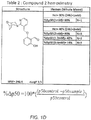
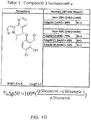
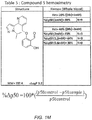
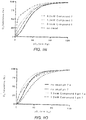
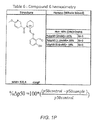
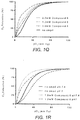
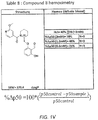
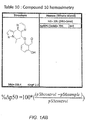
- Representative compounds disclosed herein were tested for their ability to increase hemoglobin oxygen affinity using hemoximetry.
- Blood (20% or 40% Hct) was incubated with compound at various concentrations followed by hemoximetry.
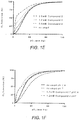
- Oxygen equilibrium curves for blood treated with compounds were obtained by deoxygenation of O2-equilibrated samples in a Hemox buffer at 37°C, using a Hemox Analyzer.
- the blood samples were transferred to the hemoximeter sample chamber where they were first saturated with compressed air and then deoxygenated with pure nitrogen.
- the absorbance at wavelengths that correspond to the isosbestic point (570 nm) and deoxy Hb (560 nm) was recorded as a function of the sample 02 tension (pO2).
- the pO2 and percent 02 saturation values were collected to obtain the OECs and the p50 values (partial pressure of 02 at which Hb is 50% saturated with 02).
- p50 values were calculated using a non-linear regression analysis.
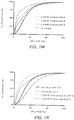
- the compounds described herein dose-dependently increased hemoglobin oxygen affinity as seen in FIGURES 1B , IE, 1H, IK, IN, 1Q, 1T, 1W, 1Z, 1AC, and 1AE.
- Bohr Effect Oxygen delivery to tissues was mediated by decreased hemoglobin-O 2 affinity via changes in the pH of blood (Bohr effect) and by an increase in the concentration of 2,3-diphosphoglycerate in red blood cells.
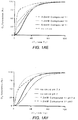
- the compounds described herein increased oxygen affinity under acidic (low pH) conditions as seen in FIGURES 1C , 1F , 1I , 1L , 1O , 1R , 1U , 1X , 1AA , and 1AF .
- ROS Reactive oxygen species
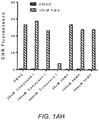
- reference compound 1 disclosed herein displayed anti-oxidative ( FIGURES 1AG and 1AH ) and anti-inflammatory activity ( FIGURES 1AI, 1AJ , and 1AK ) in in vitro experimental systems containing neutrophils and macrophages.
- a previously-described aldehyde compound, 5-hydroxymethyl-2-furfural (5-HMF) does not display this activity ( FIGURES 1AG and 1AH ).
- the compounds described herein could also provide a method to inhibit the adverse effects of inflammation in a patient.
- Reduction in systemic pro-inflammatory cytokines also has the potential to exert a broad anti-inflammatory effect which would supplement the beneficial effect of alleviation of hypoxemia via increased hemoglobin-O 2 affinity.
- mice Male, C57BL mice were fitted with a dorsal skinfold window chamber for direct visualization of an intact microvascular bed (Yalcin & Cabrales 2012). After the window chamber was implanted, the animals were left to recover for at least 2 days, before undergoing surgery a second time for arterial (carotid) catheter implantation (PE50 tubing). After two day of recovery, mice were dosed orally with reference Compound 1 (70 or 140mg/kg) or vehicle only and Hb O 2 affinity was determined by hemoximetry. Two hours post dose, conscious mice were placed in a restraining tube with a longitudinal slit from which the protruding window chamber provided a microscopic stage for observation.
- MAP mean arterial pressure
- HR heart rate
- Oxygen equilibrium curves for mice blood were obtained by deoxygenation of O 2 -equilibrated samples in a Hemox buffer at 37°C, using a Hemox Analyzer (TCS Scientific Corporation, New Hope, PA).
- the blood samples were transferred to the hemoximeter sample chamber where they were first saturated with compressed air and then deoxygenated with pure nitrogen.
- the absorbance at wavelengths that correspond to the isosbestic point (570 nm) and deoxy Hb (560 nm) was recorded as a function of the sample O 2 tension (pO2).
- the pO 2 and percent O 2 saturation values were collected to obtain the OECs and the p50 values (partial pressure of O 2 at which Hb is 50% saturated with O 2 ).
- p50 values were calculated using a non-linear regression analysis.
- Microvascular Tissue PO 2 is a group consisting of:
- High resolution non-invasive microvascular PO 2 measurements were made using phosphorescence quenching microscopy (PQM). Tissue PO 2 was measured in regions in between functional capillaries (Yalcin & Cabrales 2012). Hb O 2 saturations in the microcirculation are calculated using the O 2 equilibrium curves measured.
- PQM phosphorescence quenching microscopy
- Tissue hypoxia was studied via immunohistochemistry staining for pimonidazole bound to hypoxic zones in vital tissues.
- Mice received a bolus intraperitoneal injection (IP) injection of the hypoxic marker Hypoxyprobe-1 (pimonidazole 40 mg/kg) and 5 mg/kg Hoechst 33342 diluted in PBS (total volume, 100 ⁇ L).
- IP intraperitoneal injection
- mice were euthanized and tissues extracted for histology. Sections are stained with monoclonal antibody against pimonidazole. Images for pimonidazole antibody-stained areas and Hoechst were recorded. Results are reported as the ratio of pimonidazole stained area to the total cellular area by co-localization of pimonidazole and Hoechst.
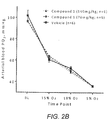
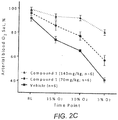
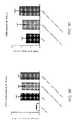
- FIGURE 2C depicts the changes SaO 2 in response to changes in PaO 2 ( FIGURE 2B ) during hypoxia.
- Arterial blood partial pressure of O 2 (PaO 2 ) decreased with increasing level of hypoxia. Since all animals were exposed to the same level of hypoxia, the PaO 2 was the same in reference Compound 1-treated and control mice ( FIGURE 2B ).
- Arterial blood oxygen saturation (SaO 2 ) decreased with increasing hypoxia.
- reference Compound 1 dose-dependently increased SaO 2 relative to control during hypoxia indicating that reference Compound 1 increased O 2 uptake during hypoxia ( FIGURE 2C ).
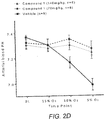
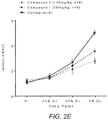
- FIGURES 2D and 2E shows the changes in lactate and pH of blood during hypoxia.
- arterial blood pH decreased substantially in control mice during 10% and 5%O 2 hypoxia indicating acidosis.
- arterial blood pH was normal during hypoxia in reference Compound 1 dosed mice indicating that reference Compound 1 reduced acidosis.
- reference Compound 1 reduced lactate levels relative to control during extreme hypoxia (5%02) ( FIGURE 2E ).
- reference Compound 1 improved O 2 delivery to tissues during hypoxia as evidenced by reduced blood lactate levels relative to control.
- MAP mean arterial pressure
- HR heart rate
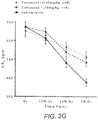
- FIGURES 2F and 2G show changes in mean arterial pressure (MAP) and heart rate (HR) during exposure to hypoxia.
- MAP and HR decreased in control mice
- reference Compound 1-dosed mice sustained higher mean BP ( FIGURE 2F ) and HR ( FIGURE 2G ) in a dose-dependent fashion.
- Hb O 2 affinity leads to increased O 2 delivery to tissues during hypoxia minimizing the systematic the changes in blood pressure and HR necessary to adjust to hypoxia.
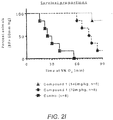
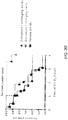
- FIGURES 2H and 2I respectively show the degree of tissue hypoxia and survival of mice during hypoxia.
- reference Compound 1 reduced hypoxic tissues positively stained by pimonidazole relative to control during extreme hypoxia.
- mice with adequate systolic BP were counted as survived and mice with severe hypotension (BP ⁇ 60 mmHg) were counted as non-survived and were euthanized.
- This Study demonstrates that a compound that increases the O 2 affinity of hemoglobin increases arterial 02 saturation and improves oxygen delivery to tissues during hypoxia. At the tissue level, local milieu allows for efficient O 2 extraction leading to improved oxygenation as measured by decreased lactic acidosis, improved cardiovascular function and ultimately, survival.
- mice Female, 8-10-week-old male C57BL/6J mice (Jackson Laboratory, Bar Harbor, ME), were anesthetized with isoflurane, injected with 100 ⁇ g LPS (Sigma, St. Louis, MO) in 100 ⁇ L PBS by direct intratracheal injection. After 24 hours, mice were given reference Compound 1 (70 or 140mg/kg formulated in dimethylacetamide, polyethylene glycol 400 (PEG400) and 40% cavitron in a ratio of 1:5:4, respectively) or vehicle only (5 ⁇ L/g) by oral gavage 2 hours prior to placement in a hypoxia chamber. Mice were exposed to either 10 or 5% O 2 for 4 hours.
- Oxygen saturation (SaO 2 ) was measured with a pulse oximeter (STARR Life Sciences, Oakmont, PA) at baseline and hourly during hypoxic exposure. During hypoxic exposure, mice were monitored continuously and a moribund check was done every 15 minutes. Time to death was assessed by time to moribund status. Mice were determined to be moribund if they could not right themselves when placed in a supine position.
- %Hb occupancy 100 x [reference Compound 1 concentration in blood (mM)]/ [(Hct/100) x 5mM].
- Hemoximetry was used to determine the PD effect of reference Compound 1 in whole blood from dosed mice as described above.
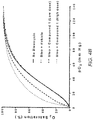
- Representative oxygen equilibrium curves (OECs) of whole blood obtained from mice dosed with reference Compound 1 (blue and red lines) or vehicle only (black line) are shown in FIGURE 3A .
- the left-shift in the OEC indicates a reference Compound 1 dose-dependent increase in Hb O 2 affinity relative to control (vehicle only).
- FIGURE 3B Treatment with 100 ⁇ g LPS induced inflammation as evidenced by increased total cell counts in BALF relative to No LPS control group ( FIGURE 3B ). Moreover, BALF from LPS treated animals contained neutrophils ( FIGURE 3C ) and macrophages ( FIGURE 3D ) which are typical inflammatory markers consistent with LPS-induced lung injury. However, no major differences in total protein were observed in BALF of LPS-treated versus (No LPS) control groups ( FIGURE 3E ), confirming the absence of significant alveolar capillary damage in this model of acute lung injury. Reference Compound 1 had no significant effect on inflammation or lung injury.
- SpO 2 peripheral arterial O 2 saturation
- SpO 2 peripheral arterial O 2 saturation
- SpO 2 was measured for each group every hour during hypoxia. Average SpO 2 during 4 hours of exposure to hypoxia for each group are shown in FIGURE 3F .
- SpO 2 decreased during hypoxia for all groups.
- reference Compound 1 dosed mice compared to control (or vehicle) mice.
- reference Compound 1 at 70mg/kg or 140mg/kg increased SpO 2 by 22% or 31% of control value, respectively.
- reference Compound 1 increased SpO 2 relative to control during hypoxia indicating that reference Compound 1 increased O 2 uptake during hypoxia in the presence of acute lung injury.
- mice During exposure hypoxia, mice were monitored continuously and a moribund check was done every 15 minutes. Time to death was assessed by time to moribund status. Mice were determined to be moribund if they could not right themselves when placed in a supine position. As shown in FIGURE 3G , 45% of control mice survived after 4 hours of exposure to 5% O 2 hypoxia, whereas 60% of 70mg/kg reference Compound 1 dosed mice and 86% of 140mg/kg reference Compound 1 dosed mice survived. Thus reference Compound 1 dose-dependently improved survival of mice with acute lung injury during exposure to extreme hypoxia.
- mice Forty-eight C57B/L6 male mice aged 7-8 weeks were obtained from Simonsen Laboratory, Gilroy, CA. The mice were ear tagged and weighed prior to the start of the study. The animals were distributed into four groups with twelve animals in each group. Body weights of all mice were recorded daily during the study. Animals in groups 2, 3 and 4 were administered 3U/kg bleomycin sulfate USP (Teva Pharmaceuticals) via oropharyngeal route for 7 days (see Walters, D. M. and S. R. Kleeberger (2008). "Mouse models of bleomycin-induced pulmonary fibrosis.” Curr Protoc Pharmacol Chapter 5: Unit 5 46 .) Animals in group 1 were administered normal saline via oropharyngeal route.
- Reference Compound 1 (formulated in dimethylacetamide: polyethylene glycol 400 (PEG400): 40% cavitron at a 1:5:4 ratio) was administered at either low dose (first day 50 mg/kg followed by 40 mg/kg daily) or high dose (first day 150 mg/kg followed by 85 mg/kg daily) via oral gavage to bleomycin treated mice once daily from day 8 to day 15. Animals in group 1 were administered vehicle via oral gavage. The dosing volume was 200 ⁇ L. The study animals were sacrificed on day 15 at 4 hours post final dose.
- PEG400 polyethylene glycol 400
- PK pharmacokinetics
- BAL fluid was collected from the lungs of the animals by lavaging the lung with 1ml Hanks balanced salt media (HBSS). Lungs were harvested from each animal and weighed. They were then inflated by ⁇ 0.5mL of 10% NBF and fixed in a formalin container for subsequent histopathological analysis.
- HBSS Hanks balanced salt media
- Reference Compound 1 blood and plasma concentrations were determined by LC-MS 4 hours after the last dose. Both standard and QC blood samples were pre-incubated at 37°C for 1 hr. After incubation, all standard and QC samples were diluted with 2-fold volume of water to match with the condition of samples. Plasma standard and QC were proceeding without preincubation. For all samples, 10 ⁇ L of blood or plasma sample were mixed with 240 ⁇ L of sodium citrate buffer (pH 3) in a 2-mL 96 well plate. The mixture was vortexed for 10 minutes.
- the peak area of m/z 341 -> 203 product ion was measured against that of the m/z 345 -> 159 product ion 2-hydroxy-6-((2-(1-(propan-2-yl-d 7 )-1H-pyrazol-5-yl)pyridin-3-yl)methoxy)benzaldehyde in positive ion mode.
- the analytical range was 50 to 100000 ng/mL for blood sample and 50 to 5000 ng/mL for plasma sample.
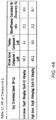
- the bleomycin treated mice with the low and high dose regimens of reference Compound 1 achieved 18.0% and 36.7% of calculated Hb occupancy, respectively.
- the average blood/plasma concentration ratio was 22:1 which is equivalent to RBC/plasma ratio of 102:1.
- the high RBC/plasma ratio of reference Compound 1 indicated a preferential partitioning of reference Compound 1, into the red blood cells (Table 12).
- Hemoglobin occupancy by reference Compound 1 was calculated by dividing the concentration of reference Compound 1 in RBCs by the Hb concentration in RBCs (5 mM).
- C b Blood concentration of reference Compound 1 in ⁇ g/mL
- mice treated with reference Compound 1 demonstrated a significant left shift in the OEC in a dose-response manner indicating a higher Hb-oxygen binding affinity.
- hypoxia is a feature of IPF, and oxygen saturation measurements are often used clinically to evaluate the presence and severity of hypoxia.
- Responses to hypoxia in mice treated with reference Compound 1 were first evaluated by measuring arterial oxygen saturation (S a O 2 ). On day 7 and 14 after bleomycin or saline instillation, 50 ⁇ L of arterial blood from the tail artery were used for measurement of arterial oxygen saturation (SaO 2 ) using whole blood GEM OPL co-oximeter (Instrumentation Laboratory, MA). An additional aliquot of 100 ⁇ L of blood were collected from tail artery and arterial blood gases using the i-STAT Handheld Blood Analyzer (ABBOTT) were measured using CG4+ cartridges. For each mouse, SaO 2 and arterial oxygen tension (pO2) were measured.
- ABBOTT i-STAT Handheld Blood Analyzer
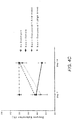
- both reference Compound 1-treated groups showed a decrease of S a O 2 before reference Compound 1 treatment on day 7 and subsequent return toward control values following treatment with reference Compound 1 for seven consecutive days (Low dose: Day 8 50mg/kg; Day 9-15 40mg/kg daily; High dose: Day 8 150mg/kg; Day 9-15 85mg/kg daily).
- arterial oxygenation levels of vehicle treated mice further declined throughout the study ( FIGURE 4C ).
- the arterial blood gases (ABG) were also analyzed on day 7 and day 14 ( FIGURE 4C ). Data are expressed as means ⁇ SEM.
- bleomycin treated mice arterial oxygen tension (pO 2 ) was significantly decreased, indicating an impairment of pulmonary gas exchange.
- mice develop extensive pulmonary fibrosis as well as pulmonary inflammation; thus, the effect of reference Compound 1 treatment on the phenotype of pulmonary inflammatory cells was examined.
- the BAL fluid was centrifuged at 1,000 rpm at 4°C for 5 minutes.
- the BAL cell pellets were suspended in 2mls of 1x Pharmalyse buffer (BD Bioscience) to lyse the RBCs.
- PBS + 2% FBS were added to stop the lysis reaction and cells centrifuged again. Leukocytes in the cell pellet were counted using a hemocytometer and the trypan blue exclusion method.
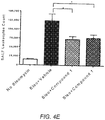
- Treatment with reference Compound 1 was associated with decreased inflammation, as evident by a significant reduction in total inflammatory cells recovered in BAL fluid on day 15 ( ⁇ , P ⁇ 0.05; Low dose: Day 8 50mg/kg; Day 9-15 40mg/kg daily; High dose: Day 8 150mg/kg; Day 9-15 85mg/kg daily) ( FIGURE 4E ). This finding demonstrates that reference Compound 1 treatment attenuates pulmonary inflammation in this model.
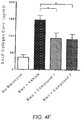
- reference Compound 1 treatment showed improvement in the fibrotic lesions. Pulmonary fibrosis was induced by administering mice a single dose of bleomycin. Collagen content of was determined by quantifying total soluble collagen in the BALF supernatant using the Sircol collagen dye binding assay according to the manufacturer's instructions (Biocolor Ltd, Carrick Fergus, UK). Reference Compound 1 treatment resulted in a significant reduction in collagen protein in the lungs ( ⁇ , P ⁇ 0.05; Low dose: Day 8 50mg/kg; Day 9-15 40mg/kg daily; High dose: Day 8 150mg/kg; Day 9-15 85mg/kg daily) ( FIGURE 4F ). These results indicate that reference Compound 1 attenuates pulmonary fibrosis in the bleomycin murine model.
- the histopathological analysis was conducted at Seventh Wave Laboratories, Chesterfield, MO.
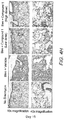
- the lung samples were processed and embedded with all lobes from each mouse in one paraffin block. Coronal sections through the four major lobes were stained with Masson's Trichrome.
- For each animal, consecutive lung fields were examined in a raster pattern using a 20X objective lens and a 10X or 40X ocular lens (200X or 800X).
- a modified Ashcroft score (Hubner et al. 2008) was recorded for each field.
- the fibrotic index was calculated as the sum of the modified Ashcroft field scores divided by the number of fields examined.
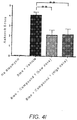
- Ashcroft scoring to quantify morphologic fibrosis was performed, and reference Compound 1 treatment improved overall scores by approximately 50% ( ⁇ , P ⁇ 0.01; FIGURE 4I ). These results suggest that reference Compound 1 inhibits pulmonary fibrosis in this bleomycin mouse model.
Landscapes
- Health & Medical Sciences (AREA)
- Chemical & Material Sciences (AREA)
- General Health & Medical Sciences (AREA)
- Life Sciences & Earth Sciences (AREA)
- Veterinary Medicine (AREA)
- Public Health (AREA)
- Medicinal Chemistry (AREA)
- Animal Behavior & Ethology (AREA)
- Pharmacology & Pharmacy (AREA)
- Organic Chemistry (AREA)
- Epidemiology (AREA)
- Engineering & Computer Science (AREA)
- Bioinformatics & Cheminformatics (AREA)
- Nuclear Medicine, Radiotherapy & Molecular Imaging (AREA)
- General Chemical & Material Sciences (AREA)
- Chemical Kinetics & Catalysis (AREA)
- Immunology (AREA)
- Physical Education & Sports Medicine (AREA)
- Rheumatology (AREA)
- Orthopedic Medicine & Surgery (AREA)
- Biomedical Technology (AREA)
- Pulmonology (AREA)
- Dermatology (AREA)
- Transplantation (AREA)
- Pharmaceuticals Containing Other Organic And Inorganic Compounds (AREA)
- Acyclic And Carbocyclic Compounds In Medicinal Compositions (AREA)
- Medicines That Contain Protein Lipid Enzymes And Other Medicines (AREA)
Applications Claiming Priority (4)
| Application Number | Priority Date | Filing Date | Title |
|---|---|---|---|
| US201562140418P | 2015-03-30 | 2015-03-30 | |
| US201562183399P | 2015-06-23 | 2015-06-23 | |
| US201562252400P | 2015-11-06 | 2015-11-06 | |
| PCT/US2016/024623 WO2016160755A1 (en) | 2015-03-30 | 2016-03-29 | Aldehyde compounds for treating pulmonary fibrosis, hypoxia, and connective tissue and autoimmune disease |
Publications (2)
| Publication Number | Publication Date |
|---|---|
| EP3277379A1 EP3277379A1 (en) | 2018-02-07 |
| EP3277379B1 true EP3277379B1 (en) | 2021-12-08 |
Family
ID=55661654
Family Applications (1)
| Application Number | Title | Priority Date | Filing Date |
|---|---|---|---|
| EP16714724.8A Active EP3277379B1 (en) | 2015-03-30 | 2016-03-29 | Aldehyde compounds for treating pulmonary fibrosis, hypoxia, and connective tissue and autoimmune disease |
Country Status (18)
| Country | Link |
|---|---|
| US (2) | US10004725B2 (enExample) |
| EP (1) | EP3277379B1 (enExample) |
| JP (1) | JP6806698B2 (enExample) |
| KR (1) | KR20170131596A (enExample) |
| CN (1) | CN107531671B (enExample) |
| AU (1) | AU2016243428B2 (enExample) |
| BR (1) | BR112017020276A2 (enExample) |
| CA (1) | CA2980578A1 (enExample) |
| CL (1) | CL2017002435A1 (enExample) |
| EA (1) | EA201791998A1 (enExample) |
| ES (1) | ES2906248T3 (enExample) |
| IL (1) | IL254563A0 (enExample) |
| MA (1) | MA41841A (enExample) |
| MX (1) | MX2017012657A (enExample) |
| MY (1) | MY194319A (enExample) |
| SG (2) | SG11201707831QA (enExample) |
| TW (2) | TWI670060B (enExample) |
| WO (1) | WO2016160755A1 (enExample) |
Families Citing this family (28)
| Publication number | Priority date | Publication date | Assignee | Title |
|---|---|---|---|---|
| US9012450B2 (en) | 2011-12-28 | 2015-04-21 | Global Blood Therapeutics, Inc. | Substituted heteroaryl aldehyde compounds and methods for their use in increasing tissue oxygenation |
| PL2797416T3 (pl) | 2011-12-28 | 2017-12-29 | Global Blood Therapeutics, Inc. | Podstawione związki benzaldehydowe i sposoby ich zastosowania do zwiększania natlenienia tkanek |
| US9422279B2 (en) | 2013-03-15 | 2016-08-23 | Global Blood Therapeutics, Inc. | Compounds and uses thereof for the modulation of hemoglobin |
| US10266551B2 (en) | 2013-03-15 | 2019-04-23 | Global Blood Therapeutics, Inc. | Compounds and uses thereof for the modulation of hemoglobin |
| US9458139B2 (en) | 2013-03-15 | 2016-10-04 | Global Blood Therapeutics, Inc. | Compounds and uses thereof for the modulation of hemoglobin |
| JP6426694B2 (ja) | 2013-03-15 | 2018-11-21 | グローバル ブラッド セラピューティクス インコーポレイテッド | ヘモグロビンの修飾のための化合物及びその使用 |
| BR112015021982B1 (pt) | 2013-03-15 | 2022-12-13 | Global Blood Therapeutics, Inc | Compostos e seus usos para a modulação de hemoglobina |
| WO2014145040A1 (en) | 2013-03-15 | 2014-09-18 | Global Blood Therapeutics, Inc. | Substituted aldehyde compounds and methods for their use in increasing tissue oxygenation |
| EP2968299B1 (en) | 2013-03-15 | 2021-01-20 | Global Blood Therapeutics, Inc. | Compounds and uses thereof for the modulation of hemoglobin |
| US8952171B2 (en) | 2013-03-15 | 2015-02-10 | Global Blood Therapeutics, Inc. | Compounds and uses thereof for the modulation of hemoglobin |
| EA201992707A1 (ru) | 2013-11-18 | 2020-06-30 | Глобал Блад Терапьютикс, Инк. | Соединения и их применения для модуляции гемоглобина |
| AP2016009261A0 (en) | 2014-02-07 | 2016-06-30 | Global Blood Therapeutics Inc | Crystalline polymorphs of the free base of 2-hydroxy-6-((2-(1-isopropyl-1h-pyrazol-5-yl)pyridin-3-yl)methoxy)benzaldehyde |
| MA41841A (fr) | 2015-03-30 | 2018-02-06 | Global Blood Therapeutics Inc | Composés aldéhyde pour le traitement de la fibrose pulmonaire, de l'hypoxie, et de maladies auto-immunes et des tissus conjonctifs |
| CN108348584B (zh) * | 2015-10-29 | 2022-11-01 | 日本株式会社Ltt生物医药 | 急性呼吸窘迫综合征治疗剂 |
| HUE050083T2 (hu) | 2015-11-06 | 2020-11-30 | Hoffmann La Roche | Indolin-2-on származékok |
| PL3383392T3 (pl) | 2015-12-04 | 2025-11-17 | Global Blood Therapeutics, Inc. | Schematy dawkowania dla 2-hydroksy-6-((2-(1-izopropylo-1H-pirazol-5-ilo)pirydyn3-ylo)metoksy)benzaldehydu |
| TWI663160B (zh) | 2016-05-12 | 2019-06-21 | 全球血液治療公司 | 用於合成2-羥基-6-((2-(1-異丙基-1h-吡唑-5-基)-吡啶-3-基)甲氧基)苯甲醛之方法 |
| TW202332423A (zh) | 2016-10-12 | 2023-08-16 | 美商全球血液治療公司 | 包含2-羥基-6-((2-(1-異丙基-1h-吡唑-5-基)吡啶-3-基)甲氧基)-苯甲醛之片劑 |
| AR111295A1 (es) | 2017-03-20 | 2019-06-26 | Forma Therapeutics Inc | Composiciones de pirrolopirrol como activadores de piruvato quinasa (pkr) |
| WO2020061255A1 (en) | 2018-09-19 | 2020-03-26 | Forma Therapeutics, Inc. | Activating pyruvate kinase r |
| US20200129485A1 (en) | 2018-09-19 | 2020-04-30 | Forma Therapeutics, Inc. | Treating sickle cell disease with a pyruvate kinase r activating compound |
| EP3860975B1 (en) | 2018-10-01 | 2023-10-18 | Global Blood Therapeutics, Inc. | Modulators of hemoglobin for the treatment of sickle cell disease |
| PT3880654T (pt) | 2018-11-19 | 2022-04-08 | Global Blood Therapeutics Inc | Compostos de 2-formil-3-hidroxifeniloximetil capazes de modular hemoglobina |
| US12479816B2 (en) | 2019-02-08 | 2025-11-25 | University of Pittsburgh—of the Commonwealth System of Higher Education | 20-HETE formation inhibitors |
| MX2022003025A (es) | 2019-09-19 | 2022-04-07 | Forma Therapeutics Inc | Activacion de la piruvato cinasa r. |
| TW202128650A (zh) * | 2019-10-11 | 2021-08-01 | 德商拜耳動物保健有限公司 | 作為殺蟲劑之新穎的雜芳基取代之吡𠯤衍生物 |
| GB202002560D0 (en) * | 2020-02-24 | 2020-04-08 | Johnson Matthey Plc | Crystalline forms of voxelotor, and processes for the preparation thereof |
| US12128035B2 (en) | 2021-03-19 | 2024-10-29 | Novo Nordisk Health Care Ag | Activating pyruvate kinase R |
Family Cites Families (184)
| Publication number | Priority date | Publication date | Assignee | Title |
|---|---|---|---|---|
| DE276479C (enExample) | ||||
| DE258226C (enExample) | ||||
| US1000472A (en) | 1910-08-22 | 1911-08-15 | Albert Williams | Vehicle-wheel. |
| NL105917C (enExample) | 1956-02-13 | 1900-01-01 | ||
| BE787576A (fr) | 1971-08-13 | 1973-02-14 | Hoechst Ag | Derives de benzofuranne et leur utilisation comme azureurs optiques |
| BE787580A (fr) | 1971-08-13 | 1973-02-14 | Hoechst Ag | Procede de preparation de derives du furanne |
| US4062858A (en) | 1976-12-22 | 1977-12-13 | E. R. Squibb & Sons, Inc. | Derivatives of 5,6-dihydrobenzo[5,6]cyclohepta[1,2-b]pyrazolo[4,3-e]pyridin-11(1H)-ones and 11(1H)-imines |
| GB1593417A (en) | 1976-12-22 | 1981-07-15 | Squibb & Sons Inc | Carbocyclic-fused pyrazolopyridine derivatives |
| EP0010063B1 (de) | 1978-10-04 | 1982-12-29 | Ciba-Geigy Ag | Verfahren zur Herstellung von Furanyl-benzazolen |
| DE2853765A1 (de) | 1978-12-13 | 1980-06-26 | Bayer Ag | Verfahren zur herstellung von benzimidazolylbenzofuranen |
| DE2904829A1 (de) | 1979-02-08 | 1980-08-14 | Bayer Ag | Verfahren zur herstellung von benzimidazolylbenzofuran |
| IT1133025B (it) | 1979-06-29 | 1986-07-09 | Wellcome Found | Nuovi eteri per uso farmaceutico e procedimento per la loro preparazione |
| IL64573A (en) | 1980-12-18 | 1985-04-30 | Wellcome Found | Derivatives of formylphenoxyalkanoic acids and formylphenoxymethylbenzoic acids,their preparation and pharmaceutical formulations containing them |
| US4478834A (en) | 1983-02-11 | 1984-10-23 | Usv Pharmaceutical Corporation | Dihydropyridines and their use in the treatment of asthma |
| GB8402740D0 (en) | 1984-02-02 | 1984-03-07 | Scras | Furo-(3 4-c)-pyridine derivatives |
| JPS6140236A (ja) | 1984-08-02 | 1986-02-26 | Yamanouchi Pharmaceut Co Ltd | ハイドロキノン誘導体 |
| DE3431004A1 (de) | 1984-08-23 | 1986-03-06 | Hoechst Ag, 6230 Frankfurt | Neue 3-pyridylverbindungen und verfahren zu ihrer herstellung |
| GB8603475D0 (en) | 1986-02-12 | 1986-03-19 | Glaxo Group Ltd | Chemical compounds |
| US4831041A (en) | 1986-11-26 | 1989-05-16 | Fujisawa Pharmaceutical Co., Ltd. | Imidazopyridine compounds and processes for preparation thereof |
| EP0278686A1 (en) | 1987-02-07 | 1988-08-17 | The Wellcome Foundation Limited | Pyridopyrimidines methods for their preparation and pharmaceutical formulations thereof |
| DD258226A1 (de) | 1987-03-05 | 1988-07-13 | Fahlberg List Veb | Verfahren zur herstellung von aroxymethylchinoxalinen |
| GB8711802D0 (en) | 1987-05-19 | 1987-06-24 | Fujisawa Pharmaceutical Co | Dithioacetal compounds |
| GB8718940D0 (en) | 1987-08-11 | 1987-09-16 | Glaxo Group Ltd | Chemical compounds |
| US4920131A (en) | 1987-11-03 | 1990-04-24 | Rorer Pharmaceutical Corp. | Quinoline derivatives and use thereof as antagonists of leukotriene D4 |
| JPH01305081A (ja) | 1988-04-04 | 1989-12-08 | E R Squibb & Sons Inc | 3―アシルアミノ―1―[[[(置換スルホニル)アミノ〕カルボニル〕アミノ〕―2―アゼチジノン類 |
| DD278479A3 (de) | 1988-06-29 | 1990-05-09 | Bandstahlkombinat Matern Veb | Verfahren zum granulieren fluessiger schlacke |
| US4952574A (en) | 1988-09-26 | 1990-08-28 | Riker Laboratories, Inc. | Antiarrhythmic substituted N-(2-piperidylmethyl)benzamides |
| US5236917A (en) | 1989-05-04 | 1993-08-17 | Sterling Winthrop Inc. | Saccharin derivatives useful as proteolytic enzyme inhibitors and compositions and method of use thereof |
| IT1230859B (it) | 1989-06-05 | 1991-11-08 | Corvi Camillo Spa | 2 alchinilfenoli sostituiti ad azione anti infiammatoria, procedimento per la loro preparazione e composizioni farmaceutiche che li contengono. |
| GB2244054B (en) | 1990-04-19 | 1994-04-06 | Ici Plc | Pyridine derivatives |
| NZ238576A (en) | 1990-06-18 | 1994-12-22 | Merck & Co Inc | Pyridinone derivatives, preparation and pharmaceutical compositions thereof |
| KR100196559B1 (ko) | 1990-06-19 | 1999-06-15 | 기따사또 이찌로 | 안지오텐신ii 길항작용을 함유하는 피리딘 유도체 |
| NL9001752A (nl) | 1990-08-02 | 1992-03-02 | Cedona Pharm Bv | Nieuwe 1,4-dihydropyridinederivaten. |
| IL99731A0 (en) | 1990-10-18 | 1992-08-18 | Merck & Co Inc | Hydroxylated pyridine derivatives,their preparation and pharmaceutical compositions containing them |
| JPH05301872A (ja) | 1992-04-23 | 1993-11-16 | Kumiai Chem Ind Co Ltd | ピコリン酸誘導体及び除草剤 |
| US5403816A (en) | 1990-10-25 | 1995-04-04 | Kumiai Chemical Industry Co., Ltd. | Picolinic acid derivative and herbicidal composition |
| WO1992013841A1 (de) | 1991-02-08 | 1992-08-20 | Byk Gulden Lomberg Chemische Fabrik Gmbh | Komplexbildner |
| JPH0641118A (ja) | 1991-05-31 | 1994-02-15 | Kumiai Chem Ind Co Ltd | ピコリン酸誘導体及び除草剤 |
| US5185251A (en) | 1991-06-07 | 1993-02-09 | Merck & Co., Inc. | Microbial transformation of a substituted pyridinone using actinoplanacete sp. MA 6559 |
| JP2600644B2 (ja) | 1991-08-16 | 1997-04-16 | 藤沢薬品工業株式会社 | チアゾリルベンゾフラン誘導体 |
| US5202243A (en) | 1991-10-04 | 1993-04-13 | Merck & Co., Inc. | Method of hydroxylating 3-[2-(benzoxazol-2-yl)ethyl]-5-ethyl-6-methyl-2-(1H)-pyridinone by incubation with liver slices |
| GB9203798D0 (en) | 1992-02-21 | 1992-04-08 | Fujisawa Pharmaceutical Co | Quinolylbenzofuran derivatives,processes for preparation thereof and pharmaceutical composition comprising the same |
| JPH07508527A (ja) | 1992-07-01 | 1995-09-21 | ビイク グルデン ロンベルク ヒェーミッシェ ファブリーク ゲゼルシヤフト ミツト ベシユレンクテル ハフツング | 錯体形成剤 |
| US5290941A (en) | 1992-10-14 | 1994-03-01 | Merck & Co., Inc. | Facile condensation of methylbenzoxazoles with aromatic aldehydes |
| DE4318550A1 (de) | 1993-06-04 | 1994-12-08 | Boehringer Mannheim Gmbh | Aryliden-4-oxo-2-thioxo-3- thiazolidincarbonsäuren, Verfahren zu ihrer Herstellung und diese Verbindungen enthaltende Arzneimittel |
| JPH0725882A (ja) | 1993-07-07 | 1995-01-27 | Res Dev Corp Of Japan | アクロメリン酸bおよびeを製造するための中間体と、その製造方法 |
| EP0637586B1 (en) | 1993-08-05 | 1999-06-02 | HOECHST MARION ROUSSEL, Inc. | 2-(Piperidin-4-yl, pyridin-4-yl and tetrahydropyridin-4-yl)-benzofuran-7-carbamate derivatives, their preparation and their use as acetylcholinesterase inhibitors |
| EP0640609A1 (en) | 1993-08-24 | 1995-03-01 | Ono Pharmaceutical Co., Ltd. | Fused phenol derivatives having inhibitory activity on TXA2 synthetase, and 5-lipoxygenase and scavenging activity on oxygen species |
| US5880131A (en) | 1993-10-20 | 1999-03-09 | Enzon, Inc. | High molecular weight polymer-based prodrugs |
| US5965566A (en) | 1993-10-20 | 1999-10-12 | Enzon, Inc. | High molecular weight polymer-based prodrugs |
| US5840900A (en) | 1993-10-20 | 1998-11-24 | Enzon, Inc. | High molecular weight polymer-based prodrugs |
| US5605976A (en) | 1995-05-15 | 1997-02-25 | Enzon, Inc. | Method of preparing polyalkylene oxide carboxylic acids |
| WO1995014015A1 (en) | 1993-11-19 | 1995-05-26 | Ciba-Geigy Ag | Benzothiophene derivatives possessing a methoxyimino substituent as microbicides |
| EP0658559A1 (de) | 1993-12-14 | 1995-06-21 | Chemisch Pharmazeutische Forschungsgesellschaft m.b.H. | Thienothiazinderivate, Verfahren zu ihrer Herstellung und ihre Verwendung als 5-dipoxygenase und Cyclooxygenaseinhibitoren |
| JPH09508906A (ja) | 1994-02-14 | 1997-09-09 | メレル ファーマスーティカルズ インコーポレーテッド | エンケファリナーゼ及びaceの阻害剤として有用な新規なメルカプトアセチルアミド1,3,4,5−テトラヒドロベンゾ[c]アゼピン−3−オンジスルフィド誘導体類 |
| GB9420557D0 (en) | 1994-10-12 | 1994-11-30 | Zeneca Ltd | Aromatic compounds |
| DE4442050A1 (de) | 1994-11-25 | 1996-05-30 | Hoechst Ag | Heterospiroverbindungen und ihre Verwendung als Elektrolumineszenzmaterialien |
| US5650408A (en) | 1995-06-07 | 1997-07-22 | Karanewsky; Donald S. | Thiazolo benzazepine containing dual action inhibitors |
| TW434240B (en) | 1995-06-20 | 2001-05-16 | Zeneca Ltd | Aromatic compounds, preparation thereof and pharmaceutical composition comprising same |
| JP3895404B2 (ja) | 1996-05-17 | 2007-03-22 | 興和株式会社 | カルコン誘導体及びこれを含有する医薬 |
| JP2000516958A (ja) | 1996-08-26 | 2000-12-19 | ジェネティックス・インスチチュート・インコーポレーテッド | ホスホリパーゼ酵素の阻害剤 |
| US6630496B1 (en) | 1996-08-26 | 2003-10-07 | Genetics Institute Llc | Inhibitors of phospholipase enzymes |
| EP0941222A2 (en) | 1996-11-12 | 1999-09-15 | Novartis AG | Pyrazole derivatives useful as herbicides |
| US5760232A (en) | 1997-06-16 | 1998-06-02 | Schering Corporation | Synthesis of intermediates useful in preparing bromo-substituted tricyclic compounds |
| US6214817B1 (en) | 1997-06-20 | 2001-04-10 | Monsanto Company | Substituted pyridino pentaazamacrocyle complexes having superoxide dismutase activity |
| US6011042A (en) | 1997-10-10 | 2000-01-04 | Enzon, Inc. | Acyl polymeric derivatives of aromatic hydroxyl-containing compounds |
| US6111107A (en) | 1997-11-20 | 2000-08-29 | Enzon, Inc. | High yield method for stereoselective acylation of tertiary alcohols |
| EE200000522A (et) | 1998-02-25 | 2002-02-15 | Genetics Institute, Inc. | Fosfolipaas A2 ensüümi inhibiitor, seda sisaldav farmatseutiline kompositsioon ning meetod fosfolipaasensüümi toime pärssimiseks |
| WO1999047529A1 (en) | 1998-03-18 | 1999-09-23 | Ariad Pharmaceuticals, Inc. | Heterocyclic signal transduction inhibitors, compositions containing them |
| US6214879B1 (en) | 1998-03-24 | 2001-04-10 | Virginia Commonwealth University | Allosteric inhibitors of pyruvate kinase |
| US6153655A (en) | 1998-04-17 | 2000-11-28 | Enzon, Inc. | Terminally-branched polymeric linkers and polymeric conjugates containing the same |
| GB9810860D0 (en) | 1998-05-20 | 1998-07-22 | Hoechst Schering Agrevo Gmbh | Substituted pyridine and pyrimidines, processes for their preparation and their use as pesticides |
| AU4231299A (en) | 1998-06-04 | 1999-12-20 | Abbott Laboratories | Cell adhesion-inhibiting antinflammatory compounds |
| US6232320B1 (en) | 1998-06-04 | 2001-05-15 | Abbott Laboratories | Cell adhesion-inhibiting antiinflammatory compounds |
| CN1245381C (zh) | 1998-12-14 | 2006-03-15 | 弗·哈夫曼-拉罗切有限公司 | 苯基甘氨酸衍生物 |
| AU1836900A (en) | 1998-12-31 | 2000-07-24 | Aventis Pharmaceuticals Inc. | N-carboxymethyl substituted benzolactams as inhibitors of matrix metalloproteinase |
| US6544980B2 (en) | 1998-12-31 | 2003-04-08 | Aventis Pharmaceuticals Inc. | N-carboxymethyl substituted benzolactams as inhibitors of matrix metalloproteinase |
| US6251927B1 (en) | 1999-04-20 | 2001-06-26 | Medinox, Inc. | Methods for treatment of sickle cell anemia |
| MXPA01011502A (es) | 1999-05-14 | 2003-08-20 | Boehringer Ingelheim Pharma | Compuestos de tipo profarmaco anti-tumorigenos, activados por enzimas. |
| HK1045306A1 (zh) | 1999-06-03 | 2002-11-22 | Abbott Laboratories | 抑制细胞黏附的抗炎化合物 |
| MXPA02000120A (es) | 1999-06-28 | 2002-07-02 | Janssen Pharmaceutica Nv | Inhibidores de la replicacion del virus sincitial respiratorio. |
| HUP0203514A3 (en) | 1999-09-28 | 2004-01-28 | Eisai Co Ltd | Quinuclidine compounds and drugs containing them and process for preparation the same |
| AUPQ407699A0 (en) | 1999-11-16 | 1999-12-09 | Fujisawa Pharmaceutical Co., Ltd. | Aminoalcohol derivatives |
| AU2001230537A1 (en) | 2000-02-01 | 2001-08-14 | Daiichi Pharmaceutical Co., Ltd. | Pyridoxazine derivatives |
| US6506755B2 (en) | 2000-02-03 | 2003-01-14 | Hoffmann-La Roche Inc. | Thiazolidinecarboxyl acids |
| AUPQ585000A0 (en) | 2000-02-28 | 2000-03-16 | Fujisawa Pharmaceutical Co., Ltd. | Aminoalcohol derivatives |
| JP2003528068A (ja) | 2000-03-17 | 2003-09-24 | コリクサ コーポレイション | 新規両親媒性アルデヒドならびにアジュバントおよび免疫エフェクターとしてのそれらの使用 |
| AUPQ841300A0 (en) | 2000-06-27 | 2000-07-20 | Fujisawa Pharmaceutical Co., Ltd. | New aminoalcohol derivatives |
| WO2002009723A2 (en) | 2000-08-01 | 2002-02-07 | Gmp Companies, Inc. | Ammonium salts of hemoglobin allosteric effectors, and uses thereof |
| US6653313B2 (en) | 2000-08-10 | 2003-11-25 | Warner-Lambert Company Llc | 1,4-dihydropyridine compounds as bradykinin antagonists |
| JP4272338B2 (ja) | 2000-09-22 | 2009-06-03 | バイエル アクチェンゲゼルシャフト | ピリジン誘導体 |
| AUPR034000A0 (en) | 2000-09-25 | 2000-10-19 | Fujisawa Pharmaceutical Co., Ltd. | Aminoalcohol derivatives |
| JPWO2002051849A1 (ja) | 2000-12-26 | 2004-04-22 | 第一製薬株式会社 | Cdk4活性阻害剤 |
| ATE433964T1 (de) | 2000-12-28 | 2009-07-15 | Takeda Pharmaceutical | Alkansäurederivate, verfahren zu deren herstellung und deren verwendung |
| US20030022923A1 (en) | 2001-03-01 | 2003-01-30 | Medinox, Inc. | Methods for treatment of sickle cell anemia |
| WO2003009807A2 (en) | 2001-07-23 | 2003-02-06 | Galileo Laboratories, Inc. | Cytoprotective compounds, pharmaceutical and cosmetic formulations, and methods |
| KR100467313B1 (ko) | 2001-11-22 | 2005-01-24 | 한국전자통신연구원 | 적색 유기 전기발광 화합물 및 그 제조 방법과 전기발광소자 |
| US20030187026A1 (en) | 2001-12-13 | 2003-10-02 | Qun Li | Kinase inhibitors |
| CN1596240A (zh) | 2001-12-19 | 2005-03-16 | 阿特罗吉尼克斯公司 | 查耳酮衍生物及其治疗疾病的用途 |
| US20030190333A1 (en) | 2002-02-04 | 2003-10-09 | Corixa Corporation | Immunostimulant compositions comprising aminoalkyl glucosaminide phosphates and saponins |
| US6608076B1 (en) | 2002-05-16 | 2003-08-19 | Enzon, Inc. | Camptothecin derivatives and polymeric conjugates thereof |
| GB0212785D0 (en) | 2002-05-31 | 2002-07-10 | Glaxo Group Ltd | Compounds |
| MXPA05001544A (es) | 2002-08-08 | 2005-04-19 | Smithkline Beecham Corp | Compuestos de tiofeno. |
| AU2003257666A1 (en) | 2002-08-23 | 2004-03-11 | Kirin Beer Kabushiki Kaisha | COMPOUND HAVING TGFss INHIBITORY ACTIVITY AND MEDICINAL COMPOSITION CONTAINING THE SAME |
| WO2004024705A1 (ja) | 2002-09-10 | 2004-03-25 | Takeda Pharmaceutical Company Limited | 5員複素環化合物 |
| ATE527238T1 (de) | 2002-12-04 | 2011-10-15 | Univ Virginia Commonwealth | Mittel mit wirkung gegen sichelzellenanämie |
| WO2004056727A2 (en) | 2002-12-19 | 2004-07-08 | Atherogenics, Inc. | Process of making chalcone derivatives |
| AU2003289440A1 (en) | 2002-12-25 | 2004-07-22 | Kissei Pharmaceutical Co., Ltd. | Nitrogen-containing heterocycic derivatives, medicinal compositions containing the same and medicinal use thereof |
| US20040186077A1 (en) | 2003-03-17 | 2004-09-23 | Medicure International Inc. | Novel heteroaryl phosphonates as cardioprotective agents |
| ZA200507752B (en) | 2003-03-28 | 2007-01-31 | Threshold Pharmaceuticals Inc | Compositions and methods for treating cancer |
| CA2520259A1 (en) | 2003-04-11 | 2004-10-28 | Anormed Inc. | Cxcr4 chemokine receptor binding compounds |
| WO2005019220A2 (en) | 2003-08-11 | 2005-03-03 | Cellular Genomics Inc. | Substituted imidazo[1,2-a]pyrazines as modulators of kinase activity |
| US7411083B2 (en) | 2003-09-25 | 2008-08-12 | Wyeth | Substituted acetic acid derivatives |
| CN1902171A (zh) | 2003-11-10 | 2007-01-24 | 舍林股份公司 | 用作ccr-5拮抗剂的苄醚胺化合物 |
| US7378439B2 (en) | 2004-01-20 | 2008-05-27 | Usv, Ltd. | Process for the preparation of 4-(2-dipropylaminoethyl)-1,3-dihydro-2H-indol-2-one hydrochloride |
| AU2005211349A1 (en) | 2004-01-30 | 2005-08-18 | Istituto Di Ricerche Di Biologia Molecolare P. Angeletti S.P.A. | N-benzyl-3,4-dihyroxypyridine-2-carboxamide and N-benzyl-2,3-dihydroxypyridine-4-carboxamide compounds useful as HIV integrase inhibitors |
| GB0403038D0 (en) | 2004-02-11 | 2004-03-17 | Novartis Ag | Organic compounds |
| AU2005221864A1 (en) | 2004-03-09 | 2005-09-22 | Istituto Di Ricerche Di Biologia Molecolare P Angeletti Spa | HIV integrase inhibitors |
| TW200606129A (en) | 2004-07-26 | 2006-02-16 | Chugai Pharmaceutical Co Ltd | Novel cyclohexane derivative, its prodrug, its salt and diabetic therapeutic agent containing the same |
| CA2585165A1 (en) | 2004-10-28 | 2006-05-18 | Medicure International Inc. | Dual antiplatelet/anticoagulant pyridoxine analogs |
| WO2006088173A1 (ja) | 2005-02-21 | 2006-08-24 | Shionogi & Co., Ltd. | Hivインテグラーゼ阻害活性を有する2環性カルバモイルピリドン誘導体 |
| WO2006106711A1 (ja) | 2005-03-30 | 2006-10-12 | Eisai R & D Management Co., Ltd. | ピリジン誘導体を含有する抗真菌剤 |
| GB0506677D0 (en) | 2005-04-01 | 2005-05-11 | Btg Int Ltd | Iron modulators |
| DK3187225T3 (da) | 2005-04-28 | 2022-02-28 | Viiv Healthcare Co | Polycyklisk carbamoylpyridonderivat med hiv-integrasehæmmende aktivitet |
| JP2006342115A (ja) | 2005-06-10 | 2006-12-21 | Shionogi & Co Ltd | Hivインテグラーゼ阻害活性を有する多環性化合物 |
| GB0516270D0 (en) | 2005-08-08 | 2005-09-14 | Glaxo Group Ltd | Novel compounds |
| US8138360B2 (en) | 2005-10-11 | 2012-03-20 | University of Pittsburgh—of the Commonwealth System of Higher Education | Isotopically-labeled benzofuran compounds as imaging agents for amyloidogenic proteins |
| TW200800988A (en) | 2005-10-27 | 2008-01-01 | Shionogi & Amp Co Ltd | Polycyclic carbamoylpyridone derivative having HIV integrase inhibitory activity |
| WO2007061923A2 (en) | 2005-11-18 | 2007-05-31 | Takeda San Diego, Inc. | Glucokinase activators |
| RU2318818C1 (ru) | 2006-04-12 | 2008-03-10 | Общество С Ограниченной Ответственностью "Исследовательский Институт Химического Разнообразия" | Азагетероциклы, комбинаторная библиотека, фокусированная библиотека, фармацевтическая композиция и способ получения (варианты) |
| DE102006062417A1 (de) | 2006-07-07 | 2008-01-10 | Dieter Prof. Greif | Verfahren zur Biodieselherstellung aus Altölen und Altfetten |
| CN101113148A (zh) | 2006-07-26 | 2008-01-30 | 中国海洋大学 | 二氧哌嗪类化合物及其制备方法和用途 |
| CA2658925C (en) | 2006-07-27 | 2015-07-14 | Amorepacific Corporation | Novel sulfonylamino acrylamide derivatives, isomer thereof,or pharmaceutically acceptable salts thereof as vanilloid receptor antagonist; and pharmaceutical compositions containing the same |
| TW200817424A (en) | 2006-08-04 | 2008-04-16 | Daiichi Sankyo Co Ltd | Benzylphenyl glucopyranoside derivatives |
| TWI389895B (zh) | 2006-08-21 | 2013-03-21 | Infinity Discovery Inc | 抑制bcl蛋白質與結合夥伴間之交互作用的化合物及方法 |
| CA2663436A1 (en) | 2006-10-04 | 2008-04-10 | Pfizer Products Inc. | Pyrido[4,3-d]pyrimidin-4(3h)-one derivatives as calcium receptor antagonists |
| EP2091922B1 (en) | 2006-10-23 | 2011-12-21 | Merck Sharp & Dohme Corp. | 2-[1-phenyl-5-hydroxy-4alpha-methyl-hexahydrocyclopenta[f]indazol-5-yl]ethyl phenyl derivatives as glucocorticoid receptor ligands |
| FR2909379B1 (fr) | 2006-11-30 | 2009-01-16 | Servier Lab | Nouveaux derives heterocycliques,leur procede de preparation et les compositions pharmaceutiques qui les contiennent. |
| RU2532135C2 (ru) | 2007-02-22 | 2014-10-27 | Зингента Партисипейшнс Аг | Производные иминопиридина и их применение в качестве микробиоцидов |
| WO2009001214A2 (en) | 2007-06-28 | 2008-12-31 | Pfizer Products Inc. | Thieno[2,3-d]pyrimidin-4(3h)-one, isoxazolo[5,4-d]pyrimidin-4(5h)-one and isothiazolo[5,4-d]pyrimidin-4(5h)-one derivatives as calcium receptor antagonists |
| KR101150581B1 (ko) | 2007-07-26 | 2012-06-11 | 노파르티스 아게 | 유기 화합물 |
| TW200918521A (en) | 2007-08-31 | 2009-05-01 | Astrazeneca Ab | Heterocyclic amides and methods of use thereof |
| EA201000615A1 (ru) | 2007-10-17 | 2010-12-30 | Новартис Аг | Производные имидазо[1,2-а]пиридина, применимые в качестве ингибиторов апк (активиноподобной киназы) |
| JP5301557B2 (ja) | 2007-12-04 | 2013-09-25 | エフ.ホフマン−ラ ロシュ アーゲー | イソオキサゾロ−ピリジン誘導体 |
| US7776875B2 (en) | 2007-12-19 | 2010-08-17 | Hoffman-La Roche Inc. | Spiroindolinone derivatives |
| JP2009203230A (ja) | 2008-01-31 | 2009-09-10 | Daiichi Sankyo Co Ltd | ベンジルフェニルグルコピラノシド誘導体を含有する医薬組成物 |
| CA2720096A1 (en) | 2008-04-11 | 2009-10-15 | Institute Of Medicinal Molecular Design, Inc. | Pai-1 inhibitor |
| US8633245B2 (en) | 2008-04-11 | 2014-01-21 | Institute Of Medicinal Molecular Design, Inc. | PAI-1 inhibitor |
| US8119647B2 (en) | 2008-04-23 | 2012-02-21 | Glenmark Pharmaceuticals S.A. | Fused pyrimidineone compounds as TRPV3 modulators |
| US8742123B2 (en) | 2008-06-04 | 2014-06-03 | Taimed Biologics, Inc. | HIV integrase inhibitors from pyridoxine |
| WO2010056631A1 (en) | 2008-11-12 | 2010-05-20 | Schering Corporation | Inhibitors of fatty acid binding protein (fabp) |
| US8367654B2 (en) | 2009-05-08 | 2013-02-05 | Tetraphase Pharmaceuticals, Inc. | 8-AZA tetracycline compounds |
| CA2768924A1 (en) | 2009-09-21 | 2011-03-24 | F. Hoffmann-La Roche Ag | Heterocyclic antiviral compounds |
| KR101698153B1 (ko) | 2010-04-26 | 2017-01-23 | 광주과학기술원 | P2x1 및 p2x3 수용체 길항제로 사용되는 신규한 피리딘 카르복실산계 화합물, 이의 제조방법 및 이를 포함하는 조성물 |
| CN102116772B (zh) | 2010-09-28 | 2013-08-28 | 上海大学 | 二氢查尔酮化合物的筛选方法 |
| KR101952222B1 (ko) | 2011-04-11 | 2019-02-26 | 그린 테크 가부시키가이샤 | 신규 피라졸 유도체 |
| WO2013012670A1 (en) | 2011-07-15 | 2013-01-24 | AesRx, LLC | Treatment for hypoxia |
| US9012450B2 (en) | 2011-12-28 | 2015-04-21 | Global Blood Therapeutics, Inc. | Substituted heteroaryl aldehyde compounds and methods for their use in increasing tissue oxygenation |
| PL2797416T3 (pl) | 2011-12-28 | 2017-12-29 | Global Blood Therapeutics, Inc. | Podstawione związki benzaldehydowe i sposoby ich zastosowania do zwiększania natlenienia tkanek |
| BR112015021982B1 (pt) | 2013-03-15 | 2022-12-13 | Global Blood Therapeutics, Inc | Compostos e seus usos para a modulação de hemoglobina |
| US20140271591A1 (en) | 2013-03-15 | 2014-09-18 | Global Blood Therapeutics, Inc. | Compositions and methods for the modulation of hemoglobin (s) |
| US9604999B2 (en) | 2013-03-15 | 2017-03-28 | Global Blood Therapeutics, Inc. | Compounds and uses thereof for the modulation of hemoglobin |
| WO2014150261A1 (en) | 2013-03-15 | 2014-09-25 | Global Blood Therapeutics, Inc. | Compounds and uses thereof for the modulaton of hemoglobin |
| WO2014145040A1 (en) | 2013-03-15 | 2014-09-18 | Global Blood Therapeutics, Inc. | Substituted aldehyde compounds and methods for their use in increasing tissue oxygenation |
| US8952171B2 (en) | 2013-03-15 | 2015-02-10 | Global Blood Therapeutics, Inc. | Compounds and uses thereof for the modulation of hemoglobin |
| US9802900B2 (en) | 2013-03-15 | 2017-10-31 | Global Blood Therapeutics, Inc. | Bicyclic heteroaryl compounds and uses thereof for the modulation of hemoglobin |
| US20140274961A1 (en) | 2013-03-15 | 2014-09-18 | Global Blood Therapeutics, Inc. | Compounds and uses thereof for the modulation of hemoglobin |
| US9422279B2 (en) | 2013-03-15 | 2016-08-23 | Global Blood Therapeutics, Inc. | Compounds and uses thereof for the modulation of hemoglobin |
| US9458139B2 (en) | 2013-03-15 | 2016-10-04 | Global Blood Therapeutics, Inc. | Compounds and uses thereof for the modulation of hemoglobin |
| US10266551B2 (en) | 2013-03-15 | 2019-04-23 | Global Blood Therapeutics, Inc. | Compounds and uses thereof for the modulation of hemoglobin |
| JP6426694B2 (ja) | 2013-03-15 | 2018-11-21 | グローバル ブラッド セラピューティクス インコーポレイテッド | ヘモグロビンの修飾のための化合物及びその使用 |
| US20150057251A1 (en) | 2013-08-26 | 2015-02-26 | Global Blood Therapeutics, Inc. | Compounds and uses thereof for the modulation of hemoglobin |
| WO2015031284A1 (en) | 2013-08-26 | 2015-03-05 | Global Blood Therapeutics, Inc. | Formulations comprising wetting agents and compounds for the modulation of hemoglobin (s) |
| WO2015031285A1 (en) | 2013-08-27 | 2015-03-05 | Global Blood Therapeutics, Inc. | Crystalline 2-hydroxy-6-((2-(1-isopropyl-1h-pyrazol-5-yl)pyridin-3-yl)methoxy)benzaldehyde ansolvate salts |
| US20160207904A1 (en) | 2013-08-27 | 2016-07-21 | Global Blood Therapeutics, Inc. | Crystalline 2-hydroxy-6-((2-(1-isopropyl-1h-pyrazol-5-yl)pyridin-3-yl)methoxy)benzaldehyde ansolvate salts |
| EA201992707A1 (ru) | 2013-11-18 | 2020-06-30 | Глобал Блад Терапьютикс, Инк. | Соединения и их применения для модуляции гемоглобина |
| US20150141465A1 (en) | 2013-11-18 | 2015-05-21 | Global Blood Therapeutics, Inc. | Compounds and uses thereof for the modulation of hemoglobin |
| US9248199B2 (en) | 2014-01-29 | 2016-02-02 | Global Blood Therapeutics, Inc. | 1:1 adducts of sickle hemoglobin |
| AP2016009261A0 (en) | 2014-02-07 | 2016-06-30 | Global Blood Therapeutics Inc | Crystalline polymorphs of the free base of 2-hydroxy-6-((2-(1-isopropyl-1h-pyrazol-5-yl)pyridin-3-yl)methoxy)benzaldehyde |
| WO2016043849A2 (en) * | 2014-07-24 | 2016-03-24 | Global Blood Therapeutics, Inc. | Compounds for treating acute respiratory distress syndrome or a negative effect thereof |
| MA41841A (fr) | 2015-03-30 | 2018-02-06 | Global Blood Therapeutics Inc | Composés aldéhyde pour le traitement de la fibrose pulmonaire, de l'hypoxie, et de maladies auto-immunes et des tissus conjonctifs |
| PL3383392T3 (pl) | 2015-12-04 | 2025-11-17 | Global Blood Therapeutics, Inc. | Schematy dawkowania dla 2-hydroksy-6-((2-(1-izopropylo-1H-pirazol-5-ilo)pirydyn3-ylo)metoksy)benzaldehydu |
| TWI663160B (zh) | 2016-05-12 | 2019-06-21 | 全球血液治療公司 | 用於合成2-羥基-6-((2-(1-異丙基-1h-吡唑-5-基)-吡啶-3-基)甲氧基)苯甲醛之方法 |
| TW202332423A (zh) | 2016-10-12 | 2023-08-16 | 美商全球血液治療公司 | 包含2-羥基-6-((2-(1-異丙基-1h-吡唑-5-基)吡啶-3-基)甲氧基)-苯甲醛之片劑 |
-
2016
- 2016-03-28 MA MA041841A patent/MA41841A/fr unknown
- 2016-03-29 MX MX2017012657A patent/MX2017012657A/es unknown
- 2016-03-29 EA EA201791998A patent/EA201791998A1/ru unknown
- 2016-03-29 SG SG11201707831QA patent/SG11201707831QA/en unknown
- 2016-03-29 KR KR1020177030707A patent/KR20170131596A/ko not_active Withdrawn
- 2016-03-29 ES ES16714724T patent/ES2906248T3/es active Active
- 2016-03-29 EP EP16714724.8A patent/EP3277379B1/en active Active
- 2016-03-29 BR BR112017020276-0A patent/BR112017020276A2/pt not_active Application Discontinuation
- 2016-03-29 TW TW105109904A patent/TWI670060B/zh not_active IP Right Cessation
- 2016-03-29 CA CA2980578A patent/CA2980578A1/en not_active Abandoned
- 2016-03-29 AU AU2016243428A patent/AU2016243428B2/en not_active Ceased
- 2016-03-29 WO PCT/US2016/024623 patent/WO2016160755A1/en not_active Ceased
- 2016-03-29 US US15/084,252 patent/US10004725B2/en active Active
- 2016-03-29 TW TW107137594A patent/TWI688388B/zh not_active IP Right Cessation
- 2016-03-29 SG SG10201909028U patent/SG10201909028UA/en unknown
- 2016-03-29 MY MYPI2017703604A patent/MY194319A/en unknown
- 2016-03-29 JP JP2017551197A patent/JP6806698B2/ja active Active
- 2016-03-29 CN CN201680020001.XA patent/CN107531671B/zh not_active Expired - Fee Related
-
2017
- 2017-09-18 IL IL254563A patent/IL254563A0/en unknown
- 2017-09-27 CL CL2017002435A patent/CL2017002435A1/es unknown
-
2018
- 2018-05-16 US US15/981,732 patent/US10695330B2/en active Active
Non-Patent Citations (1)
| Title |
|---|
| None * |
Also Published As
| Publication number | Publication date |
|---|---|
| TW201707699A (zh) | 2017-03-01 |
| US10695330B2 (en) | 2020-06-30 |
| AU2016243428B2 (en) | 2020-12-24 |
| SG10201909028UA (en) | 2019-11-28 |
| WO2016160755A1 (en) | 2016-10-06 |
| JP6806698B2 (ja) | 2021-01-06 |
| TWI670060B (zh) | 2019-09-01 |
| TWI688388B (zh) | 2020-03-21 |
| CA2980578A1 (en) | 2016-10-06 |
| IL254563A0 (en) | 2017-11-30 |
| MA41841A (fr) | 2018-02-06 |
| JP2018510184A (ja) | 2018-04-12 |
| ES2906248T3 (es) | 2022-04-13 |
| AU2016243428A1 (en) | 2017-10-26 |
| US20190111037A1 (en) | 2019-04-18 |
| SG11201707831QA (en) | 2017-10-30 |
| US20160303099A1 (en) | 2016-10-20 |
| CL2017002435A1 (es) | 2018-04-02 |
| EP3277379A1 (en) | 2018-02-07 |
| KR20170131596A (ko) | 2017-11-29 |
| US10004725B2 (en) | 2018-06-26 |
| TW201927299A (zh) | 2019-07-16 |
| EA201791998A1 (ru) | 2018-04-30 |
| MY194319A (en) | 2022-11-28 |
| CN107531671B (zh) | 2020-08-25 |
| CN107531671A (zh) | 2018-01-02 |
| BR112017020276A2 (pt) | 2018-06-05 |
| MX2017012657A (es) | 2018-05-11 |
Similar Documents
| Publication | Publication Date | Title |
|---|---|---|
| US10695330B2 (en) | Methods of treatment | |
| ES2938560T3 (es) | Formulaciones de cannabinoides estables | |
| JP2016512821A (ja) | ヘモグロビンの修飾のための組成物及び方法 | |
| RU2346689C2 (ru) | Способ и лекарственное средство для лечения тяжелой сердечной недостаточности | |
| WO2015031284A1 (en) | Formulations comprising wetting agents and compounds for the modulation of hemoglobin (s) | |
| CA3005909A1 (en) | Compositions and methods for treating ischemic stroke | |
| JP7749542B2 (ja) | 癌標的薬物ビヒクルとしてのリン脂質エーテルコンジュゲート | |
| WO2019084300A1 (en) | TREATMENT OF GLIOBLASTOMA WITH FASN INHIBITORS | |
| CN120981234A (zh) | 甲硫氨酸腺苷转移酶2a(mat2a)抑制剂组合及其用途 | |
| AU2010254117A1 (en) | Method of providing neuroprotection using substituted porphyrins | |
| HK1250678B (en) | Aldehyde compounds for treating pulmonary fibrosis, hypoxia, and connective tissue and autoimmune disease | |
| KR101855087B1 (ko) | 칼콘 유도체 화합물, 이의 광학이성질체, 또는 이의 약학적으로 허용 가능한 염, 및 이를 유효성분으로 포함하는 미토콘드리아의 산소 소모율 감소에 의해 야기되는 질환의 예방 또는 치료용 약학 조성물 | |
| BRPI0718904A2 (pt) | Pirrol[1,2-a] imidazolodiona efetiva no tratamento de neurotoxicidade induzida por agentes quimioterapêuticos | |
| TWI741240B (zh) | 含有1,4-苯并硫氮呯-1-氧化物衍生物之光學異構物之腎功能障礙的改善藥 | |
| CA3030021A1 (en) | Methods for treatment of heart failure | |
| US20130131002A1 (en) | Compositions and methods for treating pulmonary hypertension | |
| CN114502164B (zh) | 杂环化合物及其盐的应用 | |
| ES2378896T3 (es) | Combinación de fármacos que contiene Probucol y un derivado de tetrazolilalcoxi-dihidrocarbostirilo con efectos inhibidores del superóxido | |
| KR20050031499A (ko) | 뇌허혈성 질환의 예방 및 치료용 조성물 | |
| WO2023250332A1 (en) | Compositions and methods involving isolated compounds | |
| EA053296B1 (ru) | Конъюгаты простого эфира фосфолипида в качестве носителей лекарственного средства для нацеливания на рак | |
| CN120731078A (zh) | 治疗或预防败血症或与败血症相关的病情的化合物 |
Legal Events
| Date | Code | Title | Description |
|---|---|---|---|
| STAA | Information on the status of an ep patent application or granted ep patent |
Free format text: STATUS: THE INTERNATIONAL PUBLICATION HAS BEEN MADE |
|
| PUAI | Public reference made under article 153(3) epc to a published international application that has entered the european phase |
Free format text: ORIGINAL CODE: 0009012 |
|
| STAA | Information on the status of an ep patent application or granted ep patent |
Free format text: STATUS: REQUEST FOR EXAMINATION WAS MADE |
|
| 17P | Request for examination filed |
Effective date: 20171020 |
|
| AK | Designated contracting states |
Kind code of ref document: A1 Designated state(s): AL AT BE BG CH CY CZ DE DK EE ES FI FR GB GR HR HU IE IS IT LI LT LU LV MC MK MT NL NO PL PT RO RS SE SI SK SM TR |
|
| AX | Request for extension of the european patent |
Extension state: BA ME |
|
| RAP1 | Party data changed (applicant data changed or rights of an application transferred) |
Owner name: GLOBAL BLOOD THERAPEUTICS, INC. |
|
| STAA | Information on the status of an ep patent application or granted ep patent |
Free format text: STATUS: EXAMINATION IS IN PROGRESS |
|
| 17Q | First examination report despatched |
Effective date: 20181011 |
|
| REG | Reference to a national code |
Ref country code: HK Ref legal event code: DE Ref document number: 1250678 Country of ref document: HK |
|
| REG | Reference to a national code |
Ref country code: DE Ref legal event code: R079 Ref document number: 602016067104 Country of ref document: DE Free format text: PREVIOUS MAIN CLASS: A61P0011000000 Ipc: A61K0031400000 |
|
| RIC1 | Information provided on ipc code assigned before grant |
Ipc: C07D 403/04 20060101ALI20200408BHEP Ipc: A61P 19/02 20060101ALI20200408BHEP Ipc: A61K 31/4545 20060101ALI20200408BHEP Ipc: A61P 17/00 20060101ALI20200408BHEP Ipc: A61K 31/40 20060101AFI20200408BHEP Ipc: A61P 37/06 20060101ALI20200408BHEP Ipc: C07D 401/00 20060101ALI20200408BHEP Ipc: A61K 31/4439 20060101ALI20200408BHEP Ipc: A61K 31/497 20060101ALI20200408BHEP Ipc: A61K 31/44 20060101ALI20200408BHEP Ipc: C07D 401/06 20060101ALI20200408BHEP Ipc: A61K 31/506 20060101ALI20200408BHEP Ipc: A61K 31/455 20060101ALI20200408BHEP Ipc: A61P 11/00 20060101ALI20200408BHEP |
|
| RAP1 | Party data changed (applicant data changed or rights of an application transferred) |
Owner name: GLOBAL BLOOD THERAPEUTICS, INC. |
|
| RIN1 | Information on inventor provided before grant (corrected) |
Inventor name: HARRIS, JASON R. Inventor name: SINHA, UMA Inventor name: LI, ZHE Inventor name: DUFU, KOBINA N. Inventor name: GENG, XIN |
|
| GRAP | Despatch of communication of intention to grant a patent |
Free format text: ORIGINAL CODE: EPIDOSNIGR1 |
|
| STAA | Information on the status of an ep patent application or granted ep patent |
Free format text: STATUS: GRANT OF PATENT IS INTENDED |
|
| INTG | Intention to grant announced |
Effective date: 20210127 |
|
| GRAJ | Information related to disapproval of communication of intention to grant by the applicant or resumption of examination proceedings by the epo deleted |
Free format text: ORIGINAL CODE: EPIDOSDIGR1 |
|
| STAA | Information on the status of an ep patent application or granted ep patent |
Free format text: STATUS: EXAMINATION IS IN PROGRESS |
|
| INTC | Intention to grant announced (deleted) | ||
| GRAP | Despatch of communication of intention to grant a patent |
Free format text: ORIGINAL CODE: EPIDOSNIGR1 |
|
| STAA | Information on the status of an ep patent application or granted ep patent |
Free format text: STATUS: GRANT OF PATENT IS INTENDED |
|
| INTG | Intention to grant announced |
Effective date: 20210705 |
|
| GRAS | Grant fee paid |
Free format text: ORIGINAL CODE: EPIDOSNIGR3 |
|
| GRAA | (expected) grant |
Free format text: ORIGINAL CODE: 0009210 |
|
| STAA | Information on the status of an ep patent application or granted ep patent |
Free format text: STATUS: THE PATENT HAS BEEN GRANTED |
|
| AK | Designated contracting states |
Kind code of ref document: B1 Designated state(s): AL AT BE BG CH CY CZ DE DK EE ES FI FR GB GR HR HU IE IS IT LI LT LU LV MC MK MT NL NO PL PT RO RS SE SI SK SM TR |
|
| REG | Reference to a national code |
Ref country code: GB Ref legal event code: FG4D |
|
| REG | Reference to a national code |
Ref country code: AT Ref legal event code: REF Ref document number: 1453232 Country of ref document: AT Kind code of ref document: T Effective date: 20211215 Ref country code: CH Ref legal event code: EP |
|
| REG | Reference to a national code |
Ref country code: DE Ref legal event code: R096 Ref document number: 602016067104 Country of ref document: DE |
|
| REG | Reference to a national code |
Ref country code: IE Ref legal event code: FG4D |
|
| REG | Reference to a national code |
Ref country code: NL Ref legal event code: FP |
|
| REG | Reference to a national code |
Ref country code: LT Ref legal event code: MG9D |
|
| REG | Reference to a national code |
Ref country code: ES Ref legal event code: FG2A Ref document number: 2906248 Country of ref document: ES Kind code of ref document: T3 Effective date: 20220413 |
|
| PG25 | Lapsed in a contracting state [announced via postgrant information from national office to epo] |
Ref country code: RS Free format text: LAPSE BECAUSE OF FAILURE TO SUBMIT A TRANSLATION OF THE DESCRIPTION OR TO PAY THE FEE WITHIN THE PRESCRIBED TIME-LIMIT Effective date: 20211208 Ref country code: LT Free format text: LAPSE BECAUSE OF FAILURE TO SUBMIT A TRANSLATION OF THE DESCRIPTION OR TO PAY THE FEE WITHIN THE PRESCRIBED TIME-LIMIT Effective date: 20211208 Ref country code: FI Free format text: LAPSE BECAUSE OF FAILURE TO SUBMIT A TRANSLATION OF THE DESCRIPTION OR TO PAY THE FEE WITHIN THE PRESCRIBED TIME-LIMIT Effective date: 20211208 Ref country code: BG Free format text: LAPSE BECAUSE OF FAILURE TO SUBMIT A TRANSLATION OF THE DESCRIPTION OR TO PAY THE FEE WITHIN THE PRESCRIBED TIME-LIMIT Effective date: 20220308 |
|
| REG | Reference to a national code |
Ref country code: AT Ref legal event code: MK05 Ref document number: 1453232 Country of ref document: AT Kind code of ref document: T Effective date: 20211208 |
|
| PG25 | Lapsed in a contracting state [announced via postgrant information from national office to epo] |
Ref country code: SE Free format text: LAPSE BECAUSE OF FAILURE TO SUBMIT A TRANSLATION OF THE DESCRIPTION OR TO PAY THE FEE WITHIN THE PRESCRIBED TIME-LIMIT Effective date: 20211208 Ref country code: NO Free format text: LAPSE BECAUSE OF FAILURE TO SUBMIT A TRANSLATION OF THE DESCRIPTION OR TO PAY THE FEE WITHIN THE PRESCRIBED TIME-LIMIT Effective date: 20220308 Ref country code: LV Free format text: LAPSE BECAUSE OF FAILURE TO SUBMIT A TRANSLATION OF THE DESCRIPTION OR TO PAY THE FEE WITHIN THE PRESCRIBED TIME-LIMIT Effective date: 20211208 Ref country code: HR Free format text: LAPSE BECAUSE OF FAILURE TO SUBMIT A TRANSLATION OF THE DESCRIPTION OR TO PAY THE FEE WITHIN THE PRESCRIBED TIME-LIMIT Effective date: 20211208 Ref country code: GR Free format text: LAPSE BECAUSE OF FAILURE TO SUBMIT A TRANSLATION OF THE DESCRIPTION OR TO PAY THE FEE WITHIN THE PRESCRIBED TIME-LIMIT Effective date: 20220309 |
|
| PG25 | Lapsed in a contracting state [announced via postgrant information from national office to epo] |
Ref country code: SM Free format text: LAPSE BECAUSE OF FAILURE TO SUBMIT A TRANSLATION OF THE DESCRIPTION OR TO PAY THE FEE WITHIN THE PRESCRIBED TIME-LIMIT Effective date: 20211208 Ref country code: SK Free format text: LAPSE BECAUSE OF FAILURE TO SUBMIT A TRANSLATION OF THE DESCRIPTION OR TO PAY THE FEE WITHIN THE PRESCRIBED TIME-LIMIT Effective date: 20211208 Ref country code: RO Free format text: LAPSE BECAUSE OF FAILURE TO SUBMIT A TRANSLATION OF THE DESCRIPTION OR TO PAY THE FEE WITHIN THE PRESCRIBED TIME-LIMIT Effective date: 20211208 Ref country code: PT Free format text: LAPSE BECAUSE OF FAILURE TO SUBMIT A TRANSLATION OF THE DESCRIPTION OR TO PAY THE FEE WITHIN THE PRESCRIBED TIME-LIMIT Effective date: 20220408 Ref country code: EE Free format text: LAPSE BECAUSE OF FAILURE TO SUBMIT A TRANSLATION OF THE DESCRIPTION OR TO PAY THE FEE WITHIN THE PRESCRIBED TIME-LIMIT Effective date: 20211208 Ref country code: CZ Free format text: LAPSE BECAUSE OF FAILURE TO SUBMIT A TRANSLATION OF THE DESCRIPTION OR TO PAY THE FEE WITHIN THE PRESCRIBED TIME-LIMIT Effective date: 20211208 |
|
| VS25 | Lapsed in a validation state [announced via postgrant information from nat. office to epo] |
Ref country code: MD Free format text: LAPSE BECAUSE OF FAILURE TO SUBMIT A TRANSLATION OF THE DESCRIPTION OR TO PAY THE FEE WITHIN THE PRESCRIBED TIME-LIMIT Effective date: 20211208 |
|
| PG25 | Lapsed in a contracting state [announced via postgrant information from national office to epo] |
Ref country code: PL Free format text: LAPSE BECAUSE OF FAILURE TO SUBMIT A TRANSLATION OF THE DESCRIPTION OR TO PAY THE FEE WITHIN THE PRESCRIBED TIME-LIMIT Effective date: 20211208 Ref country code: AT Free format text: LAPSE BECAUSE OF FAILURE TO SUBMIT A TRANSLATION OF THE DESCRIPTION OR TO PAY THE FEE WITHIN THE PRESCRIBED TIME-LIMIT Effective date: 20211208 |
|
| REG | Reference to a national code |
Ref country code: DE Ref legal event code: R097 Ref document number: 602016067104 Country of ref document: DE |
|
| PG25 | Lapsed in a contracting state [announced via postgrant information from national office to epo] |
Ref country code: IS Free format text: LAPSE BECAUSE OF FAILURE TO SUBMIT A TRANSLATION OF THE DESCRIPTION OR TO PAY THE FEE WITHIN THE PRESCRIBED TIME-LIMIT Effective date: 20220408 |
|
| PLBE | No opposition filed within time limit |
Free format text: ORIGINAL CODE: 0009261 |
|
| STAA | Information on the status of an ep patent application or granted ep patent |
Free format text: STATUS: NO OPPOSITION FILED WITHIN TIME LIMIT |
|
| PG25 | Lapsed in a contracting state [announced via postgrant information from national office to epo] |
Ref country code: MC Free format text: LAPSE BECAUSE OF FAILURE TO SUBMIT A TRANSLATION OF THE DESCRIPTION OR TO PAY THE FEE WITHIN THE PRESCRIBED TIME-LIMIT Effective date: 20211208 Ref country code: DK Free format text: LAPSE BECAUSE OF FAILURE TO SUBMIT A TRANSLATION OF THE DESCRIPTION OR TO PAY THE FEE WITHIN THE PRESCRIBED TIME-LIMIT Effective date: 20211208 Ref country code: AL Free format text: LAPSE BECAUSE OF FAILURE TO SUBMIT A TRANSLATION OF THE DESCRIPTION OR TO PAY THE FEE WITHIN THE PRESCRIBED TIME-LIMIT Effective date: 20211208 |
|
| 26N | No opposition filed |
Effective date: 20220909 |
|
| PG25 | Lapsed in a contracting state [announced via postgrant information from national office to epo] |
Ref country code: SI Free format text: LAPSE BECAUSE OF FAILURE TO SUBMIT A TRANSLATION OF THE DESCRIPTION OR TO PAY THE FEE WITHIN THE PRESCRIBED TIME-LIMIT Effective date: 20211208 |
|
| REG | Reference to a national code |
Ref country code: BE Ref legal event code: MM Effective date: 20220331 |
|
| PG25 | Lapsed in a contracting state [announced via postgrant information from national office to epo] |
Ref country code: LU Free format text: LAPSE BECAUSE OF NON-PAYMENT OF DUE FEES Effective date: 20220329 Ref country code: IE Free format text: LAPSE BECAUSE OF NON-PAYMENT OF DUE FEES Effective date: 20220329 |
|
| PG25 | Lapsed in a contracting state [announced via postgrant information from national office to epo] |
Ref country code: BE Free format text: LAPSE BECAUSE OF NON-PAYMENT OF DUE FEES Effective date: 20220331 |
|
| PG25 | Lapsed in a contracting state [announced via postgrant information from national office to epo] |
Ref country code: HU Free format text: LAPSE BECAUSE OF FAILURE TO SUBMIT A TRANSLATION OF THE DESCRIPTION OR TO PAY THE FEE WITHIN THE PRESCRIBED TIME-LIMIT; INVALID AB INITIO Effective date: 20160329 |
|
| PGFP | Annual fee paid to national office [announced via postgrant information from national office to epo] |
Ref country code: NL Payment date: 20240212 Year of fee payment: 9 |
|
| PG25 | Lapsed in a contracting state [announced via postgrant information from national office to epo] |
Ref country code: MK Free format text: LAPSE BECAUSE OF FAILURE TO SUBMIT A TRANSLATION OF THE DESCRIPTION OR TO PAY THE FEE WITHIN THE PRESCRIBED TIME-LIMIT Effective date: 20211208 Ref country code: CY Free format text: LAPSE BECAUSE OF FAILURE TO SUBMIT A TRANSLATION OF THE DESCRIPTION OR TO PAY THE FEE WITHIN THE PRESCRIBED TIME-LIMIT Effective date: 20211208 |
|
| VS25 | Lapsed in a validation state [announced via postgrant information from nat. office to epo] |
Ref country code: MA Free format text: LAPSE BECAUSE OF FAILURE TO SUBMIT A TRANSLATION OF THE DESCRIPTION OR TO PAY THE FEE WITHIN THE PRESCRIBED TIME-LIMIT Effective date: 20211208 |
|
| PG25 | Lapsed in a contracting state [announced via postgrant information from national office to epo] |
Ref country code: TR Free format text: LAPSE BECAUSE OF FAILURE TO SUBMIT A TRANSLATION OF THE DESCRIPTION OR TO PAY THE FEE WITHIN THE PRESCRIBED TIME-LIMIT Effective date: 20211208 |
|
| PGFP | Annual fee paid to national office [announced via postgrant information from national office to epo] |
Ref country code: CH Payment date: 20240401 Year of fee payment: 9 |
|
| PG25 | Lapsed in a contracting state [announced via postgrant information from national office to epo] |
Ref country code: MT Free format text: LAPSE BECAUSE OF FAILURE TO SUBMIT A TRANSLATION OF THE DESCRIPTION OR TO PAY THE FEE WITHIN THE PRESCRIBED TIME-LIMIT Effective date: 20211208 |
|
| REG | Reference to a national code |
Ref country code: CH Ref legal event code: H13 Free format text: ST27 STATUS EVENT CODE: U-0-0-H10-H13 (AS PROVIDED BY THE NATIONAL OFFICE) Effective date: 20251024 |
|
| REG | Reference to a national code |
Ref country code: NL Ref legal event code: MM Effective date: 20250401 |
|
| PG25 | Lapsed in a contracting state [announced via postgrant information from national office to epo] |
Ref country code: NL Free format text: LAPSE BECAUSE OF NON-PAYMENT OF DUE FEES Effective date: 20250401 |
|
| PG25 | Lapsed in a contracting state [announced via postgrant information from national office to epo] |
Ref country code: CH Free format text: LAPSE BECAUSE OF NON-PAYMENT OF DUE FEES Effective date: 20250331 |
|
| PGFP | Annual fee paid to national office [announced via postgrant information from national office to epo] |
Ref country code: GB Payment date: 20260211 Year of fee payment: 11 |
|
| PGFP | Annual fee paid to national office [announced via postgrant information from national office to epo] |
Ref country code: DE Payment date: 20260213 Year of fee payment: 11 |
|
| PGFP | Annual fee paid to national office [announced via postgrant information from national office to epo] |
Ref country code: IT Payment date: 20260311 Year of fee payment: 11 |
|
| PGFP | Annual fee paid to national office [announced via postgrant information from national office to epo] |
Ref country code: FR Payment date: 20260209 Year of fee payment: 11 |
|
| PGFP | Annual fee paid to national office [announced via postgrant information from national office to epo] |
Ref country code: ES Payment date: 20260407 Year of fee payment: 11 |