EP3053918A1 - 2-carbazole substituted benzimidazoles for electronic applications - Google Patents
2-carbazole substituted benzimidazoles for electronic applications Download PDFInfo
- Publication number
- EP3053918A1 EP3053918A1 EP15154169.5A EP15154169A EP3053918A1 EP 3053918 A1 EP3053918 A1 EP 3053918A1 EP 15154169 A EP15154169 A EP 15154169A EP 3053918 A1 EP3053918 A1 EP 3053918A1
- Authority
- EP
- European Patent Office
- Prior art keywords
- group
- substituted
- alkyl
- optionally
- formula
- Prior art date
- Legal status (The legal status is an assumption and is not a legal conclusion. Google has not performed a legal analysis and makes no representation as to the accuracy of the status listed.)
- Granted
Links
- VTKMFJSESAHMLR-UHFFFAOYSA-N Cc1ccc2[o]c(cccc3)c3c2c1 Chemical compound Cc1ccc2[o]c(cccc3)c3c2c1 VTKMFJSESAHMLR-UHFFFAOYSA-N 0.000 description 8
- 0 Cc1cccc(*)c1 Chemical compound Cc1cccc(*)c1 0.000 description 6
- CHCUZHDPSFUWJO-UHFFFAOYSA-N I[n]1c2nc3ccccc3[n]2c2c1cccc2 Chemical compound I[n]1c2nc3ccccc3[n]2c2c1cccc2 CHCUZHDPSFUWJO-UHFFFAOYSA-N 0.000 description 6
- UQWZLNDZKILIMK-UHFFFAOYSA-N Cc(cc1)cc2c1[o]c1c2cc(C)cc1 Chemical compound Cc(cc1)cc2c1[o]c1c2cc(C)cc1 UQWZLNDZKILIMK-UHFFFAOYSA-N 0.000 description 3
- IFXGTDDULLNLMG-UHFFFAOYSA-N Cc(cc1)ccc1-c(cc1)cc(c2c3)c1[o]c2ccc3I Chemical compound Cc(cc1)ccc1-c(cc1)cc(c2c3)c1[o]c2ccc3I IFXGTDDULLNLMG-UHFFFAOYSA-N 0.000 description 3
- NNIISUVXXKWCMN-UHFFFAOYSA-N Cc(cc1)ccc1-c1ccc2[o]c3ccc(C)cc3c2c1 Chemical compound Cc(cc1)ccc1-c1ccc2[o]c3ccc(C)cc3c2c1 NNIISUVXXKWCMN-UHFFFAOYSA-N 0.000 description 3
- UFYDXSGFAJWVIF-ALCCZGGFSA-N CC(C)=N/C(/C)=C\NC(C)=N Chemical compound CC(C)=N/C(/C)=C\NC(C)=N UFYDXSGFAJWVIF-ALCCZGGFSA-N 0.000 description 2
- YUDSUWLFBHVFFB-UHFFFAOYSA-N Cc1cc(-c2ccc3[o]c4c(C)cccc4c3c2)ccc1 Chemical compound Cc1cc(-c2ccc3[o]c4c(C)cccc4c3c2)ccc1 YUDSUWLFBHVFFB-UHFFFAOYSA-N 0.000 description 2
- AKEZNXGHDYJLRD-UHFFFAOYSA-N Cc1ccc2[o]c(ccc(-c3cccc(-c4ccc5[o]c(ccc(C)c6)c6c5c4)c3)c3)c3c2c1 Chemical compound Cc1ccc2[o]c(ccc(-c3cccc(-c4ccc5[o]c(ccc(C)c6)c6c5c4)c3)c3)c3c2c1 AKEZNXGHDYJLRD-UHFFFAOYSA-N 0.000 description 2
- PJQIBTFOXWGAEN-UHFFFAOYSA-N Cc1nc(cccc2)c2[n]1C Chemical compound Cc1nc(cccc2)c2[n]1C PJQIBTFOXWGAEN-UHFFFAOYSA-N 0.000 description 2
- XVXJQEJDYPEXCQ-XFFZJAGNSA-N C/C(/C/N=C(/C)\N)=N/C(C)=C Chemical compound C/C(/C/N=C(/C)\N)=N/C(C)=C XVXJQEJDYPEXCQ-XFFZJAGNSA-N 0.000 description 1
- UZUDKFSOJJFLIF-UHFFFAOYSA-N CC1(C)C(C)=CC=C1 Chemical compound CC1(C)C(C)=CC=C1 UZUDKFSOJJFLIF-UHFFFAOYSA-N 0.000 description 1
- ISYOCXQLIKLDCD-UHFFFAOYSA-N C[n](c1ccccc1c1ccc2)c1c2C#N Chemical compound C[n](c1ccccc1c1ccc2)c1c2C#N ISYOCXQLIKLDCD-UHFFFAOYSA-N 0.000 description 1
- JTROBQWZWXZERY-UHFFFAOYSA-N C[n]1c2cc(C#N)ccc2c2c1cccc2 Chemical compound C[n]1c2cc(C#N)ccc2c2c1cccc2 JTROBQWZWXZERY-UHFFFAOYSA-N 0.000 description 1
- SDFLTYHTFPTIGX-UHFFFAOYSA-N C[n]1c2ccccc2c2ccccc12 Chemical compound C[n]1c2ccccc2c2ccccc12 SDFLTYHTFPTIGX-UHFFFAOYSA-N 0.000 description 1
- JLTKGLHOAXUZQD-UHFFFAOYSA-N Cc(cc1[n]2c3c4cccc3)ccc1nc2[n]4-c1ccccc1 Chemical compound Cc(cc1[n]2c3c4cccc3)ccc1nc2[n]4-c1ccccc1 JLTKGLHOAXUZQD-UHFFFAOYSA-N 0.000 description 1
- JLBCTMKQXLDYDS-UHFFFAOYSA-N Cc(cc1c2c3)ccc1[o]c2ccc3-c(cc1)cc2c1[n](C)c1ccccc21 Chemical compound Cc(cc1c2c3)ccc1[o]c2ccc3-c(cc1)cc2c1[n](C)c1ccccc21 JLBCTMKQXLDYDS-UHFFFAOYSA-N 0.000 description 1
- HNYZURSMSSJHKR-UHFFFAOYSA-N Cc(cc1c2c3)ccc1[o]c2ccc3I Chemical compound Cc(cc1c2c3)ccc1[o]c2ccc3I HNYZURSMSSJHKR-UHFFFAOYSA-N 0.000 description 1
- IBMYMAWEBXQHHS-QBFSEMIESA-N Cc1c(/C=C\C(c2nc(-c3ccccc3)nc(C)n2)=C)[o]c2ccc(C)cc12 Chemical compound Cc1c(/C=C\C(c2nc(-c3ccccc3)nc(C)n2)=C)[o]c2ccc(C)cc12 IBMYMAWEBXQHHS-QBFSEMIESA-N 0.000 description 1
- WNOSHSOZSPJVJA-UHFFFAOYSA-N Cc1cc(-c2nc(-c3ccccc3)nc(I)n2)ccc1 Chemical compound Cc1cc(-c2nc(-c3ccccc3)nc(I)n2)ccc1 WNOSHSOZSPJVJA-UHFFFAOYSA-N 0.000 description 1
- YTIKOJDEKIYSIN-UHFFFAOYSA-N Cc1ccc2[o]c(c(-c(cc3)cc4c3[o]c3c4cc(C)cc3)ccc3)c3c2c1 Chemical compound Cc1ccc2[o]c(c(-c(cc3)cc4c3[o]c3c4cc(C)cc3)ccc3)c3c2c1 YTIKOJDEKIYSIN-UHFFFAOYSA-N 0.000 description 1
- LMEUURGSPSTEGW-UHFFFAOYSA-N Cc1ccc2[s]c(ccc(-c(cc3)cc4c3[s]c3ccc(C)cc43)c3)c3c2c1 Chemical compound Cc1ccc2[s]c(ccc(-c(cc3)cc4c3[s]c3ccc(C)cc43)c3)c3c2c1 LMEUURGSPSTEGW-UHFFFAOYSA-N 0.000 description 1
- UXOMQMZPOWJNRS-UHFFFAOYSA-N Cc1ccccc1N(c(cccc1)c1N1C)C1=N Chemical compound Cc1ccccc1N(c(cccc1)c1N1C)C1=N UXOMQMZPOWJNRS-UHFFFAOYSA-N 0.000 description 1
- ZHYMRTUNFYPGNP-UHFFFAOYSA-N Cc1nc(cccc2)c2[n]1-c(cc1)cc2c1[o]c1c2cc(C)cc1 Chemical compound Cc1nc(cccc2)c2[n]1-c(cc1)cc2c1[o]c1c2cc(C)cc1 ZHYMRTUNFYPGNP-UHFFFAOYSA-N 0.000 description 1
- UVABNOYCGPMMAQ-UHFFFAOYSA-N Cc1nc(cccc2)c2[n]1-c(cc1c2c3ccc(C)c2)ccc1[n]3-c1ccccc1 Chemical compound Cc1nc(cccc2)c2[n]1-c(cc1c2c3ccc(C)c2)ccc1[n]3-c1ccccc1 UVABNOYCGPMMAQ-UHFFFAOYSA-N 0.000 description 1
- NAFKMUWLIYQHHI-UHFFFAOYSA-N I[n]1c(cccc2)c2c2c1cccc2 Chemical compound I[n]1c(cccc2)c2c2c1cccc2 NAFKMUWLIYQHHI-UHFFFAOYSA-N 0.000 description 1
- QXRFMGPPJWEBIX-UHFFFAOYSA-N c(cc1)ccc1-[n](c(cccc1)c1c1c2)c1ccc2-c(cc1c2c3cccc2)ccc1[n]3-c1c2[s]c3ccccc3c2ccn1 Chemical compound c(cc1)ccc1-[n](c(cccc1)c1c1c2)c1ccc2-c(cc1c2c3cccc2)ccc1[n]3-c1c2[s]c3ccccc3c2ccn1 QXRFMGPPJWEBIX-UHFFFAOYSA-N 0.000 description 1
- QXZLMDREJZUFPC-UHFFFAOYSA-N c(cc1)ccc1-[n](c1ccccc1c1c2)c1ccc2-c(cc1c2ccccc22)ccc1[n]2-c1c2[s]c3ccccc3c2ccc1 Chemical compound c(cc1)ccc1-[n](c1ccccc1c1c2)c1ccc2-c(cc1c2ccccc22)ccc1[n]2-c1c2[s]c3ccccc3c2ccc1 QXZLMDREJZUFPC-UHFFFAOYSA-N 0.000 description 1
- WCXKTQVEKDHQIY-UHFFFAOYSA-N c1cc(-c2cc(-c3cnccc3)cc(-c3cccnc3)c2)cc(-c2cc(-c3cnccc3)cc(-c3cccnc3)c2)c1 Chemical compound c1cc(-c2cc(-c3cnccc3)cc(-c3cccnc3)c2)cc(-c2cc(-c3cnccc3)cc(-c3cccnc3)c2)c1 WCXKTQVEKDHQIY-UHFFFAOYSA-N 0.000 description 1
Classifications
-
- C—CHEMISTRY; METALLURGY
- C07—ORGANIC CHEMISTRY
- C07D—HETEROCYCLIC COMPOUNDS
- C07D403/00—Heterocyclic compounds containing two or more hetero rings, having nitrogen atoms as the only ring hetero atoms, not provided for by group C07D401/00
- C07D403/14—Heterocyclic compounds containing two or more hetero rings, having nitrogen atoms as the only ring hetero atoms, not provided for by group C07D401/00 containing three or more hetero rings
-
- C—CHEMISTRY; METALLURGY
- C07—ORGANIC CHEMISTRY
- C07D—HETEROCYCLIC COMPOUNDS
- C07D405/00—Heterocyclic compounds containing both one or more hetero rings having oxygen atoms as the only ring hetero atoms, and one or more rings having nitrogen as the only ring hetero atom
- C07D405/14—Heterocyclic compounds containing both one or more hetero rings having oxygen atoms as the only ring hetero atoms, and one or more rings having nitrogen as the only ring hetero atom containing three or more hetero rings
-
- C—CHEMISTRY; METALLURGY
- C07—ORGANIC CHEMISTRY
- C07D—HETEROCYCLIC COMPOUNDS
- C07D409/00—Heterocyclic compounds containing two or more hetero rings, at least one ring having sulfur atoms as the only ring hetero atoms
- C07D409/14—Heterocyclic compounds containing two or more hetero rings, at least one ring having sulfur atoms as the only ring hetero atoms containing three or more hetero rings
-
- C—CHEMISTRY; METALLURGY
- C07—ORGANIC CHEMISTRY
- C07D—HETEROCYCLIC COMPOUNDS
- C07D487/00—Heterocyclic compounds containing nitrogen atoms as the only ring hetero atoms in the condensed system, not provided for by groups C07D451/00 - C07D477/00
- C07D487/02—Heterocyclic compounds containing nitrogen atoms as the only ring hetero atoms in the condensed system, not provided for by groups C07D451/00 - C07D477/00 in which the condensed system contains two hetero rings
- C07D487/04—Ortho-condensed systems
-
- C—CHEMISTRY; METALLURGY
- C09—DYES; PAINTS; POLISHES; NATURAL RESINS; ADHESIVES; COMPOSITIONS NOT OTHERWISE PROVIDED FOR; APPLICATIONS OF MATERIALS NOT OTHERWISE PROVIDED FOR
- C09K—MATERIALS FOR MISCELLANEOUS APPLICATIONS, NOT PROVIDED FOR ELSEWHERE
- C09K11/00—Luminescent materials, e.g. electroluminescent or chemiluminescent
- C09K11/06—Luminescent materials, e.g. electroluminescent or chemiluminescent containing organic luminescent materials
-
- H—ELECTRICITY
- H10—SEMICONDUCTOR DEVICES; ELECTRIC SOLID-STATE DEVICES NOT OTHERWISE PROVIDED FOR
- H10K—ORGANIC ELECTRIC SOLID-STATE DEVICES
- H10K85/00—Organic materials used in the body or electrodes of devices covered by this subclass
- H10K85/60—Organic compounds having low molecular weight
- H10K85/649—Aromatic compounds comprising a hetero atom
- H10K85/657—Polycyclic condensed heteroaromatic hydrocarbons
- H10K85/6572—Polycyclic condensed heteroaromatic hydrocarbons comprising only nitrogen in the heteroaromatic polycondensed ring system, e.g. phenanthroline or carbazole
-
- H—ELECTRICITY
- H10—SEMICONDUCTOR DEVICES; ELECTRIC SOLID-STATE DEVICES NOT OTHERWISE PROVIDED FOR
- H10K—ORGANIC ELECTRIC SOLID-STATE DEVICES
- H10K85/00—Organic materials used in the body or electrodes of devices covered by this subclass
- H10K85/60—Organic compounds having low molecular weight
- H10K85/649—Aromatic compounds comprising a hetero atom
- H10K85/657—Polycyclic condensed heteroaromatic hydrocarbons
- H10K85/6574—Polycyclic condensed heteroaromatic hydrocarbons comprising only oxygen in the heteroaromatic polycondensed ring system, e.g. cumarine dyes
-
- C—CHEMISTRY; METALLURGY
- C09—DYES; PAINTS; POLISHES; NATURAL RESINS; ADHESIVES; COMPOSITIONS NOT OTHERWISE PROVIDED FOR; APPLICATIONS OF MATERIALS NOT OTHERWISE PROVIDED FOR
- C09K—MATERIALS FOR MISCELLANEOUS APPLICATIONS, NOT PROVIDED FOR ELSEWHERE
- C09K2211/00—Chemical nature of organic luminescent or tenebrescent compounds
- C09K2211/10—Non-macromolecular compounds
- C09K2211/1003—Carbocyclic compounds
- C09K2211/1007—Non-condensed systems
-
- C—CHEMISTRY; METALLURGY
- C09—DYES; PAINTS; POLISHES; NATURAL RESINS; ADHESIVES; COMPOSITIONS NOT OTHERWISE PROVIDED FOR; APPLICATIONS OF MATERIALS NOT OTHERWISE PROVIDED FOR
- C09K—MATERIALS FOR MISCELLANEOUS APPLICATIONS, NOT PROVIDED FOR ELSEWHERE
- C09K2211/00—Chemical nature of organic luminescent or tenebrescent compounds
- C09K2211/10—Non-macromolecular compounds
- C09K2211/1018—Heterocyclic compounds
- C09K2211/1025—Heterocyclic compounds characterised by ligands
- C09K2211/1029—Heterocyclic compounds characterised by ligands containing one nitrogen atom as the heteroatom
-
- C—CHEMISTRY; METALLURGY
- C09—DYES; PAINTS; POLISHES; NATURAL RESINS; ADHESIVES; COMPOSITIONS NOT OTHERWISE PROVIDED FOR; APPLICATIONS OF MATERIALS NOT OTHERWISE PROVIDED FOR
- C09K—MATERIALS FOR MISCELLANEOUS APPLICATIONS, NOT PROVIDED FOR ELSEWHERE
- C09K2211/00—Chemical nature of organic luminescent or tenebrescent compounds
- C09K2211/10—Non-macromolecular compounds
- C09K2211/1018—Heterocyclic compounds
- C09K2211/1025—Heterocyclic compounds characterised by ligands
- C09K2211/1044—Heterocyclic compounds characterised by ligands containing two nitrogen atoms as heteroatoms
-
- C—CHEMISTRY; METALLURGY
- C09—DYES; PAINTS; POLISHES; NATURAL RESINS; ADHESIVES; COMPOSITIONS NOT OTHERWISE PROVIDED FOR; APPLICATIONS OF MATERIALS NOT OTHERWISE PROVIDED FOR
- C09K—MATERIALS FOR MISCELLANEOUS APPLICATIONS, NOT PROVIDED FOR ELSEWHERE
- C09K2211/00—Chemical nature of organic luminescent or tenebrescent compounds
- C09K2211/10—Non-macromolecular compounds
- C09K2211/1018—Heterocyclic compounds
- C09K2211/1025—Heterocyclic compounds characterised by ligands
- C09K2211/1059—Heterocyclic compounds characterised by ligands containing three nitrogen atoms as heteroatoms
-
- C—CHEMISTRY; METALLURGY
- C09—DYES; PAINTS; POLISHES; NATURAL RESINS; ADHESIVES; COMPOSITIONS NOT OTHERWISE PROVIDED FOR; APPLICATIONS OF MATERIALS NOT OTHERWISE PROVIDED FOR
- C09K—MATERIALS FOR MISCELLANEOUS APPLICATIONS, NOT PROVIDED FOR ELSEWHERE
- C09K2211/00—Chemical nature of organic luminescent or tenebrescent compounds
- C09K2211/10—Non-macromolecular compounds
- C09K2211/1018—Heterocyclic compounds
- C09K2211/1025—Heterocyclic compounds characterised by ligands
- C09K2211/1074—Heterocyclic compounds characterised by ligands containing more than three nitrogen atoms as heteroatoms
-
- C—CHEMISTRY; METALLURGY
- C09—DYES; PAINTS; POLISHES; NATURAL RESINS; ADHESIVES; COMPOSITIONS NOT OTHERWISE PROVIDED FOR; APPLICATIONS OF MATERIALS NOT OTHERWISE PROVIDED FOR
- C09K—MATERIALS FOR MISCELLANEOUS APPLICATIONS, NOT PROVIDED FOR ELSEWHERE
- C09K2211/00—Chemical nature of organic luminescent or tenebrescent compounds
- C09K2211/10—Non-macromolecular compounds
- C09K2211/1018—Heterocyclic compounds
- C09K2211/1025—Heterocyclic compounds characterised by ligands
- C09K2211/1088—Heterocyclic compounds characterised by ligands containing oxygen as the only heteroatom
-
- C—CHEMISTRY; METALLURGY
- C09—DYES; PAINTS; POLISHES; NATURAL RESINS; ADHESIVES; COMPOSITIONS NOT OTHERWISE PROVIDED FOR; APPLICATIONS OF MATERIALS NOT OTHERWISE PROVIDED FOR
- C09K—MATERIALS FOR MISCELLANEOUS APPLICATIONS, NOT PROVIDED FOR ELSEWHERE
- C09K2211/00—Chemical nature of organic luminescent or tenebrescent compounds
- C09K2211/10—Non-macromolecular compounds
- C09K2211/1018—Heterocyclic compounds
- C09K2211/1025—Heterocyclic compounds characterised by ligands
- C09K2211/1092—Heterocyclic compounds characterised by ligands containing sulfur as the only heteroatom
-
- C—CHEMISTRY; METALLURGY
- C09—DYES; PAINTS; POLISHES; NATURAL RESINS; ADHESIVES; COMPOSITIONS NOT OTHERWISE PROVIDED FOR; APPLICATIONS OF MATERIALS NOT OTHERWISE PROVIDED FOR
- C09K—MATERIALS FOR MISCELLANEOUS APPLICATIONS, NOT PROVIDED FOR ELSEWHERE
- C09K2211/00—Chemical nature of organic luminescent or tenebrescent compounds
- C09K2211/18—Metal complexes
- C09K2211/185—Metal complexes of the platinum group, i.e. Os, Ir, Pt, Ru, Rh or Pd
-
- H—ELECTRICITY
- H10—SEMICONDUCTOR DEVICES; ELECTRIC SOLID-STATE DEVICES NOT OTHERWISE PROVIDED FOR
- H10K—ORGANIC ELECTRIC SOLID-STATE DEVICES
- H10K2101/00—Properties of the organic materials covered by group H10K85/00
- H10K2101/10—Triplet emission
-
- H—ELECTRICITY
- H10—SEMICONDUCTOR DEVICES; ELECTRIC SOLID-STATE DEVICES NOT OTHERWISE PROVIDED FOR
- H10K—ORGANIC ELECTRIC SOLID-STATE DEVICES
- H10K50/00—Organic light-emitting devices
- H10K50/10—OLEDs or polymer light-emitting diodes [PLED]
- H10K50/11—OLEDs or polymer light-emitting diodes [PLED] characterised by the electroluminescent [EL] layers
-
- H—ELECTRICITY
- H10—SEMICONDUCTOR DEVICES; ELECTRIC SOLID-STATE DEVICES NOT OTHERWISE PROVIDED FOR
- H10K—ORGANIC ELECTRIC SOLID-STATE DEVICES
- H10K50/00—Organic light-emitting devices
- H10K50/10—OLEDs or polymer light-emitting diodes [PLED]
- H10K50/18—Carrier blocking layers
-
- Y—GENERAL TAGGING OF NEW TECHNOLOGICAL DEVELOPMENTS; GENERAL TAGGING OF CROSS-SECTIONAL TECHNOLOGIES SPANNING OVER SEVERAL SECTIONS OF THE IPC; TECHNICAL SUBJECTS COVERED BY FORMER USPC CROSS-REFERENCE ART COLLECTIONS [XRACs] AND DIGESTS
- Y02—TECHNOLOGIES OR APPLICATIONS FOR MITIGATION OR ADAPTATION AGAINST CLIMATE CHANGE
- Y02E—REDUCTION OF GREENHOUSE GAS [GHG] EMISSIONS, RELATED TO ENERGY GENERATION, TRANSMISSION OR DISTRIBUTION
- Y02E10/00—Energy generation through renewable energy sources
- Y02E10/50—Photovoltaic [PV] energy
- Y02E10/549—Organic PV cells
Definitions
- the present invention relates to compounds of formula I, a process for their production and their use in electronic devices, especially electroluminescent devices.
- the compounds of formula I may provide improved efficiency, stability, manufacturability and/or spectral characteristics of electroluminescent devices.
- WO2011162162 a light-emitting device material which comprises a compound having a specific structure of a carbazole skeleton and can realize a light-emitting device having high light-emitting efficiency and durability.
- the following compounds are explicitly mentioned:
- DE102012022880 relates to an electronic device comprises at least one organic layer comprising one or more substituted heteroaryl compounds
- US2013001537 relates to compounds of formula and their use as a host material for phosphorescence emission.
- R 1 and R 2 each independently represent an unsubstituted phenyl group or a substituted phenyl group substituted with an alkyl group having 1 to 6 carbon atoms; and
- R 3 represents an alkyl group having 1 to 6 carbon atoms.
- US2014145149 relates to compounds of formula containing an imidazole core and electron donor and acceptor fragments.
- G 1 is an electron donor group or an electron acceptor group.
- G 2 is an electron donor group or an electron acceptor group.
- G 1 is an electron donor group, then G 2 is an electron acceptor group.
- G 1 is an electron acceptor group, then G 2 is an electron donor group.
- the electron acceptor group is at least one chemical group selected from the group consisting of a six-membered aromatic ring system having at least two nitrogen atoms and a 5-membered aromatic ring system containing at least one nitrogen atom, one oxygen atom, one sulfur atom, or one selenium atom.
- Preferred acceptor groups are The following compound is explicitly mentioned:
- organic light emitting devices comprising new charge transport materials to provide improved efficiency, stability, manufacturability, and/or spectral characteristics of electroluminescent devices.
- the present invention provides further materials suitable for use in OLEDs and further applications in organic electronics. More particularly, it should be possible to provide charge transport materials, charge/exciton blocker materials and matrix materials for use in OLEDs.
- the materials should be suitable especially for OLEDs which comprise at least one phosphorescence emitter, especially at least one green emitter or at least one blue emitter.
- the materials should be suitable for providing OLEDs which ensure good efficiencies, good operative lifetimes and a high stability to thermal stress, and a low use and operating voltage of the OLEDs.
- Certain 2-carbazole substituted benzimidazoles are found to be suitable for use in organo-electroluminescent devices.
- said derivatives are suitable charge transport materials, or host materials for phosphorescent emitters with good efficiency and durability.
- R 81 , R 82 , R 83 and R 84 are independently of each other H, a C 1 -C 25 alkyl group, which can optionally be substituted by E and or interrupted by D; a C 6 -C 24 aryl group, which can optionally be substituted by G, a C 2 -C 30 heteroaryl group, which can optionally be substituted by G; R 85 , R 86 , R 87 , R 88 , R 89 , R 90 , R 91 and R 92 are independently of each other H, CN, a C 1 -C 25 alkyl group, which can optionally be substituted by E and or interrupted by D; a C 6 -C 24 aryl group, which can optionally be substituted by G, a C 2 -C 30 heteroaryl group, which can optionally be substituted by G; with the proviso that R 85 , R 86 , R 87 , R 88 ,
- the compounds of the present invention may be used for electrophotographic photoreceptors, photoelectric converters, organic solar cells (organic photovoltaics), switching elements, such as organic transistors, for example, organic FETs and organic TFTs, organic light emitting field effect transistors (OLEFETs), image sensors, dye lasers and electroluminescent devices, such as, for example, organic light-emitting diodes (OLEDs).
- organic photoreceptors organic solar cells
- organic photovoltaics organic solar cells
- switching elements such as organic transistors, for example, organic FETs and organic TFTs, organic light emitting field effect transistors (OLEFETs), image sensors, dye lasers and electroluminescent devices, such as, for example, organic light-emitting diodes (OLEDs).
- a further subject of the present invention is directed to an electronic device, comprising a compound according to the present invention.
- the electronic device is preferably an electroluminescent device.
- the compounds of formula I can in principal be used in any layer of an EL device, but are preferably used as host, charge transport and/or charge/exciton blocking material. Particularly, the compounds of formula I are used as host material for green, especially blue light emitting phosphorescent emitters.
- a further subject of the present invention is directed to a charge transport layer, comprising a compound of formula I according to the present invention.
- a further subject of the present invention is directed to an emitting layer, comprising a compound of formula I according to the present invention.
- a compound of formula I is preferably used as host material in combination with a phosphorescent emitter.
- a further subject of the present invention is directed to a charge/exciton blocking layer, comprising a compound of formula I according to the present invention.
- D is preferably -CO-, -COO-, -S-, -O-, -NR 65 -, wherein R 65 is C 1 -C 18 alkyl, such as methyl, ethyl, n-propyl, iso-propyl, n-butyl, isobutyl, or sec-butyl, or C 6 -C 14 aryl, such as phenyl, tolyl, naphthyl, or biphenylyl, or C 2 -C 30 heteroaryl, such as, for example, benzimid-azo[1,2-a]benzimidazo-2-yl ( ), carbazolyl, dibenzofuranyl, which can be unsubstituted or substituted especially by C 6 -C 10 aryl, or C 6 -C 10 aryl, which is substituted by C 1 -C 8 alkyl; or C 2 -C 13 heteroaryl.
- R 65 is C 1 -C 18 alkyl,
- E is preferably -OR 69 ; -SR 69 ; -NR 65 R 65 ; -COR 68 ; -COOR 67 ; -CONR 65 R 65 ; or-CN; wherein R 65 , R 67 , R 68 and R 69 are independently of each other C 1 -C 18 alkyl, such as methyl, ethyl, n-propyl, iso-propyl, n-butyl, isobutyl, sec-butyl, hexyl, octyl, or 2-ethyl-hexyl, or C 6 -C 14 aryl, such as phenyl, tolyl, naphthyl, or biphenylyl.
- C 1 -C 18 alkyl such as methyl, ethyl, n-propyl, iso-propyl, n-butyl, isobutyl, sec-butyl, hexyl,
- G is preferably -OR 69 ; -SR 69 ; -NR 65 R 65 ; a C 1 -C 18 alkyl group, a C 6 -C 14 aryl group, a C 6 -C 14 aryl group, which is substituted by F, or C 1 -C 18 alkyl; a C 2 -C 13 heteroaryl group, or a C 2 -C 13 heteroaryl group, which is substituted by F, or C 1 -C 18 alkyl; or -Si(R 12' )(R 13' )(R 14' ); wherein R 65 , R 67 , R 68 and R 69 are independently of each other C 1 -C 18 alkyl, such as methyl, ethyl, n-propyl, iso-propyl, n-butyl, isobutyl, sec-butyl, hexyl, octyl, or 2-ethyl-hexyl, or
- a C 2 -C 13 heteroaryl group is for example, benzimidazo[1,2-a]benzimidazo-5-yl ( ), benzimidazo[1,2-a]benzimidazo-2-yl ( ), benzimidazolo[2,1-b][1,3]benzothiazolyl, carbazolyl, dibenzofuranyl, which can be unsubstituted or substituted, especially by C 6 -C 10 aryl, or C 6 -C 10 aryl, which is substituted by C 1 -C 4 alkyl; or C 2 -C 13 heteroaryl.
- R 24' is a C 6 -C 24 aryl group, or a C 2 -C 30 heteroaryl group, which can optionally be substituted by G, wherein G is defined above.
- R 81 , R 82 , R 83 and R 84 are preferably H.
- R 86 and R 90 are independently of each other H, CN, or a C 6 -C 24 aryl group, which can optionally be substituted by G.
- a C 6 -C 24 aryl group is preferably phenyl, napthyl, anthracenyl, phenynthrenyl, triphenylene, or fluorenyl, which can optionally be substituted by G.
- R 86 and R 90 might independently of each other represent a C 2 -C 30 heteroaryl group, which can optionally be substituted by G and which is different from a carbazolyl group.
- Preferred C 2 -C 30 heteroaryl groups, R 86 and R 90 are dibenzofuranyl, dibenzothiophenyl, benzimidazo[1,2-a]benzimidazo-5-yl ( ), benzimidazo[1,2-a]benzimidazo-2-yl ( ), benzimidazolo[2,1-b][1,3]benzothiazolyl, which can be unsubstituted or substituted, especially by C 6 -C 10 aryl, or C 6 -C 10 aryl, which is substituted by C 1 -C 4 alkyl; or C 2 -C 13 heteroaryl.
- R 24" is a C 6 -C 24 aryl group, or a C 2 -C 30 heteroaryl group, which can optionally be substituted by
- Compounds of formula ( Ia ), wherein at least one of R 85 , R 86 , R 87 , R 88 , R 89 , R 90 , R 91 and R 92 , especially R 86 and/or R 90 is a C 1 -C 25 alkyl group; are suitable materials for solution processable OLEDs. Examples of such compounds are shown in the table below.
- X 1 is a group of formula --A 1 -(A 2 ) p -(A 3 ) q -(A 4 ) r -R 16 ): Compound --A 1 -(A 2 ) p -(A 3 ) q -(A 4 ) r R 16 R 86 A-1 n-C 8 H 17 A-2 A-3 n-C 8 H 17 A-4 A-5 n-C 8 H 17 A-6 A-7 n-C 8 H 17 A-8 A-9 n-C 8 H 17 A-10 A-11 n-C 8 H 17 A-12 A-13 n-C 8 H 17 A-14 A-15 n-C 8 H 17 A-16 A-17 n-C 8 H 17 A-18 A-19 n-C 8 H 17 A-20 A-21 n-C 8 H 17 A-22 represents the bonding to R 16 .
- X 1 is a group of formula -A 1 -X 2 (--A 1 o -(A 2 ) p -(A 3 ) q -(A 4 ) r -R 16 ), which is selected from or
- the group of formula -A 1 -X 2 is preferably a group of formula or n7, n14 and n18 are independently of each other 0, 1, or 2, especially 0, or 1, very especially 0. n2, n3, n4, n9, n10, n12, n13, n15, n16, n17 and n20 are independently of each other 0, 1, 2, or 3, especially 0, or 1, very especially 0. n1, n5, n6, n11, n19 and n21 are independently of each other 0, 1, 2, 3, or 4, especially 0, or 1, very especially 0.
- R 21 , R 22 , R 23 , R 24 , R 26 , R 27 , R 28 , R 73 , R 74 , R 75 , R 76 , R 77 , R 78 , R 79 , R 93 , R 94 , R 95 , R 96 , R 97 , R 98 , R 99 and R 100 are independently of each other a C 1 -C 25 alkyl group, which can optionally be substituted by E and or interupted by D; a C 6 -C 24 aryl group, which can optionally be substituted by G; or a C 2 -C 30 heteroaryl group, which can optionally be substituted by G; especially a C 1 -C 25 alkyl group.
- Z 1 is O, S, or NR 29 ;
- Z 1' , Z 2' , Z 3' , Z 4' , Z 5' and Z 6' are independently of each other O, or S.
- R 29 and R 30 are independently of each other a C 1 -C 25 alkyl group, which can optionally be substituted by E and or interupted by D; a C 6 -C 24 aryl group, which can optionally be substituted by G; or a C 2 -C 30 heteroaryl group, which can optionally be substituted by G; especially C 6 -C 10 aryl, or C 6 -C 10 aryl, which is substituted by C 1 -C 8 alkyl; or C 2 -C 13 heteroaryl.
- group -A 1 -X 2 is a group of formula
- X2 is a group of formula -(A 2 ) p -(A 3 ) q -(A 4 ) r -R 16 , wherein p, q, r, R 16 A 2 , A 3 and A 4 are defined above, or below.
- a 2 , A 3 and A 4 are independently of each other a C 6 -C 24 arylen group, which can optionally be substituted by G, or a C 2 -C 30 heteroarylen group, which can optionally be substituted by G.
- the C 6 -C 24 arylen groups A 2 , A 3 and A 4 which optionally can be substituted by G, are typically phenylene, 4-methylphenylene, 4-methoxyphenylene, naphthylene, especially 1-naphthylene, or 2-naphthylene, biphenylylene, terphenylylene, pyrenylene, 2- or 9-fluorenylene, phenanthrylene, or anthrylene, which may be unsubstituted or substituted.
- C 6 -C 24 arylen groups are 1,3-phenylene, 1,4-phenylene, 3,3'-biphenylylene, 3,3'-m-terphenylene, 2- or 9-fluorenylene, phenanthrylene, which may be unsubstituted or substituted, especially by C 6 -C 10 aryl, C 6 -C 10 aryl which is substituted by C 1 -C 4 alkyl; or C 2 -C 14 heteroaryl.
- the C 2 -C 30 heteroarylen groups A 2 , A 3 and A 4 which optionally can be substituted by G, represent a ring with five to seven ring atoms or a condensed ring system, wherein nitrogen, oxygen or sulfur are the possible hetero atoms, and is typically a heterocyclic group with five to 30 atoms having at least six conjugated-electrons such as, for example, benzofuro[2,3-b]pyridylene ( ), benzothiopheno[2,3-b]pyridylene ( ), pyrido[2,3-b]indolylene ( ), benzofuro[2,3-c]pyridylene ( ), benzothiopheno[2,3-c]pyridylene ( ), pyrido[2,3-c]indolylene ( ), furo[3,2-b:4,5-b']dipyridylene, benzofuro[3,2-b]pyridylene ( ), benzofur
- Preferred C 2 -C 30 heteroarylen groups A 2 , A 3 and A 4 are pyridylene, triazinylene, pyrimidinylene, such as, for example, (X 3 is N, or CH; X 4 is N, or CH; R 24" is phenyl, or 9-carbazolyl); benzofuro[2,3-b]pyridylene, benzothiopheno[2,3-b]pyridylene , pyrido[2,3-b]indolylene , benzofuro[2,3-c]pyridylene, benzothiopheno[2,3-c]pyridylene , pyrido[2,3-c]indolylene, furo[3,2-b:4,5-b']dipyridylene, thieno[3,2-b:4,5-b']dipyridylene, pyrrolo[3,2-b:4,5-b']dipyridylene, dibenzofurany
- the C 6 -C 24 arylen and C 2 -C 30 heteroarylen groups may be substituted by G.
- G is preferably C 1 -C 18 alkyl, such as methyl, ethyl, n-propyl, iso-propyl, n-butyl, isobutyl, sec-butyl, hexyl, octyl, or 2-ethyl-hexyl, -CF 3 , a C 6 -C 14 aryl group, a C 6 -C 14 aryl group, which is substituted by F, or C 1 -C 18 alkyl; a C 2 -C 13 heteroaryl group, or a C 2 -C 13 heteroaryl group, which is substituted by F, or C 1 -C 18 alkyl.
- C 1 -C 18 alkyl such as methyl, ethyl, n-propyl, iso-propyl, n-butyl, isobutyl, sec-butyl, hexyl, octyl, or 2-ethyl-he
- Benzimidazo[1,2-a]benzimidazo-5-yl, benzimidazo[1,2-a]benzimidazo-2-yl, carbazolyl and dibenzofuranyl are examples of a C 2 -C 13 heteroarylgroup.
- Phenyl, 1-naphthyl and 2-naphthyl are examples of a C 6 -C 14 aryl group.
- a 2 , A 3 and A 4 are independently of each other a group of formula n2, n3, n4 and n23 are independently of each other 0, 1, 2, or 3, especially 0, or 1, very especially 0. n1, n6 and n22 are independently of each other 0, 1, 2, 3, or 4, especially 0, or 1, very especially 0.
- R 21 , R 22 , R 23 , R 24 , R 26 R 101 and R 102 are independently of each other a C 1 -C 25 alkyl group, which can optionally be substituted by E and or interupted by D; a C 6 -C 24 aryl group, which can optionally be substituted by G; or a C 2 -C 30 heteroaryl group, which can optionally be substituted by G; especially a C 1 -C 25 alkyl group.
- Z 1 is O, S, or NR 29 .
- R 29 and R 103 are independently of each other a C 1 -C 25 alkyl group, which can optionally be substituted by E and or interupted by D; a C 6 -C 24 aryl group, which can optionally be substituted by G; or a C 2 -C 30 heteroaryl group, which can optionally be substituted by G; especially C 6 -C 10 aryl, or C 6 -C 10 aryl, which is substituted by C 1 -C 8 alkyl; or C 2 -C 13 heteroaryl.
- a 2 , A 3 and A 4 are independently of each other a group of formula or wherein R 24" is
- the group of formula --A 1 -(A 2 ) p -(A 3 ) q -(A 4 ) r - is preferably a group of formula
- R 16 is H, -NR 10 R 11 , or -Si(R 12 )(R 13 )(R 14 ), a C 6 -C 24 aryl group, which can optionally be substituted by G; or a C 2 -C 30 heteroaryl group, which can optionally be substituted by G
- the C 6 -C 24 aryl group, R 16 which optionally can be substituted by G, is typically phenyl, 4-methylphenyl, naphthyl, especially 1-naphthyl, or 2-naphthyl, biphenylyl, terphenylyl, pyrenyl, 2- or 9-fluorenyl, phenanthryl, or anthryl, or triphenylenyl (especially triphenylen-2-yl), which may be unsubstituted or substituted.
- the C 2 -C 30 heteroaryl group R 16 which optionally can be substituted by G, represent a ring with five to seven ring atoms or a condensed ring system, wherein nitrogen, oxygen or sulfur are the possible hetero atoms, and is typically a heterocyclic group with five to 30 atoms having at least six conjugated ⁇ -electrons such as 9H-pyrido[2,3-b]indolyl, benzofuro[2,3-b]pyridyl, benzothiopheno[2,3-b]pyridyl, 9H-pyrido[2,3-c]indolyl, benzofuro[2,3-c]pyridyl, benzothiopheno[2,3-c]pyridyl, benzofuro[3,2-b]pyridyl, benzothiopheno[3,2-b]pyridyl, 5H-pyrido[3,2-b]indolyl, furo[3,2-
- Prefered C 2 -C 30 heteroaryl groups are benzimidazo[1,2-a]benzimidazo-5-yl ( ), benzimidazo[1,2-a]benzimidazo-2-yl ( R" is C 6 -C 10 aryl, or C 6 -C 10 aryl, which is substituted by C 1 -C 4 alkyl; or C 2 -C 14 heteroaryl), benzimidazolo[2,1-b][1,3]benzothiazolyl ( ), carbazolyl, dibenzofuranyl, or dibenzothiophenyl, which can be unsubstituted or substituted especially by C 6 -C 10 aryl, or C 6 -C 10 aryl, which is substituted by C 1 -C 4 alkyl; or C 2 -C 14 heteroaryl.
- the C 6 -C 24 aryl and C 2 -C 30 heteroaryl groups may be substituted by G.
- G is preferably C 1 -C 18 alkyl, such as methyl, ethyl, n-propyl, iso-propyl, n-butyl, isobutyl, sec-butyl, hexyl, octyl, or 2-ethyl-hexyl; -CF 3 , a C 6 -C 14 aryl group, a C 6 -C 14 aryl group, which is substituted by F, or C 1 -C 18 alkyl; a C 2 -C 13 heteroarylgroup, or a C 2 -C 13 heteroarylgroup, which is substituted by F, or C 1 -C 18 alkyl.
- R 16 is a group of formula
- X 1 is a group of formula --A 1 -(A 2 ) p -(A 3 ) q -(A 4 ) r -R 16 , wherein --A 1 -(A 2 ) p -(A 3 ) q -(A 4 ) r - is a group of formula and R 16 is a group of formula
- R 16 is a group of formula
- Halogen is fluorine, chlorine, bromine and iodine.
- C 1 -C 25 alkyl (C 1 -C 18 alkyl) is typically linear or branched, where possible. Examples are methyl, ethyl, n-propyl, isopropyl, n-butyl, sec.-butyl, isobutyl, tert.-butyl, n-pentyl, 2-pentyl, 3-pentyl, 2,2-dimethylpropyl, 1,1,3,3-tetramethylpentyl, n-hexyl, 1-methylhexyl, 1,1,3,3,5,5-hexamethylhexyl, n-heptyl, isoheptyl, 1,1,3,3-tetramethylbutyl, 1-methylheptyl, 3-methylheptyl, n-octyl, 1,1,3,3-tetramethylbutyl and 2-ethylhexyl, n-nonyl, decyl, undecyl, dodecy
- C 1 -C 8 alkyl is typically methyl, ethyl, n-propyl, isopropyl, n-butyl, sec.-butyl, isobutyl, tert.-butyl, n-pentyl, 2-pentyl, 3-pentyl, 2,2-dimethyl-propyl, n-hexyl, n-heptyl, n-octyl, 1,1,3,3-tetramethylbutyl and 2-ethylhexyl.
- C 1 -C 4 alkyl is typically methyl, ethyl, n-propyl, isopropyl, n-butyl, sec.-butyl, isobutyl, tert.-butyl.
- C 1 -C 25 alkoxy groups are straight-chain or branched alkoxy groups, e.g. methoxy, ethoxy, n-propoxy, isopropoxy, n-butoxy, sec-butoxy, tert-butoxy, amyloxy, isoamyloxy or tert-amyloxy, heptyloxy, octyloxy, isooctyloxy, nonyloxy, decyloxy, undecyloxy, dodecyloxy, tetradecyloxy, pentadecyloxy, hexadecyloxy, heptadecyloxy and octadecyloxy.
- C 1 -C 8 alkoxy examples are methoxy, ethoxy, n-propoxy, isopropoxy, n-butoxy, sec.-butoxy, isobutoxy, tert.-butoxy, n-pentyloxy, 2-pentyloxy, 3-pentyloxy, 2,2-dimethylpropoxy, n-hexyloxy, n-heptyloxy, n-octyloxy, 1,1,3,3-tetramethylbutoxy and 2-ethylhexyloxy, preferably C 1 -C 4 alkoxy such as typically methoxy, ethoxy, n-propoxy, isopropoxy, n-butoxy, sec.-butoxy, isobutoxy, tert.-butoxy.
- cycloalkyl group is typically C 5 -C 12 cycloalkyl, such as cyclopentyl, cyclohexyl, cycloheptyl, cyclooctyl, cyclononyl, cyclodecyl, cycloundecyl, cyclododecyl, preferably cyclopentyl, cyclohexyl, cycloheptyl, or cyclooctyl, which may be unsubstituted or substituted.
- C 6 -C 24 aryl (C 6 -C 18 aryl), which optionally can be substituted, is typically phenyl, 4-methylphenyl, 4-methoxyphenyl, naphthyl, especially 1-naphthyl, or 2-naphthyl, biphenylyl, terphenylyl, pyrenyl, 2- or 9-fluorenyl, phenanthryl, or anthryl, which may be unsubstituted or substituted.
- Phenyl, 1-naphthyl and 2-naphthyl are examples of a C 6 -C 10 aryl group.
- C 7 -C 25 aralkyl is typically benzyl, 2-benzyl-2-propyl, ⁇ -phenyl-ethyl, ⁇ , ⁇ -dimethylbenzyl, ⁇ -phenyl-butyl, ⁇ , ⁇ -dimethyl- ⁇ -phenyl-butyl, ⁇ -phenyl-dodecyl, ⁇ -phenyl-octadecyl, ⁇ -phenyl-eicosyl or ⁇ -phenyl-docosyl, preferably C 7 -C 18 aralkyl such as benzyl, 2-benzyl-2-propyl, ⁇ -phenyl-ethyl, ⁇ , ⁇ -dimethylbenzyl, ⁇ -phenyl-butyl, ⁇ , ⁇ -dimethyl- ⁇ -phenyl-butyl, ⁇ -phenyl-dodecyl or ⁇ -phenyl-octadecyl, and particularly preferred C
- C 2 -C 30 heteroaryl represents a ring with five to seven ring atoms or a condensed ring system, wherein nitrogen, oxygen or sulfur are the possible hetero atoms, and is typically a heterocyclic group with five to 30 atoms having at least six conjugated ⁇ -electrons such as thienyl, benzothiophenyl, dibenzothiophenyl, thianthrenyl, furyl, furfuryl, 2H-pyranyl, benzofuranyl, isobenzofuranyl, dibenzofuranyl, phenoxythienyl, pyrrolyl, imidazolyl, pyrazolyl, pyridyl, bipyridyl, triazinyl, pyrimidinyl, pyrazinyl, pyridazinyl, indolizinyl, isoindolyl, indolyl, indazolyl, purinyl, chinolizinyl, chin
- Benzimidazo[1,2-a]benzimidazo-5-yl, benzimidazo[1,2-a]benzimidazo-2-yl, carbazolyl and dibenzofuranyl are examples of a C 2 -C 14 heteroaryl group.
- C 6 -C 24 arylen groups which optionally can be substituted by G, are typically phenylene, 4-methylphenylene, 4-methoxyphenylene, naphthylene, especially 1-naphthylene, or 2-naphthylene, biphenylylene, terphenylylene, pyrenylene, 2- or 9-fluorenylene, phenanthrylene, or anthrylene, which may be unsubstituted or substituted.
- Preferred C 6 -C 24 arylen groups are 1,3-phenylene, 3,3'-biphenylylene, 3,3'-m-terphenylene, 2- or 9-fluorenylene, phenanthrylene, which may be unsubstituted or substituted.
- C 2 -C 30 heteroarylen groups which optionally can be substituted by G, represent a ring with five to seven ring atoms or a condensed ring system, wherein nitrogen, oxygen or sulfur are the possible hetero atoms, and is typically a heterocyclic group with five to 30 atoms having at least six conjugated -electrons such as thienylene, benzothiophenylene, dibenzothio-phenylene, thianthrenylene, furylene, furfurylene, 2H-pyranylene, benzofuranylene, isobenzofuranylene, dibenzofuranylene, phenoxythienylene, pyrrolylene, imidazolylene, pyrazolylene, pyridylene, bipyridylene, triazinylene, pyrimidinylene, pyrazinylene, pyridazinylene, indolizinylene, isoindolylene, indolylene, indazolylene, pur
- Preferred C 2 -C 30 heteroarylen groups are pyridylene, triazinylene, pyrimidinylene, carbazolylene, dibenzofuranylene and benzimidazo[1,2-a]benzimidazo-2,5-ylene ( ), which can be unsubstituted or substituted, especially by C 6 -C 10 aryl, C 6 -C 10 aryl which is substituted by C 1 -C 4 alkyl; or C 2 -C 14 heteroaryl.
- Possible substituents of the above-mentioned groups are C 1 -C 8 alkyl, a hydroxyl group, a mercapto group, C 1 -C 8 alkoxy, C 1 -C 8 alkylthio, halogen, halo-C 1 -C 8 alkyl, or a cyano group.
- the C 6 -C 24 aryl (C 6 -C 18 aryl) and C 2 -C 30 heteroaryl groups are preferably substituted by one, or more C 1 -C 8 alkyl groups.
- a substituent occurs more than one time in a group, it can be different in each occurrence.
- Halo-C 1 -C 8 alkyl is an alkyl group where at least one of the hydrogen atoms is replaced by a halogen atom. Examples are -CF 3 , -CF 2 CF 3 , -CF 2 CF 2 CF 3 , -CF(CF 3 ) 2 , -(CF 2 ) 3 CF 3 , and -C(CF 3 ) 3 .
- substituted by G means that one, or more, especially one to three substituents G might be present.
- the aforementioned groups may be substituted by E and/or, if desired, interrupted by D. Interruptions are of course possible only in the case of groups containing at least 2 carbon atoms connected to one another by single bonds; C 6 -C 18 aryl is not interrupted; interrupted arylalkyl contains the unit D in the alkyl moiety.
- C 1 -C 18 alkyl substituted by one or more E and/or interrupted by one or more units D is, for example, (CH 2 CH 2 O) 1-9 -R x , where R x is H or C 1 -C 10 alkyl or C 2 -C 10 alkanoyl (e.g.
- R y is C 1 -C 18 alkyl, C 5 -C 12 cycloalkyl, phenyl, C 7 -C 15 phenylalkyl, and R y' embraces the same definitions as R y or is H;
- An alkyl group substituted by E is, for example, an alkyl group where at least one of the hydrogen atoms is replaced by F. Examples are -CF 3 , -CF 2 CF 3 , -CF 2 CF 2 CF 3 , -CF(CF 3 ) 2 , -(CF 2 ) 3 CF 3 , and -C(CF 3 ) 3 .
- Suitable base skeletons of the formula are either commercially available (especially in the cases when X is S, O, NH), or can be obtained by processes known to those skilled in the art. Reference is made to WO2010079051 and EP1885818 .
- the halogenation can be performed by methods known to those skilled in the art. Preference is given to brominating or iodinating in the 3 and 6 positions (dibromination) or in the 3 or 6 positions (monobromination) of the base skeleton of the formula 2,8 positions (dibenzofuran and dibenzothiophene) or 3,6 positions (carbazole).
- Optionally substituted dibenzofurans, dibenzothiophenes and carbazoles can be dibrominated in the 2,8 positions (dibenzofuran and dibenzothiophene) or 3,6 positions (carbazole) with bromine or NBS in glacial acetic acid or in chloroform.
- the bromination with Br 2 can be effected in glacial acetic acid or chloroform at low temperatures, e.g. 0°C.
- Dibenzofuran (dibenzothiophene) can be monobrominated in the 3 position by a sequence known to those skilled in the art, comprising a nitration, reduction and subsequent Sandmeyer reaction.
- Suitable bases are known to those skilled in the art and are preferably selected from the group consisting of alkali metal and alkaline earth metal hydroxides such as NaOH, KOH, Ca(OH) 2 , alkali metal hydrides such as NaH, KH, alkali metal amides such as NaNH 2 , alkali metal or alkaline earth metal carbonates such as K 2 CO 3 or Cs 2 CO 3 , and alkali metal alkoxides such as NaOMe, NaOEt.
- alkali metal and alkaline earth metal hydroxides such as NaOH, KOH, Ca(OH) 2
- alkali metal hydrides such as NaH, KH
- alkali metal amides such as NaNH 2
- alkali metal or alkaline earth metal carbonates such as K 2 CO 3 or Cs 2 CO 3
- alkali metal alkoxides such as NaOMe, NaOEt.
- mixtures of the aforementioned bases are suitable. Particular preference is given to NaOH, KOH,
- Heteroarylation can be affected, for example, by copper-catalyzed coupling of to a halogenated compound of the formula (Ullmann reaction).
- the N-arylation is, for example, disclosed in H. Gilman and D. A. Shirley, J. Am. Chem. Soc. 66 (1944) 888 ; D. Li et al., Dyes and Pigments 49 (2001) 181 - 186 and Eur. J. Org. Chem. (2007) 2147-2151 .
- the reaction can be performed in solvent or in a melt.
- Suitable solvents are, for example, (polar) aprotic solvents such as dimethyl sulfoxide, dimethylformamide, N-methyl-2-pyrrolidone (NMP), tridecane or alcohols.
- Diboronic acid or diboronate group containing dibenzofurans, dibenzothiophenes and carbazoles can be readily prepared by an increasing number of routes.
- An overview of the synthetic routes is, for example, given in Angew. Chem. Int. Ed. 48 (2009) 9240 - 9261 .
- diboronic acid or diboronate group containing dibenzofurans, dibenzothiophenes, and carbazoles can be obtained by reacting halogenated dibenzofurans, dibenzothiophenes and carbazoles with (Y 1 O) 2 B-B(OY 1 ) 2 , or in the presence of a catalyst, such as, for example, [1,1'-bis(diphenylphosphino)ferrocene]dichloropalladium(II), complex (Pd(Cl) 2 (dppf)), and a base, such as, for example, potassium acetate, in a solvent, such as, for example, dimethyl formamide, dimethyl sulfoxide, dioxane and/or toluene (cf.
- a catalyst such as, for example, [1,1'-bis(diphenylphosphino)ferrocene]dichloropalladium(II), complex (Pd(Cl) 2 (dppf)
- Y 1 is independently in each occurrence a C 1 -C 18 alkylgroup and Y 2 is independently in each occurrence a C 2 -C 10 alkylene group, such as -CY 3 Y 4 -CY 5 Y 6 -, or -CY 7 Y 8 -CY 9 Y 10 - CY 11 Y 12 -, wherein Y 3 , Y 4 , Y 5 , Y 6 , Y 7 , Y 8 , Y 9 , Y 10 , Y 11 and Y 12 are independently of each other hydrogen, or a C 1 -C 18 alkylgroup, especially -C(CH 3 ) 2 C(CH 3 ) 2 -,-C(CH 3 ) 2 CH 2 C(CH 3 ) 2 -, or -CH 2 C(CH 3 ) 2 CH 2 -, and Y 13 and Y 14 are independently of
- Diboronic acid or diboronate group containing dibenzofurans, dibenzothiophenes and carbazoles can also be prepared by reacting halogenated dibenzofurans, dibenzothiophenes and carbazoles with alkyl lithium reagents, such as, for example, n-butyl lithium, or t-buthyl lithium, followed by reaction with boronic esters, such as, for example, B(isopropoxy) 3 , B(methoxy) 3 , or (cf. Synthesis (2000) 442-446 ).
- alkyl lithium reagents such as, for example, n-butyl lithium, or t-buthyl lithium
- boronic esters such as, for example, B(isopropoxy) 3 , B(methoxy) 3 , or (cf. Synthesis (2000) 442-446 ).
- Diboronic acid or diboronate group containing dibenzofurans, dibenzothiophenes and carbazoles can also be prepared by reacting dibenzofurans, dibenzothiophenes and carbazoles with lithium amides, such as, for example, lithium diisopropylamide (LDA) followed by reaction with boronic esters such as, for example, B(isopropoxy) 3 , B(methoxy) 3 , or ( J. Org. Chem. 73 (2008) 2176-2181 ).
- lithium amides such as, for example, lithium diisopropylamide (LDA)
- boronic esters such as, for example, B(isopropoxy) 3 , B(methoxy) 3 , or ( J. Org. Chem. 73 (2008) 2176-2181 ).
- a compound of formula ( III ) is reacted with a diboronic acid or diboronate group containing compound, X 1 -Y, in the presence of a copper compound, such as, for example, Cu 2 O, or Cu(OAc) 2 , and optionally a base, such as, for example, pyridine, in a solvent or solvent mixture, such as, for example, dimethyl formamide, toluene/methanol, to obtain a compound of formula (IV).
- a copper compound such as, for example, Cu 2 O, or Cu(OAc) 2
- a base such as, for example, pyridine
- solvent or solvent mixture such as, for example, dimethyl formamide, toluene/methanol
- Y is -B(OH) 2 , -B(OY 1 ) 2 , wherein Y 1 is independently in each occurrence a C 1 -C 10 alkyl group and Y 2 is independently in each occurrence a C 2 -C 10 alkylene group, such as -CY 3 Y 4 -CY 5 Y 6 -, or -CY 7 Y 8 -CY 9 Y 10 - CY 11 Y 12 -, wherein Y 3 , Y 4 , Y 5 , Y 6 , Y 7 , Y 8 , Y 9 , Y 10 , Y 11 and Y 12 are independently of each other hydrogen, or a C 1 -C 10 alkyl group, especially -C(CH 3 ) 2 C(CH 3 ) 2 -, -CH 2 C(CH 3 ) 2 CH 2 -, or -C(CH 3 ) 2 CH 2 C(CH 3 ) 2 -, and Y 13 and Y 14 are independently of
- the compound of formula (IV) is reacted with a base, such as, for example, n-butyl lithium, or lithium diisopropylamide, and iodine in a solvent, or solvent mixture, such as, for example, tetrahydrofuran (THF) and THF/hexane to obtain a compound of formula (V).
- a base such as, for example, n-butyl lithium, or lithium diisopropylamide
- iodine in a solvent, or solvent mixture, such as, for example, tetrahydrofuran (THF) and THF/hexane
- the compound of formula (V) is reacted with the carbazole (VI) in the presence of a copper compound, such as, for example, CuI, and a base, such as, for example, K 3 PO 4 /1,2-diaminocyclohexane in a solvent, or solvent mixture, such as, for example, dioxan, to obtain a compound of formula (I) (Ullmann Reaction).
- a copper compound such as, for example, CuI
- a base such as, for example, K 3 PO 4 /1,2-diaminocyclohexane
- solvent such as, for example, dioxan
- the N-arylation is, for example, disclosed in H. Gilman and D. A. Shirley, J. Am. Chem. Soc. 66 (1944) 888 ; D. Li et al., Dyes and Pigments 49 (2001) 181 - 186 and Eur. J. Org. Chem. (2007) 2147-2151 .
- the halogenation can be performed by methods known to those skilled in the art.
- 4-lodobenzimidazolo[2,1-b][1,3]benzothiazole can be obtained by reacting enzimidazolo[2,1-b][1,3]benzothiazole with butyl lithium and I 2 in tetrahydrofurane. Heteroarylation can be effected, for example, by copper-catalyzed coupling of or to 4-iodobenzimidazolo[2,1-b][1,3]benzothiazole (Ullmann reaction).
- the compounds of the formula I are particularly suitable for use in applications in which charge carrier conductivity is required, especially for use in organic electronics applications, for example selected from switching elements such as organic transistors, e.g. organic FETs and organic TFTs, organic solar cells and organic light-emitting diodes (OLEDs), the compounds of the formula I being particularly suitable in OLEDs for use as matrix material in a light-emitting layer and/or as electron and/or exciton blocker material and/or as hole and/or exciton blocker material, especially in combination with a phosphorescence emitter.
- switching elements such as organic transistors, e.g. organic FETs and organic TFTs, organic solar cells and organic light-emitting diodes (OLEDs)
- OLEDs organic light-emitting diodes
- inventive compounds of the formula I In the case of use of the inventive compounds of the formula I in OLEDs, OLEDs which have good efficiencies and a long lifetime and which can be operated especially at a low use and operating voltage are obtained.
- inventive compounds of the formula I are suitable especially for use as matrix and/or charge/exciton blocker materials for blue and green emitters, for example light blue or deep blue emitters, these being especially phosphorescence emitters.
- the compounds of the formula I can be used as conductor/complementary materials in organic electronics applications selected from switching elements and organic solar cells.
- the compounds of the formula I can be used as matrix material and/or charge/exciton blocker material and/or charge transport material (charge conductor material).
- the inventive compounds of the formula I are preferably used as matrix materials in organic electronics applications, especially in OLEDs.
- an emitter material In the emission layer or one of the emission layers of an OLED, it is also possible to combine an emitter material with a matrix material of the compound of the formula I and a further matrix material which has, for example, a good hole transport property. This achieves a high quantum efficiency of this emission layer.
- a compound of the formula I is used as matrix (host) material in an emission layer and additionally as charge/exciton blocker material, owing to the chemical identity or similarity of the materials, an improved interface between the emission layer and the adjacent charge/exciton blocker material, which can lead to a decrease in the voltage with equal luminance and to an extension of the lifetime of the OLED.
- the use of the same material for charge/exciton blocker material and for the matrix of an emission layer allows the production process of an OLED to be simplified, since the same source can be used for the vapor deposition process of the material of one of the compounds of the formula I.
- Suitable structures of organic electronic devices are known to those skilled in the art and are specified below.
- the organic transistor generally includes a semiconductor layer formed from an organic layer with charge transport capacity; a gate electrode formed from a conductive layer; and an insulating layer introduced between the semiconductor layer and the conductive layer.
- a source electrode and a drain electrode are mounted on this arrangement in order thus to produce the transistor element.
- further layers known to those skilled in the art may be present in the organic transistor.
- the organic solar cell generally comprises an organic layer present between two plate-type electrodes arranged in parallel.
- the organic layer may be configured on a comb-type electrode.
- at least one electrode is preferably formed from a transparent electrode, for example an ITO electrode or a fluorine-doped tin oxide electrode.
- the organic layer is formed from two sublayers, i.e. a layer with p-type semiconductor properties or hole transport capacity, and a layer formed with n-type semiconductor properties or charge transport capacity.
- the layers with charge transport capacity may comprise the compounds of formula I.
- the compounds of the formula I are present both in the light-emitting layer (preferably as matrix material) and in the blocking layers (as charge/exciton blockers).
- the present invention further provides an organic light-emitting diode comprising an anode (a) and a cathode (i) and a light-emitting layer (e) arranged between the anode (a) and the cathode (i), and if appropriate at least one further layer selected from the group consisting of at least one blocking layer for holes/excitons, at least one blocking layer for electrons/excitons, at least one hole injection layer, at least one hole transport layer, at least one electron injection layer and at least one electron transport layer, wherein the at least one compound of the formula I is present in the light-emitting layer (e) and/or in at least one of the further layers.
- the at least one compound of the formula I is preferably present in the light-emitting layer and/or the charge/exciton blocking layers.
- At least one compound of the formula I is used as charge transport material.
- a compound of the formula ( Ia ) is used as charge transport material.
- preferred compounds of formula I are compounds C-1 to C-191 shown above. Compounds C-1 to C-174 are particularly preferred.
- At least one compound of the formula I is used as charge/exciton blocker material.
- a compound of the formula ( Ia ) is used as charge/exciton blocker material.
- preferred compounds of formula I are compounds C-1 to C-191 shown above. Compounds C-1 to C-174 are particularly preferred.
- the present application further relates to a light-emitting layer comprising at least one compound of the formula I.
- the inventive organic light-emitting diode thus generally has the following structure:
- the inventive OLED may, for example - in a preferred embodiment - be formed from the following layers:
- Layer sequences different than the aforementioned structure are also possible, and are known to those skilled in the art.
- the OLED does not have all of the layers mentioned; for example, an OLED with layers (a) (anode), (e) (light-emitting layer) and (i) (cathode) is likewise suitable, in which case the functions of the layers (c) (hole transport layer) and (f) (blocking layer for holes/excitons) and (g) (electron transport layer) are assumed by the adjacent layers.
- OLEDs which have layers (a), (c), (e) and (i), or layers (a), (e), (f), (g) and (i), are likewise suitable.
- the OLEDs may have a blocking layer for electrons/excitons (d) between the hole transport layer (c) and the Light-emitting layer (e).
- a plurality of the aforementioned functions are combined in one layer and are assumed, for example, by a single material present in this layer.
- a material used in the hole transport layer in one embodiment, may simultaneously block excitons and/or electrons.
- the individual layers of the OLED among those specified above may in turn be formed from two or more layers.
- the hole transport layer may be formed from a layer into which holes are injected from the electrode, and a layer which transports the holes away from the hole-injecting layer into the light-emitting layer.
- the electron conduction layer may likewise consist of a plurality of layers, for example a layer in which electrons are injected by the electrode, and a layer which receives electrons from the electron injection layer and transports them into the light-emitting layer.
- These layers mentioned are each selected according to factors such as energy level, thermal resistance and charge carrier mobility, and also energy difference of the layers specified with the organic layers or the metal electrodes.
- the person skilled in the art is capable of selecting the structure of the OLEDs such that it is matched optimally to the organic compounds used in accordance with the invention.
- the anode is an electrode which provides positive charge carriers. It may be composed, for example, of materials which comprise a metal, a mixture of different metals, a metal alloy, a metal oxide or a mixture of different metal oxides. Alternatively, the anode may be a conductive polymer. Suitable metals comprise the metals of groups 11, 4, 5 and 6 of the Periodic Table of the Elements, and also the transition metals of groups 8 to 10. When the anode is to be transparent, mixed metal oxides of groups 12, 13 and 14 of the Periodic Table of the Elements are generally used, for example indium tin oxide (ITO). It is likewise possible that the anode (a) comprises an organic material, for example polyaniline, as described, for example, in Nature, Vol.
- Preferred anode materials include conductive metal oxides, such as indium tin oxide (ITO) and indium zinc oxide (IZO), aluminum zinc oxide (AlZnO), and metals.
- Anode (and substrate) may be sufficiently transparent to create a bottom-emitting device.
- a preferred transparent substrate and anode combination is commercially available ITO (anode) deposited on glass or plastic (substrate).
- a reflective anode may be preferred for some top-emitting devices, to increase the amount of light emitted from the top of the device. At least either the anode or the cathode should be at least partly transparent in order to be able to emit the light formed. Other anode materials and structures may be used.
- injection layers are comprised of a material that may improve the injection of charge carriers from one layer, such as an electrode or a charge generating layer, into an adjacent organic layer. Injection layers may also perform a charge transport function.
- the hole injection layer may be any layer that improves the injection of holes from anode into an adjacent organic layer.
- a hole injection layer may comprise a solution deposited material, such as a spin-coated polymer, or it may be a vapor deposited small molecule material, such as, for example, CuPc or MTDATA.
- Polymeric hole-injection materials can be used such as poly(N-vinylcarbazole) (PVK), polythiophenes, polypyrrole, polyaniline, self-doping polymers, such as, for example, sulfonated poly(thiophene-3-[2[(2-methoxyethoxy)ethoxy]-2,5-diyl) (Plexcore ® OC Conducting Inks commercially available from Plextronics), and copolymers such as poly(3,4-ethylenedioxythiophene)/poly(4-styrenesulfonate) also called PEDOT/PSS.
- PVK poly(N-vinylcarbazole)
- polythiophenes polypyrrole
- polyaniline polyaniline
- self-doping polymers such as, for example, sulfonated poly(thiophene-3-[2[(2-methoxyethoxy)ethoxy]-2,5-di
- hole transport material Either hole-transporting molecules or polymers may be used as the hole transport material.
- Suitable hole transport materials for layer (c) of the inventive OLED are disclosed, for example, in Kirk-Othmer Encyclopedia of Chemical Technology, 4th Edition, Vol. 18, pages 837 to 860, 1996 , US20070278938 , US2008/0106190 , US2011/0163302 (triarylamines with (di)benzothiophen/(di)benzofuran; Nan-Xing Hu et al. Synth. Met.
- Customarily used hole-transporting molecules are selected from the group consisting of (4-phenyl-N-(4-phenylphenyl)-N-[4-[4-(N-[4-(4-phenyl-phenyl)phenyl]anilino)phenyl]phenyl]aniline), (4-phenyl-N-(4-phenylphenyl)-N-[4-[4-(4-phenyl-N-(4-phenylphenyl)anilino)phenyl]phenyl]aniline), (4-phenyl-N-[4-(9-phenylcarbazol-3-yl)phenyl]-N-(4-phenylphenyl)aniline), (1,1',3,3'-tetraphenylspiro[1,3,2-benzodiazasilole-2,2'-3a,7a-dihydro-1,3,2-benzodiazasilole]), (N2,N2,N2',N
- polymeric hole-injection materials can be used such as poly(N-vinylcarbazole) (PVK), polythiophenes, polypyrrole, polyaniline, self-doping polymers, such as, for example, sulfonated poly(thiophene-3-[2[(2-methoxyethoxy)ethoxy]-2,5-diyl) (Plexcore® OC Conducting Inks commercially available from Plextronics), and copolymers such as poly(3,4-ethylenedioxythiophene)/poly(4-styrenesulfonate) also called PE-DOT/PSS.
- PVK poly(N-vinylcarbazole)
- polythiophenes polypyrrole
- polyaniline polyaniline
- self-doping polymers such as, for example, sulfonated poly(thiophene-3-[2[(2-methoxyethoxy)ethoxy]-2,5-di
- Preferred examples of a material of the hole injecting layer are a porphyrin compound, an aromatic tertiary amine compound, or a styrylamine compound. Particularly preferable examples include an aromatic tertiary amine compound such as hexacyanohexaazatriphenylene (HAT).
- HAT hexacyanohexaazatriphenylene
- Suitable carbene complexes are, for example, carbene complexes as described in WO2005/019373A2 , WO2006/056418 A2 , WO2005/113704 , WO2007/115970 , WO2007/115981 , WO2008/000727 and PCT/EP2014/055520 .
- a suitable carbene complex is Ir(DPBIC) 3 with the formula:
- Another example of a suitable carbene complex is Ir(ABIC) 3 with the la:
- the hole-transporting layer may also be electronically doped in order to improve the transport properties of the materials used, in order firstly to make the layer thicknesses more generous (avoidance of pinholes/short circuits) and in order secondly to minimize the operating voltage of the device.
- Electronic doping is known to those skilled in the art and is disclosed, for example, in W. Gao, A. Kahn, J. Appl. Phys., Vol. 94, 2003, 359 (p-doped organic layers); A. G. Werner, F. Li, K. Harada, M. Pfeiffer, T. Fritz, K. Leo, Appl. Phys. Lett., Vol. 82, No.
- mixtures may, for example, be the following mixtures: mixtures of the abovementioned hole transport materials with at least one metal oxide, for example MoO 2 , MoO 3 , WO x , ReO 3 and/or V 2 O 5 , preferably MoO 3 and/or ReO 3 , more preferably MoO 3 , or mixtures comprising the aforementioned hole transport materials and one or more compounds selected from 7,7,8,8-tetracyanoquinodimethane (TCNQ), 2,3,5,6-tetrafluoro-7,7,8,8-tetracyanoquinodimethane (F 4 -TCNQ), 2,5-bis(2-hydroxyethoxy)-7,7,8,8-tetracyanoquinodimethane, bis(tetra-n-butylammonium)tetracyanodiphenoquinodimethane, 2,5-dimethyl-7,7,8,8-tetracyanoquinodimethane, tetracyanoethylene, 11,11,12
- Preferred mixtures comprise the aforementioned carbene complexes, such as, for example, the carbene complexes HTM-1 and HTM-2, and MoO 3 and/or ReO 3 , especially MoO 3 .
- the hole transport layer comprises from 0.1 to 10 wt % of MoO 3 and 90 to 99.9 wt % carbene complex, especially of the carbene complex HTM-1 and HTM-2, wherein the total amount of the MoO 3 and the carbene complex is 100 wt %.
- Blocking layers may be used to reduce the number of charge carriers (electrons or holes) and/or excitons that leave the emissive layer.
- An electron/exciton blocking layer (d) may be disposed between the first emitting layer (e) and the hole transport layer (c), to block electrons from emitting layer (e) in the direction of hole transport layer (c). Blocking layers may also be used to block excitons from diffusing out of the emissive layer.
- Suitable metal complexes for use as electron/exciton blocker material are, for example, carbene complexes as described in WO2005/019373A2 , WO2006/056418A2 , WO2005/113704 , WO2007/115970 , WO2007/115981 , WO2008/000727 and PCT/EP2014/055520 .
- Explicit reference is made here to the disclosure of the WO applications cited, and these disclosures shall be considered to be incorporated into the content of the present application.
- One example of a suitable carbene complex is compound HTM-1 and HTM-2.
- the light-emitting layer (e) comprises at least one emitter material.
- it may be a fluorescence or phosphorescence emitter, suitable emitter materials being known to those skilled in the art.
- the at least one emitter material is preferably a phosphorescence emitter.
- the phosphorescence emitter compounds used with preference are based on metal complexes, and especially the complexes of the metals Ru, Rh, Ir, Pd and Pt, in particular the complexes of Ir, have gained significance.
- the compounds of the formula I can be used as the matrix in the light-emitting layer.
- Suitable metal complexes for use in the inventive OLEDs are described, for example, in documents WO 02/60910 A1 , US 2001/0015432 A1 , US 2001/0019782 A1 , US 2002/0055014 A1 , US 2002/0024293 A1 , US 2002/0048689 A1 , EP 1 191 612 A2 , EP 1 191 613 A2 , EP 1 211 257 A2 , US 2002/0094453 A1 , WO 02/02714 A2 , WO 00/70655 A2 , WO 01/41512 A1 , WO 02/15645 A1 , WO 2005/019373 A2 , WO 2005/113704 A2 , WO 2006/115301 A1 , WO 2006/067074 A1 , WO 2006/056418 , WO 2006121811 A1 , WO 2007095118 A2 , WO 2007/115970 , WO 2007/115981 ,
- metal complexes are the commercially available metal complexes tris(2-phenylpyridine)iridium(III), iridium(III) tris(2-(4-tolyl)pyridinato-N,C 2' ), bis(2-phenylpyridine)(acetylacetonato)iridium(III), iridium(III) tris(1-phenylisoquinoline), iridium(III) bis(2,2'-benzothienyl)pyridinato-N,C 3' )(acetylacetonate), tris(2-phenylquinoline)iridium(III), iridium(III) bis(2-(4,6-difluorophenyl)pyridinato-N,C 2 )picolinate, iridium(III) bis(1-phenylisoquinoline)(acetylacetonate), bis(2-phenylquinoline)(acetylacetonato)iridium(
- Preferred phosphorescence emitters are carbene complexes. Suitable phosphorescent blue emitters are specified in the following publications: WO2006/056418A2 , WO2005/113704 , WO2007/115970 , WO2007/115981 , WO2008/000727 , WO2009050281 , WO2009050290 , WO2011051404 , US2011/057559 WO2011/073149 , WO2012/121936A2 , US2012/0305894A1 , WO2012/170571 , WO2012/170461 , WO2012/170463 , WO2006/121811 , WO2007/095118 , WO2008/156879 , WO2008/156879 , WO2010/068876 , US2011/0057559 , WO2011/106344 , US2011/0233528 , WO2012/048266 , WO2012/172482 , PCT/EP2014/06
- the light emitting layer (e) comprises at least one carbine complex as phosphorescence emitter.
- Suitable carbine complexes are, for example, compounds of the formula which are described in WO 2005/019373 A2 , wherein the symbols have the following meanings:
- metal-carbene complexes of the general formula which are described in WO2011/073149 where M, n1, Y, A 2' , A 3' , A 4' , A 5' , R 51 , R 52 , R 53 , R 54 , R 55 , R 56 , R 57 , R 58 , R 59 , K, L, m1 and o1 are each defined as follows:
- the compound of formula IX is preferably a compound of the formula:
- the compound of formula IX is more preferably a compound (BE-1), (BE-2), (BE-7), (BE-12), (BE-16), (BE-64), or (BE-70).
- the most preferred phosphorescent blue emitters are compounds (BE-1) and (BE-12).
- the homoleptic metal-carbene complexes may be present in the form of facial or meridional isomers, preference being given to the facial isomers.
- Suitable carbene complexes of formula (IX) and their preparation process are, for example, described in WO2011/073149 .
- the compounds of the present invention can also be used as host for phosphorescent green emitters.
- Suitable phosphorescent green emitters are, for example, specified in the following publications: WO2006014599 , WO20080220265 , WO2009073245 , WO2010027583 , WO2010028151 , US20110227049 , WO2011090535 , WO2012 / 08881 , WO20100056669 , WO20100118029 , WO20100244004 , WO2011109042 , WO2012166608 , US20120292600 , EP2551933A1 ; US6687266 , US20070190359 , US20070190359 , US20060008670 ; WO2006098460 , US20110210316 , WO2012053627 ; US6921915 , US20090039776 ; and JP2007123392 .
- the light-emitting layer may comprise further components in addition to the emitter material.
- a fluroescent dye may be present in the light-emitting layer in order to alter the emission color of the emitter material.
- a matrix material can be used.
- This matrix material may be a polymer, for example poly(N-vinylcarbazole) or polysilane.
- At least one compound of the formula I is used as matrix material.
- a compound of the formula ( Ia ), very especially a compound of the formula (la-2) is used as matrix material.
- preferred compounds of formula I are compounds C-1 to C-191 shown above. Compounds C-1 to C-174 are particularly preferred.
- the light-emitting layer is formed from 2 to 40% by weight, preferably 5 to 35% by weight, of at least one of the aforementioned emitter materials and 60 to 98% by weight, preferably 75 to 95% by weight, of at least one of the aforementioned matrix materials - in one embodiment at least one compound of the formula I, such as, for example, compound C-1, or C-5 - where the sum total of the emitter material and of the matrix material adds up to 100% by weight.
- Suitable metal complexes for use together with the compounds of the formula I as matrix material in OLEDs are, for example, also carbene complexes as described in WO 2005/019373 A2 , WO 2006/056418 A2 , WO 2005/113704 , WO 2007/115970 , WO 2007/115981 and WO 2008/000727 .
- WO2007108459 H-1 to H-37
- H-20 to H-22 and H-32 to H-37 most preferably H-20, H-32, H-36, H-37
- WO2008035571 A1 Host 1 to Host 6
- JP2010135467 compounds 1 to 46 and Host-1 to Host-39 and Host-43
- WO2009008100 compounds No.1 to No.67 preferably No.3, No.4, No.7 to No. 12, No.55, No.59, No. 63 to No.67, more preferably No. 4, No. 8 to No. 12, No.
- the above-mentioned small molecules are more preferred than the above-mentioned (co)polymers of the small molecules.
- WO2011137072 for example, best results are achieved if said compounds are combined with ); WO2012048266 (for example, and ); WO2012162325 (for example, and ); and EP2551932 (for example,
- one or more compounds of the general formula (X) specified hereinafter are used as second host material.
- X is NR, S, O or PR;
- R is aryl, heteroaryl, alkyl, cycloalkyl, or heterocycloalkyl;
- Additional host materials on basis of dibenzofurane are, for example, described in US2009066226 , EP1885818B1 , EP1970976 , EP1998388 , EP2034538 and European patent application no. 14160197.1 . Examples of particularly preferred host materials are shown below:
- T is O, or S, preferably O. If T occurs more than one time in a molecule, all groups T have the same meaning.
- T 1 is O, or S, preferably O.
- T 1 and T 2 are independently of each other wherein T 10 is a C 1 -C 25 alkyl group.
- Blocking layers may be used to reduce the number of charge carriers (electrons or holes) and/or excitons that leave the emissive layer.
- the hole blocking layer may be disposed between the emitting layer (e) and electron transport layer (g), to block holes from leaving layer (e) in the direction of electron transport layer (g).
- Blocking layers may also be used to block excitons from diffusing out of the emissive layer.
- Additional hole blocker materials typically used in OLEDs are 2,6-bis(N-carbazolyl)pyridine (mCPy), 2,9-dimethyl-4,7-diphenyl-1,10-phenanthroline (bathocuproin, (BCP)), bis(2-methyl-8-quinolinato)-4-phenylphenylato)aluminum(III) (BAlq), phenothiazine S,S-dioxide derivates and 1,3,5-tris(N-phenyl-2-benzylimidazolyl)benzene) (TPBI), TPBI also being suitable as electron-transport material.
- mCPy 2,6-bis(N-carbazolyl)pyridine
- BCP 2,9-dimethyl-4,7-diphenyl-1,10-phenanthroline
- BAlq bis(2-methyl-8-quinolinato)-4-phenylphenylato)aluminum(III)
- TPBI 1,3,5-tris(N-phen
- hole blockers and/or electron conductor materials are 2,2',2"-(1,3,5-benzenetriyl)tris(1-phenyl-1-H-benzimidazole), 2-(4-biphenylyl)-5-(4-tert-butylphenyl)-1,3,4-oxadiazole, 8-hydroxyquinolinolatolithium, 4-(naphthalen-1-yl)-3,5-diphenyl-4H-1,2,4-triazole, 1,3-bis[2-(2,2'-bipyridin-6-yl)-1,3,4-oxadiazo-5-yl]benzene, 4,7-diphenyl-1,10-phenanthroline, 3-(4-biphenylyl)-4-phenyl-5-tert-butylphenyl-1,2,4-triazole, 6,6'-bis[5-(biphenyl-4-yl)-1,3,4-oxadiazo-2-yl]
- disilyl compounds selected from the group consisting of disilylcarbazoles, disilylbenzofurans, disilylbenzothiophenes, disilylbenzophospholes, disilylbenzothiophene S-oxides and disilylbenzothiophene S,S-dioxides, as specified, for example, in PCT applications WO2009/003919 and WO2009003898 and disilyl compounds as disclosed in WO2008/034758 , as a blocking layer for holes/excitons (f).
- compounds (SH-1), (SH-2), (SH-3), SH-4, SH-5, SH-6, (SH-7), (SH-8), (SH-9), (SH-10) and (SH-11) may be used as hole/exciton blocking materials.
- Electron transport layer may include a material capable of transporting electrons. Electron transport layer may be intrinsic (undoped), or doped. Doping may be used to enhance conductivity.
- At least one material is electron-conducting.
- at least one phenanthroline compound is used, preferably BCP, or at least one pyridine compound according to the formula (VIII) below, preferably a compound of the formula (VIIIaa) below.
- alkaline earth metal or alkali metal hydroxyquinolate complexes for example Liq, are used.
- Suitable alkaline earth metal or alkali metal hydroxyquinolate complexes are specified below (formula VII ). Reference is made to WO2011/157779 .
- the electron-transport layer may also be electronically doped in order to improve the transport properties of the materials used, in order firstly to make the layer thicknesses more generous (avoidance of pinholes/short circuits) and in order secondly to minimize the operating voltage of the device.
- Electronic doping is known to those skilled in the art and is disclosed, for example, in W. Gao, A. Kahn, J. Appl. Phys., Vol. 94, No. 1, 1 July 2003 (p-doped organic layers); A. G. Werner, F. Li, K. Harada, M. Pfeiffer, T. Fritz, K. Leo, Appl. Phys. Lett., Vol. 82, No.
- n-Doping is achieved by the addition of reducing materials.
- mixtures may, for example, be mixtures of the abovementioned electron transport materials with alkali/alkaline earth metals or alkali/alkaline earth metal salts, for example Li, Cs, Ca, Sr, Cs 2 CO 3 , with alkali metal complexes, for example 8-hydroxyquinolatolithium (Liq), and with Y, Ce, Sm, Gd, Tb, Er, Tm, Yb, Li 3 N, Rb 2 CO 3 , dipotassium phthalate, W(hpp) 4 from EP1786050 , or with compounds described in EP1837926B1 , EP1837927 , EP2246862 and WO2010132236 .
- alkali/alkaline earth metal salts for example Li, Cs, Ca, Sr, Cs 2 CO 3
- alkali metal complexes for example 8-hydroxyquinolatolithium (Liq)
- the electron-transport layer comprises at least one compound of the general formula (VII) in which R 32 and R 33 are each independently F, C 1 -C 8 -alkyl, or C 6 -C 14 -aryl, which is optionally substituted by one or more C 1 -C 8 -alkyl groups, or two R 32 and/or R 33 substituents together form a fused benzene ring which is optionally substituted by one or more C 1 -C 8 -alkyl groups; a and b are each independently 0, or 1, 2 or 3, M 1 is an alkaline metal atom or alkaline earth metal atom, p is 1 when M 1 is an alkali metal atom, p is 2 when M 1 is an earth alkali metal atom.
- R 32 and R 33 are each independently F, C 1 -C 8 -alkyl, or C 6 -C 14 -aryl, which is optionally substituted by one or more C 1 -C 8 -alkyl groups, or two R 32 and
- a very particularly preferred compound of the formula (VII) is which may be present as a single species, or in other forms such as Li g Q g in which g is an integer, for example Li 6 Q 6 .
- Q is an 8-hydroxyquinolate ligand or an 8-hydroxyquinolate derivative.
- Preferred compounds of the formula (VIII) are compounds of the formula (Villa) in which Q is: R 48 is H or C 1 -C 18 -alkyl and R 48' is H, C 1 -C 18 -alkyl or
- the electron-transport layer comprises a compound Liq and a compound ETM-2.
- the electron-transport layer comprises the compound of the formula (VII) in an amount of 99 to 1% by weight, preferably 75 to 25% by weight, more preferably about 50% by weight, where the amount of the compounds of the formulae (VII) and the amount of the compounds of the formulae (VIII) adds up to a total of 100% by weight.
- the electron-transport layer comprises Liq in an amount of 99 to 1% by weight, preferably 75 to 25% by weight, more preferably about 50% by weight, where the amount of Liq and the amount of the dibenzofuran compound(s), especially ETM-1, adds up to a total of 100% by weight.
- the electron-transport layer comprises at least one phenanthroline derivative and/or pyridine derivative.
- the electron-transport layer comprises at least one phenanthroline derivative and/or pyridine derivative and at least one alkali metal hydroxyquinolate complex.
- the electron-transport layer comprises at least one of the dibenzofuran compounds A-1 to A-36 and B-1 to B-22 described in WO2011/157790 , especially ETM-1.
- the electron-transport layer comprises a compound described in WO2012/111462 , WO2012/147397 , WO2012014621 , such as, for example, a compound of formula US2012/0261654 , such as, for example, a compound of formula and WO2012/115034 , such as for example, such as, for example, a compound of formula
- the electron injection layer may be any layer that improves the injection of electrons into an adjacent organic layer.
- Lithium-comprising organometallic compounds such as 8-hydroxyquinolatolithium (Liq), CsF, NaF, KF, Cs 2 CO 3 or LiF may be applied between the electron transport layer (g) and the cathode (i) as an electron injection layer (h) in order to reduce the operating voltage.
- the cathode (i) is an electrode which serves to introduce electrons or negative charge carriers.
- the cathode may be any metal or nonmetal which has a lower work function than the anode. Suitable materials for the cathode are selected from the group consisting of alkali metals of group 1, for example Li, Cs, alkaline earth metals of group 2, metals of group 12 of the Periodic Table of the Elements, comprising the rare earth metals and the lanthanides and actinides. In addition, metals such as aluminum, indium, calcium, barium, samarium and magnesium, and combinations thereof, may be used.
- the different layers if present, have the following thicknesses:
- Suitable materials for the individual layers are known to those skilled in the art and are disclosed, for example, in WO 00/70655 .
- the layers used in the inventive OLED have been surface-treated in order to increase the efficiency of charge carrier transport.
- the selection of the materials for each of the layers mentioned is preferably determined by obtaining an OLED with a high efficiency and lifetime.
- the inventive OLED can be produced by methods known to those skilled in the art.
- the inventive OLED is produced by successive vapor deposition of the individual layers onto a suitable substrate.
- Suitable substrates are, for example, glass, inorganic semiconductors or polymer films.
- vapor deposition it is possible to use customary techniques, such as thermal evaporation, chemical vapor deposition (CVD), physical vapor deposition (PVD) and others.
- the organic layers of the OLED can be applied from solutions or dispersions in suitable solvents, employing coating techniques known to those skilled in the art.
- the compounds of the formula I in at least one layer of the OLED preferably in the light-emitting layer (preferably as a matrix material), charge transport layer and/or in the charge/exciton blocking layer makes it possible to obtain OLEDs with high efficiency and with low use and operating voltage.
- the OLEDs obtained by the use of the compounds of the formula I additionally have high lifetimes.
- the efficiency of the OLEDs can additionally be improved by optimizing the other layers of the OLEDs. For example, high-efficiency cathodes such as Ca or Ba, if appropriate in combination with an intermediate layer of LiF, can be used.
- additional layers may be present in the OLEDs in order to adjust the energy level of the different layers and to facilitate electroluminescence.
- the OLEDs may further comprise at least one second light-emitting layer.
- the overall emission of the OLEDs may be composed of the emission of the at least two light-emitting layers and may also comprise white light.
- the OLEDs can be used in all apparatus in which electroluminescence is useful. Suitable devices are preferably selected from stationary and mobile visual display units and illumination units. Stationary visual display units are, for example, visual display units of computers, televisions, visual display units in printers, kitchen appliances and advertising panels, illuminations and information panels. Mobile visual display units are, for example, visual display units in cellphones, tablet PCs, laptops, digital cameras, MP3 players, vehicles and destination displays on buses and trains. Further devices in which the inventive OLEDs can be used are, for example, keyboards; items of clothing; furniture; wallpaper.
- the present invention relates to a device selected from the group consisting of stationary visual display units such as visual display units of computers, televisions, visual display units in printers, kitchen appliances and advertising panels, illuminations, information panels, and mobile visual display units such as visual display units in cellphones, tablet PCs, laptops, digital cameras, MP3 players, vehicles and destination displays on buses and trains; illumination units; keyboards; items of clothing; furniture; wallpaper, comprising at least one inventive organic light-emitting diode or at least one inventive light-emitting layer.
- stationary visual display units such as visual display units of computers, televisions, visual display units in printers, kitchen appliances and advertising panels, illuminations, information panels
- mobile visual display units such as visual display units in cellphones, tablet PCs, laptops, digital cameras, MP3 players, vehicles and destination displays on buses and trains
- illumination units keyboards
- items of clothing furniture
- wallpaper comprising at least one inventive organic light-emitting diode or at least one inventive light-emitting layer.
- a glass substrate with 120 nm-thick indium-tin-oxide (ITO) transparent electrode used as an anode is first cleaned with isopropanol in an ultrasonic bath for 10 min. To eliminate any possible organic residues, the substrate is exposed to an ultraviolet light and ozone for further 30 min. This treatment also improves the hole injection properties of the ITO.
- the cleaned substrate is mounted on a substrate holder and loaded into a vacuum chamber. Thereafter, the organic materials specified below are applied by vapor deposition to the ITO substrate at a rate of approx. 0.2-1 ⁇ /sec at about 10 -6 -10 -8 mbar.
- As a hole injection layer compound with 30 nm thickness is applied. Then compound with 60 nm thickness is applied as a hole transporting layer.
- compound (HTM-1; for preparation, see Ir complex (7) in the application WO2005/019373 ) is then applied with a thickness of 10 nm.
- compound with 20 nm thickness is deposited as an electron transport layer.
- compound with 20 nm thickness is deposited as an electron transport layer.
- 1 nm-thick LiF is deposited as an electron injection layer and 80 nm-thick Al is then deposited as a cathode to complete the device.
- the device is sealed with a glass lid and a getter in an inert nitrogen atmosphere with less than 1 ppm of water and oxygen.
- electroluminescence spectra are recorded at various currents and voltages.
- the current-voltage characteristic is measured in combination with the luminance to determine luminous efficiency and external quantum efficiency (EQE).
- CIE Commission Internationale de l'Éclairage
- 70% lifetime (LT70) the time spent until the initial luminance of 4'000 cd/m 2 is reduced to 70% (2'800 cd/m 2 ), is recorded.
- the LT70 of the Comparative Application Examples are set to 100 and the data of the Application Examples are specified in relation to those of the respective Comparative Application Examples.
- a glass substrate with 120 nm-thick ITO is cleaned and treated in the same manner as comparative application example 1.
- compound with 30 nm thickness is applied by vapor deposition.
- 60 nm of compound (SH-1) doped with MoOx ( ⁇ 10%) is deposited as hole transporting layer. MoOx is used to improve the hole conductivity of SH-1.
- compound (CH-1) is applied with a thickness of 10 nm.
- a mixture of 20% by weight of emitter compound (BE-1) and 80% by weight of host are applied to form a 40 nm of emitting layer.
- 5 nm of material (SH-11) is applied as an exciton blocker.
- compound with 20 nm thickness is deposited as an electron transport layer.
- compound with 20 nm thickness is deposited as an electron transport layer.
- 1 nm of LiF is deposited as an electron injection layer and 80 nm of Al is then deposited as a cathode to complete the device.
- the device is sealed with a glass lid and a getter in an inert nitrogen atmosphere with less than 1 ppm of water and oxygen.
Landscapes
- Chemical & Material Sciences (AREA)
- Organic Chemistry (AREA)
- Engineering & Computer Science (AREA)
- Materials Engineering (AREA)
- Physics & Mathematics (AREA)
- Spectroscopy & Molecular Physics (AREA)
- Electroluminescent Light Sources (AREA)
- Plural Heterocyclic Compounds (AREA)
Abstract
Description
- The present invention relates to compounds of formula I, a process for their production and their use in electronic devices, especially electroluminescent devices. When used as charge transport material and/or host material for phosphorescent emitters in electroluminescent devices, the compounds of formula I may provide improved efficiency, stability, manufacturability and/or spectral characteristics of electroluminescent devices.
-
WO2011162162 a light-emitting device material which comprises a compound having a specific structure of a carbazole skeleton and can realize a light-emitting device having high light-emitting efficiency and durability. The following compounds are explicitly mentioned:
-
DE102012022880 relates to an electronic device comprises at least one organic layer comprising one or more substituted heteroaryl compounds
DE102012022880 is directed to compounds of formula

-
US2013001537 relates to compounds of formula
-
US2014145149 relates to compounds of formula
- G1 is an electron donor group or an electron acceptor group.
- G2 is an electron donor group or an electron acceptor group.
- G1 is an electron donor group, then G2 is an electron acceptor group.
- G1 is an electron acceptor group, then G2 is an electron donor group.
- The electron acceptor group is at least one chemical group selected from the group consisting of a six-membered aromatic ring system having at least two nitrogen atoms and a 5-membered aromatic ring system containing at least one nitrogen atom, one oxygen atom, one sulfur atom, or one selenium atom.
- Preferred acceptor groups are


- Notwithstanding these developments, there remains a need for organic light emitting devices comprising new charge transport materials to provide improved efficiency, stability, manufacturability, and/or spectral characteristics of electroluminescent devices.
- Accordingly, it is an object of the present invention, with respect to the aforementioned prior art, to provide further materials suitable for use in OLEDs and further applications in organic electronics. More particularly, it should be possible to provide charge transport materials, charge/exciton blocker materials and matrix materials for use in OLEDs. The materials should be suitable especially for OLEDs which comprise at least one phosphorescence emitter, especially at least one green emitter or at least one blue emitter. Furthermore, the materials should be suitable for providing OLEDs which ensure good efficiencies, good operative lifetimes and a high stability to thermal stress, and a low use and operating voltage of the OLEDs.
- Certain 2-carbazole substituted benzimidazoles are found to be suitable for use in organo-electroluminescent devices. In particular, said derivatives are suitable charge transport materials, or host materials for phosphorescent emitters with good efficiency and durability.
- Said object has been solved by compounds of the formula

R81, R82, R83 and R84 are independently of each other H, a C1-C25alkyl group, which can optionally be substituted by E and or interrupted by D; a C6-C24aryl group, which can optionally be substituted by G, a C2-C30heteroaryl group, which can optionally be substituted by G;
R85, R86, R87, R88, R89, R90, R91 and R92 are independently of each other H, CN, a C1-C25alkyl group, which can optionally be substituted by E and or interrupted by D; a C6-C24aryl group, which can optionally be substituted by G, a C2-C30heteroaryl group, which can optionally be substituted by G;
with the proviso that R85, R86, R87, R88, R89, R90, R91 and R92 are different from a carbazolyl group,
X1 is a group of formula -A1-X2, which is selected from


p is 0, or 1, q is 0, or 1, r is 0, or 1;
R16 is H, -NR10R11, or -Si(R12)(R13)(R14), a C6-C24aryl group, which can optionally be substituted by G; or a C2-C30heteroaryl group, which can optionally be substituted by G;
R10 and R11 are independently of each other a C6-C24aryl group, which can optionally be substituted by G; or a C2-C30heteroaryl group, which can optionally be substituted by G;
R12, R13 and R14 are independently of each other a C1-C25alkyl group, which can optionally be substituted by E and or interupted by D; a C6-C24aryl group, which can optionally be substituted by G; or a C2-C30heteroaryl group, which can optionally be substituted by G;
n7, n14 and n18 are independently of each other 0, 1, or 2;
n2, n3, n4, n9, n10, n12, n13, n15, n16, n17 and n20 are independently of each other 0, 1, 2, or 3,
n1, n5, n6, n11, n19 and n21 are independently of each other 0, 1, 2, 3, or 4;
R21, R22, R23, R24, R26, R27, R28, R73, R74, R75, R76, R77, R78, R79, R93, R94, R95, R96, R97, R98, R99 and R100 are independently of each other a C1-C25alkyl group, which can optionally be substituted by E and or interupted by D; a C6-C24aryl group, which can optionally be substituted by G; or a C2-C30heteroaryl group, which can optionally be substituted by G;
Z1, Z2, Z3, Z4, Z5 and Z6 are independently of each other O, S, or NR29;
R29 and R30 are independently of each other a C1-C25alkyl group, which can optionally be substituted by E and or interupted by D; a C6-C24aryl group, which can optionally be substituted by G; or a C2-C30heteroaryl group, which can optionally be substituted by G;
A2, A3 and A4 are independently of each other a C6-C24arylen group, which can optionally be substituted by G, or a C2-C30heteroarylen group, which can optionally be substituted by G;
D is -CO-, -COO-, -S-, -O-, -NR65-, -SiR70R71-, -POR72-, -CR63=CR64-, or -C≡C-,
E is -OR69, -SR69, -NR65R66, -COR68, -COOR67, -CONR65R66, -CN, or F,
G is E, or a C1-C18alkyl group, a C6-C24aryl group, a C6-C24aryl group, which is substituted by F, C1-C18alkyl, or C1-C18alkyl which is interrupted by O; a C2-C30heteroaryl group, or a C2-C30heteroaryl group, which is substituted by F, C1-C18alkyl, or C1-C18alkyl which is interrupted by O;
R63 and R64 are independently of each other H, C6-C18aryl; C6-C18aryl which is substituted by C1-C18alkyl, or C1-C18alkoxy; C1-C18alkyl; or C1-C18alkyl which is interrupted by -O-;
R65 and R66 are independently of each other a C6-C18aryl group; a C6-C18aryl which is substituted by C1-C18alkyl, or C1-C18alkoxy; a C1-C18alkyl group; or a C1-C18alkyl group, which is interrupted by -O-; or
R65 and R66 together form a five or six membered ring,
R67 is a C6-C18aryl group; a C6-C18aryl group, which is substituted by C1-C18alkyl, or C1-C18alkoxy; a C1-C18alkyl group; or a C1-C18alkyl group, which is interrupted by -O-,
R68 is H; a C6-C18aryl group; a C6-C18aryl group, which is substituted by C1-C18alkyl, or C1-C18alkoxy; a C1-C18alkyl group; or a C1-C18alkyl group, which is interrupted by -O-,
R69 is a C6-C18aryl; a C6-C18aryl, which is substituted by C1-C18alkyl, or C1-C18alkoxy; a C1-C18alkyl group; or a C1-C18alkyl group, which is interrupted by -O-,
R70 and R71 are independently of each other a C1-C18alkyl group, a C6-C18aryl group, or a C6-C18aryl group, which is substituted by C1-C18alkyl, and
R72 is a C1-C18alkyl group, a C6-C18aryl group, or a C6-C18aryl group, which is substituted by C1-C18alkyl, with the proviso that
X1 is bonded to the nitrogen atom by a carbon atom. - The combination of the electron transporting benzimidazole group with the hole transporting carbazolyl group gives rise to materials that are highly suitable in devices that emit green, or blue light. Moreover, the improved amipolar characteristics give rise to more balanced charge transport in devices resulting in lower voltages and higher external quantum efficiencies (EQE's).
- The compounds of the present invention may be used for electrophotographic photoreceptors, photoelectric converters, organic solar cells (organic photovoltaics), switching elements, such as organic transistors, for example, organic FETs and organic TFTs, organic light emitting field effect transistors (OLEFETs), image sensors, dye lasers and electroluminescent devices, such as, for example, organic light-emitting diodes (OLEDs).
- Accordingly, a further subject of the present invention is directed to an electronic device, comprising a compound according to the present invention. The electronic device is preferably an electroluminescent device.
- The compounds of formula I can in principal be used in any layer of an EL device, but are preferably used as host, charge transport and/or charge/exciton blocking material. Particularly, the compounds of formula I are used as host material for green, especially blue light emitting phosphorescent emitters.
- Hence, a further subject of the present invention is directed to a charge transport layer, comprising a compound of formula I according to the present invention.
- A further subject of the present invention is directed to an emitting layer, comprising a compound of formula I according to the present invention. In said embodiment a compound of formula I is preferably used as host material in combination with a phosphorescent emitter.
- A further subject of the present invention is directed to a charge/exciton blocking layer, comprising a compound of formula I according to the present invention.
- D is preferably -CO-, -COO-, -S-, -O-, -NR65-, wherein R65 is C1-C18alkyl, such as methyl, ethyl, n-propyl, iso-propyl, n-butyl, isobutyl, or sec-butyl, or C6-C14aryl, such as phenyl, tolyl, naphthyl, or biphenylyl, or C2-C30heteroaryl, such as, for example, benzimid-azo[1,2-a]benzimidazo-2-yl (

- E is preferably -OR69; -SR69; -NR65R65; -COR68; -COOR67; -CONR65R65; or-CN; wherein R65, R67, R68 and R69 are independently of each other C1-C18alkyl, such as methyl, ethyl, n-propyl, iso-propyl, n-butyl, isobutyl, sec-butyl, hexyl, octyl, or 2-ethyl-hexyl, or C6-C14aryl, such as phenyl, tolyl, naphthyl, or biphenylyl.
- G is preferably -OR69; -SR69; -NR65R65; a C1-C18alkyl group, a C6-C14aryl group, a C6-C14aryl group, which is substituted by F, or C1-C18alkyl; a C2-C13heteroaryl group, or a C2-C13heteroaryl group, which is substituted by F, or C1-C18alkyl; or -Si(R12')(R13')(R14'); wherein R65, R67, R68 and R69 are independently of each other C1-C18alkyl, such as methyl, ethyl, n-propyl, iso-propyl, n-butyl, isobutyl, sec-butyl, hexyl, octyl, or 2-ethyl-hexyl, or C6-C14aryl, such as phenyl, tolyl, naphthyl, or biphenylyl; R12', R13' and R14' are independently of each other; a C6-C14aryl group, which can optionally be substituted by C1-C18alkyl; or a C2-C13heteroaryl group, which can optionally be substituted by C1-C18alkyl.
- A C2-C13heteroaryl group is for example, benzimidazo[1,2-a]benzimidazo-5-yl (


- R81, R82, R83 and R84 are preferably H.
- Among compounds of formula (I) compounds of formula

- Preferably, R86 and R90 are independently of each other H, CN, or a C6-C24aryl group, which can optionally be substituted by G. A C6-C24aryl group is preferably phenyl, napthyl, anthracenyl, phenynthrenyl, triphenylene, or fluorenyl, which can optionally be substituted by G.
- In addition, R86 and R90 might independently of each other represent a C2-C30heteroaryl group, which can optionally be substituted by G and which is different from a carbazolyl group. Preferred C2-C30heteroaryl groups, R86 and R90, are dibenzofuranyl, dibenzothiophenyl, benzimidazo[1,2-a]benzimidazo-5-yl (


- Among compounds of formula (Ia) compounds of formula (Ia-1) are more preferred, wherein R90 is H,


- Compounds of formula (Ia), wherein at least one of R85, R86, R87, R88, R89, R90, R91 and R92, especially R86 and/or R90 is a C1-C25alkyl group; are suitable materials for solution processable OLEDs. Examples of such compounds are shown in the table below.

Compound --A1-(A2)p-(A3)q-(A4)r R16 R86 A-1 

n-C8H17 A-2 

A-3 

n-C8H17 A-4 

A-5 

n-C8H17 A-6 

A-7 

n-C8H17 A-8 

A-9 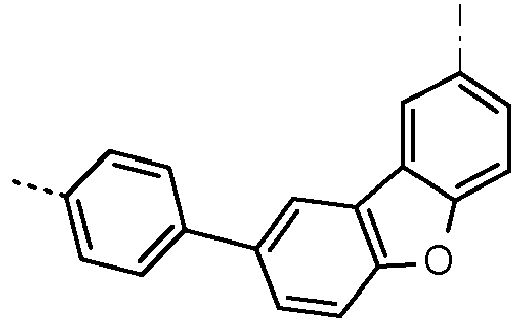

n-C8H17 A-10 

A-11 

n-C8H17 A-12 

A-13 

n-C8H17 A-14 

A-15 

n-C8H17 A-16 

A-17 

n-C8H17 A-18 

A-19 

n-C8H17 A-20 

A-21 
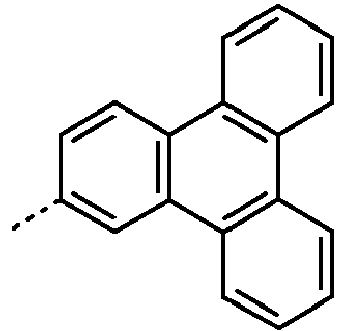
n-C8H17 A-22 

- X1 is a group of formula -A1-X2(--A1 o-(A2)p-(A3)q-(A4)r-R16), which is selected from


- The group of formula -A1-X2 is preferably a group of formula


- R21, R22, R23, R24, R26, R27, R28, R73, R74, R75, R76, R77, R78, R79, R93, R94, R95, R96, R97, R98, R99 and R100 are independently of each other a C1-C25alkyl group, which can optionally be substituted by E and or interupted by D; a C6-C24aryl group, which can optionally be substituted by G; or a C2-C30heteroaryl group, which can optionally be substituted by G; especially a C1-C25alkyl group.
- Z1 is O, S, or NR29;
Z1', Z2', Z3', Z4', Z5' and Z6' are independently of each other O, or S. - R29 and R30 are independently of each other a C1-C25alkyl group, which can optionally be substituted by E and or interupted by D; a C6-C24aryl group, which can optionally be substituted by G; or a C2-C30heteroaryl group, which can optionally be substituted by G; especially C6-C10aryl, or C6-C10aryl, which is substituted by C1-C8alkyl; or C2-C13heteroaryl.
- Most preferred, the group -A1-X2 is a group of formula


- X2 is a group of formula -(A2)p-(A3)q-(A4)r-R16, wherein p, q, r, R16 A2, A3 and A4 are defined above, or below.
- A2, A3 and A4 are independently of each other a C6-C24arylen group, which can optionally be substituted by G, or a C2-C30heteroarylen group, which can optionally be substituted by G.
- The C6-C24arylen groups A2, A3 and A4 which optionally can be substituted by G, are typically phenylene, 4-methylphenylene, 4-methoxyphenylene, naphthylene, especially 1-naphthylene, or 2-naphthylene, biphenylylene, terphenylylene, pyrenylene, 2- or 9-fluorenylene, phenanthrylene, or anthrylene, which may be unsubstituted or substituted.
- Preferred C6-C24arylen groups are 1,3-phenylene, 1,4-phenylene, 3,3'-biphenylylene, 3,3'-m-terphenylene, 2- or 9-fluorenylene, phenanthrylene, which may be unsubstituted or substituted, especially by C6-C10aryl, C6-C10aryl which is substituted by C1-C4alkyl; or C2-C14heteroaryl.
- The C2-C30heteroarylen groups A2, A3 and A4, which optionally can be substituted by G, represent a ring with five to seven ring atoms or a condensed ring system, wherein nitrogen, oxygen or sulfur are the possible hetero atoms, and is typically a heterocyclic group with five to 30 atoms having at least six conjugated-electrons such as, for example, benzofuro[2,3-b]pyridylene (


- Preferred C2-C30heteroarylen groups A2, A3 and A4, are pyridylene, triazinylene, pyrimidinylene, such as, for example,

- The C6-C24arylen and C2-C30heteroarylen groups may be substituted by G.
- G is preferably C1-C18alkyl, such as methyl, ethyl, n-propyl, iso-propyl, n-butyl, isobutyl, sec-butyl, hexyl, octyl, or 2-ethyl-hexyl, -CF3, a C6-C14aryl group, a C6-C14aryl group, which is substituted by F, or C1-C18alkyl; a C2-C13heteroaryl group, or a C2-C13heteroaryl group, which is substituted by F, or C1-C18alkyl.
- Benzimidazo[1,2-a]benzimidazo-5-yl, benzimidazo[1,2-a]benzimidazo-2-yl, carbazolyl and dibenzofuranyl are examples of a C2-C13heteroarylgroup. Phenyl, 1-naphthyl and 2-naphthyl are examples of a C6-C14aryl group.
- More preferred, A2, A3 and A4 are independently of each other a group of formula


- R21, R22, R23, R24, R26 R101 and R102are independently of each other a C1-C25alkyl group, which can optionally be substituted by E and or interupted by D; a C6-C24aryl group, which can optionally be substituted by G; or a C2-C30heteroaryl group, which can optionally be substituted by G; especially a C1-C25alkyl group.
- Z1 is O, S, or NR29.
- R29 and R103 are independently of each other a C1-C25alkyl group, which can optionally be substituted by E and or interupted by D; a C6-C24aryl group, which can optionally be substituted by G; or a C2-C30heteroaryl group, which can optionally be substituted by G; especially C6-C10aryl, or C6-C10aryl, which is substituted by C1-C8alkyl; or C2-C13heteroaryl.
- R24" is

- Most preferred, A2, A3 and A4 are independently of each other a group of formula


- The group of formula --A1-(A2)p-(A3)q-(A4)r- is preferably a group of formula


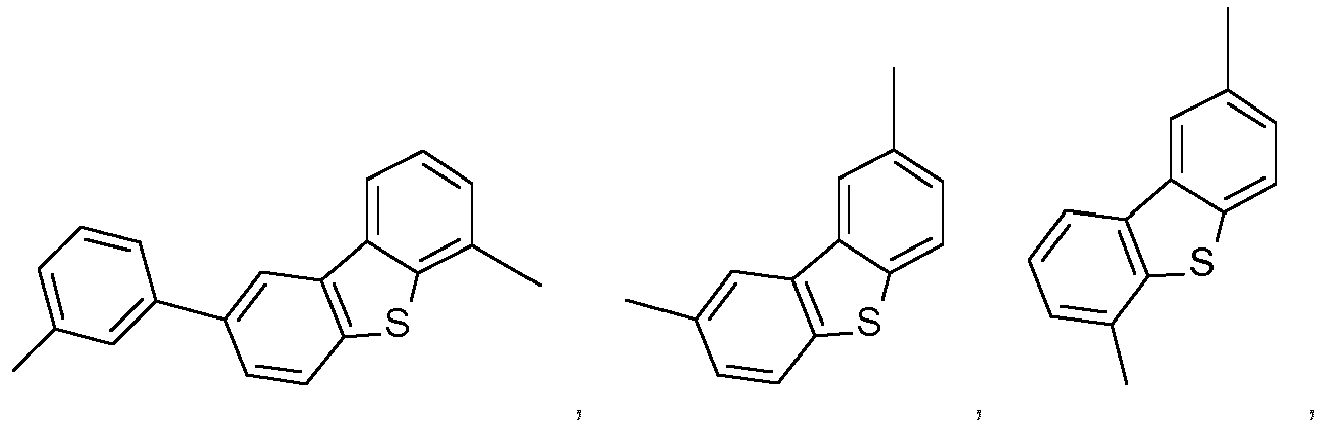


- R16 is H, -NR10R11, or -Si(R12)(R13)(R14), a C6-C24aryl group, which can optionally be substituted by G; or a C2-C30heteroaryl group, which can optionally be substituted by G
- The C6-C24aryl group, R16, which optionally can be substituted by G, is typically phenyl, 4-methylphenyl, naphthyl, especially 1-naphthyl, or 2-naphthyl, biphenylyl, terphenylyl, pyrenyl, 2- or 9-fluorenyl, phenanthryl, or anthryl, or triphenylenyl (especially triphenylen-2-yl), which may be unsubstituted or substituted.
- The C2-C30heteroaryl group R16, which optionally can be substituted by G, represent a ring with five to seven ring atoms or a condensed ring system, wherein nitrogen, oxygen or sulfur are the possible hetero atoms, and is typically a heterocyclic group with five to 30 atoms having at least six conjugated π-electrons such as 9H-pyrido[2,3-b]indolyl, benzofuro[2,3-b]pyridyl, benzothiopheno[2,3-b]pyridyl, 9H-pyrido[2,3-c]indolyl, benzofuro[2,3-c]pyridyl, benzothiopheno[2,3-c]pyridyl, benzofuro[3,2-b]pyridyl, benzothiopheno[3,2-b]pyridyl, 5H-pyrido[3,2-b]indolyl, furo[3,2-b:4,5-b']dipyridyl, pyrrolo[3,2-b:4,5-b']dipyridyl, thieno[3,2-b:4,5-b']dipyridyl, pyrrolyl, imidazolyl, pyrazolyl, oxazolyl, thiazolyl, triazolyl, thiadiazolyl, oxadiayzolyl, pyridyl, bipyridyl, triazinyl, pyrimidinyl, pyrazinyl, pyridazinyl, benzimidazolyl, benzoxazolyl, benzothiazole, chinolizinyl, chinolyl, isochinolyl, phthalazinyl, naphthyridinyl, chinoxalinyl, chinazolinyl, pteridinyl, carbolinyl, imidazolylpyridyl, oxazolylpyridyl, thiazolylpyridyl, imidazolylpyrazyl, oxazolylpyrazyl, thiazolylpyrazyl, imidazolylpyrimidinyl, oxazolylpyrimidinyl, thiazolylpyrimidinyl, imidazolyltriazyl, oxazolyltriazyl, thiazolyltriazyl, phenanthro[9,10-d]imidazolyl, aza-phenanthro[9,10-d]imidazolyl, diaza-phenanthro[9,10-d]imidazolyl, triazaphenanthro[9,10-d]imidazolyl, phenanthro[9,10-d]oxazolyl, azaphenanthro[9,10-d]oxazolyl, diazaphenanthro[9,10-d]oxazolyl, triazaphenanthro[9,10-d]oxazolyl, phenanthro[9,10-d]thiazolyl, azaphenanthro[9,10-d]thiadazolyl, diaza-phenanthro[9,10-d]thiadazolyl, triazaphenanthro[9,10-d]thiadazolyl, thienyl, benzothiophenyl, dibenzothiophenyl, thianthrenyl, furyl, furfuryl, 2H-pyranyl, benzofuranyl, isobenzofuranyl, dibenzofuranyl, phenoxythienyl, isoindolyl, indolyl, indazolyl, purinyl, benzotriazolyl, benzoxazolyl, phenanthridinyl, acridinyl, phenanthrolinyl, phenazinyl, isothiazolyl, phenothiazinyl, isoxazolyl, furazanyl, benzimidazo[1,2-a]benzimidazo-5-yl, benzimidazo[1,2-a]benzimidazo-2-yl, benzimidazolo[2,1-b][1,3]benzothiazolyl, carbazolyl, 9-phenylcarbazolyl, or phenoxazinyl, which can be unsubstituted or substituted.
- Prefered C2-C30heteroaryl groups are benzimidazo[1,2-a]benzimidazo-5-yl (


- The C6-C24aryl and C2-C30heteroaryl groups may be substituted by G.
- G is preferably C1-C18alkyl, such as methyl, ethyl, n-propyl, iso-propyl, n-butyl, isobutyl, sec-butyl, hexyl, octyl, or 2-ethyl-hexyl; -CF3, a C6-C14aryl group, a C6-C14aryl group, which is substituted by F, or C1-C18alkyl; a C2-C13heteroarylgroup, or a C2-C13heteroarylgroup, which is substituted by F, or C1-C18alkyl.
- Most preferred, R16 is a group of formula


- Compounds of the formula


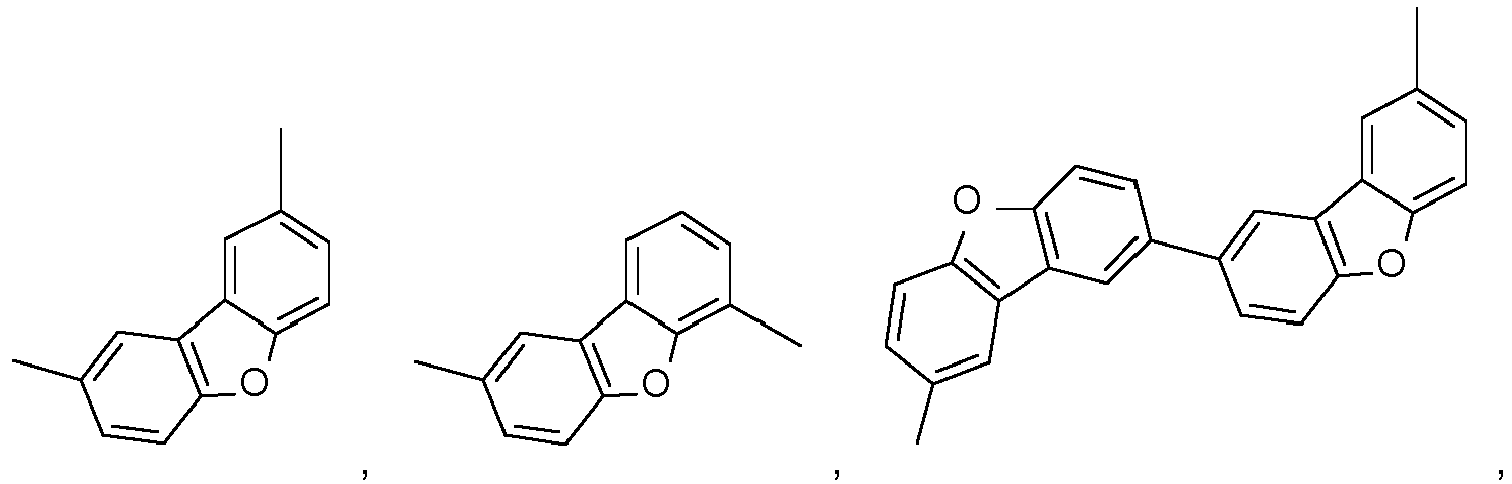


R16 is a group of formula


- Most preferred, R16 is a group of formula


- Examples of compounds of formula (I) are shown in the table below.

Compound --A1-(A2)p-(A3)q-(A4)r- R16 C-1 

C-2 

C-3 

C-4 

C-5 

C-6 

C-7 

C-8 

C-9 

C-10 

C-11 

C-12 
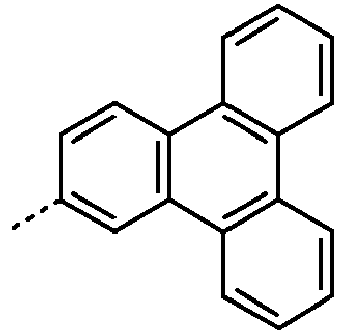
C-13 

C-14 

C-15 

C-16 

C-17 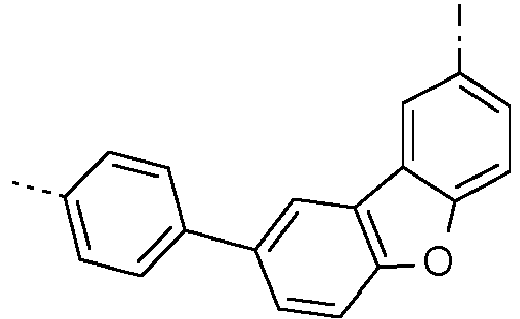

C-18 

C-19 

C-20 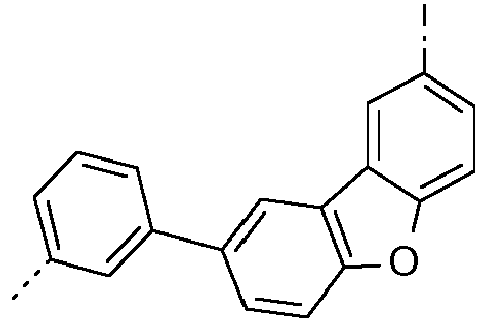

C-21 

C-22 
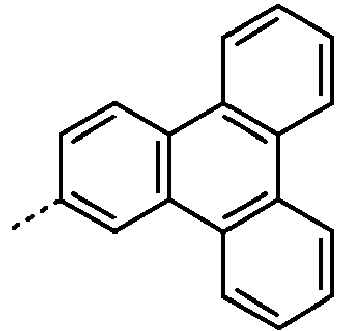
C-23 

C-24 

C-25 

C-26 

C-27 

C-28 

C-29 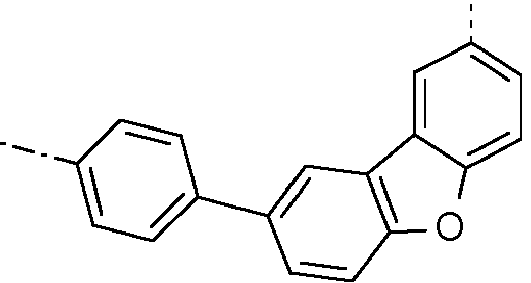

C-30 

C-31 

C-32 

C-33 

C-34 

C-35 

C-36 

C-37 

C-38 

C-39 

C-40 
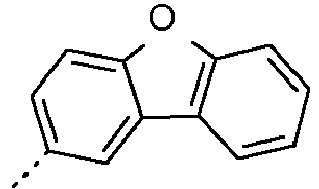
C-41 

C-42 

C-43 

C-44 

C-45 

C-46 

C-47 

C-48 

C-49 

C-50 

C-51 

C-52 

C-53 

C-54 

C-55 

C-56 
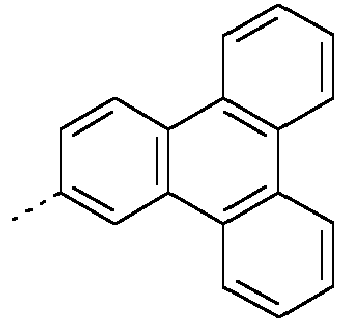
C-57 

C-58 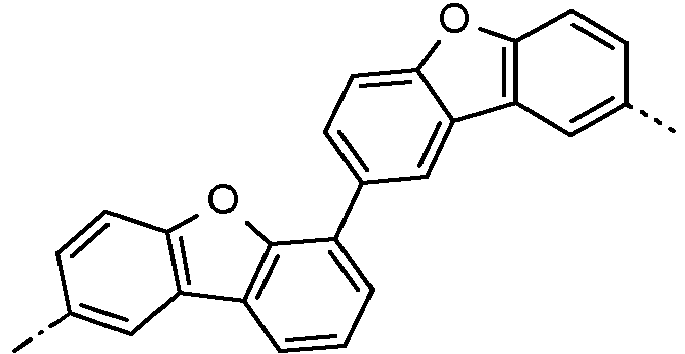

C-59 

C-60 

C-61 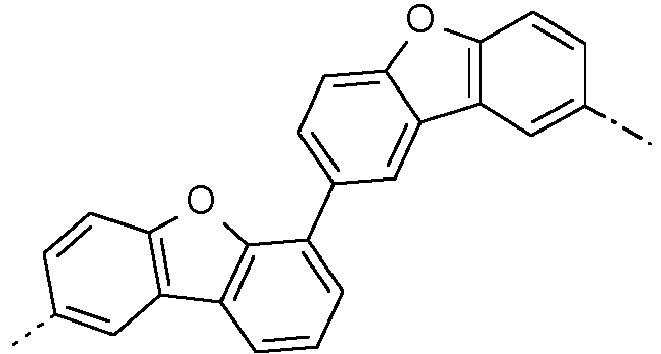

C-62 

C-63 

C-64 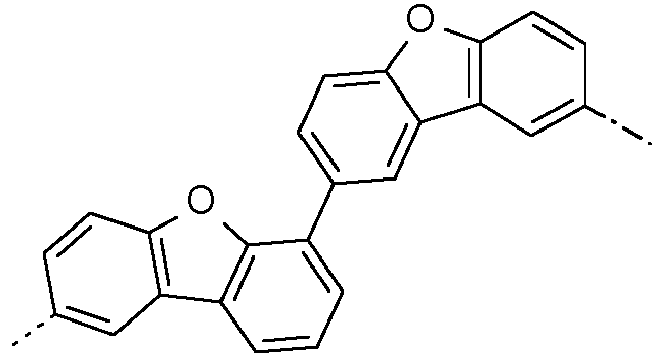

C-65 

C-67 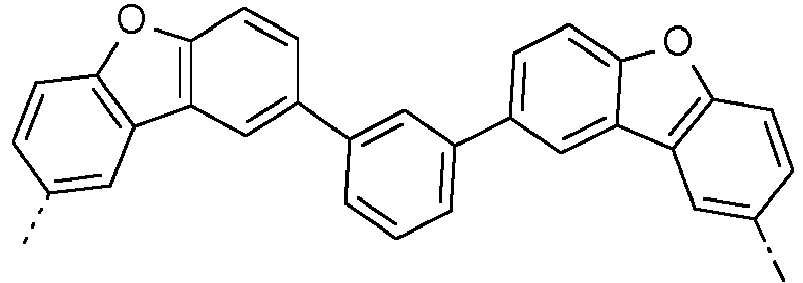

C-67 

C-68 

C-69 

C-70 

C-71 

C-72 

C-73 

C-74 

C-75 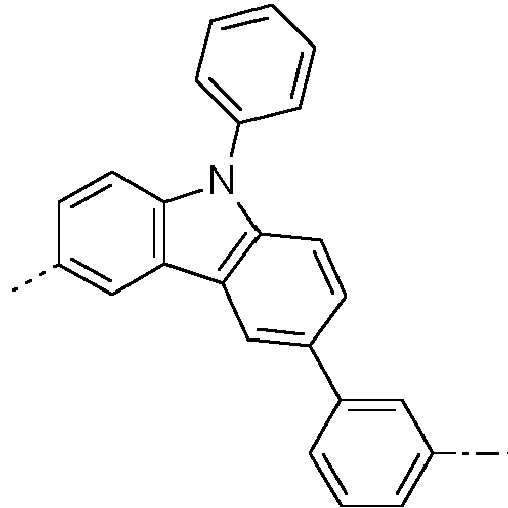

C-76 

C-77 

C-78 

C-79 

C-80 

C-81 

C-82 

C-83 

C-84 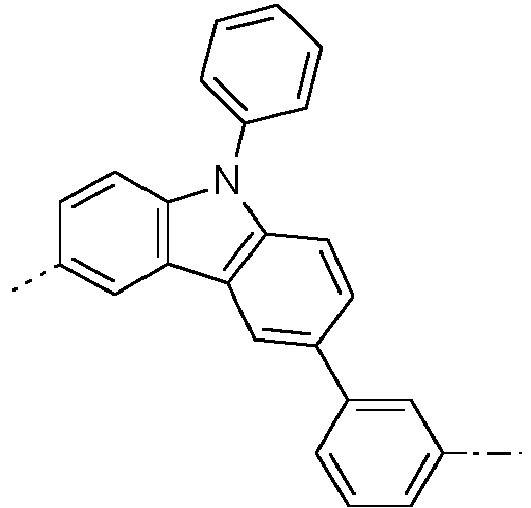

C-85 

C-86 
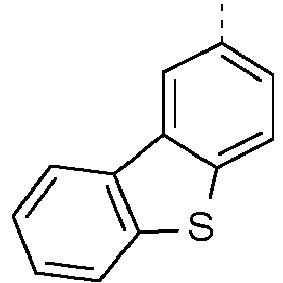
C-87 

C-88 
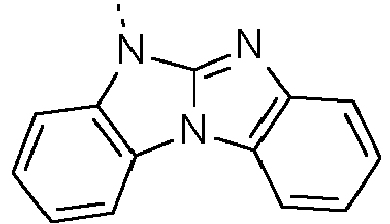
C-89 

C-90 

C-91 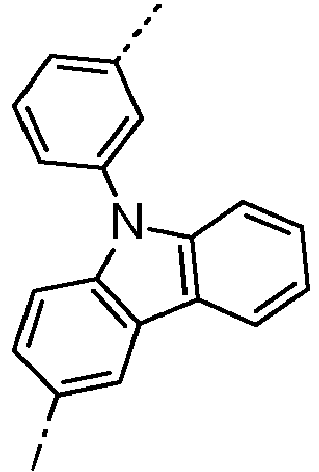

C-92 

C-93 

C-94 

C-95 

C-96 

C-97 

C-98 

C-99 

C-100 

C-101 
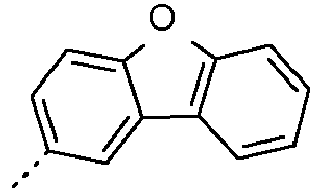
C-102 

C-103 

C-104 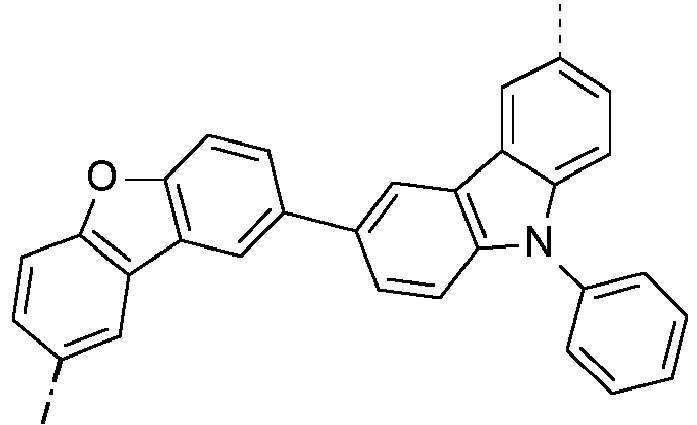

C-105 

C-106 

C-107 
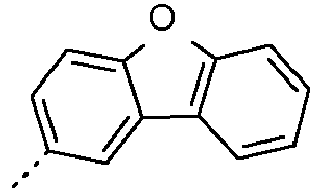
C-108 

C-109 

C-110 

C-111 

C-112 

C-113 

C-114 

C-115 

C-116 

C-117 
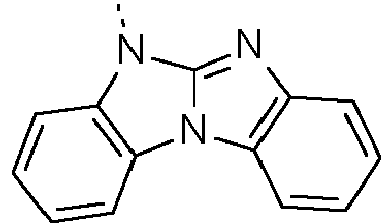
C-118 

C-119 

C-120 
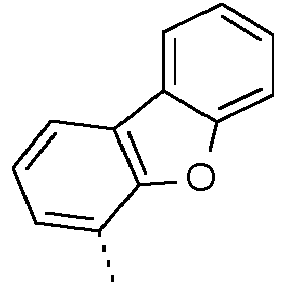
C-121 

C-122 

C-123 
C-124 

C-125 

C-126 

C-127 

C-128 

C-129 

C-130 

C-131 

C-132 

C-133 

C-134 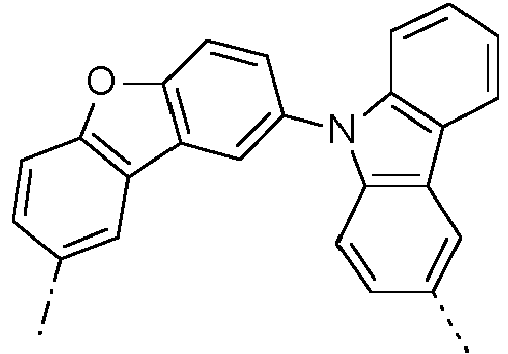

C-135 

C-136 

C-137 

C-138 

C-139 

C-140 

C-141 

C-142 
C-143 
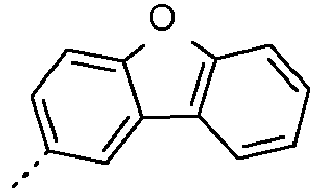
C-144 

C-145 

C-146 

C-147 

C-148 

C-149 

C-150 

C-151 

C-152 

C-153 

C-154 

C-155 

C-156 

C-157 

C-158 

C-159 

C-160 

C-161 

C-162 

C-163 

C-164 

C-165 

C-166 

C-167 
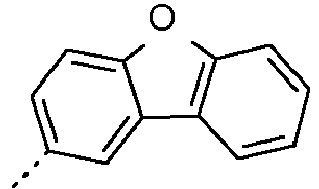
C-168 

C-169 

C-170 

C-171 

C-172 
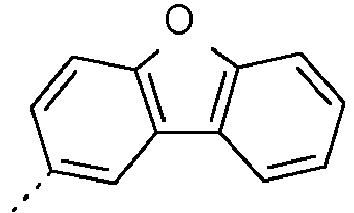
C-173 

C-174 

C-175 

C-176 

C-177 

C-178 

C-179 
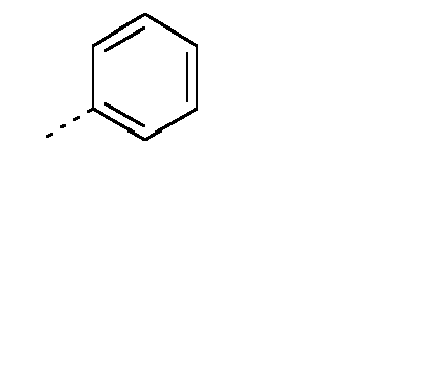
C-180 

C-181 

C-182 

C-183 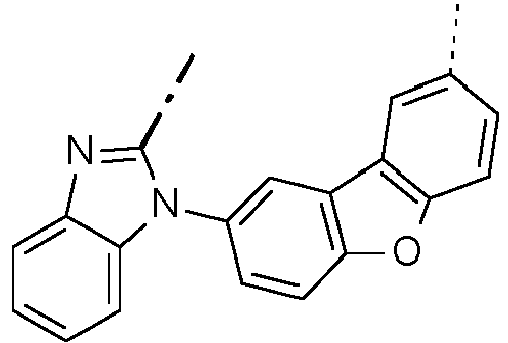

C-184 

C-185 

C-186 

C-187 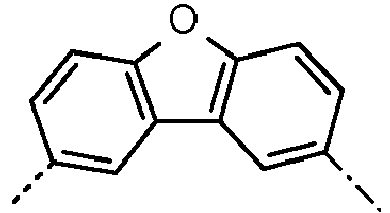

C-188 

C-189 
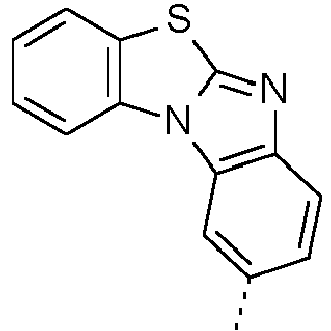
C-190 

C-191 

- Compounds C-1 to C-191 are preferred, compounds C-1 to C-174 are particularly preferred.
- Halogen is fluorine, chlorine, bromine and iodine.
- C1-C25alkyl (C1-C18alkyl) is typically linear or branched, where possible. Examples are methyl, ethyl, n-propyl, isopropyl, n-butyl, sec.-butyl, isobutyl, tert.-butyl, n-pentyl, 2-pentyl, 3-pentyl, 2,2-dimethylpropyl, 1,1,3,3-tetramethylpentyl, n-hexyl, 1-methylhexyl, 1,1,3,3,5,5-hexamethylhexyl, n-heptyl, isoheptyl, 1,1,3,3-tetramethylbutyl, 1-methylheptyl, 3-methylheptyl, n-octyl, 1,1,3,3-tetramethylbutyl and 2-ethylhexyl, n-nonyl, decyl, undecyl, dodecyl, tridecyl, tetradecyl, pentadecyl, hexadecyl, heptadecyl, or octadecyl. C1-C8alkyl is typically methyl, ethyl, n-propyl, isopropyl, n-butyl, sec.-butyl, isobutyl, tert.-butyl, n-pentyl, 2-pentyl, 3-pentyl, 2,2-dimethyl-propyl, n-hexyl, n-heptyl, n-octyl, 1,1,3,3-tetramethylbutyl and 2-ethylhexyl. C1-C4alkyl is typically methyl, ethyl, n-propyl, isopropyl, n-butyl, sec.-butyl, isobutyl, tert.-butyl.
- C1-C25alkoxy groups (C1-C18alkoxy groups) are straight-chain or branched alkoxy groups, e.g. methoxy, ethoxy, n-propoxy, isopropoxy, n-butoxy, sec-butoxy, tert-butoxy, amyloxy, isoamyloxy or tert-amyloxy, heptyloxy, octyloxy, isooctyloxy, nonyloxy, decyloxy, undecyloxy, dodecyloxy, tetradecyloxy, pentadecyloxy, hexadecyloxy, heptadecyloxy and octadecyloxy. Examples of C1-C8alkoxy are methoxy, ethoxy, n-propoxy, isopropoxy, n-butoxy, sec.-butoxy, isobutoxy, tert.-butoxy, n-pentyloxy, 2-pentyloxy, 3-pentyloxy, 2,2-dimethylpropoxy, n-hexyloxy, n-heptyloxy, n-octyloxy, 1,1,3,3-tetramethylbutoxy and 2-ethylhexyloxy, preferably C1-C4alkoxy such as typically methoxy, ethoxy, n-propoxy, isopropoxy, n-butoxy, sec.-butoxy, isobutoxy, tert.-butoxy.
- The term "cycloalkyl group" is typically C5-C12cycloalkyl, such as cyclopentyl, cyclohexyl, cycloheptyl, cyclooctyl, cyclononyl, cyclodecyl, cycloundecyl, cyclododecyl, preferably cyclopentyl, cyclohexyl, cycloheptyl, or cyclooctyl, which may be unsubstituted or substituted.
- C6-C24aryl (C6-C18aryl), which optionally can be substituted, is typically phenyl, 4-methylphenyl, 4-methoxyphenyl, naphthyl, especially 1-naphthyl, or 2-naphthyl, biphenylyl, terphenylyl, pyrenyl, 2- or 9-fluorenyl, phenanthryl, or anthryl, which may be unsubstituted or substituted. Phenyl, 1-naphthyl and 2-naphthyl are examples of a C6-C10aryl group. C7-C25aralkyl is typically benzyl, 2-benzyl-2-propyl, β-phenyl-ethyl, α,α-dimethylbenzyl, ω-phenyl-butyl, ω,ω-dimethyl-ω-phenyl-butyl, ω-phenyl-dodecyl, ω-phenyl-octadecyl, ω-phenyl-eicosyl or ω-phenyl-docosyl, preferably C7-C18aralkyl such as benzyl, 2-benzyl-2-propyl, β-phenyl-ethyl, α,α-dimethylbenzyl, ω-phenyl-butyl, ω,ω-dimethyl-ω-phenyl-butyl, ω-phenyl-dodecyl or ω-phenyl-octadecyl, and particularly preferred C7-C12aralkyl such as benzyl, 2-benzyl-2-propyl, β-phenyl-ethyl, α,α-dimethylbenzyl, ω-phenyl-butyl, or ω,ω-dimethyl-ω-phenyl-butyl, in which both the aliphatic hydrocarbon group and aromatic hydrocarbon group may be unsubstituted or substituted. Preferred examples are benzyl, 2-phenylethyl, 3-phenylpropyl, naphthylethyl, naphthylmethyl, and cumyl.
- C2-C30heteroaryl represents a ring with five to seven ring atoms or a condensed ring system, wherein nitrogen, oxygen or sulfur are the possible hetero atoms, and is typically a heterocyclic group with five to 30 atoms having at least six conjugated π-electrons such as thienyl, benzothiophenyl, dibenzothiophenyl, thianthrenyl, furyl, furfuryl, 2H-pyranyl, benzofuranyl, isobenzofuranyl, dibenzofuranyl, phenoxythienyl, pyrrolyl, imidazolyl, pyrazolyl, pyridyl, bipyridyl, triazinyl, pyrimidinyl, pyrazinyl, pyridazinyl, indolizinyl, isoindolyl, indolyl, indazolyl, purinyl, chinolizinyl, chinolyl, isochinolyl, phthalazinyl, naphthyridinyl, chinoxalinyl, chinazolinyl, cinnolinyl, pteridinyl, carbazolyl, carbolinyl, benzotriazolyl, benzoxazolyl, phenanthridinyl, acridinyl, pyrimidinyl, phenanthrolinyl, phenazinyl, isothiazolyl, phenothiazinyl, isoxazolyl, furazanyl, 4-imidazo[1,2-a]benzimidazoyl, 5-benzimidazo[1,2-a]benzimidazoyl, benzimidazolo[2,1-b][1,3]benzothiazolyl, carbazolyl, or phenoxazinyl, which can be unsubstituted or substituted. Benzimidazo[1,2-a]benzimidazo-5-yl, benzimidazo[1,2-a]benzimidazo-2-yl, carbazolyl and dibenzofuranyl are examples of a C2-C14heteroaryl group.
- C6-C24arylen groups, which optionally can be substituted by G, are typically phenylene, 4-methylphenylene, 4-methoxyphenylene, naphthylene, especially 1-naphthylene, or 2-naphthylene, biphenylylene, terphenylylene, pyrenylene, 2- or 9-fluorenylene, phenanthrylene, or anthrylene, which may be unsubstituted or substituted. Preferred C6-C24arylen groups are 1,3-phenylene, 3,3'-biphenylylene, 3,3'-m-terphenylene, 2- or 9-fluorenylene, phenanthrylene, which may be unsubstituted or substituted.
- C2-C30heteroarylen groups, which optionally can be substituted by G, represent a ring with five to seven ring atoms or a condensed ring system, wherein nitrogen, oxygen or sulfur are the possible hetero atoms, and is typically a heterocyclic group with five to 30 atoms having at least six conjugated -electrons such as thienylene, benzothiophenylene, dibenzothio-phenylene, thianthrenylene, furylene, furfurylene, 2H-pyranylene, benzofuranylene, isobenzofuranylene, dibenzofuranylene, phenoxythienylene, pyrrolylene, imidazolylene, pyrazolylene, pyridylene, bipyridylene, triazinylene, pyrimidinylene, pyrazinylene, pyridazinylene, indolizinylene, isoindolylene, indolylene, indazolylene, purinylene, chinolizinylene, chinolylene, isochinolylene, phthalazinylene, naphthyridinylene, chinoxalinylene, chinazolinylene, cinnolinylene, pteridinylene, carbolinylene, benzotriazolylene, benzoxazolylene, phenanthridinylene, acridinylene, pyrimidinylene, phenanthrolinylene, phenazinylene, isothiazolylene, phenothiazinylene, isoxazolylene, furazanylene, carbazolylene, benzimidazo[1,2-a]benzimidazo-2,5-ylene, or phenoxazinylene, which can be unsubstituted or substituted. Preferred C2-C30heteroarylen groups are pyridylene, triazinylene, pyrimidinylene, carbazolylene, dibenzofuranylene and benzimidazo[1,2-a]benzimidazo-2,5-ylene (

- Possible substituents of the above-mentioned groups are C1-C8alkyl, a hydroxyl group, a mercapto group, C1-C8alkoxy, C1-C8alkylthio, halogen, halo-C1-C8alkyl, or a cyano group. The C6-C24aryl (C6-C18aryl) and C2-C30heteroaryl groups are preferably substituted by one, or more C1-C8alkyl groups.
- If a substituent occurs more than one time in a group, it can be different in each occurrence.
- Halo-C1-C8alkyl is an alkyl group where at least one of the hydrogen atoms is replaced by a halogen atom. Examples are -CF3, -CF2CF3, -CF2CF2CF3, -CF(CF3)2, -(CF2)3CF3, and -C(CF3)3.
- The wording "substituted by G" means that one, or more, especially one to three substituents G might be present.
- As described above, the aforementioned groups may be substituted by E and/or, if desired, interrupted by D. Interruptions are of course possible only in the case of groups containing at least 2 carbon atoms connected to one another by single bonds; C6-C18aryl is not interrupted; interrupted arylalkyl contains the unit D in the alkyl moiety. C1-C18alkyl substituted by one or more E and/or interrupted by one or more units D is, for example, (CH2CH2O)1-9-Rx, where Rx is H or C1-C10alkyl or C2-C10alkanoyl (e.g. CO-CH(C2H5)C4H9), CH2-CH(ORy')-CH2-O-Ry, where Ry is C1-C18alkyl, C5-C12cycloalkyl, phenyl, C7-C15phenylalkyl, and Ry' embraces the same definitions as Ry or is H;
- C1-C8alkylene-COO-Rz, e.g. CH2COORz, CH(CH3)COORz, C(CH3)2COORz, where Rz is H, C1-C18alkyl, (CH2CH2O)1-9-Rx, and Rx embraces the definitions indicated above; CH2CH2-O-CO-CH=CH2; CH2CH(OH)CH2-O-CO-C(CH3)=CH2.
- An alkyl group substituted by E is, for example, an alkyl group where at least one of the hydrogen atoms is replaced by F. Examples are -CF3, -CF2CF3, -CF2CF2CF3, -CF(CF3)2, -(CF2)3CF3, and -C(CF3)3.
- The synthesis of

- Suitable base skeletons of the formula

WO2010079051 andEP1885818 . - The halogenation can be performed by methods known to those skilled in the art. Preference is given to brominating or iodinating in the 3 and 6 positions (dibromination) or in the 3 or 6 positions (monobromination) of the base skeleton of the formula 2,8 positions (dibenzofuran and dibenzothiophene) or 3,6 positions (carbazole).
- Optionally substituted dibenzofurans, dibenzothiophenes and carbazoles can be dibrominated in the 2,8 positions (dibenzofuran and dibenzothiophene) or 3,6 positions (carbazole) with bromine or NBS in glacial acetic acid or in chloroform. For example, the bromination with Br2 can be effected in glacial acetic acid or chloroform at low temperatures, e.g. 0°C. Suitable processes are described, for example, in M. Park, J.R. Buck, C.J. Rizzo, Tetrahedron, 54 (1998) 12707-12714 for X= NPh, and in W. Yang et al., J. Mater. Chem. 13 (2003) 1351 for X= S. In addition, 3,6-dibromocarbazole, 3,6-dibromo-9-phenylcarbazole, 2,8-dibromodibenzothiophene, 2,8-dibromodibenzofuran, 2-bromocarbazole, 3-bromodibenzothiophene, 3-bromodibenzofuran, 3-bromocarbazole, 2-bromodibenzothiophene and 2-bromodibenzofuran are commercially available.
- Monobromination in the 4 position of dibenzofuran (and analogously for dibenzothiophene) is described, for example, in J. Am. Chem. Soc. 1984, 106, 7150. Dibenzofuran (dibenzothiophene) can be monobrominated in the 3 position by a sequence known to those skilled in the art, comprising a nitration, reduction and subsequent Sandmeyer reaction.
- Monobromination in the 2 position of dibenzofuran or dibenzothiophene and monobromination in the 3 position of carbazole are effected analogously to the dibromination, with the exception that only one equivalent of bromine or NBS is added.
- Alternatively, it is also possible to utilize iodinated dibenzofurans, dibenzothiophenes and carbazoles. The preparation is described, inter alia, in Tetrahedron. Lett. 47 (2006) 6957-6960, Eur. J. Inorg. Chem. 24 (2005) 4976-4984, J. Heterocyclic Chem. 39 (2002) 933-941, J. Am. Chem. Soc. 124 (2002) 11900-11907, J. Heterocyclic Chem, 38 (2001) 77-87.
- For the nucleophilic substitution, CI- or F-substituted dibenzofurans, dibenzothiophenes and carbazoles are required. The chlorination is described, inter alia, in J. Heterocyclic Chemistry, 34 (1997) 891-900, Org. Lett., 6 (2004) 3501-3504; J. Chem. Soc. [Section] C: Organic, 16 (1971) 2775-7, Tetrahedron Lett. 25 (1984) 5363-6, J. Org. Chem. 69 (2004) 8177-8182. The fluorination is described in J. Org. Chem. 63 (1998) 878-880 and J. Chem. Soc., Perkin Trans. 2, 5 (2002) 953-957.
- The introduction of the group
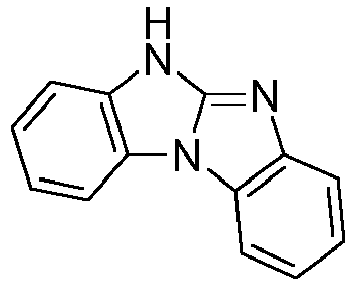
- Heteroarylation can be affected, for example, by copper-catalyzed coupling of


- The N-arylation is, for example, disclosed in H. Gilman and D. A. Shirley, J. Am. Chem. Soc. 66 (1944) 888; D. Li et al., Dyes and Pigments 49 (2001) 181 - 186 and Eur. J. Org. Chem. (2007) 2147-2151. The reaction can be performed in solvent or in a melt. Suitable solvents are, for example, (polar) aprotic solvents such as dimethyl sulfoxide, dimethylformamide, N-methyl-2-pyrrolidone (NMP), tridecane or alcohols.
- The synthesis of 9-(8-bromodibenzofuran-2-yl)carbazole,

WO2010079051 . The synthesis of 2-bromo-8-iodo-dibenzofurane,
EP1885818 . - Diboronic acid or diboronate group containing dibenzofurans, dibenzothiophenes and carbazoles can be readily prepared by an increasing number of routes. An overview of the synthetic routes is, for example, given in Angew. Chem. Int. Ed. 48 (2009) 9240 - 9261.
- By one common route diboronic acid or diboronate group containing dibenzofurans, dibenzothiophenes, and carbazoles can be obtained by reacting halogenated dibenzofurans, dibenzothiophenes and carbazoles with (Y1O)2B-B(OY1)2,

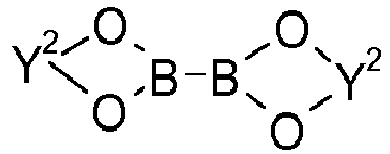
- Diboronic acid or diboronate group containing dibenzofurans, dibenzothiophenes and carbazoles can also be prepared by reacting halogenated dibenzofurans, dibenzothiophenes and carbazoles with alkyl lithium reagents, such as, for example, n-butyl lithium, or t-buthyl lithium, followed by reaction with boronic esters, such as, for example, B(isopropoxy)3, B(methoxy)3, or


- The synthesis of of the compounds of formula (I) can be done in analogy to methods known in the literature.

- A compound of formula (III) is reacted with a diboronic acid or diboronate group containing compound, X1-Y, in the presence of a copper compound, such as, for example, Cu2O, or Cu(OAc)2, and optionally a base, such as, for example, pyridine, in a solvent or solvent mixture, such as, for example, dimethyl formamide, toluene/methanol, to obtain a compound of formula (IV). Arylation at the N of benzimidazoles is known in the literature (Adv. Synth. Catal. 346 (2004) 1679).
- Y is -B(OH)2, -B(OY1)2,


- The compound of formula (IV) is reacted with a base, such as, for example, n-butyl lithium, or lithium diisopropylamide, and iodine in a solvent, or solvent mixture, such as, for example, tetrahydrofuran (THF) and THF/hexane to obtain a compound of formula (V).

- The compound of formula (V) is reacted with the carbazole (VI) in the presence of a copper compound, such as, for example, CuI, and a base, such as, for example, K3PO4/1,2-diaminocyclohexane in a solvent, or solvent mixture, such as, for example, dioxan, to obtain a compound of formula (I) (Ullmann Reaction). The N-arylation is, for example, disclosed in H. Gilman and D. A. Shirley, J. Am. Chem. Soc. 66 (1944) 888; D. Li et al., Dyes and Pigments 49 (2001) 181 - 186 and Eur. J. Org. Chem. (2007) 2147-2151. An alternative reaction between compound of formula (V) and the carbazole (VI) is in the presence of a base such as, for example, NaH in a suitable solvent for example DMF (
US2013001537 ). - The synthesis of benzimidazolo[2,1-b][1,3]benzothiazole is, for example, described by Z. Wu et al., Eur. J. Org. Chem. (2011) 5242-5245:

- The halogenation can be performed by methods known to those skilled in the art.
- 4-lodobenzimidazolo[2,1-b][1,3]benzothiazole can be obtained by reacting enzimidazolo[2,1-b][1,3]benzothiazole with butyl lithium and I2 in tetrahydrofurane. Heteroarylation can be effected, for example, by copper-catalyzed coupling of


- 4-Chlorobenzimidazolo[2,1-b][1,3]benzothiazole can be prepared as described in Organic & Biomolecular Chemisty 10 (2012) 7944:
- 2-lodobenzimidazolo[2,1-b][1,3]benzothiazole can be obtained by reacting benzimidazolo[2,1-b][1,3]benzothiazole in CH3COOH and CF3COOH in the presence of N-iodosuccinimide (NIS).
- It has been found that the compounds of the formula I are particularly suitable for use in applications in which charge carrier conductivity is required, especially for use in organic electronics applications, for example selected from switching elements such as organic transistors, e.g. organic FETs and organic TFTs, organic solar cells and organic light-emitting diodes (OLEDs), the compounds of the formula I being particularly suitable in OLEDs for use as matrix material in a light-emitting layer and/or as electron and/or exciton blocker material and/or as hole and/or exciton blocker material, especially in combination with a phosphorescence emitter. In the case of use of the inventive compounds of the formula I in OLEDs, OLEDs which have good efficiencies and a long lifetime and which can be operated especially at a low use and operating voltage are obtained. The inventive compounds of the formula I are suitable especially for use as matrix and/or charge/exciton blocker materials for blue and green emitters, for example light blue or deep blue emitters, these being especially phosphorescence emitters. Furthermore, the compounds of the formula I can be used as conductor/complementary materials in organic electronics applications selected from switching elements and organic solar cells.
- The compounds of the formula I can be used as matrix material and/or charge/exciton blocker material and/or charge transport material (charge conductor material). The inventive compounds of the formula I are preferably used as matrix materials in organic electronics applications, especially in OLEDs.
- In the emission layer or one of the emission layers of an OLED, it is also possible to combine an emitter material with a matrix material of the compound of the formula I and a further matrix material which has, for example, a good hole transport property. This achieves a high quantum efficiency of this emission layer.
- When a compound of the formula I is used as matrix (host) material in an emission layer and additionally as charge/exciton blocker material, owing to the chemical identity or similarity of the materials, an improved interface between the emission layer and the adjacent charge/exciton blocker material, which can lead to a decrease in the voltage with equal luminance and to an extension of the lifetime of the OLED. Moreover, the use of the same material for charge/exciton blocker material and for the matrix of an emission layer allows the production process of an OLED to be simplified, since the same source can be used for the vapor deposition process of the material of one of the compounds of the formula I.
- Suitable structures of organic electronic devices are known to those skilled in the art and are specified below.
- The organic transistor generally includes a semiconductor layer formed from an organic layer with charge transport capacity; a gate electrode formed from a conductive layer; and an insulating layer introduced between the semiconductor layer and the conductive layer. A source electrode and a drain electrode are mounted on this arrangement in order thus to produce the transistor element. In addition, further layers known to those skilled in the art may be present in the organic transistor.
- The organic solar cell (photoelectric conversion element) generally comprises an organic layer present between two plate-type electrodes arranged in parallel. The organic layer may be configured on a comb-type electrode. There is no particular restriction regarding the site of the organic layer and there is no particular restriction regarding the material of the electrodes. When, however, plate-type electrodes arranged in parallel are used, at least one electrode is preferably formed from a transparent electrode, for example an ITO electrode or a fluorine-doped tin oxide electrode. The organic layer is formed from two sublayers, i.e. a layer with p-type semiconductor properties or hole transport capacity, and a layer formed with n-type semiconductor properties or charge transport capacity. In addition, it is possible for further layers known to those skilled in the art to be present in the organic solar cell. The layers with charge transport capacity may comprise the compounds of formula I.
- It is likewise possible that the compounds of the formula I are present both in the light-emitting layer (preferably as matrix material) and in the blocking layers (as charge/exciton blockers).
- The present invention further provides an organic light-emitting diode comprising an anode (a) and a cathode (i) and a light-emitting layer (e) arranged between the anode (a) and the cathode (i), and if appropriate at least one further layer selected from the group consisting of at least one blocking layer for holes/excitons, at least one blocking layer for electrons/excitons, at least one hole injection layer, at least one hole transport layer, at least one electron injection layer and at least one electron transport layer, wherein the at least one compound of the formula I is present in the light-emitting layer (e) and/or in at least one of the further layers. The at least one compound of the formula I is preferably present in the light-emitting layer and/or the charge/exciton blocking layers.
- In a preferred embodiment of the present invention, at least one compound of the formula I, especially a compound of the formula (Ia), very especially a compound of the formula (la-2), is used as charge transport material. Examples of preferred compounds of formula I are compounds C-1 to C-191 shown above. Compounds C-1 to C-174 are particularly preferred.
- In another preferred embodiment of the present invention, at least one compound of the formula I, especially a compound of the formula (Ia), very especially a compound of the formula (la-2), is used as charge/exciton blocker material. Examples of preferred compounds of formula I are compounds C-1 to C-191 shown above. Compounds C-1 to C-174 are particularly preferred.
- The present application further relates to a light-emitting layer comprising at least one compound of the formula I.
- The inventive organic light-emitting diode (OLED) thus generally has the following structure:
- an anode (a) and a cathode (i) and a light-emitting layer (e) arranged between the anode (a) and the cathode (i).
- The inventive OLED may, for example - in a preferred embodiment - be formed from the following layers:
- 1. Anode (a)
- 2. Hole transport layer (c)
- 3. Light-emitting layer (e)
- 4. Blocking layer for holes/excitons (f)
- 5. Electron transport layer (g)
- 6. Cathode (i)
- Layer sequences different than the aforementioned structure are also possible, and are known to those skilled in the art. For example, it is possible that the OLED does not have all of the layers mentioned; for example, an OLED with layers (a) (anode), (e) (light-emitting layer) and (i) (cathode) is likewise suitable, in which case the functions of the layers (c) (hole transport layer) and (f) (blocking layer for holes/excitons) and (g) (electron transport layer) are assumed by the adjacent layers. OLEDs which have layers (a), (c), (e) and (i), or layers (a), (e), (f), (g) and (i), are likewise suitable. In addition, the OLEDs may have a blocking layer for electrons/excitons (d) between the hole transport layer (c) and the Light-emitting layer (e).
- It is additionally possible that a plurality of the aforementioned functions (electron/exciton blocker, hole/exciton blocker, hole injection, hole conduction, electron injection, electron conduction) are combined in one layer and are assumed, for example, by a single material present in this layer. For example, a material used in the hole transport layer, in one embodiment, may simultaneously block excitons and/or electrons.
- Furthermore, the individual layers of the OLED among those specified above may in turn be formed from two or more layers. For example, the hole transport layer may be formed from a layer into which holes are injected from the electrode, and a layer which transports the holes away from the hole-injecting layer into the light-emitting layer. The electron conduction layer may likewise consist of a plurality of layers, for example a layer in which electrons are injected by the electrode, and a layer which receives electrons from the electron injection layer and transports them into the light-emitting layer. These layers mentioned are each selected according to factors such as energy level, thermal resistance and charge carrier mobility, and also energy difference of the layers specified with the organic layers or the metal electrodes. The person skilled in the art is capable of selecting the structure of the OLEDs such that it is matched optimally to the organic compounds used in accordance with the invention.
- In a preferred embodiment the OLED according to the present invention comprises in this order:
- (a) an anode,
- (b) optionally a hole injection layer,
- (c) optionally a hole transport layer,
- (d) optionally an exciton blocking layer
- (e) an emitting layer,
- (f) optionally a hole/ exciton blocking layer
- (g) optionally an electron transport layer,
- (h) optionally an electron injection layer, and
- (i) a cathode.
- In a particularly preferred embodiment the OLED according to the present invention comprises in this order:
- (a) an anode,
- (b) optionally a hole injection layer,
- (c) a hole transport layer,
- (d) an exciton blocking layer
- (e) an emitting layer,
- (f) a hole/ exciton blocking layer
- (g) an electron transport layer, and
- (h) optionally an electron injection layer, and
- (i) a cathode.
- The properties and functions of these various layers, as well as example materials are known from the prior art and are described in more detail below on basis of preferred embodiments.
- The anode is an electrode which provides positive charge carriers. It may be composed, for example, of materials which comprise a metal, a mixture of different metals, a metal alloy, a metal oxide or a mixture of different metal oxides. Alternatively, the anode may be a conductive polymer. Suitable metals comprise the metals of groups 11, 4, 5 and 6 of the Periodic Table of the Elements, and also the transition metals of groups 8 to 10. When the anode is to be transparent, mixed metal oxides of groups 12, 13 and 14 of the Periodic Table of the Elements are generally used, for example indium tin oxide (ITO). It is likewise possible that the anode (a) comprises an organic material, for example polyaniline, as described, for example, in Nature, Vol. 357, pages 477 to 479 (June 11, 1992). Preferred anode materials include conductive metal oxides, such as indium tin oxide (ITO) and indium zinc oxide (IZO), aluminum zinc oxide (AlZnO), and metals. Anode (and substrate) may be sufficiently transparent to create a bottom-emitting device. A preferred transparent substrate and anode combination is commercially available ITO (anode) deposited on glass or plastic (substrate). A reflective anode may be preferred for some top-emitting devices, to increase the amount of light emitted from the top of the device. At least either the anode or the cathode should be at least partly transparent in order to be able to emit the light formed. Other anode materials and structures may be used.
- Generally, injection layers are comprised of a material that may improve the injection of charge carriers from one layer, such as an electrode or a charge generating layer, into an adjacent organic layer. Injection layers may also perform a charge transport function. The hole injection layer may be any layer that improves the injection of holes from anode into an adjacent organic layer. A hole injection layer may comprise a solution deposited material, such as a spin-coated polymer, or it may be a vapor deposited small molecule material, such as, for example, CuPc or MTDATA. Polymeric hole-injection materials can be used such as poly(N-vinylcarbazole) (PVK), polythiophenes, polypyrrole, polyaniline, self-doping polymers, such as, for example, sulfonated poly(thiophene-3-[2[(2-methoxyethoxy)ethoxy]-2,5-diyl) (Plexcore® OC Conducting Inks commercially available from Plextronics), and copolymers such as poly(3,4-ethylenedioxythiophene)/poly(4-styrenesulfonate) also called PEDOT/PSS.
- Either hole-transporting molecules or polymers may be used as the hole transport material. Suitable hole transport materials for layer (c) of the inventive OLED are disclosed, for example, in Kirk-Othmer Encyclopedia of Chemical Technology, 4th Edition, Vol. 18, pages 837 to 860, 1996,
US20070278938 ,US2008/0106190 ,US2011/0163302 (triarylamines with (di)benzothiophen/(di)benzofuran; Nan-Xing Hu et al. Synth. Met. 111 (2000) 421 (indolocarbazoles),WO2010002850 (substituted phenylamine compounds) andWO2012/16601 WO2012/16601 WO2013/022419 , wherein

- Customarily used hole-transporting molecules are selected from the group consisting of


- In a preferred embodiment it is possible to use metal carbene complexes as hole transport materials. Suitable carbene complexes are, for example, carbene complexes as described in
WO2005/019373A2 ,WO2006/056418 A2 ,WO2005/113704 ,WO2007/115970 ,WO2007/115981 ,WO2008/000727 andPCT/EP2014/055520 

- The hole-transporting layer may also be electronically doped in order to improve the transport properties of the materials used, in order firstly to make the layer thicknesses more generous (avoidance of pinholes/short circuits) and in order secondly to minimize the operating voltage of the device. Electronic doping is known to those skilled in the art and is disclosed, for example, in W. Gao, A. Kahn, J. Appl. Phys., Vol. 94, 2003, 359 (p-doped organic layers); A. G. Werner, F. Li, K. Harada, M. Pfeiffer, T. Fritz, K. Leo, Appl. Phys. Lett., Vol. 82, No. 25, 2003, 4495 and Pfeiffer et al., Organic Electronics 2003, 4, 89 - 103 and K. Walzer, B. Maennig, M. Pfeiffer, K. Leo, Chem. Soc. Rev. 2007, 107, 1233. For example it is possible to use mixtures in the hole-transporting layer, in particular mixtures which lead to electrical p-doping of the hole-transporting layer. p-Doping is achieved by the addition of oxidizing materials. These mixtures may, for example, be the following mixtures: mixtures of the abovementioned hole transport materials with at least one metal oxide, for example MoO2, MoO3, WOx, ReO3 and/or V2O5, preferably MoO3 and/or ReO3, more preferably MoO3, or mixtures comprising the aforementioned hole transport materials and one or more compounds selected from 7,7,8,8-tetracyanoquinodimethane (TCNQ), 2,3,5,6-tetrafluoro-7,7,8,8-tetracyanoquinodimethane (F4-TCNQ), 2,5-bis(2-hydroxyethoxy)-7,7,8,8-tetracyanoquinodimethane, bis(tetra-n-butylammonium)tetracyanodiphenoquinodimethane, 2,5-dimethyl-7,7,8,8-tetracyanoquinodimethane, tetracyanoethylene, 11,11,12,12-tetracyanonaphtho2,6-quinodimethane, 2-fluoro-7,7,8,8-tetracyanoquino-dimethane, 2,5-difluoro-7,7,8,8etracyanoquinodimethane, dicyanomethylene-1,3,4,5,7,8-hexafluoro-6H-naphthalen-2-ylidene)malononitrile (F6-TNAP), Mo(tfd)3 (from Kahn et al., J. Am. Chem. Soc. 2009, 131 (35), 12530-12531), compounds as described in
EP1988587 ,US2008265216 ,EP2180029 ,US20100102709 ,WO2010132236 ,EP2180029 and quinone compounds as mentioned inEP2401254 . Preferred mixtures comprise the aforementioned carbene complexes, such as, for example, the carbene complexes HTM-1 and HTM-2, and MoO3 and/or ReO3, especially MoO3. In a particularly preferred embodiment the hole transport layer comprises from 0.1 to 10 wt % of MoO3 and 90 to 99.9 wt % carbene complex, especially of the carbene complex HTM-1 and HTM-2, wherein the total amount of the MoO3 and the carbene complex is 100 wt %. - Blocking layers may be used to reduce the number of charge carriers (electrons or holes) and/or excitons that leave the emissive layer. An electron/exciton blocking layer (d) may be disposed between the first emitting layer (e) and the hole transport layer (c), to block electrons from emitting layer (e) in the direction of hole transport layer (c). Blocking layers may also be used to block excitons from diffusing out of the emissive layer. Suitable metal complexes for use as electron/exciton blocker material are, for example, carbene complexes as described in
WO2005/019373A2 ,WO2006/056418A2 ,WO2005/113704 ,WO2007/115970 ,WO2007/115981 ,WO2008/000727 andPCT/EP2014/055520 - The light-emitting layer (e) comprises at least one emitter material. In principle, it may be a fluorescence or phosphorescence emitter, suitable emitter materials being known to those skilled in the art. The at least one emitter material is preferably a phosphorescence emitter. The phosphorescence emitter compounds used with preference are based on metal complexes, and especially the complexes of the metals Ru, Rh, Ir, Pd and Pt, in particular the complexes of Ir, have gained significance. The compounds of the formula I can be used as the matrix in the light-emitting layer.
- Suitable metal complexes for use in the inventive OLEDs are described, for example, in documents
WO 02/60910 A1 US 2001/0015432 A1 ,US 2001/0019782 A1 ,US 2002/0055014 A1 ,US 2002/0024293 A1 ,US 2002/0048689 A1 ,EP 1 191 612 A2 ,EP 1 191 613 A2 ,EP 1 211 257 A2 ,US 2002/0094453 A1 ,WO 02/02714 A2 WO 00/70655 A2 WO 01/41512 A1 WO 02/15645 A1 WO 2005/019373 A2 ,WO 2005/113704 A2 ,WO 2006/115301 A1 ,WO 2006/067074 A1 ,WO 2006/056418 ,WO 2006121811 A1 ,WO 2007095118 A2 ,WO 2007/115970 ,WO 2007/115981 ,WO 2008/000727 ,WO2010129323 ,WO2010056669 ,WO10086089 US2011/0057559 ,WO2011/106344 ,US2011/0233528 ,WO2012/048266 andWO2012/172482 . - Further suitable metal complexes are the commercially available metal complexes tris(2-phenylpyridine)iridium(III), iridium(III) tris(2-(4-tolyl)pyridinato-N,C2'), bis(2-phenylpyridine)(acetylacetonato)iridium(III), iridium(III) tris(1-phenylisoquinoline), iridium(III) bis(2,2'-benzothienyl)pyridinato-N,C3')(acetylacetonate), tris(2-phenylquinoline)iridium(III), iridium(III) bis(2-(4,6-difluorophenyl)pyridinato-N,C2)picolinate, iridium(III) bis(1-phenylisoquinoline)(acetylacetonate), bis(2-phenylquinoline)(acetylacetonato)iridium(III), iridium(III) bis(di-benzo[f,h]quinoxaline)(acetylacetonate), iridium(III) bis(2-methyldi-benzo[f,h]quinoxaline)(acetylacetonate) and tris(3-methyl-1-phenyl-4-trimethylacetyl-5-pyrazolino)terbium(III), bis[1-(9,9-dimethyl-9H-fluoren-2-yl)isoquinoline](acetyl-acetonato)iridium(III), bis(2-phenylbenzothiazolato)(acetylacetonato)iridium(III), bis(2-(9,9-dihexylfluorenyl)-1-pyridine)(acetylacetonato)iridium(III), bis(2-benzo[b]thiophen-2-yl-pyridine)(acetylacetonato)iridium(III).
- In addition, the following commercially available materials are suitable: tris(dibenzoylacetonato)mono(phenanthroline)europium(III), tris(dibenzoylmethane)-mono(phenanthroline)europium(III), tris(dibenzoylmethane)mono(5-aminophenanthroline)-europium(III), tris(di-2-naphthoylmethane)mono(phenanthroline)europium(III), tris(4-bromobenzoylmethane)mono(phenanthroline)europium(III), tris(di(biphenyl)methane)-mono(phenanthroline)europium(III), tris(dibenzoylmethane)mono(4,7-diphenyl-phenanthroline)europium(III), tris(dibenzoylmethane)mono(4,7-di-methyl-phenanthroline)europium(III), tris(dibenzoylmethane)mono(4,7-dimethylphenan-throlinedisulfonic acid)europium(III) disodium salt, tris[di(4-(2-(2-ethoxyethoxy)ethoxy)-benzoylmethane)]mono(phenanthroline)europium(III) and tris[di[4-(2-(2-ethoxy-ethoxy)ethoxy)benzoylmethane)]mono(5-aminophenanthroline)europium(III), osmium(II) bis(3-(trifluoromethyl)-5-(4-tert-butylpyridyl)-1,2,4-triazolato)diphenylmethylphosphine, os-mium(II) bis(3-(trifluoromethyl)-5-(2-pyridyl)-1,2,4-triazole)dimethylphenylphosphine, osmi-um(II) bis(3-(trifluoromethyl)-5-(4-tert-butylpyridyl)-1,2,4-triazolato)dimethylphenylphosphine, osmium(II) bis(3-(trifluoromethyl)-5-(2-pyridyl)-pyrazolato)dimethylphenylphosphine, tris[4,4'-di-tert-butyl(2,2')-bipyridine]ruthenium(III), osmium(II) bis(2-(9,9-dibutylfluorenyl)-1-isoquinoline(acetylacetonate).
- Preferred phosphorescence emitters are carbene complexes. Suitable phosphorescent blue emitters are specified in the following publications:
WO2006/056418A2 ,WO2005/113704 ,WO2007/115970 ,WO2007/115981 ,WO2008/000727 ,WO2009050281 ,WO2009050290 ,WO2011051404 ,US2011/057559 WO2011/073149 ,WO2012/121936A2 ,US2012/0305894A1 ,WO2012/170571 ,WO2012/170461 ,WO2012/170463 ,WO2006/121811 ,WO2007/095118 ,WO2008/156879 ,WO2008/156879 ,WO2010/068876 ,US2011/0057559 ,WO2011/106344 ,US2011/0233528 ,WO2012/048266 ,WO2012/172482 ,PCT/EP2014/064054 PCT/EP2014/066272 - Preferably, the light emitting layer (e) comprises at least one carbine complex as phosphorescence emitter. Suitable carbine complexes are, for example, compounds of the formula

WO 2005/019373 A2 , wherein the symbols have the following meanings: - M is a metal atom selected from the group consisting of Co, Rh, Ir, Nb, Pd, Pt, Fe, Ru, Os, Cr, Mo, W, Mn, Tc, Re, Cu, Ag and Au in any oxidation state possible for the respective metal atom;
- Carbene is a carbene ligand which may be uncharged or monoanionic and monodentate, bidentate or tridentate, with the carbene ligand also being able to be a biscarbene or triscarbene ligand;
- L is a monoanionic or dianionic ligand, which may be monodentate or bidentate;
- K is an uncharged monodentate or bidentate ligand selected from the group consisting of phosphines; phosphonates and derivatives thereof, arsenates and derivatives thereof; phosphites; CO; pyridines; nitriles and conjugated dienes which form a π complex with M1; n1 is the number of carbene ligands, where n1 is at least 1 and when n1 > 1 the carbene ligands in the complex of the formula I can be identical or different;
- m1 is the number of ligands L, where m1 can be 0 or ≥ 1 and when m1 > 1 the ligands L can be identical or different;
- o is the number of ligands K, where o can be 0 or ≥ 1 and when o > 1 the ligands K can be identical or different;
- where the sum n1 + m1 + o is dependent on the oxidation state and coordination number of the metal atom and on the denticity of the ligands carbene, L and K and also on the charge on the ligands, carbene and L, with the proviso that n1 is at least 1.
- More preferred are metal-carbene complexes of the general formula

WO2011/073149 , where M, n1, Y, A2', A3', A4', A5', R51, R52, R53, R54, R55, R56, R57, R58, R59, K, L, m1 and o1 are each defined as follows: - M is Ir, or Pt,
- n1 is an integer selected from 1, 2 and 3,
- Y is NR51, O, S or C(R25)2,
- A2', A3', A4', and A5' are each independently N or C, where 2 A' = nitrogen atoms and at least one carbon atom is present between two nitrogen atoms in the ring,
- R51 is a linear or branched alkyl radical optionally interrupted by at least one heteroatom, optionally bearing at least one functional group and having 1 to 20 carbon atoms, cycloalkyl radical optionally interrupted by at least one heteroatom, optionally bearing at least one functional group and having 3 to 20 carbon atoms, substituted or unsubstituted aryl radical optionally interrupted by at least one heteroatom, optionally bearing at least one functional group and having 6 to 30 carbon atoms, substituted or unsubstituted heteroaryl radical optionally interrupted by at least one heteroatom, optionally bearing at least one functional group and having a total of 5 to 18 carbon atoms and/or heteroatoms,
- R52, R53, R54 and R55 are each, if A2', A3', A4' and/or A5' is N, a free electron pair, or, if A2', A3', A4' and/or A5' is C, each independently hydrogen, linear or branched alkyl radical optionally interrupted by at least one heteroatom, optionally bearing at least one functional group and having 1 to 20 carbon atoms, cycloalkyl radical optionally interrupted by at least one heteroatom, optionally bearing at least one functional group and having 3 to 20 carbon atoms, substituted or unsubstituted aryl radical optionally interrupted by at least one heteroatom, optionally bearing at least one functional group and having 6 to 30 carbon atoms, substituted or unsubstituted heteroaryl radical optionally interrupted by at least one heteroatom, optionally bearing at least one functional group and having a total of 5 to 18 carbon atoms and/or heteroatoms, group with donor or acceptor action, or R53 and R54 together with A3' and A4' form an optionally substituted, unsaturated ring optionally interrupted by at least one further heteroatom and having a total of 5 to 18 carbon atoms and/or heteroatoms,
- R56, R57, R58 and R59 are each independently hydrogen, linear or branched alkyl radical optionally interrupted by at least one heteroatom, optionally bearing at least one functional group and having 1 to 20 carbon atoms, cycloalkyl radical optionally interrupted by at least one heteroatom, optionally bearing at least one functional group and having 3 to 20 carbon atoms, cycloheteroalkyl radical optionally interrupted by at least one heteroatom, optionally bearing at least one functional group and having 3 to 20 carbon atoms, substituted or unsubstituted aryl radical optionally interrupted by at least one heteroatom, optionally bearing at least one functional group and having 6 to 30 carbon atoms, substituted or unsubstituted heteroaryl radical optionally interrupted by at least one heteroatom, optionally bearing at least one functional group and having a total of 5 to 18 carbon atoms and/or heteroatoms, group with donor or acceptor action, or
- R56 and R57, R57 and R58 or R58 and R59, together with the carbon atoms to which they are bonded, form a saturated, unsaturated or aromatic, optionally substituted ring optionally interrupted by at least one heteroatom and having a total of 5 to 18 carbon atoms and/or heteroatoms, and/or
- if A5' is C, R55 and R56 together form a saturated or unsaturated, linear or branched bridge optionally comprising heteroatoms, an aromatic unit, heteroaromatic unit and/or functional groups and having a total of 1 to 30 carbon atoms and/or heteroatoms, to which is optionally fused a substituted or unsubstituted, five- to eight-membered ring comprising carbon atoms and/or heteroatoms,
- R25 is independently a linear or branched alkyl radical optionally interrupted by at least one heteroatom, optionally bearing at least one functional group and having 1 to 20 carbon atoms, cycloalkyl radical optionally interrupted by at least one heteroatom, optionally bearing at least one functional group and having 3 to 20 carbon atoms, substituted or unsubstituted aryl radical optionally interrupted by at least one heteroatom, optionally bearing at least one functional group and having 6 to 30 carbon atoms, substituted or unsubstituted heteroaryl radical optionally interrupted by at least one heteroatom, optionally bearing at least one functional group and having a total of 5 to 18 carbon atoms and/or heteroatoms,
- K is an uncharged mono- or bidentate ligand,
- L is a mono- or dianionic ligand, preferably monoanionic ligand, which may be mono- or bidentate,
- m1 is 0, 1 or 2, where, when m1 is 2, the K ligands may be the same or different,
- o1 is 0, 1 or 2, where, when o1 is 2, the L ligands may be the same or different.
- The compound of formula IX is preferably a compound of the formula:


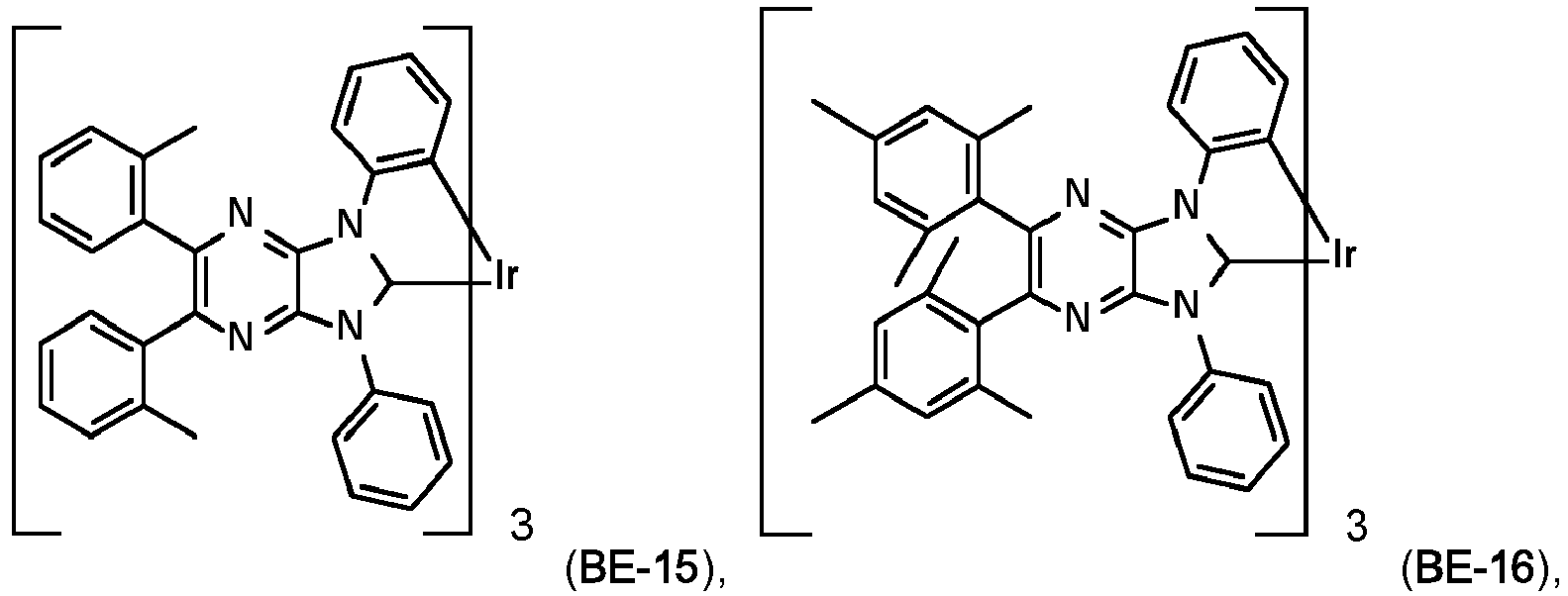
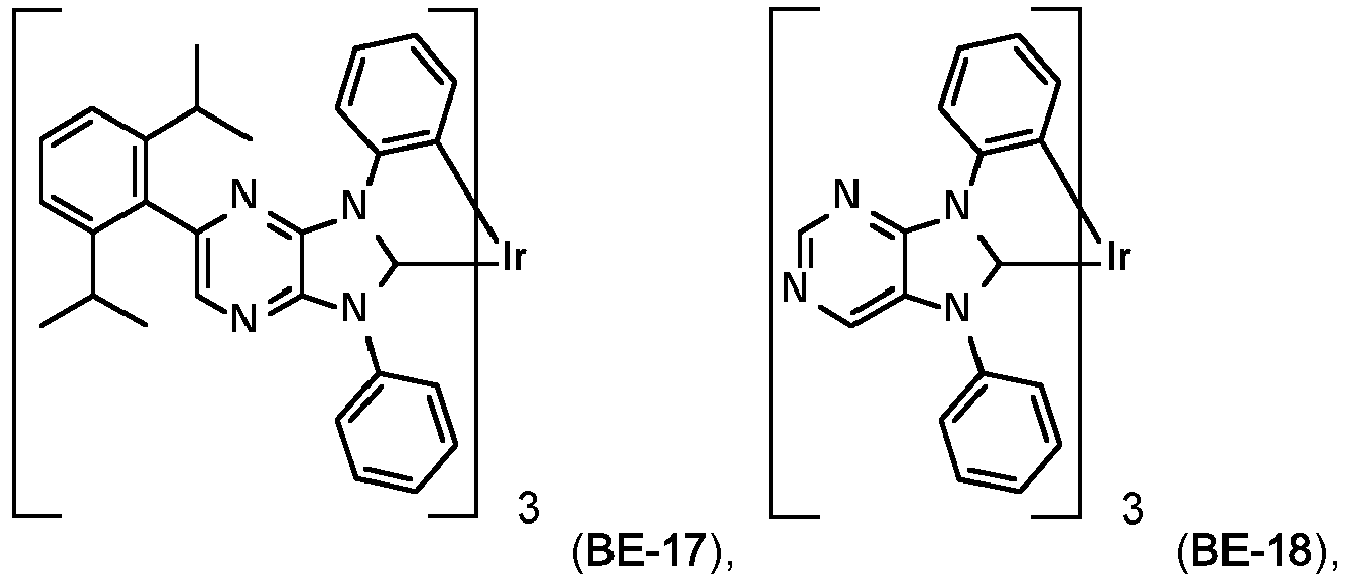


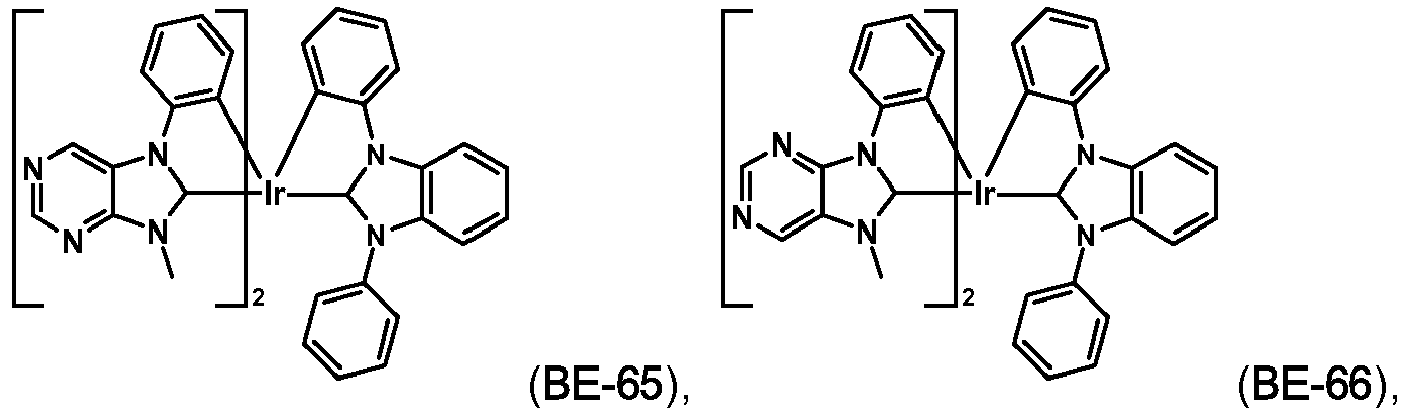

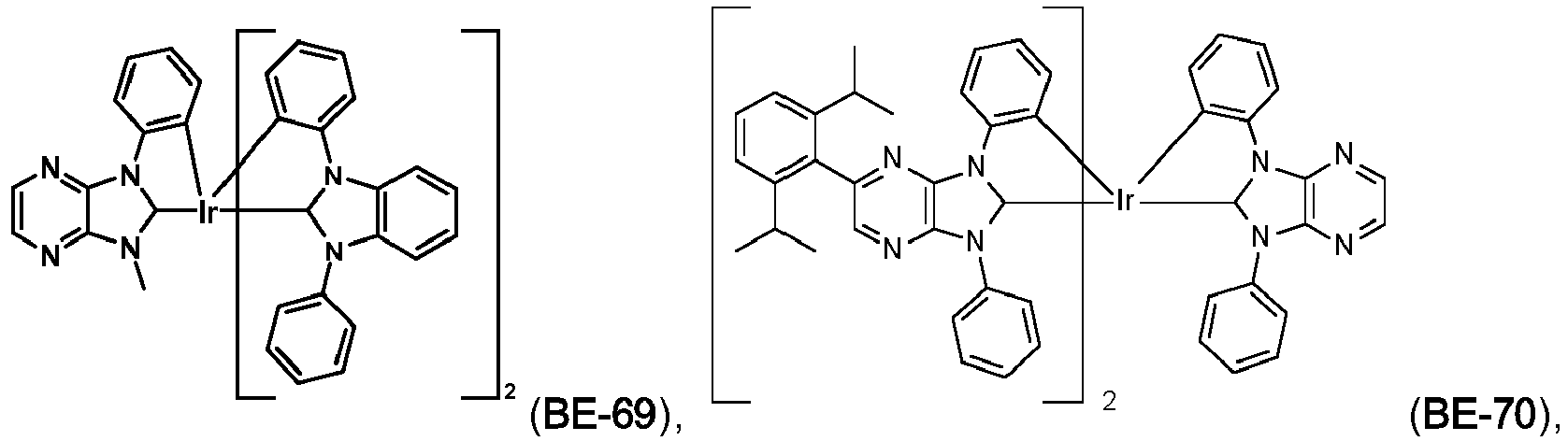


- Further suitable non-carbene emitter materials are mentioned below:


- The compound of formula IX is more preferably a compound (BE-1), (BE-2), (BE-7), (BE-12), (BE-16), (BE-64), or (BE-70). The most preferred phosphorescent blue emitters are compounds (BE-1) and (BE-12).
- The homoleptic metal-carbene complexes may be present in the form of facial or meridional isomers, preference being given to the facial isomers.
- Suitable carbene complexes of formula (IX) and their preparation process are, for example, described in
WO2011/073149 . - The compounds of the present invention can also be used as host for phosphorescent green emitters. Suitable phosphorescent green emitters are, for example, specified in the following publications:
WO2006014599 ,WO20080220265 WO2009073245 ,WO2010027583 ,WO2010028151 ,US20110227049 ,WO2011090535 ,WO2012 08881 WO20100056669 WO20100118029 WO20100244004 WO2011109042 ,WO2012166608 ,US20120292600 ,EP2551933A1 ;US6687266 ,US20070190359 ,US20070190359 ,US20060008670 ;WO2006098460 ,US20110210316 ,WO2012053627 ;US6921915 ,US20090039776 ; andJP2007123392 - Examples of suitable phosphorescent green emitters are shown below:


- The light-emitting layer may comprise further components in addition to the emitter material. For example, a fluroescent dye may be present in the light-emitting layer in order to alter the emission color of the emitter material. In addition - in a preferred embodiment - a matrix material can be used. This matrix material may be a polymer, for example poly(N-vinylcarbazole) or polysilane. The matrix material may, however, be a small molecule, for example 4,4'-N,N'-dicarbazolebiphenyl (CDP=CBP) or tertiary aromatic amines, for example TCTA.
- In another preferred embodiment of the present invention, at least one compound of the formula I, especially a compound of the formula (Ia), very especially a compound of the formula (la-2), is used as matrix material. Examples of preferred compounds of formula I are compounds C-1 to C-191 shown above. Compounds C-1 to C-174 are particularly preferred.
- In a preferred embodiment, the light-emitting layer is formed from 2 to 40% by weight, preferably 5 to 35% by weight, of at least one of the aforementioned emitter materials and 60 to 98% by weight, preferably 75 to 95% by weight, of at least one of the aforementioned matrix materials - in one embodiment at least one compound of the formula I, such as, for example, compound C-1, or C-5 - where the sum total of the emitter material and of the matrix material adds up to 100% by weight.
- Suitable metal complexes for use together with the compounds of the formula I as matrix material in OLEDs are, for example, also carbene complexes as described in
WO 2005/019373 A2 ,WO 2006/056418 A2 ,WO 2005/113704 ,WO 2007/115970 ,WO 2007/115981 andWO 2008/000727 . - Further suitable host materials, which may be small molecules or (co)polymers of the small molecules mentioned, are specified in the following publications:
WO2007108459 (H-1 to H-37), preferably H-20 to H-22 and H-32 to H-37, most preferably H-20, H-32, H-36, H-37,WO2008035571 A1 (Host 1 to Host 6),JP2010135467 WO2009008100 compounds No.1 to No.67, preferably No.3, No.4, No.7 to No. 12, No.55, No.59, No. 63 to No.67, more preferably No. 4, No. 8 to No. 12, No. 55, No. 59, No.64, No.65, and No. 67,WO2009008099 compounds No. 1 to No. 110,WO2008140114 compounds 1-1 to 1-50,WO2008090912 compounds OC-7 to OC-36 and the polymers of Mo-42 to Mo-51,JP2008084913 WO2007077810 compounds 1 to 44, preferably 1, 2, 4-6, 8, 19-22, 26, 28-30, 32, 36, 39-44,WO201001830 WO2008029729 the (polymers of) compounds 1-1 to 1-36,WO20100443342 JP2009182298 JP2009170764 JP2009135183 WO2009063757 preferably the (co)polymers based on the monomers 1-1 to 1-26,WO2008146838 the compounds a-1 to a-43 and 1-1 to 1-46,JP2008207520 JP2008066569 WO2008029652 the (co)polymers based on the monomers 1-1 to 1-52,WO2007114244 the (co)polymers based on the monomers 1-1 to 1-18,JP2010040830 JP2009021336 WO2010090077 the compounds 1 to 55,WO2010079678 the compounds H1 to H42,WO2010067746 ,WO2010044342 the compounds HS-1 to HS-101 and Poly-1 to Poly-4,JP2010114180 US2009284138 the compounds 1 to 111 and H1 to H71,WO2008072596 the compounds 1 to 45,JP2010021336 WO2010004877 the compounds H-1 to H-60,JP2009267255 WO2009104488 the compounds 1-1 to 1-38,WO2009086028 ,US2009153034 ,US2009134784 ,WO2009084413 the compounds 2-1 to 2-56,JP2009114369 JP2009114370 WO2009060742 the compounds 2-1 to 2-56,WO2009060757 the compounds 1-1 to 1-76,WO2009060780 the compounds 1-1 to 1-70,WO2009060779 the compounds 1-1 to 1-42,WO2008156105 the compounds 1 to 54,JP2009059767 JP2008074939 JP2008021687 WO2007119816 the compounds 1 to 37,WO2010087222 the compounds H-1 to H-31,WO2010095564 the compounds HOST-1 to HOST-61,WO2007108362 ,WO2009003898 ,WO2009003919 ,WO2010040777 ,US2007224446 ,WO06128800 WO2012014621 ,WO2012105310 ,WO2012/130709 and European patent applicationsEP12175635.7 EP12185230.5 EP12191408.9 EP12191408.9 - The above-mentioned small molecules are more preferred than the above-mentioned (co)polymers of the small molecules.
- Further suitable second host materials, are described in
WO2011137072 (for example,

WO2012048266 (for example,

WO2012162325 (for example,

EP2551932 (for example,
- ).
- In a particularly preferred embodiment, one or more compounds of the general formula (X) specified hereinafter are used as second host material.

X is NR, S, O or PR;
R is aryl, heteroaryl, alkyl, cycloalkyl, or heterocycloalkyl;
A200 is -NR206R207, -P(O)R208R209, -PR210R211, -S(O)2R212, -S(O)R213, -SR214, or -OR215,
R221, R222 and R223 are independently of each other aryl, heteroaryl, alkyl, cycloalkyl, or heterocycloalkyl, wherein at least on of the groups R221, R222, or R223 is aryl, or heteroaryl;
R224 and R225 are independently of each other alkyl, cycloalkyl, heterocycloalkyl, aryl, heteroaryl, a group A200, or a group having donor, or acceptor characteristics;
n2 and m2 are independently of each other 0, 1, 2, or 3;
R206 and R207 form together with the nitrogen atom a cyclic residue having 3 to 10 ring atoms, which can be unsubstituted, or which can be substituted with one, or more substituents selected from alkyl, cycloalkyl, heterocycloalkyl, aryl, heteroaryl and a group having donor, or acceptor characteristics; and/or which can be annulated with one, or more further cyclic residues having 3 to 10 ring atoms, wherein the annulated residues can be unsubstituted, or can be substituted with one, or more substituents selected from alkyl, cycloalkyl, heterocycloalkyl, aryl, heteroaryl and a group having donor, or acceptor characteristics; and R208, R209, R210, R211, R212, R213, R214 und R215 are independently of each other aryl, heteroaryl, alkyl, cycloalkyl, or heterocycloalkyl. Compounds of formula X, such as, for example,

WO2010079051 (in particular pages on 19 to 26 and in tables on pages 27 to 34, pages 35 to 37 and pages 42 to 43). - Additional host materials on basis of dibenzofurane are, for example, described in
US2009066226 ,EP1885818B1 ,EP1970976 ,EP1998388 ,EP2034538 and European patent application no.14160197.1 


- In the above-mentioned compounds T is O, or S, preferably O. If T occurs more than one time in a molecule, all groups T have the same meaning. T1 is O, or S, preferably O. T1 and T2 are independently of each other


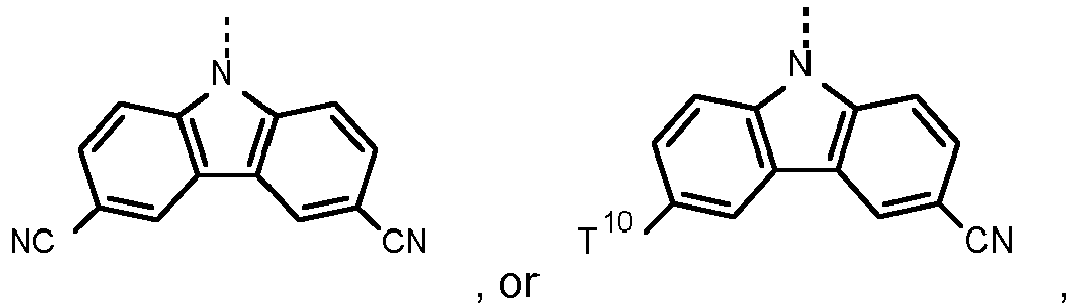
- Compounds


- Blocking layers may be used to reduce the number of charge carriers (electrons or holes) and/or excitons that leave the emissive layer. The hole blocking layer may be disposed between the emitting layer (e) and electron transport layer (g), to block holes from leaving layer (e) in the direction of electron transport layer (g). Blocking layers may also be used to block excitons from diffusing out of the emissive layer.
- Additional hole blocker materials typically used in OLEDs are 2,6-bis(N-carbazolyl)pyridine (mCPy), 2,9-dimethyl-4,7-diphenyl-1,10-phenanthroline (bathocuproin, (BCP)), bis(2-methyl-8-quinolinato)-4-phenylphenylato)aluminum(III) (BAlq), phenothiazine S,S-dioxide derivates and 1,3,5-tris(N-phenyl-2-benzylimidazolyl)benzene) (TPBI), TPBI also being suitable as electron-transport material. Further suitable hole blockers and/or electron conductor materials are 2,2',2"-(1,3,5-benzenetriyl)tris(1-phenyl-1-H-benzimidazole), 2-(4-biphenylyl)-5-(4-tert-butylphenyl)-1,3,4-oxadiazole, 8-hydroxyquinolinolatolithium, 4-(naphthalen-1-yl)-3,5-diphenyl-4H-1,2,4-triazole, 1,3-bis[2-(2,2'-bipyridin-6-yl)-1,3,4-oxadiazo-5-yl]benzene, 4,7-diphenyl-1,10-phenanthroline, 3-(4-biphenylyl)-4-phenyl-5-tert-butylphenyl-1,2,4-triazole, 6,6'-bis[5-(biphenyl-4-yl)-1,3,4-oxadiazo-2-yl]-2,2'-bipyridyl, 2-phenyl-9,10-di(naphthalene-2-yl)anthracene, 2,7-bis[2-(2,2'-bipyridin-6-yl)-1,3,4-oxadiazo-5-yl]-9,9-dimethylfluorene, 1,3-bis[2-(4-tert-butylphenyl)-1,3,4-oxadiazo-5-yl]benzene, 2-(naphthalene-2-yl)-4,7-diphenyl-1,10-phenanthroline, tris(2,4,6-trimethyl-3-(pyridin-3-yl)phenyl)borane, 2,9-bis(naphthalene-2-yl)-4,7-diphenyl-1,10-phenanthroline, 1-methyl-2-(4-(naphthalene-2-yl)phenyl)-1H-imidazo[4,5-f][1,10]phenanthroline. In a further embodiment, it is possible to use compounds which comprise aromatic or heteroaromatic rings joined via groups comprising carbonyl groups, as disclosed in
WO2006/100298 , disilyl compounds selected from the group consisting of disilylcarbazoles, disilylbenzofurans, disilylbenzothiophenes, disilylbenzophospholes, disilylbenzothiophene S-oxides and disilylbenzothiophene S,S-dioxides, as specified, for example, inPCT applications WO2009/003919 andWO2009003898 and disilyl compounds as disclosed inWO2008/034758 , as a blocking layer for holes/excitons (f). - In another preferred embodiment compounds (SH-1), (SH-2), (SH-3), SH-4, SH-5, SH-6, (SH-7), (SH-8), (SH-9), (SH-10) and (SH-11) may be used as hole/exciton blocking materials.
- Electron transport layer may include a material capable of transporting electrons. Electron transport layer may be intrinsic (undoped), or doped. Doping may be used to enhance conductivity. Suitable electron-transporting materials for layer (g) of the inventive OLEDs comprise metals chelated with oxinoid compounds, such as tris(8-hydroxyquinolato)aluminum (Alq3), compounds based on phenanthroline such as 2,9-dimethyl-4,7-diphenyl-1,10-phenanthroline (DDPA = BCP), 4,7-diphenyl-1,10-phenanthroline (Bphen), 2,4,7,9-tetraphenyl-1,10-phenanthroline, 4,7-diphenyl-1,10-phenanthroline (DPA) or phenanthroline derivatives disclosed in
EP1786050 , inEP1970371 , or inEP1097981 , and azole compounds such as 2-(4-biphenylyl)-5-(4-t-butylphenyl)-1,3,4-oxadiazole (PBD) and 3-(4-biphenylyl)-4phenyl-5-(4-t-butylphenyl)-1,2,4-triazole (TAZ). - It is likewise possible to use mixtures of at least two materials in the electron-transporting layer, in which case at least one material is electron-conducting. Preferably, in such mixed electron-transport layers, at least one phenanthroline compound is used, preferably BCP, or at least one pyridine compound according to the formula (VIII) below, preferably a compound of the formula (VIIIaa) below. More preferably, in mixed electron-transport layers, in addition to at least one phenanthroline compound, alkaline earth metal or alkali metal hydroxyquinolate complexes, for example Liq, are used. Suitable alkaline earth metal or alkali metal hydroxyquinolate complexes are specified below (formula VII). Reference is made to
WO2011/157779 . - The electron-transport layer may also be electronically doped in order to improve the transport properties of the materials used, in order firstly to make the layer thicknesses more generous (avoidance of pinholes/short circuits) and in order secondly to minimize the operating voltage of the device. Electronic doping is known to those skilled in the art and is disclosed, for example, in W. Gao, A. Kahn, J. Appl. Phys., Vol. 94, No. 1, 1 July 2003 (p-doped organic layers); A. G. Werner, F. Li, K. Harada, M. Pfeiffer, T. Fritz, K. Leo, Appl. Phys. Lett., Vol. 82, No. 25, 23 June 2003 and Pfeiffer et al., Organic Electronics 2003, 4, 89 - 103 and K. Walzer, B. Maennig, M. Pfeiffer, K. Leo, Chem. Soc. Rev. 2007, 107, 1233. For example, it is possible to use mixtures which lead to electrical n-doping of the electron-transport layer. n-Doping is achieved by the addition of reducing materials. These mixtures may, for example, be mixtures of the abovementioned electron transport materials with alkali/alkaline earth metals or alkali/alkaline earth metal salts, for example Li, Cs, Ca, Sr, Cs2CO3, with alkali metal complexes, for example 8-hydroxyquinolatolithium (Liq), and with Y, Ce, Sm, Gd, Tb, Er, Tm, Yb, Li3N, Rb2CO3, dipotassium phthalate, W(hpp)4 from
EP1786050 , or with compounds described inEP1837926B1 ,EP1837927 ,EP2246862 andWO2010132236 . - In a preferred embodiment, the electron-transport layer comprises at least one compound of the general formula (VII)

R32 and R33 are each independently F, C1-C8-alkyl, or C6-C14-aryl, which is optionally substituted by one or more C1-C8-alkyl groups, or
two R32 and/or R33 substituents together form a fused benzene ring which is optionally substituted by one or more C1-C8-alkyl groups;
a and b are each independently 0, or 1, 2 or 3,
M1 is an alkaline metal atom or alkaline earth metal atom,
p is 1 when M1 is an alkali metal atom, p is 2 when M1 is an earth alkali metal atom. - A very particularly preferred compound of the formula (VII) is

- In a further preferred embodiment, the electron-transport layer comprises at least one compound of the formula (VIII),

R34, R35, R36, R37, R34', R35', R36' and R37'are each independently H, C1-C18-alkyl, C1-C18-alkyl which is substituted by E and/or interrupted by D, C6-C24-aryl, C6-C24-aryl which is substituted by G, C2-C20-heteroaryl or C2-C20-heteroaryl which is substituted by G,
Q is an arylene or heteroarylene group, each of which is optionally substituted by G;
D is -CO-; -COO-; -S-; -SO-; -SO2-; -O-; -NR40-; -SiR45R46-; -POR47-; -CR38=CR39-; or -C≡C-;
E is -OR44; -SR44; -NR40R41; -COR43; -COOR42; -CONR40R41; -CN; or F;
G is E, C1-C18-alkyl, C1-C18-alkyl which is interrupted by D , C1-C18-perfluoroalkyl, C1-C18-alkoxy, or C1-C18-alkoxy which is substituted by E and/or interrupted by D, in which
R38 and R39 are each independently H, C6-C18-aryl; C6-C18-aryl which is substituted by C1-C18-alkyl or C1-C18-alkoxy; C1-C18-alkyl; or C1-C18-alkyl which is interrupted by -O-;
R40 and R41 are each independently C6-C18-aryl; C6-C18-aryl which is substituted by C1-C18-alkyl or C1-C18-alkoxy; C1-C18-alkyl; or C1-C18-alkyl which is interrupted by -O-; or
R40 and R41 together form a 6-membered ring;
R42 and R43 are each independently C6-C18-aryl; C6-C18-aryl which is substituted by C1-C18-alkyl or C1-C18-alkoxy; C1-C18-alkyl; or C1-C18-alkyl which is interrupted by -O-,
R44 is C6-C18-aryl; C6-C18-aryl which is substituted by C1-C18-alkyl or C1-C18-alkoxy; C1-C18-alkyl; or C1-C18-alkyl which is interrupted by -O-,
R45 and R46 are each independently C1-C18-alkyl, C6-C18-aryl or C6-C18-aryl which is substituted by C1-C18-alkyl,
R47 is C1-C18-alkyl, C6-C18-aryl or C6-C18-aryl which is substituted by C1-C18-alkyl. - Preferred compounds of the formula (VIII) are compounds of the formula (Villa) in which Q is:


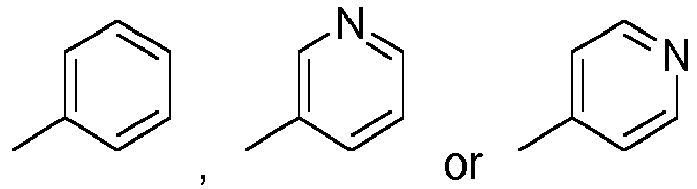
- Particular preference is given to a compound of the formula

- In a further, very particularly preferred embodiment, the electron-transport layer comprises a compound Liq and a compound ETM-2.
- In a preferred embodiment, the electron-transport layer comprises the compound of the formula (VII) in an amount of 99 to 1% by weight, preferably 75 to 25% by weight, more preferably about 50% by weight, where the amount of the compounds of the formulae (VII) and the amount of the compounds of the formulae (VIII) adds up to a total of 100% by weight.
- The preparation of the compounds of the formula (VIII) is described in J. Kido et al., Chem. Commun. (2008) 5821-5823, J. Kido et al., Chem. Mater. 20 (2008) 5951-5953 and
JP2008/127326 - It is likewise possible to use mixtures of alkali metal hydroxyquinolate complexes, preferably Liq, and dibenzofuran compounds in the electron-transport layer. Reference is made to
WO2011/157790 . Dibenzofuran compounds A-1 to A-36 and B-1 to B-22 described inWO2011/157790 are preferred, wherein dibenzofuran compound
- In a preferred embodiment, the electron-transport layer comprises Liq in an amount of 99 to 1% by weight, preferably 75 to 25% by weight, more preferably about 50% by weight, where the amount of Liq and the amount of the dibenzofuran compound(s), especially ETM-1, adds up to a total of 100% by weight.
- In a preferred embodiment, the electron-transport layer comprises at least one phenanthroline derivative and/or pyridine derivative.
- In a further preferred embodiment, the electron-transport layer comprises at least one phenanthroline derivative and/or pyridine derivative and at least one alkali metal hydroxyquinolate complex.
- In a further preferred embodiment, the electron-transport layer comprises at least one of the dibenzofuran compounds A-1 to A-36 and B-1 to B-22 described in
WO2011/157790 , especially ETM-1. - In a further preferred embodiment, the electron-transport layer comprises a compound described in
WO2012/111462 ,WO2012/147397 ,WO2012014621 , such as, for example, a compound of formula
US2012/0261654 , such as, for example, a compound of formula
WO2012/115034 , such as for example, such as, for example, a compound of formula
- The electron injection layer may be any layer that improves the injection of electrons into an adjacent organic layer. Lithium-comprising organometallic compounds such as 8-hydroxyquinolatolithium (Liq), CsF, NaF, KF, Cs2CO3 or LiF may be applied between the electron transport layer (g) and the cathode (i) as an electron injection layer (h) in order to reduce the operating voltage.
- The cathode (i) is an electrode which serves to introduce electrons or negative charge carriers. The cathode may be any metal or nonmetal which has a lower work function than the anode. Suitable materials for the cathode are selected from the group consisting of alkali metals of group 1, for example Li, Cs, alkaline earth metals of group 2, metals of group 12 of the Periodic Table of the Elements, comprising the rare earth metals and the lanthanides and actinides. In addition, metals such as aluminum, indium, calcium, barium, samarium and magnesium, and combinations thereof, may be used.
- In general, the different layers, if present, have the following thicknesses:
- anode (a): 500 to 5000 Å (ångström), preferably 1000 to 2000 Å;
- hole injection layer (b): 50 to 1000 Å, preferably 200 to 800 Å,
- hole-transport layer (c): 50 to 1000 Å, preferably 100 to 800 Å,
- exciton blocking layer (d): 10 to 500 Å, preferably 50 to 100 Å,
- light-emitting layer (e): 10 to 1000 Å, preferably 50 to 600 Å,
- hole/ exciton blocking layer (f): 10 to 500 Å, preferably 50 to 100 Å,
- electron-transport layer (g): 50 to 1000 Å, preferably 200 to 800 Å,
- electron injection layer (h): 10 to 500 Å, preferably 20 to 100 Å,
- cathode (i): 200 to 10 000 Å, preferably 300 to 5000 Å.
- The person skilled in the art is aware (for example on the basis of electrochemical studies) of how suitable materials have to be selected. Suitable materials for the individual layers are known to those skilled in the art and are disclosed, for example, in
WO 00/70655 - In addition, it is possible that some of the layers used in the inventive OLED have been surface-treated in order to increase the efficiency of charge carrier transport. The selection of the materials for each of the layers mentioned is preferably determined by obtaining an OLED with a high efficiency and lifetime.
- The inventive OLED can be produced by methods known to those skilled in the art. In general, the inventive OLED is produced by successive vapor deposition of the individual layers onto a suitable substrate. Suitable substrates are, for example, glass, inorganic semiconductors or polymer films. For vapor deposition, it is possible to use customary techniques, such as thermal evaporation, chemical vapor deposition (CVD), physical vapor deposition (PVD) and others. In an alternative process, the organic layers of the OLED can be applied from solutions or dispersions in suitable solvents, employing coating techniques known to those skilled in the art.
- Use of the compounds of the formula I in at least one layer of the OLED, preferably in the light-emitting layer (preferably as a matrix material), charge transport layer and/or in the charge/exciton blocking layer makes it possible to obtain OLEDs with high efficiency and with low use and operating voltage. Frequently, the OLEDs obtained by the use of the compounds of the formula I additionally have high lifetimes. The efficiency of the OLEDs can additionally be improved by optimizing the other layers of the OLEDs. For example, high-efficiency cathodes such as Ca or Ba, if appropriate in combination with an intermediate layer of LiF, can be used. Moreover, additional layers may be present in the OLEDs in order to adjust the energy level of the different layers and to facilitate electroluminescence.
- The OLEDs may further comprise at least one second light-emitting layer. The overall emission of the OLEDs may be composed of the emission of the at least two light-emitting layers and may also comprise white light.
- The OLEDs can be used in all apparatus in which electroluminescence is useful. Suitable devices are preferably selected from stationary and mobile visual display units and illumination units. Stationary visual display units are, for example, visual display units of computers, televisions, visual display units in printers, kitchen appliances and advertising panels, illuminations and information panels. Mobile visual display units are, for example, visual display units in cellphones, tablet PCs, laptops, digital cameras, MP3 players, vehicles and destination displays on buses and trains. Further devices in which the inventive OLEDs can be used are, for example, keyboards; items of clothing; furniture; wallpaper. In addition, the present invention relates to a device selected from the group consisting of stationary visual display units such as visual display units of computers, televisions, visual display units in printers, kitchen appliances and advertising panels, illuminations, information panels, and mobile visual display units such as visual display units in cellphones, tablet PCs, laptops, digital cameras, MP3 players, vehicles and destination displays on buses and trains; illumination units; keyboards; items of clothing; furniture; wallpaper, comprising at least one inventive organic light-emitting diode or at least one inventive light-emitting layer.
- The following examples are included for illustrative purposes only and do not limit the scope of the claims. Unless otherwise stated, all parts and percentages are by weight.
-

- a) 10 g of benzimidazole (84.6 mmol) are combined with (4-carbazol-9-ylphenyl)boronic acid (20.3 g, 70.7 mmol), Cu2O (1.10 g, 7.69 mmol), in MeOH (300 mL) and toluene (60 mL). The resulting mixture is stirred under an atmosphere of air at 35 °C for 30 hours. The reaction is allowed to cool to room temperature and concentrated under reduced pressure. The product is then purified by chromatography on silica using 10% MeOH in CH2Cl2 as eluent. The desired product 1 is isolated in quantitative yield and used without further purification. 1H NMR (400 MHz, Chloroform-d) δ 8.15 (d, J = 7.8 Hz, 1H), 7.85-7.78 (m, 2H), 7.65 (s, 1H), 7.61 - 7.38 (m, 2H), 7.37 - 7.18 (m, 4H). Product was confirmed by GC-MS, m/z 359(M+).

- b) 30 ml of Lithium diisopropylamide (1 M in THF/hexane) are added to 1 (8.4 g, 23.4 mmol) in anhydrous THF (120 mL) at -78 °C under N2. The reaction mixture is stirred for 1 hour at -78 °C. Then, iodine (7.14 g, 28.1 mmol) is added to the reaction mixture at -78 °C. The reaction mixture is stirred at -78 °C for 1 hour and is then warmed to 0 °C and stirred for 3 hours. The reaction mixture is then washed with saturated aqueous Na2S2O3 and extracted with ethyl acetate (3X100 ml). The organic phase is then dried over anhydrous Na2SO4 and solvent is evaporated to give the crude product 2 as a yellow oil. The product is then purified by chromatography on silica using hexane/ethyl acetate (3/1 to 1/1) as eluent. The desired product 2 is isolated (5.14 g, 29 % yield). Product is confirmed by GC-MS, m/z 485(M+).

- c) 2 (5.1 g, 10.5 mmol) are combined with carbazole (1.76 g, 10.5 mmol), CuI (0.020 g, 0.105 mmol), K3PO4 (4.68 g, 22.1 mmol) and 1,2-diaminocyclohexane (0.126 ml, 1.05 mmol) in 1,4-dioxane (60 mL) and the reaction mixture is heated at 115 °C for 30 hours. The reaction is allowed to cool to room temperature and is then filtered through a pad of celite washing well with ethyl acetate. The resulting solution is evaporated to give a crude material as a black oil. The crude material is purified by chromatography on NH-silica gel using 10 % MeOH in CH2Cl2 as eluent and is then recrystallized by 50 % CH2Cl2 in hexane to give 3 (= C-5) as a white solid (1.70 g, 31 % yield) in 99.3 % purity by HPLC. 1H NMR (400 MHz, Chloroform-d) δ 8.16 - 7.96 (m, 5H), 7.70 - 7.63 (m, 1 H), 7.55 - 7.40 (m, 4H), 7.40 - 7.22 (m, 12H), 7.04 (d, J = 8.2 Hz, 1 H). Product confirmed by LCMS m/z = 525 (M+1).
-

- a) 6.6 g of benzimidazole (55.9 mmol) are combined with (3-carbazol-9-ylphenyl)boronic acid (32.0 g, 111 mmol), Cu(OAc)2 monohydrate (1.02 g, 5.59 mmol), pyridine (9 ml), DMF (53 mL) and H2O (1 ml). The resulting mixture is stirred under an atmosphere of air at 35 °C for 35 hours. The reaction is allowed to cool to room temperature, poured into 28 % aqueous NH3 (100 ml) and then extracted with toluene (200ml x 2). The organic phase is then dried over anhydrous Na2SO4 and solvent is evaporated to give the crude product as a greenish-yellow oil. The product is then purified by chromatography on silica using hexane/ethyl acetate (2/1) as eluant. The desired product 4 is isolated (8.3 g, 41 % yield). 1H NMR (400 MHz, Chloroform-d) δ 8.20 (s, 1 H), 8.15 (d, J = 7.8 Hz, 2H), 7.96 - 7.87 (m, 1 H), 7.84 - 7.74 (m, 2H), 7.69 (dd, J = 7.4, 2.0 Hz, 1H), 7.62 (dt, J = 6.2, 2.5 Hz, 2H), 7.46 (dt, J = 15.2, 8.1 Hz, 4H), 7.40 - 7.28 (m, 4H).

- b) 17.3 ml of n-butyllithium (1.6 M in heptane) are added to 4 (7.4 g, 20.6 mmol) in 300 ml anhydrous THF at -78 °C under N2. The reaction mixture is stirred for 30 min at -78 °C. Then, iodine (6.28 g, 24.7 mmol) is added to the reaction mixture at -78 °C. The reaction mixture is then stirred at -78 °C for 1 hour and is then warmed to 0 °C and stirred for 6 hours. The mixture is washed with saturated aqueous Na2S2O3 and extracted with CH2Cl2 (3 x100 ml). The organic phase is then dried over anhydrous Na2SO4 and solvent is evaporated to give the crude product as a yellow oil. The product is then purified by chromatography on silica using hexane/ethyl acetate (4/1) as eluent. The desired product 5 is isolated (6 g, 60 % yield). 1H NMR (400 MHz, Chloroform-d) δ 8.15 (d, J = 7.8 Hz, 2H), 7.82 (dd, J = 13.6, 5.4 Hz, 3H), 7.65 (s, 1 H), 7.60 - 7.39 (m, 4H), 7.37 - 7.21 (m, 6H). Product was confirmed by GC-MS, m/z 485(M+).

- c) 5 (6 g, 12.4 mmol) is combined with carbazole (2.07 g, 12.4 mmol), CuI (0.118 g, 0.619 mmol), K3PO4 (5.25 g, 24.7 mmol) and 1,2-diaminocyclohexane (0.150 ml, 1.24 mmol) in 1,4-dioxane (150 mL) and the reaction mixture is heated at 115 °C for 16 hours. The reaction is allowed to cool to room temperature and is then filtered through a pad of celite washing well with CH2Cl2. The resulting solution is evaporated to give a crude material as a black oil. The crude material is purified by chromatography on silica gel using hexane/CH2Cl2 (1/1 to 2/3) as eluent to give 6 (= C-1) as a white solid (3.10 g, 48 % yield) in 99.8 % purity by HPLC. 1H NMR (400 MHz, Chloroform-d) δ 8.17 - 8.09 (m, 2H), 8.07-8.01 (m, 2H), 7.99 - 7.94 (m, 1 H), 7.59 (dd, J = 7.5, 1.6 Hz, 1 H), 7.54 (t, J = 7.9 Hz, 1 H), 7.50 - 7.17 (m, 15H), 6.81 (d, J = 7.7 Hz, 2H). Product confirmed by LCMS m/z = 525 (M+1).
-

- a) 10g of benzimidazole (84.6 mmol) are combined with (8-carbazol-9-yldibenzofuran-2-yl)boronic acid (20.3 g, 70.7 mmol), Cu2O (1.33 g, 9.30 mmol), in MeOH (300 ml) and toluene (60 mL). The resulting mixture is stirred under an atmosphere of air at 35 °C for 30 hours. The reaction is allowed to cool to room temperature and concentrated under reduced pressure. The product is then purified by chromatography on neutral silica gel using 5 % MeOH in toluene as eluent. The desired product 7 is isolated (18.6 g, 73 % yield). 1H NMR (400 MHz, Chloroform-d) δ 8.21 - 8.12 (m, 4H), 8.06 (d, J = 2.1 Hz, 1 H), 7.87 (m, 3H), 7.68 (ddd, J = 21.8, 8.6, 2.2 Hz, 2H), 7.56 - 7.50 (m, 1 H), 7.45 - 7.28 (m, 8H). Product was confirmed by GC-MS 449 (M+).

- b) 20 ml of Lithium diisopropylamide 1.0 M in THF/hexane are added to 7 (7.00 g, 15.6 mmol) in 120 ml water free THF at -78 °C under N2. The reaction mixture is stirred for 1 hour at -78 °C. Then, iodine (4.75 g, 18.7 mmol) is added to the reaction mixture at -78 °C. The reaction mixture is stirred at -78 °C for 1 hour and is then warmed to 0 °C and stirred for 3 hours. The mixture is washed by saturated aqueous Na2S2O3 and extracted with ethyl acetate (3X100 ml). The organic phase is then dried over anhydrous Na2SO4 and solvent is evaporated to give the crude product as an orange powder. The product is then purified by chromatography on neutral silica gel using hexane/ethyl acetate (9/1 to 4/1) as eluent. The product 8 is isolated (4.60 g, 51 % yield). 1H NMR (400 MHz, Chloroform-d) δ 8.20 - 8.13 (m, 3H), 7.98 (m, 1H), 7.91 - 7.78 (m, 3H), 7.72 (m, 1 H), 7.53 (m, 1 H), 7.46 - 7.34 (m, 4H), 7.34 - 7.24 (m, 4H), 7.21 (m, 1 H).

- c) 8 (8.70 g, 15.1 mmol) are combined with carbazole (2.52 g, 15.1 mmol), CuI (0.028 g, 0.151 mmol), K3PO4 (6.73 g, 31.7 mmol) and 1,2-diaminocyclohexane (0.182 ml, 1.51 mmol) in 1,4-dioxane (80 mL) and the reaction mixture is heated at 115 °C for 30 hours. The reaction is allowed to cool to room temperature and is then filtered through a pad of celite washing well with ethyl acetate. The resulting solution is evaporated to give a crude material as a black oil. The crude material is purified by chromatography on neutral silica gel using hexane/ethyl acetate (9/1) as eluent and is then recrystallized by dichloromethane to give 9 (= C-8) as a slightly-yellow solid (3.50 g, 38 % yield). 1H NMR (400 MHz, Chloroform-d) δ 8.17 (d, J = 7.7 Hz, 2H), 7.98 (d, J = 7.8 Hz, 3H), 7.88 (m, 1H), 7.80 (m, 1 H), 7.72 80 (m, 1H), 7.61 80 (m, 1 H), 7.55 - 7.34 (m, 9H), 7.34 - 7.17 (m, 8H). Product confirmed by LCMS m/z = 615 (M+1).
- A glass substrate with 120 nm-thick indium-tin-oxide (ITO) transparent electrode used as an anode is first cleaned with isopropanol in an ultrasonic bath for 10 min. To eliminate any possible organic residues, the substrate is exposed to an ultraviolet light and ozone for further 30 min. This treatment also improves the hole injection properties of the ITO. The cleaned substrate is mounted on a substrate holder and loaded into a vacuum chamber. Thereafter, the organic materials specified below are applied by vapor deposition to the ITO substrate at a rate of approx. 0.2-1 Å/sec at about 10-6 -10-8 mbar. As a hole injection layer, compound


WO2005/019373 ) is then applied with a thickness of 10 nm. - Subsequently, a mixture of 20% by weight of emitter compound,


- Thereafter, compound

- To characterize the OLED, electroluminescence spectra are recorded at various currents and voltages. In addition, the current-voltage characteristic is measured in combination with the luminance to determine luminous efficiency and external quantum efficiency (EQE). Driving voltage U and EQE are given at luminance (L) = 1000 cd/m2 and Commission Internationale de l'Éclairage (CIE) coordinate are given at 5mA/cm2 except otherwise stated. Furthermore, 70% lifetime (LT70), the time spent until the initial luminance of 4'000 cd/m2 is reduced to 70% (2'800 cd/m2), is recorded. The LT70 of the Comparative Application Examples are set to 100 and the data of the Application Examples are specified in relation to those of the respective Comparative Application Examples.
- Comparative Application Example 1 is repeated except that the host (CH-1) is replaced by compound

- The device results are shown in Table 1.
Table 1 Appl. Ex. Host U [V] EQE [%] CIEx CIEy LT70 1 (C-5) 5.22 15.76 0.152 0.266 295 2 (C-1) 5.45 15.99 0.150 0.267 597 Comp. Appl. Ex. 1 (CH-1) 6.02 15.33 0.150 0.256 100 - The results shown in Table 1 demonstrate that the EQE and lifetime are improved when compounds (C-5) and (C-1) are used as host instead of reference compound (CH-1).
- Comparative Application Example 1 is repeated except that the exciton and electron blocker (HTM-1) is replaced by compound (CH-1), and host (CH-1) is replaced by compound (SH-1).
- Comparative Application Example 2 is repeated except that the exciton and electron blocker (CH-1) is replaced by compound (C-1). The device results are shown in Table 2.
Table 2 Appl. Ex. Exciton and electron blocker U [V] EQE [%] CIEx CIEy LT70 3 (C-1) 7.37 13.93 0.152 0.273 1066 Comp. Appl. Ex. 2 (CH-1) 7.71 14.11 0.152 0.268 100 - The results shown in Table 2 demonstrate that the driving voltage and lifetime are improved when compound (C-1) is used as exciton and electron blocker instead of reference compound (CH-1).
- A glass substrate with 120 nm-thick ITO is cleaned and treated in the same manner as comparative application example 1. As a hole injection layer, compound


- Comparative Application Example 3 is repeated except that the exciton and electron blocker (CH-1) is replaced by compound (C-5) or compound (C-1) for application examples 5 or 6, respectively. The device results are shown in Table 3.
Table 3 Appl. Ex. Exciton and electron blocker U [V] EQE [%] CIEx CIEy LT70 4 (C-5) 4.39 18.08 0.156 0.322 545 5 (C-1) 4.09 17.67 0.155 0.306 308 Comp. Appl. Ex. 3 (CH-1) 4.50 17.86 0.155 0.302 100 - The results shown in Table 3 demonstrate that the driving voltage, EQE and lifetime are improved when compounds (C-5) or (C-1) are used as exciton and electron blocker instead of reference compound (CH-1).
-

- a) 100 g (0.406 mol) 3-Bromo-9H-carbazole and 58.2 g (0.650 mol) CuCN are added to 800 ml of DMF and the suspension is heated to reflux for 20 h under Nitrogen. The resulting solution is cooled to room temperature and then poured on 4 l of water. The suspension is filtered and the residue is washed three times with water (1 l each). The white solid is suspended in 1.5 l of 10% Ammonia in water, stirred for three hours, filtered, washed three times with water (1 l each) and dried at 80°C/125 mbar overnight. The resulting solid is dissolved in 1 I of boiling THF, 100 g of silica is added, stirred for 1 h and then filtered hot. The filtrate is evaporated to 400 ml, cooled to room temperature, filtered, washed three times with cold THF (50 ml each) and dried at 80°C/125 mbar overnight to yield 43.3 g (55.6% of theory) 9H-Carbazole-3-carbonitrile as a white solid.
1H-NMR (400 MHz, CDCl3): δ 8.39 (br s, 2H), 8.10 (d, J = 8.0 Hz, 1 H), 7.67 (dxd, J1 = 8.4 Hz, J2 = 1.6 Hz, 1H), 7.54-7.47 (m, 3H), 7.35-7.31 (m, 1H).
- b) 100 g (0.594 mol) Dibenzofuran are dissolved in 1.2 l of AcOH. 116.1 g (0.457 mol) l2, 44.2 g (0.252 mol) HIO3, 40 ml of water, 12 ml of H2SO4 97% and 60 ml of CCl4 are added and the mixture is stirred at reflux for 22 h under Nitrogen. The resulting suspension is cooled to room temperature, filtered, washed four times with water (1 l each) and dried at 60°C/125 mbar overnight. The crude product is crystallized twice from Toluene to yield 113.5 g (59.1 % of theory) 2,8-Diiododibenzofuran as a white solid.
1H-NMR (300 MHz, CDCl3): δ 8.22 (s, 2H), 7.76 (d, J = 6.9 Hz, 2H), 7.35 (d, J = 6.9 Hz, 2H).
- c) 20 g (47.4 mmol) 2,8-Diiododibenzofuran, 20.19 g (104.4 mmol) 9H-Carbazole-3-carbonitrile,1.36 g (7.1 mmol) Cul, 2.84 g (14.2 mmol) 1,10-Phenanthroline, 32.2 g (151.9 mmol) K3PO4 and 500 ml Mesitylene are mixed and heated to reflux for 72 h under Nitrogen. The brown suspension is cooled to 0°C, filtered and the residue is washed three times with Heptane (100 ml each) and twice with MeOH (100 ml each). The filter cake is suspended in 1 I of water, stirred for 30 min, filtered, washed three times with water (200ml each) and dried at 80°C/125 mbar overnight. The crude product is suspended in 1.2 I of THF and heated to reflux. 60 g of silica are added, stirred for 15 min, filtered hot and the residue is washed three times with hot THF (250 ml each). The filtrate is evaporated and the residue is decocted with 200 ml of MeOH for 1 h, filtered hot and washed three times with MeOH (50 ml each). The product is purified by Soxhlet extraction with Toluene, followed by Soxhlet extraction with MEK then by decocting with 150 ml of 1,4-Dioxane, filtered hot and washed three times with 1,4-Dioxane (20 ml each) to yield 12.3 g (47.1% of theory) 9-[8-(3-Cyanocarbazol-9-yl)dibenzofuran-2-yl]carbazole-3-carbonitrile as a white solid.
1H-NMR (400 MHz, DMSO): δ 8.89 (d, J = 1.2 Hz, 2H), 8.60 (d, J = 2.0 Hz, 2H), 8.41 (d, J = 7.6 Hz., 2H), 8.14 (d, J = 8.8 Hz, 2H), 7.86 (dxd, J1 = 8.8 Hz, J2 = 2.0 Hz, 2H), 7.82 (dxd, J1 = 8.8 Hz, J2 = 1.2 Hz, 2H), 758 - 7.50 (m, 4H), 7.45 - 7.41 (m, 4H).
Claims (16)
- A compound of the formula

R81, R82, R83 and R84 are independently of each other H, a C1-C25alkyl group, which can optionally be substituted by E and or interrupted by D; a C6-C24aryl group, which can optionally be substituted by G, a C2-C30heteroaryl group, which can optionally be substituted by G;
R85, R86, R87, R88, R89, R90, R91 and R92 are independently of each other H, CN, a C1-C25alkyl group, which can optionally be substituted by E and or interrupted by D; a C6-C24aryl group, which can optionally be substituted by G, a C2-C30heteroaryl group, which can optionally be substituted by G;
with the proviso that R85, R86, R87, R88, R89, R90, R91 and R92 are different from a carbazolyl group,
X1 is a group of formula -A1-X2, which is selected from
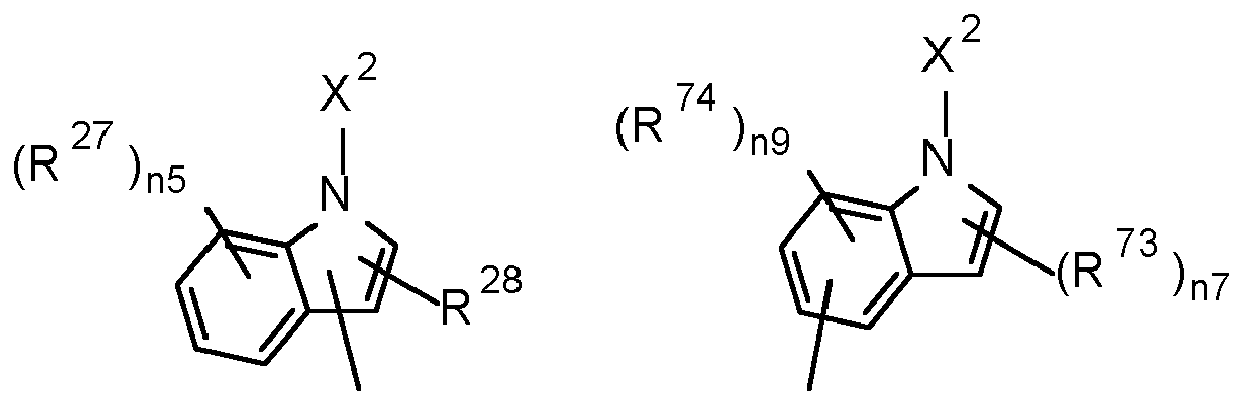
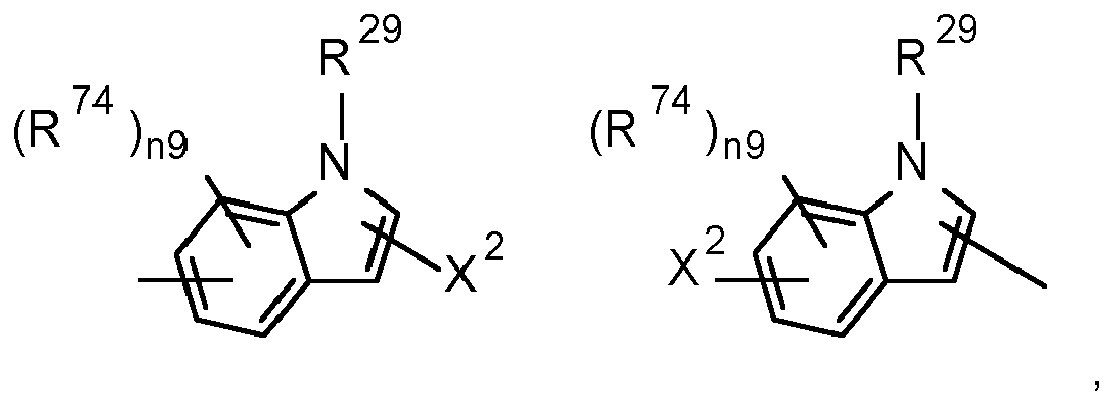

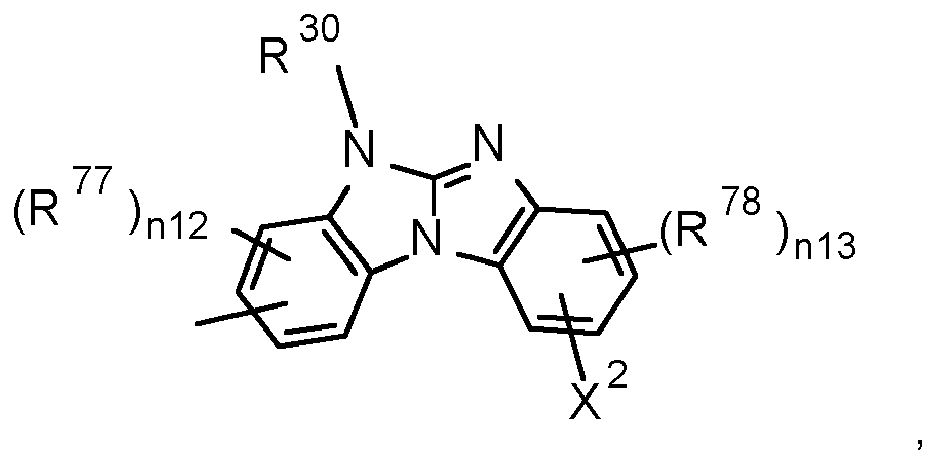


p is 0, or 1, q is 0, or 1, r is 0, or 1;
R16 is H, -NR10R11, or -Si(R12)(R13)(R14), a C6-C24aryl group, which can optionally be substituted by G; or a C2-C30heteroaryl group, which can optionally be substituted by G;
R10 and R11 are independently of each other a C6-C24aryl group, which can optionally be substituted by G; or a C2-C30heteroaryl group, which can optionally be substituted by G;
R12, R13 and R14 are independently of each other a C1-C25alkyl group, which can optionally be substituted by E and or interupted by D; a C6-C24aryl group, which can optionally be substituted by G; or a C2-C30heteroaryl group, which can optionally be substituted by G;
n7, n14 and n18 are independently of each other 0, 1, or 2;
n2, n3, n4, n9, n10, n12, n13, n15, n16, n17 and n20 are independently of each other 0, 1, 2, or 3,
n1, n5, n6, n11, n19 and n21 are independently of each other 0, 1, 2, 3, or 4;
R21, R22, R23, R24, R26, R27, R28, R73, R74, R75, R76, R77, R78, R79, R93, R94, R95, R96, R97, R98, R99 and R100 are independently of each other a C1-C25alkyl group, which can optionally be substituted by E and or interupted by D; a C6-C24aryl group, which can optionally be substituted by G; or a C2-C30heteroaryl group, which can optionally be substituted by G;
Z1, Z2, Z3, Z4, Z5 and Z6 are independently of each other O, S, or NR29;
R29 and R30 are independently of each other a C1-C25alkyl group, which can optionally be substituted by E and or interupted by D; a C6-C24aryl group, which can optionally be substituted by G; or a C2-C30heteroaryl group, which can optionally be substituted by G;
A2, A3 and A4 are independently of each other a C6-C24arylen group, which can optionally be substituted by G, or a C2-C30heteroarylen group, which can optionally be substituted by G;
D is -CO-, -COO-, -S-, -O-, -NR65-, -SiR70R71-, -POR72-, -CR63=CR64-, or -C≡C-, E is -OR69, -SR69, -NR65R66, -COR68, -COOR67, -CONR65R66, -CN, or F,
G is E, or a C1-C18alkyl group, a C6-C24aryl group, a C6-C24aryl group, which is substituted by F, C1-C18alkyl, or C1-C18alkyl which is interrupted by O; a C2-C30heteroaryl group, or a C2-C30heteroaryl group, which is substituted by F, C1-C18alkyl, or C1-C18alkyl which is interrupted by O;
R63 and R64 are independently of each other H, C6-C18aryl; C6-C18aryl which is substituted by C1-C18alkyl, or C1-C18alkoxy; C1-C18alkyl; or C1-C18alkyl which is interrupted by -O-;
R65 and R66 are independently of each other a C6-C18aryl group; a C6-C18aryl which is substituted by C1-C18alkyl, or C1-C18alkoxy; a C1-C18alkyl group; or a C1-C18alkyl group, which is interrupted by -O-; or
R65 and R66 together form a five or six membered ring,
R67 is a C6-C18aryl group; a C6-C18aryl group, which is substituted by C1-C18alkyl, or C1-C18alkoxy; a C1-C18alkyl group; or a C1-C18alkyl group, which is interrupted by -O-, R68 is H; a C6-C18aryl group; a C6-C18aryl group, which is substituted by C1-C18alkyl, or C1-C18alkoxy; a C1-C18alkyl group; or a C1-C18alkyl group, which is interrupted by-O-,
R69 is a C6-C18aryl; a C6-C18aryl, which is substituted by C1-C18alkyl, or C1-C18alkoxy; a C1-C18alkyl group; or a C1-C18alkyl group, which is interrupted by -O-,
R70 and R71 are independently of each other a C1-C18alkyl group, a C6-C18aryl group, or a C6-C18aryl group, which is substituted by C1-C18alkyl, and
R72 is a C1-C18alkyl group, a C6-C18aryl group, or a C6-C18aryl group, which is substituted by C1-C18alkyl, with the proviso that
X1 is bonded to the nitrogen atom by a carbon atom. - The compound according to claim 1, wherein R81, R82, R83 and R84 are H.
- The compound according to claim 1, or 2, which is a compound of formula

- The compound according to 3, wherein R90 is H.
- The compound according to claim 3, wherein R86 and R90 are H.
- The compound according to any of claims 1 to 5, wherein X1 is a group of formula - A1-X2, which is selected from


- The compound according to any of claims 1, or 6, wherein A2, A3 and A4 are independently of each other a group of formula


- The compound according to any of claims 1 to 7, wherein the group -A1-(A2)p-(A3)q-(A4)r- is a group of formula


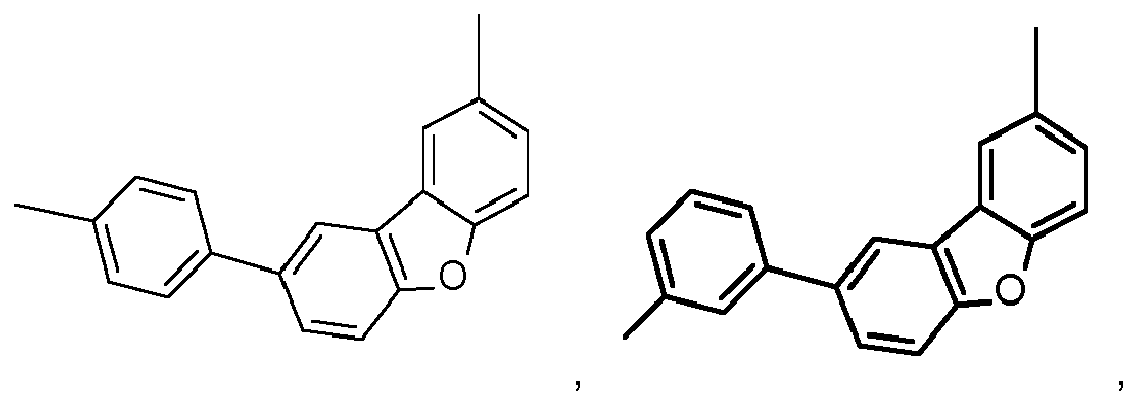


- The compound according to any of claims 1 to 8, wherein R16 is a group of formula


- The compound according to any of claims 1 to 9, which is a compound of formula


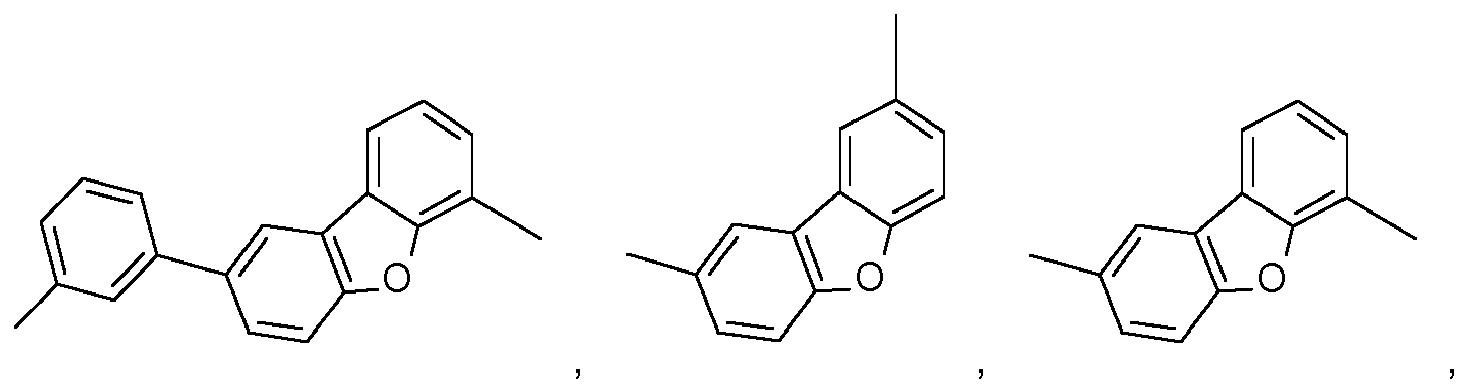


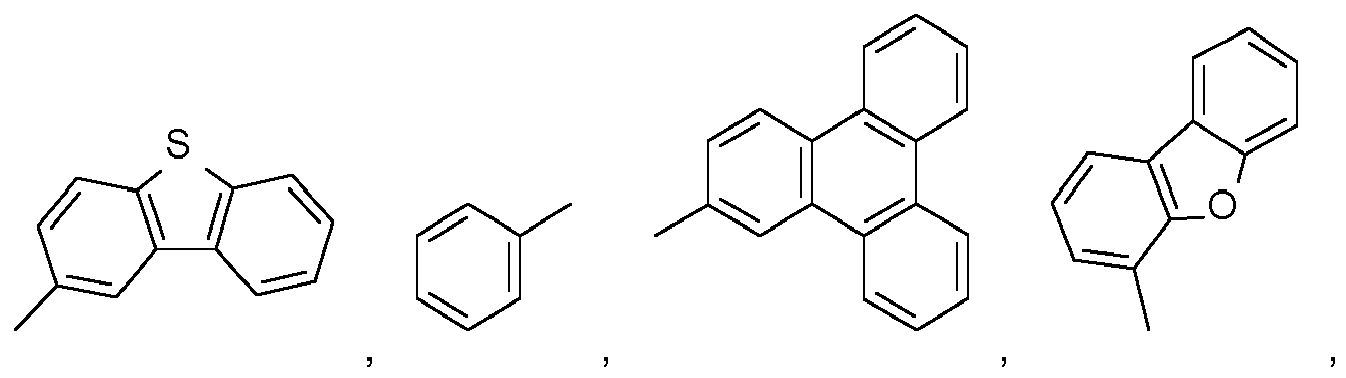

- An electronic device, comprising a compound according to any of claims 1 to 10.
- The electronic device according to claim 11, which is an electroluminescent device.
- A charge transport layer, a charge/exciton blocker layer, or an emitting layer comprising a compound according to any of claims 1 to 10.
- The emitting layer according to claim 13, comprising a compound according to any of claims 1 to 11 as host material in combination with a phosphorescent emitter.
- An apparatus selected from the group consisting of stationary visual display units; mobile visual display units; illumination units; keyboards; items of clothing; furniture; wallpaper, comprising the organic electronic device according to claim 11, or 12, or the charge transport layer, the charge/exciton blocker layer, or the emitting layer according to claim 13.
- Use of the compounds of formula I according to any of claims 1 to 10 for electrophotographic photoreceptors, photoelectric converters, organic solar cells, switching elements, organic light emitting field effect transistors, image sensors, dye lasers and electroluminescent devices.
Priority Applications (1)
| Application Number | Priority Date | Filing Date | Title |
|---|---|---|---|
| EP15154169.5A EP3053918B1 (en) | 2015-02-06 | 2015-02-06 | 2-carbazole substituted benzimidazoles for electronic applications |
Applications Claiming Priority (1)
| Application Number | Priority Date | Filing Date | Title |
|---|---|---|---|
| EP15154169.5A EP3053918B1 (en) | 2015-02-06 | 2015-02-06 | 2-carbazole substituted benzimidazoles for electronic applications |
Publications (2)
| Publication Number | Publication Date |
|---|---|
| EP3053918A1 true EP3053918A1 (en) | 2016-08-10 |
| EP3053918B1 EP3053918B1 (en) | 2018-04-11 |
Family
ID=52462191
Family Applications (1)
| Application Number | Title | Priority Date | Filing Date |
|---|---|---|---|
| EP15154169.5A Active EP3053918B1 (en) | 2015-02-06 | 2015-02-06 | 2-carbazole substituted benzimidazoles for electronic applications |
Country Status (1)
| Country | Link |
|---|---|
| EP (1) | EP3053918B1 (en) |
Cited By (1)
| Publication number | Priority date | Publication date | Assignee | Title |
|---|---|---|---|---|
| KR20160113487A (en) * | 2015-03-20 | 2016-09-29 | 대주전자재료 주식회사 | Benzimidazole derivatives and organic electroluminescent device comprising same |
Citations (158)
| Publication number | Priority date | Publication date | Assignee | Title |
|---|---|---|---|---|
| WO2000070655A2 (en) | 1999-05-13 | 2000-11-23 | The Trustees Of Princeton University | Very high efficiency organic light emitting devices based on electrophosphorescence |
| EP1097981A2 (en) | 1999-11-02 | 2001-05-09 | Sony Corporation | Organic electroluminescent device |
| WO2001041512A1 (en) | 1999-12-01 | 2001-06-07 | The Trustees Of Princeton University | Complexes of form l2mx as phosphorescent dopants for organic leds |
| US20010015432A1 (en) | 2000-02-10 | 2001-08-23 | Tatsuya Igarashi | Light emitting device material comprising iridium complex and light emitting device using same material |
| US20010019782A1 (en) | 1999-12-27 | 2001-09-06 | Tatsuya Igarashi | Light-emitting material comprising orthometalated iridium complex, light-emitting device, high efficiency red light-emitting device, and novel iridium complex |
| WO2002002714A2 (en) | 2000-06-30 | 2002-01-10 | E.I. Du Pont De Nemours And Company | Electroluminescent iridium compounds with fluorinated phenylpyridines, phenylpyrimidines, and phenylquinolines and devices made with such compounds |
| WO2002015645A1 (en) | 2000-08-11 | 2002-02-21 | The Trustees Of Princeton University | Organometallic compounds and emission-shifting organic electrophosphorescence |
| US20020024293A1 (en) | 2000-07-17 | 2002-02-28 | Fuji Photo Film Co., Ltd. | Light-emitting element and iridium complex |
| EP1191613A2 (en) | 2000-09-26 | 2002-03-27 | Canon Kabushiki Kaisha | Luminescence device, display apparatus and metal coordination compound |
| EP1191612A2 (en) | 2000-09-26 | 2002-03-27 | Canon Kabushiki Kaisha | Luminescence device, display apparatus and metal coordination compound |
| US20020048689A1 (en) | 2000-09-21 | 2002-04-25 | Fuji Photo Film Co., Ltd. | Light-emitting device and iridium complex |
| US20020055014A1 (en) | 2000-08-24 | 2002-05-09 | Fuji Photo Film Co., Ltd. | Light-emitting device and material therefor |
| EP1211257A2 (en) | 2000-12-01 | 2002-06-05 | Canon Kabushiki Kaisha | Metal coordination compound, luminescence device and display apparatus |
| US20020094453A1 (en) | 2000-11-29 | 2002-07-18 | Takao Takiguchi | Metal coordination compound, luminescence device and display apparatus |
| WO2002060910A1 (en) | 2001-02-01 | 2002-08-08 | Covion Organic Semiconductors Gmbh | Method for the production of highly pure, tris-ortho-metalated organo-iridium compounds |
| US6687266B1 (en) | 2002-11-08 | 2004-02-03 | Universal Display Corporation | Organic light emitting materials and devices |
| WO2005019373A2 (en) | 2003-08-19 | 2005-03-03 | Basf Aktiengesellschaft | Transition metal complexes comprising carbene ligands serving as emitters for organic light-emitting diodes (oled's) |
| US6921915B2 (en) | 2001-03-08 | 2005-07-26 | Canon Kabushiki Kaisha | Metal coordination compound, luminescence device and display apparatus |
| WO2005113704A2 (en) | 2004-05-18 | 2005-12-01 | The University Of Southern California | Luminescent compounds with carbene ligands |
| US20060008670A1 (en) | 2004-07-06 | 2006-01-12 | Chun Lin | Organic light emitting materials and devices |
| WO2006014599A2 (en) | 2004-07-07 | 2006-02-09 | Universal Display Corporation | Stable and efficient electroluminescent materials |
| WO2006056418A2 (en) | 2004-11-25 | 2006-06-01 | Basf Aktiengesellschaft | Use of transition metal carbene complexes in organic light-emitting diodes (oleds) |
| WO2006067074A1 (en) | 2004-12-23 | 2006-06-29 | Ciba Specialty Chemicals Holding Inc. | Electroluminescent metal complexes with nucleophilic carbene ligands |
| WO2006098460A1 (en) | 2005-03-17 | 2006-09-21 | Semiconductor Energy Laboratory Co., Ltd. | Organometallic complex, and light-emitting element, light-emitting device and electronic device using the organometallic complex |
| WO2006100298A1 (en) | 2005-03-24 | 2006-09-28 | Basf Aktiengesellschaft | Use of compounds containing aromatic or heteroaromatic rings linked via carbonyl group-containing groups, for use as matrix materials in organic light-emitting diodes |
| WO2006115301A1 (en) | 2005-04-25 | 2006-11-02 | Fujifilm Corporation | Organic electroluminescent device |
| WO2006121811A1 (en) | 2005-05-06 | 2006-11-16 | Universal Display Corporation | Stability oled materials and devices with improved stability |
| WO2006128800A1 (en) | 2005-05-30 | 2006-12-07 | Ciba Specialty Chemicals Holding Inc. | Electroluminescent device |
| EP1786050A1 (en) | 2005-11-10 | 2007-05-16 | Novaled AG | Doped organic semiconductor material |
| JP2007123392A (en) | 2005-10-26 | 2007-05-17 | Konica Minolta Holdings Inc | Organic electroluminescence element, display device and lighting device |
| WO2007077810A1 (en) | 2006-01-05 | 2007-07-12 | Konica Minolta Holdings, Inc. | Organic electroluminescent device, display and illuminating device |
| US20070190359A1 (en) | 2006-02-10 | 2007-08-16 | Knowles David B | Metal complexes of cyclometallated imidazo[1,2-ƒ]phenanthridine and diimidazo[1,2-a:1',2'-c]quinazoline ligands and isoelectronic and benzannulated analogs thereof |
| EP1837927A1 (en) | 2006-03-22 | 2007-09-26 | Novaled AG | Use of heterocyclic radicals for doping of organic semiconductors |
| WO2007108362A1 (en) | 2006-03-17 | 2007-09-27 | Konica Minolta Holdings, Inc. | Organic electroluminescent device, display and illuminating device |
| WO2007108459A1 (en) | 2006-03-23 | 2007-09-27 | Konica Minolta Holdings, Inc. | Organic electroluminescent device, display and illuminating device |
| US20070224446A1 (en) | 2006-03-24 | 2007-09-27 | Idemitsu Kosan Co., Ltd. | Material for organic electroluminescence device and organic electroluminescence device using the same |
| WO2007114244A1 (en) | 2006-03-30 | 2007-10-11 | Konica Minolta Holdings, Inc. | Organic electroluminescent device, illuminating device and display device |
| WO2007115981A1 (en) | 2006-04-04 | 2007-10-18 | Basf Se | Transition metal complexes comprising one noncarbene ligand and one or two carbene ligands and their use in oleds |
| WO2007115970A1 (en) | 2006-04-05 | 2007-10-18 | Basf Se | Heteroleptic transition metal-carbene complexes and their use in organic light-emitting diodes (oleds) |
| WO2007119816A1 (en) | 2006-04-19 | 2007-10-25 | Konica Minolta Holdings, Inc. | Organic electroluminescence element material, organic electroluminescence element, display device and lighting apparatus |
| US20070278938A1 (en) | 2006-04-26 | 2007-12-06 | Idemitsu Kosan Co., Ltd. | Aromatic amine derivative and electroluminescence device using the same |
| WO2008000727A1 (en) | 2006-06-26 | 2008-01-03 | Basf Se | Use in oleds of transition metal carbene complexes that contain no cyclometallation via non-carbenes |
| JP2008021687A (en) | 2006-07-10 | 2008-01-31 | Mitsubishi Chemicals Corp | Organic electroluminescent element material, organic electroluminescent element composition, and organic electroluminescent element |
| WO2008022265A2 (en) | 2006-08-16 | 2008-02-21 | The Samuel Roberts Noble Foundation, Inc. | Plant isoflavone and isoflavanone o-methyltransferase genes |
| WO2008029729A1 (en) | 2006-09-08 | 2008-03-13 | Konica Minolta Holdings, Inc. | Organic electroluminescent device, illuminating device and display |
| WO2008029652A1 (en) | 2006-09-08 | 2008-03-13 | Konica Minolta Holdings, Inc. | Organic electroluminescent device, illuminating device and display |
| JP2008066569A (en) | 2006-09-08 | 2008-03-21 | Konica Minolta Holdings Inc | Organic electroluminescence element, lighting device and display device |
| WO2008035571A1 (en) | 2006-09-20 | 2008-03-27 | Konica Minolta Holdings, Inc. | Organic electroluminescence element |
| WO2008034758A2 (en) | 2006-09-21 | 2008-03-27 | Basf Se | Oled display with extended lifetime |
| JP2008074939A (en) | 2006-09-21 | 2008-04-03 | Konica Minolta Holdings Inc | ORGANIC ELECTROLUMINESCENT ELEMENT MATERIAL, ORGANIC ELECTROLUMINESCENT ELEMENT, DISPLAY DEVICE AND LIGHTING DEVICE |
| JP2008084913A (en) | 2006-09-26 | 2008-04-10 | Konica Minolta Holdings Inc | Organic electroluminescence element, display device and lighting device |
| EP1837926B1 (en) | 2006-03-21 | 2008-05-07 | Novaled AG | Heterocyclic radicals or diradicals and their dimers, oligomers, polymers, di-spiro and polycyclic derivatives as well as their use in organic semiconductor materials and electronic devices. |
| US20080106190A1 (en) | 2006-08-23 | 2008-05-08 | Idemitsu Kosan Co., Ltd. | Aromatic amine derivatives and organic electroluminescent device using same |
| JP2008127326A (en) | 2006-11-20 | 2008-06-05 | Chemiprokasei Kaisha Ltd | Novel di (pyridylphenyl) derivative, electron transport material comprising the same, and organic electroluminescence device including the same |
| WO2008072596A1 (en) | 2006-12-13 | 2008-06-19 | Konica Minolta Holdings, Inc. | Organic electroluminescent device, display and illuminating device |
| WO2008090912A1 (en) | 2007-01-23 | 2008-07-31 | Konica Minolta Holdings, Inc. | Method for manufacturing organic electroluminescent device, organic electroluminescent device manufactured by the method, display device and illuminating device |
| JP2008207520A (en) | 2007-02-28 | 2008-09-11 | Konica Minolta Holdings Inc | Organic thin film, organic thin film manufacturing method, electronic device, organic electroluminescence element, display device and lighting device |
| EP1970371A1 (en) | 2007-03-16 | 2008-09-17 | Novaled AG | Pyrido(3,2-h)chinazolins and/or 5,6-Dihydro derivatives thereof, method for their manufacture and endowed organic semiconductor material containing them |
| US20080265216A1 (en) | 2007-04-30 | 2008-10-30 | Novaled Ag | Oxocarbon-, pseudooxocarbon- and radialene compounds and their use |
| WO2008140114A1 (en) | 2007-05-16 | 2008-11-20 | Konica Minolta Holdings, Inc. | Organic electroluminescence element, display device and illuminating device |
| WO2008146838A1 (en) | 2007-05-30 | 2008-12-04 | Konica Minolta Holdings, Inc. | Organic electroluminescent device, display device and illuminating device |
| WO2008156105A1 (en) | 2007-06-21 | 2008-12-24 | Konica Minolta Holdings, Inc. | Organic electroluminescence element material, organic electroluminescence element, display device and illuminating device |
| WO2008156879A1 (en) | 2007-06-20 | 2008-12-24 | Universal Display Corporation | Blue phosphorescent imidazophenanthridine materials |
| WO2009003919A1 (en) | 2007-07-05 | 2009-01-08 | Basf Se | Organic light-emitting diodes comprising at least one disilyl compound selected from disilylcarbazoles, disilyldibenzofurans, disilyldibenzothiophenes, disilyldibenzophospholes, disilyldibenzothiophene s-oxides and disilyldibenzothiophene s,s-dioxides |
| WO2009003898A1 (en) | 2007-07-05 | 2009-01-08 | Basf Se | Organic light-emitting diodes containing carbene transition metal complex emitters and at least one compound selected from disilylcarbazoles, disilyldibenzofurans, disilyldibenzothiophenes, disilyldibenzophospholes, disilyldibenzothiophene s-oxides and disilyldibenzothiophene s,s-dioxides |
| WO2009008099A1 (en) | 2007-07-10 | 2009-01-15 | Idemitsu Kosan Co., Ltd. | Material for organic electroluminescence element, and organic electroluminescence element prepared by using the material |
| JP2009021336A (en) | 2007-07-11 | 2009-01-29 | Konica Minolta Holdings Inc | Organic electroluminescence element, display device and lighting device |
| US20090039776A1 (en) | 2007-08-09 | 2009-02-12 | Canon Kabushiki Kaisha | Organometallic complex and organic light-emitting element using same |
| EP2034538A1 (en) | 2006-06-02 | 2009-03-11 | Idemitsu Kosan Co., Ltd. | Material for organic electroluminescence element, and organic electroluminescence element using the material |
| US20090066226A1 (en) | 2005-04-18 | 2009-03-12 | Konica Minolta Holdings, Inc. | Organic electroluminescent device, display and illuminating device |
| JP2009059767A (en) | 2007-08-30 | 2009-03-19 | Konica Minolta Holdings Inc | Organic electroluminescence element, lighting device and display device |
| WO2009050290A1 (en) | 2007-10-17 | 2009-04-23 | Basf Se | Transition metal complexes having bridged carbene ligands and the use thereof in oleds |
| WO2009050281A1 (en) | 2007-10-17 | 2009-04-23 | Basf Se | Transition metal complexes with bridged carbene ligands and use thereof in oleds |
| WO2009060742A1 (en) | 2007-11-08 | 2009-05-14 | Konica Minolta Holdings, Inc. | Organic electroluminescent device, display device, and illuminating device |
| WO2009060757A1 (en) | 2007-11-08 | 2009-05-14 | Konica Minolta Holdings, Inc. | Organic electroluminescent device, display device and illuminating device |
| WO2009060780A1 (en) | 2007-11-08 | 2009-05-14 | Konica Minolta Holdings, Inc. | Organic electroluminescence element, display device, and lighting system |
| WO2009060779A1 (en) | 2007-11-08 | 2009-05-14 | Konica Minolta Holdings, Inc. | Organic electroluminescent device material, organic electroluminescent device, display device and illuminating device |
| WO2009063757A1 (en) | 2007-11-14 | 2009-05-22 | Konica Minolta Holdings, Inc. | Organic electroluminescent device material, organic electroluminescent device, method for manufacturing organic electroluminescent device, display device and illuminating device |
| JP2009114369A (en) | 2007-11-08 | 2009-05-28 | Konica Minolta Holdings Inc | ORGANIC ELECTROLUMINESCENT MATERIAL, ORGANIC ELECTROLUMINESCENT ELEMENT, DISPLAY DEVICE AND LIGHTING DEVICE |
| US20090134784A1 (en) | 2004-10-21 | 2009-05-28 | Universal Display Corporation | Carbazole-containing materials in phosphorescent light emitting diodes |
| JP2009114370A (en) | 2007-11-08 | 2009-05-28 | Konica Minolta Holdings Inc | ORGANIC ELECTROLUMINESCENT ELEMENT MATERIAL, ORGANIC ELECTROLUMINESCENT ELEMENT AND DISPLAY DEVICE, LIGHTING DEVICE |
| WO2009073245A1 (en) | 2007-12-06 | 2009-06-11 | Universal Display Corporation | Light-emitting organometallic complexes |
| US20090153034A1 (en) | 2007-12-13 | 2009-06-18 | Universal Display Corporation | Carbazole-containing materials in phosphorescent light emittinig diodes |
| JP2009135183A (en) | 2007-11-29 | 2009-06-18 | Konica Minolta Holdings Inc | Organic electroluminescence element, display, and lighting device |
| WO2009084413A1 (en) | 2007-12-28 | 2009-07-09 | Konica Minolta Holdings, Inc. | Organic electroluminescent device and method for manufacturing organic electroluminescent device |
| JP2009170764A (en) | 2008-01-18 | 2009-07-30 | Konica Minolta Holdings Inc | ORGANIC ELECTROLUMINESCENT ELEMENT MATERIAL, ORGANIC ELECTROLUMINESCENT ELEMENT, METHOD FOR PRODUCING ORGANIC ELECTROLUMINESCENT ELEMENT, DISPLAY DEVICE AND LIGHTING DEVICE |
| JP2009182298A (en) | 2008-02-01 | 2009-08-13 | Konica Minolta Holdings Inc | Organic electroluminescence element, lighting device and display device |
| WO2009104488A1 (en) | 2008-02-20 | 2009-08-27 | コニカミノルタホールディングス株式会社 | White light-emitting organic electroluminescent device |
| JP2009267255A (en) | 2008-04-28 | 2009-11-12 | Idemitsu Kosan Co Ltd | Material for organic electroluminescent element and organic electroluminescent element using the material |
| US20090284138A1 (en) | 2008-05-13 | 2009-11-19 | Konica Minolta Holdings, Inc. | Organic electroluminescent element, display device and lighting device |
| WO2010002850A1 (en) | 2008-06-30 | 2010-01-07 | Universal Display Corporation | Hole transport materials containing triphenylene |
| WO2010001830A1 (en) | 2008-07-01 | 2010-01-07 | コニカミノルタホールディングス株式会社 | White light-emitting organic electroluminescent element, illuminating device and display device |
| WO2010004877A1 (en) | 2008-07-10 | 2010-01-14 | コニカミノルタホールディングス株式会社 | Organic electroluminescent element, display device and illuminating device |
| JP2010021336A (en) | 2008-07-10 | 2010-01-28 | Konica Minolta Holdings Inc | Organic electroluminescence device, illuminator, and display device |
| JP2010040830A (en) | 2008-08-06 | 2010-02-18 | Konica Minolta Holdings Inc | Organic electroluminescent element, display device, and lighting system |
| WO2010024404A1 (en) | 2008-08-28 | 2010-03-04 | 旭硝子株式会社 | Abrasive composition and method for manufacturing semiconductor integrated circuit device |
| WO2010028151A1 (en) | 2008-09-03 | 2010-03-11 | Universal Display Corporation | Phosphorescent materials |
| WO2010040777A1 (en) | 2008-10-07 | 2010-04-15 | Osram Opto Semiconductors Gmbh | Siloles substituted with condensed ring systems and use thereof in organic electronics |
| WO2010044342A1 (en) | 2008-10-15 | 2010-04-22 | コニカミノルタホールディングス株式会社 | Organic el element, organic el element manufacturing method, white organic el element, display device, and illumination device |
| EP2180029A1 (en) | 2008-10-23 | 2010-04-28 | Novaled AG | Radialene compounds and their use |
| US20100102709A1 (en) | 2008-04-29 | 2010-04-29 | Olaf Zeika | Radialene compounds and their use |
| JP2010114180A (en) | 2008-11-05 | 2010-05-20 | Konica Minolta Holdings Inc | Organic electroluminescent element, white organic electroluminescent element, display device and illuminator |
| WO2010056669A1 (en) | 2008-11-11 | 2010-05-20 | Universal Display Corporation | Phosphorescent emitters |
| WO2010068876A1 (en) | 2008-12-12 | 2010-06-17 | Universal Display Corporation | BLUE EMITTER WITH HIGH EFFICIENCY BASED ON IMIDAZO [1,2-f] PHENANTHRIDINE IRIDIUM COMPLEXES |
| JP2010135467A (en) | 2008-12-03 | 2010-06-17 | Konica Minolta Holdings Inc | Organic electroluminescent element, lighting system equipped with the element, and display device |
| WO2010067746A1 (en) | 2008-12-08 | 2010-06-17 | コニカミノルタホールディングス株式会社 | Organic electroluminescence element, display device and illumination device |
| WO2010079051A1 (en) | 2009-01-07 | 2010-07-15 | Basf Se | Silyl and heteroatom substituted compounds selected from carbazoles, dibenzofurans, dibenzothiophenes and dibenzo phospholes and the application thereof in organic electronics |
| WO2010079678A1 (en) | 2009-01-09 | 2010-07-15 | コニカミノルタホールディングス株式会社 | Organic electroluminescent element, display device, and lighting device |
| WO2010087222A1 (en) | 2009-01-28 | 2010-08-05 | コニカミノルタホールディングス株式会社 | Organic electroluminescent element, display device, and illumination device |
| WO2010086089A1 (en) | 2009-02-02 | 2010-08-05 | Merck Patent Gmbh | Metal complexes |
| WO2010090077A1 (en) | 2009-02-06 | 2010-08-12 | コニカミノルタホールディングス株式会社 | Organic electroluminescent element, and illumination device and display device each comprising the element |
| WO2010095564A1 (en) | 2009-02-18 | 2010-08-26 | コニカミノルタホールディングス株式会社 | Organic electroluminescent element, and illuminating device and display device each comprising the element |
| WO2010118029A1 (en) | 2009-04-06 | 2010-10-14 | Universal Display Corporation | Metal complex comprising novel ligand structures |
| EP2246862A1 (en) | 2009-04-27 | 2010-11-03 | Novaled AG | Organic electronic device comprising an organic semiconducting material |
| WO2010129323A1 (en) | 2009-04-28 | 2010-11-11 | Universal Display Corporation | Iridium complex with methyl-d3 substitution |
| WO2010132236A1 (en) | 2009-05-13 | 2010-11-18 | Global Oled Technology Llc. | Internal connector for organic electronic devices |
| US20110057559A1 (en) | 2007-12-28 | 2011-03-10 | Universal Display Corporation | Phosphorescent emitters and host materials with improved stability |
| WO2011051404A1 (en) | 2009-10-28 | 2011-05-05 | Basf Se | Heteroleptic carbene complexes and use thereof in organic electronics |
| WO2011073149A1 (en) | 2009-12-14 | 2011-06-23 | Basf Se | Metal complexes comprising diazabenzimidazol carbene-ligands and the use thereof in oleds |
| US20110163302A1 (en) | 2008-06-30 | 2011-07-07 | Universal Display Corporation | Hole transport materials having a sulfur-containing group |
| WO2011090535A1 (en) | 2010-01-20 | 2011-07-28 | Universal Display Corporation | Electroluminescent devices for lighting applications |
| WO2011106344A1 (en) | 2010-02-25 | 2011-09-01 | Universal Display Corporation | Phosphorescent emitters |
| US20110210316A1 (en) | 2010-03-01 | 2011-09-01 | Semiconductor Energy Laboratory Co., Ltd. | Heterocyclic compound, light-emitting element, light-emitting device, electronic device, and lighting device |
| WO2011109042A1 (en) | 2010-03-03 | 2011-09-09 | Universal Display Corporation | Phosphorescent materials |
| US20110233528A1 (en) | 2010-03-24 | 2011-09-29 | Universal Display Corporation | Novel oled display architecture |
| WO2011137072A1 (en) | 2010-04-26 | 2011-11-03 | Universal Display Corporation | Bicarbazole containing compounds for oleds |
| WO2011157779A1 (en) | 2010-06-18 | 2011-12-22 | Basf Se | Organic electronic devices comprising a layer of a pyridine compound and a 8-hydroxyquinolinolato earth alkaline metal, or alkali metal complex |
| WO2011157790A1 (en) | 2010-06-18 | 2011-12-22 | Basf Se | Organic electronic devices comprising a layer of a dibenzofurane compound and a 8-hydroxyquinolinolato earth alkaline metal, or alkali metal complex |
| WO2011162162A1 (en) | 2010-06-24 | 2011-12-29 | 東レ株式会社 | Light-emitting device material and light-emitting device |
| EP2401254A1 (en) | 2009-02-26 | 2012-01-04 | Novaled AG | Quinone compounds as dopants in organic electronics |
| WO2012008881A1 (en) | 2010-07-15 | 2012-01-19 | Kuznetsov Andrey Leionidovich | Piezoelectric pump |
| WO2012014621A1 (en) | 2010-07-29 | 2012-02-02 | コニカミノルタホールディングス株式会社 | Transparent conductive film and organic electroluminescent element |
| WO2012016601A1 (en) | 2010-08-06 | 2012-02-09 | Telefonica, S.A. | A method for managing presence information |
| WO2012048266A1 (en) | 2010-10-08 | 2012-04-12 | Universal Display Corporation | Novel 3, 9-linked oligocarbazole-based hosts, containing dbt and dbr fragments, separated by aromatic spacers |
| WO2012053627A1 (en) | 2010-10-22 | 2012-04-26 | Semiconductor Energy Laboratory Co., Ltd. | Organometallic complex, light-emitting element, light-emitting device, electronic device and lighting device |
| WO2012105310A1 (en) | 2011-02-02 | 2012-08-09 | コニカミノルタホールディングス株式会社 | Organic electroluminescence element and illumination device |
| WO2012111462A1 (en) | 2011-02-15 | 2012-08-23 | コニカミノルタホールディングス株式会社 | Organic electroluminescence element and illumination device |
| WO2012115034A1 (en) | 2011-02-22 | 2012-08-30 | コニカミノルタホールディングス株式会社 | Organic electroluminescent element, illumination device, and display device |
| WO2012121936A2 (en) | 2011-03-08 | 2012-09-13 | Universal Display Corporation | Pyridyl carbene phosphorescent emitters |
| WO2012130709A1 (en) | 2011-03-25 | 2012-10-04 | Basf Se | 4h-imidazo[1,2-a]imidazoles for electronic applications |
| WO2012147397A1 (en) | 2011-04-26 | 2012-11-01 | コニカミノルタホールディングス株式会社 | Organic electroluminescent element and illuminating apparatus |
| US20120292600A1 (en) | 2011-05-19 | 2012-11-22 | Universal Display Corporation | Phosphorescent heteroleptic phenylbenzimidazole dopants |
| WO2012162325A1 (en) | 2011-05-25 | 2012-11-29 | Universal Display Corporation | Host materials for oleds |
| US20120305894A1 (en) | 2011-06-01 | 2012-12-06 | Do-Han Kim | Blue phosphorescent compound and organic electroluminescent device using the same |
| WO2012166608A1 (en) | 2011-05-27 | 2012-12-06 | Universal Display Corporation | High efficiency yellow light emitters for oled devices |
| WO2012170461A1 (en) | 2011-06-08 | 2012-12-13 | Universal Display Corporation | Heteroleptic iridium carbene complexes and light emitting device using them |
| WO2012172482A1 (en) | 2011-06-14 | 2012-12-20 | Basf Se | Metal complexes comprising azabenzimidazole carbene ligands and the use thereof in oleds |
| US20130001537A1 (en) | 2010-03-31 | 2013-01-03 | Hajime Muta | Novel organic compound and organic light-emitting device having the same |
| EP2551933A1 (en) | 2011-07-28 | 2013-01-30 | Universal Display Corporation | Heteroleptic iridium complexes as dopants |
| EP2551932A2 (en) | 2011-07-28 | 2013-01-30 | Universal Display Corporation | Host materials for phosphorescent oleds |
| WO2013022419A1 (en) | 2011-08-05 | 2013-02-14 | Universal Display Corporation | Phosphorescent organic light emitting devices combined with hole transport material having high operating stability |
| DE102012022880A1 (en) | 2011-12-22 | 2013-06-27 | Merck Patent Gmbh | Electronic device e.g. organic integrated circuits, organic field-effect transistors, organic thin-film transistors, organic light emitting transistors, comprises an organic layer comprising substituted heteroaryl compounds |
| EP2700695A1 (en) * | 2011-08-08 | 2014-02-26 | Cheil Industries Inc. | Organic optoelectronic device compound and organic light-emitting element including same |
| WO2014051232A1 (en) * | 2012-09-28 | 2014-04-03 | 제일모직 주식회사 | Compound for organic optoelectronic device, organic light-emitting device containing same, and display device including said organic light-emitting device |
| US20140145149A1 (en) | 2012-11-26 | 2014-05-29 | Universal Display Corporation | Organic Luminescent Compound With Delayed Fluorescence |
| KR20140083897A (en) * | 2012-12-26 | 2014-07-04 | 에스에프씨 주식회사 | An electroluminescent compound and an electroluminescent device comprising the same |
| KR20140099082A (en) * | 2013-02-01 | 2014-08-11 | (주)피엔에이치테크 | Novel compound for organic electroluminescent device and organic electroluminescent device comprising the same |
| US20140225088A1 (en) * | 2013-02-12 | 2014-08-14 | Cheil Industries Inc. | Compound for organic optoelectronic device, organic light emitting diode including the same, and display including the organic light emitting diode |
-
2015
- 2015-02-06 EP EP15154169.5A patent/EP3053918B1/en active Active
Patent Citations (171)
| Publication number | Priority date | Publication date | Assignee | Title |
|---|---|---|---|---|
| WO2000070655A2 (en) | 1999-05-13 | 2000-11-23 | The Trustees Of Princeton University | Very high efficiency organic light emitting devices based on electrophosphorescence |
| EP1097981A2 (en) | 1999-11-02 | 2001-05-09 | Sony Corporation | Organic electroluminescent device |
| WO2001041512A1 (en) | 1999-12-01 | 2001-06-07 | The Trustees Of Princeton University | Complexes of form l2mx as phosphorescent dopants for organic leds |
| US20010019782A1 (en) | 1999-12-27 | 2001-09-06 | Tatsuya Igarashi | Light-emitting material comprising orthometalated iridium complex, light-emitting device, high efficiency red light-emitting device, and novel iridium complex |
| US20010015432A1 (en) | 2000-02-10 | 2001-08-23 | Tatsuya Igarashi | Light emitting device material comprising iridium complex and light emitting device using same material |
| WO2002002714A2 (en) | 2000-06-30 | 2002-01-10 | E.I. Du Pont De Nemours And Company | Electroluminescent iridium compounds with fluorinated phenylpyridines, phenylpyrimidines, and phenylquinolines and devices made with such compounds |
| US20020024293A1 (en) | 2000-07-17 | 2002-02-28 | Fuji Photo Film Co., Ltd. | Light-emitting element and iridium complex |
| WO2002015645A1 (en) | 2000-08-11 | 2002-02-21 | The Trustees Of Princeton University | Organometallic compounds and emission-shifting organic electrophosphorescence |
| US20020055014A1 (en) | 2000-08-24 | 2002-05-09 | Fuji Photo Film Co., Ltd. | Light-emitting device and material therefor |
| US20020048689A1 (en) | 2000-09-21 | 2002-04-25 | Fuji Photo Film Co., Ltd. | Light-emitting device and iridium complex |
| EP1191613A2 (en) | 2000-09-26 | 2002-03-27 | Canon Kabushiki Kaisha | Luminescence device, display apparatus and metal coordination compound |
| EP1191612A2 (en) | 2000-09-26 | 2002-03-27 | Canon Kabushiki Kaisha | Luminescence device, display apparatus and metal coordination compound |
| US20020094453A1 (en) | 2000-11-29 | 2002-07-18 | Takao Takiguchi | Metal coordination compound, luminescence device and display apparatus |
| EP1211257A2 (en) | 2000-12-01 | 2002-06-05 | Canon Kabushiki Kaisha | Metal coordination compound, luminescence device and display apparatus |
| WO2002060910A1 (en) | 2001-02-01 | 2002-08-08 | Covion Organic Semiconductors Gmbh | Method for the production of highly pure, tris-ortho-metalated organo-iridium compounds |
| US6921915B2 (en) | 2001-03-08 | 2005-07-26 | Canon Kabushiki Kaisha | Metal coordination compound, luminescence device and display apparatus |
| US6687266B1 (en) | 2002-11-08 | 2004-02-03 | Universal Display Corporation | Organic light emitting materials and devices |
| WO2005019373A2 (en) | 2003-08-19 | 2005-03-03 | Basf Aktiengesellschaft | Transition metal complexes comprising carbene ligands serving as emitters for organic light-emitting diodes (oled's) |
| WO2005113704A2 (en) | 2004-05-18 | 2005-12-01 | The University Of Southern California | Luminescent compounds with carbene ligands |
| US20060008670A1 (en) | 2004-07-06 | 2006-01-12 | Chun Lin | Organic light emitting materials and devices |
| WO2006014599A2 (en) | 2004-07-07 | 2006-02-09 | Universal Display Corporation | Stable and efficient electroluminescent materials |
| US20090134784A1 (en) | 2004-10-21 | 2009-05-28 | Universal Display Corporation | Carbazole-containing materials in phosphorescent light emitting diodes |
| WO2006056418A2 (en) | 2004-11-25 | 2006-06-01 | Basf Aktiengesellschaft | Use of transition metal carbene complexes in organic light-emitting diodes (oleds) |
| WO2006067074A1 (en) | 2004-12-23 | 2006-06-29 | Ciba Specialty Chemicals Holding Inc. | Electroluminescent metal complexes with nucleophilic carbene ligands |
| WO2006098460A1 (en) | 2005-03-17 | 2006-09-21 | Semiconductor Energy Laboratory Co., Ltd. | Organometallic complex, and light-emitting element, light-emitting device and electronic device using the organometallic complex |
| WO2006100298A1 (en) | 2005-03-24 | 2006-09-28 | Basf Aktiengesellschaft | Use of compounds containing aromatic or heteroaromatic rings linked via carbonyl group-containing groups, for use as matrix materials in organic light-emitting diodes |
| US20090066226A1 (en) | 2005-04-18 | 2009-03-12 | Konica Minolta Holdings, Inc. | Organic electroluminescent device, display and illuminating device |
| WO2006115301A1 (en) | 2005-04-25 | 2006-11-02 | Fujifilm Corporation | Organic electroluminescent device |
| WO2006121811A1 (en) | 2005-05-06 | 2006-11-16 | Universal Display Corporation | Stability oled materials and devices with improved stability |
| WO2006128800A1 (en) | 2005-05-30 | 2006-12-07 | Ciba Specialty Chemicals Holding Inc. | Electroluminescent device |
| EP1885818B1 (en) | 2005-05-30 | 2010-01-13 | Basf Se | Electroluminescent device |
| EP1885818A1 (en) | 2005-05-30 | 2008-02-13 | Ciba Specialty Chemicals Holding Inc. | Electroluminescent device |
| JP2007123392A (en) | 2005-10-26 | 2007-05-17 | Konica Minolta Holdings Inc | Organic electroluminescence element, display device and lighting device |
| EP1786050A1 (en) | 2005-11-10 | 2007-05-16 | Novaled AG | Doped organic semiconductor material |
| WO2007077810A1 (en) | 2006-01-05 | 2007-07-12 | Konica Minolta Holdings, Inc. | Organic electroluminescent device, display and illuminating device |
| EP1970976A1 (en) | 2006-01-05 | 2008-09-17 | Konica Minolta Holdings, Inc. | Organic electroluminescent device, display and illuminating device |
| WO2007095118A2 (en) | 2006-02-10 | 2007-08-23 | Universal Display Corporation | METAL COMPLEXES OF CYCLOMETALLATED IMIDAZO[1,2-f]PHENANTHRIDINE AND DIIMIDAZO[1,2-A:1',2'-C]QUINAZOLINE LIGANDS AND ISOELECTRONIC AND BENZANNULATED ANALOGS THEREOF |
| US20070190359A1 (en) | 2006-02-10 | 2007-08-16 | Knowles David B | Metal complexes of cyclometallated imidazo[1,2-ƒ]phenanthridine and diimidazo[1,2-a:1',2'-c]quinazoline ligands and isoelectronic and benzannulated analogs thereof |
| WO2007108362A1 (en) | 2006-03-17 | 2007-09-27 | Konica Minolta Holdings, Inc. | Organic electroluminescent device, display and illuminating device |
| EP1837926B1 (en) | 2006-03-21 | 2008-05-07 | Novaled AG | Heterocyclic radicals or diradicals and their dimers, oligomers, polymers, di-spiro and polycyclic derivatives as well as their use in organic semiconductor materials and electronic devices. |
| EP1837927A1 (en) | 2006-03-22 | 2007-09-26 | Novaled AG | Use of heterocyclic radicals for doping of organic semiconductors |
| WO2007108459A1 (en) | 2006-03-23 | 2007-09-27 | Konica Minolta Holdings, Inc. | Organic electroluminescent device, display and illuminating device |
| EP1998388A1 (en) | 2006-03-23 | 2008-12-03 | Konica Minolta Holdings, Inc. | Organic electroluminescent device, display and illuminating device |
| US20070224446A1 (en) | 2006-03-24 | 2007-09-27 | Idemitsu Kosan Co., Ltd. | Material for organic electroluminescence device and organic electroluminescence device using the same |
| WO2007114244A1 (en) | 2006-03-30 | 2007-10-11 | Konica Minolta Holdings, Inc. | Organic electroluminescent device, illuminating device and display device |
| WO2007115981A1 (en) | 2006-04-04 | 2007-10-18 | Basf Se | Transition metal complexes comprising one noncarbene ligand and one or two carbene ligands and their use in oleds |
| WO2007115970A1 (en) | 2006-04-05 | 2007-10-18 | Basf Se | Heteroleptic transition metal-carbene complexes and their use in organic light-emitting diodes (oleds) |
| WO2007119816A1 (en) | 2006-04-19 | 2007-10-25 | Konica Minolta Holdings, Inc. | Organic electroluminescence element material, organic electroluminescence element, display device and lighting apparatus |
| US20070278938A1 (en) | 2006-04-26 | 2007-12-06 | Idemitsu Kosan Co., Ltd. | Aromatic amine derivative and electroluminescence device using the same |
| EP2034538A1 (en) | 2006-06-02 | 2009-03-11 | Idemitsu Kosan Co., Ltd. | Material for organic electroluminescence element, and organic electroluminescence element using the material |
| WO2008000727A1 (en) | 2006-06-26 | 2008-01-03 | Basf Se | Use in oleds of transition metal carbene complexes that contain no cyclometallation via non-carbenes |
| JP2008021687A (en) | 2006-07-10 | 2008-01-31 | Mitsubishi Chemicals Corp | Organic electroluminescent element material, organic electroluminescent element composition, and organic electroluminescent element |
| WO2008022265A2 (en) | 2006-08-16 | 2008-02-21 | The Samuel Roberts Noble Foundation, Inc. | Plant isoflavone and isoflavanone o-methyltransferase genes |
| US20080106190A1 (en) | 2006-08-23 | 2008-05-08 | Idemitsu Kosan Co., Ltd. | Aromatic amine derivatives and organic electroluminescent device using same |
| WO2008029652A1 (en) | 2006-09-08 | 2008-03-13 | Konica Minolta Holdings, Inc. | Organic electroluminescent device, illuminating device and display |
| JP2008066569A (en) | 2006-09-08 | 2008-03-21 | Konica Minolta Holdings Inc | Organic electroluminescence element, lighting device and display device |
| WO2008029729A1 (en) | 2006-09-08 | 2008-03-13 | Konica Minolta Holdings, Inc. | Organic electroluminescent device, illuminating device and display |
| WO2008035571A1 (en) | 2006-09-20 | 2008-03-27 | Konica Minolta Holdings, Inc. | Organic electroluminescence element |
| JP2008074939A (en) | 2006-09-21 | 2008-04-03 | Konica Minolta Holdings Inc | ORGANIC ELECTROLUMINESCENT ELEMENT MATERIAL, ORGANIC ELECTROLUMINESCENT ELEMENT, DISPLAY DEVICE AND LIGHTING DEVICE |
| WO2008034758A2 (en) | 2006-09-21 | 2008-03-27 | Basf Se | Oled display with extended lifetime |
| JP2008084913A (en) | 2006-09-26 | 2008-04-10 | Konica Minolta Holdings Inc | Organic electroluminescence element, display device and lighting device |
| JP2008127326A (en) | 2006-11-20 | 2008-06-05 | Chemiprokasei Kaisha Ltd | Novel di (pyridylphenyl) derivative, electron transport material comprising the same, and organic electroluminescence device including the same |
| WO2008072596A1 (en) | 2006-12-13 | 2008-06-19 | Konica Minolta Holdings, Inc. | Organic electroluminescent device, display and illuminating device |
| WO2008090912A1 (en) | 2007-01-23 | 2008-07-31 | Konica Minolta Holdings, Inc. | Method for manufacturing organic electroluminescent device, organic electroluminescent device manufactured by the method, display device and illuminating device |
| JP2008207520A (en) | 2007-02-28 | 2008-09-11 | Konica Minolta Holdings Inc | Organic thin film, organic thin film manufacturing method, electronic device, organic electroluminescence element, display device and lighting device |
| EP1970371A1 (en) | 2007-03-16 | 2008-09-17 | Novaled AG | Pyrido(3,2-h)chinazolins and/or 5,6-Dihydro derivatives thereof, method for their manufacture and endowed organic semiconductor material containing them |
| US20080265216A1 (en) | 2007-04-30 | 2008-10-30 | Novaled Ag | Oxocarbon-, pseudooxocarbon- and radialene compounds and their use |
| EP1988587A1 (en) | 2007-04-30 | 2008-11-05 | Novaled AG | Oxocarbon, pseudo oxocarbon and radialene compounds and their use |
| WO2008140114A1 (en) | 2007-05-16 | 2008-11-20 | Konica Minolta Holdings, Inc. | Organic electroluminescence element, display device and illuminating device |
| WO2008146838A1 (en) | 2007-05-30 | 2008-12-04 | Konica Minolta Holdings, Inc. | Organic electroluminescent device, display device and illuminating device |
| WO2008156879A1 (en) | 2007-06-20 | 2008-12-24 | Universal Display Corporation | Blue phosphorescent imidazophenanthridine materials |
| WO2008156105A1 (en) | 2007-06-21 | 2008-12-24 | Konica Minolta Holdings, Inc. | Organic electroluminescence element material, organic electroluminescence element, display device and illuminating device |
| WO2009003898A1 (en) | 2007-07-05 | 2009-01-08 | Basf Se | Organic light-emitting diodes containing carbene transition metal complex emitters and at least one compound selected from disilylcarbazoles, disilyldibenzofurans, disilyldibenzothiophenes, disilyldibenzophospholes, disilyldibenzothiophene s-oxides and disilyldibenzothiophene s,s-dioxides |
| WO2009003919A1 (en) | 2007-07-05 | 2009-01-08 | Basf Se | Organic light-emitting diodes comprising at least one disilyl compound selected from disilylcarbazoles, disilyldibenzofurans, disilyldibenzothiophenes, disilyldibenzophospholes, disilyldibenzothiophene s-oxides and disilyldibenzothiophene s,s-dioxides |
| WO2009008100A1 (en) | 2007-07-10 | 2009-01-15 | Idemitsu Kosan Co., Ltd. | Material for organic electroluminescence element, and organic electroluminescence element prepared by using the material |
| WO2009008099A1 (en) | 2007-07-10 | 2009-01-15 | Idemitsu Kosan Co., Ltd. | Material for organic electroluminescence element, and organic electroluminescence element prepared by using the material |
| JP2009021336A (en) | 2007-07-11 | 2009-01-29 | Konica Minolta Holdings Inc | Organic electroluminescence element, display device and lighting device |
| US20090039776A1 (en) | 2007-08-09 | 2009-02-12 | Canon Kabushiki Kaisha | Organometallic complex and organic light-emitting element using same |
| JP2009059767A (en) | 2007-08-30 | 2009-03-19 | Konica Minolta Holdings Inc | Organic electroluminescence element, lighting device and display device |
| WO2009050290A1 (en) | 2007-10-17 | 2009-04-23 | Basf Se | Transition metal complexes having bridged carbene ligands and the use thereof in oleds |
| WO2009050281A1 (en) | 2007-10-17 | 2009-04-23 | Basf Se | Transition metal complexes with bridged carbene ligands and use thereof in oleds |
| JP2009114369A (en) | 2007-11-08 | 2009-05-28 | Konica Minolta Holdings Inc | ORGANIC ELECTROLUMINESCENT MATERIAL, ORGANIC ELECTROLUMINESCENT ELEMENT, DISPLAY DEVICE AND LIGHTING DEVICE |
| WO2009060779A1 (en) | 2007-11-08 | 2009-05-14 | Konica Minolta Holdings, Inc. | Organic electroluminescent device material, organic electroluminescent device, display device and illuminating device |
| WO2009060780A1 (en) | 2007-11-08 | 2009-05-14 | Konica Minolta Holdings, Inc. | Organic electroluminescence element, display device, and lighting system |
| WO2009060757A1 (en) | 2007-11-08 | 2009-05-14 | Konica Minolta Holdings, Inc. | Organic electroluminescent device, display device and illuminating device |
| JP2009114370A (en) | 2007-11-08 | 2009-05-28 | Konica Minolta Holdings Inc | ORGANIC ELECTROLUMINESCENT ELEMENT MATERIAL, ORGANIC ELECTROLUMINESCENT ELEMENT AND DISPLAY DEVICE, LIGHTING DEVICE |
| WO2009060742A1 (en) | 2007-11-08 | 2009-05-14 | Konica Minolta Holdings, Inc. | Organic electroluminescent device, display device, and illuminating device |
| WO2009063757A1 (en) | 2007-11-14 | 2009-05-22 | Konica Minolta Holdings, Inc. | Organic electroluminescent device material, organic electroluminescent device, method for manufacturing organic electroluminescent device, display device and illuminating device |
| JP2009135183A (en) | 2007-11-29 | 2009-06-18 | Konica Minolta Holdings Inc | Organic electroluminescence element, display, and lighting device |
| WO2009073245A1 (en) | 2007-12-06 | 2009-06-11 | Universal Display Corporation | Light-emitting organometallic complexes |
| US20090153034A1 (en) | 2007-12-13 | 2009-06-18 | Universal Display Corporation | Carbazole-containing materials in phosphorescent light emittinig diodes |
| WO2009084413A1 (en) | 2007-12-28 | 2009-07-09 | Konica Minolta Holdings, Inc. | Organic electroluminescent device and method for manufacturing organic electroluminescent device |
| US20110057559A1 (en) | 2007-12-28 | 2011-03-10 | Universal Display Corporation | Phosphorescent emitters and host materials with improved stability |
| WO2009086028A2 (en) | 2007-12-28 | 2009-07-09 | Universal Display Corporation | Carbazole-containing materials in phosphorescent light emitting diodes |
| JP2009170764A (en) | 2008-01-18 | 2009-07-30 | Konica Minolta Holdings Inc | ORGANIC ELECTROLUMINESCENT ELEMENT MATERIAL, ORGANIC ELECTROLUMINESCENT ELEMENT, METHOD FOR PRODUCING ORGANIC ELECTROLUMINESCENT ELEMENT, DISPLAY DEVICE AND LIGHTING DEVICE |
| JP2009182298A (en) | 2008-02-01 | 2009-08-13 | Konica Minolta Holdings Inc | Organic electroluminescence element, lighting device and display device |
| WO2009104488A1 (en) | 2008-02-20 | 2009-08-27 | コニカミノルタホールディングス株式会社 | White light-emitting organic electroluminescent device |
| JP2009267255A (en) | 2008-04-28 | 2009-11-12 | Idemitsu Kosan Co Ltd | Material for organic electroluminescent element and organic electroluminescent element using the material |
| US20100102709A1 (en) | 2008-04-29 | 2010-04-29 | Olaf Zeika | Radialene compounds and their use |
| US20090284138A1 (en) | 2008-05-13 | 2009-11-19 | Konica Minolta Holdings, Inc. | Organic electroluminescent element, display device and lighting device |
| US20120261654A1 (en) | 2008-05-13 | 2012-10-18 | Konica Minolta Holdings, Inc. | Organic electroluminescent element, display device and lighting device |
| US20110163302A1 (en) | 2008-06-30 | 2011-07-07 | Universal Display Corporation | Hole transport materials having a sulfur-containing group |
| WO2010002850A1 (en) | 2008-06-30 | 2010-01-07 | Universal Display Corporation | Hole transport materials containing triphenylene |
| WO2010001830A1 (en) | 2008-07-01 | 2010-01-07 | コニカミノルタホールディングス株式会社 | White light-emitting organic electroluminescent element, illuminating device and display device |
| WO2010004877A1 (en) | 2008-07-10 | 2010-01-14 | コニカミノルタホールディングス株式会社 | Organic electroluminescent element, display device and illuminating device |
| JP2010021336A (en) | 2008-07-10 | 2010-01-28 | Konica Minolta Holdings Inc | Organic electroluminescence device, illuminator, and display device |
| JP2010040830A (en) | 2008-08-06 | 2010-02-18 | Konica Minolta Holdings Inc | Organic electroluminescent element, display device, and lighting system |
| WO2010024404A1 (en) | 2008-08-28 | 2010-03-04 | 旭硝子株式会社 | Abrasive composition and method for manufacturing semiconductor integrated circuit device |
| WO2010028151A1 (en) | 2008-09-03 | 2010-03-11 | Universal Display Corporation | Phosphorescent materials |
| WO2010027583A1 (en) | 2008-09-03 | 2010-03-11 | Universal Display Corporation | Phosphorescent materials |
| US20110227049A1 (en) | 2008-09-03 | 2011-09-22 | Universal Display Corporation | Phosphorescent materials |
| WO2010040777A1 (en) | 2008-10-07 | 2010-04-15 | Osram Opto Semiconductors Gmbh | Siloles substituted with condensed ring systems and use thereof in organic electronics |
| WO2010044342A1 (en) | 2008-10-15 | 2010-04-22 | コニカミノルタホールディングス株式会社 | Organic el element, organic el element manufacturing method, white organic el element, display device, and illumination device |
| EP2180029A1 (en) | 2008-10-23 | 2010-04-28 | Novaled AG | Radialene compounds and their use |
| JP2010114180A (en) | 2008-11-05 | 2010-05-20 | Konica Minolta Holdings Inc | Organic electroluminescent element, white organic electroluminescent element, display device and illuminator |
| WO2010056669A1 (en) | 2008-11-11 | 2010-05-20 | Universal Display Corporation | Phosphorescent emitters |
| JP2010135467A (en) | 2008-12-03 | 2010-06-17 | Konica Minolta Holdings Inc | Organic electroluminescent element, lighting system equipped with the element, and display device |
| WO2010067746A1 (en) | 2008-12-08 | 2010-06-17 | コニカミノルタホールディングス株式会社 | Organic electroluminescence element, display device and illumination device |
| WO2010068876A1 (en) | 2008-12-12 | 2010-06-17 | Universal Display Corporation | BLUE EMITTER WITH HIGH EFFICIENCY BASED ON IMIDAZO [1,2-f] PHENANTHRIDINE IRIDIUM COMPLEXES |
| WO2010079051A1 (en) | 2009-01-07 | 2010-07-15 | Basf Se | Silyl and heteroatom substituted compounds selected from carbazoles, dibenzofurans, dibenzothiophenes and dibenzo phospholes and the application thereof in organic electronics |
| WO2010079678A1 (en) | 2009-01-09 | 2010-07-15 | コニカミノルタホールディングス株式会社 | Organic electroluminescent element, display device, and lighting device |
| WO2010087222A1 (en) | 2009-01-28 | 2010-08-05 | コニカミノルタホールディングス株式会社 | Organic electroluminescent element, display device, and illumination device |
| WO2010086089A1 (en) | 2009-02-02 | 2010-08-05 | Merck Patent Gmbh | Metal complexes |
| WO2010090077A1 (en) | 2009-02-06 | 2010-08-12 | コニカミノルタホールディングス株式会社 | Organic electroluminescent element, and illumination device and display device each comprising the element |
| WO2010095564A1 (en) | 2009-02-18 | 2010-08-26 | コニカミノルタホールディングス株式会社 | Organic electroluminescent element, and illuminating device and display device each comprising the element |
| EP2401254A1 (en) | 2009-02-26 | 2012-01-04 | Novaled AG | Quinone compounds as dopants in organic electronics |
| WO2010118029A1 (en) | 2009-04-06 | 2010-10-14 | Universal Display Corporation | Metal complex comprising novel ligand structures |
| EP2246862A1 (en) | 2009-04-27 | 2010-11-03 | Novaled AG | Organic electronic device comprising an organic semiconducting material |
| WO2010129323A1 (en) | 2009-04-28 | 2010-11-11 | Universal Display Corporation | Iridium complex with methyl-d3 substitution |
| WO2010132236A1 (en) | 2009-05-13 | 2010-11-18 | Global Oled Technology Llc. | Internal connector for organic electronic devices |
| WO2011051404A1 (en) | 2009-10-28 | 2011-05-05 | Basf Se | Heteroleptic carbene complexes and use thereof in organic electronics |
| WO2011073149A1 (en) | 2009-12-14 | 2011-06-23 | Basf Se | Metal complexes comprising diazabenzimidazol carbene-ligands and the use thereof in oleds |
| WO2011090535A1 (en) | 2010-01-20 | 2011-07-28 | Universal Display Corporation | Electroluminescent devices for lighting applications |
| WO2011106344A1 (en) | 2010-02-25 | 2011-09-01 | Universal Display Corporation | Phosphorescent emitters |
| US20110210316A1 (en) | 2010-03-01 | 2011-09-01 | Semiconductor Energy Laboratory Co., Ltd. | Heterocyclic compound, light-emitting element, light-emitting device, electronic device, and lighting device |
| WO2011109042A1 (en) | 2010-03-03 | 2011-09-09 | Universal Display Corporation | Phosphorescent materials |
| US20110233528A1 (en) | 2010-03-24 | 2011-09-29 | Universal Display Corporation | Novel oled display architecture |
| US20130001537A1 (en) | 2010-03-31 | 2013-01-03 | Hajime Muta | Novel organic compound and organic light-emitting device having the same |
| WO2011137072A1 (en) | 2010-04-26 | 2011-11-03 | Universal Display Corporation | Bicarbazole containing compounds for oleds |
| WO2011157779A1 (en) | 2010-06-18 | 2011-12-22 | Basf Se | Organic electronic devices comprising a layer of a pyridine compound and a 8-hydroxyquinolinolato earth alkaline metal, or alkali metal complex |
| WO2011157790A1 (en) | 2010-06-18 | 2011-12-22 | Basf Se | Organic electronic devices comprising a layer of a dibenzofurane compound and a 8-hydroxyquinolinolato earth alkaline metal, or alkali metal complex |
| WO2011162162A1 (en) | 2010-06-24 | 2011-12-29 | 東レ株式会社 | Light-emitting device material and light-emitting device |
| WO2012008881A1 (en) | 2010-07-15 | 2012-01-19 | Kuznetsov Andrey Leionidovich | Piezoelectric pump |
| WO2012014621A1 (en) | 2010-07-29 | 2012-02-02 | コニカミノルタホールディングス株式会社 | Transparent conductive film and organic electroluminescent element |
| WO2012016601A1 (en) | 2010-08-06 | 2012-02-09 | Telefonica, S.A. | A method for managing presence information |
| WO2012048266A1 (en) | 2010-10-08 | 2012-04-12 | Universal Display Corporation | Novel 3, 9-linked oligocarbazole-based hosts, containing dbt and dbr fragments, separated by aromatic spacers |
| WO2012053627A1 (en) | 2010-10-22 | 2012-04-26 | Semiconductor Energy Laboratory Co., Ltd. | Organometallic complex, light-emitting element, light-emitting device, electronic device and lighting device |
| WO2012105310A1 (en) | 2011-02-02 | 2012-08-09 | コニカミノルタホールディングス株式会社 | Organic electroluminescence element and illumination device |
| WO2012111462A1 (en) | 2011-02-15 | 2012-08-23 | コニカミノルタホールディングス株式会社 | Organic electroluminescence element and illumination device |
| WO2012115034A1 (en) | 2011-02-22 | 2012-08-30 | コニカミノルタホールディングス株式会社 | Organic electroluminescent element, illumination device, and display device |
| WO2012121936A2 (en) | 2011-03-08 | 2012-09-13 | Universal Display Corporation | Pyridyl carbene phosphorescent emitters |
| WO2012130709A1 (en) | 2011-03-25 | 2012-10-04 | Basf Se | 4h-imidazo[1,2-a]imidazoles for electronic applications |
| WO2012147397A1 (en) | 2011-04-26 | 2012-11-01 | コニカミノルタホールディングス株式会社 | Organic electroluminescent element and illuminating apparatus |
| US20120292600A1 (en) | 2011-05-19 | 2012-11-22 | Universal Display Corporation | Phosphorescent heteroleptic phenylbenzimidazole dopants |
| WO2012162325A1 (en) | 2011-05-25 | 2012-11-29 | Universal Display Corporation | Host materials for oleds |
| WO2012166608A1 (en) | 2011-05-27 | 2012-12-06 | Universal Display Corporation | High efficiency yellow light emitters for oled devices |
| US20120305894A1 (en) | 2011-06-01 | 2012-12-06 | Do-Han Kim | Blue phosphorescent compound and organic electroluminescent device using the same |
| WO2012170461A1 (en) | 2011-06-08 | 2012-12-13 | Universal Display Corporation | Heteroleptic iridium carbene complexes and light emitting device using them |
| WO2012170571A1 (en) | 2011-06-08 | 2012-12-13 | Universal Display Corporation | Heteroleptic iridium carbene complexes and light emitting device using them |
| WO2012170463A1 (en) | 2011-06-08 | 2012-12-13 | Universal Display Corporation | Heteroleptic iridium carbene complexes and light emitting device using them |
| WO2012172482A1 (en) | 2011-06-14 | 2012-12-20 | Basf Se | Metal complexes comprising azabenzimidazole carbene ligands and the use thereof in oleds |
| EP2551933A1 (en) | 2011-07-28 | 2013-01-30 | Universal Display Corporation | Heteroleptic iridium complexes as dopants |
| EP2551932A2 (en) | 2011-07-28 | 2013-01-30 | Universal Display Corporation | Host materials for phosphorescent oleds |
| WO2013022419A1 (en) | 2011-08-05 | 2013-02-14 | Universal Display Corporation | Phosphorescent organic light emitting devices combined with hole transport material having high operating stability |
| EP2700695A1 (en) * | 2011-08-08 | 2014-02-26 | Cheil Industries Inc. | Organic optoelectronic device compound and organic light-emitting element including same |
| DE102012022880A1 (en) | 2011-12-22 | 2013-06-27 | Merck Patent Gmbh | Electronic device e.g. organic integrated circuits, organic field-effect transistors, organic thin-film transistors, organic light emitting transistors, comprises an organic layer comprising substituted heteroaryl compounds |
| WO2014051232A1 (en) * | 2012-09-28 | 2014-04-03 | 제일모직 주식회사 | Compound for organic optoelectronic device, organic light-emitting device containing same, and display device including said organic light-emitting device |
| US20140145149A1 (en) | 2012-11-26 | 2014-05-29 | Universal Display Corporation | Organic Luminescent Compound With Delayed Fluorescence |
| KR20140083897A (en) * | 2012-12-26 | 2014-07-04 | 에스에프씨 주식회사 | An electroluminescent compound and an electroluminescent device comprising the same |
| KR20140099082A (en) * | 2013-02-01 | 2014-08-11 | (주)피엔에이치테크 | Novel compound for organic electroluminescent device and organic electroluminescent device comprising the same |
| US20140225088A1 (en) * | 2013-02-12 | 2014-08-14 | Cheil Industries Inc. | Compound for organic optoelectronic device, organic light emitting diode including the same, and display including the organic light emitting diode |
Non-Patent Citations (39)
| Title |
|---|
| "Kirk-Othmer Encyclopedia of Chemical Technology, 4th ed.", vol. 18, 1996, pages: 837 - 860 |
| A. G. WERNER; F. LI; K. HARADA; M. PFEIFFER; T. FRITZ; K. LEO, APPL. PHYS. LETT., vol. 82, no. 25, 2003, pages 4495 |
| A. G. WERNER; F. LI; K. HARADA; M. PFEIFFER; T. FRITZ; K. LEO, APPL. PHYS. LETT., vol. 82, no. 25, 23 June 2003 (2003-06-23) |
| ACHOUR, REDDOUANE; ZNIBER, RACHID, BULLETIN DES SOCIETES CHIMIQUES BELGES, vol. 96, 1987, pages 787 - 92 |
| ADV. SYNTH. CATAL., vol. 346, 2004, pages 1679 |
| ANGEW. CHEM. INT. ED., vol. 48, 2009, pages 9240 - 9261 |
| D. LI ET AL., DYES AND PIGMENTS, vol. 49, 2001, pages 181 - 186 |
| EUR. J. INORG. CHEM., vol. 24, 2005, pages 4976 - 4984 |
| EUR. J. ORG. CHEM., 2007, pages 2147 - 2151 |
| H. GILMAN; D. A. SHIRLEY, J. AM. CHEM. SOC., vol. 66, 1944, pages 888 |
| J. AM. CHEM. SOC., vol. 106, 1984, pages 7150 |
| J. AM. CHEM. SOC., vol. 124, 2002, pages 11900 - 11907 |
| J. CHEM. SOC. [SECTION] C: ORGANIC, vol. 16, 1971, pages 2775 - 7 |
| J. CHEM. SOC., PERKIN TRANS., vol. 2, no. 5, 2002, pages 953 - 957 |
| J. HETEROCYCLIC CHEM, vol. 38, 2001, pages 77 - 87 |
| J. HETEROCYCLIC CHEM, vol. 39, 2002, pages 933 - 941 |
| J. HETEROCYCLIC CHEMISTRY, vol. 34, 1997, pages 891 - 900 |
| J. KIDO ET AL., CHEM. COMMUN., 2008, pages 5821 - 5823 |
| J. KIDO ET AL., CHEM. MATER., vol. 20, 2008, pages 5951 - 5953 |
| J. ORG. CHEM., vol. 63, 1998, pages 878 - 880 |
| J. ORG. CHEM., vol. 69, 2004, pages 8177 - 8182 |
| J. ORG. CHEM., vol. 73, 2008, pages 2176 - 2181 |
| K. WALZER; B. MAENNIG; M. PFEIFFER; K. LEO, CHEM. SOC. REV., vol. 107, 2007, pages 1233 |
| KAHN ET AL., J. AM. CHEM. SOC., vol. 131, no. 35, 2009, pages 12530 - 12531 |
| M. PARK; J.R. BUCK; C.J. RIZZO, TETRAHEDRON, vol. 54, 1998, pages 12707 - 12714 |
| NAN-XING HU ET AL., SYNTH. MET., vol. 111, 2000, pages 421 |
| NATURE, vol. 357, 11 June 1992 (1992-06-11), pages 477 - 479 |
| ORG. LETT., vol. 6, 2004, pages 3501 - 3504 |
| ORGANIC & BIOMOLECULAR CHEMISTY, vol. 10, 2012, pages 7944 |
| PFEIFFER ET AL., ORGANIC ELECTRONICS, vol. 4, 2003, pages 89 - 103 |
| PRASAD APPUKKUTTAN ET AL., SYN-LETT, vol. 8, 2003, pages 1204 |
| SYNTHESIS, 2000, pages 442 - 446 |
| TETRAHEDRON LETT., vol. 25, 1984, pages 5363 - 6 |
| TETRAHEDRON, vol. 53, 1997, pages 12755 |
| TETRAHEDRON. LETT., vol. 47, 2006, pages 6957 - 6960 |
| W. GAO; A. KAHN, J. APPL. PHYS., vol. 94, 2003, pages 359 |
| W. GAO; A. KAHN, J. APPL. PHYS., vol. 94, no. 1, 1 July 2003 (2003-07-01) |
| W. YANG ET AL., J. MATER. CHEM., vol. 13, 2003, pages 1351 |
| Z. WU ET AL., EUR. J. ORG. CHEM., 2011, pages 5242 - 5245 |
Cited By (1)
| Publication number | Priority date | Publication date | Assignee | Title |
|---|---|---|---|---|
| KR20160113487A (en) * | 2015-03-20 | 2016-09-29 | 대주전자재료 주식회사 | Benzimidazole derivatives and organic electroluminescent device comprising same |
Also Published As
| Publication number | Publication date |
|---|---|
| EP3053918B1 (en) | 2018-04-11 |
Similar Documents
| Publication | Publication Date | Title |
|---|---|---|
| US11744152B2 (en) | Benzimidazo[1,2-a]benzimidazole derivatives for electronic applications | |
| EP2776443B1 (en) | 4h-imidazo[1,2-a]imidazoles for electronic applications | |
| EP3318566B1 (en) | Azadibenzofurans for electronic applications | |
| EP3119770B1 (en) | New dibenzofurans and dibenzothiophenes | |
| EP2651904B1 (en) | Bispyrimidines for electronic applications | |
| EP3075737B1 (en) | Benzimidazolo[1,2-a]benzimidazole carrying aryl- or heteroarylnitril groups for organic light emitting diodes | |
| EP3072943B1 (en) | Dibenzofuran/carbazole-substituted benzonitriles | |
| WO2015014791A1 (en) | Benzimidazolo[2,1-b][1,3]benzothiazoles for electronic applications | |
| EP3034507A1 (en) | 1-functionalized dibenzofurans and dibenzothiophenes for organic light emitting diodes (OLEDs) | |
| EP3356368B1 (en) | Benzimidazolo[1,2-a]benzimidazole carrying benzimidazolo[1,2-a]benzimidazolyl groups, carbazolyl groups, benzofurane groups or benzothiophene groups for organic light emitting diodes | |
| WO2016016791A1 (en) | 2,9-functionalized benzimidazolo[1,2-a]benzimidazoles as hosts for organic light emitting diodes (oleds) | |
| WO2017093958A1 (en) | Benzimidazolo[1,2-a]benzimidazole derivatives for organic light emitting diodes | |
| WO2017056052A1 (en) | Benzimidazolo[1,2-a]benzimidazole carrying benzimidazolo[1,2-a]benzimidazolyl groups, carbazolyl groups, benzofurane groups or benzothiophene groups for organic light emitting diodes | |
| EP3034506A1 (en) | 4-functionalized carbazole derivatives for electronic applications | |
| EP3070144B1 (en) | Seven-membered ring compounds | |
| WO2015114102A1 (en) | Silyl substituted azadibenzofurans and azadibenzothiophenes | |
| EP2982676B1 (en) | Benzimidazo[2,1-B]benzoxazoles for electronic applications | |
| WO2017078182A1 (en) | Benzimidazole fused heteroaryls | |
| WO2017178864A1 (en) | Seven-membered ring compounds | |
| EP3015469B1 (en) | 5-(benzimidazol-2-yl)benzimidazo[1,2-a]benzimidazoles for electronic applications | |
| EP3053918B1 (en) | 2-carbazole substituted benzimidazoles for electronic applications | |
| WO2016079667A1 (en) | Indole derivatives for electronic applications |
Legal Events
| Date | Code | Title | Description |
|---|---|---|---|
| PUAI | Public reference made under article 153(3) epc to a published international application that has entered the european phase |
Free format text: ORIGINAL CODE: 0009012 |
|
| AK | Designated contracting states |
Kind code of ref document: A1 Designated state(s): AL AT BE BG CH CY CZ DE DK EE ES FI FR GB GR HR HU IE IS IT LI LT LU LV MC MK MT NL NO PL PT RO RS SE SI SK SM TR |
|
| AX | Request for extension of the european patent |
Extension state: BA ME |
|
| STAA | Information on the status of an ep patent application or granted ep patent |
Free format text: STATUS: REQUEST FOR EXAMINATION WAS MADE |
|
| 17P | Request for examination filed |
Effective date: 20170202 |
|
| RBV | Designated contracting states (corrected) |
Designated state(s): AL AT BE BG CH CY CZ DE DK EE ES FI FR GB GR HR HU IE IS IT LI LT LU LV MC MK MT NL NO PL PT RO RS SE SI SK SM TR |
|
| STAA | Information on the status of an ep patent application or granted ep patent |
Free format text: STATUS: EXAMINATION IS IN PROGRESS |
|
| 17Q | First examination report despatched |
Effective date: 20170324 |
|
| GRAP | Despatch of communication of intention to grant a patent |
Free format text: ORIGINAL CODE: EPIDOSNIGR1 |
|
| STAA | Information on the status of an ep patent application or granted ep patent |
Free format text: STATUS: GRANT OF PATENT IS INTENDED |
|
| INTG | Intention to grant announced |
Effective date: 20170907 |
|
| RAP1 | Party data changed (applicant data changed or rights of an application transferred) |
Owner name: IDEMITSU KOSAN CO., LTD. |
|
| GRAS | Grant fee paid |
Free format text: ORIGINAL CODE: EPIDOSNIGR3 |
|
| GRAA | (expected) grant |
Free format text: ORIGINAL CODE: 0009210 |
|
| STAA | Information on the status of an ep patent application or granted ep patent |
Free format text: STATUS: THE PATENT HAS BEEN GRANTED |
|
| AK | Designated contracting states |
Kind code of ref document: B1 Designated state(s): AL AT BE BG CH CY CZ DE DK EE ES FI FR GB GR HR HU IE IS IT LI LT LU LV MC MK MT NL NO PL PT RO RS SE SI SK SM TR |
|
| REG | Reference to a national code |
Ref country code: GB Ref legal event code: FG4D |
|
| REG | Reference to a national code |
Ref country code: CH Ref legal event code: EP |
|
| REG | Reference to a national code |
Ref country code: AT Ref legal event code: REF Ref document number: 987902 Country of ref document: AT Kind code of ref document: T Effective date: 20180415 |
|
| REG | Reference to a national code |
Ref country code: IE Ref legal event code: FG4D |
|
| REG | Reference to a national code |
Ref country code: DE Ref legal event code: R096 Ref document number: 602015009713 Country of ref document: DE |
|
| REG | Reference to a national code |
Ref country code: NL Ref legal event code: MP Effective date: 20180411 |
|
| REG | Reference to a national code |
Ref country code: LT Ref legal event code: MG4D |
|
| PG25 | Lapsed in a contracting state [announced via postgrant information from national office to epo] |
Ref country code: NL Free format text: LAPSE BECAUSE OF FAILURE TO SUBMIT A TRANSLATION OF THE DESCRIPTION OR TO PAY THE FEE WITHIN THE PRESCRIBED TIME-LIMIT Effective date: 20180411 |
|
| PG25 | Lapsed in a contracting state [announced via postgrant information from national office to epo] |
Ref country code: AL Free format text: LAPSE BECAUSE OF FAILURE TO SUBMIT A TRANSLATION OF THE DESCRIPTION OR TO PAY THE FEE WITHIN THE PRESCRIBED TIME-LIMIT Effective date: 20180411 Ref country code: ES Free format text: LAPSE BECAUSE OF FAILURE TO SUBMIT A TRANSLATION OF THE DESCRIPTION OR TO PAY THE FEE WITHIN THE PRESCRIBED TIME-LIMIT Effective date: 20180411 Ref country code: NO Free format text: LAPSE BECAUSE OF FAILURE TO SUBMIT A TRANSLATION OF THE DESCRIPTION OR TO PAY THE FEE WITHIN THE PRESCRIBED TIME-LIMIT Effective date: 20180711 Ref country code: PL Free format text: LAPSE BECAUSE OF FAILURE TO SUBMIT A TRANSLATION OF THE DESCRIPTION OR TO PAY THE FEE WITHIN THE PRESCRIBED TIME-LIMIT Effective date: 20180411 Ref country code: LT Free format text: LAPSE BECAUSE OF FAILURE TO SUBMIT A TRANSLATION OF THE DESCRIPTION OR TO PAY THE FEE WITHIN THE PRESCRIBED TIME-LIMIT Effective date: 20180411 Ref country code: SE Free format text: LAPSE BECAUSE OF FAILURE TO SUBMIT A TRANSLATION OF THE DESCRIPTION OR TO PAY THE FEE WITHIN THE PRESCRIBED TIME-LIMIT Effective date: 20180411 Ref country code: BG Free format text: LAPSE BECAUSE OF FAILURE TO SUBMIT A TRANSLATION OF THE DESCRIPTION OR TO PAY THE FEE WITHIN THE PRESCRIBED TIME-LIMIT Effective date: 20180711 Ref country code: FI Free format text: LAPSE BECAUSE OF FAILURE TO SUBMIT A TRANSLATION OF THE DESCRIPTION OR TO PAY THE FEE WITHIN THE PRESCRIBED TIME-LIMIT Effective date: 20180411 |
|
| PG25 | Lapsed in a contracting state [announced via postgrant information from national office to epo] |
Ref country code: RS Free format text: LAPSE BECAUSE OF FAILURE TO SUBMIT A TRANSLATION OF THE DESCRIPTION OR TO PAY THE FEE WITHIN THE PRESCRIBED TIME-LIMIT Effective date: 20180411 Ref country code: LV Free format text: LAPSE BECAUSE OF FAILURE TO SUBMIT A TRANSLATION OF THE DESCRIPTION OR TO PAY THE FEE WITHIN THE PRESCRIBED TIME-LIMIT Effective date: 20180411 Ref country code: GR Free format text: LAPSE BECAUSE OF FAILURE TO SUBMIT A TRANSLATION OF THE DESCRIPTION OR TO PAY THE FEE WITHIN THE PRESCRIBED TIME-LIMIT Effective date: 20180712 Ref country code: HR Free format text: LAPSE BECAUSE OF FAILURE TO SUBMIT A TRANSLATION OF THE DESCRIPTION OR TO PAY THE FEE WITHIN THE PRESCRIBED TIME-LIMIT Effective date: 20180411 |
|
| REG | Reference to a national code |
Ref country code: AT Ref legal event code: MK05 Ref document number: 987902 Country of ref document: AT Kind code of ref document: T Effective date: 20180411 |
|
| PG25 | Lapsed in a contracting state [announced via postgrant information from national office to epo] |
Ref country code: PT Free format text: LAPSE BECAUSE OF FAILURE TO SUBMIT A TRANSLATION OF THE DESCRIPTION OR TO PAY THE FEE WITHIN THE PRESCRIBED TIME-LIMIT Effective date: 20180813 |
|
| REG | Reference to a national code |
Ref country code: DE Ref legal event code: R097 Ref document number: 602015009713 Country of ref document: DE |
|
| PG25 | Lapsed in a contracting state [announced via postgrant information from national office to epo] |
Ref country code: SK Free format text: LAPSE BECAUSE OF FAILURE TO SUBMIT A TRANSLATION OF THE DESCRIPTION OR TO PAY THE FEE WITHIN THE PRESCRIBED TIME-LIMIT Effective date: 20180411 Ref country code: RO Free format text: LAPSE BECAUSE OF FAILURE TO SUBMIT A TRANSLATION OF THE DESCRIPTION OR TO PAY THE FEE WITHIN THE PRESCRIBED TIME-LIMIT Effective date: 20180411 Ref country code: EE Free format text: LAPSE BECAUSE OF FAILURE TO SUBMIT A TRANSLATION OF THE DESCRIPTION OR TO PAY THE FEE WITHIN THE PRESCRIBED TIME-LIMIT Effective date: 20180411 Ref country code: DK Free format text: LAPSE BECAUSE OF FAILURE TO SUBMIT A TRANSLATION OF THE DESCRIPTION OR TO PAY THE FEE WITHIN THE PRESCRIBED TIME-LIMIT Effective date: 20180411 Ref country code: AT Free format text: LAPSE BECAUSE OF FAILURE TO SUBMIT A TRANSLATION OF THE DESCRIPTION OR TO PAY THE FEE WITHIN THE PRESCRIBED TIME-LIMIT Effective date: 20180411 Ref country code: CZ Free format text: LAPSE BECAUSE OF FAILURE TO SUBMIT A TRANSLATION OF THE DESCRIPTION OR TO PAY THE FEE WITHIN THE PRESCRIBED TIME-LIMIT Effective date: 20180411 |
|
| PLBE | No opposition filed within time limit |
Free format text: ORIGINAL CODE: 0009261 |
|
| STAA | Information on the status of an ep patent application or granted ep patent |
Free format text: STATUS: NO OPPOSITION FILED WITHIN TIME LIMIT |
|
| PG25 | Lapsed in a contracting state [announced via postgrant information from national office to epo] |
Ref country code: IT Free format text: LAPSE BECAUSE OF FAILURE TO SUBMIT A TRANSLATION OF THE DESCRIPTION OR TO PAY THE FEE WITHIN THE PRESCRIBED TIME-LIMIT Effective date: 20180411 Ref country code: SM Free format text: LAPSE BECAUSE OF FAILURE TO SUBMIT A TRANSLATION OF THE DESCRIPTION OR TO PAY THE FEE WITHIN THE PRESCRIBED TIME-LIMIT Effective date: 20180411 |
|
| 26N | No opposition filed |
Effective date: 20190114 |
|
| PG25 | Lapsed in a contracting state [announced via postgrant information from national office to epo] |
Ref country code: SI Free format text: LAPSE BECAUSE OF FAILURE TO SUBMIT A TRANSLATION OF THE DESCRIPTION OR TO PAY THE FEE WITHIN THE PRESCRIBED TIME-LIMIT Effective date: 20180411 |
|
| REG | Reference to a national code |
Ref country code: CH Ref legal event code: PL |
|
| GBPC | Gb: european patent ceased through non-payment of renewal fee |
Effective date: 20190206 |
|
| PG25 | Lapsed in a contracting state [announced via postgrant information from national office to epo] |
Ref country code: LU Free format text: LAPSE BECAUSE OF NON-PAYMENT OF DUE FEES Effective date: 20190206 Ref country code: MC Free format text: LAPSE BECAUSE OF FAILURE TO SUBMIT A TRANSLATION OF THE DESCRIPTION OR TO PAY THE FEE WITHIN THE PRESCRIBED TIME-LIMIT Effective date: 20180411 |
|
| REG | Reference to a national code |
Ref country code: BE Ref legal event code: MM Effective date: 20190228 |
|
| PG25 | Lapsed in a contracting state [announced via postgrant information from national office to epo] |
Ref country code: LI Free format text: LAPSE BECAUSE OF NON-PAYMENT OF DUE FEES Effective date: 20190228 Ref country code: CH Free format text: LAPSE BECAUSE OF NON-PAYMENT OF DUE FEES Effective date: 20190228 |
|
| PG25 | Lapsed in a contracting state [announced via postgrant information from national office to epo] |
Ref country code: GB Free format text: LAPSE BECAUSE OF NON-PAYMENT OF DUE FEES Effective date: 20190206 Ref country code: IE Free format text: LAPSE BECAUSE OF NON-PAYMENT OF DUE FEES Effective date: 20190206 |
|
| PG25 | Lapsed in a contracting state [announced via postgrant information from national office to epo] |
Ref country code: FR Free format text: LAPSE BECAUSE OF NON-PAYMENT OF DUE FEES Effective date: 20190228 Ref country code: BE Free format text: LAPSE BECAUSE OF NON-PAYMENT OF DUE FEES Effective date: 20190228 |
|
| PG25 | Lapsed in a contracting state [announced via postgrant information from national office to epo] |
Ref country code: TR Free format text: LAPSE BECAUSE OF FAILURE TO SUBMIT A TRANSLATION OF THE DESCRIPTION OR TO PAY THE FEE WITHIN THE PRESCRIBED TIME-LIMIT Effective date: 20180411 |
|
| PG25 | Lapsed in a contracting state [announced via postgrant information from national office to epo] |
Ref country code: MT Free format text: LAPSE BECAUSE OF NON-PAYMENT OF DUE FEES Effective date: 20190206 |
|
| PG25 | Lapsed in a contracting state [announced via postgrant information from national office to epo] |
Ref country code: CY Free format text: LAPSE BECAUSE OF FAILURE TO SUBMIT A TRANSLATION OF THE DESCRIPTION OR TO PAY THE FEE WITHIN THE PRESCRIBED TIME-LIMIT Effective date: 20180411 |
|
| PG25 | Lapsed in a contracting state [announced via postgrant information from national office to epo] |
Ref country code: IS Free format text: LAPSE BECAUSE OF FAILURE TO SUBMIT A TRANSLATION OF THE DESCRIPTION OR TO PAY THE FEE WITHIN THE PRESCRIBED TIME-LIMIT Effective date: 20180811 |
|
| PG25 | Lapsed in a contracting state [announced via postgrant information from national office to epo] |
Ref country code: HU Free format text: LAPSE BECAUSE OF FAILURE TO SUBMIT A TRANSLATION OF THE DESCRIPTION OR TO PAY THE FEE WITHIN THE PRESCRIBED TIME-LIMIT; INVALID AB INITIO Effective date: 20150206 |
|
| PG25 | Lapsed in a contracting state [announced via postgrant information from national office to epo] |
Ref country code: MK Free format text: LAPSE BECAUSE OF FAILURE TO SUBMIT A TRANSLATION OF THE DESCRIPTION OR TO PAY THE FEE WITHIN THE PRESCRIBED TIME-LIMIT Effective date: 20180411 |
|
| P01 | Opt-out of the competence of the unified patent court (upc) registered |
Effective date: 20230519 |
|
| PGFP | Annual fee paid to national office [announced via postgrant information from national office to epo] |
Ref country code: DE Payment date: 20260226 Year of fee payment: 12 |