EP2906248B1 - Pyrrolobenzodiazepines and conjugates thereof - Google Patents
Pyrrolobenzodiazepines and conjugates thereof Download PDFInfo
- Publication number
- EP2906248B1 EP2906248B1 EP13780099.1A EP13780099A EP2906248B1 EP 2906248 B1 EP2906248 B1 EP 2906248B1 EP 13780099 A EP13780099 A EP 13780099A EP 2906248 B1 EP2906248 B1 EP 2906248B1
- Authority
- EP
- European Patent Office
- Prior art keywords
- antibody
- genbank
- seq
- update date
- record update
- Prior art date
- Legal status (The legal status is an assumption and is not a legal conclusion. Google has not performed a legal analysis and makes no representation as to the accuracy of the status listed.)
- Active
Links
Images
Classifications
-
- C—CHEMISTRY; METALLURGY
- C07—ORGANIC CHEMISTRY
- C07D—HETEROCYCLIC COMPOUNDS
- C07D487/00—Heterocyclic compounds containing nitrogen atoms as the only ring hetero atoms in the condensed system, not provided for by groups C07D451/00 - C07D477/00
- C07D487/02—Heterocyclic compounds containing nitrogen atoms as the only ring hetero atoms in the condensed system, not provided for by groups C07D451/00 - C07D477/00 in which the condensed system contains two hetero rings
- C07D487/04—Ortho-condensed systems
-
- A—HUMAN NECESSITIES
- A61—MEDICAL OR VETERINARY SCIENCE; HYGIENE
- A61K—PREPARATIONS FOR MEDICAL, DENTAL OR TOILETRY PURPOSES
- A61K47/00—Medicinal preparations characterised by the non-active ingredients used, e.g. carriers or inert additives; Targeting or modifying agents chemically bound to the active ingredient
- A61K47/50—Medicinal preparations characterised by the non-active ingredients used, e.g. carriers or inert additives; Targeting or modifying agents chemically bound to the active ingredient the non-active ingredient being chemically bound to the active ingredient, e.g. polymer-drug conjugates
- A61K47/51—Medicinal preparations characterised by the non-active ingredients used, e.g. carriers or inert additives; Targeting or modifying agents chemically bound to the active ingredient the non-active ingredient being chemically bound to the active ingredient, e.g. polymer-drug conjugates the non-active ingredient being a modifying agent
- A61K47/68—Medicinal preparations characterised by the non-active ingredients used, e.g. carriers or inert additives; Targeting or modifying agents chemically bound to the active ingredient the non-active ingredient being chemically bound to the active ingredient, e.g. polymer-drug conjugates the non-active ingredient being a modifying agent the modifying agent being an antibody, an immunoglobulin or a fragment thereof, e.g. an Fc-fragment
- A61K47/6801—Drug-antibody or immunoglobulin conjugates defined by the pharmacologically or therapeutically active agent
- A61K47/6803—Drugs conjugated to an antibody or immunoglobulin, e.g. cisplatin-antibody conjugates
- A61K47/68035—Drugs conjugated to an antibody or immunoglobulin, e.g. cisplatin-antibody conjugates the drug being a pyrrolobenzodiazepine
-
- A—HUMAN NECESSITIES
- A61—MEDICAL OR VETERINARY SCIENCE; HYGIENE
- A61K—PREPARATIONS FOR MEDICAL, DENTAL OR TOILETRY PURPOSES
- A61K47/00—Medicinal preparations characterised by the non-active ingredients used, e.g. carriers or inert additives; Targeting or modifying agents chemically bound to the active ingredient
- A61K47/50—Medicinal preparations characterised by the non-active ingredients used, e.g. carriers or inert additives; Targeting or modifying agents chemically bound to the active ingredient the non-active ingredient being chemically bound to the active ingredient, e.g. polymer-drug conjugates
- A61K47/51—Medicinal preparations characterised by the non-active ingredients used, e.g. carriers or inert additives; Targeting or modifying agents chemically bound to the active ingredient the non-active ingredient being chemically bound to the active ingredient, e.g. polymer-drug conjugates the non-active ingredient being a modifying agent
- A61K47/68—Medicinal preparations characterised by the non-active ingredients used, e.g. carriers or inert additives; Targeting or modifying agents chemically bound to the active ingredient the non-active ingredient being chemically bound to the active ingredient, e.g. polymer-drug conjugates the non-active ingredient being a modifying agent the modifying agent being an antibody, an immunoglobulin or a fragment thereof, e.g. an Fc-fragment
- A61K47/6835—Medicinal preparations characterised by the non-active ingredients used, e.g. carriers or inert additives; Targeting or modifying agents chemically bound to the active ingredient the non-active ingredient being chemically bound to the active ingredient, e.g. polymer-drug conjugates the non-active ingredient being a modifying agent the modifying agent being an antibody, an immunoglobulin or a fragment thereof, e.g. an Fc-fragment the modifying agent being an antibody or an immunoglobulin bearing at least one antigen-binding site
- A61K47/6851—Medicinal preparations characterised by the non-active ingredients used, e.g. carriers or inert additives; Targeting or modifying agents chemically bound to the active ingredient the non-active ingredient being chemically bound to the active ingredient, e.g. polymer-drug conjugates the non-active ingredient being a modifying agent the modifying agent being an antibody, an immunoglobulin or a fragment thereof, e.g. an Fc-fragment the modifying agent being an antibody or an immunoglobulin bearing at least one antigen-binding site the antibody targeting a determinant of a tumour cell
- A61K47/6855—Medicinal preparations characterised by the non-active ingredients used, e.g. carriers or inert additives; Targeting or modifying agents chemically bound to the active ingredient the non-active ingredient being chemically bound to the active ingredient, e.g. polymer-drug conjugates the non-active ingredient being a modifying agent the modifying agent being an antibody, an immunoglobulin or a fragment thereof, e.g. an Fc-fragment the modifying agent being an antibody or an immunoglobulin bearing at least one antigen-binding site the antibody targeting a determinant of a tumour cell the tumour determinant being from breast cancer cell
-
- A—HUMAN NECESSITIES
- A61—MEDICAL OR VETERINARY SCIENCE; HYGIENE
- A61P—SPECIFIC THERAPEUTIC ACTIVITY OF CHEMICAL COMPOUNDS OR MEDICINAL PREPARATIONS
- A61P35/00—Antineoplastic agents
-
- A—HUMAN NECESSITIES
- A61—MEDICAL OR VETERINARY SCIENCE; HYGIENE
- A61P—SPECIFIC THERAPEUTIC ACTIVITY OF CHEMICAL COMPOUNDS OR MEDICINAL PREPARATIONS
- A61P35/00—Antineoplastic agents
- A61P35/02—Antineoplastic agents specific for leukemia
-
- A—HUMAN NECESSITIES
- A61—MEDICAL OR VETERINARY SCIENCE; HYGIENE
- A61P—SPECIFIC THERAPEUTIC ACTIVITY OF CHEMICAL COMPOUNDS OR MEDICINAL PREPARATIONS
- A61P39/00—General protective or antinoxious agents
-
- A—HUMAN NECESSITIES
- A61—MEDICAL OR VETERINARY SCIENCE; HYGIENE
- A61P—SPECIFIC THERAPEUTIC ACTIVITY OF CHEMICAL COMPOUNDS OR MEDICINAL PREPARATIONS
- A61P43/00—Drugs for specific purposes, not provided for in groups A61P1/00-A61P41/00
-
- C—CHEMISTRY; METALLURGY
- C07—ORGANIC CHEMISTRY
- C07D—HETEROCYCLIC COMPOUNDS
- C07D403/00—Heterocyclic compounds containing two or more hetero rings, having nitrogen atoms as the only ring hetero atoms, not provided for by group C07D401/00
- C07D403/02—Heterocyclic compounds containing two or more hetero rings, having nitrogen atoms as the only ring hetero atoms, not provided for by group C07D401/00 containing two hetero rings
- C07D403/12—Heterocyclic compounds containing two or more hetero rings, having nitrogen atoms as the only ring hetero atoms, not provided for by group C07D401/00 containing two hetero rings linked by a chain containing hetero atoms as chain links
-
- C—CHEMISTRY; METALLURGY
- C07—ORGANIC CHEMISTRY
- C07D—HETEROCYCLIC COMPOUNDS
- C07D519/00—Heterocyclic compounds containing more than one system of two or more relevant hetero rings condensed among themselves or condensed with a common carbocyclic ring system not provided for in groups C07D453/00 or C07D455/00
Definitions
- the present invention relates to pyrrolobenzodiazepines (PBDs), in particular pyrrolobenzodiazepines having a labile C2 protecting group, in the form of a linker to a cell binding agent.
- PBDs pyrrolobenzodiazepines
- pyrrolobenzodiazepines having a labile C2 protecting group in the form of a linker to a cell binding agent.
- PBDs pyrrolobenzodiazepines
- Family members include abbeymycin ( Hochlowski, et al., J. Antibiotics, 40, 145-148 (1987 )), chicamycin ( Konishi, et al., J. Antibiotics, 37, 200-206 (1984 )), DC-81 (Japanese Patent 58-180 487 ; Thurston, et al., Chem. Brit., 26, 767-772 (1990 ); Bose, et al., Tetrahedron, 48, 751-758 (1992 )), mazethramycin ( Kuminoto, et al., J.
- PBDs are of the general structure:
- a particularly advantageous pyrrolobenzodiazepine compound is described by Gregson et al. (Chem. Commun. 1999, 797-798 ) as compound 1 , and by Gregson et al. (J. Med. Chem. 2001, 44, 1161-1174 ) as compound 4a .
- This compound also known as SG2000, is shown below:
- WO 2007/085930 describes the preparation of dimer PBD compounds having linker groups for connection to a cell binding agent, such as an antibody.
- the linker is present in the bridge linking the monomer PBD units of the dimer.
- the present inventors have described dimer PBD compounds having linker groups for connection to a cell binding agent, such as an antibody, in WO 2011/130613 and WO 2011/130616 .
- the linker in these compounds is attached to the PBD core via the C2 position, and are generally cleaved by action of an enzyme on the linker group.
- ADC antibody-drug conjugates
- cytotoxic or cytostatic agents i.e. drugs to kill or inhibit tumor cells in the treatment of cancer
- cytotoxic or cytostatic agents i.e. drugs to kill or inhibit tumor cells in the treatment of cancer
- systemic administration of these unconjugated drug agents may result in unacceptable levels of toxicity to normal cells
- Efforts to design and refine ADC have focused on the selectivity of monoclonal antibodies (mAbs) as well as drug mechanism of action, drug-linking, drug/antibody ratio (loading), and drug-releasing properties ( Junutula, et al., 2008b Nature Biotech., 26(8):925-932 ; Dornan et al (2009) Blood 114(13):2721-2729 ; US 7521541 ; US 7723485 ; WO2009/052249 ; McDonagh (2006) Protein Eng. Design & Sel. 19(7): 299-307 ; Doronina et al (2006) Bioconj. Chem.
- Drug moieties may impart their cytotoxic and cytostatic effects by mechanisms including tubulin binding, DNA binding, proteasome and/or topoisomerase inhibition. Some cytotoxic drugs tend to be inactive or less active when conjugated to large antibodies or protein receptor ligands.
- the present inventors have developed particular PBD dimers with linking groups for the formation of PBD conjugates with cell binding agents, and in particular PBD antibody conjugates.
- the present invention provides a compound B: and salts and solvates thereof.
- WO 2010/043380 and WO 2011/130613 disclose compound 30:
- WO 2011/130613 also discloses compound 51:
- Compound B differs from compound 30 by only having a (CH 2 ) 3 tether between the PBD moieties, instead of a (CH 2 ) 5 tether, which reduces the lipophilicity of the released PBD dimer.
- the linking group is attached to the C2-phenyl group in the para rather than meta position.
- Compound B has two sp 2 centres in each C-ring, which may allow for stronger binding in the minor groove of DNA, than for compounds with only one sp 2 centre in each C-ring.
- a second aspect of the present invention provides a conjugate of formula ConjB: where CBA represents a cell binding agent.
- the link to the moiety shown is via a free S (active thiol) on the cell binding agent.
- the present invention provides a PBD dimer with a linker connected through the C2 position on one of the PBD moieties suitable for forming a PBD dimer conjugated via the linker to a cell binding agent.
- the present invention is suitable for use in providing a PBD compound to a preferred site in a subject.
- the conjugate allows the release of an active PBD compound that does not retain any part of the linker. There is no stub present that could affect the reactivity of the PBD compound. Thus ConjB would release the compound ReIB:
- the speficied link between the PBD dimer and the cell binding agent, e.g. antibody, in the present invention is preferably stable extracellularly.
- the antibody-drug conjugate (ADC) is preferably stable and remains intact, i.e. the antibody remains linked to the drug moiety.
- the linkers are stable outside the target cell and may be cleaved at some efficacious rate inside the cell.
- An effective linker will: (i) maintain the specific binding properties of the antibody; (ii) allow intracellular delivery of the conjugate or drug moiety; (iii) remain stable and intact, i.e.
- Stability of the ADC may be measured by standard analytical techniques such as mass spectroscopy, HPLC, and the separation/analysis technique LC/MS.
- Delivery of the compound of formula RelB is achieved at the desired activation site of the conjugate of formula ConjB by the action of an enzyme, such as cathepsin, on the linking group, and in particular on the valine-alanine dipeptide moiety.
- an enzyme such as cathepsin
- a cell binding agent may be of any kind, and include peptides and non-peptides. These can include antibodies or a fragment of an antibody that contains at least one binding site, lymphokines, hormones, hormone mimetics, vitamins, growth factors, nutrient-transport molecules, or any other cell binding molecule or substance.
- the cell binding agent is a linear or cyclic peptide comprising 4-30, preferably 6-20, contiguous amino acid residues. In this embodiment, it is preferred that one cell binding agent is linked to one monomer or dimer pyrrolobenzodiazepine compound.
- the cell binding agent comprises a peptide that binds integrin ⁇ v ⁇ 6 .
- the peptide may be selective for ⁇ v ⁇ 6 over XYS.
- the cell binding agent comprises the A20FMDV-Cys polypeptide.
- the A20FMDV-Cys has the sequence: NAVPNLRGDLQVLAQKVARTC.
- a variant of the A20FMDV-Cys sequence may be used wherein one, two, three, four, five, six, seven, eight, nine or ten amino acid residues are substituted with another amino acid residue.
- the polypeptide may have the sequence NAVXXXXXXXXXXXXXXXXRTC.
- antibody herein is used in the broadest sense and specifically covers monoclonal antibodies, polyclonal antibodies, dimers, multimers, multispecific antibodies ( e . g ., bispecific antibodies), and antibody fragments, so long as they exhibit the desired biological activity ( Miller et al (2003) Jour. of Immunology 170:4854-4861 ).
- Antibodies may be murine, human, humanized, chimeric, or derived from other species.
- An antibody is a protein generated by the immune system that is capable of recognizing and binding to a specific antigen. ( Janeway, C., Travers, P., Walport, M., Shlomchik (2001) Immuno Biology, 5th Ed., Garland Publishing, New York ).
- a target antigen generally has numerous binding sites, also called epitopes, recognized by CDRs on multiple antibodies. Each antibody that specifically binds to a different epitope has a different structure. Thus, one antigen may have more than one corresponding antibody.
- An antibody includes a full-length immunoglobulin molecule or an immunologically active portion of a full-length immunoglobulin molecule, i.e ., a molecule that contains an antigen binding site that immunospecifically binds an antigen of a target of interest or part thereof, such targets including but not limited to, cancer cell or cells that produce autoimmune antibodies associated with an autoimmune disease.
- the immunoglobulin can be of any type (e.g.
- immunoglobulins can be derived from any species, including human, murine, or rabbit origin.
- Antibody fragments comprise a portion of a full length antibody, generally the antigen binding or variable region thereof.
- Examples of antibody fragments include Fab, Fab', F(ab') 2 , and scFv fragments; diabodies; linear antibodies; fragments produced by a Fab expression library, anti-idiotypic (anti-Id) antibodies, CDR (complementary determining region), and epitope-binding fragments of any of the above which immunospecifically bind to cancer cell antigens, viral antigens or microbial antigens, single-chain antibody molecules; and multispecific antibodies formed from antibody fragments.
- monoclonal antibody refers to an antibody obtained from a population of substantially homogeneous antibodies, i.e. the individual antibodies comprising the population are identical except for possible naturally occurring mutations that may be present in minor amounts. Monoclonal antibodies are highly specific, being directed against a single antigenic site. Furthermore, in contrast to polyclonal antibody preparations which include different antibodies directed against different determinants (epitopes), each monoclonal antibody is directed against a single determinant on the antigen. In addition to their specificity, the monoclonal antibodies are advantageous in that they may be synthesized uncontaminated by other antibodies.
- the modifier "monoclonal” indicates the character of the antibody as being obtained from a substantially homogeneous population of antibodies, and is not to be construed as requiring production of the antibody by any particular method.
- the monoclonal antibodies to be used in accordance with the present invention may be made by the hybridoma method first described by Kohler et al (1975) Nature 256:495 , or may be made by recombinant DNA methods (see, US 4816567 ).
- the monoclonal antibodies may also be isolated from phage antibody libraries using the techniques described in Clackson et al (1991) Nature, 352:624-628 ; Marks et al (1991) J. Mol. Biol., 222:581-597 or from transgenic mice carrying a fully human immunoglobulin system ( Lonberg (2008) Curr. Opinion 20(4):450-459 ).
- the monoclonal antibodies herein specifically include "chimeric" antibodies in which a portion of the heavy and/or light chain is identical with or homologous to corresponding sequences in antibodies derived from a particular species or belonging to a particular antibody class or subclass, while the remainder of the chain(s) is identical with or homologous to corresponding sequences in antibodies derived from another species or belonging to another antibody class or subclass, as well as fragments of such antibodies, so long as they exhibit the desired biological activity ( US 4816567 ; and Morrison et al (1984) Proc. Natl. Acad. Sci. USA, 81:6851-6855 ).
- Chimeric antibodies include "primatized" antibodies comprising variable domain antigen-binding sequences derived from a non-human primate (e.g. Old World Monkey or Ape) and human constant region sequences.
- an “intact antibody” herein is one comprising a VL and VH domains, as well as a light chain constant domain (CL) and heavy chain constant domains, CH1, CH2 and CH3.
- the constant domains may be native sequence constant domains (e.g. human native sequence constant domains) or amino acid sequence variant thereof.
- the intact antibody may have one or more "effector functions" which refer to those biological activities attributable to the Fc region (a native sequence Fc region or amino acid sequence variant Fc region) of an antibody. Examples of antibody effector functions include C1q binding; complement dependent cytotoxicity; Fc receptor binding; antibody-dependent cell-mediated cytotoxicity (ADCC); phagocytosis; and down regulation of cell surface receptors such as B cell receptor and BCR.
- intact antibodies can be assigned to different "classes.” There are five major classes of intact antibodies: IgA, IgD, IgE, IgG, and IgM, and several of these may be further divided into “subclasses” (isotypes), e.g., IgG1, IgG2, IgG3, IgG4, IgA, and IgA2.
- the heavy-chain constant domains that correspond to the different classes of antibodies are called ⁇ , ⁇ , ⁇ , ⁇ , and ⁇ , respectively.
- the subunit structures and three-dimensional configurations of different classes of immunoglobulins are well known.
- a “humanized antibody” refers to a polypeptide comprising at least a portion of a modified variable region of a human antibody wherein a portion of the variable region, preferably a portion substantially less than the intact human variable domain, has been substituted by the corresponding sequence from a non-human species and wherein the modified variable region is linked to at least another part of another protein, preferably the constant region of a human antibody.
- the expression “humanized antibodies” includes human antibodies in which one or more complementarity determining region (“CDR") amino acid residues and/or one or more framework region (“FW” or “FR”) amino acid residues are substituted by amino acid residues from analogous sites in rodent or other non-human antibodies.
- the expression “humanized antibody” also includes an immunoglobulin amino acid sequence variant or fragment thereof that comprises an FR having substantially the amino acid sequence of a human immunoglobulin and a CDR having substantially the amino acid sequence of a non-human immunoglobulin.
- Humanized forms of non-human (e.g., murine) antibodies are chimeric antibodies that contain minimal sequence derived from non-human immunoglobulin. Or, looked at another way, a humanized antibody is a human antibody that also contains selected sequences from non-human (e.g. murine) antibodies in place of the human sequences.
- a humanized antibody can include conservative amino acid substitutions or non-natural residues from the same or different species that do not significantly alter its binding and/or biologic activity.
- Such antibodies are chimeric antibodies that contain minimal sequence derived from non-human immunoglobulins.
- the humanized antibodies are human immunoglobulins (recipient antibody) in which residues from a complementary-determining region (CDR) of the recipient antibody are replaced by residues from a CDR of a non-human species (donor antibody) such as mouse, rat, camel, bovine, goat, or rabbit having the desired properties (in effect, the non-human CDRs are 'grafted' onto the human framework).
- CDR complementary-determining region
- donor antibody such as mouse, rat, camel, bovine, goat, or rabbit having the desired properties (in effect, the non-human CDRs are 'grafted' onto the human framework).
- framework region (FR) residues of the human immunoglobulin are replaced by corresponding non-human residues (this may happen when, for example, a particular FR residue has significant effect on antigen binding).
- humanized antibodies can comprise residues that are found neither in the recipient antibody nor in the imported CDR or framework sequences. These modifications are made to further refine and maximize antibody performance.
- a humanized antibody will comprise all of at least one, and in one aspect two, variable domains, in which all or all of the hypervariable loops correspond to those of a non-human immunoglobulin and all or substantially all of the FR regions are those of a human immunoglobulin sequence.
- the humanized antibody optionally also will comprise at least a portion of an immunoglobulin constant region (Fc), or that of a human immunoglobulin.
- the method consists of combining the V H or V L domain of a given non-human antibody specific for a particular epitope with a human V H or V L library and specific human V domains are selected against the antigen of interest. This selected human VH is then combined with a VL library to generate a completely human VHxVL combination.
- the method is described in Nature Biotechnology (N.Y.) 12, (1994) 899-903 .
- two or more segments of amino acid sequence from a human antibody are combined within the final antibody molecule. They are constructed by combining multiple human VH and VL sequence segments in combinations which limit or avoid human T cell epitopes in the final composite antibody V regions. Where required, T cell epitopes are limited or avoided by, exchanging V region segments contributing to or encoding a T cell epitope with alternative segments which avoid T cell epitopes. This method is described in US 2008/0206239 A1 .
- This method involves the removal of human (or other second species) T-cell epitopes from the V regions of the therapeutic antibody (or other molecule).
- the therapeutic antibodies V-region sequence is analysed for the presence of MHC class II- binding motifs by, for example, comparison with databases of MHC-binding motifs (such as the "motifs" database hosted at www.wehi.edu.au).
- MHC class II- binding motifs may be identified using computational threading methods such as those devised by Altuvia et al. (J. Mol. Biol. 249 244-250 (1995 )); in these methods, consecutive overlapping peptides from the V-region sequences are testing for their binding energies to MHC class II proteins.
- This data can then be combined with information on other sequence features which relate to successfully presented peptides, such as amphipathicity, Rothbard motifs, and cleavage sites for cathepsin B and other processing enzymes.
- T-cell epitopes Once potential second species (e.g. human) T-cell epitopes have been identified, they are eliminated by the alteration of one or more amino acids.
- the modified amino acids are usually within the T-cell epitope itself, but may also be adjacent to the epitope in terms of the primary or secondary structure of the protein (and therefore, may not be adjacent in the primary structure). Most typically, the alteration is by way of substitution but, in some circumstances amino acid addition or deletion will be more appropriate.
- This method involves:
- the method compares the non-human sequence with the functional human germline gene repertoire. Those human genes encoding canonical structures identical or closely related to the non-human sequences are selected. Those selected human genes with highest homology within the CDRs are chosen as FR donors. Finally, the non-human CDRs are grafted onto these human FRs. This method is described in patent WO 2005/079479 A2 .
- This method compares the non-human (e.g. mouse) sequence with the repertoire of human germline genes and the differences are scored as Human String Content (HSC) that quantifies a sequence at the level of potential MHC/T-cell epitopes.
- HSC Human String Content
- the target sequence is then humanized by maximizing its HSC rather than using a global identity measure to generate multiple diverse humanized variants (described in Molecular Immunology, 44, (2007) 1986-1998 ).
- the CDRs of the non-human antibody are fused in-frame to cDNA pools encompassing all known heavy and light chain human germline gene frameworks. Humanised antibodies are then selected by e.g. panning of the phage displayed antibody library. This is described in Methods 36, 43-60 (2005 ).
- cell binding agents include those agents described for use in WO 2007/085930 , which is incorporated herein.
- Tumour-associate antigens and cognate antibodies for use in embodiments of the present invention are listed below.
- BMPR1B bone morphogenetic protein receptor-type IB
- MPF MPF, MSLN, SMR, megakaryocyte potentiating factor, mesothelin
- Napi3b (NAPI-3B, NPTIIb, SLC34A2, solute carrier family 34 (sodium phosphate), member 2, type II sodium-dependent phosphate transporter 3b)
- Sema 5b (FLJ10372, KIAA1445, Mm.42015, SEMA5B, SEMAG, Semaphorin 5b Hlog, 25 sema domain, seven thrombospondin repeats (type 1 and type 1-like), transmembrane domain (TM) and short cytoplasmic domain, (semaphorin) 5B)
- PSCA hlg (2700050C12Rik, C530008O16Rik, RIKEN cDNA 2700050C12, RIKEN cDNA 2700050C12 gene)
- STEAP2 (HGNC_8639, IPCA-1, PCANAP1, STAMP1, STEAP2, STMP, prostate cancer associated gene 1, prostate cancer associated protein 1, six transmembrane epithelial antigen of prostate 2, six transmembrane prostate protein)
- TrpM4 (BR22450, FLJ20041, TRPM4, TRPM4B, transient receptor potential cation 5 channel, subfamily M, member 4)
- CD21 CR2 (Complement receptor 2) or C3DR (C3d / Epstein Barr virus receptor) or Hs.73792
- CD79b (CD79B, CD79 ⁇ , IGb (immunoglobulin-associated beta), B29)
- FcRH2 (IFGP4, IRTA4, SPAP1A (SH2 domain containing phosphatase anchor protein 5 1a), SPAP1B, SPAP1C)
- EphB2R (DRT, ERK, Hek5, EPHT3, Tyro5)
- PSCA Prostate stem cell antigen precursor
- AP14954 lipoma HMGIC fusion-partnerlike protein /pid AAP14954.1 - Homo sapiens (human); WO2003/054152 (Claim 20); WO2003/000842 (Claim 1); WO2003/023013 (Example 3, Claim 20); US2003/194704 (Claim 45); GI:30102449;
- BAFF-R B cell -activating factor receptor, BLyS receptor 3, BR3
- CD22 B-cell receptor CD22-B isoform, BL-CAM, Lyb-8, Lyb8, SIGLEC-2, FLJ22814)
- CD79a (CD79A, CD79alpha), immunoglobulin-associated alpha, a B cell-specific protein that covalently interacts with Ig beta (CD79B) and forms a complex on the surface with Ig M
- CXCR5 Bokitt's lymphoma receptor 1, a G protein-coupled receptor that is activated by the CXCL13 chemokine, functions in lymphocyte migration and humoral defense, plays a 10 role in HIV-2 infection and perhaps development of AIDS, lymphoma, myeloma, and leukemia); 372 aa, pl: 8.54 MW: 41959 TM: 7 [P] Gene Chromosome: 11q23.3,
- HLA-DOB Beta subunit of MHC class II molecule (Ia antigen) that binds peptides and 20 presents them to CD4+ T lymphocytes); 273 aa, pl: 6.56, MW: 30820.
- TM 1 [P] Gene Chromosome: 6p21.3)
- P2X5 Purinergic receptor P2X ligand-gated ion channel 5, an ion channel gated by extracellularATP, may be involved in synaptic transmission and neurogenesis, deficiency may contribute to the pathophysiology of idiopathic detrusor instability
- 422 aa pl: 7.63, MW: 47206 TM: 1 [P] Gene Chromosome: 17p13.3).
- CD72 B-cell differentiation antigen CD72, Lyb-2
- WO2004042346 (claim 65); WO2003/026493 (pages 51-52, 57-58); WO2000/75655 (pages 105-106); Von Hoegen et al (1990) J. Immunol. 144(12):4870-4877 ; Strausberg et al (2002) Proc. Natl. Acad. Sci USA 99:16899-16903 .
- LY64 Lymphocyte antigen 64 (RP105), type I membrane protein of the leucine rich repeat (LRR) family, regulates B-cell activation and apoptosis, loss of function is associated with increased disease activity in patients with systemic lupus erythematosis); 661 aa, pl: 6.20, MW: 74147 TM: 1 [P] Gene Chromosome: 5q12).
- FcRH1 Fc receptor-like protein 1, a putative receptor for the immunoglobulin Fc domain that contains C2 type Ig-like and ITAM domains, may have a role in B-lymphocyte 20 differentiation); 429 aa, pl: 5.28, MW: 46925 TM: 1 [P] Gene Chromosome: 1q21-1q22)
- IRTA2 Immunoglobulin superfamily receptor translocation associated 2, a putative immunoreceptor with possible roles in B cell development and lymphomagenesis; deregulation of the gene by translocation occurs in some B cell malignancies; 977 aa, pl: 6.88, MW: 106468, TM: 1 [P] Gene Chromosome: 1q21)
- TENB2 (TMEFF2, tomoregulin, TPEF, HPP1, TR, putative transmembrane 35 proteoglycan, related to the EGF / heregulin family of growth factors and follistatin); 374 aa)
- PSMA - FOLH1 Falate hydrolase (prostate-specific membrane antigen) 1
- Proscan a monoclonal antibody selected from the group consisting of 8H12, 3E11, 17G1, 29B4, 30C1 and 20F2 ( US 7,811,564 ; Moffett S., et al Hybridoma (Larchmt). 2007 Dec;26(6):363-72 ).
- Cytogen monoclonal antibodies 7E11-C5 (ATCC accession No. HB 10494) and 9H10-A4 (ATCC accession No. HB11430) - US 5,763,202
- HPRAJ70 Human Genome Science: HPRAJ70 - ATCC accession No. 97131 ( US 6,824,993 ); Amino acid sequence encoded by the cDNA clone (HPRAJ70) deposited as American Type Culture Collection (“ATCC”) Deposit No. 97131
- Medarex Anti-PSMA antibodies that lack fucosyl residues - US 7,875,278
- Mouse anti-PSMA antibodies include the 3F5.4G6, 3D7.1.1, 4E10-1.14, 3E11, 4D8, 3E6, 3C9, 2C7, 1G3, 3C4, 3C6, 4D4, 1G9, 5C8B9, 3G6, 4C8B9, and monoclonal antibodies.
- Hybridomas secreting 3F5.4G6, 3D7.1.1, 4E10-1.14, 3E11, 4D8, 3E6, 3C9, 2C7, 1G3, 3C4, 3C6, 4D4, 1G9, 5C8B9, 3G6 or 4C8B9 have been publicly deposited and are described in U.S. Pat. No. 6,159,508 .
- hybridomas have been publicly deposited and are described in U.S. Pat. No. 6,107,090 .
- humanized anti-PSMA antibodies including a humanized version of J591, are described in further detail in PCT Publication WO 02/098897 .
- mouse anti-human PSMA antibodies have been described in the art, such as mAb 107-1A4 ( Wang, S. et al. (2001) Int. J. Cancer 92:871-876 ) and mAb 2C9 ( Kato, K. et al. (2003) Int. J. Urol. 10:439-444 ).
- human anti-PSMA monoclonal antibodies include the 4A3, 7F12, 8C12, 8A11, 16F9, 2A10, 2C6, 2F5 and 1C3 antibodies, isolated and structurally characterized as originally described in PCT Publications WO 01/09192 and WO 03/064606 and in U.S. Provisional Application Ser. No. 60/654,125 , entitled “Human Monoclonal Antibodies to Prostate Specific Membrane Antigen (PSMA)", filed on Feb. 18, 2005.
- the V.sub.H amino acid sequences of 4A3, 7F12, 8C12, 8A11, 16F9, 2A10, 2C6, 2F5 and 1C3 are shown in SEQ ID NOs: 1-9, respectively.
- the V.sub.L amino acid sequences of 4A3, 7F12, 8C12, 8A11, 16F9, 2A10, 2C6, 2F5 and 1C3 are shown in SEQ ID NOs: 10-18, respectively.
- human anti-PSMA antibodies include the antibodies disclosed in PCT Publication WO 03/034903 and US Application No. 2004/0033229 .
- CEACAM5 Carcinoembryonic antigen-related cell adhesion molecule 5
- EGFRvIII Extracellular growth factor receptor (EGFR), transcript variant 3,
- CD33 (CD33 molecule)
- IL2RA Interleukin 2 receptor, alpha
- NCBI Reference Sequence NM_000417.2
- AXL AXL receptor tyrosine kinase
- CD30 - TNFRSF8 Tumor necrosis factor receptor superfamily, member 8
- BCMA B-cell maturation antigen
- TNFRSF17 Tumor necrosis factor receptor superfamily, member 17
- CT Ags - CTA Cancer Testis Antigens
- CD174 (Lewis Y) - FUT3 (fucosyltransferase 3 (galactoside 3(4)-L-fucosyltransferase, Lewis blood group)
- CLEC14A C-type lectin domain family 14, member A; Genbank accession no. NM175060
- GRP78 - HSPA5 heat shock 70kDa protein 5 (glucose-regulated protein, 78kDa)
- Anti- AGS-5 Antibody M6.131 ( Smith, L.M., et.al AACR 2010 Annual Meeting (abstract #2590)
- GCC- GUCY2C guanylate cyclase 2C (heat stable enterotoxin receptor)
- CD56 - NCMA1 Neuronal cell adhesion molecule 1
- GPNMB Glycoprotein (transmembrane) nmb
- TIM-1 - HAVCR1 Hepatitis A virus cellular receptor 1
- PTK7 protein tyrosine kinase
- CD37 CD37 molecule
- CD138- SDC1 (syndecan 1)
- CD74 CD74 molecule, major histocompatibility complex, class II invariant chain
- CD20 - MS4A1 membrane-spanning 4-domains, subfamily A, member 1
- FAP Fibroblast activation protein, alpha
- DKK-1 Dickkopf 1 homolog (Xenopus laevis)
- CD52 CD52 molecule
- BMS elotuzumab/HuLuc63 ( Benson DM., et al J Clin Oncol. 2012 Jun 1;30(16):2013-2015 )
- elotuzumab/HuLuc63 Benson DM., et al J Clin Oncol. 2012 Jun 1;30(16):2013-2015 )
- V-CAM CD106
- VCAM1 Vascular cell adhesion molecule 1
- the parent antibody may also be a fusion protein comprising an albumin-binding peptide (ABP) sequence ( Dennis et al. (2002) “Albumin Binding As A General Strategy For Improving The Pharmacokinetics Of Proteins” J Biol Chem. 277:35035-35043 ; WO 01/45746 ).
- Antibodies of the invention include fusion proteins with ABP sequences taught by: (i) Dennis et al (2002) J Biol Chem. 277:35035-35043 at Tables III and IV, page 35038; (ii) US 2004/0001827 at [0076]; and (iii) WO 01/45746 at pages 12-13.
- the antibody has been raised to target specific the tumour related antigen ⁇ v ⁇ 6 .
- the cell binding agent may be labelled, for example to aid detection or purification of the agent either prior to incorporation as a conjugate, or as part of the conjugate.
- the label may be a biotin label.
- the cell binding agent may be labelled with a radioisotope.
- Embodiments of the present invention include ConjB wherein the cell binding agent is selected from an antibody to any of the antigens discussed above.
- Embodiments of the present invention include ConjB wherein the cell binding agent is selected from any of the antibodies discussed above.
- the drug loading is the average number of PBD drugs per cell binding agent, e.g. antibody.
- drug loading may range from 1 to 8 drugs (D) per cell binding agent, i.e. where 1, 2, 3, 4, 5, 6, 7, and 8 drug moieties are covalently attached to the cell binding agent.
- Compositions of conjgates include collections of cell binding agents, e.g. antibodies, conjugated with a range of drugs, from 1 to 8.
- drug loading may range from 1 to 80 drugs (D) per cell binding agent, although an upper limit of 40, 20, 10 or 8 may be preferred.
- Compositions of conjgates include collections of cell binding agents, e.g. antibodies, conjugated with a range of drugs, from 1 to 80, 1 to 40, 1 to 20, 1 to 10 or 1 to 8.
- the average number of drugs per antibody in preparations of ADC from conjugation reactions may be characterized by conventional means such as UV, reverse phase HPLC, HIC, mass spectroscopy, ELISA assay, and electrophoresis.
- the quantitative distribution of ADC in terms of p may also be determined.
- ELISA the averaged value of p in a particular preparation of ADC may be determined ( Hamblett et al (2004) Clin. Cancer Res. 10:7063-7070 ; Sanderson et al (2005) Clin. Cancer Res. 11:843-852 ).
- the distribution of p (drug) values is not discernible by the antibody-antigen binding and detection limitation of ELISA.
- ELISA assay for detection of antibody-drug conjugates does not determine where the drug moieties are attached to the antibody, such as the heavy chain or light chain fragments, or the particular amino acid residues.
- separation, purification, and characterization of homogeneous ADC where p is a certain value from ADC with other drug loadings may be achieved by means such as reverse phase HPLC or electrophoresis. Such techniques are also applicable to other types of conjugates.
- p may be limited by the number of attachment sites on the antibody.
- an antibody may have only one or several cysteine thiol groups, or may have only one or several sufficiently reactive thiol groups through which a linker may be attached.
- Higher drug loading, e.g. p >5, may cause aggregation, insolubility, toxicity, or loss of cellular permeability of certain antibody-drug conjugates.
- an antibody may contain, for example, many lysine residues that do not react with the drug-linker intermediate (D-L) or linker reagent. Only the most reactive lysine groups may react with an amine-reactive linker reagent. Also, only the most reactive cysteine thiol groups may react with a thiol-reactive linker reagent. Generally, antibodies do not contain many, if any, free and reactive cysteine thiol groups which may be linked to a drug moiety.
- cysteine thiol residues in the antibodies of the compounds exist as disulfide bridges and must be reduced with a reducing agent such as dithiothreitol (DTT) or TCEP, under partial or total reducing conditions.
- DTT dithiothreitol
- TCEP TCEP
- the loading (drug/antibody ratio) of an ADC may be controlled in several different manners, including: (i) limiting the molar excess of drug-linker intermediate (D-L) or linker reagent relative to antibody, (ii) limiting the conjugation reaction time or temperature, and (iii) partial or limiting reductive conditions for cysteine thiol modification.
- Certain antibodies have reducible interchain disulfides, i.e. cysteine bridges.
- Antibodies may be made reactive for conjugation with linker reagents by treatment with a reducing agent such as DTT (dithiothreitol).
- a reducing agent such as DTT (dithiothreitol).
- DTT dithiothreitol
- Each cysteine bridge will thus form, theoretically, two reactive thiol nucleophiles.
- Additional nucleophilic groups can be introduced into antibodies through the reaction of lysines with 2-iminothiolane (Traut's reagent) resulting in conversion of an amine into a thiol.
- Reactive thiol groups may be introduced into the antibody (or fragment thereof) by engineering one, two, three, four, or more cysteine residues (e.g., preparing mutant antibodies comprising one or more non-native cysteine amino acid residues).
- US 7521541 teaches engineering antibodies by introduction of reactive cysteine amino acids.
- Cysteine amino acids may be engineered at reactive sites in an antibody and which do not form intrachain or intermolecular disulfide linkages ( Junutula, et al., 2008b Nature Biotech., 26(8):925-932 ; Dornan et al (2009) Blood 114(13):2721-2729 ; US 7521541 ; US 7723485 ; WO2009/052249 ).
- the engineered cysteine thiols may react with linker reagents or the drug-linker reagents of the present invention which have thiol-reactive, electrophilic groups such as maleimide or alpha-halo amides to form ADC with cysteine engineered antibodies and the PBD drug moieties.
- the location of the drug moiety can thus be designed, controlled, and known.
- the drug loading can be controlled since the engineered cysteine thiol groups typically react with thiol-reactive linker reagents or drug-linker reagents in high yield.
- Engineering an IgG antibody to introduce a cysteine amino acid by substitution at a single site on the heavy or light chain gives two new cysteines on the symmetrical antibody.
- a drug loading near 2 can be achieved with near homogeneity of the conjugation product ADC.
- the resulting product is a mixture of ADC compounds with a distribution of drug moieties attached to an antibody, e.g. 1, 2, 3, etc.
- Liquid chromatography methods such as polymeric reverse phase (PLRP) and hydrophobic interaction (HIC) may separate compounds in the mixture by drug loading value.
- Preparations of ADC with a single drug loading value (p) may be isolated, however, these single loading value ADCs may still be heterogeneous mixtures because the drug moieties may be attached, via the linker, at different sites on the antibody.
- antibody-drug conjugate compositions of the invention include mixtures of antibody-drug conjugate compounds where the antibody has one or more PBD drug moieties and where the drug moieties may be attached to the antibody at various amino acid residues.
- the average number of dimer pyrrolobenzodiazepine groups per cell binding agent is in the range 1 to 20. In some embodiments the range is selected from 1 to 8, 2 to 8, 2 to 6, 2 to 4, and 4 to 8.
- a reference to carboxylic acid (-COOH) also includes the anionic (carboxylate) form (-COO - ), a salt or solvate thereof, as well as conventional protected forms.
- a reference to an amino group includes the protonated form (-N + HR 1 R 2 ), a salt or solvate of the amino group, for example, a hydrochloride salt, as well as conventional protected forms of an amino group.
- a reference to a hydroxyl group also includes the anionic form (-O - ), a salt or solvate thereof, as well as conventional protected forms.
- a corresponding salt of the active compound for example, a pharmaceutically-acceptable salt.
- a pharmaceutically-acceptable salt examples are discussed in Berge, et al., J. Pharm. Sci., 66, 1-19 (1977 ).
- a salt may be formed with a suitable cation.
- suitable inorganic cations include, but are not limited to, alkali metal ions such as Na + and K + , alkaline earth cations such as Ca 2+ and Mg 2+ , and other cations such as Al +3 .
- suitable organic cations include, but are not limited to, ammonium ion (i.e. NH 4 + ) and substituted ammonium ions (e.g. NH 3 R + , NH 2 R 2 + , NHR 3 + , NR 4 + ).
- Examples of some suitable substituted ammonium ions are those derived from: ethylamine, diethylamine, dicyclohexylamine, triethylamine, butylamine, ethylenediamine, ethanolamine, diethanolamine, piperazine, benzylamine, phenylbenzylamine, choline, meglumine, and tromethamine, as well as amino acids, such as lysine and arginine.
- An example of a common quaternary ammonium ion is N(CH 3 ) 4 + .
- a salt may be formed with a suitable anion.
- suitable inorganic anions include, but are not limited to, those derived from the following inorganic acids: hydrochloric, hydrobromic, hydroiodic, sulfuric, sulfurous, nitric, nitrous, phosphoric, and phosphorous.
- Suitable organic anions include, but are not limited to, those derived from the following organic acids: 2-acetyoxybenzoic, acetic, ascorbic, aspartic, benzoic, camphorsulfonic, cinnamic, citric, edetic, ethanedisulfonic, ethanesulfonic, fumaric, glucheptonic, gluconic, glutamic, glycolic, hydroxymaleic, hydroxynaphthalene carboxylic, isethionic, lactic, lactobionic, lauric, maleic, malic, methanesulfonic, mucic, oleic, oxalic, palmitic, pamoic, pantothenic, phenylacetic, phenylsulfonic, propionic, pyruvic, salicylic, stearic, succinic, sulfanilic, tartaric, toluenesulfonic, trifluoroacetic acid and valeric.
- solvate is used herein in the conventional sense to refer to a complex of solute (e.g. active compound, salt of active compound) and solvent. If the solvent is water, the solvate may be conveniently referred to as a hydrate, for example, a mono-hydrate, a di-hydrate, a tri-hydrate, etc.
- the invention includes compounds where a solvent adds across the imine bond of the PBD moiety, which is illustrated below where the solvent is water or an alcohol (R A OH, where R A is C 1-4 alkyl):
- carbinolamine and carbinolamine ether forms of the PBD can be called the carbinolamine and carbinolamine ether forms of the PBD (as described in the section relating to R 10 above).
- the balance of these equilibria depend on the conditions in which the compounds are found, as well as the nature of the moiety itself.
- Certain compounds of the invention may exist in one or more particular geometric, optical, enantiomeric, diasteriomeric, epimeric, atropic, stereoisomeric, tautomeric, conformational, or anomeric forms, including but not limited to, cis- and trans-forms; E- and Z-forms; c-, t-, and r- forms; endo- and exo-forms; R-, S-, and meso-forms; D- and L-forms; d- and I-forms; (+) and (-) forms; keto-, enol-, and enolate-forms; syn- and anti-forms; synclinal- and anticlinal-forms; ⁇ - and ⁇ -forms; axial and equatorial forms; boat-, chair-, twist-, envelope-, and halfchair-forms; and combinations thereof, hereinafter collectively referred to as "isomers” (or "isomeric forms").
- chiral refers to molecules which have the property of non-superimposability of the mirror image partner, while the term “achiral” refers to molecules which are superimposable on their mirror image partner.
- stereoisomers refers to compounds which have identical chemical constitution, but differ with regard to the arrangement of the atoms or groups in space.
- Diastereomer refers to a stereoisomer with two or more centers of chirality and whose molecules are not mirror images of one another. Diastereomers have different physical properties, e.g. melting points, boiling points, spectral properties, and reactivities. Mixtures of diastereomers may separate under high resolution analytical procedures such as electrophoresis and chromatography.
- Enantiomers refer to two stereoisomers of a compound which are non-superimposable mirror images of one another.
- the compounds of the invention may contain asymmetric or chiral centers, and therefore exist in different stereoisomeric forms. It is intended that all stereoisomeric forms of the compounds of the invention, including but not limited to, diastereomers, enantiomers and atropisomers, as well as mixtures thereof such as racemic mixtures, form part of the present invention.
- a specific stereoisomer may also be referred to as an enantiomer, and a mixture of such isomers is often called an enantiomeric mixture.
- a 50:50 mixture of enantiomers is referred to as a racemic mixture or a racemate, which may occur where there has been no stereoselection or stereospecificity in a chemical reaction or process.
- the terms “racemic mixture” and “racemate” refer to an equimolar mixture of two enantiomeric species, devoid of optical activity.
- isomers are structural (or constitutional) isomers (i.e. isomers which differ in the connections between atoms rather than merely by the position of atoms in space).
- a reference to a methoxy group, -OCH 3 is not to be construed as a reference to its structural isomer, a hydroxymethyl group, -CH 2 OH.
- a reference to ortho-chlorophenyl is not to be construed as a reference to its structural isomer, meta-chlorophenyl.
- a reference to a class of structures may well include structurally isomeric forms falling within that class (e.g. C 1-7 alkyl includes n-propyl and iso-propyl; butyl includes n-, iso-, sec-, and tert-butyl; methoxyphenyl includes ortho-, meta-, and para-methoxyphenyl).
- C 1-7 alkyl includes n-propyl and iso-propyl
- butyl includes n-, iso-, sec-, and tert-butyl
- methoxyphenyl includes ortho-, meta-, and para-methoxyphenyl
- keto/enol (illustrated below), imine/enamine, amide/imino alcohol, amidine/amidine, nitroso/oxime, thioketone/enethiol, N-nitroso/hyroxyazo, and nitro/aci-nitro.
- tautomer or “tautomeric form” refers to structural isomers of different energies which are interconvertible via a low energy barrier.
- proton tautomers also known as prototropic tautomers
- Valence tautomers include interconversions by reorganization of some of the bonding electrons.
- H may be in any isotopic form, including 1 H, 2 H (D), and 3 H (T); C may be in any isotopic form, including 12 C, 13 C, and 14 C; O may be in any isotopic form, including 16 O and 18 O; and the like.
- isotopes that can be incorporated into compounds of the invention include isotopes of hydrogen, carbon, nitrogen, oxygen, phosphorous, fluorine, and chlorine, such as, but not limited to 2 H (deuterium, D), 3 H (tritium), 11 C, 13 C, 14 C, 15 N, 18 F, 31 P, 32 P 35 S, 36 Cl and 125 I.
- isotopically labeled compounds of the present invention for example those into which radioactive isotopes such as 3H, 13C, and 14C are incorporated.
- Such isotopically labelled compounds may be useful in metabolic studies, reaction kinetic studies, detection or imaging techniques, such as positron emission tomography (PET) or single-photon emission computed tomography (SPECT) including drug or substrate tissue distribution assays, or in radioactive treatment of patients.
- Deuterium labelled or substituted therapeutic compounds of the invention may have improved DMPK (drug metabolism and pharmacokinetics) properties, relating to distribution, metabolism, and excretion (ADME). Substitution with heavier isotopes such as deuterium may afford certain therapeutic advantages resulting from greater metabolic stability, for example increased in vivo half-life or reduced dosage requirements.
- An 18F labeled compound may be useful for PET or SPECT studies.
- Isotopically labeled compounds of this invention and prodrugs thereof can generally be prepared by carrying out the procedures disclosed in the schemes or in the examples and preparations described below by substituting a readily available isotopically labeled reagent for a non-isotopically labeled reagent.
- substitution with heavier isotopes, particularly deuterium may afford certain therapeutic advantages resulting from greater metabolic stability, for example increased in vivo half-life or reduced dosage requirements or an improvement in therapeutic index.
- deuterium in this context is regarded as a substituent.
- the concentration of such a heavier isotope, specifically deuterium may be defined by an isotopic enrichment factor.
- any atom not specifically designated as a particular isotope is meant to represent any stable isotope of that atom.
- a reference to a particular compound includes all such isomeric forms, including (wholly or partially) racemic and other mixtures thereof.
- Methods for the preparation (e.g. asymmetric synthesis) and separation (e.g. fractional crystallisation and chromatographic means) of such isomeric forms are either known in the art or are readily obtained by adapting the methods taught herein, or known methods, in a known manner.
- the cytotoxic or cytostatic activity of an antibody-drug conjugate is measured by: exposing mammalian cells having receptor proteins, e.g. HER2, to the antibody of the ADC in a cell culture medium; culturing the cells for a period from about 6 hours to about 5 days; and measuring cell viability.
- Cell-based in vitro assays are used to measure viability (proliferation), cytotoxicity, and induction of apoptosis (caspase activation) of an ADC of the invention.
- the in vitro potency of antibody-drug conjugates can be measured by a cell proliferation assay.
- the CellTiter-Glo® Luminescent Cell Viability Assay is a commercially available (Promega Corp., Madison, WI), homogeneous assay method based on the recombinant expression of Coleoptera luciferase ( US Patent Nos. 5583024 ; 5674713 and 5700670 ).
- This cell proliferation assay determines the number of viable cells in culture based on quantitation of the ATP present, an indicator of metabolically active cells ( Crouch et al (1993) J. Immunol. Meth. 160:81-88 ; US 6602677 ).
- the CellTiter-Glo® Assay is conducted in 96 well format, making it amenable to automated high-throughput screening (HTS) ( Cree et al (1995) AntiCancer Drugs 6:398-404 ).
- the homogeneous assay procedure involves adding the single reagent (CellTiter-Glo® Reagent) directly to cells cultured in serum-supplemented medium. Cell washing, removal of medium and multiple pipetting steps are not required.
- the system detects as few as 15 cells/well in a 384-well format in 10 minutes after adding reagent and mixing.
- the cells may be treated continuously with ADC, or they may be treated and separated from ADC. Generally, cells treated briefly, i.e. 3 hours, showed the same potency effects as continuously treated cells.
- the homogeneous "add-mix-measure” format results in cell lysis and generation of a luminescent signal proportional to the amount of ATP present.
- the amount of ATP is directly proportional to the number of cells present in culture.
- the CellTiter-Glo® Assay generates a "glow-type” luminescent signal, produced by the luciferase reaction, which has a half-life generally greater than five hours, depending on cell type and medium used. Viable cells are reflected in relative luminescence units (RLU).
- the substrate, Beetle Luciferin is oxidatively decarboxylated by recombinant firefly luciferase with concomitant conversion of ATP to AMP and generation of photons.
- the in vitro potency of antibody-drug conjugates can also be measured by a cytotoxicity assay.
- Cultured adherent cells are washed with PBS, detached with trypsin, diluted in complete medium, containing 10% FCS, centrifuged, re-suspended in fresh medium and counted with a haemocytometer. Suspension cultures are counted directly. Monodisperse cell suspensions suitable for counting may require agitation of the suspension by repeated aspiration to break up cell clumps.
- the cell suspension is diluted to the desired seeding density and dispensed (100 ⁇ l per well) into black 96 well plates. Plates of adherent cell lines are incubated overnight to allow adherence. Suspension cell cultures can be used on the day of seeding.
- a stock solution (1ml) of ADC (20 ⁇ g/ml) is made in the appropriate cell culture medium.
- Serial 10-fold dilutions of stock ADC are made in 15ml centrifuge tubes by serially transferring 100 ⁇ l to 900 ⁇ l of cell culture medium.
- ADC incubation is for 5 days, otherwise a four day incubation is done.
- Alamar blue assay At the end of the incubation period, cell viability is assessed with the Alamar blue assay.
- AlamarBlue Invitrogen
- Alamar blue fluorescence is measured at excitation 570nm, emission 585nm on the Varioskan flash plate reader. Percentage cell survival is calculated from the mean fluorescence in the ADC treated wells compared to the mean fluorescence in the control wells.
- the in vivo efficacy of antibody-drug conjugates (ADC) of the invention can be measured by tumor xenograft studies in mice.
- ADC antibody-drug conjugates
- an anti-HER2 ADC of the invention can be measured by a high expressing HER2 transgenic explant mouse model.
- An allograft is propagated from the Fo5 mmtv transgenic mouse which does not respond to, or responds poorly to, HERCEPTIN® therapy.
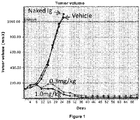
- Subjects are treated once with ADC at certain dose levels (mg/kg) and PBD drug exposure ( ⁇ g/m 2 ); and placebo buffer control (Vehicle) and monitored over two weeks or more to measure the time to tumor doubling, log cell kill, and tumor shrinkage.
- the conjugates of the invention may be used to provide a PBD compound at a target location.
- the target location is preferably a proliferative cell population.
- the antibody is an antibody for an antigen present on a proliferative cell population.
- the antigen is absent or present at a reduced level in a non-proliferative cell population compared to the amount of antigen present in the proliferative cell population, for example a tumour cell population.
- the linker may be cleaved so as to release a compound RelA or RelB.
- the conjugate may be used to selectively provide a compound RelA or RelB to the target location.
- the linker may be cleaved by an enzyme present at the target location.
- the target location may be in vitro, in vivo or ex vivo.
- the antibody-drug conjugate (ADC) compounds of the invention include those with utility for anticancer activity.
- the compounds include an antibody conjugated, i.e. covalently attached by a linker, to a PBD drug moiety, i.e. toxin.
- a linker i.e. covalently attached by a linker
- the PBD drug When the drug is not conjugated to an antibody, the PBD drug has a cytotoxic effect. The biological activity of the PBD drug moiety is thus modulated by conjugation to an antibody.
- the antibody-drug conjugates (ADC) of the invention selectively deliver an effective dose of a cytotoxic agent to tumor tissue whereby greater selectivity, i.e. a lower efficacious dose, may be achieved.
- the present invention provides a conjugate compound as described herein for use in therapy.
- conjugate compound as described herein for use in the treatment of a proliferative disease.
- proliferative disease pertains to an unwanted or uncontrolled cellular proliferation of excessive or abnormal cells which is undesired, such as, neoplastic or hyperplastic growth, whether in vitro or in vivo.
- proliferative conditions include, but are not limited to, benign, pre-malignant, and malignant cellular proliferation, including but not limited to, neoplasms and tumours (e.g. histocytoma, glioma, astrocyoma, osteoma), cancers (e.g.
- lung cancer small cell lung cancer, gastrointestinal cancer, bowel cancer, colon cancer, breast carinoma, ovarian carcinoma, prostate cancer, testicular cancer, liver cancer, kidney cancer, bladder cancer, pancreas cancer, brain cancer, sarcoma, osteosarcoma, Kaposi's sarcoma, melanoma), lymphomas, leukemias, psoriasis, bone diseases, fibroproliferative disorders (e.g. of connective tissues), and atherosclerosis.
- Cancers of particular interest include, but are not limited to, leukemias and ovarian cancers.
- Any type of cell may be treated, including but not limited to, lung, gastrointestinal (including, e.g. bowel, colon), breast (mammary), ovarian, prostate, liver (hepatic), kidney (renal), bladder, pancreas, brain, and skin.
- gastrointestinal including, e.g. bowel, colon
- breast mammary
- ovarian prostate
- liver hepatic
- kidney renal
- bladder pancreas
- brain and skin.
- the treatment is of a pancreatic cancer. In one embodiment, the treatment is of a tumour having ⁇ v ⁇ 6 integrin on the surface of the cell.
- the antibody-drug conjugates (ADC) of the present invention may be used to treat various diseases or disorders, e.g. characterized by the overexpression of a tumor antigen.
- exemplary conditions or hyperproliferative disorders include benign or malignant tumors; leukemia, haematological, and lymphoid malignancies.
- Others include neuronal, glial, astrocytal, hypothalamic, glandular, macrophagal, epithelial, stromal, blastocoelic, inflammatory, angiogenic and immunologic, including autoimmune, disorders.
- the disease or disorder to be treated is a hyperproliferative disease such as cancer.
- cancer to be treated herein include, but are not limited to, carcinoma, lymphoma, blastoma, sarcoma, and leukemia or lymphoid malignancies. More particular examples of such cancers include squamous cell cancer (e.g.
- lung cancer including small-cell lung cancer, non-small cell lung cancer, adenocarcinoma of the lung and squamous carcinoma of the lung, cancer of the peritoneum, hepatocellular cancer, gastric or stomach cancer including gastrointestinal cancer, pancreatic cancer, glioblastoma, cervical cancer, ovarian cancer, liver cancer, bladder cancer, hepatoma, breast cancer, colon cancer, rectal cancer, colorectal cancer, endometrial or uterine carcinoma, salivary gland carcinoma, kidney or renal cancer, prostate cancer, vulval cancer, thyroid cancer, hepatic carcinoma, anal carcinoma, penile carcinoma, as well as head and neck cancer.
- lung cancer including small-cell lung cancer, non-small cell lung cancer, adenocarcinoma of the lung and squamous carcinoma of the lung, cancer of the peritoneum, hepatocellular cancer, gastric or stomach cancer including gastrointestinal cancer, pancreatic cancer, glioblastoma, cervical cancer, ovarian cancer, liver cancer,
- Autoimmune diseases for which the ADC compounds may be used in treatment include rheumatologic disorders (such as, for example, rheumatoid arthritis, Sjögren's syndrome, scleroderma, lupus such as SLE and lupus nephritis, polymyositis/dermatomyositis, cryoglobulinemia, anti-phospholipid antibody syndrome, and psoriatic arthritis), osteoarthritis, autoimmune gastrointestinal and liver disorders (such as, for example, inflammatory bowel diseases (e.g.
- autoimmune gastritis and pernicious anemia autoimmune hepatitis, primary biliary cirrhosis, primary sclerosing cholangitis, and celiac disease
- vasculitis such as, for example, ANCA-associated vasculitis, including Churg-Strauss vasculitis, Wegener's granulomatosis, and polyarteriitis
- autoimmune neurological disorders such as, for example, multiple sclerosis, opsoclonus myoclonus syndrome, myasthenia gravis, neuromyelitis optica, Parkinson's disease, Alzheimer's disease, and autoimmune polyneuropathies
- renal disorders such as, for example, glomerulonephritis, Goodpasture's syndrome, and Berger's disease
- autoimmune dermatologic disorders such as, for example, psoriasis, urticaria, hives, pemphigus vulgaris, bullous pemphigoid,
- Graves' disease and thyroiditis More preferred such diseases include, for example, rheumatoid arthritis, ulcerative colitis, ANCA-associated vasculitis, lupus, multiple sclerosis, Sjögren's syndrome, Graves' disease, IDDM, pernicious anemia, thyroiditis, and glomerulonephritis.
- the conjugates of the present invention may be used in a method of therapy.
- the term "therapeutically effective amount” is an amount sufficient to show benefit to a patient. Such benefit may be at least amelioration of at least one symptom.
- the actual amount administered, and rate and time-course of administration, will depend on the nature and severity of what is being treated. Prescription of treatment, e.g. decisions on dosage, is within the responsibility of general practitioners and other medical doctors.
- a compound of the invention may be administered alone or in combination with other treatments, either simultaneously or sequentially dependent upon the condition to be treated.
- treatments and therapies include, but are not limited to, chemotherapy (the administration of active agents, including, e.g. drugs, such as chemotherapeutics); surgery; and radiation therapy.
- a “chemotherapeutic agent” is a chemical compound useful in the treatment of cancer, regardless of mechanism of action.
- Classes of chemotherapeutic agents include, but are not limited to: alkylating agents, antimetabolites, spindle poison plant alkaloids, cytotoxic/antitumor antibiotics, topoisomerase inhibitors, antibodies, photosensitizers, and kinase inhibitors.
- Chemotherapeutic agents include compounds used in "targeted therapy” and conventional chemotherapy.
- chemotherapeutic agents include: erlotinib (TARCEVA®, Genentech/OSI Pharm.), docetaxel (TAXOTERE®, Sanofi-Aventis), 5-FU (fluorouracil, 5-fluorouracil, CAS No. 51-21-8 ), gemcitabine (GEMZAR®, Lilly), PD-0325901 ( CAS No. 391210-10-9 , Pfizer), cisplatin (cis-diamine, dichloroplatinum(II), CAS No. 15663-27-1 ), carboplatin ( CAS No.
- paclitaxel TAXOL®, Bristol-Myers Squibb Oncology, Princeton, N.J.
- trastuzumab HERCEPTIN®, Genentech
- temozolomide 4-methyl-5-oxo- 2,3,4,6,8-pentazabicyclo [4.3.0] nona-2,7,9-triene- 9-carboxamide, CAS No.
- tamoxifen (Z)-2-[4-(1,2-diphenylbut-1-enyl)phenoxy]- N,N -dimethylethanamine, NOLVADEX®, ISTUBAL®, VALODEX®), and doxorubicin (ADRIAMYCIN®), Akti-1/2, HPPD, and rapamycin.
- chemotherapeutic agents include: oxaliplatin (ELOXATIN®, Sanofi), bortezomib (VELCADE®, Millennium Pharm.), sutent (SUNITINIB®, SU11248, Pfizer), letrozole (FEMARA®, Novartis), imatinib mesylate (GLEEVEC®, Novartis), XL-518 (Mek inhibitor, Exelixis, WO 2007/044515 ), ARRY-886 (Mek inhibitor, AZD6244, Array BioPharma, Astra Zeneca), SF-1126 (PI3K inhibitor, Semafore Pharmaceuticals), BEZ-235 (PI3K inhibitor, Novartis), XL-147 (PI3K inhibitor, Exelixis), PTK787/ZK 222584 (Novartis), fulvestrant (FASLODEX®, AstraZeneca), leucovorin (folinic acid), rapamycin (sirol
- calicheamicin calicheamicin gamma1l, calicheamicin omegal1 ( Angew Chem. Intl. Ed. Engl. (1994) 33:183-186 ); dynemicin, dynemicin A; bisphosphonates, such as clodronate; an esperamicin; as well as neocarzinostatin chromophore and related chromoprotein enediyne antibiotic chromophores), aclacinomysins, actinomycin, authramycin, azaserine, bleomycins, cactinomycin, carabicin, carminomycin, carzinophilin, chromomycinis, dactinomycin, daunorubicin, detorubicin, 6-diazo-5-oxo-L-norleucine, morpholino-doxorubicin, cyanomorpholino-doxorubicin, 2-pyrrolino-dox
- chemotherapeutic agent include: (i) anti-hormonal agents that act to regulate or inhibit hormone action on tumors such as anti-estrogens and selective estrogen receptor modulators (SERMs), including, for example, tamoxifen (including NOLVADEX®; tamoxifen citrate), raloxifene, droloxifene, 4-hydroxytamoxifen, trioxifene, keoxifene, LY117018, onapristone, and FARESTON® (toremifine citrate); (ii) aromatase inhibitors that inhibit the enzyme aromatase, which regulates estrogen production in the adrenal glands, such as, for example, 4(5)-imidazoles, aminoglutethimide, MEGASE® (megestrol acetate), AROMASIN® (exemestane; Pfizer), formestanie, fadrozole, RIVISOR® (vorozole), FEMARA® (letrozole),
- SERMs
- chemotherapeutic agent therapeutic antibodies such as alemtuzumab (Campath), bevacizumab (AVASTIN®, Genentech); cetuximab (ERBITUX®, Imclone); panitumumab (VECTIBIX®, Amgen), rituximab (RITUXAN®, Genentech/Biogen Idec), ofatumumab (ARZERRA®, GSK), pertuzumab (PERJETATM, OMNITARGTM, 2C4, Genentech), trastuzumab (HERCEPTIN®, Genentech), tositumomab (Bexxar, Corixia), and the antibody drug conjugate, gemtuzumab ozogamicin (MYLOTARG®, Wyeth).
- therapeutic antibodies such as alemtuzumab (Campath), bevacizumab (AVASTIN®, Genentech); cetuximab (ERBITUX®, Imclone); panit
- Humanized monoclonal antibodies with therapeutic potential as chemotherapeutic agents in combination with the conjugates of the invention include: alemtuzumab, apolizumab, aselizumab, atlizumab, bapineuzumab, bevacizumab, bivatuzumab mertansine, cantuzumab mertansine, cedelizumab, certolizumab pegol, cidfusituzumab, cidtuzumab, daclizumab, eculizumab, efalizumab, epratuzumab, erlizumab, felvizumab, fontolizumab, gemtuzumab ozogamicin, inotuzumab ozogamicin, ipilimumab, labetuzumab, lintuzumab, matuzumab, mepolizumab, motavizumab, motovizumab,
- compositions according to the present invention may comprise, in addition to the active ingredient, i.e. a conjugate compound, a pharmaceutically acceptable excipient, carrier, buffer, stabiliser or other materials well known to those skilled in the art. Such materials should be non-toxic and should not interfere with the efficacy of the active ingredient.
- a pharmaceutically acceptable excipient e.g. a conjugate compound
- carrier e.g. a pharmaceutically acceptable excipient
- buffer e.g. cutaneous, subcutaneous, or intravenous.
- compositions for oral administration may be in tablet, capsule, powder or liquid form.
- a tablet may comprise a solid carrier or an adjuvant.
- Liquid pharmaceutical compositions generally comprise a liquid carrier such as water, petroleum, animal or vegetable oils, mineral oil or synthetic oil. Physiological saline solution, dextrose or other saccharide solution or glycols such as ethylene glycol, propylene glycol or polyethylene glycol may be included.
- a capsule may comprise a solid carrier such a gelatin.
- the active ingredient will be in the form of a parenterally acceptable aqueous solution which is pyrogen-free and has suitable pH, isotonicity and stability.
- a parenterally acceptable aqueous solution which is pyrogen-free and has suitable pH, isotonicity and stability.
- isotonic vehicles such as Sodium Chloride Injection, Ringer's Injection, Lactated Ringer's Injection.
- Preservatives, stabilisers, buffers, antioxidants and/or other additives may be included, as required.
- conjugate compound While it is possible for the conjugate compound to be used (e.g., administered) alone, it is often preferable to present it as a composition or formulation.
- the composition is a pharmaceutical composition (e.g., formulation, preparation, medicament) comprising a conjugate compound, as described herein, and a pharmaceutically acceptable carrier, diluent, or excipient.
- a pharmaceutical composition e.g., formulation, preparation, medicament
- a pharmaceutically acceptable carrier e.g., diluent, or excipient.
- the composition is a pharmaceutical composition comprising at least one conjugate compound, as described herein, together with one or more other pharmaceutically acceptable ingredients well known to those skilled in the art, including, but not limited to, pharmaceutically acceptable carriers, diluents, excipients, adjuvants, fillers, buffers, preservatives, anti-oxidants, lubricants, stabilisers, solubilisers, surfactants (e.g., wetting agents), masking agents, colouring agents, flavouring agents, and sweetening agents.
- pharmaceutically acceptable carriers diluents, excipients, adjuvants, fillers, buffers, preservatives, anti-oxidants, lubricants, stabilisers, solubilisers, surfactants (e.g., wetting agents), masking agents, colouring agents, flavouring agents, and sweetening agents.
- the composition further comprises other active agents, for example, other therapeutic or prophylactic agents.
- Suitable carriers, diluents, excipients, etc. can be found in standard pharmaceutical texts. See, for example, Handbook of Pharmaceutical Additives, 2nd Edition (eds. M. Ash and I. Ash), 2001 (Synapse Information Resources, Inc., Endicott, New York, USA ), Remington's Pharmaceutical Sciences, 20th edition, pub. Lippincott, Williams & Wilkins, 2000 ; and Handbook of Pharmaceutical Excipients, 2nd edition, 1994 .
- pharmaceutically acceptable pertains to compounds, ingredients, materials, compositions, dosage forms, etc., which are, within the scope of sound medical judgment, suitable for use in contact with the tissues of the subject in question (e.g., human) without excessive toxicity, irritation, allergic response, or other problem or complication, commensurate with a reasonable benefit/risk ratio.
- Each carrier, diluent, excipient, etc. must also be “acceptable” in the sense of being compatible with the other ingredients of the formulation.
- the formulations may be prepared by any methods well known in the art of pharmacy. Such methods include the step of bringing into association the active compound with a carrier which constitutes one or more accessory ingredients. In general, the formulations are prepared by uniformly and intimately bringing into association the active compound with carriers (e.g., liquid carriers, finely divided solid carrier, etc.), and then shaping the product, if necessary.
- carriers e.g., liquid carriers, finely divided solid carrier, etc.
- the formulation may be prepared to provide for rapid or slow release; immediate, delayed, timed, or sustained release; or a combination thereof.
- Formulations suitable for parenteral administration include aqueous or non-aqueous, isotonic, pyrogen-free, sterile liquids (e.g., solutions, suspensions), in which the active ingredient is dissolved, suspended, or otherwise provided (e.g., in a liposome or other microparticulate).
- Such liquids may additional contain other pharmaceutically acceptable ingredients, such as anti-oxidants, buffers, preservatives, stabilisers, bacteriostats, suspending agents, thickening agents, and solutes which render the formulation isotonic with the blood (or other relevant bodily fluid) of the intended recipient.
- excipients include, for example, water, alcohols, polyols, glycerol, vegetable oils, and the like.
- suitable isotonic carriers for use in such formulations include Sodium Chloride Injection, Ringer's Solution, or Lactated Ringer's Injection.
- concentration of the active ingredient in the liquid is from about 1 ng/ml to about 10 ⁇ g/ml, for example from about 10 ng/ml to about 1 ⁇ g/ml.
- the formulations may be presented in unit-dose or multi-dose sealed containers, for example, ampoules and vials, and may be stored in a freeze-dried (lyophilised) condition requiring only the addition of the sterile liquid carrier, for example water for injections, immediately prior to use.
- sterile liquid carrier for example water for injections, immediately prior to use.
- Extemporaneous injection solutions and suspensions may be prepared from sterile powders, granules, and tablets.
- appropriate dosages of the conjugate compound, and compositions comprising the conjugate compound can vary from patient to patient. Determining the optimal dosage will generally involve the balancing of the level of therapeutic benefit against any risk or deleterious side effects.
- the selected dosage level will depend on a variety of factors including, but not limited to, the activity of the particular compound, the route of administration, the time of administration, the rate of excretion of the compound, the duration of the treatment, other drugs, compounds, and/or materials used in combination, the severity of the condition, and the species, sex, age, weight, condition, general health, and prior medical history of the patient.
- the amount of compound and route of administration will ultimately be at the discretion of the physician, veterinarian, or clinician, although generally the dosage will be selected to achieve local concentrations at the site of action which achieve the desired effect without causing substantial harmful or deleterious side-effects.
- Administration can be effected in one dose, continuously or intermittently (e.g., in divided doses at appropriate intervals) throughout the course of treatment. Methods of determining the most effective means and dosage of administration are well known to those of skill in the art and will vary with the formulation used for therapy, the purpose of the therapy, the target cell(s) being treated, and the subject being treated. Single or multiple administrations can be carried out with the dose level and pattern being selected by the treating physician, veterinarian, or clinician.
- a suitable dose of the active compound is in the range of about 100 ng to about 25 mg (more typically about 1 ⁇ g to about 10 mg) per kilogram body weight of the subject per day.
- the active compound is a salt, an ester, an amide, a prodrug, or the like
- the amount administered is calculated on the basis of the parent compound and so the actual weight to be used is increased proportionately.
- the active compound is administered to a human patient according to the following dosage regime: about 100 mg, 3 times daily.
- the active compound is administered to a human patient according to the following dosage regime: about 150 mg, 2 times daily.
- the active compound is administered to a human patient according to the following dosage regime: about 200 mg, 2 times daily.
- the conjugate compound is administered to a human patient according to the following dosage regime: about 50 or about 75 mg, 3 or 4 times daily.
- the conjugate compound is administered to a human patient according to the following dosage regime: about 100 or about 125 mg, 2 times daily.
- the dosage amounts described above may apply to the conjugate (including the PBD moiety and the linker to the antibody) or to the effective amount of PBD compound provided, for example the amount of compound that is releasable after cleavage of the linker.
- an ADC of the invention will depend on the type of disease to be treated, as defined above, the severity and course of the disease, whether the molecule is administered for preventive or therapeutic purposes, previous therapy, the patient's clinical history and response to the antibody, and the discretion of the attending physician.
- the molecule is suitably administered to the patient at one time or over a series of treatments.
- about 1 ⁇ g/kg to 15 mg/kg (e.g. 0.1-20 mg/kg) of molecule is an initial candidate dosage for administration to the patient, whether, for example, by one or more separate administrations, or by continuous infusion.
- a typical daily dosage might range from about 1 ⁇ g/kg to 100 mg/kg or more, depending on the factors mentioned above.
- An exemplary dosage of ADC to be administered to a patient is in the range of about 0.1 to about 10 mg/kg of patient weight.
- An exemplary dosing regimen comprises a course of administering an initial loading dose of about 4 mg/kg, followed by additional doses every week, two weeks, or three weeks of an ADC. Other dosage regimens may be useful. The progress of this therapy is easily monitored by conventional techniques and assays.
- treatment pertains generally to treatment and therapy, whether of a human or an animal (e.g., in veterinary applications), in which some desired therapeutic effect is achieved, for example, the inhibition of the progress of the condition, and includes a reduction in the rate of progress, a halt in the rate of progress, regression of the condition, amelioration of the condition, and cure of the condition.
- Treatment as a prophylactic measure i.e., prophylaxis, prevention is also included.
- terapéuticaally-effective amount pertains to that amount of an active compound, or a material, composition or dosage from comprising an active compound, which is effective for producing some desired therapeutic effect, commensurate with a reasonable benefit/risk ratio, when administered in accordance with a desired treatment regimen.
- prophylactically-effective amount refers to that amount of an active compound, or a material, composition or dosage from comprising an active compound, which is effective for producing some desired prophylactic effect, commensurate with a reasonable benefit/risk ratio, when administered in accordance with a desired treatment regimen.
- Antibody drug conjugates as well as conjugates with other cell binding agents, may be prepared by several routes, employing organic chemistry reactions, conditions, and reagents known to those skilled in the art, including reaction of a nucleophilic group of an antibody or cell binding agent with a drug-linker reagent. This method may be employed with a variety of antibodies and cell binding agents to prepare the antibody-drug conjugates of the invention.
- Nucleophilic groups on antibodies include, but are not limited to side chain thiol groups, e.g. cysteine.
- Thiol groups are nucleophilic and capable of reacting to form covalent bonds with electrophilic groups on linker moieties such as those of the present invention.
- Certain antibodies have reducible interchain disulfides, i.e. cysteine bridges.
- Antibodies may be made reactive for conjugation with linker reagents by treatment with a reducing agent such as DTT (Cleland's reagent, dithiothreitol) or TCEP (tris(2-carboxyethyl)phosphine hydrochloride; Getz et al (1999) Anal. Biochem.
- Each cysteine disulfide bridge will thus form, theoretically, two reactive thiol nucleophiles. Additional nucleophilic groups can be introduced into antibodies through the reaction of lysines with 2-iminothiolane (Traut's reagent) resulting in conversion of an amine into a thiol.
- the subject/patient may be an animal, mammal, a placental mammal, a marsupial (e.g., kangaroo, wombat), a monotreme (e.g., duckbilled platypus), a rodent (e.g., a guinea pig, a hamster, a rat, a mouse), murine (e.g., a mouse), a lagomorph (e.g., a rabbit), avian (e.g., a bird), canine (e.g., a dog), feline (e.g., a cat), equine (e.g., a horse), porcine (e.g., a pig), ovine (e.g., a sheep), bovine (e.g., a cow), a primate, simian (e.g., a monkey or ape), a monkey (e.g., marmoset, baboon), an
- the subject/patient may be any of its forms of development, for example, a foetus.
- the subject/patient is a human.
- the patient is a population where each patient has a tumour having ⁇ v ⁇ 6 integrin on the surface of the cell.
- Optical rotations were measured on an ADP 220 polarimeter (Bellingham Stanley Ltd.) and concentrations (c) are given in g/100mL. Melting points were measured using a digital melting point apparatus (Electrothermal). IR spectra were recorded on a Perkin-Elmer Spectrum 1000 FT IR Spectrometer. 1 H and 13 C NMR spectra were acquired at 300 K using a Bruker Avance NMR spectrometer at 400 and 100 MHz, respectively.
- Waters Micromass ZQ parameters used were: Capillary (kV), 3.38; Cone (V), 35; Extractor (V), 3.0; Source temperature (°C), 100; Desolvation Temperature (°C), 200; Cone flow rate (L/h), 50; De-solvation flow rate (L/h), 250.
- HRMS High-resolution mass spectroscopy
- HRMS High-resolution mass spectroscopy
- TLC Thin Layer Chromatography
- the HPLC Waters Alliance 2695 was run using a mobile phase of water (A) (formic acid 0.1%) and acetonitrile (B) (formic acid 0.1%). Gradient: initial composition 5% B held over 1.0 min, then increase from 5% B to 95% B over a 3 min period. The composition was held for 0.1 min at 95% B, then returned to 5% B in 0.03 minutes and hold there for 0.87 min. Total gradient run time equals 5 minutes.
- the HPLC Waters Alliance 2695
- A mobile phase of water
- B acetonitrile
- Gradient initial composition 5% B held over 1.0 minute, then increase from 5% B to 95% B over a 2.5 minute period.
- the composition was held for 0.5 minutes at 95% B, then returned to 5% B in 0.1 minutes and hold there for 0.9 min.
- Total gradient run time equals 5 minutes.
- the reverse phase flash purification conditions were as follows: The Flash purification system (Varian 971-Fp) was run using a mobile phase of water (A) and acetonitrile (B). Gradient: initial composition 5% B over 20 C.V. (Column Volume) then 5% B to 70% B within 60 C.V. The composition was held for 15 C.V. at 95% B, and then returned to 5% B in 5 C.V. and held at 5%B for 10 C.V. Total gradient run time equals 120 C.V. Flow rate 6.0 mL/min. Wavelength detection range: 254 nm. Column: Agilent AX1372-1 SF10-5.5gC8.
- Preparative HPLC Reverse-phase ultra-high-performance liquid chromatography (UPLC) was carried out on Phenomenex Gemini NX 5 ⁇ C-18 columns of the following dimensions: 150 x 4.6 mm for analysis, and 150 x 21.20 mm for preparative work. All UPLC experiments were performed with gradient conditions. Eluents used were solvent A (H 2 O with 0.1% Formic acid) and solvent B (CH 3 CN with 0.1% Formic acid). Flow rates used were 1.0 ml/min for analytical, and 20.0 ml/min for preparative HPLC. Detection was at 254 and 280 nm.
- Diisopropyl azodicarboxylate (71.3 mL, 73.2 g, 362 mmol) was added drop-wise over a period of 60 min to an overhead stirred solution of methyl vanillate 2 (60.0 g, 329 mmol) and Ph 3 P (129.4 g, 494 mmol) in anhydrous THF (800 mL) at 0-5°C (ice/acetone) under a nitrogen atmosphere.
- the reaction mixture was allowed to stir at 0-5°C for an additional 1 hour after which time a solution of 1,3-propanediol (11.4 mL, 12.0 g, 158 mmol) in THF (12 mL) was added drop-wise over a period of 20 min.
- Oxalyl chloride (24.5 mL, 35.6 g, 281 mmol) was added to a stirred suspension of the nitrobenzoic acid 5 (43 g, 92.3 mmol) and DMF (6 mL) in anhydrous DCM (600mL). Following initial effervescence the reaction suspension became a solution and the mixture was allowed to stir at room temperature for 16 hours. Conversion to the acid chloride was confirmed by treating a sample of the reaction mixture with MeOH and the resulting bis- methyl ester was observed by LC/MS. The majority of solvent was removed by evaporation under reduced pressure; the resulting concentrated solution was re-dissolved in a minimum amount of dry DCM and triturated with diethyl ether.
- Method A A solution of the nitro-ester 6 (44 g, 61.1 mmol) in MeOH (2.8 L) was added to freshly purchased Raney® nickel ( ⁇ 50 g of a ⁇ 50% slurry in H 2 O) and anti-bumping granules in a 5L 3-neck round bottomed flask. The mixture was heated at reflux and then treated dropwise with a solution of hydrazine hydrate (21.6 mL, 22.2 g, 693 mmol) in MeOH (200 mL) at which point vigorous effervescence was observed. When the addition was complete ( ⁇ 45 min) additional Raney® nickel was added carefully until effervescence had ceased and the initial yellow colour of the reaction mixture was discharged.
- Method B A suspension of 10% Pd/C (7.5 g, 10% w/w) in DMF (40 mL) was added to a solution of the nitro-ester 6 (75 g, 104 mmol) in DMF (360 mL). The suspension was hydrogenated in a Parr hydrogenation apparatus over 8 hours. Progress of the reaction was monitored by LC/MS after the hydrogen uptake had stopped. Solid Pd/C was removed by filtration and the filtrate was concentrated by rotary evaporation under vacuum (below 10mbar) at 40°C to afford a dark oil containing traces of DMF and residual charcoal.
Landscapes
- Health & Medical Sciences (AREA)
- Chemical & Material Sciences (AREA)
- Organic Chemistry (AREA)
- Engineering & Computer Science (AREA)
- Bioinformatics & Cheminformatics (AREA)
- Life Sciences & Earth Sciences (AREA)
- General Health & Medical Sciences (AREA)
- Medicinal Chemistry (AREA)
- Pharmacology & Pharmacy (AREA)
- Animal Behavior & Ethology (AREA)
- Public Health (AREA)
- Veterinary Medicine (AREA)
- Immunology (AREA)
- Epidemiology (AREA)
- Cell Biology (AREA)
- Oncology (AREA)
- Nuclear Medicine, Radiotherapy & Molecular Imaging (AREA)
- General Chemical & Material Sciences (AREA)
- Chemical Kinetics & Catalysis (AREA)
- Hematology (AREA)
- Toxicology (AREA)
- Peptides Or Proteins (AREA)
- Nitrogen Condensed Heterocyclic Rings (AREA)
- Medicines Containing Antibodies Or Antigens For Use As Internal Diagnostic Agents (AREA)
- Pharmaceuticals Containing Other Organic And Inorganic Compounds (AREA)
- Medicinal Preparation (AREA)
- Medicines That Contain Protein Lipid Enzymes And Other Medicines (AREA)
- Nitrogen And Oxygen Or Sulfur-Condensed Heterocyclic Ring Systems (AREA)
Priority Applications (9)
| Application Number | Priority Date | Filing Date | Title |
|---|---|---|---|
| HRP20190366TT HRP20190366T1 (hr) | 2012-10-12 | 2013-10-11 | Pirolobenzodiazepini i njihovi konjugati |
| PL18187765T PL3470086T3 (pl) | 2012-10-12 | 2013-10-11 | Pirolobenzodiazepiny i ich koniugaty |
| SI201331325T SI2906248T1 (sl) | 2012-10-12 | 2013-10-11 | Pirolobenzodiazepini in njihovi konjugati |
| PL13780099T PL2906248T3 (pl) | 2012-10-12 | 2013-10-11 | Pirolobenzodiazepiny i ich koniugaty |
| SM20190144T SMT201900144T1 (it) | 2012-10-12 | 2013-10-11 | Pirrolobenzodiazepine e loro coniugati |
| RS20190024A RS58203B1 (sr) | 2012-10-12 | 2013-10-11 | Pirolobenzodiazepini i njihovi konjugati |
| EP18187765.5A EP3470086B1 (en) | 2012-10-12 | 2013-10-11 | Pyrrolobenzodiazepines and conjugates thereof |
| DK18187765.5T DK3470086T3 (da) | 2012-10-12 | 2013-10-11 | Pyrrolobenzodiazepiner og konjugater deraf |
| CY20211100096T CY1123778T1 (el) | 2012-10-12 | 2021-02-04 | Πυρρολοβενζοδιαζεπινες και συζευγματα αυτων |
Applications Claiming Priority (2)
| Application Number | Priority Date | Filing Date | Title |
|---|---|---|---|
| US201261712924P | 2012-10-12 | 2012-10-12 | |
| PCT/EP2013/071235 WO2014057073A1 (en) | 2012-10-12 | 2013-10-11 | Pyrrolobenzodiazepines and conjugates thereof |
Related Child Applications (2)
| Application Number | Title | Priority Date | Filing Date |
|---|---|---|---|
| EP18187765.5A Division EP3470086B1 (en) | 2012-10-12 | 2013-10-11 | Pyrrolobenzodiazepines and conjugates thereof |
| EP18187765.5A Division-Into EP3470086B1 (en) | 2012-10-12 | 2013-10-11 | Pyrrolobenzodiazepines and conjugates thereof |
Publications (2)
| Publication Number | Publication Date |
|---|---|
| EP2906248A1 EP2906248A1 (en) | 2015-08-19 |
| EP2906248B1 true EP2906248B1 (en) | 2018-12-05 |
Family
ID=49474386
Family Applications (2)
| Application Number | Title | Priority Date | Filing Date |
|---|---|---|---|
| EP13780099.1A Active EP2906248B1 (en) | 2012-10-12 | 2013-10-11 | Pyrrolobenzodiazepines and conjugates thereof |
| EP18187765.5A Active EP3470086B1 (en) | 2012-10-12 | 2013-10-11 | Pyrrolobenzodiazepines and conjugates thereof |
Family Applications After (1)
| Application Number | Title | Priority Date | Filing Date |
|---|---|---|---|
| EP18187765.5A Active EP3470086B1 (en) | 2012-10-12 | 2013-10-11 | Pyrrolobenzodiazepines and conjugates thereof |
Country Status (24)
| Country | Link |
|---|---|
| US (1) | US9415117B2 (enExample) |
| EP (2) | EP2906248B1 (enExample) |
| JP (2) | JP6367811B2 (enExample) |
| KR (3) | KR20150083994A (enExample) |
| CN (2) | CN110256469B (enExample) |
| AU (1) | AU2013328674B2 (enExample) |
| BR (1) | BR112015008251B1 (enExample) |
| CA (2) | CA3060520C (enExample) |
| CY (2) | CY1121390T1 (enExample) |
| DK (2) | DK2906248T3 (enExample) |
| ES (2) | ES2713164T3 (enExample) |
| HR (2) | HRP20190366T1 (enExample) |
| HU (2) | HUE052835T2 (enExample) |
| LT (2) | LT2906248T (enExample) |
| MX (2) | MX366303B (enExample) |
| NZ (2) | NZ745069A (enExample) |
| PL (2) | PL2906248T3 (enExample) |
| PT (2) | PT3470086T (enExample) |
| RS (2) | RS61294B1 (enExample) |
| SI (2) | SI2906248T1 (enExample) |
| SM (2) | SMT201900144T1 (enExample) |
| TR (1) | TR201902494T4 (enExample) |
| WO (1) | WO2014057073A1 (enExample) |
| ZA (1) | ZA201501781B (enExample) |
Families Citing this family (81)
| Publication number | Priority date | Publication date | Assignee | Title |
|---|---|---|---|---|
| GB0819095D0 (en) | 2008-10-17 | 2008-11-26 | Spirogen Ltd | Pyrrolobenzodiazepines |
| MX368648B (es) | 2010-04-15 | 2019-10-09 | Seattle Genetics Inc | Pirrolobenzodiazepinas usadas para tratar enfermedades proliferativas. |
| NZ602932A (en) | 2010-04-15 | 2014-08-29 | Seattle Genetics Inc | Targeted pyrrolobenzodiazapine conjugates |
| MX341524B (es) | 2011-09-20 | 2016-08-24 | Medimmune Ltd | Pirrolobenzodiazepinas como compuestos pbd dimericos asimetricos para inclusion en conjugados dirigidos. |
| AU2012322613B2 (en) | 2011-10-14 | 2016-04-21 | Medimmune Limited | Pyrrolobenzodiazepines and targeted conjugates |
| CA2850373C (en) | 2011-10-14 | 2019-07-16 | Seattle Genetics, Inc. | Pyrrolobenzodiazepines and targeted conjugates |
| EP2751110B1 (en) | 2011-10-14 | 2017-04-19 | MedImmune Limited | Asymmetrical bis-(5H-Pyrrolo[2,1-c][1,4]benzodiazepin-5-one) derivatives for the treatment of proliferative and autoimmune diseases |
| KR101891859B1 (ko) | 2011-10-14 | 2018-08-24 | 메디뮨 리미티드 | 피롤로벤조디아제핀 |
| KR20150039818A (ko) * | 2012-08-02 | 2015-04-13 | 제넨테크, 인크. | 항-etbr 항체 및 면역접합체 |
| EP2906250B1 (en) | 2012-10-12 | 2018-05-30 | ADC Therapeutics SA | Pyrrolobenzodiazepine-anti-psma antibody conjugates |
| WO2014057122A1 (en) | 2012-10-12 | 2014-04-17 | Adc Therapeutics Sàrl | Pyrrolobenzodiazepine-anti-cd22 antibody conjugates |
| SMT201800346T1 (it) * | 2012-10-12 | 2018-09-13 | Medimmune Ltd | Coniugati pirrolobenzodiazepina-anticorpo |
| PT2906298T (pt) * | 2012-10-12 | 2018-12-28 | Medimmune Ltd | Conjugados de pirrolobenzodiazepina-anticorpos |
| SI2906253T1 (sl) | 2012-10-12 | 2018-11-30 | Adc Therapeutics Sa | Konjugati pirolobenzodiazepin-protitelo proti PSMA |
| US10695433B2 (en) | 2012-10-12 | 2020-06-30 | Medimmune Limited | Pyrrolobenzodiazepine-antibody conjugates |
| EP2906249B1 (en) | 2012-10-12 | 2018-06-27 | MedImmune Limited | Synthesis and intermediates of pyrrolobenzodiazepine derivatives for conjugation |
| ES2713164T3 (es) | 2012-10-12 | 2019-05-20 | Medimmune Ltd | Pirrolobenzodiazepinas y conjugados de las mismas |
| WO2014057074A1 (en) | 2012-10-12 | 2014-04-17 | Spirogen Sàrl | Pyrrolobenzodiazepines and conjugates thereof |
| JP6307519B2 (ja) | 2012-12-21 | 2018-04-04 | メドイミューン・リミテッドMedImmune Limited | ピロロベンゾジアゼピンおよびその結合体 |
| CN110627797A (zh) | 2012-12-21 | 2019-12-31 | 麦迪穆有限责任公司 | 用于治疗增殖性和自身免疫疾病的非对称吡咯并苯并二氮杂卓二聚物 |
| JP6340019B2 (ja) | 2013-03-13 | 2018-06-06 | メドイミューン・リミテッドMedImmune Limited | ピロロベンゾジアゼピン及びそのコンジュゲート |
| EP2968596B1 (en) | 2013-03-13 | 2019-03-06 | Medimmune Limited | Pyrrolobenzodiazepines and conjugates thereof |
| CA2914189C (en) * | 2013-06-21 | 2023-03-14 | Innate Pharma | Enzymatic conjugation of polypeptides |
| EP3054985B1 (en) | 2013-10-11 | 2018-12-26 | Medimmune Limited | Pyrrolobenzodiazepine-antibody conjugates |
| GB201317982D0 (en) | 2013-10-11 | 2013-11-27 | Spirogen Sarl | Pyrrolobenzodiazepines and conjugates thereof |
| US10010624B2 (en) | 2013-10-11 | 2018-07-03 | Medimmune Limited | Pyrrolobenzodiazepine-antibody conjugates |
| WO2015052535A1 (en) | 2013-10-11 | 2015-04-16 | Spirogen Sàrl | Pyrrolobenzodiazepine-antibody conjugates |
| GB201317981D0 (en) | 2013-10-11 | 2013-11-27 | Spirogen Sarl | Pyrrolobenzodiazepines and conjugates thereof |
| TW201617368A (zh) | 2014-09-05 | 2016-05-16 | 史坦森特瑞斯公司 | 新穎抗mfi2抗體及使用方法 |
| US10188746B2 (en) | 2014-09-10 | 2019-01-29 | Medimmune Limited | Pyrrolobenzodiazepines and conjugates thereof |
| PE20170935A1 (es) | 2014-09-12 | 2017-07-13 | Genentech Inc | Anticuerpos anti-her2 e inmunoconjugados |
| GB201416112D0 (en) | 2014-09-12 | 2014-10-29 | Medimmune Ltd | Pyrrolobenzodiazepines and conjugates thereof |
| US10780096B2 (en) | 2014-11-25 | 2020-09-22 | Adc Therapeutics Sa | Pyrrolobenzodiazepine-antibody conjugates |
| PE20171185A1 (es) | 2015-01-14 | 2017-08-22 | Bristol Myers Squibb Co | Dimeros de benzodiazepina unidos con puentes de heteroarileno, conjugados de estos, y sus metodos de preparacion y uso |
| US9527871B2 (en) | 2015-01-14 | 2016-12-27 | Bristol-Myers Squibb Company | Benzodiazepine dimers, conjugates thereof, and methods of making and using |
| GB201506402D0 (en) * | 2015-04-15 | 2015-05-27 | Berkel Patricius H C Van And Howard Philip W | Site-specific antibody-drug conjugates |
| GB201506405D0 (en) * | 2015-04-15 | 2015-05-27 | Berkel Patricius H C Van And Howard Philip W | Site-specific antibody-drug conjugates |
| GB201506394D0 (en) * | 2015-04-15 | 2015-05-27 | Berkel Patricius H C Van And Howard Philip W | Site-specific antibody-drug conjugates |
| GB201506411D0 (en) | 2015-04-15 | 2015-05-27 | Bergenbio As | Humanized anti-axl antibodies |
| GB201506389D0 (en) | 2015-04-15 | 2015-05-27 | Berkel Patricius H C Van And Howard Philip W | Site-specific antibody-drug conjugates |
| CA2990030A1 (en) | 2015-06-23 | 2016-12-29 | Bristol-Myers Squibb Company | Macrocyclic benzodiazepine dimers, conjugates thereof, preparation and uses |
| MA43345A (fr) | 2015-10-02 | 2018-08-08 | Hoffmann La Roche | Conjugués anticorps-médicaments de pyrrolobenzodiazépine et méthodes d'utilisation |
| TWI726942B (zh) | 2015-11-30 | 2021-05-11 | 美商輝瑞股份有限公司 | 位點專一性her2抗體藥物共軛體 |
| GB201601431D0 (en) | 2016-01-26 | 2016-03-09 | Medimmune Ltd | Pyrrolobenzodiazepines |
| GB201602359D0 (en) | 2016-02-10 | 2016-03-23 | Medimmune Ltd | Pyrrolobenzodiazepine Conjugates |
| GB201602356D0 (en) | 2016-02-10 | 2016-03-23 | Medimmune Ltd | Pyrrolobenzodiazepine Conjugates |
| WO2017184942A1 (en) | 2016-04-21 | 2017-10-26 | Abbvie Stemcentrx Llc | Novel anti-bmpr1b antibodies and methods of use |
| GB201607478D0 (en) | 2016-04-29 | 2016-06-15 | Medimmune Ltd | Pyrrolobenzodiazepine Conjugates |
| TW201808936A (zh) | 2016-05-18 | 2018-03-16 | 美商梅爾莎納醫療公司 | 吡咯并苯并二氮呯類及其共軛物 |
| US10526294B2 (en) | 2016-06-24 | 2020-01-07 | Mersana Therapeutics, Inc. | Pyrrolobenzodiazepines and conjugates thereof |
| GB201617466D0 (en) | 2016-10-14 | 2016-11-30 | Medimmune Ltd | Pyrrolobenzodiazepine conjugates |
| GB201619490D0 (en) * | 2016-11-17 | 2017-01-04 | Medimmune Ltd | Pyrrolobenzodiazepine conjugates |
| EP3348560A1 (en) * | 2017-01-16 | 2018-07-18 | Spago Nanomedical AB | Chemical compounds for coating of nanostructures |
| GB201702031D0 (en) | 2017-02-08 | 2017-03-22 | Medlmmune Ltd | Pyrrolobenzodiazepine-antibody conjugates |
| ES2871001T3 (es) | 2017-02-08 | 2021-10-28 | Adc Therapeutics Sa | Conjugados de pirrolobenzodiazepinas y anticuerpos |
| WO2018192944A1 (en) | 2017-04-18 | 2018-10-25 | Medimmune Limited | Pyrrolobenzodiazepine conjugates |
| CA3057748A1 (en) | 2017-04-20 | 2018-10-25 | Adc Therapeutics Sa | Combination therapy with an anti-axl antibody-drug conjugate |
| ES2988683T3 (es) | 2017-06-14 | 2024-11-21 | Adc Therapeutics Sa | Pautas posológicas para la administración de un CAF anti-CD19 |
| SG11202000358YA (en) | 2017-08-18 | 2020-02-27 | Medimmune Ltd | Pyrrolobenzodiazepine conjugates |
| AU2018342527B2 (en) | 2017-09-29 | 2024-06-27 | Daiichi Sankyo Company, Limited | Antibody-pyrrolobenzodiazepine derivative conjugate |
| CN111417409B (zh) | 2017-11-14 | 2022-07-08 | 麦迪穆有限责任公司 | 吡咯并苯并二氮杂䓬缀合物 |
| WO2019104289A1 (en) | 2017-11-27 | 2019-05-31 | Mersana Therapeutics, Inc. | Pyrrolobenzodiazepine antibody conjugates |
| CU24558B1 (es) * | 2017-11-28 | 2021-12-08 | Ct Inmunologia Molecular | Anticuerpos monoclonales que reconocen al receptor del factor de crecimiento epidérmico y sus fragmentos derivados |
| JP2021506883A (ja) | 2017-12-21 | 2021-02-22 | メルサナ セラピューティクス インコーポレイテッド | ピロロベンゾジアゼピン抗体結合体 |
| GB201803342D0 (en) | 2018-03-01 | 2018-04-18 | Medimmune Ltd | Methods |
| WO2019189453A1 (en) | 2018-03-28 | 2019-10-03 | Mitsubishi Tanabe Pharma Corporation | DRUG CONJUGATES OF cMET MONOCLONAL BINDING AGENTS, AND USES THEREOF |
| GB201806022D0 (en) | 2018-04-12 | 2018-05-30 | Medimmune Ltd | Pyrrolobenzodiazepines and conjugates thereof |
| GB201811364D0 (en) * | 2018-07-11 | 2018-08-29 | Adc Therapeutics Sa | Combination therapy |
| GB201902495D0 (en) | 2019-02-25 | 2019-04-10 | Medimmune Ltd | Methods of synthesis and intermediates |
| MX2021010477A (es) | 2019-03-15 | 2021-10-01 | Medimmune Ltd | Dimeros de azetidobenzodiazepina y conjugados que los comprenden para uso en el tratamiento de cancer. |
| AU2020265679A1 (en) | 2019-04-30 | 2021-12-23 | Senti Biosciences, Inc. | Chimeric receptors and methods of use thereof |
| AU2020292965A1 (en) * | 2019-06-10 | 2022-01-27 | Adc Therapeutics Sa | Combination therapy comprising an anti-CD19 antibody drug conjugate and a PI3K inhibitor or a secondary agent |
| MX2022001812A (es) | 2019-08-12 | 2022-03-11 | Regeneron Pharma | Variantes del receptor estimulante de macrofagos 1 (mst1r) y sus usos. |
| WO2021080608A1 (en) | 2019-10-25 | 2021-04-29 | Medimmune, Llc | Branched moiety for use in conjugates |
| US11124568B1 (en) * | 2020-08-19 | 2021-09-21 | Vitruviae LLC | CD3/CD25 antibodies for neuro-immune diseases |
| JP2024507823A (ja) * | 2021-02-19 | 2024-02-21 | ヤンセン バイオテツク,インコーポレーテツド | 免疫監視を増強するために制御性t細胞を標的化するための材料及び方法 |
| KR102285542B1 (ko) | 2021-03-09 | 2021-08-04 | 주식회사 레젠 | 투광등용 리플렉터 및 이를 가진 투광등 |
| AU2023232164A1 (en) * | 2022-03-11 | 2024-08-08 | Sigma-Aldrich Co. Llc | Pyrrolobenzodiazepine intermediates and uses thereof |
| EP4548932A1 (en) | 2022-06-30 | 2025-05-07 | Toray Industries, Inc. | Pharmaceutical composition for treating and/or preventing cancer |
| CN117624167A (zh) * | 2022-08-18 | 2024-03-01 | 四川大学 | 吡咯并苯并二氮杂卓-蒽酰亚胺杂交分子及其制备方法和用途 |
| WO2025096716A1 (en) | 2023-11-01 | 2025-05-08 | Incyte Corporation | Anti-mutant calreticulin (calr) antibody-drug conjugates and uses thereof |
Family Cites Families (130)
| Publication number | Priority date | Publication date | Assignee | Title |
|---|---|---|---|---|
| US3361742A (en) | 1964-12-07 | 1968-01-02 | Hoffmann La Roche | 5-oxo-1h-pyrrolo-[2, 1-c][1, 4]-benzodiazepin-2-crylamides |
| US3523941A (en) | 1967-03-06 | 1970-08-11 | Hoffmann La Roche | Benzodiazepine compounds and process for their preparation |
| US3524849A (en) | 1967-10-27 | 1970-08-18 | Hoffmann La Roche | Process for the preparation of pyrrolo-benzodiazepine acrylamides and intermediates useful therein |
| JPS4843755B1 (enExample) | 1969-06-26 | 1973-12-20 | ||
| FR2027356A1 (en) | 1968-12-30 | 1970-09-25 | Fujisawa Pharmaceutical Co | Benzodiazepinone antibiotics |
| IL33558A (en) | 1968-12-30 | 1973-10-25 | Fujisawa Pharmaceutical Co | Antibiotic pyrrolo-benzodiazepine compound,its derivatives and processes for their production |
| JPS5382792U (enExample) | 1976-12-10 | 1978-07-08 | ||
| JPS585916B2 (ja) | 1977-12-27 | 1983-02-02 | 株式会社ミドリ十字 | 新規ベンゾジアゼピン系化合物 |
| JPS5615289A (en) | 1979-07-17 | 1981-02-14 | Green Cross Corp:The | Novel benzodiazepinnbased compound 3 |
| JPH0353356Y2 (enExample) | 1981-02-06 | 1991-11-21 | ||
| CA1185602A (en) | 1981-02-27 | 1985-04-16 | Emilio Kyburz | Imidazodiazepines |
| CA1173441A (en) | 1981-02-27 | 1984-08-28 | Hoffmann-La Roche Limited | Imidazodiazepines |
| CA1184175A (en) | 1981-02-27 | 1985-03-19 | Walter Hunkeler | Imidazodiazepines |
| JPS58180487A (ja) | 1982-04-16 | 1983-10-21 | Kyowa Hakko Kogyo Co Ltd | 抗生物質dc−81およびその製造法 |
| JPS58180487U (ja) | 1982-05-28 | 1983-12-02 | 松下電工株式会社 | 光線式報知器の組立体 |
| US4427588A (en) | 1982-11-08 | 1984-01-24 | Bristol-Myers Company | Process for conversion of oxotomaymycin to tomaymycin |
| US4427587A (en) | 1982-11-10 | 1984-01-24 | Bristol-Myers Company | Total synthesis of antitumor antibiotics BBM-2040A and BBM-2040B |
| JPS59152329A (ja) | 1983-02-17 | 1984-08-31 | Green Cross Corp:The | 局所障害抑制剤 |
| US4816567A (en) | 1983-04-08 | 1989-03-28 | Genentech, Inc. | Recombinant immunoglobin preparations |
| FR2586683B1 (fr) | 1985-08-29 | 1988-07-01 | Centre Nat Rech Scient | Nouveaux derives de neothramycine, leur procede de preparation et leur application en tant que medicaments |
| US5583024A (en) | 1985-12-02 | 1996-12-10 | The Regents Of The University Of California | Recombinant expression of Coleoptera luciferase |
| JP2660201B2 (ja) | 1988-08-05 | 1997-10-08 | 塩野義製薬株式会社 | 新規ピロロ[1,4]ベンゾジアゼピン誘導体および老人性痴呆薬 |
| FR2676230B1 (fr) | 1991-05-07 | 1993-08-27 | Centre Nat Rech Scient | Nouveaux derives de pyrrolo [1,4]-benzodiazepines, leur procede de preparation et medicaments les contenant. |
| GB9205051D0 (en) | 1992-03-09 | 1992-04-22 | Cancer Res Campaign Tech | Pyrrolobenzodiazepine derivatives,their preparation,and compositions containing them |
| FR2696176B1 (fr) | 1992-09-28 | 1994-11-10 | Synthelabo | Dérivés de pipéridine, leur préparation et leur application en thérapeutique. |
| US6214345B1 (en) | 1993-05-14 | 2001-04-10 | Bristol-Myers Squibb Co. | Lysosomal enzyme-cleavable antitumor drug conjugates |
| GB9316162D0 (en) | 1993-08-04 | 1993-09-22 | Zeneca Ltd | Fungicides |
| JPH08336393A (ja) | 1995-04-13 | 1996-12-24 | Mitsubishi Chem Corp | 光学活性なγ−置換−β−ヒドロキシ酪酸エステルの製造法 |
| US6602677B1 (en) | 1997-09-19 | 2003-08-05 | Promega Corporation | Thermostable luciferases and methods of production |
| JP4568429B2 (ja) | 1998-07-08 | 2010-10-27 | イー インク コーポレイション | マイクロカプセル化された電気泳動デバイスにおいて改良されたカラーを得る方法 |
| GB9818731D0 (en) | 1998-08-27 | 1998-10-21 | Univ Portsmouth | Compounds |
| DK1413582T3 (da) | 1998-08-27 | 2006-07-17 | Spirogen Ltd | Dimere pyrrolobenzodiazepiner |
| GB9818730D0 (en) | 1998-08-27 | 1998-10-21 | Univ Portsmouth | Collections of compounds |
| GB9818732D0 (en) | 1998-08-27 | 1998-10-21 | Univ Portsmouth | Collection of compounds |
| US6909006B1 (en) | 1999-08-27 | 2005-06-21 | Spirogen Limited | Cyclopropylindole derivatives |
| JP2003518075A (ja) | 1999-12-24 | 2003-06-03 | ジェネンテック・インコーポレーテッド | 生理活性化合物の消失半減期延長のための方法及び組成物 |
| US20040001827A1 (en) | 2002-06-28 | 2004-01-01 | Dennis Mark S. | Serum albumin binding peptides for tumor targeting |
| EP1320522B8 (en) | 2000-09-19 | 2006-02-01 | Moses Lee | Compositions and methods of the use thereof achiral analogues of cc-1065 and the duocarmycins |
| US6362331B1 (en) | 2001-03-30 | 2002-03-26 | Council Of Scientific And Industrial Research | Process for the preparation of antitumor agents |
| US6660856B2 (en) | 2002-03-08 | 2003-12-09 | Kaohsiung Medical University | Synthesis of pyrrolo[2,1-c][1,4]benzodiazepine analogues |
| SI2357006T1 (sl) | 2002-07-31 | 2016-01-29 | Seattle Genetics, Inc. | Konjugati zdravil in njihova uporaba za zdravljenje raka, avtoimunske bolezni ali infekcijske bolezni |
| US20040138269A1 (en) | 2002-10-11 | 2004-07-15 | Sugen, Inc. | Substituted pyrroles as kinase inhibitors |
| GB0226593D0 (en) | 2002-11-14 | 2002-12-24 | Consultants Ltd | Compounds |
| EP1608664B1 (en) | 2003-03-31 | 2009-01-28 | Council of Scientific and Industrial Research | Non-cross-linking pyrrolo[2,1-c][1,4]benzodiazepines as potential antitumour agents and process thereof |
| GB0321295D0 (en) | 2003-09-11 | 2003-10-15 | Spirogen Ltd | Synthesis of protected pyrrolobenzodiazepines |
| GB0416511D0 (en) | 2003-10-22 | 2004-08-25 | Spirogen Ltd | Pyrrolobenzodiazepines |
| ATE516288T1 (de) | 2003-10-22 | 2011-07-15 | Us Gov Health & Human Serv | Pyrrolobenzodiazepinderivate, zusammensetzungen, die diese enthalten, und damit in zusammenhang stehende verfahren |
| BR122018071808B8 (pt) | 2003-11-06 | 2020-06-30 | Seattle Genetics Inc | conjugado |
| WO2005079479A2 (en) | 2004-02-17 | 2005-09-01 | Absalus, Inc. | Super-humanized antibodies against respiratory syncytial virus |
| AU2005216251B2 (en) | 2004-02-23 | 2011-03-10 | Genentech, Inc. | Heterocyclic self-immolative linkers and conjugates |
| GB0404574D0 (en) | 2004-03-01 | 2004-04-07 | Spirogen Ltd | Amino acids |
| ES2398975T3 (es) * | 2004-03-01 | 2013-03-25 | Spirogen Sàrl | Derivados de 11-hidroxi-5H-pirrolo[2,1-c][1,4]benzodiazepin-5-ona como intermedios clave para la preparación de pirrolobenzodiazepinas sustituidas en C2 |
| GB0404578D0 (en) | 2004-03-01 | 2004-04-07 | Spirogen Ltd | Pyrrolobenzodiazepines |
| GB0404577D0 (en) | 2004-03-01 | 2004-04-07 | Spirogen Ltd | Pyrrolobenzodiazepines |
| DE102004010943A1 (de) | 2004-03-03 | 2005-09-29 | Degussa Ag | Verfahren zur Herstellung von N-geschützten 4-Ketprolinderivaten |
| JP5166861B2 (ja) | 2004-03-09 | 2013-03-21 | スピロゲン リミティッド | ピロロベンゾジアゼピン |
| FR2869231B1 (fr) | 2004-04-27 | 2008-03-14 | Sod Conseils Rech Applic | Composition therapeutique contenant au moins un derive de la pyrrolobenzodiazepine et la fludarabine |
| GB0410725D0 (en) | 2004-05-13 | 2004-06-16 | Spirogen Ltd | Pyrrolobenzodiazepine therapeutic agents |
| CN101065151B (zh) | 2004-09-23 | 2014-12-10 | 健泰科生物技术公司 | 半胱氨酸改造的抗体和偶联物 |
| EP1831418A2 (en) | 2004-12-24 | 2007-09-12 | Showa Denko Kabushiki Kaisha | Production method of thermoelectric semiconductor alloy, thermoelectric conversion module and thermoelectric power generating device |
| AU2006210724A1 (en) | 2005-02-03 | 2006-08-10 | Antitope Limited | Human antibodies and proteins |
| JP5122441B2 (ja) | 2005-04-19 | 2013-01-16 | シアトル ジェネティックス, インコーポレイテッド | ヒト化抗cd70結合剤およびその使用 |
| SI1879901T1 (sl) | 2005-04-21 | 2010-04-30 | Spirogen Ltd | Pirolobenzodiazepini |
| US20070154906A1 (en) | 2005-10-05 | 2007-07-05 | Spirogen Ltd. | Methods to identify therapeutic candidates |
| ATE427949T1 (de) | 2005-10-05 | 2009-04-15 | Spirogen Ltd | 4-a4-(5-oxo-2,3,5,11a-tetrahydro-5h-pyrrolo a2, 1-cua1,4ubenzodiazepin-8-yloxy)-butyrylaminou-1 - pyrrol-2-carbonsaurealkylesterderivate und verwandte verbindung zur behandlung einer proliferativen erkrankung |
| SI1934174T1 (sl) | 2005-10-07 | 2011-08-31 | Exelixis Inc | Inhibitorji MEK in postopki za njihovo uporabo |
| DK1813614T3 (da) | 2006-01-25 | 2012-01-23 | Sanofi Sa | Cytotoksiske midler, der omfatter nye tomaymycinderivater |
| ZA200900545B (en) | 2006-07-18 | 2010-03-31 | Sanofi Aventis | Antagonist antibody against EPHA2 for the treatment of cancer |
| EP1914242A1 (en) | 2006-10-19 | 2008-04-23 | Sanofi-Aventis | Novel anti-CD38 antibodies for the treatment of cancer |
| WO2008050140A2 (en) | 2006-10-27 | 2008-05-02 | Spirogen Limited | Compounds for treatment of parasitic infection |
| CA2699837C (en) | 2006-12-01 | 2017-06-13 | Seattle Genetics, Inc. | Variant target binding agents and uses thereof |
| JP5290276B2 (ja) | 2007-05-08 | 2013-09-18 | ジェネンテック, インコーポレイテッド | システイン改変抗muc16抗体および抗体−薬物結合体 |
| SI2019104T1 (sl) | 2007-07-19 | 2013-12-31 | Sanofi | Citotoksična sredstva, ki obsegajo nove tomaimicinske derivate, in njihova terapevtska uporaba |
| CN101835803B (zh) | 2007-10-19 | 2016-05-25 | 健泰科生物技术公司 | 半胱氨酸改造的抗tenb2抗体和抗体药物偶联物 |
| GB0722088D0 (en) | 2007-11-09 | 2007-12-19 | Spirogen Ltd | Pyrrolobenzodiazepines |
| GB0722087D0 (en) | 2007-11-09 | 2007-12-19 | Spirogen Ltd | Polyamides |
| CN102083460A (zh) * | 2008-01-18 | 2011-06-01 | 米迪缪尼有限公司 | 用于位点特异性偶联的半胱氨酸工程化抗体 |
| CA2718942A1 (en) | 2008-03-18 | 2009-09-24 | Seattle Genetics, Inc. | Auristatin drug linker conjugates |
| GB0813432D0 (en) | 2008-07-22 | 2008-08-27 | Spirogen Ltd | Pyrrolobenzodiazepines |
| CN102176873A (zh) | 2008-10-15 | 2011-09-07 | 捷迈有限公司 | 髓内钉 |
| GB0819097D0 (en) | 2008-10-17 | 2008-11-26 | Spirogen Ltd | Pyrrolobenzodiazepines |
| GB0819095D0 (en) | 2008-10-17 | 2008-11-26 | Spirogen Ltd | Pyrrolobenzodiazepines |
| EP3100745B1 (en) | 2009-02-05 | 2018-04-18 | Immunogen, Inc. | Novel benzodiazepine derivatives |
| FR2949469A1 (fr) | 2009-08-25 | 2011-03-04 | Sanofi Aventis | Derives anticancereux, leur preparation et leur application en therapeutique |
| JP2013505944A (ja) | 2009-09-24 | 2013-02-21 | シアトル ジェネティックス, インコーポレイテッド | Dr5リガンド薬物結合体 |
| EP2534158B1 (en) | 2010-02-09 | 2014-01-08 | Bristol-Myers Squibb Company | Benzylpyrrolidinone derivatives as modulators of chemokine receptor activity |
| GB201006340D0 (en) | 2010-04-15 | 2010-06-02 | Spirogen Ltd | Synthesis method and intermediates |
| MX368648B (es) * | 2010-04-15 | 2019-10-09 | Seattle Genetics Inc | Pirrolobenzodiazepinas usadas para tratar enfermedades proliferativas. |
| WO2011130615A2 (en) | 2010-04-15 | 2011-10-20 | Dr. Reddy's Laboratories Ltd. | Preparation of lacosamide |
| NZ602932A (en) * | 2010-04-15 | 2014-08-29 | Seattle Genetics Inc | Targeted pyrrolobenzodiazapine conjugates |
| BR112012026213B1 (pt) | 2010-04-15 | 2021-12-28 | Medimmune Limited | Compostos de pirrolobenzodiazepinas, conjugado das mesmas, composição farmacêutica compreendendo o conjugado e uso do mesmo para o tratamento de uma doença proliferativa |
| EP2675479B1 (en) | 2011-02-15 | 2016-01-13 | Immunogen, Inc. | Cytotoxic benzodiazepine derivatives |
| MX341524B (es) * | 2011-09-20 | 2016-08-24 | Medimmune Ltd | Pirrolobenzodiazepinas como compuestos pbd dimericos asimetricos para inclusion en conjugados dirigidos. |
| CA2850373C (en) | 2011-10-14 | 2019-07-16 | Seattle Genetics, Inc. | Pyrrolobenzodiazepines and targeted conjugates |
| KR101891859B1 (ko) | 2011-10-14 | 2018-08-24 | 메디뮨 리미티드 | 피롤로벤조디아제핀 |
| SG11201401406YA (en) | 2011-10-14 | 2014-05-29 | Spirogen Sarl | Pyrrolobenzodiazepines and conjugates thereof |
| AU2012322613B2 (en) | 2011-10-14 | 2016-04-21 | Medimmune Limited | Pyrrolobenzodiazepines and targeted conjugates |
| EP2751110B1 (en) | 2011-10-14 | 2017-04-19 | MedImmune Limited | Asymmetrical bis-(5H-Pyrrolo[2,1-c][1,4]benzodiazepin-5-one) derivatives for the treatment of proliferative and autoimmune diseases |
| EA029046B1 (ru) | 2011-10-14 | 2018-02-28 | Медимьюн Лимитед | Пирролобензодиазепины и промежуточные соединения для их получения, способы их синтеза |
| CN104540827B (zh) | 2012-04-30 | 2018-03-23 | Ucl商业有限公司 | 吡咯并苯并二氮杂卓 |
| AU2013255613B2 (en) | 2012-04-30 | 2017-06-22 | Medimmune Limited | Pyrrolobenzodiazepines |
| SG11201500087VA (en) | 2012-07-09 | 2015-02-27 | Genentech Inc | Immunoconjugates comprising anti-cd22 antibodies |
| AU2013288930A1 (en) | 2012-07-09 | 2014-12-04 | Genentech, Inc. | Immunoconjugates comprising anti-CD79b antibodies |
| KR20150039818A (ko) | 2012-08-02 | 2015-04-13 | 제넨테크, 인크. | 항-etbr 항체 및 면역접합체 |
| WO2014057118A1 (en) | 2012-10-12 | 2014-04-17 | Adc Therapeutics Sarl | Pyrrolobenzodiazepine-anti-cd22 antibody conjugates |
| WO2014057122A1 (en) | 2012-10-12 | 2014-04-17 | Adc Therapeutics Sàrl | Pyrrolobenzodiazepine-anti-cd22 antibody conjugates |
| HRP20171264T1 (hr) | 2012-10-12 | 2017-10-20 | Adc Therapeutics Sa | Konjugati protutijela anti-her2-pirolobenzodiazepina |
| ES2713164T3 (es) | 2012-10-12 | 2019-05-20 | Medimmune Ltd | Pirrolobenzodiazepinas y conjugados de las mismas |
| PT2906298T (pt) | 2012-10-12 | 2018-12-28 | Medimmune Ltd | Conjugados de pirrolobenzodiazepina-anticorpos |
| SMT201800346T1 (it) | 2012-10-12 | 2018-09-13 | Medimmune Ltd | Coniugati pirrolobenzodiazepina-anticorpo |
| EP2906249B1 (en) | 2012-10-12 | 2018-06-27 | MedImmune Limited | Synthesis and intermediates of pyrrolobenzodiazepine derivatives for conjugation |
| WO2014057074A1 (en) | 2012-10-12 | 2014-04-17 | Spirogen Sàrl | Pyrrolobenzodiazepines and conjugates thereof |
| EP2906250B1 (en) | 2012-10-12 | 2018-05-30 | ADC Therapeutics SA | Pyrrolobenzodiazepine-anti-psma antibody conjugates |
| SI2906253T1 (sl) | 2012-10-12 | 2018-11-30 | Adc Therapeutics Sa | Konjugati pirolobenzodiazepin-protitelo proti PSMA |
| US10695433B2 (en) | 2012-10-12 | 2020-06-30 | Medimmune Limited | Pyrrolobenzodiazepine-antibody conjugates |
| CN110627797A (zh) | 2012-12-21 | 2019-12-31 | 麦迪穆有限责任公司 | 用于治疗增殖性和自身免疫疾病的非对称吡咯并苯并二氮杂卓二聚物 |
| JP6307519B2 (ja) | 2012-12-21 | 2018-04-04 | メドイミューン・リミテッドMedImmune Limited | ピロロベンゾジアゼピンおよびその結合体 |
| ES2731681T3 (es) | 2013-02-22 | 2019-11-18 | Abbvie Stemcentrx Llc | Conjugados de anticuerpo anti-DLL3 y PBD y usos de los mismos |
| EP2968596B1 (en) | 2013-03-13 | 2019-03-06 | Medimmune Limited | Pyrrolobenzodiazepines and conjugates thereof |
| AU2014230735B2 (en) | 2013-03-13 | 2018-03-15 | Medimmune Limited | Pyrrolobenzodiazepines and conjugates thereof |
| JP6340019B2 (ja) | 2013-03-13 | 2018-06-06 | メドイミューン・リミテッドMedImmune Limited | ピロロベンゾジアゼピン及びそのコンジュゲート |
| WO2014174111A1 (en) | 2013-04-26 | 2014-10-30 | Pierre Fabre Medicament | Axl antibody-drug conjugate and its use for the treatment of cancer |
| GB201317981D0 (en) | 2013-10-11 | 2013-11-27 | Spirogen Sarl | Pyrrolobenzodiazepines and conjugates thereof |
| WO2015052535A1 (en) | 2013-10-11 | 2015-04-16 | Spirogen Sàrl | Pyrrolobenzodiazepine-antibody conjugates |
| US20160256561A1 (en) | 2013-10-11 | 2016-09-08 | Medimmune Limited | Pyrrolobenzodiazepine-antibody conjugates |
| GB201317982D0 (en) | 2013-10-11 | 2013-11-27 | Spirogen Sarl | Pyrrolobenzodiazepines and conjugates thereof |
| EP3054985B1 (en) | 2013-10-11 | 2018-12-26 | Medimmune Limited | Pyrrolobenzodiazepine-antibody conjugates |
| US10010624B2 (en) | 2013-10-11 | 2018-07-03 | Medimmune Limited | Pyrrolobenzodiazepine-antibody conjugates |
| HK1222577A1 (zh) | 2013-12-16 | 2017-07-07 | Genentech Inc. | 擬肽化合物及其抗體藥物偶聯物 |
| GB201406767D0 (en) | 2014-04-15 | 2014-05-28 | Cancer Rec Tech Ltd | Humanized anti-Tn-MUC1 antibodies anf their conjugates |
-
2013
- 2013-10-11 ES ES13780099T patent/ES2713164T3/es active Active
- 2013-10-11 HU HUE18187765A patent/HUE052835T2/hu unknown
- 2013-10-11 PT PT181877655T patent/PT3470086T/pt unknown
- 2013-10-11 US US14/051,717 patent/US9415117B2/en active Active
- 2013-10-11 LT LTEP13780099.1T patent/LT2906248T/lt unknown
- 2013-10-11 TR TR2019/02494T patent/TR201902494T4/tr unknown
- 2013-10-11 MX MX2018013577A patent/MX366303B/es unknown
- 2013-10-11 SI SI201331325T patent/SI2906248T1/sl unknown
- 2013-10-11 SM SM20190144T patent/SMT201900144T1/it unknown
- 2013-10-11 CN CN201910645725.9A patent/CN110256469B/zh active Active
- 2013-10-11 CN CN201380053485.4A patent/CN104703630A/zh active Pending
- 2013-10-11 WO PCT/EP2013/071235 patent/WO2014057073A1/en not_active Ceased
- 2013-10-11 DK DK13780099.1T patent/DK2906248T3/en active
- 2013-10-11 CA CA3060520A patent/CA3060520C/en active Active
- 2013-10-11 EP EP13780099.1A patent/EP2906248B1/en active Active
- 2013-10-11 JP JP2015536139A patent/JP6367811B2/ja active Active
- 2013-10-11 CA CA2885315A patent/CA2885315C/en active Active
- 2013-10-11 SI SI201331845T patent/SI3470086T1/sl unknown
- 2013-10-11 SM SM20210265T patent/SMT202100265T1/it unknown
- 2013-10-11 RS RS20210002A patent/RS61294B1/sr unknown
- 2013-10-11 DK DK18187765.5T patent/DK3470086T3/da active
- 2013-10-11 PL PL13780099T patent/PL2906248T3/pl unknown
- 2013-10-11 BR BR112015008251-3A patent/BR112015008251B1/pt active IP Right Grant
- 2013-10-11 KR KR1020157009875A patent/KR20150083994A/ko not_active Ceased
- 2013-10-11 LT LTEP18187765.5T patent/LT3470086T/lt unknown
- 2013-10-11 NZ NZ745069A patent/NZ745069A/en unknown
- 2013-10-11 AU AU2013328674A patent/AU2013328674B2/en active Active
- 2013-10-11 KR KR1020197038868A patent/KR20200003278A/ko not_active Ceased
- 2013-10-11 PL PL18187765T patent/PL3470086T3/pl unknown
- 2013-10-11 PT PT13780099T patent/PT2906248T/pt unknown
- 2013-10-11 HU HUE13780099A patent/HUE043738T4/hu unknown
- 2013-10-11 HR HRP20190366TT patent/HRP20190366T1/hr unknown
- 2013-10-11 ES ES18187765T patent/ES2847050T3/es active Active
- 2013-10-11 RS RS20190024A patent/RS58203B1/sr unknown
- 2013-10-11 NZ NZ705910A patent/NZ705910A/en unknown
- 2013-10-11 KR KR1020197032333A patent/KR102138220B1/ko active Active
- 2013-10-11 MX MX2015004560A patent/MX362004B/es active IP Right Grant
- 2013-10-11 EP EP18187765.5A patent/EP3470086B1/en active Active
-
2015
- 2015-03-16 ZA ZA2015/01781A patent/ZA201501781B/en unknown
-
2018
- 2018-07-04 JP JP2018127804A patent/JP6516909B2/ja active Active
-
2019
- 2019-02-26 CY CY20191100233T patent/CY1121390T1/el unknown
-
2021
- 2021-01-22 HR HRP20210126TT patent/HRP20210126T1/hr unknown
- 2021-02-04 CY CY20211100096T patent/CY1123778T1/el unknown
Non-Patent Citations (1)
| Title |
|---|
| GREGSON S J ET AL: "Linker Length Modulates DNA Cross-Linking Reactivity and Cytotoxic Potency of C8/C8' Ether-Linked C2-exo-Unsaturated Pyrrolo[2,1-c][1,4]benzodiazepine (PBD) Dimers", JOURNAL OF MEDICINAL CHEMISTRY, AMERICAN CHEMICAL SOCIETY, vol. 47, 1 January 2004 (2004-01-01), pages 1161 - 1174, XP002316295, ISSN: 0022-2623, DOI: 10.1021/JM030897L * |
Also Published As
Similar Documents
| Publication | Publication Date | Title |
|---|---|---|
| US12121590B2 (en) | Pyrrolobenzodiazepines and conjugates thereof | |
| EP2906248B1 (en) | Pyrrolobenzodiazepines and conjugates thereof | |
| EP3054990B1 (en) | Pyrrolobenzodiazepines and conjugates thereof | |
| EP3054989B1 (en) | Pyrrolobenzodiazepines and conjugates thereof | |
| HK40006354A (en) | Pyrrolobenzodiazepines and conjugates thereof | |
| HK40006354B (en) | Pyrrolobenzodiazepines and conjugates thereof | |
| HK1213183B (en) | Pyrrolobenzodiazepines and conjugates thereof |
Legal Events
| Date | Code | Title | Description |
|---|---|---|---|
| PUAI | Public reference made under article 153(3) epc to a published international application that has entered the european phase |
Free format text: ORIGINAL CODE: 0009012 |
|
| 17P | Request for examination filed |
Effective date: 20150501 |
|
| AK | Designated contracting states |
Kind code of ref document: A1 Designated state(s): AL AT BE BG CH CY CZ DE DK EE ES FI FR GB GR HR HU IE IS IT LI LT LU LV MC MK MT NL NO PL PT RO RS SE SI SK SM TR |
|
| AX | Request for extension of the european patent |
Extension state: BA ME |
|
| RAP1 | Party data changed (applicant data changed or rights of an application transferred) |
Owner name: MEDIMMUNE LIMITED |
|
| DAX | Request for extension of the european patent (deleted) | ||
| REG | Reference to a national code |
Ref country code: HK Ref legal event code: DE Ref document number: 1213183 Country of ref document: HK |
|
| 17Q | First examination report despatched |
Effective date: 20160830 |
|
| REG | Reference to a national code |
Ref country code: DE Ref legal event code: R079 Ref document number: 602013047839 Country of ref document: DE Free format text: PREVIOUS MAIN CLASS: A61K0047480000 Ipc: A61K0047680000 |
|
| GRAP | Despatch of communication of intention to grant a patent |
Free format text: ORIGINAL CODE: EPIDOSNIGR1 |
|
| RIC1 | Information provided on ipc code assigned before grant |
Ipc: A61K 47/68 20170101AFI20180523BHEP Ipc: A61P 39/00 20060101ALI20180523BHEP Ipc: C07D 487/04 20060101ALI20180523BHEP Ipc: C07D 519/00 20060101ALI20180523BHEP Ipc: A61P 35/00 20060101ALI20180523BHEP |
|
| INTG | Intention to grant announced |
Effective date: 20180607 |
|
| GRAS | Grant fee paid |
Free format text: ORIGINAL CODE: EPIDOSNIGR3 |
|
| GRAA | (expected) grant |
Free format text: ORIGINAL CODE: 0009210 |
|
| AK | Designated contracting states |
Kind code of ref document: B1 Designated state(s): AL AT BE BG CH CY CZ DE DK EE ES FI FR GB GR HR HU IE IS IT LI LT LU LV MC MK MT NL NO PL PT RO RS SE SI SK SM TR |
|
| REG | Reference to a national code |
Ref country code: GB Ref legal event code: FG4D |
|
| REG | Reference to a national code |
Ref country code: CH Ref legal event code: EP |
|
| REG | Reference to a national code |
Ref country code: AT Ref legal event code: REF Ref document number: 1072236 Country of ref document: AT Kind code of ref document: T Effective date: 20181215 |
|
| REG | Reference to a national code |
Ref country code: IE Ref legal event code: FG4D |
|
| REG | Reference to a national code |
Ref country code: DE Ref legal event code: R096 Ref document number: 602013047839 Country of ref document: DE |
|
| REG | Reference to a national code |
Ref country code: RO Ref legal event code: EPE |
|
| REG | Reference to a national code |
Ref country code: HR Ref legal event code: TUEP Ref document number: P20190366 Country of ref document: HR |
|
| REG | Reference to a national code |
Ref country code: DK Ref legal event code: T3 Effective date: 20190225 Ref country code: PT Ref legal event code: SC4A Ref document number: 2906248 Country of ref document: PT Date of ref document: 20190304 Kind code of ref document: T Free format text: AVAILABILITY OF NATIONAL TRANSLATION Effective date: 20190225 |
|
| REG | Reference to a national code |
Ref country code: NL Ref legal event code: FP |
|
| REG | Reference to a national code |
Ref country code: SE Ref legal event code: TRGR |
|
| REG | Reference to a national code |
Ref country code: NO Ref legal event code: T2 Effective date: 20181205 |
|
| REG | Reference to a national code |
Ref country code: HR Ref legal event code: T1PR Ref document number: P20190366 Country of ref document: HR |
|
| REG | Reference to a national code |
Ref country code: EE Ref legal event code: FG4A Ref document number: E017075 Country of ref document: EE Effective date: 20190304 |
|
| REG | Reference to a national code |
Ref country code: ES Ref legal event code: FG2A Ref document number: 2713164 Country of ref document: ES Kind code of ref document: T3 Effective date: 20190520 |
|
| REG | Reference to a national code |
Ref country code: SK Ref legal event code: T3 Ref document number: E 30212 Country of ref document: SK |
|
| REG | Reference to a national code |
Ref country code: GR Ref legal event code: EP Ref document number: 20190400622 Country of ref document: GR Effective date: 20190509 |
|
| REG | Reference to a national code |
Ref country code: DE Ref legal event code: R097 Ref document number: 602013047839 Country of ref document: DE |
|
| REG | Reference to a national code |
Ref country code: HU Ref legal event code: AG4A Ref document number: E043738 Country of ref document: HU |
|
| REG | Reference to a national code |
Ref country code: HR Ref legal event code: ODRP Ref document number: P20190366 Country of ref document: HR Payment date: 20190926 Year of fee payment: 7 |
|
| PLBE | No opposition filed within time limit |
Free format text: ORIGINAL CODE: 0009261 |
|
| STAA | Information on the status of an ep patent application or granted ep patent |
Free format text: STATUS: NO OPPOSITION FILED WITHIN TIME LIMIT |
|
| 26N | No opposition filed |
Effective date: 20190906 |
|
| REG | Reference to a national code |
Ref country code: HU Ref legal event code: AG4B Ref document number: E043738 Country of ref document: HU |
|
| REG | Reference to a national code |
Ref country code: AT Ref legal event code: UEP Ref document number: 1072236 Country of ref document: AT Kind code of ref document: T Effective date: 20181205 |
|
| REG | Reference to a national code |
Ref country code: HR Ref legal event code: ODRP Ref document number: P20190366 Country of ref document: HR Payment date: 20201006 Year of fee payment: 8 |
|
| REG | Reference to a national code |
Ref country code: HR Ref legal event code: ODRP Ref document number: P20190366 Country of ref document: HR Payment date: 20211008 Year of fee payment: 9 |
|
| REG | Reference to a national code |
Ref country code: HR Ref legal event code: ODRP Ref document number: P20190366 Country of ref document: HR Payment date: 20220920 Year of fee payment: 10 |
|
| P01 | Opt-out of the competence of the unified patent court (upc) registered |
Effective date: 20230329 |
|
| REG | Reference to a national code |
Ref country code: HR Ref legal event code: ODRP Ref document number: P20190366 Country of ref document: HR Payment date: 20230912 Year of fee payment: 11 |
|
| PGFP | Annual fee paid to national office [announced via postgrant information from national office to epo] |
Ref country code: IS Payment date: 20240917 Year of fee payment: 12 |
|
| REG | Reference to a national code |
Ref country code: HR Ref legal event code: ODRP Ref document number: P20190366 Country of ref document: HR Payment date: 20240906 Year of fee payment: 12 |
|
| PGFP | Annual fee paid to national office [announced via postgrant information from national office to epo] |
Ref country code: RO Payment date: 20240930 Year of fee payment: 12 Ref country code: RS Payment date: 20240918 Year of fee payment: 12 |
|
| PGFP | Annual fee paid to national office [announced via postgrant information from national office to epo] |
Ref country code: DE Payment date: 20240904 Year of fee payment: 12 |
|
| PGFP | Annual fee paid to national office [announced via postgrant information from national office to epo] |
Ref country code: PL Payment date: 20240913 Year of fee payment: 12 |
|
| PGFP | Annual fee paid to national office [announced via postgrant information from national office to epo] |
Ref country code: AT Payment date: 20240925 Year of fee payment: 12 |
|
| PGFP | Annual fee paid to national office [announced via postgrant information from national office to epo] |
Ref country code: ES Payment date: 20241105 Year of fee payment: 12 |
|
| PGFP | Annual fee paid to national office [announced via postgrant information from national office to epo] |
Ref country code: MT Payment date: 20241018 Year of fee payment: 12 Ref country code: CH Payment date: 20241101 Year of fee payment: 12 |
|
| PGFP | Annual fee paid to national office [announced via postgrant information from national office to epo] |
Ref country code: AL Payment date: 20241002 Year of fee payment: 12 |
|
| PGFP | Annual fee paid to national office [announced via postgrant information from national office to epo] |
Ref country code: CY Payment date: 20241007 Year of fee payment: 12 |
|
| PGFP | Annual fee paid to national office [announced via postgrant information from national office to epo] |
Ref country code: SM Payment date: 20250924 Year of fee payment: 13 |
|
| PGFP | Annual fee paid to national office [announced via postgrant information from national office to epo] |
Ref country code: FI Payment date: 20250923 Year of fee payment: 13 Ref country code: PT Payment date: 20250926 Year of fee payment: 13 |
|
| PGFP | Annual fee paid to national office [announced via postgrant information from national office to epo] |
Ref country code: LT Payment date: 20250923 Year of fee payment: 13 Ref country code: DK Payment date: 20250923 Year of fee payment: 13 |
|
| PGFP | Annual fee paid to national office [announced via postgrant information from national office to epo] |
Ref country code: GR Payment date: 20250925 Year of fee payment: 13 Ref country code: NO Payment date: 20250925 Year of fee payment: 13 Ref country code: MC Payment date: 20250929 Year of fee payment: 13 |
|
| PGFP | Annual fee paid to national office [announced via postgrant information from national office to epo] |
Ref country code: LU Payment date: 20250923 Year of fee payment: 13 Ref country code: NL Payment date: 20250923 Year of fee payment: 13 Ref country code: IT Payment date: 20250923 Year of fee payment: 13 Ref country code: TR Payment date: 20250930 Year of fee payment: 13 |
|
| PGFP | Annual fee paid to national office [announced via postgrant information from national office to epo] |
Ref country code: BG Payment date: 20250924 Year of fee payment: 13 Ref country code: GB Payment date: 20250923 Year of fee payment: 13 Ref country code: BE Payment date: 20250923 Year of fee payment: 13 |
|
| PGFP | Annual fee paid to national office [announced via postgrant information from national office to epo] |
Ref country code: HR Payment date: 20250929 Year of fee payment: 13 |
|
| PGFP | Annual fee paid to national office [announced via postgrant information from national office to epo] |
Ref country code: FR Payment date: 20250924 Year of fee payment: 13 |
|
| PGFP | Annual fee paid to national office [announced via postgrant information from national office to epo] |
Ref country code: SE Payment date: 20250923 Year of fee payment: 13 |
|
| PGFP | Annual fee paid to national office [announced via postgrant information from national office to epo] |
Ref country code: CZ Payment date: 20250926 Year of fee payment: 13 Ref country code: EE Payment date: 20250927 Year of fee payment: 13 Ref country code: IE Payment date: 20250925 Year of fee payment: 13 |
|
| REG | Reference to a national code |
Ref country code: HR Ref legal event code: ODRP Ref document number: P20190366 Country of ref document: HR Payment date: 20250929 Year of fee payment: 13 |
|
| PGFP | Annual fee paid to national office [announced via postgrant information from national office to epo] |
Ref country code: SK Payment date: 20250929 Year of fee payment: 13 |
|
| PGFP | Annual fee paid to national office [announced via postgrant information from national office to epo] |
Ref country code: LV Payment date: 20250923 Year of fee payment: 13 |
|
| PGFP | Annual fee paid to national office [announced via postgrant information from national office to epo] |
Ref country code: SI Payment date: 20250930 Year of fee payment: 13 |
|
| REG | Reference to a national code |
Ref country code: CH Ref legal event code: U11 Free format text: ST27 STATUS EVENT CODE: U-0-0-U10-U11 (AS PROVIDED BY THE NATIONAL OFFICE) Effective date: 20251101 |
|
| PGFP | Annual fee paid to national office [announced via postgrant information from national office to epo] |
Ref country code: MK Payment date: 20250925 Year of fee payment: 13 |
|
| PGFP | Annual fee paid to national office [announced via postgrant information from national office to epo] |
Ref country code: HU Payment date: 20251029 Year of fee payment: 13 |