EP2829285A1 - Formulierung mit einem rekombinanten lentiviralen vektor - Google Patents
Formulierung mit einem rekombinanten lentiviralen vektor Download PDFInfo
- Publication number
- EP2829285A1 EP2829285A1 EP13764205.4A EP13764205A EP2829285A1 EP 2829285 A1 EP2829285 A1 EP 2829285A1 EP 13764205 A EP13764205 A EP 13764205A EP 2829285 A1 EP2829285 A1 EP 2829285A1
- Authority
- EP
- European Patent Office
- Prior art keywords
- lentiviral vector
- recombinant lentiviral
- recombinant
- vector preparation
- preparation according
- Prior art date
- Legal status (The legal status is an assumption and is not a legal conclusion. Google has not performed a legal analysis and makes no representation as to the accuracy of the status listed.)
- Granted
Links
Images


Classifications
-
- C—CHEMISTRY; METALLURGY
- C12—BIOCHEMISTRY; BEER; SPIRITS; WINE; VINEGAR; MICROBIOLOGY; ENZYMOLOGY; MUTATION OR GENETIC ENGINEERING
- C12N—MICROORGANISMS OR ENZYMES; COMPOSITIONS THEREOF; PROPAGATING, PRESERVING, OR MAINTAINING MICROORGANISMS; MUTATION OR GENETIC ENGINEERING; CULTURE MEDIA
- C12N7/00—Viruses; Bacteriophages; Compositions thereof; Preparation or purification thereof
-
- A—HUMAN NECESSITIES
- A61—MEDICAL OR VETERINARY SCIENCE; HYGIENE
- A61P—SPECIFIC THERAPEUTIC ACTIVITY OF CHEMICAL COMPOUNDS OR MEDICINAL PREPARATIONS
- A61P25/00—Drugs for disorders of the nervous system
-
- A—HUMAN NECESSITIES
- A61—MEDICAL OR VETERINARY SCIENCE; HYGIENE
- A61P—SPECIFIC THERAPEUTIC ACTIVITY OF CHEMICAL COMPOUNDS OR MEDICINAL PREPARATIONS
- A61P31/00—Antiinfectives, i.e. antibiotics, antiseptics, chemotherapeutics
- A61P31/12—Antivirals
- A61P31/14—Antivirals for RNA viruses
- A61P31/18—Antivirals for RNA viruses for HIV
-
- A—HUMAN NECESSITIES
- A61—MEDICAL OR VETERINARY SCIENCE; HYGIENE
- A61P—SPECIFIC THERAPEUTIC ACTIVITY OF CHEMICAL COMPOUNDS OR MEDICINAL PREPARATIONS
- A61P35/00—Antineoplastic agents
-
- A—HUMAN NECESSITIES
- A61—MEDICAL OR VETERINARY SCIENCE; HYGIENE
- A61P—SPECIFIC THERAPEUTIC ACTIVITY OF CHEMICAL COMPOUNDS OR MEDICINAL PREPARATIONS
- A61P9/00—Drugs for disorders of the cardiovascular system
- A61P9/10—Drugs for disorders of the cardiovascular system for treating ischaemic or atherosclerotic diseases, e.g. antianginal drugs, coronary vasodilators, drugs for myocardial infarction, retinopathy, cerebrovascula insufficiency, renal arteriosclerosis
-
- C—CHEMISTRY; METALLURGY
- C12—BIOCHEMISTRY; BEER; SPIRITS; WINE; VINEGAR; MICROBIOLOGY; ENZYMOLOGY; MUTATION OR GENETIC ENGINEERING
- C12N—MICROORGANISMS OR ENZYMES; COMPOSITIONS THEREOF; PROPAGATING, PRESERVING, OR MAINTAINING MICROORGANISMS; MUTATION OR GENETIC ENGINEERING; CULTURE MEDIA
- C12N2740/00—Reverse transcribing RNA viruses
- C12N2740/00011—Details
- C12N2740/10011—Retroviridae
- C12N2740/15011—Lentivirus, not HIV, e.g. FIV, SIV
- C12N2740/15021—Viruses as such, e.g. new isolates, mutants or their genomic sequences
-
- C—CHEMISTRY; METALLURGY
- C12—BIOCHEMISTRY; BEER; SPIRITS; WINE; VINEGAR; MICROBIOLOGY; ENZYMOLOGY; MUTATION OR GENETIC ENGINEERING
- C12N—MICROORGANISMS OR ENZYMES; COMPOSITIONS THEREOF; PROPAGATING, PRESERVING, OR MAINTAINING MICROORGANISMS; MUTATION OR GENETIC ENGINEERING; CULTURE MEDIA
- C12N2740/00—Reverse transcribing RNA viruses
- C12N2740/00011—Details
- C12N2740/10011—Retroviridae
- C12N2740/15011—Lentivirus, not HIV, e.g. FIV, SIV
- C12N2740/15041—Use of virus, viral particle or viral elements as a vector
- C12N2740/15043—Use of virus, viral particle or viral elements as a vector viral genome or elements thereof as genetic vector
-
- C—CHEMISTRY; METALLURGY
- C12—BIOCHEMISTRY; BEER; SPIRITS; WINE; VINEGAR; MICROBIOLOGY; ENZYMOLOGY; MUTATION OR GENETIC ENGINEERING
- C12N—MICROORGANISMS OR ENZYMES; COMPOSITIONS THEREOF; PROPAGATING, PRESERVING, OR MAINTAINING MICROORGANISMS; MUTATION OR GENETIC ENGINEERING; CULTURE MEDIA
- C12N2740/00—Reverse transcribing RNA viruses
- C12N2740/00011—Details
- C12N2740/10011—Retroviridae
- C12N2740/15011—Lentivirus, not HIV, e.g. FIV, SIV
- C12N2740/15051—Methods of production or purification of viral material
-
- C—CHEMISTRY; METALLURGY
- C12—BIOCHEMISTRY; BEER; SPIRITS; WINE; VINEGAR; MICROBIOLOGY; ENZYMOLOGY; MUTATION OR GENETIC ENGINEERING
- C12N—MICROORGANISMS OR ENZYMES; COMPOSITIONS THEREOF; PROPAGATING, PRESERVING, OR MAINTAINING MICROORGANISMS; MUTATION OR GENETIC ENGINEERING; CULTURE MEDIA
- C12N2740/00—Reverse transcribing RNA viruses
- C12N2740/00011—Details
- C12N2740/10011—Retroviridae
- C12N2740/16011—Human Immunodeficiency Virus, HIV
- C12N2740/16041—Use of virus, viral particle or viral elements as a vector
- C12N2740/16043—Use of virus, viral particle or viral elements as a vector viral genome or elements thereof as genetic vector
-
- C—CHEMISTRY; METALLURGY
- C12—BIOCHEMISTRY; BEER; SPIRITS; WINE; VINEGAR; MICROBIOLOGY; ENZYMOLOGY; MUTATION OR GENETIC ENGINEERING
- C12N—MICROORGANISMS OR ENZYMES; COMPOSITIONS THEREOF; PROPAGATING, PRESERVING, OR MAINTAINING MICROORGANISMS; MUTATION OR GENETIC ENGINEERING; CULTURE MEDIA
- C12N2740/00—Reverse transcribing RNA viruses
- C12N2740/00011—Details
- C12N2740/10011—Retroviridae
- C12N2740/16011—Human Immunodeficiency Virus, HIV
- C12N2740/16051—Methods of production or purification of viral material
Definitions
- the invention relates to a viral vector preparation, more particularly to a recombinant lentiviral vector preparation.
- lentiviral vectors is the commonly used viral vectors.
- the lentiviral vector is a reconstructed viral vector system on the basis of HIV-1 virus and can introduce the gene of interest efficiently into animal and human primary cells or cell-lines.
- the genome of the lentiviral vector which is a plus-strand RNA enters into the cell and is reversely transcribed into DNA in the cytoplasm by a reverse-transcriptase carried by the genome itself to form a DNA pre-integration complex. Then, the complex is transported into the cell nuclei and the DNA is integrated into the cell genome.
- the integrated DNA is transcribed into mRNAs which are returned to the cytoplasm and expressed into proteins of interest.
- the lentiviral vector-mediated gene expression has continuous and stable effect, because the gene of interest has been integrated into a host cell's genome and is divided with the division of the cell genome. Moreover, the lentiviral vector can effectively infect a nondividing cell and can be effectively integrated into the nondividing cell. With the above-mentioned properties, the lentiviral vector has great advantages as compared to the other viral vectors, such as non-integrated adenoviral vector, adeno-associated viral vector with low integration rate, classical retroviral vector which is solely integrated into a dividing cell.
- tissues or cells where the lentiviral vector-mediated chronic expression of a gene of interest can occur include brain, liver, muscular, retina, hematopoietic stem cells, marrow mesenchymal stem cells, macrophages, etc.
- the stability of the lentiviral vector is very low, while a viral vector which will be used in the therapeutic application of the human body must keep the structural integrity to maintain its biological activity. In order to keep the structural integrity of the viral vector to maintin its biological activitie, such preparations must be maintained and delivered at a relatively low temperature.
- Loss of biological activities of the lentiviral vector mostly occurs at storage stage.
- a recombinant lentiviral vector carrying a gene of interest is typically prepared into a liquid preparation and stored at an ultra-low temperature (e.g. no higher than -60 °C), transported under the condition of low temperature and frozen, and thawed before use. It is one of the major challenges that the structural and functional ingredients are prevented from being physically disrupted during freezing and storing at a temperature below freezing point.
- the lentiviral vector preparations comprise proteins encoded by the viral genome and a single- or double-stranded genome. If the virus contains an envelope protein, the preparation further comprises a lipid two-layer membrane. Under a ultra-low temperature, the protein is liable to denaturation and the lipid two-layer membrane is liable to destruction during freezing. Therefore, it is inappropriate for a viral vector preparation to be stored under an ultra-low temperature for a long time.
- the recombinant lentiviral vector when stored at an ultra-low temperature for too long time (e.g., longer than 200 days), when the recombinant lentiviral vector is under freeze-thaw cycles during administration, or when the recombinant lentiviral vector is exposed to the body temperature of an organism (e.g. body temperature of the human being or other animals) or the room temperature too longer time before the preparation reaches the target organ due to improper application, the biological activity of the recombinant lentiviral vector (typically expressed in virus titer) often decreases quickly and dramatically, which directly influences on therapeutic effect of the recombinant lentiviral vector preparation or leads to inaccuracy in results of preclinical or clinical study.
- an ultra-low temperature e.g. 200 days
- the hospital's willingness to adopt the virus preparation depends on the using cost of a virus preparation.
- pharmacies and hospitals have freezing apparatuses with the lowest temperature of -20°C, but hardly have freezing apparatuses with the lowest temperature of -80°C. It is always believed that a liquid preparation of a viral vector will be stable only at an ultra-low temperature.
- the recombinant lentiviral vector preparation can be stored for a long time under the condition of an ultra-low temperature of -80°C, or can also keep long-term stability under the condition of a middle- or low-temperature of -20°C, or can still be capable of maintaining the activities of the recombinant lentiviral vector which can meet to the requirement in use, after freeze-thaw cycles during administration or after exposure to an organism's body temperature or the room temperature for a longer time.
- a recombinant lentiviral vector preparation which comprises: a) an effective dose of a recombinant lentiviral vector, b) a histidine hydrochloride buffer for keeping a pH value of the preparation in the range of 6.0-8.0 and c) a carbohydrate.
- the recombinant lentivirus preparation in the present invention has a significantly enhanced stability due to containing the certain amount of histidine hydrochloride buffer as the non-conventional ingredient.
- it can be stored for a long time under the condition of an ultra-low temperature of -80°C, or can also keep long-term stability under a condition of a middle- or low-temperature of -20°C, or can still be capable of maintaining the activities of the recombinant lentiviral vector which can meet to the requirement in use, after freeze-thaw cycles during administration or after exposure to an organism's body temperature (for example, 37°C) or the room temperature for a longer time.
- an organism's body temperature for example, 37°C
- the recombinant lentiviral vector preparation provided in the present invention comprises:
- a viral vector in the present invention refers to a virus particle which lacks self-replication ability and has a capability of introducing a nucleic acid molecule into a host.
- a lentiviral vector refers to a viral vector derived from a primate immunodeficiency virus. The lentiviral vector comprises genetic information required for packaging, transfection, and stable integration which is the main component of the lentiviral vector system.
- a lentiviral vector carrying an exogenous genes is packaged into an infectious virus particles via virus packaging with the aid of the lentiviral packaging plasmids and cell-lines. The infectious virus particles infects a cell or a vital tissue to achieve expression of the exogenous gene in the cell or the vital tissue.
- a "recombinant” viral vector refers to a viral vector constructed by gene recombinant technologies. The recombination viral vector comprises a viral vector constructed by using a DNA encoding the viral genome and a packaging cell .
- the recombinant lentiviral vector in the present invention can further be pseudotyped with VSV-G.
- pseudotyped with VSV-G refers to the envelope of recombinant lentiviral vector comprises VSV-G protein,a surface glycoprotein of vesicular stomatitis virus(VSV).
- the VSV-G protein may derive from any one of the VSV strains. For example, without being limited, VSV-G protein from the Indiana serotype strain can be used ( J. Virology 39: 519-528 (1981 )).
- VSV-G protein may be a derivative of the naturally occurring protein which is a modified protein obtained by substitution, deletion, and/or addition of one or more amino acids.
- VSV-G pseudotyped vector can be prepared by co-existing of VSV-G protein with the virus during the production of the virus.
- a virus particle produced by a packaging cell can be pseudotyped with VSV-G by transfecting the packaging cell with a VSV-G expression vector and inducing to express the VSV-G gene integrated into the host's chromosomal DNA, or by expressing the VSV-G in the packaging cell.
- the VSV-G protein is a glycoprotein which can form a stable trimmer in the cell membrane, thus the vector particle will not be disrupted during purification and can be concentrated by centrifugation into the vector particle with a high concentration ( Yang, Y. et al, Hum Gene Ther: Sep, 6(9), 1203-13. 1995 ).
- the recombinant lentiviral vector is a lentiviral vector coated with vesicular stomatitis virus G protein.
- the recombinant lentiviral vector in the present invention can further comprise an envelope protein from other viruses.
- the envelope protein is preferably from a virus which can infect a human cell.
- the envelope protein includes, but is not limited to, for example the amphotropic retrovirus envelope protein and so on.
- the amphotropic retrovirus envelope protein for example, the envelope protein from murine leukemia virus (MuMLV) 4070A strain can be employed.
- the envelope protein from MuMLV 10A1 can also be used (e.g. pCL-10A1 (Imgenex) ( Naviaux, R,K. et. al., J. Virol. 70:5701-5705 (1996 )).
- the examples of the proteins from the family of Herpesviridae include gB of herpes simplex virus, gD of herpes simplex virus, gH of herpes simplex virus, gp85 of herpes simplex virus, gp350 of EB virus and gp220 of EB virus, etc.
- the examples of the proteins from the family of Hepadnaviruses include S protein of Hepatitis B virus and so forth.
- the envelope protein can also be formed by fusion of a glycoprotein of measles virus and other single-chain antibodies ( Funke S. et al., Mol Ther 16:1427-36, 2008 ; Frecha C. et al., Blood, 114:3173-80, 2009 ).
- a lentiviral vector is generally packaged by transient transfection or packaging with cell lines.
- the human cell strain used as a packaging cell in the transient transfection includes 293 cell, 293T cell, 293FT cell, 293LTV cell, 293EBNA cell and other clones isolated from 293 Cell; SW480 cell, u87MG cell, HOS cell, C8166 cell, MT-4 cell, Molt-4 cell, HeLa cell, HT1080 cell, and TE671 cell, etc.
- the simian cell strain used as a packaging cell is, for example, COS1 cell, COS7 cell, CV-1 cell, BMT10 cell and the like.
- calcium phosphate and PEI are commonly used as transfection reagents, and some other transfection reagents such as Lipofectamine 2000, FuGENE and S93 fectin are often used.
- lentiviral packaging cell lines e.g. the most commonly used stable cell-lines generated with Env glycoprotein, VSVG protein or HIV-1 gag-pol protein, are aslo used in packaging a lentivirus.
- the lentiviral vector system is used on large scale in the form of separated genomes, i.e., genes with different accessory functions are localized in different plasmids.
- genes with different accessory functions are localized in different plasmids.
- plasmids there are a four plasmid system (where the gag-pol gene, Rev gene, VSVG gene, and SIN transfer gene are located in four different plasmids respectively), a three plasmid system (where the gene encoding for Rev is removed and the gag-pol gene of the gag-pol plasmid uses preferred codons in a human cell) and a two plasmid system (where the accessory genes essential for packaging of lentiviral vector are located in the same plasmid and these accessory genes are the single-copy gene sequence, and the other plasmid is a transgenic plasmid). Also, systems comprising more than four plasmids are in use.
- the recombinant lentiviral vector preparation mentioned in the present invention can essentially be completely purified.
- the purification methods comprise using known purification/separation processes, such as filtration with a filter, ion exchange chromatography, ultra-filtration, molecular sieve, nuclease digestion, and filter sterilization. Generally, a high speed centrifugal process is also used on small-scale preparation.
- the vector can be deposited and concentrated by filtration of the vector suspension with a 0.45 ⁇ m filter and centrifugation at 4°C at 4,2500 x g for 90 min.
- the recombinant lentiviral vector is a primate recombinant lentiviral vector, i.e., a recombinant human immunodeficiency virus vector (HIV), a recombinant simian immunodeficiency virus vector (SIV), or a non-primate recombinant lentiviral vector, i.e., a recombinant equine infectious anemia virus (EIVA), a recombinant feline immunodeficiency virus(FIV), or a recombinant caprine arthritis-encephalitis virus (CAEV).
- a primate recombinant lentiviral vector i.e., a recombinant human immunodeficiency virus vector (HIV), a recombinant simian immunodeficiency virus vector (SIV), or a non-primate recombinant lentiviral vector, i.e., a recombinant equ
- the recombinant lentiviral vector is a recombinant human immunodeficiency virus vector or a recombinant simian immunodeficiency virus vector.
- a "simian immunodeficiency virus (SIV) vector” mentioned in the present invention refers to a vector in which the sequences essential for the functions of the viral vector are those derived from SIV genome. "The sequences essential for the functions of the viral vector” in the present invention refer to the sequences of the R region of 5'LTR, U5 region, the packaging signal ( ⁇ ), RRE, the U3 and R regions excluding the promoter region of 3'LTR by starting from the 5' terminus in sequence.
- a SIV vector in the present invention can also be modified, so long as it falls within the above-mentioned definition.
- other sequences derived from SIV or non-SIV can also be comprised in the vector, so long as "the sequences essential for the functions of the viral vector" is derived from SIV.
- the most appropriate sequence that can be comprised in the vector it may be cPPT (central polypurine tract), internal promoter (CMV), or woodchuck hepatitis virus post-transcriptional regulatory element (WPRE).
- the simian immunodeficiency virus includes all SIV strains and sub-types thereof.
- Examples of an isolated SIV strain include, but is not limited to, SIVagm, SIVcpz, SIVmac, SIVmnd, SIVsm, SIVsnm, and SIVsyk, etc.
- a human immunodeficiency virus (HIV) vector in the present invention refers to a vector in which the sequences essential for the functions of the viral vector are those derived from HIV genome.
- the HIV-1 vector contains HIV cis-acting sequences required for packaging, reverse transcription and integration and has a multi-cloning site under the control of a heterologous promoter and a gene of interest inserted at the site.
- the HIV-1 cis-acting sequences on the vector plasmid typically comprise the LTRs at both ends, a splicing site, and the packaging signal ⁇ , etc.
- a HIV vector in the present invention can also be modified, so long as it falls within the above-mentioned definition.
- sequences derived from HIV or non-HIV can also be comprised in the vector, so long as "the sequences essential for the functions of the viral vector" is derived from HIV.
- sequences essential for the functions of the viral vector it may be cPPT (central polypurine tract), internal promoter (CMV), woodchuck hepatitis virus post-transcriptional regulatory element (WPRE).
- the human immunodeficiency virus includes all HIV strains and sub-types thereof.
- HIV includes two types of viral strains: HIV-1 and HIV-2.
- HIV-1 is divided into M, O, N sub-type groups.
- M sub-type group includes sub-types A, A2, B, C, D, E, F1, F2, G, H, J, K, while O and N sub-types is scarcely seen.
- HIV-2 includes A, B, C, D,E, F, G sub-types. HIV-2 has biological properties similar to those of HIV-1,but has less virulence.
- the recombinant lentiviral vector can be a SIV or HIV vector carrying any gene of interest.
- the recombinant lentiviral vector is any one of the following virus vectors: a recombinant simian immunodeficiency virus vector carrying the human pigment epithelium-derived factor gene, a recombinant human immunodeficiency virus vector carrying the human pigment epithelium-derived factor gene, a recombinant simian immunodeficiency virus vector carrying small RNA fragments interfering with the replication of HIV virus, and a recombinant human immunodeficiency virus vector carrying small RNA fragments interfering with the replication of HIV virus.
- the recombinant lentiviral vector can be a recombinant simian immunodeficiency virus vector or a recombinant human immunodeficiency virus vector carrying gene of epidermal growth factor EGF, fibroblast growth factor FGF2, ciliary neurotrophic factor CNTF, GDNF, BDNF, LEDGF, EPO, NT-3, NT-4, and/or RdCVF, etc.
- PEDF Pigment epithelium-derived factor
- the lentiviral vectors provide a particularly suitable way for drug delivery because they enable introduced exogenous genes to be integrated stably into the chromosome in the dividing cells and to allow persistent expression in the host.
- a recombinant simian immunodeficiency virus vector carrying the pigment epithelium-derived factor gene of the present invention refers to a recombination SIV vector carrying a PEDF gene.
- the SIV-PEDF vector of the present invention is independent of species or structures, so long as it falls within the above-mentioned definition.
- the SIV-PEDF vector can be a SIV-PEDF vector having any one of base sequences mentioned in Pat. Appl. No. 200680012882.7 .
- a recombinant human immunodeficiency virus vector carrying the pigment epithelium-derived factor gene of the present invention refers to a recombination HIV vector carrying a PEDF gene.
- the recombinant lentiviral vector is a recombinant simian immunodeficiency virus vector or a recombinant human immunodeficiency virus vector carrying small RNA fragments interfering with the replication of HIV virus.
- the small RNA fragments interfering with the replication of HIV virus (abbreviated herein as siHIV) may be selected from one or more of SEQ ID Nos.1-9 mentioned in ZL02156785.9.
- the recombinant lentiviral vector carries some single-copy genes, e.g. RPE65 and the like. Mutation and deletion in these genes typically lead to some hereditary diseases. A better therapeutic effect will be attained by re-infusing the particular stem cells, which is infected with the lentiviral vector carrying some correct genes, into the patient's body.
- the recombinant lentiviral vector also carries the central polypurine tract and/or the post-transcriptional regulatory element of woodchuck hepatitis virus.
- the gene transfer vector DNA has better be modified to increase the efficiency in introduction and expression of PEDF gene.
- the examples of increasing the efficiency in introduction include the HIV vectors or SIV vectors into which cPPT, WPRE, constitutive transport element CTE, RNA transport element RTE or accessory gene Vpx from HIV-1 virus can be introduced.
- cPPT is a sequence originally present in the SIV genome.
- cPPT had been noted long before in a report ( P. Charneau et al., J. Virol 65:2415 - 2431, 1991 ) that the efficiency in gene introduction is increased because the transfer of the vector genome into the cell nucleus is accelerated after introducing the cPPT into a HIV vector ( A. Sirven et al., Blood 96: 4103 - 4110, 2000 ).
- WPRE is a factor having a function of increasing the efficiency of gene expression ( US Patent 6284469 : RNA export element and methods of use). It had been reported that introduction of both factors of cPPT and WPRE into other lentiviral vectors can further increase the effects of each other( SC. Barry et al., Hum. Gene Ther. 12:1103 - 1108, 2001 ).
- cPPT can be localized in the same manner as that in a typical lentiviral vector.
- cPPT can be localized between the promoter and the exogenous gene, or at upstream of the RRE sequence, preferably at upstream of the above-mentioned non-LTR promoter driving transcription of the carried gene.
- WPRE can be localized at down-stream of the carried gene of interest such as PEDF or FGF2 gene.
- Said recombinant lentiviral vector also carries accessory gene Vpx.
- the accessory gene Vpx helps increasing the transduction efficiency for myeloid cells, such as monocytes, macrophages, dendritic cells, etc.( Goujon C. et al.” Gene Ther 13:991-994 (2006 ); Goujon C. et al., J Virol 82:12335-45 (2008 ); Muhlebach M. D. et al., Mol Ther 12:1206-16, (2005 ); Wolfrum N. et al., Virology 364:330-41, (2007 )).
- the recombinant lentiviral vector also carries the CTE sequence capable of replacing the REV and RRE sequences ( von Gegerfelt A. S. and Felber B. K., Virology 232:291 - 299, 1997 ; Zolotukhin A. S. et al., J Virol. 68:7944 - 7952 ).
- the dosage of the recombinant lentiviral vector is 2 ⁇ 10 6 - 2 ⁇ 10 10 transducing unit/milliliter(Tu/ml).
- the dosage of the recombinant lentiviral vector is 5 ⁇ 10 6 - 2 ⁇ 10 10 Tu/ml.
- the dosage of the recombinant lentiviral vector is 5 ⁇ 10 6 - 5 ⁇ 10 8 Tu/ml, and the preferred dosage 5 ⁇ 10 6 - 2 ⁇ 10 7 Tu/ml.
- the pH value of the preparation is in the range of 6.5 - 7.4.
- the pH value of the preparation is 7.2.
- the molar concentration of histidine hydrochloride is in the range of 1-50 mmol/L.
- the molar concentration of histidine hydrochloride is in the range of 10-50 mmol/L.
- the molar concentration of histidine hydrochloride is 10 mmol/L.
- the carbohydrate is at least one selected from a monosaccharide and a non-reducing disaccharide. It is more preferable that the carbohydrate is at least one selected from glucose, fructose, trehalose and sucrose. Percent weight in volume for the carbohydrate is in the range of 2 - 10% (w/v), on the basis of the recombinant lentiviral vector preparation. It is more preferable that percent weight in volume for the carbohydrate is in the range of 5 - 10% (w/v), on the basis of the recombinant lentiviral vector preparation. It is most preferable that percent weight in volume for the carbohydrate is 10% (w/v) or 5% (w/v), on the basis of the recombinant lentiviral vector preparation.
- the recombinant lentiviral vector preparation comprises:
- the dosage of component a) in the recombinant lentiviral vector preparation is preferably 5 ⁇ 10 6 -5 ⁇ 10 8 Tu/ml, more preferably 5 ⁇ 10 7 - 5 ⁇ 10 8 (Tu/ml).
- the recombinant lentiviral vector preparation comprises:
- the recombinant lentiviral vector preparation further comprises an isoosmotic agent.
- the NaCl isoosmotic equivalent of the isoosmotic agent corresponds to 0.6% - 2.7% of sodium chloride solution.
- the osmolality tolerable for the eye corresponds to 0.6% - 2% of sodium chloride solution; 0.45% - 2.7% of sodium chloride solution is tolerable for intra-muscular injection;
- the osmolality specified in the Chinese Pharmacopoeia is 0.9-1.1, corresponding to 0.8% - 1.1% of sodium chloride solution;
- the osmolality of the serum is typically about 285 mosm/kg and varies in the range of approximately 275 - 300 mosm/L corresponding to 0.83%-0.91% of NaCl solution.
- the isoosmotic agent is NaCl. Keeping the recombinant lentiviral vector under isoosmotic concentrations is advantageous for long-term storage of the virus preparations and for avoiding disintegration of the viral vector due to the low osmotic pressure; on the other hand, the isoosmotic virus preparation can be delivered into human body in a painless or substantial painless way and is easy to be assimilated by the human body.
- the recombinant lentiviral vector preparation further comprises 2 mmol/L MgCl 2 .
- the recombinant lentiviral vector preparation further comprises a surface-active agent at a concentration of 0.005 - 0.015% by percent weight in volume (w/v), on the basis of the recombinant lentiviral vector preparation.
- the surface-active agent is at least one selected from of Tween-20, Tween-80, and polyoxyethylene hydrogenated castor oil RH-40.
- the recombinant lentiviral vector preparation further comprises a preserving agent at a final concentration of 0.001-1.0% by percent weight in volume, on the basis of the recombinant lentiviral vector preparation.
- the preserving agent is phenol at a concentration of 0.5-1.0% by percent weight in volume (w/v), on the basis of aqueous solution of phenol.
- the recombinant lentiviral vector preparation further comprises mannitol.
- the content of mannitol is 0.5-30% by volume, preferably 5-25%, on the basis of the recombinant lentiviral vector preparation.
- the major role of mannitol in the preparation is to prevent effectively proteins from denaturation and protect the viral coat proteins from deactivation when the preparation is stored at a low temperature.
- mannitol acts as a skeleton, favorable for shaping as well as accelerating redissolution; if the preparations is to be formulated into a tablet, mannitol as a excipient provides the performance including no hygroscopicity, rapid desiccation, good stability, excellent palatability, and good granulating property for the tablet.
- the recombinant lentiviral vector preparation further comprises glycerol.
- the content of glycerol is 5-30% by volume, preferably 10-30%, on the basis of the recombinant lentiviral vector preparation. Since glycerol has three alcoholic hydroxyl groups and superior water-solublity, it can increase the stability of the lentiviral vector preparation in the histidine hydrochloride buffer. Moreover, glycerol has a certain degree of amphiphilicity to form a protective layer for the amino acid residues on the lentiviral vector envelope protein, thus increasing the stability of the lentiviral vector to some degree.
- glycerol as an isoosmotic adjusting agent, a winterizing agent, a taste-masking agent is a safest excipient and favorable for shaping of the lentiviral vector preparation by freeze-drying if the preparation is to be formulated into a lyophilized dosage form.
- Said recombinant lentiviral vector preparation further comprises human serum albumin and/or bovine serum albumin. Percent weight in volume for the albumin is 0.5-5%, preferably 1-3%, on the basis of the recombinant lentiviral vector preparation.
- Human serum albumin has affinity for the envelope glycoprotein of the lentiviral vector, in particular for VSVG envelope protein, therefor increasing the stability of the lentiviral vector preparation.
- the recombinant lentiviral vector preparation further comprises at least one of histidine, glycine, alanine and lysine.
- histidine Preferably, 0.1 mM-10 mM of histidine is comprised.
- Amino acids can increase tension between the envelope protein of the lentiviral vector, especially the VSVG envelope protein and histidine hydrochloride buffer, and therefor increase the degree of hydration of the envelope protein of the lentiviral vector, so that the stability of the preparation is enhanced.
- the recombinant lentiviral vector preparation further comprises an antioxidant at a concentration of 0.01-1.0% by percent weight in volume (w/v), on the basis of the recombinant lentiviral vector preparation.
- the antioxidant is sodium sulfite or sodium bisulphite at a concentration of 0.1-0.2% by percent weight in volume (w/v), on the basis of the recombinant lentiviral vector preparation, or sodium thiosulfate at a concentration of 0.1% by percent weight in volume (w/v), on the basis of the recombinant lentiviral vector preparation.
- the recombinant lentiviral vector preparation further comprises dimethyl sulfoxide (DMSO) at a concentration of 5-50% or polyprene at a concentration of 2-20% by percent weight in volume, on the basis of the recombinant lentiviral vector preparation.
- DMSO or polyprene can increase the infection efficiency and the stability of the preparation.
- the recombinant lentiviral vector preparation further comprises the cytokines required for growth of hematopoietic stem cells or peripheral blood monocytes, at a concentration of 5-10% by percent weight in volume on the basis of the recombinant lentiviral vector preparation.
- cytokines increase the concentration and the stability of the preparations.
- the cytokines are granulocyte colony stimulating factor, IL-3, IL-7, IL-11, SCF, G-SCF, GM-SCF and the like.
- the injection dose can be common one in the field, up to 300 microliters, typically 1-200 microliters, preferably 50-150 microliters; if the preparation is injected into the subretinal space in human being , a single injection dosage for each of the eyes is 50 - 150 microliters, preferably 100 microliter.
- the effective dosage administered to a human subject is typically 2 ⁇ 10 6 -2 ⁇ 10 10 Tu/individual.
- the present invention will be further illustrated in combination with the following examples.
- the reagents and culture media used in the present invention are commercially available products unless specifically specified.
- a SIV gene transfer vector, a packaging vector, a rev expression vector, and a VSV-G expression vector were obtained with reference to the method in the patent CN200680012882 and the hPEDF fragment is introduced into the gene transfer vector.
- the obtained gene transfer vectors include three types, ie., a gene transfer vector with the cPPT fragment alone, a gene transfer vector with the WPRE fragment alone and a gene transfer vector with both cPPT and WPRE fragments.
- the cell line 293T cells derived from human fetal kidney cells were seeded at a cell density of approximate 1 ⁇ 10 7 cell per plastic Petri dish having the diameter of 15 cm (cell density of 70 -80 % next day) and cultured in 20 ml of D-MEM culture medium (Gibco BRL) supplemented with 10% fetal bovine serum for 24 hrs. After 24 h of cultivation, the culture medium was replaced with 10 ml of OPTI-MEM culture medium (Gibco BRL). as transfected cells,it is ready for use.
- D-MEM culture medium Gibco BRL
- OPTI-MEM culture medium OPTI-MEM culture medium
- the Petri dish was shook carefully to achieve uniform mixing, and then incubated in a incubator at 37°C, 5% CO 2 for 3 hrs. 13 ml of D-MEM medium comprising 20% of fetal bovine serum was added into the above-mentioned petri dish and cultured.
- the D-MEM medium was replaced with 30 ml of a fresh DMEM medium containing 10% of fetal bovine serum.Two days after transfection, the supernatant was recovered and 20 ml of the fresh medium was added. The recovered supernatant was filtered with a 0.45 ⁇ m filter and stored at 4 °C. Three days after transfection, the supernatant was recovered, filtered with a 0.45 ⁇ m filter and mixed with the recovered supernatant the day before. The mixture was concentrated with a high-speed centrifuge. The recovered suspensions were aliquoted among sterilized test tubes, and then centrifuged at 4 °C at 4,2500 g for 1 h.
- the centrifugation procedure was repeated twice to concentrate the vector suspension by 500-1000 times.
- the vector was deposited as a deposition and the deposition was dissolved with D-PBS.
- the concentrated vector was subjected to column chromatography (GE Healthcare, XK16/ 100, filler 4FF (Sepharose 4 Fast Flow), injection rate: 1.5 ml/min, bed height: 90 cm) and the first peak was collected.
- the collected samples were filtered with a 0.22 ⁇ m filtration membrane and were aliquoted. A few of aliquots were used in titer determination, the others were stored at -80°C until use.
- the titer of the lentiviral vector includes a functional titer calculated by the number of the cells expressing the protein of the carried gene (Functional titer: TU/ml).
- the HEK293T cells were seeded at a certain density (2 ⁇ 10 5 /well) in a 24-well plate (BD company) and 0.5 ml of the mixture of the cell with D-MEM medium (Gibco BRL) containing 10% fetal bovine serum was added to each of wells.
- the 24-well plate was placed and cultured in a CO 2 incubator at 37°C for 24 h.
- the stock solution of the virus carrying both cPPT and WPRE fragments prepared as above and the negative control D-PBS were diluted with OPTI-MEM medium respectively.
- the 10-fold serial dilutions of the virus solution were marked as Dilution 1 (1/10 of the original concentration), Dilution 2 (1/10 2 of the original concentration), Dilution 3 (1/10 3 of the original concentration), Dilution 4 (1/10 4 of the original concentration), and Dilution 5 (1/10 5 of the original concentration) respectively.
- the 10-fold serial dilutions of the negative control were marked as Negative control 1-5 for use.
- OPTI-MEM Gibco BRL
- the diluted virus solution and the diluted negative control mentioned above were subsequently added to HEK293T cells,and the diluted virus solution and the negative control at different concentration are respectively in triplicates (200 ⁇ L/well). The corresponding signs are marked clearly.
- the 24-well plates with the infective virus solution were placed and cultured in a CO 2 incubator at 37°C for cultivation. After 24 hrs, the plates were supplemented with a DMEM medium containing 20 % fetal bovine serum (200 ⁇ L/well). The plates were placed and cultured in a CO 2 incubator at 37°C for 24 hrs.
- a immunofluorescence detection was performed. Specifically, the supernatants were pipetted and discarded. The plates were rinsed with 500 ⁇ l/well of D-PBS stored at 4°C once. The D-PBS was pipetted and discarded. 500 ⁇ L/well of cooled absolute ethanol (-30°C) was added and left at 4°C for 10 min. The absolute ethanol was pipetted and discarded. The plate were dried at room temperature for 5 min. The cells were rinsed with 500 ⁇ l/well of D-PBS of room temperature and 100 ⁇ l/well of a primary antibody is added (Human Serpin F1/PEDF specific polyclonal goat IgG, R&D, Cat. No.
- AF1177 1.5 ⁇ g/ml
- the plates were placed in an incubator at 37°C for 1 h,with shaking once every 15 min.
- the primary antibody was pipetted and discarded, the cells were rinsed twice with 500 ⁇ l/well of D-PBS of room temperature.
- the D-PBS was pipetted and discarded and 200 ⁇ l/well of a secondary antibody was added (Alexa Flour 488 Rabbit Anti-goat IgG, Invitrogen, Cat. No. A-11078).
- the plates were then placed in the dark in the incubator at 37°C for 1 h with shaking once every 15 min.
- the cells were rinsed twice with 500 ⁇ l/well of D-PBS of room temperature and 300 ⁇ l/well of D-PBS of room temperature (Dulbecco's Phosphate-Buffered Saline) was added. The plates were then placed at 4°C.
- Counting the plates were observed with the 20 ⁇ lens of a fluorescence microscope.
- the virus solution with the number of the fluorescent cells between 20 and 80 per visual field were selected as a sample, and the sample was photographed in the mode of selecting six points per well according to a pentagram format, i.e. five apexes of the pentagram and the central point of the pentagram for counting.
- the titer of the virus solution was 2 ⁇ 10 10 TU/ml wherein the virus solution is obtained through the expression vector carrying both cPPT and WPRE fragments constructed in the Preparation Example 1.
- the titers of the virus solutions obtained through the expression vectors carrying cPPT fragment alone were determined to be 1 ⁇ 10 8 TU/ml, and the titers of the virus solutions obtained through the expression vectors carrying WPRE fragment alone were determined to be 3 ⁇ 10 8 TU/ml.
- Preparation examples of the lentiviral vector preparation include, but are not limited to, the viral vector carrying both cPPT and WPRE fragments.
- the following lentiviral vector preparations can be any viral vector obtained by equivalent replacement or modification for the viral vector in the present invention.
- the hPEDF CDS fragment was PCR amplified from cDNA of the human Retinal pigment epithelium cell strain ARPE-19 (purchased from American type culture collection, ATCC) as a template using the follows primes:
- Cycling conditions for the PCR reaction were as follows: denaturation at 95°C for 5 min, 40 cycles of 95°C, 30 s; 60°C, 1 min; 72°C, 45 s, final elongation at 72°C for 10 min.
- the hPEDF fragment obtained by gel recovery was ligated into the pLenti6.3/V5-TOPO® vector (Invitrogen) by TA cloning procedure following the manufacturer's instruction. The sequence of the ligated hPEDF fragment was verified by sequencing.
- the HIV lentiviral vector carrying the hPEDF sequence was prepared on large-scale according to the method in the Preparation Example 1 and the titer of the HIV lentiviral vector was determined.
- the titer of the virus solution of HIV lentiviral vector carrying the hPEDF sequence was determined to be 2 ⁇ 10 10 TU/ml.
- Preparing a preservation solution for the lentiviral vector 150 ml of 10 mM histidine hydrochloride buffer was measured, 20 g of trehalose was added, the resulting mixture was stirred to mix well, and diluted with 10 mM histidine hydrochloride to 200 ml and the pH is adjusted to 7.2 for use.
- 2 ⁇ 10 10 TU/ml of the viral vector obtained in the Preparation Example 2 was diluted with D-PBS to 5.4 ⁇ 10 7 Tu/ml, 1 ml of the dilution was pipetted into a labelled ultra-filtration tube and diluted with the above-mentioned preservation solution to 15 ml. After centrifugation at 4°C, 3000 rpm/min for 2 - 3 min, the supernatant was discarded and 3 ml of the remaining liquid was retained. The retained liquid was diluted with the above-mentioned preservation solution to 15 ml again and re-centrifuged one time at 3000 rpm/min. The final volume of the recombinant lentiviral vector preparation was restricted to be 1 ml.
- the preparation was filtered through a 0.22 ⁇ m filtration membrane and aliquoted sterilely. Any one of the aliquots was titered immediately (within 20 min). All of the above experimental steps were performed on ice at 0°C. The remaining aliquots were flash frozen in liquid nitrogen and then directly stored at -80°C.
- Methods for titer determination is the same as that in Preparation Example 2 and the viral titer of the preparation was determined to be 5.4 ⁇ 10 7 TU/ml. It shows that he viral titer of the preparation hardly decreases using this method.
- Table 1 Formula of the recombinant lentiviral vector preparation of the present invention
- SIV-hPEDF 507 % trehalose 7 .4 45 ⁇ 10 6 SIV-hPEDF 1 2 % glucose 8 .0 52 ⁇ 10 6 SIV-hPEDF 253 % trehalose + 4% glucose 6 .5 65.4 ⁇ 10 7 SIV-hPEDF 105 % glucose 7 .2 75 ⁇ 10 8
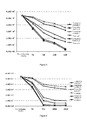
- the recombinant lentiviral vector preparations prepared in Examples 1-13 and Comparable examples 1-4 were taken out from the storage circumstance of -80°C and immediately placed into a water bath of 37°C. The corresponding samples were placed at different time points (48 h, 36 h, 24 h, 0 h). All of the samples was subjected to the active titer determination at the same time. the Determination titer of the viral particles was performed according to the method in the preparation examples. The results were shown in Table 3 and Figure 1 below.
- Example formulas or comparable examples The original active titers prior to freeze-thaw (Tu/ml) The active titer at 37 °C for 48 h (Tu/ml) Percent of the active titer at 37 °C for 48 h vs the original active titers (%)
- Example formula 1 2 ⁇ 10 10 7.42 ⁇ 10 9 37.10
- Example formula 2 5.4 ⁇ 10 7 2.38 ⁇ 10 7 44.07
- Example formula 3 2 ⁇ 10 6 7.40 ⁇ 10 5 37.00
- Example formula 4 5 ⁇ 10 6 1.88 ⁇ 10 6 37.60
- Example formula 4 2 ⁇ 10 6 7.20 ⁇ 10 5 36.00
- Example formula 8 5 ⁇ 10 6 1.80 ⁇ 10 6 36.00
- Example formula 9 5.4 ⁇ 10 7 2.01 ⁇ 10 7 37.22
- Example formula 10 5 ⁇ 10 6 1.85 ⁇ 10 6 37.00
- Example formula 11 2 ⁇ 10 6
- the recombinant lentiviral vector preparations formulated in Examples 1-13 and Comparable examples 1-4 were taken out from the storage circumstance of -80°C and immediately placed into a water bath of 25°C. The corresponding samples were placed at different time points (8 d, 4 d, 2 d, 0 h). All of the samples was subjected to the active titer determination at the same time. the Determination titer of the viral particles was performed according to the method in the preparation examples. The results were shown in Table 4 and Figure 2 below.
- Example formulas or comparable examples The original active titers prior to freeze-thaw (Tu/ml) The active titers at 25 °C for 8 d (Tu/ml) Percent of the active titers at 25°C for 8 d vs the original active titers (%)
- Example formula 1 2 ⁇ 10 10 1.25 ⁇ 10 10 62.50
- Example formula 2 5.4 ⁇ 10 7 4.00 ⁇ 10 7 74.07
- Example formula 3 2 ⁇ 10 6 1.27 ⁇ 10 6 63.50
- Example formula 4 5 ⁇ 10 6 3.21 ⁇ 10 6 64.20
- Example formula 4 2 ⁇ 10 6 1.26x10 6 63.00
- Example formula 8 5 ⁇ 10 6 3.10 ⁇ 10 6 62.00
- Example formula 9 5.4 ⁇ 10 7 3.44 ⁇ 10 7 63.70
- Example formula 10 5 ⁇ 10 6 3.14 ⁇ 10 6
- Example formulas or comparable examples The original active titers prior to freeze-thaw (Tu/ml) the active titers at 4°C for 32 d (Tu/ml) Percent of the active titers at 4°C for 32 d vs the original active titers (%)
- Example formula 1 2 ⁇ 10 10 1.10 ⁇ 10 10 55.00
- Example formula 2 5.4 ⁇ 10 7 3.60 ⁇ 10 7 66.67
- Example formula 3 2 ⁇ 10 6 1.08 ⁇ 10 6 54.00
- Example formula 4 5 ⁇ 10 6 2.78 ⁇ 10 6 55.60
- Example formula 8 5 ⁇ 10 6 2.64 ⁇ 10 6 52.8
- Example formula 9 5.4 ⁇ 10 7 3.01 ⁇ 10 7 55.74
- Example formula 10 5 ⁇ 10 6 2.77 ⁇ 10 6 55.40
- Example formula 11 2 ⁇
- Example formulas or comparable examples The original active titers prior to freezing-thawing (Tu/ml) The active titers at -20°C for 360 d (Tu/ml) Percent of the active titers at -20°C for 360 d vs the original active titers (%)
- Example formula 1 2 ⁇ 10 10 1.08 ⁇ 10 10 54.00
- Example formula 2 5.4 ⁇ 10 7 3.54 ⁇ 10 7 65.56
- Example formula 3 2 ⁇ 10 6 1.07 ⁇ 10 6 53.5
- Example formula 4 5 ⁇ 10 6 2.77 ⁇ 10 6 55.40
- Example formula 8 5 ⁇ 10 6 2.54 ⁇ 10 6 50.78
- Example formula 9 5.4 ⁇ 10 7 3.00 ⁇ 10 7 55.56
- Example formula 10 5 ⁇ 10 6 2.72 ⁇ 10 6 54.40
- Example formula 11 2 ⁇
- the recombinant lentiviral vector preparations formulated in Examples 1-13 and Comparable examples 1-4 were stored at -80°C for 0 h, 180 d, 360 d, and 720 d. All of the preparations was subjected to the active titer determination at the same time, i.e. taken out from -80°C to a water bath of 37°C, thawed and then placed on ice for of the active titer determination. The results were shown in Table 7 and Figure 5 below.
- Example formulas or comparable examples The original active titers prior to freeze-thaw (Tu/ml) The active titers at -80°C for 720 d (Tu/ml) Percent of the active titer at -80°C for 720 d vs the original active titer (%)
- Example formula 1 2 ⁇ 10 10 1.75 ⁇ 10 10 87.50
- Example formula 2 5.4 ⁇ 10 7 5.15 ⁇ 10 7 95.37
- Example formula 3 2 ⁇ 10 6 1.72 ⁇ 10 6 86.00
- Example formula 4 5 ⁇ 10 6 4.27 ⁇ 10 6 85.40
- Example formula 4 2 ⁇ 10 6 1.60 ⁇ 10 6 80.00
- Example formula 8 5 ⁇ 10 6 4.06 ⁇ 10 6 81.20
- Example formula 9 5.4 ⁇ 10 7 4.78 ⁇ 10 7 88.52
- Example formula 10 5 ⁇ 10 6 4.31 ⁇
- the recombinant lentiviral vector preparations formulated in Examples 1-13 and Comparable examples 1-4 were aliquoted sterilely.
- the titers of some of aliquots were immediately determined, known as the titers prior to freezing-thawing.
- Other aliquots were placed into liquid nitrogen for flash freezing and taken out after 10 min of flash freezing, and then placed in a water bath of 37°C with shaking from time to time, and taken out from the water bath when the different preparations were observed to be full thawed. This was recorded as the first freezing-thawing.
- Example formulas or comparable examples The original active titers prior to freeze-thaw (Tu/ml) The active titers after eight cycles of freezing-thawing (Tu/ml) Percent of the active titer after eight cycles of freezing-thawing vs the original active titers (%)
- Example formula 1 2 ⁇ 10 10 1.66 ⁇ 10 10 83.00
- Example formula 2 5.4 ⁇ 10 7 5.00 ⁇ 10 7 92.59
- Example formula 3 2 ⁇ 10 6 1.62 ⁇ 10 6 81.00
- Example formula 4 5 ⁇ 10 6 4.00 ⁇ 10 6 80.00
- Example formula 4 2 ⁇ 10 6 1.60 ⁇ 10 6 74.50
- Example formula 8 5 ⁇ 10 6 3.84 ⁇ 10 6 76.80
- Example formula 9 5.4 ⁇ 10 7 4.48 ⁇ 10 7 82.96
- Example formula 10 5 ⁇ 10 6 4.10 ⁇ 10 6 82
Landscapes
- Health & Medical Sciences (AREA)
- Life Sciences & Earth Sciences (AREA)
- Chemical & Material Sciences (AREA)
- Organic Chemistry (AREA)
- Engineering & Computer Science (AREA)
- Bioinformatics & Cheminformatics (AREA)
- General Health & Medical Sciences (AREA)
- Medicinal Chemistry (AREA)
- Zoology (AREA)
- Wood Science & Technology (AREA)
- Genetics & Genomics (AREA)
- Virology (AREA)
- Veterinary Medicine (AREA)
- Nuclear Medicine, Radiotherapy & Molecular Imaging (AREA)
- Animal Behavior & Ethology (AREA)
- General Chemical & Material Sciences (AREA)
- Public Health (AREA)
- Chemical Kinetics & Catalysis (AREA)
- Pharmacology & Pharmacy (AREA)
- Biomedical Technology (AREA)
- Microbiology (AREA)
- Immunology (AREA)
- General Engineering & Computer Science (AREA)
- Biochemistry (AREA)
- Biotechnology (AREA)
- Tropical Medicine & Parasitology (AREA)
- Vascular Medicine (AREA)
- Neurosurgery (AREA)
- Molecular Biology (AREA)
- Oncology (AREA)
- Cardiology (AREA)
- AIDS & HIV (AREA)
- Neurology (AREA)
- Urology & Nephrology (AREA)
- Communicable Diseases (AREA)
- Heart & Thoracic Surgery (AREA)
- Medicines Containing Material From Animals Or Micro-Organisms (AREA)
- Medicinal Preparation (AREA)
- Micro-Organisms Or Cultivation Processes Thereof (AREA)
Applications Claiming Priority (2)
| Application Number | Priority Date | Filing Date | Title |
|---|---|---|---|
| CN201210078289.XA CN103316356B (zh) | 2012-03-22 | 2012-03-22 | 一种重组慢病毒载体制剂 |
| PCT/CN2013/073056 WO2013139300A1 (zh) | 2012-03-22 | 2013-03-22 | 一种重组慢病毒载体制剂 |
Publications (3)
| Publication Number | Publication Date |
|---|---|
| EP2829285A1 true EP2829285A1 (de) | 2015-01-28 |
| EP2829285A4 EP2829285A4 (de) | 2015-11-04 |
| EP2829285B1 EP2829285B1 (de) | 2017-10-11 |
Family
ID=49185587
Family Applications (1)
| Application Number | Title | Priority Date | Filing Date |
|---|---|---|---|
| EP13764205.4A Active EP2829285B1 (de) | 2012-03-22 | 2013-03-22 | Formulierung mit einem rekombinanten lentiviralen vektor |
Country Status (4)
| Country | Link |
|---|---|
| US (1) | US9969984B2 (de) |
| EP (1) | EP2829285B1 (de) |
| CN (1) | CN103316356B (de) |
| WO (1) | WO2013139300A1 (de) |
Cited By (6)
| Publication number | Priority date | Publication date | Assignee | Title |
|---|---|---|---|---|
| WO2021067389A1 (en) * | 2019-09-30 | 2021-04-08 | Bioverativ Therapeutics Inc. | Lentiviral vector formulations |
| US11753461B2 (en) | 2016-02-01 | 2023-09-12 | Bioverativ Therapeutics Inc. | Optimized factor VIII genes |
| US11787851B2 (en) | 2013-02-15 | 2023-10-17 | Bioverativ Therapeutics Inc. | Optimized factor VIII gene |
| US12173307B2 (en) | 2020-06-24 | 2024-12-24 | Bioverativ Therapeutics Inc. | Methods for the purification of viral vectors |
| US12275970B2 (en) | 2014-06-30 | 2025-04-15 | Bioverativ Therapeutics Inc. | Optimized factor IX gene |
| WO2025231174A1 (en) * | 2024-04-30 | 2025-11-06 | Umoja Biopharma, Inc. | Manufacturing viral particles |
Families Citing this family (16)
| Publication number | Priority date | Publication date | Assignee | Title |
|---|---|---|---|---|
| CN104195175A (zh) * | 2014-08-05 | 2014-12-10 | 哈尔滨医科大学附属第四医院 | 慢病毒载体介导pedf在抑制肾细胞癌血行转移中的应用 |
| WO2016037164A1 (en) | 2014-09-07 | 2016-03-10 | Selecta Biosciences, Inc. | Methods and compositions for attenuating gene expression modulating anti-viral transfer vector immune responses |
| WO2017059241A1 (en) | 2015-10-02 | 2017-04-06 | The United States Of America, As Represented By The Secretary, Department Of Health And Human Services | Lentiviral protein delivery system for rna-guided genome editing |
| WO2017079269A1 (en) | 2015-11-04 | 2017-05-11 | The United States Of America, As Represented By The Secretary, Department Of Health And Human Services | Igf2bp1 and/or igf2bp3 for treatment |
| US10724006B2 (en) * | 2015-11-19 | 2020-07-28 | Novartis Ag | Buffers for stabilization of lentiviral preparations |
| CN105886534A (zh) * | 2016-04-29 | 2016-08-24 | 苏州溯源精微生物科技有限公司 | 一种抑制肿瘤转移的方法 |
| CN105999260B (zh) * | 2016-05-13 | 2019-12-10 | 四川大学 | 氢氧化铝凝胶-氯化钠复合免疫佐剂及其制备方法和用途 |
| CN107312799B (zh) * | 2017-06-30 | 2020-05-01 | 深圳宾德生物技术有限公司 | 慢病毒载体冻存保护液及其制备方法和应用 |
| CN109157518B (zh) * | 2018-09-26 | 2021-03-12 | 厚朴生物科技(苏州)有限公司 | 慢病毒载体冻干保存方法及制剂 |
| CN112080524A (zh) * | 2019-06-13 | 2020-12-15 | 南京艾德免疫治疗研究院有限公司 | 一种慢病毒载体冻存保护液的制备方法 |
| CN110714029B (zh) * | 2019-11-06 | 2024-08-16 | 无锡生基医药科技有限公司 | 一种慢病毒载体全封闭生产的方法及系统 |
| CN113549653B (zh) * | 2020-04-23 | 2024-03-22 | 上海赛比曼生物科技有限公司 | 用于慢病毒载体长期存贮的组合试剂 |
| CN116848146A (zh) | 2020-09-03 | 2023-10-03 | I·S·Y·陈 | 可溶性碱性磷酸酶构建体和包含编码可溶性碱性磷酸酶构建体的多核苷酸的表达载体 |
| AU2022212090A1 (en) | 2021-01-28 | 2023-07-06 | Allogene Therapeutics, Inc. | Methods for transducing immune cells |
| CN115704011A (zh) * | 2021-08-11 | 2023-02-17 | 北京永泰生物制品有限公司 | 一种高稳定性的慢病毒制剂及其制备方法和其应用 |
| CN115960962A (zh) * | 2021-10-09 | 2023-04-14 | 江苏金斯瑞蓬勃生物科技有限公司 | 一种用于加强慢病毒载体稳定性的保护剂及其用途 |
Family Cites Families (14)
| Publication number | Priority date | Publication date | Assignee | Title |
|---|---|---|---|---|
| US6136597A (en) | 1997-09-18 | 2000-10-24 | The Salk Institute For Biological Studies | RNA export element |
| ES2323991T3 (es) * | 1998-11-16 | 2009-07-28 | Introgen Therapeutics, Inc. | Formulacion de adenovirus para terapia genica. |
| US7456009B2 (en) | 2000-03-07 | 2008-11-25 | Merck & Co., Inc. | Adenovirus formulations |
| CN1301263C (zh) | 2002-12-18 | 2007-02-21 | 北京昭衍新药研究中心 | 一组抗hiv感染及防治艾滋病的核苷酸序列及其应用 |
| WO2005052116A2 (en) * | 2003-11-19 | 2005-06-09 | Merck & Co., Inc. | Preservative-containing virus formulations |
| US20070292386A9 (en) * | 2004-12-02 | 2007-12-20 | Campbell Robert L | Vaccine formulations for intradermal delivery comprising adjuvants and antigenic agents |
| US20060121055A1 (en) * | 2004-12-06 | 2006-06-08 | Becton, Dickinson And Company, Inc. | Compositions with enhanced immunogenicity |
| JP4959547B2 (ja) * | 2005-02-23 | 2012-06-27 | ディナベック株式会社 | Siv−pedfベクターを用いた眼組織細胞におけるアポトーシス変性を伴う疾患の治療薬 |
| JP4971974B2 (ja) | 2005-02-23 | 2012-07-11 | ディナベック株式会社 | Pedfおよびfgf2を含む眼組織細胞におけるアポトーシス変性を伴う疾患の治療薬 |
| CN101657097A (zh) * | 2007-03-01 | 2010-02-24 | 先进视觉疗法公司 | 以炎症为特征的疾病的治疗 |
| NZ578873A (en) * | 2007-03-01 | 2012-01-12 | Wellstat Ophthalmics Corp | Complement factor B analogs and uses for the treatment of complement mediated disease such as inflammation |
| WO2008106646A2 (en) * | 2007-03-01 | 2008-09-04 | Introgen Therapeutics, Inc | Methods and formulations for topical gene therapy |
| WO2009056651A1 (en) | 2007-11-02 | 2009-05-07 | Cytos Biotechnology Ag | Angiotensin-carrier formulation |
| US20130028933A1 (en) * | 2009-12-28 | 2013-01-31 | Ligocyte Pharmaceuticals, Inc. | Methods for stabilizing influenza antigen enveloped virus-based virus-like particle solutions |
-
2012
- 2012-03-22 CN CN201210078289.XA patent/CN103316356B/zh active Active
-
2013
- 2013-03-22 WO PCT/CN2013/073056 patent/WO2013139300A1/zh not_active Ceased
- 2013-03-22 US US14/386,662 patent/US9969984B2/en active Active
- 2013-03-22 EP EP13764205.4A patent/EP2829285B1/de active Active
Cited By (9)
| Publication number | Priority date | Publication date | Assignee | Title |
|---|---|---|---|---|
| US11787851B2 (en) | 2013-02-15 | 2023-10-17 | Bioverativ Therapeutics Inc. | Optimized factor VIII gene |
| US12275970B2 (en) | 2014-06-30 | 2025-04-15 | Bioverativ Therapeutics Inc. | Optimized factor IX gene |
| US11753461B2 (en) | 2016-02-01 | 2023-09-12 | Bioverativ Therapeutics Inc. | Optimized factor VIII genes |
| WO2021067389A1 (en) * | 2019-09-30 | 2021-04-08 | Bioverativ Therapeutics Inc. | Lentiviral vector formulations |
| JP2022549932A (ja) * | 2019-09-30 | 2022-11-29 | バイオベラティブ セラピューティクス インコーポレイテッド | レンチウイルスベクター製剤 |
| US12403164B2 (en) | 2019-09-30 | 2025-09-02 | Bioverativ Therapeutics Inc. | Lentiviral vector formulations |
| IL291632B1 (en) * | 2019-09-30 | 2026-02-01 | Bioverativ Therapeutics Inc | Lentiviral vector formulations |
| US12173307B2 (en) | 2020-06-24 | 2024-12-24 | Bioverativ Therapeutics Inc. | Methods for the purification of viral vectors |
| WO2025231174A1 (en) * | 2024-04-30 | 2025-11-06 | Umoja Biopharma, Inc. | Manufacturing viral particles |
Also Published As
| Publication number | Publication date |
|---|---|
| EP2829285A4 (de) | 2015-11-04 |
| WO2013139300A1 (zh) | 2013-09-26 |
| EP2829285B1 (de) | 2017-10-11 |
| US20150056696A1 (en) | 2015-02-26 |
| CN103316356B (zh) | 2016-08-17 |
| US9969984B2 (en) | 2018-05-15 |
| CN103316356A (zh) | 2013-09-25 |
Similar Documents
| Publication | Publication Date | Title |
|---|---|---|
| EP2829285B1 (de) | Formulierung mit einem rekombinanten lentiviralen vektor | |
| US10160788B2 (en) | Stabilized human immunodeficiency virus (HIV) envelope (ENV) trimer vaccines and methods of using same | |
| ES2348868T3 (es) | Vectores retrovirales terapeuticos para terapia genica. | |
| JP2019504635A (ja) | Vcnエンハンサー組成物およびその使用方法 | |
| CN107312799B (zh) | 慢病毒载体冻存保护液及其制备方法和应用 | |
| JP2008503230A (ja) | 非組み込み型且つ非複製型組換えレンチウイルス、その調製および使用 | |
| US20220259594A1 (en) | Vectors and compositions for treating hemoglobinopathies | |
| WO1999036511A2 (en) | Feline immunodeficiency virus gene therapy vectors | |
| US11261441B2 (en) | Vectors and compositions for treating hemoglobinopathies | |
| WO2000040741A2 (en) | Lentivirus vector system | |
| CZ20032574A3 (cs) | Zlepšené podmíněně se replikující vektory pro inhibici virových infekcí | |
| JP2008521405A (ja) | ウイルスベクター | |
| JP4959547B2 (ja) | Siv−pedfベクターを用いた眼組織細胞におけるアポトーシス変性を伴う疾患の治療薬 | |
| WO2025151744A1 (en) | Improved globin and other lentiviral vectors for gene therapy | |
| ES2305840T3 (es) | Sistema de vectores quimericos. | |
| CN101160139B (zh) | 含有pedf以及fgf2的伴随眼组织细胞凋亡变性的疾患的治疗药物 | |
| US20060128019A1 (en) | Process for producing virus vector containing membrane protein having sialic acid-binding in envelope with the use of gram-positive bacterium origin nueraminidase | |
| WO2017070113A1 (en) | Pharmaceutical composition comprising nanog shrna, and method of using nanog shrna to treat cancer | |
| US9988631B2 (en) | Pharmaceutical composition comprising Nanog shRNA, and method of using Nanog shRNA to treat cancer | |
| CN116121305A (zh) | 间充质干细胞在糖尿病相关疾病中的应用 | |
| CN119215158A (zh) | 一种重组慢病毒载体及其制剂 | |
| HK40076212A (en) | Producer viruses for generation of retroviruses in situ | |
| HK1077083A (en) | Methods of producing a viral vector comprising a membrane protein that binds to sialic acid as a component of the envelope using neuraminidase derived from gram-positive bacteria | |
| HK1056576A1 (zh) | 含有血凝素活性膜蛋白质的假型逆转录病毒载体 | |
| HK1056576B (en) | Pseudotype retroviral vectors containing membrane proteins having hemagglutinin activity |
Legal Events
| Date | Code | Title | Description |
|---|---|---|---|
| PUAI | Public reference made under article 153(3) epc to a published international application that has entered the european phase |
Free format text: ORIGINAL CODE: 0009012 |
|
| 17P | Request for examination filed |
Effective date: 20140922 |
|
| AK | Designated contracting states |
Kind code of ref document: A1 Designated state(s): AL AT BE BG CH CY CZ DE DK EE ES FI FR GB GR HR HU IE IS IT LI LT LU LV MC MK MT NL NO PL PT RO RS SE SI SK SM TR |
|
| AX | Request for extension of the european patent |
Extension state: BA ME |
|
| DAX | Request for extension of the european patent (deleted) | ||
| RA4 | Supplementary search report drawn up and despatched (corrected) |
Effective date: 20151002 |
|
| RIC1 | Information provided on ipc code assigned before grant |
Ipc: A61P 31/18 20060101ALI20150928BHEP Ipc: A61K 38/20 20060101ALI20150928BHEP Ipc: A61P 9/10 20060101ALI20150928BHEP Ipc: A61K 48/00 20060101AFI20150928BHEP Ipc: A61P 35/00 20060101ALI20150928BHEP Ipc: A61P 25/00 20060101ALI20150928BHEP Ipc: A61K 38/19 20060101ALI20150928BHEP Ipc: A61K 38/18 20060101ALI20150928BHEP |
|
| 17Q | First examination report despatched |
Effective date: 20160921 |
|
| STAA | Information on the status of an ep patent application or granted ep patent |
Free format text: STATUS: EXAMINATION IS IN PROGRESS |
|
| GRAP | Despatch of communication of intention to grant a patent |
Free format text: ORIGINAL CODE: EPIDOSNIGR1 |
|
| STAA | Information on the status of an ep patent application or granted ep patent |
Free format text: STATUS: GRANT OF PATENT IS INTENDED |
|
| INTG | Intention to grant announced |
Effective date: 20170410 |
|
| GRAF | Information related to payment of grant fee modified |
Free format text: ORIGINAL CODE: EPIDOSCIGR3 |
|
| GRAS | Grant fee paid |
Free format text: ORIGINAL CODE: EPIDOSNIGR3 |
|
| GRAA | (expected) grant |
Free format text: ORIGINAL CODE: 0009210 |
|
| STAA | Information on the status of an ep patent application or granted ep patent |
Free format text: STATUS: THE PATENT HAS BEEN GRANTED |
|
| AK | Designated contracting states |
Kind code of ref document: B1 Designated state(s): AL AT BE BG CH CY CZ DE DK EE ES FI FR GB GR HR HU IE IS IT LI LT LU LV MC MK MT NL NO PL PT RO RS SE SI SK SM TR |
|
| REG | Reference to a national code |
Ref country code: GB Ref legal event code: FG4D |
|
| REG | Reference to a national code |
Ref country code: CH Ref legal event code: EP |
|
| REG | Reference to a national code |
Ref country code: IE Ref legal event code: FG4D |
|
| REG | Reference to a national code |
Ref country code: AT Ref legal event code: REF Ref document number: 935445 Country of ref document: AT Kind code of ref document: T Effective date: 20171115 |
|
| REG | Reference to a national code |
Ref country code: DE Ref legal event code: R096 Ref document number: 602013027829 Country of ref document: DE |
|
| REG | Reference to a national code |
Ref country code: SE Ref legal event code: TRGR |
|
| REG | Reference to a national code |
Ref country code: NL Ref legal event code: MP Effective date: 20171011 |
|
| REG | Reference to a national code |
Ref country code: LT Ref legal event code: MG4D |
|
| REG | Reference to a national code |
Ref country code: AT Ref legal event code: MK05 Ref document number: 935445 Country of ref document: AT Kind code of ref document: T Effective date: 20171011 |
|
| REG | Reference to a national code |
Ref country code: FR Ref legal event code: PLFP Year of fee payment: 6 |
|
| PG25 | Lapsed in a contracting state [announced via postgrant information from national office to epo] |
Ref country code: NL Free format text: LAPSE BECAUSE OF FAILURE TO SUBMIT A TRANSLATION OF THE DESCRIPTION OR TO PAY THE FEE WITHIN THE PRESCRIBED TIME-LIMIT Effective date: 20171011 |
|
| PG25 | Lapsed in a contracting state [announced via postgrant information from national office to epo] |
Ref country code: LT Free format text: LAPSE BECAUSE OF FAILURE TO SUBMIT A TRANSLATION OF THE DESCRIPTION OR TO PAY THE FEE WITHIN THE PRESCRIBED TIME-LIMIT Effective date: 20171011 Ref country code: NO Free format text: LAPSE BECAUSE OF FAILURE TO SUBMIT A TRANSLATION OF THE DESCRIPTION OR TO PAY THE FEE WITHIN THE PRESCRIBED TIME-LIMIT Effective date: 20180111 Ref country code: FI Free format text: LAPSE BECAUSE OF FAILURE TO SUBMIT A TRANSLATION OF THE DESCRIPTION OR TO PAY THE FEE WITHIN THE PRESCRIBED TIME-LIMIT Effective date: 20171011 Ref country code: ES Free format text: LAPSE BECAUSE OF FAILURE TO SUBMIT A TRANSLATION OF THE DESCRIPTION OR TO PAY THE FEE WITHIN THE PRESCRIBED TIME-LIMIT Effective date: 20171011 |
|
| PG25 | Lapsed in a contracting state [announced via postgrant information from national office to epo] |
Ref country code: BG Free format text: LAPSE BECAUSE OF FAILURE TO SUBMIT A TRANSLATION OF THE DESCRIPTION OR TO PAY THE FEE WITHIN THE PRESCRIBED TIME-LIMIT Effective date: 20180111 Ref country code: HR Free format text: LAPSE BECAUSE OF FAILURE TO SUBMIT A TRANSLATION OF THE DESCRIPTION OR TO PAY THE FEE WITHIN THE PRESCRIBED TIME-LIMIT Effective date: 20171011 Ref country code: LV Free format text: LAPSE BECAUSE OF FAILURE TO SUBMIT A TRANSLATION OF THE DESCRIPTION OR TO PAY THE FEE WITHIN THE PRESCRIBED TIME-LIMIT Effective date: 20171011 Ref country code: AT Free format text: LAPSE BECAUSE OF FAILURE TO SUBMIT A TRANSLATION OF THE DESCRIPTION OR TO PAY THE FEE WITHIN THE PRESCRIBED TIME-LIMIT Effective date: 20171011 Ref country code: RS Free format text: LAPSE BECAUSE OF FAILURE TO SUBMIT A TRANSLATION OF THE DESCRIPTION OR TO PAY THE FEE WITHIN THE PRESCRIBED TIME-LIMIT Effective date: 20171011 Ref country code: GR Free format text: LAPSE BECAUSE OF FAILURE TO SUBMIT A TRANSLATION OF THE DESCRIPTION OR TO PAY THE FEE WITHIN THE PRESCRIBED TIME-LIMIT Effective date: 20180112 Ref country code: IS Free format text: LAPSE BECAUSE OF FAILURE TO SUBMIT A TRANSLATION OF THE DESCRIPTION OR TO PAY THE FEE WITHIN THE PRESCRIBED TIME-LIMIT Effective date: 20180211 |
|
| REG | Reference to a national code |
Ref country code: DE Ref legal event code: R097 Ref document number: 602013027829 Country of ref document: DE |
|
| PG25 | Lapsed in a contracting state [announced via postgrant information from national office to epo] |
Ref country code: CZ Free format text: LAPSE BECAUSE OF FAILURE TO SUBMIT A TRANSLATION OF THE DESCRIPTION OR TO PAY THE FEE WITHIN THE PRESCRIBED TIME-LIMIT Effective date: 20171011 Ref country code: EE Free format text: LAPSE BECAUSE OF FAILURE TO SUBMIT A TRANSLATION OF THE DESCRIPTION OR TO PAY THE FEE WITHIN THE PRESCRIBED TIME-LIMIT Effective date: 20171011 Ref country code: DK Free format text: LAPSE BECAUSE OF FAILURE TO SUBMIT A TRANSLATION OF THE DESCRIPTION OR TO PAY THE FEE WITHIN THE PRESCRIBED TIME-LIMIT Effective date: 20171011 Ref country code: SK Free format text: LAPSE BECAUSE OF FAILURE TO SUBMIT A TRANSLATION OF THE DESCRIPTION OR TO PAY THE FEE WITHIN THE PRESCRIBED TIME-LIMIT Effective date: 20171011 |
|
| PLBE | No opposition filed within time limit |
Free format text: ORIGINAL CODE: 0009261 |
|
| STAA | Information on the status of an ep patent application or granted ep patent |
Free format text: STATUS: NO OPPOSITION FILED WITHIN TIME LIMIT |
|
| PG25 | Lapsed in a contracting state [announced via postgrant information from national office to epo] |
Ref country code: SM Free format text: LAPSE BECAUSE OF FAILURE TO SUBMIT A TRANSLATION OF THE DESCRIPTION OR TO PAY THE FEE WITHIN THE PRESCRIBED TIME-LIMIT Effective date: 20171011 Ref country code: RO Free format text: LAPSE BECAUSE OF FAILURE TO SUBMIT A TRANSLATION OF THE DESCRIPTION OR TO PAY THE FEE WITHIN THE PRESCRIBED TIME-LIMIT Effective date: 20171011 Ref country code: PL Free format text: LAPSE BECAUSE OF FAILURE TO SUBMIT A TRANSLATION OF THE DESCRIPTION OR TO PAY THE FEE WITHIN THE PRESCRIBED TIME-LIMIT Effective date: 20171011 |
|
| 26N | No opposition filed |
Effective date: 20180712 |
|
| REG | Reference to a national code |
Ref country code: CH Ref legal event code: PL |
|
| PG25 | Lapsed in a contracting state [announced via postgrant information from national office to epo] |
Ref country code: MC Free format text: LAPSE BECAUSE OF FAILURE TO SUBMIT A TRANSLATION OF THE DESCRIPTION OR TO PAY THE FEE WITHIN THE PRESCRIBED TIME-LIMIT Effective date: 20171011 Ref country code: SI Free format text: LAPSE BECAUSE OF FAILURE TO SUBMIT A TRANSLATION OF THE DESCRIPTION OR TO PAY THE FEE WITHIN THE PRESCRIBED TIME-LIMIT Effective date: 20171011 |
|
| REG | Reference to a national code |
Ref country code: IE Ref legal event code: MM4A |
|
| PG25 | Lapsed in a contracting state [announced via postgrant information from national office to epo] |
Ref country code: LU Free format text: LAPSE BECAUSE OF NON-PAYMENT OF DUE FEES Effective date: 20180322 |
|
| PG25 | Lapsed in a contracting state [announced via postgrant information from national office to epo] |
Ref country code: IE Free format text: LAPSE BECAUSE OF NON-PAYMENT OF DUE FEES Effective date: 20180322 |
|
| PG25 | Lapsed in a contracting state [announced via postgrant information from national office to epo] |
Ref country code: LI Free format text: LAPSE BECAUSE OF NON-PAYMENT OF DUE FEES Effective date: 20180331 Ref country code: CH Free format text: LAPSE BECAUSE OF NON-PAYMENT OF DUE FEES Effective date: 20180331 |
|
| PG25 | Lapsed in a contracting state [announced via postgrant information from national office to epo] |
Ref country code: MT Free format text: LAPSE BECAUSE OF NON-PAYMENT OF DUE FEES Effective date: 20180322 |
|
| PG25 | Lapsed in a contracting state [announced via postgrant information from national office to epo] |
Ref country code: HU Free format text: LAPSE BECAUSE OF FAILURE TO SUBMIT A TRANSLATION OF THE DESCRIPTION OR TO PAY THE FEE WITHIN THE PRESCRIBED TIME-LIMIT; INVALID AB INITIO Effective date: 20130322 Ref country code: PT Free format text: LAPSE BECAUSE OF FAILURE TO SUBMIT A TRANSLATION OF THE DESCRIPTION OR TO PAY THE FEE WITHIN THE PRESCRIBED TIME-LIMIT Effective date: 20171011 |
|
| PG25 | Lapsed in a contracting state [announced via postgrant information from national office to epo] |
Ref country code: MK Free format text: LAPSE BECAUSE OF NON-PAYMENT OF DUE FEES Effective date: 20171011 Ref country code: CY Free format text: LAPSE BECAUSE OF FAILURE TO SUBMIT A TRANSLATION OF THE DESCRIPTION OR TO PAY THE FEE WITHIN THE PRESCRIBED TIME-LIMIT Effective date: 20171011 |
|
| PG25 | Lapsed in a contracting state [announced via postgrant information from national office to epo] |
Ref country code: AL Free format text: LAPSE BECAUSE OF FAILURE TO SUBMIT A TRANSLATION OF THE DESCRIPTION OR TO PAY THE FEE WITHIN THE PRESCRIBED TIME-LIMIT Effective date: 20171011 |
|
| P01 | Opt-out of the competence of the unified patent court (upc) registered |
Effective date: 20230519 |
|
| PGFP | Annual fee paid to national office [announced via postgrant information from national office to epo] |
Ref country code: SE Payment date: 20260320 Year of fee payment: 14 |
|
| PGFP | Annual fee paid to national office [announced via postgrant information from national office to epo] |
Ref country code: GB Payment date: 20260323 Year of fee payment: 14 |
|
| PGFP | Annual fee paid to national office [announced via postgrant information from national office to epo] |
Ref country code: DE Payment date: 20260313 Year of fee payment: 14 |
|
| PGFP | Annual fee paid to national office [announced via postgrant information from national office to epo] |
Ref country code: BE Payment date: 20260324 Year of fee payment: 14 Ref country code: IT Payment date: 20260310 Year of fee payment: 14 |
|
| PGFP | Annual fee paid to national office [announced via postgrant information from national office to epo] |
Ref country code: FR Payment date: 20260331 Year of fee payment: 14 |
|
| PGFP | Annual fee paid to national office [announced via postgrant information from national office to epo] |
Ref country code: TR Payment date: 20260311 Year of fee payment: 14 |