EP2307055B1 - Prevention of atrophic age related macular degeneration - Google Patents
Prevention of atrophic age related macular degeneration Download PDFInfo
- Publication number
- EP2307055B1 EP2307055B1 EP09790328.0A EP09790328A EP2307055B1 EP 2307055 B1 EP2307055 B1 EP 2307055B1 EP 09790328 A EP09790328 A EP 09790328A EP 2307055 B1 EP2307055 B1 EP 2307055B1
- Authority
- EP
- European Patent Office
- Prior art keywords
- drug delivery
- delivery system
- eye
- amd
- bevacizumab
- Prior art date
- Legal status (The legal status is an assumption and is not a legal conclusion. Google has not performed a legal analysis and makes no representation as to the accuracy of the status listed.)
- Active
Links
Images
Classifications
-
- A—HUMAN NECESSITIES
- A61—MEDICAL OR VETERINARY SCIENCE; HYGIENE
- A61K—PREPARATIONS FOR MEDICAL, DENTAL OR TOILETRY PURPOSES
- A61K47/00—Medicinal preparations characterised by the non-active ingredients used, e.g. carriers or inert additives; Targeting or modifying agents chemically bound to the active ingredient
- A61K47/30—Macromolecular organic or inorganic compounds, e.g. inorganic polyphosphates
- A61K47/34—Macromolecular compounds obtained otherwise than by reactions only involving carbon-to-carbon unsaturated bonds, e.g. polyesters, polyamino acids, polysiloxanes, polyphosphazines, copolymers of polyalkylene glycol or poloxamers
-
- A—HUMAN NECESSITIES
- A61—MEDICAL OR VETERINARY SCIENCE; HYGIENE
- A61K—PREPARATIONS FOR MEDICAL, DENTAL OR TOILETRY PURPOSES
- A61K9/00—Medicinal preparations characterised by special physical form
- A61K9/0012—Galenical forms characterised by the site of application
- A61K9/0048—Eye, e.g. artificial tears
-
- A—HUMAN NECESSITIES
- A61—MEDICAL OR VETERINARY SCIENCE; HYGIENE
- A61K—PREPARATIONS FOR MEDICAL, DENTAL OR TOILETRY PURPOSES
- A61K39/00—Medicinal preparations containing antigens or antibodies
- A61K39/395—Antibodies; Immunoglobulins; Immune serum, e.g. antilymphocytic serum
-
- A—HUMAN NECESSITIES
- A61—MEDICAL OR VETERINARY SCIENCE; HYGIENE
- A61K—PREPARATIONS FOR MEDICAL, DENTAL OR TOILETRY PURPOSES
- A61K31/00—Medicinal preparations containing organic active ingredients
- A61K31/56—Compounds containing cyclopenta[a]hydrophenanthrene ring systems; Derivatives thereof, e.g. steroids
- A61K31/57—Compounds containing cyclopenta[a]hydrophenanthrene ring systems; Derivatives thereof, e.g. steroids substituted in position 17 beta by a chain of two carbon atoms, e.g. pregnane or progesterone
- A61K31/573—Compounds containing cyclopenta[a]hydrophenanthrene ring systems; Derivatives thereof, e.g. steroids substituted in position 17 beta by a chain of two carbon atoms, e.g. pregnane or progesterone substituted in position 21, e.g. cortisone, dexamethasone, prednisone or aldosterone
-
- A—HUMAN NECESSITIES
- A61—MEDICAL OR VETERINARY SCIENCE; HYGIENE
- A61K—PREPARATIONS FOR MEDICAL, DENTAL OR TOILETRY PURPOSES
- A61K31/00—Medicinal preparations containing organic active ingredients
- A61K31/70—Carbohydrates; Sugars; Derivatives thereof
- A61K31/7088—Compounds having three or more nucleosides or nucleotides
- A61K31/712—Nucleic acids or oligonucleotides having modified sugars, i.e. other than ribose or 2'-deoxyribose
-
- A—HUMAN NECESSITIES
- A61—MEDICAL OR VETERINARY SCIENCE; HYGIENE
- A61K—PREPARATIONS FOR MEDICAL, DENTAL OR TOILETRY PURPOSES
- A61K45/00—Medicinal preparations containing active ingredients not provided for in groups A61K31/00 - A61K41/00
-
- A—HUMAN NECESSITIES
- A61—MEDICAL OR VETERINARY SCIENCE; HYGIENE
- A61K—PREPARATIONS FOR MEDICAL, DENTAL OR TOILETRY PURPOSES
- A61K47/00—Medicinal preparations characterised by the non-active ingredients used, e.g. carriers or inert additives; Targeting or modifying agents chemically bound to the active ingredient
- A61K47/06—Organic compounds, e.g. natural or synthetic hydrocarbons, polyolefins, mineral oil, petrolatum or ozokerite
- A61K47/08—Organic compounds, e.g. natural or synthetic hydrocarbons, polyolefins, mineral oil, petrolatum or ozokerite containing oxygen, e.g. ethers, acetals, ketones, quinones, aldehydes, peroxides
-
- A—HUMAN NECESSITIES
- A61—MEDICAL OR VETERINARY SCIENCE; HYGIENE
- A61K—PREPARATIONS FOR MEDICAL, DENTAL OR TOILETRY PURPOSES
- A61K47/00—Medicinal preparations characterised by the non-active ingredients used, e.g. carriers or inert additives; Targeting or modifying agents chemically bound to the active ingredient
- A61K47/30—Macromolecular organic or inorganic compounds, e.g. inorganic polyphosphates
- A61K47/36—Polysaccharides; Derivatives thereof, e.g. gums, starch, alginate, dextrin, hyaluronic acid, chitosan, inulin, agar or pectin
-
- A—HUMAN NECESSITIES
- A61—MEDICAL OR VETERINARY SCIENCE; HYGIENE
- A61K—PREPARATIONS FOR MEDICAL, DENTAL OR TOILETRY PURPOSES
- A61K47/00—Medicinal preparations characterised by the non-active ingredients used, e.g. carriers or inert additives; Targeting or modifying agents chemically bound to the active ingredient
- A61K47/30—Macromolecular organic or inorganic compounds, e.g. inorganic polyphosphates
- A61K47/36—Polysaccharides; Derivatives thereof, e.g. gums, starch, alginate, dextrin, hyaluronic acid, chitosan, inulin, agar or pectin
- A61K47/38—Cellulose; Derivatives thereof
-
- A—HUMAN NECESSITIES
- A61—MEDICAL OR VETERINARY SCIENCE; HYGIENE
- A61K—PREPARATIONS FOR MEDICAL, DENTAL OR TOILETRY PURPOSES
- A61K9/00—Medicinal preparations characterised by special physical form
- A61K9/0012—Galenical forms characterised by the site of application
- A61K9/0048—Eye, e.g. artificial tears
- A61K9/0051—Ocular inserts, ocular implants
-
- A—HUMAN NECESSITIES
- A61—MEDICAL OR VETERINARY SCIENCE; HYGIENE
- A61K—PREPARATIONS FOR MEDICAL, DENTAL OR TOILETRY PURPOSES
- A61K9/00—Medicinal preparations characterised by special physical form
- A61K9/14—Particulate form, e.g. powders, Processes for size reducing of pure drugs or the resulting products, Pure drug nanoparticles
- A61K9/16—Agglomerates; Granulates; Microbeadlets ; Microspheres; Pellets; Solid products obtained by spray drying, spray freeze drying, spray congealing,(multiple) emulsion solvent evaporation or extraction
- A61K9/1605—Excipients; Inactive ingredients
- A61K9/1629—Organic macromolecular compounds
- A61K9/1635—Organic macromolecular compounds obtained by reactions only involving carbon-to-carbon unsaturated bonds, e.g. polyvinyl pyrrolidone, poly(meth)acrylates
-
- A—HUMAN NECESSITIES
- A61—MEDICAL OR VETERINARY SCIENCE; HYGIENE
- A61K—PREPARATIONS FOR MEDICAL, DENTAL OR TOILETRY PURPOSES
- A61K9/00—Medicinal preparations characterised by special physical form
- A61K9/14—Particulate form, e.g. powders, Processes for size reducing of pure drugs or the resulting products, Pure drug nanoparticles
- A61K9/16—Agglomerates; Granulates; Microbeadlets ; Microspheres; Pellets; Solid products obtained by spray drying, spray freeze drying, spray congealing,(multiple) emulsion solvent evaporation or extraction
- A61K9/1605—Excipients; Inactive ingredients
- A61K9/1629—Organic macromolecular compounds
- A61K9/1641—Organic macromolecular compounds obtained otherwise than by reactions only involving carbon-to-carbon unsaturated bonds, e.g. polyethylene glycol, poloxamers
- A61K9/1647—Polyesters, e.g. poly(lactide-co-glycolide)
-
- A—HUMAN NECESSITIES
- A61—MEDICAL OR VETERINARY SCIENCE; HYGIENE
- A61K—PREPARATIONS FOR MEDICAL, DENTAL OR TOILETRY PURPOSES
- A61K9/00—Medicinal preparations characterised by special physical form
- A61K9/14—Particulate form, e.g. powders, Processes for size reducing of pure drugs or the resulting products, Pure drug nanoparticles
- A61K9/16—Agglomerates; Granulates; Microbeadlets ; Microspheres; Pellets; Solid products obtained by spray drying, spray freeze drying, spray congealing,(multiple) emulsion solvent evaporation or extraction
- A61K9/1605—Excipients; Inactive ingredients
- A61K9/1629—Organic macromolecular compounds
- A61K9/1652—Polysaccharides, e.g. alginate, cellulose derivatives; Cyclodextrin
-
- A—HUMAN NECESSITIES
- A61—MEDICAL OR VETERINARY SCIENCE; HYGIENE
- A61P—SPECIFIC THERAPEUTIC ACTIVITY OF CHEMICAL COMPOUNDS OR MEDICINAL PREPARATIONS
- A61P27/00—Drugs for disorders of the senses
- A61P27/02—Ophthalmic agents
-
- A—HUMAN NECESSITIES
- A61—MEDICAL OR VETERINARY SCIENCE; HYGIENE
- A61P—SPECIFIC THERAPEUTIC ACTIVITY OF CHEMICAL COMPOUNDS OR MEDICINAL PREPARATIONS
- A61P9/00—Drugs for disorders of the cardiovascular system
-
- C—CHEMISTRY; METALLURGY
- C07—ORGANIC CHEMISTRY
- C07K—PEPTIDES
- C07K16/00—Immunoglobulins [IGs], e.g. monoclonal or polyclonal antibodies
- C07K16/18—Immunoglobulins [IGs], e.g. monoclonal or polyclonal antibodies against material from animals or humans
- C07K16/22—Immunoglobulins [IGs], e.g. monoclonal or polyclonal antibodies against material from animals or humans against growth factors ; against growth regulators
-
- A—HUMAN NECESSITIES
- A61—MEDICAL OR VETERINARY SCIENCE; HYGIENE
- A61K—PREPARATIONS FOR MEDICAL, DENTAL OR TOILETRY PURPOSES
- A61K39/00—Medicinal preparations containing antigens or antibodies
- A61K2039/505—Medicinal preparations containing antigens or antibodies comprising antibodies
Definitions
- the present invention is directed to a biocompatible drug delivery system for use in a method for preventing or delaying the progression of dry age-related macular degeneration (AMD) to wet AMD, the drug delivery system comprising an anti-neovascular agent selected from bevacizumab, ranibizumab and esters, salts and mixtures thereof and a polymeric vehicle associated with the anti-neovascular agent; wherein:
- AMD age related macular degeneration
- AMD neovascular AMD
- atrophic AMD atrophic AMD
- neovascular AMD neovascular AMD
- dry AMD is characterized by the formation of yellow plaque like deposits called drusen in the macula, between the retinal pigment epithelium (RPE) and the underlying choroid.
- RPE retinal pigment epithelium
- Anti-neovascular agents for treatment of wet AMD include agents which block the action of vascular endothelial growth factor (VEGF) thereby slowing angiogenesis (formation of new blood vessels in the retina) which leads to choroidal neovascularization and loss of vision in wet AMD patients.
- VEGF vascular endothelial growth factor
- Such "anti-VEGF” agents approved or in clinical study for treating wet AMD include bevacizumab (Avastin), ranibizumab (Lucentis), and pegaptanib (Macugen).
- Bevacizumab is a full-length anti-VEGF antibody approved for use in metastatic colon cancer.
- Ranibizumab is a humanized anti-VEGF monoclonal antibody fragment that inhibits all isotypes of VEGF and pegaptanib is a VEGF-neutralizing aptamer that specifically inhibits one isoform of VEGF (VEGF-165).
- RNAs small interfering RNA
- corticosteroids such as anacortave acetate, triamcinolone acetonide and fluocinolone acetonide
- receptor tyrosine kinase inhibitors such as vatalanib and Ruboxistaurin [decreases protein kinase C activity]
- squalamine lactate growth factors, including pigment epithelium-derived factor.
- siRNAs can inhibit VEGF production and VEGF receptor production
- corticosteroids can treat the DME aspect of wet AMD
- receptor tyrosine kinase inhibitors inhibit downstream effects of VEGF
- squalamine lactate inhibits plasma membrane ion channels with downstream effects on VEGF.
- An ocular condition can include a disease, aliment or condition which affects or involves the eye or one of the parts or regions of the eye.
- the eye includes the eyeball and the tissues and fluids which constitute the eyeball, the periocular muscles (such as the oblique and rectus muscles) and the portion of the optic nerve which is within or adjacent to the eyeball.
- a front of the eye or anterior ocular condition is a disease, ailment or condition which affects or which involves an ocular region or site, such as a periocular muscle, an eye lid or an eye ball tissue or fluid which is located anterior to the posterior wall of the lens capsule or ciliary muscles.
- a front of the eye ocular condition primarily affects or involves the cornea, the conjunctiva, the anterior chamber, the iris, the posterior chamber (behind the iris but in front of the posterior wall of the lens capsule), the lens and the lens capsule as well as blood vessels, lymphatics and nerves which vascularize, maintain or innervate an anterior ocular region or site.
- a front of the eye (anterior) ocular condition can include a disease, ailment or condition, such as for example, aphakia; pseudophakia; astigmatism; blepharospasm; cataract; conjunctival diseases; conjunctivitis; corneal diseases; corneal ulcer; dry eye syndromes; eyelid diseases; lacrimal apparatus diseases; lacrimal duct obstruction; myopia; presbyopia; pupil disorders; refractive disorders and strabismus.
- Glaucoma can be considered to be a front of the eye ocular condition because a clinical goal of glaucoma treatment can be to reduce a hypertension of aqueous fluid in the anterior chamber of the eye (i.e. reduce intraocular pressure).
- a posterior (or back of the eye) ocular condition is a disease, ailment or condition which primarily affects or involves a posterior ocular region or site such as choroid or sclera (in a position posterior to a plane through the posterior wall of the lens capsule), vitreous, vitreous chamber, retina, optic nerve (i.e. the optic disc), and blood vessels and nerves which vascularize or innervate a posterior ocular region or site.
- a posterior ocular region or site such as choroid or sclera (in a position posterior to a plane through the posterior wall of the lens capsule), vitreous, vitreous chamber, retina, optic nerve (i.e. the optic disc), and blood vessels and nerves which vascularize or innervate a posterior ocular region or site.
- a posterior ocular condition can include a disease, ailment or condition, such as for example, macular degeneration (such as non-exudative age related macular degeneration and exudative age related macular degeneration); choroidal neovascularization; acute macular neuroretinopathy; macular edema (such as cystoid macular edema and diabetic macular edema); Behcet's disease, retinal disorders, diabetic retinopathy (including proliferative diabetic retinopathy); retinal arterial occlusive disease; central retinal vein occlusion; uveitic retinal disease; retinal detachment; ocular trauma which affects a posterior ocular site or location; a posterior ocular condition caused by or influenced by an ocular laser treatment; posterior ocular conditions caused by or influenced by a photodynamic therapy; photocoagulation; radiation retinopathy; epiretinal membrane disorders; branch retinal vein occlusion; anterior ischemic optic neuro
- Glaucoma can also be considered a posterior ocular condition because a therapeutic goal of glaucoma treatment is to prevent the loss of or reduce the occurrence of loss of vision due to damage to or loss of retinal cells or optic nerve cells (i.e. neuroprotection).
- macular degeneration such as AMD is a leading cause of blindness in the world and it is estimated that thirteen million Americans have evidence of macular degeneration.
- Macular degeneration results in a break down of the macula, the light-sensitive part of the retina responsible for the sharp, direct vision needed to read or drive. Central vision is especially affected.
- Macular degeneration is diagnosed as either dry (atrophic) or wet (exudative).
- the dry form of macular degeneration is more common than the wet form of macular degeneration, with about 90% of AMD patients being diagnosed with dry AMD.
- the wet form of the disease usually leads to more serious vision loss.
- Macular degeneration can produce a slow or sudden painless loss of vision. The cause of macular degeneration is not clear.
- the dry form of AMD may result from the aging and thinning of macular tissues, depositing of pigment in the macula, or a combination of the two processes.
- wet AMD new blood vessels grow beneath the retina and leak blood and fluid. This leakage causes retinal cells to die and creates blind spots in central vision.
- Macular edema can result in a swelling of the macula.
- the edema is caused by fluid leaking from retinal blood vessels. Blood leaks out of the weak vessel walls into a very small area of the macula which is rich in cones, the nerve endings that detect color and from which daytime vision depends. Blurring then occurs in the middle or just to the side of the central visual field. Visual loss can progress over a period of months. Retinal blood vessel obstruction, eye inflammation, and age-related macular degeneration have all been associated with macular edema. The macula may also be affected by swelling following cataract extraction. Symptoms of ME include blurred central vision, distorted vision, vision tinted pink and light sensitivity.
- Causes of ME can include retinal vein occlusion, macular degeneration, diabetic macular leakage, eye inflammation, idiopathic central serous chorioretinopathy, anterior or posterior uveitis, pars planitis, retinitis pigmentosa, radiation retinopathy, posterior vitreous detachment, epiretinal membrane formation, idiopathic juxtafoveal retinal telangiectasia, Nd:YAG capsulotomy or iridotomy.
- Some patients with ME may have a history of use of topical epinephrine or prostaglandin analogs for glaucoma.
- the first line of treatment for ME is typically anti-inflammatory drops topically applied.
- VEGF vascular endothelial growth factor
- VPF potent vascular permeability factor
- VEGF is known to be a major contributor to the increase in the number of capillaries in tissue undergoing angiogenesis.
- Bovine capillary endothelial cells will proliferate and show signs of tube structures in vitro upon stimulation by VEGF.
- Upregulation of VEGF is a major component of the physiological response to exercise and its role in angiogenesis is suspected to be a possible treatment in vascular injuries.
- VEGF causes an intracellular signaling cascade in endothelial cells.
- VEGF binding to VEGF receptor-2 initiates a tyrosine kinase signaling cascade that stimulates the production of factors that variously stimulate vessel permeability (epithelial nitric oxide synthase; (eNOS), proliferation/survival (bFGF; basic fibroblast growth factor), migration (intercellular adhesion molecules (ICAMs); vascular cell adhesion molecules (VCAMs); matrix metalloproteases (MMPs)) and finally differentiation into mature blood vessels.
- eNOS epihelial nitric oxide synthase
- bFGF proliferation/survival
- IAMs intercellular adhesion molecules
- VCAMs vascular cell adhesion molecules
- MMPs matrix metalloproteases
- the normal human retina contains little or no VEGF; however, hypoxia causes upregulation of VEGF production.
- Disease states characterized by hypoxia-induced VEGF upregulation include, without limitation, CRVO and BRVO. This hypoxia induced upregulation of VEGF can be inhibited pharmacologically.
- Pe'er J. et al. Vascular Endothelial Growth Factor Upregulation In Human Central Retinal Vein Occlusion, OPHTHALMOLOGY 1998; 105:412-416 . It has been demonstrated that anti-VEGF antibodies can inhibit VEGF driven capillary endothelial cell proliferation. Thus, attenuation of the effects of VEGF introduces a rationale for treatment of macular edema from venous occlusive disease.
- VEGF vascular endothelial growth factor
- VEGF inhibiting aptamer VEGF inhibiting aptamer
- VEGF-inhibiting compound such as a to stop the main signaling cascade for angiogenesis, thereby preventing these symptoms.
- Diabetic retinopathy is the leading cause of blindness among adults aged 20 to 74 years.
- Macular ischemia is a major cause of irreversible vision acuity loss and decreased contrast sensitivity in patients with diabetic retinopathy.
- the capillary nonperfusion and decreased capillary blood flow that is responsible for this ischemia is seen clinically on the fluorescein angiogram as an increase in the foveal avascular zone (FAZ) or an irregularity of the outline of the FAZ.
- FAZ foveal avascular zone
- FAZ foveal avascular zone
- These findings are predictors of the other, perhaps more well-known, sight-threatening complications of diabetic retinopathy, including macular edema and proliferative retinopathy.
- extensive capillary nonperfusion is also a predictor of a poor visual prognosis from diabetic retinopathy.
- the exterior surface of the normal globe mammalian eye has a layer of tissue known as conjunctival epithelium, under which is a layer of tissue called Tenon's fascia (also called conjunctival stroma).
- Tenon's fascia also called conjunctival stroma
- the extent of the Tenon's fascia extending backwards across the globe forms a fascial sheath known as Tenon's capsule.
- Tenon's fascia Under Tenon's fascia is the episclera.
- the conjunctival epithelium and the Tenon's fascia is referred to as the conjunctiva.
- the episclera underneath which lies the sclera, followed by the choroid.
- Most of the lymphatic vessels and their associated drainage system which is very efficient at removing therapeutic agents placed in their vicinity, is present in the conjunctiva of the eye.
- a therapeutic agent can be administered to the eye to treat an ocular condition.
- the target tissue for an antihypertensive therapeutic agent to treat the elevated intraocular pressure characteristic of glaucoma can be the ciliary body and/or the trabecular meshwork.
- administration of an ocular topical antihypertensive pharmaceutical in the form of eye drops can result in a rapid wash out of most if not all of the therapeutic agent before it reaches the ciliary body and/or the trabecular meshwork target tissue, thereby requiring frequent redosing to effectively treat a hypertensive condition.
- An anti-neovascular agent can be used for the treatment of an ocular condition, such as a posterior ocular condition, which involves angiogenesis such as choroidal neovascularization ("CNV").
- an ocular condition such as a posterior ocular condition, which involves angiogenesis such as choroidal neovascularization ("CNV").
- Delivery to the eye of a therapeutic amount of an anti-neovascular agent (a drug) can be difficult, if not impossible, for drugs with short plasma half-lives since the exposure of the drug to intraocular tissues is limited. Therefore, a more efficient way of delivering a drug to treat a posterior ocular condition, such as CNV, is to place the drug directly in the eye, such as directly into the vitreous.
- intravitreal injection of a drug has shown promising results, but due to the short intraocular half-life of active agent, including anti-neovascular agents, intravitreal injections must be frequently repeated to maintain a therapeutic drug level. In turn, this repetitive process increases the potential for side effects such as infection, retinal detachment, endophthalmitis, and cataract.
- An intraocular drug delivery system can be made of a biodegradable polymer such as a poly(lactide) (PLA) polymers, poly(lactide-co-glycolide) (PLGA) polymers, as well as copolymers of PLA and PLGA polymers.
- PLA and PLGA polymers degrade by hydrolysis, and the degradation products, lactic acid and glycolic acid, are metabolized into carbon dioxide and water.
- Drug delivery systems have been formulated with various active agents.
- 2-methoxyestradiol poly lactic acid polymer implants (as rods and wafers), intended for intraocular use, by a melt extrusion method.
- brimonidine poly lactic acid polymer implants and microspheres intended for intraocular use.
- U.S. patent applications 20050244463 and 20050244506 and U.S. patent application serial number 11/395,019 .
- bimatoprost containing polylactic acid polymer implants and microspheres intended for intraocular use See eg published U.S. patent applications 2005 0244464 and 2006 0182781 , and U.S. patent applications serial numbers 11/303,462 , and; 11/371,118 .
- EP 488 401 discusses intraocular implants, made of certain polylactic acids, to be applied to the interior of the eye after a surgical operation for disorders of the retina/vitreous body or for glaucoma.
- EP 430539 discusses use of a bioerodible implant which is inserted in the suprachoroid.
- U.S. application serial number 11/565,917 filed December 1, 2006 discloses intraocular (including sub-tenon's) administration of various solid, drug-containing implants.
- Suturing or other fixation means requires sensitive ocular tissues to be in contact with aspects of a drug delivery system which are not required in order to contain a therapeutic agent within or on the drug delivery system or to permit the therapeutic agent to be released in vivo.
- suturing or eye fixation means a merely peripheral or ancillary value and their use can increase healing time, patient discomfort and the risk of infection or other complications.
- U.S. patent applications serial numbers 11/742,350 ; 11/859,310 ; 11/952,938 ; 11/364,687 discuss use of intraocular compositions comprising anti-VEGF therapeutic agent, such as bevacizumab.
- Formulations of macromolecules for intraocular use are known, See eg applications serial number 11/370,301 ; 11/364,687 ; 60/721,600 ; 11/116,698 and 60/567,423 .
- sustained release drug delivery system suitable for intraocular use for preventing or delaying the progression of dry AMD to wet AMD.
- the present invention fulfills this need by providing compositions for use in a method of preventing or delaying the progression of dry AMD to wet AMD.
- the present invention provides an effective intraocular therapy using a sustained release drug delivery system suitable for intravitreal use.
- An embodiment of our invention is a system for use in a method of preventing or delaying the progression of dry AMD to wet AMD.
- the anti-neovascular agent is an anti-vascular endothelial growth factor (VEGF) agent which is bevacizumab or ranibizumab, as well as esters, salts and mixtures thereof.
- VEGF anti-vascular endothelial growth factor
- the anti-neovascular agent is administered as part of a biocompatible drug delivery system.
- the biocompatible drug delivery system comprises the anti-neovascular agent and a polymeric vehicle associated with the anti-neovascular agent.
- the polymeric vehicle is a lactic acid-glycolic acid co-polymer ("PLGA").
- the anti-neovascular agent can be associated with the polymeric vehicle by being dispersed homogenously throughout the polymeric vehicle.
- the administering step of the method is carried out by injecting the anti-neovascular agent into the vitreous cavity.
- a further embodiment of our invention is a biocompatible drug delivery system for use in a method of preventing or delaying the progression of dry AMD to wet AMD, wherein the wherein the system comprises an anti-neovascular agent (i.e. bevacizumab or an ester, or salt thereof) and a polymeric PLGA vehicle associated with the anti-neovascular agent, and injecting the drug delivery system into the vitreous cavity of the eye of a patient with dry AMD.
- an anti-neovascular agent i.e. bevacizumab or an ester, or salt thereof
- a drug delivery system within the scope of our invention can contain or comprise from about 5 ⁇ g to about 3 mg of an anti-neovascular agent, bevacizumab.
- drug delivery system within the scope of our invention can release in vivo an average of between about 10 ng to about 40 ⁇ g of an anti-neovascular agent (such as bevacizumab) over a 24 hour period after intraocular injection of implantation of the drug delivery system.
- the drug delivery system releases an average of between about 14 ⁇ g to about 28 ⁇ g of the anti-neovascular agent (i.e. bevacizumab) over a 24 hour period after intraocular injection of implantation of the drug delivery system.
- the drug delivery system can release an average of between about 7 ⁇ g to about 14 ⁇ g of the anti-neovascular agent (i.e. bevacizumab) over a 24 hour period after intraocular injection of implantation of the drug delivery system.
- the drug delivery system can release between 10 ng and about 200 ⁇ g of an anti-neovascular agent (such as bevacizumab) over a 24 hour period after intraocular injection of implantation of the drug delivery system.
- the drug delivery system can have a viscosity of between about 130,000 cps and about 300,000 cps at a shear rate of about 0.1/second at about 25° C. and the drug delivery system can injected through a 25 to 30 gauge syringe.
- the system for use in a method of preventing or delaying the progression of dry AMD to wet AMD can prevent development of choroidal neovascularization.
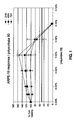
- Figure 1 is a graph showing percent viability (Y axis) in vitro of the retinal pigment epithelial cells ARPE-19 (y-axis 100% viability is the viability of the ARPE-19 cells at time zero) after 24, 48 and 72 hour periods of incubation in vitro in the concentrations of polysorbate 80 shown on the X axis.
- Our invention is based upon the discovery that an anti-neovascular agent can be used to prevent or delay the progression of dry AMD to wet AMD, even when no neovascularization is present in the dry AMD eye of the patient which is treated.
- an anti-neovascular agent could be used where no neovascularization is present in the eye of the patient to be treated. See eg Lin J., et al., Vascular Endothelial Growth Factor Gene Polymorphisms in Age-related Macular Degeneration, Am J Ophthalmol. 2008 Mar 29 (VEGF gene not associated with dry AMP patient DNA, and; Cook H., et al., Age-related macular degeneration: diagnosis and management, Br Med Bull. 2008;85:127-49 ("...there is no treatment for advanced dry AMD.").
- Our invention prevents or delays progression of the dry AMD to wet AMD.
- a patient with wet AMD in one eye has a 10% chance (each year) of developing neovascularization (wet AMD) in the other eye.
- These percentages are cummulative so that over 5 years the patient with one wet AMD in one eye has a 50% chance of developing wet AMD in the other eye, possibly due to the presence of mutation in the complement factor H gene.
- VEGF vascular endothelial growth factor pathway.
- VEGF is an important signaling protein involved in both vasculogenesis and angiogenesis. In patients with dry AMD, an overexpression of VEGF has been implicated in the progression to CNV.
- VEGF has been validated as an important target since VEGF-blockers, such as Macugen TM (pegaptanib), a pegylated aptamer that specific blocks VEGF165, and more importantly, Avastin TM (bevacizumab), a monoclonal antibody which is more promiscuous and blocks all known VEGF isoforms VEGF121, VEGF165, VEGF189, and VEGF20.
- VEGF blockers have been used extensively for CNV associated with AMD, proliferative diabetic retinopathy (PDR), neovascular glaucoma, diabetic macular edema (DME), and macular edema secondary to retinal vein occlusion (RVO). Results with anti-VEGF blockade are most impressive for CNV associated with AMD.
- PDR proliferative diabetic retinopathy
- DME diabetic macular edema
- RVO retinal vein occlusion
- aqueous i.e. immediate release
- bevacizumab i.e. not as a sustained or extended release drug delivery system
- the vitreous half-life of an anti-VEGF monoclonal antibody, such as bevacizumab, after injection into the vitreous from an immediate release (i.e. aqueous) formulation is only 5 to 6 days. Immediate release anti-neovascular formulations therefore cannot provide any ongoing or prolonged therapeutic effect (due to the immediate, one-time release) and require frequent, painful re-injection to treat an ocular condition.
- bevacizumab doses as high as 1.25 to 2.5 mg have been administered to treat macular neovascularization (wet AMD) we believe it is possible that bevacizumab doses less than 1% of known intravitreal dosages (i.e. less than 12 ⁇ g) can suppress neovascularization.
- a dose of bevacizumab as low as 6.2 ug i.e. as little as 0.5% of the known 1.25 mg dose
- can be used to treat or to prevent intraocular neovascularization in humans i.e. to treat dry AMD).
- an anti-neovascular agent such as bevacizumab
- a sustained release drug delivery system to provide long term treatment of a chronic ocular condition such as dry AMD.
- the drug delivery system is a PLGA implant.
- the present invention encompasses drug delivery systems which are structured and configured solely for intraocular, as opposed to topical or systemic, administration.
- the intraocular administration is by injection into the vitreous cavity (posterior chamber) of the eye.
- the biocompatible drug delivery systems within the scope of our invention can be biodegradable implants and/or microspheres.
- the drug delivery systems can be monolithic, that is the active agent is homogenously distributed or dispersed throughout the biodegradable polymer.
- the therapeutic agent can be released from drug delivery systems made according to the present invention for a period of time between about 2 hours to 12 months or more.
- An important feature of our drug delivery systems is that they do not include any means (such as a cap, protrusion or suture tab) for fixing the drug delivery system to the intraocular location to which it is administered.
- An important characteristic of a drug delivery system within the scope of our invention is that it can be injected into an intraocular location to provide sustained release of a therapeutic agent without the occurrence of or the persistence of significant immunogenicity at and adjacent to the site of the intraocular injection.
- Polylactide (PLA) polymers exist in 2 chemical forms, poly(L-lactide) and poly(D,L-lactide).
- the pure poly(L-lactide) is regioregular and therefore is also highly crystalline, therefore degrades in vivo at a very slow rate.
- the poly(D,L-lactide) is regiorandom which leads to more rapid degradation in vivo. Therefore a PLA polymer which is a mixture of predominantly poly(L-lactide) polymer, the remainder being a poly(D-lactide) polymer will degrade in vivo at a rate slower that a PLA polymer which is predominantly poly(D-lactide) polymer.
- a PLGA is a copolymer that combines poly(D,L-lactide) with poly(glycolide) in various possible ratios. The higher the glycolide content in a PLGA the faster the polymer degradation.
- a drug delivery system for intraocular administration comprises configured, consists of, or consists essentially of at least a 75 weight percent of a PLA and no more than about a 25 weight percent of a poly(D,L-lactide -co-glycolide) polymer.
- the drug delivery systems of our invention can include a further therapeutic agent mixed with or dispersed within a biodegradable polymer.
- the drug delivery systems can vary according to the preferred drug release profile, the particular active agent used, the ocular condition being treated, and the medical history of the patient.
- Additional therapeutic agents which can be used in our drug delivery systems (in addition to the bevacizumab and/or ranibizumab or esters or salts and mixtures thereof) include, but are not limited to: ace-inhibitors, endogenous cytokines, agents that influence basement membrane, agents that influence the growth of endothelial cells, adrenergic agonists or blockers, cholinergic agonists or blockers, aldose reductase inhibitors, analgesics, anesthetics, antiallergics, anti-inflammatory agents, antihypertensives, pressors, antibacterials, antivirals, antifungals, antiprotozoals, anti-infectives, antitumor agents, antimetabolites, antiangiogenic agents, tyrosine kinase inhibitors, antibiotics such as aminoglycosides such as gentamycin, kanamycin, neomycin, and vancomycin; amphenicols such as chloramphenicol; cephalospor
- lidocaine beta.-adrenergic blocker or beta.-adrenergic agonist, e.g. ephidrine, epinephrine, etc.; aldose reductase inhibitor, e.g. epalrestat, ponalrestat, sorbinil, tolrestat; antiallergic, e.g. cromolyn, beclomethasone, dexamethasone, and flunisolide; colchicine, anihelminthic agents, e.g. ivermectin and suramin sodium; antiamebic agents, e.g. chloroquine and chlortetracycline; and antifungal agents, e.g.
- beta.-adrenergic blocker or beta.-adrenergic agonist e.g. ephidrine, epinephrine, etc.
- aldose reductase inhibitor e.g. epalrestat, ponalrestat,
- anti-angiogenesis compounds such as anecortave acetate, retinoids such as Tazarotene, anti-glaucoma agents, such as brimonidine (Alphagan and Alphagan P), acetozolamide, bimatoprost (Lumigan), timolol, mebefunolol; memantine, latanoprost (Xalatan); alpha-2 adrenergic receptor agonists; 2-methoxyestradiol; anti-neoplastics, such as vinblastine, vincristine, interferons; alpha, beta and gamma, antimetabolites, such as folic acid analogs, purine analogs, and pyrimidine analogs; immunosuppressants such as azathiprine, cyclosporine and mizoribine; miotic agents, such as carbachol, mydriatic agents such as atropine, protease inhibitors such as aprotinin
- the active agent used is a compound that blocks or reduces the expression of VEGF receptors (VEGFR) or VEGF ligand, and is either an anti-VEGF monoclonal antibody (i.e. Bevacizumab) and/or an antibody fragments (i.e. Ranibizumab).
- a further active agent which is comprised is methotrexate.
- a further active agentwhich is comprised is a retinoic acid.
- a further active agent which is comprised is an anti-inflammatory agent such as a nonsteroidal anti-inflammatory agent.
- Nonsteroidal anti-inflammatory agents include, but are not limited to, aspirin, diclofenac, flurbiprofen, ibuprofen, ketorolac, naproxen, and suprofen.
- the anti-inflammatory agent is a steroidal anti-inflammatory agent, such as dexamethasone.
- Steroidal anti-inflammatory agents that can be used in our drug delivery systems as further active agents can include, but are not limited to, 21-acetoxypregnenolone, alclometasone, algestone, amcinonide, beclomethasone, betamethasone, budesonide, chloroprednisone, clobetasol, clobetasone, clocortolone, cloprednol, corticosterone, cortisone, cortivazol, deflazacort, desonide, desoximetasone, dexamethasone, diflorasone, diflucortolone, difluprednate, enoxolone, fluazacort, flucloronide, flumethasone, flunisolide, fluocinolone acetonide, fluocinonide, fluocortin butyl, fluocortolone, fluorometholone, fluperolone acetate, flupred
- cortisone, dexamethasone, fluocinolone, hydrocortisone, methylprednisolone, prednisolone, prednisone, and triamcinolone, and their derivatives are preferred steroidal anti-inflammatory agents which can be used as further active agents.
- the steroidal anti-inflammatory agent is dexamethasone.
- the biodegradable implant includes a combination of two or more steroidal anti-inflammatory agents.
- the active agent i.e. the anti-neovascular agent
- the agent is from about 5% to about 80% by weight of the implant.
- the agent comprises from about 10% to about 60% by weight of the implant.
- the agent can comprise about 50% by weight of the implant.
- the therapeutic active agent present in our drug delivery systems can be homogeneously dispersed in the biodegradable polymer of the drug delivery system.
- the selection of the biodegradable polymer used i.e. PLGA
- the biodegradable polymer matrix usually comprises at least about 10, at least about 20, at least about 30, at least about 40, at least about 50, at least about 60, at least about 70, at least about 80, or at least about 90 weight percent of the implant.
- the biodegradable polymer matrix comprises about 40% to 50% by weight of the drug delivery system.
- the PLGA may include repeating units from D-lactic acid, L-lactic acid, racemic lactic acid, glycolic acid and combinations thereof. Copolymers of glycolic and lactic acid are of particular interest, where the rate of biodegradation is controlled by the ratio of glycolic to lactic acid.
- the percent of each monomer in poly(lactic-co-glycolic)acid (PLGA) copolymer may be 0-100%, about 15-85%, about 25-75%, or about 35-65%. In certain variations, 25/75 PLGA and/or 50/50 PLGA copolymers are used.
- buffering agents and preservatives may be employed.
- Preservatives which may be used include, but are not limited to, sodium bisulfite, sodium bisulfate, sodium thiosulfate, benzalkonium chlorine, chlorobutanol, thimerosal, phenylmercuric acetate, phenylmercuric nitrate, methylparaben, polyvinyl alcohol and phenylethyl alcohol.
- buffering agents that may be employed include, but are not limited to, sodium carbonate, sodium borate, sodium phosphate, sodium acetate, sodium bicarbonate, and the like, as approved by the FDA for the desired route of administration.
- Surfactants which can be used to stabilize particles in a colloid and/or electrolytes such as sodium chloride and potassium chloride can also be included in the formulation.
- the drug delivery system can also acid and basic excipients to control pH in the microenvironment as well as at interfaces (diffusional stagnant layer).
- the biodegradable drug delivery systems can also include additional hydrophilic or hydrophobic compounds that accelerate or retard release of the active agent.
- release modulators such as those described in U.S. Patent No. 5,869,079 can be included in the implants. The amount of release modulator employed will be dependent on the desired release profile, the activity of the modulator, and on the release profile of the glucocorticoid in the absence of modulator.
- the buffering agent or release enhancer or modulator is hydrophilic, it may also act as a release accelerator.
- Hydrophilic additives act to increase the release rates through faster dissolution of the material surrounding the drug particles, which increases the surface area of the drug exposed, thereby increasing the rate of drug diffusion.
- a hydrophobic buffering agent or enhancer or modulator can dissolve more slowly, slowing the exposure of drug particles, and thereby slowing the rate of drug diffusion.
- a drug delivery system within the scope of the present invention can be formulated with particles of an active agent dispersed within a biodegradable polymer.
- the release of the active agent can be achieved by erosion of the biodegradable polymer matrix and by diffusion of the particulate agent into an ocular fluid, e.g., the vitreous, with subsequent dissolution of the polymer matrix and release of the active agent.
- Factors which influence the release kinetics of active agent from the implant can include such characteristics as the size and shape of the implant, the size of the active agent particles, the solubility of the active agent, the ratio of active agent to polymer(s), the method of manufacture, the surface area exposed, the density of the implant and the erosion rate of the polymer(s).
- the release rate of the active agent can depend at least in part on the rate of degradation of the polymer backbone component or components making up the biodegradable polymer matrix.
- condensation polymers may be degraded by hydrolysis (among other mechanisms) and therefore any change in the composition of the implant that enhances water uptake by the implant will likely increase the rate of hydrolysis, thereby increasing the rate of polymer degradation and erosion, and thus increasing the rate of active agent release.
- the release rate of the active agent can also be influenced by the crystallinity of the active agent, the pH in the implant and the pH at interfaces.
- the release kinetics of the drug delivery systems of the present invention can be dependent in part on the surface area of the drug delivery systems.
- a larger surface area exposes more polymer and active agent to ocular fluid, causing faster erosion of the polymer and dissolution of the active agent particles in the fluid.
- a hand held applicator is used to insert one or more biodegradable implants into the eye.
- the hand held applicator typically comprises an 18-30 GA stainless steel needle, a lever, an actuator, and a plunger.
- Suitable devices for inserting an implant or implants into a posterior ocular region or site includes those disclosed in United States patent application serial number 10/666,872 .
- the method of administration generally first involves accessing the target area within the ocular region with the needle or implantation device. Once within the target area, i.e. the vitreous cavity, a lever on a hand held device can be depressed to cause an actuator to drive a plunger forward. As the plunger moves forward, it can push the implant or implants into the target area (i.e. the vitreous).
- a lever on a hand held device can be depressed to cause an actuator to drive a plunger forward. As the plunger moves forward, it can push the implant or implants into the target area (i.e. the vitreous).
- Useful techniques include phase separation methods, interfacial methods, extrusion methods, compression methods, molding methods, injection molding methods, heat press methods and the like.
- a 78 year old man has age-related macular degeneration and cataracts in both eyes.
- the patient can also have a history of cardiovascular disease and an inferior wall myocardial infarction 6 months previous.
- the patient can complain of blurry vision and metamorphopsia in the right eye and examination can reveal visual acuity of 20/400 right eye, 20/32 left eye.
- Retinal examination can show subfoveal choroidal neovascularization (CNV) (right eye wet AMD) approximately 1 disc area in size with surrounding hemorrhage and edema in the right eye.
- CNV subfoveal choroidal neovascularization
- the fellow left eye can show high-risk features for developing wet AMD such as soft, amorphic appearing drusen that included the fovea but no signs of choroidal neovascularization and can be confirmed by fluorescein angiography (left eye dry AMD).
- the patient can be started on monthly intravitreal injections of ranibizumab (an anti-neovascular agent) in the right wet AMD eye with resolution of the edema and hemorrhage and a return in visual acuity to 20/125 within 4 months.
- ranibizumab an anti-neovascular agent
- the patient can receive an intravitreal injection of a sustained-release anti-VEGF monoclonal antibody formulation (optionally with a penetration enhancer) to prophylax against development of CNV in this eye given that he is now at high risk for developing wet AMD in the better seeing left eye.
- the injected volume can be 50 ul comprising bevacizumab incorporated into PLGA microspheres with a total bevacizumab (drug) weight of 2.5 mg.
- Polysorbate 20 PLGA microspheres with an in vitro release rate of 10 ug/day can also be placed in the formulation to enhance retinal permeability.
- the bevacizumab and polysorbate 20 microspheres are placed in a cross-linked hyaluronic acid at a concentration of 1.2% with reasonable syringability using a 27G needle.
- the patient can receive the intravitreal left eye injections of the 50 ul of bevacizumab-PLGA microspheres (total drug weight 2.5 mg) invention every 6 months and at the end of a 7-year follow up period the patient can have maintained vision in the left eye at 20/32. His risk of having developed wet AMD in this left eye was over 50% but repeat examination can reveal no signs of CNV in the left eye. Unfortunately, at the end of the 7 year follow up, the vision in the right eye can have deteriorated to 20/400 with an organized disciform scar present on examination in the central macular area. Given that he does not lose vision in the left eye, he is able to maintain a driver's license and an independent life style over this time frame. Despite have been exposed to sustained-low dose anti-VEGF therapy in the eye, the patient's cardiovascular disease can remain unchanged without experience of any thromboembolic events.
- microspheres used therapeutically in Examples 1 to 3 can be made by a solvent evaporation method from methylene chloride into a PVA (polyvinyl alcohol) solution. From 10 to 100 mg/mL of the microspheres can be suspended in an isotonic phosphate buffer solution and from 50 to 200 ⁇ L of the microsphere suspension can be administered to an intraocular location.
- PVA polyvinyl alcohol
- the anti-neovascular agent microspheres with the anti-neovascular agent homogenously distributed or dispersed throughout the selected polylactic acid (PLA) or PLGA resin can be manufactured using an emulsion/ solvent evaporation technique.
- the non-solvent continuous aqueous phase
- the anti-neovascular agent saturated with methanol can be used to quench the emulsion.
- the methanol served as a sink to remove the dichloromethane quickly, hardening the microspheres before the anti-neovascular agent can diffuse out of them.
- Sustained release drug delivery system comprises a total of about 6 micrograms (low dose) of the active agent bevacizumab in a polymeric vehicle.
- the polymeric vehicle is a high viscosity hyaluronic acid or a PLGA or PLA associated with the bevacizumab anti-neovascular agent to form either a plurality of microspheres or a single monolithic implant in which the bevacizumab is homogenously distributed.
- the sustained release drug delivery system can comprise the bevacizumab microspheres or implant in the hyaluronic acid (cross-linked or non-cross linked), so that both a viscous (the hyaluronic acid) and the solid (the PLA or PLGA microspheres or implant) polymeric vehicles are present in the same drug delivery system.
- the drug delivery system can release the 6 ⁇ g of bevacizumab into the vitreous over a 1 to 6 month period, after which the patient's right eye can show no evidence of neovascularization and the same vision maintained (20/40) in his right eye.
- An 83 year old woman can wake up with blurry vision in the left eye. She can have a history of glaucoma, s/p cataract removal with IOLs (intraocular lenses), and dry AMD in both eyes and can be taking Alphagan P eye drops.
- the patient's ophthalmologist can examine her and she can be diagnosed with left eye wet AMD and sent immediately to a retinal specialist. The vision can be 20/25 in the right eye and 20/200 in the left eye. Retinal examination can show dry changes in the right eye macula but high risk features such as large drusen and numerous pigmentary changes in the subfoveal region.
- the left eye macula can show a subfoveal CNV approximately 2 disc areas in size with surrounding macular edema and intraretinal hemorrhages. Fluorescein angiography can confirm the presence of left eye CNV predominantly classic in appearance.
- the patient can be immediately started on monthly intravitreal injections of ranibizumab in the wet AMD left eye with resolution of the retinal edema over a 3 month period but she can experience only a modest improvement of left eye visual acuity to 20/100.
- a cross-linked HA can be obtained from Allergan Medical (Irvine, California) under the brand names Juvederm Ultra Plus, Juvederm 30, Captique, and Voluma.
- She can have repeat right eye intravitreal injections of the 50 ul comprising 4.8 mg of ranibizumab-PLGA microspheres every 6 months over a 4 year period with visual acuity remaining 20/25 in the right eye and 20/200 for the left eye.
- Retinal examination can show dry AMD in the right eye and an organized disciform scar in the left eye with mild subfoveal fibrosis.
- She can be able to live independently in her own home given the excellent vision that she can maintain in her right eye.
- ARPE-19 cells see Dunn K. et al., ARPE-19, a human retinal pigment epithelial cell line with differentiated properties, Exp Eye Res. 1996 Feb;62(2):155-69 ) were incubated in vitro in concentrations of polysorbate 80 ranging from 0% to 0.10% w/w and a cell viability assay was performed.
- the protocol for this in vitro experiment was as follows: ARPE-19 cells (passage 11 to 23) were seeded the day prior to experimentation in 24 well-plates at 125.000 cells/well in DMEM:F12 medium supplemented with 10% FBS. Time course and dose response were simultaneously performed on ARPE-19 cells. Parameters of incubating solutions such as pH, osmolarity were measured for every concentration. Times of incubation were 24h, 48h, 72h. One negative (non-treated) and one positive control (5mM H 2 O 2 ) were included. Non-treated condition was cell culture medium supplemented with serum. 5mM H 2 O 2 was prepared from 3% H 2 0 2 stock solution (875 mM). Concentrations applied to cells were determined considering several parameters, such as:
- one or more retinal penetration enhancers can be included in the drug delivery system to increase the permeability of the retina to the anti-neovascular agent used.
- a retinal penetration enhancers can be added to the sustained release drug delivery system to release concomitantly with the anti-neovascular agent (i.e. an anti-VEGF compound).
- Co-releasing both a low dose of anti-VEGF compound and a penetration enhancer over a 6 month period can optimize the efficiency of the anti-VEGF compounds especially the larger ones such as a monoclonal antibody, to reach the sub-retinal space to treat CNV.
- a preferred retinal penetrant enhancer is polysorbate 20 (eg Tween 20 or C12-sorbitan-E20) and polysorbate 80, added to the drug delivery system as an aqueous solution with a concentration of the retinal penetration enhancer in the aqueous solution of between about from 0.005% to 0.10% (0.05 mg to 1 mg of the retinal penetration enhancer per ml water.
- Alternative retinal penetration enhancers include but are not limited to sodium laurylsulfate, benzalkonium chloride, and cyclodextrans.
Landscapes
- Health & Medical Sciences (AREA)
- Chemical & Material Sciences (AREA)
- Life Sciences & Earth Sciences (AREA)
- Medicinal Chemistry (AREA)
- General Health & Medical Sciences (AREA)
- Veterinary Medicine (AREA)
- Pharmacology & Pharmacy (AREA)
- Animal Behavior & Ethology (AREA)
- Public Health (AREA)
- Epidemiology (AREA)
- Engineering & Computer Science (AREA)
- Bioinformatics & Cheminformatics (AREA)
- Organic Chemistry (AREA)
- Inorganic Chemistry (AREA)
- Ophthalmology & Optometry (AREA)
- Proteomics, Peptides & Aminoacids (AREA)
- Molecular Biology (AREA)
- Biochemistry (AREA)
- General Chemical & Material Sciences (AREA)
- Chemical Kinetics & Catalysis (AREA)
- Immunology (AREA)
- Nuclear Medicine, Radiotherapy & Molecular Imaging (AREA)
- Biophysics (AREA)
- Genetics & Genomics (AREA)
- Mycology (AREA)
- Oil, Petroleum & Natural Gas (AREA)
- Heart & Thoracic Surgery (AREA)
- Microbiology (AREA)
- Cardiology (AREA)
- Medicinal Preparation (AREA)
- Pharmaceuticals Containing Other Organic And Inorganic Compounds (AREA)
- Medicines That Contain Protein Lipid Enzymes And Other Medicines (AREA)
- Medicines Containing Antibodies Or Antigens For Use As Internal Diagnostic Agents (AREA)
Priority Applications (4)
| Application Number | Priority Date | Filing Date | Title |
|---|---|---|---|
| ES19161922T ES2897560T3 (es) | 2008-07-18 | 2009-07-13 | Tratamiento de la neovascularización coroidea |
| EP19161922.0A EP3524270B1 (en) | 2008-07-18 | 2009-07-13 | Treating choroidal neovascularization |
| EP21196540.5A EP3950002A1 (en) | 2008-07-18 | 2009-07-13 | Composition for use in treating atrophic age related macular degeneration |
| EP13179231.9A EP2664347B1 (en) | 2008-07-18 | 2009-07-13 | Bevacizumab for use in a method for treating atrophic age related macular degeneration |
Applications Claiming Priority (2)
| Application Number | Priority Date | Filing Date | Title |
|---|---|---|---|
| US12/176,238 US8821870B2 (en) | 2008-07-18 | 2008-07-18 | Method for treating atrophic age related macular degeneration |
| PCT/US2009/050373 WO2010009034A2 (en) | 2008-07-18 | 2009-07-13 | Method for treating atrophic age related macular degeneration |
Related Child Applications (4)
| Application Number | Title | Priority Date | Filing Date |
|---|---|---|---|
| EP13179231.9A Division EP2664347B1 (en) | 2008-07-18 | 2009-07-13 | Bevacizumab for use in a method for treating atrophic age related macular degeneration |
| EP13179231.9A Division-Into EP2664347B1 (en) | 2008-07-18 | 2009-07-13 | Bevacizumab for use in a method for treating atrophic age related macular degeneration |
| EP19161922.0A Division EP3524270B1 (en) | 2008-07-18 | 2009-07-13 | Treating choroidal neovascularization |
| EP21196540.5A Division EP3950002A1 (en) | 2008-07-18 | 2009-07-13 | Composition for use in treating atrophic age related macular degeneration |
Publications (2)
| Publication Number | Publication Date |
|---|---|
| EP2307055A2 EP2307055A2 (en) | 2011-04-13 |
| EP2307055B1 true EP2307055B1 (en) | 2016-01-06 |
Family
ID=41530477
Family Applications (4)
| Application Number | Title | Priority Date | Filing Date |
|---|---|---|---|
| EP09790328.0A Active EP2307055B1 (en) | 2008-07-18 | 2009-07-13 | Prevention of atrophic age related macular degeneration |
| EP21196540.5A Withdrawn EP3950002A1 (en) | 2008-07-18 | 2009-07-13 | Composition for use in treating atrophic age related macular degeneration |
| EP13179231.9A Active EP2664347B1 (en) | 2008-07-18 | 2009-07-13 | Bevacizumab for use in a method for treating atrophic age related macular degeneration |
| EP19161922.0A Active EP3524270B1 (en) | 2008-07-18 | 2009-07-13 | Treating choroidal neovascularization |
Family Applications After (3)
| Application Number | Title | Priority Date | Filing Date |
|---|---|---|---|
| EP21196540.5A Withdrawn EP3950002A1 (en) | 2008-07-18 | 2009-07-13 | Composition for use in treating atrophic age related macular degeneration |
| EP13179231.9A Active EP2664347B1 (en) | 2008-07-18 | 2009-07-13 | Bevacizumab for use in a method for treating atrophic age related macular degeneration |
| EP19161922.0A Active EP3524270B1 (en) | 2008-07-18 | 2009-07-13 | Treating choroidal neovascularization |
Country Status (11)
| Country | Link |
|---|---|
| US (3) | US8821870B2 (enExample) |
| EP (4) | EP2307055B1 (enExample) |
| JP (3) | JP2011528656A (enExample) |
| KR (1) | KR20110047196A (enExample) |
| CN (2) | CN107412778A (enExample) |
| AU (1) | AU2009271168B2 (enExample) |
| BR (1) | BRPI0915981A2 (enExample) |
| CA (1) | CA2731270C (enExample) |
| ES (3) | ES2897560T3 (enExample) |
| RU (3) | RU2668371C2 (enExample) |
| WO (1) | WO2010009034A2 (enExample) |
Cited By (4)
| Publication number | Priority date | Publication date | Assignee | Title |
|---|---|---|---|---|
| USD750223S1 (en) | 2014-10-14 | 2016-02-23 | Clearside Biomedical, Inc. | Medical injector for ocular injection |
| US9539139B2 (en) | 2013-05-03 | 2017-01-10 | Clearside Biomedical, Inc. | Apparatus and methods for ocular injection |
| US9572800B2 (en) | 2012-11-08 | 2017-02-21 | Clearside Biomedical, Inc. | Methods and devices for the treatment of ocular diseases in human subjects |
| US11185441B2 (en) | 2019-06-27 | 2021-11-30 | Layerbio, Inc. | Ocular device delivery methods and systems |
Families Citing this family (82)
| Publication number | Priority date | Publication date | Assignee | Title |
|---|---|---|---|---|
| US20090148527A1 (en) * | 2007-12-07 | 2009-06-11 | Robinson Michael R | Intraocular formulation |
| US20070202186A1 (en) | 2006-02-22 | 2007-08-30 | Iscience Interventional Corporation | Apparatus and formulations for suprachoroidal drug delivery |
| US8197435B2 (en) | 2006-05-02 | 2012-06-12 | Emory University | Methods and devices for drug delivery to ocular tissue using microneedle |
| US8039010B2 (en) | 2006-11-03 | 2011-10-18 | Allergan, Inc. | Sustained release intraocular drug delivery systems comprising a water soluble therapeutic agent and a release modifier |
| US8821870B2 (en) * | 2008-07-18 | 2014-09-02 | Allergan, Inc. | Method for treating atrophic age related macular degeneration |
| CA3045436C (en) | 2009-01-29 | 2025-10-07 | Forsight Vision4 Inc | Posterior segment drug delivery |
| US8623395B2 (en) | 2010-01-29 | 2014-01-07 | Forsight Vision4, Inc. | Implantable therapeutic device |
| EP2482804A1 (en) * | 2009-10-01 | 2012-08-08 | Evonik Degussa Corporation | Microparticle compositions and methods for treating age-related macular degeneration |
| JP5212849B2 (ja) * | 2010-01-14 | 2013-06-19 | 株式会社三和化学研究所 | 眼内血管新生及び/又は眼内血管透過性亢進を伴う疾患の予防又は治療のための医薬 |
| US20130210876A1 (en) * | 2010-01-21 | 2013-08-15 | Allergan, Inc | Alpha-2 adrenergic agonist having long duration of intraocular pressure-lowering effect |
| CN102770135A (zh) * | 2010-01-21 | 2012-11-07 | 阿勒根公司 | 眼内压降低作用持续时间长的α-2肾上腺素能激动剂 |
| US10166142B2 (en) | 2010-01-29 | 2019-01-01 | Forsight Vision4, Inc. | Small molecule delivery with implantable therapeutic device |
| EP2563359A1 (en) | 2010-04-30 | 2013-03-06 | Allergan, Inc. | Novel treatment for age related macular degeneration and ocular ischemic disease associated with complement activation by targeting 5-lipoxygenase |
| HUE054113T2 (hu) | 2010-08-05 | 2021-08-30 | Forsight Vision4 Inc | Injekciós készülék gyógyszerbejuttatáshoz |
| HUE057267T2 (hu) | 2010-08-05 | 2022-05-28 | Forsight Vision4 Inc | Berendezés szem kezelésére |
| CN103153316B (zh) | 2010-08-05 | 2015-08-19 | 弗赛特影像4股份有限公司 | 组合药物递送方法和设备 |
| JP5956992B2 (ja) * | 2010-08-17 | 2016-07-27 | オーエイチアール・ファーマシューティカル・インコーポレイテッドOhr Pharmaceutical,Inc. | スクアラミンの眼用製剤 |
| BR112013009205A2 (pt) | 2010-10-15 | 2016-07-26 | Iscience Interventional Corp | dispositivo para colocação na esclera de um olho, método para acessar o espaço supracoroidal de um olho, para acessar o espaço subretinal de um olho e para colocar um orifício dentro de um trato escleral em um olho. |
| EP2640360A2 (en) * | 2010-11-19 | 2013-09-25 | Forsight Vision4, Inc. | Therapeutic agent formulations for implanted devices |
| EP2671589A4 (en) * | 2011-02-02 | 2014-11-19 | Public Univ Corp Nagoya City Univ | MEDICAMENT FOR PREVENTING OR TREATING DISEASES RELATED TO INTRAOCULAR NEOVASCULARIZATION AND / OR INTRAOCULAR VASCULAR HYPERPERMEABILITY |
| WO2012149278A1 (en) | 2011-04-29 | 2012-11-01 | Allergan, Inc. | Sustained release latanoprost implant |
| RS60051B1 (sr) * | 2011-06-10 | 2020-04-30 | Ramscor Inc | Formulacije sa produženim oslobađanjem za isporuku proteina u oko i postupci njihove pripreme |
| US9592251B2 (en) | 2011-06-16 | 2017-03-14 | The Hong Kong University Of Science And Technology | Multi-vinylsulfone containing molecule |
| US10398592B2 (en) | 2011-06-28 | 2019-09-03 | Forsight Vision4, Inc. | Diagnostic methods and apparatus |
| CN105749282A (zh) * | 2011-07-19 | 2016-07-13 | 威尔弗雷德·杰弗里斯 | 阿尔茨海默氏病的诊断和治疗方法 |
| SI2755600T1 (sl) | 2011-09-16 | 2021-08-31 | Forsight Vision4, Inc. | Naprava za izmenjavo tekočine |
| US20130156766A1 (en) * | 2011-11-15 | 2013-06-20 | Allergan, Inc. | Treatment of dry age related macular degeneration |
| TWI663985B (zh) * | 2012-09-27 | 2019-07-01 | 美商歐樂根公司 | 用於持續釋放蛋白質之可生物降解的藥物傳遞系統 |
| CN102988301A (zh) * | 2012-12-26 | 2013-03-27 | 温州医学院 | 一种含贝伐单抗的长效缓释微球的制备方法 |
| AU2014236455B2 (en) | 2013-03-14 | 2018-07-12 | Forsight Vision4, Inc. | Systems for sustained intraocular delivery of low solubility compounds from a port delivery system implant |
| CN104884133B (zh) | 2013-03-14 | 2018-02-23 | 艾肯运动与健康公司 | 具有飞轮的力量训练设备 |
| EP3003454B1 (en) | 2013-06-03 | 2020-01-08 | Clearside Biomedical, Inc. | Apparatus for drug delivery using multiple reservoirs |
| US20160166701A1 (en) * | 2013-07-05 | 2016-06-16 | Therakine Biodelivery Gmbh | Delivery composition for topical applications and injections and ophthalmic formulations, methods for manufacturing thereof, and methods for delivery of a drug-delivery composition |
| US9782345B2 (en) | 2013-10-17 | 2017-10-10 | Jade Therapeutics, Inc. | Ocular composition and method |
| EP3071181B1 (en) * | 2013-11-18 | 2021-03-24 | Formycon AG | Pharmaceutical composition of an anti-vegf antibody |
| EP3623020B1 (en) | 2013-12-26 | 2024-05-01 | iFIT Inc. | Magnetic resistance mechanism in a cable machine |
| CN106470739B (zh) | 2014-06-09 | 2019-06-21 | 爱康保健健身有限公司 | 并入跑步机的缆索系统 |
| RU2710491C2 (ru) | 2014-06-20 | 2019-12-26 | Клиасайд Байомедикал, Инк. | Устройство для инъекции лекарственного средства в глазную ткань и способ инъекции лекарственного средства в глазную ткань |
| US9840553B2 (en) | 2014-06-28 | 2017-12-12 | Kodiak Sciences Inc. | Dual PDGF/VEGF antagonists |
| CA2957548A1 (en) | 2014-08-08 | 2016-02-11 | Forsight Vision4, Inc. | Stable and soluble formulations of receptor tyrosine kinase inhibitors, and methods of preparation thereof |
| US20180116975A1 (en) * | 2015-02-26 | 2018-05-03 | Feramda Ltd. | Compositions and combinations for the treatment of angiogenesis diseases and disorders |
| ES2584534B1 (es) * | 2015-03-27 | 2017-03-13 | Retinset, S.L. | Formulación tópica oftálmica de bosentan |
| JP6836512B2 (ja) | 2015-03-31 | 2021-03-03 | イルドン ファーム カンパニー リミテッド | 組織透過性ペプチドと抗血管内皮細胞成長因子製剤が融合された融合タンパク質を有効成分として含む眼疾患の予防及び治療用薬学的組成物 |
| JP6887377B2 (ja) | 2015-05-29 | 2021-06-16 | 生化学工業株式会社 | グリコサミノグリカン誘導体とケモカイン受容体活性調節材とを含む組成物 |
| US10953305B2 (en) | 2015-08-26 | 2021-03-23 | Icon Health & Fitness, Inc. | Strength exercise mechanisms |
| US10940360B2 (en) | 2015-08-26 | 2021-03-09 | Icon Health & Fitness, Inc. | Strength exercise mechanisms |
| TWI799366B (zh) | 2015-09-15 | 2023-04-21 | 美商建南德克公司 | 胱胺酸結骨架平臺 |
| KR102725051B1 (ko) | 2015-09-23 | 2024-11-04 | 제넨테크, 인크. | 항-vegf 항체의 최적화된 변이체들 |
| WO2017117464A1 (en) | 2015-12-30 | 2017-07-06 | Kodiak Sciences Inc. | Antibodies and conjugates thereof |
| AU2017217397B2 (en) * | 2016-02-08 | 2019-10-10 | The Johns Hopkins University | Dendrimer-bioadhesive polymer hydrogel nanoglue and use thereof |
| EP3413851B1 (en) | 2016-02-10 | 2023-09-27 | Clearside Biomedical, Inc. | Packaging |
| WO2017148904A1 (en) * | 2016-02-29 | 2017-09-08 | Franz Grus | Predictive markers useful in the treatment of wet age-related macular degeneration |
| JP6664115B2 (ja) * | 2016-03-15 | 2020-03-13 | 原 英彰 | アフリベルセプトによる網膜保護作用 |
| US10293211B2 (en) | 2016-03-18 | 2019-05-21 | Icon Health & Fitness, Inc. | Coordinated weight selection |
| US10441840B2 (en) | 2016-03-18 | 2019-10-15 | Icon Health & Fitness, Inc. | Collapsible strength exercise machine |
| JP2019514581A (ja) | 2016-05-02 | 2019-06-06 | クリアサイド バイオメディカル,インコーポレイテッド | 眼の薬物送達のためのシステムおよび方法 |
| US10252109B2 (en) | 2016-05-13 | 2019-04-09 | Icon Health & Fitness, Inc. | Weight platform treadmill |
| EP3463349B1 (en) * | 2016-05-25 | 2021-08-04 | Santen Pharmaceutical Co., Ltd. | Use of sirolimus to treat exudative age-related macular degeneration with persistent edema |
| IL264764B2 (en) | 2016-08-12 | 2024-02-01 | Clearside Biomedical Inc | Devices and methods for adjusting the insertion depth of a drug administration needle |
| US10661114B2 (en) | 2016-11-01 | 2020-05-26 | Icon Health & Fitness, Inc. | Body weight lift mechanism on treadmill |
| US11123411B2 (en) * | 2016-12-08 | 2021-09-21 | Gary E. Borodic | Method of treating macular degeneration using botulinum toxin-based pharmaceuticals |
| RU2661621C2 (ru) * | 2016-12-19 | 2018-07-17 | Александр Николаевич Епихин | Способ пролонгации и усиления терапевтического эффекта действия ингибиторов ангиогенеза при лечении неоваскулярных форм макулярных дегенераций |
| CA3055985A1 (en) | 2017-03-22 | 2018-09-27 | Genentech, Inc. | Hydrogel cross-linked hyaluronic acid prodrug compositions and methods |
| EP3615086A4 (en) | 2017-04-27 | 2021-01-06 | The Johns Hopkins University | COMPOSITIONS OF DENDRIMERS FOR USE IN ANGIOGRAPHY |
| WO2018204515A1 (en) | 2017-05-02 | 2018-11-08 | Georgia Tech Research Corporation | Targeted drug delivery methods using a microneedle |
| KR102101969B1 (ko) * | 2017-09-06 | 2020-04-22 | (주)인벤티지랩 | 목시덱틴을 포함하는 마이크로 입자 및 이의 제조 방법 |
| CN111615528A (zh) | 2017-11-10 | 2020-09-01 | 约翰霍普金斯大学 | 树枝状聚合物递送系统和其使用方法 |
| CN115607358A (zh) | 2017-11-21 | 2023-01-17 | 弗赛特影像4股份有限公司 | 用于可扩展端口递送系统的流体交换装置及使用方法 |
| CN108030783A (zh) * | 2017-12-27 | 2018-05-15 | 广东众生药业股份有限公司 | 乐伐替尼在制备防治黄斑变性的药物中的用途 |
| BR112020017872A2 (pt) | 2018-03-02 | 2020-12-22 | Kodiak Sciences Inc. | Anticorpos de il-6 e construtos de fusão e conjugados dos mesmos |
| CA3097123A1 (en) * | 2018-04-17 | 2019-10-24 | Outlook Therapeutics, Inc. | Buffered formulations of bevacizumab for use of treating diseases |
| KR102192768B1 (ko) * | 2018-12-07 | 2020-12-18 | 전북대학교산학협력단 | 식나무 추출물을 포함하는 황반변성의 예방 또는 치료용 약학적 조성물 |
| DE102019112917B4 (de) * | 2019-05-16 | 2021-07-22 | Carl Zeiss Meditec Ag | Ophthalmologisches Implantat zur Verwendung bei der Behandlung einer Augenkrankheit und Implantationswerkzeug mit einem solchen ophthalmologischen Implantat |
| CN109966243A (zh) * | 2019-05-17 | 2019-07-05 | 上海第二工业大学 | 一种用于眼底黄斑治疗的释药型凝胶及其制备方法 |
| WO2020264438A2 (en) | 2019-06-27 | 2020-12-30 | University Of Florida Research Foundation, Incorporated | Enhancing aav-mediated transduction of ocular tissues with hyaluronic acid |
| WO2021072265A1 (en) | 2019-10-10 | 2021-04-15 | Kodiak Sciences Inc. | Methods of treating an eye disorder |
| CA3166738A1 (en) | 2020-02-06 | 2021-08-12 | Charles D. Blizzard | Travoprost compositions and methods for treating ocular diseases |
| FI3884929T3 (fi) | 2020-03-25 | 2023-08-07 | Ocular Therapeutix Inc | Tyrosiinikinaasi-inhibiittoria sisältävä silmäimplantti |
| EP4171544A4 (en) * | 2020-06-26 | 2024-07-24 | Purdue Research Foundation | PHARMACEUTICAL FORMULATIONS OF GRISEOFULVINE FOR LONG-TERM EYE ADMINISTRATION |
| WO2022155242A1 (en) * | 2021-01-12 | 2022-07-21 | The Regents Of The University Of Michigan | Treatment and prevention of dry macular degeneration |
| USD1033637S1 (en) | 2022-01-24 | 2024-07-02 | Forsight Vision4, Inc. | Fluid exchange device |
| CN120897764A (zh) | 2023-04-11 | 2025-11-04 | 视尔普斯眼科公司 | 包含阿西替尼多晶型物iv的眼部植入物 |
Citations (1)
| Publication number | Priority date | Publication date | Assignee | Title |
|---|---|---|---|---|
| US20070059336A1 (en) * | 2004-04-30 | 2007-03-15 | Allergan, Inc. | Anti-angiogenic sustained release intraocular implants and related methods |
Family Cites Families (43)
| Publication number | Priority date | Publication date | Assignee | Title |
|---|---|---|---|---|
| US2446405A (en) | 1945-10-31 | 1948-08-03 | Hazeltine Research Inc | Tunable ultra high frequency resonator system |
| US5164188A (en) | 1989-11-22 | 1992-11-17 | Visionex, Inc. | Biodegradable ocular implants |
| KR0185215B1 (ko) | 1990-11-30 | 1999-05-01 | 요시다 쇼오지 | 서방성 안구삽입용 약제 |
| US5264188A (en) * | 1991-01-22 | 1993-11-23 | Phillips Petroleum Company | Multi-stage hydrotreating process and apparatus |
| US5869079A (en) * | 1995-06-02 | 1999-02-09 | Oculex Pharmaceuticals, Inc. | Formulation for controlled release of drugs by combining hydrophilic and hydrophobic agents |
| CA2361615A1 (en) * | 1999-02-08 | 2000-08-10 | Human Genome Sciences, Inc. | The use of vascular endothelial growth factor 2 antagonist in the treatment of an injury to or disorder of an eye |
| US7582311B1 (en) * | 1999-10-15 | 2009-09-01 | Genentech, Inc. | Injection vehicle for polymer-based formulations |
| US6413245B1 (en) * | 1999-10-21 | 2002-07-02 | Alcon Universal Ltd. | Sub-tenon drug delivery |
| US20040229960A1 (en) | 2001-07-13 | 2004-11-18 | David Sherris | Compositions and methods of administering tubulin binding agents for the treatment of ocular diseases |
| RU2354398C2 (ru) * | 2001-07-13 | 2009-05-10 | Оксиджин, Инк. | Композиции и способы введения средств, связывающих тубулин, для лечения глазных заболеваний |
| PL223153B1 (pl) * | 2002-09-18 | 2016-10-31 | Allergan Inc | Urządzenie do wszczepiania implantu okulistycznego |
| NZ540186A (en) * | 2002-10-31 | 2008-03-28 | Celgene Corp | Composition for the treatment of macular degeneration |
| US20050250737A1 (en) * | 2003-11-12 | 2005-11-10 | Allergan, Inc. | Therapeutic ophthalmic compositions containing retinal friendly excipients and related methods |
| US20050101582A1 (en) * | 2003-11-12 | 2005-05-12 | Allergan, Inc. | Compositions and methods for treating a posterior segment of an eye |
| US20060182783A1 (en) * | 2004-04-30 | 2006-08-17 | Allergan, Inc. | Sustained release intraocular drug delivery systems |
| US7993634B2 (en) * | 2004-04-30 | 2011-08-09 | Allergan, Inc. | Oil-in-oil emulsified polymeric implants containing a hypotensive lipid and related methods |
| US20050244471A1 (en) * | 2004-04-30 | 2005-11-03 | Allergan, Inc. | Estradiol derivative and estratopone containing sustained release intraocular implants and related methods |
| US8425929B2 (en) * | 2004-04-30 | 2013-04-23 | Allergan, Inc. | Sustained release intraocular implants and methods for preventing retinal dysfunction |
| US8722097B2 (en) * | 2004-04-30 | 2014-05-13 | Allergan, Inc. | Oil-in-water method for making polymeric implants containing a hypotensive lipid |
| WO2005110374A1 (en) * | 2004-04-30 | 2005-11-24 | Allergan, Inc. | Intraocular drug delivery systems containing a therapeutic component, a cyclodextrin, and a polymeric component |
| US7799336B2 (en) * | 2004-04-30 | 2010-09-21 | Allergan, Inc. | Hypotensive lipid-containing biodegradable intraocular implants and related methods |
| US8591885B2 (en) | 2004-04-30 | 2013-11-26 | Allergan, Inc. | Carbonic anhydrase inhibitor sustained release intraocular drug delivery systems |
| US20060182781A1 (en) * | 2004-04-30 | 2006-08-17 | Allergan, Inc. | Methods for treating ocular conditions with cyclic lipid contraining microparticles |
| US20050244463A1 (en) * | 2004-04-30 | 2005-11-03 | Allergan, Inc. | Sustained release intraocular implants and methods for treating ocular vasculopathies |
| US7589057B2 (en) * | 2004-04-30 | 2009-09-15 | Allergan, Inc. | Oil-in-water method for making alpha-2 agonist polymeric drug delivery systems |
| US20050244469A1 (en) | 2004-04-30 | 2005-11-03 | Allergan, Inc. | Extended therapeutic effect ocular implant treatments |
| GB2438544A (en) * | 2005-02-09 | 2007-11-28 | Cooper Internat Corp | Liquid formulations for treatment of diseases or conditions |
| CA2601864A1 (en) * | 2005-04-08 | 2006-10-19 | Surmodics, Inc. | Sustained release implants and methods for subretinal delivery of bioactive agents to treat or prevent retinal disease |
| DK1933871T3 (da) * | 2005-09-07 | 2013-07-08 | Amgen Fremont Inc | Humane monoklonale antistoffer mod activin-receptor-lignende kinase-1 |
| US8168584B2 (en) * | 2005-10-08 | 2012-05-01 | Potentia Pharmaceuticals, Inc. | Methods of treating age-related macular degeneration by compstatin and analogs thereof |
| EP1959925B1 (en) * | 2005-12-02 | 2016-11-23 | (OSI) Eyetech, Inc. | Controlled release microparticles |
| WO2007073489A2 (en) * | 2005-12-22 | 2007-06-28 | Trustees Of Boston University | Molecules for gene delivery and gene therapy, and methods of use thereof |
| WO2007089673A2 (en) * | 2006-01-26 | 2007-08-09 | Acucela, Inc. | Compositions and methods for treatment of ophthalmic diseases and disorders |
| EP2012826B1 (en) | 2006-05-04 | 2016-04-13 | Fovea Pharmaceuticals | Combination comprising a vegf inhibitor and a serine protease for treating neovascular diseases |
| MX2009002054A (es) * | 2006-08-31 | 2009-05-01 | Abraxis Bioscience Llc | Metodos para inhibir angiogenesis y tratamiento contra enfermedades asociadas con angiogenesis. |
| WO2008063932A2 (en) | 2006-11-10 | 2008-05-29 | Genentech, Inc. | Method for treating age-related macular degeneration |
| BRPI0719379A2 (pt) * | 2006-11-24 | 2014-02-11 | Ac Immune Sa | Composto, composição farmacêutica, uso de composto, mistura, métodos para coletar dados para o diagnóstico de uma doença ou condição associada com amilóide em uma amostra ou um paciente, para determinar a extensão da carga de placa amiloidogênica em um tecido e/ou um fluido corporal, para coletar dados para determinar a predisposição a uma doença ou condição associada com amilóide em um paciente, para coletar dados para monitorar a doença residual mínima em um paciente seguindo o tratamento com um anticorpo ou uma composição de vacina e para coletar dados para predizer a responsividade de um paciente sendo tratado com um anticorpo ou uma composição de vacina, e, kit de teste |
| US20080125377A1 (en) * | 2006-11-28 | 2008-05-29 | Bartels Stephen P | Delivery system for antiangiogenic and antiinflammatory pharmaceuticals and method of use |
| US8969415B2 (en) * | 2006-12-01 | 2015-03-03 | Allergan, Inc. | Intraocular drug delivery systems |
| US11078262B2 (en) * | 2007-04-30 | 2021-08-03 | Allergan, Inc. | High viscosity macromolecular compositions for treating ocular conditions |
| US8821870B2 (en) * | 2008-07-18 | 2014-09-02 | Allergan, Inc. | Method for treating atrophic age related macular degeneration |
| CA2968112C (en) | 2016-05-26 | 2025-09-23 | Op Hygiene Ip Gmbh | Dispenser servicing in a multiple washroom facility |
| US11210687B2 (en) | 2019-05-23 | 2021-12-28 | Capital One Services, Llc | Intelligent preprocessing routing to decisioning services |
-
2008
- 2008-07-18 US US12/176,238 patent/US8821870B2/en active Active
-
2009
- 2009-07-13 KR KR1020117003673A patent/KR20110047196A/ko not_active Ceased
- 2009-07-13 EP EP09790328.0A patent/EP2307055B1/en active Active
- 2009-07-13 RU RU2014115647A patent/RU2668371C2/ru active
- 2009-07-13 ES ES19161922T patent/ES2897560T3/es active Active
- 2009-07-13 CN CN201611271046.2A patent/CN107412778A/zh active Pending
- 2009-07-13 BR BRPI0915981-9A patent/BRPI0915981A2/pt not_active Application Discontinuation
- 2009-07-13 JP JP2011518816A patent/JP2011528656A/ja active Pending
- 2009-07-13 ES ES09790328.0T patent/ES2574706T3/es active Active
- 2009-07-13 RU RU2011105409/15A patent/RU2521338C9/ru active
- 2009-07-13 EP EP21196540.5A patent/EP3950002A1/en not_active Withdrawn
- 2009-07-13 CA CA2731270A patent/CA2731270C/en not_active Expired - Fee Related
- 2009-07-13 AU AU2009271168A patent/AU2009271168B2/en not_active Ceased
- 2009-07-13 CN CN2009801368268A patent/CN102159246A/zh active Pending
- 2009-07-13 EP EP13179231.9A patent/EP2664347B1/en active Active
- 2009-07-13 WO PCT/US2009/050373 patent/WO2010009034A2/en not_active Ceased
- 2009-07-13 EP EP19161922.0A patent/EP3524270B1/en active Active
- 2009-07-13 ES ES13179231T patent/ES2720882T3/es active Active
-
2014
- 2014-07-07 US US14/324,630 patent/US10363214B2/en active Active
- 2014-08-22 JP JP2014169846A patent/JP6009511B2/ja not_active Expired - Fee Related
-
2016
- 2016-06-23 JP JP2016124732A patent/JP6132964B2/ja not_active Expired - Fee Related
-
2018
- 2018-09-19 RU RU2018133133A patent/RU2018133133A/ru not_active Application Discontinuation
-
2019
- 2019-07-19 US US16/516,411 patent/US20190336441A1/en not_active Abandoned
Patent Citations (1)
| Publication number | Priority date | Publication date | Assignee | Title |
|---|---|---|---|---|
| US20070059336A1 (en) * | 2004-04-30 | 2007-03-15 | Allergan, Inc. | Anti-angiogenic sustained release intraocular implants and related methods |
Cited By (4)
| Publication number | Priority date | Publication date | Assignee | Title |
|---|---|---|---|---|
| US9572800B2 (en) | 2012-11-08 | 2017-02-21 | Clearside Biomedical, Inc. | Methods and devices for the treatment of ocular diseases in human subjects |
| US9539139B2 (en) | 2013-05-03 | 2017-01-10 | Clearside Biomedical, Inc. | Apparatus and methods for ocular injection |
| USD750223S1 (en) | 2014-10-14 | 2016-02-23 | Clearside Biomedical, Inc. | Medical injector for ocular injection |
| US11185441B2 (en) | 2019-06-27 | 2021-11-30 | Layerbio, Inc. | Ocular device delivery methods and systems |
Also Published As
Similar Documents
| Publication | Publication Date | Title |
|---|---|---|
| EP2307055B1 (en) | Prevention of atrophic age related macular degeneration | |
| US8911768B2 (en) | Methods for treating retinopathy with extended therapeutic effect | |
| US8685435B2 (en) | Extended release biodegradable ocular implants | |
| US20050244465A1 (en) | Drug delivery systems and methods for treatment of an eye | |
| AU2014348369B2 (en) | Methods of treatment of ocular conditions with a sustained drug delivery implant | |
| HK40012677A (en) | Treating atrophic age related macular degeneration | |
| HK1190092A (en) | Bevacizumab for use in a method for treating atrophic age related macular degeneration | |
| HK1190092B (en) | Bevacizumab for use in a method for treating atrophic age related macular degeneration | |
| AU2014202336A1 (en) | Intraocular drug delivery systems |
Legal Events
| Date | Code | Title | Description |
|---|---|---|---|
| PUAI | Public reference made under article 153(3) epc to a published international application that has entered the european phase |
Free format text: ORIGINAL CODE: 0009012 |
|
| 17P | Request for examination filed |
Effective date: 20110203 |
|
| AK | Designated contracting states |
Kind code of ref document: A2 Designated state(s): AT BE BG CH CY CZ DE DK EE ES FI FR GB GR HR HU IE IS IT LI LT LU LV MC MK MT NL NO PL PT RO SE SI SK SM TR |
|
| AX | Request for extension of the european patent |
Extension state: AL BA RS |
|
| 17Q | First examination report despatched |
Effective date: 20110726 |
|
| DAX | Request for extension of the european patent (deleted) | ||
| GRAP | Despatch of communication of intention to grant a patent |
Free format text: ORIGINAL CODE: EPIDOSNIGR1 |
|
| RIC1 | Information provided on ipc code assigned before grant |
Ipc: A61K 39/395 20060101ALI20150702BHEP Ipc: A61K 47/36 20060101ALI20150702BHEP Ipc: A61K 9/16 20060101ALI20150702BHEP Ipc: A61K 47/34 20060101AFI20150702BHEP Ipc: A61P 27/02 20060101ALI20150702BHEP Ipc: A61K 47/38 20060101ALI20150702BHEP |
|
| INTG | Intention to grant announced |
Effective date: 20150730 |
|
| GRAS | Grant fee paid |
Free format text: ORIGINAL CODE: EPIDOSNIGR3 |
|
| GRAA | (expected) grant |
Free format text: ORIGINAL CODE: 0009210 |
|
| AK | Designated contracting states |
Kind code of ref document: B1 Designated state(s): AT BE BG CH CY CZ DE DK EE ES FI FR GB GR HR HU IE IS IT LI LT LU LV MC MK MT NL NO PL PT RO SE SI SK SM TR |
|
| REG | Reference to a national code |
Ref country code: GB Ref legal event code: FG4D |
|
| REG | Reference to a national code |
Ref country code: CH Ref legal event code: EP |
|
| REG | Reference to a national code |
Ref country code: IE Ref legal event code: FG4D |
|
| REG | Reference to a national code |
Ref country code: AT Ref legal event code: REF Ref document number: 768281 Country of ref document: AT Kind code of ref document: T Effective date: 20160215 |
|
| REG | Reference to a national code |
Ref country code: DE Ref legal event code: R096 Ref document number: 602009035680 Country of ref document: DE |
|
| REG | Reference to a national code |
Ref country code: LT Ref legal event code: MG4D |
|
| REG | Reference to a national code |
Ref country code: NL Ref legal event code: MP Effective date: 20160106 |
|
| REG | Reference to a national code |
Ref country code: AT Ref legal event code: MK05 Ref document number: 768281 Country of ref document: AT Kind code of ref document: T Effective date: 20160106 |
|
| REG | Reference to a national code |
Ref country code: ES Ref legal event code: FG2A Ref document number: 2574706 Country of ref document: ES Kind code of ref document: T3 Effective date: 20160621 |
|
| PG25 | Lapsed in a contracting state [announced via postgrant information from national office to epo] |
Ref country code: NL Free format text: LAPSE BECAUSE OF FAILURE TO SUBMIT A TRANSLATION OF THE DESCRIPTION OR TO PAY THE FEE WITHIN THE PRESCRIBED TIME-LIMIT Effective date: 20160106 |
|
| REG | Reference to a national code |
Ref country code: FR Ref legal event code: PLFP Year of fee payment: 8 |
|
| PG25 | Lapsed in a contracting state [announced via postgrant information from national office to epo] |
Ref country code: HR Free format text: LAPSE BECAUSE OF FAILURE TO SUBMIT A TRANSLATION OF THE DESCRIPTION OR TO PAY THE FEE WITHIN THE PRESCRIBED TIME-LIMIT Effective date: 20160106 Ref country code: GR Free format text: LAPSE BECAUSE OF FAILURE TO SUBMIT A TRANSLATION OF THE DESCRIPTION OR TO PAY THE FEE WITHIN THE PRESCRIBED TIME-LIMIT Effective date: 20160407 Ref country code: IT Free format text: LAPSE BECAUSE OF FAILURE TO SUBMIT A TRANSLATION OF THE DESCRIPTION OR TO PAY THE FEE WITHIN THE PRESCRIBED TIME-LIMIT Effective date: 20160106 Ref country code: FI Free format text: LAPSE BECAUSE OF FAILURE TO SUBMIT A TRANSLATION OF THE DESCRIPTION OR TO PAY THE FEE WITHIN THE PRESCRIBED TIME-LIMIT Effective date: 20160106 Ref country code: NO Free format text: LAPSE BECAUSE OF FAILURE TO SUBMIT A TRANSLATION OF THE DESCRIPTION OR TO PAY THE FEE WITHIN THE PRESCRIBED TIME-LIMIT Effective date: 20160406 |
|
| PG25 | Lapsed in a contracting state [announced via postgrant information from national office to epo] |
Ref country code: LT Free format text: LAPSE BECAUSE OF FAILURE TO SUBMIT A TRANSLATION OF THE DESCRIPTION OR TO PAY THE FEE WITHIN THE PRESCRIBED TIME-LIMIT Effective date: 20160106 Ref country code: AT Free format text: LAPSE BECAUSE OF FAILURE TO SUBMIT A TRANSLATION OF THE DESCRIPTION OR TO PAY THE FEE WITHIN THE PRESCRIBED TIME-LIMIT Effective date: 20160106 Ref country code: LV Free format text: LAPSE BECAUSE OF FAILURE TO SUBMIT A TRANSLATION OF THE DESCRIPTION OR TO PAY THE FEE WITHIN THE PRESCRIBED TIME-LIMIT Effective date: 20160106 Ref country code: PL Free format text: LAPSE BECAUSE OF FAILURE TO SUBMIT A TRANSLATION OF THE DESCRIPTION OR TO PAY THE FEE WITHIN THE PRESCRIBED TIME-LIMIT Effective date: 20160106 Ref country code: SE Free format text: LAPSE BECAUSE OF FAILURE TO SUBMIT A TRANSLATION OF THE DESCRIPTION OR TO PAY THE FEE WITHIN THE PRESCRIBED TIME-LIMIT Effective date: 20160106 Ref country code: IS Free format text: LAPSE BECAUSE OF FAILURE TO SUBMIT A TRANSLATION OF THE DESCRIPTION OR TO PAY THE FEE WITHIN THE PRESCRIBED TIME-LIMIT Effective date: 20160506 Ref country code: PT Free format text: LAPSE BECAUSE OF FAILURE TO SUBMIT A TRANSLATION OF THE DESCRIPTION OR TO PAY THE FEE WITHIN THE PRESCRIBED TIME-LIMIT Effective date: 20160506 |
|
| REG | Reference to a national code |
Ref country code: DE Ref legal event code: R097 Ref document number: 602009035680 Country of ref document: DE |
|
| PG25 | Lapsed in a contracting state [announced via postgrant information from national office to epo] |
Ref country code: EE Free format text: LAPSE BECAUSE OF FAILURE TO SUBMIT A TRANSLATION OF THE DESCRIPTION OR TO PAY THE FEE WITHIN THE PRESCRIBED TIME-LIMIT Effective date: 20160106 Ref country code: DK Free format text: LAPSE BECAUSE OF FAILURE TO SUBMIT A TRANSLATION OF THE DESCRIPTION OR TO PAY THE FEE WITHIN THE PRESCRIBED TIME-LIMIT Effective date: 20160106 |
|
| PLBE | No opposition filed within time limit |
Free format text: ORIGINAL CODE: 0009261 |
|
| STAA | Information on the status of an ep patent application or granted ep patent |
Free format text: STATUS: NO OPPOSITION FILED WITHIN TIME LIMIT |
|
| PG25 | Lapsed in a contracting state [announced via postgrant information from national office to epo] |
Ref country code: SM Free format text: LAPSE BECAUSE OF FAILURE TO SUBMIT A TRANSLATION OF THE DESCRIPTION OR TO PAY THE FEE WITHIN THE PRESCRIBED TIME-LIMIT Effective date: 20160106 Ref country code: RO Free format text: LAPSE BECAUSE OF FAILURE TO SUBMIT A TRANSLATION OF THE DESCRIPTION OR TO PAY THE FEE WITHIN THE PRESCRIBED TIME-LIMIT Effective date: 20160106 Ref country code: SK Free format text: LAPSE BECAUSE OF FAILURE TO SUBMIT A TRANSLATION OF THE DESCRIPTION OR TO PAY THE FEE WITHIN THE PRESCRIBED TIME-LIMIT Effective date: 20160106 Ref country code: CZ Free format text: LAPSE BECAUSE OF FAILURE TO SUBMIT A TRANSLATION OF THE DESCRIPTION OR TO PAY THE FEE WITHIN THE PRESCRIBED TIME-LIMIT Effective date: 20160106 |
|
| 26N | No opposition filed |
Effective date: 20161007 |
|
| PG25 | Lapsed in a contracting state [announced via postgrant information from national office to epo] |
Ref country code: BE Free format text: LAPSE BECAUSE OF FAILURE TO SUBMIT A TRANSLATION OF THE DESCRIPTION OR TO PAY THE FEE WITHIN THE PRESCRIBED TIME-LIMIT Effective date: 20160106 |
|
| PG25 | Lapsed in a contracting state [announced via postgrant information from national office to epo] |
Ref country code: BG Free format text: LAPSE BECAUSE OF FAILURE TO SUBMIT A TRANSLATION OF THE DESCRIPTION OR TO PAY THE FEE WITHIN THE PRESCRIBED TIME-LIMIT Effective date: 20160406 Ref country code: SI Free format text: LAPSE BECAUSE OF FAILURE TO SUBMIT A TRANSLATION OF THE DESCRIPTION OR TO PAY THE FEE WITHIN THE PRESCRIBED TIME-LIMIT Effective date: 20160106 |
|
| PG25 | Lapsed in a contracting state [announced via postgrant information from national office to epo] |
Ref country code: MC Free format text: LAPSE BECAUSE OF FAILURE TO SUBMIT A TRANSLATION OF THE DESCRIPTION OR TO PAY THE FEE WITHIN THE PRESCRIBED TIME-LIMIT Effective date: 20160106 |
|
| REG | Reference to a national code |
Ref country code: IE Ref legal event code: MM4A |
|
| REG | Reference to a national code |
Ref country code: FR Ref legal event code: PLFP Year of fee payment: 9 |
|
| PG25 | Lapsed in a contracting state [announced via postgrant information from national office to epo] |
Ref country code: IE Free format text: LAPSE BECAUSE OF NON-PAYMENT OF DUE FEES Effective date: 20160713 |
|
| PG25 | Lapsed in a contracting state [announced via postgrant information from national office to epo] |
Ref country code: LU Free format text: LAPSE BECAUSE OF NON-PAYMENT OF DUE FEES Effective date: 20160713 |
|
| PG25 | Lapsed in a contracting state [announced via postgrant information from national office to epo] |
Ref country code: CY Free format text: LAPSE BECAUSE OF FAILURE TO SUBMIT A TRANSLATION OF THE DESCRIPTION OR TO PAY THE FEE WITHIN THE PRESCRIBED TIME-LIMIT Effective date: 20160106 Ref country code: HU Free format text: LAPSE BECAUSE OF FAILURE TO SUBMIT A TRANSLATION OF THE DESCRIPTION OR TO PAY THE FEE WITHIN THE PRESCRIBED TIME-LIMIT; INVALID AB INITIO Effective date: 20090713 |
|
| PG25 | Lapsed in a contracting state [announced via postgrant information from national office to epo] |
Ref country code: TR Free format text: LAPSE BECAUSE OF FAILURE TO SUBMIT A TRANSLATION OF THE DESCRIPTION OR TO PAY THE FEE WITHIN THE PRESCRIBED TIME-LIMIT Effective date: 20160106 Ref country code: MK Free format text: LAPSE BECAUSE OF FAILURE TO SUBMIT A TRANSLATION OF THE DESCRIPTION OR TO PAY THE FEE WITHIN THE PRESCRIBED TIME-LIMIT Effective date: 20160106 Ref country code: MT Free format text: LAPSE BECAUSE OF NON-PAYMENT OF DUE FEES Effective date: 20160731 |
|
| REG | Reference to a national code |
Ref country code: FR Ref legal event code: PLFP Year of fee payment: 10 |
|
| P01 | Opt-out of the competence of the unified patent court (upc) registered |
Effective date: 20230331 |
|
| PGFP | Annual fee paid to national office [announced via postgrant information from national office to epo] |
Ref country code: FR Payment date: 20230616 Year of fee payment: 15 |
|
| PGFP | Annual fee paid to national office [announced via postgrant information from national office to epo] |
Ref country code: GB Payment date: 20230614 Year of fee payment: 15 Ref country code: ES Payment date: 20230802 Year of fee payment: 15 Ref country code: CH Payment date: 20230801 Year of fee payment: 15 |
|
| PGFP | Annual fee paid to national office [announced via postgrant information from national office to epo] |
Ref country code: DE Payment date: 20230614 Year of fee payment: 15 |
|
| REG | Reference to a national code |
Ref country code: DE Ref legal event code: R119 Ref document number: 602009035680 Country of ref document: DE |
|
| REG | Reference to a national code |
Ref country code: CH Ref legal event code: PL |
|
| GBPC | Gb: european patent ceased through non-payment of renewal fee |
Effective date: 20240713 |
|
| PG25 | Lapsed in a contracting state [announced via postgrant information from national office to epo] |
Ref country code: DE Free format text: LAPSE BECAUSE OF NON-PAYMENT OF DUE FEES Effective date: 20250201 |
|
| PG25 | Lapsed in a contracting state [announced via postgrant information from national office to epo] |
Ref country code: CH Free format text: LAPSE BECAUSE OF NON-PAYMENT OF DUE FEES Effective date: 20240731 |
|
| PG25 | Lapsed in a contracting state [announced via postgrant information from national office to epo] |
Ref country code: FR Free format text: LAPSE BECAUSE OF NON-PAYMENT OF DUE FEES Effective date: 20240731 |
|
| PG25 | Lapsed in a contracting state [announced via postgrant information from national office to epo] |
Ref country code: GB Free format text: LAPSE BECAUSE OF NON-PAYMENT OF DUE FEES Effective date: 20240713 |
|
| REG | Reference to a national code |
Ref country code: ES Ref legal event code: FD2A Effective date: 20250829 |
|
| PG25 | Lapsed in a contracting state [announced via postgrant information from national office to epo] |
Ref country code: ES Free format text: LAPSE BECAUSE OF NON-PAYMENT OF DUE FEES Effective date: 20240714 |