EP2305665A1 - Polymorphe von 3-[(2-{[4-(Hexyloxycarbonylamino- imino-methyl)-phenylamino]-methyl}-1-methyl-1H-benzimidazol-5-carbonyl)-pyridin-2-yl-amino]-propionsäure-ethylester - Google Patents
Polymorphe von 3-[(2-{[4-(Hexyloxycarbonylamino- imino-methyl)-phenylamino]-methyl}-1-methyl-1H-benzimidazol-5-carbonyl)-pyridin-2-yl-amino]-propionsäure-ethylester Download PDFInfo
- Publication number
- EP2305665A1 EP2305665A1 EP10180840A EP10180840A EP2305665A1 EP 2305665 A1 EP2305665 A1 EP 2305665A1 EP 10180840 A EP10180840 A EP 10180840A EP 10180840 A EP10180840 A EP 10180840A EP 2305665 A1 EP2305665 A1 EP 2305665A1
- Authority
- EP
- European Patent Office
- Prior art keywords
- methyl
- amino
- carbonyl
- imino
- phenyl
- Prior art date
- Legal status (The legal status is an assumption and is not a legal conclusion. Google has not performed a legal analysis and makes no representation as to the accuracy of the status listed.)
- Withdrawn
Links
- -1 2-{[4-(hexyloxy carbonyl amino-imino-methyl)-phenyl amino]methyl}-1-methyl-1H-benzimidazol-5-carbonyl Chemical group 0.000 title claims description 14
- 239000003814 drug Substances 0.000 claims abstract description 22
- KSGXQBZTULBEEQ-UHFFFAOYSA-N dabigatran etexilate Chemical compound C1=CC(C(N)=NC(=O)OCCCCCC)=CC=C1NCC1=NC2=CC(C(=O)N(CCC(=O)OCC)C=3N=CC=CC=3)=CC=C2N1C KSGXQBZTULBEEQ-UHFFFAOYSA-N 0.000 claims abstract description 17
- 238000002360 preparation method Methods 0.000 claims abstract description 8
- 239000000203 mixture Substances 0.000 claims description 29
- XLYOFNOQVPJJNP-UHFFFAOYSA-N water Substances O XLYOFNOQVPJJNP-UHFFFAOYSA-N 0.000 claims description 25
- CSCPPACGZOOCGX-UHFFFAOYSA-N Acetone Chemical compound CC(C)=O CSCPPACGZOOCGX-UHFFFAOYSA-N 0.000 claims description 21
- 150000001875 compounds Chemical class 0.000 claims description 14
- 238000004519 manufacturing process Methods 0.000 claims description 10
- 239000013078 crystal Substances 0.000 claims description 9
- 239000000126 substance Substances 0.000 claims description 8
- 238000002844 melting Methods 0.000 claims description 7
- 230000008018 melting Effects 0.000 claims description 7
- 150000004685 tetrahydrates Chemical class 0.000 claims description 7
- 238000000034 method Methods 0.000 claims description 6
- 239000008194 pharmaceutical composition Substances 0.000 claims description 5
- 238000011321 prophylaxis Methods 0.000 claims description 4
- 206010047249 Venous thrombosis Diseases 0.000 claims description 3
- XNAIMGCBBDYOKH-UHFFFAOYSA-N ethyl 3-[[2-[[4-[(e)-n'-hexoxycarbonylcarbamimidoyl]anilino]methyl]-1-methylbenzimidazole-5-carbonyl]-pyridin-2-ylamino]propanoate;tetrahydrate Chemical compound O.O.O.O.C1=CC(C(N)=NC(=O)OCCCCCC)=CC=C1NCC1=NC2=CC(C(=O)N(CCC(=O)OCC)C=3N=CC=CC=3)=CC=C2N1C XNAIMGCBBDYOKH-UHFFFAOYSA-N 0.000 claims description 3
- 108090000190 Thrombin Proteins 0.000 claims description 2
- 238000010438 heat treatment Methods 0.000 claims description 2
- 229960004072 thrombin Drugs 0.000 claims description 2
- 239000000969 carrier Substances 0.000 claims 2
- 239000003085 diluting agent Substances 0.000 claims 2
- 238000011156 evaluation Methods 0.000 claims 1
- 239000004480 active ingredient Substances 0.000 abstract description 19
- 239000000243 solution Substances 0.000 description 20
- XEKOWRVHYACXOJ-UHFFFAOYSA-N Ethyl acetate Chemical compound CCOC(C)=O XEKOWRVHYACXOJ-UHFFFAOYSA-N 0.000 description 18
- 239000013543 active substance Substances 0.000 description 14
- 229940079593 drug Drugs 0.000 description 14
- 239000002775 capsule Substances 0.000 description 11
- HQKMJHAJHXVSDF-UHFFFAOYSA-L magnesium stearate Chemical compound [Mg+2].CCCCCCCCCCCCCCCCCC([O-])=O.CCCCCCCCCCCCCCCCCC([O-])=O HQKMJHAJHXVSDF-UHFFFAOYSA-L 0.000 description 8
- GUBGYTABKSRVRQ-QKKXKWKRSA-N Lactose Natural products OC[C@H]1O[C@@H](O[C@H]2[C@H](O)[C@@H](O)C(O)O[C@@H]2CO)[C@H](O)[C@@H](O)[C@H]1O GUBGYTABKSRVRQ-QKKXKWKRSA-N 0.000 description 6
- FBPFZTCFMRRESA-KVTDHHQDSA-N D-Mannitol Chemical compound OC[C@@H](O)[C@@H](O)[C@H](O)[C@H](O)CO FBPFZTCFMRRESA-KVTDHHQDSA-N 0.000 description 5
- 229930195725 Mannitol Natural products 0.000 description 5
- 239000000594 mannitol Substances 0.000 description 5
- 235000010355 mannitol Nutrition 0.000 description 5
- 239000000843 powder Substances 0.000 description 5
- 238000010992 reflux Methods 0.000 description 5
- 229920002261 Corn starch Polymers 0.000 description 4
- 239000008120 corn starch Substances 0.000 description 4
- 229940099112 cornstarch Drugs 0.000 description 4
- 238000010586 diagram Methods 0.000 description 4
- 235000019359 magnesium stearate Nutrition 0.000 description 4
- 230000004048 modification Effects 0.000 description 4
- 238000012986 modification Methods 0.000 description 4
- 239000000047 product Substances 0.000 description 4
- 239000008215 water for injection Substances 0.000 description 4
- 239000000725 suspension Substances 0.000 description 3
- 244000215068 Acacia senegal Species 0.000 description 2
- LFQSCWFLJHTTHZ-UHFFFAOYSA-N Ethanol Chemical compound CCO LFQSCWFLJHTTHZ-UHFFFAOYSA-N 0.000 description 2
- 239000001828 Gelatine Substances 0.000 description 2
- 229920000084 Gum arabic Polymers 0.000 description 2
- 239000002202 Polyethylene glycol Substances 0.000 description 2
- FEWJPZIEWOKRBE-UHFFFAOYSA-N Tartaric acid Natural products [H+].[H+].[O-]C(=O)C(O)C(O)C([O-])=O FEWJPZIEWOKRBE-UHFFFAOYSA-N 0.000 description 2
- 238000010521 absorption reaction Methods 0.000 description 2
- 239000000205 acacia gum Substances 0.000 description 2
- 235000010489 acacia gum Nutrition 0.000 description 2
- 239000003708 ampul Substances 0.000 description 2
- 239000007864 aqueous solution Substances 0.000 description 2
- 239000011162 core material Substances 0.000 description 2
- 230000007613 environmental effect Effects 0.000 description 2
- 238000011049 filling Methods 0.000 description 2
- 238000009472 formulation Methods 0.000 description 2
- 229920000159 gelatin Polymers 0.000 description 2
- 235000019322 gelatine Nutrition 0.000 description 2
- 239000008187 granular material Substances 0.000 description 2
- 239000008101 lactose Substances 0.000 description 2
- 238000002156 mixing Methods 0.000 description 2
- 229920001223 polyethylene glycol Polymers 0.000 description 2
- 239000001267 polyvinylpyrrolidone Substances 0.000 description 2
- 229920000036 polyvinylpyrrolidone Polymers 0.000 description 2
- 235000013855 polyvinylpyrrolidone Nutrition 0.000 description 2
- 235000008476 powdered milk Nutrition 0.000 description 2
- 239000007858 starting material Substances 0.000 description 2
- 239000000829 suppository Substances 0.000 description 2
- 239000000454 talc Substances 0.000 description 2
- 229910052623 talc Inorganic materials 0.000 description 2
- 235000002906 tartaric acid Nutrition 0.000 description 2
- 239000011975 tartaric acid Substances 0.000 description 2
- 238000001665 trituration Methods 0.000 description 2
- UGEWTLXHMYKLCO-UHFFFAOYSA-N 3-[[2-[[4-[(e)-n'-hexoxycarbonylcarbamimidoyl]anilino]methyl]-1-methylbenzimidazole-5-carbonyl]-pyridin-2-ylamino]propanoic acid Chemical compound C1=CC(C(=N)NC(=O)OCCCCCC)=CC=C1NCC1=NC2=CC(C(=O)N(CCC(O)=O)C=3N=CC=CC=3)=CC=C2N1C UGEWTLXHMYKLCO-UHFFFAOYSA-N 0.000 description 1
- IWVWAPPEMGSUIF-UHFFFAOYSA-N CCOC(=O)CCN(C1=CC=CC=N1)C(=O)C2=CC3=C(C=C2)N(C(=N3)CNC4=CC=C(C=C4)C=NC(=O)OCCCCCCN)C Chemical compound CCOC(=O)CCN(C1=CC=CC=N1)C(=O)C2=CC3=C(C=C2)N(C(=N3)CNC4=CC=C(C=C4)C=NC(=O)OCCCCCCN)C IWVWAPPEMGSUIF-UHFFFAOYSA-N 0.000 description 1
- 206010051055 Deep vein thrombosis Diseases 0.000 description 1
- 239000004698 Polyethylene Substances 0.000 description 1
- HVUMOYIDDBPOLL-XWVZOOPGSA-N Sorbitan monostearate Chemical compound CCCCCCCCCCCCCCCCCC(=O)OC[C@@H](O)[C@H]1OC[C@H](O)[C@H]1O HVUMOYIDDBPOLL-XWVZOOPGSA-N 0.000 description 1
- 230000002411 adverse Effects 0.000 description 1
- 238000007605 air drying Methods 0.000 description 1
- 238000004458 analytical method Methods 0.000 description 1
- 125000002618 bicyclic heterocycle group Chemical group 0.000 description 1
- 229940126214 compound 3 Drugs 0.000 description 1
- 238000001816 cooling Methods 0.000 description 1
- 229960000288 dabigatran etexilate Drugs 0.000 description 1
- 239000007857 degradation product Substances 0.000 description 1
- 239000002274 desiccant Substances 0.000 description 1
- 239000002552 dosage form Substances 0.000 description 1
- 230000000694 effects Effects 0.000 description 1
- 125000001495 ethyl group Chemical group [H]C([H])([H])C([H])([H])* 0.000 description 1
- 230000037406 food intake Effects 0.000 description 1
- 238000001802 infusion Methods 0.000 description 1
- 239000004615 ingredient Substances 0.000 description 1
- 230000002401 inhibitory effect Effects 0.000 description 1
- 239000008188 pellet Substances 0.000 description 1
- 239000000825 pharmaceutical preparation Substances 0.000 description 1
- 230000000144 pharmacologic effect Effects 0.000 description 1
- 239000012071 phase Substances 0.000 description 1
- 229920000573 polyethylene Polymers 0.000 description 1
- 230000002980 postoperative effect Effects 0.000 description 1
- 238000000634 powder X-ray diffraction Methods 0.000 description 1
- 239000002244 precipitate Substances 0.000 description 1
- 229940002612 prodrug Drugs 0.000 description 1
- 239000000651 prodrug Substances 0.000 description 1
- 230000005855 radiation Effects 0.000 description 1
- 230000002441 reversible effect Effects 0.000 description 1
- 239000007790 solid phase Substances 0.000 description 1
- 239000002904 solvent Substances 0.000 description 1
- 239000001587 sorbitan monostearate Substances 0.000 description 1
- 235000011076 sorbitan monostearate Nutrition 0.000 description 1
- 229940035048 sorbitan monostearate Drugs 0.000 description 1
- 238000003756 stirring Methods 0.000 description 1
- 238000003860 storage Methods 0.000 description 1
- 238000002076 thermal analysis method Methods 0.000 description 1
- 230000007704 transition Effects 0.000 description 1
Images




Classifications
-
- C—CHEMISTRY; METALLURGY
- C07—ORGANIC CHEMISTRY
- C07D—HETEROCYCLIC COMPOUNDS
- C07D401/00—Heterocyclic compounds containing two or more hetero rings, having nitrogen atoms as the only ring hetero atoms, at least one ring being a six-membered ring with only one nitrogen atom
- C07D401/02—Heterocyclic compounds containing two or more hetero rings, having nitrogen atoms as the only ring hetero atoms, at least one ring being a six-membered ring with only one nitrogen atom containing two hetero rings
- C07D401/12—Heterocyclic compounds containing two or more hetero rings, having nitrogen atoms as the only ring hetero atoms, at least one ring being a six-membered ring with only one nitrogen atom containing two hetero rings linked by a chain containing hetero atoms as chain links
-
- A—HUMAN NECESSITIES
- A61—MEDICAL OR VETERINARY SCIENCE; HYGIENE
- A61P—SPECIFIC THERAPEUTIC ACTIVITY OF CHEMICAL COMPOUNDS OR MEDICINAL PREPARATIONS
- A61P7/00—Drugs for disorders of the blood or the extracellular fluid
- A61P7/02—Antithrombotic agents; Anticoagulants; Platelet aggregation inhibitors
-
- A—HUMAN NECESSITIES
- A61—MEDICAL OR VETERINARY SCIENCE; HYGIENE
- A61P—SPECIFIC THERAPEUTIC ACTIVITY OF CHEMICAL COMPOUNDS OR MEDICINAL PREPARATIONS
- A61P7/00—Drugs for disorders of the blood or the extracellular fluid
- A61P7/04—Antihaemorrhagics; Procoagulants; Haemostatic agents; Antifibrinolytic agents
-
- A—HUMAN NECESSITIES
- A61—MEDICAL OR VETERINARY SCIENCE; HYGIENE
- A61P—SPECIFIC THERAPEUTIC ACTIVITY OF CHEMICAL COMPOUNDS OR MEDICINAL PREPARATIONS
- A61P9/00—Drugs for disorders of the cardiovascular system
-
- A—HUMAN NECESSITIES
- A61—MEDICAL OR VETERINARY SCIENCE; HYGIENE
- A61P—SPECIFIC THERAPEUTIC ACTIVITY OF CHEMICAL COMPOUNDS OR MEDICINAL PREPARATIONS
- A61P9/00—Drugs for disorders of the cardiovascular system
- A61P9/14—Vasoprotectives; Antihaemorrhoidals; Drugs for varicose therapy; Capillary stabilisers
Definitions
- the invention relates to novel polymorphs of the active ingredient 3 - [(2 - ⁇ [4- (hexyloxycarbonyl-amino-imino-methyl) -phenylamino] -methyl ⁇ -1-methyl-1 H -benzimidazole-5-carbonyl) -pyridin-2 -yl-amino] -propionic acid ethyl ester, process for their preparation and their use as medicaments.
- the object of the invention is to provide novel polymorphs of the compound of formula I with advantageous properties for the pharmaceutical application.
- examples of these parameters are the effective stability of the starting material under various environmental conditions, stability in the course of preparation of the pharmaceutical formulation, and stability in the final compositions of the drug.
- the drug used to prepare the drug compositions should therefore have high stability, which must be ensured even under various environmental conditions. This is absolutely necessary in order to prevent the use of pharmaceutical compositions in which, in addition to the actual active substance, for example, degradation products thereof are contained. In such a case, an active ingredient content found in pharmaceutical formulations could be lower than specified.
- Moisture-prone drugs must be protected from moisture during storage, for example by adding suitable drying agents or by storing the drug in a humidity protected environment.
- the ingestion of moisture may reduce the level of drug during manufacture if the drug is exposed to the environment without any protection from moisture.
- a drug should only be slightly hygroscopic.
- solubility of the active ingredient Another criterion which, depending on the choice of formulation or the choice of the preparation process of the formulation of possibly outstanding importance, is the solubility of the active ingredient. If, for example, drug solutions (for example for infusions) are provided, adequate solubility of the active substance in physiologically compatible solvents is indispensable. Also for orally administered drugs sufficient solubility of the drug is of great importance.
- the invention therefore provides the polymorphs of 3 - [(2 - ⁇ [4- (hexyloxy-carbonylamino-imino-methyl) -phenyl-amino] -methyl ⁇ -1-methyl-1 H -benzimidazole-5-carbonyl) -pyridine 2-yl-amino] -propionic acid ethyl ester with the designations anhydrous form I, anhydrous form II and tetrahydrate.
- Another subject of the invention are pharmaceutical compositions containing at least one of the above-mentioned polymorphs and methods for the preparation of medicaments which are suitable for the prophylaxis of venous thrombosis and stroke and contain the polymorphs according to the invention.
- the DSC diagram of anhydrous Form I is characterized by the presence of four other weak endothermic signals at approximately 53, 75, 98 and 118 ° C. These signals are due to fully reversible fixed-solid phase transitions, ie in the temperature range between 53-75, 75-98, 98-118 and 118-135 ° C there are four further high-temperature phases of the anhydrous form I.
- Another subject of the invention are the methods for the selective preparation of the three polymorphic forms and the modifications obtainable by these methods.
- Tables 1 to 3 below give the data obtained in this analysis on: Table 1: X-ray powder reflections (up to 30 ° 2 ⁇ ) and intensities (normalized) of 3 - [(2 - ⁇ [4- (hexyloxycarbonylamino-imino-methyl) -phenyl-amino] -methyl ⁇ -1-methyl-1 ⁇ i> H Ethyl benzimidazole-5-carbonyl-pyridin-2-yl-amino] -propionate (Anhydrous Form I) 2 ⁇ [°] there] I / I o [%] 3.39 26.07 1 4.31 20.51 1 4.87 18.12 10 5.62 15.70 1 7.28 12.14 1 7.43 11.88 1 8.82 10.02 69 10.46 8.45 100 11.56 7.65 25 12.92 6.84 11 13.25 6.67 32 13.78 6.42 50 14.12 6.27 12 14.36 6,16 9 14.67 6.03 5 15,49 5.72 63 16.61 5.33 28 17,76 4.99 4 18.03 4.92 12
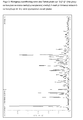
- FIGS. 1 to 3 X-ray powder diffractograms of the three crystalline forms of 3 - [(2 - ⁇ [4- (hexyloxycarbonylamino-imino-methyl) -phenyl-amino] -methyl ⁇ -1-methyl-1 H -benzimidazole-5-carbonyl) -pyridine-2 yl-amino] -propionate.
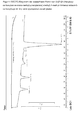
- FIGS. 4 to 6 show the thermal analysis (DSC / TG) for the three crystalline forms of 3 - [(2 - ⁇ [4- (hexyloxycarbonylamino-imino-methyl) -phenylamino] -methyl ⁇ -1-methyl-1 H -benzimidazole-5-carbonyl ) -pyridin-2-yl-amino] -propionate.
- the melting points were determined by means of DSC, a device from Mettler-Toledo (type: DSC 821) was used for this purpose.
- the melting temperature used was the peak temperature of the corresponding melting peak in the DSC diagram.
- the accuracy of the specified melting points is about ⁇ 3 ° C, the tetrahydrate ⁇ 5 ° C, since the tetrahydrate gives the enclosed in the crystal lattice crystal water during melting and thus results in a very much broadened endothermic signal.
- the starting compound 3 [(2 - ⁇ [4- (aminohexyloxycarbonylimino-methyl) -phenyl-amino] -methyl ⁇ -1-methyl-1 H -benzimidazole-5-carbonyl) -pyridin-2-yl-amino] Propionic acid ethyl ester, for example, as in the international application WO 98/37075 , Example 113.
- the solution was cooled to about 30 ° C and filtered through a filter, for example via a Sartorius Minisart filter SRP 15 in a 10 ml Glasvial, and the bottle was sealed.
- the solution was then cooled in an ice / ethanol mixture to about - 9 ° C. Substance began to crystallize by itself. After about 30 minutes in an ice bath, about 3 ml of acetone / water (80:20) cooled to -9 ° C. were added, the mixture was shaken and then filtered off with suction through a filter, for example a Schleicher & Schull filter No. 595.
- the mixture was rinsed with a further approximately 5 ml of acetone / water (80:20) cooled to -9 ° C.
- the filtered substance was scraped from the round filter into a crystallizing dish and dried in air at room temperature.
- Active substance and mannitol are dissolved in water. After bottling is freeze-dried.
- the solution to the ready-to-use solution is water for injections.
- (1), (2) and (3) are mixed and granulated with an aqueous solution of (4).
- the dried granules are admixed with (5).
- Tablets are pressed from this mixture, biplane with facet on both sides and one-sided part notch. Diameter of the tablets: 9 mm.
- (1), (2) and (3) are mixed and granulated with an aqueous solution of (4).
- the dried granules are admixed with (5).
- From this mixture tablets are pressed, biplan with double-sided facet and one-sided part score. Diameter of the tablets: 12 mm.
- Capsules with 50 mg active ingredient Composition (1) Active substance 50.0 mg (2) dried cornstarch 58.0 mg (3) powdered milk sugar 50.0 mg (4) magnesium stearate 2.0 mg 160.0 mg
- (1) is triturated with (3). This trituration is added to the mixture of (2) and (4) under intensive mixing.
- This powder mixture is filled in a capsule filling machine in size 3 hard gelatine capsule capsules.
- Capsules with 350 mg active ingredient Composition (1) Active substance 350.0 mg (2) dried corn starch 46.0 mg (3) powdered milk sugar 30.0 mg (4) magnesium stearate 4,0 mq 430.0 mg
- (1) is triturated with (3). This trituration is added to the mixture of (2) and (4) under intensive mixing.
- This powder mixture is filled on a capsule filling machine into hard gelatine capsules size 0.
- Suppositories containing 100 mg of active ingredient 1 suppository contains: active substance 100.0 mg Polyethylene glycol (M.G. 1500) 600.0 mg Polyethylene glycol (M.G. 6000) 460.0 mg polyethylene sorbitan monostearate 840.0 mq 2,000.0 mg
- Example 11 and 12 The preparation and the structure of the pellets according to Example 11 and 12 is in the WO 03/074056 described in detail.
Landscapes
- Organic Chemistry (AREA)
- Chemical & Material Sciences (AREA)
- Health & Medical Sciences (AREA)
- Bioinformatics & Cheminformatics (AREA)
- Engineering & Computer Science (AREA)
- Medicinal Chemistry (AREA)
- Public Health (AREA)
- Life Sciences & Earth Sciences (AREA)
- Pharmacology & Pharmacy (AREA)
- Nuclear Medicine, Radiotherapy & Molecular Imaging (AREA)
- Chemical Kinetics & Catalysis (AREA)
- Veterinary Medicine (AREA)
- General Chemical & Material Sciences (AREA)
- Animal Behavior & Ethology (AREA)
- General Health & Medical Sciences (AREA)
- Heart & Thoracic Surgery (AREA)
- Cardiology (AREA)
- Diabetes (AREA)
- Hematology (AREA)
- Vascular Medicine (AREA)
- Pharmaceuticals Containing Other Organic And Inorganic Compounds (AREA)
- Plural Heterocyclic Compounds (AREA)
- Pyridine Compounds (AREA)
Abstract
Description
- Die Erfindung betrifft neue Polymorphe des Wirkstoffs 3-[(2-{[4-(Hexyloxycarbonyl-amino-imino-methyl)-phenylamino]-methyl}-1-methyl-1H-benzimidazol-5-carbonyl)-pyridin-2-yl-amino]-propionsäure-ethylester, Verfahren zu ihrer Herstellung und deren Verwendung als Arzneimittel. Dieser Wirkstoff mit der chemischen Formel

WO 98/37075 
- Aufgabe der Erfindung ist es, neue Polymorphe der Verbindung der Formel I mit vorteilhaften Eigenschaften für die pharmazeutische Anwendung bereitzustellen.
- Die vorstehend genannten pharmakologisch wertvollen Eigenschaften der im Stand der Technik offenbarten disubstituierten bicyclischen Heterocyclen stellen die Grundvoraussetzung für eine wirksame Verwendung der Verbindungen als Arzneimittel dar. Neben der eigentlichen Wirksamkeit für die gewünschte Indikation muß ein Wirkstoff noch weiteren Anforderungen gerecht werden, um als Arzneimittel zum Einsatz gelangen zu können. Diese Parameter sind zu einem großen Teil mit der physikochemischen Beschaffenheit des Wirkstoffs verbunden.
- Ohne Einschränkung darauf sind Beispiele dieser Parameter die Wirkstabilität des Ausgangsstoffes unter verschiedenen Umgebungsbedingungen, die Stabilität im Verlauf der Herstellung der pharmazeutischen Formulierung sowie die Stabilität in den Endzusammensetzungen des Arzneimittels. Der zur Herstellung der Arzneimittelzusammensetzungen verwendete Arzneiwirkstoff sollte daher eine hohe Stabilität aufweisen, die auch unter verschiedenen Umgebungsbedingungen gewährleistet sein muß. Dies ist zwingend erforderlich, um zu verhindern, dass Arzneimittelzusammensetzungen Verwendung finden, in denen neben tatsächlichem Wirkstoff beispielsweise Abbauprodukte desselben enthalten sind. In einem solchen Fall könnte ein in pharmazeutischen Formulierungen vorgefundener Gehalt an Wirkstoff niedriger sein als spezifiziert.
- Die Absorption von Feuchtigkeit vermindert den Gehalt an Arzneiwirkstoff wegen der durch die Wasseraufnahme verursachten Gewichtszunahme. Zur Aufnahme von Feuchtigkeit neigende Arzneimittel müssen während der Lagerung vor Feuchtigkeit geschützt werden, beispielsweise durch Zusatz von geeigneten Trockenmitteln oder durch Lagerung des Arzneimittels in einer vor Feuchtigkeit geschützten Umgebung. Zudem kann die Aufnahme von Feuchtigkeit den Gehalt an Arzneiwirkstoff während der Herstellung vermindern, wenn das Arzneimittel der Umgebung ohne jeglichen Schutz vor Feuchtigkeit ausgesetzt wird. Vorzugsweise sollte ein Arzneimittelwirkstoff daher nur in geringem Maße hygroskopisch sein.
- Da die Kristallmodifikation eines Wirkstoffs für den reproduzierbaren Wirkstoffgehalt einer Darreichungsform von Bedeutung ist, besteht die Notwendigkeit, eventuell existierenden Polymorphismus eines kristallin vorliegenden Wirkstoffs bestmöglich aufzuklären. Sofern verschiedene polymorphe Modifikationen eines Wirkstoffs auftreten, sollte gewährleistet sein, dass sich die kristalline Modifikation der Substanz in der späteren Arzneimittelzubereitung nicht verändert. Andernfalls könnte dies die reproduzierbare Wirksamkeit des Medikaments nachteilig beeinflussen.
- Ein weiteres Kriterium, welches je nach Wahl der Formulierung oder nach Wahl des Herstellungsverfahrens der Formulierung von unter Umständen herausragender Bedeutung ist, ist die Löslichkeit des Wirkstoffs. Werden beispielsweise Arzneimittellösungen (etwa für Infusionen) bereitgestellt, so ist eine ausreichende Löslichkeit des Wirkstoffs in physiologisch verträglichen Lösemitteln unverzichtbar. Auch für oral zu applizierende Arzneimittel ist eine ausreichende Löslichkeit des Wirkstoffs von großer Wichtigkeit.
- Der vorliegenden Erfindung liegt die Aufgabe zugrunde, einen Arzneimittelwirkstoff bereitzustellen, der nicht nur durch eine hohe pharmakologische Wirksamkeit gekennzeichnet ist, sondern ferner den vorstehend genannten physikochemischen Anforderungen bestmöglich gerecht wird.
- Überraschenderweise wurde nun gefunden, dass die erfindungsgemäßen Polymorphe der Verbindung der Formel I (Dabigatran etexilate) diese Aufgabe erfüllen und vorteilhafte Eigenschaften aufweisen.
- Gegenstand der Erfindung sind daher die Polymorphe von 3-[(2-{[4-(Hexyloxy-carbonylamino-imino-methyl)-phenylamino]-methyl}-1-methyl-1H-benzimidazol-5-carbonyl)-pyridin-2-yl-amino]-propionsäure-ethylester mit den Bezeichnungen wasserfreie Form I, wasserfreie Form II und Tetrahydrat. Ein weiterer Erfindungsgegenstand sind pharmazeutische Zusammensetzungen enthaltend mindestens eines der oben genannten Polymorphe sowie Verfahren zur Herstellung von Arzneimitteln, welche zur Prophylaxe von Venenthrombosen und Schlaganfall geeignet sind und die erfindungsgemäßen Polymorphe enthalten.
- Ein erster Gegenstand der vorliegenden Erfindung sind daher die drei oben erwähnten polymorphen Formen des Wirkstoffs 3-[(2-{[4-(Hexyloxycarbonylamino-imino-methyl)-phenylamino]-methyl}-1-methyl-1H-benzimidazol-5-carbonyl)-pyridin-2-yl-amino]-propionsäure-ethylester, bevorzugt in kristalliner Form, gekennzeichnet durch Schmelzpunkte von TSmp. = 135 ± 3°C (wasserfreie Form I), TSmp. = 150 ± 3°C (wasserfreie Form II) bzw. TSmp. = 90 ± 5°C (Tetrahydrat) (bestimmt über DSC; Auswertung über Peak-Maximum; Heizrate: 10°C/min). Das DSC-Diagramm der wasserfreien Form I zeichnet sich dadurch aus, dass vier weitere schwach endotherme Signale bei ca. 53, 75, 98 und 118°C zu beobachten sind. Diese Signale sind auf voll reversible fest-fest-Phasenübergänge zurückzuführen, d.h. im Temperaturbereich zwischen 53 - 75, 75 - 98, 98 - 118 und 118 - 135 °C existieren vier weitere Hochtemperaturphasen der wasserfreien Form I.
- Ein weiterer Erfindungsgegenstand sind die Verfahren zur selektiven Herstellung der drei polymorphen Formen sowie die nach diesen Verfahren erhältlichen Modifikationen.
- Erfindungsgemäß erhält man die wasserfreie Form I von 3-[(2-{[4-(Hexyloxycarbonyl-amino-imino-methyl)-phenylamino]-methyl}-1-methyl-1H-benzimidazol-5-carbonyl)-pyridin-2-yl-amino]-propionsäure-ethylester, indem man
- a) 3-[(2-{[4-(Hexyloxycarbonylamino-imino-methyl)-phenylamino]-methyl}-1-methyl-1H-benzimidazol-5-carbonyl)-pyridin-2-yl-amino]-propionsäure-ethylester - Base unter Rückfluß in Essigsäureethylester löst,
- b) die Lösung auf eine Temperatur von ca. 30°C bis 35 °C abkühlt und weitere 60 Minuten bei dieser Temperatur rührt,
- c) auf ca. 15°C bis 20 °C abkühlt und weitere etwa 60 Minuten lang bei dieser Temperatur nachrührt,
- d) die ausgefallenen Kristalle absaugt, mit Essigsäureethylester wäscht und
- e) das so erhaltene Produkt bei 40 bis 50 °C im Umluft-Trockenschrank trocknet.
- Erfindungsgemäß erhält man die wasserfreie Form II von 3-[(2-{[4-(Hexyloxy-carbonylamino-imino-methyl)-phenylamino]-methyl}-1-methyl-1H-benzimidazol-5-carbonyl)-pyridin-2-yl-amino]-propionsäure-ethylester, indem man
- a) 3-[(2-{[4-(Hexyloxycarbonylamino-imino-methyl)-phenylamino]-methyl}-1-methyl-1H-benzimidazol-5-carbonyl)-pyridin-2-yl-amino]-propionsäure-ethylester - Base mit wenig Essigsäureethylester versetzt,
- b) die so erhaltene Suspension auf eine Temperatur von ca. 80 °C erwärmt, wobei eine klare Lösung entsteht,
- c) die Lösung ca. eine Stunde lang unter Rückfluß erhitzt,
- d) die ausgefallenen Kristalle abfiltriert und
- e) das so erhaltene Produkt an der Luft trocknet.
- Erfindungsgemäß erhält man das Tetrahydrat von 3-[(2-{[4-(Hexyloxycarbonylamino-imino-methyl)-phenylamino]-methyl}-1-methyl-1H-benzimidazol-5-carbonyl)-pyridin-2-yl-amino]-propionsäure-ethylester, indem man
- a) 3-[(2-{[4-(Hexyloxycarbonylamino-imino-methyl)-phenylamino]-methyl}-1-methyl-1H-benzimidazol-5-carbonyl)-pyridin-2-yl-amino]-propionsäure-ethylester - Base unter Schütteln bei einer Temperatur von ca. 60 °C in Aceton/Wasser (80 : 20) löst,
- b) die Lösung auf eine Temperatur von ca. 30 °C abkühlt und in ein verschließbares Gefäß filtriert,
- c) das verschlossene Gefäß mit der Lösung auf eine Temperatur von ca. - 9 °C abkühlt und ca. 30 Minuten lang bei dieser Temperatur beläßt,
- d) ein auf -9 °C vorgekühltes Gemisch aus Aceton und Wasser (80 : 20) zugibt und die Mischung aufschüttelt,
- e) die ausgefallenen Kristalle absaugt und mit einem auf -9 °C gekühlten Gemisch aus Aceton und Wasser (80 : 20) wäscht und
- f) das so erhaltene Produkt an der Luft bei Raumtemperatur trocknet.
- Die erfindungsgemäßen kristallinen Formen von 3-[(2-{[4-(Hexyloxycarbonylamino-imino-methyl)-phenylamino]-methyl}-1-methyl}-1H-benzimidazol-5-carbonyl)-pyridin-2-yl-amino]-propionsäure-ethylester wurden mittels Röntgenpulverbeugung näher untersucht. Die erhaltenen Diagramme sind in
Figuren 1 bis 3 dargestellt. - Die nachstehenden Tabellen 1 bis 3 führen die bei dieser Analyse erhaltenen Daten auf:
Tabelle 1: Röntgenpulverreflexe (bis zu 30 ° 2Θ) und Intensitäten (normalisiert) von 3-[(2-{[4-(Hexyloxycarbonylamino-imino-methyl)-phenylamino]-methyl}-1-methyl-1H-benzimidazol-5-carbonyl)-pyridin-2-yl-amino]-propionsäure-ethylester (wasserfreie Form I) 2 Θ [°] d [Å] I/Io [%] 3,39 26,07 1 4,31 20,51 1 4,87 18,12 10 5,62 15,70 1 7,28 12,14 1 7,43 11,88 1 8,82 10,02 69 10,46 8,45 100 11,56 7,65 25 12,92 6,84 11 13,25 6,67 32 13,78 6,42 50 14,12 6,27 12 14,36 6,16 9 14,67 6,03 5 15,49 5,72 63 16,61 5,33 28 17,76 4,99 4 18,03 4,92 12 18,93 4,69 4 20,12 4,41 65 20,79 4,27 6 21,54 4,12 46 22,15 4,01 15 22,72 3,91 6 23,28 3,82 11 23,51 3,78 11 23,92 3,72 18 24,18 3,68 8 24,58 3,62 10 25,18 3,53 8 25,70 3,46 69 26,75 3,33 10 27,69 3,22 21 28,27 3,15 14 28,80 3,10 9 29,41 3,03 2 30,16 2,96 2 Tabelle 2: Röntgenpulverreflexe (bis zu 30 ° 2Θ) und Intensitäten (normalisiert) von 3-[(2-{[4-(Hexyloxycarbonylamino-imino-methyl)-phenylamino]-methyl}-1-methyl-1H-benzimidazol-5-carbonyl)-pyridin-2-yl-amino]-propionsäure-ethylester (wasserfreie Form II) 2 Θ [°] d [Å] I/Io [%] 7,55 11,70 6 8,25 10,71 24 8,50 10,40 18 9,06 9,75 44 10,04 8,80 86 11,08 7,98 5 11,99 7,37 33 12,17 7,27 51 13,11 6,75 4 13,77 6,42 19 14,04 6,30 5 14,67 6,04 3 14,98 5,91 13 15,10 5,86 11 15,93 5,56 3 16,34 5,42 20 16,52 5,36 55 17,03 5,20 68 17,63 5,03 47 17,99 4,93 7 18,17 4,88 5 18,74 4,73 6 19,00 4,67 19 19,23 4,61 6 19,69 4,51 17 20,02 4,43 53 20,43 4,34 11 20,63 4,30 48 20,92 4,24 3 21,24 4,18 7 21,39 4,15 10 21,75 4,08 4 22,15 4,01 9 22,41 3,96 6 22,77 3,90 17 23,02 3,86 6 23,17 3,84 10 23,70 3,75 10 23,92 3,72 19 24,49 3,63 13 24,69 3,60 15 24,89 3,57 12 25,17 3,53 26 25,66 3,47 6 25,88 3,44 10 26,36 3,38 100 26,67 3,34 21 26,85 3,32 15 27,96 3,19 7 28,24 3,16 7 28,52 3,13 5 28,79 3,10 9 29,81 2,99 5 30,11 2,97 9 Tabelle 3: Röntgenpulverreflexe (bis zu 30 ° 2Θ) und Intensitäten (normalisiert) von 3-[(2-{[4-(Hexyloxycarbonylamino-imino-methyl)-phenylamino]-methyl}-1-methyl-1H-benzimidazol-5-carbonyl)-pyridin-2-yl-amino]-propionsäure-ethylester (Tetrahydrat) 2 Θ [°] d [Å] I/Io [%] 4,67 18,91 100 6,63 13,32 2 8,10 10,90 45 9,36 9,44 20 9,82 9,00 52 10,55 8,38 2 11,18 7,91 32 11,91 7,42 2 12,57 7,04 10 13,01 6,80 9 13,52 6,54 5 14,05 6,30 23 14,59 6,06 18 15,52 5,70 8 15,99 5,54 10 16,31 5,43 8 16,56 5,35 14 16,94 5,23 21 17,76 4,99 16 18,62 4,76 33 18,93 4,68 26 19,69 4,51 10 20,10 4,42 15 20,56 4,32 52 20,86 4,26 7 21,38 4,15 19 21,83 4,07 24 22,51 3,95 22 23,10 3,85 34 24,04 3,70 33 24,74 3,60 83 25,23 3,53 8 25,58 3,48 12 26,35 3,38 9 26,96 3,30 21 28,31 3,15 9 28,87 3,09 2 29,32 3,04 5 23,92 3,72 19 24,49 3,63 13 24,69 3,60 15 24,89 3,57 12 25,17 3,53 26 25,66 3,47 6 25,88 3,44 10 26,36 3,38 100 26,67 3,34 21 26,85 3,32 15 27,96 3,19 7 28,24 3,16 7 28,52 3,13 5 28,79 3,10 9 29,81 2,99 5 30,11 2,97 9 - In den voranstehenden Tabellen 1 bis 3 steht der Wert "2 Θ [°]" für den Beugungswinkel in Grad und der Wert "d [Å]" für die bestimmten Abstände in Å zwischen den Gitterebenen.
- Die Röntgenpulverdiagramme wurden im Rahmen der vorliegenden Erfindung mittels eines STOE STADI P - Diffraktometers, ausgerüstet mit einem ortsempfindlichen Detektor (OED) und einer Cu-Anode als Röntgenquelle und einem Primärmonochromator (CuKα1 - Strahlung, λ = 1.54056 Å, 40 kV, 40 mA) aufgenommen.
-
Figuren 1 bis 3 zeigen die Röntgenpulverdiffraktogramme der drei kristallinen Formen von 3-[(2-{[4-(Hexyloxycarbonylamino-imino-methyl)-phenylamino]-methyl}-1-methyl-1H-benzimidazol-5-carbonyl)-pyridin-2-yl-amino]-propionsäure-ethylester. -
Figuren 4 - 6 zeigen die Thermoanalyse (DSC/TG) für die drei kristallinen Formen von 3-[(2-{[4-(Hexyloxycarbonylamino-imino-methyl)-phenylamino]-methyl}-1-methyl-1H-benzimidazol-5-carbonyl)-pyridin-2-yl-amino]-propionsäure-ethylester. - Die Schmelzpunkte wurden mittels DSC ermittelt, es wurde hierfür ein Gerät der Fa. Mettler-Toledo (Typ: DSC 821) eingesetzt. Als Schmelztemperatur wurde die Peak-Temperatur des entsprechenden Schmelzpeaks im DSC-Diagramm verwendet. Die Genauigkeit der angegebenen Schmelzpunkte beträgt etwa ± 3 °C, beim Tetrahydrat ± 5 °C, da das Tetrahydrat beim Schmelzen das in das Kristallgitter eingeschlossene Kristallwasser abgibt und dadurch ein sehr stark verbreitertes endothermes Signal resultiert.
- Die Ausgangsverbindung 3-[(2-{[4-(Amino-hexyloxycarbonylimino-methyl)-phenyl-amino]-methyl}-1-methyl-1H-benzimidazol-5-carbonyl)-pyridin-2-yl-amino]-propionsäure-ethylester kann beispielsweise wie in der internationalen Anmeldung
WO 98/37075 - 3-[(2-{[4-(Amino-hexyloxycarbonylimino-methyl)-phenylamino]-methyl}-1-methyl-1H-benzimidazol-5-carbonyl)-pyridin-2-yl-aminol-propionsäure-ethylester (wasserfreie Form I) 1500 g (2,389 Mol) 3-[(2-{[4-(Hexyloxycarbonylamino-imino-methyl)-phenylamino]-methyl}-1-methyl-1H-benzimidazol-5-carbonyl)-pyridin-2-yl-amino]-propionsäure-ethyl-ester - Base (wie in der
WO 98/37075 - 3-[(2-{[4-(Amino-hexyloxycarbonylimino-methyl)-phenylamino]-methyl}-1-methyl-1H-benzimidazol-5-carbonyl)-pyridin-2-yl-amino]-propionsäure-ethylester (wasserfreie Form II)
2.0 g 3-[(2-{[4-(Hexyloxycarbonylamino-imino-methyl)-phenylamino]-methyl}-1-methyl-1 H-benzimidazol-5-carbonyl)-pyridin-2-yl-amino]-propionsäure-ethyl-ester-Base (wie in derWO 98/37075 - 3-[(2-{[4-(Amino-hexyloxycarbonylimino-methyl)-phenylamino]-methyl}-1-methyl-1H-benzimidazol-5-carbonyl)-pyridin-2-yl-amino]-propionsäure-ethylester - Tetrahydrat 0.5 g 3-[(2-{[4-(Hexyloxycarbonylamino-imino-methyl)-phenylamino]-methyl}-1-methyl-1H-benzimidazol-5-carbonyl)-pyridin-2-yl-amino]-propionsäure-ethyl-ester-Base (wie in der
WO 98/37075 - Es wurde mit weiteren ca. 5 ml auf -9 °C abgekühlter Mischung Aceton/Wasser (80 : 20) nachgespült. Die abfiltrierte Substanz wurde vom Rundfilter in eine Kristallisierschale abgeschabt und an der Luft bei Raumtemperatur getrocknet.
-
Trockenampulle mit 75 mg Wirkstoff pro 10 ml Zusammensetzung: Wirkstoff 75,0 mg Mannitol 50,0 mg Wasser für Injektionszwecke ad 10,0 ml - Wirkstoff und Mannitol werden in Wasser gelöst. Nach Abfüllung wird gefriergetrocknet. Die Auflösung zur gebrauchsfertigen Lösung erfolgt mit Wasser für Injektionszwecke.
-
Trockenampulle mit 35 mg Wirkstoff pro 2 ml Zusammensetzung: Wirkstoff 35,0 mg Mannitol 100,0 mg Wasser für Injektionszwecke ad 2,0 ml - Wirkstoff und Mannitol werden in Wasser gelöst. Nach Abfüllung wird gefriergetrocknet.
- Die Auflösung zur gebrauchsfertigen Lösung erfolgt mit Wasser für Injektionszwecke.
- Tablette mit 50 mg Wirkstoff
Zusammensetzung: (1) Wirkstoff 50,0 mg (2) Milchzucker 98,0 mg (3) Maisstgrke 50,0 mg (4) Polyvinylpyrrolidon 15,0 mg (5) Magnesiumstearat 2,0 mg 215,0 mg - (1), (2) und (3) werden gemischt und mit einer wäßrigen Lösung von (4) granuliert. Dem getrockneten Granulat wird (5) zugemischt. Aus dieser Mischung werden Tabletten gepreBt, biplan mit beidseitiger Facette und einseitiger Teilkerbe. Durchmesser der Tabletten: 9 mm.
- Tablette mit 350 mg Wirkstoff
Zusammensetzung: (1) Wirkstoff 350,0 mg (2) Milchzucker 136,0 mg (3) Maisstärke 80,0 mg (4) Polyvinylpyrrolidon 30,0 mg (5) Magnesiumstearat 4,0 mg 600,0 mg - (1), (2) und (3) werden gemischt und mit einer wäßrigen Lösung von (4) granuliert. Dem getrockneten Granulat wird (5) zugemischt. Aus dieser Mischung werden Tabletten gepreßt, biplan mit beidseitiger Facette und einseitiger Teilkerbe. Durchmesser der Tabletten: 12 mm.
- Kapseln mit 50 mg Wirkstoff
Zusammensetzung: (1) Wirkstoff 50,0 mg (2) Maisstgrke getrocknet 58,0 mg (3) Milchzucker pulverisiert 50,0 mg (4) Magnesiumstearat 2,0 mg 160,0 mg - (1) wird mit (3) verrieben. Diese Verreibung wird der Mischung aus (2) und (4) unter intensiver Mischung zugegeben.
- Diese Pulvermischung wird auf einer Kapselabfüllmaschine in HartgelatineSteckkapseln Größe 3 abgefüllt.
- Kapseln mit 350 mg Wirkstoff
Zusammensetzung: (1) Wirkstoff 350,0 mg (2) Maisstärke getrocknet 46,0 mg (3) Milchzucker pulverisiert 30,0 mg (4) Magnesiumstearat 4,0 mq 430,0 mg - (1) wird mit (3) verrieben. Diese Verreibung wird der Mischung aus (2) und (4) unter intensiver Mischung zugegeben.
- Diese Pulvermischung wird auf einer Kapselabfüllmaschine in HartgelatineSteckkapseln Gr6Be 0 abgefüllt.
- Suppositorien mit 100 mg Wirkstoff
1 Zäpfchen enthält: Wirkstoff 100,0 mg Polyethylenglykol (M.G. 1500) 600,0 mg Polyethylenglykol (M.G. 6000) 460,0 mg Polyethylensorbitanmonostearat 840,0 mq 2 000,0 mg -
Prozentuale Zusammensetzung pro Kapsel [mg] pro Kapsel [mg] Kern-material Isolier-schicht Wirkstoff schicht Gesamt Weinsäure 61,3 - - 61,3 176,7 353,4 Gummi arabicum 3,1 2,8 5,9 17,0 34,0 Talkum - 5,6 3,2 8,8 25,4 50,7 Hydroxypropylcellulose - - 4,0 4,0 11,5 23,1 Wirkstoff (bezogen auf die Base) - - 20,0 20,0 50,0 100,0 Summe 100,0 288,3 576,5 -
Prozentuale Zusammensetzung pro Kapsel [mg] pro Kapsel [mg] Kern-material Isolierschicht Wirkstoffschicht Gesamt Weinsäure 38,5 - - 38,5 55,5 166,5 Gummi arabicum 1,9 1,7 3,6 5,2 15,6 Talkum - 3,5 6,4 9,9 14,3 42,8 Hydroxypropylcellulose - - 8,0 8,0 11,5 34,6 Wirkstoff (bezogen auf die Base) - - 40,0 40,0 50,0 150,0 Summe 100,0 144,2 432,5 - Die Herstellung und der Aufbau der Pellets gemäß Beispiel 11 und 12 wird in der
WO 03/074056
Claims (7)
- 3-[(2-{[4-(Hexyloxycarbonylamino-imino-methyl)-phenylamino]-methyl}-1-methyl-1 H-benzimidazol-5-carbonyl)-pyridin-2-yl-amino]-propionsäure-ethylester - Tetrahydrat in kristalliner Form, gekennzeichnet durch einen Schmelzpunkt von TSmp. = 90 ± 5°C unter gleichzeitiger Abgabe des ins Kristallgitter eingeschlossenen Kristallwassers (Tetrahydrat) (bestimmt über DSC; Auswertung über Peak-Maximum; Heizrate: 10°C/min).
- Verwendung einer Verbindung gemäß Anspruch 1 zur Herstellung eines Arzneimittels mit einer die Thrombinzeit verlängernder Wirkung.
- Verwendung einer Verbindung gemäß Anspruch 1 zur Herstellung eines Arzneimittels zur Prophylaxe von Venenthrombosen und Schlaganfall.
- Pharmazeutische Zusammensetzung enthaltend eine Verbindung gemäß Anspruch 1 neben gegebenenfalls einem oder mehreren inerten Trägerstoffen und/oder Verdünnungsmitteln.
- Verfahren zur Herstellung eines Arzneimittels gemäß Anspruch 4, dadurch gekennzeichnet, dass auf nichtchemischem Wege eine Verbindung gemäß Anspruch 1 in einen oder mehrere inerte Trägerstoffe und/oder Verdünnungsmittel eingearbeitet wird.
- Verfahren zur Herstellung des Tetrahydrats von 3-[(2-{[4-(Hexyloxycarbonyl-amino-imino-methyl)-phenylamino]-methyl}-1-methyl-1H-benzimidazol-5-carbonyl)-pyridin-2-yl-amino]-propionsäure-ethylester gemäß Anspruch 1, dadurch gekennzeichnet, daß mana) 3-[(2-{[4-(Hexyloxycarbonylamino-imino-methyl)-phenylamino]-methyl}-1-methyl-1H-benzimidazol-5-carbonyl)-pyridin-2-yl-amino]-propionsäure-ethylester - Base unter Schütteln bei einer Temperatur von ca. 60 °C in Aceton/Wasser (80 : 20) löst,b) die Lösung auf eine Temperatur von ca. 30 °C abkühlt und in ein verschließbares Gefäß filtriert,c) das verschlossene Gefäß mit der Lösung auf eine Temperatur von ca. - 9 °C abkühlt und ca. 30 Minuten lang bei dieser Temperatur beläßt,d) ein auf -9 °C vorgekühltes Gemisch aus Aceton und Wasser (80 : 20) zugibt und die Mischung aufschüttelt,e) die ausgefallenen Kristalle absaugt und mit einem auf -9 °C gekühlten Gemisch aus Aceton und Wasser (80 : 20) wäscht undf) das so erhaltene Produkt an der Luft bei Raumtemperatur trocknet.
- 3-[(2-{[4-(Hexyloxycarbonylamino-imino-methyl)-phenylamino]-methyl}-1-methyl-1 H-benzimidazol-5-carbonyl)-pyridin-2-yl-amino]-propionsäure-ethylester - Tetrahydrat, erhältlich nach dem Verfahren gemäß Anspruch 6.
Applications Claiming Priority (3)
| Application Number | Priority Date | Filing Date | Title |
|---|---|---|---|
| DE102005025728A DE102005025728A1 (de) | 2005-06-04 | 2005-06-04 | Polymorphe von 3-[(2-{[4-(Hexyloxycarbonylamino-imino-methyl)-phenylamino]-methyl}-1-methyl-1H-benzimidazol-5-carbonyl)-pyridin-2-yl-amino]-Propionsäure-ethylester |
| EP06763468A EP1891046A1 (de) | 2005-06-04 | 2006-06-01 | Polymorphe von 3-[(2-{[4-(hexyloxycarbonylamino-imino-methyl)-phenylamino]-methyl}-1-methyl-1h-benzimidazol-5-carbonyl)-pyridin-2-yl-amino]-propionsäure-ethylester |
| EP09157302A EP2088146A3 (de) | 2005-06-04 | 2006-06-01 | Polymorphe von 3-[(2-{[4-(hexyloxycarbonylamino- imino-methyl)-phenylamino]-methyl}-1-methyl-1h-benzimidazol-5-carbonyl)-pyridin-2-yl-amino]-propionsaeure-ethylester |
Related Parent Applications (2)
| Application Number | Title | Priority Date | Filing Date |
|---|---|---|---|
| EP06763468.3 Division | 2006-06-01 | ||
| EP09157302.2 Division | 2009-04-03 |
Publications (1)
| Publication Number | Publication Date |
|---|---|
| EP2305665A1 true EP2305665A1 (de) | 2011-04-06 |
Family
ID=36812978
Family Applications (3)
| Application Number | Title | Priority Date | Filing Date |
|---|---|---|---|
| EP09157302A Withdrawn EP2088146A3 (de) | 2005-06-04 | 2006-06-01 | Polymorphe von 3-[(2-{[4-(hexyloxycarbonylamino- imino-methyl)-phenylamino]-methyl}-1-methyl-1h-benzimidazol-5-carbonyl)-pyridin-2-yl-amino]-propionsaeure-ethylester |
| EP06763468A Ceased EP1891046A1 (de) | 2005-06-04 | 2006-06-01 | Polymorphe von 3-[(2-{[4-(hexyloxycarbonylamino-imino-methyl)-phenylamino]-methyl}-1-methyl-1h-benzimidazol-5-carbonyl)-pyridin-2-yl-amino]-propionsäure-ethylester |
| EP10180840A Withdrawn EP2305665A1 (de) | 2005-06-04 | 2006-06-01 | Polymorphe von 3-[(2-{[4-(Hexyloxycarbonylamino- imino-methyl)-phenylamino]-methyl}-1-methyl-1H-benzimidazol-5-carbonyl)-pyridin-2-yl-amino]-propionsäure-ethylester |
Family Applications Before (2)
| Application Number | Title | Priority Date | Filing Date |
|---|---|---|---|
| EP09157302A Withdrawn EP2088146A3 (de) | 2005-06-04 | 2006-06-01 | Polymorphe von 3-[(2-{[4-(hexyloxycarbonylamino- imino-methyl)-phenylamino]-methyl}-1-methyl-1h-benzimidazol-5-carbonyl)-pyridin-2-yl-amino]-propionsaeure-ethylester |
| EP06763468A Ceased EP1891046A1 (de) | 2005-06-04 | 2006-06-01 | Polymorphe von 3-[(2-{[4-(hexyloxycarbonylamino-imino-methyl)-phenylamino]-methyl}-1-methyl-1h-benzimidazol-5-carbonyl)-pyridin-2-yl-amino]-propionsäure-ethylester |
Country Status (22)
| Country | Link |
|---|---|
| US (1) | US20060276513A1 (de) |
| EP (3) | EP2088146A3 (de) |
| JP (1) | JP2008545734A (de) |
| KR (1) | KR20080021763A (de) |
| CN (1) | CN101189224B (de) |
| AR (1) | AR054278A1 (de) |
| AU (1) | AU2006256778A1 (de) |
| BR (1) | BRPI0611099A2 (de) |
| CA (1) | CA2609583A1 (de) |
| DE (1) | DE102005025728A1 (de) |
| EA (1) | EA014082B1 (de) |
| EC (1) | ECSP077981A (de) |
| IL (1) | IL187845A0 (de) |
| MX (1) | MX2007014892A (de) |
| NO (1) | NO20075862L (de) |
| NZ (1) | NZ564621A (de) |
| PE (1) | PE20070082A1 (de) |
| TW (1) | TW200716107A (de) |
| UA (1) | UA92349C2 (de) |
| UY (1) | UY29575A1 (de) |
| WO (1) | WO2006131491A1 (de) |
| ZA (1) | ZA200709715B (de) |
Cited By (1)
| Publication number | Priority date | Publication date | Assignee | Title |
|---|---|---|---|---|
| WO2017037743A3 (en) * | 2015-09-03 | 2018-09-27 | Sun Pharmaceutical Industries Limited | Dabigatran etexilate 1,4-butanedisulfonate salt and its crystal form |
Families Citing this family (34)
| Publication number | Priority date | Publication date | Assignee | Title |
|---|---|---|---|---|
| US20030181488A1 (en) | 2002-03-07 | 2003-09-25 | Boehringer Ingelheim Pharma Gmbh & Co. Kg | Administration form for the oral application of 3-[(2-{[4-(hexyloxycarbonylamino-imino-methyl)-phenylamino]-methyl}-1-methyl-1H-benzimidazol-5-carbonyl)-pyridin-2-yl-amino]-propionic acid ethyl ester and the salts thereof |
| DE10339862A1 (de) * | 2003-08-29 | 2005-03-24 | Boehringer Ingelheim Pharma Gmbh & Co. Kg | 3-[(2-{[4-(Hexyloxycarbonylamino-imino-methyl)- phenylamino]-methyl}-1-methyl-1H-benzimidazol-5-carbonyl)-pyridin-2-yl-amino]-propionsäure-ethylester-Methansulfonat und dessen Verwendung als Arzneimittel |
| DE102006054005A1 (de) * | 2006-11-16 | 2008-05-21 | Boehringer Ingelheim Pharma Gmbh & Co. Kg | Neue Polymorphe von 3-[(2-{[4-(Hexyloxycarbonylamino-imino-methyl)-phenylamino]-methyl}-1-methyl-1H-benzimidazol-5-carbonyl)-pyridin-2-yl-amino]-propionsäure-ethylester |
| US20110129538A1 (en) * | 2008-03-28 | 2011-06-02 | Boehringer Ingelheim International Gmbh | Process for preparing orally administered dabigatran formulations |
| JP2011527318A (ja) | 2008-07-14 | 2011-10-27 | ベーリンガー インゲルハイム インターナショナル ゲゼルシャフト ミット ベシュレンクテル ハフツング | ダビガトランを含有する医薬組成物の製造方法 |
| AU2009315729A1 (en) | 2008-11-11 | 2010-05-20 | Boehringer Ingelheim International Gmbh | Method for treating or preventing thrombosis using dabigatran etexilate or a salt thereof with improved safety profile over conventional warfarin therapy |
| HUP1000069A2 (en) | 2010-02-02 | 2012-05-02 | Egis Gyogyszergyar Nyilvanosan M Kod Ruszvunytarsasag | New salts for the preparation of pharmaceutical composition |
| JP2013521318A (ja) | 2010-03-08 | 2013-06-10 | ラティオファルム ゲー・エム・ベー・ハー | ダビガトランエテキシラートを含有する医薬組成物 |
| WO2012027543A1 (en) | 2010-08-25 | 2012-03-01 | Teva Pharmaceuticals Usa, Inc. | Solid state forms of dabigatran etexilate, dabigatran etexilate mesylate and processes for preparation thereof |
| US9174609B2 (en) | 2011-04-21 | 2015-11-03 | Pylon Manufacturing Corp. | Wiper blade with cover |
| HUP1100244A2 (hu) | 2011-05-11 | 2012-11-28 | Egis Gyogyszergyar Nyilvanosan Muekoedoe Reszvenytarsasag | Gyógyszeripari intermedierek és eljárás elõállításukra |
| WO2012162492A1 (en) | 2011-05-24 | 2012-11-29 | Teva Pharmaceutical Industries Ltd. | Compressed core comprising organic acids for a pharmaceutical composition |
| EP2610251A1 (de) * | 2011-12-29 | 2013-07-03 | Zaklady Farmaceutyczne Polpharma SA | Neuartige polymorphe Formen von Dabigatranetexilat und Verfahren zu deren Herstellung |
| WO2013111163A2 (en) | 2012-01-20 | 2013-08-01 | Cadila Healthcare Limited | Process for the preparation of dabigatran etexilate mesylate and polymorphs of intermediates thereof |
| WO2013124749A1 (en) * | 2012-02-20 | 2013-08-29 | Alembic Pharmaceuticals Limited | Novel polymorph of dabigatran etexilate |
| US20130219649A1 (en) | 2012-02-24 | 2013-08-29 | Pylon Manufacturing Corp. | Wiper blade |
| WO2014012880A1 (en) * | 2012-07-16 | 2014-01-23 | Interquim, S.A. | Process for the preparation of intermediates for the synthesis of dabigatran etexilate, and crystalline forms of said intermediates |
| WO2014020546A2 (en) | 2012-07-31 | 2014-02-06 | Ranbaxy Laboratories Limited | Crystalline forms of dabigatran etexilate and process for their preparation |
| EP2890692A1 (de) | 2012-08-31 | 2015-07-08 | Ranbaxy Laboratories Limited | Verfahren zur herstellung einer kristallinen form i von methansulfonatsalz aus dabigatranetexilat |
| CN103664881A (zh) * | 2012-09-20 | 2014-03-26 | 天津药物研究院 | 结晶变体形态b的达比加群酯及其制备方法和用途 |
| EP2900652A2 (de) | 2012-09-28 | 2015-08-05 | Ranbaxy Laboratories Limited | Verfahren zur herstellung von dabigatranetexilat oder einem pharmazeutisch unbedenklichen salz davon |
| WO2014049585A2 (en) | 2012-09-28 | 2014-04-03 | Ranbaxy Laboratories Limited | Process for the preparation of dabigatran etexilate or pharmaceutically acceptable salt thereof |
| EP2722033A1 (de) * | 2012-10-19 | 2014-04-23 | Sanovel Ilac Sanayi ve Ticaret A.S. | Pharmazeutische Zusammensetzungen aus dabigatranfreier Base |
| CN103788063B (zh) * | 2012-10-29 | 2016-01-20 | 天津药物研究院 | 四水合达比加群酯晶体及其制备方法和药物用途 |
| CN103864756B (zh) * | 2012-12-11 | 2018-06-15 | 四川海思科制药有限公司 | 丁二磺酸达比加群酯及其制备方法和用途 |
| WO2014178017A1 (en) | 2013-04-30 | 2014-11-06 | Ranbaxy Laboratories Limited | Dabigatran etexilate impurity, process of its preparation, and its use as a reference standard |
| WO2015124764A1 (en) | 2014-02-24 | 2015-08-27 | Erregierre S.P.A. | Synthesis process of dabigatran etexilate mesylate, intermediates of the process and novel polymorph of dabigatran etexilate |
| WO2015128875A2 (en) | 2014-02-26 | 2015-09-03 | Megafine Pharma (P) Ltd. | A process for preparation of dabigatran etexilate mesylate and intermediates thereof |
| CN104892574A (zh) * | 2014-03-04 | 2015-09-09 | 浙江海正药业股份有限公司 | 达比加群酯甲磺酸盐的晶型及其制备方法和用途 |
| CN104974137A (zh) * | 2014-04-04 | 2015-10-14 | 江苏天士力帝益药业有限公司 | 达比加群酯甲磺酸盐新晶型及其制备方法 |
| CN105859686B (zh) | 2016-05-24 | 2021-10-08 | 浙江华海药业股份有限公司 | 一种达比加群酯游离碱的精制方法 |
| CN106349221A (zh) * | 2016-08-29 | 2017-01-25 | 常州市阳光药业有限公司 | 高纯度达比加群酯的制备方法 |
| CN107778291A (zh) * | 2016-08-31 | 2018-03-09 | 亚宝药业集团股份有限公司 | 一种甲磺酸达比加群酯晶型ⅱ的制备方法 |
| JP2020193184A (ja) * | 2019-05-30 | 2020-12-03 | ダイト株式会社 | ダビガトランエテキシラートメタンスルホン酸塩の形態iの製造方法 |
Citations (3)
| Publication number | Priority date | Publication date | Assignee | Title |
|---|---|---|---|---|
| WO1998037075A1 (de) | 1997-02-18 | 1998-08-27 | Boehringer Ingelheim Pharma Kg | Disubstituierte bicyclische heterocyclen, ihre herstellung und ihre verwendung als arzneimittel |
| WO2003074056A1 (de) | 2002-03-07 | 2003-09-12 | Boehringer Ingelheim Pharma Gmbh & Co. Kg | Oral zu applizierende darreichungsform für 3-[(2-{[4-(hexyloxycarbonylamino-imino-methyl)-phenylamino]-methyl}-1-methyl-1h-benzimidazol-5-carbonyl)-pyridin-2-yl-amino]-propionsäure-ethylester und dessen salze |
| DE10339862A1 (de) * | 2003-08-29 | 2005-03-24 | Boehringer Ingelheim Pharma Gmbh & Co. Kg | 3-[(2-{[4-(Hexyloxycarbonylamino-imino-methyl)- phenylamino]-methyl}-1-methyl-1H-benzimidazol-5-carbonyl)-pyridin-2-yl-amino]-propionsäure-ethylester-Methansulfonat und dessen Verwendung als Arzneimittel |
Family Cites Families (6)
| Publication number | Priority date | Publication date | Assignee | Title |
|---|---|---|---|---|
| US4675405A (en) * | 1984-09-21 | 1987-06-23 | American Home Products Corporation | Quinoline compounds as antiallergic and antithrombotic agents |
| US5416099A (en) * | 1991-10-29 | 1995-05-16 | Merck & Co., Inc. | Fibrinogen receptor antagonists |
| DE4421052A1 (de) * | 1994-06-17 | 1995-12-21 | Basf Ag | Neue Thrombininhibitoren, ihre Herstellung und Verwendung |
| US6414008B1 (en) * | 1997-04-29 | 2002-07-02 | Boehringer Ingelheim Pharma Kg | Disubstituted bicyclic heterocycles, the preparation thereof, and their use as pharmaceutical compositions |
| US6627646B2 (en) * | 2001-07-17 | 2003-09-30 | Sepracor Inc. | Norastemizole polymorphs |
| DE10235639A1 (de) * | 2002-08-02 | 2004-02-19 | Boehringer Ingelheim Pharma Gmbh & Co. Kg | Neue Prodrugs von 1-Methyl-2-(4-amidinophenylaminomethyl)-benzimidazol-5-yl-carbonsäure-(N-2-pyridyl-N-2-hydroxycarbonylethyl)-amid, ihre Herstellung und ihre Verwendung als Arzneimittel |
-
2005
- 2005-06-04 DE DE102005025728A patent/DE102005025728A1/de not_active Withdrawn
-
2006
- 2006-05-31 US US11/421,153 patent/US20060276513A1/en not_active Abandoned
- 2006-06-01 KR KR1020087000286A patent/KR20080021763A/ko not_active Ceased
- 2006-06-01 NZ NZ564621A patent/NZ564621A/en not_active IP Right Cessation
- 2006-06-01 EP EP09157302A patent/EP2088146A3/de not_active Withdrawn
- 2006-06-01 EP EP06763468A patent/EP1891046A1/de not_active Ceased
- 2006-06-01 BR BRPI0611099-1A patent/BRPI0611099A2/pt not_active IP Right Cessation
- 2006-06-01 WO PCT/EP2006/062847 patent/WO2006131491A1/de not_active Ceased
- 2006-06-01 UA UAA200714329A patent/UA92349C2/ru unknown
- 2006-06-01 AU AU2006256778A patent/AU2006256778A1/en not_active Abandoned
- 2006-06-01 EA EA200702541A patent/EA014082B1/ru not_active IP Right Cessation
- 2006-06-01 JP JP2008514111A patent/JP2008545734A/ja active Pending
- 2006-06-01 CA CA002609583A patent/CA2609583A1/en not_active Abandoned
- 2006-06-01 UY UY29575A patent/UY29575A1/es not_active Application Discontinuation
- 2006-06-01 MX MX2007014892A patent/MX2007014892A/es not_active Application Discontinuation
- 2006-06-01 CN CN2006800197579A patent/CN101189224B/zh not_active Expired - Fee Related
- 2006-06-01 EP EP10180840A patent/EP2305665A1/de not_active Withdrawn
- 2006-06-02 AR AR20060102306A patent/AR054278A1/es unknown
- 2006-06-02 TW TW095119674A patent/TW200716107A/zh unknown
- 2006-06-02 PE PE2006000604A patent/PE20070082A1/es not_active Application Discontinuation
-
2007
- 2007-11-12 ZA ZA200709715A patent/ZA200709715B/xx unknown
- 2007-11-15 NO NO20075862A patent/NO20075862L/no not_active Application Discontinuation
- 2007-12-03 IL IL187845A patent/IL187845A0/en unknown
- 2007-12-05 EC EC2007007981A patent/ECSP077981A/es unknown
Patent Citations (3)
| Publication number | Priority date | Publication date | Assignee | Title |
|---|---|---|---|---|
| WO1998037075A1 (de) | 1997-02-18 | 1998-08-27 | Boehringer Ingelheim Pharma Kg | Disubstituierte bicyclische heterocyclen, ihre herstellung und ihre verwendung als arzneimittel |
| WO2003074056A1 (de) | 2002-03-07 | 2003-09-12 | Boehringer Ingelheim Pharma Gmbh & Co. Kg | Oral zu applizierende darreichungsform für 3-[(2-{[4-(hexyloxycarbonylamino-imino-methyl)-phenylamino]-methyl}-1-methyl-1h-benzimidazol-5-carbonyl)-pyridin-2-yl-amino]-propionsäure-ethylester und dessen salze |
| DE10339862A1 (de) * | 2003-08-29 | 2005-03-24 | Boehringer Ingelheim Pharma Gmbh & Co. Kg | 3-[(2-{[4-(Hexyloxycarbonylamino-imino-methyl)- phenylamino]-methyl}-1-methyl-1H-benzimidazol-5-carbonyl)-pyridin-2-yl-amino]-propionsäure-ethylester-Methansulfonat und dessen Verwendung als Arzneimittel |
Non-Patent Citations (1)
| Title |
|---|
| HAUEL N H ET AL: "STRUCTURE-BASED DESIGN OF NOVEL POTENT NONPEPTIDE THROMBIN INHIBITORS", 2002, JOURNAL OF MEDICINAL CHEMISTRY, AMERICAN CHEMICAL SOCIETY. WASHINGTON, US, PAGE(S) 1757-1766, ISSN: 0022-2623, XP001098844 * |
Cited By (1)
| Publication number | Priority date | Publication date | Assignee | Title |
|---|---|---|---|---|
| WO2017037743A3 (en) * | 2015-09-03 | 2018-09-27 | Sun Pharmaceutical Industries Limited | Dabigatran etexilate 1,4-butanedisulfonate salt and its crystal form |
Also Published As
| Publication number | Publication date |
|---|---|
| MX2007014892A (es) | 2008-04-17 |
| CN101189224B (zh) | 2012-03-28 |
| WO2006131491A8 (de) | 2007-12-27 |
| ECSP077981A (es) | 2008-01-23 |
| EA200702541A1 (ru) | 2008-06-30 |
| AR054278A1 (es) | 2007-06-13 |
| CA2609583A1 (en) | 2006-12-14 |
| DE102005025728A1 (de) | 2006-12-07 |
| WO2006131491A1 (de) | 2006-12-14 |
| CN101189224A (zh) | 2008-05-28 |
| KR20080021763A (ko) | 2008-03-07 |
| TW200716107A (en) | 2007-05-01 |
| AU2006256778A8 (en) | 2008-03-13 |
| UA92349C2 (ru) | 2010-10-25 |
| EP2088146A2 (de) | 2009-08-12 |
| JP2008545734A (ja) | 2008-12-18 |
| AU2006256778A1 (en) | 2006-12-14 |
| EP2088146A3 (de) | 2009-10-28 |
| PE20070082A1 (es) | 2007-01-16 |
| EA014082B1 (ru) | 2010-08-30 |
| NZ564621A (en) | 2011-03-31 |
| BRPI0611099A2 (pt) | 2010-08-10 |
| IL187845A0 (en) | 2008-03-20 |
| NO20075862L (no) | 2008-02-26 |
| US20060276513A1 (en) | 2006-12-07 |
| UY29575A1 (es) | 2006-12-29 |
| EP1891046A1 (de) | 2008-02-27 |
| ZA200709715B (en) | 2008-10-29 |
Similar Documents
| Publication | Publication Date | Title |
|---|---|---|
| EP2305665A1 (de) | Polymorphe von 3-[(2-{[4-(Hexyloxycarbonylamino- imino-methyl)-phenylamino]-methyl}-1-methyl-1H-benzimidazol-5-carbonyl)-pyridin-2-yl-amino]-propionsäure-ethylester | |
| EP2060569B1 (de) | 3-[(2-{[4-Hexyloxycarbonylamino-imino-methyl)-phenylamino]-methyl}-1-methyl-1H-benzimidazol-5-carbonyl)-pyridin-2-yl-amino]-propionsäure-ethylester-Methansulfonat-Hemihydrat und dessen Verwendung als Arzneimittel | |
| DE102005020002A1 (de) | Physiologisch verträgliche Salze von 3-[(2-{[4-(Hexyloxycarbonylamino-imino-methyl)-phenylamino]-methyl}-1-methyl-1H-benzimidazol-5-carbonyl)-pyridin-2-yl-amino]-propionsäure-ethylester | |
| DE102006054005A1 (de) | Neue Polymorphe von 3-[(2-{[4-(Hexyloxycarbonylamino-imino-methyl)-phenylamino]-methyl}-1-methyl-1H-benzimidazol-5-carbonyl)-pyridin-2-yl-amino]-propionsäure-ethylester | |
| DE60309598T2 (de) | Als histamin-h3-antagonisten geeignete indolderivate | |
| DE60002042T2 (de) | Neue kristallinische form des kaliumsalzes des (s)-omeprazols | |
| DE29724281U1 (de) | 4-Phenylpiperidin-Verbindungen | |
| DE69901840T2 (de) | Neue salzform von pantoprazol | |
| DE60304726T2 (de) | Benzimidazolderivative und ihre verwendung als prodrugs für protonenpumpenhemmer | |
| DE69716904T2 (de) | Neue verbindungen | |
| TW202200594A (zh) | 一種glp-1受體激動劑的晶型a及其製備方法 | |
| DE69612753T2 (de) | (r)-5-bromo-n-(1-ethyl-4-methylhexahydro-1h-1,4-diazepin-6-yl)-2-methoxy-6-methylamino-3-pyridincarboxamid, verfahren zu seinerherstellung und dieses enthaltende medizinische zubereitung | |
| KR102688861B1 (ko) | 시티신 염 | |
| WO2005100352A1 (de) | Ausgewählte cgrp-antagonisten, verfahren zu deren herstellung sowie deren verwendung als arzneimittel | |
| DE60201995T2 (de) | S-omeprazol (esomeprazol)-inklusionskomplex mit cyclodextrinen | |
| DE1913472A1 (de) | Thiazolderivat und Verfahren zu dessen Herstellung | |
| DE69715196T2 (de) | Modifizierte form des hydrochlorids der r(-)-n-(4,4-di(-3-methylthien-2-yl)but-3-enyl)-nipecotinsäure | |
| EP2975035B1 (de) | Salz von pyrrolidinyl-3-essigsäurederivate und kristallen davon | |
| DE602005001918T2 (de) | S-tenatoprazolnatrium-monohydrat-salz und dessen verwendung in form eines protonenpumpenhemmers | |
| DE69722002T2 (de) | Tricyclische n-cyanoimine als inhibitoren der farnesyl-protein transferase | |
| DE112004001572T5 (de) | Verfahren | |
| CN107141253A (zh) | 一种阿立哌唑倍半水合物化合物 | |
| EP0037471A1 (de) | 1-Aroyl-2-phenylamino-2-imidazoline, ihre Herstellung und diese enthaltende Arzneimittel | |
| US20030191140A1 (en) | Polymorphic form of 3-[2-[4-(6-fluoro-1,2-benzisoxazol-3-yl)-1-piperidinyl]ethyl]-6,7,8,9-tetrahydro-2-methyl-4H-pyrido[1,2-alpha]pyrimidin-4-one and formulations thereof | |
| DE10234617A1 (de) | Neues Salz von (S)-Pantoprazol |
Legal Events
| Date | Code | Title | Description |
|---|---|---|---|
| PUAI | Public reference made under article 153(3) epc to a published international application that has entered the european phase |
Free format text: ORIGINAL CODE: 0009012 |
|
| AC | Divisional application: reference to earlier application |
Ref document number: 2088146 Country of ref document: EP Kind code of ref document: P Ref document number: 1891046 Country of ref document: EP Kind code of ref document: P |
|
| AK | Designated contracting states |
Kind code of ref document: A1 Designated state(s): AT BE BG CH CY CZ DE DK EE ES FI FR GB GR HU IE IS IT LI LT LU LV MC NL PL PT RO SE SI SK TR |
|
| 17P | Request for examination filed |
Effective date: 20111006 |
|
| STAA | Information on the status of an ep patent application or granted ep patent |
Free format text: STATUS: THE APPLICATION IS DEEMED TO BE WITHDRAWN |
|
| 18D | Application deemed to be withdrawn |
Effective date: 20111007 |