EP2269654A2 - Verbesserung des Verabreichung von Arzneimitteln durch und in epitheliale Gewebe rch Verwendung von Oligoarginin-Gruppen - Google Patents
Verbesserung des Verabreichung von Arzneimitteln durch und in epitheliale Gewebe rch Verwendung von Oligoarginin-Gruppen Download PDFInfo
- Publication number
- EP2269654A2 EP2269654A2 EP10011095A EP10011095A EP2269654A2 EP 2269654 A2 EP2269654 A2 EP 2269654A2 EP 10011095 A EP10011095 A EP 10011095A EP 10011095 A EP10011095 A EP 10011095A EP 2269654 A2 EP2269654 A2 EP 2269654A2
- Authority
- EP
- European Patent Office
- Prior art keywords
- delivery
- conjugate
- enhancing
- compound
- epithelial
- Prior art date
- Legal status (The legal status is an assumption and is not a legal conclusion. Google has not performed a legal analysis and makes no representation as to the accuracy of the status listed.)
- Withdrawn
Links
- 0 C1CC=*CC1 Chemical compound C1CC=*CC1 0.000 description 4
- INUGOFCJDZOFSO-GZFNRNRRSA-N CCC(C)N(C1=O)N=CN1c1ccc(CCC(CCC2)CCN2c(cc2)ccc2OCC2O[C@@](C[n]3ncnc3C)(c(c(Cl)c3)ccc3Cl)OC2)cc1 Chemical compound CCC(C)N(C1=O)N=CN1c1ccc(CCC(CCC2)CCN2c(cc2)ccc2OCC2O[C@@](C[n]3ncnc3C)(c(c(Cl)c3)ccc3Cl)OC2)cc1 INUGOFCJDZOFSO-GZFNRNRRSA-N 0.000 description 1
Images






Classifications
-
- C—CHEMISTRY; METALLURGY
- C07—ORGANIC CHEMISTRY
- C07K—PEPTIDES
- C07K7/00—Peptides having 5 to 20 amino acids in a fully defined sequence; Derivatives thereof
- C07K7/04—Linear peptides containing only normal peptide links
- C07K7/06—Linear peptides containing only normal peptide links having 5 to 11 amino acids
-
- A—HUMAN NECESSITIES
- A61—MEDICAL OR VETERINARY SCIENCE; HYGIENE
- A61K—PREPARATIONS FOR MEDICAL, DENTAL OR TOILETRY PURPOSES
- A61K47/00—Medicinal preparations characterised by the non-active ingredients used, e.g. carriers or inert additives; Targeting or modifying agents chemically bound to the active ingredient
- A61K47/50—Medicinal preparations characterised by the non-active ingredients used, e.g. carriers or inert additives; Targeting or modifying agents chemically bound to the active ingredient the non-active ingredient being chemically bound to the active ingredient, e.g. polymer-drug conjugates
- A61K47/51—Medicinal preparations characterised by the non-active ingredients used, e.g. carriers or inert additives; Targeting or modifying agents chemically bound to the active ingredient the non-active ingredient being chemically bound to the active ingredient, e.g. polymer-drug conjugates the non-active ingredient being a modifying agent
- A61K47/54—Medicinal preparations characterised by the non-active ingredients used, e.g. carriers or inert additives; Targeting or modifying agents chemically bound to the active ingredient the non-active ingredient being chemically bound to the active ingredient, e.g. polymer-drug conjugates the non-active ingredient being a modifying agent the modifying agent being an organic compound
-
- A—HUMAN NECESSITIES
- A61—MEDICAL OR VETERINARY SCIENCE; HYGIENE
- A61K—PREPARATIONS FOR MEDICAL, DENTAL OR TOILETRY PURPOSES
- A61K47/00—Medicinal preparations characterised by the non-active ingredients used, e.g. carriers or inert additives; Targeting or modifying agents chemically bound to the active ingredient
- A61K47/50—Medicinal preparations characterised by the non-active ingredients used, e.g. carriers or inert additives; Targeting or modifying agents chemically bound to the active ingredient the non-active ingredient being chemically bound to the active ingredient, e.g. polymer-drug conjugates
- A61K47/51—Medicinal preparations characterised by the non-active ingredients used, e.g. carriers or inert additives; Targeting or modifying agents chemically bound to the active ingredient the non-active ingredient being chemically bound to the active ingredient, e.g. polymer-drug conjugates the non-active ingredient being a modifying agent
- A61K47/54—Medicinal preparations characterised by the non-active ingredients used, e.g. carriers or inert additives; Targeting or modifying agents chemically bound to the active ingredient the non-active ingredient being chemically bound to the active ingredient, e.g. polymer-drug conjugates the non-active ingredient being a modifying agent the modifying agent being an organic compound
- A61K47/55—Medicinal preparations characterised by the non-active ingredients used, e.g. carriers or inert additives; Targeting or modifying agents chemically bound to the active ingredient the non-active ingredient being chemically bound to the active ingredient, e.g. polymer-drug conjugates the non-active ingredient being a modifying agent the modifying agent being an organic compound the modifying agent being also a pharmacologically or therapeutically active agent, i.e. the entire conjugate being a codrug, i.e. a dimer, oligomer or polymer of pharmacologically or therapeutically active compounds
-
- A—HUMAN NECESSITIES
- A61—MEDICAL OR VETERINARY SCIENCE; HYGIENE
- A61K—PREPARATIONS FOR MEDICAL, DENTAL OR TOILETRY PURPOSES
- A61K47/00—Medicinal preparations characterised by the non-active ingredients used, e.g. carriers or inert additives; Targeting or modifying agents chemically bound to the active ingredient
- A61K47/50—Medicinal preparations characterised by the non-active ingredients used, e.g. carriers or inert additives; Targeting or modifying agents chemically bound to the active ingredient the non-active ingredient being chemically bound to the active ingredient, e.g. polymer-drug conjugates
- A61K47/51—Medicinal preparations characterised by the non-active ingredients used, e.g. carriers or inert additives; Targeting or modifying agents chemically bound to the active ingredient the non-active ingredient being chemically bound to the active ingredient, e.g. polymer-drug conjugates the non-active ingredient being a modifying agent
- A61K47/54—Medicinal preparations characterised by the non-active ingredients used, e.g. carriers or inert additives; Targeting or modifying agents chemically bound to the active ingredient the non-active ingredient being chemically bound to the active ingredient, e.g. polymer-drug conjugates the non-active ingredient being a modifying agent the modifying agent being an organic compound
- A61K47/555—Medicinal preparations characterised by the non-active ingredients used, e.g. carriers or inert additives; Targeting or modifying agents chemically bound to the active ingredient the non-active ingredient being chemically bound to the active ingredient, e.g. polymer-drug conjugates the non-active ingredient being a modifying agent the modifying agent being an organic compound pre-targeting systems involving an organic compound, other than a peptide, protein or antibody, for targeting specific cells
- A61K47/557—Medicinal preparations characterised by the non-active ingredients used, e.g. carriers or inert additives; Targeting or modifying agents chemically bound to the active ingredient the non-active ingredient being chemically bound to the active ingredient, e.g. polymer-drug conjugates the non-active ingredient being a modifying agent the modifying agent being an organic compound pre-targeting systems involving an organic compound, other than a peptide, protein or antibody, for targeting specific cells the modifying agent being biotin
-
- A—HUMAN NECESSITIES
- A61—MEDICAL OR VETERINARY SCIENCE; HYGIENE
- A61K—PREPARATIONS FOR MEDICAL, DENTAL OR TOILETRY PURPOSES
- A61K47/00—Medicinal preparations characterised by the non-active ingredients used, e.g. carriers or inert additives; Targeting or modifying agents chemically bound to the active ingredient
- A61K47/50—Medicinal preparations characterised by the non-active ingredients used, e.g. carriers or inert additives; Targeting or modifying agents chemically bound to the active ingredient the non-active ingredient being chemically bound to the active ingredient, e.g. polymer-drug conjugates
- A61K47/51—Medicinal preparations characterised by the non-active ingredients used, e.g. carriers or inert additives; Targeting or modifying agents chemically bound to the active ingredient the non-active ingredient being chemically bound to the active ingredient, e.g. polymer-drug conjugates the non-active ingredient being a modifying agent
- A61K47/62—Medicinal preparations characterised by the non-active ingredients used, e.g. carriers or inert additives; Targeting or modifying agents chemically bound to the active ingredient the non-active ingredient being chemically bound to the active ingredient, e.g. polymer-drug conjugates the non-active ingredient being a modifying agent the modifying agent being a protein, peptide or polyamino acid
-
- A—HUMAN NECESSITIES
- A61—MEDICAL OR VETERINARY SCIENCE; HYGIENE
- A61K—PREPARATIONS FOR MEDICAL, DENTAL OR TOILETRY PURPOSES
- A61K47/00—Medicinal preparations characterised by the non-active ingredients used, e.g. carriers or inert additives; Targeting or modifying agents chemically bound to the active ingredient
- A61K47/50—Medicinal preparations characterised by the non-active ingredients used, e.g. carriers or inert additives; Targeting or modifying agents chemically bound to the active ingredient the non-active ingredient being chemically bound to the active ingredient, e.g. polymer-drug conjugates
- A61K47/51—Medicinal preparations characterised by the non-active ingredients used, e.g. carriers or inert additives; Targeting or modifying agents chemically bound to the active ingredient the non-active ingredient being chemically bound to the active ingredient, e.g. polymer-drug conjugates the non-active ingredient being a modifying agent
- A61K47/62—Medicinal preparations characterised by the non-active ingredients used, e.g. carriers or inert additives; Targeting or modifying agents chemically bound to the active ingredient the non-active ingredient being chemically bound to the active ingredient, e.g. polymer-drug conjugates the non-active ingredient being a modifying agent the modifying agent being a protein, peptide or polyamino acid
- A61K47/64—Drug-peptide, drug-protein or drug-polyamino acid conjugates, i.e. the modifying agent being a peptide, protein or polyamino acid which is covalently bonded or complexed to a therapeutically active agent
- A61K47/645—Polycationic or polyanionic oligopeptides, polypeptides or polyamino acids, e.g. polylysine, polyarginine, polyglutamic acid or peptide TAT
-
- A—HUMAN NECESSITIES
- A61—MEDICAL OR VETERINARY SCIENCE; HYGIENE
- A61K—PREPARATIONS FOR MEDICAL, DENTAL OR TOILETRY PURPOSES
- A61K47/00—Medicinal preparations characterised by the non-active ingredients used, e.g. carriers or inert additives; Targeting or modifying agents chemically bound to the active ingredient
- A61K47/50—Medicinal preparations characterised by the non-active ingredients used, e.g. carriers or inert additives; Targeting or modifying agents chemically bound to the active ingredient the non-active ingredient being chemically bound to the active ingredient, e.g. polymer-drug conjugates
- A61K47/51—Medicinal preparations characterised by the non-active ingredients used, e.g. carriers or inert additives; Targeting or modifying agents chemically bound to the active ingredient the non-active ingredient being chemically bound to the active ingredient, e.g. polymer-drug conjugates the non-active ingredient being a modifying agent
- A61K47/62—Medicinal preparations characterised by the non-active ingredients used, e.g. carriers or inert additives; Targeting or modifying agents chemically bound to the active ingredient the non-active ingredient being chemically bound to the active ingredient, e.g. polymer-drug conjugates the non-active ingredient being a modifying agent the modifying agent being a protein, peptide or polyamino acid
- A61K47/66—Medicinal preparations characterised by the non-active ingredients used, e.g. carriers or inert additives; Targeting or modifying agents chemically bound to the active ingredient the non-active ingredient being chemically bound to the active ingredient, e.g. polymer-drug conjugates the non-active ingredient being a modifying agent the modifying agent being a protein, peptide or polyamino acid the modifying agent being a pre-targeting system involving a peptide or protein for targeting specific cells
- A61K47/665—Medicinal preparations characterised by the non-active ingredients used, e.g. carriers or inert additives; Targeting or modifying agents chemically bound to the active ingredient the non-active ingredient being chemically bound to the active ingredient, e.g. polymer-drug conjugates the non-active ingredient being a modifying agent the modifying agent being a protein, peptide or polyamino acid the modifying agent being a pre-targeting system involving a peptide or protein for targeting specific cells the pre-targeting system, clearing therapy or rescue therapy involving biotin-(strept) avidin systems
-
- A—HUMAN NECESSITIES
- A61—MEDICAL OR VETERINARY SCIENCE; HYGIENE
- A61K—PREPARATIONS FOR MEDICAL, DENTAL OR TOILETRY PURPOSES
- A61K49/00—Preparations for testing in vivo
- A61K49/001—Preparation for luminescence or biological staining
- A61K49/0013—Luminescence
- A61K49/0017—Fluorescence in vivo
- A61K49/0019—Fluorescence in vivo characterised by the fluorescent group, e.g. oligomeric, polymeric or dendritic molecules
- A61K49/0021—Fluorescence in vivo characterised by the fluorescent group, e.g. oligomeric, polymeric or dendritic molecules the fluorescent group being a small organic molecule
- A61K49/0041—Xanthene dyes, used in vivo, e.g. administered to a mice, e.g. rhodamines, rose Bengal
- A61K49/0043—Fluorescein, used in vivo
-
- A—HUMAN NECESSITIES
- A61—MEDICAL OR VETERINARY SCIENCE; HYGIENE
- A61K—PREPARATIONS FOR MEDICAL, DENTAL OR TOILETRY PURPOSES
- A61K49/00—Preparations for testing in vivo
- A61K49/001—Preparation for luminescence or biological staining
- A61K49/0013—Luminescence
- A61K49/0017—Fluorescence in vivo
- A61K49/005—Fluorescence in vivo characterised by the carrier molecule carrying the fluorescent agent
- A61K49/0056—Peptides, proteins, polyamino acids
-
- A—HUMAN NECESSITIES
- A61—MEDICAL OR VETERINARY SCIENCE; HYGIENE
- A61K—PREPARATIONS FOR MEDICAL, DENTAL OR TOILETRY PURPOSES
- A61K49/00—Preparations for testing in vivo
- A61K49/06—Nuclear magnetic resonance [NMR] contrast preparations; Magnetic resonance imaging [MRI] contrast preparations
- A61K49/08—Nuclear magnetic resonance [NMR] contrast preparations; Magnetic resonance imaging [MRI] contrast preparations characterised by the carrier
- A61K49/085—Nuclear magnetic resonance [NMR] contrast preparations; Magnetic resonance imaging [MRI] contrast preparations characterised by the carrier conjugated systems
-
- A—HUMAN NECESSITIES
- A61—MEDICAL OR VETERINARY SCIENCE; HYGIENE
- A61K—PREPARATIONS FOR MEDICAL, DENTAL OR TOILETRY PURPOSES
- A61K49/00—Preparations for testing in vivo
- A61K49/06—Nuclear magnetic resonance [NMR] contrast preparations; Magnetic resonance imaging [MRI] contrast preparations
- A61K49/08—Nuclear magnetic resonance [NMR] contrast preparations; Magnetic resonance imaging [MRI] contrast preparations characterised by the carrier
- A61K49/10—Organic compounds
- A61K49/14—Peptides, e.g. proteins
- A61K49/146—Peptides, e.g. proteins the peptide being a polyamino acid, e.g. poly-lysine
-
- A—HUMAN NECESSITIES
- A61—MEDICAL OR VETERINARY SCIENCE; HYGIENE
- A61P—SPECIFIC THERAPEUTIC ACTIVITY OF CHEMICAL COMPOUNDS OR MEDICINAL PREPARATIONS
- A61P1/00—Drugs for disorders of the alimentary tract or the digestive system
- A61P1/04—Drugs for disorders of the alimentary tract or the digestive system for ulcers, gastritis or reflux esophagitis, e.g. antacids, inhibitors of acid secretion, mucosal protectants
-
- A—HUMAN NECESSITIES
- A61—MEDICAL OR VETERINARY SCIENCE; HYGIENE
- A61P—SPECIFIC THERAPEUTIC ACTIVITY OF CHEMICAL COMPOUNDS OR MEDICINAL PREPARATIONS
- A61P11/00—Drugs for disorders of the respiratory system
-
- A—HUMAN NECESSITIES
- A61—MEDICAL OR VETERINARY SCIENCE; HYGIENE
- A61P—SPECIFIC THERAPEUTIC ACTIVITY OF CHEMICAL COMPOUNDS OR MEDICINAL PREPARATIONS
- A61P11/00—Drugs for disorders of the respiratory system
- A61P11/06—Antiasthmatics
-
- A—HUMAN NECESSITIES
- A61—MEDICAL OR VETERINARY SCIENCE; HYGIENE
- A61P—SPECIFIC THERAPEUTIC ACTIVITY OF CHEMICAL COMPOUNDS OR MEDICINAL PREPARATIONS
- A61P11/00—Drugs for disorders of the respiratory system
- A61P11/08—Bronchodilators
-
- A—HUMAN NECESSITIES
- A61—MEDICAL OR VETERINARY SCIENCE; HYGIENE
- A61P—SPECIFIC THERAPEUTIC ACTIVITY OF CHEMICAL COMPOUNDS OR MEDICINAL PREPARATIONS
- A61P17/00—Drugs for dermatological disorders
-
- A—HUMAN NECESSITIES
- A61—MEDICAL OR VETERINARY SCIENCE; HYGIENE
- A61P—SPECIFIC THERAPEUTIC ACTIVITY OF CHEMICAL COMPOUNDS OR MEDICINAL PREPARATIONS
- A61P17/00—Drugs for dermatological disorders
- A61P17/02—Drugs for dermatological disorders for treating wounds, ulcers, burns, scars, keloids, or the like
-
- A—HUMAN NECESSITIES
- A61—MEDICAL OR VETERINARY SCIENCE; HYGIENE
- A61P—SPECIFIC THERAPEUTIC ACTIVITY OF CHEMICAL COMPOUNDS OR MEDICINAL PREPARATIONS
- A61P25/00—Drugs for disorders of the nervous system
-
- A—HUMAN NECESSITIES
- A61—MEDICAL OR VETERINARY SCIENCE; HYGIENE
- A61P—SPECIFIC THERAPEUTIC ACTIVITY OF CHEMICAL COMPOUNDS OR MEDICINAL PREPARATIONS
- A61P25/00—Drugs for disorders of the nervous system
- A61P25/06—Antimigraine agents
-
- A—HUMAN NECESSITIES
- A61—MEDICAL OR VETERINARY SCIENCE; HYGIENE
- A61P—SPECIFIC THERAPEUTIC ACTIVITY OF CHEMICAL COMPOUNDS OR MEDICINAL PREPARATIONS
- A61P25/00—Drugs for disorders of the nervous system
- A61P25/08—Antiepileptics; Anticonvulsants
-
- A—HUMAN NECESSITIES
- A61—MEDICAL OR VETERINARY SCIENCE; HYGIENE
- A61P—SPECIFIC THERAPEUTIC ACTIVITY OF CHEMICAL COMPOUNDS OR MEDICINAL PREPARATIONS
- A61P25/00—Drugs for disorders of the nervous system
- A61P25/14—Drugs for disorders of the nervous system for treating abnormal movements, e.g. chorea, dyskinesia
- A61P25/16—Anti-Parkinson drugs
-
- A—HUMAN NECESSITIES
- A61—MEDICAL OR VETERINARY SCIENCE; HYGIENE
- A61P—SPECIFIC THERAPEUTIC ACTIVITY OF CHEMICAL COMPOUNDS OR MEDICINAL PREPARATIONS
- A61P25/00—Drugs for disorders of the nervous system
- A61P25/18—Antipsychotics, i.e. neuroleptics; Drugs for mania or schizophrenia
-
- A—HUMAN NECESSITIES
- A61—MEDICAL OR VETERINARY SCIENCE; HYGIENE
- A61P—SPECIFIC THERAPEUTIC ACTIVITY OF CHEMICAL COMPOUNDS OR MEDICINAL PREPARATIONS
- A61P25/00—Drugs for disorders of the nervous system
- A61P25/24—Antidepressants
-
- A—HUMAN NECESSITIES
- A61—MEDICAL OR VETERINARY SCIENCE; HYGIENE
- A61P—SPECIFIC THERAPEUTIC ACTIVITY OF CHEMICAL COMPOUNDS OR MEDICINAL PREPARATIONS
- A61P25/00—Drugs for disorders of the nervous system
- A61P25/28—Drugs for disorders of the nervous system for treating neurodegenerative disorders of the central nervous system, e.g. nootropic agents, cognition enhancers, drugs for treating Alzheimer's disease or other forms of dementia
-
- A—HUMAN NECESSITIES
- A61—MEDICAL OR VETERINARY SCIENCE; HYGIENE
- A61P—SPECIFIC THERAPEUTIC ACTIVITY OF CHEMICAL COMPOUNDS OR MEDICINAL PREPARATIONS
- A61P29/00—Non-central analgesic, antipyretic or antiinflammatory agents, e.g. antirheumatic agents; Non-steroidal antiinflammatory drugs [NSAID]
-
- A—HUMAN NECESSITIES
- A61—MEDICAL OR VETERINARY SCIENCE; HYGIENE
- A61P—SPECIFIC THERAPEUTIC ACTIVITY OF CHEMICAL COMPOUNDS OR MEDICINAL PREPARATIONS
- A61P3/00—Drugs for disorders of the metabolism
- A61P3/02—Nutrients, e.g. vitamins, minerals
-
- A—HUMAN NECESSITIES
- A61—MEDICAL OR VETERINARY SCIENCE; HYGIENE
- A61P—SPECIFIC THERAPEUTIC ACTIVITY OF CHEMICAL COMPOUNDS OR MEDICINAL PREPARATIONS
- A61P31/00—Antiinfectives, i.e. antibiotics, antiseptics, chemotherapeutics
- A61P31/04—Antibacterial agents
-
- A—HUMAN NECESSITIES
- A61—MEDICAL OR VETERINARY SCIENCE; HYGIENE
- A61P—SPECIFIC THERAPEUTIC ACTIVITY OF CHEMICAL COMPOUNDS OR MEDICINAL PREPARATIONS
- A61P31/00—Antiinfectives, i.e. antibiotics, antiseptics, chemotherapeutics
- A61P31/12—Antivirals
-
- A—HUMAN NECESSITIES
- A61—MEDICAL OR VETERINARY SCIENCE; HYGIENE
- A61P—SPECIFIC THERAPEUTIC ACTIVITY OF CHEMICAL COMPOUNDS OR MEDICINAL PREPARATIONS
- A61P35/00—Antineoplastic agents
-
- A—HUMAN NECESSITIES
- A61—MEDICAL OR VETERINARY SCIENCE; HYGIENE
- A61P—SPECIFIC THERAPEUTIC ACTIVITY OF CHEMICAL COMPOUNDS OR MEDICINAL PREPARATIONS
- A61P37/00—Drugs for immunological or allergic disorders
- A61P37/02—Immunomodulators
- A61P37/06—Immunosuppressants, e.g. drugs for graft rejection
-
- A—HUMAN NECESSITIES
- A61—MEDICAL OR VETERINARY SCIENCE; HYGIENE
- A61P—SPECIFIC THERAPEUTIC ACTIVITY OF CHEMICAL COMPOUNDS OR MEDICINAL PREPARATIONS
- A61P37/00—Drugs for immunological or allergic disorders
- A61P37/08—Antiallergic agents
-
- A—HUMAN NECESSITIES
- A61—MEDICAL OR VETERINARY SCIENCE; HYGIENE
- A61P—SPECIFIC THERAPEUTIC ACTIVITY OF CHEMICAL COMPOUNDS OR MEDICINAL PREPARATIONS
- A61P43/00—Drugs for specific purposes, not provided for in groups A61P1/00-A61P41/00
-
- A—HUMAN NECESSITIES
- A61—MEDICAL OR VETERINARY SCIENCE; HYGIENE
- A61P—SPECIFIC THERAPEUTIC ACTIVITY OF CHEMICAL COMPOUNDS OR MEDICINAL PREPARATIONS
- A61P5/00—Drugs for disorders of the endocrine system
-
- B—PERFORMING OPERATIONS; TRANSPORTING
- B82—NANOTECHNOLOGY
- B82Y—SPECIFIC USES OR APPLICATIONS OF NANOSTRUCTURES; MEASUREMENT OR ANALYSIS OF NANOSTRUCTURES; MANUFACTURE OR TREATMENT OF NANOSTRUCTURES
- B82Y5/00—Nanobiotechnology or nanomedicine, e.g. protein engineering or drug delivery
-
- C—CHEMISTRY; METALLURGY
- C07—ORGANIC CHEMISTRY
- C07K—PEPTIDES
- C07K7/00—Peptides having 5 to 20 amino acids in a fully defined sequence; Derivatives thereof
- C07K7/64—Cyclic peptides containing only normal peptide links
Definitions
- This invention pertains to the field of compositions and methods that enhance the delivery of drugs and other compounds across the dermal and epithelial membranes, including, for example, skin, the gastrointestinal epithelium and the bronchial epithelium.
- Transdermal or transmucosal drug delivery is an attractive route of drug delivery for several reasons. Gastrointestinal drug degradation and the hepatic first-pass effect are avoided. In addition, transdermal and transmucosal drug delivery is well-suited to controlled, sustained delivery ( see, e.g., Elias, In Percutaneous Absorption: Mechanisms-Methodology-Drug Delivery, Bronaugh & Maibach, Eds., pp 1-12, Marcel Dekker, New York, 1989 .). For many applications, traditional methods of administering drugs are not optimal because of the very large initial concentration of the drug. Transdermal delivery could allow a more uniform, slower rate of delivery of a drug. Moreover, patient compliance is encouraged because such delivery methods are easy to use, comfortable, convenient and non-invasive.
- Skin is a structurally complex thick membrane that represents the body's border to the external hostile environment.
- the skin is composed of the epidermis, the dermis, the hypodermis, and the adenexal structures (epidermal appendages).
- the epidermis, the outermost epithelial tissue of the skin is itself composed of several layers--the stratum corneum, the stratum granulosum, the stratum spinosum, and the stratum basale.
- stratum corneum the outermost layer of skin, which is compact and highly keratinized.
- stratum corneum is composed of several layers of keratin-filled skin cells that are tightly bound together by a "glue" composed of cholesterol and fatty acids.
- the thickness of the stratum corneum varies depending upon body location. It is the presence of stratum corneum that results in the impermeability of the skin to pharmaceutical agents.
- stratum corneum is formed naturally by cells migrating from the basal layer toward the skin surface where they are eventually sloughed off. As the cells progress toward the surface, they become progressively more dehydrated and keratinized.
- the penetration across the stratum corneum layer is generally the rate-limiting step of drug permeation across skin. See, e.g., Flynn, G.L., In Percutaneous Absorption: Mechanisms-Methodology-Drug Delivery, supra. at pages 27-53 .
- the epidermis which lies under the stratum corneum, is composed of three layers. The outermost of these layers is the stratum granulosum, which lies adjacent to the stratum corneum, is composed of cells that are differentiated from basal cells and keratinocytes, which make up the underlying layers. having acquired additional keratin and a more flattened shape. The cells of this layer of the epidermis, which contain granules that are composed largely of the protein filaggrin.
- This protein is believed to bind to the keratin filaments to form the keratin complex.
- the cells also synthesize lipids that function as a "cement" to hold the cells together.
- the epidermis, in particular the stratum granulosum, contains enzymes such as aminopeptidases.
- the next-outermost layer of the epidermis is the stratum spinosum, the principal cells of which are keratinocytes, which are derived from basal cells that comprise the basal cell layer.
- Langerhans cells which are also found in the stratum spinosum, are antigen-presenting cells and thus are involved in the mounting of an immune response against antigens that pass into the skin.
- the cells of this layer are generally involved in contact sensitivity dermatitis.
- the innermost epidermal layer is the stratum basale, or basal cell layer, which consists of one cell layer of cuboidal cells that are attached by hemi-desmosomes to a thin basement membrane which separates the basal cell layer from the underlying dermis.
- the cells of the basal layer are relatively undifferentiated, proliferating cells that serve as a progenitor of the outer layers of the epidermis.
- the basal cell layer includes, in addition to the basal cells, melanocytes.
- the dermis is found under the epidermis, which is separated from the dermis by a basement membrane that consists of interlocking rete ridges and dermal papillae.
- the dermis itself is composed of two layers, the papillary dermis and the reticular dermis.
- the dermis consists of fibroblasts, histiocytes, endothelial cells, perivascular macrophages and dendritic cells, mast cells, smooth muscle cells, and cells of peripheral nerves and their end-organ receptors.
- the dermis also includes fibrous materials such as collagen and reticulin, as well as a ground substance (principally glycosaminoglycans, including hyaluronic acid, chondroitin sulfate, and dermatan sulfate).
- fibrous materials such as collagen and reticulin, as well as a ground substance (principally glycosaminoglycans, including hyaluronic acid, chondroitin sulfate, and dermatan sulfate).
- the brain capillaries that make up the blood-brain barrier are composed of endothelial cells that form tight junctions between themselves ( Goldstein et al., Scientific American 255:74-83 (1986 ); Pardridge, W. M., Endocrin. Rev. 7: 314-330 (1986 )).
- the endothelial cells and the tight intercellular junctions that join the cells form a barrier against the passive movement of many molecules from the blood to the brain.
- the endothelial cells of the blood-brain barrier have few pinocytotic vesicles, which in other tissues can allow somewhat unselective transport across the capillary wall.
- the blood-brain barrier interrupted by continuous gaps or channels that run through the cells, thus allowing for unrestrained passage of drugs and other molecules.
- the present invention provides methods for enhancing delivery of a compound into and across one or more layers of an animal epithelial or endothelial tissue.
- the methods involve contacting tissue with a conjugate that includes the compound and a delivery-enhancing transporter.
- the delivery-enhancing transporters which are also provided by the invention, have sufficient guanidino or amidino moieties to increase delivery of the conjugate into and across one or more intact epithelial or endothelial tissue layers compared to delivery of the compound in the absence of the delivery-enhancing transporter.
- the delivery-enhancing transporters have from 6 to 25 guanidino or amidino moieties, and more preferably between 7 and 15 guanidino moieties.
- the delivery-enhancing transporters and methods of the invention are useful for delivering drugs, diagnostic agents, and other compounds of interest across epithelial tissues such as the skin and mucous membranes. Delivery across the blood-brain barrier is also enhanced by the conjugates and methods of the invention.
- the methods and compositions of the invention can be used not only to deliver the compounds to the particular site of administration, but also provide systemic delivery.
- the delivery-enhancing transporter comprises 7-15 arginine residues or analogs of arginine.
- the delivery-enhancing transporter can have at least one arginine that is a D-arginine and in some embodiments, all arginines are D-arginine.
- the delivery-enhancing transporter can consist essentially of 5 to 50 amino acids, at least 50 percent of which are arginine. In some embodiments, at least 70% of the amino acids are arginines or arginine analogs. In some embodiments, the delivery-enhancing transporter comprises at least 5 contiguous arginines or arginine analogs.
- the compound to be delivered can be connected to the delivery enhancing transporter by a linker.
- the linker is a releasable linker which releases the compound, in biologically active form, from the delivery-enhancing transporter after the compound has passed into and through one or more layers of the epithelial and/or endothelial tissue.
- the compound is released from the linker by solvent-mediated cleavage.
- the conjugate is, in some embodiments, substantially stable at acidic pH but the compound is substantially released from the delivery-enhancing transporter at physiological pH.
- the half-life of the conjugate is between 5 minutes and 24 hours upon contact with the skin or other epithelial or endothelial tissue.
- the half-life can be between 30 minutes and 2 hours upon contact with the skin or other epithelial or endothelial tissue.
- conjugate structures of the invention include those having structures such as 3 , 4 , or 5 , as follows: where R 1 -X comprises the compound; X is a functional group on the compound to which the linker is attached; Y is N or C; R 2 is hydrogen, alkyl, aryl, acyl, or allyl; R 3 comprises the delivery-enhancing transporter; R 4 is substituted or unsubstituted S, O, N or C; R 5 is OH, SH or NHR 6 ; R 6 is hydrogen, alkyl, aryl, acyl or allyl; k and m are each independently selected from 1 and 2; and n is 1 to 10.
- X is selected from the group consisting ofN, O, S, and CR 7 R 8 , wherein R 7 and R 8 are each independently selected from the group consisting of H and alkyl.
- R 4 is S;
- R 5 is NHR 6 ; and
- R 6 is hydrogen, methyl, allyl, butyl or phenyl.
- R 2 is benzyl; k, m, and n are each 1, and X is O.
- the conjugate comprises structure 3 and R 2 is selected to obtain a conjugate half-life of between 5 minutes and 24 hours. In some embodiments, R 2 is selected to obtain a conjugate half-life of between 5 minutes and 24 hours.
- the conjugate comprises structure 4 ; R 4 is S; R 5 is NHR 6 ; and R 6 is hydrogen, methyl, allyl, butyl or phenyl. In some embodiments, the conjugate comprises structure 4 ; R 5 is NHR 6 ; R 6 is hydrogen, methyl, allyl, butyl or phenyl; and k and m are each 1.
- a conjugate is: where Ph is phenyl.
- the invention also provides conjugates in which the release of the linker from the biological agent involves a first, rate-limiting intramolecular reaction, followed by a faster intramolecular reaction that results in release of the linker.
- the rate-limiting reaction can, by appropriate choice of substituents of the linker, be made to be stable at a pH that is higher or lower than physiological pH.
- the linker will be cleaved from the agent.
- R 1 -X comprises the compound to be delivered across one or more layers of an epithelial and/or endothelial tissue
- X is a functional group on the compound to which the linker is attached
- Ar is an aryl group having the attached radicals arranged in an ortho or para configuration, which aryl group can be substituted or unsubstituted
- R 3 comprises the delivery-enhancing transporter
- R 4 is substituted or unsubstituted S, O, N or C
- R 5 is OH, SH or NHR 6
- R 6 is hydrogen, alkyl, aryl, acyl or allyl
- k and m are each independently selected from 1 and 2.
- X is selected from the group consisting of N, O, S, and CR 7 R 8 , wherein R 7 and R 8 are each independently selected from the group consisting of H and alkyl.
- R 4 is S;
- R 5 is NHR 6 ;
- R 6 is hydrogen, methyl, allyl, butyl or phenyl.
- the conjugate comprises:
- compositions of the invention comprise a linker susceptible to solvent-mediated cleavage.
- a preferred linker is substantially stable at acidic pH but is substantially cleaved at physiological pH.
- transdermal drug formulations include a therapeutically effective amount of a therapeutic agent, a delivery-enhancing transporter that includes sufficient guanidino or amidino sidechain moieties to increase delivery of the conjugate across one or more layers of an animal epithelial tissue compared to the trans-epithelial tissue delivery of the biologically active agent in non-conjugated form; and a vehicle suited to transdermal drug administration.
- Epithelial tissue is the basic tissue that covers surface areas of the surface, spaces, and cavities of the body. Epithelial tissues are composed primarily of epithelial cells that are attached to one another and rest on an extracellular matrix (basement membrane) that is typically produced by the cells. Epithelial tissues include three general types based on cell shape: squamous, cuboidal, and columnar epithelium. Squamous epithelium, which lines lungs and blood vessels, is made up of flat cells. Cuboidal epithelium lines kidney tubules and is composed of cube shaped cells, while columnar epithelium cells line the digestive tract and have a columnar appearance. Epithelial tissues can also be classified based on the number of cell layers in the tissue.
- a simple epithelial tissue is composed of a single layer of cells, each of which sits on the basement membrane.
- a "stratified” epithelial tissue is composed of several cells stacked upon one another; not all cells contact the basement membrane.
- a “pseudostratified” epithelial tissue has cells that, although all contact the basement membrane, appear to be stratified because the nuclei are at various levels.
- trans-epithelial delivery or administration refers to the delivery or administration of agents by permeation through one or more layers of a body surface or tissue, such as intact skin or a mucous membrane, by topical administration.
- the term is intended to include both transdermal (e.g. , percutaneous adsorption) and transmucosal administration. Delivery can be to a deeper layer of the tissue, for example, and/or delivery to the bloodstream.
- Delivery enhancement relates to an increase in amount and/or rate of delivery of a compound that is delivered into and across one or more layers of an epithelial or endothelial tissue.
- An enhancement of delivery can be observed by measuring the rate and/or amount of the compound that passes through one or more layers of animal or human skin or other tissue.
- Delivery enhancement also can involve an increase in the depth into the tissue to which the compound is delivered, and/or the extent of delivery to one or more cell types of the epithelial or other tissue (e.g. , increased delivery to fibroblasts, immune cells, and endothelial cells of the skin or other tissue). Such measurements are readily obtained by, for example, using a diffusion cell apparatus as described in US Patent No. 5,891,462 .
- the amount or rate of delivery of an agent across and/or into skin or other epithelial or endothelial membrane is sometimes quantitated in terms of the amount of compound passing through a predetermined area of skin or other tissue, which is a defined area of intact unbroken living skin or mucosal tissue. That area will usually be in the range of about 5 cm 2 to about 100 cm 2 , more usually in the range of about 10 cm 2 to about 100 cm 2 , still more usually in the range of about 20 cm 2 to about 60 cm 2 .
- guanidyl guanidinyl
- guanidino guanidino
- arginine contains a guanidyl (guanidino) moiety, and is also referred to as 2-amino-5-guanidinovaleric acid or a-amino- ⁇ -guanidinovaleric acid.
- Guanidium refers to the positively charged conjugate acid form.
- guanidino moiety includes, for example, guanidine, guanidinium, guanidine derivatives such as (RNHC(NH)NHR'), monosubstituted guanidines, monoguanides, biguanides, biguanide derivatives such as (RNHC(NH)NHC(NH)NHR'), and the like.
- guanidino moiety encompasses any one or more of a guanide alone or a combination of different guanides.
- Amidinium refers to the positively charged conjugate acid form.
- trans-banier concentration or "trans-tissue concentration” refers to the concentration of a compound present on the side of one or more layers of an epithelial or endothelial barrier tissue that is opposite or “trans” to the side of the tissue to which a particular composition has been added. For example, when a compound is applied to the skin, the amount of the compound measured subsequently across one or more layers of the skin is the trans-barrier concentration of the compound.
- Bioly active agent or “biologically active substance” refers to a chemical substance, such as a small molecule, macromolecule, or metal ion, that causes an observable change in the structure, function, or composition of a cell upon uptake by the cell. Observable changes include increased or decreased expression of one or more mRNAs, increased or decreased expression of one or more proteins, phosphorylation of a protein or other cell component, inhibition or activation of an enzyme, inhibition or activation of binding between members of a binding pair, an increased or decreased rate of synthesis of a metabolite, increased or decreased cell proliferation, and the like.
- therapeutic agent refers, without limitation, to any composition that can be used to the benefit of a mammalian species.
- agents may take the form of ions, small organic molecules, peptides, proteins or polypeptides, oligonucleotides, and oligosaccharides, for example.
- macromolecule refers to large molecules (MW greater than 1000 daltons) exemplified by, but not limited to, peptides, proteins, oligonucleotides and polynucleotides of biological or synthetic origin.
- Small organic molecule refers to a carbon-containing agent having a molecular weight (MW) of less than or equal to 1000 daltons.
- non-polypeptide agent and “non-polypeptide therapeutic agent” refer to the portion of a conjugate that does not include the delivery-enhancing transporter, and that is a biologically active agent other than a polypeptide.
- An example of a non-polypeptide agent is an anti-sense oligonucleotide, which can be conjugated to a poly-arginine peptide to form a conjugate for enhanced delivery into and across one or more layers of an epithelial or endothelial tissue.
- a "subunit,” as used herein, is a monomeric unit that are joined to form a larger polymeric compound.
- the set of amino acids are an example of subunits. Each amino acid shares a common backbone (-C-C-N-), and the different amino acids differ in their sidechains. The backbone is repeated in a polypeptide.
- a subunit represents the shortest repeating pattern of elements in a polymer backbone. For example, two amino acids of a peptide are not considered a peptide because two amino acids would not have the shortest repeating pattern of elements in the polymer backbone.
- polymer refers to a linear chain of two or more identical or non-identical subunits joined by covalent bonds.
- a peptide is an example of a polymer; peptides can be composed of identical or non-identical amino acid subunits that are joined by peptide linkages (amide bonds).
- peptide refers to a compound made up of a single chain of D- or L- amino acids or a mixture ofD- and L-amino acids joined by peptide bonds. Generally, peptides contain at least two amino acid residues and are less than about 50 amino acids in length. D-amino acids are represented herein by a lower-case one-letter amino acid symbol (e.g. , r for D-arginine), whereas L-amino acids are represented by an upper case one-letter amino acid symbol (e.g. , R for L-arginine).
- Homopolymer peptides are represented by a one-letter amino acid symbol followed by the number of consecutive-occurrences of that amino acid in the peptide- ( e.g. , R7 represents a heptamer that consists of L-arginine residues).
- protein refers to a com-pound that is composed of linearly arranged amino acids linked by peptide bonds, but in contrast to peptides, has a well-defined conformation. Proteins, as opposed to peptides, generally consist of chains of 50 or more amino acids.
- Polypeptide refers to a polymer of at least two amino acid residues and which contains one or more peptide bonds. “Polypeptide” encompasses peptides and proteins, regardless of whether the polypeptide has a well-defined conformation.
- the present invention provides compositions and methods that enhance the transfer of compounds, including drugs and other biologically active compounds, into and across one or more layers of an animal epithelial or endothelial tissue.
- the methods involve contacting the tissue with a conjugate that includes the compound of interest linked to a delivery-enhancing transporter.
- the delivery enhancing transporters provided by the invention are molecules that include sufficient guanidino or amidino moieties to increase delivery of the conjugate into and across one or more intact epithelial and endothelial tissue layers.
- the methods and compositions are useful for trans-epithelial and trans-endothelial delivery of drugs and other biologically active molecules, and also for delivery of imaging and diagnostic molecules.
- compositions of the invention are particularly useful for delivery of compounds that require trans-epithelial or trans-endothelial transport to exhibit their biological effects, and that by themselves (without conjugation to a delivery-enhancing transporters or some other modification), are unable, or only poorly able, to cross such tissues and thus exhibit biological activity.
- the delivery-enhancing transporters and methods of the invention provide significant advantages over previously available methods for obtaining trans-epithelial and trans-endothelial tissue delivery of compounds of interest.
- the transporters make possible the delivery of drugs and other agents across tissues that were previously impenetrable to the drug.
- the methods of the invention can deliver compounds not only into cells of a first layer of an epithelial tissue such as skin, but also across one or more layers of the skin.
- the blood brain barrier is also resistant to transport of drugs and other diagnostic and therapeutic reagents; the methods and transporters of the invention provide means to obtain such transport.
- the delivery-enhancing transporters increase delivery of the conjugate into and across one or more intact epithelial or endothelial tissue layers compared to delivery of the compound in the absence of the delivery-enhancing transporter.
- the delivery-enhancing transporters can, in some embodiments, increase delivery of the conjugate significantly over that obtained using the tat protein of HIV-1 (Frankel et al. (1991) PCT Pub. No. WO 91/09958 ). Delivery is also increased significantly over the use of shorter fragments of the tat protein containing the tat basic region (residues 49-57 having the sequence RKKRRQRRR) (Barsoum et al. (1994) WO 94/04686 and Fawell et al. (1994) Proc.
- delivery obtained using the transporters of the invention is increased more than 2-fold, still more preferably six-fold, still more preferably ten-fold, and still more preferably twenty-fold, over that obtained with tat residues 49-57.
- the delivery-enhancing transporters of the invention can provide increased delivery compared to a 16 amino acid peptide-cholesterol conjugate derived from the Antennapedia homeodomain that is rapidly internalized by cultured neurons ( Brugidou et al. (1995) Biochem. Biophys. Res. Commun. 214: 685-93 ). This region, residues 43-58 at minimum, has the amino acid sequence RQIKlWFQNRRMKWKK.
- the Herpes simplex protein VP22 like tat and the Antennapedia domain, was previously known to enhance transport into cells, but was not known to enhance transport into and across endothelial and epithelial membranes ( Elliot and O'Hare (1997) Cell 88: 223-33 ; Dilber et al. (1999) Gene Ther. 6: 12-21 ; Phelan et al. (1998) Nature Biotechnol. 16: 440-3 ).
- the delivery-enhancing transporters provide significantly increased delivery compared to the Antennapedia homeodomain and to the VP22 protein.
- the delivery-enhancing transporters of the invention are molecules that have sufficient guanidino and/or amidino moieties to increase delivery of a compound to which the delivery-enhancing transporter is attached into and across one or more layers of an epithelial tissue (e.g. , skin or mucous membrane) or an endothelial tissue ( e.g. , the blood-brain barrier).
- the delivery-enhancing transporters generally include a backbone structure to which is attached the guanidino and/or amidino sidechain moieties.
- the backbone is a polymer that consists of subunits ( e.g. , repeating monomer units), at least some of which subunits contain a guanidino or amidino moiety.
- the delivery-enhancing transporters typically display at least 5 guanidino and/or amidino moieties, and more preferably 7 or more such moieties.
- the delivery-enhancing transporters have 25 or fewer guanidino and/or amidino moieties, and often have 15 or fewer of such moieties.
- the delivery-enhancing transporter consists essentially of 50 or fewer subunits, and can consist essentially of 25 or fewer, 20 or fewer, or 15 or fewer subunits.
- the delivery-enhancing transporter can be as short as 5 subunits, in which case all subunits include a guanidino or amidino sidechain moiety.
- the delivery-enhancing transporters can have, for example, at least 6 subunits, and in some embodiments have at least 7 or 10 subunits. Generally, at least 50% of the subunits contain a guanidino or amidino sidechain moiety. More preferably, at least 70% of the subunits, and sometimes at least 90% of the subunits in the delivery-enhancing transporter contain a guanidino or amidino sidechain moiety.
- the guanidino and/or amidino moieties in the delivery-enhancing transporters can be contiguous.
- the delivery-enhancing transporters can include from 6 to 25 contiguous guanidino and/or amidino-containing subunits. Seven or more contiguous guanidino and/or amidino-containing subunits are present in some embodiments.
- each subunit that contains a guanidino moiety is contiguous, as exemplified by a polymer containing at least six contiguous arginine residues.
- the delivery-enhancing transporters are exemplified by peptides.
- Arginine residues or analogs of arginine can constitute the subunits that have a guanidino moiety.
- Such an arginine-containing peptide can be composed of either all D-, all L- or mixed D- and L-amino acids, and can include additional amino acids, amino acid analogs, or other molecules between the arginine residues.
- the delivery-enhancing transporter can also include a non-arginine residue to which a compound to be delivered is attached, either directly or through a linker.
- the use of at least one D-arginine in the delivery-enhancing transporters can enhance biological stability of the transporter during transit of the conjugate to its biological target.
- the delivery-enhancing transporters are at least about 50% D-arginine residues, and for even greater stability transporters in which all of the subunits are D-arginine residues are used. If the delivery enhancing transporter molecule is a peptide, the transporter is not attached to an amino acid sequence to which the amino acids that make up the delivery enhancing transporter molecule are attached in a naturally occurring protein.
- the delivery-enhancing transporter is linear.
- an agent to be delivered into and across one or more layers of an epithelial tissue is attached to a terminal end of the delivery-enhancing transporter.
- the agent is linked to a single transport polymer to form a conjugate.
- the conjugate can include more than one delivery-enhancing transporter linked to an agent, or multiple agents linked to a single delivery-enhancing transporter.
- each subunit contains a highly basic sidechain moiety which (i) has a pKa of greater than 11, more preferably 12.5 or greater, and (ii) contains, in its protonated state, at least two geminal amino groups (NH 2 ) which share a resonance-stabilized positive charge, which gives the moiety a bidentate character.
- guanidino or amidino moieties extend away from the backbone by virtue of being linked to the backbone by a sidechain linker.
- the sidechain atoms are preferably provided as methylene carbon atoms, although one or more other atoms such as oxygen, sulfur or nitrogen can also be present.
- a linker that attaches a guanidino moiety to a backbone can be shown as:
- n is preferably at least 2, and is preferably between 2 and 7.
- n is 3 (arginine for structure 1).
- n is between 4 and 6; most preferably n is 5 or 6.
- sidechain in the exemplified formulae is shown as being attached to a peptide backbone (i.e. , a repeating amide to which the sidechain is attached to the carbon atom that is ⁇ to the carbonyl group, subunit 1) and a peptoid backbone (i.e ., a repeating amide to which the sidechain is attached to the nitrogen atom that is ⁇ to the carbonyl group, subunit 2)
- peptide backbone i.e., a repeating amide to which the sidechain is attached to the carbon atom that is ⁇ to the carbonyl group, subunit 1
- peptoid backbone i.e ., a repeating amide to which the sidechain is attached to the nitrogen atom that is ⁇ to the carbonyl group, subunit 2
- similar sidechain linkers can be attached to nonpeptide backbones (e.g., peptoid backbones).
- the delivery-enhancing transporters are composed of linked subunits, at least some of which include a guanidino and/or amidino moiety. Examples of suitable subunits having guanidino and/or amidino moieties are described below.
- the delivery-enhancing transporters are composed of D or L amino acid residues.
- the amino acids can be naturally occurring or non-naturally occurring amino acids.
- Arginine ⁇ -amino- ⁇ -guanidinovaleric acid
- ⁇ -amino- ⁇ -amidino-hexanoic acid isosteric amidino analog
- the guanidinium group in arginine has a pKa of about 12.5.
- the transporters are comprised of at least six contiguous arginine residues.
- amino acids such as ⁇ -amino- ⁇ -guanidino-propionic acid, ⁇ -amino- ⁇ -guanidino-butyric acid, or ⁇ -amino- ⁇ -guanidino-caproic acid (containing 2, 3 or 5 sidechain linker atoms, respectively, between the backbone chain and the central guanidinium carbon) can also be used.
- D-amino acids can also be used in the delivery enhancing transporters.
- Compositions containing exclusively D-amino acids have the advantage of decreased enzymatic degradation. However, they can also remain largely intact within the target cell. Such stability is generally not problematic if the agent is biologically active when the polymer is still attached.
- a linker that is cleavable at the site of action e.g. , by enzyme- or solvent-mediated cleavage within a cell
- Subunits other than amino acids can also be selected for use in forming transport polymers. Such subunits can include, but are not limited to, hydroxy amino acids, N-methyl-amino acids amino aldehydes, and the like, which result in polymers with reduced peptide bonds. Other subunit types can be used, depending on the nature of the selected backbone, as discussed in the next section.
- the guanidino and/or amidino moieties that are included in the delivery-enhancing transporters are generally attached to a linear backbone.
- the backbone can comprise a variety of atom types, including carbon, nitrogen, oxygen, sulfur and phosphorus, with the majority of the backbone chain atoms typically consisting of carbon.
- a plurality of sidechain moieties that include a terminal guanidino or amidino group are attached to the backbone. Although spacing between adjacent sidechain moieties is typically consistent, the delivery-enhancing transporters used in the invention can also include variable spacing between sidechain moieties along the backbone.
- peptoid backbone As mentioned above, in a peptoid backbone, the sidechain is attached to the backbone nitrogen atoms rather than the carbon atoms.
- a peptoid backbone is poly-(N-substituted)glycine (poly-NSG). Synthesis of peptoids is described in, for example, US Patent No. 5,877,278 .
- transporters that have a peptoid backbone are considered "non-peptide" transporters, because the transporters are not composed of amino acids having naturally occurring sidechain locations.
- Non-peptoid backbones, including peptoid backbones provide enhanced biological stability (for example, resistance to enzymatic degradation in vivo ) .
- Delivery-enhancing transporters are constructed by any method known in the art.
- Exemplary peptide polymers can be produced synthetically, preferably using a peptide synthesizer (e.g. , an Applied Biosystems Model 433) or can be synthesized recombinantly by methods well known in the art. Recombinant synthesis is generally used when the delivery enhancing transporter is a peptide which is fused to a polypeptide or protein of interest.
- N-methyl and hydroxy-amino acids can be substituted for conventional amino acids in solid phase peptide synthesis.
- production of delivery-enhancing transporters with reduced peptide bonds requires synthesis of the dimer of amino acids containing the reduced peptide bond.
- dimers are incorporated into polymers using standard solid phase synthesis procedures.
- Other synthesis procedures are well known and can be found, for example, in Fletcher et al. (1998) Chem. Rev. 98:763 , Simon et al. (1992) Proc. Nat'l. Acad. Sci. USA 89:9367 , and references cited therein.
- the delivery-enhancing transporters of the invention can be flanked by one or more non-guanidino/non-amidino subunits (such as glycine, alanine, and cysteine, for example), or a linker (such as an aminocaproic acid group), that do not significantly affect the rate of trans-tissue layer transport of the corresponding delivery-enhancing transporter-containing conjugates.
- any free amino terminal group can be capped with a blocking group, such as an acetyl or benzyl group, to prevent ubiquitination in vivo.
- one synthetic method involves the following steps: 1) a peptoid polyamine is treated with a base and pyrazole-1-carboxamidine to provide a mixture; 2) the mixture is heated and then allowed to cool; 3) the cooled mixture is acidified; and 4) the acidified mixture is purified.
- the base used in step 1 is a carbonate, such as sodium carbonate
- heating step 2 involves heating the mixture to approximately 50 °C for between about 24 hours and about 48 hours.
- the purification step preferably involves chromatography (e.g., reverse-phase HPLC).
- the agent to be transported can be linked to the delivery-enhancing transporter according to a number of embodiments.
- the agent is linked to a single delivery-enhancing transporter, either via linkage to a terminal end of the delivery-enhancing transporter or to an internal subunit within the reagent via a suitable linking group.
- the agent is attached to more than one delivery-enhancing transporter, in the same manner as above.
- This embodiment is somewhat less preferred, since it can lead to crosslinking of adjacent cells.
- the conjugate contains two agent moieties attached to each terminal end of the delivery-enhancing transporter.
- the agent has a molecular weight of less than 10 kDa.
- the agent is generally not attached to one any of the guanidino or amidino sidechains so that they are free to interact with the target membrane.
- the conjugates of the invention can be prepared by straightforward synthetic schemes. Furthermore, the conjugate products are usually substantially homogeneous in length and composition, so that they provide greater consistency and reproducibility in their effects than heterogeneous mixtures.
- the present invention includes conjugates that do not contain substantially hydrophobic moieties, such as lipid and fatty acid molecules.
- Delivery-enhancing transporters of the invention can be attached covalently to biologically active agents by chemical or recombinant methods.
- Biologically active agents such as small organic molecules and macromolecules can be linked to delivery-enhancing transporters of the invention via a number of methods known in the art (see, for example, Wong, S.S., Ed., Chemistry of Protein Conjugation and Cross-Linking, CRC Press, Inc., Boca Raton, FL (1991 ), either directly ( e.g. , with a carbodiimide) or via a linking moiety.
- carbamate, ester, thioether, disulfide, and hydrazone linkages are generally easy to form and suitable for most applications. Ester and disulfide linkages are preferred if the linkage is to be readily degraded in the cytosol, after transport of the substance across the cell membrane.
- Various functional groups can be used to attach the biologically active agent to the transport polymer.
- groups which are not known to be part of an active site of the biologically active agent are preferred, particularly if the polypeptide or any portion thereof is to remain attached to the substance after delivery.
- Polymers such as peptides produced as described in PCT application US98/10571 (Publication No. WO 9852614 ), are generally produced with an amino terminal protecting group, such as FMOC.
- FMOC amino terminal protecting group
- the FMOC may be cleaved from the N-terminus of the completed resin-bound polypeptide so that the agent can be linked to the free N-terminal amine.
- the agent to be attached is typically activated by methods well known in the art to produce an active ester or active carbonate moiety effective to form an amide or carbamate linkage, respectively, with the polymer amino group.
- other linking chemistries can also be used.
- guanidino and amidino moieties can be blocked using conventional protecting groups, such as carbobenzyloxy groups (CBZ), di-t-BOC, PMC, Pbf, N-NO 2 , and the like.
- Coupling reactions are performed by known coupling methods in any of an array of solvents, such as N,N-dimethyl formamide (DMF), N-methyl pyrrolidinone, dichloromethane, water, and the like.
- exemplary coupling reagents include, for example, O-benzotriazolyloxy tetramethyluronium hexafluorophosphate (HATU), dicyclohexyl carbodiimide, bromo-tris(pyrrolidino) phosphonium bromide (PyBroP), etc.
- Other reagents can be included, such as N,N-dimethylamino pyridine (DMAP), 4-pyrrolidino pyridine, N-hydroxy succinimide, N-hydroxy benzotriazole, and the like.
- Delivery-enhancing transporters of the invention can be attached to biologically active polypeptide agents by recombinant means by constructing vectors for fusion proteins comprising the polypeptide of interest and the delivery-enhancing transporter, according to methods well known in the art.
- the delivery-enhancing transporter component will be attached at the C-terminus or N-terminus of the polypeptide of interest, optionally via a short peptide linker.
- the biologically active agents are, in presently preferred embodiments, attached to the delivery-enhancing transporter using a linkage that is specifically cleavable or releasable.
- linkages is particularly important for biologically active agents that are inactive until the attached delivery-enhancing transporter is released.
- conjugates that consist of a drug molecule that is attached to a delivery-enhancing transporter can be referred to as prodrugs, in that the release of the delivery-enhancing transporter from the drug results in conversion of the drug from an inactive to an active form.
- cleaved or “cleavage” of a conjugate or linker refers to release of a biological agent from a transporter molecule, thereby releasing an active biological agent.
- Specifically cleavable” or “specifically releasable” refers to the linkage between the transporter and the agent being cleaved, rather than the transporter being degraded ( e.g. , by proteolytic degradation).
- the linkage is a readily cleavable linkage, meaning that it is susceptible to cleavage under conditions found in vivo.
- the agent upon passing into and through one or more layers of an epithelial and/or endothelial tissue, the agent is released from the delivery-enhancing transporter.
- Readily cleavable linkages can be, for example, linkages that are cleaved by an enzyme having a specific activity (e . g ., an esterase, protease, phosphatase, peptidase, and the like) or by hydrolysis.
- linkers containing carboxylic acid esters and disulfide bonds are sometimes preferred, where the former groups are hydrolyzed enzymatically or chemically, and the latter are severed by disulfide exchange, e.g., in the presence of glutathione.
- the linkage can be selected so it is cleavable by an enzymatic activity that is known to be present in one or more layers of an epithelial or endothelial tissue.
- the stratum granulosum of skin has a relatively high concentration ofN-peptidase activity.
- a specifically cleavable linker can be engineered onto a transporter molecule.
- amino acids that constitute a protease recognition site, or other such specifically recognized enzymatic cleavage site can be used to link the transporter to the agent.
- chemical or other types of linkers that are cleavable by, for example, exposure to light or other stimulus can be used to link the transporter to the agent of interest.
- a conjugate in which an agent to be delivered and a delivery-enhancing transporter are linked by a specifically cleavable or specifically releasable linker will have a half-life.
- the term "half-life" in this context refers to the amount of time required after applying the conjugate to an epithelial or endothelial membrane for one half of the amount of conjugate to become dissociated to release the free agent.
- the half-life for some embodiments is typically between 5 minutes and 24 hours, and more preferably is between 30 minutes and 2 hours.
- the half-life of a conjugate can be "tuned" or modified, according to the invention, as described below.
- the cleavage rate of the linkers is pH dependent.
- a linker can form a stable linkage between an agent and a delivery-enhancing transporter at an acidic pH (e.g. , pH 6.5 or less, more preferably about 6 or less, and still more preferably about 5.5 or less).
- physiological pH e.g. , pH 7 or greater, preferably about pH 7.4
- the linker will undergo cleavage to release the agent.
- pH sensitivity can be obtained by, for example, including a functional group that, when protonated ( i . e ., at an acidic pH), does not act as a nucleophile.
- the functional group is no longer protonated and thus can act as a nucleophile.
- suitable functional groups include, for example, N and S. One can use such functional groups to fine-tune the pH at which self-cleavage occurs.
- the cleavable linker can be self-immolating.
- Such linkers contain a nucleophile (e.g. , oxygen, nitrogen or sulfur) distal to the agent and a cleavable group (e.g. , ester, carbonate, carbamate, thiocarbamate) proximal to the agent.
- a nucleophile e.g. , oxygen, nitrogen or sulfur
- a cleavable group e.g. , ester, carbonate, carbamate, thiocarbamate
- Intramolecular attack of the nucleophile on the cleavable group either directly or indirectly releases the agent.
- the nucleophile is 5 to 6 atoms distal from the cleaved group, thereby forming a 5-6 member ring as a product of immolation.
- Such linkers include those having a structure 3, 4, or 5, as follows: wherein:
- the agent to be delivered (e.g. , a drug or diagnostic agent) generally includes a functional group (designated as X in the formulae above) by which the linker is attached to the delivery-enhancing transporter.
- suitable functional groups for X include, for example, N, O, S, and CR 7 R 8 , wherein R 7 and R 8 are each independently selected from the group consisting ofH and alkyl. If X is O, for example, release of the agent from the delivery-enhancing transporter and linker will yield the agent in its free alcohol form; if X is N, the free amine will result. Similarly, if X is S, release of the linker will yield the agent in the thiol form.
- a linker having the structure 3 For a linker having the structure 3 , one can adjust the half-life of a conjugate that includes the linker by the choice of the R 2 substituent. By using an R 2 of increased or decreased size, one can obtain a conjugate that has a longer or shorter half-life, respectively.
- R 2 is preferably methyl, ethyl, propyl, butyl, allyl, benzyl or phenyl. Similar modulation of half-life can be accomplished in an analogous manner with other linkers ( e.g. , R 5 on structure 4).
- Structure 3 also provides an example of how the linker structure can affect the pH sensitivity of a conjugate.
- the backbone amino group is protonated at acidic pH (e.g. , pH 5.5), and thus is stable in that the amine does not function as a strong nucleophile.
- acidic pH e.g. , pH 5.5
- physiological pH e.g. , pH 7.4
- the amine is no longer protonated and thus can act as a nucleophile.
- the resulting nucleophilic attack by the amine upon the carbonyl adjacent to the agent of interest then results in release of the agent from the linker and delivery-enhancing transporter.
- this rationale also applies to other linker structures.
- R 2 is benzyl; k, m, and n are each 1, and X is O.
- An example of a suitable linker of structure 4 has R 5 as NHR 6 ; R 6 selected from hydrogen, methyl, allyl, butyl or phenyl; and k and m each being 1.
- R 4 is S and R 5 is NHR 6 , wherein R 6 is hydrogen, methyl, allyl, butyl or phenyl; and k is 2.
- a presently preferred conjugate comprises the structure: wherein Ph is phenyl.
- the invention also provides linkers in which cleavage occurs in two stages.
- the first stage of cleavage is rate-limiting and can also be fine-tuned for pH sensitivity and half-life. Once this initial rearrangement has occurred, the second stage of the intramolecular reaction occurs relatively quickly.
- An example of a conjugate having this type of linker is represented as structure 6 : wherein:
- Examples of preferred conjugates of structure 6 include those in which R 4 is S, R 5 is NHR 6 , and R 6 is hydrogen, methyl, allyl, butyl or phenyl.
- a suitable conjugate of structure 6 is:
- the self-immolating linkers typically undergo intramolecular cleavage with a half-life between about 10 minutes and about 24 hours in water at a pH of approximately 7.4.
- the cleavage half-life is between about 20 minutes and about 4 hours in water at a pH of approximately 7.4. More preferably, the cleavage half-life is between about 30 minutes and about 2 hours in water at a pH of approximately 7.4.
- the cleavable linker contains a first cleavable group that is distal to the agent, and a second cleavable group that is proximal to the agent, such that cleavage of the first cleavable group yields a linker-agent conjugate containing a nucleophilic moiety capable of reacting intramolecularly to cleave the second cleavable group, thereby releasing the agent from the linker and polymer.
- This embodiment is illustrated by various small molecule conjugates discussed below and in PCT application US98/10571 (Publication No. WO 9852614 ).
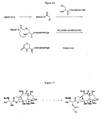
- the conjugate can include a disulfide linkage, as illustrated in Figure 5A (see also, PCT application US98/10571 (Publication No. WO 9852614 )), which shows a conjugate (I) containing a transport polymer T which is linked to a cytotoxic agent, 6-mercaptopurine, by an N-acetyl-protected cysteine group which serves as a linker.
- a cytotoxic agent is attached by a disulfide bond to the 6-mercapto group
- the transport polymer is bound to the cysteine carbonyl moiety via an amide linkage. Cleavage of the disulfide bond by reduction or disulfide exchange results in release of the free cytotoxic agent.
- Example 9A of PCT application US98/10571 A method for synthesizing a disulfide-containing conjugate is provided in Example 9A of PCT application US98/10571 .
- the product contains a heptamer of Arg residues which is linked to 6-mercaptopurine by an N-acetyl-Cys-Ala-Ala linker, where the Ala residues are included as an additional spacer to render the disulfide more accessible to thiols and reducing agents for cleavage within a cell.
- the linker in this example also illustrates the use of amide bonds, which can be cleaved enzymatically within a cell.
- the conjugate includes a photocleavable linker which is cleaved upon exposure to electromagnetic radiation.
- An exemplary linkage is illustrated in Figure 5B , which shows a conjugate (II) containing a transport polymer T which is linked to 6-mercaptopurine via a meta -nitrobenzoate linking moiety.
- Polymer T is linked to the nitrobenzoate moiety by an amide linkage to the benzoate carbonyl group, and the cytotoxic agent is bound via its 6-mercapto group to the p-methylene group.
- the compound can be formed by reacting 6-mercaptopurine with p-bromomethyl-m-nitrobenzoic acid in the presence of NaOCH 3 /methanol with heating, followed by coupling of the benzoate carboxylic acid to a transport polymer, such as the amino group of a ⁇ -aminobutyric acid linker attached to the polymer ( see e.g., Example 9B of PCT application US98/10571 ). Photo-illumination of the conjugate causes release of the 6-mercaptopurine by virtue of the nitro group that is ortho to the mercaptomethyl moiety.
- This approach finds utility in phototherapy methods as are known in the art, particularly for localizing drug activation to a selected area of the body.
- the cleavable linker contains first and second cleavable groups that can cooperate to cleave the polymer from the biologically active agent, as illustrated by the following approaches. That is, the cleavable linker contains a first cleavable group that is distal to the agent, and a second cleavable group that is proximal to the agent, such that cleavage of the first cleavable group yields a linker-agent conjugate containing a nucleophilic moiety capable of reacting intramolecularly to cleave the second cleavable group, thereby releasing the agent from the linker and polymer.
- Figure 5C shows a conjugate (III) containing a transport polymer T linked to the anticancer agent, 5-fluorouracil (5FU).
- the linkage is provided by a modified lysyl residue.
- the transport polymer is linked to the ⁇ -amino group, and the 5-fluorouracil is linked via the ⁇ -carbonyl.
- the lysyl ⁇ -amino group has been modified to a carbamate ester of o-hydroxymethyl nitrobenzene, which comprises a first, photolabile cleavable group in the conjugate.
- Photo-illumination severs the nitrobenzene moiety from the conjugate, leaving a carbamate that also rapidly decomposes to give the free ⁇ -amino group, an effective nucleophile.
- Intramolecular reaction of the ⁇ -amino group with the amide linkage to the 5-fluorouracil group leads to cyclization with release of the 5-fluorouracil group.
- Figure 5D illustrates a conjugate (IV) containing a delivery-enhancing transporter T linked to 2'-oxygen of the anticancer agent, paclitaxel.
- the linkage is provided by a linking moiety that includes (i) a nitrogen atom attached to the delivery-enhancing transporter, (ii) a phosphate monoester located para to the nitrogen atom, and (iii) a carboxymethyl group meta to the nitrogen atom, which is joined to the 2'-oxygen of paclitaxel by a carboxylate ester linkage. Enzymatic cleavage of the phosphate group from the conjugate affords a free phenol hydroxyl group.
- Figure 5E illustrates yet another approach wherein a delivery-enhancing transporter is linked to a biologically active agent, e.g. , paclitaxel, by an aminoalkyl carboxylic acid.
- the linker amino group is joined to the delivery-enhancing transporter by an amide linkage, and is joined to the paclitaxel moiety by an ester linkage. Enzymatic cleavage of the amide linkage releases the delivery-enhancing transporter and produces a free nucleophilic amino group. The free amino group can then react intramolecularly with the ester group to release the linker from the paclitaxel.
- the conjugate includes a linker that is labile at one pH but is stable at another pH.
- Figure 6 illustrates a method of synthesizing a conjugate with a linker that is cleaved at physiological pH but is stable at acidic pH.
- the linker is cleaved in water at a pH of from about 6.6 to about 7.6.
- the linker is stable in water at a pH from about 4.5 to about 6.5.
- the delivery-enhancing transporters find use in therapeutic, prophylactic and diagnostic applications.
- the delivery-enhancing transporters can carry a diagnostic or biologically active reagent into and across one or more layers of skin or other epithelial tissue (e.g. , gastrointestinal, lung, and the like), or across endothelial tissues such as the blood brain barrier. This property makes the reagents useful for treating conditions by delivering agents that must penetrate across one or more tissue layers in order to exert their biological effect.
- compositions and methods of the present invention have particular utility in the area of human and veterinary therapeutics.
- administered dosages will be effective to deliver picomolar to micromolar concentrations of the therapeutic composition to the effector site.
- Appropriate dosages and concentrations will depend on factors such as the therapeutic composition or drug, the site of intended delivery, and the route of administration, all of which can be derived empirically according to methods well known in the art. Further guidance can be obtained from studies using experimental animal models for evaluating dosage, as are known in the art.
- Administration of the compounds of the invention with a suitable pharmaceutical excipient as necessary can be carried out via any of the accepted modes of administration.
- administration can be, for example, intravenous, topical, subcutaneous, transcutaneous, intramuscular, oral, intra-joint, parenteral, peritoneal, intranasal, or by inhalation.
- Suitable sites of administration thus include, but are not limited to, skin, bronchial, gastrointestinal, anal, vaginal, eye, and ear.
- the formulations may take the form of solid, semi-solid, lyophilized powder, or liquid dosage forms, such as, for example, tablets, pills, capsules, powders, solutions, suspensions, emulsions, suppositories, retention enemas, creams, ointments, lotions, aerosols or the like, preferably in unit dosage forms suitable for simple administration of precise dosages.
- compositions typically include a conventional pharmaceutical carrier or excipient and may additionally include other medicinal agents, carriers, adjuvants, and the like.
- the composition will be about 5% to 75% by weight of a compound or compounds of the invention, with the remainder consisting of suitable pharmaceutical excipients.
- Appropriate excipients can be tailored to the particular composition and route of administration by methods well known in the art, e.g., REMINGTON'S PHARMACEUTICAL SCIENCES, 18TH ED., Mack Publishing Co., Easton, PA (1990 ).
- excipients include pharmaceutical grades of mannitol, lactose, starch, magnesium stearate, sodium saccharine, talcum, cellulose, glucose, gelatin, sucrose, magnesium carbonate, and the like.
- the composition may take the form of a solution, suspension, tablet, pill, capsule, powder, sustained-release formulation, and the like.
- the pharmaceutical compositions take the form of a pill, tablet or capsule, and thus, the composition can contain, along with the biologically active conjugate, any of the following: a diluent such as lactose, sucrose, dicalcium phosphate, and the like; a disintegrant such as starch or derivatives thereof; a lubricant such as magnesium stearate and the like; and a binder such a starch, gum acacia, polyvinylpyrrolidone, gelatin, cellulose and derivatives thereof.
- a diluent such as lactose, sucrose, dicalcium phosphate, and the like
- a disintegrant such as starch or derivatives thereof
- a lubricant such as magnesium stearate and the like
- a binder such a starch, gum acacia, polyvinylpyrrolidone, gelatin, cellulose and derivatives thereof.
- the active compounds of the formulas may be formulated into a suppository comprising, for example, about 0.5% to about 50% of a compound of the invention, disposed in a polyethylene glycol (PEG) carrier (e.g., PEG 1000 [96%] and PEG 4000 [4%]).
- PEG polyethylene glycol
- Liquid compositions can be prepared by dissolving or dispersing compound (about 0.5% to about 20%), and optional pharmaceutical adjuvants in a carrier, such as, for example, aqueous saline (e.g., 0.9% w/v sodium chloride), aqueous dextrose, glycerol, ethanol and the like, to form a solution or suspension, e.g., for intravenous administration.
- a carrier such as, for example, aqueous saline (e.g., 0.9% w/v sodium chloride), aqueous dextrose, glycerol, ethanol and the like, to form a solution or suspension, e.g., for intravenous administration.
- aqueous saline e.g. 0.9% w/v sodium chloride
- aqueous dextrose e.glycerol
- ethanol e.g., glycerol
- the active compounds may also be formulated into a retention
- composition to be administered may also contain minor amounts of non-toxic auxiliary substances such as wetting or emulsifying agents, pH buffering agents, such as, for example, sodium acetate, sorbitan monolaurate, or triethanolamine oleate.
- auxiliary substances such as wetting or emulsifying agents, pH buffering agents, such as, for example, sodium acetate, sorbitan monolaurate, or triethanolamine oleate.
- the composition is administered in any suitable format, such as a lotion or a transdermal patch.
- the composition can be delivered as a dry powder ( e . g ., Inhale Therapeutics) or in liquid form via a nebulizer.
- composition to be administered will, in any event, contain a quantity of the pro-drug and/or active compound(s) in a pharmaceutically effective amount for relief of the condition being treated when administered in accordance with the teachings of this invention.
- the compounds of the invention are administered in a therapeutically effective amount, i.e. , a dosage sufficient to effect treatment, which will vary depending on the individual and condition being treated.
- a therapeutically effective daily dose is from 0.1 to 100 mg/kg of body weight per day of drug.
- Most conditions respond to administration of a total dosage of between about 1 and about 30 mg/kg of body weight per day, or between about 70 mg and 2100 mg per day for a 70 kg person.
- Stability of the conjugate can be further controlled by the composition and stereochemistry of the backbone and sidechains of the delivery-enhancing transporters.
- D-isomers are generally resistant to endogenous proteases, and therefore have longer half-lives in serum and within cells. D-polypeptide polymers are therefore appropriate when longer duration of action is desired.
- L-polypeptide polymers have shorter half-lives due to their susceptibility to proteases, and are therefore chosen to impart shorter acting effects. This allows side-effects to be averted more readily by withdrawing therapy as soon as side-effects are observed.
- Polypeptides comprising mixtures of D and L-residues have intermediate stabilities. Homo-D-polymers are generally preferred.
- the delivery-enhancing transporters of the invention make possible the delivery of biologically active and diagnostic agents across the skin.
- the transporters can deliver an agent across the stratum corneum, which previously had been a nearly impenetrable barrier to drug delivery.
- the stratum corneum the outermost layer of the skin, is composed of several layers of dead, keratin-filled skin cells that are tightly bound together by a "glue" composed of cholesterol and fatty acids.
- the agents can enter the viable epidermis, which is composed of the stratum granulosum, stratum lucidum and stratum germinativum which, along with the stratum corneum, make up the epidermis. Delivery in some embodiments of the invention is through the epidermis and into the dermis, including one or both of the papillary dermis and the reticular dermis.
- This ability to obtain penetration of one or more layers of the skin can greatly enhance the efficacy of compounds such as antibacterials, antifungals, antivirals, antiproliferatives, immunosuppressives, vitamins, analgesics, hormones, and the like.
- compounds such as antibacterials, antifungals, antivirals, antiproliferatives, immunosuppressives, vitamins, analgesics, hormones, and the like.
- Numerous such compounds are known to those of skill in the art ( see, e.g., Hardman and Limbird, Goodman & Gilman's The Pharmacological Basis of Therapeutics, McGraw-Hill, New York, 1996 ).
- the agent is delivered into a blood vessel that is present in the epithelial tissue, thus providing a means for delivery of the agent systemically. Delivery can be either intrafollicular or interfollicular, or both. Pretreatment of the skin is not required for delivery of the conjugates.
- the delivery-enhancing transporters are useful for delivering cosmetics and agents that can treat skin conditions.
- Target cells in the skin that are of interest include, for example, fibroblasts, epithelial cells and immune cells.
- the transporters provide the ability to deliver compounds such as antiinflammatory agents to immune cells found in the dermis.
- Glucocorticoids are among the compounds for which delivery across skin can be enhanced by the delivery-enhancing transporters of the invention.
- Conjugated glucocorticoids of the invention are useful for treating inflammatory skin diseases, for example.
- Exemplary glucocorticoids include, e.g., hydrocortisone, prenisone (deltasone) and predrisonlone (hydeltasol).
- Examples of particular conditions include eczema (including atopic dermatitis, contact dermatitis, allergic dermatitis), bullous disease, collagen vascular diseases, sarcoidosis, Sweet's disease, pyoderma gangrenosum, Type I reactive leprosy, capillary hemangiomas, lichen planus, exfoliative dermatitis, erythema nodosum, hormonal abnormalities (including acne and hirsutism), as well as toxic epidermal necrolysis, erythema multiforme, cutaneous T-cell lymphoma, discoid lupus erythematosus, and the like.
- eczema including atopic dermatitis, contact dermatitis, allergic dermatitis
- bullous disease collagen vascular diseases, sarcoidosis, Sweet's disease, pyoderma gangrenosum, Type I reactive leprosy, capillary hemangiomas, lichen planus
- Retinoids are another example of a biologically active agent for which one can use the delivery-enhancing transporters of the invention to enhance delivery into and across one or more layers of the skin or other epithelial or endothelial tissue.
- Retinoids that are presently in use include, for example retinol, tretinoin, isotretinoin, etretinate, acitretin, and arotinoid.
- Conditions that are treatable using retinoids conjugated to the delivery-enhancing transporters of the invention include, but are not limited to, acne, keratinization disorders, skin cancer, precancerous condition, psoriasis, cutaneous aging, discoid lupus erythematosus, scleromyxedema, verrucous epidermal nevus, subcorneal pustular dermatosis, Reiter's syndrome, warts, lichen planus, acanthosis nigricans, sarcoidosis, Grover's disease, porokeratosis, and the like.
- Cytotoxic and immunosuppressive drugs constitute an additional class of drugs for which the delivery-enhancing transporters of the invention are useful. These agents are commonly used to treat hyperproliferative diseases such as psoriasis, as well as for immune diseases such as bullous dermatoses and leukocytoclastic vasculitis. Examples of such compounds that one can conjugate to the delivery-enhancing transporters of the invention include, but are not limited to, antimetabolites such as methotrexate, azathioprine, fluorouracil, hydroxyurea, 6-thioquanine, mycophenolate, chlorambucil, vinicristine, vinblasrine and dactinomycin.
- antimetabolites such as methotrexate, azathioprine, fluorouracil, hydroxyurea, 6-thioquanine, mycophenolate, chlorambucil, vinicristine, vinblasrine and dactinomycin.
- alkylating agents such as cyclophosphamide, mechloroethamine hydrochloride, carmustine. taxol, tacrolimus and vinblastine are additional examples of useful biological agents, as are dapsone and sulfasalazine.
- Ascomycins such as Cyclosporine, FK506 (tacrolimus), and rapamycin (e.g., U.S. Patent 5,912,253 ) and analogs of such compounds are of particular interest (e.g., Mollinson et al., Current Pharm. Design 4(5):367-380 (1998 ); U.S. Patent Nos.
- Cyclosporins include cyclosporin A, B, C, D, G and M. See, e.g., U.S. Patent No. 6,007,840 ; and 6,004,973 .
- such compounds are useful in treating psoriasis, eczema (including atopic dermatitis, contact dermatitis, allergic dermatitis) and alopecia areata.
- the delivery-enhancing transporters can be conjugated to agents that are useful for treating conditions such as lupus erythematosus (both discoid and systemic), cutaneous dermatomyositis, porphyria cutanea tarda and polymorphous light eruption.
- agents useful for treating such conditions include, for example, quinine, chloroquine, hydroxychloroquine, and quinacrine.
- the delivery-enhancing transporters of the invention are also useful for transdermal delivery of antiinfective agents.
- antibacterial, antifungal and antiviral agents can be conjugated to the delivery-enhancing transporters.
- Antibacterial agents are useful for treating conditions such as acne, cutaneous infections, and the like.
- Antifungal agents can be used to treat tinea corporis, tinea pedis, onychomycosis, candidiasis, tinea versicolor, and the like. Because of the delivery-enhancing properties of the conjugates, these conjugates are useful for treating both localized and widespread infections.
- Antifungal agents are also useful for treating onychomycosis.
- antifungal agents include, but are not limited to, azole antifungals such as itraconazole, myconazole and fluconazole.
- antiviral agents include, but are not limited to, acyclovir, famciclovir, and valacyclovir. Such agents are useful for treating viral diseases, e.g., herpes.
- antihistamines Another example of a biologically active agent for which enhancement of delivery by conjugation to the delivery-enhancing transporters of the invention is desirable are the antihistamines. These agents are useful for treating conditions such as pruritus due to urticaria, atopic dermatitis, contact dermatitis, psoriasis, and many others. Examples of such reagents include, for example, terfenadine, astemizole, lorotadine, cetirizine, acrivastine, temelastine, cimetidine, ranitidine, famotidine, nizatidine, and the like. Tricyclic antidepressants can also be delivered using the delivery-enhancing transporters of the invention.
- Topical antipsoriasis drugs are also of interest.
- Agents such as corticosteroids, calcipotriene, and anthralin can be conjugated to the delivery-enhancing transporters of the invention and applied to skin.
- the delivery-enhancing transporters of the invention are also useful for enhancing delivery of photochemotherapeutic agents into and across one or more layers of skin and other epithelial tissues.
- Such compounds include, for example, the psoralens, and the like.
- Sunscreen components are also of interest; these include p -aminobenzoic acid esters, cinnamates and salicylates, as well as benzophenones, anthranilates, and avobenzone.
- Pain relief agents and local anesthetics constitute another class of compounds for which conjugation to the delivery-enhancing transporters of the invention can enhance treatment.
- Lidocaine, bupibacaine, novocaine, procaine, tetracaine, benzocaine, cocaine, and the opiates are among the compounds that one can conjugate to the delivery-enhancing transporters of the invention.
- Other biological agents of interest include, for example, minoxidil, keratolytic agents, destructive agents such as podophyllin, hydroquinone, capsaicin, masoprocol, colchicine, and gold.
- the delivery-enhancing transporters of the invention are also useful for delivery of conjugated drugs by gastrointestinal administration.
- Gastrointestinal administration can be used for both systemically active drugs, and for drugs that act in the gastrointestinal epithelium.
- gastrointestinal conditions that are treatable using appropriate reagents conjugated to the delivery-enhancing transporters are Crohn's disease (e.g. , cyclosporin and FK506), ulcerative colitis, gastrointestinal ulcers, peptic ulcer disease, imbalance of salt and water absorption (can lead to constipation, diarrhea, or malnutrition), abnormal proliferative diseases, and the like.
- Ulcer treatments include, for example, drugs that reduce gastric acid secretion, such as H 2 histamine inhibitors (e.g. , cymetidine and ranitidine) and inhibitors of the proton-potassium ATPase ( e.g. , lansoprazle amd omeprazle), and antibiotics directed at Helicobacter pylori.
- H 2 histamine inhibitors e.g. , cymetidine and ranitidine
- inhibitors of the proton-potassium ATPase e.g. , lansoprazle amd ome
- Antibiotics are among the biologically active agents that are useful when conjugated to the delivery-enhancing transporters of the invention, particularly those that act on invasive bacteria, such as Shigella, Salmonella, and Yersinia.
- Such compounds include, for example, norfloxacin, ciprofloxacin, trimethoprim, sulfamethyloxazole, and the like.
- Anti-neoplastic agents can also be conjugated to the delivery-enhancing transporters of the invention and administered by the gastrointestinal route. These include, for example, cisplatin, methotrexate, taxol, fluorouracil, mercaptopurine, donorubicin, bleomycin, and the like.
- the delivery-enhancing transporters of the invention can also used to enhance administration of drugs through the respiratory tract.
- the respiratory tract which includes the nasal mucosa, hypopharynx, and large and small airway structures, provides a large mucosal surface for drug absorption.
- the enhanced penetration of the conjugated agents into and across one or more layers of the epithelial tissue that is provided by the delivery-enhancing transporters of the invention results in amplification of the advantages that respiratory tract delivery has over other delivery methods. For example, lower doses of an agent are often needed to obtain a desired effect, a local therapeutic effect can occur more rapidly, and systemic therapeutic blood levels of the agent are obtained quickly. Rapid onset of pharmacological activity can result from respiratory tract administration. Moreover, respiratory tract administration generally has relatively few side effects.
- the transporters of the invention can be used to deliver biological agents that are useful for treatment of pulmonary conditions.
- conditions treatable by nasal administration include, for example, asthma.
- These compounds include antiinflammatory agents, such as corticosteroids, cromolyn, and nedocromil, bronchodialators such as ⁇ 2-selective adronergic drugs and theophylline, and immunosuppressive drugs (e.g. , cyclosporin and FK506).
- Other conditions include, for example, allergic rhinitis (which can be treated with glucocorticoids), and chronic obstructive pulmonary disease (emphysema).
- Other drugs that act on the pulmonary tissues and can be delivered using the transporters of the invention include beta-agonists, mast cell stabilizers, antibiotics, antifungal and antiviral agents, surfactants, vasoactive drugs, sedatives and hormones.
- Respiratory tract administration is useful not only for treatment of pulmonary conditions, but also for delivery of drugs to distant target organs via the circulatory system.
- a wide variety of such drugs and diagnostic agents can be administered through the respiratory tract after conjugation to the delivery-enhancing transporters of the invention.
- the delivery-enhancing transporters are also useful for delivering biologically active and diagnostic agents across the blood brain barrier.
- the agents are useful for treating ischemia (e.g. , using an anti-apoptotic drug), as well as for delivering neurotransmitters and other agents for treating various conditions such as schizophrenia, Parkinson's disease, pain ( e.g. , morphine, the opiates).
- the 5-hydroxytryptamine receptor antagonist is useful for treating conditions such as migraine headaches and anxiety.
- the delivery-enhancing transporters of the invention are also useful for delivery of diagnostic imaging and contrast agents into and across one or more layers of an epithelial and/or endothelial tissue.
- diagnostic agents include substances that are labeled with radioactivity, such as 99 mTc glucoheptonate, or substances used in magnetic resonance imaging (MRI) procedures such as gadolinium doped chelation agents (e . g . Gd-DTPA).
- MRI magnetic resonance imaging
- diagnostic agents include marker genes that encode proteins that are readily detectable when expressed in a cell (including, but not limited to, ( ⁇ -galactosidase, green fluorescent protein, luciferase, and the like.
- a wide variety of labels may be employed, such as radionuclides, fluors, enzymes, enzyme substrates, enzyme cofactors, enzyme inhibitors, ligands (particularly haptens), etc.
- the delivery-enhancing transporters can be conjugated to a wide variety of biologically active agents and molecules that have diagnostic use.
- Small organic molecule therapeutic agents can be advantageously attached to linear polymeric compositions as described herein, to facilitate or enhance transport across one or more layers of an epithelial or endothelial tissue.
- delivery of highly charged agents such as levodopa (L-3,4-dihydroxy-phenylalanine; L-DOPA) may benefit by linkage to delivery-enhancing transporters as described herein.
- L-DOPA levodopa
- Peptoid and peptidomimetic agents are also contemplated ( e.g. , Langston (1997) DDT 2:255 ; Giannis et al. (1997) Advances Drug Res. 29:1 ).
- the invention is advantageous for delivering small organic molecules that have poor solubilities in aqueous liquids, such as serum and aqueous saline.
- aqueous liquids such as serum and aqueous saline.
- compounds whose therapeutic efficacies are limited by their low solubilities can be administered in greater dosages according to the present invention, and can be more efficacious on a molar basis in conjugate form, relative to the non-conjugate form, due to higher uptake levels by cells.
- the conjugate preferably includes a cleavable linker for releasing free drug after passing through an epithelial tissue.
- Figure 5D and Figure 5E are illustrative of another aspect of the invention, comprising taxane- and taxoid anticancer conjugates which have enhanced trans-epithelial tissue transport rates relative to corresponding non-conjugated forms.
- the conjugates are particularly useful for inhibiting growth of cancer cells. Taxanes and taxoids are believed to manifest their anticancer effects by promoting polymerization of microtubules (and inhibiting depolymerization) to an extent that is deleterious to cell function, inhibiting cell replication and ultimately leading to cell death.
- Taxoid refers to naturally occurring, synthetic or bioengineered analogs of paclitaxel that contain the basic A, B and C rings of paclitaxel, as shown in Figure 5H .
- Substantial synthetic and biological information is available on syntheses and activities of a variety of taxane and taxoid compounds, as reviewed in Suffness (1995) Taxol: Science and Applications, CRC Press, New York, NY, pp. 237-239 , particularly in Chapters 12 to 14, as well as in the subsequent paclitaxel literature.
- a host of cell lines are available for predicting anticancer activities of these compounds against certain cancer types, as described, for example, in Suffness at Chapters 8 and 13.
- the delivery-enhancing transporter is conjugated to the taxane or taxoid moiety via any suitable site of attachment in the taxane or taxoid.
- the transport polymer is linked via a C2'-oxygen atom, C7-oxygen atom, using linking strategies as above. Conjugation of a transport polymer via a C7-oxygen leads to taxane conjugates that have anticancer and antitumor activity despite conjugation at that position. Accordingly, the linker can be cleavable or non-cleavable. Conjugation via the C2'-oxygen significantly reduces anticancer activity, so that a cleavable linker is preferred for conjugation to this site. Other sites of attachment can also be used, such as C10.
- taxane and taxoid conjugates of the invention have improved water solubility relative to taxol ( ⁇ 0.25 ⁇ g/mL) and taxotere (6-7 ⁇ g/mL). Therefore, large amounts of solubilizing agents such as "CREMOPHOR EL” (polyoxyethylated castor oil), polysorbate 80 (polyoxyethylene sorbitan monooleate, also known as "TWEEN 80"), and ethanol are not required, so that side-effects typically associated with these solubilizing agents, such as anaphylaxis, dyspnea, hypotension, and flushing, can be reduced.
- solubilizing agents such as "CREMOPHOR EL” (polyoxyethylated castor oil), polysorbate 80 (polyoxyethylene sorbitan monooleate, also known as "TWEEN 80")
- Metals can be transported into and across one or more layers of epithelial and endothelial tissues using chelating agents such as texaphyrin or diethylene triamine pentacetic acid (DTPA), conjugated to a delivery-enhancing transporter of the invention, as illustrated by Example.
- chelating agents such as texaphyrin or diethylene triamine pentacetic acid (DTPA)
- DTPA diethylene triamine pentacetic acid
- exemplary metal ions include Eu, Lu, Pr, Gd, Tc99m, Ga67, In111, Y90, Cu67, and Co57.
- Preliminary membrane-transport studies with conjugate candidates can be performed using cell-based assays such as described in the Example section below. For example, using europium ions, cellular uptake can be monitored by time-resolved fluorescence measurements. For metal ions that are cytotoxic, uptake can be monitored by cytotoxicity.
- the enhanced transport methods of the invention are particularly suited for enhancing transport into and across one or more layers of an epithelial or endothelial tissue for a number of macromolecules, including, but not limited to proteins, nucleic acids, polysaccharides, and analogs thereof.
- exemplary nucleic acids include oligonucleotides and polynucleotides formed of DNA and RNA, and analogs thereof, which have selected sequences designed for hybridization to complementary targets (e.g. , antisense sequences for single- or double-stranded targets), or for expressing nucleic acid transcripts or proteins encoded by the sequences.
- Analogs include charged and preferably uncharged backbone analogs, such as phosphonates (preferably methyl phosphonates), phosphoramidates (N3' or N5'), thiophosphates, uncharged morpholino-based polymers, and protein nucleic acids (PNAs).
- phosphonates preferably methyl phosphonates
- phosphoramidates N3' or N5'
- thiophosphates uncharged morpholino-based polymers
- PNAs protein nucleic acids
- Such molecules can be used in a variety of therapeutic regimens, including enzyme replacement therapy, gene therapy, and anti-sense therapy, for example.
- protein nucleic acids are analogs of DNA in which the backbone is structurally homomorphous with a deoxyribose backbone.
- the backbone consists of N-(2-aminoethyl)glycine units to which the nucleobases are attached.
- PNAs containing all four natural nucleobases hybridize to complementary oligonucleotides obeying Watson-Crick base-pairing rules, and is a true DNA mimic in terms of base pair recognition ( Egholm et al. (1993) Nature 365:566-568 .
- the backbone of a PNA is formed by peptide bonds rather than phosphate esters, making it well-suited for anti-sense applications.
- PNA/DNA or PNA/RNA duplexes that form exhibit greater than normal thermal stability.
- PNAs have the additional advantage that they are not recognized by nucleases or proteases.
- PNAs can be synthesized on an automated peptides synthesizer using standard t-Boc chemistry. The PNA is then readily linked to a transport polymer of the invention.
- anti-sense oligonucleotides whose transport into and across epithelial and endothelial tissues can be enhanced using the methods of the invention are described, for example, in U.S. Patent 5,594,122 .
- Such oligonucleotides are targeted to treat human immunodeficiency virus (HIV).
- Conjugation of a transport polymer to an anti-sense oligonucleotide can be effected, for example, by forming an amide linkage between the peptide and the 5'-terminus of the oligonucleotide through a succinate linker, according to well-established methods.
- the use of PNA conjugates is further illustrated in Example 11 of PCT Application PCT/US98/10571 .
- Figure 7 of that application shows results obtained with a conjugate of the invention containing a PNA sequence for inhibiting secretion of gamma-interferon ( ⁇ -IFN) by T cells, as detailed in Example 11.
- ⁇ -IFN gamma-interferon
- Therapeutic proteins include, but are not limited to replacement enzymes.
- Therapeutic enzymes include, but are not limited to, alglucerase, for use in treating lysozomal glucocerebrosidase deficiency (Gaucher's disease), alpha-L-iduronidase, for use in treating mucopolysaccharidosis I, alpha-N-acetylglucosamidase, for use in treating sanfilippo B syndrome, lipase, for use in treating pancreatic insufficiency, adenosine deaminase, for use in treating severe combined immunodeficiency syndrome, and triose phosphate isomerase, for use in treating neuromuscular dysfunction associated with triose phosphate isomerase deficiency.
- protein antigens may be delivered to the cytosolic compartment of antigen-presenting cells (APCs), where they are degraded into peptides.
- APCs antigen-presenting cells
- the peptides are then transported into the endoplasmic reticulum, where they associate with nascent HLA class I molecules and are displayed on the cell surface.
- APCs can serve as inducers of class I restricted antigen-specific cytotoxic T-lymphocytes (CTLs), which then proceed to recognize and destroy cells displaying the particular antigen.
- APCs that are able to carry out this process include, but are not limited to, certain macrophages, B cells and dendritic cells.
- the protein antigen is a tumor antigen for eliciting or promoting an immune response against tumor cells.
- the transport of isolated or soluble proteins into the cytosol of APC with subsequent activation of CTL is exceptional, since, with few exceptions, injection of isolated or soluble proteins does not result either in activation of APC or induction of CTLs.
- antigens that are conjugated to the transport enhancing compositions of the present invention may serve to stimulate a cellular immune response in vitro or in vivo.
- the invention is useful for delivering immunospecific antibodies or antibody fragments to the cytosol to interfere with deleterious biological processes such as microbial infection.
- intracellular antibodies can be effective antiviral agents in plant and mammalian cells (e.g. , Tavladoraki et al. (1993) Nature 366:469 ; and Shaheen et al. (1996) J. Virol. 70:3392 .
- scFv single-chain variable region fragments
- the variable heavy and light chains are usually separated by a flexible linker peptide (e.g.
- Peptides to be delivered by the enhanced transport methods described herein include, but should not be limited to, effector polypeptides, receptor fragments, and the like. Examples include peptides having phosphorylation sites used by proteins mediating intracellular signals. Examples of such proteins include, but are not limited to, protein kinase C, RAF-1, p21Ras, NF- ⁇ B, C-JUN, and cytoplasmic tails of membrane receptors such as IL-4 receptor, CD28, CTLA-4, V7, and MHC Class I and Class II antigens.
- the delivery-enhancing transporter is also a peptide
- synthesis can be achieved either using an automated peptide synthesizer or by recombinant methods in which a polynucleotide encoding a fusion peptide is produced, as mentioned above.
- Biotinylated peptides were synthesized using solid phase techniques and commercially available Fmoc amino acids, resins, and reagents (PE Biosystems, Foster City CA, and Bachem Torrence, CA) on a Applied Biosystems 433 peptide synthesizer. Fastmoc cycles were used with O-(7-azabenzotriazol-1-yl)-1, 1, 3, 3-tetramethyluronium hexfluorophosphate (HATU) substituted for HBTU/HOBt as the coupling reagent. Prior to the addition of biotin to the amino terminus of the peptide, amino caproic acid (aca) was conjugated and acted as a spacer.
- aca amino caproic acid
- the peptides were cleaved from the resin using 96% trifluoroacetic acid, 2% triisopropyl silane, and 2% phenol for between 1 and 12 hours. The longer reaction times were necessary to completely remove the Pbf protecting groups from the polymers of arginine.
- the peptides subsequently were filtered from the resin, precipitated using diethyl ether, purified using HPLC reverse phase columns (Alltech Altima, Chicago, IL.) and characterized using either electrospray or matrix assisted laser desorption mass spectrometry (Perceptive Biosystems, Boston, MA).
- PBS phosphate buffered saline
- Frozen sections (5 microns) were cut using a cryostat, collected on slides, and stained with fluorescently labeled streptavidin (Vector Laboratories, Burlingame, CA). The slides were fixed in acetone at 4°C for ten minutes, air dried, soaked in PBS for five minutes, blocked with normal goat serum for five minutes, and washed with PBS for five minutes. The section was stained by incubation with fluorescently labeled streptavidin at 30 ⁇ g/ml for thirty minutes, washed with PBS, counterstained with propidium iodide (1 ⁇ g/ml) for two minutes, and the section was mounted with VectashieldTM mounting media. Slides were analyzed by fluorescent microscopy.
- Biotinylated arginine heptamer crossed into and across the epidermis and into the dermis.
- the cytosol and nuclei of all cells in the field were fluorescent, indicating penetration into virtually every cell of the nude mouse skin in the section.
- the staining pattern was consistent with unanticipated transport that was both follicular and interfollicular.
- positive cells were apparent in papillary and reticular dermis.
- no staining was apparent in mice treated with biotin alone, or phosphate buffered saline alone.
- Sample (100 ⁇ l) was applied as a liquid within excipient and prevented from dispersing by a VaselineTM barrier and allowed to penetrate for thirty minutes. At the end of this period animal was sacrificed, the relevant section of skin was excised, embedded in mounting medium (OCT) and frozen. Frozen sections were cut using a cryostat, collected on slides, and stained with fluorescently labeled streptavidin (Vector Laboratories, Burlingame, CA) as described in Example 1. Slides were analyzed by fluorescent microscopy.
- biotinylated arginine heptamer crossed into and across the epidermis and into the dermis.
- the cytosol and nuclei of all cells in the field were fluorescent, indicating penetration into virtually every cell of the nude mouse skin in the section.
- the staining pattern was consistent with unanticipated transport that was both follicular and interfollicular.
- positive cells were apparent in papillary and reticular dermis.
- no staining was apparent in mice treated with biotin alone, or phosphate buffered saline alone.
- biotinylated arginine heptamer crossed into and across the epidermis and into the dermis of the human skin.
- the cytosol and nuclei of all cells in the field were fluorescent, indicating penetration into and through the epidermis and dermis.
- Intense staining was seen at both 20X and 40X magnification. The staining pattern was consistent with unanticipated transport that was both follicular and interfollicular.
- positive cells were apparent in papillary and reticular dermis.
- the lotion mixture was then applied to the back of nude mice and allowed to penetrate for thirty, sixty, and 120 minutes.
- sample (100 ⁇ l) was applied as a liquid without excipient and prevented from evaporating by wrapping plastic wrap over the sample sealed with VaselineTM. The samples were allowed to penetrate for thirty, sixty, and 120 minutes. At the end of this period animal was sacrificed, the relevant section of skin was excised, embedded in mounting medium (OCT) and frozen. Frozen sections were cut using a cryostat, collected on slides, and stained with fluorescently labeled streptavidin (Vector Laboratories, Burlingame, CA) as described in Example 1. Slides were analyzed by fluorescent microscopy.
- IL-2 secretion by releasable R7-CsA conjugate Inhibition of IL-2 secretion by releasable R7-CsA conjugate.
- Jurkat cells (5x 10 4 ) were incubated with varying concentrations of a nonreleasable or releasable R7-CsA conjugate or CsA overnight at 37°C to allow for the release of the active form of CsA prior to stimulation with PMA and ionomycin.
- T cells subsequently were stimulated to produce IL-2 by addition of 10ng/ml PMA (Sigma, St. Louis, MO) and 1 ⁇ M ionomycin (CalBiochem, San Diego, CA). Cultures were incubated overnight at 37°C and supernatants were collected and IL-2 was measured using a fluorescent ELISA.
- biotinylated D-arginine heptamer-cyclosporin (r7 CsA) conjugate would reach infiltrating T cells within inflamed skin in vivo
- biotin r7 CsA was applied to the site of inflammation on the back of a mouse with experimentally induced contact dermatitis. Inflamed skin was stained with rhodamine labeled goat anti-mouse CD3 to localize T-cells and with fluorescein labeled streptavidin to localize the biotin r7 CsA.
- Biotin r7 CsA was found in all CD3[+] T cells in the tissue in addition to a variety of other cells that probably represent other inflammatory cells as well as resident fibroblasts. These data indicate that biotin r7 CsA penetrates inflamed skin to reach key target T lymphocytes.
- Cyclosporin A Modification of the 2° alcohol of Cyclosporin A results in significant loss of its biological activity. See, e.g., R. E. Handschumacher, et al., Science 226, 544-7 (1984 ). Consequently, to ensure release of free Cyclosporin A from its conjugate after transport into cells, Cyclosporin A was conjugated to an oligo-arginine transporter through a pH sensitive linker as shown in Figure 10 . The resultant conjugate is stable at acidic pH but at pH>7 it undergoes an intramolecular cyclization involving addition of the free amine to the carbonyl adjacent to Cyclosporin A ( Figure 6 ), which results in the release of unmodified Cyclosporin A.
- the releasable guanidino-heptamer conjugate of Cyclosporin A was shown to be biologically active by inhibiting IL-2 secretion by the human T cell line, Jurkat, stimulated with PMA and ionomycin in vitro. See R. Wiskocil, et al., J Immunol 134, 1599-603 (1985 ). The conjugate was added 12 hours prior to the addition of PMA/ionomycin and dose dependent inhibition was observed by the releasable R7 CsA conjugate.
- the releasable R7 CsA conjugate was assayed in vivo for functional activity using a murine model of contact dermatitis.
- Treatment with the 1% releasable R7 CSA conjugate resulted in 73.9% ⁇ 4.0 reduction in ear inflammation ( Figure 7 ).
- No reduction in inflammation was seen in the untreated ear indicating that the effect seen in the treated ear was local and not systemic.
- the Cu-DTPA was linked to a transporter through an aminocaproic acid spacer using a PE Applied Biosystems Peptide Synthesizer (ABI 433A) ( Figure 9 ).
- the material was cleaved from the resin by treatment with trifluoroacetic acid (TFA) (40 mL), triisopropyl silane (100 ⁇ L) and phenol (100 ⁇ L) for 18 h.
- TFA trifluoroacetic acid
- the resin was filtered off and the peptide was precipitated by addition of diethyl ether (80 mL).
- the solution was centrifuged and the solvent decanted off.
- the crude solid was purified by reverse-phase HPLC using a water/acetonitrile gradient. Treatment with TFA resulted in loss of Cu 2+ ion which needed to be reinserted.
- DTPA-aca-R7-CO2H 10 mg, 0.0063 mmol
- copper sulfate 1.6 mg, 0.0063 mmol
- Metal diethylenetriaminepentaacetic acid (DTPA) complexes were formed by mixing equimolar amounts of metal salts with DTPA in water for 18 hours. At the end of this time, the solutions were centrifuged, frozen and lyophilized. The dried powder was characterized by mass spectrometry and used in solid phase peptide synthesis.
- the metal-DTPA complexes were attached to polymers of D- or L-arginine that were still attached to solid-phase resin used in peptide synthesis.
- the metal-DTPA complexes were attached using an aminocaproic acid spacer.
- Example 2 The solid phase peptide synthesis techniques were described in Example 1, with the exception that cleavage of the peptide- DTPA -metal complex in trifluoroacetic acid released the metal. The metal is replaced after HPLC purification and lyophilization of the peptide- DTPA complex. Replacement of the metal involved incubation of equimolar amounts of the metal salt with the peptide-aminocaproic acid- DTPA complex and subsequent lyophilization.
- Varying concentrations (1 ⁇ M to 1 mM) of the Cu- DTPA -aca-r7 complex were applied to the abdominal region of nude mice for 15, 30 and 45 minutes. As controls, an equimolar amount of the Cu- DTPA complex was spotted onto the abdominal region. At the end of the incubation period, the samples were simply wiped off and intense blue color was apparent on the skin where the Cu- DTPA -aca-r7 complex was spotted and not where the Cu- DTPA alone was spotted. In the case of the application of 1 mM, visible blue dye was seen for three days, decreasing with time, but being apparent for the full period.
- Varying concentrations (1 ⁇ M to 1 mM) of the Gd- DTPA -aca-r7 complex are injected into the tail vein of BALB/c mice in 100 ⁇ l. Distribution of the Gd is observed in real time using magnetic resonance imaging. Distribution of the dye is apparent throughout the bloodstream, entering liver, spleen, kidney, and heart. When injected into the carotid artery of rabbits, the dye is seen to cross the blood brain barrier.
- Step 1- Acylation of hydrocortisone with chloroacetic anhydride.
- Step 2- Linking to transporter.
- Taxol (48.7 mg, 57.1 ⁇ mol) was dissolved in CH 2 Cl 2 (3.0 mL) under an N 2 -atmosphere. The solution was cooled to 0°C. A stock solution of the chloroformate of benzyl-( p -hydroxy benzoate) (200 mmol, in 2.0 mL CH 2 Cl 2 - freshly prepared from benzyl-(p-hydroxy benzoate) and diphosgene) was added at 0°C and stirring at that temperature was continued for 5 hours, after which the solution was warmed to room temperature ( Figure 12 ). Stirring was continued for additional 10 hours.
- the taxol derivative (8.7 mg, 7.85 ⁇ mol) was dissolved in EtOAc (2.0 mL). Pd/C (10%, 4.0 mg) was added and the reaction flask was purged with H 2 five times ( Figure 15A ). Stirring under an atmosphere of hydrogen was continued for 7 hours. The Pd/C was filtered and the solvent was removed in vacuo. The crude material (6.7 mg, 6.58 ⁇ mol, 84%) obtained in this way was pure and was used in the next step without further purification.
- the activated taxol derivative (14.0 mg, 12.6 ⁇ mol) and the peptide (30.6 mg, 15.1 ⁇ mol) were dissolved in DMF (3.0 mL) under an N 2 -atmosphere ( Figure 15C ).
- Diisopropylethylamine (1.94 mg, 15.1 ⁇ mol) was added as a stock solution in DMF (0.1 mL), followed by DMAP (0.76 mg, 6.3 ⁇ mol) as a stock solution in DMF 0.1 mL). Stirring at room temperature was continued until all the starting material was consumed. After 20 hours the solvent was removed in vacuo.
- This Example demonstrates the use of a general strategy for synthesizing prodrugs that have a delivery-enhancing transporter linked to a drug by a linker that releases the drug from the delivery-enhancing transporter upon exposure to physiological pH.
- a suitable site on the drug is derivatized to carry an ⁇ -chloroacetyl residue.
- the chlorine is displaced with the thiol of a cysteine residue that carries an unprotected amine. This scheme is shown in Figure 16 .
- Taxol (89.5 mg, 104.9 ⁇ mol) was dissolved in CH 2 Cl 2 (3.5 mL). The solution was cooled to 0 °C under an N 2 -atmosphere. ⁇ -Chloroacetic anhydride (19.7 mg, 115.4 ⁇ mol) was added, followed by DIEA (14.8 mg, 115.4 ⁇ mol). The solution was allowed to warm to room temperature. After thin layer chromatography (tlc) analysis indicated complete consumption of starting material, the solvent was removed in vacuo and the crude material was purified by flash chromatography on silica gel (eluent: EtOAC/Hex 20% - 50%) yielding the desired material (99.8 mg, quantitative) ( Figure 17 ).
- the peptide (47.6 mg, 22.4 ⁇ mol) was dissolved in DMF (1.0 mL) under an N 2 -atmosphere. DIEA (2.8 mg, 22.4 ⁇ mol) was added. A solution of taxol-2'-chloroacetate (20.8 mg, 22.4 ⁇ mol) in DMF (1.0 mL) was added. Stirring at room temperature was continued for 6 hours. Water containing 0.1% TFA (1.0 mL) was added, the sample was frozen and the solvents were lyophilized. The crude material was purified by RP-HPLC (eluent: water/MeCN *0.1%TFA: 85% - 15%). A schematic of this reaction is shown in Figure 18 .
- the taxol conjugates were tested for cytotoxicity in a 3-(4,5-dimethylthiazol-2-yl)-2,5-diphenyl-tetrazolium-bromide (MTT) dye reduction.
- Rink amide resin and Boc 2 O were purchased from Novabiochem.
- Diisopropylcarbodiimide, bromoacetic acid, fluorescein isothiocyanate (FITC-NCS), ethylenediamine, 1,3-diaminopropane, 1,4-diaminobutane, 1,6-diaminohexane, trans -1,6-diaminocyclohexane, and pyrazole-1-carboxamidine were all purchased from Aldrich®. All solvents and other reagents were purchased from commercial sources and used without further purification.
- the mono-Boc amines were synthesized from the commercially available diamines using a literature procedure (10 equiv. of diamine and 1 equiv. of Boc 2 O in chloroform followed by an aqueous work up to remove unreacted diamine) (34).
- Tat 49-57 (RKKRRQRRR), truncated and alanine-substituted peptides derived from Tat 49-57 , Antennapedia 43-58 (RQIKIWFQNRRMKWKK), and homopolymers of arginine (R5-R9) and d -arginine (r5-r9) were prepared with an automated peptide synthesizer (ABI433) using standard solid-phase Fmoc chemistry (35) with HATU as the peptide coupling reagent.
- ABI433 automated peptide synthesizer
- the fluorescein moiety was attached via a aminohexanoic acid spacer by treating a resin-bound peptide (1.0 mmol) with fluorescein isothiocyanate (1.0 mmol) and DIEA (5 mmol) in DMF (10 mL) for 12 h. Cleavage from the resin was achieved using 95:5 TFA/triisopropylsilane. Removal of the solvent in vacuo gave a crude oil which was triturated with cold ether. The crude mixture thus obtained was centrifuged, the ether was removed by decantation, and the resulting orange solid was purified by reverse-phase HPLC (H 2 O/CH 3 CN in 0.1% TFA). The products were isolated by lyophilization and characterized by electrospray mass spectrometry. Purity of the peptides was >95% as determined by analytical reverse-phase HPLC (H 2 O/CH 3 CN in 0.1% TFA).
- All peptides and peptoids synthesized contain an aminohexanoic (ahx) acid moiety attached to the N -terminal amino group with a fluorescein moiety (Fl) covalently linked to the amino group of the aminohexanoic acid spacer.
- ahx aminohexanoic
- Fl fluorescein moiety
- Jurkat cells human T cell line
- human PBL cells were grown in 10% fetal calf serum and DMEM and each of these were used for cellular uptake experiments.
- Varying amounts of arginine and oligomers of guanidine-substituted peptoids were added to approximately 3 x 10 6 cells in 2% FCS/PBS (combined total of 200 ⁇ L) and placed into microtiter plates (96 well) and incubated for varying amounts of time at 23 °C or 4 °C.
- the microtiter plates were centrifuged and the cells were isolated, washed with cold PBS (3 x 250 ⁇ L), incubated with 0.05% trypsin/0.53 mM EDTA at 37 °C for 5 min, washed with cold PBS, and resuspended in PBS containing 0.1% propidium iodide.
- the cells were analyzed using fluorescent flow cytometry (FACScan, Becton Dickinson) and cells staining with propidium iodide were excluded from the analysis.
- the data presented is the mean fluorescent signal for the 5000 cells collected.
- the assays were performed as previously described except the cells were incubated for 0.5, 1, 2, and 4 min at 4 °C in triplicate in 2% FCS/PBS (50 ⁇ l) in microtiter plates (96 well). The reactions were quenched by diluting the samples into 2% FCS/PBS (5 mL). The assays were then worked up and analyzed by fluorescent flow cytometry as previously described.
- Tat 49-57 Fl-ahx-RKKRRQRRR
- Tat 49-55 Fl-ahx-RKKRRQR
- Tat 50-57 Fl-ahx-KKRRQRRR
- Tat 51-57 Fl-ahx-KRRQRRR
- the retro- l isomer (Tat 57-49 ) which has three arginine residues located at the amine terminus instead of one arginine and two lysines found in Tat 49-57 demonstrated enhanced cellular uptake.
- residues at the amine terminus appear to be important and that arginines are more effective than lysines for internalization.
- the improved cellular uptake of the unnatural d -peptides is most likely due to their increased stability to proteolysis in 2% FCS (fetal calf serum) used in the assays. When serum was excluded, the d - and l -peptides were equivalent as expected.
- Tat 49-57 contains eight cationic residues, its cellular internalization was between that of R6 and R7 ( Figure 24 ) demonstrating that the presence of six arginine residues is the most important factor for cellular uptake. Significantly, conjugates containing 7-9 arginine residues exhibited better uptake than Tat 49-57 .
- the desired peptoids were prepared using the "sub-monomer” approach (Simon et al .; Zuckermann et al .) to peptoids followed by attachment of a fluorescein moiety via an aminohexanoic acid spacer onto the amine termini. After cleavage from the solid-phase resin, the fluorescently labeled polyamine peptoids thus obtained were converted in good yields (60-70%) into polyguanidine peptoids by treatment with excess pyrazole-1-carboxamidine ( Bernatowicz, et al., J. Org. Chem. 57:2497-2502 (1992 ) and sodium carbonate (as shown in Figure 25 ).
- This method provides easy access to polyguanidinylated compounds from the corresponding polyamines and is especially useful for the synthesis of perguanidinylated homooligomers. Furthermore, it eliminates the use of expensive protecting groups (Pbf, Pmc).
- An additional example of a perguanidinylation of a peptide substrate using a novel triflyl-substituted guanylating agent has recently been reported ( Feichtinger, et al., J. Org. Chem. 63:8432-8439 (1998 )).
- N-arg5,7,9 peptoids The cellular uptake of fluorescently labeled polyguanidine N -arg5,7,9 peptoids was compared to the corresponding d -arginine peptides r5,7,9 (similar proteolytic properties) using Jurkat cells and FACS analysis.
- the amount of fluorescence measured inside the cells with N- arg5,7,9 was proportional to the number of guanidine residues: N- arg9 > N -arg7 > N -arg5 ( Figure 26 ), analogous to that found for r5,7,9.
- the N- arg5,7,9 peptoids showed only a slightly lower amount of cellular entry compared to the corresponding peptides, r5,7,9.
- the relative order of uptake was N- hxg9 (6 methylene) > N -btg9 (4 methylene) > r9 (3 methylene) > N -arg9 (3 methylene) > N- etg9 (2 methylene) ( Figure 27 ).
- N-hxg peptoids showed remarkably high cellular uptake, even greater than the corresponding d-arginine oligomers.
- the cellular uptake of the corresponding heptamers and pentamers also showed the same relative trend.
- the longer side chains embodied in the N -hxg peptoids improved the cellular uptake to such an extent that the amount of internalization was comparable to the corresponding d -arginine oligomer containing one more guanidine residue ( Figure 28 ).
- the N -hxg7 peptoid showed comparable cellular uptake to r8.
- N -chg5,7,9 peptoids cyclohexyl side chains. These contain the same number of side chain carbons as the N-hxg peptoids but possess different degrees of freedom.
- the N -chg peptoid showed much lower cellular uptake activity than all of the previously assayed peptoids, including the N -etg peptoids ( Figure 29 ). Therefore, the conformational flexibility and sterically unencumbered nature of the straight chain alkyl spacing groups is important for efficient cellular uptake.
- Tat 49-57 The nona-peptide, Tat 49-57 , has been previously shown to efficiently translocate through plasma membranes. The goal of this research was to determine the structural basis for this effect and use this information to develop simpler and more effective molecular transporters. Toward this end, truncated and alanine substituted derivatives of Tat 49-57 conjugated to a fluoroscein label was prepared. These derivatives exhibited greatly diminished cellular uptake compared to Ta 49-57 , indicating that all of the cationic residues of Tat 49-57 are required for efficient cellular uptake.
- the amount of cellular uptake was proportional to the length of the side chain with N -hxg > N -btg > N- arg > N -etg.
- Cellular uptake was improved when the number of alkyl spacer units between the guanidine head group and the backbone was increased.
- N -hxg9 was superior to r9, the latter being 100-fold better than Tat 49-57 .
- This result led us to prepare peptoid derivatives containing longer octyl spacers ( N -ocg) between the guanidino groups and the backbone. Issues related to solubility prevented us from testing these compounds.
- the guanidine head group (independent of backbone) is apparently the critical structural determinant of cellular uptake.
- the presence of several (over six) guanidine moieties on a molecular scaffold is not sufficient for active transport into cells as the N -chg peptoids did not efficiently translocate into cells.
- this investigation identified a series of structural characteristics including sequence length, amino acid composition, and chirality that influence the ability of Tat 49-57 to enter cells. These characteristics provided the blueprint for the design of a series of novel peptoids, of which 17 members were synthesized and assayed for cellular uptake. Significantly, the N-hxg9 transporter was found to be superior in cell uptake to r9 which was comparable to N-btg9. Hence, these peptoid transporters proved to be substantially better than Tat 49-57 .
- This Example provides one application of a general strategy for attaching a delivery-enhancing transporter to a compound that includes a triazole structure.
- the scheme using attachment of itraconazole to an arginine (r7) delivery-enhancing transporter as an example, is shown in Figure 30 .
- R is H or alkyl
- n is 1 or 2
- X is a halogen.
- the reaction involves making use of quaternization of a nitrogen in the triazole ring to attach an acyl group that has a halogen (e.g ., Br, Fl, I) or a methyl ester.
- a halogen e.g ., Br, Fl, I
- Compound 3 was isolated by HPLC. Proton NMR in D 2 O revealed itraconazole and transporter peaks.
- the methyl ester provided yields of 70% and greater, while yields obtained using the Br-propionic acid/ester pair were 40-50%.
- the acyl derivative is then reacted with the amine of the delivery-enhancing transporter to form the conjugate.
- the halogenated acyl group can first be attached to the transporter molecule through an amide linkage, after which the reaction with the drug compound is conducted.
- This Example describes the preparation of conjugates in which FK506 is attached to a delivery-enhancing transporter. Two different linkers were used, each of which released FK506 at physiological pH (pH 5.5 to 7.5), but had longer half-lives at more acidic pH. These schemes are diagrammed in Figure 31A and B .
- Linker 1 6-maleimidocaproic hydrazide trifluroacetate (Scheme I and II)
- Linker 2 2-(2-pyridinyldithio) ethyl hydrazine carboxylate (Scheme III and IV)
Landscapes
- Health & Medical Sciences (AREA)
- Life Sciences & Earth Sciences (AREA)
- Chemical & Material Sciences (AREA)
- General Health & Medical Sciences (AREA)
- Engineering & Computer Science (AREA)
- Animal Behavior & Ethology (AREA)
- Veterinary Medicine (AREA)
- Public Health (AREA)
- Medicinal Chemistry (AREA)
- Bioinformatics & Cheminformatics (AREA)
- Pharmacology & Pharmacy (AREA)
- Organic Chemistry (AREA)
- Nuclear Medicine, Radiotherapy & Molecular Imaging (AREA)
- General Chemical & Material Sciences (AREA)
- Chemical Kinetics & Catalysis (AREA)
- Epidemiology (AREA)
- Proteomics, Peptides & Aminoacids (AREA)
- Biomedical Technology (AREA)
- Molecular Biology (AREA)
- Neurosurgery (AREA)
- Neurology (AREA)
- Biophysics (AREA)
- Immunology (AREA)
- Pulmonology (AREA)
- Nanotechnology (AREA)
- Biochemistry (AREA)
- Radiology & Medical Imaging (AREA)
- Pain & Pain Management (AREA)
- Genetics & Genomics (AREA)
- Psychiatry (AREA)
- Medical Informatics (AREA)
- Oncology (AREA)
- Cell Biology (AREA)
- Crystallography & Structural Chemistry (AREA)
- Communicable Diseases (AREA)
- General Engineering & Computer Science (AREA)
- Biotechnology (AREA)
- Diabetes (AREA)
- Dermatology (AREA)
- Psychology (AREA)
Applications Claiming Priority (2)
| Application Number | Priority Date | Filing Date | Title |
|---|---|---|---|
| US15051099P | 1999-08-24 | 1999-08-24 | |
| EP00957830A EP1210121A2 (de) | 1999-08-24 | 2000-08-24 | Verbesserung der verabreichung von medikamenten durch und in epitheliale gewebe durch verwendung von oligoarginine-gruppen |
Related Parent Applications (1)
| Application Number | Title | Priority Date | Filing Date |
|---|---|---|---|
| EP00957830.3 Division | 2000-08-24 |
Publications (2)
| Publication Number | Publication Date |
|---|---|
| EP2269654A2 true EP2269654A2 (de) | 2011-01-05 |
| EP2269654A3 EP2269654A3 (de) | 2011-04-13 |
Family
ID=22534881
Family Applications (2)
| Application Number | Title | Priority Date | Filing Date |
|---|---|---|---|
| EP00957830A Withdrawn EP1210121A2 (de) | 1999-08-24 | 2000-08-24 | Verbesserung der verabreichung von medikamenten durch und in epitheliale gewebe durch verwendung von oligoarginine-gruppen |
| EP10011095A Withdrawn EP2269654A3 (de) | 1999-08-24 | 2000-08-24 | Verbesserung des Verabreichung von Arzneimitteln durch und in epitheliale Gewebe rch Verwendung von Oligoarginin-Gruppen |
Family Applications Before (1)
| Application Number | Title | Priority Date | Filing Date |
|---|---|---|---|
| EP00957830A Withdrawn EP1210121A2 (de) | 1999-08-24 | 2000-08-24 | Verbesserung der verabreichung von medikamenten durch und in epitheliale gewebe durch verwendung von oligoarginine-gruppen |
Country Status (7)
| Country | Link |
|---|---|
| US (2) | US6593292B1 (de) |
| EP (2) | EP1210121A2 (de) |
| JP (1) | JP2003507438A (de) |
| AU (1) | AU769315B2 (de) |
| CA (1) | CA2381425A1 (de) |
| MX (1) | MXPA02001857A (de) |
| WO (1) | WO2001013957A2 (de) |
Families Citing this family (230)
| Publication number | Priority date | Publication date | Assignee | Title |
|---|---|---|---|---|
| US20010055581A1 (en) | 1994-03-18 | 2001-12-27 | Lawrence Tamarkin | Composition and method for delivery of biologically-active factors |
| US7229841B2 (en) * | 2001-04-30 | 2007-06-12 | Cytimmune Sciences, Inc. | Colloidal metal compositions and methods |
| US6919076B1 (en) | 1998-01-20 | 2005-07-19 | Pericor Science, Inc. | Conjugates of agents and transglutaminase substrate linking molecules |
| US6958148B1 (en) | 1998-01-20 | 2005-10-25 | Pericor Science, Inc. | Linkage of agents to body tissue using microparticles and transglutaminase |
| US20040186071A1 (en) | 1998-04-13 | 2004-09-23 | Bennett C. Frank | Antisense modulation of CD40 expression |
| ATE356629T1 (de) * | 1999-06-05 | 2007-04-15 | Univ Leland Stanford Junior | Methode und zusammensetzung zur inhibierung von kardiovaskulärer zellproliferation |
| US20050226890A1 (en) * | 1999-08-12 | 2005-10-13 | Cohen David I | Tat-based vaccine compositions and methods of making and using same |
| JP2003507438A (ja) | 1999-08-24 | 2003-02-25 | セルゲイト, インコーポレイテッド | オリゴアルギニン部分を使用する上皮組織を横切るおよび上皮組織内への薬物送達の増強 |
| US6669951B2 (en) | 1999-08-24 | 2003-12-30 | Cellgate, Inc. | Compositions and methods for enhancing drug delivery across and into epithelial tissues |
| US7229961B2 (en) | 1999-08-24 | 2007-06-12 | Cellgate, Inc. | Compositions and methods for enhancing drug delivery across and into ocular tissues |
| US6881825B1 (en) | 1999-09-01 | 2005-04-19 | University Of Pittsburgh Of The Commonwealth System Of Higher Education | Identication of peptides that facilitate uptake and cytoplasmic and/or nuclear transport of proteins, DNA and virues |
| US6541508B2 (en) | 1999-09-13 | 2003-04-01 | Nobex Corporation | Taxane prodrugs |
| US6380405B1 (en) | 1999-09-13 | 2002-04-30 | Nobex Corporation | Taxane prodrugs |
| US6713454B1 (en) | 1999-09-13 | 2004-03-30 | Nobex Corporation | Prodrugs of etoposide and etoposide analogs |
| US20030181367A1 (en) | 1999-09-27 | 2003-09-25 | O'mahony Daniel | Conjugates of membrane translocating agents and pharmaceutically active agents |
| US8183339B1 (en) | 1999-10-12 | 2012-05-22 | Xigen S.A. | Cell-permeable peptide inhibitors of the JNK signal transduction pathway |
| US20040082509A1 (en) | 1999-10-12 | 2004-04-29 | Christophe Bonny | Cell-permeable peptide inhibitors of the JNK signal transduction pathway |
| US20020009491A1 (en) * | 2000-02-14 | 2002-01-24 | Rothbard Jonathan B. | Compositions and methods for enhancing drug delivery across biological membranes and tissues |
| US7807780B2 (en) * | 2000-07-21 | 2010-10-05 | Revance Therapeutics, Inc. | Multi-component biological transport systems |
| US20040220100A1 (en) * | 2000-07-21 | 2004-11-04 | Essentia Biosystems, Inc. | Multi-component biological transport systems |
| AU2001260729A1 (en) * | 2000-07-26 | 2002-02-13 | Cho, Sung-Woo | Oligolysine transducing domain, oligolysine-cargo molecule complex and uses thereof |
| US20080044435A1 (en) * | 2004-03-16 | 2008-02-21 | Cohen David I | Tat-Based Tolerogen Compositions and Methods of Making and Using Same |
| US7435427B2 (en) | 2000-09-22 | 2008-10-14 | Galephar M/F | Pharmaceutical semi-solid composition of isotretinoin |
| US20050059031A1 (en) * | 2000-10-06 | 2005-03-17 | Quantum Dot Corporation | Method for enhancing transport of semiconductor nanocrystals across biological membranes |
| FR2816845B1 (fr) | 2000-11-20 | 2006-10-20 | Centre Nat Rech Scient | Vecteurs de transport a travers un epithelium a jonctions serrees |
| DE60233137D1 (de) * | 2001-02-16 | 2009-09-10 | Univ R | Transporter mit beabstandeten arginin-teilchen |
| ATE313557T1 (de) * | 2001-04-20 | 2006-01-15 | Debiopharm Sa | Modifiziertes, als medikamentvorstufe anwendbares cyclosporin und dessen verwendung |
| US7090830B2 (en) | 2001-05-24 | 2006-08-15 | Alexza Pharmaceuticals, Inc. | Drug condensation aerosols and kits |
| US7498019B2 (en) | 2001-05-24 | 2009-03-03 | Alexza Pharmaceuticals, Inc. | Delivery of compounds for the treatment of headache through an inhalation route |
| US7458374B2 (en) | 2002-05-13 | 2008-12-02 | Alexza Pharmaceuticals, Inc. | Method and apparatus for vaporizing a compound |
| US20070122353A1 (en) | 2001-05-24 | 2007-05-31 | Hale Ron L | Drug condensation aerosols and kits |
| US7766013B2 (en) | 2001-06-05 | 2010-08-03 | Alexza Pharmaceuticals, Inc. | Aerosol generating method and device |
| US7585493B2 (en) | 2001-05-24 | 2009-09-08 | Alexza Pharmaceuticals, Inc. | Thin-film drug delivery article and method of use |
| JP2005503425A (ja) | 2001-05-24 | 2005-02-03 | アレックザ モレキュラー デリヴァリー コーポレイション | 所定の吸入ルートによる薬剤エステルの送出 |
| US6759029B2 (en) | 2001-05-24 | 2004-07-06 | Alexza Molecular Delivery Corporation | Delivery of rizatriptan and zolmitriptan through an inhalation route |
| WO2003014076A2 (en) * | 2001-08-03 | 2003-02-20 | The Board Of Trustees Of The Leland Stanford Junior University | Bi-directional synthesis of oligoguanidine transport agents |
| US20060264608A1 (en) * | 2001-08-03 | 2006-11-23 | Wender Paul A | Bi-directional synthesis of oligoguanidine transport agents |
| FR2829940A1 (fr) * | 2001-09-27 | 2003-03-28 | Synt Em | Compositions pour la vectorisation d'anticorps a travers la barriere hematoencephalique et leur utilisation pour le diagnostic ou le traitement des maladies du systeme nerveux central |
| WO2003043657A1 (en) * | 2001-11-19 | 2003-05-30 | Control Delivery Systems, Inc. | Topical delivery of codrugs |
| WO2003057188A1 (en) * | 2001-11-21 | 2003-07-17 | Alexza Molecular Delivery Corporation | Delivery of caffeine through an inhalation route |
| EP1461084A2 (de) * | 2001-12-11 | 2004-09-29 | The Board Of Trustees Of The Leland Stanford Junior University | Guanidinium transport-reagenzien und konjugate |
| WO2003070174A2 (en) | 2002-02-15 | 2003-08-28 | Sympore Gmbh | Conjugates of biologically active compounds, methods for their preparation and use, formulation and pharmaceutical applications thereof |
| US20050222064A1 (en) * | 2002-02-20 | 2005-10-06 | Sirna Therapeutics, Inc. | Polycationic compositions for cellular delivery of polynucleotides |
| FR2836474B1 (fr) * | 2002-02-22 | 2004-12-24 | Synt Em | Composes, compositions et methode pour le transport des molecules de cyclosporine a travers la barriere hemato-encephalique |
| WO2003072039A2 (en) * | 2002-02-22 | 2003-09-04 | Essentia Biosystems, Inc. | Cosmetic formulations containing l-arginine oligomers |
| US20030236457A1 (en) * | 2002-04-24 | 2003-12-25 | Mericle Robert A. | Method of endovascular brain mapping |
| MXPA04010527A (es) | 2002-04-26 | 2004-12-13 | Gilead Sciences Inc | Acumulacion celular de analogos de fosfonato de los compuestos inhibidores de la proteasa del virus de inmunodeficiencia humana (vih). |
| FR2840810B1 (fr) * | 2002-06-18 | 2005-02-11 | Synt Em | Composition pour le transfert de molecules therapeutiques dans les poumons et leur utilisation pour le traitement des cancers du poumon et des maladies pulmonaires |
| US7056523B1 (en) | 2002-06-21 | 2006-06-06 | Advanced Cardiovascular Systems, Inc. | Implantable medical devices incorporating chemically conjugated polymers and oligomers of L-arginine |
| US6994867B1 (en) | 2002-06-21 | 2006-02-07 | Advanced Cardiovascular Systems, Inc. | Biocompatible carrier containing L-arginine |
| US7217426B1 (en) | 2002-06-21 | 2007-05-15 | Advanced Cardiovascular Systems, Inc. | Coatings containing polycationic peptides for cardiovascular therapy |
| US7011842B1 (en) | 2002-06-21 | 2006-03-14 | Advanced Cardiovascular Systems, Inc. | Polycationic peptide coatings and methods of making the same |
| US7033602B1 (en) | 2002-06-21 | 2006-04-25 | Advanced Cardiovascular Systems, Inc. | Polycationic peptide coatings and methods of coating implantable medical devices |
| US8506617B1 (en) | 2002-06-21 | 2013-08-13 | Advanced Cardiovascular Systems, Inc. | Micronized peptide coated stent |
| US7070798B1 (en) | 2002-06-21 | 2006-07-04 | Advanced Cardiovascular Systems, Inc. | Coatings for implantable medical devices incorporating chemically-bound polymers and oligomers of L-arginine |
| US20040157810A1 (en) * | 2002-08-23 | 2004-08-12 | Teicher Martin H. | Corticosteroid conjugates and uses thereof |
| WO2004043396A2 (en) * | 2002-11-09 | 2004-05-27 | Nobex Corporation | Modified carbamate-containing prodrugs and methods of synthesizing same |
| US7094256B1 (en) | 2002-12-16 | 2006-08-22 | Advanced Cardiovascular Systems, Inc. | Coatings for implantable medical device containing polycationic peptides |
| CA2513072A1 (en) * | 2003-01-09 | 2004-07-29 | Invitrogen Corporation | Cellular delivery and activation polypeptide-nucleic acid complexes |
| TWI367096B (en) * | 2003-01-27 | 2012-07-01 | Endocyte Inc | Vitamin-receptor binding drug delivery conjugates and pharmaceutical compositions |
| US6969514B2 (en) * | 2003-02-05 | 2005-11-29 | Soll David B | Method for treating elevated intraocular pressure, including glaucoma |
| US7538084B2 (en) | 2003-03-17 | 2009-05-26 | Amr Technology, Inc. | Cyclosporins |
| US7407965B2 (en) | 2003-04-25 | 2008-08-05 | Gilead Sciences, Inc. | Phosphonate analogs for treating metabolic diseases |
| NZ542343A (en) * | 2003-04-25 | 2009-03-31 | Gilead Sciences Inc | Immunomodulator phosphonate conjugates |
| WO2005002626A2 (en) | 2003-04-25 | 2005-01-13 | Gilead Sciences, Inc. | Therapeutic phosphonate compounds |
| US7470724B2 (en) | 2003-04-25 | 2008-12-30 | Gilead Sciences, Inc. | Phosphonate compounds having immuno-modulatory activity |
| US7432261B2 (en) | 2003-04-25 | 2008-10-07 | Gilead Sciences, Inc. | Anti-inflammatory phosphonate compounds |
| US7452901B2 (en) | 2003-04-25 | 2008-11-18 | Gilead Sciences, Inc. | Anti-cancer phosphonate analogs |
| WO2004096287A2 (en) | 2003-04-25 | 2004-11-11 | Gilead Sciences, Inc. | Inosine monophosphate dehydrogenase inhibitory phosphonate compounds |
| KR20060022647A (ko) | 2003-04-25 | 2006-03-10 | 길리애드 사이언시즈, 인코포레이티드 | 키나아제 억제 포스포네이트 유사체 |
| US7429565B2 (en) | 2003-04-25 | 2008-09-30 | Gilead Sciences, Inc. | Antiviral phosphonate analogs |
| WO2004096285A2 (en) | 2003-04-25 | 2004-11-11 | Gilead Sciences, Inc. | Anti-infective phosphonate conjugates |
| ES2500921T3 (es) | 2003-04-29 | 2014-10-01 | Sarepta Therapeutics, Inc. | Composiciones para potenciar el transporte y la eficacia antisentido de análogos de ácidos nucleicos en células |
| EP1625334B9 (de) | 2003-05-21 | 2012-07-25 | Alexza Pharmaceuticals, Inc. | Schlag gezündete unabhängige heizeinheit |
| US8008255B2 (en) * | 2003-05-30 | 2011-08-30 | Amylin Pharmaceuticals, Inc. | Methods and compositions for enhanced transmucosal delivery of peptides and proteins |
| US20050136437A1 (en) * | 2003-08-25 | 2005-06-23 | Nastech Pharmaceutical Company Inc. | Nanoparticles for delivery of nucleic acids and stable double-stranded RNA |
| US20050118204A1 (en) * | 2003-09-25 | 2005-06-02 | Kazutami Sakamoto | Methods for controlling membrane permeability of a membrane permeable substance and screening methods for a membrane permeable substance |
| EP1678322A2 (de) | 2003-10-24 | 2006-07-12 | Gilead Sciences, Inc. | Verfahren und zusammensetzungen zur identifizierung therapeutischer verbindungen |
| US7427624B2 (en) | 2003-10-24 | 2008-09-23 | Gilead Sciences, Inc. | Purine nucleoside phosphorylase inhibitory phosphonate compounds |
| WO2005044308A1 (en) | 2003-10-24 | 2005-05-19 | Gilead Sciences, Inc. | Phosphonate analogs of antimetabolites |
| CA2548179A1 (en) * | 2003-12-02 | 2005-07-21 | Cytimmune Sciences, Inc. | Methods and compositions for the production of monoclonal antibodies |
| US20050132466A1 (en) * | 2003-12-11 | 2005-06-23 | Kimberly-Clark Worldwide, Inc. | Elastomeric glove coating |
| US20050127552A1 (en) | 2003-12-11 | 2005-06-16 | Kimberly-Clark Worldwide, Inc. | Method for forming an elastomeric article |
| NZ547907A (en) | 2003-12-22 | 2010-07-30 | Gilead Sciences Inc | 4'-Substituted carbovir-and abacavir-derivatives as well as related compounds with HIV and HCV antiviral activity |
| WO2005072141A2 (en) * | 2004-01-16 | 2005-08-11 | The Board Of Trustees Of The Leland Stanford Junior University | Peptide inhibitors of rhoa signaling |
| JP4833862B2 (ja) * | 2004-01-28 | 2011-12-07 | サイトイミューン サイエンシズ インコーポレイテッド | 官能化コロイド金属組成物および方法 |
| EP1737482A4 (de) * | 2004-03-01 | 2010-09-15 | Lumen Therapeutics Llc | Zusammensetzungen und verfahren zur behandlung von krankheiten |
| SG150568A1 (en) | 2004-03-03 | 2009-03-30 | Revance Therapeutics Inc | Compositions and methods for topical application and transdermal delivery of botulinum toxins |
| US9211248B2 (en) | 2004-03-03 | 2015-12-15 | Revance Therapeutics, Inc. | Compositions and methods for topical application and transdermal delivery of botulinum toxins |
| CN101083907B (zh) | 2004-03-03 | 2012-10-10 | 雷文斯治疗公司 | 用于局部诊断剂和治疗剂运输的组合物和方法 |
| WO2005090968A1 (en) * | 2004-03-16 | 2005-09-29 | Inist Inc. | Tat-based immunomodulatory compositions and methods of their discovery and use |
| CA2604243C (en) | 2004-04-14 | 2015-11-24 | Avirid, Inc. | Compositions with modified nucleases targeted to viral nucleic acids and methods of use for prevention and treatment of viral diseases |
| US20050288246A1 (en) | 2004-05-24 | 2005-12-29 | Iversen Patrick L | Peptide conjugated, inosine-substituted antisense oligomer compound and method |
| US7540286B2 (en) | 2004-06-03 | 2009-06-02 | Alexza Pharmaceuticals, Inc. | Multiple dose condensation aerosol devices and methods of forming condensation aerosols |
| EP1789391B1 (de) | 2004-07-23 | 2017-06-28 | Endocyte, Inc. | Zweiwertige linker und konjugate davon |
| ES2720618T3 (es) | 2004-07-27 | 2019-07-23 | Gilead Sciences Inc | Análogos de fosfonato de compuestos de inhibidores de VIH |
| WO2006022714A1 (en) | 2004-08-12 | 2006-03-02 | Alexza Pharmaceuticals, Inc. | Aerosol drug delivery device incorporating percussively activated heat packages |
| TW200616604A (en) | 2004-08-26 | 2006-06-01 | Nicholas Piramal India Ltd | Nitric oxide releasing prodrugs containing bio-cleavable linker |
| WO2006027711A2 (en) * | 2004-08-26 | 2006-03-16 | Nicholas Piramal India Limited | Prodrugs and codrugs containing bio- cleavable disulfide linkers |
| EP1809656A4 (de) | 2004-09-29 | 2009-03-25 | Amr Technology Inc | Cyclosporinalkinanaloga und deren pharmazeutische anwendungen |
| WO2006039164A2 (en) | 2004-09-29 | 2006-04-13 | Amr Technology, Inc. | Novel cyclosporin analogues and their pharmaceutical uses |
| US7265092B2 (en) * | 2004-09-30 | 2007-09-04 | Kai Pharmaceuticals, Inc. | Pharmaceutical formulation |
| EP1812037A4 (de) | 2004-10-06 | 2009-11-11 | Amr Technology Inc | Neue cyclosporin-alkyne und ihre nutzung als pharmazeutishe mittel |
| WO2006050257A2 (en) * | 2004-10-29 | 2006-05-11 | Massachusetts Institute Of Tecchnology | Detection of ion channel or receptor activity |
| US7619008B2 (en) * | 2004-11-12 | 2009-11-17 | Kimberly-Clark Worldwide, Inc. | Xylitol for treatment of vaginal infections |
| US20060106117A1 (en) * | 2004-11-12 | 2006-05-18 | Kimberly-Clark Worldwide, Inc. | Compound and method for prevention and/or treatment of vaginal infections |
| EP1656951A1 (de) * | 2004-11-12 | 2006-05-17 | Xigen S.A. | Konjugate mit verbesserter Zellaufnahme |
| US20060193922A1 (en) * | 2005-02-25 | 2006-08-31 | Natalia Neikrug | Compositions and methods for the treatment of acne |
| RU2007136617A (ru) * | 2005-03-03 | 2009-04-10 | Риванс Терапьютикс, Инк. (Us) | Композиция и способ для местного применения и чрезкожного введения олигопептида |
| AU2006218431B2 (en) | 2005-03-03 | 2012-12-06 | Revance Therapeutics, Inc. | Compositions and methods for topical application and transdermal delivery of botulinum toxins |
| US20060223765A1 (en) * | 2005-03-30 | 2006-10-05 | Kimberly-Clark Worldwide, Inc. | Method for inhibiting and/or treating vaginal infection |
| US20060222692A1 (en) * | 2005-03-31 | 2006-10-05 | Fairfield Clinical Trials Llc | Method and compositions for transdermal administration of antimicrobial medications |
| GB0506708D0 (en) * | 2005-04-01 | 2005-05-11 | Queen Mary & Westfield College | Use of calcitonin as combined treatment therapy for the management of inflammatory disease conditions |
| WO2006138316A2 (en) * | 2005-06-14 | 2006-12-28 | Biogen Idec Ma Inc. | Methods for delivering molecules to the central nervous system |
| US8067571B2 (en) | 2005-07-13 | 2011-11-29 | Avi Biopharma, Inc. | Antibacterial antisense oligonucleotide and method |
| US7786176B2 (en) | 2005-07-29 | 2010-08-31 | Kimberly-Clark Worldwide, Inc. | Vaginal treatment composition containing xylitol |
| KR20080080481A (ko) * | 2005-09-02 | 2008-09-04 | 콜바르 라이프사이언스 리미티드 | 교차-결합된 다당류 및 단백질 매트릭스 및 그의 제조 방법 |
| WO2007031098A1 (en) | 2005-09-12 | 2007-03-22 | Xigen S.A. | Cell-permeable peptide inhibitors of the jnk signal transduction pathway |
| US8080517B2 (en) | 2005-09-12 | 2011-12-20 | Xigen Sa | Cell-permeable peptide inhibitors of the JNK signal transduction pathway |
| CN103126971A (zh) * | 2005-11-17 | 2013-06-05 | 雷文斯治疗公司 | 减少非毒素蛋白质的肉毒杆菌毒素组合物和其局部施用及透皮递送方法 |
| US20090317802A1 (en) * | 2005-12-09 | 2009-12-24 | Bhatia Sangeeta N | Compositions and Methods to Monitor RNA Delivery to Cells |
| CA2635784C (en) | 2005-12-30 | 2012-06-12 | Revance Therapeutics, Inc. | Arginine heteromers for topical administration |
| CA2643826A1 (en) * | 2006-02-27 | 2008-06-12 | Paul A. Wender | Compositions and methods for transport of molecules with enhanced release properties across biological barriers |
| AU2007221050B2 (en) * | 2006-02-28 | 2012-08-30 | Covidien Lp | Antimicrobial medical devices |
| US7696166B2 (en) | 2006-03-28 | 2010-04-13 | Albany Molecular Research, Inc. | Use of cyclosporin alkyne/alkene analogues for preventing or treating viral-induced disorders |
| US7696165B2 (en) | 2006-03-28 | 2010-04-13 | Albany Molecular Research, Inc. | Use of cyclosporin alkyne analogues for preventing or treating viral-induced disorders |
| GB0606415D0 (en) * | 2006-03-31 | 2006-05-10 | Univ Southampton | Topical drug delivery |
| US8399012B2 (en) | 2006-04-17 | 2013-03-19 | Kimberly-Clark Worldwide, Inc. | Degradable therapeutic delivery device |
| US8703179B2 (en) * | 2006-05-11 | 2014-04-22 | Kimberly-Clark Worldwide, Inc. | Mucosal formulation |
| WO2008036377A2 (en) * | 2006-09-20 | 2008-03-27 | Tyco Healthcare Group Lp | Novel triclosan salts |
| AU2007333225B2 (en) * | 2006-12-08 | 2014-06-12 | Massachusetts Institute Of Technology | Delivery of nanoparticles and/or agents to cells |
| WO2008082889A2 (en) * | 2006-12-29 | 2008-07-10 | Revance Therapeutics, Inc. | Compositions and methods of topical application and transdermal delivery of botulinum toxins stabilized with polypeptide fragments derived from hiv-tat |
| US20100021502A1 (en) * | 2006-12-28 | 2010-01-28 | Waugh Jacob M | Compositions and Methods of Topical Application and Transdermal Delivery of Botulinum Toxins Stabililzed with Polypeptide Fragments Derived from HIV-TAT |
| WO2008082885A2 (en) * | 2006-12-29 | 2008-07-10 | Revance Therapeutics, Inc. | Transport molecules using reverse sequence hiv-tat polypeptides |
| JP2010516709A (ja) | 2007-01-19 | 2010-05-20 | カイ ファーマシューティカルズ インコーポレーティッド | 疼痛減弱のためのイプシロン阻害化合物の使用方法 |
| US20080200441A1 (en) * | 2007-02-14 | 2008-08-21 | University Of Southern California | Estrogen receptor modulators associated pharmaceutical compositions and methods of use |
| WO2008112661A2 (en) | 2007-03-09 | 2008-09-18 | Alexza Pharmaceuticals, Inc. | Heating unit for use in a drug delivery device |
| WO2008112873A2 (en) | 2007-03-14 | 2008-09-18 | Endocyte, Inc. | Binding ligand linked drug delivery conjugates of tubulysins |
| US8354116B2 (en) * | 2007-06-18 | 2013-01-15 | Biochemics, Inc. | Bifunctional synthetic molecules |
| US9877965B2 (en) | 2007-06-25 | 2018-01-30 | Endocyte, Inc. | Vitamin receptor drug delivery conjugates for treating inflammation |
| WO2009002993A1 (en) | 2007-06-25 | 2008-12-31 | Endocyte, Inc. | Conjugates containing hydrophilic spacer linkers |
| US20100016215A1 (en) | 2007-06-29 | 2010-01-21 | Avi Biopharma, Inc. | Compound and method for treating myotonic dystrophy |
| US20110014118A1 (en) * | 2007-09-21 | 2011-01-20 | Lawrence Tamarkin | Nanotherapeutic colloidal metal compositions and methods |
| WO2009039502A1 (en) * | 2007-09-21 | 2009-03-26 | Cytimmune Sciences, Inc. | Nanotherapeutic colloidal metal compositions and methods |
| US8558019B2 (en) * | 2007-11-08 | 2013-10-15 | Virginia Tech Intellectual Properties, Inc. | Thiolated paclitaxels for reaction with gold nanoparticles as drug delivery agents |
| ES2641290T3 (es) | 2007-11-20 | 2017-11-08 | Ionis Pharmaceuticals, Inc | Modulación de la expresión de CD40 |
| JP2011504110A (ja) * | 2007-11-23 | 2011-02-03 | パナジェン インコーポレイテッド | マイクロrnaアンチセンスpna、これを含む組成物、及びその使用及び評価方法 |
| US8080518B2 (en) * | 2007-12-05 | 2011-12-20 | Arbor Vita Corporation | Co-administration of an agent linked to an internalization peptide with an anti-inflammatory |
| WO2009099636A1 (en) * | 2008-02-07 | 2009-08-13 | The Board Of Trustees Of The Leland Stanford Junior University | Conjugation of small molecules to octaarginine transporters for overcoming multi-drug resistance |
| WO2009130618A2 (en) * | 2008-04-25 | 2009-10-29 | Institute For Systems Biology | Flagellin polypeptide vaccines |
| WO2009143865A1 (en) | 2008-05-30 | 2009-12-03 | Xigen S.A. | Use of cell-permeable peptide inhibitors of the jnk signal transduction pathway for the treatment of various diseases |
| WO2009143864A1 (en) | 2008-05-30 | 2009-12-03 | Xigen S.A. | Use of cell-permeable peptide inhibitors of the jnk signal transduction pathway for the treatment of chronic or non-chronic inflammatory digestive diseases |
| KR101642527B1 (ko) | 2008-07-08 | 2016-07-25 | 길리애드 사이언시즈, 인코포레이티드 | Hiv 억제제 화합물의 염 |
| PL2352508T3 (pl) | 2008-10-17 | 2014-09-30 | Dana Farber Cancer Inst Inc | Peptydy domeny cytoplazmatycznej MUC-1 jako inhibitory nowotworu |
| WO2010072228A1 (en) | 2008-12-22 | 2010-07-01 | Xigen S.A. | Novel transporter constructs and transporter cargo conjugate molecules |
| WO2010087994A2 (en) | 2009-01-30 | 2010-08-05 | Whitehead Institute For Biomedical Research | Methods for ligation and uses thereof |
| CA2755897C (en) | 2009-03-23 | 2020-01-28 | Nanirx, Inc. | Treatment of cancers with immunostimulatory hiv tat derivative polypeptides |
| WO2010111533A2 (en) * | 2009-03-25 | 2010-09-30 | Kai Pharmaceuticals, Inc. | Transdermal delivery of pkc modulatory peptides through microporated skin |
| SG176000A1 (en) * | 2009-05-13 | 2011-12-29 | Protein Delivery Solutions Llc | Pharmaceutical system for trans-membrane delivery |
| JP5797191B2 (ja) | 2009-06-05 | 2015-10-21 | 13セラピューティクス, インコーポレイテッド | 免疫調節ペプチドおよびその使用 |
| CA3018494C (en) | 2009-06-10 | 2021-12-07 | Nono Inc. | Co-administration of an agent linked to an internalization peptide with an anti-inflammatory |
| CA2775970A1 (en) | 2009-11-18 | 2011-05-26 | The Board Of Trustees Of The Leland Stanford Junior University | Methods of inducing tissue regeneration |
| WO2011116007A1 (en) * | 2010-03-15 | 2011-09-22 | Stealth Peptides International, Inc. | Combination therapies using cyclosporine and aromatic cationic peptides |
| US8461300B2 (en) * | 2010-03-22 | 2013-06-11 | Sandia Corporation | Materials and methods for stabilizing nanoparticles in salt solutions |
| BR112012030641B8 (pt) * | 2010-06-01 | 2022-06-14 | Geistlich Pharma Ag | Usos e composições para terapia farmacêutica oral |
| WO2011160653A1 (en) | 2010-06-21 | 2011-12-29 | Xigen S.A. | Novel jnk inhibitor molecules |
| US20120071410A1 (en) | 2010-09-21 | 2012-03-22 | Unigene Laboratories Inc. | Calcitonin products and therapies for treating inflammatory or degenerative diseases |
| JP5857056B2 (ja) | 2010-10-14 | 2016-02-10 | ザイジェン インフラメーション エルティーディー | 慢性又は非慢性の炎症性眼疾患を治療するためのjnkシグナル伝達経路の細胞透過性ペプチド阻害剤の使用 |
| US8580748B2 (en) | 2011-04-06 | 2013-11-12 | 13Therapeutics, Inc. | Peptides for the treatment of hearing |
| US9161948B2 (en) | 2011-05-05 | 2015-10-20 | Sarepta Therapeutics, Inc. | Peptide oligonucleotide conjugates |
| CN103998457B (zh) | 2011-08-12 | 2017-09-22 | 利兰斯坦福初级大学信托董事会 | 用于特异性调节丙酮酸脱氢酶激酶的组合物和方法 |
| WO2013031833A1 (ja) * | 2011-08-31 | 2013-03-07 | 国立大学法人岡山大学 | 細胞導入ペプチドと皮膚導入促進剤とを組み合わせた皮膚導入システムおよび美白剤 |
| WO2013091670A1 (en) | 2011-12-21 | 2013-06-27 | Xigen S.A. | Novel jnk inhibitor molecules for treatment of various diseases |
| WO2013126797A1 (en) | 2012-02-24 | 2013-08-29 | Purdue Research Foundation | Cholecystokinin b receptor targeting for imaging and therapy |
| US20140080175A1 (en) | 2012-03-29 | 2014-03-20 | Endocyte, Inc. | Processes for preparing tubulysin derivatives and conjugates thereof |
| WO2013151725A1 (en) | 2012-04-05 | 2013-10-10 | The Regents Of The University Of California | Regenerative sera cells and mesenchymal stem cells |
| WO2013162729A1 (en) | 2012-04-24 | 2013-10-31 | The Board Of Trustees Of The Leland Stanford Junior University | Method for delivery of small molecules and proteins across the cell wall of algae using molecular transporters |
| RS59199B1 (sr) | 2012-05-25 | 2019-10-31 | Univ California | Metode i jedinjenja za rnk-upravljanu ciljanu dnk modifikaciju i za rnk- upravljanu modulaciju transkripta |
| US9078925B2 (en) | 2012-06-18 | 2015-07-14 | Galephar Pharmaceutical Research, Inc. | Pharmaceutical semi-solid composition of isotretinoin |
| MX2015004757A (es) | 2012-10-16 | 2015-07-17 | Endocyte Inc | Conjugados de suministro de farmacos que contienen aminoacidos no naturales y metodo para usarlos. |
| US20140329889A1 (en) | 2013-05-03 | 2014-11-06 | The Regents Of The University Of California | Cyclic di-nucleotide induction of type i interferon |
| PL3013353T3 (pl) | 2013-06-26 | 2021-09-20 | Xigen Inflammation Ltd. | Przenikające do komórki inhibitory peptydowe szlaku przekazywania sygnału jnk do leczenia zapalenia pęcherza |
| WO2015197097A1 (en) | 2014-06-26 | 2015-12-30 | Xigen Inflammation Ltd. | New use for jnk inhibitor molecules for treatment of various diseases |
| WO2014206427A1 (en) | 2013-06-26 | 2014-12-31 | Xigen Inflammation Ltd. | New use of cell-permeable peptide inhibitors of the jnk signal transduction pathway for the treatment of various diseases |
| CN106164255B (zh) | 2013-09-20 | 2020-02-14 | 隆萨有限公司 | 细胞的核重编程的方法 |
| CA2926221A1 (en) | 2013-10-04 | 2015-04-09 | Pin Pharma, Inc. | Immunostimulatory hiv tat derivative polypeptides for use in cancer treatment |
| CA2930877A1 (en) | 2013-11-18 | 2015-05-21 | Crispr Therapeutics Ag | Crispr-cas system materials and methods |
| EP3835419A1 (de) | 2013-12-12 | 2021-06-16 | The Regents of The University of California | Verfahren und zusammensetzungen zur modifizierung einer einzelsträngigen zielnukleinsäure |
| US10626147B2 (en) | 2014-05-21 | 2020-04-21 | Entrada Therapeutics, Inc. | Cell penetrating peptides and methods of making and using thereof |
| US10815276B2 (en) | 2014-05-21 | 2020-10-27 | Entrada Therapeutics, Inc. | Cell penetrating peptides and methods of making and using thereof |
| KR20160001419A (ko) * | 2014-06-27 | 2016-01-06 | 포항공과대학교 산학협력단 | 양이온성 분자 수송체 및 음이온성 생리활성 물질을 포함하는 피부 투과용 조성물 |
| EP3185880B1 (de) | 2014-08-27 | 2020-02-12 | Ohio State Innovation Foundation | Verbesserte peptidyl-calcineurin-hemmer |
| US10898548B2 (en) | 2015-01-29 | 2021-01-26 | Leuvas Therapeutics | Modulators of protein tyrosine phosphatase and uses thereof |
| US10377818B2 (en) | 2015-01-30 | 2019-08-13 | The Board Of Trustees Of The Leland Stanford Junior University | Method of treating glioma |
| WO2016196655A1 (en) | 2015-06-03 | 2016-12-08 | The Regents Of The University Of California | Cas9 variants and methods of use thereof |
| US11020417B2 (en) | 2015-06-04 | 2021-06-01 | Sarepta Therapeutics, Inc | Methods and compounds for treatment of lymphocyte-related diseases and conditions |
| AU2016339053A1 (en) | 2015-09-24 | 2018-04-12 | Crispr Therapeutics Ag | Novel family of RNA-programmable endonucleases and their uses in genome editing and other applications |
| EP4218833A1 (de) | 2015-10-01 | 2023-08-02 | Whitehead Institute for Biomedical Research | Markierung von antikörpern |
| MX2018008345A (es) | 2016-01-11 | 2018-12-06 | Univ Leland Stanford Junior | Proteínas quiméricas y métodos de inmunoterapia. |
| EP3402885A4 (de) | 2016-01-11 | 2019-07-03 | The Board of Trustees of the Leland Stanford Junior University | Chimäre proteine und verfahren zur regulierung der genexpression |
| WO2017143071A1 (en) | 2016-02-18 | 2017-08-24 | The Regents Of The University Of California | Methods and compositions for gene editing in stem cells |
| DK3554553T3 (da) | 2016-12-19 | 2022-09-19 | Sarepta Therapeutics Inc | Exon-overspringnings-oligomerkonjugat til muskeldystrofi |
| AU2018247561A1 (en) * | 2017-04-02 | 2020-11-26 | Interk Peptide Therapeutics Limited | Compositions and methods for prophylaxis or treatment of pain |
| CN111201247A (zh) | 2017-04-28 | 2020-05-26 | 奥克兰联合服务有限公司 | 治疗方法和新颖构建体 |
| WO2019027920A1 (en) | 2017-08-01 | 2019-02-07 | Gilead Sciences, Inc. | CRYSTALLINE FORMS OF ETHYL ((S) - (((((2R, 5R) -5- (6-AMINO-9H-PURIN-9-YL) -4-FLUORO-2,5-DIHYDROFURAN-2-YL) OXY ) METHYL) (PHENOXY) PHOSPHORYL) -L-ALANINATE (GS-9131) FOR THE TREATMENT OF VIRAL INFECTIONS |
| CA3078504A1 (en) | 2017-10-04 | 2019-04-11 | Ohio State Innovation Foundation | Bicyclic peptidyl inhibitors |
| CA3084825A1 (en) | 2017-12-14 | 2019-06-20 | Crispr Therapeutics Ag | Novel rna-programmable endonuclease systems and their use in genome editing and other applications |
| EP3746105A4 (de) | 2018-01-29 | 2022-05-18 | Ohio State Innovation Foundation | Zyklische peptidylinhibitoren der cal-pdz-bindenden domäne |
| WO2019148194A2 (en) | 2018-01-29 | 2019-08-01 | Ohio State Innovation Foundation | Peptidyl inhibitors of calcineurin-nfat interaction |
| WO2019152873A1 (en) | 2018-02-02 | 2019-08-08 | Alexza Pharmaceuticals, Inc. | Electrical condensation aerosol device |
| TW201945014A (zh) | 2018-02-22 | 2019-12-01 | 美商安卓達治療股份有限公司 | 用於治療粒線體性神經胃腸腦病變之組合物及方法 |
| WO2019183150A1 (en) | 2018-03-19 | 2019-09-26 | Casebia Therapeutics Limited Liability Partnership | Novel rna-programmable endonuclease systems and uses thereof |
| WO2019217682A1 (en) | 2018-05-09 | 2019-11-14 | Ohio State Innovation Foundation | Cyclic cell-penetrating peptides with one or more hydrophobic residues |
| EP3841205A4 (de) | 2018-08-22 | 2022-08-17 | The Regents of The University of California | Crispr/cas-effektor-polypeptide vom variantentyp v und verfahren zur verwendung davon |
| EP3877517A4 (de) | 2018-11-09 | 2022-09-07 | Inari Agriculture, Inc. | Rna-gesteuerte nukleasen und dna-bindungsproteine |
| CA3121191A1 (en) | 2018-11-28 | 2020-06-04 | Crispr Therapeutics Ag | Optimized mrna encoding cas9 for use in lnps |
| CN116732004B (zh) | 2019-03-07 | 2025-11-28 | 加利福尼亚大学董事会 | CRISPR-Cas效应子多肽和其使用方法 |
| AU2020239225A1 (en) | 2019-03-12 | 2021-09-30 | Bayer Healthcare Llc | Novel high fidelity RNA-programmable endonuclease systems and uses thereof |
| EP4081540A4 (de) * | 2019-12-24 | 2024-01-31 | Dyve Biosciences, Inc. | Topisches cyclosporin zur behandlung von psoriasis und anderen erkrankungen |
| KR102333926B1 (ko) * | 2020-03-11 | 2021-12-02 | 연세대학교 산학협력단 | Tat 펩타이드 변이체를 유효성분으로 포함하는 대사질환의 예방 또는 치료용 조성물 |
| EP4255995A1 (de) | 2020-12-07 | 2023-10-11 | O&M Halyard, Inc. | Feuchtigkeitsspendender und feuchtigkeitsspendender handschuh |
| EP4101928A1 (de) | 2021-06-11 | 2022-12-14 | Bayer AG | Programmierbare typ-v-rna-endonukleasesysteme |
| CA3222950A1 (en) | 2021-06-11 | 2022-12-15 | Bayer Aktiengesellschaft | Type v rna programmable endonuclease systems |
| CN113248628B (zh) * | 2021-07-13 | 2021-10-22 | 南京市妇幼保健院 | 一种乳源多肽衍生物及其在制备肥胖症防治药物、保健品和食品添加物中的应用 |
| CN118401255A (zh) * | 2021-08-19 | 2024-07-26 | N1生命股份有限公司 | 紫杉醇缀合化合物、包含所述化合物的药物组合物及它们的使用方法 |
| US20250002849A1 (en) | 2021-09-01 | 2025-01-02 | Dnovo Inc. | Transdifferentiation of non-hair follicle stem cells to non-auditory induced hair follicle stem cells |
| EP4144841A1 (de) | 2021-09-07 | 2023-03-08 | Bayer AG | Neue programmierbare rna-endonuklease-systeme mit verbesserter pam-spezifität und deren verwendung |
| WO2023070026A1 (en) | 2021-10-20 | 2023-04-27 | Dnovo Inc. | Transdifferentiation of non-dermal papilla cells to dermal papilla cells |
| US20250084391A1 (en) | 2021-12-23 | 2025-03-13 | Bayer Aktiengesellschaft | Novel small type v rna programmable endonuclease systems |
| JP2025523400A (ja) | 2022-06-10 | 2025-07-23 | バイエル・アクチエンゲゼルシヤフト | 新規の小型v型rnaプログラム可能エンドヌクレアーゼ系 |
Citations (17)
| Publication number | Priority date | Publication date | Assignee | Title |
|---|---|---|---|---|
| WO1991009958A2 (en) | 1989-12-21 | 1991-07-11 | Whitehead Institute For Biomedical Research | Method of delivering molecules into eukaryotic cells |
| WO1994004686A1 (en) | 1992-08-21 | 1994-03-03 | Biogen, Inc. | Tat-derived transport polypeptides |
| US5508397A (en) | 1993-07-30 | 1996-04-16 | Abbott Laboratories | Activated macrolactams |
| US5561140A (en) | 1993-03-17 | 1996-10-01 | Abbott Laboratories | Substituted alicyclic amine-containing macrocyclic immunomodulators |
| US5594122A (en) | 1993-06-23 | 1997-01-14 | Genesys Pharma Inc. | Antisense oligonucleotides targeted against human immunodeficiency virus |
| US5599927A (en) | 1993-11-30 | 1997-02-04 | Abbott Laboratories | Macrocyclic immunomodulators with novel cyclohexyl ring replacements |
| US5604294A (en) | 1991-09-05 | 1997-02-18 | Luly; Jay R. | Macrocyclic immunomodulators |
| WO1998052614A2 (en) | 1997-05-21 | 1998-11-26 | The Board Of Trustees Of The Leland Stanford Junior University | Composition and method for enhancing transport across biological membranes |
| US5859031A (en) | 1995-06-07 | 1999-01-12 | Gpi Nil Holdings, Inc. | Small molecule inhibitors of rotamase enzyme activity |
| US5877278A (en) | 1992-09-24 | 1999-03-02 | Chiron Corporation | Synthesis of N-substituted oligomers |
| US5891462A (en) | 1996-06-06 | 1999-04-06 | Permatec N.V. | Composition for transdermal administration of an estrogen |
| US5912253A (en) | 1993-12-17 | 1999-06-15 | Novartis Ag | Rapamycin derivatives |
| US5925649A (en) | 1995-04-06 | 1999-07-20 | Novartis Ag | Ascomycins |
| US5990131A (en) | 1996-09-25 | 1999-11-23 | Gpi Nil Holdings Inc. | Heterocyclic thioesters and ketones |
| US5994299A (en) | 1996-12-24 | 1999-11-30 | Rhone-Poulenc Rorer, S.A. | Cyclosporin compounds, their preparation and the pharmaceutical compositions which contain them |
| US6004973A (en) | 1995-07-14 | 1999-12-21 | Novartis Ag | Pharmaceutical compositions comprising rafamycin coprecipitates |
| US6007840A (en) | 1988-09-16 | 1999-12-28 | Novartis Ag | Pharmaceutical compositions comprising cyclosporins |
Family Cites Families (38)
| Publication number | Priority date | Publication date | Assignee | Title |
|---|---|---|---|---|
| DE744988C (de) | 1941-02-01 | 1944-02-22 | Wilhelm Ulrich O | Handschraem- und Schlitzsaege |
| GB744988A (en) * | 1952-01-31 | 1956-02-15 | Allen & Hanburys Ltd | Improvements in preparations of insulin |
| GB1541435A (en) | 1975-02-04 | 1979-02-28 | Searle & Co | Immunological materials |
| US4701521A (en) | 1978-07-17 | 1987-10-20 | The Trustees Of Boston University | Method of effecting cellular uptake of molecules |
| US4847240A (en) | 1978-01-16 | 1989-07-11 | The Trustees Of Boston University | Method of effecting cellular uptake of molecules |
| WO1979000515A1 (en) * | 1978-01-16 | 1979-08-09 | Univ Boston | Method of effecting cellular uptake of molecules |
| US4631190A (en) | 1981-06-26 | 1986-12-23 | Shen Wei C | Acidity-sensitive spacer molecule to control the release of pharmaceuticals from molecular carriers |
| US4532207A (en) | 1982-03-19 | 1985-07-30 | G. D. Searle & Co. | Process for the preparation of polypeptides utilizing a charged amino acid polymer and exopeptidase |
| US4880911A (en) | 1982-03-19 | 1989-11-14 | G. D. Searle & Co. | Fused polypeptides and methods for their detection |
| JPH0236570B2 (ja) * | 1985-05-30 | 1990-08-17 | Toko Yakuhin Kogyo Kk | Shoenchintsunankozai |
| US5354844A (en) | 1989-03-16 | 1994-10-11 | Boehringer Ingelheim International Gmbh | Protein-polycation conjugates |
| US5162505A (en) | 1989-09-19 | 1992-11-10 | Centocor | Proteins modified with positively charged carriers and compositions prepared therefrom |
| US5028707A (en) | 1989-11-20 | 1991-07-02 | Board Of Regents, University Of Texas | 4-hydroxyquinaldic acid derivatives |
| US5804604A (en) | 1989-12-21 | 1998-09-08 | Biogen, Inc. | Tat-derived transport polypeptides and fusion proteins |
| US5268164A (en) * | 1990-04-23 | 1993-12-07 | Alkermes, Inc. | Increasing blood-brain barrier permeability with permeabilizer peptides |
| US5633230A (en) | 1990-10-24 | 1997-05-27 | Allelix Biopharmaceuticals, Inc. | Treatment of cytomegalovirus infection |
| US5674849A (en) | 1990-10-24 | 1997-10-07 | Allelix Biopharmaceuticals Inc. | Anti-viral compositions |
| WO1992007871A1 (en) * | 1990-10-24 | 1992-05-14 | Allelix Biopharmaceuticals Inc. | Peptide-based inhibitors of hiv replication |
| US5646120A (en) | 1990-10-24 | 1997-07-08 | Allelix Biopharmaceuticals, Inc. | Peptide-based inhibitors of HIV replication |
| US5831001A (en) | 1990-10-24 | 1998-11-03 | Allelix Biopharmaceuticals Inc. | Treatment of herpesvirus infection |
| AU681997B2 (en) | 1991-09-05 | 1997-09-18 | University Of Connecticut, The | Targeted delivery of poly- or oligonucleotides to cells |
| ATE169822T1 (de) | 1992-04-23 | 1998-09-15 | Allelix Biopharma | Behandlung von herpesvirus infektion |
| CA2094658A1 (en) | 1992-04-23 | 1993-10-24 | Martin Sumner-Smith | Intracellular delivery of biochemical agents |
| GB9213077D0 (en) | 1992-06-19 | 1992-08-05 | Erba Carlo Spa | Polymerbound taxol derivatives |
| EP0599303A3 (de) * | 1992-11-27 | 1998-07-29 | Takeda Chemical Industries, Ltd. | Peptide-Konjugate |
| AU5829994A (en) | 1992-12-22 | 1994-07-19 | Allelix Biopharmaceuticals Inc. | Synergistic compositions containing an antiviral nucleoside analogue and an antiviral oligopeptide |
| CA2152373C (en) | 1993-10-22 | 1998-12-15 | Michael Twist (Deceased) | Treatment of cytomegalovirus infection |
| US6077835A (en) | 1994-03-23 | 2000-06-20 | Case Western Reserve University | Delivery of compacted nucleic acid to cells |
| US5716614A (en) | 1994-08-05 | 1998-02-10 | Molecular/Structural Biotechnologies, Inc. | Method for delivering active agents to mammalian brains in a complex with eicosapentaenoic acid or docosahexaenoic acid-conjugated polycationic carrier |
| US5783178A (en) | 1994-11-18 | 1998-07-21 | Supratek Pharma. Inc. | Polymer linked biological agents |
| AU4690596A (en) | 1994-12-30 | 1996-07-24 | Chiron Viagene, Inc. | Nucleic acid condensing agents with reduced immunogenicity |
| EP1683520B1 (de) | 1996-03-12 | 2013-11-20 | PG-TXL Company, L.P. | Wasserlösliche Prodrugs |
| CA2252706A1 (en) * | 1996-05-01 | 1997-11-06 | Antivirals Inc. | Polypeptide conjugates for transporting substances across cell membranes |
| US5795909A (en) | 1996-05-22 | 1998-08-18 | Neuromedica, Inc. | DHA-pharmaceutical agent conjugates of taxanes |
| JP3770666B2 (ja) | 1996-09-20 | 2006-04-26 | 株式会社ティ・ティ・エス技術研究所 | 経粘膜吸収製剤用組成物 |
| JPH10204000A (ja) * | 1997-01-22 | 1998-08-04 | Nof Corp | 経皮吸収促進剤 |
| US6228344B1 (en) * | 1997-03-13 | 2001-05-08 | Mallinckrodt Inc. | Method of measuring physiological function |
| JP2003507438A (ja) * | 1999-08-24 | 2003-02-25 | セルゲイト, インコーポレイテッド | オリゴアルギニン部分を使用する上皮組織を横切るおよび上皮組織内への薬物送達の増強 |
-
2000
- 2000-08-24 JP JP2001518092A patent/JP2003507438A/ja active Pending
- 2000-08-24 EP EP00957830A patent/EP1210121A2/de not_active Withdrawn
- 2000-08-24 US US09/648,400 patent/US6593292B1/en not_active Expired - Fee Related
- 2000-08-24 MX MXPA02001857A patent/MXPA02001857A/es active IP Right Grant
- 2000-08-24 EP EP10011095A patent/EP2269654A3/de not_active Withdrawn
- 2000-08-24 WO PCT/US2000/023440 patent/WO2001013957A2/en not_active Ceased
- 2000-08-24 AU AU69394/00A patent/AU769315B2/en not_active Ceased
- 2000-08-24 CA CA002381425A patent/CA2381425A1/en not_active Abandoned
-
2002
- 2002-07-30 US US10/209,421 patent/US6759387B2/en not_active Expired - Fee Related
Patent Citations (18)
| Publication number | Priority date | Publication date | Assignee | Title |
|---|---|---|---|---|
| US6007840A (en) | 1988-09-16 | 1999-12-28 | Novartis Ag | Pharmaceutical compositions comprising cyclosporins |
| WO1991009958A2 (en) | 1989-12-21 | 1991-07-11 | Whitehead Institute For Biomedical Research | Method of delivering molecules into eukaryotic cells |
| US5604294A (en) | 1991-09-05 | 1997-02-18 | Luly; Jay R. | Macrocyclic immunomodulators |
| WO1994004686A1 (en) | 1992-08-21 | 1994-03-03 | Biogen, Inc. | Tat-derived transport polypeptides |
| US5877278A (en) | 1992-09-24 | 1999-03-02 | Chiron Corporation | Synthesis of N-substituted oligomers |
| US5561140A (en) | 1993-03-17 | 1996-10-01 | Abbott Laboratories | Substituted alicyclic amine-containing macrocyclic immunomodulators |
| US5594122A (en) | 1993-06-23 | 1997-01-14 | Genesys Pharma Inc. | Antisense oligonucleotides targeted against human immunodeficiency virus |
| US5508397A (en) | 1993-07-30 | 1996-04-16 | Abbott Laboratories | Activated macrolactams |
| US5599927A (en) | 1993-11-30 | 1997-02-04 | Abbott Laboratories | Macrocyclic immunomodulators with novel cyclohexyl ring replacements |
| US5612350A (en) | 1993-11-30 | 1997-03-18 | Abbott Laboratories | Macrocyclic immunomodulators with novel cyclohexyl ring replacements |
| US5912253A (en) | 1993-12-17 | 1999-06-15 | Novartis Ag | Rapamycin derivatives |
| US5925649A (en) | 1995-04-06 | 1999-07-20 | Novartis Ag | Ascomycins |
| US5859031A (en) | 1995-06-07 | 1999-01-12 | Gpi Nil Holdings, Inc. | Small molecule inhibitors of rotamase enzyme activity |
| US6004973A (en) | 1995-07-14 | 1999-12-21 | Novartis Ag | Pharmaceutical compositions comprising rafamycin coprecipitates |
| US5891462A (en) | 1996-06-06 | 1999-04-06 | Permatec N.V. | Composition for transdermal administration of an estrogen |
| US5990131A (en) | 1996-09-25 | 1999-11-23 | Gpi Nil Holdings Inc. | Heterocyclic thioesters and ketones |
| US5994299A (en) | 1996-12-24 | 1999-11-30 | Rhone-Poulenc Rorer, S.A. | Cyclosporin compounds, their preparation and the pharmaceutical compositions which contain them |
| WO1998052614A2 (en) | 1997-05-21 | 1998-11-26 | The Board Of Trustees Of The Leland Stanford Junior University | Composition and method for enhancing transport across biological membranes |
Non-Patent Citations (39)
| Title |
|---|
| "Chemistry of Protein Conjugation and Cross-Linking", 1991, CRC PRESS, INC. |
| "REMINGTON'S PHARMACEUTICAL SCIENCES, 18TH ED.", 1990, MACK PUBLISHING CO. |
| BERNATOWICZ ET AL., J. ORG. CHEM., vol. 57, 1992, pages 2497 - 2502 |
| BRUGIDOU ET AL., BIOCHEM. BIOPHYS. RES. COMMUN., vol. 214, 1995, pages 685 - 93 |
| BUMETTE, R. R.: "Developmental Issues and Research Initiatives", 1989, MARCEL DEKKER, pages: 247 - 288 |
| CHOATE; KHAVARI, HUMAN GENE THERAPY, vol. 8, 1997, pages 895 - 901 |
| DENG ET AL., NATURE BIOTECHNOL., vol. 15, 1997, pages 1388 - 1391 |
| DILBER ET AL., GENE THER., vol. 6, 1999, pages 12 - 21 |
| EGHOLM ET AL., NATURE, vol. 365, 1993, pages 566 - 568 |
| ELIAS: "Percutaneous Absorption: Mechanisms-Methodology-Drug Delivery", 1989, MARCEL DEKKER, pages: 1 - 12 |
| ELLIOT; O'HARE, CELL, vol. 88, 1997, pages 223 - 33 |
| FAWELL ET AL., PROC. NAT'L. ACAD. SCI. USA, vol. 91, 1994, pages 664 - 668 |
| FEICHTINGER ET AL., J. ORG. CHEM., vol. 63, 1998, pages 8432 - 8439 |
| FLETCHER ET AL., CHEM. REV., vol. 98, 1998, pages 763 |
| FLYNN, G.L., PERCUTANEOUS ABSORPTION: MECHANISMS-METHODOLOGY-DRUG DELIVERY, pages 27 - 53 |
| GIANNIS ET AL., ADVANCES DRUG RES., vol. 29, 1997, pages 1 |
| GOLDSTEIN ET AL., SCIENTIFIC AMERICAN, vol. 255, 1986, pages 74 - 83 |
| HAMY ET AL., PROC. NATL. ACAD. SCI. USA, vol. 94, 1997, pages 3548 - 3553 |
| HARDMAN; LIMBIRD: "Goodman & Gilman's The Pharmacological Basis of Therapeutics", 1996, MCGRAW-HILL |
| HEIZMANN ET AL., PEPTIDE RES., vol. 7, 1994, pages 328 - 332 |
| KESSLER, ANGEW. CHEM. INT. ED. ENGL., vol. 32, 1993, pages 543 |
| KHAVARI ET AL., ADV. CLIN. RES., vol. 15, 1997, pages 27 - 35 |
| KRUIJTZER ET AL., CHEM. EUR. J, vol. 4, 1998, pages 1570 - 1580 |
| LANGSTON, DDT, vol. 2, 1997, pages 255 |
| MOLLINSON ET AL., CURRENT PHARM. DESIGN, vol. 4, no. 5, 1998, pages 367 - 380 |
| MURPHY, J. E. ET AL., PROC. NATL. ACAD. SCI. USA, vol. 95, 1998, pages 1517 - 1522 |
| PARDRIDGE, W. M., ENDOCRIN. REV., vol. 7, 1986, pages 314 - 330 |
| PHELAN ET AL., NATURE BIOTECHNOL., vol. 16, 1998, pages 440 - 3 |
| R. E. HANDSCHUMACHER ET AL., SCIENCE, vol. 226, 1984, pages 544 - 7 |
| R. WISKOCIL ET AL., JIMMUNOL, vol. 134, 1985, pages 1599 - 603 |
| SHAHEEN ET AL., J VIROL., vol. 70, 1996, pages 3392 |
| SIMON ET AL., PROC. NAT'L. ACAD. SCI. USA, vol. 89, 1992, pages 9367 |
| SIMON ET AL., PROC. NATL. ACAD. SCI. USA, vol. 89, 1992, pages 9367 - 9371 |
| SIMON, R. J. ET AL., PROC. NATL. ACAD. SCI. USA, vol. 89, 1992, pages 9367 - 9371 |
| SUFFNESS: "Taxol: Science and Applications", 1995, CRC PRESS, pages: 237 - 239 |
| TAVLADORAKI ET AL., NATURE, vol. 366, 1993, pages 469 |
| ZUCKERMAN ET AL., CHEMTRACTS-MACROMOL. CHEM., vol. 4, 1992, pages 80 |
| ZUCKERMANN ET AL., J AM. CHEM. SOC., vol. 114, 1992, pages 10646 - 10647 |
| ZUCKERMANN, R. N. ET AL., J. AM. CHEM. SOC., vol. 114, 1992, pages 10646 - 10647 |
Also Published As
| Publication number | Publication date |
|---|---|
| AU769315B2 (en) | 2004-01-22 |
| EP1210121A2 (de) | 2002-06-05 |
| US20030083256A1 (en) | 2003-05-01 |
| US6759387B2 (en) | 2004-07-06 |
| EP2269654A3 (de) | 2011-04-13 |
| WO2001013957A3 (en) | 2001-10-04 |
| WO2001013957A2 (en) | 2001-03-01 |
| AU6939400A (en) | 2001-03-19 |
| CA2381425A1 (en) | 2001-03-01 |
| US6593292B1 (en) | 2003-07-15 |
| JP2003507438A (ja) | 2003-02-25 |
| MXPA02001857A (es) | 2003-07-14 |
Similar Documents
| Publication | Publication Date | Title |
|---|---|---|
| US6593292B1 (en) | Compositions and methods for enhancing drug delivery across and into epithelial tissues | |
| US6730293B1 (en) | Compositions and methods for treating inflammatory diseases of the skin | |
| US6669951B2 (en) | Compositions and methods for enhancing drug delivery across and into epithelial tissues | |
| US8729010B2 (en) | Compositions and methods for enhancing drug delivery across and into ocular tissues | |
| AU2001236920B2 (en) | Compositions and methods for enhancing drug delivery across biological membranes and tissues | |
| EP1401473B1 (de) | Transporter mit beabstandeten arginin-teilchen | |
| AU2001236920A1 (en) | Compositions and methods for enhancing drug delivery across biological membranes and tissues | |
| HK1152869A (en) | Enhancing drug delivery across and into epithelial tissues using oligo arginine moieties | |
| AU2002303102A1 (en) | Compositions and methods for enhancing drug delivery across and into epithelial tissues | |
| AU2002245529A1 (en) | Compositions and methods for enhancing drug delivery across and into ocular tissues |
Legal Events
| Date | Code | Title | Description |
|---|---|---|---|
| PUAI | Public reference made under article 153(3) epc to a published international application that has entered the european phase |
Free format text: ORIGINAL CODE: 0009012 |
|
| AC | Divisional application: reference to earlier application |
Ref document number: 1210121 Country of ref document: EP Kind code of ref document: P |
|
| AK | Designated contracting states |
Kind code of ref document: A2 Designated state(s): AT BE CH CY DE DK ES FI FR GB GR IE IT LI LU MC NL PT SE |
|
| AX | Request for extension of the european patent |
Extension state: AL LT LV MK RO SI |
|
| PUAL | Search report despatched |
Free format text: ORIGINAL CODE: 0009013 |
|
| AK | Designated contracting states |
Kind code of ref document: A3 Designated state(s): AT BE CH CY DE DK ES FI FR GB GR IE IT LI LU MC NL PT SE |
|
| AX | Request for extension of the european patent |
Extension state: AL LT LV MK RO SI |
|
| 17P | Request for examination filed |
Effective date: 20111013 |
|
| REG | Reference to a national code |
Ref country code: HK Ref legal event code: DE Ref document number: 1152869 Country of ref document: HK |
|
| STAA | Information on the status of an ep patent application or granted ep patent |
Free format text: STATUS: THE APPLICATION IS DEEMED TO BE WITHDRAWN |
|
| 18D | Application deemed to be withdrawn |
Effective date: 20160301 |
|
| REG | Reference to a national code |
Ref country code: HK Ref legal event code: WD Ref document number: 1152869 Country of ref document: HK |