EP2177151A1 - Opthalmologic photographing apparatus - Google Patents
Opthalmologic photographing apparatus Download PDFInfo
- Publication number
- EP2177151A1 EP2177151A1 EP09173408A EP09173408A EP2177151A1 EP 2177151 A1 EP2177151 A1 EP 2177151A1 EP 09173408 A EP09173408 A EP 09173408A EP 09173408 A EP09173408 A EP 09173408A EP 2177151 A1 EP2177151 A1 EP 2177151A1
- Authority
- EP
- European Patent Office
- Prior art keywords
- observation
- eye
- examination
- switching
- examined
- Prior art date
- Legal status (The legal status is an assumption and is not a legal conclusion. Google has not performed a legal analysis and makes no representation as to the accuracy of the status listed.)
- Withdrawn
Links
- 239000002637 mydriatic agent Substances 0.000 claims description 34
- 208000006550 Mydriasis Diseases 0.000 claims description 29
- 238000001514 detection method Methods 0.000 claims description 4
- 230000003287 optical effect Effects 0.000 claims description 4
- 230000002911 mydriatic effect Effects 0.000 description 11
- 238000010586 diagram Methods 0.000 description 8
- 210000001747 pupil Anatomy 0.000 description 6
- 206010027646 Miosis Diseases 0.000 description 4
- 230000003547 miosis Effects 0.000 description 4
- 239000003795 chemical substances by application Substances 0.000 description 3
- 238000000034 method Methods 0.000 description 2
- 238000012986 modification Methods 0.000 description 1
- 230000004048 modification Effects 0.000 description 1
Images




Classifications
-
- A—HUMAN NECESSITIES
- A61—MEDICAL OR VETERINARY SCIENCE; HYGIENE
- A61B—DIAGNOSIS; SURGERY; IDENTIFICATION
- A61B3/00—Apparatus for testing the eyes; Instruments for examining the eyes
- A61B3/10—Objective types, i.e. instruments for examining the eyes independent of the patients' perceptions or reactions
- A61B3/12—Objective types, i.e. instruments for examining the eyes independent of the patients' perceptions or reactions for looking at the eye fundus, e.g. ophthalmoscopes
-
- A—HUMAN NECESSITIES
- A61—MEDICAL OR VETERINARY SCIENCE; HYGIENE
- A61B—DIAGNOSIS; SURGERY; IDENTIFICATION
- A61B3/00—Apparatus for testing the eyes; Instruments for examining the eyes
- A61B3/0091—Fixation targets for viewing direction
-
- A—HUMAN NECESSITIES
- A61—MEDICAL OR VETERINARY SCIENCE; HYGIENE
- A61B—DIAGNOSIS; SURGERY; IDENTIFICATION
- A61B3/00—Apparatus for testing the eyes; Instruments for examining the eyes
- A61B3/10—Objective types, i.e. instruments for examining the eyes independent of the patients' perceptions or reactions
- A61B3/14—Arrangements specially adapted for eye photography
- A61B3/145—Arrangements specially adapted for eye photography by video means
-
- A—HUMAN NECESSITIES
- A61—MEDICAL OR VETERINARY SCIENCE; HYGIENE
- A61B—DIAGNOSIS; SURGERY; IDENTIFICATION
- A61B3/00—Apparatus for testing the eyes; Instruments for examining the eyes
- A61B3/10—Objective types, i.e. instruments for examining the eyes independent of the patients' perceptions or reactions
- A61B3/14—Arrangements specially adapted for eye photography
- A61B3/15—Arrangements specially adapted for eye photography with means for aligning, spacing or blocking spurious reflection ; with means for relaxing
- A61B3/152—Arrangements specially adapted for eye photography with means for aligning, spacing or blocking spurious reflection ; with means for relaxing for aligning
Definitions
- the present invention relates to an ophthalmologic photographing apparatus that enables switching between an infrared light observation and a visible light observation.
- an eye fundus photography for capturing an image of a fundus of an eye to be examined includes a non-mydriatic photography for capturing (photographing) an image thereof without a mydriatic agent being instilled into the eye to be examined, and a mydriatic photography for capturing an image thereof with the mydriatic agent being instilled into the eye to be examined are known.
- the eye fundus photographing is performed by causing the eye to be in state of natural mydriasis in a dark place, and an observation is made using infrared light in order to prevent the pupil of the eye from narrowing (i.e., to prevent miosis) during an observation.
- the eye fundus photographing is performed in a state where the pupil of an eye to be examined is forcibly dilated by the mydriatic agent.
- the mydriatic photography since the miosis does not occur even if visible light is irradiated, an observation with visible light is generally performed. However, the observation may be conducted with infrared light in order to reduce burden to the eye to be examined.
- Japanese Patent Application Laid-Open No. 9-66030 discusses a combined machine that can perform both the non-mydriatic photographing and the mydriatic photographing.
- an examiner can switch the mode between the non-mydriatic photographing mode and the mydriatic photographing mode. Thereby the photographing is performed by switching the mode to the infrared light observation during the non-mydriatic photographing, and to the visible light observation during the mydriatic photographing.
- an examination time normally 10 to 30 minutes or longer.
- the amount of change of an observed image due to inflow of the fluorescent agent is large, a number of photographs need to be taken in a short time.
- a photographing interval is taken longer since the amount of change of the observed image is small.
- Japanese Patent Application Laid-Open No. 2004-180705 discusses an apparatus that can concurrently implement a plurality of examinations in order to handle such cases.
- an examiner may forget a mode switching from the visible light observation to the infrared light observation.
- an examiner may switch the mode to the visible light observation by an operational mistake.
- the pupil of the eye When visible light is irradiated to an eye of an examinee who has not undergone instillation of the mydriatic agent, the pupil of the eye may be narrowed. Once the pupil of the eye to be examined is narrowed, a waiting time until the pupil is open again may be needed, and photographing efficiency may be deteriorated.
- the present invention is directed to an ophthalmologic photographing apparatus that can prevent visible light from being irradiated on an eye to be examined into which a mydriatic agent has not been instilled, even when an examiner forgets to switch mode from a visible light observation to an infrared light observation, and prevent operational mistake of switching to the visible light observation.
- an ophthalmologic photographing apparatus as specified in claims 1 to 8.
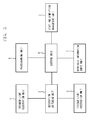
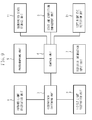
- Fig.1 is a circuit block diagram of an ophthalmologic photographing apparatus according to a first exemplary embodiment of the present invention.
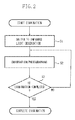
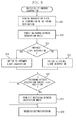
- Fig. 2 is a flowchart illustrating an operation of the ophthalmologic photographing apparatus according to the first exemplary embodiment of the present invention.
- Fig. 3 is a circuit block diagram according to a second exemplary embodiment of the present invention.
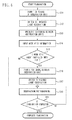
- Fig. 4 is a flowchart illustrating an operation of the ophthalmologic photographing apparatus according to the second exemplary embodiment of the present invention.
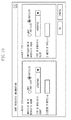
- Fig. 5 illustrates an input screen
- Fig. 6 is a circuit block diagram according to a third exemplary embodiment of the present invention.
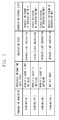
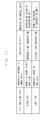
- Fig. 7 is an example of a list of observation states.
- Fig. 8 is a flowchart illustrating an operation of the ophthalmologic photographing apparatus according to the third exemplary embodiment of the present invention.
- Fig. 9 is a circuit block diagram according to a fourth exemplary embodiment of the present invention.
- Fig. 10 illustrates an input screen.
- Fig. 11 is an example of a list of observation states.
- Fig. 12 is a flowchart illustrating an operation of the ophthalmologic photographing apparatus according to the fourth exemplary embodiment of the present invention.
- Fig. 1 illustrates a circuit block diagram of an ophthalmologic photographing apparatus according to a first exemplary embodiment.
- An infrared light observation unit 1 for observing an eye to be examined with infrared light and a visible light observation unit 2 for observing the eye to be examined with visible light are connected to an observation switching unit 3 that switches between the infrared light observation and the visible light observation.
- the observation switching unit may be a physical switch that switches between the infrared light observation unit and the visible light observation unit, or it may be a physical or software-implemented switch that causes either infrared or visible light to be emitted by, for example, a single emitter.
- the observation switching unit 3 is connected to a control unit 4.
- a photographing unit 6 that captures an image of the eye to be examined is connected to the control unit 4.
- a start and completion management unit 5 that manages the start of the examination and the completion of the examination may be connected to the control unit 4, alternatively, this information may be input by an examiner (e.g. an ophthalmologist carrying out the eye exam).
- Fig. 2 is a flowchart of a photographing operation using the ophthalmologic photographing apparatus according to the present exemplary embodiment.
- step S1 the control unit 4 selects the infrared light observation unit 1 according to the input from the observation switching unit 3.
- step S2 an examiner performs alignment while observing the eye to be examined, and takes photograph of the eye to be examined by the photographing unit 6.
- step S3 the start and completion management unit 5 determines whether the examination is completed according to a selection of an examination complete button (not illustrated), and repeats the process in step S2 until it is determined that the examination is completed.
- An "examination" of the eye may be considered to include at least one "observation" of the using the photographing unit and either infrared or visible light.
- the switching may be executed after it is determined that the examination has been completed in step S3, namely, at the time of completion of the examination.
- Fig. 3 illustrates a circuit block diagram according to a second exemplary embodiment, and components or portions similar to those described in the first exemplary embodiment are denoted by the same reference numerals.
- a mydriasis information input unit 7 for inputting information about whether the mydriatic agent is instilled into the eye to be examined, is connected to the control unit 4.
- Fig. 4 is a flowchart of a photographing operation according to the present second exemplary embodiment.
- the start and completion management unit 5 starts examination upon detecting a selection of an examination start button (not illustrated).
- the control unit 4 permits the observation switching unit 3 to switch between the observation units 1 and 2.
- the control unit 4 switches the observation state to the infrared light observation by the infrared light observation unit 1 via the observation switching unit 3.
- step S13 the control unit 4 prohibits the observation switching unit 3 from switching between the observation units 1 and 2.
- step S14 an examiner inputs information about whether the mydriatic agent is instilled into the eye to be examined, for instance, using an input screen 5 of the mydriasis information input unit 7 illustrated in Fig. 5 via the mydriasis information input unit 7. Further, on the input screen 5, the examiner may input additional information such as type of mydriatic agent, diameter of pupil or the like.
- step S15 the control unit 4 determines whether the mydriatic agent is instilled into the eye, which has been input in step S14. If it is determined that the mydriatic agent is instilled into eye (YES in step S15), the processing proceeds to step S16, and the control unit 4 permits switching between the observation units 1 and 2 by the observation switching unit 3.
- step S17 the control unit 4 switches the observation state to the visible light observation by the visible light observation unit 2 via the observation switching unit 3, and subsequently in step S18, the examiner performs alignment while observing the eye to be examined, and takes photograph of the eye to be examined by the photographing unit 6.
- step S19 the start and completion management unit 5 determines whether the examination is completed, and repeats the process in step S18 until it is determined that the examination is completed (YES in step S19). Further, in step S15, if it is determined that the mydriatic agent is not instilled into eye (NO in step S15), the processing proceeds to step S18, and performs observation and photographing.
- control unit 4 permits switching between the observation units 1 and 2 of step S11 at the start of the examination, and switches the observation state to the infrared light observation in step S12, and prohibits switching between the observation units 1 and 2 of step S13.
- control unit 4 may perform these switching operations and switching prohibition after it is determined that the examination is completed in step S19, namely, at the completion of the examination. Further, the control unit 4 may perform these operations at the both times of the start of the examination and the completion of the examination. Furthermore, in step S17, although the control unit 4 has switched the observation from the infrared light observation to the visible light observation, the observation can be made with infrared light without switching the observation to the visible light observation.
- step S14 although information about whether the mydriatic agent is instilled into the eye is input via the mydriasis information input unit 7 after the start of the examination, it may be input before the start of the examination. In this case, whether the mydriatic agent is instilled into the eye is determined at the start of the examination. If the mydriatic agent is not instilled into the eye, the control unit 4 switches to the infrared light observation at the start of the examination, and prohibits switching between the observation units 1 and 2.
- control unit 4 permits switching to the infrared light observation or the visible light observation, and switching between the observation unit 1 and 2 thereafter, at the start of the examination.
- control unit 4 can control an internal fixation light which presents a fixation target from a photographic optical on-axis, and an external fixation light which presents the fixation target from a photographic optical off-axis as appropriate, in order to guide the eye to be examined in the following manner.
- control unit 4 turns off the internal fixation light and the external fixation light together at the start of the examination (if the lights are not already turned off). After the input of the mydriasis information, if it is determined that the mydriatic agent has not been instilled into the eye, the control unit 4 turns on the internal fixation light. If it is determined that the mydriatic agent has been instilled into the eye, the control unit 4 turns on the internal fixation light when switching to the infrared light observation, and turns on the external fixation light when switching to the visible light observation.
- Fig. 6 illustrates a circuit block diagram of an ophthalmologic photographing apparatus according to a third exemplary embodiment.
- an observation state storage unit 11 that stores observation state for each examination and multiple examination management units 12 that manages switching between examinations are connected to the control unit 4 for allowing a plurality of examinations to be implemented in parallel.
- Features in Fig. 6 of the third embodiment that may be the same as features of the first and second embodiments illustrated in Figs. 1 and 3 are denoted with the same reference numerals.
- Fig. 7 illustrates an example of a list of observation states, which is stored in the observation state storage unit 11.
- the observation state storage unit 11 stores "examination identifier”, "mydriasis information input state”, “observation unit”, and "observation control state” for all examinations to be implemented, as observation states.
- the observation state storage unit 11 stores input states such as "not yet input, " "mydriatic agent is not instilled, " “mydriatic agent is instilled” by the mydriasis information input unit 7.
- the observation state storage unit 11 stores whether the "observation state” is in a state of the infrared light observation or the visible light observation, and whether the "observation control state” is in a state of switching permission between the observation units 1 and 2, or switching prohibition between the observation units 1 and 2.
- Fig. 8 is a flowchart of a photographing operation in the present exemplary embodiment.
- step S21 the control unit 4 acquires an observation state of the "examination identifier" of switching destination (another eye being examined), from the observation state storage unit 11.
- step S22 the control unit 4 permits switching between the observation units 1 and 2 by the observation switching unit 3.
- step S23 the control unit 4 determines whether the observation state is an infrared light observation. If it is determined as the infrared light observation (YES in step S23), the processing proceeds to step S24.
- step S24 the control unit 4 switches the observation state to the infrared light observation by the observation switching unit 3, and then the processing proceeds to step S26.
- step S23 if it is determined that the visible light observation is performed (NO in step S23), the processing proceeds to step S25.
- step S25 the control unit 4 switches the observation state to the visible light observation by the observation switching unit 3, and the processing proceeds to step S26.
- step S26 the control unit 4 determines the "observation control state". If the "observation control state" is switching prohibition between the observation units 1 and 2, the processing proceeds to step S27. In step S27, the control unit 4 prohibits switching between the observation units 1 and 2 by the observation switching unit 3. In step S28, an examiner performs alignment while observing the eye to be examined, and photographs the eye to be examined by the photographing unit 6.
- step S26 if the "observation control state" is a switching permission between the observation units 1 and 2 (NO in step S26), the processing proceeds to step S28.
- the "mydriasis information input state" is stored in order to illustrate an example of the "observation state” and the “observation control state” according to the mydriasis information input state, the "mydriasis information input state” may not need to be stored.
- the present exemplary embodiment includes the mydriasis information input unit 7, and the control of switching permission, and prohibition between the "observation units” is performed is described, the controls of switching permission, and prohibition between the observation units 1 and 2 may not need to be performed in similar manner to the first exemplary embodiment. In this case, steps S22, S26, and S27 in the flowchart of Fig. 8 are unnecessary, and the "observation control state" illustrated in Fig. 7 may not need to be stored.
- Fig. 9 is a circuit block diagram according to a fourth exemplary embodiment.
- a left/right eye detection unit 21 is provided for detecting whether the eye to be examined is the left eye or the right eye, in place of the multiple examination management unit 12 according to the third exemplary embodiment.
- the rest of the reference numerals of Fig. 9 are the same as in Fig. 6 illustrating the third embodiment.
- Fig. 10 illustrates an input screen of the mydriasis information input unit 7 that can input whether the mydriatic agent is instilled for each of the left and right eyes.
- Fig. 11 illustrates an example of a list of observation states to be stored in the observation state storage unit 11, and the observation state storage unit 11 stores, "left or right eye”, "mydriasis information input state”, “observation state”, and "observation control state” as the observation states, for one examination under implementation.
- Input states (not yet input,” “mydriatic agent is not instilled, “ “mydriatic agent is instilled" obtained by the mydriasis information input unit 7 are stored in the "mydriasis information input state,” and whether the infrared light observation or the visible light observation is used is stored in the "observation state”. Which of the switching permission of the observation units 1 and 2, and the switching prohibition of the observation units 1 and 2 is selected, is stored in the "observation control state".
- Fig. 12 is a flowchart of a photographing operation in the present exemplary embodiment.
- step S31 the control unit 4 acquires observation state of the eye of the switching destination from the observation state storage unit 11.
- step S32 the control unit 4 permits switching between the observation units 1 and 2 by the observation switching unit 3.
- step S33 the control unit 4 determines whether the acquired "observation state" is an infrared light observation. If the acquired "observation state" is the infrared light observation (YES in step S33), the processing proceeds to step S34. In step S34, the control unit 4 switches the "observation state" to the infrared light observation by the observation switching unit 3, and the processing proceeds to step S36.
- step S33 if the "observation state" is a visible light observation (NO in step S33), the processing proceeds to step S35.
- step S35 the control unit 4 switches the observation state to the visible light observation by the observation switching unit 3, and the processing proceeds to step S36.
- step S36 the control unit 4 determines the "observation control state" acquired in steps S34 and S35. If the "observation control state" is the switching prohibition between the observation units 1 and 2 (YES in step S36), the processing proceeds to step S37. In step S37, the control unit 4 prohibits switching between the observation units 1 and 2 by the observation switching unit 3, and then in step S38, an examiner performs alignment while observing the eye to be examined, and photographs the eye to be examined by the photographing unit 6. In step S36, if the "observation control state" is the switching permission between the observation units 1 and 2 (NO in step S36), the processing proceeds to step S38.
- the "mydriasis information input state” is stored in order to illustrate an example of the "observation state", and the "observation control state" according to the mydriasis information input state, the "mydriasis information input state” may not need to be stored.
- the case including the mydriasis information input unit 7, and performing control of switching permission and prohibition of the observation units 1 and 2 is described above.
- the control of the switching permission and prohibition of the observation units 1 and 2 may not need to be performed in similar manner to the exemplary embodiment 1.
- the examination can be combined with the case of a plurality of examinations of the third exemplary embodiment.
- the control unit 4 automatically switches the observation state to the infrared light observation, at least at either one of the start of the examination or the completion of the examination.
- control unit 4 automatically switches the observation state to the infrared light observation as well as prohibits switching between the observation units, and permits switching between the observation units when the information is input that the mydriatic agent is instilled through the mydriasis information input. For this reason, if the infrared light observation is performed without the mydriatic agent being instilled into the eye, the miosis of the eye to be examined by operational mistake can be prevented.
Landscapes
- Health & Medical Sciences (AREA)
- Life Sciences & Earth Sciences (AREA)
- Engineering & Computer Science (AREA)
- Heart & Thoracic Surgery (AREA)
- Molecular Biology (AREA)
- Biophysics (AREA)
- Ophthalmology & Optometry (AREA)
- Biomedical Technology (AREA)
- Veterinary Medicine (AREA)
- Medical Informatics (AREA)
- Physics & Mathematics (AREA)
- Surgery (AREA)
- Animal Behavior & Ethology (AREA)
- General Health & Medical Sciences (AREA)
- Public Health (AREA)
- Multimedia (AREA)
- Eye Examination Apparatus (AREA)
Applications Claiming Priority (1)
| Application Number | Priority Date | Filing Date | Title |
|---|---|---|---|
| JP2008269957A JP4669891B2 (ja) | 2008-10-20 | 2008-10-20 | 眼科撮影装置 |
Publications (1)
| Publication Number | Publication Date |
|---|---|
| EP2177151A1 true EP2177151A1 (en) | 2010-04-21 |
Family
ID=41395446
Family Applications (1)
| Application Number | Title | Priority Date | Filing Date |
|---|---|---|---|
| EP09173408A Withdrawn EP2177151A1 (en) | 2008-10-20 | 2009-10-19 | Opthalmologic photographing apparatus |
Country Status (3)
| Country | Link |
|---|---|
| US (1) | US8057040B2 (enExample) |
| EP (1) | EP2177151A1 (enExample) |
| JP (1) | JP4669891B2 (enExample) |
Cited By (1)
| Publication number | Priority date | Publication date | Assignee | Title |
|---|---|---|---|---|
| WO2013034803A1 (en) * | 2011-09-06 | 2013-03-14 | Icare Finland Oy | Ophthalmic apparatus and method for measuring an eye |
Families Citing this family (2)
| Publication number | Priority date | Publication date | Assignee | Title |
|---|---|---|---|---|
| JP5328568B2 (ja) | 2009-08-27 | 2013-10-30 | キヤノン株式会社 | 眼科撮影装置 |
| US20110129133A1 (en) * | 2009-12-02 | 2011-06-02 | Ramos Joao Diogo De Oliveira E | Methods and systems for detection of retinal changes |
Citations (11)
| Publication number | Priority date | Publication date | Assignee | Title |
|---|---|---|---|---|
| US5565938A (en) * | 1993-11-15 | 1996-10-15 | Kabushiki Kaisha Topcon | Ophthalmologic apparatus having improved display capability |
| JPH0966030A (ja) | 1995-09-01 | 1997-03-11 | Kowa Co | 眼底カメラ |
| JP2003093348A (ja) * | 2001-09-27 | 2003-04-02 | Kowa Co | 眼底撮影装置 |
| JP2004180705A (ja) | 2002-11-29 | 2004-07-02 | Canon Inc | 眼科装置 |
| US20060028617A1 (en) * | 2004-08-09 | 2006-02-09 | Kazunori Matsumura | Ophthalmic photographic apparatus |
| US20060126017A1 (en) * | 2004-12-15 | 2006-06-15 | Kowa Company Ltd. | Ophthalmic photography apparatus |
| US20060280489A1 (en) * | 2005-06-14 | 2006-12-14 | Kowa Company Ltd. | Ophthalmic photographic apparatus |
| EP1752084A2 (en) * | 2005-08-05 | 2007-02-14 | Kabushiki Kaisha TOPCON | Fundus camera |
| JP2008055010A (ja) * | 2006-09-01 | 2008-03-13 | Kowa Co | 眼科撮影装置 |
| EP1908399A1 (en) * | 2005-07-27 | 2008-04-09 | Kowa Kabushiki Kaisha | Ophthalmologic photographing device |
| JP4138133B2 (ja) * | 1999-02-15 | 2008-08-20 | 株式会社トプコン | 眼底カメラ |
Family Cites Families (5)
| Publication number | Priority date | Publication date | Assignee | Title |
|---|---|---|---|---|
| JPS56151929A (en) * | 1980-04-25 | 1981-11-25 | Canon Inc | Fundus camera |
| JP2927446B2 (ja) * | 1989-04-26 | 1999-07-28 | 株式会社トプコン | 眼科撮影装置 |
| JPH04138133A (ja) | 1990-09-28 | 1992-05-12 | Yokogawa Medical Syst Ltd | コイル位置検出方法およびmr装置 |
| JP2002125934A (ja) * | 2000-10-20 | 2002-05-08 | Kowa Co | 眼底カメラ |
| JP5224878B2 (ja) * | 2008-04-03 | 2013-07-03 | キヤノン株式会社 | 眼科装置 |
-
2008
- 2008-10-20 JP JP2008269957A patent/JP4669891B2/ja not_active Expired - Fee Related
-
2009
- 2009-10-19 US US12/581,767 patent/US8057040B2/en not_active Expired - Fee Related
- 2009-10-19 EP EP09173408A patent/EP2177151A1/en not_active Withdrawn
Patent Citations (11)
| Publication number | Priority date | Publication date | Assignee | Title |
|---|---|---|---|---|
| US5565938A (en) * | 1993-11-15 | 1996-10-15 | Kabushiki Kaisha Topcon | Ophthalmologic apparatus having improved display capability |
| JPH0966030A (ja) | 1995-09-01 | 1997-03-11 | Kowa Co | 眼底カメラ |
| JP4138133B2 (ja) * | 1999-02-15 | 2008-08-20 | 株式会社トプコン | 眼底カメラ |
| JP2003093348A (ja) * | 2001-09-27 | 2003-04-02 | Kowa Co | 眼底撮影装置 |
| JP2004180705A (ja) | 2002-11-29 | 2004-07-02 | Canon Inc | 眼科装置 |
| US20060028617A1 (en) * | 2004-08-09 | 2006-02-09 | Kazunori Matsumura | Ophthalmic photographic apparatus |
| US20060126017A1 (en) * | 2004-12-15 | 2006-06-15 | Kowa Company Ltd. | Ophthalmic photography apparatus |
| US20060280489A1 (en) * | 2005-06-14 | 2006-12-14 | Kowa Company Ltd. | Ophthalmic photographic apparatus |
| EP1908399A1 (en) * | 2005-07-27 | 2008-04-09 | Kowa Kabushiki Kaisha | Ophthalmologic photographing device |
| EP1752084A2 (en) * | 2005-08-05 | 2007-02-14 | Kabushiki Kaisha TOPCON | Fundus camera |
| JP2008055010A (ja) * | 2006-09-01 | 2008-03-13 | Kowa Co | 眼科撮影装置 |
Cited By (4)
| Publication number | Priority date | Publication date | Assignee | Title |
|---|---|---|---|---|
| WO2013034803A1 (en) * | 2011-09-06 | 2013-03-14 | Icare Finland Oy | Ophthalmic apparatus and method for measuring an eye |
| CN103889316A (zh) * | 2011-09-06 | 2014-06-25 | 伊卡尔芬兰有限公司 | 用于测量眼睛的眼科设备和方法 |
| US9332901B2 (en) | 2011-09-06 | 2016-05-10 | Icare Finland Oy | Ophthalmic apparatus and method for measuring an eye |
| CN103889316B (zh) * | 2011-09-06 | 2017-07-18 | 伊卡尔芬兰有限公司 | 用于测量眼睛的眼科设备和方法 |
Also Published As
| Publication number | Publication date |
|---|---|
| US20100097574A1 (en) | 2010-04-22 |
| US8057040B2 (en) | 2011-11-15 |
| JP2010094432A (ja) | 2010-04-30 |
| JP4669891B2 (ja) | 2011-04-13 |
Similar Documents
| Publication | Publication Date | Title |
|---|---|---|
| US11813024B2 (en) | Hand-held portable fundus camera for screening photography | |
| CN100479738C (zh) | 眼底相机 | |
| JP5451546B2 (ja) | 眼科撮影装置及びその撮影方法 | |
| JP4169798B2 (ja) | 眼科撮影装置 | |
| JP6499416B2 (ja) | 眼科装置および眼科装置の制御方法 | |
| JP5117801B2 (ja) | 眼底撮影装置 | |
| EP2177151A1 (en) | Opthalmologic photographing apparatus | |
| US8591028B2 (en) | Ophthalmologic photographing apparatus and photographing method therefor | |
| JP2003019118A (ja) | 眼科用画像処理装置 | |
| CN208610810U (zh) | 一种用于眼科检查的眼底照相系统 | |
| JPH11188006A (ja) | 眼科装置 | |
| JP7484087B2 (ja) | 眼底画像観察プログラム | |
| JP2000333906A (ja) | 眼科撮影装置 | |
| JP2000237168A (ja) | 眼科検査装置 | |
| JP2014094115A (ja) | 眼科装置及び眼科検査方法 | |
| JP5683649B2 (ja) | 眼科装置 | |
| JP7533050B2 (ja) | 眼底画像観察プログラム | |
| JP2002369801A (ja) | 眼科撮影装置 | |
| JP2005261449A (ja) | 眼科撮影装置 | |
| JP3930959B2 (ja) | 眼底カメラ | |
| CN210249802U (zh) | 自助式免散瞳眼底摄像系统 | |
| JPH11235318A (ja) | 眼科撮影装置 | |
| JP2001238855A (ja) | 眼科装置 | |
| JP5813089B2 (ja) | 制御装置及び制御方法 | |
| JP2014094117A (ja) | 眼科撮影装置 |
Legal Events
| Date | Code | Title | Description |
|---|---|---|---|
| PUAI | Public reference made under article 153(3) epc to a published international application that has entered the european phase |
Free format text: ORIGINAL CODE: 0009012 |
|
| AK | Designated contracting states |
Kind code of ref document: A1 Designated state(s): AT BE BG CH CY CZ DE DK EE ES FI FR GB GR HR HU IE IS IT LI LT LU LV MC MK MT NL NO PL PT RO SE SI SK SM TR |
|
| AX | Request for extension of the european patent |
Extension state: AL BA RS |
|
| 17P | Request for examination filed |
Effective date: 20101021 |
|
| 17Q | First examination report despatched |
Effective date: 20101124 |
|
| STAA | Information on the status of an ep patent application or granted ep patent |
Free format text: STATUS: THE APPLICATION HAS BEEN WITHDRAWN |
|
| 18W | Application withdrawn |
Effective date: 20161014 |