EP2059591B1 - Dishwashing composition that contains a protease variant - Google Patents
Dishwashing composition that contains a protease variant Download PDFInfo
- Publication number
- EP2059591B1 EP2059591B1 EP07796735A EP07796735A EP2059591B1 EP 2059591 B1 EP2059591 B1 EP 2059591B1 EP 07796735 A EP07796735 A EP 07796735A EP 07796735 A EP07796735 A EP 07796735A EP 2059591 B1 EP2059591 B1 EP 2059591B1
- Authority
- EP
- European Patent Office
- Prior art keywords
- protease
- protein
- gene
- sequence
- enzyme
- Prior art date
- Legal status (The legal status is an assumption and is not a legal conclusion. Google has not performed a legal analysis and makes no representation as to the accuracy of the status listed.)
- Not-in-force
Links
- 239000000203 mixture Substances 0.000 title claims description 55
- 238000004851 dishwashing Methods 0.000 title claims description 30
- 108091005804 Peptidases Proteins 0.000 title description 117
- 239000004365 Protease Substances 0.000 title description 92
- 102100037486 Reverse transcriptase/ribonuclease H Human genes 0.000 title 1
- 238000000034 method Methods 0.000 claims description 80
- 230000035772 mutation Effects 0.000 claims description 33
- 238000006467 substitution reaction Methods 0.000 claims description 24
- 108090000787 Subtilisin Proteins 0.000 claims description 15
- 238000004140 cleaning Methods 0.000 claims description 15
- 125000003275 alpha amino acid group Chemical group 0.000 claims description 13
- 108090000623 proteins and genes Proteins 0.000 description 148
- 102000035195 Peptidases Human genes 0.000 description 101
- 235000018102 proteins Nutrition 0.000 description 89
- 102000004169 proteins and genes Human genes 0.000 description 89
- 235000019419 proteases Nutrition 0.000 description 69
- 229940088598 enzyme Drugs 0.000 description 65
- 102000004190 Enzymes Human genes 0.000 description 64
- 108090000790 Enzymes Proteins 0.000 description 64
- 239000003599 detergent Substances 0.000 description 47
- 235000001014 amino acid Nutrition 0.000 description 39
- 150000001413 amino acids Chemical class 0.000 description 35
- 108020004414 DNA Proteins 0.000 description 34
- 239000013615 primer Substances 0.000 description 32
- 210000002969 egg yolk Anatomy 0.000 description 30
- 150000007523 nucleic acids Chemical class 0.000 description 29
- 235000013345 egg yolk Nutrition 0.000 description 25
- 102000002322 Egg Proteins Human genes 0.000 description 24
- 108010000912 Egg Proteins Proteins 0.000 description 24
- 210000004027 cell Anatomy 0.000 description 24
- 238000003199 nucleic acid amplification method Methods 0.000 description 24
- 230000003321 amplification Effects 0.000 description 23
- 230000006870 function Effects 0.000 description 21
- 102000039446 nucleic acids Human genes 0.000 description 21
- 108020004707 nucleic acids Proteins 0.000 description 21
- 239000000523 sample Substances 0.000 description 21
- 239000013598 vector Substances 0.000 description 21
- XLYOFNOQVPJJNP-UHFFFAOYSA-N water Substances O XLYOFNOQVPJJNP-UHFFFAOYSA-N 0.000 description 20
- 239000012634 fragment Substances 0.000 description 18
- 108090000765 processed proteins & peptides Proteins 0.000 description 18
- 108091034117 Oligonucleotide Proteins 0.000 description 17
- 238000012360 testing method Methods 0.000 description 17
- 238000005406 washing Methods 0.000 description 16
- 230000000694 effects Effects 0.000 description 14
- 235000013372 meat Nutrition 0.000 description 14
- 102000004196 processed proteins & peptides Human genes 0.000 description 14
- 108091028043 Nucleic acid sequence Proteins 0.000 description 13
- 235000013601 eggs Nutrition 0.000 description 13
- 235000013336 milk Nutrition 0.000 description 13
- 239000008267 milk Substances 0.000 description 13
- 210000004080 milk Anatomy 0.000 description 13
- 238000010276 construction Methods 0.000 description 12
- 238000002703 mutagenesis Methods 0.000 description 12
- 231100000350 mutagenesis Toxicity 0.000 description 12
- 125000003729 nucleotide group Chemical group 0.000 description 12
- 229920001184 polypeptide Polymers 0.000 description 12
- 108091008146 restriction endonucleases Proteins 0.000 description 12
- 241000193830 Bacillus <bacterium> Species 0.000 description 11
- 102000005158 Subtilisins Human genes 0.000 description 11
- 108010056079 Subtilisins Proteins 0.000 description 11
- 238000002474 experimental method Methods 0.000 description 11
- 238000009396 hybridization Methods 0.000 description 11
- 239000002609 medium Substances 0.000 description 11
- 239000000047 product Substances 0.000 description 11
- FAPWRFPIFSIZLT-UHFFFAOYSA-M Sodium chloride Chemical compound [Na+].[Cl-] FAPWRFPIFSIZLT-UHFFFAOYSA-M 0.000 description 10
- 239000002773 nucleotide Substances 0.000 description 10
- YBYRMVIVWMBXKQ-UHFFFAOYSA-N phenylmethanesulfonyl fluoride Chemical compound FS(=O)(=O)CC1=CC=CC=C1 YBYRMVIVWMBXKQ-UHFFFAOYSA-N 0.000 description 10
- 239000000243 solution Substances 0.000 description 10
- 239000000758 substrate Substances 0.000 description 10
- 102000053602 DNA Human genes 0.000 description 9
- IAZDPXIOMUYVGZ-UHFFFAOYSA-N Dimethylsulphoxide Chemical compound CS(C)=O IAZDPXIOMUYVGZ-UHFFFAOYSA-N 0.000 description 9
- HEMHJVSKTPXQMS-UHFFFAOYSA-M Sodium hydroxide Chemical compound [OH-].[Na+] HEMHJVSKTPXQMS-UHFFFAOYSA-M 0.000 description 9
- 230000014509 gene expression Effects 0.000 description 9
- 239000003550 marker Substances 0.000 description 9
- 241000894007 species Species 0.000 description 9
- 230000009466 transformation Effects 0.000 description 9
- 235000014469 Bacillus subtilis Nutrition 0.000 description 8
- LFQSCWFLJHTTHZ-UHFFFAOYSA-N Ethanol Chemical compound CCO LFQSCWFLJHTTHZ-UHFFFAOYSA-N 0.000 description 8
- TWRXJAOTZQYOKJ-UHFFFAOYSA-L Magnesium chloride Chemical compound [Mg+2].[Cl-].[Cl-] TWRXJAOTZQYOKJ-UHFFFAOYSA-L 0.000 description 8
- 230000015572 biosynthetic process Effects 0.000 description 8
- 238000004925 denaturation Methods 0.000 description 8
- 230000036425 denaturation Effects 0.000 description 8
- 239000013604 expression vector Substances 0.000 description 8
- 239000013612 plasmid Substances 0.000 description 8
- 229910001220 stainless steel Inorganic materials 0.000 description 8
- 239000010935 stainless steel Substances 0.000 description 8
- 241001328122 Bacillus clausii Species 0.000 description 7
- -1 ELISA Proteins 0.000 description 7
- 102000012479 Serine Proteases Human genes 0.000 description 7
- 108010022999 Serine Proteases Proteins 0.000 description 7
- 238000006243 chemical reaction Methods 0.000 description 7
- 239000003814 drug Substances 0.000 description 7
- 230000002255 enzymatic effect Effects 0.000 description 7
- 239000000499 gel Substances 0.000 description 7
- 239000002689 soil Substances 0.000 description 7
- 239000002253 acid Substances 0.000 description 6
- 238000000137 annealing Methods 0.000 description 6
- 239000000872 buffer Substances 0.000 description 6
- 239000005018 casein Substances 0.000 description 6
- BECPQYXYKAMYBN-UHFFFAOYSA-N casein, tech. Chemical compound NCCCCC(C(O)=O)N=C(O)C(CC(O)=O)N=C(O)C(CCC(O)=N)N=C(O)C(CC(C)C)N=C(O)C(CCC(O)=O)N=C(O)C(CC(O)=O)N=C(O)C(CCC(O)=O)N=C(O)C(C(C)O)N=C(O)C(CCC(O)=N)N=C(O)C(CCC(O)=N)N=C(O)C(CCC(O)=N)N=C(O)C(CCC(O)=O)N=C(O)C(CCC(O)=O)N=C(O)C(COP(O)(O)=O)N=C(O)C(CCC(O)=N)N=C(O)C(N)CC1=CC=CC=C1 BECPQYXYKAMYBN-UHFFFAOYSA-N 0.000 description 6
- 235000021240 caseins Nutrition 0.000 description 6
- 230000008859 change Effects 0.000 description 6
- 238000004519 manufacturing process Methods 0.000 description 6
- 102000040430 polynucleotide Human genes 0.000 description 6
- 108091033319 polynucleotide Proteins 0.000 description 6
- 239000002157 polynucleotide Substances 0.000 description 6
- 230000008569 process Effects 0.000 description 6
- 229940024999 proteolytic enzymes for treatment of wounds and ulcers Drugs 0.000 description 6
- 238000003786 synthesis reaction Methods 0.000 description 6
- 238000013518 transcription Methods 0.000 description 6
- 230000035897 transcription Effects 0.000 description 6
- JLCPHMBAVCMARE-UHFFFAOYSA-N [3-[[3-[[3-[[3-[[3-[[3-[[3-[[3-[[3-[[3-[[3-[[5-(2-amino-6-oxo-1H-purin-9-yl)-3-[[3-[[3-[[3-[[3-[[3-[[5-(2-amino-6-oxo-1H-purin-9-yl)-3-[[5-(2-amino-6-oxo-1H-purin-9-yl)-3-hydroxyoxolan-2-yl]methoxy-hydroxyphosphoryl]oxyoxolan-2-yl]methoxy-hydroxyphosphoryl]oxy-5-(5-methyl-2,4-dioxopyrimidin-1-yl)oxolan-2-yl]methoxy-hydroxyphosphoryl]oxy-5-(6-aminopurin-9-yl)oxolan-2-yl]methoxy-hydroxyphosphoryl]oxy-5-(6-aminopurin-9-yl)oxolan-2-yl]methoxy-hydroxyphosphoryl]oxy-5-(6-aminopurin-9-yl)oxolan-2-yl]methoxy-hydroxyphosphoryl]oxy-5-(6-aminopurin-9-yl)oxolan-2-yl]methoxy-hydroxyphosphoryl]oxyoxolan-2-yl]methoxy-hydroxyphosphoryl]oxy-5-(5-methyl-2,4-dioxopyrimidin-1-yl)oxolan-2-yl]methoxy-hydroxyphosphoryl]oxy-5-(4-amino-2-oxopyrimidin-1-yl)oxolan-2-yl]methoxy-hydroxyphosphoryl]oxy-5-(5-methyl-2,4-dioxopyrimidin-1-yl)oxolan-2-yl]methoxy-hydroxyphosphoryl]oxy-5-(5-methyl-2,4-dioxopyrimidin-1-yl)oxolan-2-yl]methoxy-hydroxyphosphoryl]oxy-5-(6-aminopurin-9-yl)oxolan-2-yl]methoxy-hydroxyphosphoryl]oxy-5-(6-aminopurin-9-yl)oxolan-2-yl]methoxy-hydroxyphosphoryl]oxy-5-(4-amino-2-oxopyrimidin-1-yl)oxolan-2-yl]methoxy-hydroxyphosphoryl]oxy-5-(4-amino-2-oxopyrimidin-1-yl)oxolan-2-yl]methoxy-hydroxyphosphoryl]oxy-5-(4-amino-2-oxopyrimidin-1-yl)oxolan-2-yl]methoxy-hydroxyphosphoryl]oxy-5-(6-aminopurin-9-yl)oxolan-2-yl]methoxy-hydroxyphosphoryl]oxy-5-(4-amino-2-oxopyrimidin-1-yl)oxolan-2-yl]methyl [5-(6-aminopurin-9-yl)-2-(hydroxymethyl)oxolan-3-yl] hydrogen phosphate Polymers Cc1cn(C2CC(OP(O)(=O)OCC3OC(CC3OP(O)(=O)OCC3OC(CC3O)n3cnc4c3nc(N)[nH]c4=O)n3cnc4c3nc(N)[nH]c4=O)C(COP(O)(=O)OC3CC(OC3COP(O)(=O)OC3CC(OC3COP(O)(=O)OC3CC(OC3COP(O)(=O)OC3CC(OC3COP(O)(=O)OC3CC(OC3COP(O)(=O)OC3CC(OC3COP(O)(=O)OC3CC(OC3COP(O)(=O)OC3CC(OC3COP(O)(=O)OC3CC(OC3COP(O)(=O)OC3CC(OC3COP(O)(=O)OC3CC(OC3COP(O)(=O)OC3CC(OC3COP(O)(=O)OC3CC(OC3COP(O)(=O)OC3CC(OC3COP(O)(=O)OC3CC(OC3COP(O)(=O)OC3CC(OC3COP(O)(=O)OC3CC(OC3CO)n3cnc4c(N)ncnc34)n3ccc(N)nc3=O)n3cnc4c(N)ncnc34)n3ccc(N)nc3=O)n3ccc(N)nc3=O)n3ccc(N)nc3=O)n3cnc4c(N)ncnc34)n3cnc4c(N)ncnc34)n3cc(C)c(=O)[nH]c3=O)n3cc(C)c(=O)[nH]c3=O)n3ccc(N)nc3=O)n3cc(C)c(=O)[nH]c3=O)n3cnc4c3nc(N)[nH]c4=O)n3cnc4c(N)ncnc34)n3cnc4c(N)ncnc34)n3cnc4c(N)ncnc34)n3cnc4c(N)ncnc34)O2)c(=O)[nH]c1=O JLCPHMBAVCMARE-UHFFFAOYSA-N 0.000 description 5
- 150000007513 acids Chemical class 0.000 description 5
- 125000000539 amino acid group Chemical group 0.000 description 5
- 125000000129 anionic group Chemical group 0.000 description 5
- 230000001580 bacterial effect Effects 0.000 description 5
- 239000003795 chemical substances by application Substances 0.000 description 5
- 230000000295 complement effect Effects 0.000 description 5
- 229940079593 drug Drugs 0.000 description 5
- 239000003623 enhancer Substances 0.000 description 5
- 238000011081 inoculation Methods 0.000 description 5
- 238000003780 insertion Methods 0.000 description 5
- 230000037431 insertion Effects 0.000 description 5
- 239000000463 material Substances 0.000 description 5
- 230000001590 oxidative effect Effects 0.000 description 5
- 238000002360 preparation method Methods 0.000 description 5
- 210000001938 protoplast Anatomy 0.000 description 5
- 230000010076 replication Effects 0.000 description 5
- 239000011780 sodium chloride Substances 0.000 description 5
- 239000000126 substance Substances 0.000 description 5
- 244000063299 Bacillus subtilis Species 0.000 description 4
- UXVMQQNJUSDDNG-UHFFFAOYSA-L Calcium chloride Chemical compound [Cl-].[Cl-].[Ca+2] UXVMQQNJUSDDNG-UHFFFAOYSA-L 0.000 description 4
- 241000588724 Escherichia coli Species 0.000 description 4
- VEXZGXHMUGYJMC-UHFFFAOYSA-N Hydrochloric acid Chemical compound Cl VEXZGXHMUGYJMC-UHFFFAOYSA-N 0.000 description 4
- MHAJPDPJQMAIIY-UHFFFAOYSA-N Hydrogen peroxide Chemical compound OO MHAJPDPJQMAIIY-UHFFFAOYSA-N 0.000 description 4
- CSNNHWWHGAXBCP-UHFFFAOYSA-L Magnesium sulfate Chemical compound [Mg+2].[O-][S+2]([O-])([O-])[O-] CSNNHWWHGAXBCP-UHFFFAOYSA-L 0.000 description 4
- CDBYLPFSWZWCQE-UHFFFAOYSA-L Sodium Carbonate Chemical compound [Na+].[Na+].[O-]C([O-])=O CDBYLPFSWZWCQE-UHFFFAOYSA-L 0.000 description 4
- DBMJMQXJHONAFJ-UHFFFAOYSA-M Sodium laurylsulphate Chemical compound [Na+].CCCCCCCCCCCCOS([O-])(=O)=O DBMJMQXJHONAFJ-UHFFFAOYSA-M 0.000 description 4
- BGRWYDHXPHLNKA-UHFFFAOYSA-N Tetraacetylethylenediamine Chemical compound CC(=O)N(C(C)=O)CCN(C(C)=O)C(C)=O BGRWYDHXPHLNKA-UHFFFAOYSA-N 0.000 description 4
- 125000001931 aliphatic group Chemical group 0.000 description 4
- 238000004458 analytical method Methods 0.000 description 4
- 239000001110 calcium chloride Substances 0.000 description 4
- 229910001628 calcium chloride Inorganic materials 0.000 description 4
- 239000003153 chemical reaction reagent Substances 0.000 description 4
- 239000000356 contaminant Substances 0.000 description 4
- 238000001816 cooling Methods 0.000 description 4
- 238000012217 deletion Methods 0.000 description 4
- 230000037430 deletion Effects 0.000 description 4
- 238000001514 detection method Methods 0.000 description 4
- 230000002068 genetic effect Effects 0.000 description 4
- 239000003112 inhibitor Substances 0.000 description 4
- 239000007788 liquid Substances 0.000 description 4
- 229910001629 magnesium chloride Inorganic materials 0.000 description 4
- 238000005259 measurement Methods 0.000 description 4
- 238000003752 polymerase chain reaction Methods 0.000 description 4
- 230000001105 regulatory effect Effects 0.000 description 4
- 239000011550 stock solution Substances 0.000 description 4
- 238000003860 storage Methods 0.000 description 4
- QTBSBXVTEAMEQO-UHFFFAOYSA-N Acetic acid Chemical compound CC(O)=O QTBSBXVTEAMEQO-UHFFFAOYSA-N 0.000 description 3
- WQZGKKKJIJFFOK-GASJEMHNSA-N Glucose Natural products OC[C@H]1OC(O)[C@H](O)[C@@H](O)[C@@H]1O WQZGKKKJIJFFOK-GASJEMHNSA-N 0.000 description 3
- 229930193140 Neomycin Natural products 0.000 description 3
- DNIAPMSPPWPWGF-UHFFFAOYSA-N Propylene glycol Chemical compound CC(O)CO DNIAPMSPPWPWGF-UHFFFAOYSA-N 0.000 description 3
- 108020004511 Recombinant DNA Proteins 0.000 description 3
- 230000008033 biological extinction Effects 0.000 description 3
- 239000007844 bleaching agent Substances 0.000 description 3
- 239000000306 component Substances 0.000 description 3
- 150000001875 compounds Chemical class 0.000 description 3
- 230000002950 deficient Effects 0.000 description 3
- 239000005547 deoxyribonucleotide Substances 0.000 description 3
- 238000011161 development Methods 0.000 description 3
- 238000001962 electrophoresis Methods 0.000 description 3
- 239000013613 expression plasmid Substances 0.000 description 3
- 238000000855 fermentation Methods 0.000 description 3
- 230000004151 fermentation Effects 0.000 description 3
- 238000009472 formulation Methods 0.000 description 3
- 230000004927 fusion Effects 0.000 description 3
- 239000011521 glass Substances 0.000 description 3
- 239000008103 glucose Substances 0.000 description 3
- 230000001965 increasing effect Effects 0.000 description 3
- 230000001939 inductive effect Effects 0.000 description 3
- 238000002844 melting Methods 0.000 description 3
- 230000008018 melting Effects 0.000 description 3
- 229960004927 neomycin Drugs 0.000 description 3
- 230000007935 neutral effect Effects 0.000 description 3
- 239000007800 oxidant agent Substances 0.000 description 3
- 150000004965 peroxy acids Chemical class 0.000 description 3
- 238000002264 polyacrylamide gel electrophoresis Methods 0.000 description 3
- 229910052573 porcelain Inorganic materials 0.000 description 3
- 238000000746 purification Methods 0.000 description 3
- 239000004094 surface-active agent Substances 0.000 description 3
- 238000004448 titration Methods 0.000 description 3
- 230000007306 turnover Effects 0.000 description 3
- YBJHBAHKTGYVGT-ZKWXMUAHSA-N (+)-Biotin Chemical compound N1C(=O)N[C@@H]2[C@H](CCCCC(=O)O)SC[C@@H]21 YBJHBAHKTGYVGT-ZKWXMUAHSA-N 0.000 description 2
- 108091032973 (ribonucleotides)n+m Proteins 0.000 description 2
- QKNYBSVHEMOAJP-UHFFFAOYSA-N 2-amino-2-(hydroxymethyl)propane-1,3-diol;hydron;chloride Chemical compound Cl.OCC(N)(CO)CO QKNYBSVHEMOAJP-UHFFFAOYSA-N 0.000 description 2
- DVLFYONBTKHTER-UHFFFAOYSA-N 3-(N-morpholino)propanesulfonic acid Chemical compound OS(=O)(=O)CCCN1CCOCC1 DVLFYONBTKHTER-UHFFFAOYSA-N 0.000 description 2
- FWMNVWWHGCHHJJ-SKKKGAJSSA-N 4-amino-1-[(2r)-6-amino-2-[[(2r)-2-[[(2r)-2-[[(2r)-2-amino-3-phenylpropanoyl]amino]-3-phenylpropanoyl]amino]-4-methylpentanoyl]amino]hexanoyl]piperidine-4-carboxylic acid Chemical compound C([C@H](C(=O)N[C@H](CC(C)C)C(=O)N[C@H](CCCCN)C(=O)N1CCC(N)(CC1)C(O)=O)NC(=O)[C@H](N)CC=1C=CC=CC=1)C1=CC=CC=C1 FWMNVWWHGCHHJJ-SKKKGAJSSA-N 0.000 description 2
- XSVSPKKXQGNHMD-UHFFFAOYSA-N 5-bromo-3-methyl-1,2-thiazole Chemical compound CC=1C=C(Br)SN=1 XSVSPKKXQGNHMD-UHFFFAOYSA-N 0.000 description 2
- 229920000936 Agarose Polymers 0.000 description 2
- 108010088751 Albumins Proteins 0.000 description 2
- 102000009027 Albumins Human genes 0.000 description 2
- 241000193744 Bacillus amyloliquefaciens Species 0.000 description 2
- 241000194108 Bacillus licheniformis Species 0.000 description 2
- ZAMOUSCENKQFHK-UHFFFAOYSA-N Chlorine atom Chemical compound [Cl] ZAMOUSCENKQFHK-UHFFFAOYSA-N 0.000 description 2
- 102000012410 DNA Ligases Human genes 0.000 description 2
- 108010061982 DNA Ligases Proteins 0.000 description 2
- 238000001712 DNA sequencing Methods 0.000 description 2
- 108010014303 DNA-directed DNA polymerase Proteins 0.000 description 2
- 102000016928 DNA-directed DNA polymerase Human genes 0.000 description 2
- KFZMGEQAYNKOFK-UHFFFAOYSA-N Isopropanol Chemical compound CC(C)O KFZMGEQAYNKOFK-UHFFFAOYSA-N 0.000 description 2
- 239000007993 MOPS buffer Substances 0.000 description 2
- 238000012408 PCR amplification Methods 0.000 description 2
- OFOBLEOULBTSOW-UHFFFAOYSA-N Propanedioic acid Natural products OC(=O)CC(O)=O OFOBLEOULBTSOW-UHFFFAOYSA-N 0.000 description 2
- 108010076504 Protein Sorting Signals Proteins 0.000 description 2
- UIIMBOGNXHQVGW-UHFFFAOYSA-M Sodium bicarbonate Chemical compound [Na+].OC([O-])=O UIIMBOGNXHQVGW-UHFFFAOYSA-M 0.000 description 2
- 229930006000 Sucrose Natural products 0.000 description 2
- CZMRCDWAGMRECN-UGDNZRGBSA-N Sucrose Chemical compound O[C@H]1[C@H](O)[C@@H](CO)O[C@@]1(CO)O[C@@H]1[C@H](O)[C@@H](O)[C@H](O)[C@@H](CO)O1 CZMRCDWAGMRECN-UGDNZRGBSA-N 0.000 description 2
- 239000012190 activator Substances 0.000 description 2
- 239000011543 agarose gel Substances 0.000 description 2
- 239000003242 anti bacterial agent Substances 0.000 description 2
- QVGXLLKOCUKJST-UHFFFAOYSA-N atomic oxygen Chemical compound [O] QVGXLLKOCUKJST-UHFFFAOYSA-N 0.000 description 2
- 235000015278 beef Nutrition 0.000 description 2
- 230000003115 biocidal effect Effects 0.000 description 2
- 238000009835 boiling Methods 0.000 description 2
- 235000010633 broth Nutrition 0.000 description 2
- 239000011575 calcium Substances 0.000 description 2
- 125000002091 cationic group Chemical group 0.000 description 2
- 239000007795 chemical reaction product Substances 0.000 description 2
- 239000000460 chlorine Substances 0.000 description 2
- 229910052801 chlorine Inorganic materials 0.000 description 2
- 238000010367 cloning Methods 0.000 description 2
- 239000002131 composite material Substances 0.000 description 2
- 238000012937 correction Methods 0.000 description 2
- 125000002637 deoxyribonucleotide group Chemical group 0.000 description 2
- 230000001419 dependent effect Effects 0.000 description 2
- 238000001035 drying Methods 0.000 description 2
- 238000005516 engineering process Methods 0.000 description 2
- 238000009585 enzyme analysis Methods 0.000 description 2
- 150000002191 fatty alcohols Chemical class 0.000 description 2
- 238000001914 filtration Methods 0.000 description 2
- 230000002538 fungal effect Effects 0.000 description 2
- 238000001502 gel electrophoresis Methods 0.000 description 2
- 238000002523 gelfiltration Methods 0.000 description 2
- PMYUVOOOQDGQNW-UHFFFAOYSA-N hexasodium;trioxido(trioxidosilyloxy)silane Chemical compound [Na+].[Na+].[Na+].[Na+].[Na+].[Na+].[O-][Si]([O-])([O-])O[Si]([O-])([O-])[O-] PMYUVOOOQDGQNW-UHFFFAOYSA-N 0.000 description 2
- 229910052739 hydrogen Inorganic materials 0.000 description 2
- 238000010348 incorporation Methods 0.000 description 2
- 230000005764 inhibitory process Effects 0.000 description 2
- 230000000977 initiatory effect Effects 0.000 description 2
- 230000010354 integration Effects 0.000 description 2
- 229910052943 magnesium sulfate Inorganic materials 0.000 description 2
- 238000012423 maintenance Methods 0.000 description 2
- VZCYOOQTPOCHFL-UPHRSURJSA-N maleic acid Chemical compound OC(=O)\C=C/C(O)=O VZCYOOQTPOCHFL-UPHRSURJSA-N 0.000 description 2
- 239000011976 maleic acid Substances 0.000 description 2
- 238000004949 mass spectrometry Methods 0.000 description 2
- BDAGIHXWWSANSR-UHFFFAOYSA-N methanoic acid Natural products OC=O BDAGIHXWWSANSR-UHFFFAOYSA-N 0.000 description 2
- 238000012986 modification Methods 0.000 description 2
- 230000004048 modification Effects 0.000 description 2
- 238000010369 molecular cloning Methods 0.000 description 2
- 230000003287 optical effect Effects 0.000 description 2
- 230000003647 oxidation Effects 0.000 description 2
- 238000007254 oxidation reaction Methods 0.000 description 2
- 239000001301 oxygen Substances 0.000 description 2
- 229910052760 oxygen Inorganic materials 0.000 description 2
- 239000002953 phosphate buffered saline Substances 0.000 description 2
- 235000015277 pork Nutrition 0.000 description 2
- 238000001556 precipitation Methods 0.000 description 2
- 125000002924 primary amino group Chemical group [H]N([H])* 0.000 description 2
- 230000000750 progressive effect Effects 0.000 description 2
- 230000017854 proteolysis Effects 0.000 description 2
- 230000000717 retained effect Effects 0.000 description 2
- 150000003839 salts Chemical class 0.000 description 2
- 238000012216 screening Methods 0.000 description 2
- 230000035945 sensitivity Effects 0.000 description 2
- 239000001509 sodium citrate Substances 0.000 description 2
- NLJMYIDDQXHKNR-UHFFFAOYSA-K sodium citrate Chemical compound O.O.[Na+].[Na+].[Na+].[O-]C(=O)CC(O)(CC([O-])=O)C([O-])=O NLJMYIDDQXHKNR-UHFFFAOYSA-K 0.000 description 2
- 239000001488 sodium phosphate Substances 0.000 description 2
- 229910000162 sodium phosphate Inorganic materials 0.000 description 2
- 239000012064 sodium phosphate buffer Substances 0.000 description 2
- 159000000000 sodium salts Chemical class 0.000 description 2
- 238000010561 standard procedure Methods 0.000 description 2
- 230000001954 sterilising effect Effects 0.000 description 2
- 238000004659 sterilization and disinfection Methods 0.000 description 2
- 239000005720 sucrose Substances 0.000 description 2
- 239000000725 suspension Substances 0.000 description 2
- VZCYOOQTPOCHFL-UHFFFAOYSA-N trans-butenedioic acid Natural products OC(=O)C=CC(O)=O VZCYOOQTPOCHFL-UHFFFAOYSA-N 0.000 description 2
- 238000013519 translation Methods 0.000 description 2
- 239000001226 triphosphate Substances 0.000 description 2
- 235000011178 triphosphate Nutrition 0.000 description 2
- LENZDBCJOHFCAS-UHFFFAOYSA-N tris Chemical compound OCC(N)(CO)CO LENZDBCJOHFCAS-UHFFFAOYSA-N 0.000 description 2
- RYFMWSXOAZQYPI-UHFFFAOYSA-K trisodium phosphate Chemical compound [Na+].[Na+].[Na+].[O-]P([O-])([O-])=O RYFMWSXOAZQYPI-UHFFFAOYSA-K 0.000 description 2
- 125000001493 tyrosinyl group Chemical class [H]OC1=C([H])C([H])=C(C([H])=C1[H])C([H])([H])C([H])(N([H])[H])C(*)=O 0.000 description 2
- 238000005303 weighing Methods 0.000 description 2
- VQJMAIZOEPPELO-KYGIZGOZSA-N (1S,2S,6R,14R,15R,16R)-5-(cyclopropylmethyl)-16-(2-hydroxy-5-methylhexan-2-yl)-15-methoxy-13-oxa-5-azahexacyclo[13.2.2.12,8.01,6.02,14.012,20]icosa-8(20),9,11-trien-11-ol hydrochloride Chemical compound Cl.CO[C@]12CC[C@@]3(C[C@@H]1C(C)(O)CCC(C)C)[C@H]1Cc4ccc(O)c5O[C@@H]2[C@]3(CCN1CC1CC1)c45 VQJMAIZOEPPELO-KYGIZGOZSA-N 0.000 description 1
- XVGXMXZUJNAGFZ-VOTSOKGWSA-N (e)-1-imidazol-1-yl-3-phenylprop-2-en-1-one Chemical compound C1=CN=CN1C(=O)\C=C\C1=CC=CC=C1 XVGXMXZUJNAGFZ-VOTSOKGWSA-N 0.000 description 1
- OSWFIVFLDKOXQC-UHFFFAOYSA-N 4-(3-methoxyphenyl)aniline Chemical compound COC1=CC=CC(C=2C=CC(N)=CC=2)=C1 OSWFIVFLDKOXQC-UHFFFAOYSA-N 0.000 description 1
- VHTUHGNVVZPWGO-UHFFFAOYSA-N 7-(2-hydroxyethyl)-1,3-dimethyl-8-(pyridin-3-ylmethyl)purine-2,6-dione Chemical compound OCCN1C=2C(=O)N(C)C(=O)N(C)C=2N=C1CC1=CC=CN=C1 VHTUHGNVVZPWGO-UHFFFAOYSA-N 0.000 description 1
- 241001502050 Acis Species 0.000 description 1
- HRPVXLWXLXDGHG-UHFFFAOYSA-N Acrylamide Chemical compound NC(=O)C=C HRPVXLWXLXDGHG-UHFFFAOYSA-N 0.000 description 1
- 229920002126 Acrylic acid copolymer Polymers 0.000 description 1
- IJGRMHOSHXDMSA-UHFFFAOYSA-N Atomic nitrogen Chemical compound N#N IJGRMHOSHXDMSA-UHFFFAOYSA-N 0.000 description 1
- 208000035404 Autolysis Diseases 0.000 description 1
- 101100221537 Bacillus subtilis (strain 168) comK gene Proteins 0.000 description 1
- 241000894006 Bacteria Species 0.000 description 1
- 108010077805 Bacterial Proteins Proteins 0.000 description 1
- 206010057248 Cell death Diseases 0.000 description 1
- 108090000317 Chymotrypsin Proteins 0.000 description 1
- 108091026890 Coding region Proteins 0.000 description 1
- 230000004544 DNA amplification Effects 0.000 description 1
- 239000003155 DNA primer Substances 0.000 description 1
- 238000002965 ELISA Methods 0.000 description 1
- 108091029865 Exogenous DNA Proteins 0.000 description 1
- 108010058643 Fungal Proteins Proteins 0.000 description 1
- 229920002148 Gellan gum Polymers 0.000 description 1
- 108700007698 Genetic Terminator Regions Proteins 0.000 description 1
- UFHFLCQGNIYNRP-UHFFFAOYSA-N Hydrogen Chemical compound [H][H] UFHFLCQGNIYNRP-UHFFFAOYSA-N 0.000 description 1
- 108091092195 Intron Proteins 0.000 description 1
- FFEARJCKVFRZRR-BYPYZUCNSA-N L-methionine Chemical compound CSCC[C@H](N)C(O)=O FFEARJCKVFRZRR-BYPYZUCNSA-N 0.000 description 1
- 102000003960 Ligases Human genes 0.000 description 1
- 108090000364 Ligases Proteins 0.000 description 1
- 102000016943 Muramidase Human genes 0.000 description 1
- 108010014251 Muramidase Proteins 0.000 description 1
- KWYHDKDOAIKMQN-UHFFFAOYSA-N N,N,N',N'-tetramethylethylenediamine Chemical compound CN(C)CCN(C)C KWYHDKDOAIKMQN-UHFFFAOYSA-N 0.000 description 1
- 108010062010 N-Acetylmuramoyl-L-alanine Amidase Proteins 0.000 description 1
- 238000005481 NMR spectroscopy Methods 0.000 description 1
- 108091061960 Naked DNA Proteins 0.000 description 1
- 102000004316 Oxidoreductases Human genes 0.000 description 1
- 108090000854 Oxidoreductases Proteins 0.000 description 1
- 108010067372 Pancreatic elastase Proteins 0.000 description 1
- 102000016387 Pancreatic elastase Human genes 0.000 description 1
- 108010002747 Pfu DNA polymerase Proteins 0.000 description 1
- 239000002202 Polyethylene glycol Substances 0.000 description 1
- 108010066717 Q beta Replicase Proteins 0.000 description 1
- 240000004808 Saccharomyces cerevisiae Species 0.000 description 1
- 238000012300 Sequence Analysis Methods 0.000 description 1
- VMHLLURERBWHNL-UHFFFAOYSA-M Sodium acetate Chemical compound [Na+].CC([O-])=O VMHLLURERBWHNL-UHFFFAOYSA-M 0.000 description 1
- 239000004280 Sodium formate Substances 0.000 description 1
- 229920002125 Sokalan® Polymers 0.000 description 1
- 101710137500 T7 RNA polymerase Proteins 0.000 description 1
- 108010006785 Taq Polymerase Proteins 0.000 description 1
- JZRWCGZRTZMZEH-UHFFFAOYSA-N Thiamine Natural products CC1=C(CCO)SC=[N+]1CC1=CN=C(C)N=C1N JZRWCGZRTZMZEH-UHFFFAOYSA-N 0.000 description 1
- AYFVYJQAPQTCCC-UHFFFAOYSA-N Threonine Natural products CC(O)C(N)C(O)=O AYFVYJQAPQTCCC-UHFFFAOYSA-N 0.000 description 1
- 239000004473 Threonine Substances 0.000 description 1
- 108090000190 Thrombin Proteins 0.000 description 1
- 102000004357 Transferases Human genes 0.000 description 1
- 108090000992 Transferases Proteins 0.000 description 1
- 239000007983 Tris buffer Substances 0.000 description 1
- 108090000631 Trypsin Proteins 0.000 description 1
- 102000004142 Trypsin Human genes 0.000 description 1
- 238000010521 absorption reaction Methods 0.000 description 1
- LPQOADBMXVRBNX-UHFFFAOYSA-N ac1ldcw0 Chemical compound Cl.C1CN(C)CCN1C1=C(F)C=C2C(=O)C(C(O)=O)=CN3CCSC1=C32 LPQOADBMXVRBNX-UHFFFAOYSA-N 0.000 description 1
- NIXOWILDQLNWCW-UHFFFAOYSA-N acrylic acid group Chemical group C(C=C)(=O)O NIXOWILDQLNWCW-UHFFFAOYSA-N 0.000 description 1
- 229920006397 acrylic thermoplastic Polymers 0.000 description 1
- 230000009471 action Effects 0.000 description 1
- 239000000654 additive Substances 0.000 description 1
- 230000000996 additive effect Effects 0.000 description 1
- 239000002390 adhesive tape Substances 0.000 description 1
- 230000002411 adverse Effects 0.000 description 1
- 230000000845 anti-microbial effect Effects 0.000 description 1
- 239000003963 antioxidant agent Substances 0.000 description 1
- 238000013459 approach Methods 0.000 description 1
- 125000003118 aryl group Chemical group 0.000 description 1
- 238000003556 assay Methods 0.000 description 1
- 229960002685 biotin Drugs 0.000 description 1
- 235000020958 biotin Nutrition 0.000 description 1
- 239000011616 biotin Substances 0.000 description 1
- 239000007853 buffer solution Substances 0.000 description 1
- 229940041514 candida albicans extract Drugs 0.000 description 1
- 125000003178 carboxy group Chemical group [H]OC(*)=O 0.000 description 1
- 238000012219 cassette mutagenesis Methods 0.000 description 1
- 230000003197 catalytic effect Effects 0.000 description 1
- 238000005341 cation exchange Methods 0.000 description 1
- 239000001913 cellulose Substances 0.000 description 1
- 229920002678 cellulose Polymers 0.000 description 1
- 239000000919 ceramic Substances 0.000 description 1
- 230000002759 chromosomal effect Effects 0.000 description 1
- 210000000349 chromosome Anatomy 0.000 description 1
- 229960002376 chymotrypsin Drugs 0.000 description 1
- 239000011362 coarse particle Substances 0.000 description 1
- 238000004040 coloring Methods 0.000 description 1
- 101150020466 comK gene Proteins 0.000 description 1
- 239000012141 concentrate Substances 0.000 description 1
- 239000000470 constituent Substances 0.000 description 1
- 238000007796 conventional method Methods 0.000 description 1
- NKLPQNGYXWVELD-UHFFFAOYSA-M coomassie brilliant blue Chemical compound [Na+].C1=CC(OCC)=CC=C1NC1=CC=C(C(=C2C=CC(C=C2)=[N+](CC)CC=2C=C(C=CC=2)S([O-])(=O)=O)C=2C=CC(=CC=2)N(CC)CC=2C=C(C=CC=2)S([O-])(=O)=O)C=C1 NKLPQNGYXWVELD-UHFFFAOYSA-M 0.000 description 1
- 239000013256 coordination polymer Substances 0.000 description 1
- 229920001577 copolymer Polymers 0.000 description 1
- 238000002447 crystallographic data Methods 0.000 description 1
- SUYVUBYJARFZHO-RRKCRQDMSA-N dATP Chemical compound C1=NC=2C(N)=NC=NC=2N1[C@H]1C[C@H](O)[C@@H](COP(O)(=O)OP(O)(=O)OP(O)(O)=O)O1 SUYVUBYJARFZHO-RRKCRQDMSA-N 0.000 description 1
- SUYVUBYJARFZHO-UHFFFAOYSA-N dATP Natural products C1=NC=2C(N)=NC=NC=2N1C1CC(O)C(COP(O)(=O)OP(O)(=O)OP(O)(O)=O)O1 SUYVUBYJARFZHO-UHFFFAOYSA-N 0.000 description 1
- RGWHQCVHVJXOKC-SHYZEUOFSA-J dCTP(4-) Chemical compound O=C1N=C(N)C=CN1[C@@H]1O[C@H](COP([O-])(=O)OP([O-])(=O)OP([O-])([O-])=O)[C@@H](O)C1 RGWHQCVHVJXOKC-SHYZEUOFSA-J 0.000 description 1
- 230000000249 desinfective effect Effects 0.000 description 1
- 235000021185 dessert Nutrition 0.000 description 1
- 238000002050 diffraction method Methods 0.000 description 1
- 230000029087 digestion Effects 0.000 description 1
- 229910001873 dinitrogen Inorganic materials 0.000 description 1
- ZPWVASYFFYYZEW-UHFFFAOYSA-L dipotassium hydrogen phosphate Chemical compound [K+].[K+].OP([O-])([O-])=O ZPWVASYFFYYZEW-UHFFFAOYSA-L 0.000 description 1
- 229910000396 dipotassium phosphate Inorganic materials 0.000 description 1
- LOKCTEFSRHRXRJ-UHFFFAOYSA-I dipotassium trisodium dihydrogen phosphate hydrogen phosphate dichloride Chemical compound P(=O)(O)(O)[O-].[K+].P(=O)(O)([O-])[O-].[Na+].[Na+].[Cl-].[K+].[Cl-].[Na+] LOKCTEFSRHRXRJ-UHFFFAOYSA-I 0.000 description 1
- 238000009826 distribution Methods 0.000 description 1
- 210000003278 egg shell Anatomy 0.000 description 1
- 238000004520 electroporation Methods 0.000 description 1
- 238000010828 elution Methods 0.000 description 1
- 239000003248 enzyme activator Substances 0.000 description 1
- 238000001976 enzyme digestion Methods 0.000 description 1
- 238000011156 evaluation Methods 0.000 description 1
- 239000004744 fabric Substances 0.000 description 1
- 239000007850 fluorescent dye Substances 0.000 description 1
- 238000005187 foaming Methods 0.000 description 1
- 235000019253 formic acid Nutrition 0.000 description 1
- 238000007429 general method Methods 0.000 description 1
- 238000010353 genetic engineering Methods 0.000 description 1
- 239000004519 grease Substances 0.000 description 1
- 239000001963 growth medium Substances 0.000 description 1
- 239000008241 heterogeneous mixture Substances 0.000 description 1
- HNDVDQJCIGZPNO-UHFFFAOYSA-N histidine Natural products OC(=O)C(N)CC1=CN=CN1 HNDVDQJCIGZPNO-UHFFFAOYSA-N 0.000 description 1
- 230000001744 histochemical effect Effects 0.000 description 1
- 239000001257 hydrogen Substances 0.000 description 1
- 230000007062 hydrolysis Effects 0.000 description 1
- 238000006460 hydrolysis reaction Methods 0.000 description 1
- 230000003301 hydrolyzing effect Effects 0.000 description 1
- 230000028993 immune response Effects 0.000 description 1
- 230000006872 improvement Effects 0.000 description 1
- 230000002779 inactivation Effects 0.000 description 1
- 238000011534 incubation Methods 0.000 description 1
- 230000006698 induction Effects 0.000 description 1
- 239000003262 industrial enzyme Substances 0.000 description 1
- 239000004615 ingredient Substances 0.000 description 1
- 238000002743 insertional mutagenesis Methods 0.000 description 1
- 230000003993 interaction Effects 0.000 description 1
- BAUYGSIQEAFULO-UHFFFAOYSA-L iron(2+) sulfate (anhydrous) Chemical compound [Fe+2].[O-]S([O-])(=O)=O BAUYGSIQEAFULO-UHFFFAOYSA-L 0.000 description 1
- 229910000359 iron(II) sulfate Inorganic materials 0.000 description 1
- 239000002085 irritant Substances 0.000 description 1
- 231100000021 irritant Toxicity 0.000 description 1
- 238000002955 isolation Methods 0.000 description 1
- 230000002147 killing effect Effects 0.000 description 1
- 230000000670 limiting effect Effects 0.000 description 1
- 238000012417 linear regression Methods 0.000 description 1
- 239000004325 lysozyme Substances 0.000 description 1
- 229960000274 lysozyme Drugs 0.000 description 1
- 235000010335 lysozyme Nutrition 0.000 description 1
- 108010026228 mRNA guanylyltransferase Proteins 0.000 description 1
- 239000011777 magnesium Substances 0.000 description 1
- SQQMAOCOWKFBNP-UHFFFAOYSA-L manganese(II) sulfate Chemical compound [Mn+2].[O-]S([O-])(=O)=O SQQMAOCOWKFBNP-UHFFFAOYSA-L 0.000 description 1
- 229910000357 manganese(II) sulfate Inorganic materials 0.000 description 1
- 230000000873 masking effect Effects 0.000 description 1
- 239000011159 matrix material Substances 0.000 description 1
- 239000012533 medium component Substances 0.000 description 1
- 108020004999 messenger RNA Proteins 0.000 description 1
- 229910052751 metal Inorganic materials 0.000 description 1
- 239000002184 metal Substances 0.000 description 1
- 150000002739 metals Chemical class 0.000 description 1
- MYWUZJCMWCOHBA-VIFPVBQESA-N methamphetamine Chemical compound CN[C@@H](C)CC1=CC=CC=C1 MYWUZJCMWCOHBA-VIFPVBQESA-N 0.000 description 1
- 229930182817 methionine Natural products 0.000 description 1
- 108010020132 microbial serine proteinases Proteins 0.000 description 1
- 244000005700 microbiome Species 0.000 description 1
- 238000002887 multiple sequence alignment Methods 0.000 description 1
- ZIUHHBKFKCYYJD-UHFFFAOYSA-N n,n'-methylenebisacrylamide Chemical compound C=CC(=O)NCNC(=O)C=C ZIUHHBKFKCYYJD-UHFFFAOYSA-N 0.000 description 1
- 238000001426 native polyacrylamide gel electrophoresis Methods 0.000 description 1
- FEMOMIGRRWSMCU-UHFFFAOYSA-N ninhydrin Chemical compound C1=CC=C2C(=O)C(O)(O)C(=O)C2=C1 FEMOMIGRRWSMCU-UHFFFAOYSA-N 0.000 description 1
- 229940124276 oligodeoxyribonucleotide Drugs 0.000 description 1
- 239000002245 particle Substances 0.000 description 1
- 238000011056 performance test Methods 0.000 description 1
- 210000001322 periplasm Anatomy 0.000 description 1
- 230000002085 persistent effect Effects 0.000 description 1
- 229920003023 plastic Polymers 0.000 description 1
- 239000004033 plastic Substances 0.000 description 1
- 229920003229 poly(methyl methacrylate) Polymers 0.000 description 1
- 229920002401 polyacrylamide Polymers 0.000 description 1
- 230000008488 polyadenylation Effects 0.000 description 1
- 229920001223 polyethylene glycol Polymers 0.000 description 1
- 239000000843 powder Substances 0.000 description 1
- 238000012514 protein characterization Methods 0.000 description 1
- 238000001742 protein purification Methods 0.000 description 1
- 238000000734 protein sequencing Methods 0.000 description 1
- 230000002797 proteolythic effect Effects 0.000 description 1
- 230000002285 radioactive effect Effects 0.000 description 1
- 238000002708 random mutagenesis Methods 0.000 description 1
- 238000011084 recovery Methods 0.000 description 1
- 230000003362 replicative effect Effects 0.000 description 1
- 238000011160 research Methods 0.000 description 1
- 239000011369 resultant mixture Substances 0.000 description 1
- 230000002441 reversible effect Effects 0.000 description 1
- 238000012552 review Methods 0.000 description 1
- 238000011012 sanitization Methods 0.000 description 1
- 230000028327 secretion Effects 0.000 description 1
- 230000028043 self proteolysis Effects 0.000 description 1
- 239000003352 sequestering agent Substances 0.000 description 1
- 238000002741 site-directed mutagenesis Methods 0.000 description 1
- 239000001632 sodium acetate Substances 0.000 description 1
- 235000017281 sodium acetate Nutrition 0.000 description 1
- 229910000030 sodium bicarbonate Inorganic materials 0.000 description 1
- 229910000029 sodium carbonate Inorganic materials 0.000 description 1
- HLBBKKJFGFRGMU-UHFFFAOYSA-M sodium formate Chemical compound [Na+].[O-]C=O HLBBKKJFGFRGMU-UHFFFAOYSA-M 0.000 description 1
- 235000019254 sodium formate Nutrition 0.000 description 1
- 235000019333 sodium laurylsulphate Nutrition 0.000 description 1
- 235000019832 sodium triphosphate Nutrition 0.000 description 1
- 239000002904 solvent Substances 0.000 description 1
- 238000003153 stable transfection Methods 0.000 description 1
- 239000006228 supernatant Substances 0.000 description 1
- 230000002194 synthesizing effect Effects 0.000 description 1
- ISXSCDLOGDJUNJ-UHFFFAOYSA-N tert-butyl prop-2-enoate Chemical compound CC(C)(C)OC(=O)C=C ISXSCDLOGDJUNJ-UHFFFAOYSA-N 0.000 description 1
- 239000004753 textile Substances 0.000 description 1
- 238000005382 thermal cycling Methods 0.000 description 1
- 235000019157 thiamine Nutrition 0.000 description 1
- KYMBYSLLVAOCFI-UHFFFAOYSA-N thiamine Chemical compound CC1=C(CCO)SCN1CC1=CN=C(C)N=C1N KYMBYSLLVAOCFI-UHFFFAOYSA-N 0.000 description 1
- 229960003495 thiamine Drugs 0.000 description 1
- 239000011721 thiamine Substances 0.000 description 1
- 229960004072 thrombin Drugs 0.000 description 1
- 238000010361 transduction Methods 0.000 description 1
- 230000026683 transduction Effects 0.000 description 1
- 238000001890 transfection Methods 0.000 description 1
- 238000011426 transformation method Methods 0.000 description 1
- YNJBWRMUSHSURL-UHFFFAOYSA-N trichloroacetic acid Chemical compound OC(=O)C(Cl)(Cl)Cl YNJBWRMUSHSURL-UHFFFAOYSA-N 0.000 description 1
- 125000002264 triphosphate group Chemical class [H]OP(=O)(O[H])OP(=O)(O[H])OP(=O)(O[H])O* 0.000 description 1
- POSZUTFLHGNLHX-KSBRXOFISA-N tris maleate Chemical compound OCC(N)(CO)CO.OCC(N)(CO)CO.OC(=O)\C=C/C(O)=O POSZUTFLHGNLHX-KSBRXOFISA-N 0.000 description 1
- 239000012588 trypsin Substances 0.000 description 1
- 125000000430 tryptophan group Chemical group [H]N([H])C(C(=O)O*)C([H])([H])C1=C([H])N([H])C2=C([H])C([H])=C([H])C([H])=C12 0.000 description 1
- 235000002374 tyrosine Nutrition 0.000 description 1
- 238000002424 x-ray crystallography Methods 0.000 description 1
- 239000012138 yeast extract Substances 0.000 description 1
Images



Classifications
-
- C—CHEMISTRY; METALLURGY
- C12—BIOCHEMISTRY; BEER; SPIRITS; WINE; VINEGAR; MICROBIOLOGY; ENZYMOLOGY; MUTATION OR GENETIC ENGINEERING
- C12N—MICROORGANISMS OR ENZYMES; COMPOSITIONS THEREOF; PROPAGATING, PRESERVING, OR MAINTAINING MICROORGANISMS; MUTATION OR GENETIC ENGINEERING; CULTURE MEDIA
- C12N9/00—Enzymes; Proenzymes; Compositions thereof; Processes for preparing, activating, inhibiting, separating or purifying enzymes
- C12N9/14—Hydrolases (3)
- C12N9/48—Hydrolases (3) acting on peptide bonds (3.4)
- C12N9/50—Proteinases, e.g. Endopeptidases (3.4.21-3.4.25)
- C12N9/52—Proteinases, e.g. Endopeptidases (3.4.21-3.4.25) derived from bacteria or Archaea
- C12N9/54—Proteinases, e.g. Endopeptidases (3.4.21-3.4.25) derived from bacteria or Archaea bacteria being Bacillus
-
- C—CHEMISTRY; METALLURGY
- C11—ANIMAL OR VEGETABLE OILS, FATS, FATTY SUBSTANCES OR WAXES; FATTY ACIDS THEREFROM; DETERGENTS; CANDLES
- C11D—DETERGENT COMPOSITIONS; USE OF SINGLE SUBSTANCES AS DETERGENTS; SOAP OR SOAP-MAKING; RESIN SOAPS; RECOVERY OF GLYCEROL
- C11D3/00—Other compounding ingredients of detergent compositions covered in group C11D1/00
- C11D3/16—Organic compounds
- C11D3/38—Products with no well-defined composition, e.g. natural products
- C11D3/386—Preparations containing enzymes, e.g. protease or amylase
-
- C—CHEMISTRY; METALLURGY
- C11—ANIMAL OR VEGETABLE OILS, FATS, FATTY SUBSTANCES OR WAXES; FATTY ACIDS THEREFROM; DETERGENTS; CANDLES
- C11D—DETERGENT COMPOSITIONS; USE OF SINGLE SUBSTANCES AS DETERGENTS; SOAP OR SOAP-MAKING; RESIN SOAPS; RECOVERY OF GLYCEROL
- C11D3/00—Other compounding ingredients of detergent compositions covered in group C11D1/00
- C11D3/16—Organic compounds
- C11D3/38—Products with no well-defined composition, e.g. natural products
- C11D3/386—Preparations containing enzymes, e.g. protease or amylase
- C11D3/38681—Chemically modified or immobilised enzymes
-
- C—CHEMISTRY; METALLURGY
- C12—BIOCHEMISTRY; BEER; SPIRITS; WINE; VINEGAR; MICROBIOLOGY; ENZYMOLOGY; MUTATION OR GENETIC ENGINEERING
- C12N—MICROORGANISMS OR ENZYMES; COMPOSITIONS THEREOF; PROPAGATING, PRESERVING, OR MAINTAINING MICROORGANISMS; MUTATION OR GENETIC ENGINEERING; CULTURE MEDIA
- C12N15/00—Mutation or genetic engineering; DNA or RNA concerning genetic engineering, vectors, e.g. plasmids, or their isolation, preparation or purification; Use of hosts therefor
- C12N15/09—Recombinant DNA-technology
- C12N15/11—DNA or RNA fragments; Modified forms thereof; Non-coding nucleic acids having a biological activity
- C12N15/52—Genes encoding for enzymes or proenzymes
Definitions
- the present invention provides dishwashing applications.
- dishwashing compositions that are effective at removing proteinaceous soils. These compositions typically include proteases active under alkaline conditions (e.g ., pH of at least 9.5). However, such compositions have significant drawbacks in that they are difficult to formulate in the liquid or gel forms commonly preferred by consumers for dishwashing detergents. In addition, alkaline dishwashing compositions are often considered to be irritants.
- dishwashing compositions Some attempts have been made to produce low pH (e.g ., pH less than 9.5) dishwashing compositions. These compositions are safer, more environmentally friendly and capable of formulation into gels and liquid forms. However, current dishwashing compositions with low pHs have proven to be very ineffective at removing proteinaceous soils, even when high concentrations of enzymes (e.g ., proteases) are formulated within the dishwashing compositions.
- enzymes e.g ., proteases
- dishwashing compositions that are highly effective in removing proteinaceous soils from dishware.
- dishwashing compositions that are more environmentally and consumer friendly and are in a form that is easy to use and cost-effective.
- the present invention provides a dishwashing method, comprising the steps of providing a dishwashing composition and dishware in need of cleaning; and contacting said dishware with said dishwashing composition under conditions effective to provide cleaning of said dishware; wherein said dishwashing composition comprises a modified subtilisin, wherein said modified subtilisin has at least 70% homology with the sequence: (referred to herein as SEQ ID NO: 2) and comprises either
- the modified subtilisin may have at least 75%, at least 80%, at least 85%, at least 90%, at least 95% or at least 99% homology with SEQ ID NO: 2.
- the modified subtilisin may provide improved wash performance and/or improved stability as compared to wild-type PB92 protease.
- the modified subtilisin may comprise substitutions made at positions G116, S126, P127 and S128.
- the additional mutation may, for example, be selected from the group consisting of S126F, S126L, S 126N, S 126R, S 126V, P127E, P127L, P127M, P127N, P127L, P127Q, P127S, S128A, S128K, S128P, S128T, S128V, and S160D.
- the modified subtilisin comprises substitutions made at positions S 126, P127 and S128.
- the substitutions may, for example, be selected from the group consisting of S126C, S126R, P127Q, P127R, S128D and S128G.
- Modified subtilisins suitable for use in the present invention include those designated as 049, 045, 046, 047/048, 050, 053, 054, 055/056, 057, 058 and 059, having the substitutions as set forth in Table 1, herein.
- amino acid sequence of said modified subtilisin may be: or
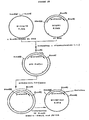
- Figure 1A shows the construction of the mutation vector containing the PB92 protease gene.
- Figure 1B provides a schematic showing the mutation procedure used in some embodiments of the present invention.
- Figure 1C shows the construction of an expression vector containing a mutant PB92 protease gene.
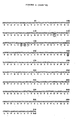
- Figure 2 provides the nucleotide sequence of the PB92 protease gene (SEQ ID NO:1) and the amino acid sequence (SEQ ID NO:2) of the encoded pre-protein, pro-protein and mature protein.
- the present invention provides methods and compositions comprising at least one modified subtiliser, or mutants protease for dishwashing applications. (The terms are used interchangeably)
- the practice of the present invention involves conventional techniques commonly used in molecular biology, microbiology, protein purification, protein engineering, protein and DNA sequencing, recombinant DNA fields, and industrial enzyme use and development, all of which are within the skill of the art.
- nucleic acids are written left to right in 5' to 3' orientation; amino acid sequences are written left to right in amino to carboxy orientation, respectively. It is to be understood that this invention is not limited to the particular methodology, protocols, and reagents described, as these may vary, depending upon the context they are used by those of skill in the art.
- the term "compatible,” means that the cleaning composition materials do not reduce the enzymatic activity of the protease enzyme(s) provided herein to such an extent that the protease(s) is/are not effective as desired during normal use situations.
- Specific cleaning composition materials are exemplified in detail hereinafter.
- effective amount of enzyme refers to the quantity of enzyme necessary to achieve the enzymatic activity required in the specific application. Such effective amounts are readily ascertained by one of ordinary skill in the art and are based on many factors, such as the particular enzyme variant used, the cleaning application, the specific composition of the cleaning composition, and whether a liquid or dry ( e.g ., granular) composition is required, and the like.
- having improved properties used in connection with “mutant proteolytic enzymes,” refers to proteolytic enzymes with improved performance and/or improved stability with retained performance, relative to the corresponding wild-type protease.
- the improved properties are selected from the group consisting of improved dishwash performance and improved stability, as well as the combination of improved dishwash performance and improved stability.
- detergent stability refers to the stability of a detergent composition. In some embodiments, the stability is assessed during the use of the detergent, while in other embodiments, the term refers to the stability of a detergent composition during storage.
- mutant stability is used to indicate better stability of mutant protease(s) in compositions during storage and/or better stability in the sud.
- the mutant protease(s) exhibit improved stability in dish care detergents during storage and/or improved stability in the sud, which includes stability against oxidizing agents, sequestering agents, autolysis, surfactants and high alkalinity, relative to the corresponding wild-type enzyme.
- the phrase, "stability to proteolysis” refers to the ability of a protein (e.g ., an enzyme) to withstand proteolysis. It is not intended that the term be limited to the use of any particular protease to assess the stability of a protein.
- oxidative stability refers to the ability of a protein to function under oxidative conditions.
- the term refers to the ability of a protein to function in the presence of various concentrations of H 2 O 2 , peracids and other oxidants. Stability under various oxidative conditions can be measured either by standard procedures known to those in the art and/or by the methods described herein. A substantial change in oxidative stability is evidenced by at least about a 5% or greater increase or decrease (in most embodiments, it is preferably an increase) in the half-life of the enzymatic activity, as compared to the enzymatic activity present in the absence of oxidative compounds.
- pH stability refers to the ability of a protein to function at a particular pH. In general, most enzymes have a finite pH range at which they will function. In addition to enzymes that function in mid-range pHs (i.e., around pH 7), there are enzymes that are capable of working under conditions with very high or very low pHs. Stability at various pHs can be measured either by standard procedures known to those in the art and/or by the methods described herein. A substantial change in pH stability is evidenced by at least about 5% or greater increase or decrease (in most embodiments, it is preferably an increase) in the half-life of the enzymatic activity, as compared to the enzymatic activity at the enzyme's optimum pH. However, it is not intended that the present invention be limited to any pH stability level nor pH range.
- thermal stability refers to the ability of a protein to function at a particular temperature. In general, most enzymes have a finite range of temperatures at which they will function. In addition to enzymes that work in mid-range temperatures (e.g ., room temperature), there are enzymes that are capable of working in very high or very low temperatures. Thermal stability can be measured either by known procedures or by the methods described herein. A substantial change in thermal stability is evidenced by at least about 5% or greater increase or decrease (in most embodiments, it is preferably an increase) in the half-life of the catalytic activity of a mutant when exposed to given temperature. However, it is not intended that the present invention be limited to any temperature stability level nor temperature range.
- chemical stability refers to the stability of a protein (e.g ., an enzyme) towards chemicals that may adversely affect its activity.
- chemicals include, but are not limited to hydrogen peroxide, peracids, anionic detergents, cationic detergents, non-ionic detergents, chelants, etc.
- purified and isolated refer to the removal of contaminants from a sample.
- an enzyme of interest is purified by removal of contaminating proteins and other compounds within a solution or preparation that are not the enzyme of interest.
- recombinant enzymes of interest are expressed in bacterial or fungal host cells and these recombinant enzymes of interest are purified by the removal of other host cell constituents; the percent of recombinant enzyme of interest polypeptides is thereby increased in the sample.
- protein of interest refers to a protein (e.g ., an enzyme or "enzyme of interest”) which is being analyzed, identified and/or modified.
- Naturally-occurring, as well as recombinant (e.g ., mutant) proteins find use in the present invention.
- protein refers to any composition comprised of amino acids and recognized as a protein by those of skill in the art.
- protein refers to any composition comprised of amino acids and recognized as a protein by those of skill in the art.
- peptide and polypeptide are used interchangeably herein. Wherein a peptide is a portion of a protein, those skilled in the art understand the use of the term in context.
- proteins are considered to be "related proteins.”
- these proteins are derived from a different genus and/or species, including differences between classes of organisms (e.g ., a bacterial protein and a fungal protein).
- these proteins are derived from a different genus and/or species, including differences between classes of organisms (e.g ., a bacterial enzyme and a fungal enzyme).
- related proteins are provided from the same species. Indeed, it is not intended that the present invention be limited to related proteins from any particular source(s).
- related proteins encompasses tertiary structural homologs and primary sequence homologs (e.g ., the enzymes of the present invention). In further embodiments, the term encompasses proteins that are immunologically cross-reactive.
- the term "derivative" refers to a protein which is derived from a protein by addition (i.e ., insertion) of one or more amino acids to either or both the C- and N-terminal end(s), substitution of one or more amino acids at one or a number of different sites in the amino acid sequence, and/or deletion of one or more amino acids at either or both ends of the protein or at one or more sites in the amino acid sequence, and/or insertion of one or more amino acids at one or more sites in the amino acid sequence.
- the preparation of a protein derivative is preferably achieved by modifying a DNA sequence which encodes for the native protein, transformation of that DNA sequence into a suitable host, and expression of the modified DNA sequence to form the derivative protein.
- variant proteins differ from a parent protein and one another by a small number of amino acid residues.
- the number of differing amino acid residues may be one or more, preferably 1, 2, 3, 4, 5, 10, 15, 20, 30, 40, 50, or more amino acid residues.
- the number of different amino acids between variants is between 1 and 10.
- related proteins and particularly variant proteins comprise at least about 35%, 40%, 45%, 50%, 55%, 60%, 65%, 70%, 75%, 80%, 85%, 90%, 95%, 97%, 98%, or 99% amino acid sequence identity.
- a related protein or a variant protein as used herein refers to a protein that differs from another related protein or a parent protein in the number of prominent regions.
- variant proteins have 1, 2, 3, 4, 5, or 10 corresponding prominent regions that differ from the parent protein.
- expression vector refers to a DNA construct containing a DNA sequence that is operably linked to a suitable control sequence capable of effecting the expression of the DNA in a suitable host.
- control sequences include a promoter to effect transcription, an optional operator sequence to control such transcription, a sequence encoding suitable mRNA ribosome binding sites and sequences which control termination of transcription and translation.
- the vector may be a plasmid, a phage particle, or simply a potential genomic insert. Once transformed into a suitable host, the vector may replicate and function independently of the host genome, or may, in some instances, integrate into the genome itself.
- plasmid In the present specification, "plasmid,” “expression plasmid,” and “vector” are often used interchangeably, as the plasmid is the most commonly used form of vector at present. However, the invention is intended to include such other forms of expression vectors that serve equivalent functions and which are, or become, known in the art.
- the protease gene is ligated into an appropriate expression plasmid.
- the cloned protease gene is then used to transform or transfect a host cell in order to express the protease gene.
- This plasmid may replicate in hosts in the sense that it contains the well-known elements necessary for plasmid replication or the plasmid may be designed to integrate into the host chromosome. The necessary elements are provided for efficient gene expression (e.g ., a promoter operably linked to the gene of interest).
- these necessary elements are supplied as the gene's own homologous promoter if it is recognized, (i.e ., transcribed by the host), and a transcription terminator that is exogenous or is supplied by the endogenous terminator region of the protease gene.
- a selection gene such as an antibiotic resistance gene that enables continuous cultural maintenance of plasmid-infected host cells by growth in antimicrobial-containing media is also included.
- cassette mutagenesis method may be used to facilitate the construction of the protease variants of the present invention, although other methods may be used.
- a naturally-occurring gene encoding the protease is obtained and sequenced in whole or in part. Then, the sequence is scanned for a point at which it is desired to make a mutation (deletion, insertion or substitution) of one or more amino acids in the encoded protease. The sequences flanking this point are evaluated for the presence of restriction sites for replacing a short segment of the gene with an oligonucleotide pool which when expressed will encode various mutants. Such restriction sites are preferably unique sites within the protein gene so as to facilitate the replacement of the gene segment. However, any convenient restriction site which is not overly redundant in the protease gene may be used, provided the gene fragments generated by restriction digestion can be reassembled in proper sequence.
- restriction sites are not present at locations within a convenient distance from the selected point (from 10 to 15 nucleotides), such sites are generated by substituting nucleotides in the gene in such a fashion that neither the reading frame nor the amino acids encoded are changed in the final construction.
- Mutation of the gene in order to change its sequence to conform to the desired sequence is accomplished by M13 primer extension in accord with generally known methods.
- the task of locating suitable flanking regions and evaluating the needed changes to arrive at two convenient restriction site sequences is made routine by the redundancy of the genetic code, a restriction enzyme map of the gene and the large number of different restriction enzymes. Note that if a convenient flanking restriction site is available, the above method need be used only in connection with the flanking region which does not contain a site.
- the restriction sites flanking the positions to be mutated are digested with the cognate restriction enzymes and a plurality of end termini-complementary oligonucleotide cassettes are ligated into the gene.
- the mutagenesis is simplified by this method because all of the oligonucleotides can be synthesized so as to have the same restriction sites, and no synthetic linkers are necessary to create the restriction sites.
- corresponding to refers to a residue at the enumerated position in a protein or peptide, or a residue that is analogous, homologous, or equivalent to an enumerated residue in a protein or peptide.
- corresponding region generally refers to an analogous position along related proteins or a parent protein.
- nucleic acid molecule encoding refers to the order or sequence of deoxyribonucleotides along a strand of deoxyribonucleic acid. The order of these deoxyribonucleotides determines the order of amino acids along the polypeptide (protein) chain. The DNA sequence thus codes for the amino acid sequence.
- analogous sequence refers to a sequence within a protein that provides similar function, tertiary structure, and/or conserved residues as the protein of interest (i.e., typically the original protein of interest). For example, in epitope regions that contain an alpha helix or a beta sheet structure, the replacement amino acids in the analogous sequence preferably maintain the same specific structure.
- the term also refers to nucleotide sequences, as well as amino acid sequences. In some embodiments, analogous sequences are developed such that the replacement amino acids result in a variant enzyme showing a similar or improved function.
- the tertiary structure and/or conserved residues of the amino acids in the protein of interest are located at or near the segment or fragment of interest.
- the replacement amino acids preferably maintain that specific structure.
- homologous protein refers to a protein (e.g ., protease) that has similar action and/or structure, as a protein of interest (e.g ., a protease from another source). It is not intended that homologs be necessarily related evolutionarily. Thus, it is intended that the term encompass the same or similar enzyme(s) ( i.e ., in terms of structure and function) obtained from different species. In some preferred embodiments, it is desirable to identify a homolog that has a quaternary, tertiary and/or primary structure similar to the protein of interest, as replacement for the segment or fragment in the protein of interest with an analogous segment from the homolog will reduce the disruptiveness of the change. In some embodiments, homologous proteins have induced similar immunological response(s) as a protein of interest.
- homologous genes refers to at least a pair of genes from different species, which genes correspond to each other and which are identical or very similar to each other.
- the term encompasses genes that are separated by speciation (i.e ., the development of new species) (e.g ., orthologous genes), as well as genes that have been separated by genetic duplication (e.g ., paralogous genes). These genes encode "homologous proteins.”
- ortholog and “orthologous genes” refer to genes in different species that have evolved from a common ancestral gene (i.e ., a homologous gene) by speciation. Typically, orthologs retain the same function during the course of evolution. Identification of orthologs finds use in the reliable prediction of gene function in newly sequenced genomes.
- paralogous genes refer to genes that are related by duplication within a genome. While orthologs retain the same function through the course of evolution, paralogs evolve new functions, even though some functions are often related to the original one. Examples of paralogous genes include, but are not limited to genes encoding trypsin, chymotrypsin, elastase, and thrombin, which are all serine proteinases and occur together within the same species.
- wild-type and wild-type proteins are those found in nature.
- the wild-type sequence refers to a sequence of interest that is the starting point of a protein engineering project.
- the genes encoding the naturally-occurring protein may be obtained in accord with the general methods known to those skilled in the art. The methods generally comprise synthesizing labeled probes having putative sequences encoding regions of the protein of interest, preparing genomic libraries from organisms expressing the protein, and screening the libraries for the gene of interest by hybridization to the probes. Positively hybridizing clones are then mapped and sequenced.
- recombinant DNA molecule refers to a DNA molecule that is comprised of segments of DNA joined together by means of molecular biological techniques.
- oligonucleotide refers to an oligonucleotide created using molecular biological manipulations, including but not limited to, the ligation of two or more oligonucleotide sequences generated by restriction enzyme digestion of a polynucleotide sequence, the synthesis of oligonucleotides ( e.g ., the synthesis of primers or oligonucleotides) and the like.
- the degree of homology between sequences may be determined using any suitable method known in the art (see e.g ., Smith and Waterman, Adv. Appl. Math., 2:482 [1981 ]; Needleman and Wunsch, J. Mol. Biol., 48:443 [1970 ]; Pearson and Lipman, Proc. Natl. Acad. Sci. USA 85:2444 [1988 ]; programs such as GAP, BESTFIT, FASTA, and TFASTA in the Wisconsin Genetics Software Package (Genetics Computer Group, Madison, WI); and Devereux et al., Nucl. Acid Res., 12:387-395 [1984 ]).
- PILEUP is a useful program to determine sequence homology levels.
- PILEUP creates a multiple sequence alignment from a group of related sequences using progressive, pairwise alignments. It can also plot a tree showing the clustering relationships used to create the alignment.
- PILEUP uses a simplification of the progressive alignment method of Feng and Doolittle, ( Feng and Doolittle, J. Mol. Evol., 35:351-360 [1987 ]). The method is similar to that described by Higgins and Sharp ( Higgins and Sharp, CABIOS 5:151-153 [1989 ]).
- Useful PILEUP parameters including a default gap weight of 3.00, a default gap length weight of 0.10, and weighted end gaps.
- BLAST algorithm Another example of a useful algorithm is the BLAST algorithm, described by Altschul et al., ( Altschul et al., J. Mol. Biol., 215:403-410, [1990 ]; and Karlin et al., Proc. Natl. Acad. Sci. USA 90:5873-5787 [1993 ]).
- WU-BLAST-2 program See, Altschul et al., Meth. Enzymol.., 266:460-480 [1996 ]). parameters "W,” "T,” and "X" determine the sensitivity and speed of the alignment.
- the BLAST program uses as defaults a wordlength (W) of 11, the BLOSUM62 scoring matrix (See, Henikoffand Henikoff, Proc. Natl. Acad. Sci. USA 89:10915 [1989 ]) alignments (B) of 50, expectation (E) of 10, M'5, N'-4, and a comparison of both strands.
- percent (%) nucleic acid sequence identity is defined as the percentage of nucleotide residues in a candidate sequence that is identical with the nucleotide residues of the sequence.
- hybridization refers to the process by which a strand of nucleic acid joins with a complementary strand through base pairing, as known in the art.
- hybridization conditions refers to the conditions under which hybridization reactions are conducted. These conditions are typically classified by degree of “stringency” of the conditions under which hybridization is measured.
- the degree of stringency can be based, for example, on the melting temperature (Tm) of the nucleic acid binding complex or probe.
- Tm melting temperature
- “maximum stringency” typically occurs at about Tm-5° C (5° below the Tm of the probe); “high stringency” at about 5-10° below the Tm; “intermediate stringency” at about 10-20° below the Tm of the probe; and “low stringency” at about 20-25° below the Tm.
- maximum stringency conditions may be used to identify nucleic acid sequences having strict identity or near-strict identity with the hybridization probe; while high stringency conditions are used to identify nucleic acid sequences having about 80% or more sequence identity with the probe.
- relatively stringent conditions e.g., relatively low salt and/or high temperature conditions are used.
- phrases "substantially similar and “substantially identical” in the context of at least two nucleic acids or polypeptides typically means that a polynucleotide or polypeptide comprises a sequence that has at least about 50% identity, more preferably at least about 60% identity, still more preferably at least about 75% identity, more preferably at least about 80% identity, yet more preferably at least about 90%, still more preferably about 95%, most preferably about 97% identity, sometimes as much as about 98% and about 99% sequence identity, compared to the reference (i.e., wild-type) sequence. Sequence identity may be determined using known programs such as BLAST, ALIGN, and CLUSTAL using standard parameters. (See e.g., Altschul, et al., J. Mol.
- polypeptides are substantially identical.
- first polypeptide is immunologically cross-reactive with the second polypeptide.
- polypeptides that differ by conservative amino acid substitutions are immunologically cross-reactive.
- a polypeptide is substantially identical to a second polypeptide, for example, where the two peptides differ only by a conservative substitution.
- Another indication that two nucleic acid sequences are substantially identical is that the two molecules hybridize to each other under stringent conditions (e.g., within a range of medium to high stringency).
- equivalent residues refers to proteins that share particular amino acid residues.
- equivalent resides may be identified by determining homology at the level of tertiary structure for a protein (e.g., protease) whose tertiary structure has been determined by x-ray crystallography.
- Equivalent residues are defined as those for which the atomic coordinates of two or more of the main chain atoms of a particular amino acid residue of the protein having putative equivalent residues and the protein of interest are within 0.13 nm and preferably 0.1 nm after alignment. Alignment is achieved after the best model has been oriented and positioned to give the maximum overlap of atomic coordinates of non-hydrogen protein atoms of the proteins analyzed.
- the preferred model is the crystallographic model giving the lowest R factor for experimental diffraction data at the highest resolution available, determined using methods known to those skilled in the art of crystallography and protein characterization/analysis.
- regulatory element refers to a genetic element that controls some aspect of the expression of nucleic acid sequences.
- a promoter is a regulatory element which facilitates the initiation of transcription of an operably linked coding region. Additional regulatory elements include splicing signals, polyadenylation signals and termination signals.
- host cells are generally prokaryotic or eukaryotic hosts which are transformed or transfected with vectors constructed using recombinant DNA techniques known in the art. Transformed host cells are capable of either replicating vectors encoding the protein variants or expressing the desired protein variant. In the case of vectors which encode the preor prepro-form of the protein variant, such variants, when expressed, are typically secreted from the host cell into the host cell medium.
- the term "introduced" in the context of inserting a nucleic acid sequence into a cell means transformation, transduction or transfection.
- Means of transformation include, but are not limited, to any suitable methods known in the art, such as protoplast transformation, calcium chloride precipitation, electroporation, naked DNA and the like, as known in the art. (See, Chang and Cohen, Mol. Gen. Genet., 168:111 - 115 [1979 ]; Smith et al., Appl. Env. Microbiol., 51:634 [1986 ]; and the review article by Ferrari et al., in Harwood, Bacillus, Plenum Publishing Corporation, pp. 57-72 [1989 ]).
- promoter/enhancer denotes a segment of DNA which contains sequences capable of providing both promoter and enhancer functions.
- the enhancer/promoter may be "endogenous” or “exogenous” or “heterologous.”
- An endogenous enhancer/promoter is one which is naturally linked with a given gene in the genome.
- An exogenous (heterologous) enhancer/promoter is one which is placed in juxtaposition to a gene by means of genetic manipulation (i.e ., molecular biological techniques).
- Splicing signals mediate the removal of introns from the primary RNA transcript and consist of a splice donor and acceptor site ( Sambrook et al., Molecular Cloning: A Laboratory Manual, 2nd ed., Cold Spring Harbor Laboratory Press, New York [1989], pp. 16.7-16.8 ).
- stable transfection or "stably transfected” refers to the introduction and integration of foreign DNA into the genome of the transfected cell.
- stable transfectant refers to a cell which has stably integrated foreign or exogenous DNA into the genomic DNA of the transfected cell.
- selectable marker or “selectable gene product” as used herein refer to the use of a gene which encodes an enzymatic activity that confers resistance to an antibiotic or drug upon the cell in which the selectable marker is expressed.
- amplification and “gene amplification” refer to a process by which specific DNA sequences are disproportionately replicated such that the amplified gene becomes present in a higher copy number than was initially present in the genome.
- selection of cells by growth in the presence of a drug results in the amplification of either the endogenous gene encoding the gene product required for growth in the presence of the drug or by amplification of exogenous ( i.e ., input) sequences encoding this gene product, or both.
- Selection of cells by growth in the presence of a drug may result in the amplification of either the endogenous gene encoding the gene product required for growth in the presence of the drug or by amplification of exogenous (i.e ., input) sequences encoding this gene product, or both.
- a drug e.g ., an inhibitor of an inhibitable enzyme
- Amplification is a special case of nucleic acid replication involving template specificity. It is to be contrasted with non-specific template replication (i.e ., replication that is template-dependent but not dependent on a specific template). Template specificity is here distinguished from fidelity of replication (i.e ., synthesis of the proper polynucleotide sequence) and nucleotide (ribo- or deoxyribo-) specificity. Template specificity is frequently described in terms of “target” specificity. Target sequences are “targets” in the sense that they are sought to be sorted out from other nucleic acid. Amplification techniques have been designed primarily for this sorting out.
- the term "co-amplification” refers to the introduction into a single cell of an amplifiable marker in conjunction with other gene sequences ( i.e ., comprising one or more non-selectable genes such as those contained within an expression vector) and the application of appropriate selective pressure such that the cell amplifies both the amplifiable marker and the other, non-selectable gene sequences.
- the amplifiable marker may be physically linked to the other gene sequences or alternatively two separate pieces of DNA, one containing the amplifiable marker and the other containing the non-selectable marker, may be introduced into the same cell.
- amplifiable marker refers to a marker, gene or a vector encoding a gene which permits the amplification of that gene under appropriate growth conditions.
- amplifiable nucleic acid refers to nucleic acids which may be amplified by any amplification method. It is contemplated that "amplifiable nucleic acid” will usually comprise "sample template.”
- sample template refers to nucleic acid originating from a sample which is analyzed for the presence of “target” (defined below).
- background template is used in reference to nucleic acid other than sample template which may or may not be present in a sample. Background template is most often inadvertent. It may be the result of carryover, or it may be due to the presence of nucleic acid contaminants sought to be purified away from the sample. For example, nucleic acids from organisms other than those to be detected may be present as background in a test sample.
- Tempor specificity is achieved in most amplification techniques by the choice of enzyme.
- Amplification enzymes are enzymes that, under conditions they are used, will process only specific sequences of nucleic acid in a heterogeneous mixture of nucleic acid.
- MDV-1 RNA is the specific template for the replicase ( See e.g., Kacian et al., Proc. Natl. Acad. Sci. USA 69:3038 [1972 ]).
- Other nucleic acids are not replicated by this amplification enzyme.
- this amplification enzyme has a stringent specificity for its own promoters ( See , Chamberlin et al., Nature 228:227 [1970 ]).
- T4 DNA ligase the enzyme will not ligate the two oligonucleotides or polynucleotides, where there is a mismatch between the oligonucleotide or polynucleotide substrate and the template at the ligation junction ( See , Wu and Wallace, Genomics 4:560 [1989 ]).
- Taq and Pfu polymerases by virtue of their ability to function at high temperature, are found to display high specificity for the sequences bounded and thus defined by the primers; the high temperature results in thermodynamic conditions that favor primer hybridization with the target sequences and not hybridization with non-target sequences.
- the term "primer” refers to an oligonucleotide, whether occurring naturally as in a purified restriction digest or produced synthetically, which is capable of acting as a point of initiation of synthesis when placed under conditions in which synthesis of a primer extension product which is complementary to a nucleic acid strand is induced, ( i.e ., in the presence of nucleotides and an inducing agent such as DNA polymerase and at a suitable temperature and pH).
- the primer is preferably single stranded for maximum efficiency in amplification, but may alternatively be double stranded. If double stranded, the primer is first treated to separate its strands before being used to prepare extension products.
- the primer is an oligodeoxyribonucleotide.
- the primer must be sufficiently long to prime the synthesis of extension products in the presence of the inducing agent. The exact lengths of the primers depend on many factors, including temperature, source of primer and the use of the method.
- probe refers to an oligonucleotide (i.e ., a sequence of nucleotides), whether occurring naturally as in a purified restriction digest or produced synthetically, recombinantly or by PCR amplification, which is capable of hybridizing to another oligonucleotide of interest.
- a probe may be single-stranded or double-stranded. Probes are useful in the detection, identification and isolation of particular gene sequences.
- any probe used in the present invention will be labeled with any "reporter molecule,” so that is detectable in any detection system, including, but not limited to enzyme (e.g ., ELISA, as well as enzyme-based histochemical assays), fluorescent, radioactive, and luminescent systems. It is not intended that the present invention be limited to any particular detection system or label.
- target when used in reference to amplification methods (e.g ., the polymerase chain reaction), refers to the region of nucleic acid bounded by the primers used for polymerase chain reaction. Thus, the "target” is sought to be sorted out from other nucleic acid sequences.
- a “segment” is defined as a region of nucleic acid within the target sequence.
- PCR polymerase chain reaction
- U.S. Patent Nos. 4,683,195 , 4,683,202 , and 4,965,188 which include methods for increasing the concentration of a segment of a target sequence in a mixture of genomic DNA without cloning or purification.
- This process for amplifying the target sequence consists of introducing a large excess of two oligonucleotide primers to the DNA mixture containing the desired target sequence, followed by a precise sequence of thermal cycling in the presence of a DNA polymerase.
- the two primers are complementary to their respective strands of the double stranded target sequence.
- the mixture is denatured and the primers then annealed to their complementary sequences within the target molecule.
- the primers are extended with a polymerase so as to form a new pair of complementary strands.
- the steps of denaturation, primer annealing and polymerase extension can be repeated many times (i.e ., denaturation, annealing and extension constitute one "cycle”; there can be numerous "cycles") to obtain a high concentration of an amplified segment of the desired target sequence.
- the length of the amplified segment of the desired target sequence is determined by the relative positions of the primers with respect to each other, and therefore, this length is a controllable parameter.
- PCR polymerase chain reaction
- amplification reagents refers to those reagents (deoxyribonucleotide triphosphates, buffer, etc.), needed for amplification except for primers, nucleic acid template and the amplification enzyme.
- amplification reagents along with other reaction components are placed and contained in a reaction vessel (test tube, microwell, etc.).
- PCR With PCR, it is possible to amplify a single copy of a specific target sequence in genomic DNA to a level detectable by several different methodologies (e.g ., hybridization with a labeled probe; incorporation of biotinylated primers followed by avidin-enzyme conjugate detection; incorporation of 32P-labeled deoxynucleotide triphosphates, such as dCTP or dATP, into the amplified segment).
- any oligonucleotide or polynucleotide sequence can be amplified with the appropriate set of primer molecules.
- the amplified segments created by the PCR process itself are, themselves, efficient templates for subsequent PCR amplifications.
- PCR product refers to the resultant mixture of compounds after two or more cycles of the PCR steps of denaturation, annealing and extension are complete. These terms encompass the case where there has been amplification of one or more segments of one or more target sequences.
- restriction endonucleases and “restriction enzymes” refer to bacterial enzymes, each of which cut double-stranded DNA at or near a specific nucleotide sequence.
- surface property is used in reference to an electrostatic charge, as well as properties such as the hydrophobicity and/or hydrophilicity exhibited by the surface of a protein.
- detergent composition and “detergent formulation” are used in reference to mixtures which are intended for use in a wash medium for the cleaning of soiled objects.
- the term is used in reference to detergents used to clean dishes, cutlery, etc. ( e.g ., “dishwashing detergents”). It is not intended that the present invention be limited to any particular detergent formulation or composition.
- detergents that contain at least one protease of the present invention encompasses detergents that contain surfactants, transferase(s), hydrolytic enzymes, oxido reductases, builders, bleaching agents, bleach activators, bluing agents and fluorescent dyes, caking inhibitors, masking agents, enzyme activators, antioxidants, and solubilizers.
- dishware refers to all forms of compositions for cleaning dishware, including cutlery, including but not limited to granular and liquid forms. It is not intended that the present invention be limited to any particular type or dishware composition. Indeed, the present invention finds use in cleaning dishware (e.g ., dishes, including, but not limited to plates, cups, glasses, bowls, etc.) and cutlery (e.g ., utensils, including but not limited to spoons, knives, forks, serving utensils, etc.) of any material, including but not limited to ceramics, plastics, metals, china, glass, acrylics, etc.
- cutlery e.g ., utensils, including but not limited to spoons, knives, forks, serving utensils, etc.
- the term “dishware” is used herein in reference to both dishes and cutlery.
- wash performance of mutant protease refers to the contribution of a mutant protease enzyme to dishwashing that provides additional cleaning performance to the detergent without the addition of the mutant protease to the composition. Wash performance is compared under relevant washing conditions.
- relevant washing conditions is used herein to indicate the conditions, particularly washing temperature, time, washing mechanics, sud concentration, type of detergent and water hardness, actually used in households in a dish detergent market segment.
- improved wash performance is used to indicate that a better end result is obtained in stain removal from dishware and/or cutlery under relevant washing conditions, or that less mutant protease, on weight basis, is needed to obtain the same end result relative to the corresponding wild-type enzyme.
- restored wash performance is used to indicate that the wash performance of a mutant protease enzyme, on weight basis, is at least 80% relative to the corresponding wild-type protease under relevant washing conditions.
- wash performance of proteases is conveniently measured by their ability to remove certain representative stains under appropriate test conditions.
- other relevant factors such as detergent composition, sud concentration, water hardness, washing mechanics, time, pH, and/or temperature, can be controlled in such a way that conditions typical for household application in a certain market segment are imitated.
- the laboratory application test system described herein is representative for household application when used on proteolytic enzymes modified through DNA mutagenesis.
- the methods provided herein facilitate the testing of large amounts of different enzymes and the selection of those enzymes which are particularly suitable for a specific type of detergent application. In this way "tailor made" enzymes for specific application conditions are easily selected.
- the term "disinfecting” refers to the removal of contaminants from the surfaces, as well as the inhibition or killing of microbes on the surfaces of items. It is not intended that the present invention be limited to any particular surface, item, or contaminant(s) or microbes to be removed. -
- Subtilisins comprise the serine proteases of Bacillus subtilis, Bacillus amyloliquefaciens ("subtilisin BPN”'), and Bacillus licheniformis (“subtilisin Carlsberg”) ( See e.g., Markland and Smith, in Boyer (ed.), Enzymes. The (Boyer, ed.) vol. 3, pp.561-608, Academic Press, New York, [1971 ]). Bacillus strains such as alkalophilic Bacillus strains produce other proteases.
- proteases examples include such serine proteases as MAXACAL® protease (also referred to herein as "PB92 protease", isolated from Bacillus nov. spec. PB92), and SAVINASE® protease. Additional proteases, include but are not limited to PROPERASE® protease.
- the amino acid (SEQ ID NO:2) and DNA sequences (SEQ ID NO:1) of the PB92 protease are shown in Figure 2 .
- the mature protease consists of 269 amino acids, with a molecular weight of about 27,000 Daltons, and an isoelectric point in the high alkaline range.
- the activity of PB92 protease on protein substrate is expressed in Alkaline Delft Units (ADU).
- ADU Alkaline Delft Units
- the activity in ADU is determined according to the method described in British Patent Specification No. 1,353,317 except that the pH was changed from 8.5 to 10.0.
- Purified PB92 protease has an activity of 21,000 ADU per mg.
- the turnover number ( k cat) measured on casein is 90 sec -1 mol -1 .
- subtilisin Carlsberg The specific activity of purified preparations of subtilisin Carlsberg (See, Delange and Smith, J. Biol. Chem., 243:2184 [1968 ]), amounts to 10,000 ADU/mg and of subtilisin BPN' ( Matsubara et al., J. Biol. Chem., 240:1125 [1965 ]) to 7,000 ADU/mg.
- subtilisin BPN' Matsubara et al., J. Biol. Chem., 240:1125 [1965 ]
- PB92 protease distinguishes itself from proteases like Carlsberg subtilisin, subtilisin BPN' and other proteases formulated in detergents ( e.g . MAXATASE® and ALCALASE®) in having a high positive charge, which can be visualized by gel electrophoresis of the native protein.
- PB92 protease Since the PB92 protease is active in stain removing at alkaline pH values, it is commonly used as a detergent additive, together with detergent ingredients such as surfactants, builders and oxidizing agents. The latter agents are mostly used in powder form. PB92 protease has a high stain removing efficiency as compared to other proteases, such as the aforementioned subtilisins. This means that less PB92 protease is needed to achieve the same wash performance. Sensitivity to oxidation is an important drawback of the PB92 protease and all other known serine proteases used for application in detergents ( See e.g., Stauffer et al., J. Biol.
- Suitable host strains for production of mutant proteases include transformable microorganisms in which expression of the protease can be achieved.
- host strains of the same species or genus from which the protease is derived are suitable, such as a Bacillus strain, preferably an alkalophilic Bacillus strain and most preferably Bacillus nov. spec. PB92 or a mutant thereof, having substantially the same properties.
- B. subtilis, B. licheniformis and B. amyloliquefaciens strains are among the preferred strains.
- Other suitable and preferred host strains include those strains which are substantially incapable of producing extracellular proteolytic enzymes prior to the transformation with a mutant gene.
- protease deficient Bacillus host strains such as a protease deficient derivative of Bacillus nov. spec. PB92.
- Expression of the proteases is obtained by using expression signals that function in the selected host organism.
- Expression signals include sequences of DNA regulating transcription and translation of the protease genes.
- Proper vectors are able to replicate at sufficiently high copy numbers in the host strain of choice or enable stable maintenance of the protease gene in the host strain by chromosomal integration.
- mutant proteolytic enzymes used in the invention are prepared by cultivating, under appropriate fermentation conditions, a transformed host strain comprising the desired mutant proteolytic gene or genes, and recovering the produced enzymes.
- the proteases being expressed are secreted into the culture medium, which facilitates their recovery, or in the case of gram negative bacterial host strains into the periplasmic space.
- a suitable amino terminal signal sequence is employed, preferably the signal sequence encoded by the original gene if this is functional in the host strain of choice.
- the properties of the naturally occurring or naturally mutated detergent proteases are enhanced by introducing a variety of mutations in the enzyme.
- the mutations are substitutions, either conservative or non-conservative, although deletions and insertions also find use in some embodiments.
- Regions of particular interest for mutation are those amino acids within 4 A distance from the inhibitor molecule Eglin C, when Eglin C is bound to the active site.
- Positions of particular interest include 32, 33, 48-54, 58-62, 94-107, 116, 123-133, 150, 152-156, 158-161, 164, 169, 175-186, 197, 198, 203-216 (PB92 numbering), as most of these positions are available for direct interaction with a proteinaceous substrate.
- PB92 numbering the amino acids at positions 32, 62, 153 and 215 are not substituted, since mutations at these sites tend to degrade wash performance.
- mutations are made at positions 116, 126, 127, and 128 (PB92 numbering).
- an additional mutation is made at position 160.
- positions for substitution of particular interest include 60, 94, 97-102, 105, 116, 123-128, 150, 152, 160, 183, 203, 211, 212, 213, 214 and 216 (PB92 numbering).
- the substitution changes an unstable amino acid (e.g. methionine) to an oxidatively more stable amino acid (e.g. threonine), while maintaining the general conformation and volume of the amino acid at that site.
- replacing the natural amino acid with almost any other amino acid improved results are obtained, particularly in substitutions in which the hydroxylated amino acids S and/or T, are replaced with a polar or non-polar amino acid, or even an aromatic amino acid.
- substitutions include (PB92 numbering):
- wash performance was comparable to or enhanced in relation to the natural enzyme and in many cases storage stability was improved.
- wash performance of some of the PB92 mutant proteases as compared to the native PB92 protease was found to be from about 120 to about 180 percent.
- the present invention provides variant proteases with much improved performance, as compared to the native protease.
- mutations are combined, in order to increase the stability of a protease in detergent compositions.
- Several mutations that positively influence the wash of the same protease can be combined into a single mutant protease gene enabling production of possibly even further improved proteases (e.g., S126M, P127A, S128G, S 160D and G116V, S126N, P127S, S128A, S160D; PB92 numbering).
- Additional protease mutants are provided by combining the good wash performance properties of, for example, G116V and S160D with the stability properties of other mutations (PB92 numbering).
- Useful mutants are also provided by combining any of the mutations or sets of mutations described herein.
- useful mutations specifically provided herein are combined with mutations at other sites. In some embodiments, these combinations result in substantial changes in the properties of the enzymes, while in other embodiments, the changes are less substantial.
- the invention comprises also the use of one or more mutant proteolytic enzymes, as defined herein, in detergent composition(s) and/or in washing process(es)
- ICN ICN Pharmaceuticals, Inc., Costa Mesa, CA); Pierce (Pierce Biotechnology, Rockford, IL); Amicon (Amicon, Inc., Beverly, MA); ATCC (American Type Culture Collection, Manassas, VA); Amersham (Amersham Biosciences, Inc., Piscataway, NJ); Becton Dickinson (Becton Dickinson Labware, Lincoln Park, NJ); BioRad (BioRad, Richmond, CA); Clontech (CLONTECH Laboratories, Palo Alto, CA); Difco (Difco Laboratories, Detroit, MI); GIBCO BRL or Gibco BRL (Life Technologies, Inc., Gaithersburg, MD); Novagen (Novagen, Inc., Madison, WI); Qiagen (Qiagen, Inc., Valencia, CA); Invitrogen (Invitrogen Corp., Carlsbad, CA); Finnzymes (Finnzymes Oy, Espoo, Finland); Macherey-
- the synthetic water with 3.00 mmol Ca+Mg (16.8 °d) used in some dishwashing experiments was prepared as follows. First, three stock solutions were prepared. Solution 1 was 800 mmol/l NaHCO 3 (67.2 g/l); solution 2 was 154.2 mmol /l MgSO 4 * 7 H 2 O (38.0 g/l); and solution 3 was 446.1 mmol /l CaCl 2 * 2 H 2 O (65.6 g/l). After the solutions were prepared, 50 ml each of the stock solutions 1,2 and 3 were placed in a vessel with 7 L demineralized water and then vessel then filled with additional demineralized water up to 10 L. Before use, the pH value of the synthetic water was adjusted to 7.5 with HCl or NaOH.
- Table 1 provides the mutants produced and tested during the development of the present invention.
- BPN' and PB92 numbering are both provided for convenience.
- Table 1 PB92 Mutants Strain Designation BPN' Numbering PB92 Numbering 049* G118V, S128L, P129Q, S130A G116V, S126L, P127Q, S128A 045* G118V, S128N, P129S, S130A, S166D G116V, S126N, P127S, S128A, S164D 046* G118V, S128L, P129Q, S130A, S166D G116V, S126L, P127Q, S128A, S160D 047/048* G118V, S128V, P129E, S130K G116V, S126V, P127E, S128K 050* G118V, S128V, P129M, S166D G116V, S126V, P127M, S160D
- part D (“Production of PB92 Variants”) includes a description of the construction of various PB92 variants that were found to be useful in the present invention.
- the basic construct pM58 was digested with restriction enzymes Hpa I and Bal I.
- the 1400 bp fragment containing the PB92 protease gene was purified on low melting agarose as known in the art.
- Vector M13MP11 See, Messing et al., Nucl. Acids Res., 9:303-321 [1981 ]) was digested with Sma I.
- the 1400 bp DNA fragment of interest was ligated into this vector and transfected into E. coli JM101, using methods known in the art ( See, Cohen et al., Proc. Natl. Acad. Sci. USA 69:2110-2114 [1972 ])
- Mutagenesis was performed on M13M1 using ssDNA of this vector and dsDNA of M13mp19 ( Messing et al. Nucl. Acids Res., 9:303-321 [1988 ]), which latter vector was digested with the restriction enzymes Eco RI and Hind III, followed by purification of the large fragment on low melting agarose.
- Mutagenesis was performed as known in the art ( See, Kramer et al., Nucl. Acids Res., 12:9441-9456 [1984 ]) with a modification being that E. coli JM105, rather than E. coli WK30-3 was used to select for mutants.
- the length of the oligonucleotides used to create the specific mutations was 22 nucleotides.
- the described procedure was useful for generating DNA fragments with mutations in the 3' part of the protease gene (amino acids 154-269).
- pM58Eco was digested with restriction enzyme Eco RI and ligated with T4 ligase under diluted conditions, as known in the art.
- the ligation mixture was used to transform B. subtilis 1-A40 (Bacillus Genetic Stock Centre, Ohio) using methods known in the art (See, Spizizen et al., J. Bacteriol., 81:741-746 [1961 ]).
- Plasmid DNA of transformants was isolated using methods known in the art ( See, Birnboim and Doly, Nucl. Acids Res., 7:1513-1523 [1979 ]), and characterized using restriction enzyme analysis. Thus, in this manner, pM58Eco was isolated ( See, Figure 1c ).
- mutant enzyme the DNA fragments of M13M1 containing the desired mutations generated as described in part B above, were subcloned into pM58Eco. Then, double-stranded DNA (dsDNA) of M13M1 (described above) was digested with Eco RI and ligated into the Eco RI site of pM58Eco. The ligation mixture was used to transform B. subtilis DB104 ( See, Doi, J. Bacteriol., 160:442-444 [1984 ]) using methods known in the art ( See, Spizizen et al., supra ).
- PB92 variants designated 053 through 060 were prepared by fusion PCR as described known in the art ( See e.g., US Pat. Appln. 2006/0252155 A1 ).
- the following Table provides the sequences of the primers used for fusion PCR as described herein. Table 2.
- PhusionTM polymerase (Finnzymes) was used in these PCR reactions.
- 2 ⁇ l of 10mM forward and reverse primer, 1 ⁇ l 10mM dNTP's, 5 ⁇ l 10x HF Phusion buffer, 1.5 ⁇ l DMSO and 1 ⁇ l template was added to a volume of 50 ⁇ l.
- the following program was used: 3 minutes denaturation at 95°C, annealing for 1 minute at 65°C, and elongation for 1 minute and 15 seconds at 72°C, for 30 cycles, followed by 7 minutes at 72°C. Following completion, the reaction products were stored at room temperature.
- the mutant designated as "047/048" was used as template to develop mutants 053 through 058.
- the BgIII-Fw primer was combined with 118V-Rv, and the second fragment was prepared by combining the BgIII-Rv primer with the 128-130-Fw primers.
- BgIII-Fw / S166D-Rv and BgIII-Rv / S166D-Fw were combined.
- mutant "051/052" was used as template to create mutants 059 and 060.
- Primer 126-up-Rv was combined with BgIII-Fw, while BgIII-Rv was combined with 128-130Fw primers.
- Fragments of the expected sizes were purified from agarose gels using PCR purification columns from Macherey-Nagel. The correct fragments were fused and amplified with the Bgl II primers using PhusionTM polymerase, and the following program: 3 minutes of denaturation time at 95°C, annealing for 1 minute at 65°C, and elongation for 2 minutes at 72°C for 25 cycles, followed by 7 minutes at 72°C. Following completion, the reaction products were stored at room temperature.
- Fragments were digested with Bgl II, purified from agarose gels and ligated over night at 14°C with 1 ⁇ l T4 DNA ligase, 8 ⁇ l 5x T4 Ligation buffer in a volume of 40 ⁇ l, using methods known in the art..
- B. subtilis BG3594 comK highly transformable strain was used to obtain protease positive transformants.
- the expression vectors obtained as described above were transformed with 10 ⁇ l of the ligation product.
- Competent Bacillus subtilis cells, BG3594comK were transformed with the expression plasmids, described in Example 1.
- the bacteria were made competent by the induction of the comK gene under control of axylose inducible promoter ( See e.g., Hahn et al., Mol. Microbiol., 21:763-775 [1996 ]).
- Protease positive clones were selected, isolated, sequenced and transformed to B. clausii PBT125 as described in Example 2.
- Example 2 methods used to develop mutant proteases expressed in B. clausii PBT125 transformed using the expression vectors described in Example 1 are provided.
- This strain is a protease negative derivative of PBT110, which was obtained from strain PB92 using classical strain improvement methods, followed by screening for asporogenity and improved protease production.
- the protoplasts were pelleted and suspended in 5 ml of alkaline holding medium to which 3.5% (wt/vol) Bacto-Penassay (Difco) broth and 0.04% albumin (Merieux) were added.
- the transformed protoplasts were regenerated on modified DM3 (5) plates containing 8.0 g of GELRITE® gellam Gum (Kelco), 0.3 g of CaCl 2 ⁇ 2H 2 0, 4.06 g of MgCl 2 .
- H 2 O 5.0 g ofN-tris(hydroxymethyl)methyl-2-aminoethanesulfonic acid buffer (Sigma), 5.0 g of casamino acids, 5 g of yeast extract, 1.5 ml of 4 M NaOH dissolved in 750 ml of H 2 O, and mixed after sterilization with 250 ml of 2 M sucrose and 10 ml of 50% (wt/vol) glucose, 1 ml of albumin (Merieux), 10 mg of thiamine, 5 mg of biotin, and 50 mg of neomycin. Plates were poured at approximately 70°C. Transformation of competent B.
- clausii cells was performed as known in the art ( See e.g., Tanaka, "Construction of Bacillus subtilis Plasmid and Molecular Cloning in Bacillus subtilis," In D. Schlesinger (ed.), Microbiology, American Society for Microbiology, Washington, D.C., pp. 15-18, [1982 ]).
- B. clausii PBT125 was fermented in 6 or 3-liter fermentors in a medium containing 22 g (based on dry matter) of yeast per liter, 5 g of K 2 HPO 4 ⁇ 3H 2 O per liter, 0.05 g of MgSO 4 ⁇ 7H 2 O per liter, 0.05 g of CaCl 2 per liter, 0.005 g of FeSO 4 ⁇ 7H 2 O per liter, and 0.05 g of MnSO 4 ⁇ 4H 2 O per liter.
- the medium components were dissolved in 90% of the final volume and sterilized at pH 7.0 at a temperature of 120°C for 1 h.
- the inoculation culture was obtained by inoculation with B.
- clausii PBT125 into 100 ml of TSB; after sterilization, 4 ml of 1 M sodium carbonate solution was added from a slant tube.
- the inoculation culture was incubated at 37°C for 24 h on a shaking apparatus.
- the medium was inoculated at 37°C and a pH of 8.0 with 1 volume of the inoculation culture per 100 volumes of medium.
- the main fermentation was carried out at 37°C in stirred fermentors equipped with devices to control pH, temperature, and foaming and a device for continuous measurement of the dissolved oxygen concentration and the oxygen uptake rate.
- a 30% glucose solution sterilized at 120°C for 1 h was added to a final concentration of 30 g of glucose per liter of medium.
- the broths were spun for 30 minutes at 11,800 xg.
- the supernatant was filtered through a Whatman glasfibre filter and a 0.8 um filter in a Buchner funnel, followed by filtration using cellulosic pads.
- the resulting material was stored at 4°C, until used.
- the material was concentrated using a Pall UF-filtration unit, with a filter cut-off of 10 kDa.
- the resulting UF-concentrate was formulated by adding propylene glycol and sodium formate. Formic acid was used to bring the pH to 6.0.
- proteases were considered pure when a single band or peak was found by electrophoresis and high performance gel electrophoresis (HPLC), respectively.
- Native PAGE was carried out at pH 7.45 (gel buffer consisting of 20 mM histidine (His) and 50 mM 3-[N-morpholino]propanesulfonic acid (MOPS) in 5% polyacrylamide gels (ratio of acrylamide:bisacrylamide 20:1). Protein samples were loaded on top of slab gels and electrophoresed towards the cathode. The same 5 His/MOPS buffer was used as electrophoresis (tank) buffer, but at pH 6.3. After electrophoresis (1-2 h at 350 V), the gel was soaked in 8% acetic acid to fix the proteins in the gel and subsequently stained with Coomassie Brilliant Blue R250 and destained as known in the art.
- His histidine
- MOPS 3-[N-morpholino]propanesulfonic acid
- the purity check by HPLC made use of a cation exchange column (MonoS; Pharmacia) and a gel filtration column (TSK 2000; SW-LKB).
- the former was run in a 10mM sodium phosphate buffer pH 5.5. Elution of the bound protease was obtained using a linear gradient of 10-300mM sodium phosphate, pH 5.5.
- the gel filtration column was run in 0.25M sodium acetate pH 5.5.
- M 5,600 M -1 ⁇ cm -1
- a protease solution with an estimated enzyme concentration (from the 280 nm absorption) was mixed with 0.25, 0.50, 0.75, 1.00 and 1.25 equivalents of PMSF, respectively, and allowed to react for one hour at room temperature in 10 mM sodium phosphate pH 6.5.
- the enzyme concentration had to be at least 50 M.
- Residual activity was measured spectrophotometrically using succinyl-L-alanyl-L-alanyl-L-prolyl-L-phenylalanyl-para-nitroanilide (sAAPFpNA) as a substrate.
- the purity (and hence concentration) of PMSF was determined by NMR-spectroscopy and stock solutions were made in isopropanol. The results from the active site titration were found to be in agreement with the results from the purity check with HPLC.
- the turnover number with casein as substrate was measured in a pH-stat.
- the reaction chamber of the pH-stat (Radiometer, Copenhagen) contained 10 ml 0.1 M KCl with 50 mg casein (Hammerstein, Merck). Protons, liberated upon hydrolysis of casein by PB92 protease were titrated with 10 mM NaOH, while the pH was maintained at 10.0 (at 40°C and under a flow of nitrogen gas).
- the kinetic parameters kcat and Km were obtained from initial rate measurements at various substrate concentrations (for PB92 protease from 0.1-6.0 mM) and fitting the data to a hyperbolic function by non-linear regression using the multivariate secant iterative method. The specificity constant kcau/Km was then calculated. Measurements were carried out at 25°C, in a final volume of 1 ml containing 0.1M TRIS-HCl + 0.1M NaCl pH 8.6. The sodium chloride was necessary, as in its absence, PB92 protease showed non-linear Lineweaver-Burk plots, that could have been caused by substrate inhibition.
- PB92 variants (049: G116V, S1261, P127Q, S128A, and 046: G116V, S1261, P127Q, S128A, S160D; PB92 numbering) were tested under various conditions.
- the compositions of the dish detergents are provided below. These detergents are commercially available from WFK and are referred to by the designations provided below.
- the protocols for each of the stain types are provided below. Before the individual soil types can be applied to the test dishes, the dishes must be thoroughly washed. This is particularly necessary, as residues of certain persistent stains may still be present on the dishes from previous tests. New dishes were also subjected to three thorough washes before being used for the first time in a test.
- the stainless steel sheets (10x15 cm; brushed on one side) used in these experiments were thoroughly washed at 95°C in a laboratory dishwasher with a high-alkalinity commercial detergent (e.g., ECOLAB® detergent; Henkel) to provide sheets that were clean and grease-free. These sheets were deburred prior to their first use.
- the sheets were dried for 30 minutes at 80°C in a thermal cabinet before being soiled with egg yolk.
- the surfaces to be brushed were not touched prior to soiling. Also, no water stains or fluff on the surfaces were permitted.
- the cooled sheets were weighed before soiling.
- the egg yolks were prepared by separating the yolks of approximately 10-11 eggs (200 g of egg yolk) from the whites. The yolks were stirred with a fork in a glass beaker to homogenize the yolk suspension. The yolks were then strained (approx. 0.5 mm mesh) to remove coarse particles and any egg shell fragments.
- a flat brush (2.5") was used to apply 1.0 ⁇ 0.1 g egg yolk suspension as uniformly as possible over an area of 140 cm 2 on the brushed sides of each of the stainless steel sheets, leaving an approx. 1 cm wide unsoiled rim (adhesive tape was used if needed).
- the soiled sheets were dried horizontally (to prevent formation of droplets on the edges of the sheets), at room temperature for 4 hours (max. 24 h).
- the sheets were immersed for 30 seconds in boiling, demineralized water (using a holding device if necessary). Then, the sheets were dried again for 30 min at 80°C. After drying and cooling, the sheets were weighed. After weighing, the sheets were left for at least 24 hours (20°C, 40-60% relatively humidity) before submitting them to the wash test. In order to meet the testing requirements, only sheets with 500 ⁇ 100 mg/140 cm 2 (egg yolk after denaturation), were used in the testing. After the wash tests were conducted, the sheets were dried for 30 min at 80°C, in the thermal cabinet, and weighed again after cooling. The percent cleaning performance was determined by dividing the (mg of egg yolk released by washing x 100) by the (mg of denatured egg yolk applied).
- dessert plates (Arzberg, white, glazed porcelain) conforming to EN 50242, form 1495, No. 0219, diameter 19 cm were used.
- the minced meat and egg mixture (300 g) was brought up to room temperature and mixed with 80 ml synthetic water. The mixture was then homogenized using a kitchen hand blender for 2 min. Then, a fork was used to spread 3 g of the minced meat/egg/water mixture on each white porcelain plate, leaving an approx. 2 cm wide unsoiled margin around the rim. The amount applied was 11.8 ⁇ 0.5 mg/cm 2 .
- the plates were dried for 2 hours at 120°C in a preheated thermal cabinet. As soon as the plates were cooled, they were ready for use. The plates were stacked with paper towels between each of the plates.
- the plates were sprayed with ninhydrin solution (1% ethanol) for better identification of the minced meat residues.
- ninhydrin solution 1% ethanol
- the plates were heated for 10 min at 80°C in the thermal cabinet. Evaluation of the washing performance was done by visually inspecting the color reactions of the minced meat residues with reference to the IKW photographic catalogue (IKW).
- the stainless steel sheets (10 x 15 cm; brushed on one side) used in these experiments were thoroughly washed at 95°C in a laboratory dishwasher with a high-alkalinity commercial detergent to remove grease and clean the sheets.
- the sheets were polished dry with a cellulose cloth.
- the surfaces to be brushed were not touched prior to soiling. Also, no water stains or fluff on the surfaces were permitted.
- the sheets were placed in a thermal cabinet at 80°C, for 30 min. The cooled sheets were weighed before soiling.
- the egg yolks and whites of whole raw eggs (3-4 eggs; 160 g/egg) were placed in a bowl and beaten with an egg whisk. Then, 50 ml semi-skimmed UHT (1.5% fat, ultra-high temperature, homogenized) milk were added to the mixture. The milk and egg were mixed without generating froth.
- a flat brush was used to uniformly distribute 1.0 ⁇ 0.1 g of the egg/milk mixture on the brushed side of the stainless steel sheets, using a balance to check the distribution. A margin of approximately 1.0 cm was left around the short sides of the sheets.
- the soiled sheets were dried horizontally (to prevent formation of droplets on the edges of the sheets), at room temperature for 4 hours (max. 24 h).
- the sheets were then immersed for 30 seconds in boiling, demineralized water (using a holding device if necessary). Then, the sheets were dried again for 30 min at 80°C. After drying and cooling, the sheets were weighed. After weighing, the sheets were left for at least 24 hours (20°C, 40-60% relatively humidity) , before submitting them to the wash test. In order to meet the testing requirements, only sheets with 190 ⁇ 10 mg egg yolk were used.
- the sheets were dried for 30 min at 80°C, in the thermal cabinet, and weighed again after cooling.
- the percentage cleaning performance was determined by dividing the (mg of egg/milk released by washing x 100) by the (mg of egg/milk applied).
- the washing tests were performed in an automatic dishwasher (Miele: G690SC), equipped with soiled dishes and stainless steel sheets, as described above. A defined amount of the detergent was used, as indicated in the tables of results below.
- the temperatures tested were 45°C, 55°C and 65°C.
- the water hardness was 9° or 21° GH (German hardness) (374 ppm Ca).
- the plates soiled with minced meat were visually assessed using a photo rating scale of from 0 to 10, wherein "0" designated a completely dirty plate and "10" designated a clean plate. These values correspond to the stain or soil removal (SR) capability of the enzyme-containing detergent.
- SR stain or soil removal
- the washed stainless steel plates soiled with egg yolk and/or egg yolk milk (were analyzed gravimetrically to determine the amount of residual stain after washing.
- the PB92 mutant protease and PROPERASE® protease and other mutants were tested at a level of between 0 and 20.57 mg/active protein per wash.
- Phosphate-Free Detergent 45°C, 21°GH Enzyme Wash performance on egg yolk, relative to PROPERASE® Wash performance on minced meat, relative to PROPERASE® Wash performance on egg yolk milk, relative to PROPERASE® PROPERASE® 100 100 100 PB92 046 71 104 88 PB92 049 123 116 108 Phosphate-Free Detergent, 55°C, 21°GH Enzyme Wash Performance on Egg Yolk, Relative to PROPERASE® Wash Performance on Minced Meat, Relative to PROPERASE® PROPERASE® 100 100 PB92 046 ND ND PB92 049 134 128 Phosphate-Free Detergent, 45°C, 21°GH Enzyme Wash Performance on Egg Yolk, Relative to PROPERASE® Wash Performance on Minced Meat, Relative to PROPERASE® Wash Performance on Egg Yolk Milk, Relative to PROPERASE® PROPERASE® 100 100 100 100 PB92 90 100 100 PB92 04
Landscapes
- Chemical & Material Sciences (AREA)
- Life Sciences & Earth Sciences (AREA)
- Engineering & Computer Science (AREA)
- Health & Medical Sciences (AREA)
- Organic Chemistry (AREA)
- Wood Science & Technology (AREA)
- Genetics & Genomics (AREA)
- Zoology (AREA)
- Bioinformatics & Cheminformatics (AREA)
- Biomedical Technology (AREA)
- General Engineering & Computer Science (AREA)
- Oil, Petroleum & Natural Gas (AREA)
- Chemical Kinetics & Catalysis (AREA)
- Biotechnology (AREA)
- Molecular Biology (AREA)
- Biochemistry (AREA)
- General Health & Medical Sciences (AREA)
- Microbiology (AREA)
- Medicinal Chemistry (AREA)
- Physics & Mathematics (AREA)
- Biophysics (AREA)
- Plant Pathology (AREA)
- Enzymes And Modification Thereof (AREA)
- Detergent Compositions (AREA)
- Micro-Organisms Or Cultivation Processes Thereof (AREA)
Applications Claiming Priority (2)
| Application Number | Priority Date | Filing Date | Title |
|---|---|---|---|
| US83173206P | 2006-07-18 | 2006-07-18 | |
| PCT/US2007/015642 WO2008010925A2 (en) | 2006-07-18 | 2007-07-09 | Protease variants active over a broad temperature range |
Publications (2)
| Publication Number | Publication Date |
|---|---|
| EP2059591A2 EP2059591A2 (en) | 2009-05-20 |
| EP2059591B1 true EP2059591B1 (en) | 2012-09-05 |
Family
ID=38893328
Family Applications (1)
| Application Number | Title | Priority Date | Filing Date |
|---|---|---|---|
| EP07796735A Not-in-force EP2059591B1 (en) | 2006-07-18 | 2007-07-09 | Dishwashing composition that contains a protease variant |
Country Status (13)
| Country | Link |
|---|---|
| US (6) | US20080090747A1 (enExample) |
| EP (1) | EP2059591B1 (enExample) |
| JP (2) | JP2009543577A (enExample) |
| KR (2) | KR20150115023A (enExample) |
| CN (2) | CN104232365A (enExample) |
| AU (1) | AU2007275864B2 (enExample) |
| BR (1) | BRPI0714329B1 (enExample) |
| CA (1) | CA2658396C (enExample) |
| DK (1) | DK2059591T3 (enExample) |
| MX (1) | MX2009000537A (enExample) |
| NZ (1) | NZ573467A (enExample) |
| RU (1) | RU2509152C2 (enExample) |
| WO (1) | WO2008010925A2 (enExample) |
Families Citing this family (230)
| Publication number | Priority date | Publication date | Assignee | Title |
|---|---|---|---|---|
| ATE450606T1 (de) * | 2002-01-16 | 2009-12-15 | Genencor Int | Mehrfachsubstituierte proteasevarianten |
| CN104232365A (zh) * | 2006-07-18 | 2014-12-24 | 丹尼斯科美国公司 | 在宽温度范围内具有活性的蛋白酶变体 |
| JP2010507001A (ja) * | 2006-10-16 | 2010-03-04 | ダニスコ・ユーエス・インク、ジェネンコー・ディビジョン | 非リン酸系食器洗浄剤 |
| KR20090129425A (ko) * | 2007-03-12 | 2009-12-16 | 다니스코 유에스 인크. | 개질된 프로테아제 |
| EP2100947A1 (en) | 2008-03-14 | 2009-09-16 | The Procter and Gamble Company | Automatic dishwashing detergent composition |
| EP2100948A1 (en) * | 2008-03-14 | 2009-09-16 | The Procter and Gamble Company | Automatic dishwashing detergent composition |
| BRPI0915681A2 (pt) * | 2008-06-06 | 2015-08-04 | Danisco Us Inc | Composições e métodos compreendendo proteases microbianas variantes |
| BRPI0922083A2 (pt) | 2008-11-11 | 2017-05-30 | Danisco Us Inc | proteases compreendendo uma ou mais mutações combináveis |
| BRPI0920925A2 (pt) | 2008-11-11 | 2015-08-18 | Danisco Us Inc | Composições e métodos compreendendo uma variante de subtilisina |
| US8183024B2 (en) * | 2008-11-11 | 2012-05-22 | Danisco Us Inc. | Compositions and methods comprising a subtilisin variant |
| CN103396904B (zh) * | 2008-11-11 | 2015-12-23 | 宝洁公司 | 包含丝氨酸蛋白酶变体的组合物和方法 |
| EP2216393B1 (en) * | 2009-02-09 | 2024-04-24 | The Procter & Gamble Company | Detergent composition |
| RU2011144134A (ru) | 2009-04-01 | 2013-05-10 | ДАНИСКО ЮЭс ИНК. | Композиции и способы, включающие варианты альфа-амилазы с измененными свойствами |
| EP2480650B1 (en) * | 2009-09-25 | 2017-03-22 | Novozymes A/S | Subtilase variants |
| CN102648277B (zh) * | 2009-09-25 | 2015-05-20 | 诺维信公司 | 蛋白酶变体的用途 |
| CN102762222B (zh) | 2009-12-09 | 2015-11-25 | 丹尼斯科美国公司 | 包含蛋白酶变体的组合物和方法 |
| ES2399311T5 (es) | 2009-12-10 | 2020-06-19 | Procter & Gamble | Composición detergente |
| ES2423580T5 (es) | 2009-12-10 | 2021-06-17 | Procter & Gamble | Método y uso de una composición para lavado de vajillas |
| EP2333041B1 (en) | 2009-12-10 | 2013-05-15 | The Procter & Gamble Company | Method and use of a dishwasher composition |
| EP2333042B1 (en) | 2009-12-10 | 2015-07-01 | The Procter and Gamble Company | Automatic dishwashing product and use thereof |
| US20120258507A1 (en) | 2009-12-21 | 2012-10-11 | Danisco Us Inc. | Detergent compositions containing thermobifida fusca lipase and methods of use thereof |
| WO2011084417A1 (en) | 2009-12-21 | 2011-07-14 | Danisco Us Inc. | Detergent compositions containing geobacillus stearothermophilus lipase and methods of use thereof |
| BR112012017056A2 (pt) | 2009-12-21 | 2016-11-22 | Danisco Us Inc | "composições detergentes contendo lipase de bacillus subtilis e métodos para uso das mesmas" |
| PL2361964T3 (pl) | 2010-02-25 | 2013-05-31 | Procter & Gamble | Kompozycja detergentu |
| CN102858970B (zh) | 2010-04-15 | 2017-07-21 | 丹尼斯科美国公司 | 包含变体蛋白酶的组合物和方法 |
| US20120067373A1 (en) * | 2010-04-15 | 2012-03-22 | Philip Frank Souter | Automatic Dishwashing Detergent Composition |
| EP2383329A1 (en) | 2010-04-23 | 2011-11-02 | The Procter & Gamble Company | Particle |
| ES2682051T3 (es) | 2010-04-23 | 2018-09-18 | The Procter & Gamble Company | Composición detergente |
| ES2533368T3 (es) | 2010-04-23 | 2015-04-09 | The Procter & Gamble Company | Producto para lavavajillas |
| EP2380963B1 (en) | 2010-04-23 | 2015-12-23 | The Procter and Gamble Company | Method of perfuming |
| EP2380478A1 (en) | 2010-04-23 | 2011-10-26 | The Procter & Gamble Company | Automatic dishwashing product |
| EP2380962B1 (en) | 2010-04-23 | 2016-03-30 | The Procter and Gamble Company | Particle |
| WO2011140316A1 (en) | 2010-05-06 | 2011-11-10 | The Procter & Gamble Company | Consumer products with protease variants |
| AR081423A1 (es) | 2010-05-28 | 2012-08-29 | Danisco Us Inc | Composiciones detergentes con contenido de lipasa de streptomyces griseus y metodos para utilizarlas |
| DE102011007313A1 (de) * | 2011-04-13 | 2012-10-18 | Henkel Ag & Co. Kgaa | Expressionsverfahren |
| EP2702152A1 (en) | 2011-04-29 | 2014-03-05 | Danisco US Inc. | Detergent compositions containing bacillus sp. mannanase and methods of use thereof |
| EP2712363A1 (en) | 2011-04-29 | 2014-04-02 | Danisco US Inc. | Detergent compositions containing geobacillus tepidamans mannanase and methods of use thereof |
| CN103608356A (zh) | 2011-04-29 | 2014-02-26 | 丹尼斯科美国公司 | 包含黏琼脂芽孢杆菌(Bacillus agaradhaerens)甘露聚糖酶的洗涤剂组合物及其使用方法 |
| CA3194062A1 (en) | 2011-05-05 | 2012-11-08 | Danisco Us Inc. | Compositions and methods comprising serine protease variants |
| CN106065381B (zh) | 2011-05-05 | 2019-07-26 | 宝洁公司 | 包含丝氨酸蛋白酶变体的组合物和方法 |
| EP3421595B1 (en) | 2011-06-30 | 2020-10-07 | Novozymes A/S | Alpha-amylase-variants |
| PL2584028T3 (pl) | 2011-10-19 | 2017-10-31 | Procter & Gamble | Cząstka |
| EP2794866A1 (en) | 2011-12-22 | 2014-10-29 | Danisco US Inc. | Compositions and methods comprising a lipolytic enzyme variant |
| PL2662436T3 (pl) | 2012-05-11 | 2018-02-28 | The Procter And Gamble Company | Kompozycja detergentu |
| ES2678543T3 (es) | 2012-08-24 | 2018-08-13 | The Procter & Gamble Company | Método de lavado de vajillas |
| EP2700703B1 (en) | 2012-08-24 | 2018-05-02 | The Procter and Gamble Company | Dishwashing method |
| CN110093330B (zh) | 2012-10-12 | 2023-11-28 | 丹尼斯科美国公司 | 包含脂解酶变体的组合物和方法 |
| EP2914720B1 (en) | 2012-11-05 | 2022-08-31 | Danisco US Inc. | Compositions and methods comprising thermolysin protease variants |
| WO2014100018A1 (en) | 2012-12-19 | 2014-06-26 | Danisco Us Inc. | Novel mannanase, compositions and methods of use thereof |
| US20160053243A1 (en) | 2012-12-21 | 2016-02-25 | Danisco Us Inc. | Alpha-amylase variants |
| WO2014099525A1 (en) | 2012-12-21 | 2014-06-26 | Danisco Us Inc. | Paenibacillus curdlanolyticus amylase, and methods of use, thereof |
| EP2746381A1 (en) | 2012-12-21 | 2014-06-25 | The Procter & Gamble Company | Cleaning pack |
| ES2676895T5 (es) | 2013-03-11 | 2022-04-27 | Danisco Us Inc | Variantes combinatorias de alfa-amilasa |
| EP3004342B1 (en) | 2013-05-29 | 2023-01-11 | Danisco US Inc. | Novel metalloproteases |
| EP3004314B1 (en) | 2013-05-29 | 2018-06-20 | Danisco US Inc. | Novel metalloproteases |
| JP2016526880A (ja) | 2013-05-29 | 2016-09-08 | ダニスコ・ユーエス・インク | 新規メタロプロテアーゼ |
| EP3260538B1 (en) | 2013-05-29 | 2021-04-14 | Danisco US Inc. | Novel metalloproteases |
| ES2956266T3 (es) | 2013-07-19 | 2023-12-18 | Danisco Us Inc | Composiciones y procedimientos que comprenden una variante de enzima lipolítica |
| BR112016005286A2 (pt) | 2013-09-12 | 2017-09-12 | Danisco Us Inc | composições e métodos compreendendo variantes de protease do clado lg12 |
| WO2015057619A1 (en) | 2013-10-15 | 2015-04-23 | Danisco Us Inc. | Clay granule |
| US20160289653A1 (en) | 2013-11-14 | 2016-10-06 | Danisco Us Inc. | Stable Enzymes by Glycation Reduction |
| EP3514230B1 (en) | 2013-12-13 | 2021-09-22 | Danisco US Inc. | Serine proteases of bacillus species |
| EP3910057A1 (en) | 2013-12-13 | 2021-11-17 | Danisco US Inc. | Serine proteases of the bacillus gibsonii-clade |
| EP4163305B1 (en) | 2013-12-16 | 2024-07-10 | Nutrition & Biosciences USA 4, Inc. | Use of poly alpha-1,3-glucan ethers as viscosity modifiers |
| KR102410391B1 (ko) | 2013-12-18 | 2022-06-16 | 뉴트리션 앤드 바이오사이언시스 유에스에이 4, 인크. | 양이온성 폴리 알파-1,3-글루칸 에테르 |
| EP3105256A1 (en) | 2014-02-14 | 2016-12-21 | E. I. du Pont de Nemours and Company | Poly-alpha-1,3-1,6-glucans for viscosity modification |
| US9695253B2 (en) | 2014-03-11 | 2017-07-04 | E I Du Pont De Nemours And Company | Oxidized poly alpha-1,3-glucan |
| US20170096653A1 (en) | 2014-03-21 | 2017-04-06 | Danisco Us Inc. | Serine proteases of bacillus species |
| US9714403B2 (en) | 2014-06-19 | 2017-07-25 | E I Du Pont De Nemours And Company | Compositions containing one or more poly alpha-1,3-glucan ether compounds |
| WO2015195777A1 (en) | 2014-06-19 | 2015-12-23 | E. I. Du Pont De Nemours And Company | Compositions containing one or more poly alpha-1,3-glucan ether compounds |
| EP3172329A1 (en) | 2014-10-24 | 2017-05-31 | Danisco US Inc. | Method for producing alcohol by use of a tripeptidyl peptidase |
| EP3212782B1 (en) | 2014-10-27 | 2019-04-17 | Danisco US Inc. | Serine proteases |
| WO2016069552A1 (en) | 2014-10-27 | 2016-05-06 | Danisco Us Inc. | Serine proteases |
| US20170335306A1 (en) | 2014-10-27 | 2017-11-23 | Danisco Us Inc. | Serine proteases |
| WO2016069557A1 (en) | 2014-10-27 | 2016-05-06 | Danisco Us Inc. | Serine proteases of bacillus species |
| EP4403631A3 (en) | 2014-10-27 | 2024-10-30 | Danisco US Inc. | Serine proteases |
| PL3026102T3 (pl) | 2014-11-26 | 2019-06-28 | The Procter & Gamble Company | Saszetka czyszcząca |
| ES2690336T3 (es) | 2014-11-26 | 2018-11-20 | The Procter & Gamble Company | Bolsa limpiadora |
| ES2855023T3 (es) | 2014-11-26 | 2021-09-23 | Procter & Gamble | Bolsa limpiadora |
| EP3026100B1 (en) | 2014-11-26 | 2018-07-25 | The Procter and Gamble Company | Cleaning pouch |
| PL3037512T3 (pl) | 2014-12-22 | 2018-08-31 | The Procter And Gamble Company | Proces recyklingu saszetek z detergentem |
| CN108064306B (zh) | 2014-12-23 | 2022-11-01 | 营养与生物科学美国4公司 | 酶促产生的纤维素 |
| EP3050950B1 (en) | 2015-02-02 | 2018-09-19 | The Procter and Gamble Company | New use of sulfonated polymers |
| EP3050955B2 (en) | 2015-02-02 | 2023-11-08 | The Procter & Gamble Company | Detergent pack |
| EP3050951A1 (en) | 2015-02-02 | 2016-08-03 | The Procter and Gamble Company | Method of dishwashing |
| PL3050953T3 (pl) | 2015-02-02 | 2019-07-31 | The Procter And Gamble Company | Kompozycja detergentu |
| EP3050954A1 (en) | 2015-02-02 | 2016-08-03 | The Procter and Gamble Company | New use of sulfonated polymers |
| EP3050948B1 (en) | 2015-02-02 | 2018-09-19 | The Procter and Gamble Company | New use of complexing agent |
| EP3050952A1 (en) | 2015-02-02 | 2016-08-03 | The Procter and Gamble Company | Method of dishwashing |
| EP3050947A1 (en) | 2015-02-02 | 2016-08-03 | The Procter and Gamble Company | Detergent pack |
| DK3268471T3 (da) | 2015-03-12 | 2019-12-02 | Danisco Us Inc | Sammensætninger og fremgangsmåder omfattende lg12-clade-proteasevarianter |
| EP3872174B1 (en) | 2015-05-13 | 2023-03-01 | Danisco US Inc. | Aprl-clade protease variants and uses thereof |
| WO2016201040A1 (en) | 2015-06-09 | 2016-12-15 | Danisco Us Inc. | Water-triggered enzyme suspension |
| US20180134997A1 (en) | 2015-06-09 | 2018-05-17 | Danisco Us Inc. | Osmotic burst encapsulates |
| WO2016201069A1 (en) | 2015-06-09 | 2016-12-15 | Danisco Us Inc | Low-density enzyme-containing particles |
| EP4234693A3 (en) | 2015-06-17 | 2023-11-01 | Danisco US Inc | Bacillus gibsonii-clade serine proteases |
| PL3124587T3 (pl) | 2015-07-29 | 2019-08-30 | The Procter And Gamble Company | Wielofazowy produkt czyszczący w postaci dawki jednostkowej |
| EP3124586A1 (en) | 2015-07-29 | 2017-02-01 | The Procter and Gamble Company | Process for reducing malodour in a pack |
| EP4483721A3 (en) | 2015-11-05 | 2025-04-16 | Danisco US Inc. | Paenibacillus and bacillus spp. mannanases |
| JP7364331B2 (ja) | 2015-11-05 | 2023-10-18 | ダニスコ・ユーエス・インク | パエニバチルス(Paenibacillus)属種マンナナーゼ |
| WO2017083228A1 (en) | 2015-11-13 | 2017-05-18 | E. I. Du Pont De Nemours And Company | Glucan fiber compositions for use in laundry care and fabric care |
| WO2017083229A1 (en) | 2015-11-13 | 2017-05-18 | E. I. Du Pont De Nemours And Company | Glucan fiber compositions for use in laundry care and fabric care |
| WO2017083226A1 (en) | 2015-11-13 | 2017-05-18 | E. I. Du Pont De Nemours And Company | Glucan fiber compositions for use in laundry care and fabric care |
| EP3178917A1 (en) | 2015-12-08 | 2017-06-14 | The Procter and Gamble Company | Cleaning pouch |
| DK3387124T3 (da) | 2015-12-09 | 2021-08-23 | William Cuevas | Kombinatoriske alfa-amylasevarianter |
| CN108699543B (zh) | 2015-12-18 | 2023-07-14 | 丹尼斯科美国公司 | 具有内切葡聚糖酶活性的多肽及其用途 |
| FI3419991T3 (fi) | 2016-03-04 | 2023-01-31 | Modifioidut ribosomaaliset promoottorit proteiinien tuottamiseksi mikro-organismeissa | |
| CA3018930A1 (en) | 2016-04-08 | 2017-10-12 | The Procter & Gamble Company | Automatic dishwashing cleaning composition |
| EP3228686B1 (en) | 2016-04-08 | 2021-10-27 | The Procter & Gamble Company | Automatic dishwashing |
| EP3228690B1 (en) | 2016-04-08 | 2020-05-13 | The Procter and Gamble Company | Automatic dishwashing cleaning composition |
| EP3228687B1 (en) | 2016-04-08 | 2019-05-22 | The Procter and Gamble Company | Dishwashing cleaning composition |
| EP3241890B1 (en) | 2016-05-03 | 2019-06-26 | The Procter and Gamble Company | Automatic dishwashing detergent composition |
| US20170321157A1 (en) | 2016-05-03 | 2017-11-09 | The Procter & Gamble Company | Automatic dishwashing detergent composition |
| EP3241891B1 (en) | 2016-05-03 | 2019-04-03 | The Procter and Gamble Company | Automatic dishwashing detergent composition |
| US20190194636A1 (en) | 2016-05-03 | 2019-06-27 | Danisco Us Inc | Protease variants and uses thereof |
| WO2017192300A1 (en) | 2016-05-05 | 2017-11-09 | Danisco Us Inc | Protease variants and uses thereof |
| JP7609549B2 (ja) | 2016-05-31 | 2025-01-07 | ダニスコ・ユーエス・インク | プロテアーゼ変異体およびその使用 |
| CN109563497A (zh) | 2016-06-17 | 2019-04-02 | 丹尼斯科美国公司 | 蛋白酶变体及其用途 |
| EP3266860B1 (en) | 2016-07-08 | 2020-04-08 | The Procter and Gamble Company | Process for making a particle |
| EP3290503A3 (en) | 2016-09-01 | 2018-05-30 | The Procter & Gamble Company | Automatic dishwashing cleaning composition |
| EP3312265A1 (en) | 2016-10-18 | 2018-04-25 | The Procter and Gamble Company | Detergent composition |
| WO2018085524A2 (en) | 2016-11-07 | 2018-05-11 | Danisco Us Inc | Laundry detergent composition |
| CN110312794B (zh) | 2016-12-21 | 2024-04-12 | 丹尼斯科美国公司 | 吉氏芽孢杆菌进化枝丝氨酸蛋白酶 |
| US20200392477A1 (en) * | 2016-12-21 | 2020-12-17 | Danisco Us Inc. | Protease variants and uses thereof |
| EP3339410A1 (en) | 2016-12-22 | 2018-06-27 | The Procter & Gamble Company | Automatic dishwashing composition |
| EP3583210B1 (en) | 2017-03-15 | 2021-07-07 | Danisco US Inc. | Trypsin-like serine proteases and uses thereof |
| EP3601515A1 (en) | 2017-03-31 | 2020-02-05 | Danisco US Inc. | Delayed release enzyme formulations for bleach-containing detergents |
| WO2018184004A1 (en) | 2017-03-31 | 2018-10-04 | Danisco Us Inc | Alpha-amylase combinatorial variants |
| EP3418364A1 (en) | 2017-06-19 | 2018-12-26 | The Procter & Gamble Company | Automatic dishwashing cleaning composition |
| EP3418365A1 (en) | 2017-06-19 | 2018-12-26 | The Procter & Gamble Company | Automatic dishwashing cleaning composition |
| EP3418366A1 (en) | 2017-06-19 | 2018-12-26 | The Procter & Gamble Company | Automatic dishwashing cleaning composition |
| WO2019006077A1 (en) | 2017-06-30 | 2019-01-03 | Danisco Us Inc | PARTICLES CONTAINING LOW AGGLOMERATION ENZYME |
| EP3441450A1 (en) | 2017-08-11 | 2019-02-13 | The Procter & Gamble Company | Automatic dishwashing composition |
| EP3668973A2 (en) | 2017-08-18 | 2020-06-24 | Danisco US Inc. | Alpha-amylase variants |
| EP3456808A1 (en) | 2017-09-13 | 2019-03-20 | The Procter & Gamble Company | Automatic dishwashing cleaning composition |
| EP3467085A1 (en) | 2017-10-05 | 2019-04-10 | The Procter & Gamble Company | Dishwashing cleaning composition |
| ES2874024T3 (es) | 2017-10-05 | 2021-11-04 | Procter & Gamble | Composición de limpieza para el lavado de vajillas |
| WO2019089898A1 (en) | 2017-11-02 | 2019-05-09 | Danisco Us Inc | Freezing point depressed solid matrix compositions for melt granulation of enzymes |
| US20200354708A1 (en) | 2017-11-29 | 2020-11-12 | Danisco Us Inc. | Subtilisin variants having improved stability |
| EP3502245B1 (en) * | 2017-12-19 | 2025-03-05 | The Procter & Gamble Company | Automatic dishwashing detergent composition |
| EP3502227B1 (en) | 2017-12-19 | 2024-09-04 | The Procter & Gamble Company | Automatic dishwashing detergent composition |
| DK3502246T3 (da) * | 2017-12-19 | 2025-07-07 | Procter & Gamble | Rensemiddelsammensætning til automatisk opvask |
| US11834634B2 (en) | 2017-12-19 | 2023-12-05 | The Procter & Gamble Company | Phosphate-free automatic dishwashing detergent compositions having a protease and a complexing agent |
| ES3023210T3 (en) | 2017-12-19 | 2025-05-30 | Procter & Gamble | Automatic dishwashing detergent composition |
| CN111742041B (zh) | 2017-12-21 | 2023-06-06 | 丹尼斯科美国公司 | 包含耐热干燥剂的含酶的热熔细粒 |
| BR112020016068A2 (pt) | 2018-02-08 | 2020-12-08 | Danisco Us Inc. | Partículas cera termicamente resistente matriz para encapsulamento de enzima |
| EP3530723B1 (en) | 2018-02-21 | 2023-03-29 | The Procter & Gamble Company | Automatic dishwashing composition |
| JP2021513590A (ja) | 2018-02-28 | 2021-05-27 | ザ プロクター アンド ギャンブル カンパニーThe Procter & Gamble Company | 洗浄組成物 |
| US20190264140A1 (en) | 2018-02-28 | 2019-08-29 | The Procter & Gamble Company | Methods of cleaning |
| EP3810767B1 (en) | 2018-06-19 | 2026-07-15 | Danisco US Inc. | Subtilisin variants |
| JP2021527413A (ja) | 2018-06-19 | 2021-10-14 | ザ プロクター アンド ギャンブル カンパニーThe Procter & Gamble Company | 自動食器洗浄洗剤組成物 |
| EP3799601A1 (en) | 2018-06-19 | 2021-04-07 | Danisco US Inc. | Subtilisin variants |
| EP3810769A1 (en) | 2018-06-19 | 2021-04-28 | The Procter & Gamble Company | Automatic dishwashing detergent composition |
| WO2020028443A1 (en) | 2018-07-31 | 2020-02-06 | Danisco Us Inc | Variant alpha-amylases having amino acid substitutions that lower the pka of the general acid |
| WO2020046613A1 (en) | 2018-08-30 | 2020-03-05 | Danisco Us Inc | Compositions comprising a lipolytic enzyme variant and methods of use thereof |
| EP3844255A1 (en) | 2018-08-30 | 2021-07-07 | Danisco US Inc. | Enzyme-containing granules |
| EP3856882A1 (en) | 2018-09-27 | 2021-08-04 | Danisco US Inc. | Compositions for medical instrument cleaning |
| US20210355469A1 (en) | 2018-10-12 | 2021-11-18 | Danisco Us Inc | Alpha-amylases with mutations that improve stability in the presence of chelants |
| US12509672B2 (en) | 2018-11-28 | 2025-12-30 | Danisco Us Inc. | Subtilisin variants having improved stability |
| EP3938503A1 (en) | 2019-03-14 | 2022-01-19 | The Procter & Gamble Company | Method for treating cotton |
| CN113439116B (zh) | 2019-03-14 | 2023-11-28 | 宝洁公司 | 包含酶的清洁组合物 |
| WO2020186030A1 (en) | 2019-03-14 | 2020-09-17 | The Procter & Gamble Company | Cleaning compositions comprising enzymes |
| EP3741283B1 (en) | 2019-05-22 | 2025-03-19 | The Procter & Gamble Company | Automatic dishwashing method |
| EP3976775A1 (en) | 2019-05-24 | 2022-04-06 | The Procter & Gamble Company | Automatic dishwashing detergent composition |
| CN114174504B (zh) | 2019-05-24 | 2026-04-17 | 丹尼斯科美国公司 | 枯草杆菌蛋白酶变体和使用方法 |
| EP3980517A1 (en) | 2019-06-06 | 2022-04-13 | Danisco US Inc. | Methods and compositions for cleaning |
| EP3760699A1 (en) | 2019-07-02 | 2021-01-06 | The Procter & Gamble Company | Automatic dishwashing detergent composition |
| BR112022007697A2 (pt) | 2019-10-24 | 2022-07-12 | Danisco Us Inc | Alfa-amilase variante que forma maltopentaose/maltohexaose |
| EP4090727A1 (en) | 2020-01-13 | 2022-11-23 | Danisco US Inc. | Compositions comprising a lipolytic enzyme variant and methods of use thereof |
| EP3862412A1 (en) | 2020-02-04 | 2021-08-11 | The Procter & Gamble Company | Detergent composition |
| MX2022013878A (es) | 2020-06-05 | 2022-11-30 | Procter & Gamble | Composiciones detergentes que contienen un surfactante ramificado. |
| WO2022031309A1 (en) | 2020-08-04 | 2022-02-10 | The Procter & Gamble Company | Automatic dishwashing method |
| CA3187725A1 (en) | 2020-08-04 | 2022-02-10 | The Procter & Gamble Company | Automatic dishwashing method |
| WO2022031310A1 (en) | 2020-08-04 | 2022-02-10 | The Procter & Gamble Company | Automatic dishwashing method |
| WO2022031312A1 (en) | 2020-08-04 | 2022-02-10 | The Procter & Gamble Company | Automatic dishwashing method and pack |
| CN116323935A (zh) | 2020-08-27 | 2023-06-23 | 丹尼斯科美国公司 | 用于清洁的酶和酶组合物 |
| EP3974504B1 (en) | 2020-09-29 | 2023-07-26 | The Procter & Gamble Company | Automatic dishwashing cleaning composition |
| EP4237527A1 (en) | 2020-10-29 | 2023-09-06 | The Procter & Gamble Company | Cleaning composition comprising alginate lyase enzymes |
| US11840679B2 (en) | 2020-11-17 | 2023-12-12 | The Procter & Gamble Company | Automatic dishwashing composition |
| JP7667265B2 (ja) | 2020-11-17 | 2025-04-22 | ザ プロクター アンド ギャンブル カンパニー | アルカリ性すすぎによる自動食器洗浄方法 |
| WO2022108766A1 (en) | 2020-11-17 | 2022-05-27 | The Procter & Gamble Company | Automatic dishwashing composition comprising amphiphilic graft polymer |
| EP4001388A1 (en) | 2020-11-17 | 2022-05-25 | The Procter & Gamble Company | Automatic dishwashing method with amphiphilic graft polymer in the rinse |
| WO2023225459A2 (en) | 2022-05-14 | 2023-11-23 | Novozymes A/S | Compositions and methods for preventing, treating, supressing and/or eliminating phytopathogenic infestations and infections |
| CN116529285B (zh) | 2020-12-23 | 2025-05-13 | 巴斯夫股份公司 | 两亲性烷氧基化多胺及其用途 |
| EP4284906A1 (en) | 2021-01-29 | 2023-12-06 | Danisco US Inc. | Compositions for cleaning and methods related thereto |
| MX2023005793A (es) | 2021-03-15 | 2023-05-29 | Procter & Gamble | Composiciones de limpieza que contienen variantes de polipeptido. |
| JP7688157B2 (ja) | 2021-05-05 | 2025-06-03 | ザ プロクター アンド ギャンブル カンパニー | 洗浄組成物の作製及び汚れの検出の方法 |
| ES2999112T3 (en) | 2021-06-22 | 2025-02-24 | Procter & Gamble | A method of treating dishware in a domestic automatic dishwashing machine |
| EP4108767A1 (en) | 2021-06-22 | 2022-12-28 | The Procter & Gamble Company | Cleaning or treatment compositions containing nuclease enzymes |
| WO2023278297A1 (en) | 2021-06-30 | 2023-01-05 | Danisco Us Inc | Variant lipases and uses thereof |
| CN113699138B (zh) * | 2021-08-19 | 2023-10-24 | 邵阳学院 | 碱性蛋白酶基因、杂合启动子、重组表达载体、重组表达工程菌、碱性蛋白酶及方法和应用 |
| CN117916354A (zh) | 2021-09-03 | 2024-04-19 | 丹尼斯科美国公司 | 用于清洁的衣物洗涤组合物 |
| WO2023039270A2 (en) | 2021-09-13 | 2023-03-16 | Danisco Us Inc. | Bioactive-containing granules |
| CN118119692A (zh) | 2021-10-14 | 2024-05-31 | 宝洁公司 | 包含阳离子去垢性聚合物和脂肪酶的织物和家庭护理产品 |
| EP4194537A1 (en) | 2021-12-08 | 2023-06-14 | The Procter & Gamble Company | Laundry treatment cartridge |
| EP4194536A1 (en) | 2021-12-08 | 2023-06-14 | The Procter & Gamble Company | Laundry treatment cartridge |
| CN118647716A (zh) | 2021-12-16 | 2024-09-13 | 丹尼斯科美国公司 | 成麦芽五糖/麦芽六糖变体α-淀粉酶 |
| EP4448750A2 (en) | 2021-12-16 | 2024-10-23 | Danisco US Inc. | Subtilisin variants and uses thereof |
| US20250051748A1 (en) | 2021-12-16 | 2025-02-13 | Danisco Us Inc. | Subtilisin variants and methods of use |
| CN118679252A (zh) | 2021-12-16 | 2024-09-20 | 丹尼斯科美国公司 | 枯草杆菌蛋白酶变体和使用方法 |
| EP4486858A1 (en) | 2022-03-01 | 2025-01-08 | Danisco US Inc. | Enzymes and enzyme compositions for cleaning |
| EP4273210A1 (en) | 2022-05-04 | 2023-11-08 | The Procter & Gamble Company | Detergent compositions containing enzymes |
| EP4273209A1 (en) | 2022-05-04 | 2023-11-08 | The Procter & Gamble Company | Machine-cleaning compositions containing enzymes |
| EP4286499A1 (en) | 2022-06-01 | 2023-12-06 | The Procter & Gamble Company | Dishwashing detergent composition comprising xylanase and sulphonated carboxylate polymer |
| EP4286500A1 (en) | 2022-06-01 | 2023-12-06 | The Procter & Gamble Company | Use of xylanase in a dishwashing process |
| EP4544016A1 (en) | 2022-06-21 | 2025-04-30 | Danisco US Inc. | Methods and compositions for cleaning comprising a polypeptide having thermolysin activity |
| CN120112635A (zh) | 2022-09-02 | 2025-06-06 | 丹尼斯科美国公司 | 枯草杆菌蛋白酶变体及其相关方法 |
| EP4581137A1 (en) | 2022-09-02 | 2025-07-09 | Danisco Us Inc | Mannanase variants and methods of use |
| CN119855892A (zh) | 2022-09-02 | 2025-04-18 | 丹尼斯科美国公司 | 洗涤剂组合物及其相关方法 |
| EP4339270B1 (en) | 2022-09-16 | 2025-09-03 | The Procter & Gamble Company | Cartridge for automatic dishwashing chemical distribution |
| EP4361061A1 (en) | 2022-10-26 | 2024-05-01 | The Procter & Gamble Company | Detergent product |
| CN120303400A (zh) | 2022-11-09 | 2025-07-11 | 丹尼斯科美国公司 | 枯草杆菌蛋白酶变体和使用方法 |
| EP4388967A1 (en) | 2022-12-19 | 2024-06-26 | The Procter & Gamble Company | Dishwashing method |
| WO2024151574A1 (en) | 2023-01-09 | 2024-07-18 | The Procter & Gamble Company | Superposed multi-sectioned water-soluble unit dose automatic dishwashing detergent pouch |
| EP4658776A1 (en) | 2023-02-01 | 2025-12-10 | Danisco US Inc. | Subtilisin variants and methods of use |
| JP2026503673A (ja) | 2023-02-01 | 2026-01-29 | ザ プロクター アンド ギャンブル カンパニー | 酵素を含有する洗剤組成物 |
| WO2024186819A1 (en) | 2023-03-06 | 2024-09-12 | Danisco Us Inc. | Subtilisin variants and methods of use |
| CN120813242A (zh) | 2023-03-16 | 2025-10-17 | 营养与生物科学美国第四公司 | 用于清洁和臭味控制的短芽孢杆菌发酵物提取物及其用途 |
| KR102888405B1 (ko) * | 2023-03-27 | 2025-11-21 | 씨제이제일제당 주식회사 | 프로테아제 활성을 갖는 변이형 폴리펩티드 |
| EP4481027A1 (en) | 2023-06-19 | 2024-12-25 | The Procter & Gamble Company | Cleaning compositions containing enzymes |
| EP4488351A1 (en) | 2023-07-03 | 2025-01-08 | The Procter & Gamble Company | Compositions containing a porphyrin binding protein |
| WO2025071996A1 (en) | 2023-09-28 | 2025-04-03 | Danisco Us Inc. | Variant cutinase enzymes with improved solubility and uses thereof |
| WO2025085351A1 (en) | 2023-10-20 | 2025-04-24 | Danisco Us Inc. | Subtilisin variants and methods of use |
| WO2026024922A1 (en) | 2024-07-25 | 2026-01-29 | Danisco Us Inc. | Subtilisin variants and methods of use |
| EP4703460A1 (en) | 2024-08-29 | 2026-03-04 | The Procter & Gamble Company | Water-soluble unit dose article comprising a metalloprotease |
| WO2026050315A1 (en) | 2024-08-29 | 2026-03-05 | Danisco Us Inc. | Subtilisin variants and methods of use |
| EP4703461A1 (en) | 2024-08-29 | 2026-03-04 | The Procter & Gamble Company | Water-soluble unit dose article comprising a metalloprotease |
| WO2026128769A1 (en) | 2024-12-13 | 2026-06-18 | Danisco Usa Inc. | Cleaning compositions comprising bacterial fermentate extracts and methods related thereof |
| WO2026128766A1 (en) | 2024-12-13 | 2026-06-18 | Danisco Usa Inc. | Malodor control compostions comprising bacterial fermentate extracts and methods related thereof |
| EP4790123A1 (en) | 2025-02-06 | 2026-08-12 | The Procter & Gamble Company | Lipase variants and compositions thereof |
Family Cites Families (28)
| Publication number | Priority date | Publication date | Assignee | Title |
|---|---|---|---|---|
| US4683202A (en) * | 1985-03-28 | 1987-07-28 | Cetus Corporation | Process for amplifying nucleic acid sequences |
| US4965188A (en) * | 1986-08-22 | 1990-10-23 | Cetus Corporation | Process for amplifying, detecting, and/or cloning nucleic acid sequences using a thermostable enzyme |
| US4683195A (en) * | 1986-01-30 | 1987-07-28 | Cetus Corporation | Process for amplifying, detecting, and/or-cloning nucleic acid sequences |
| US5324653A (en) * | 1988-02-11 | 1994-06-28 | Gist-Brocades N.V. | Recombinant genetic means for the production of serine protease muteins |
| US6287841B1 (en) * | 1988-02-11 | 2001-09-11 | Genencor International, Inc. | High alkaline serine protease |
| PT89702B (pt) * | 1988-02-11 | 1994-04-29 | Gist Brocades Nv | Processo para a preparacao de novos enzimas proteoliticos e de detergentes que os contem |
| US5665587A (en) * | 1989-06-26 | 1997-09-09 | Novo Nordisk A/S | Modified subtilisins and detergent compositions containing same |
| DK316989D0 (da) * | 1989-06-26 | 1989-06-26 | Novo Nordisk As | Enzymer |
| US6271012B1 (en) * | 1989-10-11 | 2001-08-07 | Genencor International, Inc. | Protease muteins and their use in detergents |
| US5527483A (en) * | 1991-05-31 | 1996-06-18 | Colgate Palmolive Co. | Nonaqueous gelled automatic dishwashing composition containing enzymes |
| US5240633A (en) * | 1991-05-31 | 1993-08-31 | Colgate-Palmolive Company | Liquid automatic dishwashing composition containing enzymes |
| KR950702633A (ko) * | 1992-07-17 | 1995-07-29 | 한스 발터 라벤 | 고알칼리성 세린 프로테아제(high alkaline serine proteases) |
| MA23346A1 (fr) * | 1993-10-14 | 1995-04-01 | Genencor Int | Variantes de la subtilisine |
| HU219851B (hu) * | 1993-10-14 | 2001-08-28 | The Procter And Gamble Company | Proteáz tartalmú tisztítókészítmények |
| AR016969A1 (es) * | 1997-10-23 | 2001-08-01 | Procter & Gamble | VARIANTE DE PROTEASA, ADN, VECTOR DE EXPRESIoN, MICROORGANISMO HUESPED, COMPOSICIoN DE LIMPIEZA, ALIMENTO PARA ANIMALES Y COMPOSICIoN PARA TRATAR UN TEXTIL |
| US6831053B1 (en) * | 1998-10-23 | 2004-12-14 | The Procter & Gamble Company | Bleaching compositions comprising multiply-substituted protease variants |
| US6376450B1 (en) * | 1998-10-23 | 2002-04-23 | Chanchal Kumar Ghosh | Cleaning compositions containing multiply-substituted protease variants |
| JP2003516751A (ja) * | 1999-12-15 | 2003-05-20 | ノボザイムス アクティーゼルスカブ | 卵の染みに及ぼす洗浄性能改良を示すズブチラーゼ変異体 |
| US6727085B2 (en) * | 1999-12-15 | 2004-04-27 | Fanoe Tina Sejersgaard | Subtilase variants having an improved wash performance on egg stains |
| US6777218B1 (en) * | 2000-03-14 | 2004-08-17 | Novozymes A/S | Subtilase enzymes having an improved wash performance on egg stains |
| US7109016B2 (en) * | 2000-08-21 | 2006-09-19 | Novozymes A/S | Subtilase enzymes |
| US6541235B1 (en) * | 2000-09-29 | 2003-04-01 | University Of Maryland Biotechnology Institute | Calcium free subtilisin mutants |
| US6893855B2 (en) * | 2000-10-13 | 2005-05-17 | Novozymes A/S | Subtilase variants |
| ATE450606T1 (de) * | 2002-01-16 | 2009-12-15 | Genencor Int | Mehrfachsubstituierte proteasevarianten |
| TWI319007B (en) * | 2002-11-06 | 2010-01-01 | Novozymes As | Subtilase variants |
| JP4819670B2 (ja) * | 2003-05-07 | 2011-11-24 | ノボザイムス アクティーゼルスカブ | 変異体スブチリシン酵素(サブチラーゼ) |
| DE102004048779A1 (de) * | 2004-10-07 | 2006-04-13 | Cognis Ip Management Gmbh | Reinigungsmittel, enthaltend Polyolhydroxyalkylether |
| CN104232365A (zh) * | 2006-07-18 | 2014-12-24 | 丹尼斯科美国公司 | 在宽温度范围内具有活性的蛋白酶变体 |
-
2007
- 2007-07-09 CN CN201410407979.4A patent/CN104232365A/zh active Pending
- 2007-07-09 BR BRPI0714329-0A patent/BRPI0714329B1/pt not_active IP Right Cessation
- 2007-07-09 CN CNA2007800269622A patent/CN101511998A/zh active Pending
- 2007-07-09 WO PCT/US2007/015642 patent/WO2008010925A2/en not_active Ceased
- 2007-07-09 US US11/825,731 patent/US20080090747A1/en not_active Abandoned
- 2007-07-09 NZ NZ573467A patent/NZ573467A/en not_active IP Right Cessation
- 2007-07-09 RU RU2009105503/10A patent/RU2509152C2/ru not_active IP Right Cessation
- 2007-07-09 JP JP2009520754A patent/JP2009543577A/ja active Pending
- 2007-07-09 KR KR1020157026840A patent/KR20150115023A/ko not_active Ceased
- 2007-07-09 CA CA2658396A patent/CA2658396C/en active Active
- 2007-07-09 KR KR1020097000871A patent/KR20090031906A/ko not_active Abandoned
- 2007-07-09 AU AU2007275864A patent/AU2007275864B2/en not_active Ceased
- 2007-07-09 DK DK07796735.4T patent/DK2059591T3/da active
- 2007-07-09 EP EP07796735A patent/EP2059591B1/en not_active Not-in-force
- 2007-07-09 MX MX2009000537A patent/MX2009000537A/es active IP Right Grant
-
2010
- 2010-11-17 US US12/948,678 patent/US20110059517A1/en not_active Abandoned
-
2013
- 2013-04-25 US US13/870,798 patent/US20130323816A1/en not_active Abandoned
-
2014
- 2014-04-07 US US14/246,356 patent/US20140302590A1/en not_active Abandoned
-
2015
- 2015-09-30 JP JP2015193074A patent/JP2016052308A/ja active Pending
-
2018
- 2018-05-15 US US15/979,671 patent/US20190078070A1/en not_active Abandoned
-
2019
- 2019-07-23 US US16/519,232 patent/US20190338267A1/en not_active Abandoned
Also Published As
| Publication number | Publication date |
|---|---|
| RU2509152C2 (ru) | 2014-03-10 |
| CN101511998A (zh) | 2009-08-19 |
| US20130323816A1 (en) | 2013-12-05 |
| KR20090031906A (ko) | 2009-03-30 |
| WO2008010925A3 (en) | 2008-04-10 |
| RU2009105503A (ru) | 2010-08-27 |
| AU2007275864B2 (en) | 2013-05-02 |
| US20110059517A1 (en) | 2011-03-10 |
| CA2658396A1 (en) | 2008-01-24 |
| JP2009543577A (ja) | 2009-12-10 |
| US20080090747A1 (en) | 2008-04-17 |
| DK2059591T3 (da) | 2012-10-29 |
| CA2658396C (en) | 2019-07-16 |
| WO2008010925A2 (en) | 2008-01-24 |
| AU2007275864A1 (en) | 2008-01-24 |
| US20190338267A1 (en) | 2019-11-07 |
| US20140302590A1 (en) | 2014-10-09 |
| JP2016052308A (ja) | 2016-04-14 |
| NZ573467A (en) | 2012-02-24 |
| CN104232365A (zh) | 2014-12-24 |
| MX2009000537A (es) | 2009-01-28 |
| BRPI0714329B1 (pt) | 2017-09-12 |
| US20190078070A1 (en) | 2019-03-14 |
| KR20150115023A (ko) | 2015-10-13 |
| EP2059591A2 (en) | 2009-05-20 |
| BRPI0714329A2 (pt) | 2013-03-05 |
Similar Documents
| Publication | Publication Date | Title |
|---|---|---|
| US20190338267A1 (en) | Protease variants active over a broad temperature range | |
| US12203112B2 (en) | Compositions and methods comprising protease variants | |
| EP2362902B1 (en) | Compositions and methods comprising a subtilisin variant | |
| MX2012012789A (es) | Composiciones y metodos que comprenden variantes de proteasa serina. | |
| KR20110095254A (ko) | 서브틸리신 변이체를 함유하는 조성물 및 방법 | |
| AU2014206222B2 (en) | Compositions and methods comprising protease variants |
Legal Events
| Date | Code | Title | Description |
|---|---|---|---|
| PUAI | Public reference made under article 153(3) epc to a published international application that has entered the european phase |
Free format text: ORIGINAL CODE: 0009012 |
|
| 17P | Request for examination filed |
Effective date: 20090209 |
|
| AK | Designated contracting states |
Kind code of ref document: A2 Designated state(s): AT BE BG CH CY CZ DE DK EE ES FI FR GB GR HU IE IS IT LI LT LU LV MC MT NL PL PT RO SE SI SK TR |
|
| AX | Request for extension of the european patent |
Extension state: AL BA HR MK RS |
|
| DAX | Request for extension of the european patent (deleted) | ||
| 17Q | First examination report despatched |
Effective date: 20091127 |
|
| REG | Reference to a national code |
Ref country code: DE Ref legal event code: R079 Ref document number: 602007025314 Country of ref document: DE Free format text: PREVIOUS MAIN CLASS: C12N0009540000 Ipc: C11D0003386000 |
|
| GRAP | Despatch of communication of intention to grant a patent |
Free format text: ORIGINAL CODE: EPIDOSNIGR1 |
|
| RIC1 | Information provided on ipc code assigned before grant |
Ipc: C11D 3/386 20060101AFI20120309BHEP Ipc: C12N 9/54 20060101ALI20120309BHEP |
|
| RTI1 | Title (correction) |
Free format text: DISHWASHING COMPOSITION THAT CONTAINS A PROTEASE VARIANT |
|
| GRAS | Grant fee paid |
Free format text: ORIGINAL CODE: EPIDOSNIGR3 |
|
| GRAA | (expected) grant |
Free format text: ORIGINAL CODE: 0009210 |
|
| RAP1 | Party data changed (applicant data changed or rights of an application transferred) |
Owner name: DANISCO US INC. |
|
| AK | Designated contracting states |
Kind code of ref document: B1 Designated state(s): AT BE BG CH CY CZ DE DK EE ES FI FR GB GR HU IE IS IT LI LT LU LV MC MT NL PL PT RO SE SI SK TR |
|
| REG | Reference to a national code |
Ref country code: GB Ref legal event code: FG4D |
|
| REG | Reference to a national code |
Ref country code: CH Ref legal event code: EP |
|
| REG | Reference to a national code |
Ref country code: AT Ref legal event code: REF Ref document number: 574162 Country of ref document: AT Kind code of ref document: T Effective date: 20120915 |
|
| REG | Reference to a national code |
Ref country code: IE Ref legal event code: FG4D |
|
| REG | Reference to a national code |
Ref country code: DK Ref legal event code: T3 |
|
| REG | Reference to a national code |
Ref country code: DE Ref legal event code: R096 Ref document number: 602007025314 Country of ref document: DE Effective date: 20121031 |
|
| REG | Reference to a national code |
Ref country code: AT Ref legal event code: MK05 Ref document number: 574162 Country of ref document: AT Kind code of ref document: T Effective date: 20120905 |
|
| REG | Reference to a national code |
Ref country code: NL Ref legal event code: VDEP Effective date: 20120905 |
|
| PG25 | Lapsed in a contracting state [announced via postgrant information from national office to epo] |
Ref country code: AT Free format text: LAPSE BECAUSE OF FAILURE TO SUBMIT A TRANSLATION OF THE DESCRIPTION OR TO PAY THE FEE WITHIN THE PRESCRIBED TIME-LIMIT Effective date: 20120905 Ref country code: CY Free format text: LAPSE BECAUSE OF FAILURE TO SUBMIT A TRANSLATION OF THE DESCRIPTION OR TO PAY THE FEE WITHIN THE PRESCRIBED TIME-LIMIT Effective date: 20120905 Ref country code: LT Free format text: LAPSE BECAUSE OF FAILURE TO SUBMIT A TRANSLATION OF THE DESCRIPTION OR TO PAY THE FEE WITHIN THE PRESCRIBED TIME-LIMIT Effective date: 20120905 |
|
| REG | Reference to a national code |
Ref country code: LT Ref legal event code: MG4D Effective date: 20120905 |
|
| PG25 | Lapsed in a contracting state [announced via postgrant information from national office to epo] |
Ref country code: SE Free format text: LAPSE BECAUSE OF FAILURE TO SUBMIT A TRANSLATION OF THE DESCRIPTION OR TO PAY THE FEE WITHIN THE PRESCRIBED TIME-LIMIT Effective date: 20120905 Ref country code: SI Free format text: LAPSE BECAUSE OF FAILURE TO SUBMIT A TRANSLATION OF THE DESCRIPTION OR TO PAY THE FEE WITHIN THE PRESCRIBED TIME-LIMIT Effective date: 20120905 Ref country code: GR Free format text: LAPSE BECAUSE OF FAILURE TO SUBMIT A TRANSLATION OF THE DESCRIPTION OR TO PAY THE FEE WITHIN THE PRESCRIBED TIME-LIMIT Effective date: 20121206 Ref country code: LV Free format text: LAPSE BECAUSE OF FAILURE TO SUBMIT A TRANSLATION OF THE DESCRIPTION OR TO PAY THE FEE WITHIN THE PRESCRIBED TIME-LIMIT Effective date: 20120905 |
|
| PG25 | Lapsed in a contracting state [announced via postgrant information from national office to epo] |
Ref country code: CZ Free format text: LAPSE BECAUSE OF FAILURE TO SUBMIT A TRANSLATION OF THE DESCRIPTION OR TO PAY THE FEE WITHIN THE PRESCRIBED TIME-LIMIT Effective date: 20120905 Ref country code: IS Free format text: LAPSE BECAUSE OF FAILURE TO SUBMIT A TRANSLATION OF THE DESCRIPTION OR TO PAY THE FEE WITHIN THE PRESCRIBED TIME-LIMIT Effective date: 20130105 Ref country code: EE Free format text: LAPSE BECAUSE OF FAILURE TO SUBMIT A TRANSLATION OF THE DESCRIPTION OR TO PAY THE FEE WITHIN THE PRESCRIBED TIME-LIMIT Effective date: 20120905 Ref country code: NL Free format text: LAPSE BECAUSE OF FAILURE TO SUBMIT A TRANSLATION OF THE DESCRIPTION OR TO PAY THE FEE WITHIN THE PRESCRIBED TIME-LIMIT Effective date: 20120905 Ref country code: RO Free format text: LAPSE BECAUSE OF FAILURE TO SUBMIT A TRANSLATION OF THE DESCRIPTION OR TO PAY THE FEE WITHIN THE PRESCRIBED TIME-LIMIT Effective date: 20120905 Ref country code: ES Free format text: LAPSE BECAUSE OF FAILURE TO SUBMIT A TRANSLATION OF THE DESCRIPTION OR TO PAY THE FEE WITHIN THE PRESCRIBED TIME-LIMIT Effective date: 20121216 |
|
| PG25 | Lapsed in a contracting state [announced via postgrant information from national office to epo] |
Ref country code: PL Free format text: LAPSE BECAUSE OF FAILURE TO SUBMIT A TRANSLATION OF THE DESCRIPTION OR TO PAY THE FEE WITHIN THE PRESCRIBED TIME-LIMIT Effective date: 20120905 Ref country code: SK Free format text: LAPSE BECAUSE OF FAILURE TO SUBMIT A TRANSLATION OF THE DESCRIPTION OR TO PAY THE FEE WITHIN THE PRESCRIBED TIME-LIMIT Effective date: 20120905 Ref country code: PT Free format text: LAPSE BECAUSE OF FAILURE TO SUBMIT A TRANSLATION OF THE DESCRIPTION OR TO PAY THE FEE WITHIN THE PRESCRIBED TIME-LIMIT Effective date: 20130107 |
|
| PLBE | No opposition filed within time limit |
Free format text: ORIGINAL CODE: 0009261 |
|
| STAA | Information on the status of an ep patent application or granted ep patent |
Free format text: STATUS: NO OPPOSITION FILED WITHIN TIME LIMIT |
|
| PG25 | Lapsed in a contracting state [announced via postgrant information from national office to epo] |
Ref country code: BG Free format text: LAPSE BECAUSE OF FAILURE TO SUBMIT A TRANSLATION OF THE DESCRIPTION OR TO PAY THE FEE WITHIN THE PRESCRIBED TIME-LIMIT Effective date: 20121205 |
|
| 26N | No opposition filed |
Effective date: 20130606 |
|
| PG25 | Lapsed in a contracting state [announced via postgrant information from national office to epo] |
Ref country code: IT Free format text: LAPSE BECAUSE OF FAILURE TO SUBMIT A TRANSLATION OF THE DESCRIPTION OR TO PAY THE FEE WITHIN THE PRESCRIBED TIME-LIMIT Effective date: 20120905 |
|
| REG | Reference to a national code |
Ref country code: DE Ref legal event code: R097 Ref document number: 602007025314 Country of ref document: DE Effective date: 20130606 |
|
| PG25 | Lapsed in a contracting state [announced via postgrant information from national office to epo] |
Ref country code: MC Free format text: LAPSE BECAUSE OF FAILURE TO SUBMIT A TRANSLATION OF THE DESCRIPTION OR TO PAY THE FEE WITHIN THE PRESCRIBED TIME-LIMIT Effective date: 20120905 |
|
| REG | Reference to a national code |
Ref country code: CH Ref legal event code: PL |
|
| REG | Reference to a national code |
Ref country code: IE Ref legal event code: MM4A |
|
| PG25 | Lapsed in a contracting state [announced via postgrant information from national office to epo] |
Ref country code: LI Free format text: LAPSE BECAUSE OF NON-PAYMENT OF DUE FEES Effective date: 20130731 Ref country code: CH Free format text: LAPSE BECAUSE OF NON-PAYMENT OF DUE FEES Effective date: 20130731 |
|
| PG25 | Lapsed in a contracting state [announced via postgrant information from national office to epo] |
Ref country code: IE Free format text: LAPSE BECAUSE OF NON-PAYMENT OF DUE FEES Effective date: 20130709 |
|
| PG25 | Lapsed in a contracting state [announced via postgrant information from national office to epo] |
Ref country code: MT Free format text: LAPSE BECAUSE OF FAILURE TO SUBMIT A TRANSLATION OF THE DESCRIPTION OR TO PAY THE FEE WITHIN THE PRESCRIBED TIME-LIMIT Effective date: 20120905 Ref country code: TR Free format text: LAPSE BECAUSE OF FAILURE TO SUBMIT A TRANSLATION OF THE DESCRIPTION OR TO PAY THE FEE WITHIN THE PRESCRIBED TIME-LIMIT Effective date: 20120905 |
|
| PG25 | Lapsed in a contracting state [announced via postgrant information from national office to epo] |
Ref country code: LU Free format text: LAPSE BECAUSE OF NON-PAYMENT OF DUE FEES Effective date: 20130709 Ref country code: HU Free format text: LAPSE BECAUSE OF FAILURE TO SUBMIT A TRANSLATION OF THE DESCRIPTION OR TO PAY THE FEE WITHIN THE PRESCRIBED TIME-LIMIT; INVALID AB INITIO Effective date: 20070709 |
|
| REG | Reference to a national code |
Ref country code: FR Ref legal event code: PLFP Year of fee payment: 10 |
|
| PGFP | Annual fee paid to national office [announced via postgrant information from national office to epo] |
Ref country code: BE Payment date: 20160613 Year of fee payment: 10 |
|
| PGFP | Annual fee paid to national office [announced via postgrant information from national office to epo] |
Ref country code: FI Payment date: 20160711 Year of fee payment: 10 |
|
| REG | Reference to a national code |
Ref country code: FR Ref legal event code: PLFP Year of fee payment: 11 |
|
| PG25 | Lapsed in a contracting state [announced via postgrant information from national office to epo] |
Ref country code: FI Free format text: LAPSE BECAUSE OF NON-PAYMENT OF DUE FEES Effective date: 20170709 |
|
| REG | Reference to a national code |
Ref country code: BE Ref legal event code: MM Effective date: 20170731 |
|
| REG | Reference to a national code |
Ref country code: FR Ref legal event code: PLFP Year of fee payment: 12 |
|
| PG25 | Lapsed in a contracting state [announced via postgrant information from national office to epo] |
Ref country code: BE Free format text: LAPSE BECAUSE OF NON-PAYMENT OF DUE FEES Effective date: 20170731 |
|
| PGFP | Annual fee paid to national office [announced via postgrant information from national office to epo] |
Ref country code: DK Payment date: 20220714 Year of fee payment: 16 |
|
| P01 | Opt-out of the competence of the unified patent court (upc) registered |
Effective date: 20230530 |
|
| PGFP | Annual fee paid to national office [announced via postgrant information from national office to epo] |
Ref country code: FR Payment date: 20230620 Year of fee payment: 17 |
|
| PGFP | Annual fee paid to national office [announced via postgrant information from national office to epo] |
Ref country code: GB Payment date: 20230601 Year of fee payment: 17 |
|
| PGFP | Annual fee paid to national office [announced via postgrant information from national office to epo] |
Ref country code: DE Payment date: 20230531 Year of fee payment: 17 |
|
| REG | Reference to a national code |
Ref country code: DK Ref legal event code: EBP Effective date: 20230731 |
|
| PG25 | Lapsed in a contracting state [announced via postgrant information from national office to epo] |
Ref country code: DK Free format text: LAPSE BECAUSE OF NON-PAYMENT OF DUE FEES Effective date: 20230731 |
|
| PG25 | Lapsed in a contracting state [announced via postgrant information from national office to epo] |
Ref country code: DK Free format text: LAPSE BECAUSE OF NON-PAYMENT OF DUE FEES Effective date: 20230731 |
|
| REG | Reference to a national code |
Ref country code: DE Ref legal event code: R119 Ref document number: 602007025314 Country of ref document: DE |
|
| GBPC | Gb: european patent ceased through non-payment of renewal fee |
Effective date: 20240709 |
|
| PG25 | Lapsed in a contracting state [announced via postgrant information from national office to epo] |
Ref country code: DE Free format text: LAPSE BECAUSE OF NON-PAYMENT OF DUE FEES Effective date: 20250201 |
|
| PG25 | Lapsed in a contracting state [announced via postgrant information from national office to epo] |
Ref country code: FR Free format text: LAPSE BECAUSE OF NON-PAYMENT OF DUE FEES Effective date: 20240731 |
|
| PG25 | Lapsed in a contracting state [announced via postgrant information from national office to epo] |
Ref country code: GB Free format text: LAPSE BECAUSE OF NON-PAYMENT OF DUE FEES Effective date: 20240709 |