EP1936144B1 - Ottomotor - Google Patents
Ottomotor Download PDFInfo
- Publication number
- EP1936144B1 EP1936144B1 EP06797044A EP06797044A EP1936144B1 EP 1936144 B1 EP1936144 B1 EP 1936144B1 EP 06797044 A EP06797044 A EP 06797044A EP 06797044 A EP06797044 A EP 06797044A EP 1936144 B1 EP1936144 B1 EP 1936144B1
- Authority
- EP
- European Patent Office
- Prior art keywords
- auxiliary chamber
- ignition
- chamber
- volume
- sleeve
- Prior art date
- Legal status (The legal status is an assumption and is not a legal conclusion. Google has not performed a legal analysis and makes no representation as to the accuracy of the status listed.)
- Not-in-force
Links
Images




Classifications
-
- F—MECHANICAL ENGINEERING; LIGHTING; HEATING; WEAPONS; BLASTING
- F02—COMBUSTION ENGINES; HOT-GAS OR COMBUSTION-PRODUCT ENGINE PLANTS
- F02B—INTERNAL-COMBUSTION PISTON ENGINES; COMBUSTION ENGINES IN GENERAL
- F02B19/00—Engines characterised by precombustion chambers
- F02B19/12—Engines characterised by precombustion chambers with positive ignition
-
- F—MECHANICAL ENGINEERING; LIGHTING; HEATING; WEAPONS; BLASTING
- F02—COMBUSTION ENGINES; HOT-GAS OR COMBUSTION-PRODUCT ENGINE PLANTS
- F02B—INTERNAL-COMBUSTION PISTON ENGINES; COMBUSTION ENGINES IN GENERAL
- F02B19/00—Engines characterised by precombustion chambers
- F02B19/16—Chamber shapes or constructions not specific to sub-groups F02B19/02 - F02B19/10
-
- F—MECHANICAL ENGINEERING; LIGHTING; HEATING; WEAPONS; BLASTING
- F02—COMBUSTION ENGINES; HOT-GAS OR COMBUSTION-PRODUCT ENGINE PLANTS
- F02B—INTERNAL-COMBUSTION PISTON ENGINES; COMBUSTION ENGINES IN GENERAL
- F02B19/00—Engines characterised by precombustion chambers
- F02B19/16—Chamber shapes or constructions not specific to sub-groups F02B19/02 - F02B19/10
- F02B19/18—Transfer passages between chamber and cylinder
-
- F—MECHANICAL ENGINEERING; LIGHTING; HEATING; WEAPONS; BLASTING
- F02—COMBUSTION ENGINES; HOT-GAS OR COMBUSTION-PRODUCT ENGINE PLANTS
- F02P—IGNITION, OTHER THAN COMPRESSION IGNITION, FOR INTERNAL-COMBUSTION ENGINES; TESTING OF IGNITION TIMING IN COMPRESSION-IGNITION ENGINES
- F02P13/00—Sparking plugs structurally combined with other parts of internal-combustion engines
-
- H—ELECTRICITY
- H01—ELECTRIC ELEMENTS
- H01T—SPARK GAPS; OVERVOLTAGE ARRESTERS USING SPARK GAPS; SPARKING PLUGS; CORONA DEVICES; GENERATING IONS TO BE INTRODUCED INTO NON-ENCLOSED GASES
- H01T13/00—Sparking plugs
- H01T13/54—Sparking plugs having electrodes arranged in a partly-enclosed ignition chamber
-
- F—MECHANICAL ENGINEERING; LIGHTING; HEATING; WEAPONS; BLASTING
- F02—COMBUSTION ENGINES; HOT-GAS OR COMBUSTION-PRODUCT ENGINE PLANTS
- F02B—INTERNAL-COMBUSTION PISTON ENGINES; COMBUSTION ENGINES IN GENERAL
- F02B23/00—Other engines characterised by special shape or construction of combustion chambers to improve operation
- F02B23/08—Other engines characterised by special shape or construction of combustion chambers to improve operation with positive ignition
-
- Y—GENERAL TAGGING OF NEW TECHNOLOGICAL DEVELOPMENTS; GENERAL TAGGING OF CROSS-SECTIONAL TECHNOLOGIES SPANNING OVER SEVERAL SECTIONS OF THE IPC; TECHNICAL SUBJECTS COVERED BY FORMER USPC CROSS-REFERENCE ART COLLECTIONS [XRACs] AND DIGESTS
- Y02—TECHNOLOGIES OR APPLICATIONS FOR MITIGATION OR ADAPTATION AGAINST CLIMATE CHANGE
- Y02T—CLIMATE CHANGE MITIGATION TECHNOLOGIES RELATED TO TRANSPORTATION
- Y02T10/00—Road transport of goods or passengers
- Y02T10/10—Internal combustion engine [ICE] based vehicles
- Y02T10/12—Improving ICE efficiencies
Definitions
- the present invention relates to spark ignition engines comprising a single chamber type combustion chamber.
- a combustion chamber 25 is formed between a cylinder head 21 and the top of a piston 23 installed in a cylinder 22, and an ignition plug 27 is provided in the cylinder head 21 in such a way that ignition electrodes 27a are disposed over the combustion chamber 25.
- a cap 28 having a plurality of nozzle holes 28a is provided at the tip of the ignition plug 27 so as to cover the ignition electrodes 27a, and an auxiliary chamber 30 is thus formed in the cap 28, communicated with the combustion chamber 25 through the plurality of nozzle holes 28a. Therefore, when the air-fuel mixture flowed into the auxiliary chamber 30 from the cylinder 22 is spark-ignited with the ignition electrodes 27a of the ignition plug 27, the flame blown off out of the plurality of nozzle holes 28a becomes a flame jet. The flame jet makes the turbulence and is transmitted into the combustion chamber 25. As a result, the air-fuel mixture in the combustion chamber 25 is fully combusted. Hence, the turbulence generated by the flame jet makes the rapid combustion possible.
- a spark ignition engine comprising a cylinder with a cylinder head, a main chamber (combustion chamber) and a precombustion chamber (auxiliary chamber), whereby a head separates the main chamber from the combustion chamber and communicates the main chamber with the precombustion chamber via one or more passageways.
- the precombustion chamber is formed at the bottom of a sleeve, whereby the bottom of the sleeve is projected to the inside of the main chamber from an explosion surface of the cylinder head and the ignition position by ignition electrodes is set near the explosion surface.
- Japanese Publication JP 2004-204835 discloses a spark ignition engine comprising a sleeve in a blind cylindrical shape in the cylinder head forming an auxiliary chamber, which is larger in diameter than in height.
- the auxiliary chamber is formed at the tip of the lower portion of the ignition plug, provided with the cap formed in the blind cylindrical shape.
- the diameter of the auxiliary chamber is limited by the diameter of the ignition plug. So, in order to secure the effective volume in the auxiliary chamber, the height thereof has to be higher. Therefore, the height of the auxiliary chamber becomes much longer than the width thereof, so that the length between the position of ignition by the ignition electrodes and the nozzle holes provided at the lower portion of the auxiliary chamber, and the residual gas is easy to remain around the position of ignition.
- the ignition in the auxiliary chamber or the flame expansion is prevented by the effect of the residual gas, so that the stable ignition and combustion performance with leaner air-fuel mixture is difficult to achieve.
- the objective of the present invention is to provide a spark ignition engine capable of operating with a leaner air-fuel mixture to achieve stable ignition and combustion performance.
- a spark ignition engine comprises a cylinder, a cylinder head disposed above the cylinder, a piston disposed in the cylinder and a single chamber type combustion chamber provided in the cylinder above the piston, wherein the cylinder head has a bottom surface facing the combustion chamber, and the bottom surface of the cylinder head is defined as an explosion surface.
- a cylindrical sleeve has a first bottom and a second bottom extended downward from the first bottom, and an ignition plug is fitted to the cylinder head through the sleeve.
- an auxiliary chamber is formed so as to be surrounded by the sleeve and the ignition plug, wherein the auxiliary chamber has a vertical length L1 between an inside bottom of the second bottom of the sleeve and a bottom of the ignition plug fitted in the sleeve, and the auxiliary chamber has a diameter L2, which is equal to the inside diameter of the sleeve.
- a set of ignition electrodes of the ignition plug is disposed in the auxiliary chamber so as to face the combustion chamber in the cylinder, and one or more nozzle holes allow the auxiliary chamber to communicate with the combustion chamber, wherein the second bottom of the sleeve serving as the bottom of the auxiliary chamber is projected to the inside of the combustion chamber from the explosion surface of the cylinder head so as to locate an ignition position for ignition by the ignition electrodes at a height that is substantially equal to a height of the explosion surface.
- the set of ignition electrodes of the ignition plug in the auxiliary chamber and, therefore, the ignition position is located at a distance L3 to the top of auxiliary chamber so that a volume of a space between the ignition position and the upper end of the auxiliary chamber is calculated on the basis of the length L3 and the diameter L2 and said volume of space is larger than a volume of residual gas remaining in the auxiliary chamber at an ignition timing before the piston reaches a top dead center during its compression stroke, whereby said volume of residual gas remaining in the auxiliary chamber is calculated by multiplying a volume V1 of the auxiliary chamber by a ratio of a volume of the cylinder including the volume V1 of the auxiliary chamber at the ignition timing to a volume of the cylinder including the volume V1 of the auxiliary chamber when an intake valve is closed.
- a length L4 between the upper end of the auxiliary chamber and the lower end of the residual gas existing in the auxiliary chamber is smaller than the length L3, thereby setting the ignition position lower than the residual gas remaining in the auxiliary chamber at the ignition timing, whereby a ratio of a length L3 between an inside upper surface of the auxiliary chamber defined by the bottom of the ignition plug and the ignition position to the vertical length L1 of the auxiliary chamber is set within a range of 0.5 to 0.8.
- the auxiliary chamber surrounded by the sleeve and the ignition plug is formed in a cylindrical shape having a horizontal diameter L2, and wherein a ratio of the vertical length L1 of the auxiliary chamber to the diameter L2 thereof is set within a range of 0.5 to 1.0.
- the ratio of the volume of the auxiliary chamber to that of the combustion chamber when the piston reaches top dead center is set within the range of 0.010 to 0.015.
- the nozzle holes are set as one or more pairs of the nozzle holes symmetrical relative to the ignition position in the gravity direction and wherein an angle between the nozzle holes of each pair is set within a range a of 80 to 100 degrees.
- the directions of the nozzle holes are set as the directions of the lines between the position of ignition and the centers of valve recesses provided in the outer periphery of the combustion chamber or the centers of the valve recesses adjacent to each other, and in that the tolerance angles that the directions of the nozzle holes and the directions of the lines make are set within the range of -10 to 10 degrees in the horizontal direction.
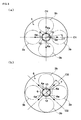
- valve recesses are formed on the piston at an outer peripheral area of the combustion chamber, wherein each of the nozzle holes is directed in the horizontal direction within a tolerance angle range ⁇ of -10 to 10 degrees from either a line O1 passed on a center of each of the valve recesses or a line 02 passed between each pair of neighboring valve recesses.
- the standard ignition plugs can be used for the spark ignition engine and cost reduction can be achieved.
- the flame jet can be generated by the flame blown into the combustion chamber out of the auxiliary chamber through the nozzle holes provided in the sleeve, so that the flame jet can generate the turbulence, which makes rapid combustion possible without the conventional auxiliary chamber type ignition plug.
- the nozzle holes can be provided away from the explosion surface of the piston, so that the flame jet can prevent from being affected by the temperature of the explosion surface.
- the auxiliary chamber can be simply formed, so that the auxiliary chamber can be freely designed, the position of ignition can be freely disposed and, thus, the auxiliary chamber that is capable of preventing from being affected by the residual gas can be easily formed.
- the ratio of the height of the auxiliary chamber to the width of the same can be appropriately set, so that the spark ignition engine can be operated with the leaner air-fuel mixture than conventional.
- the position of ignition with the ignition plug can be disposed at an appropriate position to the auxiliary chamber, so that the auxiliary chamber can prevent the residual gas therein from affecting the ignition and combustion performance. Consequently, the stable ignition and combustion can be achieved even with the leaner air-fuel mixture, and thus the available operation range of the engine can be expanded to the lean side.
- the position of ignition with the ignition plug can be disposed at an appropriate position to the auxiliary chamber, so that the auxiliary chamber can prevent the residual gas therein from affecting the ignition and combustion performance. Consequently, the stable ignition and combustion can be achieved even with the leaner air-fuel mixture, and thus the available operation range of the engine can be expanded to the lean side.
- the ratio of the volume of the auxiliary chamber to the volume of the combustion chamber can be appropriately set, so that the stable combustion can be secured and thus the available operation range of the engine can be expanded to the lean side.
- the angles of the nozzle holes make can be appropriately set, so that the stable combustion can be secured as the flame jet is surely blown off out of the nozzle holes and thus the available operation range of the engine can be expanded to the lean side.
- the directions of the nozzle holes can be appropriately set, so that the stable combustion can be secured and thus the available operation range of the engine can be expanded to the lean side.
- a cylinder 2 is disposed under a cylinder head 1 and a piston 3 is slidably installed in the cylinder 2 in the vertical direction.
- a concave-shaped surface 3a is formed at the upper end of the piston 3, facing the cylinder head 1.
- a combustion chamber 5 is formed as the space surrounded by the cylinder head 1, the cylinder 2 and the concave-shaped surface 3a.
- An intake valve and an exhaust valve are provided in the cylinder head 1, facing respective valve recesses 3b provided on the piston 3(see FIG. 3 ). Opening and shutting the intake valve and the exhaust valve alternately, the intake and exhaust for the combustion chamber 5 can be carried out.
- An ignition plug 7 is provided in the sleeve 6.
- Ignition electrodes (a ground electrode) 7a and (a center electrode) 7b are provided at the lower tip of the ignition plug 7 so as to dispose over the combustion chamber 5.
- the ignition electrodes 7a and 7b are covered with the bottom of the sleeve 6 projected into the combustion chamber 5.
- an auxiliary chamber 10 storing the ignition electrodes 7a and 7b is formed at the bottom part of the sleeve 6.
- the auxiliary chamber 10 is disposed at the center of the combustion chamber 5 viewed from the top and the valve recesses 3b provided on the piston 3 are disposed around the auxiliary chamber 10.
- the valve recesses 3b serve as a valve recess for the intake valve or for the exhaust valve.
- four valve recesses 3b (the two of them are for the intake valve and the remainder for the exhaust valve) are disposed laterally symmetrically related to the auxiliary chamber 10 and arranged every 90 degrees.
- Plural nozzle holes 6a are drilled at the lower periphery of the sleeve 6 at equal intervals and thus the auxiliary chamber 10 is communicated with the combustion chamber 5 through the plural nozzle holes 6a.
- the air-fuel mixture taken into the cylinder 2 by the intake valve flows into the auxiliary chamber 10 through the plural nozzle holes 6a, and then the air-fuel mixture is spark-ignited by the ignition electrodes 7a and 7b of the ignition plug 7.
- the flame is blown into the combustion chamber 5 out of the plural nozzle holes 6a and transmitted.
- the bottom part of the sleeve 6 provided with the plural nozzle holes 6a is projected into the combustion chamber 5 and extended lower than an explosion surface 1a (the bottom surface of the cylinder head 1 facing the cylinder 2).
- the ignition electrodes 7a and 7b of the ignition plug 7 are projected near the explosion surface 1a.
- the position 12 of ignition by the ignition electrodes 7a and 7b in the auxiliary chamber 10 is set near the explosion surface 1a in the vertical direction.
- the flame jet can be generated by the flame blown into the combustion chamber 5 out of the auxiliary chamber 10 through the plural nozzle holes 6a provided in the sleeve 6, so that the flame jet can generate the turbulence, which makes rapid combustion possible without the conventional auxiliary chamber type ignition plug.
- the plural nozzle holes 6a can be provided away from the explosion surface 1a, so that the flame jet can prevent from being affected by the temperature of the explosion surface 1a.
- the auxiliary chamber 10 is configured as the space formed between the sleeve 6 and the ignition plug 7, so that the shape thereof is obviously decided.
- the auxiliary chamber 10 can be simply formed, so that the auxiliary chamber 10 that is capable of preventing from being affected by the residual gas can be easily formed.
- the auxiliary chamber 10 is formed in the cylindrical shape and the diameter thereof substantially corresponds to the outside diameter of the sleeve 6.
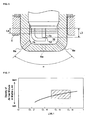
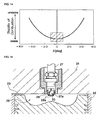
- the height (vertical length) of the auxiliary chamber 10 is defined as a length L1, which is the length from the inside bottom of the sleeve 6 to the bottom of the ignition plug 7 and the diameter (lateral length) of the auxiliary chamber 10 is defined as a length L2, which is equal to the inside diameter of the sleeve 6.
- the auxiliary chamber 10 is formed in such a way that the relation between the lengths L1 and L2 implements a formula (1).
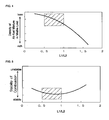
- the ratio L1/L2 of the auxiliary chamber 10 is calculated by dividing the height of the auxiliary chamber 10 by the diameter of the auxiliary chamber 10 and the ratio L1/L2 of the auxiliary chamber 10 is set within the range of 0.5 to 1.0, namely, the auxiliary chamber 10 is formed with the longer side at the top thereof in a cross-section view.
- the auxiliary chamber 10 is formed as described above, so that the density of the air-fuel mixture in misfire limit when the ratio L1/L2 is small can be leaner than when the ratio is large. In other words, the excess air ratio in misfire limit becomes larger.
- the ratio of the auxiliary chamber 10 is set as an appropriate value within the above-mentioned range, so that the engine can be operated with as lean air-fuel mixture as possible.
- the ratio L1/L2 of the auxiliary chamber 10 is set within the range of 0.5 to 1.0, then the variation ratio in combustion can become the smallest and the stability of combustion can be increased. Therefore, the stable combustion can be achieved with lean air-fuel mixture, and thus the high-compression operation can be achieved.
- the position of ignition by the ignition electrodes in the auxiliary chamber is conventionally set at the upper part of the auxiliary chamber, namely, at the opposite side to the nozzle holes communicating to the combustion chamber, then much residual gas exists around the position of ignition in the auxiliary chamber before the piston reaches top dead center.
- the new air-fuel mixture cannot efficiently reach the position of ignition, affected by the residual gas, and when spark-ignited the stable combustion cannot be achieved.
- the position 12 of ignition is set at the appropriate position where the residual gas may not affect.
- the ignition electrodes 7a and 7b of the ignition plug 7 are projected into the auxiliary chamber 10 and the position 12 of ignition by the ignition electrodes 7a and 7b is set near the nozzle holes 6a of the sleeve 6 and near the explosion surface 1a.
- the position 12 of ignition by the ignition electrodes 7a and 7b is set as discussed below. Concretely, the volume of the residual gas that is remaining in the auxiliary chamber 10 at the ignition timing before the piston 3 reaches top dead center during the compression stroke is calculated. The volume that the calculated volume of the residual gas occupies in the auxiliary chamber 10 is set smaller than the predetermined one. In other words, the volume of the residual gas that is remaining in the auxiliary chamber 10 at the ignition timing before the piston 3 reaches top dead center during the compression stroke is calculated according to a formula (2).
- Volume of auxiliary chamber * volume of cylinder at ignition timing includes volume of auxiliary chamber / volume of cylinder when intake valve closed includes volume of auxiliary chamber
- the position 12 of ignition is determined according to the volume of the space over the position 12 of ignition in the auxiliary chamber 10, which is set larger than the volume of the residual gas calculated according to the formula (2).
- the volume of the residual exhaust gas is set smaller than the volume of the space over the position 12 of ignition in the auxiliary chamber 10, so that the residual exhaust gas can be positioned over the position of ignition when spark-ignited. Consequently, the combustion in the auxiliary chamber 10 can prevent from being affected.
- the volume of the space over the position 12 of ignition in the auxiliary chamber 10 can be calculated on the basis of a length L3 between the top of the auxiliary chamber (the bottom of the ignition plug 7) and the position 12 of ignition and the length L2 (the diameter of the auxiliary chamber 10).
- the bottom area is common. Therefore, the value calculated by dividing the volume of residual gas by the bottom area is set shorter than the length L3.
- the length L3 between the top of the auxiliary chamber 10 and the position 12 of ignition is set longer than a length L4 between the upper end of the auxiliary chamber 10 and the lower end of the residual gas existing in the auxiliary chamber 10 (i.e. L3>L4).
- the position 12 of ignition of the air-fuel mixture by the ignition electrodes 7a and 7b of the ignition plug 7 is set at nearer the nozzle holes 6a than the residual gas remained in the auxiliary chamber 10. Therefore, the position 12 of ignition by the ignition plug 7 can be set at the appropriate position in the auxiliary chamber 10, so that the ignition and combustion performance can prevent from being affected by the residual gas in the auxiliary chamber 10. Consequently, the stable ignition and combustion can be achieved even with the leaner air-fuel mixture, and thus the available operation range of the engine can be expanded to the lean side.
- the position 12 of ignition is set against the auxiliary chamber 10 in such a way that the relation between the length L3 between the inside upper surface of the auxiliary chamber 10 and the position 12 of ignition and the length L1 defined as the height of the auxiliary chamber 10 implements a formula (3).
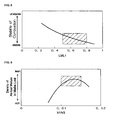
- the value L3/L1 calculated by dividing the length L3 by the length L1 is set within the range of 0.5 to 0.8.
- the density of the air-fuel mixture in misfire limit when the calculated value L3/L1 is large can be leaner than when the value L3/L1 is small.
- the excess air ratio in misfire limit becomes larger.
- the calculated value L3/L1 is set as an appropriate value within the above-mentioned range and the position 12 of ignition is set against the auxiliary chamber 10, so that the engine can be operated with as lean air-fuel mixture as possible.
- a volume V1 is defined as the volume of the auxiliary chamber 10 and a volume V2 is defined as the volume of the combustion chamber 5 when the piston 3 reaches top dead center.
- the relation between the volume V1 and V2 implements a formula (4). 0.010 ⁇ V ⁇ 1 / V ⁇ 2 ⁇ 0.015
- the ratio V1/V2 is calculated by dividing the volume V1 by the volume V2 and the ratio V1/V2 is set within the range of 0.010 to 0.015.
- the volume ratio of the auxiliary chamber to the combustion chamber is set as an appropriate value within the above-mentioned range, so that the engine can be operated with as lean air-fuel mixture as possible.
- the ratio V1/V2 is set within the range of 0.010 to 0.015, then the variation ratio in combustion can become the smallest and the stability of combustion can be increased. Therefore, the stable combustion can be achieved with lean air-fuel mixture, and thus the high-compression operation can be achieved.
- the auxiliary chamber 10 is formed as above-mentioned, whereas the plural nozzle holes 6a are drilled at the bottom of the sleeve 6 in such a way that there are plural pairs of two nozzle holes 6a drilled in the diameter direction. That is to say, the plural pairs of two nozzle holes 6a are set symmetrically relative to the position 12 of ignition by the ignition plug 7. Moreover, the nozzle holes 6a are formed inclined downward toward the outer periphery of the combustion chamber 5 and the flame jet can be blown radially into the combustion chamber 5 out of the auxiliary chamber 10 through the nozzle holes 6a. Furthermore, as shown in FIG. 6 , the angle ⁇ that each of the pair of nozzle holes 6a makes in the gravity direction is set within the range of 80 to 100 degrees.
- the angle ⁇ is set within the range of 80 to 100 degrees, then the density of the air-fuel mixture becomes leanest in misfire limit. In other words, the excess air ratio in misfire limit becomes larger.
- the angle ⁇ is set at the appropriate value within the above-mentioned range, so that the engine can be operated with as lean air-fuel mixture as possible.
- the angle ⁇ is set within the range of 80 to 100 degrees, then the variation ratio in combustion can become smaller and the stability of combustion can be increased to the best. Therefore, the stable combustion can be achieved with lean air-fuel mixture, and thus the high-compression operation can be achieved.
- pairs of nozzle holes 6a are spaced at equal intervals related to the position 12 of ignition by the ignition plug 7 in a top view.
- two pairs of nozzle holes 6a are drilled and arranged every 90 degrees.
- four nozzle holes are drilled and arranged every 90 degrees at the bottom periphery of the auxiliary chamber 10.
- the directions of drilling the nozzle holes are set in such a way that, as shown in FIG. 3(a) , each of the blowout direction of the flame jet out of the nozzle hole 6a points the each center of the valve recess 3b (the directions of the nozzle holes are the same as the directions of the line O1)
- the directions of the nozzle holes are set in such a way that each of the blowout direction of the flame jet out of the nozzle hole 6a points the each center of the two adjacent valve recesses 3b (the directions of the nozzle holes are the same as the directions of the line 02).
- a tolerance angle ⁇ that the drilling direction of the nozzle hole 6a and the line O1 or O2 makes is set within the range of -10 to 10 degrees in the horizontal direction.
- the directions of drilling the nozzle holes 6a are determined whether the directions of the line O1 or O2 according to the shape of the combustion chamber 5.
- the arrows in FIG. 3(a) and 3(b) show the blowout directions of the flame jets blown off out of the nozzle holes 6a.
- the directions of drilling the nozzle holes 6a are set as the directions of the line O1 or O2 and the tolerance angle ⁇ is set within the range of -10 to 10 degrees in the horizontal direction, then the density of the air-fuel mixture becomes leanest in misfire limit. In other words, the excess air ratio in misfire limit becomes larger.
- the directions of drilling the nozzle holes 6a are set as the appropriate value within the above-mentioned range, so that the engine can be operated with as lean air-fuel mixture as possible.
- the tolerance angle ⁇ is set within the range of -10 to 10 degrees, then the variation ratio in combustion can become smaller and the stability of combustion can be increased. Therefore, the stable combustion can be achieved with lean air-fuel mixture, and thus the high-compression operation can be achieved.
- the spark ignition engine can be suitably applicable to spark ignition engines comprising the single chamber type combustion chamber.
Landscapes
- Engineering & Computer Science (AREA)
- Chemical & Material Sciences (AREA)
- Combustion & Propulsion (AREA)
- Mechanical Engineering (AREA)
- General Engineering & Computer Science (AREA)
- Combustion Methods Of Internal-Combustion Engines (AREA)
- Spark Plugs (AREA)
- Ignition Installations For Internal Combustion Engines (AREA)
Claims (5)
- Ottomotor, der umfasst:einen Zylinder (2);einen Zylinderkopf (1), der über dem Zylinder (2) angeordnet ist;einen Kolben (3), der in dem Zylinder (2) angeordnet ist;eine Verbrennungskammer (5) vom Einkammertyp, die in dem Zylinder (2) über dem Kolben (3) vorgesehen ist, wobei der Zylinderkopf (1) eine untere Oberfläche aufweist, die der Verbrennungskammer (5) zugewandt ist, wobei die untere Oberfläche des Zylinderkopfs (1) als eine Explosionsoberfläche (1a) definiert ist;eine Zylinderhülse (6), die eine erste Unterseite und eine zweite Unterseite, die von der ersten Unterseite nach unten verlängert ist, aufweist;eine Zündkerze (7), die durch die Hülse (6) in den Zylinderkopf (1) eingepasst ist;eine Zusatzkammer (10), die in der Weise gebildet ist, dass sie von der Hülse (6) und von der Zündkerze (7) umgeben ist, wobei die Zusatzkammer (10) zwischen einer inneren Unterseite der zweiten Unterseite der Hülse (6) und einer Unterseite der in die Hülse (6) eingepassten Zündkerze (7) eine vertikale Länge (L1) aufweist, und wobei die Zusatzkammer (10) einen Durchmesser (L2) aufweist, der gleich dem Innendurchmesser der Hülse (6) ist;einen Satz von Zündelektroden (7a, 7b) der Zündkerze (7), die in der Weise in der Zusatzkammer (10) angeordnet sind, dass sie der Verbrennungskammer (5) in dem Zylinder (2) zugewandt sind; und eines oder mehrere Düsenlöcher (6a), die ermöglichen, dass die Zusatzkammer (10) mit der Verbrennungskammer (5) in Verbindung steht,wobei die zweite Unterseite der Hülse (6), die als die Unterseite der Zusatzkammer (10) dient, von der Explosionsoberfläche (1a) des Zylinderkopfs (1) in der Weise ins Innere der Verbrennungskammer (5) vorsteht, dass eine Zündstellung (12) für die Zündung durch die Zündelektroden (7a, 7b) in einer Höhe lokalisiert ist, die im Wesentlichen gleich einer Höhe der Explosionsoberfläche (1a) ist,dadurch gekennzeichnet, dass der Satz von Zündelektroden (7a, 7b) der Zündkerze (7) in der Zusatzkammer (10) und somit die Zündstellung (12) in der Weise in einem Anstand (L3) zu der Oberseite der Zusatzkammer (10) lokalisiert sind, dass ein Volumen eines Raums zwischen der Zündstellung (12) und dem oberen Ende der Zusatzkammer (10) auf der Grundlage der Länge (L3) und des Durchmessers (L2) berechnet ist und dass das Volumen des Raums größer als ein Volumen des Restgases ist, das zu einem Zündzeitpunkt, bevor der Kolben (3) während seines Verdichtungstakts einen oberen Totpunkt erreicht, in der Zusatzkammer (10) verbleibt, wobei das Volumen des in der Zusatzkammer (10) verbleibenden Restgases durch Multiplizieren eines Volumens (V1) der Zusatzkammer (10) mit einem Verhältnis eines Volumens des Zylinders (2), das das Volumen (V1) der Zusatzkammer (10) zu dem Zündzeitpunkt enthält, zu einem Volumen des Zylinders (2), das das Volumen (V1) der Zusatzkammer (10) enthält, wenn ein Einlassventil geschlossen ist, berechnet ist, und wobei dann, wenn das berechnete Volumen des in der Zusatzkammer (10) verbleibenden Restgases in der Zusatzkammer (10) nach oben verdichtet ist, eine Länge (L4) zwischen dem oberen Ende der Zusatzkammer (10) und dem unteren Ende des in der Zusatzkammer (10) vorhandenen Restgases kleiner als die Länge (L3) ist, wodurch die Zündstellung (12) tiefer als das zu dem Zündzeitpunkt in der Zusatzkammer (10) verbleibende Restgas eingestellt ist, wobei ein Verhältnis einer Länge (L3) zwischen einer durch die Unterseite der Zündkerze (7) definierten inneren oberen Oberfläche der Zusatzkammer (10) und der Zündstellung (12) zu der vertikalen Länge (L1) der Zusatzkammer (10) innerhalb eines Bereichs von 0,5 bis 0,8 eingestellt ist.
- Ottomotor nach Anspruch 1, bei dem die Zusatzkammer (10) von der Hülse (6) umgeben ist und die Zündkerze (7) in einer zylindrischen Form gebildet ist, die einen horizontalen Durchmesser (L2) aufweist, und wobei ein Verhältnis der vertikalen Länge (L1) der Zusatzkammer (10) zu dem Durchmesser (L2) davon innerhalb eines Bereichs von 0,5 bis 1,0 eingestellt ist.
- Ottomotor nach Anspruch 1 oder 2, bei dem ein Verhältnis eines Volumens (V1) der Zusatzkammer (10) zu einem Volumen (V2) der Verbrennungskammer (5), wenn der Kolben (3) den oberen Totpunkt erreicht, innerhalb eines Bereichs von 0,010 bis 0,015 eingestellt ist.
- Ottomotor nach einem der Ansprüche 1 bis 3, bei dem die Düsenlöcher (6a) als eines oder mehrere Paare von Düsenlöchern (6a) eingestellt sind, die in der Schwerkraftrichtung symmetrisch in Bezug auf die Zündstellung (12) sind, und wobei ein Winkel zwischen den Düsenlöchern (6a) jedes Paars innerhalb eines Bereichs (α) von 80 bis 100 Grad eingestellt ist.
- Ottomotor nach einem der Ansprüche 1 bis 3, bei dem Ventilaussparungen (3b) an dem Kolben (3) an einem Außenumfangsbereich der Verbrennungskammer (5) gebildet sind, wobei jedes der Düsenlöcher (6a) in der horizontalen Richtung innerhalb eines Toleranzwinkelbereichs (β) von -10 bis 10 Grad entweder von einer Linie (O1), die durch eine Mitte jeder der Ventilaussparungen (3b) geht, oder einer Linie (02), die zwischen jedem Paar benachbarter Ventilaussparungen (3b) durchgeht, gerichtet ist.
Applications Claiming Priority (2)
| Application Number | Priority Date | Filing Date | Title |
|---|---|---|---|
| JP2005268090A JP4473802B2 (ja) | 2005-09-15 | 2005-09-15 | 火花点火機関 |
| PCT/JP2006/317070 WO2007032206A1 (ja) | 2005-09-15 | 2006-08-30 | 火花点火機関 |
Publications (3)
| Publication Number | Publication Date |
|---|---|
| EP1936144A1 EP1936144A1 (de) | 2008-06-25 |
| EP1936144A4 EP1936144A4 (de) | 2009-05-13 |
| EP1936144B1 true EP1936144B1 (de) | 2010-10-13 |
Family
ID=37864804
Family Applications (1)
| Application Number | Title | Priority Date | Filing Date |
|---|---|---|---|
| EP06797044A Not-in-force EP1936144B1 (de) | 2005-09-15 | 2006-08-30 | Ottomotor |
Country Status (8)
| Country | Link |
|---|---|
| US (1) | US7856956B2 (de) |
| EP (1) | EP1936144B1 (de) |
| JP (1) | JP4473802B2 (de) |
| KR (1) | KR100969738B1 (de) |
| CN (1) | CN101243245B (de) |
| DE (1) | DE602006017573D1 (de) |
| ES (1) | ES2354050T3 (de) |
| WO (1) | WO2007032206A1 (de) |
Families Citing this family (43)
| Publication number | Priority date | Publication date | Assignee | Title |
|---|---|---|---|---|
| JP5122367B2 (ja) * | 2008-05-09 | 2013-01-16 | 大阪瓦斯株式会社 | エンジン及びエンジン用点火プラグ |
| JP5085419B2 (ja) * | 2008-05-09 | 2012-11-28 | 大阪瓦斯株式会社 | エンジン及びエンジン用点火プラグ |
| JP5060386B2 (ja) * | 2008-05-09 | 2012-10-31 | 大阪瓦斯株式会社 | エンジン |
| JP5002566B2 (ja) * | 2008-10-16 | 2012-08-15 | 大阪瓦斯株式会社 | エンジン及びエンジン用点火プラグ |
| JP5426998B2 (ja) * | 2009-11-06 | 2014-02-26 | 大阪瓦斯株式会社 | 点火プラグ及びその点火プラグを備えたエンジン |
| DE102009047019A1 (de) | 2009-11-23 | 2011-05-26 | Robert Bosch Gmbh | Laserzündkerze |
| DE102009047021A1 (de) * | 2009-11-23 | 2011-05-26 | Robert Bosch Gmbh | Laserzündkerze |
| EP2525452B1 (de) * | 2010-01-15 | 2020-05-13 | NGK Sparkplug Co., Ltd. | Zündkerze und verfahren zur herstellung einer zündkerze |
| JP5451490B2 (ja) | 2010-03-31 | 2014-03-26 | 株式会社デンソー | 点火プラグ及びエンジン |
| DE102010003899A1 (de) * | 2010-04-13 | 2011-10-13 | Robert Bosch Gmbh | Laserzündkerze mit einer Vorkammer |
| US9353674B2 (en) * | 2010-11-01 | 2016-05-31 | Mahle Powertrain, Llc | Turbulent jet ignition pre-chamber combustion system for spark ignition engines |
| US9172217B2 (en) | 2010-11-23 | 2015-10-27 | Woodward, Inc. | Pre-chamber spark plug with tubular electrode and method of manufacturing same |
| US8584648B2 (en) | 2010-11-23 | 2013-11-19 | Woodward, Inc. | Controlled spark ignited flame kernel flow |
| US9476347B2 (en) | 2010-11-23 | 2016-10-25 | Woodward, Inc. | Controlled spark ignited flame kernel flow in fuel-fed prechambers |
| WO2012091739A2 (en) * | 2010-12-31 | 2012-07-05 | Prometheus Applied Technologies, Llc | Prechamber ignition system |
| DE112012006249B4 (de) * | 2012-04-20 | 2016-09-01 | Konstantin I. Fedin | Verfahren zur Gestaltung eines Arbeitsflusses eines Kolbengasmotors mit Kerzenzündung |
| US9856848B2 (en) | 2013-01-08 | 2018-01-02 | Woodward, Inc. | Quiescent chamber hot gas igniter |
| JP6030473B2 (ja) * | 2013-02-20 | 2016-11-24 | 日本特殊陶業株式会社 | 点火プラグ及びエンジン |
| US8839762B1 (en) | 2013-06-10 | 2014-09-23 | Woodward, Inc. | Multi-chamber igniter |
| US9765682B2 (en) | 2013-06-10 | 2017-09-19 | Woodward, Inc. | Multi-chamber igniter |
| CN103399036A (zh) * | 2013-08-22 | 2013-11-20 | 天津出入境检验检疫局工业产品安全技术中心 | 一种固体危险品压力试验设备的点火装置 |
| DE102014117714B4 (de) * | 2014-12-02 | 2016-06-09 | Federal-Mogul Ignition Gmbh | Zündkerze für eine mit Gas betriebene Brennkraftmaschine |
| US9653886B2 (en) | 2015-03-20 | 2017-05-16 | Woodward, Inc. | Cap shielded ignition system |
| EP3271561B1 (de) | 2015-03-20 | 2018-12-12 | Woodward, Inc. | Paralleles vorkammerzündungssystem |
| CN108026827B (zh) * | 2015-06-30 | 2019-12-31 | 康明斯公司 | 喷嘴燃烧护罩 |
| CN108779702A (zh) * | 2015-10-08 | 2018-11-09 | 康明斯公司 | 预燃室组件 |
| US10066580B2 (en) * | 2015-10-15 | 2018-09-04 | The Regents Of The University Of Michigan | Lean burn internal combustion engine |
| US9890689B2 (en) | 2015-10-29 | 2018-02-13 | Woodward, Inc. | Gaseous fuel combustion |
| JP2017103179A (ja) * | 2015-12-04 | 2017-06-08 | 株式会社デンソー | 点火プラグ |
| JP6556037B2 (ja) * | 2015-12-04 | 2019-08-07 | 株式会社デンソー | 内燃機関及び点火プラグ |
| JP6674268B2 (ja) * | 2016-02-04 | 2020-04-01 | 本田技研工業株式会社 | ガスエンジン |
| JP6919558B2 (ja) * | 2017-12-27 | 2021-08-18 | トヨタ自動車株式会社 | 内燃機関 |
| JP2019206960A (ja) * | 2018-05-30 | 2019-12-05 | 株式会社Soken | 内燃機関 |
| JP7095570B2 (ja) * | 2018-11-26 | 2022-07-05 | トヨタ自動車株式会社 | 副室付内燃機関 |
| JP7260331B2 (ja) * | 2019-02-27 | 2023-04-18 | ダイハツ工業株式会社 | 副燃焼室付き内燃機関 |
| JP7143936B2 (ja) * | 2019-03-27 | 2022-09-29 | 三菱自動車工業株式会社 | 副室式内燃機関 |
| JP7365790B2 (ja) * | 2019-05-20 | 2023-10-20 | 株式会社デンソー | 内燃機関及びスパークプラグ |
| US11415041B2 (en) * | 2019-09-16 | 2022-08-16 | Woodward, Inc. | Flame triggered and controlled volumetric ignition |
| US11840954B2 (en) | 2020-02-24 | 2023-12-12 | Mahle International Gmbh | Spark ignited engine with a pre-chamber, a prechamber and an adapter insert for the engine |
| US11280278B2 (en) * | 2020-07-06 | 2022-03-22 | Ford Global Technologies, Llc | Methods and systems for a series gap igniter with a passive pre-chamber |
| CN113969825B (zh) * | 2020-07-23 | 2022-12-20 | 广州汽车集团股份有限公司 | 一种分体式预燃室 |
| JP7653233B2 (ja) * | 2020-09-03 | 2025-03-28 | 株式会社Soken | 内燃機関用のスパークプラグ |
| DE112022006654T5 (de) * | 2022-02-15 | 2024-11-28 | Yamaha Hatsudoki Kabushiki Kaisha | Vorkammerverbrennungs-Viertaktmotor |
Family Cites Families (26)
| Publication number | Priority date | Publication date | Assignee | Title |
|---|---|---|---|---|
| GB478929A (en) * | 1937-04-30 | 1938-01-27 | Maurice Delattre | Improvements in sparking plugs for internal combustion engines |
| JPS5642115B2 (de) * | 1973-11-01 | 1981-10-02 | ||
| JPS5830135B2 (ja) * | 1974-04-02 | 1983-06-27 | 古河電気工業株式会社 | プラスチツクハツポウタイ ノ オシダシセイケイホウホウ |
| CA1047250A (en) | 1974-06-13 | 1979-01-30 | James F. Scott | Fuel compositions useful for gas turbines and process for the combustion of such fuel compositions |
| JPS5112803U (de) * | 1974-07-17 | 1976-01-30 | ||
| JPS5157313A (en) * | 1974-11-13 | 1976-05-19 | Toyota Motor Co Ltd | Nainenkikanno nokongokino kyokyusochi |
| JPS5642115A (en) | 1979-09-17 | 1981-04-20 | Fujitsu Ltd | Measuring method for diameter of beam |
| JPS5766224A (en) | 1980-10-02 | 1982-04-22 | Shimizu Constr Co Ltd | In-situ concrete pile construction |
| JPS5766224U (de) * | 1980-10-07 | 1982-04-20 | ||
| JPS6081227U (ja) * | 1983-11-09 | 1985-06-05 | 日産自動車株式会社 | 火花点火式内燃機関の燃焼室 |
| JPS6415862A (en) | 1987-07-10 | 1989-01-19 | Mitsubishi Electric Corp | Multi-processor schedule system |
| CN2054218U (zh) * | 1989-02-11 | 1990-03-07 | 张积俭 | 带有预燃室的火花塞 |
| US5105780A (en) * | 1990-08-08 | 1992-04-21 | Caterpillar Inc. | Ignition assisting device for internal combustion engines |
| JPH04287826A (ja) * | 1991-03-19 | 1992-10-13 | Nissan Motor Co Ltd | 副室式火花点火内燃機関 |
| US5224449A (en) * | 1991-10-31 | 1993-07-06 | Osaka Gas Company, Ltd. | Lean-burn internal combustion system |
| ES2105791T3 (es) | 1994-03-29 | 1997-10-16 | Dieter Dr Kuhnert | Dispositivo de encendido para antecamara de combustion. |
| US6188966B1 (en) | 1998-02-10 | 2001-02-13 | Agilent Technologies | Reconstruction of multi-phase signals from repetitive samples |
| JPH11280628A (ja) * | 1998-03-26 | 1999-10-15 | Toyota Motor Corp | 内燃機関の点火時期制御装置 |
| US5947076A (en) * | 1998-04-17 | 1999-09-07 | Caterpillar Inc. | Fuel combustion assembly for an internal combustion engine having an encapsulated spark plug for igniting lean gaseous fuel within a precombustion chamber |
| DE10144976A1 (de) * | 2001-09-12 | 2003-04-03 | Beru Ag | Zündkerze mit Mittelelektrode und Vorkammer |
| JP2003278547A (ja) * | 2002-03-25 | 2003-10-02 | Tokyo Gas Co Ltd | 副室式エンジン |
| FR2846042B1 (fr) * | 2002-10-18 | 2005-02-04 | Peugeot Citroen Automobiles Sa | Dispositif d'allumage a prechambre realisee dans un materiau a conductivite thermique elevee, pour un moteur a combustion interne, et allumeur a prechambre |
| FR2846044B1 (fr) | 2002-10-18 | 2006-07-14 | Peugeot Citroen Automobiles Sa | Dispositif d'allumage a prechambre revetue d'un revetement refractaire, pour un moteur a combustion interne, et allumeur a prechambre |
| FR2846046B1 (fr) | 2002-10-18 | 2006-06-16 | Peugeot Citroen Automobiles Sa | Dispositif d'allumage a prechambre pour un moteur a combustion interne, allumeur a prechambre et procede d'allumage |
| JP2004204835A (ja) | 2002-10-28 | 2004-07-22 | Toyota Motor Corp | 火花点火式内燃機関 |
| JP4287826B2 (ja) | 2005-02-14 | 2009-07-01 | Tdk株式会社 | キャパシタ及びその製造方法、それを用いたフィルタ、それに用いる誘電体薄膜 |
-
2005
- 2005-09-15 JP JP2005268090A patent/JP4473802B2/ja not_active Expired - Fee Related
-
2006
- 2006-08-30 US US12/066,942 patent/US7856956B2/en not_active Expired - Fee Related
- 2006-08-30 ES ES06797044T patent/ES2354050T3/es active Active
- 2006-08-30 KR KR1020087008112A patent/KR100969738B1/ko not_active Expired - Fee Related
- 2006-08-30 DE DE602006017573T patent/DE602006017573D1/de active Active
- 2006-08-30 CN CN2006800304405A patent/CN101243245B/zh not_active Expired - Fee Related
- 2006-08-30 WO PCT/JP2006/317070 patent/WO2007032206A1/ja not_active Ceased
- 2006-08-30 EP EP06797044A patent/EP1936144B1/de not_active Not-in-force
Also Published As
| Publication number | Publication date |
|---|---|
| US20090133667A1 (en) | 2009-05-28 |
| EP1936144A1 (de) | 2008-06-25 |
| JP4473802B2 (ja) | 2010-06-02 |
| EP1936144A4 (de) | 2009-05-13 |
| KR20080042169A (ko) | 2008-05-14 |
| CN101243245A (zh) | 2008-08-13 |
| DE602006017573D1 (de) | 2010-11-25 |
| ES2354050T3 (es) | 2011-03-09 |
| US7856956B2 (en) | 2010-12-28 |
| WO2007032206A1 (ja) | 2007-03-22 |
| CN101243245B (zh) | 2011-04-27 |
| JP2007077902A (ja) | 2007-03-29 |
| KR100969738B1 (ko) | 2010-07-13 |
Similar Documents
| Publication | Publication Date | Title |
|---|---|---|
| EP1936144B1 (de) | Ottomotor | |
| US8350457B2 (en) | Pre-chamber spark plug including a gas thread cavity | |
| EP3271561B1 (de) | Paralleles vorkammerzündungssystem | |
| CN104508276B (zh) | 副室式燃气发动机 | |
| CN111164285B (zh) | 用于机动车的内燃机 | |
| EP3536924B1 (de) | Vorkammergasmotor | |
| JP7388224B2 (ja) | プレチャンバを備える内燃機関 | |
| CN111219241B (zh) | 带副室内燃机 | |
| US10012134B2 (en) | Internal combustion engine | |
| JP2007040174A (ja) | 副室式内燃機関 | |
| WO2018110326A1 (ja) | 副室式ガスエンジン | |
| KR20230035606A (ko) | 최적화된 캡을 구비한 프리챔버 스파크 플러그 및 내연 기관 | |
| JP5122367B2 (ja) | エンジン及びエンジン用点火プラグ | |
| JP7673220B2 (ja) | 点火プラグとプレチャンバ点火プラグとを有する内燃機関 | |
| US7066137B1 (en) | Anti detonation device and method for internal combustion engines | |
| US6877477B2 (en) | Fuel injection system | |
| JP7756999B2 (ja) | 内燃機関 | |
| JP2007291934A (ja) | マルチホールインジェクタ | |
| JP5564538B2 (ja) | エンジンの燃焼室構造 | |
| US12116952B1 (en) | Internal combustion engine and combustion chamber for an internal combustion engine | |
| JP2021038715A (ja) | 副燃焼室付き内燃機関 | |
| JP4457999B2 (ja) | 筒内噴射式内燃機関 | |
| JP5178491B2 (ja) | エンジンの燃焼室構造 | |
| KR20250168316A (ko) | 가스 엔진 | |
| JP2022069418A (ja) | 内燃機関用のスパークプラグ及びこれを備えた内燃機関 |
Legal Events
| Date | Code | Title | Description |
|---|---|---|---|
| PUAI | Public reference made under article 153(3) epc to a published international application that has entered the european phase |
Free format text: ORIGINAL CODE: 0009012 |
|
| 17P | Request for examination filed |
Effective date: 20080225 |
|
| AK | Designated contracting states |
Kind code of ref document: A1 Designated state(s): AT BE BG CH CY CZ DE DK EE ES FI FR GB GR HU IE IS IT LI LT LU LV MC NL PL PT RO SE SI SK TR |
|
| A4 | Supplementary search report drawn up and despatched |
Effective date: 20090409 |
|
| 17Q | First examination report despatched |
Effective date: 20090728 |
|
| GRAP | Despatch of communication of intention to grant a patent |
Free format text: ORIGINAL CODE: EPIDOSNIGR1 |
|
| GRAS | Grant fee paid |
Free format text: ORIGINAL CODE: EPIDOSNIGR3 |
|
| GRAA | (expected) grant |
Free format text: ORIGINAL CODE: 0009210 |
|
| AK | Designated contracting states |
Kind code of ref document: B1 Designated state(s): AT BE BG CH CY CZ DE DK EE ES FI FR GB GR HU IE IS IT LI LT LU LV MC NL PL PT RO SE SI SK TR |
|
| REG | Reference to a national code |
Ref country code: GB Ref legal event code: FG4D |
|
| REG | Reference to a national code |
Ref country code: CH Ref legal event code: EP |
|
| REG | Reference to a national code |
Ref country code: IE Ref legal event code: FG4D |
|
| REF | Corresponds to: |
Ref document number: 602006017573 Country of ref document: DE Date of ref document: 20101125 Kind code of ref document: P |
|
| REG | Reference to a national code |
Ref country code: NL Ref legal event code: VDEP Effective date: 20101013 |
|
| REG | Reference to a national code |
Ref country code: ES Ref legal event code: FG2A Effective date: 20110225 |
|
| LTIE | Lt: invalidation of european patent or patent extension |
Effective date: 20101013 |
|
| PG25 | Lapsed in a contracting state [announced via postgrant information from national office to epo] |
Ref country code: LT Free format text: LAPSE BECAUSE OF FAILURE TO SUBMIT A TRANSLATION OF THE DESCRIPTION OR TO PAY THE FEE WITHIN THE PRESCRIBED TIME-LIMIT Effective date: 20101013 |
|
| PG25 | Lapsed in a contracting state [announced via postgrant information from national office to epo] |
Ref country code: IS Free format text: LAPSE BECAUSE OF FAILURE TO SUBMIT A TRANSLATION OF THE DESCRIPTION OR TO PAY THE FEE WITHIN THE PRESCRIBED TIME-LIMIT Effective date: 20110213 Ref country code: PT Free format text: LAPSE BECAUSE OF FAILURE TO SUBMIT A TRANSLATION OF THE DESCRIPTION OR TO PAY THE FEE WITHIN THE PRESCRIBED TIME-LIMIT Effective date: 20110214 Ref country code: SE Free format text: LAPSE BECAUSE OF FAILURE TO SUBMIT A TRANSLATION OF THE DESCRIPTION OR TO PAY THE FEE WITHIN THE PRESCRIBED TIME-LIMIT Effective date: 20101013 Ref country code: LV Free format text: LAPSE BECAUSE OF FAILURE TO SUBMIT A TRANSLATION OF THE DESCRIPTION OR TO PAY THE FEE WITHIN THE PRESCRIBED TIME-LIMIT Effective date: 20101013 Ref country code: NL Free format text: LAPSE BECAUSE OF FAILURE TO SUBMIT A TRANSLATION OF THE DESCRIPTION OR TO PAY THE FEE WITHIN THE PRESCRIBED TIME-LIMIT Effective date: 20101013 Ref country code: BG Free format text: LAPSE BECAUSE OF FAILURE TO SUBMIT A TRANSLATION OF THE DESCRIPTION OR TO PAY THE FEE WITHIN THE PRESCRIBED TIME-LIMIT Effective date: 20110113 Ref country code: SI Free format text: LAPSE BECAUSE OF FAILURE TO SUBMIT A TRANSLATION OF THE DESCRIPTION OR TO PAY THE FEE WITHIN THE PRESCRIBED TIME-LIMIT Effective date: 20101013 |
|
| PG25 | Lapsed in a contracting state [announced via postgrant information from national office to epo] |
Ref country code: GR Free format text: LAPSE BECAUSE OF FAILURE TO SUBMIT A TRANSLATION OF THE DESCRIPTION OR TO PAY THE FEE WITHIN THE PRESCRIBED TIME-LIMIT Effective date: 20110114 Ref country code: BE Free format text: LAPSE BECAUSE OF FAILURE TO SUBMIT A TRANSLATION OF THE DESCRIPTION OR TO PAY THE FEE WITHIN THE PRESCRIBED TIME-LIMIT Effective date: 20101013 |
|
| PG25 | Lapsed in a contracting state [announced via postgrant information from national office to epo] |
Ref country code: CZ Free format text: LAPSE BECAUSE OF FAILURE TO SUBMIT A TRANSLATION OF THE DESCRIPTION OR TO PAY THE FEE WITHIN THE PRESCRIBED TIME-LIMIT Effective date: 20101013 Ref country code: EE Free format text: LAPSE BECAUSE OF FAILURE TO SUBMIT A TRANSLATION OF THE DESCRIPTION OR TO PAY THE FEE WITHIN THE PRESCRIBED TIME-LIMIT Effective date: 20101013 |
|
| PLBE | No opposition filed within time limit |
Free format text: ORIGINAL CODE: 0009261 |
|
| STAA | Information on the status of an ep patent application or granted ep patent |
Free format text: STATUS: NO OPPOSITION FILED WITHIN TIME LIMIT |
|
| PG25 | Lapsed in a contracting state [announced via postgrant information from national office to epo] |
Ref country code: PL Free format text: LAPSE BECAUSE OF FAILURE TO SUBMIT A TRANSLATION OF THE DESCRIPTION OR TO PAY THE FEE WITHIN THE PRESCRIBED TIME-LIMIT Effective date: 20101013 Ref country code: RO Free format text: LAPSE BECAUSE OF FAILURE TO SUBMIT A TRANSLATION OF THE DESCRIPTION OR TO PAY THE FEE WITHIN THE PRESCRIBED TIME-LIMIT Effective date: 20101013 Ref country code: DK Free format text: LAPSE BECAUSE OF FAILURE TO SUBMIT A TRANSLATION OF THE DESCRIPTION OR TO PAY THE FEE WITHIN THE PRESCRIBED TIME-LIMIT Effective date: 20101013 Ref country code: SK Free format text: LAPSE BECAUSE OF FAILURE TO SUBMIT A TRANSLATION OF THE DESCRIPTION OR TO PAY THE FEE WITHIN THE PRESCRIBED TIME-LIMIT Effective date: 20101013 |
|
| 26N | No opposition filed |
Effective date: 20110714 |
|
| REG | Reference to a national code |
Ref country code: DE Ref legal event code: R097 Ref document number: 602006017573 Country of ref document: DE Effective date: 20110714 |
|
| PG25 | Lapsed in a contracting state [announced via postgrant information from national office to epo] |
Ref country code: IT Free format text: LAPSE BECAUSE OF FAILURE TO SUBMIT A TRANSLATION OF THE DESCRIPTION OR TO PAY THE FEE WITHIN THE PRESCRIBED TIME-LIMIT Effective date: 20101013 |
|
| PG25 | Lapsed in a contracting state [announced via postgrant information from national office to epo] |
Ref country code: MC Free format text: LAPSE BECAUSE OF NON-PAYMENT OF DUE FEES Effective date: 20110831 |
|
| REG | Reference to a national code |
Ref country code: CH Ref legal event code: PL |
|
| PG25 | Lapsed in a contracting state [announced via postgrant information from national office to epo] |
Ref country code: LI Free format text: LAPSE BECAUSE OF NON-PAYMENT OF DUE FEES Effective date: 20110831 Ref country code: CH Free format text: LAPSE BECAUSE OF NON-PAYMENT OF DUE FEES Effective date: 20110831 |
|
| REG | Reference to a national code |
Ref country code: FR Ref legal event code: ST Effective date: 20120430 |
|
| REG | Reference to a national code |
Ref country code: IE Ref legal event code: MM4A |
|
| PG25 | Lapsed in a contracting state [announced via postgrant information from national office to epo] |
Ref country code: IE Free format text: LAPSE BECAUSE OF NON-PAYMENT OF DUE FEES Effective date: 20110830 |
|
| PG25 | Lapsed in a contracting state [announced via postgrant information from national office to epo] |
Ref country code: FR Free format text: LAPSE BECAUSE OF NON-PAYMENT OF DUE FEES Effective date: 20110831 |
|
| PGFP | Annual fee paid to national office [announced via postgrant information from national office to epo] |
Ref country code: FI Payment date: 20120813 Year of fee payment: 7 |
|
| PGFP | Annual fee paid to national office [announced via postgrant information from national office to epo] |
Ref country code: ES Payment date: 20120828 Year of fee payment: 7 |
|
| PGFP | Annual fee paid to national office [announced via postgrant information from national office to epo] |
Ref country code: AT Payment date: 20120813 Year of fee payment: 7 |
|
| PG25 | Lapsed in a contracting state [announced via postgrant information from national office to epo] |
Ref country code: LU Free format text: LAPSE BECAUSE OF NON-PAYMENT OF DUE FEES Effective date: 20110830 Ref country code: CY Free format text: LAPSE BECAUSE OF EXPIRATION OF PROTECTION Effective date: 20101013 |
|
| PG25 | Lapsed in a contracting state [announced via postgrant information from national office to epo] |
Ref country code: TR Free format text: LAPSE BECAUSE OF FAILURE TO SUBMIT A TRANSLATION OF THE DESCRIPTION OR TO PAY THE FEE WITHIN THE PRESCRIBED TIME-LIMIT Effective date: 20101013 |
|
| PG25 | Lapsed in a contracting state [announced via postgrant information from national office to epo] |
Ref country code: HU Free format text: LAPSE BECAUSE OF FAILURE TO SUBMIT A TRANSLATION OF THE DESCRIPTION OR TO PAY THE FEE WITHIN THE PRESCRIBED TIME-LIMIT Effective date: 20101013 |
|
| REG | Reference to a national code |
Ref country code: AT Ref legal event code: MM01 Ref document number: 484663 Country of ref document: AT Kind code of ref document: T Effective date: 20130830 |
|
| PG25 | Lapsed in a contracting state [announced via postgrant information from national office to epo] |
Ref country code: FI Free format text: LAPSE BECAUSE OF NON-PAYMENT OF DUE FEES Effective date: 20130830 |
|
| PG25 | Lapsed in a contracting state [announced via postgrant information from national office to epo] |
Ref country code: AT Free format text: LAPSE BECAUSE OF NON-PAYMENT OF DUE FEES Effective date: 20130830 |
|
| REG | Reference to a national code |
Ref country code: ES Ref legal event code: FD2A Effective date: 20140905 |
|
| PG25 | Lapsed in a contracting state [announced via postgrant information from national office to epo] |
Ref country code: ES Free format text: LAPSE BECAUSE OF NON-PAYMENT OF DUE FEES Effective date: 20130831 |
|
| REG | Reference to a national code |
Ref country code: DE Ref legal event code: R082 Ref document number: 602006017573 Country of ref document: DE Representative=s name: JOSTARNDT PATENTANWALTS-AG, DE Ref country code: DE Ref legal event code: R081 Ref document number: 602006017573 Country of ref document: DE Owner name: YANMAR POWER TECHNOLOGY CO., LTD., JP Free format text: FORMER OWNER: YANMAR CO., LTD., OSAKA-SHI, JP |
|
| PGFP | Annual fee paid to national office [announced via postgrant information from national office to epo] |
Ref country code: DE Payment date: 20210819 Year of fee payment: 16 Ref country code: GB Payment date: 20210820 Year of fee payment: 16 |
|
| REG | Reference to a national code |
Ref country code: DE Ref legal event code: R119 Ref document number: 602006017573 Country of ref document: DE |
|
| GBPC | Gb: european patent ceased through non-payment of renewal fee |
Effective date: 20220830 |
|
| PG25 | Lapsed in a contracting state [announced via postgrant information from national office to epo] |
Ref country code: DE Free format text: LAPSE BECAUSE OF NON-PAYMENT OF DUE FEES Effective date: 20230301 |
|
| PG25 | Lapsed in a contracting state [announced via postgrant information from national office to epo] |
Ref country code: GB Free format text: LAPSE BECAUSE OF NON-PAYMENT OF DUE FEES Effective date: 20220830 |