EP1522342A1 - Photocatalysator mit katalytischer aktivität auch im sichtbaren bereich - Google Patents
Photocatalysator mit katalytischer aktivität auch im sichtbaren bereich Download PDFInfo
- Publication number
- EP1522342A1 EP1522342A1 EP02751632A EP02751632A EP1522342A1 EP 1522342 A1 EP1522342 A1 EP 1522342A1 EP 02751632 A EP02751632 A EP 02751632A EP 02751632 A EP02751632 A EP 02751632A EP 1522342 A1 EP1522342 A1 EP 1522342A1
- Authority
- EP
- European Patent Office
- Prior art keywords
- oxide
- visible
- photocatalyst
- type
- light range
- Prior art date
- Legal status (The legal status is an assumption and is not a legal conclusion. Google has not performed a legal analysis and makes no representation as to the accuracy of the status listed.)
- Withdrawn
Links
Images



Classifications
-
- B—PERFORMING OPERATIONS; TRANSPORTING
- B01—PHYSICAL OR CHEMICAL PROCESSES OR APPARATUS IN GENERAL
- B01J—CHEMICAL OR PHYSICAL PROCESSES, e.g. CATALYSIS OR COLLOID CHEMISTRY; THEIR RELEVANT APPARATUS
- B01J35/00—Catalysts, in general, characterised by their form or physical properties
- B01J35/30—Catalysts, in general, characterised by their form or physical properties characterised by their physical properties
- B01J35/39—Photocatalytic properties
-
- C—CHEMISTRY; METALLURGY
- C01—INORGANIC CHEMISTRY
- C01G—COMPOUNDS CONTAINING METALS NOT COVERED BY SUBCLASSES C01D OR C01F
- C01G33/00—Compounds of niobium
-
- B—PERFORMING OPERATIONS; TRANSPORTING
- B01—PHYSICAL OR CHEMICAL PROCESSES OR APPARATUS IN GENERAL
- B01D—SEPARATION
- B01D53/00—Separation of gases or vapours; Recovering vapours of volatile solvents from gases; Chemical or biological purification of waste gases, e.g. engine exhaust gases, smoke, fumes, flue gases, aerosols
- B01D53/34—Chemical or biological purification of waste gases
- B01D53/74—General processes for purification of waste gases; Apparatus or devices specially adapted therefor
- B01D53/86—Catalytic processes
- B01D53/88—Handling or mounting catalysts
- B01D53/885—Devices in general for catalytic purification of waste gases
-
- B—PERFORMING OPERATIONS; TRANSPORTING
- B01—PHYSICAL OR CHEMICAL PROCESSES OR APPARATUS IN GENERAL
- B01J—CHEMICAL OR PHYSICAL PROCESSES, e.g. CATALYSIS OR COLLOID CHEMISTRY; THEIR RELEVANT APPARATUS
- B01J21/00—Catalysts comprising the elements, oxides, or hydroxides of magnesium, boron, aluminium, carbon, silicon, titanium, zirconium, or hafnium
- B01J21/06—Silicon, titanium, zirconium or hafnium; Oxides or hydroxides thereof
- B01J21/063—Titanium; Oxides or hydroxides thereof
-
- B—PERFORMING OPERATIONS; TRANSPORTING
- B01—PHYSICAL OR CHEMICAL PROCESSES OR APPARATUS IN GENERAL
- B01J—CHEMICAL OR PHYSICAL PROCESSES, e.g. CATALYSIS OR COLLOID CHEMISTRY; THEIR RELEVANT APPARATUS
- B01J21/00—Catalysts comprising the elements, oxides, or hydroxides of magnesium, boron, aluminium, carbon, silicon, titanium, zirconium, or hafnium
- B01J21/06—Silicon, titanium, zirconium or hafnium; Oxides or hydroxides thereof
- B01J21/066—Zirconium or hafnium; Oxides or hydroxides thereof
-
- B—PERFORMING OPERATIONS; TRANSPORTING
- B01—PHYSICAL OR CHEMICAL PROCESSES OR APPARATUS IN GENERAL
- B01J—CHEMICAL OR PHYSICAL PROCESSES, e.g. CATALYSIS OR COLLOID CHEMISTRY; THEIR RELEVANT APPARATUS
- B01J23/00—Catalysts comprising metals or metal oxides or hydroxides, not provided for in group B01J21/00
- B01J23/002—Mixed oxides other than spinels, e.g. perovskite
-
- B—PERFORMING OPERATIONS; TRANSPORTING
- B01—PHYSICAL OR CHEMICAL PROCESSES OR APPARATUS IN GENERAL
- B01J—CHEMICAL OR PHYSICAL PROCESSES, e.g. CATALYSIS OR COLLOID CHEMISTRY; THEIR RELEVANT APPARATUS
- B01J23/00—Catalysts comprising metals or metal oxides or hydroxides, not provided for in group B01J21/00
- B01J23/02—Catalysts comprising metals or metal oxides or hydroxides, not provided for in group B01J21/00 of the alkali- or alkaline earth metals or beryllium
-
- B—PERFORMING OPERATIONS; TRANSPORTING
- B01—PHYSICAL OR CHEMICAL PROCESSES OR APPARATUS IN GENERAL
- B01J—CHEMICAL OR PHYSICAL PROCESSES, e.g. CATALYSIS OR COLLOID CHEMISTRY; THEIR RELEVANT APPARATUS
- B01J23/00—Catalysts comprising metals or metal oxides or hydroxides, not provided for in group B01J21/00
- B01J23/06—Catalysts comprising metals or metal oxides or hydroxides, not provided for in group B01J21/00 of zinc, cadmium or mercury
-
- B—PERFORMING OPERATIONS; TRANSPORTING
- B01—PHYSICAL OR CHEMICAL PROCESSES OR APPARATUS IN GENERAL
- B01J—CHEMICAL OR PHYSICAL PROCESSES, e.g. CATALYSIS OR COLLOID CHEMISTRY; THEIR RELEVANT APPARATUS
- B01J23/00—Catalysts comprising metals or metal oxides or hydroxides, not provided for in group B01J21/00
- B01J23/08—Catalysts comprising metals or metal oxides or hydroxides, not provided for in group B01J21/00 of gallium, indium or thallium
-
- B—PERFORMING OPERATIONS; TRANSPORTING
- B01—PHYSICAL OR CHEMICAL PROCESSES OR APPARATUS IN GENERAL
- B01J—CHEMICAL OR PHYSICAL PROCESSES, e.g. CATALYSIS OR COLLOID CHEMISTRY; THEIR RELEVANT APPARATUS
- B01J23/00—Catalysts comprising metals or metal oxides or hydroxides, not provided for in group B01J21/00
- B01J23/10—Catalysts comprising metals or metal oxides or hydroxides, not provided for in group B01J21/00 of rare earths
-
- B—PERFORMING OPERATIONS; TRANSPORTING
- B01—PHYSICAL OR CHEMICAL PROCESSES OR APPARATUS IN GENERAL
- B01J—CHEMICAL OR PHYSICAL PROCESSES, e.g. CATALYSIS OR COLLOID CHEMISTRY; THEIR RELEVANT APPARATUS
- B01J23/00—Catalysts comprising metals or metal oxides or hydroxides, not provided for in group B01J21/00
- B01J23/14—Catalysts comprising metals or metal oxides or hydroxides, not provided for in group B01J21/00 of germanium, tin or lead
-
- B—PERFORMING OPERATIONS; TRANSPORTING
- B01—PHYSICAL OR CHEMICAL PROCESSES OR APPARATUS IN GENERAL
- B01J—CHEMICAL OR PHYSICAL PROCESSES, e.g. CATALYSIS OR COLLOID CHEMISTRY; THEIR RELEVANT APPARATUS
- B01J35/00—Catalysts, in general, characterised by their form or physical properties
- B01J35/19—Catalysts containing parts with different compositions
-
- B—PERFORMING OPERATIONS; TRANSPORTING
- B01—PHYSICAL OR CHEMICAL PROCESSES OR APPARATUS IN GENERAL
- B01J—CHEMICAL OR PHYSICAL PROCESSES, e.g. CATALYSIS OR COLLOID CHEMISTRY; THEIR RELEVANT APPARATUS
- B01J35/00—Catalysts, in general, characterised by their form or physical properties
- B01J35/70—Catalysts, in general, characterised by their form or physical properties characterised by their crystalline properties, e.g. semi-crystalline
- B01J35/733—Perovskite-type
-
- B—PERFORMING OPERATIONS; TRANSPORTING
- B01—PHYSICAL OR CHEMICAL PROCESSES OR APPARATUS IN GENERAL
- B01J—CHEMICAL OR PHYSICAL PROCESSES, e.g. CATALYSIS OR COLLOID CHEMISTRY; THEIR RELEVANT APPARATUS
- B01J35/00—Catalysts, in general, characterised by their form or physical properties
- B01J35/70—Catalysts, in general, characterised by their form or physical properties characterised by their crystalline properties, e.g. semi-crystalline
- B01J35/735—Pyrochlore-type A2B2O7
-
- B—PERFORMING OPERATIONS; TRANSPORTING
- B01—PHYSICAL OR CHEMICAL PROCESSES OR APPARATUS IN GENERAL
- B01J—CHEMICAL OR PHYSICAL PROCESSES, e.g. CATALYSIS OR COLLOID CHEMISTRY; THEIR RELEVANT APPARATUS
- B01J37/00—Processes, in general, for preparing catalysts; Processes, in general, for activation of catalysts
- B01J37/0009—Use of binding agents; Moulding; Pressing; Powdering; Granulating; Addition of materials ameliorating the mechanical properties of the product catalyst
- B01J37/0027—Powdering
- B01J37/0036—Grinding
-
- C—CHEMISTRY; METALLURGY
- C01—INORGANIC CHEMISTRY
- C01G—COMPOUNDS CONTAINING METALS NOT COVERED BY SUBCLASSES C01D OR C01F
- C01G23/00—Compounds of titanium
- C01G23/003—Titanates
- C01G23/006—Alkaline earth titanates
-
- C—CHEMISTRY; METALLURGY
- C01—INORGANIC CHEMISTRY
- C01G—COMPOUNDS CONTAINING METALS NOT COVERED BY SUBCLASSES C01D OR C01F
- C01G25/00—Compounds of zirconium
-
- B—PERFORMING OPERATIONS; TRANSPORTING
- B01—PHYSICAL OR CHEMICAL PROCESSES OR APPARATUS IN GENERAL
- B01D—SEPARATION
- B01D2255/00—Catalysts
- B01D2255/40—Mixed oxides
-
- B—PERFORMING OPERATIONS; TRANSPORTING
- B01—PHYSICAL OR CHEMICAL PROCESSES OR APPARATUS IN GENERAL
- B01D—SEPARATION
- B01D2255/00—Catalysts
- B01D2255/80—Type of catalytic reaction
- B01D2255/802—Photocatalytic
-
- B—PERFORMING OPERATIONS; TRANSPORTING
- B01—PHYSICAL OR CHEMICAL PROCESSES OR APPARATUS IN GENERAL
- B01J—CHEMICAL OR PHYSICAL PROCESSES, e.g. CATALYSIS OR COLLOID CHEMISTRY; THEIR RELEVANT APPARATUS
- B01J2235/00—Indexing scheme associated with group B01J35/00, related to the analysis techniques used to determine the catalysts form or properties
-
- B—PERFORMING OPERATIONS; TRANSPORTING
- B01—PHYSICAL OR CHEMICAL PROCESSES OR APPARATUS IN GENERAL
- B01J—CHEMICAL OR PHYSICAL PROCESSES, e.g. CATALYSIS OR COLLOID CHEMISTRY; THEIR RELEVANT APPARATUS
- B01J23/00—Catalysts comprising metals or metal oxides or hydroxides, not provided for in group B01J21/00
- B01J23/16—Catalysts comprising metals or metal oxides or hydroxides, not provided for in group B01J21/00 of arsenic, antimony, bismuth, vanadium, niobium, tantalum, polonium, chromium, molybdenum, tungsten, manganese, technetium or rhenium
- B01J23/20—Vanadium, niobium or tantalum
-
- B—PERFORMING OPERATIONS; TRANSPORTING
- B01—PHYSICAL OR CHEMICAL PROCESSES OR APPARATUS IN GENERAL
- B01J—CHEMICAL OR PHYSICAL PROCESSES, e.g. CATALYSIS OR COLLOID CHEMISTRY; THEIR RELEVANT APPARATUS
- B01J2523/00—Constitutive chemical elements of heterogeneous catalysts
-
- B—PERFORMING OPERATIONS; TRANSPORTING
- B01—PHYSICAL OR CHEMICAL PROCESSES OR APPARATUS IN GENERAL
- B01J—CHEMICAL OR PHYSICAL PROCESSES, e.g. CATALYSIS OR COLLOID CHEMISTRY; THEIR RELEVANT APPARATUS
- B01J37/00—Processes, in general, for preparing catalysts; Processes, in general, for activation of catalysts
- B01J37/0081—Preparation by melting
-
- B—PERFORMING OPERATIONS; TRANSPORTING
- B01—PHYSICAL OR CHEMICAL PROCESSES OR APPARATUS IN GENERAL
- B01J—CHEMICAL OR PHYSICAL PROCESSES, e.g. CATALYSIS OR COLLOID CHEMISTRY; THEIR RELEVANT APPARATUS
- B01J37/00—Processes, in general, for preparing catalysts; Processes, in general, for activation of catalysts
- B01J37/12—Oxidising
- B01J37/14—Oxidising with gases containing free oxygen
-
- B—PERFORMING OPERATIONS; TRANSPORTING
- B01—PHYSICAL OR CHEMICAL PROCESSES OR APPARATUS IN GENERAL
- B01J—CHEMICAL OR PHYSICAL PROCESSES, e.g. CATALYSIS OR COLLOID CHEMISTRY; THEIR RELEVANT APPARATUS
- B01J37/00—Processes, in general, for preparing catalysts; Processes, in general, for activation of catalysts
- B01J37/16—Reducing
- B01J37/18—Reducing with gases containing free hydrogen
-
- C—CHEMISTRY; METALLURGY
- C01—INORGANIC CHEMISTRY
- C01P—INDEXING SCHEME RELATING TO STRUCTURAL AND PHYSICAL ASPECTS OF SOLID INORGANIC COMPOUNDS
- C01P2002/00—Crystal-structural characteristics
- C01P2002/30—Three-dimensional structures
- C01P2002/36—Three-dimensional structures pyrochlore-type (A2B2O7)
-
- C—CHEMISTRY; METALLURGY
- C01—INORGANIC CHEMISTRY
- C01P—INDEXING SCHEME RELATING TO STRUCTURAL AND PHYSICAL ASPECTS OF SOLID INORGANIC COMPOUNDS
- C01P2002/00—Crystal-structural characteristics
- C01P2002/70—Crystal-structural characteristics defined by measured X-ray, neutron or electron diffraction data
- C01P2002/77—Crystal-structural characteristics defined by measured X-ray, neutron or electron diffraction data by unit-cell parameters, atom positions or structure diagrams
-
- C—CHEMISTRY; METALLURGY
- C01—INORGANIC CHEMISTRY
- C01P—INDEXING SCHEME RELATING TO STRUCTURAL AND PHYSICAL ASPECTS OF SOLID INORGANIC COMPOUNDS
- C01P2006/00—Physical properties of inorganic compounds
- C01P2006/40—Electric properties
-
- C—CHEMISTRY; METALLURGY
- C01—INORGANIC CHEMISTRY
- C01P—INDEXING SCHEME RELATING TO STRUCTURAL AND PHYSICAL ASPECTS OF SOLID INORGANIC COMPOUNDS
- C01P2006/00—Physical properties of inorganic compounds
- C01P2006/60—Optical properties, e.g. expressed in CIELAB-values
-
- C—CHEMISTRY; METALLURGY
- C01—INORGANIC CHEMISTRY
- C01P—INDEXING SCHEME RELATING TO STRUCTURAL AND PHYSICAL ASPECTS OF SOLID INORGANIC COMPOUNDS
- C01P2006/00—Physical properties of inorganic compounds
- C01P2006/80—Compositional purity
Definitions
- This invention relates to a photocatalyst comprised of an oxide composite, and more particularly to a photocatalyst having a catalytic activity even in the visible-light range.
- anatase-type titanium oxide is known as a most typical oxide having photocatalytic action, and has already been put into practical use as deodorants, antimicrobial agents and stainproofing agents.
- those for which the titanium oxide exhibits the performance as a photocatalyst are only ultraviolet rays holding only 4% of sunlight. Accordingly, various improvements are attempted aiming at how the titanium oxide be made highly functional in the open air and be made responsive in the visible-light range.
- perovskite-type oxides attract notice recently as having a high catalytic activity.
- LaFeO 3 represented by the general formula: A 3+ B 3+ O 3 and SrMnO x represented by the general formula: A 2+ B 3+ O x are proposed. In reality, however, any high catalytic activity has not been attained.
- the present invention was made taking account of such problems. It is a subject of the present invention to provide an inexpensive photocatalyst which exhibits photocatalytic activity in the visible-light range on the basis of a simple and new mechanism.
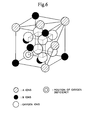
- a pyrochlore-related structural oxide which is represented by the compositional formula (III) : A 2-x B 2+x O 8-2 ⁇ and in which oxygen ions have been inserted to at least one of the position of oxygen deficiency and the interstitial position, as viewed from a fluorite-type structure of a pyrochlore-type oxide represented by the compositional formula (IV): A 2-x B 2+x O 7+(x/2)+y (provided that -0.4 ⁇ x ⁇ +0.6 and -0.2 ⁇ y ⁇ +0.2) in which A ions and B ions which may assume a plurality of valences are each regularly arranged, this oxide can be made to have a catalytic activity even in the visible-light range by utilizing the high activity of oxygen ions having been inserted, and also by changing the amount of oxygen ions
- the above pyrochlore-related structural oxide may be made to adhere and join to particles of titanium oxide, zinc oxide, tin oxide, zirconium oxide, strontium titanate or the like which is capable of acting in the near-ultraviolet range as reported in the past, to form a junction, where electrons and holes flow in one direction to each other via the junction, due to the fact that energy levels of electrons at the bottom of the conduction band and those at the top of the valence band in an energy band structure, based on the vacuum levels, differ from each other between the respective semiconductors (i.e., the pyrochlore-related structural oxide and the titanium oxide, zinc oxide, tin oxide, zirconium oxide, strontium titanate or the like).
- oxide composite comprised of the pyrochlore-related structural oxide represented by the compositional formula (III): A 2-x B 2+x O 8-2 ⁇ and the titanium oxide, zinc oxide, tin oxide, zirconium oxide, strontium titanate or the like, an oxide composite having a junction formed by oxide semiconductors (I) and (II) whose energy levels of electrons at the bottom of the conduction band and energy levels of electrons at the top of the valence band in an energy band structure, based on the vacuum levels, differ from each other also function likewise.
- oxide semiconductors (I) and (II) oxide composite having a junction formed by oxide semiconductors (I) and (II) whose energy levels of electrons at the bottom of the conduction band and energy levels of electrons at the top of the valence band in an energy band structure, based on the vacuum levels, differ from each other also function likewise.
- any study has never been made such that the two types of compound semiconductors whose energy levels of electrons at the bottom of the conduction band and energy levels of electrons at the top of the valence band in an energy band structure, based on the vacuum levels, differ from each other, which are compound semiconductors one of which has a relatively weak photocatalytic action and the other of which has a better photocatalytic action in a shorter wavelength range, are made into a composite so that the photocatalytic performance can cooperatively be improved, much less any study at all such that the flows of electrons and holes at the junction are utilized to prepare a high-performance photocatalyst.
- the present invention has been accomplished on the bases of the above technical discoveries.
- the present invention is a photocatalyst having catalytic activity even in the visible-light range; the photocatalyst comprising an oxide composite having a junction formed by oxide semiconductors (I) and (II) which have photocatalytic properties with each other and whose energy levels of electrons at the bottom of the conduction band and energy levels of electrons at the top of the valence band in an energy band structure, based on the vacuum levels, differ from each other; at least one of the oxide semiconductors having photocatalytic properties even in the visible-light range.
- the photocatalyst in the photocatalyst according to the present invention, electrons and holes flow in one direction to each other via the junction, due to the fact that energy levels of electrons at the bottom of the conduction band and those at the top of the valence band in an energy band structure, based on the vacuum levels, differ from each other between the oxide semiconductors (I) and (II), and hence this enables spatial separation of electrons from holes and enables control of the recombination of electrons and holes. This further enables spatial separation of the position of reaction of the photocatalytic reaction in which these electrons and holes participate. Hence, cooperative action of these can make the photocatalyst have a high catalytic activity up to the visible-light range.
- the oxide semiconductor (II) may also preferably have photocatalytic properties in a shorter wavelength range than the oxide semiconductor (I), and the oxide semiconductor (I) having photocatalytic properties even in the visible-light range may also preferably have properties that it adsorbs molecules and ions which participate in photocatalytic reaction at the time of irradiation by light.
- the above oxide composite may also be obtained by blending the oxide semiconductors (I) and (II) in a weight ratio of Z:(1-Z) (provided that 0 ⁇ Z ⁇ 1), followed by firing under conditions of 300°C to 1,200°C.
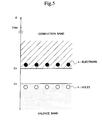
- the photocatalyst according to the present invention comprises an oxide composite having a junction formed by oxide semiconductors (I) and (II) which have photocatalytic properties with each other and whose energy levels Ec of electrons at the bottom of the conduction band and energy levels Ev of electrons at the top of the valence band in an energy band structure, based on the vacuum levels, differ from each other; at least one of the oxide semiconductors having photocatalytic properties even in the visible-light range; the energy band structure being the energy band structure shown in Fig.5.
- the oxide semiconductor (I) having photocatalytic properties even in the visible-light range, constituting one component of the oxide composite may include, e.g.,:
- the oxygen ions having been inserted are readily movable and are active, and the oxygen ions can be inserted also to the position of oxygen deficiency or the interstitial position, as viewed from the fluorite-type structure.
- this oxide has numberless dissolution sites of oxygen ions, and has a very high catalytic activity. It has such characteristic features, and is a material having photocatalytic action effectively also in the visible-light range. The present inventors have already discovered these facts.
- its light absorption properties can be controlled by substituting the A ions with cations having a lower valence or higher valence or substituting the B ions with cations having a lower valence or higher valence to change the amount of oxygen ions to be inserted, to change the energy band gap and the defect levels.
- the oxide semiconductor (II) constituting the other component of the oxide composite may include, e.g., titanium oxide of a rutile type or an anatase type or a mixed type of these two, zinc oxide, tin oxide, zirconium oxide and strontium titanate.
- the Ce 2 Zr 2 O 8 powder and the anatase-type titanium oxide powder were mixed in a weight ratio of Z: (1-Z) (provided that 0 ⁇ Z ⁇ 1) and the mixture obtained was subjected to firing at 700°C for 1 hour, followed by pulverization by means of a mortar to first prepare a powder (photocatalyst) according to Example 1.
- the powder (photocatalyst) according to Example 1 was dispersed in an aqueous Methylene Blue solution and also the decolorization (bleaching) of Methylene Blue due to irradiation by light was tested.
- the color of a powder sample (a powder according to Example 1) turned deeply bluish as a result of the formation of the oxide composite comprised of Ce 2 Zr 2 O 8 and anatase-type titanium oxide according to Example 1, and the blueness of the sample disappeared at the time the bleaching was completed.
- the oxide semiconductors (I) and (II) whose energy levels of electrons at the bottom of the conduction band and energy levels of electrons at the top of the valence band in an energy band structure, based on the vacuum levels, differ from each other are joined, the electrons and holes flow commonly in one direction to each other in the vicinity of the junction.
- the electrons and holes which flow at the junction show a stronger tendency of being separated from each other because of the phenomenon of adsorption accelerated by light irradiation. Such a phenomenon is influenced by whether the ions to be adsorbed are positive or negative.
- the ions to be adsorbed are negative and when they are adsorbed on the oxide composite comprised of the pyrochlore-related structural oxide represented by the compositional formula (III): A 2-x B 2+x O 8-2 ⁇ and the titanium oxide, as conceptually illustrated in Fig. 7 (A) , the holes flow at the surface (the side coming into contact with the outside) of the junction, and electrons flow at the middle of the junction.
- the holes flow at the surface (the side coming into contact with the outside) of the junction, and electrons flow at the middle of the junction.
- separating the flows of electrons and holes at the junction leads to the spatial separation of electrons from holes in the whole oxide composite, so that the electrons and holes which have been photo-excited can be kept from their recombination.
- Fig. 7 (B) illustrates energy band structure at the junction of the oxide composite in which the oxide semiconductor(I) is comprised of the pyrochlore-related structural oxide represented by the compositional formula (III) : A 2-x B 2+x O 8-2 ⁇ and the titanium oxide.
- the combination of the oxide semiconductors (I) and (II) may be changed in variety. This enables, e.g., control of the energy of electrons and holes which participate in the photocatalytic reaction taking place in the vicinity of a heterojunction or homojunction.
- Making up oxide composites having a junction formed by oxide semiconductors of different types or the same type brings about various advantages.
- the junction of the oxide composite comprised of the pyrochlore-related structural oxide represented by the compositional formula (III): A 2-x B 2+x O 8-2 ⁇ and the titanium oxide is a junction between oxide semiconductors of different types, and hence it is a heterojunction.
- oxide composite having such a heterojunction it may include:
- the homojunction which is a junction between oxide semiconductors of the same type, it may include, e.g., an oxide composite obtained by mixing and pulverizing titanium nitride (TiN) and titanium oxide (TiO 2 ), followed by firing and again pulverization. It is presumed that the titanium oxide has been oxidized as a result of the reaction at the time of preparation to provide a form in which the titanium oxide has been doped with nitrogen. Thus, this oxide composite is comprised of a titanium oxide doped with nitrogen and a titanium oxide not doped with nitrogen (i.e., semiconductors of the same type).
- the pyrochlore-type oxide represented by the compositional formula (IV) A 2-x B 2+x O 7+(x/2)+y , which serves as a precursor of the pyrochlore-related structural oxide represented by the compositional formula (III) : A 2-x B 2+x O 8-2 ⁇ , the perovskite-type oxide doped with an acceptor and represented by the compositional formula: A 2+ B 4+ 1-x C 3+ x O 3- ⁇ (provided that 0 ⁇ x ⁇ 0.5 and 0 ⁇ ⁇ ⁇ 0.5) and the perovskite-type oxide not doped with an acceptor and represented by the compositional formula (VI): A 2+ B 4+ O 3- ⁇ (-0.1 ⁇ ⁇ ⁇ 0.1), which have been exemplified as the oxide semiconductor (I) having photocatalytic properties even in the visible-light range, may be synthesized by a conventional solid-phase process, i.e., by mixing raw-material oxides or carbonates of
- compositional formula (III) A 2-x B 2+x O 8-2 ⁇
- a phase of the compositional formula (V) : t'-A 0.5-(x/4) B 0.5+(x/4) O 2 which is a strained fluorite-type structural oxide, is first produced as an intermediate oxide, and then this phase of the compositional formula (V) : t'-A 0.5-(x/4) B 0.5+(x/4) O 2 is reduced to produce the pyrochlore-type oxide of the compositional formula (IV): A 2-x B 2+x O 7+(x/2)+y .
- this pyrochlore-type oxide is oxidized to insert oxygen, whereupon the pyrochlore-related structural oxide represented by the compositional formula (III): A 2-x B 2+x O 8-2 ⁇ (provided that -0.4 ⁇ x ⁇ +0.6 and -0.5 ⁇ 2 ⁇ ⁇ +0.5), is obtained.
- the pyrochlore-related structural oxide represented by the compositional formula (III) A 2-x B 2+x O 8-2 ⁇ (provided that -0.4 ⁇ x ⁇ +0.6 and -0.5 ⁇ 2 ⁇ ⁇ +0.5)
- the starting rawmaterials are weighed, and then mixed by means of a ball mill or the like.
- the mixture obtained is green-compact molded into a disk of about 15 to 20 mm in diameter, followed by firing at 1, 500 to 1, 750°C for 30 to 70 hours in an oxygen-containing gas such as air to obtain the oxide represented by the compositional formula (V) : t'-A 0.5-(x/4) B 0.5+(x/4) O 2 .
- the oxide thus produced is pulverized into powder with an average particle diameter of 1 to 2 mm. This is put on rhodium/platinum foil to make heat treatment at 500 to 700°C for about 5 hours in a stream of oxygen to adjust oxygen content.
- this t' phase is reduced at 700 to 1,350°C for 10 to 20 hours in a stream of 1%H 2 /Ar or 5%H 2 /Ar.
- the sample is taken out and its mass is precisely weighed to determine the oxygen content in the resultant pyrochlore-type oxide of the compositional formula (IV) : A 2-x B 2+x O 7+(x/2)+y on the basis of a change in mass from the phase of the compositional formula (V): t'-A 0.5-(x/4) B 0.5+(x/4) O 2 before the reduction treatment.
- the y in the compositional formula (IV) is the content showing a portion which changes depending on the valences of the A ion and B ion and the content of these ions in the pyrochlore-type oxide.
- the valence of the A ion is smaller than 3 and the valence of the B ion is smaller than 4
- the y is a negative number.
- a part of A ions may come around the position of the B ion, or a part of B ions may come around the position of the A ion, according to which the value of y may change.
- the oxide can no longer retain the pyrochlore-type structure. Accordingly, in the compositional formula (IV), the y must be -0.2 ⁇ y ⁇ +0.2.
- the above pyrochlore-type oxide is put on rhodium/platinum foil to make heat treatment at 300 to 900°C for about 5 hours in a stream of oxygen, whereby oxygen ions can be inserted as the regular arrangement of cations is retained, thus the pyrochlore-related structural oxide represented by the compositional formula (III) : A 2-x B 2+x O 8-2 ⁇ (provided that -0.4 ⁇ x ⁇ +0.6 and -0.5 ⁇ 2 ⁇ ⁇ +0.5) is obtained.
- the heat treatment is made at a temperature lower than 300°C, the oxygen may not sufficiently be inserted to crystals.
- the pyrochlore-related structural oxide thus obtained is pulverized by means of a mortar or the like to make it into powder, and the powder obtained is mixed with a powder of anatase-type titanium oxide obtained by a conventional method as shown in Comparative Example given later.
- the latter is weighed in the proportion of Z: (1-Z) (provided that 0 ⁇ Z ⁇ 1) in weight ratio, and the both is mixed by means of a mortar, a ball mill or the like.
- the sample obtained by mixing them is fired for about 5 minutes to about 1 hour at 300 to 1,200°C to prepare the oxide composite having the junction formed by oxide semiconductors of different types. If the firing temperature is lower than 300°C, any good junction may not be obtainable. If it is higher than 1,200°C, a reaction phase of a different type may be formed, resulting in a low photocatalytic performance of the oxide composite.
- the photocatalyst may preferably comprise particles having a large specific surface area so that the light can effectively be utilized.
- the particles it is suitable for the particles to have a particle diameter of from 0.1 to 10 ⁇ m, and preferably from 0.1 to 1 ⁇ m.
- the respective oxide semiconductors are each manually pulverized by means of a mortar, or pulverized by means of a ball mill or a planetary tumbling ball mill.
- the two kinds of powders thus obtained are weighed and mixed and the mixture formed is fired to obtain the oxide composite having the junction, followed by pulverization again carried out to obtain a final sample powder.
- ig.-loss indicates a loss due to water content, absorbed matter and so forth.
- the pulverized mixture obtained was molded at a pressure of 100 MPa into a disk of 17 mm in diameter.
- the sample obtained was put into a crucible made of rhodium/platinum, and fired at 1, 650°C for 50 hours in the atmosphere to produce a t'-Ce 0.5 Zr 0.5 O 2 phase.
- the sintered product of the t'-Ce 0.5 Zr 0.5 O 2 phase was pulverized by means of an agate mortar into powder with an average particle diameter of 1 to 2 mm.
- this t'-Ce 0.5 Zr 0.5 O 2 phase was reduced at 1,300°C for 10 hours in a stream of 5%H 2 /Ar.
- most of Ce adjusted to tetravalent Ce in the t'-Ce 0.5 Zr 0.5 O 2 phase is adjusted to trivalent Ce and this phase comes to a pyrochlore phase.
- the sample was taken out and its mass was precisely weighed to determine the oxygen content in the pyrochlore phase on the basis of a change in mass from the t'-Ce 0.5 Zr 0.5 O 2 before the reduction treatment, to find that it came to Ce 2 Zr 2 O 7.02 .
- the pyrochlore-type phase (pyrochlore-type oxide) obtained after the reduction treatment was put on rhodium/platinum foil to make heat treatment at 600°C for 5 hours in a stream of oxygen to adjust oxygen content.
- a pyrochlore-related structural oxide Ce 2 Zr 2 O 8.0 [oxide semiconductor (I)] was obtained.
- the anatase-type titanium oxide [oxide semiconductor (II) and the Ce 2 Zr 2 O 8.0 pyrochlore-related structural oxide [oxide semiconductor (I)] which were prepared by the above method were collected in a weight ratio shown below, and were dry-process mixed for 30 minutes by means of a zirconia mortar. Titanium oxide 0.7086 g, Ce 2 Zr 2 O 8.0 : 0.3285 g (weight ratio: 68:32). Titanium oxide 0.4000 g, Ce 2 Zr 2 O 8.0 : 0.1000 g (weight ratio: 80:20). Titanium oxide 0.4500 g, Ce 2 Zr 2 O 8.0 : 0.0500 g (weight ratio: 90:10).
- the samples obtained by the mixing were each put into a crucible made of rhodium/platinum, and fired at 700°C for 1 hour in the atmosphere.
- the fired products obtained were each dry-process pulverized for 30 minutes by means of a zirconia mortar to obtain sample powders.
- CaCO 3 powder (a product of Kohjundo Kagaku Kenkyusho K.K.; purity: 99.99%, ig.-loss: 0.04%): 4.3115 g.
- ZrO 2 powder (a product of Santoku Kinzoku Kogyo K.K.; purity: 99.60%, comprised of ZrO 2 + HfO 2 ; ig.-loss: 0.51%) : 5.3714 g.
- the sample having been pulverized was dried at 120°C for 30 minutes or more in a thermostatic chamber.
- the sample having been dried was put in a crucible made of rhodium/platinum, and calcined at 1,350°C for 10 hours in the atmosphere.
- the sample was again pulverized by means of a mortar, followed by mixing by means of the planetary tumbling ball mill. Thereafter, the mixture obtained was dried under the same conditions as the above drying.
- the dried powder obtained was molded at a pressure of 265 MPa into a disk of 17 mm in diameter.
- the sample having been molded was put into a crucible made of rhodium/platinum, and fired at 1, 650°C for 50 hours in the atmosphere.
- the sample was pulverized for 1 hour by means of a zirconia mortar to obtain a sample powder.
- the fired product had composition of CaZrO 3- ⁇ (the value of ⁇ is a numerical value of within -0.1 ⁇ ⁇ ⁇ 0.1; the same applies hereinafter).
- SrZrO 3- ⁇ was prepared in the same manner as in Example 2 except that the following raw materials were used.
- SrCO 3 powder (a product of Kohjundo Kagaku Kenkyusho K.K.; purity: 99.99%, ig.-loss: 0.04%): 4.8910 g.
- ZrO 2 powder (a product of Santoku Kinzoku Kogyo K.K.; purity: 99.60%, comprised of ZrO 2 + HfO 2 ; ig.-loss: 0.49%) : 5.8335 g.
- SrCeO 3- ⁇ was prepared in the same manner as in Example 2 except that the following raw materials were used and the calcination and firing were carried out in the following manner.
- SrCO 3 powder (a product of Kohjundo Kagaku Kenkyusho K.K.; purity: 99.99%, ig.-loss: 0.04%): 6.3198 g.
- CeO 2 powder (a product of Santoku Kinzoku Kogyo K.K.; purity: 99.99%, comprised of ZrO 2 + HfO 2 ; ig.-loss: 3.33%) : 5.2428 g.
- the sample having been dried was put in a crucible made of rhodium/platinum, and calcined at 1,400°C for 10 hours in the atmosphere.
- the sample having been molded was put into a crucible made of rhodium/platinum, and fired at 1,500°C for 50 hours in the atmosphere.
- SrCO 3 powder (a product of Kohjundo Kagaku Kenkyusho K.K.; purity: 99.9%, ig.-loss: 0.08%): 5.8284 g.
- TiO 2 powder (anatase type, a product of Rare Metallic; purity: 99.99%; ig.-loss: 0.84%): 3.1774 g.
- the sample having been pulverized was dried at 120°C for 30 minutes or more in a thermostatic chamber.
- the sample having been dried was put in a crucible made of rhodium/platinum, and calcined at 1,350°C for 10 hours in the atmosphere.
- the sample was again pulverized by means of a mortar, followed by mixing by means of the planetary tumbling ball mill. Thereafter, the mixture obtained was dried under the same conditions as the above drying.
- the dried powder obtained was molded at a pressure of 265 MPa into a disk of 17 mm in diameter.
- the sample having been molded was put into a crucible made of rhodium/platinum, and fired at 1, 650°C for 50 hours in the atmosphere.
- the sample was pulverized for 1 hour by means of a zirconia mortar to obtain a sample powder.
- Anatase-type TiO 2 [ST-01, a product of Ishihara Sangyo Kaisha, Ltd.; purity: 99.99%, ig.-loss: 15.1%; oxide semiconductor (II)] and SrTiO 3- ⁇ [oxide semiconductor (I)] were collected in a weight ratio shown below, and were dry-process mixed for 30 minutes by means of a zirconia mortar. Since, however, the "ig.-loss" of the anatase-type TiO 2 was 15.1%, the value 15.1% of the "ig.-loss” was taken into account when the materials were collected. Titanium oxide 1.1380 g, SrTiO 3- ⁇ : 0.1074 g (weight ratio: 90:10).
- the sample obtained by the mixing was put into a crucible made of rhodium/platinum, and fired at 700°C for 1 hour in the atmosphere.
- the fired product obtained was dry-process pulverized for 5 minutes by means of a zirconia mortar to obtain a sample powder.
- Sn 2 Nb 2 O 7 was prepared in the same manner as the method of producing a precursor of the pyrochlore-related structural oxide shown in Example 1 (i.e., the method of producing the Ce 2 Zr 2 O 7.02 from the t'-Ce 0.5 Zr 0.5 O 2 in Example 1).
- the sample obtained by the mixing was put into a crucible made of rhodium/platinum, which was then set in a container made of SiO 2 glass. Next, the inside of the container was evacuated by means of an oil diffusion pump to bring it into a vacuum of 1 x 10 -4 Pa or less, followed by firing at 400°C for 1 hour.
- the fired product obtained was dry-process pulverized for 5 minutes by means of a zirconia mortar to obtain a sample powder.
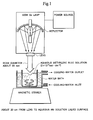
- the catalytic activity of the photocatalysts according to Examples 1 to 6 and Comparative Example was evaluated by a photo-bleaching method using an aqueous Methylene Blue (MB) solution.
- MB Methylene Blue
- Methylene Blue (guaranteed reagent, available from Kanto Chemical Co., Inc.) Ultrapure water (resistivity: 18.2 M ⁇ cm or more) 7.48 mg of the above Methylene Blue was precisely weighed, and the whole was dissolved in 1 liter of the ultrapure water using a measuring flask to make up an aqueous solution of 2.0 x 10 -5 mol/liter (mol ⁇ dm -3 ) of Methylene Blue.
- aqueous Methylene Blue solutions in which the respective samples were kept dispersed were each collected in a quartz cell, and their transmission spectra were each measured with the spectrophotometer.
- the samples having been subjected to measurement were restored, and the stirring and light irradiation were repeated thereon, where the transmission spectra were measured at every lapse of time to determine their absorbance.
- the rate of bleaching was evaluated by a reciprocal of time for which the absorbance changed from 1.0 to 0.1.
- the photocatalyst according to the present invention can exhibit a high catalytic function in the visible-light range, and is suited as a photocatalyst used for decomposition treatment of environmental pollutants, deodorization, stainproofing, antimicrobial treatment, antifogging and so forth.
Landscapes
- Chemical & Material Sciences (AREA)
- Organic Chemistry (AREA)
- Engineering & Computer Science (AREA)
- Materials Engineering (AREA)
- Chemical Kinetics & Catalysis (AREA)
- Environmental & Geological Engineering (AREA)
- Inorganic Chemistry (AREA)
- Analytical Chemistry (AREA)
- General Chemical & Material Sciences (AREA)
- Oil, Petroleum & Natural Gas (AREA)
- Biomedical Technology (AREA)
- Health & Medical Sciences (AREA)
- Life Sciences & Earth Sciences (AREA)
- General Life Sciences & Earth Sciences (AREA)
- Geology (AREA)
- Catalysts (AREA)
Applications Claiming Priority (5)
| Application Number | Priority Date | Filing Date | Title |
|---|---|---|---|
| JP2001241386 | 2001-08-08 | ||
| JP2001241386 | 2001-08-08 | ||
| JP2002184094A JP4075482B2 (ja) | 2001-08-08 | 2002-06-25 | 可視光域でも触媒活性を有する光触媒 |
| JP2002184094 | 2002-06-25 | ||
| PCT/JP2002/007301 WO2003013727A1 (en) | 2001-08-08 | 2002-07-18 | Photocatalyst exhibiting catalytic activity even in visible light region |
Publications (2)
| Publication Number | Publication Date |
|---|---|
| EP1522342A1 true EP1522342A1 (de) | 2005-04-13 |
| EP1522342A4 EP1522342A4 (de) | 2005-04-13 |
Family
ID=26620226
Family Applications (1)
| Application Number | Title | Priority Date | Filing Date |
|---|---|---|---|
| EP02751632A Withdrawn EP1522342A4 (de) | 2001-08-08 | 2002-07-18 | Photocatalysator mit katalytischer aktivität auch im sichtbaren bereich |
Country Status (7)
| Country | Link |
|---|---|
| US (1) | US20030144140A1 (de) |
| EP (1) | EP1522342A4 (de) |
| JP (1) | JP4075482B2 (de) |
| KR (1) | KR20040018901A (de) |
| CN (1) | CN1461237A (de) |
| CA (1) | CA2410255A1 (de) |
| WO (1) | WO2003013727A1 (de) |
Cited By (2)
| Publication number | Priority date | Publication date | Assignee | Title |
|---|---|---|---|---|
| EP1953266A1 (de) * | 2006-12-27 | 2008-08-06 | Murakami Corporation | Antibeschlagelement für ein Fahrzeug |
| CN111013560A (zh) * | 2019-12-26 | 2020-04-17 | 西南石油大学 | 氧缺陷二氧化钛催化剂及其制备方法和应用 |
Families Citing this family (22)
| Publication number | Priority date | Publication date | Assignee | Title |
|---|---|---|---|---|
| JP4736267B2 (ja) * | 2001-08-08 | 2011-07-27 | 住友金属鉱山株式会社 | 可視光域でも触媒活性を有する光触媒 |
| US7521039B2 (en) * | 2002-11-08 | 2009-04-21 | Millennium Inorganic Chemicals, Inc. | Photocatalytic rutile titanium dioxide |
| JP4311150B2 (ja) * | 2003-10-01 | 2009-08-12 | 住友金属鉱山株式会社 | 光触媒 |
| CN101502794B (zh) * | 2006-11-08 | 2011-05-18 | 中国科学技术大学 | 化合物YMO3(M=In,Al)的光催化用途 |
| KR100972633B1 (ko) * | 2007-08-08 | 2010-07-27 | 한국광기술원 | 형광램프 대체용 led 램프의 제작방법 및 배광방법 |
| JP5127380B2 (ja) * | 2007-09-27 | 2013-01-23 | 株式会社豊田中央研究所 | セリア−ジルコニア系複合酸化物及びその製造方法、並びにそのセリア−ジルコニア系複合酸化物を用いた排ガス浄化用触媒 |
| JP2009095695A (ja) * | 2007-10-13 | 2009-05-07 | Nagaoka Univ Of Technology | 液中重金属イオン除去用酸化セリウム光触媒 |
| CN101745378B (zh) * | 2010-01-02 | 2013-07-24 | 桂林理工大学 | 可见光响应的复合氧化物光催化剂Li9Ti5Nb5-xTaxO27及制备方法 |
| CN101745379B (zh) * | 2010-01-02 | 2012-07-04 | 桂林理工大学 | 可见光响应的复合氧化物光催化剂Li7Ti5Nb3-xTaxO21及制备方法 |
| KR100970509B1 (ko) * | 2010-03-09 | 2010-07-16 | (주)인크룩스 | Led 조명 장치 |
| US9987621B2 (en) * | 2012-01-12 | 2018-06-05 | Nitto Denko Corporation | Transparent photocatalyst coating |
| JP5323218B2 (ja) * | 2012-02-15 | 2013-10-23 | 国立大学法人長岡技術科学大学 | 重金属イオンを含有する液体から重金属イオンを除去する方法 |
| EP2656910A1 (de) | 2012-04-26 | 2013-10-30 | Saudi Basic Industries Corporation | Photokatalysator, Herstellungsverfahren, Photolysesystem |
| TWI627994B (zh) | 2013-07-05 | 2018-07-01 | 日東電工股份有限公司 | 用於分解污染物之過濾元件、用於分解污染物之系統及使用該系統之方法 |
| CN103611557B (zh) * | 2013-12-05 | 2015-07-08 | 河南师范大学 | 一种ZnO-SrTaO2N复合光催化剂及其制备方法 |
| DE102015107986A1 (de) * | 2015-05-20 | 2016-11-24 | H1 Energy B.V. | Photokatalysator |
| US20180305219A1 (en) * | 2015-10-20 | 2018-10-25 | National Institute Of Advanced Industrial Science And Technology | Oxide semiconductor |
| JP7037197B2 (ja) * | 2017-02-23 | 2022-03-16 | 国立研究開発法人産業技術総合研究所 | 酸化物半導体及び半導体装置 |
| CN107994120B (zh) * | 2017-11-22 | 2024-05-07 | 辽宁大学 | Sn2Nb2O7光阳极材料及Sn2Nb2O7光电极薄膜 |
| CN111790418B (zh) * | 2019-04-08 | 2023-05-26 | 国家纳米科学中心 | 一种钙钛复合材料及其制备方法和用途 |
| CN111167463A (zh) * | 2020-01-20 | 2020-05-19 | 上海应用技术大学 | 一种Co掺杂BZCYO光催化剂、制备方法和应用 |
| CN114100620B (zh) * | 2021-11-23 | 2024-08-30 | 阜阳师范大学 | 钙钛矿型LaCoO3修饰氧化锌光催化剂、制备方法及其应用 |
Family Cites Families (12)
| Publication number | Priority date | Publication date | Assignee | Title |
|---|---|---|---|---|
| US5480524A (en) * | 1991-12-21 | 1996-01-02 | Robert Aalbers | Method and apparatus for removing undesirable chemical substances from gases, exhaust gases, vapors, and brines |
| JPH0724329A (ja) * | 1993-07-07 | 1995-01-27 | Nikon Corp | 光触媒 |
| WO1998012048A1 (en) * | 1996-09-20 | 1998-03-26 | Hitachi, Ltd. | Thin photocatalytic film and articles provided with the same |
| JP4305001B2 (ja) * | 1996-09-20 | 2009-07-29 | 株式会社日立製作所 | 光触媒薄膜を備えた物品 |
| JPH10244165A (ja) * | 1997-03-07 | 1998-09-14 | Nikon Corp | 可視光領域で触媒活性をもつ光触媒 |
| KR20010031599A (ko) * | 1998-09-30 | 2001-04-16 | 마쯔무라 미노루 | 광촉매 물품과 방담방오 물품 및 방담방오 물품의 제조방법 |
| JP3887499B2 (ja) * | 1998-11-10 | 2007-02-28 | シャープ株式会社 | 光触媒体の形成方法 |
| JP2001079978A (ja) * | 1999-09-14 | 2001-03-27 | Toto Ltd | 親水性部材 |
| JP2001140636A (ja) * | 1999-11-16 | 2001-05-22 | Yanmar Diesel Engine Co Ltd | 排気浄化装置 |
| JP2001205103A (ja) * | 2000-01-27 | 2001-07-31 | Toyota Central Res & Dev Lab Inc | 光触媒体 |
| JP2002234105A (ja) * | 2000-03-13 | 2002-08-20 | Toto Ltd | 親水性部材及びその製造方法 |
| JP4736267B2 (ja) * | 2001-08-08 | 2011-07-27 | 住友金属鉱山株式会社 | 可視光域でも触媒活性を有する光触媒 |
-
2002
- 2002-06-25 JP JP2002184094A patent/JP4075482B2/ja not_active Expired - Fee Related
- 2002-07-18 EP EP02751632A patent/EP1522342A4/de not_active Withdrawn
- 2002-07-18 CN CN02801196A patent/CN1461237A/zh active Pending
- 2002-07-18 CA CA002410255A patent/CA2410255A1/en not_active Abandoned
- 2002-07-18 WO PCT/JP2002/007301 patent/WO2003013727A1/ja not_active Ceased
- 2002-07-18 KR KR1020027015928A patent/KR20040018901A/ko not_active Withdrawn
- 2002-07-18 US US10/276,325 patent/US20030144140A1/en not_active Abandoned
Cited By (3)
| Publication number | Priority date | Publication date | Assignee | Title |
|---|---|---|---|---|
| EP1953266A1 (de) * | 2006-12-27 | 2008-08-06 | Murakami Corporation | Antibeschlagelement für ein Fahrzeug |
| US7842393B2 (en) | 2006-12-27 | 2010-11-30 | Murakami Corporation | Vehicle antifogging element |
| CN111013560A (zh) * | 2019-12-26 | 2020-04-17 | 西南石油大学 | 氧缺陷二氧化钛催化剂及其制备方法和应用 |
Also Published As
| Publication number | Publication date |
|---|---|
| CA2410255A1 (en) | 2003-02-08 |
| US20030144140A1 (en) | 2003-07-31 |
| JP4075482B2 (ja) | 2008-04-16 |
| CN1461237A (zh) | 2003-12-10 |
| JP2003117407A (ja) | 2003-04-22 |
| WO2003013727A1 (en) | 2003-02-20 |
| KR20040018901A (ko) | 2004-03-04 |
| EP1522342A4 (de) | 2005-04-13 |
Similar Documents
| Publication | Publication Date | Title |
|---|---|---|
| US20030144140A1 (en) | Photocatalyst exhibiting catalytic activity even in visible light region | |
| EP1468736A1 (de) | Photokatalysator mit katalytischer aktivität auch im sichtbaren bereich | |
| KR100662163B1 (ko) | 금속 산화물 고용체, 그 제조방법 및 용도 | |
| Strobel et al. | Flame aerosol synthesis of smart nanostructured materials | |
| CA2337002C (en) | Process for synthesizing metal oxides and metal oxides having a perovskite or perovskite-like crystal structure | |
| Modeshia et al. | Solvothermal synthesis of perovskites and pyrochlores: crystallisation of functional oxides under mild conditions | |
| Das et al. | Application of perovskites towards remediation of environmental pollutants: an overview: A review on remediation of environmental pollutants using perovskites | |
| US5925590A (en) | Catalysts utilizing oxygen-deficient metal oxide compound for removal of exhaust gas constituents | |
| US20090286680A1 (en) | Exhaust Gas Purification Catalyst and Exhaust Gas Purification Catalyst Member | |
| CN105283418A (zh) | 金属氧化物粒子的制造方法 | |
| CN100531899C (zh) | 类钙钛矿结构复合氧化物光催化剂及制备方法 | |
| Abdel-Latif et al. | Impact of the annealing temperature on perovskite strontium doped neodymium manganites nanocomposites and their photocatalytic performances | |
| Lu et al. | On structure and methylene blue degradation activity of an Aurivillius-type photocatalyst of Bi4V2O11 nanoparticles | |
| JP2003175337A (ja) | Aサイト欠損型ペロブスカイト複合酸化物を用いた排気ガス浄化用三元触媒 | |
| JPH06100319A (ja) | ペロブスカイト型構造複合酸化物およびその製造方法 | |
| JP4696414B2 (ja) | 可視光領域で触媒活性を有する光触媒 | |
| JP2003190816A (ja) | 可視光域でも触媒活性を有する光触媒 | |
| Li et al. | Status of rare-earth perovskite catalysts in environmental applications | |
| JP4696416B2 (ja) | 可視光領域で触媒活性を有する光触媒 | |
| JP4311150B2 (ja) | 光触媒 | |
| JP4206822B2 (ja) | 複合酸化物から成る光触媒とその製造方法 | |
| JP2013241328A (ja) | 酸化鉄−ジルコニア系複合酸化物およびその製造方法 | |
| Lehuta | Dopant-defect Engineering in Strontium Titanate-based Materials | |
| JP4601462B2 (ja) | ペロブスカイト型複合酸化物及びその製造方法 | |
| Tan | Study of nanostructured semiconductor metal oxide as visible-light photocatalyst |
Legal Events
| Date | Code | Title | Description |
|---|---|---|---|
| PUAI | Public reference made under article 153(3) epc to a published international application that has entered the european phase |
Free format text: ORIGINAL CODE: 0009012 |
|
| 17P | Request for examination filed |
Effective date: 20030819 |
|
| A4 | Supplementary search report drawn up and despatched |
Effective date: 20050209 |
|
| AK | Designated contracting states |
Kind code of ref document: A1 Designated state(s): AT BE BG CH CY CZ DE DK EE ES FI FR GB GR IE IT LI LU MC NL PT SE SK TR |
|
| STAA | Information on the status of an ep patent application or granted ep patent |
Free format text: STATUS: THE APPLICATION IS DEEMED TO BE WITHDRAWN |
|
| 18D | Application deemed to be withdrawn |
Effective date: 20050426 |