EP1475475B1 - Grundgewebe für beschichteten airbag und herstellungsverfahren dafür - Google Patents
Grundgewebe für beschichteten airbag und herstellungsverfahren dafür Download PDFInfo
- Publication number
- EP1475475B1 EP1475475B1 EP03700505A EP03700505A EP1475475B1 EP 1475475 B1 EP1475475 B1 EP 1475475B1 EP 03700505 A EP03700505 A EP 03700505A EP 03700505 A EP03700505 A EP 03700505A EP 1475475 B1 EP1475475 B1 EP 1475475B1
- Authority
- EP
- European Patent Office
- Prior art keywords
- base fabric
- airbags
- section
- fabric
- cross
- Prior art date
- Legal status (The legal status is an assumption and is not a legal conclusion. Google has not performed a legal analysis and makes no representation as to the accuracy of the status listed.)
- Expired - Lifetime
Links
- 239000004744 fabric Substances 0.000 title claims description 245
- 238000000034 method Methods 0.000 title claims description 37
- 238000004519 manufacturing process Methods 0.000 title claims description 14
- 229920005989 resin Polymers 0.000 claims description 45
- 239000011347 resin Substances 0.000 claims description 45
- 229920001971 elastomer Polymers 0.000 claims description 16
- 239000000806 elastomer Substances 0.000 claims description 16
- 238000009941 weaving Methods 0.000 claims description 14
- 239000004952 Polyamide Substances 0.000 claims description 11
- 229920002647 polyamide Polymers 0.000 claims description 11
- 238000010438 heat treatment Methods 0.000 claims description 3
- 239000002759 woven fabric Substances 0.000 claims description 3
- 239000002585 base Substances 0.000 description 148
- 239000000835 fiber Substances 0.000 description 43
- 238000000576 coating method Methods 0.000 description 18
- 239000011248 coating agent Substances 0.000 description 17
- 230000000052 comparative effect Effects 0.000 description 11
- XLYOFNOQVPJJNP-UHFFFAOYSA-N water Substances O XLYOFNOQVPJJNP-UHFFFAOYSA-N 0.000 description 10
- 229920002302 Nylon 6,6 Polymers 0.000 description 9
- 230000000694 effects Effects 0.000 description 9
- 238000009987 spinning Methods 0.000 description 9
- 230000009467 reduction Effects 0.000 description 8
- 238000003490 calendering Methods 0.000 description 7
- 229920000642 polymer Polymers 0.000 description 7
- 238000002513 implantation Methods 0.000 description 6
- NLKNQRATVPKPDG-UHFFFAOYSA-M potassium iodide Chemical compound [K+].[I-] NLKNQRATVPKPDG-UHFFFAOYSA-M 0.000 description 6
- 238000009835 boiling Methods 0.000 description 5
- 230000001143 conditioned effect Effects 0.000 description 5
- 230000035699 permeability Effects 0.000 description 5
- 229920000728 polyester Polymers 0.000 description 5
- 239000003963 antioxidant agent Substances 0.000 description 4
- 239000000463 material Substances 0.000 description 4
- 229910052751 metal Inorganic materials 0.000 description 4
- 239000002184 metal Substances 0.000 description 4
- IOLCXVTUBQKXJR-UHFFFAOYSA-M potassium bromide Chemical compound [K+].[Br-] IOLCXVTUBQKXJR-UHFFFAOYSA-M 0.000 description 4
- 230000008569 process Effects 0.000 description 4
- 239000003795 chemical substances by application Substances 0.000 description 3
- 230000007423 decrease Effects 0.000 description 3
- 238000007598 dipping method Methods 0.000 description 3
- 230000002349 favourable effect Effects 0.000 description 3
- 238000009958 sewing Methods 0.000 description 3
- 229920002050 silicone resin Polymers 0.000 description 3
- FVAUCKIRQBBSSJ-UHFFFAOYSA-M sodium iodide Chemical compound [Na+].[I-] FVAUCKIRQBBSSJ-UHFFFAOYSA-M 0.000 description 3
- 229920002994 synthetic fiber Polymers 0.000 description 3
- 239000012209 synthetic fiber Substances 0.000 description 3
- VTYYLEPIZMXCLO-UHFFFAOYSA-L Calcium carbonate Chemical compound [Ca+2].[O-]C([O-])=O VTYYLEPIZMXCLO-UHFFFAOYSA-L 0.000 description 2
- CDBYLPFSWZWCQE-UHFFFAOYSA-L Sodium Carbonate Chemical compound [Na+].[Na+].[O-]C([O-])=O CDBYLPFSWZWCQE-UHFFFAOYSA-L 0.000 description 2
- QAOWNCQODCNURD-UHFFFAOYSA-N Sulfuric acid Chemical compound OS(O)(=O)=O QAOWNCQODCNURD-UHFFFAOYSA-N 0.000 description 2
- 239000000654 additive Substances 0.000 description 2
- 230000002146 bilateral effect Effects 0.000 description 2
- 230000008859 change Effects 0.000 description 2
- ORTQZVOHEJQUHG-UHFFFAOYSA-L copper(II) chloride Chemical compound Cl[Cu]Cl ORTQZVOHEJQUHG-UHFFFAOYSA-L 0.000 description 2
- OPQARKPSCNTWTJ-UHFFFAOYSA-L copper(ii) acetate Chemical compound [Cu+2].CC([O-])=O.CC([O-])=O OPQARKPSCNTWTJ-UHFFFAOYSA-L 0.000 description 2
- 230000000875 corresponding effect Effects 0.000 description 2
- HIHIPCDUFKZOSL-UHFFFAOYSA-N ethenyl(methyl)silicon Chemical compound C[Si]C=C HIHIPCDUFKZOSL-UHFFFAOYSA-N 0.000 description 2
- 230000002452 interceptive effect Effects 0.000 description 2
- 210000003127 knee Anatomy 0.000 description 2
- KWGKDLIKAYFUFQ-UHFFFAOYSA-M lithium chloride Chemical compound [Li+].[Cl-] KWGKDLIKAYFUFQ-UHFFFAOYSA-M 0.000 description 2
- 238000005259 measurement Methods 0.000 description 2
- 230000000704 physical effect Effects 0.000 description 2
- -1 polyhexamethylene Polymers 0.000 description 2
- 230000003014 reinforcing effect Effects 0.000 description 2
- 230000035939 shock Effects 0.000 description 2
- 238000005507 spraying Methods 0.000 description 2
- 239000005995 Aluminium silicate Substances 0.000 description 1
- UXVMQQNJUSDDNG-UHFFFAOYSA-L Calcium chloride Chemical compound [Cl-].[Cl-].[Ca+2] UXVMQQNJUSDDNG-UHFFFAOYSA-L 0.000 description 1
- RYGMFSIKBFXOCR-UHFFFAOYSA-N Copper Chemical compound [Cu] RYGMFSIKBFXOCR-UHFFFAOYSA-N 0.000 description 1
- DGAQECJNVWCQMB-PUAWFVPOSA-M Ilexoside XXIX Chemical compound C[C@@H]1CC[C@@]2(CC[C@@]3(C(=CC[C@H]4[C@]3(CC[C@@H]5[C@@]4(CC[C@@H](C5(C)C)OS(=O)(=O)[O-])C)C)[C@@H]2[C@]1(C)O)C)C(=O)O[C@H]6[C@@H]([C@H]([C@@H]([C@H](O6)CO)O)O)O.[Na+] DGAQECJNVWCQMB-PUAWFVPOSA-M 0.000 description 1
- 229920001410 Microfiber Polymers 0.000 description 1
- 229920002292 Nylon 6 Polymers 0.000 description 1
- 239000004372 Polyvinyl alcohol Substances 0.000 description 1
- GWEVSGVZZGPLCZ-UHFFFAOYSA-N Titan oxide Chemical compound O=[Ti]=O GWEVSGVZZGPLCZ-UHFFFAOYSA-N 0.000 description 1
- 239000002250 absorbent Substances 0.000 description 1
- 229910001508 alkali metal halide Inorganic materials 0.000 description 1
- 150000001340 alkali metals Chemical class 0.000 description 1
- 229910001615 alkaline earth metal halide Inorganic materials 0.000 description 1
- 235000012211 aluminium silicate Nutrition 0.000 description 1
- 230000003078 antioxidant effect Effects 0.000 description 1
- 238000010420 art technique Methods 0.000 description 1
- ODWXUNBKCRECNW-UHFFFAOYSA-M bromocopper(1+) Chemical compound Br[Cu+] ODWXUNBKCRECNW-UHFFFAOYSA-M 0.000 description 1
- 229910000019 calcium carbonate Inorganic materials 0.000 description 1
- 239000001110 calcium chloride Substances 0.000 description 1
- 229910001628 calcium chloride Inorganic materials 0.000 description 1
- CJZGTCYPCWQAJB-UHFFFAOYSA-L calcium stearate Chemical compound [Ca+2].CCCCCCCCCCCCCCCCCC([O-])=O.CCCCCCCCCCCCCCCCCC([O-])=O CJZGTCYPCWQAJB-UHFFFAOYSA-L 0.000 description 1
- 235000013539 calcium stearate Nutrition 0.000 description 1
- 239000008116 calcium stearate Substances 0.000 description 1
- 235000013351 cheese Nutrition 0.000 description 1
- YACLQRRMGMJLJV-UHFFFAOYSA-N chloroprene Chemical compound ClC(=C)C=C YACLQRRMGMJLJV-UHFFFAOYSA-N 0.000 description 1
- 238000001816 cooling Methods 0.000 description 1
- 229920001577 copolymer Polymers 0.000 description 1
- 229910052802 copper Inorganic materials 0.000 description 1
- 239000010949 copper Substances 0.000 description 1
- 150000001879 copper Chemical class 0.000 description 1
- GBRBMTNGQBKBQE-UHFFFAOYSA-L copper;diiodide Chemical compound I[Cu]I GBRBMTNGQBKBQE-UHFFFAOYSA-L 0.000 description 1
- 230000002596 correlated effect Effects 0.000 description 1
- 229960003280 cupric chloride Drugs 0.000 description 1
- 238000013461 design Methods 0.000 description 1
- 239000010432 diamond Substances 0.000 description 1
- 229920006240 drawn fiber Polymers 0.000 description 1
- 239000000839 emulsion Substances 0.000 description 1
- 230000001747 exhibiting effect Effects 0.000 description 1
- 238000007380 fibre production Methods 0.000 description 1
- 238000005187 foaming Methods 0.000 description 1
- 230000005484 gravity Effects 0.000 description 1
- 239000012535 impurity Substances 0.000 description 1
- 239000012770 industrial material Substances 0.000 description 1
- 150000002484 inorganic compounds Chemical class 0.000 description 1
- 238000009434 installation Methods 0.000 description 1
- NLYAJNPCOHFWQQ-UHFFFAOYSA-N kaolin Chemical compound O.O.O=[Al]O[Si](=O)O[Si](=O)O[Al]=O NLYAJNPCOHFWQQ-UHFFFAOYSA-N 0.000 description 1
- 238000010030 laminating Methods 0.000 description 1
- 239000000314 lubricant Substances 0.000 description 1
- 150000002696 manganese Chemical class 0.000 description 1
- 239000003658 microfiber Substances 0.000 description 1
- 239000000203 mixture Substances 0.000 description 1
- 230000004048 modification Effects 0.000 description 1
- 238000012986 modification Methods 0.000 description 1
- 230000003287 optical effect Effects 0.000 description 1
- 150000002903 organophosphorus compounds Chemical class 0.000 description 1
- 230000003647 oxidation Effects 0.000 description 1
- 238000007254 oxidation reaction Methods 0.000 description 1
- 238000012856 packing Methods 0.000 description 1
- 230000002093 peripheral effect Effects 0.000 description 1
- 229920006122 polyamide resin Polymers 0.000 description 1
- 229920005594 polymer fiber Polymers 0.000 description 1
- 229920000098 polyolefin Polymers 0.000 description 1
- 229920005749 polyurethane resin Polymers 0.000 description 1
- 229920002451 polyvinyl alcohol Polymers 0.000 description 1
- 238000012545 processing Methods 0.000 description 1
- 150000003839 salts Chemical class 0.000 description 1
- 229920006395 saturated elastomer Polymers 0.000 description 1
- 238000009991 scouring Methods 0.000 description 1
- 229910052708 sodium Inorganic materials 0.000 description 1
- 239000011734 sodium Substances 0.000 description 1
- 235000017550 sodium carbonate Nutrition 0.000 description 1
- 229910000029 sodium carbonate Inorganic materials 0.000 description 1
- 235000009518 sodium iodide Nutrition 0.000 description 1
- 239000000126 substance Substances 0.000 description 1
- OGIDPMRJRNCKJF-UHFFFAOYSA-N titanium oxide Inorganic materials [Ti]=O OGIDPMRJRNCKJF-UHFFFAOYSA-N 0.000 description 1
Images


Classifications
-
- D—TEXTILES; PAPER
- D06—TREATMENT OF TEXTILES OR THE LIKE; LAUNDERING; FLEXIBLE MATERIALS NOT OTHERWISE PROVIDED FOR
- D06M—TREATMENT, NOT PROVIDED FOR ELSEWHERE IN CLASS D06, OF FIBRES, THREADS, YARNS, FABRICS, FEATHERS OR FIBROUS GOODS MADE FROM SUCH MATERIALS
- D06M15/00—Treating fibres, threads, yarns, fabrics, or fibrous goods made from such materials, with macromolecular compounds; Such treatment combined with mechanical treatment
- D06M15/19—Treating fibres, threads, yarns, fabrics, or fibrous goods made from such materials, with macromolecular compounds; Such treatment combined with mechanical treatment with synthetic macromolecular compounds
- D06M15/37—Macromolecular compounds obtained otherwise than by reactions only involving carbon-to-carbon unsaturated bonds
- D06M15/643—Macromolecular compounds obtained otherwise than by reactions only involving carbon-to-carbon unsaturated bonds containing silicon in the main chain
-
- D—TEXTILES; PAPER
- D03—WEAVING
- D03D—WOVEN FABRICS; METHODS OF WEAVING; LOOMS
- D03D1/00—Woven fabrics designed to make specified articles
- D03D1/02—Inflatable articles
-
- B—PERFORMING OPERATIONS; TRANSPORTING
- B60—VEHICLES IN GENERAL
- B60R—VEHICLES, VEHICLE FITTINGS, OR VEHICLE PARTS, NOT OTHERWISE PROVIDED FOR
- B60R21/00—Arrangements or fittings on vehicles for protecting or preventing injuries to occupants or pedestrians in case of accidents or other traffic risks
- B60R21/02—Occupant safety arrangements or fittings, e.g. crash pads
- B60R21/16—Inflatable occupant restraints or confinements designed to inflate upon impact or impending impact, e.g. air bags
- B60R21/23—Inflatable members
- B60R21/235—Inflatable members characterised by their material
-
- D—TEXTILES; PAPER
- D01—NATURAL OR MAN-MADE THREADS OR FIBRES; SPINNING
- D01D—MECHANICAL METHODS OR APPARATUS IN THE MANUFACTURE OF ARTIFICIAL FILAMENTS, THREADS, FIBRES, BRISTLES OR RIBBONS
- D01D5/00—Formation of filaments, threads, or the like
- D01D5/253—Formation of filaments, threads, or the like with a non-circular cross section; Spinnerette packs therefor
-
- D—TEXTILES; PAPER
- D01—NATURAL OR MAN-MADE THREADS OR FIBRES; SPINNING
- D01F—CHEMICAL FEATURES IN THE MANUFACTURE OF ARTIFICIAL FILAMENTS, THREADS, FIBRES, BRISTLES OR RIBBONS; APPARATUS SPECIALLY ADAPTED FOR THE MANUFACTURE OF CARBON FILAMENTS
- D01F6/00—Monocomponent artificial filaments or the like of synthetic polymers; Manufacture thereof
- D01F6/58—Monocomponent artificial filaments or the like of synthetic polymers; Manufacture thereof from homopolycondensation products
- D01F6/60—Monocomponent artificial filaments or the like of synthetic polymers; Manufacture thereof from homopolycondensation products from polyamides
-
- D—TEXTILES; PAPER
- D06—TREATMENT OF TEXTILES OR THE LIKE; LAUNDERING; FLEXIBLE MATERIALS NOT OTHERWISE PROVIDED FOR
- D06N—WALL, FLOOR, OR LIKE COVERING MATERIALS, e.g. LINOLEUM, OILCLOTH, ARTIFICIAL LEATHER, ROOFING FELT, CONSISTING OF A FIBROUS WEB COATED WITH A LAYER OF MACROMOLECULAR MATERIAL; FLEXIBLE SHEET MATERIAL NOT OTHERWISE PROVIDED FOR
- D06N3/00—Artificial leather, oilcloth or other material obtained by covering fibrous webs with macromolecular material, e.g. resins, rubber or derivatives thereof
- D06N3/0002—Artificial leather, oilcloth or other material obtained by covering fibrous webs with macromolecular material, e.g. resins, rubber or derivatives thereof characterised by the substrate
-
- B—PERFORMING OPERATIONS; TRANSPORTING
- B60—VEHICLES IN GENERAL
- B60R—VEHICLES, VEHICLE FITTINGS, OR VEHICLE PARTS, NOT OTHERWISE PROVIDED FOR
- B60R21/00—Arrangements or fittings on vehicles for protecting or preventing injuries to occupants or pedestrians in case of accidents or other traffic risks
- B60R21/02—Occupant safety arrangements or fittings, e.g. crash pads
- B60R21/16—Inflatable occupant restraints or confinements designed to inflate upon impact or impending impact, e.g. air bags
- B60R21/23—Inflatable members
- B60R21/235—Inflatable members characterised by their material
- B60R2021/23504—Inflatable members characterised by their material characterised by material
- B60R2021/23509—Fabric
- B60R2021/23514—Fabric coated fabric
-
- Y—GENERAL TAGGING OF NEW TECHNOLOGICAL DEVELOPMENTS; GENERAL TAGGING OF CROSS-SECTIONAL TECHNOLOGIES SPANNING OVER SEVERAL SECTIONS OF THE IPC; TECHNICAL SUBJECTS COVERED BY FORMER USPC CROSS-REFERENCE ART COLLECTIONS [XRACs] AND DIGESTS
- Y10—TECHNICAL SUBJECTS COVERED BY FORMER USPC
- Y10T—TECHNICAL SUBJECTS COVERED BY FORMER US CLASSIFICATION
- Y10T442/00—Fabric [woven, knitted, or nonwoven textile or cloth, etc.]
- Y10T442/20—Coated or impregnated woven, knit, or nonwoven fabric which is not [a] associated with another preformed layer or fiber layer or, [b] with respect to woven and knit, characterized, respectively, by a particular or differential weave or knit, wherein the coating or impregnation is neither a foamed material nor a free metal or alloy layer
- Y10T442/2369—Coating or impregnation improves elasticity, bendability, resiliency, flexibility, or shape retention of the fabric
-
- Y—GENERAL TAGGING OF NEW TECHNOLOGICAL DEVELOPMENTS; GENERAL TAGGING OF CROSS-SECTIONAL TECHNOLOGIES SPANNING OVER SEVERAL SECTIONS OF THE IPC; TECHNICAL SUBJECTS COVERED BY FORMER USPC CROSS-REFERENCE ART COLLECTIONS [XRACs] AND DIGESTS
- Y10—TECHNICAL SUBJECTS COVERED BY FORMER USPC
- Y10T—TECHNICAL SUBJECTS COVERED BY FORMER US CLASSIFICATION
- Y10T442/00—Fabric [woven, knitted, or nonwoven textile or cloth, etc.]
- Y10T442/30—Woven fabric [i.e., woven strand or strip material]
- Y10T442/3065—Including strand which is of specific structural definition
- Y10T442/3089—Cross-sectional configuration of strand material is specified
- Y10T442/3114—Cross-sectional configuration of the strand material is other than circular
Definitions
- airbags are indispensable for ensuring the safety of drivers and passengers in automobiles, and the percentage of airbag installation in automobiles is increasing.
- the technique disclosed is to utilize the entanglements and the loops formed in yarns for the surface characteristics of fabrics to thereby increase the surface area of the fabric and increase the efficiency of resin adhesion to the fabric, or that is, to increase the adhesiveness of resin to the fabric.
- the technique is characterized by increasing the bulkiness of fabrics to thereby increase the thickness of the fabrics that are still flexible. In other words, the technique has no intension of reducing the amount of resin to be adhered to fabrics and reducing the thickness of the fabrics.
- JP-A 7-252740 discloses a base fabric for airbags, which is formed of multifilament yarns having a degree of filament cross-section flatness of at least 1.5, a total fineness of from 180 deniers to 450 deniers, a filament fineness of from 0.1 deniers to 7.0 deniers, a tenacity of at least 7.5 g/d, and an elongation of at least 12.0%.
- a base fabric for airbags that is lightweight and containable and has low air permeability could be surely formed of yarns having a flattened filament cross-section and having a specific total fineness and specific filament fineness.
- the base fabric is not coated, or that is, the technique is for attaining reduced air permeability of non-coated base fabrics , and is not for attaining improved compactness and containability of coated base fabrics that are formed by coating base fabrics with resin.
- the technique disclosed is for improving the producibility of the fibers by forming the projections in the filament cross-section thereof, while, on the other hand, the projections interfere with the packing capability of the filaments, and, as a result, the fabric formed of the fibers is unsatisfactory in point of reducing the thickness thereof.
- the reference is silent on resin coating, and discloses the technique that relates to non-coated base fabrics.
- JP-A 2002-129444 discloses a technique for improving the containability and the air-imperviousness of non-coated base fabrics for airbags. However, this is silent on a technique of making the best use of the characteristics of flattened yarns as much as possible, or that is, this gives no description of indicating a technique for aligning the constitutive fibers in a base fabric in such a manner that the major axis of the warp and the weft to constitute the base fabric is highly oriented in the horizontal direction of the base fabric in the cross-section thereof.
- USP 6,037,047 discloses the effectiveness of diamond-shaped or S-shaped flattened cross-section yarns for polyester fiber fabrics having good covering capability and flexibility, saying that the yarns of the type are useful for fabrics for airbags.
- the polyester fiber fabrics formed of the diamond-shaped or S-shaped flattened cross-section yarns described in the patent specification surely have good covering capability and are highly flexible although they are formed of polyester fibers , but when compared with fabrics of polyamide fibers, it could not be said that the polyester fiber fabrics are specifically effective.
- the patent specification gives no description of coated base fabrics for airbags, and it may be said that this discloses a technique of non-coated base fabrics for airbags.
- Non-coated base fabrics with no resin coating have become widely popularized with the intensive increase in the requirement for compactness, containability and cost reduction of airbags.
- Non-coated airbags are surely advantageous over coated airbags in point of the compactness, containability and cost reduction, but are disadvantageous than the latter in point of the heat resistance and the gas imperviousness, and, in addition, the safety of the former would be problematic as compared with that of the latter.
- the output power of inflators is being increased these days for further increased airbag safety.
- base fabrics for airbags are required to have more increased heat resistance and air imperviousness, and at their most extreme, base fabrics are required to have a air permeability of 0 (zero).
- coated base fabrics with resin coating formed on the surface of base fabrics are still useful for airbags.
- US 2001/0046823 A discloses a coated fabric for airbags.
- An object of the present invention is to provide a base fabric for airbags that has well-balanced properties of flame resistance, complete air-imperviousness and compactness that could not be attained by any conventional non-coated or coated base fabrics for airbags.
- the invention provides a coated base fabric for airbags, which is prepared by coating a base fabric with a resin coat that has good flame resistance and enables substantially zero air-pervious ness and which has improved compactness and containability, and provides a method for producing it.
- Another object of the invention is to provide a coated base fabric for airbags that satisfy both good safety and good containability, or that is, for those which are thin and have good mechanical properties and good heat resistance and, when they have expanded, release substantially no gas except through the vent hole thereof, and which have good flexibility, compactness and containability.
- ⁇ indicates the angle between the major axis direction of each filament and the horizontal direction of the fabric
- f indicates the number of the filaments.
- the coated base fabric for airbags of the invention is formed of synthetic fibers such as polyamide fibers, polyester fibers, polyolefin fibers, polyvinyl alcohol fibers and the like, and the material of the fibers is not specifically defined.
- Polyamide is preferred for the material.
- Polyamide fibers include fibers of polyhexamethylene (N66), polycapramide (N6), polytetramethyleneadipamide (N46), and copolymers and blends of such polymers.
- high-molecular-weight polyamide polymers having a sulfuric acid-relative viscosity of at lest 3.0, preferably at least 3.3 are used.
- the fabric of the invention is widely used in various applications for industrial materials such as those for airbags. For it, therefore, it is desirable to use fibers that contain various additives of heat-resisting agent, light-proofing agent and antioxidant in order that the fabric could have chemical resistance, for example, it may have high-level heat resistance, weather resistance and oxidation resistance.
- copper salts such as copper acetate, copper iodide, copper bromide, cupric chloride, as well as inorganic or organic copper complex salts; alkali metal or alkaline earth metal halides such as potassium iodide, sodium iodide, potassium bromide, lithium chloride, calcium chloride; hindered phenol-type antioxidants, diphenylamine-type antioxidants, imidazole-type antioxidants, inorganic or organic phosphorous compounds and UV-absorbents, and manganese salts.
- the amount of the metal salts may be generally from 10 to 100 ppm in terms of metal, and the amount of the other additives may be from 500 to 5000 ppm or so.
- the fabric may contain amat agent such as titanium oxide, calcium carbonate, kaolin, as well as a lubricant such as calcium stearate.
- amat agent such as titanium oxide, calcium carbonate, kaolin, as well as a lubricant such as calcium stearate.
- the filament cross-section profile of the yarn for the coated base fabric for airbags of the invention is generally oval as in Fig. 1(A) , or corner-rounded rectangular oval as in Fig. 1(B) .
- it may be any others of which the major axis (a) and the minor axis (b) satisfy the relationship mentioned below.
- it includes not only bilateral symmetric configurations such as rectangles, diamonds, cocoons, but also bilateral asymmetric configurations or their combinations.
- the basic configurations as above may be modified to have projections or recesses or to have hollows, not detracting from the effect of the invention.
- the major axis and the minor axis as referred to herein correspond to the major axis and the minor axis, respectively of an oval.
- a center-of-gravity line that runs through the center of gravity of the filament cross-section profile is drawn, and the longest line segment is defined as the major axis of the profile.
- the longest line segment that is vertical to the major axis is defined as the minor axis thereof.
- the degree of filament cross-section flatness (the ratio of the major axis length to the minor axis length of the filament cross-section) must be indispensably from 1.5 to 8, but is preferably from 2 to 6.
- the flattened cross-section yarns falling within the range makes it possible to align the constitutive filaments in such a manner that the major axis thereof could be in the horizontal direction of the base fabric.
- the fabric of the flattened cross-section yarns of the type may be thinned and its containability is better.
- the degree of flatness is smaller than 1.5, then the yarns will be near to circular cross-section yarns and could not enjoy the effect of flattened cross-section yarns. On the other hand, if the degree of flatness is over 8, then the effect of the flattened cross-section yarns will be saturated and, in addition, it may produce a problem in that high-tenacity and high-toughness fibers of high quality could not be made stably.
- the flattened cross-section yarns mentioned above may fully exhibit the same effect as that of the filament fineness reduction in circular cross-section yarns, even though the filament fineness thereof is not actually reduced.
- the minor axis of flattened cross-section polyamide yarns having a degree flatness of 3.5 and a filament fineness of 10 dtex corresponds to the diameter of circular cross-section yarns having a filament fineness of 2.4 dtex.
- the minor axis length of flattened cross-section yarns having a degree of flatness of 3.5 and a filament fineness of 4 dtex corresponds to the diameter of microfibers having a filament fineness of at most 1 dtex that are generally difficult to stably produce.
- the flattened cross-section yarns may exhibit the effect of filament fineness reduction that could not be attained by circular cross-section yarns.
- the flattened cross-section yarns for use in the invention have a tenacity of from 7 to 10 cN/dtex, an elongation of from 10 to 30%, and boiling-water shrinkage of from 3 to 8%.
- Using the synthetic fibers having the physical properties makes it possible to obtain the intended base fabric for airbags that has good mechanical properties such as tensile strength and tear strength.
- the characteristics of the yarns are almost on the same level as those of circular cross-section yarns that are generally used for airbags.
- the coated base fabric for airbags of the invention is formed of the specific flattened cross-section yarns as above, and it is the greatest and the most important characteristic that, in the cross-section of the base fabric, the major axis direction of the filament cross-section of the yarns of the warp and the weft that constitute the base fabric is oriented in the horizontal direction of the base fabric.
- the major axis of the flattened cross-section thereof is oriented in the direction substantially parallel to the weft direction of the base fabric.
- the major axis of the flattened cross-section thereof is regularly oriented in the direction substantially parallel to the warp direction of the base fabric.
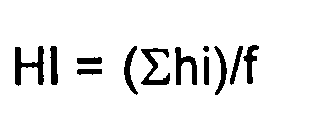
- HI total average horizontal index
- the total average horizontal index, HI is indicated by the total average of the cosine (hi) of the angle ( ⁇ ) at which the major axis of the flattened cross-section of each filament of the base fabric crosses the horizontal direction of the base fabric.
- ⁇ indicates the angle between the major axis direction of each filament and the horizontal direction of the fabric
- f indicates the number of the filaments.
- the total average horizontal index HI of the base fabric that comprises the flattened cross-section yarns of the invention is from 0.75 to 1.0, preferably from 0.85 to 1.0, more preferably from 0.90 to 1.0.
- the total average horizontal index HI falling within the range makes the base fabric thin, and this makes it possible to provide herein the intended coated base fabric for airbags that has good flexibility and containability.
- the surface of the base fabric may be more flattened, it may be coated more thinly and more uniformly with a resin elastomer. As a result, it is therefore possible to obtain the intended coated base fabric for airbags of the invention that is light and has good flexibility and containability. If the total average horizontal index HI is less than 0.75, then the invention is ineffective even though the flattened cross-section yarns are used, or that is, thin and containable base fabrics are difficult to obtain.
- the coated base fabric for airbags of the invention is formed of flattened cross-section yarns having a degree of flatness of from 1.5 to 8, and is characterized in that the major axis direction of the constitutive filaments is regularly oriented in the horizontal direction of the base fabric.
- the base fabric satisfies the following characteristics (1) to (4):
- the cover factor is preferably from 1500 to 2400, more preferably from 1700 to 2200.
- the cover factor is represented by: ( D 1 ⁇ 0.9 ⁇ ) 1 / 2 ⁇ N 1 + ( D 2 ⁇ 0.9 ⁇ ) 1 / 2 ⁇ N 2 , in which D 1 (dtex) indicates the total fineness of the warp; N 1 (/2.54 cm) indicates the texture density of the warp; D 2 (dtex) indicates the total fineness of the weft; and N 2 (/2.54 cm) indicates the texture density of the weft.
- the cover factor of the base fabric is directly correlated with the containability such as the thickness and the flexibility thereof, and with the mechanical properties such as the tensile strength and the tear strength thereof, and it is important that the cover factor of the base fabric falls within a suitable range.
- the constitutive filaments have flattened cross-section, and they are regularly aligned in the horizontal direction of the base fabric. Therefore, the covering property of the fabric is extremely good, and the cover factor thereof may be lowered by 10 to 30% as compared with that of ordinary base fabrics formed of circular cross-section yarns.
- the possibility of reducing the cover factor enables to reduce the amount of the yarns to constitute the fabric and enables to reduce the count of the constitutive yarns, and therefore, the time necessary for weaving the fabric may be shortened and the cost of the base fabric for airbags may be thereby reduced.
- the tensile strength of the base fabric is preferably at least 500 N/cm, more preferably at least 550 N/cm; and the tear strength thereof is preferably at least 200 N, more preferably at least 250 N.
- the base fabric that has the good mechanical properties such as the tensile strength and the tear strength falling within the ranges as above is applicable to all types of airbags, such as airbags for drivers, airbags for passengers, side airbags, knee airbags, airbags for inflatable curtains, etc., as it is resistant to the shock in bag expansion.
- the coated base fabric for airbags of the invention is characterized in that the tear strength thereof is high relative to the tensile strength thereof.
- the ratio of the tear strength to the tensile strength of a fabric of ordinary circular cross-section yarns falls almost between 1/2.5 and 1/1.5 or so, and it decreases with the reduction in the filament fineness of the yarns.
- the ratio of the tear strength to the tensile strength of the base fabric for coated airbags of the invention falls between 1/1.5 and 1/1.2 or so, or that is, the tear strength of the fabric is high relative to the tensile strength thereof, and, in addition, the base fabric of the invention is characterized in that the ratio of the tear strength to the tensile strength thereof decrease little even when the filament fineness of the constitutive yarns decreases. This is effective for preventing the propagation of broken sites such as tears and holes formed in the surface of the base fabric owing to the shock given thereto.
- the flattened cross-section filaments to constitute the coated base fabric for airbags of the invention have an extremely good covering capability and they are packed to a high density and woven into the fabric. In the base fabric, therefore, the woven filaments would behave as if they were bundled into one flattened filament, and could express such a high tensile strength.
- the thickness of the coated base fabric for airbags of the invention is from 0. 20 to 0.35 mm. Having the thickness that falls within the range, the base fabric is sufficiently resistant to heat of the high-temperature gas that is jetted out from an inflator, and therefore may be favorably built in small-sized cars that require more severe containability.
- the thickness of the coated base fabric for airbags of the invention may be reduced by about 15% or more, as compared with those formed of conventional circular cross-section yarns having the same cover factor. This confirms the superiority of the base fabric of the invention in point of the compactness and the containability thereof.
- the amount of the resin elastomer to be adhered to the base fabric for airbags of the invention is from 5 to 30 g/m 2 , more preferably from 10 to 20 g/m 2 . If the coating resin amount is less than 0.1 g/m 2 , then the entire surface of the base fabric could not be uniformly coated with the resin even though it is formed of the flattened cross-section yarns of the invention, and if so, gas leakage will occur in bag expansion and the fabric will have a risk of burst.
- the base fabric of the invention is characterized in that the constitutive filaments has a flattened cross-section profile and the major axis of the filament cross-section is regularly oriented in the horizontal direction of the base fabric, its surface is more flattened as compared with those of ordinary circular cross-section yarns, and therefore can be coated thinly and uniformly with a resin elastomer.
- the base fabric is thin and flexible and its containability is improved.
- the surface of a base fabric formed of ordinary circular cross-section yarns is roughened, and therefore when it is entirely coated with resin, then the necessary amount of the resin will be larger than that for the base fabric of the invention.
- the synthetic fibers having a flattened cross-section for use in the coated base fabric for airbags of the invention may be various polymer fibers.
- Polyamide is preferred for obtaining high-tenacity and high-toughness fibers.
- high-viscosity nylon 66 polymer having a sulfuric acid-relative viscosity of from 3.0 to 4.0 is preferred.
- a polymer is melted, filtered and spun out trough orifices of a spinneret.
- the spinneret is so designed that its orifices could have a flattened cross-section as specifically defined for the cross-section of the constitutive filaments in the invention.
- the spinneret orifices are designed in consideration of the change of the cross-section profile of the spun yarns owing to the surface tension thereof while they are cooled and solidified after having been spun out.
- the spinneret orifice may be so designed as to have a rectangular profile as in Fig. 2(A) .
- the vertical length c of the rectangle and the horizontal length d thereof shall be suitably determined in accordance with the filament fineness and the degree of flatness of the fibers to be obtained.
- the spinneret orifice may be so designed that it has small circles at both ends and inside it and the small circles are combined together via a slit, as in Fig. 2(B) .
- the number of the small circles and the diameter thereof, the length of the slit and the width thereof, and the vertical length c and the horizontal length d of the overall orifice shall be suitably determined in accordance with the filament fineness and the degree of flatness of the fibers to be obtained.
- the number of the small circles is from 4 to 8
- the diameter thereof is from 0.1 to 0.3 mm
- the width of the slit is from 0.1 to 0.3 mm
- the length thereof is from 0.1 to 0.3 mm, though depending on the atmospheric condition after the spinneret.
- the spun yarns are given oil, and wound up around a take-up roller that rotates at a predetermined rotation speed. Next, these were continuously wound up successively around Nelson rollers that rotate at high speed, and are thereby drawn between them. For obtaining fibers of higher strength, they are preferably drawn in two or more multiple stages. Also preferably, the final drawing roller temperature is 200°C or higher on which the fibers are drawn under heat, and then the thus thermally-drawn fibers are relaxed and wound up. This is favorable for obtaining suitably shrinkable fibers. With the increase in the fiber production efficiency in the art, the fibers may be produced according to a process of simultaneously and directly spinning and drawing 4 to 8 yarns at a take-up speed of from 2500 to 4500 m/min.
- the yarns are subjected to treatment for entanglement before they are wound up, so that they may be well bundled up.
- the treatment for yarn entanglement may be attained by applying high-pressure air to the running yarns in the direction that crosses the yarns, via multiple air nozzles directed thereto.
- the bundlability of the yarns is better. This is favorable since the in-line runnability of the yarns in warping or weaving them into fabrics is good.
- it is desirable that the entanglements of the yarns are untangled and the number of the entanglements of the yarns still remaining in the base fabric is substantially as small as possible.
- the constitutive yarns will be twisted in places in the fabric and, if so, the fabric could not satisfy the specific range of the total average horizontal index HI that is one important factor in the invention.
- the number of entanglements to be given to the yarns in the invention is from 3 to 20/m, preferably from 5 to 15/m, more preferably from 5 to 10/m.
- the number of entanglements of the fibers in the base fabric is at most 3/m both in the warp and in the weft.
- the HI level of the yarns that constitute the base fabric may be fully increased both in the warp direction and in the weft direction of the fabric, not detracting from the in-line runnability of the yarns in warping or weaving them into fabrics, and after all, thin, flexible and containable base coated fabrics for airbags may be produced with high producibility.
- the yarns obtained in the manner as above are warped and woven into fabrics.
- water-jet looms are often used.
- any of rapier looms and air-jet looms are also usable.
- Text structure of the base fabric plain fabrics are popular.
- any others such as twill fabrics are also employable herein.
- the warp tension is suitably controlled so that the flattened cross-section filaments of the invention could be oriented in the horizontal direction of the base fabric to be produced, and the thus-controlled yarns are woven while the implanting tension of the weft is controlled to a suitable degree.
- the suitable warp tension falls between 0.05 and 0.6 cN/dtex. If the warp tension in weaving is lower than 0.05 cN/dtex, then the total average horizontal index HI which is an important factor in the invention and indicates the alignment condition of the flattened cross-section filaments in the cross-section of the base fabric produced could not be satisfactorily high and, as a result, base fabrics of good flexibility and containability for airbags could not be obtained.
- the warp tension in weaving is over 0.6 cN/dtex, then the total average horizontal index HI will rather lower and the characteristics of the base fabric for airbags of the invention could not be obtained.
- the warp tension in weaving is too high, then the filaments may be cut and the overall yarns will also be cut, and, as a result, the weaving loom must be stopped. In such a case, the quality of the fabrics produced will lower and the production efficiency will also lower.
- the weft is not warped and is directly implanted in the weaving process. Therefore, the weft tension must be carefully controlled so that the entanglements in the weaving yarns may be well untangled and the major axis of the flattened cross-section yarns may be oriented in the horizontal direction of the base fabric being produced. In general, the weft tension is so controlled that the entanglements of the weft could be almost solved in the line where the yarns are released from the stock cheese yarn package to be on a measuring drum just before they are implanted as the weft.
- the tension range may be from 0.05 to 0.6 cN/dtex, preferably from 0.2 to 0.5 cN/dtex.
- the tension in weft implantation may also be from 0.05 to 0.6 cN/dtex.
- the weft implantation tension is relatively high. In these, therefore, even though the entanglements are not still solved just before the weft implantation, the filaments of the weft could be so aligned that the major axis of the cross-section thereof is oriented in the horizontal direction of the base fabric being woven.
- the weft implantation tension is low. In these, therefore, it is desirable that the entanglements of the weaving yarns are solved before weft implantation by applying tension thereto before.
- the flattened yarn base fabric of the invention is obtained in which both the warp and the weft are so aligned that the major axis of the cross-section of the constitutive flattened cross-section filaments is oriented in the horizontal direction of the base fabric.
- the base fabric obtained as above is pressed under heat for calendering.
- the calendering machine may be any ordinary one.
- the calendering temperature may fall between 180 and 220°C, and the linear pressure may fall between 3000 and 10000 N/cm, and the line speed may fall between 4 and 50 m/min.
- the calendering treatment may be applied to at least one face of the fabric for sufficiently improving the properties of the processed fabric.
- the base fabric is coated with a resin elastomer, and then heat-set to be that for coated airbags.
- the woven fabric may be scoured and then coated with a resin elastomer.
- a method of dipping the base fabric in a resin solution tank followed by removing the excess resin by mangling or vacuuming, or by the use of a coating knife to thereby form a uniform resin coating thereon; and a method of spraying the base fabric with a resin elastomer by the use of a spraying device or a foaming device.
- a coating knife is preferred for forming a uniform resin coating and for saving the resin, but this is not limitative.
- the resin elastomer to be applied to the base fabric is not specifically defined. Preferred are those of good flame resistance, heat resistance and air imperviousness. For example, silicone resin, chloroprene resin, polyurethane resin and polyamide resin are popular.
- the resin coating process is not specifically defined in point of the order of the processing steps, not interfering with the effect of the invention.
- fibers having a specific cross-section profile and base fabrics having a specific structure are designed.
- flattened cross-section yarns of which the cross-section profile has a degree of flatness of from 1.5 t 8 are used, and they are regularly so aligned that the cross-section major axis direction of the constitutive filaments is oriented in the horizontal direction of the base fabric.
- the invention has realized two effects: One is that the base fabric is thin and flexible, and the other is that the surface of the base fabric is flattened and is therefore coated thinly and uniformly with a resin elastomer.
- the yarns and the base fabric have good mechanical properties of tenacity and elongation.
- the invention has made it possible to provide a coated base fabric for airbags that has good and well-balanced properties necessary for base fabrics for airbags, such as good mechanical properties, heat resistance, complete gas imperviousness (zero gas perviousness), compactness and containability that could not be attained until now.
- the flattened cross-section yarns and the coated base fabric for airbags of the invention may be produced with high producibility, not requiring any specific method and apparatus, and their practicability is great.
- the total fineness is divided by the number of the filaments analyzed.
- a sample to be analyzed is left as hanks in a temperature-humidity conditioned room at 20°C and 65% for 24 hours or more, and measured according to the method of JIS L-1013.
- the sample length is 25 cm, and the pulling rate is 30 cm/min.
- the water bath has a length of 70 cm, a width of 15 cm and a depth of 5 cm. This is partitioned at 10 cm from each end in the longitudinal direction, and filled with pure water. Yarn samples are dipped in it, and the number of entanglements of each sample is measured. To remove the influence of impurities such as oil on the measurement, the pure water in the bath is exchanged for fresh one in every measurement.
- a base fabric to be analyzed is decomposed, and 10 warp yarns and 10 weft yarns are sampled. These samples are analyzed for the number of the entanglements therein, according to the same water-dipping method as above. The data of the ten samples are averaged separately for the warp and the weft.
- a base fabric to be analyzed is cut in the warp cross-section direction and in the weft cross-section direction, and the two cross-sections are photographed with a scanning electronic microscope (SEM).
- SEM scanning electronic microscope
- the angle ⁇ at which the major axis of the cross-section of each flattened cross-section filament crosses the horizontal direction of the base fabric is measured.
- the cosine of the angle (hi) is obtained, and the total average thereof indicates the horizontal index (HI) of the sample analyzed.
- ⁇ indicates the angle between the major axis direction of each filament and the horizontal direction of the fabric
- f indicates the number of the filaments.
- one warp yarn and one weft yarn are sampled, and all the constitutive filaments of each yarn are analyzed.
- a base fabric to be analyzed is cut to prepare its sample having a length of 20 cm and a width of 15 cm.
- Air having a controlled pressure of 19.6 KPa is made to run through a circular part having a diameter of 10 cm of the sample, and the amount of the air (cc/cm 2 /sec) having passed through the circular part is measured by the use of a laminar flow air permeation meter.
- the base fabric produced is fabricated into an airbag of a volume of 60 liters mentioned below. This is bellows-wise folded from the right and left directions each into four, and then from the top and bottom directions each into four to give an extent of 150 ⁇ 150 mm. A load of 4000 g is applied to the thus-folded bag, and the thickness of the back in that condition is measured.
- the spinnerets were differently designed for flattened cross-section yarns and circular cross-section yarns in point of the total fineness, the number of filaments, the filament fineness and the degree of flatness of the yarns to be produced. Concretely, the number of orifices, the orifice profile and the orifice dimension of the spinnerets were specifically defined for the intended yarns.
- the peripheral speed of each roller was as follows: The first draw roller was constant at 3200 m/min; the second draw roller was constant at 4000 m/min; and the speed of the take-up roller and that of the feed roller were individually varied in accordance with the draw ratio that varies depending on the varying filament fineness and filament cross-section profile.
- the running yarns were exposed to high-pressure air applied thereto almost in the vertical direction to them in the entangling device.
- the pressure of air was varied within a range of from 0.05 to 0.4 MPa, to thereby change the number of the entanglements to be formed in the yarns.
- the nylon 66 fibers were warped at a speed of 300 m/min , and then woven into a fabric by the use of a water- jet loom (Tsudakoma's ZW303) driving at a revolution speed of 1000 rpm while the texture density was controlled.
- a water- jet loom (Tsudakoma's ZW303) driving at a revolution speed of 1000 rpm while the texture density was controlled.
- the warp tension in warping, the warp tension in weaving, the tension between weft release and the measuring drum, and the tension in weft implantation were varied in weaving the fabric.
- each fabric was heat-set at a metal surface temperature of 150°C under a linear pressure of 3000 N/cm for 1 minute, and then at 180°C and under 6000 N/cm for 1.5 minutes.
- the fabrics were coated with a solvent-type methylvinyl-silicone resin.
- the resin coating amount was 15 g/m 2 .
- the coated fabrics were dried at 3 minutes and then vulcanized at 180°C for 1 minute to be base fabrics for airbags.
- two circular fabrics having a diameter of 725 mm were blanked out.
- the center of one of them was reinforced by laminating thereon three circular reinforcing fabrics of the same material having a diameter of 200 mm, and these were practically sewn on a machine with a nylon 66 sewing thread (470 dtex/1 ⁇ 3) on the circles having a diameter of 110 mm, 145 mm and 175 mm.
- a hole having a diameter of 90 mm was formed in the fabric, and this is for the fitting mouth for an inflator.
- one circular reinforcing fabric of the same material having a diameter of 75 mm was applied to the fabric at the opposite positions of 225 mm in the bias direction from the center thereof, and these were practically sewn on a machine with a nylon 66 sewing thread (470 dtex/1 ⁇ 3) on the circles having a diameter of 50 mm and 60 mm. Two vent holes having a diameter of 40 mm were formed.
- the reinforced side of the circular fabric was kept outside, and this fabric was attached to the other circular fabric with the warp axes of the two being shifted by 45 degrees. In that condition, these fabrics were double-sewn on a machine with a nylon 66 sewing thread (1400 dtex/1) on the circles having a diameter of 700 mm and 710 mm.
- the bag was turned inside out to be a 60-liter airbag.
- the thickness of the thus-fabricated airbag (containability of bag) is shown in Table 1.
- the fibers having a specific cross-section profile and the coated base fabrics for airbags having a specific structure of the invention are good in that they are flexible and thin and are well containable.
- the fabric produced in the same manner as in Example and that produced in the same manner as in Comparative Example 1 were coated with a solvent-type methylvinyl-silicone resin, using a comma coater.
- the coating amount was 1 g/m 2 , and the coated fabrics were dried for 3 minutes and then vulcanized at 180°C for 1 minute to be coated base fabrics for airbags. These were sewed to give 60-liter airbags, in the same manner as in Example 1.
- the base fabrics formed of the flattened yarns of the invention can be uniformly coated with resin even though the coating amount of resin is reduced, and, as a result, the airbags formed of the base fabrics ensure zero air perviousness.
- the base fabric formed of circular cross-section yarns in Comparative Example 6 is difficult to uniformly coat with a small amount of resin, and it could not ensure zero air perviousness. After all, the airbag formed of the base fabric is problematic in the safety thereof.
- the coated base fabric for airbags which is formed of fibers having a specific cross-section profile of the invention and which has a specific structure as defined herein, could not ensure zero air perviousness when the coating resin amount is less than 0.1 g/m 2 as in Comparative Example 7; but on the contrary, when the coating resin amount is over 60 g/m 2 as in Comparative Example 8, then the bag could not realize the improved containability intended by the invention.
- the base fabric for airbags of the invention is coated with resin and has good properties of flame resistance, complete air-imperviousness, flexibility and containability that could not be attained by any conventional non-coated or coated base fabrics for airbags. This is favorable to all types of airbags, such as airbags for drivers, airbags for passengers, side airbags, knee airbags, airbags for inflatable curtains, etc.
- airbags for drivers such as airbags for passengers, side airbags, knee airbags, airbags for inflatable curtains, etc.
- the specific flattened cross-section yarns of the invention are used, then the amount of fibers to be used may be reduced as compared with ordinary circular cross-section yarns, and the invention has another effect of reducing the production costs of airbags.
Landscapes
- Engineering & Computer Science (AREA)
- Textile Engineering (AREA)
- Mechanical Engineering (AREA)
- Chemical & Material Sciences (AREA)
- Chemical Kinetics & Catalysis (AREA)
- General Chemical & Material Sciences (AREA)
- Woven Fabrics (AREA)
- Air Bags (AREA)
- Treatments For Attaching Organic Compounds To Fibrous Goods (AREA)
Claims (10)
- Beschichtetes Grundgewebe für Airbags, das durch das Aufbringen eines Harzelastomers auf ein Grundgewebe aus Garnen mit abgeflachtem Querschnitt mit einem Filamentquerschnittsflachheitsgrad, d.h. einem Verhältnis der Hauptachsen-Länge (a) zur Nebenachsen-Länge (b) des Filamentquerschnitts, von 1,5 bis 8 hergestellt wird, wobei die Anzahl der Verwicklungen der Garnfilamente in dem Grundgewebe maximal 3/m beträgt und die Filamente in dem Grundgewebe so angeordnet sind, dass der durch die folgende Formel dargestellte mittlere Gesamthorizontalindex (HI) im Bereich von 0,75 bis 1,0 liegt, und die Menge des an dem Gewebe haftenden Harzelastomers 5 bis 30 g/m2 beträgt:

worin
θ für den Winkel zwischen der Hauptachsenrichtung jedes Filaments und der horizontalen Richtung des Gewebes steht,
f für die Anzahl der Filamente steht. - Beschichtetes Grundgewebe für Airbags nach Anspruch 1, worin der mittlere Gesamthorizontalindex (HI) 0,85 bis 1,0 beträgt.
- Beschichtetes Grundgewebe für Airbags nach Anspruch 1 oder 2, worin das Grundgewebe aus Garnen mit einem Filamentquerschnittsflachheitsgrad von 2 bis 6 besteht.
- Beschichtetes Grundgewebe für Airbags nach einem der Ansprüche 1 bis 3, das folgende Bedingungen (1) bis (4) erfüllt:(1) Bedeckungsfaktor: 1500 bis 2400,(2) Zugfestigkeit: 500 bis 750 N/cm,(3) Reißfestigkeit: 200 bis 400 N,(4) Dicke: 0,20 bis 0,35 mm.
- Beschichtetes Grundgewebe für Airbags nach einem der Ansprüche 1 bis 4, worin das Garn mit abgeflachtem Querschnitt aus einem Polyamid mit einer Viskosität in Bezug auf Schwefelsäure von zumindest 3,0 besteht.
- Verfahren zur Herstellung eines beschichteten Grundgewebes für Airbags, das das Aufbringen eines Harzelastomers auf ein Grundgewebe aus Garnen mit abgeflachtem Querschnitt mit einem Filamentquerschnittsflachheitsgrad, d.h. einem Verhältnis der Hauptachsen-Länge (a) zur Nebenachsen-Länge (b) des Filamentquerschnitts, von 1,5 bis 8 umfasst, wobei in diesem Verfahren den Kett- und Schussfäden beim Weben eine Spannung von 0,05 bis 0,6 cN/dtex verliehen wird, so dass die Anzahl der Verwicklungen der Garnfilamente in dem Gewebe maximal 3/m beträgt und das Gewebe einen durch die folgende Formel dargestellten mittleren Gesamthorizontalindex (HI) im Bereich von 0,75 bis 1,0 aufweist:
worin
θ für den Winkel zwischen der Hauptachsenrichtung jedes Filaments und der horizontalen Richtung des Gewebes steht,
f für die Anzahl der Filamente steht. - Verfahren zur Herstellung eines beschichteten Grundgewebes für Airbags nach Anspruch 6, wobei das Grundgewebe folgende Bedingungen (1) bis (4) erfüllt:(1) Bedeckungsfaktor: 1500 bis 2400,(2) Zugfestigkeit: 500 bis 750 N/cm,(3) Reißfestigkeit: 200 bis 400 N,(4) Dicke: 0,20 bis 0,35 mm.
- Verfahren zur Herstellung eines beschichteten Grundgewebes für Airbags nach Anspruch 6 oder 7, wobei, nachdem Kett- und Schussfäden mit einer angelegten Spannung von 0,05 bis 0,6 cN/dtex gewebt wurden, das resultierende Gewebe unter Druck erwärmt wird.
- Verfahren zur Herstellung eines beschichteten Grundgewebes für Airbags nach Anspruch 8, worin die Erwärmungstemperatur in den Bereich zwischen 180 und 220 °C fällt und die lineare Last für den Druck in den Bereich zwischen 3.000 und 10.000 N/cm fällt.
- Verfahren zur Herstellung eines beschichteten Grundgewebes für Airbags nach einem der Ansprüche 6 bis 9, worin die Anzahl der Verwicklungen der Garne mit abgeflachtem Querschnitt 3 bis 20/m beträgt.
Applications Claiming Priority (3)
| Application Number | Priority Date | Filing Date | Title |
|---|---|---|---|
| JP2002007115 | 2002-01-16 | ||
| JP2002007115A JP3855775B2 (ja) | 2002-01-16 | 2002-01-16 | コ−トエアバッグ用基布 |
| PCT/JP2003/000096 WO2003060228A1 (fr) | 2002-01-16 | 2003-01-09 | Tissu de base destine a un coussin de securite gonflable revetu et procede de fabrication afferent |
Publications (3)
| Publication Number | Publication Date |
|---|---|
| EP1475475A1 EP1475475A1 (de) | 2004-11-10 |
| EP1475475A4 EP1475475A4 (de) | 2006-08-02 |
| EP1475475B1 true EP1475475B1 (de) | 2008-06-18 |
Family
ID=19191306
Family Applications (1)
| Application Number | Title | Priority Date | Filing Date |
|---|---|---|---|
| EP03700505A Expired - Lifetime EP1475475B1 (de) | 2002-01-16 | 2003-01-09 | Grundgewebe für beschichteten airbag und herstellungsverfahren dafür |
Country Status (9)
| Country | Link |
|---|---|
| US (1) | US7510987B2 (de) |
| EP (1) | EP1475475B1 (de) |
| JP (1) | JP3855775B2 (de) |
| KR (1) | KR100952141B1 (de) |
| CN (1) | CN100443659C (de) |
| CA (1) | CA2473672A1 (de) |
| DE (1) | DE60321661D1 (de) |
| TW (1) | TWI294940B (de) |
| WO (1) | WO2003060228A1 (de) |
Cited By (5)
| Publication number | Priority date | Publication date | Assignee | Title |
|---|---|---|---|---|
| US8733788B2 (en) | 2010-04-09 | 2014-05-27 | Autoliv Development Ab | Inflatable airbag and a method for making the same |
| US8991855B2 (en) | 2011-03-16 | 2015-03-31 | Autoliv Development Ab | Fabric for use in the manufacture of an inflatable air-bag |
| US11214895B2 (en) | 2015-11-06 | 2022-01-04 | Inv Performance Materials, Llc | Low permeability and high strength fabric and methods of making the same |
| US11634841B2 (en) | 2017-05-02 | 2023-04-25 | Inv Performance Materials, Llc | Low permeability and high strength woven fabric and methods of making the same |
| US11708045B2 (en) | 2017-09-29 | 2023-07-25 | Inv Performance Materials, Llc | Airbags and methods for production of airbags |
Families Citing this family (32)
| Publication number | Priority date | Publication date | Assignee | Title |
|---|---|---|---|---|
| US20080188151A1 (en) * | 2004-10-19 | 2008-08-07 | Daisuke Yokoi | Fabric for Restraint Devices and Method for Producing the Same |
| JP2006159990A (ja) * | 2004-12-03 | 2006-06-22 | Nippon Plast Co Ltd | インフレータブルカーテン |
| US20060192372A1 (en) * | 2005-02-28 | 2006-08-31 | Takata Restraint Systems, Inc. | Coated sewing thread for airbag and method of sealing an airbag |
| EP1728904B1 (de) * | 2005-06-02 | 2007-08-08 | Polyamide High Performance GmbH | Gewebe für Airbags |
| EP2117882B1 (de) * | 2007-02-14 | 2012-09-19 | Autoliv Development AB | Airbag für ein kraftfahrzeug |
| EP2118347A4 (de) * | 2007-03-05 | 2010-06-09 | Kolon Inc | Polyesterfaser und stoff daraus |
| KR101228125B1 (ko) * | 2007-03-05 | 2013-01-31 | 코오롱인더스트리 주식회사 | 폴리에스테르 원사 및 이를 포함하는 직물 |
| KR20100102601A (ko) * | 2007-12-07 | 2010-09-24 | 데이진 화이바 가부시키가이샤 | 포백의 제조 방법과 포백 및 섬유 제품 |
| CN101634074B (zh) * | 2008-07-23 | 2012-01-25 | 东丽纤维研究所(中国)有限公司 | 安全气囊用织物及其生产方法 |
| CN102144057B (zh) * | 2008-09-05 | 2013-11-20 | 可隆工业株式会社 | 用于气囊的织物及其制备方法 |
| US8109534B2 (en) * | 2009-07-22 | 2012-02-07 | Highland Industries, Inc. | Highly thermal resistant material for a vehicle safety device |
| CN102140719A (zh) * | 2010-01-28 | 2011-08-03 | 东丽纤维研究所(中国)有限公司 | 一种气囊用织物 |
| EP2625072B1 (de) * | 2010-10-04 | 2016-06-01 | Invista Technologies S.à r.l. | Kraftfahrzeug-seitenairbagmodule mit einem polyesterairbag mit gasinflatoren |
| CN102535182A (zh) * | 2010-12-22 | 2012-07-04 | 东丽纤维研究所(中国)有限公司 | 一种安全气囊用涂层织物及 ¶生产方法 |
| JP6105192B2 (ja) * | 2011-02-01 | 2017-03-29 | 旭化成株式会社 | エアバッグ織物 |
| CN102650102A (zh) * | 2011-02-24 | 2012-08-29 | 东丽纤维研究所(中国)有限公司 | 一种低涂层安全气囊用织物 |
| DE102011121724A1 (de) * | 2011-12-20 | 2013-06-20 | GM Global Technology Operations LLC (n. d. Gesetzen des Staates Delaware) | Gassack für eine Personenschutzeinrichtung |
| JP5486741B2 (ja) * | 2012-03-09 | 2014-05-07 | 旭化成せんい株式会社 | エアバッグ用基布 |
| EP3243708A1 (de) * | 2012-07-25 | 2017-11-15 | Autoliv Development AB | Stoff für einen airbag |
| TWI613338B (zh) * | 2012-08-02 | 2018-02-01 | 東麗股份有限公司 | 使用扁平多葉形斷面纖維之織物、及使用其之縫製品 |
| MX2015002395A (es) * | 2012-08-28 | 2015-06-03 | Toray Industries | Tela recubierta y metodo para produccion de la misma. |
| CN104870703B (zh) * | 2012-12-17 | 2016-10-26 | 旭化成株式会社 | 气囊用织物 |
| MX349384B (es) * | 2012-12-17 | 2017-07-26 | Asahi Kasei Kk * | Tela para bolsa de aire. |
| DE102014116333B4 (de) * | 2014-11-10 | 2019-02-07 | Autoliv Development Ab | Lenkrad eines Lastkraftfahrzeugs mit einem Gassack, der einen eine Entfaltungsrichtung vorgebenden Kanal aufweist |
| JP6743695B2 (ja) * | 2015-03-30 | 2020-08-19 | 東レ株式会社 | エアバッグ用コート基布、エアバッグおよびエアバッグ用コート基布の製造方法 |
| CN105256597A (zh) * | 2015-10-20 | 2016-01-20 | 东华大学 | 一种低涂层量安全气囊织物及其制备方法 |
| KR200484574Y1 (ko) | 2016-01-29 | 2017-10-24 | 주식회사 아스트로캠프 | 혜성 시뮬레이션 장치 |
| JP6947816B2 (ja) * | 2016-10-21 | 2021-10-13 | 嘉興徳永紡織品有限公司 | 織機、織物の製造方法、および超高密度織物 |
| CN110801951A (zh) * | 2018-08-05 | 2020-02-18 | 大连理工大学 | 一种带多孔并联式喷孔的喷嘴 |
| JP7363766B2 (ja) * | 2018-11-21 | 2023-10-18 | 東レ株式会社 | ポリアミドマルチフィラメントおよびカバリング弾性糸 |
| CN112030318B (zh) * | 2020-08-31 | 2022-06-17 | 吴江福华织造有限公司 | 锦纶织物及其制备方法 |
| CN116964259A (zh) * | 2021-03-29 | 2023-10-27 | 东丽株式会社 | 聚酰胺复丝 |
Family Cites Families (10)
| Publication number | Priority date | Publication date | Assignee | Title |
|---|---|---|---|---|
| JP3284735B2 (ja) * | 1994-03-10 | 2002-05-20 | 東レ株式会社 | エアバッグ用基布 |
| US6037047A (en) * | 1997-02-26 | 2000-03-14 | E. I. Du Pont De Nemours And Company | Industrial fibers with diamond cross sections and products made therefrom |
| EP1033292B1 (de) * | 1997-11-28 | 2009-03-25 | Asahi Kasei Fibers Corporation | Leichter luftsack |
| US5897929A (en) * | 1997-12-01 | 1999-04-27 | Milliken & Company | Polyamide coated airbag fabric |
| US6112634A (en) * | 1998-01-08 | 2000-09-05 | A&P Technology, Inc. | High coverage area braiding material for braided structures |
| US20010046823A1 (en) * | 1998-12-08 | 2001-11-29 | Toyo Tire & Rubber Co., Ltd. | Fabric for air bag |
| US6770578B2 (en) * | 1999-06-07 | 2004-08-03 | Bradford Industries, Inc. | Laminated textile fabrics for use in air holding vehicle restraint systems |
| TWI230213B (en) * | 2000-08-17 | 2005-04-01 | Toray Industries | Base fabric for non-coated air bags, and fibers for air bags |
| JP4538967B2 (ja) * | 2000-08-17 | 2010-09-08 | 東レ株式会社 | エアバッグ用布帛 |
| JP4007049B2 (ja) * | 2001-04-25 | 2007-11-14 | 東レ株式会社 | エアバッグ用基布およびエアバッグ |
-
2002
- 2002-01-16 JP JP2002007115A patent/JP3855775B2/ja not_active Expired - Lifetime
-
2003
- 2003-01-09 CA CA002473672A patent/CA2473672A1/en not_active Abandoned
- 2003-01-09 KR KR1020047010896A patent/KR100952141B1/ko not_active Expired - Fee Related
- 2003-01-09 WO PCT/JP2003/000096 patent/WO2003060228A1/ja not_active Ceased
- 2003-01-09 US US10/501,638 patent/US7510987B2/en not_active Expired - Lifetime
- 2003-01-09 EP EP03700505A patent/EP1475475B1/de not_active Expired - Lifetime
- 2003-01-09 CN CNB038062240A patent/CN100443659C/zh not_active Expired - Lifetime
- 2003-01-09 DE DE60321661T patent/DE60321661D1/de not_active Expired - Lifetime
- 2003-01-15 TW TW092100784A patent/TWI294940B/zh not_active IP Right Cessation
Cited By (5)
| Publication number | Priority date | Publication date | Assignee | Title |
|---|---|---|---|---|
| US8733788B2 (en) | 2010-04-09 | 2014-05-27 | Autoliv Development Ab | Inflatable airbag and a method for making the same |
| US8991855B2 (en) | 2011-03-16 | 2015-03-31 | Autoliv Development Ab | Fabric for use in the manufacture of an inflatable air-bag |
| US11214895B2 (en) | 2015-11-06 | 2022-01-04 | Inv Performance Materials, Llc | Low permeability and high strength fabric and methods of making the same |
| US11634841B2 (en) | 2017-05-02 | 2023-04-25 | Inv Performance Materials, Llc | Low permeability and high strength woven fabric and methods of making the same |
| US11708045B2 (en) | 2017-09-29 | 2023-07-25 | Inv Performance Materials, Llc | Airbags and methods for production of airbags |
Also Published As
| Publication number | Publication date |
|---|---|
| CN1856614A (zh) | 2006-11-01 |
| WO2003060228A1 (fr) | 2003-07-24 |
| US20050170723A1 (en) | 2005-08-04 |
| JP3855775B2 (ja) | 2006-12-13 |
| EP1475475A1 (de) | 2004-11-10 |
| TW200302302A (en) | 2003-08-01 |
| CA2473672A1 (en) | 2003-07-24 |
| US7510987B2 (en) | 2009-03-31 |
| CN100443659C (zh) | 2008-12-17 |
| DE60321661D1 (de) | 2008-07-31 |
| EP1475475A4 (de) | 2006-08-02 |
| KR100952141B1 (ko) | 2010-04-09 |
| JP2003213574A (ja) | 2003-07-30 |
| KR20040075929A (ko) | 2004-08-30 |
| TWI294940B (en) | 2008-03-21 |
Similar Documents
| Publication | Publication Date | Title |
|---|---|---|
| US7510987B2 (en) | Base cloth for coated airbag and method for manufacturing the same | |
| EP3524718B1 (de) | Rohgarn für airbag und verfahren zur herstellung des rohgarns | |
| EP2752510B1 (de) | Synthetische faser | |
| US7560061B2 (en) | Polyamide fiber for uncoated airbags | |
| EP2042628A1 (de) | Gewebe für luftsäcke, luftsäcke sowie verfahren zur herstellung des gewebes | |
| US7506391B2 (en) | Method for producing low shrinkage polyamide fiber and uncoated fabric for airbags made of the same | |
| EP3279376B1 (de) | Polyesterbasisgewebe für airbag, polyesterairbag und verfahren zur herstellung eines polyesterbasisgewebes für airbags | |
| JP3284735B2 (ja) | エアバッグ用基布 | |
| US10549711B2 (en) | Airbag-use woven fabric and airbag | |
| JP2004156166A (ja) | 布帛とその製造方法 | |
| JP2004176221A (ja) | コ−トエアバッグ用基布およびその製造方法 | |
| JP4538967B2 (ja) | エアバッグ用布帛 | |
| JP3849818B2 (ja) | エアバッグ用基布およびエアバッグとその製造方法 | |
| JP2007162187A (ja) | エアバッグ用ノンコート織物、コート織物およびその製造方法およびインフレータブルカーテンエアバッグ | |
| JP4306392B2 (ja) | ノンコートエアバッグ用基布およびその製法 | |
| JP2003293243A (ja) | 布帛およびエアバッグ | |
| JP3830332B2 (ja) | エアバッグ用基布およびエアバッグ | |
| JP2003293241A (ja) | エアバッグ用基布 | |
| JP2002266161A (ja) | エアバッグ用原糸およびエアバッグ用布帛 | |
| JPH08158153A (ja) | エアバッグ基布用ポリエステル糸条 | |
| JP2003213540A (ja) | 布帛およびエアバッグ | |
| JP2024126654A (ja) | 車両用エアバッグ | |
| US20250092581A1 (en) | Woven fabric and garment using same |
Legal Events
| Date | Code | Title | Description |
|---|---|---|---|
| PUAI | Public reference made under article 153(3) epc to a published international application that has entered the european phase |
Free format text: ORIGINAL CODE: 0009012 |
|
| 17P | Request for examination filed |
Effective date: 20040810 |
|
| AK | Designated contracting states |
Kind code of ref document: A1 Designated state(s): AT BE BG CH CY CZ DE DK EE ES FI FR GB GR HU IE IT LI LU MC NL PT SE SI SK TR |
|
| A4 | Supplementary search report drawn up and despatched |
Effective date: 20060629 |
|
| 17Q | First examination report despatched |
Effective date: 20061109 |
|
| GRAP | Despatch of communication of intention to grant a patent |
Free format text: ORIGINAL CODE: EPIDOSNIGR1 |
|
| GRAS | Grant fee paid |
Free format text: ORIGINAL CODE: EPIDOSNIGR3 |
|
| GRAA | (expected) grant |
Free format text: ORIGINAL CODE: 0009210 |
|
| AK | Designated contracting states |
Kind code of ref document: B1 Designated state(s): DE FR GB NL |
|
| REG | Reference to a national code |
Ref country code: GB Ref legal event code: FG4D |
|
| REF | Corresponds to: |
Ref document number: 60321661 Country of ref document: DE Date of ref document: 20080731 Kind code of ref document: P |
|
| PLBE | No opposition filed within time limit |
Free format text: ORIGINAL CODE: 0009261 |
|
| STAA | Information on the status of an ep patent application or granted ep patent |
Free format text: STATUS: NO OPPOSITION FILED WITHIN TIME LIMIT |
|
| 26N | No opposition filed |
Effective date: 20090319 |
|
| REG | Reference to a national code |
Ref country code: FR Ref legal event code: PLFP Year of fee payment: 14 |
|
| REG | Reference to a national code |
Ref country code: FR Ref legal event code: PLFP Year of fee payment: 15 |
|
| REG | Reference to a national code |
Ref country code: FR Ref legal event code: PLFP Year of fee payment: 16 |
|
| PGFP | Annual fee paid to national office [announced via postgrant information from national office to epo] |
Ref country code: NL Payment date: 20191212 Year of fee payment: 18 |
|
| PGFP | Annual fee paid to national office [announced via postgrant information from national office to epo] |
Ref country code: GB Payment date: 20200102 Year of fee payment: 18 |
|
| REG | Reference to a national code |
Ref country code: NL Ref legal event code: MM Effective date: 20210201 |
|
| GBPC | Gb: european patent ceased through non-payment of renewal fee |
Effective date: 20210109 |
|
| PG25 | Lapsed in a contracting state [announced via postgrant information from national office to epo] |
Ref country code: NL Free format text: LAPSE BECAUSE OF NON-PAYMENT OF DUE FEES Effective date: 20210201 |
|
| PG25 | Lapsed in a contracting state [announced via postgrant information from national office to epo] |
Ref country code: GB Free format text: LAPSE BECAUSE OF NON-PAYMENT OF DUE FEES Effective date: 20210109 |
|
| PGFP | Annual fee paid to national office [announced via postgrant information from national office to epo] |
Ref country code: FR Payment date: 20211217 Year of fee payment: 20 |
|
| PGFP | Annual fee paid to national office [announced via postgrant information from national office to epo] |
Ref country code: DE Payment date: 20211130 Year of fee payment: 20 |
|
| REG | Reference to a national code |
Ref country code: DE Ref legal event code: R071 Ref document number: 60321661 Country of ref document: DE |