EP1435646B1 - Wafer electrical discharge control by wafer lifter system - Google Patents
Wafer electrical discharge control by wafer lifter system Download PDFInfo
- Publication number
- EP1435646B1 EP1435646B1 EP04006189A EP04006189A EP1435646B1 EP 1435646 B1 EP1435646 B1 EP 1435646B1 EP 04006189 A EP04006189 A EP 04006189A EP 04006189 A EP04006189 A EP 04006189A EP 1435646 B1 EP1435646 B1 EP 1435646B1
- Authority
- EP
- European Patent Office
- Prior art keywords
- substrate
- arrangement
- lifting
- engaging element
- chuck
- Prior art date
- Legal status (The legal status is an assumption and is not a legal conclusion. Google has not performed a legal analysis and makes no representation as to the accuracy of the status listed.)
- Expired - Lifetime
Links
Images

Classifications
-
- H—ELECTRICITY
- H01—ELECTRIC ELEMENTS
- H01J—ELECTRIC DISCHARGE TUBES OR DISCHARGE LAMPS
- H01J37/00—Discharge tubes with provision for introducing objects or material to be exposed to the discharge, e.g. for the purpose of examination or processing thereof
- H01J37/32—Gas-filled discharge tubes
- H01J37/32431—Constructional details of the reactor
-
- H10P72/50—
-
- H—ELECTRICITY
- H02—GENERATION; CONVERSION OR DISTRIBUTION OF ELECTRIC POWER
- H02N—ELECTRIC MACHINES NOT OTHERWISE PROVIDED FOR
- H02N13/00—Clutches or holding devices using electrostatic attraction, e.g. using Johnson-Rahbek effect
-
- H10P72/72—
-
- H10P72/722—
-
- Y—GENERAL TAGGING OF NEW TECHNOLOGICAL DEVELOPMENTS; GENERAL TAGGING OF CROSS-SECTIONAL TECHNOLOGIES SPANNING OVER SEVERAL SECTIONS OF THE IPC; TECHNICAL SUBJECTS COVERED BY FORMER USPC CROSS-REFERENCE ART COLLECTIONS [XRACs] AND DIGESTS
- Y10—TECHNICAL SUBJECTS COVERED BY FORMER USPC
- Y10S—TECHNICAL SUBJECTS COVERED BY FORMER USPC CROSS-REFERENCE ART COLLECTIONS [XRACs] AND DIGESTS
- Y10S156/00—Adhesive bonding and miscellaneous chemical manufacture
- Y10S156/915—Differential etching apparatus including focus ring surrounding a wafer for plasma apparatus
Definitions
- the present invention relates to the handling of a substrate in the manufacture of an integrated circuit. More particularly, the present invention relates to methods and apparatus for controllably discharging an electrical charge remaining on a substrate in a plasma processing chamber during wafer processing.
- Substrates such as semiconductor substrates or glass substrates, are typically processed using plasma processing chambers to perform various process steps during the manufacture of the resultant devices, e.g., integrated circuits or flat panel displays.
- plasma processing chambers to perform various process steps during the manufacture of the resultant devices, e.g., integrated circuits or flat panel displays.
- These plasma-enhanced semiconductor processes are well known to those skilled in the art.
- An important aspect of this manufacturing process is the handling of the substrate during its overall processing. Typically the handling and transport of the substrate from one particular process to another is highly automated. As is known, one of the steps that is typically automated is the removing of the substrate from a plasma processing chamber after the processing of the substrate within the chamber.
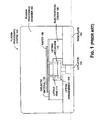
- FIG. 1 illustrates typical plasma processing system 100 having a plasma processing chamber 102.
- Chamber 102 includes a base plate 104 and an electrostatic chuck 106 for supporting a substrate 108 during the processing of the substrate.
- a substrate lifting arrangement 109 includes an actuator 110 and a lifting mechanism 112 having three or more, e.g., four, lifting pins 114.
- the various components making up the lifting arrangement 109 are typically electrically conductive and lifting arrangement 109 is typically electrically connected to ground when there is no power to the chuck.
- electrostatic chuck 106 includes a layer of dielectric material 116 for electrically insulating chuck 106 from substrate 108.
- Actuator 110 is arranged to move lifting mechanism 112 between a first position in which lifting pins 114 do not engage substrate 108 and a second position in which lifting pins 114 engage and lift substrate 108 off chuck 106.
- the substrate In order to remove the substrate from the plasma processing chamber, the substrate is typically lifted from the chuck using a substrate lifting arrangement such as substrate lifting arrangement 109 described above.
- a substrate lifting arrangement such as substrate lifting arrangement 109 described above.
- the substrate may tend to stick to the chuck.
- this sticking problem is caused by an electrical charge which remains on the substrate after the processing of the substrate. If the substrate sticks to the chuck, the substrate may have a tendency to pop loose from the chuck as the lifting arrangement lifts the substrate. This popping off may cause the substrate to be displaced relative to its expected position for grasping by the transport mechanism.
- the transport mechanism may not be able to properly grasp the substrate and the overall system will have to be stopped so that the displaced substrate can be manually retrieved.
- an additional step is added to the processing of the substrate within the plasma processing chamber.
- This additional step referred to as plasma discharging, involves striking a plasma within the chamber which acts as a conductive path for the charge on the substrate to discharge to the wall of the chamber.
- plasma discharging involves striking a plasma within the chamber which acts as a conductive path for the charge on the substrate to discharge to the wall of the chamber.
- this approach increases the processing time required to process the substrate within the chamber and reduces the throughput of the overall process thereby increasing the overall costs involved with using this approach.
- this process is typically not able to fully discharge the substrate and therefore does not eliminate the potential for the sticking problem.
- the lifting arrangement is electrically conductive and grounded as described above for Figure 1 .
- this approach does not require any additional process steps and eliminates the sticking problem, in some cases, this approach may cause damage to portions of the substrate. This damage may be caused when relatively high voltage currents are concentrated into small areas of the substrate which are in direct contact with the grounded lifting pins. Although this damage may not occur for substrates having relatively thick oxide layers, as the oxide layers of the substrate get thinner and thinner in order to increase the density of components on the substrate and/or to improve device performance, damage due to these concentrated currents is more likely.
- the present invention provides an apparatus for controlling the discharge of any electrical charge remaining on a substrate as the substrate is lifted by a lifting arrangement from a chuck. This avoids the sticking problem while also minimizing the chances of damaging the substrate due to high voltage currents concentrated through small areas of the substrate which are in direct contact with the lifting arrangement.
- the invention according to claim 1 relates to a substrate lifting arrangement for use in a plasma processing chamber.
- the plasma processing chamber has a chuck configured for supporting a substrate during processing of the substrate within the plasma processing chamber.
- the substrate lifting arrangement includes at least one substrate engagement element movable between a first position in which the substrate engaging element does not engage the substrate and a second position in which the substrate engaging element engages the substrate and lifts the substrate off the chuck.
- the substrate lifting arrangement further includes an actuator coupled to the substrate engaging element.
- the actuator controls movement of the substrate engaging element between the first and second positions.
- An invention for providing, in a plasma processing chamber, a method and apparatus for controlling the discharge of any electrical charge remaining on a substrate as the substrate is engaged and lifted by a lifting arrangement.
- numerous specific details are set forth in order to provide a thorough understanding of the present invention. It will be obvious, however, to one skilled in the art, that the present invention may be embodied in a wide variety of specific configurations. Also, well known processes have not been described in detail in order not to unnecessarily obscure the present invention.
- the inventive substrate discharging technique may be performed in any known plasma processing apparatuses such as, but not limited to, those adapted for dry etching, plasma etching, reactive ion etching, magnetically enhanced reactive ion etching, electron cyclotron resonance or the like. Note that this is true irrespective of whether energy to the plasma is delivered through capacitively coupled parallel electrode plates, through ECR microwave plasma sources, or through inductively coupled RF sources such as helicon, helical resonators, and transformer coupled plasma. These processing systems, among others, are readily available commercially.
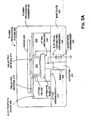
- FIG. 2A illustrates a simplified schematic of a plasma processing system 200 designed in accordance with the present invention.
- system 200 has a plasma processing chamber 202 including a base plate 204 and an electrostatic chuck 206 for supporting a substrate 208 during the processing of the substrate.
- Electrostatic chuck 206 includes a layer of dielectric material 210 for electrically insulating chuck 206 from substrate 208.
- a substrate lifting arrangement 212 includes an actuator 214 and a lifting mechanism 216.
- Lifting mechanism 216 has lifting pins 218, a lifting pin base 220, and a shaft 222. Lifting pins 218 are supported by base 220 which in turn is supported by shaft 222.
- Actuator 214 is arranged to move lifting mechanism 216 between a first position in which lifting pins 218 do not engage substrate 208 and a second position in which lifting pins 218 extend through chuck 206 and engage and lift substrate 208 off chuck 206.
- lifting arrangement 212 has been described as having a specific configuration, it is to be understood that the lifting arrangement may take on a wide variety of forms so long as it is capable of lifting substrate 208 off chuck 206.
- lifting arrangement 212 includes an electrical connecting arrangement 224 that electrically connects the substrate to ground through a resistance arrangement 226 when lifting arrangement 212 engages and lifts substrate 208 off chuck 206.
- Resistance arrangement 226 is configured to have a predetermined resistance. With this configuration, any electrical charge that remains on substrate 208 is discharged through electrical connecting arrangement 224 and resistance arrangement 226. Resistance arrangement 226 limits the current flow through electrical connecting arrangement 224 hereby controlling the discharge of any charge remaining on substrate 208.
- resistance arrangement 226 In order to avoid the sticking problem, resistance arrangement 226 must be designed to have a resistance low enough that it allows the charge remaining on the substrate to be discharged quickly enough to avoid large sticking forces. However, the resistance must also be kept high enough to limit the current flow enough to minimize the potential for damage to portions of the substrate due to high voltage currents concentrated through small areas of the substrate which are in direct contact with the lifting arrangement.
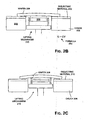
- the key factors involved in determining the proper resistance for resistance arrangement 226 will now be described with reference to Figures 2B-D .
- Figure 2B and 2C respectively illustrate substrate 208 just before it is to be lifted and as it is beginning to be lifted off chuck 206.
- Figure 2D is a graph illustrating the relationship between the voltage due to charge on substrate 208 and time as the substrate is being lifted from chuck 206.
- the charge (indicated by reference letter Q) on the substrate is equal to the capacitance (indicated by the reference letter C) of substrate 208 relative to chuck 206 and the voltage differential (indicated by the reference letter V) between the substrate and the chuck.
- the capacitance (C) is proportional to the area and the distance between the substrate and the chuck. As the area between the substrate and the chuck decreases and the distance between the substrate and the chuck increases, the capitance (C) decreases. Therefore, as the area decreases and the distance increases, the voltage associated with the charge on the substrate increases as required by formula 250.
- the sticking force which attracts and holds substrate 208 against chuck 206 is proportional to the square of the voltage (V).
- V voltage
- the area of contact between the substrate and the chuck is decreased and the distance between the substrate and the chuck is increased.
- C capacitance
- These voltages may reach voltages as high as 1 K Volt.
- the increase in the voltage also causes an increase in the sticking force of the substrate to the chuck due to the fact that sticking force is proportional to the square of the voltage.
- lifting arrangement 212 also electrically connects the substrate to ground through resistance arrangement 226, the charge (Q) on substrate 208 causes a current to flow through resistance arrangement 226 thereby reducing the charge (Q) on substrate 208 relative to time.
- the reduction of the charge over time reduces the voltage over time as required by formula 250 of Figure 2B and as indicated by the downward portion of curve 260 of Figure 2D .
- resistance of resistance arrangement 226 controls how much current flows from the substrate to ground, this resistance determines how long it takes to discharge any charge remaining on substrate 208. As indicated above, the resistance must be kept high enough to limit the current flow enough to minimize the potential for damage to portions of the substrate due to high voltage currents concentrated through small areas of the substrate which are in direct contact with the lifting arrangement. However, the resistance must also be small enough to allow the charge remaining on the substrate to be discharged quickly enough to avoid large sticking forces. It should be noted that the speed at which lifting arrangement 212 lifts substrate 208 off chuck 206 determines the rate of change of the capacitance and therefore the rate of change of the sticking force. For this reason, slowing down the speed at which the lifting arrangement lifts the substrate increases the available discharge time, that is, the amount of time available to discharge the charge remaining on substrate 208 and thereby reduce the sticking forces.
- the above described relationships may be used to determine a wide variety of useful desired resistances for resistance arrangement 226 depending on the charge (Q) that remains on the substrate after processing of the substrate within the chamber and depending on the speed at which the substrate is lifted by lifting arrangement 212. Because of the multiple variables involved (i.e. charge, lifting speed, and resistance), a wide variety of solutions are available. However, for a given charge and a given lifting speed, one skilled in the art may easily determine a useful resistance in view of the above description.
- a resistance of 10 M ⁇ was used for resistance arrangement 226.
- a conventional actuator was used to move lifting arrangement 212 in order to lift the substrate off the chuck.
- the discharge time associated with this configuration was measured to be approximately 1/10 th of a second.
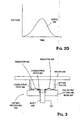
- lifting mechanism 300 has four lifting pins 218 (two of which are shown in Figure 3 ), a lifting pin base 220, and a shaft 222. Lifting pins 218 are supported by base 220 which in turn is supported by shaft 222. As also described above for Figure 2A , an actuator 214 is arranged to move lifting mechanism 216 between a first position in which lifting pins 218 do not engage substrate 208 and a second position in which lifting pins 218 engage and lift substrate 208 as illustrated in Figure 3 .
- lifting pins 218 and shaft 222 are electrically conductive and shaft 222 is electrically connected to ground.
- Lifting pin base 220 is made from a dielectric material such that it does not electrically connect lifting pins 218 to shaft 222.
- resistance arrangement 226 of Figure 2A takes the form of four component resistors 302 (two of which are shown in Figure 3 ) having a predetermined resistance. Each component resistor 302 is supported by dielectric lifting pin base 220 and electrically connected using conductive paths 304 between an associated one of lifting pins 218 and electrically conductive shaft 222. With this configuration, the combination of lifting pins 218, the component resistors 302, the conductive paths 304, and shaft 222 act as the electrical connecting arrangement 224 of Figure 2A .
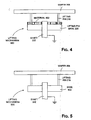
- Figure 4 illustrates a second specific embodiment of a lifting mechanism 400 similar to the embodiment shown in Figure 3 .
- the only difference between the lifting mechanism 300 and lifting mechanism 400 is that the component resistors 302 and the conductive paths 304 of lifting mechanism 300 are replaced in mechanism 400 by a layer of material 402 having a predetermined resistance.
- This layer of material 402 is supported by lifting pin base 220 such that it electrically connects electrically lifting pins 218 to electrically conduct shaft 222. Since shaft 222 is connected to ground as described above, lifting pins 218, resistance layer 402, and shaft 222 act as the electrical connecting arrangement 224 of Figure 2A .
- FIG. 5 illustrates a third specific embodiment of a lifting mechanism 500 similar to the two described immediately above.
- a lifting pin base 502 which is made of a material having a predetermined electrical resistance, is used instead of lifting pin base 220. Since lifting pin base 502 is made from a material having a predetermined resistance, it electrically connects electrically conductive lifting pins 218 to electrically conductive shaft 222. This eliminates the need for either resistors 302 of Figure 3 or material 402 of Figure 4 . Instead, lifting pin base 502 acts as the resistance arrangement 226 of Figure 2A . With this configuration, lifting pins 218, lifting pin base 502, and shaft 222 act as electrical connecting arrangement 224 of Figure 2A .
- all of the components making up the lifting arrangement are electrically conductive. That is, lifting pins 218 which are supported by lifting pin base 220 which is in turn supported by shaft 222 are all electrically conductive.
- shaft 222 of the lifting arrangement 216 is not directly connected to ground. Instead, shaft 222 is electrically connected to ground through a variable resistance resistor 602. This arrangement allows the resistance of variable resistance resistor 602 to be changed to suit the specific requirements for the particular substrate being processed in the plasma processing chamber.
- variable resistance resistor 602 is automatically controlled by a suitable and readily available controller 604.
- Controller 604 may be programmed to set the resistance of resistor 602 to predetermined resistances based on the process steps used in processing the substrate. This configuration allows the system to automatically change the resistance of resistor 602 to predetermined settings for different substrate process.
- the substrate lifting arrangement of the above described embodiments has been described as having a specific configuration including four lifting pins, a base, and a shaft which is moved by an actuator, it should be understood that the lifting arrangement may take on a wide variety of specific configurations and still remain within the scope of the invention. In fact, the invention would equally apply to any lifting arrangement configuration that would be capable of lifting the substrate from the chuck while being electrically connected to ground through a predetermined resistance as described above.
- the lifting arrangement may have any number of lifting pins, or for that matter, may use elements other than lifting pins to engage the substrate.
- the actuator may take a wide variety of forms so long as the actuator causes the engaging elements of the lifting arrangement to engage and lift the substrate off the chuck.
Landscapes
- Physics & Mathematics (AREA)
- Engineering & Computer Science (AREA)
- Plasma & Fusion (AREA)
- Chemical & Material Sciences (AREA)
- Analytical Chemistry (AREA)
- Container, Conveyance, Adherence, Positioning, Of Wafer (AREA)
- Mechanical Treatment Of Semiconductor (AREA)
- Dowels (AREA)
- Cold Cathode And The Manufacture (AREA)
- Drying Of Semiconductors (AREA)
- Electrical Discharge Machining, Electrochemical Machining, And Combined Machining (AREA)
Applications Claiming Priority (3)
| Application Number | Priority Date | Filing Date | Title |
|---|---|---|---|
| US769433 | 1985-08-26 | ||
| US08/769,433 US5904779A (en) | 1996-12-19 | 1996-12-19 | Wafer electrical discharge control by wafer lifter system |
| EP97952388A EP0948805B1 (en) | 1996-12-19 | 1997-12-18 | Wafer electrical discharge control |
Related Parent Applications (1)
| Application Number | Title | Priority Date | Filing Date |
|---|---|---|---|
| EP97952388A Division EP0948805B1 (en) | 1996-12-19 | 1997-12-18 | Wafer electrical discharge control |
Publications (3)
| Publication Number | Publication Date |
|---|---|
| EP1435646A2 EP1435646A2 (en) | 2004-07-07 |
| EP1435646A3 EP1435646A3 (en) | 2006-05-10 |
| EP1435646B1 true EP1435646B1 (en) | 2008-03-19 |
Family
ID=25085430
Family Applications (2)
| Application Number | Title | Priority Date | Filing Date |
|---|---|---|---|
| EP04006189A Expired - Lifetime EP1435646B1 (en) | 1996-12-19 | 1997-12-18 | Wafer electrical discharge control by wafer lifter system |
| EP97952388A Expired - Lifetime EP0948805B1 (en) | 1996-12-19 | 1997-12-18 | Wafer electrical discharge control |
Family Applications After (1)
| Application Number | Title | Priority Date | Filing Date |
|---|---|---|---|
| EP97952388A Expired - Lifetime EP0948805B1 (en) | 1996-12-19 | 1997-12-18 | Wafer electrical discharge control |
Country Status (7)
| Country | Link |
|---|---|
| US (1) | US5904779A (enExample) |
| EP (2) | EP1435646B1 (enExample) |
| JP (1) | JP4101299B2 (enExample) |
| KR (1) | KR20000057603A (enExample) |
| AT (2) | ATE299293T1 (enExample) |
| DE (2) | DE69738590T2 (enExample) |
| WO (1) | WO1998027577A1 (enExample) |
Families Citing this family (26)
| Publication number | Priority date | Publication date | Assignee | Title |
|---|---|---|---|---|
| US5955858A (en) | 1997-02-14 | 1999-09-21 | Applied Materials, Inc. | Mechanically clamping robot wrist |
| JPH10284360A (ja) | 1997-04-02 | 1998-10-23 | Hitachi Ltd | 基板温度制御装置及び方法 |
| US6177023B1 (en) | 1997-07-11 | 2001-01-23 | Applied Komatsu Technology, Inc. | Method and apparatus for electrostatically maintaining substrate flatness |
| JP3374743B2 (ja) * | 1998-03-05 | 2003-02-10 | 日本電気株式会社 | 基板熱処理装置及び同装置からの基板の分離方法 |
| US6146504A (en) | 1998-05-21 | 2000-11-14 | Applied Materials, Inc. | Substrate support and lift apparatus and method |
| JP4394778B2 (ja) * | 1999-09-22 | 2010-01-06 | 東京エレクトロン株式会社 | プラズマ処理装置およびプラズマ処理方法 |
| KR100503897B1 (ko) * | 2000-02-19 | 2005-07-25 | 엘지.필립스 엘시디 주식회사 | 건식식각 장치의 기판 파손방지 방법 및 건식식각 장치 |
| JP3549188B2 (ja) * | 2000-03-27 | 2004-08-04 | 日本エー・エス・エム株式会社 | 半導体基板への薄膜成膜方法 |
| KR100378187B1 (ko) * | 2000-11-09 | 2003-03-29 | 삼성전자주식회사 | 정전척을 구비한 웨이퍼 지지대 및 이를 이용한 웨이퍼 디척킹 방법 |
| US6646857B2 (en) * | 2001-03-30 | 2003-11-11 | Lam Research Corporation | Semiconductor wafer lifting device and methods for implementing the same |
| US6673636B2 (en) * | 2001-05-18 | 2004-01-06 | Applied Materails Inc. | Method of real-time plasma charging voltage measurement on powered electrode with electrostatic chuck in plasma process chambers |
| US7232591B2 (en) * | 2002-04-09 | 2007-06-19 | Matsushita Electric Industrial Co., Ltd. | Method of using an adhesive for temperature control during plasma processing |
| JP2005064284A (ja) * | 2003-08-14 | 2005-03-10 | Asm Japan Kk | 半導体基板保持装置 |
| US7129731B2 (en) * | 2003-09-02 | 2006-10-31 | Thermal Corp. | Heat pipe with chilled liquid condenser system for burn-in testing |
| US20050067146A1 (en) * | 2003-09-02 | 2005-03-31 | Thayer John Gilbert | Two phase cooling system method for burn-in testing |
| US20050067147A1 (en) * | 2003-09-02 | 2005-03-31 | Thayer John Gilbert | Loop thermosyphon for cooling semiconductors during burn-in testing |
| US7013956B2 (en) * | 2003-09-02 | 2006-03-21 | Thermal Corp. | Heat pipe evaporator with porous valve |
| KR20080107473A (ko) * | 2004-11-04 | 2008-12-10 | 가부시키가이샤 알박 | 정전 척 장치 |
| CN100362645C (zh) * | 2005-12-07 | 2008-01-16 | 北京北方微电子基地设备工艺研究中心有限责任公司 | 顶针装置 |
| US8270142B2 (en) * | 2008-12-10 | 2012-09-18 | Axcelis Technologies, Inc. | De-clamping wafers from an electrostatic chuck |
| US8360844B2 (en) * | 2010-03-13 | 2013-01-29 | Marc B Schwartz | Multiple wager, multiple potential winning outcome gaming platform |
| US9595464B2 (en) * | 2014-07-19 | 2017-03-14 | Applied Materials, Inc. | Apparatus and method for reducing substrate sliding in process chambers |
| US11387135B2 (en) * | 2016-01-28 | 2022-07-12 | Applied Materials, Inc. | Conductive wafer lift pin o-ring gripper with resistor |
| US20190088518A1 (en) * | 2017-09-20 | 2019-03-21 | Applied Materials, Inc. | Substrate support with cooled and conducting pins |
| KR102547860B1 (ko) | 2020-08-10 | 2023-06-23 | 세메스 주식회사 | 기판 지지 부재 및 이를 구비하는 기판 처리 장치 및 방법 |
| WO2022180723A1 (ja) | 2021-02-25 | 2022-09-01 | 株式会社日立ハイテク | プラズマ処理装置 |
Family Cites Families (17)
| Publication number | Priority date | Publication date | Assignee | Title |
|---|---|---|---|---|
| EP0439000B1 (en) * | 1990-01-25 | 1994-09-14 | Applied Materials, Inc. | Electrostatic clamp and method |
| JP3230821B2 (ja) * | 1991-01-28 | 2001-11-19 | 株式会社東芝 | プッシャーピン付き静電チャック |
| JP3182615B2 (ja) * | 1991-04-15 | 2001-07-03 | アネルバ株式会社 | プラズマ処理方法および装置 |
| JP3027781B2 (ja) * | 1992-02-13 | 2000-04-04 | 東京エレクトロン株式会社 | プラズマ処理方法 |
| JPH05275517A (ja) * | 1992-03-30 | 1993-10-22 | Fujitsu Ltd | 基板離脱方法 |
| JP3264391B2 (ja) * | 1993-05-17 | 2002-03-11 | 東京エレクトロン株式会社 | 静電吸着体の離脱装置 |
| US5557215A (en) * | 1993-05-12 | 1996-09-17 | Tokyo Electron Limited | Self-bias measuring method, apparatus thereof and electrostatic chucking apparatus |
| JPH06338463A (ja) * | 1993-05-28 | 1994-12-06 | Toshiba Corp | 半導体製造装置 |
| JPH077072A (ja) * | 1993-06-17 | 1995-01-10 | Anelva Corp | 静電チャック装置における基板の脱着方法および脱着機構 |
| JP2817585B2 (ja) * | 1993-09-10 | 1998-10-30 | 住友金属工業株式会社 | 試料の離脱方法 |
| US5463525A (en) * | 1993-12-20 | 1995-10-31 | International Business Machines Corporation | Guard ring electrostatic chuck |
| US5467249A (en) * | 1993-12-20 | 1995-11-14 | International Business Machines Corporation | Electrostatic chuck with reference electrode |
| US5535507A (en) * | 1993-12-20 | 1996-07-16 | International Business Machines Corporation | Method of making electrostatic chuck with oxide insulator |
| US5459632A (en) * | 1994-03-07 | 1995-10-17 | Applied Materials, Inc. | Releasing a workpiece from an electrostatic chuck |
| JP3608121B2 (ja) * | 1994-03-18 | 2005-01-05 | アネルバ株式会社 | 基板の機械的脱離機構およびその機構を用いた脱離方法 |
| JPH08107139A (ja) * | 1994-10-05 | 1996-04-23 | Hitachi Ltd | 絶縁性リング部材およびそれを用いた半導体製造装置 |
| JPH08236601A (ja) * | 1995-02-22 | 1996-09-13 | Mitsubishi Electric Corp | 静電チャック装置 |
-
1996
- 1996-12-19 US US08/769,433 patent/US5904779A/en not_active Expired - Lifetime
-
1997
- 1997-12-18 DE DE69738590T patent/DE69738590T2/de not_active Expired - Lifetime
- 1997-12-18 EP EP04006189A patent/EP1435646B1/en not_active Expired - Lifetime
- 1997-12-18 KR KR1019990705387A patent/KR20000057603A/ko not_active Ceased
- 1997-12-18 AT AT97952388T patent/ATE299293T1/de not_active IP Right Cessation
- 1997-12-18 JP JP52783698A patent/JP4101299B2/ja not_active Expired - Fee Related
- 1997-12-18 EP EP97952388A patent/EP0948805B1/en not_active Expired - Lifetime
- 1997-12-18 WO PCT/US1997/022799 patent/WO1998027577A1/en not_active Ceased
- 1997-12-18 AT AT04006189T patent/ATE389946T1/de not_active IP Right Cessation
- 1997-12-18 DE DE69733697T patent/DE69733697T2/de not_active Expired - Lifetime
Also Published As
| Publication number | Publication date |
|---|---|
| DE69738590T2 (de) | 2009-04-23 |
| KR20000057603A (ko) | 2000-09-25 |
| JP4101299B2 (ja) | 2008-06-18 |
| US5904779A (en) | 1999-05-18 |
| EP1435646A2 (en) | 2004-07-07 |
| ATE299293T1 (de) | 2005-07-15 |
| DE69733697D1 (de) | 2005-08-11 |
| EP0948805A1 (en) | 1999-10-13 |
| DE69738590D1 (de) | 2008-04-30 |
| JP2001506808A (ja) | 2001-05-22 |
| EP0948805B1 (en) | 2005-07-06 |
| ATE389946T1 (de) | 2008-04-15 |
| DE69733697T2 (de) | 2006-05-24 |
| EP1435646A3 (en) | 2006-05-10 |
| WO1998027577A1 (en) | 1998-06-25 |
Similar Documents
| Publication | Publication Date | Title |
|---|---|---|
| EP1435646B1 (en) | Wafer electrical discharge control by wafer lifter system | |
| US4624728A (en) | Pin lift plasma processing | |
| US6646857B2 (en) | Semiconductor wafer lifting device and methods for implementing the same | |
| US5460684A (en) | Stage having electrostatic chuck and plasma processing apparatus using same | |
| KR101690808B1 (ko) | 디척킹 동안 전압 전위 스파이크의 감소를 위한 장치 및 방법 | |
| JP5323317B2 (ja) | 静電チャック方法 | |
| US7813103B2 (en) | Time-based wafer de-chucking from an electrostatic chuck having separate RF BIAS and DC chucking electrodes | |
| CN1743501B (zh) | 用于释放基材的方法及设备 | |
| KR20150032638A (ko) | 기판 에칭 동안 기판 dc 바이어스 및 이온 에너지 및 각 분포를 제어하는 방법 및 장치 | |
| US20080242086A1 (en) | Plasma processing method and plasma processing apparatus | |
| KR102234220B1 (ko) | 도전성의 정전척 리프트 핀, 이를 포함하는 정전척 및 이들을 이용한 반도체 생산방법 | |
| EP3378088B1 (en) | Mems rf-switch with controlled contact landing | |
| JPH11330217A (ja) | 静電チャックプレート表面からの基板離脱方法 | |
| CN119156696A (zh) | 多模态静电夹持 | |
| WO2025145925A1 (zh) | 下电极系统、半导体工艺设备及控制方法 | |
| JP2001077186A (ja) | 真空処理方法 | |
| JPH09199578A (ja) | 静電吸着電極およびそれを用いたプラズマ処理装置 | |
| CN114664625B (zh) | 除电方法和等离子体处理系统 | |
| KR20060077667A (ko) | 반도체 웨이퍼의 정전척 | |
| JPH06244146A (ja) | プラズマ処理装置 | |
| JP2663785B2 (ja) | 静電吸着装置 | |
| KR20050092583A (ko) | 반도체 제조 설비의 공정 챔버에서의 웨이퍼 잔류 전압을자동 방전시키기 위한 장치 및 그 방법 | |
| KR20050049725A (ko) | 스티킹을 방지하는 정전척 | |
| KR20080082717A (ko) | 반도체 디바이스 제조설비에서의 웨이퍼 디척킹 방법 |
Legal Events
| Date | Code | Title | Description |
|---|---|---|---|
| PUAI | Public reference made under article 153(3) epc to a published international application that has entered the european phase |
Free format text: ORIGINAL CODE: 0009012 |
|
| 17P | Request for examination filed |
Effective date: 20040316 |
|
| AC | Divisional application: reference to earlier application |
Ref document number: 0948805 Country of ref document: EP Kind code of ref document: P |
|
| AK | Designated contracting states |
Kind code of ref document: A2 Designated state(s): AT DE FR GB IE NL |
|
| RIN1 | Information on inventor provided before grant (corrected) |
Inventor name: TOKUNAGA, KEN E. Inventor name: FRANCHUK, STEVEN Inventor name: MANZANILLA, CARLOS Inventor name: DHINDSA, RAJINDER |
|
| PUAL | Search report despatched |
Free format text: ORIGINAL CODE: 0009013 |
|
| AK | Designated contracting states |
Kind code of ref document: A3 Designated state(s): AT DE FR GB IE NL |
|
| RIC1 | Information provided on ipc code assigned before grant |
Ipc: H01L 21/68 20060101ALI20060322BHEP Ipc: H02N 13/00 20060101ALI20060322BHEP Ipc: H01L 21/00 20060101AFI20040512BHEP |
|
| AKX | Designation fees paid |
Designated state(s): AT DE FR GB IE NL |
|
| 17Q | First examination report despatched |
Effective date: 20070111 |
|
| GRAP | Despatch of communication of intention to grant a patent |
Free format text: ORIGINAL CODE: EPIDOSNIGR1 |
|
| GRAS | Grant fee paid |
Free format text: ORIGINAL CODE: EPIDOSNIGR3 |
|
| GRAA | (expected) grant |
Free format text: ORIGINAL CODE: 0009210 |
|
| AC | Divisional application: reference to earlier application |
Ref document number: 0948805 Country of ref document: EP Kind code of ref document: P |
|
| AK | Designated contracting states |
Kind code of ref document: B1 Designated state(s): AT DE FR GB IE NL |
|
| REG | Reference to a national code |
Ref country code: GB Ref legal event code: FG4D |
|
| REF | Corresponds to: |
Ref document number: 69738590 Country of ref document: DE Date of ref document: 20080430 Kind code of ref document: P |
|
| REG | Reference to a national code |
Ref country code: IE Ref legal event code: FG4D |
|
| PG25 | Lapsed in a contracting state [announced via postgrant information from national office to epo] |
Ref country code: AT Free format text: LAPSE BECAUSE OF FAILURE TO SUBMIT A TRANSLATION OF THE DESCRIPTION OR TO PAY THE FEE WITHIN THE PRESCRIBED TIME-LIMIT Effective date: 20080319 |
|
| NLV1 | Nl: lapsed or annulled due to failure to fulfill the requirements of art. 29p and 29m of the patents act | ||
| ET | Fr: translation filed | ||
| PG25 | Lapsed in a contracting state [announced via postgrant information from national office to epo] |
Ref country code: NL Free format text: LAPSE BECAUSE OF FAILURE TO SUBMIT A TRANSLATION OF THE DESCRIPTION OR TO PAY THE FEE WITHIN THE PRESCRIBED TIME-LIMIT Effective date: 20080319 |
|
| PLBE | No opposition filed within time limit |
Free format text: ORIGINAL CODE: 0009261 |
|
| STAA | Information on the status of an ep patent application or granted ep patent |
Free format text: STATUS: NO OPPOSITION FILED WITHIN TIME LIMIT |
|
| 26N | No opposition filed |
Effective date: 20081222 |
|
| GBPC | Gb: european patent ceased through non-payment of renewal fee |
Effective date: 20081218 |
|
| PG25 | Lapsed in a contracting state [announced via postgrant information from national office to epo] |
Ref country code: IE Free format text: LAPSE BECAUSE OF NON-PAYMENT OF DUE FEES Effective date: 20081218 |
|
| PG25 | Lapsed in a contracting state [announced via postgrant information from national office to epo] |
Ref country code: GB Free format text: LAPSE BECAUSE OF NON-PAYMENT OF DUE FEES Effective date: 20081218 |
|
| PGFP | Annual fee paid to national office [announced via postgrant information from national office to epo] |
Ref country code: FR Payment date: 20130110 Year of fee payment: 16 |
|
| PGFP | Annual fee paid to national office [announced via postgrant information from national office to epo] |
Ref country code: DE Payment date: 20121231 Year of fee payment: 16 |
|
| REG | Reference to a national code |
Ref country code: DE Ref legal event code: R119 Ref document number: 69738590 Country of ref document: DE |
|
| REG | Reference to a national code |
Ref country code: FR Ref legal event code: ST Effective date: 20140829 |
|
| REG | Reference to a national code |
Ref country code: DE Ref legal event code: R119 Ref document number: 69738590 Country of ref document: DE Effective date: 20140701 |
|
| PG25 | Lapsed in a contracting state [announced via postgrant information from national office to epo] |
Ref country code: DE Free format text: LAPSE BECAUSE OF NON-PAYMENT OF DUE FEES Effective date: 20140701 |
|
| PG25 | Lapsed in a contracting state [announced via postgrant information from national office to epo] |
Ref country code: FR Free format text: LAPSE BECAUSE OF NON-PAYMENT OF DUE FEES Effective date: 20131231 |