EP1190252B1 - Polyionic coatings in analytic and sensor devices - Google Patents
Polyionic coatings in analytic and sensor devices Download PDFInfo
- Publication number
- EP1190252B1 EP1190252B1 EP00928641A EP00928641A EP1190252B1 EP 1190252 B1 EP1190252 B1 EP 1190252B1 EP 00928641 A EP00928641 A EP 00928641A EP 00928641 A EP00928641 A EP 00928641A EP 1190252 B1 EP1190252 B1 EP 1190252B1
- Authority
- EP
- European Patent Office
- Prior art keywords
- peg
- pll
- substrate
- functionalized
- adsorption
- Prior art date
- Legal status (The legal status is an assumption and is not a legal conclusion. Google has not performed a legal analysis and makes no representation as to the accuracy of the status listed.)
- Expired - Lifetime
Links
Images



Classifications
-
- A—HUMAN NECESSITIES
- A61—MEDICAL OR VETERINARY SCIENCE; HYGIENE
- A61B—DIAGNOSIS; SURGERY; IDENTIFICATION
- A61B5/00—Measuring for diagnostic purposes; Identification of persons
- A61B5/145—Measuring characteristics of blood in vivo, e.g. gas concentration or pH-value ; Measuring characteristics of body fluids or tissues, e.g. interstitial fluid or cerebral tissue
- A61B5/14546—Measuring characteristics of blood in vivo, e.g. gas concentration or pH-value ; Measuring characteristics of body fluids or tissues, e.g. interstitial fluid or cerebral tissue for measuring analytes not otherwise provided for, e.g. ions, cytochromes
-
- A—HUMAN NECESSITIES
- A61—MEDICAL OR VETERINARY SCIENCE; HYGIENE
- A61B—DIAGNOSIS; SURGERY; IDENTIFICATION
- A61B5/00—Measuring for diagnostic purposes; Identification of persons
- A61B5/145—Measuring characteristics of blood in vivo, e.g. gas concentration or pH-value ; Measuring characteristics of body fluids or tissues, e.g. interstitial fluid or cerebral tissue
- A61B5/1455—Measuring characteristics of blood in vivo, e.g. gas concentration or pH-value ; Measuring characteristics of body fluids or tissues, e.g. interstitial fluid or cerebral tissue using optical sensors, e.g. spectral photometrical oximeters
- A61B5/1459—Measuring characteristics of blood in vivo, e.g. gas concentration or pH-value ; Measuring characteristics of body fluids or tissues, e.g. interstitial fluid or cerebral tissue using optical sensors, e.g. spectral photometrical oximeters invasive, e.g. introduced into the body by a catheter
-
- A—HUMAN NECESSITIES
- A61—MEDICAL OR VETERINARY SCIENCE; HYGIENE
- A61L—METHODS OR APPARATUS FOR STERILISING MATERIALS OR OBJECTS IN GENERAL; DISINFECTION, STERILISATION OR DEODORISATION OF AIR; CHEMICAL ASPECTS OF BANDAGES, DRESSINGS, ABSORBENT PADS OR SURGICAL ARTICLES; MATERIALS FOR BANDAGES, DRESSINGS, ABSORBENT PADS OR SURGICAL ARTICLES
- A61L27/00—Materials for grafts or prostheses or for coating grafts or prostheses
- A61L27/28—Materials for coating prostheses
- A61L27/34—Macromolecular materials
-
- A—HUMAN NECESSITIES
- A61—MEDICAL OR VETERINARY SCIENCE; HYGIENE
- A61L—METHODS OR APPARATUS FOR STERILISING MATERIALS OR OBJECTS IN GENERAL; DISINFECTION, STERILISATION OR DEODORISATION OF AIR; CHEMICAL ASPECTS OF BANDAGES, DRESSINGS, ABSORBENT PADS OR SURGICAL ARTICLES; MATERIALS FOR BANDAGES, DRESSINGS, ABSORBENT PADS OR SURGICAL ARTICLES
- A61L31/00—Materials for other surgical articles, e.g. stents, stent-grafts, shunts, surgical drapes, guide wires, materials for adhesion prevention, occluding devices, surgical gloves, tissue fixation devices
- A61L31/08—Materials for coatings
- A61L31/10—Macromolecular materials
-
- B—PERFORMING OPERATIONS; TRANSPORTING
- B82—NANOTECHNOLOGY
- B82Y—SPECIFIC USES OR APPLICATIONS OF NANOSTRUCTURES; MEASUREMENT OR ANALYSIS OF NANOSTRUCTURES; MANUFACTURE OR TREATMENT OF NANOSTRUCTURES
- B82Y30/00—Nanotechnology for materials or surface science, e.g. nanocomposites
-
- G—PHYSICS
- G01—MEASURING; TESTING
- G01N—INVESTIGATING OR ANALYSING MATERIALS BY DETERMINING THEIR CHEMICAL OR PHYSICAL PROPERTIES
- G01N33/00—Investigating or analysing materials by specific methods not covered by groups G01N1/00 - G01N31/00
- G01N33/48—Biological material, e.g. blood, urine; Haemocytometers
- G01N33/50—Chemical analysis of biological material, e.g. blood, urine; Testing involving biospecific ligand binding methods; Immunological testing
- G01N33/53—Immunoassay; Biospecific binding assay; Materials therefor
- G01N33/543—Immunoassay; Biospecific binding assay; Materials therefor with an insoluble carrier for immobilising immunochemicals
- G01N33/54366—Apparatus specially adapted for solid-phase testing
- G01N33/54373—Apparatus specially adapted for solid-phase testing involving physiochemical end-point determination, e.g. wave-guides, FETS, gratings
-
- G—PHYSICS
- G01—MEASURING; TESTING
- G01N—INVESTIGATING OR ANALYSING MATERIALS BY DETERMINING THEIR CHEMICAL OR PHYSICAL PROPERTIES
- G01N33/00—Investigating or analysing materials by specific methods not covered by groups G01N1/00 - G01N31/00
- G01N33/48—Biological material, e.g. blood, urine; Haemocytometers
- G01N33/50—Chemical analysis of biological material, e.g. blood, urine; Testing involving biospecific ligand binding methods; Immunological testing
- G01N33/53—Immunoassay; Biospecific binding assay; Materials therefor
- G01N33/543—Immunoassay; Biospecific binding assay; Materials therefor with an insoluble carrier for immobilising immunochemicals
- G01N33/54393—Improving reaction conditions or stability, e.g. by coating or irradiation of surface, by reduction of non-specific binding, by promotion of specific binding
-
- G—PHYSICS
- G01—MEASURING; TESTING
- G01N—INVESTIGATING OR ANALYSING MATERIALS BY DETERMINING THEIR CHEMICAL OR PHYSICAL PROPERTIES
- G01N33/00—Investigating or analysing materials by specific methods not covered by groups G01N1/00 - G01N31/00
- G01N33/48—Biological material, e.g. blood, urine; Haemocytometers
- G01N33/50—Chemical analysis of biological material, e.g. blood, urine; Testing involving biospecific ligand binding methods; Immunological testing
- G01N33/53—Immunoassay; Biospecific binding assay; Materials therefor
- G01N33/543—Immunoassay; Biospecific binding assay; Materials therefor with an insoluble carrier for immobilising immunochemicals
- G01N33/551—Immunoassay; Biospecific binding assay; Materials therefor with an insoluble carrier for immobilising immunochemicals the carrier being inorganic
-
- Y—GENERAL TAGGING OF NEW TECHNOLOGICAL DEVELOPMENTS; GENERAL TAGGING OF CROSS-SECTIONAL TECHNOLOGIES SPANNING OVER SEVERAL SECTIONS OF THE IPC; TECHNICAL SUBJECTS COVERED BY FORMER USPC CROSS-REFERENCE ART COLLECTIONS [XRACs] AND DIGESTS
- Y10—TECHNICAL SUBJECTS COVERED BY FORMER USPC
- Y10S—TECHNICAL SUBJECTS COVERED BY FORMER USPC CROSS-REFERENCE ART COLLECTIONS [XRACs] AND DIGESTS
- Y10S435/00—Chemistry: molecular biology and microbiology
- Y10S435/814—Enzyme separation or purification
- Y10S435/815—Enzyme separation or purification by sorption
-
- Y—GENERAL TAGGING OF NEW TECHNOLOGICAL DEVELOPMENTS; GENERAL TAGGING OF CROSS-SECTIONAL TECHNOLOGIES SPANNING OVER SEVERAL SECTIONS OF THE IPC; TECHNICAL SUBJECTS COVERED BY FORMER USPC CROSS-REFERENCE ART COLLECTIONS [XRACs] AND DIGESTS
- Y10—TECHNICAL SUBJECTS COVERED BY FORMER USPC
- Y10S—TECHNICAL SUBJECTS COVERED BY FORMER USPC CROSS-REFERENCE ART COLLECTIONS [XRACs] AND DIGESTS
- Y10S435/00—Chemistry: molecular biology and microbiology
- Y10S435/961—Chemistry: molecular biology and microbiology including a step of forming, releasing, or exposing the antigen or forming the hapten-immunogenic carrier complex or the antigen per se
-
- Y—GENERAL TAGGING OF NEW TECHNOLOGICAL DEVELOPMENTS; GENERAL TAGGING OF CROSS-SECTIONAL TECHNOLOGIES SPANNING OVER SEVERAL SECTIONS OF THE IPC; TECHNICAL SUBJECTS COVERED BY FORMER USPC CROSS-REFERENCE ART COLLECTIONS [XRACs] AND DIGESTS
- Y10—TECHNICAL SUBJECTS COVERED BY FORMER USPC
- Y10S—TECHNICAL SUBJECTS COVERED BY FORMER USPC CROSS-REFERENCE ART COLLECTIONS [XRACs] AND DIGESTS
- Y10S435/00—Chemistry: molecular biology and microbiology
- Y10S435/969—Multiple layering of reactants
-
- Y—GENERAL TAGGING OF NEW TECHNOLOGICAL DEVELOPMENTS; GENERAL TAGGING OF CROSS-SECTIONAL TECHNOLOGIES SPANNING OVER SEVERAL SECTIONS OF THE IPC; TECHNICAL SUBJECTS COVERED BY FORMER USPC CROSS-REFERENCE ART COLLECTIONS [XRACs] AND DIGESTS
- Y10—TECHNICAL SUBJECTS COVERED BY FORMER USPC
- Y10S—TECHNICAL SUBJECTS COVERED BY FORMER USPC CROSS-REFERENCE ART COLLECTIONS [XRACs] AND DIGESTS
- Y10S436/00—Chemistry: analytical and immunological testing
- Y10S436/819—Multifunctional antigen or antibody
-
- Y—GENERAL TAGGING OF NEW TECHNOLOGICAL DEVELOPMENTS; GENERAL TAGGING OF CROSS-SECTIONAL TECHNOLOGIES SPANNING OVER SEVERAL SECTIONS OF THE IPC; TECHNICAL SUBJECTS COVERED BY FORMER USPC CROSS-REFERENCE ART COLLECTIONS [XRACs] AND DIGESTS
- Y10—TECHNICAL SUBJECTS COVERED BY FORMER USPC
- Y10S—TECHNICAL SUBJECTS COVERED BY FORMER USPC CROSS-REFERENCE ART COLLECTIONS [XRACs] AND DIGESTS
- Y10S436/00—Chemistry: analytical and immunological testing
- Y10S436/823—Immunogenic carrier or carrier per se
Definitions
- This application is in the general area of polymeric coating materials which can be applied to surfaces of substrates used in analytical and sensing devices to promote specific recognition of the target analyte while minimizing non-specific adsorption of other molecules in the sampling solution.
- a common approach to diagnostic sensor design involves the measurement of the specific binding of a particular component of a physiological sample.
- physiological samples of interest e.g. blood samples
- physiological samples of interest e.g. blood samples
- the aim of a diagnostic sensor is to probe only the specific interaction of one component while minimizing all other unrelated interactions.
- proteins, glycoproteins and/or saccharides, as well as cells often adsorb non-specifically onto the sensor surface. This impairs both selectivity and sensitivity, two highly important performance criteria in bioaffinity sensors.
- a variety of materials and surfaces is used in analytical and sensor devices, such as glass, silicon wafers, metals or metallized surfaces and metal oxides as bulk or coating materials.
- the choice of the materials is closely related to the particular sensing technique used. If surface plasmon resonance is used as an analytical or sensing method, the chips will consist of a substrate coated with a metal such as gold.
- specific optical detection techniques such as fluorescence spectroscopy, optical waveguide techniques or a combination of the two, optically transparent substrates and/or coatings are often needed.
- Metal oxides or metal oxide coatings are particularly suitable in such cases, in view of their stability, inertness and optical transparency.
- Polymeric materials are traditionally used for applications in lateral flow assays or multiwell plate assays. Glass or silicon based materials are often used for capillary electrophoresis applications. Both polymeric and glass type materials are used in fiberoptics.
- the application of multifunctional polymers in implants can be employed to control biological interactions that determine a bioresponse to an implant.
- recognition specificity and suppression of nonspecific adsorption are relevant.
- An example is the selection of attaching cells in a biological response, where suppression of nonspecific adsorption of proteins from the body fluids can suppress the nonspecific attachment of cells and the inclusion of biospecific recognition ligands, such as adhesion peptides, can enhance the attachment of a specific cell population or subpopulation.
- US 5,250,613 discloses a solid surface having anionic groups capable of reacting with imino groups which is provided with a hydrophilic outer surface layer by reaction with a copolymer containing a polyethylene imine. A biopolymer is immobilised onto the hydrophilic solid surface.
- US 5,629,213 discloses a biosensor for use in surface plasmon resonance (SPR).
- the system includes a transparent substrate layer, a thin metallic form on the substrate, and an ultrathin organic layer of a material which is polyanionic and adsorbs on the metallic film, and a layer of polylysine on this polyanionic material.
- Patent Nos. 5,462,990 and 5,627,233 to Hubbell et al disclose multifunctional polymeric materials for use in inhibiting adhesion and immune recognition between cells and tissues.
- the materials include a tissue-binding component (polycation) and a tissue non-binding component (polyanion).
- Hubbell discloses various PEG/PLL copolymers, with molecular weights greater than 300, with structures that include AB copolymers, ABA copolymers, and brush-type copolymers. These polymers are being commercially developed for use as tissue sealants and to prevent surgical adhesions.
- WO 98/47948 Multifunctional Polymeric Tissue Coatings' by Hubbell et al.
- the present invention relates to a method as defined in claim 1 and claim 14. Further embodiments of the invention are defined in claims 2 to 13, and 15 to 38.
- Multifunctional, polyionic copolymers with molecular architectures and properties optimized for specific applications are synthesized on/or applied to substrate surfaces for analytical and sensing purposes.
- the coatings are particularly useful for suppression of non-specific interaction, adsorption or attachment of molecular or ionic components present in an analyte solution.
- Chemical, biochemical or biological groups can be coupled to integrated into or absorbed to the multifunctional polymer that are able to recognize, interact with and bind specifically to target molecules in the material containing the analyte to be detected.
- These multifunctional polymer coatings are compatible with a variety of different established methods to detect, sense and quantify the target molecule in an analyte. These materials can also be used to modulate biological interactions upon substrate surfaces for use as selective implant surfaces that resist cell attachment and may optionally promote the attachment of specific cell types or induce a particular cellular behavior.
- the multifunctional polymer coatings typically include brush copolymers based on a polycationic or polyanionic (jointly referred to herein as 'polyionic') backbone with side chains that control interaction with the environment, such as poly(ethylene glycol) or poly(ethylene oxide)-based side chains that decrease cellular adhesion (referred to herein as "non-interactive" side chains or polymers), and analyte-specific side chains.
- polyionic backbones are poly(amino acids) such as poly(lysine) and poly(arginine) with positive charges at physiological pH and poly(glutamic acid) and poly(aspartic acid) with negative charges at physiological pH.
- PEG chains are highly water soluble and highly flexible. PEG chains have an extremely high motility in water and are essentially non-ionic in structure. They are well known for their weak interaction with both molecules and ions and, if attached to the surface in suitable form (molecular weight, density, orientation), they decrease adhesiveness or adsorption to the surface, such as protein resistance in contact with blood or serum.
- the choice of positively charged (cationic) or negatively charged (anionic) backbones of such PEO-grafted backbones is related to the fact that surfaces often possess a positive or negative charge when exposed to an aqueous environment.
- metal oxides or metal oxide coatings exposed to an aqueous analyte spontaneously acquire a negative charge at pH above the isoelectric point (IEP) and positive charges at pH below the isolectric point of the particular oxide chosen.
- IEP isoelectric point
- pH of 7 neutral solution
- niobium oxide, tantalum oxide or titanium oxide will be negatively charged, while aluminium oxide at pH 7 is positively charged.
- the surface may not be (sufficiently) charged to allow for complete polymer adsorption through electrostatic interaction. In such cases the surface may be treated to introduce positive or negative charges.
- carboxylate groups may be introduced through self-assembly of carboxy-terminated long-chain alkanethiols on gold or silver to induce a positive charge at a pH above 4.
- amino groups that are positively charged at pH below 9 may be introduced on gold or silver surfaces, e.g. through self-assembly of amino-terminated alkanethiols.
- the PEG-grafted polyionic copolymer can be further modified by introducing functional groups at or near the terminal (free end) position of the PEG chains. These groups allow further functionalization and incorporation of adhesive sites or recognition entities that serve as the capture moiety in an analytical or sensing assay.
- Non-modified and modified copolymers can be used singly, consecutively or as a mixture. They can be used to pattern the surfaces into non-adhesive and specifically adhesive areas by applications of known techniques such as microfluidic or contact printing techniques.
- polymer substrates can also be used, especially when patterning is not involved in the bioanalytical concept.
- many surfaces employed in ELISA systems and in cell culture systems are polymers.
- Polystyrene is a very convenient such polymer, because of its optical clarity, its ease of processability, and its low expense. Polystyrene can be readily functionalized to introduce surface charge, either negative or positive, to create the appropriate charged substrate.
- polystyrene For example, exposure of polystyrene to air or oxygen plasmas is well known to create stable modified surfaces that include anionic groups, and exposure to ammonia plasmas is well known to create stable modified surfaces that include cationic groups at typical operating pH.
- polymers and also many other polymers either with anionic or cationic groups that are intrinsic to their polymer structure or that are introduced by a surface modification procedure such as a plasma process, in both bioanalytical systems based on noncellular and cellular approaches.
- noncellular approaches include ELISA systems, where the multifunctional polymer is adsorbed to the polymer substrate and an antibody is then chemically coupled to the multifunctional polymer.
- the polymer in cell-mediated systems, may be adsorbed and then coupled to a cell-interacting biomolecule, such as an adhesion peptide, or alternatively the cell-interacting biomolecule may be coupled prior to adsorption.
- a cell-interacting biomolecule such as an adhesion peptide
- simple and inexpensive polymer substrates may be advantageous.
- Both metal and polymer substrates may also be useful in the context of medical implants.
- a number of important implants are constructed from metals, such as titanium or stainless steel, including orthopedic implants and cardiovascular implants.
- a number of important implants are constructed from polymers, such as silicone rubber and polyesters, both of which can be treated by plasma processes or other processes to introduce surface charge.
- the polymeric materials can also be advantageous when used to coat these materials.
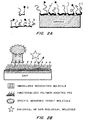
- Polycationic and polyanionic copolymers that adsorb to (oppositely) charged surfaces of substrates and devices ('chips') for analytical and sensing applications are disclosed. These serve three functions: (1) charged sites in the backbone attach the polymer to substrate surface via interactions between oppositely charged groups on the substrate and the backbones; (2) grafted side chains that form a dense structure such as a brush make the surface non-interactive, i.e., prevent the adsorption of molecules or ions out of an analyte onto the surface (referred to herein as "non-interactiveness”, “non-adhesiveness", or “resistance to non-specific adsorption") and (3) functional groups allow the incorporation of recognition units for specific detection and sensing of low concentrations of analytes (referred to herein as "functional recognition sites").
- these materials can also be used to coat polymeric materials used in immunoassay and combinatorial library screening techniques, usually polymers such as polystyrene or polycarbonate, or implants such as bone prosthetics, screws, rivits, and vascular grafts, which are typically formed of metals and/or polymeric materials.
- polymers such as polystyrene or polycarbonate
- implants such as bone prosthetics, screws, rivits, and vascular grafts, which are typically formed of metals and/or polymeric materials.
- Suitable functional, reactive or interactive groups can also be introduced into the copolymers.
- these functional or reactive or interactive copolymers are referred to as 'modified copolymers'.
- These reactive groups can be used for the further functionalization of the polymer, i.e. the adsorption or attachment of specific molecules such as antibodies, antigens, enzymes, oligonucleotides, single-stranded DNA or RNA moieties.
- the latter molecules immobilized at the surface in a sea of non-interactiveness are able to sense specifically target molecules using established analytical or sensing techniques.
- the multifunctional copolymers that include the specific recognition unit or functional molecules are referred to herein as 'functionalized polymers'.
- Procedures for treatment of the substrates and surfaces with the non-modified, modified and/or functionalized polyionic copolymers are also disclosed.
- Block copolymers are defined as copolymers in which a polymeric block is linked to one or more other polymeric blocks. This is distinguished from random copolymers, in which two or more monomeric units are linked in random order to form a copolymer.
- Brush copolymers (as in a bottlebrush) are copolymers, which have a backbone of one composition and bristles of another. These copolymers are also known as comb copolymers. The terms brush and comb are used interchangeably.
- Dendritic polymers also known as dendrimers or starburst polymers, are polymers which include a core molecule which is sequentially reacted with monomers with three or more reactive groups, such that at each sequential coupling step, the number of reactive groups at the ends of the polymer increases, usually exponentially.
- a dendron is a subunit of a dendrimer, the cone shaped structure resulting from sequential reactions starting with a core containing only reactive group.
- molecular weight refers to weight-average molecular weight, unless otherwise specified.
- the preferred non-interactive polymer is poly(ethylene glycol), or "PEG".
- PEG poly(ethylene glycol), or "PEG”.
- the general description of the graft copolymers refers to PEG rather than "non-interactive polymer”.
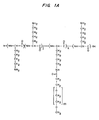
- the co-polymers can be brush copolymers (as in a bottlebrush, with a backbone of one composition and bristles of another) with a charged polymeric backbone, such as a poly(amino acid).
- the first example refers to poly-L-lysine (PLL) and bristles of polyethylene glycol (PEG).
- PLL poly-L-lysine
- PEG polyethylene glycol
- the molecular weight of the PLL is between 1,000 and 1,000,000, preferably greater than 100,000, more preferably, between 300,000 and 800,000.
- the molecular weight of the PEG is between 500 and 2,000,000, more preferably between 1,000 and 100,000.
- Various surfaces binding polyionic polymers can be substituted for PLL, and various non-interactive polymers can be substituted for PEG.
- non-interactive is used here in the context of the application of such molecules for coating analytical and sensor devices and means that the non-interactive polymer in the surface-adsorbed copolymer reduces the amount of (non-specific) adsorption of molecules such as inorganic ions, peptides, proteins, saccharides and other constituents contained in typical analytes of biological or non-biological origin.
- non-interactive are non-adhesive, adsorption-resistive or adsorption-repulsive in the context of non-specific adsorption.
- PEG is a preferred material as the non-interactive polymer.
- the choice of the grafting ratio is important as it determines, when adsorbed onto the device surface, the degree of the desired non-adhesiveness.
- the optimal graft ratio is between 1 PEG chain for every 3 to 10, preferably 4 to 7, lysine subunits for analytical or sensing applications, and may be adjusted based on desired properties.
- the optimum grafting ratio however depends on the MW of the PEG as well as on the specific applications. For example, if the MW of the PEG chains to be grafted onto the PLL backbone is 2000. the ratio of PEG units to PLL units should be between 2 and 8, preferentially between 3 and 5.
- the properties of sensor surfaces coated with PLL-PEG of different architecture are discussed in Example 1.
- Suitable non-interactive polymers include mixed polyalkylene oxides having a solubility of at least one gram/liter in aqueous solutions such as some poloxamer nonionic surfactants, neutral water-soluble polysaccharides, polyvinyl alcohol, poly-N-vinyl pyrrolidone, non-cationic poly(meth)acrylates, many neutral polysaccharides, including dextran, ficoll, and derivatized celluloses, polyvinyl alcohol, non-cationic polyacrylates, such as poly(meth)acrylic acid, and esters amide and hydroxyalkyl amides thereof, and combinations thereof.
- Suitable polycationic blocks include natural and unnatural polyamino acids having net positive charge at or close to neutral pH, positively charged polysaccharides, and positively charged synthetic polymers.
- Representative polycationic blocks include monomeric units selected from the group consisting of lysine, histidine, arginine and ornithine.
- Representative positively charged polysaccharides include chitosan, partially deacetylated chitin, and amine-containing derivatives of neutral polysaccharides.
- Representative positively charged synthetic polymers include polyethyleneimine, polyamino(meth)acrylate, polyaminostyrene, polyaminoethylene, poly(aminoethyl)ethylene, polyaminoethylstyrene, and N-alkyl derivatives thereof.
- Representative polycationic materials include natural and unnatural polyamino acids having net positive charge at neutral pH, positively charged polysaccharides, and positively charged synthetic polymers.
- suitable polycationic materials include polyamines having amine groups on either the polymer backbone or the polymer sidechains, such as poly-L-lysine and other positively charged polyamino acids of natural or synthetic amino acids or mixtures of amino acids, including poly(D-lysine), poly(ornithine), poly(arginine), and poly(histidine), and nonpeptide polyamines such as poly(aminostyrene), poly(aminoacrylate), poly (N-methyl aminoacrylate), poly (N-ethylaminoacrylate), poly(N,N-dimethyl aminoacrylate), poly(N,N-diethylaminoacrylate), poly(aminomethacrylate), poly(N-methyl aminomethacrylate), poly(N-ethyl aminomethacrylate), poly(N,N-dimethyl aminomethacrylate), poly(N,N-diethyl aminomethacrylate), poly(ethyleneimine), polymers of quaternary amines, such as poly(N,
- the polymers must include at least five charges, and the molecular weight of the polyionic material must be sufficient to yield the desired degree of binding to the surface of the analytical or sensing device, having a molecular weight of at least 1000 g/mole.
- PEG reacted with polyethylene imine with a molecular weight greater than 10.000 will have approximately the same physical properties as the PEG/PLL copolymers described herein.
- Polyhydroxyethyl methacrylate can be reacted with a suitable stoichiometric ratio of a reagent such as tresyl or tosyl chloride (an activating agent), which converts some of the hydroxy groups to leaving groups.
- tresyl or tosyl chloride an activating agent
- These leaving groups can be reacted with polycationic polymers, for example, polyaminoethyl methacrylate with a molecular weight greater than 10,000. to yield a high-molecular-weight polymer.
- a suitable stoichiometric ratio is one mole activating agent per mole of polyhydroxyethyl methacrylate, and one mole activated polyhydroxyethyl methacrylate per every 3 to 9, preferably 5 to 7 moles of reactive groups on polyaminoethyl methacrylate.
- Suitable cationic polymers are those that, when combined with a suitable non-interactive polymer, have roughly the same physical properties as the PEG/PLL copolymers described herein.
- Suitable polyanionic blocks include natural and synthetic polyamino acids having net negative charge at neutral pH.
- a representative polyanionic block is poly(glutamic acid), which contains carboxylic acid side chains with a negative charge at pH 7.
- Glycolic acid is just one example. It may be replaced by other natural or unnatural monomers that can be polymerized and contain a side functional group with negative charge at or near neutral pH, for example, any polymer having carboxylic acid groups attached as pendant groups.
- Suitable materials include alginate, carrageenan, furcellaran, pectin, xanthan, hyaluronic acid, heparin, heparan sulfate, chondroitin sulfate, dermatan sulfate, dextran sulfate, poly(meth)acrylic acid, oxidized cellulose, carboxymethyl cellulose and crosmarmelose, synthetic polymers and copolymers containing pendant carboxyl groups, such as those containing maleic acid or fumaric acid in the backbone.
- Polyaminoacids of predominantly negative charge are particularly suitable. Examples of these materials include polyaspartic acid, polyglutamic acid, and copolymers thereof with other natural and unnatural amino acids.
- Polyphenolic materials such as tannins and lignins can also be used.
- Preferred materials include alginate, pectin, carboxymethyl cellulose, heparin and hyaluronic acid.
- the molecular weight of the polyanionic material must be sufficiently high to yield strong adhesion to the positively charged analytical or sensor device surface.
- the lengths of the polycationic and polyanionic materials which would result in good blockage of adhesive interactions may be determined by routine experimentation. It should be understood that "good” is a word that must be defined by the requirements of the particular situation at hand, e.g., how long binding is required and how complete a non-interactivness is required by the particular sensing application.
- sulfate, sulfonate, phosphate or groups that apart from being negatively charged have cation-chelating properties such as ethylendiamintetraacetic acid (EDTA) or nitrilotrisacetic acid (NTA) can be used as well.
- EDTA ethylendiamintetraacetic acid
- NTA nitrilotrisacetic acid
- 'cation-chelating' refers to the ability of such a functional group to strongly coordinate to cations contained in the surface of the sensing device, preferentially metal cations such as Ti(IV). Zr(IV), Hf(IV), V(V), Ta(V), Nb(V), Hf(V), Cr(III), Cr(VI), Mo(VI) or W(VI).
- the amine groups in copolymers are the primary amines of lysine residues, but other groups can be used.
- the polymer can be prepared using arginine or histidine, resulting in guanidino or imidazoyl cationic groups, respectively.
- more than one PEG group can be provided, for example, by using as a starting material a small molecule with at least two carboxyl groups and at least two amino groups, for example, the dipeptide Glu-Lys.
- the molecular weight and number of PEG blocks per lysine block is determined such that the resulting copolymer has the properties of both the PLL and the PEG. If the proportion of PEG is too high, the adhesion of the polymer to the analytical or sensing substrate (chip) is reduced. If the proportion of PLL is too high, the ability of the PEG to reduce the non-specific adsorption of ions and molecules out of the analyte is insufficient.
- the polymers must have sufficient PEG character to minimize molecular interaction with the analytical or sensor chip. Polymers with too few PEGs per PLL are less suitable for minimizing these interactions. The polymers must also have sufficient PLL character to adequately bind to a chip surface. Polymers with insufficient PLL character fail to bind adequately.
- the polycationic polymer can be any polycation that provides a sufficient amount and density of cationic charges to be effective at adhering to the analytical or sensing substrate.
- the PEG/poly(amino acid) dendrimers are copolymers where one or more linear PEG polymeric blocks are covalently linked to the focal point of a cationic dendrimer, for example, dendrimerically polymerized polylysine, such that the dendrimer fans out from the PEG.
- a cationic dendrimer for example, dendrimerically polymerized polylysine, such that the dendrimer fans out from the PEG.
- the PEG is linked to the central point of the dendrimer, which is grown from the PEG as described in detail below.
- the particular utility of the dendritic construction is the ability to precisely control the mass of the resulting copolymer, the geometrical relationship between the polymeric blocks, and the degree of substitution. For instance, in the examples shown, there is exactly one PEG for a defined number of positive charges. In contrast, grafting preformed PEG molecules onto a polycationic backbone normally results in a random positioning of the PEG groups on the
- the dendrimer preferably contains between 16 and 128 reactive amine groups, which correlates to a dendrimer of between generation 4 and generation 7.
- the molecular weight of the PEG is between 500 and 2,000,000, preferably between 5,000 and 100,000.
- the dendrimeric PLL allows the formation of a compact structure, with a high charge density.
- These PEG-lysine dendrons are effective in preventing cell spreading when adsorbed on a simple anionic surface if the polymer contains about 8 or more positive charges (generation-3 dendron).
- non-lysine-based dendrimers can also be prepared and are intended to be within the scope of the PEG/PLL dendrimers described herein.
- the dendrimers can include polycationic groups other than amines, for example, quaternary ammonium salts.
- synthetic, non-amino acid based cations can be included.
- Cationic amino acids such as ornithine can also be incorporated into the dendrimers.
- the first requirement for an analytical or sensing device which allows specific detection or recognition, is the resistance of the device surface towards non-specific adsorption.
- This requirement can be fulfilled by the copolymers described above, as well as in Example 1.
- the second requirement is the introduction of functional groups (called ligands) that allow specific interaction with select components of the analyte.
- ligands can be introduced into the PEG-grafted polyionic polymer. Preferentially such ligands are introduced at the free end of the PEG chain.
- the type of ligand is chosen according to the needs of the analytical or sensing task. Examples are:
- Ligands that induce physico-chemical adsorption of a molecule as recognition unit for the subsequent analytical or sensing detection.
- the recognition unit are monoclonal or polyclonal antibodies, that will specifically bind complex molecules to be analyzed during the sensing step (called target molecules) such as peptides, proteins, oligonucleotides, DNA or RNA (fragments).
- target molecules such as peptides, proteins, oligonucleotides, DNA or RNA (fragments).
- ligands examples include hydrophobic moieties such as methyl or trifluoromethyl groups, positively charged groups such as amines (carrying a positive charge below pH of 9), a quaternary amine (positively charged across the whole pH range), or negatively charged ligands such as carboxylate (negatively charged above pH 4).
- Ligands that are able to bind to receptors on the surfaces of cells may be bound to the ligand directly, by reaction.
- An example is the reaction of a cysteine-containing peptide to a vinylsulfone ligand. Specific reaction between the thiol on the cysteine residue and the vinylsulfone ligand then results in immobilization of the peptide to the substrate, or to the polymer that is then adsorbed to the substrate. This coupling may be done with the polymer still in free solution, and thus the ligand definitionally becomes the peptide, or it may be done after the polymer with the cysteine-reactive ligand is adsorbed upon the substrate. Both approaches have advantages.
- the material may be more readily characterized.
- the separation of the non-coupled peptide is very easy, being reduced to the process of rinsing.
- the case of the peptide ligand binding to receptors on the surface of a cell can be particularly interesting, e.g. in analysis of cellular behavior or in the therapeutic manipulation of cell behavior in a culture system or upon an implant.
- Ligands that are able to bind specifically to a bioactive recognition moiety.
- recognition units include antibodies in general, antigens, proteins, enzymes, oligonucleotides, c-DNA fragments and other groups or molecules provided they are able to interact specifically with the analyte in the subsequent analytical or sensing assay.
- These surface-attached recognition units must possesses further specific interaction sites, which can be used for specific recognition and binding of a particular analyte molecule.
- An example is the use of a polycationic PLL-g-PEG, where a fraction of the PEG chains are functionalized at the terminal position of the PEG chain with biotin.
- the functionalized PLL-g-PEG-biotin is adsorbed onto an analytical or sensing device surface, followed by the adsorption of streptavidin onto the biotin sites.
- a sensing surface is able to recognize and bind specifically biotinylated target molecules during the analytical or sensing assay.
- the adsorbed, biotinylated PEG-grafted polyionic copolymer can directly react with analytes that are streptavidin-conjugated. Details are given in Example 2.
- crosslinker Ligands that are able to interact with an intermediate reactive bifunctional molecule (called crosslinker). Firstly, one end of the homo- or (preferentially) hetero-functional cross linker is attached to the ligand of the copolymer. In a second step the other (free) end of the crosslinker is reacted with the recognition unit.
- Ligands that are able to form stable complexes with a cation.
- the cation will form a complex either with the recognition unit directly through a suitable functionality or alternatively with a bifunctional crosslinker (in the latter case followed by procedure 4).
- the ligand include carboxylate, amide, phosphate, phosphonate, nitrilo triacetic acid and other known groups that are able to chelate cations.
- Examples for the cations include Mg(II), Ti(IV), Co(III), Co(VI), Cu(II), Zn(II), Zr(IV), Hf(IV), V(V), Nb(V), Ta(V), Cr(III), Cr(VI), Mo(VI) and other cations known to form stable complexes with chelating ligands.
- Suitable recognition units include antibodies in general, proteins, enzymes, lectins, oligonucleotides, c-DNA fragments and other groups or molecules provided they are able to interact specifically with the analyte in the subsequent analytical or sensing assay.
- Many interesting ligands in the bioanalysis of cellular responses are peptides.
- the peptides may be coupled to the multifunctional polymers, e.g. to the termini of the polymer chains that are used to resist nonspecific adsorption, either before or after the polymer is adsorbed to the substrate.
- the peptide may be bound to the multifunctional polymer through a number of means, including reaction to a cysteine residue incorporated within the peptide.
- Cysteine residues are rarely involved in cell adhesion directly. As such, few cell adhesion peptides comprise a cysteine residue, and thus a cysteine residue that is incorporated for the purpose of coupling of the peptide will be the unique cysteine residue for coupling. While other approaches are possible, the preferred method is coupling of the peptide to the multifunctional polymer through a cysteine residue on the polymer. Other bioactive features can also be incorporated. e.g. adhesion proteins, growth factor proteins, cytokine proteins, chemokine proteins, and the like. Functionalized surfaces can be used in bioanalytical systems involving cells, in which some affecter of cell function is the measured feature.
- a test fluid may contain an analyte, to which the response of cells is sought.
- the cellular response may be used in as a measure of the presence or the activity of the analyte.
- the cellular response per se may be the knowledge that is sought, e.g. the migration response of a particular cell type to a growth factor, when the cells are migrating upon a particular adhesive substrate.
- the collection of such scientific information is of significant value in the screening of the activity of drug candidates, particularly when higher order cellular responses such as adhesion, migration, and cell-cell interactions are targeted.
- Functionalized surfaces can be used in therapeutic systems involving cells, in which cells are cultured for later therapeutic use.
- cultured cells are sometimes used. Examples are in the culture of chondrocytes for transplantation in articular cartilage defects in the knee or in the culture of endothelial cells for transplantation in vascular grafts.
- modulation and manipulation of the phenotype of the cells is of prime interest. For example, it may sometimes be of interest to stimulate cells into one phenotype (such as a proliferative phenotype), and later to stimulate them into a second phenotype (such as a differentiated phenotype). Alternatively, it may be desirable to maintain them in one particular phenotype, e.g.
- Functionalized surfaces can be used in therapeutic systems involving cells, in which the functionalized surfaces is a component of an implant.
- the interactions between cells in an implant environment and the surface of an implant may play a controlling role in determining the biocompatibility of an implant.
- the presence of blood platelets is not desirable and may lead to in-stent restenosis.
- the attachment of all cells is not necessarily bad, however.
- endothelial cells are thought to play a very positive role in preventing restenosis.
- the stent substrate with a functional coating that would prevent the nonspecific adsorption of proteins and also presents adhesion ligands that are capable of binding to endothelial cells but not blood platelets.
- the peptide REDV based on an alternatively spliced domain in fibronectin, provides one potential such target, in that it has been reported that this sequence does not bind to receptors present on the blood platelet but does bind to receptors that are present on the endothelial cell ( J. Biol. Chem 1992, 267 p.14019-26 ).
- the type of substrates and surfaces of the analytical or sensing device suitable for the envisioned use depends on both the type of application, the type of analytical or sensing technique used, as well as on the suitability for binding the polyionic copolymer.
- Suitable substrates or surfaces which include metals, metal oxides and/or polymeric materials are also discussed below in conjunction with the section on detection of analyte binding.
- Other substrates or surfaces include tissue and cell culture substrates, and means for immunoassay, which are typically formed of a polymer such as polystyrene or polycarbonate.
- Other supports or substrates include medical devices or prosthetics which are formed of metals (such as stainless steel), nylon, degradable and nondegradable biocompatible polymers such as poly(lactic acid-co-glycolide). Examples include bone implants and prosthetics, vascular grafts, pins, screws, and rivits. The most common substrate material for a stent is a metal.
- Substrate and surface functionalization for use in other analytical assay platforms is also an important application of the technology.
- One of the largest areas in bioanalytical assays is the use of enzyme linked immunosorbent assays (ELISA) or linked immunosorbent assays (LISA).
- ELISA enzyme linked immunosorbent assays
- LISA linked immunosorbent assays
- a binding or recognition element is bound typically to a multiwell plate and then blocked with a protein based molecule to occupy surface area not containing the recognition element.
- the derivatized surface is then exposed to a solution containing analyte.
- the surface is then exposed to a second recognition element that is tagged with a molecule that can be assayed via any of the conventional spectroscopic or other methods.
- an antigen can be directly coupled to a surface and used to assay the level of antibody produced from immunological response to the antigen and present in biological fluids or tissues. This is a common technique used for determination of human disease or illness or even for determination of biocompatability of a drug or implant in which the degree of antibody production is measured as a function of drug level or dose.
- BSA bovine serum albumin
- Functionalization of substrates and substrate surfaces for the analysis and control of cellular interactions in an important use having application in culture-based assays, in therapeutics based on cell and tissue culture and bioreactors, and based on implants.
- Functionalized surfaces can be used in bioanalytical systems involving cells, in which the cellular response is the measured feature.
- the response of a cell to a substrate is an important issue, and analysis of this response is an important bioanalytical task.
- the response of a cell to extracellular matrix components is an important issue in cell adhesion and migration and is important in issues such as cancer metastasis and wound healing.
- bioanalytical systems including as a key component of them bioanalytical surfaces and substrates, are useful in measurement of such responses.
- Useful substrates are polymeric or inorganic. Modified polystyrene is a common cell culture substrate, modified so as to render the polystyrene anionic. Such as substrate alone has limited usefulness in bioanalysis of cellular behavior. It supports cell adhesion via proteins that spontaneously adsorb or are adsorbed from purified solutions. These proteins are subject to remodeling by cellular activities. As such, technology that would provide a well defined culture substrate would indeed be useful. In such usefulness, qualities such as the ability to resist nonspecific adsorption, to present biospecific adhesion ligands, and to remain stably adsorbed during extensive periods of culture.
- PEG may be bonded to the ⁇ -amines of lysine residues of poly(L-lysine) as follows.
- Poly(L-lysine) (PLL) can be reacted with a PEG with one end protected (i.e.. a protected monomethoxy PEG), the terminal hydroxyl of which has been previously activated with carbonyldiimidazole (CDI).
- the PLL and the activated PEG can be mixed in an aqueous solution buffered at pH 9 and allowed to react for 48 hours at room temperature.
- the number of PEG chains grafted per PLL chain may be controlled by adjusting the ratio of moles of activated PEG added per mole of added PLL.
- the reaction may not proceed to completion, i.e., the mole ratio of PEG to PLL in the reaction mixture may not be identical to that in the PEG-g-PLL product, but higher ratios of PEG to PLL will produce higher amounts of PEG in the PEG-g-PLL product.
- the cationic domains tend to be highly reactive, and efforts must be made to control the extent of addition of PEG to PLL. Executing the reaction in the absence of water reduces deactivation of PEG and allows better stoichiometric control.
- unprotected poly-L-lysine can be dissolved in water, then added to dimethylformamide (DMF) to make a solution that is 5% aqueous.
- DMF dimethylformamide
- the poly-L-lysine can then be reacted with CDI mono-activated PEG in stoichiometric amounts, followed by evaporation of solvent under vacuum yielding a PEG/PLL copolymer.
- unprotected poly-L-lysine can be dissolved in water and precipitated by adding NaOH.
- the precipitated polymer can then be added to anhydrous DMF and then reacted with CDI mono-activated PEG in stoichiometric amounts, yielding an (A)x-b-(B)y copolymer.
- side reactions involving the activated group can be reduced (i.e., deactivation is reduced), and at long reaction times the ratio of mole PLL to PEG in the polymer product more closely resembles than in the reactant mixture.
- Solution polymerization of PLL may be carried out using monomers containing different epsilon protecting groups, which allows strict control over the degree of substitution of PEG onto PLL.
- N-carboxy anhydrides of various amino acids may be synthesized and polymerized into copolymers, as in the following example.
- N,N'-dicarbobenzoxy-L-lysine (Z,Z-lysine) can be reacted with phosphorus pentachloride to yield ⁇ ,N-carbobenzoxy- ⁇ ,N-carboxy-L-lysine anhydride.
- ⁇ ,N-carbobenzoxy- ⁇ ,N-tert-butyloxycarbonyl-L-lysine can be reacted with sodium methoxide to yield the sodium salt of Z,boc-lysine.
- the sodium salt of Z,boc-lysine can be reacted with phosphorus pentachloride to yield ⁇ ,N-tert-butyloxycarbonyl- ⁇ ,N-carboxy-L-lysine anhydride.
- Z,Z-lysine anhydride can be added to Z,boc-lysine anhydride, and the two monomers can be polymerized by the addition of sodium methoxide as an initiator.
- a copolymer results, poly( ⁇ boc-lysine)-co-( ⁇ Z-lysine).
- the boc groups can be removed by addition of the polymer to trifluoroacetic acid for fifteen minutes.
- the salt form can be converted to the free base by reaction with a reactant such as pyridine.
- a reactant such as pyridine.
- the free amines on the polymer can then be reacted with CDI PEG in DMF.
- the Z groups can then be deprotected by adding the polymer to HBr in acetic acid for fifteen minutes, yielding an (PEG)x-b-(PLL)y copolymer, where the ratio of PEG to PLL in the final product can be controlled by the initial ratio of boc protected lysines.
- PEG-grafted polyionic copolymers for which all or part of the PEG side chains are functionalized with a particular group at the terminal or close to terminal position, follows the same procedures as outlined above. However, instead of using a one end protected PEG (e.g. methoxy terminated PEG), a functionalized PEG is used. Either only functionalized PEG is used or (preferentially) a mixture of functionalized and non-functionalized PEG. The functional group at the end of the PEG chain are chosen according to the needs and concept of the analytical assay. The ratio of functionalized PEG to non-functionalized PEG depends again on the requirements of the analytical or sensor assay. It has to be optimized for a given type of application. An example of the optimization of this ratio is given in Example 2.
- a one end protected PEG e.g. methoxy terminated PEG
- a functionalized PEG is used. Either only functionalized PEG is used or (preferentially) a mixture of functionalized and non-functionalized PEG.
- Example 2 The details of a particular synthesis are given in Example 2 for the case of biotinylated PEG/PLL to be used in PEG-biotin-streptavidin-biotinylated type of assay.
- An alternative but related approach is provided in Example 3.
- Non-charged, hydrophilic side chains other than PEG can be used as long as they impart the property of non-interactiveness or adsorption resistance to the treated surface
- the living-cell-based sensor for sensing (via monitoring the electrical signals of the attached nerve cells) environmentally relevant compounds such as gaseous or liquid components that are toxic to nerve cells or unknown components in order to test their potential toxicity.
- the substrates can be modified in a variety of ways. Non-modified and modified copolymers can be adsorbed onto suitable surfaces either in pure form or as mixtures. The optimum choice depends on the type and concentration of the ligand molecules, the targeted receptor, and the substrate properties. Examples of substrates to which the copolymer can be applied include bioanalytical devices such as ELISA or LISA plates, lateral flow assay substrates such as nitrocellulose, nylon, or PVDF membranes, polymeric microparticles or inorganic particles, capillaries for electrophoresis, fiber optics, or "lab on a chip" devices.
- bioanalytical devices such as ELISA or LISA plates
- lateral flow assay substrates such as nitrocellulose, nylon, or PVDF membranes
- polymeric microparticles or inorganic particles such as nitrocellulose, nylon, or PVDF membranes
- capillaries for electrophoresis fiber optics, or "lab on a chip” devices.
- the materials described herein are particularly suited for these applications in that the polyionic copolymers allow easy and efficient post production modification of the suface, tailored to the desired application, with non-interactive properties and of specific interaction properties.
- the adsorbing domain of the multifunctional polymer should have opposite charge as that of the substrate prior to adsorption of the polymer, leading to stable and strong adsorption.
- Nonionic water-soluble polymers such as poly(ethylene glycol) are especially preferred. On the termini of these chains may be placed either reactive groups or directly binding groups, to provide for attachment device surfaces.
- no biological recognition element may be used, leading to a surface that resists nonspecific attachment but does not promote biospecific attachment, or the surface may be pretreated with a reactive moiety and the free surface area that is not derivitized with the reactive moiety subsequently can be "filled in” with either the polymer with no biologicial element that resists nonspecific attachment, or alternatively, with a second protocol.
- Polystyrene used for example as microwell plates, can be rendered negatively charged at physiological pH. This material generally supports the adsorption of a wide variety of proteins solution for assay. Microwell plates can be purchased commercially with negatively charged surfaces.
- the negatively charged 96 microwell plate is exposed to PLL-g-(PEG) x (PEG-VS) 1-x where VS denotes a vinylsulfone functionality, and coupled to IgG or IgG fragment as in Protocol A.
- the amount of antigen contained in a solution may then be analyzed via conventional ELISA methods.
- subsequent steps for a standard "sandwich” assay would be incubation of the IgG derivatized microwell plate to the antigen solution for 2 hours to overnight, rinsing three times with PBS or other buffer solution, incubation with a horseradish peroxidase labeled IgG, rinsing with buffer again to remove non-specifically bound HRP labeled IgG, and then detection of bound antigen through a peroxidase generated adsorbing precipitate.
- the amount of IgG may also be readily varied by adding stoichiometrically limited amounts of the IgG, and then passivating the other reactive groups if desired by exposure to cysteine or beta mercaptoethanol.
- the amount of IgG may also be readily varied by adding the ligand simultaneously with another reactant, such as cysteine or beta mercaptoethanol.
- Another reactant such as cysteine or beta mercaptoethanol.
- the fraction of the VS groups that react with the IgG will be determined by the molar ratios of the two agents and the relative reactivities of the two agents.
- Two or more biorecognition elements may be added to the VS sites, either in parallel or in series.
- the PEG component of the coating acts as a pre-applied blocking agent, eliminating the need for subsequent blocking steps normally required for microwell plate or other analytical type methods. This is significant in that it can reduce the time required for the assay by many hours and reduces uncertainty in assay performance which arises from incomplete or variable blocking often observed using conventional blocking agents such as bovine serum albumin.
- biorecognition element it is also possible to adsorb the biorecognition element directly to the microwell plate surface, and then subsequently coat the free surface area with a derivatized or underivatized PLL-g-PEG following Protocol A or B or D.
- the biorecognition element can be derivatized with a peptide or other tag that will allow reaction with the reactive ligand of the derivatized PLL-g-PEG.
- a thiol containing tag will react with the vinylsulfone group of (PEG) x (PEG-VS) 1-x .
- the ability to control the binding site of the antigen or antibody can confer higher surface activity.
- lateral flow assay substrates which are commonly formed of nylon 6,6 are modified with the graft copolymer.
- graft copolymer As with other bioanalytical assays, it is of considerabe interest to limit nonspecific adsorption to the membrane surface.
- One use of lateral flow assays is for determination of antibody concentrations in a biological solution which are produced in response to exposure to an antigen.
- Nylon 6,6 is purchased commercially with a negatively charged surface that is stable from pH 3 to 10. The surface is then exposed in the detection region to PLL-g-(PEG) x (PEG-VS) 1-x and rinsed.
- the remaining material is then exposed as appropriate to PLL-g-PEG with no reactive group to block adsorption to areas outside the detection region and any uncoated regions within the detection region.
- the PLL-g-(PEG) x (PEG- VS) 1-x in the detection region is then coupled to an antigen, as in Protocol A.
- Assay for an antibody to this antigen is performed by flowing a solution to be analyzed through the substrate which results in attachment of the antibody to the bound antigen.
- the amount of bound antibody/antigen complex is then determined by exposure of the complex to a labeled anti-IgG and quantitated spectroscopically.
- the lateral flow assay surface could be coated with a pre-derivatized PLL-g-PEG as in Protocol B or derivatized with multiple antigens or antibodies.
- the amount of antigen or antibody present can be varied to optimize the coupling reaction and subsequent detection.
- the analytical or therapeutic surfaces and substrates may be formed by a number of ways and for a number of purposes, as described below. From the general perspective of the choice of multifunctional copolymers, the same principles hold as described above for chip-based devices.
- the adsorbing domain of the multifunctional polymer should have an opposite charge to that of the substrate prior to adsorption of the polymer, leading to stable and strong adsorption.
- the considerations for the domains of the copolymer that resist nonspecific adsorption are also similar as to those described above.
- Nonionic water-soluble polymers such as poly(ethylene glycol) are especially preferred.
- On the termini of these chains may be placed either reactive groups (as in Protocol A below) or directly binding groups (as in Protocol D below), to provide for attachment to cell surfaces. Alternatively, no biological recognition element may be used, leading to a surface that resists nonspecific attachment but does not promote biospecific attachment (as in Protocol C below).
- Adsorption of multifunctional polymers onto bioanalytical or biomedical materials may be accomplished as follows.
- Adsorption of multifunctional polymers upon substrates that are positively charged such as an amino-containing or amino-modified polymer or aluminum oxide upon aluminum, can be obtained exactly as described above, except by substituting an anionic polymer, such as polyglutamic acid or polyaspartic acid or polyacrylic acid for the PLL.
- an anionic polymer such as polyglutamic acid or polyaspartic acid or polyacrylic acid for the PLL.
- the biological recognition element can be attached to the multifunctional polymer prior to adsorption to the substrate, as described below.
- Adsorption of multifunctional polymers onto bioanalytical or biomedical materials may be accomplished as follows.
- cell culture substrates which are typically formed of polystyrene.
- the polystyrene is or can be surface modified so as to render it negatively charged at physiological pH.
- This material generally supports the adsorption of a wide variety of proteins from cell culture medium, including fibronectin and vitronectin from serum-containing medium, a situation which prevents the investigation of biospecific interactions between cells and their substrate.
- Tissue culture polystyrene is exposed to PLL-g-(PEG) x (PEG-VS) 1-x and coupled to the adhesion peptide GCGRGDSPK, as in Protocol A.
- Cell behavior on the bioanalytical substrate may be measured, e.g. adhesion, spreading, growth, migration, or higher order functional indicators, such as the production of growth factors, cytokines and chemokines, the expression of matrix proteins, and so forth.
- the amount of grafted peptide may also be readily varied by adding stoichiometrically limited amounts of the peptide GCGRGDSPK, and then passivating the other reactive groups if desired by exposure to cysteine or beta mercaptoethanol.
- the amount of grafted peptide may also be readily varied by adding the peptide GCGRGDSPK simultaneously with another reactant, such as cysteine or beta mercaptoethanol.
- Another reactant such as cysteine or beta mercaptoethanol.
- the fraction of the VS groups that react with the peptide biorecognition element will be determined by the molar ratios of the two agents and the relative reactivities of the two agents.
- Two or more biorecognition elements may be added to the VS sites, either in parallel or in series.
- Nonpeptide biorecognition elements may also be added to the VS groups, e.g. thiol-containing sugars or polysaccharides. Proteins may readily be added to the VS groups, e.g. by exposure to a protein that contains one or more free cysteine residues.
- the cell phenotype in therapeutic bioreactors can be manipulated by application of the graft copolymer to the cell culture substrate.
- the use of cells as therapeutic agents has been extensively explored.
- An example is the use of hepatocytes in extracorporal bioreactors as a liver support device in patients with liver failure. Problems in such approaches have been encountered in preventing the overgrowth of unwanted cell sub-populations and in maintaining the proper phenotype of the cells, both in this and other examples. This may be minimized as follows.
- Anionic microcarrier beads are treated by exposure to PLL-g-(PEG) x (PEG-VS) 1-x and then grafting with a thiol-containing galactose moiety, as in Protocol A.
- Hepatocytes bind to galactose via the asialoglycoprotein receptor, which is absent on most other cells, such as fibroblasts that may be present in a clinical preparation of hepatocytes intended for therapeutic use in a bioreactor. It is also known that adhesion of hepatocytes to substrates via galactose binding to the asialoglycoprotein receptor can maintain the hepatocyte phenotype more effectively than, for example, adhesion to collagen.
- Hepatocytes are seeded on the microcarriers and allowed to attach in a spinner flask as usual.
- the microcarriers are then placed in a bioreactor, e.g. within the shell space of a hollow fiber bioreactor, with human plasma perfused from the patient, via a blood cell separator, to remove toxins from the plasma.
- a coronary artery stent formed from stainless steel, is exposed to PLL-g-PEG as in Protocol C, to block nonspecific protein adsorption and thus blood platelet adhesion upon the surface.
- the stent may be coated either prior to mounting on a deployment catheter or after, and it may be dried after the final rinse procedure or not. It may thus be coated either in a manufacturing facility or intraoperatively.
- the treated stent is deployed within the coronary artery as usual in the treatment of coronary artery disease.
- a coronary artery stent formed from stainless steel, is exposed to PLL-g-(PEG) x (PEG-VS) 1-x and then to the endothelial cell-specific peptide GCGREDVG. as in Protocol A.
- the treated stent is deployed in the coronary artery as usual.
- the PEG component serves to reduce the adsorption of plasma proteins, including fibrinogen, and the corresponding in-stent thrombosis and restenosis that may result therefrom.
- the biological recognition element GDGREDVG serves to promote the attachment and overgrowth of endothelial cells, to provide for a more natural biological covering of the stent surface after deployment and endothelial cell migration over the stent.
- the stent may also be treated with the multifunctional polymer already grafted with the biological recognition element.
- a preferred technique is the use of optical waveguide techniques, where the evanescent field is able to sense the analyte that has specifically interacted with the recognition unit in the adsorbed layer of the functionalized PEG-grafted polyionic copolymer.
- the advantage of the technique is the fact that it only senses analyte molecules close to the surface (i.e. adsorbed or attached to the surface) and not the analyte molecules in the bulk of the solution to be analyzed.
- a second advantage is the high sensitivity of the technique, which is typically of the order of of the order of 1 ng/cm2 of adsorbed analyte for sensors based on changes of the effective refractive index (such as grating coupler sensors).
- the detection sensitivity can be further increased if fluorescently labeled target molecules are used and the fluorescence signal excited by the evanescent field is used.
- substrates, chips or devices are preferred which comprise an optical waveguide with an optically transparent waveguiding layer.
- Optically transparent in this context shall mean transparency at least at the wavelength of an adequate excitation light source and optionally of the fluorescence or more general luminescence generated by the excitation, typically in the visible or near infrared, for interrogation of the analyte molecules.
- the optical waveguides can be designed as self-supporting single- or multilayer systems. Glass plates or glass or transparent polymeric fibers without cladding are examples of self-supporting single-layer systems. For purposes of enhanced sensitivity, however, substrates, chips or devices are preferred which comprise an optical thin film waveguide comprising a first optically transparent layer (a) deposited on a supporting second layer (b) with lower refractive index than layer (a).
- the substrates, chips or devices comprise another optically transparent layer (b') with lower refractive index than layer (a) and a thickness between 5 nm and 10000 nm, preferably between 10 nm and 1000 nm, which is located between layers (a) and (b) adjacent to layer (a).
- the substrates are optically transparent, such as glass or transparent polymers, have to be used.
- Suitable waveguiding layers that are deposited onto the transparent substrate are high-refractive-index transparent materials. Examples include oxides of titanium, silicon, tantalum, niobium, hafnium, zirconium, or mixtures thereof.
- An additional possibility is to coat the waveguiding layer with an additional thin coating that is particularly suited to attach the polyionic polymer backbone. The only requirements are that this additional coating has to be transparent and thin enough not to adversely affect the optics of the waveguiding process.
- Other examples are metal nitrides, oxynitrides, carbides, or borides.
- Such inorganic layers are generally deposited by physical or chemical vapor deposition or by wet-chemical techniques such as sol-gel techniques onto a suitable substrate such as glass or polymer. It is preferred that the substrates, chips or devices include one or more optical coupling elements for incoupling the excitation light into the optically transparent layer (a). These optical coupling elements can be selected form the group of prism couplers, evanescent couplers comprising joined optical waveguides with overlapping evanescent fields, end face couplers with focusing lenses, preferably cylindrical lenses, located adjacent to the waveguiding layer (a), and grating couplers.
- Preferred grating couplers are diffractive gratings selected from the group of relief gratings of any profile, such as rectangular, triangular or sinusoidal profile, and phase gratings or volume gratings with a periodical modulation of the refractive index in the optically transparent layer (a).
- diffractive relief gratings with a rectangular profile are the most preferred optical coupling elements.
- metal oxides carry a positive or negative charge at or near to neutral pH.
- titanium oxide, tantalum oxide and niobium oxide, with isoelectric points (IEP) below 7 spontaneously acquire a negative charge in contact with aqueous environments at neutral pH and are therefore suitable to be used in combination with the polycationic polymers.
- IEP isoelectric points
- Another possibility is to artificially impose a positive or negative charge onto the waveguiding surface, e.g. through introduction of functional groups such as carboxylate, sulfonate or phosphate or alternatively of positive charges through introduction of functional groups such as amines.
- functional groups such as carboxylate, sulfonate or phosphate
- functional groups such as carboxylate, sulfonate or phosphate
- functional groups such as carboxylate, sulfonate or phosphate
- amines e.g.
- silanization with amino-terminated silanes such as aminopropyltriethoxysilane (APTES) or
- a further sensing technique is the surface plasmon resonance (SPR) technique, which uses an evanescent field generated in thin metal films. If this metal film spontaneously forms a passive oxide film or can be artificially oxidized, this oxide film with positive or negative charge in contact with an aqueous medium can again be used directly to attach polyionic polymers of the right charge. Since noble metal surfaces such as gold often used in SPR are generally not covered by an oxide film, the surface has first to be treated by chemical or electrochemical techniques in order to generate positive or negative charges.
- a preferred pretreatment technique is the use of self-assembled monolayers of alkane thiols well known to form ordered monolayers on gold and silver surfaces.
- bifunctional thiols are used carrying a functional group in the ⁇ -position, which will acquire a positive or negative charge in contact with aqueous environments
- pretreated metal surfaces can again be used in combination with polyionic copolymers in the same or similar way as discussed above for the metal oxide surfaces with spontaneously formed charges.
- Examples include thiols with a terminal amino, quartenary ammonium, carboxylate or phosphate group.
- cleaning of the surface is an important aspect of this technology. Controlled surface cleanliness is necessary to ensure an optimum degree of adsorption or attachment of the polyionic copolymer to the positively or negatively charged device surface.
- several cleaning procedures have been tested and optimized for the intended use of the polyionic copolymers in the analytical and sensing area. These include organic solvent cleaning, acid treatment, UV/ozone treatment, glow discharge, plasma cleaning and combinations (see Examples 1 and 2).
- Plasma cleaning can be done in an oxygen, water vapor, nitrogen or argon gas at reduced pressure.
- the cleaning of the oxide surface is important to reduce the natural hydrocarbon concentration and or to increase the number of available hydroxy groups at the oxide surface.
- the hydroxy groups are known to be essential in the formation of charges in contact with an aqueous environment. Plasma treatment in water vapor is preferred if the aim is to increase the number of hydroxyl groups at the surface.
- excitation and detection methods include fluroescence excitation via direct interaction with an excitation source (not through evanescent field excitation), chemiluminescent, adsorption and radioisotope labeling.
- the wavelength used is dependent on the absorbing or emitting molecule as well as the substrate, and can range for example from the near Infra-red to the visible region of the spectrum.
- Adsorption and fluorescence are commonly used in assays such as lateral flow assays, fiber optic based assays, or multiwell plate based assays in which either transmission or reflection mode are employed.
- techniques include fluorescence based microscopy and two photon techniques.
- Two-dimensionally patterned surfaces are an important aspect of modern analytical and sensor devices such as biochips used today or in the future in DNA.
- RNA or protein microarray and immunoassay technologies The technique allows the parallel detection of many different target molecules in one analyte of complex composition through specific surface functionalization and recognition site immobilization on a local scale.
- the three basic prerequisites are a surface technology that allows one to reproducibly fabricate geometrically patterned surfaces, a technique to immobilize recognition units on a localized scale and detection techniques that are compatible with the local scale of the individual assay.
- PEG-grafted, polyionic copolymers are suitable to fabricate patterned surfaces on a millimeter to micron scale.
- a preferred way is to use the established microfluid patterning technique.
- a typical application involves a polymeric stamp that has a three-dimensionally structured surface, e.g. a number of channels in one or in two directions. This stamp is brought in close contact with an analytical or sensor chip surface forming an array of channels between the stamp and the chip surface.
- the non-functionalized PEG-grafted polycationic copolymer solution is introduced into the stamp/chip fluidic channel network either by capillary forces or by a forced flow using a pump.
- the channels are rinsed with pure water and the stamp and chip separated.
- the whole surface can be dipped to attach another polyionic copolymer B such as a functionalized polyionic copolymer.
- the product is a surface with an array of lines A/B/A/B/ etc.
- the lines of such an array may have width from the mm scale to the micron or submicron range.
- the fluidic patterning can be applied once more with a different stamp pattern or with the same pattern but at a different angle, e.g. at right angle to the first pattern, forming a rectangular or square array.
- the lines B that have reactive functional groups can be reacted with a suitable recognition molecule such as an antibody for proteins or a single stranded DNA or RNA fragment.
- a suitable recognition molecule such as an antibody for proteins or a single stranded DNA or RNA fragment. This can be done by precision ink jet techniques, by stamping or - again - by microfluid patterning using a different or differently oriented pattern.
- micro contact printing A polymer stamp with a three-dimensionally structure surface is impregnated with the polyionic copolymer and transferred in a stamping process to the flat chip surface.
- a third alternative is to start with a patterned sensor chip surface fabricated e.g. by a lithographic technique.
- the pattern has regions of positively and negatively charged surfaces.
- An example is a surface with square islands made from niobium oxide in a sea of aluminium oxide. If this surface is brought into contact with an aqueous solution of a polyanionic copolymer according to the invention at neutral or near neutral pH, only the positively charged aluminum oxide surface (and not the negatively charged niobium oxide pattern) will be coated by the negatively charged polymer. The opposite situation holds for a polycationic copolymer.
- a fourth technique is mechanical patterning where the polymer is locally applied through spotting techniques using instruments such as pencils or capillaries.
- the materials described here have a variety of applications in the area of substrates or devices (called 'chips' in the general sense) for analytical or sensing purposes.
- they are suited for the surface treatment of chips intended to be used in analytical or sensing applications where the aim is specific detection of biologically or medically relevant molecules such as peptides, proteins, oligonucleotides.
- the invention provides a suitable basis for producing the necessary properties of the chip surface: 1) the ability to withstand non-specific adsorption and 2) the ability to introduce in a controlled way a certain concentration of recognition entities, which will during the analytical or sensing operation interact specifically with the target molecules or ions in the analyte. If combined with suitable analytical or sensor detection methods, the invention provides the feasibility to produce chips that have both high specificity and high detection sensitivity in any type of analytical or sensing assay, in particular in bioaffinity type of assays.
- the materials described here additionally have a variety of applications in the area of substrates or devices which are not "chip” based applications.
- the aim is specific detection of biologically or medically relevant molecules such as peptides, proteins, oligonucleotides, DNA or RNA fragments or generally any type of antigen-antibody or key-loch type of assays.
- the materials and methods described herein provide a suitable basis for producing the necessary properties of the chip surface: 1) the ability to withstand non-specific adsorption and 2) the ability to introduce in a controlled way a certain concentration of recognition entities, which will during the analytical or sensing operation interact specifically with the target molecules or ions in the analyte. If combined with suitable analytical or sensor detection methods, the methods provides the feasibility to produce assay surfaces that have both high specificity and high detection sensitivity in any type of analytical or sensing assay, in particular in bioaffinity type of assays.
- the interaction between the cell and its substrate plays an important role in controlling its behavior.
- the dual issues of prevention of nonspecific interactions and presentation of specific ligands is relevant.
- the nonspecific adsorbates of concern are adhesion-promoting proteins and polysaccharides, as well as other biopolymeric materials present in biological fluids.
- the number of adhesion proteins present in blood plasma or serum is very high, and as such it is difficult to obtain a biospecific response in the absence of biospecific interactions.
- a multifunctional polymer may be used to suppress the nonspecific adsorption of these components in biological fluids.
- a specific ligands or group of ligands can be incorporated into the multifunctional polymer, preferably at or near the termini of the chains that prevent the nonspecific interactions.
- Such ligands can the bind to a more limited set of cell-surface receptors than would otherwise be achieved with the spontaneously and nonspecifically adsorbing components. This can be useful in bioanalytical cell culture systems, in extracorporal therapeutic systems, and in implanted devices.
- the methods can be applied to chips for any type of qualitative, semiquantitative or quantitative analytical or sensing assay.
- Particularly suitable detection techniques to be combined with chips include:
- a preferred detection technique is the specific detection of target molecules of one or more analytes in a liquid sample, wherein analyte-specific capture or recognition molecules are immobilized at the polyionic copolymer treated surface of the chip comprising an optical waveguide, fluorescently labeled analyte or analyte analogue or tracer molecules are brought into contact with this surface, excitation light is launched into the waveguiding layer (a), and the fluorescence from the fluorescent labels and generated in the evanescent field of the optical waveguide is detected.
- Spectrally selective optical components such as interference filters or bandpass filters (e.g. longpass filters), or combinations thereof in the optical emission path is helpful to improve the sensitivity and improve the discrimination of background light or scattered excitation light.
- Non “chip” based substrates also includes fiberoptic substrates. In the case of fiberoptics, techniques as described for “chip” substrates are applicable. For other non “chip” based substrates which do not support evanescent field excitation or are not a “chip”, suitable techniques are described below.
- the analytical or sensor chips can be used in a variety of ways.
- Non-modified and modified copolymers can be adsorbed onto suitable surfaces either in pure form or as mixtures. The optimum choice depends on the type and concentration of the target molecules and on the type of detection technique. Furthermore, the technique is particularly suited for the modification of chips to be used in assays where multiple analytes are determined on one chip, either sequentially or simultaneously.”
- Examples are microarrays for multipurpose DNA and RNA bioaffinity analysis 'Genomics Chips', for protein recognition and analysis based on sets of antibody-antigen recognition and analyze (Proteomics Chips).
- Such techniques are particularly efficient for the analysis of a multitude of components on one miniaturized chip for applications in biomedical, diagnostic DNA/RNA, or protein sensors or for the purpose of establishing extended libraries in genomics and proteomics.
- the suitability of these materials for the production of such chips results from the fact that polyionic copolymers can be used for easy and efficient patterning of the chip surface into areas with non-interactive properties and areas of specific interaction.
- the fluidic network can be used to specifically treat localized areas of the chip within the fluidic network, since the technique of modifying the chip surface a simple, fast, cost-effective, spontaneous adsorption process out of an aqueous solution and therefore fully compatible with the microfluidic analytical and sensing concepts.
- the surface treatment of chips has applications in biosensors, where the aim is to attach and organize living cells in a defined manner on such chips. Since protein adsorption and cell attachment is closely related, this opens the possibility to organize cells on chips in defined way. This can be done by patterning a chip surface into areas that are non-interactive to proteins and therefore cells (e.g. areas with adsorbed non-functionalized PEG-grafted polyionic copolymer) and areas which interact with several or one cell-adhesive protein and where therefore cell attachment, will occur.
- the latter can be areas without adsorbed non-functionalized PEG-grafted polyionic copolymer or with adsorbed functionalized PEG-grafted polyionic copolymer whereby the function is one that induces interactions with the cell (membrane) e.g. via specific peptides that interact with integrin receptors in the cell membrane.
- the detection of specific areas of the pattern can be localized to the specific areas, or can be performed for multiple specific areas simultaneously.
- an important aspect is the sequential or simultaneous determination of multiple analytes in one or more liquid samples, where the patterned surface is used in microarray assays for the determination of analytes of the group formed of peptides, proteins, antibodies or antigens, receptors or their ligands, chelators or "histidin tag components", oligonucleotides, polynucleotides, DNA, and RNA fragments, enzymes, enzyme cofactors or inhibitors, lectins, carbohydrates.
- the one or more liquid samples may comprise body fluids, such as blood, serum, plasm, lymph, urine or tissue fluids or egg yolk. They also may comprise optically opaque fluids, surface water, soil or plant extracts, bio or process broths, or samples from biological tissue.
- the materials and methods described herein can be used in many application areas, e.g., for the quantitative or qualitative determination of chemical, biochemical or biological analytes in screening assays in pharmacological research, combinatorial chemistry, clinical or preclinical development, for real-time binding studies or the determination of kinetic parameters in affinity screening or in research, for DNA and RNA analytics and the determination of genomic or proteomic differences in the genome, such as single nucleotide polymorphisms, for the determination of protein-DNA interactions, for the determination of regulation mechanisms for mRNA expression and protein (bio)synthesis, for toxicological studies and the determination of expression profiles, especially for the determination of biological or chemical markers, such as mRNA, proteins, peptides or lowmolecular organic (messanger) compounds, for the determination of antigens, pathogens or bacteria in pharmacological product research and development, human and veterinary diagnostics, agrochemical product research and development, symptomatic and presymptomatic plant diagnostics, for patient stratification in pharmaceutical product development and for the
- Example 1 PLL grafted with monomethoxy PET, PLL-g-PEG; Application to Wave Guide Substrate.
- PLL(mol. wt. PLL)-g[graft ratio]-PEG(mol. wt. PEG) signifies that the graft copolymer has a PLL backbone of molecular weight of (mol. wt. PLL) in kD. a graft ratio of lysine-mer/PEG side chain and PEG side chains of molecular weight (mol. wt. PEG) in kD.
- Table 1 shows the details of the masses and solvents that were used to synthesize the different polymers according to the following procedure.
- PLL of mol. wt. 20,000 or 375,000 (Sigma, St. Louis, MO, USA) was dissolved in 50 mM sodium borate buffer (SBB), pH 8.5. The solution was filter sterilized (0.2 ⁇ m pore-size filter).
- SBB sodium borate buffer
- Monomethoxy PEG-nitrophenyl carbonate, mol. wt. 5000 Shearwater Polymers. Huntsville, AL, USA
- hydroxysuccinimidyl ester of methoxypoly(ethylene glycol) proprionic acid mol. wt.
- PBS phosphate buffered saline
- KCI phosphate buffered saline
- KH 2 PO 4 phosphate buffered saline
- 8 g/L NaCl 1.15 g/L anhydrous Na 2 HPO 4 , pH 7.4 ⁇ 0.1, 285 mOsm/kg H 2 O ⁇ 5%
- the product mixture was freeze-dried and stored at -20 °C under Ar.
- a dendron copolymer (Dendron-5) was prepared according to the following procedure. Monomethoxy PEG of molecular weight 20.000 (PEG 20K: Shearwater Polymers, Huntsville. AL. USA) was dried by azeotropic distillation from benzene, The hydroxyl terminus of the PEG was first esterified with Fmoc-Gly.
- the anhydride of Fmoc-Gly was produced by reaction of Fmoc-Gly (1.78 g; 8 equiv.; Novabiochem, San Diego, CA, USA) with diisopropylcarbodiimide (0.469 mL; 4 equiv.; DIPCDI; Aldrich) in dimethylformamide (DMF; 10 mL; anhydrous, Aldrich) and dichloromethane (DCM; 4 mL; anhydrous, Aldrich) for 30 min, room temperature with stirring under argon.
- DMF dimethylformamide
- DCM dichloromethane
- the PEG (15 g; 1 equiv.) was dissolved in DCM (30 mL).
- Fmoc-protected amino acids were added to the PEG as follows. Fmoc groups on the coupled lysine residues were removed by dissolving the Fmoc-protected, lysine-grafted PEG in 20% piperidine in DMF (Perseptive Biosystems, Framingham, MA, USA; 4 ml/g PEG 20K), heating with swirling at 45 °C until dissolved, then allowing the mixture to stand at room temperature for 30 min, followed by precipitation in cold, stirred ether, vacuum filtration and drying under vacuum, with 500 mg of each PEG-amine product retained.
- DMF Perseptive Biosystems, Framingham, MA, USA
- the dendron product was analyzed by gel-permeation chromatography (GPC) at 1% in DMF (Polymer Laboratories PL-EMD 950 evaporative mass detector; columns - Polymer Laboratories 5 ⁇ m Mixed D 300 x 7.5 and Polymer Laboratories ⁇ m 500 ⁇ 300 x 7.5 in series, Polymer Laboratories, Amherst, MA, USA).
- GPC gel-permeation chromatography
- the technique involves the incoupling of excitation light beam from a He-Ne laser into a planar waveguide that allows for the direct online monitoring of macromolecule adsorption.
- the method is highly sensitive (i.e. ⁇ 1ng/cm 2 ) up to a distance of 100 nm above the surface of the waveguide.
- the technique allows for the in situ, real time study of adsorption kinetics. Areal adsorbed mass density data were calculated from the thickness and refractive index values derived from the mode equations according to Feijter's formula.
- Protocol for the adsorption of PLL-g-PEG on waveguide surface Protocol for the adsorption of PLL-g-PEG on waveguide surface.
- the samples were ultrasonically cleaned in 0.1M HCl for 10 min, extensively rinsed with ultrahigh purity water and dried in a nitrogen stream, followed by 2 min of oxygen-plasma cleaning as described earlier.
- PLL-g-PEG modified surfaces were prepared by dip coating for 10 min in a 1 mg/mL solution of PLL-g-PEG in 10 mM HEPES (4-(2-hydroxyethyl)piperazine-1-ethanesulfonic acid, adjusted to pH 7.4 with 1M NaOH solution). This buffer solution will be referred to as HEPES Z1 hereafter.
- HEPES Z1 This buffer solution will be referred to as HEPES Z1 hereafter.
- the modified waveguides were rinsed immediately with ultrapure water and dried under nitrogen.
- Samples with adsorbed PLL-g-PEG layers were prepared as described above and dried in flowing nitrogen. Their protein and serum adsorption performance was subsequently measured in the grating coupler system as described below.
- Samples modified with PLL-g-PEG in situ were initially placed in HEPES Z1 immediately following the cleaning procedure and allowed to soak overnight. Prior to assembling the flow-through cuvette in the grating coupler instrument, the samples were rinsed with ultrapure water and dried under nitrogen. These presoaked samples equilibrated and reached a flat baseline in HEPES Z1 in less than 1 hr. Then, the samples were exposed in situ to the PLL-g-PEG solution (1mg/mL in HEPES Z1). The adsorption was subsequently monitored for 30 min. The polymer solution was then replaced with HEPES Z1, and the protein and serum adsorption performance was measured as described later.
- Samples with adsorbed PLL-g-PEG layers were prepared as described above and dried in flowing nitrogen. Their protein and serum adsorption performance was subsequently measured in the grating coupler system as described later.
- Samples modified with PLL-g-PEG in situ were initially placed in HEPES Z1 immediately following the cleaning procedure and allowed to soak overnight. Prior to assembling the flow-through cuvette in the grating coupler instrument, the samples were rinsed with ultrapure water and dried under nitrogen. These presoaked samples equilibrated and reached a flat baseline in HEPES Z1 in less than 1 hr. Then, the samples were exposed in situ to the PLL-g-PEG solution (1 mg/mL in HEPES Z1). The adsorption was subsequently monitored for 30 min. The polymer solution was then replaced with HEPES Z1, and the protein and serum adsorption performance was measured as described later.
- Si 0.6 Ti 0.4 O 2 waveguides were used for the pH-dependence measurements and were prepared as described in the immediately preceding procedure.
- the solution was 10 mM HEPES titrated to the predetermined pH by the addition of either 1M NaOH or 1 M HCl.
- the polymer concentration was 0.1 mg/ml in the same pH-adjusted HEPES solution.
- the solution was changed to the pH 7.4 buffer (HEPES Z1), and the protein adsorption performance was measured as described later in this section.
- HEPES Z1 pH 7.4 buffer
- the same procedure was used for the ionic-strength-dependence experiments, except that NaCl was used to generate the solution of predetermined ionic strength.
- the waveguides were exposed to a solution of human serum (Control Serum N, Art.# 07 3711 9, US# 42384 and human ⁇ -globulin, Roche (Switzerland)) for 1 hr at a temperature of 25°C and subsequently washed for 30 min in HEPES Z1.
- Human serum albumin (HSA), human fibrinogen and human fibronectin were obtained from Sigma Chemical Co. (USA); and their related antibodies were obtained from Dako A/S (Denmark).
- HSA Human serum albumin
- the waveguide was exposed to a 1 mg/mL solution of the appropriate protein in HEPES Z1 for 1 hr at a temperature of 25°C and subsequently washed for 30 min in HEPES Z1.
- the waveguide was tested against solutions of 0.1 mg/mL rabbit anti-HSA and 0.28 mg/mL rabbit anti-human fibronectin for 30 min at a temperature of 25°C and subsequently washed for 30 min in HEPES Z1. Adsorption of human fibrinogen was tested separately by exposure to a 1 mg/mL solution of fibrinogen for 1 hr at 25°C followed by a 0.1 mg/mL solution of rabbit anti-human fibrinogen for 30 min.
- PLL(375)-g[5.6]-PEG(5) pretreatment caused an order of magnitude decrease in the areal density of adsorbed protein after serum exposure on titanium dioxide, silicon/titanium dioxide and niobium oxide surfaces (see Figure 6 ).
- the adsorption of human serum albumin (1 mg/mL, 10 mM HEPES buffered solution, pH 7.4) was decreased by two orders of magnitude following the PLL-g-PEG pretreatment (see Figure 6 ).
- the quantitative protein adsorption data for all surfaces studied are listed in Table 3.
- the residual material remaining on the surface after serum exposure was tested against antibodies of several common serum proteins, such as anti-albumin. anti-tibronectin, and anti-y-globulin. These antibodies exhibited adsorbed areal density lower than that detectable by the grating coupler technique (i.e. ⁇ 2 ng/cm 2 ), which suggests that none of the proteins are present in their active conformations on the modified surfaces. It is likely that serum components other than proteins are picked up by the modified surfaces. Since serum is fibrinogen-depleted, fibrinogen was also tested separately from a 5 mg/mL solution in HEPES Z1, followed by an anti-fibrinogen assay.
- the adsorbed layer of PLL(375)-g[5.6]-PEG(5) was found to be stable (i.e. ⁇ 5% loss in mass of the adsorbed layer after one week) and resistant to protein adsorption over 24 hr at 37°C under a flowing HEPES Z1 solution, as shown in Figure 7 .
- This experiment involved the in situ deposition within the first hour of a PLL(375)-g[5.6]-PEG(5) layer on the surface of a silicon/titanium dioxide waveguide. Two subsequent exposures to serum produced less than 20 ng/cm 2 of surface adsorbed protein. Eighteen hours later, two additional serum exposures similarly produced less than 20 ng/cm 2 . Similar performance was observed when PBS was used as the buffer instead of HEPES Z1.
- PLL(375)-g[5.6]-PEG(5) modified waveguides that were stored dry were found to retain their protein resistant properties after more than three months, and those stored in HEPES-buffered solution were found to retain their protein-resistant properties after more than one month.
- Pluronics ® diblock copolymers consisting of a poly propylene oxide flanked by two polyethylene oxide chains, are commonly used to immobilize PEG onto hydrophobic surfaces.
- Pluronics ® F-108 and F-68 were found not to adsorb onto any of the metal oxide surfaces investigated here and as a result did not show any protein adsorption suppressing properties.
- PLL(375)-g[5.6]-PEG(5) was also found to adsorb onto a preadsorbed layer of serum proteins. After a typical adsorption of serum protein (i.e. about 260 ng/cm 2 ), subsequent exposure to a 1 mg/mL solution of PLL(375)-g[5.6]-PEG(5) effected an additional layer of polymer with a surface areal density of approximately 90 ng/cm 2 .
- the graft copolymer architecture was found to influence the subsequent serum adsorption suppression. All of the polymers investigated demonstrate adsorption on silicon/titanium dioxide surfaces in the areal density range of about 150 ng/cm 2 , as shown in Figure 8 . Of the two comb copolymers with PEG side chain mol. wt. of 5000, the PLL(375)-g[5.6]-PEG(5) demonstrates only a slightly more pronounced suppression of serum adsorption, decreasing the observed adsorption by about 90% to 30 ng/cm 2 . The graft copolymer with the lower mol.
- the grafting ratio was also found to influence the subsequent serum adsorption performance.
- PLL(20)-g[3.5]-PEG(2) and PLL(20)-g[5]-PEG(2) were synthesized. These two polymers differ only in their respective grafting ratios of 3.5:1 and 5.0:1 (i.e. lysine monomer: PEG side chain).
- PLL(20)-g[3.5]-PEG(2) and PLL(20)-g[5]-PEG(2) exhibited adsorbed mass densities of 170 and 190 ng/cm 2 , respectively.
- PLL(20)-g[3.5]-PEG(2) demonstrated far greater suppression of protein adsorption (i.e. a 99% decrease vs. an 80% decrease for the PLL(20)-g[5]-PEG(2)).
- the PLL(20)-g[3.5]-PEG(2) demonstrated the greatest suppression of protein adsorption from serum of all of the polymers investigated in this study. This amount of adsorbed mass is approximately of the same magnitude as the detection limit of the grating coupler technique (i.e. ⁇ 1 ng/cm 2 ) (see Table 3). Table 1 Details of synthesis of the different types of PLL-g-PEG.
- PEG PLL PEG PLL(375)-g[5.6]-PEG(5) 500 mg in 10 mL SBB 2.0 g in 2.5 mL SBB PLL(20)-g[6.0]-PEG(5) 500 mg in 10 mL SBB 2.0 g in 2.5 mL SBB PLL(20)-g[3.5]-PEG(2) 83.6 mg in 1.05 mL STBB 215.7 mg solid PLL(20)-g[5.5]-PEG(2) 106.8 mg in 1.34 mL STBB 193.2 mg solid Table 2 Summary of the isoelectric points and the charge densities of investigated surfaces and the observed adsorbed areal density of PLL(375)-g[5.6]-PEG(5), serum and human serum albumin (HSA) on unmodified surfaces and of serum and HSA on PLL(375)-g[5.6]-PEG(5)-modified surfaces.
- HSA human serum albumin
- This example refers to the use of biotin-modified PEG-grafted PLL for application on chips for bioaffinity sensor assays using the biotin-streptavidin-biotin recognition assay.
- PLL of mol. wt. 20,000 (Sigma, CH) was dissolved in 50 mM sodium tetraborate buffer, pH 8.5 at a concentration of 40 mg/ml. The solution was filter sterilized (0.2 ⁇ m pore-size filter). Solid n-hydroxysuccinimidyl ester of methoxypoly(ethylene glycol) proprionic acid (mol. wt. 2,000) (SPA-PEG, Shearwater Polymers Europe, Inc., NL), and -biotin, - hydroxysuccinimidyl ester of poly(ethylene glycol)-carbonate (mol. wt.
- the NHS-PEG-biotin was added first and reaction allowed for 1 hr before adding the SPA-PEG. Table 4 reports the quantity of material used.
- substrates consisted of 20 nm of pure titanium dioxide (TiO 2 ) produced by physical vapor deposition onto a silicon wafer.
- the RMS roughness of the TiO 2 coating determined via AFM (Bioscope, Digital Instruments) was 0.3 nm (scanned surface: 5 x 5 ⁇ m 2 ).
- the wafer was sampled into pieces of 1 cm 2 and these were ultrasonically cleaned in acetone (uvasol, Merck) and 2-propanol (uvasol, Merck) for 5 min. each, dried under nitrogen (5.0) and subsequently cleaned by oxygen plasma (plasma cleaner/sterilizer PDC-32G, Harrick) for 3 min.
- Solutions of PLL-g-PEG-OCH 3 , PLL-g-PEG-Biotin(10%a), PLL-g-PEG-Biotin(10%b) and PLL-g-PEG-Biotin(50%) were prepared in 10 mM HEPES buffer pH 7.4, at a concentration of 1 mg/ml and filter-sterilized (0.22 ⁇ m Durapore Millex, Sigma-CH). Self-assembly of the different polymers on TiO 2 (3 samples per polymer type) proceeded for 90 min. Samples were then rinsed extensively with filter-sterilized HEPES buffer pH 7.4 and dried under nitrogen (5.0). Three bare TiO 2 samples were also preserved as references.
- HRP horseradish peroxidase
- TMB 3,3'-5,5'-tetramethylbenzidine
- a dilution series (5k, 10k, 100k, 500k, 1M, 5M, 10M, 50M) of the streptavidin-HRP PBS solution in sodium acetate/citric acid was also prepared and incubated simultaneously under the same conditions to serve as calibration curve.
- activity of the peroxidase on the different surfaces ranks as follows: PLL-g-PEG-methoxy ⁇ TiO 2 ⁇ PLL-g-PEG-Biotin 50% ⁇ PLL-g-PEG-Biotin 10%a ⁇ PLL-g-PEG-Biotin 10%b.
- the mass of streptavidin adsorbed ranks as follows: PLL-g-PEG-methoxy (mass below the detection limit) ⁇ PLL-g-PEG-Biotin 10%a (mass ⁇ 33ng/cm 2 ) ⁇ PLL-g-PEG-Biotin 10%b (mass ⁇ 99 ng/cm 2 ) ⁇ TiO 2 (mass ⁇ 160 ng/cm 2 ) ⁇ PLL-g-PEG-Biotin 50% (mass ⁇ 283ng/cm 2 ).
- the extremely low peroxidase activity level on the PLL-g-PEG-methoxy shows that almost no streptavidin adsorbed on the surface.
- the activity levels of the peroxidase is significantly increased, as can be seen for PLL-g-PEG-biotin 10%a and - 10%b. Further increase in the biotin content (-50%) leads to a marked decrease in the peroxidase activity, although the mass of streptavidin adsorbed is higher. At this stage, the high content of biotin at the surface probably drives the unfolding of streptavidin, thus leading to lower activity. Alternatively steric hindrance of the enzyme molecules as a consequence of too high biotin density may be the cause for this observation.
- the bare surface shows less streptavidin adsorption in comparison to the 50% biotin case, and also lower peroxidase activity, implying that the non-specifically adsorbed streptavidin is also unfolding at the surface of the TiO 2 chip thus lowering the activity of the enzyme.
- the first part of the experiment shown in Figure 10 demonstrates the protein resistant behavior of the treated oxide surface.
- Waveguides coated with the PLL-g-PEG-biotin exhibit protein adsorption of less than 2 - 3 ng/cm 2 after exposure to human blood serum. This value is two-hundredfold lower than the adsorption seen on untreated waveguides.
- the second part of the experiment demonstrates the specificity of the sensor.
- a monolayer of streptavidin quickly and irreversibly adsorbs onto the same PLL-g-PEG-biotin functionalized surface after exposure to a 1 mg/ml streptavidin solution.
- Figure 11 shows the amount of PLL-g-PEG-biotin adsorbed onto the chip surface and the amount of streptavidin subsequently adsorbed onto the PLL-g-PEG-biotin covered chip surface for three different biotin concentrations in the PLL-g-PEG-biotin molecule (see Table 5). It is obvious that the modified polymer adsorbs onto the chip surface and shows an excellent specificity in the subsequent streptavidin sensing assay. Furthermore, the amount of streptavidin specifically detected is related to the degree of biotinylation. The relation between the amount of streptavidin detected and the biotin surface concentration is linear within the experimental error and in the range of biotin concentrations tested, as shown in Figure 12 . Table 4.
- Integration values for m-PEG and PEG-biotin are estimated from the ratio of the integration value of the methyn proton (N-CHR-CO) of the lysine monomer unit to the sum of the proton-weighted integration values of the terminal methoxy protons (O-CH 3 ) from the m-PEG chains and the methylene protons (-CH 2 -C(O)N-) from the biotin-PEG.
- the relative amounts of m-PEG and PEG-Biotin are estimated from the same respective integration.
Landscapes
- Health & Medical Sciences (AREA)
- Life Sciences & Earth Sciences (AREA)
- Engineering & Computer Science (AREA)
- Chemical & Material Sciences (AREA)
- Immunology (AREA)
- Physics & Mathematics (AREA)
- Biomedical Technology (AREA)
- Molecular Biology (AREA)
- General Health & Medical Sciences (AREA)
- Urology & Nephrology (AREA)
- Hematology (AREA)
- Pathology (AREA)
- Medicinal Chemistry (AREA)
- Animal Behavior & Ethology (AREA)
- Public Health (AREA)
- Veterinary Medicine (AREA)
- General Physics & Mathematics (AREA)
- Microbiology (AREA)
- Biotechnology (AREA)
- Cell Biology (AREA)
- Surgery (AREA)
- Heart & Thoracic Surgery (AREA)
- Food Science & Technology (AREA)
- Analytical Chemistry (AREA)
- Biochemistry (AREA)
- Epidemiology (AREA)
- Medical Informatics (AREA)
- Biophysics (AREA)
- Optics & Photonics (AREA)
- Nanotechnology (AREA)
- Condensed Matter Physics & Semiconductors (AREA)
- Spectroscopy & Molecular Physics (AREA)
- Inorganic Chemistry (AREA)
- Materials Engineering (AREA)
- Crystallography & Structural Chemistry (AREA)
- Vascular Medicine (AREA)
- Chemical Kinetics & Catalysis (AREA)
- Composite Materials (AREA)
- Dermatology (AREA)
- Oral & Maxillofacial Surgery (AREA)
Applications Claiming Priority (7)
| Application Number | Priority Date | Filing Date | Title |
|---|---|---|---|
| US13140299P | 1999-04-28 | 1999-04-28 | |
| US13139199P | 1999-04-28 | 1999-04-28 | |
| US131402P | 1999-04-28 | ||
| US131391P | 1999-04-28 | ||
| US18461600P | 2000-02-24 | 2000-02-24 | |
| US184616P | 2000-02-24 | ||
| PCT/US2000/011708 WO2000065352A1 (en) | 1999-04-28 | 2000-04-28 | Polyionic coatings in analytic and sensor devices |
Publications (2)
| Publication Number | Publication Date |
|---|---|
| EP1190252A1 EP1190252A1 (en) | 2002-03-27 |
| EP1190252B1 true EP1190252B1 (en) | 2008-12-31 |
Family
ID=27384152
Family Applications (1)
| Application Number | Title | Priority Date | Filing Date |
|---|---|---|---|
| EP00928641A Expired - Lifetime EP1190252B1 (en) | 1999-04-28 | 2000-04-28 | Polyionic coatings in analytic and sensor devices |
Country Status (8)
| Country | Link |
|---|---|
| US (1) | US6884628B2 (enExample) |
| EP (1) | EP1190252B1 (enExample) |
| JP (1) | JP4647792B2 (enExample) |
| AT (1) | ATE419528T1 (enExample) |
| AU (1) | AU769571B2 (enExample) |
| CA (1) | CA2371011C (enExample) |
| DE (1) | DE60041255D1 (enExample) |
| WO (1) | WO2000065352A1 (enExample) |
Families Citing this family (245)
| Publication number | Priority date | Publication date | Assignee | Title |
|---|---|---|---|---|
| US6048734A (en) | 1995-09-15 | 2000-04-11 | The Regents Of The University Of Michigan | Thermal microvalves in a fluid flow method |
| DE60027309T2 (de) | 1999-07-02 | 2006-08-31 | Symyx Technologies, Inc., Santa Clara | Polymerverzweigungen zur immobilisierung von molekülen auf oberflächen oder substraten, wobei die polymere wasserlösliche oder wasserdispergierbare segmente und sonden aufweisen |
| US20030059809A1 (en) * | 1999-12-17 | 2003-03-27 | Todor Vujasinovic | Biochips,preparation and uses |
| US7163712B2 (en) * | 2000-03-03 | 2007-01-16 | Duke University | Microstamping activated polymer surfaces |
| US6406777B1 (en) * | 2000-06-14 | 2002-06-18 | The United States Of America As Represented By The Secretary Of The Navy | Metal and glass structure for use in surface enhanced Raman spectroscopy and method for fabricating same |
| DE10036907B4 (de) * | 2000-07-28 | 2012-03-22 | Xantec Bioanalytics Gmbh | Verfahren zur Herstellung einer Beschichtung auf einem mit Gold bedampften Glassubstrat, Beschichtung hergestellt nach diesem Verfahren und deren Verwendung |
| US7678539B2 (en) * | 2000-08-10 | 2010-03-16 | Corning Incorporated | Arrays of biological membranes and methods and use thereof |
| JP4887530B2 (ja) * | 2000-08-21 | 2012-02-29 | 独立行政法人産業技術総合研究所 | 磁性微粒子、およびその製造方法 |
| US7205161B2 (en) | 2001-01-10 | 2007-04-17 | Symyx Technologies, Inc. | Polymer brushes for immobilizing molecules to a surface or substrate having improved stability |
| US6692700B2 (en) | 2001-02-14 | 2004-02-17 | Handylab, Inc. | Heat-reduction methods and systems related to microfluidic devices |
| WO2002073158A2 (en) | 2001-03-09 | 2002-09-19 | Apollo Biotechnology, Inc. | Conjugate probes and optical detection of analytes |
| US7010391B2 (en) | 2001-03-28 | 2006-03-07 | Handylab, Inc. | Methods and systems for control of microfluidic devices |
| US8895311B1 (en) | 2001-03-28 | 2014-11-25 | Handylab, Inc. | Methods and systems for control of general purpose microfluidic devices |
| US7323140B2 (en) | 2001-03-28 | 2008-01-29 | Handylab, Inc. | Moving microdroplets in a microfluidic device |
| US7829025B2 (en) | 2001-03-28 | 2010-11-09 | Venture Lending & Leasing Iv, Inc. | Systems and methods for thermal actuation of microfluidic devices |
| US6852287B2 (en) | 2001-09-12 | 2005-02-08 | Handylab, Inc. | Microfluidic devices having a reduced number of input and output connections |
| US6844028B2 (en) | 2001-06-26 | 2005-01-18 | Accelr8 Technology Corporation | Functional surface coating |
| US7501157B2 (en) * | 2001-06-26 | 2009-03-10 | Accelr8 Technology Corporation | Hydroxyl functional surface coating |
| US6989267B2 (en) | 2001-07-02 | 2006-01-24 | Agilent Technologies, Inc. | Methods of making microarrays with substrate surfaces having covalently bound polyelectrolyte films |
| EP1411816A4 (en) * | 2001-07-09 | 2005-09-28 | Univ Arizona State | AFFINITY BIOSENSOR FOR MONITORING BIOLOGICAL PROCESSES |
| AU2002338007A1 (en) * | 2001-08-27 | 2003-03-18 | Zeptosens Ag | Surface for the immobilisation of nucleic acids |
| US20040253596A1 (en) * | 2001-08-27 | 2004-12-16 | Michael Pawlak | Bioanalytical recognition surface with optimized recognition element density |
| US9671396B2 (en) * | 2001-09-05 | 2017-06-06 | Joon Won Park | Solid substrate comprising array of dendrons and methods for using the same |
| EP1425583A1 (en) * | 2001-09-12 | 2004-06-09 | Eidgenössische Technische Hochschule Zürich | Device with chemical surface patterns |
| EP1435520A4 (en) * | 2001-09-21 | 2005-02-02 | Takara Bio Inc | SUPPORT FOR THE IMMOBILIZATION OF LIGANDS |
| FI118061B (fi) | 2001-09-24 | 2007-06-15 | Beanor Oy | Menetelmä ja bioanturi analyysiä varten |
| DE60214118T2 (de) * | 2001-12-21 | 2007-03-01 | Interuniversitair Micro-Elektronica Centrum | Verfahren zum Nachweis eines Analyten |
| CA2477563A1 (en) * | 2001-12-21 | 2003-07-03 | Sense Proteomic Limited | Probe for mass spectrometry |
| US8043868B2 (en) * | 2001-12-21 | 2011-10-25 | Imec | Method and apparatus for detecting an analyte |
| FI115166B (fi) | 2001-12-31 | 2005-03-15 | Biofons Oy | Diagnostisia menetelmiä |
| AU2003219922B2 (en) * | 2002-02-27 | 2009-09-10 | Pharmain Corporation | Compositions for delivery of therapeutics and other materials, and methods of making and using the same |
| US20050260259A1 (en) * | 2004-04-23 | 2005-11-24 | Bolotin Elijah M | Compositions for treatment with glucagon-like peptide, and methods of making and using the same |
| US7635463B2 (en) * | 2002-02-27 | 2009-12-22 | Pharmain Corporation | Compositions for delivery of therapeutics and other materials |
| WO2003072156A1 (en) * | 2002-02-28 | 2003-09-04 | Eidgenössische Technische Hochschule Zürich Oberflächentechnik | Biomedical implant surfaces with osteogenic properties |
| US20050158848A1 (en) * | 2002-04-12 | 2005-07-21 | Ulrich Sieben | Method for immobolizing molecules on surfaces |
| US7514150B2 (en) | 2002-04-16 | 2009-04-07 | Eidgenossische Technische Hochschule Zurich | Environmentally compatible additives for aqueous lubricants |
| US20030198967A1 (en) * | 2002-04-23 | 2003-10-23 | Matson Robert S. | Multi-functional microarrays and methods |
| US7010182B2 (en) * | 2002-07-31 | 2006-03-07 | Luna Innovations Incorporated | Biosensors having enhanced environmental sensitivity |
| US7998699B2 (en) | 2002-08-15 | 2011-08-16 | University Of South Florida | Early detection of pathogens in blood |
| US7384742B2 (en) * | 2002-08-16 | 2008-06-10 | Decision Biomarkers, Inc. | Substrates for isolating reacting and microscopically analyzing materials |
| US20090118605A1 (en) * | 2002-08-30 | 2009-05-07 | Northwestern University | Surface-enhanced raman nanobiosensor |
| US20040043508A1 (en) * | 2002-09-03 | 2004-03-04 | Frutos Anthony G. | Polymer-coated substrates for binding biological molecules |
| US20040062882A1 (en) * | 2002-09-30 | 2004-04-01 | Andrea Liebmann-Vinson | Cell adhesion resisting surfaces |
| ES2208121B1 (es) * | 2002-11-29 | 2005-08-16 | Consejo Sup. Investig. Cientificas | Anticuerpos y antigenos inmovilizados sobre particulas magneticas de silice como biosensores. |
| US7070922B2 (en) * | 2002-12-04 | 2006-07-04 | International Business Machines Corporation | Surface treatment |
| US20040121339A1 (en) * | 2002-12-19 | 2004-06-24 | Jizhong Zhou | Special film-coated substrate for bio-microarray fabrication and use thereof |
| CN100347545C (zh) * | 2003-04-08 | 2007-11-07 | 成都夸常科技有限公司 | 一种对样品中的目标物进行定性和/或定量分析的方法及其检测装置 |
| JP4006523B2 (ja) * | 2003-04-10 | 2007-11-14 | 独立行政法人産業技術総合研究所 | タンパク質アレイ及びその作製方法 |
| AU2004230592B2 (en) * | 2003-04-14 | 2007-10-04 | Caliper Life Sciences, Inc. | Reduction of migration shift assay interference |
| DE10320312A1 (de) * | 2003-05-06 | 2004-12-02 | Friz Biochem Gmbh | Substrat als Träger von Ligaten |
| US20040228766A1 (en) * | 2003-05-14 | 2004-11-18 | Witty Thomas R. | Point of care diagnostic platform |
| US7160867B2 (en) * | 2003-05-16 | 2007-01-09 | Isotechnika, Inc. | Rapamycin carbohydrate derivatives |
| EP1654066B1 (en) | 2003-07-31 | 2014-11-12 | Handylab, Inc. | Processing particle-containing samples |
| US9206414B2 (en) * | 2003-08-13 | 2015-12-08 | Axcelon Biopolymers Corporation | Anisotropic nanocomposite hydrogel |
| PT2103694E (pt) | 2003-08-15 | 2011-07-26 | Univ South Florida | Materiais e métodos para a captura de patogénios e a remoção de ácido aurintricarboxílico de uma amostra |
| US20050070027A1 (en) * | 2003-09-30 | 2005-03-31 | Jacques Gollier | Double resonance interrogation of grating-coupled waveguides |
| JP2006514299A (ja) * | 2003-10-27 | 2006-04-27 | センス プロテオミック リミテッド | 酵素アレイ及びアッセイ |
| WO2005051905A2 (en) * | 2003-11-19 | 2005-06-09 | Massachusetts Institute Of Technology | Large-area two-dimensional non-adhesive cell arrays for sensing and cell-sorting applications |
| US7510942B2 (en) * | 2003-11-25 | 2009-03-31 | Arizona Board Of Regents, Acting For And On Behalf Of Arizona State University | Molecular modifications of metal/dielectric interfaces |
| US20050131513A1 (en) * | 2003-12-16 | 2005-06-16 | Cook Incorporated | Stent catheter with a permanently affixed conductor |
| US20050180957A1 (en) * | 2004-01-16 | 2005-08-18 | Scharp David W. | Method of using fibrin-bound angiogenic factors to stimulate vascularization of transplant site of encapsulated cells |
| US7723126B2 (en) * | 2004-03-24 | 2010-05-25 | Wisconsin Alumni Research Foundation | Plasma-enhanced functionalization of inorganic oxide surfaces |
| JP4535490B2 (ja) * | 2004-04-09 | 2010-09-01 | 株式会社資生堂 | 蛋白質吸着防止方法 |
| US8852862B2 (en) | 2004-05-03 | 2014-10-07 | Handylab, Inc. | Method for processing polynucleotide-containing samples |
| EP2345739B8 (en) | 2004-05-03 | 2016-12-07 | Handylab, Inc. | A microfluidic device for processing polynucleotide-containing samples |
| WO2005114194A1 (en) * | 2004-05-21 | 2005-12-01 | Mds Inc. Doing Business Through Its Mds Pharma Services Division | Method of quantifying the cell-binding properties of a medical device |
| US7572766B2 (en) * | 2004-06-16 | 2009-08-11 | Affinergy, Inc. | IFBMs to promote the specific attachment of target analytes to the surface of orthopedic implants |
| US10150945B2 (en) * | 2004-07-23 | 2018-12-11 | Jnc Corporation | Cell culture device and manufacturing method therof |
| CN101010588A (zh) * | 2004-08-04 | 2007-08-01 | 爱克瑟拉生物传感器有限公司 | 用在基于衍射的传感中的利用化学交联剂图案化的表面 |
| US7595157B2 (en) * | 2004-08-19 | 2009-09-29 | Biocept, Inc. | Microarrays utilizing hydrogels |
| ATE541821T1 (de) * | 2004-10-12 | 2012-02-15 | Schott Ag | Gemultiplexter proteinadsorptions-assay |
| US20060110594A1 (en) * | 2004-11-24 | 2006-05-25 | Frutos Anthony G | Polymer-coated substrates for binding biomolecules and methods of making and using thereof |
| WO2006070841A1 (ja) * | 2004-12-28 | 2006-07-06 | Japan Science And Technology Agency | 自己組織化材料または微粒子を基板上に固定化する方法、および当該方法を用いて作製した基板 |
| US7629173B2 (en) * | 2004-12-29 | 2009-12-08 | Corning Incorporated | Optical reader system and method for monitoring and correcting lateral and angular misalignments of label independent biosensors |
| US20060141527A1 (en) * | 2004-12-29 | 2006-06-29 | Caracci Stephen J | Method for creating a reference region and a sample region on a biosensor and the resulting biosensor |
| US7604984B2 (en) * | 2004-12-29 | 2009-10-20 | Corning Incorporated | Spatially scanned optical reader system and method for using same |
| JP2006335912A (ja) * | 2005-06-03 | 2006-12-14 | Fujifilm Holdings Corp | 生理活性物質固定化剤 |
| EP1696235B1 (en) * | 2005-02-23 | 2009-10-28 | FUJIFILM Corporation | Biosensor |
| US8465771B2 (en) * | 2005-03-30 | 2013-06-18 | The University Of Western Ontario | Anisotropic hydrogels |
| JP2006271860A (ja) * | 2005-03-30 | 2006-10-12 | Japan Lifeline Co Ltd | 医療用具及びその製造方法 |
| WO2006113785A2 (en) * | 2005-04-18 | 2006-10-26 | Brigham Young University | Laser modification and functionalization of substrates |
| EP1877773B1 (de) | 2005-04-26 | 2014-10-15 | Bayer Intellectual Property GmbH | Neue apparatur und verfahren zur beschichtung von trägersubstraten für einen analytnachweis mittels affinitäts-nachweisverfahren |
| US7723438B2 (en) * | 2005-04-28 | 2010-05-25 | International Business Machines Corporation | Surface-decorated polymeric amphiphile porogens for the templation of nanoporous materials |
| US20070009568A1 (en) * | 2005-06-03 | 2007-01-11 | Bhatnagar Rajendra S | Methods for immobilizing molecules on surfaces |
| US8475886B2 (en) | 2005-08-05 | 2013-07-02 | Corning Incorporated | Methods for producing surfaces that resist non-specific protein binding and cell attachment |
| WO2007035527A2 (en) * | 2005-09-15 | 2007-03-29 | Duke University | Non-fouling polymeric surface modification and signal amplification method for biomolecular detection |
| US7763423B2 (en) * | 2005-09-30 | 2010-07-27 | Pacific Biosciences Of California, Inc. | Substrates having low density reactive groups for monitoring enzyme activity |
| JP4818056B2 (ja) * | 2005-10-07 | 2011-11-16 | キヤノン株式会社 | 標的物質を捕捉する捕捉分子を結合させるための結合用官能基を基体上に備えた構造体 |
| US20090148346A1 (en) * | 2005-10-07 | 2009-06-11 | Canon Kabushiki Kaisha | Substrate with binding functional group |
| WO2007053561A2 (en) * | 2005-11-01 | 2007-05-10 | Rensselaer Polytechnic Institute | Three-dimensional cellular array chip and platform for toxicology assays |
| US20070117152A1 (en) * | 2005-11-08 | 2007-05-24 | Fujifilm Corporation | Biosensor |
| US8334140B2 (en) * | 2005-11-08 | 2012-12-18 | Smart Holograms Limited | Boronate complex and its use in a glucose sensor |
| US20070224164A1 (en) * | 2005-11-14 | 2007-09-27 | Maciej Radosz | Degradable nanogel for drug delivery |
| US20070110786A1 (en) * | 2005-11-15 | 2007-05-17 | Boston Scientific Scimed, Inc. | Medical articles having enhanced therapeutic agent binding |
| WO2007059514A2 (en) * | 2005-11-15 | 2007-05-24 | Oxonica, Inc. | Sers-based methods for detection of bioagents |
| KR100738083B1 (ko) * | 2005-12-20 | 2007-07-12 | 삼성전자주식회사 | 마이크로어레이용 기판 및 그의 제조방법 |
| US7674864B2 (en) * | 2005-12-23 | 2010-03-09 | Boston Scientific Scimed, Inc. | Polymeric hybrid precursors, polymeric hybrid precursor composite matrices, medical devices, and methods |
| US8455088B2 (en) | 2005-12-23 | 2013-06-04 | Boston Scientific Scimed, Inc. | Spun nanofiber, medical devices, and methods |
| US7723422B2 (en) * | 2005-12-23 | 2010-05-25 | Boston Scientific Scimed, Inc. | Functionalized block copolymers |
| US7781203B2 (en) | 2005-12-29 | 2010-08-24 | Corning Incorporated | Supports for assaying analytes and methods of making and using thereof |
| US8834912B2 (en) * | 2005-12-30 | 2014-09-16 | Boston Scientific Scimed, Inc. | Medical devices having multiple charged layers |
| EP1808187A1 (en) * | 2006-01-11 | 2007-07-18 | Straumann Holding AG | Cell selective implant surface with controlled release of bioactive agents |
| JP2009524834A (ja) * | 2006-01-27 | 2009-07-02 | オクソニカ・インコーポレーテッド | 被包検出様式を用いた側方流動イムノアッセイ |
| CA2638038A1 (en) * | 2006-02-28 | 2007-09-07 | Tyco Healthcare Group Lp | Tissue adhesives and sealants comprising biotin and avidin polymers |
| US8349349B2 (en) * | 2006-02-28 | 2013-01-08 | Covidien Lp | Tissue adhesives and sealants and method for their use |
| US8835513B2 (en) | 2006-02-28 | 2014-09-16 | Covidien Lp | Drug delivery devices |
| EP1997877B1 (en) * | 2006-03-17 | 2014-03-05 | Sanyo Chemical Industries, Ltd. | Cell culture substrate |
| US20100111917A1 (en) * | 2006-03-21 | 2010-05-06 | Ying Jackie Y | Cell-adhesive polyelectrolyte material for use as membrane and coating |
| US11806718B2 (en) | 2006-03-24 | 2023-11-07 | Handylab, Inc. | Fluorescence detector for microfluidic diagnostic system |
| US7998708B2 (en) | 2006-03-24 | 2011-08-16 | Handylab, Inc. | Microfluidic system for amplifying and detecting polynucleotides in parallel |
| US9040288B2 (en) | 2006-03-24 | 2015-05-26 | Handylab, Inc. | Integrated system for processing microfluidic samples, and method of using the same |
| US10900066B2 (en) | 2006-03-24 | 2021-01-26 | Handylab, Inc. | Microfluidic system for amplifying and detecting polynucleotides in parallel |
| US8545865B2 (en) * | 2006-03-24 | 2013-10-01 | Boston Scientific Scimed, Inc. | Medical devices having polymer brushes |
| US8088616B2 (en) | 2006-03-24 | 2012-01-03 | Handylab, Inc. | Heater unit for microfluidic diagnostic system |
| US20080050747A1 (en) * | 2006-03-30 | 2008-02-28 | Pacific Biosciences Of California, Inc. | Articles having localized molecules disposed thereon and methods of producing and using same |
| US20080076189A1 (en) * | 2006-03-30 | 2008-03-27 | Visigen Biotechnologies, Inc. | Modified surfaces for the detection of biomolecules at the single molecule level |
| US8975216B2 (en) * | 2006-03-30 | 2015-03-10 | Pacific Biosciences Of California | Articles having localized molecules disposed thereon and methods of producing same |
| WO2007118714A1 (en) * | 2006-04-19 | 2007-10-25 | Universiteit Gent | Integrated surface mode biosensor |
| US8330951B2 (en) * | 2006-04-28 | 2012-12-11 | Hewlett-Packard Development Company, L.P. | Nano-enhanced Raman spectroscopy substrate packaging structure |
| US9790538B2 (en) | 2013-03-07 | 2017-10-17 | Apdn (B.V.I.) Inc. | Alkaline activation for immobilization of DNA taggants |
| US10741034B2 (en) | 2006-05-19 | 2020-08-11 | Apdn (B.V.I.) Inc. | Security system and method of marking an inventory item and/or person in the vicinity |
| JP5277165B2 (ja) * | 2006-07-24 | 2013-08-28 | ベクトン・ディキンソン・アンド・カンパニー | 分析粒子凝集およびイメージング装置および方法 |
| WO2008019381A1 (en) * | 2006-08-07 | 2008-02-14 | University Of Washington | Mixed charge copolymers and hydrogels |
| US20100137155A1 (en) * | 2006-08-08 | 2010-06-03 | Sharp Kabuchiki Kaisha | Biosensor, method for fabricating the same, detecting method utilizing the same |
| JP5001015B2 (ja) * | 2006-09-28 | 2012-08-15 | 富士フイルム株式会社 | 非特異吸着を抑制した表面を有する生化学用器具 |
| WO2008061165A2 (en) | 2006-11-14 | 2008-05-22 | Handylab, Inc. | Microfluidic cartridge and method of making same |
| WO2008060604A2 (en) | 2006-11-14 | 2008-05-22 | Handylab, Inc. | Microfluidic system for amplifying and detecting polynucleotides in parallel |
| JP2010510247A (ja) * | 2006-11-21 | 2010-04-02 | アプライド バイオシステムズ インコーポレイテッド | 酸化物層上に不動態化表面を形成するための中間体および方法およびこれにより製造される製品 |
| US8029902B2 (en) * | 2006-12-11 | 2011-10-04 | Wisconsin Alumni Research Foundation | Plasma-enhanced functionalization of substrate surfaces with quaternary ammonium and quaternary phosphonium groups |
| CA2674632A1 (en) * | 2006-12-29 | 2008-07-10 | University Of Washington | Dual-functional nonfouling surfaces and materials |
| JP2008185494A (ja) * | 2007-01-31 | 2008-08-14 | Fujifilm Corp | 生理活性物質固定化基板 |
| EP2076774A1 (en) * | 2007-02-28 | 2009-07-08 | Corning Incorporated | Surfaces and methods for biosensor cellular assays |
| JP2008249502A (ja) * | 2007-03-30 | 2008-10-16 | Fujifilm Corp | 生理活性物質を固定化した固体基板 |
| US8093039B2 (en) * | 2007-04-10 | 2012-01-10 | The Trustees Of The Stevens Institute Of Technology | Surfaces differentially adhesive to eukaryotic cells and non-eukaryotic cells |
| US8084077B2 (en) | 2007-05-25 | 2011-12-27 | Abbott Laboratories | One-step phosphorylcholine-linked polymer coating and drug loading of stent |
| EP2165353B1 (en) | 2007-06-29 | 2017-08-30 | Applied Biosystems, LLC | Systems and methods for electronic detection with nanofets |
| ES2648798T3 (es) | 2007-07-13 | 2018-01-08 | Handylab, Inc. | Materiales de captura de polinucleótidos y métodos de utilización de los mismos |
| US8182763B2 (en) | 2007-07-13 | 2012-05-22 | Handylab, Inc. | Rack for sample tubes and reagent holders |
| US8105783B2 (en) | 2007-07-13 | 2012-01-31 | Handylab, Inc. | Microfluidic cartridge |
| US8287820B2 (en) | 2007-07-13 | 2012-10-16 | Handylab, Inc. | Automated pipetting apparatus having a combined liquid pump and pipette head system |
| US8133671B2 (en) | 2007-07-13 | 2012-03-13 | Handylab, Inc. | Integrated apparatus for performing nucleic acid extraction and diagnostic testing on multiple biological samples |
| US9618139B2 (en) | 2007-07-13 | 2017-04-11 | Handylab, Inc. | Integrated heater and magnetic separator |
| US20090136385A1 (en) | 2007-07-13 | 2009-05-28 | Handylab, Inc. | Reagent Tube |
| US9186677B2 (en) | 2007-07-13 | 2015-11-17 | Handylab, Inc. | Integrated apparatus for performing nucleic acid extraction and diagnostic testing on multiple biological samples |
| USD621060S1 (en) | 2008-07-14 | 2010-08-03 | Handylab, Inc. | Microfluidic cartridge |
| US7960336B2 (en) * | 2007-08-03 | 2011-06-14 | Pharmain Corporation | Composition for long-acting peptide analogs |
| US20100292427A1 (en) * | 2007-08-06 | 2010-11-18 | Canon Kabushiki Kaisha | Structural member and method of producing the structural member |
| US8563527B2 (en) * | 2007-08-20 | 2013-10-22 | Pharmain Corporation | Oligonucleotide core carrier compositions for delivery of nucleic acid-containing therapeutic agents, methods of making and using the same |
| WO2009031804A2 (en) * | 2007-09-07 | 2009-03-12 | Gwangju Institute Of Science And Technology | Multi-functional polymeric layers and its uses |
| KR101050690B1 (ko) | 2007-09-07 | 2011-07-20 | 광주과학기술원 | 다기능성 고분자막 및 그의 용도 |
| WO2009039466A1 (en) | 2007-09-20 | 2009-03-26 | Vanderbilt University | Free solution measurement of molecular interactions by backscattering interferometry |
| DE102007049013A1 (de) * | 2007-10-11 | 2009-04-16 | Endress + Hauser Conducta Gesellschaft für Mess- und Regeltechnik mbH + Co. KG | Sensor mit Langzeitstabilität für Bio-Prozesse |
| US20090130746A1 (en) * | 2007-10-25 | 2009-05-21 | Canon U.S. Life Sciences, Inc. | Microchannel surface coating |
| US20110092768A1 (en) * | 2007-10-31 | 2011-04-21 | Given Imaging Ltd. | Device, system and method for in-vivo analysis |
| JP5345335B2 (ja) * | 2007-12-03 | 2013-11-20 | 国立大学法人九州大学 | 新規双性イオン型多分岐樹脂、並びに、蛋白質チップ表面調節剤 |
| RU2010127266A (ru) | 2007-12-05 | 2012-01-10 | Зиомикс, Инк. (Us) | Набор для анализа клеток и способ |
| US8796184B2 (en) | 2008-03-28 | 2014-08-05 | Sentilus, Inc. | Detection assay devices and methods of making and using the same |
| US8815611B2 (en) | 2008-04-10 | 2014-08-26 | Corning Incorporated | Surface for label independent detection and method thereof |
| US8877298B2 (en) * | 2008-05-27 | 2014-11-04 | The Hong Kong University Of Science And Technology | Printing using a structure coated with ultraviolet radiation responsive material |
| JP2009286968A (ja) * | 2008-05-30 | 2009-12-10 | Canon Inc | グラフトポリマー含有基体、その製造方法および磁気バイオセンサ |
| US20090311540A1 (en) * | 2008-06-11 | 2009-12-17 | Yoram Cohen | Highly Sensitive and Selective Nano-Structured Grafted Polymer Layers |
| WO2010004568A1 (en) * | 2008-07-10 | 2010-01-14 | Given Imaging Ltd. | Device, method and kit for in vivo detection of a biomarker |
| WO2010005444A1 (en) * | 2008-07-11 | 2010-01-14 | Handylab, Inc. | Polynucleotide capture materials, and methods of using same |
| USD618820S1 (en) | 2008-07-11 | 2010-06-29 | Handylab, Inc. | Reagent holder |
| USD787087S1 (en) | 2008-07-14 | 2017-05-16 | Handylab, Inc. | Housing |
| US8173198B2 (en) * | 2008-07-23 | 2012-05-08 | Life Technologies Corporation | Deposition of metal oxides onto surfaces as an immobilization vehicle for carboxylated or phophated particles or polymers |
| US20100034704A1 (en) * | 2008-08-06 | 2010-02-11 | Honeywell International Inc. | Microfluidic cartridge channel with reduced bubble formation |
| US8076529B2 (en) | 2008-09-26 | 2011-12-13 | Abbott Cardiovascular Systems, Inc. | Expandable member formed of a fibrous matrix for intraluminal drug delivery |
| US8226603B2 (en) | 2008-09-25 | 2012-07-24 | Abbott Cardiovascular Systems Inc. | Expandable member having a covering formed of a fibrous matrix for intraluminal drug delivery |
| US8049061B2 (en) | 2008-09-25 | 2011-11-01 | Abbott Cardiovascular Systems, Inc. | Expandable member formed of a fibrous matrix having hydrogel polymer for intraluminal drug delivery |
| WO2010039247A2 (en) * | 2008-10-03 | 2010-04-08 | Molecular Sensing, Inc. | Substrates with surfaces modified with peg |
| DE102008053270A1 (de) | 2008-10-27 | 2010-05-12 | Medizinische Hochschule Hannover | Vorrichtung und Verfahren zur Analyse von Zellen |
| US8580240B1 (en) | 2008-11-19 | 2013-11-12 | University Of Kentucky Research Foundation | Compounds and methods for reducing the occurrence of post-surgical adhesions |
| EP2373355A4 (en) * | 2008-11-25 | 2013-10-02 | Univ California | FUNCTIONALIZED TITANIUM IMPLANTS AND RELATED REGENERATIVE MATERIALS |
| EP2192410B1 (en) * | 2008-11-26 | 2012-07-11 | Corning Incorporated | Nanoparticulate affininty capture for label independent detections system |
| EP2204650B1 (en) * | 2008-12-31 | 2012-06-27 | DWI an der RWTH Aachen e.V. | Novel biosensor system based on recognition induced birefringence (RIB) |
| WO2010080710A2 (en) * | 2009-01-12 | 2010-07-15 | Molecular Sensing, Inc. | Sample collection and measurement in a single container by back scattering interferometry |
| EP2409153B1 (en) * | 2009-03-20 | 2014-05-14 | Attana AB | Method of detecting ligand binding making use of a mass-sensitive sensor comprising immobilised cells on its surface |
| US8505743B2 (en) * | 2009-04-08 | 2013-08-13 | Michigan Molecular Institute | Surface modification of polyamide reverse osmosis membranes |
| WO2010123448A1 (en) * | 2009-04-21 | 2010-10-28 | Gyros Patent Ab | Method for reducing adsorption losses on metal oxide surfaces |
| EP2424971A4 (en) * | 2009-05-01 | 2013-07-31 | Univ Utah Res Found | METHOD AND COMPOSITIONS FOR MEASURING HIGH AFFAIR INTERACTIONS WITH KINETIC IMAGING OF A SINGLE MOLECULAR ACTION (KISMI) |
| US8501406B1 (en) | 2009-07-14 | 2013-08-06 | Pacific Biosciences Of California, Inc. | Selectively functionalized arrays |
| WO2011028358A2 (en) * | 2009-09-02 | 2011-03-10 | Mayo Foundation For Medical Education And Research | System and method for detecting healing adjacent to implanted medical device |
| US20110225809A1 (en) * | 2010-03-17 | 2011-09-22 | Alan Francis Daher | Apparatus for removably attaching an item to a surface |
| WO2011119536A1 (en) | 2010-03-22 | 2011-09-29 | Abbott Cardiovascular Systems Inc. | Stent delivery system having a fibrous matrix covering with improved stent retention |
| US9482664B2 (en) * | 2010-05-17 | 2016-11-01 | Sentilus Holdco LLC | Detection devices and related methods of use |
| WO2011156713A1 (en) | 2010-06-11 | 2011-12-15 | Vanderbilt University | Multiplexed interferometric detection system and method |
| EP2409766A1 (de) * | 2010-07-23 | 2012-01-25 | F. Hoffmann-La Roche AG | Verfahren zur Hydrophilisierung von Oberflächen fluidischer Komponenten und derartige Komponenten enthaltende Bauteile |
| US9562853B2 (en) | 2011-02-22 | 2017-02-07 | Vanderbilt University | Nonaqueous backscattering interferometric methods |
| CN106190806B (zh) | 2011-04-15 | 2018-11-06 | 贝克顿·迪金森公司 | 扫描实时微流体热循环仪和用于同步的热循环和扫描光学检测的方法 |
| EP2541250A1 (en) | 2011-06-30 | 2013-01-02 | Koninklijke Philips Electronics N.V. | Molecular architecture on magnetic particles for affinity assays with low non-specific binding |
| JP5564155B1 (ja) * | 2011-07-13 | 2014-07-30 | エンパイア テクノロジー ディベロップメント エルエルシー | 再生可能な表面を伴う、表面プラズモンを用いる検体監視のための方法およびシステム |
| EP2731429A4 (en) * | 2011-07-15 | 2015-03-04 | Univ Georgia | COMPOUNDS, METHOD OF MANUFACTURING THEREFOR AND USE METHOD THEREFOR |
| US9599613B2 (en) | 2011-07-20 | 2017-03-21 | University Of Washington Through Its Center For Commercialization | Photonic blood typing |
| DK2761305T3 (da) | 2011-09-30 | 2017-11-20 | Becton Dickinson Co | Forenet reagensstrimmel |
| USD692162S1 (en) | 2011-09-30 | 2013-10-22 | Becton, Dickinson And Company | Single piece reagent holder |
| US9518986B2 (en) | 2011-11-02 | 2016-12-13 | University Of Cape Town | Method of detecting and/or quantifying an analyte in a biological sample |
| WO2013067202A1 (en) | 2011-11-04 | 2013-05-10 | Handylab, Inc. | Polynucleotide sample preparation device |
| US10031138B2 (en) * | 2012-01-20 | 2018-07-24 | University Of Washington Through Its Center For Commercialization | Hierarchical films having ultra low fouling and high recognition element loading properties |
| DK2810080T3 (da) | 2012-02-03 | 2024-06-17 | Becton Dickinson Co | Eksterne filer til fordeling af molekylære diagnostiske tests og bestemmelse af kompatabilitet imellem tests |
| US9572580B2 (en) | 2012-03-16 | 2017-02-21 | Covidien Lp | Closure tape dispenser |
| US9161756B2 (en) | 2012-03-16 | 2015-10-20 | Covidien Lp | Closure tape dispenser |
| JP5844195B2 (ja) * | 2012-03-29 | 2016-01-13 | 三洋化成工業株式会社 | 磁性シリカ粒子並びにこれを用いた免疫測定法及び免疫測定用試薬 |
| US20140102899A1 (en) * | 2012-04-09 | 2014-04-17 | Applied Dna Sciences, Inc. | Plasma treatment for dna binding |
| US9273949B2 (en) | 2012-05-11 | 2016-03-01 | Vanderbilt University | Backscattering interferometric methods |
| EP2875078B1 (en) * | 2012-07-18 | 2017-12-20 | President and Fellows of Harvard College | Modification of surfaces for simulataneous repellency and targeted binding of desired moieties |
| US9758606B2 (en) | 2012-07-31 | 2017-09-12 | The Trustees Of Columbia University In The City Of New York | Cyclopropenium polymers and methods for making the same |
| WO2014022365A1 (en) * | 2012-07-31 | 2014-02-06 | The Trustees Of Columbia University In The City Of New York | Cyclopropenium polymers and methods for making the same |
| US9266370B2 (en) | 2012-10-10 | 2016-02-23 | Apdn (B.V.I) Inc. | DNA marking of previously undistinguished items for traceability |
| US9297032B2 (en) | 2012-10-10 | 2016-03-29 | Apdn (B.V.I.) Inc. | Use of perturbants to facilitate incorporation and recovery of taggants from polymerized coatings |
| US8994077B2 (en) * | 2012-12-21 | 2015-03-31 | International Business Machines Corporation | Field effect transistor-based bio sensor |
| TWI535750B (zh) | 2013-01-14 | 2016-06-01 | 國立臺灣大學 | 基材上的聚合物組成物以及表面改質方法 |
| WO2014171597A1 (ko) | 2013-04-15 | 2014-10-23 | (주)플렉센스 | 나노 입자 어레이의 제조 방법, 표면 플라즈몬 공명 기반의 센서, 및 이를 이용한 분석 방법 |
| US10060851B2 (en) * | 2013-03-05 | 2018-08-28 | Plexense, Inc. | Surface plasmon detection apparatuses and methods |
| US9963740B2 (en) | 2013-03-07 | 2018-05-08 | APDN (B.V.I.), Inc. | Method and device for marking articles |
| US10544449B2 (en) | 2013-06-14 | 2020-01-28 | Pacific Biosciences Of California, Inc. | Bis-biotinylation tags |
| DE102013211850A1 (de) * | 2013-06-21 | 2014-12-24 | Gilupi Gmbh | Schnelltest zum Nachweisen von Erregermaterial, insbesondere zur Unterstützung der Diagnose einer Sepsis, sowie Kit und Vorrichtung zur Durchführung eines Sepsistests |
| DE102013211837A1 (de) * | 2013-06-21 | 2014-12-24 | Gilupi Gmbh | Katheter mit Detektionsvorrichtung zum Echtzeitnachweis eines Probenmaterials |
| US9366651B2 (en) | 2013-07-03 | 2016-06-14 | Matrix Sensors, Inc. | Array of sensors with surface modifications |
| EP3058339B1 (en) | 2013-10-07 | 2019-05-22 | APDN (B.V.I.) Inc. | Multimode image and spectral reader |
| US10745825B2 (en) | 2014-03-18 | 2020-08-18 | Apdn (B.V.I.) Inc. | Encrypted optical markers for security applications |
| CN106103121B (zh) | 2014-03-18 | 2019-12-06 | 亚普蒂恩(B.V.I.)公司 | 用于安全应用的加密光学标记物 |
| WO2016004244A1 (en) | 2014-07-02 | 2016-01-07 | Life Technologies Corporation | Surface treatment of semiconductor sensors |
| US11754563B2 (en) | 2014-11-20 | 2023-09-12 | Global Life Sciences Solutions Operations UK Ltd | Porous membranes with a polymer grafting, methods and uses thereof |
| US10760182B2 (en) | 2014-12-16 | 2020-09-01 | Apdn (B.V.I.) Inc. | Method and device for marking fibrous materials |
| WO2016118812A1 (en) | 2015-01-23 | 2016-07-28 | Vanderbilt University | A robust interferometer and methods of using same |
| TWI585401B (zh) * | 2015-12-17 | 2017-06-01 | 長庚大學 | 光定址電位感測元件 |
| EP3408649B1 (en) | 2016-01-29 | 2023-06-14 | Vanderbilt University | Free-solution response function interferometry |
| WO2017180302A1 (en) | 2016-04-11 | 2017-10-19 | Apdn (B.V.I.) Inc. | Method of marking cellulosic products |
| US10995371B2 (en) | 2016-10-13 | 2021-05-04 | Apdn (B.V.I.) Inc. | Composition and method of DNA marking elastomeric material |
| US9999899B2 (en) | 2016-11-01 | 2018-06-19 | International Business Machines Corporation | Controlled exposure of in-vivo sensors |
| US10920274B2 (en) | 2017-02-21 | 2021-02-16 | Apdn (B.V.I.) Inc. | Nucleic acid coated submicron particles for authentication |
| JP7356909B2 (ja) | 2017-05-05 | 2023-10-05 | クアンタム-エスアイ インコーポレイテッド | 生物学的反応における表面反応性と防汚特性が改変された基板 |
| WO2018222034A1 (en) * | 2017-05-30 | 2018-12-06 | Jurriaan Huskens | Surface with poly-cationic polymers and functionalized using coupling chemistry, biosensor comprising the same and use thereof in bio-sensing |
| EP3642348A1 (en) * | 2017-06-22 | 2020-04-29 | Paris Sciences et Lettres - Quartier Latin | Redox cleavable comb-like copolymer for controlled adhesion between cells and substrates |
| JP7358334B2 (ja) | 2018-03-28 | 2023-10-10 | 持田製薬株式会社 | 新規反応性アルギン酸誘導体 |
| WO2020027097A1 (ja) * | 2018-07-31 | 2020-02-06 | 富士フイルム株式会社 | 固相担体およびキット |
| EP3938109A4 (en) * | 2019-03-11 | 2023-07-19 | Redbud Labs, Inc. | METHODS OF SURFACE MODIFICATION OF SILICONES FOR SPECIFIC TARGET AND HIGH BONDING EFFICIENCY |
| US11357542B2 (en) | 2019-06-21 | 2022-06-14 | Covidien Lp | Valve assembly and retainer for surgical access assembly |
| JP7692359B2 (ja) | 2019-09-25 | 2025-06-13 | 持田製薬株式会社 | 新規な架橋アルギン酸構造体 |
| CN114829669B (zh) | 2019-10-11 | 2024-10-01 | 宽腾矽公司 | 气相表面改性 |
| WO2021090787A1 (ja) * | 2019-11-05 | 2021-05-14 | 国立大学法人東海国立大学機構 | ポリペプチド |
| EP4058810A4 (en) * | 2019-11-15 | 2023-12-20 | President And Fellows Of Harvard College | DEVICE AND METHOD FOR ANALYTE DETECTION |
| WO2023205353A1 (en) * | 2022-04-21 | 2023-10-26 | Ultima Genomics, Inc. | Self assembly of beads on substrates |
| EP4299596A1 (en) * | 2022-06-30 | 2024-01-03 | betaSENSE GmbH | Molecular probe functionalized element |
Family Cites Families (45)
| Publication number | Priority date | Publication date | Assignee | Title |
|---|---|---|---|---|
| US4822867A (en) * | 1987-02-02 | 1989-04-18 | Semih Erhan | Protein polymer grafts |
| US4886836A (en) * | 1987-06-03 | 1989-12-12 | Pall Corporation | Activated medium with low non-specific protein adsorption |
| US5866322A (en) * | 1988-01-29 | 1999-02-02 | Abbott Laboratories | Method for performing Rubella assay |
| DE68911181T2 (de) * | 1988-03-31 | 1994-04-07 | Grace W R & Co | Mit Protein nichtabsorbierend polyureum-urethan-polymerbeschichtete Gegenstände. |
| JP2570408B2 (ja) * | 1988-11-29 | 1997-01-08 | 東ソー株式会社 | 抗原,抗体又は生理活性物質固定化用の担体 |
| US5330911A (en) * | 1989-09-28 | 1994-07-19 | Board Of Regents, The University Of Texas System | Surfaces having desirable cell adhesive effects |
| US5459054A (en) * | 1989-12-05 | 1995-10-17 | Neocrin Company | Cells encapsulated in alginate containing a high content of a- l- guluronic acid |
| US5380536A (en) * | 1990-10-15 | 1995-01-10 | The Board Of Regents, The University Of Texas System | Biocompatible microcapsules |
| US5626863A (en) | 1992-02-28 | 1997-05-06 | Board Of Regents, The University Of Texas System | Photopolymerizable biodegradable hydrogels as tissue contacting materials and controlled-release carriers |
| US5462990A (en) | 1990-10-15 | 1995-10-31 | Board Of Regents, The University Of Texas System | Multifunctional organic polymers |
| US5529914A (en) * | 1990-10-15 | 1996-06-25 | The Board Of Regents The Univeristy Of Texas System | Gels for encapsulation of biological materials |
| SE467308B (sv) * | 1990-10-22 | 1992-06-29 | Berol Nobel Ab | Fast yta belagd med ett hydrofilt ytterskikt med kovalent bundna biopolymerer, saett att framstaella en saadan yta och ett konjugat daerfoer |
| US6093558A (en) * | 1991-07-25 | 2000-07-25 | Edge Biosystems, Inc. | Binding protein of biologically active compositions to an adhesive formulation on a substrate |
| US5573934A (en) | 1992-04-20 | 1996-11-12 | Board Of Regents, The University Of Texas System | Gels for encapsulation of biological materials |
| DE4208645A1 (de) * | 1992-03-18 | 1993-09-23 | Bayer Ag | Optischer festphasenbiosensor auf basis fluoreszenzfarbstoffmarkierter polyionischer schichten |
| US5578442A (en) * | 1992-03-23 | 1996-11-26 | Vivorx, Inc. | Graft copolymers of polycationic species and water-soluble polymers, and use therefor |
| US6113946A (en) * | 1992-04-03 | 2000-09-05 | The Regents Of The University Of California | Self-assembling polynucleotide delivery system comprising dendrimer polycations |
| ATE154526T1 (de) * | 1992-04-16 | 1997-07-15 | Merck Patent Gmbh | Aktivierte trägermaterialien, ihre herstellung und verwendung |
| AU4402793A (en) * | 1992-05-29 | 1993-12-30 | Regents Of The University Of California, The | Coated transplant and method for making same |
| US5344455A (en) * | 1992-10-30 | 1994-09-06 | Medtronic, Inc. | Graft polymer articles having bioactive surfaces |
| US5414075A (en) * | 1992-11-06 | 1995-05-09 | Bsi Corporation | Restrained multifunctional reagent for surface modification |
| SE509662C2 (sv) * | 1993-04-29 | 1999-02-22 | Tetra Laval Holdings & Finance | Förpackningslaminat belagt med en vattenolöslig chitosanförening samt sätt att tillverka förpackningslaminatet |
| WO1994027137A2 (en) * | 1993-05-18 | 1994-11-24 | University Of Utah Research Foundation | Apparatus and methods for multianalyte homogeneous fluoroimmunoassays |
| US5512492A (en) * | 1993-05-18 | 1996-04-30 | University Of Utah Research Foundation | Waveguide immunosensor with coating chemistry providing enhanced sensitivity |
| US6284503B1 (en) * | 1993-08-20 | 2001-09-04 | University Of Utah Research Foundation | Composition and method for regulating the adhesion of cells and biomolecules to hydrophobic surfaces |
| US5543326A (en) * | 1994-03-04 | 1996-08-06 | Heller; Adam | Biosensor including chemically modified enzymes |
| BR9508139A (pt) * | 1994-06-28 | 1999-11-30 | Tri Point Medical Corp | Processo, processo de regular uma velocidade de biodegradação in vivo de um polìmero e de unir entre si duas superfìcies in vivo, composição biocompatìvel, adesivo, vedante e implante cirúrgico e sistema de liberação para um agente terapêutico |
| US5840576A (en) * | 1994-07-20 | 1998-11-24 | Cytotherapeutics, Inc. | Methods and compositions of growth control for cells encapsulated within bioartificial organs |
| US5507804A (en) * | 1994-11-16 | 1996-04-16 | Alcon Laboratories, Inc. | Cross-linked polyethylene oxide coatings to improve the biocompatibility of implantable medical devices |
| US5932462A (en) * | 1995-01-10 | 1999-08-03 | Shearwater Polymers, Inc. | Multiarmed, monofunctional, polymer for coupling to molecules and surfaces |
| US6017577A (en) * | 1995-02-01 | 2000-01-25 | Schneider (Usa) Inc. | Slippery, tenaciously adhering hydrophilic polyurethane hydrogel coatings, coated polymer substrate materials, and coated medical devices |
| US5629213A (en) * | 1995-03-03 | 1997-05-13 | Kornguth; Steven E. | Analytical biosensor |
| DE19530078A1 (de) * | 1995-08-16 | 1997-02-20 | Bayer Ag | Optischer Festphasenbiosensor auf Basis von Streptavidin und Biotin |
| US5916585A (en) * | 1996-06-03 | 1999-06-29 | Gore Enterprise Holdings, Inc. | Materials and method for the immobilization of bioactive species onto biodegradable polymers |
| CN1173776C (zh) * | 1996-06-28 | 2004-11-03 | 卡钳技术有限公司 | 在微规模流体性设备里的高通过量的筛选分析系统 |
| CA2202424A1 (en) * | 1997-04-11 | 1998-10-11 | Donald E. Brooks | A tethered polymer macromolecule-excluding surface, its mode of synthesis and use |
| CA2286590C (en) * | 1997-04-18 | 2005-08-02 | California Institute Of Technology | Multifunctional polymeric tissue coatings |
| US6287558B1 (en) * | 1997-08-01 | 2001-09-11 | Biohybrio Technologies Llc | Devices containing cells or tissue and an agent that inhibits damage by a host cell molecule |
| US6121027A (en) * | 1997-08-15 | 2000-09-19 | Surmodics, Inc. | Polybifunctional reagent having a polymeric backbone and photoreactive moieties and bioactive groups |
| US6348322B1 (en) * | 1997-10-17 | 2002-02-19 | Duke University | Method of screening for specific binding interactions |
| US6235340B1 (en) * | 1998-04-10 | 2001-05-22 | Massachusetts Institute Of Technology | Biopolymer-resistant coatings |
| US6303136B1 (en) * | 1998-04-13 | 2001-10-16 | Neurotech S.A. | Cells or tissue attached to a non-degradable filamentous matrix encapsulated by a semi-permeable membrane |
| WO1999052560A1 (en) * | 1998-04-13 | 1999-10-21 | Massachusetts Institute Of Technology | Comb copolymers for regulating cell-surface interactions |
| US6248127B1 (en) * | 1998-08-21 | 2001-06-19 | Medtronic Ave, Inc. | Thromboresistant coated medical device |
| US6303179B1 (en) * | 1999-02-08 | 2001-10-16 | Medtronic, Inc | Method for attachment of biomolecules to surfaces through amine-functional groups |
-
2000
- 2000-04-28 JP JP2000614041A patent/JP4647792B2/ja not_active Expired - Lifetime
- 2000-04-28 AU AU46846/00A patent/AU769571B2/en not_active Expired
- 2000-04-28 US US09/560,472 patent/US6884628B2/en not_active Expired - Lifetime
- 2000-04-28 WO PCT/US2000/011708 patent/WO2000065352A1/en not_active Ceased
- 2000-04-28 AT AT00928641T patent/ATE419528T1/de not_active IP Right Cessation
- 2000-04-28 DE DE60041255T patent/DE60041255D1/de not_active Expired - Lifetime
- 2000-04-28 CA CA002371011A patent/CA2371011C/en not_active Expired - Lifetime
- 2000-04-28 EP EP00928641A patent/EP1190252B1/en not_active Expired - Lifetime
Also Published As
| Publication number | Publication date |
|---|---|
| WO2000065352A1 (en) | 2000-11-02 |
| DE60041255D1 (de) | 2009-02-12 |
| CA2371011A1 (en) | 2000-11-02 |
| JP2003516519A (ja) | 2003-05-13 |
| EP1190252A1 (en) | 2002-03-27 |
| CA2371011C (en) | 2009-12-22 |
| US20020128234A1 (en) | 2002-09-12 |
| AU769571B2 (en) | 2004-01-29 |
| AU4684600A (en) | 2000-11-10 |
| ATE419528T1 (de) | 2009-01-15 |
| JP4647792B2 (ja) | 2011-03-09 |
| US6884628B2 (en) | 2005-04-26 |
Similar Documents
| Publication | Publication Date | Title |
|---|---|---|
| AU769571B2 (en) | Polyionic coatings in analytic and sensor devices | |
| Wu et al. | DNA and protein microarray printing on silicon nitride waveguide surfaces | |
| Lan et al. | Surface modification of silicon and gold-patterned silicon surfaces for improved biocompatibility and cell patterning selectivity | |
| US20100151491A1 (en) | Chemical surface nanopatterns to increase activity of surface-immobilized biomolecules | |
| Huang et al. | Covalent Attachment of Novel Poly (ethylene glycol)− Poly (dl-lactic acid) Copolymeric Micelles to TiO2 Surfaces | |
| JP4270511B2 (ja) | バイオセンサー | |
| EP1425583A1 (en) | Device with chemical surface patterns | |
| Raynor et al. | Saccharide polymer brushes to control protein and cell adhesion to titanium | |
| Vuoriluoto et al. | Control of protein affinity of bioactive nanocellulose and passivation using engineered block and random copolymers | |
| US20020068157A1 (en) | Products with biofunctional coating | |
| US20040253596A1 (en) | Bioanalytical recognition surface with optimized recognition element density | |
| EP1499890A2 (en) | A method to rapidly prepare and screen formulations and compositions containing same | |
| US20100129830A1 (en) | Label Independent Detection Biosensor Composition and Methods Thereof | |
| JP2005037331A (ja) | 生体由来物検出用基板及びその製造方法 | |
| US8303896B2 (en) | Biosensor and method for immobilizing a physiologically active substance | |
| JP2007010469A (ja) | バイオセンサーを用いた測定方法 | |
| JP2007057458A (ja) | バイオセンサー | |
| JP2005221297A (ja) | 光ファイバセンサ | |
| Huang | Biochemical interactions of surface-bound PEG copolymers | |
| JP2006266742A (ja) | バイオセンサー | |
| JP2006327984A (ja) | ヘテロ二官能性オリゴエチレングリコールの合成方法及びこれを用いたバイオセンサーの製造方法 | |
| Veiseh | Protein and cell patterning for cell-based biosensor applications | |
| JP4037428B2 (ja) | センサー用基板 | |
| EP1783493A1 (en) | Biosensor for detecting or measuring a substance that interacts with a physiologically active substance comprising a polysaccharide capable of chemically immobilizing physiologically active subtances | |
| Brynda et al. | Coatings and Monoclonal Antibodies for Optical Immunosensors |
Legal Events
| Date | Code | Title | Description |
|---|---|---|---|
| PUAI | Public reference made under article 153(3) epc to a published international application that has entered the european phase |
Free format text: ORIGINAL CODE: 0009012 |
|
| 17P | Request for examination filed |
Effective date: 20011122 |
|
| AK | Designated contracting states |
Kind code of ref document: A1 Designated state(s): AT BE CH CY DE DK ES FI FR GB GR IE IT LI LU MC NL PT SE |
|
| AX | Request for extension of the european patent |
Free format text: AL;LT;LV;MK;RO;SI |
|
| 17Q | First examination report despatched |
Effective date: 20030916 |
|
| RAP1 | Party data changed (applicant data changed or rights of an application transferred) |
Owner name: EIDGENOESSISCHE TECHNISCHE HOCHSCHULE ZUERICH Owner name: UNIVERSITAET ZUERICH |
|
| 17Q | First examination report despatched |
Effective date: 20030916 |
|
| 17Q | First examination report despatched |
Effective date: 20030916 |
|
| GRAP | Despatch of communication of intention to grant a patent |
Free format text: ORIGINAL CODE: EPIDOSNIGR1 |
|
| GRAS | Grant fee paid |
Free format text: ORIGINAL CODE: EPIDOSNIGR3 |
|
| GRAA | (expected) grant |
Free format text: ORIGINAL CODE: 0009210 |
|
| AK | Designated contracting states |
Kind code of ref document: B1 Designated state(s): AT BE CH CY DE DK ES FI FR GB GR IE IT LI LU MC NL PT SE |
|
| REG | Reference to a national code |
Ref country code: GB Ref legal event code: FG4D Ref country code: CH Ref legal event code: EP |
|
| REF | Corresponds to: |
Ref document number: 60041255 Country of ref document: DE Date of ref document: 20090212 Kind code of ref document: P |
|
| REG | Reference to a national code |
Ref country code: IE Ref legal event code: FG4D |
|
| REG | Reference to a national code |
Ref country code: CH Ref legal event code: NV Representative=s name: KIRKER & CIE S.A. |
|
| PG25 | Lapsed in a contracting state [announced via postgrant information from national office to epo] |
Ref country code: FI Free format text: LAPSE BECAUSE OF FAILURE TO SUBMIT A TRANSLATION OF THE DESCRIPTION OR TO PAY THE FEE WITHIN THE PRESCRIBED TIME-LIMIT Effective date: 20081231 Ref country code: NL Free format text: LAPSE BECAUSE OF FAILURE TO SUBMIT A TRANSLATION OF THE DESCRIPTION OR TO PAY THE FEE WITHIN THE PRESCRIBED TIME-LIMIT Effective date: 20081231 |
|
| NLV1 | Nl: lapsed or annulled due to failure to fulfill the requirements of art. 29p and 29m of the patents act | ||
| PG25 | Lapsed in a contracting state [announced via postgrant information from national office to epo] |
Ref country code: BE Free format text: LAPSE BECAUSE OF FAILURE TO SUBMIT A TRANSLATION OF THE DESCRIPTION OR TO PAY THE FEE WITHIN THE PRESCRIBED TIME-LIMIT Effective date: 20081231 Ref country code: ES Free format text: LAPSE BECAUSE OF FAILURE TO SUBMIT A TRANSLATION OF THE DESCRIPTION OR TO PAY THE FEE WITHIN THE PRESCRIBED TIME-LIMIT Effective date: 20090411 |
|
| PG25 | Lapsed in a contracting state [announced via postgrant information from national office to epo] |
Ref country code: PT Free format text: LAPSE BECAUSE OF FAILURE TO SUBMIT A TRANSLATION OF THE DESCRIPTION OR TO PAY THE FEE WITHIN THE PRESCRIBED TIME-LIMIT Effective date: 20090601 Ref country code: AT Free format text: LAPSE BECAUSE OF FAILURE TO SUBMIT A TRANSLATION OF THE DESCRIPTION OR TO PAY THE FEE WITHIN THE PRESCRIBED TIME-LIMIT Effective date: 20081231 Ref country code: SE Free format text: LAPSE BECAUSE OF FAILURE TO SUBMIT A TRANSLATION OF THE DESCRIPTION OR TO PAY THE FEE WITHIN THE PRESCRIBED TIME-LIMIT Effective date: 20090331 |
|
| PG25 | Lapsed in a contracting state [announced via postgrant information from national office to epo] |
Ref country code: DK Free format text: LAPSE BECAUSE OF FAILURE TO SUBMIT A TRANSLATION OF THE DESCRIPTION OR TO PAY THE FEE WITHIN THE PRESCRIBED TIME-LIMIT Effective date: 20081231 |
|
| PLBE | No opposition filed within time limit |
Free format text: ORIGINAL CODE: 0009261 |
|
| STAA | Information on the status of an ep patent application or granted ep patent |
Free format text: STATUS: NO OPPOSITION FILED WITHIN TIME LIMIT |
|
| 26N | No opposition filed |
Effective date: 20091001 |
|
| REG | Reference to a national code |
Ref country code: IE Ref legal event code: MM4A |
|
| PG25 | Lapsed in a contracting state [announced via postgrant information from national office to epo] |
Ref country code: MC Free format text: LAPSE BECAUSE OF NON-PAYMENT OF DUE FEES Effective date: 20090430 Ref country code: IE Free format text: LAPSE BECAUSE OF NON-PAYMENT OF DUE FEES Effective date: 20090428 |
|
| PG25 | Lapsed in a contracting state [announced via postgrant information from national office to epo] |
Ref country code: GR Free format text: LAPSE BECAUSE OF FAILURE TO SUBMIT A TRANSLATION OF THE DESCRIPTION OR TO PAY THE FEE WITHIN THE PRESCRIBED TIME-LIMIT Effective date: 20090401 |
|
| PG25 | Lapsed in a contracting state [announced via postgrant information from national office to epo] |
Ref country code: IT Free format text: LAPSE BECAUSE OF FAILURE TO SUBMIT A TRANSLATION OF THE DESCRIPTION OR TO PAY THE FEE WITHIN THE PRESCRIBED TIME-LIMIT Effective date: 20081231 |
|
| PG25 | Lapsed in a contracting state [announced via postgrant information from national office to epo] |
Ref country code: LU Free format text: LAPSE BECAUSE OF NON-PAYMENT OF DUE FEES Effective date: 20090428 |
|
| PG25 | Lapsed in a contracting state [announced via postgrant information from national office to epo] |
Ref country code: CY Free format text: LAPSE BECAUSE OF FAILURE TO SUBMIT A TRANSLATION OF THE DESCRIPTION OR TO PAY THE FEE WITHIN THE PRESCRIBED TIME-LIMIT Effective date: 20081231 |
|
| REG | Reference to a national code |
Ref country code: FR Ref legal event code: PLFP Year of fee payment: 17 |
|
| REG | Reference to a national code |
Ref country code: FR Ref legal event code: PLFP Year of fee payment: 18 |
|
| REG | Reference to a national code |
Ref country code: FR Ref legal event code: PLFP Year of fee payment: 19 |
|
| REG | Reference to a national code |
Ref country code: DE Ref legal event code: R082 Ref document number: 60041255 Country of ref document: DE Representative=s name: FLACH BAUER STAHL PATENTANWAELTE PARTNERSCHAFT, DE |
|
| PGFP | Annual fee paid to national office [announced via postgrant information from national office to epo] |
Ref country code: DE Payment date: 20190430 Year of fee payment: 20 |
|
| PGFP | Annual fee paid to national office [announced via postgrant information from national office to epo] |
Ref country code: FR Payment date: 20190423 Year of fee payment: 20 |
|
| PGFP | Annual fee paid to national office [announced via postgrant information from national office to epo] |
Ref country code: CH Payment date: 20190516 Year of fee payment: 20 |
|
| PGFP | Annual fee paid to national office [announced via postgrant information from national office to epo] |
Ref country code: GB Payment date: 20190424 Year of fee payment: 20 |
|
| REG | Reference to a national code |
Ref country code: DE Ref legal event code: R071 Ref document number: 60041255 Country of ref document: DE |
|
| REG | Reference to a national code |
Ref country code: CH Ref legal event code: PL |
|
| REG | Reference to a national code |
Ref country code: GB Ref legal event code: PE20 Expiry date: 20200427 |
|
| PG25 | Lapsed in a contracting state [announced via postgrant information from national office to epo] |
Ref country code: GB Free format text: LAPSE BECAUSE OF EXPIRATION OF PROTECTION Effective date: 20200427 |