EP0981607B1 - Modified arginine deiminase - Google Patents
Modified arginine deiminase Download PDFInfo
- Publication number
- EP0981607B1 EP0981607B1 EP98922197A EP98922197A EP0981607B1 EP 0981607 B1 EP0981607 B1 EP 0981607B1 EP 98922197 A EP98922197 A EP 98922197A EP 98922197 A EP98922197 A EP 98922197A EP 0981607 B1 EP0981607 B1 EP 0981607B1
- Authority
- EP
- European Patent Office
- Prior art keywords
- group
- adi
- polyethylene glycol
- arginine deiminase
- compound
- Prior art date
- Legal status (The legal status is an assumption and is not a legal conclusion. Google has not performed a legal analysis and makes no representation as to the accuracy of the status listed.)
- Expired - Lifetime
Links
- 108010082340 Arginine deiminase Proteins 0.000 title claims abstract description 106
- 125000000637 arginyl group Chemical class N[C@@H](CCCNC(N)=N)C(=O)* 0.000 title 1
- 229920001223 polyethylene glycol Polymers 0.000 claims abstract description 93
- 239000002202 Polyethylene glycol Substances 0.000 claims abstract description 81
- 206010028980 Neoplasm Diseases 0.000 claims abstract description 40
- 238000000034 method Methods 0.000 claims abstract description 17
- 206010027476 Metastases Diseases 0.000 claims abstract description 11
- 230000002401 inhibitory effect Effects 0.000 claims abstract description 6
- 125000005647 linker group Chemical group 0.000 claims description 35
- 201000001441 melanoma Diseases 0.000 claims description 26
- 150000001875 compounds Chemical class 0.000 claims description 23
- 241000204031 Mycoplasma Species 0.000 claims description 18
- 206010073071 hepatocellular carcinoma Diseases 0.000 claims description 18
- AASBXERNXVFUEJ-UHFFFAOYSA-N (2,5-dioxopyrrolidin-1-yl) propanoate Chemical compound CCC(=O)ON1C(=O)CCC1=O AASBXERNXVFUEJ-UHFFFAOYSA-N 0.000 claims description 13
- 241000204028 Mycoplasma arginini Species 0.000 claims description 13
- KQTSOJHOCCWAEH-UHFFFAOYSA-N n'-(2,5-dioxopyrrolidin-1-yl)butanediamide Chemical compound NC(=O)CCC(=O)NN1C(=O)CCC1=O KQTSOJHOCCWAEH-UHFFFAOYSA-N 0.000 claims description 10
- NQTADLQHYWFPDB-UHFFFAOYSA-N N-Hydroxysuccinimide Chemical compound ON1C(=O)CCC1=O NQTADLQHYWFPDB-UHFFFAOYSA-N 0.000 claims description 9
- -1 succinimidyl Chemical group 0.000 claims description 8
- 206010003246 arthritis Diseases 0.000 claims description 7
- QXZGLTYKKZKGLN-UHFFFAOYSA-N 4-(2,5-dioxopyrrolidin-1-yl)oxy-4-oxobutanoic acid Chemical compound OC(=O)CCC(=O)ON1C(=O)CCC1=O QXZGLTYKKZKGLN-UHFFFAOYSA-N 0.000 claims description 6
- 206010039491 Sarcoma Diseases 0.000 claims description 6
- 238000002360 preparation method Methods 0.000 claims description 6
- 125000004185 ester group Chemical group 0.000 claims description 5
- 244000005700 microbiome Species 0.000 claims description 5
- 239000008194 pharmaceutical composition Substances 0.000 claims description 5
- KXDHJXZQYSOELW-UHFFFAOYSA-N Carbamic acid Chemical group NC(O)=O KXDHJXZQYSOELW-UHFFFAOYSA-N 0.000 claims description 3
- 125000003368 amide group Chemical group 0.000 claims description 3
- 150000001720 carbohydrates Chemical class 0.000 claims description 3
- 125000003178 carboxy group Chemical group [H]OC(*)=O 0.000 claims description 3
- 125000000151 cysteine group Chemical group N[C@@H](CS)C(=O)* 0.000 claims description 3
- 125000003700 epoxy group Chemical group 0.000 claims description 3
- 125000000487 histidyl group Chemical group [H]N([H])C(C(=O)O*)C([H])([H])C1=C([H])N([H])C([H])=N1 0.000 claims description 3
- 125000002887 hydroxy group Chemical group [H]O* 0.000 claims description 3
- 125000005462 imide group Chemical group 0.000 claims description 3
- 125000001493 tyrosinyl group Chemical group [H]OC1=C([H])C([H])=C(C([H])=C1[H])C([H])([H])C([H])(N([H])[H])C(*)=O 0.000 claims description 3
- KZNICNPSHKQLFF-UHFFFAOYSA-N succinimide Chemical group O=C1CCC(=O)N1 KZNICNPSHKQLFF-UHFFFAOYSA-N 0.000 claims 9
- 230000002708 enhancing effect Effects 0.000 claims 2
- 230000002476 tumorcidal effect Effects 0.000 claims 1
- 201000011510 cancer Diseases 0.000 abstract description 12
- 230000009401 metastasis Effects 0.000 abstract description 5
- 239000004475 Arginine Substances 0.000 description 31
- 235000009697 arginine Nutrition 0.000 description 31
- ODKSFYDXXFIFQN-UHFFFAOYSA-N arginine Natural products OC(=O)C(N)CCCNC(N)=N ODKSFYDXXFIFQN-UHFFFAOYSA-N 0.000 description 31
- 210000002966 serum Anatomy 0.000 description 29
- RHGKLRLOHDJJDR-BYPYZUCNSA-N L-citrulline Chemical compound NC(=O)NCCC[C@H]([NH3+])C([O-])=O RHGKLRLOHDJJDR-BYPYZUCNSA-N 0.000 description 25
- 229960002173 citrulline Drugs 0.000 description 24
- 241000699670 Mus sp. Species 0.000 description 23
- RHGKLRLOHDJJDR-UHFFFAOYSA-N Ndelta-carbamoyl-DL-ornithine Natural products OC(=O)C(N)CCCNC(N)=O RHGKLRLOHDJJDR-UHFFFAOYSA-N 0.000 description 23
- 235000013477 citrulline Nutrition 0.000 description 23
- 230000000694 effects Effects 0.000 description 23
- 210000004027 cell Anatomy 0.000 description 18
- 150000001413 amino acids Chemical group 0.000 description 16
- 241001465754 Metazoa Species 0.000 description 15
- 235000018102 proteins Nutrition 0.000 description 15
- 108090000623 proteins and genes Proteins 0.000 description 15
- 102000004169 proteins and genes Human genes 0.000 description 15
- 108090000790 Enzymes Proteins 0.000 description 14
- 102000004190 Enzymes Human genes 0.000 description 14
- 229940088598 enzyme Drugs 0.000 description 14
- 239000000203 mixture Substances 0.000 description 14
- 238000001727 in vivo Methods 0.000 description 11
- 238000011282 treatment Methods 0.000 description 11
- 238000002474 experimental method Methods 0.000 description 8
- 239000000872 buffer Substances 0.000 description 7
- 235000001014 amino acid Nutrition 0.000 description 6
- 229940024606 amino acid Drugs 0.000 description 6
- 230000012010 growth Effects 0.000 description 6
- 238000002347 injection Methods 0.000 description 6
- 239000007924 injection Substances 0.000 description 6
- 238000004519 manufacturing process Methods 0.000 description 6
- KDZOASGQNOPSCU-WDSKDSINSA-N Argininosuccinic acid Chemical compound OC(=O)[C@@H](N)CCC\N=C(/N)N[C@H](C(O)=O)CC(O)=O KDZOASGQNOPSCU-WDSKDSINSA-N 0.000 description 5
- 241000699660 Mus musculus Species 0.000 description 5
- 238000004458 analytical method Methods 0.000 description 5
- 239000003153 chemical reaction reagent Substances 0.000 description 5
- 230000007423 decrease Effects 0.000 description 5
- 201000010099 disease Diseases 0.000 description 5
- 208000037265 diseases, disorders, signs and symptoms Diseases 0.000 description 5
- 231100000673 dose–response relationship Toxicity 0.000 description 5
- 235000020776 essential amino acid Nutrition 0.000 description 5
- 239000003797 essential amino acid Substances 0.000 description 5
- 238000009472 formulation Methods 0.000 description 5
- 238000000338 in vitro Methods 0.000 description 5
- 238000011580 nude mouse model Methods 0.000 description 5
- 230000035945 sensitivity Effects 0.000 description 5
- 239000000243 solution Substances 0.000 description 5
- 102100025573 1-alkyl-2-acetylglycerophosphocholine esterase Human genes 0.000 description 4
- 108010024976 Asparaginase Proteins 0.000 description 4
- 241000588724 Escherichia coli Species 0.000 description 4
- ODKSFYDXXFIFQN-BYPYZUCNSA-P L-argininium(2+) Chemical compound NC(=[NH2+])NCCC[C@H]([NH3+])C(O)=O ODKSFYDXXFIFQN-BYPYZUCNSA-P 0.000 description 4
- 230000001093 anti-cancer Effects 0.000 description 4
- 230000000890 antigenic effect Effects 0.000 description 4
- 238000005119 centrifugation Methods 0.000 description 4
- 125000005439 maleimidyl group Chemical group C1(C=CC(N1*)=O)=O 0.000 description 4
- 150000003141 primary amines Chemical class 0.000 description 4
- 239000007787 solid Substances 0.000 description 4
- 239000006228 supernatant Substances 0.000 description 4
- 241000282412 Homo Species 0.000 description 3
- 229910019142 PO4 Inorganic materials 0.000 description 3
- 238000006243 chemical reaction Methods 0.000 description 3
- 231100000135 cytotoxicity Toxicity 0.000 description 3
- 230000003013 cytotoxicity Effects 0.000 description 3
- 238000005259 measurement Methods 0.000 description 3
- 238000012986 modification Methods 0.000 description 3
- 239000008363 phosphate buffer Substances 0.000 description 3
- 239000002953 phosphate buffered saline Substances 0.000 description 3
- 239000002244 precipitate Substances 0.000 description 3
- YNJBWRMUSHSURL-UHFFFAOYSA-N trichloroacetic acid Chemical compound OC(=O)C(Cl)(Cl)Cl YNJBWRMUSHSURL-UHFFFAOYSA-N 0.000 description 3
- 210000004881 tumor cell Anatomy 0.000 description 3
- 108091003079 Bovine Serum Albumin Proteins 0.000 description 2
- 108020004414 DNA Proteins 0.000 description 2
- 108090000371 Esterases Proteins 0.000 description 2
- FAPWRFPIFSIZLT-UHFFFAOYSA-M Sodium chloride Chemical compound [Na+].[Cl-] FAPWRFPIFSIZLT-UHFFFAOYSA-M 0.000 description 2
- 229920004890 Triton X-100 Polymers 0.000 description 2
- 239000013504 Triton X-100 Substances 0.000 description 2
- 238000002835 absorbance Methods 0.000 description 2
- OIRDTQYFTABQOQ-KQYNXXCUSA-N adenosine Chemical compound C1=NC=2C(N)=NC=NC=2N1[C@@H]1O[C@H](CO)[C@@H](O)[C@H]1O OIRDTQYFTABQOQ-KQYNXXCUSA-N 0.000 description 2
- 239000012131 assay buffer Substances 0.000 description 2
- DSEORJACOQDMQX-UHFFFAOYSA-N bis(2,3,4-trichlorophenyl) carbonate Chemical compound ClC1=C(Cl)C(Cl)=CC=C1OC(=O)OC1=CC=C(Cl)C(Cl)=C1Cl DSEORJACOQDMQX-UHFFFAOYSA-N 0.000 description 2
- 229940098773 bovine serum albumin Drugs 0.000 description 2
- PFKFTWBEEFSNDU-UHFFFAOYSA-N carbonyldiimidazole Chemical compound C1=CN=CN1C(=O)N1C=CN=C1 PFKFTWBEEFSNDU-UHFFFAOYSA-N 0.000 description 2
- 208000035250 cutaneous malignant susceptibility to 1 melanoma Diseases 0.000 description 2
- 230000000593 degrading effect Effects 0.000 description 2
- 230000002255 enzymatic effect Effects 0.000 description 2
- 150000002148 esters Chemical class 0.000 description 2
- 238000000855 fermentation Methods 0.000 description 2
- 230000004151 fermentation Effects 0.000 description 2
- 239000012634 fragment Substances 0.000 description 2
- 230000028993 immune response Effects 0.000 description 2
- 230000005764 inhibitory process Effects 0.000 description 2
- 210000004185 liver Anatomy 0.000 description 2
- 235000018977 lysine Nutrition 0.000 description 2
- 125000003588 lysine group Chemical class [H]N([H])C([H])([H])C([H])([H])C([H])([H])C([H])([H])C([H])(N([H])[H])C(*)=O 0.000 description 2
- 230000003211 malignant effect Effects 0.000 description 2
- 230000001404 mediated effect Effects 0.000 description 2
- 230000004048 modification Effects 0.000 description 2
- OKXGHXHZNCJMSV-UHFFFAOYSA-N nitro phenyl carbonate Chemical compound [O-][N+](=O)OC(=O)OC1=CC=CC=C1 OKXGHXHZNCJMSV-UHFFFAOYSA-N 0.000 description 2
- 231100000252 nontoxic Toxicity 0.000 description 2
- 230000003000 nontoxic effect Effects 0.000 description 2
- 238000003752 polymerase chain reaction Methods 0.000 description 2
- 125000002924 primary amino group Chemical group [H]N([H])* 0.000 description 2
- 238000000746 purification Methods 0.000 description 2
- 241000894007 species Species 0.000 description 2
- 230000001225 therapeutic effect Effects 0.000 description 2
- 231100000419 toxicity Toxicity 0.000 description 2
- 230000001988 toxicity Effects 0.000 description 2
- 230000004614 tumor growth Effects 0.000 description 2
- 230000003442 weekly effect Effects 0.000 description 2
- QKNYBSVHEMOAJP-UHFFFAOYSA-N 2-amino-2-(hydroxymethyl)propane-1,3-diol;hydron;chloride Chemical compound Cl.OCC(N)(CO)CO QKNYBSVHEMOAJP-UHFFFAOYSA-N 0.000 description 1
- QFVHZQCOUORWEI-UHFFFAOYSA-N 4-[(4-anilino-5-sulfonaphthalen-1-yl)diazenyl]-5-hydroxynaphthalene-2,7-disulfonic acid Chemical compound C=12C(O)=CC(S(O)(=O)=O)=CC2=CC(S(O)(=O)=O)=CC=1N=NC(C1=CC=CC(=C11)S(O)(=O)=O)=CC=C1NC1=CC=CC=C1 QFVHZQCOUORWEI-UHFFFAOYSA-N 0.000 description 1
- 208000024893 Acute lymphoblastic leukemia Diseases 0.000 description 1
- 208000014697 Acute lymphocytic leukaemia Diseases 0.000 description 1
- 101710167297 Arginine deiminase 1 Proteins 0.000 description 1
- DCXYFEDJOCDNAF-UHFFFAOYSA-N Asparagine Natural products OC(=O)C(N)CC(N)=O DCXYFEDJOCDNAF-UHFFFAOYSA-N 0.000 description 1
- BTBUEUYNUDRHOZ-UHFFFAOYSA-N Borate Chemical compound [O-]B([O-])[O-] BTBUEUYNUDRHOZ-UHFFFAOYSA-N 0.000 description 1
- 239000002126 C01EB10 - Adenosine Substances 0.000 description 1
- 108020004705 Codon Proteins 0.000 description 1
- XFXPMWWXUTWYJX-UHFFFAOYSA-N Cyanide Chemical compound N#[C-] XFXPMWWXUTWYJX-UHFFFAOYSA-N 0.000 description 1
- KCXVZYZYPLLWCC-UHFFFAOYSA-N EDTA Chemical compound OC(=O)CN(CC(O)=O)CCN(CC(O)=O)CC(O)=O KCXVZYZYPLLWCC-UHFFFAOYSA-N 0.000 description 1
- 238000002965 ELISA Methods 0.000 description 1
- 239000004593 Epoxy Substances 0.000 description 1
- IAYPIBMASNFSPL-UHFFFAOYSA-N Ethylene oxide Chemical compound C1CO1 IAYPIBMASNFSPL-UHFFFAOYSA-N 0.000 description 1
- 101000599940 Homo sapiens Interferon gamma Proteins 0.000 description 1
- ODKSFYDXXFIFQN-BYPYZUCNSA-N L-arginine Chemical compound OC(=O)[C@@H](N)CCCN=C(N)N ODKSFYDXXFIFQN-BYPYZUCNSA-N 0.000 description 1
- 229930064664 L-arginine Natural products 0.000 description 1
- 235000014852 L-arginine Nutrition 0.000 description 1
- DCXYFEDJOCDNAF-REOHCLBHSA-N L-asparagine Chemical compound OC(=O)[C@@H](N)CC(N)=O DCXYFEDJOCDNAF-REOHCLBHSA-N 0.000 description 1
- QIVBCDIJIAJPQS-VIFPVBQESA-N L-tryptophane Chemical compound C1=CC=C2C(C[C@H](N)C(O)=O)=CNC2=C1 QIVBCDIJIAJPQS-VIFPVBQESA-N 0.000 description 1
- 206010024218 Lentigo maligna Diseases 0.000 description 1
- 102000003960 Ligases Human genes 0.000 description 1
- 108090000364 Ligases Proteins 0.000 description 1
- 108090000856 Lyases Proteins 0.000 description 1
- 102000004317 Lyases Human genes 0.000 description 1
- 241000124008 Mammalia Species 0.000 description 1
- 241001529936 Murinae Species 0.000 description 1
- 241000202956 Mycoplasma arthritidis Species 0.000 description 1
- 241000204048 Mycoplasma hominis Species 0.000 description 1
- 238000011887 Necropsy Methods 0.000 description 1
- 206010029488 Nodular melanoma Diseases 0.000 description 1
- 238000000636 Northern blotting Methods 0.000 description 1
- 108091028043 Nucleic acid sequence Proteins 0.000 description 1
- 241000283973 Oryctolagus cuniculus Species 0.000 description 1
- 241000233805 Phoenix Species 0.000 description 1
- 208000006664 Precursor Cell Lymphoblastic Leukemia-Lymphoma Diseases 0.000 description 1
- 241000589516 Pseudomonas Species 0.000 description 1
- 229920002684 Sepharose Polymers 0.000 description 1
- 238000012300 Sequence Analysis Methods 0.000 description 1
- 206010042553 Superficial spreading melanoma stage unspecified Diseases 0.000 description 1
- 102000019197 Superoxide Dismutase Human genes 0.000 description 1
- 108010012715 Superoxide dismutase Proteins 0.000 description 1
- 108020005038 Terminator Codon Proteins 0.000 description 1
- GLNADSQYFUSGOU-GPTZEZBUSA-J Trypan blue Chemical compound [Na+].[Na+].[Na+].[Na+].C1=C(S([O-])(=O)=O)C=C2C=C(S([O-])(=O)=O)C(/N=N/C3=CC=C(C=C3C)C=3C=C(C(=CC=3)\N=N\C=3C(=CC4=CC(=CC(N)=C4C=3O)S([O-])(=O)=O)S([O-])(=O)=O)C)=C(O)C2=C1N GLNADSQYFUSGOU-GPTZEZBUSA-J 0.000 description 1
- QIVBCDIJIAJPQS-UHFFFAOYSA-N Tryptophan Natural products C1=CC=C2C(CC(N)C(O)=O)=CNC2=C1 QIVBCDIJIAJPQS-UHFFFAOYSA-N 0.000 description 1
- 108010092464 Urate Oxidase Proteins 0.000 description 1
- 208000027418 Wounds and injury Diseases 0.000 description 1
- 206010000583 acral lentiginous melanoma Diseases 0.000 description 1
- 229960005305 adenosine Drugs 0.000 description 1
- 125000003172 aldehyde group Chemical group 0.000 description 1
- 230000002009 allergenic effect Effects 0.000 description 1
- 208000006431 amelanotic melanoma Diseases 0.000 description 1
- 210000002255 anal canal Anatomy 0.000 description 1
- 238000010171 animal model Methods 0.000 description 1
- 150000001483 arginine derivatives Chemical class 0.000 description 1
- KDZOASGQNOPSCU-UHFFFAOYSA-N argininosuccinate Chemical compound OC(=O)C(N)CCCN=C(N)NC(C(O)=O)CC(O)=O KDZOASGQNOPSCU-UHFFFAOYSA-N 0.000 description 1
- 229960003272 asparaginase Drugs 0.000 description 1
- DCXYFEDJOCDNAF-UHFFFAOYSA-M asparaginate Chemical compound [O-]C(=O)C(N)CC(N)=O DCXYFEDJOCDNAF-UHFFFAOYSA-M 0.000 description 1
- 235000009582 asparagine Nutrition 0.000 description 1
- 229960001230 asparagine Drugs 0.000 description 1
- 230000008827 biological function Effects 0.000 description 1
- 230000015572 biosynthetic process Effects 0.000 description 1
- 239000001045 blue dye Substances 0.000 description 1
- 210000004556 brain Anatomy 0.000 description 1
- 210000000481 breast Anatomy 0.000 description 1
- 238000004113 cell culture Methods 0.000 description 1
- 238000012512 characterization method Methods 0.000 description 1
- 238000007385 chemical modification Methods 0.000 description 1
- 239000007795 chemical reaction product Substances 0.000 description 1
- 239000007979 citrate buffer Substances 0.000 description 1
- 210000001072 colon Anatomy 0.000 description 1
- 238000004440 column chromatography Methods 0.000 description 1
- 239000002299 complementary DNA Substances 0.000 description 1
- 230000001010 compromised effect Effects 0.000 description 1
- 238000009833 condensation Methods 0.000 description 1
- 230000005494 condensation Effects 0.000 description 1
- 230000006378 damage Effects 0.000 description 1
- 238000004925 denaturation Methods 0.000 description 1
- 230000036425 denaturation Effects 0.000 description 1
- 238000003745 diagnosis Methods 0.000 description 1
- MTHSVFCYNBDYFN-UHFFFAOYSA-N diethylene glycol Chemical group OCCOCCO MTHSVFCYNBDYFN-UHFFFAOYSA-N 0.000 description 1
- 238000010790 dilution Methods 0.000 description 1
- 239000012895 dilution Substances 0.000 description 1
- LOKCTEFSRHRXRJ-UHFFFAOYSA-I dipotassium trisodium dihydrogen phosphate hydrogen phosphate dichloride Chemical compound P(=O)(O)(O)[O-].[K+].P(=O)(O)([O-])[O-].[Na+].[Na+].[Cl-].[K+].[Cl-].[Na+] LOKCTEFSRHRXRJ-UHFFFAOYSA-I 0.000 description 1
- AFOSIXZFDONLBT-UHFFFAOYSA-N divinyl sulfone Chemical group C=CS(=O)(=O)C=C AFOSIXZFDONLBT-UHFFFAOYSA-N 0.000 description 1
- 238000012377 drug delivery Methods 0.000 description 1
- 238000009510 drug design Methods 0.000 description 1
- 210000002889 endothelial cell Anatomy 0.000 description 1
- 210000003038 endothelium Anatomy 0.000 description 1
- 210000002919 epithelial cell Anatomy 0.000 description 1
- 210000003238 esophagus Anatomy 0.000 description 1
- RTZKZFJDLAIYFH-UHFFFAOYSA-N ether Substances CCOCC RTZKZFJDLAIYFH-UHFFFAOYSA-N 0.000 description 1
- 239000013613 expression plasmid Substances 0.000 description 1
- 210000002950 fibroblast Anatomy 0.000 description 1
- 230000014509 gene expression Effects 0.000 description 1
- 229960004198 guanidine Drugs 0.000 description 1
- PJJJBBJSCAKJQF-UHFFFAOYSA-N guanidinium chloride Chemical compound [Cl-].NC(N)=[NH2+] PJJJBBJSCAKJQF-UHFFFAOYSA-N 0.000 description 1
- 230000002440 hepatic effect Effects 0.000 description 1
- 208000006454 hepatitis Diseases 0.000 description 1
- 231100000283 hepatitis Toxicity 0.000 description 1
- 231100000844 hepatocellular carcinoma Toxicity 0.000 description 1
- 239000012510 hollow fiber Substances 0.000 description 1
- 102000043557 human IFNG Human genes 0.000 description 1
- 230000016784 immunoglobulin production Effects 0.000 description 1
- 210000003000 inclusion body Anatomy 0.000 description 1
- 230000000266 injurious effect Effects 0.000 description 1
- 208000014674 injury Diseases 0.000 description 1
- 238000007919 intrasynovial administration Methods 0.000 description 1
- 238000010253 intravenous injection Methods 0.000 description 1
- IQPQWNKOIGAROB-UHFFFAOYSA-N isocyanate group Chemical group [N-]=C=O IQPQWNKOIGAROB-UHFFFAOYSA-N 0.000 description 1
- 210000003734 kidney Anatomy 0.000 description 1
- 230000002147 killing effect Effects 0.000 description 1
- 208000011080 lentigo maligna melanoma Diseases 0.000 description 1
- 239000012669 liquid formulation Substances 0.000 description 1
- 210000004072 lung Anatomy 0.000 description 1
- 230000014759 maintenance of location Effects 0.000 description 1
- 206010025482 malaise Diseases 0.000 description 1
- 239000000463 material Substances 0.000 description 1
- 230000007246 mechanism Effects 0.000 description 1
- 108020004999 messenger RNA Proteins 0.000 description 1
- 230000002503 metabolic effect Effects 0.000 description 1
- 230000001394 metastastic effect Effects 0.000 description 1
- 206010061289 metastatic neoplasm Diseases 0.000 description 1
- MYWUZJCMWCOHBA-VIFPVBQESA-N methamphetamine Chemical compound CN[C@@H](C)CC1=CC=CC=C1 MYWUZJCMWCOHBA-VIFPVBQESA-N 0.000 description 1
- 102000035118 modified proteins Human genes 0.000 description 1
- 108091005573 modified proteins Proteins 0.000 description 1
- 210000000214 mouth Anatomy 0.000 description 1
- 230000007935 neutral effect Effects 0.000 description 1
- 125000006501 nitrophenyl group Chemical group 0.000 description 1
- 201000000032 nodular malignant melanoma Diseases 0.000 description 1
- 210000000056 organ Anatomy 0.000 description 1
- 150000002924 oxiranes Chemical group 0.000 description 1
- 239000008188 pellet Substances 0.000 description 1
- 102000013415 peroxidase activity proteins Human genes 0.000 description 1
- 108040007629 peroxidase activity proteins Proteins 0.000 description 1
- 230000003285 pharmacodynamic effect Effects 0.000 description 1
- 230000000144 pharmacologic effect Effects 0.000 description 1
- 229920000642 polymer Polymers 0.000 description 1
- 230000008569 process Effects 0.000 description 1
- 239000000047 product Substances 0.000 description 1
- 238000002731 protein assay Methods 0.000 description 1
- 238000011084 recovery Methods 0.000 description 1
- 230000002829 reductive effect Effects 0.000 description 1
- 238000004153 renaturation Methods 0.000 description 1
- 239000000523 sample Substances 0.000 description 1
- 238000002741 site-directed mutagenesis Methods 0.000 description 1
- 210000000329 smooth muscle myocyte Anatomy 0.000 description 1
- 239000011780 sodium chloride Substances 0.000 description 1
- 238000002415 sodium dodecyl sulfate polyacrylamide gel electrophoresis Methods 0.000 description 1
- 208000011584 spitz nevus Diseases 0.000 description 1
- 208000030457 superficial spreading melanoma Diseases 0.000 description 1
- 230000004083 survival effect Effects 0.000 description 1
- 238000002560 therapeutic procedure Methods 0.000 description 1
- 210000001519 tissue Anatomy 0.000 description 1
- 231100000331 toxic Toxicity 0.000 description 1
- 230000002588 toxic effect Effects 0.000 description 1
- 231100000402 unacceptable toxicity Toxicity 0.000 description 1
- 210000001215 vagina Anatomy 0.000 description 1
- 230000035899 viability Effects 0.000 description 1
- XLYOFNOQVPJJNP-UHFFFAOYSA-N water Substances O XLYOFNOQVPJJNP-UHFFFAOYSA-N 0.000 description 1
Images



Classifications
-
- C—CHEMISTRY; METALLURGY
- C12—BIOCHEMISTRY; BEER; SPIRITS; WINE; VINEGAR; MICROBIOLOGY; ENZYMOLOGY; MUTATION OR GENETIC ENGINEERING
- C12N—MICROORGANISMS OR ENZYMES; COMPOSITIONS THEREOF; PROPAGATING, PRESERVING, OR MAINTAINING MICROORGANISMS; MUTATION OR GENETIC ENGINEERING; CULTURE MEDIA
- C12N9/00—Enzymes; Proenzymes; Compositions thereof; Processes for preparing, activating, inhibiting, separating or purifying enzymes
- C12N9/96—Stabilising an enzyme by forming an adduct or a composition; Forming enzyme conjugates
-
- A—HUMAN NECESSITIES
- A61—MEDICAL OR VETERINARY SCIENCE; HYGIENE
- A61K—PREPARATIONS FOR MEDICAL, DENTAL OR TOILETRY PURPOSES
- A61K38/00—Medicinal preparations containing peptides
- A61K38/16—Peptides having more than 20 amino acids; Gastrins; Somatostatins; Melanotropins; Derivatives thereof
- A61K38/43—Enzymes; Proenzymes; Derivatives thereof
- A61K38/46—Hydrolases (3)
- A61K38/50—Hydrolases (3) acting on carbon-nitrogen bonds, other than peptide bonds (3.5), e.g. asparaginase
-
- A—HUMAN NECESSITIES
- A61—MEDICAL OR VETERINARY SCIENCE; HYGIENE
- A61K—PREPARATIONS FOR MEDICAL, DENTAL OR TOILETRY PURPOSES
- A61K47/00—Medicinal preparations characterised by the non-active ingredients used, e.g. carriers or inert additives; Targeting or modifying agents chemically bound to the active ingredient
- A61K47/50—Medicinal preparations characterised by the non-active ingredients used, e.g. carriers or inert additives; Targeting or modifying agents chemically bound to the active ingredient the non-active ingredient being chemically bound to the active ingredient, e.g. polymer-drug conjugates
- A61K47/51—Medicinal preparations characterised by the non-active ingredients used, e.g. carriers or inert additives; Targeting or modifying agents chemically bound to the active ingredient the non-active ingredient being chemically bound to the active ingredient, e.g. polymer-drug conjugates the non-active ingredient being a modifying agent
- A61K47/56—Medicinal preparations characterised by the non-active ingredients used, e.g. carriers or inert additives; Targeting or modifying agents chemically bound to the active ingredient the non-active ingredient being chemically bound to the active ingredient, e.g. polymer-drug conjugates the non-active ingredient being a modifying agent the modifying agent being an organic macromolecular compound, e.g. an oligomeric, polymeric or dendrimeric molecule
- A61K47/59—Medicinal preparations characterised by the non-active ingredients used, e.g. carriers or inert additives; Targeting or modifying agents chemically bound to the active ingredient the non-active ingredient being chemically bound to the active ingredient, e.g. polymer-drug conjugates the non-active ingredient being a modifying agent the modifying agent being an organic macromolecular compound, e.g. an oligomeric, polymeric or dendrimeric molecule obtained otherwise than by reactions only involving carbon-to-carbon unsaturated bonds, e.g. polyureas or polyurethanes
- A61K47/60—Medicinal preparations characterised by the non-active ingredients used, e.g. carriers or inert additives; Targeting or modifying agents chemically bound to the active ingredient the non-active ingredient being chemically bound to the active ingredient, e.g. polymer-drug conjugates the non-active ingredient being a modifying agent the modifying agent being an organic macromolecular compound, e.g. an oligomeric, polymeric or dendrimeric molecule obtained otherwise than by reactions only involving carbon-to-carbon unsaturated bonds, e.g. polyureas or polyurethanes the organic macromolecular compound being a polyoxyalkylene oligomer, polymer or dendrimer, e.g. PEG, PPG, PEO or polyglycerol
-
- A—HUMAN NECESSITIES
- A61—MEDICAL OR VETERINARY SCIENCE; HYGIENE
- A61P—SPECIFIC THERAPEUTIC ACTIVITY OF CHEMICAL COMPOUNDS OR MEDICINAL PREPARATIONS
- A61P35/00—Antineoplastic agents
-
- C—CHEMISTRY; METALLURGY
- C12—BIOCHEMISTRY; BEER; SPIRITS; WINE; VINEGAR; MICROBIOLOGY; ENZYMOLOGY; MUTATION OR GENETIC ENGINEERING
- C12N—MICROORGANISMS OR ENZYMES; COMPOSITIONS THEREOF; PROPAGATING, PRESERVING, OR MAINTAINING MICROORGANISMS; MUTATION OR GENETIC ENGINEERING; CULTURE MEDIA
- C12N9/00—Enzymes; Proenzymes; Compositions thereof; Processes for preparing, activating, inhibiting, separating or purifying enzymes
- C12N9/14—Hydrolases (3)
- C12N9/78—Hydrolases (3) acting on carbon to nitrogen bonds other than peptide bonds (3.5)
-
- C—CHEMISTRY; METALLURGY
- C12—BIOCHEMISTRY; BEER; SPIRITS; WINE; VINEGAR; MICROBIOLOGY; ENZYMOLOGY; MUTATION OR GENETIC ENGINEERING
- C12Y—ENZYMES
- C12Y305/00—Hydrolases acting on carbon-nitrogen bonds, other than peptide bonds (3.5)
- C12Y305/03—Hydrolases acting on carbon-nitrogen bonds, other than peptide bonds (3.5) in linear amidines (3.5.3)
- C12Y305/03006—Arginine deiminase (3.5.3.6)
-
- Y—GENERAL TAGGING OF NEW TECHNOLOGICAL DEVELOPMENTS; GENERAL TAGGING OF CROSS-SECTIONAL TECHNOLOGIES SPANNING OVER SEVERAL SECTIONS OF THE IPC; TECHNICAL SUBJECTS COVERED BY FORMER USPC CROSS-REFERENCE ART COLLECTIONS [XRACs] AND DIGESTS
- Y02—TECHNOLOGIES OR APPLICATIONS FOR MITIGATION OR ADAPTATION AGAINST CLIMATE CHANGE
- Y02A—TECHNOLOGIES FOR ADAPTATION TO CLIMATE CHANGE
- Y02A50/00—TECHNOLOGIES FOR ADAPTATION TO CLIMATE CHANGE in human health protection, e.g. against extreme weather
- Y02A50/30—Against vector-borne diseases, e.g. mosquito-borne, fly-borne, tick-borne or waterborne diseases whose impact is exacerbated by climate change
Definitions
- the present invention is directed to arginine deiminase modified with polyethylene glycol, to the use thereof for the preparation of a pharmaceutical composition for treating cancer and for treating and inhibiting metastasis.
- Malignant melanoma (stage 3) and hepatoma are fatal diseases which kill most patients within one year of diagnosis. In the United States, approximately 16,000 people die from these diseases annually. The incidence of melanoma is rapidly increasing in the United States and is even higher in other countries, such as Australia. The incidence of hepatoma, in parts of the world where hepatitis is endemic, is even greater. For example, hepatoma is one of the leading forms of cancer in Japan and Taiwan. Effective treatments for these diseases are urgently needed.
- arginine deiminase isolated from Pseudomonas pudita was described by J.B. Jones, "The Effect of Arginine Deiminase on Murine Leukemic Lymphoblasts," Ph.D. Dissertation, The University of Oklahoma, pages 1-165 (1981). Although effective in killing tumor cells in vitro , ADI isolated from P. pudita failed to exhibit efficacy in vivo because it had little enzyme activity at a neutral pH and was rapidly cleared from the circulation of experimental animals.
- Arginine deiminase derived from Mycoplasma arginini is described, for example, by Takaku et al, Int. J. Cancer, 51 :244-249 (1992), and U.S. Patent No. 5,474,928.
- a problem associated with the therapeutic use of such a heterologous protein is its antigenicity.
- the chemical modification of arginine deiminase from Mycoplasma arginini, via a cyanuric chloride linking group, with polyethylene glycol was described by Takaku et al., Jpn. J. Cancer Res., 84 :1195-1200 (1993).
- the modified protein was toxic when metabolized due to the release of cyanide from the cyanuric chloride linking group.
- the subject matter of the present invention is a compound comprising arginine deiminase covalently bonded via a linking group to polyethylene glycol, wherein the polyethylene glycol has a total weight average molecular weight in the range of 16,000 to 40,000.
- Another embodiment of the invention is the use of said compound for the preparation of a pharmaceutical composition for treating a tumor, including, for example, sarcomas, hepatomas and melanomas.
- the invention is also directed to the use of said compound for the preparation of a pharmaceutical composition for treating and inhibiting the metastasis of tumor cells.
- arginine deiminase catalyzes the conversion of arginine to citrulline, and may be used to eliminate arginine.
- arginine deiminase may be utilized as a treatment for melanomas, hepatomas and some sarcomas.
- Native arginine deiminase may be found in microorganisms and is antigenic and rapidly cleared from circulation in a patient. These problems may be overcome by covalently modifying arginine deiminase with polyethylene glycol (PEG).
- PEG polyethylene glycol
- Arginine deiminase covalently modified with polyethylene glycol (with a linking group) may be hereinafter referred to as "ADI-PEG.”
- ADI-PEG When compared to native arginine deiminase, ADI-PEG retains most of its enzymatic activity, is far less antigenic, has a greatly extended circulating half-life, and is much more efficacious in the treatment of tumors.
- Polyethylene glycol or “PEG” refers to mixtures of condensation polymers of ethylene oxide and water, in a branched or straight chain, represented by the general formula H(OCH 2 CH 2 ) n OH, wherein n is at least 4.
- Polyethylene glycol or “PEG” is used in combination with a numeric suffix to indicate the approximate weight average molecular weight thereof. For example,
- PEG20,000 refers to polyethylene glycol having a total weight average molecular weight of about 20,000.
- Melanoma may be a malignant or benign tumor arising from the melanocytic system of the skin and other organs, including the oral cavity, esophagus, anal canal, vagina, leptomeninges, and/or the conjunctivae or eye.
- melanoma includes, for example, acral-lentiginous melanoma, amelanotic melanoma, benign juvenile melanoma, lentigo maligna melanoma, malignant melanoma, nodular melanoma, subungual melanoma and superficial spreading melanoma.
- Hepatoma may be a malignant or benign tumor of the liver, including, for example, hepatocellular carcinoma.
- Patient refers to an animal, preferably a mammal, more preferably a human.
- Biocompatible refers to materials or compounds which are generally not injurious to biological functions and which will not result in any degree of unacceptable toxicity, including allergenic and disease states.
- PEG polyethylene glycol
- ADI arginine deiminase
- SS succinimidyl succinate
- SSA succinimidyl succinamide
- SPA succinimidyl propionate
- NHS N-hydroxysuccinimide
- the present invention is based on the unexpected discovery that ADI modified with polyethylene glycol provides excellent results in treating certain types of cancer and inhibiting the metastasis of cancer.
- ADI may be covalently bonded to polyethylene glycol with a linking group, although a preferred embodiment utilizes a linking group.
- the arginine deiminase gene may be derived, cloned or produced from any source, including, for example, microorganisms, recombinant biotechnology or any combination thereof.
- arginine deiminase is cloned from microorganisms of the genus Mycoplasma. More preferably, the arginine deiminase is cloned from Mycoplasma arginini, Mycoplasma hominus, Mycoplasma arthritides , or any combination thereof.
- the arginine deiminase used in the present invention may have one or more of the amino acid sequences depicted in Figure 1.
- the polyethylene glycol (PEG) has a total weight average molecular weight of 16,000 to 40,000; more preferably from 16,000 to 30,000; more preferably from 16,000 to 28,000; still more preferably from 16,000 to 24,000; even more preferably from 18,000 to 22,000; even more preferably from 19,000 to 21,000; and most preferably about 20,000.
- polyethylene glycol with a molecular weight of 30,000 or more is difficult to dissolve, and yields of the formulated product are greatly reduced.
- the polyethylene glycol may be a branched or straight chain, preferably a straight chain.
- increasing the molecular weight of the polyethylene glycol decreases the immunogenecity of the ADI.
- the polyethylene glycol having a molecular weight described in this embodiment may be used in conjunction with ADI, and a biocompatible linking group, to treat cancer, including, for example, melanomas, hepatomas and sarcomas, preferably melanomas.
- the linking group used to covalently attach ADI to PEG may be any biocompatible linking group.
- biocompatible indicates that the compound or group is non-toxic and may be utilized in vitro or in vivo without causing injury, sickness, disease or death.
- PEG can be bonded to the linking group, for example, via an ether bond, an ester bond, a thiol bond or an amide bond.
- Suitable biocompatible linking groups include, for example, an ester group, an amide group, an imide group, a carbamate group, a carboxyl group, a hydroxyl group, a carbohydrate, a maleimide group (including, for example, succinimidyl succinate (SS), succinimidyl propionate (SPA), succinimidyl carboxymethylate (SCM), succinimidyl succinamide (SSA) or N-hydroxy succinimide (NHS)), an epoxide group, an oxycarbonylimidazole group (including, for example, carbonyldimidazole (CDI)), a nitro phenyl group (including, for example, nitrophenyl carbonate (NPC) or trichlorophenyl carbonate (TPC)), a trysylate group, an aldehyde group, an isocyanate group, a vinylsulfone group, a tyrosine group, a cysteine group, a his
- the biocompatible linking group is an ester group and/or a maleimide group. More preferably, the linking group is SS, SPA, SCM, SSA or NHS; with SS, SPA or NHS being more preferred, and with SS or SPA being most preferred.
- ADI may be covalently bonded to PEG, via a biocompatible linking group, using methods known in the art, as described, for example, by Park et al. (1981) Anticancer Res. 1 :373-376; and Zaplipsky and Lee, Polyethylene Glycol Chemistry: Biotechnical and Biomedical Applications, J.M. Harris, ed., Plenum Press, NY, Chapter 21 (1992).
- PEG polyethylene glycol
- Selection of the attachment site of polyethylene glycol on the arginine deiminase is determined by the role of each of the sites within the active domain of the protein, as would be known to the skilled artisan.
- PEG may be attached to the primary amines of arginine deiminase without substantial loss of enzymatic activity. For example, ADI cloned from Mycoplasma arginini, Mycoplasma arthritides and Mycoplasma hominus has about 17 lysines that may be modified by this procedure.
- the 17 lysines are all possible points at which ADI can be attached to PEG via a biocompatible linking group, such as SS, SPA, SCM, SSA and/or NHS.
- PEG may also be attached to other sites on ADI, as would be apparent to one skilled in the art in view of the present disclosure.
- ADI is modified with 7 to 15 PEG molecules, more preferably from 9 to 12 PEG molecules.
- 30% to 70% of the primary amino groups in arginine deiminase are modified with PEG, preferably 40% to 60%, more preferably 45% to 55%, and most preferably about 50% of the primary amino groups in arginine deiminase are modified with PEG.
- PEG is covalently bonded to the end terminus of ADI, preferably only 1 PEG molecule is utilized.
- Increasing the number of PEG units on ADI increases the circulating half life of the enzyme. However, increasing the number of PEG units on ADI decreases the specific activity of the enzyme. Thus, a balance needs to be achieved between the two, as would be apparent to one skilled in the art in view of the present disclosure.
- a common feature of the most preferred biocompatible linking groups is that they attach to a primary amine of arginine deiminase via a maleimide group.
- SS-PEG Once coupled with arginine deiminase, SS-PEG has an ester linkage next to the PEG, which may render this site sensitive to serum esterase, which may release PEG from ADI in the body.
- SPA-PEG and PEG2-NHS do not have an ester linkage, so they are not sensitive to serum esterase.
- the particular linking groups do not appear to influence the circulating half-life of PEG-ADI or its specific enzyme activity.
- PEG which is attached to the protein may be either a single chain, as with SS-PEG, SPA-PEG and SC-PEG, or a branched chain of PEG may be used, as with PEG2-NHS.
- the structural formulas of the preferred linking groups in the present invention are set forth below.
- a therapeutically effective amount of one of the compounds of the present invention is an amount that is effective to inhibit tumor growth.
- treatment is initiated with small dosages which can be increased by small increments until the optimum effect under the circumstances is achieved.
- a therapeutic dosage of compounds of the present invention may be from 1 to 200 mg/kg twice a week to about once every two weeks.
- the dosage may be about 1 mg/kg once a week as a 2 ml intravenous injection to about 20 mg/kg once every 3 days.
- the optimum dosage with ADI-SS-PEG5,000 may be about twice a week, while the optimum dosage with ADI-SS-PEG20,000 may be from about once a week to about once every two weeks.
- PEG-ADI may be mixed with a phosphate buffered saline solution, or any other appropriate solution known to those skilled in the art, prior to injection.
- the PEG-ADI formulation may be administered as a solid (lyophalate) or as a liquid formulation, as desired.
- the methods of the present invention can involve either in vitro or in vivo applications.
- in vitro applications including cell culture applications
- the compounds described herein can be added to the cells in cultures and then incubated.
- the compounds of the present invention may also be used to facilitate the production of monoclonal and/or polyclonal antibodies, using antibody production techniques well known in the art.
- the monoclonal and/or polyclonal antibodies can then be used in a wide variety of diagnostic applications, as would be apparent to one skilled in the art.
- administration of the PEG-ADI composition of the present invention can be carried out, for example, orally, intranasally, intraperitoneally, parenterally, intravenously, intralymphatically, intratumorly, intramuscularly, interstitially, intra-arterially, subcutaneously, intraocularly, intrasynovial, transepithelial, and transdermally.
- Mycoplasma arginini ATCC 23243
- Mycoplasma hominus ATCC 23114
- Mycoplasma arthritides ATCC 23192
- Arginine deiminase was cloned from Mycoplasma arginini, Mycoplasma hominus and Mycoplasma arthritides and expressed in E. coli as previously described by S. Misawa et al, J. Biotechnology , 36:145-155 (1994), the disclosure of which is hereby incorporated herein by reference in its entirety.
- the amino acid sequences of arginine deiminase from each of the above species is set forth in Figure 1.
- the top amino acid sequence, identified as ADIPROT is from Mycoplasma arginini; the middle amino acid sequence, identified as ARTADIPRO, is from Mycoplasma arthritides; and the bottom amino acid sequence, identified as HOMADIPRO, is from Mycoplasma hominus .
- Each of the amino acid sequences are more than 96% conserved. Characterization, by methods known to those skilled in the art, of each of the proteins with respect to specific enzyme activity, K m , V max and pH optima revealed that they were biochemically indistinguishable from each other. The pH optima was determined using a citrate buffer (pH 5-6.5), a phosphate buffer (pH 6.5-7.5) and a borate buffer (pH 7.5-8.5).
- the K m and V max were determined by incubating the enzyme with various concentrations of arginine and quantifying citrulline production.
- the K m for the various enzymes was about 0.02 to 0.06 ⁇ M and the V max was about 15-20 ⁇ mol/min/mg, the values of which are within standard error of each other.
- arginine deiminase genes were amplified by polymerase chain reaction using the following primer pair derived from the published sequence of M. arginini , as described, for example, by T. Ohno et al, Infect. Immun., 58:3788-3795 (1990). 5'-GCAATCGATGTGTATTTGACAGT-3' (SEQ ID NO:4) 5'-TGAGGATCCTTACTACCACTTAACATCTTTACG-3' (SEQ ID NO:5) The polymerase chain reaction product was cloned as a Bam H1-Hind III fragment into expression plasmid pQE16.
- the proteins from each of the above three species of Mycoplasma have approximately 95% homology and are readily purified by column chromatography. Approximately 1.2 g of pure protein may be isolated from 1 liter of fermentation broth. Recombinant ADI is stable for about 2 weeks at 37°C and for at least 8 months when stored at 4°C. As determined by methods known to those skilled in the art, the proteins had a high affinity for arginine (0.04 ⁇ M), and a physiological pH optima of about 7.2 to about 7.4.
- ADI protein was renatured, with minor modifications, as described by Misawa et al, J. Biotechnology, 36:145-155 (1994), the disclosure of which is hereby incorporated herein by reference in its entirety.
- 100 g of cell paste was resuspended in 800 ml of 10 mM K 2 PO 4 pH 7.0, 1 mM EDTA (buffer 1) and the cells were disrupted by two passes in a Microfluidizer (Microfluidics Corporation, Newton, MA).
- Triton X-100 was added to achieve a final concentration of 4% (v/v). The homogenate was stirred for 30 min at 4°C, then centrifuged for 30 min at 13,000 g.
- the pellet was collected and resuspended in one liter of buffer 1 containing 0.5% Triton X-100.
- the solution was diafiltered against 5 volumes of denaturation buffer (50 mM Tris HCl, pH 8.5, 10 mM DTT) using hollow-fiber cartridges with 100 kD retention rating (Microgon Inc., Madison Hills, CA). Guanidine HCl was added to achieve a final concentration of 6 M and the solution was stirred for 15 min at 4°C.
- the solution was diluted 100-fold into refolding buffer 1, 10 mm K 2 PO 4 , pH 7.0 and stirred for 48 hours at 15°C, particulates were removed by centrifugation at 15,000 x g.
- the resulting supernatant was concentrated on a Q Sepharose Past Flow (Pharmacia Inc., Piscataway, NJ) column preequilabrated in refolding buffer.
- ADI was eluted using refolding buffer containing 0.2 M NaCl.
- the purification procedure yielded ADI protein, which was >95% pure as estimated by SDS-PAGE analysis. 8 g of pure renatured ADI protein was produced from 1 kg of cell paste which corresponds to 200 mg purified ADI per liter of fermentation.
- ADI activity was determined by micro-modification of the method described by Oginsky et al, Meth. Enzymol ., (1957) 3:639-642. 10 ⁇ l samples in 0.1 m Na 2 PO 4 , pH 7.0 (BUN assay buffer) were placed in a 96 well microliter plate, 40 ⁇ l of 0.5 mM arginine in BUN assay buffer was added, and the plate was covered and incubated at 37°C for 15 minutes. 20 ⁇ l of complete BUN reagent (Sigma Diagnostics) was added and the plate was incubated for 10 minutes at 100°C. The plate was then cooled to 22°C and analyzed at 490 nm by a microliter plate reader (Molecular Devices, Inc).
- 1.0 IU is the amount of enzyme which converts 1 ⁇ mole of L-arginine to L-citrulline per minute. Protein concentrations were determined using Pierce Coomassie Blue Protein Assay Reagent (Pierce Co., Rockford, IL) with bovine serum albumin as a standard.
- the enzyme activity of the purified ADI preparations was 17-25 IU/mg.
- PEG was covalently bonded to ADI in a 100 mM phosphate buffer, pH 7.4. Briefly, ADI in phosphate buffer was mixed with a 100 molar excess of PEG. The reaction was stirred at room temperature for 1 hour, then the mixture was extensively dialisized to remove unincorporated PEG.
- PEG and ADI were covalently bonded via four different linking groups: an ester group or maleimide group, including SS, SSA, SPA and SSPA, where the PEG had a total weight average molecular weight of 5,000, 10,000, 12,000, 20,000, 30,000 and 40,000; an epoxy group, PEG-epoxy, where the PEG had a total weight average molecular weight of 5,000; and a branched PEG group, PEG2-NHS, where the PEG had a total weight average molecular weight of 10,000, 20,000 and 40,000.
- an ester group or maleimide group including SS, SSA, SPA and SSPA
- PEG had a total weight average molecular weight of 5,000, 10,000, 12,000, 20,000, 30,000 and 40,000
- an epoxy group, PEG-epoxy where the PEG had a total weight average molecular weight of 5,000
- PEG2-NHS a branched PEG group
- mice 5.0 IU of the resulting compositions were injected into mice (5 mice in each group).
- the mice were bled from the retro orbital plexus (100 ul).
- an equal volume of 50% (w/v) of trichloroacetic acid was added.
- the precipitate was removed by centrifugation (13,000 x g for 30 minutes) and the supernatant removed and stored frozen at -70°C.
- the samples were then analyzed using an automated amino acid analyzer and reagents from Beckman Instruments using protocols supplied by the manufacturer. The limits of sensitivity for citrulline by this method was approximately 2-6 uM and the reproducibility of measurements within about 8%.
- the amount of serum arginine was determined by amino acid analysis.
- the linking group covalently bonding the PEG and ADI did not have an appreciable effect on the ability of ADI to reduce serum arginine in vivo.
- the linking group may not be critical to the results of the experiment, except that a non-toxic linking group must be used for in vivo applications.
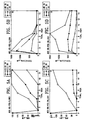
- the open circles indicate the amount of citrulline produced by native ADI
- the filled circles are ADI-SC-PEG
- the open squares are ADI-SS-PEG
- the open triangles are ADI-SPA-PEG
- the filled triangles are branched chain PEG-NHS-PEG 2 .
- the results in Figure 4 demonstrate that the molecular weight of the PEG determines the effectiveness of the PEG-ADI composition.
- the effectiveness of the PEG-ADI compositions is not necessarily based on the method or means of attachment of the PEG to ADI, except that a biocompatible linking group must be used for in vivo applications.
- arginine deiminase mediated cytotoxicity was demonstrated using a number of human tumors. Specifically, human tumors were tested in vitro for sensitivity to ADI-SS-PEG5,000 (50 ng/ml). Viability of cultures was determined after 7 days. For a culture to be defined as "inhibited,” greater than 95% of the cells must take up Trypan blue dye. A host of normal cells were also tested, including endothelial cells, smooth muscle cells, epithelial cells and fibroblasts, and none were inhibited by ADI-SS-PEG5,000.
- arginine deiminase has no appreciable toxicity towards normal, and most tumor cells, ADI-SS-PEG5,000 greatly inhibited all human melanomas and hepatomas that were commercially available from the ATCC, MSKCC and Europe.
- Table 1 Specificity of Arginine Deiminase Cytotoxicity Tumor Type Number of Tumors Tested Tumors inhibited (%) Brain 16 0 Colon 34 0 Bladder 3 0 Breast 12 0 Kidney 5 0 Sarcoma 11 64 Hepatoma 17 100 Melanoma 37 100
- mRNA was isolated from the tumors.
- Northern blot analyses using the human arginosuccinate synthase cDNA probe, indicated complete concordance between the sensitivity to arginine deiminase treatment and an inability to express arginosuccinate synthase. This data suggests that ADI toxicity results from an inability to induce arginosuccinate synthase. Therefore, these cells cannot synthesize arginine from citrulline, and are unable to synthesize the proteins necessary for growth.
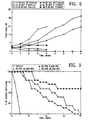
- mice (5 in each group) were injected intravenously with a single 5.0 IU does of either native arginine deiminase or various formulations of arginine deiminase modified with polyethylene glycol, as indicated in Figures 3A and 3B.
- the mice were bled from the retro orbital plexus (100 ul).
- an equal volume of 50% (w/v) of trichloroacetic acid was added.
- the precipitate was removed by centrifugation (13,000 x g for 30 minutes) and the supernatant removed and stored frozen at -70°C.
- the samples were then analyzed using an automated amino acid analyzer and reagents from Beckman Instruments using protocols supplied by the manufacturer.
- the limits of sensitivity for arginine by this method was approximately 6 pM and the reproducibility of measurements within about 8%.
- the titers of anti-ADI IgG were determined by ELISA. 50 ug of ADI was added to each well of a 96 well micro-titer plate and was incubated at room temperature for 4 hours. The plates were rinsed with PBS and then coated with bovine serum albumin (1 mg/ml) to block nonspecific protein binding sites, and stored over night at 4°C. The next day serum from the mice was diluted and added to the wells. After 1 hour the plates were rinsed with PBS and rabbit anti-mouse IgG coupled to peroxidase was added to the wells. The plates were incubated for 30 min and then the resulting UV absorbance was measured using a micro-titer plate reader. The titer was defined as the highest dilution of the serum which resulted in a two-fold increase from background absorbance (approximately 0.50 OD).
- the results are shown in Figure 6.
- the open circles represent the data obtained from animals injected with native ADI, which was very antigenic.
- the filled circles represent the data obtained from the animals injected with ADI-SS-PEG5,000, while the open triangles represent the data obtained from the animals injected with ADI-SS-PEG20,000.
- ADI-SS-PEG5,000 and ADI-SS-PEG20,000 are significantly less antigenic than native ADI. For example, as few as 4 injections of native ADI resulted in a titer of about 10 6 , while 4 injections of any of the PEG-ADI formulations failed to produce any measurable antibody.
- mice The effect of PEG-ADI on the growth of human melanoma (SK-Mel 28) in nude mice was determined.
- Nude mice (5 in each group) were injected with 10 6 SK-mel 2 human melanoma cells which were allowed to grow until the tumors reached a diameter of about 3-5 mm.
- the mice were left untreated (open circles) or were treated once a week for 12 weeks with 5.0 IU of ADI-SS-PEG5,000 (filled triangles), ADI-SS-PEG 12,000 (open triangles) or ADI-SS-PEG20,000 (filled circles).
- the tumor size was measured weekly, and the mean diameter of the tumors is presented in Figure 7.
- Figure 8 shows the effectiveness of ADI-SS-PEG20,000 on three human melanomas (SK-mel 2, SK-mel 28, M24-met) grown in vivo in nude mice.
- Nude mice (5 in each group) were injected with 10 6 SK-mel 2, SK-mel 28 or M24-met human melanoma cells. The tumors were allowed to grow until they were approximately 3-5 mm in diameter. Thereafter, the animals were injected once a week with 5.0 IU of ADI-SS-PEG20,000.
- the results are shown in Figure 8, and show that PEG-ADI inhibited tumor growth and that eventually the tumors began to regress and disappear. Because the tumors did not have argininosuccinate synthatase, they were unable to synthesize proteins (because ADI eliminated arginine and the tumors could not make it) so that the cells "starved to death.”
- M24-met human melanoma is highly metastatic
- the animals injected with M24-met human melanoma cells were sacrificed after 4 weeks of treatment and the number of metastases in the lungs of the animals was determined.
- the control animals had an average of 32 metastases, while the animals treated with ADI-SS-PEG20,000 did not have any metastases.
- the results appear to indicate that ADI-SS-PEG20,000 not only inhibited the growth of the primary melanoma tumor, but also inhibited the formation of metastases.
- PEG5,000-ADI is most effective in inhibiting hepatoma growth in vivo.
- the exact mechanism by which this occurs is unknown. Without being bound to any theory of the invention works, it appears that proteins formulated with SS-PEG5,000-ADI become sequestered in the liver. Larger molecular weights of PEG do not, which may be due to the uniqueness of the hepatic endothelium and the spaces (fenestrae) being of such a size that larger molecular weights of PEG-ADI conjugates are excluded.
- PEG5,000-ADI and PEG20,000-ADI were incubated ex vivo with normal human serum and the effects on arginine concentration was determined by amino acid analysis, where the enzyme was found to be fully active and capable of degrading all the detectable arginine with the same kinetics as in the experiments involving mice.
- the reaction was conducted at a volume of 0.1 ml in a time of 1 hour at 37°C. Additionally, the levels of arginine and citrulline in human serum are identical with that found in mice. PEG-proteins circulate longer in humans than they do in mice.
- the circulating half life of PEG conjugated adenosine deiminase, asparaginase, glucocerbrocidase, uricase, hemoglobulin and superoxide dismutase all have a circulating half life that is 5 to 10 times longer than the same formulations in mice.
- the human dose is most often 1/5 to 1/10 of that used in mice. Accordingly, PEG-ADI should circulate even longer in humans than it does in mice.
Landscapes
- Health & Medical Sciences (AREA)
- Life Sciences & Earth Sciences (AREA)
- Chemical & Material Sciences (AREA)
- Engineering & Computer Science (AREA)
- Bioinformatics & Cheminformatics (AREA)
- Organic Chemistry (AREA)
- General Health & Medical Sciences (AREA)
- Wood Science & Technology (AREA)
- Genetics & Genomics (AREA)
- Zoology (AREA)
- Medicinal Chemistry (AREA)
- General Engineering & Computer Science (AREA)
- Biochemistry (AREA)
- Pharmacology & Pharmacy (AREA)
- Veterinary Medicine (AREA)
- Public Health (AREA)
- Animal Behavior & Ethology (AREA)
- Molecular Biology (AREA)
- Biomedical Technology (AREA)
- Biotechnology (AREA)
- Microbiology (AREA)
- Epidemiology (AREA)
- Proteomics, Peptides & Aminoacids (AREA)
- Immunology (AREA)
- Gastroenterology & Hepatology (AREA)
- Chemical Kinetics & Catalysis (AREA)
- General Chemical & Material Sciences (AREA)
- Nuclear Medicine, Radiotherapy & Molecular Imaging (AREA)
- Enzymes And Modification Thereof (AREA)
- Medicinal Preparation (AREA)
- Pharmaceuticals Containing Other Organic And Inorganic Compounds (AREA)
- Medicines That Contain Protein Lipid Enzymes And Other Medicines (AREA)
- Chemical Or Physical Treatment Of Fibers (AREA)
Applications Claiming Priority (5)
| Application Number | Priority Date | Filing Date | Title |
|---|---|---|---|
| US4620097P | 1997-05-12 | 1997-05-12 | |
| US46200 | 1997-05-12 | ||
| US09/023,809 US6183738B1 (en) | 1997-05-12 | 1998-02-13 | Modified arginine deiminase |
| US23809 | 1998-02-13 | ||
| PCT/US1998/009575 WO1998051784A1 (en) | 1997-05-12 | 1998-05-12 | Modiified arginine deiminase |
Publications (3)
| Publication Number | Publication Date |
|---|---|
| EP0981607A1 EP0981607A1 (en) | 2000-03-01 |
| EP0981607A4 EP0981607A4 (en) | 2004-09-01 |
| EP0981607B1 true EP0981607B1 (en) | 2006-08-09 |
Family
ID=26697638
Family Applications (1)
| Application Number | Title | Priority Date | Filing Date |
|---|---|---|---|
| EP98922197A Expired - Lifetime EP0981607B1 (en) | 1997-05-12 | 1998-05-12 | Modified arginine deiminase |
Country Status (14)
| Country | Link |
|---|---|
| US (3) | US6183738B1 (https=) |
| EP (1) | EP0981607B1 (https=) |
| JP (1) | JP4456184B2 (https=) |
| CN (1) | CN1169951C (https=) |
| AT (1) | ATE335814T1 (https=) |
| AU (1) | AU724907B2 (https=) |
| CA (1) | CA2288948C (https=) |
| CY (1) | CY1105758T1 (https=) |
| DE (1) | DE69835515T2 (https=) |
| DK (1) | DK0981607T3 (https=) |
| ES (1) | ES2270515T3 (https=) |
| PT (1) | PT981607E (https=) |
| TW (1) | TW368504B (https=) |
| WO (1) | WO1998051784A1 (https=) |
Families Citing this family (117)
| Publication number | Priority date | Publication date | Assignee | Title |
|---|---|---|---|---|
| US5545553A (en) * | 1994-09-26 | 1996-08-13 | The Rockefeller University | Glycosyltransferases for biosynthesis of oligosaccharides, and genes encoding them |
| US6183738B1 (en) | 1997-05-12 | 2001-02-06 | Phoenix Pharamacologics, Inc. | Modified arginine deiminase |
| US6635462B1 (en) * | 1997-05-12 | 2003-10-21 | Phoenix Pharmacologies, Inc. | Mutated form of arginine deiminase |
| US5985263A (en) * | 1997-12-19 | 1999-11-16 | Enzon, Inc. | Substantially pure histidine-linked protein polymer conjugates |
| CN1328152A (zh) * | 2000-06-14 | 2001-12-26 | 上海博德基因开发有限公司 | 一种新的多肽——人nrd转化酶10.01和编码这种多肽的多核苷酸 |
| US20040096437A1 (en) * | 2000-07-27 | 2004-05-20 | Bon-Hong Min | Pharmaceutical composition comprising arginine deiminasa for inhibiting angio-genesis |
| WO2002009741A1 (en) * | 2000-07-27 | 2002-02-07 | Angiolab, Inc. | The pharmaceutical composition comprising arginine deiminase for inhibiting angiogenesis |
| KR20040004449A (ko) * | 2000-11-28 | 2004-01-13 | 휘닉스 파머컬러직스, 인크. | 변형된 아르기닌 데이미나제 |
| US20050063942A1 (en) * | 2001-02-02 | 2005-03-24 | Clark Mike A. | Methods for predicting sensitivity of tumors to arginine deprivation |
| US7214660B2 (en) * | 2001-10-10 | 2007-05-08 | Neose Technologies, Inc. | Erythropoietin: remodeling and glycoconjugation of erythropoietin |
| US7399613B2 (en) * | 2001-10-10 | 2008-07-15 | Neose Technologies, Inc. | Sialic acid nucleotide sugars |
| US7173003B2 (en) * | 2001-10-10 | 2007-02-06 | Neose Technologies, Inc. | Granulocyte colony stimulating factor: remodeling and glycoconjugation of G-CSF |
| US7157277B2 (en) | 2001-11-28 | 2007-01-02 | Neose Technologies, Inc. | Factor VIII remodeling and glycoconjugation of Factor VIII |
| ES2411007T3 (es) * | 2001-10-10 | 2013-07-04 | Novo Nordisk A/S | Remodelación y glicoconjugación de péptidos |
| US7795210B2 (en) * | 2001-10-10 | 2010-09-14 | Novo Nordisk A/S | Protein remodeling methods and proteins/peptides produced by the methods |
| US7265084B2 (en) * | 2001-10-10 | 2007-09-04 | Neose Technologies, Inc. | Glycopegylation methods and proteins/peptides produced by the methods |
| US8008252B2 (en) * | 2001-10-10 | 2011-08-30 | Novo Nordisk A/S | Factor VII: remodeling and glycoconjugation of Factor VII |
| US7696163B2 (en) * | 2001-10-10 | 2010-04-13 | Novo Nordisk A/S | Erythropoietin: remodeling and glycoconjugation of erythropoietin |
| US7179617B2 (en) * | 2001-10-10 | 2007-02-20 | Neose Technologies, Inc. | Factor IX: remolding and glycoconjugation of Factor IX |
| US7473680B2 (en) | 2001-11-28 | 2009-01-06 | Neose Technologies, Inc. | Remodeling and glycoconjugation of peptides |
| DE60336555D1 (de) * | 2002-06-21 | 2011-05-12 | Novo Nordisk Healthcare Ag | Pegylierte glykoformen von faktor vii |
| CN100405906C (zh) * | 2002-10-09 | 2008-07-30 | 尼奥斯技术有限公司 | 促红细胞生成素:促红细胞生成素的重构和糖缀合 |
| WO2004046309A2 (en) * | 2002-11-18 | 2004-06-03 | Phoenix Pharmacologics, Inc. | Methods for inhibiting viral replication in vivo |
| US7432331B2 (en) | 2002-12-31 | 2008-10-07 | Nektar Therapeutics Al, Corporation | Hydrolytically stable maleimide-terminated polymers |
| JP4490369B2 (ja) | 2002-12-31 | 2010-06-23 | ネクター セラピューティクス アラバマ,コーポレイション | マレアミド酸ポリマー誘導体及びこれらの生物学的複合体 |
| MXPA05007151A (es) * | 2002-12-31 | 2005-09-21 | Nektar Therapeutics Al Corp | Polimeros terminados en maleimida hidroliticamente estables. |
| NZ542094A (en) * | 2003-03-14 | 2008-12-24 | Neose Technologies Inc | Branched polymer conjugates comprising a peptide and water-soluble polymer chains |
| EP1613261A4 (en) * | 2003-04-09 | 2011-01-26 | Novo Nordisk As | INTRA-CELLULAR FORMATION OF PEPTIDE CONJUGATES |
| US8791070B2 (en) | 2003-04-09 | 2014-07-29 | Novo Nordisk A/S | Glycopegylated factor IX |
| PL1615945T3 (pl) * | 2003-04-09 | 2012-03-30 | Ratiopharm Gmbh | Sposoby glikopegylacji i białka/peptydy wytwarzane tymi sposobami |
| CN100522988C (zh) * | 2003-04-09 | 2009-08-05 | 诺和诺德公司 | 糖peg化方法及由该方法生产的蛋白质/肽 |
| JP2007523630A (ja) | 2003-05-09 | 2007-08-23 | ネオス テクノロジーズ インコーポレイテッド | ヒト成長ホルモングリコシル化突然変異体の組成と調合法 |
| US9005625B2 (en) | 2003-07-25 | 2015-04-14 | Novo Nordisk A/S | Antibody toxin conjugates |
| US8633157B2 (en) * | 2003-11-24 | 2014-01-21 | Novo Nordisk A/S | Glycopegylated erythropoietin |
| EP1694347B1 (en) * | 2003-11-24 | 2013-11-20 | BioGeneriX AG | Glycopegylated erythropoietin |
| US7842661B2 (en) * | 2003-11-24 | 2010-11-30 | Novo Nordisk A/S | Glycopegylated erythropoietin formulations |
| US20080305992A1 (en) | 2003-11-24 | 2008-12-11 | Neose Technologies, Inc. | Glycopegylated erythropoietin |
| RU2400490C2 (ru) * | 2003-12-03 | 2010-09-27 | Биодженерикс Аг | Гликопэгилированный гранулоцитарный колониестимулирующий фактор |
| CN1897812B (zh) * | 2003-12-03 | 2011-08-17 | 生物种属学股份公司 | 糖聚乙二醇化的粒细胞集落刺激因子 |
| US20080318850A1 (en) * | 2003-12-03 | 2008-12-25 | Neose Technologies, Inc. | Glycopegylated Factor Ix |
| US7790835B2 (en) | 2003-12-03 | 2010-09-07 | Nektar Therapeutics | Method of preparing maleimide functionalized polymers |
| US20060040856A1 (en) | 2003-12-03 | 2006-02-23 | Neose Technologies, Inc. | Glycopegylated factor IX |
| US7956032B2 (en) * | 2003-12-03 | 2011-06-07 | Novo Nordisk A/S | Glycopegylated granulocyte colony stimulating factor |
| NZ548123A (en) * | 2004-01-08 | 2010-05-28 | Novo Nordisk As | O-linked glycosylation of peptides |
| WO2005107815A2 (en) * | 2004-05-03 | 2005-11-17 | Nektar Therapeutics Al, Corporation | Polymer derivatives comprising an imide branching point |
| KR20070008645A (ko) * | 2004-05-04 | 2007-01-17 | 노보 노르디스크 헬스 케어 악티엔게젤샤프트 | 폴리펩티드의 o-연결된 단백당형 및 그들의 제조 방법 |
| US20080300173A1 (en) | 2004-07-13 | 2008-12-04 | Defrees Shawn | Branched Peg Remodeling and Glycosylation of Glucagon-Like Peptides-1 [Glp-1] |
| CN1745847A (zh) * | 2004-09-08 | 2006-03-15 | 康达医药科技有限公司 | 用精氨酸酶治疗肝炎的药物组合物和方法 |
| WO2006031811A2 (en) * | 2004-09-10 | 2006-03-23 | Neose Technologies, Inc. | Glycopegylated interferon alpha |
| EP1797192A1 (en) * | 2004-09-29 | 2007-06-20 | Novo Nordisk Health Care AG | Modified proteins |
| WO2006050247A2 (en) | 2004-10-29 | 2006-05-11 | Neose Technologies, Inc. | Remodeling and glycopegylation of fibroblast growth factor (fgf) |
| JP2008526864A (ja) * | 2005-01-06 | 2008-07-24 | ネオス テクノロジーズ インコーポレイテッド | 糖断片を用いる糖結合 |
| US9029331B2 (en) | 2005-01-10 | 2015-05-12 | Novo Nordisk A/S | Glycopegylated granulocyte colony stimulating factor |
| JP2008538181A (ja) * | 2005-03-30 | 2008-10-16 | ネオス テクノロジーズ インコーポレイテッド | 昆虫細胞系において増殖させたペプチドを生産するための製造方法 |
| WO2006121569A2 (en) * | 2005-04-08 | 2006-11-16 | Neose Technologies, Inc. | Compositions and methods for the preparation of protease resistant human growth hormone glycosylation mutants |
| FR2884717B1 (fr) * | 2005-04-25 | 2009-07-03 | Erytech Pharma Soc Par Actions | Erythrocytes renfermant de l'arginine deiminase |
| EP2975135A1 (en) | 2005-05-25 | 2016-01-20 | Novo Nordisk A/S | Glycopegylated factor IX |
| DE602006013151D1 (de) * | 2005-07-19 | 2010-05-06 | Nektar Therapeutics | Verfahren zur herstellung von polymermaleimiden |
| US20070105755A1 (en) * | 2005-10-26 | 2007-05-10 | Neose Technologies, Inc. | One pot desialylation and glycopegylation of therapeutic peptides |
| MX2008002395A (es) * | 2005-08-19 | 2008-03-18 | Neose Technologies Inc | Factor vii y factor viia glicopegilados. |
| WO2007056191A2 (en) | 2005-11-03 | 2007-05-18 | Neose Technologies, Inc. | Nucleotide sugar purification using membranes |
| CN101002945B (zh) * | 2006-01-20 | 2012-09-05 | 清华大学 | 一种用于肿瘤治疗的新型复合物 |
| AU2007245190B2 (en) | 2006-03-31 | 2011-07-21 | Takeda Pharmaceutical Company Limited | Pegylated factor VIII |
| US7982010B2 (en) * | 2006-03-31 | 2011-07-19 | Baxter International Inc. | Factor VIII polymer conjugates |
| US7645860B2 (en) * | 2006-03-31 | 2010-01-12 | Baxter Healthcare S.A. | Factor VIII polymer conjugates |
| US7985839B2 (en) * | 2006-03-31 | 2011-07-26 | Baxter International Inc. | Factor VIII polymer conjugates |
| US7534595B2 (en) * | 2006-06-12 | 2009-05-19 | Biomarin Pharmaceutical Inc. | Compositions of prokaryotic phenylalanine ammonia-lyase and methods of using compositions thereof |
| US7531341B1 (en) | 2006-06-12 | 2009-05-12 | Biomarin Pharmaceutical Inc. | Compositions of prokaryotic phenylalanine ammonia-lyase and methods of using compositions thereof |
| EP2049144B8 (en) * | 2006-07-21 | 2015-02-18 | ratiopharm GmbH | Glycosylation of peptides via o-linked glycosylation sequences |
| EP2054521A4 (en) * | 2006-10-03 | 2012-12-19 | Novo Nordisk As | PROCESS FOR CLEANING POLYPEPTIDE CONJUGATES |
| ES2655734T3 (es) * | 2006-10-04 | 2018-02-21 | Novo Nordisk A/S | Glicopéptidos y azúcares pegilados unidos a glicerol |
| US20080207487A1 (en) * | 2006-11-02 | 2008-08-28 | Neose Technologies, Inc. | Manufacturing process for the production of polypeptides expressed in insect cell-lines |
| PT2101821E (pt) | 2006-12-15 | 2014-10-03 | Baxter Int | Fator conjugado viia-ácido (poli)siálico com prolongamento do tempo de meia vida in vivo |
| HRP20130382T1 (hr) * | 2007-04-03 | 2013-05-31 | Biogenerix Ag | Postupci lijeäśenja pomoä†u glikopegiliranog g-csf |
| US20090053167A1 (en) * | 2007-05-14 | 2009-02-26 | Neose Technologies, Inc. | C-, S- and N-glycosylation of peptides |
| US20080292609A1 (en) * | 2007-05-21 | 2008-11-27 | Ning Man Cheng | Use of Arginase in Combination with 5FU and Other Compounds for Treatment of Human Malignancies |
| WO2008151258A2 (en) * | 2007-06-04 | 2008-12-11 | Neose Technologies, Inc. | O-linked glycosylation using n-acetylglucosaminyl transferases |
| CA2690611C (en) * | 2007-06-12 | 2015-12-08 | Novo Nordisk A/S | Improved process for the production of nucleotide sugars |
| FR2919804B1 (fr) | 2007-08-08 | 2010-08-27 | Erytech Pharma | Composition et vaccin therapeutique anti-tumoral |
| US7560263B2 (en) | 2007-08-17 | 2009-07-14 | Biomarin Pharmaceutical Inc. | Compositions of prokaryotic phenylalanine ammonia-lyase and methods of treating cancer using compositions thereof |
| US8207112B2 (en) * | 2007-08-29 | 2012-06-26 | Biogenerix Ag | Liquid formulation of G-CSF conjugate |
| CA2711503A1 (en) * | 2008-01-08 | 2009-07-16 | Biogenerix Ag | Glycoconjugation of polypeptides using oligosaccharyltransferases |
| PL2257311T3 (pl) | 2008-02-27 | 2014-09-30 | Novo Nordisk As | Koniugaty cząsteczek czynnika VIII |
| WO2010014225A2 (en) * | 2008-07-30 | 2010-02-04 | Biomarin Pharmaceutical Inc. | Assays for detection of phenylalanine ammonia-lyase and antibodies to phenylalanine ammonia-lyase |
| US8815232B2 (en) | 2008-08-26 | 2014-08-26 | Kyon Biotech Ag | Compositions and methods for treating cancer |
| US20100150949A1 (en) * | 2008-12-16 | 2010-06-17 | Oncopharmacologics, Inc. | Methods and compositions for modulating proline levels |
| JP5909755B2 (ja) | 2009-07-27 | 2016-04-27 | リポクセン テクノロジーズ リミテッド | 非血液凝固タンパク質の糖ポリシアル酸化 |
| US8809501B2 (en) | 2009-07-27 | 2014-08-19 | Baxter International Inc. | Nucleophilic catalysts for oxime linkage |
| US8642737B2 (en) | 2010-07-26 | 2014-02-04 | Baxter International Inc. | Nucleophilic catalysts for oxime linkage |
| EP3093029A1 (en) | 2009-07-27 | 2016-11-16 | Baxalta GmbH | Blood coagulation protein conjugates |
| ES2597954T3 (es) * | 2009-07-27 | 2017-01-24 | Baxalta GmbH | Conjugados de proteína de la coagulación sanguínea |
| EP2295560A1 (en) | 2009-09-14 | 2011-03-16 | RWTH Aachen University | Directed evolution of arginine deiminase for increased activity at physiological pH |
| ES2690542T3 (es) | 2010-02-04 | 2018-11-21 | Biomarin Pharmaceutical Inc. | Método para purificar variantes de fenilalanina amoníaco-liasa procariotas |
| CN101812438B (zh) * | 2010-03-25 | 2014-08-27 | 江苏泰康生物医药有限公司 | 一种精氨酸脱亚氨酶突变体及其制备与应用 |
| US20120148559A1 (en) | 2010-12-01 | 2012-06-14 | Board Of Regents The University Of Texas System | Compositions and method for deimmunization of proteins |
| BR112013015898A2 (pt) | 2010-12-22 | 2018-06-26 | Baxter International Inc. | derivado de ácido graxo solúvel em água, e, métodos para preparar um derivado de ácido graxo e uma proteína terapêutica conjugada. |
| EP2834262B1 (en) * | 2012-04-04 | 2020-09-02 | Polaris Group | Composition comprising pegylated arginine deiminase |
| WO2014001956A2 (en) * | 2012-06-25 | 2014-01-03 | Ning Man Cheng | Combinational use of pegylated recombinant human arginase with chemotherapeutic/target therapeutic drug in cancer treatment |
| US9255262B2 (en) | 2013-03-06 | 2016-02-09 | Vision Global Holdings Ltd. | Albumin-binding arginine deminase and the use thereof |
| USRE48805E1 (en) | 2013-03-06 | 2021-11-02 | Vision Global Holdings Ltd. | Method for cancer targeting treatment and detection of arginine using albumin-binding arginine deiminase fusion protein |
| WO2014151982A2 (en) * | 2013-03-15 | 2014-09-25 | Polaris Group | Arginine deiminase with reduced cross-reactivity toward adi – peg 20 antibodies for cancer treatment |
| WO2015051340A1 (en) | 2013-10-04 | 2015-04-09 | Ann David K | Methods for treating breast and other cancers by targeting argininosuccinate synthetase 1-deficiency |
| TWI676683B (zh) * | 2014-03-14 | 2019-11-11 | 開曼群島商瑞華藥業集團 | 用於癌症治療之對adi-peg20抗體交叉反應性降低之精胺酸去亞胺酶 |
| WO2015143006A1 (en) * | 2014-03-18 | 2015-09-24 | Tdw Group | Engineered chimeric pegylated adi and methods of use |
| CN103923898A (zh) * | 2014-04-17 | 2014-07-16 | 江南大学 | 一种peg修饰的重组精氨酸脱亚胺酶及其制备方法和应用 |
| CN107108723B (zh) | 2014-07-08 | 2021-11-12 | 瑞华药业集团 | 精氨基琥珀酸合成酶的抗体和相关方法 |
| EP4104853B1 (en) | 2014-09-16 | 2026-05-06 | Polaris Group | Arginine deiminase with reduced cross-reactivity toward adi - peg 20 antibodies for cancer treatment |
| CN104726478A (zh) * | 2015-03-09 | 2015-06-24 | 武汉远大弘元股份有限公司 | 表达精氨酸脱亚胺酶基因的重组大肠杆菌及其应用 |
| EP3344575B1 (en) | 2015-09-04 | 2020-04-15 | SQZ Biotechnologies Company | Intracellular delivery of biomolecules to cells comprising a cell wall |
| CA3023092A1 (en) | 2016-05-03 | 2017-11-09 | Sqz Biotechnologies Company | Intracellular delivery of biomolecules to induce tolerance |
| CN119950689A (zh) | 2016-07-05 | 2025-05-09 | 北极星药业集团股份有限公司 | 使用精氨酸耗竭剂的组合癌症免疫疗法 |
| TWI784982B (zh) | 2016-11-02 | 2022-12-01 | 開曼群島商北極星藥業集團股份有限公司 | 聚乙二醇化精胺酸脫亞胺酶之調配物 |
| CN106591271B (zh) * | 2017-03-02 | 2019-07-16 | 江南大学 | 一株酶活和温度稳定性提高的精氨酸脱亚胺酶突变体及其应用 |
| WO2019042628A1 (en) | 2017-08-31 | 2019-03-07 | Erytech Pharma | ARGININE DEIMINASE ENCAPSULATED WITHIN ERYTHROCYTES AND THEIR USE IN THE TREATMENT OF CANCER AND ARGINASE-1 DEFICIENCY |
| EP3449935A1 (en) | 2017-08-31 | 2019-03-06 | Erytech Pharma | Arginine deiminase encapsulated inside erythrocytes and their use in treating cancer and arginase-1 deficiency |
| AU2019275733B2 (en) * | 2018-05-31 | 2025-07-31 | The Chinese University Of Hong Kong | Composition and application of arginine-depleting agents for cancer, obesity, metabolic disorders, and related complications and comorbidities |
| CN118497178A (zh) * | 2023-02-15 | 2024-08-16 | 重庆派金生物科技有限公司 | 精氨酸脱亚胺酶突变体、共价二聚体及其偶联物和应用 |
Family Cites Families (17)
| Publication number | Priority date | Publication date | Assignee | Title |
|---|---|---|---|---|
| US4179337A (en) | 1973-07-20 | 1979-12-18 | Davis Frank F | Non-immunogenic polypeptides |
| DE3380726D1 (en) | 1982-06-24 | 1989-11-23 | Japan Chem Res | Long-acting composition |
| US5447722A (en) | 1983-12-12 | 1995-09-05 | University Of Manitoba | Method for the suppression of an immune response with antigen-MPEG conjugates in nonsensitized individuals |
| EP0230777B1 (en) * | 1985-12-28 | 1991-04-10 | Ohgen Research Laboratories Ltd., | Antitumor protein gene of streptococcus pyogenes su, plasmids containing the gene, transformant cells harboring the plasmids, and process for producing the antitumor protein |
| US5080891A (en) | 1987-08-03 | 1992-01-14 | Ddi Pharmaceuticals, Inc. | Conjugates of superoxide dismutase coupled to high molecular weight polyalkylene glycols |
| JPH0253490A (ja) | 1988-08-16 | 1990-02-22 | Agency Of Ind Science & Technol | アルギニン・デイミナーゼ遺伝子 |
| WO1990005534A1 (en) | 1988-11-23 | 1990-05-31 | Genentech, Inc. | Polypeptide derivatives |
| JP2900279B2 (ja) | 1989-08-02 | 1999-06-02 | 株式会社ジャパンエナジー | 新規なアルギニンデイミナーゼ、その製造法及び該酵素を有効成分とする制癌剤 |
| JP2736145B2 (ja) | 1990-01-11 | 1998-04-02 | 関東電化工業株式会社 | パーハロゲン化エチレンの製造法 |
| JPH04218000A (ja) * | 1990-02-13 | 1992-08-07 | Kirin Amgen Inc | 修飾ポリペプチド |
| JP3209338B2 (ja) | 1990-09-10 | 2001-09-17 | 株式会社ジャパンエナジー | ポリエチレングリコール修飾アルギニンデイミナーゼおよびその製造法 |
| US5372942A (en) * | 1992-02-10 | 1994-12-13 | Coriell Institute For Medical Research | Protease K resistant arginine deiminase, its method of preparation and its use as an anti-neoplastic agent |
| WO1994005332A2 (en) | 1992-09-01 | 1994-03-17 | Berlex Laboratories, Inc. | Glycolation of glycosylated macromolecules |
| US5695760A (en) | 1995-04-24 | 1997-12-09 | Boehringer Inglehiem Pharmaceuticals, Inc. | Modified anti-ICAM-1 antibodies and their use in the treatment of inflammation |
| US5804183A (en) | 1997-01-31 | 1998-09-08 | Enzon, Inc. | Arginine deminase derived from mycoplasma arthritidis and polymer conjugates containing the same |
| US6183738B1 (en) | 1997-05-12 | 2001-02-06 | Phoenix Pharamacologics, Inc. | Modified arginine deiminase |
| US6180387B1 (en) | 1997-08-11 | 2001-01-30 | Smithkline Beecham Corporation | Arginine deiminase |
-
1998
- 1998-02-13 US US09/023,809 patent/US6183738B1/en not_active Expired - Lifetime
- 1998-05-12 DK DK98922197T patent/DK0981607T3/da active
- 1998-05-12 AT AT98922197T patent/ATE335814T1/de active
- 1998-05-12 CN CNB988050668A patent/CN1169951C/zh not_active Expired - Lifetime
- 1998-05-12 JP JP54937598A patent/JP4456184B2/ja not_active Expired - Lifetime
- 1998-05-12 CA CA002288948A patent/CA2288948C/en not_active Expired - Lifetime
- 1998-05-12 ES ES98922197T patent/ES2270515T3/es not_active Expired - Lifetime
- 1998-05-12 WO PCT/US1998/009575 patent/WO1998051784A1/en not_active Ceased
- 1998-05-12 EP EP98922197A patent/EP0981607B1/en not_active Expired - Lifetime
- 1998-05-12 TW TW087107257A patent/TW368504B/zh not_active IP Right Cessation
- 1998-05-12 AU AU74798/98A patent/AU724907B2/en not_active Expired
- 1998-05-12 PT PT98922197T patent/PT981607E/pt unknown
- 1998-05-12 DE DE69835515T patent/DE69835515T2/de not_active Expired - Lifetime
-
2000
- 2000-11-28 US US09/723,546 patent/US6737259B1/en not_active Expired - Lifetime
-
2004
- 2004-01-15 US US10/757,843 patent/US7323167B2/en not_active Expired - Lifetime
-
2006
- 2006-11-03 CY CY20061101590T patent/CY1105758T1/el unknown
Also Published As
| Publication number | Publication date |
|---|---|
| AU7479898A (en) | 1998-12-08 |
| JP4456184B2 (ja) | 2010-04-28 |
| CN1255944A (zh) | 2000-06-07 |
| US6183738B1 (en) | 2001-02-06 |
| US6737259B1 (en) | 2004-05-18 |
| WO1998051784A1 (en) | 1998-11-19 |
| CA2288948A1 (en) | 1998-11-19 |
| JP2001524836A (ja) | 2001-12-04 |
| CY1105758T1 (el) | 2010-12-22 |
| EP0981607A1 (en) | 2000-03-01 |
| DK0981607T3 (da) | 2006-12-11 |
| PT981607E (pt) | 2006-11-30 |
| US20050129706A1 (en) | 2005-06-16 |
| ES2270515T3 (es) | 2007-04-01 |
| DE69835515T2 (de) | 2007-08-09 |
| US7323167B2 (en) | 2008-01-29 |
| ATE335814T1 (de) | 2006-09-15 |
| TW368504B (en) | 1999-09-01 |
| DE69835515D1 (de) | 2006-09-21 |
| CA2288948C (en) | 2007-10-30 |
| EP0981607A4 (en) | 2004-09-01 |
| CN1169951C (zh) | 2004-10-06 |
| AU724907B2 (en) | 2000-10-05 |
Similar Documents
| Publication | Publication Date | Title |
|---|---|---|
| EP0981607B1 (en) | Modified arginine deiminase | |
| AU2001289132A1 (en) | Modified arginine deiminase | |
| JP5341945B2 (ja) | 非免疫原性ポリマー結合体の調製のための凝集体非含有尿酸オキシダーゼ | |
| Bomalaski et al. | Uricase formulated with polyethylene glycol (uricase-PEG 20): biochemical rationale and preclinical studies. | |
| RU2349341C2 (ru) | Конъюгаты peg-уратоксидазы, их использование, способ изолирования тетрамерной формы уриказы | |
| EP1278868B9 (en) | Mutated form of arginine deiminase | |
| CN101591649B (zh) | 甲氧基聚乙二醇修饰的精氨酸脱亚氨酶及其制备与应用 | |
| Hadley et al. | Catalytic activity of administered gulonolactone oxidase polyethylene glycol conjugates | |
| HK1144701B (en) | Aggregate-free urate oxidase for preparation of non-immunogenic polymer conjugates |
Legal Events
| Date | Code | Title | Description |
|---|---|---|---|
| PUAI | Public reference made under article 153(3) epc to a published international application that has entered the european phase |
Free format text: ORIGINAL CODE: 0009012 |
|
| 17P | Request for examination filed |
Effective date: 19991124 |
|
| AK | Designated contracting states |
Kind code of ref document: A1 Designated state(s): AT BE CH CY DE DK ES FI FR GB GR IE IT LI LU MC NL PT SE |
|
| RIC1 | Information provided on ipc code assigned before grant |
Ipc: 7A 61K 47/48 B Ipc: 7C 12N 9/80 A |
|
| A4 | Supplementary search report drawn up and despatched |
Effective date: 20040719 |
|
| 17Q | First examination report despatched |
Effective date: 20041116 |
|
| GRAP | Despatch of communication of intention to grant a patent |
Free format text: ORIGINAL CODE: EPIDOSNIGR1 |
|
| RTI1 | Title (correction) |
Free format text: MODIFIED ARGININE DEIMINASE |
|
| GRAS | Grant fee paid |
Free format text: ORIGINAL CODE: EPIDOSNIGR3 |
|
| GRAA | (expected) grant |
Free format text: ORIGINAL CODE: 0009210 |
|
| AK | Designated contracting states |
Kind code of ref document: B1 Designated state(s): AT BE CH CY DE DK ES FI FR GB GR IE IT LI LU MC NL PT SE |
|
| PG25 | Lapsed in a contracting state [announced via postgrant information from national office to epo] |
Ref country code: IT Free format text: LAPSE BECAUSE OF FAILURE TO SUBMIT A TRANSLATION OF THE DESCRIPTION OR TO PAY THE FEE WITHIN THE PRESCRIBED TIME-LIMIT;WARNING: LAPSES OF ITALIAN PATENTS WITH EFFECTIVE DATE BEFORE 2007 MAY HAVE OCCURRED AT ANY TIME BEFORE 2007. THE CORRECT EFFECTIVE DATE MAY BE DIFFERENT FROM THE ONE RECORDED. Effective date: 20060809 |
|
| RAP1 | Party data changed (applicant data changed or rights of an application transferred) |
Owner name: ENZON PHARMACEUTICALS, INC. |
|
| REG | Reference to a national code |
Ref country code: GB Ref legal event code: FG4D |
|
| REG | Reference to a national code |
Ref country code: CH Ref legal event code: EP |
|
| REG | Reference to a national code |
Ref country code: IE Ref legal event code: FG4D |
|
| REF | Corresponds to: |
Ref document number: 69835515 Country of ref document: DE Date of ref document: 20060921 Kind code of ref document: P |
|
| REG | Reference to a national code |
Ref country code: CH Ref legal event code: NV Representative=s name: ISLER & PEDRAZZINI AG |
|
| REG | Reference to a national code |
Ref country code: SE Ref legal event code: TRGR |
|
| REG | Reference to a national code |
Ref country code: GR Ref legal event code: EP Ref document number: 20060403685 Country of ref document: GR |
|
| REG | Reference to a national code |
Ref country code: PT Ref legal event code: SC4A Free format text: AVAILABILITY OF NATIONAL TRANSLATION Effective date: 20060928 |
|
| REG | Reference to a national code |
Ref country code: DK Ref legal event code: T3 |
|
| ET | Fr: translation filed | ||
| REG | Reference to a national code |
Ref country code: ES Ref legal event code: FG2A Ref document number: 2270515 Country of ref document: ES Kind code of ref document: T3 |
|
| PLBE | No opposition filed within time limit |
Free format text: ORIGINAL CODE: 0009261 |
|
| STAA | Information on the status of an ep patent application or granted ep patent |
Free format text: STATUS: NO OPPOSITION FILED WITHIN TIME LIMIT |
|
| 26N | No opposition filed |
Effective date: 20070510 |
|
| REG | Reference to a national code |
Ref country code: CH Ref legal event code: PCAR Free format text: ISLER & PEDRAZZINI AG;POSTFACH 1772;8027 ZUERICH (CH) |
|
| REG | Reference to a national code |
Ref country code: FR Ref legal event code: PLFP Year of fee payment: 19 |
|
| REG | Reference to a national code |
Ref country code: FR Ref legal event code: PLFP Year of fee payment: 20 |
|
| PGFP | Annual fee paid to national office [announced via postgrant information from national office to epo] |
Ref country code: NL Payment date: 20170526 Year of fee payment: 20 |
|
| PGFP | Annual fee paid to national office [announced via postgrant information from national office to epo] |
Ref country code: IE Payment date: 20170530 Year of fee payment: 20 Ref country code: DE Payment date: 20170530 Year of fee payment: 20 Ref country code: GB Payment date: 20170530 Year of fee payment: 20 Ref country code: MC Payment date: 20170522 Year of fee payment: 20 Ref country code: CH Payment date: 20170527 Year of fee payment: 20 Ref country code: GR Payment date: 20170530 Year of fee payment: 20 Ref country code: FR Payment date: 20170525 Year of fee payment: 20 Ref country code: DK Payment date: 20170530 Year of fee payment: 20 |
|
| PGFP | Annual fee paid to national office [announced via postgrant information from national office to epo] |
Ref country code: BE Payment date: 20170529 Year of fee payment: 20 Ref country code: LU Payment date: 20170529 Year of fee payment: 20 Ref country code: ES Payment date: 20170601 Year of fee payment: 20 Ref country code: AT Payment date: 20170519 Year of fee payment: 20 Ref country code: FI Payment date: 20170530 Year of fee payment: 20 Ref country code: PT Payment date: 20170523 Year of fee payment: 20 Ref country code: SE Payment date: 20170530 Year of fee payment: 20 |
|
| PGFP | Annual fee paid to national office [announced via postgrant information from national office to epo] |
Ref country code: CY Payment date: 20170522 Year of fee payment: 20 |
|
| REG | Reference to a national code |
Ref country code: DE Ref legal event code: R071 Ref document number: 69835515 Country of ref document: DE |
|
| REG | Reference to a national code |
Ref country code: DK Ref legal event code: EUP Effective date: 20180512 |
|
| REG | Reference to a national code |
Ref country code: CH Ref legal event code: PL |
|
| REG | Reference to a national code |
Ref country code: NL Ref legal event code: MK Effective date: 20180511 |
|
| REG | Reference to a national code |
Ref country code: GB Ref legal event code: PE20 Expiry date: 20180511 |
|
| REG | Reference to a national code |
Ref country code: IE Ref legal event code: MK9A |
|
| REG | Reference to a national code |
Ref country code: SE Ref legal event code: EUG |
|
| REG | Reference to a national code |
Ref country code: AT Ref legal event code: MK07 Ref document number: 335814 Country of ref document: AT Kind code of ref document: T Effective date: 20180512 |
|
| REG | Reference to a national code |
Ref country code: BE Ref legal event code: MK Effective date: 20180512 |
|
| PG25 | Lapsed in a contracting state [announced via postgrant information from national office to epo] |
Ref country code: IE Free format text: LAPSE BECAUSE OF EXPIRATION OF PROTECTION Effective date: 20180512 Ref country code: PT Free format text: LAPSE BECAUSE OF EXPIRATION OF PROTECTION Effective date: 20180523 Ref country code: GB Free format text: LAPSE BECAUSE OF EXPIRATION OF PROTECTION Effective date: 20180511 |
|
| REG | Reference to a national code |
Ref country code: ES Ref legal event code: FD2A Effective date: 20200721 |
|
| PG25 | Lapsed in a contracting state [announced via postgrant information from national office to epo] |
Ref country code: ES Free format text: LAPSE BECAUSE OF EXPIRATION OF PROTECTION Effective date: 20180513 |