EP0906357B1 - Polymere sorbentien auf basis polymerisationsfähiger derivate von polyamiden - Google Patents
Polymere sorbentien auf basis polymerisationsfähiger derivate von polyamiden Download PDFInfo
- Publication number
- EP0906357B1 EP0906357B1 EP19970925006 EP97925006A EP0906357B1 EP 0906357 B1 EP0906357 B1 EP 0906357B1 EP 19970925006 EP19970925006 EP 19970925006 EP 97925006 A EP97925006 A EP 97925006A EP 0906357 B1 EP0906357 B1 EP 0906357B1
- Authority
- EP
- European Patent Office
- Prior art keywords
- atoms
- alkyl
- polyamide
- groups
- reaction
- Prior art date
- Legal status (The legal status is an assumption and is not a legal conclusion. Google has not performed a legal analysis and makes no representation as to the accuracy of the status listed.)
- Expired - Lifetime
Links
Classifications
-
- B—PERFORMING OPERATIONS; TRANSPORTING
- B01—PHYSICAL OR CHEMICAL PROCESSES OR APPARATUS IN GENERAL
- B01J—CHEMICAL OR PHYSICAL PROCESSES, e.g. CATALYSIS OR COLLOID CHEMISTRY; THEIR RELEVANT APPARATUS
- B01J20/00—Solid sorbent compositions or filter aid compositions; Sorbents for chromatography; Processes for preparing, regenerating or reactivating thereof
- B01J20/281—Sorbents specially adapted for preparative, analytical or investigative chromatography
- B01J20/282—Porous sorbents
- B01J20/285—Porous sorbents based on polymers
-
- B—PERFORMING OPERATIONS; TRANSPORTING
- B01—PHYSICAL OR CHEMICAL PROCESSES OR APPARATUS IN GENERAL
- B01J—CHEMICAL OR PHYSICAL PROCESSES, e.g. CATALYSIS OR COLLOID CHEMISTRY; THEIR RELEVANT APPARATUS
- B01J20/00—Solid sorbent compositions or filter aid compositions; Sorbents for chromatography; Processes for preparing, regenerating or reactivating thereof
- B01J20/281—Sorbents specially adapted for preparative, analytical or investigative chromatography
- B01J20/286—Phases chemically bonded to a substrate, e.g. to silica or to polymers
-
- B—PERFORMING OPERATIONS; TRANSPORTING
- B01—PHYSICAL OR CHEMICAL PROCESSES OR APPARATUS IN GENERAL
- B01J—CHEMICAL OR PHYSICAL PROCESSES, e.g. CATALYSIS OR COLLOID CHEMISTRY; THEIR RELEVANT APPARATUS
- B01J20/00—Solid sorbent compositions or filter aid compositions; Sorbents for chromatography; Processes for preparing, regenerating or reactivating thereof
- B01J20/30—Processes for preparing, regenerating, or reactivating
- B01J20/32—Impregnating or coating ; Solid sorbent compositions obtained from processes involving impregnating or coating
- B01J20/3202—Impregnating or coating ; Solid sorbent compositions obtained from processes involving impregnating or coating characterised by the carrier, support or substrate used for impregnation or coating
- B01J20/3206—Organic carriers, supports or substrates
- B01J20/3208—Polymeric carriers, supports or substrates
- B01J20/321—Polymeric carriers, supports or substrates consisting of a polymer obtained by reactions involving only carbon to carbon unsaturated bonds
-
- B—PERFORMING OPERATIONS; TRANSPORTING
- B01—PHYSICAL OR CHEMICAL PROCESSES OR APPARATUS IN GENERAL
- B01J—CHEMICAL OR PHYSICAL PROCESSES, e.g. CATALYSIS OR COLLOID CHEMISTRY; THEIR RELEVANT APPARATUS
- B01J20/00—Solid sorbent compositions or filter aid compositions; Sorbents for chromatography; Processes for preparing, regenerating or reactivating thereof
- B01J20/30—Processes for preparing, regenerating, or reactivating
- B01J20/32—Impregnating or coating ; Solid sorbent compositions obtained from processes involving impregnating or coating
- B01J20/3214—Impregnating or coating ; Solid sorbent compositions obtained from processes involving impregnating or coating characterised by the method for obtaining this coating or impregnating
- B01J20/3217—Resulting in a chemical bond between the coating or impregnating layer and the carrier, support or substrate, e.g. a covalent bond
- B01J20/3219—Resulting in a chemical bond between the coating or impregnating layer and the carrier, support or substrate, e.g. a covalent bond involving a particular spacer or linking group, e.g. for attaching an active group
-
- B—PERFORMING OPERATIONS; TRANSPORTING
- B01—PHYSICAL OR CHEMICAL PROCESSES OR APPARATUS IN GENERAL
- B01J—CHEMICAL OR PHYSICAL PROCESSES, e.g. CATALYSIS OR COLLOID CHEMISTRY; THEIR RELEVANT APPARATUS
- B01J20/00—Solid sorbent compositions or filter aid compositions; Sorbents for chromatography; Processes for preparing, regenerating or reactivating thereof
- B01J20/30—Processes for preparing, regenerating, or reactivating
- B01J20/32—Impregnating or coating ; Solid sorbent compositions obtained from processes involving impregnating or coating
- B01J20/3231—Impregnating or coating ; Solid sorbent compositions obtained from processes involving impregnating or coating characterised by the coating or impregnating layer
- B01J20/3242—Layers with a functional group, e.g. an affinity material, a ligand, a reactant or a complexing group
- B01J20/3244—Non-macromolecular compounds
- B01J20/3246—Non-macromolecular compounds having a well defined chemical structure
- B01J20/3248—Non-macromolecular compounds having a well defined chemical structure the functional group or the linking, spacer or anchoring group as a whole comprising at least one type of heteroatom selected from a nitrogen, oxygen or sulfur, these atoms not being part of the carrier as such
- B01J20/3251—Non-macromolecular compounds having a well defined chemical structure the functional group or the linking, spacer or anchoring group as a whole comprising at least one type of heteroatom selected from a nitrogen, oxygen or sulfur, these atoms not being part of the carrier as such comprising at least two different types of heteroatoms selected from nitrogen, oxygen or sulphur
-
- B—PERFORMING OPERATIONS; TRANSPORTING
- B01—PHYSICAL OR CHEMICAL PROCESSES OR APPARATUS IN GENERAL
- B01J—CHEMICAL OR PHYSICAL PROCESSES, e.g. CATALYSIS OR COLLOID CHEMISTRY; THEIR RELEVANT APPARATUS
- B01J20/00—Solid sorbent compositions or filter aid compositions; Sorbents for chromatography; Processes for preparing, regenerating or reactivating thereof
- B01J20/30—Processes for preparing, regenerating, or reactivating
- B01J20/32—Impregnating or coating ; Solid sorbent compositions obtained from processes involving impregnating or coating
- B01J20/3231—Impregnating or coating ; Solid sorbent compositions obtained from processes involving impregnating or coating characterised by the coating or impregnating layer
- B01J20/3242—Layers with a functional group, e.g. an affinity material, a ligand, a reactant or a complexing group
- B01J20/3244—Non-macromolecular compounds
- B01J20/3246—Non-macromolecular compounds having a well defined chemical structure
- B01J20/3248—Non-macromolecular compounds having a well defined chemical structure the functional group or the linking, spacer or anchoring group as a whole comprising at least one type of heteroatom selected from a nitrogen, oxygen or sulfur, these atoms not being part of the carrier as such
- B01J20/3255—Non-macromolecular compounds having a well defined chemical structure the functional group or the linking, spacer or anchoring group as a whole comprising at least one type of heteroatom selected from a nitrogen, oxygen or sulfur, these atoms not being part of the carrier as such comprising a cyclic structure containing at least one of the heteroatoms nitrogen, oxygen or sulfur, e.g. heterocyclic or heteroaromatic structures
-
- B—PERFORMING OPERATIONS; TRANSPORTING
- B01—PHYSICAL OR CHEMICAL PROCESSES OR APPARATUS IN GENERAL
- B01J—CHEMICAL OR PHYSICAL PROCESSES, e.g. CATALYSIS OR COLLOID CHEMISTRY; THEIR RELEVANT APPARATUS
- B01J20/00—Solid sorbent compositions or filter aid compositions; Sorbents for chromatography; Processes for preparing, regenerating or reactivating thereof
- B01J20/30—Processes for preparing, regenerating, or reactivating
- B01J20/32—Impregnating or coating ; Solid sorbent compositions obtained from processes involving impregnating or coating
- B01J20/3231—Impregnating or coating ; Solid sorbent compositions obtained from processes involving impregnating or coating characterised by the coating or impregnating layer
- B01J20/3242—Layers with a functional group, e.g. an affinity material, a ligand, a reactant or a complexing group
- B01J20/3268—Macromolecular compounds
- B01J20/327—Polymers obtained by reactions involving only carbon to carbon unsaturated bonds
-
- B—PERFORMING OPERATIONS; TRANSPORTING
- B01—PHYSICAL OR CHEMICAL PROCESSES OR APPARATUS IN GENERAL
- B01J—CHEMICAL OR PHYSICAL PROCESSES, e.g. CATALYSIS OR COLLOID CHEMISTRY; THEIR RELEVANT APPARATUS
- B01J20/00—Solid sorbent compositions or filter aid compositions; Sorbents for chromatography; Processes for preparing, regenerating or reactivating thereof
- B01J20/30—Processes for preparing, regenerating, or reactivating
- B01J20/32—Impregnating or coating ; Solid sorbent compositions obtained from processes involving impregnating or coating
- B01J20/3231—Impregnating or coating ; Solid sorbent compositions obtained from processes involving impregnating or coating characterised by the coating or impregnating layer
- B01J20/3242—Layers with a functional group, e.g. an affinity material, a ligand, a reactant or a complexing group
- B01J20/3268—Macromolecular compounds
- B01J20/3276—Copolymers
-
- C—CHEMISTRY; METALLURGY
- C08—ORGANIC MACROMOLECULAR COMPOUNDS; THEIR PREPARATION OR CHEMICAL WORKING-UP; COMPOSITIONS BASED THEREON
- C08F—MACROMOLECULAR COMPOUNDS OBTAINED BY REACTIONS ONLY INVOLVING CARBON-TO-CARBON UNSATURATED BONDS
- C08F290/00—Macromolecular compounds obtained by polymerising monomers on to polymers modified by introduction of aliphatic unsaturated end or side groups
- C08F290/08—Macromolecular compounds obtained by polymerising monomers on to polymers modified by introduction of aliphatic unsaturated end or side groups on to polymers modified by introduction of unsaturated side groups
- C08F290/14—Polymers provided for in subclass C08G
- C08F290/145—Polyamides; Polyesteramides; Polyimides
-
- C—CHEMISTRY; METALLURGY
- C08—ORGANIC MACROMOLECULAR COMPOUNDS; THEIR PREPARATION OR CHEMICAL WORKING-UP; COMPOSITIONS BASED THEREON
- C08G—MACROMOLECULAR COMPOUNDS OBTAINED OTHERWISE THAN BY REACTIONS ONLY INVOLVING UNSATURATED CARBON-TO-CARBON BONDS
- C08G69/00—Macromolecular compounds obtained by reactions forming a carboxylic amide link in the main chain of the macromolecule
- C08G69/48—Polymers modified by chemical after-treatment
-
- C—CHEMISTRY; METALLURGY
- C08—ORGANIC MACROMOLECULAR COMPOUNDS; THEIR PREPARATION OR CHEMICAL WORKING-UP; COMPOSITIONS BASED THEREON
- C08G—MACROMOLECULAR COMPOUNDS OBTAINED OTHERWISE THAN BY REACTIONS ONLY INVOLVING UNSATURATED CARBON-TO-CARBON BONDS
- C08G81/00—Macromolecular compounds obtained by interreacting polymers in the absence of monomers, e.g. block polymers
- C08G81/02—Macromolecular compounds obtained by interreacting polymers in the absence of monomers, e.g. block polymers at least one of the polymers being obtained by reactions involving only carbon-to-carbon unsaturated bonds
- C08G81/024—Block or graft polymers containing sequences of polymers of C08C or C08F and of polymers of C08G
- C08G81/028—Block or graft polymers containing sequences of polymers of C08C or C08F and of polymers of C08G containing polyamide sequences
-
- C—CHEMISTRY; METALLURGY
- C12—BIOCHEMISTRY; BEER; SPIRITS; WINE; VINEGAR; MICROBIOLOGY; ENZYMOLOGY; MUTATION OR GENETIC ENGINEERING
- C12N—MICROORGANISMS OR ENZYMES; COMPOSITIONS THEREOF; PROPAGATING, PRESERVING, OR MAINTAINING MICROORGANISMS; MUTATION OR GENETIC ENGINEERING; CULTURE MEDIA
- C12N11/00—Carrier-bound or immobilised enzymes; Carrier-bound or immobilised microbial cells; Preparation thereof
- C12N11/02—Enzymes or microbial cells immobilised on or in an organic carrier
- C12N11/08—Enzymes or microbial cells immobilised on or in an organic carrier the carrier being a synthetic polymer
- C12N11/082—Enzymes or microbial cells immobilised on or in an organic carrier the carrier being a synthetic polymer obtained by reactions only involving carbon-to-carbon unsaturated bonds
-
- C—CHEMISTRY; METALLURGY
- C12—BIOCHEMISTRY; BEER; SPIRITS; WINE; VINEGAR; MICROBIOLOGY; ENZYMOLOGY; MUTATION OR GENETIC ENGINEERING
- C12N—MICROORGANISMS OR ENZYMES; COMPOSITIONS THEREOF; PROPAGATING, PRESERVING, OR MAINTAINING MICROORGANISMS; MUTATION OR GENETIC ENGINEERING; CULTURE MEDIA
- C12N11/00—Carrier-bound or immobilised enzymes; Carrier-bound or immobilised microbial cells; Preparation thereof
- C12N11/02—Enzymes or microbial cells immobilised on or in an organic carrier
- C12N11/08—Enzymes or microbial cells immobilised on or in an organic carrier the carrier being a synthetic polymer
- C12N11/089—Enzymes or microbial cells immobilised on or in an organic carrier the carrier being a synthetic polymer obtained otherwise than by reactions only involving carbon-to-carbon unsaturated bonds
-
- C—CHEMISTRY; METALLURGY
- C12—BIOCHEMISTRY; BEER; SPIRITS; WINE; VINEGAR; MICROBIOLOGY; ENZYMOLOGY; MUTATION OR GENETIC ENGINEERING
- C12N—MICROORGANISMS OR ENZYMES; COMPOSITIONS THEREOF; PROPAGATING, PRESERVING, OR MAINTAINING MICROORGANISMS; MUTATION OR GENETIC ENGINEERING; CULTURE MEDIA
- C12N11/00—Carrier-bound or immobilised enzymes; Carrier-bound or immobilised microbial cells; Preparation thereof
- C12N11/02—Enzymes or microbial cells immobilised on or in an organic carrier
- C12N11/08—Enzymes or microbial cells immobilised on or in an organic carrier the carrier being a synthetic polymer
- C12N11/089—Enzymes or microbial cells immobilised on or in an organic carrier the carrier being a synthetic polymer obtained otherwise than by reactions only involving carbon-to-carbon unsaturated bonds
- C12N11/096—Polyesters; Polyamides
-
- B—PERFORMING OPERATIONS; TRANSPORTING
- B01—PHYSICAL OR CHEMICAL PROCESSES OR APPARATUS IN GENERAL
- B01J—CHEMICAL OR PHYSICAL PROCESSES, e.g. CATALYSIS OR COLLOID CHEMISTRY; THEIR RELEVANT APPARATUS
- B01J2220/00—Aspects relating to sorbent materials
- B01J2220/50—Aspects relating to the use of sorbent or filter aid materials
- B01J2220/54—Sorbents specially adapted for analytical or investigative chromatography
-
- Y—GENERAL TAGGING OF NEW TECHNOLOGICAL DEVELOPMENTS; GENERAL TAGGING OF CROSS-SECTIONAL TECHNOLOGIES SPANNING OVER SEVERAL SECTIONS OF THE IPC; TECHNICAL SUBJECTS COVERED BY FORMER USPC CROSS-REFERENCE ART COLLECTIONS [XRACs] AND DIGESTS
- Y10—TECHNICAL SUBJECTS COVERED BY FORMER USPC
- Y10T—TECHNICAL SUBJECTS COVERED BY FORMER US CLASSIFICATION
- Y10T428/00—Stock material or miscellaneous articles
- Y10T428/13—Hollow or container type article [e.g., tube, vase, etc.]
- Y10T428/1352—Polymer or resin containing [i.e., natural or synthetic]
-
- Y—GENERAL TAGGING OF NEW TECHNOLOGICAL DEVELOPMENTS; GENERAL TAGGING OF CROSS-SECTIONAL TECHNOLOGIES SPANNING OVER SEVERAL SECTIONS OF THE IPC; TECHNICAL SUBJECTS COVERED BY FORMER USPC CROSS-REFERENCE ART COLLECTIONS [XRACs] AND DIGESTS
- Y10—TECHNICAL SUBJECTS COVERED BY FORMER USPC
- Y10T—TECHNICAL SUBJECTS COVERED BY FORMER US CLASSIFICATION
- Y10T428/00—Stock material or miscellaneous articles
- Y10T428/249921—Web or sheet containing structurally defined element or component
- Y10T428/249953—Composite having voids in a component [e.g., porous, cellular, etc.]
- Y10T428/249955—Void-containing component partially impregnated with adjacent component
- Y10T428/249958—Void-containing component is synthetic resin or natural rubbers
-
- Y—GENERAL TAGGING OF NEW TECHNOLOGICAL DEVELOPMENTS; GENERAL TAGGING OF CROSS-SECTIONAL TECHNOLOGIES SPANNING OVER SEVERAL SECTIONS OF THE IPC; TECHNICAL SUBJECTS COVERED BY FORMER USPC CROSS-REFERENCE ART COLLECTIONS [XRACs] AND DIGESTS
- Y10—TECHNICAL SUBJECTS COVERED BY FORMER USPC
- Y10T—TECHNICAL SUBJECTS COVERED BY FORMER US CLASSIFICATION
- Y10T428/00—Stock material or miscellaneous articles
- Y10T428/249921—Web or sheet containing structurally defined element or component
- Y10T428/249953—Composite having voids in a component [e.g., porous, cellular, etc.]
- Y10T428/249987—With nonvoid component of specified composition
- Y10T428/249991—Synthetic resin or natural rubbers
-
- Y—GENERAL TAGGING OF NEW TECHNOLOGICAL DEVELOPMENTS; GENERAL TAGGING OF CROSS-SECTIONAL TECHNOLOGIES SPANNING OVER SEVERAL SECTIONS OF THE IPC; TECHNICAL SUBJECTS COVERED BY FORMER USPC CROSS-REFERENCE ART COLLECTIONS [XRACs] AND DIGESTS
- Y10—TECHNICAL SUBJECTS COVERED BY FORMER USPC
- Y10T—TECHNICAL SUBJECTS COVERED BY FORMER US CLASSIFICATION
- Y10T428/00—Stock material or miscellaneous articles
- Y10T428/249921—Web or sheet containing structurally defined element or component
- Y10T428/249953—Composite having voids in a component [e.g., porous, cellular, etc.]
- Y10T428/249987—With nonvoid component of specified composition
- Y10T428/249991—Synthetic resin or natural rubbers
- Y10T428/249992—Linear or thermoplastic
Definitions
- the invention relates to polymeric sorbents based on polymerizable derivatives of polyamides and Molded bodies, affinity carriers, immobilized enzymes can be produced from the polymeric sorbents and methods for chromatographic Separation using the polymeric sorbents.
- EP 0 147 267 and EP 0 143 037 describe polymerisable Derivatives derivatized polyamides described. you will be for example by treating a polyamide with an amino or carboxyl-reactive compound generated.
- derivatizing agents for the first reaction step further derivatization agents can be used.
- the density of the polymerizable groups increases can be, if there are carboxyl groups present in the base material reacted with a diamine.
- the density of the polymerizable Groups can be increased by using the base polymer (Polyamide) with dicarboxylic acids or dicarboxylic acid anhydrides. Then the carboxyl groups with an amino compound, which contains unsaturated groups, implemented, and so polymerizable Groups introduced.
- the coupling groups des polyamides "the amino or carboxyl groups of the polyamide Roger that.
- the terminal amino or carboxyl groups the coupling groups under the term “ethylenically unsaturated derivatizing agent” according to the invention are reagents or combinations understood by reagents that interact with the coupling groups of the polyamide, i.e. react with the carboxyl or with the amino groups, and thereby ethylenically unsaturated groups in the resulting product introduce.
- R 1 , R 2 and R 3 are preferably H, and R 7 and R 8 are methyl.
- the ethylenically unsaturated derivatizing agents also include those that react with the carboxyl groups and so introduce ethylenically unsaturated groups.
- ethylenically unsaturated derivatizing agents Allylamine, for example, by reaction with carbodiimides Carboxyl groups of the polyamide can be bound.
- the polymeric sorbents the monomer units of the Formula II or V can be used for the production of affinity carriers or used to immobilize enzymes.
- the invention thus also relates to affinity carriers and immobilized ones Enzymes can be produced from a polymer according to the invention Sorbent.
- Porous and non-porous molded articles made of polyamides are known; to include, for example, membranes, sponges, hoses and hollow fiber membranes.
- the invention thus also relates to such Shaped body, which essentially consists of a polymer-modified according to the invention Material exist, and in addition also affinity ligands or may contain immobilized enzymes.
- the invention also relates to a method chromatographic separation, in which an inventive polymeric sorbent is used.
- the first reaction step becomes unsaturated Leftovers inserted into the polyamide.
- the reaction sequences disclosed below serve. What these reaction sequences have in common is that a ethylenically unsaturated derivatizing agent, i.e. an amino or carboxy-reactive compound containing a polymerizable double bond contains, with the amino or carboxyl groups of the polyamide to be reacted.
- amino reactive compounds basically known to the expert in large numbers: These include for example oxirane derivatives, acid anhydrides, acid azides, azlactone derivatives.
- reaction sequences can be used which are used in peptide synthesis, for example reactions with water-releasing agents (e.g.
- ⁇ , ⁇ -diaminoalkanes such as 1,2-ethylenediamine, 1,3-diaminopropane, 1,4-diaminobutane or 1,6-diaminohexane is preferred.
- the amino groups of the polyamide with a dicarboxylic acid or to implement a dicarboxylic acid anhydride in order then to the Carboxyl groups with amino compounds, the polymerizable Contain double bonds, e.g. Allylamine, polymerizable double bonds insert.
- Reaction sequences for the reactions mentioned are known to the person skilled in the art known, in particular also include reactions with water-releasing Means, or implementations, in which one of the reactants is in activated form.
- the reaction using carbodiimides or by activating the Carboxyl groups performed as acid azide.
- The is preferred Reaction with water-soluble carbodiimides, e.g. 1-ethyl-3- (3-dimethylaminopropyl) carbodiimide (EDC), in aqueous or organic aqueous Solutions that are preferably buffered.
- buffer substances sodium acetate or morpholine ethanesulfonic acid are preferred.
- the pH is usually between 4 and 6.
- Polyamides suitable as base polymer are known to the person skilled in the art and are also commercially available. These include e.g. the under the Trade names of NYLON® known polymers, e.g. NYLON® 66 and NYLON® 6. Porous or non-porous molded articles consisting of such Polyamides are also known and are also commercially available; to include, for example, pearl-shaped moldings, membranes, hoses, Hollow fiber membranes, sponges. The implementation of such moldings is preferred since under the reaction conditions as described in DE 195 01 726 are used (reaction temperature below 60 ° C), their shape is preserved while other processes for derivatization of polyamide be carried out in the melt or in solution.
- Reaction with the anhydrides of ethylenically unsaturated Carboxylic acids are made by known methods, for example the Schotten-Baumann process at temperatures below 60 ° C; there polymerizable derivatives of polyamides are formed.
- anhydrides of ethylenically unsaturated Carboxylic acids both simple and mixed anhydrides Roger that.
- the first group includes, for example, acrylic anhydride and methacrylic anhydride belong to the second group for example acid chlorides such as acrylic acid chloride and methacrylic acid chloride.
- Further examples of ethylenically unsaturated carboxylic acids are crotonic acid, isocrotonic acid, vinyl acetic acid and also sorbic acid.
- Preferred anhydrides of ethylenically unsaturated carboxylic acids are Acrylic acid chloride, methacrylic acid chloride, acrylic anhydride and methacrylic anhydride.
- the commonly used polyamides e.g. NYLON® 66 or NYLON® 6 only contain terminal free carboxyl and / or amino groups.
- polymerization occurs with monomers a block polymer on the derivatized base polymer. If the base polymer in addition to the terminal free carboxyl and / or amino groups still contains pendant free carboxyl and / or amino groups, in this way additional polymerizable groups are formed. At a subsequent polymerization then takes place in addition to formation of the block polymer instead of grafting.
- Block and graft polymers are summarized according to the invention as polymer-modified base polymers or polymer-modified materials.
- the groups according to the above Procedures are introduced into the chromatographic support, and the are essential for the separation of the analytes, summarized as Separation effectors called.
- Polymerized polyamide can, as in DE 195 01 726 disclosed to be executed.
- derivatized and polymer-modified membranes attached to the polymerized Chains contain separation effectors, for material separations in can be used in a similar way, for example for particulate Sorbents with similar separation effectors is common.
- Polymer-modified polyamide derivatives is based on the disclosure of the publications DE 195 01 726 and WO 96/22 316.
- Example 1 Reaction of a polyamide with ethylenediamine
- a polyamide hollow fiber bundle is made to carry out the synthesis Polyamide 6 in a 300-10 mm chromatography column SUPERFORMANCE® (Merck KGaA) packed. To this pillar an inert pump connected. 10 mol Ethylenediamine and 0.2 mol EDC in 200 ml 0.1 M sodium acetate buffer (pH 4.7) dissolved and at high speed (5 ml / min) at room temperature Pumped in a circle for 5 hours. Then the derivatized Membrane 1 M phosphate buffer pH 7 and washed neutral with water.
- the starting material has an amino group content of 1.2 ⁇ mol / g; after the reaction, the amino group content is from 12.3 ⁇ mol / g.
- Example 1 amino derivatized membrane with 200 ml of an aqueous solution (1 M Acrylic acid chloride in 1 M NaOH) treated (pumping the solution with 5 ml / min; one hour at 4 ° C). Then the derivatized Hollow fiber membrane with 1 M pH 7 sodium phosphate buffer and water washed neutral.
- a polyamide hollow fiber bundle is used in the apparatus described in Example 1 from NYLON® with 200 ml of an aqueous solution (1 M acrylic acid chloride treated in 1 M NaOH) (pumping around the solution with 5 ml / min; one hour at 4 ° C). Then the derivatized hollow fiber membrane with 1 M sodium phosphate buffer pH 7 and water neutral washed.
- a polyamide hollow fiber bundle is used in the apparatus described in Example 1 made of NYLON® with a solution of 100 ml vinyl dimethylactone treated in 100 ml acetone at room temperature. Subsequently is rinsed with acetone and toluene.
- a polyamide hollow fiber bundle is made to carry out the synthesis Polyamide 6 in a 300-10 mm chromatography column SUPERFORMANCE® (Merck KGaA) packed. To this pillar an inert pump connected. 10 mol Allylamine and 0.2 mol EDC in 200 ml 0.1 M sodium acetate buffer (pH 4.7) dissolved and at high speed (5 ml / min) at room temperature 5 Pumped in a circle for hours. Then the derivatized membrane 1 M phosphate buffer pH 7 and washed neutral with water.
- Example 6 Block polymer with monomer units made from glycidyl methacrylate
- the hollow fiber membrane derivatized according to Example 3 is described in that Equipment with first with acetone, then with toluene (each 200 ml) rinsed. Then a solution of 15 g of glycidyl methacrylate and 1 g azoisobutyronitrile (polymerization initiator) in 200 ml Pumped toluene at 100 ° C for one hour (flow: 2 ml / min). The derivatized hollow fiber membrane is then toluene, acetone and rinsed water.
- Example 7 Block polymer with monomer units of a chlorohydrin derivative of acrylamide and polymer-analogous conversion to the oxirane derivative
- the chlorohydrin derivative of the acrylamide is dissolved polymerized the membrane derivatized according to Example 4.
- 1 M sodium hydroxide solution at 60 ° C (5 hours) becomes the oxirane derivative manufactured. After cooling, it is washed neutral.
- Example 8 Generation of an anion exchanger from SO 3 - - Type
Landscapes
- Chemical & Material Sciences (AREA)
- Organic Chemistry (AREA)
- Chemical Kinetics & Catalysis (AREA)
- Analytical Chemistry (AREA)
- Health & Medical Sciences (AREA)
- Zoology (AREA)
- Wood Science & Technology (AREA)
- Genetics & Genomics (AREA)
- Life Sciences & Earth Sciences (AREA)
- Engineering & Computer Science (AREA)
- Bioinformatics & Cheminformatics (AREA)
- Biotechnology (AREA)
- General Engineering & Computer Science (AREA)
- General Health & Medical Sciences (AREA)
- Microbiology (AREA)
- Polymers & Plastics (AREA)
- Medicinal Chemistry (AREA)
- Biochemistry (AREA)
- Biomedical Technology (AREA)
- General Chemical & Material Sciences (AREA)
- Polyamides (AREA)
- Addition Polymer Or Copolymer, Post-Treatments, Or Chemical Modifications (AREA)
- Solid-Sorbent Or Filter-Aiding Compositions (AREA)
- Graft Or Block Polymers (AREA)
- Other Resins Obtained By Reactions Not Involving Carbon-To-Carbon Unsaturated Bonds (AREA)
- Macromonomer-Based Addition Polymer (AREA)
Description
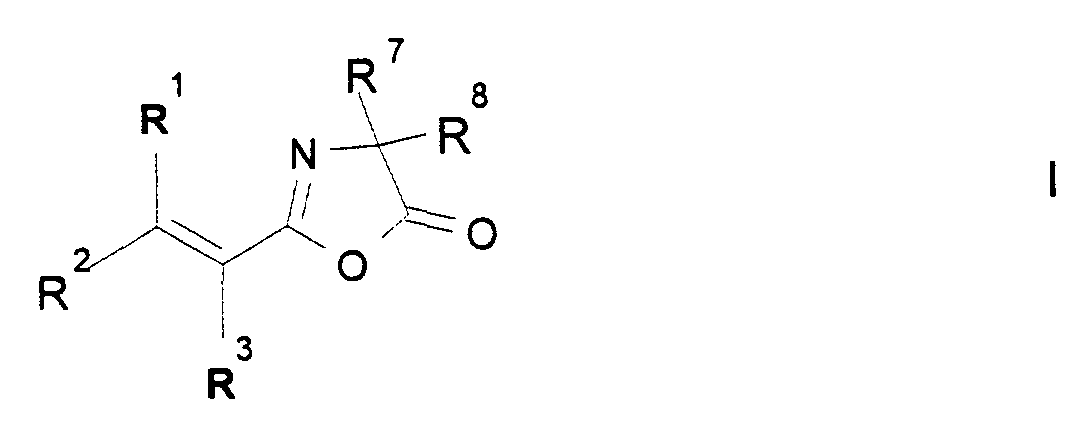
- R1, R2 und R3
- unabhängig voneinander
H oder CH3; - R7 und R8
- unabhängig voneinander
H oder C1- bis C5- Alkyl

- R1,R2 und R3
- unabhängig voneinander
H oder CH3, - R4
- H, Alkyl mit 1-5 C-Atomen oder Aryl mit 6-12 C-Atomen,
- U
- - O - oder - NH -
- n
- eine ganzen Zahl zwischen 1 und 5.
- R1,R2 und R3
- unabhängig voneinander
H oder CH3, - R5
- H, mit -COOH, mit -SO3H, mit -NR7R8 oder mit -N+R7R8R9 substituiertes Alkyl mit 1-5 C-Atomen oder mit -COOH, -SO3H, mit -NR7R8 oder mit -N+R7R8R9 substituiertes Aryl mit 6-12 C-Atomen,
- R6
- mit -COOH, mit -SO3H, mit -NR7R8 oder mit -N+R7R8R9 substituiertes Alkyl mit 1-5 C-Atomen oder mit -COOH, -SO3H, mit -NR7R8 oder mit -N+R7R8R9 substituiertes Aryl mit 6-12 C-Atomen,
- R5 und R6
- so abgestimmt sind, daß entweder beide Reste sauer oder basisch oder einer der Reste neutral ist,
- R7 und R8
- unabhängig voneinander
H, Alkyl mit 1-5 C-Atomen
- R9
- Alkyl mit 1-5 C-Atomen.
- R1,R2 und R3
- unabhängig voneinander
H oder CH3, - R4
- H, Alkyl mit 1-5 C-Atomen oder Aryl mit 6-12 C-Atomen,
- U
- - O - oder - NH -
- n
- eine ganzen Zahl zwischen 1 und 5,
worin
- R7 und R8
- unabhängig voneinander
H, Alkyl mit 1-5 C-Atomen
- R9
- Alkyl mit 1-5 C-Atomen
- R1,R2 und R3
- unabhängig voneinander
H oder CH3, - R4
- H, Alkyl mit 1-5 C-Atomen oder Aryl mit 6-12 C-Atomen, n eine ganzen Zahl zwischen 1 und 5,
- U
- -O- oder -NH-
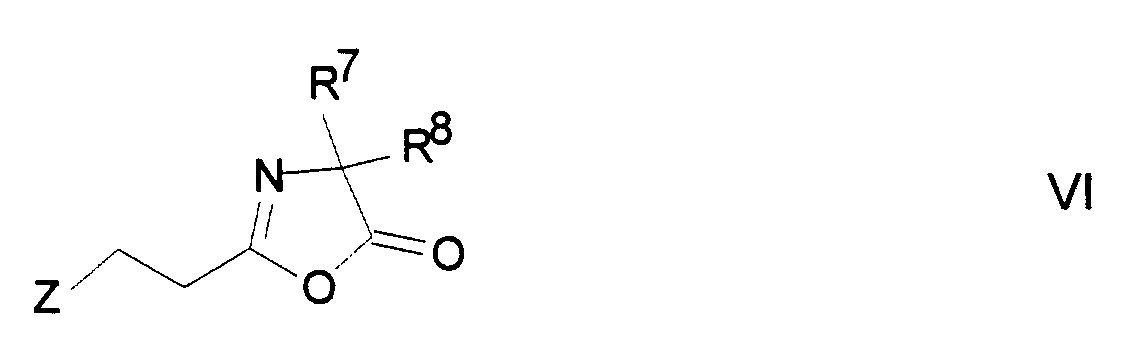
- Z
- -S oder - NH
- R7 und R8
- unabhängig voneinander
H oder Alkyl mit 1-5 C-Atomen.

- R1, R2 und R3
- unabhängig voneinander
H oder CH3; - R7 und R8
- unabhängig voneinander
H oder C1- bis C5- Alkyl
erfolgt nach dem Fachmann bekannten Verfahren. Bevorzugt bedeuten R1, R2 und R3 H, sowie R7 und R8 Methyl; derartige Vinylazlactonderivate sind kommerziell erhältlich. Weitere Vinylazlactonderivate der Formel I sind ebenfalls kommerziell erhältlich oder nach Standardverfahren zugänglich.
Andere in dieser Druckschrift genannte Monomere erlauben die Bindung von Affinitätsliganden oder von Enzymen, oder eignen sich für reversed-phase Chromatographie: dazu gehören beispielsweise Acrylsäure, Acrylamid, Allylamin oder Acrylnitril.
Aus DE 43 34 359 (WO 95/10 354) sind außerdem Verfahren zur Herstellung von Polymeren bekannt, die sich vom Poly(meth)acrylamiden ableiten, und deren Amidgruppen einen Oxiranring aufweisen.
Weiterhin können die Epoxid- oder Azlactongruppen in derartigen Polymeren in vorteilhafter Weise weiter umgesetzt werden, wodurch lonenaustauscher, thiophile Sorbentien oder Sorbentien für die Metallchelat- oder die hydrophobe Chromatographie, sowie auch für chirale Trennungen bereitgestellt werden. Dabei werden beispielsweise Phosphorsäure, Ammoniak, Diethylamin, Trimethylamin, schweflige Säure oder auch Komplexbildner wie Iminodiessigsäure, oder chirale Verbindungen, wie Proteine, Peptide oder Polysaccharidderivate, an den Oxiranring oder die Azlactongruppe addiert; Beispiele für derartige polymeranaloge Umsetzungen sind:
- a) Die Herstellung von thiophilen Sorbentien und von Sorbenzien für die Metallchelatchromatographie ist in DE 43 10 964 (EP 0 565 978) offenbart.
- b) In DE 43 33 674 (WO 95/09 964) und in DE 43 33 821 (WO95/09 695) sind derartige Umsetzungen, mit derer Hilfe lonenaustauscher bereitgestellt werden können, offenbart.
- c) In DE 43 23 913 (WO 95/02 820) werden Sorbenzien für die hydrophobe Interaktionschromatographie beschrieben.
Claims (19)
- Polymeres Sorbens erhältlich durch folgende Reaktionsschritte:a) Einführung von polymerisierbaren Doppelbindungen durch Umsetzung der Aminogruppen eines Polyamides mit einer aminoreaktiven Verbindung, die eine polymerisierbare Doppelbindung enthält, oder durch Umsetzung der Carboxylgruppen des Polyamides mit einer carboxylgruppenreaktiven Verbindung, die eine polymerisierbare Doppelbindung enthält, mit der Maßgabe, daß die genannte aminoreaktive Verbindung keinen Oxiranring enthält, wenn das Basispolymer umgesetzt wird, ohne zuvor mit einer Diaminoverbindung umgesetzt worden zu sein,b) Polymerisation von Monomeren auf das nach Schritt a) derivatisierte Polyamid, wobei die genannten Monomere eine Epoxidgruppe, eine Azlactongruppe oder eine Vorläufergruppe für eine Azlactongruppe oder einen Separationseffektor enthalten,c) optionale Umsetzung der genannten Epoxid- oder Azlactongruppe in einen Separationseffektor.
- Polymeres Sorbens nach Anspruch 1, dadurch gekennzeichnet, daß vor der Umsetzung mit der genannten aminoreaktiven Verbindung in Schritt a) Carboxylgruppen des Polymers mit einer Diaminoverbindung umgesetzt werden.
- Polymeres Sorbens nach Anspruch 1, dadurch gekennzeichnet, daß vor der Umsetzung mit der genannten carboxylgruppenhaltigen Verbindung in Schritt a) Aminogruppen des Polymers mit einer Dicarbonsäure oder einem Dicarbonsäureanhydrid umgesetzt werden.
- Polymeres Sorbens nach Anspruch 1 oder 2 erhältlich, indem in Schritt a) die Aminogruppen des Polyamides mit einem Anhydrid einer ethylenisch ungesättigten Carbonsäure umgesetzt werden.
- Polymeres Sorbens nach Anspruch 1 oder 2, wobei in Schritt a) die Aminogruppen des Polyamides mit einem Vinylazlactonderivat der Formel I umgesetzt werden,worin
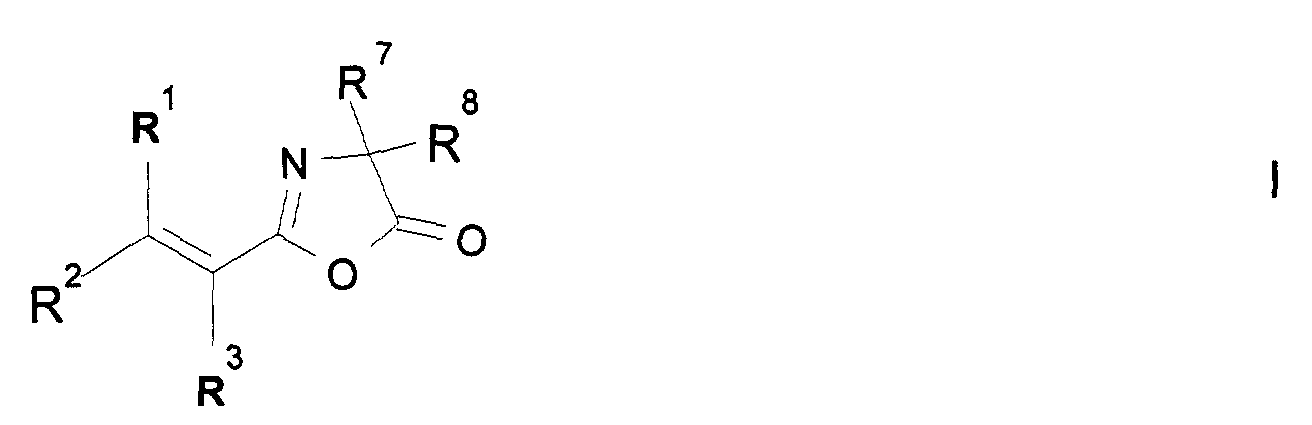
- R1, R2 und R3
- unabhängig voneinander
H oder CH3; - R7 und R8
- unabhängig voneinander
H oder C1- bis C5- Alkyl
- Polymeres Sorbens nach einem der Ansprüche 1 bis 5, dadurch gekennzeichnet, daß als Monomer in Reaktionsschritt b) Acrylsäure verwendet wird.
- Polymeres Sorbens nach einem der Ansprüche 1 bis 5, dadurch gekennzeichnet, daß das aufpolymerisierte Polymer Monomereinheiten der Formel II,worin
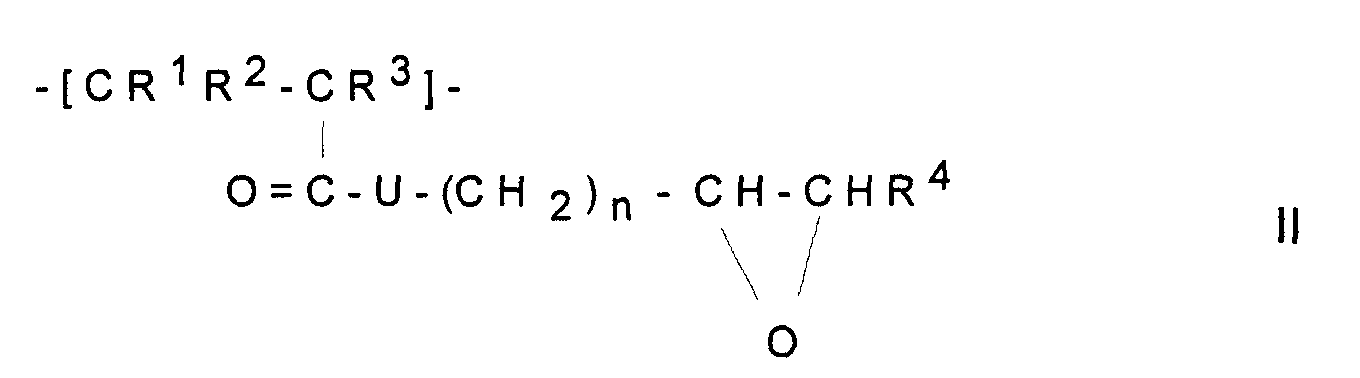
- R1,R2 und R3
- unabhängig voneinander
H oder CH3, - R4
- H, Alkyl mit 1-5 C-Atomen oder Aryl mit 6-12 C-Atomen,
- U
- - O - oder - NH -
- n
- eine ganzen Zahl zwischen 1 und 5
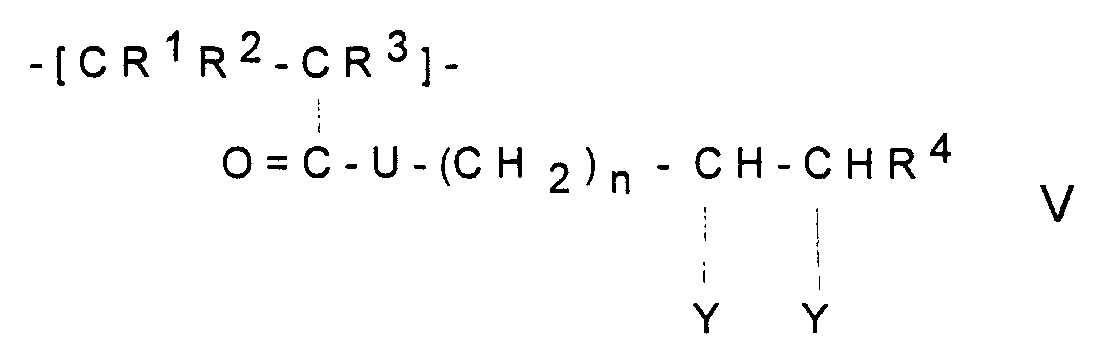
- Polymeres Sorbens nach einem der Ansprüche 1 bis 5, dadurch gekennzeichnet, daß das aufpolymerisierte Polymer Monomereinheiten der Formel V,worin
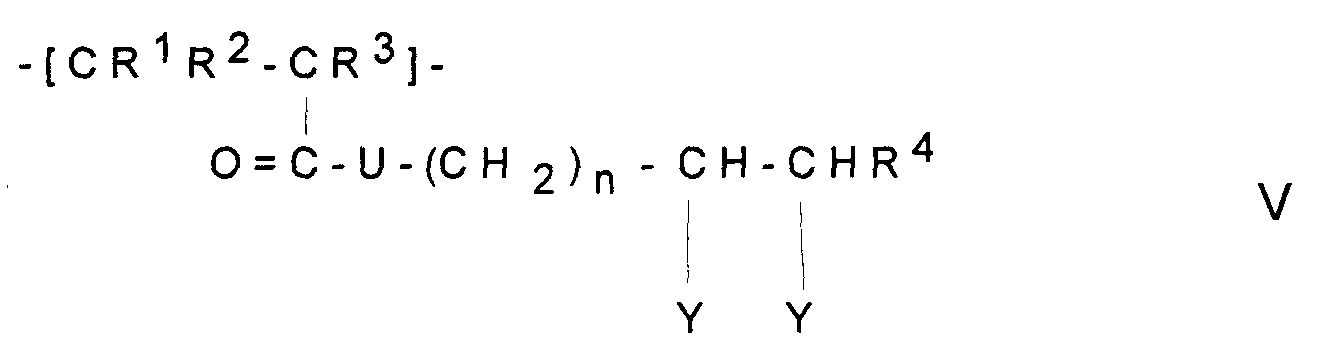
- R1,R2 und R3
- unabhängig voneinander
H oder CH3, - R4
- H, Alkyl mit 1-5 C-Atomen oder Aryl mit 6-12 C-Atomen,
- U
- -O- oder - NH-,
- n
- eine ganzen Zahl zwischen 1 und 5,
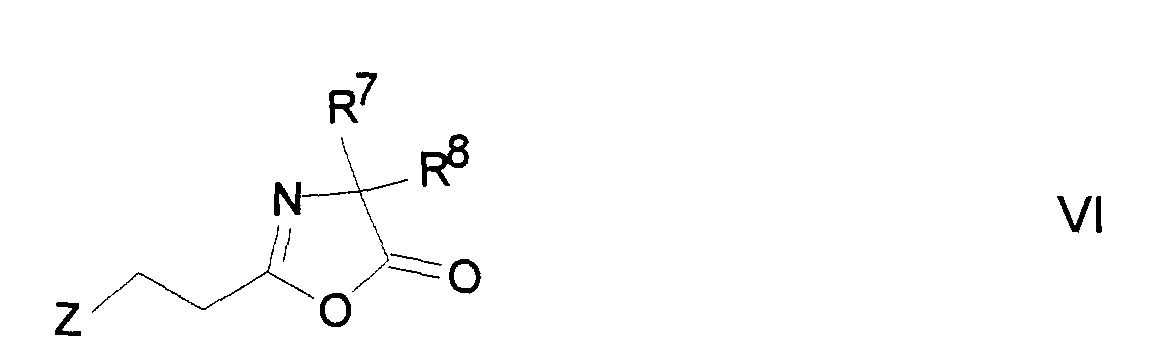
- Z
- -S oder -NH
- R7 und R8
- unabhängig voneinander
H oder Alkyl mit 1-5 C-Atomen
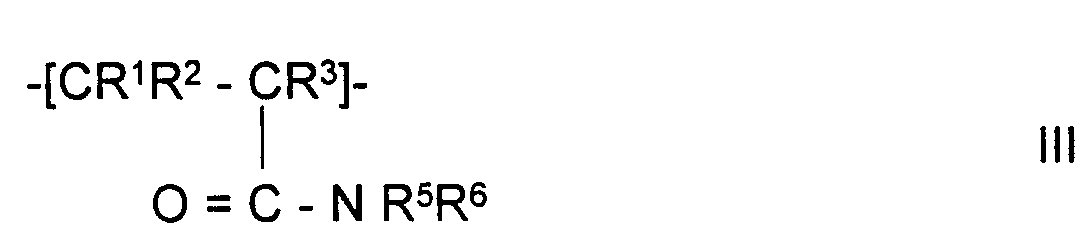
- Polymeres Sorbens nach einem der Ansprüche 1 bis 5, dadurch gekennzeichnet, daß das aufpolymerisierte Polymer Monomereinheiten der Formel III,worin
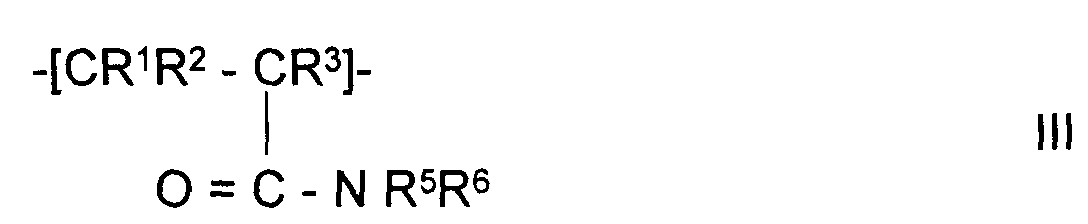
- R1,R2 und R3
- unabhängig voneinander
H oder CH3, - R5
- H, mit -COOH, mit -SO3H, mit -NR7R8 oder mit -N+R7R8R9 substituiertes Alkyl mit 1-5 C-Atomen oder mit -COOH, -SO3H, mit -NR7R8 oder mit -N+R7R8R9 substituiertes Aryl mit 6-12 C-Atomen,
- R6
- mit -COOH, mit -SO3H, mit -NR7R8 oder mit -N+R7R8R9 substituiertes Alkyl mit 1-5 C-Atomen oder mit -COOH, -SO3H, mit -NR7R8 oder mit -N+R7R8R9 substituiertes Aryl mit 6-12 C-Atomen,
- R7 und R8
- unabhängig voneinander
H, Alkyl mit 1-5 C-Atomen
- R9
- Alkyl mit 1-5 C-Atomen
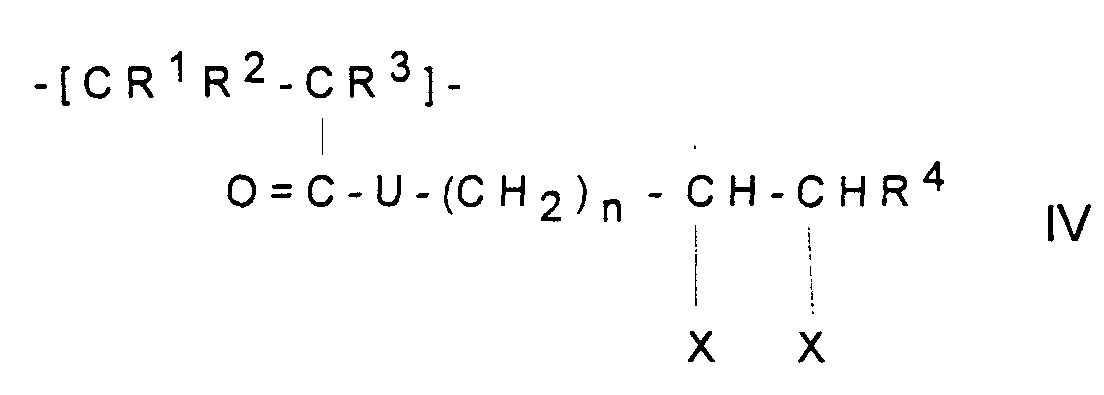
- Polymeres Sorbens nach einem der Ansprüche 1 bis 5, dadurch gekennzeichnet, daß das aufpolymerisierte Polymer Monomereinheiten der Formel IV,worin
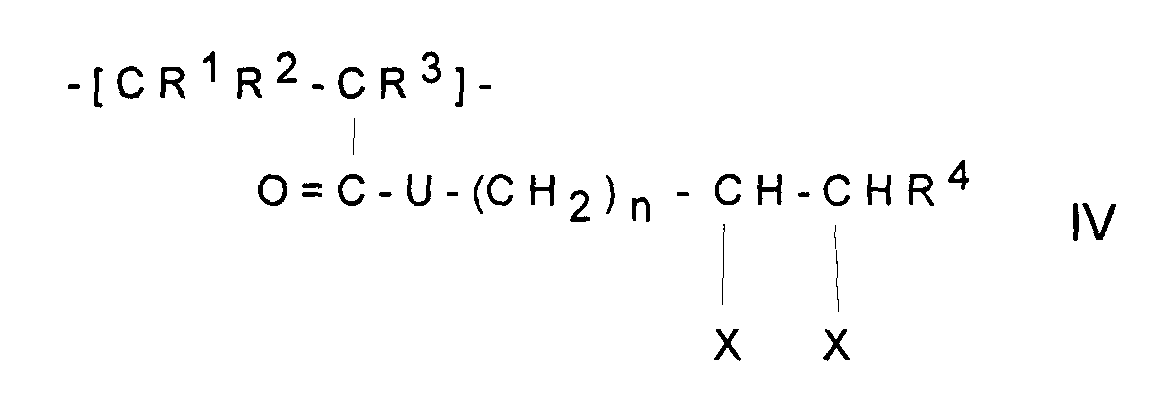
- R1,R2 und R3
- unabhängig voneinander
H oder CH3, - R4
- H, Alkyl mit 1-5 C-Atomen oder Aryl mit 6-12 C-Atomen,
- U
- -O- oder -NH-,
- n
- eine ganzen Zahl zwischen 1 und 5,
bedeuten, enthält. - Polymeres Sorbens nach Anspruch 10, dadurch gekennzeichnet, daß der Separationseffektor eine ionische Gruppe, ausgewählt aus -PO4H2, -SO3H, -NR7R8 oder -N+R7R8R9, darstellt,
worin- R7 und R8
- unabhängig voneinander
H, Alkyl mit 1-5 C-Atomen
- R9
- Alkyl mit 1-5 C-Atomen
bedeutet. - Polymeres Sorbens nach Anspruch 10, dadurch gekennzeichnet, daß der Separationseffektor eine hydrophobe Gruppierung -OR10 oder -NHR10,
wobei- R10
- C1-C20-Alkyl, C6-C25-Aryl, C7-C25-Alkylaryl oder C7-C25-Arylalkyl bedeuten, und wobei diese Reste auch mit Nitril oder C1-C5-Alkoxy derivatisiert sein können, und wobei auch eine oder mehrere nicht benachbarte CH2-Gruppen durch NH oder O oder auch eine oder mehrere CH Gruppen durch N ersetzt sein können,
- Polymeres Sorbens nach Anspruch 10, dadurch gekennzeichnet, daß der Separationseffektor eine Metallchelat-Affinitätsgruppe darstellt.
- Polymeres Sorbens nach Anspruch 10, dadurch gekennzeichnet, daß der Separationseffektor einen thiophilen Rest darstellt.
- Affinitätsträger herstellbar aus einem polymeren Sorbens nach einem der Ansprüche 1-9 oder 11.
- Immobilisiertes Enzym herstellbar aus einem polymeren Sorbens nach einem der Ansprüche 1-9 oder 11.
- Formkörper im wesentlichen bestehend aus einem polymeren Sorbens nach einem der Ansprüche 1 bis 14.
- Formkörper, an dem ein Affinitätsligand oder ein Enzym immobilisiert ist, herstellbar aus einem polymeren Sorbens nach einem der Ansprüche 1 bis 9 oder 11.
- Verfahren zur chromatograpischen Stofftrennung, dadurch gekennzeichnet, daß ein polymeres Sorbens nach einem der Ansprüche 1 bis 15 verwendet wird.
Applications Claiming Priority (9)
| Application Number | Priority Date | Filing Date | Title |
|---|---|---|---|
| DE19624813A DE19624813A1 (de) | 1995-01-20 | 1996-06-21 | Polymerisationsfähige Derivate von Polyamiden |
| DE19624813 | 1996-06-21 | ||
| DE19627404 | 1996-07-06 | ||
| DE19627404A DE19627404A1 (de) | 1995-01-20 | 1996-07-06 | Polymerisationsfähige Derivate von Polyamiden |
| DE19628832 | 1996-07-17 | ||
| DE19628832A DE19628832A1 (de) | 1995-01-20 | 1996-07-17 | Polymerisationsfähige Derivate von Polyamiden |
| DE19629206A DE19629206A1 (de) | 1995-01-20 | 1996-07-19 | Chiral modifizierte Polyamide |
| DE19629206 | 1996-07-19 | ||
| PCT/EP1997/002768 WO1997049754A1 (de) | 1996-06-21 | 1997-05-28 | Polymerisationsfähige derivate von polyamiden |
Publications (2)
| Publication Number | Publication Date |
|---|---|
| EP0906357A1 EP0906357A1 (de) | 1999-04-07 |
| EP0906357B1 true EP0906357B1 (de) | 2001-08-08 |
Family
ID=27438386
Family Applications (1)
| Application Number | Title | Priority Date | Filing Date |
|---|---|---|---|
| EP19970925006 Expired - Lifetime EP0906357B1 (de) | 1996-06-21 | 1997-05-28 | Polymere sorbentien auf basis polymerisationsfähiger derivate von polyamiden |
Country Status (5)
| Country | Link |
|---|---|
| US (1) | US6149994A (de) |
| EP (1) | EP0906357B1 (de) |
| JP (1) | JP2000513394A (de) |
| AT (1) | ATE204004T1 (de) |
| WO (1) | WO1997049754A1 (de) |
Families Citing this family (11)
| Publication number | Priority date | Publication date | Assignee | Title |
|---|---|---|---|---|
| DE19810947A1 (de) * | 1998-03-13 | 1999-09-16 | Merck Patent Gmbh | Beseitigung von Kontaminationen aus biologischen Produkten |
| DE19821812C2 (de) * | 1998-05-15 | 2000-03-16 | Merck Patent Gmbh | Miniaturisierte Trennsäule |
| JP4117140B2 (ja) * | 2002-03-13 | 2008-07-16 | 日清紡績株式会社 | カルボジイミド含有硬化型反応性粒子、その製造方法及び用途 |
| US20030232390A1 (en) * | 2002-03-15 | 2003-12-18 | Universal Bio Research Co., Ltd. | Carrier for fixing material containing amino group |
| GB0425102D0 (en) * | 2004-11-15 | 2004-12-15 | Ciba Spec Chem Water Treat Ltd | Polymeric compositions and methods of employing them in papermaking processes |
| JP6062630B2 (ja) | 2008-06-26 | 2017-01-18 | スリーエム イノベイティブ プロパティズ カンパニー | グラフト化鎖を伴う固体支持体 |
| JP5513167B2 (ja) | 2009-03-02 | 2014-06-04 | ユニ・チャーム株式会社 | コンベア装置及び吸収性物品の製造方法 |
| CZ305107B6 (cs) * | 2010-11-24 | 2015-05-06 | Technická univerzita v Liberci | Chromatografický substrát pro tenkovrstvou chromatografii nebo pro kolonovou chromatografii |
| KR102017649B1 (ko) * | 2011-05-03 | 2019-09-03 | 아반토 퍼포먼스 머티리얼즈, 엘엘씨 | 알릴아민에 기반한, 단백질 정제용 신규한 크로마토그래피 매체 및 이의 유도체 |
| PL3395423T3 (pl) | 2013-03-14 | 2024-03-18 | Amgen Inc. | Usuwanie wypłukanych ligandów do oczyszczania na zasadzie powinowactwa |
| CN113563718B (zh) * | 2021-08-02 | 2023-10-13 | 安徽省华晟塑胶股份有限公司 | 一种轻量化塑料外套 |
Family Cites Families (4)
| Publication number | Priority date | Publication date | Assignee | Title |
|---|---|---|---|---|
| US4563507A (en) * | 1982-03-31 | 1986-01-07 | Intera Corporation | Treatment of Lewis base polymer with ethylenically unsaturated compound to improve antistatic hygroscopic and dye receptive properties |
| FR2554451B1 (fr) * | 1983-11-04 | 1986-03-28 | Atochem | Nouveaux macromeres polyamides insatures, leurs preparation et applications |
| FR2555187B1 (fr) * | 1983-11-23 | 1986-04-18 | Atochem | Production de macromeres polyamides portant au moins une insaturation a chacune des deux extremites de la sequence polyamide, le macromere obtenu et ses applications |
| DE4129901A1 (de) * | 1991-09-09 | 1993-03-11 | Mueller Schulte Detlef Dr | Gepfropftes polyamid fuer die affinitaets-chromatographie und immobilisierung von bioliganden - verfahren zu ihrer herstellung und verwendung |
-
1997
- 1997-05-28 AT AT97925006T patent/ATE204004T1/de not_active IP Right Cessation
- 1997-05-28 WO PCT/EP1997/002768 patent/WO1997049754A1/de not_active Ceased
- 1997-05-28 US US09/194,121 patent/US6149994A/en not_active Expired - Fee Related
- 1997-05-28 JP JP50217598A patent/JP2000513394A/ja active Pending
- 1997-05-28 EP EP19970925006 patent/EP0906357B1/de not_active Expired - Lifetime
Also Published As
| Publication number | Publication date |
|---|---|
| EP0906357A1 (de) | 1999-04-07 |
| WO1997049754A1 (de) | 1997-12-31 |
| ATE204004T1 (de) | 2001-08-15 |
| US6149994A (en) | 2000-11-21 |
| JP2000513394A (ja) | 2000-10-10 |
Similar Documents
| Publication | Publication Date | Title |
|---|---|---|
| EP0804494B1 (de) | Polymerisationsfähige derivate von polyamiden | |
| EP2310104B1 (de) | Mischpfropfpolymere für die ionenaustauschchromatographie | |
| DE69128732T2 (de) | Affinitätstrennung mit mikroporösen aktivierten Polyamidmembranen | |
| EP0565978B1 (de) | Aktivierte Trägermaterialien, ihre Herstellung und Verwendung | |
| DE69228312T2 (de) | Selektives affinitätsmaterial, seine herstellung durch molekulare prägung und seine verwendung | |
| EP0253303A2 (de) | Neue Metallchelatharze | |
| EP0906357A1 (de) | Polymerisationsfähige derivate von polyamiden | |
| DE2505870A1 (de) | Verfahren zur herstellung von amphoteren ionenaustauschern mit hydrophiler polymerer matrix | |
| DE602005002732T2 (de) | Verbesserungen bei polymerteilchen | |
| DE102015011884A1 (de) | Adsorptionsmedium, Verfahren zu dessen Herstellung, sowie Verwendung desselben zur Aufreinigung von Biomolekülen | |
| JP2011525942A (ja) | グラフト化鎖を伴う固体支持体 | |
| EP1366088A1 (de) | Phosphorhaltige polymere für optischen signalwandler | |
| WO1999040122A1 (de) | Vorrichtung zur herstellung von trägerpolymermaterialien in form von porösen polymerperlen | |
| WO2000032648A1 (de) | Verfahren zur herstellung eines polymeren netzwerkes | |
| DE69634150T2 (de) | Verfahren zur Immobilisierung von Liganden oder Verbindungen, an die Liganden gebunden sind | |
| DE2061009A1 (de) | Verfahren zur Fixierung von Polymeren | |
| EP0910601B1 (de) | Azlacton-derivatisierte polyamide | |
| EP0722361B1 (de) | Epoxy-derivate von polyacrylamiden | |
| DE4127657B4 (de) | Perlförmige Polyvinylalkoholgele für die Aufreinigung und Auftrennung biologischer Flüssigkeiten, Verfahren zu ihrer Herstellung und Verwendung | |
| DE19624813A1 (de) | Polymerisationsfähige Derivate von Polyamiden | |
| DE19628832A1 (de) | Polymerisationsfähige Derivate von Polyamiden | |
| EP1263806B1 (de) | Alkalistabile beschichtung auf trägermaterialien | |
| EP1149118B1 (de) | Verfahren zur herstellung derivatisierter polymere | |
| EP1851257A1 (de) | Makroporöses kunststoffperlenmaterial | |
| DE2339111C3 (de) | Verfahren zur Reinigung von Proteinen und anderen biospezifisch adsorbierbaren Substanzen |
Legal Events
| Date | Code | Title | Description |
|---|---|---|---|
| PUAI | Public reference made under article 153(3) epc to a published international application that has entered the european phase |
Free format text: ORIGINAL CODE: 0009012 |
|
| 17P | Request for examination filed |
Effective date: 19981111 |
|
| AK | Designated contracting states |
Kind code of ref document: A1 Designated state(s): AT CH DE FR GB LI SE |
|
| 17Q | First examination report despatched |
Effective date: 19990422 |
|
| RTI1 | Title (correction) |
Free format text: ABSORBENT POLYMERS BASED ON POLYMERISABLE POLYAMIDE DERIVATIVES |
|
| GRAG | Despatch of communication of intention to grant |
Free format text: ORIGINAL CODE: EPIDOS AGRA |
|
| GRAG | Despatch of communication of intention to grant |
Free format text: ORIGINAL CODE: EPIDOS AGRA |
|
| GRAG | Despatch of communication of intention to grant |
Free format text: ORIGINAL CODE: EPIDOS AGRA |
|
| GRAH | Despatch of communication of intention to grant a patent |
Free format text: ORIGINAL CODE: EPIDOS IGRA |
|
| GRAH | Despatch of communication of intention to grant a patent |
Free format text: ORIGINAL CODE: EPIDOS IGRA |
|
| GRAA | (expected) grant |
Free format text: ORIGINAL CODE: 0009210 |
|
| AK | Designated contracting states |
Kind code of ref document: B1 Designated state(s): AT CH DE FR GB LI SE |
|
| REF | Corresponds to: |
Ref document number: 204004 Country of ref document: AT Date of ref document: 20010815 Kind code of ref document: T |
|
| REG | Reference to a national code |
Ref country code: CH Ref legal event code: EP |
|
| REF | Corresponds to: |
Ref document number: 59704254 Country of ref document: DE Date of ref document: 20010913 |
|
| GBT | Gb: translation of ep patent filed (gb section 77(6)(a)/1977) |
Effective date: 20011115 |
|
| ET | Fr: translation filed | ||
| REG | Reference to a national code |
Ref country code: GB Ref legal event code: IF02 |
|
| PLBE | No opposition filed within time limit |
Free format text: ORIGINAL CODE: 0009261 |
|
| STAA | Information on the status of an ep patent application or granted ep patent |
Free format text: STATUS: NO OPPOSITION FILED WITHIN TIME LIMIT |
|
| 26N | No opposition filed | ||
| PGFP | Annual fee paid to national office [announced via postgrant information from national office to epo] |
Ref country code: SE Payment date: 20050506 Year of fee payment: 9 |
|
| PGFP | Annual fee paid to national office [announced via postgrant information from national office to epo] |
Ref country code: FR Payment date: 20050511 Year of fee payment: 9 Ref country code: AT Payment date: 20050511 Year of fee payment: 9 |
|
| PGFP | Annual fee paid to national office [announced via postgrant information from national office to epo] |
Ref country code: GB Payment date: 20050525 Year of fee payment: 9 |
|
| PGFP | Annual fee paid to national office [announced via postgrant information from national office to epo] |
Ref country code: CH Payment date: 20050527 Year of fee payment: 9 |
|
| PG25 | Lapsed in a contracting state [announced via postgrant information from national office to epo] |
Ref country code: GB Free format text: LAPSE BECAUSE OF NON-PAYMENT OF DUE FEES Effective date: 20060528 Ref country code: AT Free format text: LAPSE BECAUSE OF NON-PAYMENT OF DUE FEES Effective date: 20060528 |
|
| PG25 | Lapsed in a contracting state [announced via postgrant information from national office to epo] |
Ref country code: SE Free format text: LAPSE BECAUSE OF NON-PAYMENT OF DUE FEES Effective date: 20060529 |
|
| PG25 | Lapsed in a contracting state [announced via postgrant information from national office to epo] |
Ref country code: LI Free format text: LAPSE BECAUSE OF NON-PAYMENT OF DUE FEES Effective date: 20060531 Ref country code: CH Free format text: LAPSE BECAUSE OF NON-PAYMENT OF DUE FEES Effective date: 20060531 |
|
| REG | Reference to a national code |
Ref country code: CH Ref legal event code: PL |
|
| EUG | Se: european patent has lapsed | ||
| GBPC | Gb: european patent ceased through non-payment of renewal fee |
Effective date: 20060528 |
|
| REG | Reference to a national code |
Ref country code: FR Ref legal event code: ST Effective date: 20070131 |
|
| PGFP | Annual fee paid to national office [announced via postgrant information from national office to epo] |
Ref country code: DE Payment date: 20070524 Year of fee payment: 11 |
|
| PG25 | Lapsed in a contracting state [announced via postgrant information from national office to epo] |
Ref country code: FR Free format text: LAPSE BECAUSE OF NON-PAYMENT OF DUE FEES Effective date: 20060531 |
|
| PG25 | Lapsed in a contracting state [announced via postgrant information from national office to epo] |
Ref country code: DE Free format text: LAPSE BECAUSE OF NON-PAYMENT OF DUE FEES Effective date: 20081202 |