EP0805797B1 - Verfahren zur herstellung von n-aryl- und n-hetarylhydroxylaminen - Google Patents
Verfahren zur herstellung von n-aryl- und n-hetarylhydroxylaminen Download PDFInfo
- Publication number
- EP0805797B1 EP0805797B1 EP96900963A EP96900963A EP0805797B1 EP 0805797 B1 EP0805797 B1 EP 0805797B1 EP 96900963 A EP96900963 A EP 96900963A EP 96900963 A EP96900963 A EP 96900963A EP 0805797 B1 EP0805797 B1 EP 0805797B1
- Authority
- EP
- European Patent Office
- Prior art keywords
- alkyl
- hydrogen
- hydrogenation
- alkoxy
- catalyst
- Prior art date
- Legal status (The legal status is an assumption and is not a legal conclusion. Google has not performed a legal analysis and makes no representation as to the accuracy of the status listed.)
- Expired - Lifetime
Links
- 238000000034 method Methods 0.000 title claims description 38
- SJRJJKPEHAURKC-UHFFFAOYSA-N N-Methylmorpholine Chemical compound CN1CCOCC1 SJRJJKPEHAURKC-UHFFFAOYSA-N 0.000 claims description 37
- 239000003054 catalyst Substances 0.000 claims description 26
- BASFCYQUMIYNBI-UHFFFAOYSA-N platinum Chemical compound [Pt] BASFCYQUMIYNBI-UHFFFAOYSA-N 0.000 claims description 24
- KDLHZDBZIXYQEI-UHFFFAOYSA-N Palladium Chemical compound [Pd] KDLHZDBZIXYQEI-UHFFFAOYSA-N 0.000 claims description 23
- -1 heteroaromatic hydroxylamines Chemical class 0.000 claims description 22
- 238000005984 hydrogenation reaction Methods 0.000 claims description 19
- OKTJSMMVPCPJKN-UHFFFAOYSA-N Carbon Chemical compound [C] OKTJSMMVPCPJKN-UHFFFAOYSA-N 0.000 claims description 16
- 229910052739 hydrogen Inorganic materials 0.000 claims description 16
- 239000001257 hydrogen Substances 0.000 claims description 16
- 238000006243 chemical reaction Methods 0.000 claims description 12
- 229910052763 palladium Inorganic materials 0.000 claims description 12
- 229910052697 platinum Inorganic materials 0.000 claims description 11
- 150000002828 nitro derivatives Chemical class 0.000 claims description 8
- YNAVUWVOSKDBBP-UHFFFAOYSA-N Morpholine Natural products C1COCCN1 YNAVUWVOSKDBBP-UHFFFAOYSA-N 0.000 claims description 6
- 125000004435 hydrogen atom Chemical group [H]* 0.000 claims description 6
- 125000003118 aryl group Chemical group 0.000 claims description 5
- 238000004519 manufacturing process Methods 0.000 claims description 5
- JUJWROOIHBZHMG-UHFFFAOYSA-N Pyridine Chemical compound C1=CC=NC=C1 JUJWROOIHBZHMG-UHFFFAOYSA-N 0.000 claims description 4
- BUGBHKTXTAQXES-UHFFFAOYSA-N Selenium Chemical compound [Se] BUGBHKTXTAQXES-UHFFFAOYSA-N 0.000 claims description 4
- NINIDFKCEFEMDL-UHFFFAOYSA-N Sulfur Chemical compound [S] NINIDFKCEFEMDL-UHFFFAOYSA-N 0.000 claims description 4
- 125000004432 carbon atom Chemical group C* 0.000 claims description 4
- 229910052711 selenium Inorganic materials 0.000 claims description 4
- 239000011669 selenium Substances 0.000 claims description 4
- 229910052717 sulfur Inorganic materials 0.000 claims description 4
- 239000011593 sulfur Substances 0.000 claims description 4
- HVCNXQOWACZAFN-UHFFFAOYSA-N 4-ethylmorpholine Chemical compound CCN1CCOCC1 HVCNXQOWACZAFN-UHFFFAOYSA-N 0.000 claims description 3
- 125000003107 substituted aryl group Chemical group 0.000 claims description 3
- YNWIKPKXZZFVHT-UHFFFAOYSA-N 2,2,4,6,6-pentamethylmorpholine Chemical compound CN1CC(C)(C)OC(C)(C)C1 YNWIKPKXZZFVHT-UHFFFAOYSA-N 0.000 claims description 2
- WRFGMXWDQDQRKO-UHFFFAOYSA-N 2,3,4,5,6-pentamethylmorpholine Chemical compound CC1OC(C)C(C)N(C)C1C WRFGMXWDQDQRKO-UHFFFAOYSA-N 0.000 claims description 2
- APOJIILNJVLCQE-UHFFFAOYSA-N 2,4,6-trimethylmorpholine Chemical compound CC1CN(C)CC(C)O1 APOJIILNJVLCQE-UHFFFAOYSA-N 0.000 claims description 2
- QKVSMSABRNCNRS-UHFFFAOYSA-N 4-(2-methylpropyl)morpholine Chemical compound CC(C)CN1CCOCC1 QKVSMSABRNCNRS-UHFFFAOYSA-N 0.000 claims description 2
- PWPUPXJJCPIOGY-UHFFFAOYSA-N 4-(3-methylbutyl)morpholine Chemical compound CC(C)CCN1CCOCC1 PWPUPXJJCPIOGY-UHFFFAOYSA-N 0.000 claims description 2
- LMRKVKPRHROQRR-UHFFFAOYSA-N 4-butylmorpholine Chemical compound CCCCN1CCOCC1 LMRKVKPRHROQRR-UHFFFAOYSA-N 0.000 claims description 2
- IERWMZNDJGYCIA-UHFFFAOYSA-N 4-pentylmorpholine Chemical compound CCCCCN1CCOCC1 IERWMZNDJGYCIA-UHFFFAOYSA-N 0.000 claims description 2
- NMILGIZTAZXMTM-UHFFFAOYSA-N 4-propylmorpholine Chemical compound CCCN1CCOCC1 NMILGIZTAZXMTM-UHFFFAOYSA-N 0.000 claims description 2
- OILJIEKQCVHNMM-UHFFFAOYSA-N 4-tert-butylmorpholine Chemical compound CC(C)(C)N1CCOCC1 OILJIEKQCVHNMM-UHFFFAOYSA-N 0.000 claims description 2
- 125000000449 nitro group Chemical group [O-][N+](*)=O 0.000 claims description 2
- UMJSCPRVCHMLSP-UHFFFAOYSA-N pyridine Natural products COC1=CC=CN=C1 UMJSCPRVCHMLSP-UHFFFAOYSA-N 0.000 claims description 2
- 125000004178 (C1-C4) alkyl group Chemical group 0.000 claims 9
- 125000000229 (C1-C4)alkoxy group Chemical group 0.000 claims 3
- 125000004093 cyano group Chemical group *C#N 0.000 claims 3
- 229910052736 halogen Inorganic materials 0.000 claims 3
- 150000002367 halogens Chemical class 0.000 claims 3
- 125000003830 C1- C4 alkylcarbonylamino group Chemical group 0.000 claims 2
- 125000001997 phenyl group Chemical group [H]C1=C([H])C([H])=C(*)C([H])=C1[H] 0.000 claims 2
- 125000001424 substituent group Chemical group 0.000 claims 2
- 125000006656 (C2-C4) alkenyl group Chemical group 0.000 claims 1
- 125000006650 (C2-C4) alkynyl group Chemical group 0.000 claims 1
- 125000005913 (C3-C6) cycloalkyl group Chemical group 0.000 claims 1
- 125000001399 1,2,3-triazolyl group Chemical group N1N=NC(=C1)* 0.000 claims 1
- 125000001376 1,2,4-triazolyl group Chemical group N1N=C(N=C1)* 0.000 claims 1
- JYNZIOFUHBJABQ-UHFFFAOYSA-N allyl-{6-[3-(4-bromo-phenyl)-benzofuran-6-yloxy]-hexyl-}-methyl-amin Chemical compound C=1OC2=CC(OCCCCCCN(C)CC=C)=CC=C2C=1C1=CC=C(Br)C=C1 JYNZIOFUHBJABQ-UHFFFAOYSA-N 0.000 claims 1
- SYGWYBOJXOGMRU-UHFFFAOYSA-N chembl233051 Chemical compound C1=CC=C2C3=CC(C(N(CCN(C)C)C4=O)=O)=C5C4=CC=CC5=C3SC2=C1 SYGWYBOJXOGMRU-UHFFFAOYSA-N 0.000 claims 1
- 125000001559 cyclopropyl group Chemical group [H]C1([H])C([H])([H])C1([H])* 0.000 claims 1
- 125000002541 furyl group Chemical group 0.000 claims 1
- 125000001072 heteroaryl group Chemical group 0.000 claims 1
- 125000000623 heterocyclic group Chemical group 0.000 claims 1
- 125000002883 imidazolyl group Chemical group 0.000 claims 1
- 125000001786 isothiazolyl group Chemical group 0.000 claims 1
- 125000000842 isoxazolyl group Chemical group 0.000 claims 1
- 125000001624 naphthyl group Chemical group 0.000 claims 1
- 125000002971 oxazolyl group Chemical group 0.000 claims 1
- 125000003373 pyrazinyl group Chemical group 0.000 claims 1
- 125000003226 pyrazolyl group Chemical group 0.000 claims 1
- 125000002098 pyridazinyl group Chemical group 0.000 claims 1
- 125000004076 pyridyl group Chemical group 0.000 claims 1
- 125000000714 pyrimidinyl group Chemical group 0.000 claims 1
- 125000000168 pyrrolyl group Chemical group 0.000 claims 1
- 125000002943 quinolinyl group Chemical group N1=C(C=CC2=CC=CC=C12)* 0.000 claims 1
- 125000000335 thiazolyl group Chemical group 0.000 claims 1
- 125000001544 thienyl group Chemical group 0.000 claims 1
- 125000002023 trifluoromethyl group Chemical group FC(F)(F)* 0.000 claims 1
- RNVCVTLRINQCPJ-UHFFFAOYSA-N o-toluidine Chemical compound CC1=CC=CC=C1N RNVCVTLRINQCPJ-UHFFFAOYSA-N 0.000 description 18
- OMYXQGTUTCZGCI-UHFFFAOYSA-N n-(2-methylphenyl)hydroxylamine Chemical compound CC1=CC=CC=C1NO OMYXQGTUTCZGCI-UHFFFAOYSA-N 0.000 description 14
- UFHFLCQGNIYNRP-UHFFFAOYSA-N Hydrogen Chemical compound [H][H] UFHFLCQGNIYNRP-UHFFFAOYSA-N 0.000 description 12
- 238000004128 high performance liquid chromatography Methods 0.000 description 12
- 239000012043 crude product Substances 0.000 description 11
- 239000000203 mixture Substances 0.000 description 8
- 239000000047 product Substances 0.000 description 8
- PLAZTCDQAHEYBI-UHFFFAOYSA-N 2-nitrotoluene Chemical compound CC1=CC=CC=C1[N+]([O-])=O PLAZTCDQAHEYBI-UHFFFAOYSA-N 0.000 description 6
- IAZDPXIOMUYVGZ-WFGJKAKNSA-N Dimethyl sulfoxide Chemical compound [2H]C([2H])([2H])S(=O)C([2H])([2H])[2H] IAZDPXIOMUYVGZ-WFGJKAKNSA-N 0.000 description 6
- 239000002904 solvent Substances 0.000 description 6
- CKRZKMFTZCFYGB-UHFFFAOYSA-N N-phenylhydroxylamine Chemical class ONC1=CC=CC=C1 CKRZKMFTZCFYGB-UHFFFAOYSA-N 0.000 description 5
- 238000009903 catalytic hydrogenation reaction Methods 0.000 description 5
- IAZDPXIOMUYVGZ-UHFFFAOYSA-N Dimethylsulphoxide Chemical compound CS(C)=O IAZDPXIOMUYVGZ-UHFFFAOYSA-N 0.000 description 4
- OFBQJSOFQDEBGM-UHFFFAOYSA-N Pentane Chemical compound CCCCC OFBQJSOFQDEBGM-UHFFFAOYSA-N 0.000 description 4
- NQRYJNQNLNOLGT-UHFFFAOYSA-N Piperidine Chemical compound C1CCNCC1 NQRYJNQNLNOLGT-UHFFFAOYSA-N 0.000 description 4
- 239000000654 additive Substances 0.000 description 4
- 150000001875 compounds Chemical class 0.000 description 4
- 230000000694 effects Effects 0.000 description 4
- OKKJLVBELUTLKV-UHFFFAOYSA-N Methanol Chemical compound OC OKKJLVBELUTLKV-UHFFFAOYSA-N 0.000 description 3
- RWRDLPDLKQPQOW-UHFFFAOYSA-N Pyrrolidine Chemical compound C1CCNC1 RWRDLPDLKQPQOW-UHFFFAOYSA-N 0.000 description 3
- 150000001412 amines Chemical class 0.000 description 3
- 150000001448 anilines Chemical class 0.000 description 3
- 150000002443 hydroxylamines Chemical class 0.000 description 3
- 238000002360 preparation method Methods 0.000 description 3
- 150000003222 pyridines Chemical class 0.000 description 3
- 238000003756 stirring Methods 0.000 description 3
- CMVQZRLQEOAYSW-UHFFFAOYSA-N 1,2-dichloro-3-nitrobenzene Chemical compound [O-][N+](=O)C1=CC=CC(Cl)=C1Cl CMVQZRLQEOAYSW-UHFFFAOYSA-N 0.000 description 2
- PAMIQIKDUOTOBW-UHFFFAOYSA-N 1-methylpiperidine Chemical compound CN1CCCCC1 PAMIQIKDUOTOBW-UHFFFAOYSA-N 0.000 description 2
- IJGRMHOSHXDMSA-UHFFFAOYSA-N Atomic nitrogen Chemical compound N#N IJGRMHOSHXDMSA-UHFFFAOYSA-N 0.000 description 2
- RTZKZFJDLAIYFH-UHFFFAOYSA-N Diethyl ether Chemical compound CCOCC RTZKZFJDLAIYFH-UHFFFAOYSA-N 0.000 description 2
- 239000006227 byproduct Substances 0.000 description 2
- 239000003610 charcoal Substances 0.000 description 2
- 239000007795 chemical reaction product Substances 0.000 description 2
- 238000004140 cleaning Methods 0.000 description 2
- 239000003245 coal Substances 0.000 description 2
- MHDVGSVTJDSBDK-UHFFFAOYSA-N dibenzyl ether Chemical compound C=1C=CC=CC=1COCC1=CC=CC=C1 MHDVGSVTJDSBDK-UHFFFAOYSA-N 0.000 description 2
- 239000000706 filtrate Substances 0.000 description 2
- 150000002390 heteroarenes Chemical class 0.000 description 2
- IARNXGGKYDPYTB-UHFFFAOYSA-N n-(2,3-dichlorophenyl)hydroxylamine Chemical compound ONC1=CC=CC(Cl)=C1Cl IARNXGGKYDPYTB-UHFFFAOYSA-N 0.000 description 2
- GUQRKZPMVLRXLT-UHFFFAOYSA-N n-cyclohexylhydroxylamine Chemical compound ONC1CCCCC1 GUQRKZPMVLRXLT-UHFFFAOYSA-N 0.000 description 2
- SQDFHQJTAWCFIB-UHFFFAOYSA-N n-methylidenehydroxylamine Chemical group ON=C SQDFHQJTAWCFIB-UHFFFAOYSA-N 0.000 description 2
- 229910052757 nitrogen Inorganic materials 0.000 description 2
- 150000003053 piperidines Chemical class 0.000 description 2
- 231100000572 poisoning Toxicity 0.000 description 2
- 230000000607 poisoning effect Effects 0.000 description 2
- 150000003141 primary amines Chemical class 0.000 description 2
- 150000003235 pyrrolidines Chemical class 0.000 description 2
- 150000003335 secondary amines Chemical class 0.000 description 2
- FKASFBLJDCHBNZ-UHFFFAOYSA-N 1,3,4-oxadiazole Chemical group C1=NN=CO1 FKASFBLJDCHBNZ-UHFFFAOYSA-N 0.000 description 1
- UPKQTNZSDMAYNO-UHFFFAOYSA-N 1-benzyl-2-nitrobenzene Chemical compound [O-][N+](=O)C1=CC=CC=C1CC1=CC=CC=C1 UPKQTNZSDMAYNO-UHFFFAOYSA-N 0.000 description 1
- BFCFYVKQTRLZHA-UHFFFAOYSA-N 1-chloro-2-nitrobenzene Chemical class [O-][N+](=O)C1=CC=CC=C1Cl BFCFYVKQTRLZHA-UHFFFAOYSA-N 0.000 description 1
- GXPIVRKDWZKIKZ-UHFFFAOYSA-N 1-fluoro-2-methyl-3-nitrobenzene Chemical compound CC1=C(F)C=CC=C1[N+]([O-])=O GXPIVRKDWZKIKZ-UHFFFAOYSA-N 0.000 description 1
- UUOLETYDNTVQDY-UHFFFAOYSA-N 2-chloro-3-nitropyridine Chemical compound [O-][N+](=O)C1=CC=CN=C1Cl UUOLETYDNTVQDY-UHFFFAOYSA-N 0.000 description 1
- IZNWACYOILBFEG-UHFFFAOYSA-N 2-methyl-1-nitronaphthalene Chemical compound C1=CC=CC2=C([N+]([O-])=O)C(C)=CC=C21 IZNWACYOILBFEG-UHFFFAOYSA-N 0.000 description 1
- UHPGVDHXHDPYQP-UHFFFAOYSA-N 2-methyl-8-nitroquinoline Chemical compound C1=CC=C([N+]([O-])=O)C2=NC(C)=CC=C21 UHPGVDHXHDPYQP-UHFFFAOYSA-N 0.000 description 1
- OBCIMLTXIKKCRS-UHFFFAOYSA-N 4-methylmorpholine;pyridine Chemical compound C1=CC=NC=C1.CN1CCOCC1 OBCIMLTXIKKCRS-UHFFFAOYSA-N 0.000 description 1
- 229910018072 Al 2 O 3 Inorganic materials 0.000 description 1
- 229910000497 Amalgam Inorganic materials 0.000 description 1
- GSEVFRAOCKLUDK-UHFFFAOYSA-N CC1C([N-][NH+](C2=CC=CCC2C)I)=CC=CC1 Chemical compound CC1C([N-][NH+](C2=CC=CCC2C)I)=CC=CC1 GSEVFRAOCKLUDK-UHFFFAOYSA-N 0.000 description 1
- XDTMQSROBMDMFD-UHFFFAOYSA-N Cyclohexane Chemical compound C1CCCCC1 XDTMQSROBMDMFD-UHFFFAOYSA-N 0.000 description 1
- 206010016803 Fluid overload Diseases 0.000 description 1
- 229910000564 Raney nickel Inorganic materials 0.000 description 1
- NPXOKRUENSOPAO-UHFFFAOYSA-N Raney nickel Chemical compound [Al].[Ni] NPXOKRUENSOPAO-UHFFFAOYSA-N 0.000 description 1
- 229910004298 SiO 2 Inorganic materials 0.000 description 1
- HCHKCACWOHOZIP-UHFFFAOYSA-N Zinc Chemical compound [Zn] HCHKCACWOHOZIP-UHFFFAOYSA-N 0.000 description 1
- 239000013543 active substance Substances 0.000 description 1
- 150000001298 alcohols Chemical class 0.000 description 1
- 125000000217 alkyl group Chemical group 0.000 description 1
- 229940111121 antirheumatic drug quinolines Drugs 0.000 description 1
- 150000004982 aromatic amines Chemical class 0.000 description 1
- 229910052799 carbon Inorganic materials 0.000 description 1
- 239000000969 carrier Substances 0.000 description 1
- 239000012876 carrier material Substances 0.000 description 1
- 230000000052 comparative effect Effects 0.000 description 1
- 238000009833 condensation Methods 0.000 description 1
- 230000005494 condensation Effects 0.000 description 1
- 239000013078 crystal Substances 0.000 description 1
- 238000002425 crystallisation Methods 0.000 description 1
- 230000008025 crystallization Effects 0.000 description 1
- 230000003247 decreasing effect Effects 0.000 description 1
- 239000003085 diluting agent Substances 0.000 description 1
- 238000007323 disproportionation reaction Methods 0.000 description 1
- 238000001035 drying Methods 0.000 description 1
- 150000002170 ethers Chemical class 0.000 description 1
- 239000004744 fabric Substances 0.000 description 1
- 238000001914 filtration Methods 0.000 description 1
- 230000002779 inactivation Effects 0.000 description 1
- 125000000468 ketone group Chemical group 0.000 description 1
- 229910052751 metal Inorganic materials 0.000 description 1
- 239000002184 metal Substances 0.000 description 1
- 150000002739 metals Chemical class 0.000 description 1
- 150000002780 morpholines Chemical class 0.000 description 1
- VMOWKUTXPNPTEN-UHFFFAOYSA-N n,n-dimethylpropan-2-amine Chemical compound CC(C)N(C)C VMOWKUTXPNPTEN-UHFFFAOYSA-N 0.000 description 1
- PSHKMPUSSFXUIA-UHFFFAOYSA-N n,n-dimethylpyridin-2-amine Chemical compound CN(C)C1=CC=CC=N1 PSHKMPUSSFXUIA-UHFFFAOYSA-N 0.000 description 1
- NJNQUTDUIPVROZ-UHFFFAOYSA-N nitrocyclohexane Chemical compound [O-][N+](=O)C1CCCCC1 NJNQUTDUIPVROZ-UHFFFAOYSA-N 0.000 description 1
- 125000004433 nitrogen atom Chemical group N* 0.000 description 1
- 150000002832 nitroso derivatives Chemical class 0.000 description 1
- NLRKCXQQSUWLCH-UHFFFAOYSA-N nitrosobenzene Chemical class O=NC1=CC=CC=C1 NLRKCXQQSUWLCH-UHFFFAOYSA-N 0.000 description 1
- 125000001477 organic nitrogen group Chemical group 0.000 description 1
- 150000002903 organophosphorus compounds Chemical class 0.000 description 1
- TWNQGVIAIRXVLR-UHFFFAOYSA-N oxo(oxoalumanyloxy)alumane Chemical compound O=[Al]O[Al]=O TWNQGVIAIRXVLR-UHFFFAOYSA-N 0.000 description 1
- 239000003208 petroleum Substances 0.000 description 1
- 150000003018 phosphorus compounds Chemical class 0.000 description 1
- 239000004476 plant protection product Substances 0.000 description 1
- 239000000843 powder Substances 0.000 description 1
- 150000003248 quinolines Chemical class 0.000 description 1
- 230000035484 reaction time Effects 0.000 description 1
- 230000008707 rearrangement Effects 0.000 description 1
- 150000003464 sulfur compounds Chemical class 0.000 description 1
- YBRBMKDOPFTVDT-UHFFFAOYSA-N tert-butylamine Chemical compound CC(C)(C)N YBRBMKDOPFTVDT-UHFFFAOYSA-N 0.000 description 1
- 150000003512 tertiary amines Chemical class 0.000 description 1
- 239000002699 waste material Substances 0.000 description 1
- 238000005303 weighing Methods 0.000 description 1
Classifications
-
- C—CHEMISTRY; METALLURGY
- C07—ORGANIC CHEMISTRY
- C07D—HETEROCYCLIC COMPOUNDS
- C07D213/00—Heterocyclic compounds containing six-membered rings, not condensed with other rings, with one nitrogen atom as the only ring hetero atom and three or more double bonds between ring members or between ring members and non-ring members
- C07D213/02—Heterocyclic compounds containing six-membered rings, not condensed with other rings, with one nitrogen atom as the only ring hetero atom and three or more double bonds between ring members or between ring members and non-ring members having three double bonds between ring members or between ring members and non-ring members
- C07D213/04—Heterocyclic compounds containing six-membered rings, not condensed with other rings, with one nitrogen atom as the only ring hetero atom and three or more double bonds between ring members or between ring members and non-ring members having three double bonds between ring members or between ring members and non-ring members having no bond between the ring nitrogen atom and a non-ring member or having only hydrogen or carbon atoms directly attached to the ring nitrogen atom
- C07D213/60—Heterocyclic compounds containing six-membered rings, not condensed with other rings, with one nitrogen atom as the only ring hetero atom and three or more double bonds between ring members or between ring members and non-ring members having three double bonds between ring members or between ring members and non-ring members having no bond between the ring nitrogen atom and a non-ring member or having only hydrogen or carbon atoms directly attached to the ring nitrogen atom with hetero atoms or with carbon atoms having three bonds to hetero atoms with at the most one bond to halogen, e.g. ester or nitrile radicals, directly attached to ring carbon atoms
- C07D213/72—Nitrogen atoms
- C07D213/76—Nitrogen atoms to which a second hetero atom is attached
-
- C—CHEMISTRY; METALLURGY
- C07—ORGANIC CHEMISTRY
- C07C—ACYCLIC OR CARBOCYCLIC COMPOUNDS
- C07C239/00—Compounds containing nitrogen-to-halogen bonds; Hydroxylamino compounds or ethers or esters thereof
- C07C239/08—Hydroxylamino compounds or their ethers or esters
- C07C239/10—Hydroxylamino compounds or their ethers or esters having nitrogen atoms of hydroxylamino groups further bound to carbon atoms of unsubstituted hydrocarbon radicals or of hydrocarbon radicals substituted by halogen atoms or by nitro or nitroso groups
-
- C—CHEMISTRY; METALLURGY
- C07—ORGANIC CHEMISTRY
- C07C—ACYCLIC OR CARBOCYCLIC COMPOUNDS
- C07C239/00—Compounds containing nitrogen-to-halogen bonds; Hydroxylamino compounds or ethers or esters thereof
- C07C239/08—Hydroxylamino compounds or their ethers or esters
- C07C239/12—Hydroxylamino compounds or their ethers or esters having nitrogen atoms of hydroxylamino groups further bound to carbon atoms of hydrocarbon radicals substituted by singly-bound oxygen atoms
-
- C—CHEMISTRY; METALLURGY
- C07—ORGANIC CHEMISTRY
- C07C—ACYCLIC OR CARBOCYCLIC COMPOUNDS
- C07C251/00—Compounds containing nitrogen atoms doubly-bound to a carbon skeleton
- C07C251/32—Oximes
- C07C251/34—Oximes with oxygen atoms of oxyimino groups bound to hydrogen atoms or to carbon atoms of unsubstituted hydrocarbon radicals
- C07C251/48—Oximes with oxygen atoms of oxyimino groups bound to hydrogen atoms or to carbon atoms of unsubstituted hydrocarbon radicals with the carbon atom of at least one of the oxyimino groups bound to a carbon atom of a six-membered aromatic ring
-
- C—CHEMISTRY; METALLURGY
- C07—ORGANIC CHEMISTRY
- C07C—ACYCLIC OR CARBOCYCLIC COMPOUNDS
- C07C253/00—Preparation of carboxylic acid nitriles
- C07C253/30—Preparation of carboxylic acid nitriles by reactions not involving the formation of cyano groups
-
- C—CHEMISTRY; METALLURGY
- C07—ORGANIC CHEMISTRY
- C07D—HETEROCYCLIC COMPOUNDS
- C07D215/00—Heterocyclic compounds containing quinoline or hydrogenated quinoline ring systems
- C07D215/02—Heterocyclic compounds containing quinoline or hydrogenated quinoline ring systems having no bond between the ring nitrogen atom and a non-ring member or having only hydrogen atoms or carbon atoms directly attached to the ring nitrogen atom
- C07D215/16—Heterocyclic compounds containing quinoline or hydrogenated quinoline ring systems having no bond between the ring nitrogen atom and a non-ring member or having only hydrogen atoms or carbon atoms directly attached to the ring nitrogen atom with hetero atoms or with carbon atoms having three bonds to hetero atoms with at the most one bond to halogen, e.g. ester or nitrile radicals, directly attached to ring carbon atoms
- C07D215/38—Nitrogen atoms
-
- C—CHEMISTRY; METALLURGY
- C07—ORGANIC CHEMISTRY
- C07D—HETEROCYCLIC COMPOUNDS
- C07D215/00—Heterocyclic compounds containing quinoline or hydrogenated quinoline ring systems
- C07D215/02—Heterocyclic compounds containing quinoline or hydrogenated quinoline ring systems having no bond between the ring nitrogen atom and a non-ring member or having only hydrogen atoms or carbon atoms directly attached to the ring nitrogen atom
- C07D215/16—Heterocyclic compounds containing quinoline or hydrogenated quinoline ring systems having no bond between the ring nitrogen atom and a non-ring member or having only hydrogen atoms or carbon atoms directly attached to the ring nitrogen atom with hetero atoms or with carbon atoms having three bonds to hetero atoms with at the most one bond to halogen, e.g. ester or nitrile radicals, directly attached to ring carbon atoms
- C07D215/38—Nitrogen atoms
- C07D215/40—Nitrogen atoms attached in position 8
-
- C—CHEMISTRY; METALLURGY
- C07—ORGANIC CHEMISTRY
- C07D—HETEROCYCLIC COMPOUNDS
- C07D231/00—Heterocyclic compounds containing 1,2-diazole or hydrogenated 1,2-diazole rings
- C07D231/02—Heterocyclic compounds containing 1,2-diazole or hydrogenated 1,2-diazole rings not condensed with other rings
- C07D231/10—Heterocyclic compounds containing 1,2-diazole or hydrogenated 1,2-diazole rings not condensed with other rings having two or three double bonds between ring members or between ring members and non-ring members
- C07D231/14—Heterocyclic compounds containing 1,2-diazole or hydrogenated 1,2-diazole rings not condensed with other rings having two or three double bonds between ring members or between ring members and non-ring members with hetero atoms or with carbon atoms having three bonds to hetero atoms with at the most one bond to halogen, e.g. ester or nitrile radicals, directly attached to ring carbon atoms
- C07D231/18—One oxygen or sulfur atom
- C07D231/20—One oxygen atom attached in position 3 or 5
- C07D231/22—One oxygen atom attached in position 3 or 5 with aryl radicals attached to ring nitrogen atoms
-
- C—CHEMISTRY; METALLURGY
- C07—ORGANIC CHEMISTRY
- C07D—HETEROCYCLIC COMPOUNDS
- C07D239/00—Heterocyclic compounds containing 1,3-diazine or hydrogenated 1,3-diazine rings
- C07D239/02—Heterocyclic compounds containing 1,3-diazine or hydrogenated 1,3-diazine rings not condensed with other rings
- C07D239/24—Heterocyclic compounds containing 1,3-diazine or hydrogenated 1,3-diazine rings not condensed with other rings having three or more double bonds between ring members or between ring members and non-ring members
- C07D239/28—Heterocyclic compounds containing 1,3-diazine or hydrogenated 1,3-diazine rings not condensed with other rings having three or more double bonds between ring members or between ring members and non-ring members with hetero atoms or with carbon atoms having three bonds to hetero atoms with at the most one bond to halogen, directly attached to ring carbon atoms
- C07D239/46—Two or more oxygen, sulphur or nitrogen atoms
- C07D239/52—Two oxygen atoms
- C07D239/54—Two oxygen atoms as doubly bound oxygen atoms or as unsubstituted hydroxy radicals
-
- C—CHEMISTRY; METALLURGY
- C07—ORGANIC CHEMISTRY
- C07D—HETEROCYCLIC COMPOUNDS
- C07D249/00—Heterocyclic compounds containing five-membered rings having three nitrogen atoms as the only ring hetero atoms
- C07D249/02—Heterocyclic compounds containing five-membered rings having three nitrogen atoms as the only ring hetero atoms not condensed with other rings
- C07D249/08—1,2,4-Triazoles; Hydrogenated 1,2,4-triazoles
- C07D249/10—1,2,4-Triazoles; Hydrogenated 1,2,4-triazoles with hetero atoms or with carbon atoms having three bonds to hetero atoms with at the most one bond to halogen, e.g. ester or nitrile radicals, directly attached to ring carbon atoms
- C07D249/12—Oxygen or sulfur atoms
-
- C—CHEMISTRY; METALLURGY
- C07—ORGANIC CHEMISTRY
- C07D—HETEROCYCLIC COMPOUNDS
- C07D471/00—Heterocyclic compounds containing nitrogen atoms as the only ring hetero atoms in the condensed system, at least one ring being a six-membered ring with one nitrogen atom, not provided for by groups C07D451/00 - C07D463/00
- C07D471/02—Heterocyclic compounds containing nitrogen atoms as the only ring hetero atoms in the condensed system, at least one ring being a six-membered ring with one nitrogen atom, not provided for by groups C07D451/00 - C07D463/00 in which the condensed system contains two hetero rings
- C07D471/04—Ortho-condensed systems
Definitions
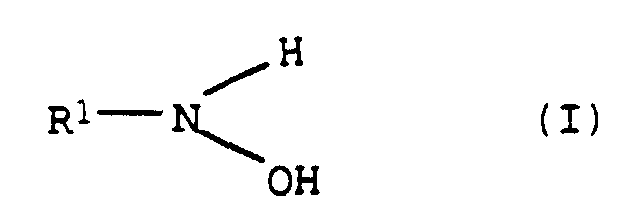
- the present invention relates to a process for the preparation of aromatic or heteroaromatic hydroxylamines of the general formula I.
- R 1 represents an unsubstituted or substituted aryl radical or an unsubstituted or substituted hetaryl radical from the group of the pyridines or quinolines, by hydrogenation of nitro compounds of the general formula II R 1 -NO 2 in which R 1 has the meaning given above, in the presence of a platinum catalyst on an activated carbon support or in the presence of a palladium catalyst doped with sulfur or selenium on an activated carbon support, by carrying out the reaction in the presence of a morpholine compound of the general formula III substituted on the nitrogen atom, wherein R 2 is alkyl radicals with 1 to 5 carbon atoms and R 3 to R 10 are hydrogen atoms or alkyl radicals with 1 to 5 carbon atoms.
- the selectivity is improved by Decreased the reaction rate, which in turn leads to long reaction times. It also has partial poisoning or inactivation of the catalyst by the additives for Consequence that the catalyst usually already after a cycle Has lost activity and needs to be renewed.
- GB-A 1 092 027 describes the catalytic hydrogenation of nitrocyclohexane to N-cyclohexylhydroxylamine in the presence of primary or secondary amines such as Morpholine described. Cyclohexylhydroxylamine is obtained in a yield of 50 to 70% won.
- phenylhydroxylamines Another method of making phenylhydroxylamines is the catalytic hydrogenation of nitroaromatics in the presence of organic nitrogen bases, such as piperidine, pyrrolidine, pyridine u. a., which - based on the feed product - used in excess must be (DE-OS 2 455 238, DE-OS 2 455 887, DE-OS 2 357 370, DE-OS 2 327 412). Those achievable using this procedure Yields are after appropriate processing and cleaning at 80 - 85%.
- the disadvantage is that this variant only relatively simple alkyl and chloronitrobenzenes to the corresponding ones Allow phenylhydroxylamines to hydrogenate. Except for one Connection with a 1,3,4-oxadiazole substituent becomes the hydrogenation more complex systems using this method are not described.
- the object of the present invention was to provide a process for the production of aromatic and heteroaromatic hydroxylamines provide that is easy to do on complicated Systems is applicable and high selectivity and yield having.
- N-alkylmorpholines N-subst. Tetrahydro-1,4-oxazines
- Solvent leads to optimal yields and selectivities, while according to DE-OS 24 55 238 org.
- Nitrogen bases such as pyrrolidines, Piperidines, anilines or pyridines as the best solvents be recommended for this special hydrogenation reaction. Comparative tests (see Examples 1 d - i) clearly show that the N-alkylmorpholines in this special hydrogenation reaction other solvent systems, such as pyrrolidines, piperidines, pyridines and the like. a. are superior. In their gradation, tertiary amines provide better ones Results as secondary amines. Are the least suitable in this case primary amines, since they usually have selectivities ⁇ 80% result.
- nitroaromatics or heteroaromatics required as starting products are easily accessible and their production is multiple and described in detail (see Houben-Weyl, Vol. 10/1, p. 463 - 889 and vol. E 16 d / part 1, pp. 255 - 405).
- Nitro compounds such as 2-methylnitrobenzene, 2-benzylnitrobenzene, 2,3-dichloronitrobenzene, 2-methyl-3-fluoronitrobenzene, 2-methyl-1-nitronaphthalene, 2-chloro-3-nitropyridine, 2-methyl-8-nitroquinoline, as well as more complex compounds that additional structures sensitive to hydrogenation, such as benzyl ether, Oxime ether and keto groups or heteroaromatic substituents have.
- the catalysts used in the process of the invention contain platinum or palladium on a carbon carrier. Using a palladium catalyst, this must be with sulfur or Be doped with selenium in order to obtain sufficient selectivity (see example 1c). Platinum supplies when used after Excellent method according to the invention without additional doping Results. Doping, for example with sulfur, does not result in any significant change in selectivity.
- the Catalysts can be filtered off after a reaction cycle and again without any noticeable loss of activity in the subsequent approach be used. In other processes with additives such as Dimethyl sulfoxide, dimethylaminopyridine or org.
- Phosphorus compounds work (EP 86363, EP 85890, EP 147879), there is in usually a rapid drop in activity due to poisoning of the Catalysts.
- the platinum or palladium content of the catalyst is not critical and can be varied within wide limits.
- the amount of platinum or palladium used is between 0.001 and 1% by weight, preferably between 0.01 and 0.1% by weight, based on the nitro compound.
- the catalyst is used as a powder.
- Other carriers such as Al 2 O 3 , SiO 2 , BaSO 4 lead to significantly poorer results (see Example 1k).
- the choice of the right solvents is of crucial importance for achieving very good yields, since these influence the activity of the catalysts in such a way that a high selectivity in the hydrogenation of nitro compounds to the hydroxylamine derivatives is achieved. According to the invention, these solvents are exclusively tert.
- Amines with a morpholine structure such as 4-methylmorpholine, 4-ethylmorpholine, 4-propylmorpholine, 4-butylmorpholine, 4-isobutylmorpholine, 4-tertiarybutylmorpholine, 4-pentylmorpholine, 4-isopentylmorpholine, 2,4,6-trimethylmorpholine, 2,3, 4,5,6-pentamethylmorpholine, 2,2,4,6,6-pentamethylmorpholine.
- morpholine structure such as 4-methylmorpholine, 4-ethylmorpholine, 4-propylmorpholine, 4-butylmorpholine, 4-isobutylmorpholine, 4-tertiarybutylmorpholine, 4-pentylmorpholine, 4-isopentylmorpholine, 2,4,6-trimethylmorpholine, 2,3, 4,5,6-pentamethylmorpholine, 2,2,4,6,6-pentamethylmorpholine.
- the tert. Amine used in excess d. H. the weight ratio of tert. Is amine to the nitro compound greater than 1.
- the selected temperature range for the partial hydrogenation is between - 20 ° C and + 100 ° C, preferably between - 5 and + 50 ° C.
- a pressure is set, which is between normal pressure and 10 bar overpressure.
- the hydrogen at normal pressure or slightly increased Pressure gassed into the hydrogenation reactor.
- Other solution or diluents, such as alcohols or ethers, must not be present during the hydrogenation because they are a result in a drastic drop in yield (see example 1j).
- the compounds made by the process of the invention can be aryl or hetarylhydroxylamines with the help of Bamberg rearrangement into valuable substituted aromatics or Conversion of heteroaromatics (Houben-Weyl, Methods of Organic Chemistry, vol. 10/1, pp. 1249 - 1251). Furthermore, they represent important Intermediate points for the production of active substances in plant protection products (WO 93/15046).
- reaction discharge was filtered off with animal charcoal, the filtrate on a rotary evaporator (in vacuum at 25 - 30 mbar and 65 ° C bath temperature) concentrated and the residue by treatment with 1.2 1 pentane brought to crystallize.
Landscapes
- Chemical & Material Sciences (AREA)
- Organic Chemistry (AREA)
- Chemical Kinetics & Catalysis (AREA)
- Organic Low-Molecular-Weight Compounds And Preparation Thereof (AREA)
- Low-Molecular Organic Synthesis Reactions Using Catalysts (AREA)
- Pyridine Compounds (AREA)
- Heterocyclic Carbon Compounds Containing A Hetero Ring Having Nitrogen And Oxygen As The Only Ring Hetero Atoms (AREA)
- Quinoline Compounds (AREA)
Description


Ausbeute:
92 % d. Th.
NMR (DMSO-d6, δ in ppm):
8,25 (s, 1H), 7,9 (s, 1H), 7,1 (m, 2H), 6,95 (d, 1H), 6,7 (m, 1H)


Ausbeute:
93,3 % d. Th.
NMR (DMSO-d6, δ in ppm):
8,8 (s, 1H), 8,5 (s, 1H), 7,2 (m, 2H), 7,0 (dd, 1H)

NMR (DMSO-d6, δ in ppm):
8,45 (s, 1H), 8,1 (s, 1H), 7,5 (s, 1H), 7,45 (d, 1H), 7,25 (m, 3H), 7,0 (d, 1H), 6,85 (m, 1H), 5,05 (s, 2H), 4,15 (q, 2H), 2,25 (s, 3H), 2,15 (s, 3H), 1,25 (t, 3H)


Claims (8)
- Verfahren zur Herstellung von aromatischen oder heteroaromatischen Hydroxylaminen der allgemeinen Formel Iin der R1 einen unsubstituierten oder substituierten Arylrest oder einen unsubstituierten oder substituierten Hetarylrest aus der Gruppe der Pyridine oder Chinoline darstellt, durch Hydrierung von Nitroverbindungen der allgemeinen Formel II
 wobei R2 Alkylreste mit 1 bis 5 Kohlenstoffatomen und R3 bis R10 Wasserstoffatome oder Alkylreste mit 1 bis 5 Kohlenstoffatomen bedeuten.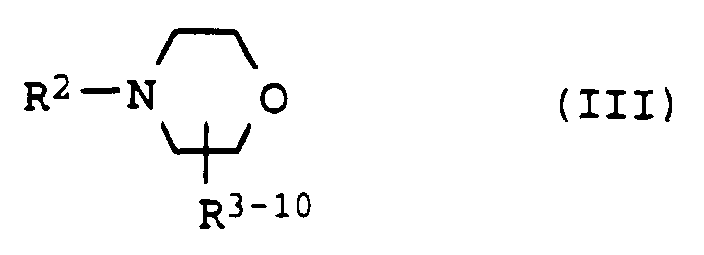
- Verfahren gemäß Anspruch 1, dadurch gekennzeichnet, daß R1 für einen substituierten Arylrest oder Hetarylrest steht, der 1 bis 3 Substituenten R11, R12 und R13 tragen kann, wobei R11, R12 und R13 gleich oder verschieden sein können und für folgende Bedeutung stehen:
Wasserstoff, Halogen, C1-C4-Alkyl, Halo-(C1-C4)-Alkyl, (C1-C4)-Alkoxy, Halo-(C1-C4)-Alkoxy, C1-C4-Alkylthio, (C1-C4)-Alkylcarbonyl, (C1-C4)-Alkyl- (CR14=N-O- (C1-C4)-Alkyl) (C1-C4)-Alkoxycarbonyl, (C1-C4)-Alkylaminocarbonyl, (C1-C4)-Dialkylaminocarbonyl, (C1-C4)-Alkylcarbonylamino, (C1-C4)-Alkylcarbonyl-(C1-C4)-alkylamino, -CH2O-N=C(R15)-C(R16)=N-O-R17, Cyano oder die Gruppe A - B,
wobei- A
- -O-, -S-, -O-CH2-, CH2-O-, -S-CH2-, -CH2-S-, -CH2-O-CO-, -CH2-N(R18)-, -CH=CH-, -CH=N-O-, -CH2-O-N=C(R15)- oder eine Einfachbindung und
- B
- Phenyl, Naphthyl, Pyridinyl, Pyrazinyl, Pyrimidinyl, Pyridazinyl, Pyrazolyl, Imidazolyl, Oxazolyl, Isoxazolyl, Thiazolyl, Isothiazolyl, 1,2,4-Triazolyl, 1,2,3-Triazolyl, Furanyl, Thienyl, Pyrrolyl oder C3-C7-Cycloalkyl bedeutet, wobei B mit 1 - 3 Substituenten R19 substituiert sein kann.
R14 und R18 bedeuten unabhängig voneinander C1-C4-Alkyl, C2-C4-Alkenyl, C2-C4-Alkinyl oder Wasserstoff,R15 und R17 bedeuten Wasserstoff, C1-C4-Alkyl, C1-C4-Alkoxy, Cyano, C1-C4-Alkylthio, Halogen, Cyclopropyl oder Trifluormethyl und R19 bedeutet
Wasserstoff
Halogen, C1-C4-Alkyl, Halo-(C1-C4)-Alkyl, (C1-C4)-Alkoxy, Halo-(C1-C4)-Alkoxy, C1-C4-Alkylthio, (C1-C4)-Alkylcarbonyl, (C1-C4)-Alkyl- (CR14=N-O-(C1-C4)-Alkyl), (C1-C4) -Alkoxycarbonyl, (C1-C4)-Alkylaminocarbonyl, (C1-C4)-Dialkylaminocarbonyl, (C1-C4)-Alkylcarbonylamino, (C1-C4)-Alkylcarbonyl-(C1-C4)-alkylamino, oder Cyano,R16 bedeutet C1-C4-Alkyl, C3-C6-Cycloalkyl, Phenyl, Hetaryl oder Heterocyclyl. - Verfahren gemäß einem der Ansprüche 1 oder 2, dadurch gekennzeichnet, daß als Morpholinverbindung der allgemeinen Formel III 4-Methylmorpholin, 4-Ethylmorpholin, 4-Propylmorpholin, 4-Butylmorpholin, 4-Isobutylmorpholin, 4-Tertiärbutylmorpholin, 4-Pentylmorpholin, 4-Isopentylmorpholin, 2,4,6-Trimethylmorpholin, 2,3,4,5,6-Pentamethylmorpholin oder 2,2,4,6,6-Pentamethylmorpholin verwendet wird.
- Verfahren gemäß einem der Ansprüche 1 bis 3, dadurch gekennzeichnet, daß das Gewichtsverhältnis von Morpholinverbindung zu Nitroverbindung größer als 1 ist.
- Verfahren gemäß einem der Ansprüche 1 bis 4, dadurch gekennzeichnet, daß der Platinkatalysator oder der Palladiumkatalysator in einer Menge von 0,1 bis 15 Gew.-%, bezogen auf den Aktivkohleträger verwendet wird.
- Verfahren gemäß einem der Ansprüche 1 bis 5, dadurch gekennzeichnet, daß der Platinkatalysator oder der Palladiumkatalysator in einer Menge von 0,001 bis 1,0 Gew.-% Platin oder Palladium, bezogen auf die Nitroverbindung verwendet wird.
- Verfahren gemäß einem der Ansprüche 1 bis 6, dadurch gekennzeichnet, daß die Hydrierung bei einer Temperatur von -20°C bis 100°C durchgeführt wird.
- Verfahren gemäß einem der Ansprüche 1 bis 7, dadurch gekennzeichnet, daß die Hydrierung bei einem Druck von Normaldruck bis 10 bar Überdruck durchgeführt wird.
Applications Claiming Priority (3)
| Application Number | Priority Date | Filing Date | Title |
|---|---|---|---|
| DE19502700A DE19502700A1 (de) | 1995-01-28 | 1995-01-28 | Verfahren zur Herstellung von N-Aryl- und N-Hetarylhydroxylaminen |
| DE19502700 | 1995-01-28 | ||
| PCT/EP1996/000170 WO1996022967A1 (de) | 1995-01-28 | 1996-01-17 | Verfahren zur herstellung von n-aryl- und n-hetarylhydroxylaminen |
Publications (2)
| Publication Number | Publication Date |
|---|---|
| EP0805797A1 EP0805797A1 (de) | 1997-11-12 |
| EP0805797B1 true EP0805797B1 (de) | 1999-04-07 |
Family
ID=7752554
Family Applications (1)
| Application Number | Title | Priority Date | Filing Date |
|---|---|---|---|
| EP96900963A Expired - Lifetime EP0805797B1 (de) | 1995-01-28 | 1996-01-17 | Verfahren zur herstellung von n-aryl- und n-hetarylhydroxylaminen |
Country Status (22)
| Country | Link |
|---|---|
| US (1) | US5831093A (de) |
| EP (1) | EP0805797B1 (de) |
| JP (1) | JP3778567B2 (de) |
| KR (1) | KR100391870B1 (de) |
| CN (1) | CN1073553C (de) |
| AR (1) | AR000813A1 (de) |
| AT (1) | ATE178586T1 (de) |
| AU (1) | AU691390B2 (de) |
| BR (1) | BR9606855A (de) |
| CA (1) | CA2211390A1 (de) |
| CZ (1) | CZ289091B6 (de) |
| DE (2) | DE19502700A1 (de) |
| DK (1) | DK0805797T3 (de) |
| ES (1) | ES2129951T3 (de) |
| GR (1) | GR3029933T3 (de) |
| HU (1) | HU220590B1 (de) |
| IL (1) | IL116924A (de) |
| NZ (1) | NZ300198A (de) |
| SK (1) | SK282253B6 (de) |
| TW (1) | TW330928B (de) |
| WO (1) | WO1996022967A1 (de) |
| ZA (1) | ZA96610B (de) |
Families Citing this family (16)
| Publication number | Priority date | Publication date | Assignee | Title |
|---|---|---|---|---|
| US6362380B1 (en) * | 1996-03-13 | 2002-03-26 | Basf Aktiengesellschaft | Preparation of nitrobiphenyls |
| DE19610571A1 (de) * | 1996-03-18 | 1997-09-25 | Basf Ag | Verfahren und Zwischenprodukte zur Herstellung von Pyridyl-4-Fluoranilinen |
| DE19738864A1 (de) * | 1997-09-05 | 1999-03-11 | Basf Ag | Verfahren zur Herstellung N-acylierter (hetero)aromatischer Hydroxylamine |
| AU9264398A (en) * | 1997-09-05 | 1999-03-29 | Basf Aktiengesellschaft | Method for producing (hetero)aromatic hydroxylamines |
| DE19753462A1 (de) * | 1997-12-02 | 1999-06-10 | Consortium Elektrochem Ind | Verfahren zur Herstellung organischer Hydroxylamine |
| CN1331840C (zh) * | 2004-11-11 | 2007-08-15 | 中国科学院大连化学物理研究所 | 一种催化合成苯胲类化合物的方法 |
| CN101663265B (zh) * | 2007-03-27 | 2016-06-08 | 和光纯药工业株式会社 | 芳基羟基胺的制造方法 |
| US8362271B2 (en) | 2009-09-04 | 2013-01-29 | Basf Se | Process for preparing 1-phenylpyrazoles |
| EP2547653B1 (de) | 2010-03-18 | 2015-01-28 | Basf Se | N-Carbomethoxy-N-methoxy-(2-chlormethyl)-aniline, ihre Herstellung und Anwendung als Vorläufer zur Herstellung von 2-(pyrazol-3'-yloxymethylen)-aniliden |
| WO2012038392A1 (en) | 2010-09-21 | 2012-03-29 | Basf Se | Process for preparing substituted n-phenylhydroxylamines |
| CN102430416B (zh) * | 2010-11-16 | 2013-11-06 | 江苏恒祥化工有限责任公司 | 一种用于1,8-二硝基萘催化加氢制备1,8-二氨基萘的催化剂及其制备方法 |
| CN103415508B (zh) * | 2011-03-09 | 2016-08-10 | 巴斯夫欧洲公司 | 制备取代的n-苯基羟胺的方法 |
| CN107673999A (zh) * | 2017-10-30 | 2018-02-09 | 青岛瀚生生物科技股份有限公司 | 制备吡唑醚菌酯中间体的方法 |
| CN108636433B (zh) * | 2018-04-13 | 2021-02-02 | 山西大学 | 一种氮掺杂多孔碳固载的贵金属催化剂及其制备方法和应用 |
| EP3587391A1 (de) | 2018-06-22 | 2020-01-01 | Basf Se | Verfahren zur herstellung von nitrobenzylbromiden |
| CN109331818B (zh) * | 2018-08-25 | 2021-07-27 | 浙江工业大学 | 一种催化加氢催化剂及其制备和在芳香硝基化合物选择性加氢反应中的应用 |
Family Cites Families (8)
| Publication number | Priority date | Publication date | Assignee | Title |
|---|---|---|---|---|
| US3393237A (en) * | 1965-09-22 | 1968-07-16 | Abbott Lab | Preparation of cyclohexylhydroxylamine |
| FR2252337B1 (de) * | 1973-11-26 | 1976-10-01 | Rhone Poulenc Ind | |
| US5166435A (en) * | 1983-12-06 | 1992-11-24 | Akzo N.V. | Process for the preparation of a hydroxylamine |
| EP0147879B1 (de) * | 1983-12-06 | 1987-12-16 | Akzo N.V. | Verfahren zur Herstellung von Hydroxylaminen |
| CA1340939C (en) * | 1987-02-02 | 2000-03-28 | Ryojiro Akashi | Photochromic compound |
| ATE101852T1 (de) * | 1987-12-14 | 1994-03-15 | Grace W R & Co | Hydrierung von nitroalkanen zu hydroxylaminen. |
| BE1007835A3 (nl) * | 1993-12-16 | 1995-10-31 | Dsm Nv | Werkwijze voor de bereiding van n-alkyl-n,o-diacetyl-hydroxylamine. |
| US5646327A (en) * | 1995-12-08 | 1997-07-08 | Eastman Kodak Company | Method for preparing hydroxylamines using vinylic compounds without base neutralization and reaction mixture produced thereby |
-
1995
- 1995-01-28 DE DE19502700A patent/DE19502700A1/de not_active Withdrawn
-
1996
- 1996-01-17 DK DK96900963T patent/DK0805797T3/da active
- 1996-01-17 ES ES96900963T patent/ES2129951T3/es not_active Expired - Lifetime
- 1996-01-17 DE DE59601604T patent/DE59601604D1/de not_active Expired - Lifetime
- 1996-01-17 WO PCT/EP1996/000170 patent/WO1996022967A1/de not_active Ceased
- 1996-01-17 SK SK929-97A patent/SK282253B6/sk unknown
- 1996-01-17 US US08/860,671 patent/US5831093A/en not_active Expired - Lifetime
- 1996-01-17 HU HU9801132A patent/HU220590B1/hu not_active IP Right Cessation
- 1996-01-17 KR KR1019970705112A patent/KR100391870B1/ko not_active Expired - Fee Related
- 1996-01-17 CN CN96191626A patent/CN1073553C/zh not_active Expired - Lifetime
- 1996-01-17 AT AT96900963T patent/ATE178586T1/de not_active IP Right Cessation
- 1996-01-17 AU AU44869/96A patent/AU691390B2/en not_active Ceased
- 1996-01-17 CA CA002211390A patent/CA2211390A1/en not_active Abandoned
- 1996-01-17 JP JP52259396A patent/JP3778567B2/ja not_active Expired - Fee Related
- 1996-01-17 BR BR9606855A patent/BR9606855A/pt not_active IP Right Cessation
- 1996-01-17 EP EP96900963A patent/EP0805797B1/de not_active Expired - Lifetime
- 1996-01-17 CZ CZ19972270A patent/CZ289091B6/cs unknown
- 1996-01-17 NZ NZ300198A patent/NZ300198A/xx unknown
- 1996-01-25 TW TW085100855A patent/TW330928B/zh active
- 1996-01-26 ZA ZA96610A patent/ZA96610B/xx unknown
- 1996-01-26 AR ARP960101168A patent/AR000813A1/es active IP Right Grant
- 1996-01-26 IL IL11692496A patent/IL116924A/xx not_active IP Right Cessation
-
1999
- 1999-04-08 GR GR990400975T patent/GR3029933T3/el unknown
Also Published As
| Publication number | Publication date |
|---|---|
| AU4486996A (en) | 1996-08-14 |
| US5831093A (en) | 1998-11-03 |
| TW330928B (en) | 1998-05-01 |
| IL116924A0 (en) | 1996-05-14 |
| ES2129951T3 (es) | 1999-06-16 |
| ATE178586T1 (de) | 1999-04-15 |
| DE19502700A1 (de) | 1996-08-01 |
| SK92997A3 (en) | 1998-05-06 |
| DE59601604D1 (de) | 1999-05-12 |
| CN1169715A (zh) | 1998-01-07 |
| ZA96610B (en) | 1997-06-26 |
| CN1073553C (zh) | 2001-10-24 |
| SK282253B6 (sk) | 2001-12-03 |
| EP0805797A1 (de) | 1997-11-12 |
| GR3029933T3 (en) | 1999-07-30 |
| WO1996022967A1 (de) | 1996-08-01 |
| HU220590B1 (hu) | 2002-03-28 |
| KR100391870B1 (ko) | 2003-10-17 |
| KR19980701716A (ko) | 1998-06-25 |
| CZ289091B6 (cs) | 2001-10-17 |
| JP3778567B2 (ja) | 2006-05-24 |
| CA2211390A1 (en) | 1996-08-01 |
| MX9705275A (es) | 1997-10-31 |
| BR9606855A (pt) | 1997-11-25 |
| DK0805797T3 (da) | 1999-10-18 |
| JPH10512869A (ja) | 1998-12-08 |
| AR000813A1 (es) | 1997-08-06 |
| IL116924A (en) | 2001-01-28 |
| AU691390B2 (en) | 1998-05-14 |
| HUP9801132A3 (en) | 1998-12-28 |
| NZ300198A (en) | 1999-02-25 |
| HUP9801132A2 (hu) | 1998-08-28 |
| CZ227097A3 (cs) | 1998-02-18 |
Similar Documents
| Publication | Publication Date | Title |
|---|---|---|
| EP1012144B1 (de) | Verfahren zur herstellung (hetero)aromatischer hydroxylamine | |
| EP1664004B1 (de) | Verfahren zur herstellung von 4-(4-aminophenyl)-3-morpholinon | |
| EP0805797A1 (de) | Verfahren zur herstellung von n-aryl- und n-hetarylhydroxylaminen | |
| DE2455887C2 (de) | Verfahren zur Herstellung von chlorierten Phenylhydroxylaminen | |
| EP0678502A1 (de) | Verfahren zur Herstellung von Glykoloylaniliden | |
| EP0012983B1 (de) | Diaminophenylharnstoffe, Verfahren zu ihrer Herstellung und ihre Verwendung zur Herstellung von Aminobenzimidazolonen-(2) | |
| DE2715785C2 (de) | Verfahren zur Herstellung von aromatischen oder heterocyclischen Hydroxylamino- oder Aminoverbindungen | |
| DE2455238A1 (de) | Verfahren zur herstellung aromatischer hydroxylamine durch hydrierung aromatischer nitroderivate | |
| EP0888305B1 (de) | Verfahren und zwischenprodukte zur herstellung von pyridyl-4-fluoranilinen | |
| DE2804263C3 (de) | Verfahren zur Herstellung von Indolin-Derivaten | |
| EP0624567B1 (de) | Derivate des 3-Fluorphenols, Verfahren zu ihrer Herstellung und ihre Verwendung | |
| EP0641764B1 (de) | Verfahren zur Herstellung von Hydroxyalkylaminonitrobenzol-Derivaten | |
| EP0368225B1 (de) | Hydroxylaminderivate | |
| DE10332684B3 (de) | Verfahren zur Herstellung von Bifonazol | |
| DE2854152C2 (de) | ||
| AT407394B (de) | Verfahren zur herstellung von 2,3-pyridindicarbonsäuren | |
| EP0043024B1 (de) | Verfahren zur Herstellung von 5-Aminoisoxazolen | |
| EP0027956A1 (de) | Verfahren zur Herstellung von (1-(4-Chlorbenzoyl)-5-methoxy-2-methyl-3-indol)acetoxyessigsäure | |
| DE2413938C2 (de) | ||
| DE2539364C3 (de) | Verfahren zur Herstellung von Piperidinsulfonamiden | |
| DE2148959C3 (de) | Verfahren zur Herstellung N-substituierter 4-Anilinopiperidine | |
| DE2331044A1 (de) | Diphenylmethan-derivate und verfahren zu deren herstellung | |
| DE3437220C2 (de) | ||
| EP0158299A2 (de) | Substituierte Phenylethylderivate, Verfahren zu ihrer Herstellung und pharmazeutische Mittel | |
| DE2330218A1 (de) | Verfahren zur herstellung von 2h-3isochinolonen |
Legal Events
| Date | Code | Title | Description |
|---|---|---|---|
| PUAI | Public reference made under article 153(3) epc to a published international application that has entered the european phase |
Free format text: ORIGINAL CODE: 0009012 |
|
| 17P | Request for examination filed |
Effective date: 19970703 |
|
| AK | Designated contracting states |
Kind code of ref document: A1 Designated state(s): AT BE CH DE DK ES FR GB GR IE IT LI NL PT SE |
|
| 17Q | First examination report despatched |
Effective date: 19971209 |
|
| GRAG | Despatch of communication of intention to grant |
Free format text: ORIGINAL CODE: EPIDOS AGRA |
|
| GRAG | Despatch of communication of intention to grant |
Free format text: ORIGINAL CODE: EPIDOS AGRA |
|
| GRAH | Despatch of communication of intention to grant a patent |
Free format text: ORIGINAL CODE: EPIDOS IGRA |
|
| GRAH | Despatch of communication of intention to grant a patent |
Free format text: ORIGINAL CODE: EPIDOS IGRA |
|
| GRAA | (expected) grant |
Free format text: ORIGINAL CODE: 0009210 |
|
| AK | Designated contracting states |
Kind code of ref document: B1 Designated state(s): AT BE CH DE DK ES FR GB GR IE IT LI NL PT SE |
|
| REF | Corresponds to: |
Ref document number: 178586 Country of ref document: AT Date of ref document: 19990415 Kind code of ref document: T |
|
| REG | Reference to a national code |
Ref country code: CH Ref legal event code: EP |
|
| REG | Reference to a national code |
Ref country code: IE Ref legal event code: FG4D Free format text: GERMAN |
|
| REF | Corresponds to: |
Ref document number: 59601604 Country of ref document: DE Date of ref document: 19990512 |
|
| GBT | Gb: translation of ep patent filed (gb section 77(6)(a)/1977) |
Effective date: 19990506 |
|
| REG | Reference to a national code |
Ref country code: ES Ref legal event code: FG2A Ref document number: 2129951 Country of ref document: ES Kind code of ref document: T3 |
|
| ET | Fr: translation filed | ||
| REG | Reference to a national code |
Ref country code: PT Ref legal event code: SC4A Free format text: AVAILABILITY OF NATIONAL TRANSLATION Effective date: 19990706 |
|
| REG | Reference to a national code |
Ref country code: DK Ref legal event code: T3 |
|
| PLBE | No opposition filed within time limit |
Free format text: ORIGINAL CODE: 0009261 |
|
| STAA | Information on the status of an ep patent application or granted ep patent |
Free format text: STATUS: NO OPPOSITION FILED WITHIN TIME LIMIT |
|
| 26N | No opposition filed | ||
| REG | Reference to a national code |
Ref country code: GB Ref legal event code: IF02 |
|
| PGFP | Annual fee paid to national office [announced via postgrant information from national office to epo] |
Ref country code: SE Payment date: 20021213 Year of fee payment: 8 |
|
| PGFP | Annual fee paid to national office [announced via postgrant information from national office to epo] |
Ref country code: PT Payment date: 20021227 Year of fee payment: 8 Ref country code: GR Payment date: 20021227 Year of fee payment: 8 |
|
| PG25 | Lapsed in a contracting state [announced via postgrant information from national office to epo] |
Ref country code: SE Free format text: LAPSE BECAUSE OF NON-PAYMENT OF DUE FEES Effective date: 20040118 |
|
| PG25 | Lapsed in a contracting state [announced via postgrant information from national office to epo] |
Ref country code: PT Free format text: LAPSE BECAUSE OF NON-PAYMENT OF DUE FEES Effective date: 20040731 |
|
| PG25 | Lapsed in a contracting state [announced via postgrant information from national office to epo] |
Ref country code: GR Free format text: LAPSE BECAUSE OF NON-PAYMENT OF DUE FEES Effective date: 20040804 |
|
| EUG | Se: european patent has lapsed | ||
| PGFP | Annual fee paid to national office [announced via postgrant information from national office to epo] |
Ref country code: IE Payment date: 20100118 Year of fee payment: 15 Ref country code: ES Payment date: 20100128 Year of fee payment: 15 Ref country code: DK Payment date: 20100114 Year of fee payment: 15 Ref country code: CH Payment date: 20100113 Year of fee payment: 15 |
|
| PGFP | Annual fee paid to national office [announced via postgrant information from national office to epo] |
Ref country code: IT Payment date: 20100118 Year of fee payment: 15 |
|
| PGFP | Annual fee paid to national office [announced via postgrant information from national office to epo] |
Ref country code: BE Payment date: 20100125 Year of fee payment: 15 Ref country code: AT Payment date: 20100113 Year of fee payment: 15 |
|
| PGFP | Annual fee paid to national office [announced via postgrant information from national office to epo] |
Ref country code: NL Payment date: 20100101 Year of fee payment: 15 |
|
| BERE | Be: lapsed |
Owner name: *BASF A.G. Effective date: 20110131 |
|
| REG | Reference to a national code |
Ref country code: NL Ref legal event code: V1 Effective date: 20110801 |
|
| REG | Reference to a national code |
Ref country code: DK Ref legal event code: EBP |
|
| REG | Reference to a national code |
Ref country code: CH Ref legal event code: PL |
|
| REG | Reference to a national code |
Ref country code: IE Ref legal event code: MM4A |
|
| PG25 | Lapsed in a contracting state [announced via postgrant information from national office to epo] |
Ref country code: LI Free format text: LAPSE BECAUSE OF NON-PAYMENT OF DUE FEES Effective date: 20110131 Ref country code: CH Free format text: LAPSE BECAUSE OF NON-PAYMENT OF DUE FEES Effective date: 20110131 |
|
| PG25 | Lapsed in a contracting state [announced via postgrant information from national office to epo] |
Ref country code: AT Free format text: LAPSE BECAUSE OF NON-PAYMENT OF DUE FEES Effective date: 20110117 Ref country code: BE Free format text: LAPSE BECAUSE OF NON-PAYMENT OF DUE FEES Effective date: 20110131 |
|
| PG25 | Lapsed in a contracting state [announced via postgrant information from national office to epo] |
Ref country code: IT Free format text: LAPSE BECAUSE OF NON-PAYMENT OF DUE FEES Effective date: 20110117 Ref country code: NL Free format text: LAPSE BECAUSE OF NON-PAYMENT OF DUE FEES Effective date: 20110801 |
|
| PG25 | Lapsed in a contracting state [announced via postgrant information from national office to epo] |
Ref country code: IE Free format text: LAPSE BECAUSE OF NON-PAYMENT OF DUE FEES Effective date: 20110117 |
|
| REG | Reference to a national code |
Ref country code: ES Ref legal event code: FD2A Effective date: 20120220 |
|
| PG25 | Lapsed in a contracting state [announced via postgrant information from national office to epo] |
Ref country code: ES Free format text: LAPSE BECAUSE OF NON-PAYMENT OF DUE FEES Effective date: 20110118 |
|
| REG | Reference to a national code |
Ref country code: FR Ref legal event code: PLFP Year of fee payment: 20 |
|
| PGFP | Annual fee paid to national office [announced via postgrant information from national office to epo] |
Ref country code: FR Payment date: 20150130 Year of fee payment: 20 Ref country code: GB Payment date: 20150202 Year of fee payment: 20 |
|
| PGFP | Annual fee paid to national office [announced via postgrant information from national office to epo] |
Ref country code: DE Payment date: 20150331 Year of fee payment: 20 |
|
| REG | Reference to a national code |
Ref country code: DE Ref legal event code: R071 Ref document number: 59601604 Country of ref document: DE |
|
| REG | Reference to a national code |
Ref country code: GB Ref legal event code: PE20 Expiry date: 20160116 |
|
| PG25 | Lapsed in a contracting state [announced via postgrant information from national office to epo] |
Ref country code: GB Free format text: LAPSE BECAUSE OF EXPIRATION OF PROTECTION Effective date: 20160116 |