EP0654213B1 - Composite plastic film and greenhouse built therewith - Google Patents
Composite plastic film and greenhouse built therewith Download PDFInfo
- Publication number
- EP0654213B1 EP0654213B1 EP94118011A EP94118011A EP0654213B1 EP 0654213 B1 EP0654213 B1 EP 0654213B1 EP 94118011 A EP94118011 A EP 94118011A EP 94118011 A EP94118011 A EP 94118011A EP 0654213 B1 EP0654213 B1 EP 0654213B1
- Authority
- EP
- European Patent Office
- Prior art keywords
- greenhouse
- film
- substrate film
- overlayer
- transparent
- Prior art date
- Legal status (The legal status is an assumption and is not a legal conclusion. Google has not performed a legal analysis and makes no representation as to the accuracy of the status listed.)
- Expired - Lifetime
Links
- 239000002985 plastic film Substances 0.000 title claims abstract description 42
- 239000002131 composite material Substances 0.000 title claims abstract description 40
- 229920006255 plastic film Polymers 0.000 title claims abstract description 40
- 239000000758 substrate Substances 0.000 claims abstract description 59
- 230000005855 radiation Effects 0.000 claims abstract description 34
- 229920005992 thermoplastic resin Polymers 0.000 claims abstract description 14
- 239000002952 polymeric resin Substances 0.000 claims abstract description 8
- 229920003002 synthetic resin Polymers 0.000 claims abstract description 8
- 239000000463 material Substances 0.000 claims description 19
- -1 polyethylene terephthalate Polymers 0.000 claims description 16
- 229920005989 resin Polymers 0.000 claims description 15
- 239000011347 resin Substances 0.000 claims description 15
- PPBRXRYQALVLMV-UHFFFAOYSA-N Styrene Chemical compound C=CC1=CC=CC=C1 PPBRXRYQALVLMV-UHFFFAOYSA-N 0.000 claims description 12
- 239000011342 resin composition Substances 0.000 claims description 12
- 229920000915 polyvinyl chloride Polymers 0.000 claims description 11
- 239000004800 polyvinyl chloride Substances 0.000 claims description 10
- 229920001577 copolymer Polymers 0.000 claims description 7
- SMZOUWXMTYCWNB-UHFFFAOYSA-N 2-(2-methoxy-5-methylphenyl)ethanamine Chemical compound COC1=CC=C(C)C=C1CCN SMZOUWXMTYCWNB-UHFFFAOYSA-N 0.000 claims description 4
- NIXOWILDQLNWCW-UHFFFAOYSA-N 2-Propenoic acid Natural products OC(=O)C=C NIXOWILDQLNWCW-UHFFFAOYSA-N 0.000 claims description 4
- 239000004014 plasticizer Substances 0.000 claims description 4
- 238000010276 construction Methods 0.000 claims description 3
- 229920003229 poly(methyl methacrylate) Polymers 0.000 claims description 3
- 229920000139 polyethylene terephthalate Polymers 0.000 claims description 3
- 229920001707 polybutylene terephthalate Polymers 0.000 claims description 2
- 239000005020 polyethylene terephthalate Substances 0.000 claims description 2
- 238000006116 polymerization reaction Methods 0.000 claims description 2
- 125000005907 alkyl ester group Chemical group 0.000 claims 1
- 239000007795 chemical reaction product Substances 0.000 claims 1
- 229920013716 polyethylene resin Polymers 0.000 claims 1
- 239000004926 polymethyl methacrylate Substances 0.000 claims 1
- 230000000694 effects Effects 0.000 abstract description 9
- 230000001747 exhibiting effect Effects 0.000 abstract description 4
- 230000002596 correlated effect Effects 0.000 abstract 1
- 239000010410 layer Substances 0.000 description 40
- 238000012360 testing method Methods 0.000 description 19
- 239000011248 coating agent Substances 0.000 description 12
- 238000000576 coating method Methods 0.000 description 12
- 230000003247 decreasing effect Effects 0.000 description 11
- 241000196324 Embryophyta Species 0.000 description 9
- 238000005192 partition Methods 0.000 description 8
- 239000000047 product Substances 0.000 description 7
- XEKOWRVHYACXOJ-UHFFFAOYSA-N Ethyl acetate Chemical compound CCOC(C)=O XEKOWRVHYACXOJ-UHFFFAOYSA-N 0.000 description 6
- KFZMGEQAYNKOFK-UHFFFAOYSA-N Isopropanol Chemical compound CC(C)O KFZMGEQAYNKOFK-UHFFFAOYSA-N 0.000 description 6
- 239000012530 fluid Substances 0.000 description 6
- 239000000088 plastic resin Substances 0.000 description 6
- 239000000654 additive Substances 0.000 description 5
- 239000003795 chemical substances by application Substances 0.000 description 5
- 238000000034 method Methods 0.000 description 5
- 238000012546 transfer Methods 0.000 description 5
- 230000005484 gravity Effects 0.000 description 4
- 239000000203 mixture Substances 0.000 description 4
- 235000015802 Lactuca sativa var crispa Nutrition 0.000 description 3
- 240000004201 Lactuca sativa var. crispa Species 0.000 description 3
- OKKJLVBELUTLKV-UHFFFAOYSA-N Methanol Chemical compound OC OKKJLVBELUTLKV-UHFFFAOYSA-N 0.000 description 3
- 239000004698 Polyethylene Substances 0.000 description 3
- YXFVVABEGXRONW-UHFFFAOYSA-N Toluene Chemical compound CC1=CC=CC=C1 YXFVVABEGXRONW-UHFFFAOYSA-N 0.000 description 3
- 239000006096 absorbing agent Substances 0.000 description 3
- 238000001816 cooling Methods 0.000 description 3
- 239000012792 core layer Substances 0.000 description 3
- 238000003475 lamination Methods 0.000 description 3
- 229920000573 polyethylene Polymers 0.000 description 3
- NLHHRLWOUZZQLW-UHFFFAOYSA-N Acrylonitrile Chemical compound C=CC#N NLHHRLWOUZZQLW-UHFFFAOYSA-N 0.000 description 2
- MQIUGAXCHLFZKX-UHFFFAOYSA-N Di-n-octyl phthalate Chemical compound CCCCCCCCOC(=O)C1=CC=CC=C1C(=O)OCCCCCCCC MQIUGAXCHLFZKX-UHFFFAOYSA-N 0.000 description 2
- QIGBRXMKCJKVMJ-UHFFFAOYSA-N Hydroquinone Chemical compound OC1=CC=C(O)C=C1 QIGBRXMKCJKVMJ-UHFFFAOYSA-N 0.000 description 2
- VYPSYNLAJGMNEJ-UHFFFAOYSA-N Silicium dioxide Chemical compound O=[Si]=O VYPSYNLAJGMNEJ-UHFFFAOYSA-N 0.000 description 2
- GWEVSGVZZGPLCZ-UHFFFAOYSA-N Titan oxide Chemical compound O=[Ti]=O GWEVSGVZZGPLCZ-UHFFFAOYSA-N 0.000 description 2
- 238000010521 absorption reaction Methods 0.000 description 2
- 230000000996 additive effect Effects 0.000 description 2
- WNLRTRBMVRJNCN-UHFFFAOYSA-N adipic acid Chemical class OC(=O)CCCCC(O)=O WNLRTRBMVRJNCN-UHFFFAOYSA-N 0.000 description 2
- 239000002216 antistatic agent Substances 0.000 description 2
- 239000012298 atmosphere Substances 0.000 description 2
- 230000005540 biological transmission Effects 0.000 description 2
- 239000003086 colorant Substances 0.000 description 2
- IPKKHRVROFYTEK-UHFFFAOYSA-N dipentyl phthalate Chemical compound CCCCCOC(=O)C1=CC=CC=C1C(=O)OCCCCC IPKKHRVROFYTEK-UHFFFAOYSA-N 0.000 description 2
- MCPKSFINULVDNX-UHFFFAOYSA-N drometrizole Chemical compound CC1=CC=C(O)C(N2N=C3C=CC=CC3=N2)=C1 MCPKSFINULVDNX-UHFFFAOYSA-N 0.000 description 2
- 238000001035 drying Methods 0.000 description 2
- 235000013399 edible fruits Nutrition 0.000 description 2
- 229920006248 expandable polystyrene Polymers 0.000 description 2
- 238000001125 extrusion Methods 0.000 description 2
- 239000012760 heat stabilizer Substances 0.000 description 2
- 238000011835 investigation Methods 0.000 description 2
- 239000000314 lubricant Substances 0.000 description 2
- 229920003023 plastic Polymers 0.000 description 2
- 239000004033 plastic Substances 0.000 description 2
- 229920002545 silicone oil Polymers 0.000 description 2
- 230000002269 spontaneous effect Effects 0.000 description 2
- 235000013311 vegetables Nutrition 0.000 description 2
- CJJXHKDWGQADHB-DPMBMXLASA-N (z,12r)-12-hydroxyoctadec-9-enoic acid;propane-1,2,3-triol Chemical compound OCC(O)CO.CCCCCC[C@@H](O)C\C=C/CCCCCCCC(O)=O CJJXHKDWGQADHB-DPMBMXLASA-N 0.000 description 1
- RLPSARLYTKXVSE-UHFFFAOYSA-N 1-(1,3-thiazol-5-yl)ethanamine Chemical compound CC(N)C1=CN=CS1 RLPSARLYTKXVSE-UHFFFAOYSA-N 0.000 description 1
- LHPPDQUVECZQSW-UHFFFAOYSA-N 2-(benzotriazol-2-yl)-4,6-ditert-butylphenol Chemical compound CC(C)(C)C1=CC(C(C)(C)C)=CC(N2N=C3C=CC=CC3=N2)=C1O LHPPDQUVECZQSW-UHFFFAOYSA-N 0.000 description 1
- WXHVQMGINBSVAY-UHFFFAOYSA-N 2-(benzotriazol-2-yl)-4-tert-butylphenol Chemical compound CC(C)(C)C1=CC=C(O)C(N2N=C3C=CC=CC3=N2)=C1 WXHVQMGINBSVAY-UHFFFAOYSA-N 0.000 description 1
- RTIRICWZVNTCND-UHFFFAOYSA-N 3-pentoxycarbonylbut-3-enoic acid Chemical compound CCCCCOC(=O)C(=C)CC(O)=O RTIRICWZVNTCND-UHFFFAOYSA-N 0.000 description 1
- SIXWIUJQBBANGK-UHFFFAOYSA-N 4-(4-fluorophenyl)-1h-pyrazol-5-amine Chemical compound N1N=CC(C=2C=CC(F)=CC=2)=C1N SIXWIUJQBBANGK-UHFFFAOYSA-N 0.000 description 1
- VVAAYFMMXYRORI-UHFFFAOYSA-N 4-butoxy-2-methylidene-4-oxobutanoic acid Chemical compound CCCCOC(=O)CC(=C)C(O)=O VVAAYFMMXYRORI-UHFFFAOYSA-N 0.000 description 1
- YMCIVAPEOZDEGH-UHFFFAOYSA-N 5-chloro-2,3-dihydro-1h-indole Chemical compound ClC1=CC=C2NCCC2=C1 YMCIVAPEOZDEGH-UHFFFAOYSA-N 0.000 description 1
- 235000005254 Allium ampeloprasum Nutrition 0.000 description 1
- 240000006108 Allium ampeloprasum Species 0.000 description 1
- 240000007087 Apium graveolens Species 0.000 description 1
- 235000015849 Apium graveolens Dulce Group Nutrition 0.000 description 1
- 235000010591 Appio Nutrition 0.000 description 1
- 235000000832 Ayote Nutrition 0.000 description 1
- 240000007124 Brassica oleracea Species 0.000 description 1
- 235000003899 Brassica oleracea var acephala Nutrition 0.000 description 1
- 235000011301 Brassica oleracea var capitata Nutrition 0.000 description 1
- 235000001169 Brassica oleracea var oleracea Nutrition 0.000 description 1
- DKPFZGUDAPQIHT-UHFFFAOYSA-N Butyl acetate Natural products CCCCOC(C)=O DKPFZGUDAPQIHT-UHFFFAOYSA-N 0.000 description 1
- 235000008534 Capsicum annuum var annuum Nutrition 0.000 description 1
- 240000008384 Capsicum annuum var. annuum Species 0.000 description 1
- 235000007516 Chrysanthemum Nutrition 0.000 description 1
- 240000005250 Chrysanthemum indicum Species 0.000 description 1
- 244000241235 Citrullus lanatus Species 0.000 description 1
- 235000012828 Citrullus lanatus var citroides Nutrition 0.000 description 1
- 241000219112 Cucumis Species 0.000 description 1
- 235000015510 Cucumis melo subsp melo Nutrition 0.000 description 1
- 240000008067 Cucumis sativus Species 0.000 description 1
- 235000009849 Cucumis sativus Nutrition 0.000 description 1
- 241000219122 Cucurbita Species 0.000 description 1
- 235000009854 Cucurbita moschata Nutrition 0.000 description 1
- 235000009804 Cucurbita pepo subsp pepo Nutrition 0.000 description 1
- 239000004803 Di-2ethylhexylphthalate Substances 0.000 description 1
- 240000006497 Dianthus caryophyllus Species 0.000 description 1
- 235000009355 Dianthus caryophyllus Nutrition 0.000 description 1
- XTJFFFGAUHQWII-UHFFFAOYSA-N Dibutyl adipate Chemical compound CCCCOC(=O)CCCCC(=O)OCCCC XTJFFFGAUHQWII-UHFFFAOYSA-N 0.000 description 1
- 240000009088 Fragaria x ananassa Species 0.000 description 1
- 235000003228 Lactuca sativa Nutrition 0.000 description 1
- 240000008415 Lactuca sativa Species 0.000 description 1
- 235000007688 Lycopersicon esculentum Nutrition 0.000 description 1
- 241000218922 Magnoliophyta Species 0.000 description 1
- 229920002292 Nylon 6 Polymers 0.000 description 1
- 240000004713 Pisum sativum Species 0.000 description 1
- 235000010582 Pisum sativum Nutrition 0.000 description 1
- 229920012485 Plasticized Polyvinyl chloride Polymers 0.000 description 1
- 229920002319 Poly(methyl acrylate) Polymers 0.000 description 1
- 239000004721 Polyphenylene oxide Substances 0.000 description 1
- 239000004743 Polypropylene Substances 0.000 description 1
- 239000004793 Polystyrene Substances 0.000 description 1
- 229920001328 Polyvinylidene chloride Polymers 0.000 description 1
- 235000004789 Rosa xanthina Nutrition 0.000 description 1
- 241000109329 Rosa xanthina Species 0.000 description 1
- 240000003768 Solanum lycopersicum Species 0.000 description 1
- 244000061458 Solanum melongena Species 0.000 description 1
- 235000002597 Solanum melongena Nutrition 0.000 description 1
- 235000009337 Spinacia oleracea Nutrition 0.000 description 1
- 244000300264 Spinacia oleracea Species 0.000 description 1
- 235000021355 Stearic acid Nutrition 0.000 description 1
- YSMRWXYRXBRSND-UHFFFAOYSA-N TOTP Chemical compound CC1=CC=CC=C1OP(=O)(OC=1C(=CC=CC=1)C)OC1=CC=CC=C1C YSMRWXYRXBRSND-UHFFFAOYSA-N 0.000 description 1
- 241000722921 Tulipa gesneriana Species 0.000 description 1
- UKLDJPRMSDWDSL-UHFFFAOYSA-L [dibutyl(dodecanoyloxy)stannyl] dodecanoate Chemical compound CCCCCCCCCCCC(=O)O[Sn](CCCC)(CCCC)OC(=O)CCCCCCCCCCC UKLDJPRMSDWDSL-UHFFFAOYSA-L 0.000 description 1
- 125000005396 acrylic acid ester group Chemical group 0.000 description 1
- 239000012790 adhesive layer Substances 0.000 description 1
- 230000002411 adverse Effects 0.000 description 1
- 238000013019 agitation Methods 0.000 description 1
- 239000012754 barrier agent Substances 0.000 description 1
- BJQHLKABXJIVAM-UHFFFAOYSA-N bis(2-ethylhexyl) phthalate Chemical compound CCCCC(CC)COC(=O)C1=CC=CC=C1C(=O)OCC(CC)CCCC BJQHLKABXJIVAM-UHFFFAOYSA-N 0.000 description 1
- SODJJEXAWOSSON-UHFFFAOYSA-N bis(2-hydroxy-4-methoxyphenyl)methanone Chemical compound OC1=CC(OC)=CC=C1C(=O)C1=CC=C(OC)C=C1O SODJJEXAWOSSON-UHFFFAOYSA-N 0.000 description 1
- ZFMQKOWCDKKBIF-UHFFFAOYSA-N bis(3,5-difluorophenyl)phosphane Chemical compound FC1=CC(F)=CC(PC=2C=C(F)C=C(F)C=2)=C1 ZFMQKOWCDKKBIF-UHFFFAOYSA-N 0.000 description 1
- 238000003490 calendering Methods 0.000 description 1
- 238000005266 casting Methods 0.000 description 1
- 239000013065 commercial product Substances 0.000 description 1
- XCJYREBRNVKWGJ-UHFFFAOYSA-N copper(II) phthalocyanine Chemical compound [Cu+2].C12=CC=CC=C2C(N=C2[N-]C(C3=CC=CC=C32)=N2)=NC1=NC([C]1C=CC=CC1=1)=NC=1N=C1[C]3C=CC=CC3=C2[N-]1 XCJYREBRNVKWGJ-UHFFFAOYSA-N 0.000 description 1
- JBSLOWBPDRZSMB-FPLPWBNLSA-N dibutyl (z)-but-2-enedioate Chemical compound CCCCOC(=O)\C=C/C(=O)OCCCC JBSLOWBPDRZSMB-FPLPWBNLSA-N 0.000 description 1
- WCRDXYSYPCEIAK-UHFFFAOYSA-N dibutylstannane Chemical compound CCCC[SnH2]CCCC WCRDXYSYPCEIAK-UHFFFAOYSA-N 0.000 description 1
- 239000012975 dibutyltin dilaurate Substances 0.000 description 1
- 125000000118 dimethyl group Chemical group [H]C([H])([H])* 0.000 description 1
- 238000009826 distribution Methods 0.000 description 1
- 150000002148 esters Chemical class 0.000 description 1
- 238000002474 experimental method Methods 0.000 description 1
- 230000002349 favourable effect Effects 0.000 description 1
- 239000000945 filler Substances 0.000 description 1
- 239000011521 glass Substances 0.000 description 1
- 235000021384 green leafy vegetables Nutrition 0.000 description 1
- 230000009036 growth inhibition Effects 0.000 description 1
- FUZZWVXGSFPDMH-UHFFFAOYSA-N hexanoic acid Chemical compound CCCCCC(O)=O FUZZWVXGSFPDMH-UHFFFAOYSA-N 0.000 description 1
- 229920006262 high density polyethylene film Polymers 0.000 description 1
- 238000003898 horticulture Methods 0.000 description 1
- 230000002401 inhibitory effect Effects 0.000 description 1
- LVHBHZANLOWSRM-UHFFFAOYSA-N itaconic acid Chemical class OC(=O)CC(=C)C(O)=O LVHBHZANLOWSRM-UHFFFAOYSA-N 0.000 description 1
- 229940057995 liquid paraffin Drugs 0.000 description 1
- 150000002688 maleic acid derivatives Chemical class 0.000 description 1
- 238000012544 monitoring process Methods 0.000 description 1
- 238000010137 moulding (plastic) Methods 0.000 description 1
- QIQXTHQIDYTFRH-UHFFFAOYSA-N octadecanoic acid Chemical compound CCCCCCCCCCCCCCCCCC(O)=O QIQXTHQIDYTFRH-UHFFFAOYSA-N 0.000 description 1
- OQCDKBAXFALNLD-UHFFFAOYSA-N octadecanoic acid Natural products CCCCCCCC(C)CCCCCCCCC(O)=O OQCDKBAXFALNLD-UHFFFAOYSA-N 0.000 description 1
- DXGLGDHPHMLXJC-UHFFFAOYSA-N oxybenzone Chemical compound OC1=CC(OC)=CC=C1C(=O)C1=CC=CC=C1 DXGLGDHPHMLXJC-UHFFFAOYSA-N 0.000 description 1
- XNGIFLGASWRNHJ-UHFFFAOYSA-N phthalic acid Chemical class OC(=O)C1=CC=CC=C1C(O)=O XNGIFLGASWRNHJ-UHFFFAOYSA-N 0.000 description 1
- JQCXWCOOWVGKMT-UHFFFAOYSA-N phthalic acid diheptyl ester Natural products CCCCCCCOC(=O)C1=CC=CC=C1C(=O)OCCCCCCC JQCXWCOOWVGKMT-UHFFFAOYSA-N 0.000 description 1
- IEQIEDJGQAUEQZ-UHFFFAOYSA-N phthalocyanine Chemical compound N1C(N=C2C3=CC=CC=C3C(N=C3C4=CC=CC=C4C(=N4)N3)=N2)=C(C=CC=C2)C2=C1N=C1C2=CC=CC=C2C4=N1 IEQIEDJGQAUEQZ-UHFFFAOYSA-N 0.000 description 1
- 230000008635 plant growth Effects 0.000 description 1
- 229920000058 polyacrylate Polymers 0.000 description 1
- 229920001225 polyester resin Polymers 0.000 description 1
- 239000004645 polyester resin Substances 0.000 description 1
- 229920000570 polyether Polymers 0.000 description 1
- 229920000642 polymer Polymers 0.000 description 1
- 229920002959 polymer blend Polymers 0.000 description 1
- 229920005672 polyolefin resin Polymers 0.000 description 1
- 229920001155 polypropylene Polymers 0.000 description 1
- 229920001296 polysiloxane Polymers 0.000 description 1
- 229920002223 polystyrene Polymers 0.000 description 1
- 229920002689 polyvinyl acetate Polymers 0.000 description 1
- 239000005033 polyvinylidene chloride Substances 0.000 description 1
- 229940088417 precipitated calcium carbonate Drugs 0.000 description 1
- 239000011241 protective layer Substances 0.000 description 1
- 235000015136 pumpkin Nutrition 0.000 description 1
- 150000003839 salts Chemical class 0.000 description 1
- 239000000377 silicon dioxide Substances 0.000 description 1
- 239000011877 solvent mixture Substances 0.000 description 1
- 235000012424 soybean oil Nutrition 0.000 description 1
- 239000003549 soybean oil Substances 0.000 description 1
- 238000003892 spreading Methods 0.000 description 1
- 239000008117 stearic acid Substances 0.000 description 1
- 235000021012 strawberries Nutrition 0.000 description 1
- 239000004094 surface-active agent Substances 0.000 description 1
- 239000004408 titanium dioxide Substances 0.000 description 1
- 239000012780 transparent material Substances 0.000 description 1
- 239000006097 ultraviolet radiation absorber Substances 0.000 description 1
- 238000009423 ventilation Methods 0.000 description 1
- 239000001993 wax Substances 0.000 description 1
Images

Classifications
-
- B—PERFORMING OPERATIONS; TRANSPORTING
- B32—LAYERED PRODUCTS
- B32B—LAYERED PRODUCTS, i.e. PRODUCTS BUILT-UP OF STRATA OF FLAT OR NON-FLAT, e.g. CELLULAR OR HONEYCOMB, FORM
- B32B7/00—Layered products characterised by the relation between layers; Layered products characterised by the relative orientation of features between layers, or by the relative values of a measurable parameter between layers, i.e. products comprising layers having different physical, chemical or physicochemical properties; Layered products characterised by the interconnection of layers
- B32B7/02—Physical, chemical or physicochemical properties
-
- A—HUMAN NECESSITIES
- A01—AGRICULTURE; FORESTRY; ANIMAL HUSBANDRY; HUNTING; TRAPPING; FISHING
- A01G—HORTICULTURE; CULTIVATION OF VEGETABLES, FLOWERS, RICE, FRUIT, VINES, HOPS OR SEAWEED; FORESTRY; WATERING
- A01G9/00—Cultivation in receptacles, forcing-frames or greenhouses; Edging for beds, lawn or the like
- A01G9/14—Greenhouses
- A01G9/1407—Greenhouses of flexible synthetic material
- A01G9/1415—Greenhouses of flexible synthetic material with double or multiple walls
-
- A—HUMAN NECESSITIES
- A01—AGRICULTURE; FORESTRY; ANIMAL HUSBANDRY; HUNTING; TRAPPING; FISHING
- A01G—HORTICULTURE; CULTIVATION OF VEGETABLES, FLOWERS, RICE, FRUIT, VINES, HOPS OR SEAWEED; FORESTRY; WATERING
- A01G9/00—Cultivation in receptacles, forcing-frames or greenhouses; Edging for beds, lawn or the like
- A01G9/14—Greenhouses
- A01G9/1438—Covering materials therefor; Materials for protective coverings used for soil and plants, e.g. films, canopies, tunnels or cloches
-
- A—HUMAN NECESSITIES
- A01—AGRICULTURE; FORESTRY; ANIMAL HUSBANDRY; HUNTING; TRAPPING; FISHING
- A01G—HORTICULTURE; CULTIVATION OF VEGETABLES, FLOWERS, RICE, FRUIT, VINES, HOPS OR SEAWEED; FORESTRY; WATERING
- A01G9/00—Cultivation in receptacles, forcing-frames or greenhouses; Edging for beds, lawn or the like
- A01G9/14—Greenhouses
- A01G9/1469—Greenhouses with double or multiple walls
-
- B—PERFORMING OPERATIONS; TRANSPORTING
- B32—LAYERED PRODUCTS
- B32B—LAYERED PRODUCTS, i.e. PRODUCTS BUILT-UP OF STRATA OF FLAT OR NON-FLAT, e.g. CELLULAR OR HONEYCOMB, FORM
- B32B27/00—Layered products comprising a layer of synthetic resin
- B32B27/06—Layered products comprising a layer of synthetic resin as the main or only constituent of a layer, which is next to another layer of the same or of a different material
- B32B27/08—Layered products comprising a layer of synthetic resin as the main or only constituent of a layer, which is next to another layer of the same or of a different material of synthetic resin
-
- B—PERFORMING OPERATIONS; TRANSPORTING
- B32—LAYERED PRODUCTS
- B32B—LAYERED PRODUCTS, i.e. PRODUCTS BUILT-UP OF STRATA OF FLAT OR NON-FLAT, e.g. CELLULAR OR HONEYCOMB, FORM
- B32B27/00—Layered products comprising a layer of synthetic resin
- B32B27/30—Layered products comprising a layer of synthetic resin comprising vinyl (co)polymers; comprising acrylic (co)polymers
- B32B27/304—Layered products comprising a layer of synthetic resin comprising vinyl (co)polymers; comprising acrylic (co)polymers comprising vinyl halide (co)polymers, e.g. PVC, PVDC, PVF, PVDF
-
- B—PERFORMING OPERATIONS; TRANSPORTING
- B32—LAYERED PRODUCTS
- B32B—LAYERED PRODUCTS, i.e. PRODUCTS BUILT-UP OF STRATA OF FLAT OR NON-FLAT, e.g. CELLULAR OR HONEYCOMB, FORM
- B32B2307/00—Properties of the layers or laminate
- B32B2307/30—Properties of the layers or laminate having particular thermal properties
-
- B—PERFORMING OPERATIONS; TRANSPORTING
- B32—LAYERED PRODUCTS
- B32B—LAYERED PRODUCTS, i.e. PRODUCTS BUILT-UP OF STRATA OF FLAT OR NON-FLAT, e.g. CELLULAR OR HONEYCOMB, FORM
- B32B2410/00—Agriculture-related articles
-
- Y—GENERAL TAGGING OF NEW TECHNOLOGICAL DEVELOPMENTS; GENERAL TAGGING OF CROSS-SECTIONAL TECHNOLOGIES SPANNING OVER SEVERAL SECTIONS OF THE IPC; TECHNICAL SUBJECTS COVERED BY FORMER USPC CROSS-REFERENCE ART COLLECTIONS [XRACs] AND DIGESTS
- Y02—TECHNOLOGIES OR APPLICATIONS FOR MITIGATION OR ADAPTATION AGAINST CLIMATE CHANGE
- Y02A—TECHNOLOGIES FOR ADAPTATION TO CLIMATE CHANGE
- Y02A40/00—Adaptation technologies in agriculture, forestry, livestock or agroalimentary production
- Y02A40/10—Adaptation technologies in agriculture, forestry, livestock or agroalimentary production in agriculture
- Y02A40/25—Greenhouse technology, e.g. cooling systems therefor
-
- Y—GENERAL TAGGING OF NEW TECHNOLOGICAL DEVELOPMENTS; GENERAL TAGGING OF CROSS-SECTIONAL TECHNOLOGIES SPANNING OVER SEVERAL SECTIONS OF THE IPC; TECHNICAL SUBJECTS COVERED BY FORMER USPC CROSS-REFERENCE ART COLLECTIONS [XRACs] AND DIGESTS
- Y10—TECHNICAL SUBJECTS COVERED BY FORMER USPC
- Y10S—TECHNICAL SUBJECTS COVERED BY FORMER USPC CROSS-REFERENCE ART COLLECTIONS [XRACs] AND DIGESTS
- Y10S47/00—Plant husbandry
- Y10S47/06—Plant growth regulation by control of light thereon
Definitions
- the present invention relates to a composite plastic film and a greenhouse built therewith as a light-transmitting covering sheet material such as disclosed in US-A-4250661. More particularly, the invention relates to a layered composite plastic film capable of exhibiting, when used as a covering sheet material of a greenhouse for plant growing, a very favorable effect for growing of plants that the decrease in the inside temperature of the greenhouse is relatively small in a winter season and the increase in the inside temperature of the greenhouse is not unduly large in a summer season without substantially decreasing the amount of insolation to the growing plants as well as a greenhouse built therewith.
- a greenhouse should have an effect that, when the outside air temperature is low, for example, in winter, dissipation of the heat from inside to the outside of the greenhouse is prevented so as to moderate the temperature decrease in the greenhouse and, when the outside air temperature is too high, for example, in summer with a large amount of insolation, entering of the sunlight energy is decreased so as to facilitate growing of the plants.
- thermoplastic resins are conventionally used as the material for the above mentioned transparent or translucent plastic films as a covering material of greenhouses including polyvinyl chloride resins, polyolefin resins, polyacrylate resins and the like in the form of a single film, sheet or plate.
- a problem in a greenhouse built with these conventional plastic films or sheets is that the effect of temperature-modulation to be obtained in the greenhouse is not always high enough so that the artificially controlled climatic conditions are far from ideal for the growing of the plants. Accordingly, it is sometimes attempted to increase the thickness of the plastic film or to use a plastic film in which a substantial amount of a filler is compounded with an object to improve the temperature-modulating effect.
- a transparent or translucent plastic film which can be used as a covering material of a greenhouse to exhibit an excellent effect of temperature modulation that the inside temperature of the greenhouse can be kept relatively high when the outside air temperature is low while increase in the inside temperature of the greenhouse can be suppressed when the outside air temperature is high without unduly decreasing the amount of insolation into the greenhouse.
- the present invention accordingly has an object to provide a novel and improved transparent or translucent plastic film which can be used as a covering sheet material of a greenhouse capable of exhibiting excellent effect of temperature modulation in the inside of a greenhouse that the inside temperature of the greenhouse can be kept relatively high when the outside air temperature is low while increase in the inside temperature of the greenhouse can be suppressed when the outside air temperature is high without unduly decreasing the amount of insolation into the greenhouse as well as to provide an improved greenhouse built with such an improved plastic film as the covering sheet material.
- the transparent or translucent plastic film of the present invention is a layered composite film consisting of:
- the greenhouse of the present invention is a construction having a structure comprising:
- Figure 1 is a graph obtained in Example 4 showing the temperature change in the greenhouse of the invention from morning to night of a day making comparison with that in a conventional greenhouse.
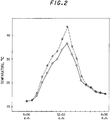
- Figure 2 is a similar graph to Figure 1 obtained in Example 7 showing the temperature changes in another test greenhouse and control greenhouse.
- the transparent or translucent plastic film of the invention is a layered composite film consisting of a substrate film and an overlayer uniquely characterized in terms of the relative values of two parameters including the total heat volume and the absorptivity of radiation heat.
- This novel and unique composite plastic film has been developed as a result of the extensive investigations undertaken by the inventors with an object to obtain a transparent or translucent plastic film capable of being manufactured at low costs and exhibiting excellent performance as a covering sheet material of a greenhouse to arrive at a discovery that the object can be achieved with a layered composite plastic film consisting of a substrate film and an overlayer formed by coating or lamination on one surface of the substrate film when and only when these two layers satisfy specific relationships in connection with two parameters including, one, the total heat volume and, the other, the absorptivity of radiation heat, the values of these parameters each being smaller in the overlayer than in the substrate film by a specified proportion.
- the values of specific heat capacity c 1 and c 2 are each a constant inherent in the respective materials and a function of the temperature. Accordingly, it is important to use a value of the specific heat capacity determined for each material at the outside air temperature when the composite film is used as a covering sheet material of the greenhouse. The values of specific heat capacity can be readily determined by using a conventional apparatus therefor.
- T the radiation temperature of the sunlight falling on the film
- T' the radiation temperature of the sunlight after transmission through the film.
- thermoplastic resin forming the substrate film as the first layer of the inventive composite plastic film is not particularly limitative and can be selected from conventional thermoplastic resins used as a material of films for agricultural use.
- suitable thermoplastic resins include polyvinyl chloride resins, polyvinylidene chloride resins, polyethylenes, polypropylenes, polystyrenes, polyethylene terephthalates, polyhexamethylenediamine adipates, polycaprolactams, polymethyl methacrylates, polymethyl acrylates, polyvinyl acetates and the like as well as related copolymers mainly composed of the monomeric units in common with the above named polymers and polymer blends thereof.
- plastic resins polyvinyl chlorides, polymethyl methacrylates and polyethylenes are particularly preferable in respect of the good balance of properties such as lightfastness, transmissivity to light, mechanical strengths and the like.
- thermoplastic resins are admixed with known additives conventionally used in plastic films for agricultural use including, for example, plasticizers, lubricants, heat stabilizers, ultraviolet absorbers, antistatic agents, anti-dewing agents, anti-fogging agents, coloring agents and the like according to need.
- a particularly preferable plastic resin composition as a material of the substrate in the inventive composite plastic film is a plasticized polyvinyl chloride-based resin composition comprising 100 parts by weight of a polyvinyl chloride resin having an average degree of polymerization in the range from 1000 to 2000 or, preferably, from 1300 to 1800 and from 30 to 80 parts by weight or, preferably, from 40 to 60 parts by weight of a plasticizer.
- plasticizer suitable for use in this case examples include phthalate esters such as di-n-octyl phthalate, di-2-ethylhexyl phthalate, dipentyl phthalate, didecyl phthalate and diisooctyl phthalate, adipate esters such as di-n-butyl adipate and dioctyl adipate, maleic acid esters such as di-n-butyl maleate and diisooctyl maleate and itaconic acid esters such as monobutyl itaconate and monoamyl itaconate as well as glycerin monoricinoleate, tricresyl phosphate and epoxidized soybean oil.
- phthalate esters such as di-n-octyl phthalate, di-2-ethylhexyl phthalate, dipentyl phthalate, didecyl phthalate and diisooctyl
- Examples of the lubricant admixed with the resin composition according to need include polyethylene waxes, liquid paraffin, stearic acid and salts thereof and higher aliphatic alcohols.
- Examples of the heat stabilizers include dibutyl tin dilaurate and dibutyl tin dimaleate.
- Examples of the antistatic agents or anti-dewing agents include non-ionic surface active agents such as polyoxyethylene glycerin monostearate.
- Examples of the coloring agents include titanium dioxide, calcium carbonate, precipitated silica, phthalocyanine blue and phthalocyanine green.
- ultraviolet absorbers examples include hydroquinone, 2-hydroxy-4-methoxy benzophenone, 2,2'-dihydroxy-4,4'-dimethoxy benzophenone, 2-(2'-hydroxy-5'-methylphenyl) benzotriazole and 2-(2'-hydroxy-5'-tert-butylphenyl) benzotriazole.
- These optional additives are compounded with the resin composition each in such a limited amount as not to cause any adverse influences on the properties inherent in the resin composition as a film substrate. For example, the total amount thereof should not exceed 20% by weight based on the total amount of the resin composition.
- the above described plastic resin composition comprising the thermoplastic resin and additives can be shaped into a plastic film or sheet to serve as the substrate in the inventive composite plastic film by a known plastic molding method such as melt-extrusion method, solution casting method, calendering method and inflation method.
- the substrate film or sheet has a thickness in the range from 20 to 1000 ⁇ m or, preferably, from 50 to 500 ⁇ m.
- the second layer, i.e. the transparent overlayer, formed on one surface of the substrate film is made from a thermoplastic resin, desirably, having a relatively small specific heat capacity such as polyethylene terephthalate, polyethylene isophthalate, polybutylene terephthalate, copolymers of styrene and acrylic acid or an ester thereof and addition products of a diisocyanate compound to a copolymer of acrylic acid and styrene though not particularly limitative thereto.
- the overlayer is not necessarily colorless if not so deeply colored but it is essentially transparent in order not to decrease the amount of insolation into the greenhouse.
- the method for forming the transparent overlayer on one surface of the substrate film is not particularly limitative including coating of the substrate surface with a solution of the above mentioned polymeric resin, lamination of a pre-shaped film of the resin to the substrate surface, co-extrusion method of the two layers and thermocompression bonding.
- the thickness of the transparent overlayer is in the range from 1 to 30 ⁇ m or, preferably, from 3 to 20 ⁇ m. It is optional that the transparent overlayer contains ultraviolet absorbers, oxygen-barrier agents, anti-dewing agents, anti-fogging agents and others according to need.
- the first layer i.e. substrate film or sheet
- the second layer i.e. transparent overlayer
- Q 1 and Q 2 are the total heat volumes of the first and second layers, respectively
- X 1 and X 2 are each the absorptivities of radiation heat of the first and second layers, respectively.
- the material of the overlayer is selected from polymeric resins having a relatively small specific heat capacity and admixed with an additive capable of absorbing the sunlight so as to decrease the heat volume per unit volume and the absorptivity of radiation heat of the material per se along with a decrease in the thickness of the overlayer.
- the plastic resin composition for the substrate is admixed with an additive which may increase the specific heat capacity of the resin composition along with an increase in the thickness of the substrate so as to increase the total heat volume Q 1 of the substrate.
- heat is first transferred from the high-temperature fluid to the high-temperature surface of the partition wall, then flows through the partition wall from the high-temperature surface to the low-temperature surface by heat conduction and finally is transferred from the low-temperature surface of the partition wall to the low-temperature fluid.
- the inside temperature of the room is gradually increased as a tendency due to the heat of radiation because of the heat energy given by the sunlight while the heat is never emitted outwardly from inside of the room.
- the inside temperature of the greenhouse is sometimes excessively increased in a summer season because the short-wavelength portion of the sunlight introduces heat energy into inside of the greenhouse while outward radiation of long-wavelength light is barriered by the covering plastic resin film resulting in growth inhibition of the plants or a decrease in the yield of the products.
- the transparent wall is responsible in such a state for the excessive temperature elevation in the greenhouse because the wall is at a high temperature by the absorption of the solar energy while inhibiting outward dissipation of heat.
- a wall heated to a high temperature by absorbing the radiation heat usually has such a cross sectional temperature distribution profile that the temperature is the highest in the core layer and the temperature of the surfaces is lower than that due to the cooling effect given by contacting with the atmospheric air.
- the temperature of the core layer of the wall is sometimes higher than the temperature of the air confined in the room surrounded by the walls and heated at an increased temperature or, in any event, is never lower than the temperature of the room air so that there is no possibility of heat transfer through the walls from inside of the room toward the outer atmosphere. Accordingly, the heat in the inside of the room can be outwardly transferred only by decreasing the temperature of the walls.
- a high-temperature body placed in the atmospheric air is continuously deprived of heat as a consequence of the convection in the air so that the temperature of the body is gradually decreased.
- the rate of temperature decrease in this case is increased as the specific heat capacity of the body is decreased and the volume thereof is decreased. In other words, the rate of temperature decrease is increased as the product of the specific heat capacity and the total volume or so-called total heat volume is decreased.
- a covering sheet of a greenhouse is a composite plastic film consisting of two layers, of which the layer facing the outside atmospheric air has a total heat volume smaller than the layer facing inwardly
- the quantity of heat carried away by the convection of air on the outer surface is increased so much that a rapid decrease is caused in the temperature of the covering sheet on the surface facing outwardly. Consequently, an increase is caused in the difference of temperature between the core layer of the composite film and the surface of the composite film facing the outside atmospheric air so that the heat flows in the direction from the substrate layer to the outer surface of the composite film facing outwardly resulting in a decrease in the quantity of heat accumulated in the whole body of the composite film with a decrease in the temperature of the composite film. As a consequence, an outward flow of heat is initiated from inside of the greenhouse.
- the temperature of a body under irradiation with sunlight is increased so much as the absorption of radiation heat is increased so that, when the absorptivity of radiation is large in the above mentioned layer formed on the substrate layer, the temperature of the overlayer becomes higher than the temperature of the substrate layer and consequently the outward heat flow from inside of the greenhouse is interrupted and the desired effect to decrease the inside temperature of the greenhouse cannot be achieved.
- This fact is the ground for the requirement that the overlayer formed on the substrate layer and facing the outside atmospheric air should have a smaller absorptivity of radiation than that of the substrate layer.
- the above given description is an explanation of the mechanism by which an excessive temperature increase in a greenhouse can be suppressed in a high-temperature season such as summer.
- a low-temperature season such as winter to decrease the heat flow from inside of the house to the outer atmospheric air in order to prevent excessive temperature decrease in the greenhouse.
- This requirement can be satisfied by providing a substrate layer of the covering sheet of the greenhouse with an overlayer having a small total heat volume and a small absorptivity of radiation on the surface of the substrate layer opposite to the surface facing the outer atmospheric air. In this way, the heat flows in the direction from the outer atmospheric air to the inside of the greenhouse resulting in an increase in the inside temperature of the greenhouse.
- a composite plastic film suitable for practical use as a covering sheet of a greenhouse and a high-performance greenhouse by use thereof can be obtained when and only when the substrate layer and the transparent overlayer formed thereon forming a composite film satisfy the above given inequalities (1) and (2) or, in other words, when and only when the transparent overlayer has a total heat volume not exceeding 10% or, preferably, not exceeding 5% of that of the substrate layer and a absorptivity of radiation not exceeding 60% or, preferably, not exceeding 50% of that of the substrate layer.
- the substrate layer of the composite film is provided on the surface opposite to the transparent overlayer with an auxiliary layer such as an anti-dewing layer, oxygen-barrier layer, protective layer and the like according to need.
- an adhesive layer is interposed between the substrate layer and the transparent overlayer.
- the composite plastic film having a constitution described above can be used as a covering sheet of a greenhouse in a conventional manner by spreading over and connecting to the framework of the greenhouse.
- the framework of the greenhouse can be made from any conventional materials including woody, metallic and plastic materials.
- the composite film is spread over the framework with the transparent overlayer facing the outer atmosphere in the summer season and the overlayer facing inside of the green house in the winter season.
- the crops which can be grown in the greenhouse of the invention are not limited to specific ones and any plants can be grown therein including leaf vegetables and fruit vegetables such as spinachs, lettuces, celeries, leeks, cabbages, Chinese cabbagers, peas, green peppers, tomatoes, cucumbers, eggplants, pumpkins, strawberries, melons and water melons as well as flowering plants such as chrysanthemums, carnations, roses and tulips without particular limitations.
- leaf vegetables and fruit vegetables such as spinachs, lettuces, celeries, leeks, cabbages, Chinese cabbagers, peas, green peppers, tomatoes, cucumbers, eggplants, pumpkins, strawberries, melons and water melons as well as flowering plants such as chrysanthemums, carnations, roses and tulips without particular limitations.
- a solution containing 8% by weight of non-volatile matter was prepared by dissolving a copolymeric resin of acrylonitrile and styrene, of which the content of the acrylonitrile moiety was 30% by weight, in a solvent mixture consisting of ethyl acetate, toluene, isopropyl alcohol, butyl acetate and methyl alcohol.
- a coating solution for a transparent overlayer to be formed on a substrate film was prepared by admixing 100 parts by weight of the above prepared resin solution with 0.03 part by weight of a dimethyl silicone oil modified with an alkyl aralkyl polyether (SF 8419, a product by Toray Dow Corning Silicone Co.) and further, under thorough agitation, with 0.5 part by weight of 2-(5-methyl-2-hydroxyphenyl) benzotriazole and 0.5 part by weight of 2-(3,5-di-tert-butyl-2-hydroxyphenyl) benzotriazole.
- SF 8419 alkyl aralkyl polyether
- a parallelopiped box having dimensions of 50 cm by 50 cm by 100 cm, of which one of the 50 cm by 100 cm surfaces was open referred to as the testing box hereinafter, was prepared with 5 mm thick foamed polystyrene boards and the inside of the box was partitioned with a foamed polystyrene board of the same thickness into two equal compartments by dividing at the center position along the 100 cm long side thus to form two openings of each about 50 cm by 50 cm wide.
- One of the two openings in the above prepared partitioned testing box was covered with the control film in a slack-free fashion and the other opening was covered similarly with one of the above prepared composite plastic films with the transparent overlayer facing outwardly.
- the partitioned compartments in the box thus covered, one, with the control film and, the other, with the composite film were irradiated with four infrared lamps of each 500 watts output positioned above the opening in a substantially perpendicular direction under an ambient temperature of 20 °C and the temperature in the respective compartments was measured after 0.5, 1 and 3 hours from the start of the infrared irradiation to give the results shown in Table 1 below, in which Q 1 and Q 2 are the total heat volume of the control film and the overlayer, respectively, and X 1 and X 2 are the absorptivity of radiation heat of the control film and the overlayer, respectively.
- the total heat volume of the control film was about 9.56 cal/°C.
- the partitioned testing box was constructed in the same manner as in Example 1 except that the composite film was spread over one of the openings with the transparent overlayer facing inwardly. At an ambient temperature of 10 °C, each of the compartments was heated to have a temperature of 30 °C and then allowed to stand for spontaneous cooling and record was made for the decreased temperature in each compartment after 0.5 hour, 1 hour and 3 hours from the start of spontaneous cooling. The results are shown in Table 2.
- the experimental procedure was the same as in Example 1 except that the overlayer on the control film always had a thickness of 10 ⁇ m and formed by coating with another coating solution prepared by admixing the coating solution prepared in Example 1 with varied amounts of a dye (Kayaset Black, a product by Nippon Kayaku Co.) and an ultraviolet absorber (IRG 820B, a product by the same company as above) to control the absorptivity of radiation heat.
- a dye Keraset Black, a product by Nippon Kayaku Co.
- IRG 820B ultraviolet absorber
- a 100 ⁇ m thick polyvinyl chloride film having a specific gravity of 1.530 and a specific heat capacity of 0.25 cal/g ⁇ °C was coated on one surface with the coating solution prepared in Example 1 followed by drying to form a transparent over layer having a thickness of about 3 ⁇ m.
- the thus prepared composite plastic film was spread over a framework having a frontage of 5.4 meters, depth of 10 meters and height of 1.5 meters in a slack-free fashion and connected to the frame members thus to construct a test greenhouse.
- test greenhouse was installed on an open ground in such an orientation that the 10 meters long side was along the north-to-south direction with a ventilation opening provided only on the plane facing south.
- Another greenhouse for control purpose having just the same dimensions as the above described test greenhouse was constructed excepting replacement of the composite plastic film with the uncoated polyvinyl chloride film.
- This control greenhouse was installed in adjacency to the test greenhouse also along the north-to-south direction with the southern end plane thereof just to face the northern end plane of the test greenhouse.
- Leaf lettuces were grown in each of these two greenhouses under monitoring of the climatic conditions and insolation therein.
- Figure 1 of the accompanying drawing shows the records of temperature on April 9th, 1993 from 5:00 a.m. to 9:00 p.m. with the solid line for the test greenhouse and broken line for the control greenhouse.
- the leaf lettuces were harvested on June 1st of the year.
- the harvested weight of the fresh leaf lettuces was 75.56 kg in the test greenhouse while the weight was 69.46 kg in the control greenhouse.
- Example 2 The same box test as in Example 1 was performed excepting for the replacement of the composite plastic film with another composite plastic film which was prepared by the hot lamination of a substrate film of a polyvinyl chloride resin of 300 ⁇ m thickness having a specific gravity of 1.530, a specific heat capacity of 0.25 cal/g ⁇ °C and an absorptivity of radiation heat of 35% with an overlay film of a polyester resin of 30 ⁇ m thickness having a specific gravity of 0.920, a specific heat capacity of 0.55 cal/g ⁇ °C and an absorptivity of radiation heat of 14%.
- the temperature in the test compartment of the box which was 20 °C at the start, was 45 °C, 47 °C and 49 °C after 30 minutes, 1 hour and 3 hours, respectively.
- Example 2 The same test as in Example 1 was performed with varied thickness of the transparent overlayer except that the substrate of the composite plastic film was a high-density polyethylene film of 150 ⁇ m thickness having a specific gravity of 0.960, specific heat capacity of 0.55 cal/g ⁇ °C and absorptivity of radiation heat of 26%. Table 4 below shows the recorded temperatures in the test compartments and in the control compartment.
- Example 4 A test greenhouse and a control greenhouse were built in just the same manner as in Example 4 except that the coating solution prepared in Example 1 was replaced with another coating solution prepared by dissolving two copolymeric resins of an acrylic acid ester and styrene (Kayacryl Resins P4872 and P5100 (each a commercial product by Nippon Kayaku Co.) in equal amounts in a 1:3 mixture of ethyl acetate and isopropyl alcohol with admixture of the same silicone oil SF8419 as in Example 1.
- Kayacryl Resins P4872 and P5100 each a commercial product by Nippon Kayaku Co.
Landscapes
- Life Sciences & Earth Sciences (AREA)
- Environmental Sciences (AREA)
- Chemical & Material Sciences (AREA)
- Engineering & Computer Science (AREA)
- Materials Engineering (AREA)
- Soil Sciences (AREA)
- Laminated Bodies (AREA)
- Greenhouses (AREA)
- Protection Of Plants (AREA)
Applications Claiming Priority (2)
| Application Number | Priority Date | Filing Date | Title |
|---|---|---|---|
| JP289455/93 | 1993-11-18 | ||
| JP28945593A JP3444545B2 (ja) | 1993-11-18 | 1993-11-18 | 農作物栽培用ハウス |
Publications (2)
| Publication Number | Publication Date |
|---|---|
| EP0654213A1 EP0654213A1 (en) | 1995-05-24 |
| EP0654213B1 true EP0654213B1 (en) | 1997-03-12 |
Family
ID=17743492
Family Applications (1)
| Application Number | Title | Priority Date | Filing Date |
|---|---|---|---|
| EP94118011A Expired - Lifetime EP0654213B1 (en) | 1993-11-18 | 1994-11-15 | Composite plastic film and greenhouse built therewith |
Country Status (10)
| Country | Link |
|---|---|
| US (1) | US5519964A (enExample) |
| EP (1) | EP0654213B1 (enExample) |
| JP (1) | JP3444545B2 (enExample) |
| KR (1) | KR0132975B1 (enExample) |
| CN (1) | CN1054023C (enExample) |
| AT (1) | ATE149789T1 (enExample) |
| AU (1) | AU671779B2 (enExample) |
| CA (1) | CA2135812A1 (enExample) |
| DE (1) | DE69402031T2 (enExample) |
| ES (1) | ES2102122T3 (enExample) |
Families Citing this family (26)
| Publication number | Priority date | Publication date | Assignee | Title |
|---|---|---|---|---|
| US5585418A (en) * | 1995-06-15 | 1996-12-17 | At Plastics Inc. | Greenhouse film having variable light diffusion properties |
| NL1007433C2 (nl) * | 1997-11-03 | 1999-05-04 | Raadgevend Chemiebureau Rsb | Verwijderbare schermlaag. |
| KR100513116B1 (ko) * | 1997-11-24 | 2005-12-21 | 주식회사 휴비스 | 자동 온도조절이 가능한 폴리에스테르 조성물 |
| US6131363A (en) * | 1998-03-20 | 2000-10-17 | Innovative Greenhousing Systems, Inc. | Greenhouse roof glazing system |
| US6158169A (en) * | 1998-04-22 | 2000-12-12 | General Phosphorix Llc | Machine for enhancing photosynthesis |
| US6282834B1 (en) | 1999-05-24 | 2001-09-04 | Clifford L. Mossey | Insulating light transmissive and flexible greenhouse cover |
| AU2003236362A1 (en) * | 2002-04-15 | 2003-10-27 | Kabushikikaisha Sekuto Kagaku | Solar heat cutoff glass and solar heat cutoff method using same |
| US7665478B2 (en) * | 2003-08-19 | 2010-02-23 | Wehner Scott D | Collapsible greenhouse |
| ES2324586B1 (es) * | 2007-10-22 | 2010-05-31 | Novogenio S.L. | Cubierta polimerica con propiedades protectoras frente a la radiacion solar. |
| NL2002432C2 (en) * | 2009-01-20 | 2010-07-21 | Omt Solutions Beheer B V | Diffusing device for diffusing light, and safety-glass panel, light source and greenhouse comprising diffusing device. |
| CN101843201A (zh) * | 2009-03-23 | 2010-09-29 | 沈礼群 | 一种蔬菜大棚复合骨架及其制备方法 |
| CN202283150U (zh) | 2011-09-28 | 2012-06-27 | 临海市远帆旅游制品有限公司 | 折叠花架 |
| USD722795S1 (en) | 2012-09-28 | 2015-02-24 | Worldwide Creations, LLC | Collapsible enclosure |
| USD707472S1 (en) | 2012-09-28 | 2014-06-24 | Worldwide Creations, LLC | Collapsible enclosure |
| USD707473S1 (en) | 2012-09-28 | 2014-06-24 | Worldwide Creations, LLC | Collapsible enclosure |
| KR101571831B1 (ko) * | 2013-08-12 | 2015-11-25 | 주식회사 태광뉴텍 | 기능성 코팅층을 포함하는 기능성 투명 시트 및 그 제조방법 |
| WO2015043911A1 (de) * | 2013-09-27 | 2015-04-02 | Metin Mustafa | Lichtdurchlässiges abdeckelement mit hoher wärmedämmung |
| JP6074599B2 (ja) * | 2013-10-09 | 2017-02-08 | パナソニックIpマネジメント株式会社 | 温室 |
| USD735885S1 (en) | 2013-11-07 | 2015-08-04 | Worldwide Creations, LLC | Collapsible greenhouse |
| CN103832035B (zh) * | 2014-03-11 | 2016-06-29 | 浙江德清高远塑料薄膜有限公司 | 一种培养食用菌专用的遮光降温大棚膜 |
| KR102000096B1 (ko) * | 2014-12-26 | 2019-07-15 | 후지필름 가부시키가이샤 | 농업 하우스용 필름 및 농업 하우스 |
| CN109006052B (zh) * | 2018-05-07 | 2020-09-08 | 浙江工贸职业技术学院 | 一种农用大棚塑料复合膜及其制备方法 |
| KR102579859B1 (ko) * | 2018-06-25 | 2023-09-18 | 현대자동차주식회사 | 차량용 사고 인지 장치 및 그 제어 방법 |
| CN112997942B (zh) * | 2021-03-04 | 2022-09-27 | 长沙理工大学 | 一种吸收太阳辐射的珊瑚防护结构 |
| CN113748889B (zh) * | 2021-10-28 | 2023-07-21 | 长沙事在人为农业发展有限公司 | 一种用于农业种植的节能环保大棚 |
| CN114766261B (zh) * | 2022-05-06 | 2023-05-23 | 浙江天源网业有限公司 | 一种纳米技术保持茶树叶活性的专用隔热膜网 |
Family Cites Families (21)
| Publication number | Priority date | Publication date | Assignee | Title |
|---|---|---|---|---|
| IT594312A (enExample) * | 1957-08-01 | 1900-01-01 | ||
| US3914469A (en) * | 1972-08-09 | 1975-10-21 | Richard Delano | Method of controlling solar heat and light in green houses |
| FR2417252A1 (fr) * | 1978-02-20 | 1979-09-14 | Cellophane Sa | Materiau composite thermoplastique transparent pour la realisation de serres agricoles |
| US4214034A (en) * | 1978-06-01 | 1980-07-22 | Sekisui Kagaku Kogyo Kabushiki Kaisha | Agricultural covering multilayer film or sheet structure and method for thermal insulation |
| FR2442006A1 (fr) * | 1978-11-23 | 1980-06-20 | Coureur Raymond | Ecran de climatisation, notamment pour l'agriculture |
| US4250661A (en) * | 1979-08-23 | 1981-02-17 | Sekisui Kagaku Kogyo K.K. | Agricultural covering multilayer film or sheet structure and method for thermal insulation |
| JPS5890960A (ja) * | 1981-11-27 | 1983-05-30 | 三菱化学株式会社 | 農業用積層フイルム |
| JPS58128853A (ja) * | 1982-01-27 | 1983-08-01 | 住友化学工業株式会社 | 農業用フイルム |
| DE3474266D1 (en) * | 1983-12-16 | 1988-11-03 | Perifleur Holdings | Greenhouse provided with a demountable thermal insulating screen |
| IL72879A (en) * | 1984-09-06 | 1988-12-30 | Ginegar Kibbutz | Plastic sheeting |
| GB8526157D0 (en) * | 1985-10-23 | 1985-11-27 | Glass Films Ltd | Microwave shielding means |
| JPH0645723B2 (ja) * | 1985-12-06 | 1994-06-15 | 三井東圧化学株式会社 | 近赤外線を吸収するプラスチツク成形物 |
| JPS63276536A (ja) * | 1987-05-08 | 1988-11-14 | Yasuro Kuratomi | 農園芸用遠赤外線放射合成樹脂フイルム |
| JP2619673B2 (ja) * | 1988-01-14 | 1997-06-11 | 日本ユニカー株式会社 | 農業用積層フイルム |
| JPH066363B2 (ja) * | 1988-02-05 | 1994-01-26 | 三菱化成ビニル株式会社 | 農業用積層フィルム |
| JPH02251447A (ja) * | 1989-03-24 | 1990-10-09 | Achilles Corp | 農業ハウス用谷シート |
| JP2515901B2 (ja) * | 1990-01-19 | 1996-07-10 | 萩原工業株式会社 | 高強度農業用透明シ―ト |
| JPH03277216A (ja) * | 1990-03-23 | 1991-12-09 | Daikure:Kk | 温室用シート |
| JPH0773896B2 (ja) * | 1990-09-26 | 1995-08-09 | 凸版印刷株式会社 | 遮光フイルム及び遮光ネット |
| JP2932311B2 (ja) * | 1990-10-03 | 1999-08-09 | 住化プラステック株式会社 | 透明性に優れた赤外線吸収フィルム |
| FR2682678A1 (fr) * | 1991-10-21 | 1993-04-23 | Montpellier Ecole Nale Sup Chi | Metal-dithienes, leur procede de preparation et leurs applications en tant que capteurs thermiques. |
-
1993
- 1993-11-18 JP JP28945593A patent/JP3444545B2/ja not_active Expired - Lifetime
-
1994
- 1994-11-14 US US08/338,868 patent/US5519964A/en not_active Expired - Lifetime
- 1994-11-15 DE DE69402031T patent/DE69402031T2/de not_active Expired - Fee Related
- 1994-11-15 ES ES94118011T patent/ES2102122T3/es not_active Expired - Lifetime
- 1994-11-15 AT AT94118011T patent/ATE149789T1/de active
- 1994-11-15 EP EP94118011A patent/EP0654213B1/en not_active Expired - Lifetime
- 1994-11-15 AU AU78827/94A patent/AU671779B2/en not_active Ceased
- 1994-11-15 CA CA002135812A patent/CA2135812A1/en not_active Abandoned
- 1994-11-17 KR KR1019940030145A patent/KR0132975B1/ko not_active Expired - Lifetime
- 1994-11-18 CN CN94118961A patent/CN1054023C/zh not_active Expired - Lifetime
Also Published As
| Publication number | Publication date |
|---|---|
| ATE149789T1 (de) | 1997-03-15 |
| DE69402031T2 (de) | 1997-07-17 |
| EP0654213A1 (en) | 1995-05-24 |
| CA2135812A1 (en) | 1995-05-19 |
| KR950013358A (ko) | 1995-06-15 |
| AU671779B2 (en) | 1996-09-05 |
| AU7882794A (en) | 1995-05-25 |
| US5519964A (en) | 1996-05-28 |
| DE69402031D1 (de) | 1997-04-17 |
| KR0132975B1 (ko) | 1998-04-14 |
| JP3444545B2 (ja) | 2003-09-08 |
| CN1108039A (zh) | 1995-09-13 |
| CN1054023C (zh) | 2000-07-05 |
| ES2102122T3 (es) | 1997-07-16 |
| JPH07135859A (ja) | 1995-05-30 |
Similar Documents
| Publication | Publication Date | Title |
|---|---|---|
| US5519964A (en) | Composite plastic film and greenhouse built therewith | |
| US4542061A (en) | Plastic film | |
| US3718533A (en) | Composite sheets for agricultural use | |
| KR100248696B1 (ko) | 방사선여광용복합재 | |
| IL34257A (en) | Sheets of thermoplastic materials for use as covering for greenhouses and the like | |
| US6189466B1 (en) | Noxious weed control by soil solarization | |
| US4214034A (en) | Agricultural covering multilayer film or sheet structure and method for thermal insulation | |
| US3276943A (en) | Plastic film for thermal insulation | |
| US4250661A (en) | Agricultural covering multilayer film or sheet structure and method for thermal insulation | |
| US5585418A (en) | Greenhouse film having variable light diffusion properties | |
| US5270102A (en) | Plastic sheeting preventing water droplet formation on its surface | |
| KR100407530B1 (ko) | 폴리올레핀수지피복필름및식물재배방법 | |
| JPS5944012B2 (ja) | 農業用被覆材及びそれを用いる栽培方法 | |
| CN216231090U (zh) | 一种农业用耐高温高强度环保型高分子复合膜 | |
| JPS6238143B2 (enExample) | ||
| JPH0465646B2 (enExample) | ||
| JPS62122545A (ja) | 害虫忌避フイルムまたはシ−ト | |
| JPH0553179B2 (enExample) | ||
| JPH0241410B2 (enExample) | ||
| JPS6158527A (ja) | 断熱性グリ−ンハウス | |
| JPS61100130A (ja) | 農業用被覆材 | |
| JPS6056462B2 (ja) | 有用植物の育成促進方法 | |
| CA2227666A1 (en) | Noxious weed control by soil solarization | |
| JPH0318182Y2 (enExample) | ||
| JPS5921004Y2 (ja) | 農業用樹脂ラミネ−トフイルム |
Legal Events
| Date | Code | Title | Description |
|---|---|---|---|
| PUAI | Public reference made under article 153(3) epc to a published international application that has entered the european phase |
Free format text: ORIGINAL CODE: 0009012 |
|
| AK | Designated contracting states |
Kind code of ref document: A1 Designated state(s): AT BE CH DE DK ES FR GB GR IE IT LI NL PT SE |
|
| 17P | Request for examination filed |
Effective date: 19951116 |
|
| GRAG | Despatch of communication of intention to grant |
Free format text: ORIGINAL CODE: EPIDOS AGRA |
|
| 17Q | First examination report despatched |
Effective date: 19960515 |
|
| GRAH | Despatch of communication of intention to grant a patent |
Free format text: ORIGINAL CODE: EPIDOS IGRA |
|
| GRAH | Despatch of communication of intention to grant a patent |
Free format text: ORIGINAL CODE: EPIDOS IGRA |
|
| GRAA | (expected) grant |
Free format text: ORIGINAL CODE: 0009210 |
|
| AK | Designated contracting states |
Kind code of ref document: B1 Designated state(s): AT BE CH DE ES FR GB IT LI NL SE |
|
| REF | Corresponds to: |
Ref document number: 149789 Country of ref document: AT Date of ref document: 19970315 Kind code of ref document: T |
|
| REG | Reference to a national code |
Ref country code: CH Ref legal event code: NV Representative=s name: E. BLUM & CO. PATENTANWAELTE Ref country code: CH Ref legal event code: EP |
|
| REF | Corresponds to: |
Ref document number: 69402031 Country of ref document: DE Date of ref document: 19970417 |
|
| ITF | It: translation for a ep patent filed | ||
| ET | Fr: translation filed | ||
| REG | Reference to a national code |
Ref country code: ES Ref legal event code: FG2A Ref document number: 2102122 Country of ref document: ES Kind code of ref document: T3 |
|
| PLBE | No opposition filed within time limit |
Free format text: ORIGINAL CODE: 0009261 |
|
| STAA | Information on the status of an ep patent application or granted ep patent |
Free format text: STATUS: NO OPPOSITION FILED WITHIN TIME LIMIT |
|
| 26N | No opposition filed | ||
| PGFP | Annual fee paid to national office [announced via postgrant information from national office to epo] |
Ref country code: CH Payment date: 19981023 Year of fee payment: 5 |
|
| PGFP | Annual fee paid to national office [announced via postgrant information from national office to epo] |
Ref country code: GB Payment date: 19981113 Year of fee payment: 5 |
|
| PGFP | Annual fee paid to national office [announced via postgrant information from national office to epo] |
Ref country code: AT Payment date: 19981124 Year of fee payment: 5 |
|
| PG25 | Lapsed in a contracting state [announced via postgrant information from national office to epo] |
Ref country code: GB Free format text: LAPSE BECAUSE OF NON-PAYMENT OF DUE FEES Effective date: 19991115 Ref country code: AT Free format text: LAPSE BECAUSE OF NON-PAYMENT OF DUE FEES Effective date: 19991115 |
|
| PG25 | Lapsed in a contracting state [announced via postgrant information from national office to epo] |
Ref country code: LI Free format text: LAPSE BECAUSE OF NON-PAYMENT OF DUE FEES Effective date: 19991130 Ref country code: CH Free format text: LAPSE BECAUSE OF NON-PAYMENT OF DUE FEES Effective date: 19991130 |
|
| GBPC | Gb: european patent ceased through non-payment of renewal fee |
Effective date: 19991115 |
|
| REG | Reference to a national code |
Ref country code: CH Ref legal event code: PL |
|
| PGFP | Annual fee paid to national office [announced via postgrant information from national office to epo] |
Ref country code: SE Payment date: 20011019 Year of fee payment: 8 |
|
| PGFP | Annual fee paid to national office [announced via postgrant information from national office to epo] |
Ref country code: BE Payment date: 20011031 Year of fee payment: 8 |
|
| PGFP | Annual fee paid to national office [announced via postgrant information from national office to epo] |
Ref country code: ES Payment date: 20011116 Year of fee payment: 8 |
|
| PGFP | Annual fee paid to national office [announced via postgrant information from national office to epo] |
Ref country code: FR Payment date: 20011127 Year of fee payment: 8 |
|
| PGFP | Annual fee paid to national office [announced via postgrant information from national office to epo] |
Ref country code: DE Payment date: 20020130 Year of fee payment: 8 |
|
| PG25 | Lapsed in a contracting state [announced via postgrant information from national office to epo] |
Ref country code: SE Free format text: LAPSE BECAUSE OF NON-PAYMENT OF DUE FEES Effective date: 20021116 Ref country code: ES Free format text: LAPSE BECAUSE OF NON-PAYMENT OF DUE FEES Effective date: 20021116 |
|
| PG25 | Lapsed in a contracting state [announced via postgrant information from national office to epo] |
Ref country code: BE Free format text: LAPSE BECAUSE OF NON-PAYMENT OF DUE FEES Effective date: 20021130 |
|
| BERE | Be: lapsed |
Owner name: *SEKUTO KAGAKU K.K. Effective date: 20021130 |
|
| PG25 | Lapsed in a contracting state [announced via postgrant information from national office to epo] |
Ref country code: DE Free format text: LAPSE BECAUSE OF NON-PAYMENT OF DUE FEES Effective date: 20030603 |
|
| EUG | Se: european patent has lapsed | ||
| PG25 | Lapsed in a contracting state [announced via postgrant information from national office to epo] |
Ref country code: FR Free format text: LAPSE BECAUSE OF NON-PAYMENT OF DUE FEES Effective date: 20030731 |
|
| REG | Reference to a national code |
Ref country code: FR Ref legal event code: ST |
|
| REG | Reference to a national code |
Ref country code: ES Ref legal event code: FD2A Effective date: 20031213 |
|
| NLS | Nl: assignments of ep-patents |
Owner name: SUIKOH TOPLINE CO., LTD Effective date: 20050825 |
|
| PG25 | Lapsed in a contracting state [announced via postgrant information from national office to epo] |
Ref country code: IT Free format text: LAPSE BECAUSE OF NON-PAYMENT OF DUE FEES Effective date: 20051115 |
|
| PGFP | Annual fee paid to national office [announced via postgrant information from national office to epo] |
Ref country code: NL Payment date: 20131129 Year of fee payment: 20 |
|
| REG | Reference to a national code |
Ref country code: NL Ref legal event code: V4 Effective date: 20141115 |