EP0641740B1 - Process for the synthesis of crystalline ceramic powders of perovskite compounds - Google Patents
Process for the synthesis of crystalline ceramic powders of perovskite compounds Download PDFInfo
- Publication number
- EP0641740B1 EP0641740B1 EP94112257A EP94112257A EP0641740B1 EP 0641740 B1 EP0641740 B1 EP 0641740B1 EP 94112257 A EP94112257 A EP 94112257A EP 94112257 A EP94112257 A EP 94112257A EP 0641740 B1 EP0641740 B1 EP 0641740B1
- Authority
- EP
- European Patent Office
- Prior art keywords
- solution
- mol
- ticl
- metal
- solutions
- Prior art date
- Legal status (The legal status is an assumption and is not a legal conclusion. Google has not performed a legal analysis and makes no representation as to the accuracy of the status listed.)
- Expired - Lifetime
Links
- 238000000034 method Methods 0.000 title claims abstract description 104
- 239000000843 powder Substances 0.000 title claims abstract description 63
- 150000001875 compounds Chemical class 0.000 title description 14
- 230000015572 biosynthetic process Effects 0.000 title description 2
- 239000011222 crystalline ceramic Substances 0.000 title 1
- 229910002106 crystalline ceramic Inorganic materials 0.000 title 1
- 238000003786 synthesis reaction Methods 0.000 title 1
- 150000003839 salts Chemical class 0.000 claims abstract description 17
- 239000007864 aqueous solution Substances 0.000 claims abstract description 14
- 239000011541 reaction mixture Substances 0.000 claims abstract description 14
- 229910052751 metal Inorganic materials 0.000 claims abstract description 13
- 239000002184 metal Substances 0.000 claims abstract description 13
- 238000002360 preparation method Methods 0.000 claims abstract description 13
- 229910052719 titanium Inorganic materials 0.000 claims abstract description 12
- 150000001768 cations Chemical class 0.000 claims abstract description 8
- 150000001450 anions Chemical class 0.000 claims abstract description 6
- 239000011164 primary particle Substances 0.000 claims abstract description 4
- 150000002902 organometallic compounds Chemical class 0.000 claims abstract description 3
- 239000003637 basic solution Substances 0.000 claims abstract 2
- 150000007529 inorganic bases Chemical class 0.000 claims abstract 2
- 150000007530 organic bases Chemical class 0.000 claims abstract 2
- 239000000243 solution Substances 0.000 claims description 104
- HEMHJVSKTPXQMS-UHFFFAOYSA-M Sodium hydroxide Chemical group [OH-].[Na+] HEMHJVSKTPXQMS-UHFFFAOYSA-M 0.000 claims description 93
- 239000002019 doping agent Substances 0.000 claims description 17
- 239000002585 base Substances 0.000 claims description 12
- BHPQYMZQTOCNFJ-UHFFFAOYSA-N Calcium cation Chemical compound [Ca+2] BHPQYMZQTOCNFJ-UHFFFAOYSA-N 0.000 claims description 6
- JLVVSXFLKOJNIY-UHFFFAOYSA-N Magnesium ion Chemical compound [Mg+2] JLVVSXFLKOJNIY-UHFFFAOYSA-N 0.000 claims description 6
- PWYYWQHXAPXYMF-UHFFFAOYSA-N strontium(2+) Chemical compound [Sr+2] PWYYWQHXAPXYMF-UHFFFAOYSA-N 0.000 claims description 6
- 229910001422 barium ion Inorganic materials 0.000 claims description 4
- VHUUQVKOLVNVRT-UHFFFAOYSA-N Ammonium hydroxide Chemical compound [NH4+].[OH-] VHUUQVKOLVNVRT-UHFFFAOYSA-N 0.000 claims description 3
- XDFCIPNJCBUZJN-UHFFFAOYSA-N barium(2+) Chemical compound [Ba+2] XDFCIPNJCBUZJN-UHFFFAOYSA-N 0.000 claims description 3
- 229910021645 metal ion Inorganic materials 0.000 claims description 3
- 230000035484 reaction time Effects 0.000 claims description 3
- 150000001242 acetic acid derivatives Chemical class 0.000 claims description 2
- 229910001860 alkaline earth metal hydroxide Inorganic materials 0.000 claims description 2
- 150000004703 alkoxides Chemical class 0.000 claims description 2
- 239000000908 ammonium hydroxide Substances 0.000 claims description 2
- 150000001805 chlorine compounds Chemical class 0.000 claims description 2
- 150000004820 halides Chemical class 0.000 claims description 2
- 150000002823 nitrates Chemical class 0.000 claims description 2
- 150000003891 oxalate salts Chemical class 0.000 claims description 2
- VLTRZXGMWDSKGL-UHFFFAOYSA-N perchloric acid Chemical class OCl(=O)(=O)=O VLTRZXGMWDSKGL-UHFFFAOYSA-N 0.000 claims description 2
- 238000009826 distribution Methods 0.000 abstract description 10
- 238000003756 stirring Methods 0.000 abstract description 9
- 229910052744 lithium Inorganic materials 0.000 abstract description 3
- 229910002113 barium titanate Inorganic materials 0.000 description 61
- WDIHJSXYQDMJHN-UHFFFAOYSA-L barium chloride Chemical compound [Cl-].[Cl-].[Ba+2] WDIHJSXYQDMJHN-UHFFFAOYSA-L 0.000 description 46
- 229910001626 barium chloride Inorganic materials 0.000 description 46
- 239000002245 particle Substances 0.000 description 41
- JRPBQTZRNDNNOP-UHFFFAOYSA-N barium titanate Chemical compound [Ba+2].[Ba+2].[O-][Ti]([O-])([O-])[O-] JRPBQTZRNDNNOP-UHFFFAOYSA-N 0.000 description 35
- 239000000203 mixture Substances 0.000 description 21
- 239000007787 solid Substances 0.000 description 19
- 229910007932 ZrCl4 Inorganic materials 0.000 description 16
- DUNKXUFBGCUVQW-UHFFFAOYSA-J zirconium tetrachloride Chemical compound Cl[Zr](Cl)(Cl)Cl DUNKXUFBGCUVQW-UHFFFAOYSA-J 0.000 description 16
- 238000006243 chemical reaction Methods 0.000 description 15
- 229910001631 strontium chloride Inorganic materials 0.000 description 15
- AHBGXTDRMVNFER-UHFFFAOYSA-L strontium dichloride Chemical compound [Cl-].[Cl-].[Sr+2] AHBGXTDRMVNFER-UHFFFAOYSA-L 0.000 description 15
- 239000010936 titanium Substances 0.000 description 15
- 239000008188 pellet Substances 0.000 description 14
- 239000011550 stock solution Substances 0.000 description 14
- 239000000376 reactant Substances 0.000 description 13
- 230000032683 aging Effects 0.000 description 12
- 239000011575 calcium Substances 0.000 description 12
- 239000000047 product Substances 0.000 description 12
- 230000003647 oxidation Effects 0.000 description 11
- 238000007254 oxidation reaction Methods 0.000 description 11
- XLYOFNOQVPJJNP-UHFFFAOYSA-N water Substances O XLYOFNOQVPJJNP-UHFFFAOYSA-N 0.000 description 10
- 229910052726 zirconium Inorganic materials 0.000 description 10
- 229910052791 calcium Inorganic materials 0.000 description 9
- 229910052788 barium Inorganic materials 0.000 description 8
- 238000002474 experimental method Methods 0.000 description 8
- 238000004626 scanning electron microscopy Methods 0.000 description 8
- 238000005245 sintering Methods 0.000 description 8
- 229910052712 strontium Inorganic materials 0.000 description 8
- 239000000126 substance Substances 0.000 description 8
- RTAQQCXQSZGOHL-UHFFFAOYSA-N Titanium Chemical compound [Ti] RTAQQCXQSZGOHL-UHFFFAOYSA-N 0.000 description 7
- DSAJWYNOEDNPEQ-UHFFFAOYSA-N barium atom Chemical compound [Ba] DSAJWYNOEDNPEQ-UHFFFAOYSA-N 0.000 description 7
- 239000003990 capacitor Substances 0.000 description 7
- 239000000919 ceramic Substances 0.000 description 7
- QCWXUUIWCKQGHC-UHFFFAOYSA-N Zirconium Chemical compound [Zr] QCWXUUIWCKQGHC-UHFFFAOYSA-N 0.000 description 6
- 238000004458 analytical method Methods 0.000 description 6
- 239000010955 niobium Substances 0.000 description 6
- -1 oxygen ions Chemical class 0.000 description 6
- 239000012071 phase Substances 0.000 description 6
- OYPRJOBELJOOCE-UHFFFAOYSA-N Calcium Chemical compound [Ca] OYPRJOBELJOOCE-UHFFFAOYSA-N 0.000 description 5
- UXVMQQNJUSDDNG-UHFFFAOYSA-L Calcium chloride Chemical compound [Cl-].[Cl-].[Ca+2] UXVMQQNJUSDDNG-UHFFFAOYSA-L 0.000 description 5
- 238000002441 X-ray diffraction Methods 0.000 description 5
- 238000001354 calcination Methods 0.000 description 5
- 229910052735 hafnium Inorganic materials 0.000 description 5
- 229910052749 magnesium Inorganic materials 0.000 description 5
- 239000011777 magnesium Substances 0.000 description 5
- 238000001556 precipitation Methods 0.000 description 5
- CIOAGBVUUVVLOB-UHFFFAOYSA-N strontium atom Chemical compound [Sr] CIOAGBVUUVVLOB-UHFFFAOYSA-N 0.000 description 5
- 239000000725 suspension Substances 0.000 description 5
- 239000006185 dispersion Substances 0.000 description 4
- 238000004519 manufacturing process Methods 0.000 description 4
- 229910052758 niobium Inorganic materials 0.000 description 4
- 238000000634 powder X-ray diffraction Methods 0.000 description 4
- 239000002002 slurry Substances 0.000 description 4
- 239000012798 spherical particle Substances 0.000 description 4
- 229910052718 tin Inorganic materials 0.000 description 4
- FYYHWMGAXLPEAU-UHFFFAOYSA-N Magnesium Chemical compound [Mg] FYYHWMGAXLPEAU-UHFFFAOYSA-N 0.000 description 3
- MUBZPKHOEPUJKR-UHFFFAOYSA-N Oxalic acid Chemical compound OC(=O)C(O)=O MUBZPKHOEPUJKR-UHFFFAOYSA-N 0.000 description 3
- 229910002370 SrTiO3 Inorganic materials 0.000 description 3
- 239000011230 binding agent Substances 0.000 description 3
- 239000001110 calcium chloride Substances 0.000 description 3
- 229910001628 calcium chloride Inorganic materials 0.000 description 3
- 239000013078 crystal Substances 0.000 description 3
- 230000000694 effects Effects 0.000 description 3
- 238000001914 filtration Methods 0.000 description 3
- VBJZVLUMGGDVMO-UHFFFAOYSA-N hafnium atom Chemical compound [Hf] VBJZVLUMGGDVMO-UHFFFAOYSA-N 0.000 description 3
- 238000010438 heat treatment Methods 0.000 description 3
- 238000001027 hydrothermal synthesis Methods 0.000 description 3
- 229910052746 lanthanum Inorganic materials 0.000 description 3
- 238000001878 scanning electron micrograph Methods 0.000 description 3
- 239000010414 supernatant solution Substances 0.000 description 3
- 229910052715 tantalum Inorganic materials 0.000 description 3
- 238000005406 washing Methods 0.000 description 3
- CURLTUGMZLYLDI-UHFFFAOYSA-N Carbon dioxide Chemical compound O=C=O CURLTUGMZLYLDI-UHFFFAOYSA-N 0.000 description 2
- DGAQECJNVWCQMB-PUAWFVPOSA-M Ilexoside XXIX Chemical compound C[C@@H]1CC[C@@]2(CC[C@@]3(C(=CC[C@H]4[C@]3(CC[C@@H]5[C@@]4(CC[C@@H](C5(C)C)OS(=O)(=O)[O-])C)C)[C@@H]2[C@]1(C)O)C)C(=O)O[C@H]6[C@@H]([C@H]([C@@H]([C@H](O6)CO)O)O)O.[Na+] DGAQECJNVWCQMB-PUAWFVPOSA-M 0.000 description 2
- WHXSMMKQMYFTQS-UHFFFAOYSA-N Lithium Chemical compound [Li] WHXSMMKQMYFTQS-UHFFFAOYSA-N 0.000 description 2
- 229910019804 NbCl5 Inorganic materials 0.000 description 2
- 239000002202 Polyethylene glycol Substances 0.000 description 2
- 239000004372 Polyvinyl alcohol Substances 0.000 description 2
- ZLMJMSJWJFRBEC-UHFFFAOYSA-N Potassium Chemical compound [K] ZLMJMSJWJFRBEC-UHFFFAOYSA-N 0.000 description 2
- ATJFFYVFTNAWJD-UHFFFAOYSA-N Tin Chemical compound [Sn] ATJFFYVFTNAWJD-UHFFFAOYSA-N 0.000 description 2
- 239000012736 aqueous medium Substances 0.000 description 2
- RQPZNWPYLFFXCP-UHFFFAOYSA-L barium dihydroxide Chemical compound [OH-].[OH-].[Ba+2] RQPZNWPYLFFXCP-UHFFFAOYSA-L 0.000 description 2
- QVQLCTNNEUAWMS-UHFFFAOYSA-N barium oxide Chemical compound [Ba]=O QVQLCTNNEUAWMS-UHFFFAOYSA-N 0.000 description 2
- TZCXTZWJZNENPQ-UHFFFAOYSA-L barium sulfate Chemical compound [Ba+2].[O-]S([O-])(=O)=O TZCXTZWJZNENPQ-UHFFFAOYSA-L 0.000 description 2
- 230000002902 bimodal effect Effects 0.000 description 2
- 238000009835 boiling Methods 0.000 description 2
- 238000005119 centrifugation Methods 0.000 description 2
- 239000003795 chemical substances by application Substances 0.000 description 2
- 238000001816 cooling Methods 0.000 description 2
- 239000008367 deionised water Substances 0.000 description 2
- 229910021641 deionized water Inorganic materials 0.000 description 2
- 239000007772 electrode material Substances 0.000 description 2
- 150000004679 hydroxides Chemical class 0.000 description 2
- 238000010348 incorporation Methods 0.000 description 2
- 238000002347 injection Methods 0.000 description 2
- 239000007924 injection Substances 0.000 description 2
- FZLIPJUXYLNCLC-UHFFFAOYSA-N lanthanum atom Chemical compound [La] FZLIPJUXYLNCLC-UHFFFAOYSA-N 0.000 description 2
- 239000012452 mother liquor Substances 0.000 description 2
- GUCVJGMIXFAOAE-UHFFFAOYSA-N niobium atom Chemical compound [Nb] GUCVJGMIXFAOAE-UHFFFAOYSA-N 0.000 description 2
- YHBDIEWMOMLKOO-UHFFFAOYSA-I pentachloroniobium Chemical compound Cl[Nb](Cl)(Cl)(Cl)Cl YHBDIEWMOMLKOO-UHFFFAOYSA-I 0.000 description 2
- 229920001223 polyethylene glycol Polymers 0.000 description 2
- 229920002451 polyvinyl alcohol Polymers 0.000 description 2
- 229910052700 potassium Inorganic materials 0.000 description 2
- 239000011591 potassium Substances 0.000 description 2
- UKDIAJWKFXFVFG-UHFFFAOYSA-N potassium;oxido(dioxo)niobium Chemical compound [K+].[O-][Nb](=O)=O UKDIAJWKFXFVFG-UHFFFAOYSA-N 0.000 description 2
- 230000001376 precipitating effect Effects 0.000 description 2
- 238000010298 pulverizing process Methods 0.000 description 2
- 229910052708 sodium Inorganic materials 0.000 description 2
- 239000011734 sodium Substances 0.000 description 2
- 238000003746 solid phase reaction Methods 0.000 description 2
- 238000010671 solid-state reaction Methods 0.000 description 2
- 238000006467 substitution reaction Methods 0.000 description 2
- GUVRBAGPIYLISA-UHFFFAOYSA-N tantalum atom Chemical compound [Ta] GUVRBAGPIYLISA-UHFFFAOYSA-N 0.000 description 2
- 238000004448 titration Methods 0.000 description 2
- BVKZGUZCCUSVTD-UHFFFAOYSA-L Carbonate Chemical compound [O-]C([O-])=O BVKZGUZCCUSVTD-UHFFFAOYSA-L 0.000 description 1
- RYGMFSIKBFXOCR-UHFFFAOYSA-N Copper Chemical compound [Cu] RYGMFSIKBFXOCR-UHFFFAOYSA-N 0.000 description 1
- 229920000858 Cyclodextrin Polymers 0.000 description 1
- 229920002307 Dextran Polymers 0.000 description 1
- 229920001353 Dextrin Polymers 0.000 description 1
- 239000004375 Dextrin Substances 0.000 description 1
- 239000001116 FEMA 4028 Substances 0.000 description 1
- 108010010803 Gelatin Proteins 0.000 description 1
- 229910003334 KNbO3 Inorganic materials 0.000 description 1
- 229910011011 Ti(OH)4 Inorganic materials 0.000 description 1
- LCKIEQZJEYYRIY-UHFFFAOYSA-N Titanium ion Chemical compound [Ti+4] LCKIEQZJEYYRIY-UHFFFAOYSA-N 0.000 description 1
- 239000002253 acid Substances 0.000 description 1
- 239000000654 additive Substances 0.000 description 1
- 238000013019 agitation Methods 0.000 description 1
- 239000003513 alkali Substances 0.000 description 1
- 229910001854 alkali hydroxide Inorganic materials 0.000 description 1
- 229910052782 aluminium Inorganic materials 0.000 description 1
- XAGFODPZIPBFFR-UHFFFAOYSA-N aluminium Chemical compound [Al] XAGFODPZIPBFFR-UHFFFAOYSA-N 0.000 description 1
- SOIFLUNRINLCBN-UHFFFAOYSA-N ammonium thiocyanate Chemical class [NH4+].[S-]C#N SOIFLUNRINLCBN-UHFFFAOYSA-N 0.000 description 1
- 238000003321 atomic absorption spectrophotometry Methods 0.000 description 1
- 229910001863 barium hydroxide Inorganic materials 0.000 description 1
- 229910052454 barium strontium titanate Inorganic materials 0.000 description 1
- WHGYBXFWUBPSRW-FOUAGVGXSA-N beta-cyclodextrin Chemical compound OC[C@H]([C@H]([C@@H]([C@H]1O)O)O[C@H]2O[C@@H]([C@@H](O[C@H]3O[C@H](CO)[C@H]([C@@H]([C@H]3O)O)O[C@H]3O[C@H](CO)[C@H]([C@@H]([C@H]3O)O)O[C@H]3O[C@H](CO)[C@H]([C@@H]([C@H]3O)O)O[C@H]3O[C@H](CO)[C@H]([C@@H]([C@H]3O)O)O3)[C@H](O)[C@H]2O)CO)O[C@@H]1O[C@H]1[C@H](O)[C@@H](O)[C@@H]3O[C@@H]1CO WHGYBXFWUBPSRW-FOUAGVGXSA-N 0.000 description 1
- 235000011175 beta-cyclodextrine Nutrition 0.000 description 1
- 229960004853 betadex Drugs 0.000 description 1
- 230000005540 biological transmission Effects 0.000 description 1
- AXCZMVOFGPJBDE-UHFFFAOYSA-L calcium dihydroxide Chemical compound [OH-].[OH-].[Ca+2] AXCZMVOFGPJBDE-UHFFFAOYSA-L 0.000 description 1
- 239000000920 calcium hydroxide Substances 0.000 description 1
- 229910001861 calcium hydroxide Inorganic materials 0.000 description 1
- 239000001569 carbon dioxide Substances 0.000 description 1
- 229910002092 carbon dioxide Inorganic materials 0.000 description 1
- 150000004649 carbonic acid derivatives Chemical class 0.000 description 1
- 239000007795 chemical reaction product Substances 0.000 description 1
- XFVGXQSSXWIWIO-UHFFFAOYSA-N chloro hypochlorite;titanium Chemical compound [Ti].ClOCl XFVGXQSSXWIWIO-UHFFFAOYSA-N 0.000 description 1
- 238000004737 colorimetric analysis Methods 0.000 description 1
- 239000000470 constituent Substances 0.000 description 1
- 229910052802 copper Inorganic materials 0.000 description 1
- 239000010949 copper Substances 0.000 description 1
- RKTYLMNFRDHKIL-UHFFFAOYSA-N copper;5,10,15,20-tetraphenylporphyrin-22,24-diide Chemical compound [Cu+2].C1=CC(C(=C2C=CC([N-]2)=C(C=2C=CC=CC=2)C=2C=CC(N=2)=C(C=2C=CC=CC=2)C2=CC=C3[N-]2)C=2C=CC=CC=2)=NC1=C3C1=CC=CC=C1 RKTYLMNFRDHKIL-UHFFFAOYSA-N 0.000 description 1
- 238000002425 crystallisation Methods 0.000 description 1
- 230000008025 crystallization Effects 0.000 description 1
- 230000003247 decreasing effect Effects 0.000 description 1
- 235000019425 dextrin Nutrition 0.000 description 1
- 239000003989 dielectric material Substances 0.000 description 1
- 238000006073 displacement reaction Methods 0.000 description 1
- 238000001035 drying Methods 0.000 description 1
- 238000000635 electron micrograph Methods 0.000 description 1
- 230000001747 exhibiting effect Effects 0.000 description 1
- 239000000706 filtrate Substances 0.000 description 1
- 239000010419 fine particle Substances 0.000 description 1
- 238000004108 freeze drying Methods 0.000 description 1
- 239000007789 gas Substances 0.000 description 1
- 229920000159 gelatin Polymers 0.000 description 1
- 239000008273 gelatin Substances 0.000 description 1
- 235000019322 gelatine Nutrition 0.000 description 1
- 235000011852 gelatine desserts Nutrition 0.000 description 1
- 239000011521 glass Substances 0.000 description 1
- PCHJSUWPFVWCPO-UHFFFAOYSA-N gold Chemical compound [Au] PCHJSUWPFVWCPO-UHFFFAOYSA-N 0.000 description 1
- 229910052737 gold Inorganic materials 0.000 description 1
- 239000010931 gold Substances 0.000 description 1
- 230000007062 hydrolysis Effects 0.000 description 1
- 238000006460 hydrolysis reaction Methods 0.000 description 1
- 238000010335 hydrothermal treatment Methods 0.000 description 1
- 239000012535 impurity Substances 0.000 description 1
- 230000006698 induction Effects 0.000 description 1
- 239000004615 ingredient Substances 0.000 description 1
- 238000011835 investigation Methods 0.000 description 1
- 150000002500 ions Chemical class 0.000 description 1
- 230000001788 irregular Effects 0.000 description 1
- 239000004816 latex Substances 0.000 description 1
- 229920000126 latex Polymers 0.000 description 1
- 239000007791 liquid phase Substances 0.000 description 1
- 239000000463 material Substances 0.000 description 1
- 238000002844 melting Methods 0.000 description 1
- 230000008018 melting Effects 0.000 description 1
- 229910000000 metal hydroxide Inorganic materials 0.000 description 1
- 150000004692 metal hydroxides Chemical class 0.000 description 1
- 238000002156 mixing Methods 0.000 description 1
- 238000000465 moulding Methods 0.000 description 1
- 229920005615 natural polymer Polymers 0.000 description 1
- 229910000510 noble metal Inorganic materials 0.000 description 1
- 238000005580 one pot reaction Methods 0.000 description 1
- 150000002894 organic compounds Chemical class 0.000 description 1
- 239000003960 organic solvent Substances 0.000 description 1
- 235000006408 oxalic acid Nutrition 0.000 description 1
- QKKWJYSVXDGOOJ-UHFFFAOYSA-N oxalic acid;oxotitanium Chemical compound [Ti]=O.OC(=O)C(O)=O QKKWJYSVXDGOOJ-UHFFFAOYSA-N 0.000 description 1
- 229910052760 oxygen Inorganic materials 0.000 description 1
- 239000001301 oxygen Substances 0.000 description 1
- 238000012856 packing Methods 0.000 description 1
- 229910052763 palladium Inorganic materials 0.000 description 1
- 230000010287 polarization Effects 0.000 description 1
- 229920002037 poly(vinyl butyral) polymer Polymers 0.000 description 1
- 229920000036 polyvinylpyrrolidone Polymers 0.000 description 1
- 239000001267 polyvinylpyrrolidone Substances 0.000 description 1
- 235000013855 polyvinylpyrrolidone Nutrition 0.000 description 1
- 239000002244 precipitate Substances 0.000 description 1
- 230000002269 spontaneous effect Effects 0.000 description 1
- 239000007921 spray Substances 0.000 description 1
- 238000001694 spray drying Methods 0.000 description 1
- 238000010561 standard procedure Methods 0.000 description 1
- 239000007858 starting material Substances 0.000 description 1
- 159000000008 strontium salts Chemical class 0.000 description 1
- VEALVRVVWBQVSL-UHFFFAOYSA-N strontium titanate Chemical compound [Sr+2].[O-][Ti]([O-])=O VEALVRVVWBQVSL-UHFFFAOYSA-N 0.000 description 1
- QAOWNCQODCNURD-UHFFFAOYSA-N sulfuric acid Substances OS(O)(=O)=O QAOWNCQODCNURD-UHFFFAOYSA-N 0.000 description 1
- 230000000153 supplemental effect Effects 0.000 description 1
- 239000004094 surface-active agent Substances 0.000 description 1
- 229920001059 synthetic polymer Polymers 0.000 description 1
- 238000010345 tape casting Methods 0.000 description 1
- 230000007704 transition Effects 0.000 description 1
Images

Classifications
-
- C—CHEMISTRY; METALLURGY
- C01—INORGANIC CHEMISTRY
- C01B—NON-METALLIC ELEMENTS; COMPOUNDS THEREOF; METALLOIDS OR COMPOUNDS THEREOF NOT COVERED BY SUBCLASS C01C
- C01B13/00—Oxygen; Ozone; Oxides or hydroxides in general
- C01B13/14—Methods for preparing oxides or hydroxides in general
- C01B13/36—Methods for preparing oxides or hydroxides in general by precipitation reactions in aqueous solutions
- C01B13/363—Mixtures of oxides or hydroxides by precipitation
-
- C—CHEMISTRY; METALLURGY
- C04—CEMENTS; CONCRETE; ARTIFICIAL STONE; CERAMICS; REFRACTORIES
- C04B—LIME, MAGNESIA; SLAG; CEMENTS; COMPOSITIONS THEREOF, e.g. MORTARS, CONCRETE OR LIKE BUILDING MATERIALS; ARTIFICIAL STONE; CERAMICS; REFRACTORIES; TREATMENT OF NATURAL STONE
- C04B35/00—Shaped ceramic products characterised by their composition; Ceramics compositions; Processing powders of inorganic compounds preparatory to the manufacturing of ceramic products
-
- B—PERFORMING OPERATIONS; TRANSPORTING
- B82—NANOTECHNOLOGY
- B82Y—SPECIFIC USES OR APPLICATIONS OF NANOSTRUCTURES; MEASUREMENT OR ANALYSIS OF NANOSTRUCTURES; MANUFACTURE OR TREATMENT OF NANOSTRUCTURES
- B82Y30/00—Nanotechnology for materials or surface science, e.g. nanocomposites
-
- C—CHEMISTRY; METALLURGY
- C01—INORGANIC CHEMISTRY
- C01G—COMPOUNDS CONTAINING METALS NOT COVERED BY SUBCLASSES C01D OR C01F
- C01G23/00—Compounds of titanium
- C01G23/003—Titanates
- C01G23/006—Alkaline earth titanates
-
- C—CHEMISTRY; METALLURGY
- C01—INORGANIC CHEMISTRY
- C01G—COMPOUNDS CONTAINING METALS NOT COVERED BY SUBCLASSES C01D OR C01F
- C01G33/00—Compounds of niobium
-
- C—CHEMISTRY; METALLURGY
- C01—INORGANIC CHEMISTRY
- C01P—INDEXING SCHEME RELATING TO STRUCTURAL AND PHYSICAL ASPECTS OF SOLID INORGANIC COMPOUNDS
- C01P2002/00—Crystal-structural characteristics
- C01P2002/30—Three-dimensional structures
- C01P2002/34—Three-dimensional structures perovskite-type (ABO3)
-
- C—CHEMISTRY; METALLURGY
- C01—INORGANIC CHEMISTRY
- C01P—INDEXING SCHEME RELATING TO STRUCTURAL AND PHYSICAL ASPECTS OF SOLID INORGANIC COMPOUNDS
- C01P2002/00—Crystal-structural characteristics
- C01P2002/50—Solid solutions
- C01P2002/52—Solid solutions containing elements as dopants
- C01P2002/54—Solid solutions containing elements as dopants one element only
-
- C—CHEMISTRY; METALLURGY
- C01—INORGANIC CHEMISTRY
- C01P—INDEXING SCHEME RELATING TO STRUCTURAL AND PHYSICAL ASPECTS OF SOLID INORGANIC COMPOUNDS
- C01P2002/00—Crystal-structural characteristics
- C01P2002/70—Crystal-structural characteristics defined by measured X-ray, neutron or electron diffraction data
- C01P2002/72—Crystal-structural characteristics defined by measured X-ray, neutron or electron diffraction data by d-values or two theta-values, e.g. as X-ray diagram
-
- C—CHEMISTRY; METALLURGY
- C01—INORGANIC CHEMISTRY
- C01P—INDEXING SCHEME RELATING TO STRUCTURAL AND PHYSICAL ASPECTS OF SOLID INORGANIC COMPOUNDS
- C01P2004/00—Particle morphology
- C01P2004/01—Particle morphology depicted by an image
- C01P2004/03—Particle morphology depicted by an image obtained by SEM
-
- C—CHEMISTRY; METALLURGY
- C01—INORGANIC CHEMISTRY
- C01P—INDEXING SCHEME RELATING TO STRUCTURAL AND PHYSICAL ASPECTS OF SOLID INORGANIC COMPOUNDS
- C01P2004/00—Particle morphology
- C01P2004/30—Particle morphology extending in three dimensions
- C01P2004/32—Spheres
-
- C—CHEMISTRY; METALLURGY
- C01—INORGANIC CHEMISTRY
- C01P—INDEXING SCHEME RELATING TO STRUCTURAL AND PHYSICAL ASPECTS OF SOLID INORGANIC COMPOUNDS
- C01P2004/00—Particle morphology
- C01P2004/51—Particles with a specific particle size distribution
- C01P2004/52—Particles with a specific particle size distribution highly monodisperse size distribution
-
- C—CHEMISTRY; METALLURGY
- C01—INORGANIC CHEMISTRY
- C01P—INDEXING SCHEME RELATING TO STRUCTURAL AND PHYSICAL ASPECTS OF SOLID INORGANIC COMPOUNDS
- C01P2004/00—Particle morphology
- C01P2004/60—Particles characterised by their size
- C01P2004/61—Micrometer sized, i.e. from 1-100 micrometer
-
- C—CHEMISTRY; METALLURGY
- C01—INORGANIC CHEMISTRY
- C01P—INDEXING SCHEME RELATING TO STRUCTURAL AND PHYSICAL ASPECTS OF SOLID INORGANIC COMPOUNDS
- C01P2004/00—Particle morphology
- C01P2004/60—Particles characterised by their size
- C01P2004/62—Submicrometer sized, i.e. from 0.1-1 micrometer
-
- C—CHEMISTRY; METALLURGY
- C01—INORGANIC CHEMISTRY
- C01P—INDEXING SCHEME RELATING TO STRUCTURAL AND PHYSICAL ASPECTS OF SOLID INORGANIC COMPOUNDS
- C01P2004/00—Particle morphology
- C01P2004/60—Particles characterised by their size
- C01P2004/64—Nanometer sized, i.e. from 1-100 nanometer
-
- C—CHEMISTRY; METALLURGY
- C01—INORGANIC CHEMISTRY
- C01P—INDEXING SCHEME RELATING TO STRUCTURAL AND PHYSICAL ASPECTS OF SOLID INORGANIC COMPOUNDS
- C01P2006/00—Physical properties of inorganic compounds
- C01P2006/20—Powder free flowing behaviour
-
- C—CHEMISTRY; METALLURGY
- C01—INORGANIC CHEMISTRY
- C01P—INDEXING SCHEME RELATING TO STRUCTURAL AND PHYSICAL ASPECTS OF SOLID INORGANIC COMPOUNDS
- C01P2006/00—Physical properties of inorganic compounds
- C01P2006/32—Thermal properties
-
- C—CHEMISTRY; METALLURGY
- C01—INORGANIC CHEMISTRY
- C01P—INDEXING SCHEME RELATING TO STRUCTURAL AND PHYSICAL ASPECTS OF SOLID INORGANIC COMPOUNDS
- C01P2006/00—Physical properties of inorganic compounds
- C01P2006/40—Electric properties
-
- Y—GENERAL TAGGING OF NEW TECHNOLOGICAL DEVELOPMENTS; GENERAL TAGGING OF CROSS-SECTIONAL TECHNOLOGIES SPANNING OVER SEVERAL SECTIONS OF THE IPC; TECHNICAL SUBJECTS COVERED BY FORMER USPC CROSS-REFERENCE ART COLLECTIONS [XRACs] AND DIGESTS
- Y10—TECHNICAL SUBJECTS COVERED BY FORMER USPC
- Y10S—TECHNICAL SUBJECTS COVERED BY FORMER USPC CROSS-REFERENCE ART COLLECTIONS [XRACs] AND DIGESTS
- Y10S977/00—Nanotechnology
- Y10S977/70—Nanostructure
- Y10S977/773—Nanoparticle, i.e. structure having three dimensions of 100 nm or less
- Y10S977/775—Nanosized powder or flake, e.g. nanosized catalyst
- Y10S977/776—Ceramic powder or flake
Definitions
- the present invention relates to a process for producing crystalline perovskite, A x (BO 3 ) y , ceramic powders consisting of submicron or nanosized dispersible primary particles of narrow size distributions and uniform, essentially spherical morphology.
- the powders may contain other secondary ingredients, such as dopants that alter electric properties, on the A and/or B sites.
- the A cation is selected from the group consisting of lithium, sodium, potassium, magnesium, calcium, strontium, barium, and lanthanum; and B in BO 3 is selected from the group consisting of titanium in the oxidation state 4, zirconium in the oxidation state 4, niobium in the oxidation state 5, tantalum in the oxidation state 5, tin in the oxidation state 4, and hafnium in the oxidation state 4.
- the powders may also contain other additives, such as binders, to enhance their sinterability and other properties. The powders have great usefulness in many applications including dielectric, piezoelectric, electrooptic, thermal sensors, and other ceramic industries.
- the perovskite typified by BaTiO 3 has a cubic structure when treated above 135°C. Its lattice consists of a regular array of oxygen ions at the corners, a small tetravalent titanium ion in the center, and big divalent barium ions located at the face centers.
- the perovskite structure is distorted at low temperatures, where it exhibits tetragonal, orthorhombic, or rhombohedral symmetry.
- the transition temperature at which the crystal structure transforms from the distorted phase to the cubic phase is called the Curie temperature.
- Ferroelectric behaviour is caused by the shift in the position of the central cation, i.e., Ti ion in BaTiO 3 , which results in a displacement of the centers of positive and negative charges within the lattice and generates a spontaneous polarization.
- the electric properties of perovskites are significantly affected by this ferroelectric behaviour which contributes to useful dielectric, piezoelectric, and electrooptic properties.
- Perovskite compounds are usually produced by mixing a carbonate or an oxide of at least one element selected from the group consiting of Mg, Ca, Sr, and Ba (A group elements), with an oxide of at least one element selected from the group consisting of Ti, Zr, Nb, Hf, and Sn (B group elements), calcining the mixture at temperatures not less than 1000°C, wet pulverizing, filtering and then drying the product.
- a group elements an oxide of at least one element selected from the group consisting of Ti, Zr, Nb, Hf, and Sn
- the powders generated by calcination aggregate to cakes which are difficult to be pulverized to fine particles smaller than 1 ⁇ m even by wet pulverization using a trommel.
- the particles are irregular in shape.
- submicron barium titanate cystalline powder polydispersed and having angular morphology, is obtained by first precipitating an amorphous powder by hydrolysis of titanium alcoholate in the presence of barium oxide, barium hydroxide, or barium alcoholate and an acid organic compound, then heating the powder under a stream of a gas to achieve crystallization.
- barium titanate is produced by adding an aqueous solution of barium chloride to an aqueous solution of oxalic acid and titanium oxychloride at 20-60°C under stirring, to precipitate barium titanyl oxalate which is then calcined at 960-1200°C.
- submicron barium titanate based powders having narrow size distributions are produced by heating up to 200°C an aqueous slurry of PbO and/or Ca(OH) 2 with an excess of Ti(OH) 4 , and after the addition of a solution of Ba(OH) 2 , the slurry is heated up to 225°C to precipitate the perovskite compounds.
- perovskite compounds with the general formula ABO 3 could be obtained using a three step procedure.
- the first step involved subjecting a mixture of A and B hydroxides to hydrothermal reaction in aqueous media.
- an insolubilizing (precipitating) agent such as carbon dioxide, was added to the reaction mixture in order to precipitate unreacted A element materials to adjust the A to B stoichiometry. This step was necessary due to the soluble nature of the A elements including lead, strontium, calcium, barium, and magnesium, under the conditions of the hydrothermal treatment.
- the mixture formed after the second step contained both a B-rich crystalline oxide phase, formed during the hydrothermal reaction and an A-rich non-crystalline, non-oxide phase, formed during the second step.
- the product slurry of the hydrothermal reaction was first filtered and washed, and then added to an aqueous medium containing the supplemental A elements.
- the product stoichiometry could further be adjusted by adding an insolubilizing agent.
- the final step was to filter and wash the product to the desired A to B atomic ratio. This process was demonstrated in the preparation of compound containing the A elements listed above and the B elements including titanium, zirconium, hafnium, and tin.
- EP-A-0150135 discloses a process for the preparation of barium-strontium titanate perovskite fine powders, uniform in size and having an average particle size of 500 ⁇ , comprising preparing an aqueous solution containing a titanium, a barium and a strontium salt, adding an aqueous-base solution to adjust the pH to 14 and then reacting the mixture at a temperature of 100°C for 4 hours.
- the powders of the present invention have shown high a dielectric constant, which increases the volume efficiency of the product; they have a low sintering temperature, which reduces the cost of the electrode materials; they show small grain size, which increases the volume efficiency of the product.
- the object of the present invention is a process for the preparation of crystalline perovskite compounds of predetermined average particle sizes and compositions, having improved electric properties, having a general formula, A x (BO 3 ) y , where A is primarily of the group lithium, sodium, potassium, strontium, and barium and B is primarily of the group titanium in the oxidation state 4, and niobium in the oxidation state 5, and wherein the A and/or B sites may have dopants that provide superior electric properties.
- the dopants D that are used in partial substitution of elements in group A may include calcium, magnesium, strontium, lanthanum and the dopants D' that are used in partial substitution of elements in group B include zirconium in the oxidation state 4, tantalum in the oxidation state 5, hafnium in the oxidation state 4.
- the powders so prepared have controlled particle size distributions and have reduced sintering temperatures.
- the process of the present invention involves the method as disclosed in claim 1.
- Crystalline perovskite compounds are produced in a few minutes, which are then purified by washing with water, and dried to the final products. Therefore, when barium and titanium are selected as the primary components, the perovskite has the general formula of BaTiO 3 , wherein the dopant for Ba and/or Ti sites may have values between 0 to 50% by moles.
- the object of the present invention is a process for the preparation of crystalline perovskite powders consisting essentially of primary particles uniform in micrometer size (0.15 to 0.40 ⁇ m average size), uniform and near spherical shape, of narrow size distribution, of the general formula A x (BO 3 ) y , wherein cation (A) is at least one metal selected from the group comprising Li + , Na + , K + , Mg 2+ , Ca 2+ , Sr 2+ , Ba 2+ and La 3+ and (B) in the anion (BO 3 ) as designated in the above formula is at least one metal selected from the group consisting of Ti 4+ , Zr 4+ , Sn 4+ , Hf 4+ , Nb 5+ and Ta 5+ , x is equal to the valence of the anion (BO 3 ) and y is equal to the valence of cation (A), comprising the steps disclosed in claim 1.
- the salts can be selected from halides, nitrates, acetates, perchlorates, oxalates, preferably chlorides, or organometallic compounds, such as alkoxides.
- the base can be selected from strong bases such as alkali and alkaline-earth metal hydroxides and ammonium hydroxide, preferably NaOH or KOH.
- the total concentration of the metal ions in solution (I) can range within wide limits, advantageously from 0.1 to 2.0 mol dm -3 , preferably from 0.5 to 1.2 mol dm -3 .
- the base concentration in solution (II) can range within wide limits, generally from 0.4 to 6 mol dm -3 , provided that the pH of the reaction mixture is maintained at about a constant level, around 14.
- the molar ratio of the metal ions in group (A) to those in group (B) in solution ranges from about 0.8 to 1.2.
- the reaction mixture can be maintained at a pH of about 14 by addition of a concentrated base solution during the reaction as needed.
- CDJP controlled double jet precipitation
- the aqueous solution (I) and aqueous solution (II) are separately and simultaneously injected, using metering pumps, into a CDJP reactor containing a stirred aqueous base solution, of pH of about 14, preheated to 70-100°C.
- the flow rate of solution (I) is maintained constant, while the base solution (II) is injected at such a flow rate, depending on the flow rate of solution (I), that the pH of the reaction mixture is maintained constant at about 14 and monitored by a pH meter, using a temperature sensitive glass electrode, during the entire operation performed at 70-100°C.
- the reaction temperature is kept constant by a temperature controlled circulator.
- the reaction mixture is kept stirred, preferably from about 400 to 700 rpm with a propeller during the entire operation.
- the flow rates of the reactant solutions (I) and (II) can be varied within a wide range from 5 to 40 cm 3 min -1 , depending on the concentrations of the reactants in the stock solutions and the pH at which the reaction mixture has to be maintained during the reaction.
- CDJP double-jet precipitation
- CJP controlled triple-jet precipitation
- the three solutions (I), (II), and (III) can be simultaneously injected at constant flow rates into the reactor (method a) or combinations of two are injected sequentially at a given time, i.e. by first simultaneously injecting solutions (I) and (II), followed by simultaneous injection of solutions (II) and (III) (method b), or first simultaneously injecting solutions (II) and (III), followed by simultaneous injection of solutions (I) and (II) (method c).
- three stock solutions instead of two (as in the CDJP), are introduced into the reactor.
- solutions are, for example, (1) a NaOH solution, (2) a solution containing BaCl 2 and TiCl 4 , and (3) a solution containing SrCl 2 and TiCl 4 .
- first solutions (1) (NaOH) and (2) are introduced simultaneously at constant flow rates for a desired period of time, aged, e.g., for 5 min., followed by simultaneous introduction of solutions (1) (NaOH) and (3) for some time, and finally aged, e.g., for 5 min., or Method (c) the same procedure as in (b) except first are introduced solutions (1) and (3), followed by solutions (1) and (2).
- Method (c) the same procedure as in (b) except first are introduced solutions (1) and (3), followed by solutions (1) and (2).
- the dielectric properties can be altered by the kind and concentration of the dopant.
- the broad curves are obtained with the use of Ca as dopants.
- the stock solution (I) also contains desired, usually minor, amount of at least one doping metal element.
- the stock solution (I) also contains desired, usually minor, amount of at least one doping metal element.
- part of Ba is substituted with at least one doping element D, where D being selected from Ca, Mg, Sr and La, and/or part of Ti is substituted with at least one doping element D 1 , where D 1 being selected from Zr, Sn, Nb, Ta and Hf.
- the doping contents can range from 0 to 50%, preferably from 5 to 25% by moles.
- composition and the average size of the resulting particles can be varied, within a reasonable range, by adjusting the concentrations of the stock solutions, the pH of the reaction mixture during the process, the flow rates of the injected solutions, the reaction temperature, and the reaction time.
- the average size can also be controlled by the addition of natural or synthetic polymers or surfactants such as gelatin, dextrans, dextrins, polyvinyl alcohol, polyethylene glycol, and polyvinylpyrrolidone, in the amounts varying from 0.01 to 2% by weight on the reaction mixture.
- the precipitated particles of crystalline perovskite compounds are separated from the mother liquor by decanting and centrifugation, or by filtration, and purified by washing with water and, finally, dried, preferably from 90° to 110°C. Spray or freeze drying can be used, if desired.
- Crystalline particles of perovskite compounds can be produced in less than 5 min, at temperatures which need not to exceed 100°C, without using a pressurized reactor.
- the processes of the present invention can also be performed at higher temperatures up to 250°C, by using pressurized reactors.
- the solid crystalline particles obtained by the present processes can be sintered to high densities at temperatures 100 to 300°C below the sintering temperatures of standard ball-milled and calcined powders, to produce ceramics exhibiting uniform microstructures, homogeneous chemical compositions, and high dielectric constants as high as 25,000 depending on the composition.
- the binder may be selected from polyvinyl alcohol, polyvinylbutyral, and polyethylene glycol, in the amount, preferably of 0.5 to 4.0% by weight, in the green pellets.
- Barium titanate pellets of 98% theoretical density (6.01 g cm -3 ) were obtained when sintered at 1200°C, and 99 to 100% theoretical density was achieved when sintered at 1250°C. In contrast, the commercial barium titanate powders only sinter to about 85% theoretical density at 1200°C.
- the powders obtained by the processes of the present invention were characterized in terms of chemical composition, crystallinity, morphology, and particle size distribution by using the following methods.
- the chemical compositions were determined by atomic absorption spectrophotometry, induction coupled plasma (ICP) technique, colorimetry, and gravimetric or titration analyses.
- ICP induction coupled plasma
- barium titanate powders approximately one gram of the dry solid was dissolved in 25 cm 3 of hot concentrated sulfuric acid, then diluted with cold water and left standing for 12 hours. The resulting white precipitate was separated from the mother liquor by filtration using non-ash filter paper, placed in a crucible, and then burnt at 800°C for 1 hour. The white powder was weighed as BaSO 4 . The titanium content was then determined by titration technique.
- the crystal structure was determined by X-ray powder diffraction (XRD) analysis with a CuK ⁇ 1 X-ray source was employed for this purpose.
- the morphology of the powders was elucidated by transmission (TEM) and scanning electron microscopies (SEM).
- the particle size distributions were determined from electron micrographs using a particle size analyzer.
- the powders were further sintered and the dielectric constants were determined on the sintered pellets by using the following conditions and methods.
- a green pellet about 1 g of powder was placed in a cylindrical die and uniaxially pressed under 25 MPa using a Carver laboratory hydraulic press. The pellet was placed in a latex balloon, the air from which was then evacuated, and the content was isostatically compressed under 340 MPa in the oil chamber of a Fluitron cold isostatic press unit. Finally, the green pellet was removed, weighed, and its dimensions measured using vernier calipers. The resulting green density was calculated according to the weight and dimensions measured, and compared to the theoretical density.
- the green pellets were subsequently sintered in a high temperature furnace under air at different temperatures for 60 min using a heating/cooling rate of 8°C min -1 .
- the sintered densities were measured according to the ASTM (C373-55T) standard procedure based on the Archimedes principle.
- a sintered pellet was coated with gold film on both sides, placed between two parallel copper electrodes, and the capacitances were then evaluated at frequencies of 100 Hz, 1kHz, 10 kHz, and 100 kHz at temperatures ranging from -55 to 145°C.
- the dielectric constants were calculated from the capacitances so obtained.
- the Y5V capacitor as reported below, is characterized by the maximum dielectric constant between 10.000 and 15.000.
- the deviation of the dielectric constant at temperatures from -30 to 85°C, from that at 25°C, should fall between -82% and +22%.
- the specifications for a Z5U-capacitor are: the maximum dielectric constant is between 4.000 to 12.000; and the deviation of the dielectric constant at temperatures from 10 to 85°C, from that at 25°C, should fall between -56% and +22%.
- aqueous solution containing a mixture of BaCl 2 and TiCl 4 and a 6 mol dm -3 NaOH solution were simultaneously introduced, at constant flow rates of 12 and 8 cm 3 min -1 , respectively, into a 330 cm 3 CDJP reactor containing 100 cm 3 stirred 1 mol dm -3 NaOH solution preheated at 88°C. The temperature dropped to 83-85°C and then was maintained constant at 85°C. The total concentration of the BaCl 2 + TiCl 4 solution was 1 mol dm -3 , while the molar ratio [BaCl 2 ]/[TiCl 4 ] was kept at 1.07. The introduction of the BaCl 2 + TiCl 4 and NaOH solutions lasted 8 min, subsequently followed by aging at 85°C under stirring for 3 min.
- the so obtained powder was proved, by chemical analysis, to be pure barium titanate (BaTiO 3 ) with a molar ratio [Ba]/[Ti] of 1.00 in the solid.
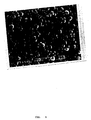
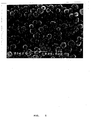
- the scanning electron micrograph (SEM) in Figure 1 shows that the particles are substantially spherical with an average size of 0.2 ⁇ m.
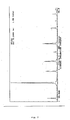
- the X-ray powder diffraction (XRD) pattern (Fig. 7) indicated that the powder to be well crystalline, pure phase BaTiO 3 .
- the chemical analysis of the supernatant solution at the completion of the process showed no presence of titanium ions. Thus, the entire initial amount was converted to BaTiO 3 .
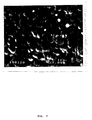
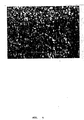
- Fig. 2 shows the scanning electron micrograph of the microstructure of the pellet, containing the powder produced in this example, sintered at 1200°C for 1 hour.
- the grains are small and uniform with an average size of 1.4 ⁇ m.
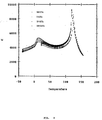
- the dielectric constants of the same pellet were measured as a function of temperature, and the results are shown in Figure 3.
- the sample has a Curie temperature of 120°C at which the dielectric constant peaks at 9,200. At 20°C, the sample has a dielectric constant of 5,000, which is superior to any reported values for pure BaTiO 3 .
- the flow rate of the BaCl 2 + TiCl 4 solution was kept constant at 12 cm 3 min -1 , while the flow rate of the NaOH solution was varied from 5 to 14 cm 3 min -1 .
- the reaction temperature was kept at 85°C.
- the introduction of the BaCl 2 + TiCl 4 and NaOH solutions lasted 8 minutes, subsequently followed by aging at 85°C under stirring for 3 minutes.
- the particle size increased, from 0.15 to 0.28 ⁇ m, with decreasing flow rate from 14 to 5 cm 3 min -1 .
- This example illustrates the effect of increased reaction volume.
- An aqueous solution containing a mixture of BaCl 2 and TiCl 4 and a 6 mol dm -3 NaOH solution were simultaneously introduced, at constant flow rates of 24 and 16 cm 3 min -1 , respectively, into a 900 cm 3 CDJP reactor containing 200 cm 3 stirred 1 mol dm -3 NaOH solution preheated at 88°C. The temperature dropped to 83-85°C and then was maintained constant at 85°C. The total concentration of the BaCl 2 + TiCl 4 solution was 1 mol dm -3 , while the molar ratio [BaCl 2 ]/[TiCl 4 ] was kept at 1.07. The introduction of the BaCl 2 + TiCl 4 and NaOH solutions lasted 8 min, subsequently followed by aging at 85°C under stirring for 3 min.
- Example 1 The resulting dispersion was treated the same as in Example 1. Barium titanate particles so obtained had the same charateristics as those in Example 1. This process yielded twice the weight of the solid as compared to Example 1.
- Example 3 The experiment, as described in Example 3, was repeated using the same procedure except that the flow rates of the NaOH and BaCl 2 + TiCl 4 stock solutions were 24 and 36 cm 3 min -1 , respectively.
- the so obtained suspension was treated the same as in Example 1.
- the resulting solid had the same characteristics as that obtained in Example 3, and the weight of the solid produced was three times larger than obtained in Example 1.
- This example is offered to show that BaTiO 3 particles of different sizes can be obtained by altering the experimental conditions.
- An aqueous solution containing a mixture of BaCl 2 and TiCl 4 and a 6 mol dm -3 NaOH solution were simultaneously introduced, at constant flow rates of 12 and 8 cm 3 min -1 , respectively, into a 900 cm 3 CDJP reactor containing 200 cm 3 stirred 1 mol dm -3 NaOH solution preheated at 88°C. The temperature dropped to 83-85°C and then was maintained constant at 85°C.
- the total concentration of the BaCl 2 + TiCl 4 solution was 1 mol dm -3 , while the molar ratio [BaCl 2 ]/[TiCl 4 ] was kept at 1.07.
- the introduction of the BaCl 2 + TiCl 4 and NaOH solutions lasted 30 min, subsequently followed by aging at 85°C under stirring for 3 min.
- the final volume of the resulting suspension was 800 cm 3 .
- the so obtained particles were well crystalline and had an average particle size of 0.4 ⁇ m.
- Example 5 Another experiment was conducted using the same conditions as in Example 5, except the starting volume of the 1 mol dm -3 NaOH solution was reduced to 100 cm 3 . The average particle size of the resulting solid was 0.3 ⁇ m, while the other charateristics were the same as those obtained in Example 5.
- This example shows the result when NaOH is substituted by KOH.
- An aqueous solution containing a mixture of BaCl 2 and TiCl 4 was introduced, at a constant flow rate of 10 cm 3 min -1 , into a 330 cm 3 CDJP reactor containing 100 cm 3 stirred 1 mol dm -3 KOH solution preheated at 88°C.
- the total concentration of the BaCl 2 + TiCl 4 solution was 1 mol dm -3 , while the molar ratio [BaCl 2 ]/[TiCl 4 ] was kept at 1.07.
- the introduction of the BaCl 2 + TiCl 4 solution lasted 7 minutes, subsequently followed by aging at 85°C under stirring for 3 minutes.
- the pH of the reaction mixture was monitored and automatically adjusted by addition of a concentrated KOH solution (6 mol dm -3 ) through a metering pump to keep it constant at a value of 14.
- the precipitated solid was purified and dried as previously described in Example 1.
- the so obtained powder shows the same characteristics as those of the powder obtained according to Example 1.
- Example 7 was repeated, but instead of continuously adjusting the pH, which involved a change in the flow rate of the added 6 mol dm -3 KOH solution, the KOH solution was introduced into the reaction mixture at a constant flow rate of 8 cm 3 min -1 and the BaCl 2 + TiCl 4 stock solution at 12 cm 3 min -1 .
- the so obtained solid showed the same characteristics as the powder produced according to Example 7.
- Example 7 The experimental conditions were the same as in Example 7, except that 0.1% by weight of ⁇ -cyclodextrin was added in the 100 cm 3 of 1 mol dm -3 KOH solution in the CDJP reactor. The resulting suspension was treated the same as in Example 1.
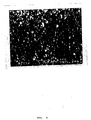
- the so obtained solid was well crystalline, consisting of finely dispersed uniform spherical particles, yet smaller in size with an average diameter of 70 nm as shown in Figure 4.
- EXAMPLE 12 Strontium titanate by the CDJP process
- aqueous solution containing a mixture of SrCl 2 and TiCl 4 and a 6 mol dm -3 NaOH solution were simultaneously introduced, at constant flow rates of 12 and 8 cm 3 min -1 , respectively, into a 330 cm 3 CDJP reactor containing 100 cm 3 stirred 1 mol dm -3 NaOH solution preheated at 88°C. The temperature dropped to 83-85°C and then was maintained constant at 85°C. The total concentration of the SrCl 2 + TiCl 4 solution was 1 mol dm -3 , while the molar ratio [SrCl 2 ]/[TiCl 4 ] was kept at 1.07. The introduction of the SrCl 2 + TiCl 4 and NaOH solutions lasted 8 min. subsequently followed by aging at 85°C under stirring for 3 min.
- the resulting suspension was treated the same as in Example 1.
- the so obtained SrTiO 3 particles are rather uniform spheres of good cystallinity.
- the so prepared Zr-doped BaTiO 3 particles appeared to be spherical, uniform in size, and well crystalline as depicted in Figure 6 with an average diameter of 0.2 ⁇ m.
- the XRD pattern indicates a change in the crystal lattice due to the incorporation of Zr.
- the results from chemical analysis showed the incorporation of Zr to be quantitative with a molar ratio [Ti]/[Zr] of 4, corresponding to a Zr doping content of 20% in the solid.
- This example illustrates the preparation of Zr-doped BaTiO 3 with different dopant contents.
- the so obtained powders consisted of well crystalline, uniform spherical particles, similar to those obtained in Example 13.
- Example 14 was repeated by changing the concentrations to prepare a 20% Zr-doped BaTiO 3 .
- the dielectric data of the 20% Zr-doped BaTiO 3 powder, sintered at 1275°C showed that the Curie temperature is shifted to 50°C (compared with Fig. 3) and the curve is broad enough to meet the requirements for Y5V-capacitor application.
- EXAMPLE 15 Strontium doped barium titanate by the CDJP process
- This example illustrates the preparation of Sr doped barium titanate particles.
- the experimental conditions are the same as in Example 13, except that the reactants in the stock solution had the following concentrations: Sr dopant content in solid (%) Concentrations of the reactants (mol dm -3 ) BaCl 2 SrCl 2 TiCl 4 10 0.465 0.052 0.483 20 0.414 0.103 0.483 30 0.362 0.155 0.483
- the so prepared Sr-doped particles were substantially spherical and well crystalline, similar to those of Example 13.
- Fig. 8 it is reported the curve of dielectric constant vs. temperature of the powders doped with 30% by weight of Sr when sintered at 1300°C.
- the Curie temperature is shifted to 37°C compared to Fig. 3.
- the curve is very sharp and this powder can be used for thermal sensor applications.
- EXAMPLE 16 Calcium doped barium titanate by the CDJP process
- This example illustrates the preparation of Ca doped barium titanate particles.
- the experimental conditions were the same as in Example 13, except that the reactants in the stock solution had the following concentrations: Ca dopant content in solid (%) Concentrations of the reactants (mol dm -3 ) BaCl 2 CaCl 2 TiCl 4 10 0.465 0.052 0.483 20 0.414 0.103 0.483 30 0.362 0.155 0.483
- the so prepared Ca-doped particles were substantially spherical and well crystalline, similar to those of Example 13.
- EXAMPLE 17 Calcium and Zirconium doped barium titanate by the CDJP process
- the experimental conditions were the same as in Example 13, except that the reactant solution contained 0.507 mol dm -3 BaCl 2 , 0.010 mol dm -3 CaCl 2 , 0.386 mol dm -3 TiCl 4 and 0.097 mol dm -3 ZrCl 4 , which corresponded to molar ratios ([BaCl 2 ]+[CaCl 2 ])/([TiCl 4 ]+[ZrCl 4 ]), [BaCl 2 ]/[CaCl 2 ], and [TiCl 4 ]/[ZrCl 4 ] of 1.07, 49 and 4, respectively.
- the so obtained mixed Ca and Zr doped BaTiO 3 particles were substantially spherical and well crystalline.
- Example 17 was repeated by changing the concentration of CaCl 2 into 0.0052 mol dm -3 , to obtain BaTiO 3 doped with 1% Ca and 20% Zr.
- the dielectric data showed that the curve is broad enough to meet the characteristics of Z5U-capacitor when sintered at 1300°C.
- the resulting dispersion was washed once with boiling water, and once with cooled water and dried at 100°C.
- the so obtained particles are uniform, spherical, nanoscaled in size with an average diameter of 17 nm.
- the XRD pattern shows that the particles to be crystalline potassium niobate, KNbO 3 .
- the solutions are the following: (1) a 6 mol dm -3 NaOH solution, (2) a solution containing BaCl 2 and TiCl 4 , and (3) a solution containing TiCl 4 and SrCl 2 .
- the total concentrations of [BaCl 2 ]+[TiCl 4 ] and [SrCl 2 ]+[TiCl 4 ] are both, 1.0 mol dm -3 and the molar ratios [BaCl 2 ]/[TiCl 4 ] and [SrCl 2 ]/[TiCl 4 ] are both, 1.07.
- the reaction temperature is 85°C.
- the apparatus is the one of Example 13.
- the solutions (1), (2), (3) are the same as in Example 19; and the reactor is the same, but the introduction of solutions into the reactor is the following (method b): combinations of two are added at a given time in sequence, i.e., first solutions (1) (NaOH) and (2) are introduced simultaneously at constant flow rates for a desired period of time, aged for 5 min., followed by simultaneous introduction of solutions (1) (NaOH) and (3) for some time, and finally aged for 5 min.
- first solutions (1) (NaOH) and (2) are introduced simultaneously at constant flow rates for a desired period of time, aged for 5 min., followed by simultaneous introduction of solutions (1) (NaOH) and (3) for some time, and finally aged for 5 min.
- solutions (1) and (2) are introduced into the reactor simultaneously at constant flow rates of 8 and 12 cm 3 min -1 , respectively, for 5 min., and aged for 5 min. Then, the solutions (1) and (3) are subsequently introduced at constant flow rates of 8 and 12 cm 3 min -1 , respectively, for 1, 2, 3, or 4 min., followed by aging for 5 min.
- the resulting dispersions contain spheres of good crystallinity but bimodal distributions, which are mixtures of BaTiO 3 and SrTiO 3 according to the XRD patterns.
- the solutions (1), (2), (3) are the same as in Example 19 and the apparatus for the reaction is the same.
- Method (c) is the same procedure as in (b) of Example 20 except first are introduced solutions (1) and (3) followed by solutions (1) and (2).
- the specific examples using the CTJP technique are given as follows:
- the solutions (1) and (3) are introduced into the reactor, at constant flow rates of 8 and 12 cm 3 min -1 , respectively, for 1, 2, 3 or 4 min., followed by aging for 5 min. Then, the solutions (1) and (2) are subsequently introduced simultaneously at constant flow rates of 8 and 12 cm 3 min -1 , respectively, for 5 min., followed by aging for 5 min.
- the powders so obtained contain mixtures of crystalline BaTiO 3 and SrTiO 3 of bimodal distributions.
- the dielectric data of the powder so obtained, sintered at 1250°C, showed that the Curie temperature is shifted to 20°C, with respect to Fig. 3 of Example 1.
- the curve is broad enough to meet the requirements for Y5V-capacitor application.
- the corresponding concentrations of BaCl 2 , TiCl 4 , and ZrCl 4 in the reactant solution were 0.525, 0.380 and 0.095 mol dm -3 , respectively.
- the resulting powder was sintered at 1275°C for 2 h.
- the curve of dielectric constant vs temperature of the sintered powder meets the specification of Y5V-MLC capacitor application.
- Example 22 The same powder described in Example 22 was sintered at 1300°C for 2 h.
- the curve of dielectric constant vs temperature of the sintered powder is sharper than that of Fig. 8 and is good for thermal sensor application.
- the corresponding concentrations of BaCl 2 , SrCl 2 , TiCl 4 , and ZrCl 4 in the reactant solution were 0.493, 0.026, 0.409 and 0.072 mol dm -3 , respectively.
- the resulting powder was sintered at 1350°C for 2 h.
- the curve of dielectric constant vs temperature of the sintered powder is sharper than that of Fig. 8 and is good for thermal sensor application.
Landscapes
- Chemical & Material Sciences (AREA)
- Organic Chemistry (AREA)
- Engineering & Computer Science (AREA)
- Inorganic Chemistry (AREA)
- Nanotechnology (AREA)
- Materials Engineering (AREA)
- Environmental & Geological Engineering (AREA)
- Life Sciences & Earth Sciences (AREA)
- Physics & Mathematics (AREA)
- General Life Sciences & Earth Sciences (AREA)
- Composite Materials (AREA)
- Condensed Matter Physics & Semiconductors (AREA)
- General Physics & Mathematics (AREA)
- Geology (AREA)
- Crystallography & Structural Chemistry (AREA)
- Chemical Kinetics & Catalysis (AREA)
- Ceramic Engineering (AREA)
- Inorganic Compounds Of Heavy Metals (AREA)
- Manufacturing & Machinery (AREA)
- Structural Engineering (AREA)
- Compositions Of Oxide Ceramics (AREA)
Applications Claiming Priority (2)
| Application Number | Priority Date | Filing Date | Title |
|---|---|---|---|
| ITMI931903A IT1270828B (it) | 1993-09-03 | 1993-09-03 | Processo per la sintesi di polveri ceramiche cristalline di composti di perovskite |
| ITMI931903 | 1993-09-03 |
Publications (2)
| Publication Number | Publication Date |
|---|---|
| EP0641740A1 EP0641740A1 (en) | 1995-03-08 |
| EP0641740B1 true EP0641740B1 (en) | 1998-03-11 |
Family
ID=11366852
Family Applications (1)
| Application Number | Title | Priority Date | Filing Date |
|---|---|---|---|
| EP94112257A Expired - Lifetime EP0641740B1 (en) | 1993-09-03 | 1994-08-05 | Process for the synthesis of crystalline ceramic powders of perovskite compounds |
Country Status (9)
| Country | Link |
|---|---|
| US (1) | US5900223A (enExample) |
| EP (1) | EP0641740B1 (enExample) |
| JP (1) | JP3963962B2 (enExample) |
| KR (1) | KR100310186B1 (enExample) |
| CN (1) | CN1048473C (enExample) |
| AT (1) | ATE163904T1 (enExample) |
| DE (1) | DE69408921T2 (enExample) |
| IT (1) | IT1270828B (enExample) |
| TW (1) | TW470733B (enExample) |
Families Citing this family (70)
| Publication number | Priority date | Publication date | Assignee | Title |
|---|---|---|---|---|
| JPH08310802A (ja) * | 1995-03-15 | 1996-11-26 | Takeshi Yao | ペロブスカイト型複合酸化物析出物の製造方法 |
| US5952040A (en) * | 1996-10-11 | 1999-09-14 | Nanomaterials Research Corporation | Passive electronic components from nano-precision engineered materials |
| KR100402157B1 (ko) * | 1996-10-24 | 2004-02-05 | 주식회사 엘지화학 | 연속공정에 의한 결정성 페로브스카이트 화합물의 미립자 제조방법 |
| KR100383480B1 (ko) * | 1996-11-04 | 2003-07-10 | 주식회사 엘지화학 | 입자크기가 조절된 티탄산바륨의 제조방법 |
| JP3608599B2 (ja) | 1997-10-09 | 2005-01-12 | 株式会社村田製作所 | チタン酸バリウム系半導体磁器 |
| US6514453B2 (en) * | 1997-10-21 | 2003-02-04 | Nanoproducts Corporation | Thermal sensors prepared from nanostructureed powders |
| US6608760B2 (en) * | 1998-05-04 | 2003-08-19 | Tpl, Inc. | Dielectric material including particulate filler |
| KR100418590B1 (ko) | 1998-05-20 | 2004-02-11 | 도호 티타늄 가부시키가이샤 | 티탄산바륨 분말 |
| WO1999059919A1 (fr) * | 1998-05-20 | 1999-11-25 | Toho Titanium Co., Ltd. | Procede de production d'une poudre de titanate de baryum |
| US6010977A (en) * | 1998-06-24 | 2000-01-04 | Eastman Chemical Company | Preparation of sub-visual molecular aggregrates composed of antimony phosphate derivatives |
| US6017504A (en) | 1998-07-16 | 2000-01-25 | Universite Laval | Process for synthesizing perovskites using high energy milling |
| US6893623B2 (en) * | 1998-12-11 | 2005-05-17 | Showa Denko Kabushiki Kaisha | Perovskite titanium-type composite oxide particle and production process thereof |
| US7030165B2 (en) * | 1999-05-26 | 2006-04-18 | Showa Denko Kabushiki Kaisha | Perovskite titanium-type composite oxide particle and production process thereof |
| US20020187889A1 (en) * | 1999-10-28 | 2002-12-12 | Lauf Robert J. | Mixed oxide nanoparticles and apparatus for making same |
| JP3780851B2 (ja) * | 2000-03-02 | 2006-05-31 | 株式会社村田製作所 | チタン酸バリウムおよびその製造方法ならびに誘電体セラミックおよびセラミック電子部品 |
| KR100367431B1 (ko) * | 2000-05-03 | 2003-01-10 | 광주과학기술원 | 전기도금법에 의한 나노미터 크기의 금속 및 합금 입자제조방법 |
| US7205256B2 (en) * | 2000-10-17 | 2007-04-17 | Sharp Kabushiki Kaisha | Oxide material, method for preparing oxide thin film and element using said material |
| JP4240190B2 (ja) * | 2000-11-13 | 2009-03-18 | 戸田工業株式会社 | 球状チタン酸バリウム粒子粉末及びその製造法 |
| US6808697B2 (en) | 2000-11-13 | 2004-10-26 | Toda Kogyo Corporation | Spherical tetragonal barium titanate particles and process for producing the same |
| KR100414832B1 (ko) * | 2001-02-22 | 2004-01-13 | 삼성전기주식회사 | 고품질 티탄산바륨계 파우더의 제조방법 |
| JP2002274940A (ja) * | 2001-03-15 | 2002-09-25 | Murata Mfg Co Ltd | 磁器用原料粉末およびその製造方法、磁器およびその製造方法、積層セラミック電子部品の製造方法 |
| US20020146365A1 (en) * | 2001-04-09 | 2002-10-10 | Woo-Seok Cho | Method for the preparation of oxide powders |
| US7595109B2 (en) * | 2001-04-12 | 2009-09-29 | Eestor, Inc. | Electrical-energy-storage unit (EESU) utilizing ceramic and integrated-circuit technologies for replacement of electrochemical batteries |
| US7914755B2 (en) * | 2001-04-12 | 2011-03-29 | Eestor, Inc. | Method of preparing ceramic powders using chelate precursors |
| US7729811B1 (en) | 2001-04-12 | 2010-06-01 | Eestor, Inc. | Systems and methods for utility grid power averaging, long term uninterruptible power supply, power line isolation from noise and transients and intelligent power transfer on demand |
| IL158531A (en) * | 2001-05-04 | 2010-04-15 | Starck H C Inc | Metalothermic reduction of refractory metal oxides |
| US6780394B2 (en) * | 2001-08-16 | 2004-08-24 | Diamond Innovations, Inc. | High pressure production of perovskites and resulting products |
| US6713037B2 (en) * | 2001-09-28 | 2004-03-30 | Nanox, Inc. | Process for synthesizing noncrystalline lithium based mixed oxides by high energy milling |
| GB0126284D0 (en) * | 2001-11-01 | 2002-01-02 | Oxonica Ltd | Water soluble luminescent nanoparticles |
| US7132093B2 (en) * | 2002-06-05 | 2006-11-07 | UNIVERSITé LAVAL | Mesoporous mixed oxide materials as a new class of SO2 resistant catalysts for hydrocarbon oxidation |
| US6737364B2 (en) * | 2002-10-07 | 2004-05-18 | International Business Machines Corporation | Method for fabricating crystalline-dielectric thin films and devices formed using same |
| US7318897B2 (en) * | 2003-08-14 | 2008-01-15 | Ferro Corporation | Method of removing spectator ions from aqueous suspension of solid particles |
| DE102004043233B4 (de) * | 2003-09-10 | 2014-02-13 | Denso Corporation | Verfahren zum Herstellen eines beweglichen Abschnitts einer Halbleitervorrichtung |
| JP4593124B2 (ja) * | 2004-02-13 | 2010-12-08 | 住友大阪セメント株式会社 | ペロブスカイト型ナノ粒子の製造方法 |
| JP4702515B2 (ja) * | 2004-03-31 | 2011-06-15 | 戸田工業株式会社 | 正方晶系チタン酸バリウム微粒子粉末及びその製造法 |
| US20110170232A1 (en) * | 2004-08-13 | 2011-07-14 | Eestor, Inc. | Electrical energy storage unit and methods for forming same |
| KR100620595B1 (ko) * | 2004-09-30 | 2006-09-19 | (주)케미피아 | 복합페롭스카이트 분말의 합성 방법 |
| GB2438985B (en) * | 2005-02-07 | 2009-04-08 | Hochiki Co | Heat detector and method for manufacturing heat detecting element |
| US7230817B2 (en) * | 2005-04-15 | 2007-06-12 | Ferro Corporation | Y5V dielectric composition |
| US7566411B2 (en) | 2005-10-17 | 2009-07-28 | Lg Chem, Ltd. | Composite oxides comprising strontium, lantanium, yttrium and ionic conductors using the same |
| TWI340126B (en) | 2005-10-19 | 2011-04-11 | Lg Chemical Ltd | Composite oxides comprising strontium, lantanium, tungsten and ionic conductors using the same |
| US7648687B1 (en) | 2006-06-15 | 2010-01-19 | Eestor, Inc. | Method of purifying barium nitrate aqueous solution |
| US8853116B2 (en) | 2006-08-02 | 2014-10-07 | Eestor, Inc. | Method of preparing ceramic powders |
| US7993611B2 (en) * | 2006-08-02 | 2011-08-09 | Eestor, Inc. | Method of preparing ceramic powders using ammonium oxalate |
| US8145362B2 (en) | 2006-08-04 | 2012-03-27 | Eestor, Inc. | Utility grid power averaging and conditioning |
| JP5491085B2 (ja) * | 2008-11-10 | 2014-05-14 | 日本碍子株式会社 | セラミックスシートの製造方法 |
| WO2010099517A2 (en) * | 2009-02-27 | 2010-09-02 | Eestor, Inc. | Reaction tube and hydrothermal processing for the wet chemical co-precipitation of oxide powders |
| US20100285316A1 (en) * | 2009-02-27 | 2010-11-11 | Eestor, Inc. | Method of Preparing Ceramic Powders |
| JP5360886B2 (ja) * | 2009-03-13 | 2013-12-04 | Necトーキン株式会社 | 圧電セラミックス、及びその製造方法 |
| JP5582281B2 (ja) * | 2009-04-09 | 2014-09-03 | 堺化学工業株式会社 | ニオブ酸アルカリ金属塩粒子の製造方法、およびニオブ酸アルカリ金属塩粒子 |
| JP5578504B2 (ja) * | 2009-04-09 | 2014-08-27 | 堺化学工業株式会社 | ニオブ酸アルカリ金属塩粒子の製造方法、およびニオブ酸アルカリ金属塩粒子 |
| KR20130139743A (ko) * | 2010-01-20 | 2013-12-23 | 에스톨, 인코포레이티드 | 바륨 이온 소스의 정제 |
| US8287832B1 (en) | 2010-04-27 | 2012-10-16 | Sandia Corporation | Hydrothermal method of synthesis of rare-earth tantalates and niobates |
| WO2011146020A1 (en) * | 2010-05-20 | 2011-11-24 | Agency For Science, Technology And Research | Method for preparing a lead-free piezoelectric thin film |
| JP5755093B2 (ja) * | 2011-09-16 | 2015-07-29 | 三井化学株式会社 | ペロブスカイト型結晶構造を有する複合酸化物の製造方法 |
| JP6016431B2 (ja) * | 2012-04-20 | 2016-10-26 | キヤノン株式会社 | ニオブ酸ナトリウム微粒子の製造方法 |
| CN102936038B (zh) * | 2012-11-14 | 2014-04-16 | 陕西科技大学 | 具有黑暗催化能力的Bi3+掺杂CoTiO3 纳米粉体的制备方法 |
| JP5976559B2 (ja) * | 2013-01-30 | 2016-08-23 | 株式会社ノリタケカンパニーリミテド | ナノ微粒子状のチタン酸バリウムとその製造方法 |
| JP6068749B2 (ja) * | 2013-09-30 | 2017-01-25 | 株式会社ノリタケカンパニーリミテド | チタン酸バリウム微粒子、チタン酸バリウム微粒子粉体およびそれらの製造方法 |
| JP6032679B2 (ja) * | 2013-09-30 | 2016-11-30 | 株式会社ノリタケカンパニーリミテド | 単一相の立方晶チタン酸バリウム微粒子、それを含有する分散体およびその製造方法 |
| US9136408B2 (en) * | 2013-11-26 | 2015-09-15 | Hunt Energy Enterprises, Llc | Perovskite and other solar cell materials |
| JP6384829B2 (ja) * | 2014-07-11 | 2018-09-05 | 株式会社スーパーナノデザイン | Bctzナノ粒子の製造方法 |
| JP7038048B2 (ja) * | 2016-06-14 | 2022-03-17 | デンカ株式会社 | 高純度チタン酸バリウム系粉末及びその製造方法、並びに樹脂組成物及び指紋センサ |
| KR102626917B1 (ko) * | 2016-11-24 | 2024-01-18 | 삼성전자주식회사 | 나노결정, 그 제조방법 및 광전자 소자 |
| KR102023398B1 (ko) * | 2017-03-31 | 2019-09-23 | 강릉원주대학교산학협력단 | Bmw계 고주파 유전체 세라믹 소재 및 그 제조방법 |
| KR102117228B1 (ko) | 2018-11-22 | 2020-06-09 | (주) 현진티엔아이 | 개선된 이물질 분리 시스템 장착 엘피지 패키지 탱크 및 이를 이용한 공급 방법 |
| CN111348924A (zh) * | 2018-12-20 | 2020-06-30 | 攀枝花学院 | 抗钛熔体的耐火耐蚀材料及其制备方法和应用 |
| CN110817860A (zh) * | 2019-11-14 | 2020-02-21 | 中国科学院青岛生物能源与过程研究所 | 一种二氧化锡/石墨炔复合物界面层及其制备和应用 |
| CN111410526B (zh) * | 2020-03-27 | 2020-12-29 | 广东风华高新科技股份有限公司 | 一种掺杂钙钛矿锡酸钡材料及其制备方法与应用 |
| CN113087015B (zh) * | 2021-03-23 | 2022-06-10 | 常州大学 | 一种异相析出法制备的核-壳纳米颗粒及制备纳米陶瓷的方法 |
Family Cites Families (22)
| Publication number | Priority date | Publication date | Assignee | Title |
|---|---|---|---|---|
| US4061583A (en) * | 1974-03-13 | 1977-12-06 | Murata Manufacturing Co., Ltd. | Preparation of titanates |
| JPS5915503B2 (ja) * | 1974-11-21 | 1984-04-10 | 日本電気株式会社 | ジルコン・チタン酸鉛を含む多成分系圧電性磁器用結晶化微粉末の製造方法 |
| SU1101413A1 (ru) * | 1982-02-24 | 1984-07-07 | Московский Ордена Ленина,Ордена Октябрьской Революции И Ордена Трудового Красного Знамени Государственный Университет Им.М.В.Ломоносова | Способ получени ниобата лити |
| DE3469161D1 (en) * | 1983-10-12 | 1988-03-10 | Asahi Chemical Ind | Titanate powder and process for producing the same |
| JPH0639330B2 (ja) * | 1984-01-24 | 1994-05-25 | ソニー株式会社 | チタン酸バリウム・ストロンチウム微粒子の製造方法 |
| JPS6131345A (ja) * | 1984-07-25 | 1986-02-13 | 堺化学工業株式会社 | 組成物の製造方法 |
| IT1188182B (it) * | 1985-08-12 | 1988-01-07 | Montedison Spa | Titanati in forma di particelle sferiche e processo per la loro preparazione |
| US4808315A (en) * | 1986-04-28 | 1989-02-28 | Asahi Kasei Kogyo Kabushiki Kaisha | Porous hollow fiber membrane and a method for the removal of a virus by using the same |
| US4764493A (en) * | 1986-06-16 | 1988-08-16 | Corning Glass Works | Method for the production of mono-size powders of barium titanate |
| US4670243A (en) * | 1986-06-30 | 1987-06-02 | Ferro Corporation | Method of precipitating metal titanate powders |
| GB2193713B (en) * | 1986-07-14 | 1990-12-05 | Cabot Corp | Method of producing perovskite-type compounds. |
| DE3635532A1 (de) * | 1986-10-18 | 1988-04-28 | Philips Patentverwaltung | Verfahren zur herstellung von bariumtitanat batio(pfeil abwaerts)3(pfeil abwaerts) |
| US4853199A (en) * | 1987-01-08 | 1989-08-01 | Matsushita Electric Industrial Co., Ltd. | Method for producing crystalline complex perovskite compounds |
| US4874598A (en) * | 1987-01-20 | 1989-10-17 | Mitsubishi Petrochemical Co., Ltd. | Process for producing perovskite-type oxides of the ABO3 type |
| US4812300A (en) * | 1987-07-13 | 1989-03-14 | Sri-International | Selective perovskite catalysts to oxidize ammonia to nitric oxide |
| DE3727396A1 (de) * | 1987-08-17 | 1989-03-02 | Philips Patentverwaltung | Verfahren zur herstellung von keramischen pulvern mit perowskitstruktur |
| US5087437A (en) * | 1988-01-15 | 1992-02-11 | E. I. Du Pont De Nemours And Company | Process for preparing crystalline mixed metal oxides |
| BE1001780A4 (fr) * | 1988-06-13 | 1990-03-06 | Solvay | Procede pour la fabrication de cristaux de titanate de baryum et/ou de strontium et cristaux de titanate de baryum et/ou de strontium. |
| US5112433A (en) * | 1988-12-09 | 1992-05-12 | Battelle Memorial Institute | Process for producing sub-micron ceramic powders of perovskite compounds with controlled stoichiometry and particle size |
| DE69010178T2 (de) * | 1989-08-21 | 1994-12-08 | Tayca Corp | Verfahren zur herstellung von pulverförmigen perovskiteverbindungen. |
| JP3216160B2 (ja) * | 1991-09-06 | 2001-10-09 | 株式会社村田製作所 | ペロブスカイト型複合酸化物粉末の製造方法 |
| JP3240643B2 (ja) * | 1991-09-26 | 2001-12-17 | 株式会社村田製作所 | セラミック原料微粉の製造方法 |
-
1993
- 1993-09-03 IT ITMI931903A patent/IT1270828B/it active IP Right Grant
-
1994
- 1994-08-05 EP EP94112257A patent/EP0641740B1/en not_active Expired - Lifetime
- 1994-08-05 DE DE69408921T patent/DE69408921T2/de not_active Expired - Fee Related
- 1994-08-05 AT AT94112257T patent/ATE163904T1/de not_active IP Right Cessation
- 1994-09-01 TW TW083108043A patent/TW470733B/zh not_active IP Right Cessation
- 1994-09-02 JP JP23242794A patent/JP3963962B2/ja not_active Expired - Fee Related
- 1994-09-02 CN CN94115642A patent/CN1048473C/zh not_active Expired - Fee Related
- 1994-09-03 KR KR1019940022183A patent/KR100310186B1/ko not_active Expired - Fee Related
-
1996
- 1996-11-14 US US08/748,719 patent/US5900223A/en not_active Expired - Lifetime
Also Published As
| Publication number | Publication date |
|---|---|
| CN1048473C (zh) | 2000-01-19 |
| JP3963962B2 (ja) | 2007-08-22 |
| US5900223A (en) | 1999-05-04 |
| ITMI931903A1 (it) | 1995-03-03 |
| ITMI931903A0 (it) | 1993-09-03 |
| ATE163904T1 (de) | 1998-03-15 |
| CN1101634A (zh) | 1995-04-19 |
| DE69408921T2 (de) | 1998-10-08 |
| KR100310186B1 (ko) | 2002-06-24 |
| TW470733B (en) | 2002-01-01 |
| IT1270828B (it) | 1997-05-13 |
| DE69408921D1 (de) | 1998-04-16 |
| EP0641740A1 (en) | 1995-03-08 |
| KR950008425A (ko) | 1995-04-17 |
| JPH07232923A (ja) | 1995-09-05 |
Similar Documents
| Publication | Publication Date | Title |
|---|---|---|
| US5900223A (en) | Process for the synthesis of crystalline powders of perovskite compounds | |
| Her et al. | Preparation of well-defined colloidal barium titanate crystals by the controlled double-jet precipitation | |
| JP2635048B2 (ja) | ペロブスカイトベース生成物の製法 | |
| US5445806A (en) | Process for preparing fine powder of perovskite-type compound | |
| US5112433A (en) | Process for producing sub-micron ceramic powders of perovskite compounds with controlled stoichiometry and particle size | |
| US5453262A (en) | Continuous process for production of ceramic powders with controlled morphology | |
| EP1598326A1 (en) | The method for preparing perovskite-type compound powders | |
| US20060078492A1 (en) | Perovskite titanium-containing composite oxide particle, production process and uses thereof | |
| US7001585B2 (en) | Method of making barium titanate | |
| JP2726439B2 (ja) | ペロブスカイト構造を有するセラミック粉末の製造方法 | |
| US8715614B2 (en) | High-gravity reactive precipitation process for the preparation of barium titanate powders | |
| JP3319807B2 (ja) | ペロブスカイト型化合物微細粒子粉末およびその製造法 | |
| JP2005075700A (ja) | 組成物の製造方法 | |
| EP0104002B1 (en) | Methods of manufacturing metal titanate fine powders | |
| EP1860069B1 (en) | Method for producing composition | |
| Her et al. | Controlled double-jet precipitation of uniform colloidal crystalline particles of Zr-and Sr-doped barium titanates | |
| JP3772354B2 (ja) | セラミック粉体の製造方法 | |
| JPH0246531B2 (enExample) | ||
| EP1777198A1 (en) | Fine barium titanate particles | |
| JP3838523B2 (ja) | 組成物の製造方法 | |
| JP3668985B2 (ja) | セラミック粉体の製造方法 | |
| KR20020030021A (ko) | 복합 금속 산화물 분말의 제조 방법 | |
| KR100290247B1 (ko) | 티탄산바륨 및 페롭스카이트형 복합산화물 제조방법 | |
| WO2001010781A1 (en) | METHOD FOR MANUFACTURING BaTiO3 BASED POWDERS | |
| KR20030046549A (ko) | 복합금속산화물 분말 제조방법 |
Legal Events
| Date | Code | Title | Description |
|---|---|---|---|
| PUAI | Public reference made under article 153(3) epc to a published international application that has entered the european phase |
Free format text: ORIGINAL CODE: 0009012 |
|
| AK | Designated contracting states |
Kind code of ref document: A1 Designated state(s): AT BE CH DE DK ES FR GB GR IE IT LI LU NL PT SE |
|
| 17P | Request for examination filed |
Effective date: 19950803 |
|
| 17Q | First examination report despatched |
Effective date: 19960703 |
|
| GRAG | Despatch of communication of intention to grant |
Free format text: ORIGINAL CODE: EPIDOS AGRA |
|
| GRAG | Despatch of communication of intention to grant |
Free format text: ORIGINAL CODE: EPIDOS AGRA |
|
| GRAG | Despatch of communication of intention to grant |
Free format text: ORIGINAL CODE: EPIDOS AGRA |
|
| GRAH | Despatch of communication of intention to grant a patent |
Free format text: ORIGINAL CODE: EPIDOS IGRA |
|
| ITF | It: translation for a ep patent filed | ||
| GRAH | Despatch of communication of intention to grant a patent |
Free format text: ORIGINAL CODE: EPIDOS IGRA |
|
| GRAH | Despatch of communication of intention to grant a patent |
Free format text: ORIGINAL CODE: EPIDOS IGRA |
|
| GRAA | (expected) grant |
Free format text: ORIGINAL CODE: 0009210 |
|
| AK | Designated contracting states |
Kind code of ref document: B1 Designated state(s): AT BE CH DE DK ES FR GB GR IE IT LI LU NL PT SE |
|
| PG25 | Lapsed in a contracting state [announced via postgrant information from national office to epo] |
Ref country code: LI Free format text: LAPSE BECAUSE OF FAILURE TO SUBMIT A TRANSLATION OF THE DESCRIPTION OR TO PAY THE FEE WITHIN THE PRESCRIBED TIME-LIMIT Effective date: 19980311 Ref country code: GR Free format text: LAPSE BECAUSE OF FAILURE TO SUBMIT A TRANSLATION OF THE DESCRIPTION OR TO PAY THE FEE WITHIN THE PRESCRIBED TIME-LIMIT Effective date: 19980311 Ref country code: ES Free format text: THE PATENT HAS BEEN ANNULLED BY A DECISION OF A NATIONAL AUTHORITY Effective date: 19980311 Ref country code: CH Free format text: LAPSE BECAUSE OF FAILURE TO SUBMIT A TRANSLATION OF THE DESCRIPTION OR TO PAY THE FEE WITHIN THE PRESCRIBED TIME-LIMIT Effective date: 19980311 Ref country code: BE Free format text: LAPSE BECAUSE OF FAILURE TO SUBMIT A TRANSLATION OF THE DESCRIPTION OR TO PAY THE FEE WITHIN THE PRESCRIBED TIME-LIMIT Effective date: 19980311 Ref country code: AT Free format text: LAPSE BECAUSE OF FAILURE TO SUBMIT A TRANSLATION OF THE DESCRIPTION OR TO PAY THE FEE WITHIN THE PRESCRIBED TIME-LIMIT Effective date: 19980311 |
|
| REF | Corresponds to: |
Ref document number: 163904 Country of ref document: AT Date of ref document: 19980315 Kind code of ref document: T |
|
| REG | Reference to a national code |
Ref country code: CH Ref legal event code: EP |
|
| REF | Corresponds to: |
Ref document number: 69408921 Country of ref document: DE Date of ref document: 19980416 |
|
| ET | Fr: translation filed | ||
| PG25 | Lapsed in a contracting state [announced via postgrant information from national office to epo] |
Ref country code: SE Free format text: LAPSE BECAUSE OF FAILURE TO SUBMIT A TRANSLATION OF THE DESCRIPTION OR TO PAY THE FEE WITHIN THE PRESCRIBED TIME-LIMIT Effective date: 19980611 Ref country code: DK Free format text: LAPSE BECAUSE OF FAILURE TO SUBMIT A TRANSLATION OF THE DESCRIPTION OR TO PAY THE FEE WITHIN THE PRESCRIBED TIME-LIMIT Effective date: 19980611 |
|
| PG25 | Lapsed in a contracting state [announced via postgrant information from national office to epo] |
Ref country code: PT Free format text: LAPSE BECAUSE OF FAILURE TO SUBMIT A TRANSLATION OF THE DESCRIPTION OR TO PAY THE FEE WITHIN THE PRESCRIBED TIME-LIMIT Effective date: 19980615 |
|
| REG | Reference to a national code |
Ref country code: IE Ref legal event code: FG4D Free format text: 79291 |
|
| PG25 | Lapsed in a contracting state [announced via postgrant information from national office to epo] |
Ref country code: LU Free format text: LAPSE BECAUSE OF NON-PAYMENT OF DUE FEES Effective date: 19980805 |
|
| PG25 | Lapsed in a contracting state [announced via postgrant information from national office to epo] |
Ref country code: IE Free format text: LAPSE BECAUSE OF NON-PAYMENT OF DUE FEES Effective date: 19980905 |
|
| REG | Reference to a national code |
Ref country code: CH Ref legal event code: PL |
|
| PLBE | No opposition filed within time limit |
Free format text: ORIGINAL CODE: 0009261 |
|
| STAA | Information on the status of an ep patent application or granted ep patent |
Free format text: STATUS: NO OPPOSITION FILED WITHIN TIME LIMIT |
|
| 26N | No opposition filed | ||
| REG | Reference to a national code |
Ref country code: GB Ref legal event code: IF02 |
|
| PGFP | Annual fee paid to national office [announced via postgrant information from national office to epo] |
Ref country code: GB Payment date: 20030730 Year of fee payment: 10 |
|
| PGFP | Annual fee paid to national office [announced via postgrant information from national office to epo] |
Ref country code: FR Payment date: 20030808 Year of fee payment: 10 |
|
| PGFP | Annual fee paid to national office [announced via postgrant information from national office to epo] |
Ref country code: DE Payment date: 20030814 Year of fee payment: 10 |
|
| PGFP | Annual fee paid to national office [announced via postgrant information from national office to epo] |
Ref country code: NL Payment date: 20030831 Year of fee payment: 10 |
|
| PG25 | Lapsed in a contracting state [announced via postgrant information from national office to epo] |
Ref country code: GB Free format text: LAPSE BECAUSE OF NON-PAYMENT OF DUE FEES Effective date: 20040805 |
|
| PG25 | Lapsed in a contracting state [announced via postgrant information from national office to epo] |
Ref country code: NL Free format text: LAPSE BECAUSE OF NON-PAYMENT OF DUE FEES Effective date: 20050301 Ref country code: DE Free format text: LAPSE BECAUSE OF NON-PAYMENT OF DUE FEES Effective date: 20050301 |
|
| GBPC | Gb: european patent ceased through non-payment of renewal fee |
Effective date: 20040805 |
|
| PG25 | Lapsed in a contracting state [announced via postgrant information from national office to epo] |
Ref country code: FR Free format text: LAPSE BECAUSE OF NON-PAYMENT OF DUE FEES Effective date: 20050429 |
|
| NLV4 | Nl: lapsed or anulled due to non-payment of the annual fee |
Effective date: 20050301 |
|
| REG | Reference to a national code |
Ref country code: FR Ref legal event code: ST |
|
| PG25 | Lapsed in a contracting state [announced via postgrant information from national office to epo] |
Ref country code: IT Free format text: LAPSE BECAUSE OF NON-PAYMENT OF DUE FEES Effective date: 20050805 |