EP0475611B1 - High modulus silicones as toughening agents for epoxy resins - Google Patents
High modulus silicones as toughening agents for epoxy resins Download PDFInfo
- Publication number
- EP0475611B1 EP0475611B1 EP91307699A EP91307699A EP0475611B1 EP 0475611 B1 EP0475611 B1 EP 0475611B1 EP 91307699 A EP91307699 A EP 91307699A EP 91307699 A EP91307699 A EP 91307699A EP 0475611 B1 EP0475611 B1 EP 0475611B1
- Authority
- EP
- European Patent Office
- Prior art keywords
- epoxy
- resin
- sio
- phenyl
- epoxy resin
- Prior art date
- Legal status (The legal status is an assumption and is not a legal conclusion. Google has not performed a legal analysis and makes no representation as to the accuracy of the status listed.)
- Expired - Lifetime
Links
- 229920000647 polyepoxide Polymers 0.000 title claims description 93
- 239000003822 epoxy resin Substances 0.000 title claims description 92
- LNEPOXFFQSENCJ-UHFFFAOYSA-N haloperidol Chemical compound C1CC(O)(C=2C=CC(Cl)=CC=2)CCN1CCCC(=O)C1=CC=C(F)C=C1 LNEPOXFFQSENCJ-UHFFFAOYSA-N 0.000 title claims description 34
- 229920001296 polysiloxane Polymers 0.000 title description 37
- 239000012745 toughening agent Substances 0.000 title description 3
- 229920002050 silicone resin Polymers 0.000 claims description 52
- 239000000203 mixture Substances 0.000 claims description 43
- 239000002131 composite material Substances 0.000 claims description 33
- 239000004593 Epoxy Substances 0.000 claims description 24
- 125000004432 carbon atom Chemical group C* 0.000 claims description 23
- 125000001997 phenyl group Chemical group [H]C1=C([H])C([H])=C(*)C([H])=C1[H] 0.000 claims description 22
- 125000002947 alkylene group Chemical group 0.000 claims description 17
- 125000003118 aryl group Chemical group 0.000 claims description 17
- 125000002496 methyl group Chemical group [H]C([H])([H])* 0.000 claims description 15
- 238000000034 method Methods 0.000 claims description 13
- 239000004848 polyfunctional curative Substances 0.000 claims description 13
- 125000000732 arylene group Chemical group 0.000 claims description 12
- 229910020487 SiO3/2 Inorganic materials 0.000 claims description 11
- CIUQDSCDWFSTQR-UHFFFAOYSA-N [C]1=CC=CC=C1 Chemical compound [C]1=CC=CC=C1 CIUQDSCDWFSTQR-UHFFFAOYSA-N 0.000 claims description 11
- 229910020388 SiO1/2 Inorganic materials 0.000 claims description 10
- XUIMIQQOPSSXEZ-UHFFFAOYSA-N Silicon Chemical group [Si] XUIMIQQOPSSXEZ-UHFFFAOYSA-N 0.000 claims description 8
- 239000000835 fiber Substances 0.000 claims description 8
- 229910052710 silicon Inorganic materials 0.000 claims description 8
- 125000000217 alkyl group Chemical group 0.000 claims description 7
- 125000001436 propyl group Chemical group [H]C([*])([H])C([H])([H])C([H])([H])[H] 0.000 claims description 7
- 239000004215 Carbon black (E152) Substances 0.000 claims description 6
- 125000001495 ethyl group Chemical group [H]C([H])([H])C([H])([H])* 0.000 claims description 6
- 229930195733 hydrocarbon Natural products 0.000 claims description 6
- 125000002924 primary amino group Chemical group [H]N([H])* 0.000 claims description 6
- 230000008569 process Effects 0.000 claims description 5
- 239000012783 reinforcing fiber Substances 0.000 claims description 4
- 125000004469 siloxy group Chemical group [SiH3]O* 0.000 claims description 4
- 238000010438 heat treatment Methods 0.000 claims description 3
- YXFVVABEGXRONW-UHFFFAOYSA-N Toluene Chemical compound CC1=CC=CC=C1 YXFVVABEGXRONW-UHFFFAOYSA-N 0.000 description 33
- -1 polysiloxanes Polymers 0.000 description 29
- 229920005989 resin Polymers 0.000 description 29
- 239000011347 resin Substances 0.000 description 29
- 239000000463 material Substances 0.000 description 22
- XLYOFNOQVPJJNP-UHFFFAOYSA-N water Substances O XLYOFNOQVPJJNP-UHFFFAOYSA-N 0.000 description 22
- MQJKPEGWNLWLTK-UHFFFAOYSA-N Dapsone Chemical compound C1=CC(N)=CC=C1S(=O)(=O)C1=CC=C(N)C=C1 MQJKPEGWNLWLTK-UHFFFAOYSA-N 0.000 description 16
- 150000001412 amines Chemical class 0.000 description 13
- 239000011521 glass Substances 0.000 description 12
- CTQNGGLPUBDAKN-UHFFFAOYSA-N O-Xylene Chemical compound CC1=CC=CC=C1C CTQNGGLPUBDAKN-UHFFFAOYSA-N 0.000 description 11
- 239000008096 xylene Substances 0.000 description 11
- 238000012360 testing method Methods 0.000 description 10
- QTBSBXVTEAMEQO-UHFFFAOYSA-N Acetic acid Chemical compound CC(O)=O QTBSBXVTEAMEQO-UHFFFAOYSA-N 0.000 description 9
- KWYUFKZDYYNOTN-UHFFFAOYSA-M Potassium hydroxide Chemical compound [OH-].[K+] KWYUFKZDYYNOTN-UHFFFAOYSA-M 0.000 description 9
- 238000006243 chemical reaction Methods 0.000 description 9
- 229920002492 poly(sulfone) Polymers 0.000 description 9
- KPUWHANPEXNPJT-UHFFFAOYSA-N disiloxane Chemical compound [SiH3]O[SiH3] KPUWHANPEXNPJT-UHFFFAOYSA-N 0.000 description 8
- 238000005266 casting Methods 0.000 description 7
- KUBDPQJOLOUJRM-UHFFFAOYSA-N 2-(chloromethyl)oxirane;4-[2-(4-hydroxyphenyl)propan-2-yl]phenol Chemical compound ClCC1CO1.C=1C=C(O)C=CC=1C(C)(C)C1=CC=C(O)C=C1 KUBDPQJOLOUJRM-UHFFFAOYSA-N 0.000 description 6
- VEXZGXHMUGYJMC-UHFFFAOYSA-N Hydrochloric acid Chemical compound Cl VEXZGXHMUGYJMC-UHFFFAOYSA-N 0.000 description 6
- OKKJLVBELUTLKV-UHFFFAOYSA-N Methanol Chemical compound OC OKKJLVBELUTLKV-UHFFFAOYSA-N 0.000 description 6
- 239000000654 additive Substances 0.000 description 6
- 230000000996 additive effect Effects 0.000 description 6
- 238000010521 absorption reaction Methods 0.000 description 5
- 150000001875 compounds Chemical class 0.000 description 5
- 239000003921 oil Substances 0.000 description 5
- 238000010992 reflux Methods 0.000 description 5
- 239000011342 resin composition Substances 0.000 description 5
- 229920001187 thermosetting polymer Polymers 0.000 description 5
- 239000004634 thermosetting polymer Substances 0.000 description 5
- 125000006267 biphenyl group Chemical group 0.000 description 4
- IISBACLAFKSPIT-UHFFFAOYSA-N bisphenol A Chemical compound C=1C=C(O)C=CC=1C(C)(C)C1=CC=C(O)C=C1 IISBACLAFKSPIT-UHFFFAOYSA-N 0.000 description 4
- 239000003795 chemical substances by application Substances 0.000 description 4
- 230000009477 glass transition Effects 0.000 description 4
- 239000000126 substance Substances 0.000 description 4
- YBRVSVVVWCFQMG-UHFFFAOYSA-N 4,4'-diaminodiphenylmethane Chemical compound C1=CC(N)=CC=C1CC1=CC=C(N)C=C1 YBRVSVVVWCFQMG-UHFFFAOYSA-N 0.000 description 3
- WFDIJRYMOXRFFG-UHFFFAOYSA-N Acetic anhydride Chemical compound CC(=O)OC(C)=O WFDIJRYMOXRFFG-UHFFFAOYSA-N 0.000 description 3
- 238000004458 analytical method Methods 0.000 description 3
- 125000003700 epoxy group Chemical group 0.000 description 3
- 239000012943 hotmelt Substances 0.000 description 3
- 229920002239 polyacrylonitrile Polymers 0.000 description 3
- 238000002360 preparation method Methods 0.000 description 3
- 239000002904 solvent Substances 0.000 description 3
- ZNOCGWVLWPVKAO-UHFFFAOYSA-N trimethoxy(phenyl)silane Chemical compound CO[Si](OC)(OC)C1=CC=CC=C1 ZNOCGWVLWPVKAO-UHFFFAOYSA-N 0.000 description 3
- VSIKJPJINIDELZ-UHFFFAOYSA-N 2,2,4,4,6,6,8,8-octakis-phenyl-1,3,5,7,2,4,6,8-tetraoxatetrasilocane Chemical compound O1[Si](C=2C=CC=CC=2)(C=2C=CC=CC=2)O[Si](C=2C=CC=CC=2)(C=2C=CC=CC=2)O[Si](C=2C=CC=CC=2)(C=2C=CC=CC=2)O[Si]1(C=1C=CC=CC=1)C1=CC=CC=C1 VSIKJPJINIDELZ-UHFFFAOYSA-N 0.000 description 2
- PLIKAWJENQZMHA-UHFFFAOYSA-N 4-aminophenol Chemical compound NC1=CC=C(O)C=C1 PLIKAWJENQZMHA-UHFFFAOYSA-N 0.000 description 2
- CSCPPACGZOOCGX-UHFFFAOYSA-N Acetone Chemical compound CC(C)=O CSCPPACGZOOCGX-UHFFFAOYSA-N 0.000 description 2
- 229920003319 Araldite® Polymers 0.000 description 2
- IJGRMHOSHXDMSA-UHFFFAOYSA-N Atomic nitrogen Chemical compound N#N IJGRMHOSHXDMSA-UHFFFAOYSA-N 0.000 description 2
- 208000010392 Bone Fractures Diseases 0.000 description 2
- KAKZBPTYRLMSJV-UHFFFAOYSA-N Butadiene Chemical compound C=CC=C KAKZBPTYRLMSJV-UHFFFAOYSA-N 0.000 description 2
- OKTJSMMVPCPJKN-UHFFFAOYSA-N Carbon Chemical compound [C] OKTJSMMVPCPJKN-UHFFFAOYSA-N 0.000 description 2
- 229920000049 Carbon (fiber) Polymers 0.000 description 2
- RTZKZFJDLAIYFH-UHFFFAOYSA-N Diethyl ether Chemical compound CCOCC RTZKZFJDLAIYFH-UHFFFAOYSA-N 0.000 description 2
- UFWIBTONFRDIAS-UHFFFAOYSA-N Naphthalene Chemical group C1=CC=CC2=CC=CC=C21 UFWIBTONFRDIAS-UHFFFAOYSA-N 0.000 description 2
- ATUOYWHBWRKTHZ-UHFFFAOYSA-N Propane Chemical compound CCC ATUOYWHBWRKTHZ-UHFFFAOYSA-N 0.000 description 2
- JUJWROOIHBZHMG-UHFFFAOYSA-N Pyridine Chemical compound C1=CC=NC=C1 JUJWROOIHBZHMG-UHFFFAOYSA-N 0.000 description 2
- 230000002378 acidificating effect Effects 0.000 description 2
- 125000001118 alkylidene group Chemical group 0.000 description 2
- 150000008064 anhydrides Chemical class 0.000 description 2
- 239000008346 aqueous phase Substances 0.000 description 2
- 230000015572 biosynthetic process Effects 0.000 description 2
- PXKLMJQFEQBVLD-UHFFFAOYSA-N bisphenol F Chemical compound C1=CC(O)=CC=C1CC1=CC=C(O)C=C1 PXKLMJQFEQBVLD-UHFFFAOYSA-N 0.000 description 2
- WTEOIRVLGSZEPR-UHFFFAOYSA-N boron trifluoride Chemical compound FB(F)F WTEOIRVLGSZEPR-UHFFFAOYSA-N 0.000 description 2
- 239000004917 carbon fiber Substances 0.000 description 2
- 125000003178 carboxy group Chemical group [H]OC(*)=O 0.000 description 2
- 229920001577 copolymer Polymers 0.000 description 2
- QGBSISYHAICWAH-UHFFFAOYSA-N dicyandiamide Chemical compound NC(N)=NC#N QGBSISYHAICWAH-UHFFFAOYSA-N 0.000 description 2
- GYZLOYUZLJXAJU-UHFFFAOYSA-N diglycidyl ether Chemical compound C1OC1COCC1CO1 GYZLOYUZLJXAJU-UHFFFAOYSA-N 0.000 description 2
- 125000000118 dimethyl group Chemical group [H]C([H])([H])* 0.000 description 2
- 229920001971 elastomer Polymers 0.000 description 2
- 239000004744 fabric Substances 0.000 description 2
- 238000009730 filament winding Methods 0.000 description 2
- 239000000706 filtrate Substances 0.000 description 2
- 238000005227 gel permeation chromatography Methods 0.000 description 2
- 230000007062 hydrolysis Effects 0.000 description 2
- 238000006460 hydrolysis reaction Methods 0.000 description 2
- 125000005647 linker group Chemical group 0.000 description 2
- 239000011159 matrix material Substances 0.000 description 2
- 239000003607 modifier Substances 0.000 description 2
- 229910052757 nitrogen Inorganic materials 0.000 description 2
- VLTRZXGMWDSKGL-UHFFFAOYSA-N perchloric acid Chemical compound OCl(=O)(=O)=O VLTRZXGMWDSKGL-UHFFFAOYSA-N 0.000 description 2
- 239000012071 phase Substances 0.000 description 2
- 239000004033 plastic Substances 0.000 description 2
- 229920003023 plastic Polymers 0.000 description 2
- 229920000570 polyether Polymers 0.000 description 2
- 229920000642 polymer Polymers 0.000 description 2
- 150000003141 primary amines Chemical class 0.000 description 2
- 238000012545 processing Methods 0.000 description 2
- 229920005604 random copolymer Polymers 0.000 description 2
- 239000005060 rubber Substances 0.000 description 2
- 238000000926 separation method Methods 0.000 description 2
- 239000010703 silicon Substances 0.000 description 2
- 239000007787 solid Substances 0.000 description 2
- 125000006850 spacer group Chemical group 0.000 description 2
- 229910001220 stainless steel Inorganic materials 0.000 description 2
- 239000010935 stainless steel Substances 0.000 description 2
- 238000011282 treatment Methods 0.000 description 2
- VOZKAJLKRJDJLL-UHFFFAOYSA-N 2,4-diaminotoluene Chemical compound CC1=CC=C(N)C=C1N VOZKAJLKRJDJLL-UHFFFAOYSA-N 0.000 description 1
- JRBJSXQPQWSCCF-UHFFFAOYSA-N 3,3'-Dimethoxybenzidine Chemical compound C1=C(N)C(OC)=CC(C=2C=C(OC)C(N)=CC=2)=C1 JRBJSXQPQWSCCF-UHFFFAOYSA-N 0.000 description 1
- XMTQQYYKAHVGBJ-UHFFFAOYSA-N 3-(3,4-DICHLOROPHENYL)-1,1-DIMETHYLUREA Chemical compound CN(C)C(=O)NC1=CC=C(Cl)C(Cl)=C1 XMTQQYYKAHVGBJ-UHFFFAOYSA-N 0.000 description 1
- VAGOJLCWTUPBKD-UHFFFAOYSA-N 3-(oxiran-2-ylmethoxy)-n,n-bis(oxiran-2-ylmethyl)aniline Chemical compound C1OC1COC(C=1)=CC=CC=1N(CC1OC1)CC1CO1 VAGOJLCWTUPBKD-UHFFFAOYSA-N 0.000 description 1
- CWLKGDAVCFYWJK-UHFFFAOYSA-N 3-aminophenol Chemical compound NC1=CC=CC(O)=C1 CWLKGDAVCFYWJK-UHFFFAOYSA-N 0.000 description 1
- SJECZPVISLOESU-UHFFFAOYSA-N 3-trimethoxysilylpropan-1-amine Chemical compound CO[Si](OC)(OC)CCCN SJECZPVISLOESU-UHFFFAOYSA-N 0.000 description 1
- ICNFHJVPAJKPHW-UHFFFAOYSA-N 4,4'-Thiodianiline Chemical compound C1=CC(N)=CC=C1SC1=CC=C(N)C=C1 ICNFHJVPAJKPHW-UHFFFAOYSA-N 0.000 description 1
- KOGSPLLRMRSADR-UHFFFAOYSA-N 4-(2-aminopropan-2-yl)-1-methylcyclohexan-1-amine Chemical compound CC(C)(N)C1CCC(C)(N)CC1 KOGSPLLRMRSADR-UHFFFAOYSA-N 0.000 description 1
- HLBLWEWZXPIGSM-UHFFFAOYSA-N 4-Aminophenyl ether Chemical compound C1=CC(N)=CC=C1OC1=CC=C(N)C=C1 HLBLWEWZXPIGSM-UHFFFAOYSA-N 0.000 description 1
- FAUAZXVRLVIARB-UHFFFAOYSA-N 4-[[4-[bis(oxiran-2-ylmethyl)amino]phenyl]methyl]-n,n-bis(oxiran-2-ylmethyl)aniline Chemical compound C1OC1CN(C=1C=CC(CC=2C=CC(=CC=2)N(CC2OC2)CC2OC2)=CC=1)CC1CO1 FAUAZXVRLVIARB-UHFFFAOYSA-N 0.000 description 1
- CXXSQMDHHYTRKY-UHFFFAOYSA-N 4-amino-2,3,5-tris(oxiran-2-ylmethyl)phenol Chemical compound C1=C(O)C(CC2OC2)=C(CC2OC2)C(N)=C1CC1CO1 CXXSQMDHHYTRKY-UHFFFAOYSA-N 0.000 description 1
- 229910015900 BF3 Inorganic materials 0.000 description 1
- LCFVJGUPQDGYKZ-UHFFFAOYSA-N Bisphenol A diglycidyl ether Chemical compound C=1C=C(OCC2OC2)C=CC=1C(C)(C)C(C=C1)=CC=C1OCC1CO1 LCFVJGUPQDGYKZ-UHFFFAOYSA-N 0.000 description 1
- ZOXJGFHDIHLPTG-UHFFFAOYSA-N Boron Chemical compound [B] ZOXJGFHDIHLPTG-UHFFFAOYSA-N 0.000 description 1
- GUIXUSYGRKMZCF-UHFFFAOYSA-N C1OC1COC(C=1)=CC=CC=1OCC1CO1.C1OC1COC(C=1)=CC=CC=1OCC1CO1 Chemical compound C1OC1COC(C=1)=CC=CC=1OCC1CO1.C1OC1COC(C=1)=CC=CC=1OCC1CO1 GUIXUSYGRKMZCF-UHFFFAOYSA-N 0.000 description 1
- ZAMOUSCENKQFHK-UHFFFAOYSA-N Chlorine atom Chemical compound [Cl] ZAMOUSCENKQFHK-UHFFFAOYSA-N 0.000 description 1
- 239000005046 Chlorosilane Substances 0.000 description 1
- 229920013646 Hycar Polymers 0.000 description 1
- KWYHDKDOAIKMQN-UHFFFAOYSA-N N,N,N',N'-tetramethylethylenediamine Chemical compound CN(C)CCN(C)C KWYHDKDOAIKMQN-UHFFFAOYSA-N 0.000 description 1
- PAYRUJLWNCNPSJ-UHFFFAOYSA-N N-phenyl amine Natural products NC1=CC=CC=C1 PAYRUJLWNCNPSJ-UHFFFAOYSA-N 0.000 description 1
- ISWSIDIOOBJBQZ-UHFFFAOYSA-N Phenol Chemical compound OC1=CC=CC=C1 ISWSIDIOOBJBQZ-UHFFFAOYSA-N 0.000 description 1
- BLRPTPMANUNPDV-UHFFFAOYSA-N Silane Chemical compound [SiH4] BLRPTPMANUNPDV-UHFFFAOYSA-N 0.000 description 1
- 239000004809 Teflon Substances 0.000 description 1
- 229920006362 Teflon® Polymers 0.000 description 1
- 239000002253 acid Substances 0.000 description 1
- 239000002671 adjuvant Substances 0.000 description 1
- 150000003973 alkyl amines Chemical group 0.000 description 1
- 230000004075 alteration Effects 0.000 description 1
- 150000001408 amides Chemical class 0.000 description 1
- 125000004103 aminoalkyl group Chemical group 0.000 description 1
- 238000013459 approach Methods 0.000 description 1
- 150000004984 aromatic diamines Chemical group 0.000 description 1
- QVGXLLKOCUKJST-UHFFFAOYSA-N atomic oxygen Chemical compound [O] QVGXLLKOCUKJST-UHFFFAOYSA-N 0.000 description 1
- IVRMZWNICZWHMI-UHFFFAOYSA-N azide group Chemical group [N-]=[N+]=[N-] IVRMZWNICZWHMI-UHFFFAOYSA-N 0.000 description 1
- HFACYLZERDEVSX-UHFFFAOYSA-N benzidine Chemical compound C1=CC(N)=CC=C1C1=CC=C(N)C=C1 HFACYLZERDEVSX-UHFFFAOYSA-N 0.000 description 1
- 125000001797 benzyl group Chemical group [H]C1=C([H])C([H])=C(C([H])=C1[H])C([H])([H])* 0.000 description 1
- 239000004305 biphenyl Substances 0.000 description 1
- 235000010290 biphenyl Nutrition 0.000 description 1
- 238000009835 boiling Methods 0.000 description 1
- 229910052796 boron Inorganic materials 0.000 description 1
- 229910052799 carbon Inorganic materials 0.000 description 1
- 239000003054 catalyst Substances 0.000 description 1
- 235000013351 cheese Nutrition 0.000 description 1
- 239000003153 chemical reaction reagent Substances 0.000 description 1
- 239000000460 chlorine Substances 0.000 description 1
- 229910052801 chlorine Inorganic materials 0.000 description 1
- KOPOQZFJUQMUML-UHFFFAOYSA-N chlorosilane Chemical class Cl[SiH3] KOPOQZFJUQMUML-UHFFFAOYSA-N 0.000 description 1
- 239000011248 coating agent Substances 0.000 description 1
- 238000000576 coating method Methods 0.000 description 1
- 239000012612 commercial material Substances 0.000 description 1
- 238000001816 cooling Methods 0.000 description 1
- 238000005336 cracking Methods 0.000 description 1
- 239000013078 crystal Substances 0.000 description 1
- ZXJXZNDDNMQXFV-UHFFFAOYSA-M crystal violet Chemical compound [Cl-].C1=CC(N(C)C)=CC=C1[C+](C=1C=CC(=CC=1)N(C)C)C1=CC=C(N(C)C)C=C1 ZXJXZNDDNMQXFV-UHFFFAOYSA-M 0.000 description 1
- 230000003247 decreasing effect Effects 0.000 description 1
- 230000001419 dependent effect Effects 0.000 description 1
- 239000004205 dimethyl polysiloxane Substances 0.000 description 1
- 235000013870 dimethyl polysiloxane Nutrition 0.000 description 1
- 239000006185 dispersion Substances 0.000 description 1
- 238000006073 displacement reaction Methods 0.000 description 1
- 230000000694 effects Effects 0.000 description 1
- 125000004185 ester group Chemical group 0.000 description 1
- 238000001914 filtration Methods 0.000 description 1
- 238000007656 fracture toughness test Methods 0.000 description 1
- 239000007863 gel particle Substances 0.000 description 1
- 229910002804 graphite Inorganic materials 0.000 description 1
- 239000010439 graphite Substances 0.000 description 1
- 239000001257 hydrogen Substances 0.000 description 1
- 229910052739 hydrogen Inorganic materials 0.000 description 1
- 125000002887 hydroxy group Chemical group [H]O* 0.000 description 1
- 239000004615 ingredient Substances 0.000 description 1
- 230000000977 initiatory effect Effects 0.000 description 1
- 239000011810 insulating material Substances 0.000 description 1
- 230000002452 interceptive effect Effects 0.000 description 1
- 239000004922 lacquer Substances 0.000 description 1
- 229940018564 m-phenylenediamine Drugs 0.000 description 1
- 238000010128 melt processing Methods 0.000 description 1
- 229910052751 metal Inorganic materials 0.000 description 1
- 239000002184 metal Substances 0.000 description 1
- 150000002739 metals Chemical class 0.000 description 1
- 238000002156 mixing Methods 0.000 description 1
- 125000004433 nitrogen atom Chemical group N* 0.000 description 1
- 229920003986 novolac Polymers 0.000 description 1
- 239000011368 organic material Substances 0.000 description 1
- 239000012074 organic phase Substances 0.000 description 1
- 150000003961 organosilicon compounds Chemical class 0.000 description 1
- 125000005702 oxyalkylene group Chemical group 0.000 description 1
- 239000001301 oxygen Substances 0.000 description 1
- 229910052760 oxygen Inorganic materials 0.000 description 1
- 238000012856 packing Methods 0.000 description 1
- 238000005191 phase separation Methods 0.000 description 1
- ZUOUZKKEUPVFJK-UHFFFAOYSA-N phenylbenzene Natural products C1=CC=CC=C1C1=CC=CC=C1 ZUOUZKKEUPVFJK-UHFFFAOYSA-N 0.000 description 1
- 229920000435 poly(dimethylsiloxane) Polymers 0.000 description 1
- 239000002243 precursor Substances 0.000 description 1
- 239000000047 product Substances 0.000 description 1
- 239000001294 propane Substances 0.000 description 1
- UMJSCPRVCHMLSP-UHFFFAOYSA-N pyridine Natural products COC1=CC=CN=C1 UMJSCPRVCHMLSP-UHFFFAOYSA-N 0.000 description 1
- VHNQIURBCCNWDN-UHFFFAOYSA-N pyridine-2,6-diamine Chemical compound NC1=CC=CC(N)=N1 VHNQIURBCCNWDN-UHFFFAOYSA-N 0.000 description 1
- 239000011541 reaction mixture Substances 0.000 description 1
- 239000002990 reinforced plastic Substances 0.000 description 1
- 150000003335 secondary amines Chemical class 0.000 description 1
- 229910000077 silane Inorganic materials 0.000 description 1
- 229920002379 silicone rubber Polymers 0.000 description 1
- 239000004945 silicone rubber Substances 0.000 description 1
- 238000001179 sorption measurement Methods 0.000 description 1
- 125000000446 sulfanediyl group Chemical group *S* 0.000 description 1
- 125000000472 sulfonyl group Chemical group *S(*)(=O)=O 0.000 description 1
- 238000010998 test method Methods 0.000 description 1
- 239000002966 varnish Substances 0.000 description 1
- 238000005303 weighing Methods 0.000 description 1
Images

Classifications
-
- C—CHEMISTRY; METALLURGY
- C08—ORGANIC MACROMOLECULAR COMPOUNDS; THEIR PREPARATION OR CHEMICAL WORKING-UP; COMPOSITIONS BASED THEREON
- C08L—COMPOSITIONS OF MACROMOLECULAR COMPOUNDS
- C08L63/00—Compositions of epoxy resins; Compositions of derivatives of epoxy resins
-
- H—ELECTRICITY
- H05—ELECTRIC TECHNIQUES NOT OTHERWISE PROVIDED FOR
- H05K—PRINTED CIRCUITS; CASINGS OR CONSTRUCTIONAL DETAILS OF ELECTRIC APPARATUS; MANUFACTURE OF ASSEMBLAGES OF ELECTRICAL COMPONENTS
- H05K1/00—Printed circuits
- H05K1/02—Details
- H05K1/03—Use of materials for the substrate
- H05K1/0313—Organic insulating material
- H05K1/0353—Organic insulating material consisting of two or more materials, e.g. two or more polymers, polymer + filler, + reinforcement
-
- Y—GENERAL TAGGING OF NEW TECHNOLOGICAL DEVELOPMENTS; GENERAL TAGGING OF CROSS-SECTIONAL TECHNOLOGIES SPANNING OVER SEVERAL SECTIONS OF THE IPC; TECHNICAL SUBJECTS COVERED BY FORMER USPC CROSS-REFERENCE ART COLLECTIONS [XRACs] AND DIGESTS
- Y10—TECHNICAL SUBJECTS COVERED BY FORMER USPC
- Y10S—TECHNICAL SUBJECTS COVERED BY FORMER USPC CROSS-REFERENCE ART COLLECTIONS [XRACs] AND DIGESTS
- Y10S428/00—Stock material or miscellaneous articles
- Y10S428/902—High modulus filament or fiber
-
- Y—GENERAL TAGGING OF NEW TECHNOLOGICAL DEVELOPMENTS; GENERAL TAGGING OF CROSS-SECTIONAL TECHNOLOGIES SPANNING OVER SEVERAL SECTIONS OF THE IPC; TECHNICAL SUBJECTS COVERED BY FORMER USPC CROSS-REFERENCE ART COLLECTIONS [XRACs] AND DIGESTS
- Y10—TECHNICAL SUBJECTS COVERED BY FORMER USPC
- Y10T—TECHNICAL SUBJECTS COVERED BY FORMER US CLASSIFICATION
- Y10T428/00—Stock material or miscellaneous articles
- Y10T428/249921—Web or sheet containing structurally defined element or component
- Y10T428/249924—Noninterengaged fiber-containing paper-free web or sheet which is not of specified porosity
- Y10T428/24994—Fiber embedded in or on the surface of a polymeric matrix
- Y10T428/24995—Two or more layers
-
- Y—GENERAL TAGGING OF NEW TECHNOLOGICAL DEVELOPMENTS; GENERAL TAGGING OF CROSS-SECTIONAL TECHNOLOGIES SPANNING OVER SEVERAL SECTIONS OF THE IPC; TECHNICAL SUBJECTS COVERED BY FORMER USPC CROSS-REFERENCE ART COLLECTIONS [XRACs] AND DIGESTS
- Y10—TECHNICAL SUBJECTS COVERED BY FORMER USPC
- Y10T—TECHNICAL SUBJECTS COVERED BY FORMER US CLASSIFICATION
- Y10T428/00—Stock material or miscellaneous articles
- Y10T428/30—Self-sustaining carbon mass or layer with impregnant or other layer
Definitions
- This invention relates to certain new high modulus silicones, toughened epoxy thermoset resin systems made from those silicones and composites that are prepared from the new toughened epoxy resin systems.
- Epoxy resins one of the most widely used engineering resins are well known for their use in composites which utilize high strength fibers. Articles can be manufactured from epoxy resins which are lighter in weight than the same articles manufactured from metals yet retain equivalent strength and stiffness. To date, epoxy composites have been relatively brittle due to the brittleness of the matrix resin. This brittleness restricts the wider application of certain composites because of the obvious problems associated therewith.
- Organofunctional polysiloxanes have been used in combination with epoxy resins, but not in the toughening sense.
- Hirose, et al in European Patent Publication 0 293,733 A2 disclose a curable polymer composition. More particularly, they disclose a curable composition comprising an epoxy resin and an organic elastomeric polymer having in the molecule, at least one silicon-containing group which is crosslinkable through formation of a siloxane bond through a silicon-containing reactive group.
- This material is easily formulated into a one pack type composition and curable even at room temperature and affords a cured product having improved mechanical properties such as toughness and strength.
- they have provided a copolymer, which is elastomeric in nature and is not indicated as being useful for toughening epoxy resins in composite applications.
- the composites prepared using the blended silicone-epoxy resins of this invention have, in addition, thermo-stability for high temperature applications and, the ability to provide low water pickup by the cured composites.
- This invention therefore comprises a toughened epoxy resin system, certain organofunctional polysiloxanes useful in toughening the epoxy resin system and composites made from such toughened epoxy resin systems.
- this invention comprises a composition of matter comprising a blend of (A) a curable epoxy resin or a mixture of curable epoxy resins and (B) an amino functional silicone resin comprising the units (i) PhSiO 3/2 , (ii) R 2 SiO and (iii) aminofunctional siloxy radicals selected from the group consisting essentially of a. H 2 NR i SiO 3/2 , b. R iv HNR ii SiO 3/2 , c. (R iv HNR ii ) 3-y (R v ) y SiO 1/2 , d. (H 2 NR ii ) 3-x (R v ) x SiO 1/2 and, e.
- each R is independently selected from phenyl and alkyl groups of 1 to 3 carbon atoms with the proviso that when R is an alkyl radical in each case, there can be no more than 10 weight percent of (ii) in the silicone resin and with the further proviso that when one R is an alkyl radical and one R is a phenyl radical on the same silicon atom, there can be no more than 15 weight percent of (ii) present in the silicone resin;
- R i is a divalent hydrocarbon radical selected from alkylene, arylene, alkarylene and aralkylene having 2 to 8 carbon atoms and -R ii NHR iii -, wherein R ii and R iii are each independently selected from alkylene, arylene, alkarylene and aralkylene of 1 to 10 carbon atoms; each of x and y have a value of 0, 1 or 2
- Another aspect of this invention are the novel hard, brittle, resinous amino functional silicone resins that provide the toughening of the epoxy resins and comprise the units (i) PhSiO 3/2 , (ii) R 2 SiO and (iii) aminofunctional siloxy radicals selected from the group consisting essentially of a. H 2 NR i SiO 3/2 , b. R iv HNR ii SiO 3/2 , c. (R iv HNR ii ) 3-y (R v ) y SiO 1/2 , d.
- Yet another aspect of this invention is a composite that is prepared from the toughened epoxy resins of this invention, the invention comprising (I) a cured epoxy resin or a mixture of cured epoxy resins, containing therein an amino functional silicone resin comprising the units (i) PhSiO 3/2 , (ii) R 2 SiO and (iii) aminofunctional siloxy radicals selected from the group consisting essentially of a. H 2 NR i SiO 3/2 , b. R iv HNR ii SiO 3/2 , c. (R iv HNR ii ) 3-y (R v ) y SiO 1/2 , d.
- a final aspect of this invention is a process of preparing cured, reinforced, toughened epoxy resin-containing laminates, said process comprising (I) blending the amino-functional silicone resin with at least one curable epoxy resin, at least one epoxy hardener; (II) impregnating reinforcing fibers with said blend; (III) laying up at least two layers of the impregnated fibers to form a laminate; (IV) heating the laminate at a temperature sufficient and for a length of time sufficient to cure the epoxy resin, whereby a cured, reinforced, toughened epoxy resin-containing composite is obtained.
- the novel amino-functional polysiloxanes that are contemplated within the scope of this invention are those that are compatible or readily dispersible with the epoxy resin and the curing agent for the epoxy resin.
- This compatibility/dispersibility requirement pertains to the silicone modified epoxy resin in the uncured state.
- Those siloxane resins that are not compatible or readily dispersible with the epoxy resin and its curing agent in the uncured state are not considered to be within the scope of the invention claimed herein.
- the silicone resins useful herein are those that must separate and form a separate phase in the epoxy resin and curing agent, as the cure of the epoxy resin takes place.
- the separation phenomena is dependent on the N-H equivalent of the polysiloxane resin, the composition of the polysilicone resin and the composition of the epoxy resin being used, along with its curing agent.
- Certain aminofunctional organopolysiloxanes are known in the prior art. For example, there is disclosed in British patent 942,587, the preparation of aminofunctional resins similar to those disclosed and claimed in this invention that were found useful in modifying varnishes and lacquers. Some of the polysiloxane resins from the British patent have amine equivalents that fall near those described for the polysiloxane resins of the instant invention, but none of the polysiloxane resins of the British Patent form part of the polysiloxane resins of the instant invention, as their amine equivalents do not fall in the critical ranges described for the polysiloxanes resins of the instant invention. Thus, as can be observed, none of the resins of the reference are those claimed in the instant invention.
- the aminofunctional silicone resins that are useful in the instant invention comprise the units (i) PhSiO 3/2 ; (ii) R 2 SiO and (iii) aminofunctional siloxy radicals selected from the group consisting essentially of a. H 2 NR i SiO 3/2 , b. R iv HNR ii SiO 3/2 , c.(R iv HNR ii ) 3-y (R v ) y SiO 1/2 , d. (H 2 NR ii ) 3-x (R v ) x SiO 1/2 and, e.
- each R is independently selected from phenyl and alkyl groups of 1 to 3 carbon atoms with the proviso that when R is an alkyl radical in each case, there can be no more than 10 weight percent of (ii) in the silicone resin and with the further proviso that when one R is an alkyl radical and one R is a phenyl radical on the same silicon atom, there can be no more than 15 weight percent of (ii) present in the silicone resin;
- R i is a divalent hydrocarbon radical selected from alkylene, arylene, alkarylene and aralkylene having 2 to 8 carbon atoms and -R ii NH iii -, wherein R ii and R iii are each independently selected from alkylene, arylene, alkarylene and aralkylene of 1 to 10 carbon atoms; each of x and y have a value of 0, 1 or 2
- the aminofunctional silicone resin units R 2 SiO can be selected such that R is independently selected from phenyl and alkyl groups of 1 to 3 carbon atoms such as, for example, units comprising dimethylsiloxy, phenylmethylsiloxy, diphenylsiloxy, methylpropylsiloxy and phenylpropylsiloxy.
- R is an alkyl radical in each case, there can be no more than 10 weight percent of this type of siloxy unit in the silicone resin and further, when one R is an alkyl radical and one R is a phenyl radical on the same silicon atom, there can be no more than 15 weight percent of this type of siloxy unit present in the silicone resin.
- R i for purposes of this invention is a divalent hydrocarbon radical selected from alkylene, arylene, alkarylene and aralkylene having 2 to 8 carbon atoms and -R ii NHR iii -, wherein R ii and R iii are each independently selected from alkylene, arylene, alkarylene and aralkylene of 1 to 10 carbon atoms. It is preferred that R i is a divalent radical having three carbon atoms.
- R iv is selected from methyl, ethyl, propyl or phenyl and R v is selected from methyl and phenyl, with methyl being preferred in both cases.
- the amount of amine in the silicone resin that is required to achieve the properties of the cured epoxy resin in this invention is an amount that has a -NH- equivalent in the range of 350 to 1000. More preferred are silicone resins having a -NH- equivalent in the range of 400 to 900 and most preferred are those silicone resins having a -NH- equivalent in the range of 500 to 800.
- the amount of aminofunctional silicone resin that can be used varies depending on the component siloxy units.
- the silicone resin can be used in amounts ranging from 5 weight percent to 30 weight percent of the blend of silicone resin and epoxy resin.
- the amount of the silicone resin to be used can be determined by the initial solubility or dispersibility of the silicone resin in the uncured epoxy resin. It is known by the inventors herein that when the silicone resin contains (CH 3 ) 2 SiO units, only up to about 10% of the silicone resin can be used in the blend. Further, it is known by the inventors herein that when (Ph)(CH 3 )SiO units are used, the silicone resin can be used in the blend in up to 20 weight percent.
- the epoxy thermoset resins and the composites of this invention can be obtained from a thermosetting epoxy resin composition (A) comprising (a) at least one polyepoxy component having a glass transition temperature below about 50°C. and (b) at least one epoxy hardener.
- the polyepoxy components contain at least 2 epoxy groups and preferably are aromatic polyepoxy compounds having between 2 and about 4 epoxy groups per molecule and glass transition temperatures below 50°C.
- Suitable polyepoxy compounds are resorcinol diglycidyl ether ⁇ 1,3-bis-(2,3-epoxypropoxy)benzene ⁇ marketed, for example, by Wilmington Chemical as HELOXY R 69; diglycidyl ether of bisphenol A ⁇ 2,2-bis(p- ⁇ 2,3-epoxypropoxy ⁇ phenyl)propane ⁇ ; triglycidyl p-aminophenol ⁇ 4-(2,3-epoxypropoxy)-N,N-bis(2,3-epoxypropyl)aniline ⁇ ; diglycidyl ether of bromobispehnol A (2,2-bis(4-(2,3-epoxypropoxy)3-bromo-phenyl)propane ⁇ ; diglydicylether of Bisphenol F (2,
- thermosetting epoxy resin composition comprising (a) at least one polyepoxy component having a glass transition temperature below about 50°C.; (b) the aminofunctional silicone resin; (c) at least one epoxy hardener; (d) at least one aromatic oligomer which has a molecular weight (number average) between about 2000 and 10,000 and a glass transition temperature between about 120°C. and 250°C and has at least 1.4 epoxy reactive groups per molecule.
- the epoxy reactive aromatic oligomer preferably contains divalent aromatic groups such as phenylene, diphenylene or napthalene groups linked by the same or different divalent non-aromatic linking groups.
- Such linking groups are for example, oxygen, sulfonyl, oxyalkylene or oxyalkyleneoxy such as -OR- or -ORO-wherein R is lower alkylene preferably with 1 to 3 carbon atoms; lower alkylene or alkylidene such as -R- or -R(R 1 ) y -wherein R and R 1 are independently lower alkylene and y is 1 or 2; ester groups such as -(R 1 ) x COO(R 2 )y- wherein R 1 and R 2 are independently lower alkylene preferably with 1 to 3 carbon atoms and x and y are independently zero or 1; and oxoalkylene-(R 1 ) x CO(R 2 ) y -, wherein R 1 and R 2 are independently lower
- the aromatic units may be substituted with non-interfering substitutents such as chlorine, lower alkyl and phenyl.
- non-interfering substitutents such as chlorine, lower alkyl and phenyl.
- at least twenty-five percent of the total number of carbon atoms in the reactive aromatic oligomer will be in aromatic structures and, preferably, at least about 50% of the total carbon atoms are in aromatic structures.
- the preferred reactive aromatic oligomers comprise polyethers and more preferably polyethers having two different types of units. A portion, preferably greater than half of these units, are aromatic.
- aromatic or cycloaliphatic units that are not bridged, for example, napthalene or are bridged by groups which are essentially nonpolar, examples of which are alkylidene, such as isopropylidene bridges.
- the reactive aromatic oligomers preferably have reactive groups that are terminal groups on the oligomer backbone and more preferably are reactive groups at the ends of oligomeric backbones which have little or no branching.
- the preferred reactive groups of the reactive aromatic oligomer are primary amine, hydroxyl, carboxyl, anhydride, thio, secondary amine and epoxy.
- Especially preferred are reactive aromatic oligomers having at least about 1.7 reactive groups per molecule and having at least about seventy percent of the total number of reactive groups present as primary amine groups.
- the epoxy hardner can be any compound with an active group capable of reacting with the epoxy group. Preferably, it can be selected from compounds with amino, acid, anhydride or azide group. More preferably the epoxy hardener is an aromatic diamine such as a diaminodiphenylsulfone; a methylenedianiline such as 4,4'-methylenedianiline; a diaminodiphenylether; benzidine; 4,4'-thiodianiline; 4-methoxy-6-m-phenylenediamine; 2,6-diaminopyridine; 2,4-toluenediamine and dianisidine. Alicyclic amines such as menthane diamine and heterocyclic amines such as pyridine may also be employed.
- aliphatic amines such as secondary alkylamines which are normally fast reacting hardeners can be used alone or in combination with other epoxy hardeners provided the concentration and/or curing temperature are sufficiently low to permit control of the curing rate.
- Other fast reacting hardeners which can be employed for making the epoxy resins of the invention are dicyandiamide and boron trifluoride.
- ingredients and adjuvants such as catalysts and modifiers can be present provided their presence and amount does not destroy the advantages of the invention.
- the epoxy resins and the composites of this invention can be produced conventionally, the only alteration in such a practice is the introduction of the siloxanes of this invention to the epoxy resins before they are cured.
- Curing of the epoxy resins containing the siloxane of this invention usually requires a temperature of at least about 40°C. and up to about 200°C. for periods of minutes up to hours.
- Post Treatments can be used as well, such post treatments ordinarily being at temperatures between about 100°C. and 200°C.
- curing is staged to prevent exotherms, staging preferably commencing at temperatures below about 180°C.
- the epoxy resin matrices of this invention are particularly useful in composites containing high strength filaments or fibers such as carbon (graphite), glass and boron.
- Composites containing from about 30% to about 70%, more preferably about 40% to 70%, of these fibers based on the total volume of the composite are preferred in making composite structures.
- a preferred manner of making the prepregs is by hot melt prepregging.
- the prepregging method is characterized by impregnating bands or fabrics of continuous fiber with the thermosetting epoxy resin and silicone resin composition in molten form to yield a prepreg which is layed up and cured, to provide a composite of fiber and thermoset resin containing the siloxane.
- a polyepoxide component having a Tg below 50°C. and an aminofunctional silicone resin which provide a mixed epoxy resin having a viscosity of between about 100 and 10,000 mPa (100 and 10,000 centipoise) more preferably between 200 and about 5 000 mPa (200 and about 5,000 centipoise) at 100°C.
- aminofunctional silicone resin and hardener preferably has a viscosity below 15 000 mPa (15,000 centipoises) at 100°C.
- processing techniques can be used to form composites containing the epoxy resin thermosets of this invention.
- filament winding, solvent prepregging and pultrusion are typical processing techniques in which the uncured epoxy resin can be used.
- fibers in the form of bundles can be coated with the uncured epoxy resin composition, layed up as by filament winding and cured to form the composites of this invention.
- the epoxy resin matrices and composites of this invention are particularly useful as structures for the aerospace industry and as circuit boards for the electronics industry, as well as for the formation of skis, ski poles, fishing rods and other outdoor sports equipment.
- a solution of the material to be tested was poured into molds made from two pieces of glass. Each of the pieces of glass were treated on the surfaces which would contact the solution with Dow Corning R 20, a silicone release coating.
- the glass mold consisted of two glass plates, having narrow strips of cured silicone rubber spacers about 2 to 3 mm thick on their interior surfaces around the outside perimeter, except for one edge, to provide a spacer between the two glass pieces to allow a hollow into which the solution could be poured.
- the glass pieces were about 150 mm square to give a molded piece of about 22,500 mm square and 2 to 3 mm thick.
- the glass molds were preheated at 110°C. before the resin was poured into them.
- the solution was poured into the mold through the open edge using a funnel and up to the level of the top of the glass plates.
- the resulting castings were kept at 110°C. until all of the air had escaped from the casting leaving a smooth surface, essentially free of air bubbles, against the glass.
- the temperature was then raised to 130°C. and kept at this temperature for 2 to 4 hours to gel the epoxy resin.
- the castings were then cured by raising the temperature to 180°C. at a rate of 0.208°C./minute.
- the temperature was kept at 180°C. for 2 hours and then cooled to room temperature at a rate of 1.3°C./minute.
- the cured modified epoxy resins were tested by the method as essentially taught in Lee, S.M., "Double Torsion Fracture Toughness Test For Evaluating Transverse Cracking in Composites", Journal of Materials Science Letters 1 (1982) 511 to 515.
- Three mm thick composite samples were cut into two pieces 60 x 120 mm. A wide scratch is made from the notch down the center of the sample with a plastic cutter. Then a deeper cut was made in the scratch with a razor carpet knife.
- the Fracture toughness, G 1c of the sample was measured with an Instron Model 1122 using the apparatus as shown essentially in Lee, supra. The sample is placed on the holder with the cut side down and the edges on top of the stainless steel rods.
- the notch is placed between the stainless steel balls. Pressure is applied to the sample until it cracks.
- the crosshead is stopped as soon as the sample cracks and the force (P,Kg force) required to crack the sample, the distance the crosshead moved (d, mm) and the length of the crack (a, mm) are measured.
- the crosshead speed used was 1 mm/min.
- the crosshead was activated again and the process was continued until the sample broke.
- the compliance C is obtained by dividing the distance (d) the crosshead moves by P.
- the value of dC/da is obtained from the slope of a plot of C versus a.
- G 1c is measured for each crack. The first value in each case was discarded because abnormally high force is required to make the first crack. The average of the G 1c values of the remaining cracks is then reported as the G 1c of the sample.
- the G 1c values reported herein are usually an average of four samples.
- Non-aminofunctional silicone resins which do not fall within the scope of this invention, were also tested in order to compare them to the aminofunctional silicone resins to determine if non-aminofunctional resins would provide the appropriate properties in the composite in conjunction with the epoxy resins and also to show the superiority of the resins of the instant invention.
- the resins used are typical silicone resins that do not contain any amine functionality. They were prepared by the well-known method of hydrolysis of chlorosilanes as set forth in Eaborn, C., "Organosilicon Compounds", Butterworths Scientific Publications London 1960 pp. 227 et seq.
- OS-1 had a high phenyl content and consisted of 40 mol% phenylsiloxy units, 45 mol% methylsiloxy units, 10 mol% diphenylsiloxy units and 5 mol% phenylmethylsiloxy units.
- OS-2 consisted of 70 mol% phenylsiloxy units and 30 mol% propylsiloxy units.
- OS resin compositions are set forth in table form on Table I.
- OS-1 and OS-2 were each tested in a curable epoxy resin system.
- Epon 828, curable by DDS was treated with 30 weight % of OS-1 and OS-2 in separate samples, respectively, using toluene solutions of the silicone resins. The toluene was removed by heating the solutions in a 150°C. oil bath. Castings were attempted. With OS-2, the silicone precipitated as gel particles after the DDS was dissolved and this mixture was not cast. OS-1 gave a clear solution and was cast. During the cure, the silicone phase separated, but settled to the bottom of the casting instead of forming a uniform dispersion throughout the casting. Neither material toughens cured epoxy resins because of the exhibited behaviour as shown below.
- An example of the preparation of aminofunctional silicone resins comprises adding 5.7 mols (1128.6 g) of phenyltrimethoxysilane to xylene (1500 g) in a 5-liter, round-bottomed, glass flask equipped with an air operated stirrer, water cooled reflux condenser, an addition funnel and a thermometer. This mixture was heated to 70°C. and a solution of conc. HCl (2 ml., 0.0893 mol) in water (500 ml) was slowly added to the mixture.
- CAUTIOUS ADDITION of the acidic water was undertaken to avoid potential violent exothermic reactions which is attributable to the solubility of water in the xylene owing to the presence of by-produced methanol from the hydrolysis that takes place.
- the reaction was heated at reflux for one hour.
- the reaction mass was cooled to below 60°C. and then there was added to the existing reaction mass, KOH (20.96 g, 0.374 mol), octaphenylcyclotetrasiloxane (212 g, 1.07 eq) and aminopropyltrimethoxysilane (179 g, 1.0 mol).
- a Dean-Stark azeotrope trap was then attached to the condenser and the mixture heated to reflux. Water was azeotroped from the mixture. The methanol caused poor separation of the organic and aqueous phases and considerable xylene remained with the aqueous phase. Additional xylene (1000 ml) was added to replace the xylene lost with the water. After all of the water had been removed, the reaction was heated at reflux overnight (about 16 hrs.). Acetic acid (23.58 g, 0.374 mole) was then added to the reaction mass. Upon cooling to room temperature, the reaction appeared cloudy whereupon it was filtered using nitrogen pressure. The filtrate was poured into baking dishes and the xylene was allowed to evaporate in a hood. Residual xylene was removed in a vacuum oven at 5 Torr and about 100°C. A white appearing, glassy material was obtained. This material was weak and friable.
- NH-2 was prepared identically to NH-1 except that the quantity of octaphenylcyclotetrasiloxane was doubled while the other reagents were kept the same.
- NH-3 was a resin containing 36/55/8 weight percent of phenylsiloxy units/diphenylsiloxy units/aminopropylsiloxy units at 60% solids in xylene wherein the precursor phenyltrimethoxysilane was hydrolyzed with 250 ml of water and 2 ml of concentrated hydrochloric acid, using a procedure similar to the preparation of NH-1.
- NH-4 was prepared as in NH-1 except that the diphenyl units were replaced with dimethyl units.
- NH-5 was prepared as in NH-1 except that the diphenyl units were replaced with phenylmethyl units.
- NH-6 was prepared as in NH-1, except that the amount of the aminofunctional silane used was doubled. Also, 2000 ml of xylene was used initially instead of 1500 to accomodate the xylene that was lost during the azeotroping of the water that was formed by the reaction. The quantities of water, hydrocloric acid, potassium hydroxide and acetic acid used were identical to that used above.
- NH-7 was prepared without any phenyltrimethoxysilane, that is, the final resin did not have any PhSiO 3/2 units in it.
- the potassium hydroxide (0.6 g, 0.011 mol) was dissolved in 20 to 30 ml of water. The excess water was azeotroped from the reaction mixture and the reaction mass was heated at reflux overnight. Additional solvents, toluene (250 ml) and THF (250 ml) were used to reduce the viscosity of the solution so it would filter more easily. After filtering the mixture, the solvent was allowed to evaporate from the filtrate. The amine equivalent was calculated initially to be close to that of NH-1.
- NH-8 was prepared as in NH-1 except that the amount of amine was halved.
- This method was used for essentially all of the epoxy resin examples shown in this specification and is at least one method by which curable epoxy resins can be prepared.
- Araldite MY 720 a curable epoxy resin manufactured by Ciba-Geigy, having an epoxy equivalent weight of 124 (253.4 g, 2.01 epoxy equivalents) and 4,4'- diaminodiphenylsulfone(hereinafter DDS manufactured by the Aldrich Chemical Company, an epoxy resin hardener having an amine equivalent of 62 (124.8 g, 2.01 NH equivalents) were mixed in a 900 ml Freeze Dry Flask. The mixture was heated in a 150°C. oil bath until a clear solution was obtained. This material, having no silicone resin toughening agent was used as a control for plain epoxy resins and was designated Control-1.
- DDS 4,4'- diaminodiphenylsulfone
- Epon 828 manufactured by the Shell Chemical Company, having an epoxy equivalent of 191. This was Control-2.
- the amino-terminated polysulfone which is not within the scope of this invention, was compared herein against the materials of the instant invention and was prepared following the directions of Jabloner, et. al as set forth in Part A of the examples of the patent.
- the amine equivalent was 2820 and the Gel Permeation Chromatography analysis showed a molecular weight (Mw) of 5850 and (Mn) of 3770.
- Mw molecular weight
- Mn molecular weight
- Jabloner et al teach that the polysulfone must comprise 40 weight % or more of the final resin composition. At 40 weight %, the polysulfone in MY 720/DDS gelled. At 20 weight % in MY 720/DDS, a good casting was obtained but testing did not give valid G 1c results, because the test results were erratic.
- a silicone resin (0.5 g) was dissolved in toluene (5 ml) and the epoxy resin is added at the desired level. The resulting solution or mixture was placed in a 150°C. oil bath and the toluene allowed to evaporate. Compatibility of the siloxane with the epoxy resin was noted after all of the toluene had evaporated. If the resins are compatible or the silicone resin is uniformly dispersed in the epoxy resin, after the toluene has evaporated, then the system is probably workable within the limitations of the invention described herein, provided the other critical limitations of this invention are met.
- Araldite MY 720 150 g., 1.19 equiva.
- NH-1 56.1 g, 0.1 equiv.
- Toluene 300 ml was added and the mixture stirred at room temperature until clear in appearance.
- the flask was heated in a 150°C. oil bath for about 30 minutes.
- the toluene was allowed to evaporate during this time. Residual toluene was removed under reduced pressure.
- the flask was cooled to about 80°C. and then DDS (67.6 g, 1.09 eq.) was added and the mixture was stirred with a spatula until a smooth, homogeneous paste was obtained.
- the flask was put back into the oil bath until all of the DDS had dissolved, which was about 30 minutes. This mixture did not become crystal clear but remained very slightly transluscent.
- NH-1 was compared against a commercial organic material for its ability to toughen epoxy resins.
- the commercial material was CTBN (carboxy terminated butadiene/acrylonitrile copolymer as described supra in the specification.
- the amine functional silicone increased the fracture toughness by 2.5 fold over a cured epoxy control containing no silicone or CTBN, with less than 10% loss of flexural modulus.
- the amine functional silicone and the CTBN gave comparable toughening, but at 20 Weight %, the silicone increased the G 1c by 2.5 fold.
- the CTBN causes an unacceptable loss of flexural modulus while the silicone does not.
- a unidirectional prepreg composed of the following was prepared.
- the resin content in the prepreg was 35%.
- the amount of resins per unit area was 78 g/m 2 and the amount of carbon fibers per unit area was 145 g/m 2 .
- Composite laminates were laid up and were cured at 130°C. for 2 hours in an autoclave. Laminate tensile properties were determined using specimens as defined in ASTM D3039 and laminate compressive strengths were determined using specimens as defined in ASTM D695.
- Double cantilever beam specimens ( ⁇ 0 ⁇ 26, 33.02 x 1.27cm) were used to measure mode I critical strain energy release rate G 1c . Teflon strips were inserted into the laminates at their midplanes to control crack initiation. Open angle during tests were kept below 15°C. in order to avoid large displacement effects. Crosshead speed was 2.5 mm/min. The results are shown below.
- TABLE V SILICONE ADDITIVE %ADDITIVE G 1c Kgf.mm/mm 2 ) 0°C.
- TENSILE STRENGTH Kgf/mm 2
- COMPRESSIVE STRENGTH (Kgf/mm 2 ) none 0 0.0136 163 163 NH -1 10 0.0192 165 162
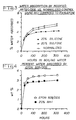
- Fig. 1 shows the amount of water adsorbed by an epoxy resin system, MY 720/DDS, with various levels of NH-1.
- Fig. 2 shows the water absorption of NH-1 using the untreated MY 720/DDS epoxy resin as a control.
- Fig. 3 shows the water absorption of NH-1 compared against polysulfone and using the untreated epoxy resin as a control.
- Fig. 4 shows the water absorption of NH-1 using the untreated Epon 828/DDS epoxy resin as a control.
Landscapes
- Chemical & Material Sciences (AREA)
- Health & Medical Sciences (AREA)
- Chemical Kinetics & Catalysis (AREA)
- Medicinal Chemistry (AREA)
- Polymers & Plastics (AREA)
- Organic Chemistry (AREA)
- Epoxy Resins (AREA)
- Reinforced Plastic Materials (AREA)
- Laminated Bodies (AREA)
- Compositions Of Macromolecular Compounds (AREA)
- Silicon Polymers (AREA)
Applications Claiming Priority (2)
| Application Number | Priority Date | Filing Date | Title |
|---|---|---|---|
| US580741 | 1990-09-11 | ||
| US07/580,741 US5135993A (en) | 1990-09-11 | 1990-09-11 | High modulus silicones as toughening agents for epoxy resins |
Publications (3)
| Publication Number | Publication Date |
|---|---|
| EP0475611A2 EP0475611A2 (en) | 1992-03-18 |
| EP0475611A3 EP0475611A3 (en) | 1992-07-01 |
| EP0475611B1 true EP0475611B1 (en) | 1997-06-11 |
Family
ID=24322360
Family Applications (1)
| Application Number | Title | Priority Date | Filing Date |
|---|---|---|---|
| EP91307699A Expired - Lifetime EP0475611B1 (en) | 1990-09-11 | 1991-08-21 | High modulus silicones as toughening agents for epoxy resins |
Country Status (5)
| Country | Link |
|---|---|
| US (4) | US5135993A (enExample) |
| EP (1) | EP0475611B1 (enExample) |
| JP (1) | JPH0693103A (enExample) |
| CA (1) | CA2049180C (enExample) |
| DE (1) | DE69126488T2 (enExample) |
Cited By (1)
| Publication number | Priority date | Publication date | Assignee | Title |
|---|---|---|---|---|
| WO2024111928A1 (ko) * | 2022-11-22 | 2024-05-30 | 주식회사 케이씨씨 | 분체 도료 조성물 |
Families Citing this family (82)
| Publication number | Priority date | Publication date | Assignee | Title |
|---|---|---|---|---|
| JP3869089B2 (ja) * | 1996-11-14 | 2007-01-17 | 株式会社日立製作所 | 半導体集積回路装置の製造方法 |
| AU2003234394A1 (en) * | 2002-05-23 | 2003-12-12 | 3M Innovative Properties Company | Nanoparticle filled underfill |
| JP2007523964A (ja) * | 2003-07-16 | 2007-08-23 | ダウ・コーニング・コーポレイション | エポキシ樹脂及びアミノ官能性シリコーン樹脂を含むコーティング組成物 |
| CN100404589C (zh) * | 2003-07-16 | 2008-07-23 | 陶氏康宁公司 | 氨基官能的有机硅树脂以及含有它们的乳液 |
| ATE521657T1 (de) * | 2003-07-16 | 2011-09-15 | Dow Corning | Aminofunktionelle silikonharze enthaltende beschichtungszusammensetzungen |
| US7452956B2 (en) * | 2003-10-10 | 2008-11-18 | Dow Corning Corporation | Urethane compositions containing carbinol-functional silicone resins |
| JP2007508424A (ja) * | 2003-10-10 | 2007-04-05 | ダウ・コーニング・コーポレイション | カルビノール官能性シリコーン樹脂 |
| CN101048464B (zh) * | 2004-10-25 | 2011-04-20 | 陶氏康宁公司 | 含有醇官能的有机硅树脂或者酸酐官能的有机硅树脂的涂料组合物 |
| US7807012B2 (en) * | 2004-10-25 | 2010-10-05 | Dow Corning Corporation | Moldable compositions containing carbinol functional silicone resins or anhydride functional silicone resins |
| US20070066786A1 (en) * | 2005-09-22 | 2007-03-22 | The Hanson Group, Llc | Methods of preparing and using polyurea elastomers |
| DE102006039572A1 (de) * | 2006-08-23 | 2008-05-08 | Saertex Gmbh & Co. Kg | Verfahren zur Herstellung eines textilen Halbzeuges beinhaltend einen zähigkeitssteigernden Werkstoff |
| US8017188B2 (en) | 2007-04-17 | 2011-09-13 | General Electric Company | Methods of making articles having toughened and untoughened regions |
| US7914256B2 (en) * | 2007-04-17 | 2011-03-29 | General Electric Company | Articles made from composite materials having toughened and untoughened regions |
| AR063176A1 (es) * | 2007-05-23 | 2008-12-30 | Mi Llc | Uso de emulsiones epoxicas directas para la estabilizacion de perforaciones de pozos |
| CO6030030A1 (es) * | 2007-05-23 | 2009-04-30 | Mi Llc | Uso de emulsiones epoxicas inversas para estabilizacion de orificio de pozo |
| EP2152773A1 (en) * | 2007-05-29 | 2010-02-17 | Dow Global Technologies Inc. | Isocyanate-epoxy formulations for improved cure control |
| EP2176355A1 (en) * | 2007-08-02 | 2010-04-21 | Dow Global Technologies Inc. | Thermoset dampener material |
| JP5336485B2 (ja) * | 2007-08-02 | 2013-11-06 | ダウ グローバル テクノロジーズ エルエルシー | 熱硬化性ポリマーの性能を向上させるための両親媒性ブロックコポリマーおよび無機ナノフィラー |
| TW200922959A (en) * | 2007-10-26 | 2009-06-01 | Dow Global Technologies Inc | Epoxy resin composition containing isocyanurates for use in electrical laminates |
| ATE509053T1 (de) * | 2007-11-29 | 2011-05-15 | Dow Global Technologies Llc | Dimethylformamidfreie formulierungen mit dicyanadiamid als härtemittel für wärmehärtende epoxidharze |
| CN101878101A (zh) * | 2007-11-29 | 2010-11-03 | 陶氏环球技术公司 | 可微波加热的单乙烯基芳族聚合物 |
| CN101998970B (zh) | 2008-04-14 | 2013-12-18 | 陶氏环球技术公司 | 用于粉末涂料应用的环氧-咪唑催化剂 |
| JP2012501335A (ja) * | 2008-08-28 | 2012-01-19 | ダウ グローバル テクノロジーズ エルエルシー | リン含有化合物およびそれを含むポリマー組成物 |
| SG172201A1 (en) | 2008-12-16 | 2011-07-28 | Dow Global Technologies Llc | Homogeneous bismaleimide - triazine - epoxy compositions useful for the manufacture of electrical laminates |
| US20110224329A1 (en) * | 2009-01-06 | 2011-09-15 | Dow Global Technologies Llc | Metal stabilizers for epoxy resins and dispersion process |
| CN102325821A (zh) | 2009-02-24 | 2012-01-18 | 陶氏环球技术有限责任公司 | 可固化环氧树脂组合物及其固化产物 |
| CN102414242B (zh) * | 2009-04-30 | 2014-12-17 | 陶氏环球技术有限责任公司 | 可热固树脂组合物 |
| KR20120036887A (ko) | 2009-05-27 | 2012-04-18 | 다우 글로벌 테크놀로지스 엘엘씨 | 중합체성 글리시딜 에테르 반응성 희석제 |
| KR20120040153A (ko) | 2009-06-22 | 2012-04-26 | 다우 글로벌 테크놀로지스 엘엘씨 | 에폭시 수지용 경화제 조성물 |
| EP2480586B1 (en) | 2009-09-22 | 2014-11-12 | Dow Global Technologies LLC | Process for preparing episulfide resins |
| WO2011037895A1 (en) | 2009-09-25 | 2011-03-31 | Dow Global Technologies Llc | Curable epoxy resin compositions and composites made therefrom |
| BR112012006361A2 (pt) | 2009-09-30 | 2019-09-24 | Dow Global Technologies Inc | composição de resina epóxl, processo para reduzir uma composição de resina epóxl de baixa coloração e composição de resina epóxi de baixa coloração curável |
| BR112012010870A2 (pt) | 2009-11-12 | 2019-09-24 | Dow Global Technologies Inc | composição de resina de oxazolidona com funcionalidade epóxi,composição de resina epóxi curável ,processo para reparar uma composição de resina de oxazolodona com funcionalidadde epóxi,processo para preparar uma composição de resina epóxi curável e produto termofixo curado |
| EP2507283B1 (en) | 2009-12-02 | 2013-10-23 | Dow Global Technologies LLC | Epoxy resin compositions |
| SG181485A1 (en) | 2009-12-02 | 2012-07-30 | Dow Global Technologies Llc | Composite compositions |
| SG181486A1 (en) | 2009-12-02 | 2012-07-30 | Dow Global Technologies Llc | Coating compositions |
| EP2507284A1 (en) | 2009-12-03 | 2012-10-10 | Dow Global Technologies LLC | Adducts based on divinylarene oxides |
| WO2011071650A1 (en) | 2009-12-08 | 2011-06-16 | Dow Global Technologies Llc | Hydroxyl-functional polyester resins |
| KR20120104590A (ko) | 2009-12-09 | 2012-09-21 | 다우 글로벌 테크놀로지스 엘엘씨 | 다이비닐아렌 다이옥사이드 수지 |
| BR112012013527A2 (pt) | 2009-12-09 | 2016-08-02 | Dow Global Technologies Llc | composição de resina epóxi, composição de resina epóxi curável e processo para preparar uma composição de resina epóxi |
| KR20120130289A (ko) * | 2009-12-21 | 2012-11-30 | 다우 코닝 코포레이션 | 알콕시-함유 아미노작용성 실리콘 수지를 지니는 코팅 조성물 |
| WO2011097009A2 (en) | 2010-02-02 | 2011-08-11 | Dow Global Technologies Llc | Curable epoxy resin compositions |
| EP2550310B1 (en) | 2010-03-24 | 2018-05-02 | Blue Cube IP LLC | Epoxy resin compositions comprising poly(propylene oxide) polyol as toughening agent |
| TWI506010B (zh) | 2010-05-21 | 2015-11-01 | Dow Global Technologies Llc | 用於可熱固樹脂組成物之硬化劑 |
| EP2585512A2 (en) | 2010-06-25 | 2013-05-01 | Dow Global Technologies LLC | Curable epoxy resin compositions and composites made therefrom |
| EP2585520A2 (en) | 2010-06-25 | 2013-05-01 | Dow Global Technologies LLC | Polymer concrete composition |
| CN103328549B (zh) * | 2011-01-18 | 2017-05-03 | 日立化成株式会社 | 预浸料及使用了该预浸料的层压板以及印制线路板 |
| US9079376B2 (en) * | 2011-01-18 | 2015-07-14 | Hitachi Chemical Company, Ltd. | Prepreg, laminate obtained with the same and printed-wiring board |
| RU2013152319A (ru) | 2011-04-26 | 2015-06-10 | ДАУ ГЛОБАЛ ТЕКНОЛОДЖИЗ ЭлЭлСи | Отверждаемые композиции |
| JP5385424B2 (ja) * | 2011-06-23 | 2014-01-08 | ダウ グローバル テクノロジーズ エルエルシー | 界面反応による再分散可能なエポキシ粉体 |
| WO2013025304A2 (en) | 2011-08-18 | 2013-02-21 | Dow Global Technologies Llc | Curable resin compositions |
| CN103732659B (zh) | 2011-08-18 | 2017-03-08 | 蓝立方知识产权公司 | 可固化树脂组合物 |
| IN2014CN03362A (enExample) | 2011-11-08 | 2015-07-03 | Dow Global Technologies Llc | |
| EP2785762A2 (en) | 2011-12-01 | 2014-10-08 | Dow Global Technologies LLC | Liquid accelerator composition for hardeners |
| CA2861797A1 (en) | 2011-12-30 | 2013-07-04 | Dow Global Technologies Llc | Low temperature curable epoxy system |
| WO2013155061A1 (en) | 2012-04-09 | 2013-10-17 | M-I L.L.C. | Triggered heating of wellbore fluids by carbon nanomaterials |
| CN105143301A (zh) | 2012-12-14 | 2015-12-09 | 蓝立方知识产权有限责任公司 | 改性环氧树脂 |
| RU2015128263A (ru) | 2012-12-14 | 2017-01-23 | БЛЮ КЬЮБ АйПи ЭлЭлСи | Отверждаемые композиции |
| WO2014197829A1 (en) | 2013-06-06 | 2014-12-11 | Halliburton Energy Services, Inc. | Deformable plug and seal well system |
| EP2829570A1 (en) | 2013-07-22 | 2015-01-28 | Rhodia Operations | Curable composition and process for the manufacture of an epoxy thermoset |
| JP6426163B2 (ja) * | 2013-07-03 | 2018-11-21 | ローディア オペレーションズ | 硬化性組成物およびエポキシ熱硬化性樹脂の製造方法 |
| CN106164125B (zh) * | 2014-02-24 | 2020-08-07 | Sika技术股份公司 | 在低voc应用中用作环氧树脂的固化剂的基于呋喃的胺 |
| WO2016053641A1 (en) | 2014-09-29 | 2016-04-07 | Blue Cube Ip Llc | Adduct composition |
| US11104791B2 (en) | 2014-10-10 | 2021-08-31 | Dow Global Technologies Llc | Surfactant composition |
| WO2016176568A1 (en) | 2015-04-30 | 2016-11-03 | Blue Cube Ip Llc | Hardener composition |
| US20190001593A1 (en) | 2016-01-04 | 2019-01-03 | Dow Global Technologies Llc | Fiber composites with reduced surface roughness and methods for making them |
| CN105838303B (zh) * | 2016-03-31 | 2019-03-12 | 航天材料及工艺研究所 | 一种环氧树脂防水胶粘剂及制备方法 |
| EP3585607B1 (en) | 2017-02-26 | 2021-12-15 | Dow Global Technologies, LLC | Fiber composite with reduced surface roughness and method for its manufacture |
| CN107325782A (zh) * | 2017-05-19 | 2017-11-07 | 天永诚高分子材料(常州)有限公司 | 一种双组分灌封胶及其制备方法 |
| US20200190390A1 (en) | 2017-08-15 | 2020-06-18 | Covestro Llc | Additive to flexibilize epoxy-based resins for use in oil field applications |
| US11391297B2 (en) | 2017-11-09 | 2022-07-19 | Pratt & Whitney Canada Corp. | Composite fan case with nanoparticles |
| US12540254B2 (en) | 2018-06-22 | 2026-02-03 | Ennis-Flint, Inc. | Epoxy compositions and methods of use |
| US20190390064A1 (en) | 2018-06-22 | 2019-12-26 | Covestro Llc | Solventborne compositions containing inorganic ion-exchangers to improve corrosion resistance |
| US20190390066A1 (en) | 2018-06-22 | 2019-12-26 | Covestro Llc | Waterborne compositions containing inorganic ion-exchangers to improve corrosion resistance |
| US20190390063A1 (en) | 2018-06-22 | 2019-12-26 | Covestro Llc | Solventborne compositions containing organic ion-exchangers to improve corrosion resistance |
| US20190390065A1 (en) | 2018-06-22 | 2019-12-26 | Covestro Llc | Waterborne compositions containing organic ion-exchangers to improve corrosion resistance |
| WO2020005393A1 (en) | 2018-06-26 | 2020-01-02 | Dow Global Technologies Llc | Fibre-reinforced composite and process of making this composite |
| CN110577817A (zh) * | 2019-09-11 | 2019-12-17 | 丁爱顺 | 一种高柔韧性有机硅胶黏剂及其制备方法 |
| US12326157B2 (en) | 2023-02-20 | 2025-06-10 | General Electric Company | Turbine engine with composite airfoils |
| US12338747B2 (en) | 2023-02-20 | 2025-06-24 | General Electric Company | Turbine engine with composite airfoils |
| US12467476B2 (en) | 2023-02-20 | 2025-11-11 | General Electric Company | Turbine engine with composite airfoils |
| US12331661B2 (en) | 2023-02-20 | 2025-06-17 | General Electric Company | Turbine engine with composite airfoils |
Citations (1)
| Publication number | Priority date | Publication date | Assignee | Title |
|---|---|---|---|---|
| GB810284A (en) * | 1955-03-07 | 1959-03-11 | Midland Silicones Ltd | Improvements in or relating to resins |
Family Cites Families (11)
| Publication number | Priority date | Publication date | Assignee | Title |
|---|---|---|---|---|
| SU128463A1 (ru) * | 1959-07-30 | 1959-11-30 | К.А. Андрианов | Способ получени теплостойкого электроизол ционного лака |
| DE1249529B (de) * | 1960-05-13 | 1968-03-21 | Dow Corning A.G., Basel (Schweiz) | Verfahren zur Herstellung von Organosiloxanmischpolymeren |
| US3259518A (en) * | 1962-03-15 | 1966-07-05 | Union Carbide Corp | Inorganic oxide materials coated with monoepoxide-aminoalkylsilicon compound adducts |
| US3630825A (en) * | 1969-07-01 | 1971-12-28 | Dow Corning | Coupling agent for epoxy resin composite articles |
| US3655420A (en) * | 1970-03-06 | 1972-04-11 | Du Pont | Synthetic organic textile fiber with improved, durable, soft, lubricated feel |
| US4287326A (en) * | 1980-03-03 | 1981-09-01 | Toray Silicone Company, Ltd. | Siloxane-modified epoxy resin compositions |
| CA1235245A (en) * | 1984-12-26 | 1988-04-12 | Toshifumi Hirose | Curable resinous composition comprising epoxy resin and silicon-containing elastomeric polymer |
| US4656207A (en) * | 1985-02-19 | 1987-04-07 | Hercules Incorporated | Epoxy thermosets having improved toughness |
| US4624998A (en) * | 1985-12-30 | 1986-11-25 | Dow Corning Corporation | Silicone-modified epoxy resins having improved impact resistance |
| JPH0721045B2 (ja) * | 1987-05-25 | 1995-03-08 | 鐘淵化学工業株式会社 | 硬化性組成物 |
| US5049627A (en) * | 1988-05-13 | 1991-09-17 | Investment Holding Corporation | Epoxy-aromatic polysiloxane compositions |
-
1990
- 1990-09-11 US US07/580,741 patent/US5135993A/en not_active Expired - Fee Related
-
1991
- 1991-08-14 CA CA002049180A patent/CA2049180C/en not_active Expired - Fee Related
- 1991-08-21 EP EP91307699A patent/EP0475611B1/en not_active Expired - Lifetime
- 1991-08-21 DE DE69126488T patent/DE69126488T2/de not_active Expired - Fee Related
- 1991-09-11 JP JP3231952A patent/JPH0693103A/ja not_active Ceased
-
1993
- 1993-07-16 US US08/092,105 patent/US5362821A/en not_active Expired - Fee Related
-
1994
- 1994-04-13 US US08/226,908 patent/US5378532A/en not_active Expired - Fee Related
- 1994-06-20 US US08/262,289 patent/US5405688A/en not_active Expired - Fee Related
Patent Citations (1)
| Publication number | Priority date | Publication date | Assignee | Title |
|---|---|---|---|---|
| GB810284A (en) * | 1955-03-07 | 1959-03-11 | Midland Silicones Ltd | Improvements in or relating to resins |
Cited By (1)
| Publication number | Priority date | Publication date | Assignee | Title |
|---|---|---|---|---|
| WO2024111928A1 (ko) * | 2022-11-22 | 2024-05-30 | 주식회사 케이씨씨 | 분체 도료 조성물 |
Also Published As
| Publication number | Publication date |
|---|---|
| JPH0693103A (ja) | 1994-04-05 |
| US5405688A (en) | 1995-04-11 |
| EP0475611A3 (en) | 1992-07-01 |
| US5135993A (en) | 1992-08-04 |
| CA2049180A1 (en) | 1992-03-12 |
| DE69126488D1 (de) | 1997-07-17 |
| US5378532A (en) | 1995-01-03 |
| CA2049180C (en) | 2000-11-14 |
| US5362821A (en) | 1994-11-08 |
| EP0475611A2 (en) | 1992-03-18 |
| DE69126488T2 (de) | 1998-01-22 |
Similar Documents
| Publication | Publication Date | Title |
|---|---|---|
| US5135993A (en) | High modulus silicones as toughening agents for epoxy resins | |
| US5431765A (en) | Preparing epoxy resin/aminopolysiloxane/aromatic oligomer composite | |
| US4656208A (en) | Thermosetting epoxy resin compositions and thermosets therefrom | |
| EP0311341A2 (en) | Polycyanate esters of polyhydric phenols blended with thermoplastic polymers | |
| EP0148493B1 (en) | Thermoplastic modified epoxy compositions | |
| US5262507A (en) | High modulus silicones as toughening agents for epoxy resins | |
| JP5186221B2 (ja) | 難燃性樹脂組成物、それを用いたプリプレグ、積層板、金属張積層板、印刷配線板及び多層印刷配線板 | |
| JPS61228016A (ja) | 熱硬化性エポキシ樹脂組成物およびそれから得られた熱硬化樹脂 | |
| EP0311349A2 (en) | Polymer composition | |
| US4874661A (en) | Impact enhanced prepregs and formulations | |
| KR20120116424A (ko) | 복합체 조성물 | |
| EP0126494B2 (en) | Impact resistant matrix resins for advanced composites | |
| US4983683A (en) | Polycyanate esters of polyhydric phenols blended with thermoplastic polymers | |
| US4822832A (en) | Thermosetting epoxy resin compositions and thermosets therefrom | |
| JPS6261216B2 (enExample) | ||
| US5231150A (en) | Polymer composition | |
| US4992325A (en) | Inorganic whisker containing impact enhanced prepregs and formulations formulations | |
| CA2055059A1 (en) | Damage tolerant composites containing infusible particles | |
| US5434224A (en) | Thermoset and polyarylsulfone resin system that forms an interpenetrating network | |
| JP3026372B2 (ja) | 複合材料中間体 | |
| Maudgal et al. | Preparation and characterization of siloxane-containing thermoplastic polymides | |
| EP0108476A1 (en) | Epoxy resin composition | |
| JP2577752B2 (ja) | 新規な水溶性シラン組成物 | |
| JP2577753B2 (ja) | 水溶性シラン組成物 | |
| JPS6360056B2 (enExample) |
Legal Events
| Date | Code | Title | Description |
|---|---|---|---|
| PUAI | Public reference made under article 153(3) epc to a published international application that has entered the european phase |
Free format text: ORIGINAL CODE: 0009012 |
|
| AK | Designated contracting states |
Kind code of ref document: A2 Designated state(s): BE DE FR GB NL |
|
| PUAL | Search report despatched |
Free format text: ORIGINAL CODE: 0009013 |
|
| AK | Designated contracting states |
Kind code of ref document: A3 Designated state(s): BE DE FR GB NL |
|
| 17P | Request for examination filed |
Effective date: 19920903 |
|
| 17Q | First examination report despatched |
Effective date: 19950220 |
|
| GRAG | Despatch of communication of intention to grant |
Free format text: ORIGINAL CODE: EPIDOS AGRA |
|
| GRAH | Despatch of communication of intention to grant a patent |
Free format text: ORIGINAL CODE: EPIDOS IGRA |
|
| GRAH | Despatch of communication of intention to grant a patent |
Free format text: ORIGINAL CODE: EPIDOS IGRA |
|
| GRAH | Despatch of communication of intention to grant a patent |
Free format text: ORIGINAL CODE: EPIDOS IGRA |
|
| GRAA | (expected) grant |
Free format text: ORIGINAL CODE: 0009210 |
|
| AK | Designated contracting states |
Kind code of ref document: B1 Designated state(s): BE DE FR GB NL |
|
| REF | Corresponds to: |
Ref document number: 69126488 Country of ref document: DE Date of ref document: 19970717 |
|
| ET | Fr: translation filed | ||
| PLBE | No opposition filed within time limit |
Free format text: ORIGINAL CODE: 0009261 |
|
| STAA | Information on the status of an ep patent application or granted ep patent |
Free format text: STATUS: NO OPPOSITION FILED WITHIN TIME LIMIT |
|
| 26N | No opposition filed | ||
| PGFP | Annual fee paid to national office [announced via postgrant information from national office to epo] |
Ref country code: DE Payment date: 20010709 Year of fee payment: 11 |
|
| PGFP | Annual fee paid to national office [announced via postgrant information from national office to epo] |
Ref country code: GB Payment date: 20010712 Year of fee payment: 11 |
|
| PGFP | Annual fee paid to national office [announced via postgrant information from national office to epo] |
Ref country code: FR Payment date: 20010713 Year of fee payment: 11 |
|
| PGFP | Annual fee paid to national office [announced via postgrant information from national office to epo] |
Ref country code: NL Payment date: 20010807 Year of fee payment: 11 |
|
| PGFP | Annual fee paid to national office [announced via postgrant information from national office to epo] |
Ref country code: BE Payment date: 20010903 Year of fee payment: 11 |
|
| REG | Reference to a national code |
Ref country code: GB Ref legal event code: IF02 |
|
| PG25 | Lapsed in a contracting state [announced via postgrant information from national office to epo] |
Ref country code: GB Free format text: LAPSE BECAUSE OF NON-PAYMENT OF DUE FEES Effective date: 20020821 |
|
| PG25 | Lapsed in a contracting state [announced via postgrant information from national office to epo] |
Ref country code: BE Free format text: LAPSE BECAUSE OF NON-PAYMENT OF DUE FEES Effective date: 20020831 |
|
| BERE | Be: lapsed |
Owner name: *TORAY INDUSTRIES INC. Effective date: 20020831 Owner name: *DOW CORNING CORP. Effective date: 20020831 |
|
| PG25 | Lapsed in a contracting state [announced via postgrant information from national office to epo] |
Ref country code: NL Free format text: LAPSE BECAUSE OF NON-PAYMENT OF DUE FEES Effective date: 20030301 Ref country code: DE Free format text: LAPSE BECAUSE OF NON-PAYMENT OF DUE FEES Effective date: 20030301 |
|
| GBPC | Gb: european patent ceased through non-payment of renewal fee |
Effective date: 20020821 |
|
| PG25 | Lapsed in a contracting state [announced via postgrant information from national office to epo] |
Ref country code: FR Free format text: LAPSE BECAUSE OF NON-PAYMENT OF DUE FEES Effective date: 20030430 |
|
| NLV4 | Nl: lapsed or anulled due to non-payment of the annual fee |
Effective date: 20030301 |
|
| REG | Reference to a national code |
Ref country code: FR Ref legal event code: ST |