EP0475409B1 - Verfahren und Vorrichtung zur Kryopräparation, trockene Stabilisierung und Rehydratisierung von Suspensionen von Zellen - Google Patents
Verfahren und Vorrichtung zur Kryopräparation, trockene Stabilisierung und Rehydratisierung von Suspensionen von Zellen Download PDFInfo
- Publication number
- EP0475409B1 EP0475409B1 EP91115480A EP91115480A EP0475409B1 EP 0475409 B1 EP0475409 B1 EP 0475409B1 EP 91115480 A EP91115480 A EP 91115480A EP 91115480 A EP91115480 A EP 91115480A EP 0475409 B1 EP0475409 B1 EP 0475409B1
- Authority
- EP
- European Patent Office
- Prior art keywords
- cryosolution
- drying
- cells
- sample
- microdroplets
- Prior art date
- Legal status (The legal status is an assumption and is not a legal conclusion. Google has not performed a legal analysis and makes no representation as to the accuracy of the status listed.)
- Expired - Lifetime
Links
Images

Classifications
-
- A—HUMAN NECESSITIES
- A01—AGRICULTURE; FORESTRY; ANIMAL HUSBANDRY; HUNTING; TRAPPING; FISHING
- A01N—PRESERVATION OF BODIES OF HUMANS OR ANIMALS OR PLANTS OR PARTS THEREOF; BIOCIDES, e.g. AS DISINFECTANTS, AS PESTICIDES OR AS HERBICIDES; PEST REPELLANTS OR ATTRACTANTS; PLANT GROWTH REGULATORS
- A01N1/00—Preservation of bodies of humans or animals, or parts thereof
- A01N1/10—Preservation of living parts
- A01N1/12—Chemical aspects of preservation
- A01N1/122—Preservation or perfusion media
- A01N1/125—Freeze protecting agents, e.g. cryoprotectants or osmolarity regulators
-
- A—HUMAN NECESSITIES
- A01—AGRICULTURE; FORESTRY; ANIMAL HUSBANDRY; HUNTING; TRAPPING; FISHING
- A01N—PRESERVATION OF BODIES OF HUMANS OR ANIMALS OR PLANTS OR PARTS THEREOF; BIOCIDES, e.g. AS DISINFECTANTS, AS PESTICIDES OR AS HERBICIDES; PEST REPELLANTS OR ATTRACTANTS; PLANT GROWTH REGULATORS
- A01N1/00—Preservation of bodies of humans or animals, or parts thereof
- A01N1/10—Preservation of living parts
-
- A—HUMAN NECESSITIES
- A01—AGRICULTURE; FORESTRY; ANIMAL HUSBANDRY; HUNTING; TRAPPING; FISHING
- A01N—PRESERVATION OF BODIES OF HUMANS OR ANIMALS OR PLANTS OR PARTS THEREOF; BIOCIDES, e.g. AS DISINFECTANTS, AS PESTICIDES OR AS HERBICIDES; PEST REPELLANTS OR ATTRACTANTS; PLANT GROWTH REGULATORS
- A01N1/00—Preservation of bodies of humans or animals, or parts thereof
- A01N1/10—Preservation of living parts
- A01N1/14—Mechanical aspects of preservation; Apparatus or containers therefor
- A01N1/142—Apparatus
- A01N1/144—Apparatus for temperature control, e.g. refrigerators or freeze-drying apparatus
- A01N1/145—Stationary or portable vessels generating cryogenic temperatures, e.g. liquid nitrogen baths
-
- A—HUMAN NECESSITIES
- A61—MEDICAL OR VETERINARY SCIENCE; HYGIENE
- A61K—PREPARATIONS FOR MEDICAL, DENTAL OR TOILETRY PURPOSES
- A61K35/00—Medicinal preparations containing materials or reaction products thereof with undetermined constitution
- A61K35/12—Materials from mammals; Compositions comprising non-specified tissues or cells; Compositions comprising non-embryonic stem cells; Genetically modified cells
- A61K35/14—Blood; Artificial blood
- A61K35/18—Erythrocytes
-
- A—HUMAN NECESSITIES
- A61—MEDICAL OR VETERINARY SCIENCE; HYGIENE
- A61K—PREPARATIONS FOR MEDICAL, DENTAL OR TOILETRY PURPOSES
- A61K39/00—Medicinal preparations containing antigens or antibodies
- A61K39/12—Viral antigens
-
- A—HUMAN NECESSITIES
- A61—MEDICAL OR VETERINARY SCIENCE; HYGIENE
- A61K—PREPARATIONS FOR MEDICAL, DENTAL OR TOILETRY PURPOSES
- A61K39/00—Medicinal preparations containing antigens or antibodies
- A61K39/12—Viral antigens
- A61K39/125—Picornaviridae, e.g. calicivirus
- A61K39/13—Poliovirus
-
- C—CHEMISTRY; METALLURGY
- C12—BIOCHEMISTRY; BEER; SPIRITS; WINE; VINEGAR; MICROBIOLOGY; ENZYMOLOGY; MUTATION OR GENETIC ENGINEERING
- C12N—MICROORGANISMS OR ENZYMES; COMPOSITIONS THEREOF; PROPAGATING, PRESERVING, OR MAINTAINING MICROORGANISMS; MUTATION OR GENETIC ENGINEERING; CULTURE MEDIA
- C12N1/00—Microorganisms; Compositions thereof; Processes of propagating, maintaining or preserving microorganisms or compositions thereof; Processes of preparing or isolating a composition containing a microorganism; Culture media therefor
- C12N1/04—Preserving or maintaining viable microorganisms
-
- F—MECHANICAL ENGINEERING; LIGHTING; HEATING; WEAPONS; BLASTING
- F25—REFRIGERATION OR COOLING; COMBINED HEATING AND REFRIGERATION SYSTEMS; HEAT PUMP SYSTEMS; MANUFACTURE OR STORAGE OF ICE; LIQUEFACTION SOLIDIFICATION OF GASES
- F25C—PRODUCING, WORKING OR HANDLING ICE
- F25C1/00—Producing ice
- F25C1/12—Producing ice by freezing water on cooled surfaces, e.g. to form slabs
- F25C1/14—Producing ice by freezing water on cooled surfaces, e.g. to form slabs to form thin sheets which are removed by scraping or wedging, e.g. in the form of flakes
- F25C1/142—Producing ice by freezing water on cooled surfaces, e.g. to form slabs to form thin sheets which are removed by scraping or wedging, e.g. in the form of flakes from the outer walls of cooled bodies
-
- F—MECHANICAL ENGINEERING; LIGHTING; HEATING; WEAPONS; BLASTING
- F26—DRYING
- F26B—DRYING SOLID MATERIALS OR OBJECTS BY REMOVING LIQUID THEREFROM
- F26B5/00—Drying solid materials or objects by processes not involving the application of heat
- F26B5/04—Drying solid materials or objects by processes not involving the application of heat by evaporation or sublimation of moisture under reduced pressure, e.g. in a vacuum
- F26B5/06—Drying solid materials or objects by processes not involving the application of heat by evaporation or sublimation of moisture under reduced pressure, e.g. in a vacuum the process involving freezing
- F26B5/065—Drying solid materials or objects by processes not involving the application of heat by evaporation or sublimation of moisture under reduced pressure, e.g. in a vacuum the process involving freezing the product to be freeze-dried being sprayed, dispersed or pulverised
-
- A—HUMAN NECESSITIES
- A61—MEDICAL OR VETERINARY SCIENCE; HYGIENE
- A61L—METHODS OR APPARATUS FOR STERILISING MATERIALS OR OBJECTS IN GENERAL; DISINFECTION, STERILISATION OR DEODORISATION OF AIR; CHEMICAL ASPECTS OF BANDAGES, DRESSINGS, ABSORBENT PADS OR SURGICAL ARTICLES; MATERIALS FOR BANDAGES, DRESSINGS, ABSORBENT PADS OR SURGICAL ARTICLES
- A61L2430/00—Materials or treatment for tissue regeneration
- A61L2430/40—Preparation and treatment of biological tissue for implantation, e.g. decellularisation, cross-linking
-
- C—CHEMISTRY; METALLURGY
- C12—BIOCHEMISTRY; BEER; SPIRITS; WINE; VINEGAR; MICROBIOLOGY; ENZYMOLOGY; MUTATION OR GENETIC ENGINEERING
- C12N—MICROORGANISMS OR ENZYMES; COMPOSITIONS THEREOF; PROPAGATING, PRESERVING, OR MAINTAINING MICROORGANISMS; MUTATION OR GENETIC ENGINEERING; CULTURE MEDIA
- C12N2770/00—MICROORGANISMS OR ENZYMES; COMPOSITIONS THEREOF; PROPAGATING, PRESERVING, OR MAINTAINING MICROORGANISMS; MUTATION OR GENETIC ENGINEERING; CULTURE MEDIA ssRNA viruses positive-sense
- C12N2770/00011—Details
- C12N2770/32011—Picornaviridae
- C12N2770/32611—Poliovirus
- C12N2770/32634—Use of virus or viral component as vaccine, e.g. live-attenuated or inactivated virus, VLP, viral protein
Definitions
- This invention relates to methods and apparatus for preparing biological suspensions for long term preservation in the dry state for later use. These methods avoid deleterious modifications of the biological ultrastructure during the preservation process. More particularly, the present invention relates to the preservation of microscopic biological materials which are found or placed in a suspension prior to treatment.
- the method of this invention includes the steps of preparing a cryosolution by treating cell materials with a protectant or combination of protectants, cooling, storing under temperature conditions which preclude devitrification or recrystallization, and drying under controlled temperature, vacuum and condenser conditions.
- the cell material can be rehydrated prior to use if desired.
- the initial configuration of the sample is a microscopic biological material in the form of a suspension or emulsion. Once an effective suspension has been produced, preserving and storing this material is of utmost importance.
- US 4,865,871, issued September 12, 1989 describes an apparatus and method for the cryopreservation of a biological tissue sample.
- the method comprises treating a biological tissue sample with a cryoprotectant which raises the glass transition temperature range of the sample, vitrifying the tissue sample under cryogenic temperature conditions at a specific rate to preclude the formation of significant resolvable ice crystals, equilibrating the depressurized, vitrified tissue in a sample holder, and then dehydrating the tissue sample by molecular distillation by the addition of energy until substantially no vaporized water can be detected in the atmosphere surrounding the tissue sample.
- the first critical processing step in cryopreservation must be performed in such a way as to satisfy two essential criteria.
- the biological material must not undergo irreversible damage due to the multiplicity of changes which occur within a sample during cooling. These changes include mechanical damage due to ice formation, cell-to-cell fusion due to the decrease in the solute volume available, and changes in acidity (pH) and salt or solute concentrations due to the segregation of solute and water.
- the condition of the sample following cooling must be compatible with subsequent drying and reconstitution. This includes such parameters as sample size, ice forms created, and the nature and final concentration of additives or excipients.
- cryopreservation process represents a balance between the use of cryoprotective agents (CPA's) to minimize changes during freezing by chemically increasing the volume of the ice free zone for a given cooling rate, and the cooling rate itself.
- CPA's cryoprotective agents
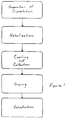
- FIG. 1 is a schematic flow diagram of the method of this invention.
- FIG. 2 is a perspective view of a rapid cryofixation device forming a part of this invention.
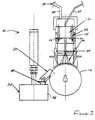
- FIG. 3 is a cross-sectional view of a portion of the apparatus illustrated in FIG. 2 generally taken along lines 3-3.
- the present invention relates to methods and apparatus for cryopreserving and drying cells which are generally prepared in a suspension.
- suspensions also include emulsions.
- the methods of this invention include the cryopreparation and dry stabilization of the cells.
- the cryopreparation is achieved by first preparing a cryosolution of the cells which includes an appropriate buffer, one or more cryoprotectants and/or dry protectants, and a suspension of the cells.
- the cryosolution is then cooled in such a manner to functionally result in the formation of amorphous phase ice and/or cubic phase ice with or without hexagonal phase ice in the cryosolution without damaging the structure or morphology of the cell material.
- the cryosolution is then dried to remove the various ice phases to a final product with residual water content less than 5%, preferably less than 3%.
- specifically preferred embodiments of the invention are the methods as defined in claims 1 and 21.
- the sample that is to be preserved is pretreated with protective agents, i.e. cryoprotectants and dry stabilizers, and subjected to cooling rates and final temperatures that minimize ice crystal formation.
- protective agents i.e. cryoprotectants and dry stabilizers
- the processes of this invention are adaptable to whatever specific end use is contemplated. For example, in certain situations an absolute minimum amount of ultrastructural damage may be tolerated while in other applications the end use may not be as sensitive to cell morphology.
- cryoprotective agents and the use of preselected drying parameters almost any cells in suspension can be cryoprepared for a suitable desired end use.
- cryoprotectants and/or dry stabilizers After functionally effective amounts of cryoprotectants and/or dry stabilizers have been added to the sample, the sample is cooled to a temperature at which chemical activity is essentially arrested. The cooling is completed in a fashion such that the crystalline structure of the liquid molecules within the cells cause minimal levels of damage.
- Cooling of the solution is achieved by nebulizing the solution to form discrete droplets, said droplets being less than 200 ⁇ m in diameter.
- a preferred diameter is in the range 25 to 100 ⁇ m.
- the microdroplets are then sprayed onto a rotating cryogenic surface which is internally cooled by a cryogenic fluid to a temperature of less than -160°C.
- the frozen microdroplets are mechanically removed from the rotating cylinder by a collector, also cooled by internal cryogen, and are placed in a sample collection device for subsequent drying.
- Drying of the frozen microdroplets is accomplished by use of a conventional freeze dryer or a molecular distillation dryer which is known in the art and is discussed further below.
- conventional freeze drying the unique aspect of the methods of the invention relate to the microdroplet configuration and the lack of damage during microdroplet formation using low frequency ultrasound.
- freeze drying is currently performed at temperatures above -70°C, water within the sample will exist either as hexagonal ice or in combination with the cryoprotectant in the ice free zone of the sample. The efficiency of drying will be greatly augmented by the microdroplet configuration of the sample.
- Molecular distillation drying is performed under conditions of temperature and pressure that result in the removal of crystalline fluids without substantial ultrastructural damage.
- transitional, phasic drying In the context of molecular distillation drying, the drying process associated with the processes of this invention are referred to as transitional, phasic drying. This means that water, in the form of ice crystals, is removed from the cooled samples during the transition from one ice phase to another, e.g., from cubic to hexagonal.
- the dried biological solution is placed in a biologically inert container in a dry inert gas atmosphere or at low pressure.
- the cells can be cryoprepared, dry stabilized, and preserved for biologically extended periods of time.
- the present invention can be used to preserve many different types of cells. It is anticipated that the method can be used to preserve materials such as red blood cells, mammalian cultured cells, platelets, leukocytes, sperm, pancreatic islets, and marrow cells.
- the methods of this invention represent a cryostabilization breakthrough that permits preserving and storing dried cells prepared as a suspension.
- This invention is cost effective, safe and the samples that are stored maintain their biological activity even after extended periods of storage. The specific desired extended time period will depend on the cells being preserved and the intended end use. Inexpensive and effective preservation and storage of potent cells is a necessity for the field of biotechnology to advance.
- the present invention provides methods and apparatus for preserving cells through the steps of cryopreparation and dry stabilization.
- the cells to be preserved is first formulated into a cryosolution.
- the cryosolution generally contains a suspension of the cells, an appropriate buffer and one or more cryoprotectants and/or dry stabilizers.
- the type and amount of buffer and protectant can be varied and is determined by the particular material being preserved and its intended end use. Under certain applications, no protectant need be used. Under other applications, various concentrations and combinations of protectants and dry stabilizers can be used as discussed further below.
- the cryosolution After the cryosolution has been prepared, it must be nebulized before it can be cooled.
- a low wattage, low frequency, ultrasonic nebulizer is used to create the microdroplets.
- the nebulized cryosolution is directed to a cryogenic surface for rapid cooling.
- the nebulized cryosolution should be directed to the surface under conditions such that it does not undergo any substantial, slow precooling prior to the rapid cooling event.
- a continuously replenished cryogenic surface is utilized to rapidly cool the nebulized cryosolution. It comprises a rotating metal cylinder which is internally cooled with a liquid cryogen.
- the frozen cryosolution is removed from the cryogenic surface and placed in a suitable collection device such that it can be transferred to a suitable drying apparatus. It is important that the frozen cryosolution remain at cryogenic temperatures during all steps including transportation from the freezing device to the dryer. In addition, it is important that the cryosolution at no time comes into contact with liquid cryogen which has been introduced into the device to provide cooling.
- the frozen cryosolution in the collection device can either be taken directly to a dryer or stored at cryogenic temperatures.
- drying is achieved either by conventional freeze drying or by using a molecular distillation dryer.
- Suitable molecular distillation dryers can be obtained from LifeCell Corporation in The Woodlands, Texas and are disclosed in U.S. 4,567,847 and 4,799,361.
- the preferred cooling apparatus to be utilized in the practice of the present invention is a novel cryofixation device illustrated in Figures 2 and 3.
- the rapid cryofixation device is generally referred to at 10. It comprises a nebulizer 12 positioned within a nebulizer column 14.
- a cryogenic surface 16 is positioned at the outlet of nebulizer column 14 and is contained within a housing 18.
- a collector 20 is positioned adjacent cryogenic surface 16 to remove the frozen cryosolution and position it within a sample holder 22.
- Sample holder 22 can be used to transport the frozen cryosolution to a molecular distillation dryer where it is further processed or to a storage area.
- Nebulizer 12 is a low wattage (1.5 to 2.5 W), low frequency (25 to 60 kHz), ultrasonic nebulization device such as an ultrasonic atomizing nozzle available from Sonotek.
- the nebulizer was modified with respect to cryosolution delivery to minimize contact of the cryosolution with the nebulizer components. This was achieved by bypassing the normal fluid conduit and delivering the cryosolution only to the tip of the nebulizer via a sterilized, disposable conduit 24. In this way, exposure of the cryosolution to heating and ultrasonics was minimized. This configuration is also important to maintaining sterility of the cryosolution during processing. Sterility was one of the problems encountered in prior art processes which used air guns or sprays. Conduit 24 is connected to a suitable container (not shown) which holds the cryosolution.
- This particular nebulizer can form microdroplets with diameters in the order of 25 ⁇ m to 250 ⁇ m. Diameters on the order of 25 to 200 ⁇ m are appropriate for rapid cooling. Microdroplet diameters in the order of 25 to 100 ⁇ m are preferred in order to achieve maximum cooling rates and short drying times.
- the nebulizer can be adjusted to achieve cryosolution flow rates of 5-10 ml. per minute without significant damage to the cell material.
- Nebulizer 12 is mounted within nebulizer column 14 by suitable brackets 26. A dry gas 28 at room temperature is introduced into the top of column 14 through tubing 30. Nebulizer 12 is mounted in such a manner that gas 28 can flow past nebulizer 12 with laminar flow as indicated by arrows 32. The flow of inert gas 28 ensures that the nebulized sample does not undergo a slow precooling process prior to rapid cooling on cryogenic surface 16. Many different types of gases may be utilized such as nitrogen, helium, oxygen, and argon. The flow rate of the gas should be adjusted so as to prevent slow precooling but should not be so high as to cause turbulent flow or significant warming of the cryogenic surface.
- cryosolution containing the cell sample is discharged from nozzle 34 of nebulizer 12 as microdroplets 36 which quickly encounter cryogenic surface 16.
- cryogenic surface 16 comprises a hollow cylinder with high thermal conductivity presenting a rotating mirror finished metal surface.
- the thermal capacity of this surface together with internal cryogen is such that the nebulized sample can be rapidly cooled without contacting the liquid cryogen.
- a suitable drive motor 38 and gear mechanism 40 are used to rotate cryogenic surface 16.
- the rate of rotation is dependent upon the size of the cryogenic surface and the flow rate of the cryosolution.
- the cryogenic surface has a diameter of about 10 cm (4 inches), a width of about 5 cm (2 inches), and a length of about 30 cm (12 inches).
- the cylinder of cryogenic surface 16 is internally cooled with a liquid cryogen which is introduced into the cylinder through suitable connections. This allows the cryosolution to be cooled without contact with the cryogen which could cause problems with sterility. Additionally, by using a high thermally conductive metal as the conduit for heat flow between the sample and the liquid cryogen, vapor formation due to heating of the liquid cryogen which usually surrounds and insulates the sample from the thermal sink is avoided. This allows the achievement of much higher cooling rates.
- the cylinder of cryogenic surface 16 can be formed of materials such that it is a permanent portion of the cryofixation device or can be designed with a disposable configuration. Suitable materials include copper, aluminum, and chromium or diamond coated aluminum.
- Microdroplets 36 which are frozen on cryogenic surface 16 are removed by collector 20 which is formed from an autoclavable material such as polyethylene terephthalate.
- Collector 20 includes a blade 42 for removing the frozen microdroplets from the cryogenic surface 16. They are then directed into a suitable sample holder 22.
- sample holder 22 comprises a sample vial 44 and a vial holder 46.
- vial holder 46 is designed to hold six sample vials. The sample holder is designed such that it can be removed from cryofixation device 10 and placed within a molecular distillation dryer for drying of the cryosolution.
- sample holder 22 comprises a collection bag held in a precooled transfer carrier similar to vial holder 46.
- the bag is fabricated from a suitable material such as polytetrafluoroethylene (PTFE) having a 15 micron pore size. This allows the sample to be contained within the bag while allowing water vapor to escape during drying. Following collection, the bag is sealed to contain the sample through subsequent processing steps.
- PTFE polytetrafluoroethylene
- Human erythrocytes can be obtained fresh from donors and collected in appropriate anticoagulant containers and subjected to separation and washing procedures. Alternatively, erythrocytes can be processed from standard blood bank supplies if they are used within six days of collection.
- cryopreparation of the cell suspension takes place preferably immediately after it is received.
- Cells generally undergo significant deterioration during freezing and thawing or following freeze drying by conventional means. Accordingly, these steps should be avoided prior to processing by the methods described herein.
- the initial steps of cryopreserving the cells include preparing a cryosolution prior to the cooling step.
- the cryosolution comprises a cell suspension, an appropriate buffer and, optionally, one or more cryoprotectants and/or dry protectants.
- Samples of cells are most often obtained as a suspension.
- the exact ingredients of each available suspension is not considered to be a component of this invention.
- the detailed composition of each suspension will vary from source to source and the specific ingredients may often involve proprietary information.
- cell suspensions include a mixture of a percentage of cells in water, phosphate buffered saline or another compatible solution. If the solution composition is not compatible with the cryopreservation process, the undesired components may be eliminated by concentrating the suspension. The cell sample may then be resuspended in a compatible solution.
- the cryosolution generally contains an appropriate buffer. This may involve one of many different organic buffers which are known to those skilled in this art.
- organic buffer selected from Tris (2-Amino-2-(hydroxymethyl)-1,3-propanediol); MES (2- [N-Morpholino] ethanesulfonic acid); Ammediol (2-amin-2 methyl-1,3-propanediol); MOPS (3-[N-Morpholino] propanesulfonic acid); and PIPES (Piperazine-N-N'-bis [2-ethanesulfonic acid], and 1,4- Piperazine-diethanesulfonic acid).
- Low salt buffers include mixtures currently used in blood storage such as (1) LISS - 8 g glycine, 20 ml of 0.15M phosphate buffer pH 6.7 - 8.4 and 1.8 g sodium chloride made up to 1000 ml pH 6.7; (2) LISP- 16 g glycine, 20 ml of 0.15M phosphate buffer pH 6.7 - 8.4, 1.8 g sodium chloride, 5.0 g glucose, 0.06 g calcium chloride, and 0.1 g adenine made up to 1000 ml pH 6.7; (3) Adsol - 0.9% NaCl, 0.75% mannitol, 2.2% dextrose, and 0.027% adenine; (4) RBC Buffer - 0.875% dextrose, 0.9% NaCl, 0.214% mannitol, 0.008% adenine, 0.255% sodium citrate, 0.029% citric acid, and 0.022% monobasic sodium phosphat
- the cryosolution also generally contains a cryoprotectant.
- Cryoprotectants raise the glass transition temperature range of the sample, thereby stabilizing the sample in the frozen state. By raising this range, the sample can be dried at a faster rate.
- the cryoprotectant also permits decreased ice formation for a given cooling rate allowing vitrification of larger samples. With current methods of ultrarapid cooling in the absence of cryoprotectants, vitrification of the sample is only achieved to a depth of a few microns. Cubic and hexagonal ice are then encountered. By appropriately selecting the cryoprotectant and the cooling method, apparent vitrification to a depth of several millimeters can be achieved.
- cryoprotectants can be used in the present invention. These include: dimethyl sulfoxide (DMSO), dextran, sucrose, 1,2 propanediol, glycerol, sorbitol, fructose, trehalose, raffinose, hydroxyethyl starch, propylene glycol, 2,3-butanediol, polyvinylpyrrolidone (PVP), proline (or other protein stabilizers), human serum albumin, and combinations thereof.
- Suitable cryoprotectants structure water which reduces the freezing point and/or reduces the rate of cooling necessary to achieve the vitreous phase. They also raise the glass transition temperature range of the vitreous state.
- the cryosolution may also include one or more dry protectant compounds.
- Dry protectants by definition, stabilize samples in the dry state. Some cryoprotectants also act as drying protectants. Some compounds possess variable amounts of each activity, e.g., trehalose is predominantly a dry protectant and a weaker cryoprotectant, whereas sucrose is predominantly a cryoprotectant and a weaker dry protectant.
- trehalose and polyhydroxyl carbohydrates bind to and stabilize macromolecules such as proteins and nucleic acids (e.g. in a virus or vaccine sample) when dried, thereby protecting the integrity of the sample.
- Cryoprotectants alone or in combination with other cryoprotectants or with additional components (for example, dry protectants), have also been found to be effective: proline plus sorbitol, trehalose plus zinc chloride, sorbitol plus myristic acid, sorbitol plus trehalose, human serum albumin plus trehalose, sucrose plus raffinose, and human serum albumin plus sorbitol.
- cryoprotectants can be added to the cell suspension for a period of a few minutes to a few hours before they are rapidly cooled. In general, cryopreservation is performed as a continuous sequence of events.
- the inventors have been involved in the development of cryofixation and ultralow temperature molecular distillation drying as a method for preparing biological samples for electron microscopic analysis. To validate this approach, they investigated the relationship between the drying characteristics and ice phases present within frozen samples.
- Sample preparation for electron microscopy by purely physical or dry processing techniques has theoretical appeal, especially when the ultimate aim is the analysis of both ultrastructure and biochemistry. Since the earliest days of electron microscopy, several attempts have been made to refine and develop freezing and vacuum drying or the freeze-drying (FD) process for cell and tissue samples.
- FD freeze-drying
- freeze-drying for electron microscopy has yet to achieve the status of a routine, broadly applicable technique.
- the ultrastructural preservation is often inferior when compared to conventional chemical, or wet processing techniques or hybrid techniques such as freeze substitution.
- Third, and perhaps most fundamentally, is a belief that drying at temperatures below -123°C is either impossible or impractical. As a result of these practical and theoretical obstacles, only sporadic investigation of low temperature freeze-drying has been reported.
- this equation states that the sublimation rate is directly proportional to the saturation vapor pressure of water within the sample and inversely proportional to the absolute temperature of the sample. Although the temperature of the sample is clearly definable, saturation vapor pressure is a more complex parameter.
- phase of ice other than hexagonal can coexist within a sample depending upon the mode of cooling. These different phases can be achieved by several methods including: vapor condensation, hyperbaric application, and ultrarapid quench cooling.
- the major phases of ice now recognized are amorphous, cubic, and hexagonal. These ice phases exhibit different stabilities, which would suggest that the saturation vapor pressures would also be different. It has been determined that for vapor condensed water at temperatures where both phases can coexist, the saturation vapor pressure of amorphous ice is one to two logs higher than that of cubic ice.
- Drying is not a static, but a rate-dependent process. In addition to saturation vapor pressure of the different ice phases, one must also account for the rate of transition from one phase to another with increasing temperature. For electron microscopy sample preparation, drying should ideally occur without any such transition or devitrification. Information as to the rate of these transitions is limited.
- the transition rate determines the depth to which a particular ice phase can be dried at a specific temperature.
- the transition time is 205 days. Based upon extrapolation of experimentally determined saturation vapor pressures and the Knudsen equation, this would allow drying of 26 microns.
- transition time is 28 minutes and would allow drying of 0.8 ⁇ m under ideal conditions. Below -160°C, i.e., prior to the onset of the transition, one could predict little, if any, translational kinetic energy of the water molecules and hence little, if any, drying.
- transitional drying i.e., that for a sample containing multiple phases of ice, it is possible to dry each phase sequentially during its transition.
- the amount of each phase dried will obviously be dependent upon multiple parameters including efficiency of drying apparatus, rate of heating, and impedance of the dry shell.
- Cryopreservation is the preservation of cell structure and metabolism against injury associated with freezing events either within or around the cell. Natural cryoprotection can result from adaptive metabolism of the organism, with changes in cellular structure, composition and metabolic balance giving an enhanced tolerance of freezing.
- two methods are available. The first is to ultrarapidly cool the sample, resulting in the tissue fluids being vitrified, i.e., absence of ice crystals. The second is to incorporate chemical additives to confer a degree of cryoprotection.
- cryoprotectants such as glycerol, proline, sugars, and alcohols
- organic solvents such as dimethylsulfoxide (DMSO)
- high molecular weight polymers such as polyvinylpyrrolidone (PVP), dextran and hydroxyethyl starch (HES).
- Vitrification of cells and tissues is limited by the rate at which the sample can be cooled and the insulating properties of the tissue itself. Due to physical limitations, one can only achieve vitrification of a thin layer of tissues using state of the art techniques. This makes the idea of chemical additives for cryoprotection and manipulating the cooling rate very appealing in attempts to cool and store biological samples without causing structural and functional damage.
- colligative action is referred to as action by a extraneous solute, in lowering the freezing point of the solution in contact with ice. If enough protective compound is present, the salt concentration does not rise to a critically damaging level until the temperature becomes so low that the damaging reactions are slow enough to be tolerated by the cells.
- nonpenetrating cryoprotectants vary in size from sucrose to large polymeric substances such as PVP, HES and dextran. It has been suggested that nonpenetrating substances act by some other means than that in the colligative mechanism described above. The role of larger molecules is believed to be dehydrative by osmotic action. When a large proportion of water is withdrawn from the cells by means of an osmotic differential, less free water is available for intracellular ice crystallization which is often identified as a lethal factor.
- cryoprotective compounds The cooling rate in the presence of cryoprotective compounds is a very important factor in freezing injury. Normally, slow cooling is better than elevated cooling rates since the latter promotes intracellular ice formation. This occurs because there is insufficient time for water to escape from the cells before the contained cell water freezes. With slow rate cooling, extracellular ice forms first, resulting in dehydration of the cell which, together with the presence of the cryoprotectant, prevents intracellular ice formation.
- Penetrating compounds were thought to act by not allowing an excessive transport of water from the cells too early in the freezing process while nonpenetrating compounds have a dehydrative effect on cells along with a colligative effect of diluting the solution surrounding the cell. Neither of these descriptions, however, tells the whole story.
- Solutes such as HES and PVP are totally nonpenetrating, water withdrawing compounds of merely larger molecular weight than nonpenetrating sucrose.
- the larger molecular weight should render such compounds less osmotically and colligatively effective, when considered on a weight basis.
- the compounds' colligative action has been shown to be far greater than would be expected based on merely a linear relationship to concentration.
- Cryoprotective properties result from a multiplicity of actions including: (1) coating of membranes by polymeric compounds so that they are not denatured by the increased salt concentration resulting from freezing, (2) alteration of membrane permeability characteristics so that they leak solutes reversibly to avoid excessive dehydration, (3) increasing viscosity and thus slowing the speed of transfer of water, (5) preventing denaturation of serum lipoproteins during low temperature freezing and drying, (6) diminished activity of several enzyme systems, and (7) membrane protein stabilization.
- PEG polyethylene glycol
- the inventors have developed a vitrification solution (VS) comprising a mixture of: DMSO 0.5M Propylene glycol 0.5M 2-3 butanediol 0.25M Proline 1.0M Raffinose 2.5% (w/v) PVP 15% (w/v) (Ave. M.W. ⁇ 40,000) Dextran 15% (w/v) (Ave. M.W. ⁇ 40,000-70,000)
- a modified vitrification solution (VS 1 ) has also been developed which comprises a mixture of: DMSO 0.5M Propylene glycol 0.5M 2-3 butanediol 0.25M Raffinose 10% (w/v) Trehalose 6% (w/v) Sucrose 6% (w/v) PVP 12% (w/v) (Ave. M.W. ⁇ 40,000) Dextran 12% (w/v) (Ave. M.W. ⁇ 40,000-70,000)
- cryoprotective nature of compounds are (a) chemical nature, (b) relative lack of toxicity, (c) molecular size and penetrating ability, and (d) interaction with other compounds in the mixture.
- cryoprotectants are (a) depression of the equilibrium freezing point of substrate and cytoplasm on a colligative basis, (b) depression of homogeneous ice nucleation temperature, (c) reduced rate of ice crystal growth due to change in the viscosity and thermal diffusivity of the solution, and (d) dehydrative effects on cells by osmotic action.
- cryopreparation of the cell suspensions of this invention it is essential to note that a variety of cooling processes can be used. In a preferred embodiment of this invention, rapid cooling is considered essential to obtain the proper ice crystal blend. In the most preferred embodiment of this invention, a vitrification procedure is used which results in the formation of a substantial proportion of amorphous water in the cell sample. As will be disclosed hereinafter, regardless of the form of cooling that is used, it is believed that amorphous phase water, cubic ice crystals, and hexagonal ice crystals are present in the final product. The method of cooling has a distinct bearing on the distribution of ice crystal types found in the cooled cryosolution.
- the aim of controlled drying of a frozen cell sample by molecular distillation drying is to remove water from the sample without further mechanical or chemical damage occurring during the drying process. This involves avoiding, by use of appropriate drying conditions, two fundamental damaging events. The first is to remove water from ice crystalline phases without transition to larger more stable and more destructive crystals. The second is to remove water from solid but noncrystalline water or water-solute mixtures without melting or crystallization of these solid phases. This second component refers to water present in the amorphous condition, water together with solute in the eutectic or water together with a compound which binds and structures water and hence, prevents its crystallization during the freezing process.
- vitreous water can be of low energy and stability, as in ultrarapidly-cooled pure water, or high energy and stability, as that achieved with cryoprotective agents with intermediate rates of cooling.
- each form of water will have a particular energy state, whether in a crystal or bound to a cryoprotective compound, and it is this energy state, rather than its configuration, which determines the requirements for drying.
- a sample of cubic ice achieved by cooling pure water at an intermediate cooling rate and (2) vitrified water achieved by mixing water with glycerol to 45% vol:vol and cooling at an intermediate rate.
- the first sample will be crystalline and the aim of drying is to remove water from this state without transition to hexagonal ice.
- the second sample is an amorphous solid and the aim of drying is to remove water from this phase without melting of the glass to a liquid with subsequent boiling.
- the onset of its transition is -130°C and the rate of transition is temperature dependent being very slow at -130°C and very rapid at -90°C.
- the glass transition temperature is -120°C and represents the onset of melting. The melting process is very slow at -120°C and is temperature dependent, becoming very rapid at -90°C.
- the aim of controlled drying is to remove water from the cubic ice phase during its transition and in a time less than is required for any significant transition to hexagonal ice and from the 45% glycerol-water phase during its transition to a liquid but in less time than is required for any appreciable liquid to form.
- Controlled drying processes must be able to remove each of these different states of water during the transition and in less time than is required to complete the transition. This mode of drying, therefore, requires that several conditions be met.
- the sample must be loaded into the dryer without temperature elevation above its lowest transition temperature. If elevation of temperature does occur, this must be over a short period of time such that no appreciable transition occurs. Ideally, loading occurs under liquid nitrogen at -190°C, well below the lowest discernible transition of -160°C for pure, ultrarapidly-cooled amorphous water. If, however, the sample is predominantly cubic ice or a mixture of water and cryoprotectants with a glass transition of the order of -100°C to -130°C, a closed circuit refrigeration system may be sufficient to enable maintenance of the sample temperature below the onset of transition.
- the sample Once loaded, the sample must be exposed to vacuum and be in direct line of sight of the condenser surfaces. The criteria for these are again determined by the nature of the water phases present in the sample. The following objectives must be attained.
- the vacuum within the chamber during the drying of a particular phase must create a partial pressure of water at least equivalent to or less than the saturation vapor pressure of water in the phase to be removed. This saturation vapor pressure is dependent on the nature of the water phase ad its temperature. Hence, for pure amorphous water in the transition range of -160°C to -130°C, the approximate saturation vapor pressures are 6 x 10 -12 mbar (-160°C) and 5 x 10 -7 mbar (-130°C), respectively.
- a second criteria of the vacuum is that the mean free path created be in excess of the distance between the sample and the condenser surface. Ideally, this should be a tenfold excess.
- the condenser surface must be a lower temperature than the onset transition temperature of the phase of water being removed from the sample so that the saturation vapor pressure of water condensed on this surface during drying is considerably lower than that of the water phase within the sample. Ideally, this should be three orders of magnitude lower.
- the temperature of the condenser surface must remain below the onset of transition of the least stable ice phase remaining to be removed. Ideally, the condenser should also be in line of sight of the sample.
- the sample and sample holder must be heated so as to increase the mobility of water molecules and hence, cause their escape. This is the essential and critical component in the drying of a sample containing multiple phases or energy levels of water.
- the temperature of the sample must be accurately known.
- the control of temperature and the rate of sample heating must be accurately controlled. This is necessary to ensure that the drying of each phase of water in the sample is sequential.
- the sublimation rate and the transition rate will vary with temperature during this interval.
- the rate of heating during this window T 1 to T 2 must be such that sublimation occurs throughout the dimensions of the sample before transition at any particular temperature is completed.
- the aim of controlled drying is achieved, i.e., the sequential removal of each phase of water under conditions appropriate to the properties of each phase without appreciable ice crystal growth, formation or melting of the particular phase.
- the sample Once dry, the sample must be physically or mechanically isolated from water on the condenser surface or any other source and stored in a closed container either under vacuum or dry inert gas.
- samples are cooled by an appropriate method such that ice crystal formation is below the degree that would cause damage to the sample.
- the sample is then stored below the transition temperature of the most unstable ice form. For amorphous ice, this is preferentially below -160°C.
- the sample is then loaded into a sample holder, precooled to -196°C and transferred into a molecular distillation dryer. The dryer chamber is then closed and sealed for vacuum integrity. To avoid recrystallization, the hydrated sample must remain below the transition temperature of the most unstable ice form throughout all manipulations.
- the sample holder is then heated via a programmable heater microprocessor thermocouple loop. Heating programs are determined according to the nature of the sample.
- a typical program for a sample containing amorphous, cubic and hexagonal ice is 10°C per hour from -180°C to -150°C, 1°C per hour from -150°C to -70°C, and 10°C per hour from -70°C to +20°C.
- the sample Once the sample has reached 20°C, it can be sealed inside an appropriate container within the vacuum chamber and unloaded for subsequent storage.
- the sample In one configuration, the sample is contained within a glass vial and sealed with a butylrubber lyophilization stopper at the end of cycle. More specific details of the operation of the molecular distillation dryer are given in U.S. Patent No. 4,865,871.
- Sublimation of water from a frozen sample has been an excellent method for preserving the active components of biological material.
- the optimal preservation of activity with long-term stability requires critical control of the drying process and storage conditions.
- the process of secondary drying proceeds in which structurally bound water is removed. Bound water is intimately associated with the maintenance of protein conformation.
- the residual moisture content is a significant variable in the drying process, as it affects both the survival and stability of the sample.
- Residual moisture content is expressed as the "percentage residual moisture” and is equated to the weight (gm) of residual water per unit weight (gm) of original sample.
- the sample Once dried to optimal residual moisture contents, the sample is still considered unstable when removed from the vacuum due to its hygroscopic nature and susceptibility to oxidation. Measures must be taken during storage to protect the sample from atmospheric rehydration and minimize exposure to oxygen. Such protection is essential to the maintenance of the sample's long-term stability.
- Cryopreservation is accomplished by a combination of cryoprotectant and optimum cooling rate.
- the aim is to minimize the concentration of cryoprotectant required, and therefore its toxicity, and to also minimize the rate of cooling required to achieve the appropriate ice phases in the sample.
- cryoprotectants and dry protectants that have been used successfully in the methods of this invention and which allow the retention of biological activity following cooling and drying are described in the following examples:
- Fresh human erythrocytes were obtained by venipuncture and collected in ACD anticoagulant in the ratio of 1:10 with whole blood. The blood sample was then centrifuged at 2000 g for 10 minutes and the supernatant removed.
- the packed red cell sample was then diluted to a 5-10% hematocrit using a buffer (Adsol) consisting of 2.2% dextrose, glucose, 0.9% sodium chloride, 0.75% mannitol and 0.027% adenine.
- Adsol a buffer consisting of 2.2% dextrose, glucose, 0.9% sodium chloride, 0.75% mannitol and 0.027% adenine.
- Example 5 describe preservation and storage of a vaccine.
- Oral polio vaccine is composed of three serotypes of live but attenuated poliomyelitis virus. It is one of the two commonly used vaccines for the prevention and treatment of the crippling disease of poliovirus. Methods for obtaining and isolating live, attenuated polio virus are known to those skilled in the art of virology.
Landscapes
- Health & Medical Sciences (AREA)
- Life Sciences & Earth Sciences (AREA)
- Engineering & Computer Science (AREA)
- General Health & Medical Sciences (AREA)
- Chemical & Material Sciences (AREA)
- Zoology (AREA)
- Virology (AREA)
- Wood Science & Technology (AREA)
- Medicinal Chemistry (AREA)
- Immunology (AREA)
- Environmental Sciences (AREA)
- Dentistry (AREA)
- Microbiology (AREA)
- Biotechnology (AREA)
- Pharmacology & Pharmacy (AREA)
- Epidemiology (AREA)
- Animal Behavior & Ethology (AREA)
- Public Health (AREA)
- Veterinary Medicine (AREA)
- General Engineering & Computer Science (AREA)
- Mechanical Engineering (AREA)
- Bioinformatics & Cheminformatics (AREA)
- Organic Chemistry (AREA)
- Biomedical Technology (AREA)
- Mycology (AREA)
- Genetics & Genomics (AREA)
- Developmental Biology & Embryology (AREA)
- Molecular Biology (AREA)
- Cell Biology (AREA)
- Biochemistry (AREA)
- Hematology (AREA)
- Physics & Mathematics (AREA)
- Thermal Sciences (AREA)
- Tropical Medicine & Parasitology (AREA)
- Agricultural Chemicals And Associated Chemicals (AREA)
- Sampling And Sample Adjustment (AREA)
- Investigating Or Analysing Biological Materials (AREA)
- Apparatus Associated With Microorganisms And Enzymes (AREA)
- Drying Of Solid Materials (AREA)
- Packages (AREA)
Claims (21)
- Verfahren zum Konservieren einer Suspension von Zellen, umfassend folgende Stufen:(a) Herstellen einer Kryolösung einer Suspension von Zellen, wobei die Kryolösung einen Puffer und Zellen umfaßt;(b) Zerstäuben der Kryolösung in der Weise, daß Mikrotröpfchen mit einem Durchmesser von weniger als 200 µm und vorzugsweise von 25 bis 100 µm entstehen;(c) Abkühlen der Mikrotröpfchen durch Zuführen der zerstäubten Kryolösung auf eine kryogene Oberfläche unter Bildung von gefrorenen Mikrotröpfchen, wobei die Abkühlungsgeschwindigkeit funktionell so beschaffen ist, daß sie zur Bildung einer amorphen Eisphase und/oder einer kubischen Eisphase mit oder ohne eine hexagonale Eisphase in der Kryolösung führt, so daß eine minimale Schädigung des biologischen Materials hervorgerufen wird;(d) Entfernen der gefrorenen Mikrotröpfchen aus der Kühleinrichtung und Überführen in eine Trocknungseinrichtung; und(e) Trocknen der Kryolösung durch Trocknen der einzelnen Eisphasen während ihres Übergangs auf einen Restfeuchtigkeitsgehalt der endgültigen Lösung, der sowohl für die Lagerung als auch für die Rehydratisierung optimal ist,
wobei die Kryolösung während der Stufen (c) und (d) bei kryogenen Temperaturen gehalten wird. - Verfahren nach Anspruch 1, wobei die Kryolösung ferner ein Kryoschutzmittel enthält.
- Verfahren nach Anspruch 1 oder 2, wobei die Kryolösung ferner einen trockenen Stabilisator enthält.
- Verfahren nach einem der vorstehenden Ansprüche, wobei der Puffer ausgewählt wird unter: 2-Amino-2-(hydroxymethyl)-1,3-propandiol; 2-[N-Morpholino]-ethansulfonsäure; 2-Amino-2-methyl-1,3-propandiol; 3-[N-Morpholino]-propansulfonsäure; Piperazin-N,N'-bis-[2-ethansulfonsäure]; 1,4-Piperazindiethansulfonsäure und Kombinationen davon.
- Verfahren nach einem der vorstehenden Ansprüche, wobei es sich bei dem Puffer um ein Puffergemisch mit geringem Salzgehalt handelt, das ausgewählt ist unter:(1) 8 g Glycin, 20 ml 0,15 M Phosphatpuffer vom pH-Wert 6,7-8,4 und 1,8 g Natriumchlorid, aufgefüllt auf 1000 ml, pH-Wert 6,7;(2) 16 g Glycin, 20 ml 0,15 M Phosphatpuffer vom pH-Wert 6,7-8,4, 1,8 g Natriumchlorid, 5,0 g Glucose, 0,06 g Calciumchlorid und 0,1 g Adenin, aufgefüllt auf 1000 ml, pH-Wert 6,7;(3) eine Lösung mit einem Gehalt an 0,9% NaCl, 0,75% Mannit, 2,2% Dextrose und 0,027% Adenin;(4) eine Lösung mit einem Gehalt an 0,875% Dextrose, 0,9% NaCl, 0,214% Mannit, 0,08% Adenin, 0,255% Natriumcitrat, 0,029% Citronensäure und 0,022% monobasisches Natriumphosphat;(5) 16 mM Phosphatpuffer vom pH-Wert 7,4, 5 mM KCl, 4 g/dl BSA und 6,9 g/Liter Lactose; und(6) 16 mM Phosphatpuffer vom pH-Wert 7,4, 5 mM KCl und 15 g/Liter Lactose.
- Verfahren nach einem der Ansprüche 2 bis 5, wobei das Kryoschutzmittel ausgewählt ist unter: Dimethylsulfoxid, 2,3-Butandiol, Polyvinylpyrrolidon, Propylenglykol, 1,2-Propandiol, Glycerin, Fructose, Trehalose, Raffinose, Hydroxyethylstärke, Dextran, Saccharose, Sorbit, Prolin, humanes Serumalbumin und Kombinationen davon.
- Verfahren nach einem der Ansprüche 2 bis 6, wobei das Kryoschutzmittel ausgewählt ist unter:(1) eine Vitrifikationslösung mit einem Gehalt an einem Gemisch aus 0,5 M DMSO, 0,5 M Propylenglykol, 0,25 M 2,3-Butandiol, 1,0 M Prolin, 2,5% Raffinose, 15% PVP (Molekulargewichtsmittel ≈ 40 000) und 15% Dextran (Molekulargewichtsmittel ≈ 40 000-70 000);(2) eine Vitrifikationslösung mit einem Gehalt an einem Gemisch aus 0,5 M DMSO, 0,5 M Propylenglykol, 0,25 M 2,3-Butandiol, 10% Raffinose, 6% Trehalose, 6% Saccharose, 12% PVP (Molekulargewichtsmittel ≈ 40 000) und 12% Dextran (Molekulargewichtsmittel ≈ 40 000-70 000); und(3) eine Vitrifikationslösung mit einem Gehalt an einem Gemisch aus 0,5 M DMSO, 0,5 M Propylenglykol, 0,25 M 2,3-Butandiol, 2,5% Raffinose, 12% Saccharose, 15% PVP (Molekulargewichtsmittel ≈ 40 000) und 15% Dextran (Molekulargewichtsmittel ≈ 40 000-70 000).
- Verfahren nach einem der Ansprüche 3 bis 7, wobei der trockene Stabilisator ausgewählt ist unter: Saccharose, Raffinose, Trehalose, Zink, Prolin, Myristinsäure, Spermin und Kombinationen davon.
- Verfahren nach einem der vorstehenden Ansprüche, wobei die Zellen ausgewählt sind aus einem Material, das folgendes umfaßt: rote Blutkörperchen, gezüchtete Säugetierzellen, Blutplättchen, Leukozyten, Faktor VIII, Sperma, Hepatozyten, Langerhans-Inseln, Knochenmarkzellen, ein Virus oder eine Vaccine.
- Verfahren nach einem der vorstehenden Ansprüche, wobei die Zerstäubungsstufe (b) unter Einsatz von Ultraschall mit 1,5 bis 2,5 W und einer Frequenz von 25 bis 60 kHz durchgeführt wird.
- Verfahren nach einem der vorstehenden Ansprüche, wobei die Abkühlungsstufe (c) das Sprühen der Mikrotröpfchen auf eine kryogene Oberfläche umfaßt, wobei insbesondere die kryogene Oberfläche intern mit einer kryogenen Flüssigkeit gekühlt wird, wobei eine Kühlung auf eine Temperatur von weniger als -160°C vorgenommen wird.
- Verfahren nach einem der vorstehenden Ansprüche, wobei die Trocknungsstufe (e) eine Gefriertrocknung umfaßt.
- Verfahren nach einem der Ansprüche 1 bis 11, wobei die Trocknungsstufe (e) eine Molekulardestillationstrocknung umfaßt.
- Verfahren nach einem der vorstehenden Ansprüche, wobei die Trocknungsstufe (e) der rasch gekühlten Kryolösung die amorphe Eisphase, die kubische Eisphase und die hexagonale Eisphase entfernt, wobei die Trocknung bis zu einem Restfeuchtigkeitsgehalt der endgültigen Lösung von weniger als 5% (Gew./Gew.) durchgeführt wird.
- Verfahren nach einem der vorstehenden Ansprüche, ferner umfassend die Stufe des Verschließens der getrockneten Kryolösung in einem Behälter, ohne daß der Restwassergehalt der getrockneten Kryolösung wesentlich erhöht wird.
- Verfahren nach Anspruch 15, wobei das Verschließen unter geringem Druck oder in Gegenwart eines trockenen Inertgases durchgeführt wird.
- Verfahren nach einem der vorstehenden Ansprüche, ferner umfassend die Rehydratisierung der getrockneten Kryolösung.
- Vorrichtung zur Durchführung des Verfahrens nach einem der Ansprüche 1 bis 17 und 21, wobei die Vorrichtung folgendes umfaßt:(a) eine Ultraschall-Zerstäubungsvorrichtung von 1,5 bis 2,5 W und einer Frequenz von 25 bis 60 kHz zur Erzeugung von Mikrotröpfchen mit einem Durchmesser von weniger als 200 µm einer Kryolösung einer Suspension eines mikroskopischen, biologischen Materials;(b) eine intern gekühlte kryogene Oberfläche zum raschen Abkühlen der Mikrotröpfchen und zur Erzielung von gefrorenen Mikrotröpfchen ohne Kontaktieren der Kryolösung mit dem kryogenen Mittel;(c) einen Kollektor zur Entfernung der gekühlten Mikrotröpfchen von der kryogenen Oberfläche;(d) einen Probenhalter zur Aufnahme der gekühlten Mikrotröpfchen; und(e) einen Trockner.
- Vorrichtung nach Anspruch 18, wobei die kryogene Oberfläche einen rotierenden Zylinder mit einer hochglanzpolierten Oberfläche umfaßt.
- Vorrichtung nach Anspruch 18 oder 19, wobei der Kollektor einen Kollektor mit einer Klinge zur Entfernung der gefrorenen Mikrotröpfchen von der kryogenen Oberfläche umfaßt.
- Verfahren zum Konservieren einer Suspension von Zellen, wobei das Verfahren folgende Stufen umfaßt:(a) Herstellen einer Kryolösung einer Suspension von Zellen, wobei die Kryolösung einen Puffer und Zellen umfaßt;(b) Zerstäuben der Kryolösung in der Weise, daß Mikrotröpfchen mit einem Durchmesser von weniger als 200 µm und vorzugsweise von 25 bis 100 µm entstehen;(c) Abkühlen der Mikrotröpfchen ohne Kontaktieren der Kryolösung mit einem flüssigen Kryogen unter Bildung von gefrorenen Mikrotröpfchen, wobei die Abkühlungsgeschwindigkeit funktionell so beschaffen ist, daß sie zur Bildung einer amorphen Eisphase und/oder einer kubischen Eisphase mit oder ohne eine hexagonale Eisphase in der Kryolösung führt, so daß eine minimale Schädigung des biologischen Materials hervorgerufen wird;(d) Entfernen der gefrorenen Mikrotröpfchen aus der Kühleinrichtung und Überführen der Mikrotröpfchen in eine Trocknungseinrichtung; und(e) Trocknen der Kryolösung durch Erwärmen der Lösung um 10°C pro Stunde von -180°C bis -150°C, um 1°C pro Stunde von -150 bis -70°C und um 10°C pro Stunde von -70°C bis 20°C bis zu einem Restfeuchtigkeitsgehalt der endgültigen Lösung, der für die Lagerung und Rehydratisierung optimal ist, wobei die Kryolösung während der Stufen (c) und (d) bei kryogenen Temperaturen gehalten wird.
Applications Claiming Priority (4)
| Application Number | Priority Date | Filing Date | Title |
|---|---|---|---|
| US709504 | 1985-03-08 | ||
| US58158490A | 1990-09-12 | 1990-09-12 | |
| US581584 | 1990-09-12 | ||
| US70950491A | 1991-06-03 | 1991-06-03 |
Publications (3)
| Publication Number | Publication Date |
|---|---|
| EP0475409A2 EP0475409A2 (de) | 1992-03-18 |
| EP0475409A3 EP0475409A3 (en) | 1993-09-01 |
| EP0475409B1 true EP0475409B1 (de) | 1998-04-15 |
Family
ID=27078363
Family Applications (1)
| Application Number | Title | Priority Date | Filing Date |
|---|---|---|---|
| EP91115480A Expired - Lifetime EP0475409B1 (de) | 1990-09-12 | 1991-09-12 | Verfahren und Vorrichtung zur Kryopräparation, trockene Stabilisierung und Rehydratisierung von Suspensionen von Zellen |
Country Status (8)
| Country | Link |
|---|---|
| US (3) | US5364756A (de) |
| EP (1) | EP0475409B1 (de) |
| JP (1) | JP3210036B2 (de) |
| AT (1) | ATE164981T1 (de) |
| AU (2) | AU650045B2 (de) |
| CA (1) | CA2051092C (de) |
| DE (1) | DE69129253T2 (de) |
| ES (1) | ES2114868T3 (de) |
Cited By (3)
| Publication number | Priority date | Publication date | Assignee | Title |
|---|---|---|---|---|
| DE19921236A1 (de) * | 1999-05-07 | 2000-11-30 | Evotec Biosystems Ag | Verfahren und Vorrichtung zur Probenaufnahme an Kryosubstraten |
| US7458285B2 (en) | 2003-06-26 | 2008-12-02 | Fraunhofer-Gesellschaft Zur Foerderung Der Angewandten Forschung E.V. | Device for cryopreservation of samples and method for producing the device |
| CN1585894B (zh) * | 2000-12-07 | 2010-08-04 | 弗劳恩霍弗应用技术研究院 | 冷储存的方法和装置 |
Families Citing this family (212)
| Publication number | Priority date | Publication date | Assignee | Title |
|---|---|---|---|---|
| US5958670A (en) * | 1988-05-18 | 1999-09-28 | Cobe Laboratories, Inc. | Method of freezing cells and cell-like materials |
| US5045446A (en) * | 1988-08-26 | 1991-09-03 | Cryopharm Corporation | Lyophilization of cells |
| CA2051092C (en) * | 1990-09-12 | 2002-07-23 | Stephen A. Livesey | Method and apparatus for cryopreparation, dry stabilization and rehydration of biological suspensions |
| AU661296B2 (en) * | 1991-01-11 | 1995-07-20 | Cobe Laboratories Inc. | Method of detecting circulating antibody types using dried or lyophilized cells or cell-like material |
| US5192312A (en) * | 1991-03-05 | 1993-03-09 | Colorado State University Research Foundation | Treated tissue for implantation and methods of treatment and use |
| IT1250360B (it) * | 1991-12-11 | 1995-04-07 | Apparecchiatura di liofilizzazione a flusso continuo. | |
| AU672775B2 (en) * | 1992-01-21 | 1996-10-17 | Cobe Laboratories Inc. | Method of freezing cells and cell-like materials |
| EP0679088B1 (de) | 1992-09-29 | 2002-07-10 | Inhale Therapeutic Systems | Pulmonale abgabe von aktiven fragmenten des parathormons |
| EP0668013B1 (de) * | 1994-02-22 | 2005-04-20 | Nippon Telegraph And Telephone Corporation | Gefriergetrocknete Blutzellen, Stammzellen und Plättchen und Verfahren zu deren Herstellung |
| ATE416755T1 (de) | 1994-03-07 | 2008-12-15 | Nektar Therapeutics | Verfahren und zusammensetzung für die pulmonale darreichung von insulin |
| US20030113273A1 (en) * | 1996-06-17 | 2003-06-19 | Patton John S. | Methods and compositions for pulmonary delivery of insulin |
| US6290991B1 (en) | 1994-12-02 | 2001-09-18 | Quandrant Holdings Cambridge Limited | Solid dose delivery vehicle and methods of making same |
| DE4438232A1 (de) * | 1994-10-26 | 1996-05-02 | Guenter Prof Dr Fuhr | Kryokonservierung und Tieftemperaturbearbeitung von biologischen Zellen |
| CA2146098A1 (en) * | 1995-01-12 | 1996-07-13 | The Governors Of The University Of Alberta | Bulk cryopreservation of biological materials and uses for cryopreserved and encapsulated biological materials |
| GB9501040D0 (en) | 1995-01-19 | 1995-03-08 | Quadrant Holdings Cambridge | Dried composition |
| US7253262B2 (en) | 1995-01-19 | 2007-08-07 | Quandrant Drug Delivery Limited | Dried blood factor composition comprising trehalose |
| US7244824B2 (en) | 1995-01-19 | 2007-07-17 | Quadrant Drug Delivery Limited | Dried blood factor composition comprising trehalose |
| US5580714A (en) * | 1995-03-08 | 1996-12-03 | Celox Laboratories, Inc. | Cryopreservation solution |
| US6964771B1 (en) * | 1995-06-07 | 2005-11-15 | Elan Drug Delivery Limited | Method for stably incorporating substances within dry, foamed glass matrices |
| IL120202A (en) * | 1996-03-07 | 2001-03-19 | Akzo Nobel Nv | Container with freeze-dried vaccine components |
| EP1015826A2 (de) * | 1996-05-29 | 2000-07-05 | Universal Preservation Technologies, Inc. | Lange haltbarkeit durch glasbildung |
| US5750330A (en) * | 1996-06-19 | 1998-05-12 | Litron Laboratories | Method and composition for lyophilizing red blood cells |
| US5741680A (en) * | 1996-09-03 | 1998-04-21 | Cera Products, Inc. | Buffer composition base and method of formulation for oral vaccine delivery |
| IL128855A0 (en) * | 1996-09-06 | 2000-01-31 | Universal Preservation Technologies Inc | Vitrification solutions for shelf preservation of cells tissues organs and organisms |
| US6468782B1 (en) * | 1996-12-05 | 2002-10-22 | Quadrant Healthcare (Uk) Limited | Methods of preserving prokaryotic cells and compositions obtained thereby |
| DE19654266A1 (de) * | 1996-12-23 | 1998-06-25 | Albrecht Prof Dr Wendel | Untersuchungsverfahren mit biologischem System |
| US6221997B1 (en) | 1997-04-28 | 2001-04-24 | Kimberly Ann Woodhouse | Biodegradable polyurethanes |
| US6094923A (en) * | 1997-05-12 | 2000-08-01 | Rada; David C. | Tissue freezing apparatus |
| US20060165606A1 (en) | 1997-09-29 | 2006-07-27 | Nektar Therapeutics | Pulmonary delivery particles comprising water insoluble or crystalline active agents |
| US6565885B1 (en) | 1997-09-29 | 2003-05-20 | Inhale Therapeutic Systems, Inc. | Methods of spray drying pharmaceutical compositions |
| US6309623B1 (en) | 1997-09-29 | 2001-10-30 | Inhale Therapeutic Systems, Inc. | Stabilized preparations for use in metered dose inhalers |
| GB2330516A (en) * | 1997-10-22 | 1999-04-28 | Elizabeth Acton | Cryopreservation of cell suspensions |
| WO1999035242A1 (en) * | 1998-01-12 | 1999-07-15 | Betagene, Inc. | Media for neuroendocrine cells |
| ES2257050T3 (es) * | 1998-05-26 | 2006-07-16 | Lifecell Corporation | Conservacion por el frio de hematies humanos. |
| AU1612699A (en) * | 1998-06-17 | 2000-01-05 | H. Randall Craig | Cryogenic freezing of liquids |
| US20030049840A1 (en) * | 1998-10-07 | 2003-03-13 | Demetriou Achilles A. | Cell preconditioning and cryopreservation medium |
| US6140123A (en) * | 1998-10-07 | 2000-10-31 | Cedars-Sinai Medical Center | Method for conditioning and cryopreserving cells |
| US6485959B1 (en) | 1998-10-07 | 2002-11-26 | Cedars Sinai Medical Center | Cell preconditioning and cryopresevation medium |
| US6759050B1 (en) * | 1998-12-03 | 2004-07-06 | Avigen, Inc. | Excipients for use in adeno-associated virus pharmaceutical formulations, and pharmaceutical formulations made therewith |
| US6225289B1 (en) | 1998-12-10 | 2001-05-01 | Genvec, Inc. | Methods and compositions for preserving adenoviral vectors |
| DK1820516T3 (da) | 1999-02-22 | 2013-10-28 | Univ Connecticut | Nye albuminfrie faktor VIII-præparater |
| US6365385B1 (en) | 1999-03-22 | 2002-04-02 | Duke University | Methods of culturing and encapsulating pancreatic islet cells |
| US6303355B1 (en) | 1999-03-22 | 2001-10-16 | Duke University | Method of culturing, cryopreserving and encapsulating pancreatic islet cells |
| GB9916790D0 (en) * | 1999-07-16 | 1999-09-22 | Health Lab Service Board | Storage of microorganisms,cells and tissue |
| WO2001020999A1 (en) * | 1999-09-23 | 2001-03-29 | Trimedyne, Inc. | Materials and methods for inducing angiogenesis and the repair of mammalian tissue |
| US6869757B2 (en) * | 2000-07-31 | 2005-03-22 | 21St Century Medicine, Inc. | Advantageous carrier solution for vitrifiable concentrations of cryoprotectants, and compatible cryoprotectant mixtures |
| SE9904433D0 (sv) * | 1999-12-03 | 1999-12-03 | Wiigh Maesak Susanne | Omhändertagande av avlidna |
| US7112576B1 (en) | 1999-12-10 | 2006-09-26 | Regents Of The University Of Minnesota | Compositions and methods for cryopreservation of peripheral blood lymphocytes |
| EP1244352A4 (de) | 2000-01-04 | 2003-04-23 | Univ Connecticut | Technik zur vitrifizierung von oozyten |
| EP1263285A2 (de) * | 2000-03-14 | 2002-12-11 | Alnis Biosciences, Inc. | Gefrierschutzsystem |
| US6652583B2 (en) * | 2000-04-07 | 2003-11-25 | Rhode Island Hospital | Cardiac valve replacement |
| CA2405404A1 (en) * | 2000-04-17 | 2001-10-25 | Lia Hanson Campbell | Novel warming method of cryopreserved specimens |
| GB2361709A (en) * | 2000-04-26 | 2001-10-31 | Moorlodge Biotech Ventures Ltd | Vessel for transporting micro organisms |
| US7871598B1 (en) | 2000-05-10 | 2011-01-18 | Novartis Ag | Stable metal ion-lipid powdered pharmaceutical compositions for drug delivery and methods of use |
| US8404217B2 (en) | 2000-05-10 | 2013-03-26 | Novartis Ag | Formulation for pulmonary administration of antifungal agents, and associated methods of manufacture and use |
| PT1280520E (pt) | 2000-05-10 | 2014-12-16 | Novartis Ag | Pós à base de fosfolípidos para administração de fármacos |
| US20030175247A1 (en) | 2000-05-12 | 2003-09-18 | Michael Salgaller | Method to increase class I presentation of exogenous antigens by human dendritic cells |
| WO2002014480A2 (en) * | 2000-08-16 | 2002-02-21 | Duke University | Decellularized tissue engineered constructs and tissues |
| CA2446226C (en) * | 2001-05-09 | 2008-12-30 | Bayer Pharmaceuticals Corporation | A cryopreservation bag assembly for mammalian cell lines |
| ATE429488T1 (de) * | 2001-07-02 | 2009-05-15 | Asahi Kasei Pharma Corp | Verfahren zur stabilisierung von alkalischer phosphatase |
| WO2003020874A2 (en) * | 2001-09-06 | 2003-03-13 | I.M.T Interface Multigrad Technology Ltd. | Improved method for freezing viable cells |
| US20030091971A1 (en) * | 2001-09-14 | 2003-05-15 | Invitrogen Corporation | Composition for stabilizing biological materials |
| PT1458360E (pt) | 2001-12-19 | 2011-07-13 | Novartis Ag | Derivados de indole como agonistas do recetor s1p1 |
| AU2003230955A1 (en) * | 2002-05-01 | 2003-11-17 | Cryoglass Llc | Cryopreservation system for liquid substances |
| US7659111B2 (en) * | 2002-06-27 | 2010-02-09 | Core Dynamics Limited | Method for freezing viable cells |
| DE10237125A1 (de) * | 2002-08-13 | 2004-03-11 | Fraunhofer-Gesellschaft zur Förderung der angewandten Forschung e.V. | Kryokonservierung mit einem gas- oder dampfförmigen Kühlmedium |
| KR100476790B1 (ko) * | 2002-09-13 | 2005-03-16 | 주식회사 제넨메드 | 세포 저장 용액과 이를 이용한 동물 세포의 동결 및 저장방법 |
| JP4791730B2 (ja) * | 2002-09-27 | 2011-10-12 | パウダージェクト リサーチ リミテッド | 核酸コーティング粒子 |
| US7176022B2 (en) | 2002-12-20 | 2007-02-13 | Cell Genesys, Inc. | Directly injectable formulations which provide enhanced cryoprotection of cell products |
| KR20050096936A (ko) * | 2003-01-15 | 2005-10-06 | 다우 글로벌 테크놀로지스 인크. | 차가운 표면 위에서 동결시켜 수득한 약물 입자 |
| WO2004096113A2 (en) * | 2003-04-28 | 2004-11-11 | Medical Instill Technologies, Inc. | Container with valve assembly for filling and dispensing substances, and apparatus and method for filling |
| US7294455B2 (en) * | 2003-05-16 | 2007-11-13 | The University Of North Carolina At Chapel Hill | Fixed-dried platelets cross-linked to protein |
| US20050048648A1 (en) * | 2003-08-29 | 2005-03-03 | Ye Fang | Compositions & methods for reformulating biological membranes for arrays |
| US20070077237A1 (en) * | 2003-10-09 | 2007-04-05 | Udi Damari | Method for freezing, thawing and transplantation of viable cartilage |
| WO2005072790A1 (en) * | 2004-02-02 | 2005-08-11 | I.M.T. Interface Multigrad Technology Ltd. | Device for directional cooling of biological matter |
| EP1711053A2 (de) * | 2004-02-02 | 2006-10-18 | I.M.T. Interface Multigrad Technology Ltd. | Biologisches material sowie verfahren und lösungen für seine konservierung |
| US20050191282A1 (en) * | 2004-03-01 | 2005-09-01 | Opara Emmanuel C. | Method of cryopreserving pancreatic islet cells |
| US20070185585A1 (en) * | 2004-03-09 | 2007-08-09 | Brat Bracy | Implant Scaffold Combined With Autologous Tissue, Allogenic Tissue, Cultured Tissue, or combinations Thereof |
| US20050209705A1 (en) * | 2004-03-09 | 2005-09-22 | Niederauer Gabriele G | Implant scaffold combined with autologous or allogenic tissue |
| US7205145B2 (en) * | 2004-03-24 | 2007-04-17 | Zefon International, Inc. | Gas-borne matter collection device |
| US20050266415A1 (en) * | 2004-05-28 | 2005-12-01 | Zefon International, Inc. | Method for sampling gas-borne matter |
| US7892726B2 (en) * | 2004-06-07 | 2011-02-22 | Core Dynamics Limited | Method for sterilizing lyophilized eukaryotic anuclear cells with gamma irradiation |
| WO2005123120A1 (en) * | 2004-06-16 | 2005-12-29 | Smart Drug Systems Inc. | Sustained release vaccine composition |
| US8037696B2 (en) * | 2004-08-12 | 2011-10-18 | Core Dynamics Limited | Method and apparatus for freezing or thawing of a biological material |
| US7293426B2 (en) * | 2004-10-05 | 2007-11-13 | Washington University | Apparatus for freezing a biological sample |
| GB0502661D0 (en) * | 2005-02-09 | 2005-03-16 | Stabilitech Ltd | A desiccated product |
| WO2006090372A2 (en) * | 2005-02-22 | 2006-08-31 | I.M.T. Interface Multigrad Technology Ltd. | Preserved viable cartilage, method for its preservation, and system and devices used therefor |
| US20100112543A1 (en) * | 2005-03-16 | 2010-05-06 | Manh-Dan Ngo | Processing soft tissue, methods and compositions related thereto |
| US7723108B2 (en) * | 2005-03-16 | 2010-05-25 | Musculoskeletal Transplant Foundation | Soft tissue processing |
| US7637029B2 (en) * | 2005-07-08 | 2009-12-29 | Tokyo Electron Limited | Vapor drying method, apparatus and recording medium for use in the method |
| US8198085B2 (en) * | 2005-08-03 | 2012-06-12 | Core Dynamics Limited | Somatic cells for use in cell therapy |
| JP2009508472A (ja) * | 2005-08-11 | 2009-03-05 | プレジデント・アンド・フェロウズ・オブ・ハーバード・カレッジ | 乾燥細胞形態のための方法および組成物 |
| JP4519037B2 (ja) * | 2005-08-31 | 2010-08-04 | 東京エレクトロン株式会社 | 加熱装置及び塗布、現像装置 |
| JP5478884B2 (ja) | 2005-09-26 | 2014-04-23 | ライフセル コーポレーション | 乾燥血小板組成物 |
| EP1798504A1 (de) * | 2005-12-19 | 2007-06-20 | Koninklijke Philips Electronics N.V. | Verfahren zur Herstellung von getrockneter Partikel. |
| US7958650B2 (en) * | 2006-01-23 | 2011-06-14 | Turatti S.R.L. | Apparatus for drying foodstuffs |
| WO2007127286A2 (en) * | 2006-04-24 | 2007-11-08 | Medical Instill Technologies, Inc. | Needle penetrable and laser resealable lyophilization device and related method |
| CA2659069C (en) * | 2006-06-12 | 2019-06-04 | The Jackson Laboratory | Sperm cryoprotective media |
| JP4762835B2 (ja) * | 2006-09-07 | 2011-08-31 | 東京エレクトロン株式会社 | 基板処理方法、基板処理装置、プログラムおよびプログラム記録媒体 |
| US20100216230A1 (en) * | 2006-09-28 | 2010-08-26 | Cornell Research Foundation, Inc. | Systems for Increased Cooling and Thawing Rates of Protein Solutions and Cells for Optimized Cryopreservation and Recovery |
| US7926368B2 (en) * | 2006-11-01 | 2011-04-19 | Zefon International, Inc. | Humidity-controlled gas-borne matter collection device |
| ES2840251T3 (es) | 2007-07-10 | 2021-07-06 | Lifecell Corp | Composiciones acelulares de matriz tisular para reparación de tejidos |
| EP2020601B1 (de) * | 2007-08-03 | 2010-11-17 | Micronas GmbH | Kit und Vorrichtung zum Erzeugen einer Chemolumineszenzstrahlung |
| US20090081785A1 (en) | 2007-09-24 | 2009-03-26 | Hememics Biotechnologies, Inc. | Desiccated Biologics And Methods Of Preparing The Same |
| US8735054B1 (en) | 2008-01-04 | 2014-05-27 | Lifecell Corporation | Acellular tissue matrix preservation solution |
| US20090186405A1 (en) * | 2008-01-17 | 2009-07-23 | Milton Chin | Rapid Chilling Device for Vitrification |
| US20090202978A1 (en) * | 2008-02-13 | 2009-08-13 | Ginadi Shaham | Method and apparatus for freezing of a biological material |
| CN101959527B (zh) | 2008-03-05 | 2016-04-20 | 赛诺菲巴斯德有限公司 | 一种使含佐剂的疫苗组合物稳定的方法 |
| US8871434B2 (en) * | 2008-03-21 | 2014-10-28 | Fenwal, Inc. | Red blood cell storage medium for extended storage |
| US8968992B2 (en) * | 2008-03-21 | 2015-03-03 | Fenwal, Inc. | Red blood cell storage medium for extended storage |
| JP5598766B2 (ja) * | 2008-04-10 | 2014-10-01 | デナトール アクティエボラグ | 生体試料を保管し調整する装置 |
| CA2726350C (en) * | 2008-06-06 | 2016-07-19 | Lifecell Corporation | Elastase treatment of tissue matrices |
| EP2319548B1 (de) | 2008-08-14 | 2016-06-01 | KCI Licensing, Inc. | Gewebegerüsten |
| KR20240052847A (ko) * | 2008-08-20 | 2024-04-23 | 셀룰래리티 인코포레이티드 | 개선된 세포 조성물 및 그의 제조 방법 |
| MX339060B (es) | 2008-11-07 | 2016-05-09 | Baxter Int | Formulaciones del factor viii. |
| BRPI0916102A2 (pt) * | 2008-11-20 | 2015-11-03 | Lifecell Corp | "método para a prevenção da hérnia paraestomal, método para preparar uma hérnia paraestomal e dispositivo para preparar ou reduzir a incidência da hérnia paraestomal" |
| EP2349089A4 (de) | 2008-11-21 | 2014-01-15 | Lifecell Corp | Verstärktes biologisches material |
| US8469779B1 (en) | 2009-01-02 | 2013-06-25 | Lifecell Corporation | Method for debristling animal skin |
| US9150318B1 (en) | 2009-01-02 | 2015-10-06 | Lifecell Corporation | Method for sterilizing an acellular tissue matrix |
| US10328103B2 (en) * | 2009-01-03 | 2019-06-25 | Ray C. Wasielewski | Medical treatment composition comprising mammalian dental pulp stem cells |
| EP2406567B1 (de) * | 2009-03-11 | 2015-10-21 | Borregaard AS | Verfahren zum trocknen von mikrofibrillierter zellulose |
| EP2236520A1 (de) * | 2009-03-31 | 2010-10-06 | Leukocare Ag | Stabilisierungszusammensetzung für immobilisierte Biomoleküle |
| US11864553B2 (en) | 2009-10-23 | 2024-01-09 | Fenwal, Inc. | Methods and systems for providing red blood cell products with reduced plasma |
| DK3564357T3 (da) | 2010-02-01 | 2022-06-20 | Rebiotix Inc | Bakterieterapi mod clostridium difficile colitis |
| EP2547760A4 (de) | 2010-02-17 | 2014-01-01 | Hememics Biotechnologies Inc | Konservierungslösungen für biologika und zugehörige verfahren |
| AU2011218066B2 (en) * | 2010-02-19 | 2015-04-23 | Lifecell Corporation | Abdominal wall treatment devices |
| ES2757591T3 (es) | 2010-03-31 | 2020-04-29 | Stabilitech Biopharma Ltd | Estabilización de partículas virales |
| WO2011121301A1 (en) | 2010-03-31 | 2011-10-06 | Stabilitech Ltd | Excipients for stabilising viral particles, polypeptides or biological material |
| CA2795050C (en) | 2010-03-31 | 2018-05-22 | Stabilitech Ltd. | Method for preserving alum adjuvants and alum-adjuvanted vaccines |
| CN101983562B (zh) * | 2010-05-26 | 2013-04-17 | 赛业(广州)生物科技有限公司 | 一种非程序细胞冻存液 |
| AU2011276246B2 (en) | 2010-07-08 | 2014-12-04 | Lifecell Corporation | Method for shaping tissue matrices |
| AR082682A1 (es) | 2010-08-13 | 2012-12-26 | Advanced Bionutrition Corp | Composicion estabilizadora de almacenamiento en seco para materiales biologicos |
| CA2807833C (en) | 2010-08-26 | 2019-09-10 | Lifecell Corporation | Passive methods for anti-microbial biological meshes |
| WO2012098358A1 (en) * | 2011-01-20 | 2012-07-26 | Biopharma Technology Ltd | Freeze drying method |
| GB201101002D0 (en) * | 2011-01-20 | 2011-03-09 | Biopharma Technology Ltd | Freeze drying method |
| CA2824948C (en) * | 2011-02-07 | 2020-06-02 | Rich Products Corporation | Method for preserving cells and cell cultures |
| US8637067B1 (en) | 2011-03-10 | 2014-01-28 | Lifecell Corporation | Elastic tissue matrix derived hydrogel |
| EP2696908B1 (de) | 2011-04-14 | 2015-03-11 | Lifecell Corporation | Regenerative materialien |
| US10207025B2 (en) | 2011-04-28 | 2019-02-19 | Lifecell Corporation | Method for enzymatic treatment of tissue products |
| CN105854083A (zh) | 2011-04-28 | 2016-08-17 | 生命细胞公司 | 组织产品的酶处理方法 |
| US9238793B2 (en) | 2011-04-28 | 2016-01-19 | Lifecell Corporation | Method for enzymatic treatment of tissue products |
| EP3851131A1 (de) | 2011-05-31 | 2021-07-21 | LifeCell Corporation | Fettgewebematrizen |
| US9089523B2 (en) | 2011-07-28 | 2015-07-28 | Lifecell Corporation | Natural tissue scaffolds as tissue fillers |
| MX350096B (es) | 2011-08-12 | 2017-08-25 | Merial Inc | Preservación asistida con vacío de productos biológicos, en particular de vacunas. |
| EP2578974A1 (de) | 2011-10-05 | 2013-04-10 | Sanofi Pasteur Sa | Verfahrenslinie zur Herstellung von gefriergetrockneten Partikeln |
| GB201117233D0 (en) | 2011-10-05 | 2011-11-16 | Stabilitech Ltd | Stabilisation of polypeptides |
| US20130121970A1 (en) | 2011-11-10 | 2013-05-16 | Lifecell Corporation | Method for elimination of space through tissue approximation |
| US9549805B2 (en) | 2011-12-20 | 2017-01-24 | Lifecell Corporation | Flowable tissue products |
| EP3842078A1 (de) | 2011-12-20 | 2021-06-30 | LifeCell Corporation | Blattförmige tissueprodukte |
| EP2806907B1 (de) | 2012-01-24 | 2018-11-21 | LifeCell Corporation | Längliche gewebematrizen |
| EP2626885A1 (de) * | 2012-02-13 | 2013-08-14 | FEI Company | Formen einer Probe aus glasartigem Eis für ein Elektronenmikroskop |
| US8884248B2 (en) | 2012-02-13 | 2014-11-11 | Fei Company | Forming a vitrified sample for electron microscopy |
| ES2716993T3 (es) | 2012-03-08 | 2019-06-18 | Lifecell Corp | Matrices de colágeno y tejido activadas por enzimas |
| WO2013147299A1 (ja) * | 2012-03-31 | 2013-10-03 | 学校法人早稲田大学 | 生体組織の処理方法及び生体組織 |
| BR112014026090A8 (pt) | 2012-04-24 | 2019-08-27 | Lifecell Corp | composição de matriz tecidual apta a fluir |
| US9999637B2 (en) | 2012-04-24 | 2018-06-19 | Lifecell Corporation | Functionalized tissue matrices |
| US10363343B2 (en) | 2012-07-05 | 2019-07-30 | Lifecell Corporation | Tissue-based drain manifolds |
| EP3777906A1 (de) | 2012-07-06 | 2021-02-17 | LifeCell Corporation | Dezellularisierte muskelmatrix |
| US11090338B2 (en) | 2012-07-13 | 2021-08-17 | Lifecell Corporation | Methods for improved treatment of adipose tissue |
| US8904664B2 (en) | 2012-08-15 | 2014-12-09 | Mimedx Group, Inc. | Dehydration device and methods for drying biological materials |
| EP3332816B1 (de) | 2012-09-26 | 2020-11-04 | LifeCell Corporation | Verarbeitetes fettgewebe |
| US20140193456A1 (en) * | 2013-01-09 | 2014-07-10 | Hristem Mitkov Dyanov | Method for Drying-Conservation of Natural Substances |
| US9662355B2 (en) | 2013-01-18 | 2017-05-30 | Mimedx Group, Inc. | Methods for treating cardiac conditions |
| US10206977B1 (en) | 2013-01-18 | 2019-02-19 | Mimedx Group, Inc. | Isolated placental stem cell recruiting factors |
| EP3659633A1 (de) | 2013-02-06 | 2020-06-03 | LifeCell Corporation | Verfahren für lokalisierte modifizierung von gewebeprodukten |
| US20160015025A1 (en) | 2013-03-15 | 2016-01-21 | Regents Of The University Of Minnesota | Cryopreservative compostions and methods |
| KR102099503B1 (ko) | 2013-06-05 | 2020-04-09 | 리바이오틱스, 인코퍼레이티드 | 미생물상 복원 요법(mrt) 조성물 |
| JP6022602B2 (ja) * | 2013-10-29 | 2016-11-09 | 学校法人北里研究所 | 細胞または組織のガラス化凍結保存用治具 |
| WO2015066668A1 (en) | 2013-11-04 | 2015-05-07 | Lifecell Corporation | Methods of removing alpha-galactose |
| WO2015109329A1 (en) | 2014-01-17 | 2015-07-23 | Mimedx Group, Inc. | Method for inducing angiogenesis |
| JP6338869B2 (ja) * | 2014-01-28 | 2018-06-06 | 国立研究開発法人産業技術総合研究所 | 粒径分布計測方法 |
| GB201406569D0 (en) | 2014-04-11 | 2014-05-28 | Stabilitech Ltd | Vaccine compositions |
| KR101690670B1 (ko) * | 2015-10-14 | 2016-12-28 | 강원대학교산학협력단 | 미스트 분사 및 급냉식 원자간력 현미경용 시편 처리장치 |
| US12551509B2 (en) | 2015-11-18 | 2026-02-17 | Lucina Patent Holdco, Llc | Acellular regenerative products and methods of their manufacture |
| EP3386557B1 (de) | 2015-12-11 | 2021-03-31 | LifeCell Corporation | Verfahren und systeme zur versteifung von gewebe zur verbesserten verarbeitung |
| AU2017216900A1 (en) | 2016-02-11 | 2018-08-09 | Lifecell Corporation | Methods for stabilizing collagen-containing tissue products against enzymatic degradation |
| US11122796B1 (en) | 2016-02-19 | 2021-09-21 | Regents Of The University Of Minnesota | Cryoprotection compositions and methods |
| US11311008B2 (en) | 2016-04-19 | 2022-04-26 | Regents Of The University Of Minnesota. | Cryopreservation compositions and methods involving nanowarming |
| US10792394B2 (en) | 2016-06-03 | 2020-10-06 | Lifecell Corporation | Methods for localized modification of tissue products |
| WO2018020877A1 (ja) * | 2016-07-29 | 2018-02-01 | 国立研究開発法人産業技術総合研究所 | 微細粒子の分散固定方法 |
| RU2627844C1 (ru) * | 2016-10-24 | 2017-08-14 | Общество С Ограниченной Ответственностью "Ниармедик Плюс" | Способ получения суспензионной формы измельченного децеллюляризованного внеклеточного матрикса |
| US11246308B2 (en) * | 2016-12-20 | 2022-02-15 | Tissue Testing Technologies Llc | Ice-free preservation of large volume tissue samples for viable, functional tissue banking |
| EP3558405A1 (de) | 2016-12-22 | 2019-10-30 | LifeCell Corporation | Vorrichtungen und verfahren zum kryogenen mahlen von gewebe |
| JP6823300B2 (ja) | 2017-01-20 | 2021-02-03 | 日本電子株式会社 | 試料作製装置 |
| AU2018212910A1 (en) | 2017-01-30 | 2019-08-01 | Lifecell Corporation | Devices including muscle matrix and methods of production and use |
| EP3573674A1 (de) | 2017-01-30 | 2019-12-04 | LifeCell Corporation | Mit transglutaminase behandelte produkte |
| EP3573675A1 (de) | 2017-01-30 | 2019-12-04 | LifeCell Corporation | Gewebematrixmaterialien und enzymatische klebstoffe |
| GB2562241B (en) | 2017-05-08 | 2022-04-06 | Stabilitech Biopharma Ltd | Vaccine compositions |
| GB201716729D0 (en) * | 2017-10-12 | 2017-11-29 | Asymptote Ltd | Cryopreservation method and apparatus |
| US11123375B2 (en) | 2017-10-18 | 2021-09-21 | Lifecell Corporation | Methods of treating tissue voids following removal of implantable infusion ports using adipose tissue products |
| CN115252910A (zh) | 2017-10-18 | 2022-11-01 | 生命细胞公司 | 脂肪组织产品以及产生方法 |
| US11246994B2 (en) | 2017-10-19 | 2022-02-15 | Lifecell Corporation | Methods for introduction of flowable acellular tissue matrix products into a hand |
| WO2019079672A1 (en) | 2017-10-19 | 2019-04-25 | Lifecell Corporation | ACELLULAR TISSUE MATRIX PRODUCTS FLUIDS AND METHODS OF PRODUCTION |
| DE102018100844A1 (de) | 2018-01-16 | 2019-07-18 | Gottfried Wilhelm Leibniz Universität Hannover | Verfahren zum Einfrieren einer biologische Zellen und/oder Gewebe enthaltenden Probenflüssigkeit |
| WO2020112963A1 (en) | 2018-11-30 | 2020-06-04 | Cellphire, Inc. | Platelets as delivery agents |
| CA3121200A1 (en) | 2018-11-30 | 2020-06-04 | Cellphire, Inc. | Platelets as delivery agents |
| WO2020176498A1 (en) * | 2019-02-28 | 2020-09-03 | Regents Of The University Of Minnesota | High throughput system for production and vitrification of biomaterials in cryoprotectant droplets |
| US10770265B1 (en) * | 2019-03-21 | 2020-09-08 | Neptune Fluid Flow Systems LLC | System and method for preparing cryo-em grids |
| IL322149A (en) | 2019-05-03 | 2025-09-01 | Cellphire Inc | Materials and methods for manufacturing blood products |
| TR201908285A2 (tr) * | 2019-05-30 | 2020-12-21 | Univ Yeditepe | Ameli̇yat sonrasi yapişikliklari önleyen gli̇serol ve sodyum pentaborat temelli̇ bi̇r formülasyon |
| MX2021014654A (es) | 2019-05-30 | 2022-03-11 | Lifecell Corp | Implante de mama biologico. |
| CN114450066A (zh) | 2019-08-16 | 2022-05-06 | 塞尔菲乐有限公司 | 作为抗血小板剂逆转剂的血栓小体 |
| CA3170196A1 (en) | 2020-02-04 | 2021-08-12 | Cellphire, Inc. | Anti-fibrinolytic loaded platelets |
| CN115917232A (zh) * | 2020-08-07 | 2023-04-04 | 株式会社爱发科 | 真空冻结干燥方法、用于真空冻结干燥装置的喷射喷嘴以及真空冻结干燥装置 |
| US12426594B2 (en) | 2020-09-24 | 2025-09-30 | Everest Medical Innovation GmbH | Cryoprotective compositions and methods for protection of a surgical site during cryosurgery |
| US12453805B2 (en) | 2020-09-24 | 2025-10-28 | Everest Medical Innovation GmbH | Cryoprotective compositions, surgical kits, and methods for protection of a surgical site during cryosurgery |
| CN112325524B (zh) * | 2020-11-04 | 2021-11-12 | 中华全国供销合作总社济南果品研究院 | 流态冰冰晶制取装置 |
| TW202245814A (zh) | 2021-02-17 | 2022-12-01 | 美商賽菲爾公司 | 用於治療抗血小板誘導的凝血病之凍乾血小板衍生物組成物 |
| CN115406914B (zh) * | 2021-05-10 | 2025-04-11 | 中国科学院物理研究所 | 制备附着式冷冻样品的装置及方法 |
| CN113713174B (zh) * | 2021-08-18 | 2023-05-23 | 青岛大学 | 人工血管的制备方法及人工血管 |
| JP7367240B1 (ja) * | 2022-05-19 | 2023-10-23 | 株式会社神鋼環境ソリューション | 粒子製造装置および凍結粒子の製造方法 |
| WO2025019812A2 (en) * | 2023-07-20 | 2025-01-23 | Wisconsin Alumni Research Foundation | Cryogenic soft landing improves structural preservation of protein complexes |
Citations (1)
| Publication number | Priority date | Publication date | Assignee | Title |
|---|---|---|---|---|
| US4865871A (en) * | 1983-08-23 | 1989-09-12 | Board Of Regents The University Of Texas System | Method for cryopreparing biological tissue |
Family Cites Families (32)
| Publication number | Priority date | Publication date | Assignee | Title |
|---|---|---|---|---|
| GB351132A (en) * | 1929-04-08 | 1931-06-25 | Boris Pavlovitsch Tsitovitsch | Improvements in and relating to the freezing of colloidal liquids |
| US3228838A (en) * | 1959-04-23 | 1966-01-11 | Union Carbide Corp | Preservation of biological substances |
| US3309777A (en) * | 1963-08-30 | 1967-03-21 | Robert S Hutton | Process for making uniformly constituted finely divided particulate material |
| FR1522286A (fr) * | 1967-02-16 | 1968-04-26 | Air Liquide | Procédé et appareil de congélation pour produits sous forme liquide |
| US3721725A (en) * | 1970-08-14 | 1973-03-20 | Du Pont | Process for preparing powder blends |
| US3892876A (en) * | 1971-11-30 | 1975-07-01 | Leiner & Sons Wales Limited P | Process of preparing freeze-dried gelatin |
| US3765189A (en) * | 1972-02-17 | 1973-10-16 | Air Liquide | Method and apparatus for deep-freezing |
| GB1482785A (en) * | 1974-10-30 | 1977-08-17 | Du Pont | Method of preparing a homogeneous lyophilised composition |
| FR2337878A1 (fr) * | 1976-01-09 | 1977-08-05 | Anvar | Procede et appareil pour realiser des cryo-fractures |
| US4205132A (en) * | 1978-07-17 | 1980-05-27 | Microlife Technics, Inc. | Lyophilization of bacteria |
| US4229544A (en) * | 1978-08-08 | 1980-10-21 | Payfer Laboratories Inc. | Living organism packaging |
| US4329787A (en) * | 1980-01-04 | 1982-05-18 | Newton William A | Droplet exploding and freezing apparatus and method |
| US4559298A (en) * | 1982-11-23 | 1985-12-17 | American National Red Cross | Cryopreservation of biological materials in a non-frozen or vitreous state |
| US4567847A (en) * | 1983-08-23 | 1986-02-04 | Board Of Regents, The University Of Texas System | Apparatus and method for cryopreparing biological tissue for ultrastructural analysis |
| US5024830A (en) * | 1983-08-23 | 1991-06-18 | The Board Of Regents, The University Of Texas | Method for cryopreparing biological tissue for ultrastructural analysis |
| US4799361A (en) * | 1983-08-23 | 1989-01-24 | Board Of Regents, The University Of Texas System | Method for cryopreparing biological tissue for ultrastructural analysis |
| US4688387A (en) * | 1985-11-12 | 1987-08-25 | Vital Force, Inc. | Method for preservation and storage of viable biological materials at cryogenic temperatures |
| US4707998A (en) * | 1986-12-03 | 1987-11-24 | The Board Of Regents, The University Of Texas | Apparatus and method for ultrarapid cooling of biological samples |
| US4807442A (en) * | 1986-12-03 | 1989-02-28 | Board Of Regents The University Of Texas System | Cryo-slamming apparatus and method for ultrarapid cooling of biological samples |
| US4980277A (en) * | 1987-10-16 | 1990-12-25 | Cultor Ltd. | Cryoprotectant solution and method |
| GB8802142D0 (en) * | 1988-02-01 | 1988-03-02 | Air Prod & Chem | Method of freezing liquid & pasty products & freezer for carrying out said method |
| US5178884A (en) * | 1988-05-18 | 1993-01-12 | Cryopharm Corporation | Lyophilized and reconstituted red blood cell compositions |
| US5045446A (en) * | 1988-08-26 | 1991-09-03 | Cryopharm Corporation | Lyophilization of cells |
| US5153004A (en) * | 1989-06-02 | 1992-10-06 | Cryopharm Corporation | Freezing and thawing of erythrocytes |
| US5171661A (en) * | 1988-05-18 | 1992-12-15 | Cryopharm Corporation | Medium for lyophilization of erythrocytes |
| US4874690A (en) * | 1988-08-26 | 1989-10-17 | Cryopharm Corporation | Lyophilization of red blood cells |
| US4964280A (en) * | 1989-08-17 | 1990-10-23 | Board Of Regents | Method and apparatus for cryopreparing biological tissue |
| JPH05501419A (ja) * | 1990-05-25 | 1993-03-18 | コーブ ラボラトリーズ インコーポレイテッド | 生体適合性、両親媒性ポリマー混合物中の細胞、細胞―様物質および小板の凍結乾燥法 |
| EP0542886B1 (de) * | 1990-08-06 | 1997-10-08 | KATEMAN, Paul | Verfahren und einrichtung zum herstellen und spenden von luftigen produkten |
| CA2051092C (en) * | 1990-09-12 | 2002-07-23 | Stephen A. Livesey | Method and apparatus for cryopreparation, dry stabilization and rehydration of biological suspensions |
| US5336616A (en) * | 1990-09-12 | 1994-08-09 | Lifecell Corporation | Method for processing and preserving collagen-based tissues for transplantation |
| IT1250360B (it) * | 1991-12-11 | 1995-04-07 | Apparecchiatura di liofilizzazione a flusso continuo. |
-
1991
- 1991-09-10 CA CA002051092A patent/CA2051092C/en not_active Expired - Lifetime
- 1991-09-10 AU AU83797/91A patent/AU650045B2/en not_active Expired
- 1991-09-12 JP JP23334091A patent/JP3210036B2/ja not_active Expired - Lifetime
- 1991-09-12 DE DE69129253T patent/DE69129253T2/de not_active Expired - Lifetime
- 1991-09-12 EP EP91115480A patent/EP0475409B1/de not_active Expired - Lifetime
- 1991-09-12 AT AT91115480T patent/ATE164981T1/de not_active IP Right Cessation
- 1991-09-12 ES ES91115480T patent/ES2114868T3/es not_active Expired - Lifetime
-
1993
- 1993-02-16 US US08/018,357 patent/US5364756A/en not_active Expired - Lifetime
-
1994
- 1994-07-13 AU AU67405/94A patent/AU677845B2/en not_active Expired
-
1996
- 1996-11-14 US US08/752,740 patent/US5780295A/en not_active Expired - Lifetime
-
1998
- 1998-07-13 US US09/114,433 patent/US6194136B1/en not_active Expired - Fee Related
Patent Citations (1)
| Publication number | Priority date | Publication date | Assignee | Title |
|---|---|---|---|---|
| US4865871A (en) * | 1983-08-23 | 1989-09-12 | Board Of Regents The University Of Texas System | Method for cryopreparing biological tissue |
Non-Patent Citations (1)
| Title |
|---|
| NATURE vol. 298, 1982, pp. 715-718, E. MAYER et al. * |
Cited By (5)
| Publication number | Priority date | Publication date | Assignee | Title |
|---|---|---|---|---|
| DE19921236A1 (de) * | 1999-05-07 | 2000-11-30 | Evotec Biosystems Ag | Verfahren und Vorrichtung zur Probenaufnahme an Kryosubstraten |
| DE19921236C2 (de) * | 1999-05-07 | 2003-10-30 | Evotec Ag | Verfahren und Vorrichtung zur Probenaufnahme an Kryosubstraten |
| CN1585894B (zh) * | 2000-12-07 | 2010-08-04 | 弗劳恩霍弗应用技术研究院 | 冷储存的方法和装置 |
| EP2302351A1 (de) | 2000-12-07 | 2011-03-30 | Fraunhofer-Gesellschaft zur Förderung der angewandten Forschung e.V. | Verfahren und Vorrichtung zur Kryospeicherung |
| US7458285B2 (en) | 2003-06-26 | 2008-12-02 | Fraunhofer-Gesellschaft Zur Foerderung Der Angewandten Forschung E.V. | Device for cryopreservation of samples and method for producing the device |
Also Published As
| Publication number | Publication date |
|---|---|
| JP3210036B2 (ja) | 2001-09-17 |
| EP0475409A3 (en) | 1993-09-01 |
| AU8379791A (en) | 1992-03-19 |
| ATE164981T1 (de) | 1998-05-15 |
| CA2051092A1 (en) | 1992-03-13 |
| AU6740594A (en) | 1994-09-22 |
| AU650045B2 (en) | 1994-06-09 |
| ES2114868T3 (es) | 1998-06-16 |
| DE69129253T2 (de) | 1998-12-17 |
| EP0475409A2 (de) | 1992-03-18 |
| US5364756A (en) | 1994-11-15 |
| DE69129253D1 (de) | 1998-05-20 |
| CA2051092C (en) | 2002-07-23 |
| US5780295A (en) | 1998-07-14 |
| US6194136B1 (en) | 2001-02-27 |
| JPH05126696A (ja) | 1993-05-21 |
| AU677845B2 (en) | 1997-05-08 |
Similar Documents
| Publication | Publication Date | Title |
|---|---|---|
| EP0475409B1 (de) | Verfahren und Vorrichtung zur Kryopräparation, trockene Stabilisierung und Rehydratisierung von Suspensionen von Zellen | |
| US6872357B1 (en) | Formulation of preservation mixtures containing sensitive biologicals to be stabilized for ambient temperature storage by drying | |
| US7169606B2 (en) | Lyophilization of human platelets | |
| ES2644416T3 (es) | Conservación mediante vaporización | |
| JP5307801B2 (ja) | 凍結乾燥フォームによる生物活性材料の防腐 | |
| Adams | The principles of freeze-drying | |
| KR100777349B1 (ko) | 민감한 생물학적 물질의 보존방법 | |
| US20070186437A1 (en) | Lyophilization system and method | |
| BRPI0707390A2 (pt) | métodos de induzir a nucleação de uma transição de fase em um material, e de controlar o processo de congelamento de um material | |
| US7659111B2 (en) | Method for freezing viable cells | |
| EP1428008B1 (de) | Verbessertes verfahren zum einfrieren lebensfähiger zellen | |
| BR112020000592A2 (pt) | método para conservar materiais biológicos | |
| US6040132A (en) | Methods for the lyophilization of living biological materials | |
| Das | Red Bllod Cell Stabilization: Effect on Hydroxyethyl starch on RBC Viability, functionality and Oxidative state during Freeze Thaw Conditions | |
| MX2008009384A (en) | Method of inducing nucleation of a material |
Legal Events
| Date | Code | Title | Description |
|---|---|---|---|
| PUAI | Public reference made under article 153(3) epc to a published international application that has entered the european phase |
Free format text: ORIGINAL CODE: 0009012 |
|
| AK | Designated contracting states |
Kind code of ref document: A2 Designated state(s): AT BE CH DE DK ES FR GB GR IT LI LU NL SE |
|
| PUAL | Search report despatched |
Free format text: ORIGINAL CODE: 0009013 |
|
| AK | Designated contracting states |
Kind code of ref document: A3 Designated state(s): AT BE CH DE DK ES FR GB GR IT LI LU NL SE |
|
| 17P | Request for examination filed |
Effective date: 19940222 |
|
| 17Q | First examination report despatched |
Effective date: 19950828 |
|
| GRAG | Despatch of communication of intention to grant |
Free format text: ORIGINAL CODE: EPIDOS AGRA |
|
| GRAG | Despatch of communication of intention to grant |
Free format text: ORIGINAL CODE: EPIDOS AGRA |
|
| GRAG | Despatch of communication of intention to grant |
Free format text: ORIGINAL CODE: EPIDOS AGRA |
|
| GRAG | Despatch of communication of intention to grant |
Free format text: ORIGINAL CODE: EPIDOS AGRA |
|
| GRAH | Despatch of communication of intention to grant a patent |
Free format text: ORIGINAL CODE: EPIDOS IGRA |
|
| GRAH | Despatch of communication of intention to grant a patent |
Free format text: ORIGINAL CODE: EPIDOS IGRA |
|
| GRAA | (expected) grant |
Free format text: ORIGINAL CODE: 0009210 |
|
| AK | Designated contracting states |
Kind code of ref document: B1 Designated state(s): AT BE CH DE DK ES FR GB GR IT LI LU NL SE |
|
| PG25 | Lapsed in a contracting state [announced via postgrant information from national office to epo] |
Ref country code: LI Free format text: LAPSE BECAUSE OF FAILURE TO SUBMIT A TRANSLATION OF THE DESCRIPTION OR TO PAY THE FEE WITHIN THE PRESCRIBED TIME-LIMIT Effective date: 19980415 Ref country code: AT Free format text: LAPSE BECAUSE OF FAILURE TO SUBMIT A TRANSLATION OF THE DESCRIPTION OR TO PAY THE FEE WITHIN THE PRESCRIBED TIME-LIMIT Effective date: 19980415 Ref country code: CH Free format text: LAPSE BECAUSE OF FAILURE TO SUBMIT A TRANSLATION OF THE DESCRIPTION OR TO PAY THE FEE WITHIN THE PRESCRIBED TIME-LIMIT Effective date: 19980415 Ref country code: BE Free format text: LAPSE BECAUSE OF FAILURE TO SUBMIT A TRANSLATION OF THE DESCRIPTION OR TO PAY THE FEE WITHIN THE PRESCRIBED TIME-LIMIT Effective date: 19980415 Ref country code: NL Free format text: LAPSE BECAUSE OF FAILURE TO SUBMIT A TRANSLATION OF THE DESCRIPTION OR TO PAY THE FEE WITHIN THE PRESCRIBED TIME-LIMIT Effective date: 19980415 Ref country code: GR Free format text: LAPSE BECAUSE OF FAILURE TO SUBMIT A TRANSLATION OF THE DESCRIPTION OR TO PAY THE FEE WITHIN THE PRESCRIBED TIME-LIMIT Effective date: 19980415 |
|
| REF | Corresponds to: |
Ref document number: 164981 Country of ref document: AT Date of ref document: 19980515 Kind code of ref document: T |
|
| REG | Reference to a national code |
Ref country code: CH Ref legal event code: EP |
|
| REF | Corresponds to: |
Ref document number: 69129253 Country of ref document: DE Date of ref document: 19980520 |
|
| ITF | It: translation for a ep patent filed | ||
| REG | Reference to a national code |
Ref country code: ES Ref legal event code: FG2A Ref document number: 2114868 Country of ref document: ES Kind code of ref document: T3 |
|
| ET | Fr: translation filed | ||
| PG25 | Lapsed in a contracting state [announced via postgrant information from national office to epo] |
Ref country code: DK Free format text: LAPSE BECAUSE OF FAILURE TO SUBMIT A TRANSLATION OF THE DESCRIPTION OR TO PAY THE FEE WITHIN THE PRESCRIBED TIME-LIMIT Effective date: 19980715 Ref country code: SE Free format text: LAPSE BECAUSE OF FAILURE TO SUBMIT A TRANSLATION OF THE DESCRIPTION OR TO PAY THE FEE WITHIN THE PRESCRIBED TIME-LIMIT Effective date: 19980715 |
|
| NLV1 | Nl: lapsed or annulled due to failure to fulfill the requirements of art. 29p and 29m of the patents act | ||
| PG25 | Lapsed in a contracting state [announced via postgrant information from national office to epo] |
Ref country code: LU Free format text: LAPSE BECAUSE OF NON-PAYMENT OF DUE FEES Effective date: 19980912 |
|
| REG | Reference to a national code |
Ref country code: CH Ref legal event code: PL |
|
| PLBE | No opposition filed within time limit |
Free format text: ORIGINAL CODE: 0009261 |
|
| STAA | Information on the status of an ep patent application or granted ep patent |
Free format text: STATUS: NO OPPOSITION FILED WITHIN TIME LIMIT |
|
| 26N | No opposition filed | ||
| REG | Reference to a national code |
Ref country code: GB Ref legal event code: IF02 |
|
| PGFP | Annual fee paid to national office [announced via postgrant information from national office to epo] |
Ref country code: ES Payment date: 20100909 Year of fee payment: 20 |
|
| PGFP | Annual fee paid to national office [announced via postgrant information from national office to epo] |
Ref country code: IT Payment date: 20100918 Year of fee payment: 20 Ref country code: FR Payment date: 20100920 Year of fee payment: 20 |
|
| PGFP | Annual fee paid to national office [announced via postgrant information from national office to epo] |
Ref country code: GB Payment date: 20100809 Year of fee payment: 20 |
|
| PGFP | Annual fee paid to national office [announced via postgrant information from national office to epo] |
Ref country code: DE Payment date: 20100930 Year of fee payment: 20 |
|
| REG | Reference to a national code |
Ref country code: DE Ref legal event code: R071 Ref document number: 69129253 Country of ref document: DE |
|
| REG | Reference to a national code |
Ref country code: DE Ref legal event code: R071 Ref document number: 69129253 Country of ref document: DE |
|
| REG | Reference to a national code |
Ref country code: GB Ref legal event code: PE20 Expiry date: 20110911 |
|
| PG25 | Lapsed in a contracting state [announced via postgrant information from national office to epo] |
Ref country code: GB Free format text: LAPSE BECAUSE OF EXPIRATION OF PROTECTION Effective date: 20110911 |
|
| PG25 | Lapsed in a contracting state [announced via postgrant information from national office to epo] |
Ref country code: DE Free format text: LAPSE BECAUSE OF EXPIRATION OF PROTECTION Effective date: 20110913 |
|
| REG | Reference to a national code |
Ref country code: ES Ref legal event code: FD2A Effective date: 20140826 |
|
| PG25 | Lapsed in a contracting state [announced via postgrant information from national office to epo] |
Ref country code: ES Free format text: LAPSE BECAUSE OF EXPIRATION OF PROTECTION Effective date: 20110913 |