EP0342667B1 - Automatisches Anrufverteilsystem - Google Patents
Automatisches Anrufverteilsystem Download PDFInfo
- Publication number
- EP0342667B1 EP0342667B1 EP89108932A EP89108932A EP0342667B1 EP 0342667 B1 EP0342667 B1 EP 0342667B1 EP 89108932 A EP89108932 A EP 89108932A EP 89108932 A EP89108932 A EP 89108932A EP 0342667 B1 EP0342667 B1 EP 0342667B1
- Authority
- EP
- European Patent Office
- Prior art keywords
- agent
- idle
- call
- distribution system
- terminating
- Prior art date
- Legal status (The legal status is an assumption and is not a legal conclusion. Google has not performed a legal analysis and makes no representation as to the accuracy of the status listed.)
- Expired - Lifetime
Links
Images





Classifications
-
- H—ELECTRICITY
- H04—ELECTRIC COMMUNICATION TECHNIQUE
- H04M—TELEPHONIC COMMUNICATION
- H04M3/00—Automatic or semi-automatic exchanges
- H04M3/42—Systems providing special services or facilities to subscribers
- H04M3/50—Centralised arrangements for answering calls; Centralised arrangements for recording messages for absent or busy subscribers ; Centralised arrangements for recording messages
- H04M3/51—Centralised call answering arrangements requiring operator intervention, e.g. call or contact centers for telemarketing
- H04M3/523—Centralised call answering arrangements requiring operator intervention, e.g. call or contact centers for telemarketing with call distribution or queueing
-
- H—ELECTRICITY
- H04—ELECTRIC COMMUNICATION TECHNIQUE
- H04Q—SELECTING
- H04Q3/00—Selecting arrangements
- H04Q3/58—Arrangements providing connection between main exchange and sub-exchange or satellite
- H04Q3/62—Arrangements providing connection between main exchange and sub-exchange or satellite for connecting to private branch exchanges
- H04Q3/625—Arrangements in the private branch exchange
Definitions
- the present invention generally relates to an automatic call distribution system, and particularly to an automatic call distribution system capable of equally distributing incoming calls which terminate to a pilot extension provided in a private branch exchange, to agent extensions accommodated therein.
- the present invention relates to an automatic call distribution system comprising: a network switch having a plurality of pilot extensions; a plurality of agents split into a plurality of agent groups; trunk means, provided for each of said pilot extensions and connected to said network switch, for receiving a call terminating to a corresponding one of said pilot extensions; line circuit means, provided for each of said agents and connected to said network switch, for coupling a call terminating to a corresponding one of said agents to said network switch; memory means for storing a route table provided for each of said pilot extensions, said route table defining information for automatic distribution of received calls to the agent groups and including a route step for initiating a search for an idle agent in an agent group specified by said route step; control means coupled to said trunk means provided for each of said pilot extensions, said network switch, said line circuit means provided for each of said agents, and said memory means, for effecting said search for said idle agent and for establishing a route between said call and said idle agent through said trunk means, and said network switch, and said line circuit means.
- An automatic call distribution system is known as a system which equally distributes a number of incoming calls which terminate to a pilot extension provided in a private branch exchange, to agent extensions accommodated therein, so that call traffic is handled effectively and efficiently.
- a seat booking system for trains and airplanes is an application of the automatic call distribution system.
- an automatic call distribution call (hereinafter simply referred to as an ACD call) terminates to a pilot extension which functions as a telephone number representative of a plurality of agents accommodated in a private branch exchange)
- the system automatically searches a first agent group for an idle agent (available agent).
- an idle agent available agent
- two agent groups consisting of first and second agent groups are provided in the system. If the system finds an idle agent in the first agent group, the system connects the ACD call to the found idle agent. On the other hand, if the system cannot find any idle agent in the first agent group, the system couples the ACD call with an announcement machine. Thereby, the caller is provided with an appropriate announcement.
- the system continues to search the first agent group for an idle agent.
- the system decides that the search is incomplete (a time out) and provides the caller with another announcement. It is noted that the above-mentioned announcements aim to let the caller know that the connection is being maintained and to reduce a number of intentional midway abandonments of ACD calls by the caller.
- the system starts to seek an idle agent in the second agent group by referring to a route table which is permitted to be accessed only when the system can find no idle agent in the first agent group even after the lapse of the predetermined time.
- a more specific object of the present invention is to provide, in some embodiments at least, an automatic call distribution system capable of arbitrarily and equally distributing ACD calls to any of a plurality of agent execution groups.
- the present invention relates to an automatic call distribution system as defined hereinabove, and is characterised by user-operated means, associated with the memory means, operable for changing the contents of each route table stored in the memory means to specify another agent group in which said search for an idle agent is to be initiated.
- Pilot extensions A and B are provided in an automatic call distribution system including a network switch 1.
- Each of the pilot extensions A and B corresponds to a telephone number representative of a plurality of agents.
- each of the pilot extensions A and B is provided for each trunk (not shown), which accommodates a plurality of telephone lines.
- the system includes first agent groups A and B each consisting of a plurality of agents, and a second agent group C consisting of a plurality of agents, which are connected to the network switch 1.
- the system includes route tables A and B associated with the first agent groups A and B, respectively.
- An announcement machine 4 is coupled to the network switch 1.
- the system When an idle agent is found in the first agent group A by searching the idle agent queue QA-2, the system connects the ACD call to the found idle agent through the network switch 1, as indicated by a reference numeral 5. On the other hand, when there is no idle agent in the first agent group A, the route table A is looked up as indicated by a reference numeral 6. Then, the system executes route steps defined in the route table A.
- the route table A defines an announcement step in the beginning of the ACD control procedure. Thereafter, if all the agents in the first agent group A are still busy even after a predetermined time from the start of the search (that is, the search becomes a time out), the step of searching the second agent group C is read from the route table A.
- the system attaches the ACD call to a terminating ACD call queue QC-1 corresponding to the second agent group C and seeks an idle agent in the second agent group C by referring to an idle agent queue QC-2 corresponding to the secondagent group C. If there is an idle agent in the second group C, the ACD call which terminates to the pilot extension A is connected to the above idle agent.
- a terminating ACD call queue QB-1 and an idle agent queue QB-2 are provided for the pilot extension B.
- a route table B is provided for the first agent group B.
- the ACD call which terminates to the pilot extension B is attached to the terminating ACD call queue QB-1, and it is determined whether or not an idle agent exists in the first agent group B by referring to the idle agent queue QB-2. If an idle agent in the first agent group B is available, the system connects the ACD call thereto. On the other hand, if all the agents of the first agent group B are still busy even after the lapse of a predetermined time, the ACD call is attached to the ACD call queue QC-1 relating to the second agent group C.
- ACD calls which terminate to the pilot extension A are attached to the terminating ACD call queue QA-1 relating to the first agent group A without exception. That is, the first agent group A is first searched. This means that with the above-mentioned structure, it is impossible for ACD calls terminating to the pilot extension A to be connected to the first agent group B. Therefore, the system is not flexible.
- the system is not designed taking account of users' modifications of the relationship between the pilot extensions A, B and the agent groups A, B to be first accessed.
- This relationship is absolutely defined in a system program which is generally handled only for manufacturers. For example, high expertise is required to modify the system so as to connect ACD calls terminating to the pilot extension A to the first agent group B. Therefore, it is difficult to satisfy a variety of users' needs.
- control procedures are required to connect the ACD calls to an idle agent. That is, different control procedures are required to search the idle agent queues QA-2 and QB-2 relating to the first agent groups A and B, and to search the idle agent queue QC-2 relating to the second agent group C.
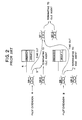
- An essential feature of the present invention is that a route table is provided for each pilot extension.
- a route table RT1 is provided for a pilot extension P1
- a route table RT2 is provided for a pilot extension P2.
- the route tables RT1 and RT2 are provided independent of the agent groups A, B and C.
- the contents of the route tables RT1 and RT2 define the routing of ACD calls terminating to the pilot extensions P1 and P2, respectively. Therefore, it is possible to connect an ACD call terminating to the pilot extension Pl to any one of the agent groups.
- a terminating ACD call queue is provided for each of the pilot extensions P1 and P2.
- terminating ACD call queue provided for each of the pilot extensions P1 and P2 is not separately illustrated in FIG.3, but in the form of separated terminating ACD call queues QA-1, QB-1 and QC-1 for the agent groups A, B and C for convenience sake. All ACD calls which terminate to the pilot extensions P1 and P2, are attached in the corresponding terminating ACD call queues.
- the route tables RT1 and RT2 are formed in a main memory, which is controlled by a central processing unit.
- an idle agent queue A corresponding to the agent group A is referred to. If an idle agent in the agent group A is available, the ACD call is connected to the idle agent, and the present idle agent is detached from the idle agent queue QA-2.
- the above-mentioned procedure is indicated by a reference S1.
- the third route step relating to announcement #2 in the route table RT1 is read and executed.
- the fourth route step in the route table RT1 is read.
- the fourth route step relates to the agent group B.
- an idle agent in the idle agent queue QB-2 for the agent group B is sought. This is substantially equivalent to a procedure such that the ACD call is attached to the terminating ACD call queue QB-1 and then an idle agent in the agent group B is sought by searching the idle agent queue QB-2 for the agent group B.
- the search for an idle agent in the agent group B may be carried out in place of the search for an idle agent in the agent group A, and in the alternative, may be carried out together with the search for an idle agent in the agent group A.
- the above-mentioned procedure subsequent to the procedure S1 is indicated by a reference S2.
- the fifth route step in the route table RT1 is read and executed.
- the fifth route step relates to the agent group C.
- the search for an idle agent in the agent group C may be employed in place of the search for an idle agent in the agent groups A and B, and in the alternative, may be carried out in addition to the search for an idle agent in the agent groups A and B.
- the above-mentioned procedure following the procedure S2 is indicated by a reference S3.
- route steps defined in the related route table RT2 are sequentially read and executed in the same way as those for the ACD call terminating to the pilot extension P1.
- route steps relating to the agent groups B and C are defined. Therefore, an idle agent in the agent group B is first sought as indicated by a reference S1'. Then if all the agents in the group B are still busy even after the lapse of a predetermined time, an idle agent in the agent group C is sought, as indicated by a reference S2'.
- a music source 19 for providing a caller with a music is connected to the network switch 11.
- An announcement machine 20 is coupled to the network switch 11 through a line circuit (LC) 21.
- the announcement machine 20 provides a caller with an appropriate announcement.
- An agent group A consisting of a plurality of agents is coupled to the network switch 11 through related line circuits 22.
- an agent group B consisting of a plurality of agents is coupled to the network switch 11 through corresponding line circuits 23.
- the line controller 14 controls the line circuits 21, 22 and 23, as will be described later.
- the CPU 15 controls the trunk controller 12, the switch controller 13, and the line controller 14, as will be described later.
- the CPU 15 also control the read/write operation with respect to the main memory 16.
- the switch controller 13 controls the network switch 11 so as to connect and disconnect the trunks 17 and 18 to and from the line circuits 21 - 23 and the music source 19.
- a maintenance console 25 is coupled with the main memory 16 through an input/output controller (hereinafter simply referred to as an I/O controller) 24.
- the main memory 16 stores a route table 16a for each of pilot extensions P1 and P2 (or the trunks 17 and 18), as shown in FIG.5.
- the illustrated route table 16a relates to the pilot extension P1, and includes six route steps.
- Route step 1 is a step of providing a caller related to the trunk 17 with an appropriate announcement such that "This is XYZ corporation; Please wait for a while".
- Route step 2 relates to the search for an idle agent in the agent group A.
- Route step 3 relates to a step of defining waiting time X1 during which the search for an idle agent in the agent group A is repeatedly carried out.
- Route step 4 is a step of searching the agent group B for an idle agent when no idle agent becomes available in the agent group A even after the lapse of waiting time X1.
- Route step 5 is a step of defining waiting time X2 during which the search for an idle agent in the agent group B is repeatedly carried out.
- the search for an idle agent in the agent group B may be carried out in place of or together with the search for an idle agent in the agent group A.
- Route step 6 is a step of routing the ACD call to an attendant agent when route steps 2 to 5 fail to find an idle agent in both the agent groups A and B.
- each of the route tables 16a can be revised by the maintenance console 25 through the I/O controller 24.
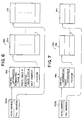
- a queue 120 of terminating ACD calls as illustrated in FIG.6 is formed by using information supplied from the trunk controller 12 and the CPU 15.
- the terminating ACD call queue 120 is formed for each of the trunks 17 and 18, or the pilot extensions P1 and P2.
- a call data buffer 12a, 12b, ..., 12n is generated for each ACD call which terminates to the related trunk, and is chained together with so as to form the terminating ACD call queue 120.
- the CPU 15 has a pointer 150a, which manages a head address and a tail address of the ACD call terminating queue 120.
- the head address indicates the call data buffer 12a in the head of the terminating ACD call queue 120
- the tail address indicates the call data buffer 12n at the tail thereof.
- Each of the call data buffer 12a, 12b, ..., 12n includes information on a terminating trunk number, a route table number, an executing route step number, a wait counter, and a pointer.
- top of each call data buffer stores conventional control information such as a dial-in number in addition to the information described below.
- the terminating trunk number subsequent to the control information indicates the trunk to which an ACD call terminates.
- the route table number indicates a route table assigned to the pilot extensions P1 and P2 which an ACD call terminates. As will be described later, one route table provided for each of the pilot extensions P1 and P2 is stored in the main memory 16.
- the executing route step number indicates a route step being processed which is defined in the corresponding route table.
- the wait counter is a program counter which counts waiting times X1 and X2.
- the pointer is indicative of the top address of the next attached call data buffer. For example, the pointer of the call data buffer 12a indicates the top address of the call data buffer 12b.
- An idle agent queue 140 as shown in FIG.7 is formed in the main memory 16 by using information supplied from the line controller 14 and the CPU 15.
- One idle agent queue 140 is formed for one agent group.
- one idle agent queue 140 is formed for each of the agent groups A and B.
- the idle agent queue 140 includes an idle agent buffer 14a, 14b, ..., 14n.
- One idle agent buffer is formed for each of the idle agents in the corresponding agent group.
- the CPU 15 has a pointer 150b, which manages a head address and a tail address.
- the head address indicates the idle agent buffer 14a in the head of the idle agent queue 140
- the tail address indicates the idle agent buffer 14n at the tail thereof.
- the CPU 15 reads route step 2 from the related route table 16a and executes the same (step 105). Then, the CPU 15 begins to seek an idle agent in the idle agent queue 140 for the agent group A corresponding to the pilot extension P1 or the trunk 17. The CPU 15 is informed, by the line controller 14, of the agent extension number when the corresponding agent is released from the busy state and becomes idle. In this manner, the idle agent queue 140 as shown in FIG.7 is formed in the main memory 16. Then, the CPU 15 determines whether or not an idle agent in the agent group A is available (step 106). When the result in step 105 is affirmative, the CPU 15 controls the switch controller 13 and the line controller 14 so that the terminating ACD call is connected to the found idle agent in the agent group (step 107).
- the call data buffer corresponding to the connected ACD call is detached from the terminating ACD call queue 120 for the pilot extension P1 shown in FIG.6, and also the idle agent buffer corresponding to the connected ACD call is detached from the idle agent buffer queue 140 for the agent group A shown in FIG.7.
- the corresponding agent is attached, as an idle agent, to the idle agent queue 140 for the agent group A.
- the CPU 15 seeks an idle agent in the agent group A whenever an idle agent is attached to the idle agent queue 140 shown in FIG.7 due to the completion of conversation (communication) with respect to another terminating ACD call.
- step 111 the CPU 15 seeks an idle agent in the idle agent queue 140 for the agent group B whenever an agent is attached to the idle agent queue 140 due to the completion of conversation with respect to another terminating ACD call. Then, the CPU 15 executes step 112. If an idle agent in the agent group B is available in step 112, the CPU 15 controls the switch controller 13 and the line controller 14 so as to connect the ACD call to the found idle agent (step 113). At this time, the call data buffer corresponding to the connected ACD call is detached from the terminating ACD call queue 120 shown in FIG.6, and also the connected agent is detached from the idle agent queue 140 shown in FIG.7. Thereafter, when the ACD call is completed, the CPU 15 attaches the corresponding agent, as an idle agent, to the idle agent queue 140 for the agent group B.
- step 112 when the result in step 112 is negative, the CPU 15 reads route step 5 from the route table 16a for the pilot extension P1, and executes the same (step 115).
- Route step 5 defines waiting time X2 necessary for the CPU 15 to read and execute the following route step. That is, when the CPU 15 finds no idle agent in both the agent groups A and B for waiting time X2, the procedure proceeds to step 117.
- step 117 the CPU 15 reads route step 6 from the route table 16a, and executes the same.
- the ACD call is routed to an attendant agent, which is connected to the network switch 11 (FIG.4) through a line circuit (not shown for convenience' sake) in the same way as the agent groups A and B.
- the automatic call distribution control ends. Thereby, a route connecting between the ACD call and one agent corresponding to the pilot extension P1 is established.
Landscapes
- Engineering & Computer Science (AREA)
- Business, Economics & Management (AREA)
- Marketing (AREA)
- Signal Processing (AREA)
- Physics & Mathematics (AREA)
- Astronomy & Astrophysics (AREA)
- General Physics & Mathematics (AREA)
- Computer Networks & Wireless Communication (AREA)
- Sub-Exchange Stations And Push- Button Telephones (AREA)
- Telephonic Communication Services (AREA)
- Exchange Systems With Centralized Control (AREA)
- Data Exchanges In Wide-Area Networks (AREA)
Claims (28)
- Automatisches Gesprächsverteilungssystem, umfassend:einen Netzwerkschalter (11) mit einer Vielzahl von Leitnebenanschlüssen (P1, P2);eine Vielzahl von Agenten, aufgeteilt in eine Vielzahl von Agentengruppen (A, B);eine Verbindungsvorrichtung (17, 18), vorgesehen für jede der Leitnebenanschlüsse (P1, P2) und verbunden mit dem Netzwerkschalter, zum Empfang eines Gespräches, welches an einem entsprechenden Leitnebenanschluß (P1, P2) ankommt;eine Leitungsschaltungsvorrichtung (22, 23), vorgesehen für jeden der Agenten und verbunden mit dem Netzwerkschalter (11), zur Kopplung eines an einem entsprechenden Agenten ankommenden Gespräches mit dem Netzwerkschalter;eine Speichervorrichtung (16) zur Speicherung einer Leitwegtabelle (16a), vorgesehen für jede der Leitnebenanschlüsse (P1, P2), wobei die Leitwegtabelle Information definiert für die automatische Verteilung von empfangenen Gesprächen an die Agentengruppen (A, B) und einschließlich eines Leitschrittes zur Initiierung einer Suche nach einem freien Agenten in einer durch den Leitschritt spezifizierten Agentengruppe;eine Steuervorrichtung (12-15), gekoppelt an die Verbindungsvorrichtung (17, 18), welche vorgesehen ist für jede der Leitnebenanschlüsse (P1, P2), an den Netzwerkschalter (11), an die Leitungsschaltungsvorrichtung, welche vorgesehen ist für jede der Agenten, und an die Speichervorrichtung (16) zur Durchführung der Suche nach dem freien Agenten und zur Herstellung eines Leitweges zwischen dem Anruf und dem freien Agenten über die Verbindungsvorrichtung (17, 18), dem Netzwerkschalter (11), und die Leitungsschaltungsvorrichtung (22, 23),gekennzeichnet durch:eine verwenderbetriebene Vorichtung (24, 25), zugeordnet der Speichervorrichtung (16), betreibbar für die Veränderung des Inhaltes jeder Leitwegtabelle, welche gespeichert ist in der Speichervorrichtung, zur Spezifizierung einer weiteren Agentengruppe, in welcher die Suche nach einem freien Agenten initiiert werden soll.
- Automatisches Gesprächsverteilungssystem nach Anspruch 1, dadurch gekennzeichnet, daß die für jede der Leitnebenanschlüsse vorgesehene Leitwegtabelle (16a) Information beinhaltet über eine Sequenz von Suchen in einer Vielzahl der in der entsprechenden Leitwegtabelle spezifizierten Agentengruppen zur Suche nach einem freien Agenten, und die Steuervorrichtung aufgebaut ist, um einen freien Agenten für jede spezifizierte Agentengruppe in Übereinstimmung mit der Sequenz zu suchen.
- Automatisches Gesprächsverteilungssystem nach Anspruch 1 oder 2, dadurch gekennzeichnet, daß die Steuervorrichtung (12-15) so angeordnet ist, daß wenn während des Betriebes sie keinen freien Agenten in einer der in der entsprechenden Leitwegtabelle (16a) spezifizierten Agentengruppe findet nach Ablauf einer vorbestimmten Zeit (X1, X2), sie damit beginnt einen freien Agenten in einer weiteren der durch die entsprechende Leitwegtabelle spezifizierten Agentengruppen zu suchen.
- Automatisches Gesprächsverteilungssystem nach Anspruch 1 oder 2, dadurch gekennzeichnet, daß die Steuervorrichtung (12-15) so angeordnet ist, daß wenn während des Betriebes sie keinen freien Agenten findet in eier der in der entsprechenden Leitwegtabelle (16a) definierten Agentengruppen nach dem Ablauf einer vorbestimmten Zeit (X1, X2), sie damit beginnt, nach einem freien Agenten in einer weiteren entsprechenden Agentengruppe zu suchen, zusammen mit dem vorhergehenden Suchen nach einem freien Agenten in der einen Agentengruppe.
- Automatisches Gesprächsverteilungssystem nach Anspruch 1 oder 2, dadurch gekennzeichnet, daß die Steuervorrichtung (12-15) so angeordnet ist, daß wenn während des Betriebes keinen freien Agenten in einer durch die entsprechende Leitwegtabelle (16a) definierten Agentengruppen findet nach dem Ablauf einer vorbestimmten Zeit (X1, X2), sie damit beginnt, nach einem freien Agenten in einer weiteren entsprechenden Agentengruppe zu suchen, anstelle der vorhergehenden Suche nach einem freien Agenten in der einen Agentengruppe.
- Automatisches Gesprächsverteilungssystem nach einem der Ansprüche 2 bis 5, dadurch gekennzeichnet, daß die vorbestimmte Zeit definiert wird in der Leitwegtabelle (16a), welche in der Speichervorrichtung gespeichert ist.
- Automatisches Gesprächsverteilungssystem nach Anspruch 1, dadurch gekennzeichnet, daß es ferner eine Ansagebereitstellungsvorrichtung (20) umfaßt zur Bereitstellung einer Ansage für einen Anrufer des Gespräches um den Anrufer wissen zu lassen, daß das Gespräch aufrecht erhalten wird, und eine zusätzliche Leitungsschaltungsvorrichtung (21) zum Verbinden der Ansagenbereitstellungsvorrichtung mit dem Netzwerkschalter (11), wobei die Steuervorrichtung (12-15) eine Vorrichtung (103) umfaßt, zur Steuerung des Netzwerkschalters und der zusätzlichen Leitungsschaltungsvorrichtung (21), um das Gespräch zu verbinden mit der Gesprächsbereitstellungsvorrichtung (20), wenn das Gespräch ankommt an einer der Leitnebenanschlüsse und die Steuervorrichtung angeordnet ist, um danach damit zu beginnen, einen freien Agenten in der entsprechenden Agentengruppe zu suchen.
- Automatischs Gesprächsverteilungssystem nach Anspruch 7, dadurch gekennzeichnet, daß die für jede der Agentengruppen vorgesehene Leitwegtabelle (16a) einen Befehl umfaßt zur Anweisung der Steuervorrichtung (12-15), das Gespräch mit der Gesprächsbereitstellungsvorrichtung (20) zu verbinden, und dadurch, daß die Steuervorrichtung angeordnet ist zum Lesen des Befehls aus der Leitwegtabelle (16a) und zur Ausführung des Befehls, wenn das Gespräch ankommt an einer der Leitnebenanschlüsse.
- Automatisches Gesprächsverteilungssystem nach einem der Ansprüche 1 bis 8, dadurch gekennzeichnet, daß es ferner eine Musikquellenvorrichtung (19) umfaßt, verbunden mit dem Netzwerkschalter, um einen Anrufer des Gespräches mit Musik zu versorgen während einer Zeit, in welcher die Steuervorrichtung (12-15) nach einem freien Agenten in der damit verbundenen Agentengruppe sucht, um dadurch den Anrufer wissen zu lassen, daß das Gespräch aufrecht erhalten wird.
- Automatisches Gesprächsverteilungssystem nach Anspruch 9, dadurch gekennzeichnet, daß die für jede der Agentengruppen vorgesehene Leitwegtabelle (16a) einen Befehl umfaßt zur Anweisung der Steuervorrichtung (12-15) das Gespräch mit der Musikquellenvorrichtung (19) zu verbinden und dadurch, daß die Steuervorrichtung angeordnet ist, den Befehl aus der Leitwegtabelle zu lesen und den Befehl auszuführen, um so den Anrufer mit Musik zu versorgen.
- Automatisches Gesprächsverteilungssystem nach einem der Ansprüche 1 bis 10, dadurch gekennzeichnet, daß die Steuervorrichtung (12-15) eine Ankommende-Gesprächs-Warteschlangenvorrichtung (102, 107) umfaßt zur Erzeugung einer Ankommende-Gesprächs-Warteschlange (120), welche bezeichnend ist für eine oder mehrere Gespräche (12a-12n), welche ankommen an einer der Leitnebenanschlüsse, und zum Abhängen eines Gesprächs von der Ankommende-Gesprächs-Warteschlange, für welches ein freier Agent gefunden wurde, und dadurch, daß die Steuervorrichtung angeordnet ist nach einem freien Agenten zu suchen, für jeden der einen oder vielen Gespräche in der Ankommende-Gespräch-Warteschlange.
- Automatisches Gesprächsverteilungssystem nach Anspruch 11, dadurch gekennzeichnet, daß die Ankommende-Gesprächs-Warteschlagenvorrichtung (102, 107) angeordnet ist, um eine Ankommende-Gesprächs-Warteschlange (120) zu erzeugen für jede der Leitnebenanschlüsse.
- Automatisches Gesprächsverteilungssystem nach Anspruch 11 oder 12, dadurch gekennzeichnet, daß die Ankommende-Gesprächs-Warteschlangenvorrichtung (102, 107) angeordnet ist, die Ankommende-Gesprächs-Warteschlange (120), welche bezeichnend ist für das eine oder die vielen Gespräche (12a - 12n), welche verkettet sind, zu erzeugen.
- Automatisches Gesprächsverteilungssystem nach einem der Ansprüche 13 bis 15, dadurch gekennzeichnet, daß die Ankommende-Gesprächs-Warteschlange (120) in der Speichervorrichtung (16) gebildet wird.
- Automatisches Gesprächsverteilungssystem nach einem der Ansprüche 11 bis 4, dadurch gekennzeichnet, daß die Ankommende-Gespräch-Warteschlange (120) für deren Erzeugung die Ankommende-Gespräch-Warteschlangenvorrichtung (102, 107) angeordnet ist, einen Gesprächsdatenpuffer (12a-12n) enthält, gebildet für jedes ankommende Gespräch.
- Automatisches Gesprächsverteilungssystem nach Anspruch 15, dadurch gekennzeichnet, daß der in der Ankommende-Gesprächs-Warteschlange (120) enthaltene Gesprächsdatenpuffer (12a-12n), für dessen Erzeugung die Ankommende-Gesprächs-Warteschlangenvorrichtung (102, 107) angeordnet ist, Information enthält über eine ankommende Verbindungsnummer, welche auf eine der Verbindungen hinweist, an welcher das Gespräch ankommt, und eine Leitwegtabellennummer, welche auf eine der Leitwegtabellen (16a) hinweist, welche der ankommenden Verbindungsnummer entspricht.
- Automatisches Gesprächsverteilungssystem nach einem der Ansprüche 13 bis 15, dadurch gekennzeichnet, daß die Steuervorrichtung einen Kopfadress-Pointer (150a) enthält, welcher hinweist auf eine der am Kopf der abschließenden Gesprächs-Warteschlangen befindlichen Gespräche, und einen Endadresspointer, welcher hinweist auf eine (12n) der ankommenden Gespräche, welche sich am Ende der Warteschlange befindet.
- Automatisches Gesprächsverteilungssystem nach einem der Ansprüche 1 bis 17, dadurch gekennzeichnet, daß die Steuervorrichtung (12-15) eine Freie Agenten-Warteschlangenvorrichtung (105, 107, 108, 111, 113, 114) umfaßt zur Erzeugung einer Freien Agenten-Warteschlange (140), welche auf einen oder mehrere freie Agenten (14a-14n) hinweist für jede der Agentengruppe, und zum Abhängen von der freien Agenten-Warteschlange eines freien Agentens der belegt wird und dadurch, daß die Steuervorrichtung (12-15) angeordnet ist nach einem freien Agenten zu suchen unter Bezugnahme auf die Freie-Agenten-Warteschlange für die dazu in Beziehung stehende Agentengruppe.
- Automatisches Gesprächsverteilungssystem nach Anspruch 18, dadurch gekennzeichnet, daß die Freie-Agenten-Warteschlangenvorrichtung angeordnet ist, um die Freie-Agenten-Wartenschlange (140) zu erzeugen, welche hinweist auf den einen oder mehr freie Agenten (14a-14n), welche verkettet sind.
- Ein Automatisches Gesprächsverteilungssystem nach Anspruch 18 oder 19, dadurch gekennzeichnet, daß die für jede der Agentengruppe gebildete Freie-Agenten-Warteschlange (140) in der Speichervorrichtung (16) gebildet ist.
- Automatisches Gesprächsverteilungssystem nach einem der Ansprüche 18 bis 20, dadurch gekennzeichnet, daß die Freie-Agenten-Warteschlange (140), für dessen Erzeugung die Freie-Agenten-Warteschlangenvorrichung angeordnet ist, einen Freien-Agentenpuffer (14a-14n) enthält, welcher gebildet ist für jeden der freien Agenten.
- Automatisches Gesprächsverteilungssystem nach Anspruch 21, dadurch gekennzeichnet, daß der Freie-Agentenpuffer (140), welcher enthalten ist in der Freien-Agenten-Warteschlange (140), für dessen Erzeugung die Freie-Agenten-Warteschlangenvorrichtung angeordnet ist, Information enthält über eine Agentennummer, welche hinweist auf einen freien Agenten in der entsprechenden Agentengruppe.
- Automatisches Gesprächsverteilungssystem nach Anspruch 21 oder 22, dadurch gekennzeichnet, daß die Steuervorrichtung einen Kopfadresspointer (150b) enthält, welcher hinweist auf einen (14a) der freien Agenten, welche sich am Kopf der freien Agenten-Warteschlange (140) befinden, und einen Endadresspointer, welcher auf einen (14n) der freien Agenten hinweist, welche sich am Ende der freien Agenten-Warteschlange befinden.
- Automatisches Gesprächsverteilungssystem nach einem der Ansprüche 1 bis 23, dadurch gekennzeichnet, daß es ferner einen wartenden Agenten umfaßt, welcher verbunden ist mit dem Netzwerkschalter (11), wobei, wenn kein freier Agent verfügbar wird in allen damit verbundenen Agentengruppe, die Steuervorrichtung (12-15) angeordnet ist, um einen Leitweg aufzubauen zwischen dem ankommenden Gespräch und dem wartenden Agenten.
- Automatisches Gesprächsverteilungssystem nach Anspruch 24, dadurch gekennzeichnet, daß die Steuervorrichtung anspricht auf einen Befehl in der Leitwegtabelle (16a), welche gebildet ist für jede der Leitnebenanschlüsse, um das ankommende Gespräch mit dem wartenden Agenten zu verbinden.
- Automatisches Gesprächsverteilungssystem nach einem der Ansprüche 1 bis 25, dadurch gekennzeichnet, daß die Steuervorrichtung (12-15) eine zentrale Verarbeitungseinheit (15) umfaßt.
- Automatisches Gesprächsverteilungssystem nach einem der Ansprüche 1 bis 26, dadurch gekennzeichnet, daß jede der Verbindungsvorrichtungen (17, 18) eine Vielzahl von Telefonleitungen unterbringt, welche an dem entsprechenden Leitnebenanschluß (P1, P2) ankommen.
- Automatisches Gesprächsverteilungssystem nach einem der Ansprüche 1 bis 27, dadurch gekennzeichnet, daß jede der Leitnebenanschlüsse (P1, P2) einer Telefonnummer entspricht, welche repräsentativ ist für die in der entsprechenden Leitwegtabelle definierten Agentengruppe.
Applications Claiming Priority (2)
| Application Number | Priority Date | Filing Date | Title |
|---|---|---|---|
| JP120663/88 | 1988-05-19 | ||
| JP63120663A JPH0714230B2 (ja) | 1988-05-19 | 1988-05-19 | 着信呼の分配制御方式 |
Publications (3)
| Publication Number | Publication Date |
|---|---|
| EP0342667A2 EP0342667A2 (de) | 1989-11-23 |
| EP0342667A3 EP0342667A3 (de) | 1991-08-21 |
| EP0342667B1 true EP0342667B1 (de) | 1996-01-24 |
Family
ID=14791821
Family Applications (1)
| Application Number | Title | Priority Date | Filing Date |
|---|---|---|---|
| EP89108932A Expired - Lifetime EP0342667B1 (de) | 1988-05-19 | 1989-05-18 | Automatisches Anrufverteilsystem |
Country Status (6)
| Country | Link |
|---|---|
| US (1) | US4951310A (de) |
| EP (1) | EP0342667B1 (de) |
| JP (1) | JPH0714230B2 (de) |
| AU (1) | AU608440B2 (de) |
| CA (1) | CA1314319C (de) |
| DE (1) | DE68925497T2 (de) |
Families Citing this family (58)
| Publication number | Priority date | Publication date | Assignee | Title |
|---|---|---|---|---|
| US20020085692A1 (en) * | 1985-07-10 | 2002-07-04 | Ronald A. Katz Technology Licensing, L.P. | Voice-data telephonic interface control system |
| US20040071278A1 (en) * | 1985-07-10 | 2004-04-15 | Ronald A. Katz | Multiple format telephonic interface control system |
| US5365575A (en) * | 1985-07-10 | 1994-11-15 | First Data Resources Inc. | Telephonic-interface lottery system |
| US20020196915A1 (en) * | 1985-07-10 | 2002-12-26 | Katz Ronald A. | Telephone interface call processing system with call selectivity |
| JP2660212B2 (ja) * | 1988-06-28 | 1997-10-08 | 明星電気株式会社 | 着信端末数制御方式 |
| EP0461023B1 (de) * | 1990-06-05 | 1998-09-16 | Canon Kabushiki Kaisha | Übertragungsverfahren und -gerät |
| US5181239A (en) * | 1990-08-09 | 1993-01-19 | Rolm Systems | Call tagging user information in a telephonic environment |
| JP2874119B2 (ja) * | 1991-03-01 | 1999-03-24 | 富士通株式会社 | 複数端末への着信呼分散サービス方式 |
| JPH04292092A (ja) * | 1991-03-20 | 1992-10-16 | Nec Corp | 自動交換機のスイッチ制御方式 |
| JPH04334293A (ja) * | 1991-05-10 | 1992-11-20 | Nec Eng Ltd | 局線専用均等分配着信方式 |
| JPH04341040A (ja) * | 1991-05-17 | 1992-11-27 | Nec Corp | 交換台紐回路方式 |
| US5291552A (en) * | 1991-07-30 | 1994-03-01 | At&T Bell Laboratories | Distribution of calls among automatic call distributors of a single large customer |
| US5299259A (en) * | 1991-09-27 | 1994-03-29 | At&T Bell Laboratories | Distributing calls over serving centers of a large customer |
| JP3024833B2 (ja) * | 1991-09-18 | 2000-03-27 | 富士通株式会社 | Isdn電子交換機の内線代表方式 |
| US5226077A (en) * | 1992-03-02 | 1993-07-06 | Acs Communications, Inc. | Headset amplifier with automatic log on/log off detection |
| US5991645A (en) * | 1992-03-02 | 1999-11-23 | Gn Netcom, Inc. | Wireless telephone headset system with automatic log on/log off detection |
| US5335269A (en) * | 1992-03-12 | 1994-08-02 | Rockwell International Corporation | Two dimensional routing apparatus in an automatic call director-type system |
| JP3080262B2 (ja) * | 1992-03-27 | 2000-08-21 | キヤノン株式会社 | 交換制御装置 |
| US5982879A (en) * | 1992-04-03 | 1999-11-09 | Unex Corporation | Telephone headset amplifier and method of operation |
| US5729600A (en) * | 1992-06-25 | 1998-03-17 | Rockwell International Corporation | Automatic call distributor with automated voice responsive call servicing system and method |
| JP3202849B2 (ja) * | 1992-11-11 | 2001-08-27 | ロックウェル インターナショナル コーポレイション | 電話切換システムの制御装置 |
| GB2273025B (en) * | 1992-11-12 | 1997-03-26 | Rockwell International Corp | Automatic call distributor with a programmable data window display system and method |
| JPH06232982A (ja) * | 1993-02-02 | 1994-08-19 | Fujitsu Ltd | 着信呼の分配制御方式 |
| JPH07177246A (ja) * | 1993-02-15 | 1995-07-14 | Nec Corp | 交換台共用方式 |
| US6169904B1 (en) | 1993-07-08 | 2001-01-02 | Qwest Communications International Inc. | System and method for automatically distributing communications to selected locations |
| US5651061A (en) * | 1993-09-01 | 1997-07-22 | Hitachi Telecom Technologies, Ltd. | Telephone exchange system |
| JPH07107526A (ja) * | 1993-09-29 | 1995-04-21 | Toshiba Corp | ボタン電話装置 |
| CA2129942C (en) * | 1993-09-30 | 1998-08-25 | Steven Todd Kaish | Telecommunication network with integrated network-wide automatic call distribution |
| JP3633951B2 (ja) * | 1994-03-09 | 2005-03-30 | 株式会社東芝 | 電話装置及び電話システム |
| JPH07283875A (ja) * | 1994-04-06 | 1995-10-27 | Fujitsu Ltd | 対地群管理を用いた交換制御方式 |
| US5592543A (en) * | 1994-06-01 | 1997-01-07 | Davox Corporation | Method and system for allocating agent resources to a telephone call campaign |
| US5787160A (en) * | 1994-12-08 | 1998-07-28 | Mci Communications Corporation | Intelligent routing of special service calls |
| US5646987A (en) * | 1994-12-22 | 1997-07-08 | Lucent Technologies Inc. | Dynamic reallocation of calls to agent groups |
| US5546452A (en) * | 1995-03-02 | 1996-08-13 | Geotel Communications Corp. | Communications system using a central controller to control at least one network and agent system |
| US6301350B1 (en) | 1995-06-30 | 2001-10-09 | Qwest Communications International, Inc. | System and method for call handling |
| US5875234A (en) | 1996-02-14 | 1999-02-23 | Netphone, Inc. | Computer integrated PBX system |
| JPH09298597A (ja) * | 1996-04-26 | 1997-11-18 | Nec Corp | Acdq着信呼に対するゴーストコール |
| FR2754413B1 (fr) * | 1996-10-07 | 2000-08-04 | Alsthom Cge Alcatel | Agencement de distribution d'appels |
| US5987115A (en) * | 1996-12-03 | 1999-11-16 | Northern Telecom Limited | Systems and methods for servicing calls by service agents connected via standard telephone lines |
| US6330325B1 (en) | 1997-03-31 | 2001-12-11 | Gn Netcom, Inc. | Automatic log-off signaling for telephone systems |
| US6134315A (en) * | 1997-09-30 | 2000-10-17 | Genesys Telecommunications Laboratories, Inc. | Metadata-based network routing |
| US6122364A (en) * | 1997-12-02 | 2000-09-19 | Nortel Networks Corporation | Internet network call center |
| US6788780B1 (en) * | 1998-03-09 | 2004-09-07 | Siemens Aktiengesellschaft | Communications apparatus |
| US6070142A (en) * | 1998-04-17 | 2000-05-30 | Andersen Consulting Llp | Virtual customer sales and service center and method |
| US6064973A (en) * | 1998-04-17 | 2000-05-16 | Andersen Consulting Llp | Context manager and method for a virtual sales and service center |
| US6115693A (en) * | 1998-04-17 | 2000-09-05 | Andersen Consulting Llp | Quality center and method for a virtual sales and service center |
| US6134530A (en) * | 1998-04-17 | 2000-10-17 | Andersen Consulting Llp | Rule based routing system and method for a virtual sales and service center |
| US6404885B1 (en) * | 1998-12-31 | 2002-06-11 | At&T Corp. | Method and system for providing multiple classes of telephone access service |
| JP3322843B2 (ja) | 1999-01-20 | 2002-09-09 | 富士通株式会社 | 自動呼分配サービス制御方式 |
| US6639982B1 (en) * | 1999-08-12 | 2003-10-28 | Six Sigma, Inc. | Method and apparatus for agent forcing and call distribution for large team call servicing |
| US6597780B1 (en) * | 1999-12-16 | 2003-07-22 | Bellsouth Intellectual Property Corporation | Method and system for providing a continuous tone source using a service node |
| US6807269B1 (en) | 2000-07-20 | 2004-10-19 | Cisco Technology, Inc. | Call management implemented using call routing engine |
| US6674852B1 (en) | 2000-08-31 | 2004-01-06 | Cisco Technology, Inc. | Call management implemented using call routing engine |
| US6690789B1 (en) | 2000-08-31 | 2004-02-10 | Cisco Technology, Inc. | Fault tolerant telephony control |
| US6801613B1 (en) | 2000-08-31 | 2004-10-05 | Cisco Technology, Inc. | Associating call appearance with data associated with call |
| US6850612B2 (en) * | 2001-06-21 | 2005-02-01 | Lucent Technologies Inc. | End user automatic call distributor network control |
| JP2004304770A (ja) * | 2003-03-14 | 2004-10-28 | Matsushita Electric Ind Co Ltd | 電話交換機 |
| CN106470282A (zh) * | 2016-08-31 | 2017-03-01 | 江苏鸿信系统集成有限公司 | 一种利用空闲度的话务调度方法 |
Family Cites Families (12)
| Publication number | Priority date | Publication date | Assignee | Title |
|---|---|---|---|---|
| US3864526A (en) * | 1972-02-22 | 1975-02-04 | Communic Equip & Contract | Telephone call distribution system with trunk indentification |
| JPS5332637B2 (de) * | 1973-05-09 | 1978-09-09 | ||
| US4048452A (en) * | 1976-05-28 | 1977-09-13 | Bell Telephone Laboratories, Incorporated | Automatic call distribution system |
| DE3031291C2 (de) * | 1980-08-19 | 1982-12-23 | Siemens AG, 1000 Berlin und 8000 München | Verfahren für zentral gesteuerte Fernmeldevermittlungsanlagen, insbesondere Fernsprechnebenstellenanlagen mit Vermittlungsplätzen unterschiedlicher Betriebsart |
| US4400587A (en) * | 1981-08-25 | 1983-08-23 | Rockwell International Corporation | Overflow and diversion to a foreign switch |
| US4510351A (en) * | 1982-10-28 | 1985-04-09 | At&T Bell Laboratories | ACD Management information system |
| JPS6154752A (ja) * | 1984-08-24 | 1986-03-19 | Matsushita Electric Ind Co Ltd | 自動交換機のハンテイング装置 |
| SE444880B (sv) * | 1984-09-17 | 1986-05-12 | Ericsson Telefon Ab L M | Sett for att i ett telekommunikationssystem vid anrop till nattkopplad jourcentral eller jourcentral ur drift astadkomma automatisk omkoppling till en annan jourcentral och anordning for genomforande av settet |
| US4689815A (en) * | 1985-08-23 | 1987-08-25 | American Telephone And Telegraph Company, At&T Bell Laboratories | Controlling multi-port hunt groups in a distributed control switching system |
| US4737983A (en) * | 1985-10-02 | 1988-04-12 | American Telephone And Telegraph Company Communications, Inc. | Automatic call distributor telephone service |
| US4694483A (en) * | 1986-06-02 | 1987-09-15 | Innings Telecom Inc. | Computerized system for routing incoming telephone calls to a plurality of agent positions |
| DE3721416A1 (de) * | 1987-06-29 | 1989-01-12 | Dn G Uni Im 300 Letija Vossoed | Verfahren zum galvanischen verzinken von gegenstaenden |
-
1988
- 1988-05-19 JP JP63120663A patent/JPH0714230B2/ja not_active Expired - Lifetime
-
1989
- 1989-05-16 US US07/352,501 patent/US4951310A/en not_active Expired - Lifetime
- 1989-05-17 AU AU34878/89A patent/AU608440B2/en not_active Expired
- 1989-05-18 DE DE68925497T patent/DE68925497T2/de not_active Expired - Fee Related
- 1989-05-18 EP EP89108932A patent/EP0342667B1/de not_active Expired - Lifetime
- 1989-05-18 CA CA000600041A patent/CA1314319C/en not_active Expired - Lifetime
Also Published As
| Publication number | Publication date |
|---|---|
| AU3487889A (en) | 1989-11-23 |
| JPH01291596A (ja) | 1989-11-24 |
| AU608440B2 (en) | 1991-03-28 |
| US4951310A (en) | 1990-08-21 |
| DE68925497D1 (de) | 1996-03-07 |
| EP0342667A2 (de) | 1989-11-23 |
| CA1314319C (en) | 1993-03-09 |
| EP0342667A3 (de) | 1991-08-21 |
| JPH0714230B2 (ja) | 1995-02-15 |
| DE68925497T2 (de) | 1996-07-04 |
Similar Documents
| Publication | Publication Date | Title |
|---|---|---|
| US4951310A (en) | Automatic call distribution system | |
| US5343518A (en) | System and method for controlling the dialing order of call record lists in an automated dialing system | |
| US6333980B1 (en) | Automatic call distributor and method for routing incoming telephone calls based on proficiency ratings of agents | |
| CA2323656C (en) | Automatic call distribution system and method | |
| US5960178A (en) | Queue system and method for point-to-point message passing having a separate table for storing message state and identifier of processor assigned to process the message | |
| EP0384875A2 (de) | Asynchrone Objektvorgreifung zwischen Rechnersystemen in zusammen arbeitenden Verarbeitungssystemen | |
| US4905220A (en) | Circuit for a central control time division multiplex PCM telecommunications system | |
| JP2959656B2 (ja) | 統計的自動着信呼分配方式 | |
| JP2667336B2 (ja) | スイッチングネットワークポートの接続設定方法、通信スイッチングシステムにおける接続情報記憶方法、及び通信スイッチングシステム | |
| JPS63279692A (ja) | 自動着信分配管理装置 | |
| US5557660A (en) | Program-controlled communication system whereby a call request is simultaneously signaled at a plurality of communication terminal equipment | |
| JP2888006B2 (ja) | 電子交換機の着信呼分配制御方法および装置 | |
| JP3222782B2 (ja) | 電話回線制御装置 | |
| US6339733B1 (en) | Automatic main distributing frame control system | |
| JPS60218959A (ja) | 幹部秘書交換制御方式 | |
| JP3563426B2 (ja) | 電話装置における着信制御装置並びに着信制御方法 | |
| JPS5856170A (ja) | Tssにおけるセシヨン・端末接続制御方式 | |
| JPH06276299A (ja) | 構内交換機 | |
| JPH0622352A (ja) | 出回線ハント方式及び出回線ハント方法 | |
| JPH10247972A (ja) | 統合交換システム | |
| JPS61194559A (ja) | 会話処理同時利用制御装置 | |
| JP3323610B2 (ja) | 小局用自動交換装置 | |
| JPS6362497A (ja) | 加入者デ−タ管理方式 | |
| JPH03113948A (ja) | 受付台接続データ処理方式 | |
| JPH02280437A (ja) | 通信処理装置 |
Legal Events
| Date | Code | Title | Description |
|---|---|---|---|
| PUAI | Public reference made under article 153(3) epc to a published international application that has entered the european phase |
Free format text: ORIGINAL CODE: 0009012 |
|
| AK | Designated contracting states |
Kind code of ref document: A2 Designated state(s): DE GB SE |
|
| PUAL | Search report despatched |
Free format text: ORIGINAL CODE: 0009013 |
|
| AK | Designated contracting states |
Kind code of ref document: A3 Designated state(s): DE GB SE |
|
| 17P | Request for examination filed |
Effective date: 19911218 |
|
| 17Q | First examination report despatched |
Effective date: 19940216 |
|
| GRAA | (expected) grant |
Free format text: ORIGINAL CODE: 0009210 |
|
| AK | Designated contracting states |
Kind code of ref document: B1 Designated state(s): DE GB SE |
|
| REF | Corresponds to: |
Ref document number: 68925497 Country of ref document: DE Date of ref document: 19960307 |
|
| PGFP | Annual fee paid to national office [announced via postgrant information from national office to epo] |
Ref country code: GB Payment date: 19960426 Year of fee payment: 8 |
|
| PGFP | Annual fee paid to national office [announced via postgrant information from national office to epo] |
Ref country code: SE Payment date: 19960430 Year of fee payment: 8 |
|
| PGFP | Annual fee paid to national office [announced via postgrant information from national office to epo] |
Ref country code: DE Payment date: 19960614 Year of fee payment: 8 |
|
| PLBE | No opposition filed within time limit |
Free format text: ORIGINAL CODE: 0009261 |
|
| STAA | Information on the status of an ep patent application or granted ep patent |
Free format text: STATUS: NO OPPOSITION FILED WITHIN TIME LIMIT |
|
| 26N | No opposition filed | ||
| PG25 | Lapsed in a contracting state [announced via postgrant information from national office to epo] |
Ref country code: GB Effective date: 19970518 |
|
| PG25 | Lapsed in a contracting state [announced via postgrant information from national office to epo] |
Ref country code: SE Effective date: 19970519 |
|
| GBPC | Gb: european patent ceased through non-payment of renewal fee |
Effective date: 19970518 |
|
| EUG | Se: european patent has lapsed |
Ref document number: 89108932.8 |
|
| PG25 | Lapsed in a contracting state [announced via postgrant information from national office to epo] |
Ref country code: DE Free format text: LAPSE BECAUSE OF NON-PAYMENT OF DUE FEES Effective date: 19980203 |