EP0217420B1 - Corrosion resistant steel components and method of manufacture thereof - Google Patents
Corrosion resistant steel components and method of manufacture thereof Download PDFInfo
- Publication number
- EP0217420B1 EP0217420B1 EP86113986A EP86113986A EP0217420B1 EP 0217420 B1 EP0217420 B1 EP 0217420B1 EP 86113986 A EP86113986 A EP 86113986A EP 86113986 A EP86113986 A EP 86113986A EP 0217420 B1 EP0217420 B1 EP 0217420B1
- Authority
- EP
- European Patent Office
- Prior art keywords
- component
- effected
- oxidizing
- atmosphere
- layer
- Prior art date
- Legal status (The legal status is an assumption and is not a legal conclusion. Google has not performed a legal analysis and makes no representation as to the accuracy of the status listed.)
- Expired - Lifetime
Links
- 238000000034 method Methods 0.000 title claims description 24
- 238000004519 manufacturing process Methods 0.000 title claims description 4
- 239000010935 stainless steel Substances 0.000 title description 2
- 238000010438 heat treatment Methods 0.000 claims description 27
- 229910000851 Alloy steel Inorganic materials 0.000 claims description 23
- 239000010410 layer Substances 0.000 claims description 20
- 229910000704 hexaferrum Inorganic materials 0.000 claims description 16
- 150000004767 nitrides Chemical class 0.000 claims description 15
- 239000000203 mixture Substances 0.000 claims description 14
- 239000002344 surface layer Substances 0.000 claims description 14
- 238000005260 corrosion Methods 0.000 claims description 11
- 230000007797 corrosion Effects 0.000 claims description 11
- 238000001816 cooling Methods 0.000 claims description 9
- SZVJSHCCFOBDDC-UHFFFAOYSA-N ferrosoferric oxide Chemical group O=[Fe]O[Fe]O[Fe]=O SZVJSHCCFOBDDC-UHFFFAOYSA-N 0.000 claims description 8
- 230000001590 oxidative effect Effects 0.000 claims description 8
- 230000003746 surface roughness Effects 0.000 claims description 2
- 238000002485 combustion reaction Methods 0.000 claims 1
- IJGRMHOSHXDMSA-UHFFFAOYSA-N Atomic nitrogen Chemical compound N#N IJGRMHOSHXDMSA-UHFFFAOYSA-N 0.000 description 38
- 238000010791 quenching Methods 0.000 description 27
- 229910000831 Steel Inorganic materials 0.000 description 24
- 239000010959 steel Substances 0.000 description 24
- 239000007789 gas Substances 0.000 description 23
- 230000000171 quenching effect Effects 0.000 description 23
- QGZKDVFQNNGYKY-UHFFFAOYSA-N Ammonia Chemical compound N QGZKDVFQNNGYKY-UHFFFAOYSA-N 0.000 description 22
- 150000003839 salts Chemical class 0.000 description 21
- 230000003647 oxidation Effects 0.000 description 19
- 238000007254 oxidation reaction Methods 0.000 description 19
- 229910052757 nitrogen Inorganic materials 0.000 description 18
- CURLTUGMZLYLDI-UHFFFAOYSA-N Carbon dioxide Chemical compound O=C=O CURLTUGMZLYLDI-UHFFFAOYSA-N 0.000 description 16
- 239000007921 spray Substances 0.000 description 15
- XLYOFNOQVPJJNP-UHFFFAOYSA-N water Substances O XLYOFNOQVPJJNP-UHFFFAOYSA-N 0.000 description 12
- 229910045601 alloy Inorganic materials 0.000 description 11
- 239000000956 alloy Substances 0.000 description 11
- 229910021529 ammonia Inorganic materials 0.000 description 11
- 229910052799 carbon Inorganic materials 0.000 description 11
- OKTJSMMVPCPJKN-UHFFFAOYSA-N Carbon Chemical compound [C] OKTJSMMVPCPJKN-UHFFFAOYSA-N 0.000 description 9
- QVGXLLKOCUKJST-UHFFFAOYSA-N atomic oxygen Chemical compound [O] QVGXLLKOCUKJST-UHFFFAOYSA-N 0.000 description 9
- 239000001301 oxygen Substances 0.000 description 9
- 229910052760 oxygen Inorganic materials 0.000 description 9
- UQSXHKLRYXJYBZ-UHFFFAOYSA-N Iron oxide Chemical compound [Fe]=O UQSXHKLRYXJYBZ-UHFFFAOYSA-N 0.000 description 8
- RAHZWNYVWXNFOC-UHFFFAOYSA-N Sulphur dioxide Chemical compound O=S=O RAHZWNYVWXNFOC-UHFFFAOYSA-N 0.000 description 8
- 229910002092 carbon dioxide Inorganic materials 0.000 description 8
- 235000019589 hardness Nutrition 0.000 description 8
- 239000001569 carbon dioxide Substances 0.000 description 7
- HEMHJVSKTPXQMS-UHFFFAOYSA-M Sodium hydroxide Chemical compound [OH-].[Na+] HEMHJVSKTPXQMS-UHFFFAOYSA-M 0.000 description 6
- 238000005238 degreasing Methods 0.000 description 6
- 239000000839 emulsion Substances 0.000 description 6
- 238000011282 treatment Methods 0.000 description 6
- VNWKTOKETHGBQD-UHFFFAOYSA-N methane Chemical compound C VNWKTOKETHGBQD-UHFFFAOYSA-N 0.000 description 5
- 230000008569 process Effects 0.000 description 5
- 230000001681 protective effect Effects 0.000 description 5
- 238000006073 displacement reaction Methods 0.000 description 4
- 239000000243 solution Substances 0.000 description 4
- 238000012360 testing method Methods 0.000 description 4
- UGFAIRIUMAVXCW-UHFFFAOYSA-N Carbon monoxide Chemical compound [O+]#[C-] UGFAIRIUMAVXCW-UHFFFAOYSA-N 0.000 description 3
- 229910002091 carbon monoxide Inorganic materials 0.000 description 3
- 238000007598 dipping method Methods 0.000 description 3
- 230000000694 effects Effects 0.000 description 3
- 229930195733 hydrocarbon Natural products 0.000 description 3
- 150000002430 hydrocarbons Chemical class 0.000 description 3
- 239000000463 material Substances 0.000 description 3
- 239000006104 solid solution Substances 0.000 description 3
- VYZAMTAEIAYCRO-UHFFFAOYSA-N Chromium Chemical compound [Cr] VYZAMTAEIAYCRO-UHFFFAOYSA-N 0.000 description 2
- MBMLMWLHJBBADN-UHFFFAOYSA-N Ferrous sulfide Chemical compound [Fe]=S MBMLMWLHJBBADN-UHFFFAOYSA-N 0.000 description 2
- XEEYBQQBJWHFJM-UHFFFAOYSA-N Iron Chemical compound [Fe] XEEYBQQBJWHFJM-UHFFFAOYSA-N 0.000 description 2
- 229910001209 Low-carbon steel Inorganic materials 0.000 description 2
- CDBYLPFSWZWCQE-UHFFFAOYSA-L Sodium Carbonate Chemical compound [Na+].[Na+].[O-]C([O-])=O CDBYLPFSWZWCQE-UHFFFAOYSA-L 0.000 description 2
- 238000010521 absorption reaction Methods 0.000 description 2
- 229910001566 austenite Inorganic materials 0.000 description 2
- 229960004424 carbon dioxide Drugs 0.000 description 2
- 238000005256 carbonitriding Methods 0.000 description 2
- 238000005255 carburizing Methods 0.000 description 2
- 229910052804 chromium Inorganic materials 0.000 description 2
- 239000011651 chromium Substances 0.000 description 2
- 239000011248 coating agent Substances 0.000 description 2
- 238000000576 coating method Methods 0.000 description 2
- 238000009792 diffusion process Methods 0.000 description 2
- 229910000734 martensite Inorganic materials 0.000 description 2
- 230000007246 mechanism Effects 0.000 description 2
- 229910052751 metal Inorganic materials 0.000 description 2
- 239000002184 metal Substances 0.000 description 2
- 150000002739 metals Chemical class 0.000 description 2
- 230000004048 modification Effects 0.000 description 2
- 238000012986 modification Methods 0.000 description 2
- 125000004433 nitrogen atom Chemical group N* 0.000 description 2
- JCXJVPUVTGWSNB-UHFFFAOYSA-N nitrogen dioxide Inorganic materials O=[N]=O JCXJVPUVTGWSNB-UHFFFAOYSA-N 0.000 description 2
- 229910001562 pearlite Inorganic materials 0.000 description 2
- 238000007747 plating Methods 0.000 description 2
- 238000007517 polishing process Methods 0.000 description 2
- 238000010583 slow cooling Methods 0.000 description 2
- VWDWKYIASSYTQR-UHFFFAOYSA-N sodium nitrate Chemical compound [Na+].[O-][N+]([O-])=O VWDWKYIASSYTQR-UHFFFAOYSA-N 0.000 description 2
- -1 steam Substances 0.000 description 2
- ZOXJGFHDIHLPTG-UHFFFAOYSA-N Boron Chemical compound [B] ZOXJGFHDIHLPTG-UHFFFAOYSA-N 0.000 description 1
- 229910001339 C alloy Inorganic materials 0.000 description 1
- OYPRJOBELJOOCE-UHFFFAOYSA-N Calcium Chemical compound [Ca] OYPRJOBELJOOCE-UHFFFAOYSA-N 0.000 description 1
- 239000004215 Carbon black (E152) Substances 0.000 description 1
- 229910000975 Carbon steel Inorganic materials 0.000 description 1
- ZOKXTWBITQBERF-UHFFFAOYSA-N Molybdenum Chemical compound [Mo] ZOKXTWBITQBERF-UHFFFAOYSA-N 0.000 description 1
- 239000004264 Petrolatum Substances 0.000 description 1
- KPAMAAOTLJSEAR-UHFFFAOYSA-N [N].O=C=O Chemical compound [N].O=C=O KPAMAAOTLJSEAR-UHFFFAOYSA-N 0.000 description 1
- 239000002250 absorbent Substances 0.000 description 1
- 230000002745 absorbent Effects 0.000 description 1
- 239000006096 absorbing agent Substances 0.000 description 1
- 125000001931 aliphatic group Chemical group 0.000 description 1
- 239000012670 alkaline solution Substances 0.000 description 1
- 239000004411 aluminium Substances 0.000 description 1
- 229910052782 aluminium Inorganic materials 0.000 description 1
- XAGFODPZIPBFFR-UHFFFAOYSA-N aluminium Chemical compound [Al] XAGFODPZIPBFFR-UHFFFAOYSA-N 0.000 description 1
- 238000013459 approach Methods 0.000 description 1
- 230000008901 benefit Effects 0.000 description 1
- 229910052796 boron Inorganic materials 0.000 description 1
- 229910052791 calcium Inorganic materials 0.000 description 1
- 239000011575 calcium Substances 0.000 description 1
- DWPDSISGRAWLLV-JHZYRPMRSA-L calcium;(1r,4ar,4br,10ar)-1,4a-dimethyl-7-propan-2-yl-2,3,4,4b,5,6,10,10a-octahydrophenanthrene-1-carboxylate Chemical compound [Ca+2].C([C@@H]12)CC(C(C)C)=CC1=CC[C@@H]1[C@]2(C)CCC[C@@]1(C)C([O-])=O.C([C@@H]12)CC(C(C)C)=CC1=CC[C@@H]1[C@]2(C)CCC[C@@]1(C)C([O-])=O DWPDSISGRAWLLV-JHZYRPMRSA-L 0.000 description 1
- 150000004649 carbonic acid derivatives Chemical class 0.000 description 1
- 230000003197 catalytic effect Effects 0.000 description 1
- 238000004140 cleaning Methods 0.000 description 1
- 239000008199 coating composition Substances 0.000 description 1
- 150000001875 compounds Chemical class 0.000 description 1
- 238000011109 contamination Methods 0.000 description 1
- 230000001419 dependent effect Effects 0.000 description 1
- 239000012153 distilled water Substances 0.000 description 1
- 238000001035 drying Methods 0.000 description 1
- 238000004299 exfoliation Methods 0.000 description 1
- 230000001747 exhibiting effect Effects 0.000 description 1
- 238000007730 finishing process Methods 0.000 description 1
- 238000009472 formulation Methods 0.000 description 1
- 239000004519 grease Substances 0.000 description 1
- 159000000011 group IA salts Chemical class 0.000 description 1
- 238000007654 immersion Methods 0.000 description 1
- 229910052742 iron Inorganic materials 0.000 description 1
- 239000007788 liquid Substances 0.000 description 1
- 239000011159 matrix material Substances 0.000 description 1
- 229910052750 molybdenum Inorganic materials 0.000 description 1
- 239000011733 molybdenum Substances 0.000 description 1
- 230000007935 neutral effect Effects 0.000 description 1
- 150000002823 nitrates Chemical class 0.000 description 1
- 238000005121 nitriding Methods 0.000 description 1
- 150000002826 nitrites Chemical class 0.000 description 1
- 229940110728 nitrogen / oxygen Drugs 0.000 description 1
- 239000007764 o/w emulsion Substances 0.000 description 1
- 239000003921 oil Substances 0.000 description 1
- 125000004430 oxygen atom Chemical group O* 0.000 description 1
- 229940066842 petrolatum Drugs 0.000 description 1
- 235000019271 petrolatum Nutrition 0.000 description 1
- 239000003208 petroleum Substances 0.000 description 1
- 238000005498 polishing Methods 0.000 description 1
- 238000001556 precipitation Methods 0.000 description 1
- 238000012545 processing Methods 0.000 description 1
- 238000003303 reheating Methods 0.000 description 1
- 238000000682 scanning probe acoustic microscopy Methods 0.000 description 1
- 230000035939 shock Effects 0.000 description 1
- 239000000344 soap Substances 0.000 description 1
- 229910000029 sodium carbonate Inorganic materials 0.000 description 1
- 239000004317 sodium nitrate Substances 0.000 description 1
- 235000010344 sodium nitrate Nutrition 0.000 description 1
- 235000015096 spirit Nutrition 0.000 description 1
- 239000007858 starting material Substances 0.000 description 1
- 239000004291 sulphur dioxide Substances 0.000 description 1
- 235000010269 sulphur dioxide Nutrition 0.000 description 1
- 230000009466 transformation Effects 0.000 description 1
- 238000005406 washing Methods 0.000 description 1
- 229910000859 α-Fe Inorganic materials 0.000 description 1
Images

Classifications
-
- C—CHEMISTRY; METALLURGY
- C21—METALLURGY OF IRON
- C21D—MODIFYING THE PHYSICAL STRUCTURE OF FERROUS METALS; GENERAL DEVICES FOR HEAT TREATMENT OF FERROUS OR NON-FERROUS METALS OR ALLOYS; MAKING METAL MALLEABLE, e.g. BY DECARBURISATION OR TEMPERING
- C21D1/00—General methods or devices for heat treatment, e.g. annealing, hardening, quenching or tempering
-
- C—CHEMISTRY; METALLURGY
- C23—COATING METALLIC MATERIAL; COATING MATERIAL WITH METALLIC MATERIAL; CHEMICAL SURFACE TREATMENT; DIFFUSION TREATMENT OF METALLIC MATERIAL; COATING BY VACUUM EVAPORATION, BY SPUTTERING, BY ION IMPLANTATION OR BY CHEMICAL VAPOUR DEPOSITION, IN GENERAL; INHIBITING CORROSION OF METALLIC MATERIAL OR INCRUSTATION IN GENERAL
- C23C—COATING METALLIC MATERIAL; COATING MATERIAL WITH METALLIC MATERIAL; SURFACE TREATMENT OF METALLIC MATERIAL BY DIFFUSION INTO THE SURFACE, BY CHEMICAL CONVERSION OR SUBSTITUTION; COATING BY VACUUM EVAPORATION, BY SPUTTERING, BY ION IMPLANTATION OR BY CHEMICAL VAPOUR DEPOSITION, IN GENERAL
- C23C22/00—Chemical surface treatment of metallic material by reaction of the surface with a reactive liquid, leaving reaction products of surface material in the coating, e.g. conversion coatings, passivation of metals
- C23C22/05—Chemical surface treatment of metallic material by reaction of the surface with a reactive liquid, leaving reaction products of surface material in the coating, e.g. conversion coatings, passivation of metals using aqueous solutions
- C23C22/60—Chemical surface treatment of metallic material by reaction of the surface with a reactive liquid, leaving reaction products of surface material in the coating, e.g. conversion coatings, passivation of metals using aqueous solutions using alkaline aqueous solutions with pH greater than 8
- C23C22/62—Treatment of iron or alloys based thereon
-
- C—CHEMISTRY; METALLURGY
- C23—COATING METALLIC MATERIAL; COATING MATERIAL WITH METALLIC MATERIAL; CHEMICAL SURFACE TREATMENT; DIFFUSION TREATMENT OF METALLIC MATERIAL; COATING BY VACUUM EVAPORATION, BY SPUTTERING, BY ION IMPLANTATION OR BY CHEMICAL VAPOUR DEPOSITION, IN GENERAL; INHIBITING CORROSION OF METALLIC MATERIAL OR INCRUSTATION IN GENERAL
- C23C—COATING METALLIC MATERIAL; COATING MATERIAL WITH METALLIC MATERIAL; SURFACE TREATMENT OF METALLIC MATERIAL BY DIFFUSION INTO THE SURFACE, BY CHEMICAL CONVERSION OR SUBSTITUTION; COATING BY VACUUM EVAPORATION, BY SPUTTERING, BY ION IMPLANTATION OR BY CHEMICAL VAPOUR DEPOSITION, IN GENERAL
- C23C8/00—Solid state diffusion of only non-metal elements into metallic material surfaces; Chemical surface treatment of metallic material by reaction of the surface with a reactive gas, leaving reaction products of surface material in the coating, e.g. conversion coatings, passivation of metals
- C23C8/02—Pretreatment of the material to be coated
-
- C—CHEMISTRY; METALLURGY
- C23—COATING METALLIC MATERIAL; COATING MATERIAL WITH METALLIC MATERIAL; CHEMICAL SURFACE TREATMENT; DIFFUSION TREATMENT OF METALLIC MATERIAL; COATING BY VACUUM EVAPORATION, BY SPUTTERING, BY ION IMPLANTATION OR BY CHEMICAL VAPOUR DEPOSITION, IN GENERAL; INHIBITING CORROSION OF METALLIC MATERIAL OR INCRUSTATION IN GENERAL
- C23C—COATING METALLIC MATERIAL; COATING MATERIAL WITH METALLIC MATERIAL; SURFACE TREATMENT OF METALLIC MATERIAL BY DIFFUSION INTO THE SURFACE, BY CHEMICAL CONVERSION OR SUBSTITUTION; COATING BY VACUUM EVAPORATION, BY SPUTTERING, BY ION IMPLANTATION OR BY CHEMICAL VAPOUR DEPOSITION, IN GENERAL
- C23C8/00—Solid state diffusion of only non-metal elements into metallic material surfaces; Chemical surface treatment of metallic material by reaction of the surface with a reactive gas, leaving reaction products of surface material in the coating, e.g. conversion coatings, passivation of metals
- C23C8/06—Solid state diffusion of only non-metal elements into metallic material surfaces; Chemical surface treatment of metallic material by reaction of the surface with a reactive gas, leaving reaction products of surface material in the coating, e.g. conversion coatings, passivation of metals using gases
- C23C8/08—Solid state diffusion of only non-metal elements into metallic material surfaces; Chemical surface treatment of metallic material by reaction of the surface with a reactive gas, leaving reaction products of surface material in the coating, e.g. conversion coatings, passivation of metals using gases only one element being applied
- C23C8/20—Carburising
- C23C8/22—Carburising of ferrous surfaces
-
- C—CHEMISTRY; METALLURGY
- C23—COATING METALLIC MATERIAL; COATING MATERIAL WITH METALLIC MATERIAL; CHEMICAL SURFACE TREATMENT; DIFFUSION TREATMENT OF METALLIC MATERIAL; COATING BY VACUUM EVAPORATION, BY SPUTTERING, BY ION IMPLANTATION OR BY CHEMICAL VAPOUR DEPOSITION, IN GENERAL; INHIBITING CORROSION OF METALLIC MATERIAL OR INCRUSTATION IN GENERAL
- C23C—COATING METALLIC MATERIAL; COATING MATERIAL WITH METALLIC MATERIAL; SURFACE TREATMENT OF METALLIC MATERIAL BY DIFFUSION INTO THE SURFACE, BY CHEMICAL CONVERSION OR SUBSTITUTION; COATING BY VACUUM EVAPORATION, BY SPUTTERING, BY ION IMPLANTATION OR BY CHEMICAL VAPOUR DEPOSITION, IN GENERAL
- C23C8/00—Solid state diffusion of only non-metal elements into metallic material surfaces; Chemical surface treatment of metallic material by reaction of the surface with a reactive gas, leaving reaction products of surface material in the coating, e.g. conversion coatings, passivation of metals
- C23C8/06—Solid state diffusion of only non-metal elements into metallic material surfaces; Chemical surface treatment of metallic material by reaction of the surface with a reactive gas, leaving reaction products of surface material in the coating, e.g. conversion coatings, passivation of metals using gases
- C23C8/08—Solid state diffusion of only non-metal elements into metallic material surfaces; Chemical surface treatment of metallic material by reaction of the surface with a reactive gas, leaving reaction products of surface material in the coating, e.g. conversion coatings, passivation of metals using gases only one element being applied
- C23C8/24—Nitriding
- C23C8/26—Nitriding of ferrous surfaces
-
- C—CHEMISTRY; METALLURGY
- C23—COATING METALLIC MATERIAL; COATING MATERIAL WITH METALLIC MATERIAL; CHEMICAL SURFACE TREATMENT; DIFFUSION TREATMENT OF METALLIC MATERIAL; COATING BY VACUUM EVAPORATION, BY SPUTTERING, BY ION IMPLANTATION OR BY CHEMICAL VAPOUR DEPOSITION, IN GENERAL; INHIBITING CORROSION OF METALLIC MATERIAL OR INCRUSTATION IN GENERAL
- C23C—COATING METALLIC MATERIAL; COATING MATERIAL WITH METALLIC MATERIAL; SURFACE TREATMENT OF METALLIC MATERIAL BY DIFFUSION INTO THE SURFACE, BY CHEMICAL CONVERSION OR SUBSTITUTION; COATING BY VACUUM EVAPORATION, BY SPUTTERING, BY ION IMPLANTATION OR BY CHEMICAL VAPOUR DEPOSITION, IN GENERAL
- C23C8/00—Solid state diffusion of only non-metal elements into metallic material surfaces; Chemical surface treatment of metallic material by reaction of the surface with a reactive gas, leaving reaction products of surface material in the coating, e.g. conversion coatings, passivation of metals
- C23C8/06—Solid state diffusion of only non-metal elements into metallic material surfaces; Chemical surface treatment of metallic material by reaction of the surface with a reactive gas, leaving reaction products of surface material in the coating, e.g. conversion coatings, passivation of metals using gases
- C23C8/28—Solid state diffusion of only non-metal elements into metallic material surfaces; Chemical surface treatment of metallic material by reaction of the surface with a reactive gas, leaving reaction products of surface material in the coating, e.g. conversion coatings, passivation of metals using gases more than one element being applied in one step
- C23C8/30—Carbo-nitriding
- C23C8/32—Carbo-nitriding of ferrous surfaces
-
- C—CHEMISTRY; METALLURGY
- C23—COATING METALLIC MATERIAL; COATING MATERIAL WITH METALLIC MATERIAL; CHEMICAL SURFACE TREATMENT; DIFFUSION TREATMENT OF METALLIC MATERIAL; COATING BY VACUUM EVAPORATION, BY SPUTTERING, BY ION IMPLANTATION OR BY CHEMICAL VAPOUR DEPOSITION, IN GENERAL; INHIBITING CORROSION OF METALLIC MATERIAL OR INCRUSTATION IN GENERAL
- C23C—COATING METALLIC MATERIAL; COATING MATERIAL WITH METALLIC MATERIAL; SURFACE TREATMENT OF METALLIC MATERIAL BY DIFFUSION INTO THE SURFACE, BY CHEMICAL CONVERSION OR SUBSTITUTION; COATING BY VACUUM EVAPORATION, BY SPUTTERING, BY ION IMPLANTATION OR BY CHEMICAL VAPOUR DEPOSITION, IN GENERAL
- C23C8/00—Solid state diffusion of only non-metal elements into metallic material surfaces; Chemical surface treatment of metallic material by reaction of the surface with a reactive gas, leaving reaction products of surface material in the coating, e.g. conversion coatings, passivation of metals
- C23C8/06—Solid state diffusion of only non-metal elements into metallic material surfaces; Chemical surface treatment of metallic material by reaction of the surface with a reactive gas, leaving reaction products of surface material in the coating, e.g. conversion coatings, passivation of metals using gases
- C23C8/34—Solid state diffusion of only non-metal elements into metallic material surfaces; Chemical surface treatment of metallic material by reaction of the surface with a reactive gas, leaving reaction products of surface material in the coating, e.g. conversion coatings, passivation of metals using gases more than one element being applied in more than one step
-
- C—CHEMISTRY; METALLURGY
- C23—COATING METALLIC MATERIAL; COATING MATERIAL WITH METALLIC MATERIAL; CHEMICAL SURFACE TREATMENT; DIFFUSION TREATMENT OF METALLIC MATERIAL; COATING BY VACUUM EVAPORATION, BY SPUTTERING, BY ION IMPLANTATION OR BY CHEMICAL VAPOUR DEPOSITION, IN GENERAL; INHIBITING CORROSION OF METALLIC MATERIAL OR INCRUSTATION IN GENERAL
- C23C—COATING METALLIC MATERIAL; COATING MATERIAL WITH METALLIC MATERIAL; SURFACE TREATMENT OF METALLIC MATERIAL BY DIFFUSION INTO THE SURFACE, BY CHEMICAL CONVERSION OR SUBSTITUTION; COATING BY VACUUM EVAPORATION, BY SPUTTERING, BY ION IMPLANTATION OR BY CHEMICAL VAPOUR DEPOSITION, IN GENERAL
- C23C8/00—Solid state diffusion of only non-metal elements into metallic material surfaces; Chemical surface treatment of metallic material by reaction of the surface with a reactive gas, leaving reaction products of surface material in the coating, e.g. conversion coatings, passivation of metals
- C23C8/80—After-treatment
Definitions
- This invention relates to corrosion resistant steel components and to a method of manufacture thereof and is concerned with modifications to the techniques described in our EP-A-0077627.
- Heat Treatment of Metals (1982), 4, pages 85 to 90 describes techniques for improving the corrosion resistance of a non-alloy steel automobile component by nitrocarburizing, oxidising the component for a short time in air before quenching into an oil/water emulsion to produce an oxide layer (mainly Fe3O4) of a thickness not exceeding 1.0 ⁇ m. Quenching is effected above 550°C to retain the nitrogen in solid solution in the iron lattice.
- a method of manufacturing a corrosion resistant alloy steel component comprising the steps of heat treating an alloy steel component in a gaseous atmosphere to produce an epsilon iron nitride or carbonitride surface layer thereon; cooling the component; mechanically surface finishing the component; and oxidising the surface finished component to provide an oxide-rich surface layer.
- this step is typically effected at a temperature in the range of 550 to 800°C for up to 4 hours in a nitrocarburizing atmosphere of, for example, ammonia, ammonia and endothermic gas, ammonia and exothermic gas or ammonia and nitrogen, with the optional inclusion of at least one of carbon dioxide, carbon monoxide, air, water vapour and methane.
- a nitrocarburizing atmosphere of, for example, ammonia, ammonia and endothermic gas, ammonia and exothermic gas or ammonia and nitrogen, with the optional inclusion of at least one of carbon dioxide, carbon monoxide, air, water vapour and methane.
- exothermic gas and “endothermic gas” are well understood in the art.
- Carbon dioxide, carbon monoxide, air, water vapour and exothermic gas are catalytic gases added to ammonia for nitrocarburising. They do not form oxides during nitrocarburising. Carbon monoxide, methane and endothermic gas are carburizing gases. It is preferred to effect the heat treatment operation so that the epsilon iron nitride or carbonitride surface layer has a thickness of about 25 micrometres. However, thicknesses up to about 75 micrometres may be used with attendant processing time penalties (up to about 4 hours or more). Typically, a layer thickness of about 25 micrometres can be obtained by heat treatment at 660°C for 45 minutes.
- Such a layer thickness may also be produced by heat treatment of 570°C for 3 hours or at 610°C for 90 minutes.
- the heat treatment temperatures and times may be employed to produce layer thicknesses less than 25 micrometres, e.g. down to 15 micrometres.
- heat treatment of 570°C for 2 hours can be employed to produce a layer thickness of 16 to 20 micrometres.
- the temperature of heat treatment is typically 550°C to 720°C, preferably 610°C to 660°C.
- a medium carbon (typically 0.3 - 0.5%C) starting material e.g., BS970 817M40 (formerly En24) low alloy steel.
- the gaseous heat treatment is then carried out at a temperature above the pearlite to austenite tranformation temperature of the particular steel. This is usually about 720°C although for some steels it may be as low as 700°C. A temperature up to 800°C is preferred. Oxidation and quenching procedures would then be implemented.
- the cooling step may be effected in any desired medium.
- the surface finishing step may be a lapping or other mechanical surface finishing process to produce a surface roughness of, for example, not more than 0.2 micrometres Ra. This lapping or polishing process will remove any oxide film which may have formed on the component, depending upon the medium used for cooling.
- the component can then be oxidised at a temperature of 300 to 600°C. The actual temperature depends upon the appearance required of the steel component and, more importantly, upon the properties thereof. If the component is a one which is not required to have very high fatigue properties (e.g.
- the oxidising heat treatment is preferably effected at 350 to 450°C for about 15 to 5 minutes depending upon the temperature in unstripped exothermic gas.
- the component is preferably heat treated at 500 to 600°C, more preferably, 550 to 600°C followed by quenching.
- unstripped exothermic gas another type of oxidising atmosphere may be employed such as steam, air or other mixture of oxygen and nitrogen carbon dioxide and nitrogen, or carbon dioxide alone or any mixture of these gases.
- Alloy steel components produced according to the present invention have a hard wear resistant layer and a surface having an extremely good resistance to humidity and salt spray corrosion. Such components also have a low coefficient of friction (similar to polished hard chromium plating) so that they are capable of being used in sliding applications. Further, such components possess a high surface tension which gives extremely low wettability which is of great help in a resisting humidity and salt spray corrosion attack and also have a pleasing aesthetic appearance (gloss blue/black according to the temperature employed in the oxidising treatment).
- the method of the invention can be performed by processors with modern gaseous atmosphere heat treatment plant without the requirement for further capital investment in plating or salt bath equipment.
- the surface layer portion is substantially free of nitrogen atoms.
- the surface layer portion wherein substantially all of the nitrogen atoms have been displaced by oxygen atoms extends for a depth of at least 0.2, more preferably at least 0.3, micrometre.
- the resistance of the oxidised surface to corrosion is explained by the predominance of iron oxide, mainly in the form of Fe3O4 down to a depth of at least 0.1 micrometre and sometimes down to more than 1 micrometre in depth. However, to avoid oxide exfoliation, it is preferred for iron oxide to be present down to a depth not exceeding 1 micrometre.
- Displacement of nitrogen is total in the outermost surface layers portions (i.e. down to a depth which may vary between 0.1 micrometre and 1 micrometre,) depending upon the time of exposure to air while the sample is hot before quenching, and also on the cooling rate in the quench. Partial displacement of the nitrogen continues in some instances in excess of 1 micrometreto the depth of the microporous epsilon layer.
- the present invention is applicable to alloy steels which are required to have similar property improvements to those obtained for non-alloy steels by following the teachings of EP-A-0077627.
- alloy steels show greater hardnesses than mild steel (non-alloy steel) in the nitrogen diffusion zone and do not necessarily need to be fast cooled to maintain a good hardness profile.
- excellent support for the oxidised epsilon iron nitride or carbonitride layer is provided by an alloy steel.
- alloy steels can be divided broadly into two categories:-
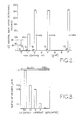
- Fig. 1 is a graph in which hardness (HV1) is plotted against the depth of the case hardened layer below the epsilon layer.
- curve (A) was obtained from a sample of an alloy steel rod according to BS970 709M40 (formerly En 19) which had been nitrocarburized for 11 ⁇ 2 hours at 610°C in a 50 vol% ammonia/50 vol% endothermic gas mixture followed by fast quenching into an oil-in-water emulsion.
- the alloy steel of the above sample falls into category (1) above but not category (2).
- Alloy steels in category (2) above but which do not fall into category (1) typically show the type of hardness profile indicated by curve (B) in Fig. 1.
- Curve (B) was obtained from a sample of an alloy steel rod according to BS 970 605M36 (formerly En 16) which had been nitrocarburised and quenched in the same manner as for the sample for curve (A).
- curve (C) was obtained from a sample of a mild steel (non-alloy steel) rod nitrocarburized and quenched as described above for the sample of curve (A).
- a further aspect of the present invention resides in a duplex heat treatment stage prior to the oxidation procedures used to confer enhanced corrosion resistance on the component.
- medium carbon low-alloy steels must be used (i.e., 0.3-0.5% carbon).
- the process then involves carburising or carbonitriding using a gaseous atmosphere at 750-1100°C to provide a deep carbon rich zone at the surface followed by nitrocarburising in a gaseous atmosphere at a temperature in the range 700-800°C (i.e., above the pearlite to austenite transformation temperature (Ac1) for the particular steel concerned) to form an epsilon iron carbonitride layer on top of the carbon rich zone. Quenching from this temperature produces a duplex core structure of ferrite and martensite with excellent mechanical properties and a hardened martensitic case beneath the epsilon iron carbonitride compound layer.
- the gaseous atmosphere employed may be exothermic gas, endothermic gas or a synthetic carburizing atmosphere, enriched with hydrocarbon to a suitable carbon potential (e.g. 0.8%C)
- the first heat treatment step is effected under the same temperature conditions as the carburising or carbonitriding step but under a neutral atmosphere i.e. an atmosphere which does not affect the carbon content of the steel. This is most conveniently done by matching the carbon content of the atmosphere with that of the steel.
- This form of duplex heat treatment is mainly applicable to medium and high carbon steels.
- the second heat treatment step is effected so as to produce an epsilon iron nitride or an epsilon iron carbonitride layer.
- the second heat treatment, step is usually effected at a lower temperature than the first heat treatment step. Cooling of the component between the first and second heat treatment steps may be effected in any of the following ways:-
- the nitrocarburizing step may be effected for up to 4 hours depending upon the temperature and the required depth of the epsilon iron nitride or carbonitride layer.
- the atmosphere employed may be ammonia, ammonia + endothermic gas, ammonia + exothermic gas or ammonia + nitrogen + CO2/CH4/air.
- the component may or may not be subjected to an oxidation step before quenching, depending on the subsequent process route.
- the oxidation may be effected in lean exothermic gas, steam, nitrogen and steam, carbon dioxide, nitrogen and carbon dioxide, nitrogen/oxygen mixtures or in air so as to produce the required oxide rich layer as discussed hereinabove.
- Quenching after the oxidation step is preferably effected by use of an oil/water emulsion
- oxidation before surface finishing may be prevented by quenching the component under the protection of the nitrocarburising atmosphere or some other protective atmosphere such as nitrogen, endothermic gas, or rich exothermic gas. Quenching under a protective atmosphere may be accomplished using any suitably fast medium, but most usually using oil.
- the component After quenching, the component is washed and dried, or degreased as necessary.
- the component After quenching and cleaning, the component is polished to a fine surface finish followed by an oxidation treatment at 300 - 600°C for 2 to 30 minutes in a suitable oxidising atmosphere such an unstripped exothermic gas, exothermic gas + up to 1 vol% SO2, steam, nitrogen + steam, carbon dioxide, nitrogen + carbon dioxide, nitrogen + oxygen mixture, or air.
- a suitable oxidising atmosphere such an unstripped exothermic gas, exothermic gas + up to 1 vol% SO2, steam, nitrogen + steam, carbon dioxide, nitrogen + carbon dioxide, nitrogen + oxygen mixture, or air.
- the component may be fast cooled by quenching in an oil/water emulsion, oil, water or a synthetic quench before being washed and dried, or degreased, as necessary.
- the component may be slow cooled in air or under the atmosphere used in the oxidation following surface finishing. The cooled component may then be utilised without any further treatment or it may be dip or spray coated with wax.
- the waxy coating composition employed comprised a mixture of waxy aliphatic and branched chain hydrocarbons, calcium soaps of oxidized petrolatum and calcium resinate to produce a wax of the requisite hardness at room temperature.
- the waxy material was contained in a mixture of liquid petroleum hydrocarbons consisting of white spirits and C9 and C10 aromatics
- the following specific waxy compositions were employed:- For blocks 1a and 4a:- Castrol V409 containing 7.5 wt% wax.
- blocks 1c and 4c - Castrol V425 containing 15 wt% wax
- blocks 1d and 4d - Castrol V428 containing 30 wt% wax
- the first four blocks relate to exposure of nitrocarburized component at above 550°C to air for the specified time, followed by quenching in a water/oil emulsion.
- the last block relates to quenching of a nitrocarburized component directly into oil without exposure to air.
- Steel components produced according to the present invention have a corrosion resistance which is superior even to components surface treated to produce an epsilon iron nitride surface layer, oil quenched, degreased (or slow cooled under a protective atmosphere) and then dipped in a de-watering oil so that the de-watering oil is absorbed into an absorbent outer portion of the epsilon iron nitride surface layer.
- Table 1 below compares the corrosion resistant properties of various types of steel component:- TABLE 1 SAMPLE NO. SALT SPRAY RESISTANCE (HOURS) 1 less than 4 2 48 3 120 4 150 + 5 250 +
- the salt spray resistance was evaluated in a salt spray test in accordance with ASTM Standard B117-73 in which the component is exposed in a salt spray chamber maintained at 95+2-3°F to a salt spray prepared by dissolving 5+/- 1 parts by weight of salt in 95 parts of distilled water and adjusting the pH of the solution such that, when atomised at 95°F, the collected solution has a pH in range of 6.5 to 7.2 After removal from the salt spray test, the components are washed under running water, dried and the incidence of red rusting is assessed. Components exhibiting any red rusting are deemed to have failed.
- the actual salt spray resistance figure depends upon the surface finish.
- the steel component treated is a shock absorber piston rod with a final surface finish of 0.13 to 0.15 micrometres Ra. Such a component was found to have a salt spray resistance of 250 hours.
- a rod sample was oxidised for 15 minutes at 400°C in the exothermic gas mixture, but during, the last 5 minutes of the 15 minute cycle, sulphur dioxide was introduced into the furnace in an amount such as to give a concentration of 0.25% by volume in the furnace atmosphere.
- sulphur dioxide was introduced into the furnace in an amount such as to give a concentration of 0.25% by volume in the furnace atmosphere.
- Such a technique caused about 1% of the iron oxide (Fe3O4) on the surface of the rod to be converted to iron sulphide which gave an aesthetically pleasing shiny black surface to the rod.
- the technique of sulphiding is not restricted to components in the form of damper rods and can be used in respect of any components on which it is desirable to have a black hard-wearing surface. With surface finishes greater than 0.25 micrometres Ra, it will be necessary to wax coat in order to produce the desired corrosion resistance.
- the SO2 content in the oxidizing furnace may be up to 1% by volume and the temperature may be in the range of 300°C to 600°C.
- the SO2 will normally be added to the furnace at some stage after the oxidising heat treatment has started in order to convert some of the already formed iron oxide to iron sulphide.
- a further variant of the oxidising process route after surface finishing for damper rod type applications involves immersing a preheated polished rod for a relatively short time in an agitated aqueous alkaline salt bath operated at relatively low temperatures.
- the solution used in the bath is made up using either one or more strong alkalis alone, e.g. sodium hydroxide, or combinations of strong alkalis with compatible nitrites, nitrates and carbonates in concentrations up to 1000 g/l.
- the solution is operated normally in the range 100 - 150°C. This temperature does not cause significant nitrogen precipitation from solid solution, thereby retaining the as-quenched fatigue and strength fatigue and strength property improvements.
- the immersion time may be up to 60 minutes.
- Rods created by this route have an excellent glossy black appearance and have given up to 250 hrs salt spray life in the degreased condition.
- This route has a significant advantage over both a conventional fused AB1 salt bath route and a gaseous oxidation route in that the as-quenched fatigue and strength properties are preserved whereas the high temperature of the other two treatments degrade these properties achieved by quenching from the nitrocarburising stage.
- the aqueous salt bath route minimises effluent problems compared with the fused AB1 salt route.
- Example illustrates certain aspects of the present invention in further detail but in relation is a non-alloy steel damper rod.
- a damper rod manufactured from BS 970 045M10 material was nitrocarburized for 11 ⁇ 2 hours at 610°C in a 50 vol% ammonia, 50 vol% endothermic gas mixture. The rod was subsequently emulsion quenched in a 1:10 CASTROL V553: water mixture after exposure to air for 30 seconds.
- the rod was then polished to a 4 - 5 microinch Ra (0.10 - 0.12 micrometre Ra) finish, preheated to 120°C, and immersed in an agitated alkaline solution containing 600 g/litre of a mixture of salts comprising 50 wt% sodium hydroxide, 25 wt% sodium carbonate and 25 wt% sodium nitrate controlled at a temperature of 125°C for a period of 6 minutes.
- a mixture of salts comprising 50 wt% sodium hydroxide, 25 wt% sodium carbonate and 25 wt% sodium nitrate controlled at a temperature of 125°C for a period of 6 minutes.
- the rod On removal from the bath, the rod was washed in clean water and dried. After degreasing to ensure no possible oil or grease contamination of the surface, the rod was subjected to salt spray test in accordance with ASTM B117-64 and survived for 200 hours without rusting.
Landscapes
- Chemical & Material Sciences (AREA)
- Engineering & Computer Science (AREA)
- Organic Chemistry (AREA)
- Materials Engineering (AREA)
- Mechanical Engineering (AREA)
- Metallurgy (AREA)
- Chemical Kinetics & Catalysis (AREA)
- General Chemical & Material Sciences (AREA)
- Physics & Mathematics (AREA)
- Thermal Sciences (AREA)
- Crystallography & Structural Chemistry (AREA)
- Solid-Phase Diffusion Into Metallic Material Surfaces (AREA)
- Coating With Molten Metal (AREA)
- Chemical Treatment Of Metals (AREA)
Applications Claiming Priority (2)
| Application Number | Priority Date | Filing Date | Title |
|---|---|---|---|
| GB8310102 | 1983-04-14 | ||
| GB838310102A GB8310102D0 (en) | 1983-04-14 | 1983-04-14 | Corrosion resistant steel components |
Related Parent Applications (1)
| Application Number | Title | Priority Date | Filing Date |
|---|---|---|---|
| EP84302404.3 Division | 1984-04-09 |
Publications (3)
| Publication Number | Publication Date |
|---|---|
| EP0217420A2 EP0217420A2 (en) | 1987-04-08 |
| EP0217420A3 EP0217420A3 (en) | 1988-09-21 |
| EP0217420B1 true EP0217420B1 (en) | 1993-02-17 |
Family
ID=10541090
Family Applications (3)
| Application Number | Title | Priority Date | Filing Date |
|---|---|---|---|
| EP86113986A Expired - Lifetime EP0217420B1 (en) | 1983-04-14 | 1984-04-09 | Corrosion resistant steel components and method of manufacture thereof |
| EP86113987A Expired - Lifetime EP0217421B1 (en) | 1983-04-14 | 1984-04-09 | Corrosion resistant steel components and method of manufacture thereof |
| EP84302404A Expired EP0122762B1 (en) | 1983-04-14 | 1984-04-09 | Corrosion resistant steel components and method of manufacture thereof |
Family Applications After (2)
| Application Number | Title | Priority Date | Filing Date |
|---|---|---|---|
| EP86113987A Expired - Lifetime EP0217421B1 (en) | 1983-04-14 | 1984-04-09 | Corrosion resistant steel components and method of manufacture thereof |
| EP84302404A Expired EP0122762B1 (en) | 1983-04-14 | 1984-04-09 | Corrosion resistant steel components and method of manufacture thereof |
Country Status (12)
| Country | Link |
|---|---|
| US (1) | US4563223A (enExample) |
| EP (3) | EP0217420B1 (enExample) |
| JP (3) | JPS6036658A (enExample) |
| KR (1) | KR840008700A (enExample) |
| AU (1) | AU2676684A (enExample) |
| BR (1) | BR8401732A (enExample) |
| DE (3) | DE3486037T2 (enExample) |
| ES (1) | ES8606520A1 (enExample) |
| GB (5) | GB8310102D0 (enExample) |
| HU (1) | HUT34554A (enExample) |
| PL (1) | PL247224A1 (enExample) |
| ZA (1) | ZA842685B (enExample) |
Families Citing this family (59)
| Publication number | Priority date | Publication date | Assignee | Title |
|---|---|---|---|---|
| DE4110023A1 (de) * | 1991-03-27 | 1992-10-01 | Ringsdorff Werke Gmbh | Stossdaempferkolben aus ungleichen, gefuegten teilen |
| US4756774A (en) * | 1984-09-04 | 1988-07-12 | Fox Steel Treating Co. | Shallow case hardening and corrosion inhibition process |
| JPS61261469A (ja) * | 1985-05-15 | 1986-11-19 | Sanyo Haidoritsuku Kogyo Kk | 鉄鋼製品の防錆処理方法 |
| FR2588281B1 (fr) * | 1985-10-08 | 1991-08-16 | Air Liquide | Procede de traitement thermique pour la realisation de pieces en acier resistant a la corrosion |
| US5037491A (en) * | 1986-02-28 | 1991-08-06 | Fox Patrick L | Shallow case hardening and corrosion inhibition process |
| FR2604188B1 (fr) * | 1986-09-18 | 1992-11-27 | Framatome Sa | Element tubulaire en acier inoxydable presentant une resistance a l'usure amelioree |
| US4776901A (en) * | 1987-03-30 | 1988-10-11 | Teledyne Industries, Inc. | Nitrocarburizing and nitriding process for hardening ferrous surfaces |
| GB2208658B (en) * | 1987-07-17 | 1992-02-19 | Lucas Ind Plc | Manufacture of corrosion resistant steel components |
| JPH0727412Y2 (ja) * | 1988-08-25 | 1995-06-21 | 三菱電機株式会社 | 始動電動機 |
| US5087181A (en) * | 1989-03-06 | 1992-02-11 | Hitachi, Ltd. | Sliding structure such as compressor or the like |
| DE3922983A1 (de) * | 1989-07-18 | 1991-01-17 | Mo Avtomobilnyj Zavod Im I A L | Verfahren zur chemisch-thermischen bearbeitung von werkstuecken, nach diesem verfahren hergestellte diffusionsueberzuege und anlage zu seiner durchfuehrung |
| WO1991004351A1 (en) * | 1989-09-22 | 1991-04-04 | Ashland Oil, Inc. | Process for protective finishing of ferrous workpieces |
| EP0441630B1 (en) * | 1990-02-09 | 1995-04-26 | Kabushiki Kaisha Toshiba | Method for treating the surface of a rotational shaft used in fluid compressing apparatus |
| CA2016843A1 (en) * | 1990-05-15 | 1991-11-15 | Michel J. Korwin | Thermochemical treatment of machinery components for improved corrosion resistance |
| DE4027011A1 (de) * | 1990-08-27 | 1992-03-05 | Degussa | Verfahren zur verbesserung der korrosionsbestaendigkeit nitrocarburierter bauteile aus eisenwerkstoffen |
| FR2672059B1 (fr) * | 1991-01-30 | 1995-04-28 | Stephanois Rech Mec | Procede pour conferer a des pieces en metal ferreux, nitrurees puis oxydees, une excellente resistance a la corrosion tout en conservant les proprietes acquises de friction. |
| FR2679258B1 (fr) * | 1991-07-16 | 1993-11-19 | Centre Stephanois Recherc Meca | Procede de traitement de pieces en metal ferreux pour ameliorer simultanement leur resistance a la corrosion et leurs proprietes de friction. |
| DE4222894C2 (de) * | 1992-07-11 | 1995-07-06 | Goetze Ag | Korrosionsschutzmittel für metallische Werkstücke |
| GB2280865A (en) * | 1993-08-13 | 1995-02-15 | Mono Pumps Ltd | Flexible drive shaft |
| DE4339404A1 (de) * | 1993-11-18 | 1995-05-24 | Ipsen Ind Int Gmbh | Verfahren zur Herstellung einheitlicher Oxidationsschichten auf metallischen Werkstücken und Vorrichtung zur Durchführung des Verfahrens |
| DE19500576C2 (de) * | 1994-03-16 | 1996-07-11 | Schaeffler Waelzlager Kg | Verfahren zur thermochemischen Behandlung von dünnwandigen Bauteilen |
| US5480471A (en) * | 1994-04-29 | 1996-01-02 | Crucible Materials Corporation | Re-Fe-B magnets and manufacturing method for the same |
| DE19510302C2 (de) * | 1995-03-22 | 1997-04-24 | Bilstein August Gmbh Co Kg | Oberflächenbehandelte Kolbenstange und Verfahren zu ihrer Herstellung |
| DE19525182C2 (de) * | 1995-07-11 | 1997-07-17 | Metaplas Ionon Gmbh | Verfahren zur Erzeugung von Korrosions- und Verschleißschutzschichten auf Eisenbasiswerkstoffen |
| JPH1060619A (ja) * | 1996-08-13 | 1998-03-03 | Tochigi Fuji Ind Co Ltd | 構造用鋼製部材 |
| KR20010010584A (ko) * | 1999-07-21 | 2001-02-15 | 김덕중 | 코팅막 형성방법 |
| US6454880B1 (en) * | 1999-09-29 | 2002-09-24 | Herbert (Lonny) A. Rickman, Jr. | Material for die casting tooling components, method for making same, and tooling components made from the material and process |
| RU2179200C2 (ru) * | 1999-11-22 | 2002-02-10 | Открытое акционерное общество "Алтайский трактор" | Способ упрочнения штамповых сталей |
| RU2191222C2 (ru) * | 2000-04-10 | 2002-10-20 | Государственное унитарное предприятие комбинат "Электрохимприбор" | Способ антикоррозионного азотирования деталей, изготовленных из стали 40х |
| RU2194794C2 (ru) * | 2000-08-04 | 2002-12-20 | Открытое акционерное общество "Уральский научно-исследовательский технологический институт" | Способ изготовления стальных деталей |
| DE10062431A1 (de) * | 2000-12-18 | 2002-06-20 | Continental Teves Ag & Co Ohg | Hydraulischer Kolben sowie Verfahren zu seiner Oberflächenbehandlung |
| DE10127020B4 (de) * | 2001-06-01 | 2004-07-08 | Federal-Mogul Friedberg Gmbh | Kolbenring mit einer Oxid-Nitrid-Verbundschicht |
| DE10126937C2 (de) * | 2001-06-01 | 2003-11-27 | Federal Mogul Burscheid Gmbh | Gleitringdichtung mit einer Oxid-Nitrid-Verbundschicht |
| GB2383800A (en) * | 2001-07-25 | 2003-07-09 | Nsk Europ Technology Co Ltd | Performance enhancement of steel auxiliary bearing components |
| JP2003129213A (ja) | 2001-10-16 | 2003-05-08 | Honda Motor Co Ltd | 窒化処理鋼の製造方法 |
| US7468107B2 (en) * | 2002-05-01 | 2008-12-23 | General Motors Corporation | Carburizing method |
| DE10235131A1 (de) * | 2002-08-01 | 2004-02-19 | Ipsen International Gmbh | Verfahren und Vorrichtung zum Schwärzen von Bauteilen |
| WO2004020685A1 (ja) * | 2002-08-29 | 2004-03-11 | Honda Giken Kogyo Kabushiki Kaisha | 有層鋼材製部材およびその製造方法 |
| KR100503497B1 (ko) * | 2002-11-25 | 2005-07-26 | 한국기계연구원 | 크롬도금층의 내식성 및 내마모성을 향상시키는 열처리방법 |
| SE0300224L (sv) * | 2003-01-30 | 2004-06-29 | Sandvik Ab | En gängtapp för att skära gängor i bottenhål och metoder för dess tillverkning |
| DE202005011573U1 (de) * | 2005-07-22 | 2006-11-23 | JOH. WINKLHOFER & SÖHNE GMBH & Co. KG | Gelenkkette mit nitrierter Lagerfläche mit Oxidationsschicht |
| KR100761903B1 (ko) * | 2006-05-01 | 2007-09-28 | 김영희 | 고내식성 컬러강재의 제조방법 |
| US7622197B2 (en) * | 2006-11-20 | 2009-11-24 | Ferroxy-Aled, Llc | Seasoned ferrous cookware |
| US7914948B2 (en) * | 2008-04-29 | 2011-03-29 | Hyundai Motor Company | Metallic bipolar plate for fuel cell and method for forming surface layer of the same |
| RU2390582C2 (ru) * | 2008-07-28 | 2010-05-27 | Государственное образовательное учреждение высшего профессионального образования "Оренбургский государственный университет" | Способ химико-термической обработки стальных деталей |
| JP5649884B2 (ja) * | 2010-09-14 | 2015-01-07 | 日本パーカライジング株式会社 | 窒素化合物層を有する鉄鋼部材、及びその製造方法 |
| WO2014002120A1 (en) * | 2012-06-26 | 2014-01-03 | Cavina Fulvio Fabrizio | Process and plant for the anti-oxidising surface treatment of steel parts |
| JP5833982B2 (ja) * | 2012-07-17 | 2015-12-16 | トヨタ自動車株式会社 | 鋳造用金型及びその製造方法 |
| JP2015533930A (ja) * | 2012-08-21 | 2015-11-26 | アクティエボラゲット・エスコーエッフ | 鋼コンポーネントを熱処理する方法及び鋼コンポーネント |
| CN110241378A (zh) * | 2012-08-21 | 2019-09-17 | Skf公司 | 热处理钢构件的方法及钢构件 |
| FR2999609B1 (fr) * | 2012-12-13 | 2014-12-19 | Peugeot Citroen Automobiles Sa | Procede de renforcement de l'acier par effets thermochimiques et effet de re-austenitisation |
| JP6115140B2 (ja) * | 2013-01-15 | 2017-04-19 | 株式会社ジェイテクト | 摺動部材の製造方法およびクラッチプレートの製造方法 |
| FR3001231B1 (fr) * | 2013-01-24 | 2016-05-06 | Renault Sa | Procede de traitement thermochimique de diffusion pour un element mecanique, et element mecanique correspondant |
| JP5669979B1 (ja) * | 2014-08-10 | 2015-02-18 | タイ パーカライジング カンパニー リミテッドThai Parkerizing Co.,Ltd. | 鉄鋼部材の表面硬化処理方法及び表面硬化処理装置 |
| CA2866646A1 (en) * | 2014-10-06 | 2016-04-06 | Michel Jozef Korwin | Method for heat treating long steel pipes |
| FR3030578B1 (fr) | 2014-12-23 | 2017-02-10 | Hydromecanique & Frottement | Procede de traitement superficiel d'une piece en acier par nitruration ou nitrocarburation, oxydation puis impregnation |
| FR3099488B1 (fr) * | 2019-07-30 | 2022-02-11 | Psa Automobiles Sa | Huile de trempe additivée et procédé de traitement superficiel de pièces en acier l’utilisant |
| CN115612972A (zh) * | 2022-09-27 | 2023-01-17 | 南京丰东热处理工程有限公司 | 钢表面层厚可控的含氮马氏体复合改性层及其工艺方法 |
| CN115572937B (zh) * | 2022-10-28 | 2024-08-23 | 西安理工大学 | 一种高硬度减摩钢丝圈及其制备方法 |
Family Cites Families (32)
| Publication number | Priority date | Publication date | Assignee | Title |
|---|---|---|---|---|
| GB338315A (en) * | 1929-10-18 | 1930-11-20 | Robert Sergeson | Method of heat treating nitrogenised alloy steel articles |
| GB463511A (en) * | 1935-03-06 | 1937-04-01 | Wilhelm Klapproth | An improved process for coating pure and alloyed light metals with a firmly adhering protection against corrosion |
| GB522252A (en) * | 1938-12-02 | 1940-06-13 | Bristol Aeroplane Co Ltd | Improvements relating to the manufacture of austenitic ferrous alloy articles |
| US2343418A (en) * | 1941-01-02 | 1944-03-07 | Aviat Corp | Method of making propeller blades |
| GB606996A (en) * | 1946-01-23 | 1948-08-24 | Birlec Ltd | Improvements in, or relating to, the manufacture or production of steel, or alloy steel strip |
| GB693715A (en) * | 1950-02-06 | 1953-07-08 | Autoyre Company | Process for finishing steel articles |
| CH311889A (de) * | 1952-04-10 | 1955-12-15 | Waffenfabrik Eidg | Verfahren zur Nitrierung von Stahl. |
| DE1101898B (de) * | 1953-11-05 | 1961-03-09 | Bosch Gmbh Robert | Verfahren zum Erhoehen der Dauerfestigkeit von Federn aus Stahl |
| FR1157201A (fr) * | 1956-08-08 | 1958-05-28 | Renault | Procédé de durcissement superficiel des pièces cémentées et trempées |
| DE1179969B (de) * | 1956-10-22 | 1964-10-22 | Lasalle Steel Co | Verfahren zur Waermebehandlung und Verformung von Stahl |
| DE1230645B (de) * | 1958-07-22 | 1966-12-15 | Bofors Ab | Verfahren zur Nitrierung haertbaren Stahls |
| GB1252003A (enExample) * | 1968-02-17 | 1971-11-03 | ||
| JPS5137059B2 (enExample) * | 1973-11-19 | 1976-10-13 | ||
| GB1461083A (en) * | 1973-12-08 | 1977-01-13 | Bell T | Methods of treating metal |
| US3950192A (en) * | 1974-10-30 | 1976-04-13 | Monsanto Company | Continuous carburizing method |
| SU530927A1 (ru) * | 1974-12-17 | 1976-10-05 | Предприятие П/Я А-1857 | Способ получени карбидных покрытий |
| DD119822A1 (enExample) * | 1975-06-20 | 1976-05-12 | ||
| JPS52138027A (en) * | 1976-04-08 | 1977-11-17 | Nissan Motor | Ferrous member superior in initial fitting and wear resisting property and production process therefor |
| JPS52130441A (en) * | 1976-04-27 | 1977-11-01 | Aisin Seiki | Heat surface treatment of products formed of steel sheet |
| JPS53371A (en) * | 1976-06-23 | 1978-01-05 | Lec Kk | Mounting piece |
| JPS55125267A (en) * | 1979-03-22 | 1980-09-26 | Kawasaki Heavy Ind Ltd | Surface treating method of improving abrasion resistance and corrosion resistance of iron and steel |
| DE2934113C2 (de) * | 1979-08-23 | 1985-05-09 | Degussa Ag, 6000 Frankfurt | Verfahren zur Erhöhung der Korrosionsbeständigkeit nitrierter Bauteile aus Eisenwerkstoffen |
| JPS5631965A (en) * | 1979-08-27 | 1981-03-31 | Yuuzou Takahashi | Concrete form for making geometrical pattern on wall surface |
| JPS5658963A (en) * | 1979-10-20 | 1981-05-22 | Kiyoichi Ogawa | Method and device for nitrified-layer stabilizing vapor coating processing |
| JPS5672169A (en) * | 1979-11-15 | 1981-06-16 | Aisin Seiki Co Ltd | Heat treatment of steel sheet formed product |
| ZA812776B (en) * | 1980-05-02 | 1982-07-28 | African Oxygen Ltd | Heat treatment of metals |
| JPS579869A (en) * | 1980-06-19 | 1982-01-19 | Nakatoo Netsushiyori Giken:Kk | Improvement of nitriding method |
| BR8107846A (pt) * | 1980-12-03 | 1982-09-08 | Lucas Industries Ltd | Componente metalico de aco |
| EP0061272A1 (en) * | 1981-03-23 | 1982-09-29 | LUCAS INDUSTRIES public limited company | Electric motor |
| DE3277585D1 (en) * | 1981-09-05 | 1987-12-10 | Lucas Ind Plc | Coated metal substrate and method of coating a metal substrate |
| US4496401A (en) * | 1981-10-15 | 1985-01-29 | Lucas Industries | Corrosion resistant steel components and method of manufacture thereof |
| JPS599166A (ja) * | 1982-07-06 | 1984-01-18 | Parker Netsushiyori Kogyo Kk | 鋼材の表面硬化と窒化処理方法 |
-
1983
- 1983-04-14 GB GB838310102A patent/GB8310102D0/en active Pending
-
1984
- 1984-04-05 US US06/596,930 patent/US4563223A/en not_active Expired - Lifetime
- 1984-04-09 EP EP86113986A patent/EP0217420B1/en not_active Expired - Lifetime
- 1984-04-09 DE DE8686113987T patent/DE3486037T2/de not_active Expired - Lifetime
- 1984-04-09 GB GB08409191A patent/GB2138028B/en not_active Expired
- 1984-04-09 DE DE8686113986T patent/DE3486076T2/de not_active Expired - Lifetime
- 1984-04-09 EP EP86113987A patent/EP0217421B1/en not_active Expired - Lifetime
- 1984-04-09 DE DE8484302404T patent/DE3465343D1/de not_active Expired
- 1984-04-09 EP EP84302404A patent/EP0122762B1/en not_active Expired
- 1984-04-11 ZA ZA842685A patent/ZA842685B/xx unknown
- 1984-04-12 AU AU26766/84A patent/AU2676684A/en not_active Abandoned
- 1984-04-13 ES ES531631A patent/ES8606520A1/es not_active Expired
- 1984-04-13 BR BR8401732A patent/BR8401732A/pt unknown
- 1984-04-13 HU HU841461A patent/HUT34554A/hu unknown
- 1984-04-13 PL PL24722484A patent/PL247224A1/xx unknown
- 1984-04-14 JP JP59073945A patent/JPS6036658A/ja active Granted
- 1984-04-14 KR KR1019840001993A patent/KR840008700A/ko not_active Withdrawn
-
1986
- 1986-03-25 GB GB08607403A patent/GB2170825B/en not_active Expired
- 1986-03-25 GB GB08607402A patent/GB2170824B/en not_active Expired
- 1986-10-08 GB GB08624102A patent/GB2180264B/en not_active Expired
- 1986-12-17 JP JP61301122A patent/JPH0772334B2/ja not_active Expired - Lifetime
- 1986-12-17 JP JP61301121A patent/JPH0772333B2/ja not_active Expired - Lifetime
Also Published As
Similar Documents
| Publication | Publication Date | Title |
|---|---|---|
| EP0217420B1 (en) | Corrosion resistant steel components and method of manufacture thereof | |
| US4596611A (en) | Corrosion resistant steel components and method of manufacture thereof | |
| US3885995A (en) | Process for carburizing high alloy steels | |
| US4881983A (en) | Manufacture of corrosion resistant components | |
| US5228929A (en) | Thermochemical treatment of machinery components for improved corrosion resistance | |
| US4702779A (en) | Heat process for producing corrosion resistant steel articles | |
| WO1987005335A1 (en) | Shallow case hardening and corrosion inhibition process | |
| KR20000059685A (ko) | 내식 및 내마모용 강부품의 산질화법 | |
| KR950010239B1 (ko) | 도금처리대체용 강부품의 제조방법 | |
| JPH0146586B2 (enExample) | ||
| Dawes et al. | Reappraisal of nitrocarburizing and nitriding vvhen applied to design and manufacture of non-alloy steel automobile components | |
| JP3695643B2 (ja) | 鉄系部品 | |
| JPH06184728A (ja) | 鋼材の表面処理方法 | |
| GB2328953A (en) | A process for hardening high alloy steels | |
| US3772096A (en) | Method for the manufacture of an element of watch case and element of watch case obtained by this method | |
| CA2163917A1 (en) | Method for the pre-treatment of steel parts prior to salt bath nitriding | |
| US5194096A (en) | Carburizing treatment of a steel with reduction of the hydrogen content in the carburized layer | |
| SU1721122A1 (ru) | Способ химико-термической обработки стальных изделий | |
| SU395520A1 (enExample) | ||
| Ferguson | A Non-Distorting Heat Treatment Which Provides Both Wear and Corrosion Resistance |
Legal Events
| Date | Code | Title | Description |
|---|---|---|---|
| PUAI | Public reference made under article 153(3) epc to a published international application that has entered the european phase |
Free format text: ORIGINAL CODE: 0009012 |
|
| 17P | Request for examination filed |
Effective date: 19861024 |
|
| AC | Divisional application: reference to earlier application |
Ref document number: 122762 Country of ref document: EP |
|
| AK | Designated contracting states |
Kind code of ref document: A2 Designated state(s): DE FR IT SE |
|
| PUAL | Search report despatched |
Free format text: ORIGINAL CODE: 0009013 |
|
| RHK1 | Main classification (correction) |
Ipc: C23C 8/80 |
|
| AK | Designated contracting states |
Kind code of ref document: A3 Designated state(s): DE FR IT SE |
|
| 17Q | First examination report despatched |
Effective date: 19901122 |
|
| GRAA | (expected) grant |
Free format text: ORIGINAL CODE: 0009210 |
|
| AC | Divisional application: reference to earlier application |
Ref document number: 122762 Country of ref document: EP |
|
| AK | Designated contracting states |
Kind code of ref document: B1 Designated state(s): DE FR IT SE |
|
| PG25 | Lapsed in a contracting state [announced via postgrant information from national office to epo] |
Ref country code: SE Effective date: 19930217 |
|
| ITF | It: translation for a ep patent filed | ||
| REF | Corresponds to: |
Ref document number: 3486076 Country of ref document: DE Date of ref document: 19930325 |
|
| ET | Fr: translation filed | ||
| PLBE | No opposition filed within time limit |
Free format text: ORIGINAL CODE: 0009261 |
|
| STAA | Information on the status of an ep patent application or granted ep patent |
Free format text: STATUS: NO OPPOSITION FILED WITHIN TIME LIMIT |
|
| 26N | No opposition filed | ||
| REG | Reference to a national code |
Ref country code: FR Ref legal event code: TP |
|
| REG | Reference to a national code |
Ref country code: FR Ref legal event code: CL |
|
| PGFP | Annual fee paid to national office [announced via postgrant information from national office to epo] |
Ref country code: FR Payment date: 20030408 Year of fee payment: 20 |
|
| PGFP | Annual fee paid to national office [announced via postgrant information from national office to epo] |
Ref country code: DE Payment date: 20030417 Year of fee payment: 20 |