EP0201540B1 - Lymphadenopathie-assoziierte hüllenantigene und deren verwendungen - Google Patents
Lymphadenopathie-assoziierte hüllenantigene und deren verwendungen Download PDFInfo
- Publication number
- EP0201540B1 EP0201540B1 EP85905513A EP85905513A EP0201540B1 EP 0201540 B1 EP0201540 B1 EP 0201540B1 EP 85905513 A EP85905513 A EP 85905513A EP 85905513 A EP85905513 A EP 85905513A EP 0201540 B1 EP0201540 B1 EP 0201540B1
- Authority
- EP
- European Patent Office
- Prior art keywords
- lav
- virus
- numbered
- purified product
- antibodies
- Prior art date
- Legal status (The legal status is an assumption and is not a legal conclusion. Google has not performed a legal analysis and makes no representation as to the accuracy of the status listed.)
- Expired - Lifetime
Links
Images




Classifications
-
- C—CHEMISTRY; METALLURGY
- C07—ORGANIC CHEMISTRY
- C07K—PEPTIDES
- C07K14/00—Peptides having more than 20 amino acids; Gastrins; Somatostatins; Melanotropins; Derivatives thereof
- C07K14/005—Peptides having more than 20 amino acids; Gastrins; Somatostatins; Melanotropins; Derivatives thereof from viruses
-
- C—CHEMISTRY; METALLURGY
- C12—BIOCHEMISTRY; BEER; SPIRITS; WINE; VINEGAR; MICROBIOLOGY; ENZYMOLOGY; MUTATION OR GENETIC ENGINEERING
- C12P—FERMENTATION OR ENZYME-USING PROCESSES TO SYNTHESISE A DESIRED CHEMICAL COMPOUND OR COMPOSITION OR TO SEPARATE OPTICAL ISOMERS FROM A RACEMIC MIXTURE
- C12P21/00—Preparation of peptides or proteins
-
- A—HUMAN NECESSITIES
- A61—MEDICAL OR VETERINARY SCIENCE; HYGIENE
- A61P—SPECIFIC THERAPEUTIC ACTIVITY OF CHEMICAL COMPOUNDS OR MEDICINAL PREPARATIONS
- A61P31/00—Antiinfectives, i.e. antibiotics, antiseptics, chemotherapeutics
- A61P31/12—Antivirals
-
- A—HUMAN NECESSITIES
- A61—MEDICAL OR VETERINARY SCIENCE; HYGIENE
- A61P—SPECIFIC THERAPEUTIC ACTIVITY OF CHEMICAL COMPOUNDS OR MEDICINAL PREPARATIONS
- A61P31/00—Antiinfectives, i.e. antibiotics, antiseptics, chemotherapeutics
- A61P31/12—Antivirals
- A61P31/14—Antivirals for RNA viruses
- A61P31/18—Antivirals for RNA viruses for HIV
-
- C—CHEMISTRY; METALLURGY
- C07—ORGANIC CHEMISTRY
- C07K—PEPTIDES
- C07K16/00—Immunoglobulins [IG], e.g. monoclonal or polyclonal antibodies
- C07K16/08—Immunoglobulins [IG], e.g. monoclonal or polyclonal antibodies against material from viruses
- C07K16/10—RNA viruses
- C07K16/112—Retroviridae (F), e.g. leukemia viruses
- C07K16/114—Lentivirus (G), e.g. human immunodeficiency virus [HIV], feline immunodeficiency virus [FIV] or simian immunodeficiency virus [SIV]
- C07K16/1143—Gag-pol proteins, e.g. p17or p24
-
- C—CHEMISTRY; METALLURGY
- C12—BIOCHEMISTRY; BEER; SPIRITS; WINE; VINEGAR; MICROBIOLOGY; ENZYMOLOGY; MUTATION OR GENETIC ENGINEERING
- C12Q—MEASURING OR TESTING PROCESSES INVOLVING ENZYMES, NUCLEIC ACIDS OR MICROORGANISMS; COMPOSITIONS OR TEST PAPERS THEREFOR; PROCESSES OF PREPARING SUCH COMPOSITIONS; CONDITION-RESPONSIVE CONTROL IN MICROBIOLOGICAL OR ENZYMOLOGICAL PROCESSES
- C12Q1/00—Measuring or testing processes involving enzymes, nucleic acids or microorganisms; Compositions therefor; Processes of preparing such compositions
- C12Q1/70—Measuring or testing processes involving enzymes, nucleic acids or microorganisms; Compositions therefor; Processes of preparing such compositions involving virus or bacteriophage
- C12Q1/701—Specific hybridization probes
- C12Q1/702—Specific hybridization probes for retroviruses
-
- C—CHEMISTRY; METALLURGY
- C12—BIOCHEMISTRY; BEER; SPIRITS; WINE; VINEGAR; MICROBIOLOGY; ENZYMOLOGY; MUTATION OR GENETIC ENGINEERING
- C12Q—MEASURING OR TESTING PROCESSES INVOLVING ENZYMES, NUCLEIC ACIDS OR MICROORGANISMS; COMPOSITIONS OR TEST PAPERS THEREFOR; PROCESSES OF PREPARING SUCH COMPOSITIONS; CONDITION-RESPONSIVE CONTROL IN MICROBIOLOGICAL OR ENZYMOLOGICAL PROCESSES
- C12Q1/00—Measuring or testing processes involving enzymes, nucleic acids or microorganisms; Compositions therefor; Processes of preparing such compositions
- C12Q1/70—Measuring or testing processes involving enzymes, nucleic acids or microorganisms; Compositions therefor; Processes of preparing such compositions involving virus or bacteriophage
- C12Q1/701—Specific hybridization probes
- C12Q1/702—Specific hybridization probes for retroviruses
- C12Q1/703—Viruses associated with AIDS
-
- G—PHYSICS
- G01—MEASURING; TESTING
- G01N—INVESTIGATING OR ANALYSING MATERIALS BY DETERMINING THEIR CHEMICAL OR PHYSICAL PROPERTIES
- G01N33/00—Investigating or analysing materials by specific methods not covered by groups G01N1/00 - G01N31/00
- G01N33/48—Biological material, e.g. blood, urine; Haemocytometers
- G01N33/50—Chemical analysis of biological material, e.g. blood, urine; Testing involving biospecific ligand binding methods; Immunological testing
- G01N33/53—Immunoassay; Biospecific binding assay; Materials therefor
- G01N33/531—Production of immunochemical test materials
-
- A—HUMAN NECESSITIES
- A61—MEDICAL OR VETERINARY SCIENCE; HYGIENE
- A61K—PREPARATIONS FOR MEDICAL, DENTAL OR TOILETRY PURPOSES
- A61K39/00—Medicinal preparations containing antigens or antibodies
- A61K2039/505—Medicinal preparations containing antigens or antibodies comprising antibodies
-
- A—HUMAN NECESSITIES
- A61—MEDICAL OR VETERINARY SCIENCE; HYGIENE
- A61K—PREPARATIONS FOR MEDICAL, DENTAL OR TOILETRY PURPOSES
- A61K38/00—Medicinal preparations containing peptides
-
- A—HUMAN NECESSITIES
- A61—MEDICAL OR VETERINARY SCIENCE; HYGIENE
- A61K—PREPARATIONS FOR MEDICAL, DENTAL OR TOILETRY PURPOSES
- A61K39/00—Medicinal preparations containing antigens or antibodies
-
- C—CHEMISTRY; METALLURGY
- C12—BIOCHEMISTRY; BEER; SPIRITS; WINE; VINEGAR; MICROBIOLOGY; ENZYMOLOGY; MUTATION OR GENETIC ENGINEERING
- C12N—MICROORGANISMS OR ENZYMES; COMPOSITIONS THEREOF; PROPAGATING, PRESERVING, OR MAINTAINING MICROORGANISMS; MUTATION OR GENETIC ENGINEERING; CULTURE MEDIA
- C12N2740/00—Reverse transcribing RNA viruses
- C12N2740/00011—Details
- C12N2740/10011—Retroviridae
- C12N2740/16011—Human Immunodeficiency Virus, HIV
- C12N2740/16111—Human Immunodeficiency Virus, HIV concerning HIV env
- C12N2740/16122—New viral proteins or individual genes, new structural or functional aspects of known viral proteins or genes
-
- C—CHEMISTRY; METALLURGY
- C12—BIOCHEMISTRY; BEER; SPIRITS; WINE; VINEGAR; MICROBIOLOGY; ENZYMOLOGY; MUTATION OR GENETIC ENGINEERING
- C12N—MICROORGANISMS OR ENZYMES; COMPOSITIONS THEREOF; PROPAGATING, PRESERVING, OR MAINTAINING MICROORGANISMS; MUTATION OR GENETIC ENGINEERING; CULTURE MEDIA
- C12N2740/00—Reverse transcribing RNA viruses
- C12N2740/00011—Details
- C12N2740/10011—Retroviridae
- C12N2740/16011—Human Immunodeficiency Virus, HIV
- C12N2740/16211—Human Immunodeficiency Virus, HIV concerning HIV gagpol
- C12N2740/16222—New viral proteins or individual genes, new structural or functional aspects of known viral proteins or genes
-
- C—CHEMISTRY; METALLURGY
- C12—BIOCHEMISTRY; BEER; SPIRITS; WINE; VINEGAR; MICROBIOLOGY; ENZYMOLOGY; MUTATION OR GENETIC ENGINEERING
- C12N—MICROORGANISMS OR ENZYMES; COMPOSITIONS THEREOF; PROPAGATING, PRESERVING, OR MAINTAINING MICROORGANISMS; MUTATION OR GENETIC ENGINEERING; CULTURE MEDIA
- C12N2740/00—Reverse transcribing RNA viruses
- C12N2740/00011—Details
- C12N2740/10011—Retroviridae
- C12N2740/16011—Human Immunodeficiency Virus, HIV
- C12N2740/16311—Human Immunodeficiency Virus, HIV concerning HIV regulatory proteins
- C12N2740/16322—New viral proteins or individual genes, new structural or functional aspects of known viral proteins or genes
Definitions
- the present invention relates to antigens, particularly in a purified form, of the virus of lymphadenopathies (denoted below by the abbreviation LAS) and of the acquired immuno-depressive syndrome (denoted below by the abbreviation AIDS), to a process for producing these antigens, particularly antigens of the envelopes of these viruses.
- the invention also relates to polypeptides, whether glycosylated or not, encoded by said DNA sequences.
- the causative agent if LAS or AIDS, a retrovirus has been identified by F. BARRE-SINOUSSI et al, Science, 220, 868 (1983). It has the following characteristics. It is T-lymphotropic; its prefered target is constituted by Leu 3 cells (or T4 lymphocytes) ; it has reverse transcriptase activity necessitating the presence of Mg + and exhibits strong affinity for poly(adenylate-oligodeoxy-thymidylate)(poly(A)-oligo(dT)-12-18). It has a density of 1.16-1.17 in a sucrose gradient, an average diameter of 139 nanometers; and a nucleus having an average diameter of 41 nanometers.
- Antigens of said virus are recognised immunologically by antibodies contained in serums taken up from patients afflicted with LAS or AIDS.
- the p25 protein which is a core protein, is not recognised immunologically by the p24 protein of the HTLVI and II viruses.
- the virus is also free of a p19 protein which is immunologically cross-reactive with the p19 proteins of HTLVI and HTLVII.
- Retroviruses of this type have been filed in the National Collection of Micro-organism Cultures of the INSTITUT PASTEUR of Paris, under numbers I-232, I-240 and 1-241. Virus strains similar to LAV in all respects from the morphological and immunological point of view have been isolated in other laboratories. Reference is made by way of examples to the retrovirus strains named HTLV-III isolated by R.C. GALLO et al., Science, 224, 500 (1984) and by M.G. SARNGADHARAN et al., Science 224, 506 (1984) respectively and to the retrovirus isolated by M.
- the core antigens were the main antigens of the virus lysates or extracts which were recognised by serums of patients infected with AIDS or LAS, in the test systems which had then been used.
- a p42 protein presented as consisting of an envelope protein, had been detected too.
- GALLO et al disclosed a p41 protein which was also deemed to be on a possible component of the viru envelope.
- the LAV virus may also be produced from permanent cell lines of type T, such as the CEM line, or from B lymphoblastoid cell lines, such as obtained by the transformation of the lymphocytes derived from a healthy donor with the Epstein-Barr virus, for instance as disclosed in EP-A-0165120.
- the permanent cell lines obtained produce continuously a virus (designated as LAV-B in the case of the B lymphoblastoid cell lines) which possesses the essential antigenic and morphological features of the LAV viruses (except that it is collected in a density band sometimes slightly higher than in the preceding case (particularly 1.18) in sucrose.
- the final purification of the virus can also be carried out in a NYCODENZ@ gradient.
- Results are presented including a reference to an antigen having migrated on an electrophoresis gel at a migration distance corresponding to a molecular weight of approximately 110,000.
- the present invention further aims at providing additional new means which should not only also be useful for the detection of LAV or related viruses (hereafter more generally referred to as "LAV viruses"), but also have more versatility, particularly in detecting specific parts of the genomic DNA of said viruses whose expression products are not always directly detectable by immunological methods.
- the present invention further aims at providing polypeptides containing sequences in common with polypeptides comprising antigenic determinants included in the proteins encoded and expressed by the LAV genome occuring in nature.
- An additional object of the invention is to further provide means for the detection of proteins related to LAV virus, particularly for the diagnosis of AIDS or pre-AIDS or, to the contrary, for the detection of antibodies against the LAV virus or proteins related therewith, particularly in patients afflicted with AIDS or pre-AIDS or more generally in asymtomatic carriers and in blood-related products.
- the invention also aims at providing immunogenic polypeptides, and more particularly protective polypeptides for use in the preparation of vaccine compositions against AIDS or related syndroms.
- the present invention relates to additional DNA fragments, hybridizable with the genomic RNA of LAV as they will be disclosed hereafter, as well as with additional cDNA variants corresponding to the whole genomes of LAV viruses. It further relates to DNA recombinants containing said DNAs or cDNA fragments.
- An unaltered purified LAV retrovirus distinguishes from those which have been defined above, in that it includes an amount of one or several envelope antigens, sufficient to be visualized when the virus is labelled with 35 S-cystein, free of unlabelled cystein in a proportion of 200 microcuries per ml of medium.
- these antigens are recognised selectively in vitro by serums of patients affected with SIDA or SLAs or by the serums of asymptomatic carriers of the virus.
- a preferred antigen according to the preceding definition obtainable from a lysate of this virus (or by gentle scouring of the envelopes of the virus) is a glycoprotein having a molecular weight of the order of 110,000 daltons, as determined by its migration distance in comparison with the distances of migrations, in a same migration system, of standard proteins having known molecular weights. Particularly comparative measurements were made on a 12.5 % polyacrylamide gel under a voltage of 18 V for 18 hours, upon using the following standard proteins (marketed by AMERSHAM) :
- the invention relates also to the antigens themselves, particularly that of molecular weight of about 110,000-120,000, which possess also the capability of being recognised by serums of patients infected with AIDS or LAS or by serums of persons who have been exposed to LAV viruses or those analogous with the latter.
- These antigens have also the characteristic of forming complexes with concanavaline A, said complex being dissociatable in the presence of 0-methyl- «-D-mannopyranoside.
- the antigens according to the invention can also bind to other lectins for example those known under the name "LENTYL-LECTIN".
- the preferred antigen according to the invention of molecular weight 110,000, is also sensitive to the action of endoglycosidases.
- This action is manifested by the production from the antigen of molecular weight 110,000 of a protein having a molecular weight of the order of 90,000, the latter being separable for example by immunoprecipitation or by separation employing the differences in molecular weights (migrations differentiated on gel).
- Preferred antigens of the invention are constituted by glycoproteins.
- the invention relates also to the process for producing the viruses according to the invention.
- This process distinguishes essentially from those recalled above at the level of the final purification operation.
- the purification step of the process according to the invention is no longer carried out in gradients, but involves the performance of differential centrifugations effected directly on the supernatants of the culture media of the producing cells.
- These centrifugation operations comprise particularly a first centrifugation at an angular centrifugation velocity, particularly of 10,000 rpm, enabling the removal of non-viral constituents, more particularly of cellular constituents, then a second centrifugation at higher angular velocity, particularly at 45,000 rpm, to obtain the precipitation of the virus itself.
- the first centrifugation at 10,000 rpm is maintained for 10 minutes and the second at 45,000 rpm, for 20 minutes.
- This modification of the purification process results in the production of viral preparaations from which the antigen mentioned can then be isolated more easely, than from virus preparations purified by the previous methods.
- the viruses finally obtained by the process of the present invention are more easely recognised by serums of patients or of persons who have been exposed to the LAV virus or to morphologically and antigenically similar strains.
- the antigens according to the invention can themselves be obtained from the above disclosed viruses, by lysis (or other suitable processing) of the latter in the presence of any suitable detergent and by recovery and separation of the antigens released.
- the lysis of the virus is effected in the presence of aprotinin or of any other agent suitable for inhibiting the action of proteases.
- the separation of the antigens according to the invention can then be carried out by any method known in itself ; for example, it is possible to proceed with a separation of the proteins by employing their respectively different migrations in a predetermined gel, the protein sought being then isolated from the zone of the gel in which it would normally be found in an electrophoresis operation under well determined conditions, having regard to its molecular weight.
- the antigens according to the invention can however be separated from the lysate of the abovesaid viruses, due to their affinity for lectins, in particular concanavaline A or lentyl-lectin.
- the lectin used is preferably immobilised on a solid support, such as the cross linked polymer derived from agarose and marketed under the trade mark SEPHAROSE. After washing of the fixed antigens with a suitable buffer, the antigens can be eluted in any suitable manner, particularly by resorting to a O-methyl-a-D-mannopyranoside in solution.
- a more thorough purification of these antigens can be performed by immunoprecipitation with the serums of patients known to possess antibodies effective against said protein, with concentrated antibody preparations (polyclonal antibodies) or again with monoclonal antibodies, more particularly directed against the antigen according to the invention, in particular that having the molecular weight of 110,000, denoted below by the abbreviation gp110.
- BARRE-SINOUSSI et Coll. on CEM cells derived from a patient afflicted with leukemia and also infected in vitro with LAV1, were kept under cultivation in a medium containing 200 microcuries of 35 S-cystein and devoid of unlabelled cystein.
- the infected lymphocytes were cultured in a non denaturating medium to prevent the degradation of the antigen sought.
- the supernatant liquor from the culture medium was then subjected to a first centrifugation at 10,000 rpm for 10 minutes to remove the non viral components, then to a second centrifugation at 45,000 rpm for 20 minutes for sedimenting the virus.
- the virus pellet was then lysed by detergent in the presence of aprotinin (5 %) particularly under the conditions described in the article of F.
- lymphocytes taken up from a healthy donor as control The same operation was repeated on lymphocytes taken up from a healthy donor as control.
- the various lysates were then immuno-precipitated by serums of patients infected with AIDS or with LAS. Serums originating from healthy donors or of donors infected with other diseases were im- munoprecipitated too. The media were then subjected to electrophoreses in a SDS-polyacrylamide gel.
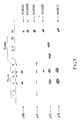
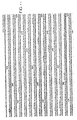
- the results are indicated in figure 1.
- the gel strips numbered from 1 to 6 were obtained from preparations labelled by 35 S-cystein.
- the strips numbered 7 to 10 show results observed on infected or uninfected lymphocyte preparations labelled with 35 S-methionine.
- Finally the strip M corresponds to the migration distances of the standard proteins identified above, whose molecular weights are recalled in the right hand portion of the figure.
- columns 7 to 10 show the specific protein p25 of LAV, labelled with 3S S-methionin. The same protein is absent on strips 8 to 10 corresponding to results obtained with a preparation originating from healthy lymphocytes.
- the virus according to the invention and the antigen according to the invention can be either precipitated by lectins, particularly concanavaline A, or fixed to a SEPHAROSE O- concanavaiine A column.
- lectins particularly concanavaline A
- SEPHAROSE O- concanavaiine A column Particularly the purification of the envelope glycoproteins can be carried out as follows. This fixation can particularly be carried out by contacting a lysate of the LAV virus dissolved in a suitable buffer with concanavaline-A bound to SEPHAROSE*.
- a suitable buffer has the following composition :
- the SEPHAROSE-concanavaline A is washed with a buffer of the same composition, except that the TRITON@ concentration is lowered to 0.1 %.
- the elution is then effected with an 0.2 M 0-methyi-a-D-mannopyranoside solution in the washing buffer.
- the protein may be further concentrated by immuno-precipitation with antibodies contained in the serums of patients infected with AIDS or with polyclonal antibodies obtained from a serum derived from an animal previously immunised against the "unaltered" virus according to the invention or the abovesaid glycoprotein.
- the protein can then be recovered by dissociation of the complex by a solution having an adequate content of ionic salt.
- the antibody preparation is itself immobilised in a manner known in itself on an insoluble support, for instance of the SEPHAROSE@B type.
- mice Groups of Balb/c mice from 6 to 8 weeks old mice were used. One group receives the virus carrying the abovesaid glycoprotein, another a purified glycoprotein gp110.
- the immunisation procedure identical for all mice, comprises injecting 10 mg of the antigenic preparation in the presence of Freund complete adjuvant at day 0, then again but in the presence of Freund incomplete adjuvant at day 14 and without adjuvant at days 28 and 42. The three first injections are made intraperitoneally, the fourth intravenously.
- the non secreting myeloma variant 5.53 P3 x 63 Ag8, resistant to azaguanine, itself derived from the MOPC-21 cell-line, is used.
- Fusion with immunised mouse splenocytes is carried out in the presence of polyethylene-glycol 4000 by the technique of FAZEKAS de st-GROTH and SCHEIDEGGER on the 45th day.
- the selection of the hybrids in RPMI 16-40 "HAT" medium is carried out in plates having 24 cups (known under the designation COSTAR) by resorting to the same culture techniques.
- the hybridomas producing antibodies of adequate specificity are then cloned in plates having 96 cups, in the presence of a "feeder" layer of syngenic thymocytes.
- the producing clones thus selected are then expanded in 24 cup plates, still in the presence of thymocytes.
- the clone is injected intraperitoneally into a balb / c mouse which had received an injection of PRISTANE 8 days previously and/or kept in liquid culture.
- the hybrids producing antibodies are determined by an ELISA test revealing mouse immunoglobulins in the supernatant liquors. From this first selection, supernatants are sought which have antibodies directed against viral constituents by means of an ELISA test revealing anti-LAV antibodies, or by immunofluorescence on the virus producing human cells. Finally the supernatant liquours are analysed by radio-immunoprecipitation of virus labelled with cystein and by the Western-Blot technique on viral preparation which permit the determination of the specificities of these anti-LAV antibodies.
- Cells obtained from the various fusions are placed under culture in 648 cups. Their microscopic examination shows that the majority of these cups contain a single hybrid clone capable of growing in a "HAT" selective medium. More than 50 % among them produce antibodies giving rise to a positive response under ELISA antivirus examination. The most representative fusions are tested by the Western-Blot technique and several of them are subcloned, taking into account their respective specificities reactivities in antivirus ELISA and their behaviours under the culturing conditions. Those hybrids which are more particularly selected are those which produce antibodies which selectively recognise the viral glycoprotein gp110 having a molecular weight of about 110 KD.
- the monoclonal antibodies obtained can themselves be employed to purify proteins containing an antigenic site also contained in gp110.
- the invention relates therefore also to these processes of purification as such.
- This process is advantageously applied to virus lysates or T lymphocyte lysates or other cells producing LAV or the like, when care has been taken to avoid the uncontrolled separation of gp110 during the purification procedure of the virus, prior to lysys thereof.
- the process can also be applied to any solution containing gp110 or a protein, polypeptide or glycoprotein comprising an antigenic site normally carried by the envelope protein and recognised by the monoclonal antibody.
- the monoclonal antibodies are advantageously immobilised on a solid support, preferably adapted to affinity chromatography operations.
- these monoclonal antibodies are fixed to an agarose lattice with three-dimensional cross-linking, marketed under the trade mark SEPHAROSE by the Swedish company PHARMACIA A.G., for example by the cyanogen bromide method.
- the invention therefore also relates to a process for separating the antigens concerned, which process comprises contacting a mixture of antigens, including those of interest (for instance a virus lysate or extract), with an affinity column bearing the above-said monoclonal antibodies, to selectively fix polypeptides, proteins or glycoproteins selectively recognized by said monoclonal antibodies, recovering the latter by dissociation of the antigen-antibody complex by means of a suitable buffer, particularly a solution of adequate ionic strength, for example of a salt, preferably ammonium acetate (which leaves no residue upon freeze drying of the preparation or a solution acidified to a pH 2-4 or to a glycine buffer at the same pH and recovering the eluted polypeptides, proteins or glycoproteins.
- a suitable buffer particularly a solution of adequate ionic strength, for example of a salt, preferably ammonium acetate (which leaves no residue upon freeze drying of the preparation or a solution acidified to a pH 2-4 or to a g
- the invention relates also to polypeptide fragments having lower molecular weights and carrying antigenic sites recognizable by the same monoclonal antibodies. It is clear to the specialist that the availabililty of monoclonal antibodies recognizing the gp110 glycoprotein gives also access to smaller peptide sequences or fragments containing the common antigenic site or epitope. Fragments of smaller sizes may be obtained by resorting to known techniques. For instance such a method comprises cleaving the original larger polypeptide by enzymes capable of cleaving it at specific sites.
- polypeptides or fragments of envelope antigens of the virus by cloning fragments excised from a cDNA constructed from genoimes of LAV variants.
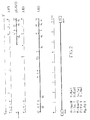
- Figures 2 and 3 are restriction maps of such a cDNA comprising a total of 9.1 to 9.2 kb.
- the presence of a characteristic site of an envelope antigen of the LAV virus or the like in any polypeptide expressed can be detected by any suitable immunochemical means.
- the invention relates more particularly to polypeptides encoded by cDNA fragments defined hereafter. It also relates to the nucleic acid fragments themselves, including a cDNA variant corresponding to a whole LAV retroviral genome, characterized by a series of restriction sites in the order hereafter (from the 5' end to the 3' end).
- the coordinates of the successive sites of the whole LAV genome are indicated hereafter too, with respect to the Hind III site (selected as of coordinate 1) which is located in the R region.
- the coordinates are estimated with an accuracy of ⁇ 200 bp :
- Another DNA variant according to this invention optionally contains an additional Hind III approximately at the 5 550 coordinate.
- the invention further relates to other preferred DNA fragments and polypeptide sequences (glycosylated or not glycosylated) which will be referred to hereafter.
- the whole recombinant phage DNA of clone XJ19 (disclosed in the earlier application) was sonicated according to the protocol of DEININGER (1993), Analytical Biochem. 129, 216. the DNA was repaired by a Klenow reaction for 12 hours at 16°C. The DNA was electrophoresed through 0.8 % agarose gel and DNA in the size range of 300-600 bp was cut out and electroeluted and precipitated.
- Resuspended DNA in 10 mM Tris, pH 8 ; 0,1 mM EDTA was ligated into M13mp8 RF DNA (cut by the restriction enzyme Smal and subsequently alkaline phosphated), using T4 DNA-and RNA-ligases (Maniatis T et al (1992) - Molecular cloning - Cold Spring Harbor Laboratory).
- An E. coli strain designated as TG1 was used for further study. This strain has the following genotype :
- XJ19 also designated as LAV-la
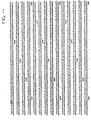
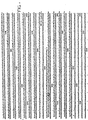
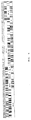
- figs. 4 to 4e The complete DNA sequence of XJ19 (also designated as LAV-la) is shown in figs. 4 to 4e.
- the sequence was reconstructed from the sequence of phage XJ19 insert. The numbering starts at the cap site which was located experimentally (see hereafter). Important genetic elements, major open reading frames and their predicted products are indicated together with the Hindlll cloning sites. The potential glycosylation sites in the env gene are overlined. The NH 2 -terminal sequence of p25 919 determined by protein microsequencing is boxed.
- Each nucleotide was sequenced on average 5.3 times : 85 % of the sequence was determined on both strands and the remainder sequenced at least twice from independent clones.
- the base composition is T, 22.2 % ; C, 17.8 % ; A, 35.8 % ; G, 244.2 % ; G + C, 42 %.
- the dinucleotide GC is greatly under represented (0,9 %) as common amongst eukaryotic sequences (Bird 1980).
- Figs. 5 and 6 provide a diagrammatized representation of the lengths of the successive open reading frames corresponding to the successive reading phases (also referred to by numbers “1", “2” and “3" appearing in the left handside part of fig. 5).
- the relative positions of these open reading frames (ORF) with respect to the nucleotidic structure of the LAV genome is referred to by the scale of numbers representative of the respective positions of the corresponding nucleotides in the DNA sequence.
- the vertical bars correspond to the positions of the corresponding stop codons.
- the following genes and DNA fragments can be distinguished on the different reading frames shown.
- the env gene and other genes are also referred to in the table hereafter.
- Figs. 4a-4c also show that the DNA fragment extending from nucleotidic position 1631 (starting with 5'TTT TTT ....3' to nucleotidic position 5162 thought to correspond to the pol gene.
- the polypeptidic structure of the corresponding polypeptides is deemed to be that corresponding to phase 1. It stops at position 4639 (end by 5'G GAT GAG GAT 3').
- the DNA sequence thought to code for envelope proteins is thought to extend from nucleotidic position 5746 (starting with 5' AAA GAG GAG A....3' ) up to nucleotidic position 8208 (ending by 7-8A ACT AAA GAA 3').
- Polypeptidic structures of sequences of the envelope protein correspond to those read according to the "phase 3" reading phase.
- the start of env transcription is thought to be at the level of the ATG codon at position 5767-5769.
- hydrophobic regions characteristic of the retroviral envelope proteins (Seiki et al., 1983) corresponding to a signal peptide (encoded by nucleotides 5815-5850 bp), a second region (7315-7350 bp) and a transmembrane segment (7831-7890 bp).
- the second hydrophobic region (7315-7350 bp) is preceeded by a stretch rich in Arg + Lys. It is possible that this represents a site of proteolytic cleavage, which by analogy with over retroviral proteins, would give an external envelope polypeptide and a membrane associated protein (Seiki et al., 1983, Kiyokawa et al., 1984).
- LAV envelope protein sequence A striking feature of the LAV envelope protein sequence is that the segment following the transmembrane segment is of unusual length (150 residues).
- the env protein shows no homology to any sequence in protein data banks.
- the small aminoacid motif common to the transmembrane proteins of all leukemogenic retroviruses (Cianciolo et al., 1984) is not present in lav env.
- the invention concerns more particularly the DNA sequences extending from nucleotides 567, up to nucleotide 8208 or 8350 deemed to encode the gp 110 (envelope glycoprotein of the LAV virus which has a molecular weight of about 110,000 daltons) beginning at about nucleotide as well as the polypeptidic backbone of the glycoprotein sequence which corresponds to that having an approximate molecular weight of 90,000 daltons and which is obtained by glycosidase treatment of gp110.
- gp 110 envelope glycoprotein of the LAV virus which has a molecular weight of about 110,000 daltons
- the invention further relates to the purified polypeptides which have the aminoacid structure (or polypeptidic backbone) of the gp110 and gp90 respectively, which correspond to the direct translation of the DNA sequences and fragments which have been defined more specifically hereabove (figs 4d and 4e).
- the invention further relates to polypeptides containing neutralizing epitopes.
- the locations of neutralizing epitopes are further apparent in fig. 4d.
- the initial protein product or polypeptide backbone of the env glycoprotein has a molecular weight in excess of 91,000. These groups are deemed to generally carry glycosylated groups.
- hydrophilic peptides are :
- the invention concerns more particularly all the DNA fragments which have been more specifically referred to hereabove and which correspond to open reading frames. It will be understood that the man skilled in the art will be able to obtain them all, for instance by cleaving an entire DNA corresponding to the complete genome of a LAV species, such as by cleavage by a partial or complete digestion thereof with a suitable restriction enzyme and by the subsequent recovery of the relevant fragments.
- the different DNAs disclosed above can be resorted to also as a source of suitable fragments.
- the techniques disclosed hereafter for the isolation of the fragments which were then included in the plasmids referred to hereabove and which were then used for the DNA sequencing can be used.
- the invention further refers more specifically to DNA recombinants, particularly modified vectors, including any of the preceding DNA sequences and adapted to transform corresponding microorganisms or cells, particularly eucaryotic cells such as yeasts, for instance saccharomyces cerevisiae, or higher eucaryotic cells, particularly cells of mammals, and to permit expression of said DNA sequences in the corresponding microorganisms or cells.
- eucaryotic cells such as yeasts, for instance saccharomyces cerevisiae, or higher eucaryotic cells, particularly cells of mammals, and to permit expression of said DNA sequences in the corresponding microorganisms or cells.
- the invention relates to such modified DNA recombinant vectors modified by the abovesaid DNA sequences and which are capable of transforming higher eucaryotic cells particularly mammalian cells.
- any of the abovesaid sequences are placed under the direct control of a promoter contained in said vectors and which is recognized by the polymerases of said cells, such that the first nucleotide codons expressed correspond to the first triplets of the above-defined DNA-sequences.
- this invention also relates to the corresponding DNA fragments which can be obtained from LAV genomas or corresponding cDNAs by any appropriate method.
- such a method comprises cleaving said LAV genomas or cDNAs by restriction enzymes preferably at the level of restriction sites surrounding said fragments and close to the opposite extremities respectively thereof, recovering and identifying the fragments sought according to sizes, if need be checking their restriction maps or nucleotide sequences (or by reaction with monoclonal antibodies specifically directed against epitopes carried by the polypeptides encoded by said DNA fragments), and further if need be, trimming the extremities of the fragment, for instance by an exonucleolytic enzyme such as Ba131, for the purpose of controlling the desired nucleotide-sequences of the extremities of said DNA fragments or, conversely, repairing said extremities with Klenow enzyme and possibly ligating the latter to synthetic polynucleotide fragments designed to permit the reconstitution of the nucleotide extremities of said fragments.
- restriction enzymes preferably at the level of restriction sites surrounding said fragments and close to the opposite extremities respectively thereof, recovering and identifying the fragments sought according
- Those fragments may then be inserted in any of said vectors for causing the expression of the corresponding polypeptide by the cell transformed therewith.
- the corresponding polypeptide can then be recovered from the transformed cells, if need be after lysis thereof, and purified, by methods such as electrophoresis. Needless to say that all conventionnal methods for performing these operations can be resorted to.
- the invention also relates more specifically to cloned probes which can be made starting from any DNA fragment according to this invention, thus to recombinant DNAs containing such fragments, particularly any plasmids amplifiable in procaryotic or eucaryotic cells and carrying said fragments.
- LAV virion RNA may be detected directly in the blood, body fluids and blood products (e.g. of the antihemophylic factors such as Factor VIII concentrates) and vaccines, i.e. hepatitis B vaccine. It has already been shown that whole virus can be detected in culture supernatants of LAV producing cells.
- a suitable method for achieving that detection comprises immobilizing virus onto a support, e.g. nitrocellulose filters, etc., disrupting the virion and hybridizing with labelled (radiolabelled or "cold" fluorescent- or enzyme-labelled) probes.
- labelled radiolabelled or "cold" fluorescent- or enzyme-labelled
- Probes according to the invention can also be used for rapid screening of genomic DNA derived from the tissue of patients with LAV related symptoms, to see if the proviral DNA or RNA is present in host tissue and other tissues.
- a method which can be used for such screening comprises the following steps : extraction of DNA from tissue, restriction enzyme cleavage of said DNA, electrophoresis of the fragments and Southern blotting of genomic DNA from tissues, subsequent hybridization with labelled cloned LAV provival DNA. Hybridization in situ can also be used.
- Lymphatic fluids and tissues and other non-lymphatic tissues of humans, primates and other mammalian species can also be screened to see if other evolutionnary related retrovirus exist.
- the methods referred to hereabove can be used, although hybridization and washings would be done under non stringent conditions.
- the DNAs or DNA fragments according to the invention can be used also for achieving the expression of LAV viral antigens for diagnostic purposes.
- the invention relates generally to the polypeptides themselves, whether synthetized chemically isolated from viral preparation or expressed by the different DNAs of the inventions, particularly by the ORFs or fragments thereof, in appropriate hosts, particularly procaryotic or eucaryotic hosts, after transformation thereof with a suitable vector previously modified by the corresonding DNAs.
- the invention also relates to any of the polypeptide fragments (or molecules, particularly glycoproteins having the same polypeptidic backbone as the polypeptides mentioned hereabove) bearing an epitope characteristic of a LAV protein or glycoprotein, which polypeptide or molecule then has N-terminal and C-terminal extremities respectively either free or, independently from each other, covalently bond to aminoacids other than those which are normally associated with them in the larger polypeptides or glycoproteins of the LAV virus, which last mentioned aminoacids are then free or belong to another polypeptidic sequence.
- the invention relates to hybrid polypeptides containing any of the epitope-bearing-polypeptides which have been defined more specifically hereabove, recombined with other polypeptides fragments normally foreign to the LAV proteins, having sizes sufficient to provide for an increased immunogenicity of the epitope-bearing-polypeptide yet, said foreign polypeptide fragments either being immunogenically inert or not interfering with the immunogenic properties of the epitope-bearing-polypeptide.
- glycoproteins, proteins and polypeptides are useful in processes for the detection of the presence of anti-LAV antibodies in biological media, particularly biological fluids such as sera from man or animal, particularly with a view of possibly diagnosing LAS or AIDS.
- the invention relates to an in vitro process of diagnosis making use of an envelope glycoprotein (or of a polypeptide bearing an epitope of this glycoprotein) for the detection of anti-LAV antibodies in the serums of persons who carry them.
- Other polypeptides - particular those carrying an epitope of a core protein - can be used too.
- the labelling of the anti-immunoglobulin antibodies is achieved by an enzyme selected from among those which are capable of hydrolysing a substrate, which substrate undergoes a modification of its radiation-absorption, at least within a predetermined band of wavelenghts.
- the detection of the substrate preferably comparatively with respect to a control, then provides a measurement of the potential risks or of the effective presence of the disease.
- trations may be determinations by immunofluorescence or direct or indirect immunoenzymatic determinations. Quantitative titrations of antibodies on the serums studied can be made.
- kits themselves for the in vitro detection of antibodies against the LAV virus, which kits comprise any of the polypeptides identified herein, and all the biological and chemical reagents, as well as equipment, necessary for peforming diagnostic assays.
- kits comprise all reagents required for carrying out ELISA assays.
- preferred kits will include, in addition to any of said polypeptides, suitable buffers and anti-human immunoglobulins, which anti-human immunoglobulins are labelled either by an immunofluorescent molecule or by an enzyme.
- kits also comprise a substrate hydrolysable by the enzyme and providing a signal, particularly modified absorption of a radiation, at least in a determined wavelength, which signal is then indicative of the presence of antibody in the biological fluid to be assayed with said kit.
- the invention also relates to vaccine compositions whose active principle is to be constituted by any of the antigens, i.e. the hereabove disclosed polypeptides whole antigens, particularly the purified gp110 or immunogenic fragments thereof, fusion polypeptides or oligopeptides in association with a suitable pharmaceutical or physiologically acceptable carrier.
- antigens i.e. the hereabove disclosed polypeptides whole antigens, particularly the purified gp110 or immunogenic fragments thereof, fusion polypeptides or oligopeptides in association with a suitable pharmaceutical or physiologically acceptable carrier.
- a preferred active principle is the gp110 immunogen.
- suitable dosages of the vaccine compositions are those which are effective to elicit antibodies in vivo, in the host, particularly a human host. Suitable doses range from 10 to 500 micrograms of polypeptide, protein or glycoprotein per kg, for instance 50 to 100 micrograms per kg.
- the different peptides according to this invention can also be used themselves for the production of antibodies, preferably monoclonal antibodies specific of the different peptides respectively.
- monoclonal antibodies specific of the different peptides respectively.
- hybridomas secreting said monoclonal antibodies conventional production and screening methods are used.
- monoclonal antibodies, which themselves are part of the invention then provide very useful tools for the identification and even determination of relative proportions of the different polypeptides or proteins in biological samples, particularly human samples containing LAV or related viruses.
- the invention further relates to the hosts (procaryotic or eucaryotic cells) which are transformed by the above mentioned recombinants and which are capable of expressing said DNA fragments.
- the invention also concerns vectors for the transformation of eucaryotic cells of human origin, particularly lymphocytes, the polymerases of which are capable of recognizing the LTRs of LAV.
- vectors are characterized by the presence of a LAV LTR therein, said LTR being then active as a promoter enabling the efficient transcription and translation in a suitable host of a DNA insert coding for a determined protein placed under its controls.
- the invention extends to all variants of genomes and corresponding DNA fragments (ORFs) having substantially equivalent properties, all of said genomes belonging to retroviruses which can be considered as equivalents of LAV.
- Visna virus DNA discovery of a novel gapped structure. Virology 113, 573-583.
- LAV lymphadenopathy associated virus
- Bovine leukemia virus Unique structural features of its long terminal repeats and its evolutionary relationship to human T-cell leukemia virus. Proc. Natl. Acad. Sci. USA 81, 4741-4745.
Landscapes
- Health & Medical Sciences (AREA)
- Life Sciences & Earth Sciences (AREA)
- Chemical & Material Sciences (AREA)
- Organic Chemistry (AREA)
- Virology (AREA)
- Engineering & Computer Science (AREA)
- Immunology (AREA)
- Molecular Biology (AREA)
- General Health & Medical Sciences (AREA)
- Proteomics, Peptides & Aminoacids (AREA)
- Wood Science & Technology (AREA)
- Zoology (AREA)
- Biochemistry (AREA)
- Medicinal Chemistry (AREA)
- Genetics & Genomics (AREA)
- Biophysics (AREA)
- Biotechnology (AREA)
- Microbiology (AREA)
- Analytical Chemistry (AREA)
- General Engineering & Computer Science (AREA)
- Bioinformatics & Cheminformatics (AREA)
- Chemical Kinetics & Catalysis (AREA)
- General Chemical & Material Sciences (AREA)
- Physics & Mathematics (AREA)
- Communicable Diseases (AREA)
- Urology & Nephrology (AREA)
- Oncology (AREA)
- AIDS & HIV (AREA)
- Nuclear Medicine, Radiotherapy & Molecular Imaging (AREA)
- Pharmacology & Pharmacy (AREA)
- Animal Behavior & Ethology (AREA)
- Public Health (AREA)
- Veterinary Medicine (AREA)
- Hematology (AREA)
- Biomedical Technology (AREA)
- Gastroenterology & Hepatology (AREA)
- Tropical Medicine & Parasitology (AREA)
- Food Science & Technology (AREA)
- General Physics & Mathematics (AREA)
- Pathology (AREA)
Claims (25)
Priority Applications (4)
| Application Number | Priority Date | Filing Date | Title |
|---|---|---|---|
| EP02017001A EP1279678B1 (de) | 1984-10-18 | 1985-10-18 | Gag-Antigen und dessen Verwendung zum Nachweis von LAV-Infektion, sowie in immunogenen Zusammensetzungen |
| EP02008713A EP1231271B2 (de) | 1984-10-18 | 1985-10-18 | DNS-Fragmente des GAG-Gens von LAV |
| EP91113062A EP0462627B2 (de) | 1984-10-18 | 1985-10-18 | LAV-Antigene und -Peptide |
| AT85905513T ATE64601T1 (de) | 1984-10-18 | 1985-10-18 | Lymphadenopathie-assoziierte huellenantigene und deren verwendungen. |
Applications Claiming Priority (7)
| Application Number | Priority Date | Filing Date | Title |
|---|---|---|---|
| FR8416013A FR2571968B1 (fr) | 1984-10-18 | 1984-10-18 | Virus purifie des lymphadenopathies et du syndrome d'immuno-depression acquise et antigenes d'enveloppe de ce virus, procede d'obtention de ce virus et de ces antigenes d'enveloppe de ce virus, applications de ce virus ou de ces antigenes a la preparation de compositions immunogenes ou pour le diagnostic des susdites affections. |
| FR8416013 | 1984-10-18 | ||
| GB848429099A GB8429099D0 (en) | 1984-11-16 | 1984-11-16 | Closed dna sequences |
| GB8429099 | 1984-11-16 | ||
| GB8501473 | 1985-01-21 | ||
| GB858501473A GB8501473D0 (en) | 1985-01-21 | 1985-01-21 | Cloned dna sequences |
| PCT/EP1985/000548 WO1986002383A1 (en) | 1984-10-18 | 1985-10-18 | Envelope antigens of lymphadenopathy associated virus and their applications |
Related Child Applications (3)
| Application Number | Title | Priority Date | Filing Date |
|---|---|---|---|
| EP90105189A Division EP0387914B1 (de) | 1984-10-18 | 1985-10-18 | Hüllenantigene vom menschlichen Immunodefizienz-Virus und deren Verwendungen |
| EP90105189.6 Division-Into | 1990-03-20 | ||
| EP90105190.4 Division-Into | 1990-03-20 |
Publications (3)
| Publication Number | Publication Date |
|---|---|
| EP0201540A1 EP0201540A1 (de) | 1986-11-20 |
| EP0201540B1 true EP0201540B1 (de) | 1991-06-19 |
| EP0201540B2 EP0201540B2 (de) | 2001-10-31 |
Family
ID=27251244
Family Applications (5)
| Application Number | Title | Priority Date | Filing Date |
|---|---|---|---|
| EP91113062A Expired - Lifetime EP0462627B2 (de) | 1984-10-18 | 1985-10-18 | LAV-Antigene und -Peptide |
| EP85905513A Expired - Lifetime EP0201540B2 (de) | 1984-10-18 | 1985-10-18 | Lymphadenopathie-assoziierte hüllenantigene und deren verwendungen |
| EP02017001A Expired - Lifetime EP1279678B1 (de) | 1984-10-18 | 1985-10-18 | Gag-Antigen und dessen Verwendung zum Nachweis von LAV-Infektion, sowie in immunogenen Zusammensetzungen |
| EP90105189A Expired - Lifetime EP0387914B1 (de) | 1984-10-18 | 1985-10-18 | Hüllenantigene vom menschlichen Immunodefizienz-Virus und deren Verwendungen |
| EP90105190A Expired - Lifetime EP0387915B1 (de) | 1984-10-18 | 1985-10-18 | F Antigene vom menschlichen Immunodefizienz-Virus und deren Verwendungen |
Family Applications Before (1)
| Application Number | Title | Priority Date | Filing Date |
|---|---|---|---|
| EP91113062A Expired - Lifetime EP0462627B2 (de) | 1984-10-18 | 1985-10-18 | LAV-Antigene und -Peptide |
Family Applications After (3)
| Application Number | Title | Priority Date | Filing Date |
|---|---|---|---|
| EP02017001A Expired - Lifetime EP1279678B1 (de) | 1984-10-18 | 1985-10-18 | Gag-Antigen und dessen Verwendung zum Nachweis von LAV-Infektion, sowie in immunogenen Zusammensetzungen |
| EP90105189A Expired - Lifetime EP0387914B1 (de) | 1984-10-18 | 1985-10-18 | Hüllenantigene vom menschlichen Immunodefizienz-Virus und deren Verwendungen |
| EP90105190A Expired - Lifetime EP0387915B1 (de) | 1984-10-18 | 1985-10-18 | F Antigene vom menschlichen Immunodefizienz-Virus und deren Verwendungen |
Country Status (15)
| Country | Link |
|---|---|
| EP (5) | EP0462627B2 (de) |
| JP (4) | JP2752329B2 (de) |
| KR (1) | KR930000189B1 (de) |
| AT (6) | ATE250083T1 (de) |
| AU (1) | AU603543B2 (de) |
| CA (1) | CA1341620C (de) |
| DE (7) | DE3588254T2 (de) |
| DK (2) | DK174910B1 (de) |
| ES (3) | ES8705522A1 (de) |
| GR (1) | GR852522B (de) |
| HK (1) | HK1050215B (de) |
| IE (1) | IE64006B1 (de) |
| NZ (1) | NZ230372A (de) |
| PT (1) | PT81338B (de) |
| WO (1) | WO1986002383A1 (de) |
Families Citing this family (89)
| Publication number | Priority date | Publication date | Assignee | Title |
|---|---|---|---|---|
| GB8423659D0 (en) * | 1984-09-19 | 1984-10-24 | Pasteur Institut | Cloned dna sequences |
| US5610035A (en) * | 1983-12-05 | 1997-03-11 | Institut Pasteur Centre National De La Recherche Scientific | Methods for the preparation of hybridomas producing lymphadenopathy-associated virus (LAV) GP110-specific monoclonal antibodies and methods for the purification of GP110 employing said monoclonal antibodies |
| US9328391B1 (en) | 1984-08-22 | 2016-05-03 | The United States Of America As Represented By The Secretary, Department Of Health And Human Services | Cloning and expression of HIV-1 DNA |
| US7393949B1 (en) * | 1987-12-24 | 2008-07-01 | Novartis Vaccines And Diagnostics, Inc. | Human immunodeficiency virus (HIV) nucleotide sequences |
| CA1341423C (en) | 1984-10-31 | 2003-03-04 | Paul A. Luciw | Recombinant proteins of viruses associated with lymphadenopathy syndrome and/or acquired immune deficiency syndrome |
| US7273695B1 (en) | 1984-10-31 | 2007-09-25 | Novartis Vaccines And Diagnostics, Inc. | HIV immunoassays using synthetic envelope polypeptides |
| US7285271B1 (en) | 1984-10-31 | 2007-10-23 | Novartis Vaccines And Diagnostics, Inc. | Antigenic composition comprising an HIV gag or env polypeptide |
| US4725669A (en) * | 1984-11-09 | 1988-02-16 | President And Fellows Of Harvard College | Assay for detecting infection by human T-cell lymphotropic virus-III |
| US6534285B1 (en) | 1984-12-24 | 2003-03-18 | Genentech, Inc. | Molecularly cloned acquired immunodeficiency syndrome polypeptides and their methods of use |
| JP2869063B2 (ja) * | 1985-04-08 | 1999-03-10 | ジエネテイツク システムズ コ−ポレイシヨン | LAVに対する抗体と免疫的に反応性であるgagによりコードされたペプチドの発現及び使用 |
| FI861626A7 (fi) * | 1985-04-19 | 1986-10-20 | Hoffmann La Roche | Foervaervat immunbristsyndrom (aids) -relaterat viralt rekombinant hoeljeprotein samt ett testfoerfarande foer aids. |
| US5773210A (en) * | 1985-04-19 | 1998-06-30 | The United States Of America As Represented By The Department Of Health And Human Services | Acquired immune deficiency syndrome (AIDS) viral envelope protein and method of testing for AIDS |
| KR910002374B1 (ko) | 1985-04-29 | 1991-04-20 | 제네틱 시스템즈 코포레이션 | Aids 관련질병의 검출을 위한 합성항원 |
| GR862412B (en) * | 1985-09-25 | 1987-01-23 | Oncogen | Vaccines and immuinoassays for acquired immune deficiency syndrome |
| FR2593519B1 (fr) * | 1985-09-25 | 1994-01-07 | Oncogen | Vaccin contre le syndrome immunodeficitaire acquis et intermediaires pour la preparation de ce vaccin |
| GB8525615D0 (en) * | 1985-10-17 | 1985-11-20 | Hoffmann La Roche | Polypeptides |
| WO1987002775A1 (en) * | 1985-10-24 | 1987-05-07 | Southwest Foundation For Biomedical Research | Synthetic peptides and use for diagnosis and vaccination for aids and arc |
| DE3760912D1 (en) * | 1986-01-22 | 1989-12-07 | Pasteur Institut | Retrovirus of the type hiv-2 capable of inducing aids, and the antigenic and nucleic acid components thereof |
| US6514691B1 (en) | 1986-01-22 | 2003-02-04 | Institut Pasteur | Peptides of human immunodeficiency virus type 2 (HIV-2), antibodies against peptides of HIV-2, and methods and kits for detecting HIV-2 |
| US4839288A (en) * | 1986-01-22 | 1989-06-13 | Institut Pasteur | Retrovirus capable of causing AIDS, antigens obtained from this retrovirus and corresponding antibodies and their application for diagnostic purposes |
| US4734362A (en) * | 1986-02-03 | 1988-03-29 | Cambridge Bioscience Corporation | Process for purifying recombinant proteins, and products thereof |
| US4772547A (en) * | 1986-02-03 | 1988-09-20 | Hoffmann-La Roche Inc. | HTLV-III envelope peptides |
| US6130314A (en) * | 1986-03-26 | 2000-10-10 | Genetic Systems Corporation | Synthetic antigen for the detection of AIDS-related disease |
| US5075211A (en) * | 1986-03-26 | 1991-12-24 | Genetic Systems Corporation | Synthetic antigen for the detection of AIDS-related disease |
| US4879212A (en) * | 1986-04-02 | 1989-11-07 | United Biomedical Inc. | Peptide composition and method for the detection of antibodies to HTLV-III |
| US4943627A (en) * | 1986-06-12 | 1990-07-24 | Biogen, Inc. | Peptides involved in the pathogenesis of HIV infection |
| JPH01501547A (ja) * | 1986-06-12 | 1989-06-01 | バイオジェン ナームローズ ベンノットシャップ | Hiv感染の病因に関するペプチド |
| US5017688A (en) * | 1986-06-12 | 1991-05-21 | Biogen, Inc. | Peptides involved in the pathogenesis of HIV infection |
| DE3722272A1 (de) * | 1986-07-08 | 1988-01-21 | Bio Rad Laboratories | Differenzierung des krankheitszustandes bei aids-antikoerpertests |
| EP0255190A3 (de) * | 1986-08-01 | 1990-08-29 | Repligen Corporation | Rekombinante Polypeptide und ihre Verwendungen sowie Test für den AIDS-Virus |
| NZ221440A (en) * | 1986-08-20 | 1991-11-26 | Genetic Systems Corp | Composition containing monoclonal antibodies/peptides useful in treating and diagnosing hiv infections |
| US5166050A (en) * | 1986-08-20 | 1992-11-24 | Bristol-Myers Squibb Company | Monoclonal antibodies and peptides useful in treating and diagnosing HIV infections |
| ATE107861T1 (de) * | 1986-09-19 | 1994-07-15 | Oncogen | Verwendung von aktivierten t-lymphozyten zur vorbereitung einer pharmazeutischen zusammensetzung zur behandlung von aids. |
| US5976541A (en) * | 1988-01-26 | 1999-11-02 | The United States Of America As Represented By The Department Of Health And Human Services | Potent peptide for stimulation of cytotoxic T lymphocytes specific for the HIV-1 envelope |
| WO1988005051A1 (en) * | 1986-12-30 | 1988-07-14 | United States Of America, Represented By The Unite | Synthetic peptides which induce cellular immunity of the aids virus and aids viral proteins |
| ES2104556T3 (es) * | 1987-01-16 | 1997-10-16 | Pasteur Institut | Peptidos que tienen propiedades inmunologicas de hiv-2. |
| FR2610632B1 (fr) * | 1987-02-11 | 1990-12-21 | Pasteur Institut | Peptides caracteristiques des retrovirus d'immunodeficience humaine (virus hiv) leurs applications au diagnostic des infections dues a certains de ces virus et, le cas echeant, a la vaccination contre le sida |
| FR2614025B1 (fr) * | 1987-04-15 | 1990-05-18 | Pasteur Institut | Peptides susceptibles d'etre reconnus par des anticorps induits contre des retrovirus d'immunodeficience humaine (virus hiv) leurs applications au diagnostic des infections dues a certains de ces virus et, le cas echeant, a la vaccination contre le sida |
| ES2102347T3 (es) * | 1987-02-20 | 1997-08-01 | Genentech Inc | Metodos y composiciones para la utilizacion de polipeptidos env y anticuerpos anti-env de hiv. |
| NO881151L (no) * | 1987-03-27 | 1988-09-28 | Syntello Ab | Syntetisk hiv-1-antigen. |
| AU1711888A (en) * | 1987-04-24 | 1988-12-02 | Biogen, Inc. | Immunotherapeutic methods and compositions |
| ATE122237T1 (de) * | 1987-05-29 | 1995-05-15 | Tanox Biosystems Inc | Hiv-1 neutralisierende monoklonale antikörper. |
| US6657050B1 (en) | 1987-05-29 | 2003-12-02 | Tanox, Inc. | Chimeric viral-neutralizing immunoglobulins |
| US5834599A (en) * | 1987-05-29 | 1998-11-10 | Tanox Biosystems, Inc. | Immunoconjugates which neutralize HIV-1 infection |
| US5981278A (en) * | 1987-05-29 | 1999-11-09 | Tanox, Inc. | Chimeric monoclonal antibodies which neutralize HIV-1 infection and their applications in therapy and prevention for AIDS |
| FI872409A0 (fi) * | 1987-05-29 | 1987-05-29 | Labsystems Oy | Foerfarande foer detektering av hiv-1 motkroppar. |
| GB8714802D0 (en) * | 1987-06-24 | 1987-07-29 | Proteus Biotech Ltd | Synthetic polypeptides |
| NL8702403A (nl) * | 1987-10-09 | 1989-05-01 | Stichting Centr Diergeneeskund | Oligopeptiden en gebruik daarvan voor diagnostische en vaccinatiedoeleinden voor aids en arc. |
| ATE128716T1 (de) * | 1987-11-24 | 1995-10-15 | Abbott Lab | Hiv-peptide und methoden für den nachweis von hiv. |
| SE8705197D0 (sv) * | 1987-12-30 | 1987-12-30 | Jonas Blomberg | New peptides, two diagnostic methods using the peptides and a medicament based on the peptides |
| WO1989007112A1 (en) * | 1988-01-26 | 1989-08-10 | The United States Of America, As Represented By Th | A synthetic antigen evoking anti-hiv response |
| US5820865A (en) * | 1988-01-26 | 1998-10-13 | The United States Of America As Represented By The Department Of Health And Human Services | Method to induce cytotoxic T Lymphocytes specific for a broad array of HIV-1 isolates using hybrid synthetic peptides |
| US5763160A (en) * | 1988-02-12 | 1998-06-09 | United Biomedical, Inc. | Synthetic peptides and process of using same for the detection of antibodies to human immunodeficiency virus (HIV) gp120 envelope protein, diagnosis of AIDS and pre-AIDS conditions and as vaccines |
| CA1341285C (en) * | 1988-02-12 | 2001-08-14 | Chang Yi Wang | Synthetic peptides for the detection of antibodies to hiv gp120 envelope protein for diagnosis of aids and pre-aids conditions and as vaccines |
| EP0339504A3 (de) * | 1988-04-26 | 1990-09-12 | The Du Pont Merck Pharmaceutical Company | Menschliches immunoinsuffizientes Virus (HIV) env-codiertes Peptid, welches im Stande ist, die HIV hemmenden Antikörper bei Säugetieren hervorzurufen |
| US5562905A (en) * | 1988-04-26 | 1996-10-08 | E. I. Du Pont De Nemours And Company | Human immunodeficiency virus (hiv) env-coded peptide capable of eliciting hiv-inhibiting antibodies in mammals |
| FR2632310B1 (fr) * | 1988-06-06 | 1992-04-10 | Pasteur Institut | Peptides ayant des proprietes protectrices d'un virus pathogene du type hiv dans des cellules sensibles |
| EP0345375B1 (de) * | 1988-06-09 | 1995-03-22 | N.V. Innogenetics S.A. | HIV-3-Retrovirus und seine Verwendung |
| GB2220939B (en) * | 1988-06-10 | 1992-02-26 | Medical Res Council | Peptide fragments of hiv and their use in vaccines and diagnosis |
| US5185147A (en) * | 1988-08-19 | 1993-02-09 | Cellular Products, Inc. | Short polypeptide sequences useful in the production and detection of antibodies against human immunodeficiency virus |
| US5731189A (en) * | 1989-02-28 | 1998-03-24 | New York University | Human monoclonal antibodies to human immunodeficiency virus |
| WO1990009805A1 (en) * | 1989-02-28 | 1990-09-07 | New York University | Human monoclonal antibodies to human immunodeficiency virus |
| GB8910145D0 (en) * | 1989-05-03 | 1989-06-21 | Connaught Lab | Synthetic peptides for an hiv-1 vaccine |
| FR2647810B1 (fr) * | 1989-06-02 | 1994-07-22 | Pasteur Institut | Amorces oligonucleotidiques pour l'amplification du genome des retrovirus du type hiv-2 et siv, et leurs applications au diagnostic in vitro des infections dues a ces virus |
| EP1715064B1 (de) * | 1989-06-02 | 2009-02-25 | Institut Pasteur | Nukleotid-Sequenzen von HIV-1, HIV-2 und SIV Retrovirusgenomen, ihre Verwendung zur Amplifizierung von pol-Sequenzen dieser Retroviren und zur In Vitro Diagnostik von diesen Viren verursachten Infektionen |
| US7022814B1 (en) | 1992-01-21 | 2006-04-04 | Institut Pasteur And Institut National De La Sante Et De La Recherche Medicale | Nucleotide sequences derived from the genome of retroviruses of the HIV-1, HIV-2 and SIV type, and their uses in particular for the amplification of the genomes of these retroviruses and for the in vitro diagnosis of the diseases due to these viruses |
| US6165710A (en) * | 1989-10-23 | 2000-12-26 | Robinson; James E. | Method for immobilizing viral glycoproteins for use in solid-phase immunoassays |
| US6248574B1 (en) | 1989-12-13 | 2001-06-19 | Avigdor Shaffermann | Polypeptides selectively reactive with antibodies against human immunodeficiency virus and vaccines comprising the polypeptides |
| US5480967A (en) * | 1990-01-05 | 1996-01-02 | United Biomedical, Inc. | HIV-1 core protein fragments |
| SE468168B (sv) * | 1990-02-20 | 1992-11-16 | Replico Medical Ab | Hiv-1, p24 peptider, diagnostiska antigener och foerfarande foer saerskiljande diagnostik av preliminaert hiv-1 positiva serumprov |
| EP0494317B2 (de) | 1990-06-15 | 2000-12-27 | Innogenetics N.V. | SIV cpz-ant Retrovirus und seine Anwendungen |
| US5346989A (en) * | 1990-08-22 | 1994-09-13 | Syntello Vaccine Development Kb | Peptides for use in induction of T cell activation against HIV-1 |
| AU650911B2 (en) * | 1990-09-27 | 1994-07-07 | Syntello Vaccine Development Kb | Peptides for use in vaccination and induction of neutralizing antibodies against human immunodeficiency virus |
| US5840313A (en) * | 1990-09-27 | 1998-11-24 | Syntello Vaccine Development Kb | Peptides for use in vaccination and induction of neutralizing antibodies against human immunodeficiency virus |
| WO1992006199A2 (fr) * | 1990-09-27 | 1992-04-16 | Institut Pasteur | Peptides inducteurs d'anticorps inhibant des retrovirus du type hiv et anticorps diriges contre ces peptides |
| US5871746A (en) * | 1990-12-18 | 1999-02-16 | Institut National De La Sainte Et De La Recherche Medicale (Inserm) | Cytotoxic T lymphocyte-inducing lipopeptides and use as vaccines |
| EP0495465A3 (en) * | 1991-01-15 | 1992-12-16 | Coulston International Corporation | Immuno-enzymatic test for the detection of viral antibody |
| WO1992021377A1 (en) * | 1991-06-03 | 1992-12-10 | Syntello Inc. | Peptides for use in induction of t cell activation against hiv-1 |
| FR2677364A1 (fr) * | 1991-06-05 | 1992-12-11 | Pasteur Institut | Sequences peptidiques de la glycoproteine externe d'enveloppe du retrovirus hiv-1. |
| FR2677654B1 (fr) * | 1991-06-17 | 1995-11-17 | Pasteur Merieux Serums Vacc | Composes a effet immunogene anti-cytokine, a effet immunogene anticytostatique ou a effet vaccinal anti-infection a hiv. |
| US6479055B1 (en) | 1993-06-07 | 2002-11-12 | Trimeris, Inc. | Methods for inhibition of membrane fusion-associated events, including respiratory syncytial virus transmission |
| DE4405810A1 (de) | 1994-02-23 | 1995-08-24 | Behringwerke Ag | Von einem Retrovirus aus der HIV-Gruppe abgeleitete Peptide und deren Verwendung |
| WO1997014436A1 (en) * | 1995-10-20 | 1997-04-24 | Duke University | Synthetic vaccine for protection against human immunodeficiency virus infection |
| FR2756843B1 (fr) * | 1996-12-09 | 1999-01-22 | Inst Nat Sante Rech Med | Souches de vih-1 non-m non-o, fragments et applications |
| FR2767337B1 (fr) | 1997-08-14 | 2002-07-05 | Pasteur Institut | Sequences nucleiques de polypeptides exportes de mycobacteri es, vecteurs les comprenant et applications au diagnostic et a la prevention de la tuberculose |
| IL150961A0 (en) * | 2000-02-04 | 2003-02-12 | Univ Duke | Human immunodeficiency virus vaccine |
| US20030044771A1 (en) * | 2001-08-30 | 2003-03-06 | Anderson Norman G. | Method for discovering new infectious particles |
| ES2346043T3 (es) | 2002-04-05 | 2010-10-08 | Institut Pasteur | Identificacion de las regiones rd1 y rd5 asociadas con la virulencia que permite el desarrollo de vacunas mejoradas de m. bovis bcg y m. microti. |
| ES2366185T3 (es) * | 2003-04-11 | 2011-10-18 | Institut Pasteur | Vacunas de péptidos sintéticas para vih: el epítopo de cbd como un inmunógeno eficaz para provocar anticuerpos ampliamente neutralizantes contra el vih. |
Family Cites Families (12)
| Publication number | Priority date | Publication date | Assignee | Title |
|---|---|---|---|---|
| JPS59104325A (ja) * | 1982-12-07 | 1984-06-16 | Japan Found Cancer | ヒト白血病ウイルスの遺伝子rnaに相補性を示すdna |
| EP0115459A3 (de) * | 1983-01-26 | 1986-11-20 | University Of Medicine And Dentistry Of New Jersey | Haematologische Voraussage von Sepsis und anderen erkrankten Zuständen |
| JP2780020B2 (ja) * | 1983-04-27 | 1998-07-23 | プレジデント アンド フェロウズ オブ ハーバード カレッジ | ヒトt細胞白血病ウイルス抗原及び該抗原を用いる検出方法 |
| GB8423659D0 (en) * | 1984-09-19 | 1984-10-24 | Pasteur Institut | Cloned dna sequences |
| US4520113A (en) * | 1984-04-23 | 1985-05-28 | The United States Of America As Represented By The Secretary Of The Department Of Health And Human Services | Serological detection of antibodies to HTLV-III in sera of patients with AIDS and pre-AIDS conditions |
| JPS60226658A (ja) * | 1984-04-25 | 1985-11-11 | Matsushita Electric Works Ltd | 加熱器 |
| JPS60246102A (ja) * | 1984-05-21 | 1985-12-05 | Matsushita Electric Ind Co Ltd | 分布結合回路 |
| IL76082A (en) | 1984-08-22 | 1991-07-18 | Us Health | Molecular clones of the genome of htlv-iii and a process for the preparation thereof |
| US9328391B1 (en) | 1984-08-22 | 2016-05-03 | The United States Of America As Represented By The Secretary, Department Of Health And Human Services | Cloning and expression of HIV-1 DNA |
| JPS6226300A (ja) * | 1984-10-10 | 1987-02-04 | セントコ−・インコ−ポレ−テツド | Htlv−3dnaのクロ−ニングおよび発現 |
| CA1341423C (en) * | 1984-10-31 | 2003-03-04 | Paul A. Luciw | Recombinant proteins of viruses associated with lymphadenopathy syndrome and/or acquired immune deficiency syndrome |
| AU600658B2 (en) | 1984-12-24 | 1990-08-23 | Genentech Inc. | Molecularly cloned acquired immunodeficiency syndrome polypeptides and their methods of use |
-
1985
- 1985-10-18 WO PCT/EP1985/000548 patent/WO1986002383A1/en not_active Ceased
- 1985-10-18 AT AT91113062T patent/ATE250083T1/de not_active IP Right Cessation
- 1985-10-18 EP EP91113062A patent/EP0462627B2/de not_active Expired - Lifetime
- 1985-10-18 KR KR1019860700374A patent/KR930000189B1/ko not_active Expired - Lifetime
- 1985-10-18 AU AU50617/85A patent/AU603543B2/en not_active Expired
- 1985-10-18 AT AT90105189T patent/ATE92502T1/de not_active IP Right Cessation
- 1985-10-18 AT AT02017001T patent/ATE373010T1/de not_active IP Right Cessation
- 1985-10-18 IE IE258785A patent/IE64006B1/en not_active IP Right Cessation
- 1985-10-18 EP EP85905513A patent/EP0201540B2/de not_active Expired - Lifetime
- 1985-10-18 DE DE3588254T patent/DE3588254T2/de not_active Expired - Lifetime
- 1985-10-18 DE DE90105189T patent/DE3587512T2/de not_active Expired - Lifetime
- 1985-10-18 AT AT02008713T patent/ATE286132T1/de not_active IP Right Cessation
- 1985-10-18 DE DE200512000039 patent/DE122005000039I1/de active Pending
- 1985-10-18 AT AT90105190T patent/ATE86636T1/de not_active IP Right Cessation
- 1985-10-18 EP EP02017001A patent/EP1279678B1/de not_active Expired - Lifetime
- 1985-10-18 ES ES548048A patent/ES8705522A1/es not_active Expired
- 1985-10-18 DE DE3588248T patent/DE3588248T2/de not_active Expired - Lifetime
- 1985-10-18 DE DE8585905513T patent/DE3583293D1/de not_active Expired - Lifetime
- 1985-10-18 NZ NZ230372A patent/NZ230372A/en unknown
- 1985-10-18 EP EP90105189A patent/EP0387914B1/de not_active Expired - Lifetime
- 1985-10-18 DE DE3588251T patent/DE3588251T2/de not_active Expired - Lifetime
- 1985-10-18 AT AT85905513T patent/ATE64601T1/de not_active IP Right Cessation
- 1985-10-18 DE DE9090105190T patent/DE3587181T2/de not_active Expired - Lifetime
- 1985-10-18 EP EP90105190A patent/EP0387915B1/de not_active Expired - Lifetime
- 1985-10-18 GR GR852522A patent/GR852522B/el unknown
- 1985-10-18 CA CA493377A patent/CA1341620C/en active Active
- 1985-10-18 PT PT81338A patent/PT81338B/pt unknown
-
1986
- 1986-06-18 DK DK198602849A patent/DK174910B1/da not_active IP Right Cessation
-
1987
- 1987-01-08 ES ES557357A patent/ES8801318A1/es not_active Expired
- 1987-01-08 ES ES557358A patent/ES8801319A1/es not_active Expired
-
1993
- 1993-03-26 DK DK199300355A patent/DK172814B1/da not_active IP Right Cessation
-
1994
- 1994-12-28 JP JP6329052A patent/JP2752329B2/ja not_active Expired - Lifetime
-
1996
- 1996-08-20 JP JP8218964A patent/JP2761376B2/ja not_active Expired - Lifetime
- 1996-08-20 JP JP8218963A patent/JP2971034B2/ja not_active Expired - Lifetime
- 1996-10-31 JP JP8290839A patent/JP2777115B2/ja not_active Expired - Lifetime
-
2003
- 2003-02-06 HK HK03100877.5A patent/HK1050215B/en not_active IP Right Cessation
Also Published As
Similar Documents
| Publication | Publication Date | Title |
|---|---|---|
| EP0201540B2 (de) | Lymphadenopathie-assoziierte hüllenantigene und deren verwendungen | |
| US5030714A (en) | Variant of LAV viruses | |
| US5843638A (en) | Nucleic acids and pepties of human immunodeficiency virus type-1 (HIV-1). | |
| US5824482A (en) | Purification, cloning, and characterization of a novel human immunodeficiency virus LAVMAL | |
| JP2609448B2 (ja) | リンパ節症及び後天性免疫不全症候群のウイルスのエンベロープ抗原 | |
| EP1231271B2 (de) | DNS-Fragmente des GAG-Gens von LAV | |
| HK1053662B (en) | Gag antigen and its use for the detection of lav infection and in immunogenic compositions | |
| Sarngadharan et al. | Proteins Encoded by the Human T-Lymphotropic Virus Type III/Lymphadenopathy Associated Virus (HTLV-III/LAV) Genes |
Legal Events
| Date | Code | Title | Description |
|---|---|---|---|
| PUAI | Public reference made under article 153(3) epc to a published international application that has entered the european phase |
Free format text: ORIGINAL CODE: 0009012 |
|
| 17P | Request for examination filed |
Effective date: 19860621 |
|
| AK | Designated contracting states |
Kind code of ref document: A1 Designated state(s): AT BE CH DE FR GB IT LI LU NL SE |
|
| 17Q | First examination report despatched |
Effective date: 19881115 |
|
| GRAA | (expected) grant |
Free format text: ORIGINAL CODE: 0009210 |
|
| AK | Designated contracting states |
Kind code of ref document: B1 Designated state(s): AT BE CH DE FR GB IT LI LU NL SE |
|
| REF | Corresponds to: |
Ref document number: 64601 Country of ref document: AT Date of ref document: 19910715 Kind code of ref document: T |
|
| XX | Miscellaneous (additional remarks) |
Free format text: TEILANMELDUNG 90105189.6 EINGEREICHT AM 18/10/85. |
|
| ET | Fr: translation filed | ||
| REF | Corresponds to: |
Ref document number: 3583293 Country of ref document: DE Date of ref document: 19910725 |
|
| ITF | It: translation for a ep patent filed | ||
| PLBI | Opposition filed |
Free format text: ORIGINAL CODE: 0009260 |
|
| 26 | Opposition filed |
Opponent name: BIO-RAD LABORATORIES, INC. Effective date: 19920319 Opponent name: CHIRON CORPORATION Effective date: 19920312 |
|
| NLR1 | Nl: opposition has been filed with the epo |
Opponent name: BIO-RAD LABORATORIES, INC. Opponent name: CHIRON CORPORATION |
|
| EPTA | Lu: last paid annual fee | ||
| EAL | Se: european patent in force in sweden |
Ref document number: 85905513.9 |
|
| APAC | Appeal dossier modified |
Free format text: ORIGINAL CODE: EPIDOS NOAPO |
|
| APAC | Appeal dossier modified |
Free format text: ORIGINAL CODE: EPIDOS NOAPO |
|
| REG | Reference to a national code |
Ref country code: FR Ref legal event code: CL Ref country code: FR Ref legal event code: CD |
|
| APAC | Appeal dossier modified |
Free format text: ORIGINAL CODE: EPIDOS NOAPO |
|
| PLAW | Interlocutory decision in opposition |
Free format text: ORIGINAL CODE: EPIDOS IDOP |
|
| PUAH | Patent maintained in amended form |
Free format text: ORIGINAL CODE: 0009272 |
|
| STAA | Information on the status of an ep patent application or granted ep patent |
Free format text: STATUS: PATENT MAINTAINED AS AMENDED |
|
| 27A | Patent maintained in amended form |
Effective date: 20011031 |
|
| AK | Designated contracting states |
Kind code of ref document: B2 Designated state(s): AT BE CH DE FR GB IT LI LU NL SE |
|
| RIC2 | Information provided on ipc code assigned after grant |
Free format text: 7C 07K 14/16 A |
|
| XX | Miscellaneous (additional remarks) |
Free format text: TEILANMELDUNG 90105189.6 EINGEREICHT AM 18/10/85. |
|
| REG | Reference to a national code |
Ref country code: CH Ref legal event code: AEN Free format text: MAINTIEN DU BREVET DONT L'ETENDUE A ETE MODIFIEE |
|
| REG | Reference to a national code |
Ref country code: GB Ref legal event code: IF02 |
|
| NLR2 | Nl: decision of opposition | ||
| NLR3 | Nl: receipt of modified translations in the netherlands language after an opposition procedure | ||
| PGFP | Annual fee paid to national office [announced via postgrant information from national office to epo] |
Ref country code: AT Payment date: 20040916 Year of fee payment: 20 |
|
| PGFP | Annual fee paid to national office [announced via postgrant information from national office to epo] |
Ref country code: SE Payment date: 20040920 Year of fee payment: 20 Ref country code: LU Payment date: 20040920 Year of fee payment: 20 |
|
| PGFP | Annual fee paid to national office [announced via postgrant information from national office to epo] |
Ref country code: NL Payment date: 20040924 Year of fee payment: 20 |
|
| PGFP | Annual fee paid to national office [announced via postgrant information from national office to epo] |
Ref country code: GB Payment date: 20041006 Year of fee payment: 20 |
|
| PGFP | Annual fee paid to national office [announced via postgrant information from national office to epo] |
Ref country code: DE Payment date: 20041007 Year of fee payment: 20 |
|
| PGFP | Annual fee paid to national office [announced via postgrant information from national office to epo] |
Ref country code: CH Payment date: 20041013 Year of fee payment: 20 |
|
| PGFP | Annual fee paid to national office [announced via postgrant information from national office to epo] |
Ref country code: FR Payment date: 20041029 Year of fee payment: 20 |
|
| PGFP | Annual fee paid to national office [announced via postgrant information from national office to epo] |
Ref country code: BE Payment date: 20041208 Year of fee payment: 20 |
|
| APAH | Appeal reference modified |
Free format text: ORIGINAL CODE: EPIDOSCREFNO |
|
| PG25 | Lapsed in a contracting state [announced via postgrant information from national office to epo] |
Ref country code: GB Free format text: LAPSE BECAUSE OF EXPIRATION OF PROTECTION Effective date: 20051017 |
|
| PG25 | Lapsed in a contracting state [announced via postgrant information from national office to epo] |
Ref country code: NL Free format text: LAPSE BECAUSE OF EXPIRATION OF PROTECTION Effective date: 20051018 |
|
| BE20 | Be: patent expired |
Owner name: CENTRE NATIONAL DE LA RECHERCHE SCIENTIFIQUE *CNRS Effective date: 20051018 Owner name: *INSTITUT PASTEUR Effective date: 20051018 |
|
| REG | Reference to a national code |
Ref country code: GB Ref legal event code: PE20 |
|
| REG | Reference to a national code |
Ref country code: CH Ref legal event code: PL |
|
| EUG | Se: european patent has lapsed | ||
| NLV7 | Nl: ceased due to reaching the maximum lifetime of a patent |
Effective date: 20051018 |
|
| BE20 | Be: patent expired |
Owner name: CENTRE NATIONAL DE LA RECHERCHE SCIENTIFIQUE *CNRS Effective date: 20051018 Owner name: *INSTITUT PASTEUR Effective date: 20051018 |