EP0005536A2 - Verfahren zur Herstellung von Membranfilter aus Polyamid und Erzeugnis sowie ein Verfahren zur Bestimmung der Wirksamkeit einer Membranfolie als Filter - Google Patents
Verfahren zur Herstellung von Membranfilter aus Polyamid und Erzeugnis sowie ein Verfahren zur Bestimmung der Wirksamkeit einer Membranfolie als Filter Download PDFInfo
- Publication number
- EP0005536A2 EP0005536A2 EP79101487A EP79101487A EP0005536A2 EP 0005536 A2 EP0005536 A2 EP 0005536A2 EP 79101487 A EP79101487 A EP 79101487A EP 79101487 A EP79101487 A EP 79101487A EP 0005536 A2 EP0005536 A2 EP 0005536A2
- Authority
- EP
- European Patent Office
- Prior art keywords
- membrane
- solution
- polyamide resin
- resin
- casting
- Prior art date
- Legal status (The legal status is an assumption and is not a legal conclusion. Google has not performed a legal analysis and makes no representation as to the accuracy of the status listed.)
- Granted
Links
Images


Classifications
-
- B—PERFORMING OPERATIONS; TRANSPORTING
- B01—PHYSICAL OR CHEMICAL PROCESSES OR APPARATUS IN GENERAL
- B01D—SEPARATION
- B01D65/00—Accessories or auxiliary operations, in general, for separation processes or apparatus using semi-permeable membranes
- B01D65/10—Testing of membranes or membrane apparatus; Detecting or repairing leaks
- B01D65/102—Detection of leaks in membranes
-
- B—PERFORMING OPERATIONS; TRANSPORTING
- B01—PHYSICAL OR CHEMICAL PROCESSES OR APPARATUS IN GENERAL
- B01D—SEPARATION
- B01D61/00—Processes of separation using semi-permeable membranes, e.g. dialysis, osmosis or ultrafiltration; Apparatus, accessories or auxiliary operations specially adapted therefor
- B01D61/14—Ultrafiltration; Microfiltration
- B01D61/145—Ultrafiltration
-
- B—PERFORMING OPERATIONS; TRANSPORTING
- B01—PHYSICAL OR CHEMICAL PROCESSES OR APPARATUS IN GENERAL
- B01D—SEPARATION
- B01D67/00—Processes specially adapted for manufacturing semi-permeable membranes for separation processes or apparatus
- B01D67/0002—Organic membrane manufacture
- B01D67/0009—Organic membrane manufacture by phase separation, sol-gel transition, evaporation or solvent quenching
-
- B—PERFORMING OPERATIONS; TRANSPORTING
- B01—PHYSICAL OR CHEMICAL PROCESSES OR APPARATUS IN GENERAL
- B01D—SEPARATION
- B01D69/00—Semi-permeable membranes for separation processes or apparatus characterised by their form, structure or properties; Manufacturing processes specially adapted therefor
- B01D69/08—Hollow fibre membranes
-
- B—PERFORMING OPERATIONS; TRANSPORTING
- B01—PHYSICAL OR CHEMICAL PROCESSES OR APPARATUS IN GENERAL
- B01D—SEPARATION
- B01D71/00—Semi-permeable membranes for separation processes or apparatus characterised by the material; Manufacturing processes specially adapted therefor
- B01D71/06—Organic material
- B01D71/56—Polyamides, e.g. polyester-amides
-
- B—PERFORMING OPERATIONS; TRANSPORTING
- B01—PHYSICAL OR CHEMICAL PROCESSES OR APPARATUS IN GENERAL
- B01D—SEPARATION
- B01D2313/00—Details relating to membrane modules or apparatus
- B01D2313/44—Cartridge types
-
- B—PERFORMING OPERATIONS; TRANSPORTING
- B01—PHYSICAL OR CHEMICAL PROCESSES OR APPARATUS IN GENERAL
- B01D—SEPARATION
- B01D2323/00—Details relating to membrane preparation
- B01D2323/12—Specific ratios of components used
-
- B—PERFORMING OPERATIONS; TRANSPORTING
- B01—PHYSICAL OR CHEMICAL PROCESSES OR APPARATUS IN GENERAL
- B01D—SEPARATION
- B01D2325/00—Details relating to properties of membranes
- B01D2325/02—Details relating to pores or porosity of the membranes
- B01D2325/022—Asymmetric membranes
-
- B—PERFORMING OPERATIONS; TRANSPORTING
- B01—PHYSICAL OR CHEMICAL PROCESSES OR APPARATUS IN GENERAL
- B01D—SEPARATION
- B01D2325/00—Details relating to properties of membranes
- B01D2325/36—Hydrophilic membranes
-
- B—PERFORMING OPERATIONS; TRANSPORTING
- B01—PHYSICAL OR CHEMICAL PROCESSES OR APPARATUS IN GENERAL
- B01D—SEPARATION
- B01D2325/00—Details relating to properties of membranes
- B01D2325/38—Hydrophobic membranes
Definitions
- Microporous membrane sheets are available which have absolute particle removal capability in the range of about 0.1 micron and larger. These are for the most part made of synthetic resins and cellulose derivatives, and are used as filter media for removing suspended particles and micro-organisms from fluids.
- Such membranes are made using the so-called "dry process” by casting a solvent solution of the resin or cellulose derivative on a temporary support or substrate as a thin film, after which the solvent is removed or exchanged under carefully controlled conditions. Solvent removal and exchange are very slow, and while the process is adaptable for continuous operation, a very large supporting belt system is required as the substrate for laydown or casting of the film, and the drying set-up to carry out removal of the solvent. This increases plant size and the capital costs in plant construction, and ensures a high cost of manufacture.
- Another process for preparation of membrane sheets also starts from a solution of the resin or cellulose derivative, casting a film of the solution on a support, and then forming the membrane by precipitation upon immersion of the film solution in a nonsolvent for the resin.
- This process results in a skinned membrane, with surface portions having fewer or very much smaller pores, or even zero pores, and an interior portion with larger pores, the outer skinned portions having higher apparent density than the interior portions.
- Skinned membranes are nonuniform with respect to particle removal; for example, the membranes now used for reverse osmosis are effective in accomplishing such tasks as 90% or better salt rejection, thus functioning in the 2 to 5 Angstroms (0. 002 to 0. 005 ⁇ M) range, but are incapable of providing sterility in the effluent, allowing bacteria in the range of 2000 Angstroms (0.2 p M) to pass.
- Such membranes are poorly suited when absolute removal of particulate material as bacteria is needed.
- the submicroscopically porous anisotropic membranes consist of an integral macroscopically thick film of porous polymer, usually more than about 0.002 and less than about 0. 050 inch in thickness.
- One surface of this film is an exceedingly thin but relatively dense barrier layer or "skin" of from about 0.1 to 5.0 microns thickness of microporous polymer in which an average pore diameter is in the millimicron range, for example from 1.0 to 1000 millimicrons, i. e., about one-tenth to one-hundredth the thickness of the skin.
- the balance of the integral film structure is a support layer comprised of a much more coarsely porous polymer structure through which fluid can pass with little hydraulic resistance.
- integral film is meant continuous, i.
- the Michaels membranes are all skinned, and moreover, while the membranes are water-wettable as long as they are kept wet, once dried they are all hydrophobic, and difficult to wet with water, except with the aid of surface-active agents or other wetting aids.
- Salemme U. S. patent No. 4, 032, 309, patented June 28, 1977 prepares polycarbonate resin membranes described as hydrophobic, evidently of very small pore size, in the ultrafiltration range.
- Salemme refers to Michaels U. S. patent No. 3,615,024 and Kimura U. S. patent No. 3,709,774, and states that both Michaels and Kimura utilize the general procedure of preparing a casting solution of the polymer, casting a film thereof on a smooth substrate and immersing the substrate and film in an appropriate quenching bath for the development of asymmetric structural characteristics of the completed film.
- Salemme does not employ a three-component (resin, good solvent, poor solvent) casting solution and, in contrast to both Kimura and Michaels, Salemme utilizes an immersion (quenching) bath to initiate formation of the film that must provide a function neither disclosed nor contemplated in either Kimura or Michaels; namely, causing swelling of the polycarbonate resin material at the same time as the casting solvent is removed from the film thereby.
- the Salemme method for the preparation of porous polycarbonate and other resin membranes comprises the steps of:
- microporous films produced by the Examples are said to be at least as effective for filtration as those produced in accordance with the prior art method of casting and maintaining in controlled atmosphere for extended periods. Generally, the films are said to exhibit better flow rates and to be more readily wettable than the prior art films.
- the response of these microporous films is measured in terms of the foam-all-over point, which is the pressure required to cause foam to develop over the surface of the film.
- This method is commonly employed in this art, and is referred to as the Bubble Point.
- the process for manufacture of these membranes is not susceptible of adaptation for continuous production.
- the nylon solution adjusted to the point of incipient precipitation and containing the proper additives, is cast as a liquid film on an optically smooth surface of a solid base and then converted to a solid film by exposure to an atmosphere containing a constantly maintained concentration of exchangeable nonsolvent vapors, that is, vapors of a liquid in which nylon is not soluble but which are exchangeable with vapors of the solvent for the nylon.
- exchangeable nonsolvent vapors that is, vapors of a liquid in which nylon is not soluble but which are exchangeable with vapors of the solvent for the nylon.
- the resulting membranes are, of course, soluble in alcohol, as well as in a considerable number of other solvents, and may not be steam sterilized, which limits the scope of their usefulness.
- Alcohol-soluble relatively low molecular weight copolymers of Nylon 6 and Nylon 66, and of Nylon 6, Nylon 66 and Nylon 610 are used.
- the nylon solution after formation is diluted with a nonsolvent for nylon, and the nonsolvent employed is miscible with the nylon solution.
- Marinaccio et al discuss polymer molecule aggregation in solution, and assert that "the tightest or most nonporous polymer film is produced from a solution in which there is no aggregate formation".
- the resulting film strength is primarily determined by the polymer concentration because of the larger number of chain entanglements occurring at higher polymer levels.
- the "pore size” would increase slightly with polymer concentration because of the increasing aggregation tendency at higher concentrations. Aggregation in solution results in film porosity since the film as cast can be thought to consist of interacting aggregated spherical particles. The larger the spheres, the larger the voids in the film. Structurally this is much like a box of tennis balls or other nonspherical geometrics fused at their point of contact".
- Marinaccio et al control film porosity by "control of the aggregation tendency in the casting solution. This is accomplished ... by the addition of nonsolvent or other additives to change the solvent power of the solution, hence influencing and controlling the aggregation tendency of the polymer molecules.
- the interaction of these aggregates in determining the resulting film structure is further influenced by the various process variables previously maintained".
- Marinaccio et al then assert: "The selection of a solvent for a selected film-forming polymer can be made on the basis of the foregoing information. Determination of optimum solvent systems as well as other process variables can then be made on the basis of routine laboratory experimentation". However, dilution of the solution by addition of a nonsolvent has a limit: “dilution with nonsolvent can be effected up to the point of incipient precipitation of the nylon, but not beyond”.
- the casting solutions are stable enough to be subjected to ageing periods of as much as five to eight days, and indefinitely in some cases, but not so long that the dissolved nylon separates.
- the quenching bath may or may not be comprised of the same nonsolvent selected for preparation of the nylon solution, and may also contain "small amounts" of the solvent employed in the nylon solution. However, the ratio of solvent to nonsolvent is lower in the quenching bath than in the polymer solution, in order that the desired result be obtained.
- the quenching bath may also include other nonsolvents, e. g., water. In all of the Examples, the solvent utilized for the solutions is formic acid, but none of the quench baths contained even a small amount of formic acid.
- the Marinaccio et al process is said to differ from conventional methods of preparing microporous films in using more simplified casting solutions, but more importantly in eliminating the slow equilibration step of gelling in a high humidity atmosphere. In conventional processes this is a critical step in the formation of the desired film structure.
- the film is cast directly in the quench bath, and immediately quenched: By controlling the casting solution formulation as discussed above and controlling the quench bath variables including composition and temperature, film structure is said to be controlled. This technique forms the film structure "catastrophically" and is in direct contrast to the slow equilibrium technique needed in conventional processes.
- Marinaccio et al suggest it may be desirable to pass the cast film through a short air evaporation zone prior to the quench bath.
- the technique could be used in those cases in which a graded cross-sectional structure is desired in the film.
- Marinaccio et al has not been commercialized, and is unavailable.
- the formation of a polymer film by direct immersion of the casting resin into a quench bath is difficult, and it has not been economically feasible to attempt to duplicate the Marinaccio et al process so that the characteristics of the product could be studied, since such a study would require constructing a rather elaborate apparatus.
- none of Marinaccio et al's Examples include formation of the film in a quench bath, but instead are manually cast in individual laboratory tests onto glass plates.
- a number of polyamide resin membranes have been used for reverse osmosis and ultrafiltration, but all have pore sizes below 0.1 ⁇ , and therefore provide flow rates below the range useful in particulate and bacteria filtration. Although the pores are small enough to remove microorganisms, such as bacteria, such membranes are not used for this purpose, but instead accomplish such tasks as reverse osmosis and ultrafiltration, which are not quantitative, and which can tolerate the imperfections which characterize skinned nylon membranes.
- the membranes are preferably formed as hollow fibers.
- the membranes can be made from compositions containing the polymer components and a di (lower alkyl) sulfoxide, e. g., dimethyl sulfoxide.
- the membranes may contain complex-forming metal components.
- the membranes are useful for separating chemicals from their mixtures by techniques using an aqueous liquid barrier and complex-forming metals, e. g., for the separation of ethylenically unsaturated hydrocarbons such as ethylene from close-boiling hydrocarbons, but such membranes have pore sizes too small to provide flow rates useful in particulate and bacteria filtration.
- this expedient merely utilizes combinations of hydrophilic and hydrophobic groups to achieve water permeability, and does not suggest a way of modifying normally hydrophobic groups to improve water permeability of hydrophobic polymers.
- Polyamides are not referred to by Brooks et al as acceptable membrane materials for their invention.
- Yamarichi et al U. S. patent No. 4, 073, 733, describe a hydrophilic polyvinyl alcohol hollow fiber membrane with a relatively uniform pore size distribution in the range from 0. 02 to 2 microns, but these pores are not interconnected, and the product serves for separation in the dialysis (high molecular weight dissolved compound) range, rather than as a particle or bacterial filter.
- Membrane sheets made of cellulose esters which currently account for over 95% of all of the membrane sheet material sold, are inherently not water-wettable; hence surface-active agents are added for water service. Further, these membranes tend to be brittle, and to counteract this, glycerine is added as a plasticizer, but this is also undesirable, since it will leach into aqueous fluids, and poses a contamination problem which is unacceptable in many uses.
- alcohol-insoluble polyamide resin membrane sheet is provided that is inherently hydrophilic. This is a most remarkable property, inasmuch as the alcohol-insoluble polyamide resin from which the sheet is made is hydrophobic.
- the reason why the polyamide resin membrane sheet prepared in accordance with the process of the invention is hydrophilic is not at present understood, but it appears to be due to a spatial orientation of the hydrophilic groups of the polymer chain that is fixed in the solid polymer membrane surface as a result of the precipitation process. It may be related to crystal structure or to solid structure, or to some spatial form of the NH and/or CO groups on the surface of the membrane sheet, facilitating its being wetted by water.
- the capability of a membrane's or substrate's being wetted by water is determined by placing a drop of water on the membrane or substrate surface.
- the angle of contact provides a quantitative measure of wetting. A very high angle of contact indicates poor wetting, while a zero angle of contact defines complete or perfect wetting.
- the polyamide resin from which the membranes of this invention are made have a high angle of contact, and are not wetted by water.
- It may be associated with crystal structure, or it may only be associated with noncrystalline or amorphous solid structure, but it does appear to be related to a physical orientation of the hydrophilic groups in the polyamide chain, which orientation is lost when the membrane film is heated to a high enough temperature to permit reorientation to a normal configuration, in which the material is hydrophobic.
- a further important characteristic of the polyamide resin membrane sheets of the invention is their high flexibility. In the normal thickness range in which they are useful, in the absence of an extreme state of dryness, they can be folded back and forth on themselves several times, without harm, and without the addition of a plasticizer.
- the polyamide resin is dissolved in a polyamide resin solvent, such as formic acid; a nonsolvent is added under controlled conditions to achieve a nucleated solution, and the resulting solution cast on a substrate in the form of a film, and this film of solution is contacted and diluted with a liquid which is a mixture of a solvent and a nonsolvent for the polyamide resin.
- the polyamide resin thereupon precipitates from the solution, forming a skinless hydrophilic membrane sheet on the substrate, and the sheet can then be washed to remove the nonsolvent.
- the membrane can be stripped off of the substrate and dried, or if the substrate is porous, it can be incorporated in the membrane or attached to the membrane to serve as a permanent support, and is then dried with the membrane.
- the conditions under which the polyamide resin is precipitated determine the skinless nature of the membrane, as well as its physical characteristics, i. e., the size, length and shape of the through pores of the membrane.
- a membrane is formed which has through pores extending from surface to surface that are substantially uniform in shape and size.
- the through pores are tapered, being wider at one surface and narrowing towards the other surface of the membrane.
- hydrophilic polyamide resin membranes with through pores of desired characteristics, either uniform from face to face, or tapered, with larger pores on one face transitioning to finer pores on the other face.
- the process of the invention for preparing from hydrophobic polyamide resin a skinless microporous polyamide membrane having absolute particle removal ratings of 0. 10 ⁇ M to 5 ⁇ M or larger in a solid form that is hydrophilic and remains hydrophilic until heated to a temperature just below its softening point comprises preparing a solution of an alcohol-insoluble polyamide resin in a polyamide solvent; inducing nucleation by dilution of the solution with a nonsolvent liquid under controlled conditions of solvent and nonsolvent and resin concentration, temperature, mixing intensity, addition time and system geometry such that a visible precipitate of polyamide resin forms during the addition of the nonsolvent, with or without visibly complete redissolution of the precipitated polyamide resin; removing any undissolved resin by filtration; spreading the resulting solution on a substrate to form a thin film thereof on the substrate; contacting the film with a mixture of nonsolvent liquid containing a substantial proportion of solvent for the polyamide resin, thereby precipitating polyamide resin in the form of a thin skinless hydrophilic membrane;
- the solvent for the polyamide resin solution is formic acid and the nonsolvent is water
- the polyamide resin solution film is contacted with the nonsolvent by immersing the film carried on the substrate in a bath of nonsolvent comprising water containing a substantial proportion of formic acid.
- the invention in another preferred embodiment provides a process for preparing skinless hydrophilic alcohol-insoluble polyamide membrane sheets having pores that are substantially uniform from surface to surface, which comprises preparing a solution of an alcohol-insoluble polyamide resin in a polyamide solvent; inducing nucleation by dilution of the solution while controlling solvent and nonsolvent and resin concentration, temperature, mixing intensity, addition time and system geometry to obtain a visible precipitate of polyamide resin during the addition of the diluent, with or without visually complete redissolution of the precipitated polyamide resin, thereby forming a casting solution; removing any undissolved resin by filtration, spreading the casting solution on a substrate which is nonporous and whose surface is wetted by the casting solution and preferably also by the nonsolvent-solvent mixture to form a thin film thereof on the substrate, contacting the film with a mixture of nonsolvent liquid containing a substantial proportion of solvent for the polyamide resin, thereby precipitating polyamide resin in the form of a thin skinless hydrophilic membrane, and washing and drying
- a continuous process for preparing skinless hydrophilic alcohol-insoluble polyamide membrane sheets which comprises preparing a solution of an alcohol-insoluble polyamide resin in a polyamide solvent; inducing nucleation by dilution of the solution with a nonsolvent while controlling solvent and nonsolvent and resin concentration, temperature, mixing intensity, addition time and system geometry to obtain precipitation of polyamide resin during the addition of the nonsolvent, with or without visually complete redissolution of the precipitated polyamide resin, thereby forming a casting solution; removing any undissolved resin by filtration; spreading the casting solution on a substrate which is nonporous and whose surface is wetted by the casting solution and preferably also by the nonsolvent-solvent mixture to form a thin film thereof on the substrate; contacting the film with a bath of nonsolvent liquid containing a substantial proportion of solvent for the polyamide resin, thereby precipitating polyamide resin in the form of a thin skinless hydrophilic membrane; and continuously washing and drying the resulting membrane, while maintaining constant the relative proportion of
- the invention further provides a process for preparing skinless hydrophilic alcohol-insoluble polyamide membrane sheets having multimembrane layers, which comprises preparing at least two starting solutions of alcohol-insoluble polyamide resin in a polyamide solvent; inducing nucleation by dilution of the solutions with a nonsolvent while controlling solvent and nonsolvent and resin concentration, temperature, mixing intensity, addition time and system geometry to obtain a visible precipitate of polyamide resin during the addition of the nonsolvent, with or without visibly complete redissolution of the precipitated polyamide resin; removing any undissolved resin by filtration; spreading the resulting solution on a substrate which is nonporous and whose surface is wetted by the casting solution and preferably also by the nonsolvent-solvent mixture to form a thin film thereof on the substrate; contacting the film with a mixture of nonsolvent liquid containing a substantial proportion of solvent for the polyamide resin, thereby precipitating polyamide resin in the form of a thin skinless hydrophilic membrane; washing the resulting two membranes; combining the two
- the membranes thus attached can have the same or differing porosities, and the membrane layers can be selected from membranes having tapered pores and membranes having uniform pores, in any combination, supported or unsupported.
- the two combined membranes can be obtained from a single roll of filter medium, and when combined with matching faces in contact form a sheet which is symmetrical, and which provides equal filtration characteristics regardless of which face is upstream.
- the invention also provides several types of polyamide resin membrane products.
- One preferred embodiment is a hydrophilic microporous polyamide membrane comprising a normally hydrophobic polyamide resin in a solid structure that is hydrophilic, having absolute removal ratings within the range from about 0. 1 ⁇ M to about 5 pM, and a thickness within the range from about 0. 025 mm to about 0. 8. mm.
- hydrophilic microporous polyamide resin membranes can have pores extending from surface to surface in a relatively uniform structure, or in a tapered pore structure.
- hydrophilic polyamide resin membranes that are supported by the substrate on which the polyamide resin membrane is formed, either imbedded therein, or having the substrate attached to one face thereof.
- the invention provides microporous polyamide resin membrane composites having a plurality of polyamide resin membrane layers, formed of membranes pr epared separately by precipitation on separate substrates and then bonded together by drying two or more layers maintained in close contact.
- the preferred polyamide resins are polyhexamethylene adipamide (Nylon 66), poly-e-caprolactam (Nylon 6), and polyhexamethylene sebacamide (Nylon 610).
- Another purpose of the invention is to provide a procedure for quantitative characterization of uniform pore membranes for their ability to provide sterile effluent when challenged by a stated number of a given microorganism. This procedure is applicable to uniform pore distribution membranes made of other than polyamide resins, and using other processes.
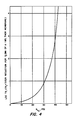
- the curve of Figure 4 represents the results of measuring the K L and T R for forty-five different specimens made by the process of this invention.
- the center portion of this micrograph shows a section through the thickness of the membrane, in which the pore sizes are seen to be uniform from surface to surface.
- the upper and lower micrographs show the upper and lower surfaces respectively adjacent to the section, and the pore size at each of these surfaces may also be seen to be equal.
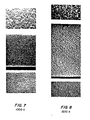
- Figure 7 is a scanning electron micrograph at 1000 X magnification of a membrane with tapered pores made by the process of this invention.
- This membrane is 81 ⁇ M (0.0032 inch) thick, and the upper portion of the section may be seen in the central part of the SEM to be considerably smaller in pore diameter than the adjacent material, with the pore diameter gradually transitioning to the larger size. Comparing the top and bottom views, the pore diameters in the upper surface are substantially smaller than those on the lower surface.
- Figure 8 is a scanning electron micrograph at 1500 X magnification of a lightly skinned membrane, of the type obtained when baths outside of the range of this invention are employed.
- Figure 9 is a similar micrograph of a more heavily skinned membrane.
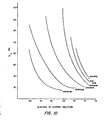
- Figure 10 is a graphical representation of the relationship between
- polyamide resins are all copolymers of a diamine and a dicarboxylic acid, or homopolymers of a lactam of an amino acid, they vary widely in crystallinity or solid structure, melting point, and other physical properties. It has been determined in accordance with the invention that the application of the process of the invention to copolymers of hexamethylene diamine and adipic acid (Nylon 66), to copolymers of hexamethylene diamine and sebacic acid (Nylon 610), and to homopolymers of poly-e-caprolactam (Nylon 6), readily produces skinless hydrophilic alcohol-insoluble polyamide resin membranes. For reasons which are not understood, these polyamide resins are quite susceptible to precipitation under the process conditions of the invention to form hydrophilic membrane sheets.
- polymers are available in a wide variety of grades, which vary appreciably with respect to molecular weight, within the range from about 15, 000 to about 42, 000, and in other characteristics.
- the formation of a hydrophilic membrane appears to be a function not of these characteristics, but of the chemical composition of the polymer, i. e., the arrangement of the units composing the polymer chain.
- the preferred species of the units composing the polymer - chain is polyhexamethylene adipamide, and molecular weights in the range above about 30, 000 are preferred.
- the polyamide resin solution from which the polyamide membrane film is precipitated can be a solution in any solvent for the polymer.
- solvents are well known, and are themselves no part of the instant invention.
- a preferred solvent is formic acid, at any temperature from freezing to boiling, but hot acetic acid, as well as phenols such as phenol and cresol, can also be used, also trifluoroethanol and various other polyfluorinated solvents, and also inorganic acids, such as phosphoric acid and sulfuric acid.
- the polyamide resin solution hereafter referenced as the starting resin solution, is prepared by dissolution of the polyamide resin to be used in the membrane in the desired solvent.
- the resin can be dissolved in the solvent at ambient temperature, but a higher temperature may be used to accelerate dissolution.
- the starting resin solution is to be stored for more than a few hours, water in excess of about 1 to 2% should not be present, as otherwise a slow hydrolysis of the polyamide resin takes place, resulting in an undesirable reduction in molecular weight of the polyamide.
- the amount of water in this event should be less than 2%, and preferably the solution is water-free. If water or formic acid-water mixture is added to accomplish nucleation, it can be added just prior to casting, preferably within about five to sixty minutes of the casting operation.
- the casting resin solution is prepared from the starting resin solution by diluting it with a nonsolvent, or with a mixture of solvent and nonsolvent.
- the state of nucleation of the resulting casting resin solution is strongly affected by the following factors:
- the casting resin solution so prepared is then formed into a thin film by casting it onto an appropriate substrate, and the film is immersed with minimum delay into a bath containing a nonsolvent for the polyamide resin, together with a substantial proportion of solvent for the resin.
- a nonsolvent for the polyamide resin together with a substantial proportion of solvent for the resin.
- the nonsolvent in the bath is water, and if the solvent is formic acid, the presence of at least - about 20% and usually of at least 30 to 40% of formic acid is desired to prevent formation of a skinned membrane, which occurs at lower concentrations of formic acid.
- the stability of the casting resin solution varies greatly depending on the method used to prepare it.
- casting resin solution prepared under small scale batch conditions tends to be relatively unstable; for example, the characteristics of the membranes it produces will be quite different if it is cast as long as five to ten minutes after it has been prepared, or it may transform to a noncastable semi-solid gel within 10 minutes or less.
- casting resin solution prepared using a continuous in-line mixer which can produce a membrane of equal characteristics, tends to be stable for a period of an hour or more. Casting resin solutions prepared in this way should, however, be used within an hour or less, particularly if maintained at elevated temperature, to prevent substantial reduction in molecular weight of the polyamide resin which will otherwise occur due to the presence of water in the acid solution, with resultant hydrolysis.
- Either of the above methods may be used to produce casting resin solutions which function equally when cast as membranes, and regardless of which is used the addition of the nonsolvent is accompanied by the appearance of a visible polyamide resin precipitate, in order to produce a useful, properly nucleated casting resin solution.
- Casting resin solutions prepared by other means for example, by dissolving the resin pellets in a solution of formic acid and water, or by adding the nonsolvent in a manner such as not to produce such a precipitate, do not produce useful membranes.
- Useful membranes are those with uniform or tapered pore structures, skinless, with permeabilities to air. and water such that substantial quantities of fluids can be passed at low pressure differentials, while providing a required degree of filtration.
- a convenient index of usefulness may be obtained by considering the permeabilities to air and to water of uniform pore cellulose ester membranes now on the market made by the so-called dry (evaporative) process. These are shown in Table II under, together with typical permeabilities of similar range media made by the process of this invention.
- Examples 58 and 59 show the results of this experiment; product characteristics are greatly altered by fine filtration; the finely filtered casting resin solution produces a membrane with a very poor ratio or flow capacity to removal rating; the ⁇ p of sample No. 59 is more than three times higher than that for a similar membrane made using a properly nucleated casting resin solution of this invention.
- nucleation is the only explanation for the observed results, and that they could be caused by phenomena other than nucleation.
- the viscosity of the casting resin solution is preferably adjusted to between about 500 centipoises and 5000 centipoises at the temperature existing at the time it is cast as a film. Viscosities below about 500 cp allow some of the cast film to float off as a liquid to the surface of the bath, when it forms a filmy precipitate, thereby adversely affecting cast membrane properties and fouling the bath. Viscosities much above 5000 cp, for example, 100, 000 cp, are not needed to obtain a smooth, coherent cast film, but are helpful in casting membranes where no substrate is used, for example, hollow fibers, or unsupported film.
- Solutions of a viscosity well above 5000 cp at the casting temperature can be cast without difficulty; however, the preferred viscosity limit is about 5000 cp, since at higher viscosities the energy input to the mixture when a nonsolvent is blended with the polyamide resin solution is very high, with the result that the solution can reach excessively high temperature, with ensuing operating problems.
- the pumping of the starting polyamide resin solution to .the casting operation becomes progressively more difficult, as viscosity increases.
- manipulation of the casting resin solution within the reservoir from which the resin is cast as a film on the substrate becomes troublesome, if the viscosity is very high.
- viscosities much above about 3000 cp can cause improper penetration, and the resulting product has undesirable voids.
- the temperature of the casting resin solution is not critical, and useful membranes have been made over the range from about 85 °C downward. Under some circumstances, somewhat higher flow rates relative to removal rating are obtained by reducing the resin temperature to a lower value prior to casting the films.
- the bath contains only nonsolvent (such as water, alcohols or organic esters), or nonsolvent with a small proportion of solvent (e. g. water with less than 15 to 20% of formic acid) precipitation occurs very rapidly, and the solid membrane is formed within a few seconds, typically in less than 1 to 10 seconds. Membranes made in this manner are heavily skinned, regardless of the mode of preparation of the casting resin solution, and are undesirable.
- nonsolvent such as water, alcohols or organic esters
- solvent e. g. water with less than 15 to 20% of formic acid
- the resulting membrane will be uniform in pore structure from face to face, provided only that if cast on a solid substrate, the surface of that substrate be wetted by the casting resin solution and by the bath solution.
- the time required for the film to form under these circumstances is a function of the following:
- the formation of the membrane from a casting resin solution can be carried out as an intermittent or batch operation or as a continuous or semicontinuous process.
- a small scale operation may be most conveniently carried out as a batch operation, while at high production rates a continuous or semicontinuous . operation is more convenient.
- the control of conditions of nonsolvent addition are particularly important, including the geometry of the apparatus, the rates of flow, and duration and intensity of mixing; also the interval between nonsolvent addition and casting of the resin film must be controlled.
- Such controls can be established by trial and error experimentation without undue difficulty by those skilled in this art, taking into account the following considerations:
- the casting resin solution be clear, and free from suspended material, before being spread upon the substrate to form a film. If suspended material is present, such as undissolved resin particles, these are removed by screening or filtration before casting.
- any type of substrate or support can be used as a surface on which the casting resin solution is cast to form the solution film. If a nonsupported membrane film is the desired product, then the substrate should have a surface to which the membrane does not adhere, and from which the membrane film can readily be stripped at the conclusion of the drying operation. Strippability usually requires that the substrate surface be smooth-surfaced, and nonporous.
- the solvent is one with a relatively high surface tension, such as formic acid, and the nonsolvent also has a relatively high surface tension (as, for example, water)
- Such temporary substrate or support surfaces can be of a suitable material, such as glass, metal or ceramic.
- Plastics such as polyethylene, polypropylene, polyester, synthetic and natural rubber, polytetrafluoroethylene, polyvinyl chloride, and similar materials are not inherently suitable, as they are not wetted by the casting resin and nonsolvent, but these can be rendered suitable by application of an appropriate oxidative or similar surface treatment.
- a corona discharge can, for example, be used to treat M ylar (polyester) film, and polypropylene.
- the substrate can be made of or merely surfaced with such materials.
- the substrate is to form a part of the final membrane film, as a permanent supporting layer, then it should be of porous material that preferably is wetted by the casting resin solution, so that the casting resin solution will penetrate it during the casting of the solution on the substrate, and become firmly attached thereto during precipitation of the polyamide membrane film. It is not essential however that the substrate be wetted; if it is not wetted, the polyamide resin film will be largely confined to the surface of the support, but is nonetheless adherent thereto.
- Such substrates can, for example, be of nonwoven or woven fibrous material, such as nonwoven mats and bats, and woven textiles and cloth, as well as netting of various types, including extruded plastic filament netting, papers, and similar materials.
- fine-pored nonwoven webs can be used, made from fibers with poor wetting characteristics, such as, for example, polypropylene or polyethylene.
- the resin solution is cast as a film onto the nonwoven web, and since it does not wet the fibers of the web, it is carried on its surface.
- the substrate carrying the casting resin solution film on its lower surface is plunged into a bath of nonsolvent liquid or allowed to float on the surface of the bath, and the membrane film precipitated onto the substrate.
- the resulting film has good adhesion to the substrate, and the substrate has very little or no effect on the pressure drop for fluid flow through the membrane.
- the fibers of which the substrate is made should have a relatively high critical surface tension, such that the casting resin solution film will completely permeate the supporting web, and the resulting membrane precipitates in and around the fibrous material, and is permanently supported thereby, since the material of the support is embedded in the membrane.
- the resulting membrane has a somewhat higher pressure drop when tested with flowing fluid, but the increase compared with the unsupported membrane is small, if the supporting web has an open structure.
- Suitable wetted substrates that can serve as permanent supports for the membrane include polyesters, as a nonwoven fibrous web or as a woven web, using monofilament or multifilament yarn, the monofilaments being preferable in terms of open structure and lower pressure drop; also polyimide fiber woven webs, woven and nonwoven webs of aromatic polyamides or Nomex, and other relatively polar fibrous products such as cellulose, regenerated cellulose, cellulose esters, cellulose ethers, glass fiber, and similar materials.
- Cellulosic and synthetic fiber filter papers can be used, as . well as perforated plastic sheets, and open mesh expanded plastics such as Delnet or similar extruded and thereafter expanded nettings.
- the substrate is relatively coarse or in a very open weave structure, even if the fibers are not well wetted by the resin solution, the substrate may nonetheless be embedded or embraced by the membrane material in the final supported membrane product; such relatively poorly wetted materials as polypropylene and polyethylene can function as embedded substrates if they have a sufficiently open structure.
- a polyolefin substrate has a relatively smaller pore size, for example, about 30 microns, the casting resin solution will not penetrate into it, but will instead form a - membrane external to, but adhered to, the polyolefin substrate.
- the substrate in the form of an endless belt, which circulates through the entire film-forming operation, from casting of the casting resin solution film into and through a precipitating bath of the nonsolvent liquid, and then through the bath liquid removal step.
- a corrosion resistant metal drum, or endless motal belt can be used, but the surfaces on which the film is cast should be treated or coated so as to make them wettable.
- the nucleated casting resin solution can be cast or spread out upon the substrate in the desired film thickness using a conventional doctor blade or roll, kissing or squeeze rolls or other conventional devices, and then contacted with the bath liquid with as little delay as possible.
- nonsolvent liquid depends upon the solvent utilized. Water is a preferred nonsolvent.
- Other nonsolvents include formamides and acetamides, dimethyl sulfoxide, and similar polar solvents, as well as polyols such as glycerol, glycols, polyglycols, and ethers and esters thereof, and mixtures of such compounds. Salts can also be added.
- the membrane film is washed to remove solvent.
- Water is suitable, but any volatile liquid in which the solvent is soluble and that can be removed during drying can be used as the washing liquid.
- wash liquid flow is conuntercurrently to the membrane, which can, for example, be passed through a series of shallow washing liquid baths in the washing stage.
- the amount of washing required depends upon the residual solvent content desired in the membrane. If the solvent is an acid such as formic acid, residual formic acid can cause hydrolysis during storage of the polyamide of which the membrane is composed, with a consequent reduction in molecular weight therefore, the washing should be continued until the formic acid level is low enough to prevent any significant bydrolysis during the anticipated storage period.
- the drying of the washed membrane film requires a technique that takes into account the tendency of the membrane to shrink linearly when dried unsupported, with the result that the dried membrane film is warped. In order to obtain a flat uniform film, the-membrane must be restrained from shrinkage during drying.
- Individual membrane sheets of a selected size can be dried to produce flat sheets free of warpage by clamping the sheets in a frame restraining the sheet from shrinkage on all four sides, and then heating the framed membrane at elevated temperature until it has been dried.
- two or more equally sized membrane sheets can be placed in contact and dried tggether in a frame to prevent shrinkage. When this is done, the contacting layers adhere to each other, and can thereafter behave as though they were a single sheet.
- the individual starting sheets are relatively thin, e. g. under 0. 005 inch thick, and are of the unsupported (substrate free) type, they may be subsequently cut to size, for example, by steel rule dies, and are thereafter for practical purposes a single sheet or disc of filter medium.
- the membranes can be dried in any of the ways described above, and then corrugated, seamed to provide a closed cylinder, and end capped.
- This process can be greatly simplified, while producing a superior product, by corrugating the filter medium while it is still wet, together with upstream and downstream layers of dry porous material, this material being chosed to be relatively rigid, and not subject to no more than a small shrinkage during the drying operation.
- the corrugated pack so formed is lightly compressed, so that the corrugations are in firm close contact, while being held in a holding jig, preferably one perforated to allow free access for heating and escape of vapor, and placed in an oven to dry.
- the resulting dried corrugated assembly shows only slight shrinkage, and the corrugated polyamide membrane so obtained is free of warpage, with well formed smooth corrugation crests, and flat faces between.
- the porous support layers When formed into a filtering element by side seaming and end capping, the porous support layers provide flow spaces for access of upstream (dirty) fluid and passage out of the element for downstream (clean) fluid.
- the filter cartridge is made using two or more thin layers of the polyamide membrane, these will be firmly adhered to each other at the conclusion of the drying operation, and behave mechanically as though they were a single layer.
- the control of the precipitation so as to obtain the formation of a hydrophilic polyamide membrane sheet of desired flow characteristics and pore size requires that the casting resin solution be controlled with respect to a characteristic referred to herein as " nucleation".
- the variables that must be controlled include the choice of resin and of solvent and nonsolvent, the concentration of the resin in the starting polyamide resin solution, temperatures of all components, the quantity and mode of addition of nonsolvent, including rate of addition, intensity of mixing during addition, and the geometry of the apparatus, the latter including especially size and location of the nozzle through which the nonsolvent is added.
- the effect of these variables on the degree of nucleation is qualitatively stated in Table III.
- the concentration of solvent is not included, as it is defined by the concentration of the resin and the nonsolvent.
- the intensity of mixing in a given system is a function of a large number of variables.
- the relative intensity of mixing can be expressed in terms of the rotation rate of the agitator, or of the cutting blades of a homogenizer, etc.
- an in-line mixer is required, and in a suitable designed multiblade mixer about 1/4 to 2 hp is required to produce about 30 kg per hour of 2000 centipoise casting resin solution at a rotation rate between about 200 to 2000 rpm.
- Such equipment can take diverse forms, and can take any of a number of the designs commonly used in the mixing art, since the various mixing principles can all lead to similar results.
- the nozzle diameter through which nonsolvent is delivered during preparation of the casting resin solution is also very important. It is at this nozzle that the precipitate forms, which at least in part subsequently redissolves, and the formation and complete or partial redissolution of the precipitate appears to play an essential role in the preparation of the casting resin solutions of this invention. With all other parameters maintained equal, a casting resin solution of quite different characteristics, in terms of the pore size of the resulting membrane, will be obtained by simply varying the diameter of the nozzle. We have used nozzle diameters varying from 0.013 inch to 0.125 inch diameter, but smaller or larger nozzles could be used with successful results.
- a casting resin solution of given composition and temperature be made by varying the mixing intensity and thereby the degree of nucleation to produce greatly different membranes, but the converse is true, namely, membranes of equal or nearly equal characteristics can be made using a wide variety of resin, solvent, and nonsolvent concentration in the casting resin solution; for example, an increase in water content will increase the degree of nucleation, but if the mixing intensity is also increased, a casting resin solution will be obtained with the degree of nucleation unchanged, and the membrane cast from this casting resin solution will have characteristics equal to that made from the lower water content casting resin solution.
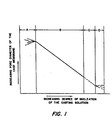
- Region C the casting resin solution becomes increasingly populated by particles of resin which have not redissolved, but still produces good quality membrane if these are removed by filtration prior to casting; and in Region D, the resin solution from which these lumps have been removed by filtration becomes unstable, and prone to early local or overall gelation before the film can be cast.
- the very high degree of nucleation in Region D is sometimes manifested by an opalescent appearance, suggesting that the nucleation procedure has resulted in an excessive number and/or excessively large nuclei.
- a favorable condition for producing membranes having low pressure drops and particle removal ratings covering a wide range utilizes a starting resin containing 15.5% of 42, 000 molecular weight Nylon 66 resin, 83.23% of formic acid, and 1. 27% of water.
- this starting resin solution is diluted using the conditions of Examples 1 to 39, the results obtained in Figure 10 are obtained.
- the casting resin solution can be extruded above or under the surface of the nonsolvent bath, especially if used to make hollow fibers; this process is more easily realized in practice by using relatively high resin viscosities (e. g. 100, 000 cp) and rapidly setting casting resin solution in relatively lower formic acid concentration baths, e. g. in the 20 to 40% range.
- relatively high resin viscosities e. g. 100, 000 cp
- relatively lower formic acid concentration baths e. g. in the 20 to 40% range.
- the nonsolvent precipitation baths used in this invention contain a mixture of solvent and nonsolvent for the resin.
- the characteristic of the bath which has an important effect on the properties of the resulting membrane is the relative concentration of solvent and nonsolvent in the bath. If the concentration of solvent is zero, or at low level, for example, below 20%, a heavily skinned membrane will be obtained. If the concentration is adjusted to one of the preferred ranges of this invention (about 43 to 47% of formic acid, in the case of a bath containing only water and formic acid) the resulting membrane has uniform pores from one face to the other.
- the pores will always be uniform through the thickness of the polyamide membrane.
- the film is cast on a nonporous substrate of type (a), it is important that the substrate surface be wettable by the casting resin, and by the bath fluid.
- a wide range of surfaces can serve as the substrate, provided that the critical surface tension is maintained at a sufficiently high value. This will vary somewhat depending on the concentration of formic acid in the resin solution and in the bath, and the temperature, and is best determined by trial-and-error treatment of the substrate surface for a given system.
- Critical surface tensions required are generally in the range from about 45 to about 60 dynes/cm, and most often in the range of from 50 to 56 dynes/cm.
- the bath solvent concentration required to obtain any desired taper pore membrane varies considerably, depending, for example, on the state of nucleation of the casting resin solution, and should be determined for a given set of conditions by trial-and-error; however, in the case of a water-formic acid bath, it is never less than 15 to 25%, and usually is near to 30 to 35% of formic acid.
- the membranes begin to form with increasingly heavier skins, and are characterized by high pressure drop, and poor pore size distribution characteristics.
- the uniform pore membranes made by the process of this invention are characterized by liquid displacement curves such as shown in Figure 3.
- the membrane When the membrane is immersed into water, its pores are filled by the water forming within the membrane a film of immobilized water, which remains in place when the membrane is removed from immersion.
- air pressure is then applied across the membrane, there is noted a very small flow of air.
- This air flow when divided by the applied air pressure remains constant as the pressure is increased, when plotted as in Figure 3. From the thickness of the film, and the known diffusion constant of air in water, it can be calculated using Fick's law, that this flow is due to diffusion of air through the water film, and does not indicate flow through pores of the filter medium.
- control within narrow limits of the concentration of formic acid in the nonsolvent liquid in the bath is desirable to obtain a uniform product.
- this control is obtained by an appropriate feed to the bath of nonsolvent liquid, while simultaneously withdrawing some of the bath liquid to maintain constant total bath volume.
- a relatively higher concentration of formic acid enters the bath from the casting resin solution, and the concentration of formic acid in the bath therefore tends to increase. Water is therefore constantly added to the bath to compensate. Accordingly, control of the rate of addition of water and of the rate of withdrawal of surplus bath solution will give the desired result: substantially constant concentration of formic acid in the solution, within the limits that give a membrane of the characteristics desired.
- Example 47 shows that in order to obtain a skinless membrane sheet having a uniform pore distribution, with fine enough pores to quantitatively remove all incident bacteria and particles over 0.2 ⁇ M, a relatively highly nucleated casting resin solution is cast as a film and the membrane precipitated in a . 46.4% aqueous formic acid solution as the bath liquid.
- a film of less highly nucleated casting resin solution is precipitated in membrane form by an aqueous 25% formic acid solution as the bath, as in Example 50.
- the casting resin solution in the continuous production of membrane sheets in accordance with the invention, must be prepared under carefully controlled conditions and the bath liquid composition must remain constant.
- a liquid is referred to as an "equilibrium bath", i. e., a bath in which the concentration of ingredients remains constant, regardless of additions and withdrawals.
- the bath temperature When used continuously, at high production rates, the bath temperature will gradually increase; cooling by a heat exchanger may be used to maintain constant conditions.
- unsupported membrane sheets can be made by casting the resin solution onto an endless belt, or onto a plastic sheet unreeled from a roll, as a substrate to support the cast film.
- the membrane sheet has a tendency to adhere to the substrate surface on drying, and it is therefore important to remove the membrane sheet from the surface while it is still wet, and before it has been dried and developed adherency.
- Unsupported membrane sheets obtained by the process of the invention are quite strong, with water-wet tensile strengths in the range of 400 to 600 lbs/sq. inch, and elongations generally exceeding 40%.
- unsupported membrane sheet requires special care to manipulate in the typical range of thicknesses from 0. 002 to 0. 010 inch in which it is normally manufactured. In such cases, a supported membrane sheet is desired.
- Such membrane sheet is prepared by forming the film of resin solution on a substrate which adheres to the membrane sheet after it has been precipitated thereon. Either of the two types of substrates can be used; those which are not wetted by the resin solution, and those which are.
- the unsupported filter membrane obtained at the conclusion of the membrane-forming process is wet with water, also contains a small amount of residual formic acid.
- This product can be dried in various ways.
- It can, for example, be collected on a roll on a suitable core in lengths from 50 to 100 linear feet and placed in an oven until dry. During drying, some shrinkage occurs, but an acceptable product is obtained.
- a similar product can be obtained with less hand labor by passing the wetted membrane sheet over a hot drum, against which it is firmly held by a tensioned felt web or other porous sheet, and the dry web collected as a roll.
- the resulting multi-layer membranes are useful in the manner of a single layer filter membrane. Since in manufacture a small proportion of undetected faults may occur, caused, for example, by bubbles of air entrained in the casting resin solution, using two layers instead of one neutralizes such areas, covering them over with a second layer of filter membrane that is also capable of providing the required removal rating; an extremely high degree of reliability is obtained in this manner.
- filter media can be made in which a supported layer of uniform pore size is bonded to an unsupported tapered pore membrane layer, which provides efficient prefiltration.
- the fine face of the tapered pore layer would be about the same pore size or somewhat larger than the pore size of the supported layer, and this face would be adjacent to the unsupported layer.
- Supported filter membranes in accordance with the invention are particularly well suited to use on filter presses, where self- sealing characteristics are needed, and the filters are subjected to large stresses. They are also useful in making plain or corrugated filter cartridges for use at high differential pressures, or for impulse type service.
- Filter cartridges are self-contained filter elements, provided with a filter sheet in tubular form capped off by end caps at each end. Either or both end caps can have a through opening for fluid circulation through the filter sheet in either direction. Filter cartridges are designed to be installed in and to be readily removable from filter assembly housings when replacement is necessary.
- a good filter cartridge has a filter sheet that is free of faults, and with removal characteristics that are relatively uniform with stated standards.
- Filter cartridges take many forms, including simple cylinders, corrugated cylinders, stacked discs, etc.
- a favored form for the filter membranes of the invention is a corrugated cylinder.
- a corrugated cylinder is made by corrugating one or more layers of supported or unsupported wet membrane (two layers is preferred) sandwiched between two open porous or foraminous sheets which provide for fluid flow up and downstream of the contacting surfaces of the filter medium within the corrugations.
- the resulting corrugated structure can be dried while lightly restrained, in the course of which contacting membrane layers are bonded together, thus forming a more rigid, stronger structure, and then seamed closed along the contacting ends, using heat-sealing techniques similar to those used for sealing conventional thermoplastic filter materials. End caps are then attached in a leak-tight manner to each end of the resulting cylinder.
- the preferred method is in accordance with U. S. patent No. 3,457,339, patented December 8, 1965, to Pall et aL
- the end cap material can be any of a wide range of thermoplastic synthetic resin materials, particularly polypropylene, polyamides, polyesters and polyethylene.
- the quantity and concentration of the resin solution are quite noncritical, and good seals have been made with as little as zero percent or as much as 9% of Nylon 66 resin in the trifluoroethanol solution, but in this solvent solutions in the neighborhood of 5% are preferred, being stable, and having a convenient viscosity if a high molecular weight resin is used to prepare the solution. Solutions in formic acid have also been successfully used.
- a uniform pore filter medium of this invention or any of the currently marketed uniform pore membranes are examined using a scanning electron microscope, e. g. as is shown in Figure 5, and the apparent pore openings as seen on the micrograph are measured, a pore size is determined which is about three to five times the diameter of the largest particle which the filter will pass, as determined, for example, by bacteria challenge.
- the effectiveness of the membrane sheets in accordance with the invention as filter media is rated not in terms of pore size, but in terms of effectiveness in the removal of a contaminant of known dimensions.
- One of the principal applications of this type of filter membrane is to deliver a filtrate freed of all incident bacteria, hence bacterially sterile.
- a technique usually used in the industry to determine the ability of a filter to deliver bacterially sterile effluent is to challenge it with a suspension of Pseudomonas diminutiae, which is a small diameter relatively nonpathogenic bacterium referred to in abbreviated form by Ps. Filters which successfully meet such a challenge are generally accepted in the industry as being 0.
- Pseudomonas diminutiae is a bacterium that represents the lower limit of bacterial dimensions. If no combination of challenge conditions can be found which will allow even a single organism of Pseudomonas diminutiae to pass, the filter can be regarded as capable of quantitatively removing all bacteria.
- This invention employs a standardized test based on Pseudomonas diminutiae removal that correlates such removal with air flow measurements through the wetted membrane and the thickness of the membrane, and is capable of providing a quite complete characterization of the removal characteristics of the membrane filter sheet being tested.
- K L is a form of abbreviation for the "knee location" of the curve of Figure 3.
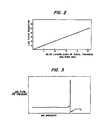
- K L values were measured, for both relatively coarse and relatively fine membranes, for a number of thin membranes. These same membranes were then laid up as 2, 3 and more layers, and the K L values again measured for the multilayers. In this way, a relationship between the thickness and K L value of equal pore size membranes was determined; this relationship is summarized in Table I. Using Table I, the K L values of the 45 membranes were corrected to the K L which would apply to an equal pore size membrane 0. 005 inch (5 mils) thick; these values are designated as K L .
- T R titer reduction
- a membrane may be selected with an estimated T R of 10 23 ; statistically, if challenged with 10 13 Pseudomonas diminutiae, such a membrane would have to be so challenged for 10 10 (or 10 billion) times, in order to produce a single effluent with one bacterium, and such a high ratio may be taken as adequate assurance of sterility, hence the filter can be considered to have an absolute removal capability at 0. 2 ⁇ M.
- K L and thickness can be correlated with titer reduction for larger bacteria, yeasts of known size, and other particulate material, the latter assayed by particle detection methods, over a size range from under 0. lp M or larger.
- the curve of Figure 4 is applicable to the membranes made by the process of this invention.
- the process by which this curve was developed can be applied to membranes made by other processes.
- the location of the curve for other membranes may shift somewhat, but we have done sufficient testing using currently marketed uniform pore dry process membranes to determine that the same principles are applicable.
- the horizontal portion of the curve of Figure 3 is truly horizontal only if the pore size is quite uniform. Uniform pore media are further characterized by a sharp change in slope to a nearly vertical course at the K L value. If the filter medium is relatively nonuniform in pore size, it will tend to have a distinct slope in the horizontal portion of the curve, and exhibits a relatively large radius for the change in slope to the more vertical portion of the curve, followed by a sloping rather than a nearly vertical portion.
- the lower or horizontal portion of the curve is a measure of the diffusion of air through the immobilized, liquid film which fills the pores of the membrane.
- the wetting liquid may be water, in which case a relatively low air flow is obtained in the horizontal part of the curve, or alcohol, in which case the diffusional air flow is higher.
- the wetting liquid begins to be expelled from the pores, and in the vertical portion of the curve, a large number of nearly equal size pores begin to pass air.
- Nylon 66 resin pellets of molecular weight approximately 42,000 were dissolved in 98. 5% formic acid, to yield a 35°C solution containing 15. 5% of the resin. Without delay, this solution was delivered at a flow rate of 250 g/minute to an in-line mixer. Simultaneously, a controlled water flow at 31°C was delivered to the mixer, the quantity being such as to produce as the effluent a casting resin solution containing 70.2% of formic acid and 13. 1% of the resin.
- the casting resin solution was filtered through a 10 ⁇ M filter to remove visible resin particles, and was then formed as a thin film by a doctoring roll with 0.
- the rotation rate of the in-line mixer was varied from 400 to 1600 RPM during this run.
- Table IV shows the product characteristics obtained.
- "uniform pores" means that the pore size was equal, as determined by SEM examination throughout the whole width of the membrane.
- Examples 1 and 2 represent conditions in region A of Figure 1, . in which the degree of nucleation is too low to produce a satisfactory product; in this zone pressure drops are high, and product characteristics tend to be nonreproducible.
- Example 5 in which mixer speed was 400 RPM falls into region D of Figure 1, and resulted in an unstable condition, with so much precipitating resin generated within the mixer, that it began to clog, such that casting resin solution could not be delivered.
- Casting resin solution was prepared and processed as for Example 4, except that it was heated by means of an in-line heat exchanger to respectively 53, 61 and 68°C prior to casting.
- the product characteristics were not significantly different from those of Example 4. This result confirmed previous test data indicating that temperature of the casting resin solution is not a significant parameter, except insofar as viscosity may be reduced to the point (below about 500 cp) where casting problems may be experienced.
- the membranes were prepared in the same way as Examples 1 to 5, except that the quantity of water added was such as to produce a casting resin containing 69.8% of formic acid and 13.0% of resin.
- the results are shown in Table V.
- the casting resin solution made at 1950 RPM mixer speed was insufficiently nucleated, resulting in a poor product with high pressure drop.
- Figure 10 includes only those membranes which fall in the regions B and C of Figure 1, and therefore have favorably low pressure drop in proportion to their thickness and particle removal capability, and are consistently reproducible.
- Nylon 66 resin pellets of molecular weight approximately 42, 000 were dissolved in 98. 5% formic acid, to yield a 35°C solution containing 15. 5% of the resin. Without delay, this solution was delivered at a flow rate of 250 g/minute to an in-line mixer rotating at 1200 RPM. Simultaneously, a controlled water flow also at 30 °C was delivered to the mixer, the quantity being such as to produce as the effluent a casting resin solution containing 69. 0% of formic acid and 12. 9% of resin. Temperature of the resulting casting resin solution was 57 °C.
- the casting resin solution was without delay filtered through a 10 pM filter to remove visible resin particles, and was then formed into thin films by a doctoring blade with 0.010 inch spacing on glass plates, and in less than 10 seconds immersed into a bath containing formic acid and water, for approximately 5 to 10 minutes.
- the nylon membranes so formed were washed with flowing water for 1 hour. Two layers of the membrane were oven dried in contact with each other, while restrained to prevent shrinkage of the length and width during drying.
- Table VIII shows the product characteristics obtained, for various bath concentrations.
- Examples 55 and 56 are not within the scope of this invention; they are included to illustrate the effect of using bath concentrations of less than about 20% formic acid.
- Example 59 The 11.6 inch pressure drop of Example 59, resulting from the fine filtration step, should be compared with that of a normal product of this invention with the same thickness and K L values, which would be approximately 3. 5 inches of mercury.
- polyhexamethylene adipamide was formed into membrane sheets using a small batch procedure.
- a quantity of 500 grams of this solution was heated to 65°C in a glass jacketed vessle approximately 4 inches inside diameter by 8 inches high, fitted with a two-inch diameter propellor-type agitator, and an externally operated flush valve at its bottom.
- a nonsolvent solution was prepared containing 12.77% formic acid, the balance being water. With the agitator rotating at 300 to 500 RPM, 241 g of this nonsolvent solution was pumped into the apparatus, at a constant rate, over a period of 2 minutes, the inlet nozzle being 2 mm inside diameter, and located 1/4 inch from the arc described by the rotating propellor. During the last portion of the two minute period, resin was seen to precipitate at the inlet nozzle, all of which subsequently redissolved except for a small quantity of lumps of resin about 1/8 inch in diameter.
- the membranes were allowed to set for several minutes, then were stripped from the glass plate, washed in water and dried by exposure to infrared heat. The properties of the resulting membranes are shown in Table XI.
- Examples 60, 61 and 62 illustrate the effect of degree of nucleation on product characteristics. Examples 60 and 61 are properly nucleated, and yield products with favorably low pressure drop, for their removal ratings. In Example 62, the higher rotation rate resulted in a casting solution with too low a degree of nucleation, and as a consequence, a relatively high pressure drop.
Landscapes
- Chemical & Material Sciences (AREA)
- Chemical Kinetics & Catalysis (AREA)
- Engineering & Computer Science (AREA)
- Water Supply & Treatment (AREA)
- Dispersion Chemistry (AREA)
- Manufacturing & Machinery (AREA)
- Separation Using Semi-Permeable Membranes (AREA)
- Manufacture Of Porous Articles, And Recovery And Treatment Of Waste Products (AREA)
- Manufacture Of Macromolecular Shaped Articles (AREA)
- Laminated Bodies (AREA)
- Treatments Of Macromolecular Shaped Articles (AREA)
Applications Claiming Priority (2)
| Application Number | Priority Date | Filing Date | Title |
|---|---|---|---|
| US90569878A | 1978-05-15 | 1978-05-15 | |
| US905698 | 1978-05-15 |
Publications (4)
| Publication Number | Publication Date |
|---|---|
| EP0005536A2 true EP0005536A2 (de) | 1979-11-28 |
| EP0005536A3 EP0005536A3 (en) | 1980-02-06 |
| EP0005536B1 EP0005536B1 (de) | 1987-05-13 |
| EP0005536B2 EP0005536B2 (de) | 1995-03-08 |
Family
ID=25421297
Family Applications (1)
| Application Number | Title | Priority Date | Filing Date |
|---|---|---|---|
| EP79101487A Expired - Lifetime EP0005536B2 (de) | 1978-05-15 | 1979-05-15 | Verfahren zur Herstellung von Membranfilter aus Polyamid und Erzeugnis sowie ein Verfahren zur Bestimmung der Wirksamkeit einer Membranfolie als Filter |
Country Status (16)
| Country | Link |
|---|---|
| US (1) | US4340479B1 (de) |
| EP (1) | EP0005536B2 (de) |
| JP (1) | JPS5925602B2 (de) |
| AT (1) | AT376580B (de) |
| AU (1) | AU529368B2 (de) |
| BR (1) | BR7903007A (de) |
| DE (1) | DE2967659D1 (de) |
| DK (1) | DK170416B1 (de) |
| ES (1) | ES480577A1 (de) |
| FI (1) | FI70421C (de) |
| IL (1) | IL57354A (de) |
| MX (1) | MX152562A (de) |
| NO (1) | NO153836C (de) |
| NZ (1) | NZ190436A (de) |
| PT (1) | PT69611A (de) |
| ZA (1) | ZA792326B (de) |
Cited By (25)
| Publication number | Priority date | Publication date | Assignee | Title |
|---|---|---|---|---|
| EP0045435A1 (de) * | 1980-07-25 | 1982-02-10 | Akzo GmbH | Zur Ultrafiltration geeignete Membran aus Polyamid sowie Verfahren zu deren Herstellung |
| EP0050789A1 (de) * | 1980-10-20 | 1982-05-05 | Pall Corporation | Liquophile Membranfilter aus Polyamid und Verfahren zu deren Herstellung |
| FR2521027A1 (fr) * | 1982-02-05 | 1983-08-12 | Pall Corp | Membrane en polyamide, presentant des proprietes de surface controlees |
| FR2526327A1 (fr) * | 1982-05-07 | 1983-11-10 | Pall Corp | Systeme filtrant microporeux et procede de filtration l'utilisant |
| WO1984003055A1 (en) | 1983-02-07 | 1984-08-16 | Univ Yale | Transfer of macromolecules from a chromatographic substrate to an immobilizing matrix |
| EP0082393A3 (en) * | 1981-12-18 | 1986-01-15 | Amf Incorporated | Reinforced microporous membrane |
| US4631130A (en) * | 1980-09-25 | 1986-12-23 | Terumo Corporation | Plasma separator |
| US4645602A (en) * | 1981-12-18 | 1987-02-24 | Barnes Jr Robert G | Process for producing reinforced microporous membrane |
| US4673504A (en) * | 1980-10-27 | 1987-06-16 | Cuno Inc. | Charge modified microporous membrane |
| US4708803A (en) * | 1980-10-27 | 1987-11-24 | Cuno Incorporated | Liquid filtration using hydrophilic cationic isotropic microporous nylon membrane |
| US4711793A (en) * | 1980-10-27 | 1987-12-08 | Cuno Incorporated | Process for charge modifying a microphorous membrane |
| GB2193149A (en) * | 1986-06-23 | 1988-02-03 | Domnick Hunter Filters Ltd | Polyamide membranes |
| US4737291A (en) * | 1981-05-29 | 1988-04-12 | Cuno Incorporated | Charge modified microporous membrane |
| US4743418A (en) * | 1981-05-29 | 1988-05-10 | Cuno Incorporated | Process for charge modifying a microporous membrane |
| US5004543A (en) * | 1988-06-21 | 1991-04-02 | Millipore Corporation | Charge-modified hydrophobic membrane materials and method for making the same |
| EP0521304A1 (de) * | 1991-07-03 | 1993-01-07 | Pall Corporation | Undurchlässiger Artikel mit mikroporöser Oberfläche und Verfahren zur Herstellung desselben |
| EP0274911B1 (de) * | 1987-01-12 | 1993-03-03 | Pall Corporation | Diagnostisches Hilfsmittel, seine Herstellung und seine Verwendung |
| DE4215585A1 (de) * | 1992-05-12 | 1993-11-18 | Seitz Filter Werke | Verfahren zur gleichzeitigen Integritätsprüfung von in einem Membranfiltergerät eingebauten Membranfilterkerzen und Membranfiltergerät zur Durchführung des Verfahrens |
| EP0517501A3 (de) * | 1991-06-06 | 1994-02-09 | Asahi Chemical Ind | |
| EP0582822A1 (de) * | 1992-06-30 | 1994-02-16 | Millipore Corporation | Prüfung von Membranen |
| US5376274A (en) * | 1992-05-26 | 1994-12-27 | Seitz-Filter-Werke Gmbh & Co. | Hydrophilic membrane and method for its production |
| US5462792A (en) * | 1992-07-01 | 1995-10-31 | Hunter Douglas International N.V. | Coating sheet material |
| WO2010059327A3 (en) * | 2008-11-21 | 2010-07-22 | 3M Innovative Properties Company | Microporous membrane and method for forming |
| US8147735B2 (en) | 2008-07-09 | 2012-04-03 | Eltron Research & Development, Inc. | Semipermeable polymers and method for producing same |
| US20120168369A1 (en) * | 2009-08-14 | 2012-07-05 | Jolanda Van Medevoort | Planar membrane module preparation |
Families Citing this family (314)
| Publication number | Priority date | Publication date | Assignee | Title |
|---|---|---|---|---|
| US4900443A (en) * | 1980-03-14 | 1990-02-13 | Memtec North America Corporation | Porous aramid membranes and emulsions useful for the casting thereof |
| US4774039A (en) * | 1980-03-14 | 1988-09-27 | Brunswick Corporation | Dispersing casting of integral skinned highly asymmetric polymer membranes |
| CA1202837A (en) * | 1980-03-14 | 1986-04-08 | Wolfgang J. Wrasidlo | Asymmetric membranes and process therefor |
| US4707266A (en) * | 1982-02-05 | 1987-11-17 | Pall Corporation | Polyamide membrane with controlled surface properties |
| CH656887A5 (fr) * | 1982-02-05 | 1986-07-31 | Pall Corp | Membrane microporeuse de polyamide, son utilisation et son procede de preparation. |
| US4450126A (en) * | 1982-04-21 | 1984-05-22 | Puropore, Inc. | High strength nylon blend membranes |
| US4477598A (en) * | 1982-04-21 | 1984-10-16 | Puropore, Inc. | High strength nylon blend membranes |
| DE3220376A1 (de) * | 1982-05-29 | 1983-12-01 | Seitz-Filter-Werke Theo & Geo Seitz GmbH und Co, 6550 Bad Kreuznach | Membranfilter fuer mikrofiltration und verfahren zu seiner herstellung |
| IT1153101B (it) * | 1982-07-01 | 1987-01-14 | Montedison Spa | Procedimento per la preparazione di corpi formati anisotropi a base di poli-piperazinammidi |
| JPS60500406A (ja) * | 1983-02-02 | 1985-03-28 | メムテツク リミテツド | 架橋した多孔質膜 |
| US4544484A (en) * | 1983-06-24 | 1985-10-01 | E. I. Du Pont De Nemours And Company | Reverse osmosis membrane quenching |
| EP0156840A4 (de) * | 1983-09-12 | 1987-07-08 | Memtec Ltd | Behandlung poröser membrane. |
| US4888115A (en) * | 1983-12-29 | 1989-12-19 | Cuno, Incorporated | Cross-flow filtration |
| US4693985A (en) * | 1984-08-21 | 1987-09-15 | Pall Corporation | Methods of concentrating ligands and active membranes used therefor |
| GB2169224B (en) * | 1984-12-21 | 1989-01-11 | Pall Corp | Supported microporous membrane and method of making |
| DE3529094A1 (de) * | 1985-03-13 | 1986-09-18 | Miles Laboratories, Inc., Elkhart, Ind. | An polyamide oder cellulosehydrat immobilisierte proteine und deren verwendung zur herstellung von biokatalysatoren, teststreifen oder chromatographiematerialien |
| JPS61249341A (ja) * | 1985-04-27 | 1986-11-06 | Showa Denko Kk | 脱水用具 |
| GB8515819D0 (en) * | 1985-06-21 | 1985-07-24 | Hunter Fillers Ltd Domnick | Polyamide membranes |
| US4980067A (en) * | 1985-07-23 | 1990-12-25 | Cuno, Inc. | Polyionene-transformed microporous membrane |
| JPS6227006A (ja) * | 1985-07-27 | 1987-02-05 | Fuji Photo Film Co Ltd | 微孔性膜 |
| US5070899A (en) * | 1986-11-03 | 1991-12-10 | Pall Corporation | Check valve |
| US4888116A (en) * | 1987-01-15 | 1989-12-19 | The Dow Chemical Company | Method of improving membrane properties via reaction of diazonium compounds or precursors |
| US4812238A (en) * | 1987-01-15 | 1989-03-14 | The Dow Chemical Company | Membranes prepared via reaction of diazonium compounds or precursors |
| US4770777A (en) * | 1987-01-29 | 1988-09-13 | Parker Hannifin Corporation | Microporous asymmetric polyamide membranes |
| US4820460A (en) * | 1987-04-27 | 1989-04-11 | Cuno, Incorporated | Method of manufacturing a hollow porous fiber |
| US4915886A (en) * | 1987-04-27 | 1990-04-10 | Cuno, Incorporated | Method of manufacturing nylon microporous hollow fiber membrane |
| US4886836A (en) * | 1987-06-03 | 1989-12-12 | Pall Corporation | Activated medium with low non-specific protein adsorption |
| US4837162A (en) * | 1987-06-05 | 1989-06-06 | Pall Corporation | Non-fluorescing, non-reflective polyamide for use in diagnostic testing |
| ATE84980T1 (de) * | 1987-08-03 | 1993-02-15 | Gelman Sciences Inc | Selbsttaetig arbeitender filter. |
| US4921611A (en) * | 1987-10-14 | 1990-05-01 | Schucker Robert C | Thin film composite membrane prepared by deposition from a solution |
| US4861628A (en) * | 1987-10-14 | 1989-08-29 | Exxon Research And Engineering Company | Thin film composite membrane prepared by suspension deposition |
| US4837054A (en) * | 1987-10-14 | 1989-06-06 | Exxon Research And Engineering Company | Thin film composite membrane prepared by deposition from a solution |
| US4879044A (en) * | 1987-10-14 | 1989-11-07 | Exxon Research And Engineering Company | Highly aromatic anisotropic polyurea/urethane membranes and their use for the separation of aromatics from non aromatics |
| US4828773A (en) * | 1987-10-14 | 1989-05-09 | Exxon Research And Engineering Company | Highly aromatic anisotropic polyurea/urethane membranes and their use for the separation of aromatics from non-aromatics |
| US4999163A (en) * | 1987-10-29 | 1991-03-12 | Hygeia Sciences, Inc. | Disposable, pre-packaged device for conducting immunoassay procedures |
| US4867934A (en) * | 1987-12-23 | 1989-09-19 | Cuno, Inc. | Production of hollow nylon fibers |
| US4963325A (en) * | 1988-05-06 | 1990-10-16 | Hygeia Sciences, Inc. | Swab expressor immunoassay device |
| DE3829766A1 (de) * | 1988-09-01 | 1990-03-22 | Akzo Gmbh | Verfahren zur herstellung von membranen |
| US4874568A (en) * | 1988-09-26 | 1989-10-17 | The Dow Chemical Company | Process of making a porous membrane |
| US4873037A (en) * | 1988-10-05 | 1989-10-10 | The Dow Chemical Company | Method for preparing an asymmetric semi-permeable membrane |
| US5032504A (en) * | 1988-10-07 | 1991-07-16 | Eastman Kodak Company | Diagnostic test kit and method for determination of chlamydial or gonococcal antigens using a microporous membrane |
| US5075220A (en) * | 1988-10-07 | 1991-12-24 | Eastman Kodak Company | Determination of a chlamydial or gonococcal antigen using a positively-charged ionically binding support |
| WO1990006801A1 (en) * | 1988-12-22 | 1990-06-28 | Cuno, Incorporated | Hollow fiber vertical quench bath |
| JPH04503372A (ja) * | 1989-01-31 | 1992-06-18 | イー・アイ・デュポン・ドゥ・ヌムール・アンド・カンパニー | 高濃度のアミン基を有する多孔質基体 |
| US5006247A (en) * | 1989-08-15 | 1991-04-09 | Minnesota Mining And Manufacturing Company | Asymmetric porous polyamide membranes |
| DE3928934C2 (de) * | 1989-08-31 | 1999-04-29 | Sartorius Gmbh | Textilverstärktes mikroporöses Membranfilter, Verfahren zu seiner Herstellung und seine Verwendung |
| US5045354A (en) * | 1989-12-19 | 1991-09-03 | Exxon Research & Engineering Company | Production of supported thin film membranes |
| US5053133A (en) * | 1990-02-09 | 1991-10-01 | Elias Klein | Affinity separation with activated polyamide microporous membranes |
| US5084179A (en) * | 1990-06-28 | 1992-01-28 | Cuno, Incorporated | Narrow pore-size distribution polytetramethylene adipamide or nylon 46 membranes and process for making them |
| EP0478842A1 (de) * | 1990-10-05 | 1992-04-08 | PALL BIOMEDIZIN GmbH | Filter zur Filtration menschlicher Cerebronspinalflüssigkeit |
| US5536413A (en) * | 1990-12-03 | 1996-07-16 | Pall Corporation | Method for treating a parenteral emulsion-containing medicament fluid |
| US5252222A (en) * | 1990-12-03 | 1993-10-12 | Pall Corporation | Filter for parenteral systems and method of using thereof |
| US5935092A (en) | 1990-12-20 | 1999-08-10 | Baxter International Inc. | Systems and methods for removing free and entrained contaminants in plasma |
| US5143616A (en) * | 1991-05-15 | 1992-09-01 | Pall Corporation | Composite structure and method of making |
| US5244482A (en) * | 1992-03-26 | 1993-09-14 | The University Of Tennessee Research Corporation | Post-treatment of nonwoven webs |
| US5277811A (en) * | 1992-04-14 | 1994-01-11 | Millipore Corporation | Process for forming porous polymeric product from a nonporous polymeric composition and product |
| US5264165A (en) * | 1992-05-06 | 1993-11-23 | Cuno, Incorporated | Process of making polytetramethylene adipamide or nylon 46 membranes |
| US5788862A (en) * | 1992-05-13 | 1998-08-04 | Pall Corporation | Filtration medium |
| US5480554A (en) * | 1992-05-13 | 1996-01-02 | Pall Corporation | Integrity-testable wet-dry-reversible ultrafiltration membranes and method for testing same |
| US5344701A (en) * | 1992-06-09 | 1994-09-06 | Minnesota Mining And Manufacturing Company | Porous supports having azlactone-functional surfaces |
| CA2095057C (en) * | 1992-06-19 | 1998-06-16 | Peter John Degen | Production of sterile milk through dynamic microfiltration |
| US5753343A (en) * | 1992-08-04 | 1998-05-19 | Minnesota Mining And Manufacturing Company | Corrugated nonwoven webs of polymeric microfiber |
| US5395531A (en) * | 1992-09-28 | 1995-03-07 | Pall Corporation | Method for fractionating a fat composition |
| US5458719A (en) * | 1993-03-24 | 1995-10-17 | Pall Corporation | Method for bonding a porous medium to a substrate |
| GB9311988D0 (en) * | 1993-06-10 | 1993-07-28 | Pall Corp | Device and method for separating plasma from a blood product |
| US5433859A (en) * | 1993-07-12 | 1995-07-18 | Pall Corporation | Supported microporous filtration membrane and method of using same |
| US5344565A (en) * | 1993-07-26 | 1994-09-06 | Pall Corporation | Method of treating a clogged porous medium |
| US5395636A (en) * | 1993-07-26 | 1995-03-07 | Pall Corporation | Method of pretreating a porous medium |
| US5435957A (en) * | 1993-09-03 | 1995-07-25 | Pall Corporation | Method of preparing a support material for use with a filtration medium |
| NL9301653A (nl) * | 1993-09-24 | 1995-04-18 | X Flow Bv | Werkwijze voor het verwijderen van troebelheid veroorzakende bestanddelen uit een vloeistof met behulp van microfiltratie. |
| CA2128296A1 (en) * | 1993-12-22 | 1995-06-23 | Peter John Degen | Polyvinylidene fluoride membrane |
| GB2285010B (en) | 1993-12-22 | 1997-11-19 | Pall Corp | Polyvinylidene fluoride membrane |
| US5476665A (en) * | 1994-04-13 | 1995-12-19 | Minnesota Mining And Manufacturing Company | Azlactone functional particles incorporated in a membrane formed by solvent phase inversion |
| US5529844A (en) * | 1994-04-29 | 1996-06-25 | Pall Corporation | Aramid fiber filtration sheet |
| CA2138056A1 (en) | 1994-05-20 | 1995-11-21 | Peter John Degen | Hydrophilic ptfe membrane |
| US5431941A (en) * | 1994-06-02 | 1995-07-11 | Pall Corporation | Method of reducing the butterfat content of a milk product |
| EP0772484B1 (de) * | 1994-07-28 | 2008-02-27 | Pall Corporation | Faserstoffbahn und verfahren zur dessen herstellung |
| US5582907A (en) * | 1994-07-28 | 1996-12-10 | Pall Corporation | Melt-blown fibrous web |
| CA2160282A1 (en) * | 1995-02-14 | 1996-08-15 | Michael R. Gildersleeve | Supported membrane assembly |
| US5665235A (en) * | 1995-05-09 | 1997-09-09 | Pall Corporation | Supported fibrous web assembly |
| US5709798A (en) * | 1995-06-19 | 1998-01-20 | Pall Corporation | Fibrous nonwoven web |
| US5645956A (en) * | 1995-07-27 | 1997-07-08 | Pall Corporation | Resilient battery separator |
| DE19543955C2 (de) * | 1995-11-25 | 1998-12-24 | Sartorius Gmbh | Auf Integrität testbare Filtrationseinheit mit hydrophilen, porösen Membranen |
| DE69724948T2 (de) | 1996-05-01 | 2004-07-22 | Pall Corp. | Entlüftungsvorrichtung |
| US6190855B1 (en) | 1996-10-28 | 2001-02-20 | Baxter International Inc. | Systems and methods for removing viral agents from blood |
| US6168718B1 (en) | 1996-11-08 | 2001-01-02 | Pall Corporation | Method for purifying blood plasma and apparatus suitable therefor |
| US5968765A (en) * | 1996-11-08 | 1999-10-19 | Mercury Diagnostics, Inc. | Opaque reaction matrix for the analysis of the whole blood |
| EP0938351A1 (de) | 1996-11-08 | 1999-09-01 | Pall Corporation | Verfahren zum reinigen von blutplasma |
| US5980746A (en) * | 1996-11-14 | 1999-11-09 | Pall Corporation | Membrane and methods of preparing and using same |
| NZ336455A (en) | 1996-12-20 | 2001-04-27 | Usf Filtration & Separations | A method for cleaning porous membranes using a gas bubble system |
| US6132858A (en) * | 1997-01-28 | 2000-10-17 | Omonics, Inc. | Membrane coated paper |
| US5759639A (en) * | 1997-01-28 | 1998-06-02 | Osmonics, Inc. | Method of fabricating a membrane coated paper |
| US6372276B1 (en) | 1997-03-14 | 2002-04-16 | Tetra Laval Holdings & Finance S.A. | Method for producing sterile, stable milk |
| US6652900B2 (en) | 1997-03-14 | 2003-11-25 | Tetra Laval Holdings & Finance S.A. | Method and plant for producing a sterile milk product |
| US6326044B1 (en) | 1997-06-19 | 2001-12-04 | Tetra Laval Holdings & Finance S.A. | Filter apparatus and method for the production of sterile skimmed milk |
| US6090441A (en) * | 1998-03-18 | 2000-07-18 | Cuno, Inc. | Process of making reinforced, three zone microporous membrane |
| US6280791B1 (en) | 1997-04-11 | 2001-08-28 | Cuno, Inc. | Process of making a three-region reinforced microporous filtration membrane |
| US6056529A (en) | 1998-02-11 | 2000-05-02 | Cuno, Inc. | Systems for producing a plurality of different microporous phase inversion membrane each having any one of a plurality of different pore sizes from a single master dope batch |
| US6264044B1 (en) | 1997-04-11 | 2001-07-24 | Cuno, Inc. | Reinforced, three zone microporous membrane |
| US6413070B1 (en) * | 1997-04-11 | 2002-07-02 | Cuno Incorporated | System for manufacturing reinforced three-zone microporous membrane |
| DE19729456C1 (de) * | 1997-07-10 | 1998-10-22 | Sartorius Gmbh | Integral vliesverstärkte poröse Membranen |
| EP1032546A4 (de) * | 1997-09-04 | 2002-03-20 | Pall Corp | Porösekeramische strukturen und verfahren zur herstellung von porösen keramischen strukturen |
| WO1999022663A1 (en) | 1997-11-05 | 1999-05-14 | Pall Corporation | Filter for use with a dental instrument |
| US6103172A (en) | 1998-04-07 | 2000-08-15 | Pall Corporation | Method of preparaing a porous polytetrafluoroethylene membranne |
| US6274041B1 (en) | 1998-12-18 | 2001-08-14 | Kimberly-Clark Worldwide, Inc. | Integrated filter combining physical adsorption and electrokinetic adsorption |
| US6537614B1 (en) | 1998-12-18 | 2003-03-25 | Kimberly-Clark Worldwide, Inc. | Cationically charged coating on hydrophobic polymer fibers with poly (vinyl alcohol) assist |
| CN1213769C (zh) | 1999-07-21 | 2005-08-10 | 宝洁公司 | 微生物过滤器和清除水中微生物的方法 |
| ES2282153T3 (es) * | 1999-12-08 | 2007-10-16 | Baxter International Inc. (A Delaware Corporation) | Procedimiento para la fabricacion de una membrana filtrante microporosa. |
| US6645388B2 (en) | 1999-12-22 | 2003-11-11 | Kimberly-Clark Corporation | Leukocyte depletion filter media, filter produced therefrom, method of making same and method of using same |
| AU2001229489A1 (en) | 2000-01-14 | 2001-07-24 | Mykrolis Corporation | System and method for liquid filtration based on a neutral filter material |
| US6737096B2 (en) | 2000-03-29 | 2004-05-18 | Tetra Laval Holdings & Finance S.A. | Method and apparatus for producing a sterile milk product |
| EP1410838B1 (de) * | 2000-05-24 | 2007-03-28 | Millipore Corporation | Verfahren zur Herstellung von Membranen und die damit hergestellten Membranen |
| EP2813278B1 (de) | 2000-05-24 | 2019-01-09 | EMD Millipore Corporation | Verfahren zum herstellen von mehrschichtigen membranen |
| US6994811B2 (en) * | 2001-05-22 | 2006-02-07 | Millipore Corporation | Method of manufacturing membranes and the resulting membranes |
| US7942274B2 (en) * | 2000-05-24 | 2011-05-17 | Millipore Corporation | High-throughput asymmetric membrane |
| US7229665B2 (en) * | 2001-05-22 | 2007-06-12 | Millipore Corporation | Process of forming multilayered structures |
| ES2242754T3 (es) * | 2000-06-03 | 2005-11-16 | Membrana Gmbh | Membrana de poliamida con estabilidad reforzada frente a la hidrolisis y procedimiento para su preparacion. |
| US20020179521A1 (en) * | 2000-06-05 | 2002-12-05 | Paul C. Thomas | Expansion resistant filter cartridge |
| US6706184B2 (en) | 2000-08-07 | 2004-03-16 | Cuno Incorporated | Unsupported multizone microporous membrane |
| US6736971B2 (en) * | 2000-08-07 | 2004-05-18 | Cuno Incorporated | Pre-metered, unsupported multilayer microporous membrane |
| US6994789B2 (en) * | 2000-08-07 | 2006-02-07 | Cuno Incorporated | Pre-metered, unsupported multilayer microporous membrane |
| US6740142B2 (en) | 2000-09-05 | 2004-05-25 | Donaldson Company, Inc. | Industrial bag house elements |
| US6800117B2 (en) * | 2000-09-05 | 2004-10-05 | Donaldson Company, Inc. | Filtration arrangement utilizing pleated construction and method |
| US6716274B2 (en) | 2000-09-05 | 2004-04-06 | Donaldson Company, Inc. | Air filter assembly for filtering an air stream to remove particulate matter entrained in the stream |
| US7115150B2 (en) * | 2000-09-05 | 2006-10-03 | Donaldson Company, Inc. | Mist filtration arrangement utilizing fine fiber layer in contact with media having a pleated construction and floor filter method |
| US20020092423A1 (en) * | 2000-09-05 | 2002-07-18 | Gillingham Gary R. | Methods for filtering air for a gas turbine system |
| US6673136B2 (en) | 2000-09-05 | 2004-01-06 | Donaldson Company, Inc. | Air filtration arrangements having fluted media constructions and methods |
| US7270693B2 (en) * | 2000-09-05 | 2007-09-18 | Donaldson Company, Inc. | Polymer, polymer microfiber, polymer nanofiber and applications including filter structures |
| US6746517B2 (en) * | 2000-09-05 | 2004-06-08 | Donaldson Company, Inc. | Filter structure with two or more layers of fine fiber having extended useful service life |
| US6743273B2 (en) * | 2000-09-05 | 2004-06-01 | Donaldson Company, Inc. | Polymer, polymer microfiber, polymer nanofiber and applications including filter structures |
| AUPR143400A0 (en) | 2000-11-13 | 2000-12-07 | Usf Filtration And Separations Group Inc. | Modified membranes |
| AUPR421501A0 (en) * | 2001-04-04 | 2001-05-03 | U.S. Filter Wastewater Group, Inc. | Potting method |
| US7244485B2 (en) * | 2001-04-11 | 2007-07-17 | Xerox Corporation | Imageable seamed belts having polyamide adhesive between interlocking seaming members |
| RU2300543C2 (ru) * | 2001-05-31 | 2007-06-10 | Дональдсон Компани, Инк. | Составы тонкого волокна, способы их получения, способ изготовления тонковолокнистого материала |
| AUPR584301A0 (en) | 2001-06-20 | 2001-07-12 | U.S. Filter Wastewater Group, Inc. | Membrane polymer compositions |
| AUPR692401A0 (en) | 2001-08-09 | 2001-08-30 | U.S. Filter Wastewater Group, Inc. | Method of cleaning membrane modules |
| US20030029802A1 (en) * | 2001-08-13 | 2003-02-13 | Juan Ruiz | Hydrocarbon absorbent polymer & method of use |
| US7614507B2 (en) | 2001-08-23 | 2009-11-10 | Pur Water Purification Products Inc. | Water filter materials, water filters and kits containing particles coated with cationic polymer and processes for using the same |
| US7614508B2 (en) | 2001-08-23 | 2009-11-10 | Pur Water Purification Products Inc. | Water filter materials, water filters and kits containing silver coated particles and processes for using the same |
| US20050279696A1 (en) * | 2001-08-23 | 2005-12-22 | Bahm Jeannine R | Water filter materials and water filters containing a mixture of microporous and mesoporous carbon particles |
| KR100777951B1 (ko) | 2001-08-23 | 2007-11-28 | 더 프록터 앤드 갬블 캄파니 | 정수 필터 재료, 대응하는 정수 필터 및 그의 사용 방법 |
| US7615152B2 (en) | 2001-08-23 | 2009-11-10 | Pur Water Purification Products, Inc. | Water filter device |
| US7247238B2 (en) | 2002-02-12 | 2007-07-24 | Siemens Water Technologies Corp. | Poly(ethylene chlorotrifluoroethylene) membranes |
| US7560024B2 (en) * | 2002-05-14 | 2009-07-14 | Millipore Corporation | Method and system for controlling pore size of microporous phase inversion membranes |
| AUPS300602A0 (en) | 2002-06-18 | 2002-07-11 | U.S. Filter Wastewater Group, Inc. | Methods of minimising the effect of integrity loss in hollow fibre membrane modules |
| CN1668349A (zh) * | 2002-07-12 | 2005-09-14 | 可乐丽股份有限公司 | 多孔膜 |
| AU2003256771A1 (en) * | 2002-07-24 | 2004-02-09 | Cuno, Inc. | Multiple layer membrane and method for fabrication thereof |
| CA2494545A1 (en) * | 2002-08-14 | 2004-02-26 | Pall Corporation | Fluoropolymer membrane |
| US20030036085A1 (en) * | 2002-08-19 | 2003-02-20 | Salinaro Richard F | Membranes |
| US7938966B2 (en) | 2002-10-10 | 2011-05-10 | Siemens Water Technologies Corp. | Backwash method |
| AU2002953111A0 (en) | 2002-12-05 | 2002-12-19 | U. S. Filter Wastewater Group, Inc. | Mixing chamber |
| JP4637476B2 (ja) * | 2002-12-19 | 2011-02-23 | 東京応化工業株式会社 | ホトレジスト組成物の製造方法 |
| AU2003903507A0 (en) * | 2003-07-08 | 2003-07-24 | U. S. Filter Wastewater Group, Inc. | Membrane post-treatment |
| JP4611982B2 (ja) * | 2003-08-29 | 2011-01-12 | シーメンス・ウォーター・テクノロジーズ・コーポレーション | 逆洗方法 |
| US7517581B2 (en) * | 2003-09-26 | 2009-04-14 | Parker-Hannifin Corporation | Semipermeable hydrophilic membrane |
| CN100421772C (zh) * | 2003-11-14 | 2008-10-01 | 西门子水技术公司 | 改进的组件清洗方法 |
| WO2005092799A1 (en) * | 2004-03-26 | 2005-10-06 | U.S. Filter Wastewater Group, Inc. | Process and apparatus for purifying impure water using microfiltration or ultrafiltration in combination with reverse osmosis |
| EP1747058A4 (de) | 2004-04-22 | 2009-09-30 | Siemens Water Tech Corp | Filtrationsvorrichtung mit einem membranbioreaktor und behandlungsgefäss für die faulung von organischen materialien |
| EP1773476A4 (de) | 2004-07-02 | 2007-07-25 | Siemens Water Tech Corp | Gastransfermembran |
| EP1773477B1 (de) | 2004-07-05 | 2011-09-07 | Siemens Water Technologies Corp. | Hydrophile membranen |
| US7862719B2 (en) | 2004-08-20 | 2011-01-04 | Siemens Water Technologies Corp. | Square membrane manifold system |
| US8790515B2 (en) | 2004-09-07 | 2014-07-29 | Evoqua Water Technologies Llc | Reduction of backwash liquid waste |
| US8506806B2 (en) * | 2004-09-14 | 2013-08-13 | Siemens Industry, Inc. | Methods and apparatus for removing solids from a membrane module |
| US8377305B2 (en) | 2004-09-15 | 2013-02-19 | Siemens Industry, Inc. | Continuously variable aeration |
| US7591950B2 (en) | 2004-11-02 | 2009-09-22 | Siemens Water Technologies Corp. | Submerged cross-flow filtration |
| MY141919A (en) | 2004-12-03 | 2010-07-30 | Siemens Water Tech Corp | Membrane post treatment |
| EP1833922A1 (de) * | 2004-12-15 | 2007-09-19 | CIBA SPECIALTY CHEMICALS HOLDING INC. Patent Departement | Verwendung zur abscheidung von metalloxidauf einem organischen substrat unter anwendung von mikrowellen |
| NZ555987A (en) * | 2004-12-24 | 2009-08-28 | Siemens Water Tech Corp | Simple gas scouring method and apparatus |
| US8496828B2 (en) * | 2004-12-24 | 2013-07-30 | Siemens Industry, Inc. | Cleaning in membrane filtration systems |
| EP1858620B1 (de) * | 2005-03-04 | 2019-05-22 | Pall Corporation | Verfahren zur herstellung von gewellten flüssigkeitsbehandlungspackungen |
| US7445712B2 (en) * | 2005-04-07 | 2008-11-04 | Hydration Technologies Inc. | Asymmetric forward osmosis membranes |
| EP1885475B1 (de) | 2005-04-29 | 2015-03-25 | Evoqua Water Technologies LLC | Chemisches reinigungssystem für membranfilter |
| EP1901835B1 (de) | 2005-07-14 | 2012-11-14 | Siemens Industry, Inc. | Monopersulfatbehandlung von membranen |
| JP4786238B2 (ja) * | 2005-07-19 | 2011-10-05 | 東京応化工業株式会社 | レジスト組成物の製造方法、ろ過装置、レジスト組成物の塗布装置 |
| US20070023354A1 (en) * | 2005-07-26 | 2007-02-01 | Cuno Incorporated | Methods and systems for dispersing ultrafine non-polar particles into a polymer/solvent/non-solvent solution and products formed thereby |
| NZ565795A (en) | 2005-08-22 | 2011-03-31 | Siemens Water Tech Corp | An assembly for water filtration using a tube manifold to minimise backwash |
| US7665615B2 (en) * | 2005-09-30 | 2010-02-23 | General Electric Company | Composite article having hydrophilic properties and method of manufacture |
| US7563363B2 (en) | 2005-10-05 | 2009-07-21 | Siemens Water Technologies Corp. | System for treating wastewater |
| US20070138090A1 (en) | 2005-10-05 | 2007-06-21 | Jordan Edward J | Method and apparatus for treating wastewater |
| KR20080074222A (ko) * | 2005-12-09 | 2008-08-12 | 지멘스 워터 테크놀로지스 코포레이션 | 역세정 체적 감소 프로세스 |
| CA2634150A1 (en) * | 2006-01-12 | 2007-07-19 | Siemens Water Technologies Corp. | Improved operating strategies in filtration processes |
| US7455765B2 (en) | 2006-01-25 | 2008-11-25 | Siemens Water Technologies Corp. | Wastewater treatment system and method |
| JP5204384B2 (ja) | 2006-05-19 | 2013-06-05 | 富士フイルム株式会社 | 結晶性ポリマー微孔性膜とその製造方法、および濾過用フィルター |
| WO2008005960A2 (en) * | 2006-07-07 | 2008-01-10 | Pall Corporation | Prion processing |
| CA2657687A1 (en) * | 2006-07-14 | 2008-01-17 | Siemens Water Technologies Corp. | Improved monopersulfate treatment of membranes |
| WO2008025077A1 (en) * | 2006-08-31 | 2008-03-06 | Siemens Water Technologies Corp. | Low pressure backwash |
| WO2008051546A2 (en) * | 2006-10-24 | 2008-05-02 | Siemens Water Technologies Corp. | Infiltration/inflow control for membrane bioreactor |
| AU2008215180A1 (en) * | 2007-02-16 | 2008-08-21 | Siemens Industry, Inc. | Membrane filtration process and design |
| WO2008123972A1 (en) * | 2007-04-02 | 2008-10-16 | Siemens Water Technologies Corp. | Improved infiltration/inflow control for membrane bioreactor |
| US9764288B2 (en) | 2007-04-04 | 2017-09-19 | Evoqua Water Technologies Llc | Membrane module protection |
| CA2681920A1 (en) * | 2007-04-04 | 2008-10-16 | Siemens Water Technologies Corp. | Membrane module protection |
| KR20100023920A (ko) * | 2007-05-29 | 2010-03-04 | 지멘스 워터 테크놀로지스 코포레이션 | 공기 양수 펌프를 이용한 멤브레인 세정 |
| EP3395433A1 (de) * | 2007-05-29 | 2018-10-31 | Evoqua Water Technologies LLC | Membranreinigung mit gepulster mammutpumpe |
| WO2009000035A1 (en) * | 2007-06-28 | 2008-12-31 | Siemens Water Technologies Corp. | Cleaning method for simple filtration systems |
| JP5220369B2 (ja) | 2007-09-04 | 2013-06-26 | 富士フイルム株式会社 | 結晶性ポリマー微孔性膜及びその製造方法、並びに濾過用フィルタ |
| JP4863970B2 (ja) * | 2007-11-16 | 2012-01-25 | 富士フイルム株式会社 | 結晶性ポリマー微孔性膜及びその製造方法、並びに濾過用フィルタ |
| US8535527B2 (en) * | 2008-02-19 | 2013-09-17 | Merck Patent Gmbh | Monolithic supports and methods for their production |
| WO2010009518A1 (en) * | 2008-07-24 | 2010-01-28 | Siemens Water Technologies Corp. | Frame system for membrane filtration modules |
| AU2009281935A1 (en) * | 2008-08-14 | 2010-02-18 | Siemens Industry, Inc. | Block configuration for large scale membrane distillation |
| CN102123784A (zh) * | 2008-08-20 | 2011-07-13 | 西门子水处理技术公司 | 改进的膜系统反洗能效 |
| US8800783B2 (en) * | 2008-09-30 | 2014-08-12 | Unitika Ltd. | Polyamide hollow fiber membrane, and production method thereof |
| WO2010141560A1 (en) * | 2009-06-02 | 2010-12-09 | Siemens Water Technologies Corp. | Membrane cleaning with pulsed gas slugs and global aeration |
| AU2010257526A1 (en) | 2009-06-11 | 2012-01-12 | Siemens Industry, Inc | Methods for cleaning a porous polymeric membrane and a kit for cleaning a porous polymeric membrane |
| JP5220698B2 (ja) * | 2009-07-06 | 2013-06-26 | 富士フイルム株式会社 | 結晶性ポリマー微孔性膜及びその製造方法、並びに濾過用フィルタ |
| CN101762561B (zh) * | 2009-11-10 | 2012-06-06 | 浙江天元生物药业有限公司 | 一种采用紫外监测法在线检测超滤膜完整性的方法 |
| WO2011079062A1 (en) * | 2009-12-21 | 2011-06-30 | Siemens Industry, Inc. | Charged porous polymeric membranes and their preparation |
| JP5470140B2 (ja) | 2010-03-31 | 2014-04-16 | 富士フイルム株式会社 | 結晶性ポリマー微孔性膜及び濾過用フィルター |
| ES2738898T3 (es) | 2010-04-30 | 2020-01-27 | Evoqua Water Tech Llc | Dispositivo de distribución de flujo de fluido |
| KR101157514B1 (ko) * | 2010-05-28 | 2012-06-20 | 중앙대학교 산학협력단 | 두께관통형 미세기공을 가지는 고분자 또는 고분자복합재료 멤브레인 및 그 제조방법 |
| US20120055888A1 (en) | 2010-09-08 | 2012-03-08 | Pall Europe Limited | Outlet for shower or faucet head |
| CN103118766B (zh) | 2010-09-24 | 2016-04-13 | 伊沃夸水处理技术有限责任公司 | 膜过滤系统的流体控制歧管 |
| US20120180577A1 (en) | 2011-01-13 | 2012-07-19 | Pall Corporation | Peristaltic pumps and filtration assembly systems for use therewith |
| US8337701B2 (en) | 2011-03-14 | 2012-12-25 | Pall Corporation | Intravenous filter |
| US8440085B2 (en) | 2011-06-06 | 2013-05-14 | Pall Corporation | Plasma separation |
| US8840791B2 (en) | 2011-09-01 | 2014-09-23 | Pall Corporation | Multilayer microfiltration membrane |
| CN103958034B (zh) | 2011-09-30 | 2017-03-22 | 伊沃夸水处理技术有限责任公司 | 隔离阀 |
| JP2014528352A (ja) | 2011-09-30 | 2014-10-27 | エヴォクア ウォーター テクノロジーズ エルエルシーEvoqua Water Technologiesllc | 改良したマニホルド構造 |
| US20130143195A1 (en) | 2011-12-05 | 2013-06-06 | Pall Corporation | Leukocyte purification |
| US9005496B2 (en) | 2012-02-01 | 2015-04-14 | Pall Corporation | Asymmetric membranes |
| US10328193B2 (en) | 2012-03-21 | 2019-06-25 | Gambro Lundia Ab | Extracorporeal blood treatment apparatus with multiple treatment solution reservoirs |
| US9248414B2 (en) | 2012-03-30 | 2016-02-02 | Pall Corporation | Large pore polymeric membrane |
| US20130264277A1 (en) | 2012-04-04 | 2013-10-10 | Pall Corporation | Antimicrobial filter |
| US9427512B2 (en) | 2012-06-08 | 2016-08-30 | Pall Corporation | Filter device |
| US9421317B2 (en) | 2012-06-08 | 2016-08-23 | Pall Corporation | Cell harvesting device and system |
| EP2866922B1 (de) | 2012-06-28 | 2018-03-07 | Evoqua Water Technologies LLC | Eintopfungsverfahren |
| CN104640619B (zh) | 2012-08-20 | 2018-05-01 | 尤尼吉可株式会社 | 细微孔径多孔聚酰胺中空纤维膜及其制造方法 |
| US9868834B2 (en) | 2012-09-14 | 2018-01-16 | Evoqua Water Technologies Llc | Polymer blend for membranes |
| AU2013231145B2 (en) | 2012-09-26 | 2017-08-17 | Evoqua Water Technologies Llc | Membrane potting methods |
| CN104684631A (zh) | 2012-09-26 | 2015-06-03 | 伊沃夸水处理技术有限责任公司 | 膜固定设备 |
| KR20150059788A (ko) | 2012-09-27 | 2015-06-02 | 에보쿠아 워터 테크놀로지스 엘엘씨 | 침지된 막을 위한 가스 스코어링 장치 |
| US20140231340A1 (en) | 2013-02-15 | 2014-08-21 | Pall Corporation | Composite including ptfe membrane |
| US20140318230A1 (en) | 2013-04-26 | 2014-10-30 | Pall Corporation | Stirrer cell module and method of using |
| US9808770B2 (en) | 2013-05-14 | 2017-11-07 | Pall Corporation | High throughput membrane with channels |
| US20140339164A1 (en) | 2013-05-14 | 2014-11-20 | Pall Corporation | High throughput membrane |
| US20140339165A1 (en) | 2013-05-14 | 2014-11-20 | Pall Corporation | High throughput membrane with rough surface |
| US20140374352A1 (en) | 2013-06-21 | 2014-12-25 | Pall Corporation | System and method for treating fluid mixtures including aqueous and organic phases |
| US20140374354A1 (en) | 2013-06-21 | 2014-12-25 | Pall Corporation | Membrane and method for treating fluids including an organic phase |
| EP3052221B1 (de) | 2013-10-02 | 2022-12-14 | Rohm & Haas Electronic Materials Singapore Pte. Ltd | Vorrichtung zur reparatur eines membranfiltrationsmoduls |
| WO2015066337A1 (en) | 2013-10-31 | 2015-05-07 | University Of Florida Research Foundation, Inc. | Porous polymer membranes, methods of making, and methods of use |
| US10294267B2 (en) | 2013-12-04 | 2019-05-21 | Pall Corporation | Membrane with surface channels |
| US20150165388A1 (en) | 2013-12-17 | 2015-06-18 | Pall Corporation | Skinless polyethersulfone membrane |
| US20150190760A1 (en) | 2014-01-06 | 2015-07-09 | Pall Corporation | Membrane with plurality of charges |
| US9446355B2 (en) | 2014-02-28 | 2016-09-20 | Pall Corporation | Porous polymeric membrane with high void volume |
| US9302228B2 (en) | 2014-02-28 | 2016-04-05 | Pall Corporation | Charged porous polymeric membrane with high void volume |
| US20150246320A1 (en) | 2014-02-28 | 2015-09-03 | Pall Corporation | Porous polymeric membrane with high void volume |
| US9776142B2 (en) | 2014-02-28 | 2017-10-03 | Pall Corporation | Porous polymeric membrane with high void volume |
| US9610548B2 (en) | 2014-02-28 | 2017-04-04 | Pall Corporation | Composite porous polymeric membrane with high void volume |
| US9764292B2 (en) | 2014-02-28 | 2017-09-19 | Pall Corporation | Porous polymeric membrane with high void volume |
| WO2016007345A1 (en) * | 2014-07-07 | 2016-01-14 | E. I. Du Pont De Nemours And Company | Composite filtration membranes comprising a casted membrane on a nanofiber sheet |
| US9469737B2 (en) | 2014-08-20 | 2016-10-18 | Pall Corporation | Robust polymeric membrane |
| WO2016108996A1 (en) | 2014-10-17 | 2016-07-07 | The University Of Florida Research Foundation, Inc. | Methods and structures for light regulating coatings |
| CN107530644B (zh) * | 2015-03-31 | 2018-11-20 | 东丽株式会社 | 分离膜 |
| US10189967B2 (en) | 2015-05-08 | 2019-01-29 | University Of Florida Research Foundation, Inc. | Macroporous photonic crystal membrane, methods of making, and methods of use |
| US9828626B2 (en) | 2015-07-10 | 2017-11-28 | Pall Corporation | Dendrimer conjugates for determining membrane retention level and/or pore structure |
| EP3322511B1 (de) | 2015-07-14 | 2022-09-07 | Rohm & Haas Electronic Materials Singapore Pte. Ltd | Belüftungsvorrichtung für filtrationssystem |
| US10052576B2 (en) | 2015-07-27 | 2018-08-21 | Pall Corporation | Filter assembly |
| US20170028358A1 (en) | 2015-07-31 | 2017-02-02 | Pall Corporation | Hydrophilizing ptfe membranes |
| US20170028359A1 (en) | 2015-07-31 | 2017-02-02 | Pall Corporation | Coated ptfe membrane |
| US20170028361A1 (en) | 2015-07-31 | 2017-02-02 | Pall Corporation | Ptfe/pfsa blended membrane |
| US10118124B2 (en) * | 2016-01-25 | 2018-11-06 | Ut-Battelle, Llc | Integrated membrane-pyrolysis systems and methods |
| WO2018035091A1 (en) | 2016-08-15 | 2018-02-22 | University Of Florida Research Foundation, Inc. | Methods and compositions relating to tunable nanoporous coatings |
| US10286343B2 (en) | 2016-10-28 | 2019-05-14 | Pall Corporation | Filter including RFID tag |
| US10413852B2 (en) | 2017-03-29 | 2019-09-17 | Pall Corporation | Filter, filter device, and method of use |
| US11467094B2 (en) | 2017-05-17 | 2022-10-11 | University Of Florida Research Foundation, Inc. | Methods and sensors for detection |
| CN107715704B (zh) * | 2017-08-02 | 2020-10-02 | 浙江海洋大学 | 一种聚己二酰己二胺超滤膜及其制备方法 |
| US12248123B2 (en) | 2017-12-20 | 2025-03-11 | University Of Florida Research Foundation, Inc. | Methods of forming an antireflective layer on a complex substrate and complex substrates having the antireflective layer |
| US11480527B2 (en) | 2017-12-20 | 2022-10-25 | University Of Florida Research Foundation, Inc. | Methods and sensors for detection |
| WO2019126171A1 (en) | 2017-12-21 | 2019-06-27 | University Of Florida Research Foundation | Substrates having a broadband antireflection layer and methods of forming a broadband antireflection layer |
| WO2020027871A2 (en) | 2018-02-13 | 2020-02-06 | University Of Florida Research Foundation | Chromogenic materials, methods of making chromogenic materials, and methods of use |
| US11819277B2 (en) | 2018-06-20 | 2023-11-21 | University Of Florida Research Foundation, Inc. | Intraocular pressure sensing material, devices, and uses thereof |
| US10918976B2 (en) | 2018-10-24 | 2021-02-16 | Pall Corporation | Support and drainage material, filter, and method of use |
| US10632402B1 (en) | 2018-10-24 | 2020-04-28 | Pall Corporation | Support and drainage material, filter, and method of use |
| US10617978B1 (en) | 2018-10-24 | 2020-04-14 | Pall Corporation | Support and drainage material, filter, and method of use |
| US10639567B1 (en) | 2018-10-24 | 2020-05-05 | Pall Corporation | Support and drainage material, filter, and method of use |
| US10773198B2 (en) | 2018-10-24 | 2020-09-15 | Pall Corporation | Support and drainage material, filter, and method of use |
| US10960335B2 (en) | 2018-10-24 | 2021-03-30 | Pall Corporation | Support and drainage material, filter, and method of use |
| US10688417B2 (en) | 2018-10-24 | 2020-06-23 | Pall Corporation | Support and drainage material, filter, and method of use |
| US11117090B2 (en) | 2018-11-26 | 2021-09-14 | Palo Alto Research Center Incorporated | Electrodialytic liquid desiccant dehumidifying system |
| US20200172414A1 (en) | 2018-11-30 | 2020-06-04 | Pall Corporation | System and method for filtering water |
| US11383188B2 (en) | 2019-06-07 | 2022-07-12 | Pall Corporation | Filter capsule and method of use |
| US11596889B2 (en) | 2019-10-23 | 2023-03-07 | Pall Corporation | Air filter and method of use |
| EP4061513A1 (de) | 2019-11-21 | 2022-09-28 | EMD Millipore Corporation | Mikrofiltrationsmembran |
| EP4061512A1 (de) | 2019-11-21 | 2022-09-28 | EMD Millipore Corporation | Hydrophile membranen |
| US11241657B2 (en) | 2019-11-22 | 2022-02-08 | Pall Corporation | Filter for removing silica from ultra pure water and method of use |
| US20210170311A1 (en) | 2019-12-09 | 2021-06-10 | Pall Corporation | Filter element, filter, filter device, and method of use |
| US11504716B2 (en) | 2020-06-05 | 2022-11-22 | Pall Corporation | Multiwell device and method of use |
| US11628948B2 (en) | 2020-06-19 | 2023-04-18 | Pall Corporation | Aircraft fuel ice capturing filter housing, aircraft fuel ice capturing filter device, and method of use |
| US11618583B2 (en) | 2020-06-19 | 2023-04-04 | Pall Corporation | Aircraft fuel ice capturing filter housing, aircraft fuel ice capturing filter device, and method of use |
| US20210394128A1 (en) * | 2020-06-23 | 2021-12-23 | Entegris, Inc. | Composite filter media |
| US12076671B2 (en) | 2020-06-23 | 2024-09-03 | Cytiva Us Llc | Filter arrangement including prefiltration filter element and filter device |
| KR20230029818A (ko) * | 2020-06-23 | 2023-03-03 | 엔테그리스, 아이엔씨. | 복합 필터 매체 |
| US11612837B2 (en) | 2020-09-18 | 2023-03-28 | Pall Corporation | Filter with interconnected hollow elements and method of use |
| US20220088511A1 (en) | 2020-09-18 | 2022-03-24 | Pall Corporation | Branched filter and method of use |
| US20220088527A1 (en) | 2020-09-18 | 2022-03-24 | Pall Corporation | Branched filter and method of use |
| US20220088541A1 (en) | 2020-09-18 | 2022-03-24 | Pall Corporation | Filter with interconnected hollow elements and method of use |
| US20220088512A1 (en) | 2020-09-18 | 2022-03-24 | Pall Corporation | Branched filter and method of use |
| US12085293B2 (en) | 2021-03-17 | 2024-09-10 | Mojave Energy Systems, Inc. | Staged regenerated liquid desiccant dehumidification systems |
| US11786845B2 (en) | 2021-04-15 | 2023-10-17 | Pall Corporation | Filter element |
| US12220657B2 (en) | 2021-04-30 | 2025-02-11 | Pall Corporation | Filter disk segments |
| US11712666B2 (en) | 2021-07-26 | 2023-08-01 | Cytiva Us Llc | Method and system for filter device integrity testing |
| US20230132578A1 (en) | 2021-11-04 | 2023-05-04 | Pall Corporation | Multiple well device and method of use |
| US11814667B2 (en) | 2021-12-22 | 2023-11-14 | Cytiva Us Llc | Filtration assembly |
| US20230211265A1 (en) | 2021-12-31 | 2023-07-06 | Pall Corporation | Bulk fill system with serial fluid filtration assembly and method of using same for automated air transfer |
| US20230211263A1 (en) | 2021-12-31 | 2023-07-06 | Pall Corporation | Fluid filtration system with single use filter and integrated integrity test device and method of using same |
| US20230211260A1 (en) | 2021-12-31 | 2023-07-06 | Pall Corporation | Fluid filtration system with single use filter and method of using same for automated filter conditioning |
| US11883769B2 (en) | 2022-02-03 | 2024-01-30 | Pall Corporation | Mist and vapor eliminating filter, device, system and method of use |
| US20230241538A1 (en) | 2022-02-03 | 2023-08-03 | Pall Corporation | Mist and vapor eliminating filter, device, system and method of use |
| US20230313097A1 (en) | 2022-03-31 | 2023-10-05 | Pall Life Sciences Belgium BV | Cell culture arrangement, device and method of use |
| US20230331773A1 (en) | 2022-04-15 | 2023-10-19 | Pall Corporation | Chromatography device and method of use |
| KR20250122478A (ko) | 2022-12-12 | 2025-08-13 | 모하비 에너지 시스템즈, 인코포레이티드 | 액체 건조제 공조 시스템 및 제어 방법 |
| US20240209324A1 (en) | 2022-12-22 | 2024-06-27 | Cytiva Us Llc | Virus separation |
| CN121038880A (zh) | 2023-04-07 | 2025-11-28 | 莫哈维能源系统公司 | 超低流量干燥剂空气调节系统装置和方法 |
| US20240408550A1 (en) | 2023-06-12 | 2024-12-12 | Pall Corporation | Amorphous fluoropolymer membranes |
| US20250073647A1 (en) | 2023-08-28 | 2025-03-06 | Cytiva Us Llc | Diethylamino ethyl polymers and methods of use |
Family Cites Families (13)
| Publication number | Priority date | Publication date | Assignee | Title |
|---|---|---|---|---|
| GB1054995A (de) * | 1900-01-01 | |||
| US2783894A (en) * | 1955-03-24 | 1957-03-05 | Millipore Filter Corp | Microporous nylon film |
| FR81456E (fr) * | 1958-03-25 | 1963-09-27 | Du Pont | Procédé de préparation de matières poreuses à base de polymère vinylique et depolyurée |
| NL287476A (de) * | 1962-01-05 | |||
| BE656239A (de) * | 1963-11-25 | |||
| GB1056601A (en) * | 1964-03-06 | 1967-01-25 | Du Pont | Laminating process |
| US3389206A (en) * | 1965-06-16 | 1968-06-18 | Celanese Corp | Art of producing a polymeric film or the like |
| US3457339A (en) * | 1965-12-08 | 1969-07-22 | Pall Corp | Process for making end capped filter elements |
| US3615024A (en) * | 1968-08-26 | 1971-10-26 | Amicon Corp | High flow membrane |
| US3894166A (en) * | 1972-08-21 | 1975-07-08 | Eastman Kodak Co | Integral reverse osmosis membrane with highly pressed woven fabric support member |
| US3876738A (en) * | 1973-07-18 | 1975-04-08 | Amf Inc | Process for producing microporous films and products |
| US4159251A (en) * | 1976-09-29 | 1979-06-26 | Pharmaco, Inc. | Ultrafiltration membranes based on heteroaromatic polymers |
| US4203848A (en) * | 1977-05-25 | 1980-05-20 | Millipore Corporation | Processes of making a porous membrane material from polyvinylidene fluoride, and products |
-
1979
- 1979-05-14 FI FI791532A patent/FI70421C/fi not_active IP Right Cessation
- 1979-05-14 MX MX177634A patent/MX152562A/es unknown
- 1979-05-14 AU AU47026/79A patent/AU529368B2/en not_active Ceased
- 1979-05-14 ES ES480577A patent/ES480577A1/es not_active Expired
- 1979-05-14 DK DK198579A patent/DK170416B1/da not_active IP Right Cessation
- 1979-05-14 ZA ZA792326A patent/ZA792326B/xx unknown
- 1979-05-14 NO NO791596A patent/NO153836C/no unknown
- 1979-05-14 NZ NZ190436A patent/NZ190436A/xx unknown
- 1979-05-15 AT AT0358179A patent/AT376580B/de not_active IP Right Cessation
- 1979-05-15 BR BR7903007A patent/BR7903007A/pt unknown
- 1979-05-15 JP JP54059614A patent/JPS5925602B2/ja not_active Expired
- 1979-05-15 PT PT69611A patent/PT69611A/pt unknown
- 1979-05-15 DE DE7979101487T patent/DE2967659D1/de not_active Expired
- 1979-05-15 EP EP79101487A patent/EP0005536B2/de not_active Expired - Lifetime
- 1979-05-21 IL IL57354A patent/IL57354A/xx unknown
-
1980
- 1980-10-20 US US06198569 patent/US4340479B1/en not_active Expired - Lifetime
Cited By (31)
| Publication number | Priority date | Publication date | Assignee | Title |
|---|---|---|---|---|
| EP0045435A1 (de) * | 1980-07-25 | 1982-02-10 | Akzo GmbH | Zur Ultrafiltration geeignete Membran aus Polyamid sowie Verfahren zu deren Herstellung |
| US4631130A (en) * | 1980-09-25 | 1986-12-23 | Terumo Corporation | Plasma separator |
| EP0050789A1 (de) * | 1980-10-20 | 1982-05-05 | Pall Corporation | Liquophile Membranfilter aus Polyamid und Verfahren zu deren Herstellung |
| US4711793A (en) * | 1980-10-27 | 1987-12-08 | Cuno Incorporated | Process for charge modifying a microphorous membrane |
| US4708803A (en) * | 1980-10-27 | 1987-11-24 | Cuno Incorporated | Liquid filtration using hydrophilic cationic isotropic microporous nylon membrane |
| US4673504A (en) * | 1980-10-27 | 1987-06-16 | Cuno Inc. | Charge modified microporous membrane |
| US4743418A (en) * | 1981-05-29 | 1988-05-10 | Cuno Incorporated | Process for charge modifying a microporous membrane |
| US4737291A (en) * | 1981-05-29 | 1988-04-12 | Cuno Incorporated | Charge modified microporous membrane |
| EP0082393A3 (en) * | 1981-12-18 | 1986-01-15 | Amf Incorporated | Reinforced microporous membrane |
| US4645602A (en) * | 1981-12-18 | 1987-02-24 | Barnes Jr Robert G | Process for producing reinforced microporous membrane |
| EP0087228A1 (de) * | 1982-02-05 | 1983-08-31 | Pall Corporation | Polyamidmembran mit kontrollierten Oberflächeneigenschaften und Verfahren zu deren Herstellung |
| FR2521027A1 (fr) * | 1982-02-05 | 1983-08-12 | Pall Corp | Membrane en polyamide, presentant des proprietes de surface controlees |
| EP0094226A3 (en) * | 1982-05-07 | 1985-11-06 | Pall Corporation | Filter systems |
| FR2526327A1 (fr) * | 1982-05-07 | 1983-11-10 | Pall Corp | Systeme filtrant microporeux et procede de filtration l'utilisant |
| WO1984003055A1 (en) | 1983-02-07 | 1984-08-16 | Univ Yale | Transfer of macromolecules from a chromatographic substrate to an immobilizing matrix |
| GB2193149A (en) * | 1986-06-23 | 1988-02-03 | Domnick Hunter Filters Ltd | Polyamide membranes |
| GB2193149B (en) * | 1986-06-23 | 1989-12-20 | Domnick Hunter Filters Ltd | Polyamide membranes |
| EP0274911B1 (de) * | 1987-01-12 | 1993-03-03 | Pall Corporation | Diagnostisches Hilfsmittel, seine Herstellung und seine Verwendung |
| US5004543A (en) * | 1988-06-21 | 1991-04-02 | Millipore Corporation | Charge-modified hydrophobic membrane materials and method for making the same |
| EP0517501A3 (de) * | 1991-06-06 | 1994-02-09 | Asahi Chemical Ind | |
| EP0521304A1 (de) * | 1991-07-03 | 1993-01-07 | Pall Corporation | Undurchlässiger Artikel mit mikroporöser Oberfläche und Verfahren zur Herstellung desselben |
| DE4215585A1 (de) * | 1992-05-12 | 1993-11-18 | Seitz Filter Werke | Verfahren zur gleichzeitigen Integritätsprüfung von in einem Membranfiltergerät eingebauten Membranfilterkerzen und Membranfiltergerät zur Durchführung des Verfahrens |
| US5376274A (en) * | 1992-05-26 | 1994-12-27 | Seitz-Filter-Werke Gmbh & Co. | Hydrophilic membrane and method for its production |
| EP0582822A1 (de) * | 1992-06-30 | 1994-02-16 | Millipore Corporation | Prüfung von Membranen |
| US5462792A (en) * | 1992-07-01 | 1995-10-31 | Hunter Douglas International N.V. | Coating sheet material |
| US8147735B2 (en) | 2008-07-09 | 2012-04-03 | Eltron Research & Development, Inc. | Semipermeable polymers and method for producing same |
| WO2010059327A3 (en) * | 2008-11-21 | 2010-07-22 | 3M Innovative Properties Company | Microporous membrane and method for forming |
| US8540801B2 (en) | 2008-11-21 | 2013-09-24 | 3M Innovative Properties Company | Microporous membrane and method for forming |
| US8663372B2 (en) | 2008-11-21 | 2014-03-04 | 3M Innovative Properties Company | Microporous membrane and method for forming |
| US20120168369A1 (en) * | 2009-08-14 | 2012-07-05 | Jolanda Van Medevoort | Planar membrane module preparation |
| US9314949B2 (en) * | 2009-08-14 | 2016-04-19 | Nederlandse Organisatie Voor Toegepast-Natuurwetenschappelijk Onderzoek Tno | Planar membrane module preparation |
Also Published As
| Publication number | Publication date |
|---|---|
| AU4702679A (en) | 1979-11-22 |
| NZ190436A (en) | 1981-12-15 |
| IL57354A (en) | 1982-07-30 |
| EP0005536A3 (en) | 1980-02-06 |
| ES480577A1 (es) | 1980-08-16 |
| NO153836C (no) | 1986-06-04 |
| EP0005536B2 (de) | 1995-03-08 |
| DK170416B1 (da) | 1995-08-28 |
| FI70421B (fi) | 1986-03-27 |
| MX152562A (es) | 1985-08-29 |
| EP0005536B1 (de) | 1987-05-13 |
| NO153836B (no) | 1986-02-24 |
| US4340479A (en) | 1982-07-20 |
| FI791532A7 (fi) | 1979-11-16 |
| ATA358179A (de) | 1984-05-15 |
| DE2967659D1 (en) | 1987-06-19 |
| JPS558887A (en) | 1980-01-22 |
| FI70421C (fi) | 1986-09-19 |
| JPS5925602B2 (ja) | 1984-06-19 |
| US4340479B1 (en) | 1996-08-27 |
| BR7903007A (pt) | 1979-12-04 |
| IL57354A0 (en) | 1979-09-30 |
| NO791596L (no) | 1979-11-16 |
| PT69611A (en) | 1979-06-01 |
| AT376580B (de) | 1984-12-10 |
| DK198579A (da) | 1979-11-16 |
| ZA792326B (en) | 1980-06-25 |
| AU529368B2 (en) | 1983-06-02 |
Similar Documents
| Publication | Publication Date | Title |
|---|---|---|
| US4340479A (en) | Process for preparing hydrophilic polyamide membrane filter media and product | |
| EP0050789B1 (de) | Liquophile Membranfilter aus Polyamid und Verfahren zu deren Herstellung | |
| DE4315718B4 (de) | Auf Unversehrtheit testbare Naß-Trocken-reversible Ultrafiltrationsmembranen und Verfahren zu ihrem Testen | |
| US5215662A (en) | Heat resistant microporous material production and products | |
| US4824568A (en) | Composite ultrafiltration membranes | |
| EP1007195A1 (de) | Stark asymmetrische polyethersulfon-filtermembran | |
| US7517581B2 (en) | Semipermeable hydrophilic membrane | |
| JP3467940B2 (ja) | 複合膜、その製造方法および使用方法 | |
| US12005401B2 (en) | Hydrophilic porous membrane and method for producing hydrophilic porous membrane | |
| CA1138584A (en) | Preparation of skinless hydrophilic polyamide membrane filters | |
| AU645744B2 (en) | Heat resistant microporous material production and products | |
| CA1160007A (en) | Process for preparing hydrophilic polyamide membrane filter media and product | |
| JPS647802B2 (de) | ||
| JP7177016B2 (ja) | 多孔質膜およびフィルターカートリッジ | |
| JP2000506439A (ja) | 直接浸透濃縮化のための非対称の支持された膜 | |
| NO156965B (no) | Filterelement. | |
| AT375024B (de) | Filterelement | |
| Jian | Integral asymmetric fluoropolymer membranes for the removal of organic compounds from dilute aqueous solutions |
Legal Events
| Date | Code | Title | Description |
|---|---|---|---|
| PUAI | Public reference made under article 153(3) epc to a published international application that has entered the european phase |
Free format text: ORIGINAL CODE: 0009012 |
|
| AK | Designated contracting states |
Designated state(s): BE CH DE FR GB IT NL SE |
|
| PUAL | Search report despatched |
Free format text: ORIGINAL CODE: 0009013 |
|
| AK | Designated contracting states |
Designated state(s): BE CH DE FR GB IT NL SE |
|
| 17P | Request for examination filed | ||
| GRAA | (expected) grant |
Free format text: ORIGINAL CODE: 0009210 |
|
| ITF | It: translation for a ep patent filed | ||
| AK | Designated contracting states |
Kind code of ref document: B1 Designated state(s): BE CH DE FR GB IT NL SE |
|
| ET | Fr: translation filed | ||
| REF | Corresponds to: |
Ref document number: 2967659 Country of ref document: DE Date of ref document: 19870619 |
|
| PLBI | Opposition filed |
Free format text: ORIGINAL CODE: 0009260 |
|
| 26 | Opposition filed |
Opponent name: CUNO INCORPORATED Effective date: 19871120 |
|
| PLBI | Opposition filed |
Free format text: ORIGINAL CODE: 0009260 |
|
| NLR1 | Nl: opposition has been filed with the epo |
Opponent name: CUNO INCORPORATED |
|
| 26 | Opposition filed |
Opponent name: SARTORIUS GMBH Effective date: 19880212 Opponent name: ENKA AG Effective date: 19880206 Opponent name: CUNO INCORPORATED Effective date: 19871120 |
|
| NLR1 | Nl: opposition has been filed with the epo |
Opponent name: SARTORIUS GMBH Opponent name: ENKA AG |
|
| REG | Reference to a national code |
Ref country code: GB Ref legal event code: 732 |
|
| ITTA | It: last paid annual fee | ||
| PLAB | Opposition data, opponent's data or that of the opponent's representative modified |
Free format text: ORIGINAL CODE: 0009299OPPO |
|
| R26 | Opposition filed (corrected) |
Opponent name: CUNO INCORPORATED * 880206 AKZO FASER AKTIENGESELL Effective date: 19871120 |
|
| NLXE | Nl: other communications concerning ep-patents (part 3 heading xe) |
Free format text: IN PAT.BUL.12/88,CORR.:AKZO FASER AKTIENGESELLSCHAFT |
|
| PLAB | Opposition data, opponent's data or that of the opponent's representative modified |
Free format text: ORIGINAL CODE: 0009299OPPO |
|
| R26 | Opposition filed (corrected) |
Opponent name: CUNO INCORPORATED * 880206 AKZO FASER AG * 880212 Effective date: 19871120 |
|
| PLAB | Opposition data, opponent's data or that of the opponent's representative modified |
Free format text: ORIGINAL CODE: 0009299OPPO |
|
| R26 | Opposition filed (corrected) |
Opponent name: CUNO INCORPORATED * 880206 AKZO NOBEL FASER AG * 8 Effective date: 19871120 |
|
| NLXE | Nl: other communications concerning ep-patents (part 3 heading xe) |
Free format text: PAT.BUL.12/88 CORR.:SARTORIUS AG |
|
| PUAH | Patent maintained in amended form |
Free format text: ORIGINAL CODE: 0009272 |
|
| STAA | Information on the status of an ep patent application or granted ep patent |
Free format text: STATUS: PATENT MAINTAINED AS AMENDED |
|
| EAL | Se: european patent in force in sweden |
Ref document number: 79101487.1 |
|
| 27A | Patent maintained in amended form |
Effective date: 19950308 |
|
| AK | Designated contracting states |
Kind code of ref document: B2 Designated state(s): BE CH DE FR GB IT NL SE |
|
| REG | Reference to a national code |
Ref country code: CH Ref legal event code: AEN |
|
| NLR2 | Nl: decision of opposition | ||
| ITF | It: translation for a ep patent filed | ||
| NLR3 | Nl: receipt of modified translations in the netherlands language after an opposition procedure | ||
| ET3 | Fr: translation filed ** decision concerning opposition | ||
| PGFP | Annual fee paid to national office [announced via postgrant information from national office to epo] |
Ref country code: GB Payment date: 19980506 Year of fee payment: 20 |
|
| PGFP | Annual fee paid to national office [announced via postgrant information from national office to epo] |
Ref country code: FR Payment date: 19980511 Year of fee payment: 20 |
|
| PGFP | Annual fee paid to national office [announced via postgrant information from national office to epo] |
Ref country code: SE Payment date: 19980515 Year of fee payment: 20 |
|
| PG25 | Lapsed in a contracting state [announced via postgrant information from national office to epo] |
Ref country code: SE Free format text: LAPSE BECAUSE OF NON-PAYMENT OF DUE FEES Effective date: 19980516 |
|
| PGFP | Annual fee paid to national office [announced via postgrant information from national office to epo] |
Ref country code: DE Payment date: 19980522 Year of fee payment: 20 |
|
| PGFP | Annual fee paid to national office [announced via postgrant information from national office to epo] |
Ref country code: CH Payment date: 19980527 Year of fee payment: 20 |
|
| PGFP | Annual fee paid to national office [announced via postgrant information from national office to epo] |
Ref country code: NL Payment date: 19980531 Year of fee payment: 20 |
|
| PGFP | Annual fee paid to national office [announced via postgrant information from national office to epo] |
Ref country code: BE Payment date: 19980714 Year of fee payment: 20 |
|
| BE20 | Be: patent expired |
Free format text: 19990515 *PALL CORP. |
|
| PG25 | Lapsed in a contracting state [announced via postgrant information from national office to epo] |
Ref country code: GB Free format text: LAPSE BECAUSE OF NON-PAYMENT OF DUE FEES Effective date: 19990514 Ref country code: CH Free format text: LAPSE BECAUSE OF EXPIRATION OF PROTECTION Effective date: 19990514 |
|
| PG25 | Lapsed in a contracting state [announced via postgrant information from national office to epo] |
Ref country code: NL Free format text: LAPSE BECAUSE OF EXPIRATION OF PROTECTION Effective date: 19990515 |
|
| REG | Reference to a national code |
Ref country code: GB Ref legal event code: PE20 Effective date: 19990514 |
|
| REG | Reference to a national code |
Ref country code: CH Ref legal event code: PL |
|
| NLV7 | Nl: ceased due to reaching the maximum lifetime of a patent |
Effective date: 19990515 |
|
| EUG | Se: european patent has lapsed |
Ref document number: 79101487.1 |
|
| APAH | Appeal reference modified |
Free format text: ORIGINAL CODE: EPIDOSCREFNO |
|
| PLAB | Opposition data, opponent's data or that of the opponent's representative modified |
Free format text: ORIGINAL CODE: 0009299OPPO |