WO2023281725A1 - 運転支援システム、車載制御装置、運転支援方法、および、運転支援プログラム - Google Patents
運転支援システム、車載制御装置、運転支援方法、および、運転支援プログラム Download PDFInfo
- Publication number
- WO2023281725A1 WO2023281725A1 PCT/JP2021/025872 JP2021025872W WO2023281725A1 WO 2023281725 A1 WO2023281725 A1 WO 2023281725A1 JP 2021025872 W JP2021025872 W JP 2021025872W WO 2023281725 A1 WO2023281725 A1 WO 2023281725A1
- Authority
- WO
- WIPO (PCT)
- Prior art keywords
- driving
- driver
- vehicle
- target
- database
- Prior art date
- Legal status (The legal status is an assumption and is not a legal conclusion. Google has not performed a legal analysis and makes no representation as to the accuracy of the status listed.)
- Ceased
Links
Images




Classifications
-
- B—PERFORMING OPERATIONS; TRANSPORTING
- B60—VEHICLES IN GENERAL
- B60W—CONJOINT CONTROL OF VEHICLE SUB-UNITS OF DIFFERENT TYPE OR DIFFERENT FUNCTION; CONTROL SYSTEMS SPECIALLY ADAPTED FOR HYBRID VEHICLES; ROAD VEHICLE DRIVE CONTROL SYSTEMS FOR PURPOSES NOT RELATED TO THE CONTROL OF A PARTICULAR SUB-UNIT
- B60W50/00—Details of control systems for road vehicle drive control not related to the control of a particular sub-unit, e.g. process diagnostic or vehicle driver interfaces
- B60W50/0098—Details of control systems ensuring comfort, safety or stability not otherwise provided for
-
- B—PERFORMING OPERATIONS; TRANSPORTING
- B60—VEHICLES IN GENERAL
- B60W—CONJOINT CONTROL OF VEHICLE SUB-UNITS OF DIFFERENT TYPE OR DIFFERENT FUNCTION; CONTROL SYSTEMS SPECIALLY ADAPTED FOR HYBRID VEHICLES; ROAD VEHICLE DRIVE CONTROL SYSTEMS FOR PURPOSES NOT RELATED TO THE CONTROL OF A PARTICULAR SUB-UNIT
- B60W40/00—Estimation or calculation of non-directly measurable driving parameters for road vehicle drive control systems not related to the control of a particular sub unit, e.g. by using mathematical models
- B60W40/02—Estimation or calculation of non-directly measurable driving parameters for road vehicle drive control systems not related to the control of a particular sub unit, e.g. by using mathematical models related to ambient conditions
- B60W40/06—Road conditions
-
- B—PERFORMING OPERATIONS; TRANSPORTING
- B60—VEHICLES IN GENERAL
- B60W—CONJOINT CONTROL OF VEHICLE SUB-UNITS OF DIFFERENT TYPE OR DIFFERENT FUNCTION; CONTROL SYSTEMS SPECIALLY ADAPTED FOR HYBRID VEHICLES; ROAD VEHICLE DRIVE CONTROL SYSTEMS FOR PURPOSES NOT RELATED TO THE CONTROL OF A PARTICULAR SUB-UNIT
- B60W40/00—Estimation or calculation of non-directly measurable driving parameters for road vehicle drive control systems not related to the control of a particular sub unit, e.g. by using mathematical models
- B60W40/08—Estimation or calculation of non-directly measurable driving parameters for road vehicle drive control systems not related to the control of a particular sub unit, e.g. by using mathematical models related to drivers or passengers
-
- B—PERFORMING OPERATIONS; TRANSPORTING
- B60—VEHICLES IN GENERAL
- B60W—CONJOINT CONTROL OF VEHICLE SUB-UNITS OF DIFFERENT TYPE OR DIFFERENT FUNCTION; CONTROL SYSTEMS SPECIALLY ADAPTED FOR HYBRID VEHICLES; ROAD VEHICLE DRIVE CONTROL SYSTEMS FOR PURPOSES NOT RELATED TO THE CONTROL OF A PARTICULAR SUB-UNIT
- B60W40/00—Estimation or calculation of non-directly measurable driving parameters for road vehicle drive control systems not related to the control of a particular sub unit, e.g. by using mathematical models
- B60W40/08—Estimation or calculation of non-directly measurable driving parameters for road vehicle drive control systems not related to the control of a particular sub unit, e.g. by using mathematical models related to drivers or passengers
- B60W40/09—Driving style or behaviour
-
- G—PHYSICS
- G08—SIGNALLING
- G08G—TRAFFIC CONTROL SYSTEMS
- G08G1/00—Traffic control systems for road vehicles
-
- B—PERFORMING OPERATIONS; TRANSPORTING
- B60—VEHICLES IN GENERAL
- B60W—CONJOINT CONTROL OF VEHICLE SUB-UNITS OF DIFFERENT TYPE OR DIFFERENT FUNCTION; CONTROL SYSTEMS SPECIALLY ADAPTED FOR HYBRID VEHICLES; ROAD VEHICLE DRIVE CONTROL SYSTEMS FOR PURPOSES NOT RELATED TO THE CONTROL OF A PARTICULAR SUB-UNIT
- B60W50/00—Details of control systems for road vehicle drive control not related to the control of a particular sub-unit, e.g. process diagnostic or vehicle driver interfaces
- B60W2050/0062—Adapting control system settings
- B60W2050/0075—Automatic parameter input, automatic initialising or calibrating means
- B60W2050/0083—Setting, resetting, calibration
- B60W2050/0088—Adaptive recalibration
-
- B—PERFORMING OPERATIONS; TRANSPORTING
- B60—VEHICLES IN GENERAL
- B60W—CONJOINT CONTROL OF VEHICLE SUB-UNITS OF DIFFERENT TYPE OR DIFFERENT FUNCTION; CONTROL SYSTEMS SPECIALLY ADAPTED FOR HYBRID VEHICLES; ROAD VEHICLE DRIVE CONTROL SYSTEMS FOR PURPOSES NOT RELATED TO THE CONTROL OF A PARTICULAR SUB-UNIT
- B60W2520/00—Input parameters relating to overall vehicle dynamics
- B60W2520/10—Longitudinal speed
-
- B—PERFORMING OPERATIONS; TRANSPORTING
- B60—VEHICLES IN GENERAL
- B60W—CONJOINT CONTROL OF VEHICLE SUB-UNITS OF DIFFERENT TYPE OR DIFFERENT FUNCTION; CONTROL SYSTEMS SPECIALLY ADAPTED FOR HYBRID VEHICLES; ROAD VEHICLE DRIVE CONTROL SYSTEMS FOR PURPOSES NOT RELATED TO THE CONTROL OF A PARTICULAR SUB-UNIT
- B60W2540/00—Input parameters relating to occupants
- B60W2540/043—Identity of occupants
-
- B—PERFORMING OPERATIONS; TRANSPORTING
- B60—VEHICLES IN GENERAL
- B60W—CONJOINT CONTROL OF VEHICLE SUB-UNITS OF DIFFERENT TYPE OR DIFFERENT FUNCTION; CONTROL SYSTEMS SPECIALLY ADAPTED FOR HYBRID VEHICLES; ROAD VEHICLE DRIVE CONTROL SYSTEMS FOR PURPOSES NOT RELATED TO THE CONTROL OF A PARTICULAR SUB-UNIT
- B60W2540/00—Input parameters relating to occupants
- B60W2540/30—Driving style
-
- B—PERFORMING OPERATIONS; TRANSPORTING
- B60—VEHICLES IN GENERAL
- B60W—CONJOINT CONTROL OF VEHICLE SUB-UNITS OF DIFFERENT TYPE OR DIFFERENT FUNCTION; CONTROL SYSTEMS SPECIALLY ADAPTED FOR HYBRID VEHICLES; ROAD VEHICLE DRIVE CONTROL SYSTEMS FOR PURPOSES NOT RELATED TO THE CONTROL OF A PARTICULAR SUB-UNIT
- B60W2556/00—Input parameters relating to data
- B60W2556/10—Historical data
Definitions
- the present disclosure relates to a driving support system, an in-vehicle control device, a driving support method, and a driving support program.
- Patent Document 1 aims to appropriately determine the driving operation according to the driver's driving characteristics.
- the acceleration is measured by how the accelerator and the brake are depressed, the determination range of the depression is determined, and whether or not it is within that range is determined.
- Patent Document 1 associates the feature amount of the driver's driving operation with information about the vehicle type in which the driving operation was performed.
- the database cannot be updated when the driver's driving experience changes, and a service suitable for the individual cannot be provided.
- the data of a single individual is targeted, when information on a specific vehicle type is insufficient in the database, it is not possible to provide a service suitable for the individual.
- the purpose of the present disclosure is to provide appropriate driving assistance for the individual driver, even in situations where the driver drives a vehicle with little driving experience and when the driver's driving experience has changed.
- the driving support system is A feature quantity representing characteristics of a driving operation by a driver who drives a vehicle, driving environment information including a driving point and a road shape on which the vehicle driven by the driver has traveled, attributes of the driver, and vehicle type information of the vehicle.
- a driving situation database that stores driving situation data that associates driver information including driver information and whether or not the driver has experience driving the vehicle with a driver identifier that identifies the driver;
- a driving characteristic estimation unit that estimates the driving characteristics of the driver who is currently driving the vehicle based on the driving situation database;
- the driver whose driving characteristics are to be estimated is defined as a target driver, and the vehicle currently being driven by the target driver is defined as a target vehicle. and referring to the driving situation database to determine whether or not the driving experience of the target vehicle by the target driver has changed, and if it is determined that the driving experience of the target vehicle has changed, the a database unit for updating the driving experience of the target vehicle.
- the driving assistance system it is possible to receive appropriate driving assistance corresponding to the individual driver even in situations where the driver drives a vehicle type with little driving experience or when the driver's driving experience changes. You can get the effect that you can.
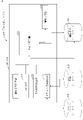
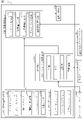
- FIG. 1 is a diagram showing an example of the overall configuration of a driving support system according to Embodiment 1;
- FIG. FIG. 2 is a diagram showing an example of the functional configuration of the vehicle of the driving support system according to the first embodiment;
- FIG. 4 is a diagram showing a configuration example of each database outside the vehicle of the driving support system according to the first embodiment;
- FIG. 4 is a diagram showing an example of a table of a driving situation database according to Embodiment 1;
- FIG. 1 is a diagram showing a configuration example of an in-vehicle control device according to Embodiment 1;
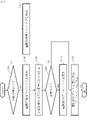
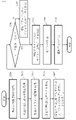
- FIG. 4 is a flowchart showing an example of a processing procedure of a database generating unit according to Embodiment 1; 4 is a flowchart showing an example of a processing procedure of a database generating unit according to Embodiment 1; 4 is a flowchart showing an example of a processing procedure of a driving characteristic estimation unit according to Embodiment 1;
- FIG. 5 is a diagram showing a configuration example of an in-vehicle control device according to a modification of Embodiment 1; The figure which shows the whole structural example of the driving assistance system which concerns on Embodiment 2.
- FIG. 5 is a diagram showing a configuration example of an in-vehicle control device according to a modification of Embodiment 1; The figure which shows the whole structural example of the driving assistance system which concerns on Embodiment 2.
- FIG. 5 is a diagram showing a configuration example of an in-vehicle control device according to a modification of Embodiment 1; The figure which shows the whole structural example of the driving assistance
- FIG. 1 is a diagram showing an overall configuration example of a driving support system 500 according to this embodiment.
- FIG. 2 is a diagram showing a functional configuration example of vehicle 100 of driving support system 500 according to the present embodiment.
- FIG. 3 is a diagram showing a configuration example of each database outside the vehicle 100 of the driving support system 500 according to the present embodiment. An example of the overall functional configuration of the driving support system 500 will be described with reference to FIGS. 1 to 3.
- FIG. 1 is a diagram showing an overall configuration example of a driving support system 500 according to this embodiment.
- FIG. 2 is a diagram showing a functional configuration example of vehicle 100 of driving support system 500 according to the present embodiment.
- FIG. 3 is a diagram showing a configuration example of each database outside the vehicle 100 of the driving support system 500 according to the present embodiment.
- An example of the overall functional configuration of the driving support system 500 will be described with reference to FIGS. 1 to 3.
- the driving assistance system 500 is a system that estimates the driving characteristics of the driver who operates the vehicle 100 and utilizes them for driving assistance.
- the driving support system 500 includes a vehicle 100 , a vehicle model database 140 , a driving situation database 160 and a driver database 190 .
- Vehicle type database 140 , driving situation database 160 , and driver database 190 are provided outside vehicle 100 .
- a vehicle 100 is a vehicle body to which driving assistance is applied.
- the vehicle 100 includes a driving operation detection unit 110 , a GPS (Global Positioning System) device 120 , a driver information acquisition unit 130 , an in-vehicle control device 150 , a driving support unit 170 and an in-vehicle environment detection unit 180 .
- GPS Global Positioning System
- the driving operation detection unit 110 is a driving operation detection unit that detects operation modes of various driving operations provided in the vehicle 100 .
- Driving operation detection unit 110 includes accelerator sensor 111 , brake sensor 112 , steering angle sensor 113 , inertial measurement device 114 , millimeter wave radar 115 , and vehicle-mounted camera 116 .
- the accelerator sensor 111 detects the amount of depression of the accelerator pedal by the driver of the vehicle 100 and outputs the detection result to the in-vehicle control device 150 .
- Brake sensor 112 detects the amount of depression of the brake pedal by the driver of vehicle 100 and outputs the detection result to in-vehicle control device 150 .
- the steering angle sensor 113 detects the steering angle of the driver of the vehicle 100 and outputs the detection result to the in-vehicle control device 150 .
- the inertial measurement device 114 includes a 3-axis acceleration sensor and a 3-axis angular velocity sensor. Inertial measurement device 114 detects three-axis acceleration and three-axis angular velocity generated in vehicle 100 by the operation of the accelerator pedal, brake pedal, and steering by the driver of vehicle 100 , and outputs the detection results to vehicle-mounted control device 150 .
- Millimeter-wave radar 115 detects the inter-vehicle distance, relative speed, and angle with respect to a vehicle traveling in front of vehicle 100 using millimeter-wave radio waves, and outputs the detection result to in-vehicle control device 150 .
- In-vehicle camera 116 captures an image of the environment around vehicle 100 and outputs the captured image to in-vehicle control device 150 .
- GPS device 120 detects the absolute position of vehicle 100 , that is, the latitude and longitude, and outputs the detection result to in-vehicle control device 150 .
- the driver information acquisition unit 130 acquires driver information including attributes of the driver of the vehicle 100 and vehicle type information of the vehicle 100 .
- the driver information includes the driver's age, gender, and driving history of the vehicle 100 as attributes of the driver.
- the driver information also includes vehicle type information of the vehicle 100 .
- the driver information acquiring unit 130 acquires driver information including the age and gender of the driver of the vehicle 100, the driving history of the vehicle 100, and the vehicle type information of the vehicle 100 when the vehicle 100 is started, and outputs the driver information to the on-vehicle control device. output to 150;
- Driver information acquisition unit 130 acquires the age and gender of the driver and the driving history of vehicle 100 from data stored in driver database 190 provided outside vehicle 100 .
- the driver information acquisition unit 130 acquires information corresponding to the driver of the vehicle 100 from data stored in the driver database 190 .
- the driver information acquisition unit 130 also acquires information corresponding to the vehicle 100 such as the operation method, drive system, classification, and model stored in a vehicle model database 140 provided outside the vehicle 100 as vehicle model information.
- the operation methods are classified into, for example, manual transmission and automatic transmission.
- Drive systems include, for example, four-wheel drive, front-engine front-drive, front-engine rear-drive, mid-engine rear-drive, and rear-engine rear-drive. Classifications include, for example, types such as light cars, small cars, and ordinary cars.
- the vehicle model database 140 is a database that stores static information such as operation method, drive system, classification, and model as vehicle model information.
- the vehicle model database 140 outputs vehicle model information corresponding to the vehicle 100 in response to an inquiry from the driver information acquisition unit 130 .
- the in-vehicle control device 150 includes a system control unit 151 , a feature amount calculation unit 152 , a driving environment determination unit 153 , a database creation unit 154 and a driving characteristic estimation unit 155 . Each component of the in-vehicle control device 150 will be described below.
- the system control unit 151 controls various in-vehicle devices such as the engine, brakes, turn lamps, and steering based on the detection results of each sensor input from the driving operation detection unit 110 .
- the detection result of each sensor input from the driving operation detection unit 110 is data indicating the operation mode of various driving operations by the driver of the vehicle 100 .
- Each sensor refers to each of the accelerator sensor 111 , brake sensor 112 , steering angle sensor 113 , inertial measurement device 114 , millimeter wave radar 115 , and vehicle-mounted camera 116 .
- the feature quantity calculation unit 152 calculates a feature quantity representing the characteristics of the driving operation performed by the driver who drives the vehicle 100 .
- the feature amount calculation unit 152 calculates the feature amount of the driver's driving operation of the vehicle 100 based on the detection result of each sensor input from the driving operation detection unit 110 and outputs the feature amount to the database generation unit 154 .
- the driving environment determination unit 153 determines the driving point and the shape of the road on which the vehicle 100 has traveled. Driving environment determination unit 153 then generates driving environment information including the driving point and road shape where vehicle 100 driven by the driver has traveled, and outputs the driving environment information to database generation unit 154 .
- the travel point is the point indicated by the latitude and longitude.
- the shape of the road on which the vehicle traveled the shape of the road, such as going straight, turning left or right, or curving, is determined from the shape of a straight line connecting the consecutively acquired travel points.
- the database generating unit 154 acquires the feature amount of driving operation, driving environment information, driver information of the vehicle 100, and vehicle environment information, associates these information, and stores them in a driving situation database provided outside the vehicle 100. Register with 160.
- the feature quantity of the driving operation is input by the feature quantity calculator 152 .
- Driving environment information is input from driving environment determination unit 153 .
- Driver information of vehicle 100 is input from driver information acquisition unit 130 .
- the driver information of vehicle 100 includes age and sex of the driver of vehicle 100, driving history of vehicle 100, and vehicle type information.
- the in-vehicle environment information is input from the in-vehicle environment detection unit 180, which will be described later.
- the in-vehicle environment information is information representing the setting state in the vehicle 100 by the driver.
- the in-vehicle environment information of vehicle 100 includes seat position, steering wheel position, and mirror position.
- Driving operations of drivers tend to have common features of driving operations in common or similar driving environments.
- the feature amount of the driving operation tends to be different. Therefore, the database generating unit 154 associates the feature amount of the driving operation with the travel point and the road shape included in the travel environment information.
- the feature amounts of the driving operations are common in common or similar driving environments.
- the vehicle type for which the driving operation is performed is different, the characteristic amount of the driving operation tends to be different even if the driving environment is common or similar. Therefore, the feature amount of the driving operation is associated with driver information including age, sex, driving history of the vehicle 100, and vehicle type information of the vehicle 100.
- the driving characteristic estimation unit 155 refers to data from the driving situation database 160 for each combination of driver and vehicle type. Therefore, a unique identifier is assigned to each driver, and this identifier is added to the information registered in the driving situation database 160 described above.
- the identifier identifies the driver.
- the unique identifier for each driver is an identification number such as driver 1 to driver N, for example.
- the database unit 154 refers to data registered by the driver himself/herself and having common or similar driver information and driving environment information from the data stored in the driving situation database 160, determine whether or not the driver has driving experience.
- the database unit 154 determines the presence or absence of driving experience, for example, based on the number of data that could be referred to. If it is determined that there is driving experience, information indicating that there is driving experience, and if it is determined that there is no driving experience, information indicating that there is no driving experience is stored in the above-described driving situation database 160. Attached to information to be registered. For example, information indicating a value of 1 if there is experience and a value of 0 if there is no experience (hereinafter referred to as a driving experience flag) is given.
- the data stored in the driving situation database 160 is compared with the driving experience flag described above among the information registered in the driving situation database 160 to determine whether or not the driver has experience driving the vehicle 100. Determine if there is a change in
- the information regarding the presence or absence of driving experience given to the data stored in the driving situation database 160 is updated. For example, when the driving experience is changed to having driving experience, the value is updated from 0 when there is no experience to 1 when there is experience, and when the driving experience is changed to no driving experience, 1 when there is experience , to a value of 0 for no experience.
- the driving characteristic estimator 155 performs a process of estimating the driving characteristic of the driver currently driving the vehicle 100 based on the driving situation database 160 .
- the driving characteristics are individual differences such as acceleration/deceleration, degree and timing of steering, or the distance to be maintained from the vehicle ahead.
- the driving characteristic estimation unit 155 acquires the characteristic amount of the driving operation, the driving environment information, and the driver information of the driver of the vehicle 100 for the driver of the vehicle 100 to be estimated.
- the driving characteristic estimation unit 155 refers to the driving situation database 160 using the driving environment information and the driver information of the vehicle 100 as extraction conditions.
- the driving characteristic estimation unit 155 refers to common or similar data registered by the driver himself/herself and stored in the driving situation database 160 based on the extraction conditions. At this time, the driving characteristic estimating unit 155 uses the identifier unique to each driver, which is given by the database forming unit 154, to determine whether the driver is the driver himself/herself.
- the driving characteristic estimation unit 155 determines whether the number of data corresponding to the vehicle currently being driven by the driver of the vehicle 100 to be estimated is sufficient for constructing a model for estimating driving characteristics from the referenced data. If determined to be sufficient, the driving characteristic estimator 155 constructs a driving characteristic estimation model using the data of the driver of the vehicle 100 himself. If determined to be insufficient, the driving characteristic estimating unit 155 refers to similar or common data registered by other drivers from the data stored in the driving situation database 160, and determines the item of feature amount in the data. is used to build an estimation model of driving characteristics. The driving characteristic estimating unit 155 estimates the driving characteristics of the constructed model by using the feature amount of the driving operation input from the feature amount calculating unit 152 as input, and outputs the estimation result to the driving support unit 170 .
- FIG. 4 is a diagram showing an example of a table of the driving situation database 160 according to this embodiment.
- the driving situation database 160 is a database provided outside the vehicle 100, and includes characteristic amounts of driving operation, driving environment information including driving points and road shapes, and driving conditions of the driver of the vehicle 100, which are input from the database generating unit 154. Age, gender, driving history of the vehicle 100, and vehicle type information of the vehicle 100 are stored. Further, in the driving situation database 160, whether or not the driver has driving experience of the vehicle is set by a driving experience flag.
- the database generating unit 154 also registers the in-vehicle environment information input from the in-vehicle environment detection unit 180 in the driving situation database 160 as driver information.
- the driving situation database 160 outputs data to be subjected to driving characteristic estimation processing to the driving characteristic estimating section 155 in accordance with an instruction from the driving characteristic estimating section 155 .
- the vehicle type is determined from the model included in the driver information, the table is divided for each vehicle type, and the data is stored.
- the “road shape” stores the determination result of the road shape input from the driving environment determination unit 153 .
- "Identifier” stores an identifier unique to each driver, which is assigned by the database creation unit 154.
- the “location (latitude and longitude)” stores the driving location (latitude and longitude) input from the driving environment determination unit 153 .
- the “feature amount” stores the calculation result of the feature amount of the driving operation input from the feature amount calculation unit 152 .
- the "driver information” includes the age and sex of the driver of vehicle 100 input from driver information acquisition unit 130, the acquisition result of the driving history of vehicle 100, and the seat position, steering wheel Position and mirror position detection results are stored.
- the “driving experience flag” stores the driving experience flag given by the database unit 154 .
- the driving assistance unit 170 performs driving assistance corresponding to the driving characteristics based on the estimation result of the driving characteristics input from the driving characteristics estimation unit 155 .
- ACC Adaptive Cruise Control
- LKA Long Keeping Assist
- the driver when the driver has ridden the vehicle 100 for the second time or later, he/she refers to the seat position, steering wheel position, and mirror position information set by the driver of the vehicle 100 from the database, and determines whether the seat, steering wheel, rearview mirror, Position adjustment of the side mirrors is performed when the in-vehicle control device 150 receives an input from the driver information acquisition unit 130 . Whether or not it is the second or subsequent ride is determined based on whether or not the driver's seat position, steering wheel position, and mirror position for the vehicle 100 are registered in the driving situation database 160 .
- the in-vehicle environment detection unit 180 is a vehicle interior environment detection unit that detects positional information of the in-vehicle environment such as the seat, steering wheel, and mirrors provided in the vehicle 100 and outputs the information to the in-vehicle control device 150 .
- the seat position, steering wheel position, rearview mirror and side mirror positions set by the driver of the vehicle 100 are detected as the information of the in-vehicle environment.
- the driver database 190 is a database provided outside the vehicle 100 that stores the age and gender of the driver and the driving history of the vehicle 100.
- the driver who drives the vehicle 100 Output information corresponding to
- FIG. 5 is a diagram showing a configuration example of an in-vehicle control device 150 according to this embodiment.
- the in-vehicle control device 150 is a computer.
- In-vehicle control device 150 includes processor 910 and other hardware such as memory 921 , auxiliary storage device 922 , input interface 930 , output interface 940 and communication device 950 .
- the processor 910 is connected to other hardware via signal lines and controls these other hardware.
- the in-vehicle control device 150 includes a system control unit 151, a feature amount calculation unit 152, a driving environment determination unit 153, a database creation unit 154, a driving characteristic estimation unit 155, and a storage unit 156 as functional elements.
- a first threshold value 560 and a second threshold value 561 are stored in the storage unit 156 .
- Storage unit 156 is provided in memory 921 . Note that the storage unit 156 may be provided in the auxiliary storage device 922 or may be distributed between the memory 921 and the auxiliary storage device 922 .
- Processor 910 is a device that executes a driving assistance program.
- the driving support program is a program that implements the functions of the system control unit 151 , the feature amount calculation unit 152 , the driving environment determination unit 153 , the database generation unit 154 , and the driving characteristics estimation unit 155 .
- the driver assistance program includes:
- the processor 910 is an IC (Integrated Circuit) that performs arithmetic processing. Specific examples of the processor 910 are a CPU (Central Processing Unit), a DSP (Digital Signal Processor), and a GPU (Graphics Processing Unit).
- the memory 921 is a storage device that temporarily stores data.
- a specific example of the memory 921 is SRAM (Static Random Access Memory) or DRAM (Dynamic Random Access Memory).
- Auxiliary storage device 922 is a storage device that stores data.
- a specific example of the auxiliary storage device 922 is an HDD.
- the auxiliary storage device 922 may be a portable storage medium such as an SD (registered trademark) memory card, CF, NAND flash, flexible disk, optical disk, compact disk, Blu-ray (registered trademark) disk, or DVD.
- SD registered trademark
- SD® is an abbreviation for Secure Digital
- CF is an abbreviation for CompactFlash®.
- DVD is an abbreviation for Digital Versatile Disk.
- the input interface 930 is a port connected to an input device such as a mouse, keyboard, or touch panel.
- the input interface 930 is specifically a USB (Universal Serial Bus) terminal.
- the input interface 930 may be a port connected to a LAN (Local Area Network).
- the output interface 940 is a port to which a cable of an output device such as a display is connected.
- the output interface 940 is specifically a USB terminal or an HDMI (registered trademark) (High Definition Multimedia Interface) terminal.
- the display is specifically an LCD (Liquid Crystal Display).
- Output interface 940 is also referred to as a display interface.
- the communication device 950 has a receiver and a transmitter.
- a communication device 950 is connected to a communication network such as a LAN, the Internet, or a telephone line.
- the communication device 950 is specifically a communication chip or NIC (Network Interface Card).
- the driving support program is executed by the in-vehicle control device 150.
- the driving assistance program is read into the processor 910 and executed by the processor 910 .
- the memory 921 stores not only the driving support program but also the OS (Operating System).
- Processor 910 executes the driving assistance program while executing the OS.
- the driving assistance program and OS may be stored in the auxiliary storage device 922 .
- the driving support program and OS stored in auxiliary storage device 922 are loaded into memory 921 and executed by processor 910 . Note that part or all of the driving assistance program may be incorporated in the OS.
- the in-vehicle control device 150 may include multiple processors that substitute for the processor 910 . These multiple processors share the execution of the driving assistance program. Each processor, like the processor 910, is a device that executes a driving assistance program.
- the data, information, signal values, and variable values that are used, processed, or output by the driving support program are stored in the memory 921, the auxiliary storage device 922, or the register or cache memory within the processor 910.
- the system control unit 151, the feature value calculation unit 152, the driving environment determination unit 153, the database unit 154, and the driving characteristics estimation unit 155 are represented by “circuit”, “process”, “procedure”, “processing”, Alternatively, it may be read as “circuitry”.
- the driving assistance program causes the computer to execute the system control unit 151 , the feature amount calculation unit 152 , the driving environment determination unit 153 , the database generation unit 154 , and the driving characteristics estimation unit 155 .
- "Processing" of measurement processing, component extraction processing, feature amount extraction processing, registration processing, and comparison processing is defined as "program”, “program product”, "computer-readable storage medium storing program", or “recording program You may read it as "computer-readable recording medium”.
- the driving assistance method is a method performed by the in-vehicle control device 150 executing a driving assistance program.
- the driving support program may be stored in a computer-readable recording medium and provided. Also, the driving assistance program may be provided as a
- the operation procedure of the in-vehicle control device 150 corresponds to the driving support method.
- a program that realizes the operation of the in-vehicle control device 150 corresponds to a driving assistance program.
- 6 and 7 are flowcharts showing an example of the processing procedure of the database generating unit 154 according to this embodiment.
- the driver whose driving characteristics are to be estimated is the target driver, and the vehicle currently being driven by the target driver is the target vehicle.
- the target vehicle is the vehicle 100 .
- the database unit 154 determines whether or not the target driver has experience driving the target vehicle. Then, the database generating unit 154 refers to the driving situation database 160 to determine whether or not the driving experience of the target vehicle by the target driver has changed. If determined to have been changed, the database creation unit 154 updates the driving experience of the target vehicle by the target driver in the driving situation database 160 . Specifically, it is as follows.
- step S ⁇ b>101 the database unit 154 acquires the feature amount of the driving operation of the target driver who drives the vehicle 100 from the feature amount calculation unit 152 .
- step S ⁇ b>102 the database unit 154 acquires the driving environment information of the vehicle 100 driven by the target driver from the driving environment determination unit 153 .
- the driving environment information includes driving points and road environments.
- step S ⁇ b>103 the database creation unit 154 acquires driver information including attributes of the target driver, vehicle type information of the vehicle 100 , and in-vehicle environment information from the driver information acquisition unit 130 .
- the driver information includes in-vehicle environment information of the vehicle 100 in addition to the age and sex of the driver of the vehicle 100, driving history of the vehicle 100, and vehicle type information.
- the database generating unit 154 uses the driving situation data accumulated in the driving situation database 160 to determine whether or not the target driver has experience driving the vehicle 100 .
- the database generating unit 154 sets whether or not the subject driver who drives the vehicle 100 has driving experience, which is the determination result, in the driving situation data. Specifically, it is as follows.
- step S ⁇ b>104 the database generating unit 154 generates driving situation data for the target driver who drives the vehicle 100 by using the feature amount of the driving operation, the driving environment information, and the driver information.
- the driving situation data of the target driver who drives the vehicle 100 is given an identifier of the target driver. In the case of a new driver, a new identifier is added to the associated information.
- the database creation unit 154 assigns an existing identifier to the associated information.
- the database unit 154 determines whether the target driver corresponds to the driver information and the driving environment information and the driving situation data of the target driver who drives the vehicle 100. Extract common or similar driving situation data. In other words, from the driving situation data stored in the driving situation database 160, the database generating unit 154 refers to the driving situation data registered by the driver himself/herself and having common or similar driver information and driving environment information. do.
- step S ⁇ b>105 the database creation unit 154 determines whether or not the driver has experience driving the vehicle 100 .
- the database generating unit 154 determines whether or not the target driver has experience driving the vehicle 100 based on the number of extracted driving situation data. Specifically, the database generating unit 154 determines whether or not the number of extracted driving situation data is equal to or greater than a first threshold. If it is not equal to or greater than the first threshold value, it is determined that the target driver has no driving experience of the vehicle 100 . If it is determined that the driver has driving experience, the process proceeds to step S106. If it is determined that the driver has no driving experience, the process proceeds to step S107.
- step S106 the database generating unit 154 adds information indicating that the driver has driving experience to the driving situation data of the target driver who drives the vehicle 100 generated in step S104. For example, the database generating unit 154 adds information indicating a value of 1 when the driver has experience to the driving experience flag of the driving situation data of the target driver who drives the vehicle 100 .
- step S107 the database generating unit 154 adds information indicating that the driver has no driving experience to the driving situation data of the target driver who drives the vehicle 100 generated in step S104. For example, the database generating unit 154 adds information indicating a value of 0 when the driver has no experience to the driving experience flag of the driving situation data of the target driver who drives the vehicle 100 .
- the database generating unit 154 determines whether or not the driving experience of the vehicle 100 by the target driver has been changed. do. Specifically, it is as follows.
- step S108 the database generating unit 154 generates the driving experience flag of the driving situation data of the target driver driving the vehicle 100 generated in step S104, and the driving experience flag of the target driver driving the vehicle 100 stored in the driving situation database 160. It compares with the driving experience flag of the driving situation data. Based on the comparison result, the database generating unit 154 determines whether or not there is a change in the presence or absence of driving experience of the target driver with respect to the vehicle 100 . Specifically, the database generating unit 154 registers the driving experience flag of the data stored in the driving situation database 160 that is common or similar to the data registered in the driving situation database 160 and the data registered in the driving situation database 160. Compare the driving experience flags of the data.
- step S ⁇ b>109 the database creation unit 154 determines whether or not there is a change in the presence or absence of the driver's driving experience with respect to the vehicle 100 . If it is determined that there is a change in the presence or absence of driving experience, the process proceeds to step S110. If it is determined that there is no change in the presence or absence of driving experience, the process proceeds to step S111.
- step S ⁇ b>110 the database unit 154 updates the information on the presence or absence of driving experience attached to the data stored in the driving situation database 160 . For example, when the driver is changed to have driving experience, the database generating unit 154 updates the value of 0, which indicates no experience, to 1, which indicates that the driver has experience. Further, when the driving experience is changed to no driving experience, the database generating unit 154 updates the value of 1 when there is driving experience to the value of 0 when there is no driving experience.
- step S111 the database generating unit 154 stores the driving situation data of the target driver who drives the vehicle 100 in the driving situation database 160 after setting the presence or absence of driving experience in the driving situation data of the target driver who drives the vehicle 100. .
- step S104 the driving situation data for the target driver who currently drives the vehicle 100 is generated, and in steps S105 to S107, a value is set in the driving experience flag of the driving situation data.
- the driving situation data may not be generated, and in steps S105 to S107, the determination result of the driving experience may be set in association with the feature amount of the target driver.
- the database generating unit 154 After updating the driving situation database 160 in step S110, the database generating unit 154 associates the information acquired in steps S101, S102, and S103 so that they form the same tuple on the driving situation database 160, and Generate status data. Specifically, the database generating unit 154 associates the calculation result of the feature amount of the driving operation, the determination result of the travel point and the road shape, and the driver information so that they form the same tuple on the driving situation database 160 .
- the database generating unit 154 assigns and assigns a unique identifier to each driver to the information associated in step S111. For example, the database unit 154 compares the driver information acquired in step S103 with the data stored in the driving situation database 160, and gives a new identifier to the driving situation data in the case of a new driver. On the other hand, in the case of a driver registered in the driving situation database 160, the database creation unit 154 gives an existing identifier to the driving situation data. In step S ⁇ b>111 , the database creation unit 154 registers the identifier-added driving situation data in the driving situation database 160 .
- FIG. 8 is a flowchart showing an example of the processing procedure of the driving characteristic estimation unit 155 according to this embodiment.
- the driving characteristic estimation unit 155 extracts from the driving situation database 160 driving situation data whose vehicle type information and driving environment information included in the driver information are common or similar to the driving situation data of the target driver who drives the vehicle 100 .
- the driving characteristic estimator 155 estimates the driving characteristic of the target driver driving the vehicle 100 based on the extracted driving situation data.
- the driving characteristic estimating unit 155 selects from the driving situation database 160 that the target driver corresponds to the vehicle type information and the driving environment information included in the driver information are common to the driving situation data of the target driver driving the vehicle 100. Or extract similar driving situation data.
- the driving characteristic estimation unit 155 determines whether or not the number of extracted driving situation data is equal to or greater than a second threshold 561. If the number is equal to or greater than the second threshold 561, the driving characteristic is estimated using the extracted driving situation data. Generate a model for On the other hand, if the number of extracted driving situation data is not equal to or greater than the second threshold value 561, the driving characteristic estimation unit 155 corresponds to a driver other than the target driver, and the vehicle type information and driving environment information included in the driver information.
- Driving characteristic estimation unit 155 then generates a model for estimating driving characteristics using the extracted driving situation data.
- step S ⁇ b>201 the driving characteristic estimation unit 155 acquires the feature amount of the driving operation of the target driver who drives the vehicle 100 from the feature amount calculation unit 152 .
- step S ⁇ b>202 the driving characteristic estimation unit 155 acquires the driving environment information of the vehicle 100 driven by the target driver from the driving environment determination unit 153 .
- the driving environment information includes driving points and road environments.
- step S ⁇ b>203 the driving characteristic estimation unit 155 acquires driver information including attributes of the target driver, vehicle type information of the vehicle 100 , and in-vehicle environment information from the driver information acquisition unit 130 .
- the driver information includes the in-vehicle environment of the vehicle 100 in addition to the age and sex of the driver of the vehicle 100, the driving history of the vehicle 100, and the vehicle type information.
- step S204 the driving characteristic estimation unit 155 generates driving situation data by associating the information acquired in steps S201, S202, and S203.
- the driving characteristic estimating unit 155 determines whether the number of data corresponding to the vehicle currently being driven by the driver of the vehicle 100 to be estimated is sufficient for constructing a model for estimating the driving characteristic. I do. Specifically, the driving characteristic estimating unit 155 extracts common or similar data registered by the driver himself/herself stored in the driving situation database 160 using the determination result of the driving point and the road shape and the driver information as extraction conditions. refer. At this time, whether or not the data is for the driver himself/herself is determined using an identifier unique to each driver given by the database generation unit 154 . If it is determined from the referenced data that the number of data is sufficient, the driving characteristic estimation unit 155 proceeds to step S208. On the other hand, if it is determined that the number of data is insufficient, the process proceeds to step S207.
- step S ⁇ b>208 the driving characteristic estimation unit 155 refers to the data of the driver of the vehicle 100 from the data stored in the driving situation database 160 .
- step S207 the driving characteristic estimation unit 155 refers to data stored in the driving situation database 160 for similar or common data registered by other drivers.
- step S209 the driving characteristic estimation unit 155 constructs a driving characteristic estimation model of the vehicle in which the driver is currently riding, using the item of the feature quantity in the data referred to in steps S205 to S208.
- step S210 the driving characteristic estimating unit 155 estimates driving characteristics with respect to the driving characteristic estimation model built in step S209 by using the calculation result of the characteristic quantity of the driving operation input from the characteristic quantity calculating unit 152 as an input. do.
- the driving characteristic estimation unit 155 outputs the driving characteristic estimation result to the driving support unit 170 .
- the functions of system control unit 151, feature quantity calculation unit 152, driving environment determination unit 153, database generation unit 154, and driving characteristic estimation unit 155 are realized by software.
- the functions of the system control unit 151, the feature amount calculation unit 152, the driving environment determination unit 153, the database generation unit 154, and the driving characteristic estimation unit 155 may be realized by hardware.
- the in-vehicle control device 150 includes an electronic circuit 909 in place of the processor 910 .
- FIG. 9 is a diagram showing a configuration example of an in-vehicle control device 150 according to a modification of the present embodiment.
- Electronic circuit 909 is a dedicated electronic circuit that implements the functions of system control unit 151 , feature amount calculation unit 152 , driving environment determination unit 153 , database creation unit 154 , and driving characteristic estimation unit 155 .
- Electronic circuit 909 is specifically a single circuit, a composite circuit, a programmed processor, a parallel programmed processor, a logic IC, GA, ASIC, or FPGA.
- GA is an abbreviation for Gate Array.
- ASIC is an abbreviation for Application Specific Integrated Circuit.
- FPGA is an abbreviation for Field-Programmable Gate Array.
- the functions of the system control unit 151, the feature amount calculation unit 152, the driving environment determination unit 153, the database generation unit 154, and the driving characteristic estimation unit 155 may be realized by one electronic circuit, or may be distributed among a plurality of electronic circuits. may be implemented.
- part of the functions of the system control unit 151, the feature amount calculation unit 152, the driving environment determination unit 153, the database generation unit 154, and the driving characteristic estimation unit 155 are implemented by electronic circuits, and the remaining functions are implemented by software. may be implemented with Also, part or all of the functions of the system control unit 151, the feature amount calculation unit 152, the driving environment determination unit 153, the database generation unit 154, and the driving characteristic estimation unit 155 may be realized by firmware.
- Each processor and electronic circuit is also called processing circuitry.
- the functions of the system control unit 151, the feature quantity calculation unit 152, the driving environment determination unit 153, the database creation unit 154, and the driving characteristic estimation unit 155 are realized by the processing circuitry.
- Embodiment 2 points different from the first embodiment and points added to the first embodiment will be mainly described.
- the same reference numerals are given to the components having the same functions as in the first embodiment, and the description thereof will be omitted.
- FIG. 10 is a diagram showing an overall configuration example of a driving support system 500 according to the second embodiment.
- driver information acquisition unit 130 acquires data from vehicle type database 140 and driver database 190 via digital key 200 .
- the functions of other components are the same as those of the first embodiment.
- Driver information acquisition unit 130 acquires the age and sex of the driver of vehicle 100 , driving history of vehicle 100 , and vehicle type information when vehicle 100 is started, and outputs the acquired information to in-vehicle control device 150 .
- Driver information acquisition unit 130 acquires the age and gender of the driver of vehicle 100 and the driving history of vehicle 100 from data stored in driver database 190 provided outside vehicle 100 via digital key 200. do.
- Driver information acquisition unit 130 acquires information corresponding to the driver of vehicle 100 from data stored in driver database 190 via digital key 200 .
- the driver information acquisition unit 130 acquires information corresponding to the vehicle 100, such as the operation method, drive system, classification, and model, which are stored in a vehicle model database 140 provided outside the vehicle 100, as vehicle model information. 200.
- the digital key 200 is the digital key of the vehicle 100 possessed by the driver.
- the age and sex of the driver of the vehicle 100, the driving history of the vehicle 100, and the vehicle type information are acquired from the vehicle type database 140 and the driver database 190 and output to the driver information acquisition unit 130 that operates when the vehicle 100 is started.
- a digital key when the vehicle 100 is rented by a car sharing service or a rental car service, a device having a communication function such as a smart phone or a smart watch serves as a digital key, and the driver uses the vehicle 100.
- driver information acquisition unit 130 acquires driver information including vehicle type information for which driving operation is performed from the database via digital key 200 .
- the digital key 200 is a service user, that is, a device having a communication function such as a driver's smartphone or smart watch.
- each part of the driving support system has been described as an independent functional block.
- the configuration of the driving support system does not have to be the configuration of the embodiment described above.
- the functional blocks of the driving support system may have any configuration as long as they can implement the functions described in the above embodiments.
- the driving support system may be a system composed of a plurality of devices instead of a single device.
- a plurality of portions of Embodiments 1 and 2 may be combined for implementation.
- one portion of these embodiments may be implemented.
- these embodiments may be implemented in any combination as a whole or in part. That is, in Embodiments 1 and 2, it is possible to freely combine each embodiment, modify any component of each embodiment, or omit any component from each embodiment.
Landscapes
- Engineering & Computer Science (AREA)
- Automation & Control Theory (AREA)
- Transportation (AREA)
- Mechanical Engineering (AREA)
- Physics & Mathematics (AREA)
- Mathematical Physics (AREA)
- Human Computer Interaction (AREA)
- General Physics & Mathematics (AREA)
- Traffic Control Systems (AREA)
- Control Of Driving Devices And Active Controlling Of Vehicle (AREA)
Priority Applications (5)
| Application Number | Priority Date | Filing Date | Title |
|---|---|---|---|
| DE112021007616.7T DE112021007616B4 (de) | 2021-07-08 | 2021-07-08 | Fahrunterstützungssystem, fahrzeuginterne steuerungseinrichtung, fahrunterstützungsverfahren und fahrunterstützungsprogramm |
| JP2021573341A JP7142793B1 (ja) | 2021-07-08 | 2021-07-08 | 運転支援システム、車載制御装置、運転支援方法、および、運転支援プログラム |
| CN202180100138.7A CN117580746A (zh) | 2021-07-08 | 2021-07-08 | 驾驶支援系统、车载控制装置、驾驶支援方法以及驾驶支援程序 |
| PCT/JP2021/025872 WO2023281725A1 (ja) | 2021-07-08 | 2021-07-08 | 運転支援システム、車載制御装置、運転支援方法、および、運転支援プログラム |
| US18/517,523 US12565219B2 (en) | 2021-07-08 | 2023-11-22 | Driving assistance system, in-vehicle control device, driving assistance method and computer readable medium |
Applications Claiming Priority (1)
| Application Number | Priority Date | Filing Date | Title |
|---|---|---|---|
| PCT/JP2021/025872 WO2023281725A1 (ja) | 2021-07-08 | 2021-07-08 | 運転支援システム、車載制御装置、運転支援方法、および、運転支援プログラム |
Related Child Applications (1)
| Application Number | Title | Priority Date | Filing Date |
|---|---|---|---|
| US18/517,523 Continuation US12565219B2 (en) | 2021-07-08 | 2023-11-22 | Driving assistance system, in-vehicle control device, driving assistance method and computer readable medium |
Publications (1)
| Publication Number | Publication Date |
|---|---|
| WO2023281725A1 true WO2023281725A1 (ja) | 2023-01-12 |
Family
ID=83436670
Family Applications (1)
| Application Number | Title | Priority Date | Filing Date |
|---|---|---|---|
| PCT/JP2021/025872 Ceased WO2023281725A1 (ja) | 2021-07-08 | 2021-07-08 | 運転支援システム、車載制御装置、運転支援方法、および、運転支援プログラム |
Country Status (5)
| Country | Link |
|---|---|
| US (1) | US12565219B2 (https=) |
| JP (1) | JP7142793B1 (https=) |
| CN (1) | CN117580746A (https=) |
| DE (1) | DE112021007616B4 (https=) |
| WO (1) | WO2023281725A1 (https=) |
Families Citing this family (1)
| Publication number | Priority date | Publication date | Assignee | Title |
|---|---|---|---|---|
| WO2024069842A1 (ja) * | 2022-09-29 | 2024-04-04 | 日立Astemo株式会社 | 情報処理装置、運転支援システム、および情報処理方法 |
Citations (6)
| Publication number | Priority date | Publication date | Assignee | Title |
|---|---|---|---|---|
| JP2009146254A (ja) * | 2007-12-17 | 2009-07-02 | Nec Corp | 警報装置 |
| JP2013122653A (ja) * | 2011-12-09 | 2013-06-20 | Toyota Motor Corp | 車両ドライバ特定用学習装置及び車両ドライバ特定用学習方法、並びに車両ドライバ特定装置及び車両ドライバ特定方法 |
| JP2019067332A (ja) * | 2017-10-05 | 2019-04-25 | トヨタ自動車株式会社 | 運転支援装置、情報処理装置、運転支援システム、運転支援方法 |
| JP2019172089A (ja) * | 2018-03-28 | 2019-10-10 | トヨタ自動車株式会社 | 車両制御装置 |
| JP2019207544A (ja) * | 2018-05-29 | 2019-12-05 | 三菱電機株式会社 | 走行制御装置、走行制御方法、及び走行制御プログラム |
| JP2020047072A (ja) * | 2018-09-20 | 2020-03-26 | 株式会社デンソー | ドライブレコーダ及び状況情報管理システム |
Family Cites Families (19)
| Publication number | Priority date | Publication date | Assignee | Title |
|---|---|---|---|---|
| JP5821580B2 (ja) * | 2011-12-01 | 2015-11-24 | トヨタ自動車株式会社 | 車両ドライバの特定装置及び車両ドライバの特定方法 |
| ITRM20120540A1 (it) * | 2012-11-07 | 2014-05-08 | Scara | METODO E SISTEMA DI CONTROLLO DELLÂeuro¿EFFICACIA RESIDUA DÂeuro¿INTERAZIONE UOMO-MACCHINA. |
| US9141107B2 (en) * | 2013-04-10 | 2015-09-22 | Google Inc. | Mapping active and inactive construction zones for autonomous driving |
| JP6299289B2 (ja) | 2014-03-06 | 2018-03-28 | 株式会社豊田中央研究所 | パラメータ学習装置、運転支援装置、及びプログラム |
| CN104332054A (zh) * | 2014-11-12 | 2015-02-04 | 钛牛科技(北京)有限公司 | 一种基于obd设备的汽车驾驶事故防范系统 |
| CN107249954B (zh) * | 2014-12-29 | 2020-07-10 | 罗伯特·博世有限公司 | 用于使用个性化驾驶简档操作自主车辆的系统和方法 |
| JP6451583B2 (ja) | 2015-10-08 | 2019-01-16 | 株式会社デンソー | 運転支援装置 |
| US11021165B2 (en) * | 2016-11-28 | 2021-06-01 | Honda Motor Co., Ltd. | Driving assistance device, driving assistance system, program, and control method for driving assistance device |
| JP6735659B2 (ja) | 2016-12-09 | 2020-08-05 | 株式会社日立製作所 | 運転支援情報収集装置 |
| JP6607223B2 (ja) | 2017-03-29 | 2019-11-20 | マツダ株式会社 | 車両運転支援システム及び車両運転支援方法 |
| JP6817685B2 (ja) | 2017-07-07 | 2021-01-20 | Kddi株式会社 | 運転車両信号から個人特性を特定しやすい道路区間を推定する推定装置、プログラム及び方法 |
| JP6555326B2 (ja) | 2017-11-24 | 2019-08-07 | マツダ株式会社 | 運転支援装置 |
| JP2019096186A (ja) | 2017-11-27 | 2019-06-20 | パイオニア株式会社 | 走行難易度判定装置、地図データ、走行難易度判定方法およびプログラム |
| WO2019134110A1 (en) * | 2018-01-05 | 2019-07-11 | Driving Brain International Ltd. | Autonomous driving methods and systems |
| JP6834998B2 (ja) | 2018-01-25 | 2021-02-24 | 日本電気株式会社 | 運転状況監視装置、運転状況監視システム、運転状況監視方法、プログラム |
| JP7236319B2 (ja) | 2019-05-07 | 2023-03-09 | 日立Astemo株式会社 | 車両制御システム |
| DE102019215308A1 (de) | 2019-10-07 | 2021-04-08 | Robert Bosch Gmbh | Verfahren zum Freischalten und/oder Anpassen einer automatisierten Fahrfunktion für ein zumindest teilautomatisiert betreibbares Fahrzeug |
| DE102019215816A1 (de) | 2019-10-15 | 2021-04-15 | Robert Bosch Gmbh | Quantitative Bewertung der Fahrweise von Menschen und/oder Steuerungssystemen |
| US20240083441A1 (en) * | 2020-12-25 | 2024-03-14 | Nec Corporation | Driving evaluation system, learning device, evaluation result output device, method, and program |
-
2021
- 2021-07-08 JP JP2021573341A patent/JP7142793B1/ja active Active
- 2021-07-08 DE DE112021007616.7T patent/DE112021007616B4/de active Active
- 2021-07-08 WO PCT/JP2021/025872 patent/WO2023281725A1/ja not_active Ceased
- 2021-07-08 CN CN202180100138.7A patent/CN117580746A/zh active Pending
-
2023
- 2023-11-22 US US18/517,523 patent/US12565219B2/en active Active
Patent Citations (6)
| Publication number | Priority date | Publication date | Assignee | Title |
|---|---|---|---|---|
| JP2009146254A (ja) * | 2007-12-17 | 2009-07-02 | Nec Corp | 警報装置 |
| JP2013122653A (ja) * | 2011-12-09 | 2013-06-20 | Toyota Motor Corp | 車両ドライバ特定用学習装置及び車両ドライバ特定用学習方法、並びに車両ドライバ特定装置及び車両ドライバ特定方法 |
| JP2019067332A (ja) * | 2017-10-05 | 2019-04-25 | トヨタ自動車株式会社 | 運転支援装置、情報処理装置、運転支援システム、運転支援方法 |
| JP2019172089A (ja) * | 2018-03-28 | 2019-10-10 | トヨタ自動車株式会社 | 車両制御装置 |
| JP2019207544A (ja) * | 2018-05-29 | 2019-12-05 | 三菱電機株式会社 | 走行制御装置、走行制御方法、及び走行制御プログラム |
| JP2020047072A (ja) * | 2018-09-20 | 2020-03-26 | 株式会社デンソー | ドライブレコーダ及び状況情報管理システム |
Also Published As
| Publication number | Publication date |
|---|---|
| US20240083446A1 (en) | 2024-03-14 |
| CN117580746A (zh) | 2024-02-20 |
| DE112021007616T5 (de) | 2024-03-14 |
| DE112021007616B4 (de) | 2024-11-14 |
| US12565219B2 (en) | 2026-03-03 |
| JPWO2023281725A1 (https=) | 2023-01-12 |
| JP7142793B1 (ja) | 2022-09-27 |
Similar Documents
| Publication | Publication Date | Title |
|---|---|---|
| US11934955B2 (en) | Neural network based facial analysis using facial landmarks and associated confidence values | |
| US11854401B2 (en) | Temporal information prediction in autonomous machine applications | |
| US11579629B2 (en) | Temporal information prediction in autonomous machine applications | |
| US11636609B2 (en) | Gaze determination machine learning system having adaptive weighting of inputs | |
| US12332079B2 (en) | High definition (HD) map content representation and distribution for autonomous vehicles | |
| US12260017B2 (en) | Gaze determination machine learning system having adaptive weighting of inputs | |
| WO2020198084A1 (en) | Iterative spatial graph generation | |
| CN107577227A (zh) | 操作无人驾驶车辆的方法、装置和数据处理系统 | |
| US20230311855A1 (en) | Perception-based parking assistance for autonomous machine systems and applications | |
| US12416506B2 (en) | Translating route information between data structures for autonomous systems and applications | |
| US12586346B2 (en) | Multi-sensor object fusion and tracking for autonomous systems and applications | |
| WO2022251697A1 (en) | Perception-based sign detection and interpretation for autonomous machine systems and applications | |
| US20260024306A1 (en) | Hardware-based feature tracker for autonomous systems and applications | |
| CN116824909A (zh) | 信息处理装置、移动体、系统、信息处理方法、计算机可读存储介质和服务器 | |
| CN114252081B (zh) | 定位方法、装置、设备及存储介质 | |
| JP7142793B1 (ja) | 運転支援システム、車載制御装置、運転支援方法、および、運転支援プログラム | |
| US20230368455A1 (en) | Processing pipelines for three-dimensional data in autonomous systems and applications | |
| CN111762191B (zh) | 用于在车辆中提供四维效果的装置和方法 | |
| CN113442931A (zh) | 路面摩擦系数计算方法、终端设备及介质和车辆控制方法及系统 | |
| US20260037264A1 (en) | Computer architecture to validate image frame and image line data in a single pass | |
| US12513087B2 (en) | Optimizing data transmission in location-aware systems | |
| US12535575B2 (en) | Object tracking using radar for autonomous systems and applications | |
| US20240411008A1 (en) | Range rate prediction for autonomous systems and applications | |
| US20260128995A1 (en) | Optimizing data transmission in location-aware systems | |
| US20250368186A1 (en) | Estimating surface curvature for autonomous or semi autonomous systems and applications |
Legal Events
| Date | Code | Title | Description |
|---|---|---|---|
| ENP | Entry into the national phase |
Ref document number: 2021573341 Country of ref document: JP Kind code of ref document: A |
|
| 121 | Ep: the epo has been informed by wipo that ep was designated in this application |
Ref document number: 21949358 Country of ref document: EP Kind code of ref document: A1 |
|
| WWE | Wipo information: entry into national phase |
Ref document number: 112021007616 Country of ref document: DE |
|
| WWE | Wipo information: entry into national phase |
Ref document number: 202347089951 Country of ref document: IN Ref document number: 202180100138.7 Country of ref document: CN |
|
| 122 | Ep: pct application non-entry in european phase |
Ref document number: 21949358 Country of ref document: EP Kind code of ref document: A1 |