WO2021187075A1 - 多環芳香族炭化水素化合物、その結晶およびその製造方法 - Google Patents
多環芳香族炭化水素化合物、その結晶およびその製造方法 Download PDFInfo
- Publication number
- WO2021187075A1 WO2021187075A1 PCT/JP2021/007767 JP2021007767W WO2021187075A1 WO 2021187075 A1 WO2021187075 A1 WO 2021187075A1 JP 2021007767 W JP2021007767 W JP 2021007767W WO 2021187075 A1 WO2021187075 A1 WO 2021187075A1
- Authority
- WO
- WIPO (PCT)
- Prior art keywords
- polycyclic aromatic
- aromatic hydrocarbon
- hydrocarbon compound
- formula
- group
- Prior art date
- Legal status (The legal status is an assumption and is not a legal conclusion. Google has not performed a legal analysis and makes no representation as to the accuracy of the status listed.)
- Ceased
Links
Images


Classifications
-
- C—CHEMISTRY; METALLURGY
- C07—ORGANIC CHEMISTRY
- C07C—ACYCLIC OR CARBOCYCLIC COMPOUNDS
- C07C43/00—Ethers; Compounds having groups, groups or groups
- C07C43/02—Ethers
- C07C43/20—Ethers having an ether-oxygen atom bound to a carbon atom of a six-membered aromatic ring
- C07C43/23—Ethers having an ether-oxygen atom bound to a carbon atom of a six-membered aromatic ring containing hydroxy or O-metal groups
Definitions
- the present invention relates to a polycyclic aromatic hydrocarbon compound, a crystal thereof, and a method for producing the same.
- Patent Document 1 discloses that the refractive index of a polycarbonate resin made of BN2EO is 1.668.
- Patent Document 2 discloses that the refractive index of a polycarbonate resin composed of 6,6'-diphenyl-2,2'-bis (2-hydroxyethoxy) -1,1'-binaphthalene is 1.679. Has been done. However, with the rapid technological innovation in recent years, further improvement of the refractive index is required.
- An object of the present invention is to provide a novel polycyclic aromatic hydrocarbon compound having a high refractive index, a crystal thereof, and a method for producing the same.
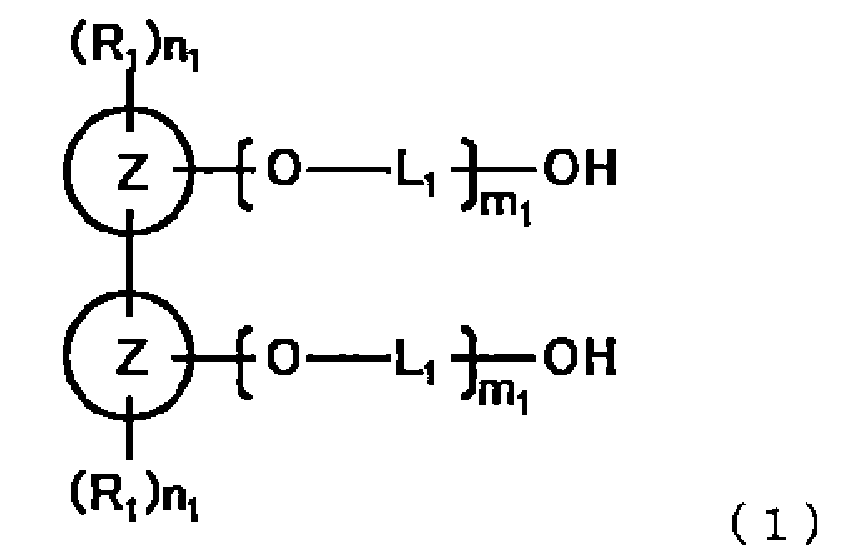
- a polycyclic aromatic hydrocarbon compound represented by the following formula (1) A polycyclic aromatic hydrocarbon compound represented by the following formula (1).
- Z is a polycyclic aromatic hydrocarbon in which three benzene rings are bonded
- L 1 is an alkylene group having 1 to 15 carbon atoms
- R 1 is a hydrocarbon group having 1 to 12 carbon atoms.
- M 1 is an integer of 1 to 5
- n 1 is an integer of 0 to 8.
- ⁇ Aspect 2 The polycyclic aromatic hydrocarbon compound according to embodiment 1, wherein Z in the formula (1) is phenanthrene.
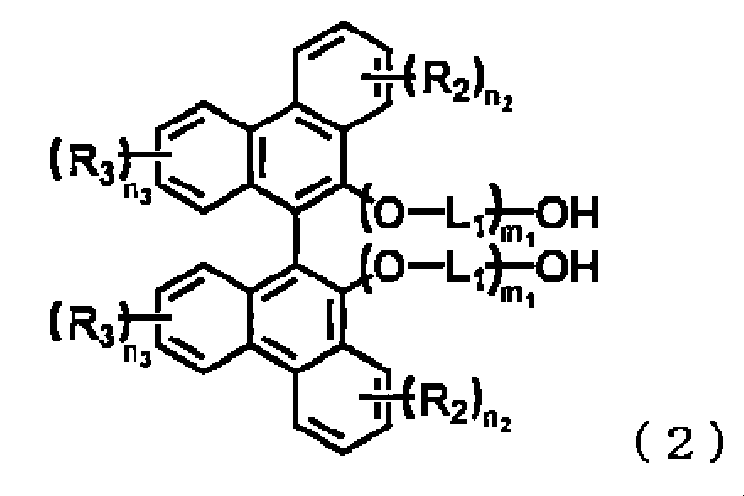
- ⁇ Aspect 3 The polycyclic aromatic hydrocarbon compound according to Aspect 1 or 2, wherein the polycyclic aromatic hydrocarbon compound represented by the formula (1) is a polycyclic aromatic hydrocarbon compound represented by the following formula (2). ..
- R 2 and R 3 are hydrocarbon groups having 1 to 12 carbon atoms, n 2 and n 3 are integers of 0 to 4, and L 1 and m 1 are the same as in the above formula (1). Is.
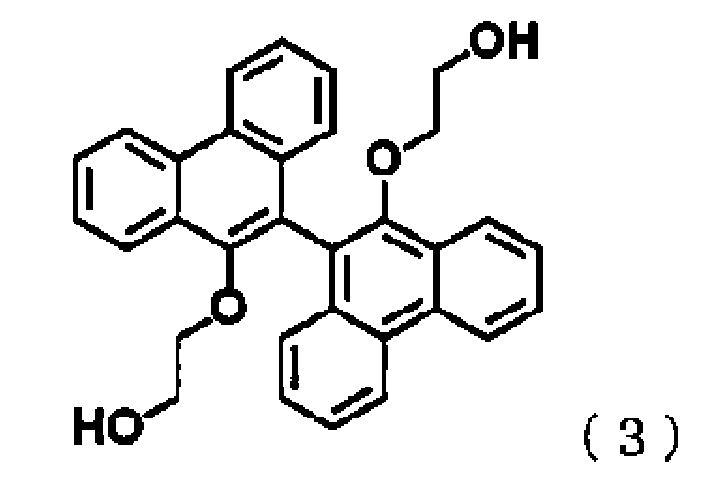
- Aspect 4 Aspect in which the polycyclic aromatic hydrocarbon compound represented by the formula (1) is 10,10'-bis (2-hydroxyethoxy) -9,9'-biphenanthrene represented by the following formula (3).
- ⁇ Aspect 5 The polycyclic aromatic hydrocarbon compound according to any one of aspects 1 to 4, wherein the HPLC purity is 95 area% or more.
- ⁇ Aspect 6 The polycyclic aromatic compound according to any one of aspects 1 to 5, wherein the Hazen unit color number (hereinafter, also referred to as APHA) of a 5% by weight solution in which a polycyclic aromatic hydrocarbon compound is dissolved in dimethylformamide is 100 or less. Hydrocarbon compounds.
- ⁇ Aspect 7 The crystal of the polycyclic aromatic hydrocarbon compound according to aspect 4, which has an endothermic peak by differential scanning calorimetry in the range of 230 to 250 ° C.
- a method for producing a polycyclic aromatic hydrocarbon compound represented by the formula (1) by reacting a polycyclic aromatic hydrocarbon compound represented by the following formula (4) with an ethylene carbonate in the presence of a base The method for producing a polycyclic aromatic hydrocarbon compound according to Aspect 1, wherein an aprotonic polar solvent is used as a reaction solvent.
- Z is a polycyclic aromatic hydrocarbon in which three benzene rings are bonded, R 1 is a hydrocarbon group having 1 to 12 carbon atoms, and n 1 is an integer of 0 to 8.
- Aspect 9 The method for producing a polycyclic aromatic hydrocarbon compound according to Aspect 8, which uses dimethylformamide as a reaction solvent.
- Z is a polycyclic aromatic hydrocarbon in which three benzene rings are bonded
- L 1 is an alkylene group having 1 to 15 carbon atoms
- R 1 is a hydrocarbon group having 1 to 12 carbon atoms.
- M 1 is an integer of 1 to 5
- n 1 is an integer of 0 to 8.
- Z in the formula (1) is a polycyclic aromatic hydrocarbon in which three benzene rings are bonded, and anthracene, phenanthrene, and phenanthrene are preferable, and phenanthrene is more preferable.
- L 1 in the formula (1) is an alkylene group having 1 to 15 carbon atoms, preferably an alkylene group having 1 to 12 carbon atoms, and more preferably an alkylene group having 1 to 4 carbon atoms. It is preferably an ethylene group, and particularly preferably an ethylene group.
- R 1 in the formula (1) is a hydrocarbon group having 1 to 12 carbon atoms
- the hydrocarbon group include an alkyl group, a cycloalkyl group, an aryl group, a naphthyl group, and an aralkyl group.
- Specific examples of the alkyl group include C 1-6 alkyl groups such as methyl group, ethyl group, propyl group, isopropyl group, butyl group and t-butyl group, more preferably C 1-4 alkyl group, and C 1 A -3 alkyl group is more preferable, and a methyl group and an ethyl group are particularly preferable.
- cycloalkyl group a C 5-8 cycloalkyl group such as a cyclopentyl group or a cyclohexyl group is preferable, and a C 5-6 cycloalkyl group is more preferable.
- a phenyl group an alkylphenyl group (mono or dimethylphenyl group, tolyl group, 2-methylphenyl group, xsilyl group, etc.) and a naphthyl group are preferable, and a phenyl group is more preferable.
- a C 6-10 aryl-C 1-4 alkyl group such as a benzyl group and a phenethyl group can be preferably exemplified.
- M 1 in Formula (1) is an integer of 1 to 5, preferably an integer of 1 or 2, and more preferably 1.
- N 1 in the formula (1) is an integer of 0 to 8, preferably an integer of 0 to 4, and more preferably 0.
- the biphenanthrene compound represented by the following formula (2) is preferable.
- R 2 and R 3 are hydrocarbon groups having 1 to 12 carbon atoms, n 2 and n 3 are integers of 0 to 4, and L 1 and m 1 are the same as in the above formula (1). Is.
- R 2 and R 3 in the formula (2) are hydrocarbon groups having 1 to 12 carbon atoms, and are specifically the same as R 1 in the above formula (1).
- N 2 and n 3 in the formula (2) are integers of 0 to 4, preferably an integer of 0 to 2, and more preferably 0.
- L 1, m 1 in formula (2) is the same as L 1, m 1 in Formula (1) described above.
- biphenanthrene compound represented by the formula (2) examples include 2,2'-bis (2-hydroxyethoxy) -1,1'-biphenanthrene and 3,3'-bis (2-hydroxyethoxy)-.
- 4,4'-biphenanthrene, 10,10'-bis (2-hydroxyethoxy) -9,9'-biphenanthrene is preferable, and 10,10'-bis (2-hydroxy) represented by the following formula (3) is preferable.
- Ethoxy) -9,9'-biphenanthrene is particularly preferred.
- the polycyclic aromatic hydrocarbon compound of the present invention preferably has an HPLC purity measured by HPLC of 95 area% or more, more preferably 97 area% or more, and further preferably 98 area% or more. ..
- the polycyclic aromatic hydrocarbon compound of the present invention preferably has an APHA of 100 or less, more preferably 70 or less, and 50 or less in a 5% by weight solution in which the compound is dissolved in dimethylformamide. Is even more preferable.
- APHA is 100 or less, the hue of the compound becomes good, which is preferable.
- Crystals of polycyclic aromatic hydrocarbon compounds preferably has an endothermic peak in the range of 230 to 250 ° C. by differential scanning calorimetry, and more preferably in the range of 235 to 250 ° C. It is more preferable to have it in the range of 240 to 248 ° C, and particularly preferably to have it in the range of 243 to 246 ° C.
- the crystal of the compound represented by the above formula (3) obtained in the present invention is excellent in processability, productivity and handleability, and also has good hue and purity.
- the polycyclic aromatic hydrocarbon compound of the present invention is produced by reacting a polycyclic aromatic hydrocarbon compound represented by the following formula (4) with ethylene carbonate in the presence of an aprotonic polar solvent and a base. be able to.
- Z is a polycyclic aromatic hydrocarbon in which three benzene rings are bonded, R 1 is a hydrocarbon group having 1 to 12 carbon atoms, and n 1 is an integer of 0 to 8.
- Examples of the aprotonic polar solvent used in the production method of the present invention include N-methylpyrrolidone, dichloromethane, tetrahydrofuran, ethyl acetate, acetone, dimethylformamide, acetonitrile, dimethyl sulfoxide, ethylene carbonate, propylene carbonate and the like, and dimethylformamide is used. preferable.
- the amount of the aprotic polar solvent used in the production method of the present invention is preferably 0.1 to 10 times by weight, preferably 0.3 to 10 times the weight of the polycyclic aromatic hydrocarbon compound represented by the formula (4). 7 times by weight is more preferable, and 0.5 to 5 times by weight is even more preferable. If the amount of the solvent used is less than 0.1 times by weight, the polycyclic aromatic hydrocarbon compound represented by the formula (4) and the produced polycyclic aromatic hydrocarbon compound represented by the formula (1) are difficult to stir. May become. If the amount of solvent used is more than 10 times by weight, the reaction time may be delayed and the volumetric efficiency may decrease, resulting in deterioration of production efficiency and economic disadvantage. In addition, long-term heating operations may increase side reactants. May cause coloring.
- the amount (molar ratio) of the polycyclic aromatic hydrocarbon compound represented by the formula (4) and ethylene carbonate used is preferably 1: 1.9 to 1: 2.9, and 1: 1. 2 to 1: 2.7 is more preferable, and 1: 2.1 to 1: 2.5 is even more preferable. If the amount of ethylene carbonate used is less than 1: 1.9, the reaction time may be long. Further, the polycyclic aromatic hydrocarbon compound represented by the formula (4) remains unreacted, and 1 mol of the polycyclic aromatic hydrocarbon compound represented by the formula (4) reacts with 1 mol of ethylene carbonate. Yield and purity may decrease due to the increase in the amount of by-products.
- the amount of ethylene carbonate used is more than 1: 2.9, the amount of by-products obtained by reacting 1 mol of the polycyclic aromatic hydrocarbon compound represented by the formula (4) with 3 mol or more of ethylene carbonate increases. The rate and purity may decrease.
- the reaction temperature is not particularly limited, but is preferably 150 ° C. or lower, more preferably 140 to 40 ° C., and even more preferably 130 to 70 ° C. If the reaction temperature is too high, it may cause a decrease in yield or a deterioration in hue due to an increase in side reactants. If the reaction temperature is too low, the reaction may not proceed rapidly.
- Examples of the base used in the production method of the present invention include potassium hydroxide, sodium hydroxide, barium hydroxide, magnesium oxide, sodium carbonate, potassium carbonate and the like, and potassium hydroxide, sodium hydroxide and potassium carbonate are preferable, and carbonic acid is preferable. Potassium is more preferred.
- the amount of the base used in the production method of the present invention is not particularly limited, but is 0.01 to 0.5 mol with respect to 1 mol of the polycyclic aromatic hydrocarbon compound represented by the formula (4). Is preferable, and 0.05 to 0.3 mol is more preferable. If the amount of base used is small, the reaction may not proceed or the reaction may be delayed. If the amount used is large, the yield and purity may decrease due to the increase in by-products, which may cause coloring.
- Refractive index (nD) The compound obtained in the example was dissolved in dimethyl sulfoxide to prepare a solution having a predetermined concentration, and the refractive index of each concentration solution was measured using a DR-M2 Abbe refractometer manufactured by ATAGO to determine the D-line refractive index at 25 ° C. It was measured. The value extrapolated to a concentration of 100% from the measurement results of each concentration was taken as the refractive index (nD) of the compound obtained in the example.
- APHA measurement A solution prepared by dissolving 0.5 g of a measurement sample in 10 ml of dimethylformamide was placed in a test tube having a diameter of 25 mm and measured using TZ6000 manufactured by Nippon Denshoku Kogyo Co., Ltd.
- Example 1 In a nitrogen atmosphere, in a flask equipped with a stirrer, a cooler, and a thermometer, 10.00 g of 10,10'-dihydroxy-9,9'-biphenanthrene, 5.24 g of ethylene carbonate, 0.36 g of potassium carbonate, and 20 ml of dimethylformamide. was added, and the mixture was reacted at 120 ° C. for 5 hours. After cooling the reaction solution, 15 ml of dimethylformamide and 2 ml of a 10% NaOH aqueous solution were added, and alkali treatment was carried out at 110 ° C. for 3 hours. After cooling the reaction solution, the reaction solution was added dropwise to the distilled water with stirring, and the obtained crystals were recovered.
- the recovered crystals were washed with distilled water in a slurry, and then the crystals were recovered and dried to obtain 10.3 g of white crystals of 10,10'-bis (2-hydroxyethoxy) -9,9'-biphenanthrene (yield). Rate 84%).
- the purity of the obtained crystals was 97.27%, APHA was 70, the endothermic peak by differential scanning calorimetry was 237 ° C, and the refractive index was 1.713.
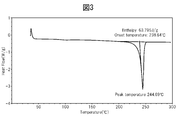
- the NMR chart of the obtained 10,10'-bis (2-hydroxyethoxy) -9,9'-biphenanthrene is shown in FIG. 1, and the differential scanning calorimetry result is shown in FIG.
- Example 2 After dissolving 10.3 g of the crystal obtained in Example 1 in 10 ml of chloroform, 100 ml of hexane was added and recrystallized. The crystals were recovered and dried to obtain 8.4 g of white crystals of 10,10'-bis (2-hydroxyethoxy) -9,9'-biphenanthrene. The purity of the obtained crystals was 98.96%, APHA was 50, and the endothermic peak by differential scanning calorimetry was 245 ° C. The results of differential scanning calorimetry analysis of the obtained crystals are shown in FIG.
- Example 1 The reaction was carried out in the same manner as in Example 1 except that 20 ml of dimethylformamide in Example 1 was changed to 70 ml of toluene and the reaction temperature was changed from 120 ° C. to 110 ° C.
- the target product of 10,10'-bis (2-hydroxyethoxy) -9,9'-biphenanthrene was about 4%, and the raw material of 10,10'-dihydroxy.
- novel polycyclic aromatic hydrocarbon compound obtained in the present invention has a high refractive index, it is suitable as a monomer for forming a resin constituting an optical member represented by an optical lens or an optical film.
Landscapes
- Chemical & Material Sciences (AREA)
- Organic Chemistry (AREA)
- Organic Low-Molecular-Weight Compounds And Preparation Thereof (AREA)
Abstract
下記式(1)で表される多環芳香族炭化水素化合物。 (式中、Zは3つのベンゼン環が結合した多環芳香族炭化水素であり、L1は炭素原子数1~15のアルキレン基であり、R1は炭素原子数1~12の炭化水素基であり、m1は1~5の整数であり、n1は0~8の整数である。)
Description
本発明は、多環芳香族炭化水素化合物、その結晶およびその製造方法に関する。
近年、2,2’-ビス(2-ヒドロキシエトキシ)-1,1’-ビナフタレン(BN2EOと省略することがある)に代表される、ビナフタレン骨格を有するアルコールを原料としたポリカーボネート、ポリエステルなどの熱可塑性樹脂材料は、光学特性、耐熱性、成形性などに優れることから、光学レンズや光学シートなどの光学部材として注目されている。例えば、特許文献1には、BN2EOからなるポリカーボネート樹脂の屈折率は1.668であることが開示されている。また、特許文献2には、6,6’-ジフェニル-2,2’-ビス(2-ヒドロキシエトキシ)-1,1’-ビナフタレンからなるポリカーボネート樹脂の屈折率は1.697であることが開示されている。しかしながら、近年の急速な技術革新に伴い、屈折率のさらなる向上が求められている。
本発明は、高屈折率である新規な多環芳香族炭化水素化合物、その結晶およびその製造方法を提供することを目的とする。
本発明者らは、以下の態様を有する本発明により、上記課題を解決できることを見出した。
《態様1》
下記式(1)で表される多環芳香族炭化水素化合物。
《態様1》
下記式(1)で表される多環芳香族炭化水素化合物。
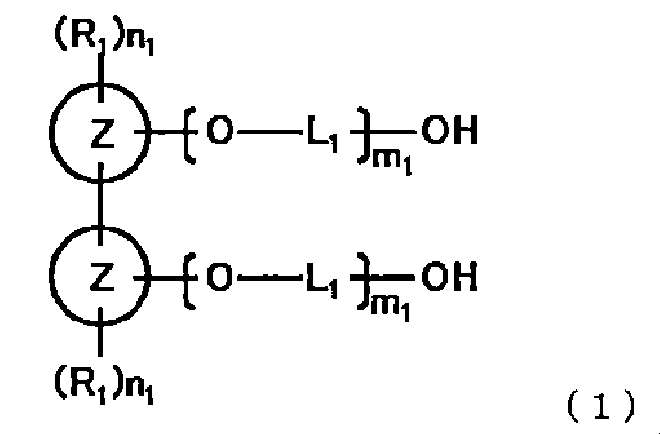
(式中、Zは3つのベンゼン環が結合した多環芳香族炭化水素であり、L1は炭素原子数1~15のアルキレン基であり、R1は炭素原子数1~12の炭化水素基であり、m1は1~5の整数であり、n1は0~8の整数である。)
《態様2》
前記式(1)中のZがフェナントレンである、態様1に記載の多環芳香族炭化水素化合物。
《態様3》
前記式(1)で表される多環芳香族炭化水素化合物が下記式(2)で表される多環芳香族炭化水素化合物である、態様1または2に記載の多環芳香族炭化水素化合物。
前記式(1)中のZがフェナントレンである、態様1に記載の多環芳香族炭化水素化合物。
《態様3》
前記式(1)で表される多環芳香族炭化水素化合物が下記式(2)で表される多環芳香族炭化水素化合物である、態様1または2に記載の多環芳香族炭化水素化合物。
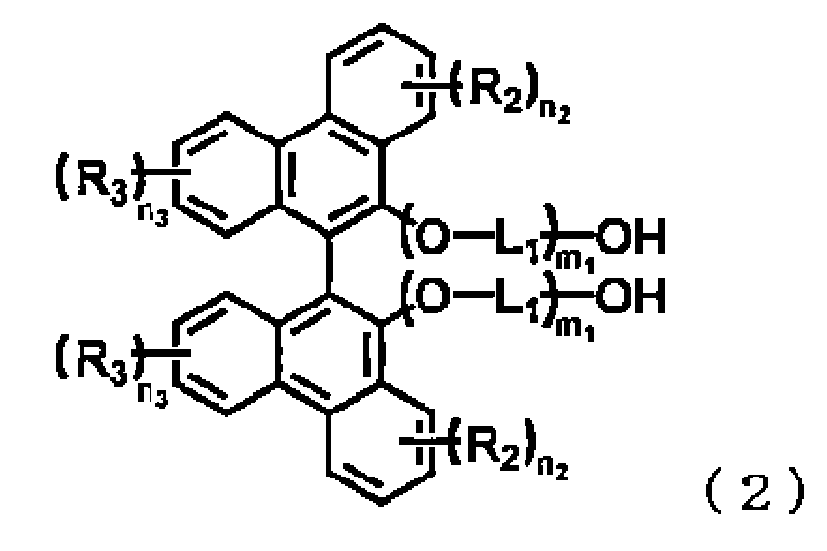
(式中、R2、R3は炭素原子数1~12の炭化水素基であり、n2、n3は0~4の整数であり、L1、m1は前記式(1)と同様である。)
《態様4》
前記式(1)で表される多環芳香族炭化水素化合物が下記式(3)で表される10,10’-ビス(2-ヒドロキシエトキシ)-9,9’-ビフェナントレンである、態様1~3のいずれかに記載の多環芳香族炭化水素化合物。
前記式(1)で表される多環芳香族炭化水素化合物が下記式(3)で表される10,10’-ビス(2-ヒドロキシエトキシ)-9,9’-ビフェナントレンである、態様1~3のいずれかに記載の多環芳香族炭化水素化合物。
《態様5》
HPLC純度が95面積%以上である、態様1~4のいずれかに記載の多環芳香族炭化水素化合物。
《態様6》
多環芳香族炭化水素化合物をジメチルホルムアミドに溶解させた5重量%溶液のハーゼン単位色数(以下、APHAともいう)が100以下である、態様1~5のいずれかに記載の多環芳香族炭化水素化合物。
《態様7》
230~250℃の範囲に示差走査熱量分析による吸熱ピークを有する、態様4に記載の多環芳香族炭化水素化合物の結晶。
《態様8》
下記式(4)で表される多環芳香族炭化水素化合物とエチレンカーボネートとを塩基存在下で反応させて、前記式(1)で表される多環芳香族炭化水素化合物を製造する方法であって、反応溶媒として非プロトン性極性溶媒を用いる、態様1に記載の多環芳香族炭化水素化合物の製造方法。
HPLC純度が95面積%以上である、態様1~4のいずれかに記載の多環芳香族炭化水素化合物。
《態様6》
多環芳香族炭化水素化合物をジメチルホルムアミドに溶解させた5重量%溶液のハーゼン単位色数(以下、APHAともいう)が100以下である、態様1~5のいずれかに記載の多環芳香族炭化水素化合物。
《態様7》
230~250℃の範囲に示差走査熱量分析による吸熱ピークを有する、態様4に記載の多環芳香族炭化水素化合物の結晶。
《態様8》
下記式(4)で表される多環芳香族炭化水素化合物とエチレンカーボネートとを塩基存在下で反応させて、前記式(1)で表される多環芳香族炭化水素化合物を製造する方法であって、反応溶媒として非プロトン性極性溶媒を用いる、態様1に記載の多環芳香族炭化水素化合物の製造方法。

(式中、Zは3つのベンゼン環が結合した多環芳香族炭化水素であり、R1は炭素原子数1~12の炭化水素基であり、n1は0~8の整数である。)
《態様9》
反応溶媒としてジメチルホルムアミドを用いる、態様8に記載の多環芳香族炭化水素化合物の製造方法。
反応溶媒としてジメチルホルムアミドを用いる、態様8に記載の多環芳香族炭化水素化合物の製造方法。
本発明によれば、高屈折率であり、色相、純度ともに良好である新規な多環芳香族炭化水素化合物を提供することができる。また、加工性、生産性、取扱性に優れる新規な多環芳香族炭化水素化合物の結晶を得ることができる。
《多環芳香族炭化水素化合物》
本発明における新規な多環芳香族炭化水素化合物は下記式(1)で表される。
本発明における新規な多環芳香族炭化水素化合物は下記式(1)で表される。

(式中、Zは3つのベンゼン環が結合した多環芳香族炭化水素であり、L1は炭素原子数1~15のアルキレン基であり、R1は炭素原子数1~12の炭化水素基であり、m1は1~5の整数であり、n1は0~8の整数である。)
式(1)中のZは3つのベンゼン環が結合した多環芳香族炭化水素であり、アントラセン、フェナントレン、フェナレンが好ましく、フェナントレンがより好ましい。
式(1)中のL1は炭素原子数1~15のアルキレン基であり、炭素原子数1~12のアルキレン基であることが好ましく、炭素原子数1~4のアルキレン基であることがより好ましく、エチレン基であることが特に好ましい。
式(1)中のR1は炭素原子数1~12の炭化水素基であり、炭化水素基としては、アルキル基、シクロアルキル基、アリール基、ナフチル基、アラルキル基などが例示できる。アルキル基の具体例としては、メチル基、エチル基、プロピル基、イソプロピル基、ブチル基、t-ブチル基などのC1-6アルキル基が好ましく、C1-4アルキル基がより好ましく、C1-3アルキル基がさらに好ましく、その中でメチル基、エチル基が特に好ましい。
また、シクロアルキル基の具体例としては、シクロペンチル基、シクロへキシル基などのC5-8シクロアルキル基が好ましく、C5-6シクロアルキル基がより好ましい。
また、アリール基の具体例としては、フェニル基、アルキルフェニル基(モノまたはジメチルフェニル基、トリル基、2-メチルフェニル基、キシリル基など)、ナフチル基が好ましく、フェニル基がより好ましい。
また、アラルキル基の具体例としては、ベンジル基、フェネチル基などのC6-10アリール-C1-4アルキル基などが好ましく例示できる。
式(1)中のm1は1~5の整数であり、1~2の整数であることが好ましく、1であることがより好ましい。
式(1)中のn1は0~8の整数であり、0~4の整数であることが好ましく、0であることがより好ましい。
また、式(1)で表される多環芳香族炭化水素化合物の中で、下記式(2)で表されるビフェナントレン化合物が好ましい。
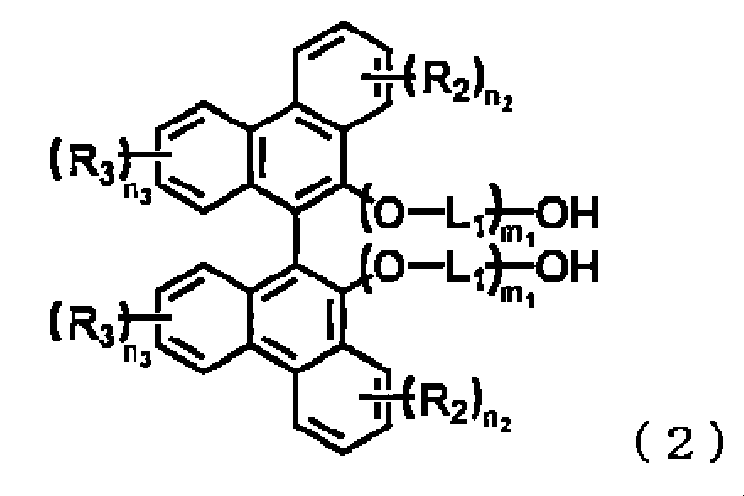
(式中、R2、R3は炭素原子数1~12の炭化水素基であり、n2、n3は0~4の整数であり、L1、m1は前記式(1)と同様である。)
式(2)中のR2、R3は炭素原子数1~12の炭化水素基であり、具体的には上述した式(1)中のR1と同様である。
式(2)中のn2、n3は0~4の整数であり、0~2の整数であることが好ましく、0であることがより好ましい。
式(2)中のL1、m1は上述した式(1)中のL1、m1と同様である。
式(2)で表されるビフェナントレン化合物の具体例として、2,2’-ビス(2-ヒドロキシエトキシ)-1,1’-ビフェナントレン、3,3’-ビス(2-ヒドロキシエトキシ)-4,4’-ビフェナントレン、10,10’-ビス(2-ヒドロキシエトキシ)-9,9’-ビフェナントレンが好ましく、下記式(3)で表される10,10’-ビス(2-ヒドロキシエトキシ)-9,9’-ビフェナントレンが特に好ましい。

本発明の多環芳香族炭化水素化合物は、HPLCで測定したHPLC純度が95面積%以上であることが好ましく、97面積%以上であることがより好ましく、98面積%以上であることがさらに好ましい。
本発明の多環芳香族炭化水素化合物は、該化合物をジメチルホルムアミドに溶解させた5重量%溶液のAPHAが100以下であることが好ましく、70以下であることがより好ましく、50以下であることがさらに好ましい。APHAが100以下であると化合物の色相が良好となり好ましい。
《多環芳香族炭化水素化合物の結晶》
本発明で得られる上記式(3)で表される化合物の結晶は、示差走査熱量分析による吸熱ピークを230~250℃の範囲に有することが好ましく、235~250℃の範囲に有することがより好ましく、240~248℃の範囲に有することがさらに好ましく、243~246℃の範囲に有することが特に好ましい。本発明で得られる上記式(3)で表される化合物の結晶は、加工性、生産性、取扱性に優れ、かつ、色相、純度ともに良好である。
本発明で得られる上記式(3)で表される化合物の結晶は、示差走査熱量分析による吸熱ピークを230~250℃の範囲に有することが好ましく、235~250℃の範囲に有することがより好ましく、240~248℃の範囲に有することがさらに好ましく、243~246℃の範囲に有することが特に好ましい。本発明で得られる上記式(3)で表される化合物の結晶は、加工性、生産性、取扱性に優れ、かつ、色相、純度ともに良好である。
《多環芳香族炭化水素化合物の製造方法》
本発明の多環芳香族炭化水素化合物は、下記式(4)で表される多環芳香族炭化水素化合物とエチレンカーボネートとを非プロトン性極性溶媒および塩基の存在下で反応させて、製造することができる。
本発明の多環芳香族炭化水素化合物は、下記式(4)で表される多環芳香族炭化水素化合物とエチレンカーボネートとを非プロトン性極性溶媒および塩基の存在下で反応させて、製造することができる。

(式中、Zは3つのベンゼン環が結合した多環芳香族炭化水素であり、R1は炭素原子数1~12の炭化水素基であり、n1は0~8の整数である。)
本発明の製造方法で使用する非プロトン性極性溶媒として、N-メチルピロリドン、ジクロロメタン、テトラヒドロフラン、酢酸エチル、アセトン、ジメチルホルムアミド、アセトニトリル、ジメチルスルホキシド、炭酸エチレン、炭酸プロピレン等が挙げられ、ジメチルホルムアミドが好ましい。
本発明の製造方法で使用する非プロトン性極性溶媒の使用量は、式(4)で表される多環芳香族炭化水素化合物に対して0.1~10重量倍が好ましく、0.3~7重量倍がより好ましく、0.5~5重量倍がさらに好ましい。溶媒の使用量が0.1重量倍より少ないと式(4)で表される多環芳香族炭化水素化合物や生成した式(1)で表される多環芳香族炭化水素化合物が攪拌困難となることがある。溶媒の使用量が10重量倍より多いと反応時間の遅延や容積効率が低下するなど、生産効率が悪化し経済的に不利となることがあり、また、長期の加熱操作は副反応物の増加や着色原因となることがある。
本発明の製造方法において、式(4)で表される多環芳香族炭化水素化合物とエチレンカーボネートの使用量(モル比)は、1:1.9~1:2.9が好ましく、1:2~1:2.7がより好ましく、1:2.1~1:2.5がさらに好ましい。エチレンカーボネートの使用量が1:1.9より少ないと、反応時間が長くなることがある。また、式(4)で表される多環芳香族炭化水素化合物が未反応のまま残ることや、式(4)で表される多環芳香族炭化水素化合物1モルとエチレンカーボネート1モルが反応した副生物が多くなることにより、収率や純度が低下する場合がある。エチレンカーボネートの使用量が1:2.9より多いと、式(4)で表される多環芳香族炭化水素化合物1モルとエチレンカーボネート3モル以上が反応した副生物が多くなることにより、収率や純度が低下する場合がある。
本発明の製造方法において、反応温度は特に限定されるものではないが、好ましくは150℃以下、より好ましくは140~40℃、さらに好ましくは130~70℃である。反応温度が高すぎると副反応物の増加による収率低下や色相悪化の原因となる場合がある。反応温度が低すぎると反応が速やかに進行しない場合がある。
本発明の製造方法で使用する塩基として、水酸化カリウム、水酸化ナトリウム、水酸化バリウム、酸化マグネシウム、炭酸ナトリウム、炭酸カリウムなどが挙げられ、水酸化カリウム、水酸化ナトリウム、炭酸カリウムが好ましく、炭酸カリウムがより好ましい。
本発明の製造方法で使用する塩基の使用量は特に限定されるものではないが、式(4)で表される多環芳香族炭化水素化合物1モルに対して0.01~0.5モルが好ましく、0.05~0.3モルがより好ましい。塩基の使用量が少ないと反応が進行しないか、反応が遅延することがある。使用量が多いと副生物の増加による収率や純度の低下、着色原因となることがある。
以下、本発明を実施例により詳細に説明するが、本発明はその要旨を超えない限り、以下の実施例に限定されるものではない。
なお、実施例において、各種測定は以下のように行った。
(1)HPLC測定
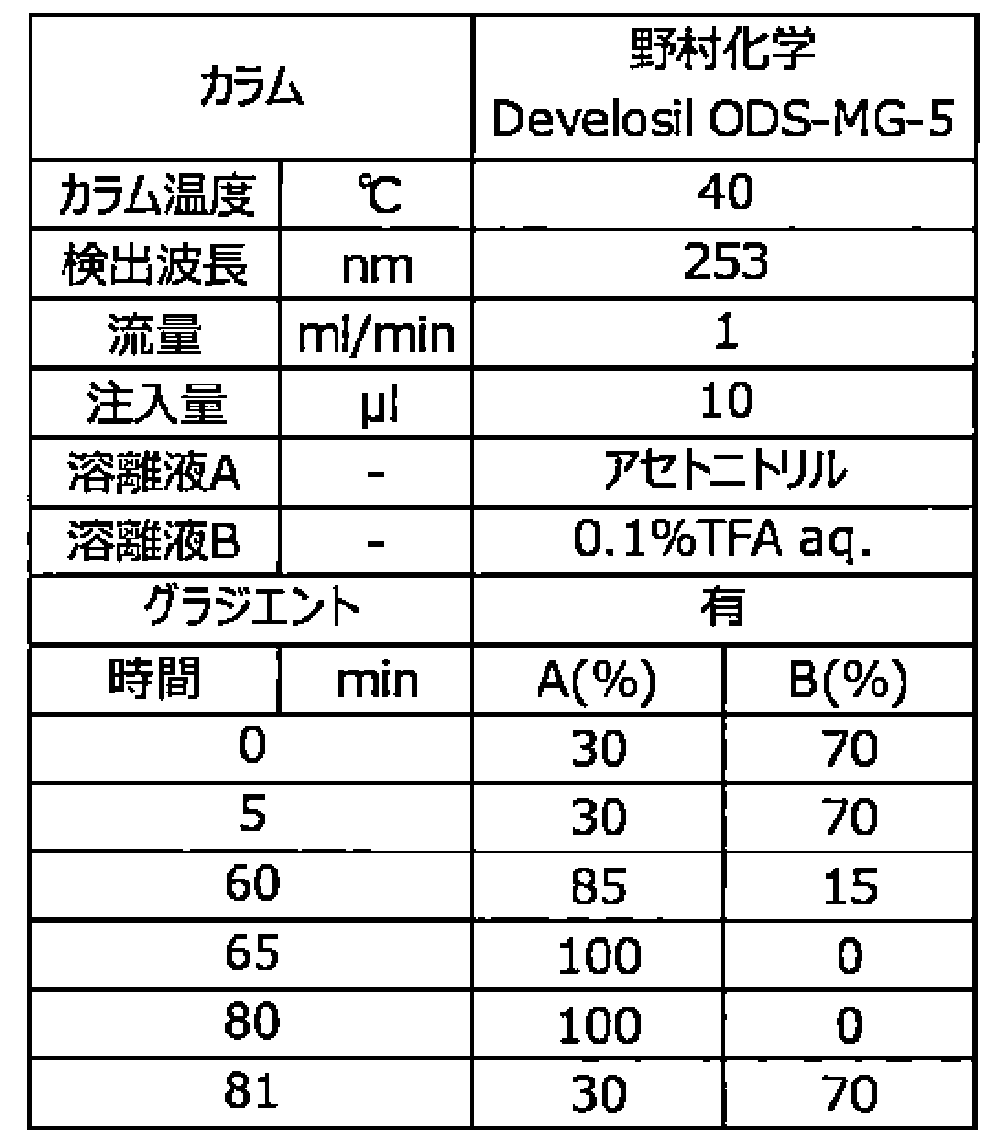
日立製高速液体クロマトグラフL-2350を用い、以下の表1に示す測定条件で測定した。実施例中、特に断らない限り%はHPLCにおける溶媒を除いて補正した面積百分率値である。
(1)HPLC測定
日立製高速液体クロマトグラフL-2350を用い、以下の表1に示す測定条件で測定した。実施例中、特に断らない限り%はHPLCにおける溶媒を除いて補正した面積百分率値である。
(2)NMR測定
実施例で得られた化合物をCDCl3に溶解させ、日本電子社製JNM-AL400(400MHz)を用い測定した。
溶媒:CDCl3(3)示差走査熱量測定(DSC)
TA Instruments製Discovery DSC25を用い、窒素フロー下、昇温速度:20℃/minで測定した。
実施例で得られた化合物をCDCl3に溶解させ、日本電子社製JNM-AL400(400MHz)を用い測定した。
溶媒:CDCl3(3)示差走査熱量測定(DSC)
TA Instruments製Discovery DSC25を用い、窒素フロー下、昇温速度:20℃/minで測定した。
(4)屈折率(nD)
実施例で得られた化合物をジメチルスルホキシドに溶解させ、所定濃度の溶液を作成し、各濃度の溶液の屈折率をATAGO社製DR-M2アッベ屈折計を用い、25℃におけるD線屈折率を測定した。各濃度の測定結果から濃度100%に外挿した値を実施例で得られた化合物の屈折率(nD)とした。
実施例で得られた化合物をジメチルスルホキシドに溶解させ、所定濃度の溶液を作成し、各濃度の溶液の屈折率をATAGO社製DR-M2アッベ屈折計を用い、25℃におけるD線屈折率を測定した。各濃度の測定結果から濃度100%に外挿した値を実施例で得られた化合物の屈折率(nD)とした。
(5)APHA測定
測定試料0.5gをジメチルホルムアミド10mlに溶解させた溶液をφ25mmの試験管に入れ、日本電色製工業(株)製TZ6000を用いて測定した。
測定試料0.5gをジメチルホルムアミド10mlに溶解させた溶液をφ25mmの試験管に入れ、日本電色製工業(株)製TZ6000を用いて測定した。
[実施例1]
窒素雰囲気下、撹拌機、冷却器、温度計を備え付けたフラスコに10,10’-ジヒドロキシ-9,9’-ビフェナントレン10.00g、エチレンカーボネート5.24g、炭酸カリウム0.36g、ジメチルホルムアミド20mlを加え、120℃で5時間反応させた。反応液を冷却後、ジメチルホルムアミド15ml、10%NaOH水溶液2mlを加え、110℃で3時間アルカリ処理を行った。反応液を冷却後、反応液を蒸留水中に撹拌しながら滴下し、得られた結晶を回収した。回収した結晶を蒸留水でスラリー洗浄した後、結晶を回収、乾燥し、10,10’-ビス(2-ヒドロキシエトキシ)-9,9’-ビフェナントレンの白色結晶を10.3g得た(収率84%)。得られた結晶の純度は97.27%、APHAは70、示差走査熱量分析による吸熱ピークは237℃、屈折率は1.713であった。また、得られた10,10’-ビス(2-ヒドロキシエトキシ)-9,9’-ビフェナントレンのNMRチャートを図1に、示差走査熱量分析結果を図2に示した。
窒素雰囲気下、撹拌機、冷却器、温度計を備え付けたフラスコに10,10’-ジヒドロキシ-9,9’-ビフェナントレン10.00g、エチレンカーボネート5.24g、炭酸カリウム0.36g、ジメチルホルムアミド20mlを加え、120℃で5時間反応させた。反応液を冷却後、ジメチルホルムアミド15ml、10%NaOH水溶液2mlを加え、110℃で3時間アルカリ処理を行った。反応液を冷却後、反応液を蒸留水中に撹拌しながら滴下し、得られた結晶を回収した。回収した結晶を蒸留水でスラリー洗浄した後、結晶を回収、乾燥し、10,10’-ビス(2-ヒドロキシエトキシ)-9,9’-ビフェナントレンの白色結晶を10.3g得た(収率84%)。得られた結晶の純度は97.27%、APHAは70、示差走査熱量分析による吸熱ピークは237℃、屈折率は1.713であった。また、得られた10,10’-ビス(2-ヒドロキシエトキシ)-9,9’-ビフェナントレンのNMRチャートを図1に、示差走査熱量分析結果を図2に示した。
[実施例2]
実施例1で得られた結晶10.3gをクロロホルム10mlに溶解後、ヘキサン100mlを加え再結晶した。結晶を回収、乾燥し、10,10’-ビス(2-ヒドロキシエトキシ)-9,9’-ビフェナントレンの白色結晶を8.4g得た。得られた結晶の純度は98.96%、APHAは50、示差走査熱量分析による吸熱ピークは245℃であった。また、得られた結晶の示差走査熱量分析結果を図3に示した。
実施例1で得られた結晶10.3gをクロロホルム10mlに溶解後、ヘキサン100mlを加え再結晶した。結晶を回収、乾燥し、10,10’-ビス(2-ヒドロキシエトキシ)-9,9’-ビフェナントレンの白色結晶を8.4g得た。得られた結晶の純度は98.96%、APHAは50、示差走査熱量分析による吸熱ピークは245℃であった。また、得られた結晶の示差走査熱量分析結果を図3に示した。
[比較例1]
実施例1のジメチルホルムアミド20mlをトルエン70mlに変更し、反応温度を120℃から110℃に変更する以外は実施例1と同様の方法で反応を行った。7時間反応後の反応液をHPLC分析すると、目的物である10,10’-ビス(2-ヒドロキシエトキシ)-9,9’-ビフェナントレンは約4%、原料である10,10’-ジヒドロキシ-9,9’-ビフェナントレンが約90%残存し、反応速度が著しく遅く、目的物を得ることができなかった。
実施例1のジメチルホルムアミド20mlをトルエン70mlに変更し、反応温度を120℃から110℃に変更する以外は実施例1と同様の方法で反応を行った。7時間反応後の反応液をHPLC分析すると、目的物である10,10’-ビス(2-ヒドロキシエトキシ)-9,9’-ビフェナントレンは約4%、原料である10,10’-ジヒドロキシ-9,9’-ビフェナントレンが約90%残存し、反応速度が著しく遅く、目的物を得ることができなかった。
[比較例2]
国際公開2019/043060号に記載の通り、2,2’-ビス(2-ヒドロキシエトキシ)-6,6’-ジフェニル-1,1’-ビナフタレンを合成し、該化合物の屈折率を測定した結果、1.694であった。
国際公開2019/043060号に記載の通り、2,2’-ビス(2-ヒドロキシエトキシ)-6,6’-ジフェニル-1,1’-ビナフタレンを合成し、該化合物の屈折率を測定した結果、1.694であった。
本発明で得られる新規な多環芳香族炭化水素化合物は高屈折率であることから、光学レンズや光学フィルムに代表される光学部材を構成する樹脂を形成するモノマーとして好適である。
Claims (9)
- 下記式(1)で表される多環芳香族炭化水素化合物。
- 前記式(1)中のZがフェナントレンである、請求項1に記載の多環芳香族炭化水素化合物。
- 前記式(1)で表される多環芳香族炭化水素化合物が下記式(2)で表される多環芳香族炭化水素化合物である、請求項1または2に記載の多環芳香族炭化水素化合物。
- 前記式(1)で表される多環芳香族炭化水素化合物が下記式(3)で表される10,10’-ビス(2-ヒドロキシエトキシ)-9,9’-ビフェナントレンである、請求項1~3のいずれかに記載の多環芳香族炭化水素化合物。

- HPLC純度が95面積%以上である、請求項1~4のいずれかに記載の多環芳香族炭化水素化合物。
- 多環芳香族炭化水素化合物をジメチルホルムアミドに溶解させた5重量%溶液のAPHAが100以下である、請求項1~5のいずれかに記載の多環芳香族炭化水素化合物。
- 230~250℃の範囲に示差走査熱量分析による吸熱ピークを有する、請求項4に記載の多環芳香族炭化水素化合物の結晶。
- 下記式(4)で表される多環芳香族炭化水素化合物とエチレンカーボネートとを塩基存在下で反応させて、前記式(1)で表される多環芳香族炭化水素化合物を製造する方法であって、反応溶媒として非プロトン性極性溶媒を用いる、請求項1に記載の多環芳香族炭化水素化合物の製造方法。

- 反応溶媒としてジメチルホルムアミドを用いる、請求項8に記載の多環芳香族炭化水素化合物の製造方法。
Priority Applications (2)
| Application Number | Priority Date | Filing Date | Title |
|---|---|---|---|
| JP2022508182A JP7455190B2 (ja) | 2020-03-19 | 2021-03-01 | 多環芳香族炭化水素化合物、その結晶およびその製造方法 |
| CN202180013854.1A CN115135631B (zh) | 2020-03-19 | 2021-03-01 | 多环芳烃化合物、其晶体及其制造方法 |
Applications Claiming Priority (2)
| Application Number | Priority Date | Filing Date | Title |
|---|---|---|---|
| JP2020049449 | 2020-03-19 | ||
| JP2020-049449 | 2020-03-19 |
Publications (1)
| Publication Number | Publication Date |
|---|---|
| WO2021187075A1 true WO2021187075A1 (ja) | 2021-09-23 |
Family
ID=77768124
Family Applications (1)
| Application Number | Title | Priority Date | Filing Date |
|---|---|---|---|
| PCT/JP2021/007767 Ceased WO2021187075A1 (ja) | 2020-03-19 | 2021-03-01 | 多環芳香族炭化水素化合物、その結晶およびその製造方法 |
Country Status (4)
| Country | Link |
|---|---|
| JP (1) | JP7455190B2 (ja) |
| CN (1) | CN115135631B (ja) |
| TW (1) | TWI881069B (ja) |
| WO (1) | WO2021187075A1 (ja) |
Cited By (1)
| Publication number | Priority date | Publication date | Assignee | Title |
|---|---|---|---|---|
| WO2023195505A1 (ja) * | 2022-04-07 | 2023-10-12 | 三菱瓦斯化学株式会社 | 熱可塑性樹脂及びそれを含む光学レンズ |
Citations (5)
| Publication number | Priority date | Publication date | Assignee | Title |
|---|---|---|---|---|
| JP2001072872A (ja) * | 1999-07-02 | 2001-03-21 | Konica Corp | 樹脂組成物および光学用レンズ |
| WO2010027676A2 (en) * | 2008-09-04 | 2010-03-11 | 3M Innovative Properties Company | Dental composition comprising biphenyl di(meth)acrylate monomer |
| JP2015193548A (ja) * | 2014-03-31 | 2015-11-05 | 大阪ガスケミカル株式会社 | 新規ジオール化合物及びポリエステル |
| JP2017179323A (ja) * | 2016-03-28 | 2017-10-05 | 大阪ガスケミカル株式会社 | 高屈折率ポリカーボネート系樹脂及び成形体 |
| WO2020175353A1 (ja) * | 2019-02-27 | 2020-09-03 | 帝人株式会社 | ビナフタレン骨格を有する化合物およびビナフタレン骨格を有する化合物の製造方法 |
Family Cites Families (13)
| Publication number | Priority date | Publication date | Assignee | Title |
|---|---|---|---|---|
| GB401643A (en) * | 1932-02-11 | 1933-11-16 | Chem Ind Basel | Manufacture of organic acid halides and of derivatives therefrom |
| JP2002128759A (ja) * | 1993-03-12 | 2002-05-09 | Takasago Internatl Corp | 4−[(r)−1’−ホルミルエチル]アゼチジン−2−オン誘導体 |
| JP3489176B2 (ja) * | 1994-02-10 | 2004-01-19 | 住友化学工業株式会社 | 光学活性有機ケイ素化合物の製造法 |
| JP5979873B2 (ja) * | 2009-03-18 | 2016-08-31 | 保土谷化学工業株式会社 | ベンゾトリアゾール環構造を有する化合物および有機エレクトロルミネッセンス素子 |
| JP5513825B2 (ja) * | 2009-09-28 | 2014-06-04 | 大阪ガスケミカル株式会社 | フルオレン骨格を有するアルコールの製造方法 |
| JP2012144471A (ja) * | 2011-01-11 | 2012-08-02 | Ryukoku Univ | 不斉ホスホナイト化合物、不斉合成触媒、不斉ホスホナイト化合物の製造方法、光学活性を有する有機化合物の製造方法 |
| JP5988051B2 (ja) * | 2011-06-10 | 2016-09-14 | 国立大学法人名古屋大学 | アリール基で置換された多環性芳香族化合物の製造方法 |
| CN105339335B (zh) * | 2013-07-03 | 2019-01-04 | 本州化学工业株式会社 | 1,1-双(4-(2-羟乙氧基)苯基)-3,3,5-三甲基环己烷的结晶体及其制造方法 |
| JP2014028806A (ja) * | 2013-07-26 | 2014-02-13 | Osaka Gas Co Ltd | フルオレン骨格を有するアルコール |
| JP6699940B2 (ja) * | 2016-05-12 | 2020-05-27 | 田岡化学工業株式会社 | エステル基を有するテトラカルボン酸二無水物の製造方法 |
| CN109111351B (zh) * | 2017-06-23 | 2021-08-20 | 吉林大学 | 一种非对称性9-烷氧基菲二聚体的合成方法 |
| TWI823864B (zh) * | 2017-08-30 | 2023-12-01 | 德商路透化學儀器公司 | 聯萘化合物 |
| JP7128582B2 (ja) * | 2017-10-25 | 2022-08-31 | 田岡化学工業株式会社 | ナフタレン骨格を有するビスアリールアルコール類及びその製造方法 |
-
2021
- 2021-03-01 CN CN202180013854.1A patent/CN115135631B/zh active Active
- 2021-03-01 JP JP2022508182A patent/JP7455190B2/ja active Active
- 2021-03-01 WO PCT/JP2021/007767 patent/WO2021187075A1/ja not_active Ceased
- 2021-03-10 TW TW110108426A patent/TWI881069B/zh active
Patent Citations (5)
| Publication number | Priority date | Publication date | Assignee | Title |
|---|---|---|---|---|
| JP2001072872A (ja) * | 1999-07-02 | 2001-03-21 | Konica Corp | 樹脂組成物および光学用レンズ |
| WO2010027676A2 (en) * | 2008-09-04 | 2010-03-11 | 3M Innovative Properties Company | Dental composition comprising biphenyl di(meth)acrylate monomer |
| JP2015193548A (ja) * | 2014-03-31 | 2015-11-05 | 大阪ガスケミカル株式会社 | 新規ジオール化合物及びポリエステル |
| JP2017179323A (ja) * | 2016-03-28 | 2017-10-05 | 大阪ガスケミカル株式会社 | 高屈折率ポリカーボネート系樹脂及び成形体 |
| WO2020175353A1 (ja) * | 2019-02-27 | 2020-09-03 | 帝人株式会社 | ビナフタレン骨格を有する化合物およびビナフタレン骨格を有する化合物の製造方法 |
Non-Patent Citations (1)
| Title |
|---|
| REINELT, S ET AL.: "Synthesis and Photopolymerization of Thiol-Modified Triazine- Based Monomers and Oligomers for the Use in Thiol- Ene-Based Dental Composites", MACROMOLECULAR CHEMISTRY AND PHYSICS, vol. 215, no. 14, 2014, pages 1415 - 1425, XP055763368, DOI: 10.1002/macp.201400174 * |
Cited By (2)
| Publication number | Priority date | Publication date | Assignee | Title |
|---|---|---|---|---|
| WO2023195505A1 (ja) * | 2022-04-07 | 2023-10-12 | 三菱瓦斯化学株式会社 | 熱可塑性樹脂及びそれを含む光学レンズ |
| EP4506390A4 (en) * | 2022-04-07 | 2025-05-21 | Mitsubishi Gas Chemical Company, Inc. | THERMOPLASTIC RESIN AND OPTICAL LENS |
Also Published As
| Publication number | Publication date |
|---|---|
| JP7455190B2 (ja) | 2024-03-25 |
| TWI881069B (zh) | 2025-04-21 |
| JPWO2021187075A1 (ja) | 2021-09-23 |
| CN115135631B (zh) | 2024-06-04 |
| TW202140412A (zh) | 2021-11-01 |
| CN115135631A (zh) | 2022-09-30 |
Similar Documents
| Publication | Publication Date | Title |
|---|---|---|
| TWI865440B (zh) | 具有茀骨架之化合物及其製造方法 | |
| JP5358115B2 (ja) | 脂環式構造及びペルフルオロシクロブチルエーテル構造を有するポリマー | |
| JPWO2020175577A1 (ja) | 光学レンズ | |
| CN111032704B (zh) | 固化物、光学部件、透镜、化合物及固化性组合物 | |
| CN106062035B (zh) | 缩聚系树脂和由其形成的光学膜 | |
| WO2019188114A1 (ja) | ポリカーボネートおよび成形体 | |
| WO2020226126A1 (ja) | フルオレン骨格を有する化合物およびその製造方法 | |
| JP7455190B2 (ja) | 多環芳香族炭化水素化合物、その結晶およびその製造方法 | |
| JP6436878B2 (ja) | 化合物の製造方法及び混晶 | |
| WO2026002310A1 (zh) | 一种聚碳酸酯树脂及其制备方法和应用 | |
| JP7303055B2 (ja) | フルオレン骨格を有する化合物およびその製造方法 | |
| CN113474321B (zh) | 具有联萘骨架的化合物和具有联萘骨架的化合物的制造方法 | |
| WO2022038997A1 (ja) | フルオレン誘導体およびその製造方法 | |
| TWI878291B (zh) | 具有茀骨架之化合物及其之製造方法 | |
| CN102272115B (zh) | 具有二噁烷结构的二元醇化合物及其制造方法 | |
| JP2021014426A (ja) | ビナフタレン骨格を有する化合物 | |
| JP5531546B2 (ja) | 10−[1,4−ジ(メタ)アクリロイルオキシ−2−ナフチル]−9−アントリル(メタ)アクリレート化合物及びその製造法 | |
| JP2021042191A (ja) | (±)−2,2’−ビス−(2−ヒドロキシエトキシ)−1,1’−ビナフチル結晶及び調製方法 | |
| JPH02212449A (ja) | 4,4”―ジヒドロキシ―3―フェニル―p―ターフェニル誘導体及びポリエステル | |
| JP7656652B2 (ja) | ビナフタレン骨格を有する化合物およびその結晶多形体、ならびにその製造方法 | |
| JP5483065B2 (ja) | アントラセン骨格を有するエポキシアクリレート及びその製造法 | |
| WO2010079809A1 (ja) | ジオキサン構造を有するグリコール化合物及びその製造方法 | |
| JPH0354204A (ja) | 放射線重合可能な液晶性モノマー及びそのポリマー | |
| JP2023070321A (ja) | ジヒドロキシ化合物およびその製造方法 | |
| JP2024056627A (ja) | 9,9-ビス(6-ヒドロキシ-2-ナフチル)フルオレンの結晶およびその製造方法 |
Legal Events
| Date | Code | Title | Description |
|---|---|---|---|
| 121 | Ep: the epo has been informed by wipo that ep was designated in this application |
Ref document number: 21771347 Country of ref document: EP Kind code of ref document: A1 |
|
| ENP | Entry into the national phase |
Ref document number: 2022508182 Country of ref document: JP Kind code of ref document: A |
|
| NENP | Non-entry into the national phase |
Ref country code: DE |
|
| 122 | Ep: pct application non-entry in european phase |
Ref document number: 21771347 Country of ref document: EP Kind code of ref document: A1 |