WO2021111919A1 - 電解銅めっき液、その製造方法及び電解銅めっき方法 - Google Patents
電解銅めっき液、その製造方法及び電解銅めっき方法 Download PDFInfo
- Publication number
- WO2021111919A1 WO2021111919A1 PCT/JP2020/043577 JP2020043577W WO2021111919A1 WO 2021111919 A1 WO2021111919 A1 WO 2021111919A1 JP 2020043577 W JP2020043577 W JP 2020043577W WO 2021111919 A1 WO2021111919 A1 WO 2021111919A1
- Authority
- WO
- WIPO (PCT)
- Prior art keywords
- copper plating
- electrolytic copper
- plating solution
- component
- parts
- Prior art date
- Legal status (The legal status is an assumption and is not a legal conclusion. Google has not performed a legal analysis and makes no representation as to the accuracy of the status listed.)
- Ceased
Links
Images
Classifications
-
- C—CHEMISTRY; METALLURGY
- C25—ELECTROLYTIC OR ELECTROPHORETIC PROCESSES; APPARATUS THEREFOR
- C25D—PROCESSES FOR THE ELECTROLYTIC OR ELECTROPHORETIC PRODUCTION OF COATINGS; ELECTROFORMING; APPARATUS THEREFOR
- C25D3/00—Electroplating: Baths therefor
- C25D3/02—Electroplating: Baths therefor from solutions
- C25D3/38—Electroplating: Baths therefor from solutions of copper
-
- C—CHEMISTRY; METALLURGY
- C25—ELECTROLYTIC OR ELECTROPHORETIC PROCESSES; APPARATUS THEREFOR
- C25D—PROCESSES FOR THE ELECTROLYTIC OR ELECTROPHORETIC PRODUCTION OF COATINGS; ELECTROFORMING; APPARATUS THEREFOR
- C25D5/00—Electroplating characterised by the process; Pretreatment or after-treatment of workpieces
- C25D5/02—Electroplating of selected surface areas
-
- C—CHEMISTRY; METALLURGY
- C25—ELECTROLYTIC OR ELECTROPHORETIC PROCESSES; APPARATUS THEREFOR
- C25D—PROCESSES FOR THE ELECTROLYTIC OR ELECTROPHORETIC PRODUCTION OF COATINGS; ELECTROFORMING; APPARATUS THEREFOR
- C25D7/00—Electroplating characterised by the article coated
- C25D7/12—Semiconductors
- C25D7/123—Semiconductors first coated with a seed layer or a conductive layer
Definitions
- the present invention relates to an electrolytic copper plating solution containing sulfuric acid and a compound having a specific structure, a method for producing the same, and an electrolytic copper plating method using the electrolytic copper plating solution.
- Electrolytic copper plating is one of the typical methods for embedding metal. Among them, electrolytic copper plating in which copper is embedded as a metal is widely used. In circuit formation by electrolytic copper plating, it is required to form a copper layer having high purity and good surface flatness in order to obtain high connection reliability.
- Patent Document 1 discloses a copper plating bath containing 0.8 M of copper sulfate and 0.5 M of esethionic acid. Further, Patent Document 2 discloses a copper plating bath containing copper oxide and esethionic acid, and Patent Document 3 discloses a copper plating bath containing copper sulfate pentahydrate, sulfuric acid, hydrochloric acid and a trace amount of isethionic acid. Is disclosed.
- an object of the present invention is to provide an electrolytic copper plating solution capable of obtaining a copper layer having high purity and excellent surface flatness.
- the present inventors have found that the above object can be achieved by using an electrolytic copper plating solution containing sulfate ion, copper ion and a compound having a specific structure in a constant compounding ratio. , The present invention has been completed.
- (A) sulfate ion, (B) a compound represented by the following general formula (1), and (C) copper ion are contained, and the content of the component (A) is 100 parts by mass.
- an electrolytic copper plating solution having a content of the component (B) of 0.3 to 50 parts by mass and a content of the component (C) of 5 to 50 parts by mass.
- R 1 and R 2 each independently represent a hydrogen atom, a sodium atom, a potassium atom, or an alkyl group having 1 to 5 carbon atoms, and n represents 1 or 2.
- an electrolytic copper plating method using the above electrolytic copper plating solution is provided.
- the electrolytic copper plating solution of the present invention is (A) sulfate ion (hereinafter, also referred to as “(A) component”); (B) a compound represented by the above general formula (1) (hereinafter, “(B) component””. (Also referred to as); and (C) copper ion (hereinafter, also referred to as “(C) component”) is an electrolytic copper plating solution containing as an essential component.
- the source of the component (A) component is not particularly limited, but for example, sulfate, copper sulfate, iron sulfate, lead sulfate, silver sulfate, calcium sulfate, potassium sulfate, sodium sulfate, barium sulfate, magnesium sulfate, etc. At least one selected from the group consisting of aluminum sulfate, nickel sulfate, and mixtures thereof, and hydrates thereof can be used.
- One of the sources of the component (A) can be used alone or in combination of two or more.
- At least one of sulfuric acid, copper sulfate, or copper sulfate pentahydrate is preferable to use as the source of the component (A).
- Sulfate and copper sulfate or copper sulfate pentahydrate are more preferably used in combination.
- the component (B) is a compound represented by the following general formula (1).
- R 1 and R 2 each independently represent a hydrogen atom, a sodium atom, a potassium atom, or an alkyl group having 1 to 5 carbon atoms, and n represents 1 or 2.
- R 1 and R 2 independently represent a hydrogen atom, a sodium atom, a potassium atom, or an alkyl group having 1 to 5 carbon atoms.
- Alkyl groups having 1 to 5 carbon atoms represented by R 1 and R 2 include methyl group, ethyl group, propyl group, isopropyl group, butyl group, isobutyl group, secondary butyl group, tertiary butyl group, and pentyl. Groups, neopentyl groups and the like can be mentioned. Since a copper layer having more excellent surface flatness can be obtained, R 1 is preferably a hydrogen atom or a sodium atom, and more preferably a hydrogen atom. R 2 is preferably a hydrogen atom.
- n 1 or 2. Since a copper layer having more excellent surface flatness can be obtained, n is preferably 2.
- the following compound No. 1 to No. 12 can be mentioned.
- “Me” represents a methyl group
- “Et” represents an ethyl group
- “iPr” represents an isopropyl group.
- compound No. 2, 7 and 8 are preferable, and compound No. 7 is more preferable.
- the source of the component (C) component (copper ion) is not particularly limited, and includes, for example, copper sulfate, copper chloride, copper bromide, copper hydroxide, a mixture thereof, and a group consisting of hydrates thereof. At least one selected can be used.
- One of the sources of the component (C) can be used alone or in combination of two or more. Since a copper layer having higher purity and excellent surface flatness can be obtained, it is preferable to use copper sulfate or copper sulfate pentahydrate as the source of the component (C).
- the content of the component (B) in the electrolytic copper plating solution is 0.3 to 50 parts by mass with respect to 100 parts by mass of the content of the component (A). Since a copper layer having more excellent surface flatness can be obtained, the content of the component (B) is preferably 1 to 30 parts by mass with respect to 100 parts by mass of the content of the component (A). More preferably, it is 3 to 20 parts by mass.
- the content of the component (C) in the electrolytic copper plating solution is 5 to 50 parts by mass with respect to 100 parts by mass of the content of the component (A). Since a copper layer having higher purity and excellent surface flatness can be obtained, the content of the component (C) is 10 to 40 parts by mass with respect to 100 parts by mass of the content of the component (A). It is preferably 20 to 30 parts by mass, and more preferably 20 to 30 parts by mass. Since a copper layer having higher purity and excellent surface flatness can be obtained, the content of the component (B) is 1 to 200 parts by mass with respect to 100 parts by mass of the content of the component (C). It is preferably 5 to 100 parts by mass, and most preferably 10 to 70 parts by mass.
- the concentration of the component (A) component (sulfate ion) in the electrolytic copper plating solution is not particularly limited, but is usually 10 g / L to 500 g / L, preferably 50 g / L to 350 g / L, and more preferably 100 g / L. It is L to 250 g / L, more preferably 110 g / L to 200 g / L.
- the concentration of the component (B) in the electrolytic copper plating solution is not particularly limited, but is usually 0.3 g / L to 80 g / L, preferably 1 g / L to 60 g / L, and more preferably 5 g / L to. It is 40 g / L, more preferably 5 g / L to 35 g / L.
- the concentration of the component (C) in the electrolytic copper plating solution is not particularly limited, but is usually 5 g / L to 250 g / L, preferably 10 g / L to 150 g / L, and more preferably 20 g / L to 80 g / L. It is L, more preferably 25 g / L to 70 g / L.
- the electrolytic copper plating solution of the present invention may contain a chloride ion source, a plating accelerator, a plating inhibitor and the like as components other than the above components (A) to (C).
- the chloride ion source is not particularly limited, and examples thereof include hydrogen chloride and sodium chloride.
- the concentration of the chloride ion source is preferably 5 mg / L to 200 mg / L, more preferably 20 mg / L to 150 mg / L in the electrolytic copper plating solution.
- the plating accelerator is not particularly limited, and examples thereof include compounds represented by the following general formulas (2) to (4).
- R is a substituted or unsubstituted alkyl group, preferably an alkyl group having 1 to 6 carbon atoms, and more preferably an alkyl having 1 to 4 carbon atoms.
- a group, Ar is a substituted or unsubstituted aryl group, for example, a substituted or unsubstituted phenyl group or a naphthyl group, and X is a counter ion, for example, sodium or potassium.
- R 21 and R 22 have a hydrogen atom, a linear or branched alkyl group having 1 to 6 carbon atoms, and a substituent having 1 to 3 carbon atoms. It is a good cycloalkyl group having 5 to 9 carbon atoms or an aryl group which may have a substituent having 1 to 3 carbon atoms, and M represents an alkali metal, ammonium or monovalent organic ammonium.
- n represents a number from 1 to 7)
- sodium 3,3'-dithiobis (1-propanesulfonic acid) (hereinafter, may be abbreviated as SPS) is used as the plating accelerator. preferable.
- the concentration of these plating accelerators is preferably 0.1 mg / L to 100 mg / L, more preferably 0.5 mg / L to 50 mg / L, and 1 mg / L in the electrolytic copper plating solution. Most preferably, it is ⁇ 30 mg / L.
- an oxygen atom-containing polymer organic compound can be used, and specifically, polyethylene glycol, polypropylene glycol, polyoxyethylene-polyoxypropylene random copolymer, polyoxyethylene-polyoxypropylene block. Examples include copolymers. Among these, polyethylene glycol is preferable. From the viewpoint of further improving the effect of the present invention, the molecular weight of these oxygen atom-containing polymer organic compounds is preferably 500 to 100,000, more preferably 1,000 to 10,000. In particular, polyethylene glycol having a molecular weight of 1,000 to 10,000 is most preferable. From the same viewpoint, the concentration of the oxygen atom-containing polymer organic compound is preferably 50 mg / L to 5,000 mg / L, preferably 100 mg / L to 3,000 mg / L in the electrolytic copper plating solution. Is more preferable.
- a well-known solvent can be used as the solvent for the electrolytic copper plating solution.
- the solvent include water; alcohols such as methanol, ethanol, isopropyl alcohol and n-butanol; acetic acid esters such as ethyl acetate, butyl acetate and methoxyethyl acetate; tetrahydrofuran, tetrahydropyran, ethylene glycol dimethyl ether and diethylene glycol dimethyl ether.
- Triethylene glycol dimethyl ether, dibutyl ether, dioxane and other ethers Triethylene glycol dimethyl ether, dibutyl ether, dioxane and other ethers; methylbutyl ketone, methylisobutylketone, ethylbutylketone, dipropylketone, diisobutylketone, methylamylketone, cyclohexanone, methylcyclohexanone and other ketones; hexane, cyclohexane , Methylcyclohexane, dimethylcyclohexane, ethylcyclohexane, heptane, octane, toluene, xylene and other hydrocarbons.
- solvents may be used alone or in combination of two or more. Among the above solvents, water and alcohols are preferable, and water is more preferable.
- additives include anthraquinone derivatives, cationic surfactants, nonionic surfactants, anionic surfactants, amphoteric surfactants, alkane sulfonic acid, alcan sulfonate, alkane sulfonic acid ester, hydroxyalcan sulfone.
- concentration of these other additives is preferably 0.1 mg / L to 500 mg / L, more preferably 0.5 mg / L to 100 mg / L in the electrolytic copper plating solution.
- the pH of the electrolytic copper plating solution is not particularly limited, but is usually 4 or less acidic conditions, preferably 3 or less acidic conditions, and more preferably 2 or less strong acid conditions.
- a pH meter LAQUA F-70 manufactured by HORIBA or the like can be used.
- the temperature at which the pH is measured may be about room temperature.
- the electrolytic copper plating method of the present invention can be carried out in the same manner as the conventional electrolytic copper plating method except that the electrolytic copper plating solution of the present invention is used as the electrolytic copper plating solution.
- an electrolytic copper plating method for forming a copper layer on a substrate to be plated will be described.
- the electrolytic copper plating apparatus for example, a paddle stirring type plating apparatus may be used.
- the electrolytic copper plating solution of the present invention is filled in the plating tank of the electrolytic copper plating apparatus, and the substrate to be plated is immersed in the electrolytic copper plating solution.
- the substrate to be plated for example, a resist pattern formed on a Si substrate with a copper seed layer using a photoresist can be used.
- the temperature of the electrolytic copper plating solution is 10 ° C. to 70 ° C., preferably 20 ° C. to 60 ° C.
- the current density is 1 A / dm 2 to 70 A / dm 2 , preferably 5 A / dm 2 to. 50A / dm 2, more preferably in the range of 15A / dm 2 ⁇ 35A / dm 2.
- the stirring method of the electrolytic copper plating solution air stirring, rapid liquid flow stirring, mechanical stirring by a stirring blade or the like can be used.
- the plated products manufactured by using the electrolytic copper plating method of the present invention are not particularly limited, but for example, automobile industrial materials (heat sinks, carburetor parts, fuel injectors, cylinders, various valves, engine internals, etc.) ), Electronics industry materials (contacts, circuits, semiconductor packages, printed circuit boards, thin film resistors, capacitors, hard disks, magnetic materials, lead frames, nuts, magnets, resistors, stems, computer parts, electronic parts, laser oscillators, optical memory Elements, optical fibers, filters, thermistas, heating elements, high temperature heating elements, varistor, magnetic heads, various sensors (gas, temperature, humidity, light, speed, etc.), MEMS, etc.), precision equipment (copying machine parts, optical equipment parts) , Watch parts, etc.), Aviation / ship materials (hydraulic equipment, screws, engines, turbines, etc.), chemical industry materials (balls, gates, plugs, checks, etc.), various molds, machine tool parts, vacuum equipment parts, etc.
- automobile industrial materials
- the electrolytic copper plating method of the present invention is preferably used for electronic industrial materials that require particularly fine patterns, and is particularly used in the production of semiconductor packages and printed circuit boards typified by TSV formation and bump formation. More preferably, and most preferably used in a semiconductor package.
- Examples 1 to 9 Sulfuric acid, component (B), copper sulfate pentahydrate, hydrochloric acid, SPS, PEG4000 and water were mixed to obtain the copper plating solutions 1 to 9 of Examples so as to have the compositions shown in Table 1.
- the balance of the composition of the copper plating solution shown in Table 1 was water, and the concentration of each component was adjusted with water.
- the SPS (manufactured by Tokyo Chemical Industry Co., Ltd.) used in the examples was 3,3'-dithiobis (sodium 1-propanesulfonate), and the PEG4000 (manufactured by ADEKA) was 3,600 to 4,400. It is a polyethylene glycol having a weight average molecular weight.
- the pHs of the plating baths of Examples and Comparative Examples shown in Tables 1 and 2 below were all 0 to 1.
- Comparative Examples 1 to 8 Sulfuric acid, component (B) or other components, copper sulfate pentahydrate, hydrochloric acid, SPS, PEG4000 and water were mixed so as to have the compositions shown in Table 2 to obtain comparative copper plating solutions 1 to 8. .. The balance of the composition of the copper plating solution shown in Table 2 was water, and the concentration of each component was adjusted with water.
- the SPS used in the comparative example is 3,3'-dithiobis (sodium 1-propanesulfonate), and PEG4000 is a polyethylene glycol having a weight average molecular weight of 3,600 to 4,400.
- Comparative compounds 1 to 5 used as other components are the compounds shown below.
- a paddle stirring type plating device was used as the electrolytic copper plating device, and the electrolytic copper plating solutions of Examples 1 to 9 and Comparative Examples 1 to 8 were filled in the plating tank of the paddle stirring type plating device, respectively.
- the substrate to be plated was immersed in each electrolytic copper plating solution.
- a resist pattern shape: having an opening having a circular cross section, opening diameter: 75 ⁇ m
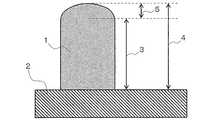
- copper was embedded in the resist opening by an electrolytic copper plating method under the following plating conditions to form a copper layer on the substrate to be plated.
Landscapes
- Chemical & Material Sciences (AREA)
- Engineering & Computer Science (AREA)
- Chemical Kinetics & Catalysis (AREA)
- Electrochemistry (AREA)
- Materials Engineering (AREA)
- Metallurgy (AREA)
- Organic Chemistry (AREA)
- Electroplating And Plating Baths Therefor (AREA)
- Electroplating Methods And Accessories (AREA)
Priority Applications (4)
| Application Number | Priority Date | Filing Date | Title |
|---|---|---|---|
| KR1020227018554A KR20220109405A (ko) | 2019-12-04 | 2020-11-24 | 전해 구리 도금액, 그 제조 방법 및 전해 구리 도금 방법 |
| CN202080084097.2A CN114761621A (zh) | 2019-12-04 | 2020-11-24 | 电解镀铜液、其制造方法以及电解镀铜方法 |
| US17/781,949 US20230025950A1 (en) | 2019-12-04 | 2020-11-24 | Copper electroplating solution, method of producing same, and copper electroplating method |
| JP2021562580A JP7710376B2 (ja) | 2019-12-04 | 2020-11-24 | 電解銅めっき液、その製造方法及び電解銅めっき方法 |
Applications Claiming Priority (2)
| Application Number | Priority Date | Filing Date | Title |
|---|---|---|---|
| JP2019219370 | 2019-12-04 | ||
| JP2019-219370 | 2019-12-04 |
Publications (1)
| Publication Number | Publication Date |
|---|---|
| WO2021111919A1 true WO2021111919A1 (ja) | 2021-06-10 |
Family
ID=76222138
Family Applications (1)
| Application Number | Title | Priority Date | Filing Date |
|---|---|---|---|
| PCT/JP2020/043577 Ceased WO2021111919A1 (ja) | 2019-12-04 | 2020-11-24 | 電解銅めっき液、その製造方法及び電解銅めっき方法 |
Country Status (6)
| Country | Link |
|---|---|
| US (1) | US20230025950A1 (https=) |
| JP (1) | JP7710376B2 (https=) |
| KR (1) | KR20220109405A (https=) |
| CN (1) | CN114761621A (https=) |
| TW (1) | TWI901613B (https=) |
| WO (1) | WO2021111919A1 (https=) |
Families Citing this family (1)
| Publication number | Priority date | Publication date | Assignee | Title |
|---|---|---|---|---|
| WO2024016330A1 (zh) * | 2022-07-22 | 2024-01-25 | 扬州纳力新材料科技有限公司 | 无氰镀铜晶粒细化剂、无氰镀铜镀液及其配制方法、应用 |
Citations (1)
| Publication number | Priority date | Publication date | Assignee | Title |
|---|---|---|---|---|
| JPH07316875A (ja) * | 1994-05-23 | 1995-12-05 | C Uyemura & Co Ltd | 電気銅めっき用添加剤及び電気銅めっき浴 |
Family Cites Families (8)
| Publication number | Priority date | Publication date | Assignee | Title |
|---|---|---|---|---|
| US6676823B1 (en) * | 2002-03-18 | 2004-01-13 | Taskem, Inc. | High speed acid copper plating |
| EP1422320A1 (en) * | 2002-11-21 | 2004-05-26 | Shipley Company, L.L.C. | Copper electroplating bath |
| JP4704761B2 (ja) | 2005-01-19 | 2011-06-22 | 石原薬品株式会社 | 電気銅メッキ浴、並びに銅メッキ方法 |
| JP4799887B2 (ja) | 2005-03-24 | 2011-10-26 | 石原薬品株式会社 | 電気銅メッキ浴、並びに銅メッキ方法 |
| JP4750486B2 (ja) * | 2005-07-06 | 2011-08-17 | 株式会社Adeka | 電解銅メッキ用添加剤、該添加剤を含有する電解銅メッキ浴及び該メッキ浴を使用する電解銅メッキ方法 |
| JP2007016264A (ja) * | 2005-07-06 | 2007-01-25 | Adeka Corp | 新規化合物、該化合物からなる電解銅メッキ用添加剤、該添加剤を含有する電解銅メッキ浴、該メッキ浴を使用する電解銅メッキ方法 |
| JP5637671B2 (ja) * | 2009-09-16 | 2014-12-10 | 上村工業株式会社 | 電気銅めっき浴及びその電気銅めっき浴を用いた電気めっき方法 |
| CN105102687A (zh) * | 2013-04-02 | 2015-11-25 | 株式会社Adeka | 电镀铜浴用添加剂、含该添加剂的电镀铜浴及使用该电镀铜浴的电镀铜方法 |
-
2020
- 2020-11-24 KR KR1020227018554A patent/KR20220109405A/ko not_active Ceased
- 2020-11-24 CN CN202080084097.2A patent/CN114761621A/zh active Pending
- 2020-11-24 WO PCT/JP2020/043577 patent/WO2021111919A1/ja not_active Ceased
- 2020-11-24 US US17/781,949 patent/US20230025950A1/en not_active Abandoned
- 2020-11-24 JP JP2021562580A patent/JP7710376B2/ja active Active
- 2020-11-27 TW TW109141728A patent/TWI901613B/zh active
Patent Citations (1)
| Publication number | Priority date | Publication date | Assignee | Title |
|---|---|---|---|---|
| JPH07316875A (ja) * | 1994-05-23 | 1995-12-05 | C Uyemura & Co Ltd | 電気銅めっき用添加剤及び電気銅めっき浴 |
Also Published As
| Publication number | Publication date |
|---|---|
| KR20220109405A (ko) | 2022-08-04 |
| US20230025950A1 (en) | 2023-01-26 |
| TWI901613B (zh) | 2025-10-21 |
| CN114761621A (zh) | 2022-07-15 |
| JPWO2021111919A1 (https=) | 2021-06-10 |
| TW202130860A (zh) | 2021-08-16 |
| JP7710376B2 (ja) | 2025-07-18 |
Similar Documents
| Publication | Publication Date | Title |
|---|---|---|
| JP4472157B2 (ja) | ビアフィリング方法 | |
| JP5578697B2 (ja) | 銅充填方法 | |
| US10154598B2 (en) | Filling through-holes | |
| TWI629376B (zh) | 無電鍍銅溶液 | |
| KR20140113548A (ko) | 관통홀의 필링 방법 | |
| JP7157749B2 (ja) | 電解めっき液用添加剤を含有する電解めっき液及び該電解めっき液を用いた電解めっき方法 | |
| JP7710376B2 (ja) | 電解銅めっき液、その製造方法及び電解銅めっき方法 | |
| KR102192417B1 (ko) | 전해 구리 도금욕용 첨가제, 그 첨가제를 포함하는 전해 구리 도금욕 및 그 전해 구리 도금욕을 사용한 전해 구리 도금 방법 | |
| CN113549962A (zh) | 一种填孔镀铜整平剂分子及其应用 | |
| TW202336274A (zh) | 用於填充通孔以減少空隙之方法 | |
| CN107385487B (zh) | 2,4,8,10-四氧杂-3,9-二磷杂螺环化合物在hdi板快速镀铜前处理溶液的应用及其前处理工艺 | |
| WO2023243394A1 (ja) | 組成物、組成物の製造方法及び銀膜の製造方法 | |
| JP7592586B2 (ja) | 電解めっき液用添加剤、電解めっき液及び電解めっき方法 | |
| JP7808062B2 (ja) | 電解めっき液用添加剤、電解めっき液、電解めっき方法及び金属層の製造方法 | |
| CN105316715B (zh) | 一种电镀铜用抑制剂及其用途 | |
| EP4563621A1 (en) | Leveling agent, composition, and use thereof | |
| KR20250154983A (ko) | 반도체용 저응력 구리 도금액 조성물 |
Legal Events
| Date | Code | Title | Description |
|---|---|---|---|
| 121 | Ep: the epo has been informed by wipo that ep was designated in this application |
Ref document number: 20896156 Country of ref document: EP Kind code of ref document: A1 |
|
| ENP | Entry into the national phase |
Ref document number: 2021562580 Country of ref document: JP Kind code of ref document: A |
|
| NENP | Non-entry into the national phase |
Ref country code: DE |
|
| 122 | Ep: pct application non-entry in european phase |
Ref document number: 20896156 Country of ref document: EP Kind code of ref document: A1 |
|
| WWR | Wipo information: refused in national office |
Ref document number: 1020227018554 Country of ref document: KR |