WO2018105261A1 - 合成皮革 - Google Patents
合成皮革 Download PDFInfo
- Publication number
- WO2018105261A1 WO2018105261A1 PCT/JP2017/038608 JP2017038608W WO2018105261A1 WO 2018105261 A1 WO2018105261 A1 WO 2018105261A1 JP 2017038608 W JP2017038608 W JP 2017038608W WO 2018105261 A1 WO2018105261 A1 WO 2018105261A1
- Authority
- WO
- WIPO (PCT)
- Prior art keywords
- mass
- polyurethane resin
- parts
- added
- synthetic leather
- Prior art date
- Legal status (The legal status is an assumption and is not a legal conclusion. Google has not performed a legal analysis and makes no representation as to the accuracy of the status listed.)
- Ceased
Links
Classifications
-
- D—TEXTILES; PAPER
- D06—TREATMENT OF TEXTILES OR THE LIKE; LAUNDERING; FLEXIBLE MATERIALS NOT OTHERWISE PROVIDED FOR
- D06N—WALL, FLOOR, OR LIKE COVERING MATERIALS, e.g. LINOLEUM, OILCLOTH, ARTIFICIAL LEATHER, ROOFING FELT, CONSISTING OF A FIBROUS WEB COATED WITH A LAYER OF MACROMOLECULAR MATERIAL; FLEXIBLE SHEET MATERIAL NOT OTHERWISE PROVIDED FOR
- D06N3/00—Artificial leather, oilcloth or other material obtained by covering fibrous webs with macromolecular material, e.g. resins, rubber or derivatives thereof
- D06N3/12—Artificial leather, oilcloth or other material obtained by covering fibrous webs with macromolecular material, e.g. resins, rubber or derivatives thereof with macromolecular compounds obtained otherwise than by reactions only involving carbon-to-carbon unsaturated bonds, e.g. gelatine proteins
- D06N3/14—Artificial leather, oilcloth or other material obtained by covering fibrous webs with macromolecular material, e.g. resins, rubber or derivatives thereof with macromolecular compounds obtained otherwise than by reactions only involving carbon-to-carbon unsaturated bonds, e.g. gelatine proteins with polyurethanes
-
- C—CHEMISTRY; METALLURGY
- C08—ORGANIC MACROMOLECULAR COMPOUNDS; THEIR PREPARATION OR CHEMICAL WORKING-UP; COMPOSITIONS BASED THEREON
- C08G—MACROMOLECULAR COMPOUNDS OBTAINED OTHERWISE THAN BY REACTIONS ONLY INVOLVING UNSATURATED CARBON-TO-CARBON BONDS
- C08G18/00—Polymeric products of isocyanates or isothiocyanates
- C08G18/06—Polymeric products of isocyanates or isothiocyanates with compounds having active hydrogen
- C08G18/28—Polymeric products of isocyanates or isothiocyanates with compounds having active hydrogen characterised by the compounds used containing active hydrogen
- C08G18/40—High-molecular-weight compounds
- C08G18/42—Polycondensates having carboxylic or carbonic ester groups in the main chain
- C08G18/44—Polycarbonates
-
- C—CHEMISTRY; METALLURGY
- C08—ORGANIC MACROMOLECULAR COMPOUNDS; THEIR PREPARATION OR CHEMICAL WORKING-UP; COMPOSITIONS BASED THEREON
- C08G—MACROMOLECULAR COMPOUNDS OBTAINED OTHERWISE THAN BY REACTIONS ONLY INVOLVING UNSATURATED CARBON-TO-CARBON BONDS
- C08G18/00—Polymeric products of isocyanates or isothiocyanates
- C08G18/06—Polymeric products of isocyanates or isothiocyanates with compounds having active hydrogen
- C08G18/28—Polymeric products of isocyanates or isothiocyanates with compounds having active hydrogen characterised by the compounds used containing active hydrogen
- C08G18/65—Low-molecular-weight compounds having active hydrogen with high-molecular-weight compounds having active hydrogen
- C08G18/66—Compounds of groups C08G18/42, C08G18/48, or C08G18/52
-
- C—CHEMISTRY; METALLURGY
- C08—ORGANIC MACROMOLECULAR COMPOUNDS; THEIR PREPARATION OR CHEMICAL WORKING-UP; COMPOSITIONS BASED THEREON
- C08G—MACROMOLECULAR COMPOUNDS OBTAINED OTHERWISE THAN BY REACTIONS ONLY INVOLVING UNSATURATED CARBON-TO-CARBON BONDS
- C08G18/00—Polymeric products of isocyanates or isothiocyanates
- C08G18/06—Polymeric products of isocyanates or isothiocyanates with compounds having active hydrogen
- C08G18/70—Polymeric products of isocyanates or isothiocyanates with compounds having active hydrogen characterised by the isocyanates or isothiocyanates used
- C08G18/72—Polyisocyanates or polyisothiocyanates
- C08G18/74—Polyisocyanates or polyisothiocyanates cyclic
- C08G18/75—Polyisocyanates or polyisothiocyanates cyclic cycloaliphatic
Definitions
- the present invention relates to a synthetic leather that does not cause deformation or the like even when sunscreen cream is attached.
- Polyurethane resins are widely used in various fields such as films, adhesives, automobile interior materials, and abrasives because they have excellent mechanical strength. Among them, in recent years, since the excellent texture can be obtained due to the flexibility of the polyurethane resin, many studies have been made for synthetic leather applications (see, for example, Patent Document 1).
- Polyurethane resins used for the production of the synthetic leather have recently been required to have high durability especially for automobile interior materials. Above all, in vehicle interior materials, in addition to conventional durability (heat resistance, light resistance, hydrolysis resistance, etc.), excellent chemical resistance to sunscreen cream is required. However, the fact is that no material having excellent chemical resistance to sunscreen cream has yet been found.
- the problem to be solved by the present invention is to provide a synthetic leather which does not cause deformation or the like even when sunscreen cream adheres.
- the present invention relates to a synthetic leather in which a base fabric (i), an adhesive layer (ii), an intermediate layer (iii), and a skin layer (iv) are sequentially laminated, and the intermediate layer (iii) is a polycarbonate polyol.
- the synthetic leather of the present invention does not cause deformation or the like even when sunscreen cream adheres (hereinafter abbreviated as “chemical resistance”).
- the synthetic leather of the present invention is a synthetic leather in which a base fabric (i), an adhesive layer (ii), an intermediate layer (iii), and an outer skin layer (iv) are sequentially laminated, and the intermediate layer (iii) Polyurethane resin (W) which is a reaction product of polyol (X) containing 70% by mass or more of polycarbonate polyol (x-1), aliphatic or alicyclic polyisocyanate (Y), and chain extender (Z) It is formed by the polyurethane resin composition containing this.
- the skin layer (iv) can be formed by a known method using a known material.
- a solvent-based urethane resin, a water-based urethane resin, a solvent-free urethane resin, a silicone resin, a polypropylene resin, a polyester resin, or the like is used. be able to.
- the intermediate layer (iii) is a reaction product of a polyol (X) containing 70% by mass or more of a polycarbonate polyol (x-1), an aliphatic or alicyclic polyisocyanate (Y), and a chain extender (Z). It is formed by the polyurethane resin composition containing the polyurethane resin (W) which is.
- the polyurethane resin composition used for the intermediate layer (iii) is: 1) use a specific amount or more of polycarbonate polyol (x-1) having excellent chemical resistance; 2) lower cohesive force than aromatic polyisocyanate. Since an aliphatic or cycloaliphatic polyisocyanate (Y) is used, it can be relaxed between the polymers of the polyurethane resin when sunscreen is attached, and there is no deformation such as swelling, and the shape of the synthetic leather is maintained. It is thought that it was possible. Moreover, it is thought that the effect improved more by introduce
- the synthetic leather of the present invention has excellent chemical resistance against various sunscreens by forming the intermediate layer (iii) with a specific polyurethane resin.
- a specific polyurethane resin For example, Neutrogena (registered trademark), which is known as sunscreen cream, has an ultraviolet absorbent having a hydroxyl group such as 2-hydroxy-4-methoxybenzophenone and 3,3,5-trimethylcyclohexyl salicylate contained in synthetic leather.
- the chemical resistance test using this becomes a very severe test because it leads to poor chemical resistance due to the affinity with the urethane bond in the polyurethane resin to be constituted.
- the synthetic leather of the present invention exhibits excellent chemical resistance even when the Neutrogena is used.
- polycarbonate polyol (x-1) for example, a reaction product of a carbonate ester and / or phosgene and a compound having two or more hydroxyl groups can be used.
- carbonate ester examples include dimethyl carbonate, diethyl carbonate, diphenyl carbonate, ethylene carbonate, and propylene carbonate. These compounds may be used alone or in combination of two or more.
- Examples of the compound having two or more hydroxyl groups include ethylene glycol, propylene glycol, 1,3-propanediol, 1,4-butanediol, 1,3-butanediol, 1,2-butanediol, and 2-methyl.
- the number average molecular weight of the polycarbonate polyol (x-1) is preferably in the range of 500 to 8,000, more preferably in the range of 700 to 5,000, from the viewpoint that even better chemical resistance is obtained. More preferably, the range is in the range of 800 to 3,000.
- the number average molecular weight of the polycarbonate polyol (x-1) is a value measured by a gel permeation chromatography (GPC) method.
- the polyol (X) contains 70% by mass or more of the polycarbonate polyol (x-1) in order to obtain excellent chemical resistance.
- Other polyols that can be used in addition to the polycarbonate polyol (x-1) include, for example, polyoxyethylene glycol, polyoxypropylene glycol, polyoxytetramethylene glycol, polyoxyethylene polyoxypropylene glycol, polyoxyethylene poly Polyether polyols such as tetramethylene glycol; polyester polyols; polyacrylic polyols and the like can be used. These polyols may be used alone or in combination of two or more.
- the number average molecular weight of the other polyol is preferably in the range of 500 to 10,000, more preferably in the range of 700 to 5,000.
- the number average molecular weight of the other polyol is a value obtained by measurement in the same manner as the number average molecular weight of the polycarbonate polyol (x-1).
- Examples of the aliphatic or alicyclic polyisocyanate (Y) include tetramethylene diisocyanate, 1,6-hexamethylene diisocyanate, dodecamethylene diisocyanate, trimethylhexamethylene diisocyanate, 1,3-cyclopentylene diisocyanate, 1,3.
- polyisocyanates may be used alone or in combination of two or more. Among these, it is preferable to use isophorone diisocyanate and / or dicyclohexylmethane diisocyanate from the viewpoint that much more excellent chemical resistance is obtained.
- an aromatic polyisocyanate may be used in combination as long as the effects of the present invention are not impaired.
- aromatic polyisocyanate examples include 1,3-phenylene diisocyanate, 1,4-phenylene diisocyanate, 1-methyl-2,4-phenylene diisocyanate, 1-methyl-2,6-phenylene diisocyanate, 1-methyl- 2,5-phenylene diisocyanate, 1-methyl-3,5-phenylene diisocyanate, 1-ethyl-2,4-phenylene diisocyanate, 1-isopropyl-2,4-phenylene diisocyanate, 1,3-dimethyl-2,4- Phenylene diisocyanate, 1,3-dimethyl-4,6-phenylene diisocyanate, 1,4-dimethyl-2,5-phenylene diisocyanate, diethylbenzene diisocyanate, diisopropylbenzene diisocyanate, 1-methyl-3, Diethylbenzene diisocyanate, 3-methyl-1,5-diethylbenzene-2,4-diiso
- chain extender (Z) for example, a chain extender having an amino group, a chain extender having a hydroxyl group, or the like can be used. These chain extenders may be used alone or in combination of two or more. Among these, it is preferable to use a chain extender (c-1) having an amino group from the viewpoint of obtaining even better chemical resistance.
- chain extender having an amino group examples include ethylenediamine, 1,2-propanediamine, 1,6-hexamethylenediamine, piperazine, 2-methylpiperazine, 2,5-dimethylpiperazine, isophoronediamine, 4,4. '-Dicyclohexylmethanediamine, 3,3'-dimethyl-4,4'-dicyclohexylmethanediamine, 1,2-cyclohexanediamine, 1,4-cyclohexanediamine, aminoethylethanolamine, hydrazine, diethylenetriamine, triethylenetetramine, etc. Can be used. These chain extenders may be used alone or in combination of two or more. Among these, it is preferable to use isophorone diamine and / or dicyclohexylmethane diamine from the viewpoint that much more excellent chemical resistance is obtained.
- chain extender having a hydroxyl group examples include ethylene glycol, diethylene recall, triethylene glycol, propylene glycol, 1,3-propanediol, 1,3-butanediol, 1,4-butanediol, hexamethylene glycol, Aliphatic polyol compounds such as sucrose, methylene glycol, glycerin, sorbitol; bisphenol A, 4,4′-dihydroxydiphenyl, 4,4′-dihydroxydiphenyl ether, 4,4′-dihydroxydiphenyl sulfone, hydrogenated bisphenol A, hydroquinone, etc. Aromatic polyol compounds; water and the like can be used. These chain extenders may be used alone or in combination of two or more.
- the polyurethane resin (W) for example, after the polyol (X) and preferably an organic solvent are charged and stirred, the polyisocyanate (Y) and further a chain extender (Z) are added. Examples thereof include a method of reacting at 50 to 100 ° C. for 3 to 10 hours. After the polyurethane resin is produced, an alcohol such as ethanol, methanol, or butanol may be added for the purpose of deactivating the remaining isocyanate groups.
- an alcohol such as ethanol, methanol, or butanol may be added for the purpose of deactivating the remaining isocyanate groups.
- organic solvent examples include ketone solvents such as N, N-dimethylformamide, N, N-dimethylacetamide, N-methyl-2-pyrrolidone, methyl ethyl ketone, methyl-n-propyl ketone, acetone, and methyl isobutyl ketone; Ester solvents such as methyl, ethyl formate, propyl formate, methyl acetate, ethyl acetate, isopropyl acetate, isobutyl acetate, isobutyl acetate and sec-butyl acetate; alcohol solvents such as methanol, ethanol, isopropyl alcohol and butanol can be used.
- ketone solvents such as N, N-dimethylformamide, N, N-dimethylacetamide, N-methyl-2-pyrrolidone, methyl ethyl ketone, methyl-n-propyl ketone, acetone, and methyl
- organic solvents may be used alone or in combination of two or more.
- the amount used in the case of using the organic solvent is preferably in the range of 30 to 90% by mass in the polyurethane resin composition, for example, from the viewpoint of production stability, coating property, and film forming property. A range of ⁇ 80 mass% is more preferred.
- the weight average molecular weight of the polyurethane resin (W) obtained by the above method is in the range of 5,000 to 500,000 from the standpoint of further improving chemical resistance and film formability. The range of 10,000 to 300,000 is more preferable.
- the weight average molecular weight of the polyurethane resin (W) is a value measured in the same manner as the number average molecular weight of the polycarbonate polyol (x-1).
- the content of the alicyclic structure in the polyurethane resin (W) is preferably in the range of 4,500 to 7,000 mol / kg from the standpoint that even better chemical resistance is obtained. A range of ⁇ 6,000 mol / kg is more preferred.
- content of the said alicyclic structure is content of the alicyclic structure with respect to the total mass of the said polyol (X), aliphatic or alicyclic polyisocyanate (Y) used for a raw material, and the said chain extender (Z). Show.
- the urethane bond content in the polyurethane resin (W) is preferably in the range of 500 to 900 mol / kg, more preferably in the range of 700 to 800 mol / kg, from the viewpoint of obtaining even better chemical resistance. More preferred.
- content of the said urethane bond shows content of the urethane bond with respect to the total mass of the said polyol (X) used for a raw material, aliphatic or alicyclic polyisocyanate (Y), and the said chain extender (Z).
- the polyurethane resin composition used in the present invention contains the polyurethane resin (W) as an essential component, but may contain other additives as necessary.
- additives examples include surfactants, pigments, catalysts, flame retardants, plasticizers, softeners, stabilizers, waxes, antifoaming agents, dispersants, penetrants, fillers, antifungal agents, and antibacterial agents.
- UV absorbers, antioxidants, weathering stabilizers, fluorescent brighteners, anti-aging agents, thickeners, and the like can be used. These additives may be used alone or in combination of two or more.
- the adhesive layer (ii) can be formed by a known method using a known material.
- a solvent-based urethane resin, a water-based urethane resin, a solvent-free urethane resin, a silicone resin, a polypropylene resin, a polyester resin, or the like is used. be able to.
- a polyol (A) containing 70% by mass or more of a polycarbonate polyol (a-1), an aliphatic or an aliphatic resin is used from the viewpoint of obtaining even more excellent chemical resistance among those described above.
- a polyurethane resin composition comprising a cyclic polyisocyanate (B) and a polyurethane resin (D-1) having a hydroxyl group, which is a reaction product of a chain extender (C), and a crosslinking agent (D-2) It is preferable to use one.
- the polyol (A), aliphatic or alicyclic polyisocyanate (B), and chain extender (C) used as raw materials for the polyurethane resin (D-1) are used for forming the intermediate layer (iii).
- the same raw material as the polyurethane resin (W) can be used.
- the polyurethane resin (D-1) for example, the polyol (A), and preferably an organic solvent are charged and stirred, and then the polyisocyanate (B) and a chain extender (C) are added. Examples thereof include a method of reacting at 50 to 100 ° C. for 3 to 10 hours.
- the molar ratio of the total of the hydroxyl group and amino group which the said polyol (A) and the said chain extender (C) have, and the isocyanate group which the said polyisocyanate (B) has at the time of performing this urethanation reaction is in the range of 0.4 to 0.9 from the viewpoint that it exhibits good crosslinking with the crosslinking agent (X-2) described later, and further excellent adhesion and chemical resistance can be obtained.
- the range of 0.5 to 0.8 is more preferable.
- the weight average molecular weight of the polyurethane resin (D-1) obtained by the above method is 2,000 to 300,000 from the standpoint of obtaining more excellent chemical resistance, film formability, and adhesiveness.
- the range is preferable, and the range of 5,000 to 30,000 is more preferable.
- the weight average molecular weight of the polyurethane resin (D-1) is a value measured in the same manner as the number average molecular weight of the polycarbonate polyol (x-1).
- the urethane bond content in the polyurethane resin (D-1) is preferably in the range of 500 to 900 ⁇ mol / g, and more preferably in the range of 750 to 850 ⁇ mol / g from the viewpoint of obtaining even better chemical resistance. A range is more preferred.
- content of the said urethane bond shows content of the urethane bond with respect to the total mass of the said polyol (A) used for a raw material, aliphatic or alicyclic polyisocyanate (B), and the said chain extender (C).
- crosslinking agent (D-2) for example, a polyisocyanate crosslinking agent, a melamine crosslinking agent, or the like can be used. These crosslinking agents may be used alone or in combination of two or more. Among these, it is preferable to use a polyisocyanate crosslinking agent from the viewpoint of exhibiting good crosslinking with the polyurethane resin (D-1) and obtaining further excellent adhesion and chemical resistance.
- polyisocyanate crosslinking agent examples include polyisocyanates such as tolylene diisocyanate, chlorophenylene diisocyanate, hexamethylene diisocyanate, tetramethylene diisocyanate, xylylene diisocyanate, isophorone diisocyanate, diphenylmethane diisocyanate, hydrogenated diphenylmethane diisocyanate; and these trimethylolpropanes.
- polyisocyanates such as tolylene diisocyanate, chlorophenylene diisocyanate, hexamethylene diisocyanate, tetramethylene diisocyanate, xylylene diisocyanate, isophorone diisocyanate, diphenylmethane diisocyanate, hydrogenated diphenylmethane diisocyanate; and these trimethylolpropanes.
- the content of the cross-linking agent (D-2) is such that the polyurethane resin (D-1) can form a good cross-link, and more excellent adhesion and chemical resistance can be obtained. It is preferably in the range of 0.1 to 40 parts by weight, more preferably in the range of 0.2 to 20 parts by weight with respect to 100 parts by weight of the solid content of (D-1).
- the polyurethane resin composition contains the polyurethane resin (D-1) and a crosslinking agent (D-2), and if necessary, other additives that can be used for the intermediate layer (iii). You may contain.
- Examples of the base fabric (i) include polyester fiber, polyethylene fiber, nylon fiber, acrylic fiber, polyurethane fiber, acetate fiber, rayon fiber, polylactic acid fiber, cotton, hemp, silk, wool, glass fiber, carbon fiber, Nonwoven fabrics, woven fabrics, knitted fabrics and the like made of these blended fibers can be used.
- the synthetic leather of the present invention for example, after forming a skin layer (iv) on a release-treated substrate by a known method, the polyurethane resin is formed on the skin layer (iv). After the composition is applied and dried, an intermediate layer (iii) is obtained, and then an adhesive layer (ii) is formed on the intermediate layer (iii) by a known method, and the adhesive layer (ii) ) And the base fabric (i).
- Examples of the coating method of the resin composition when forming the layers (ii) to (iv) include a method using a gravure coater, knife coater, pipe coater, comma coater, roll coater, applicator and the like. .
- the drying after coating the resin composition may be performed, for example, for 1 to 60 minutes using a drier adjusted to 80 to 120 ° C., for example.
- the film thickness after drying of the layers (ii) to (iv) is appropriately determined depending on the intended use, and is, for example, in the range of 0.001 to 10 mm.
- a surface treatment layer (v) may be provided on the skin layer (iv) as necessary.
- the synthetic leather of the present invention has excellent chemical resistance that does not cause deformation or the like even when sunscreen cream (particularly Neutrogena) adheres.
- DMF N, N-dimethylformamide
- H12MDI 4,4′-dicyclohexylmethane diisocyanate
- IPDA isophoronediamine
- PC-2 number average molecular weight
- PET-1 1,6-hexanediol and adipic acid
- Preparation Example 1 Preparation of skin layer compounding liquid 100 parts by mass of a solvent-based urethane resin (“Crisbon NY-331” manufactured by DIC Corporation) and 20 parts by mass of a black pigment (“DILAC L-1770S” manufactured by DIC Corporation) The mixture was stirred at 2,000 rpm for 2 minutes with a mixer, and then defoamed using a vacuum defoamer to obtain a skin layer compounding liquid.
- a solvent-based urethane resin (“Crisbon NY-331” manufactured by DIC Corporation)
- DILAC L-1770S a black pigment
- Example 1 On the release paper ("EK-100D” manufactured by Lintec Co., Ltd.), after applying the skin layer mixture liquid obtained in Preparation Example 1 with a knife coater (application thickness 150 ⁇ m), using a hot air dryer The skin layer was obtained by drying at 70 ° C. for 2 minutes and then at 120 ° C. for 2 minutes. Further, the intermediate layer polyurethane resin (W-1) composition obtained in Synthesis Example 1 was applied onto this skin layer using a knife coater (application thickness 150 ⁇ m), and then a hot air dryer was used. And dried at 70 ° C. for 2 minutes and then at 120 ° C. for 2 minutes.
- a knife coater application thickness 150 ⁇ m
- DMF N, N-dimethylformamide
- IPDI isophorone diisocyanate
- octylic acid The organic solvent solution of the urethane prepolymer which has an isocyanate group was obtained by adding 0.2 mass part of stannous and making it react at 75 degreeC. Next, 636 parts by mass of DMF was added thereto, cooled to 40 ° C., 10 parts by mass of isophoronediamine (hereinafter abbreviated as “IPDA”) was added, and the polyurethane resin was chain-extended by mixing and stirring. .
- IPDA isophoronediamine
- polyurethane resin (X-1-1) composition 6.0 parts by mass of monoethanolamine was added and mixed to obtain a polyurethane resin (X-1-1) composition.
- the polyurethane resin (D-1-1) composition was mixed with 10% by mass of an HDI adduct to obtain a polyurethane resin composition.
- the organic solvent solution of the urethane prepolymer which has an isocyanate group was obtained by making it react. Next, 638 parts by mass of DMF was added thereto, the mixture was cooled to 40 ° C., 12 parts by mass of 4,4′-dicyclohexylmethanediamine (hereinafter abbreviated as “H12MDA”) was added, and the mixture was stirred to obtain polyurethane. The resin was chain extended. Next, 6.0 parts by mass of monoethanolamine was added and mixed to obtain a polyurethane resin (D-1-3) composition. Immediately before coating to form an adhesive layer, the polyurethane resin (D-1-3) composition was mixed with 10% by mass of an HDI adduct to obtain a polyurethane resin composition.
- H12MDA 4,4′-dicyclohexylmethanediamine
- the organic solvent solution of the urethane prepolymer which has an isocyanate group was obtained by making it react.
- 636 parts by mass of DMF was added thereto, cooled to 40 ° C., 10 parts by mass of IPDA were added, and the polyurethane resin was chain-extended by mixing and stirring.
- 6.0 parts by mass of monoethanolamine was added and mixed to obtain a polyurethane resin (D-1-4) composition.
- the polyurethane resin (D-1-4) composition was mixed with 10% by mass of an HDI adduct to obtain a polyurethane resin composition.
- Example 9 On the release paper ("EK-100D” manufactured by Lintec Co., Ltd.), after applying the skin layer mixture liquid obtained in Preparation Example 1 with a knife coater (application thickness 150 ⁇ m), using a hot air dryer The skin layer was obtained by drying at 70 ° C. for 2 minutes and then at 120 ° C. for 2 minutes. Further, the intermediate layer polyurethane resin (W-1) composition obtained in Synthesis Example 1 was applied onto this skin layer using a knife coater (application thickness 150 ⁇ m), and then a hot air dryer was used. And dried at 70 ° C. for 2 minutes and then at 120 ° C. for 2 minutes.
- a knife coater application thickness 150 ⁇ m
- the number average molecular weights of the polyols and the like used in the synthesis examples and the like are values measured under the following conditions by gel permeation chromatography (GPC) method.
- Measuring device High-speed GPC device (“HLC-8220GPC” manufactured by Tosoh Corporation) Column: The following columns manufactured by Tosoh Corporation were connected in series. "TSKgel G5000" (7.8 mm ID x 30 cm) x 1 "TSKgel G4000” (7.8 mm ID x 30 cm) x 1 "TSKgel G3000” (7.8 mm ID x 30 cm) x 1 “TSKgel G2000” (7.8 mm ID ⁇ 30 cm) ⁇ 1 detector: RI (differential refractometer) Column temperature: 40 ° C Eluent: Tetrahydrofuran (THF) Flow rate: 1.0 mL / min Injection amount: 100 ⁇ L (tetrahydrofuran solution with a sample concentration of 0.4 mass%) Standard sample: A calibration curve was prepared using the following standard polystyrene.
- the synthetic leather of the present invention was found to have excellent chemical resistance.
- Comparative Examples 1 and 2 are embodiments in which the amount of the polycarbonate polyol of the polyurethane resin (X) used for the intermediate layer (iii) is less than the range specified in the present invention, but the chemical resistance was poor. .
Landscapes
- Chemical & Material Sciences (AREA)
- Chemical Kinetics & Catalysis (AREA)
- Dispersion Chemistry (AREA)
- Engineering & Computer Science (AREA)
- Textile Engineering (AREA)
- Synthetic Leather, Interior Materials Or Flexible Sheet Materials (AREA)
- Polyurethanes Or Polyureas (AREA)
- Laminated Bodies (AREA)
Abstract
本発明は、基布(i)、接着層(ii)、中間層(iii)、及び、表皮層(iv)が順次積層された合成皮革であって、前記中間層(iii)が、ポリカーボネートポリオール(a-1)を70質量%以上含有するポリオール(A)、脂肪族又は脂環式ポリイソシアネート(B)、及び、鎖伸長剤(C)の反応物であるポリウレタン樹脂(X)を含むポリウレタン樹脂組成物により形成されたものであることを特徴とする合成皮革を提供する。前記接着層(ii)は、ポリカーボネートポリオール(a-1)を70質量%以上含有するポリオール(A)、脂肪族又は脂環式ポリイソシアネート(B)、及び、鎖伸長剤(C)の反応物である水酸基を有するポリウレタン樹脂(D-1)と架橋剤(D-2)とを含むポリウレタン樹脂組成物により形成されたものであることが好ましい。本発明は、日焼け止めクリームが付着しても、変形等を起こさない合成皮革を提供することである。
Description
本発明は、日焼け止めクリームが付着しても、変形等を起こさない合成皮革に関する。
ポリウレタン樹脂は、優れた機械的強度を有するため、フィルム、接着剤、自動車内装材、研磨剤等様々な分野で広く利用されている。中でも、近年では、ポリウレタン樹脂が有する柔軟性ゆえ優れた風合いが得られるため、合成皮革用途に多くの研究がなされている(例えば、特許文献1を参照。)。
前記合成皮革(人工皮革含む。)の製造に用いられるポリウレタン樹脂は、近年、特に、自動車内装材向けに高い耐久性が求められている。中でも、車輌内装材では、従来の耐久性(耐熱性、耐光性、耐加水分解性等)に加え、日焼け止めクリームに対する優れた耐薬品性が求められている。しかしながら、日焼け止めクリームに対する耐薬品性に優れる材料は未だ見出されていないのが実情である。
本発明が解決しようとする課題は、日焼け止めクリームが付着しても、変形等を起こさない合成皮革を提供することである。
本発明は、基布(i)、接着層(ii)、中間層(iii)、及び、表皮層(iv)が順次積層された合成皮革であって、前記中間層(iii)が、ポリカーボネートポリオール(x-1)を70質量%以上含有するポリオール(X)、脂肪族又は脂環式ポリイソシアネート(Y)、及び、鎖伸長剤(Z)の反応物であるポリウレタン樹脂(W)を含むポリウレタン樹脂組成物により形成されたものであることを特徴とする合成皮革を提供するものである。
本発明の合成皮革は、日焼け止めクリームが付着しても、変形等を起こさない(以下、「耐薬品性」と略記する。)ものである。
本発明の合成皮革は、基布(i)、接着層(ii)、中間層(iii)、及び、表皮層(iv)が順次積層された合成皮革であって、前記中間層(iii)が、ポリカーボネートポリオール(x-1)を70質量%以上含有するポリオール(X)、脂肪族又は脂環式ポリイソシアネート(Y)、及び、鎖伸長剤(Z)の反応物であるポリウレタン樹脂(W)を含むポリウレタン樹脂組成物により形成されたものである。
前記表皮層(iv)は、公知の材料により公知の方法で形成することができ、例えば、溶剤系ウレタン樹脂、水系ウレタン樹脂、無溶剤系ウレタン樹脂、シリコーン樹脂、ポリプロピレン樹脂、ポリエステル樹脂等を用いることができる。
前記中間層(iii)は、ポリカーボネートポリオール(x-1)を70質量%以上含有するポリオール(X)、脂肪族又は脂環式ポリイソシアネート(Y)、及び、鎖伸長剤(Z)の反応物であるポリウレタン樹脂(W)を含むポリウレタン樹脂組成物により形成されたものである。前記中間層(iii)が、この特定のポリウレタン樹脂組成物により形成されることにより、接着層(ii)や表皮層(iv)の種類を問わず、優れた耐薬品性を発現することができる。
前記中間層(iii)に使用する前記ポリウレタン樹脂組成物は、1)耐薬品性の優れるポリカーボネートポリオール(x-1)を特定量以上使用すること、2)芳香族ポリイソシアネートよりも凝集力の低い脂肪族又は脂環式ポリイソシアネート(Y)を用いるため、日焼け止めクリームが付着した際に、ポリウレタン樹脂のポリマー間で緩和することができ、膨潤等の変形がなく、合成皮革の形状保持をすることができたと考えられる。また、この特定のポリウレタン樹脂組成物を、表皮層(iv)に近い中間層(iii)に導入することにより、その効果がより向上したものと考えられる。
また、本発明の合成皮革は、中間層(iii)を特定のポリウレタン樹脂により形成することによって、様々な日焼け止めクリームに対し、優れた耐薬品性を有するものである。例えば、日焼け止めクリームとして知られるニュートロジーナ(登録商標)は、それに含有される2-ヒドロキシ-4-メトキシベンゾフェノン、サリチル酸3,3,5-トリメチルシクロヘキシル等の水酸基を有する紫外線吸収剤が、合成皮革を構成するポリウレタン樹脂中のウレタン結合との親和性により、耐薬品性の不良化につながるため、これを用いた耐薬品性試験は非常に厳しい試験となる。しかしながら、本発明の合成皮革は、前記ニュートロジーナを用いた場合でも優れた耐薬品性を示すものである。
前記ポリカーボネートポリオール(x-1)としては、例えば、炭酸エステル及び/又はホスゲンと、水酸基を2個以上有する化合物との反応物を用いることができる。
前記炭酸エステルとしては、例えば、ジメチルカーボネート、ジエチルカーボネート、ジフェニルカーボネート、エチレンカーボネート、プロピレンカーボネート等を用いることができる。これらの化合物は単独で用いても2種以上を併用してもよい。
前記水酸基を2個以上有する化合物としては、例えば、エチレングリコール、プロピレングリコール、1,3-プロパンジオール、1,4-ブタンジオール、1,3-ブタンジオール、1,2-ブタンジオール、2-メチル-1,3-プロパンジオール、1,5-ペンタンジオール、ネオペンチルグリコール、1,6-ヘキサンジオール、1,5-ヘキサンジオール、3-メチル-1,5-ペンタンジオール、1,7-ヘプタンジオール、1,8-オクタンジオール、1,9-ノナンジオール、1,8-ノナンジオール、2-エチル-2-ブチル-1,3-プロパンジオール、1,10-デカンジオール、1,12-ドデカンジオール、1,4-シクロヘキサンジメタノール、1,3-シクロヘキサンジメタノール、トリメチロールプロパン、トリメチロールエタン、グリセリン等を用いることができる。これらの化合物は単独で用いても2種以上を併用してもよい。
前記ポリカーボネートポリオール(x-1)の数平均分子量としては、より一層優れた耐薬品性が得られる点から、500~8,000の範囲であることが好ましく、700~5,000の範囲であることがより好ましく、800~3,000の範囲であることが更に好ましい。なお、前記ポリカーボネートポリオール(x-1)の数平均分子量は、ゲル・パーミエーション・クロマトグラフィー(GPC)法により測定した値を示す。
前記ポリオール(X)は、優れた耐薬品性を得るうえで、前記ポリカーボネートポリオール(x-1)を70質量%以上含有するものである。前記ポリカーボネートポリオール(x-1)以外に用いることができるその他のポリオールとしては、例えば、ポリオキシエチレングリコール、ポリオキシプロピレングリコール、ポリオキシテトラメチレングリコール、ポリオキシエチレンポリオキシプロピレングリコール、ポリオキシエチレンポリテトラメチレングリコール等のポリエーテルポリオール;ポリエステルポリオール;ポリアクリルポリオールなどを用いることができる。これらのポリオールは単独で用いても2種以上を併用してもよい。
前記その他のポリオールの数平均分子量としては、500~10,000の範囲であることが好ましく、700~5,000の範囲がより好ましい。なお、前記その他のポリオールの数平均分子量は、前記ポリカーボネートポリオール(x-1)の数平均分子量と同様に測定して得られた値を示す。
前記脂肪族又は脂環式ポリイソシアネート(Y)としては、例えば、テトラメチレンジイソシアネート、1,6-ヘキサメチレンジイソシアネート、ドデカメチレンジイソシアネート、トリメチルヘキサメチレンジイソシアネート、1,3-シクロペンチレンジイソシアネート、1,3-シクロヘキシレンジイソシアネート、1,4-シクロヘキシレンジイソシアネート、1,3-ジ(イソシアネートメチル)シクロヘキサン、1,4-ジ(イソシアネートメチル)シクロヘキサン、リジンジイソシアネート、イソホロンジイソシアネート、4,4’-ジシクロヘキシルメタンジイソシアネート、2,4’-ジシクロヘキシルメタンジイソシアネート、2,2’-ジシクロヘキシルメタンジイソシアネート、3,3’-ジメチル-4,4’-ジシクロヘキシルメタンジイソシアネート等を用いることができる。これらのポリイソシアネートは単独で用いても2種以上を併用してもよい。これらの中でも、より一層優れた耐薬品性が得られる点から、イソホロンジイソシアネート、及び/又は、ジシクロヘキシルメタンジイソシアネートを用いることが好ましい。
前記脂肪族又は脂環式ポリイソシアネート(Y)には、合成皮革の風合いを向上することを目的として、本発明の効果を損なわない範囲で、芳香族ポリイソシアネートを併用してもよい。
前記芳香族ポリイソシアネートとしては、例えば、1,3-フェニレンジイソシアネート、1,4-フェニレンジイソシアネート、1-メチル-2,4-フェニレンジイソシアネート、1-メチル-2,6-フェニレンジイソシアネート、1-メチル-2,5-フェニレンジイソシアネート、1-メチル-3,5-フェニレンジイソシアネート、1-エチル-2,4-フェニレンジイソシアネート、1-イソプロピル-2,4-フェニレンジイソシアネート、1,3-ジメチル-2,4-フェニレンジイソシアネート、1,3-ジメチル-4,6-フェニレンジイソシアネート、1,4-ジメチル-2,5-フェニレンジイソシアネート、ジエチルベンゼンジイソシアネート、ジイソプロピルベンゼンジイソシアネート、1-メチル-3,5-ジエチルベンゼンジイソシアネート、3-メチル-1,5-ジエチルベンゼン-2,4-ジイソシアネート、1,3,5-トリエチルベンゼン-2,4-ジイソシアネート、ナフタレン-1,4-ジイソシアネート、ナフタレン-1,5-ジイソシアネート、1-メチル-ナフタレン-1,5-ジイソシアネート、ナフタレン-2,6-ジイソシアネート、ナフタレン-2,7-ジイソシアネート、1,1-ジナフチル-2,2’-ジイソシアネート、ビフェニル-2,4’-ジイソシアネート、ビフェニル-4,4’-ジイソシアネート、3-3’-ジメチルビフェニル-4,4’-ジイソシアネート、4,4’-ジフェニルメタンジイソシアネート、2,2’-ジフェニルメタンジイソシアネート、ジフェニルメタン-2,4-ジイソシアネート等を用いることができる。これらの芳香族ポリイソシアネートは単独で用いても2種以上を併用してもよい。
前記鎖伸長剤(Z)としては、例えば、アミノ基を有する鎖伸長剤、水酸基を有する鎖伸長剤等を用いることができる。これらの鎖伸長剤は単独で用いても2種以上を併用してもよい。これらの中でも、より一層優れた耐薬品性が得られる点から、アミノ基を有する鎖伸長剤(c-1)を用いることが好ましい。
前記アミノ基を有する鎖伸長剤としては、例えば、エチレンジアミン、1,2-プロパンジアミン、1,6-ヘキサメチレンジアミン、ピペラジン、2-メチルピペラジン、2,5-ジメチルピペラジン、イソホロンジアミン、4,4’-ジシクロヘキシルメタンジアミン、3,3’-ジメチル-4,4’-ジシクロヘキシルメタンジアミン、1,2-シクロヘキサンジアミン、1,4-シクロヘキサンジアミン、アミノエチルエタノールアミン、ヒドラジン、ジエチレントリアミン、トリエチレンテトラミン等を用いることができる。これらの鎖伸長剤は単独で用いても2種以上を併用してもよい。これらの中でも、より一層優れた耐薬品性が得られる点から、イソホロンジアミン、及び/又は、ジシクロヘキシルメタンジアミンを用いることが好ましい。
前記水酸基を有する鎖伸長剤としては、例えば、エチレングリコール、ジエチレンリコール、トリエチレングリコール、プロピレングリコール、1,3-プロパンジオール、1,3-ブタンジオール、1,4-ブタンジオール、ヘキサメチレングリコール、サッカロース、メチレングリコール、グリセリン、ソルビトール等の脂肪族ポリオール化合物;ビスフェノールA、4,4’-ジヒドロキシジフェニル、4,4’-ジヒドロキシジフェニルエーテル、4,4’-ジヒドロキシジフェニルスルホン、水素添加ビスフェノールA、ハイドロキノン等の芳香族ポリオール化合物;水などを用いることができる。これらの鎖伸長剤は単独で用いても2種以上を併用してもよい。
前記ポリウレタン樹脂(W)の製造方法としては、例えば、前記ポリオール(X)、及び好ましくは有機溶剤を仕込んで撹拌した後に、前記ポリイソシアネート(Y)、更に鎖伸長剤(Z)を入れ、例えば50~100℃で3~10時間反応させる方法等が挙げられる。ポリウレタン樹脂製造後には、残存するイソシアネート基を失活させる目的で、エタノール、メタノール、ブタノール等のアルコールを添加してもよい。
前記有機溶剤としては、例えば、N,N-ジメチルホルムアミド、N,N-ジメチルアセトアミド、N-メチル-2-ピロリドン、メチルエチルケトン、メチル-n-プロピルケトン、アセトン、メチルイソブチルケトン等のケトン溶剤;ギ酸メチル、ギ酸エチル、ギ酸プロピル、酢酸メチル、酢酸エチル、酢酸イソプロピル、酢酸イソブチル、酢酸イソブチル、酢酸第2ブチル等のエステル溶剤;メタノール、エタノール、イソプロピルアルコール、ブタノール等アルコール溶剤などを用いることができる。これらの有機溶剤は単独で用いても2種以上を併用してもよい。前記有機溶剤を用いる場合の使用量としては、例えば、製造安定性、塗工性、及び、成膜性の点から、ポリウレタン樹脂組成物中30~90質量%の範囲であることが好ましく、40~80質量%の範囲がより好ましい。
以上の方法により得られるポリウレタン樹脂(W)の重量平均分子量としては、より一層優れた耐薬品性、及び、成膜性が得られる点から、5,000~500,000の範囲であることが好ましく、10,000~300,000の範囲がより好ましい。なお、前記ポリウレタン樹脂(W)の重量平均分子量は、前記ポリカーボネートポリオール(x-1)の数平均分子量と同様に測定した値を示す。
前記ポリウレタン樹脂(W)中における脂環構造の含有量としては、より一層優れた耐薬品性が得られる点から、4,500~7,000mol/kgの範囲であることが好ましく、5,000~6,000mol/kgの範囲がより好ましい。なお、前記脂環構造の含有量は、原料に用いる前記ポリオール(X)、脂肪族又は脂環式ポリイソシアネート(Y)及び前記鎖伸長剤(Z)の合計質量に対する脂環構造の含有量を示す。
前記ポリウレタン樹脂(W)中におけるウレタン結合の含有量としては、より一層優れた耐薬品性が得られる点から、500~900mol/kgの範囲であることが好ましく、700~800mol/kgの範囲がより好ましい。なお、前記ウレタン結合の含有量は、原料に用いる前記ポリオール(X)、脂肪族又は脂環式ポリイソシアネート(Y)及び前記鎖伸長剤(Z)の合計質量に対するウレタン結合の含有量を示す。
本発明で用いるポリウレタン樹脂組成物は、前記ポリウレタン樹脂(W)を必須成分として含有するが、必要に応じて、その他の添加剤を含有しもよい。
前記その他の添加剤としては、例えば、界面活性剤、顔料、触媒、難燃剤、可塑剤、軟化剤、安定剤、ワックス、消泡剤、分散剤、浸透剤、フィラー、防黴剤、抗菌剤、紫外線吸収剤、酸化防止剤、耐候安定剤、蛍光増白剤、老化防止剤、増粘剤等を用いることができる。これらの添加剤は単独で用いても2種以上を併用してもよい。
前記接着層(ii)は、公知の材料により公知の方法で形成することができ、例えば、溶剤系ウレタン樹脂、水系ウレタン樹脂、無溶剤系ウレタン樹脂、シリコーン樹脂、ポリプロピレン樹脂、ポリエステル樹脂等を用いることができる。
前記接着層(ii)としては、前記したものの中でも、より一層優れた耐薬品性が得られる点から、ポリカーボネートポリオール(a-1)を70質量%以上含有するポリオール(A)、脂肪族又は脂環式ポリイソシアネート(B)、及び、鎖伸長剤(C)の反応物である水酸基を有するポリウレタン樹脂(D-1)と架橋剤(D-2)とを含むポリウレタン樹脂組成物により形成されたものを用いることが好ましい。
前記ポリウレタン樹脂(D-1)の原料として用いる前記ポリオール(A)、脂肪族又は脂環式ポリイソシアネート(B)、及び、鎖伸長剤(C)は、前記中間層(iii)の形成に用いる前記ポリウレタン樹脂(W)の原料と同様のものを用いることができる。
前記ポリウレタン樹脂(D-1)の製造方法としては、例えば、前記ポリオール(A)、及び好ましくは有機溶剤を仕込んで撹拌した後に、前記ポリイソシアネート(B)、更に鎖伸長剤(C)を入れ、例えば50~100℃で3~10時間反応させる方法等が挙げられる。また、このウレタン化反応を行う際の、前記ポリオール(A)、及び前記鎖伸長剤(C)が有する水酸基及びアミノ基との合計と、前記ポリイソシアネート(B)が有するイソシアネート基とのモル比(NCO/OH+NH)としては、後述する架橋剤(X-2)と良好な架橋を示し、より一層優れた接着性、及び耐薬品性が得られる点から、0.4~0.9の範囲であることが好ましく、0.5~0.8の範囲がより好ましい。
以上の方法により得られるポリウレタン樹脂(D-1)の重量平均分子量としては、より一層優れた耐薬品性、成膜性、及び、接着性が得られる点から、2,000~300,000の範囲であることが好ましく、5,000~30,000の範囲がより好ましい。なお、前記ポリウレタン樹脂(D-1)の重量平均分子量は、前記ポリカーボネートポリオール(x-1)の数平均分子量と同様に測定した値を示す。
前記ポリウレタン樹脂(D-1)中におけるウレタン結合の含有量としては、より一層優れた耐薬品性が得られる点から、500~900μmol/gの範囲であることが好ましく、750~850μmol/gの範囲がより好ましい。なお、前記ウレタン結合の含有量は、原料に用いる前記ポリオール(A)、脂肪族又は脂環式ポリイソシアネート(B)及び前記鎖伸長剤(C)の合計質量に対するウレタン結合の含有量を示す。
前記架橋剤(D-2)としては、例えば、ポリイソシアネート架橋剤、メラミン架橋剤等を用いることができる。これらの架橋剤は単独で用いても2種以上を併用してもよい。これらの中でも、前記ポリウレタン樹脂(D-1)と良好な架橋を示し、より一層優れた接着性、及び耐薬品性が得られる点から、ポリイソシアネート架橋剤を用いることが好ましい。
前記ポリイソシアネート架橋剤としては、例えば、トリレンジイソシアネート、クロロフェニレンジイソシアネート、ヘキサメチレンジイソシアネート、テトラメチレンジイソシアネート、キシリレンジイソシアネート、イソホロンジイソシアネート、ジフェニルメタンジイソシアネート、水添ジフェニルメタンジイソシアネート等のポリイソシアネート;これらのトリメチロールプロパン付加物;これらのイソシアヌレート体;これらのビュレット体;これらのアダクト体;ポリメチレンポリフェニルポリイソシアネートなどを用いることができる。これらの架橋剤は単独で用いても2種以上を併用してもよい。
前記架橋剤(D-2)の含有量としては、前記ポリウレタン樹脂(D-1)と良好な架橋を形成し、より一層優れた接着性、及び耐薬品性が得られる点から、前記ポリウレタン樹脂(D-1)の固形分100質量部に対して0.1~40質量部の範囲であることが好ましく、0.2~20質量部の範囲がより好ましい。
前記ポリウレタン樹脂組成物は、前記ポリウレタン樹脂(D-1)と架橋剤(D-2)とを含有するが、必要に応じて、前記中間層(iii)に用いることができるその他の添加剤を含有してもよい。
前記基布(i)としては、例えば、ポリエステル繊維、ポリエチレン繊維、ナイロン繊維、アクリル繊維、ポリウレタン繊維、アセテート繊維、レーヨン繊維、ポリ乳酸繊維、綿、麻、絹、羊毛、グラスファイバー、炭素繊維、それらの混紡繊維等による不織布、織布、編み物などを用いることができる。
本発明の合成皮革の製造方法としては、例えば、離型処理された基材上に、公知の方法により、表皮層(iv)を形成した後に、前記表皮層(iv)上に、前記ポリウレタン樹脂組成物を塗工し、乾燥させたのちに、中間層(iii)を得、次いで、公知の方法により、前記中間層(iii)上に接着層(ii)を形成し、該接着層(ii)と基布(i)とを貼り合わせる方法が挙げられる。
前記層(ii)~(iv)を形成する際の樹脂組成物の塗工方法としては、例えば、グラビアコーター、ナイフコーター、パイプコーター、コンマコーター、ロールコーター、アプリケーター等を使用する方法が挙げられる。
前記樹脂組成物を塗工後の乾燥としては、例えば、80~120℃に調整した乾燥機等を使用して、例えば、1~60分行うことが挙げられる。
前記層(ii)~(iv)の乾燥後の膜厚としては、それぞれ使用される用途に応じて適宜決定されるが、例えば、0.001~10mmの範囲である。
前記表皮層(iv)上には、必要に応じて、表面処理層(v)を設けてもよい。
以上、本発明の合成皮革は、日焼け止めクリーム(特に、ニュートロジーナ)が付着しても、変形等を起こさない優れた耐薬品性を有するものである。
以下、実施例を用いて、本発明をより詳細に説明する。
[合成例1]中間層用ポリウレタン樹脂(W-1)の合成
攪拌機、還流管、及び温度計を有する反応装置に、1,6-ヘキサンジオールを原料としたポリカーボネートジオール(数平均分子量;2,000、「PC-1」と略記する。)324質量部を加え、0.095MPaに減圧して120~130℃で脱水を行った。その後、50℃まで冷却して、N,N-ジメチルホルムアミド(以下、「DMF」と略記する。)を278質量部、4,4’-ジシクロヘキシルメタンジイソシアネート(以下、「H12MDI」と略記する。)93質量部、オクチル酸第一錫0.2質量部を加え、75℃で反応させることによって、イソシアネート基を有するウレタンプレポリマーの有機溶剤溶液を得た。次いで、これに、DMFを773質量部加え、35℃まで冷却し、イソホロンジアミン(以下、「IPDA」と略記する。)を30質量部加え、混合撹拌することによって、ポリウレタン樹脂を鎖伸長させた。次いで、N,N-ジブチルアミン1.5質量部を加え、混合することによって、中間層用ポリウレタン樹脂(W-1)組成物を得た。
攪拌機、還流管、及び温度計を有する反応装置に、1,6-ヘキサンジオールを原料としたポリカーボネートジオール(数平均分子量;2,000、「PC-1」と略記する。)324質量部を加え、0.095MPaに減圧して120~130℃で脱水を行った。その後、50℃まで冷却して、N,N-ジメチルホルムアミド(以下、「DMF」と略記する。)を278質量部、4,4’-ジシクロヘキシルメタンジイソシアネート(以下、「H12MDI」と略記する。)93質量部、オクチル酸第一錫0.2質量部を加え、75℃で反応させることによって、イソシアネート基を有するウレタンプレポリマーの有機溶剤溶液を得た。次いで、これに、DMFを773質量部加え、35℃まで冷却し、イソホロンジアミン(以下、「IPDA」と略記する。)を30質量部加え、混合撹拌することによって、ポリウレタン樹脂を鎖伸長させた。次いで、N,N-ジブチルアミン1.5質量部を加え、混合することによって、中間層用ポリウレタン樹脂(W-1)組成物を得た。
[合成例2]中間層用ポリウレタン樹脂(W-2)の合成
攪拌機、還流管、及び温度計を有する反応装置に、1,4-ブタンジオール及び1,6-ヘキサンジオール(モル比:70/30)を原料としたポリカーボネートポリオール(数平均分子量;2,000、「PC-2」と略記する。)275質量部、1,6-ヘキサンジオール及びアジピン酸を原料としたポリエステルポリオール(数平均分子量:2,000、以下「PEs-1」と略記する。)49質量部を加え、0.095MPaに減圧して120~130℃で脱水を行った。その後、50℃まで冷却して、DMFを278質量部、H12MDIを93質量部、オクチル酸第一錫0.2質量部を加え、75℃で反応させることによって、イソシアネート基を有するウレタンプレポリマーの有機溶剤溶液を得た。次いで、これに、DMFを773質量部加え、35℃まで冷却し、IPDAを30質量部加え、混合撹拌することによって、ポリウレタン樹脂を鎖伸長させた。次いで、N,N-ジブチルアミン1.5質量部を加え、混合することによって、中間層用ポリウレタン樹脂(W-2)組成物を得た。
攪拌機、還流管、及び温度計を有する反応装置に、1,4-ブタンジオール及び1,6-ヘキサンジオール(モル比:70/30)を原料としたポリカーボネートポリオール(数平均分子量;2,000、「PC-2」と略記する。)275質量部、1,6-ヘキサンジオール及びアジピン酸を原料としたポリエステルポリオール(数平均分子量:2,000、以下「PEs-1」と略記する。)49質量部を加え、0.095MPaに減圧して120~130℃で脱水を行った。その後、50℃まで冷却して、DMFを278質量部、H12MDIを93質量部、オクチル酸第一錫0.2質量部を加え、75℃で反応させることによって、イソシアネート基を有するウレタンプレポリマーの有機溶剤溶液を得た。次いで、これに、DMFを773質量部加え、35℃まで冷却し、IPDAを30質量部加え、混合撹拌することによって、ポリウレタン樹脂を鎖伸長させた。次いで、N,N-ジブチルアミン1.5質量部を加え、混合することによって、中間層用ポリウレタン樹脂(W-2)組成物を得た。
[合成例3]中間層用ポリウレタン樹脂(W-3)の合成
攪拌機、還流管、及び温度計を有する反応装置に、1,6-ヘキサンジオールを原料としたポリカーボネートポリオール(数平均分子量;1,000、「PC-3」と略記する。)235質量部、1,4-ブタンジオール及びアジピン酸を原料としたポリエステルポリオール(数平均分子量:1,000、以下「PEs-2」と略記する。)78質量部を加え、0.095MPaに減圧して120~130℃で脱水を行った。その後、50℃まで冷却して、DMFを278質量部、イソホロンジイソシアネート(以下、「IPDI」と略記する。)を104質量部、オクチル酸第一錫0.2質量部を加え、75℃で反応させることによって、イソシアネート基を有するウレタンプレポリマーの有機溶剤溶液を得た。次いで、これに、DMFを773質量部加え、35℃まで冷却し、4,4’-ジシクロヘキシルジアミン(以下、「H12MDA」と略記する。)を30質量部加え、混合撹拌することによって、ポリウレタン樹脂を鎖伸長させた。次いで、N,N-ジブチルアミン1.5質量部を加え、混合することによって、中間層用ポリウレタン樹脂(W-3)組成物を得た。
攪拌機、還流管、及び温度計を有する反応装置に、1,6-ヘキサンジオールを原料としたポリカーボネートポリオール(数平均分子量;1,000、「PC-3」と略記する。)235質量部、1,4-ブタンジオール及びアジピン酸を原料としたポリエステルポリオール(数平均分子量:1,000、以下「PEs-2」と略記する。)78質量部を加え、0.095MPaに減圧して120~130℃で脱水を行った。その後、50℃まで冷却して、DMFを278質量部、イソホロンジイソシアネート(以下、「IPDI」と略記する。)を104質量部、オクチル酸第一錫0.2質量部を加え、75℃で反応させることによって、イソシアネート基を有するウレタンプレポリマーの有機溶剤溶液を得た。次いで、これに、DMFを773質量部加え、35℃まで冷却し、4,4’-ジシクロヘキシルジアミン(以下、「H12MDA」と略記する。)を30質量部加え、混合撹拌することによって、ポリウレタン樹脂を鎖伸長させた。次いで、N,N-ジブチルアミン1.5質量部を加え、混合することによって、中間層用ポリウレタン樹脂(W-3)組成物を得た。
[合成例4]中間層用ポリウレタン樹脂(W-4)の合成
攪拌機、還流管、及び温度計を有する反応装置に、PC-2 339質量部を加え、0.095MPaに減圧して120~130℃で脱水を行った。その後、50℃まで冷却して、DMFを277質量部、IPDIを75質量部、オクチル酸第一錫0.2質量部を加え、75℃で反応させることによって、イソシアネート基を有するウレタンプレポリマーの有機溶剤溶液を得た。次いで、これに、DMFを774質量部加え、35℃まで冷却し、H12MDAを32質量部加え、混合撹拌することによって、ポリウレタン樹脂を鎖伸長させた。次いで、N,N-ジブチルアミン1.5質量部を加え、混合することによって、中間層用ポリウレタン樹脂(W-4)組成物を得た。
攪拌機、還流管、及び温度計を有する反応装置に、PC-2 339質量部を加え、0.095MPaに減圧して120~130℃で脱水を行った。その後、50℃まで冷却して、DMFを277質量部、IPDIを75質量部、オクチル酸第一錫0.2質量部を加え、75℃で反応させることによって、イソシアネート基を有するウレタンプレポリマーの有機溶剤溶液を得た。次いで、これに、DMFを774質量部加え、35℃まで冷却し、H12MDAを32質量部加え、混合撹拌することによって、ポリウレタン樹脂を鎖伸長させた。次いで、N,N-ジブチルアミン1.5質量部を加え、混合することによって、中間層用ポリウレタン樹脂(W-4)組成物を得た。
[合成例5]中間層用ポリウレタン樹脂(W-5)の合成
攪拌機、還流管、及び温度計を有する反応装置に、PC-1を245質量部、ポリオキシテトラメチレングリコール(数平均分子量:1,000、以下「PEt-1」と略記する。)を105質量部加え、0.095MPaに減圧して120~130℃で脱水を行った。その後、50℃まで冷却して、DMFを284質量部、IPDIを76質量部、オクチル酸第一錫0.2質量部を加え、75℃で反応させることによって、イソシアネート基を有するウレタンプレポリマーの有機溶剤溶液を得た。次いで、これに、DMFを767質量部加え、35℃まで冷却し、H12MDAを22質量部加え、混合撹拌することによって、ポリウレタン樹脂を鎖伸長させた。次いで、N,N-ジブチルアミン1.5質量部を加え、混合することによって、中間層用ポリウレタン樹脂(W-5)組成物を得た。
攪拌機、還流管、及び温度計を有する反応装置に、PC-1を245質量部、ポリオキシテトラメチレングリコール(数平均分子量:1,000、以下「PEt-1」と略記する。)を105質量部加え、0.095MPaに減圧して120~130℃で脱水を行った。その後、50℃まで冷却して、DMFを284質量部、IPDIを76質量部、オクチル酸第一錫0.2質量部を加え、75℃で反応させることによって、イソシアネート基を有するウレタンプレポリマーの有機溶剤溶液を得た。次いで、これに、DMFを767質量部加え、35℃まで冷却し、H12MDAを22質量部加え、混合撹拌することによって、ポリウレタン樹脂を鎖伸長させた。次いで、N,N-ジブチルアミン1.5質量部を加え、混合することによって、中間層用ポリウレタン樹脂(W-5)組成物を得た。
[合成例6]中間層用ポリウレタン樹脂(W-6)の合成
攪拌機、還流管、及び温度計を有する反応装置に、1,4-ブタンジオール及び1,6-ヘキサンジオール(モル比:90/10)を原料としたポリカーボネートポリオール(数平均分子量;2,000、「PC-4」と略記する。)363質量部を加え、0.095MPaに減圧して120~130℃で脱水を行った。その後、50℃まで冷却して、DMFを290質量部、H12MDIを71質量部、オクチル酸第一錫0.2質量部を加え、75℃で反応させることによって、イソシアネート基を有するウレタンプレポリマーの有機溶剤溶液を得た。次いで、これに、DMFを761質量部加え、35℃まで冷却し、IPDAを14質量部加え、混合撹拌することによって、ポリウレタン樹脂を鎖伸長させた。次いで、N,N-ジブチルアミン1.5質量部を加え、混合することによって、中間層用ポリウレタン樹脂(W-6)組成物を得た。
攪拌機、還流管、及び温度計を有する反応装置に、1,4-ブタンジオール及び1,6-ヘキサンジオール(モル比:90/10)を原料としたポリカーボネートポリオール(数平均分子量;2,000、「PC-4」と略記する。)363質量部を加え、0.095MPaに減圧して120~130℃で脱水を行った。その後、50℃まで冷却して、DMFを290質量部、H12MDIを71質量部、オクチル酸第一錫0.2質量部を加え、75℃で反応させることによって、イソシアネート基を有するウレタンプレポリマーの有機溶剤溶液を得た。次いで、これに、DMFを761質量部加え、35℃まで冷却し、IPDAを14質量部加え、混合撹拌することによって、ポリウレタン樹脂を鎖伸長させた。次いで、N,N-ジブチルアミン1.5質量部を加え、混合することによって、中間層用ポリウレタン樹脂(W-6)組成物を得た。
[合成例7]中間層用ポリウレタン樹脂(W-7)の合成
攪拌機、還流管、及び温度計を有する反応装置に、PC-4を243質量部、PEs-1を81質量部加え、0.095MPaに減圧して120~130℃で脱水を行った。その後、50℃まで冷却して、DMFを278質量部、H12MDIを93質量部、オクチル酸第一錫0.2質量部を加え、75℃で反応させることによって、イソシアネート基を有するウレタンプレポリマーの有機溶剤溶液を得た。次いで、これに、DMFを773質量部加え、35℃まで冷却し、IPDAを30質量部加え、混合撹拌することによって、ポリウレタン樹脂を鎖伸長させた。次いで、N,N-ジブチルアミン1.5質量部を加え、混合することによって、中間層用ポリウレタン樹脂(W-7)組成物を得た。
攪拌機、還流管、及び温度計を有する反応装置に、PC-4を243質量部、PEs-1を81質量部加え、0.095MPaに減圧して120~130℃で脱水を行った。その後、50℃まで冷却して、DMFを278質量部、H12MDIを93質量部、オクチル酸第一錫0.2質量部を加え、75℃で反応させることによって、イソシアネート基を有するウレタンプレポリマーの有機溶剤溶液を得た。次いで、これに、DMFを773質量部加え、35℃まで冷却し、IPDAを30質量部加え、混合撹拌することによって、ポリウレタン樹脂を鎖伸長させた。次いで、N,N-ジブチルアミン1.5質量部を加え、混合することによって、中間層用ポリウレタン樹脂(W-7)組成物を得た。
[合成例8]中間層用ポリウレタン樹脂(W-8)の合成
攪拌機、還流管、及び温度計を有する反応装置に、1,5-ペンタンジオール及び1,6-ヘキサンジオール(モル比:50/50)を原料としたポリカーボネートポリオール(数平均分子量;2,000、「PC-5」と略記する。)339質量部を加え、0.095MPaに減圧して120~130℃で脱水を行った。その後、50℃まで冷却して、DMFを277質量部、IPDIを75質量部、オクチル酸第一錫0.2質量部を加え、75℃で反応させることによって、イソシアネート基を有するウレタンプレポリマーの有機溶剤溶液を得た。次いで、これに、DMFを774質量部加え、35℃まで冷却し、H12MDAを32質量部加え、混合撹拌することによって、ポリウレタン樹脂を鎖伸長させた。次いで、N,N-ジブチルアミン1.5質量部を加え、混合することによって、中間層用ポリウレタン樹脂(W-8)組成物を得た。
攪拌機、還流管、及び温度計を有する反応装置に、1,5-ペンタンジオール及び1,6-ヘキサンジオール(モル比:50/50)を原料としたポリカーボネートポリオール(数平均分子量;2,000、「PC-5」と略記する。)339質量部を加え、0.095MPaに減圧して120~130℃で脱水を行った。その後、50℃まで冷却して、DMFを277質量部、IPDIを75質量部、オクチル酸第一錫0.2質量部を加え、75℃で反応させることによって、イソシアネート基を有するウレタンプレポリマーの有機溶剤溶液を得た。次いで、これに、DMFを774質量部加え、35℃まで冷却し、H12MDAを32質量部加え、混合撹拌することによって、ポリウレタン樹脂を鎖伸長させた。次いで、N,N-ジブチルアミン1.5質量部を加え、混合することによって、中間層用ポリウレタン樹脂(W-8)組成物を得た。
[比較合成例1]中間層用ポリウレタン樹脂(W’-1)の合成
攪拌機、還流管、及び温度計を有する反応装置に、PC-1を198質量部、PEs-1を132質量部加え、0.095MPaに減圧して120~130℃で脱水を行った。その後、50℃まで冷却して、DMFを273質量部、H12MDIを86質量部、オクチル酸第一錫0.2質量部を加え、75℃で反応させることによって、イソシアネート基を有するウレタンプレポリマーの有機溶剤溶液を得た。次いで、これに、DMFを774質量部加え、35℃まで冷却し、H12MDAを31質量部加え、混合撹拌することによって、ポリウレタン樹脂を鎖伸長させた。次いで、N,N-ジブチルアミン1.5質量部を加え、混合することによって、中間層用ポリウレタン樹脂(W’-1)組成物を得た。
攪拌機、還流管、及び温度計を有する反応装置に、PC-1を198質量部、PEs-1を132質量部加え、0.095MPaに減圧して120~130℃で脱水を行った。その後、50℃まで冷却して、DMFを273質量部、H12MDIを86質量部、オクチル酸第一錫0.2質量部を加え、75℃で反応させることによって、イソシアネート基を有するウレタンプレポリマーの有機溶剤溶液を得た。次いで、これに、DMFを774質量部加え、35℃まで冷却し、H12MDAを31質量部加え、混合撹拌することによって、ポリウレタン樹脂を鎖伸長させた。次いで、N,N-ジブチルアミン1.5質量部を加え、混合することによって、中間層用ポリウレタン樹脂(W’-1)組成物を得た。
[比較合成例2]中間層用ポリウレタン樹脂(W’-2)の合成
攪拌機、還流管、及び温度計を有する反応装置に、PC-1を197質量部、ポリオキシテトラメチレングリコール(数平均分子量:2,000、以下「PEt-2」と略記する)を131質量部加え、0.095MPaに減圧して120~130℃で脱水を行った。その後、50℃まで冷却して、DMFを273質量部、IPDIを80質量部、オクチル酸第一錫0.2質量部を加え、75℃で反応させることによって、イソシアネート基を有するウレタンプレポリマーの有機溶剤溶液を得た。次いで、これに、DMFを778質量部加え、35℃まで冷却し、H12MDAを37質量部加え、混合撹拌することによって、ポリウレタン樹脂を鎖伸長させた。次いで、N,N-ジブチルアミン1.5質量部を加え、混合することによって、中間層用ポリウレタン樹脂(W’-2)組成物を得た。
攪拌機、還流管、及び温度計を有する反応装置に、PC-1を197質量部、ポリオキシテトラメチレングリコール(数平均分子量:2,000、以下「PEt-2」と略記する)を131質量部加え、0.095MPaに減圧して120~130℃で脱水を行った。その後、50℃まで冷却して、DMFを273質量部、IPDIを80質量部、オクチル酸第一錫0.2質量部を加え、75℃で反応させることによって、イソシアネート基を有するウレタンプレポリマーの有機溶剤溶液を得た。次いで、これに、DMFを778質量部加え、35℃まで冷却し、H12MDAを37質量部加え、混合撹拌することによって、ポリウレタン樹脂を鎖伸長させた。次いで、N,N-ジブチルアミン1.5質量部を加え、混合することによって、中間層用ポリウレタン樹脂(W’-2)組成物を得た。
[調製例1]表皮層用配合液の調製
溶剤系ウレタン樹脂(DIC株式会社製「クリスボン NY-331」)100質量部、黒色顔料(DIC株式会社製「DILAC L-1770S)20質量部をメカニカルミキサーにて2,000rpm、2分間撹拌し、次いで真空脱泡機を使用して脱泡させて表皮層用配合液を得た。
溶剤系ウレタン樹脂(DIC株式会社製「クリスボン NY-331」)100質量部、黒色顔料(DIC株式会社製「DILAC L-1770S)20質量部をメカニカルミキサーにて2,000rpm、2分間撹拌し、次いで真空脱泡機を使用して脱泡させて表皮層用配合液を得た。
[調整例2]接着層用配合液の調製
ポリカーボネート系ウレタン樹脂(PC-1、4,4’-ジフェニルメタンジイソシアネート(以下、「MDI」と略記する。)、1,4-ブタンジオール(以下、「BG」と略記する。)を反応させたもの。)100質量部、架橋剤(ヘキサメチレンジイソシアネートのアダクト体、以下「HDIアダクト」と略記する。)10質量部、触媒(DIC株式会社製「クリスボン アクセル T-81E」)1質量部、をホモミキサーで混合し、接着層用配合液を得た。
ポリカーボネート系ウレタン樹脂(PC-1、4,4’-ジフェニルメタンジイソシアネート(以下、「MDI」と略記する。)、1,4-ブタンジオール(以下、「BG」と略記する。)を反応させたもの。)100質量部、架橋剤(ヘキサメチレンジイソシアネートのアダクト体、以下「HDIアダクト」と略記する。)10質量部、触媒(DIC株式会社製「クリスボン アクセル T-81E」)1質量部、をホモミキサーで混合し、接着層用配合液を得た。
[実施例1]
離型紙(リンテック株式会社製「EK-100D」)上に、調製例1で得られた表皮層用配合液をナイフコーターにて塗布した後(塗布厚さ150μm)、熱風乾燥機を使用して70℃で2分間、次いで120℃で2分間乾燥させることにより表皮層を得た。更にこの表皮層上に、合成例1で得られた中間層用ポリウレタン樹脂(W-1)組成物を、ナイフコーターを使用して塗布した後(塗布厚さ150μm)、熱風乾燥機を使用して70℃で2分間、次いで120℃で2分間乾燥させた。次いで、調製例2で得られた接着層用配合液をナイフコーターにて塗布した後(塗布厚さ150μm)、熱風乾燥機を使用して70℃で2分間、次いで120℃で2分間乾燥させることにより接着層を得た。最後に、不織布基材(目付300g/m2)を前記接着層上に重ね、熱ロールプレス(ロール温度130℃、プレス線圧8MPa/m2、送り速度1m/min)にて熱圧着させ、合成皮革を得た。
離型紙(リンテック株式会社製「EK-100D」)上に、調製例1で得られた表皮層用配合液をナイフコーターにて塗布した後(塗布厚さ150μm)、熱風乾燥機を使用して70℃で2分間、次いで120℃で2分間乾燥させることにより表皮層を得た。更にこの表皮層上に、合成例1で得られた中間層用ポリウレタン樹脂(W-1)組成物を、ナイフコーターを使用して塗布した後(塗布厚さ150μm)、熱風乾燥機を使用して70℃で2分間、次いで120℃で2分間乾燥させた。次いで、調製例2で得られた接着層用配合液をナイフコーターにて塗布した後(塗布厚さ150μm)、熱風乾燥機を使用して70℃で2分間、次いで120℃で2分間乾燥させることにより接着層を得た。最後に、不織布基材(目付300g/m2)を前記接着層上に重ね、熱ロールプレス(ロール温度130℃、プレス線圧8MPa/m2、送り速度1m/min)にて熱圧着させ、合成皮革を得た。
[実施例2~8、比較例1~2]
中間層(iii)に用いる中間層用ポリウレタン樹脂組成物を表1~2に示す通りに変更した以外は、実施例1と同様にして合成皮革を得た。
中間層(iii)に用いる中間層用ポリウレタン樹脂組成物を表1~2に示す通りに変更した以外は、実施例1と同様にして合成皮革を得た。
[合成例9]接着層用ポリウレタン樹脂(D-1-1)の合成
攪拌機、還流管、及び温度計を有する反応装置に、1,6-ヘキサンジオールを原料としたポリカーボネートジオール(数平均分子量;2,000、「PC-1」と略記する。)437質量部を加え、0.095MPaに減圧して120~130℃で脱水を行った。その後、50℃まで冷却して、N,N-ジメチルホルムアミド(以下、「DMF」と略記する。)を340質量部、イソホロンジイソシアネート(以下、「IPDI」と略記する。)73質量部、オクチル酸第一錫0.2質量部を加え、75℃で反応させることによって、イソシアネート基を有するウレタンプレポリマーの有機溶剤溶液を得た。次いで、これに、DMFを636質量部加え、40℃まで冷却し、イソホロンジアミン(以下、「IPDA」と略記する。)を10質量部加え、混合撹拌することによって、ポリウレタン樹脂を鎖伸長させた。次いで、モノエタノールアミン6.0質量部を加え、混合することによって、ポリウレタン樹脂(X-1-1)組成物を得た。このポリウレタン樹脂(D-1-1)組成物に対し、接着剤層を形成するため塗工する直前に、HDIアダクトを10質量%配合し、ポリウレタン樹脂組成物を得た。
攪拌機、還流管、及び温度計を有する反応装置に、1,6-ヘキサンジオールを原料としたポリカーボネートジオール(数平均分子量;2,000、「PC-1」と略記する。)437質量部を加え、0.095MPaに減圧して120~130℃で脱水を行った。その後、50℃まで冷却して、N,N-ジメチルホルムアミド(以下、「DMF」と略記する。)を340質量部、イソホロンジイソシアネート(以下、「IPDI」と略記する。)73質量部、オクチル酸第一錫0.2質量部を加え、75℃で反応させることによって、イソシアネート基を有するウレタンプレポリマーの有機溶剤溶液を得た。次いで、これに、DMFを636質量部加え、40℃まで冷却し、イソホロンジアミン(以下、「IPDA」と略記する。)を10質量部加え、混合撹拌することによって、ポリウレタン樹脂を鎖伸長させた。次いで、モノエタノールアミン6.0質量部を加え、混合することによって、ポリウレタン樹脂(X-1-1)組成物を得た。このポリウレタン樹脂(D-1-1)組成物に対し、接着剤層を形成するため塗工する直前に、HDIアダクトを10質量%配合し、ポリウレタン樹脂組成物を得た。
[合成例10]接着層用ポリウレタン樹脂(D-1-2)の合成
攪拌機、還流管、及び温度計を有する反応装置に、PC-2を426質量部加え、0.095MPaに減圧して120~130℃で脱水を行った。その後、50℃まで冷却して、N,N-ジメチルホルムアミド(以下、「DMF」と略記する。)を340質量部、4,4’-ジシクロヘキシルメタンジイソシアネート(以下、「H12MDI」と略記する。)84質量部、オクチル酸第一錫0.2質量部を加え、75℃で反応させることによって、イソシアネート基を有するウレタンプレポリマーの有機溶剤溶液を得た。次いで、これに、DMFを636質量部加え、40℃まで冷却し、イソホロンジアミン(以下、「IPDA」と略記する。)を9質量部加え、混合撹拌することによって、ポリウレタン樹脂を鎖伸長させた。次いで、モノエタノールアミン6.0質量部を加え、混合することによって、ポリウレタン樹脂(D-1-2)組成物を得た。このポリウレタン樹脂(D-1-2)組成物に対し、接着剤層を形成するため塗工する直前に、HDIアダクトを10質量%配合し、ポリウレタン樹脂組成物を得た。
攪拌機、還流管、及び温度計を有する反応装置に、PC-2を426質量部加え、0.095MPaに減圧して120~130℃で脱水を行った。その後、50℃まで冷却して、N,N-ジメチルホルムアミド(以下、「DMF」と略記する。)を340質量部、4,4’-ジシクロヘキシルメタンジイソシアネート(以下、「H12MDI」と略記する。)84質量部、オクチル酸第一錫0.2質量部を加え、75℃で反応させることによって、イソシアネート基を有するウレタンプレポリマーの有機溶剤溶液を得た。次いで、これに、DMFを636質量部加え、40℃まで冷却し、イソホロンジアミン(以下、「IPDA」と略記する。)を9質量部加え、混合撹拌することによって、ポリウレタン樹脂を鎖伸長させた。次いで、モノエタノールアミン6.0質量部を加え、混合することによって、ポリウレタン樹脂(D-1-2)組成物を得た。このポリウレタン樹脂(D-1-2)組成物に対し、接着剤層を形成するため塗工する直前に、HDIアダクトを10質量%配合し、ポリウレタン樹脂組成物を得た。
[合成例11]接着層用ポリウレタン樹脂(D-1-3)の合成
攪拌機、還流管、及び温度計を有する反応装置に、PC-1を326質量部、PEs-1を109質量部加え、0.095MPaに減圧して120~130℃で脱水を行った。その後、50℃まで冷却して、N,N-ジメチルホルムアミド(以下、「DMF」と略記する。)を338質量部、IPDI73質量部、オクチル酸第一錫0.2質量部を加え、75℃で反応させることによって、イソシアネート基を有するウレタンプレポリマーの有機溶剤溶液を得た。次いで、これに、DMFを638質量部加え、40℃まで冷却し、4,4’-ジシクロヘキシルメタンジアミン(以下、「H12MDA」と略記する。)を12質量部加え、混合撹拌することによって、ポリウレタン樹脂を鎖伸長させた。次いで、モノエタノールアミン6.0質量部を加え、混合することによって、ポリウレタン樹脂(D-1-3)組成物を得た。このポリウレタン樹脂(D-1-3)組成物に対し、接着剤層を形成するため塗工する直前に、HDIアダクトを10質量%配合し、ポリウレタン樹脂組成物を得た。
攪拌機、還流管、及び温度計を有する反応装置に、PC-1を326質量部、PEs-1を109質量部加え、0.095MPaに減圧して120~130℃で脱水を行った。その後、50℃まで冷却して、N,N-ジメチルホルムアミド(以下、「DMF」と略記する。)を338質量部、IPDI73質量部、オクチル酸第一錫0.2質量部を加え、75℃で反応させることによって、イソシアネート基を有するウレタンプレポリマーの有機溶剤溶液を得た。次いで、これに、DMFを638質量部加え、40℃まで冷却し、4,4’-ジシクロヘキシルメタンジアミン(以下、「H12MDA」と略記する。)を12質量部加え、混合撹拌することによって、ポリウレタン樹脂を鎖伸長させた。次いで、モノエタノールアミン6.0質量部を加え、混合することによって、ポリウレタン樹脂(D-1-3)組成物を得た。このポリウレタン樹脂(D-1-3)組成物に対し、接着剤層を形成するため塗工する直前に、HDIアダクトを10質量%配合し、ポリウレタン樹脂組成物を得た。
[合成例12]接着層用ポリウレタン樹脂(D-1-4)の合成
攪拌機、還流管、及び温度計を有する反応装置に、PC-2を320質量部、PEs-2を107質量部加え、0.095MPaに減圧して120~130℃で脱水を行った。その後、50℃まで冷却して、N,N-ジメチルホルムアミド(以下、「DMF」と略記する。)を340質量部、H12MDI84質量部、オクチル酸第一錫0.2質量部を加え、75℃で反応させることによって、イソシアネート基を有するウレタンプレポリマーの有機溶剤溶液を得た。次いで、これに、DMFを636質量部加え、40℃まで冷却し、IPDAを10質量部加え、混合撹拌することによって、ポリウレタン樹脂を鎖伸長させた。次いで、モノエタノールアミン6.0質量部を加え、混合することによって、ポリウレタン樹脂(D-1-4)組成物を得た。このポリウレタン樹脂(D-1-4)組成物に対し、接着剤層を形成するため塗工する直前に、HDIアダクトを10質量%配合し、ポリウレタン樹脂組成物を得た。
攪拌機、還流管、及び温度計を有する反応装置に、PC-2を320質量部、PEs-2を107質量部加え、0.095MPaに減圧して120~130℃で脱水を行った。その後、50℃まで冷却して、N,N-ジメチルホルムアミド(以下、「DMF」と略記する。)を340質量部、H12MDI84質量部、オクチル酸第一錫0.2質量部を加え、75℃で反応させることによって、イソシアネート基を有するウレタンプレポリマーの有機溶剤溶液を得た。次いで、これに、DMFを636質量部加え、40℃まで冷却し、IPDAを10質量部加え、混合撹拌することによって、ポリウレタン樹脂を鎖伸長させた。次いで、モノエタノールアミン6.0質量部を加え、混合することによって、ポリウレタン樹脂(D-1-4)組成物を得た。このポリウレタン樹脂(D-1-4)組成物に対し、接着剤層を形成するため塗工する直前に、HDIアダクトを10質量%配合し、ポリウレタン樹脂組成物を得た。
[実施例9]
離型紙(リンテック株式会社製「EK-100D」)上に、調製例1で得られた表皮層用配合液をナイフコーターにて塗布した後(塗布厚さ150μm)、熱風乾燥機を使用して70℃で2分間、次いで120℃で2分間乾燥させることにより表皮層を得た。更にこの表皮層上に、合成例1で得られた中間層用ポリウレタン樹脂(W-1)組成物を、ナイフコーターを使用して塗布した後(塗布厚さ150μm)、熱風乾燥機を使用して70℃で2分間、次いで120℃で2分間乾燥させた。次いで、合成例9で得られた接着層用接着層用配合液をナイフコーターにて塗布した後(塗布厚さ150μm)、熱風乾燥機を使用して70℃で2分間、次いで120℃で2分間乾燥させることにより接着層を得た。最後に、不織布基材(目付300g/m2)を前記接着層上に重ね、熱ロールプレス(ロール温度130℃、プレス線圧8MPa/m2、送り速度1m/min)にて熱圧着させ、合成皮革を得た。
離型紙(リンテック株式会社製「EK-100D」)上に、調製例1で得られた表皮層用配合液をナイフコーターにて塗布した後(塗布厚さ150μm)、熱風乾燥機を使用して70℃で2分間、次いで120℃で2分間乾燥させることにより表皮層を得た。更にこの表皮層上に、合成例1で得られた中間層用ポリウレタン樹脂(W-1)組成物を、ナイフコーターを使用して塗布した後(塗布厚さ150μm)、熱風乾燥機を使用して70℃で2分間、次いで120℃で2分間乾燥させた。次いで、合成例9で得られた接着層用接着層用配合液をナイフコーターにて塗布した後(塗布厚さ150μm)、熱風乾燥機を使用して70℃で2分間、次いで120℃で2分間乾燥させることにより接着層を得た。最後に、不織布基材(目付300g/m2)を前記接着層上に重ね、熱ロールプレス(ロール温度130℃、プレス線圧8MPa/m2、送り速度1m/min)にて熱圧着させ、合成皮革を得た。
[実施例10~12]
中間層(iii)及び接着層(ii)に用いるポリウレタン樹脂組成物を表3に示す通りに変更した以外は、実施例9と同様にして合成皮革を得た。
中間層(iii)及び接着層(ii)に用いるポリウレタン樹脂組成物を表3に示す通りに変更した以外は、実施例9と同様にして合成皮革を得た。
[数平均分子量の測定方法]
合成例等で用いたポリオール等の数平均分子量は、ゲル・パーミエーション・クロマトグラフィー(GPC)法により、下記の条件で測定した値を示す。
合成例等で用いたポリオール等の数平均分子量は、ゲル・パーミエーション・クロマトグラフィー(GPC)法により、下記の条件で測定した値を示す。
測定装置:高速GPC装置(東ソー株式会社製「HLC-8220GPC」)
カラム:東ソー株式会社製の下記のカラムを直列に接続して使用した。
「TSKgel G5000」(7.8mmI.D.×30cm)×1本
「TSKgel G4000」(7.8mmI.D.×30cm)×1本
「TSKgel G3000」(7.8mmI.D.×30cm)×1本
「TSKgel G2000」(7.8mmI.D.×30cm)×1本
検出器:RI(示差屈折計)
カラム温度:40℃
溶離液:テトラヒドロフラン(THF)
流速:1.0mL/分
注入量:100μL(試料濃度0.4質量%のテトラヒドロフラン溶液)
標準試料:下記の標準ポリスチレンを用いて検量線を作成した。
カラム:東ソー株式会社製の下記のカラムを直列に接続して使用した。
「TSKgel G5000」(7.8mmI.D.×30cm)×1本
「TSKgel G4000」(7.8mmI.D.×30cm)×1本
「TSKgel G3000」(7.8mmI.D.×30cm)×1本
「TSKgel G2000」(7.8mmI.D.×30cm)×1本
検出器:RI(示差屈折計)
カラム温度:40℃
溶離液:テトラヒドロフラン(THF)
流速:1.0mL/分
注入量:100μL(試料濃度0.4質量%のテトラヒドロフラン溶液)
標準試料:下記の標準ポリスチレンを用いて検量線を作成した。
(標準ポリスチレン)
東ソー株式会社製「TSKgel 標準ポリスチレン A-500」
東ソー株式会社製「TSKgel 標準ポリスチレン A-1000」
東ソー株式会社製「TSKgel 標準ポリスチレン A-2500」
東ソー株式会社製「TSKgel 標準ポリスチレン A-5000」
東ソー株式会社製「TSKgel 標準ポリスチレン F-1」
東ソー株式会社製「TSKgel 標準ポリスチレン F-2」
東ソー株式会社製「TSKgel 標準ポリスチレン F-4」
東ソー株式会社製「TSKgel 標準ポリスチレン F-10」
東ソー株式会社製「TSKgel 標準ポリスチレン F-20」
東ソー株式会社製「TSKgel 標準ポリスチレン F-40」
東ソー株式会社製「TSKgel 標準ポリスチレン F-80」
東ソー株式会社製「TSKgel 標準ポリスチレン F-128」
東ソー株式会社製「TSKgel 標準ポリスチレン F-288」
東ソー株式会社製「TSKgel 標準ポリスチレン F-550」
東ソー株式会社製「TSKgel 標準ポリスチレン A-500」
東ソー株式会社製「TSKgel 標準ポリスチレン A-1000」
東ソー株式会社製「TSKgel 標準ポリスチレン A-2500」
東ソー株式会社製「TSKgel 標準ポリスチレン A-5000」
東ソー株式会社製「TSKgel 標準ポリスチレン F-1」
東ソー株式会社製「TSKgel 標準ポリスチレン F-2」
東ソー株式会社製「TSKgel 標準ポリスチレン F-4」
東ソー株式会社製「TSKgel 標準ポリスチレン F-10」
東ソー株式会社製「TSKgel 標準ポリスチレン F-20」
東ソー株式会社製「TSKgel 標準ポリスチレン F-40」
東ソー株式会社製「TSKgel 標準ポリスチレン F-80」
東ソー株式会社製「TSKgel 標準ポリスチレン F-128」
東ソー株式会社製「TSKgel 標準ポリスチレン F-288」
東ソー株式会社製「TSKgel 標準ポリスチレン F-550」
[耐薬品性の評価方法]
実施例及び比較例で得られた合成皮革の表皮層に対して、日焼け止めクリーム(ニュートロジーナ社製「Ultra Sheer DRY-TOUCH SUNBLOCK SPF45」)を10cm×10cmの枠中に1.5gの量を均一に塗布し、100℃×24時間放置した後、合成皮革を目視観察し、耐薬品性を以下のように評価した。
「5」:合成皮革の皮膜の膨張や表面形状に変化が見られない。
「4」:合成皮革の皮膜の膨張や表面形状に変化がごく僅かに見られる。
「3」:皮膜が一部膨張や一部の表面形状に変化が見られる。
「2」:随所に皮膜が膨張し、又は表面形状に変化が見られる。
「1」:著しく皮膜が膨張し、表面形状に変化が見られる。
実施例及び比較例で得られた合成皮革の表皮層に対して、日焼け止めクリーム(ニュートロジーナ社製「Ultra Sheer DRY-TOUCH SUNBLOCK SPF45」)を10cm×10cmの枠中に1.5gの量を均一に塗布し、100℃×24時間放置した後、合成皮革を目視観察し、耐薬品性を以下のように評価した。
「5」:合成皮革の皮膜の膨張や表面形状に変化が見られない。
「4」:合成皮革の皮膜の膨張や表面形状に変化がごく僅かに見られる。
「3」:皮膜が一部膨張や一部の表面形状に変化が見られる。
「2」:随所に皮膜が膨張し、又は表面形状に変化が見られる。
「1」:著しく皮膜が膨張し、表面形状に変化が見られる。

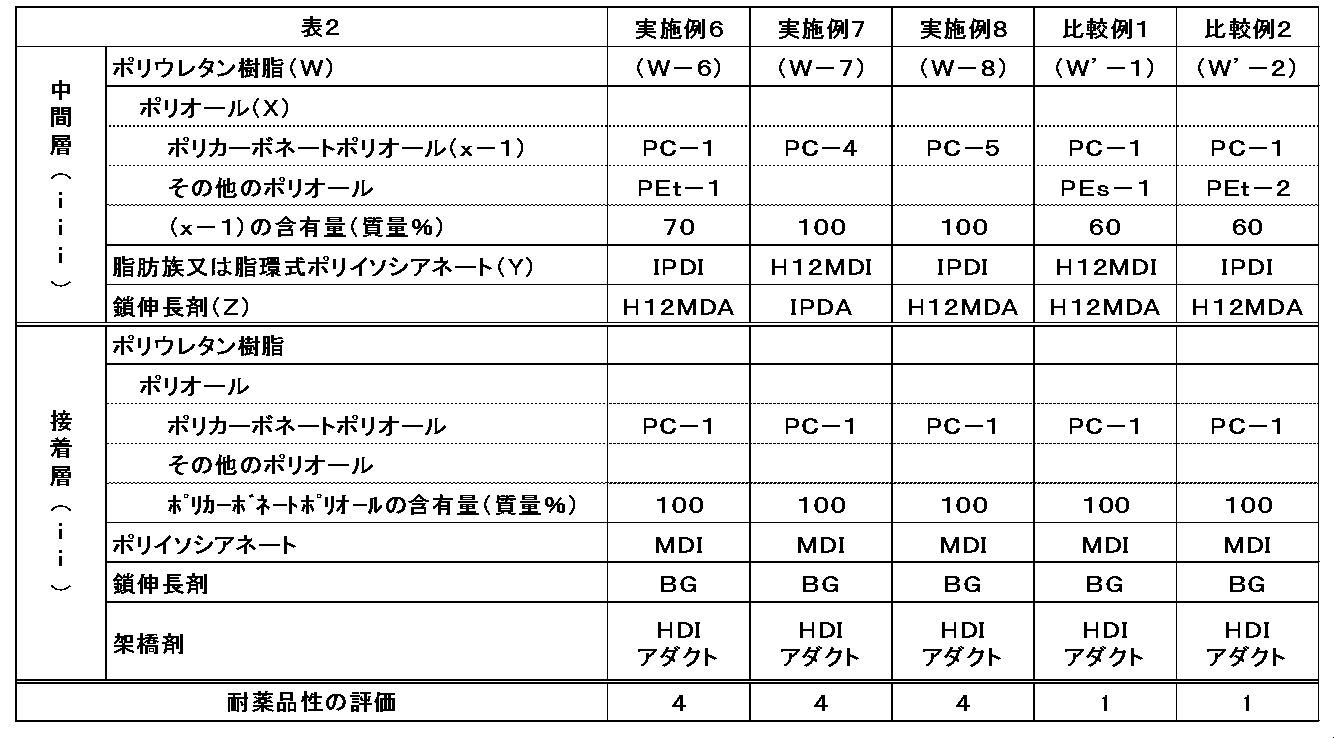

表1~3中の「(x-1)の含有量(質量%)」、「ポリカーボネートポリオールの含有量(質量%)」、及び、「(a-1)の含有量(質量%)」は、小数点第一位を四捨五入した値を示す。
本発明の合成皮革は、優れた耐薬品性を有することが分かった。
一方、比較例1及び2は、中間層(iii)に用いるポリウレタン樹脂(X)のポリカーネートポリオールの使用量が本発明で規定する範囲を下回る態様であるが、耐薬品性が不良であった。
Claims (5)
- 基布(i)、接着層(ii)、中間層(iii)、及び、表皮層(iv)が順次積層された合成皮革であって、
前記中間層(iii)が、ポリカーボネートポリオール(x-1)を70質量%以上含有するポリオール(X)、脂肪族又は脂環式ポリイソシアネート(Y)、及び、鎖伸長剤(Z)の反応物であるポリウレタン樹脂(W)を含むポリウレタン樹脂組成物により形成されたものであることを特徴とする合成皮革。 - 前記接着層(ii)が、ポリカーボネートポリオール(a-1)を70質量%以上含有するポリオール(A)、脂肪族又は脂環式ポリイソシアネート(B)、及び、鎖伸長剤(C)の反応物である水酸基を有するポリウレタン樹脂(D-1)と架橋剤(D-2)とを含むポリウレタン樹脂組成物により形成されたものである請求項1記載の合成皮革。
- 前記ポリイソシアネート(Y)、及び、脂環式ポリイソシアネート(B)が、それぞれイソホロンジイソシアネート、及び/又は、ジシクロヘキシルメタンジイソシアネートである請求項1又は2記載の合成皮革。
- 前記鎖伸長剤(Z)、及び、鎖伸長剤(C)が、アミノ基を有する鎖伸長剤である請求項1~3のいずれか1項記載の合成皮革。
- 前記アミノ基を有する鎖伸長剤が、イソホロンジアミン、及び/又は、ジシクロヘキシルメタンジアミンである請求項4記載の合成皮革。
Priority Applications (1)
| Application Number | Priority Date | Filing Date | Title |
|---|---|---|---|
| JP2018540882A JP6455644B2 (ja) | 2016-12-05 | 2017-10-26 | 合成皮革 |
Applications Claiming Priority (4)
| Application Number | Priority Date | Filing Date | Title |
|---|---|---|---|
| JP2016-235831 | 2016-12-05 | ||
| JP2016235831 | 2016-12-05 | ||
| JP2016-245448 | 2016-12-19 | ||
| JP2016245448 | 2016-12-19 |
Publications (1)
| Publication Number | Publication Date |
|---|---|
| WO2018105261A1 true WO2018105261A1 (ja) | 2018-06-14 |
Family
ID=62491819
Family Applications (1)
| Application Number | Title | Priority Date | Filing Date |
|---|---|---|---|
| PCT/JP2017/038608 Ceased WO2018105261A1 (ja) | 2016-12-05 | 2017-10-26 | 合成皮革 |
Country Status (3)
| Country | Link |
|---|---|
| JP (1) | JP6455644B2 (ja) |
| TW (1) | TW201829876A (ja) |
| WO (1) | WO2018105261A1 (ja) |
Cited By (6)
| Publication number | Priority date | Publication date | Assignee | Title |
|---|---|---|---|---|
| JP2020011457A (ja) * | 2018-07-19 | 2020-01-23 | 三菱ケミカル株式会社 | 積層体及び成形品 |
| CN110938358A (zh) * | 2018-09-21 | 2020-03-31 | 贝内克-长顺汽车内饰材料(张家港)有限公司 | 水性聚氨酯油漆、由其制备的高耐水性制品及高耐水性皮革 |
| CN113167022A (zh) * | 2018-12-18 | 2021-07-23 | Dic株式会社 | 氨基甲酸酯树脂组合物、覆膜及合成皮革 |
| CN113818256A (zh) * | 2021-09-26 | 2021-12-21 | 南通中豪超纤制品有限公司 | 共混改性易去污皮革的制备工艺 |
| JP7045607B1 (ja) | 2020-09-30 | 2022-04-01 | 東洋インキScホールディングス株式会社 | 接着剤、硬化物、及び積層体 |
| WO2024058011A1 (ja) * | 2022-09-15 | 2024-03-21 | 東洋紡株式会社 | 易接着性ポリエステルフィルム |
Families Citing this family (1)
| Publication number | Priority date | Publication date | Assignee | Title |
|---|---|---|---|---|
| US20210180247A1 (en) * | 2018-09-14 | 2021-06-17 | Asahi Kasei Kabushiki Kaisha | Artificial Leather and Method for Manufacturing Same |
Citations (5)
| Publication number | Priority date | Publication date | Assignee | Title |
|---|---|---|---|---|
| JPS60134075A (ja) * | 1983-12-23 | 1985-07-17 | Kuraray Co Ltd | 皮革様シ−ト物 |
| JPH055280A (ja) * | 1990-11-20 | 1993-01-14 | Asahi Chem Ind Co Ltd | 合成皮革 |
| WO2016006583A1 (ja) * | 2014-07-07 | 2016-01-14 | 共和レザー株式会社 | 合成樹脂表皮材及び合成樹脂表皮材の製造方法 |
| JP2016027111A (ja) * | 2014-06-20 | 2016-02-18 | 三菱化学株式会社 | ポリカーボネートジオールおよびその製造方法並びにそれを用いたポリウレタン |
| JP2016191000A (ja) * | 2015-03-31 | 2016-11-10 | トーヨーポリマー株式会社 | ポリウレタン水分散体及び合成皮革 |
Family Cites Families (2)
| Publication number | Priority date | Publication date | Assignee | Title |
|---|---|---|---|---|
| US20060183850A1 (en) * | 2005-02-11 | 2006-08-17 | Invista North America S.A.R.L. | Solvent free aqueous polyurethane dispersions and shaped articles therefrom |
| US8288006B2 (en) * | 2009-03-01 | 2012-10-16 | Seiren Co., Ltd. | Artificial leather |
-
2017
- 2017-10-26 JP JP2018540882A patent/JP6455644B2/ja active Active
- 2017-10-26 WO PCT/JP2017/038608 patent/WO2018105261A1/ja not_active Ceased
- 2017-11-03 TW TW106138145A patent/TW201829876A/zh unknown
Patent Citations (5)
| Publication number | Priority date | Publication date | Assignee | Title |
|---|---|---|---|---|
| JPS60134075A (ja) * | 1983-12-23 | 1985-07-17 | Kuraray Co Ltd | 皮革様シ−ト物 |
| JPH055280A (ja) * | 1990-11-20 | 1993-01-14 | Asahi Chem Ind Co Ltd | 合成皮革 |
| JP2016027111A (ja) * | 2014-06-20 | 2016-02-18 | 三菱化学株式会社 | ポリカーボネートジオールおよびその製造方法並びにそれを用いたポリウレタン |
| WO2016006583A1 (ja) * | 2014-07-07 | 2016-01-14 | 共和レザー株式会社 | 合成樹脂表皮材及び合成樹脂表皮材の製造方法 |
| JP2016191000A (ja) * | 2015-03-31 | 2016-11-10 | トーヨーポリマー株式会社 | ポリウレタン水分散体及び合成皮革 |
Cited By (9)
| Publication number | Priority date | Publication date | Assignee | Title |
|---|---|---|---|---|
| JP2020011457A (ja) * | 2018-07-19 | 2020-01-23 | 三菱ケミカル株式会社 | 積層体及び成形品 |
| CN110938358A (zh) * | 2018-09-21 | 2020-03-31 | 贝内克-长顺汽车内饰材料(张家港)有限公司 | 水性聚氨酯油漆、由其制备的高耐水性制品及高耐水性皮革 |
| CN113167022A (zh) * | 2018-12-18 | 2021-07-23 | Dic株式会社 | 氨基甲酸酯树脂组合物、覆膜及合成皮革 |
| CN113167022B (zh) * | 2018-12-18 | 2024-03-08 | Dic株式会社 | 氨基甲酸酯树脂组合物、覆膜及合成皮革 |
| JP7045607B1 (ja) | 2020-09-30 | 2022-04-01 | 東洋インキScホールディングス株式会社 | 接着剤、硬化物、及び積層体 |
| JP2022058158A (ja) * | 2020-09-30 | 2022-04-11 | 東洋インキScホールディングス株式会社 | 接着剤、硬化物、及び積層体 |
| CN113818256A (zh) * | 2021-09-26 | 2021-12-21 | 南通中豪超纤制品有限公司 | 共混改性易去污皮革的制备工艺 |
| CN113818256B (zh) * | 2021-09-26 | 2024-05-31 | 南通中豪超纤制品有限公司 | 共混改性易去污皮革的制备工艺 |
| WO2024058011A1 (ja) * | 2022-09-15 | 2024-03-21 | 東洋紡株式会社 | 易接着性ポリエステルフィルム |
Also Published As
| Publication number | Publication date |
|---|---|
| TW201829876A (zh) | 2018-08-16 |
| JP6455644B2 (ja) | 2019-01-23 |
| JPWO2018105261A1 (ja) | 2018-12-27 |
Similar Documents
| Publication | Publication Date | Title |
|---|---|---|
| JP6455644B2 (ja) | 合成皮革 | |
| KR102642770B1 (ko) | 우레탄 수지 조성물, 피막, 및, 합성 피혁 | |
| JP6780492B2 (ja) | ウレタン樹脂組成物、皮膜、及び皮革様シート | |
| CN110418809B (zh) | 湿固化型聚氨酯热熔树脂组合物和层叠体 | |
| JP7604789B2 (ja) | ポリウレタン樹脂組成物、皮膜、及び、合成皮革 | |
| EP3789537B1 (en) | Synthetic leather | |
| KR20200036903A (ko) | 합성 피혁 | |
| US11505896B2 (en) | Synthetic leather | |
| CN109722918B (zh) | 聚氨酯树脂组合物、覆膜及合成皮革 | |
| CN106905503B (zh) | 聚氨酯树脂组合物及合成皮革 | |
| KR20190051017A (ko) | 수성 우레탄 수지 조성물, 및, 합성 피혁 | |
| KR102356293B1 (ko) | 접착제, 및 합성 피혁 | |
| EP3816344B1 (en) | Synthetic leather | |
| JP7190806B2 (ja) | 合成皮革 | |
| JP6528915B1 (ja) | ウレタン樹脂組成物、皮膜、及び合成皮革 | |
| JP7205199B2 (ja) | ウレタン樹脂組成物、及び、合成皮革 | |
| WO2021084923A1 (ja) | ウレタン樹脂組成物、合成皮革、及び、合成皮革の製造方法 | |
| JP6354386B2 (ja) | ウレタン樹脂組成物及び皮革様シート | |
| JP6828854B1 (ja) | ウレタン樹脂組成物、及び、合成皮革 | |
| JP7676878B2 (ja) | 合成皮革 | |
| JPWO2020116304A1 (ja) | 合成皮革 |
Legal Events
| Date | Code | Title | Description |
|---|---|---|---|
| ENP | Entry into the national phase |
Ref document number: 2018540882 Country of ref document: JP Kind code of ref document: A |
|
| 121 | Ep: the epo has been informed by wipo that ep was designated in this application |
Ref document number: 17878552 Country of ref document: EP Kind code of ref document: A1 |
|
| NENP | Non-entry into the national phase |
Ref country code: DE |
|
| 122 | Ep: pct application non-entry in european phase |
Ref document number: 17878552 Country of ref document: EP Kind code of ref document: A1 |