WO2017110916A1 - イメージセンサ用永久接着剤組成物、並びにそれを用いた接着方法及び積層体 - Google Patents
イメージセンサ用永久接着剤組成物、並びにそれを用いた接着方法及び積層体 Download PDFInfo
- Publication number
- WO2017110916A1 WO2017110916A1 PCT/JP2016/088198 JP2016088198W WO2017110916A1 WO 2017110916 A1 WO2017110916 A1 WO 2017110916A1 JP 2016088198 W JP2016088198 W JP 2016088198W WO 2017110916 A1 WO2017110916 A1 WO 2017110916A1
- Authority
- WO
- WIPO (PCT)
- Prior art keywords
- substrate
- adhesive composition
- meth
- permanent adhesive
- acrylate
- Prior art date
- Legal status (The legal status is an assumption and is not a legal conclusion. Google has not performed a legal analysis and makes no representation as to the accuracy of the status listed.)
- Ceased
Links
Classifications
-
- C—CHEMISTRY; METALLURGY
- C09—DYES; PAINTS; POLISHES; NATURAL RESINS; ADHESIVES; COMPOSITIONS NOT OTHERWISE PROVIDED FOR; APPLICATIONS OF MATERIALS NOT OTHERWISE PROVIDED FOR
- C09J—ADHESIVES; NON-MECHANICAL ASPECTS OF ADHESIVE PROCESSES IN GENERAL; ADHESIVE PROCESSES NOT PROVIDED FOR ELSEWHERE; USE OF MATERIALS AS ADHESIVES
- C09J133/00—Adhesives based on homopolymers or copolymers of compounds having one or more unsaturated aliphatic radicals, each having only one carbon-to-carbon double bond, and at least one being terminated by only one carboxyl radical, or of salts, anhydrides, esters, amides, imides, or nitriles thereof; Adhesives based on derivatives of such polymers
- C09J133/04—Homopolymers or copolymers of esters
-
- B—PERFORMING OPERATIONS; TRANSPORTING
- B32—LAYERED PRODUCTS
- B32B—LAYERED PRODUCTS, i.e. PRODUCTS BUILT-UP OF STRATA OF FLAT OR NON-FLAT, e.g. CELLULAR OR HONEYCOMB, FORM
- B32B17/00—Layered products essentially comprising sheet glass, or glass, slag, or like fibres
- B32B17/06—Layered products essentially comprising sheet glass, or glass, slag, or like fibres comprising glass as the main or only constituent of a layer, next to another layer of a specific material
-
- B—PERFORMING OPERATIONS; TRANSPORTING
- B32—LAYERED PRODUCTS
- B32B—LAYERED PRODUCTS, i.e. PRODUCTS BUILT-UP OF STRATA OF FLAT OR NON-FLAT, e.g. CELLULAR OR HONEYCOMB, FORM
- B32B27/00—Layered products comprising a layer of synthetic resin
- B32B27/06—Layered products comprising a layer of synthetic resin as the main or only constituent of a layer, which is next to another layer of the same or of a different material
-
- B—PERFORMING OPERATIONS; TRANSPORTING
- B32—LAYERED PRODUCTS
- B32B—LAYERED PRODUCTS, i.e. PRODUCTS BUILT-UP OF STRATA OF FLAT OR NON-FLAT, e.g. CELLULAR OR HONEYCOMB, FORM
- B32B27/00—Layered products comprising a layer of synthetic resin
- B32B27/30—Layered products comprising a layer of synthetic resin comprising vinyl (co)polymers; comprising acrylic (co)polymers
- B32B27/308—Layered products comprising a layer of synthetic resin comprising vinyl (co)polymers; comprising acrylic (co)polymers comprising acrylic (co)polymers
-
- B—PERFORMING OPERATIONS; TRANSPORTING
- B32—LAYERED PRODUCTS
- B32B—LAYERED PRODUCTS, i.e. PRODUCTS BUILT-UP OF STRATA OF FLAT OR NON-FLAT, e.g. CELLULAR OR HONEYCOMB, FORM
- B32B7/00—Layered products characterised by the relation between layers; Layered products characterised by the relative orientation of features between layers, or by the relative values of a measurable parameter between layers, i.e. products comprising layers having different physical, chemical or physicochemical properties; Layered products characterised by the interconnection of layers
- B32B7/04—Interconnection of layers
- B32B7/12—Interconnection of layers using interposed adhesives or interposed materials with bonding properties
-
- B—PERFORMING OPERATIONS; TRANSPORTING
- B32—LAYERED PRODUCTS
- B32B—LAYERED PRODUCTS, i.e. PRODUCTS BUILT-UP OF STRATA OF FLAT OR NON-FLAT, e.g. CELLULAR OR HONEYCOMB, FORM
- B32B9/00—Layered products comprising a layer of a particular substance not covered by groups B32B11/00 - B32B29/00
- B32B9/04—Layered products comprising a layer of a particular substance not covered by groups B32B11/00 - B32B29/00 comprising such particular substance as the main or only constituent of a layer, which is next to another layer of the same or of a different material
-
- B—PERFORMING OPERATIONS; TRANSPORTING
- B32—LAYERED PRODUCTS
- B32B—LAYERED PRODUCTS, i.e. PRODUCTS BUILT-UP OF STRATA OF FLAT OR NON-FLAT, e.g. CELLULAR OR HONEYCOMB, FORM
- B32B9/00—Layered products comprising a layer of a particular substance not covered by groups B32B11/00 - B32B29/00
- B32B9/04—Layered products comprising a layer of a particular substance not covered by groups B32B11/00 - B32B29/00 comprising such particular substance as the main or only constituent of a layer, which is next to another layer of the same or of a different material
- B32B9/045—Layered products comprising a layer of a particular substance not covered by groups B32B11/00 - B32B29/00 comprising such particular substance as the main or only constituent of a layer, which is next to another layer of the same or of a different material of synthetic resin
-
- C—CHEMISTRY; METALLURGY
- C08—ORGANIC MACROMOLECULAR COMPOUNDS; THEIR PREPARATION OR CHEMICAL WORKING-UP; COMPOSITIONS BASED THEREON
- C08F—MACROMOLECULAR COMPOUNDS OBTAINED BY REACTIONS ONLY INVOLVING CARBON-TO-CARBON UNSATURATED BONDS
- C08F220/00—Copolymers of compounds having one or more unsaturated aliphatic radicals, each having only one carbon-to-carbon double bond, and only one being terminated by only one carboxyl radical or a salt, anhydride ester, amide, imide or nitrile thereof
- C08F220/02—Monocarboxylic acids having less than ten carbon atoms; Derivatives thereof
- C08F220/10—Esters
- C08F220/12—Esters of monohydric alcohols or phenols
- C08F220/16—Esters of monohydric alcohols or phenols of phenols or of alcohols containing two or more carbon atoms
- C08F220/18—Esters of monohydric alcohols or phenols of phenols or of alcohols containing two or more carbon atoms with acrylic or methacrylic acids
- C08F220/1811—C10or C11-(Meth)acrylate, e.g. isodecyl (meth)acrylate, isobornyl (meth)acrylate or 2-naphthyl (meth)acrylate
-
- C—CHEMISTRY; METALLURGY
- C08—ORGANIC MACROMOLECULAR COMPOUNDS; THEIR PREPARATION OR CHEMICAL WORKING-UP; COMPOSITIONS BASED THEREON
- C08F—MACROMOLECULAR COMPOUNDS OBTAINED BY REACTIONS ONLY INVOLVING CARBON-TO-CARBON UNSATURATED BONDS
- C08F265/00—Macromolecular compounds obtained by polymerising monomers on to polymers of unsaturated monocarboxylic acids or derivatives thereof as defined in group C08F20/00
- C08F265/04—Macromolecular compounds obtained by polymerising monomers on to polymers of unsaturated monocarboxylic acids or derivatives thereof as defined in group C08F20/00 on to polymers of esters
- C08F265/06—Polymerisation of acrylate or methacrylate esters on to polymers thereof
-
- C—CHEMISTRY; METALLURGY
- C09—DYES; PAINTS; POLISHES; NATURAL RESINS; ADHESIVES; COMPOSITIONS NOT OTHERWISE PROVIDED FOR; APPLICATIONS OF MATERIALS NOT OTHERWISE PROVIDED FOR
- C09J—ADHESIVES; NON-MECHANICAL ASPECTS OF ADHESIVE PROCESSES IN GENERAL; ADHESIVE PROCESSES NOT PROVIDED FOR ELSEWHERE; USE OF MATERIALS AS ADHESIVES
- C09J11/00—Features of adhesives not provided for in group C09J9/00, e.g. additives
- C09J11/02—Non-macromolecular additives
- C09J11/06—Non-macromolecular additives organic
-
- C—CHEMISTRY; METALLURGY
- C09—DYES; PAINTS; POLISHES; NATURAL RESINS; ADHESIVES; COMPOSITIONS NOT OTHERWISE PROVIDED FOR; APPLICATIONS OF MATERIALS NOT OTHERWISE PROVIDED FOR
- C09J—ADHESIVES; NON-MECHANICAL ASPECTS OF ADHESIVE PROCESSES IN GENERAL; ADHESIVE PROCESSES NOT PROVIDED FOR ELSEWHERE; USE OF MATERIALS AS ADHESIVES
- C09J125/00—Adhesives based on homopolymers or copolymers of compounds having one or more unsaturated aliphatic radicals, each having only one carbon-to-carbon double bond, and at least one being terminated by an aromatic carbocyclic ring; Adhesives based on derivatives of such polymers
- C09J125/02—Homopolymers or copolymers of hydrocarbons
- C09J125/04—Homopolymers or copolymers of styrene
- C09J125/08—Copolymers of styrene
- C09J125/10—Copolymers of styrene with conjugated dienes
-
- C—CHEMISTRY; METALLURGY
- C09—DYES; PAINTS; POLISHES; NATURAL RESINS; ADHESIVES; COMPOSITIONS NOT OTHERWISE PROVIDED FOR; APPLICATIONS OF MATERIALS NOT OTHERWISE PROVIDED FOR
- C09J—ADHESIVES; NON-MECHANICAL ASPECTS OF ADHESIVE PROCESSES IN GENERAL; ADHESIVE PROCESSES NOT PROVIDED FOR ELSEWHERE; USE OF MATERIALS AS ADHESIVES
- C09J133/00—Adhesives based on homopolymers or copolymers of compounds having one or more unsaturated aliphatic radicals, each having only one carbon-to-carbon double bond, and at least one being terminated by only one carboxyl radical, or of salts, anhydrides, esters, amides, imides, or nitriles thereof; Adhesives based on derivatives of such polymers
- C09J133/04—Homopolymers or copolymers of esters
- C09J133/06—Homopolymers or copolymers of esters of esters containing only carbon, hydrogen and oxygen, the oxygen atom being present only as part of the carboxyl radical
- C09J133/08—Homopolymers or copolymers of acrylic acid esters
-
- C—CHEMISTRY; METALLURGY
- C09—DYES; PAINTS; POLISHES; NATURAL RESINS; ADHESIVES; COMPOSITIONS NOT OTHERWISE PROVIDED FOR; APPLICATIONS OF MATERIALS NOT OTHERWISE PROVIDED FOR
- C09J—ADHESIVES; NON-MECHANICAL ASPECTS OF ADHESIVE PROCESSES IN GENERAL; ADHESIVE PROCESSES NOT PROVIDED FOR ELSEWHERE; USE OF MATERIALS AS ADHESIVES
- C09J133/00—Adhesives based on homopolymers or copolymers of compounds having one or more unsaturated aliphatic radicals, each having only one carbon-to-carbon double bond, and at least one being terminated by only one carboxyl radical, or of salts, anhydrides, esters, amides, imides, or nitriles thereof; Adhesives based on derivatives of such polymers
- C09J133/04—Homopolymers or copolymers of esters
- C09J133/06—Homopolymers or copolymers of esters of esters containing only carbon, hydrogen and oxygen, the oxygen atom being present only as part of the carboxyl radical
- C09J133/10—Homopolymers or copolymers of methacrylic acid esters
-
- C—CHEMISTRY; METALLURGY
- C09—DYES; PAINTS; POLISHES; NATURAL RESINS; ADHESIVES; COMPOSITIONS NOT OTHERWISE PROVIDED FOR; APPLICATIONS OF MATERIALS NOT OTHERWISE PROVIDED FOR
- C09J—ADHESIVES; NON-MECHANICAL ASPECTS OF ADHESIVE PROCESSES IN GENERAL; ADHESIVE PROCESSES NOT PROVIDED FOR ELSEWHERE; USE OF MATERIALS AS ADHESIVES
- C09J133/00—Adhesives based on homopolymers or copolymers of compounds having one or more unsaturated aliphatic radicals, each having only one carbon-to-carbon double bond, and at least one being terminated by only one carboxyl radical, or of salts, anhydrides, esters, amides, imides, or nitriles thereof; Adhesives based on derivatives of such polymers
- C09J133/04—Homopolymers or copolymers of esters
- C09J133/14—Homopolymers or copolymers of esters of esters containing halogen, nitrogen, sulfur or oxygen atoms in addition to the carboxy oxygen
-
- C—CHEMISTRY; METALLURGY
- C09—DYES; PAINTS; POLISHES; NATURAL RESINS; ADHESIVES; COMPOSITIONS NOT OTHERWISE PROVIDED FOR; APPLICATIONS OF MATERIALS NOT OTHERWISE PROVIDED FOR
- C09J—ADHESIVES; NON-MECHANICAL ASPECTS OF ADHESIVE PROCESSES IN GENERAL; ADHESIVE PROCESSES NOT PROVIDED FOR ELSEWHERE; USE OF MATERIALS AS ADHESIVES
- C09J151/00—Adhesives based on graft polymers in which the grafted component is obtained by reactions only involving carbon-to-carbon unsaturated bonds; Adhesives based on derivatives of such polymers
-
- C—CHEMISTRY; METALLURGY
- C09—DYES; PAINTS; POLISHES; NATURAL RESINS; ADHESIVES; COMPOSITIONS NOT OTHERWISE PROVIDED FOR; APPLICATIONS OF MATERIALS NOT OTHERWISE PROVIDED FOR
- C09J—ADHESIVES; NON-MECHANICAL ASPECTS OF ADHESIVE PROCESSES IN GENERAL; ADHESIVE PROCESSES NOT PROVIDED FOR ELSEWHERE; USE OF MATERIALS AS ADHESIVES
- C09J5/00—Adhesive processes in general; Adhesive processes not provided for elsewhere, e.g. relating to primers
-
- B—PERFORMING OPERATIONS; TRANSPORTING
- B32—LAYERED PRODUCTS
- B32B—LAYERED PRODUCTS, i.e. PRODUCTS BUILT-UP OF STRATA OF FLAT OR NON-FLAT, e.g. CELLULAR OR HONEYCOMB, FORM
- B32B2250/00—Layers arrangement
- B32B2250/02—2 layers
-
- B—PERFORMING OPERATIONS; TRANSPORTING
- B32—LAYERED PRODUCTS
- B32B—LAYERED PRODUCTS, i.e. PRODUCTS BUILT-UP OF STRATA OF FLAT OR NON-FLAT, e.g. CELLULAR OR HONEYCOMB, FORM
- B32B2405/00—Adhesive articles, e.g. adhesive tapes
-
- B—PERFORMING OPERATIONS; TRANSPORTING
- B32—LAYERED PRODUCTS
- B32B—LAYERED PRODUCTS, i.e. PRODUCTS BUILT-UP OF STRATA OF FLAT OR NON-FLAT, e.g. CELLULAR OR HONEYCOMB, FORM
- B32B2551/00—Optical elements
-
- C—CHEMISTRY; METALLURGY
- C08—ORGANIC MACROMOLECULAR COMPOUNDS; THEIR PREPARATION OR CHEMICAL WORKING-UP; COMPOSITIONS BASED THEREON
- C08K—Use of inorganic or non-macromolecular organic substances as compounding ingredients
- C08K5/00—Use of organic ingredients
- C08K5/0008—Organic ingredients according to more than one of the "one dot" groups of C08K5/01 - C08K5/59
- C08K5/005—Stabilisers against oxidation, heat, light, ozone
-
- C—CHEMISTRY; METALLURGY
- C08—ORGANIC MACROMOLECULAR COMPOUNDS; THEIR PREPARATION OR CHEMICAL WORKING-UP; COMPOSITIONS BASED THEREON
- C08K—Use of inorganic or non-macromolecular organic substances as compounding ingredients
- C08K5/00—Use of organic ingredients
- C08K5/04—Oxygen-containing compounds
- C08K5/13—Phenols; Phenolates
-
- H—ELECTRICITY
- H10—SEMICONDUCTOR DEVICES; ELECTRIC SOLID-STATE DEVICES NOT OTHERWISE PROVIDED FOR
- H10F—INORGANIC SEMICONDUCTOR DEVICES SENSITIVE TO INFRARED RADIATION, LIGHT, ELECTROMAGNETIC RADIATION OF SHORTER WAVELENGTH OR CORPUSCULAR RADIATION
- H10F99/00—Subject matter not provided for in other groups of this subclass
Definitions
- the present invention relates to a permanent adhesive composition for an image sensor, and an adhesion method and a laminate using the composition.
- Patent Document 1 describes an adhesive composition containing a hydrocarbon resin and a predetermined solvent as an adhesive composition having excellent product stability.
- Hydrocarbon resins used for general adhesives such as cycloolefin materials and styrene-butadiene copolymers are likely to be colored and difficult to maintain light transmittance through a high temperature process. Therefore, it is difficult to use a conventional adhesive composition containing a hydrocarbon resin as a permanent adhesive in an optical member such as an image sensor.
- the present invention has been made in view of such a conventional situation, and provides a permanent adhesive composition for an image sensor that provides an adhesive layer excellent in heat resistance and thermal shock resistance, and an adhesion method and lamination using the same.
- the purpose is to provide a body.
- the inventors of the present invention have intensively studied to solve the above problems. As a result, it has been found that the above-mentioned problems can be solved by combining a specific heat or photocurable resin and an antioxidant, and the present invention has been completed. Specifically, the present invention provides the following.
- R a1 is a divalent hydrocarbon group having 8 to 14 carbon atoms
- R a2 and R a3 are independently a hydrogen atom or a methyl group.
- a substrate comprising: a thermo- or photo-curing resin containing a structural unit derived from a bifunctional (meth) acrylic acid ester represented by: (B) a polymerizable monomer; and (C) an antioxidant; It is a permanent adhesive composition for an image sensor for adhering to a substrate support.
- a second aspect of the present invention is an adhesion method characterized by including an adhesion step of adhering a substrate and a support of the substrate using the permanent adhesive composition.
- a third aspect of the present invention is a laminate including a substrate, a support for the substrate, and an adhesive layer for bonding the substrate and the support, wherein the adhesive layer is the permanent adhesive. It is a laminated body characterized by being comprised by a composition.
- a permanent adhesive composition for an image sensor that provides an adhesive layer excellent in heat resistance and thermal shock resistance, and an adhesion method and laminate using the composition.
- the permanent adhesive composition for an image sensor comprises (A) a heat- or photo-curing resin (hereinafter referred to as a structural unit derived from a bifunctional (meth) acrylic acid ester represented by the general formula (1)).
- a heat- or photo-curing resin hereinafter referred to as a structural unit derived from a bifunctional (meth) acrylic acid ester represented by the general formula (1).
- (A) heat or photocurable resin” a heat or photocurable resin
- B a polymerizable monomer
- an antioxidant belongs to.
- the permanent adhesive composition according to the present invention can be used for bonding a substrate (wafer) and a support as described above.
- a laminate may be formed by forming an adhesive layer on a substrate or a support using the permanent adhesive composition, and bonding the substrate and the support through the adhesive layer.
- the substrate is subjected to processes such as thinning and mounting while being supported by the support.
- substrate with which the laminated body which concerns on this invention is not limited to a wafer, Arbitrary board
- Specific examples of the substrate include a silicon substrate and a sapphire substrate.
- the support body supports the substrate and may have a strength necessary for preventing the substrate from being damaged or deformed during processes such as substrate thinning, transport, and mounting.
- examples of the support include those made of glass, silicon, and acrylic resin.
- the composition layer After applying the permanent adhesive composition according to the present invention to a substrate or a support to form a composition layer, the composition layer is heated. Thereby, the polymerization of the polymerizable monomer (B) forming the composition layer occurs, and the flexibility of the layer can be improved. As a result, the permanent adhesive composition according to the present invention provides an adhesive layer with improved thermal shock resistance.
- the permanent adhesive composition according to the present invention contains a combination of (A) heat or photocurable resin and (C) an antioxidant, so that yellowing of the adhesive layer due to heating is suppressed. . Therefore, the permanent adhesive composition according to the present invention provides an adhesive layer with improved heat resistance.
- the permanent adhesive composition according to the present invention can be used, for example, as a permanent adhesive for an optical member such as an image sensor. Examples of the image sensor include a CCD sensor and a CMOS sensor.
- R a1 is a divalent hydrocarbon group having 8 to 14 carbon atoms
- R a2 and R a3 are independently a hydrogen atom or a methyl group.
- the permanent adhesive composition according to the present invention can be used as a permanent adhesive for optical members such as image sensors.
- a heat or photocurable resin can be used individually or in combination of 2 or more types.
- R a1 is a divalent hydrocarbon group having 8 to 14 carbon atoms, preferably 9 to 12 carbon atoms.
- R a1 for example, an alkylene group having 8 to 14 carbon atoms, preferably 9 to 12 carbon atoms, such as an octenyl group, nonenyl group, decenyl group, dodecenyl group, etc .; 8 to 14 carbon atoms such as a tricyclodecandiyl group
- the amount of the structural unit derived from the bifunctional (meth) acrylic acid ester represented by the general formula (1) is the total structural unit from the viewpoint of transmittance, heat resistance and the like. Among them, the content is preferably 10 to 60 mol%, more preferably 20 to 50 mol%.
- the heat or photocurable resin preferably has a branched structure from the viewpoints of reactivity, compatibility, transparency, and optical isotropy, and at least two at the end or side chain thereof. It is preferable to have the above unsaturated double bond.
- the number average molecular weight of this multi-branched / multi-functional polymer is preferably 10,000 to 500,000, more preferably 30,000 to 300,000 in terms of transmittance, heat resistance and the like.
- a number average molecular weight means the number average molecular weight of polystyrene conversion measured by gel permeation chromatography.
- a chain transfer agent exists between a monofunctional monomer having one unsaturated double bond in the molecule and a bifunctional monomer having two unsaturated double bonds in the molecule. Manufactured by copolymerization in the system.
- the above multi-branched / multi-functional polymers can be used alone or in combination of two or more.
- bifunctional (meth) acrylate represented by the general formula (1) As a bifunctional monomer having two unsaturated double bonds in the molecule, a bifunctional (meth) acrylate represented by the general formula (1) can be used. Since this bifunctional (meth) acrylic acid ester has one unsaturated double bond at each end, only one unsaturated double bond is involved in the extension of the main chain, and the other unsaturated double bond. May be involved in side chain elongation. As a result, a copolymer having a branched structure is obtained. Each of the bifunctional monomer having two unsaturated double bonds in the molecule and the bifunctional (meth) acrylic acid ester can be used alone or in combination of two or more.
- bifunctional (meth) acrylic acid ester examples include 1,8-octanediol di (meth) acrylate, cyclohexanedimethanol di (meth) acrylate, 1,9-nonanediol di (meth) acrylate, and 1,10-decane.
- examples include diol di (meth) acrylate, tricyclodecane di (meth) acrylate, 1,12-dodecanediol di (meth) acrylate, and tricyclodecane dimethylol di (meth) acrylate.
- the monofunctional monomer having one unsaturated double bond in the molecule is not particularly limited, and conventionally known monofunctional monomers can be used.
- a monofunctional monomer in the polymerizable monomer (B) described later can be used.
- the permanent adhesive composition according to the present invention contains (B) a polymerizable monomer.
- a polymerizable monomer By applying the permanent adhesive composition according to the present invention to a substrate or a support and then heating, polymerization of the (B) polymerizable monomer occurs, and the flexibility of the layer can be improved. As a result, the permanent adhesive composition according to the present invention provides an adhesive layer with improved thermal shock resistance.
- a polymeric monomer can be used individually or in combination of 2 or more types.
- the polymerizable monomer is not particularly limited, and conventionally known monofunctional monomers and polyfunctional monomers can be used, and polyfunctional monomers are preferable from the viewpoint of reactivity, and the formed adhesive layer becomes too hard.
- the bifunctional monomer is more preferable in that deformation such as warpage is easily suppressed.
- Monofunctional monomers include (meth) acrylamide, methylol (meth) acrylamide, methoxymethyl (meth) acrylamide, ethoxymethyl (meth) acrylamide, propoxymethyl (meth) acrylamide, butoxymethoxymethyl (meth) acrylamide, N-methylol ( (Meth) acrylamide, N-hydroxymethyl (meth) acrylamide, (meth) acrylic acid, fumaric acid, maleic acid, maleic anhydride, itaconic acid, itaconic anhydride, citraconic acid, citraconic anhydride, crotonic acid, 2-acrylamide- 2-methylpropanesulfonic acid, t-butylacrylamide sulfonic acid, methyl (meth) acrylate, ethyl (meth) acrylate, butyl (meth) acrylate, 2-ethylhexyl (meth) acrylate Cyclohexyl (meth) acrylate, 2-hydroxyethyl
- alkoxylated bisphenol A di (meth) acrylate is preferable, and polyfunctional monomers represented by the following general formulas such as ethoxylated bisphenol A di (meth) acrylate and propoxylated bisphenol A di (meth) acrylate are more preferable. preferable.
- R 1 is independently a hydrogen atom or a methyl group.
- R 2 and R 3 are each independently an alkylene group having 1 to 5 carbon atoms.
- R 4 and R 5 are independently 1 to 5 carbon atoms.
- An alkyl group, m and n are each independently an integer of 1 or more, provided that m + n is an integer of 2 to 30.
- the number of carbon atoms of R 2 or R 3 is preferably 2 to 4, and more preferably 2 or 3, from the viewpoints of availability, reactivity, and the like.
- R 2 or R 3 include a methylene group, an ethylene group, a propylene group, a trimethylene group, a butylene group, and the like, and an ethylene group and a propylene group are preferable from the viewpoint of availability, reactivity, and the like.
- the number of carbon atoms of R 4 or R 5 is preferably 1 to 3, more preferably 1 or 2, from the viewpoint of availability, reactivity, and the like.
- R 4 or R 5 include a methyl group, an ethyl group, a propyl group, an isopropyl group, an n-butyl group, an isobutyl group, a s-butyl group, a t-butyl group, and the like. From the viewpoint of reactivity and the like, a methyl group and an ethyl group are preferable.
- polyfunctional monomer represented by the above formula examples include NK ester ABE-300, A-BPE-4, A-BPE-6, A-BPE-10, and A-BPE manufactured by Shin-Nakamura Chemical Co., Ltd. -20, A-BPE-30, BPE-80N, BPE-100N, BPE-200, BPE-500, BPE-900, and BPE-1300N.
- (meth) acrylamide means both acrylamide and methacrylamide
- (meth) acrylic acid means both acrylic acid and methacrylic acid
- (meth) acrylate means both acrylate and methacrylate and (meth) acryloyl "means both acryloyl and methacryloyl.
- the content of the polymerizable monomer (B) is preferably 3 to 45 parts by mass, more preferably 100 parts by mass with respect to a total of 100 parts by mass of the (A) heat or photocurable resin and the (B) polymerizable monomer. 5 to 30 parts by mass.
- the adhesive layer formed from the permanent adhesive composition according to the present invention is further improved in flexibility and further improved in thermal shock resistance.
- the permanent adhesive composition according to the present invention contains (C) an antioxidant.
- the permanent adhesive composition according to the present invention contains (C) an antioxidant together with (A) heat or a photocurable resin, whereby yellowing of the adhesive layer due to heating is suppressed. Therefore, the permanent adhesive composition according to the present invention provides an adhesive layer with improved heat resistance.
- An antioxidant can be used individually or in combination of 2 or more types.
- the antioxidant is not particularly limited, and a conventionally known antioxidant can be used.
- a phenol-based antioxidant for example, a hindered amine-based antioxidant, a phosphorus-based antioxidant, and a sulfur-based antioxidant.
- a phenolic antioxidant is preferable.
- phenolic antioxidant examples include 4,4-thiobis (6-tert-butyl-m-cresol), 3,9-bis [2- [3- (3-tert-butyl-4-hydroxy-5]. -Methylphenyl) -propionyloxy] -1,1-dimethylethyl] -2,4,8,10-tetraoxaspiro [5.5] undecane, 2,2′-methylenebis (6-t-butyl-4- Methylphenol), 2,2′-methylenebis (6-tert-butyl-4-ethylphenol), 4,4′-butylidenebis (6-tert-butyl-3-methylphenol), 4,4′-thiobis (6 -T-butyl-3-methylphenol, alkylated bisphenol, 2,6-di-t-butyl-p-cresol, 2,6-di-t-butyl-4-ethylphenol, 1,1,3-tris (2 Methyl-4-hydroxy-5-t-butyl
- hindered amine antioxidants include bis (1,2,2,6,6-pentamethyl-4-piperidinyl) sebacate and 2- (3,5-di-t-butyl-4-hydroxybenzyl) -2. -N-butyl malonate bis (1,2,2,6,6-pentamethyl-4-piperidyl) and the like.
- phosphorus antioxidants examples include tris (2,4-di-t-butylphenyl) phosphite, tetrakis (2,4-di-t-butylphenyl) -4,4′-biphenylene phosphite, and tris.
- Nonylphenyl phosphite, bis (2,4-di-t-butylphenyl) pentaerythritol diphosphite, distearyl pentaerythritol diphosphite and the like can be mentioned.
- sulfur-based antioxidant examples include dilauryl 3,3-thiodipropionate, dimyristyl 3,3-thiodipropionate, distearyl 3,3-thiodipropionate, ditridecyl 3,3-thiodipropionate. And pentaerythrityltetrakis (3-laurylthiodipropionate, 2-mercaptobenzimidazole, and the like.
- antioxidant (C) a hindered phenol antioxidant is more preferable because it is easy to obtain an adhesive layer having improved heat resistance in a high temperature process at 280 ° C. for 10 minutes.
- the content of (C) antioxidant is preferably 0.1 to 5 parts by mass with respect to 100 parts by mass in total of (A) heat or photocurable resin and (B) polymerizable monomer, The amount is preferably 0.3 to 2.0 parts by mass. (C) When the content of the antioxidant is within the above range, the heat resistance of the adhesive layer formed from the permanent adhesive composition according to the present invention is likely to be further improved.
- the permanent adhesive composition according to the present invention may contain a solvent having a function of dissolving (A) a heat or photocurable resin, (B) a polymerizable monomer, and (C) an antioxidant.
- a solvent can be used individually or in combination of 2 or more types.
- the solvent examples include ethylene glycol monomethyl ether, ethylene glycol monoethyl ether, ethylene glycol-n-propyl ether, ethylene glycol mono-n-butyl ether, diethylene glycol monomethyl ether, diethylene glycol monoethyl ether, diethylene glycol mono-n-propyl ether, Diethylene glycol mono-n-butyl ether, triethylene glycol monomethyl ether, triethylene glycol monoethyl ether, propylene glycol monomethyl ether, propylene glycol monoethyl ether, propylene glycol mono-n-propyl ether, propylene glycol mono-n-butyl ether, dipropylene Glycol monomethyl ether, dipro (Poly) alkylene glycol monoalkyl ethers such as lenglycol monoethyl ether, dipropylene glycol mono-n-propyl ether, dipropylene glycol mono-n-butyl ether, tripropy
- Alkyl 2-lactic acid esters ethyl 2-hydroxy-2-methylpropionate, methyl 3-methoxypropionate, ethyl 3-methoxypropionate, methyl 3-ethoxypropionate, ethyl 3-ethoxypropionate, ethyl ethoxyacetate, hydroxy Ethyl acetate, methyl 2-hydroxy-3-methylbutanoate, 3-methyl-3-methoxybutyl acetate, 3-methyl-3-methoxybutylpropionate, acetate Chill, n-propyl acetate, isopropyl acetate, n-butyl acetate, isobutyl acetate, n-pentyl formate, isopentyl acetate, n-butyl propionate, ethyl butyrate, n-propyl butyrate, isopropyl butyrate, n-butyl butyrate, pyruvic acid
- Other esters such as
- propylene glycol monomethyl ether ethylene glycol monomethyl ether acetate, propylene glycol monomethyl ether acetate (PGMEA), propylene glycol monoethyl ether acetate, diethylene glycol dimethyl ether, diethylene glycol methyl ethyl ether, cyclohexanone, 3-methoxybutyl acetate are (
- fever or photocurable resin ethylene glycol methyl ether acetate
- PGMEA propylene glycol monomethyl ether acetate
- PGMEA propylene glycol monomethyl ether acetate
- the content of the solvent is preferably such that the solid content concentration of the permanent adhesive composition is 40 to 90% by mass, and more preferably 50 to 80% by mass.
- the permanent adhesive composition according to the present invention may contain (D) a polymerization initiator, if necessary.
- a polymerization initiator can be used individually or in combination of 2 or more types.
- D) As a polymerization initiator, a photoinitiator, a thermal polymerization initiator, etc. are mentioned.
- acetophenone compounds such as acetophenone compounds, benzoin compounds, benzophenone compounds, thioxanthone compounds, acylphosphine oxide compounds, and the like
- examples include morpholinopropan-1-one, benzoin methyl ether, benzyldimethyl ketal, benzophenone, thioxanthone, 2,4,6-trimethylbenzoyldiphenylphosphine oxide, methylphenylglyoxylate, camphorquinone, benzyl, anthraquinone, Michler's ketone, etc.
- photoinitiator auxiliary agent and the sharpening agent which show an effect in combination with a photoinitiator can also be used together with a photoinitiator.
- a photoinitiator may be used individually or may be used in mixture of 2 or more types.
- thermal polymerization initiators examples include ketone peroxide compounds, peroxyketal compounds, hydroperoxide compounds, dialkyl peroxide compounds, diacyl peroxide compounds, peroxydicarbonate compounds, peroxyester compounds, etc. Of these, various organic peroxides can be suitably used. Specifically, cyclohexanone peroxide, 1,1-bis (t-hexaperoxy) cyclohexanone, cumene hydroperoxide, dicumyl peroxide, benzoyl peroxide, diisopropyl peroxide, t-butyl peroxide-2-ethyl Although hexanoate etc. can be illustrated, it is not limited to this at all.
- the thermal polymerization initiators may be used alone or in combination of two or more.
- the content of the polymerization initiator (D) is preferably 0.1 to 10 parts by mass with respect to 100 parts by mass in total of the (A) heat or photocurable resin and the (B) polymerizable monomer.
- the amount is preferably 0.3 to 1 part by mass.
- the permanent adhesive composition according to the present invention may further contain other miscible materials as long as the essential characteristics of the present invention are not impaired.
- various conventionally used additives such as additional resins for improving the performance of the adhesive, plasticizers, adhesion assistants, stabilizers, colorants, and surfactants can be further used.
- the bonding method according to the present invention includes a bonding step of bonding a substrate and a support of the substrate using the permanent adhesive composition according to the present invention.
- the substrate and the support may be bonded by applying pressure, or the substrate and the support may be bonded by heating and pressing.
- the temperature, time, and pressure when bonding the substrate and the support can be appropriately selected according to the adhesive composition to be used.
- the temperature is preferably 50 to 250 ° C, more preferably 50 to 150 ° C.
- the time is preferably 10 seconds to 15 minutes, more preferably 30 seconds to 10 minutes.
- the pressure is preferably 10 kg to 1,000 kg, more preferably 50 kg to 500 kg.
- Copolymer A Copolymer obtained in the following synthesis example (synthesis example) 38 g of 1,9-nonanediol diacrylate, 46 g of dimethylol tricyclodecane diacrylate, 41 g of 2-ethylhexylethylene oxide (n ⁇ 2) modified acrylate, 72 g of dicyclopentanyl acrylate, 26 g of 2-hydroxypropyl acrylate, 2,4- 67 g of diphenyl-4-methyl-1-pentene and 146 g of propylene glycol monomethyl ether acetate were put into a 1 L reactor, mixed and heated. To the mixture in the reactor, 3 g of benzoyl peroxide was added at 85 ° C.
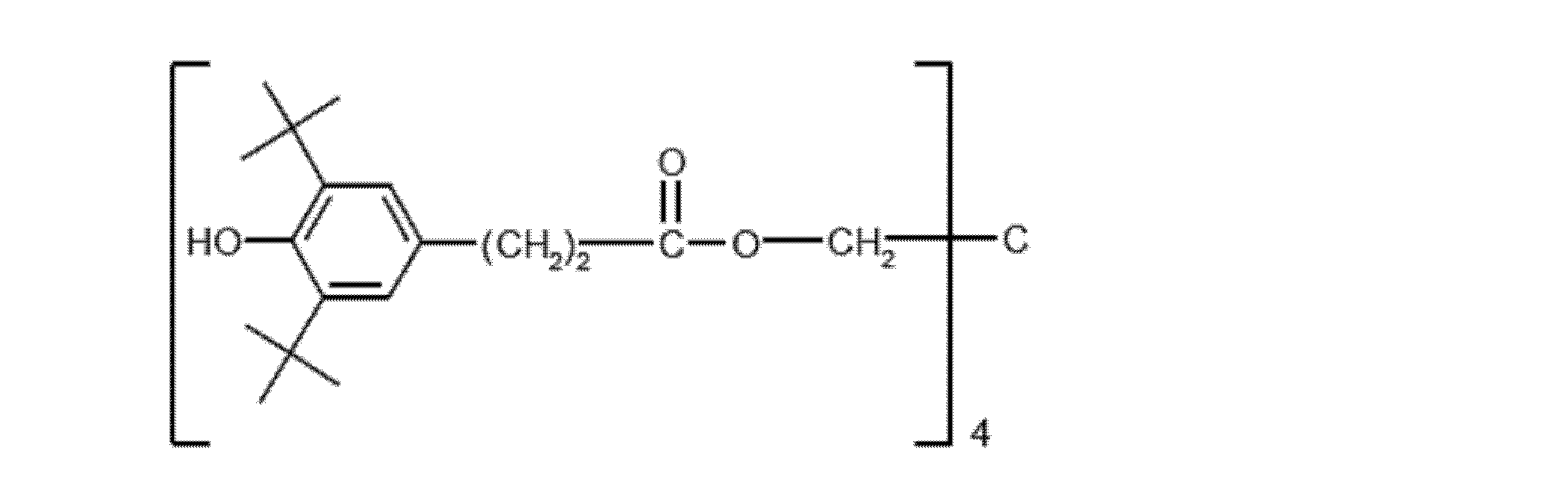
- Antioxidant IRGANOX 1010 manufactured by BASF Japan KK, antioxidant represented by the following formula, tetrakis [methylene-3- (3,5-di-t-butyl-4-hydroxyphenyl) propionate] methane
- antioxidant manufactured by Tokyo Chemical Industry Co., Ltd., antioxidant represented by the following formula, 2,6-di-t-butyl-p-cresol
- ADK STAB AO-80 manufactured by ADEKA Corporation, an antioxidant represented by the following formula, 3,9-bis [2- [3- (3-tert-butyl-4-hydroxy-5-methylphenyl) -propionyl Oxy] -1,1-dimethylethyl] -2,4,8,10-tetraoxaspiro [5.5] undecane (Wherein t-Bu represents a t-butyl group.)
- A-HD-N 1,6-hexanediol diacrylate (manufactured by Shin-Nakamura Chemical Co., Ltd.)
- FA-512A dicyclopentenyloxyethyl acrylate (manufactured by Hitachi Chemical Co., Ltd.)
- ACMO acryloylmorpholine (manufactured by KJ Chemicals)
- ADK STAB AO-20 manufactured by ADEKA Corporation, antioxidant represented by the following formula, tris (3,5-di-t-butyl-4-hydroxybenzyl) isocyanurate (Wherein t-Bu is as described above.)
- ADK STAB AO-30 manufactured by ADEKA Corporation, antioxidant represented by the following formula, 1,1,3-tris (2-methyl-4-hydroxy-5-t-butylphenyl) butane (Wherein t-Bu is as described above.)
- Park mill D polymerization initiator represented by the following formula (manufactured by NOF Corporation)
- Example or Comparative Example The adhesive composition of Example or Comparative Example was spin-coated on a 10 cm square glass substrate, baked at 130 ° C. and 150 ° C. for 5 minutes each, and the solvent was volatilized to form a composition layer (film thickness 50 ⁇ m). . Next, the board
- the transmittance at 400 nm of the formed adhesive layer was measured with a spectrophotometer (instant multiphotometry system MCPD3000, manufactured by Otsuka Electronics Co., Ltd.), and the transmittance was evaluated according to the following evaluation criteria. The results are shown in Tables 1 to 3. ⁇ (Good): The transmittance was 98% or more. X (defect): The transmittance was less than 98%.
Landscapes
- Chemical & Material Sciences (AREA)
- Organic Chemistry (AREA)
- Chemical Kinetics & Catalysis (AREA)
- Health & Medical Sciences (AREA)
- Medicinal Chemistry (AREA)
- Polymers & Plastics (AREA)
- Engineering & Computer Science (AREA)
- Ceramic Engineering (AREA)
- Adhesives Or Adhesive Processes (AREA)
- Laminated Bodies (AREA)
- Addition Polymer Or Copolymer, Post-Treatments, Or Chemical Modifications (AREA)
Abstract
Description
CH2=CRa2-CO-O-Ra1-O-CO-CRa3=CH2 (1)
(式中、Ra1は炭素数8以上14以下の2価炭化水素基であり、Ra2及びRa3は独立に水素原子又はメチル基である。)
で表される2官能(メタ)アクリル酸エステル由来の構造単位を含む熱又は光硬化性樹脂、(B)重合性モノマー、及び(C)酸化防止剤を含有することを特徴とする、基板と当該基板の支持体とを接着するためのイメージセンサ用永久接着剤組成物である。
本発明に係るイメージセンサ用永久接着剤組成物は、(A)上記一般式(1)で表される2官能(メタ)アクリル酸エステル由来の構造単位を含む熱又は光硬化性樹脂(以下、「(A)熱又は光硬化性樹脂」ともいう。)、(B)重合性モノマー、及び(C)酸化防止剤を含有することを特徴とし、基板と当該基板の支持体とを接着するためのものである。
本発明に係る永久接着剤組成物は、(A)下記一般式(1)
CH2=CRa2-CO-O-Ra1-O-CO-CRa3=CH2 (1)
(式中、Ra1は炭素数8以上14以下の2価炭化水素基であり、Ra2及びRa3は独立に水素原子又はメチル基である。)
で表される2官能(メタ)アクリル酸エステル由来の構造単位を含む熱又は光硬化性樹脂を含有する。(A)熱又は光硬化性樹脂は、透過率、耐熱性等に優れているため、本発明に係る永久接着剤組成物はイメージセンサ等の光学部材の永久接着剤として用いることができる。(A)熱又は光硬化性樹脂は、単独で又は2種以上組み合わせて用いることができる。
本発明に係る永久接着剤組成物は、(B)重合性モノマーを含有する。本発明に係る永久接着剤組成物を基板又は支持体に塗布した後、加熱することによって、(B)重合性モノマーの重合が起こり、当該層の柔軟性を向上させることができる。結果として、本発明に係る永久接着剤組成物は、耐熱衝撃性が向上した接着層を与える。(B)重合性モノマーは、単独で又は2種以上組み合わせて用いることができる。

本発明に係る永久接着剤組成物は、(C)酸化防止剤を含有する。本発明に係る永久接着剤組成物は、(A)熱又は光硬化性樹脂とともに(C)酸化防止剤を含有することにより、加熱による接着層の黄変が抑制されている。よって、本発明に係る永久接着剤組成物は、耐熱性が向上した接着層を与える。(C)酸化防止剤は、単独で又は2種以上組み合わせて用いることができる。
本発明に係る永久接着剤組成物は、(A)熱又は光硬化性樹脂、(B)重合性モノマー、及び(C)酸化防止剤を溶解する機能を有する溶剤を含有してもよい。溶剤は、単独で又は2種以上組み合わせて用いることができる。
本発明に係る永久接着剤組成物は、必要に応じて、(D)重合開始剤を含有してもよい。(D)重合開始剤は、単独で又は2種以上組み合わせて用いることができる。(D)重合開始剤としては、光重合開始剤、熱重合開始剤等が挙げられる。
本発明に係る永久接着剤組成物は、本発明における本質的な特性を損なわない範囲において、混和性のある他の物質を更に含んでいてもよい。例えば、接着剤の性能を改良するための付加的樹脂、可塑剤、接着補助剤、安定剤、着色剤、及び界面活性剤等、慣用されている各種添加剤を更に用いることができる。
本発明に係る接着方法は、本発明に係る永久接着剤組成物を用いて、基板と当該基板の支持体とを接着する接着工程を包含することを特徴とする。上記接着工程においては、加圧することによって基板と支持体とを接着してもよく、加熱及び加圧することによって基板と支持体とを接着してもよい。基板と支持体とを接着するときの温度、時間、及び圧力は、使用する接着剤組成物等に応じて、適宜、選択することができる。例えば、温度は、50~250℃が好ましく、50℃~150℃がより好ましい。時間は、10秒~15分が好ましく、30秒~10分がより好ましい。圧力は、10kg~1,000kgが好ましく、50kg~500kgがより好ましい。また、減圧環境下(例えば、1Pa以下)で基板と支持体とを接着してもよい。
(材料)
接着剤組成物の調製には、以下の材料を用いた。
・樹脂
SEPTON 4033:(株)クラレ製、下記式で表される水添スチレン・イソプレン・ブタジエンブロック共重合物

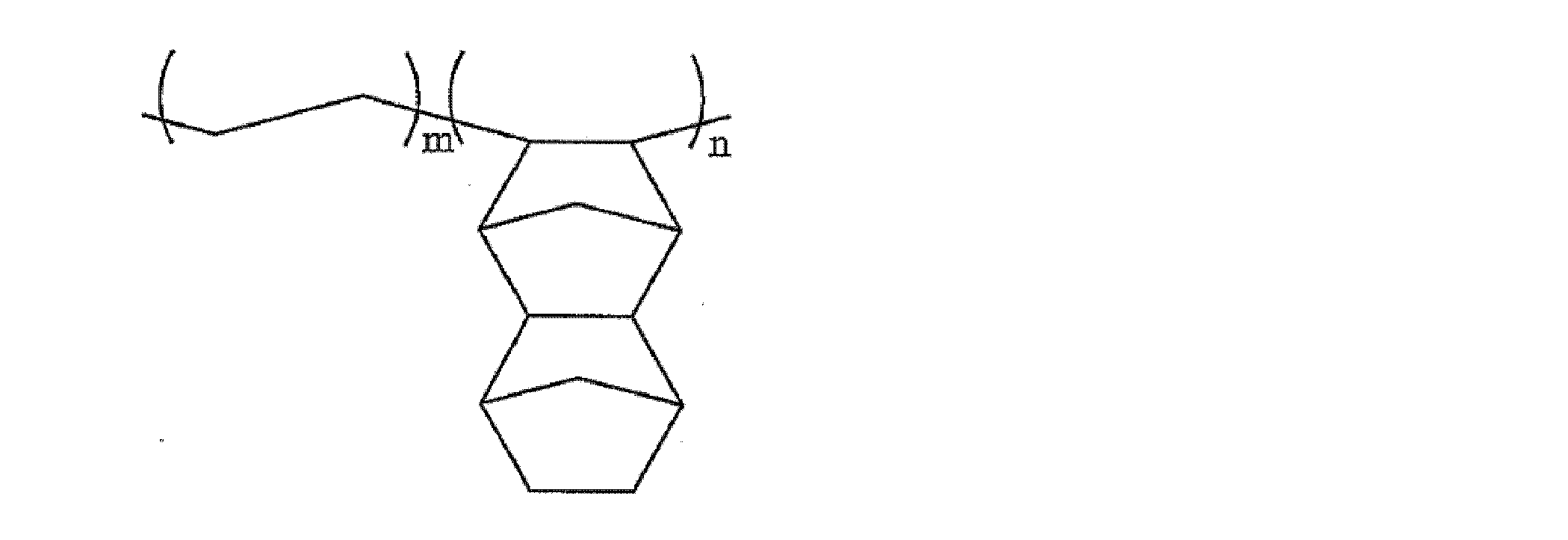
(合成例)
1,9-ノナンジオールジアクリレート38g、ジメチロールトリシクロデカンジアクリレート46g、2-エチルヘキシルエチレンオキシド(n≒2)変性アクリレート41g、ジシクロペンタニルアクリレート72g、2-ヒドロキシプロピルアクリレート26g、2,4-ジフェニルー4-メチル-1-ペンテン67g、プロピレングリコールモノメチルエーテルアセテート146gを1Lの反応機内に投入し、混合、加熱した。反応機内の混合物に、85℃で3gの過酸化ベンゾイルを添加し、85℃で3時間反応させた。重合反応を冷却により停止させた後、室温で反応混合液を大量のメタノールに投入し、重合体を析出させた。得られた重合体をメタノールで洗浄し、濾別、乾燥した。ゲルパーミッションクロマトグラフィーにより測定されたポリスチレン換算の数平均分子量18万の共重合体Aを153g得た。
NKエステル BPE-500:新中村化学工業(株)製、下記化学式で表されるエトキシ化ビスフェノールAジメタクリレート(但し、m+n=10)
NKエステル BPE-200:新中村化学工業(株)製、下記化学式で表されるエトキシ化ビスフェノールAジメタクリレート(但し、m+n=4)
NKエステル BPE-900:新中村化学工業(株)製、下記化学式で表されるエトキシ化ビスフェノールAジメタクリレート(但し、m+n=17)
NKエステル BPE-1300N:新中村化学工業(株)製、下記化学式で表されるエトキシ化ビスフェノールAジメタクリレート(但し、m+n=30)
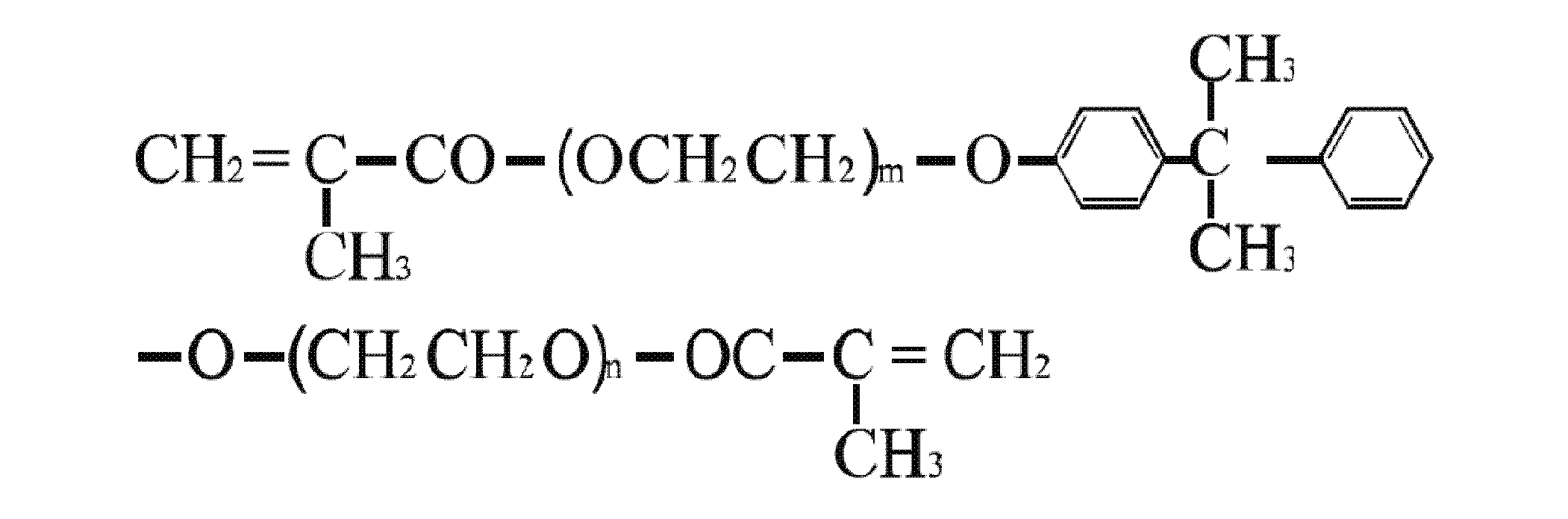
IRGANOX 1010:BASFジャパン(株)製、下記式で表される酸化防止剤、テトラキス〔メチレン-3-(3,5-ジ-t-ブチル-4-ヒドロキシフェニル)プロピオネート〕メタン
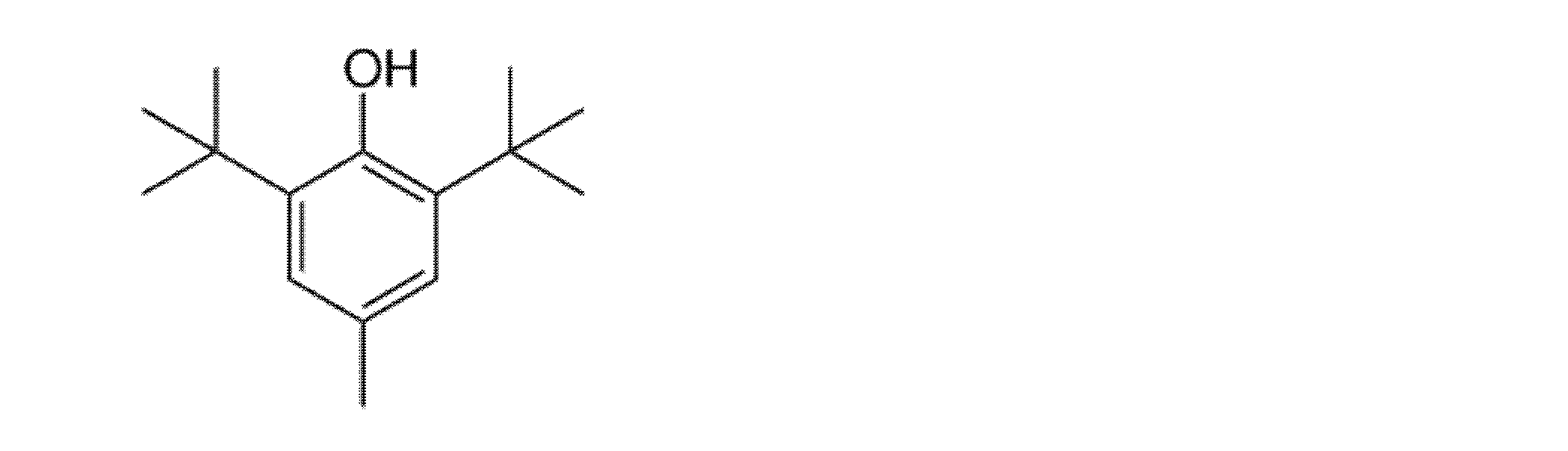

FA-512A:ジシクロペンテニルオキシエチルアクリレート(日立化成工業社製)
ACMO:アクリロイルモルホリン(KJケミカルズ(株)製)



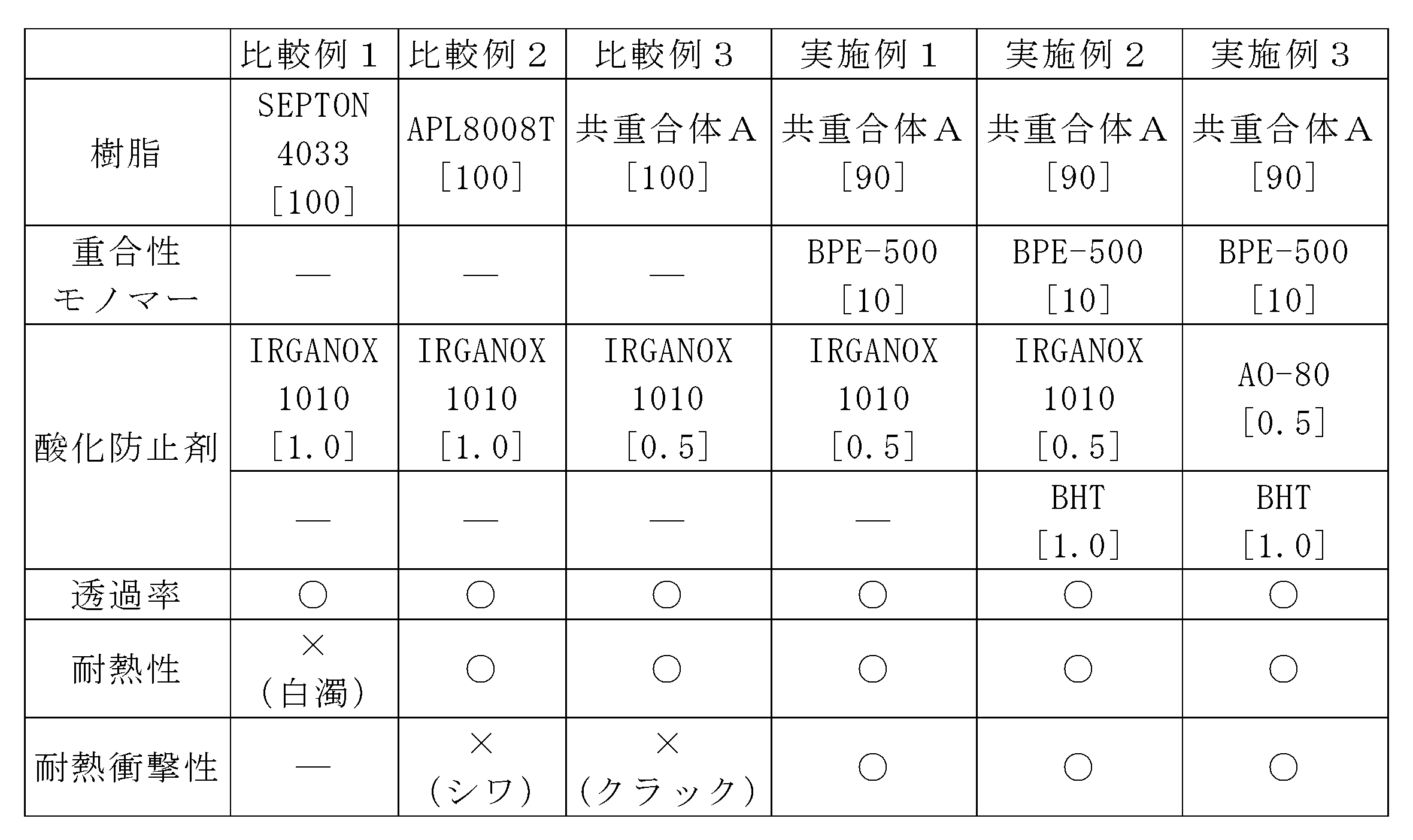
表1に示す樹脂をデカヒドロナフタリンで溶解し、更に酢酸ブチルに溶解させた。得られた溶液に表1に示す酸化防止剤を添加し、粘度調整を行って、接着剤組成物を調製した。なお、樹脂及び酸化防止剤の使用量(単位:質量部)は、表1において角括弧内に示す通りであった。
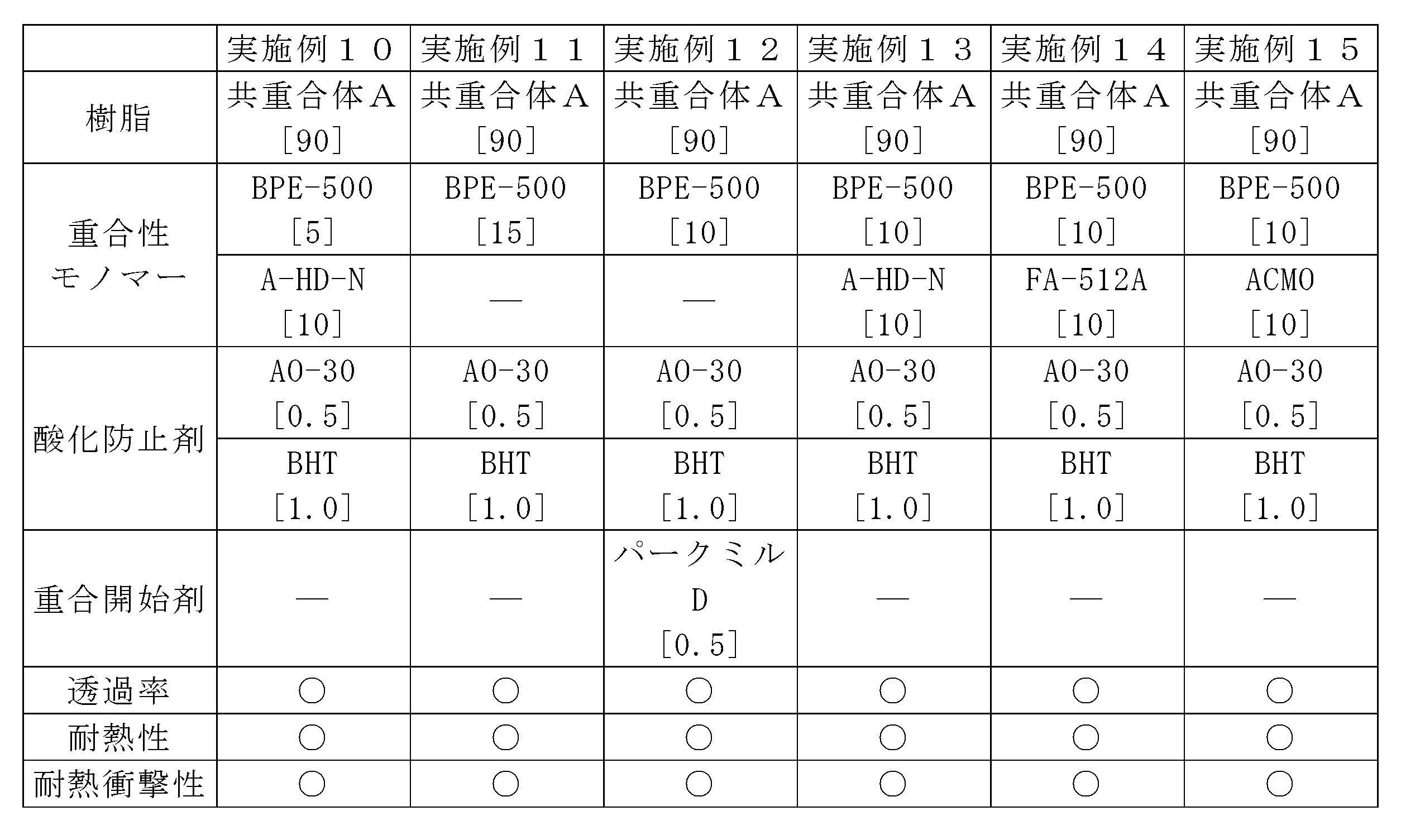
表1~3に示す樹脂に、表1~3に示す重合性モノマーを加えて、プロピレングリコールモノメチルエーテルアセテート(PGMEA)に溶解させた。得られた溶液に、表1~3に示す酸化防止剤を添加し、粘度調整を行って、接着剤組成物を調製した。なお、樹脂、重合性モノマー、及び酸化防止剤の使用量(単位:質量部)は、表1~3において角括弧内に示す通りであった。また、実施例12では、樹脂に重合性モノマーだけでなく、表3に示す重合開始剤も加えた。更に、比較例3では、樹脂に重合性モノマーを加えず、樹脂をそのままPGMEAに溶解させた。
10cm角ガラス基板に実施例又は比較例の接着剤組成物をスピン塗布し、130℃及び150℃の温度で各5分間ベークし、溶剤を揮発させ、組成物層を形成した(膜厚50μm)。次に、組成物層が形成された基板を200℃の窒素雰囲気下の焼成炉で4時間ベークして、接着層を形成させた。
形成させた接着層の400nmにおける透過率を分光光度計(瞬間マルチ測光システムMCPD3000、大塚電子株式会社製)で測定し、以下の評価基準で透過率を評価した。結果を表1~3に示す。
○(良好):透過率が98%以上であった。
×(不良):透過率が98%未満であった。
接着層が形成された10cm角ガラス基板を280℃に加熱したホットプレートに載せ、10分間加熱した。加熱後の硬化膜の400nmにおける透過率を分光光度計で測定し、以下の評価基準で耐熱性を評価した。結果を表1~3に示す。
○(良好):透過率が95%以上であった。
×(不良):透過率が95%未満であった。
接着層が形成された10cm角ガラス基板を冷熱衝撃試験機TSE-11-A(ESPEC Corp.)に投入し、当該ガラス基板を-40℃の恒温槽と100℃の恒温槽との間で移動させた。各恒温槽でのガラス基板の保持時間は30分間であり、合計1時間でヒートサイクル1サイクルとした。100サイクルまでヒートサイクル試験を実施した後、目視により接着層の状態を観察し、以下の評価基準で耐熱衝撃性を評価した。結果を表1~3に示す。
○(良好):接着層に異常が観察されなかった。
×(不良):接着層にシワ、クラック等の異常が観察された。

Claims (7)
- (A)下記一般式(1)
CH2=CRa2-CO-O-Ra1-O-CO-CRa3=CH2 (1)
(式中、Ra1は炭素数8以上14以下の2価炭化水素基であり、Ra2及びRa3は独立に水素原子又はメチル基である。)
で表される2官能(メタ)アクリル酸エステル由来の構造単位を含む熱又は光硬化性樹脂、(B)重合性モノマー、及び(C)酸化防止剤を含有することを特徴とする、基板と当該基板の支持体とを接着するためのイメージセンサ用永久接着剤組成物。 - 前記(C)は、フェノール系酸化防止剤を含む、請求項1に記載の永久接着剤組成物。
着剤組成物。 - 前記(B)は、下記式で表されるモノマーを含む、請求項1又は2に記載の永久接着剤組成物。

- 前記基板はシリコン基板又はサファイア基板を含む、請求項1~3のいずれか1項に記載の永久接着剤組成物。
- 前記支持体はガラス基板を含む、請求項1~4のいずれか1項に記載の永久接着剤組成物。
- 請求項1~5のいずれか1項に記載の永久接着剤組成物を用いて、基板と当該基板の支持体とを接着する接着工程を包含することを特徴とする接着方法。
- 基板と、当該基板の支持体と、当該基板と当該支持体とを接着する接着層と、を含む積層体であって、
前記接着層が、請求項1~5のいずれか1項に記載の永久接着剤組成物により構成されるものであることを特徴とする積層体。
Priority Applications (3)
| Application Number | Priority Date | Filing Date | Title |
|---|---|---|---|
| US16/063,663 US10611934B2 (en) | 2015-12-25 | 2016-12-21 | Permanent adhesive composition for image sensors, and bonding method and laminate using same |
| KR1020187016562A KR102169222B1 (ko) | 2015-12-25 | 2016-12-21 | 이미지 센서용 영구 접착제 조성물, 그리고 그것을 사용한 접착 방법 및 적층체 |
| CN201680074490.7A CN108603083B (zh) | 2015-12-25 | 2016-12-21 | 图像传感器用永久粘接剂组合物、以及使用其的粘接方法及层叠体 |
Applications Claiming Priority (2)
| Application Number | Priority Date | Filing Date | Title |
|---|---|---|---|
| JP2015253512A JP6600253B2 (ja) | 2015-12-25 | 2015-12-25 | イメージセンサ用永久接着剤組成物、並びにそれを用いた接着方法及び積層体 |
| JP2015-253512 | 2015-12-25 |
Publications (1)
| Publication Number | Publication Date |
|---|---|
| WO2017110916A1 true WO2017110916A1 (ja) | 2017-06-29 |
Family
ID=59089446
Family Applications (1)
| Application Number | Title | Priority Date | Filing Date |
|---|---|---|---|
| PCT/JP2016/088198 Ceased WO2017110916A1 (ja) | 2015-12-25 | 2016-12-21 | イメージセンサ用永久接着剤組成物、並びにそれを用いた接着方法及び積層体 |
Country Status (6)
| Country | Link |
|---|---|
| US (1) | US10611934B2 (ja) |
| JP (1) | JP6600253B2 (ja) |
| KR (1) | KR102169222B1 (ja) |
| CN (1) | CN108603083B (ja) |
| TW (1) | TWI742027B (ja) |
| WO (1) | WO2017110916A1 (ja) |
Citations (6)
| Publication number | Priority date | Publication date | Assignee | Title |
|---|---|---|---|---|
| JP2003277712A (ja) * | 2002-03-26 | 2003-10-02 | Asahi Kasei Corp | 光硬化性封止接着剤 |
| JP2009176941A (ja) * | 2008-01-24 | 2009-08-06 | Konica Minolta Opto Inc | 撮像装置及びその製造方法 |
| JP2010261026A (ja) * | 2009-04-07 | 2010-11-18 | Hitachi Chem Co Ltd | 感光性接着剤組成物、フィルム状接着剤、接着シート、接着剤パターン、接着剤層付半導体ウェハ、半導体装置、及び、半導体装置の製造方法 |
| JP2014105316A (ja) * | 2012-11-29 | 2014-06-09 | Tokyo Ohka Kogyo Co Ltd | 接着剤組成物、接着フィルムおよび積層体 |
| JP2015140408A (ja) * | 2014-01-29 | 2015-08-03 | 日立化成株式会社 | 接着剤組成物、接着剤組成物を用いた電子部材、及び半導体装置の製造方法 |
| JP2016044268A (ja) * | 2014-08-25 | 2016-04-04 | ナミックス株式会社 | 接着剤 |
Family Cites Families (7)
| Publication number | Priority date | Publication date | Assignee | Title |
|---|---|---|---|---|
| US20080021128A1 (en) * | 2006-07-19 | 2008-01-24 | Haubrich Jeanne E | Radiation-curable acrylate composition |
| TWI605066B (zh) * | 2010-03-29 | 2017-11-11 | Nippon Steel & Sumikin Chem Co | Soluble polyfunctional (meth) acrylate copolymer, its manufacturing method, curable resin composition, and hardened | cured material |
| JP5781384B2 (ja) * | 2010-08-02 | 2015-09-24 | 新日鉄住金化学株式会社 | 硬化性樹脂組成物及びその硬化物 |
| JP5681502B2 (ja) | 2010-09-30 | 2015-03-11 | 東京応化工業株式会社 | 接着剤組成物 |
| CN105102493B (zh) * | 2013-03-29 | 2017-09-29 | 新日铁住金化学株式会社 | 多官能(甲基)丙烯酸酯共聚物、固化性树脂组合物及其固化物 |
| TWI547378B (zh) * | 2013-04-05 | 2016-09-01 | 三菱麗陽股份有限公司 | 積層結構體及其製造方法、物品 |
| CN104745140B (zh) * | 2015-04-09 | 2017-03-08 | 广州惠利电子材料有限公司 | 玻璃增强uv胶及其制备方法 |
-
2015
- 2015-12-25 JP JP2015253512A patent/JP6600253B2/ja active Active
-
2016
- 2016-12-21 KR KR1020187016562A patent/KR102169222B1/ko active Active
- 2016-12-21 US US16/063,663 patent/US10611934B2/en active Active
- 2016-12-21 CN CN201680074490.7A patent/CN108603083B/zh active Active
- 2016-12-21 WO PCT/JP2016/088198 patent/WO2017110916A1/ja not_active Ceased
- 2016-12-23 TW TW105143039A patent/TWI742027B/zh active
Patent Citations (6)
| Publication number | Priority date | Publication date | Assignee | Title |
|---|---|---|---|---|
| JP2003277712A (ja) * | 2002-03-26 | 2003-10-02 | Asahi Kasei Corp | 光硬化性封止接着剤 |
| JP2009176941A (ja) * | 2008-01-24 | 2009-08-06 | Konica Minolta Opto Inc | 撮像装置及びその製造方法 |
| JP2010261026A (ja) * | 2009-04-07 | 2010-11-18 | Hitachi Chem Co Ltd | 感光性接着剤組成物、フィルム状接着剤、接着シート、接着剤パターン、接着剤層付半導体ウェハ、半導体装置、及び、半導体装置の製造方法 |
| JP2014105316A (ja) * | 2012-11-29 | 2014-06-09 | Tokyo Ohka Kogyo Co Ltd | 接着剤組成物、接着フィルムおよび積層体 |
| JP2015140408A (ja) * | 2014-01-29 | 2015-08-03 | 日立化成株式会社 | 接着剤組成物、接着剤組成物を用いた電子部材、及び半導体装置の製造方法 |
| JP2016044268A (ja) * | 2014-08-25 | 2016-04-04 | ナミックス株式会社 | 接着剤 |
Also Published As
| Publication number | Publication date |
|---|---|
| CN108603083A (zh) | 2018-09-28 |
| KR20180083374A (ko) | 2018-07-20 |
| JP2017115064A (ja) | 2017-06-29 |
| US20190002744A1 (en) | 2019-01-03 |
| KR102169222B1 (ko) | 2020-10-23 |
| TWI742027B (zh) | 2021-10-11 |
| TW201738345A (zh) | 2017-11-01 |
| US10611934B2 (en) | 2020-04-07 |
| JP6600253B2 (ja) | 2019-10-30 |
| CN108603083B (zh) | 2023-04-25 |
Similar Documents
| Publication | Publication Date | Title |
|---|---|---|
| US8945815B2 (en) | Alkaline soluble resin and light sensible resin composition comprising same and use thereof | |
| TWI534535B (zh) | A hardened resin composition for a light gap material, a columnar gap material, and a liquid crystal display | |
| KR20120124394A (ko) | 점착제, 광학 부재용 점착제, 점착제층 부착 광학 부재, 화상 표시장치, 활성 에너지선 및/또는 열경화성 점착제 조성물, 점착제 조성물 | |
| JP6404557B2 (ja) | 硬化性樹脂組成物 | |
| TWI414574B (zh) | 壓感性黏合劑組合物,及偏光板,及使用彼之液晶顯示裝置 | |
| TWI644969B (zh) | 熱硬化性組成物、硬化膜以及彩色濾光片 | |
| CN103069319B (zh) | 光波导形成用树脂组合物、使用其的光波导形成用树脂膜和使用它们的光波导 | |
| TWI650611B (zh) | 間隙控制材料用感光性樹脂組成物及間隙控制材料 | |
| JP2014105316A (ja) | 接着剤組成物、接着フィルムおよび積層体 | |
| TW201422719A (zh) | 熱硬化性樹脂組成物、硬化膜、彩色濾光片、液晶顯示元件、固體攝影元件及發光二極體發光體 | |
| JP5755058B2 (ja) | 粘着剤層及び粘着シート | |
| TW202334359A (zh) | 光學黏著片材 | |
| JP6600253B2 (ja) | イメージセンサ用永久接着剤組成物、並びにそれを用いた接着方法及び積層体 | |
| TWI809178B (zh) | 熱硬化性組成物、硬化膜及彩色濾光片 | |
| CN102372888B (zh) | 固化性树脂组合物 | |
| JP6694230B2 (ja) | アルカリ可溶性樹脂ならびにそれを含む硬化性樹脂組成物 | |
| TW202330841A (zh) | 光硬化性黏著片材 | |
| JP7674706B2 (ja) | マイクロled表示素子用アンダーフィル材、アンダーフィル膜、アンダーフィル膜の製造方法およびマイクロled表示素子 | |
| CN102807778B (zh) | 固化性树脂组合物 | |
| JP7304152B2 (ja) | 組成物、その硬化物およびその製造方法 | |
| JP2025161356A (ja) | 粘着シート及びタッチセンサー付きディスプレイ | |
| JP6939097B2 (ja) | 可撓性樹脂形成用硬化性樹脂組成物及びこれを用いた半導体装置 | |
| TW202547977A (zh) | 黏著劑組成物、黏著片、光學積層體及影像顯示裝置 | |
| TW202515964A (zh) | 光學黏著片材 | |
| TW202328369A (zh) | 光學黏著片材 |
Legal Events
| Date | Code | Title | Description |
|---|---|---|---|
| 121 | Ep: the epo has been informed by wipo that ep was designated in this application |
Ref document number: 16878803 Country of ref document: EP Kind code of ref document: A1 |
|
| ENP | Entry into the national phase |
Ref document number: 20187016562 Country of ref document: KR Kind code of ref document: A |
|
| WWE | Wipo information: entry into national phase |
Ref document number: 1020187016562 Country of ref document: KR |
|
| NENP | Non-entry into the national phase |
Ref country code: DE |
|
| 122 | Ep: pct application non-entry in european phase |
Ref document number: 16878803 Country of ref document: EP Kind code of ref document: A1 |