WO2017056946A1 - クロス共重合体及びその製造方法 - Google Patents
クロス共重合体及びその製造方法 Download PDFInfo
- Publication number
- WO2017056946A1 WO2017056946A1 PCT/JP2016/076819 JP2016076819W WO2017056946A1 WO 2017056946 A1 WO2017056946 A1 WO 2017056946A1 JP 2016076819 W JP2016076819 W JP 2016076819W WO 2017056946 A1 WO2017056946 A1 WO 2017056946A1
- Authority
- WO
- WIPO (PCT)
- Prior art keywords
- group
- copolymer
- carbon atoms
- vinyl compound
- ethylene
- Prior art date
- Legal status (The legal status is an assumption and is not a legal conclusion. Google has not performed a legal analysis and makes no representation as to the accuracy of the status listed.)
- Ceased
Links
Images

Classifications
-
- C—CHEMISTRY; METALLURGY
- C08—ORGANIC MACROMOLECULAR COMPOUNDS; THEIR PREPARATION OR CHEMICAL WORKING-UP; COMPOSITIONS BASED THEREON
- C08F—MACROMOLECULAR COMPOUNDS OBTAINED BY REACTIONS ONLY INVOLVING CARBON-TO-CARBON UNSATURATED BONDS
- C08F297/00—Macromolecular compounds obtained by successively polymerising different monomer systems using a catalyst of the ionic or coordination type without deactivating the intermediate polymer
- C08F297/02—Macromolecular compounds obtained by successively polymerising different monomer systems using a catalyst of the ionic or coordination type without deactivating the intermediate polymer using a catalyst of the anionic type
-
- C—CHEMISTRY; METALLURGY
- C08—ORGANIC MACROMOLECULAR COMPOUNDS; THEIR PREPARATION OR CHEMICAL WORKING-UP; COMPOSITIONS BASED THEREON
- C08F—MACROMOLECULAR COMPOUNDS OBTAINED BY REACTIONS ONLY INVOLVING CARBON-TO-CARBON UNSATURATED BONDS
- C08F297/00—Macromolecular compounds obtained by successively polymerising different monomer systems using a catalyst of the ionic or coordination type without deactivating the intermediate polymer
-
- C—CHEMISTRY; METALLURGY
- C08—ORGANIC MACROMOLECULAR COMPOUNDS; THEIR PREPARATION OR CHEMICAL WORKING-UP; COMPOSITIONS BASED THEREON
- C08F—MACROMOLECULAR COMPOUNDS OBTAINED BY REACTIONS ONLY INVOLVING CARBON-TO-CARBON UNSATURATED BONDS
- C08F210/00—Copolymers of unsaturated aliphatic hydrocarbons having only one carbon-to-carbon double bond
- C08F210/02—Ethene
-
- C—CHEMISTRY; METALLURGY
- C08—ORGANIC MACROMOLECULAR COMPOUNDS; THEIR PREPARATION OR CHEMICAL WORKING-UP; COMPOSITIONS BASED THEREON
- C08F—MACROMOLECULAR COMPOUNDS OBTAINED BY REACTIONS ONLY INVOLVING CARBON-TO-CARBON UNSATURATED BONDS
- C08F295/00—Macromolecular compounds obtained by polymerisation using successively different catalyst types without deactivating the intermediate polymer
-
- C—CHEMISTRY; METALLURGY
- C08—ORGANIC MACROMOLECULAR COMPOUNDS; THEIR PREPARATION OR CHEMICAL WORKING-UP; COMPOSITIONS BASED THEREON
- C08F—MACROMOLECULAR COMPOUNDS OBTAINED BY REACTIONS ONLY INVOLVING CARBON-TO-CARBON UNSATURATED BONDS
- C08F4/00—Polymerisation catalysts
- C08F4/42—Metals; Metal hydrides; Metallo-organic compounds; Use thereof as catalyst precursors
- C08F4/44—Metals; Metal hydrides; Metallo-organic compounds; Use thereof as catalyst precursors selected from light metals, zinc, cadmium, mercury, copper, silver, gold, boron, gallium, indium, thallium, rare earths or actinides
- C08F4/52—Metals; Metal hydrides; Metallo-organic compounds; Use thereof as catalyst precursors selected from light metals, zinc, cadmium, mercury, copper, silver, gold, boron, gallium, indium, thallium, rare earths or actinides selected from boron, aluminium, gallium, indium, thallium or rare earths
-
- C—CHEMISTRY; METALLURGY
- C08—ORGANIC MACROMOLECULAR COMPOUNDS; THEIR PREPARATION OR CHEMICAL WORKING-UP; COMPOSITIONS BASED THEREON
- C08F—MACROMOLECULAR COMPOUNDS OBTAINED BY REACTIONS ONLY INVOLVING CARBON-TO-CARBON UNSATURATED BONDS
- C08F4/00—Polymerisation catalysts
- C08F4/42—Metals; Metal hydrides; Metallo-organic compounds; Use thereof as catalyst precursors
- C08F4/44—Metals; Metal hydrides; Metallo-organic compounds; Use thereof as catalyst precursors selected from light metals, zinc, cadmium, mercury, copper, silver, gold, boron, gallium, indium, thallium, rare earths or actinides
- C08F4/60—Metals; Metal hydrides; Metallo-organic compounds; Use thereof as catalyst precursors selected from light metals, zinc, cadmium, mercury, copper, silver, gold, boron, gallium, indium, thallium, rare earths or actinides together with refractory metals, iron group metals, platinum group metals, manganese, rhenium technetium or compounds thereof
- C08F4/62—Refractory metals or compounds thereof
- C08F4/64—Titanium, zirconium, hafnium or compounds thereof
- C08F4/659—Component covered by group C08F4/64 containing a transition metal-carbon bond
- C08F4/6592—Component covered by group C08F4/64 containing a transition metal-carbon bond containing at least one cyclopentadienyl ring, condensed or not, e.g. an indenyl or a fluorenyl ring
-
- C—CHEMISTRY; METALLURGY
- C08—ORGANIC MACROMOLECULAR COMPOUNDS; THEIR PREPARATION OR CHEMICAL WORKING-UP; COMPOSITIONS BASED THEREON
- C08F—MACROMOLECULAR COMPOUNDS OBTAINED BY REACTIONS ONLY INVOLVING CARBON-TO-CARBON UNSATURATED BONDS
- C08F2400/00—Characteristics for processes of polymerization
-
- C—CHEMISTRY; METALLURGY
- C08—ORGANIC MACROMOLECULAR COMPOUNDS; THEIR PREPARATION OR CHEMICAL WORKING-UP; COMPOSITIONS BASED THEREON
- C08F—MACROMOLECULAR COMPOUNDS OBTAINED BY REACTIONS ONLY INVOLVING CARBON-TO-CARBON UNSATURATED BONDS
- C08F2800/00—Copolymer characterised by the proportions of the comonomers expressed
- C08F2800/10—Copolymer characterised by the proportions of the comonomers expressed as molar percentages
-
- C—CHEMISTRY; METALLURGY
- C08—ORGANIC MACROMOLECULAR COMPOUNDS; THEIR PREPARATION OR CHEMICAL WORKING-UP; COMPOSITIONS BASED THEREON
- C08F—MACROMOLECULAR COMPOUNDS OBTAINED BY REACTIONS ONLY INVOLVING CARBON-TO-CARBON UNSATURATED BONDS
- C08F2800/00—Copolymer characterised by the proportions of the comonomers expressed
- C08F2800/20—Copolymer characterised by the proportions of the comonomers expressed as weight or mass percentages
-
- C—CHEMISTRY; METALLURGY
- C08—ORGANIC MACROMOLECULAR COMPOUNDS; THEIR PREPARATION OR CHEMICAL WORKING-UP; COMPOSITIONS BASED THEREON
- C08F—MACROMOLECULAR COMPOUNDS OBTAINED BY REACTIONS ONLY INVOLVING CARBON-TO-CARBON UNSATURATED BONDS
- C08F4/00—Polymerisation catalysts
- C08F4/42—Metals; Metal hydrides; Metallo-organic compounds; Use thereof as catalyst precursors
- C08F4/44—Metals; Metal hydrides; Metallo-organic compounds; Use thereof as catalyst precursors selected from light metals, zinc, cadmium, mercury, copper, silver, gold, boron, gallium, indium, thallium, rare earths or actinides
- C08F4/60—Metals; Metal hydrides; Metallo-organic compounds; Use thereof as catalyst precursors selected from light metals, zinc, cadmium, mercury, copper, silver, gold, boron, gallium, indium, thallium, rare earths or actinides together with refractory metals, iron group metals, platinum group metals, manganese, rhenium technetium or compounds thereof
- C08F4/62—Refractory metals or compounds thereof
- C08F4/64—Titanium, zirconium, hafnium or compounds thereof
- C08F4/659—Component covered by group C08F4/64 containing a transition metal-carbon bond
- C08F4/65908—Component covered by group C08F4/64 containing a transition metal-carbon bond in combination with an ionising compound other than alumoxane, e.g. (C6F5)4B-X+
Definitions
- the present invention relates to a cross-copolymer having good moldability, improved flexibility and heat resistance, and a method for producing the same.
- Patent Documents 1 and 2 A method for producing such a copolymer and a cross-copolymer obtained by this production method are known (Patent Documents 1 and 2).
- the cross copolymer is a branched block copolymer having an ethylene-aromatic vinyl compound (styrene) copolymer block as a soft segment and an aromatic vinyl compound (styrene) polymer block as a hard segment. Compared with a copolymer consisting only of soft segments, it can exhibit high heat resistance and compatibility.
- the cross-copolymer shown in Patent Document 2 is softer and has excellent transparency.
- the present invention relates to an olefin-aromatic vinyl compound that is a macromonomer from an olefin, an aromatic vinyl compound, and an aromatic polyene monomer using a single-site coordination polymerization catalyst in a method for producing a cross copolymer, that is, a coordination polymerization step.
- the structure and ratio of the macromonomer are The present invention relates to a method for producing a cross copolymer satisfying both excellent softness, molding processability, and heat resistance by being in a specific range. Furthermore, the present invention provides a method for producing the present cross-copolymer, which comprises producing a specific transition metal compound catalyst and a boron promoter under specific polymerization conditions.
- the cross copolymer is an olefin-aromatic vinyl compound-aromatic polyene copolymer chain (may be described as a main chain) and an aromatic vinyl compound polymer chain (described as a side chain). In some cases).
- Example 4 is a graph illustrating changes in storage elastic modulus with respect to temperature of the copolymers obtained in Example 1 and Comparative Example 1.
- the present invention relates to a method for producing a cross-copolymer comprising a coordination polymerization step followed by an anionic polymerization step.
- a coordination polymerization step a single site coordination polymerization catalyst is used as an ethylene monomer, aromatic.
- Copolymerization of vinyl compound monomer and aromatic polyene to synthesize macromonomer ethylene-aromatic vinyl compound-aromatic polyene copolymer, and then anionic polymerization step, the macromonomer and aromatic vinyl compound monomer Is a method of producing a cross-copolymer characterized by performing polymerization using an anionic polymerization initiator in the presence of the above and satisfying all of the following (1) to (3).
- Ethylene-aromatic vinyl compound-aromatic polyene copolymer Macromonomer has an aromatic vinyl compound unit content of 15 mol% to 30 mol%, and an aromatic polyene unit content of 0.01 mol% to 0.2 mol. %, The balance is ethylene unit content.
- the ethylene-aromatic vinyl compound-aromatic polyene copolymer macromonomer has a weight average molecular weight (Mw) of 100,000 to 250,000 and a molecular weight distribution (Mw / Mn) of 3.5 to 6.
- the mass ratio of the ethylene-aromatic vinyl compound-aromatic polyene copolymer macromonomer component in the cross-copolymer obtained through the anionic polymerization step is 60 mass% to 95 mass%, preferably 65 mass%. It is 90 mass% or less.
- the present invention is a cross-copolymer obtained by the above production method, and further satisfies all the following conditions (A) to (E).
- a hardness is 50 or more and 85 or less, preferably 50 or more and 80 or less
- B) The sum of heats of crystal melting ( ⁇ H) observed from 0 ° C. to 150 ° C. of the cross copolymer is 25 J / g or less.
- D) Gel content is less than 1% by mass, preferably less than 0.1% by mass
- E Ratio of storage elastic modulus at 100 ° C.
- each production of the cross-copolymers of (1) to (3) above By satisfying all the conditions, a cross copolymer satisfying all of (A) to (E) can be obtained.
- the aromatic vinyl compound unit content of the macromonomer does not satisfy the condition of 15 mol% or more and 30 mol% or less, the softness may be lowered and it may be difficult to satisfy the A hardness condition.
- the aromatic polyene unit content is higher than the above range, the MFR value of the cross-copolymer may be lower than the value stipulated in the present application and the moldability may deteriorate, and the gel content may not satisfy the above conditions. Is also a concern.
- the mechanical properties as a cross-copolymer are deteriorated.
- the weight average molecular weight (Mw) of the macromonomer is lower than the above value, the mechanical properties and heat resistance are lowered, and when it is high, the molding processability is lowered, and the MFR value may be lowered below the specified value.
- Mw / Mn molecular weight distribution
- the mass ratio of the ethylene-aromatic vinyl compound-aromatic polyene copolymer macromonomer component in the cross-copolymer obtained through the anionic polymerization step is lower than the above value, the softness is lost, and it is higher than the above value. And mechanical properties as a cross-copolymer may be deteriorated.
- This cross-copolymer is a copolymer having an ethylene-aromatic vinyl compound-aromatic polyene copolymer chain and an aromatic vinyl compound polymer chain derived from a macromonomer, ethylene-aromatic vinyl compound-aromatic It has a structure in which an aromatic polyene copolymer chain and an aromatic vinyl compound polymer chain are bonded via an aromatic polyene unit.
- the peak intensity (area) of vinyl group hydrogen (proton) of the divinylbenzene unit of the cross-copolymer is compared with the same peak intensity (area) of the divinylbenzene unit of the ethylene-styrene-divinylbenzene copolymer macromonomer. And less than 50%, preferably less than 20%.
- the divinylbenzene unit is copolymerized simultaneously with the polymerization of the styrene monomer, and the ethylene-styrene-divinylbenzene copolymer chain and the polystyrene chain are bonded via the divinylbenzene unit.
- the peak intensity of the hydrogen (proton) of the vinyl group of the divinylbenzene unit is greatly reduced.
- the hydrogen (proton) peak of the vinyl group of the divinylbenzene unit substantially disappears in the cross-copolymer after the anionic polymerization.
- the ethylene-styrene-divinylbenzene copolymer and polystyrene of the same composition as the ethylene-styrene-divinylbenzene copolymer chain contained in this cross copolymer are subjected to Soxhlet extraction with boiling acetone, so that the acetone insoluble part As an ethylene-styrene-divinylbenzene copolymer and as an acetone soluble part into polystyrene.
- the expression defining the cross copolymer of the present invention is as follows.
- the cross copolymer is composed of an ethylene-aromatic vinyl compound-aromatic polyene copolymer chain and an aromatic.
- a copolymer having a vinyl compound polymer chain and having a structure in which an ethylene-aromatic vinyl compound-aromatic polyene copolymer chain and an aromatic vinyl compound polymer chain are bonded via an aromatic polyene unit. is there.
- the cross-copolymer may contain a relatively small amount of an aromatic vinyl compound (polystyrene) homopolymer. More preferably, the copolymer satisfies all the following conditions (1) to (3).
- the aromatic vinyl compound unit content of the ethylene-aromatic vinyl compound-aromatic polyene copolymer is 15 mol% or more and 30 mol% or less, and the aromatic polyene unit content is 0.01 mol% or more and 0.2 mol% or less. The balance is the ethylene unit content.
- the ethylene-aromatic vinyl compound-aromatic polyene copolymer has a weight average molecular weight (Mw) of 100,000 to 250,000 and a molecular weight distribution (Mw / Mn) of 3.5 to 6.
- the mass proportion of the ethylene-aromatic vinyl compound-aromatic polyene copolymer component in the cross-copolymer obtained through the anionic polymerization step is 60% by mass to 95% by mass, preferably 65% by mass to 90%. It is below mass%.
- the present cross-copolymer is obtained by a production method including a polymerization process comprising a coordination polymerization process and an anionic polymerization process.
- a coordination polymerization process a single-site coordination polymerization catalyst is used as an ethylene monomer and an aromatic vinyl compound monomer.
- an aromatic polyene are copolymerized to synthesize an ethylene-aromatic vinyl compound-aromatic polyene copolymer, and then as an anionic polymerization step, the ethylene-aromatic vinyl compound-aromatic polyene copolymer and aromatic It is a copolymer produced by anionic polymerization using an anionic polymerization initiator in the presence of an aromatic vinyl compound monomer.
- an aromatic vinyl compound monomer used in the anionic polymerization step an unreacted monomer remaining in the polymerization solution in the coordination polymerization step may be used, or an aromatic vinyl compound monomer may be newly added thereto.
- Anionic polymerization is initiated by adding an anionic polymerization initiator to the polymerization solution.
- the polymerization solution is overwhelming compared to the aromatic polyene unit of the ethylene-aromatic vinyl compound-aromatic polyene copolymer.
- aromatic polyene unit of an ethylene-aromatic vinyl compound-aromatic polyene copolymer while anionic polymerization starts substantially from an aromatic vinyl compound monomer contained in a large amount. Polymerization proceeds while the groups are also copolymerized. Therefore, according to known literature and knowledge of those skilled in the art, the obtained cross-copolymer has an ethylene-aromatic vinyl compound-aromatic polyene copolymer as a main chain and an aromatic vinyl compound polymer chain as a cross-chain. It is thought that many structures (cross bonds) bonded in a graft-through manner are included.
- the expression defining the cross-copolymer of the present invention is as follows.
- the copolymer of the present invention is the above-mentioned copolymer, and the ethylene-aromatic vinyl compound-aromatic polyene copolymer chain and aromatic It is a graft-through copolymer of an aromatic vinyl compound polymer chain.
- the cross-copolymer according to the above expression that defines the cross-copolymer of the present invention is a cross-copolymer that further satisfies all the above conditions (A) to (E).
- Coordination polymerization step 3-1 Single-site coordination polymerization catalyst 3-1-1. Transition metal compound
- the present invention further uses a single site coordination polymerization catalyst containing the transition metal compound represented by the general formula (1) or (6) in the coordination polymerization step. It is a manufacturing method of coalescence.
- a and B may be the same or different and are selected from an unsubstituted or substituted benzoindenyl group, an unsubstituted or substituted cyclopentadienyl group, an unsubstituted or substituted indenyl group, or an unsubstituted or substituted fluorenyl group. Group.
- the substituted benzoindenyl group, the substituted cyclopentadienyl group, the substituted indenyl group, or the substituted fluorenyl group is an alkyl group having 1 to 20 carbon atoms in which one or more substitutable hydrogen atoms are 1-6 carbon atoms, Benzoindene substituted with an aryl group, an alkylaryl group having 7 to 20 carbon atoms, a halogen atom, an OSiR 3 group, an SiR 3 group or a PR 2 group (wherein R represents a hydrocarbon group having 1 to 10 carbon atoms) Nyl group, cyclopentadienyl group, indenyl group, or fluorenyl group.
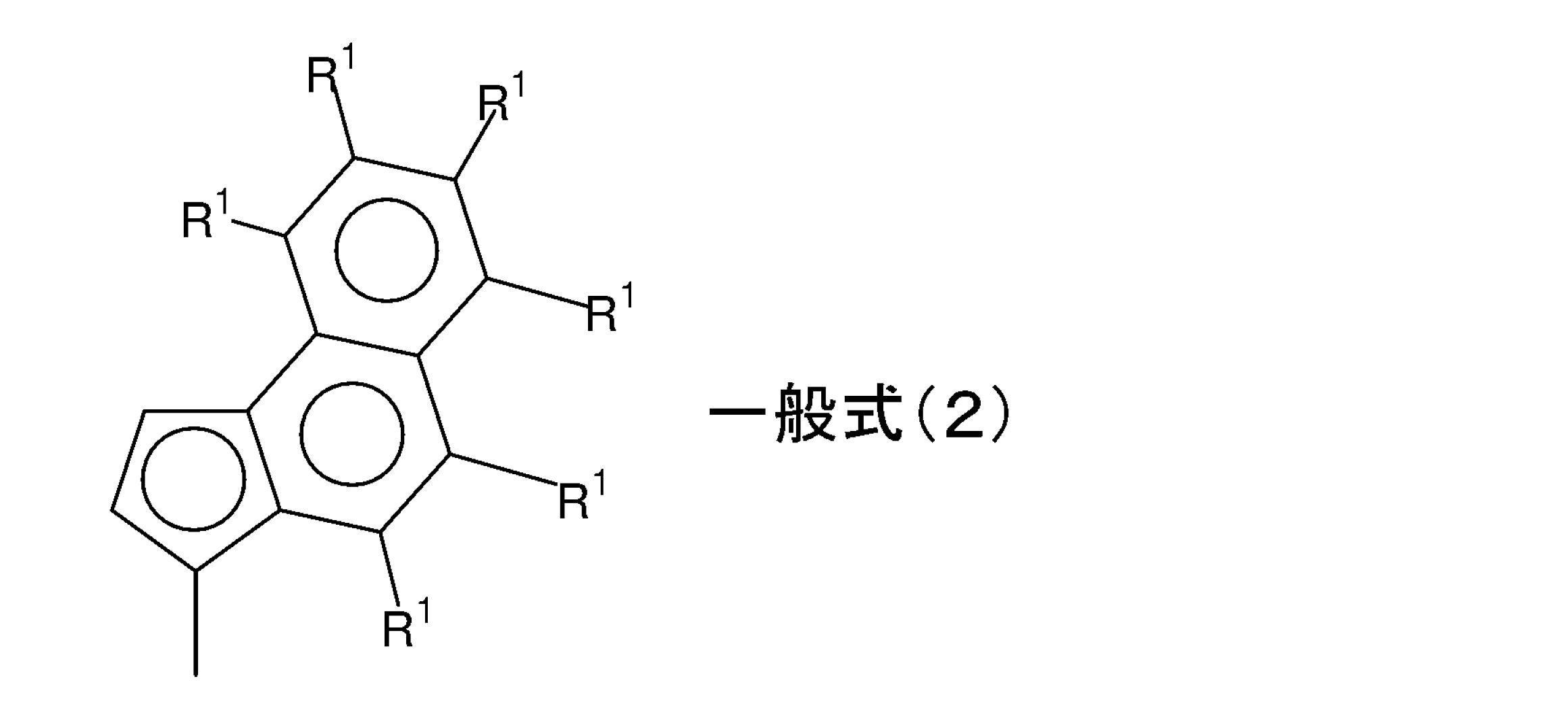
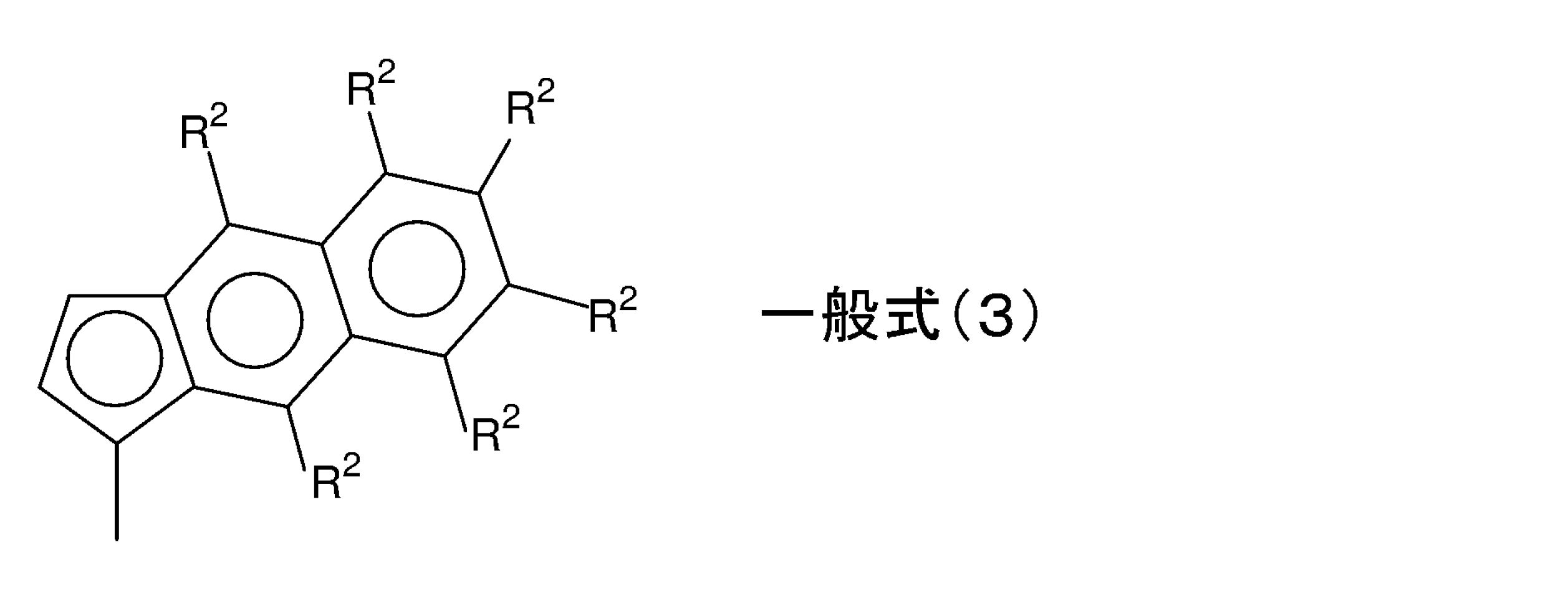
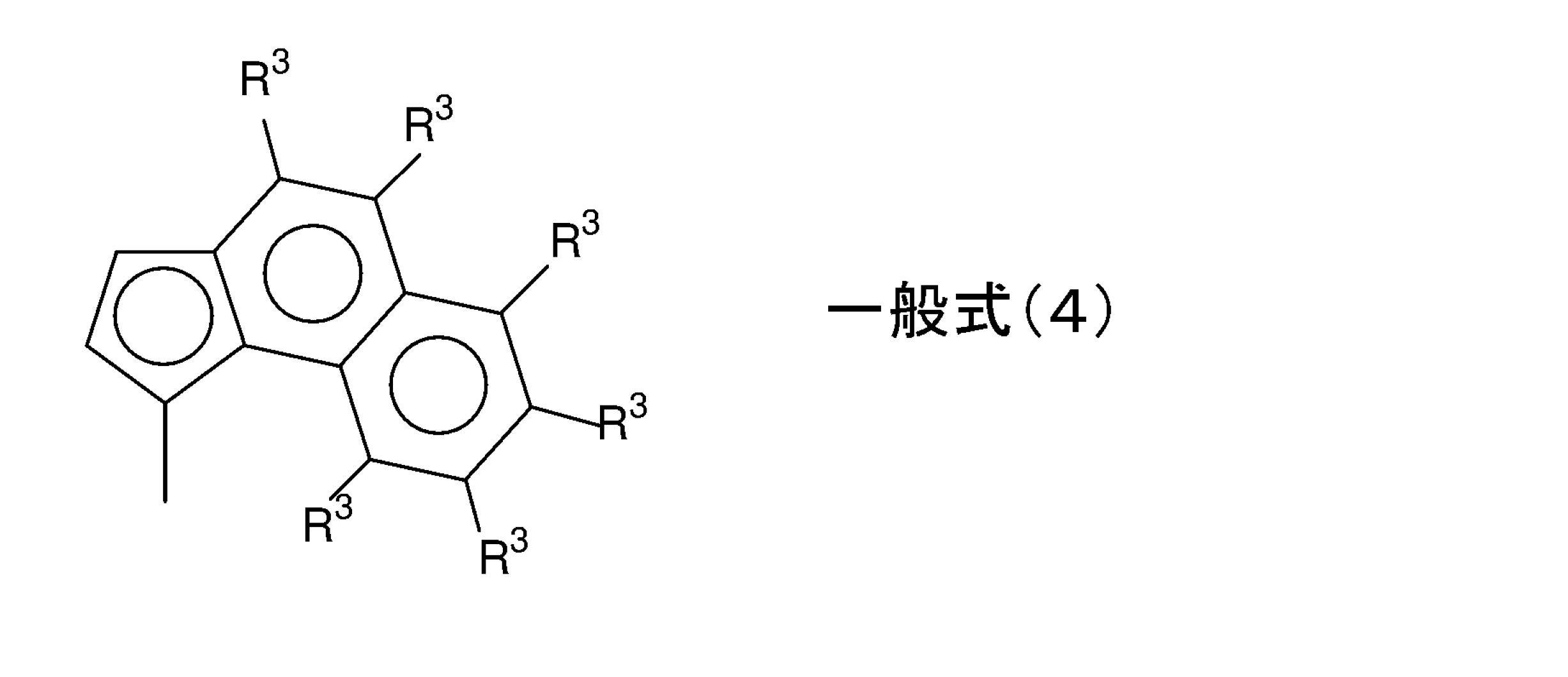
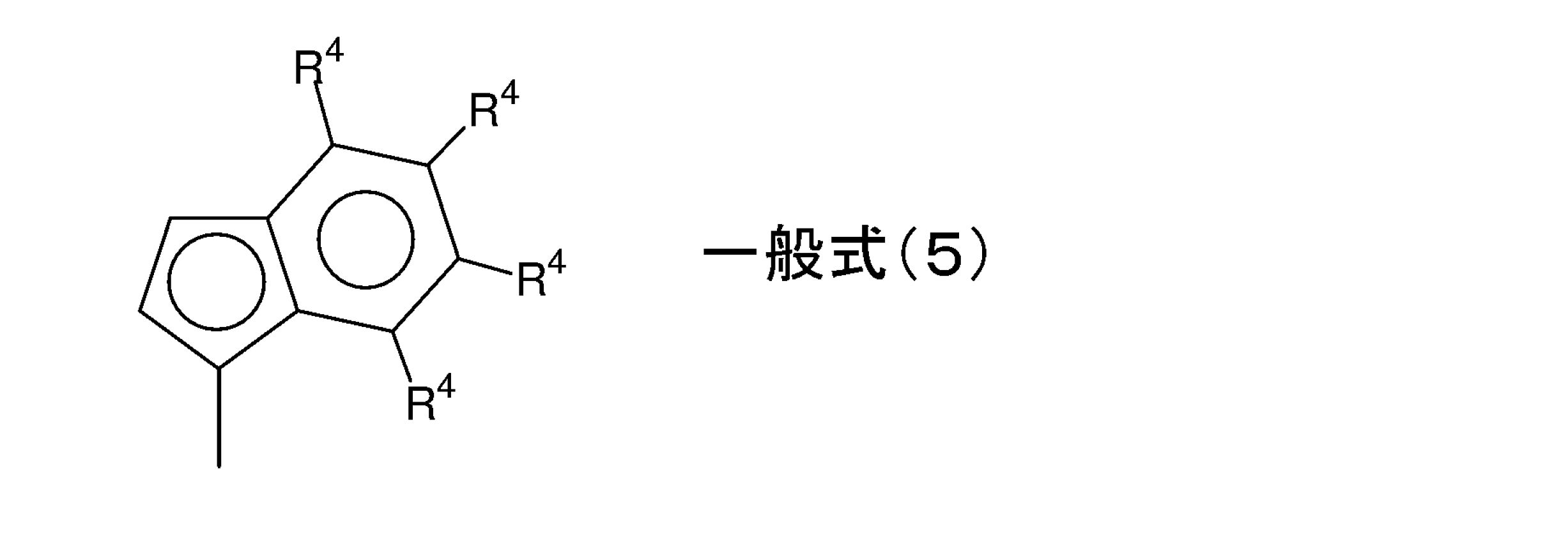
- a and B may be the same or different, and at least one of A and B is an unsubstituted or substituted benzoindenyl group represented by the general formula (2), (3), or (4). Or a group selected from an unsubstituted or substituted indenyl group represented by the general formula (5).
- a and B may be the same or different, and A and B are both unsubstituted or substituted benzoindenyl groups represented by the general formulas (2), (3) and (4), Or it is group chosen from the unsubstituted or substituted indenyl group shown by General formula (5).
- R 1 to R 3 are each hydrogen, an alkyl group having 1 to 20 carbon atoms, an aryl group having 6 to 10 carbon atoms, or 7 to 20 carbon atoms.
- R 1 s , R 2 s , and R 3 s may be the same or different from each other, and adjacent R 1 and R 2 groups together form a 5- to 8-membered aromatic or alicyclic ring. May be.
- unsubstituted benzoindenyl group represented by the above general formula 4,5-benzo-1-indenyl group (also known as benzo (e) indenyl group), 5,6-benzo-1-indenyl group, 6,7-
- substituted benzoindenyl group in the benzo-1-indenyl group include an ⁇ -acenaphth-1-indenyl group, a 3-cyclopenta [c] phenanthryl group, and a 1-cyclopenta [l] phenanthryl group.
- R 4 represents hydrogen, an alkyl group having 1 to 20 carbon atoms, an aryl group having 6 to 10 carbon atoms, an alkylaryl group having 7 to 20 carbon atoms, a halogen atom, OSiR 3 group, SiR, respectively. 3 groups or PR 2 groups (R represents a hydrocarbon group having 1 to 10 carbon atoms). R 4 may be the same as or different from each other.
- the unsubstituted indenyl group represented by the above general formula is 1-indenyl group, and the substituted indenyl group is 4-methyl-1-indenyl group, 5-ethyl-1-indenyl group, 4-phenyl-1- Examples thereof include an indenyl group and a 4-naphthyl-1-indenyl group.
- a and B may be the same or different, and both are unsubstituted or substituted benzoindenyl groups represented by the general formulas (2), (3) and (4); Or a group selected from an unsubstituted or substituted indenyl group.
- Y has a bond with A and B, and in addition, hydrogen or a hydrocarbon group having 1 to 15 carbon atoms as a substituent (in addition to 1 to 3 nitrogen atoms, oxygen atoms, sulfur atoms, phosphorus atoms A methylene group, a silylene group, an ethylene group, a germylene group, or a boron group having an atom or a silicon atom.
- the substituents may be different or the same.
- Y may have a cyclic structure.
- Y has a bond with A and B, and in addition, as a substituent, hydrogen or a hydrocarbon group having 1 to 15 carbon atoms (this substituent has 1 to 3 nitrogen atoms, oxygen atoms, sulfur Methylene group or boron group having an atom, phosphorus atom, or silicon atom).
- substituent hydrogen or a hydrocarbon group having 1 to 15 carbon atoms (this substituent has 1 to 3 nitrogen atoms, oxygen atoms, sulfur Methylene group or boron group having an atom, phosphorus atom, or silicon atom).
- X represents hydrogen, a hydroxyl group, a halogen, a hydrocarbon group having 1 to 20 carbon atoms, an alkoxy group having 1 to 20 carbon atoms, a silyl group having a hydrocarbon substituent having 1 to 4 carbon atoms, or a group having 1 to 20 carbon atoms. It is an amide group having a hydrocarbon substituent. Two Xs may have a bond.
- M is zirconium, hafnium, or titanium.
- the transition metal compound is preferably a racemate.
- Suitable examples of such transition metal compounds include transition metal compounds having a substituted methylene bridge structure specifically exemplified in EP-0874922A2, JP-A-11-130808, and JP-A-9-309925, and WO01 / This is a transition metal compound having a boron cross-linking structure specifically exemplified in Japanese Patent No. 068719.
- Cp represents an unsubstituted or substituted cyclopentaphenanthryl group, an unsubstituted or substituted benzoindenyl group, an unsubstituted or substituted cyclopentadienyl group, an unsubstituted or substituted indenyl group, or an unsubstituted or substituted fluorenyl group.
- the group to be selected is an unsubstituted or substituted cyclopentaphenanthryl group, an unsubstituted or substituted benzoindenyl group, an unsubstituted or substituted cyclopentadienyl group, an unsubstituted or substituted indenyl group, or an unsubstituted or substituted fluorenyl group.
- a substituted cyclopentaphenanthryl group, a substituted benzoindenyl group, a substituted cyclopentadienyl group, a substituted indenyl group, or a substituted fluorenyl group is an alkyl in which one or more substitutable hydrogen atoms have 1 to 20 carbon atoms.
- R is a hydrocarbon group having 1 to 10 carbon atoms
- Y ′ is a methylene group, a silylene group, an ethylene group, a germylene group, or a boron group having a bond with Cp and Z, and further having hydrogen or a hydrocarbon group having 1 to 15 carbon atoms.
- Y ′ may have a cyclic structure.
- Z is a ligand containing a nitrogen atom, an oxygen atom or a sulfur atom, coordinated to M ′ by a nitrogen atom, oxygen atom or sulfur atom, having a bond with Y ′, and also having hydrogen or a carbon number of 1 to 15 It is a group having a substituent.
- M ′ is zirconium, hafnium, or titanium.
- X ′ is hydrogen, halogen, an alkyl group having 1 to 15 carbon atoms, an aryl group having 6 to 10 carbon atoms, an alkylaryl group having 8 to 12 carbon atoms, or a silyl group having a hydrocarbon substituent having 1 to 4 carbon atoms , An alkoxy group having 1 to 10 carbon atoms, or a dialkylamide group having an alkyl substituent having 1 to 6 carbon atoms.
- n is an integer of 1 or 2. Transition metal compounds represented by the general formula (6) are described in WO99 / 14221, EP416815 and US6255496.
- a single site coordination polymerization catalyst composed of a transition metal compound represented by the general formula (1) and a cocatalyst is preferably used.
- a single-site coordination polymerization catalyst composed of the transition metal compound represented by the above general formula (1) and a co-catalyst it is particularly efficient and highly copolymerizable with aromatic vinyl compounds and aromatic polyenes. Copolymerization is possible, and the activity is also high.
- the gel content in the cross-copolymer is also low enough to satisfy the conditions of the present invention.
- a known co-catalyst conventionally used in combination with a transition metal compound can be used.
- a promoter an alumoxane such as methylaluminoxane (or methylalumoxane or MAO) or a boron compound (boron promoter) is preferably used.
- an alkylaluminum such as triisobutylaluminum or triethylaluminum may be used together with these alumoxanes and boron compounds (boron promoter).
- a co-catalyst such as alumoxane is used at a ratio of aluminum atom / transition metal atom of 0.1 to 100,000, preferably 10 to 10,000, relative to the metal of the transition metal compound. If it is less than 0.1, the transition metal compound cannot be activated effectively, and if it exceeds 100,000, it is economically disadvantageous.
- the weight average molecular weight (Mw) of the ethylene-aromatic vinyl compound-aromatic polyene copolymer is 100,000 or more and 250,000 or less,
- Mw / Mn molecular weight distribution
- boron promoters suitable for the present invention include, for example, H03-207703 publication, H05-194461 publication, H08-034809 publication, H08034810 publication, HHBrintzinger, D.Fischer, R.Muelhaupt. , R.Rieger, .R.Waymouth, Angew. Chem. 1995, 107, 1255-1283, EP558158, US5348299, EP426666.
- Examples of such include trispentafluorophenylborane, triphenylcarbenium tetrakis (pentafluorophenyl) borate ⁇ trityltetrakis (pentafluorophenyl) borate ⁇ , lithium tetrakis (pentafluorophenyl) borate, trimethylammonium tetraphenylborate, Triethylammonium tetraphenylborate, tripropylammonium tetraphenylborate, tri (n-butyl) ammonium tetraphenylborate, tri (n-butyl) ammonium tetra (p-tolyl) phenylborate, tri (n-butyl) ammoniumtetra (p -Ethylphenyl) borate, tri (n-butyl) ammonium tetra (pentafluorophenyl) borate, trimethylammoni
- the most preferred boron promoter is a boron promoter having boron and a fluorine-substituted aromatic group bonded thereto.
- examples include trispentafluorophenylborane, triphenylcarbenium tetrakis (pentafluorophenyl) borate ⁇ trityltetrakis (pentafluorophenyl) borate ⁇ , lithium tetrakis (pentafluorophenyl) borate, tri (n-butyl) Ammonium tetra (pentafluorophenyl) borate, tropylium tetrakispentafluorophenylborate, N, N′-dimethylanilinium tetrakis (pentafluorophenyl) borate and the like.
- a phenyl group is exemplified as an example of a fluorine-substituted aromatic group, but a condensed aromatic group such as a naphthyl group similarly substituted with fluorine can also be preferably used.
- the boron promoter used is a borate promoter to give higher activity.
- the borate promoter is a boron promoter containing an anion (borate) containing boron and a counter cation.
- organoaluminum compounds may be used simultaneously.
- an organoaluminum compound when a boron promoter is used, the addition of an organoaluminum compound is effective in removing impurities that adversely affect the polymerization such as water contained in the polymerization system.
- organoaluminum compounds include triisobutylaluminum, triethylaluminum, trimethylaluminum, and trioctylaluminum.
- the amount of these organic aluminums to be used for the boron promoter is generally in the range of 1 to 1000, preferably 1 to 100, as the molar ratio of aluminum to boron.
- a boron compound When a boron compound is used as the cocatalyst, it is used in a boron atom / transition metal atom ratio of 0.01 to 100, preferably 0.1 to 10, particularly preferably 1. If it is less than 0.01, the transition metal compound cannot be activated effectively, and if it exceeds 100, it is economically disadvantageous.
- the transition metal compound and the cocatalyst may be mixed and prepared outside the polymerization facility, or may be mixed in the facility during polymerization. Details of the present cross-copolymer and its production method are described in WO2000 / 37517 or WO2007 / 139116, the entire description of which is incorporated herein by reference.
- the aromatic vinyl compound monomer includes styrene and various substituted styrenes such as p-methylstyrene, m-methylstyrene, o-methylstyrene, ot-butylstyrene, mt-butylstyrene, p -T-butylstyrene, p-chlorostyrene, o-chlorostyrene and the like.
- styrene, p-methylstyrene, p-chlorostyrene particularly preferably styrene is used.
- the aromatic polyene used in the present invention is a monomer having a carbon number of 10 to 30 and having a plurality of double bonds (vinyl group) and one or more aromatic groups and capable of coordination polymerization, One of the double bonds (vinyl group) is used for coordination polymerization, and the remaining double bond in the polymerized state is an aromatic polyene capable of anion polymerization.
- any one or a mixture of two or more of orthodivinylbenzene, paradivinylbenzene and metadivinylbenzene is preferably used.
- polymerization is performed in a liquid monomer without using a solvent, or pentane, hexane, heptane, cyclohexane, benzene, toluene, ethylbenzene, xylene, chloro-substituted benzene, chloro-substituted toluene, methylene chloride, chloroform.
- a saturated aliphatic or aromatic hydrocarbon or halogenated hydrocarbon alone or in a mixed solvent.
- a mixed alkane solvent, cyclohexane, toluene, ethylbenzene or the like is used.
- the polymerization form may be either solution polymerization or slurry polymerization.
- well-known methods such as batch polymerization, continuous polymerization, prepolymerization, and multistage polymerization, can be used as needed.
- Pipe-shaped polymerization cans include various known mixers such as dynamic or static mixers and static mixers that also remove heat, and various known mixers such as coolers equipped with heat removal thin tubes. You may have a cooler. Moreover, you may have a batch type prepolymerization can. Furthermore, methods such as gas phase polymerization can be used.
- the polymerization temperature is suitably from 0 ° C to 200 ° C.
- a polymerization temperature lower than 0 ° C is industrially disadvantageous, and if it exceeds 200 ° C, the transition metal compound is decomposed, which is not suitable.
- industrially preferred is 0 ° C to 160 ° C, particularly preferred is 30 ° C to 160 ° C.
- the pressure at the time of polymerization is suitably 0.1 to 100 atm, preferably 1 to 30 atm, particularly industrially particularly preferably 1 to 10 atm.
- the cross-copolymer of the present invention has the characteristics of being soft and low crystalline at room temperature, having a low gel content, and having high heat resistance while exhibiting good fluidity (molding processability).
- the A hardness is 50 or more and 85 or less, preferably 50 or more and 80 or less
- the total heat of crystal melting ( ⁇ H) observed from 0 ° C. to 150 ° C. of the cross-copolymer is 25 J / g or less.
- required by 200 degreeC and the load 98N is 5 g / 10min or more and 40g / 10min or less, and a gel part is less than 1 mass%, Preferably it is less than 0.1 mass%.
- the ratio of the storage elastic modulus at 100 ° C. to the storage elastic modulus at 20 ° C. measured by DMA is from 0.05 to 0.2. That is, a high storage elastic modulus is maintained at a high temperature with little decrease in storage elastic modulus.
- the cross-copolymer of the present invention can exhibit good mechanical properties, that is, a stress at break of 10 MPa or more and an elongation at break of 300% or more in a tensile test.
- the cross-copolymer production method of the present invention includes a single-site coordination polymerization catalyst comprising at least a transition metal compound represented by the general formula (1) and a boron promoter in the coordination polymerization step in addition to the production method described above. It is characterized by using. More preferably, the boron promoter used is a borate promoter.
- the heat resistance of the cross-copolymer of the present invention is such that the macromonomer (olefin-aromatic vinyl compound-aromatic polyene copolymer) has a relatively broad molecular weight distribution, specifically an Mw / Mn ratio of 3.5 or more. , It can be expressed by being 6 or less.
- Anionic polymerization process (crossing process) In the anionic polymerization step, polymerization is performed using an anionic polymerization initiator in the presence of an ethylene-aromatic vinyl compound-aromatic polyene copolymer macromonomer and an aromatic vinyl compound monomer.
- the solvent in the case of anionic polymerization is particularly preferably a mixed alkane solvent that does not cause inconvenience such as chain transfer during anionic polymerization, a solvent such as cyclohexane, benzene, etc. If the polymerization temperature is 150 ° C. or lower, toluene, Other solvents such as ethylbenzene can also be used. As the polymerization form, any known method used for anionic polymerization can be used.
- the order of adding the aromatic vinyl compound monomer and the anionic polymerization initiator is arbitrary. That is, the anionic polymerization initiator may be added after the aromatic vinyl compound monomer is added to the polymerization solution and stirred, or the aromatic vinyl compound monomer may be added after the addition of the anionic polymerization initiator.
- the cross-copolymer of the present invention is a copolymer obtained by a specific production method defined by the present invention, the structure thereof is arbitrary.
- the polymerization temperature is suitably ⁇ 78 ° C. to 200 ° C.
- a polymerization temperature lower than ⁇ 78 ° C. is industrially disadvantageous, and if it exceeds 150 ° C., chain transfer or the like occurs, which is not suitable.
- the pressure at the time of polymerization is suitably 0.1 to 100 atm, preferably 1 to 30 atm, particularly industrially particularly preferably 1 to 10 atm.
- a known anionic polymerization initiator can be used.
- alkyl lithium compounds, lithium salts such as biphenyl, naphthalene, and pyrene or sodium salts, particularly preferably sec-butyl lithium and n (normal) -butyl lithium are used.
- the initiator is used in an amount of at least the equivalent of oxygen atoms contained therein, particularly preferably at least 2 equivalents. Is preferred.
- the amount is sufficiently smaller than the oxygen atom equivalent in methylalumoxane, so the amount of initiator can be reduced. is there.
- the mass ratio and yield of the olefin-aromatic vinyl compound-aromatic polyene copolymer obtained in the coordination polymerization step contained in the cross-copolymer finally obtained through the anionic polymerization step are also the olefin-aromatic vinyl compound. It can be determined by comparing the composition of the aromatic polyene copolymer and the composition of the cross-copolymer obtained through the anionic polymerization process. The mass% of the polystyrene chain obtained in the anionic polymerization step can be determined in the same manner.
- the divinylbenzene unit content in the copolymer was determined from the difference between the amount of unreacted divinylbenzene in the polymerization solution determined by gas chromatography analysis and the amount of divinylbenzene used in the polymerization.
- the weight average molecular weight (Mw) and the number average molecular weight (Mn) in terms of standard polystyrene were determined using GPC (gel permeation chromatography). The measurement was performed under the following conditions.
- HLC-8121GPC / HT manufactured by Tosoh Corporation, the column was TSKgelGMHHR-H (20) HT, ⁇ 7.8 ⁇ 300 mm, and orthodichlorobenzene was used as a solvent, and measurement was performed at 140 ° C.
- DSC measurement DSC measurement was performed under a nitrogen stream using a DSC6200 manufactured by Seiko Denshi. That is, 10 mg of resin was used, 10 mg of alumina was used as a reference, an aluminum pan was used, the temperature was raised from room temperature to 240 ° C. at a temperature rising rate of 10 ° C./min in a nitrogen atmosphere, and then cooled to ⁇ 120 ° C. at 20 ° C./min. Thereafter, DSC measurement was performed while raising the temperature to 240 ° C. at a rate of temperature increase of 10 ° C./min, and the melting point, heat of crystal melting, and glass transition point were determined.
- Viscoelasticity measurement A sample for measurement (8 mm ⁇ 50 mm) was cut out from a film having a thickness of about 0.3 mm obtained by the hot press method, and a dynamic viscoelasticity measuring device (Rheometrics RSA-III) was used, with a frequency of 1 Hz and a temperature range of ⁇ 50. Measurements were made in the range of from ° C to + 250 ° C to determine the storage elastic modulus, loss elastic modulus, tangent ⁇ value, and residual elongation ( ⁇ L) of the sample. Other measurement parameters related to measurement are as follows.
- a hardness A 2 mm thick sheet was piled up, and the durometer hardness of type A was determined according to the JIS K-7215 plastic durometer hardness test method. This hardness is an instantaneous value.
- Example 1 Using a 50L polymerization can with a stirrer and a jacket for heating and cooling, 21.2 kg of methylcyclohexane (manufactured by Maruzen Petrochemical Co., Ltd.), 3.2 kg of styrene monomer and 91 mmol of divinylbenzene were charged, and heated and stirred at an internal temperature of 70 ° C. did. About 100 L of dry nitrogen gas was bubbled to purge the water in the system and the polymerization solution. Next, the internal temperature was raised to about 85 ° C., 50 mmol of triisobutylaluminum was added, and ethylene was immediately introduced.
- the ethylene supply was stopped at a predetermined ethylene integrated flow rate, and the autoclave was rapidly cooled to 70 ° C. while releasing the pressure.
- a small amount (several tens of ml) of the polymerization solution was sampled and mixed with methanol to precipitate a polymer, thereby obtaining a polymer sample for the coordination polymerization step. From this sampling solution, the polymer yield, composition, and molecular weight in the coordination polymerization step were determined.
- a cross-copolymer was synthesized by adding 60 mmol of n-butyllithium to the polymerization vessel and performing an anionic polymerization step while maintaining 70 ° C.
- the obtained polymerization solution was poured into a large amount of vigorously stirred methanol solution little by little to recover the cross copolymer.
- the cross-copolymer was air-dried at room temperature for one day and then dried at 80 ° C. in a vacuum until no mass change was observed.
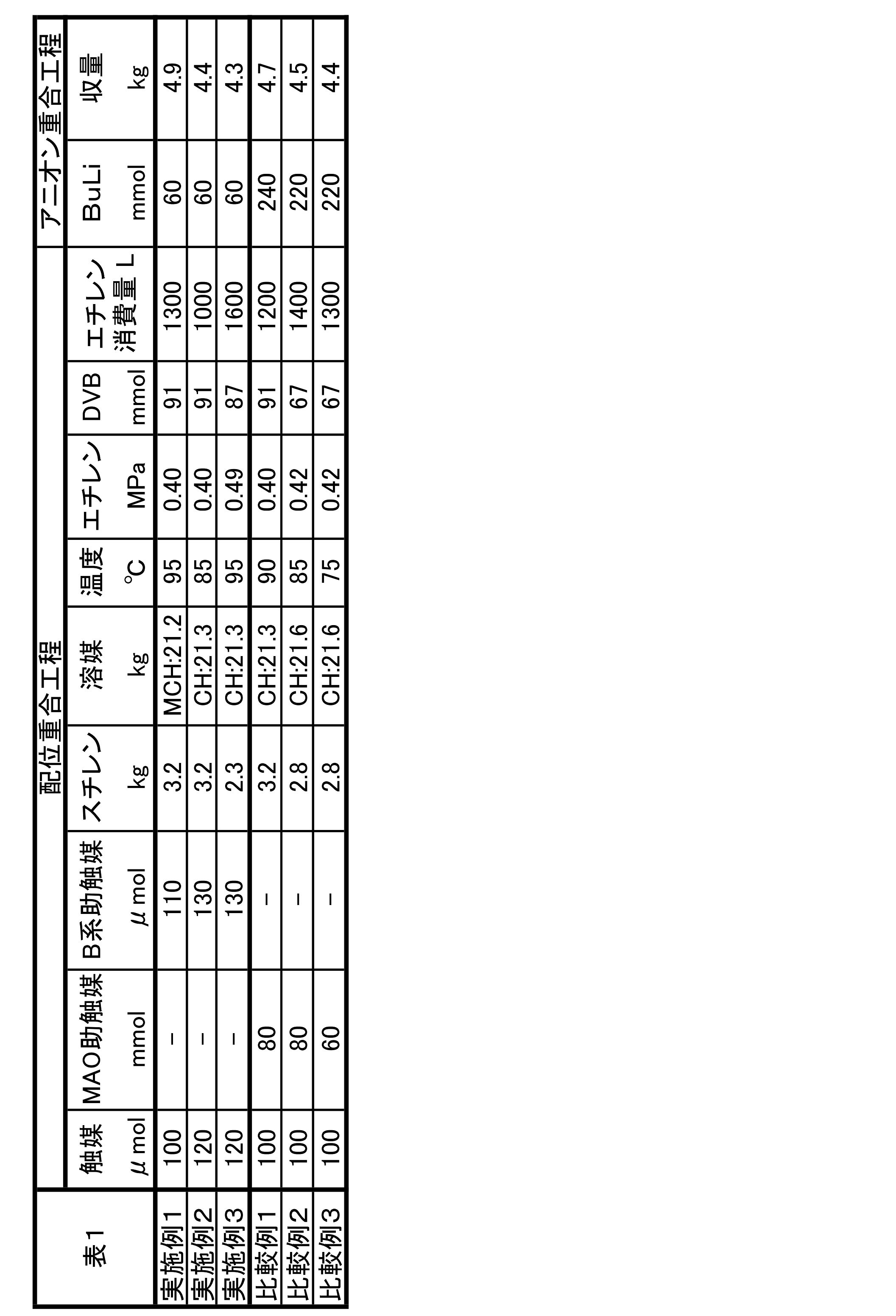
- Examples 2 to 3 In the same procedure as in Example 1, polymerization was carried out under the polymerization conditions shown in Table 1.
- Table 2 shows the analysis results of the ethylene-styrene-divinylbenzene copolymer obtained in the coordination polymerization step of each Example and Comparative Example, and the cross-copolymer obtained through the anionic polymerization step.
- the evaluation results are shown in Tables 3 and 4.
- the vinyl group hydrogen (proton) peak intensity (area) of the divinylbenzene unit of the cross-copolymer obtained in Examples 1 to 3 is the same as that of the ethylene-styrene-divinylbenzene copolymer obtained in the coordination polymerization step. It was less than 20% compared with the same peak intensity (area) of the divinylbenzene unit. Actually, the hydrogen (proton) peak of the vinyl group of the divinylbenzene unit substantially disappeared in the cross-copolymer after anionic polymerization.
- the cross copolymers obtained in Examples 1 to 3 are all soft (A hardness), low crystallinity, fluidity (molding processability), low gel content, and high heat resistance (20 ° C. storage elasticity). It can be seen that the ratio of the storage elastic modulus at 100 ° C. to the modulus is shown. Moreover, any cross-copolymer is obtained on the manufacturing conditions which satisfy
- the copolymers of Comparative Examples 1 to 3 were obtained by a production method using MAO (alumoxane) as a cocatalyst, and the molecular weight distribution (Mw / Mn) of the ethylene-styrene-divinylbenzene copolymer macromonomer was determined according to the present invention. Does not meet the conditions.
- the cross-copolymers obtained in Comparative Examples 1 and 2 have softness (A hardness), low crystallinity, fluidity (molding processability), and low gel content, but low heat resistance. Although the cross-copolymer obtained in Comparative Example 3 has high heat resistance, the MFR value is low and the molding processability is low.
- Example 1 shows the relationship between the temperature and storage modulus obtained by measuring the viscoelasticity of the cross-copolymers obtained in Example 1 and Comparative Example 1. Further, as Comparative Examples 4 and 5, commercially available SEPS (A hardness 83) and ethylene-octene copolymer (showing physical properties and heat resistance of A hardness 72. These resins also have low heat resistance.
- the cross-copolymer of the present invention is more useful as a thermoplastic elastomer because it has good moldability and satisfies softness and heat resistance.
Landscapes
- Chemical & Material Sciences (AREA)
- Health & Medical Sciences (AREA)
- Chemical Kinetics & Catalysis (AREA)
- Medicinal Chemistry (AREA)
- Polymers & Plastics (AREA)
- Organic Chemistry (AREA)
- Inorganic Chemistry (AREA)
- Engineering & Computer Science (AREA)
- Materials Engineering (AREA)
- Crystallography & Structural Chemistry (AREA)
- Transition And Organic Metals Composition Catalysts For Addition Polymerization (AREA)
- Graft Or Block Polymers (AREA)
Abstract
Description
本発明はこのような事情に鑑みてなされたものであり、従来と比較し軟質性と良成形加工性を有しつつ、改善された耐熱性を有するクロス共重合体及びこのようなクロス共重合体の製造方法を提供するものである。
本発明は、配位重合工程とこれに続くアニオン重合工程からなるクロス共重合体の製造方法において、配位重合工程として、シングルサイト配位重合触媒を用いてエチレンモノマー、芳香族ビニル化合物モノマーおよび芳香族ポリエンの共重合を行い、マクロモノマーであるエチレン-芳香族ビニル化合物-芳香族ポリエン共重合体を合成し、次にアニオン重合工程として、前記マクロモノマーと芳香族ビニル化合物モノマーの共存下、アニオン重合開始剤を用いて重合を行い、かつ、下記(1)~(3)をすべて満たすことを特長とするクロス共重合体の製造方法である。
(1)エチレン-芳香族ビニル化合物-芳香族ポリエン共重合体マクロモノマーの芳香族ビニル化合物ユニット含量が15モル%以上30モル%以下、芳香族ポリエンユニット含量0.01モル%以上0.2モル%以下、残部がエチレンユニット含量である。
(2)エチレン-芳香族ビニル化合物-芳香族ポリエン共重合体マクロモノマーの重量平均分子量(Mw)が10万以上25万以下、分子量分布(Mw/Mn)が3.5以上6以下である。
(3)アニオン重合工程を経て得られるクロス共重合体中のエチレン-芳香族ビニル化合物-芳香族ポリエン共重合体マクロモノマー成分の質量割合が60質量%以上95質量%以下、好ましくは65質量%以上90質量%以下である。
(A)A硬度が50以上85以下、好ましくは50以上80以下、
(B)クロス共重合体の0℃~150℃までに観測される結晶融解熱(ΔH)の総和が25J/g以下である。
(C)200℃、荷重98Nで求めたMFRが5g/10分以上40g/10分以下
(D)ゲル分が1質量%未満、好ましくは0.1質量%未満、
(E)DMAで測定した20℃の貯蔵弾性率に対する100℃の貯蔵弾性率の比が0.05以上0.2以下
ここで、上記(1)~(3)のクロス共重合体の各製造条件をすべて満たすことで(A)~(E)をすべて満足するクロス共重合体を得ることができる。マクロモノマーの芳香族ビニル化合物ユニット含量が15モル%以上30モル%以下の条件を満たさない場合、軟質性が低下しA硬度の条件を満たすことが困難になる場合がある。芳香族ポリエンユニット含量が上記範囲より高い場合、クロス共重合体のMFR値が本願の規定する値より低下し成型加工性が悪くなる可能性があり、またゲル分が上記条件を満たさない可能性も懸念される。芳香族ポリエンユニット含量が上記範囲より低い場合、クロス共重合体としての力学物性が低下してしまう。マクロモノマーの重量平均分子量(Mw)が上記値より低いと力学物性及び耐熱性が低下してしまい、高いと成型加工性が低下してしまい、MFR値が上記規定値以下に低下する場合がある。分子量分布(Mw/Mn)が上記規定より小さい場合、特に本願の規定する耐熱性(20℃の貯蔵弾性率に対する100℃の貯蔵弾性率の比)を満たすことが困難となる。アニオン重合工程を経て得られるクロス共重合体中のエチレン-芳香族ビニル化合物-芳香族ポリエン共重合体マクロモノマー成分の質量割合が上記値より低いと軟質性が失われてしまい、上記値より高いとクロス共重合体としての力学物性が低下してしまう場合がある。
以下、本発明のクロス共重合体について説明する。本クロス共重合体は、マクロモノマーに由来するエチレン-芳香族ビニル化合物-芳香族ポリエン共重合体鎖と芳香族ビニル化合物重合体鎖を有する共重合体であり、エチレン-芳香族ビニル化合物-芳香族ポリエン共重合体鎖と芳香族ビニル化合物重合体鎖が芳香族ポリエンユニットを介して結合している構造を有することを特徴としている。
エチレン-芳香族ビニル化合物-芳香族ポリエン共重合体鎖と芳香族ビニル化合物重合体鎖が芳香族ポリエンユニットを介して結合していることは、以下の観察可能な現象で証明できる。ここでは代表的なエチレン-スチレン-ジビニルベンゼン共重合体鎖とポリスチレン鎖がジビニルベンゼンユニットを介して結合している例について示す。すなわち配位重合工程で得られたエチレン-スチレン-ジビニルベンゼン共重合体マクロモノマーと、本共重合体とスチレンモノマーの存在下でのアニオン重合を経て得られるクロス共重合体の1H-NMR(プロトンNMR)を測定し、両者のジビニルベンゼンユニットのビニル基水素(プロトン)のピーク強度を適当な内部標準ピーク(エチレン-スチレン-ジビニルベンゼン共重合体に由来する適当なピーク)を用いて比較する。ここで、クロス共重合体のジビニルベンゼンユニットのビニル基水素(プロトン)のピーク強度(面積)が、エチレン-スチレン-ジビニルベンゼン共重合体マクロモノマーのジビニルベンゼンユニットの同ピーク強度(面積)と比較して50%未満、好ましくは20%未満である。アニオン重合(クロス化工程)の際にスチレンモノマーの重合と同時にジビニルベンゼンユニットも共重合し、エチレン-スチレン-ジビニルベンゼン共重合体鎖とポリスチレン鎖がジビニルベンゼンユニットを介して結合されるために、アニオン重合後のクロス共重合体ではジビニルベンゼンユニットのビニル基の水素(プロトン)のピーク強度は大きく減少する。実際にはジビニルベンゼンユニットのビニル基の水素(プロトン)のピークはアニオン重合後のクロス共重合体では実質的に消失している。詳細は公知文献「ジビニルベンゼンユニットを含有するオレフィン系共重合体を用いた分岐型共重合体の合成」、荒井亨、長谷川勝、日本ゴム協会誌、p382、vol.82(2009)に記載されている。
別な観点から、本クロス共重合体において、エチレン-芳香族ビニル化合物-芳香族ポリエン共重合体鎖と芳香族ビニル化合物重合体鎖が芳香族ポリエンユニットを介して結合している(一例としてエチレン-スチレン-ジビニルベンゼン共重合体鎖とポリスチレン鎖がジビニルベンゼンユニットを介して結合している)ことは、以下の観察可能な現象で証明できる。すなわち本クロス共重合体に対し、適当な溶媒を用いソックスレー抽出を十分な回数行った後においても、含まれるエチレン-スチレン-ジビニルベンゼン共重合体鎖とポリスチレン鎖を分別することができない。通常、本クロス共重合体に含まれるエチレン-スチレン-ジビニルベンゼン共重合体鎖と同一組成のエチレン-スチレン-ジビニルベンゼン共重合体とポリスチレンは、沸騰アセトンによるソックスレー抽出を行うことで、アセトン不溶部としてエチレン-スチレン-ジビニルベンゼン共重合体に、アセトン可溶部としてポリスチレンに分別できる。しかし、本クロス共重合体に同様のソックスレー抽出を行った場合、アセトン可溶部として本クロス共重合体に含まれる比較的少量のポリスチレンホモポリマーが得られるが、大部分の量を占めるアセトン不溶部には、NMR測定を行うことでエチレン-スチレン-ジビニルベンゼン共重合体鎖とポリスチレン鎖が共に含まれていることが示され、これらはソックスレー抽出で分別することができないことがわかる。これについてもその詳細は公知文献「ジビニルベンゼンユニットを含有するオレフィン系共重合体を用いた分岐型共重合体の合成」、荒井亨、長谷川勝、日本ゴム協会誌、p382、vol.82(2009)に記載されている。
以上から本発明のクロス共重合体を規定する表現としては、クロス共重合体は、エチレン-芳香族ビニル化合物-芳香族ポリエン共重合体鎖と芳香族ビニル化合物重合体鎖を有し、エチレン-芳香族ビニル化合物-芳香族ポリエン共重合体鎖と芳香族ビニル化合物重合体鎖が芳香族ポリエンユニットを介して結合している構造を有する共重合体である。本クロス共重合体には、比較的少量の芳香族ビニル化合物(ポリスチレン)ホモポリマーが含まれていても良い。
さらに好ましくは以下の(1)~(3)の条件をすべて満たす共重合体である。
(1)エチレン-芳香族ビニル化合物-芳香族ポリエン共重合体の芳香族ビニル化合物ユニット含量が15モル%以上30モル%以下、芳香族ポリエンユニット含量0.01モル%以上0.2モル%以下、残部がエチレンユニット含量である。
(2)エチレン-芳香族ビニル化合物-芳香族ポリエン共重合体の重量平均分子量(Mw)が10万以上25万以下、分子量分布(Mw/Mn)が3.5以上6以下である。
(3)アニオン重合工程を経て得られるクロス共重合体中のエチレン-芳香族ビニル化合物-芳香族ポリエン共重合体成分の質量割合が60質量%以上95質量%以下、好ましくは65質量%以上90質量%以下である。
3-1.シングルサイト配位重合触媒
3-1-1.遷移金属化合物
本発明はさらに、配位重合工程において、一般式(1)または(6)で示される遷移金属化合物を含むシングルサイト配位重合触媒を用いることを特徴とする本発明のクロス共重合体の製造方法である。
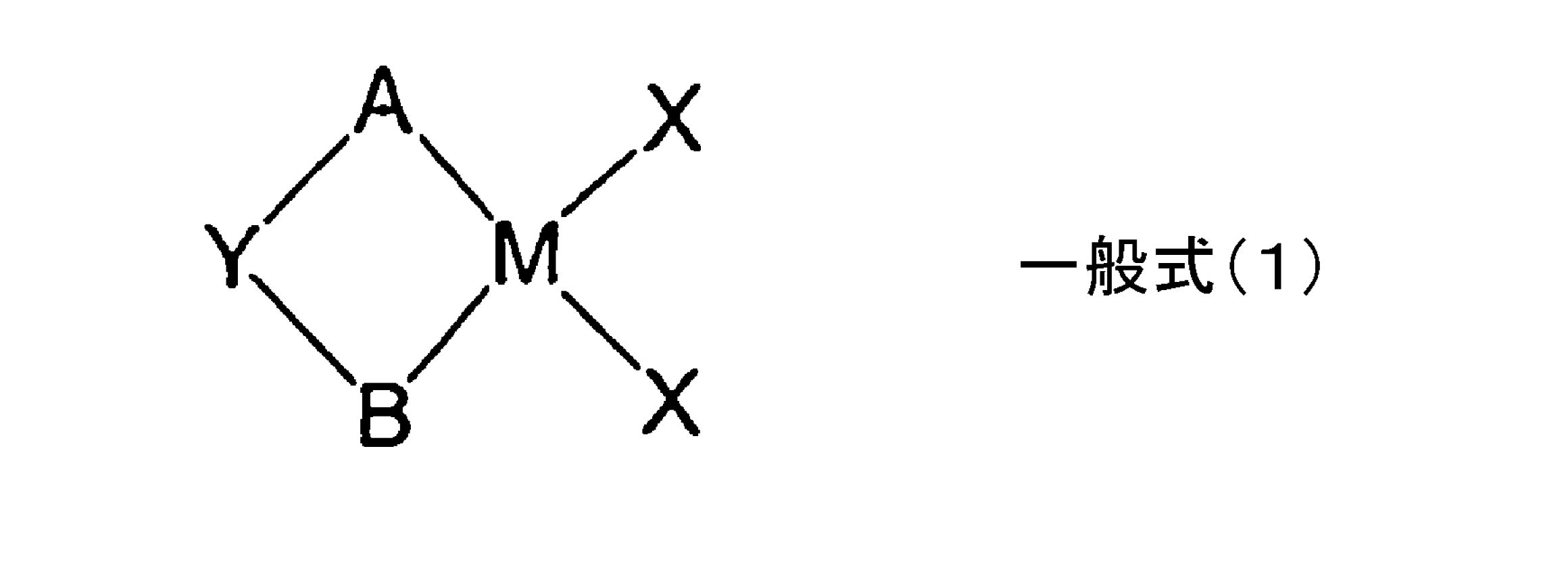
好ましくは、YはA、Bと結合を有し、他に置換基として水素もしくは炭素数1~15の炭化水素基(本置換基には他に1~3個の窒素原子、酸素原子、硫黄原子、燐原子、または珪素原子を含んでもよい)を有するメチレン基または硼素基である。
Mはジルコニウム、ハフニウム、またはチタンである。
また、下記一般式(6)で示される遷移金属化合物も好適に用いることができる。

Y'は、Cp、Zと結合を有し、他に水素もしくは炭素数1~15の炭化水素基を有するメチレン基、シリレン基、エチレン基、ゲルミレン基、または硼素基である。置換基は互いに異なっていても同一でもよい。また、Y'は環状構造を有していてもよい。
Zは窒素原子、酸素原子または硫黄原子を含み、窒素原子、酸素原子または硫黄原子でM'に配位する配位子でY'と結合を有し、他に水素もしくは炭素数1~15の置換基を有する基である。
M'はジルコニウム、ハフニウム、またはチタンである。
X'は、水素、ハロゲン、炭素数1-15のアルキル基、炭素数6-10のアリール基、炭素数8-12のアルキルアリール基、炭素数1-4の炭化水素置換基を有するシリル基、炭素数1-10のアルコキシ基、または炭素数1-6のアルキル置換基を有するジアルキルアミド基である。
nは、1または2の整数である。
一般式(6)で示されるような遷移金属化合物は、WO99/14221号公報EP416815号公報、US6254956号公報に記載されている。
本製造方法の配位重合工程においては、好ましくは上記の一般式(1)で表される遷移金属化合物と助触媒から構成されるシングルサイト配位重合触媒が用いられる。上記の一般式(1)で表される遷移金属化合物と助触媒から構成されるシングルサイト配位重合触媒を用いた場合、特に芳香族ビニル化合物や芳香族ポリエンに対する共重合性が高く、効率的に共重合が可能でまた活性も高く好ましい。クロス共重合体中のゲル分も十分に低く、本発明の条件を満たすことができる。
本クロス共重合体及びその製造方法の詳細は、その全体の記載をそれぞれ出典明示によりここに援用する、WO2000/37517、またはWO2007/139116に記載されている。
本発明において芳香族ビニル化合物モノマーとしては、スチレンおよび各種の置換スチレン、例えばp-メチルスチレン、m-メチルスチレン、o-メチルスチレン、o-t-ブチルスチレン、m-t-ブチルスチレン、p-t-ブチルスチレン、p-クロロスチレン、o-クロロスチレン等が挙げられる。工業的には好ましくはスチレン、p-メチルスチレン、p-クロロスチレン、特に好ましくはスチレンが用いられる。
本配位重合工程でオレフィン-芳香族ビニル化合物共重合体またはオレフィン-芳香族ビニル化合物-芳香族ポリエン共重合体を製造するにあたっては、上記に例示した各モノマー、遷移金属化合物および助触媒を接触させるが、接触の順番、接触方法は任意の公知の方法を用いることができる。
以上の共重合の方法としては溶媒を用いずに液状モノマー中で重合させる方法、あるいはペンタン、ヘキサン、ヘプタン、シクロヘキサン、ベンゼン、トルエン、エチルベンゼン、キシレン、クロロ置換ベンゼン、クロロ置換トルエン、塩化メチレン、クロロホルム等の飽和脂肪族または芳香族炭化水素またはハロゲン化炭化水素の単独または混合溶媒を用いる方法がある。好ましくは混合アルカン系溶媒、シクロヘキサン、トルエン、エチルベンゼン等を用いる。
アニオン重合工程では、エチレン-芳香族ビニル化合物-芳香族ポリエン共重合体マクロモノマーと芳香族ビニル化合物モノマーの共存下、アニオン重合開始剤を用いて重合する。
重合時の圧力は、0.1気圧~100気圧が適当であり、好ましくは1~30気圧、特に工業的に特に好ましくは、1~10気圧である。
実施例で得られた共重合体の分析は以下の手段によって実施した。
共重合体中のオレフィンや芳香族ビニル化合物の各ユニット含量の決定は、1H-NMRで行い、機器は日本電子社製α-500を用いた。重1,1,2,2-テトラクロロエタンに溶解し、室温で溶解する場合は測定は室温で、室温で溶解しない場合は測定は80~100℃で行った。公知の手法により、得られた各ユニット由来のピークの面積を比較して各ユニット含量や組成を求めた。アニオン重合工程を経て最終的に得られるクロス共重合体に含まれる配位重合工程で得られるオレフィン-芳香族ビニル化合物-芳香族ポリエン共重合体の質量割合及び収量も、オレフィン-芳香族ビニル化合物-芳香族ポリエン共重合体の組成とアニオン重合工程を経て得られるクロス共重合体の組成を比較することで求めることができる。アニオン重合工程で得られるポリスチレン鎖の質量%も同様にして求めることができる。
共重合体中のジビニルベンゼンユニット含量は、ガスクロマトグラフィ分析により求めた重合液中の未反応ジビニルベンゼン量と重合に用いたジビニルベンゼン量の差から求めた。
分子量は、GPC(ゲルパーミエーションクロマトグラフィー)を用いて標準ポリスチレン換算の重量平均分子量(Mw)と数平均分子量(Mn)を求めた。測定は以下の条件で行った。
カラム温度:40℃
検出器:RI
溶媒:THF
送液流量:1.0ml/min.
サンプル濃度:0.1質量/vol%
サンプル注入量:100μL
室温でTHF溶媒に不溶であるポリマーの分子量は、高温GPC(ゲルパーミエーションクロマトグラフィー)を用いて標準ポリスチレン換算の重量平均分子量を求めた。東ソー社製HLC-8121GPC/HTを用い、カラムはTSKgelGMHHR-H(20)HT、φ7.8×300mm3本、オルトジクロロベンゼンを溶媒とし140℃で測定した。
検出器:RI
サンプル濃度:0.1質量/体積%
サンプル注入量:100μL
送液流量:1.0ml/min.
DSC測定は、セイコー電子社製DSC6200を用い、窒素気流下で行った。すなわち樹脂10mgを用い、アルミナ10mgをレファレンスとして、アルミニウムパンを用い、窒素雰囲気下、昇温速度10℃/分で室温から240℃まで昇温した後に20℃/分で-120℃まで冷却した。その後240℃まで昇温速度10℃/分で昇温しながらDSC測定を行い、融点、結晶融解熱及びガラス転移点を求めた。
物性評価用の試料は加熱プレス法(温度250℃、時間5分間、圧力50kg/cm2)により成形した各種厚さ(0.3、1.0、2.0mm)のシ-トを用いた。
加熱プレス法により得た厚み約0.3mmのフィルムから測定用サンプル(8mm×50mm)を切り出し、動的粘弾性測定装置(レオメトリックス社RSA-III)を使用し、周波数1Hz、温度領域-50℃~+250℃の範囲で測定し、貯蔵弾性率、損失弾性率、タンジェントδ値、サンプルの残留伸び(δL)を求めた。
測定に関わるその他測定パラメ-タ-は以下の通り。
測定周波数1Hz
昇温速度4℃/分
サンプル測定長10mm
Test Type = Dynamic Temperature Ramp (DTempRamp)
Initial Static Force 5.0g
Auto Tension Sensitivity 1.0g
Max Auto Tension Rate 0.033mm/s
Max Applied Strain 1.5%
Min Allowed Force 1.0g
本明細書において、貯蔵弾性率(E')や損失弾性率(E'')は例えば1.35E+07Paや3.10E+08Paのように表記する。ここで、1.35E+07Paは、1.35×10⁷Paであり、3.10E+08Paは、3.10×10⁸Paである。
JIS K-6251に準拠し、厚さ1.0mmのシートを2号1/2号型テストピース形状にカットし、島津製作所AGS-100D型引張試験機を用い、引張速度500mm/minにて測定した。
2mm厚シ-トを重ねて、JIS K-7215プラスチックのデュロメーター硬さ試験法に準じてタイプAのデュロメーター硬度を求めた。なお、この硬度は瞬間値である。
JIS K7210に従い、200℃、荷重98Nの条件下で求めた。
ASTM D-2765-84に従い、クロス共重合体のゲル分を測定した。すなわち、精秤した1.0gポリマー(直径約1mm、長さ約3mmの成型物)を、100メッシュのステンレス製網袋に包み、精秤した。これを沸騰キシレン中で約5時間抽出したのちに網袋を回収し、真空中90℃で10時間以上乾燥した。十分に冷却後、網袋を精秤し、以下の式により、ポリマーゲル量を算出した。
ゲル量=網袋に残留したポリマーの質量/はじめのポリマー質量×100
[実施例1]
攪拌機、加熱冷却用ジャケット付き50L重合缶を使用し、溶媒であるメチルシクロヘキサン(丸善石油化学社製)21.2kg、スチレンモノマー3.2kg及びジビニルベンゼン91mmolを仕込み、内温70℃にて加熱攪拌した。乾燥窒素ガスを約100Lバブリングして系内及び重合液の水分をパージした。次いで、内温を約85℃に昇温し、トリイソブチルアルミニウム50mmolを加え、ただちにエチレンを導入した。圧力0.40MPa(0.30MPaG)で安定した後に、オートクレーブ上に設置した触媒タンクから、トリイソブチルアルミニウム1mmol、触媒として、rac-イソプロピリデンビス(4,5-ベンゾインデニル)ジルコニウムジクロライド100μmol、B系助触媒として、トリフェニルカルベニウムテトラキス(ペンタフルオロフェニル)ボレート110μmolを含むトルエン溶液30mlからなる触媒液を窒素圧によりオ-トクレーブ中に加え配位重合工程を開始した。内温を95℃、圧力は0.40MPaに維持しながら重合を実施した。所定のエチレン積算流量でエチレン供給を停止、圧力を開放しつつオートクレーブを70℃まで急冷した。重合液の少量(数十ml)をサンプリングし、メタノールに混合してポリマーを析出させることにより配位重合工程のポリマーサンプルを得た。本サンプリング液より、配位重合工程でのポリマー収量、組成、分子量を求めた。重合缶にn-ブチルリチウム60mmolを添加し、70℃を維持しながらアニオン重合工程を行うことでクロス共重合体を合成した。得られた重合液を激しく攪拌した大量のメタノール液中に少量ずつ投入して、クロス共重合体を回収した。このクロス共重合体を、室温で1昼夜風乾した後に80℃、真空中、質量変化が認められなくなるまで乾燥した。
実施例1と同様の手順で、表1に示す重合条件で重合を実施した。
実施例1と同様の手順で、表1に示す重合条件で、ただし、助触媒としてトリフェニルカルベニウムテトラキス(ペンタフルオロフェニル)ボレートの代わりにMMAO(モディファイドMAO、東ソ-ファインケム社製)を使用し、重合を実施した。

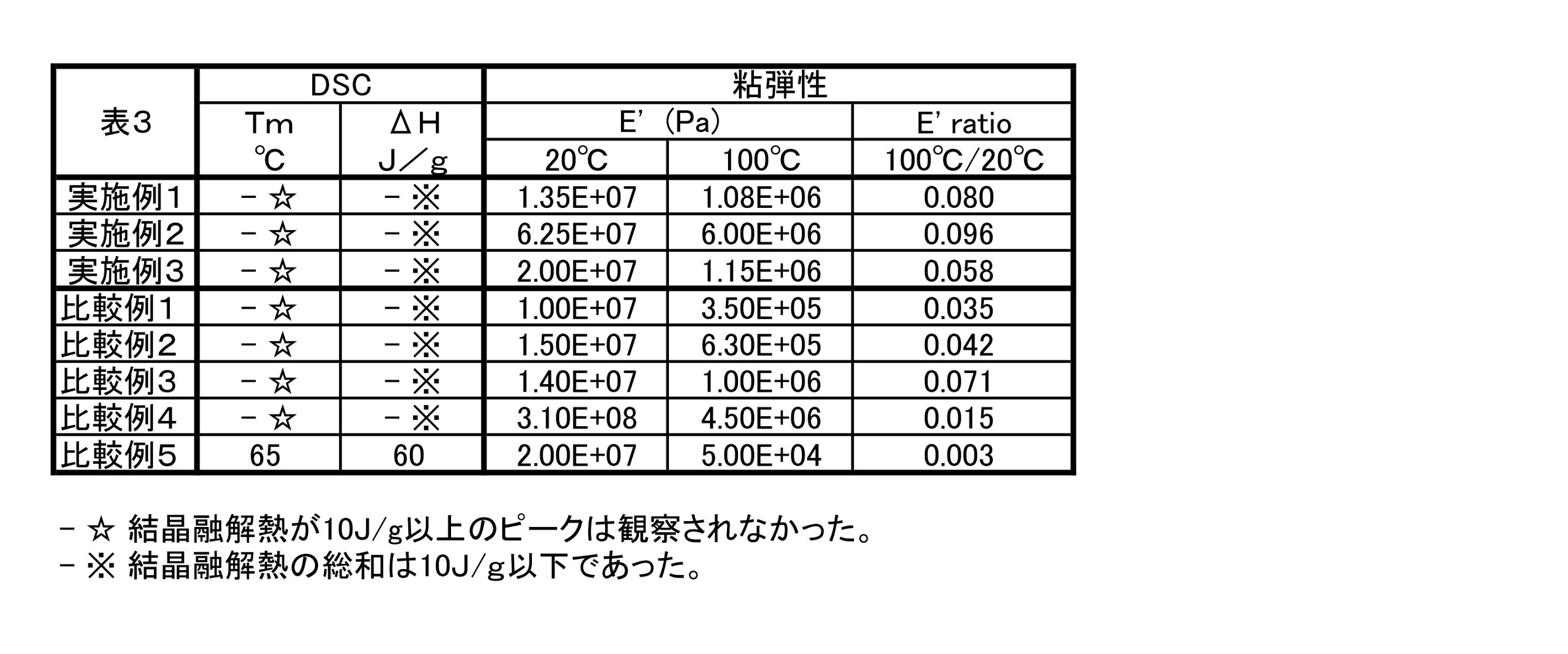

また比較例4、5としてそれぞれ市販のSEPS(A硬度83)及びエチレン-オクテン共重合体(A硬度72の物性及び耐熱性を示す。これら樹脂も耐熱性が低い。
Claims (8)
- 配位重合工程とこれに続くアニオン重合工程からなるクロス共重合体の製造方法において、配位重合工程として、シングルサイト配位重合触媒を用いてエチレンモノマー、芳香族ビニル化合物モノマーおよび芳香族ポリエンの共重合を行い、マクロモノマーであるエチレン-芳香族ビニル化合物-芳香族ポリエン共重合体を合成し、次にアニオン重合工程として、前記マクロモノマーと芳香族ビニル化合物モノマーの共存下、アニオン重合開始剤を用いて重合を行い、かつ、下記(1)~(3)をすべて満たすことを特徴とするクロス共重合体の製造方法。
(1)エチレン-芳香族ビニル化合物-芳香族ポリエン共重合体マクロモノマーの芳香族ビニル化合物ユニット含量が15モル%以上30モル%以下、芳香族ポリエンユニット含量0.01モル%以上0.2モル%以下、残部がエチレンユニット含量である。
(2)エチレン-芳香族ビニル化合物-芳香族ポリエン共重合体マクロモノマーの重量平均分子量(Mw)が10万以上25万以下、分子量分布(Mw/Mn)が3.5以上6以下である。
(3)アニオン重合工程を経て得られるクロス共重合体中のエチレン-芳香族ビニル化合物-芳香族ポリエン共重合体マクロモノマー成分の質量割合が60質量%以上95質量%以下である。 - 配位重合工程において、一般式(1)または(6)で示される遷移金属化合物を含むシングルサイト配位重合触媒を用いることを特徴とする請求項1記載の製造方法。
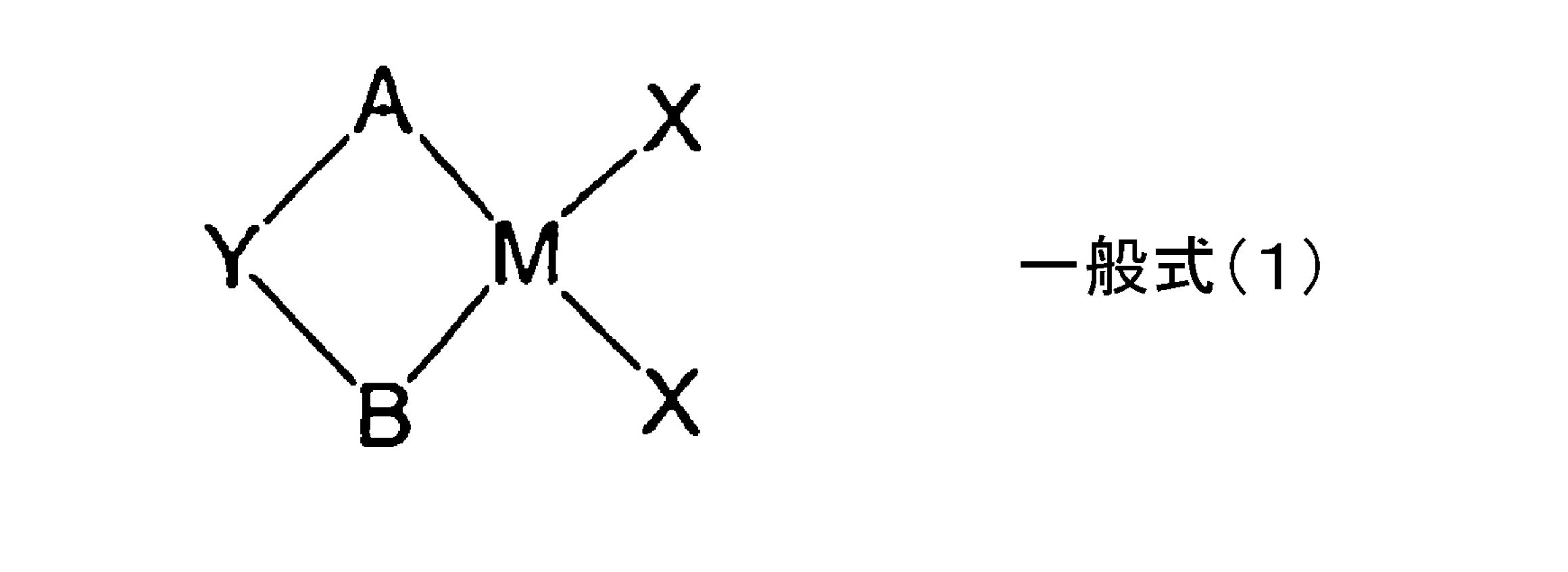
式中、A、Bは同一でも異なっていてもよく、非置換もしくは置換ベンゾインデニル基、非置換もしくは置換シクロペンタジエニル基、非置換もしくは置換インデニル基、または非置換もしくは置換フルオレニル基から選ばれる基である。ここで置換シクロペンタフェナンスリル基、置換ベンゾインデニル基、置換シクロペンタジエニル基、置換インデニル基、または置換フルオレニル基とは、置換可能な水素の1個以上が炭素数1~20のアルキル基、炭素数6~10のアリール基、炭素数7~20のアルキルアリール基、ハロゲン原子、OSiR3基、SiR3基またはPR2基(Rはいずれも炭素数1~10の炭化水素基を表す)で置換されたシクロペンタフェナンスリル基、ベンゾインデニル基、シクロペンタジエニル基、インデニル基、またはフルオレニル基である。
YはA、Bと結合を有し、他に置換基として水素もしくは炭素数1~15の炭化水素基(本置換基には他に1~3個の窒素原子、酸素原子、硫黄原子、燐原子、または珪素原子を含んでもよい)を有するメチレン基、シリレン基、エチレン基、ゲルミレン基、または硼素基である。置換基は互いに異なっていても同一でもよい。また、Yは環状構造を有していてもよい。
Xは、水素、水酸基、ハロゲン、炭素数1~20の炭化水素基、炭素数1~20のアルコキシ基、炭素数1~4の炭化水素置換基を有するシリル基、または炭素数1~20の炭化水素置換基を有するアミド基である。2個のXは結合を有してもよい。
Mはジルコニウム、ハフニウム、またはチタンである。
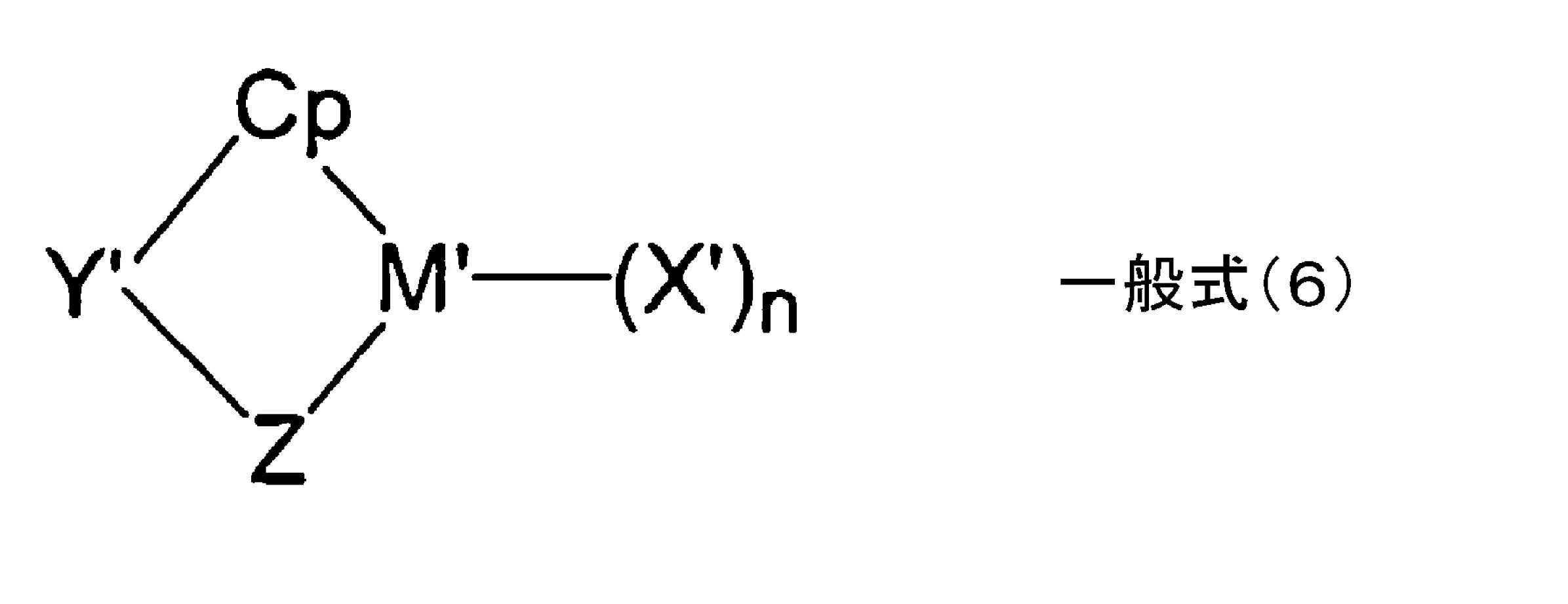
式中、Cpは非置換もしくは置換シクロペンタフェナンスリル基、非置換もしくは置換ベンゾインデニル基、非置換もしくは置換シクロペンタジエニル基、非置換もしくは置換インデニル基、または非置換もしくは置換フルオレニル基から選ばれる基である。ここで置換シクロペンタフェナンスリル基、置換ベンゾインデニル基、置換シクロペンタジエニル基、置換インデニル基、または置換フルオレニル基とは、置換可能な水素の1個以上が炭素数1~20のアルキル基、炭素数6~10のアリール基、炭素数7~20のアルキルアリール基、ハロゲン原子、OSiR3基、SiR3基またはPR2基(Rはいずれも炭素数1~10の炭化水素基を表す)で置換されたシクロペンタフェナンスリル基、ベンゾインデニル基、シクロペンタジエニル基、インデニル基、またはフルオレニル基である。
Y'は、Cp、Zと結合を有し、他に水素もしくは炭素数1~15の炭化水素基を有するメチレン基、シリレン基、エチレン基、ゲルミレン基、または硼素基である。置換基は互いに異なっていても同一でもよい。また、Y'は環状構造を有していてもよい。
Zは窒素原子、酸素原子または硫黄原子を含み、窒素原子、酸素原子または硫黄原子でM'に配位する配位子でY'と結合を有し、他に水素もしくは炭素数1~15の置換基を有する基である。
M'はジルコニウム、ハフニウム、またはチタンである。
X'は、水素、ハロゲン、炭素数1-15のアルキル基、炭素数6-10のアリール基、炭素数8-12のアルキルアリール基、炭素数1-4の炭化水素置換基を有するシリル基、炭素数1-10のアルコキシ基、または炭素数1-6のアルキル置換基を有するジアルキルアミド基である。
nは、1または2の整数である。 - 配位重合工程において、一般式(1)で示される遷移金属化合物と硼素助触媒を含むシングルサイト配位重合触媒を用いることを特徴とする請求項1記載の製造方法。
- 用いられる硼素助触媒がボレート助触媒であることを特徴とする請求項3記載の製造方法。
- 請求項1~4いずれか記載の製造方法により得られるクロス共重合体であって、さらに以下の(A)~(E)の条件をすべて満足するクロス共重合体。
(A)A硬度が50以上85以下、
(B)クロス共重合体の0℃~150℃までに観測される結晶融解熱(ΔH)の総和が25J/g以下、
(C)200℃、荷重98Nで求めたMFRが5g/10分以上40g/10分以下、
(D)ゲル分が1質量%未満、
(E)DMAで測定した20℃の貯蔵弾性率に対する100℃の貯蔵弾性率の比が0.05以上0.2以下。 - エチレン-芳香族ビニル化合物-芳香族ポリエン共重合体鎖と芳香族ビニル化合物重合体鎖を有し、エチレン-芳香族ビニル化合物-芳香族ポリエン共重合体鎖と芳香族ビニル化合物重合体鎖が芳香族ポリエンユニットを介して結合している構造を有する共重合体であり、以下の(1)~(3)の条件をすべて満たすクロス共重合体。
(1)エチレン-芳香族ビニル化合物-芳香族ポリエン共重合体の芳香族ビニル化合物ユニット含量が15モル%以上30モル%以下、芳香族ポリエンユニット含量0.01モル%以上0.2モル%以下、残部がエチレンユニット含量である。
(2)エチレン-芳香族ビニル化合物-芳香族ポリエン共重合体の重量平均分子量(Mw)が10万以上25万以下、分子量分布(Mw/Mn)が3.5以上6以下である。
(3)アニオン重合工程を経て得られるクロス共重合体中のエチレン-芳香族ビニル化合物-芳香族ポリエン共重合体成分の質量割合が60質量%以上95質量%以下である。 - エチレン-芳香族ビニル化合物-芳香族ポリエン共重合体鎖と芳香族ビニル化合物重合体鎖のグラフトスルー共重合体である、請求項6に記載のクロス共重合体。
- 請求項6または7記載のクロス共重合体であって、さらに以下の(A)~(E)の条件をすべて満足するクロス共重合体。
(A)A硬度が50以上85以下、
(B)クロス共重合体の0℃~150℃までに観測される結晶融解熱(ΔH)の総和が25J/g以下、
(C)200℃、荷重98Nで求めたMFRが5g/10分以上40g/10分以下
(D)ゲル分が1質量%未満、
(E)DMAで測定した20℃の貯蔵弾性率に対する100℃の貯蔵弾性率の比が0.05以上0.2以下。
Priority Applications (5)
| Application Number | Priority Date | Filing Date | Title |
|---|---|---|---|
| KR1020187010211A KR20180061227A (ko) | 2015-09-28 | 2016-09-12 | 크로스 공중합체 및 그 제조 방법 |
| CN201680055938.0A CN108137764A (zh) | 2015-09-28 | 2016-09-12 | 交联共聚物及其制造方法 |
| DE112016004386.4T DE112016004386T5 (de) | 2015-09-28 | 2016-09-12 | Kreuz-Copolymere sowie Herstellungsverfahren dafür |
| US15/763,428 US20180273669A1 (en) | 2015-09-28 | 2016-09-12 | Cross-copolymer and method for producing same |
| JP2017543086A JPWO2017056946A1 (ja) | 2015-09-28 | 2016-09-12 | クロス共重合体及びその製造方法 |
Applications Claiming Priority (2)
| Application Number | Priority Date | Filing Date | Title |
|---|---|---|---|
| JP2015189405 | 2015-09-28 | ||
| JP2015-189405 | 2015-09-28 |
Publications (1)
| Publication Number | Publication Date |
|---|---|
| WO2017056946A1 true WO2017056946A1 (ja) | 2017-04-06 |
Family
ID=58427512
Family Applications (1)
| Application Number | Title | Priority Date | Filing Date |
|---|---|---|---|
| PCT/JP2016/076819 Ceased WO2017056946A1 (ja) | 2015-09-28 | 2016-09-12 | クロス共重合体及びその製造方法 |
Country Status (6)
| Country | Link |
|---|---|
| US (1) | US20180273669A1 (ja) |
| JP (1) | JPWO2017056946A1 (ja) |
| KR (1) | KR20180061227A (ja) |
| CN (1) | CN108137764A (ja) |
| DE (1) | DE112016004386T5 (ja) |
| WO (1) | WO2017056946A1 (ja) |
Cited By (3)
| Publication number | Priority date | Publication date | Assignee | Title |
|---|---|---|---|---|
| WO2018225744A1 (ja) * | 2017-06-05 | 2018-12-13 | デンカ株式会社 | 熱可塑性エラストマー組成物 |
| US12358938B2 (en) | 2019-06-13 | 2025-07-15 | Lg Chem, Ltd. | Transition metal compound and method of preparing polypropylene using the same |
| US12421334B2 (en) | 2019-06-13 | 2025-09-23 | Lg Chem, Ltd. | Hybrid supported metallocene catalyst and method of preparing polypropylene using the same |
Families Citing this family (3)
| Publication number | Priority date | Publication date | Assignee | Title |
|---|---|---|---|---|
| JP6744599B1 (ja) | 2019-03-01 | 2020-08-19 | 株式会社タンガロイ | 切削インサート |
| CN119161537A (zh) | 2019-12-03 | 2024-12-20 | 电化株式会社 | 共聚物及含有其的层叠体 |
| EP4190830B1 (en) * | 2020-08-28 | 2025-11-26 | LG Chem, Ltd. | Method for preparing polyolefin-polystyrene-based multiblock copolymer |
Citations (5)
| Publication number | Priority date | Publication date | Assignee | Title |
|---|---|---|---|---|
| WO2000037517A1 (en) * | 1998-12-22 | 2000-06-29 | Denki Kagaku Kogyo Kabushiki Kaisha | Cross-copolymerized olefin/styrene/diene copolymer, process for the production of the same and uses thereof |
| WO2007139116A1 (ja) * | 2006-05-29 | 2007-12-06 | Denki Kagaku Kogyo Kabushiki Kaisha | クロス共重合体の製造方法、得られるクロス共重合体、及びその用途 |
| JP2009185208A (ja) * | 2008-02-07 | 2009-08-20 | Denki Kagaku Kogyo Kk | オレフィン−芳香族ビニル化合物系クロス共重合体を含む樹脂組成物を用いた電線被覆材 |
| JP2013202133A (ja) * | 2012-03-27 | 2013-10-07 | Denki Kagaku Kogyo Kk | 医療用チューブ |
| WO2015174485A1 (ja) * | 2014-05-15 | 2015-11-19 | 電気化学工業株式会社 | クロス共重合体とその製造方法 |
Family Cites Families (18)
| Publication number | Priority date | Publication date | Assignee | Title |
|---|---|---|---|---|
| IL85097A (en) | 1987-01-30 | 1992-02-16 | Exxon Chemical Patents Inc | Catalysts based on derivatives of a bis(cyclopentadienyl)group ivb metal compound,their preparation and their use in polymerization processes |
| NZ235032A (en) | 1989-08-31 | 1993-04-28 | Dow Chemical Co | Constrained geometry complexes of titanium, zirconium or hafnium comprising a substituted cyclopentadiene ligand; use as olefin polymerisation catalyst component |
| ATE120768T1 (de) | 1989-10-30 | 1995-04-15 | Fina Technology | Herstellung von metallocenkatalysatoren für olefinpolymerisation. |
| US5721185A (en) | 1991-06-24 | 1998-02-24 | The Dow Chemical Company | Homogeneous olefin polymerization catalyst by abstraction with lewis acids |
| DE59206948D1 (de) | 1991-11-30 | 1996-09-26 | Hoechst Ag | Metallocene mit benzokondensierten Indenylderivaten als Liganden, Verfahren zu ihrer Herstellung und ihre Verwendung als Katalysatoren |
| US5348299A (en) | 1992-05-06 | 1994-09-20 | Ltb Game Enterprises | Electronic gaming apparatus |
| DE19528717A1 (de) * | 1995-08-04 | 1997-02-06 | Basf Ag | Polymerteilchen und Verfahren zu deren Herstellung |
| JP3659760B2 (ja) | 1996-03-19 | 2005-06-15 | 電気化学工業株式会社 | エチレン−芳香族ビニル化合物共重合体及びその製造方法 |
| US6254956B1 (en) | 1996-09-04 | 2001-07-03 | The Dow Chemical Company | Floor, wall or ceiling covering |
| JPH11130808A (ja) | 1997-04-17 | 1999-05-18 | Denki Kagaku Kogyo Kk | 重合用遷移金属触媒成分、それを用いた立体規則性を有する芳香族ビニル化合物系重合体及びその製造方法 |
| US6235855B1 (en) | 1997-04-17 | 2001-05-22 | Denki Kagaku Kogyo Kabushiki Kaisha | Transition metal compound as catalyst component in method for producing aromatic vinyl compound polymer or aromatic vinyl compound-olefin copolymer having stereoregularity |
| US6150297A (en) | 1997-09-15 | 2000-11-21 | The Dow Chemical Company | Cyclopentaphenanthrenyl metal complexes and polymerization process |
| EP0985689A1 (en) | 1998-09-07 | 2000-03-15 | Denki Kagaku Kogyo Kabushiki Kaisha | Aromatic vinyl compound-ethylene copolymer and method for producing the same |
| WO2000020426A1 (en) | 1998-10-08 | 2000-04-13 | The Dow Chemical Company | Bridged metal complexes |
| US6803422B2 (en) * | 1999-09-13 | 2004-10-12 | Denki Kagaku Kogyo Kabushiki Kaisha | Cross-copolymerized olefin/aromatic vinyl compound/diene copolymer and process for its production |
| WO2001068719A1 (en) | 2000-03-14 | 2001-09-20 | Denki Kagaku Kogyo Kabushiki Kaisha | Transition metal catalyst component for polymerization and process for producing polymer with the same |
| CN101454365A (zh) * | 2006-05-29 | 2009-06-10 | 电气化学工业株式会社 | 交叉共聚物的制造方法、得到的交叉共聚物及其用途 |
| CN103848948B (zh) * | 2012-11-30 | 2017-03-22 | 中国石油化工股份有限公司 | 一种部分氢化的三元共聚物及其制备方法和应用 |
-
2016
- 2016-09-12 DE DE112016004386.4T patent/DE112016004386T5/de not_active Withdrawn
- 2016-09-12 WO PCT/JP2016/076819 patent/WO2017056946A1/ja not_active Ceased
- 2016-09-12 KR KR1020187010211A patent/KR20180061227A/ko not_active Withdrawn
- 2016-09-12 US US15/763,428 patent/US20180273669A1/en not_active Abandoned
- 2016-09-12 CN CN201680055938.0A patent/CN108137764A/zh active Pending
- 2016-09-12 JP JP2017543086A patent/JPWO2017056946A1/ja active Pending
Patent Citations (5)
| Publication number | Priority date | Publication date | Assignee | Title |
|---|---|---|---|---|
| WO2000037517A1 (en) * | 1998-12-22 | 2000-06-29 | Denki Kagaku Kogyo Kabushiki Kaisha | Cross-copolymerized olefin/styrene/diene copolymer, process for the production of the same and uses thereof |
| WO2007139116A1 (ja) * | 2006-05-29 | 2007-12-06 | Denki Kagaku Kogyo Kabushiki Kaisha | クロス共重合体の製造方法、得られるクロス共重合体、及びその用途 |
| JP2009185208A (ja) * | 2008-02-07 | 2009-08-20 | Denki Kagaku Kogyo Kk | オレフィン−芳香族ビニル化合物系クロス共重合体を含む樹脂組成物を用いた電線被覆材 |
| JP2013202133A (ja) * | 2012-03-27 | 2013-10-07 | Denki Kagaku Kogyo Kk | 医療用チューブ |
| WO2015174485A1 (ja) * | 2014-05-15 | 2015-11-19 | 電気化学工業株式会社 | クロス共重合体とその製造方法 |
Cited By (3)
| Publication number | Priority date | Publication date | Assignee | Title |
|---|---|---|---|---|
| WO2018225744A1 (ja) * | 2017-06-05 | 2018-12-13 | デンカ株式会社 | 熱可塑性エラストマー組成物 |
| US12358938B2 (en) | 2019-06-13 | 2025-07-15 | Lg Chem, Ltd. | Transition metal compound and method of preparing polypropylene using the same |
| US12421334B2 (en) | 2019-06-13 | 2025-09-23 | Lg Chem, Ltd. | Hybrid supported metallocene catalyst and method of preparing polypropylene using the same |
Also Published As
| Publication number | Publication date |
|---|---|
| KR20180061227A (ko) | 2018-06-07 |
| CN108137764A (zh) | 2018-06-08 |
| US20180273669A1 (en) | 2018-09-27 |
| DE112016004386T5 (de) | 2018-06-07 |
| JPWO2017056946A1 (ja) | 2018-07-12 |
Similar Documents
| Publication | Publication Date | Title |
|---|---|---|
| JP4783324B2 (ja) | エチレン−スチレン−ジエン共重合体、及びその製造方法 | |
| WO2017056946A1 (ja) | クロス共重合体及びその製造方法 | |
| JP5890408B2 (ja) | 弾性及び加工性に優れたエチレン共重合体 | |
| US9975969B2 (en) | Method of preparing polyolefin, and polyolefin prepared thereby | |
| JP6622186B2 (ja) | クロス共重合体及び樹脂組成物 | |
| CN100396706C (zh) | 聚烯烃嵌段共聚物 | |
| JPH09309925A (ja) | エチレン−芳香族ビニル化合物共重合体及びその製造方法 | |
| US20090270580A1 (en) | Ethylene Polymer, and Thermoplastic Resin Composition Comprising the Same, and Molded Product Obtained Therefrom | |
| BRPI0617041A2 (pt) | processo para a polimerização de um ou mais monÈmeros polimerizáveis por adição, composição de copolìmero olefìnico, mistura polimérica, e processo para preparar um polìmero difuncional em (alfa), (Èmega) | |
| JPWO2017122295A1 (ja) | オレフィン−芳香族ビニル化合物系共重合体の製造方法及びクロス共重合体の製造方法 | |
| US6891004B2 (en) | Transition metal catalyst component for polymerization, and method for producing a polymer by means thereof | |
| KR101494222B1 (ko) | 촉매 조성물, 촉매 조성물을 사용한 노르보르넨계 공중합체의 제조 방법, 및 노르보르넨계 공중합체, 또한 그 공중합체를 사용한 내열성 필름 | |
| WO2001030870A1 (en) | Olefin copolymer, film, and sheet | |
| JP2002003553A (ja) | クロス鎖にポリエンを含むクロス共重合体及びその製造方法 | |
| JP6890413B2 (ja) | 4−メチル−1−ペンテン重合体およびその製造方法、並びに成形体 | |
| JP6795917B2 (ja) | クロス共重合体及びその製造方法 | |
| JP3506147B2 (ja) | エチレン/α−オレフィン共重合体及びそれを含有する熱可塑性樹脂組成物 | |
| JP6959724B2 (ja) | 樹脂組成物及びその製造方法 | |
| JP2021519854A (ja) | オレフィン系共重合体及びその製造方法 | |
| JP2000273123A (ja) | シンジオタクティック性プロピレン系共重合体及び該共重合体を含む熱可塑性樹脂組成物 | |
| JP2014108969A (ja) | 芳香族ビニル系樹脂組成物、その成形体及びその製造方法 | |
| JP2021518879A (ja) | オレフィン系共重合体及びその製造方法 | |
| JP5626752B2 (ja) | 芳香族ビニル化合物と共役ポリエン化合物とのブロック共重合体の製造方法 | |
| JP2001172315A (ja) | スチレン系モノマー重合用多重金属メタロセン触媒およびその合成方法ならびにこれを用いたスチレン系重合体の合成方法 | |
| JP2002003555A (ja) | 極性モノマー含有クロス共重合体及びその製造方法 |
Legal Events
| Date | Code | Title | Description |
|---|---|---|---|
| 121 | Ep: the epo has been informed by wipo that ep was designated in this application |
Ref document number: 16851120 Country of ref document: EP Kind code of ref document: A1 |
|
| ENP | Entry into the national phase |
Ref document number: 2017543086 Country of ref document: JP Kind code of ref document: A |
|
| WWE | Wipo information: entry into national phase |
Ref document number: 15763428 Country of ref document: US |
|
| WWE | Wipo information: entry into national phase |
Ref document number: 112016004386 Country of ref document: DE |
|
| ENP | Entry into the national phase |
Ref document number: 20187010211 Country of ref document: KR Kind code of ref document: A |
|
| 122 | Ep: pct application non-entry in european phase |
Ref document number: 16851120 Country of ref document: EP Kind code of ref document: A1 |