WO2016194989A1 - イチゴの果実品質を向上させる方法 - Google Patents
イチゴの果実品質を向上させる方法 Download PDFInfo
- Publication number
- WO2016194989A1 WO2016194989A1 PCT/JP2016/066320 JP2016066320W WO2016194989A1 WO 2016194989 A1 WO2016194989 A1 WO 2016194989A1 JP 2016066320 W JP2016066320 W JP 2016066320W WO 2016194989 A1 WO2016194989 A1 WO 2016194989A1
- Authority
- WO
- WIPO (PCT)
- Prior art keywords
- fruit
- strawberry
- fruits
- processing
- heating
- Prior art date
- Legal status (The legal status is an assumption and is not a legal conclusion. Google has not performed a legal analysis and makes no representation as to the accuracy of the status listed.)
- Ceased
Links
Images





Classifications
-
- A—HUMAN NECESSITIES
- A01—AGRICULTURE; FORESTRY; ANIMAL HUSBANDRY; HUNTING; TRAPPING; FISHING
- A01G—HORTICULTURE; CULTIVATION OF VEGETABLES, FLOWERS, RICE, FRUIT, VINES, HOPS OR SEAWEED; FORESTRY; WATERING
- A01G22/00—Cultivation of specific crops or plants not otherwise provided for
- A01G22/05—Fruit crops, e.g. strawberries, tomatoes or cucumbers
-
- A—HUMAN NECESSITIES
- A23—FOODS OR FOODSTUFFS; TREATMENT THEREOF, NOT COVERED BY OTHER CLASSES
- A23L—FOODS, FOODSTUFFS OR NON-ALCOHOLIC BEVERAGES, NOT OTHERWISE PROVIDED FOR; PREPARATION OR TREATMENT THEREOF
- A23L21/00—Marmalades, jams, jellies or the like; Products from apiculture; Preparation or treatment thereof
- A23L21/10—Marmalades; Jams; Jellies; Other similar fruit or vegetable compositions; Simulated fruit products
Definitions
- This invention relates to the processing method of the strawberry fruit at the time of cultivation.
- Fresh strawberries are rapidly degraded after harvesting.
- processing including a heating step is performed, the quality is remarkably impaired, and the physical properties (hardness) and color (redness) are particularly deteriorated.
- Many similar techniques such as a warming cultivation device (Patent Document 1) for promoting flower bud differentiation promotion have been disclosed as a treatment at the time of cultivation for strawberries. It is not about improving fruit quality after processing.
- Patent Document 2 there are a light irradiation device, a cultivation system, and a cultivation method (Patent Document 2) for enhancing functional components and the like of strawberry fruits, but they do not maintain the quality (texture, color) after processing.
- Patent Document 3 there is a method (Patent Document 3) for improving the quality of fruit before harvesting by spraying and adhering calcium agent etc., but the target is not a strawberry and the quality (food texture, color) is maintained after processing is not.
- a processing method related to storage and transportation after harvesting a method of relaxing strawberry softening during transportation by a tray laid with a special sheet (Patent Document 4), a method of maintaining quality by light irradiation during low-temperature storage (Patent Document 5)
- Patent Document 6 Although there is a method of delaying ripening by putting strawberry in a container containing a specific gas generating agent and storing it at low temperature (Patent Document 6), none of them is a treatment method for maintaining quality after processing.
- the inventors of the present invention have completed the present invention by verifying and specifying the conditions for selecting fruits during cultivation for the first time of the heating treatment, the temperature, the time, the frequency, and the number of times of the heating treatment. That is, the present invention is as follows. [1] A method for treating strawberry fruits that suppresses both softening and fading of strawberry fruits after harvesting, wherein the strawberry fruits during cultivation are heated. [2] The processing method according to [1], wherein an immature strawberry fruit having a maximum horizontal diameter of 5 mm to 15 mm is selected and heated during the first heating process. [3] Heating treatment is performed once a week, in which the strawberry fruit is immersed in warm water of 45 ° C. to 55 ° C.
- [7] A fresh strawberry fruit obtained by treating with any one of the treatment methods of [1] to [3], having a red fruit appearance, anthocyanin content and antioxidant activity, and having an improved taste.
- [8] A processed food prepared by a process involving a heating process using the fresh strawberry fruit of [7].
- This specification includes the disclosure of Japanese Patent Application No. 2015-110197 which is the basis of the priority of the present application.
- FIG. 2 is a photograph showing the appearance of fresh strawberry fruit “Tochiotome” in Example 1.
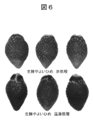
- FIG. It is a photograph which shows the external appearance of the fresh strawberry fruit "Yayohime” in Example 1.
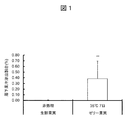
- FIG. It is a figure which shows the fixed_quantity
- n 7 + standard deviation
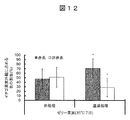
- * indicates that there is a significant difference at p ⁇ 0.05 (t test) with respect to the jelly fruit non-treated group. It is a figure which shows the ratio of the red color and non-red color which occupy for the strawberry fruit appearance in Example 3.
- n standard deviation of n 8
- * indicates that there is a significant difference at p ⁇ 0.05 (t test) for each of the red color and the non-red color of the jelly fruit non-treated group.
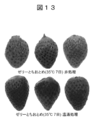
- 4 is a photograph showing the appearance of a jelly strawberry fruit “Tochiotome” in Example 3.
- This invention is the processing method at the time of cultivation for improving the quality of the fruit at the time of harvest for strawberry fruit, and keeping the quality of the fruit also after the process accompanied by the heating after harvesting accompanying it. Since the method of the present invention can mainly suppress the softening and fading of fruits after harvesting, the method of the present invention is also a method of suppressing both softening and fading of strawberry fruits after harvesting.
- processing with heating generally refers to processing with heat treatment to such an extent that pectin, which is a main component of fruit, is denatured. For example, a step of heating at 60 ° C. or higher performed by immersing in a seasoning liquid or the like for seasoning a fruit, a step of heating at 80 ° C.
- a jelly preparation solution and strawberry fruits are filled in a jelly cup and immersed in hot water at 85 ° C. for 30 minutes to perform a heat sterilization treatment step. At this time, a liquid having a pH of less than 4.0 is used as the jelly preparation liquid.
- the quality of the strawberry fruit at the time of harvesting is improved even when exposed to such a low pH, and the harvesting is performed accordingly.
- the quality of the strawberry fruit can be maintained after processing with subsequent heating.
- the quality of a fruit means the physical property and color which the fresh strawberry fruit at the time of a harvest matured to the extent used for edible has originally.
- the strawberry fruit heated by the method of the present invention retains the hardness of the fresh strawberry fruit at the time of harvest and the red color of the fresh strawberry fruit at the time of harvest. Therefore, it can be said that the method of the present invention is a method for suppressing both softening and fading of strawberry fruits.
- the portion used for edible strawberries is precisely called a flower bud (flower bed), and there are many granular fruits on the surface of the flower bud.
- a portion of a flowered floret that is provided for edible use is called a fruit. Therefore, in the present invention, a part used for edible use is called a strawberry fruit.
- strawberries tend to have lower quality such as softening and fading after harvesting.
- the heat treatment under certain conditions is applied from the unripe state to the fruit after fruit set as a stress load treatment. And then harvest after maturity.
- the conventional method there is a method of promoting flower bud differentiation by heating the whole strawberry strain or root during cultivation, but there is no treatment method during cultivation for the purpose of maintaining the quality of fruits after harvesting, especially after processing. .
- examples of the method for heating include immersion of the whole fruit in warm water, atmosphere treatment for injecting heated air to the whole fruit, and the like.
- immersion of the whole fruit in warm water for example, hot water is put in a container, and the entire strawberry fruit is immersed in the warm water in the container.
- the fruit at the start of the heating treatment is desirably selected so that the maximum diameter beside the fruit after pollination is 3 mm to 20 mm, preferably 5 mm to 20 mm, more preferably 5 mm to 15 mm.
- the temperature during the heating treatment is 40 ° C. to 60 ° C., preferably 40 ° C. to 55 ° C., more preferably 45 ° C.
- the heating treatment time may be short, 10 seconds to 40 seconds, It is preferable to carry out for 15 seconds to 30 seconds, more preferably 15 seconds to 25 seconds.
- This warming treatment is performed periodically until the fruit ripens, and the frequency is preferably 1 to 4 times per week, preferably 1 to 3 times, more preferably 1 time, and the total time until the fruit is harvested.
- the number of times is 1 to 10 times, preferably 2 to 6 times, more preferably 2 to 4 times.
- Examples of the target strawberry include plants belonging to the Dutch genus Fragaria, and the variety is not limited.
- the quality of the strawberry fruit that has been heated during cultivation before harvesting is improved compared to the strawberry fruit that has not been heated.
- the quality at the time of a harvest is maintained after the process accompanied by the heating after the harvest.
- Quality refers to the physical properties and color of strawberry fruits, and these qualities can be evaluated by the softening degree, appearance color, texture, sweetness, flavor, and appearance of the fruit.
- the falling fruit leaching amount ratio can be expressed as a ratio with respect to the original fruit weight by measuring the weight of fruit juice leached on the filter paper by letting the strawberry fall on the filter paper from an appropriate height.
- the color of an external appearance should just image a strawberry with a digital camera, and may perform color analysis with the image analysis software about the obtained image. Color analysis may be performed by calculating the ratio of red color in the whole fruit.
- “Feelage Analyzer” (Viva Computer Co., Ltd.), which is commercially available image analysis software, is used to classify colors other than red and “red colors” in which the hue is classified as red for the whole fruit. What is necessary is just to extract the “non-red color” and analyze the ratio of those color systems.
- the texture, sweetness, flavor and appearance can be evaluated by sensory evaluation using a panel with multiple training.
- the score of the processed strawberry fruit may be calculated by setting the texture, sweetness, flavor and appearance score of the fresh strawberry fruit at harvest to 10 or 5.
- a strawberry fruit with improved texture, sweetness and / or flavor is called a strawberry fruit with improved texture.
- the strawberry fruit heated at the time of cultivation by the method of the present invention improves the score in at least one sensory evaluation of the texture, sweetness, flavor and appearance at the time of harvesting, compared to the strawberry fruit not heated. .
- the strawberry fruit which heat-processed at the time of cultivation by the method of this invention increases a red color, and a non-red color decreases with respect to the strawberry fruit which did not heat-process. That is, the strawberry fruit heated at the time of cultivation by the method of the present invention increases the red color of the fruit appearance.
- the strawberry fruit which was heat-treated at the time of cultivation by the method of the present invention can also reduce the amount of falling fruit exudation of the strawberry fruit relative to the strawberry fruit which has not been heat-treated.
- softening is suppressed in the strawberry fruit heated at the time of cultivation by the method of the present invention. Since the quality of the strawberry fruit that has been heat-treated is improved with respect to the strawberry fruit that has not been heat-treated, when processing with heating such as sterilization is performed, the quality is reduced due to processing. Even the quality at harvest can be maintained. Therefore, the percentage of fallen fruit exudation, appearance color, and sensory evaluation of the strawberry fruits that were heated during cultivation and processed with heat after harvesting were evaluated for the texture, sweetness, flavor, and appearance score. Sometimes better than strawberry fruits that were processed with heating after harvest without any heating treatment, and more than strawberry fruits that were not processed with heating after harvesting without heating treatment during cultivation Is also good or equivalent.
- the strawberry fruit heat-treated at the time of cultivation by the method of the present invention also increases nutritional components relative to the strawberry fruit not heat-treated.
- the nutritional component includes an antioxidant component such as a pigment component having an antioxidant activity, and includes, for example, anthocyanin.
- anthocyanin is pelargonidin-3-glucoside, and the anthocyanin content in the strawberry fruit can be measured by high performance liquid chromatography.
- an antioxidant component can be evaluated by measuring the antioxidant activity of a strawberry fruit.
- Antioxidant activity can be evaluated, for example, by measuring H-ORAC (hydrophilic oxygen radical absorption ability).
- the strawberry fruit heated at the time of cultivation by the method of the present invention has an anthocyanin content of 10% or more, preferably 20% or more, compared to the strawberry fruit not heated.
- the strawberry fruit heated at the time of cultivation by the method of the present invention has an H-ORAC value ( ⁇ g TE (Trolox Equivalent) / 100 g FW (Fresh weight)) of 10 for the strawberry fruit not heated. % Or more, preferably 20% or more.
- the present invention further includes a fresh strawberry fruit after harvesting that has been subjected to a heating process during cultivation, the quality of which is improved with respect to the fresh strawberry fruit after harvesting that has not been subjected to a heating process during cultivation.
- a fresh strawberry fruit after harvesting that has been subjected to a heating process during cultivation
- the quality of which is improved with respect to the fresh strawberry fruit after harvesting that has not been subjected to a heating process during cultivation.
- the softening of the fruit is suppressed
- the fading of the fruit is suppressed
- the red color is increased
- the nutritional component is increased compared to the strawberry fruit that has not been heated during the cultivation.
- the anthocyanin content is increased by 10% or more, preferably 20% or more with respect to the strawberry fruit that has not been heated, and the anthocyanin content is 0.2 mg / g FW or more for “Tochiotome”.
- the present invention further includes a fresh strawberry fruit after harvesting that has been subjected to a heating treatment at the time of cultivation, the quality of which is improved with respect to the fresh strawberry fruit after harvesting that has not been subjected to a heating treatment at the time of cultivation.
- the processed food is a processed food obtained by a process involving a heating step, and examples thereof include jelly food, canned food, jam containing a large amount of pulp solids, and food forms for toppings.
- cup jelly containing fruits with a shelf life of about 6 months which has a shelf life of about 6 months, has undergone a change in the quality of the fruit inside the jelly within about 3 weeks after preparation, and the replacement of the surrounding gel portion and fruit components, etc. has been completed.
- the fruit quality is relatively stable.
- the harvested fruit was washed under running water to remove any stickiness, then sensory evaluation was performed, and image analysis was performed on the color of the appearance.
- image analysis was performed on the color of the appearance.
- the evaluation was performed when the score of fresh strawberry fruit not treated with hot water (fresh untreated) was set to 5 was fully trained. The median was calculated with 4 panelists.
- Image analysis was performed by the method described in Comparative Example 1. Furthermore, the anthocyanin content and the antioxidant activity were measured using a sample of the harvested fruit frozen and then crushed. Anthocyanins were quantified by high performance liquid chromatography (HPLC) according to a conventional method, pelargonidin-3-glucoside, which is a typical anthocyanin of strawberry fruit.
- H-ORAC hydrophilic oxygen radical absorption capacity
- FIG. 5 Tochiotome
- FIG. 6 Yayohime
- FIG. 5 and FIG. 6 show that the appearance of the strawberry fruit treated with hot water is red compared to the untreated strawberry fruit.
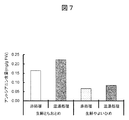
- anthocyanins and antioxidant activities were observed in both “Tochiotome” and “Yayohime” (FIGS. 7 and 8). It was inferred that a large amount of an anti-oxidant pigment component (anthocyanin) was produced against the stress load caused by hot water treatment during the fruit ripening period during cultivation.
- the harvested fruit was washed under running water to remove the stickiness, and then 4 strawberries (about 60 g) were placed in a 250 g capacity jelly cup.
- the jelly preparation was performed by the method described in Comparative Example 1.
- the cup jelly after the heat sterilization treatment was cooled at 5 ° C., and after confirming that the jelly inside the cup had hardened, it was stored at 35 ° C. after being shielded from light. Seven days later, the strawberry was taken out from the cup jelly, subjected to sensory evaluation and physical property evaluation of the fruit according to the method described in Comparative Example 1, and further subjected to image analysis for the color of the appearance.
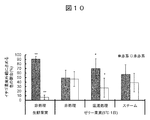
- FIG. 13 shows that the appearance of strawberry fruits treated with hot water is redr than the untreated strawberry fruits. From these results, it was shown that the heating process at the time of cultivation is effective as a process for ensuring the physical properties and color quality retention after processing for strawberry fruits over time.
- a strawberry having a short quality retention period can be made into a processed food with a long expiration date by minimizing the quality deterioration of fresh fruits, and an unprecedented high quality processed strawberry product can be provided.
- an unprecedented high quality processed strawberry product can be provided in the Japanese food market, for the half year from June to November of the year, not only strawberry processed foods that maintain the original quality of fruits, but even fresh strawberries are rarely available.
- the present invention to manufacture and market processed foods with a long expiration date using strawberries, it is possible to provide fresh strawberries from summer to autumn when there were few opportunities to eat strawberries.
Landscapes
- Life Sciences & Earth Sciences (AREA)
- Botany (AREA)
- Environmental Sciences (AREA)
- Health & Medical Sciences (AREA)
- Nutrition Science (AREA)
- Chemical & Material Sciences (AREA)
- Engineering & Computer Science (AREA)
- Food Science & Technology (AREA)
- Polymers & Plastics (AREA)
- Cultivation Of Plants (AREA)
- Preparation Of Fruits And Vegetables (AREA)
- Jellies, Jams, And Syrups (AREA)
- Storage Of Fruits Or Vegetables (AREA)
Priority Applications (1)
| Application Number | Priority Date | Filing Date | Title |
|---|---|---|---|
| CN201680023534.3A CN108307617B (zh) | 2015-05-29 | 2016-05-26 | 提高草莓的果实品质的方法 |
Applications Claiming Priority (2)
| Application Number | Priority Date | Filing Date | Title |
|---|---|---|---|
| JP2015110197A JP6248063B2 (ja) | 2015-05-29 | 2015-05-29 | イチゴの果実品質を向上させる方法 |
| JP2015-110197 | 2015-05-29 |
Publications (1)
| Publication Number | Publication Date |
|---|---|
| WO2016194989A1 true WO2016194989A1 (ja) | 2016-12-08 |
Family
ID=57440420
Family Applications (1)
| Application Number | Title | Priority Date | Filing Date |
|---|---|---|---|
| PCT/JP2016/066320 Ceased WO2016194989A1 (ja) | 2015-05-29 | 2016-05-26 | イチゴの果実品質を向上させる方法 |
Country Status (3)
| Country | Link |
|---|---|
| JP (1) | JP6248063B2 (https=) |
| CN (1) | CN108307617B (https=) |
| WO (1) | WO2016194989A1 (https=) |
Cited By (1)
| Publication number | Priority date | Publication date | Assignee | Title |
|---|---|---|---|---|
| CN111802444A (zh) * | 2020-07-27 | 2020-10-23 | 北京市农业技术推广站 | 草莓物理保鲜方法 |
Families Citing this family (1)
| Publication number | Priority date | Publication date | Assignee | Title |
|---|---|---|---|---|
| CN111859672B (zh) * | 2020-07-22 | 2021-03-02 | 南京工业职业技术大学 | 一种草莓蜜蜂复合设施生态环境智能构建方法 |
Citations (4)
| Publication number | Priority date | Publication date | Assignee | Title |
|---|---|---|---|---|
| JPS6027346A (ja) * | 1983-07-26 | 1985-02-12 | Q P Corp | 密封容器詰め殺菌フル−ツゼリ− |
| JP2008113613A (ja) * | 2006-11-06 | 2008-05-22 | Agri Vingt Et Un Co Ltd | 超促成発芽システム及び超促成栽培システム |
| JP2011097841A (ja) * | 2009-11-04 | 2011-05-19 | Katsuji Takayama | 果実の加温装置 |
| JP2012055242A (ja) * | 2010-09-09 | 2012-03-22 | Ishikawa Prefectural Public Univ Corp | 果実の生産方法および果実の結実する植物体の栽培装置 |
Family Cites Families (5)
| Publication number | Priority date | Publication date | Assignee | Title |
|---|---|---|---|---|
| JP2716193B2 (ja) * | 1989-03-15 | 1998-02-18 | ハウス食品株式会社 | フルーツゼリー及びその製造方法 |
| JPH0358759A (ja) * | 1989-07-28 | 1991-03-13 | Sumitomo Bakelite Co Ltd | ゼリー包装体の製造方法 |
| CN101653167B (zh) * | 2009-09-08 | 2011-12-14 | 浙江省农业科学院 | 一种草莓渗透脱水和真空微波干燥的方法 |
| CN102715026A (zh) * | 2012-04-27 | 2012-10-10 | 北京农学院 | 一种促进草莓果实着色的方法 |
| JP6027346B2 (ja) * | 2012-06-12 | 2016-11-16 | Sumco Techxiv株式会社 | 半導体ウェーハの製造方法 |
-
2015
- 2015-05-29 JP JP2015110197A patent/JP6248063B2/ja not_active Expired - Fee Related
-
2016
- 2016-05-26 WO PCT/JP2016/066320 patent/WO2016194989A1/ja not_active Ceased
- 2016-05-26 CN CN201680023534.3A patent/CN108307617B/zh not_active Expired - Fee Related
Patent Citations (4)
| Publication number | Priority date | Publication date | Assignee | Title |
|---|---|---|---|---|
| JPS6027346A (ja) * | 1983-07-26 | 1985-02-12 | Q P Corp | 密封容器詰め殺菌フル−ツゼリ− |
| JP2008113613A (ja) * | 2006-11-06 | 2008-05-22 | Agri Vingt Et Un Co Ltd | 超促成発芽システム及び超促成栽培システム |
| JP2011097841A (ja) * | 2009-11-04 | 2011-05-19 | Katsuji Takayama | 果実の加温装置 |
| JP2012055242A (ja) * | 2010-09-09 | 2012-03-22 | Ishikawa Prefectural Public Univ Corp | 果実の生産方法および果実の結実する植物体の栽培装置 |
Cited By (1)
| Publication number | Priority date | Publication date | Assignee | Title |
|---|---|---|---|---|
| CN111802444A (zh) * | 2020-07-27 | 2020-10-23 | 北京市农业技术推广站 | 草莓物理保鲜方法 |
Also Published As
| Publication number | Publication date |
|---|---|
| JP2016220616A (ja) | 2016-12-28 |
| CN108307617A (zh) | 2018-07-20 |
| CN108307617B (zh) | 2019-08-06 |
| JP6248063B2 (ja) | 2017-12-13 |
Similar Documents
| Publication | Publication Date | Title |
|---|---|---|
| Rathore et al. | Effect of storage on physico-chemical composition and sensory properties of mango (Mangifera indica L.) variety Dosehari | |
| US20180020686A1 (en) | Composition and methods for improving organoleptic properties of food products | |
| Yahia et al. | Date (Phoenix dactylifera L.) | |
| CN103493879B (zh) | 一种莲雾专用保鲜剂 | |
| JP6248063B2 (ja) | イチゴの果実品質を向上させる方法 | |
| KR20030024531A (ko) | 동결건조된 송이버섯 및 그 제조방법 | |
| KR101772364B1 (ko) | 명태 회무침 제조방법 | |
| KR101658484B1 (ko) | 감을 이용한 말랭이의 제조방법 및 이에 의해 제조된 감말랭이 또는 곶감말랭이 | |
| JP2015177779A (ja) | 加工栗の製造方法及び加工栗 | |
| JP6280522B2 (ja) | 収穫後にイチゴの果実品質を向上させる方法 | |
| Ramma | Post-harvest sulphur dioxide fumigation and low acid dip for pericarp colour retention and decay prevention on litchi | |
| KR101922929B1 (ko) | 숙성 갓김치 제조방법 및 이 방법으로 제조된 숙성 갓김치 | |
| KR20160099201A (ko) | 블루베리 시럽 고추장의 제조방법 | |
| CN103493880B (zh) | 一种莲雾的保鲜方法 | |
| CN111700106B (zh) | 一种即食乌龙头、黄花菜复合食品及其制备方法 | |
| KR20120018899A (ko) | 복숭아 건조 스낵의 제조 방법 | |
| JP2006314221A (ja) | 新しい水煮竹の子の製造方法 | |
| Crisosto et al. | Olive (Olea europaea L.) | |
| CN113749148A (zh) | 一种鲜食玉米加工方法 | |
| KR102891931B1 (ko) | 건조 과일의 제조 방법 및 그에 의한 건조 과일 | |
| JP4724793B2 (ja) | ヤーコン漬物の製造方法 | |
| KR20240154687A (ko) | 품질 열화가 억제된 와사비 근경 | |
| KOTIMANI | STANDARDIZATION OF PROCESSING TECHNOLOGY FOR SAPOTA [Manilkara achras (Mill) Fosberg] FRUITS | |
| JP2024035681A (ja) | 食品加工素材の製造方法及び加工食品の製造方法 | |
| Win et al. | Studies on the Preparation of Preserved Melon (Honeydew) Fruit |
Legal Events
| Date | Code | Title | Description |
|---|---|---|---|
| 121 | Ep: the epo has been informed by wipo that ep was designated in this application |
Ref document number: 16803423 Country of ref document: EP Kind code of ref document: A1 |
|
| NENP | Non-entry into the national phase |
Ref country code: DE |
|
| 122 | Ep: pct application non-entry in european phase |
Ref document number: 16803423 Country of ref document: EP Kind code of ref document: A1 |