WO2014189124A1 - 有機el素子封止用の樹脂組成物及びその硬化物 - Google Patents
有機el素子封止用の樹脂組成物及びその硬化物 Download PDFInfo
- Publication number
- WO2014189124A1 WO2014189124A1 PCT/JP2014/063640 JP2014063640W WO2014189124A1 WO 2014189124 A1 WO2014189124 A1 WO 2014189124A1 JP 2014063640 W JP2014063640 W JP 2014063640W WO 2014189124 A1 WO2014189124 A1 WO 2014189124A1
- Authority
- WO
- WIPO (PCT)
- Prior art keywords
- meth
- acrylate
- group
- resin composition
- acrylate compound
- Prior art date
- Legal status (The legal status is an assumption and is not a legal conclusion. Google has not performed a legal analysis and makes no representation as to the accuracy of the status listed.)
- Ceased
Links
- BEWYHVAWEKZDPP-UHFFFAOYSA-N CC1(C)C2(C)CCC1CC2 Chemical compound CC1(C)C2(C)CCC1CC2 BEWYHVAWEKZDPP-UHFFFAOYSA-N 0.000 description 4
- 0 *C(C(NO*)=O)=C Chemical compound *C(C(NO*)=O)=C 0.000 description 2
- LPSXSORODABQKT-UHFFFAOYSA-N C(C1)CC2C1C1CC2CC1 Chemical compound C(C1)CC2C1C1CC2CC1 LPSXSORODABQKT-UHFFFAOYSA-N 0.000 description 2
- HANKSFAYJLDDKP-UHFFFAOYSA-N C(CC1C2)C2C2C1C=CC2 Chemical compound C(CC1C2)C2C2C1C=CC2 HANKSFAYJLDDKP-UHFFFAOYSA-N 0.000 description 2
Classifications
-
- C—CHEMISTRY; METALLURGY
- C08—ORGANIC MACROMOLECULAR COMPOUNDS; THEIR PREPARATION OR CHEMICAL WORKING-UP; COMPOSITIONS BASED THEREON
- C08F—MACROMOLECULAR COMPOUNDS OBTAINED BY REACTIONS ONLY INVOLVING CARBON-TO-CARBON UNSATURATED BONDS
- C08F290/00—Macromolecular compounds obtained by polymerising monomers on to polymers modified by introduction of aliphatic unsaturated end or side groups
- C08F290/02—Macromolecular compounds obtained by polymerising monomers on to polymers modified by introduction of aliphatic unsaturated end or side groups on to polymers modified by introduction of unsaturated end groups
- C08F290/06—Polymers provided for in subclass C08G
-
- C—CHEMISTRY; METALLURGY
- C08—ORGANIC MACROMOLECULAR COMPOUNDS; THEIR PREPARATION OR CHEMICAL WORKING-UP; COMPOSITIONS BASED THEREON
- C08F—MACROMOLECULAR COMPOUNDS OBTAINED BY REACTIONS ONLY INVOLVING CARBON-TO-CARBON UNSATURATED BONDS
- C08F220/00—Copolymers of compounds having one or more unsaturated aliphatic radicals, each having only one carbon-to-carbon double bond, and only one being terminated by only one carboxyl radical or a salt, anhydride ester, amide, imide or nitrile thereof
- C08F220/02—Monocarboxylic acids having less than ten carbon atoms; Derivatives thereof
- C08F220/10—Esters
- C08F220/26—Esters containing oxygen in addition to the carboxy oxygen
- C08F220/30—Esters containing oxygen in addition to the carboxy oxygen containing aromatic rings in the alcohol moiety
- C08F220/302—Esters containing oxygen in addition to the carboxy oxygen containing aromatic rings in the alcohol moiety and two or more oxygen atoms in the alcohol moiety
-
- C—CHEMISTRY; METALLURGY
- C08—ORGANIC MACROMOLECULAR COMPOUNDS; THEIR PREPARATION OR CHEMICAL WORKING-UP; COMPOSITIONS BASED THEREON
- C08F—MACROMOLECULAR COMPOUNDS OBTAINED BY REACTIONS ONLY INVOLVING CARBON-TO-CARBON UNSATURATED BONDS
- C08F222/00—Copolymers of compounds having one or more unsaturated aliphatic radicals, each having only one carbon-to-carbon double bond, and at least one being terminated by a carboxyl radical and containing at least one other carboxyl radical in the molecule; Salts, anhydrides, esters, amides, imides, or nitriles thereof
- C08F222/10—Esters
- C08F222/1006—Esters of polyhydric alcohols or polyhydric phenols
- C08F222/102—Esters of polyhydric alcohols or polyhydric phenols of dialcohols, e.g. ethylene glycol di(meth)acrylate or 1,4-butanediol dimethacrylate
- C08F222/1025—Esters of polyhydric alcohols or polyhydric phenols of dialcohols, e.g. ethylene glycol di(meth)acrylate or 1,4-butanediol dimethacrylate of aromatic dialcohols
-
- H—ELECTRICITY
- H10—SEMICONDUCTOR DEVICES; ELECTRIC SOLID-STATE DEVICES NOT OTHERWISE PROVIDED FOR
- H10K—ORGANIC ELECTRIC SOLID-STATE DEVICES
- H10K50/00—Organic light-emitting devices
- H10K50/80—Constructional details
- H10K50/84—Passivation; Containers; Encapsulations
- H10K50/844—Encapsulations
- H10K50/8445—Encapsulations multilayered coatings having a repetitive structure, e.g. having multiple organic-inorganic bilayers
Definitions
- the present invention relates to a curable resin composition that can be suitably used as various barrier materials, particularly as a film sealing material for organic EL elements, and a cured product thereof.
- An organic EL element of an organic EL display has a structure in which an element body composed of a thin film laminate including a light emitting layer sandwiched between a cathode and an anode is formed on a glass substrate on which a driving circuit such as a TFT is formed.
- a layer such as a light emitting layer or an electrode of the element portion is easily deteriorated by moisture or oxygen, and the deterioration of brightness, life, and discoloration occurs due to the deterioration. Therefore, the organic EL element is sealed so as to block moisture or impurities from entering from the outside.
- a higher-performance sealing method and sealing material are desired, and various techniques have been studied.
- Patent Document 1 As a typical sealing method of an organic EL element, a method of fixing a metal or glass sealing cap in which a desiccant is inserted in advance to a substrate of an organic EL element using a sealing adhesive has been studied.
- Patent Document 1 an adhesive is applied to the outer peripheral portion of the substrate of the organic EL element, a sealing cap is placed thereon, and then the adhesive is solidified to fix the substrate and the sealing cap. It is sealed.
- sealing with a glass sealing cap is the mainstream.
- a glass sealing cap is produced by processing a digging for inserting a desiccant into a flat glass substrate, and thus tends to be expensive.
- the sealing with the sealing cap cannot extract light from the sealing cap side.
- the light emitted from the light source is extracted from the substrate side of the element, and is limited to the bottom emission type element.
- a bottom emission type element there are problems of a decrease in aperture ratio due to the drive circuit portion formed on the substrate and a decrease in extraction efficiency due to light being partially blocked by the drive circuit portion. Therefore, development of a sealing method applicable to a top emission type element that extracts light from the opposite side of the substrate of the organic EL element is desired.
- the thin film sealing method is a method in which a thin film made of an inorganic or organic material is laminated on an organic EL element to form a passivation film (Patent Document 2).
- silicon nitride is used as an inorganic material, and is often used by being laminated with an organic material such as a (meth) acrylate resin or an epoxy resin.
- This film is usually formed by forming a laminated film by plasma CVD (chemical vapor deposition), which has a relatively high formation speed.
- a film formed by plasma CVD of silicon nitride generally peels off when it is formed to a thickness of about several hundreds nm.
- Japanese Patent No. 4876609 Japanese Unexamined Patent Application Publication No. 2012-059553 Japanese Unexamined Patent Publication No. 2009-270134 Japanese Patent No. 4759971
- An object of the present invention relates to a resin composition suitable for a process for forming a resin layer on a single wafer or a continuously running substrate.
- a resin composition suitable for an organic film for protecting an organic EL element is a resin composition suitable for an organic film for protecting an organic EL element, and provides a cured product having excellent curability and processability and high plasma damage resistance.
- the present inventors have found that an ultraviolet curable resin composition having a specific composition and a cured product thereof can solve the above problems, and have completed the present invention. That is, the present invention relates to the following (1) to (19).
- the monofunctional cyclic (meth) acrylate compound (A) is a monofunctional (meth) acrylate compound having an aromatic hydrocarbon skeleton represented by the following formula (2): The resin composition as described in any one.
- the resin composition according to (10), wherein the monofunctional (meth) acrylate compound having an alicyclic hydrocarbon skeleton includes any of a dicyclodecane ring, a tricyclodecane ring, an isobornyl ring, and an adamantane ring.
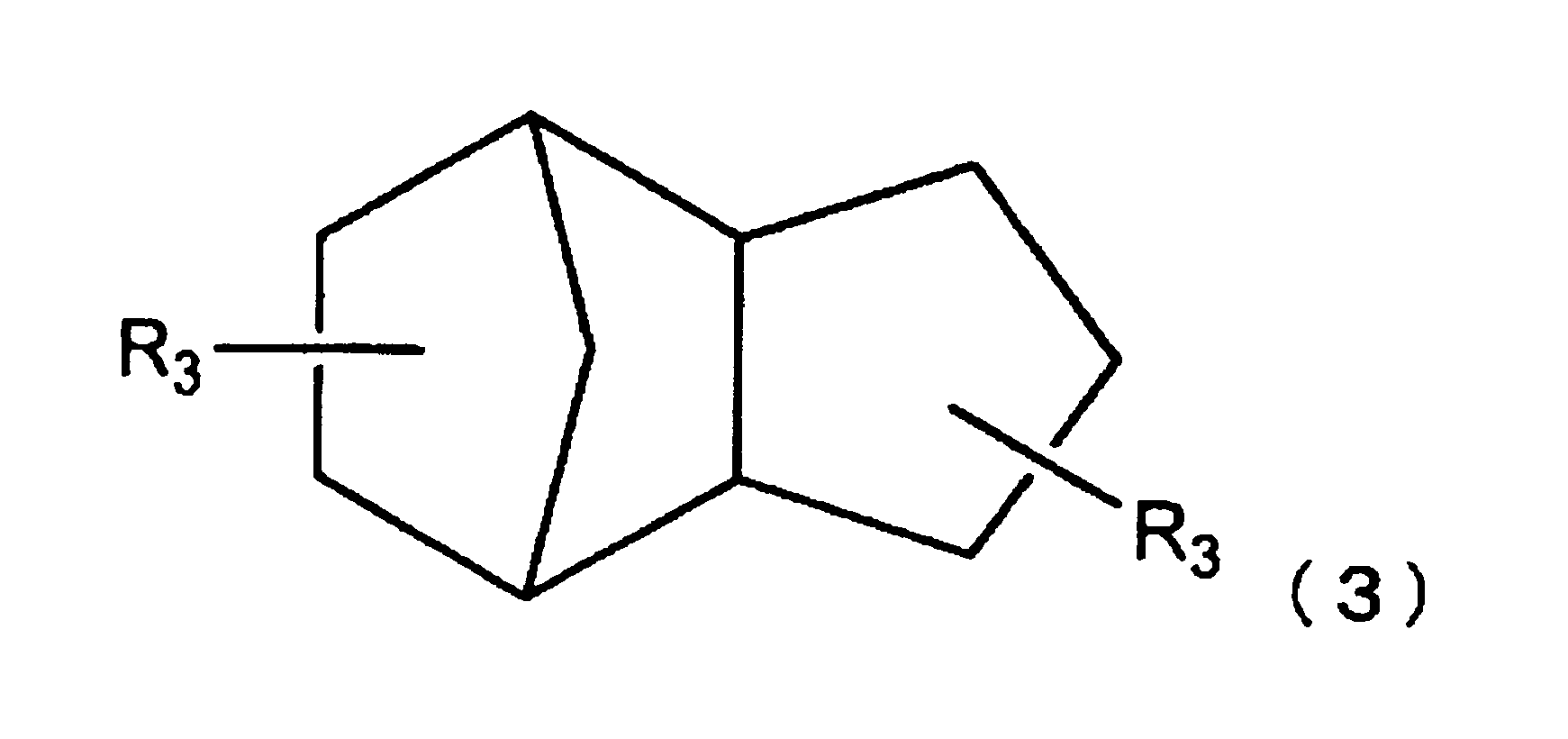
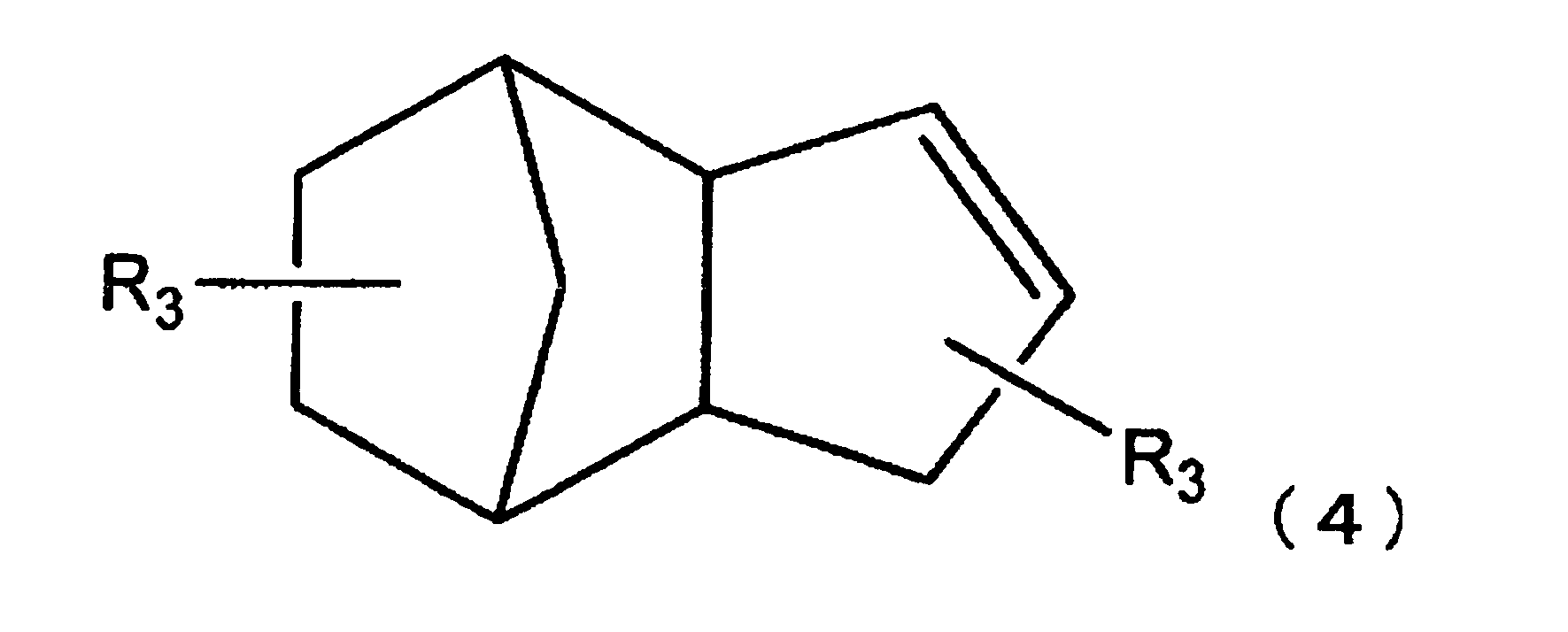
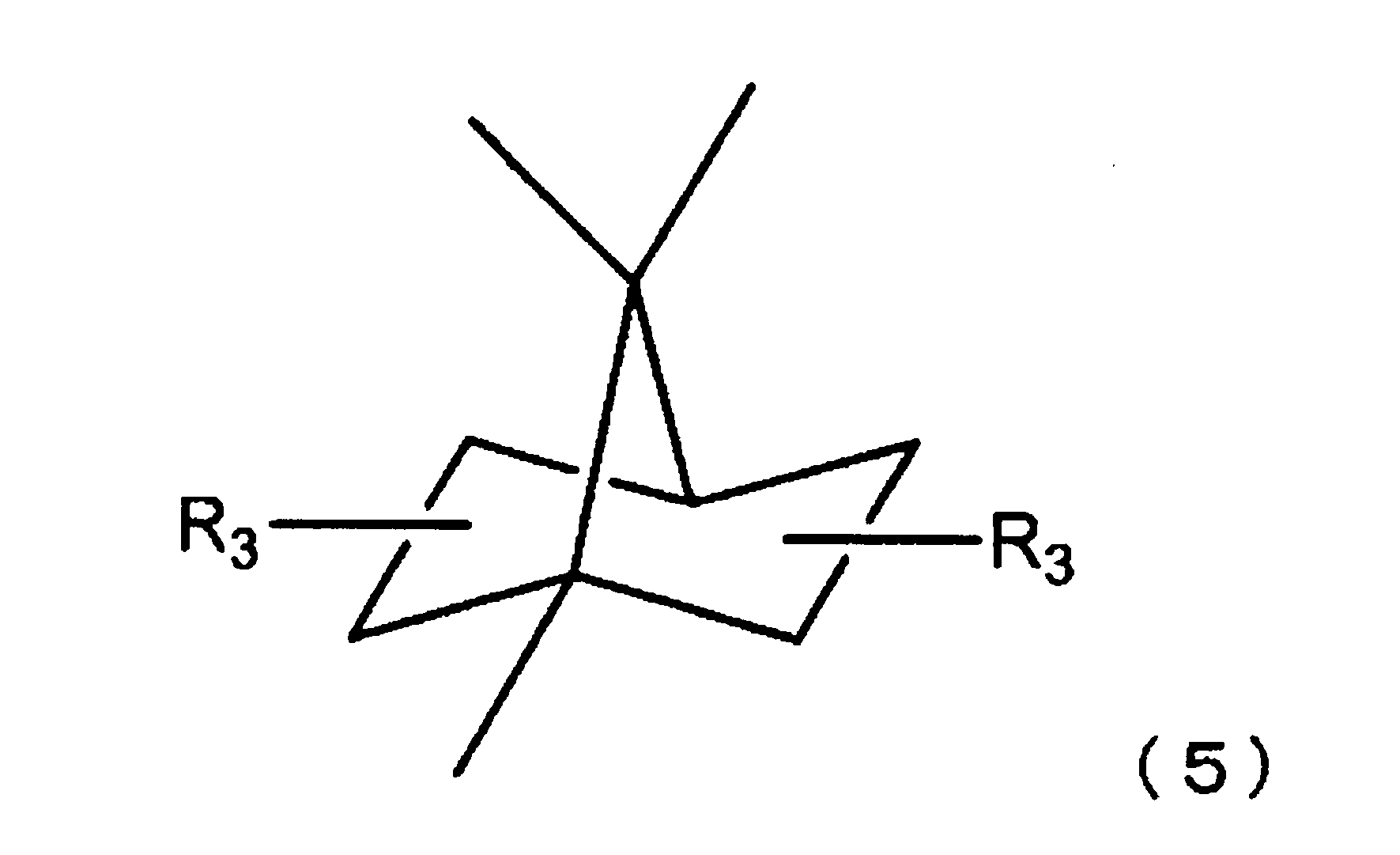
- the monofunctional cyclic (meth) acrylate compound (A) is a monofunctional (meth) acrylate compound having an alicyclic hydrocarbon skeleton represented by any of the following formulas (3) to (6): (1) The resin composition according to any one of (7).
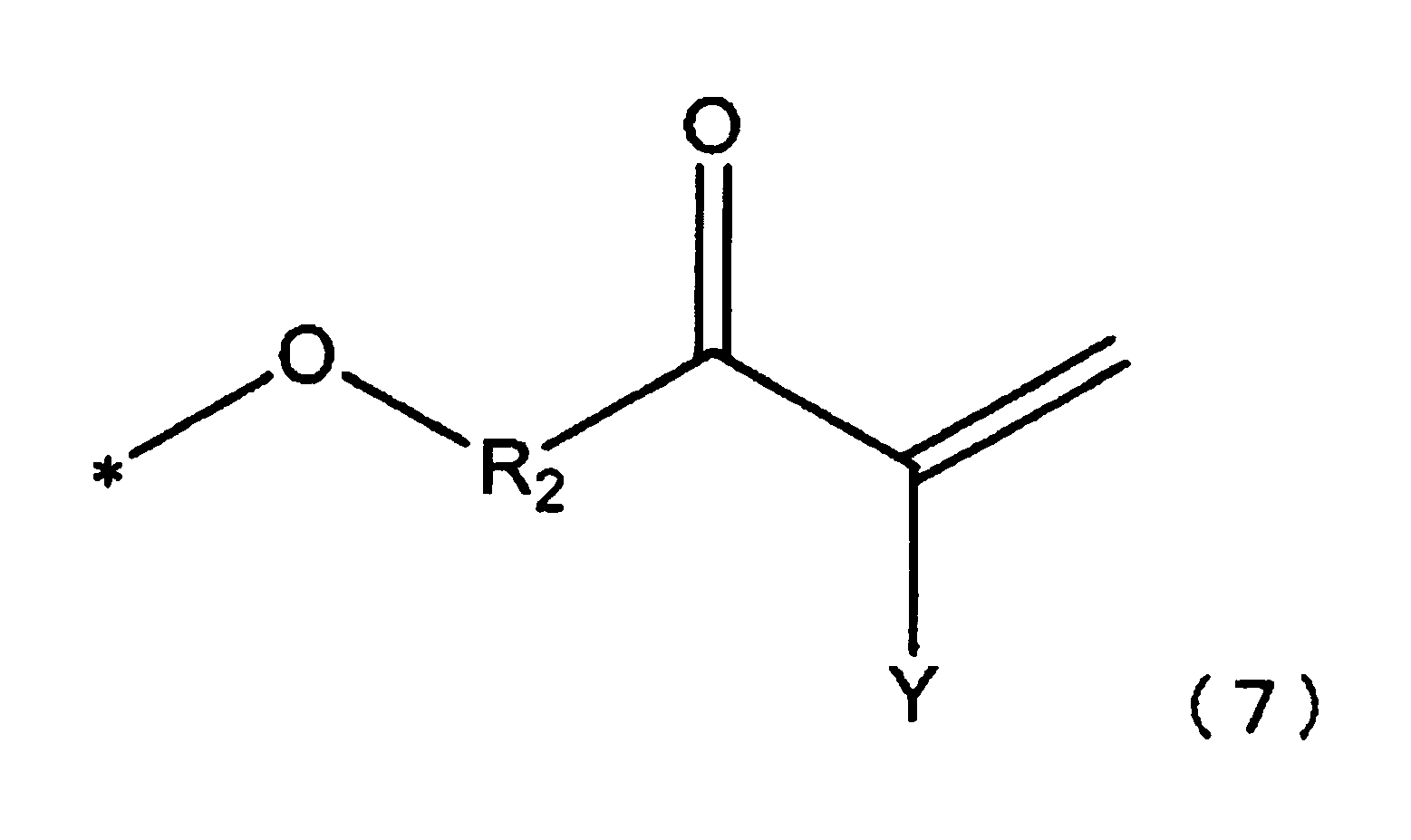
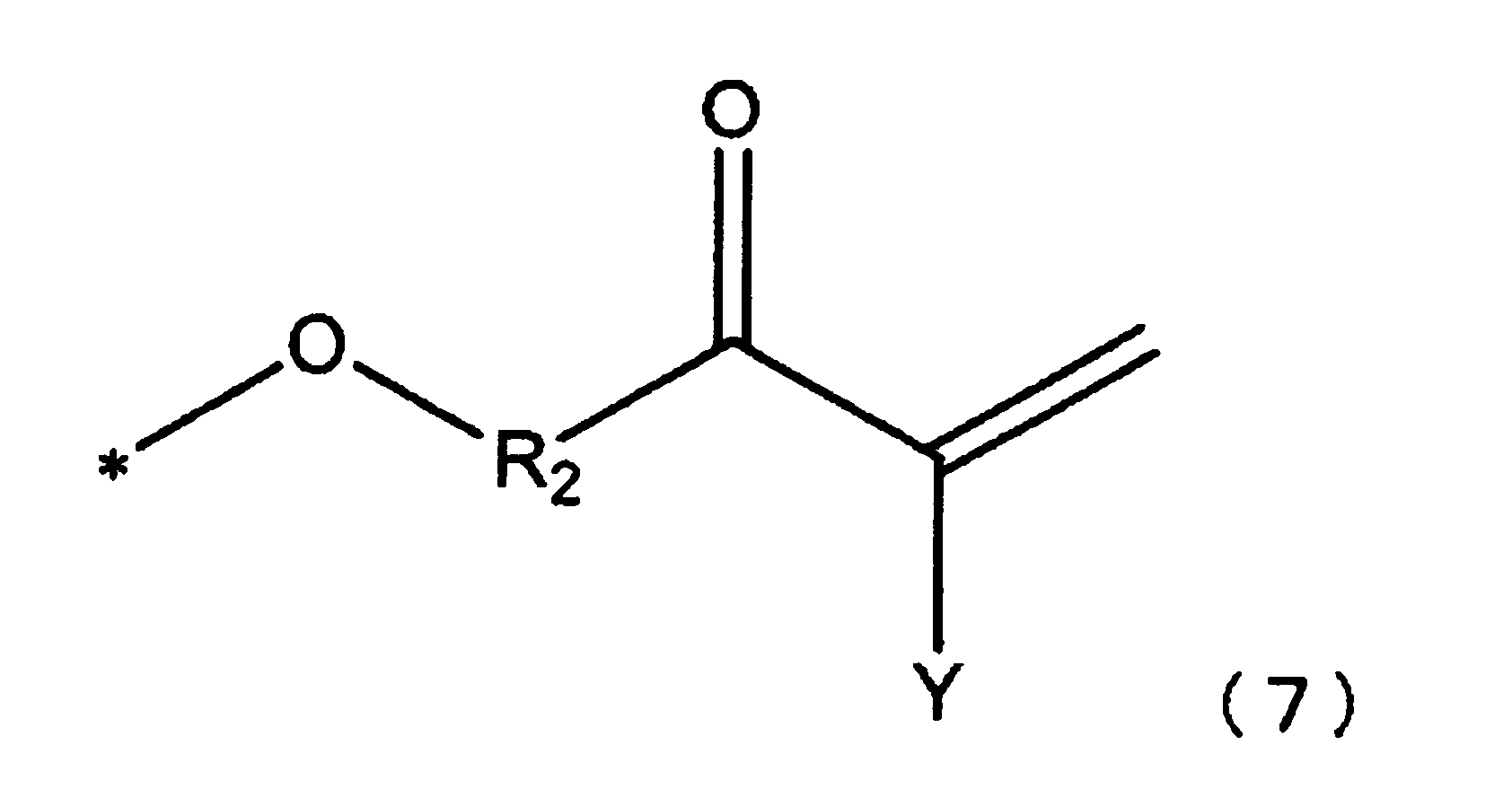
- R 3 are each independently a hydrogen atom, an alkyl group having 1 to 3 carbon atoms, a halogen atom, a carboxyl group, hydroxy group or the following formula (7), either in R 3 is of the formula (7).
- R 2 is a hydrogen atom, an alkyl group having 1 to 3 carbon atoms, a halogen atom, a carboxy group or a hydroxy group, and * is bonded to a cyclic skeleton.
- R 2 is a hydrogen atom, an alkyl group having 1 to 3 carbon atoms, a halogen atom, a carboxy group or a hydroxy group, and * is bonded to a cyclic skeleton.
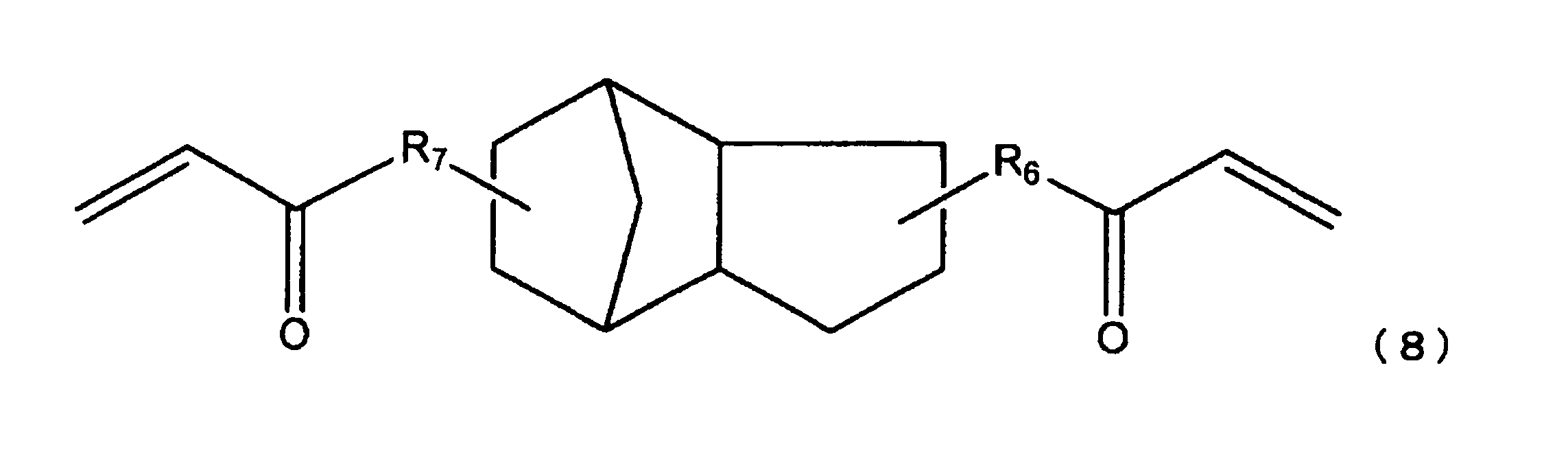
- R 6 and R 7 each independently represents a direct bond, an alkylene group having 1 to 6 carbon atoms, or an alkyleneoxy group.
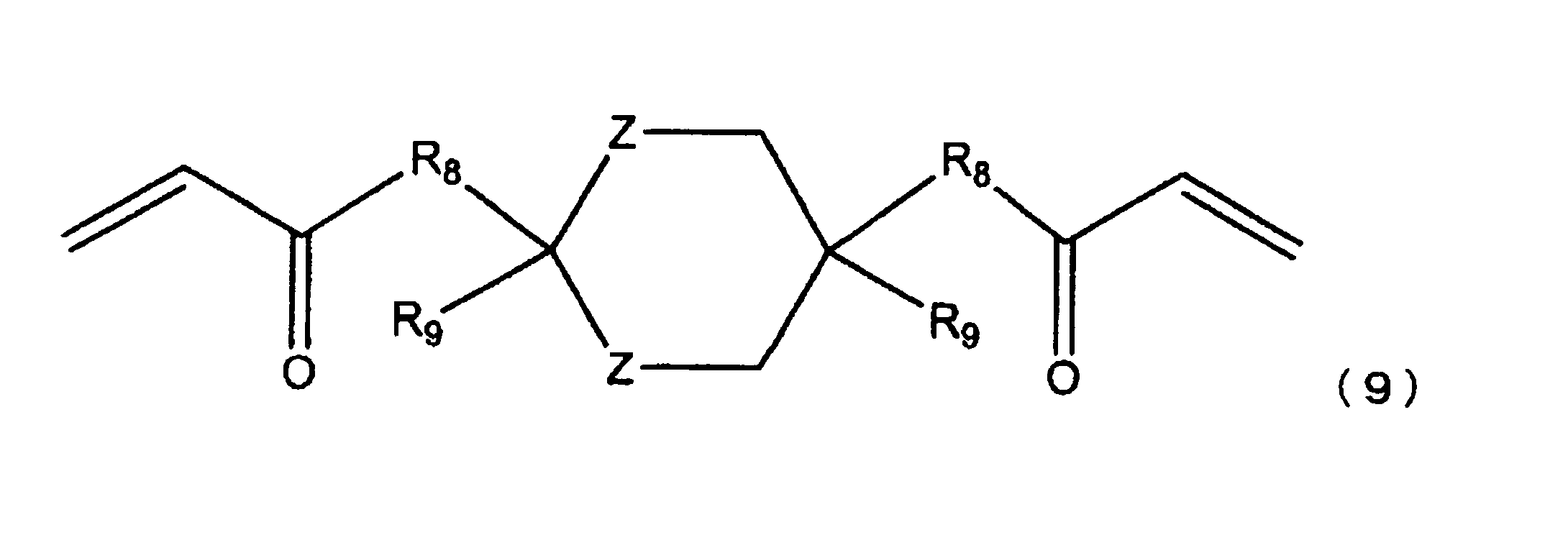
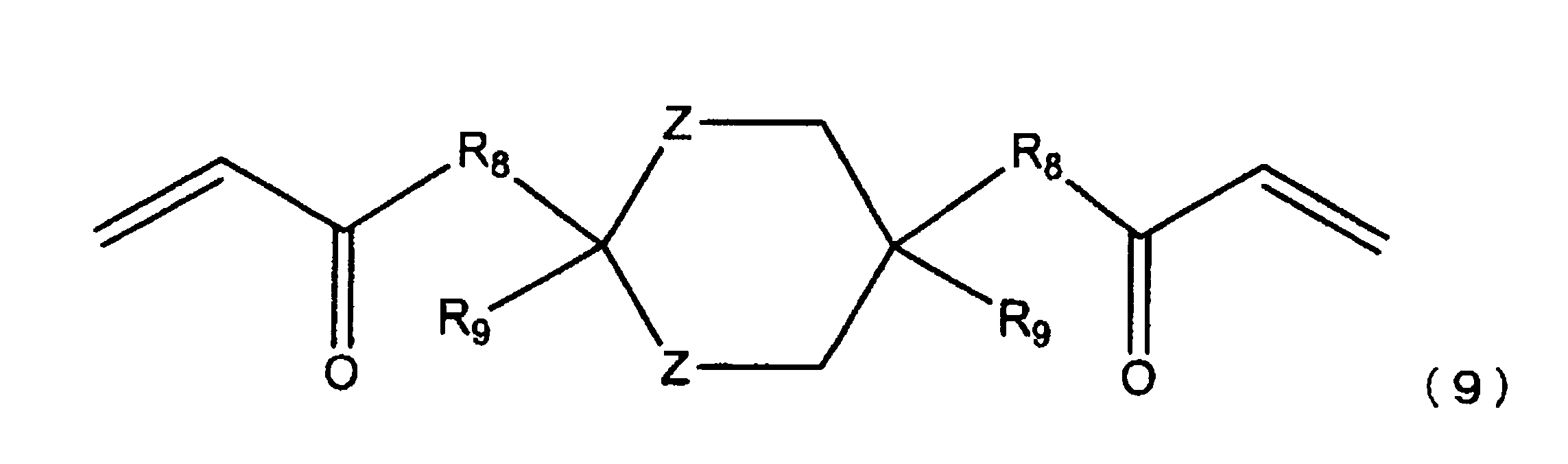
- the (meth) acrylate compound (B) having two or more functional groups is a (meth) acrylate compound having two or more functional groups having a heterocyclic skeleton represented by the following formula (9). (1) The resin composition according to any one of (12).
- each R 8 independently represents a direct bond, an alkylene group having 1 to 6 carbon atoms or an alkyleneoxy group.
- Each R 9 independently represents hydrogen, an alkylene group having 1 to 4 carbon atoms or a hydroxy group.
- Z represents each independently carbon, oxygen, or nitrogen.
- the resin composition of the present invention and its cured product are excellent in curability, processability, and visible light transmittance, and have little plasma damage. Therefore, it is useful as a resin composition for vapor deposition and is particularly suitable as a film sealing material for organic EL elements.
- the resin composition of the present invention comprises a monofunctional cyclic (meth) acrylate compound (A), a cyclic (meth) acrylate compound (B) having two or more functional groups, and a polymerization initiator (C).
- A monofunctional cyclic (meth) acrylate compound
- B cyclic (meth) acrylate compound
- C polymerization initiator
- any known compounds can be used as long as they have an aromatic ring, an alicyclic ring or a heterocyclic ring.
- plasma damage in a subsequent process can be suppressed to a low level by providing the ring structure.
- This has a strong relationship with a compound having a cyclic structure, particularly an aromatic ring or an alicyclic ring, having high dry etching resistance. And the said effect can fully be show
- the said effect will become more excellent by selecting the (meth) acrylate which has one or more aromatic rings or alicyclic rings in a molecule
- the skeleton having one or more aromatic rings or alicyclic rings in the molecule include a phenyl skeleton, a biphenyl skeleton, a bisphenol skeleton, a cumyl skeleton, a naphthalene skeleton, a binaphthalene skeleton, a cyclohexane skeleton, a cyclopentane skeleton, a cyclobutane skeleton, Examples include a cyclopropane skeleton, a norbornene skeleton, an isobornyl skeleton, a dicyclodecane skeleton, a tricyclodecane skeleton, and an adamantane skeleton.
- skeletons can exhibit excellent low plasma damage.
- the skeleton described in the present invention may or may not have a substituent.
- the substituent is an alkyl group having 1 to 6 carbon atoms or The alkoxy group has 1 to 6 carbon atoms.
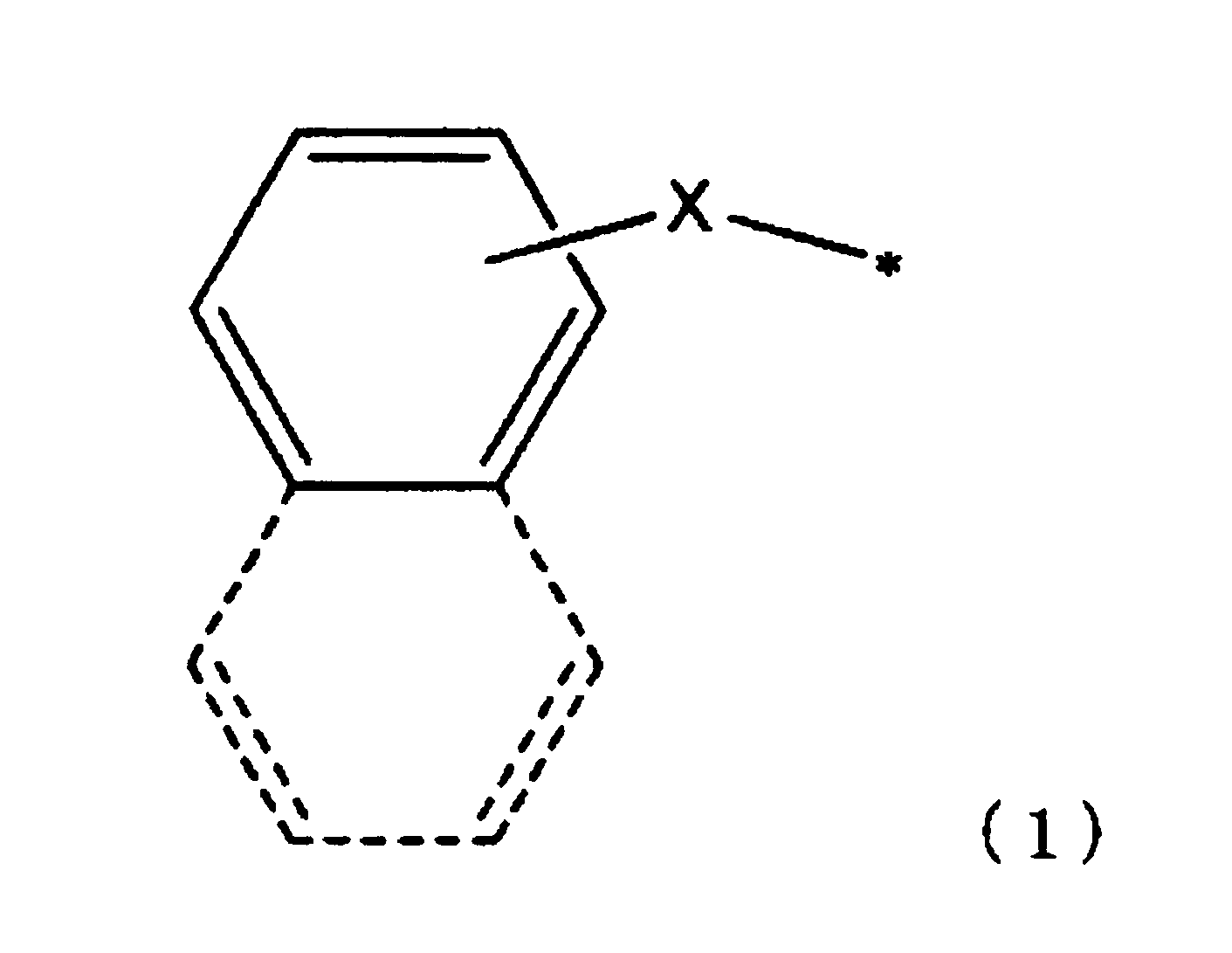
- a (meth) acrylate compound having a partial skeleton represented by the following formula (1) can be preferably used as the monofunctional (meth) acrylate compound having an aromatic hydrocarbon skeleton.
- X represents an oxygen atom, an alkylene group having 1 to 3 carbon atoms or an alkyleneoxy group having 1 to 3 carbon atoms.
- the dotted line may or may not be present, and * represents a (meth) acryloyl group.
- a (meth) acrylate compound having a phenyl skeleton, a biphenyl skeleton, a bisphenol skeleton, a naphthalene skeleton, or a binaphthalene skeleton corresponds to the above formula (1) and can be suitably used.
- the alkyleneoxy group means an alkylene group having an ether bond, for example, a (poly) oxyethylene group, a (poly) oxypropylene group, —O— (CH 2 ) 2 —O. -Groups and the like, and so on.
- the monofunctional (meth) acrylate compound having an aromatic hydrocarbon skeleton used in the present invention is preferably a (meth) acrylate compound represented by the following formula (2).
- X represents an oxygen atom, an alkylene group having 1 to 3 carbon atoms or an alkyleneoxy group having 1 to 3 carbon atoms
- R 1 represents a hydrogen atom, an alkyl group having 1 to 9 carbon atoms, or 1 to 3 carbon atoms
- Y represents a hydrogen atom, a directly bonded phenyl group or an alkyl group having 1 to 4 carbon atoms.
- Specific examples of such (meth) acrylate compounds include benzyl (meth) acrylate, phenol monoethoxy (meth) acrylate, phenol polyethoxy (meth) acrylate, phenol monopropoxy (meth) acrylate, and phenol polypropoxy (meth) acrylate.
- benzyl acrylate phenol monoethoxy acrylate, o-phenylphenol (poly) ethoxy acrylate, and o-phenyl benzyl acrylate are preferable, and benzyl acrylate is particularly preferable.
- the content of the monofunctional (meth) acrylate compound having an aromatic hydrocarbon skeleton in the resin composition is usually preferably 10 to 90 parts by mass, more preferably 20 to 80 parts by mass with respect to 100 parts by mass of the resin composition. 30 to 70 parts by mass are preferable.
- the monofunctional (meth) acrylate compound having an alicyclic hydrocarbon skeleton that can be used in the present invention, known compounds can be used without any particular limitation, and the alicyclic hydrocarbon skeleton is saturated carbonization. A hydrogen skeleton is preferred.
- a cyclic skeleton compared with other skeletons such as those having a chain structure, there is an effect of preventing the permeation of water vapor, and the curing system is combined with a (meth) acrylate compound having an aromatic hydrocarbon skeleton. It becomes possible to prevent permeation
- An organic EL element is easily deteriorated by an attack of an organic gas or water vapor, so that the water vapor transmission rate is low, that is, low moisture permeability is an important physical property.
- the skeleton that can be specifically used as the cyclic hydrocarbon skeleton include a cyclopropane skeleton, a cyclobutane skeleton, a cyclopentane skeleton, a cyclohexane skeleton, a cycloheptane skeleton, a dicyclodecane ring, a tricyclodecane ring, an adamantane ring, an isobornyl ring, and a norbornene ring. Can be mentioned.
- (meth) acrylate compounds having a bridged-ring hydrocarbon skeleton such as a tricyclodecane ring, isobornyl ring, adamantane ring and the like are preferable.
- Such a compound is considered to be excellent in dry etching resistance and exhibiting an effect of suppressing plasma damage.
- Such a compound has a high Tg (glass transition point) as compared with other skeletons such as a chain structure, but tends to have a low curing shrinkage. For this reason, the hardness under the use environment can be maintained, and the residual stress at the interface is small when curing on the substrate. For this reason, it is also a material with excellent substrate adhesion.
- Such monofunctional (meth) acrylate compounds having an alicyclic hydrocarbon skeleton include isobornyl (meth) acrylate, dicyclopentanyl (meth) acrylate, dicyclopentenyl (meth) acrylate, dicyclo Pentenyloxyethyl (meth) acrylate, cyclohexyl (meth) acrylate, cyclohexanedimethanol mono (meth) acrylate, 1,3-adamantanediol (meth) acrylate, 2-methyl-2-adamantyl (meth) acrylate, 2-ethyl Examples include -2-adamantyl (meth) acrylate, 3-hydroxy-1-adamantyl (meth) acrylate, and 1-adamantyl (meth) acrylate. Of these, cyclohexyl acrylate is preferable.
- a (meth) acrylate compound having a structure represented by the following formulas (3) to (6) is preferably used. it can.
- R 3 are each independently a hydrogen atom, an alkyl group having 1 to 3 carbon atoms, a halogen atom, a carboxyl group, hydroxy group or the following formula (7), either in R 3 is of the formula (7).
- R 2 is a hydrogen atom, an alkyl group having 1 to 3 carbon atoms, a halogen atom, a carboxy group or a hydroxy group, and * is bonded to a cyclic skeleton.
- the content of the monofunctional (meth) acrylate compound having an alicyclic hydrocarbon skeleton in the resin composition is usually preferably 10 to 90 parts by mass, and 20 to 80 parts by mass with respect to 100 parts by mass of the resin composition. More preferred is 30 to 70 parts by mass.
- the (meth) acrylate compound having a heterocyclic skeleton that can be used as a monofunctional cyclic (meth) acrylate compound in the present invention will be described below.
- a heterocyclic skeleton has an effect of preventing plasma damage as compared with other skeletons such as a chain structure, and has a (meth) acrylate compound having an aromatic hydrocarbon skeleton or an alicyclic hydrocarbon skeleton. By arranging them together in the curing system, plasma damage can be remarkably prevented by a synergistic effect.
- Examples of the skeleton that can be specifically used as the heterocyclic skeleton include a dioxane skeleton, a trioxane skeleton, a tetrahydrofuran skeleton, a pyrrolidine skeleton, a piperidine skeleton, a spiroglycol skeleton, a morpholine skeleton, a triazine skeleton, an isocyanurate skeleton, a carbazole skeleton, and an imide ring skeleton.
- a dioxane skeleton a trioxane skeleton, a tetrahydrofuran skeleton, a pyrrolidine skeleton, a piperidine skeleton, a spiroglycol skeleton, a morpholine skeleton, a triazine skeleton, an isocyanurate skeleton, a carbazole skeleton, and an imide ring skeleton.
- the (meth) acrylate compound having a heterocyclic skeleton include the following (meth) acrylate compounds. That is, tetrahydrofurfuryl (meth) acrylate, alkoxylated tetrahydrofurfuryl (meth) acrylate, caprolactone modified tetrahydrofurfuryl (meth) acrylate, morpholine (meth) acrylate, isocyanuric acid EO modified (meth) acrylate, ⁇ -caprolactone modified ( (Meth) acryloxyethyl) isocyanurate, hydroxypivalaldehyde-modified trimethylolpropane (meth) acrylate, pentamethylpiperidinyl (meth) acrylate, tetramethylpiperidinyl (meth) acrylate, cyclic trimethylolpropane formal ( Examples include meth) acrylate, spiroglycol (meth) acrylate, and im
- the content of the monofunctional (meth) acrylate compound having a heterocyclic skeleton in the resin composition is usually preferably 10 to 90 parts by mass, more preferably 20 to 80 parts by mass with respect to 100 parts by mass of the resin composition. 30 to 70 parts by mass is particularly preferable.
- a (meth) acrylate compound having a structure represented by the following partial structural formula (PE) (hereinafter referred to as polyEO modified (meth) acrylate)
- PE partial structural formula
- the total mass of (referred to as a compound) is preferably less than the total mass of (meth) acrylate compounds other than the polyEO-modified (meth) acrylate compound, and more preferably 1 ⁇ 2 or less.
- t represents an integer of 2 or more.
- the polyEO-modified (meth) acrylate compound is susceptible to plasma damage, and if the content of the polyEO-modified (meth) acrylate compound is large and becomes dominant in the resin composition, the plasma damage property may be inferior. Because there is. And it is preferable that the total mass of the polyEO modified
- the cyclic polyEO-modified (meth) acrylate compound which is a cyclic (meth) acrylate compound and is a polyEO-modified (meth) acrylate compound, is a (meth) acrylate having the aromatic hydrocarbon skeleton of the present invention. Since it is preferable not to use it as a compound or a cyclic (meth) acrylate compound, even if it is used, it is preferably 50 parts by mass or less, particularly preferably 20 parts by mass or less, relative to 100 parts by mass of the resin composition.
- cyclic (meth) acrylate compound (B) having two or more functional groups used in the present invention any known compound can be used as long as it has an aromatic ring, an alicyclic ring or a heterocyclic ring. .
- the skeleton suitable as an aromatic hydrocarbon skeleton is as described above.
- (meth) acrylate biphenyl (Meth) acrylate having a heterocyclic ring such as dimethanol di (meth) acrylate, biphenol (poly) ethoxydi (meth) acrylate, biphenol (poly) propoxy di (meth) acrylate, phthalic acid-modified pentaerythritol tri (meth) acrylate, dihydroxy Naphthalene di (meth) acrylate, dihydroxynaphthalene (poly) ethoxydi (meth) acrylate, dihydroxynaphthalene (poly) propoxy di (meth) acrylate, binaphthol di (meth) acrylate Rate, binaphthol (poly) ethoxydi (meth) acrylate, binaphthol (poly) propoxy di (meth) acrylate, (poly) caprolactone modified binaphthol di (meth) acrylate and other (meth)
- a compound having a naphthalene skeleton is preferable, and binaphthol (poly) ethoxydi (meth) acrylate is particularly preferable.
- (meth) acrylate having a partial structure represented by the following formula (A) is preferable.
- X represents a direct bond, a methylene group, a dimethylmethylene group, a sulfonyl group, a sulfur atom or an oxygen atom.
- the dotted line may or may not be present, and * represents a (meth) acryloyl group. Bonds with the organic group possessed.
- (meth) acrylate represented by the following formula (B) is particularly preferable.
- X represents a direct bond, a methylene group, a dimethylmethylene group, a sulfonyl group, a sulfur atom or an oxygen atom, and m and n are repeating numbers and represent an integer of 1 to 50.
- m + n is preferably 2 to 30, particularly preferably m + n is 4 to 10.
- acrylic acid and polybasic acid anhydride specifically, maleic anhydride, succinic anhydride, itaconic anhydride, Dibasic anhydrides such as phthalic anhydride, tetrahydrophthalic anhydride, hexahydrophthalic anhydride, endomethylenetetrahydrophthalic anhydride, methyltetrahydrophthalic anhydride, chlorendic anhydride, trimellitic anhydride, pyromellitic anhydride, benzophenone tetra Carboxylic anhydride, biphenyltetracarboxylic anhydride, etc.
- Dibasic anhydrides such as phthalic anhydride, tetrahydrophthalic anhydride, hexahydrophthalic anhydride, endomethylenetetrahydrophthalic anhydride, methyltetrahydrophthalic anhydride, chlorendic anhydride, trimellitic anhydride, pyromellitic anhydride, benzophenone
- maleic anhydride succinic anhydride, itaconic anhydride, phthalic anhydride, tetrahydrophthalic anhydride, and hexahydrophthalic anhydride are preferred because of excellent heat resistance and hydrolysis resistance.
- Examples of the formula (meth) acrylate compound (B) having two or more functional groups having an alicyclic hydrocarbon skeleton include tricyclodecane dimethanol di (meth) acrylate, cyclohexanedimethanol di (meth) acrylate, 1, 3-adamantane dimethanol di (meth) acrylate, hydrogenated bisphenol A (poly) ethoxydi (meth) acrylate, hydrogenated bisphenol A (poly) propoxy di (meth) acrylate, hydrogenated bisphenol F (poly) ethoxydi (meth) acrylate, Examples include alicyclic (meth) acrylates such as hydrogenated bisphenol F (poly) propoxy di (meth) acrylate, hydrogenated bisphenol S (poly) ethoxydi (meth) acrylate, and hydrogenated bisphenol S (poly) propoxy di (meth) acrylate. It is done.
- a (meth) acrylate compound having two or more functional groups having an alicyclic hydrocarbon skeleton a (meth) acrylate compound having a structure represented by the following formula (3) is preferably used. be able to.
- R 3 represents the following formula (7).
- R 2 is the same as above, and * is bonded to the cyclic skeleton.
- Specific examples of the (meth) acrylate compound of the above formula (3) include alicyclic (meth) acrylates such as tricyclodecane dimethanol di (meth) acrylate.
- the content of the (meth) acrylate compound having two or more functional groups having an alicyclic hydrocarbon skeleton in the resin composition is usually preferably 10 to 90 parts by mass with respect to 100 parts by mass of the resin composition. 20 to 80 parts by mass is more preferable, and 30 to 70 parts by mass is particularly preferable.
- Examples of the (meth) acrylate compound (B) having two or more functional groups having a heterocyclic skeleton include isocyanuric acid EO-modified di (meth) acrylate, ⁇ -caprolactone-modified tris ((meth) acryloxyethyl) isocyanurate, Isocyanuric acid EO-modified di and triacrylate, hydroxypivalaldehyde-modified trimethylolpropane di (meth) acrylate, spiroglycol di (meth) acrylate and the like.
- Examples of such (meth) acrylate compounds having a heterocyclic skeleton include, for example, morpholine skeleton, tetrahydrofuran skeleton, oxane skeleton, dioxane skeleton, triazine skeleton, carbazole skeleton, pyrrolidine skeleton, piperidine skeleton, spiroglycol skeleton as examples of the heterocyclic ring.
- a (meth) acrylate compound having a structure represented by the following formula (10) can be used.
- each R 10 independently represents a direct bond, an alkylene group having 1 to 6 carbon atoms or an alkyleneoxy group
- R 11 represents a hydrogen atom or an alkylene group having 1 to 4 carbon atoms
- X represents A nitrogen atom, an oxygen atom or a methylene group
- Y represents a methylene group or a carbonyl group
- m represents an integer of 1 to 4, provided that X does not all become a methylene group.
- a compound represented by the following formula (9) can be preferably used.
- each R 8 independently represents a direct bond, an alkylene group having 1 to 6 carbon atoms or an alkyleneoxy group.
- Each R 9 independently represents a hydrogen atom or an alkylene group having 1 to 4 carbon atoms.
- Z represents a methylene group, an oxygen atom or a nitrogen atom.
- the content of the (meth) acrylate compound having two or more functional groups having a heterocyclic skeleton in the resin composition is usually preferably 10 to 90 parts by mass, preferably 20 to 80 parts per 100 parts by mass of the resin composition. Part by mass is more preferable, and 30 to 70 parts by mass is particularly preferable.
- the molecular weight of the (meth) acrylate monomer that can be used for film formation is preferably 100 to 1,000. More preferred is 120 to 700, and 150 to 400 is particularly preferred. This is because it is difficult to vaporize a monomer having a large molecular weight. If the evaporating easiness between the constituent resins is greatly different, the resin composition ratio in the evaporator may change. In addition, if the material is difficult to vaporize, the productivity is deteriorated, and as a result, the tact time is increased, which may increase the cost.
- polymerization initiator (C) used in the present invention the following polymerization initiators can be used.
- polymerization initiator examples include benzoins such as benzoin, benzoin methyl ether, benzoin ethyl ether, benzoin propyl ether, and benzoin isobutyl ether; acetophenone, 2,2-diethoxy-2-phenylacetophenone, 2,2-diethoxy -2-phenylacetophenone, 1,1-dichloroacetophenone, 2-hydroxy-2-methyl-phenylpropan-1-one, diethoxyacetophenone, 1-hydroxycyclohexyl-phenylketone, 2-methyl-1- [4- ( Acetophenones such as methylthio) phenyl] -2-morpholinopropan-1-one and oligo [2-hydroxy-2-methyl-1- [4- (1-methylvinyl) phenyl] propanone]; 2-ethylanthraquinone, 2 -T Anthraquinones such as rt-butylanthraquinone, 2-chloro
- an LED lamp may be used as a light source for photocuring for the purpose of minimizing damage to other materials.
- LED lamps are considered to have lower irradiation energy than high-pressure mercury lamps and metal halide lamps.
- the emission wavelength is 365 nm, 385 nm, 390 nm, 395 nm, 405 nm, etc., but each lamp has an absorption band on a relatively long wavelength side because it is close to visible light. It is necessary to select a photopolymerization initiator.
- a photopolymerization initiator of phosphine oxides is preferable, and bis (2,4,6-trimethylbenzoyl) -phenylphosphine oxide is particularly preferable.
- An acylphosphine oxide photopolymerization initiator is particularly preferred.
- the content of the component (C) of the present invention is preferably 0.1 to 10 parts by mass, more preferably 0.5 to 5 parts by mass with respect to 100 parts by mass of the total amount of the resin composition.
- a polymerization initiator (C) may be used independently and may be used in mixture of multiple types.
- the resin composition of the present invention uses a (meth) acrylate compound other than the component (A) and the component (B) in consideration of the viscosity, refractive index, adhesion and the like of the resin composition of the present invention to be obtained. You may do it.
- the (meth) acrylate monomer monofunctional (meth) acrylate, bifunctional (meth) acrylate, polyfunctional (meth) acrylate having 3 or more (meth) acryloyl groups in the molecule, urethane (meth) acrylate, Epoxy (meth) acrylate, polyester (meth) acrylate, and the like can be used.
- Examples of monofunctional (meth) acrylates include butanediol (meth) acrylate, hexanediol (meth) acrylate, 2-hydroxyethyl (meth) acrylate, 2-hydroxypropyl (meth) acrylate, and 2-hydroxybutyl (meth).
- (Meth) acrylate having hydroxyl group such as acrylate, 4-hydroxybutyl (meth) acrylate, dipropylene glycol (meth) acrylate, dimethylaminoethyl (meth) acrylate, butoxyethyl (meth) acrylate, caprolactone (meth) acrylate, isobutyl (Meth) acrylate, t-butyl (meth) acrylate, octafluoropentyl (meth) acrylate, octyl (meth) acrylate, decyl (meth) acrylate, isodecyl (meth) ) Acrylate, isooctyl (meth) acrylate, 2-ethylhexyl (meth) acrylate, stearyl (meth) acrylate, isostearyl (meth) acrylate, isomyristyl (meth) acrylate, lauryl (meth
- Examples of the (meth) acrylate monomer having two functional groups include 1,4-butanediol di (meth) acrylate, 1,6-hexanediol di (meth) acrylate, 1,9-nonanediol di (meth) acrylate, (Meth) acrylate having a linear methylene structure such as 1,10-decanediol di (meth) acrylate and polytetramethylene glycol di (meth) acrylate, (poly) ethylene glycol di (meth) acrylate, (poly) propylene glycol Examples include di (meth) acrylates of polyhydric alcohols such as di (meth) acrylate.
- Polyfunctional (meth) acrylate monomers include pentaerythritol tri (meth) acrylate, pentaerythritol (poly) ethoxytri (meth) acrylate, pentaerythritol (poly) propoxytri (meth) acrylate, pentaerythritol tetra (meth) acrylate, penta Erythritol (poly) ethoxytetra (meth) acrylate, pentaerythritol (poly) propoxytetra (meth) acrylate, dipentaerythritol penta (meth) acrylate, dipentaerythritol (poly) caprolactone penta (meth) acrylate, dipentaerythritol (poly) ) Ethoxypenta (meth) acrylate, dipentaerythritol (poly) propoxypenta (meth
- urethane (meth) acrylate examples include diol compounds (for example, ethylene glycol, diethylene glycol, triethylene glycol, propylene glycol, dipropylene glycol, tripropylene glycol, 1,4-butanediol, neopentyl glycol, 1,6- Hexanediol, 1,8-octanediol, 1,9-nonanediol, 2-methyl-1,8-octanediol, 3-methyl-1,5-pentanediol, 2,4-diethyl-1,5-pentane Diol, 2-butyl-2-ethyl-1,3-propanediol, cyclohexane-1,4-dimethanol, polyethylene glycol, polypropylene glycol, bisphenol A polyethoxydiol, bisphenol A polypropoxydiol Etc.) or polyesters that are the reaction product of these diol compounds
- Epoxy (meth) acrylates include bisphenol A type epoxy resin, bisphenol F type epoxy resin, phenol novolac type epoxy resin, terminal glycidyl ether of bisphenol A propylene oxide adduct, fluorene epoxy resin, bisphenol S type epoxy resin, etc.
- the reaction material of resin and (meth) acrylic acid etc. can be mentioned.
- polyester (meth) acrylate examples include a polyester diol which is a reaction product of a diol compound and a dibasic acid or an anhydride thereof, and a reaction product of (meth) acrylic acid.
- the content of the (meth) acrylate monomer other than the components (A) and (B) in the resin composition is usually preferably 5 to 95 parts by mass with respect to 100 parts by mass of the resin composition. 80 parts by mass is more preferable, and 20 to 70 parts by mass is particularly preferable.
- the resin composition of the present invention may contain a compound having an oxetane ring.
- a compound having an oxetane ring known compounds can be used without particular limitation.
- the content of the oxetane compound in the resin composition is usually preferably 5 to 95 parts by mass, more preferably 10 to 80 parts by mass, and particularly preferably 20 to 70 parts by mass with respect to 100 parts by mass of the resin composition.
- the resin composition of the present invention can appropriately contain a compound having an epoxy group.
- the compound having an epoxy group include a monofunctional epoxy compound, a polyfunctional epoxy compound, and an alicyclic epoxy.
- Examples of the monofunctional epoxy compound include phenyl glycidyl ether, p-tert-butylphenyl glycidyl ether, butyl glycidyl ether, 2-ethylhexyl glycidyl ether, allyl glycidyl ether, 1,2-butylene oxide, and 1,3-butadiene monooxide.
- 1,2-epoxydodecane epichlorohydrin, 1,2-epoxydecane, styrene oxide, cyclohexene oxide, 3-methacryloyloxymethylcyclohexene oxide, 3-acryloyloxymethylcyclohexene oxide, 3-vinylcyclohexene oxide, etc. It is done.
- polyfunctional epoxy compounds include, for example, bisphenol A diglycidyl ether, bisphenol F diglycidyl ether, bisphenol S diglycidyl ether, brominated bisphenol A diglycidyl ether, brominated bisphenol F diglycidyl ether, brominated bisphenol S di Glycidyl ether, epoxy novolac resin, hydrogenated bisphenol A diglycidyl ether, hydrogenated bisphenol F diglycidyl ether, hydrogenated bisphenol S diglycidyl ether, 3,4-epoxycyclohexylmethyl-3 ′, 4′-epoxycyclohexanecarboxylate, 2- (3,4-epoxycyclohexyl-5,5-spiro-3,4-epoxy) cyclohexane-methane-dioxane, bis (3,4-epoxycyclo Xylmethyl) adipate, vinylcyclohexene oxide, 4-vinylepoxycyclohexan
- Examples of the alicyclic epoxy include a compound containing cyclohexene oxide or cyclopentene oxide. Specific examples of the alicyclic epoxy include compounds having the following structure.
- n is an average value and represents a positive number of 1 to 5.
- the content of the component (B) of the present invention is preferably 0 to 70 parts by mass, more preferably 20 to 70 parts by mass with respect to 100 parts by mass of the total amount of the component (A) + component (B) as the reactive compound. Particularly preferred is 25 to 50 parts by mass.
- the epoxy equivalent is preferably 50 to 500 g / eq, more preferably 100 to 300 g / eq.
- a polymerization initiator such as a photocationic polymerization initiator.
- the photocationic initiator include aromatic iodonium complex salts and aromatic sulfonium complex salts.
- aromatic iodonium complex salt examples include diphenyliodonium tetrakis (pentafluorophenyl) borate, diphenyliodonium hexafluorophosphate, diphenyliodonium hexafluoroantimonate, di (4-nonylphenyl) iodonium hexafluorophosphate, and the like.
- aromatic phonium complex salt examples include triphenylsulfonium hexafluorophosphate, triphenylsulfonium hexafluoroantimonate, triphenylsulfonium tetrakis (pentafluorophenyl) borate, 4,4′-bis [diphenylsulfonio] diphenyl sulfide- Bishexafluorophosphate, 4,4′-bis [di ( ⁇ -hydroxyethoxy) phenylsulfonio] diphenylsulfide-bishexafluoroantimonate, 7- [di (p-toluyl) sulfonio] -2-isopropylthioxanthone hexafluoro Phosphate, 7- [Di (p-toluyl) sulfonio] -2-isopropylthioxanthone hexafluoro Phos
- aromatic sulfonium salts thiophenyldiphenylsulfonium hexafluoroantimonate, 4- ⁇ 4- (2-chlorobenzoyl) phenylthio ⁇ phenylbis (4-fluorophenyl) sulfonium hexafluoro, which is highly sensitive and easily available from the market Antimonate, diphenyl [4- (phenylthio) phenyl] sulfonium trifluorotrispentafluoroethyl phosphate, tris [4- (4-acetylphenylsulfanyl) phenyl] sulfonium tris [(trifluoromethyl) sulfonyl] methanide and the like are preferable.
- phenylsulfanyl) phenyl] sulfonium tris [(trifluoromethyl) sulfonyl] methanide is used.
- the content of the cationic photopolymerization initiator is preferably 0.1 to 10 parts by mass, more preferably 0.5 to 3 parts by mass with respect to 100 parts by mass of the total amount of the oxetane resin and the epoxy resin component.
- a photocationic polymerization initiator may be used independently and may be used in mixture of multiple types.
- the resin composition of the present invention includes a mold release agent, an antifoaming agent, a leveling agent, a light stabilizer, an antioxidant, a polymerization inhibitor, and a plasticizer in order to improve convenience during handling. Further, an antistatic agent or the like can be used in combination depending on the situation.
- plasticizers are used to obtain durability and flexibility.
- the material used is selected depending on the desired viscosity, durability, transparency, flexibility and the like.
- olefinic polymers such as polyethylene and polypropylene, dimethyl phthalate, diethyl phthalate, dibutyl phthalate, bis (2-ethylhexyl) phthalate, diisodecyl phthalate, butyl benzyl phthalate, diisononyl phthalate, dicyclohexyl phthalate, ethyl phthalyl ethyl glycolate Phthalates such as butyl phthalyl butyl glycolate, trimellitic esters such as tris (2-ethylhexyl) trimellitate, dibutyl adipate, diisobutyl adipate, bis (2-ethylhexyl) adipate, diisononyl adipate, diisodecyl adip
- the weight average molecular weight is preferably 10,000 g / mol or less, particularly preferably 5,000 g / mol or less, from the viewpoint of compatibility.
- the content of the organic compound having no reactive group in the resin composition is preferably 1.5% by mass or less, and 1.0% by mass or less with respect to the resin composition. Is more preferable, and 0.5% by mass or less is particularly preferable.
- An organometallic compound such as alkylaluminum can also be added to reduce the water vapor permeability.
- a solvent can be added, it is preferable to add no solvent in order to bring about a decrease in the degree of vacuum.
- the substrate on which the resin layer is formed is not particularly limited, and PET (polyethylene terephthalate), PBT (polybutylene terephthalate), PEN (polyethylene naphthalate), TAC (triacetyl cellulose), PC (polycarbonate) ), PI (polyimide), various resin films such as PMMA (polymethyl methacrylate), various metal sheets such as aluminum sheets, glass substrates, etc., as long as the monomer layer can be formed, gas barrier film, optical Various base films used for various functional films such as films and protective films can be used.
- a glass substrate is often used for organic EL display applications. In order to produce a flexible organic EL display, the base material must also be flexible, and since high dimensional stability and heat resistance are required, thin film glass base materials, PEN, PI, or those Often composite materials are used.
- Examples of the method for depositing the resin composition of the present invention on a substrate include an ink jet method, a roll coat method, a spin coat method, a die coat method, and a vapor deposition method.
- the vapor deposition method is preferable.
- the vapor deposition apparatus used in the vapor deposition method includes at least a step of supplying a liquid resin composition to an evaporator, a step of vaporizing the resin composition with the evaporator, and a step of discharging the vaporized resin composition. It is preferable to include means for supplying and depositing a resin composition on a substrate and curing the deposited resin composition.
- the means for performing the supply step may be any system that can supply a certain amount of the resin composition to the evaporator, but it is preferable to control the supply amount with a dispenser or an inkjet. Particularly preferred is an ink jet supply.
- An inkjet head includes a thermal type including an actuator that generates heat, and a piezoelectric type that vibrates by applying a voltage. In the present invention, the piezoelectric type is preferable. This is because the durability of the head and the controllability of the supplied resin are excellent.
- the means for performing the vaporizing step is preferably such that the evaporator can adjust the internal pressure, and the internal pressure is preferably 0.01 Torr to 10 Torr. More preferably, it is 0.1 Torr to 1 Torr. Further, the evaporator is preferably capable of adjusting the internal temperature, and the internal temperature is preferably 100 to 300 ° C. More preferably, it is 200 to 250 ° C.
- a means for performing the discharging step and the depositing step can discharge a certain amount of the vaporized resin composition from the evaporator and deposit it on a single wafer or a continuously running substrate to obtain a uniform resin layer.
- the resin layer is usually preferably 0.1 ⁇ m to 10 ⁇ m, more preferably 1 to 5 ⁇ m. By setting it as preferable thickness, the intensity
- the light source to be cured is energy rays
- the energy rays include electromagnetic waves such as ultraviolet rays, visible rays, infrared rays, X-rays, gamma rays, laser rays, alpha rays, Examples thereof include particle beams such as beta rays and electron beams.
- ultraviolet rays, laser beams, visible rays, or electron beams are preferred in the present invention.
- Particularly preferred is ultraviolet light or visible light
- examples of the light source include a high-pressure mercury lamp, a metal halide lamp, and an LED lamp. When it is necessary to consider power saving and damage to organic materials, an LED lamp with less heat generation is preferable.
- the light transmittance at each wavelength in the wavelength range of 380 to 780 nm is preferably 90% or more.
- the light transmittance can be measured with a measuring instrument such as a spectrophotometer U-3900H manufactured by Hitachi High-Technologies Corporation.
- the resin composition of the present invention can be prepared by mixing and dissolving each component according to a conventional method.
- each component can be charged into a round bottom flask equipped with a stirrer and a thermometer and stirred at 20 to 80 ° C., preferably 40 to 80 ° C. for 0.5 to 6 hours.
- the viscosity of the resin composition of the present invention is not particularly limited, but a low viscosity may be required because a nozzle using a piezo element may be used when supplying the resin into the vacuum chamber.
- a composition having a viscosity of 200 mPa ⁇ s or less at 25 ° C. measured using an E-type viscometer (TV-200: manufactured by Toki Sangyo Co., Ltd.) is preferable. More preferably, it is 50 mPa * s or less, Especially preferably, it is 20 mPa * s.
- the cured product of the present invention can be obtained by irradiating the resin composition of the present invention with the energy beam.
- the liquid refractive index of the resin composition of the present invention is usually preferably from 1.45 to 1.55, more preferably from 1.47 to 1.54.
- the refractive index can be measured with an Abbe refractometer (model number: DR-M2, manufactured by Atago Co., Ltd.).
- the ultraviolet curable resin composition and cured product of the present invention were obtained with the compositions shown in Table 1 below.
- the evaluation methods and evaluation criteria for the physical properties of the resin composition and cured film shown in Table 1 are as follows.
- Synthesis Example 1 and Synthesis Example 2 in Table 1 were synthesized by the following method.
- the physical property values in the synthesis examples were measured by the following methods. [Epoxy equivalent] Measured by the method described in JIS K7236: 2001.
- Synthesis Example 2 Synthesis of binaphthol polyethoxydiacrylate
- 286.3 g (1.0 mol) of 1,1′-bi-2-naphthol and 264 of ethylene carbonate were added.
- 41.5 g (0.3 mol) of potassium carbonate, and 2000 ml of toluene were charged and reacted at 110 ° C. for 12 hours.
- the resulting reaction solution was washed with water and 1% NaOH aqueous solution, and then washed with water until the washing water became neutral.
- Viscosity Viscosity was measured at 25 ° C. using an E-type viscometer (TV-200: manufactured by Toki Sangyo Co., Ltd.).
- Liquid refractive index (25 ° C.) The refractive index (25 ° C.) of the prepared energy ray curable resin was measured with an Abbe refractometer (DR-M2: manufactured by Atago Co., Ltd.).
- Tg glass transition point
- Plasma damage An ultraviolet curable resin composition was applied to a glass substrate with a film thickness of 3 ⁇ m, a sample was cut into 1 cm square, and TDS (temperature programmed desorption gas analyzer) measurement before and after UV treatment was performed.
- the UV treatment conditions were a wavelength of 170 nm, an illuminance of 2.3 mW / cm 2 , and an irradiation time of 5 minutes.
- TDS measurement conditions WA1000S manufactured by Electronic Science Co., Ltd. was used, the heating rate was 10 ° C./min, 60 ° C. to 300 ° C., and heating was performed by IR.
- FANCLIL (trade name) FA-BZA: benzyl acrylate, Hitachi Chemical Co., Ltd. New Frontier (trade name) PHE: Phenol monoethoxy acrylate, Daiichi Kogyo Seiyaku Co., Ltd. Aronix (trade name) M117: Nonylphenol polypropoxy Acrylate, Toagosei Co., Ltd. Biscoat (trade name) # 150: Tetrahydrofurfuryl acrylate, Osaka Organic Chemical Industry Co., Ltd. Biscoat (trade name) # 155: Cyclohexyl acrylate, Osaka Organic Chemical Industry Co., Ltd.
- KAYARAD Product name
- OPP-1 o-phenylphenol monoethoxy acrylate
- KAYARAD R-604 manufactured by Nippon Kayaku Co., Ltd .
- KAYARAD R-684 hydroxypivalaldehyde-modified trimethylolpropane diacrylate
- Tricyclodecane dimethylol diacrylate Nippon Kayaku Co., Ltd.
- New Frontier BPE-4A Bisphenol A tetraethoxydiacrylate, Daigaku Kogyo Seiyaku
- Irgacure (trade name) 819 Bis (2, 4, 6 -Trimethylbenzoyl) -phenylphosphine oxide, Irgacure TPO manufactured by BASF Japan K.K .: 2,4,6-trimethylbenzoyl-diphenyl-phosphine oxide, Irgacure 369 manufactured by BASF Japan K.K .: 2-benzyl-2-dimethyl Amino-1- (4-morpholinophenyl) -butanone-1, Irgacure 184: 1-hydroxycyclohexyl-phenylketone manufactured by BASF Japan, HDDA manufactured by BASF Japan: 1,6-hexanedio Rudiacrylate, Bremer (trade name) AE-400 manufactured by Daicel-Cytec Co., Ltd .: Polyethylene glycol acrylate, KAYARAD DPHA
- the resin composition of the present invention having a specific composition is excellent in processability, has a low curing shrinkage rate, and has low plasma damage. Therefore, it is suitable for, for example, an organic film for various barrier substrates, particularly a resin composition for film sealing of an organic EL element.
- the resin composition of the present invention and its cured product are excellent in visible light transmittance and processability, have a low curing shrinkage rate and good substrate adhesion.
- the plasma damage is small, it is suitable for various barrier materials, in particular, film sealing materials for organic EL elements.
Landscapes
- Chemical & Material Sciences (AREA)
- Chemical Kinetics & Catalysis (AREA)
- Medicinal Chemistry (AREA)
- Polymers & Plastics (AREA)
- Organic Chemistry (AREA)
- Health & Medical Sciences (AREA)
- Electroluminescent Light Sources (AREA)
- Addition Polymer Or Copolymer, Post-Treatments, Or Chemical Modifications (AREA)
- Physics & Mathematics (AREA)
- Theoretical Computer Science (AREA)
- Engineering & Computer Science (AREA)
- General Physics & Mathematics (AREA)
- Macromonomer-Based Addition Polymer (AREA)
- Devices For Indicating Variable Information By Combining Individual Elements (AREA)
Abstract
Description
即ち、本発明は、下記(1)~(19)に関する。
(1)芳香族炭化水素骨格を有する単官能(メタ)アクリレート化合物、脂環式炭化水素骨格を有する単官能(メタ)アクリレート化合物及びヘテロ環骨格を有する単官能(メタ)アクリレート化合物からなる群から選択される少なくとも1種の単官能環状(メタ)アクリレート化合物(A);
芳香族炭化水素骨格を有する2つ以上の官能基を有する(メタ)アクリレート化合物、脂環式炭化水素骨格を有する2つ以上の官能基を有する(メタ)アクリレート化合物及びヘテロ環骨格を有する2つ以上の官能基を有する(メタ)アクリレート化合物からなる群から選択される少なくとも1種の2つ以上の官能基を有する環状(メタ)アクリレート化合物(B);並びに、
重合開始剤(C)を含有する有機EL素子封止用の樹脂組成物。
(2)液状の樹脂組成物を気化させて基板上に堆積して使用するための(1)に記載の樹脂組成物。
(3)基板上に堆積した樹脂組成物を熱または光によって硬化して使用するための(2)に記載の樹脂組成物。
(4)さらに無機材料を堆積させ、有機層と無機層を積層させるプロセスに使用するための(2)又は(3)に記載の樹脂組成物。
(5)樹脂組成物の硬化がエネルギー線によって為される(3)又は(4)に記載の樹脂組成物。
(6)前記エネルギー線の光源がLED(発光ダイオード)である(5)に記載の樹脂組成物。
(7)前記LEDの発光波長が365~425nmの範囲にある(6)に記載の樹脂組成物。
(8)前記単官能環状(メタ)アクリレート化合物(A)が、下記式(1)で表される骨格を有する芳香族炭化水素骨格を有する単官能(メタ)アクリレート化合物である(1)~(7)の何れか一つに記載の樹脂組成物。
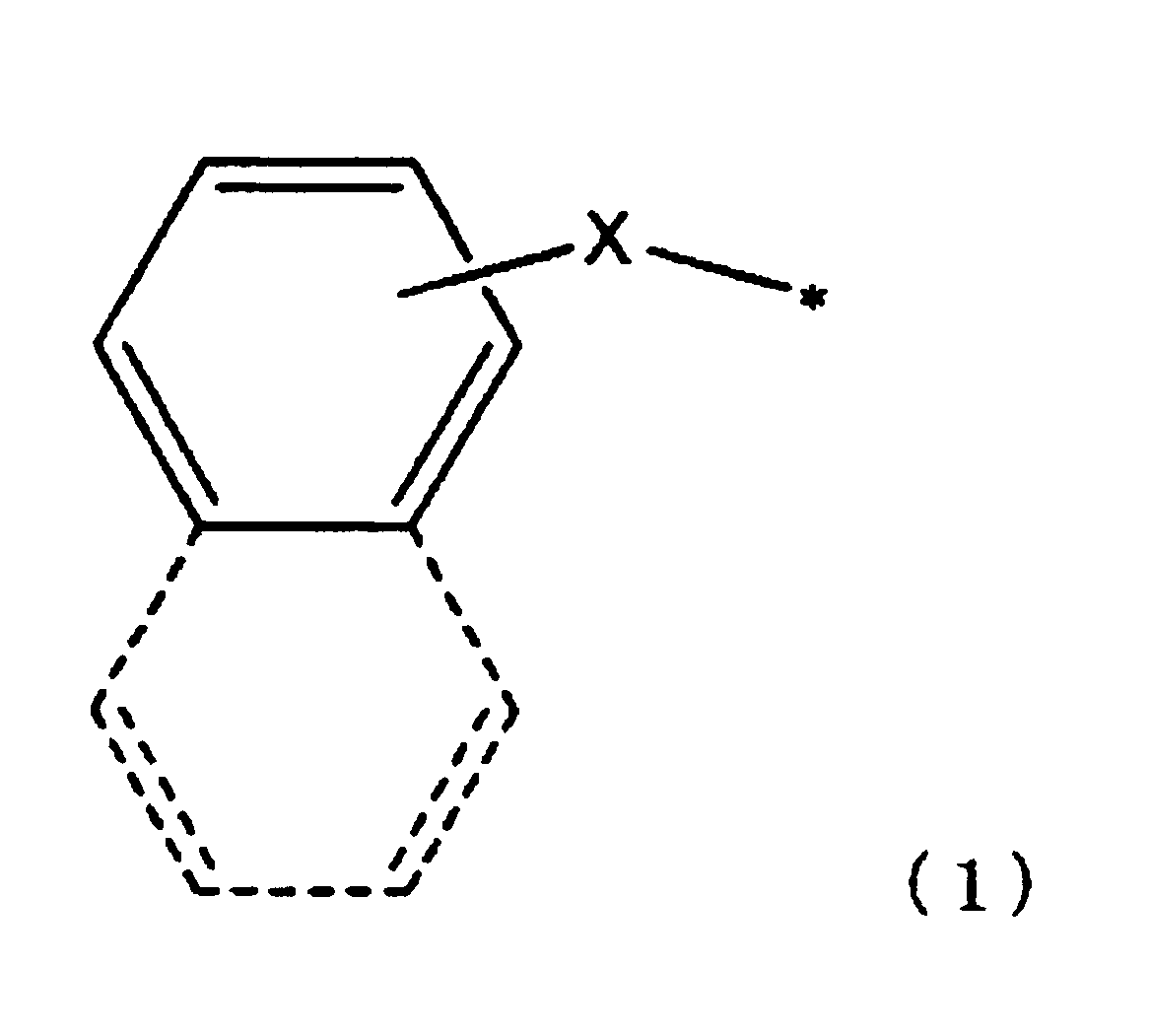
(9)前記単官能環状(メタ)アクリレート化合物(A)が、下記式(2)で表される芳香族炭化水素骨格を有する単官能(メタ)アクリレート化合物である(1)~(8)の何れか一つに記載の樹脂組成物。

(10)前記単官能環状(メタ)アクリレート化合物(A)が、1分子中に2つ以上の脂環式炭化水素骨格を有する(メタ)アクリレート化合物である(1)~(7)の何れか一つに記載の樹脂組成物。
(11)脂環式炭化水素骨格を有する単官能(メタ)アクリレート化合物が、ジシクロデカン環、トリシクロデカン環、イソボルニル環およびアダマンタン環の何れかを含む(10)に記載の樹脂組成物。
(12)前記単官能環状(メタ)アクリレート化合物(A)が、下記式(3)~(6)の何れかで表される脂環式炭化水素骨格を有する単官能(メタ)アクリレート化合物である(1)~(7)の何れか一つに記載の樹脂組成物。


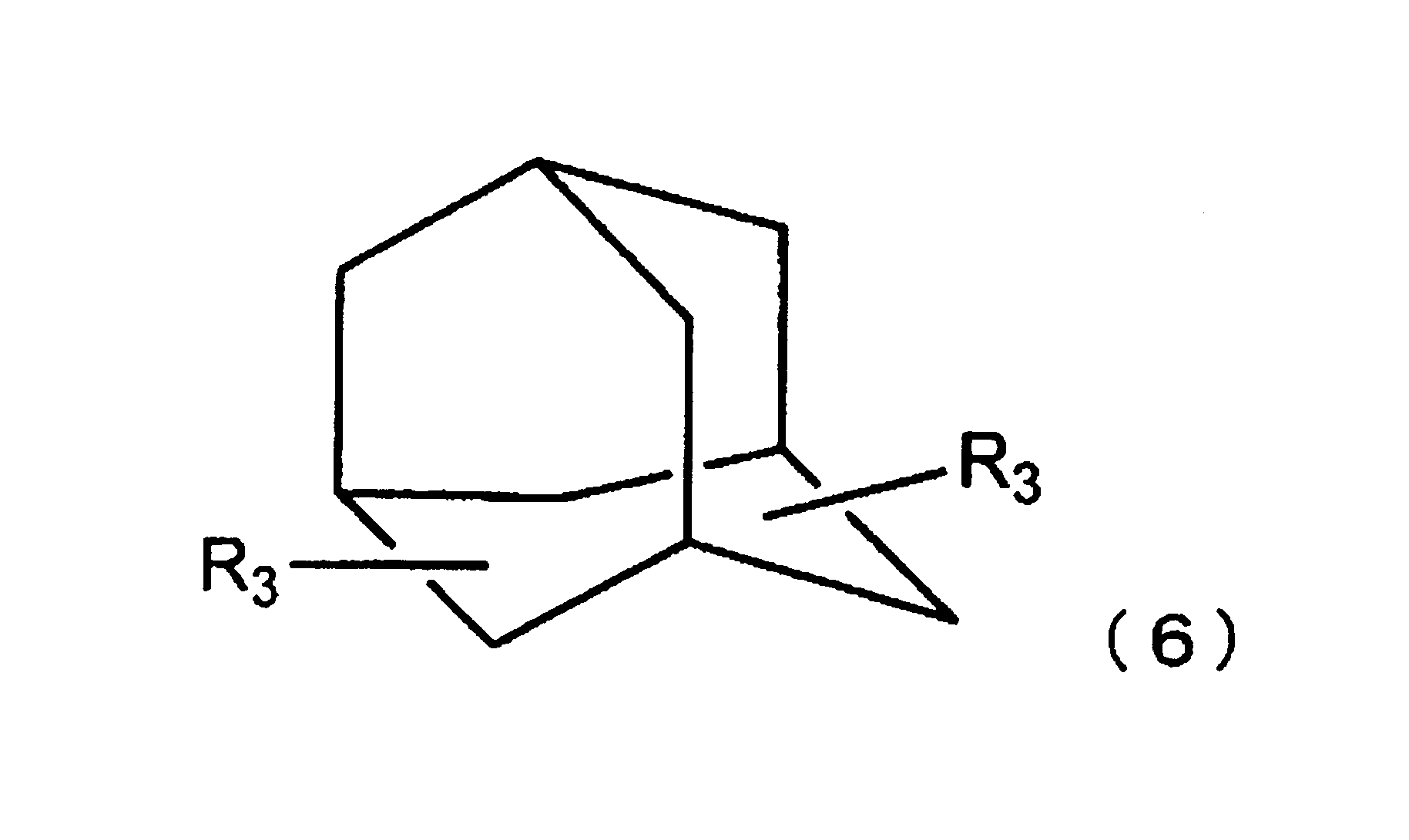
(13)前記2つ以上の官能基を有する(メタ)アクリレート化合物(B)が下記式(A)で表される骨格を有する(1)~(12)の何れか一つに記載の樹脂組成物。

(14)前記2つ以上の官能基を有する(メタ)アクリレート化合物(B)が下記式(B)で表される骨格を有する(1)~(13)の何れか一つに記載の樹脂組成物。

(15)前記2つ以上の官能基を有する(メタ)アクリレート化合物(B)が下記式(8)で表される骨格を有する(1)~(12)の何れか一つに記載の樹脂組成物。

(16)前記2つ以上の官能基を有する(メタ)アクリレート化合物(B)が下記式(9)で表されるヘテロ環骨格を有する2つ以上の官能基を有する(メタ)アクリレート化合物である(1)~(12)の何れか一つに記載の樹脂組成物。

(17)単官能環状(メタ)アクリレート化合物(A):2つ以上の官能基を有する環状(メタ)アクリレート化合物(B)の質量比が9:1~1:9である(1)~(16)の何れか一つに記載の樹脂組成物。
(18)(1)~(17)の何れか一つに記載の樹脂組成物を硬化させてなる低透湿バリアフィルム。
(19)(1)~(17)の何れか一つに記載の樹脂組成物を硬化させてなる光学材料を搭載した有機ELディスプレイ。
上記の構成により、2種類の環状構造の(メタ)アクリレート化合物を使用することとなり、蒸着などの加工適性を維持しながら低プラズマダメージ性を両立させ、且つ、基材密着性に優れた効果を達成することが可能となる。
尚、本発明において記載されている骨格は、置換基を有していても、有していなくてもよく、置換基を有する場合には、当該置換基は炭素数1~6のアルキル基または炭素数1~6のアルコキシ基とする。

具体的には、上記の(メタ)アクリレート化合物の中でも、フェニル骨格、ビフェニル骨格、ビスフェノール骨格、ナフタレン骨格またはビナフタレン骨格を有する(メタ)アクリレート化合物は上記(1)式に該当し、好適に使用できる。
ここで、本明細書中において、アルキレンオキシ基とはエーテル結合を有するアルキレン基を意味し、例えば、(ポリ)オキシエチレン基、(ポリ)オキシプロピレン基、-O-(CH2)2-O-基等が挙げられ、以下同様である。

このような(メタ)アクリレート化合物の具体例は、ベンジル(メタ)アクリレート、フェノールモノエトキシ(メタ)アクリレート、フェノールポリエトキシ(メタ)アクリレート、フェノールモノプロポキシ(メタ)アクリレート、フェノールポリプロポキシ(メタ)アクリレート、o-フェニルフェノール(メタ)アクリレート、o-フェニルフェノールモノエトキシ(メタ)アクリレート、o-フェニルフェノールポリエトキシ(メタ)アクリレート、o-フェニルフェノールモノプロポキシ(メタ)アクリレート、o-フェニルフェノールポリプロポキシ(メタ)アクリレート、p-フェニルフェノール(メタ)アクリレート、p-フェニルフェノールモノエトキシ(メタ)アクリレート、p-フェニルフェノールポリエトキシ(メタ)アクリレート、p-フェニルフェノールモノプロポキシ(メタ)アクリレート、p-フェニルフェノールポリプロポキシ(メタ)アクリレート、o-フェニルベンジル(メタ)アクリレート、p-フェニルベンジル(メタ)アクリレート、等が挙げられる。これらの化合物は低プラズマダメージ性でありながら粘度が低い為、蒸着加工性にも優れる。中でも、ベンジルアクリレート、フェノールモノエトキシアクリレート、o-フェニルフェノール(ポリ)エトキシアクリレート、o-フェニルベンジルアクリレートが好ましく、ベンジルアクリレートが特に好ましい。
環式炭化水素骨格として具体的に使用できる骨格としては、シクロプロパン骨格、シクロブタン骨格、シクロペンタン骨格、シクロヘキサン骨格、シクロヘプタン骨格、ジシクロデカン環、トリシクロデカン環、アダマンタン環、イソボルニル環、ノルボルネン環等を挙げることができる。
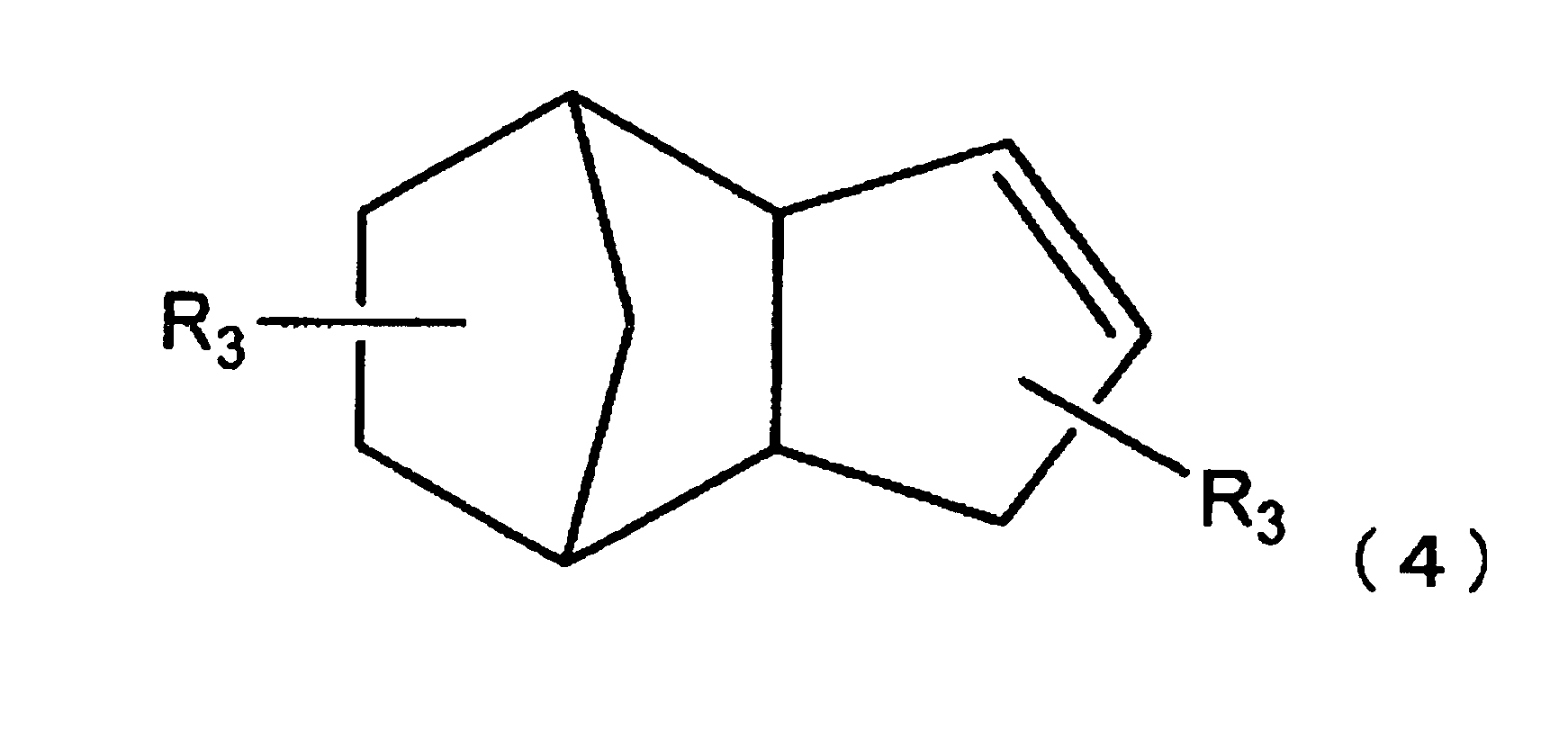

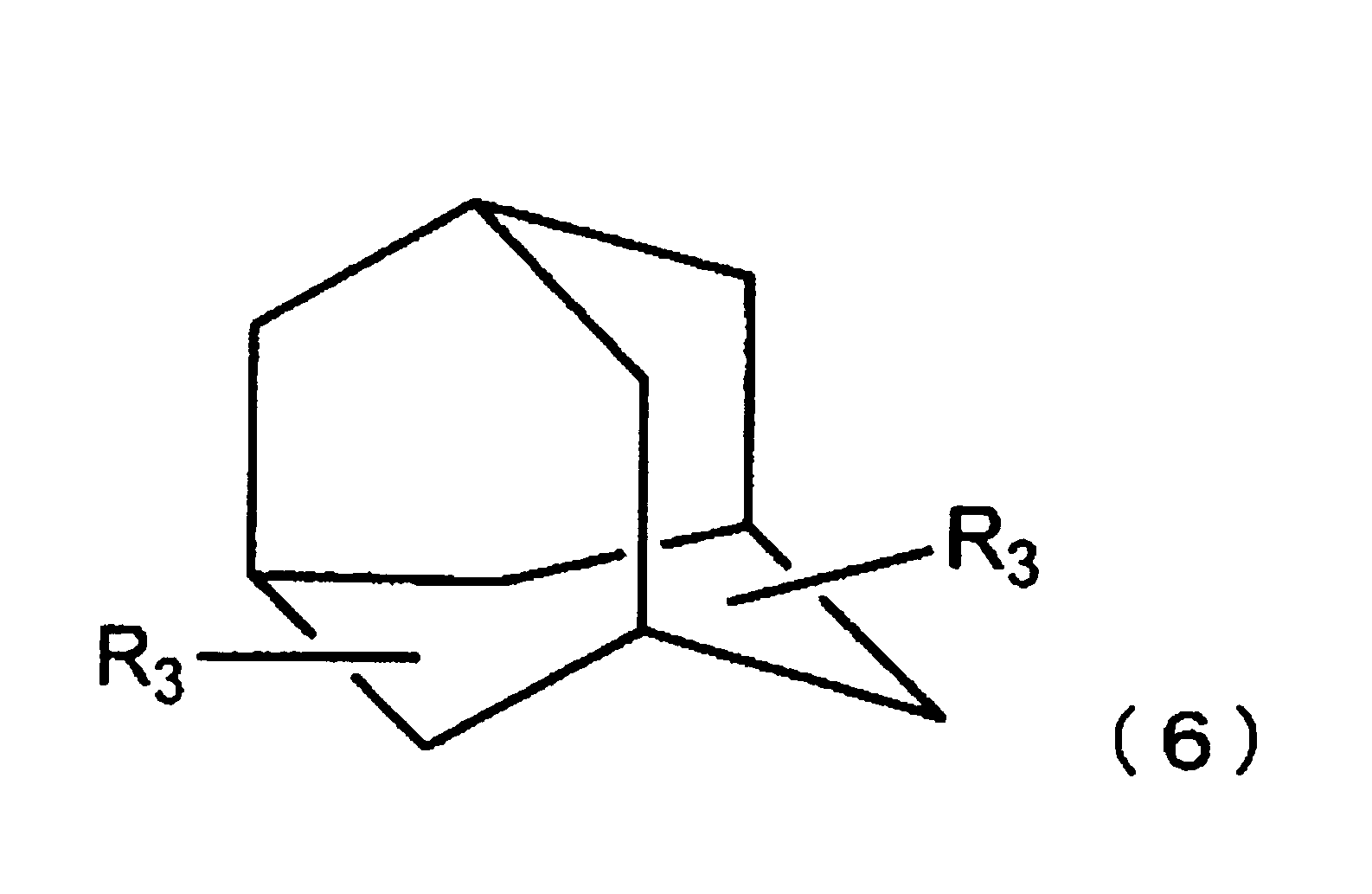
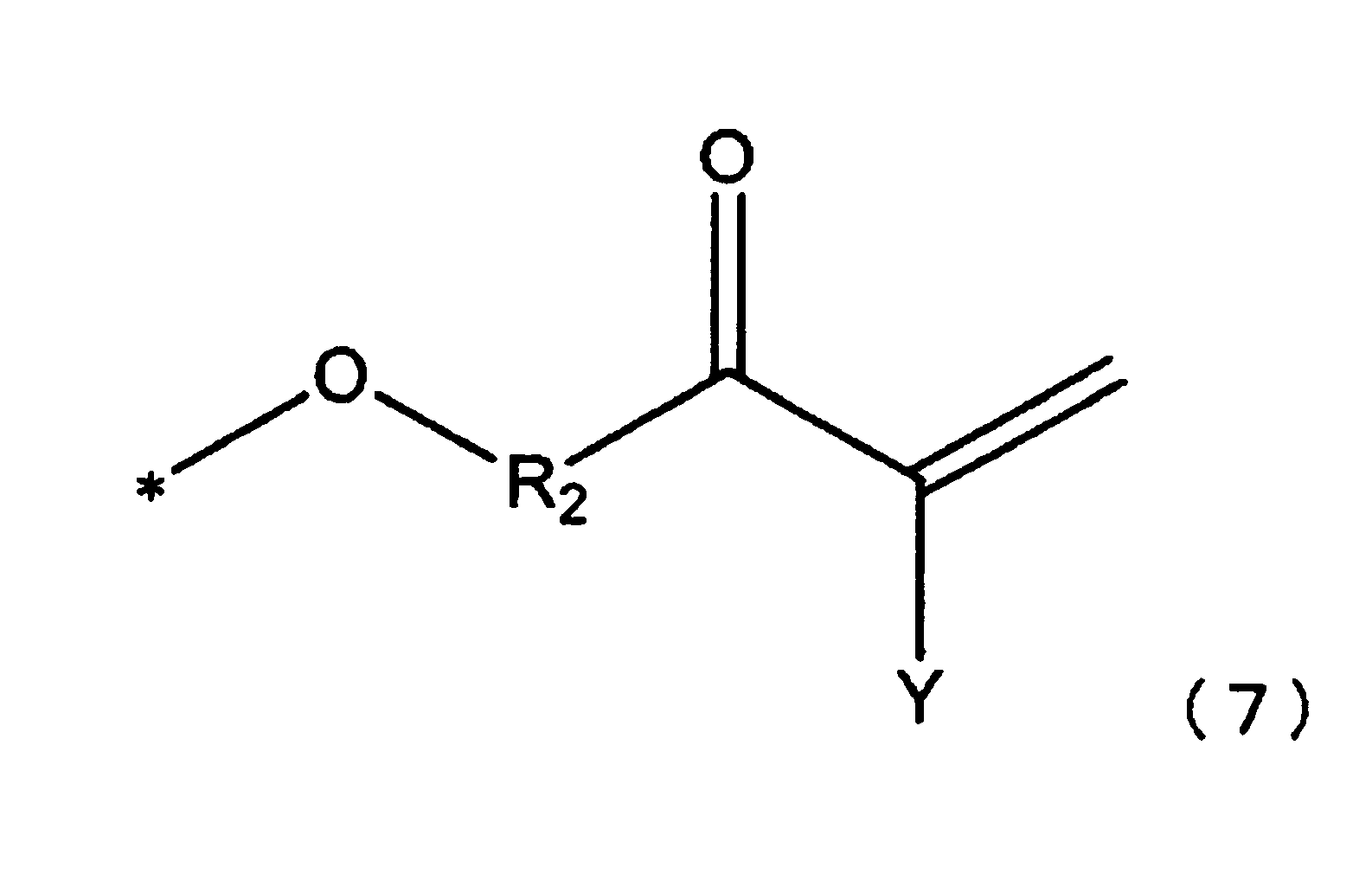
このようなヘテロ環骨格においては、鎖状構造等の他の骨格と比較して、プラズマダメージを防ぐ効果があり、芳香族炭化水素骨格或いは脂環式炭化水素骨格を有する(メタ)アクリレート化合物と併せて硬化系に配置されることによって、相乗効果によって顕著にプラズマダメージを防ぐことが可能となる。
ヘテロ環骨格として具体的に使用できる骨格としては、ジオキサン骨格、トリオキサン骨格、テトラヒドロフラン骨格、ピロリジン骨格、ピペリジン骨格、スピログリコール骨格、モルホリン骨格、トリアジン骨格、イソシアヌレート骨格、カルバゾール骨格、イミド環骨格等を挙げることができる。
即ち、テトラヒドロフルフリル(メタ)アクリレート、アルコキシ化テトラヒドロフルフリル(メタ)アクリレート、カプロラクトン変性テトラヒドロフルフリル(メタ)アクリレート、モルホリン(メタ)アクリレート、イソシアヌル酸EO変性(メタ)アクリレート、ε-カプロラクトン変性((メタ)アクロキシエチル)イソシアヌレート、ヒドロキシピバルアルデヒド変性トリメチロールプロパン(メタ)アクリレート、ペンタメチルピペリジニル(メタ)アクリレート、テトラメチルピペリジニル(メタ)アクリレート、環状トリメチロールプロパンフォルマル(メタ)アクリレート、スピログリコール(メタ)アクリレート、イミド(メタ)アクリレート等が挙げられる。
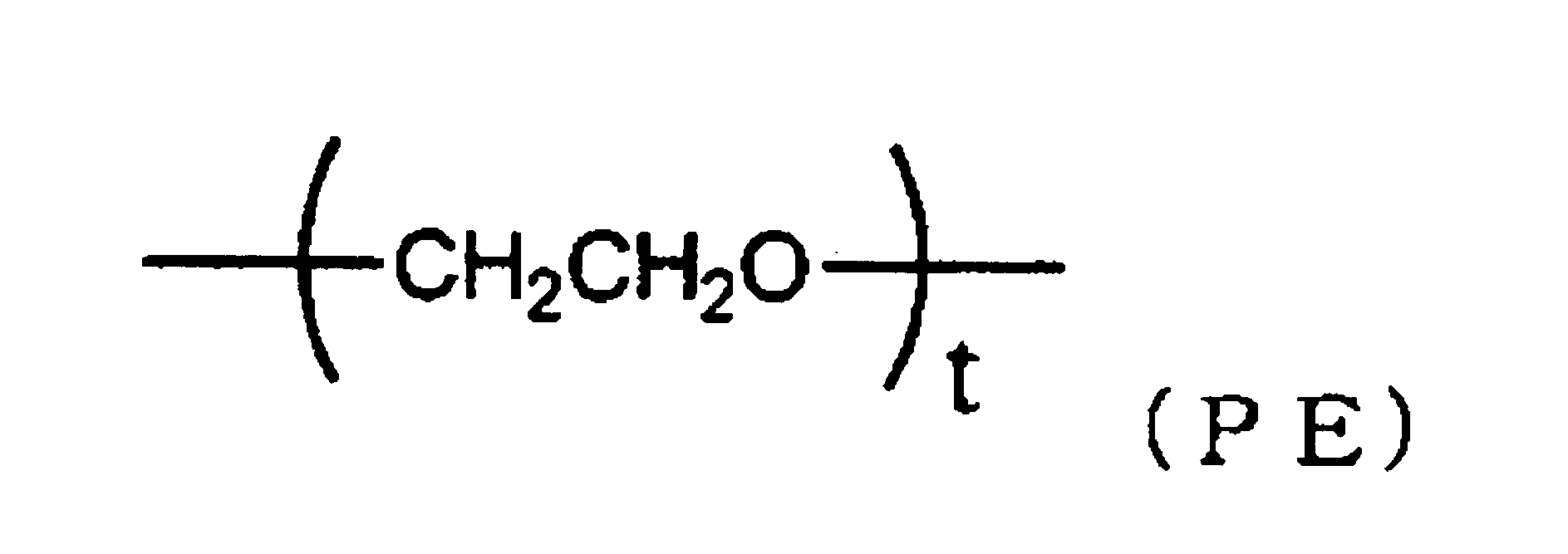
なぜならば、上記ポリEO変性(メタ)アクリレート化合物はプラズマダメージを受けやすく、当該ポリEO変性(メタ)アクリレート化合物の含有量が多く、樹脂組成物中において支配的になると、プラズマダメージ性が劣る恐れがあるためである。
そして、樹脂組成物中のポリEO変性(メタ)アクリレート化合物の総質量が、樹脂組成物100質量部に対して、10質量部以下であることが好ましく、5質量部以下であることがより好ましく、2質量部以下であることが特に好ましい。
中でも、下記式(A)で表される部分構造を有する(メタ)アクリレートが好ましい。

また、下記式(B)で表される(メタ)アクリレートが特に好ましい。

尚、上記式(B)において、m+nは2~30が好ましく、特に好ましくはm+nが4~10である。


上記式(3)の(メタ)アクリレート化合物の具体例としては、トリシクロデカンジメタノールジ(メタ)アクリレート等の脂環式(メタ)アクリレート等が挙げられる。
このようなヘテロ環骨格を有する(メタ)アクリレート化合物としては、例えば、ヘテロ環の例としてモルホリン骨格、テトラヒドロフラン骨格、オキサン骨格、ジオキサン骨格、トリアジン骨格、カルバゾール骨格、ピロリジン骨格、ピペリジン骨格、スピログリコール骨格が挙げられ、好適には下記式(10)で表される構造を有する(メタ)アクリレート化合物を使用することができる。

ここで、好ましくは下記式(9)で表される化合物を使用することができる。
オキセタン環を有する化合物としては、公知のものを特に限定することなく使用することができるが、例えば、1,4-ビス{[(3-エチル-3-オキセタニル)メトキシ]メチル}ベンゼン、ジ[2-(3-オキセタニル)ブチル]エーテル、3-エチル-3-フェノキシメチルオキセタン、3-エチル-3-ヒドロキシメチルオキセタン、1,4-ビス[(3-エチルオキセタン-3-イル)メトキシ]ベンゼン、1,3-ビス[(3-エチルオキセタン-3-イル)メトキシ]ベンゼン、1,2-ビス[(3-エチルオキセタン-3-イル)メトキシ]ベンゼン、4,4’-ビス[(3-エチルオキセタン-3-イル)メトキシ]ビフェニル、2,2’-ビス[(3-エチル-3-オキセタニル)メトキシ]ビフェニル、3,3’,5,5’-テトラメチル[4,4’-ビス(3-エチルオキセタン-3-イル)メトキシ]ビフェニル、2,7-ビス[(3-エチルオキセタン-3-イル)メトキシ]ナフタレン、1,6-ビス[(3-エチルオキセタン-3-イル)メトキシ]-2,2,3,3,4,4,5,5-オクタフルオロヘキサン、3(4),8(9)-ビス[(1-エチル-3-オキセタニル)メトキシメチル]-トリシクロ[5.2.1.2.6]デカン、1,2-ビス{[2-(1-エチル-3-オキセタニル)メトキシ]エチルチオ}エタン、4,4’-ビス[(1-エチル-3-オキセタニル)メチル]チオジベンゼンチオエーテル、2,3-ビス[(3-エチルオキセタン-3-イル)メトキシメチル]ノルボルナン、2-エチル-2-[(3-エチルオキセタン-3-イル)メトキシメチル]-1,3-O-ビス[(1-エチル-3-オキセタニル)メチル]-プロパン-1,3-ジオール、2,2-ジメチル-1,3-O-ビス[(3-エチルオキセタン-3-イル)メチル]-プロパン-1,3-ジオール、2-ブチル-2-エチル-1,3-O-ビス[(3-エチルオキセタン-3-イル)メチル]-プロパン-1,3-ジオール、1,4-O-ビス[(3-エチルオキセタン-3-イル)メチル]-ブタン-1,4-ジオール、2,4,6-O-トリス[(3-エチルオキセタン-3-イル)メチル]シアヌル酸等があげられる。これらは2種以上を用いることが好ましく、少なくとも1つはアルキレンオキシ基を有するオキセタン化合物が好ましい。
オキセタン化合物の樹脂組成物中の含有量は、樹脂組成物100質量部に対して、通常5~95質量部が好ましく、10~80質量部がより好ましく、20~70質量部が特に好ましい。

[エポキシ当量]JIS K7236:2001に記載の方法で測定した。
エポキシ樹脂としてビフェニル型フェノールアラルキルエポキシ樹脂である日本化薬製NC-3000H(エポキシ価288g/eq、n=2.1)を144g、エチレン性不飽和基含有モノカルボン酸としてアクリル酸(略称AA、分子量72)を36g、触媒としてトリフェニルホスフィンを1.5g、溶剤としてプロピレングリコールモノメチルエーテルモノアセテート100gを加え、100℃で24時間反応させ、エポキシカルボキシレート化合物を得た。
得られたエポキシカルボキシレート化合物に多塩基酸無水物としてテトラヒドロ無水フタル酸を4g(設定酸価7)加え、固形分が70質量%となるように溶剤としてのプロピレングリコールモノメチルエーテルモノアセテートを添加し、100℃にて10時間加熱して付加反応させ、(ポリ)カルボン酸化合物を得た(実測固形分酸価11)。
攪拌装置、還流管、温度計をつけたフラスコ中に、1,1’-ビ-2-ナフトールを286.3g(1.0mol)、炭酸エチレンを264.2g(3.0mol)、炭酸カリウムを41.5g(0.3mol)、トルエン2000mlを仕込み、110℃で12時間反応させた。
反応後、得られた反応液を水洗、1%NaOH水溶液で洗浄し、次いで洗浄水が中性になるまで水洗を行った。水洗後の溶液をロータリーエバポレーターを用いて減圧下に溶媒を留去し、1,1’-ビ-2-ナフトールのエチレンオキサイド2mol反応物300.0gを得た。
続いて、攪拌装置、還流管、温度計、及び水分離機をつけたフラスコ中に、1,1’-ビ-2-ナフトールのエチレンオキサイド2mol反応物187.2g(0.5mol)、アクリル酸86.5g(2.4mol)、パラトルエンスルホン酸0.95g、ハイドロキノン0.87g、トルエン917.4g、シクロヘキサン393.2gを仕込み、反応温度95~105℃で生成水を溶媒と共沸留去しながら反応させた。反応後、25%NaOH水溶液で中和した後、15質量%食塩水200gで3回洗浄し、溶媒を減圧留去後、ビナフトールポリエトキシジアクリレートを得た。
(1)粘度:E型粘度計(TV-200:東機産業(株)製)を用いて25℃で測定した。
これを、JIS K7112 B法に準拠し、硬化物の比重(DS)を測定した。また、23±2℃で樹脂組成物の比重(DL)を測定し、次式により硬化収縮率を算出した。測定結果は4回の測定結果の平均値で示す。
硬化収縮率(%)=(DS-DL)/DS×100
UV処理前後のM/Z=28の検出強度が、
2.0×10⁻¹¹以下 ・・・A
UV処理前後のM/Z=28の何れかの検出強度が、
2.0×10⁻¹¹以上 ・・・D
で評価を行った。
UV処理条件は波長170nm、照度2.3mW/cm2、照射時間5分間にて実施した。
TDS測定条件は、電子科学(株)製WA1000Sを使用し、昇温レート10℃/分、60℃~300℃、加熱はIRにて実施した。

ニューフロンティア(商品名)PHE:フェノールモノエトキシアクリレート、第一工業製薬(株)製
アロニックス(商品名)M117:ノニルフェノールポリプロポキシアクリレート、東亞合成(株)製
ビスコート(商品名)#150:テトラヒドロフルフリルアクリレート、大阪有機化学工業(株)製
ビスコート(商品名)#155:シクロヘキシルアクリレート、大阪有機化学工業(株)製
KAYARAD(商品名)OPP-1:o-フェニルフェノールモノエトキシアクリレート、日本化薬(株)製
KAYARAD R-604:ヒドロキシピバルアルデヒド変性トリメチロールプロパンジアクリレート、日本化薬(株)製
KAYARAD R-684:トリシクロデカンジメチロールジアクリレート、日本化薬(株)製
ニューフロンティアBPE-4A:ビスフェノールAテトラエトキシジアクリレート、第一工業製薬(株)製
Irgacure(商品名)819:ビス(2,4,6-トリメチルベンゾイル)-フェニルフォスフィンオキサイド、BASFジャパン(株)製
Irgacure TPO:2,4,6-トリメチルベンゾイル-ジフェニル-フォスフィンオキサイド、BASFジャパン(株)製
Irgacure 369:2-ベンジル-2-ジメチルアミノ-1-(4-モルフォリノフェニル)-ブタノン-1、BASFジャパン(株)製
Irgacure 184:1-ヒドロキシシクロヘキシル-フェニルケトン、BASFジャパン(株)製
HDDA:1,6-ヘキサンジオールジアクリレート、ダイセル・サイテック(株)製
ブレンマー(商品名)AE-400:ポリエチレングリコールアクリレート、日油(株)製
KAYARAD DPHA:ジペンタエリスリトールペンタアクリレートとジペンタエリスリトールヘキサアクリレートの混合物、日本化薬(株)製
KAYARAD TMPTA:トリメチロールプロパントリアクリレート、日本化薬(株)製
ライトアクリレートL-A:ラウリルアクリレート、共栄社化学工業(株)製
なお、本願は、2013年5月23日付で出願された日本国特許出願(2013-108477)に基づいており、その全体が引用により援用される。また、ここに引用されるすべての参照は全体として取り込まれる。
Claims (19)
- 芳香族炭化水素骨格を有する単官能(メタ)アクリレート化合物、脂環式炭化水素骨格を有する単官能(メタ)アクリレート化合物及びヘテロ環骨格を有する単官能(メタ)アクリレート化合物からなる群から選択される少なくとも1種の単官能環状(メタ)アクリレート化合物(A);
芳香族炭化水素骨格を有する2つ以上の官能基を有する(メタ)アクリレート化合物、脂環式炭化水素骨格を有する2つ以上の官能基を有する(メタ)アクリレート化合物及びヘテロ環骨格を有する2つ以上の官能基を有する(メタ)アクリレート化合物からなる群から選択される少なくとも1種の2つ以上の官能基を有する環状(メタ)アクリレート化合物(B);並びに、
重合開始剤(C)を含有する有機EL素子封止用の樹脂組成物。 - 液状の樹脂組成物を気化させて基板上に堆積して使用するための請求項1に記載の樹脂組成物。
- 基板上に堆積した樹脂組成物を熱または光によって硬化して使用するための請求項2に記載の樹脂組成物。
- さらに無機材料を堆積させ、有機層と無機層を積層させるプロセスに使用するための請求項2又は請求項3に記載の樹脂組成物。
- 樹脂組成物の硬化がエネルギー線によって為される請求項3又は請求項4に記載の樹脂組成物。
- 前記エネルギー線の光源がLED(発光ダイオード)である請求項5に記載の樹脂組成物。
- 前記LEDの発光波長が365~425nmの範囲にある請求項6に記載の樹脂組成物。
- 前記単官能環状(メタ)アクリレート化合物(A)が、下記式(1)で表される骨格を有する芳香族炭化水素骨格を有する単官能(メタ)アクリレート化合物である請求項1乃至請求項7の何れか一項に記載の樹脂組成物。
- 前記単官能環状(メタ)アクリレート化合物(A)が、下記式(2)で表される芳香族炭化水素骨格を有する単官能(メタ)アクリレート化合物である請求項1乃至請求項8の何れか一項に記載の樹脂組成物。

- 前記単官能環状(メタ)アクリレート化合物(A)が、1分子中に2つ以上の脂環式炭化水素骨格を有する(メタ)アクリレート化合物である請求項1乃至請求項7の何れか一項に記載の樹脂組成物。
- 脂環式炭化水素骨格を有する単官能(メタ)アクリレート化合物が、ジシクロデカン環、トリシクロデカン環、イソボルニル環およびアダマンタン環の何れかを含む請求項10に記載の樹脂組成物。
- 前記単官能環状(メタ)アクリレート化合物(A)が、下記式(3)~(6)の何れかで表される脂環式炭化水素骨格を有する単官能(メタ)アクリレート化合物である請求項1乃至請求項7の何れか一項に記載の樹脂組成物。


- 前記2つ以上の官能基を有する(メタ)アクリレート化合物(B)が下記式(A)で表される骨格を有する請求項1乃至請求項12の何れか一項に記載の樹脂組成物。

- 前記2つ以上の官能基を有する(メタ)アクリレート化合物(B)が下記式(B)で表される骨格を有する請求項1乃至請求項13の何れか一項に記載の樹脂組成物。

- 前記2つ以上の官能基を有する(メタ)アクリレート化合物(B)が下記式(8)で表される骨格を有する請求項1乃至請求項12の何れか一項に記載の樹脂組成物。
- 前記2つ以上の官能基を有する(メタ)アクリレート化合物(B)が下記式(9)で表されるヘテロ環骨格を有する2つ以上の官能基を有する(メタ)アクリレート化合物である請求項1乃至請求項12の何れか一項に記載の樹脂組成物。
- 単官能環状(メタ)アクリレート化合物(A):2つ以上の官能基を有する環状(メタ)アクリレート化合物(B)の質量比が9:1~1:9である請求項1乃至請求項16の何れか一項に記載の樹脂組成物。
- 請求項1乃至請求項17の何れか一項に記載の樹脂組成物を硬化させてなる低透湿バリアフィルム。
- 請求項1乃至請求項17の何れか一項に記載の樹脂組成物を硬化させてなる光学材料を搭載した有機ELディスプレイ。
Priority Applications (2)
| Application Number | Priority Date | Filing Date | Title |
|---|---|---|---|
| KR1020157030739A KR101846960B1 (ko) | 2013-05-23 | 2014-05-23 | 유기 el 소자 밀봉용 수지 조성물 및 그 경화물 |
| CN201480029746.3A CN105432142B (zh) | 2013-05-23 | 2014-05-23 | 用于有机电致发光元件密封的树脂组合物及其固化物 |
Applications Claiming Priority (2)
| Application Number | Priority Date | Filing Date | Title |
|---|---|---|---|
| JP2013-108477 | 2013-05-23 | ||
| JP2013108477A JP6274639B2 (ja) | 2013-05-23 | 2013-05-23 | エネルギー線硬化型樹脂組成物及びその硬化物 |
Publications (1)
| Publication Number | Publication Date |
|---|---|
| WO2014189124A1 true WO2014189124A1 (ja) | 2014-11-27 |
Family
ID=51933675
Family Applications (1)
| Application Number | Title | Priority Date | Filing Date |
|---|---|---|---|
| PCT/JP2014/063640 Ceased WO2014189124A1 (ja) | 2013-05-23 | 2014-05-23 | 有機el素子封止用の樹脂組成物及びその硬化物 |
Country Status (5)
| Country | Link |
|---|---|
| JP (1) | JP6274639B2 (ja) |
| KR (1) | KR101846960B1 (ja) |
| CN (1) | CN105432142B (ja) |
| TW (1) | TWI623576B (ja) |
| WO (1) | WO2014189124A1 (ja) |
Cited By (3)
| Publication number | Priority date | Publication date | Assignee | Title |
|---|---|---|---|---|
| WO2016010152A1 (ja) * | 2014-07-17 | 2016-01-21 | 日本化薬株式会社 | 液晶シール剤及びそれを用いた液晶表示セル |
| US20220025110A1 (en) * | 2018-12-27 | 2022-01-27 | Mitsubishi Gas Chemical Company, Inc. | Resin composition, molded body, optical lens, and optical lens unit |
| JP2022078065A (ja) * | 2016-08-08 | 2022-05-24 | 積水化学工業株式会社 | 有機エレクトロルミネッセンス表示素子用封止剤 |
Families Citing this family (25)
| Publication number | Priority date | Publication date | Assignee | Title |
|---|---|---|---|---|
| KR20160053750A (ko) | 2014-10-29 | 2016-05-13 | 삼성에스디아이 주식회사 | 디스플레이 밀봉재용 조성물, 이를 포함하는 유기보호층, 및 이를 포함하는 디스플레이 장치 |
| WO2018052007A1 (ja) * | 2016-09-16 | 2018-03-22 | 積水化学工業株式会社 | 有機エレクトロルミネッセンス表示素子用封止剤 |
| KR102475431B1 (ko) | 2016-10-14 | 2022-12-08 | 덴카 주식회사 | 조성물 |
| WO2018074507A1 (ja) * | 2016-10-19 | 2018-04-26 | 積水化学工業株式会社 | 有機el表示素子用封止剤及び有機el表示素子用封止剤の製造方法 |
| KR102008184B1 (ko) * | 2016-11-11 | 2019-08-07 | 삼성에스디아이 주식회사 | 유기발광소자 봉지용 조성물 및 이로부터 제조된 유기발광소자 표시장치 |
| KR102662808B1 (ko) * | 2017-01-12 | 2024-05-02 | 세키스이가가쿠 고교가부시키가이샤 | 유기 el 표시 소자용 봉지제 |
| KR101814098B1 (ko) * | 2017-01-18 | 2018-01-02 | 동우 화인켐 주식회사 | 광경화성 조성물 및 이로부터 형성된 광경화 막 |
| JP6895917B2 (ja) * | 2017-03-28 | 2021-06-30 | 三洋化成工業株式会社 | 活性エネルギー線硬化性組成物 |
| WO2019082996A1 (ja) | 2017-10-26 | 2019-05-02 | デンカ株式会社 | 有機エレクトロルミネッセンス表示素子用封止剤 |
| JP2019143057A (ja) * | 2018-02-22 | 2019-08-29 | 東洋インキScホールディングス株式会社 | 光硬化性組成物およびディスプレイ |
| KR102809800B1 (ko) | 2018-04-16 | 2025-05-19 | 덴카 주식회사 | 유기 일렉트로루미네센스 표시 소자용 봉지제 |
| WO2019225473A1 (ja) * | 2018-05-25 | 2019-11-28 | 積水化学工業株式会社 | 液晶表示素子用シール剤、上下導通材料、及び、液晶表示素子 |
| JP6538252B1 (ja) * | 2018-09-19 | 2019-07-03 | デクセリアルズ株式会社 | 画像表示装置の製造方法 |
| KR102253501B1 (ko) * | 2018-09-28 | 2021-05-18 | 주식회사 엘지화학 | 밀봉재 조성물 |
| JP7160745B2 (ja) * | 2019-04-15 | 2022-10-25 | デクセリアルズ株式会社 | 画像表示装置の製造方法 |
| KR102343839B1 (ko) * | 2019-11-11 | 2021-12-27 | 주식회사 트리엘 | 디스플레이 소자 밀봉재용 조성물 및 이를 이용한 유기코팅막 |
| KR102323778B1 (ko) | 2019-12-04 | 2021-11-11 | 주식회사 트리엘 | 아다만틸 아크릴계 모노머를 포함하는 저유전 코팅액 조성물 |
| KR102474597B1 (ko) | 2020-06-03 | 2022-12-06 | 주식회사 트리엘 | 지방족 다환고리 아크릴계 단량체를 포함하는 저유전 코팅액 조성물 |
| CN115917893A (zh) | 2020-07-01 | 2023-04-04 | 日东电工株式会社 | 光模块 |
| WO2022107692A1 (ja) | 2020-11-18 | 2022-05-27 | 三井化学株式会社 | 有機el表示素子用封止材、その硬化物および有機el表示装置 |
| KR102873419B1 (ko) | 2022-07-28 | 2025-10-28 | 주식회사 트리엘 | 지방족 이관능성 아크릴계 단량체 및 이를 포함하는 저유전 코팅액 조성물 |
| KR102898751B1 (ko) | 2022-10-21 | 2025-12-11 | 주식회사 트리엘 | 신규한 아크릴계 화합물 및 이를 포함하는 저유전 코팅액 조성물 |
| KR20250024235A (ko) | 2023-08-11 | 2025-02-18 | 주식회사 트리엘 | 불소 함유 아크릴계 화합물을 포함하는 신규한 저유전 코팅액 조성물 |
| WO2025058506A1 (ko) * | 2023-09-13 | 2025-03-20 | 주식회사 엘지화학 | 수지 조성물 및 이를 포함하는 물품 |
| KR20250095795A (ko) | 2023-12-19 | 2025-06-27 | 삼성디스플레이 주식회사 | 저유전 코팅액 조성물을 이용한 다공성 박막의 제조방법 |
Citations (5)
| Publication number | Priority date | Publication date | Assignee | Title |
|---|---|---|---|---|
| JP2006130855A (ja) * | 2004-11-09 | 2006-05-25 | Shin Etsu Chem Co Ltd | 柔軟ガスバリア性部材及びその製造方法並びにこれを用いた有機エレクトロルミネセンス素子 |
| JP2010234791A (ja) * | 2008-04-14 | 2010-10-21 | Fujifilm Corp | バリア性積層体、バリア性フィルム基板およびデバイス |
| WO2012014629A1 (ja) * | 2010-07-27 | 2012-02-02 | 株式会社日立製作所 | 封止膜およびそれを用いた有機発光ダイオード |
| JP2012129010A (ja) * | 2010-12-14 | 2012-07-05 | Sekisui Chem Co Ltd | 有機エレクトロルミネッセンス表示素子用封止剤 |
| JP2012199062A (ja) * | 2011-03-22 | 2012-10-18 | Nippon Zeon Co Ltd | レンズアレイシート及び発光装置 |
Family Cites Families (3)
| Publication number | Priority date | Publication date | Assignee | Title |
|---|---|---|---|---|
| US8187718B2 (en) * | 2008-04-14 | 2012-05-29 | Fujifilm Corporation | Barrier laminate, barrier film substrate and device |
| JP5017446B2 (ja) | 2010-12-08 | 2012-09-05 | 株式会社東芝 | 半導体装置の製造方法 |
| CN102827566B (zh) * | 2012-09-19 | 2014-03-05 | 三友(天津)高分子技术有限公司 | 单组份耐高低温环氧树脂组成物 |
-
2013
- 2013-05-23 JP JP2013108477A patent/JP6274639B2/ja not_active Expired - Fee Related
-
2014
- 2014-05-23 WO PCT/JP2014/063640 patent/WO2014189124A1/ja not_active Ceased
- 2014-05-23 KR KR1020157030739A patent/KR101846960B1/ko not_active Expired - Fee Related
- 2014-05-23 CN CN201480029746.3A patent/CN105432142B/zh not_active Expired - Fee Related
- 2014-05-23 TW TW103118044A patent/TWI623576B/zh not_active IP Right Cessation
Patent Citations (5)
| Publication number | Priority date | Publication date | Assignee | Title |
|---|---|---|---|---|
| JP2006130855A (ja) * | 2004-11-09 | 2006-05-25 | Shin Etsu Chem Co Ltd | 柔軟ガスバリア性部材及びその製造方法並びにこれを用いた有機エレクトロルミネセンス素子 |
| JP2010234791A (ja) * | 2008-04-14 | 2010-10-21 | Fujifilm Corp | バリア性積層体、バリア性フィルム基板およびデバイス |
| WO2012014629A1 (ja) * | 2010-07-27 | 2012-02-02 | 株式会社日立製作所 | 封止膜およびそれを用いた有機発光ダイオード |
| JP2012129010A (ja) * | 2010-12-14 | 2012-07-05 | Sekisui Chem Co Ltd | 有機エレクトロルミネッセンス表示素子用封止剤 |
| JP2012199062A (ja) * | 2011-03-22 | 2012-10-18 | Nippon Zeon Co Ltd | レンズアレイシート及び発光装置 |
Cited By (6)
| Publication number | Priority date | Publication date | Assignee | Title |
|---|---|---|---|---|
| WO2016010152A1 (ja) * | 2014-07-17 | 2016-01-21 | 日本化薬株式会社 | 液晶シール剤及びそれを用いた液晶表示セル |
| JPWO2016010152A1 (ja) * | 2014-07-17 | 2017-04-27 | 日本化薬株式会社 | 液晶シール剤及びそれを用いた液晶表示セル |
| JP2022078065A (ja) * | 2016-08-08 | 2022-05-24 | 積水化学工業株式会社 | 有機エレクトロルミネッセンス表示素子用封止剤 |
| JP7377295B2 (ja) | 2016-08-08 | 2023-11-09 | 積水化学工業株式会社 | 有機エレクトロルミネッセンス表示素子用封止剤 |
| US20220025110A1 (en) * | 2018-12-27 | 2022-01-27 | Mitsubishi Gas Chemical Company, Inc. | Resin composition, molded body, optical lens, and optical lens unit |
| US12091498B2 (en) * | 2018-12-27 | 2024-09-17 | Mitsubishi Gas Chemical Company, Inc. | Resin composition, molded body, optical lens, and optical lens unit |
Also Published As
| Publication number | Publication date |
|---|---|
| TW201510044A (zh) | 2015-03-16 |
| TWI623576B (zh) | 2018-05-11 |
| JP2014229496A (ja) | 2014-12-08 |
| KR20160030077A (ko) | 2016-03-16 |
| KR101846960B1 (ko) | 2018-04-09 |
| CN105432142A (zh) | 2016-03-23 |
| CN105432142B (zh) | 2018-03-13 |
| JP6274639B2 (ja) | 2018-02-07 |
Similar Documents
| Publication | Publication Date | Title |
|---|---|---|
| JP6274639B2 (ja) | エネルギー線硬化型樹脂組成物及びその硬化物 | |
| KR101980560B1 (ko) | 에너지선 경화형 수지 조성물 및 그 경화물 | |
| TWI654212B (zh) | 能量線硬化型樹脂組成物及其硬化物 | |
| CN104813741B (zh) | 树脂组合物及其固化物(1) | |
| JP5967654B2 (ja) | 樹脂組成物及びその硬化物(2) | |
| TWI618741B (zh) | 有機el元件之密封用樹脂組成物及其硬化物 | |
| JP6112603B2 (ja) | エネルギー線硬化型樹脂組成物及びその硬化物 | |
| JP6012433B2 (ja) | 樹脂組成物及びその硬化物(3) | |
| JP6474432B2 (ja) | エネルギー線硬化型樹脂組成物及びその硬化物 | |
| WO2018163837A1 (ja) | 活性エネルギー線硬化性組成物、硬化物、及び、フィルム | |
| US20220389126A1 (en) | Photocurable composition, hard coating material, cured product, cured product-attached substrate, and image display device | |
| JP7806480B2 (ja) | 活性エネルギー線重合性樹脂組成物及び積層体 | |
| JP7559386B2 (ja) | 活性エネルギー線硬化性組成物、硬化物、レンズ及びカメラモジュール |
Legal Events
| Date | Code | Title | Description |
|---|---|---|---|
| WWE | Wipo information: entry into national phase |
Ref document number: 201480029746.3 Country of ref document: CN |
|
| 121 | Ep: the epo has been informed by wipo that ep was designated in this application |
Ref document number: 14801279 Country of ref document: EP Kind code of ref document: A1 |
|
| ENP | Entry into the national phase |
Ref document number: 20157030739 Country of ref document: KR Kind code of ref document: A |
|
| NENP | Non-entry into the national phase |
Ref country code: DE |
|
| 122 | Ep: pct application non-entry in european phase |
Ref document number: 14801279 Country of ref document: EP Kind code of ref document: A1 |