WO2013085053A1 - セルロース水溶液の製造方法およびセルロース誘導体の製造方法 - Google Patents
セルロース水溶液の製造方法およびセルロース誘導体の製造方法 Download PDFInfo
- Publication number
- WO2013085053A1 WO2013085053A1 PCT/JP2012/081857 JP2012081857W WO2013085053A1 WO 2013085053 A1 WO2013085053 A1 WO 2013085053A1 JP 2012081857 W JP2012081857 W JP 2012081857W WO 2013085053 A1 WO2013085053 A1 WO 2013085053A1
- Authority
- WO
- WIPO (PCT)
- Prior art keywords
- cellulose
- aqueous
- quaternary ammonium
- solution
- producing
- Prior art date
- Legal status (The legal status is an assumption and is not a legal conclusion. Google has not performed a legal analysis and makes no representation as to the accuracy of the status listed.)
- Ceased
Links
Images













Classifications
-
- C—CHEMISTRY; METALLURGY
- C08—ORGANIC MACROMOLECULAR COMPOUNDS; THEIR PREPARATION OR CHEMICAL WORKING-UP; COMPOSITIONS BASED THEREON
- C08L—COMPOSITIONS OF MACROMOLECULAR COMPOUNDS
- C08L71/00—Compositions of polyethers obtained by reactions forming an ether link in the main chain; Compositions of derivatives of such polymers
- C08L71/02—Polyalkylene oxides
-
- C—CHEMISTRY; METALLURGY
- C08—ORGANIC MACROMOLECULAR COMPOUNDS; THEIR PREPARATION OR CHEMICAL WORKING-UP; COMPOSITIONS BASED THEREON
- C08B—POLYSACCHARIDES; DERIVATIVES THEREOF
- C08B1/00—Preparatory treatment of cellulose for making derivatives thereof, e.g. pre-treatment, pre-soaking, activation
- C08B1/003—Preparation of cellulose solutions, i.e. dopes, with different possible solvents, e.g. ionic liquids
-
- C—CHEMISTRY; METALLURGY
- C08—ORGANIC MACROMOLECULAR COMPOUNDS; THEIR PREPARATION OR CHEMICAL WORKING-UP; COMPOSITIONS BASED THEREON
- C08B—POLYSACCHARIDES; DERIVATIVES THEREOF
- C08B11/00—Preparation of cellulose ethers
- C08B11/02—Alkyl or cycloalkyl ethers
- C08B11/04—Alkyl or cycloalkyl ethers with substituted hydrocarbon radicals
- C08B11/08—Alkyl or cycloalkyl ethers with substituted hydrocarbon radicals with hydroxylated hydrocarbon radicals; Esters, ethers, or acetals thereof
-
- C—CHEMISTRY; METALLURGY
- C08—ORGANIC MACROMOLECULAR COMPOUNDS; THEIR PREPARATION OR CHEMICAL WORKING-UP; COMPOSITIONS BASED THEREON
- C08B—POLYSACCHARIDES; DERIVATIVES THEREOF
- C08B11/00—Preparation of cellulose ethers
- C08B11/02—Alkyl or cycloalkyl ethers
- C08B11/04—Alkyl or cycloalkyl ethers with substituted hydrocarbon radicals
- C08B11/14—Alkyl or cycloalkyl ethers with substituted hydrocarbon radicals with nitrogen-containing groups
- C08B11/155—Alkyl or cycloalkyl ethers with substituted hydrocarbon radicals with nitrogen-containing groups with cyano groups, e.g. cyanoalkyl ethers
-
- C—CHEMISTRY; METALLURGY
- C08—ORGANIC MACROMOLECULAR COMPOUNDS; THEIR PREPARATION OR CHEMICAL WORKING-UP; COMPOSITIONS BASED THEREON
- C08B—POLYSACCHARIDES; DERIVATIVES THEREOF
- C08B3/00—Preparation of cellulose esters of organic acids
- C08B3/06—Cellulose acetate, e.g. mono-acetate, di-acetate or tri-acetate
-
- C—CHEMISTRY; METALLURGY
- C08—ORGANIC MACROMOLECULAR COMPOUNDS; THEIR PREPARATION OR CHEMICAL WORKING-UP; COMPOSITIONS BASED THEREON
- C08B—POLYSACCHARIDES; DERIVATIVES THEREOF
- C08B3/00—Preparation of cellulose esters of organic acids
- C08B3/22—Post-esterification treatments, including purification
-
- C—CHEMISTRY; METALLURGY
- C08—ORGANIC MACROMOLECULAR COMPOUNDS; THEIR PREPARATION OR CHEMICAL WORKING-UP; COMPOSITIONS BASED THEREON
- C08H—DERIVATIVES OF NATURAL MACROMOLECULAR COMPOUNDS
- C08H8/00—Macromolecular compounds derived from lignocellulosic materials
-
- C—CHEMISTRY; METALLURGY
- C08—ORGANIC MACROMOLECULAR COMPOUNDS; THEIR PREPARATION OR CHEMICAL WORKING-UP; COMPOSITIONS BASED THEREON
- C08L—COMPOSITIONS OF MACROMOLECULAR COMPOUNDS
- C08L1/00—Compositions of cellulose, modified cellulose or cellulose derivatives
- C08L1/02—Cellulose; Modified cellulose
-
- C—CHEMISTRY; METALLURGY
- C09—DYES; PAINTS; POLISHES; NATURAL RESINS; ADHESIVES; COMPOSITIONS NOT OTHERWISE PROVIDED FOR; APPLICATIONS OF MATERIALS NOT OTHERWISE PROVIDED FOR
- C09D—COATING COMPOSITIONS, e.g. PAINTS, VARNISHES OR LACQUERS; FILLING PASTES; CHEMICAL PAINT OR INK REMOVERS; INKS; CORRECTING FLUIDS; WOODSTAINS; PASTES OR SOLIDS FOR COLOURING OR PRINTING; USE OF MATERIALS THEREFOR
- C09D101/00—Coating compositions based on cellulose, modified cellulose, or cellulose derivatives
- C09D101/02—Cellulose; Modified cellulose
-
- D—TEXTILES; PAPER
- D01—NATURAL OR MAN-MADE THREADS OR FIBRES; SPINNING
- D01F—CHEMICAL FEATURES IN THE MANUFACTURE OF ARTIFICIAL FILAMENTS, THREADS, FIBRES, BRISTLES OR RIBBONS; APPARATUS SPECIALLY ADAPTED FOR THE MANUFACTURE OF CARBON FILAMENTS
- D01F2/00—Monocomponent artificial filaments or the like of cellulose or cellulose derivatives; Manufacture thereof
- D01F2/02—Monocomponent artificial filaments or the like of cellulose or cellulose derivatives; Manufacture thereof from solutions of cellulose in acids, bases or salts
-
- D—TEXTILES; PAPER
- D01—NATURAL OR MAN-MADE THREADS OR FIBRES; SPINNING
- D01D—MECHANICAL METHODS OR APPARATUS IN THE MANUFACTURE OF ARTIFICIAL FILAMENTS, THREADS, FIBRES, BRISTLES OR RIBBONS
- D01D1/00—Treatment of filament-forming or like material
- D01D1/02—Preparation of spinning solutions
-
- D—TEXTILES; PAPER
- D21—PAPER-MAKING; PRODUCTION OF CELLULOSE
- D21H—PULP COMPOSITIONS; PREPARATION THEREOF NOT COVERED BY SUBCLASSES D21C OR D21D; IMPREGNATING OR COATING OF PAPER; TREATMENT OF FINISHED PAPER NOT COVERED BY CLASS B31 OR SUBCLASS D21G; PAPER NOT OTHERWISE PROVIDED FOR
- D21H11/00—Pulp or paper, comprising cellulose or lignocellulose fibres of natural origin only
- D21H11/14—Secondary fibres
Definitions
- the present invention relates to a method for producing a cellulose aqueous solution and a method for producing a cellulose derivative using the cellulose aqueous solution obtained by the production method.
- Cellulose derivatives represented by acetylcellulose, nitrocellulose, cyanoethylcellulose, etc. are widely used in a wide range of industrial sectors such as packaging, textiles, plastics, photography, surface coating, military demand, airplanes, recording, chemicals, pharmaceuticals, tobacco, and electricity. It is an extremely important material for industrial use.
- Cellulose derivatives are generally produced by introducing (derivatizing) various functional groups into hydroxy groups of cellulose.
- cellulose has three hydroxy groups per unit of glucopyranose, and since these hydrogen groups have extremely strong hydrogen bonding forces between molecules or between molecules, cellulose is insoluble in water and most organic solvents. It is hardly soluble. Therefore, prior to the production of the cellulose derivative, in order to enable cellulose to be dissolved in various solvents, treatments for hydrogen bond cleavage and prevention of re-formation are performed by the following dissolution methods.
- a method of forming a cellulose complex is commonly used.
- copper is ⁇ coordinated to the hydroxyl groups at the C (2) and C (3) positions of cellulose (see (a) below).
- Ca (SCN) 2 it is considered that the calcium ion is coordinated to the C (5) position and the C (6) position to form a five-membered ring structure (see (b) below).
- SO 2 / diethylamine method a SO 2 -amine complex is formed at a ratio of 1: 1 to all the hydroxy groups of cellulose (see (c) below).
- a cellulose derivative having a substitution degree of 0.1 to 0.5 is soluble in an alkaline aqueous solution, and a cellulose derivative having a substitution degree of around 1 is soluble in water.
- a method of solvating cellulose is known.
- a concentrated inorganic acid / water system sulfuric acid, phosphoric acid, polyphosphoric acid aqueous solution, etc.
- a concentrated inorganic salt / water system such as ZnCl 2 aqueous solution
- a sodium hydroxide aqueous solution system etc.
- water is first hydrated to the solvent component to form a hydrated structure.
- the hydrated structure interacts (solvates) with the cellulose to dissolve the cellulose. Therefore, in order to maintain the hydration structure or promote solvation, there are many low temperature dissolution type dissolution systems in which dissolution proceeds at lower temperatures.
- DMAC N, N-dimethylacetamide
- LiCl LiCl
- DMSO dimethylsulfoside DMSO dimethylsulfoside
- TBAF tetrabutylammonium fluoride Trihydrate
- a method using an ionic liquid is not suitable for industrial use because the ionic liquid is expensive and it is difficult to separate products.
- Non-Patent Document 1 Non-Patent Document 2 and Non-Patent Document 3
- cellulose forms an addition compound (amine cellulose) with various amines, thereby swelling or dissolving cellulose, and tetramethyl as the amine.
- Ammonium hydroxide, tetraethylammonium hydroxide, and the like are mentioned, and the larger the alkyl group of the amine, the lower the minimum concentration at which cellulose is dispersed and dissolved.
- Non-Patent Document 4 includes tetrabutylphosphonium. It describes that cellulose is made into a solution using hydroxide (TBPH) or tetrabutylammoniumhydroxide (TBAH). However, it can be said that TBPH has major problems with respect to problems such as raw material costs and wastewater treatment. Also, the table in this document 2 shows an experiment in which the concentration of water in TBAH and the amount of cellulose were changed. Looking at the result of 60% (equivalent to 40% TBAH), it can be seen that cellulose does not dissolve even at 0.5 wt%.
- TBPH hydroxide
- TBAH tetrabutylammoniumhydroxide
- Non-Patent Document 5 describes a method of reacting cellulose with sodium hydroxide and an unsaturated nitrile.
- sodium hydroxide is used in this method, there is a problem that hydrolysis of cyano groups introduced into cellulose occurs as a side reaction.
- the present invention provides a means capable of dissolving cellulose under a mild condition using a relatively safe substance (in other words, producing a cellulose solution). Objective.
- cellulose can be easily dissolved by bringing cellulose into contact with an aqueous quaternary ammonium hydroxide solution such as tetrabutylammonium hydroxide (TBAH).
- TBAH tetrabutylammonium hydroxide
- the present inventors have investigated the cause, and by selecting a product in which the concentration of metal ions (for example, alkali metal inorganic salt such as KBr) mixed in the aqueous quaternary ammonium hydroxide solution is a predetermined value or less, It has been found that a practical dissolution system capable of reliably dissolving cellulose can be used.
- metal ions for example, alkali metal inorganic salt such as KBr
- cellulose was dissolved when a cyclic polyether (sometimes called “crown ether”) was added to an aqueous quaternary ammonium hydroxide solution even in the presence of the metal ions.
- the cyclic polyether functions not only as a metal ion scavenger but also as an accelerator for improving the water solubility of cellulose in cooperation with quaternary ammonium hydroxide, and remarkably accelerates the dissolution rate. Increase the transparency of the resulting solution.
- DMSO or PEG which is a chain polyether, and is unique to cyclic polyethers.
- the cellulose aqueous solution (dissolving system) obtained as described above is extremely useful for the production of cellulose derivatives, the recovery of cellulose, and the like. That is, acrylonitrile, epoxide, acetic anhydride, acrylic acid ester is added to the cellulose aqueous solution. , By adding alkyl halides and mixing at room temperature, the corresponding derivatives of cyanoethyl cellulose, hydroxyalkyl cellulose, acetyl cellulose, etc. can be produced quantitatively, or cellulose such as methanol can be added to the cellulose aqueous solution. The inventors have found that cellulose can be easily precipitated and collected by adding a poor solvent, and the present invention has been completed.
- a method for producing an aqueous cellulose solution comprising a step of contacting a purified cellulose or a substance containing cellulose (hereinafter collectively referred to as “cellulose raw material”) with an aqueous quaternary ammonium hydroxide solution.
- a method for producing an aqueous cellulose solution comprising a step of contacting a purified cellulose or a substance containing cellulose (hereinafter collectively referred to as “cellulose raw material”) with an aqueous quaternary ammonium hydroxide solution,
- cellulose raw material a purified cellulose or a substance containing cellulose
- the total concentration of the alkali metal halide and / or alkaline earth metal halide dissolved in the aqueous quaternary ammonium hydroxide solution in the state of contact with the cellulose raw material is 1% by weight or less.
- a method for producing an aqueous cellulose solution comprising a step of contacting a cellulose raw material with an aqueous quaternary ammonium hydroxide solution, wherein the contact between the cellulose raw material and the aqueous quaternary ammonium hydroxide solution is carried out in the presence of a cyclic polyether.
- the manufacturing method of the cellulose aqueous solution characterized by performing. *
- the cyclic polyether is at least selected from the group consisting of 12-crown-4, 15-crown-5, 18-crown-6, dibenzo-18-crown-6 and diaza-18-crown-6
- a cellulose comprising a step of mixing an aqueous cellulose solution obtained by the production method according to any one of [1] to [7] and a hydroxy group-reactive compound used as a raw material for a cellulose derivative.
- a method for producing a derivative is
- the hydroxy group-reactive compound is selected from the group consisting of ⁇ , ⁇ -unsaturated nitriles, epoxides, organic carboxylic acid anhydrides, ⁇ , ⁇ -unsaturated carboxylic acid esters, and alkyl halides.
- a method for producing a cellulose film comprising a step of removing a solvent by drying from an aqueous cellulose solution obtained by the production method according to any one of [1] to [7].
- [14] A cellulose film obtained by the production method according to [13].
- [15] A method for producing a cellulose fiber, comprising spinning an aqueous cellulose solution obtained by the production method according to any one of [1] to [7].
- a pretreatment for dissolving cellulose is unnecessary, and an aqueous cellulose solution can be easily produced simply by bringing a cellulose raw material and an aqueous quaternary ammonium hydroxide solution into contact with each other at room temperature.
- a cellulose raw material not only a purified product of cellulose, but also a cellulose product such as filter paper and a plant waste material such as sawdust can be used.
- the cellulose aqueous solution obtained by the present invention is a versatile raw material that can be used for producing various derivatives and recovering cellulose. That is, if various compounds for derivatization are added to this aqueous cellulose solution, each derivative can be quantitatively produced simply by mixing under mild conditions, and a poor solvent such as methanol is added to the aqueous cellulose solution. If added, the cellulose derivative can be isolated by reprecipitation.
- the present invention can be carried out under mild conditions without requiring special equipment or technology, it is possible to safely produce purified cellulose, cellulose derivatives, processed products thereof, etc. on an industrial large scale, safely. It is expected that it will be possible to manufacture at a cost.
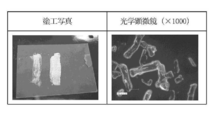
- Example 8 Visually and optically observed images of the coating liquid prepared from cellulose and 40 wt% TBAH aqueous solution in (2).
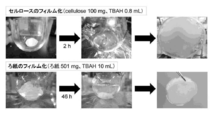
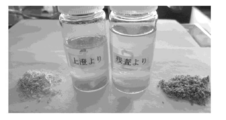
- Example 8 Visually and optically observed images of the coating liquid prepared from cellulose and a 55 wt% TBAH aqueous solution in (3). The photograph which shows precipitation of the quaternary ammonium salt of the cellulose from a supernatant liquid and a residue in [Example 9].
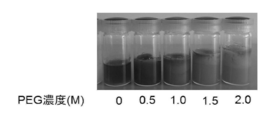
- Comparative Example of Mixed Solution in [Example 11-1] (KBr addition effect). Comparative photograph of the mixed solution in [Example 11-2] (addition effect of 18C6). Comparative photograph of the mixed solution in [Example 11-3] (difference in dissolution with and without metal ions and crown ether). Comparative photograph of the mixed solution in (1) of [Example 11-4] (when 40% TBAH aqueous solution or ion-exchanged water is used instead). Comparative photograph of the mixed solution in (2) of [Example 11-4] (when KOH or NaOH is used instead of 40% TBAH aqueous solution). The comparative photograph of the mixed solution in (3a) of [Example 11-4] (when DMSO is mixed instead of 18C6). The comparative photograph of the mixed solution in (3b) of [Example 11-4] (when PEG is mixed instead of 18C6).
- the method for producing an aqueous cellulose solution according to the present invention includes a step of contacting a cellulose raw material (purified cellulose or a substance containing cellulose) with an aqueous quaternary ammonium hydroxide solution.
- the substance dissolved in the aqueous solution obtained by the above process is presumed to be a cellulose / quaternary ammonium complex produced by the reaction of quaternary ammonium hydroxide with any hydroxy group of cellulose.
- an aqueous solution in which such a complex is estimated to be dissolved will be referred to as a “cellulose aqueous solution”.
- the “cellulose raw material” in the present invention may be a purified cellulose, that is, a general product such as cellulose powder or cellulose having the same degree of purity, or other substances containing cellulose, It may be a processed product such as a paper product obtained from a plant raw material (pulp), or may be a crop, plant waste, or other plant substance.
- the wood usually contains a relatively large amount of hemicellulose, lignin and the like in addition to cellulose, but the present invention can be applied.
- the cellulose raw material may be refined and pulverized to an appropriate size as necessary. For example, it can be used in the form of sawdust, wood chips or the like produced as a by-product during lumbering.
- the concentration of the aqueous quaternary ammonium hydroxide used in the method for producing an aqueous cellulose solution of the present invention must be not less than a predetermined value at which the cellulose dissolution reaction proceeds, preferably not less than 35% by weight. It is desirable to do.
- the “predetermined value” relating to the concentration of the quaternary ammonium hydroxide aqueous solution is estimated to be between 32 and 35% by weight under the conditions of Examples described later. If the concentration in the aqueous quaternary ammonium hydroxide solution is lower than a predetermined value, the cellulose does not dissolve and the aqueous cellulose solution may not be obtained.
- the upper limit of the concentration of the aqueous quaternary ammonium hydroxide solution can be set while taking other conditions into consideration, if necessary. If the concentration of the aqueous quaternary ammonium solution satisfies the above-mentioned concentration conditions (for example, a product having a concentration of 40% by weight is readily available), there is no need to increase it.
- the amount of quaternary ammonium hydroxide in the aqueous quaternary ammonium hydroxide solution relative to the amount of glucopyranose units constituting the cellulose in the cellulose raw material when the cellulose raw material is brought into contact with the aqueous quaternary ammonium hydroxide solution
- the ratio needs to be a predetermined value or more so that the cellulose is sufficiently dissolved in water. If the amount of quaternary ammonium hydroxide is insufficient, the cellulose may not be sufficiently dissolved.
- the lower limit of the above ratio may vary depending on the concentration of the aqueous quaternary ammonium hydroxide used. For example, when the concentration of the quaternary ammonium hydroxide aqueous solution is 55% by weight, the lower limit value can be 1.5 as described above. However, when the concentration of the quaternary ammonium hydroxide aqueous solution is 40% by weight, when the ratio is 1.5, the solubility of cellulose is poor, and it is appropriate to raise the lower limit to about 2.
- the quaternary ammonium hydroxide used in the present invention preferably has a substituted or unsubstituted alkyl group and / or a substituted or unsubstituted aryl group as four substituents. That is, the four substituents of the quaternary ammonium hydroxide can be each independently a substituted alkyl group, an unsubstituted alkyl group, a substituted aryl group, or an unsubstituted aryl group.
- the four substituents of the quaternary ammonium hydroxide can be selected from the substituents of known quaternary ammonium hydroxides.
- the total number of carbon atoms is 4 to 60, preferably Is preferably a combination of substituents such as 4-24.
- TBAH tetrabutylammonium hydroxide
- TMAH tetramethylammonium hydroxide
- BTMAH benzyltrimethylammonium
- the method for producing an aqueous cellulose solution of the present invention comprises an alkali metal halide and / or an alkaline earth metal halide dissolved in an aqueous quaternary ammonium hydroxide solution in contact with a cellulose raw material (
- the total concentration of “may be referred to as“ inorganic salt impurities. ”) Must be a predetermined value or less that does not inhibit the dissolution reaction of cellulose, and the concentration is preferably 1% by weight or less. .
- the “predetermined value” is estimated to exist between 1 and 2% by weight under the conditions of the examples described later.
- the concentration of the inorganic salt impurities dissolved in the quaternary ammonium hydroxide aqueous solution is higher than a predetermined value, the cellulose dissolution reaction may be inhibited, and the cellulose aqueous solution may not be obtained. It is ideal that the inorganic salt impurity is not substantially contained at all, that is, it is considered that the concentration should be as low as possible. Therefore, the lower limit value of the concentration of the inorganic salt impurity may not be provided (may be 0). However, if necessary, it may be set in consideration of other conditions.
- the concentration of the inorganic salt impurity dissolved in the aqueous quaternary ammonium hydroxide solution is not limited to the above range, and may exceed the above range. It is possible to dissolve cellulose.
- the concentration may be adjusted according to the change.
- inorganic salt impurities include, but are not limited to, KBr, LiBr, and NaBr. When a plurality of types of inorganic salt impurities coexist, the above concentration conditions are considered based on the total concentration of each inorganic salt impurity.
- Quaternary ammonium hydroxide that satisfies the above conditions for inorganic salt impurities can be obtained as a specific product.
- an inorganic salt impurity (KBr, etc.) is not substantially mixed in an aqueous solution of quaternary ammonium hydroxide (TBAH, etc.) manufactured by Aldrich, and is suitable as a product that satisfies the above requirements.
- TBAH quaternary ammonium hydroxide
- a predetermined purification step membrane purification, recrystallization, extraction, etc.
- the inorganic salt impurities dissolved in the aqueous quaternary ammonium hydroxide solution are assumed to be mainly contained in the aqueous quaternary ammonium hydroxide solution (for example, those mixed in the manufacturing process of the product). It can also be assumed that it is contained (for example, what was originally contained in the cellulose raw material, or that was mixed in the pretreatment performed if necessary).
- the manufacturing method of the cellulose aqueous solution by this invention is obtained while improving the dissolution rate of a cellulose, when a cellulose raw material and quaternary ammonium hydroxide are made to contact in presence of cyclic polyether (crown ether). Since transparency of a solution can be improved, it is more preferable. Even if the cyclic polyether is brought into contact with the cellulose raw material alone without using quaternary ammonium hydroxide, the cellulose can hardly be dissolved.
- the cyclic polyether examples include 12-crown-4, 15-crown-5, 18-crown-6, dibenzo-18-crown-6, and diaza-18-crown-6.
- the cyclic polyether is considered to function not only as a metal ion scavenger but also as an accelerator for improving water solubility (dissolution rate and transparency) of cellulose in cooperation with quaternary ammonium hydroxide. ing. While considering the effect, an appropriate cyclic polyether may be used according to conditions such as the kind of alkali metal ions and / or alkaline earth metal ions present in the aqueous quaternary ammonium hydroxide solution. When potassium ions are present in the aqueous quaternary ammonium hydroxide, 15-crown-5 and 18-crown-6 are preferred.
- the use of the cyclic polyether in the present invention is not limited to the case where the total concentration of the inorganic salt impurities is 1% by weight or less, but rather the total concentration of the inorganic salt impurities is more than 1% by weight. In some cases, it is suitable as a means for enabling dissolution of cellulose.
- the amount of the cyclic polyether used is not particularly limited.
- the concentration of quaternary ammonium hydroxide, the amount of cellulose, the total concentration of alkali metal halide and / or alkaline earth metal halide, cyclic polyether is usually 0.01 to 5M, although it can be adjusted as appropriate in consideration of the type of compound and the degree of desired effect (dissolution rate, transparency). Preferably it is 0.5-2M.
- the step of bringing the cellulose raw material into contact with the aqueous quaternary ammonium hydroxide can be performed by mixing them in a reaction vessel while stirring.
- a quaternary ammonium hydroxide for example, a quaternary ammonium hydroxide aqueous solution and a cyclic polyether may be mixed in advance, and this solution and cellulose may be mixed.
- the reaction time may be sufficient for cellulose to dissolve depending on the cellulose raw material to be used and the form of the aqueous quaternary ammonium hydroxide, but it is generally about 1 to 6 hours. If a cyclic polyether is used, this time can be reduced to 10 minutes.
- the reaction temperature can usually be room temperature, but if necessary, it may be heated or cooled so that the reaction proceeds at an appropriate rate.
- a method for producing a cellulose / quaternary ammonium complex according to the present invention comprises mixing a cellulose aqueous solution obtained by the production method as described above and a poor solvent for cellulose. Including a step of precipitating a quaternary ammonium complex.
- the quaternary ammonium hydroxide used for dissolving cellulose can be reused after removing a poor solvent such as methanol from which cellulose has been reprecipitated.
- the method for producing a cellulose / quaternary ammonium complex of the present invention can be used as a method for obtaining a cellulose / quaternary ammonium complex as an intermediate product in the course of the production method for obtaining a desired final product. it can.
- the use of the cellulose / quaternary ammonium complex recovered by the method of the present invention is not particularly limited.
- the efficiency of enzymatic saccharification of cellulosic biomass used for bioethanol production can be improved.
- cellulose has a crystal structure
- crystalline cellulose has a complex structure surrounded by hemicellulose and lignin, and solid-liquid reaction is used until the final stage of saccharification.
- the manufacturing method of the cellulose film by this invention includes the process of removing a solvent by drying from the cellulose aqueous solution obtained by the above manufacturing methods.
- the solvent used in the cellulose aqueous solution of the present invention is water, it can be easily removed by natural drying or general drying means. Therefore, for example, by removing the solvent after spreading the aqueous cellulose solution on a flat surface, a film that is dissolved in the aqueous cellulose solution, that is, formed from a cellulose / quaternary ammonium complex, is re-dissolvable in water ( In the present invention, this is referred to as “cellulose film”).
- cellulose aqueous solution various cellulose products can be manufactured, such as manufacturing a cellulose fiber using a solution (wet) spinning method, for example.
- the cellulose fiber production method using the cellulose aqueous solution of the present invention can be applied to a conventional cellulose fiber production method.
- the cellulose aqueous solution can be applied from a spinning nozzle to an appropriate coagulating liquid (for example, methanol or the like).
- Cellulose fibers composed of a cellulose / quaternary ammonium complex can be produced by extrusion into a solvent), recovery, washing and the like.
- the manufacturing method of the cellulose derivative by this invention includes the process of mixing the cellulose aqueous solution obtained by the above manufacturing methods, and the hydroxy group reactive compound used as the raw material of a cellulose derivative.
- hydroxy group-reactive compound a compound having a functional group capable of reacting with the hydroxy group of the cellulose in a cellulose solution, desirably under mild conditions (for example, only by stirring at room temperature) is used. be able to.
- a compound is selected according to the target cellulose derivative, and a compound used in a conventional method for producing a cellulose derivative can also be used in the present invention.
- hydroxyl group-reactive compound examples include ⁇ , ⁇ -unsaturated nitriles, epoxides, organic carboxylic acid anhydrides such as acetic anhydride, ⁇ , ⁇ -unsaturated carboxylic acid esters, and alkyl halides. Any compound can be added to an aqueous cellulose solution and stirred at room temperature for a sufficient time to react with the cellulose / quaternary ammonium complex to produce a predetermined derivative.
- ⁇ , ⁇ -unsaturated nitrile, epoxide, and organic carboxylic acid anhydride are, in order, cyanoethyl cellulose, hydroxyalkyl (ethyl, propyl, hexyl, etc.) cellulose, acyl (acetyl, etc.), respectively. ) It can be used as a raw material for producing cellulose.
- alkyl cellulose ester compounds such as methyl cellulose
- alkyl halide such as methyl chloride
- the mode of the reaction between the cellulose / quaternary ammonium complex and the hydroxy group-reactive compound in the cellulose aqueous solution is not particularly limited.
- epoxy hexane see [Example 6] described later
- quaternary ammonium hydroxide is added to some hydroxy groups in the cellulose.
- cyanoethyl cellulose is recovered after a treatment in which the quaternary ammonium hydroxide is further removed by addition of an acid to return it to a hydroxy group.
- the step of mixing the aqueous cellulose solution and the hydroxy group-reactive compound in this method for producing a cellulose derivative can be performed as a continuous step from the aforementioned method for producing an aqueous cellulose solution. That is, when a cellulose aqueous solution in which a cellulose / quaternary ammonium complex is produced according to the present invention is produced, a hydroxy group-reactive compound can be added to the cellulose aqueous solution to perform the step.
- the process of the method for producing a cellulose derivative may be performed again.
- the cellulose derivatization reaction is preferably allowed to proceed under mild conditions as described above (for example, only by stirring at room temperature). However, if necessary, heating, cooling, and other purposes of the present invention are lost. You may make it advance by adding operation of the grade which is not made to reject.
- the produced cellulose derivative can be recovered by using a known method, for example, filtering after adding a poor solvent and precipitating.
- the cellulose derivative obtained by the production method of the present invention can be used in the same application as the cellulose derivative obtained by a conventional method.
- packaging eg packaging film: acetylcellulose
- woven fabric eg fiber: acetylcellulose
- plastic eg molded product: acetylcellulose, ethylcellulose
- photograph eg film: acetylcellulose
- surface coat eg lacquer: nitro
- a processed product formed from the cellulose derivative using an aqueous solution of the cellulose derivative obtained by the production method as described above.
- the solvent of the cellulose derivative aqueous solution can be easily removed by natural drying or general drying means, a film made of the cellulose derivative is produced by removing the solvent after the cellulose derivative aqueous solution is developed. can do.
- carboxyethyl cellulose can be produced by reacting cyanoethyl cellulose with sodium hydroxide.
- Example 1-2 The cellulose-ammonium complex was isolated according to the procedure shown in FIG. Although cellulose itself is insoluble in DMSO, the solid after the reaction of cellulose and TBAH was dissolved in DMSO after washing with ethyl acetate, ethanol and acetone. It was presumed to be an ammonium salt of cellulose (not an attached substance).
- the IR spectrum of the collected solid is shown in FIG. It shows that the collected solid is a substance different from cellulose.
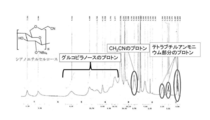
- the 1 H-NMR spectrum is shown in FIG. 3 (bottom). This indicates that the recovered solid has a tetrabutylammonium moiety, and it is considered that any hydroxy group of cellulose is ammoniumated.
- Example 2 Cellulose and filter paper were each dissolved in tetrabutylammonium hydroxide (Aldrich, 40% in water), and the resulting solution was transferred to a petri dish and allowed to dry naturally. A film was formed from each.
- tetrabutylammonium hydroxide Aldrich, 40% in water
- the TBAH product 2 contains about 2.1% by weight of K + and about 2.4% by weight of Br ⁇
- the TBAH product 3 contains about 2.0% by weight of K + and about 1% of Br ⁇ . 9% by weight (refer to columns K-KA and BR-KA, respectively), but TBAH product 1 (Aldrich) contains virtually no K + and Br ⁇ it is conceivable that. It has been confirmed that cellulose can always be dissolved when TBAH product 1 is used, whereas cellulose cannot be dissolved when TBAH products 2 and 3 are used (depending on the lot).
- Example 3-2 The TBAH product 1 (manufactured by Aldrich) with KBr added at the following levels was added to a 20 ml test tube containing 500 mg of a small cut filter paper (qualitative filter paper No. 2). The solubility of cellulose after standing at 10 ° C. for 12 hours was visually confirmed, and the state where the filter paper was dissolved was evaluated as “ ⁇ ”, and the state where the filter paper was not dissolved was evaluated as “X” (see FIG. 5). The results are shown in the table below. Entry where KBr concentration in TBAH exceeds 5% by weight In No. 4, cellulose could not be dissolved.
- Example 3-3 Salt was added to 10 ml of an aqueous quaternary ammonium hydroxide solution at each level, and 500 mg of small cut filter paper (qualitative filter paper No. 2) was added to a 20 ml test tube and allowed to stand at 10 ° C. for 12 hours. The results are shown in the table below. The evaluation criteria for solubility are the same as in Example 3-2. Tetrabutylammonium hydroxide (TBAH), tetramethylammonium hydroxide (TMAH), and benzyltrimethylammonium hydroxide (BTMAH) are all manufactured by Aldrich, and all of the products are initial (when no KBr is added). The KBr concentration is approximately 0% by weight.
- TBAH Tetrabutylammonium hydroxide
- TMAH tetramethylammonium hydroxide
- BTMAH benzyltrimethylammonium hydroxide
- the inorganic salt When the inorganic salt was 1% by weight or less, cellulose was dissolved in any aqueous solution of quaternary ammonium salt (concentration 40% by weight). On the other hand, when the inorganic salt was 2% by weight or more, it did not dissolve in any aqueous solution of quaternary ammonium salt, and did not dissolve even when the concentration of quaternary ammonium salt was increased.
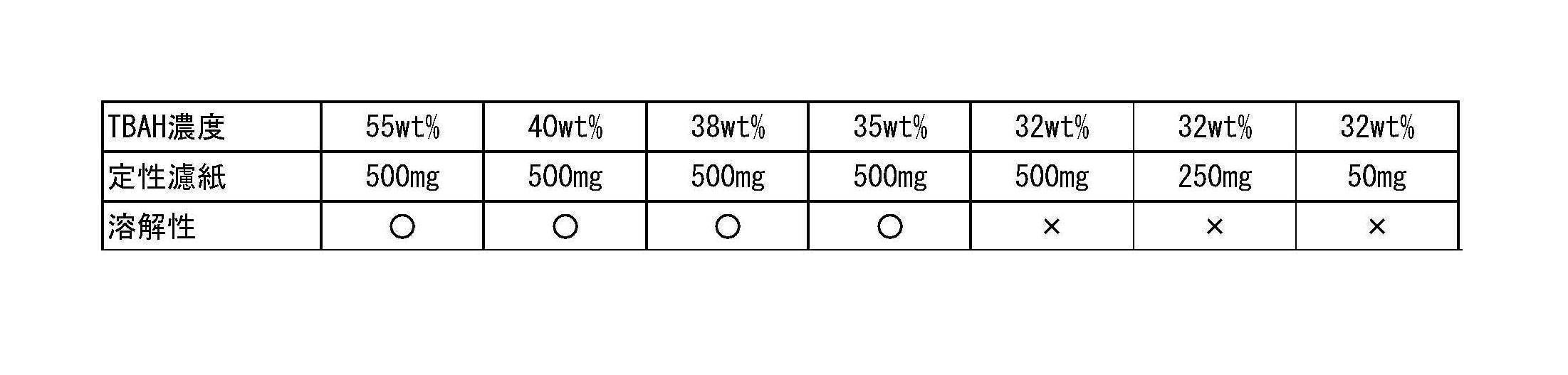
- Example 4 A small cut filter paper (qualitative filter paper No. 2) was placed in a 20 ml test tube, 10 ml of each of the following levels of diluted tetrabutylammonium hydroxide (TBAH) was added, and the mixture was allowed to stand at 10 ° C. for 24 hours. The results are shown in the table below. The evaluation criteria for solubility are the same as in Example 3-2. In the case of TBAH, it was confirmed that cellulose was dissolved at a concentration of 35% by weight or more. However, at 32% by weight, cellulose could not be dissolved regardless of the amount of cellulose.
- TBAH diluted tetrabutylammonium hydroxide
- the manufacturing method of the conventional cyanoethyl cellulose uses NaOH, and as a side reaction, there is a problem that hydrolysis occurs in the cyano group introduced into cellulose.
- the above-described method according to the present invention is advantageous in that hydrolysis is unlikely to occur because an aqueous solution of a quaternary ammonium hydroxide (TBAH or the like) that is a weak base is used.
- TBAH quaternary ammonium hydroxide
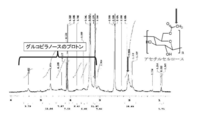
- FIG. 7 shows the 1 H-NMR spectrum of the collected solid. Proton peaks of CH 2 CN, glucopyranose, and tetrabutylammonium were confirmed. From these results, it was estimated that the recovered solid was an ammonium salt of cyanoethyl cellulose.
- Example 5-1 A stirring bar and the solid recovered in Example 5-1 were placed in a 10 ml two-necked reactor, and N 2 was substituted. Water was added and stirring was started to completely dissolve the cellulose. 10% hydrochloric acid was added and stirred at room temperature for 1 hour. Reprecipitation was performed with methanol, and suction filtration was performed to collect a solid. The recovered amount was 2.32 g. The recovered solid was soluble in both DMSO and water.
- Example 5-3 160 mg of the solid (cyanoethyl cellulose) recovered in Example 5-1 was dissolved in 3 ml of water, transferred to a petri dish and naturally dried for 36 hours to form a film. This film was translucent.
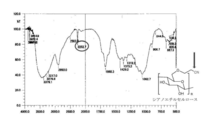
- the IR spectrum of the collected solid is shown in FIG. Absorption of a cyano group was confirmed at 2252.7 cm ⁇ 1 .
- the 1 HNMR spectrum is shown in FIG. Although the protons of CH 2 CN and glucopyranose were confirmed, the proton peak of the tetrabutylammonium moiety disappeared. From these results, it was estimated that the recovered solid was cyanoethyl cellulose.
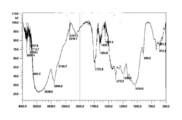
- FIG. 11 shows the IR spectrum of the obtained white solid.
- the NMR spectrum is shown in FIG. 1 H-NMR (300 MHz, DMSO) ⁇ 0.80-1.00 (m), 1.20-1.48 (m) 3.00-5.80 (m); IR (KBr) 3174, 2869, 2364, 2129, 2044, 1643, 1431, 1049, 675cm -1 ; From these spectral data, it was judged that cellulose was modified.
- the appearance and IR spectrum of the obtained white solid are shown in FIG. 1735.8 Absorption of a carbonyl group was confirmed at cm- 1 .
- the 1 H-NMR spectrum is shown in FIG. 1 H-NMR (300 MHz, DMSO) ⁇ 1.80-2.10 (m), 4.10 (q) 3.00-5.80 (m); IR (KBr) 3228,2896,1735,1654, 1375, 1244, 1033, 896, 613cm -1 ; Signals of glucopyranose and acetyl group were confirmed. From these results, it was judged that acetylcellulose was produced.
- the said IR spectrum corresponded with the IR spectrum with a commercial item (Kishida Chemical Co., Ltd. acetylcellulose, acetic acid degree 55%).
- Acetylcellulose (299 mg), N, N-dimethylaminopyridine (DMAP) (150 mg, mmol), propionic anhydride (4.5 ml, mmol) were added to replace N 2 , DMSO (4 ml), pyridine (4.5 ml) ) And stirred at 100 ° C. for 1 h.
- the product was precipitated by adding 15 ml of methanol, filtered and dried with a vacuum pump to obtain 321 mg of the desired product as a white solid.
- Example 8 A coating solution was prepared by mixing 560 mg of cellulose (Merck, Inc., 102330) and 3 g of an aqueous acrylic resin (Washin Paint aqueous polish varnish, solid content 30%). This coating solution was applied onto a flat plate, and the state of cellulose before dissolution was observed visually and with an optical microscope. The coated sample was white, and when observed with an optical microscope, cellulose fine particles were observed as they were (see FIG. 17).
- Example 9 Extraction of cellulose from sawdust Wood was cut with an electric saw to prepare sawdust. A 10 ml two-necked reactor was charged with 200 mg of a stir bar and its sawdust and replaced with N 2 . 5 ml of tetrabutylammonium hydroxide aqueous solution (Aldrich, 40% in water, MW 259.47, d0.99, 7.71 mmol) was added, and the mixture was stirred at room temperature for 3 days. When the supernatant (2.89 g) was transferred to a vial and 9 ml of methanol was added, cellulose / quaternary ammonium salt was precipitated. Further, when 9 ml of methanol was added to the residue, cellulose / quaternary ammonium salt was precipitated from here.
- tetrabutylammonium hydroxide aqueous solution Aldrich, 40% in water, MW 259.47, d0.99, 7.71 mmol
- Example 10-1 515 mg (3.2 mmol) of cellulose was added to 5 ml of tetrabutylammonium hydroxide (TBAH) (manufactured by Aldrich, 40 wt% aqueous solution, 2.39 equivalents with respect to cellulose) while stirring little by little.
- Sample A after standing for 1 week and Sample B after standing for 1 day were observed with a 40 ⁇ bright field and a polarizing microscope (POM).
- Neither sample A nor B was considered to be an isotropic solution because no fibrous substance was observed and birefringence based on the anisotropy (crystallinity) of the sample was not observed in the POM image.
- Example 10-2 Cellulose (515mg, 3.2 mmol) and 5 ml of TBAH (Aldrich, 40% aqueous solution, 2.39 equivalents) were added, and after 5 h, 15 ml of methanol was added for reprecipitation. The white solid was collected by filtration and dried with a vacuum pump for 5 h to obtain 601 mg of a crisp solid.
- FIG. 22 shows a wide-angle X-ray analysis profile (measurement conditions: sample shape, pulverized in a mortar for 2 minutes; room temperature; sampling every 0.01 °; scan speed, 2 ° / min) of this solid (reprecipitation sample).
- Cellulose type I is a crystal system unique to natural cellulose.
- the amorphous halo is bimodal, and the peak position corresponds to the cellulose II crystal.
- Cellulose II is a crystal system peculiar to a sample precipitated (regenerated) through a molecularly dispersed dissolved state, and cellophane, rayon, and the like are applicable. Together with the results of observation with a polarizing microscope, it is considered that cellulose is dissolved in this solvent as it appears.
Landscapes
- Chemical & Material Sciences (AREA)
- Chemical Kinetics & Catalysis (AREA)
- Organic Chemistry (AREA)
- Engineering & Computer Science (AREA)
- Medicinal Chemistry (AREA)
- Polymers & Plastics (AREA)
- Health & Medical Sciences (AREA)
- Life Sciences & Earth Sciences (AREA)
- Materials Engineering (AREA)
- Biochemistry (AREA)
- Wood Science & Technology (AREA)
- General Chemical & Material Sciences (AREA)
- Textile Engineering (AREA)
- Polysaccharides And Polysaccharide Derivatives (AREA)
- Artificial Filaments (AREA)
Abstract
【課題】比較的安全性の高い物質を用いて温和な条件下でセルロースを溶解することのできる手段を提供する。 【解決手段】セルロース精製物またはセルロースを含有する物質と水酸化四級アンモニウム水溶液とを接触させる工程を含むセルロース水溶液の製造方法であって、前記セルロース原料と接触した状態において、前記水酸化四級アンモニウム水溶液中に溶解しているアルカリ金属のハロゲン化物および/またはアルカリ土類金属のハロゲン化物の合計の濃度が1重量%以下であることを特徴とするセルロース水溶液の製造方法。あるいは、セルロース原料と水酸化四級アンモニウム水溶液とを接触させる工程を含むセルロース水溶液の製造方法であって、前記セルロース原料と前記水酸化四級アンモニウム水溶液との接触を環状ポリエーテルの存在下に行うことを特徴とするセルロース水溶液の製造方法。
Description
本発明は、セルロース水溶液の製造方法および当該製造方法により得られたセルロース水溶液を用いるセルロース誘導体の製造方法に関する。
アセチルセルロース、ニトロセルロース、シアノエチルセルロースなどに代表されるセルロース誘導体は、包装、織物、プラスチック、写真、表面コート、軍需、飛行機、記録、化学薬品、医薬、タバコ、電気などの幅広い産業部門において様々な用途を有する、産業上極めて重要な素材である。
セルロース誘導体は一般的に、セルロースが有するヒドロキシ基に様々な官能基を導入する(誘導体化する)ことで製造される。しかしながら、セルロースはグルコピラノース1単位あたり3つのヒドロキシ基を有し、これらのヒドロキシ基同士が分子内または分子間で起こす水素結合の力は極めて強いため、セルロースは水および大部分の有機溶媒に不溶ないし難溶である。そのため、セルロース誘導体の製造に先立って、セルロースが各種の溶媒に溶解できるようにするために、以下に挙げるような溶解法により水素結合の開裂と再形成防止のための処理が行われている。
第一の溶解法として、セルロースの錯体を形成させる方法が慣用されている。たとえば、[Cu(NH3)4](OH)2を用いる銅アンモニア法では、セルロースのC(2)位およびC(3)位のヒドロキシ基に銅がδ配位する(下記(a)参照)。Ca(SCN)2を用いるチオシアン酸カルシウム法では、カルシウムイオンがC(5)位およびC(6)位に配位し、五員環構造をとると考えられる(下記(b)参照)。SO2/ジエチルアミン法は、セルロースのヒドロキシ基全てにSO2-アミン錯体が1:1の割合で錯体を形成する(下記(c)参照)。


その他、近年では、DMAC(N,N-dimethylacetamide)/LiCl法、DMSOdimethylsulfoside)/TBAF(tetrabutylammonium
fluoride
trihydrate)法、イオン液体を用いる方法なども知られている。しかしながら、たとえばイオン液体を用いる方法には、イオン液体は高価であり、生成物の分離が難しいなど、工業的な利用には向かない面がある。
fluoride
trihydrate)法、イオン液体を用いる方法なども知られている。しかしながら、たとえばイオン液体を用いる方法には、イオン液体は高価であり、生成物の分離が難しいなど、工業的な利用には向かない面がある。
また、非特許文献1、非特許文献2および非特許文献3には、セルロースが各種アミン類とも付加化合物(アミンセルロース)を形成し、それによりセルロースを膨潤ないし溶解すること、当該アミンとしてテトラメチルアンモニウムヒドロキシド、テトラエチルアンモニウムヒドロキシドなどが挙げられること、当該アミンのアルキル基の大きなものほどセルロースが分散溶解する最低濃度が低いことなどが記載されている。
非特許文献4には、tetrabutylphosphonium
hydroxide(TBPH)またはtetrabutylammoniumhydroxide(TBAH)を用いてセルロースを溶液化することが記載されている。しかしながら、TBPHは原材料コストおよび排水処理等の問題に関して大きな課題があるといえる。また、この文献のTable
2には、TBAH中の水の濃度とセルロースの量を変えた実験が示されているが、Run1のwater content
60%(TBAH40%相当)の結果をみると、セルロースが0.5wt%であっても溶解しないことがわかる。
hydroxide(TBPH)またはtetrabutylammoniumhydroxide(TBAH)を用いてセルロースを溶液化することが記載されている。しかしながら、TBPHは原材料コストおよび排水処理等の問題に関して大きな課題があるといえる。また、この文献のTable
2には、TBAH中の水の濃度とセルロースの量を変えた実験が示されているが、Run1のwater content
60%(TBAH40%相当)の結果をみると、セルロースが0.5wt%であっても溶解しないことがわかる。
上記のように様々な方法が提案されているにもかかわらず、今日まで、四級アンモニウム塩を用いてセルロースを溶解する方法は実用化されていなかった。
一方、代表的なセルロース誘導体の製造方法としては、次のようなものが知られている。
一方、代表的なセルロース誘導体の製造方法としては、次のようなものが知られている。
シアノエチルセルロースの製造方法として、非特許文献5には、セルロースと水酸化ナトリウムおよび不飽和ニトリルとを反応させる方法が記載されている。しかしながらこの方法では水酸化ナトリウムを用いるので、副反応として、セルロースに導入したシアノ基における加水分解が起きるという問題がある。
ヒドロキシアルキルセルロースの製造方法としては、特許文献1に記載されているようにセルロースと水酸化ナトリウムとを反応させた後、エポキシド(グリシジル化合物)を反応させるという方法がある。しかしながらこの方法には、置換度や選択性が低い、水洗・乾燥後の副生成物(ナトリウム塩)が残留する、強塩基(水酸化ナトリウム)とエポキシドの直接反応による副生成物が生じる可能性があるなどの問題がある。
セルロースハンドブック、1958年、朝倉書店、祖父江寛 他
Th. Liser, Ann., 528, 276 (1937)
Th. Liser and Erich Leckzyck, Ann, 522, 56 (1936)
Chem.Commun., 2012, 48, 1808-1810
Zhou, J.; Li, Q.; Song, Y.; Zhangand, L.; Lin, X. Polym. Chem., 2010, 1, 1662-1668.
上述したような従来のセルロースの溶解方法、あるいはその溶解方法により得られたセルロース溶液からセルロースを回収する方法には、重金属やその塩、毒性や爆発性を有する物質、高価な物質の使用や、爆砕や極低温への冷却など過酷な操作が必要であった。
また、セルロースを溶解するとともにシアノエチルセルロース、ヒドロキシアルキルセルロース、アセチルセルロースなどに誘導体化する従来の方法にも各種の問題点があった。
本発明はこのような課題を解決するため、比較的安全性の高い物質を用いて温和な条件下でセルロースを溶解する(換言すればセルロース溶液を製造する)ことのできる手段を提供することを目的とする。
本発明者らは、テトラブチルアンモニウムヒドロキシド(TBAH)等の水酸化四級アンモニウム水溶液にセルロースを接触させることにより、セルロースを容易に溶解させることができるとの知見を得たが、この際、同じ種類の水酸化四級アンモニウム水溶液であっても、製品(ないしロット)によって、セルロースの溶解に常に成功するものと失敗しやすいものとがあることに気付いた。本発明者らはその原因を追究し、水酸化四級アンモニウム水溶液に混在している金属イオン(たとえばKBr等のアルカリ金属の無機塩)の濃度が所定の値以下の製品を選択することにより、セルロースを確実に溶解できる、実用的な溶解系を利用することができるようになることを見いだした。
さらに、前記金属イオンの存在下でも、水酸化四級アンモニウム水溶液に環状ポリエーテル(「クラウンエーテル」と呼ばれることもある。)を添加するとセルロースが溶解することを見いだした。この際、環状ポリエーテルは、単に金属イオンの捕捉剤としてではなく、水酸化四級アンモニウムと協同してセルロースの水溶性を向上する促進剤としても機能しており、溶解速度を著しく促進するとともに得られる溶液の透明性を増す。このような効果は、DMSOや鎖状ポリエーテルであるPEGには見られず、環状ポリエーテルに特有のものである。
また、上記のようにして得られるセルロース水溶液(溶解系)は、セルロース誘導体の製造やセルロースの回収等のために極めて有用であること、すなわち、セルロース水溶液にアクリロニトリル、エポキシド、無水酢酸、アクリル酸エステル、ハロゲン化アルキル等を添加し、室温下で混合するだけで、それぞれに対応するシアノエチルセルロース、ヒドロキシアルキルセルロース、アセチルセルロース等の誘導体が定量的に生成することや、セルロース水溶液にメタノール等のセルロースの貧溶媒を添加することにより容易にセルロースを析出させて回収することができることなどを見いだし、本発明を完成させるに至った。
すなわち、本発明は下記の発明を包含する。
[1] セルロース精製物またはセルロースを含有する物質(以下「セルロース原料」と総称する。)と水酸化四級アンモニウム水溶液とを接触させる工程を含むことを特徴とする、セルロース水溶液の製造方法。
[2] セルロース精製物またはセルロースを含有する物質(以下「セルロース原料」と総称する。)と水酸化四級アンモニウム水溶液とを接触させる工程を含むセルロース水溶液の製造方法であって、
前記セルロース原料と接触した状態において、前記水酸化四級アンモニウム水溶液中に溶解しているアルカリ金属のハロゲン化物および/またはアルカリ土類金属のハロゲン化物の合計の濃度が1重量%以下であることを特徴とする[1]に記載のセルロース水溶液の製造方法。
[1] セルロース精製物またはセルロースを含有する物質(以下「セルロース原料」と総称する。)と水酸化四級アンモニウム水溶液とを接触させる工程を含むことを特徴とする、セルロース水溶液の製造方法。
[2] セルロース精製物またはセルロースを含有する物質(以下「セルロース原料」と総称する。)と水酸化四級アンモニウム水溶液とを接触させる工程を含むセルロース水溶液の製造方法であって、
前記セルロース原料と接触した状態において、前記水酸化四級アンモニウム水溶液中に溶解しているアルカリ金属のハロゲン化物および/またはアルカリ土類金属のハロゲン化物の合計の濃度が1重量%以下であることを特徴とする[1]に記載のセルロース水溶液の製造方法。
[3] 前記水酸化四級アンモニウム水溶液の濃度が35重量%以上である、[1]に記載のセルロース水溶液の製造方法。
[4] 前記水酸化四級アンモニウムが、置換もしくは非置換のアルキル基および/または置換もしくは非置換のアリール基を4つの置換基として有するものであり、当該4つの置換基の炭素原子数の合計が4~60である、[2]に記載のセルロース水溶液の製造方法。
[4] 前記水酸化四級アンモニウムが、置換もしくは非置換のアルキル基および/または置換もしくは非置換のアリール基を4つの置換基として有するものであり、当該4つの置換基の炭素原子数の合計が4~60である、[2]に記載のセルロース水溶液の製造方法。
[5] セルロース原料と水酸化四級アンモニウム水溶液とを接触させる工程を含むセルロース水溶液の製造方法であって、前記セルロース原料と前記水酸化四級アンモニウム水溶液との接触を環状ポリエーテルの存在下に行うことを特徴とするセルロース水溶液の製造方法。
[6] 前記環状ポリエーテルが、12-クラウン-4、15-クラウン-5、18-クラウン-6、ジベンゾ-18-クラウン-6およびジアザ-18-クラウン-6からなる群から選ばれた少なくとも1種である、[4]に記載のセルロース水溶液の製造方法。
[7] 前記水酸化四級アンモニウム水溶液中の環状ポリエーテルの濃度が0.01~5Mである[5]に記載のセルロース水溶液の製造方法。
[8][1]~[7]のいずれかに記載の製造方法により得られる、セルロース水溶液。
[8][1]~[7]のいずれかに記載の製造方法により得られる、セルロース水溶液。
[9] [1]~[7]のいずれかに記載の製造方法により得られるセルロース水溶液中に生成している、セルロースと水酸化四級アンモニウムとから形成された複合体。
[10] [1]~[7]のいずれかに記載の製造方法により得られるセルロース水溶液と、セルロース誘導体の原料となるヒドロキシ基反応性化合物とを混合する工程を含むことを特徴とする、セルロース誘導体の製造方法。
[10] [1]~[7]のいずれかに記載の製造方法により得られるセルロース水溶液と、セルロース誘導体の原料となるヒドロキシ基反応性化合物とを混合する工程を含むことを特徴とする、セルロース誘導体の製造方法。
[11] 前記ヒドロキシ基反応性化合物が、α,β-不飽和ニトリル、エポキシド、有機カルボン酸無水物、α,β-不飽和カルボン酸エステルおよびハロゲン化アルキルからなる群より選択されるものである、[10]に記載のセルロース誘導体の製造方法。
[12] [1]~[7]のいずれかに記載の製造方法により得られるセルロース水溶液と、セルロースの貧溶媒とを混合し、セルロース・四級アンモニウム複合体を析出させる工程を含むことを特徴とする、セルロース・四級アンモニウム複合体の製造方法。
[13] [1]~[7]のいずれかに記載の製造方法により得られるセルロース水溶液から、乾燥により溶媒を除去する工程を含むことを特徴とする、セルロースフィルムの製造方法。
[14] [13]に記載の製造方法により得られるセルロースフィルム。
[15] [1]~[7]のいずれかに記載の製造方法により得られるセルロース水溶液を紡糸することを特徴とする、セルロース繊維の製造方法。
[15] [1]~[7]のいずれかに記載の製造方法により得られるセルロース水溶液を紡糸することを特徴とする、セルロース繊維の製造方法。
[16] [15]に記載の製造方法により得られるセルロース繊維。
本発明では、セルロースを溶解させるための前処理は不要であり、セルロース原料と水酸化四級アンモニウム水溶液とを常温下で接触させるだけでセルロース水溶液を容易に製造することができる。セルロース原料としては、セルロースの精製物のみならず、濾紙のようなセルロース製品やおがくずのような植物廃材を用いることができる。
また、本発明により得られるセルロース水溶液は、さらに各種の誘導体を製造したり、セルロースを回収したりするために利用できる、汎用性のある原料となる。すなわち、このセルロース水溶液に誘導体化のための各種の化合物を添加すれば、温和な条件下で混合するだけで各誘導体を定量的に製造することができるし、セルロース水溶液にメタノール等の貧溶媒を添加すれば、再沈殿によりセルロース誘導体を単離することができる。
このような本発明は、特殊な装置や技術を要することなく、温和な条件下で実施できるため、セルロース精製物やセルロース誘導体、これらの加工品などを工業的な大規模で、安全に、低コストで製造することができるようになると期待される。
-セルロース水溶液-
本発明によるセルロース水溶液の製造方法は、セルロース原料(セルロース精製物またはセルロースを含有する物質)と水酸化四級アンモニウム水溶液とを接触させる工程を含む。上記工程により得られる水溶液中に溶解している物質は、セルロースのいずれかのヒドロキシ基に水酸化四級アンモニウムが反応して生成したセルロース・四級アンモニウム複合体であると推定されるが、本発明ではそのような複合体が溶解していると推定される水溶液を「セルロース水溶液」と称することにする。
本発明によるセルロース水溶液の製造方法は、セルロース原料(セルロース精製物またはセルロースを含有する物質)と水酸化四級アンモニウム水溶液とを接触させる工程を含む。上記工程により得られる水溶液中に溶解している物質は、セルロースのいずれかのヒドロキシ基に水酸化四級アンモニウムが反応して生成したセルロース・四級アンモニウム複合体であると推定されるが、本発明ではそのような複合体が溶解していると推定される水溶液を「セルロース水溶液」と称することにする。
・セルロース原料
本発明における「セルロース原料」は、セルロース精製物、すなわちセルロース粉末などとして一般的な製品やそれと同程度の純度を有するセルロースであってもよいし、その他のセルロースを含有する物質、すなわち植物原料(パルプ)から得られる紙製品等の加工品などであってもよいし、作物、植物廃棄物、その他の植物性の物質などであってもよい。なお、木質は通常、セルロース以外にも比較的多量のヘミセルロース、リグニン等を含有するが、本発明を適用することが可能である。セルロース原料は、必要に応じて適切なサイズに微細化、粉末化しておいてもよく、たとえば、製材の際に副製するおがくず、木質チップ等の形態でも利用できる。
本発明における「セルロース原料」は、セルロース精製物、すなわちセルロース粉末などとして一般的な製品やそれと同程度の純度を有するセルロースであってもよいし、その他のセルロースを含有する物質、すなわち植物原料(パルプ)から得られる紙製品等の加工品などであってもよいし、作物、植物廃棄物、その他の植物性の物質などであってもよい。なお、木質は通常、セルロース以外にも比較的多量のヘミセルロース、リグニン等を含有するが、本発明を適用することが可能である。セルロース原料は、必要に応じて適切なサイズに微細化、粉末化しておいてもよく、たとえば、製材の際に副製するおがくず、木質チップ等の形態でも利用できる。
・水酸化四級アンモニウム
本発明のセルロース水溶液の製造方法に用いる水酸化四級アンモニウム水溶液の濃度は、セルロースの溶解反応が進行する所定の値以上とする必要があり、好ましくは35重量%以上で行うことが望ましい。上記水酸化四級アンモニウム水溶液の濃度に係る「所定の値」は、後記実施例の条件下では、32~35重量%の間に存在すると推測される。水酸化四級アンモニウム水溶液中の濃度が所定の値より低いと、セルロースが溶解せず、セルロース水溶液が得られないおそれがある。当該水酸化四級アンモニウム水溶液の濃度の上限値は、必要であれば他の条件を考慮しながら設定することもできるが、通常は特に設定されるべきものではなく、製品として入手できる水酸化四級アンモニウム水溶液の濃度が上記の濃度の条件を満たしていれば(たとえば当該濃度が40重量%の製品は容易に入手可能である)、それより高める必要はない。
本発明のセルロース水溶液の製造方法に用いる水酸化四級アンモニウム水溶液の濃度は、セルロースの溶解反応が進行する所定の値以上とする必要があり、好ましくは35重量%以上で行うことが望ましい。上記水酸化四級アンモニウム水溶液の濃度に係る「所定の値」は、後記実施例の条件下では、32~35重量%の間に存在すると推測される。水酸化四級アンモニウム水溶液中の濃度が所定の値より低いと、セルロースが溶解せず、セルロース水溶液が得られないおそれがある。当該水酸化四級アンモニウム水溶液の濃度の上限値は、必要であれば他の条件を考慮しながら設定することもできるが、通常は特に設定されるべきものではなく、製品として入手できる水酸化四級アンモニウム水溶液の濃度が上記の濃度の条件を満たしていれば(たとえば当該濃度が40重量%の製品は容易に入手可能である)、それより高める必要はない。
なお、用いる水酸化四級アンモニウムの種類を変化させても、上記のような水酸化四級アンモニウム水溶液の望ましい濃度には同じ傾向が見られるが、必要であれば、用いる水酸化四級アンモニウムに応じて濃度を調整してもよい。
また、セルロース原料と水酸化四級アンモニウム水溶液とを接触させる際の、セルロース原料中のセルロースを構成するグルコピラノース単位の物質量に対する、水酸化四級アンモニウム水溶液中の水酸化四級アンモニウムの物質量の割合は、セルロースが十分に水に溶解するよう所定の値以上とする必要がある。水酸化四級アンモニウムの量が不足すると、セルロースが十分に溶解しないおそれがある。
なお、上記割合の下限値は用いる水酸化四級アンモニウム水溶液の濃度によって変動する可能性がある。たとえば、水酸化四級アンモニウム水溶液の濃度が55重量%である場合は、上記のように下限値を1.5とすることができる。ところが、水酸化四級アンモニウム水溶液の濃度が40重量%である場合は、上記割合が1.5ではセルロースの溶解性が悪く、下限値を2程度に引き上げることが適切である。セルロース原料の量および水酸化四級アンモニウム水溶液の濃度を勘案しながら、水酸化四級アンモニウムの量が不足してセルロースの溶解性に悪影響を与えることのないよう、水酸化四級アンモニウム水溶液の添加量を調整することが適切である。
一方、上記割合の上限値は特に設定する必要はなく、通常は水酸化四級アンモニウムが過剰であってもセルロースの溶解性に悪影響はないと考えられるが、コストやその他の条件を勘案して水酸化四級アンモニウムの濃度は適度な範囲に留めておくことが適切である。
本発明で用いる水酸化四級アンモニウムは、好ましくは、置換もしくは非置換のアルキル基および/または置換もしくは非置換のアリール基を4つの置換基として有するものである。つまり、上記水酸化四級アンモニウムの4つの置換基は、それぞれ独立に、置換アルキル基、非置換アルキル基、置換アリール基または非置換アリール基であり得る。
また、上記水酸化四級アンモニウムの4つの置換基は、公知の水酸化四級アンモニウムが有する置換基の中から選択することが可能であるが、たとえば炭素原子数の合計が4~60、好ましくは4~24となるような置換基の組み合わせとすることが好ましい。
このような炭素原子数に係る条件を満たす水酸化四級アンモニウムの具体例としては、テトラブチルアンモニウムヒドロキシド(TBAH、炭素原子数16)、テトラメチルアンモニウムヒドロキシド(TMAH、炭素原子数4)、ベンジルトリメチルアンモニウムヒドロキシド(BTMAH、炭素原子数10)、テトラヘキシルアンモニウムヒドロキシド(THAH、炭素原子数24)など実施例で用いられているものの他、テトラエチルアンモニウムヒドロキシド(炭素原子数8)、トリエチルベンジルアンモニウムヒドロキシド(炭素原子数13)、トリメチルペンチルアンモニウムヒドロキシド(炭素原子数8)、トリブチルエチルアンモニウムヒドロキシド(炭素原子数14)が挙げられる。
・無機塩不純物
本発明のセルロース水溶液の製造方法は、セルロース原料と接触した状態における、水酸化四級アンモニウム水溶液中に溶解しているアルカリ金属のハロゲン化物および/またはアルカリ土類金属のハロゲン化物(本発明において「無機塩不純物」と称する場合もある。)の合計の濃度が、セルロースの溶解反応を阻害しない所定の値以下で行う必要があり、当該濃度が1重量%以下で行うことが好ましい。なお、後記実施例の条件下では、上記「所定の値」は1~2重量%の間に存在すると推測される。水酸化四級アンモニウム水溶液中に溶解している無機塩不純物の濃度が所定の値より高いと、セルロースの溶解反応が阻害され、セルロース水溶液が得られないおそれがある。無機塩不純物は実質的に全く含まれないことが理想的である、つまり濃度は極力低い方がよいと考えられるため、無機塩不純物の濃度の下限値は設けなくてもよい(0としてもよい)が、必要であれば他の条件を考慮しながら設定してもよい。ただし、後述するように、環状ポリエーテルを用いる場合は、水酸化四級アンモニウム水溶液中に溶解している無機塩不純物の濃度は上記範囲に限定されるものではなく、上記範囲を超えていてもセルロースを溶解することが可能である。
本発明のセルロース水溶液の製造方法は、セルロース原料と接触した状態における、水酸化四級アンモニウム水溶液中に溶解しているアルカリ金属のハロゲン化物および/またはアルカリ土類金属のハロゲン化物(本発明において「無機塩不純物」と称する場合もある。)の合計の濃度が、セルロースの溶解反応を阻害しない所定の値以下で行う必要があり、当該濃度が1重量%以下で行うことが好ましい。なお、後記実施例の条件下では、上記「所定の値」は1~2重量%の間に存在すると推測される。水酸化四級アンモニウム水溶液中に溶解している無機塩不純物の濃度が所定の値より高いと、セルロースの溶解反応が阻害され、セルロース水溶液が得られないおそれがある。無機塩不純物は実質的に全く含まれないことが理想的である、つまり濃度は極力低い方がよいと考えられるため、無機塩不純物の濃度の下限値は設けなくてもよい(0としてもよい)が、必要であれば他の条件を考慮しながら設定してもよい。ただし、後述するように、環状ポリエーテルを用いる場合は、水酸化四級アンモニウム水溶液中に溶解している無機塩不純物の濃度は上記範囲に限定されるものではなく、上記範囲を超えていてもセルロースを溶解することが可能である。
なお、後記実施例に示されているように、用いる水酸化四級アンモニウムの種類および濃度(ただし前述のようなセルロースを溶解させることができる濃度の下限値以上の範囲)を変化させても、また無機塩不純物の種類を変化させても、上記のような無機塩不純物の望ましい濃度には同じ傾向が見られるが、必要であれば、上記の変化に応じて濃度を調整してもよい。
無機塩不純物としては、たとえばKBr、LiBr、NaBrが挙げられるが、これらに限定されるものではない。複数種の無機塩不純物が混在する場合は、各無機塩不純物の濃度の合計により、上記の濃度の条件を考えるようにする。
なお、たとえば40%TBAH水溶液に対して5重量%添加する場合、NaClおよびKClは水に溶解するがTBAH水溶液とは分離し(2層になる)、LiCl、KI、CaCl2、MgCl2は沈殿が生じるため、これらの化合物は水酸化四級アンモニウム水溶液中に溶解する無機塩不純物とはなりにくい。
無機塩不純物について上記の条件を満たす水酸化四級アンモニウムは、特定の製品として入手することができる。たとえば、アルドリッチ社製の水酸化四級アンモニウム(TBAH等)水溶液には無機塩不純物(KBr等)が実質的に混在しておらず、上記の要件を満たす製品として好適である。また、上記の条件を満たさない水酸化四級アンモニウム水溶液(製品)について、所定の精製工程(膜精製、再結晶、抽出等)を施して無機塩不純物を除去し、上記の条件を満たすようにしたのちに用いることも可能である。
水酸化四級アンモニウム水溶液中に溶解している無機塩不純物は、主として水酸化四級アンモニウム水溶液に含まれているもの(たとえば製品の製造工程で混入したもの)が想定されるが、セルロース原料に含まれているもの(たとえばセルロース原料に元から含まれていたものや、必要により行われる前処理で混入したもの)であることも想定されうる。
・環状ポリエーテル
本発明によるセルロース水溶液の製造方法は、環状ポリエーテル(クラウンエーテル)の存在下に、セルロース原料と水酸化四級アンモニウムとを接触させると、セルロースの溶解速度を向上させるとともに得られる溶液の透明性を向上させることができるため、より好ましい。水酸化四級アンモニウムを用いずに、環状ポリエーテルを単独でセルロース原料と接触させても、セルロースはほとんど溶解することができない。
本発明によるセルロース水溶液の製造方法は、環状ポリエーテル(クラウンエーテル)の存在下に、セルロース原料と水酸化四級アンモニウムとを接触させると、セルロースの溶解速度を向上させるとともに得られる溶液の透明性を向上させることができるため、より好ましい。水酸化四級アンモニウムを用いずに、環状ポリエーテルを単独でセルロース原料と接触させても、セルロースはほとんど溶解することができない。
環状ポリエーテルとしては、たとえば、12-クラウン-4、15-クラウン-5、18-クラウン-6、ジベンゾ-18-クラウン-6、ジアザ-18-クラウン-6などが挙げられる。本発明において、環状ポリエーテルは、金属イオンの捕捉剤としてだけではなく、水酸化四級アンモニウムと協同してセルロースの水溶性(溶解速度および透明性)を向上する促進剤としても機能すると考えられている。その効果を考慮しながら、水酸化四級アンモニウム水溶液中に存在しているアルカリ金蔵イオンおよび/またはアルカリ土類金属イオンの種類などの条件に応じて適切な環状ポリエーテルを用いればよいが、たとえば水酸化四級アンモニウム水溶液中にカリウムイオンが存在する場合は、15-クラウン-5および18-クラウン-6が好ましい。
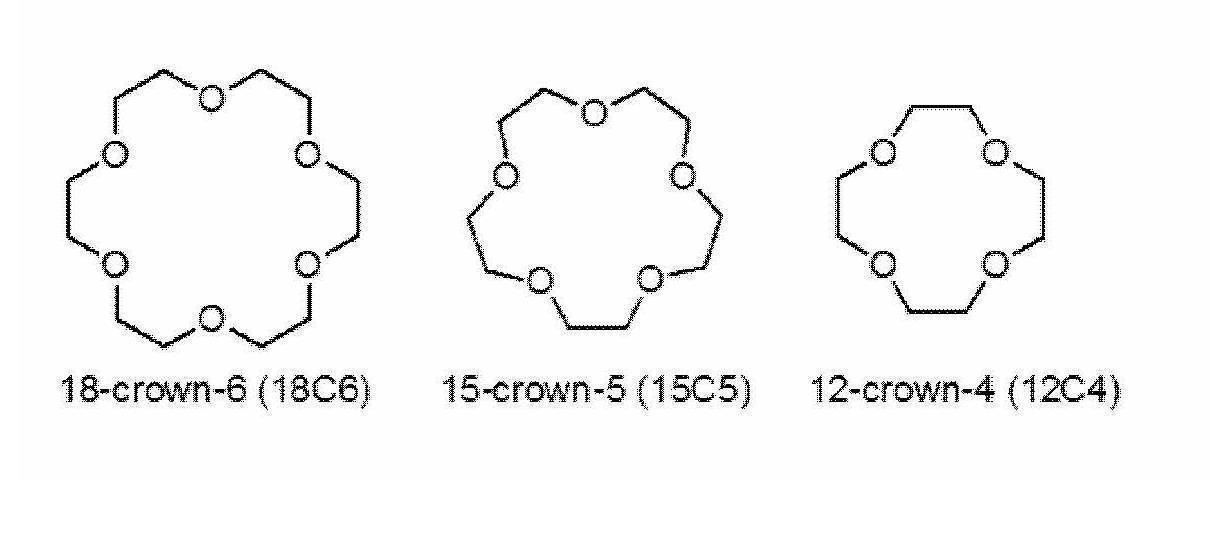
前記無機塩不純物の合計の濃度が1重量%より多い場合(すなわち水酸化四級アンモニウム単独では溶解しにくい場合)であっても、環状ポリエーテルを併用することにより、セルロースを溶解することが可能となる。すなわち、本発明における環状ポリエーテルの使用は、前記無機塩不純物の合計の濃度が1重量%以下の場合に限定されるものではなく、むしろ前記無機塩不純物の合計の濃度が1重量%より多い場合においてセルロースの溶解を可能にするための手段として好適である。環状ポリエーテルの使用量は特に限定されるものではなく、水酸化四級アンモニウムの濃度、セルロースの量、アルカリ金属のハロゲン化物および/またはアルカリ土類金属のハロゲン化物の合計の濃度、環状ポリエーテルの種類、そして希望する効果の程度(溶解速度、透明度)などを考慮しながら適宜調整することができるが、水酸化四級アンモニウム水溶液中の環状ポリエーテルの濃度は、通常0.01~5M、好ましくは0.5~2Mである。
・接触工程
セルロース原料と水酸化四級アンモニウム水溶液とを接触させる(すなわちセルロースと水酸化四級アンモニウムとを反応させる)工程は、これらを反応容器内で撹拌しながら混合することにより行うことができる。環状ポリエーテルを用いる場合は、たとえば、あらかじめ水酸化四級アンモニウム水溶液と環状ポリエーテルとを混合しておき、この溶液とセルロースとを混合するようにすればよい。
セルロース原料と水酸化四級アンモニウム水溶液とを接触させる(すなわちセルロースと水酸化四級アンモニウムとを反応させる)工程は、これらを反応容器内で撹拌しながら混合することにより行うことができる。環状ポリエーテルを用いる場合は、たとえば、あらかじめ水酸化四級アンモニウム水溶液と環状ポリエーテルとを混合しておき、この溶液とセルロースとを混合するようにすればよい。
反応時間は、用いるセルロース原料および水酸化四級アンモニウム水溶液の態様に応じて、セルロースが溶解するのに十分な時間をかければよいが、一般的には1時間~6時間程度である。環状ポリエーテルを用いる場合は、この時間を10分に短縮することも可能である。反応温度は、通常は室温とすることができるが、必要であれば適切な速度で反応が進行するよう加熱または冷却をしてもよい。
-セルロース水溶液の用途-
・セルロース・四級アンモニウム複合体の製造方法
本発明によるセルロース・四級アンモニウム複合体の製造方法は、前述のような製造方法により得られるセルロース水溶液と、セルロースの貧溶媒とを混合し、セルロース・四級アンモニウム複合体を析出させる工程を含むことを特徴とする。
・セルロース・四級アンモニウム複合体の製造方法
本発明によるセルロース・四級アンモニウム複合体の製造方法は、前述のような製造方法により得られるセルロース水溶液と、セルロースの貧溶媒とを混合し、セルロース・四級アンモニウム複合体を析出させる工程を含むことを特徴とする。
なお、セルロースを溶解するために使用した水酸化四級アンモニウムは、セルロースを再沈殿させたメタノール等の貧溶媒を除去した後、再び利用することが可能になる。また、本発明のセルロース・四級アンモニウム複合体の製造方法は、所望の最終産物を得る製造方法の途中において、中間生成物としてセルロース・四級アンモニウム複合体を得るための方法として利用することができる。
本発明の方法により回収されたセルロース・四級アンモニウム複合体の用途は特に限定されるものではない。たとえば、本発明を利用することにより、バイオエタノールの生産に利用されるセルロース系バイオマスの酵素糖化の効率を向上できる可能性がある。従来のセルロース系バイオマスの酵素糖化には、セルロースが結晶構造を有していること、結晶セルロースをヘミセルロースやリグニンが取り囲んだ複雑な構造を形成していること、糖化の最終段階まで固液反応である(セロオリゴ糖の溶解度が低い)こと、グルコース以外にヘミセルロース由来の種々の糖(キシロース、マンノース、アラビノースなど)が生成することなど、デンプン系資材の酵素糖化に比べて多くの問題点があった。そのため、複雑な構造のバイオマスに酵素を働かせるために、脱リグニンあるいはヘミセルロースの部分分解を中心とした前処理や、結晶セルロースを分解するために大量の酵素(セルラーゼ)を用いた処理が必要であるなどの課題があった。これに対し、本発明を利用すれば、セルロース系バイオマスから容易にセルロースを溶出させ、セルロース・四級アンモニウム複合体の形態で回収することができ、当該複合体を酵素糖化に用いれば、少量の酵素で速い速度で糖を生産することが可能となる。
・セルロースフィルムの製造方法
本発明によるセルロースフィルムの製造方法は、前述のような製造方法により得られるセルロース水溶液から、乾燥により溶媒を除去する工程を含む。
本発明によるセルロースフィルムの製造方法は、前述のような製造方法により得られるセルロース水溶液から、乾燥により溶媒を除去する工程を含む。
本発明のセルロース水溶液に用いられている溶媒は水なので、自然乾燥または一般的な乾燥手段を用いて容易に除去することができる。したがって、たとえばセルロース水溶液を平面上に展開した後に溶媒を除去することにより、セルロース水溶液中に溶解していた物質、すなわちセルロース・四級アンモニウム複合体から形成された、水に再溶解可能なフィルム(本発明ではこれを「セルロースフィルム」と称する。)を製造することができる。
・セルロース繊維の製造方法
また、セルロース水溶液からは、たとえば溶液(湿式)紡糸法を用いてセルロース繊維を製造したりするなど、各種のセルロース製品の製造が可能となる。本発明のセルロース水溶液を用いたセルロース繊維の製造方法は、従来のセルロース繊維の製造方法を応用することが可能であるが、たとえば、セルロース水溶液を紡糸ノズルから適切な凝固液(たとえばメタノール等の貧溶媒)中に押し出し、回収、洗浄等することにより、セルロース・四級アンモニウム複合体からなるセルロース繊維を製造することができる。
また、セルロース水溶液からは、たとえば溶液(湿式)紡糸法を用いてセルロース繊維を製造したりするなど、各種のセルロース製品の製造が可能となる。本発明のセルロース水溶液を用いたセルロース繊維の製造方法は、従来のセルロース繊維の製造方法を応用することが可能であるが、たとえば、セルロース水溶液を紡糸ノズルから適切な凝固液(たとえばメタノール等の貧溶媒)中に押し出し、回収、洗浄等することにより、セルロース・四級アンモニウム複合体からなるセルロース繊維を製造することができる。
・セルロース誘導体の製造方法
本発明によるセルロース誘導体の製造方法は、前述のような製造方法により得られるセルロース水溶液と、セルロース誘導体の原料となるヒドロキシ基反応性化合物とを混合する工程を含む。
本発明によるセルロース誘導体の製造方法は、前述のような製造方法により得られるセルロース水溶液と、セルロース誘導体の原料となるヒドロキシ基反応性化合物とを混合する工程を含む。
「ヒドロキシ基反応性化合物」としては、セルロース溶液中で、望ましくは穏和な条件下で(たとえば室温における撹拌のみにより)、当該セルロースが有するヒドロキシ基と反応することのできる官能基を有する化合物を用いることができる。このような化合物は、目的とするセルロース誘導体に応じたものが選択され、従来のセルロース誘導体の製造方法に用いられている化合物を本発明で用いることもできる。
ヒドロキシ基反応性化合物の具体例としては、α,β-不飽和ニトリル、エポキシド、無水酢酸などの有機カルボン酸無水物、α,β-不飽和カルボン酸エステル、ハロゲン化アルキルなどが挙げられる。いずれの化合物も、セルロース水溶液に添加し、常温で十分な時間撹拌することにより、セルロース・四級アンモニウム複合体と反応し、所定の誘導体を生成することができる。
上記具体例のうち、α,β-不飽和ニトリル、エポキシド、有機カルボン酸無水物(無水酢酸等)は、それぞれ順に、シアノエチルセルロース、ヒドロキシアルキル(エチル、プロピル、ヘキシル等)セルロース、アシル(アセチル等)セルロースを製造する際の原料として用いることができる。
また、セルロース水溶液に二酸化炭素を添加した後、さらにハロゲン化アルキルを添加して反応させることにより、セルロースカーボネートを製造できる可能性がある。
さらに、ハロゲン化アルキル(塩化メチル等)をヒドロキシ基反応性化合物として用いることにより、アルキルセルロース(メチルセルロース等のエステル化合物)を製造できる可能性もある。
さらに、ハロゲン化アルキル(塩化メチル等)をヒドロキシ基反応性化合物として用いることにより、アルキルセルロース(メチルセルロース等のエステル化合物)を製造できる可能性もある。
さらに、アクリル酸エステルをヒドロキシ基反応性化合物として用いることにより、一旦生成するカルボアルコキシアルキル誘導体から、加水分解よりさらにカルボキシアルキルセルロース誘導体を製造できる可能性もある。
セルロース水溶液中のセルロース・四級アンモニウム複合体とヒドロキシ基反応性化合物との反応の態様は特に限定されるものではない。たとえばエポキシヘキサンを用いる場合(後記[実施例6]参照)、前記複合体において水酸化四級アンモニウムが結合しているヒドロキシ基に、ヒドロキシ基反応性化合物が代わりに結合するものと推測される(得られるヒドロキシヘキシルセルロースからは水酸化四級アンモニウムが脱離している)。あるいは、アクリロニトリルを用いる場合(後記[実施例5-2]参照)、セルロース・四級アンモニウム複合体とアクリロニトリルとを反応させた段階では、セルロース中の一部のヒドロキシ基に水酸化四級アンモニウムが結合したままであり、さらに酸を添加してその水酸化四級アンモニウムを脱離させヒドロキシ基に戻す処理を行った後、シアノエチルセルロースを回収するという態様もある。
このセルロース誘導体の製造方法における、セルロース水溶液とヒドロキシ基反応性化合物とを混合する工程は、前述したセルロース水溶液の製造方法から連続した工程として行うことができる。すなわち、本発明によりセルロース・四級アンモニウム複合体が生成しているセルロース水溶液が製造されたら、このセルロース水溶液にヒドロキシ基反応性化合物を添加し、当該工程を行うことができる。もちろん、連続的な工程とせず、セルロース・四級アンモニウム複合体を単離したのち、あらためてセルロース誘導体の製造方法の当該工程を行うようにしてもよい。
また、セルロースの誘導体化の反応は、上述のように穏和な条件下で(たとえば室温における撹拌のみにより)進行させることが望ましいが、必要であれば加熱、冷却、その他の本発明の趣旨を没却させない程度の操作を加えて進行させるようにしてもよい。
生成したセルロース誘導体は、たとえば貧溶媒を添加して析出させた後に濾過するなど、公知の手法を用いて回収することができる。
本発明の製造方法により得られるセルロース誘導体は、従来の方法により得られるセルロース誘導体と同様の用途において利用することができる。
本発明の製造方法により得られるセルロース誘導体は、従来の方法により得られるセルロース誘導体と同様の用途において利用することができる。
たとえば、包装(たとえば包装用フィルム:アセチルセルロース)、織物(たとえば繊維:アセチルセルロース)、プラスチック(たとえば成形品:アセチルセルロース、エチルセルロース)、写真(たとえばフィルム:アセチルセルロース)、表面コート(たとえばラッカー:ニトロセルロース、アセチルセルロース、エチルセルロース;塗料:カルボキシメチルセルロース、ヒドロキシエチルセルロース、メチルセルロース、エチルセルロース)、軍需(たとえば火薬:ニトロセルロース)、飛行機(たとえばロケット推進剤:ニトロセルロース)、記録(たとえばテープ:アセチルセルロース)、化学薬品(たとえば耐水性セロファン:ニトロセルロース)、医薬(たとえば下剤:カルボキシメチルセルロース;造粒剤:メチルセルロース、ヒドロキシプロピルセルロース)、タバコ(たとえばフィルター:アセチルセルロース)、電気(たとえば絶縁材料:ベンジルセルロース、シアノエチルセルロース)などがセルロース誘導体の用途として挙げられる。
また、上記のような製造方法により得られるセルロース誘導体の水溶液を用いて、当該セルロース誘導体で形成される加工品を製造することも可能である。たとえば、セルロース誘導体水溶液の溶媒は自然乾燥または一般的な乾燥手段を用いて容易に除去することができるので、セルロース誘導体水溶液を展開した後に溶媒を除去することにより、当該セルロース誘導体からなるフィルムを作製することができる。
さらに、一旦製造されたセルロース誘導体を原料として、さらに別のセルロース誘導体を製造することも可能である。たとえば、シアノエチルセルロースに水酸化ナトリウムを反応させることによりカルボキシエチルセルロースを製造することができる。
[実施例1-1]
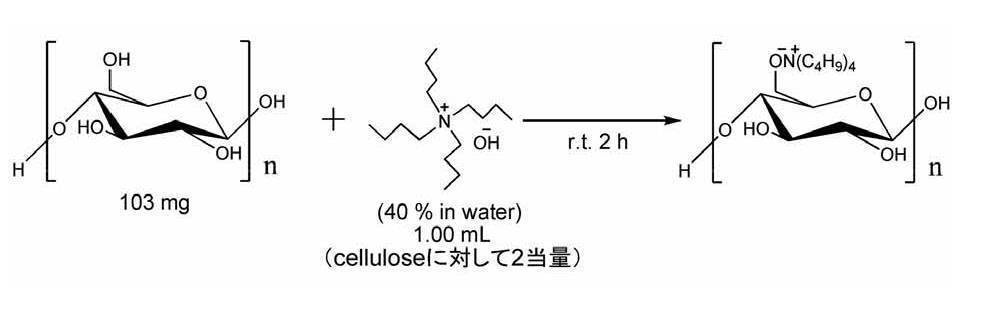
water、MW259.47、d0.99、1.53mmol)を加え、室温で撹拌した。約2時間でセルロースが完全に溶解した。
[実施例1-2]
図2に示す手順に従って、セルロース・アンモニウム複合体を単離した。セルロース自体はDMSOに不溶であるが、セルロースとTBAHとの反応後の固体は、酢酸エチル、エタノールおよびアセトンでの洗浄後もDMSOに溶解したので、当該固体は(単にセルロースの表面にアンモニウム塩が付着した物質ではなく)セルロースのアンモニウム塩であると推定された。
図2に示す手順に従って、セルロース・アンモニウム複合体を単離した。セルロース自体はDMSOに不溶であるが、セルロースとTBAHとの反応後の固体は、酢酸エチル、エタノールおよびアセトンでの洗浄後もDMSOに溶解したので、当該固体は(単にセルロースの表面にアンモニウム塩が付着した物質ではなく)セルロースのアンモニウム塩であると推定された。
回収した固体のIRスペクトルを図3(上)に示す。回収した固体がセルロースとは異なる物質であることを示している。1H-NMRスペクトルを図3(下)に示す。回収した固体にテトラブチルアンモニウム部があることを示しており、セルロースのいずれかのヒドロキシ基がアンモニウム化されているものと思われる。
[実施例2]
セルロース、濾紙をそれぞれテトラブチルアンモニウムヒドロキシド(アルドリッチ社、40%in water)に溶解させ、得られた溶解液をシャーレに移して自然乾燥させたところ、それぞれからフィルムが形成された。
セルロース、濾紙をそれぞれテトラブチルアンモニウムヒドロキシド(アルドリッチ社、40%in water)に溶解させ、得られた溶解液をシャーレに移して自然乾燥させたところ、それぞれからフィルムが形成された。
[実施例3-1]
濾紙No.2に3種類のTBAH製品を10μl滴下し、50℃で3h乾燥した後、蛍光X線測定を行なった。濃度が既知のKBr水溶液を用いて蛍光X線測定を行い、検量線を作成し(K-KA:y=10104x-1644.4、Br-KA:y=950.24x-846.33、yはKBrの濃度[ppm]、xはピーク強度)、各TBAH製品に含まれるKおよびBrの濃度を求めた。結果は下記表に示すとおりである。TBAH製品2にはK+が約2.1重量%、Br-が約2.4重量%含まれており、TBAH製品3にはK+が約2.0重量%、Br-が約1.9重量%含まれているものと考えられるが(それぞれK-KAおよびBR-KAの列参照)、TBAH製品1(アルドリッチ社製)にはK+およびBr-は実質上ほとんど含まれていないものと考えられる。なお、TBAH製品1を用いると常にセルロースを溶解することができる一方、TBAH製品2および3を用いると(ロットによって)セルロースを溶解することができない場合があることが確認されている。
濾紙No.2に3種類のTBAH製品を10μl滴下し、50℃で3h乾燥した後、蛍光X線測定を行なった。濃度が既知のKBr水溶液を用いて蛍光X線測定を行い、検量線を作成し(K-KA:y=10104x-1644.4、Br-KA:y=950.24x-846.33、yはKBrの濃度[ppm]、xはピーク強度)、各TBAH製品に含まれるKおよびBrの濃度を求めた。結果は下記表に示すとおりである。TBAH製品2にはK+が約2.1重量%、Br-が約2.4重量%含まれており、TBAH製品3にはK+が約2.0重量%、Br-が約1.9重量%含まれているものと考えられるが(それぞれK-KAおよびBR-KAの列参照)、TBAH製品1(アルドリッチ社製)にはK+およびBr-は実質上ほとんど含まれていないものと考えられる。なお、TBAH製品1を用いると常にセルロースを溶解することができる一方、TBAH製品2および3を用いると(ロットによって)セルロースを溶解することができない場合があることが確認されている。

[実施例3-2]
小さくカットした濾紙(定性濾紙No.2)を500mg入れた20ml試験管に、KBrを下記各水準で加えた前記TBAH製品1(アルドリッチ社製)を加えた。10℃で12h静置した後のセルロースの溶解性を目視で確認し、濾紙が溶解した状態を○、濾紙が溶解していない状態を×と評価した(図5参照)。結果を下記表に示す。TBAH中のKBr濃度が5重量%を超えたentry
4では、セルロースを溶解することができなかった。
小さくカットした濾紙(定性濾紙No.2)を500mg入れた20ml試験管に、KBrを下記各水準で加えた前記TBAH製品1(アルドリッチ社製)を加えた。10℃で12h静置した後のセルロースの溶解性を目視で確認し、濾紙が溶解した状態を○、濾紙が溶解していない状態を×と評価した(図5参照)。結果を下記表に示す。TBAH中のKBr濃度が5重量%を超えたentry
4では、セルロースを溶解することができなかった。

[実施例3-3]
水酸化四級アンモニウム塩水溶液10mlに塩を各水準で加え、20ml試験管に小さくカットした濾紙(定性濾紙No.2)を500mg加え、10℃で12h静置した。結果を下記表に示す。溶解性の評価基準は実施例3-2と同じである。なお、テトラブチルアンモニウムヒドロキシド(TBAH)、テトラメチルアンモニウムヒドロキシド(TMAH)、ベンジルトリメチルアンモニウムヒドロキシド(BTMAH)はいずれもアルドリッチ社製のものであり、いずれの製品も初期の(KBr無添加時の)KBr濃度はほぼ0重量%である。無機塩が1重量%以下の場合、どの四級アンモニウム塩の水溶液(濃度40重量%)にもセルロースは溶解した。一方、無機塩が2重量%以上の場合、どの四級アンモニウム塩の水溶液にも溶解せず、四級アンモニウム塩の濃度を上げても溶解しなかった。
水酸化四級アンモニウム塩水溶液10mlに塩を各水準で加え、20ml試験管に小さくカットした濾紙(定性濾紙No.2)を500mg加え、10℃で12h静置した。結果を下記表に示す。溶解性の評価基準は実施例3-2と同じである。なお、テトラブチルアンモニウムヒドロキシド(TBAH)、テトラメチルアンモニウムヒドロキシド(TMAH)、ベンジルトリメチルアンモニウムヒドロキシド(BTMAH)はいずれもアルドリッチ社製のものであり、いずれの製品も初期の(KBr無添加時の)KBr濃度はほぼ0重量%である。無機塩が1重量%以下の場合、どの四級アンモニウム塩の水溶液(濃度40重量%)にもセルロースは溶解した。一方、無機塩が2重量%以上の場合、どの四級アンモニウム塩の水溶液にも溶解せず、四級アンモニウム塩の濃度を上げても溶解しなかった。

[実施例4]
20ml試験管に小さくカットした濾紙(定性濾紙No.2)を入れ、下記各水準の希釈テトラブチルアンモニウムヒドロキシド(TBAH)を10ml加え、10℃で24時間静置した。結果を下記表に示す。溶解性の評価基準は実施例3-2と同じである。TBAHの場合、濃度が35重量%以上でセルロースが溶解することが確認されたが、32重量%ではセルロースの量に関わりなくセルロースを溶解することができなかった。
20ml試験管に小さくカットした濾紙(定性濾紙No.2)を入れ、下記各水準の希釈テトラブチルアンモニウムヒドロキシド(TBAH)を10ml加え、10℃で24時間静置した。結果を下記表に示す。溶解性の評価基準は実施例3-2と同じである。TBAHの場合、濃度が35重量%以上でセルロースが溶解することが確認されたが、32重量%ではセルロースの量に関わりなくセルロースを溶解することができなかった。
[実施例5-1]
シアノエチルセルロースアンモニウム塩の合成
シアノエチルセルロースアンモニウム塩の合成

なお、従来のシアノエチルセルロースの製造方法(非特許文献4:
Zhou, J.; Li, Q.; Song, Y.; Zhangand, L.; Lin, X. Polym. Chem., 2010,
1,1662-1668.)ではNaOHを用いるので、副反応として、セルロースに導入したシアノ基における加水分解が起きるという問題がある。これに対して本発明による上記の方法では、弱塩基である水酸化四級アンモニウム(TBAH等)の水溶液を用いるので、加水分解が起きにくい点で有利である。
Zhou, J.; Li, Q.; Song, Y.; Zhangand, L.; Lin, X. Polym. Chem., 2010,
1,1662-1668.)ではNaOHを用いるので、副反応として、セルロースに導入したシアノ基における加水分解が起きるという問題がある。これに対して本発明による上記の方法では、弱塩基である水酸化四級アンモニウム(TBAH等)の水溶液を用いるので、加水分解が起きにくい点で有利である。
回収した固体のIRスペクトルを図6に示す。2252.7cm-1にシアノ基の吸収が確認できた。また、回収した固体の1H-NMRスペクトルを図7に示す。CH2CNのプロトン、グルコピラノースのプロトンおよびテトラブチルアンモニウム部分のプロトンのピークが確認できた。これらの結果から、回収した固体はシアノエチルセルロースのアンモニウム塩であると推定された。
[実施例5-2]
シアノエチルセルロースの合成
シアノエチルセルロースの合成
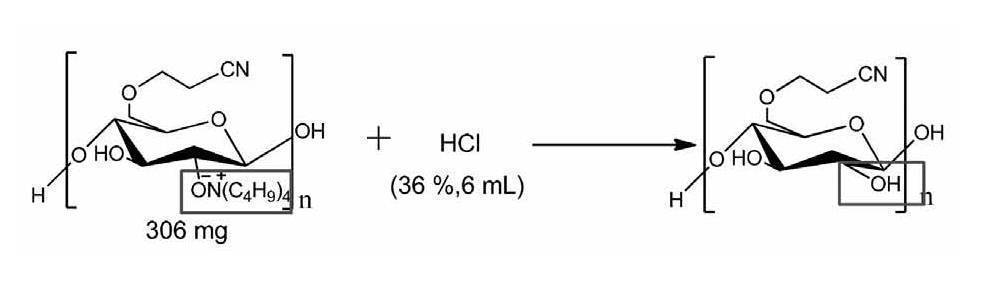
[実施例5-3]
実施例5-1で回収した固体(シアノエチルセルロース)160mgを水3mlに溶解させ、シャーレに移して36時間自然乾燥させたところフィルム化した。このフィルムは半透明だった。
実施例5-1で回収した固体(シアノエチルセルロース)160mgを水3mlに溶解させ、シャーレに移して36時間自然乾燥させたところフィルム化した。このフィルムは半透明だった。
回収した固体のIRスペクトルを図9に示す。2252.7cm-1にシアノ基の吸収が確認できた。また、1HNMRスペクトルを図10に示す。CH2CNのプロトンおよびグルコピラノースのプロトンは確認できたが、テトラブチルアンモニウム部分のプロトンのピークは消えていた。これらの結果から、回収した固体はシアノエチルセルロースであると推定された。
[実施例6]
ヒドロキシヘキシルセルロースの合成
ヒドロキシヘキシルセルロースの合成
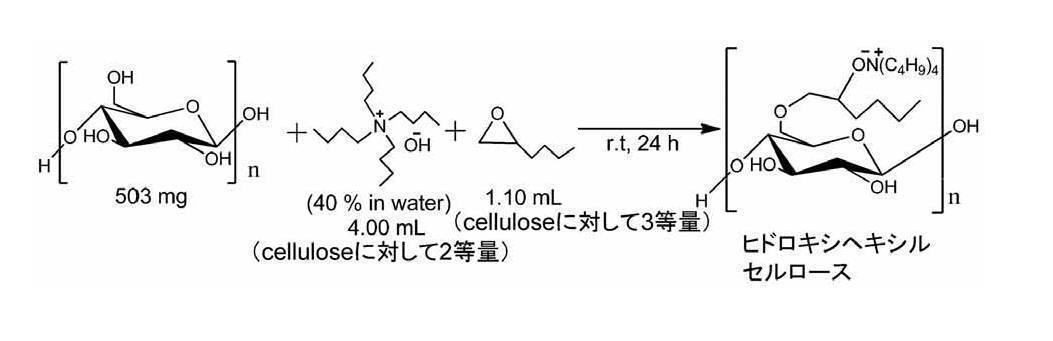
得られた白色固体のIRスペクトルを図11に示す。また、1H
NMRスペクトルを図12に示す。1H-NMR (300 MHz, DMSO) δ 0.80-1.00 (m), 1.20-1.48
(m)3.00-5.80(m); IR (KBr) 3174, 2869, 2364, 2129, 2044, 1643, 1431, 1049,
675cm-1
;これらのスペクトルデータから、セルロースは修飾されていると判断した。
NMRスペクトルを図12に示す。1H-NMR (300 MHz, DMSO) δ 0.80-1.00 (m), 1.20-1.48
(m)3.00-5.80(m); IR (KBr) 3174, 2869, 2364, 2129, 2044, 1643, 1431, 1049,
675cm-1
;これらのスペクトルデータから、セルロースは修飾されていると判断した。
[実施例7-1]
アセチルセルロースの合成
アセチルセルロースの合成
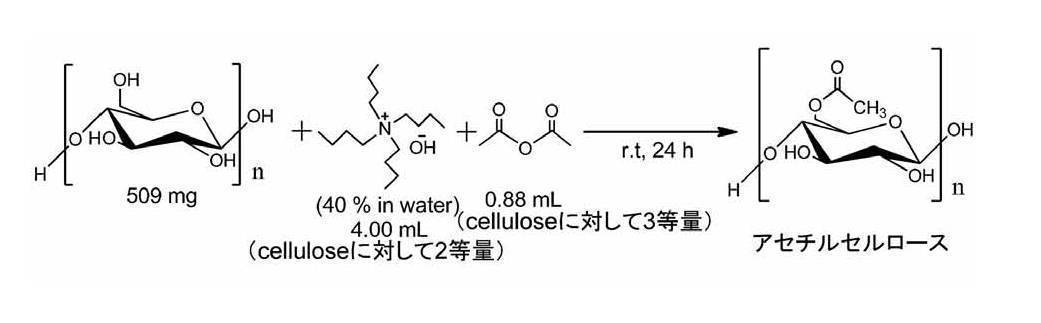
water、MW259.47、d0.99、6.10mmol)を加え、室温で19時間撹拌し、セルロースを完全に溶解させた。次いで、無水酢酸1.10ml(MW102.09、d1.08、9.21mmol)を加え、固体化したがそのまま室温で24時間撹拌した。メタノールを加えて再沈殿を行い、吸引濾過した。残渣を回収し、真空乾燥した。回収量は458mgだった。回収した固体はDMSOに可溶だった。
得られた白色固体の外観およびIRスペクトルを図13に示す。1735.8
cm-1にカルボニル基の吸収が確認できた。また、1H-NMRスペクトルを図14に示す。1H-NMR
(300 MHz, DMSO) δ 1.80-2.10 (m), 4.10 (q) 3.00-5.80(m); IR (KBr)
3228,2896,1735,1654, 1375, 1244, 1033, 896, 613cm-1
;グルコピラノースおよびアセチル基のシグナルが確認できた。これらの結果からアセチルセルロースが生成していると判断した。なお、当該IRスペクトルは、市販品(キシダ化学社製アセチルセルロース、酢酸度55%)とのIRスペクトルと一致した。
cm-1にカルボニル基の吸収が確認できた。また、1H-NMRスペクトルを図14に示す。1H-NMR
(300 MHz, DMSO) δ 1.80-2.10 (m), 4.10 (q) 3.00-5.80(m); IR (KBr)
3228,2896,1735,1654, 1375, 1244, 1033, 896, 613cm-1
;グルコピラノースおよびアセチル基のシグナルが確認できた。これらの結果からアセチルセルロースが生成していると判断した。なお、当該IRスペクトルは、市販品(キシダ化学社製アセチルセルロース、酢酸度55%)とのIRスペクトルと一致した。
[実施例7-2]
アセチルセルロースの置換度の決定のためのプロピオニル化
アセチルセルロースの置換度の決定のためのプロピオニル化
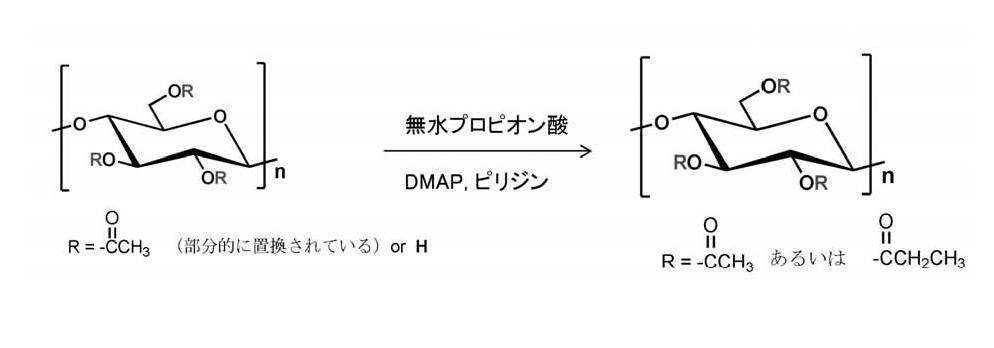
得られた白色固体の外観およびIRスペクトルを図15に、1H
NMRスペクトル(600MHz)を図16に示す。このIRスペクトルから、ヒドロキシ基がほぼプロピオニル化されたことを確認し、1H
NMRスペクトル中のピーク面積の積分比から置換度は19%と算出された。なお、この手法についてはKelin, H.; Ben, W.; Yan,
C.;Huiquan, L.; Jinshu, W.;Weijiang , L.; Chaoshi , M.; Dankui, L. J. Agric.
Food Chem,2011, 59 (10),
5376-538.を参考にした。
NMRスペクトル(600MHz)を図16に示す。このIRスペクトルから、ヒドロキシ基がほぼプロピオニル化されたことを確認し、1H
NMRスペクトル中のピーク面積の積分比から置換度は19%と算出された。なお、この手法についてはKelin, H.; Ben, W.; Yan,
C.;Huiquan, L.; Jinshu, W.;Weijiang , L.; Chaoshi , M.; Dankui, L. J. Agric.
Food Chem,2011, 59 (10),
5376-538.を参考にした。
[実施例8]
(1)セルロース(メルク社、102330)560mgと水性アクリル樹脂(和信ペイント水性艶出しニス、固形分30%)3gとを混合して塗工液を調製した。この塗工液を平板上に塗工し、溶解前のセルロースの状態を目視および光学顕微鏡で観察した。塗工サンプルは白く、光学顕微鏡で観察するとセルロースの微粒子がそのまま観察された(図17参照)。
(1)セルロース(メルク社、102330)560mgと水性アクリル樹脂(和信ペイント水性艶出しニス、固形分30%)3gとを混合して塗工液を調製した。この塗工液を平板上に塗工し、溶解前のセルロースの状態を目視および光学顕微鏡で観察した。塗工サンプルは白く、光学顕微鏡で観察するとセルロースの微粒子がそのまま観察された(図17参照)。
(2)次に、上記セルロースと濃度40重量%のTBAH水溶液(アルドリッチ社、178780-1L)とを、セルロース中のグルコピラノース単位/TBAHの比(mol/mol)が1/2となる量で混合した塗工液を調製し、同様に観察したところ、塗工サンプルは透明で、光学顕微鏡観察でもほぼセルロースは溶解していたが、上記の比を1/1.5に変更した塗工サンプルは白く、セルロースの溶け残りも多く見られた(図18参照)。
(3)一方、上記セルロースと濃度55重量%のTBAH水溶液(アルドリッチ社、86863-100MLL)とを用いて塗工液を調製した場合、上記の比が1/2のとき、1/1.5のときいずれも、セルロースはほぼ溶解していた(図19参照)。
[実施例9]
おが屑からのセルロース抽出
電動のこぎりで木材を切断しておがくずを用意した。10ml二ツ口反応器に撹拌子およびそのおがくず200mgを入れてN2置換した。テトラブチルアンモニウムヒドロキシド水溶液5ml(アルドリッチ社、40%in
water、MW259.47、d0.99、7.71mmol)を加え、室温で3日間撹拌した。上澄み(2.89g)をバイアルに移し、メタノール9mlを加えたところ、セルロース・四級アンモニウム塩が析出した。また、残渣にもメタノール9mlを加えたところ、こちらからもセルロース・四級アンモニウム塩が析出した。
おが屑からのセルロース抽出
電動のこぎりで木材を切断しておがくずを用意した。10ml二ツ口反応器に撹拌子およびそのおがくず200mgを入れてN2置換した。テトラブチルアンモニウムヒドロキシド水溶液5ml(アルドリッチ社、40%in
water、MW259.47、d0.99、7.71mmol)を加え、室温で3日間撹拌した。上澄み(2.89g)をバイアルに移し、メタノール9mlを加えたところ、セルロース・四級アンモニウム塩が析出した。また、残渣にもメタノール9mlを加えたところ、こちらからもセルロース・四級アンモニウム塩が析出した。
[実施例10-1]
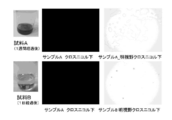
セルロース515mg(3.2mmol)を、テトラブチルアンモニウムヒドロキシド(TBAH)5ml(アルドリッチ社製、40重量%水溶液、セルロースに対して2.39当量)に少量ずつ撹拌しながら加えた。この溶液を1週間放置した後の試料Aおよび1日放置した後の試料Bについて、40倍の明視野と偏光顕微鏡(POM)で観察した。試料AおよびBいずれも、繊維状の物質は観られず、またPOM像でサンプルの異方性(結晶性)に基づく複屈折が観られなかったため、等方性溶液と考えられる。
セルロース515mg(3.2mmol)を、テトラブチルアンモニウムヒドロキシド(TBAH)5ml(アルドリッチ社製、40重量%水溶液、セルロースに対して2.39当量)に少量ずつ撹拌しながら加えた。この溶液を1週間放置した後の試料Aおよび1日放置した後の試料Bについて、40倍の明視野と偏光顕微鏡(POM)で観察した。試料AおよびBいずれも、繊維状の物質は観られず、またPOM像でサンプルの異方性(結晶性)に基づく複屈折が観られなかったため、等方性溶液と考えられる。
[実施例10-2]
セルロース(515mg,
3.2
mmol)およびTBAH5ml(アルドリッチ社、40%水溶液、2.39当量)を加え、5h後に、メタノール15mlを加えて再沈殿させた。濾過して白色固形物を回収し、真空ポンプで5h乾燥して、601mgのパリパリ状の固形物を得た。この固形物(再沈殿試料)の広角X-線解析プロファイル(測定条件:試料形状,乳鉢で2分間粉砕;室温;0.01°毎にサンプリング;スキャンスピード,2°/min)を図22に示す。明確なセルロースI型結晶の回折は観られないため非晶のサンプルが得られている。従って、溶解時に結晶の溶け残りは無いと考えられる。セルロースI型は天然のセルロースに特有な結晶系である。非晶ハローはbimodalになっており、ピーク位置はセルロースII結晶に相当する。セルロースIIは分子分散した溶解状態を経て析出(再生)させた試料に特有な結晶系で、セロハンやレーヨンなどが該当する。偏光顕微鏡観察の結果とあわせて、セルロースは見た目の通り本溶媒に溶解していると考えられる。
セルロース(515mg,
3.2
mmol)およびTBAH5ml(アルドリッチ社、40%水溶液、2.39当量)を加え、5h後に、メタノール15mlを加えて再沈殿させた。濾過して白色固形物を回収し、真空ポンプで5h乾燥して、601mgのパリパリ状の固形物を得た。この固形物(再沈殿試料)の広角X-線解析プロファイル(測定条件:試料形状,乳鉢で2分間粉砕;室温;0.01°毎にサンプリング;スキャンスピード,2°/min)を図22に示す。明確なセルロースI型結晶の回折は観られないため非晶のサンプルが得られている。従って、溶解時に結晶の溶け残りは無いと考えられる。セルロースI型は天然のセルロースに特有な結晶系である。非晶ハローはbimodalになっており、ピーク位置はセルロースII結晶に相当する。セルロースIIは分子分散した溶解状態を経て析出(再生)させた試料に特有な結晶系で、セロハンやレーヨンなどが該当する。偏光顕微鏡観察の結果とあわせて、セルロースは見た目の通り本溶媒に溶解していると考えられる。
[実施例11-1]KBrの添加効果
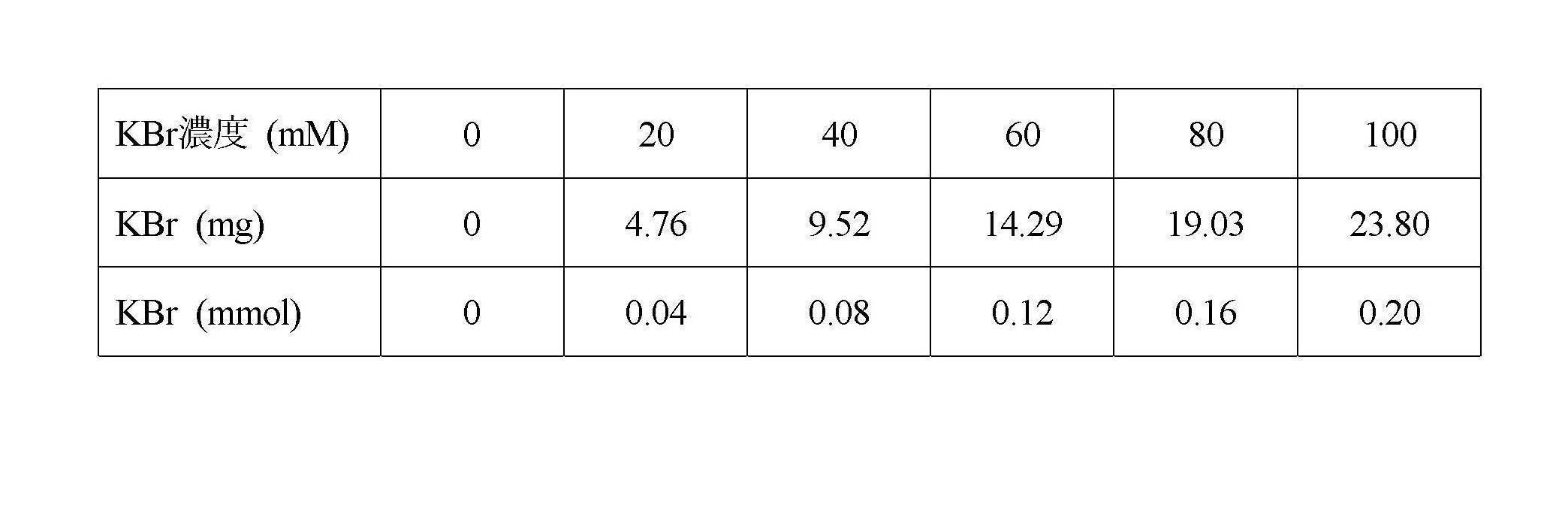
g)、上表に示す量のKBr、40%
TBAH水溶液(2.0mL、アルドリッチ社製で、K+およびBr-は実質上ほとんど含まれていないものと考えられる(以下同様))を入れて室温で24時間撹拌し、混合溶液の状態を比較した(図23)。
KBrの濃度の増加に伴って溶液が懸濁した。
[実施例11-2]18C6の添加効果
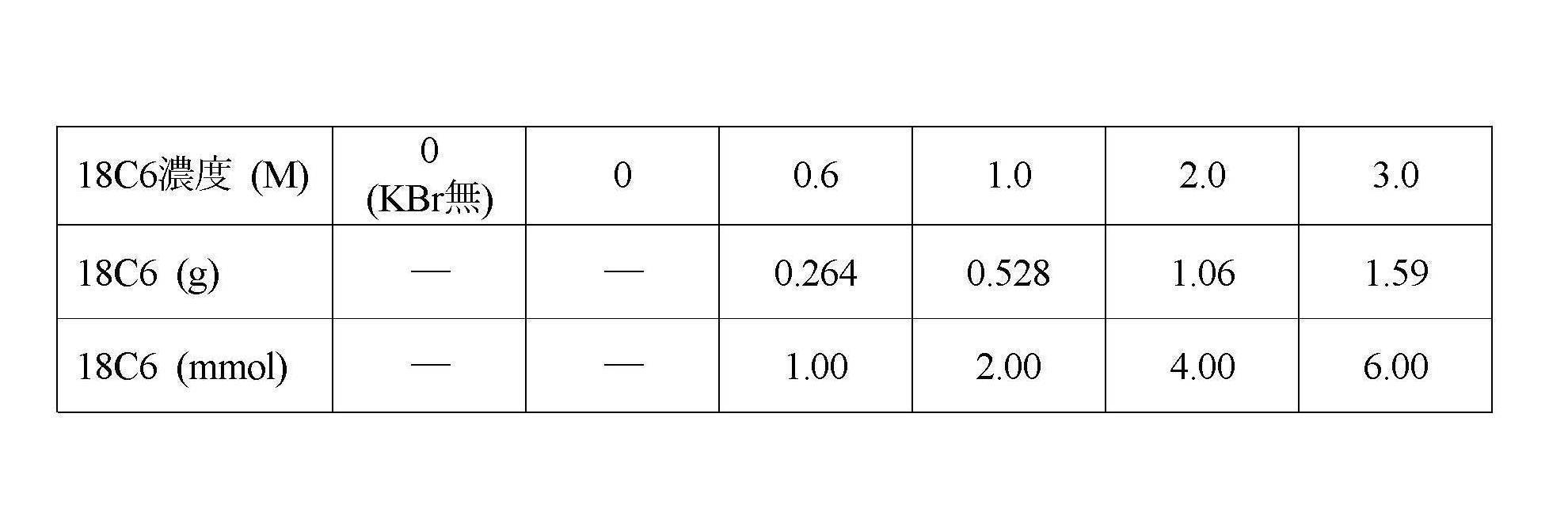
g)、上表に示す量の18C6、20 mMKBr含有40% TBAH水溶液(2.0
mL)を入れ、室温で24時間撹拌後、混合溶液の状態を比較した(図24)。KBrを含む溶液のうち、18C6を添加したものは添加していないものに比べてより溶けている。KBrを含まないものと比較しても、18C6を添加したものの方が溶けている。18C6の濃度が高いほど溶液の透明性が高く、より短時間で溶解した(18C6を3.0M添加した時は、約10分で溶解した)。これらの結果から、(a)18C6がK+を捕捉しセルロースが溶解した、(b)18C6がTBAHと相互作用してセルロースの溶解を促進した、(c)18C6そのものがセルロースを溶解した、という3つの可能性が考えられる。そこで、これらの可能性を検証するために以下の実験を行った。
[実施例11-3]金属イオンとクラウンエーテルの有無による溶解の違い
(1)金属イオンが無い場合
(1)金属イオンが無い場合

g)、上表に示す量のクラウンエーテル(無、18C6、15C5、12C4)、40% TBAH(2.0 mL)を入れ、室温で6
時間撹拌後、混合溶液の状態を比較した(図25:Metal無)。
(2)Li+イオンの場合

g)、LiCl(8.48 mg, 0.20 mmol)、上表に示す量のクラウンエーテル(無、18C6、15C5、12C4)、40%
TBAH水溶液(2.0mL)を入れ、室温で6時間撹拌後、混合溶液の状態を比較した(図25:LiCl)。
(3)Na+イオンの場合
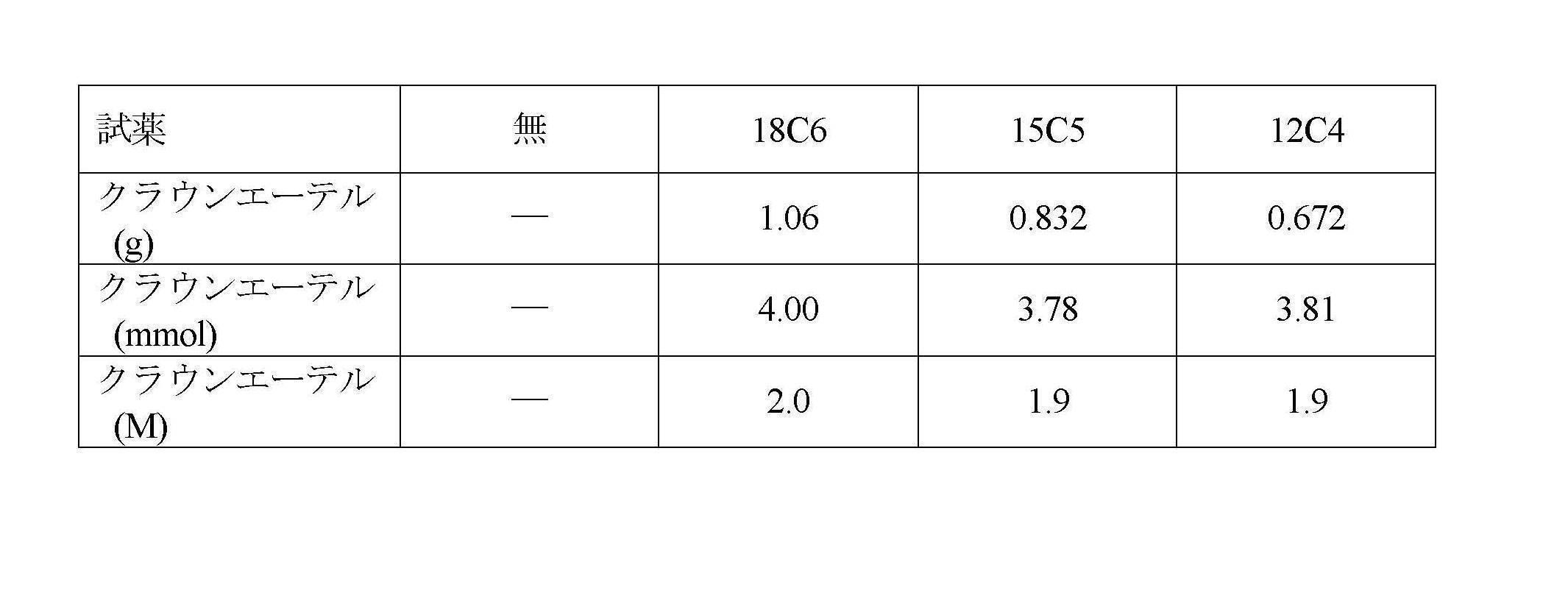
mg, 0.20 mmol)、下表に示す量のクラウンエーテル(無、18C6、15C5、12C4)、40%
TBAH水溶液(2.0mL)を入れ、室温で6時間撹拌後、混合溶液の状態を比較した(図25:NaCl)。
(4)K+イオンの場合

g)、KBr(23.8 mg, 0.20 mmol)、下表に示す量のクラウンエーテル(無、18C6、15C5、12C4)、40% TBAH水溶液(2.0
mL)を入れ、室温で6時間撹拌後、混合溶液の状態を比較した(図25:KBr)。
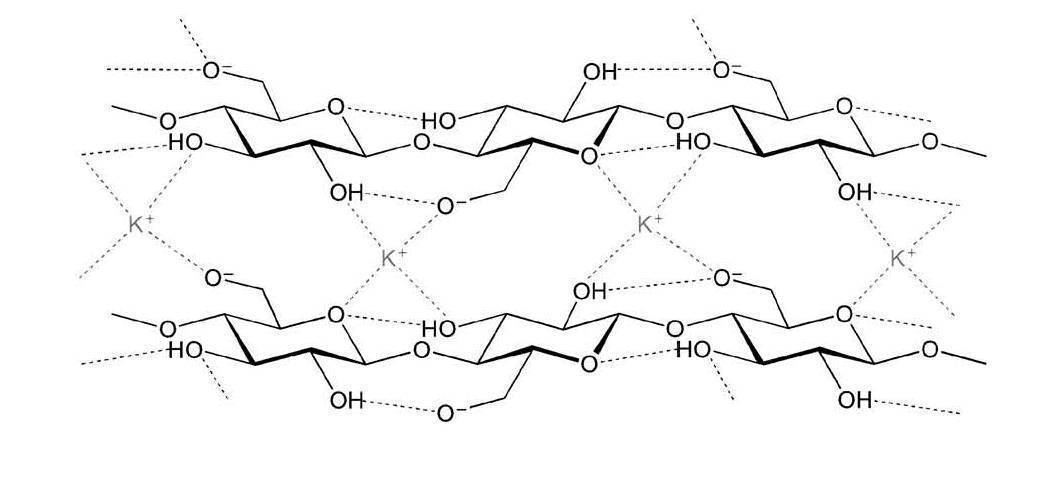
上記(1)~(4)より、アルカリ金属イオン、とくにK+イオンを添加するとセルロースの溶解が妨げられ懸濁液が得られることが分かる。これは、とくにK+イオンがセルロースに配位し架橋するためと考えられる(下図参照)。また、18C6を混合すると金属イオンの種類に関わらず透明な水溶液が得られた。15C5の場合にも同様の効果を確認できた。一方、12C4を混合した場合は、金属イオンの種類に関わらず懸濁したままであった。セルロースの溶解にはクラウンエーテルの環のサイズが重要である。
[実施例11-4]18-crown-6の効果の検証
(1)40%TBAH水溶液またはその代わりにイオン交換水を用いた場合
(1)40%TBAH水溶液またはその代わりにイオン交換水を用いた場合

g)、上表に示す量の18C6、40% TBAH水溶液(2.0 mL)もしくはイオン交換水(2.0mL)を入れ、室温で24
時間撹拌後、混合溶液の状態を比較した(図26)。TBAHが溶解していないイオン交換水を用いた場合、18C6のみを用いてもセルロースは溶解せず、混合液は白濁したままであった
(2)40%TBAH水溶液の代わりにKOHまたはNaOHを用いた場合

g)、下表に示す量の18C6、3.66 M KOH水溶液もしくは3.95 M
NaOH水溶液(2.0mL)を入れ、室温で24時間撹拌後、混合溶液の状態を比較した(図27)。TBAHの代わりにKOHやNaOHを用いて18C6を添加した場合も、混合液は白濁したままであった。
上記(1)および(2)の結果から、セルロースの溶解にはTBAHのような水酸化四級アンモニウム水溶液が必須であり、クラウンエーテル単独ではセルロースを溶解する力がないことが判明した。クラウンエーテルは、アルカリ金属イオンを捕捉する効果とTBAHによるセルロース溶解を補助する効果がある。例えば、TBAHのOH-によるセルロースのヒドロキシ基のプロトンの引き抜きとクラウンエーテルによるセルロースのヒドロキシ基との水素結合による協同効果によって、セルロース分子間の水素結合を効率よく切断するために、セルロースの水溶性が向上したと推測される。
(3)18C6の代わりにDMSOまたはPEGを混合した場合
(3a)DMSOの場合
(3a)DMSOの場合

g)、上表に示す量のDMSO、40%
TBAH水溶液(2.0mL)を入れ、室温で24時間撹拌後、混合溶液の状態を比較した(図28)。DMSOの濃度を上げても混合溶液は透明にならず、セルロースは懸濁した状態のままであった。
(3b)PEGの場合

g)、上表に示す量のPEG、40%
TBAH水溶液(2.0mL)を入れ、室温で24時間撹拌後、混合溶液の状態を比較した(図29)。図中のPEG濃度は、モノマー単位(CH2CH2O)に換算した濃度である。PEGの濃度を上げても混合溶液は透明にならず、セルロースは懸濁した状態のままであった。
上記(3a)および(3b)の結果に示されるように、DMSOや鎖状ポリエーテルであるPEGにはクラウンエーテルで見られた効果は観測できなかった。このことから、クラウンエーテル(特に18C6および15C5)に特有のセルロース溶解促進効果があることが判明した。
Claims (16)
- セルロース精製物またはセルロースを含有する物質(以下「セルロース原料」と総称する。)と水酸化四級アンモニウム水溶液とを接触させる工程を含むことを特徴とする、セルロース水溶液の製造方法。
- セルロース精製物またはセルロースを含有する物質(以下「セルロース原料」と総称する。)と水酸化四級アンモニウム水溶液とを接触させる工程を含むセルロース水溶液の製造方法であって、
前記セルロース原料と接触した状態において、前記水酸化四級アンモニウム水溶液中に溶解しているアルカリ金属のハロゲン化物および/またはアルカリ土類金属のハロゲン化物の合計の濃度が1重量%以下であることを特徴とする請求項1に記載のセルロース水溶液の製造方法。 - 前記水酸化四級アンモニウム水溶液の濃度が35重量%以上である、請求項1に記載のセルロース水溶液の製造方法。
- 前記水酸化四級アンモニウムが、置換もしくは非置換のアルキル基および/または置換もしくは非置換のアリール基を4つの置換基として有するものであり、当該4つの置換基の炭素原子数の合計が4~60である、請求項2に記載のセルロース水溶液の製造方法。
- セルロース原料と水酸化四級アンモニウム水溶液とを接触させる工程を含むセルロース水溶液の製造方法であって、
前記セルロース原料と前記水酸化四級アンモニウム水溶液との接触を環状ポリエーテルの存在下に行うことを特徴とする請求項1に記載のセルロース水溶液の製造方法。 - 前記環状ポリエーテルが、12-クラウン-4、15-クラウン-5、18-クラウン-6、ジベンゾ-18-クラウン-6およびジアザ-18-クラウン-6からなる群から選ばれた少なくとも1種である、請求項4に記載のセルロース水溶液の製造方法。
- 前記水酸化四級アンモニウム水溶液中の環状ポリエーテルの濃度が0.01~5Mである請求項5に記載のセルロース水溶液の製造方法。
- 請求項1~7のいずれかに記載の製造方法により得られる、セルロース水溶液。
- 請求項1~7のいずれかに記載の製造方法により得られるセルロース水溶液中に生成している、セルロースと水酸化四級アンモニウムとから形成された複合体。
- 請求項1~7のいずれかに記載の製造方法により得られるセルロース水溶液と、セルロース誘導体の原料となるヒドロキシ基反応性化合物とを混合する工程を含むことを特徴とする、セルロース誘導体の製造方法。
- 前記ヒドロキシ基反応性化合物が、α,β-不飽和ニトリル、エポキシド、有機カルボン酸無水物、α,β-不飽和カルボン酸エステルおよびハロゲン化アルキルからなる群より選択されるものである、請求項10に記載のセルロース誘導体の製造方法。
- 請求項1~7のいずれかに記載の製造方法により得られるセルロース水溶液と、セルロースの貧溶媒とを混合し、セルロース・四級アンモニウム複合体を析出させる工程を含むことを特徴とする、セルロース・四級アンモニウム複合体の製造方法。
- 請求項1~7のいずれかに記載の製造方法により得られるセルロース水溶液から、乾燥により溶媒を除去する工程を含むことを特徴とする、セルロースフィルムの製造方法。
- 請求項13に記載の製造方法により得られるセルロースフィルム。
- 請求項1~7のいずれかに記載の製造方法により得られるセルロース水溶液を紡糸することを特徴とする、セルロース繊維の製造方法。
- 請求項15に記載の製造方法により得られるセルロース繊維。
Priority Applications (1)
| Application Number | Priority Date | Filing Date | Title |
|---|---|---|---|
| CN201280049066.9A CN103842384B (zh) | 2011-12-09 | 2012-12-07 | 纤维素水溶液的制造方法和纤维素衍生物的制造方法 |
Applications Claiming Priority (4)
| Application Number | Priority Date | Filing Date | Title |
|---|---|---|---|
| JP2011270206 | 2011-12-09 | ||
| JP2011-270206 | 2011-12-09 | ||
| JP2012-265440 | 2012-12-04 | ||
| JP2012265440A JP6120266B2 (ja) | 2011-12-09 | 2012-12-04 | セルロース水溶液の製造方法およびセルロース誘導体の製造方法 |
Publications (1)
| Publication Number | Publication Date |
|---|---|
| WO2013085053A1 true WO2013085053A1 (ja) | 2013-06-13 |
Family
ID=48574403
Family Applications (1)
| Application Number | Title | Priority Date | Filing Date |
|---|---|---|---|
| PCT/JP2012/081857 Ceased WO2013085053A1 (ja) | 2011-12-09 | 2012-12-07 | セルロース水溶液の製造方法およびセルロース誘導体の製造方法 |
Country Status (3)
| Country | Link |
|---|---|
| JP (1) | JP6120266B2 (ja) |
| CN (1) | CN103842384B (ja) |
| WO (1) | WO2013085053A1 (ja) |
Cited By (3)
| Publication number | Priority date | Publication date | Assignee | Title |
|---|---|---|---|---|
| US20140212670A1 (en) * | 2013-01-25 | 2014-07-31 | Daicel Corporation | Process for producing solid cellulose and process for producing cellulose ester |
| CN107177040A (zh) * | 2017-06-05 | 2017-09-19 | 武汉大学 | 一种纤维素溶液及其溶解方法和应用 |
| CN113564731A (zh) * | 2021-06-17 | 2021-10-29 | 武汉纺织大学 | 一种回收利用牛仔激光废灰的方法及回收物 |
Families Citing this family (4)
| Publication number | Priority date | Publication date | Assignee | Title |
|---|---|---|---|---|
| CN106591975B (zh) * | 2016-12-08 | 2020-02-28 | 新乡化纤股份有限公司 | 一种再生纤维素长丝纤维的离心式纺丝工艺 |
| CN113861446B (zh) * | 2021-10-13 | 2023-07-14 | 东华理工大学 | 一种纤维素溶剂、纤维素溶解方法及纤维素溶液 |
| CN116732620A (zh) * | 2023-06-02 | 2023-09-12 | 新乡化纤股份有限公司 | 一种基于新型溶剂体系纺丝的浆粕除杂方法 |
| CN118165301A (zh) * | 2024-04-07 | 2024-06-11 | 华南理工大学 | 一种纤维素温和溶解方法、纤维溶液及其应用 |
Citations (2)
| Publication number | Priority date | Publication date | Assignee | Title |
|---|---|---|---|---|
| JPS58151217A (ja) * | 1982-03-05 | 1983-09-08 | Asahi Chem Ind Co Ltd | セルロ−スド−プから得られる繊維及びフイルム |
| JP2008266625A (ja) * | 2007-03-28 | 2008-11-06 | Sanyo Chem Ind Ltd | セルロースエーテルの製造方法 |
Family Cites Families (4)
| Publication number | Priority date | Publication date | Assignee | Title |
|---|---|---|---|---|
| JPH11500482A (ja) * | 1995-02-21 | 1999-01-12 | シェルカット ゲゼルシャフト ミット ベシュレンクテル ハフツング | セルロース粒子、その製造方法およびその使用 |
| DE102005017715A1 (de) * | 2005-04-15 | 2006-10-19 | Basf Ag | Lösungen von Cellulose in ionischen Flüssigkeiten |
| CN1851063A (zh) * | 2006-05-19 | 2006-10-25 | 东华大学 | 以离子液体为溶剂制备纤维素纤维的方法 |
| JP5765331B2 (ja) * | 2010-03-09 | 2015-08-19 | 凸版印刷株式会社 | 微細セルロース繊維分散液およびその製造方法、セルロースフィルムならびに積層体 |
-
2012
- 2012-12-04 JP JP2012265440A patent/JP6120266B2/ja active Active
- 2012-12-07 WO PCT/JP2012/081857 patent/WO2013085053A1/ja not_active Ceased
- 2012-12-07 CN CN201280049066.9A patent/CN103842384B/zh active Active
Patent Citations (2)
| Publication number | Priority date | Publication date | Assignee | Title |
|---|---|---|---|---|
| JPS58151217A (ja) * | 1982-03-05 | 1983-09-08 | Asahi Chem Ind Co Ltd | セルロ−スド−プから得られる繊維及びフイルム |
| JP2008266625A (ja) * | 2007-03-28 | 2008-11-06 | Sanyo Chem Ind Ltd | セルロースエーテルの製造方法 |
Non-Patent Citations (1)
| Title |
|---|
| CELLULOSE CHEMISTRY AND TECHNOLOGY, vol. 18, 1984, pages 379 - 387 * |
Cited By (5)
| Publication number | Priority date | Publication date | Assignee | Title |
|---|---|---|---|---|
| US20140212670A1 (en) * | 2013-01-25 | 2014-07-31 | Daicel Corporation | Process for producing solid cellulose and process for producing cellulose ester |
| US9217043B2 (en) * | 2013-01-25 | 2015-12-22 | Daicel Corporation | Process for producing solid cellulose and process for producing cellulose ester |
| CN107177040A (zh) * | 2017-06-05 | 2017-09-19 | 武汉大学 | 一种纤维素溶液及其溶解方法和应用 |
| CN113564731A (zh) * | 2021-06-17 | 2021-10-29 | 武汉纺织大学 | 一种回收利用牛仔激光废灰的方法及回收物 |
| CN113564731B (zh) * | 2021-06-17 | 2023-05-02 | 武汉纺织大学 | 一种回收利用牛仔激光废灰的方法及回收物 |
Also Published As
| Publication number | Publication date |
|---|---|
| CN103842384B (zh) | 2016-08-31 |
| CN103842384A (zh) | 2014-06-04 |
| JP2013139557A (ja) | 2013-07-18 |
| JP6120266B2 (ja) | 2017-04-26 |
Similar Documents
| Publication | Publication Date | Title |
|---|---|---|
| JP6120266B2 (ja) | セルロース水溶液の製造方法およびセルロース誘導体の製造方法 | |
| US10323101B2 (en) | Method for producing polysaccharide derivative and lignin derivative | |
| JP5913638B2 (ja) | セルロースの溶解方法 | |
| US10208132B2 (en) | Method of modifying polymers | |
| CN102864672B (zh) | 提取木质素的方法 | |
| JP7054503B2 (ja) | セルロース誘導体、ヘミセルロース誘導体及びリグニン誘導体の製造方法 | |
| CN101182361A (zh) | 一种应用碘催化制备乙酰化半纤维素的方法 | |
| CN101974108A (zh) | 一种阳离子型半纤维素的制备方法 | |
| WO2015003398A1 (zh) | 溶于丙酮的纤维素酯的直接合成方法及其产品 | |
| Akhlaq et al. | Tetrabutylphosphonium hydroxide ionic liquid-assisted highly efficient green synthesis of carboxymethyl cellulose | |
| CN102558365A (zh) | 一种以蔗渣纤维素为原料的三醋酸纤维素的离子液体制备方法 | |
| JP5711456B2 (ja) | カルボキシルエチルセルロース及びその製造方法並びに該カルボキシルエチルセルロースを含有する物品 | |
| JP6529967B2 (ja) | アシル化方法 | |
| KR100889373B1 (ko) | 이온성 액체에 용해된 셀룰로오즈 용액 | |
| CN104744238A (zh) | 在苯氧乙酸类农药废水中回收羟基乙酸的方法 | |
| JP2013194147A (ja) | セルロース含有液状組成物及びセルロース回収方法 | |
| CN108440687B (zh) | 烷基木聚糖的制备方法 | |
| US20250215117A1 (en) | Method for producing esterified polysaccharide | |
| TWI404844B (zh) | 製造醋酸纖維素的方法 | |
| JP2001114801A (ja) | 耐塩水性に優れたカルボキシメチルセルロースアルカリ金属塩の製造法 | |
| CN107417810B (zh) | 抗hiv双活性磺酸基蔗渣木聚糖二茂铁甲酸酯的合成方法 | |
| JP2014152261A (ja) | バイオマス誘導体の製造方法 | |
| JP5774286B2 (ja) | カルボキシルエチルセルロース金属塩 | |
| Ribeiro et al. | Process Development for Flexible Films of Industrial Cellulose Pulp Using Superbase Ionic Liquids. Polymers 2021, 13, 1767 | |
| KR20060086069A (ko) | 셀룰로오스 에테르 유도체의 제조방법 |
Legal Events
| Date | Code | Title | Description |
|---|---|---|---|
| 121 | Ep: the epo has been informed by wipo that ep was designated in this application |
Ref document number: 12855502 Country of ref document: EP Kind code of ref document: A1 |
|
| NENP | Non-entry into the national phase |
Ref country code: DE |
|
| 122 | Ep: pct application non-entry in european phase |
Ref document number: 12855502 Country of ref document: EP Kind code of ref document: A1 |