WO2012165212A1 - 非水電解質二次電池 - Google Patents
非水電解質二次電池 Download PDFInfo
- Publication number
- WO2012165212A1 WO2012165212A1 PCT/JP2012/063000 JP2012063000W WO2012165212A1 WO 2012165212 A1 WO2012165212 A1 WO 2012165212A1 JP 2012063000 W JP2012063000 W JP 2012063000W WO 2012165212 A1 WO2012165212 A1 WO 2012165212A1
- Authority
- WO
- WIPO (PCT)
- Prior art keywords
- positive electrode
- active material
- electrode active
- secondary battery
- electrolyte secondary
- Prior art date
- Legal status (The legal status is an assumption and is not a legal conclusion. Google has not performed a legal analysis and makes no representation as to the accuracy of the status listed.)
- Ceased
Links
Images
Classifications
-
- H—ELECTRICITY
- H01—ELECTRIC ELEMENTS
- H01M—PROCESSES OR MEANS, e.g. BATTERIES, FOR THE DIRECT CONVERSION OF CHEMICAL ENERGY INTO ELECTRICAL ENERGY
- H01M4/00—Electrodes
- H01M4/02—Electrodes composed of, or comprising, active material
- H01M4/13—Electrodes for accumulators with non-aqueous electrolyte, e.g. for lithium-accumulators; Processes of manufacture thereof
- H01M4/131—Electrodes based on mixed oxides or hydroxides, or on mixtures of oxides or hydroxides, e.g. LiCoOx
-
- H—ELECTRICITY
- H01—ELECTRIC ELEMENTS
- H01M—PROCESSES OR MEANS, e.g. BATTERIES, FOR THE DIRECT CONVERSION OF CHEMICAL ENERGY INTO ELECTRICAL ENERGY
- H01M10/00—Secondary cells; Manufacture thereof
- H01M10/05—Accumulators with non-aqueous electrolyte
- H01M10/052—Li-accumulators
- H01M10/0525—Rocking-chair batteries, i.e. batteries with lithium insertion or intercalation in both electrodes; Lithium-ion batteries
-
- H—ELECTRICITY
- H01—ELECTRIC ELEMENTS
- H01M—PROCESSES OR MEANS, e.g. BATTERIES, FOR THE DIRECT CONVERSION OF CHEMICAL ENERGY INTO ELECTRICAL ENERGY
- H01M10/00—Secondary cells; Manufacture thereof
- H01M10/42—Methods or arrangements for servicing or maintenance of secondary cells or secondary half-cells
- H01M10/44—Methods for charging or discharging
- H01M10/446—Initial charging measures
-
- H—ELECTRICITY
- H01—ELECTRIC ELEMENTS
- H01M—PROCESSES OR MEANS, e.g. BATTERIES, FOR THE DIRECT CONVERSION OF CHEMICAL ENERGY INTO ELECTRICAL ENERGY
- H01M4/00—Electrodes
- H01M4/02—Electrodes composed of, or comprising, active material
- H01M4/04—Processes of manufacture in general
- H01M4/0471—Processes of manufacture in general involving thermal treatment, e.g. firing, sintering, backing particulate active material, thermal decomposition, pyrolysis
-
- H—ELECTRICITY
- H01—ELECTRIC ELEMENTS
- H01M—PROCESSES OR MEANS, e.g. BATTERIES, FOR THE DIRECT CONVERSION OF CHEMICAL ENERGY INTO ELECTRICAL ENERGY
- H01M4/00—Electrodes
- H01M4/02—Electrodes composed of, or comprising, active material
- H01M4/13—Electrodes for accumulators with non-aqueous electrolyte, e.g. for lithium-accumulators; Processes of manufacture thereof
- H01M4/139—Processes of manufacture
- H01M4/1391—Processes of manufacture of electrodes based on mixed oxides or hydroxides, or on mixtures of oxides or hydroxides, e.g. LiCoOx
-
- H—ELECTRICITY
- H01—ELECTRIC ELEMENTS
- H01M—PROCESSES OR MEANS, e.g. BATTERIES, FOR THE DIRECT CONVERSION OF CHEMICAL ENERGY INTO ELECTRICAL ENERGY
- H01M4/00—Electrodes
- H01M4/02—Electrodes composed of, or comprising, active material
- H01M4/36—Selection of substances as active materials, active masses, active liquids
- H01M4/362—Composites
- H01M4/364—Composites as mixtures
-
- H—ELECTRICITY
- H01—ELECTRIC ELEMENTS
- H01M—PROCESSES OR MEANS, e.g. BATTERIES, FOR THE DIRECT CONVERSION OF CHEMICAL ENERGY INTO ELECTRICAL ENERGY
- H01M4/00—Electrodes
- H01M4/02—Electrodes composed of, or comprising, active material
- H01M4/36—Selection of substances as active materials, active masses, active liquids
- H01M4/48—Selection of substances as active materials, active masses, active liquids of inorganic oxides or hydroxides
- H01M4/52—Selection of substances as active materials, active masses, active liquids of inorganic oxides or hydroxides of nickel, cobalt or iron
- H01M4/525—Selection of substances as active materials, active masses, active liquids of inorganic oxides or hydroxides of nickel, cobalt or iron of mixed oxides or hydroxides containing iron, cobalt or nickel for inserting or intercalating light metals, e.g. LiNiO2, LiCoO2 or LiCoOxFy
-
- H—ELECTRICITY
- H01—ELECTRIC ELEMENTS
- H01M—PROCESSES OR MEANS, e.g. BATTERIES, FOR THE DIRECT CONVERSION OF CHEMICAL ENERGY INTO ELECTRICAL ENERGY
- H01M4/00—Electrodes
- H01M4/02—Electrodes composed of, or comprising, active material
- H01M2004/026—Electrodes composed of, or comprising, active material characterised by the polarity
- H01M2004/028—Positive electrodes
-
- Y—GENERAL TAGGING OF NEW TECHNOLOGICAL DEVELOPMENTS; GENERAL TAGGING OF CROSS-SECTIONAL TECHNOLOGIES SPANNING OVER SEVERAL SECTIONS OF THE IPC; TECHNICAL SUBJECTS COVERED BY FORMER USPC CROSS-REFERENCE ART COLLECTIONS [XRACs] AND DIGESTS
- Y02—TECHNOLOGIES OR APPLICATIONS FOR MITIGATION OR ADAPTATION AGAINST CLIMATE CHANGE
- Y02E—REDUCTION OF GREENHOUSE GAS [GHG] EMISSIONS, RELATED TO ENERGY GENERATION, TRANSMISSION OR DISTRIBUTION
- Y02E60/00—Enabling technologies; Technologies with a potential or indirect contribution to GHG emissions mitigation
- Y02E60/10—Energy storage using batteries
Definitions
- the present invention relates to a non-aqueous electrolyte secondary battery.
- the irreversible capacity of the negative electrode active material during charge / discharge is high, and thus the negative electrode active material has lower charge / discharge efficiency than the positive electrode active material.
- the fact that the negative electrode active material is in an overdischarged state and deteriorates during discharge is considered as one of the factors that lower the cycle characteristics of the nonaqueous electrolyte secondary battery.
- Patent Document 1 by mixing a positive electrode active material having a high initial charge capacity with a conventional positive electrode active material, a sufficient amount of irreversible capacity is given to the negative electrode active material at the time of initial charge, and cycle characteristics are improved.
- An object of the present invention is to provide an irreversible capacity to the negative electrode active material at a low charging potential.
- the nonaqueous electrolyte secondary battery of the present invention is a nonaqueous electrolyte secondary battery comprising a positive electrode including a positive electrode active material, a negative electrode, and a nonaqueous electrolyte, wherein the positive electrode active material has a positive electrode potential with lithium metal as a negative electrode.
- the positive electrode active material has a positive electrode potential with lithium metal as a negative electrode.
- the initial charge capacity is 180 mAh / g or less
- the initial charge / discharge efficiency is 70 % Of the first positive electrode active material and lithium metal as a negative electrode when the positive electrode potential is charged from 3.0 V (vs. Li / Li + ) to 4.3 V (vs. Li / Li + )
- a second positive electrode active material having an initial charge capacity of over 180 mAh / g and an initial charge / discharge efficiency of less than 70%.
- a higher initial charge capacity of the second positive electrode active material is preferable because a relative amount of the first positive electrode active material can be increased and a capacity after the initial charge / discharge can be increased. Therefore, when the positive electrode potential of lithium metal as a negative electrode is charged from 3.0V (vs.Li/Li +) until 4.3V (vs.Li/Li +), the initial charge capacity of the second positive electrode active material Is preferably 300 mAh / g or more, more preferably 400 mAh / g or more.
- a conventional positive electrode active material can be used as the first positive electrode active material, and examples thereof include a lithium-containing transition metal oxide. At least a part of the lithium-containing transition metal oxide preferably has a layered crystal structure. Among these, LiCo z M 1-z O 2 (0.3 ⁇ z ⁇ 1, M is at least one element selected from the group consisting of Ni, Mn, and Al) is preferable.
- Examples of the second positive electrode active material include Li x AO y (x / y> 1.05, A is at least one element selected from the group consisting of Fe, Mn, Co, Ni, and Cu). Of these, Li 5 FeO 4 , Li 6 MnO 4 , and Li 6 CoO 4 are preferable.
- the amount of the second positive electrode active material can be adjusted according to the irreversible capacity of the negative electrode active material to be used, but the mass ratio of the first positive electrode active material to the second positive electrode active material is 90:10 to 99: 1. It is preferable that
- non-aqueous electrolyte used in the present invention for example, a non-aqueous electrolyte conventionally used in non-aqueous electrolyte secondary batteries can be used.
- a non-aqueous electrolyte conventionally used in non-aqueous electrolyte secondary batteries can be used.
- examples thereof include cyclic carbonates, chain carbonates, and ethers.
- cyclic carbonates include ethylene carbonate and propylene carbonate.
- chain carbonate include dimethyl carbonate, ethyl methyl carbonate, and diethyl carbonate.
- ethers include 1,2-dimethoxyethane.
- Nonaqueous electrolytes used in the present invention include, for example, lithium metal salts conventionally used in nonaqueous electrolyte secondary batteries. Examples thereof include LiPF 6 and LiBF 4 .
- a negative electrode active material used in the present invention for example, a negative electrode active material conventionally used in non-aqueous electrolyte secondary batteries can be used. Examples thereof include graphite, lithium, silicon, and silicon alloys.
- non-aqueous electrolyte secondary battery of the present invention for example, battery constituent members used in conventional non-aqueous electrolyte secondary batteries can be used as necessary.
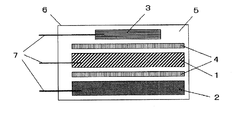
- FIG. 1 is a schematic diagram of test cells used in Examples, Comparative Examples, and Reference Examples.
- Example 1 Li 2 CO 3 and Co 3 O 4 were mixed and kept in air at 900 ° C. for 10 hours to obtain LiCoO 2 as the first positive electrode active material.
- the obtained LiCoO 2 was analyzed by a powder X-ray diffraction method, and as a result, it was found that it had a layered crystal structure.
- the second positive electrode active material was prepared by mixing LiOH.H 2 O and FeOOH so as to have a molar ratio of 5: 1, and holding at 400 ° C. for 24 hours in an argon atmosphere, and further holding at 600 ° C. for 24 hours. Li 5 FeO 4 was obtained. The obtained Li 5 FeO 4 was analyzed by powder X-ray diffractometry, and as a result, it was found that it had a crystal structure belonging to orthorhombic crystals.
- the first positive electrode active material and the second positive electrode active material were mixed at a mass ratio of 91: 9 to prepare a positive electrode active material.
- the obtained positive electrode active material, acetylene black as a conductive agent, and polyvinylidene fluoride as a binder were mixed so that the mass ratio was 8: 1: 1.
- N-methyl-2-pyrrolidone was added to the mixture to prepare a positive electrode mixture slurry.
- the obtained positive electrode mixture slurry was applied to a current collector made of an aluminum foil, and vacuum-dried at 110 ° C. to produce a working electrode 1.
- a test cell A1 shown in FIG. 1 was prepared using a working electrode 1, a counter electrode 2, a reference electrode 3, a separator 4, a nonaqueous electrolyte 5, and a container 6 under an argon atmosphere. Note that lithium metal was used for the counter electrode 2 and the reference electrode 3. As the separator 4, a polyethylene separator was used.
- the nonaqueous electrolyte 5 is obtained by dissolving LiPF 6 to a concentration of 1.0 mol / l in a nonaqueous electrolytic solution in which ethylene carbonate and diethyl carbonate are mixed so that the volume ratio is 3: 7. Was used.
- a current collecting tab 7 is attached to each of the working electrode 1, the counter electrode 2, and the reference electrode 3.
- Test cell A2 was produced in the same manner as in Example 1 except that the positive electrode active material was produced by mixing the first positive electrode active material and the second positive electrode active material so that the mass ratio was 94: 6.
- Test cell A3 was produced in the same manner as in Example 1 except that the positive electrode active material was produced by mixing the first positive electrode active material and the second positive electrode active material so that the mass ratio was 97: 3.
- Test cell B1 was produced in the same manner as in Example 1 except that the positive electrode active material was produced using only the first positive electrode active material.
- test cell C1 was produced in the same manner as in Example 1 except that the positive electrode active material was produced using only the second positive electrode active material.
- the test cells A1 to A3, B1 and C1 were charged at a constant current of 5 mA / g (C1 was 10 mA / g) until the positive electrode potential reached 4.3 V (vs. Li / Li + ). Thereafter, discharging was performed at a constant current of 5 mA / g (C1 was 10 mA / g) until the positive electrode potential reached 3.0 V (vs. Li / Li + ).
- Table 1 shows the initial discharge capacity, initial charge capacity, and initial charge / discharge efficiency at this time.
- the initial charge or initial discharge refers to the first charge or discharge performed after the battery is assembled.
- the initial charge / discharge efficiency is a value obtained by multiplying the value obtained by dividing the initial discharge capacity by the initial charge capacity by 100.
- the initial charge capacity between the positive electrode potential of 3.0 to 4.3 V is 180 mAh / g or less, and lithium metal is used as the negative electrode.
- the positive electrode final potential is not increased from 4.3 V (vs. Li / Li + ).
- the initial charge capacity could be increased as compared with B1 using the conventional positive electrode active material.
Landscapes
- Chemical & Material Sciences (AREA)
- Engineering & Computer Science (AREA)
- Chemical Kinetics & Catalysis (AREA)
- Electrochemistry (AREA)
- General Chemical & Material Sciences (AREA)
- Manufacturing & Machinery (AREA)
- Materials Engineering (AREA)
- Composite Materials (AREA)
- Inorganic Chemistry (AREA)
- Battery Electrode And Active Subsutance (AREA)
- Secondary Cells (AREA)
Abstract
本発明の目的は、低い充電電位で不可逆容量を負極活物質に与えることで ある。 本発明の非水電解質二次電池は、正極活物質を含む正極と、負極と、非水電解質とを備える非水電解質二次電池であって、正極活物質が、リチウム金属を負極として正極電位が3.0V(vs.Li/Li+)から4.3V(vs.Li/Li+)になるまで充電したときの、初期充電容量が180mAh/g以下で、かつ、初期充放電効率が70%以上である第1正極活物質と、リチウム金属を負極として正極電位が3.0V(vs.Li/Li+)から4.3V(vs.Li/Li+)になるまで充電したときの、初期充電容量が180mAh/gを超え、かつ、初期充放電効率が70%未満である第2正極活物質とを含む、ことを特徴としている。
Description
本発明は、非水電解質二次電池に関するものである。
従来の非水電解質二次電池では、充放電時の負極活物質の不可逆容量が高いため、負極活物質の方が正極活物質よりも充放電効率が低くなる。その結果、放電時において負極活物質が過放電状態になり劣化することが、非水電解質二次電池のサイクル特性の低下要因の1つとされている。
そこで、特許文献1では初期充電容量の高い正極活物質を従来の正極活物質に混合することにより、初期充電時に十分な量の不可逆容量を負極活物質に与え、サイクル特性を向上させている。
しかしながら、特許文献1のように、不可逆容量を負極活物質に与えるために充電終止電位を高く設定した場合、充電終止電位が高くなることによる非水電解液の分解が様々な電池特性に悪影響を与える。
本発明の目的は、低い充電電位で不可逆容量を負極活物質に与えることである。
本発明の非水電解質二次電池は、正極活物質を含む正極と、負極と、非水電解質とを備える非水電解質二次電池であって、正極活物質が、リチウム金属を負極として正極電位が3.0V(vs.Li/Li+)から4.3V(vs.Li/Li+)になるまで充電したときの、初期充電容量が180mAh/g以下で、かつ、初期充放電効率が70%以上である第1正極活物質と、リチウム金属を負極として正極電位が3.0V(vs.Li/Li+)から4.3V(vs.Li/Li+)になるまで充電したときの、初期充電容量が180mAh/gを超え、かつ、初期充放電効率が70%未満である第2正極活物質とを含む、ことを特徴としている。
第2正極活物質の初期充電容量が高いほど、第1正極活物質の相対的な量を増やすことができ、初期充放電後の容量を高くすることができるため好ましい。したがって、リチウム金属を負極として正極電位が3.0V(vs.Li/Li+)から4.3V(vs.Li/Li+)になるまで充電したときの、第2正極活物質の初期充電容量が300mAh/g以上であれば好ましく、400mAh/g以上であればさらに好ましい。
第1正極活物質としては、従来の正極活物質を用いることができ、その例としては、リチウム含有遷移金属酸化物が挙げられる。リチウム含有遷移金属酸化物の少なくとも一部は層状の結晶構造を有することが好ましい。なかでもLiCozM1-zO2(0.3<z≦1、MはNi、Mn、及びAlからなる群から選ばれる少なくとも1つの元素)が好ましい。
第2正極活物質の例としては、LixAOy(x/y>1.05、AはFe、Mn、Co、Ni及びCuからなる群から選ばれる少なくとも1つの元素)が挙げられる。なかでも、Li5FeO4、Li6MnO4、及びLi6CoO4が好ましい。
第2正極活物質の量は、使用する負極活物質の不可逆容量に合わせて調整することができるが、第1正極活物質と第2正極活物質との質量比を90:10~99:1とすることが好ましい。
本発明で用いられる非水電解質には、例えば、非水電解質二次電池に従来使用されている非水電解質を用いることができる。その例として、環状炭酸エステル、鎖状炭酸エステル、エーテル類が挙げられる。環状炭酸エステルの例としては、エチレンカーボネート及びプロピレンカーボネートが挙げられる。鎖状炭酸エステルの例としては、ジメチルカーボネート、エチルメチルカーボネート及びジエチルカーボネートが挙げられる。エーテル類の例としては、1,2-ジメトキシエタンが挙げられる。
本発明で用いられる非水電解質には、例えば、非水電解質二次電池に従来使用されているリチウム金属塩が含まれる。その例として、LiPF6及びLiBF4が挙げられる。
本発明で用いられる負極活物質には、例えば、非水電解質二次電池に従来使用されている負極活物質を用いることができる。その例として、黒鉛、リチウム、シリコン及びシリコン合金が挙げられる。
本発明の非水電解質二次電池には、必要に応じて、例えば、従来の非水電解質二次電池に使用されている電池構成部材を使用することができる。
本発明によれば、低い充電電位で第2正極活物質から高い初期充電容量が引き出せるため、充電終止電位を高く設定することなく不可逆容量を負極活物質に与えることができる。
以下、本発明の実施の形態の一例について詳細に説明するが、本発明はこれらの実施例により限定されるものではない。
〔試験セルの作製〕
<実施例1>
Li2CO3とCo3O4とを混合し、空気中において900℃で10時間保持することによって、第1正極活物質であるLiCoO2を得た。得られたLiCoO2は、粉末X線回折法により分析を行った結果、層状の結晶構造を有することが分かった。
<実施例1>
Li2CO3とCo3O4とを混合し、空気中において900℃で10時間保持することによって、第1正極活物質であるLiCoO2を得た。得られたLiCoO2は、粉末X線回折法により分析を行った結果、層状の結晶構造を有することが分かった。
LiOH・H2OとFeOOHとをモル比が5:1となるように混合し、アルゴン雰囲気中において400℃で24時間保持し、さらに600℃で24時間保持することによって、第2正極活物質であるLi5FeO4を得た。得られたLi5FeO4は、粉末X線回折法により分析を行った結果、斜方晶に属する結晶構造を有することが分かった。
第1正極活物質と第2正極活物質とを質量比が91:9となるように混合して正極活物質を作製した。得られた正極活物質と導電剤としてのアセチレンブラックと結着剤としてのポリフッ化ビニリデンとを質量比が8:1:1となるように混合した。その後、この混合物にN-メチル-2-ピロリドンを加えて正極合剤スラリーを作製した。得られた正極合剤スラリーをアルミニウム箔からなる集電体に塗布し、110℃で真空乾燥することで、作用極1を作製した。
アルゴン雰囲気下で、作用極1、対極2、参照極3、セパレーター4、非水電解質5、及び容器6を用いて図1に示す試験セルA1を作製した。尚、対極2及び参照極3にはリチウム金属を用いた。セパレーター4には、ポリエチレン製セパレーターを用いた。非水電解質5には、エチレンカーボネートとジエチルカーボネートとを体積比が3:7となるように混合した非水電解液に、LiPF6を1.0mol/lの濃度になるように溶解させたものを用いた。作用極1、対極2、及び参照極3には、それぞれ集電タブ7が取り付けられている。
<実施例2>
第1正極活物質と第2正極活物質とを質量比が94:6となるように混合して正極活物質を作製したこと以外は、実施例1と同様にして試験セルA2を作製した。
第1正極活物質と第2正極活物質とを質量比が94:6となるように混合して正極活物質を作製したこと以外は、実施例1と同様にして試験セルA2を作製した。
<実施例3>
第1正極活物質と第2正極活物質とを質量比が97:3となるように混合して正極活物質を作製したこと以外は、実施例1と同様にして試験セルA3を作製した。
第1正極活物質と第2正極活物質とを質量比が97:3となるように混合して正極活物質を作製したこと以外は、実施例1と同様にして試験セルA3を作製した。
<比較例1>
第1正極活物質のみを用いて正極活物質を作製したこと以外は、実施例1と同様にして試験セルB1を作製した。
第1正極活物質のみを用いて正極活物質を作製したこと以外は、実施例1と同様にして試験セルB1を作製した。
<参考例1>
第2正極活物質のみを用いて正極活物質を作製したこと以外は、実施例1と同様にして試験セルC1を作製した。
第2正極活物質のみを用いて正極活物質を作製したこと以外は、実施例1と同様にして試験セルC1を作製した。
〔初期充放電試験〕
試験セルA1~A3、B1及びC1について、5mA/g(C1は10mA/g)の定電流で正極電位が4.3V(vs.Li/Li+)に達するまで充電した。その後、5mA/g(C1は10mA/g)の定電流で正極電位が3.0V(vs.Li/Li+)に達するまで放電を行った。このときの初期放電容量、初期充電容量、及び初期充放電効率を表1に示す。なお、初期充電又は初期放電とは電池の組立後に最初に行う充電又は放電のことをいう。また、初期充放電効率とは、初期放電容量を初期充電容量で除した値に100をかけた値のことをいう。
試験セルA1~A3、B1及びC1について、5mA/g(C1は10mA/g)の定電流で正極電位が4.3V(vs.Li/Li+)に達するまで充電した。その後、5mA/g(C1は10mA/g)の定電流で正極電位が3.0V(vs.Li/Li+)に達するまで放電を行った。このときの初期放電容量、初期充電容量、及び初期充放電効率を表1に示す。なお、初期充電又は初期放電とは電池の組立後に最初に行う充電又は放電のことをいう。また、初期充放電効率とは、初期放電容量を初期充電容量で除した値に100をかけた値のことをいう。
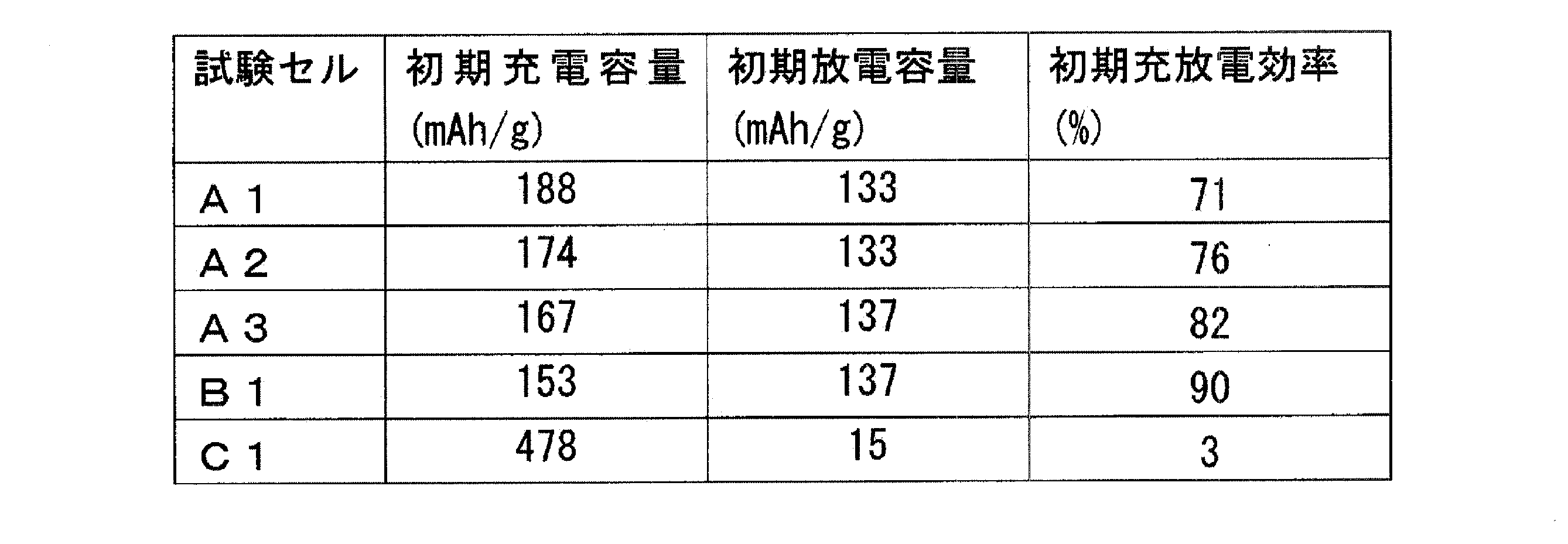
表1のC1から分かるように、本発明者はLi5FeO4を正極活物質として用いた場合、正極電位が3.0~4.3V(vs.Li/Li+)の間の初期充電容量が180mAh/gを超え、かつリチウム金属を負極としたときの初期充放電効率が70%未満であることを見出した。
そして、表1のA1~A3から分かるように、正極電位が3.0~4.3V(vs.Li/Li+)の間の初期充電容量が180mAh/g以下で、かつ、リチウム金属を負極としたときの初期充放電効率が70%以上である第1正極活物質と、Li5FeO4とを組み合わせることによって、正極終止電位を4.3V(vs.Li/Li+)より上げることなく、従来の正極活物質を用いたB1よりも初期充電容量を高めることができた。
1・・・作用極
2・・・対極
3・・・参照極
4・・・セパレーター
5・・・非水電解質
6・・・容器
7・・・集電タブ
2・・・対極
3・・・参照極
4・・・セパレーター
5・・・非水電解質
6・・・容器
7・・・集電タブ
Claims (8)
- 正極活物質を含む正極と、負極と、非水電解質とを備える非水電解質二次電池であって、
前記正極活物質が、リチウム金属を負極として正極電位が3.0V(vs.Li/Li+)から4.3V(vs.Li/Li+)になるまで充電したときの、初期充電容量が180mAh/g以下で、かつ、初期充放電効率が70%以上である第1正極活物質と、リチウム金属を負極として正極電位が3.0V(vs.Li/Li+)から4.3V(vs.Li/Li+)になるまで充電したときの、初期充電容量が180mAh/gを超え、かつ、初期充放電効率が70%未満である第2正極活物質とを含む、ことを特徴とする非水電解質二次電池。 - 前記第1正極活物質が、リチウム含有遷移金属酸化物であることを特徴とする、請求項1に記載の非水電解質二次電池。
- 前記第1正極活物質の少なくとも一部が、層状の結晶構造を有することを特徴とする、請求項2に記載の非水電解質二次電池。
- 前記第1正極活物質が、LiCozM1-zO2(0.3<z≦1、MはNi、Mn、及びAlからなる群から選ばれる少なくとも1つの元素)であることを特徴とする、請求項3に記載の非水電解質二次電池。
- 前記第2正極活物質が、LixAOy(x/y>1.05、AはFe、Mn、Co、Ni、及びCuからなる群から選ばれる少なくとも1つの元素)であることを特徴とする、請求項1~4のいずれか1項に記載の非水電解質二次電池。
- 前記第2正極活物質が、Li5FeO4、Li6MnO4、及びLi6CoO4からなる群から選ばれる少なくとも1つの化合物であることを特徴とする、請求項5に記載の非水電解質二次電池。
- 前記第1正極活物質と前記第2正極活物質との質量比が90:10~99:1であることを特徴とする、請求項1~6のいずれか1項に記載の非水電解質二次電池。
- 正極の充電終止電位が4.3V(vs.Li/Li+)以下であることを特徴とする、請求項1~7のいずれか1項に記載の非水電解質二次電池。
Applications Claiming Priority (2)
| Application Number | Priority Date | Filing Date | Title |
|---|---|---|---|
| JP2011-121940 | 2011-05-31 | ||
| JP2011121940A JP2014157653A (ja) | 2011-05-31 | 2011-05-31 | 非水電解質二次電池 |
Publications (1)
| Publication Number | Publication Date |
|---|---|
| WO2012165212A1 true WO2012165212A1 (ja) | 2012-12-06 |
Family
ID=47259073
Family Applications (1)
| Application Number | Title | Priority Date | Filing Date |
|---|---|---|---|
| PCT/JP2012/063000 Ceased WO2012165212A1 (ja) | 2011-05-31 | 2012-05-22 | 非水電解質二次電池 |
Country Status (2)
| Country | Link |
|---|---|
| JP (1) | JP2014157653A (ja) |
| WO (1) | WO2012165212A1 (ja) |
Cited By (9)
| Publication number | Priority date | Publication date | Assignee | Title |
|---|---|---|---|---|
| WO2015011883A1 (ja) * | 2013-07-25 | 2015-01-29 | 株式会社豊田自動織機 | プリドープ剤、正極、並びにリチウムイオン二次電池及びその製造方法 |
| WO2015115052A1 (ja) * | 2014-01-31 | 2015-08-06 | 三洋電機株式会社 | 非水電解質二次電池及び非水電解質二次電池の製造方法 |
| JP2016012620A (ja) * | 2014-06-27 | 2016-01-21 | 株式会社豊田自動織機 | プリドープ剤、リチウムイオンキャパシタ用正極、並びにリチウムイオンキャパシタ及びその製造方法 |
| EP3249721A1 (en) * | 2016-05-27 | 2017-11-29 | Samsung SDI Co., Ltd. | Positive electrode for rechargeable lithium battery and rechargeable lithium battery including same |
| JPWO2020026486A1 (ja) * | 2018-07-31 | 2021-08-02 | パナソニックIpマネジメント株式会社 | 正極材料および二次電池 |
| JP2023540590A (ja) * | 2021-05-18 | 2023-09-25 | エルジー エナジー ソリューション リミテッド | リチウム二次電池用正極およびそれを含むリチウム二次電池 |
| JP2023541947A (ja) * | 2021-05-26 | 2023-10-04 | エルジー エナジー ソリューション リミテッド | リチウム二次電池用負極およびそれを含むリチウム二次電池 |
| US12412902B2 (en) | 2021-01-08 | 2025-09-09 | Tdk Corporation | Lithium iron complex oxide, cathode material, cathode, and lithium-ion secondary battery |
| US12712180B2 (en) | 2018-07-31 | 2026-08-18 | Panasonic Intellectual Property Management Co., Ltd. | Positive electrode material and secondary battery |
Families Citing this family (6)
| Publication number | Priority date | Publication date | Assignee | Title |
|---|---|---|---|---|
| JP6944641B2 (ja) | 2017-04-24 | 2021-10-06 | トヨタ自動車株式会社 | リチウムイオン二次電池およびその製造方法 |
| JP7027824B2 (ja) * | 2017-11-09 | 2022-03-02 | 株式会社豊田自動織機 | 炭素被覆Li5FeO4 |
| JP7010054B2 (ja) * | 2018-02-22 | 2022-02-10 | 株式会社豊田自動織機 | 正極活物質、Li5FeO4、結着剤及び溶剤を含む組成物の製造方法 |
| JP7087889B2 (ja) * | 2018-09-27 | 2022-06-21 | 株式会社豊田自動織機 | 複合粒子 |
| JP7135673B2 (ja) * | 2018-09-27 | 2022-09-13 | 株式会社豊田自動織機 | 複合粒子の製造方法 |
| CN118825206A (zh) * | 2023-04-07 | 2024-10-22 | 株式会社Aesc日本 | 正极材料、正极极片、电化学装置和电子设备 |
Citations (3)
| Publication number | Priority date | Publication date | Assignee | Title |
|---|---|---|---|---|
| JP2004207055A (ja) * | 2002-12-25 | 2004-07-22 | Sanyo Electric Co Ltd | リチウム電池およびその製造方法 |
| JP2006294272A (ja) * | 2005-04-05 | 2006-10-26 | Nissan Motor Co Ltd | 二次電池および組電池、並びにこれらを搭載する車両 |
| JP2007287446A (ja) * | 2006-04-14 | 2007-11-01 | Nissan Motor Co Ltd | リチウムイオン二次電池 |
-
2011
- 2011-05-31 JP JP2011121940A patent/JP2014157653A/ja not_active Withdrawn
-
2012
- 2012-05-22 WO PCT/JP2012/063000 patent/WO2012165212A1/ja not_active Ceased
Patent Citations (3)
| Publication number | Priority date | Publication date | Assignee | Title |
|---|---|---|---|---|
| JP2004207055A (ja) * | 2002-12-25 | 2004-07-22 | Sanyo Electric Co Ltd | リチウム電池およびその製造方法 |
| JP2006294272A (ja) * | 2005-04-05 | 2006-10-26 | Nissan Motor Co Ltd | 二次電池および組電池、並びにこれらを搭載する車両 |
| JP2007287446A (ja) * | 2006-04-14 | 2007-11-01 | Nissan Motor Co Ltd | リチウムイオン二次電池 |
Cited By (15)
| Publication number | Priority date | Publication date | Assignee | Title |
|---|---|---|---|---|
| JPWO2015011883A1 (ja) * | 2013-07-25 | 2017-03-02 | 株式会社豊田自動織機 | プリドープ剤、正極、並びにリチウムイオン二次電池及びその製造方法 |
| WO2015011883A1 (ja) * | 2013-07-25 | 2015-01-29 | 株式会社豊田自動織機 | プリドープ剤、正極、並びにリチウムイオン二次電池及びその製造方法 |
| US10256469B2 (en) | 2014-01-31 | 2019-04-09 | Sanyo Electric Co., Ltd. | Nonaqueous-electrolyte secondary battery and method for manufacturing nonaqueous-electrolyte secondary battery |
| JPWO2015115052A1 (ja) * | 2014-01-31 | 2017-03-23 | 三洋電機株式会社 | 非水電解質二次電池及び非水電解質二次電池の製造方法 |
| WO2015115052A1 (ja) * | 2014-01-31 | 2015-08-06 | 三洋電機株式会社 | 非水電解質二次電池及び非水電解質二次電池の製造方法 |
| JP2016012620A (ja) * | 2014-06-27 | 2016-01-21 | 株式会社豊田自動織機 | プリドープ剤、リチウムイオンキャパシタ用正極、並びにリチウムイオンキャパシタ及びその製造方法 |
| EP3249721A1 (en) * | 2016-05-27 | 2017-11-29 | Samsung SDI Co., Ltd. | Positive electrode for rechargeable lithium battery and rechargeable lithium battery including same |
| JPWO2020026486A1 (ja) * | 2018-07-31 | 2021-08-02 | パナソニックIpマネジメント株式会社 | 正極材料および二次電池 |
| JP7223980B2 (ja) | 2018-07-31 | 2023-02-17 | パナソニックIpマネジメント株式会社 | 正極材料および二次電池 |
| US12712180B2 (en) | 2018-07-31 | 2026-08-18 | Panasonic Intellectual Property Management Co., Ltd. | Positive electrode material and secondary battery |
| US12412902B2 (en) | 2021-01-08 | 2025-09-09 | Tdk Corporation | Lithium iron complex oxide, cathode material, cathode, and lithium-ion secondary battery |
| JP2023540590A (ja) * | 2021-05-18 | 2023-09-25 | エルジー エナジー ソリューション リミテッド | リチウム二次電池用正極およびそれを含むリチウム二次電池 |
| JP7594096B2 (ja) | 2021-05-18 | 2024-12-03 | エルジー エナジー ソリューション リミテッド | リチウム二次電池用正極およびそれを含むリチウム二次電池 |
| JP2023541947A (ja) * | 2021-05-26 | 2023-10-04 | エルジー エナジー ソリューション リミテッド | リチウム二次電池用負極およびそれを含むリチウム二次電池 |
| JP7584849B2 (ja) | 2021-05-26 | 2024-11-18 | エルジー エナジー ソリューション リミテッド | リチウム二次電池用負極およびそれを含むリチウム二次電池 |
Also Published As
| Publication number | Publication date |
|---|---|
| JP2014157653A (ja) | 2014-08-28 |
Similar Documents
| Publication | Publication Date | Title |
|---|---|---|
| JP2014157653A (ja) | 非水電解質二次電池 | |
| KR100609789B1 (ko) | 비수 전해질 이차 전지 | |
| JP5968883B2 (ja) | 非水電解質電池 | |
| JP5078334B2 (ja) | 非水電解質二次電池 | |
| JP5394578B2 (ja) | 非水電解質二次電池及び非水電解質二次電池用正極 | |
| JP4798964B2 (ja) | 非水電解質二次電池 | |
| JP2004139743A (ja) | 非水電解質二次電池 | |
| JP2003282055A (ja) | 非水電解液二次電池 | |
| US9337479B2 (en) | Nonaqueous electrolyte secondary battery | |
| JP5036121B2 (ja) | 非水電解質二次電池 | |
| JP2006236886A (ja) | 非水電解質二次電池および非水電解質二次電池用正極活物質の製造方法 | |
| JP2007095354A (ja) | 非水電解質二次電池の充放電方法 | |
| JP2008311211A (ja) | 非水電解質二次電池 | |
| WO2012147507A1 (ja) | 非水電解質二次電池 | |
| JP2000200607A (ja) | リチウム二次電池 | |
| WO2013031523A1 (ja) | 非水電解質二次電池 | |
| JP2012209245A (ja) | 非水電解質二次電池 | |
| JP5779452B2 (ja) | 非水電解質二次電池の負極活物質及び非水電解質二次電池 | |
| JP5626035B2 (ja) | リチウムイオン二次電池の前処理方法及び使用方法 | |
| JP2010177207A (ja) | 非水電解質二次電池 | |
| JP2004119326A (ja) | 非水電解質二次電池 | |
| JP2010218855A (ja) | 非水電解質二次電池用負極及び非水電解質二次電池 | |
| JP2007134274A (ja) | 電極材料及び電極並びにリチウムイオン電池 | |
| KR20140116448A (ko) | 정극 활물질 | |
| JPH11250936A (ja) | リチウム二次電池 |
Legal Events
| Date | Code | Title | Description |
|---|---|---|---|
| 121 | Ep: the epo has been informed by wipo that ep was designated in this application |
Ref document number: 12792927 Country of ref document: EP Kind code of ref document: A1 |
|
| NENP | Non-entry into the national phase |
Ref country code: DE |
|
| 122 | Ep: pct application non-entry in european phase |
Ref document number: 12792927 Country of ref document: EP Kind code of ref document: A1 |
|
| NENP | Non-entry into the national phase |
Ref country code: JP |