WO2012164933A1 - 改良型ニトリルヒドラターゼ - Google Patents
改良型ニトリルヒドラターゼ Download PDFInfo
- Publication number
- WO2012164933A1 WO2012164933A1 PCT/JP2012/003560 JP2012003560W WO2012164933A1 WO 2012164933 A1 WO2012164933 A1 WO 2012164933A1 JP 2012003560 W JP2012003560 W JP 2012003560W WO 2012164933 A1 WO2012164933 A1 WO 2012164933A1
- Authority
- WO
- WIPO (PCT)
- Prior art keywords
- amino acid
- acid residue
- subunit
- nitrile hydratase
- acid sequence
- Prior art date
- Legal status (The legal status is an assumption and is not a legal conclusion. Google has not performed a legal analysis and makes no representation as to the accuracy of the status listed.)
- Ceased
Links
Images



Classifications
-
- C—CHEMISTRY; METALLURGY
- C12—BIOCHEMISTRY; BEER; SPIRITS; WINE; VINEGAR; MICROBIOLOGY; ENZYMOLOGY; MUTATION OR GENETIC ENGINEERING
- C12N—MICROORGANISMS OR ENZYMES; COMPOSITIONS THEREOF; PROPAGATING, PRESERVING, OR MAINTAINING MICROORGANISMS; MUTATION OR GENETIC ENGINEERING; CULTURE MEDIA
- C12N9/00—Enzymes; Proenzymes; Compositions thereof; Processes for preparing, activating, inhibiting, separating or purifying enzymes
- C12N9/88—Lyases (4.)
-
- C—CHEMISTRY; METALLURGY
- C12—BIOCHEMISTRY; BEER; SPIRITS; WINE; VINEGAR; MICROBIOLOGY; ENZYMOLOGY; MUTATION OR GENETIC ENGINEERING
- C12N—MICROORGANISMS OR ENZYMES; COMPOSITIONS THEREOF; PROPAGATING, PRESERVING, OR MAINTAINING MICROORGANISMS; MUTATION OR GENETIC ENGINEERING; CULTURE MEDIA
- C12N15/00—Mutation or genetic engineering; DNA or RNA concerning genetic engineering, vectors, e.g. plasmids, or their isolation, preparation or purification; Use of hosts therefor
- C12N15/09—Recombinant DNA-technology
- C12N15/63—Introduction of foreign genetic material using vectors; Vectors; Use of hosts therefor; Regulation of expression
-
- C—CHEMISTRY; METALLURGY
- C12—BIOCHEMISTRY; BEER; SPIRITS; WINE; VINEGAR; MICROBIOLOGY; ENZYMOLOGY; MUTATION OR GENETIC ENGINEERING
- C12P—FERMENTATION OR ENZYME-USING PROCESSES TO SYNTHESISE A DESIRED CHEMICAL COMPOUND OR COMPOSITION OR TO SEPARATE OPTICAL ISOMERS FROM A RACEMIC MIXTURE
- C12P13/00—Preparation of nitrogen-containing organic compounds
- C12P13/02—Amides, e.g. chloramphenicol or polyamides; Imides or polyimides; Urethanes, i.e. compounds comprising N-C=O structural element or polyurethanes
-
- C—CHEMISTRY; METALLURGY
- C12—BIOCHEMISTRY; BEER; SPIRITS; WINE; VINEGAR; MICROBIOLOGY; ENZYMOLOGY; MUTATION OR GENETIC ENGINEERING
- C12Y—ENZYMES
- C12Y402/00—Carbon-oxygen lyases (4.2)
- C12Y402/01—Hydro-lyases (4.2.1)
- C12Y402/01084—Nitrile hydratase (4.2.1.84)
-
- Y—GENERAL TAGGING OF NEW TECHNOLOGICAL DEVELOPMENTS; GENERAL TAGGING OF CROSS-SECTIONAL TECHNOLOGIES SPANNING OVER SEVERAL SECTIONS OF THE IPC; TECHNICAL SUBJECTS COVERED BY FORMER USPC CROSS-REFERENCE ART COLLECTIONS [XRACs] AND DIGESTS
- Y02—TECHNOLOGIES OR APPLICATIONS FOR MITIGATION OR ADAPTATION AGAINST CLIMATE CHANGE
- Y02P—CLIMATE CHANGE MITIGATION TECHNOLOGIES IN THE PRODUCTION OR PROCESSING OF GOODS
- Y02P20/00—Technologies relating to chemical industry
- Y02P20/50—Improvements relating to the production of bulk chemicals
- Y02P20/52—Improvements relating to the production of bulk chemicals using catalysts, e.g. selective catalysts
Definitions
- the present invention relates to an improved (mutant) nitrile hydratase and a method for producing the same. Furthermore, the present invention relates to a gene DNA encoding the enzyme, a recombinant vector containing the gene DNA, a transformant having the recombinant vector, and a method for producing an amide compound.
- nitrile hydratase an enzyme having nitrile hydration activity that hydrates nitrile groups and converts them into amide groups, was discovered, and corresponding amides from nitrile compounds using the enzyme or microbial cells containing the enzyme.
- a method for producing the compound is disclosed. This production method is known to have a higher conversion rate and selectivity from a nitrile compound to a corresponding amide compound than conventional chemical synthesis methods.
- microorganisms that produce nitrile hydratase include, for example, the genus Corynebacterium, the genus Pseudomonas, the genus Rhodococcus, the genus Rhizobium, the genus Klebsiella, Examples include microorganisms belonging to genera and the like. Among them, Rhodococcus rhodochrous J1 strain has been used for industrial production of acrylamide and has proved its usefulness. Moreover, the gene which codes the nitrile hydratase which the strain produces is also clear (refer patent document 1).
- a nitrile hydratase capable of further improving heat resistance and amide compound resistance, or capable of reacting at high temperatures, and using it for the production of amide compounds from the viewpoint of production costs such as catalyst costs.
- development is desired from the viewpoint of reducing the amount of enzyme during the reaction and reducing the cost.
- an object of the present invention is to provide a protein having a nitrile hydratase activity that is further improved in heat resistance, amide compound resistance and high-temperature accumulation by improving nitrile hydratase.
- an object of the present invention is to provide a gene DNA encoding the protein, a recombinant vector containing the gene DNA, a transformant containing the recombinant vector, a nitrile hydratase collected from a culture of the transformant, and It is in providing the manufacturing method.
- the objective of this invention is providing the manufacturing method of the amide compound using the said culture or the processed material of the said culture.
- the present inventor has intensively studied to solve the above problems.
- a protein in which a specific amino acid residue is substituted with another amino acid residue in the amino acid sequence of wild-type nitrile hydratase has nitrile hydratase activity, heat resistance, amide compound resistance, and high-temperature accumulation ability.
- the present invention has been completed. That is, the present invention is as follows. (1) The following protein (A) or (B): (A) In the amino acid sequence of wild-type nitrile hydratase, the following amino acid residues (a), (b), (c), (d) and (e) are substituted with other amino acid residues.
- a protein comprising an amino acid sequence in which at least one amino acid residue selected from the group consisting of (f) to (q) is substituted with another amino acid residue, and having a nitrile hydratase activity; (A) an amino acid residue downstream of 167 residues counted from the N-terminal amino acid residue in the amino acid sequence of the ⁇ subunit; (B) an amino acid residue downstream of 219 residues from the N-terminal amino acid residue in the amino acid sequence of the ⁇ subunit; (C) an amino acid residue downstream of 57 residues from the N-terminal amino acid residue in the amino acid sequence of the ⁇ subunit; (D) an amino acid residue that is 114 residues downstream from the N-terminal amino acid residue in the amino acid sequence of the ⁇ subunit; (E) an amino acid residue that is 107 residues downstream from the N-terminal amino acid residue in the amino acid sequence of the ⁇ subunit; (F) an amino acid residue downstream of 218 residues counted from the N-terminal amino acid residue
- a method for producing nitrile hydratase comprising culturing the transformant according to (4) and collecting nitrile hydratase from the obtained culture.
- An amide compound characterized by contacting a culture obtained by culturing the protein according to (1) or the transformant according to (4) or a treated product of the culture with a nitrile compound. Production method.
- the present invention it is possible to provide a novel improved (mutant) nitrile hydratase with improved heat resistance, amide compound resistance and high temperature accumulation.
- the improved nitrile hydratase having improved heat resistance, amide compound resistance and high-temperature storage properties is very useful because the production efficiency of the amide compound is increased.
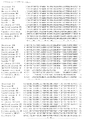
- FIG. 2 shows the amino acid sequence of the ⁇ subunit of wild-type nitrile hydratase derived from various microorganisms (continuation of FIG. 2-1). It is a figure which shows the amino acid sequence of alpha subunit of wild type nitrile hydratase derived from various microorganisms.
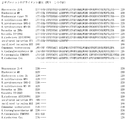
- FIG. 3 shows the amino acid sequence of the ⁇ subunit of wild-type nitrile hydratase derived from various microorganisms (continuation of FIG. 3-1).
- upstream and downstream mean “N-terminal” with respect to the amino acid sequence and “5′-terminal” with respect to the base sequence.
- Downstream and downstream mean “C-terminal” with respect to the amino acid sequence and “3” with respect to the base sequence.
- Improved nitrile hydratase (a) Wild type nitrile hydratase
- the improved nitrile hydratase of the present invention is an improved version of wild type nitrile hydratase, and its origin is not particularly limited.
- wild-type nitrile hydratase refers to nitrile hydratase that can be isolated from organisms in the natural world (for example, microorganisms such as soil bacteria), an amino acid sequence constituting the enzyme, and a gene encoding the enzyme Is a nitrile hydratase that has not been artificially deleted or inserted, or has not been substituted with other amino acids or bases, and retains its natural properties.
- nitrile hydratases derived from microorganisms but also nitrile hydratases identified only from DNA sequences whose origins of organisms are not identified are included in the “wild-type nitrile hydratase”.
- Wild-type nitrile hydratase has a higher order structure in which domains of ⁇ subunit and ⁇ subunit are assembled, and has a non-heme iron atom or a non-choline nuclear cobalt atom as a prosthetic molecule. These nitrile hydratases are distinguished by the names of iron-type nitrile hydratase and cobalt-type nitrile hydratase, respectively.
- iron-type nitrile hydratase include those derived from Rhodococcus genus N-771. This iron-type nitrile hydratase has been subjected to X-ray crystal structure analysis, and its three-dimensional structure has been clarified. As a result, the enzyme is bound to non-heme iron via four amino acid residues in the cysteine cluster (: SEQ ID NO: 61) of the ⁇ subunit that forms the active center.
- cobalt-type nitrile hydratase examples include those derived from Rhodococcus rhodochrous J1 strain (hereinafter sometimes referred to as “J1 bacterium”) or those derived from Pseudocardia thermophila (Pseudocardia thermophila). It can.
- J1 bacterium Rhodococcus rhodochrous J1 strain
- Pseudocardia thermophila Pseudocardia thermophila
- the cobalt-type nitrile hydratase derived from the J1 bacterium is bound to a cobalt atom via a region represented by the cysteine cluster (: SEQ ID NO: 62) of the ⁇ subunit that forms the active center.
- the cysteine cluster of Pseudonocardia thermophila-derived cobalt-type nitrile hydratase is such that the fourth cysteine (Cys) from the upstream side (N-terminal side) of the cysteine cluster derived from J1 bacterium is cysteine sulfinic acid (Csi).
- the sixth cysteine (Cys) on the most downstream side (C-terminal side) is cysteine sulfenic acid (Cse).
- the prosthetic molecule is bound to the region represented by the cysteine cluster “C (S / T) LCSC” (SEQ ID NOs: 61 and 62) in the ⁇ subunit.
- C (S / T) LCSC cysteine cluster “C (S / T) LCSC” (SEQ ID NOs: 61 and 62) in the ⁇ subunit.
- the nitrile hydratase containing such a prosthetic molecule binding region include Rhodococcus rhodochrous J1 (FERM BP-1478), Rhodococcus rhodochrous M8 (SU17331814), Rhodococcus rhodochrous M33 (VKM Ac-1515D), Rhodococcus rhodochrous rhodochrous.
- ATCC 39484 Japanese Patent Laid-Open No.
- FIGS. 3-1 and 3-2 The alignment of the amino acid (single letter code) sequences of the ⁇ subunit of wild-type nitrile hydratase derived from various microorganisms is shown in FIGS. 3-1 and 3-2.
- SEQ ID NOs: 4 and 49 to 60 are shown in order from the above amino acid sequence.
- FIGS. 2-1 and 2-2 The alignment of the amino acid (single letter code) sequences of the ⁇ subunit of wild-type nitrile hydratase derived from various microorganisms is shown in FIGS. 2-1 and 2-2. In each of FIGS. 2-1 and 2-2, SEQ ID NOs: 2 and 35 to 48 are shown in order from the above amino acid sequence.
- the present invention is an improved (mutant) nitrile hydratase obtained by subjecting a wild type nitrile hydratase to amino acid substitution.
- the amino acid sequence of wild-type nitrile hydratase to be subjected to substitution is published in NCBI databases such as GenBank (http://www.ncbi.nlm.nih.gov/).
- the ⁇ subunit derived from Rhodococcus rhodochrous J1 has an amino acid sequence represented by SEQ ID NO: 4 and a base sequence represented by SEQ ID NO: 3.
- the ⁇ subunit has an amino acid sequence represented by SEQ ID NO: 2, a base sequence represented by SEQ ID NO: 1, and an accession number “P21220”.
- the accession number of the ⁇ subunit derived from Rhodococcus rhodochrous M8 (SU17331814) is “ATT79340”, and the accession number of the ⁇ subunit is “AAT79339”.
- the accession number of the ⁇ subunit derived from Pseudocardia thermophila JCM3095 is “1IRE A”
- the accession number of the ⁇ subunit is “1IRE B”.
- amino acid sequence in which a specific amino acid residue is substituted one or several (for example, about 1 to 10, preferably about 1 to 5) amino acid residues (however, the amino acid after the above substitution)
- amino acid residues an improved nitrile hydratase having a nitrile hydratase activity consisting of an amino acid sequence in which (except residues) is deleted, substituted and / or added and having nitrile hydratase activity is also within the scope of the present invention.
- amino acid residues (a), (b), (c), (d) and (e) in the amino acid sequence of wild-type nitrile hydratase are other amino acids.
- the following (d), (e), (f), (g), (h), (i), (j), (k), (l), (m), (n), (o) , (P) and (q) are amino acid residues in the amino acid sequence of a wild-type nitrile hydratase derived from a bacterium belonging to the species Rhodococcus rhodochrous among various wild-type nitrile hydratases, respectively. preferable.
- A An amino acid residue downstream of 167 residues from the N-terminal amino acid residue in the amino acid sequence of the ⁇ subunit.
- B An amino acid residue downstream of 219 residues from the N-terminal amino acid residue in the amino acid sequence of the ⁇ subunit.
- C An amino acid residue downstream of 57 residues from the N-terminal amino acid residue in the amino acid sequence of the ⁇ subunit.
- D An amino acid residue that is 114 residues downstream from the N-terminal amino acid residue in the amino acid sequence of the ⁇ subunit.
- E an amino acid residue that is 107 residues downstream from the N-terminal amino acid residue in the amino acid sequence of the ⁇ subunit.
- the improved nitrile hydratase of the present invention among the above proteins, those in which the substituted amino acid residues are those listed below are preferably mentioned.
- the 167th amino acid residue (asparagine) from the N-terminal side in the amino acid sequence of the ⁇ subunit of wild-type nitrile hydratase derived from J1 bacteria the amino acid of the ⁇ subunit
- An enzyme protein having nitrile hydratase activity is preferred. It is.
- amino acid substitutions include
- the alphabetical representation of amino acids can be represented by one ordinary letter, and the alphabet displayed on the left side of the number (for example, “26”) indicating the number of amino acid residues up to the substitution site is the one-letter representation of the amino acid before substitution.
- the alphabet displayed on the right side indicates the one-letter code of the amino acid after substitution.
- amino acid sequence of the ⁇ subunit shown in SEQ ID NO: 2 when “N ⁇ 167S” is expressed, it is counted from the N-terminal amino acid residue in the amino acid sequence of the ⁇ subunit (SEQ ID NO: 2) ( This means an aspect of amino acid substitution in the improved nitrile hydratase in which the 167th asparagine (N) is substituted with serine (S) (including the N-terminal amino acid residue).
- ⁇ ⁇ means that the substitution position is downstream from the C residue on the most downstream side of the CTLCSC region (the C-terminal side is counted without including the C residue).
- the improved nitrile hydratase in which amino acid substitution is performed in the above-described embodiments of substitution numbers 13 to 29 is more preferable, and the improved nitrile hydratase in which amino acid substitution is performed in the above-described embodiments of substitution numbers 26-29. Is particularly preferred.
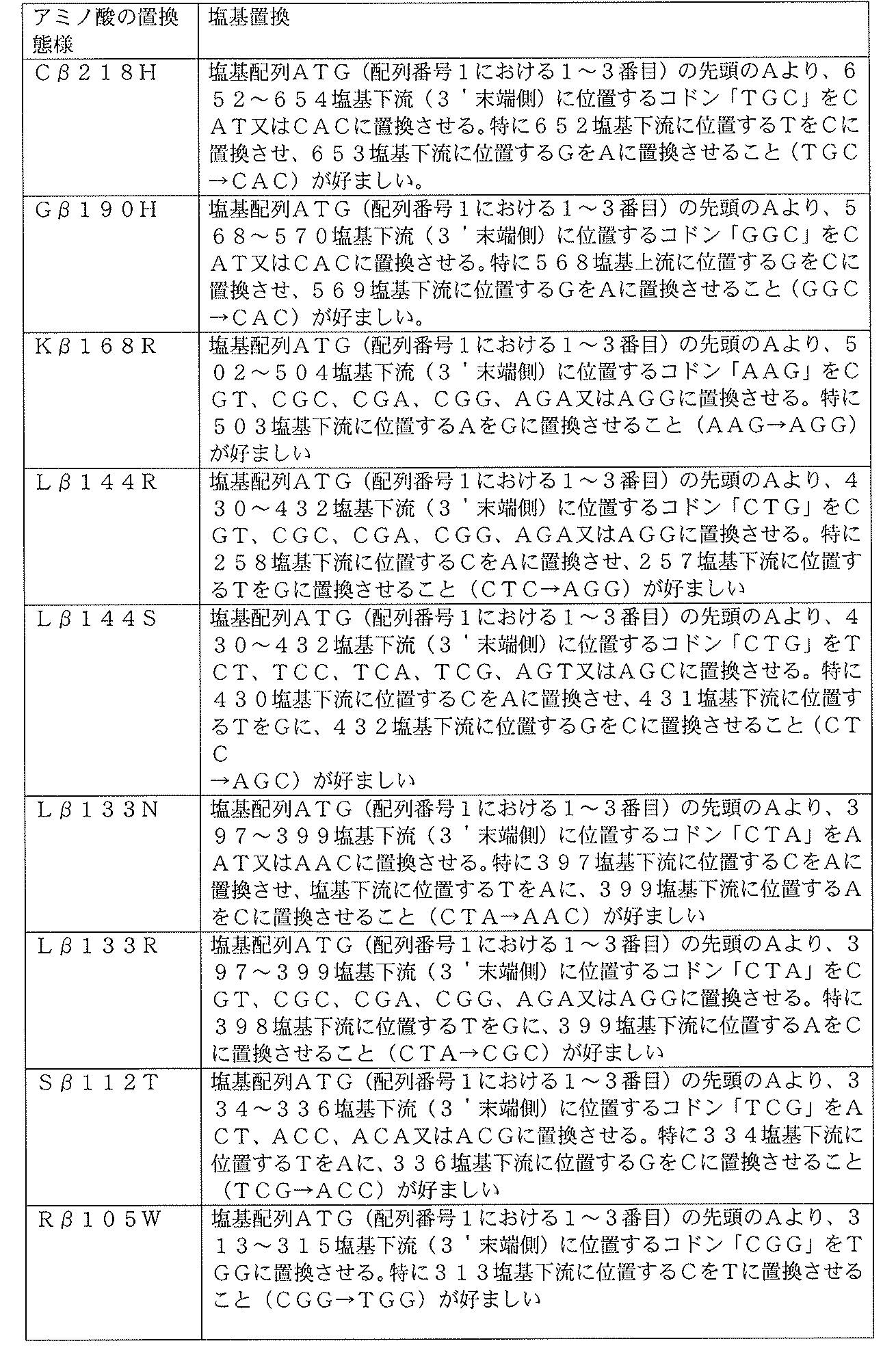
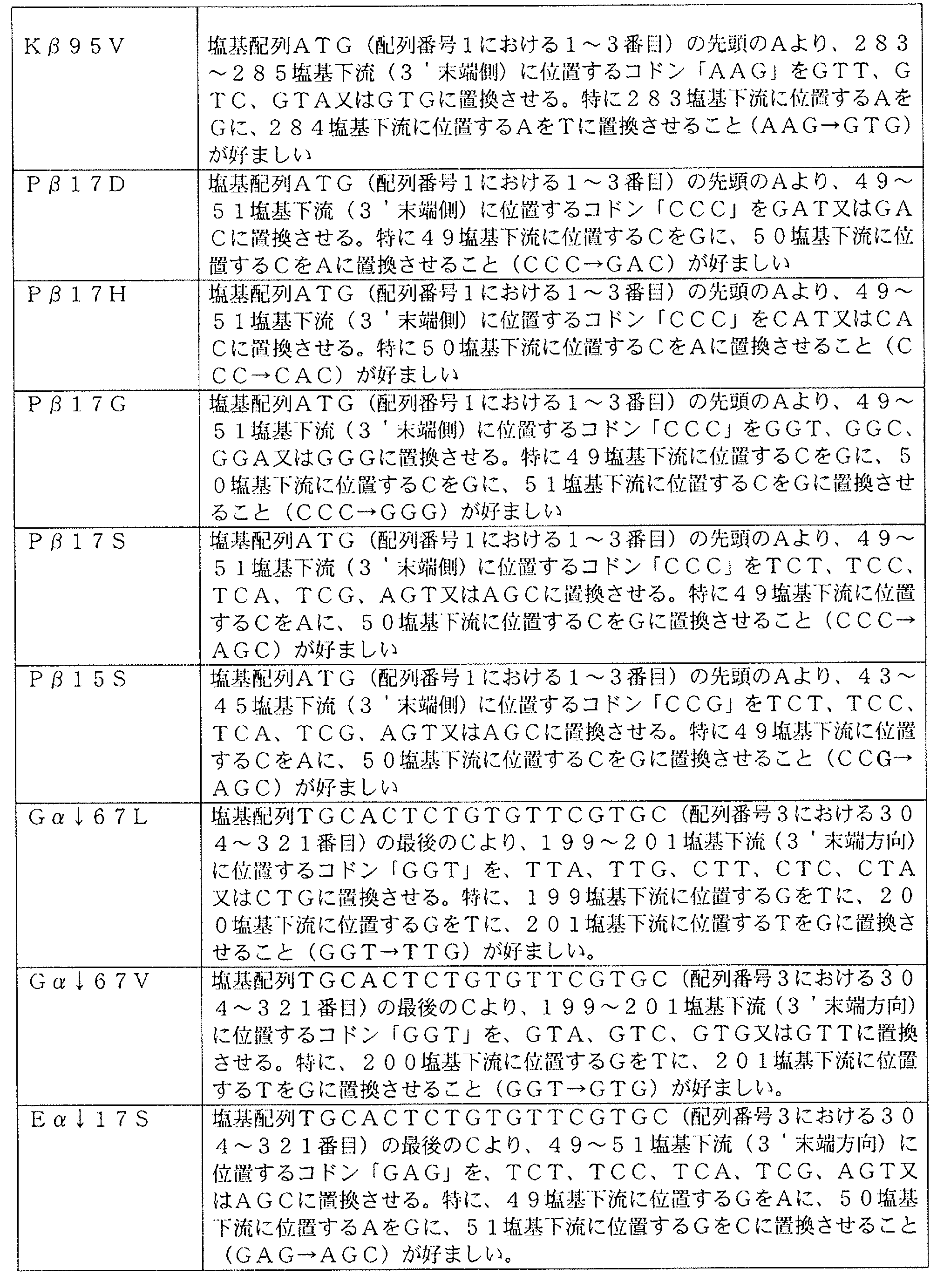
- Preferred examples of the base substitution for causing the amino acid substitution include the embodiments shown in Table 2 below.
- the amino acid substitution sites of the present invention are aligned with the nitrile hydratase ⁇ subunit derived from the J1 bacterium of SEQ ID NO: 2, and are at positions 167, 219, 57, 114, 107, 218, 190 Locations corresponding to the 168th, 144th, 133th, 112th, 105th, 95th, 17th, and 15th amino acid residues are also included.
- the amino acid sequences corresponding to Pseudocarda thermophila are 164th, 216th, 57th, 114th, 107th, 215th, 187th, 165th, 141st, 129th, 108, respectively.
- amino acid substitution sites of the present invention include the locations corresponding to positions 124 and 174 in the alignment with the J1 nitrile hydratase ⁇ subunit of SEQ ID NO: 4, and in Pseudonocardia thermophila , Corresponding to the 130th and 180th, respectively.
- the means used therefor are not particularly limited, and examples include GENENETXY (Nippon Genetics), DNASIS (Hitachi Soft), and free software CLUSTALW and BLAST.
- FIGS. 2-1, 2-2, 3-1, and 3-2, which are examples of alignment, are shown in GENETYXY Ver. This is a result of using 7 (Nippon Generalics, default setting).
- the activity of the improved nitrile hydratase of the present invention is improved in heat resistance, amide compound resistance, and high-temperature accumulation with respect to the activity of wild-type nitrile hydratase while retaining the properties derived from nature.
- nitrile hydratase activity is an enzyme that catalyzes a hydration reaction (RCN + H 2 O ⁇ RCONH 2 ) that converts a nitrile compound into a corresponding amide compound.
- the activity measurement can be calculated by bringing a nitrile compound as a substrate into contact with nitrile hydratase and converting it to the corresponding amide compound, and then quantifying the amide compound.
- any nitrile compound can be used as long as it reacts with nitrile hydratase, but acrylonitrile is preferred.
- the substrate concentration is 2.5%
- the reaction temperature is 10 ° C. to 30 ° C.
- the reaction time is 10 minutes to 30 minutes.
- the enzymatic reaction is stopped by adding phosphoric acid. Thereafter, the amide compound can be quantified by analyzing the produced acrylamide by HPLC (high performance liquid chromatography).
- nitrile hydratase activity can be easily examined by an activity staining method.
- anthranilonitrile is used as a substrate
- anthranilamide converted by nitrile hydratase has fluorescence and can be easily detected with high sensitivity (Antonie Van Leeuwenhoek 80 (2) : 169-183, 2001).
- “Improved heat resistance” means that the residual activity of the heat-treated improved strain is 10% or more higher than the residual activity of the comparative example subjected to the same treatment.
- a method for the heat treatment after the culture solution or the collected and washed cultured microbial cells are placed in a container, the container is placed in a heating device such as a water bath or an incubator and kept warm for a certain period of time. At this time, in order to increase the stability of the enzyme, a heat treatment can be performed by adding a nitrile compound or an amide compound.
- the conditions for the heat treatment it is preferable to appropriately examine the treatment temperature and the treatment time, and set conditions under which the activity of the comparative strain is reduced to 50% or less as compared with that before the heat treatment.
- Residual activity refers to the ratio between the amount of amide compound produced by activity measurement using heat-treated cells and the amount of amide compound produced by activity measurement using the same amount of untreated cells.
- the untreated microbial cells a culture solution or a cultivated microbial cell that has been collected and washed is kept cold at 4 ° C.
- a comparative example in the present invention it means a transformant introduced with pER855A, and it can be evaluated that the heat resistance of a nitrile hydratase having a residual activity 10% or more higher than that of the comparative strain is improved.
- Amide compound resistance means that nitrile hydratase activity can be maintained even in the presence of an amide compound.
- a culture of a transformant having an improved nitrile hydratase or an improved nitrile hydratase isolated from the transformant in the presence of an amide compound such as acrylamide (for example, a high concentration of 30 to 50%) The consumption or consumption rate of a nitrile compound such as acrylonitrile as a substrate is analyzed. Compared to the comparative example, a nitrile hydratase having a consumption or consumption rate exceeding 1.01 times can be evaluated as being amide compound resistant.
- “High temperature accumulation” means that a high concentration of acrylamide exceeding 35% can be produced at a reaction temperature higher than 20 ° C.
- the culture of the transformant having the improved nitrile hydratase or the improved nitrile hydratase isolated from the transformant is continuously subjected to an enzymatic reaction while adding acrylonitrile, and the produced acrylamide concentration is analyzed.
- the acrylonitrile may be added while controlling the acrylonitrile concentration in the reaction solution, or may be reacted while sequentially adding.
- the high temperature in this invention shows reaction temperature of 20 degreeC or more. It can be evaluated that the nitrile hydratase in which the acrylamide concentration produced exceeds the comparative example has improved high-temperature accumulation.
- Examples of the amide compound include the following general formula (1): R-CONH 2 (1) (Wherein R is an optionally substituted linear or branched alkyl group or alkenyl group having 1 to 10 carbon atoms, an optionally substituted cycloalkyl group having 3 to 18 carbon atoms, or aryl. Or a saturated or unsaturated heterocyclic group which may be substituted.)
- R is an optionally substituted linear or branched alkyl group or alkenyl group having 1 to 10 carbon atoms, an optionally substituted cycloalkyl group having 3 to 18 carbon atoms, or aryl. Or a saturated or unsaturated heterocyclic group which may be substituted.
- R is an optionally substituted linear or branched alkyl group or alkenyl group having 1 to 10 carbon atoms, an optionally substituted cycloalkyl group having 3 to 18 carbon atoms, or aryl. Or a saturated or unsaturated heterocyclic group which may be substituted.
- the improved nitrile hydratase is obtained by amino acid substitution of wild type nitrile hydratase.
- amino acid sequence of nitrile hydratase derived from Rhodococcus rhodochrous J1 strain SEQ ID NO: 2 and / or 4
- nitrile hydratase with improved heat resistance and / or improved amide compound resistance can be obtained.
- Rhodococcus rhodochrous J1 strain was registered as FERM BP-1478 in the National Institute of Advanced Industrial Science and Technology, Patent Biological Depositary Center (1st, 1st East, 1-chome, Tsukuba City, Ibaraki Prefecture), September 18, 1987. Deposited internationally by date.
- Rhodococcus rhodochrous M8 SU17331814
- Rhodococcus rhodochrous M33 VKM Ac-1515D
- Rhodococcus rhodochrous M33 VKM Ac-1515D is a strain selected as a strain that constitutively expresses nitrile hydratase from the M8 strain (SU17331814) by natural mutation. There is no mutation in the amino acid sequence and gene sequence of the nitrile hydratase itself (US Pat. No. 5,827,699).
- Wild-type nitrile hydratase can be substituted with amino acids by contacting and acting on a microorganism having nitrile hydratase activity with a drug that acts as a mutation source such as hydroxylamine or nitrous acid, by inducing mutation by ultraviolet irradiation, nitrile Methods such as Error prone PCR and Site-directed Mutagenesis that randomly introduce mutations into a gene encoding hydratase using PCR can be employed.
- Random mutagenesis method is one of the methods for studying the functions and properties of proteins using mutants.
- the random mutagenesis method is a method for producing a mutant by introducing a random mutation into a gene encoding a specific protein.
- base mutation can be introduced by setting conditions with low stringency during DNA amplification (Error Prone PCR).
- mutations are introduced at arbitrary sites with respect to the entire DNA to be amplified. Then, information on amino acids and domains important for protein-specific functions can be obtained by examining the functions of mutants in which mutations have been introduced at arbitrary sites.
- nitrile hydratase used as a template for the error prone PCR
- a nitrile hydratase gene derived from a wild strain or DNA that is an amplification product by the error prone PCR can be used.
- reaction conditions for the error prone PCR for example, a composition in which the mixing ratio of any one, two, or three of dNTPs (dGTP, dCTP, dATP, or dTTP) in the reaction solution is reduced as compared with other dNTPs.
- dNTPs dGTP, dCTP, dATP, or dTTP
- the conditions to do are mentioned. This increases the possibility that other dNTPs will be used by mistake at locations where dNTPs with a reduced blending ratio are required during DNA synthesis, and mutations are introduced.
- reaction conditions may be mentioned preferably a composition with an increased MgCl 2 and / or MnCl 2 content in the reaction solution.
- (B-2) Improved nitrile hydratase derived from Rhodococcus rhodochrous J1 strain and its gene
- the improved nitrile hydratase of the present invention includes a gene encoding a protein introduced with the mutation shown in Table 1.
- DNA encoding such an improved nitrile hydratase is based on the wild-type nitrile hydratase gene, Molecular Cloning, A Laboratory Manual 2nd ed. , Cold Spring Harbor Press (1989), Current Protocols in Molecular Biology, John Wiley & Sons (1987-1997) and the like.
- a mutation introduction kit using site-directed mutagenesis by a known method such as the Kunkel method or Gapped duplex method, for example, QuickChange TM XL Site-Directed Mutagenesis Kit (Stratagene) GeneTailorite Site-Directed Mutagenesis System (manufactured by Invitrogen), TaKaRa Site-Directed Mutagenesis System (manufactured by Mutan-K, Mutan-Super Express Km, etc .: manufactured by Takara Bio Inc.).
- QuickChange TM XL Site-Directed Mutagenesis Kit Stratagene
- GeneTailorite Site-Directed Mutagenesis System manufactured by Invitrogen
- TaKaRa Site-Directed Mutagenesis System manufactured by Mutan-K, Mutan-Super Express Km, etc .: manufactured by Takara Bio Inc.
- the gene of the present invention also includes DNA that hybridizes with a DNA comprising a base sequence complementary to the base sequence of the gene under stringent conditions and encodes a protein having nitrile hydratase activity. .
- Such an improved nitrile hydratase gene can be obtained by introducing a mutation into a wild type gene as described above, and colony hybridization using the gene sequence or a complementary sequence thereof or a fragment thereof as a probe, It can also be obtained from cDNA libraries and genomic libraries by known hybridization methods such as plaque hybridization and Southern blot. A library prepared by a known method can be used, and a commercially available cDNA library and genomic library can also be used.
- “Stringent conditions” are the conditions at the time of washing after hybridization, wherein the salt concentration is 300 to 2000 mM, the temperature is 40 to 75 ° C., preferably the salt concentration is 600 to 900 mM, and the temperature is 65 ° C. means. For example, conditions such as 50 ° C. can be given for 2 ⁇ SSC. Those skilled in the art can code the nitrile hydratase of the present invention in consideration of other conditions such as the concentration of the probe, the length of the probe, and the reaction time in addition to the conditions such as the salt concentration and temperature of the buffer. Conditions for obtaining the DNA to be obtained can be appropriately set.
- Examples of the DNA to be hybridized include DNA containing a base sequence having at least 40%, preferably 60%, more preferably 90% or more identity to the gene DNA of the present invention, or a partial fragment thereof.
- any type of amino acid that replaces a specific amino acid residue is a polypeptide (protein) containing the substituted amino acid that exhibits nitrile hydratase activity. It can select suitably in the range which has, and is not limited.
- C Recombinant vector, transformant
- the nitrile hydratase gene must be incorporated into a vector so that it can be expressed in the host organism to be transformed.
- the vector include plasmid DNA, bacteriophage DNA, retrotransposon DNA, artificial chromosome DNA, and the like.
- the host that can be used in the present invention is not particularly limited as long as the target nitrile hydratase can be expressed after the introduction of the recombinant vector.
- bacteria such as Escherichia coli and Bacillus subtilis, yeast, animal cells, insect cells, plant cells and the like can be used.
- Escherichia coli is used as a host, it is preferable to use an expression vector with high expression efficiency, for example, an expression vector pkk233-2 (manufactured by Amersham Bioscience) or pTrc99A (manufactured by Amersham Bioscience) having a trc promoter.
- a promoter, terminator, enhancer, splicing signal, poly A addition signal, selection marker, ribosome binding sequence (SD sequence) and the like can be linked to the vector.
- selection marker include kanamycin resistance gene, dihydrofolate reductase gene, ampicillin resistance gene, neomycin resistance gene and the like.
- Rhodococcus bacteria include Rhodococcus rhodochrous ATCC 12675, Rhodococcus rhodochrous ATCC 17895, Rhodococcus rhodochrous ATCC 19140, and the like. These ATCC strains are available from the American Type Culture Collection.
- the method for introducing a recombinant vector into bacteria is not particularly limited as long as it is a method for introducing DNA into bacteria. Examples thereof include a method using calcium ions and an electroporation method.
- yeast When yeast is used as a host, for example, Saccharomyces cerevisiae, Schizosaccharomyces pombe, Pichia pastoris and the like are used.
- the method for introducing a recombinant vector into yeast is not particularly limited as long as it is a method for introducing DNA into yeast, and examples thereof include an electroporation method, a spheroplast method, and a lithium acetate method.
- monkey cells COS-7, Vero, CHO cells, mouse L cells, rat GH3, human FL cells and the like are used.
- methods for introducing a recombinant vector into animal cells include an electroporation method, a calcium phosphate method, and a lipofection method.
- Sf9 cells When insect cells are used as hosts, Sf9 cells, Sf21 cells and the like are used.
- a method for introducing a recombinant vector into insect cells for example, calcium phosphate method, lipofection method, electroporation method and the like are used.
- examples include tobacco BY-2 cells, but are not limited thereto.
- a method for introducing a recombinant vector into a plant cell for example, an Agrobacterium method, a particle gun method, a PEG method, an electroporation method, or the like is used.
- the improved nitrile hydratase can be produced by culturing the transformant and collecting it from the resulting culture.
- the present invention also includes a method for producing an improved nitrile hydratase, wherein the improved nitrile hydratase is collected from the culture.
- culture means any of culture supernatant, cultured cells, cultured cells, or disrupted cells or cells.
- the method for culturing the transformant of the present invention is carried out according to a usual method used for culturing a host.
- the desired improved nitrile hydratase accumulates in the culture.
- the medium for culturing the transformant of the present invention contains a carbon source, a nitrogen source, inorganic salts, and the like that can be assimilated by the host fungus, and any natural medium can be used as long as the transformant can be cultured efficiently.
- a medium or a synthetic medium may be used.
- the carbon source include carbohydrates such as glucose, galactose, fructose, sucrose, raffinose and starch, organic acids such as acetic acid and propionic acid, and alcohols such as ethanol and propanol.
- the nitrogen source include inorganic acids such as ammonia, ammonium chloride, ammonium sulfate, ammonium acetate, and ammonium phosphate, or ammonium salts of organic acids, and other nitrogen-containing compounds.
- peptone, yeast extract, meat extract, corn steep liquor, various amino acids, etc. may be used.
- inorganic substances include monopotassium phosphate, dipotassium phosphate, magnesium phosphate, magnesium sulfate, sodium chloride, ferrous sulfate, manganese sulfate, zinc sulfate, copper sulfate, and calcium carbonate.
- cobalt ions and iron ions which are nitrile hydratase prosthetic molecules, may be added to the medium, and nitriles and amides serving as enzyme inducers may be added.
- the cells may be cultured under a selective pressure in order to prevent the vector and the target gene from falling off. That is, a drug corresponding to the case where the selection marker is a drug resistance gene may be added to the medium, or a nutrient factor corresponding to the case where the selection marker is an auxotrophic complementary gene may be removed from the medium.
- a corresponding assimilation factor can be added as a sole factor as necessary.
- ampicillin may be added as needed during the culture.
- an inducer When cultivating a transformant transformed with an expression vector using an inducible promoter as a promoter, an inducer may be added to the medium as necessary. For example, when a transformant transformed with an expression vector having a promoter inducible with isopropyl- ⁇ -D-thiogalactoside (IPTG) is cultured, IPTG or the like can be added to the medium. In addition, when culturing a transformant transformed with an expression vector using a trp promoter inducible with indoleacetic acid (IAA), IAA or the like can be added to the medium.
- IPTG isopropyl- ⁇ -D-thiogalactoside
- IAA indoleacetic acid
- the culture conditions of the transformant are not particularly limited as long as the productivity of the desired improved nitrile hydratase and the growth of the host are not hindered, but are usually 10 ° C. to 40 ° C., preferably 20 ° C. C. to 37.degree. C. for 5 to 100 hours.
- the pH is adjusted using an inorganic or organic acid, an alkaline solution, or the like. For example, E. coli is adjusted to 6-9.
- Examples of the culture method include solid culture, stationary culture, shaking culture, and aeration and agitation culture.
- solid culture stationary culture
- shaking culture and aeration and agitation culture.
- aerobic by shaking culture or aeration and agitation culture (jar fermenter). It is preferable to culture under typical conditions.
- the improved nitrile hydratase of the present invention is produced in a high yield in the above culture, that is, at least one of a culture supernatant, cultured cells, cultured cells, or cells or disrupted cells. Can accumulate.
- the desired improved nitrile hydratase can be collected by disrupting the cells or cells.
- a method for disrupting cells or cells high-pressure treatment using a French press or homogenizer, ultrasonic treatment, grinding treatment using glass beads, enzyme treatment using lysozyme, cellulase, pectinase, etc., freeze-thawing treatment, hypotonic solution treatment, It is possible to use a lysis inducing treatment with a phage or the like.
- cells or cell crushing residues can be removed as necessary.
- the method for removing the residue include centrifugation and filtration. If necessary, the residue removal efficiency can be increased by using a flocculant or a filter aid.
- the supernatant obtained after removing the residue is a soluble fraction of the cell extract and can be a crude purified modified nitrile hydratase solution.
- the improved nitrile hydratase when produced in cells or cells, the cells or cells themselves can be recovered by centrifugation, membrane separation, etc., and used without being crushed.
- the culture solution is used as it is, or the cells or cells are removed by centrifugation or filtration. Then, if necessary, the improved nitrile hydratase is collected from the culture by extraction with ammonium sulfate precipitation, and further, if necessary, dialysis, various chromatography (gel filtration, ion exchange chromatography, affinity chromatography, etc.) Can also be isolated and purified.
- the production yield of nitrile hydratase obtained by culturing the transformant is, for example, in units such as per culture liquid, wet or dry weight of bacterial cells, per protein of crude enzyme solution, or the like. It can be confirmed by gel electrophoresis) or nitrile hydratase activity measurement, but is not particularly limited. SDS-PAGE can be performed by a person skilled in the art using a known method. Moreover, the value of the activity mentioned above can be applied to the nitrile hydratase activity.
- an improved nitrile hydratase can be produced by employing a cell-free protein synthesis system without using any living cells.
- the cell-free protein synthesis system is a system that synthesizes protein in an artificial container such as a test tube using a cell extract.
- the cell-free protein synthesis system used in the present invention includes a cell-free transcription system that synthesizes RNA using DNA as a template.
- the organism corresponding to the above host corresponds to the organism from which the following cell extract is derived.
- eukaryotic cell-derived or prokaryotic cell-derived extracts such as wheat germ, Escherichia coli and the like can be used as the cell extract. Note that these cell extracts may be concentrated or not concentrated.
- the cell extract can be obtained, for example, by ultrafiltration, dialysis, polyethylene glycol (PEG) precipitation, or the like.
- cell-free protein synthesis can also be performed using a commercially available kit. Examples of such kits include a reagent kit PROTEIOSTM (Toyobo), TNTTM System (Promega), a synthesizer PG-MateTM (Toyobo), RTS (Roche Diagnostics), and the like.
- the improved nitrile hydratase obtained by cell-free protein synthesis can be purified by appropriately selecting chromatography as described above.
- the improved nitrile hydratase produced as described above can be used for substance production as an enzyme catalyst.
- an amide compound is produced by contacting the nitrile compound with the improved nitrile hydratase. And the amide compound produced
- nitrile hydratase separated and purified as described above can be used as the enzyme catalyst.
- a culture after introducing a gene so that the improved nitrile hydratase gene is expressed in an appropriate host and culturing the host, or a processed product of the culture can be used.
- the treated product include those in which the cultured cells are included in a gel such as acrylamide, those treated with glutaraldehyde, and those supported on an inorganic carrier such as alumina, silica, zeolite, and diatomaceous earth.
- contact means that the improved nitrile hydratase and the nitrile compound are present in the same reaction system or culture system.
- the separated and purified improved nitrile hydratase and nitrile compound are mixed.
- Adding a nitrile compound to a cell culture vessel expressing the improved nitrile hydratase gene culturing the cell in the presence of the nitrile compound, mixing the cell extract with the nitrile compound, etc. It is.
- the nitrile compound used as the substrate is selected in consideration of the substrate specificity of the enzyme, the stability of the enzyme to the substrate, and the like.
- As the nitrile compound acrylonitrile is preferable.
- the reaction method and the method for collecting the amide compound after completion of the reaction are appropriately selected depending on the characteristics of the substrate and the enzyme catalyst.
- the enzyme catalyst is preferably recycled as long as its activity is not deactivated.
- the enzyme catalyst is preferably used in the form of a treated product.
- mutant gene library As a template plasmid, the amino acid residue downstream of 167 residues from the N-terminal amino acid residue of the amino acid sequence of the ⁇ subunit (SEQ ID NO: 2) is asparagine (N).
- N-terminal amino acid residues are mutated from valine (V) to alanine (A), and the N-terminal amino acid is The amino acid residue downstream of 57 residues from the residue is mutated from serine (S) to methionine (M), and the amino acid residue downstream of 114 residues from the N-terminal amino acid residue is lysine ( K) is mutated from thior-cin (Y) and the amino acid residue downstream of 107 residues from the N-terminal amino acid residue is mutated from threonine (T) to lysine (K) ER855 to a modified product of (JP see 2010-172295) pER855A (Fig. 1) was used.
- PSJ034 used as a vector is a plasmid that expresses nitrile hydratase in Rhodococcus, and was prepared from pSJ023 by the method described in JP-A-10-337185.
- the pSJ023 is a transformant “R. rhodochrous ATCC12673 / pSJ023”, and is designated as FERM BP-6232 by the National Institute of Advanced Industrial Science and Technology, the Biological Depositary Center (1st, 1st, 1st East, 1-chome, Tsukuba, Ibaraki). ) Is deposited internationally on March 4, 1997. First, mutations were introduced into the nitrile hydratase gene by the following method.
- ⁇ Composition of PCR reaction solution 20 ⁇ l of sterilized water pER855A (1 ng / ml) 1 ⁇ l Forward Primer (10 mM) 2 ⁇ l Reverse Primer (10 mM) 2 ⁇ l PrimeSTAR MAX (2x) 25 ⁇ l 50 ⁇ l ⁇ PCR reaction conditions> (98 ° C. 10 seconds, 55 ° C. 5 seconds, 72 ° C.
- reaction solution After completion of PCR, 5 ⁇ l of the reaction solution is subjected to 0.7% agarose gel electrophoresis, 11 kb amplified fragment is confirmed, 1 ⁇ l of DpnI (supplied with the kit) is added to the PCR reaction solution, and reacted at 37 ° C. for 1 hour. The template plasmid was removed.
- the reaction end solution was purified with Wizard SV Gel and PCR Clean-Up System (Promega Corporation), and transformed into JM109 using the purified PCR reaction product. Thousands of obtained colonies were recovered from the plate, and plasmid DNA was extracted using QIAprep Spin Miniprep Kit (Qiagen) to obtain a mutant gene library.
- Rhodococcus transformant Cells in the logarithmic growth phase of Rhodococcus rhodochrous ATCC12674 were collected by a centrifuge, washed three times with ice-cooled sterilized water, and suspended in sterilized water. 1 ⁇ l of the plasmid prepared in (1) above and 10 ⁇ l of the cell suspension are mixed and ice-cooled. The plasmid DNA and the cell suspension are put in a cuvette, and the suspension is added to the gene transfer device Gene Pulser II (BIO RAD). Electric pulse treatment was performed at 0.0 KV and 200 OHMS.
- the cuvette containing the electric pulse treatment liquid was allowed to stand for 10 minutes under ice cooling, and heat shocked at 37 ° C. for 10 minutes. Then, 500 ⁇ l of MYK medium (0.5% polypeptone, 0.3% bacto yeast extract, 0.3% bacto malt extract, 0.2% K 2 HPO 4 , 0.2% KH 2 PO 4 ) was added to the cuvette. The mixture was allowed to stand at 30 ° C. for 5 hours, and then applied to a MYK agar medium containing 50 ⁇ g / ml kanamycin. Colonies after 3 days of culture at 30 ° C. were used as transformants. Similarly, a transformant of pER855A was prepared as a comparative strain.
- Rhodococcus transformants containing the nitrile hydratase gene obtained in (2) above and ATCC12274 / pER855A, which is a comparative strain were used for screening.
- GGPK medium (1.5% glucose, 1% sodium glutamate, 0.1% yeast extract, 0.05% K 2 HPO 4 , 0.05% KH 2 PO 4 , 0.05% MgSO 4 .7H 2 O, Each strain was inoculated into 96-well deep well plates each containing 1 ml of 1% CoCl 2 , 0.1% urea, 50 ⁇ g / ml kanamycin, pH 7.2), and liquid-cultured at 30 ° C. for 3 days.
- the acrylamide-treated transformant was washed with 50 mM phosphate buffer (pH 7.0), and the activity was measured by the following method.
- the washed transformant and 50 mM phosphate buffer (pH 7.0) are added to the test tube, preincubated at 30 ° C. for 10 minutes, and an equal amount of 5% acrylonitrile solution (pH 7.0) is added for 10 minutes.
- the reaction was terminated by adding 1/10 amount of 1M phosphoric acid.
- the transformant was removed from the stopped reaction solution by centrifugation, diluted to an appropriate concentration, and analyzed by HPLC (WAKOSIL 5C8 (Wako Pure Chemical Industries, Ltd.) 250 mm, 10% acetonitrile containing 5 mM phosphoric acid, migration Phase flow rate 1 ml / min and UV absorption detector wavelength 260 nm).
- HPLC HPLC
- the activity was measured using each untreated bacterium not subjected to acrylamide treatment, and the residual activity after acrylamide treatment was determined on the basis of the obtained activity value.
- the cells were collected by centrifugation, washed with TES (10 mM Tris-HCl (pH 8) -10 mM NaCl-1 mM EDTA) buffer, and then 2 ml of 50 mM Tris-HCl (pH 8) -12.5% sucrose-100 mM NaCl. It was suspended in -1 mg / ml lysozyme and shaken at 37 ° C. for 3 hours. 0.4 ml of 10% SDS was added thereto, and the mixture was gently shaken at room temperature for 1 hour. Further, 2.1 ml of 5M sodium acetate buffer (pH 5.2) was added, and the mixture was allowed to stand in ice for 1 hour.
- TES mM Tris-HCl
- pH EDTA 50 mM Tris-HCl
- ⁇ Composition of PCR reaction solution Template plasmid 1 ⁇ l 10 ⁇ PCR Buffer (manufactured by NEB) 10 ⁇ l Primer NH-19 (50 ⁇ M) 1 ⁇ l Primer NH-20 (50 ⁇ M) 1 ⁇ l 2.5 mM dNTPmix 8 ⁇ l Sterile water 79 ⁇ l Taq DNA polymerase (manufactured by NEB) 1 ⁇ l ⁇ Primer> NH-19 GCCTCTAGATATCGCCCTCTCGTTGCCGG (SEQ ID NO: 7) NH-20 ACCCTGCAGGCTCCGGCGCACCGGATGCCCAC (SEQ ID NO: 8) ⁇ Reaction conditions> (94 ° C for 30 seconds, 65 ° C for 30 seconds, 72 ° C for 3 minutes) x 30 cycles.
- amide compound resistance of the improved nitrile hydratase obtained in (4) was implemented by the following method. ATCC12674 / pER855A and each transformant obtained in the step (2) above were inoculated into 10 ml of MYK medium (50 ⁇ g / ml kanamycin), shake-cultured at 30 ° C.
- GGPK medium 1.5% glucose, 1% sodium glutamate, 0.1% yeast extract, 0.05% K 2 HPO 4 , 0.05% KH 2 PO 4 , 0.05% MgSO 4 .7H 2 O, 1% CoCl 2 , 0.1% urea, 50 ⁇ g / ml kanamycin, pH 7.2
- the cells were cultured with shaking at 30 ° C. for 3 days and collected by centrifugation.
- the enzyme activity of the obtained cultured cells was measured by the following method. Mix 0.2 ml of bacterial cell solution and 4.8 ml of 50 mM phosphate buffer (pH 7.0), and further add 5 ml of 50 mM phosphate buffer (pH 7.0) containing 5.0% (w / v) acrylonitrile. In addition to the mixture, the reaction was carried out at 10 ° C. with shaking for 10 minutes. Subsequently, the cells were separated by filtration, and the amount of acrylamide produced was quantified using gas chromatography.
- Analytical instrument Gas chromatograph GC-14B (manufactured by Shimadzu Corporation) Detector: FID (detection 200 ° C) Column: 1m glass column packed with Polapack PS (Waters column filler) Column temperature: 190 ° C Nitrile hydratase activity was converted from the amount of acrylamide.
- the nitrile hydratase activity is defined as 1 U for the amount of enzyme that produces 1 ⁇ mol of acrylamide per minute.
- reaction solution composition 94g of 50% acrylamide solution Acrylonitrile 4g 1M phosphate buffer 1g Bacterial fluid (the same enzyme activity unit (U) amount)
- reaction conditions Reaction for 5 hours with stirring (30 ° C)
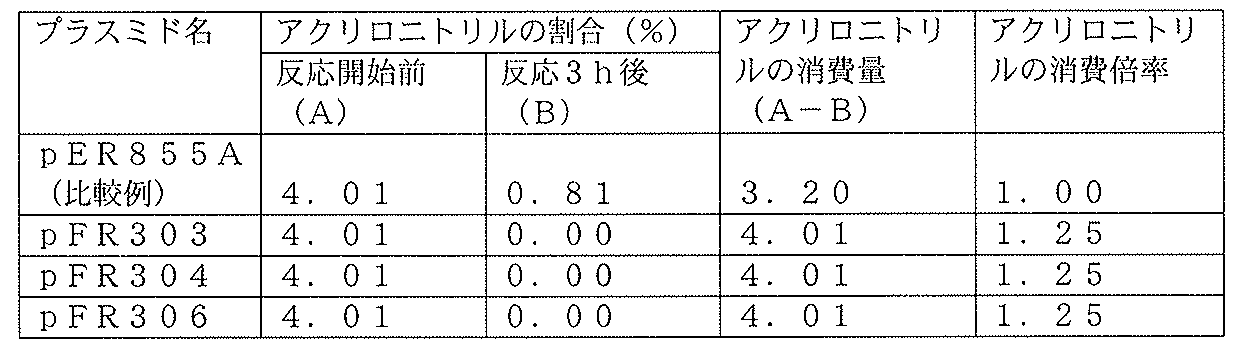
- the improved nitrile hydratases had a consumption rate of acrylonitrile exceeding 103% as compared with pER855A as a comparative example. Therefore, the improved nitrile hydratase maintains the nitrile hydratase activity even in the presence of a high concentration of acrylamide, and thus can be said to have improved resistance to acrylamide.
- the improved nitrile hydratases had a consumption rate of acrylonitrile exceeding 117% as compared with pER855A as a comparative example. Therefore, the improved nitrile hydratase maintains the nitrile hydratase activity even in the presence of a high concentration of acrylamide, and thus can be said to have improved resistance to acrylamide.
- the improved nitrile hydratases had an acrylonitrile consumption rate exceeding 124% as compared with pER855A as a comparative example. Therefore, the improved nitrile hydratase maintains the nitrile hydratase activity even in the presence of a high concentration of acrylamide, and thus can be said to have improved resistance to acrylamide.
- the improved nitrile hydratases had an acrylonitrile consumption rate exceeding 125% as compared with pER855A as a comparative example. Therefore, the improved nitrile hydratase has improved resistance to acrylamide since the nitrile hydratase activity is maintained even in the presence of a high concentration of acrylamide.
- a transformant was added to a plastic tube with a lid in a combined amount of 10 ml of 50 mM phosphate buffer and the charged activity, and preincubated for 10 minutes while shaking in a 40 ° C. water bath.
- 1 ml of acrylonitrile is added to each reaction solution to start the reaction.
- the reaction is carried out while sequentially adding 1 ml of acrylonitrile at a predetermined time (20 minutes, 40 minutes, hours, 1 hour 30 minutes, 2 hours).
- the reaction solution after 3 hours of reaction was filtered and the acrylamide concentration of the filtrate was measured by gas chromatography.
- an improved nitrile hydratase is provided.
- the improved nitrile hydratase of the present invention is improved in heat resistance, amide compound resistance and high temperature accumulation. For this reason, an amide compound can be efficiently produced from a nitrile compound by using the improved nitrile hydratase of the present invention.
- SEQ ID NO: 1 Nucleotide sequence of nitrile hydratase ⁇ subunit from J1 bacterium
- SEQ ID NO: 2 Amino acid sequence of nitrile hydratase ⁇ subunit from J1 bacterium
- SEQ ID NO: 3 Base of nitrile hydratase ⁇ subunit from J1 bacterium
- SEQ ID NO: 4 Amino acid sequence of nitrile hydratase ⁇ subunit derived from J1 bacteria
- 10 saturation mutation primer of ⁇ 15
- 11 saturation mutation primer of ⁇ 95
- SEQ ID NO: 12 saturation mutation primer of ⁇ 95 SEQ ID NO: 13: saturation mutation primer
Landscapes
- Chemical & Material Sciences (AREA)
- Life Sciences & Earth Sciences (AREA)
- Organic Chemistry (AREA)
- Health & Medical Sciences (AREA)
- Engineering & Computer Science (AREA)
- Zoology (AREA)
- Wood Science & Technology (AREA)
- Genetics & Genomics (AREA)
- Bioinformatics & Cheminformatics (AREA)
- General Engineering & Computer Science (AREA)
- Biotechnology (AREA)
- Biochemistry (AREA)
- General Health & Medical Sciences (AREA)
- Microbiology (AREA)
- Biomedical Technology (AREA)
- Molecular Biology (AREA)
- Medicinal Chemistry (AREA)
- Chemical Kinetics & Catalysis (AREA)
- General Chemical & Material Sciences (AREA)
- Preparation Of Compounds By Using Micro-Organisms (AREA)
- Enzymes And Modification Thereof (AREA)
- Micro-Organisms Or Cultivation Processes Thereof (AREA)
- Physics & Mathematics (AREA)
- Biophysics (AREA)
- Plant Pathology (AREA)
Abstract
Description
すなわち、本発明は以下の通りである。
(1)以下の(A)又は(B)のタンパク質;
(A)野生型ニトリルヒドラターゼのアミノ酸配列において、下記(a)、(b)、(c)、(d)及び(e)のアミノ酸残基が他のアミノ酸残基に置換され、さらに、下記(f)~(q)からなる群より選ばれる少なくとも1つのアミノ酸残基が他のアミノ酸残基に置換されたアミノ酸配列を含み、かつ、ニトリルヒドラターゼ活性を有することを特徴とするタンパク質、
(a)βサブユニットのアミノ酸配列においてN末端のアミノ酸残基から数えて167残基下流のアミノ酸残基、
(b)βサブユニットのアミノ酸配列においてN末端のアミノ酸残基から数えて219残基下流のアミノ酸残基、
(c)βサブユニットのアミノ酸配列においてN末端のアミノ酸残基から数えて57残基下流のアミノ酸残基、
(d)βサブユニットのアミノ酸配列においてN末端のアミノ酸残基から数えて114残基下流のアミノ酸残基、
(e)βサブユニットのアミノ酸配列においてN末端のアミノ酸残基から数えて107残基下流のアミノ酸残基、
(f)βサブユニットのアミノ酸配列においてN末端のアミノ酸残基から数えて218残基下流のアミノ酸残基、
(g)βサブユニットのアミノ酸配列においてN末端のアミノ酸残基から数えて190残基下流のアミノ酸残基、
(h)βサブユニットのアミノ酸配列においてN末端のアミノ酸残基から数えて168残基下流のアミノ酸残基、
(i)βサブユニットのアミノ酸配列においてN末端のアミノ酸残基から数えて144残基下流のアミノ酸残基、
(j)βサブユニットのアミノ酸配列においてN末端のアミノ酸残基から数えて133残基下流のアミノ酸残基、
(k)βサブユニットのアミノ酸配列においてN末端のアミノ酸残基から数えて112残基下流のアミノ酸残基、
(l)βサブユニットのアミノ酸配列においてN末端のアミノ酸残基から数えて105残基下流のアミノ酸残基、
(m)βサブユニットのアミノ酸配列においてN末端のアミノ酸残基から数えて95残基下流のアミノ酸残基、
(n)βサブユニットのアミノ酸配列においてN末端のアミノ酸残基から数えて17残基下流のアミノ酸残基、
(o)βサブユニットのアミノ酸配列においてN末端のアミノ酸残基から数えて15残基下流のアミノ酸残基、
(p)αサブユニットのアミノ酸配列において、補欠分子結合領域を構成するアミノ酸配列C(S/T)LCSCの最も下流側のC残基より67残基下流のアミノ酸残基、
(q)αサブユニットのアミノ酸配列において、補欠分子結合領域を構成するアミノ酸配列C(S/T)LCSCの最も下流側のC残基より17残基下流のアミノ酸残基。
(B)(A)のタンパク質のアミノ酸配列において、前記置換後のアミノ酸残基を除き、1又は数個のアミノ酸残基が欠失、置換及び/又は付加されたアミノ酸配列を含み、かつ、ニトリルヒドラターゼ活性を有することを特徴とするタンパク質。
(2) (1)に記載のタンパク質をコードするDNA。
(3) (2)に記載の遺伝子DNAを含む組換えベクター。
(4) (3)に記載の組換えベクターを含む形質転換体。
(5) (4)に記載の形質転換体を培養して得られる培養物から採取されるニトリルヒドラターゼ。
(6) (4)に記載の形質転換体を培養し、得られる培養物からニトリルヒドラターゼを採取することを特徴とする、ニトリルヒドラターゼの製造方法。
(7) (1)に記載のタンパク質又は(4)に記載の形質転換体を培養して得られる培養物若しくは当該培養物の処理物をニトリル化合物に接触させることを特徴とする、アミド化合物の製造方法。
なお本明細書においては、特記した場合を除き、「上流」及び「上流側」とは、アミノ酸配列に関しては「N末端側」を意味し、塩基配列に関しては「5’末端側」を意味する。
また、「下流」及び「下流側」とは、アミノ酸配列に関しては「C末端側」を意味し、塩基配列に関しては「3」を意味する。
(a)野生型ニトリルヒドラターゼ
本発明の改良型ニトリルヒドラターゼは、野生型ニトリルヒドラターゼの改良型であり、その由来は特に限定されるものではない。ここで、「野生型ニトリルヒドラターゼ」とは、自然界の生物(例えば、土壌細菌等の微生物)より分離され得るニトリルヒドラターゼを指し、当該酵素を構成するアミノ酸配列、及び当該酵素をコードする遺伝子の塩基配列が、人為的に欠失又は挿入せず、あるいは、他のアミノ酸又は塩基で置換されておらず、天然由来の特性を保持したままのニトリルヒドラターゼを意味する。
本発明は、野生型ニトリルヒドラターゼにアミノ酸置換を施した改良型(変異型)ニトリルヒドラターゼである。置換を施す対象となる野生型ニトリルヒドラターゼのアミノ酸配列はGenBank(http://www.ncbi.nlm.nih.gov/)等のNCBIのデータベースに公表されている。
(b)βサブユニットのアミノ酸配列においてN末端のアミノ酸残基から数えて219残基下流のアミノ酸残基。
(c)βサブユニットのアミノ酸配列においてN末端のアミノ酸残基から数えて57残基下流のアミノ酸残基。
(d)βサブユニットのアミノ酸配列においてN末端のアミノ酸残基から数えて114残基下流のアミノ酸残基。
(e)βサブユニットのアミノ酸配列においてN末端のアミノ酸残基から数えて107残基下流のアミノ酸残基。
(f)βサブユニットのアミノ酸配列においてN末端のアミノ酸残基から数えて218残基下流のアミノ酸残基。
(g)βサブユニットのアミノ酸配列においてN末端のアミノ酸残基から数えて190残基下流のアミノ酸残基。
(h)βサブユニットのアミノ酸配列においてN末端のアミノ酸残基から数えて168残基下流のアミノ酸残基。
(i)βサブユニットのアミノ酸配列においてN末端のアミノ酸残基から数えて144残基下流のアミノ酸残基。
(j)βサブユニットのアミノ酸配列においてN末端のアミノ酸残基から数えて133残基下流のアミノ酸残基。
(k)βサブユニットのアミノ酸配列においてN末端のアミノ酸残基から数えて112残基下流のアミノ酸残基。
(l)βサブユニットのアミノ酸配列においてN末端のアミノ酸残基から数えて105残基下流のアミノ酸残基。
(m)βサブユニットのアミノ酸配列においてN末端のアミノ酸残基から数えて95残基下流のアミノ酸残基。
(n)βサブユニットのアミノ酸配列においてN末端のアミノ酸残基から数えて17残基下流のアミノ酸残基。
(o)βサブユニットのアミノ酸配列においてN末端のアミノ酸残基から数えて15残基下流のアミノ酸残基。
(p)αサブユニットのアミノ酸配列において補欠分子結合領域を構成するアミノ酸配列C(S/T)LCSCの最も下流側のC残基より67残基下流のアミノ酸残基。
(q)αサブユニットのアミノ酸配列において補欠分子結合領域を構成するアミノ酸配列C(S/T)LCSCの最も下流側のC残基より17残基下流のアミノ酸残基。
(1)上記(a)~(e)、及び(n)のアミノ酸残基。
(2)上記(a)~(e)、及び(n)のアミノ酸残基、並びに、上記(g)~(j)、(l)、(m)、(o)及び(q)からなる群より選ばれる少なくとも1つのアミノ酸残基。
(3)上記(a)~(e)、(n)、(i)、及び(p)のアミノ酸残基。
(4)上記(a)~(e)、(n)、(p)、及び(f)のアミノ酸残基。
(5)上記(a)~(e)、(n)、(i)、(p)のアミノ酸残基、並びに、上記(f)、(k)及び(m)からなる群より選ばれる少なくとも1つのアミノ酸残基。


アミド化合物としては、例えば、下記一般式(1):
R-CONH2 (1)
(ここで、Rは、置換されていてもよい炭素数1~10の直鎖状若しくは分枝状のアルキル基又はアルケニル基、置換されていてもよい炭素数3~18のシクロアルキル基又はアリール基、あるいは、置換されていてもよい飽和又は不飽和複素環基である。)
で表されるアミド化合物が挙げられる。特に、式中、Rが「CH2=CH-」であるアクリルアミドが好ましい。
変異体を用いたタンパク質の機能、性質を研究する方法の一つに、ランダム変異導入法がある。ランダム変異導入法とは、特定のタンパク質をコードする遺伝子に対してランダムな変異を導入し、変異体を作製する方法である。PCRによるランダム変異導入法では、DNA増幅時に厳密度(ストリンジェンシー)の低い条件を設定して、塩基の変異を導入する(Error prone PCR)ことができる。
本発明の改良型ニトリルヒドラターゼには、表1に示す変異を導入したタンパク質をコードした遺伝子が含まれる。
ニトリルヒドラターゼ遺伝子は、形質転換される宿主生物において発現可能なように、ベクターに組み込むことが必要である。例えば、ベクターとしてはプラスミドDNA、バクテリオファージDNA、レトロトランスポゾンDNA、人工染色体DNAなどが挙げられる。
本発明において、改良型ニトリルヒドラターゼは、上記形質転換体を培養し、得られる培養物から採取することにより製造することができる。
上述のように製造された改良型ニトリルヒドラターゼは、酵素触媒として物質生産に利用することができる。例えば、ニトリル化合物に、上記改良型ニトリルヒドラターゼを接触させることにより、アミド化合物を生成する。そして、接触により生成されるアミド化合物を採取する。これにより、アミド化合物を製造することができる。
(1)変異遺伝子ライブラリーの構築
鋳型としたプラスミドとしては、βサブユニットのアミノ酸配列(配列番号2)のN末端のアミノ酸残基から数えて167残基下流のアミノ酸残基がアスパラギン(N)からセリン(S)に変異し、かつ、上記N末端のアミノ酸残基から数えて219残基下流のアミノ酸残基がバリン(V)からアラニン(A)に変異し、かつ、上記N末端のアミノ酸残基から数えて57残基下流のアミノ酸残基がセリン(S)からメチオニン(M)に変異し、かつ、上記N末端のアミノ酸残基から数えて114残基下流のアミノ酸残基がリジン(K)からチオrシン(Y)に変異し、かつ、上記N末端のアミノ酸残基から数えて107残基下流のアミノ酸残基がスレオニン(T)からリジン(K)に変異したプラスミドpER855(特開2010-172295参照)の改変物であるpER855A(図1)を用いた。
先ず、ニトリルヒドラターゼ遺伝子への変異導入を下記の手法で行った。
滅菌水 20μl
pER855A (1ng/ml) 1μl
Forward Primer (10mM) 2μl
Reverse Primer (10mM) 2μl
PrimeSTAR MAX (2×) 25μl
50μl
<PCR反応条件>
(98℃ 10秒、55℃ 5秒、72℃で90秒)×30サイクル
<プライマー>β17の飽和変異プライマー
β17RM-F ggatacggaccggtcNNStatcagaaggacgag (配列番号5)
β17RM-R ctcgtccttctgataSNNgaccggtccgtatcc (配列番号6)
<反応条件>
(94℃で30秒、65℃で30秒、72℃で3分)×30サイクル
ロドコッカス・ロドクロウス ATCC12674株の対数増殖期の細胞を遠心分離器により集菌し、氷冷した滅菌水にて3回洗浄し、滅菌水に懸濁した。上記(1)で調製したプラスミド1μlと菌体懸濁液10μlを混合して氷冷し、キュベットにプラスミドDNAと菌体の懸濁液を入れ、遺伝子導入装置 Gene Pulser II(BIO RAD)により2.0KV、200 OHMSで電気パルス処理を行った。
スクリーニングには、上記(2)で得られたニトリルヒドラターゼ遺伝子を含むロドコッカス菌形質転換体、及び比較株であるATCC12674/pER855Aを使用した。GGPK培地(1.5%グルコース、1%グルタミン酸ナトリウム、0.1%酵母エキス、0.05%K2HPO4、0.05%KH2PO4、0.05%MgSO4・7H2O、1%CoCl2、0.1%尿素、50μg/mlカナマイシン、pH7.2)を1mlずつ入れた96穴ディープウェルプレートに上記菌株を各々接種し、30℃で3日間液体培養した。
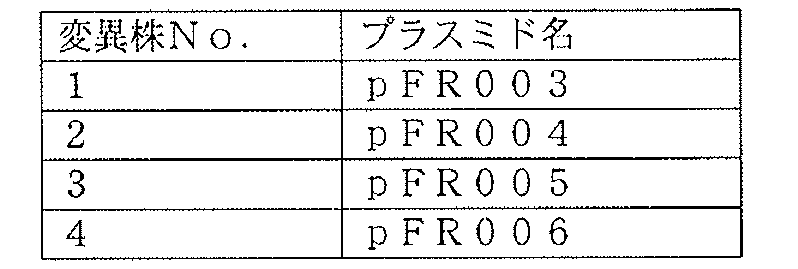
ニトリルヒドラターゼ遺伝子の塩基配列の確認をするため、得られた選抜株からプラスミドを回収した。ロドコッカス形質転換体を、10mlのMYK培地(ポリペプトン0.5%、バクトイーストエキス0.3%、マルツエキス0.3%、グルコース1%、カナマイシン50μg/ml)に植菌した。24時間培養した後に終濃度2%となるように滅菌した20%グリシン溶液を添加し、さらに24時間培養した。その後、遠心分離により菌体を回収し、菌体をTES(10mMTris-HCl(pH8)-10mMNaCl-1mMEDTA)緩衝液で洗浄後、2mlの50mMTris-HCl(pH8)-12.5%シュークロース-100mMNaCl-1mg/mlリゾチームに懸濁し、37℃にて3時間振盪した。これに0.4mlの10%SDSを加え室温で穏やかに1時間振盪し、さらに2.1mlの5M酢酸ナトリウム緩衝液(pH5.2)を添加し氷中で1時間静置した。その後、4℃にて10,000xg、1時間遠心し上清を得た。これに5倍量のエタノールを加え、-20℃で30分静置した後、10,000xg、20分間遠心した。沈澱物を10mlの70%エタノールで洗浄した後、100μlのTE緩衝液に溶解しDNA溶液を得た。
<PCR反応液組成>
鋳型プラスミド 1μl
10× PCR Buffer(NEB社製) 10μl
プライマーNH-19(50μM) 1μl
プライマーNH-20(50μM) 1μl
2.5mM dNTPmix 8μl
滅菌水 79μl
Taq DNAポリメラーゼ(NEB社製) 1μl
<プライマー>
NH-19 GCCTCTAGATATCGCCATTCCGTTGCCGG(配列番号7)
NH-20 ACCCTGCAGGCTCGGCGCACCGGATGCCCAC(配列番号8)
<反応条件>
(94℃で30秒、65℃で30秒、72℃で3分)×30サイクル。

(4)で取得した改良型ニトリルヒドラターゼのアミド化合物耐性を以下の手法で実施した。
ATCC12674/pER855Aと、上記(2)の工程で得られた各形質転換体を10mlのMYK培地(50μg/mlカナマイシン)にそれぞれ接種し、30℃にて2日間振盪培養し、100mlのGGPK培地(1.5%グルコース、1%グルタミン酸ナトリウム、0.1%酵母エキス、0.05%K2HPO4、0.05%KH2PO4、0.05%MgSO4・7H2O、1%CoCl2、0.1%尿素、50μg/mlカナマイシン、pH7.2)に1%植菌を行った。30℃で3日間振盪培養し、遠心分離により集菌した。
<分析条件>
分析機器: ガスクロマトグラフGC-14B(島津製作所製)
検出器: FID(検出200℃)
カラム: ポラパックPS(ウォーターズ社製カラム充填剤)を充填した1mガラスカラム
カラム温度: 190℃
アクリルアミドの量からニトリルヒドラターゼ活性を換算した。ここで、ニトリルヒドラターゼ活性は、1分間に1μmolのアクリルアミドを生成する酵素量を1Uと定義する。
<反応液組成>
50%アクリルアミド溶液 94g
アクリロニトリル 4g
1Mリン酸緩衝液 1g
菌液(同一の酵素活性単位(U)量)
<反応条件>
攪拌しながら5時間反応(30℃)

(1)ニトリルヒドラターゼへの変異導入と選抜
実施例1で取得したpFR005を鋳型として、さらにアクリルアミド耐性の向上した改良型ニトリルヒドラターゼの取得を試みた。使用したプライマーのみを変更し、実施例1と同様の手法(変異導入、ロドコッカス形質転換体の作成、ロドコッカス菌形質転換体のアミド処理方法、塩基配列の確認)を実施し、表6に選抜された変異酵素を取得した。
<プライマー>
β15の飽和変異プライマー
β15RM-F:atgaccggatacggaNNSgtcccctatcagaag(配列9)
β15RM-R:cttctgataggggacSNNtccgtatccggtcat(配列10)
β95の飽和変異プライマー
β95RM-F:accgaagaagagcgaNNScaccgtgtgcaagag(配列11)
β95RM-R:ctcttgcacacggtgSNNtcgctcttcttcggt(配列12)
β105の飽和変異プライマー
β105RM-F:GAGATCCTTGAGGGTNNSTACACGGACAGG(配列13)
β105RM-R:CCTGTCCGTGTASNNACCCTCAAGGATCTC(配列14)
β133の飽和変異プライマー
β133RM-F:cacgagccccactccNNSgcgcttccaggagcg(配列15)
β133RM-R:cgctcctggaagcgcSNNggagtggggctcgtg(配列16)
β144の飽和変異プライマー
β144RM‐F:ggagccgagtttctctNNSggtgacaagatc(配列17)
β144RM‐R:gatcttgtcaccSNNagagaaactcggctcc(配列18)
β168の飽和変異プライマー
β168RM-FcgaaatatgtgcggagcNNSatcggggaaatcg(配列19)
β168RM-RcgatttccccgatSNNgctccgcacatatttcg(配列20)
β190の飽和変異プライマー
β190RM-F:gagcagctccgccggcctcNNSgacgatcctcg(配列21)
β190RM-R:cgaggatcgtcSNNgaggccggcggagctgctc(配列22)
α124の飽和変異プライマー
α124RM-F:gtacaagagcatgNNStaccggtcccgagtgg(配列23)
α124RM-R:ccactcgggaccggtaSNNcatgctcttgtac(配列24)
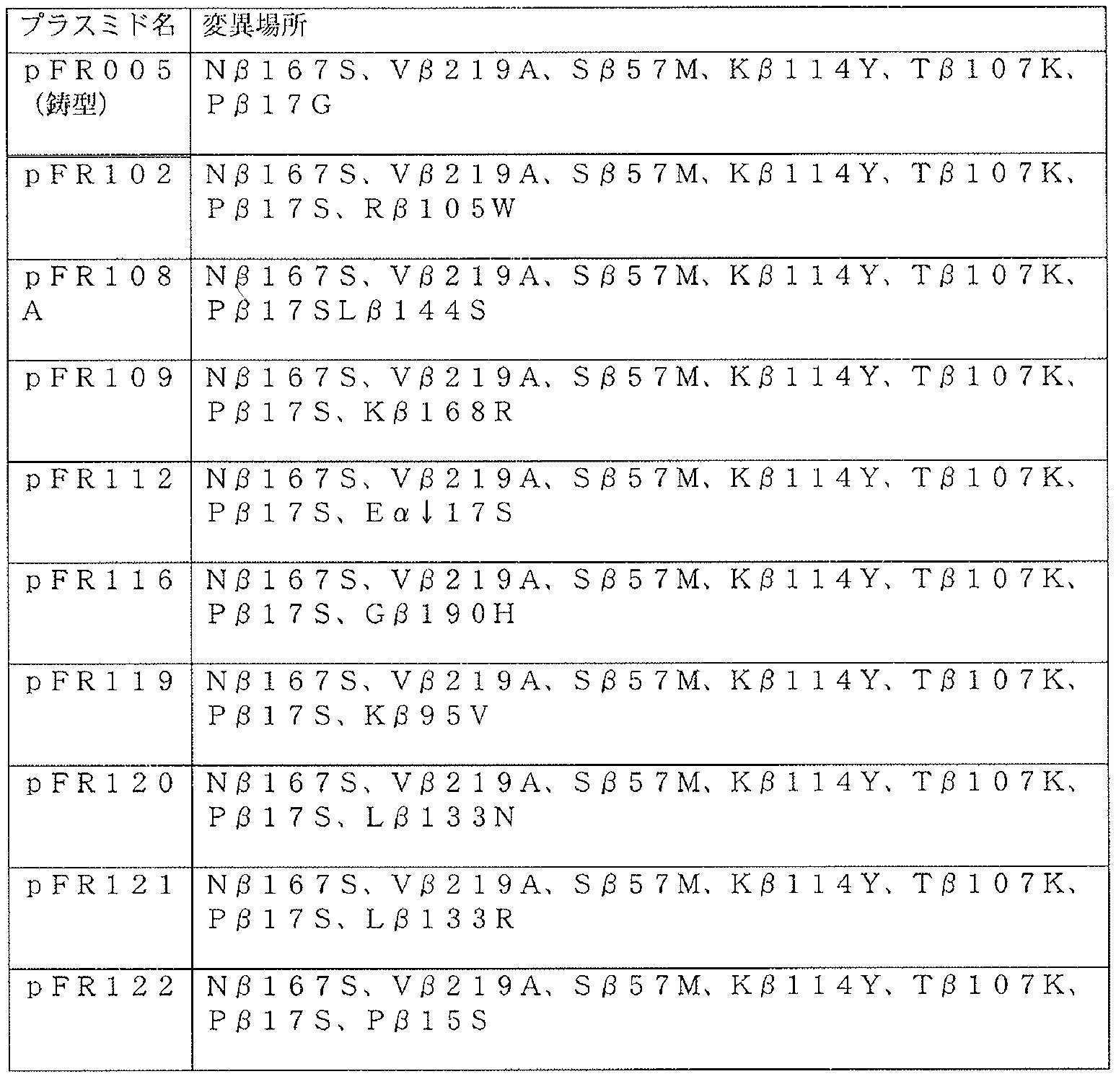
取得した改良型ニトリルヒドラターゼの性能評価を実施例1(5)と同様の手法で実施した。

(1)ニトリルヒドラターゼへの変異導入と選抜
実施例2で取得したpFR108Aを鋳型として、さらにアクリルアミド耐性の向上した改良型ニトリルヒドラターゼの取得を試みた。使用したプライマーのみを変更し、実施例1と同様の手法(変異導入、ロドコッカス形質転換体の作成、ロドコッカス菌形質転換体のアミド処理方法、塩基配列の確認)を実施し、表8に選抜された変異酵素を取得した。尚、改良型ニトリルヒドラターゼを有する形質転換体の選抜は、55℃の温度下、60分間の熱処理を行い、それ以外は実施例1と同様の方法で行なった。
<プライマー>
α174の飽和変異プライマー
α174RM-F:gccggcaccgacNNStggtccgaggag(配列25)
α174RM-R:ctcctcggaccaSNNgtcggtgccggc(配列26)
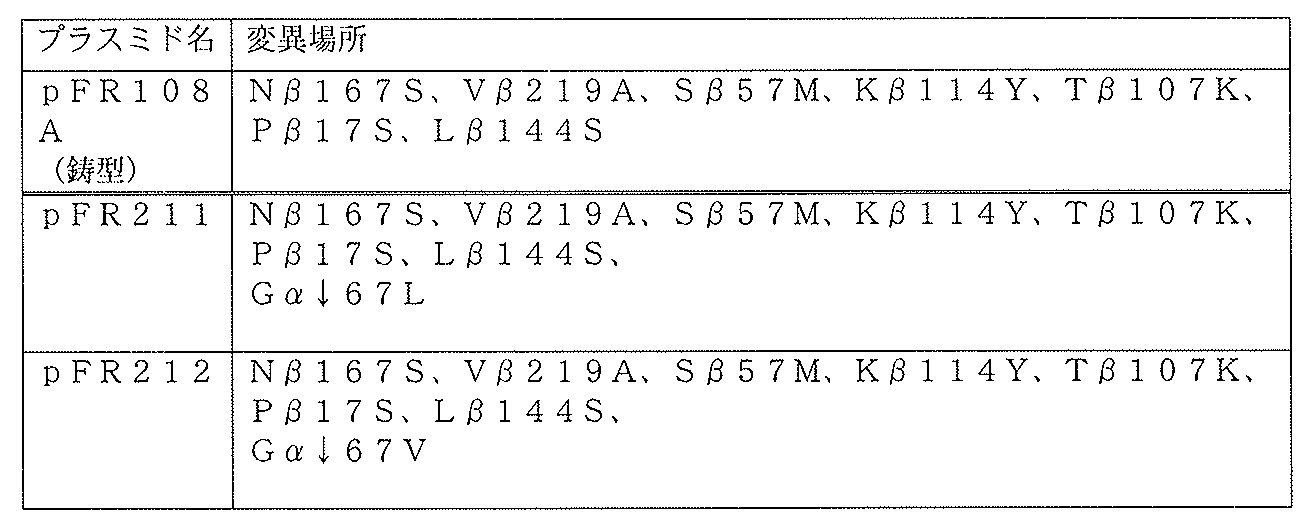
取得した改良型ニトリルヒドラターゼの性能評価を実施例1(5)と同様の手法で実施した。

実施例2で取得したpFR211を鋳型として、さらにアクリルアミド耐性の向上した改良型ニトリルヒドラターゼの取得を試みた。使用したプライマーのみを変更し、実施例3と同様の手法(変異導入、ロドコッカス形質転換体の作成、ロドコッカス菌形質転換体のアミド処理方法、塩基配列の確認)を実施し、表10に選抜された変異酵素を取得した。
<プライマー>
β95の飽和変異プライマー
β95RM-F:accgaagaagagcgaNNScaccgtgtgcaagag(配列27)
β95RM-R:ctcttgcacacggtgSNNtcgctcttcttcggt(配列28)
β112の飽和変異プライマー
β112RM-F:GACAGGAAGCCGNNSCGGAAGTTCGATCCG(配列29)
β112RM-R:CGGATCGAACTTCCGSNNCGGCTTCCTGTC(配列30)
β218の飽和変異プライマー
β218RM-F:gggaaagacgtagtgNNSgccgatctctgggaa(配列31)
β218RM-R:ttcccagagatcggcSNNcactacgtctttccc(配列32)
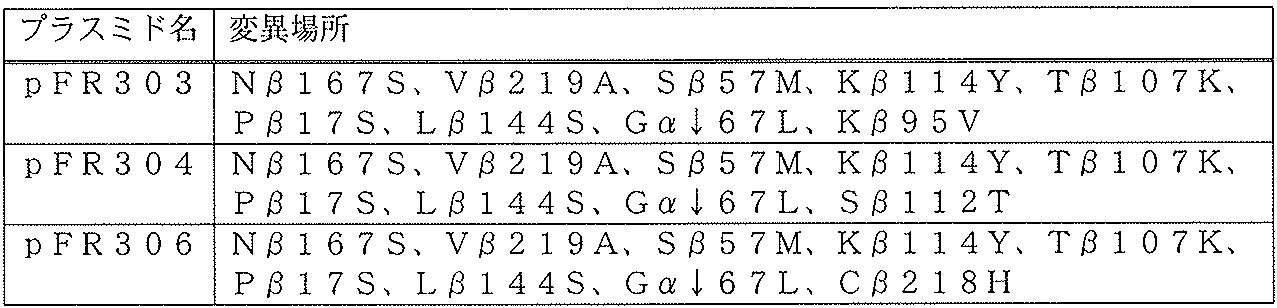
取得した改良型ニトリルヒドラターゼの性能評価を実施例1(5)と同様の手法で実施した。結果を表11に示す。
実施例4で取得したpFR306を鋳型として、Lβ144Sを野生型アミノ酸に置換した改良型ニトリルヒドラターゼを作製した。方法としては、下記のプライマーを使用し、実施例1と同様の方法でロドコッカス形質転換体を作製した。
<プライマー>
β144の変異を野生型に戻す
F_Sβ144L-F:TTCTCTCTCGGTGACAAGATCAAAGTG(配列33)
F_Sβ144L-R:GTCACCGAGAGAGAAACTCGGCTCCGC(配列34)

本発明で取得した改良型ニトリルヒドラターゼの性能評価を下記の手法で実施した。
表13に示す変異ニトリルヒドラターゼ遺伝子を含む形質転換体を実施例1(5)の方法で培養し、耐熱性の評価に用いた。得られた培養物を50mMリン酸緩衝液で適宜希釈し、70℃のウォーターバスで10分間熱処理に供した後、残存ニトリルヒドラターゼ活性の測定を行った。活性測定は実施例1(5)記載の方法に従った。比較対照として熱処理を行わず4℃で保冷したものをそれぞれの無処理菌として残存活性を求めた。

配列番号1:J1菌由来のニトリルヒドラターゼβサブユニットの塩基配列
配列番号2:J1菌由来のニトリルヒドラターゼβサブユニットのアミノ酸配列
配列番号3:J1菌由来のニトリルヒドラターゼαサブユニットの塩基配列
配列番号4:J1菌由来のニトリルヒドラターゼαサブユニットのアミノ酸配列
配列番号5:β17の飽和変異プライマー
配列番号6:β17の飽和変異プライマー
配列番号7:NH-19プライマー
配列番号8:NH-20プライマー
配列番号9:β15の飽和変異プライマー
配列番号10:β15の飽和変異プライマー
配列番号11:β95の飽和変異プライマー
配列番号12:β95の飽和変異プライマー
配列番号13:β105の飽和変異プライマー
配列番号14:β105の飽和変異プライマー
配列番号15:β133の飽和変異プライマー
配列番号16:β133の飽和変異プライマー
配列番号17:β144の飽和変異プライマー
配列番号18:β144の飽和変異プライマー
配列番号19:β168の飽和変異プライマー
配列番号20:β168の飽和変異プライマー
配列番号21:β190の飽和変異プライマー
配列番号22:β190の飽和変異プライマー
配列番号23:α124の飽和変異プライマー
配列番号24:α124の飽和変異プライマー
配列番号25:α174の飽和変異プライマー
配列番号26:α174の飽和変異プライマー
配列番号27:β95の飽和変異プライマー
配列番号28:β95の飽和変異プライマー
配列番号29:β112の飽和変異プライマー
配列番号30:β112の飽和変異プライマー
配列番号31:β218の飽和変異プライマー
配列番号32:β218の飽和変異プライマー
配列番号33:β144の変異を野生型に戻すプライマー
配列番号34:β144の変異を野生型に戻すプライマー
配列番号35:Rhodococcus M8のβサブユニット
配列番号36:Rhodococcus ruber THのβサブユニット
配列番号37:R.pyridinovorans MW3のβサブユニット
配列番号38:R.pyridinovorans S85-2のβサブユニット
配列番号39:R.pyridinovorans MS-38のβサブユニット
配列番号40:Nocardia sp JBRsのβサブユニット
配列番号41:Nocardia YS-2002のβサブユニット
配列番号42:R.rhodocrous ATCC39384のβサブユニット
配列番号43:uncultured bacterium SP1のβサブユニット
配列番号44:uncultured bacterium BD2のβサブユニット
配列番号45:Comamonas testosteroniのβサブユニット
配列番号46:G.thermoglucosidasius Q6のβサブユニット
配列番号47:P.thermophila JCM3095のβサブユニット
配列番号48:R.rhodocrous Cr4 のβサブユニット
配列番号49:Rhodococcus M8のαサブユニット
配列番号50:Rhodococcus ruber TH αサブユニット
配列番号51:R.pyridinovorans MW3のαサブユニット
配列番号52:R.pyridinovorans S85-2のαサブユニット
配列番号53:Nocardia sp JBRsのαサブユニット
配列番号54:Nocardia YS-2002のαサブユニット
配列番号55:uncultured bacterium BD2のαサブユニット
配列番号56:uncultured bacterium SP1のαサブユニット
配列番号57:R.rhodocrou ATCC39484のαサブユニット
配列番号58:Sinorhizobium medicae WSM419のαサブユニット
配列番号59:P.thermophila JCM3095のαサブユニット
配列番号60:R.rhodocrous Cr4 のαサブユニット
配列番号61:ロドコッカス属N-771株由来の鉄型ニトリルヒドラターゼαサブユニットのシステインクラスター
配列番号62:J1菌由来のコバルト型ニトリルヒドラターゼαサブユニットのシステインクラスター
Claims (8)
- 以下の(A)又は(B)のタンパク質;
(A)野生型ニトリルヒドラターゼのアミノ酸配列において、下記(a)、(b)、(c)、(d)及び(e)のアミノ酸残基が他のアミノ酸残基に置換され、さらに、下記(f)~(q)からなる群より選ばれる少なくとも1つのアミノ酸残基が他のアミノ酸残基に置換されたアミノ酸配列を含み、かつ、ニトリルヒドラターゼ活性を有することを特徴とするタンパク質、
(a)βサブユニットのアミノ酸配列においてN末端のアミノ酸残基から数えて167残基下流のアミノ酸残基、
(b)βサブユニットのアミノ酸配列においてN末端のアミノ酸残基から数えて219残基下流のアミノ酸残基、
(c)βサブユニットのアミノ酸配列においてN末端のアミノ酸残基から数えて57残基下流のアミノ酸残基、
(d)βサブユニットのアミノ酸配列においてN末端のアミノ酸残基から数えて114残基下流のアミノ酸残基、
(e)βサブユニットのアミノ酸配列においてN末端のアミノ酸残基から数えて107残基下流のアミノ酸残基、
(f)βサブユニットのアミノ酸配列においてN末端のアミノ酸残基から数えて218残基下流のアミノ酸残基、
(g)βサブユニットのアミノ酸配列においてN末端のアミノ酸残基から数えて190残基下流のアミノ酸残基、
(h)βサブユニットのアミノ酸配列においてN末端のアミノ酸残基から数えて168残基下流のアミノ酸残基、
(i)βサブユニットのアミノ酸配列においてN末端のアミノ酸残基から数えて144残基下流のアミノ酸残基、
(j)βサブユニットのアミノ酸配列においてN末端のアミノ酸残基から数えて133残基下流のアミノ酸残基、
(k)βサブユニットのアミノ酸配列においてN末端のアミノ酸残基から数えて112残基下流のアミノ酸残基、
(l)βサブユニットのアミノ酸配列においてN末端のアミノ酸残基から数えて105残基下流のアミノ酸残基、
(m)βサブユニットのアミノ酸配列においてN末端のアミノ酸残基から数えて95残基下流のアミノ酸残基、
(n)βサブユニットのアミノ酸配列においてN末端のアミノ酸残基から数えて17残基下流のアミノ酸残基、
(o)βサブユニットのアミノ酸配列においてN末端のアミノ酸残基から数えて15残基下流のアミノ酸残基、
(p)αサブユニットのアミノ酸配列において、補欠分子結合領域を構成するアミノ酸配列C(S/T)LCSCの最も下流側のC残基より67残基下流のアミノ酸残基、
(q)αサブユニットのアミノ酸配列において、補欠分子結合領域を構成するアミノ酸配列C(S/T)LCSCの最も下流側のC残基より17残基下流のアミノ酸残基。
(B)(A)のタンパク質のアミノ酸配列において、前記置換後のアミノ酸残基を除き、1又は数個のアミノ酸残基が欠失、置換及び/又は付加されたアミノ酸配列を含み、かつ、ニトリルヒドラターゼ活性を有することを特徴とするタンパク質。 - 請求項1に記載のタンパク質をコードするDNA。
- 請求項2に記載のDNAとストリンジェントな条件下でハイブリダイズし、かつ、ニトリルヒドラターゼ活性を有するタンパク質をコードするDNA。
- 請求項2または3に記載の遺伝子DNAを含む組換えベクター。
- 請求項4に記載の組換えベクターを含む形質転換体。
- 請求項5に記載の形質転換体を培養して得られる培養物から採取されるニトリルヒドラターゼ。
- 請求項5に記載の形質転換体を培養し、得られる培養物からニトリルヒドラターゼを採取することを特徴とする、ニトリルヒドラターゼの製造方法。
- 請求項1に記載のタンパク質又は請求項5に記載の形質転換体を培養して得られる培養物若しくは当該培養物の処理物をニトリル化合物に接触させることを特徴とする、アミド化合物の製造方法。
Priority Applications (8)
| Application Number | Priority Date | Filing Date | Title |
|---|---|---|---|
| JP2013517883A JP5915649B2 (ja) | 2011-05-31 | 2012-05-30 | 改良型ニトリルヒドラターゼ |
| EP12792552.7A EP2716754B1 (en) | 2011-05-31 | 2012-05-30 | Improved nitrile hydratase |
| AU2012264058A AU2012264058B2 (en) | 2011-05-31 | 2012-05-30 | Improved nitrile hydratase |
| KR1020167024075A KR101734797B1 (ko) | 2011-05-31 | 2012-05-30 | 개량형 니트릴 히드라타제 |
| KR1020137029289A KR20140006052A (ko) | 2011-05-31 | 2012-05-30 | 개량형 니트릴 히드라타제 |
| CN201280028405.5A CN103649312B (zh) | 2011-05-31 | 2012-05-30 | 改良型腈水合酶 |
| US14/123,171 US9388403B2 (en) | 2011-05-31 | 2012-05-30 | Nitrile hydratase |
| US14/689,955 US9382528B2 (en) | 2011-05-31 | 2015-04-17 | Nitrile hydratase |
Applications Claiming Priority (2)
| Application Number | Priority Date | Filing Date | Title |
|---|---|---|---|
| JP2011121251 | 2011-05-31 | ||
| JP2011-121251 | 2011-05-31 |
Related Child Applications (2)
| Application Number | Title | Priority Date | Filing Date |
|---|---|---|---|
| US14/123,171 A-371-Of-International US9388403B2 (en) | 2011-05-31 | 2012-05-30 | Nitrile hydratase |
| US14/689,955 Division US9382528B2 (en) | 2011-05-31 | 2015-04-17 | Nitrile hydratase |
Publications (1)
| Publication Number | Publication Date |
|---|---|
| WO2012164933A1 true WO2012164933A1 (ja) | 2012-12-06 |
Family
ID=47258805
Family Applications (1)
| Application Number | Title | Priority Date | Filing Date |
|---|---|---|---|
| PCT/JP2012/003560 Ceased WO2012164933A1 (ja) | 2011-05-31 | 2012-05-30 | 改良型ニトリルヒドラターゼ |
Country Status (7)
| Country | Link |
|---|---|
| US (2) | US9388403B2 (ja) |
| EP (1) | EP2716754B1 (ja) |
| JP (1) | JP5915649B2 (ja) |
| KR (2) | KR101734797B1 (ja) |
| CN (1) | CN103649312B (ja) |
| AU (1) | AU2012264058B2 (ja) |
| WO (1) | WO2012164933A1 (ja) |
Cited By (6)
| Publication number | Priority date | Publication date | Assignee | Title |
|---|---|---|---|---|
| WO2015186298A1 (ja) * | 2014-06-06 | 2015-12-10 | 三菱レイヨン株式会社 | 改良型ニトリルヒドラターゼ |
| US9738885B2 (en) | 2011-06-07 | 2017-08-22 | Mitsubishi Chemical Corporation | Nitrile hydratase |
| WO2018124247A1 (ja) * | 2016-12-28 | 2018-07-05 | 三井化学株式会社 | 変異型ニトリルヒドラターゼ、該変異型ニトリルヒドラターゼをコードする核酸、該核酸を含む発現ベクター及び形質転換体、該変異型ニトリルヒドラターゼの製造方法、並びにアミド化合物の製造方法 |
| WO2022172880A1 (ja) | 2021-02-10 | 2022-08-18 | 三菱ケミカル株式会社 | アルデヒドによるニトリルヒドラターゼの反応性向上 |
| WO2024195653A1 (ja) | 2023-03-17 | 2024-09-26 | 三菱ケミカル株式会社 | アミド化合物の製造方法 |
| WO2024195728A1 (ja) | 2023-03-17 | 2024-09-26 | 三菱ケミカル株式会社 | アミド化合物の製造方法 |
Families Citing this family (5)
| Publication number | Priority date | Publication date | Assignee | Title |
|---|---|---|---|---|
| CN104862296B (zh) * | 2015-04-22 | 2017-12-12 | 江南大学 | 一种比酶活和稳定性提高的融合型腈水合酶 |
| WO2020028989A1 (en) * | 2018-08-08 | 2020-02-13 | Deep Genomics Incorporated | Systems and methods for determining effects of therapies and genetic variation on polyadenylation site selection |
| FR3125064B1 (fr) | 2021-07-09 | 2024-07-12 | Snf Sa | Procédé biologique d’obtention de monomères comprenant une insaturation éthylénique par bioconversion d’un composé biosourcé comprenant au moins une fonction nitrile |
| CN114107269B (zh) * | 2021-11-23 | 2024-03-01 | 江南大学 | 一种腈水合酶氨基酸基序的改造及其应用 |
| CN116790573B (zh) * | 2023-08-21 | 2023-11-21 | 清华大学 | 腈水合酶突变体及其应用 |
Citations (14)
| Publication number | Priority date | Publication date | Assignee | Title |
|---|---|---|---|---|
| SU1731814A1 (ru) | 1990-05-17 | 1992-05-07 | Саратовский филиал Всесоюзного научно-исследовательского института генетики и селекции промышленныхмикроорганизмов | Штамм бактерий RноDососсUS RноDоснRоUS - продуцент нитрилгидратазы |
| JPH09248188A (ja) | 1996-03-18 | 1997-09-22 | Sumitomo Chem Co Ltd | ニトリルヒドラターゼ、その遺伝子及びその利用 |
| JPH09275978A (ja) | 1996-02-14 | 1997-10-28 | Mitsui Toatsu Chem Inc | 新規なニトリルヒドラターゼ |
| US5827699A (en) | 1993-12-17 | 1998-10-27 | Gosudarstvenny. Nauchno-Issledovatelsky Institut Genetiki I Selektsii Promshlennykh Mikroorganizmov | Strain of Rhodococcus rhodochrous as a producer of nitrile hydratase |
| JPH10337185A (ja) | 1997-06-06 | 1998-12-22 | Mitsubishi Rayon Co Ltd | アスパルターゼ活性を有する新規なタンパク質および該タンパク質をコードする遺伝子dna |
| JP3162091B2 (ja) | 1990-02-28 | 2001-04-25 | 輝彦 別府 | ニトリルヒドラターゼ活性を有するポリペプチドをコードする遺伝子dna、これを含有する形質転換体 |
| JP2001292772A (ja) | 2000-04-10 | 2001-10-23 | Showa Denko Kk | ロドコッカス属細菌由来のニトリルヒドラターゼ遺伝子およびアミダーゼ遺伝子 |
| WO2004056990A1 (ja) | 2002-12-19 | 2004-07-08 | Mitsui Chemicals, Inc. | 新規なニトリルヒドラターゼ |
| JP2004215513A (ja) * | 2003-01-09 | 2004-08-05 | Mitsubishi Rayon Co Ltd | 改良型ニトリルヒドラターゼ |
| JP2004222538A (ja) * | 2003-01-20 | 2004-08-12 | Mitsubishi Rayon Co Ltd | 改良型ニトリルヒドラターゼ |
| WO2005116206A1 (ja) | 2004-05-26 | 2005-12-08 | Mitsubishi Rayon Co., Ltd. | 改良型ニトリルヒドラターゼ |
| JP2007143409A (ja) | 2005-11-24 | 2007-06-14 | Mitsubishi Rayon Co Ltd | 改良型ニトリルヒドラターゼ |
| JP2008253182A (ja) * | 2007-04-04 | 2008-10-23 | Mitsubishi Rayon Co Ltd | 改良型ニトリルヒドラターゼ |
| JP2010172295A (ja) | 2009-01-30 | 2010-08-12 | Mitsubishi Rayon Co Ltd | 改良型ニトリルヒドラターゼ及びその製造方法 |
Family Cites Families (6)
| Publication number | Priority date | Publication date | Assignee | Title |
|---|---|---|---|---|
| JPH03162091A (ja) | 1989-11-20 | 1991-07-12 | Fujitsu General Ltd | 集合住宅の画像・音声伝送装置 |
| DE69739026D1 (de) | 1996-02-14 | 2008-11-20 | Mitsui Chemicals Inc | Nitril-Hydratase, ihre Derivate und Verfahren zur Herstellung von Verbindungen |
| US20010044141A1 (en) | 2000-02-22 | 2001-11-22 | Hirobumi Akoi | Novel Rhodococcus bacterium, nitrilase gene, nitryl hydratase gene and amidase gene from Rhodococcus bacterium, and process for producing carboxylic acids using them |
| US20040225116A1 (en) * | 2003-05-08 | 2004-11-11 | Payne Mark S. | Nucleic acid fragments encoding nitrile hydratase and amidase enzymes from comamonas testosteroni 5-MGAM-4D and recombinant organisms expressing those enzymes useful for the production of amides and acids |
| JP2005116206A (ja) | 2003-10-03 | 2005-04-28 | Shin Kobe Electric Mach Co Ltd | 制御弁式鉛蓄電池 |
| DE102004013824A1 (de) * | 2004-03-20 | 2005-10-13 | Degussa Ag | Nitrilhydratasen aus Rhodococcus opacus |
-
2012
- 2012-05-30 CN CN201280028405.5A patent/CN103649312B/zh active Active
- 2012-05-30 KR KR1020167024075A patent/KR101734797B1/ko active Active
- 2012-05-30 JP JP2013517883A patent/JP5915649B2/ja active Active
- 2012-05-30 KR KR1020137029289A patent/KR20140006052A/ko not_active Ceased
- 2012-05-30 AU AU2012264058A patent/AU2012264058B2/en active Active
- 2012-05-30 WO PCT/JP2012/003560 patent/WO2012164933A1/ja not_active Ceased
- 2012-05-30 US US14/123,171 patent/US9388403B2/en active Active
- 2012-05-30 EP EP12792552.7A patent/EP2716754B1/en active Active
-
2015
- 2015-04-17 US US14/689,955 patent/US9382528B2/en active Active
Patent Citations (14)
| Publication number | Priority date | Publication date | Assignee | Title |
|---|---|---|---|---|
| JP3162091B2 (ja) | 1990-02-28 | 2001-04-25 | 輝彦 別府 | ニトリルヒドラターゼ活性を有するポリペプチドをコードする遺伝子dna、これを含有する形質転換体 |
| SU1731814A1 (ru) | 1990-05-17 | 1992-05-07 | Саратовский филиал Всесоюзного научно-исследовательского института генетики и селекции промышленныхмикроорганизмов | Штамм бактерий RноDососсUS RноDоснRоUS - продуцент нитрилгидратазы |
| US5827699A (en) | 1993-12-17 | 1998-10-27 | Gosudarstvenny. Nauchno-Issledovatelsky Institut Genetiki I Selektsii Promshlennykh Mikroorganizmov | Strain of Rhodococcus rhodochrous as a producer of nitrile hydratase |
| JPH09275978A (ja) | 1996-02-14 | 1997-10-28 | Mitsui Toatsu Chem Inc | 新規なニトリルヒドラターゼ |
| JPH09248188A (ja) | 1996-03-18 | 1997-09-22 | Sumitomo Chem Co Ltd | ニトリルヒドラターゼ、その遺伝子及びその利用 |
| JPH10337185A (ja) | 1997-06-06 | 1998-12-22 | Mitsubishi Rayon Co Ltd | アスパルターゼ活性を有する新規なタンパク質および該タンパク質をコードする遺伝子dna |
| JP2001292772A (ja) | 2000-04-10 | 2001-10-23 | Showa Denko Kk | ロドコッカス属細菌由来のニトリルヒドラターゼ遺伝子およびアミダーゼ遺伝子 |
| WO2004056990A1 (ja) | 2002-12-19 | 2004-07-08 | Mitsui Chemicals, Inc. | 新規なニトリルヒドラターゼ |
| JP2004215513A (ja) * | 2003-01-09 | 2004-08-05 | Mitsubishi Rayon Co Ltd | 改良型ニトリルヒドラターゼ |
| JP2004222538A (ja) * | 2003-01-20 | 2004-08-12 | Mitsubishi Rayon Co Ltd | 改良型ニトリルヒドラターゼ |
| WO2005116206A1 (ja) | 2004-05-26 | 2005-12-08 | Mitsubishi Rayon Co., Ltd. | 改良型ニトリルヒドラターゼ |
| JP2007143409A (ja) | 2005-11-24 | 2007-06-14 | Mitsubishi Rayon Co Ltd | 改良型ニトリルヒドラターゼ |
| JP2008253182A (ja) * | 2007-04-04 | 2008-10-23 | Mitsubishi Rayon Co Ltd | 改良型ニトリルヒドラターゼ |
| JP2010172295A (ja) | 2009-01-30 | 2010-08-12 | Mitsubishi Rayon Co Ltd | 改良型ニトリルヒドラターゼ及びその製造方法 |
Non-Patent Citations (8)
| Title |
|---|
| "Current Protocols in Molecular Biology", 1987, JOHN WILEY AND SONS |
| "Molecular Cloning, A Laboratory Manual", 1989, COLD SPRING HARBOR LABORATORY PRESS |
| ANTONIE VAN LEEUWENHOEK, vol. 80, no. 2, 2001, pages 169 - 183 |
| HASHIMOTO, Y. ET AL.: "Site-directed mutagenesis for cysteine residues of cobalt-containing nitrile hydratase", JOURNAL OF INORGANIC BIOCHEMISTRY, vol. 91, no. 1, 2002, pages 70 - 77, XP004702896, DOI: doi:10.1016/S0162-0134(02)00373-2 * |
| LU, J. ET AL.: "Motif CXCC in nitrile hydratase activator is critical for NHase biogenesis in vivo", FEES LETTERS, vol. 553, no. 3, 2003, pages 391 - 396, XP004468254, DOI: doi:10.1016/S0014-5793(03)01070-6 * |
| PIERSMA, S.R. ET AL.: "Arginine 56 mutation in the beta subunit of nitrile hydratase: importance of hydrogen bonding to the non-heme iron center", JOURNAL OF INORGANIC BIOCHEMISTRY, vol. 80, no. 3-4, 2000, pages 283 - 288, XP002677584, DOI: doi:10.1016/S0162-0134(00)00076-3 * |
| See also references of EP2716754A4 * |
| YAMANAKA, Y. ET AL.: "Kinetic and structural studies on roles of the serine ligand and a strictly conserved tyrosine residue in nitrile hydratase", JOURNAL OF BIOLOGICAL INORGANIC CHEMISTRY, vol. 15, no. 5, 2010, pages 655 - 665, XP019854148 * |
Cited By (19)
| Publication number | Priority date | Publication date | Assignee | Title |
|---|---|---|---|---|
| US10487320B2 (en) | 2011-06-07 | 2019-11-26 | Mitsubishi Chemical Corporation | Nitrile hydratase |
| US9738885B2 (en) | 2011-06-07 | 2017-08-22 | Mitsubishi Chemical Corporation | Nitrile hydratase |
| US10066225B2 (en) | 2011-06-07 | 2018-09-04 | Mitsubishi Chemical Corporation | Nitrile hydratase |
| US10221410B2 (en) | 2011-06-07 | 2019-03-05 | Mitsubishi Chemical Corporation | Nitrile hydratase |
| KR20160145183A (ko) * | 2014-06-06 | 2016-12-19 | 미쯔비시 레이온 가부시끼가이샤 | 개량형 니트릴 히드라타제 |
| JPWO2015186298A1 (ja) * | 2014-06-06 | 2017-04-20 | 三菱レイヨン株式会社 | 改良型ニトリルヒドラターゼ |
| WO2015186298A1 (ja) * | 2014-06-06 | 2015-12-10 | 三菱レイヨン株式会社 | 改良型ニトリルヒドラターゼ |
| US10093912B2 (en) | 2014-06-06 | 2018-10-09 | Mitsubishi Chemical Corporation | Nitrile hydratase |
| RU2689606C2 (ru) * | 2014-06-06 | 2019-05-28 | Мицубиси Кемикал Корпорейшн | Улучшенная нитрилгидратаза |
| JP2019088327A (ja) * | 2014-06-06 | 2019-06-13 | 三菱ケミカル株式会社 | 改良型ニトリルヒドラターゼ |
| JP2019088326A (ja) * | 2014-06-06 | 2019-06-13 | 三菱ケミカル株式会社 | 改良型ニトリルヒドラターゼ |
| KR101995103B1 (ko) | 2014-06-06 | 2019-07-03 | 미쯔비시 케미컬 주식회사 | 개량형 니트릴 히드라타제 |
| WO2018124247A1 (ja) * | 2016-12-28 | 2018-07-05 | 三井化学株式会社 | 変異型ニトリルヒドラターゼ、該変異型ニトリルヒドラターゼをコードする核酸、該核酸を含む発現ベクター及び形質転換体、該変異型ニトリルヒドラターゼの製造方法、並びにアミド化合物の製造方法 |
| JPWO2018124247A1 (ja) * | 2016-12-28 | 2019-10-31 | 三井化学株式会社 | 変異型ニトリルヒドラターゼ、該変異型ニトリルヒドラターゼをコードする核酸、該核酸を含む発現ベクター及び形質転換体、該変異型ニトリルヒドラターゼの製造方法、並びにアミド化合物の製造方法 |
| WO2022172880A1 (ja) | 2021-02-10 | 2022-08-18 | 三菱ケミカル株式会社 | アルデヒドによるニトリルヒドラターゼの反応性向上 |
| WO2024195653A1 (ja) | 2023-03-17 | 2024-09-26 | 三菱ケミカル株式会社 | アミド化合物の製造方法 |
| WO2024195728A1 (ja) | 2023-03-17 | 2024-09-26 | 三菱ケミカル株式会社 | アミド化合物の製造方法 |
| EP4682261A1 (en) | 2023-03-17 | 2026-01-21 | Mitsubishi Chemical Corporation | Method for producing amide compound |
| EP4682262A1 (en) | 2023-03-17 | 2026-01-21 | Mitsubishi Chemical Corporation | Method for producing amide compound |
Also Published As
| Publication number | Publication date |
|---|---|
| KR20160108569A (ko) | 2016-09-19 |
| US20140120588A1 (en) | 2014-05-01 |
| CN103649312B (zh) | 2017-03-22 |
| US9382528B2 (en) | 2016-07-05 |
| KR101734797B1 (ko) | 2017-05-24 |
| US9388403B2 (en) | 2016-07-12 |
| AU2012264058B2 (en) | 2015-10-22 |
| EP2716754A1 (en) | 2014-04-09 |
| EP2716754A4 (en) | 2014-04-09 |
| CN103649312A (zh) | 2014-03-19 |
| AU2012264058A1 (en) | 2014-01-16 |
| EP2716754B1 (en) | 2017-03-08 |
| KR20140006052A (ko) | 2014-01-15 |
| JPWO2012164933A1 (ja) | 2015-02-23 |
| US20150337287A1 (en) | 2015-11-26 |
| JP5915649B2 (ja) | 2016-05-11 |
Similar Documents
| Publication | Publication Date | Title |
|---|---|---|
| JP5915649B2 (ja) | 改良型ニトリルヒドラターゼ | |
| JP5929910B2 (ja) | 改良型ニトリルヒドラターゼ | |
| JP5069032B2 (ja) | 改良型ニトリルヒドラターゼ | |
| JP5532618B2 (ja) | 改良型ニトリルヒドラターゼ及びその製造方法 | |
| JP6690747B2 (ja) | 改良型ニトリルヒドラターゼ | |
| JP4916709B2 (ja) | 改良型ニトリルヒドラターゼ | |
| JP4916685B2 (ja) | 改良型ニトリルヒドラターゼ |
Legal Events
| Date | Code | Title | Description |
|---|---|---|---|
| 121 | Ep: the epo has been informed by wipo that ep was designated in this application |
Ref document number: 12792552 Country of ref document: EP Kind code of ref document: A1 |
|
| ENP | Entry into the national phase |
Ref document number: 2013517883 Country of ref document: JP Kind code of ref document: A |
|
| ENP | Entry into the national phase |
Ref document number: 20137029289 Country of ref document: KR Kind code of ref document: A |
|
| WWE | Wipo information: entry into national phase |
Ref document number: 14123171 Country of ref document: US |
|
| NENP | Non-entry into the national phase |
Ref country code: DE |
|
| REEP | Request for entry into the european phase |
Ref document number: 2012792552 Country of ref document: EP |
|
| WWE | Wipo information: entry into national phase |
Ref document number: 2012792552 Country of ref document: EP |
|
| ENP | Entry into the national phase |
Ref document number: 2012264058 Country of ref document: AU Date of ref document: 20120530 Kind code of ref document: A |