WO2012111408A1 - 繊維状樹脂補強剤とその製造方法、およびそれを用いた樹脂組成物 - Google Patents
繊維状樹脂補強剤とその製造方法、およびそれを用いた樹脂組成物 Download PDFInfo
- Publication number
- WO2012111408A1 WO2012111408A1 PCT/JP2012/051809 JP2012051809W WO2012111408A1 WO 2012111408 A1 WO2012111408 A1 WO 2012111408A1 JP 2012051809 W JP2012051809 W JP 2012051809W WO 2012111408 A1 WO2012111408 A1 WO 2012111408A1
- Authority
- WO
- WIPO (PCT)
- Prior art keywords
- reinforcing agent
- resin
- fibrous
- cellulose fiber
- resin composition
- Prior art date
- Legal status (The legal status is an assumption and is not a legal conclusion. Google has not performed a legal analysis and makes no representation as to the accuracy of the status listed.)
- Ceased
Links
Images




Classifications
-
- C—CHEMISTRY; METALLURGY
- C08—ORGANIC MACROMOLECULAR COMPOUNDS; THEIR PREPARATION OR CHEMICAL WORKING-UP; COMPOSITIONS BASED THEREON
- C08K—Use of inorganic or non-macromolecular organic substances as compounding ingredients
- C08K7/00—Use of ingredients characterised by shape
- C08K7/02—Fibres or whiskers
-
- C—CHEMISTRY; METALLURGY
- C08—ORGANIC MACROMOLECULAR COMPOUNDS; THEIR PREPARATION OR CHEMICAL WORKING-UP; COMPOSITIONS BASED THEREON
- C08J—WORKING-UP; GENERAL PROCESSES OF COMPOUNDING; AFTER-TREATMENT NOT COVERED BY SUBCLASSES C08B, C08C, C08F, C08G or C08H
- C08J5/00—Manufacture of articles or shaped materials containing macromolecular substances
- C08J5/04—Reinforcing macromolecular compounds with loose or coherent fibrous material
- C08J5/045—Reinforcing macromolecular compounds with loose or coherent fibrous material with vegetable or animal fibrous material
-
- C—CHEMISTRY; METALLURGY
- C08—ORGANIC MACROMOLECULAR COMPOUNDS; THEIR PREPARATION OR CHEMICAL WORKING-UP; COMPOSITIONS BASED THEREON
- C08J—WORKING-UP; GENERAL PROCESSES OF COMPOUNDING; AFTER-TREATMENT NOT COVERED BY SUBCLASSES C08B, C08C, C08F, C08G or C08H
- C08J5/00—Manufacture of articles or shaped materials containing macromolecular substances
- C08J5/04—Reinforcing macromolecular compounds with loose or coherent fibrous material
- C08J5/06—Reinforcing macromolecular compounds with loose or coherent fibrous material using pretreated fibrous materials
-
- C—CHEMISTRY; METALLURGY
- C08—ORGANIC MACROMOLECULAR COMPOUNDS; THEIR PREPARATION OR CHEMICAL WORKING-UP; COMPOSITIONS BASED THEREON
- C08K—Use of inorganic or non-macromolecular organic substances as compounding ingredients
- C08K5/00—Use of organic ingredients
- C08K5/0008—Organic ingredients according to more than one of the "one dot" groups of C08K5/01 - C08K5/59
-
- C—CHEMISTRY; METALLURGY
- C08—ORGANIC MACROMOLECULAR COMPOUNDS; THEIR PREPARATION OR CHEMICAL WORKING-UP; COMPOSITIONS BASED THEREON
- C08L—COMPOSITIONS OF MACROMOLECULAR COMPOUNDS
- C08L1/00—Compositions of cellulose, modified cellulose or cellulose derivatives
- C08L1/02—Cellulose; Modified cellulose
-
- C—CHEMISTRY; METALLURGY
- C08—ORGANIC MACROMOLECULAR COMPOUNDS; THEIR PREPARATION OR CHEMICAL WORKING-UP; COMPOSITIONS BASED THEREON
- C08L—COMPOSITIONS OF MACROMOLECULAR COMPOUNDS
- C08L67/00—Compositions of polyesters obtained by reactions forming a carboxylic ester link in the main chain; Compositions of derivatives of such polymers
- C08L67/04—Polyesters derived from hydroxycarboxylic acids, e.g. lactones
-
- C—CHEMISTRY; METALLURGY
- C08—ORGANIC MACROMOLECULAR COMPOUNDS; THEIR PREPARATION OR CHEMICAL WORKING-UP; COMPOSITIONS BASED THEREON
- C08J—WORKING-UP; GENERAL PROCESSES OF COMPOUNDING; AFTER-TREATMENT NOT COVERED BY SUBCLASSES C08B, C08C, C08F, C08G or C08H
- C08J2367/00—Characterised by the use of polyesters obtained by reactions forming a carboxylic ester link in the main chain; Derivatives of such polymers
- C08J2367/04—Polyesters derived from hydroxy carboxylic acids, e.g. lactones
-
- C—CHEMISTRY; METALLURGY
- C08—ORGANIC MACROMOLECULAR COMPOUNDS; THEIR PREPARATION OR CHEMICAL WORKING-UP; COMPOSITIONS BASED THEREON
- C08L—COMPOSITIONS OF MACROMOLECULAR COMPOUNDS
- C08L2205/00—Polymer mixtures characterised by other features
- C08L2205/14—Polymer mixtures characterised by other features containing polymeric additives characterised by shape
- C08L2205/16—Fibres; Fibrils
Definitions
- the present invention relates to a composition containing cellulose and an additive and a method for producing the same, and in particular, a cellulose fiber-containing fibrous resin reinforcing agent in which cellulose fibers are uniformly dispersed in the additive,
- the present invention relates to a resin composition and a molded article in which the uniform dispersibility and impact resistance of cellulose fibers in a resin are improved by addition to a thermoplastic resin.
- cellulose is abundant in existing quantities, is a resource that is biodegradable and has a low environmental impact, has excellent properties as a material, such as high crystallinity, high tensile strength, and low coefficient of thermal expansion. It is a material expected from the future.
- the crystal elastic modulus of cellulose in the molecular chain axis direction is 138 GPa, which is comparable to the elastic modulus of aramid fiber and liquid crystal polyester.
- Cellulose has a linear thermal expansion coefficient on the order of 10 ⁇ 7 K ⁇ 1 and has a very low coefficient of thermal expansion that surpasses that of glass and diamond.
- One method for effectively utilizing cellulose is to use it as a reinforcing material for improving the strength of the resin molded body.
- inorganic fibers such as carbon fibers and glass fibers are generally used as reinforcing materials in order to increase the mechanical strength of the resin molded body.
- composite resin containing inorganic fibers will wear the inside of the molding machine such as molds, etc., and since residues derived from inorganic fibers are generated during incineration, it must be disposed of by landfill processing, etc. Is a problem.
- polylactic acid which is a biodegradable resin derived from plants, has the disadvantage that it is inferior in impact resistance although it has a higher elastic modulus than conventional polypropylene resin, polystyrene resin, and polyethylene terephthalate resin. It is necessary to use a reinforcing material together to compensate. Since polylactic acid itself is a plant-derived material, it is preferable to use plant natural fibers in the reinforcing material. From this viewpoint, several patents relating to composite resins of cellulose and polylactic acid have been proposed. .
- thermoplastic resin such as polylactic acid
- the cellulose refined into nano-sizes has its own flexibility and high aspect ratio, and hydrogen bonding between fibers due to hydroxyl groups present on the surface
- a solid agglomerate is formed when it goes through a dry state alone.
- a sheet-shaped composite resin is formed by impregnating a polymerizable component or a resin solution into a material composed of microfibrillated plant fibers formed in a sheet shape. Attempts to fabricate the sheet, and after kneading the sheet-shaped composite resin, melting and kneading, and then fabricating a molded body by press molding or the like have been studied (Patent Document 1).
- Patent Document 2 Also reported is a method for producing a composite resin of resin and fine cellulose fiber by mixing polypropylene resin and hydrophobized cellulosic fiber in an aqueous medium under heating with stirring and melt-kneading with dehydration.
- Patent Document 3 a method has been reported in which a polymerization component is graft-polymerized into fine cellulose fibers in an aqueous system to obtain cellulose fibers whose surfaces are covered with a thermoplastic resin. Since the surface of the refined cellulose fiber obtained by this technique is coated with a resin, the formation of aggregates due to hydrogen bonding between fibers can be suppressed even through a dry state.
- the present invention has been made in view of the above circumstances, and suppresses the occurrence of agglomerates, which are problematic when using cellulose as a reinforcing material for thermoplastic resins, and is uniformly dispersed in the blended resin. It aims at providing the reinforcing agent which can fully exhibit the performance as a reinforcing material.
- the present invention is a thermoplastic resin as a reinforcing agent for polylactic acid, and can exhibit high impact resistance while maintaining a high elastic modulus of the resin itself. However, it aims at providing the resin reinforcement which can be applied.
- an object of the present invention is to provide a method for producing a resin reinforcing agent that can produce the above-mentioned resin reinforcing agent by a simple method without requiring a special apparatus or a complicated production process. And this invention aims at providing the molded object formed from the resin composition which contained the above-mentioned resin reinforcement agent and aimed at the improvement of mechanical strength, and this resin composition.
- the present inventor prepared a suspension by adding a hydrophilic additive to a finely divided aqueous dispersion of cellulose fiber, and then removed the water. By doing so, it is possible to obtain a fibrous resin reinforcing agent in which the refined cellulose fibers are uniformly dispersed in the additive, and by adding the reinforcing agent to the thermoplastic resin, the impact resistance is excellent.
- the present inventors have found that a resin composition and a molded body can be easily obtained, and have reached the present invention.
- the present invention is a fibrous resin reinforcing agent for reinforcing a matrix resin, which is hydrophilic with the refined cellulose fiber (A) and has an HLB value (hydrophilic / lipophilic balance) of 10 to 20. It is related with the fibrous resin reinforcing agent characterized by including the additive (B) and the refined cellulose fiber (A) being dispersed in the additive (B).
- the HLB value of 10 to 20 means a range including 10 as a lower limit and 20 as an upper limit.
- not only the HLB value but also a notation indicating a numerical range using ⁇ is interpreted in the same manner for the lower limit value and the upper limit value.
- the refined cellulose fiber (A) has a particle diameter (median diameter) of 0.01 ⁇ m to 40 ⁇ m at a cumulative volume of 50% measured using a laser diffraction / scattering particle size distribution meter with water as a dispersion medium. It is preferable.
- the refined cellulose fiber (A) is preferably prepared by any wet pulverization method selected from the group consisting of a high-pressure homogenizer, a grinder (stone mill) type mill, and a medium stirring mill. Furthermore, it is preferable that the refined cellulose fiber (A) is prepared from plant-derived cellulose or bacterial cellulose.
- the additive (B) is contained in an amount of 70 to 99.9 parts by mass with respect to a total of 100 parts by mass of the refined cellulose fiber (A) and the additive (B). It is preferable. Further, it is more preferable that the additive (B) has an HLB value of 12 to 16.
- the present invention includes a step of preparing a suspension by dissolving, emulsifying or dispersing the additive (B) in an aqueous dispersion of finely divided cellulose fibers (A), and removing water from the suspension.
- the process relates to a method for producing the fibrous resin reinforcing agent.
- the present invention relates to a resin composition containing the fibrous resin reinforcing agent.
- the resin composition preferably further contains a thermoplastic resin, more preferably polylactic acid.
- this invention relates also to the molded object formed from the said resin composition.
- the fibrous resin reinforcing agent of the present invention is easy to disperse in a matrix resin such as polylactic acid, that is, use of an organic solvent that has been essential in the past when dispersing finely divided cellulose fibers into a matrix resin, And there is no need to go through complicated processes.
- the fibrous reinforcing agent of the present invention can form a composition in which cellulose fibers are uniformly dispersed in a matrix resin simply by melt-kneading the reinforcing agent and the matrix resin.
- the above-mentioned fibrous resin reinforcing agent can be manufactured simply and efficiently. Moreover, it can manufacture on an industrial scale, without using a special apparatus. Furthermore, as described above, the fibrous reinforcing agent of the present invention can be produced without using an organic solvent, and can solve problems such as disposal associated with inorganic fibers. It will be improved.
- miniaturized cellulose fiber is disperse
- the content of the cellulose fiber is low, the molding processability is remarkably improved, and the mechanical strength of the resin composition and the molded body can be greatly improved.
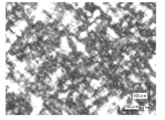
- FIG. 1 is a polarized light micrograph observing the dispersion state of finely divided cellulose fibers in the fibrous resin reinforcing agent produced in Example 1.
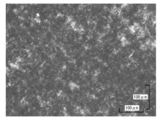
- FIG. 2 is a polarized light micrograph observing the dispersion state of the refined cellulose fibers in the fibrous resin reinforcing agent produced in Example 2.
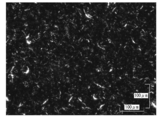
- FIG. 3 is a polarizing micrograph observing the dispersion state of the finely divided cellulose fibers in the fibrous resin reinforcing agent produced in Example 3.
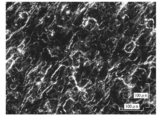
- FIG. 4 is a polarization micrograph observing the dispersion state of the finely divided cellulose fibers in the fibrous resin reinforcing agent produced in Example 4.
- FIG. 1 is a polarized light micrograph observing the dispersion state of finely divided cellulose fibers in the fibrous resin reinforcing agent produced in Example 1.
- FIG. 2 is a polarized light micrograph observing the dispersion state of the refined cellulose fibers in the fibrous resin reinforcing agent produced in Example 2.
- FIG. 5 is a polarizing microscope photograph observing the dispersion state of the finely divided cellulose fibers in the fibrous resin reinforcing agent produced in Comparative Example 1.
- FIG. 6 is a polarization micrograph observing the dispersion state of the refined cellulose fibers in the resin composition containing the fibrous resin reinforcing agent produced in Example 1.
- FIG. 7 is a polarized light micrograph observing the dispersion state of the refined cellulose fibers in the resin composition containing the fibrous resin reinforcing agent produced in Example 2.
- FIG. 8 is a polarization micrograph observing the dispersion state of the refined cellulose fibers in the resin composition containing the fibrous resin reinforcing agent produced in Example 3.
- FIG. 9 is a polarization micrograph observing the dispersion state of the refined cellulose fibers in the resin composition containing the fibrous resin reinforcing agent produced in Example 4.
- FIG. 10 is a polarizing microscope photograph observing the dispersion state of the refined cellulose fibers in the resin composition containing the fibrous resin reinforcing agent produced in Comparative Example 1.
- FIG. 11 is a polarizing microscope photograph observing the dispersion state of commercially available cellulose powder in the resin composition produced in Comparative Example 2.
- FIG. 12 is a polarization micrograph observing the dispersion state of the coarsely pulverized pulp in the resin composition containing the fibrous resin reinforcing agent produced in Comparative Example 3.
- FIG. 13 is a polarization micrograph observing the dispersion state of coarsely pulverized bacterial cellulose in the resin composition containing the fibrous resin reinforcing agent produced in Comparative Example 4.
- the fibrous resin reinforcing agent of the present invention is obtained by removing moisture from a suspension containing a finely divided aqueous dispersion of cellulose fibers and a hydrophilic additive having an HLB value of 10 to 20.
- a hydrophilic additive having an HLB value of 10 to 20.
- the reinforcing agent can be easily dispersed in a matrix resin such as polylactic acid by a conventional resin molding technique, and the cellulose fiber is uniformly dispersed in the obtained resin composition.
- characteristics hereinafter, the present invention will be described in detail.
- the fibrous resin reinforcing agent of the present invention is prepared by dissolving, emulsifying or dispersing the additive (B) in an aqueous dispersion of finely divided cellulose fibers (A) to prepare a suspension, and water from the suspension. Is obtained.
- ⁇ Refined cellulose fiber (A)> As the cellulose used as the raw material for the aqueous dispersion of cellulose fiber used in the present invention, raw materials used in the production of conventional cellulose fibers can be widely used. For example, plant-derived cellulose such as wood, bamboo, hemp, jute, kenaf, agricultural products and food residues, cellulose produced by microorganisms such as bacterial cellulose and squirt can be used as raw materials. These celluloses may be used alone or in combination of two or more. Of these, it is preferable to use plant-derived cellulose or bacterial cellulose as a raw material.
- these cellulose raw materials are pulverized and refined cellulose fibers are used.
- the method for pulverizing cellulose is not limited, but in order to make the fiber diameter suitable for the purpose of the present invention, a strong shearing force such as a high-pressure homogenizer, a grinder (millstone) type mill, or a medium stirring mill such as a bead mill is obtained. Is preferred. Further, among these, it is preferable to use a high-pressure homogenizer, and for example, a wet pulverization method as disclosed in, for example, JP-A-2005-270891, that is, a dispersion in which cellulose is dispersed is discharged from a pair of nozzles.
- Cellulose is pulverized by being injected and collided at a high pressure, and can be implemented by using, for example, a starburst system (high pressure pulverizer manufactured by Sugino Machine Co., Ltd.).
- the degree of refinement and homogenization depends on the pressure fed to the ultra-high pressure chamber of the high-pressure homogenizer, the number of passes through the ultra-high pressure chamber (number of treatments), and water. It will depend on the cellulose concentration in the dispersion.
- the pumping pressure (treatment pressure) is usually 50 MPa to 250 MPa, preferably 150 MPa to 245 MPa. When the pumping pressure is less than 50 MPa, the cellulose fiber is not sufficiently refined, and the effect expected by the refinement cannot be obtained.
- the cellulose concentration in the aqueous dispersion during the micronization treatment is 0.1% by mass to 30% by mass, preferably 1% by mass to 10% by mass.
- the productivity is remarkably low, and when it is higher than 30% by mass, the pulverization efficiency is low, and the desired finely divided cellulose fiber cannot be obtained.
- the number of times of refinement depends on the cellulose concentration in the aqueous dispersion, but when the cellulose concentration is 0.1% by mass to 1% by mass, the number of treatments can be sufficiently refined in about 10 to 50 passes. However, about 1 to 10% by mass requires about 50 to 200 passes. Moreover, in the case of a high concentration exceeding 30% by mass, the number of treatments is several hundred times or more, which is unrealistic from an industrial viewpoint.
- a laser diffraction / scattering particle size distribution analyzer can be used for evaluation of the refinement of the refined cellulose fiber used in the present invention in an aqueous dispersion.
- the cellulose fiber has a particle diameter (median diameter) of 0.01 ⁇ m to 40 ⁇ m, particularly preferably 0.05 ⁇ m to 10 ⁇ m at a total volume of 50%. Is preferably used.
- the addition effect cannot be obtained because the cellulose fiber is too fine, that is, the resin composition containing the fibrous resin reinforcing agent obtained next, or the mechanical property of the molded body thereof Does not lead to improvement in strength. Further, if the particle size is larger than 40 ⁇ m, the cellulose fiber is not sufficiently refined, the mechanical strength of the resin composition containing the fiber or the molded product thereof, and the mechanical strength when the unground cellulose raw material is contained. There is no difference in strength, and the expected effect cannot be obtained.
- the finely divided cellulose fiber used in the present invention is not particularly limited with respect to the fiber diameter, but is 0.001 ⁇ m to 10 ⁇ m, preferably 0.01 ⁇ m to 1 ⁇ m.
- the aspect ratio (L / D) is not particularly limited, but is 10 to 100,000, and preferably 100 to 10,000.
- the additive (B) in the present invention is hydrophilic, has an HLB (Hydrophile-Lipophile-Balance) value of 10 to 20, and can uniformly disperse the cellulose fiber (A) described above.
- Any known material can be used without particular limitation. Examples thereof include monoglyceride, acetic acid monoglyceride, lactic acid monoglyceride, citric acid monoglyceride, succinic acid monoglyceride, diacetyltartaric acid monoglyceride, polyglycerin ester, sugar ester, sorbitan ester, stearoyl calcium lactate and lecithin.
- the mechanical strength of the blended resin composition or molded body thereof can be improved as compared with the case where the refined cellulose fiber is used alone.
- the cellulose fiber and the additive are once constituted as a fibrous resin reinforcing agent and blended with the thermoplastic resin, so that they are blended independently (without the form of the fibrous resin reinforcing agent).
- the aggregate formation of the refined cellulose fibers in the obtained resin composition can be suppressed, and the cellulose fibers can be dispersed in the resin composition while maintaining the refined state. This is advantageous.
- an HLB value represented by a numerical value from 0 to 20 is used depending on the balance between the hydrophilic group and the lipophilic group.
- the HLB value is smaller as the lipophilic substance is higher, and as the hydrophilicity is higher, it means that the solubility or dispersibility in water changes depending on the HLB value.
- the Griffin method, the Atlas method, the Davis method, the Kawakami method, and the like are known, and can be calculated by the following Griffin equation, for example.
- HLB 20 ⁇ (chemical formula amount of hydrophilic group / total molecular weight)
- the additive used in the present invention has an HLB value of 10 to 20, more preferably an HLB value of 12 to 16.
- HLB value is less than 10
- the affinity between the cellulose fiber and the additive in water is low, and the cellulose fiber forms an agglomerate at the stage of producing the fibrous resin reinforcing agent, and then the resulting fibrous resin reinforcing agent is obtained.
- the improvement of the mechanical strength of the resin composition containing this, or its molded object is not obtained.
- the amount of additive (B) to be added to the fibrous resin reinforcing agent is, for example, 50 parts by mass to 99.99 parts per 100 parts by mass of the total amount of refined cellulose fiber (A) and additive (B). 9 parts by mass, more preferably 70 parts by mass to 99.0 parts by mass.
- the amount of the additive is less than 50 parts by mass, the cellulose fiber is uniformly dispersed in the resin composition containing the fibrous resin reinforcing agent composed of the refined cellulose fiber and the additive, or in the molded body thereof. Therefore, the mechanical strength cannot be improved.
- Examples of commercially available additives that can be used in the fibrous resin reinforcing agent of the present invention include, but are not limited to: Poem (registered trademark) J-0021, L-021, J-0081HV, J-0381V, C-781, Riquemar (registered trademark) C-250, B-205, O-852 (above, Riken Vitamin Co., Ltd.); Sunsoft (registered trademark) Q-12S, M-12J, Q-14S, Q-17S, Q-18S, Q-182S, A-121E, A -141E, A-171E, A-181E (above, manufactured by Taiyo Chemical Co., Ltd.); S-1170, S-1570, S-1670, P-1570, P-1670, M-1695, O-1570 L-1695, LWA-1570, L-10D, L-7D, M-10D, M-7D, P-8D, S-28D, S-24D, SWA-20D, SWA-15D, SWA-10D, O -15D
- the fibrous resin reinforcing agent is a suspension prepared by dissolving, emulsifying or dispersing the additive (B) in the aqueous dispersion of the finely-divided cellulose fiber (A). By removing moisture from the fiber, a fibrous resin reinforcing agent in which the cellulose fiber (A) is uniformly dispersed in the additive (B) can be produced.
- the refined cellulose fiber (A) and the additive (B) may be in a state where at least each of them is simply coexisted in water. It is preferable that the cellulose fiber (A) and the additive (B) are uniformly emulsified or dispersed in water to form a suspension.
- the method for emulsifying or dispersing in water is not particularly limited.
- the cellulose raw material and the additive (B) are allowed to coexist.
- the suspension may be prepared by simultaneously carrying out the refinement of the cellulose raw material and the emulsification or dispersion treatment of the additive (B).
- a general-purpose stirrer for example, a propeller / paddle blade, a homomixer, a disperser, etc., in a state where an aqueous dispersion of finely divided cellulose fiber (A) and an additive (B) coexist.
- a suspension may be prepared using a mixer, an ultrasonic disperser, or the like.
- the concentration of the finely divided cellulose fiber (A) and the additive (B) in the aqueous suspension is 0.5% to 99% by mass, preferably 5% to 60%, as the total amount of both. % By mass.
- concentration of the total amount of the cellulose fiber (A) and the additive (B) in the suspension is less than 0.5% by mass, the water removal efficiency is low, which is impractical when actual production is assumed. is there.
- a conventional concentration and drying method for example, heating concentration, concentration under reduced pressure, hot air drying, vacuum drying, spray drying, freeze vacuum drying. These processes may be used in combination as appropriate.
- the temperature at the time of removing moisture is 100 ° C. to 200 ° C. at normal pressure, preferably 110 ° C. to 150 ° C. Regardless of the reduced pressure or the normal pressure, yellowing of the cellulose becomes remarkable under the temperature condition of 200 ° C. or higher, which is not preferable because there is a possibility that the appearance of the resin composition or the molded body obtained next is impaired.
- the moisture content contained in the fibrous resin reinforcing agent of the present invention is 5% by mass or less, preferably 3% by mass or less.
- the moisture content can be measured with a 150 ° C. mass loss in a thermal analyzer (TG-DTA) measurement or with Karl Fischer.
- TG-DTA thermal analyzer
- Karl Fischer Karl Fischer
- the fibrous resin reinforcing agent of the present invention may contain other additives as necessary.
- inorganic fillers eg talc, mica, silica, kaolin, clay, wollastonite, glass beads, glass flakes, potassium titanate, calcium carbonate, calcium phosphate, magnesium sulfate, titanium oxide
- flame retardants eg bromine
- halogen flame retardants such as chlorine compounds, melamine flame retardants, antimony flame retardants such as antimony trioxide and antimony pentoxide
- inorganic flame retardants such as aluminum hydroxide, magnesium hydroxide and silicone compounds, red phosphorus, Phosphoric esters, phosphorous flame retardants such as ammonium polyphosphate, phosphazene, etc.
- fluororesins such as PTFE
- heat stabilizers light stabilizers, UV absorbers, antioxidants, impact modifiers, antistatic agents, pigments, Colorant, mold release agent, lubricant, additive, compatibil
- the shape of these additives may be any of fiber, granule, plate, needle, sphere, and powder. These additives can be used within 500 parts by mass with respect to 100 parts by mass of the fibrous resin reinforcing agent comprising the refined cellulose fiber (A) and the additive (B).
- the resin composition of the present invention comprises a fibrous resin reinforcing agent and a thermoplastic resin, preferably polylactic acid, and conventional melt-kneading is used for production and molding of the resin composition.
- the polylactic acid used in the resin composition of the present invention includes a polylactic acid homopolymer or copolymer.
- the arrangement pattern of the copolymer may be any of random copolymer, alternating copolymer, block copolymer, and graft copolymer. Further, it may be a blend polymer with other resin mainly composed of polylactic acid homopolymer or copolymer.
- the other resin include biodegradable resins other than polylactic acid, general-purpose thermoplastic resins, and general-purpose thermoplastic engineering plastics.
- Polylactic acid is not particularly limited, and examples thereof include those obtained by ring-opening polymerization of lactide, and those obtained by direct polycondensation of D-form, L-form, racemate, etc. of lactic acid.
- Poly-L-lactic acid, a copolymer of D-lactic acid and L-lactic acid, or a mixture of poly-D-lactic acid and poly-L-lactic acid may be used.
- stereocomplex type polylactic acid exhibits higher heat resistance than poly-D-lactic acid or poly-L-lactic acid.
- the weight average molecular weight of polylactic acid is generally about 10,000 to 500,000.
- polylactic acid obtained by crosslinking with a crosslinking agent using heat, light, radiation or the like can be used.
- the blending ratio of the fibrous resin reinforcing agent and the thermoplastic resin (polylactic acid) in the resin composition of the present invention is the blending of the fibrous resin reinforcing agent with respect to 100 parts by mass of the total amount of the fibrous resin reinforcing agent and the resin.
- the amount is, for example, 0.1 to 50 parts by mass, preferably 1 to 30 parts by mass, more preferably 1 to 20 parts by mass.
- the blending amount of the fibrous resin reinforcing agent is less than 0.1 parts by mass, the content of the refined cellulose fiber is low, so that the mechanical strength of the resin cannot be improved.
- the plasticization effect of a fibrous resin reinforcement becomes remarkable and the mechanical strength of resin falls.
- Resin of a fibrous resin reinforcing agent and a thermoplastic resin by a known method as melt kneading in the production of a resin composition, for example, a kneader, a roll mixer, a Banbury mixer, or an extruder (single screw or twin screw extruder).
- a composition is obtained.
- a fibrous resin reinforcing agent, a resin, and other components are used by using an arbitrary one such as a Henschel mixer, a super mixer, a V-type blender, or a nauter mixer. Premixing may be performed.
- the melt kneading temperature is 50 ° C. to 300 ° C., preferably 100 ° C. to 250 ° C.
- various molded products can be easily formed by using a conventional molding method such as general injection molding, blow molding, vacuum molding, compression molding, etc. Can be manufactured.
- the molded body thus obtained is also an object of the present invention.
- the fibrous resin reinforcing agent of the present invention is in a state where the finely divided cellulose fibers are dispersed in the additive (B), and is extremely excellent in dispersibility in the resin as a matrix.
- the resin composition and the molded body in which the fibrous resin reinforcing agent is blended with the matrix resin are in a state where the finely divided cellulose fibers are uniformly dispersed, and the mechanical strength of the resin composition or the molded body is excellent. It is considered to show characteristics.
- the molded article of the present invention can be usefully applied to automobile parts, electrical / electronic equipment casings, machine parts, and the like because the impact strength is particularly improved.
- ⁇ Laser diffraction / scattering particle size distribution measurement> For measuring the particle size of cellulose, laser diffraction (Malvern Co., Ltd., apparatus name: Mastersizer 2000) was used. The measurement was performed in water, at room temperature, with stirring at 3,500 rpm, and under ultrasonic irradiation. ⁇ Differential thermobalance> Using TG-DTA (Thermo Plus, Thermo Plus, TG-8120, manufactured by Rigaku Corporation), the temperature was increased from room temperature to 500 ° C. at 10 ° C./min, and the mass loss at 150 ° C. was measured.
- TG-DTA Thermo Plus, Thermo Plus, TG-8120, manufactured by Rigaku Corporation
- Example 1 Production of fibrous resin reinforcing agent and resin composition and molded body from commercially available cellulose powder (1)
- 5 parts by mass of commercially available cellulose powder (Fibra-Cell BH-100 manufactured by Celite) was dispersed in 495 parts by mass of pure water, and refined (Starburst System, manufactured by Sugino Machine Co., Ltd.) (200 MPa, 50 Pass).
- a refined cellulose fiber aqueous dispersion was obtained.
- the obtained cellulose fiber aqueous dispersion was measured in a petri dish, dried at 110 ° C. for 5 hours, moisture was removed, the amount of residue was measured, and the concentration was measured.
- the micronized cellulose fiber concentration in water was 0.74% by mass.
- FIG. 1 shows a polarizing microscope photograph observing the dispersion state of the refined cellulose fibers in the obtained fibrous resin reinforcing agent.
- Polylactic acid (Ingeo (registered trademark) 3001D manufactured by Nature Works) is added to the obtained fibrous resin reinforcing agent so that the cellulose fiber becomes 1% by mass, and a twin screw extruder (manufactured by Toyo Seiki Seisakusho Co., Ltd.) Melting and kneading was performed at a barrel temperature of 190 ° C. using a plastmill micro, twin screw extruder 2D15W) to obtain a resin composition containing 1% by mass of cellulose fiber in polylactic acid.
- FIG. 6 shows a polarizing microscope photograph of the dispersion state of the finely divided cellulose fibers in the obtained resin composition.
- the obtained resin composition was melted at a cylinder temperature of 200 ° C. using an injection molding machine (Thermo Fisher Scientific Co., Ltd., Thermo Scientific HAAKE MiniJet II), and injected into a 30 ° C. mold. After holding the resin for 30 seconds to cure the resin, a molded body (length 80 mm ⁇ width 10 mm ⁇ thickness 4 mm) was taken out from the mold.
- Example 2 Production of fibrous resin reinforcing agent and resin composition and molded body from commercially available cellulose powder (2)
- the moisture content of the obtained fibrous resin reinforcing agent was 2.29% by mass as measured by the mass loss at 150 ° C.
- FIG. 2 shows a polarization micrograph of the dispersion state of the refined cellulose fiber in the obtained fibrous resin reinforcing agent.
- FIG. 2 shows the dispersion state of the refined cellulose fiber in the resin composition containing the fibrous resin reinforcement agent. The polarization micrograph which observed this is shown in FIG. 7, respectively.
- Example 3 Production of fibrous resin reinforcing agent and resin composition and molded body from refined pulp
- 50 parts by mass of purified pulp was dispersed in 400 parts by mass of pure water and subjected to a homogenizer treatment (Hiscotron manufactured by Microtech Nichion) (15,000 rpm, 1 hour), and coarsely pulverized.
- cellulose refinement treatment was performed in the same manner as in Example 1, and an additive mainly composed of decaglycerin monolaurate (Poem [registered trademark] J-0021 manufactured by Riken Vitamin Co., Ltd.) was added.
- decaglycerin monolaurate Pumic acid
- FIG. 3 shows a polarization micrograph of the dispersion state of the refined cellulose fibers in the obtained fibrous resin reinforcing agent.
- FIG. 3 shows the dispersion state of the refined cellulose fibers in the resin composition containing the fibrous resin reinforcement agent.
- FIG. 8 shows polarization micrographs obtained by observing.
- Example 4 Production of fibrous resin reinforcing agent and resin composition and molded body from bacterial cellulose] 2,000 parts by mass of bacterial cellulose (PT.NIRAMAS manufactured by UTAMA) was cut with scissors and chopped with a home-use mixer. The aqueous dispersion (about pH 3) obtained by shredding was filtered and then washed with 500 parts by mass of water. This operation was repeated until the pH of the dispersion reached 7. The aqueous dispersion thus obtained was subjected to a homogenizer treatment (Hiscotron manufactured by Microtech Nithion) (15,000 rpm, 1 hour) to obtain a coarsely pulverized aqueous dispersion of bacterial cellulose.
- a homogenizer treatment Hiscotron manufactured by Microtech Nithion
- FIG. 4 shows a polarization micrograph obtained by observing the dispersion state of the refined cellulose fibers in the obtained fibrous resin reinforcing agent.
- FIG. 4 shows the dispersion state of the refined cellulose fibers in the resin composition containing the fibrous resin reinforcing agent.
- FIG. 9 shows polarization micrographs obtained by observing.
- Comparative Example 1 Production of fibrous resin reinforcing agent and resin composition and molded article from commercially available cellulose powder (3)
- a fibrous resin reinforcing agent, a resin composition, and a molded article were produced in the same manner as in Example 1.
- FIG. 5 shows a polarization micrograph of the dispersion state of the refined cellulose fiber in the obtained fibrous resin reinforcing agent.
- FIG. 5 shows the dispersion state of the refined cellulose fiber in the resin composition containing the fibrous resin reinforcement agent.
- FIG. 10 shows polarization micrographs obtained by observing.
- FIG. 11 shows a polarizing microscope photograph observing the dispersion state of the commercially available cellulose powder in the obtained resin composition.
- a molded body was produced in the same manner as in Example 1.
- FIG. 12 shows a polarizing microscope photograph observing the dispersion state of the coarsely pulverized pulp in the resin composition containing the obtained fibrous resin reinforcing agent.
- Example 4 Production of fibrous resin reinforcing agent and resin composition containing coarsely pulverized bacterial cellulose, and molded article
- an additive containing decaglycerin monolaurate as a main component (Poem [manufactured by Riken Vitamin Co., Ltd.) was added to the aqueous dispersion of coarsely pulverized bacterial cellulose obtained in the same manner as in Example 4.
- (Registered trademark) J-0021) was added to remove water to obtain a fibrous resin reinforcing agent containing coarsely pulverized bacterial cellulose, and then a resin composition and a molded body were produced.
- FIG. 13 shows a polarizing microscope photograph of the dispersion state of the coarsely pulverized bacterial cellulose in the resin composition containing the obtained fibrous resin reinforcing agent.
- Table 1 shows the weight average molecular weight of the obtained resin composition and the Izod impact strength of the molded product evaluated by an Izod impact test according to JIS K 7110.
- the resin composition or molded product containing the fibrous resin reinforcing agent obtained by the present invention can be melt-kneaded at the same melting temperature as that of conventional polylactic acid (double-screw extruder, barrel temperature 190 ° C.). In the injection molding to be performed, it was possible to melt at a cylinder temperature (200 ° C.) similar to that of conventional polylactic acid and to inject it into a 30 ° C. mold.
- Examples 1 and 2 are resin compositions (molded bodies) using a commercial cellulose powder subjected to the same refinement treatment, but using a fibrous resin reinforcing agent using an additive having different HLB values.
- Comparative Example 1 was compared with Comparative Example 1 in which the HLB value of the additive was 9.4, no improvement in impact strength was observed as compared with the resin composition of Comparative Example 5 in which the additive and cellulose fiber were not added.
- Example 1 and Example 2 in which the HLB value was 10 or more the result that the impact strength was remarkably improved was obtained.
Landscapes
- Chemical & Material Sciences (AREA)
- Health & Medical Sciences (AREA)
- Chemical Kinetics & Catalysis (AREA)
- Medicinal Chemistry (AREA)
- Polymers & Plastics (AREA)
- Organic Chemistry (AREA)
- Engineering & Computer Science (AREA)
- Materials Engineering (AREA)
- Manufacturing & Machinery (AREA)
- Compositions Of Macromolecular Compounds (AREA)
- Processes Of Treating Macromolecular Substances (AREA)
- Biological Depolymerization Polymers (AREA)
Abstract
【課題】セルロースファイバーとポリ乳酸の複合化がより簡便であり、得られた樹脂組成物中におけるセルロースファイバーの均一分散性が高く、且つ成形体の耐衝撃性を著しく向上させるような、繊維状樹脂補強剤の製造方法を提供する。 【解決手段】 微細化されたセルロースファイバーの水分散液に親水性添加剤を溶解させ、懸濁液を調製し、この懸濁液から水分を除去することにより得られる、微細化されたセルロースファイバーが均一分散した繊維状樹脂補強剤であって、該補強剤のポリ乳酸への添加によって耐衝撃性を著しく改善する事ができる。
Description
本発明は、セルロース及び添加剤を含有する組成物とその製造方法に関し、詳細には添加剤中にセルロースファイバーが均一に分散したセルロースファイバー含有繊維状樹脂補強剤であって、また該補強剤の熱可塑性樹脂への添加により樹脂中におけるセルロースファイバーの均一分散性並びに耐衝撃性が改良された樹脂組成物及び成形体に関する。
自然環境保護の観点からこれまで未利用の資源を有効活用する研究が盛んに行われている。中でもセルロースは、現存量が豊富であること、生分解性を有し環境負荷が低い資源であること、高い結晶化度、高い引張強度、低い熱膨張率など、材料として優れた性質を持つことなどから今後期待される材料である。特に、セルロースの分子鎖軸方向の結晶弾性率は138GPaであり、アラミド繊維及び液晶ポリエステルの弾性率に匹敵する。またセルロースはその線熱膨張係数が10-7K-1のオーダーであり、ガラス及びダイヤモンドをも凌駕する非常に低い熱膨張率を有する。
セルロースを有効活用する方法の一つとして樹脂成形体の強度を向上させる補強材としての利用が挙げられる。従来、樹脂成形体の機械的強度を高めるために、一般に炭素繊維やガラス繊維等の無機繊維が補強材として使用されている。しかし、無機繊維が配合された複合樹脂は、金型など成形機内部を磨耗してしまう点、焼却時に無機繊維に由来する残渣が発生するために埋め立て処理等により廃棄せざるを得ない点などが問題となっている。
一方、セルロースは、補強材として樹脂成形体へ配合した後も、最終的に水と二酸化炭素に分解されるため、上記の廃棄の問題の解消につながるだけでなく、間伐材をはじめとして竹、麻、ケナフなど、森林資源や可食原料以外で利用でき且つ成長が早く大量に栽培しやすいという点からも注目されている。
一方、セルロースは、補強材として樹脂成形体へ配合した後も、最終的に水と二酸化炭素に分解されるため、上記の廃棄の問題の解消につながるだけでなく、間伐材をはじめとして竹、麻、ケナフなど、森林資源や可食原料以外で利用でき且つ成長が早く大量に栽培しやすいという点からも注目されている。
ところで植物由来の生分解性樹脂であるポリ乳酸は、従来のポリプロピレン樹脂、ポリスチレン樹脂、ポリエチレンテレフタラート樹脂と比べると弾性率は高いものの、耐衝撃性に劣るという不利点を有することから、こうした物性を補うための補強材の併用が必要とされる。ポリ乳酸それ自体が植物由来材料であることから、その補強材においても植物性天然繊維を使用することが好ましく、この観点から、セルロースとポリ乳酸との複合樹脂に関する特許がいくつか提案されている。
ただし、ポリ乳酸などの熱可塑性樹脂へ分散させるために、ナノサイズに微細化したセルロースは、自身の有する柔軟性及び高アスペクト比、並びに表面に存在する水酸基に起因するファイバー同士の水素結合により、単独で乾燥状態などを経ると強固な凝集塊を形成するという問題がある。
こうした凝集塊の発生を避け且つセルロースを熱可塑性樹脂へ分散させるために、シート状に形成したミクロフィブリル化植物繊維より構成されるものに重合性成分又は樹脂溶液を含浸させてシート形状の複合樹脂を作製する試み、及びシート形状の複合樹脂を細断した後溶融混錬を行い、次いでプレス成形などで成形体を作製する検討がなされている(特許文献1)。
ただし、ポリ乳酸などの熱可塑性樹脂へ分散させるために、ナノサイズに微細化したセルロースは、自身の有する柔軟性及び高アスペクト比、並びに表面に存在する水酸基に起因するファイバー同士の水素結合により、単独で乾燥状態などを経ると強固な凝集塊を形成するという問題がある。
こうした凝集塊の発生を避け且つセルロースを熱可塑性樹脂へ分散させるために、シート状に形成したミクロフィブリル化植物繊維より構成されるものに重合性成分又は樹脂溶液を含浸させてシート形状の複合樹脂を作製する試み、及びシート形状の複合樹脂を細断した後溶融混錬を行い、次いでプレス成形などで成形体を作製する検討がなされている(特許文献1)。
また、ポリプロピレン樹脂と疎水化されたセルロース系繊維とを水媒体中、加熱下で撹拌混合し、脱水とともに溶融混錬することによる、樹脂と微細化セルロースファイバーとの複合樹脂の製造方法が報告されている(特許文献2)。
他方で、微細化されたセルロースファイバーへ水系にて重合成分をグラフト重合させ、表面が熱可塑性樹脂で覆われたセルロースファイバーを得る方法が報告されている(特許文献3)。同技術にて得られた微細化セルロースファイバーは、表面が樹脂にて被覆されているため、乾燥状態を介しても繊維同士の水素結合に起因する凝集塊の形成が抑制できるとしている。
上述に開示される従来の方法では、シート形状を経ること、グラフト重合が必要になるなどの煩雑な工程を必要とすること、及び得られる材料に慣用の成形方法を適用することが困難であるという問題があった。また有機溶剤を必要とする工程を含んでいること、一方、水存在下において樹脂が加熱される工程を含むため、ポリ乳酸樹脂など加水分解する虞が懸念される樹脂に適用する事は困難であることなど、特にポリ乳酸樹脂を用いた複合樹脂化においては課題が多い。
本発明は、上記の事情に鑑みなされたものであって、熱可塑性樹脂の補強材としてセルロースを利用する場合に問題とされている凝集塊の発生を抑え、配合した樹脂に均一に分散し、補強材としての性能を十分に発揮できる補強剤を提供することを目的とする。
特に本発明は、熱可塑性樹脂の中でもポリ乳酸向けの補強剤として、樹脂自身の高い弾性率を維持した上で高い耐衝撃性を発現でき、またポリ乳酸のように加水分解が懸念される樹脂であっても適用できる、樹脂補強剤を提供することを目的とする。
さらに本発明は、上述の樹脂補強剤を、特別な装置や複雑な製造工程を必要とせず、簡便な方法にて製造可能な樹脂補強剤の製造方法を提供することを目的とする。
そして本発明は、上述の樹脂補強剤を含有し、機械的強度の向上を図った樹脂組成物並びに該樹脂組成物から形成された成形体を提供することを目的とする。
特に本発明は、熱可塑性樹脂の中でもポリ乳酸向けの補強剤として、樹脂自身の高い弾性率を維持した上で高い耐衝撃性を発現でき、またポリ乳酸のように加水分解が懸念される樹脂であっても適用できる、樹脂補強剤を提供することを目的とする。
さらに本発明は、上述の樹脂補強剤を、特別な装置や複雑な製造工程を必要とせず、簡便な方法にて製造可能な樹脂補強剤の製造方法を提供することを目的とする。
そして本発明は、上述の樹脂補強剤を含有し、機械的強度の向上を図った樹脂組成物並びに該樹脂組成物から形成された成形体を提供することを目的とする。
本発明者は、上記目的を達成するために鋭意検討を重ねた結果、微細化されたセルロースファイバーの水分散液に親水性の添加剤を添加して懸濁液を調製した後、水分を除去することにより、微細化されたセルロースファイバーが該添加剤中に均一に分散した繊維状樹脂補強剤を得ることができ、そして該補強剤を熱可塑性樹脂へ添加することで耐衝撃性に優れた樹脂組成物及び成形体が容易に得られる事を見出し、本発明に到達した。
すなわち、本発明はマトリックス樹脂を補強するための繊維状樹脂補強剤であって、微細化されたセルロースファイバー(A)と親水性であり且つHLB値(親水親油バランス)が10~20である添加剤(B)とを含み、該微細化されたセルロースファイバー(A)が添加剤(B)中に分散した状態で存在することを特徴とする、繊維状樹脂補強剤に関する。
上記HLB値が10~20とは、10を下限値とし20を上限値として含む範囲を意味する。以下、本明細書では、HLB値に限らず、~を用いて数値範囲を示す表記は、下限値及び上限値について同様に解釈される。
上記HLB値が10~20とは、10を下限値とし20を上限値として含む範囲を意味する。以下、本明細書では、HLB値に限らず、~を用いて数値範囲を示す表記は、下限値及び上限値について同様に解釈される。
前記微細化されたセルロースファイバー(A)は、レーザー回折・散乱式粒度分布計を用いて水を分散媒として測定される体積累計50%における粒子径(メジアン径)が0.01μm~40μmであることが好ましい。
また前記微細化されたセルロースファイバー(A)は、高圧ホモジナイザー、グラインダー(石臼)式摩砕機及び媒体攪拌ミルからなる群から選択されるいずれかの湿式粉砕方法によって調製されることが好ましい。
さらに前記微細化されたセルロースファイバー(A)は、植物由来セルロース又はバクテリアセルロースから調製されることが好ましい。
また前記微細化されたセルロースファイバー(A)は、高圧ホモジナイザー、グラインダー(石臼)式摩砕機及び媒体攪拌ミルからなる群から選択されるいずれかの湿式粉砕方法によって調製されることが好ましい。
さらに前記微細化されたセルロースファイバー(A)は、植物由来セルロース又はバクテリアセルロースから調製されることが好ましい。
また前記添加剤(B)は、前記微細化されたセルロースファイバー(A)と該添加剤(B)の合計100質量部に対し、70質量部~99.9質量部の量で含有されてなることが好ましい。
さらに前記添加剤(B)は、12~16のHLB値を有することがより好ましい。
さらに前記添加剤(B)は、12~16のHLB値を有することがより好ましい。
そして本発明は、微細化されたセルロースファイバー(A)の水分散液へ添加剤(B)を溶解又は乳化若しくは分散させて懸濁液を調製する工程、及び該懸濁液から水分を除去する工程を含む、前記繊維状樹脂補強剤を製造する方法に関する。
さらに本発明は、前記繊維状樹脂補強剤を含有する樹脂組成物に関する。
前記樹脂組成物において、さらに熱可塑性樹脂を含むことが好ましく、該熱可塑性樹脂がポリ乳酸であることがより好ましい。
前記樹脂組成物において、さらに熱可塑性樹脂を含むことが好ましく、該熱可塑性樹脂がポリ乳酸であることがより好ましい。
そして本発明は、前記樹脂組成物から形成された成形体にも関する。
本発明の繊維状樹脂補強剤は、ポリ乳酸等のマトリックス樹脂への分散が容易であり、すなわち、微細化されたセルロースファイバーをマトリックス樹脂へ分散させる際に従来必須であった有機溶剤の使用、及び複雑な工程を経る必要が無い。
また本発明の繊維状補強剤は、補強剤とマトリックス樹脂とを単に溶融混練するだけで、セルロースファイバーがマトリックス樹脂に均一に分散した組成物を形成できる。
また本発明の繊維状補強剤は、補強剤とマトリックス樹脂とを単に溶融混練するだけで、セルロースファイバーがマトリックス樹脂に均一に分散した組成物を形成できる。
また本発明によれば、上述の繊維状樹脂補強剤を、簡便に且つ効率良く製造することができる。また、特殊な装置を使用せず、工業的スケールで製造することができる。
さらに、本発明の繊維状補強剤は、前述したように、有機溶媒が不使用で製造でき、且つ、無機繊維に付随する廃棄等の問題を解消できることから、自然環境保護や省エネルギーの観点から大きく改善されたものとなる。
さらに、本発明の繊維状補強剤は、前述したように、有機溶媒が不使用で製造でき、且つ、無機繊維に付随する廃棄等の問題を解消できることから、自然環境保護や省エネルギーの観点から大きく改善されたものとなる。
そして本発明の樹脂組成物、並びに該組成物より得られる成形体において、微細化されたセルロースファイバーはマトリクス樹脂中に均一に分散したものであり、特許文献1乃至3に記載の樹脂組成物よりも、該セルロースファイバーの含有量が低いことから、成型加工性が著しく改善されるとともに、樹脂組成物及び成形体の機械的強度を大きく改善することができる。
本発明の繊維状樹脂補強剤は、微細化されたセルロースファイバーの水分散液とHLB値が10~20という親水性の添加剤を含みてなる懸濁液から水分を除去することにより、セルロースファイバーが添加剤中に均一に分散した状態にある点に大きな特徴を有する。
そしてこのため、該補強剤は、従来の樹脂成形技術により、ポリ乳酸等のマトリックス樹脂に容易に分散し得、得られる樹脂組成物においてもセルロースファイバーが均一に分散している状態にある点に特徴を有する。
以下、本発明を詳細に説明する。
そしてこのため、該補強剤は、従来の樹脂成形技術により、ポリ乳酸等のマトリックス樹脂に容易に分散し得、得られる樹脂組成物においてもセルロースファイバーが均一に分散している状態にある点に特徴を有する。
以下、本発明を詳細に説明する。
[繊維状樹脂補強剤]
本発明の繊維状樹脂補強剤は、微細化されたセルロースファイバー(A)の水分散液へ添加剤(B)を溶解又は乳化若しくは分散させ、懸濁液を調製し、この懸濁液から水分を除去することにより得られる。
本発明の繊維状樹脂補強剤は、微細化されたセルロースファイバー(A)の水分散液へ添加剤(B)を溶解又は乳化若しくは分散させ、懸濁液を調製し、この懸濁液から水分を除去することにより得られる。
<微細化されたセルロースファイバー(A)>
本発明で使用するセルロースファイバーの水分散液の原料となるセルロースとしては、従来のセルロースファイバーの製造に使用されている原料を広く用いることができる。例えば木材、竹、麻、ジュート、ケナフ、農作物・食物残渣など植物由来のセルロース、バクテリアセルロース、ホヤセルロースなど微生物産生又は動物産生のセルロースを原料として用いることができる。これらセルロースは、単独で又は二種以上組み合わせて使用してもよい。
なかでも、植物由来のセルロース又はバクテリアセルロースを原料として用いることが好ましい。
本発明で使用するセルロースファイバーの水分散液の原料となるセルロースとしては、従来のセルロースファイバーの製造に使用されている原料を広く用いることができる。例えば木材、竹、麻、ジュート、ケナフ、農作物・食物残渣など植物由来のセルロース、バクテリアセルロース、ホヤセルロースなど微生物産生又は動物産生のセルロースを原料として用いることができる。これらセルロースは、単独で又は二種以上組み合わせて使用してもよい。
なかでも、植物由来のセルロース又はバクテリアセルロースを原料として用いることが好ましい。
本発明においては、これらセルロース原料を粉砕し、微細化されたセルロースファイバーを用いる。セルロースの粉砕方法は限定されないが、本発明の目的に合う繊維径にまで微細化するには、高圧ホモジナイザー、グラインダー(石臼)式摩砕機、あるいはビーズミルなどの媒体攪拌ミルといった、強いせん断力が得られる方法が好ましい。また、これらの中でも高圧ホモジナイザーを用いて微細化することが好ましく、例えば特開2005-270891号公報に開示されるような湿式粉砕法、すなわち、セルロースを分散させた分散液を、一対のノズルから高圧でそれぞれ噴射して衝突させることにより、セルロースを粉砕するものであって、例えばスターバーストシステム((株)スギノマシン製の高圧粉砕装置)を用いることにより実施できる。
前述の高圧ホモジナイザーを用いてセルロースファイバーを微細化する際、微細化や均質化の程度は、高圧ホモジナイザーの超高圧チャンバーへ圧送する圧力と、超高圧チャンバーに通過させる回数(処理回数)、及び水分散液中のセルロース濃度に依存することとなる。
圧送圧力(処理圧力)は、通常、50MPa~250MPaであり、好ましくは150MPa~245MPaである。圧送圧力が50MPa未満の場合には、セルロースファイバーの微細化が不充分となり、微細化により期待される効果が得られない。
また、微細化処理時の水分散液中のセルロース濃度は0.1質量%~30質量%、好ましくは1質量%~10質量%である。水分散液中のセルロース濃度が0.1質量%未満だと生産性が著しく低く、30質量%より高い濃度だと粉砕効率が低く、所望の微細化されたセルロースファイバーが得られない。
微細化の処理回数は、前記水分散液中のセルロース濃度にもよるが、セルロース濃度が0.1質量%~1質量%の場合には処理回数は10パス~50パス程度で充分に微細化されるが、1質量%~10質量%では50パス~200パス程度必要となる。また、30質量%を超える高濃度な場合は、数百回以上の処理回数が必要となり、工業的観点から非現実的である。
圧送圧力(処理圧力)は、通常、50MPa~250MPaであり、好ましくは150MPa~245MPaである。圧送圧力が50MPa未満の場合には、セルロースファイバーの微細化が不充分となり、微細化により期待される効果が得られない。
また、微細化処理時の水分散液中のセルロース濃度は0.1質量%~30質量%、好ましくは1質量%~10質量%である。水分散液中のセルロース濃度が0.1質量%未満だと生産性が著しく低く、30質量%より高い濃度だと粉砕効率が低く、所望の微細化されたセルロースファイバーが得られない。
微細化の処理回数は、前記水分散液中のセルロース濃度にもよるが、セルロース濃度が0.1質量%~1質量%の場合には処理回数は10パス~50パス程度で充分に微細化されるが、1質量%~10質量%では50パス~200パス程度必要となる。また、30質量%を超える高濃度な場合は、数百回以上の処理回数が必要となり、工業的観点から非現実的である。
本発明に用いられる微細化されたセルロースファイバーの水分散液中での微細化の評価は、例えばレーザー回折/散乱式粒度分布測定器を用いることができる。本発明においては、セルロースファイバーの水分散液の体積粒度分布を測定したとき、体積累計50%における粒子径(メジアン径)が0.01μm~40μm、特に好ましくは0.05μm~10μmであるセルロースファイバーを用いることが好ましい。粒子径が、0.01μm未満であると、セルロースファイバーが微細すぎることにより添加効果が得られず、すなわち、次いで得られる繊維状樹脂補強剤を含有した樹脂組成物、又はその成形体の機械的強度の改善につながらない。また、粒子径が40μmより大きいと、セルロースファイバーの微細化が不充分なものとなり、それを含有する樹脂組成物又はその成形体の機械的強度と、未粉砕セルロース原料を含有する場合の機械的強度の相違が見られず、期待した効果が得られない。
なお、本発明に用いられる微細化されたセルロースファイバーは、繊維径について特に制限するものでは無いが、0.001μm乃至10μm、好ましくは0.01μm乃至1μmのものである。また、アスペクト比(L/D)についても特に制限されるものでは無いが、10~100,000であり、好ましくは100~10,000である。
<添加剤(B)>
本発明における添加剤(B)としては、親水性であり、HLB(親水親油バランス:Hydrophile-Lipophile-Balance)値が10~20であり、そして前述のセルロースファイバー(A)を均一に分散できるものであれば公知のものを特に制限なく用いることができる。例えばモノグリセライド、酢酸モノグリセライド、乳酸モノグリセライド、クエン酸モノグリセライド、コハク酸モノグリセライド、ジアセチル酒石酸モノグリセライド、ポリグリセリンエステル、シュガーエステル、ソルビタンエステル、ステアロイル乳酸カルシウム、レシチンなどを挙げることができる。
本発明において、添加剤(B)を配合することで、微細化されたセルロースファイバーを単独で用いた場合に比べ、配合した樹脂組成物、又はその成形体の機械的強度を向上することができる。
また、本発明において、セルロースファイバーと添加剤を一旦繊維状樹脂補強剤として構成し、これを熱可塑性樹脂に配合することにより、それぞれ単独で(繊維状樹脂補強剤の形態を経ずに)配合した場合と比べて、得られる樹脂組成物中における微細化されたセルロースファイバーの凝集形成を抑制できると共に、該樹脂組成物中にセルロースファイバーを、微細化状態を維持したまま分散させることができるという点で有利である。
本発明における添加剤(B)としては、親水性であり、HLB(親水親油バランス:Hydrophile-Lipophile-Balance)値が10~20であり、そして前述のセルロースファイバー(A)を均一に分散できるものであれば公知のものを特に制限なく用いることができる。例えばモノグリセライド、酢酸モノグリセライド、乳酸モノグリセライド、クエン酸モノグリセライド、コハク酸モノグリセライド、ジアセチル酒石酸モノグリセライド、ポリグリセリンエステル、シュガーエステル、ソルビタンエステル、ステアロイル乳酸カルシウム、レシチンなどを挙げることができる。
本発明において、添加剤(B)を配合することで、微細化されたセルロースファイバーを単独で用いた場合に比べ、配合した樹脂組成物、又はその成形体の機械的強度を向上することができる。
また、本発明において、セルロースファイバーと添加剤を一旦繊維状樹脂補強剤として構成し、これを熱可塑性樹脂に配合することにより、それぞれ単独で(繊維状樹脂補強剤の形態を経ずに)配合した場合と比べて、得られる樹脂組成物中における微細化されたセルロースファイバーの凝集形成を抑制できると共に、該樹脂組成物中にセルロースファイバーを、微細化状態を維持したまま分散させることができるという点で有利である。
なお、添加剤(B)の親水性又は疎水性を表す尺度として、親水基と親油基のバランスによって0から20迄の数値で表されるHLB値が用いられる。HLB値は、親油性の高い物ほど小さく、親水性の高い物ほど大きくなり、すなわちHLB値に応じて水に対する溶解性や分散性などが変化することを意味するものである。HLB値の算出方法として、グリフィン法、アトラス法、デイビス法、川上法などが知られており、例えば、下記グリフィンの式により算出できる。
HLB=20×(親水基の化学式量/全体の分子量)
添加剤(B)として市販品を用いる場合、その商品が掲載されたカタログ等に記載されたHLB値を適用してもよい。
本発明で用いる添加剤は、HLB値が10~20であり、より好ましくはHLB値が12~16である。HLB値が10未満の場合、水中においてセルロースファイバーと添加剤の親和性が低く、繊維状樹脂補強剤を製造する段階でセルロースファイバーが凝集塊を形成してしまい、次いで得られる繊維状樹脂補強剤を含有する樹脂組成物、又はその成形体の機械的強度の向上が得られない。
HLB=20×(親水基の化学式量/全体の分子量)
添加剤(B)として市販品を用いる場合、その商品が掲載されたカタログ等に記載されたHLB値を適用してもよい。
本発明で用いる添加剤は、HLB値が10~20であり、より好ましくはHLB値が12~16である。HLB値が10未満の場合、水中においてセルロースファイバーと添加剤の親和性が低く、繊維状樹脂補強剤を製造する段階でセルロースファイバーが凝集塊を形成してしまい、次いで得られる繊維状樹脂補強剤を含有する樹脂組成物、又はその成形体の機械的強度の向上が得られない。
また、繊維状樹脂補強剤への添加剤(B)の配合量は、微細化されたセルロースファイバー(A)と添加剤(B)の合計量100質量部に対し、たとえば50質量部~99.9質量部であり、より好ましくは70質量部~99.0質量部である。添加剤の配合量が50質量部未満では、微細化されたセルロースファイバーと添加剤からなる繊維状樹脂補強剤を含有する樹脂組成物中、又はその成形体中でのセルロースファイバーが均一に分散せず、機械的強度の向上が得られない。
本発明の繊維状樹脂補強剤に使用可能な市販の添加剤の例としては以下のものが挙げられるが、これらに限定されるものではない:
ポエム〔登録商標〕J-0021、同L-021、同J-0081HV、同J-0381V、同C-781、リケマール〔登録商標〕C-250、同B-205、同O-852(以上、理研ビタミン(株)製);サンソフト〔登録商標〕Q-12S、同M-12J、同Q-14S、同Q-17S、同Q-18S、同Q-182S、同A-121E、同A-141E、同A-171E、同A-181E(以上、太陽化学(株)製);S-1170、S-1570、S-1670、P-1570、P-1670、M-1695、O-1570、L-1695、LWA-1570、L-10D、L-7D、M-10D、M-7D、P-8D、S-28D、S-24D、SWA-20D、SWA-15D、SWA-10D、O-15D(以上、三菱化学フーズ(株)製);ニューコール 2305、同2307、同2308、同2308-HE、同2310、同2312、同2314、同2318、同2320、同2327(20)、同2330、同2344、同2360、同2399-S、同2399-S(25)、同NT-5、同NT-7、同NT-9、同NT-12、同NT-15、同NT-20、同NT-30、同NT-40、同NT-50、同1004、同1006、同1008、同1020、同1210、同1305、同1310、同1525、同1533、同1545、同1500-S、同1606、同1607、同1807、同1820、同1860、同3520-C、同2306-Y、同2308-Y、同2314-Y、同2306-HY、同2308-LY、同1008-F1、同1902-Y、同1308-FA(90)、同706、同707、同708、同709、同710、同711、同712、同714、同714(80)、同719、同723、同723(60)、同729、同733、同740、同740(60)、同747、同780(60)、同610、同610(80)、同2607、同2609、同2614、同707-F、同710-F、同714-F、同2608-F、同2600-FB、同2616-F、同3612-FA、同25、同20-MF、同65、同82、同85、同80-FL、同3-85、同95-FJ、同B10、同B13、同CMP-6、同CMP-8、同CMP-11、同3240、同3280、同LA-407、同OD-410、同OD-420、同TA-420、
同560、同564、同565、同566、同568、同504、同506、同509、同516(以上、日本乳化剤(株))。
ポエム〔登録商標〕J-0021、同L-021、同J-0081HV、同J-0381V、同C-781、リケマール〔登録商標〕C-250、同B-205、同O-852(以上、理研ビタミン(株)製);サンソフト〔登録商標〕Q-12S、同M-12J、同Q-14S、同Q-17S、同Q-18S、同Q-182S、同A-121E、同A-141E、同A-171E、同A-181E(以上、太陽化学(株)製);S-1170、S-1570、S-1670、P-1570、P-1670、M-1695、O-1570、L-1695、LWA-1570、L-10D、L-7D、M-10D、M-7D、P-8D、S-28D、S-24D、SWA-20D、SWA-15D、SWA-10D、O-15D(以上、三菱化学フーズ(株)製);ニューコール 2305、同2307、同2308、同2308-HE、同2310、同2312、同2314、同2318、同2320、同2327(20)、同2330、同2344、同2360、同2399-S、同2399-S(25)、同NT-5、同NT-7、同NT-9、同NT-12、同NT-15、同NT-20、同NT-30、同NT-40、同NT-50、同1004、同1006、同1008、同1020、同1210、同1305、同1310、同1525、同1533、同1545、同1500-S、同1606、同1607、同1807、同1820、同1860、同3520-C、同2306-Y、同2308-Y、同2314-Y、同2306-HY、同2308-LY、同1008-F1、同1902-Y、同1308-FA(90)、同706、同707、同708、同709、同710、同711、同712、同714、同714(80)、同719、同723、同723(60)、同729、同733、同740、同740(60)、同747、同780(60)、同610、同610(80)、同2607、同2609、同2614、同707-F、同710-F、同714-F、同2608-F、同2600-FB、同2616-F、同3612-FA、同25、同20-MF、同65、同82、同85、同80-FL、同3-85、同95-FJ、同B10、同B13、同CMP-6、同CMP-8、同CMP-11、同3240、同3280、同LA-407、同OD-410、同OD-420、同TA-420、
同560、同564、同565、同566、同568、同504、同506、同509、同516(以上、日本乳化剤(株))。
<繊維状樹脂補強剤の製造方法>
前記繊維状樹脂補強剤は、前述の微細化されたセルロースファイバー(A)の水分散液へ前述の添加剤(B)を溶解又は乳化若しくは分散させて懸濁液を調製し、この懸濁液から水分を除去することにより、セルロースファイバー(A)が添加剤(B)中に均一に分散した繊維状樹脂補強剤が製造できる。
前記繊維状樹脂補強剤は、前述の微細化されたセルロースファイバー(A)の水分散液へ前述の添加剤(B)を溶解又は乳化若しくは分散させて懸濁液を調製し、この懸濁液から水分を除去することにより、セルロースファイバー(A)が添加剤(B)中に均一に分散した繊維状樹脂補強剤が製造できる。
繊維状樹脂補強剤の製造にあたり、微細化されたセルロースファイバー(A)及び添加剤(B)は、少なくとも水中にそれぞれが単に共存した状態であれば良いが、水分除去に先だって、微細化されたセルロースファイバー(A)及び添加剤(B)を水中に均一に乳化又は分散させて、懸濁液としておくことが好ましい。
水への乳化又は分散方法としては、特に限定されるものではないが、たとえば微細化されたセルロースファイバー(A)を製造する工程において、セルロース原料と添加剤(B)とを共存させた状態で、前記セルロース原料の微細化、及び添加剤(B)の乳化又は分散処理を同時に行う事で懸濁液を調製しても良い。
これ以外にも、例えば、微細化されたセルロースファイバー(A)の水分散液と添加剤(B)とを共存させた状態で、汎用の撹拌機(例えば、プロペラ・パドル羽根、ホモミキサー、ディスパーミキサー、超音波分散機)などを用いて懸濁液を調製しても良い。
水への乳化又は分散方法としては、特に限定されるものではないが、たとえば微細化されたセルロースファイバー(A)を製造する工程において、セルロース原料と添加剤(B)とを共存させた状態で、前記セルロース原料の微細化、及び添加剤(B)の乳化又は分散処理を同時に行う事で懸濁液を調製しても良い。
これ以外にも、例えば、微細化されたセルロースファイバー(A)の水分散液と添加剤(B)とを共存させた状態で、汎用の撹拌機(例えば、プロペラ・パドル羽根、ホモミキサー、ディスパーミキサー、超音波分散機)などを用いて懸濁液を調製しても良い。
微細化されたセルロースファイバー(A)及び添加剤(B)の水懸濁液中における濃度は、双方の合計量として、0.5質量%~99質量%であり、好ましくは5質量%~60質量%である。懸濁液中のセルロースファイバー(A)及び添加剤(B)の合計量の濃度が0.5質量%未満の場合、水分除去の効率が低く、実際の製造を想定した場合に非現実的である。
水分の除去方法としては、慣用の濃縮及び乾燥方法(例えば、加熱濃縮、減圧濃縮、熱風乾燥、真空乾燥、噴霧乾燥、凍結真空乾燥)が挙げられる。これらの処理は、適宜組み合わせて使用しても良い。水分除去の際の温度としては、常圧では100℃~200℃であり、好ましくは110℃~150℃である。減圧、常圧に無関係に、200℃以上の温度条件ではセルロースの黄変が顕著となるため、次いで得られる樹脂組成物や成形体の外観を損なう虞があるため好ましくない。
こうして得られる本発明の繊維状樹脂補強剤に含まれる水分量は、5質量%以下、好ましくは3質量%以下である。なお、水分量の測定は、熱分析装置(TG-DTA)測定における150℃質量減少分、又はカールフィッシャーなどで測定する事ができる。繊維状樹脂補強剤に含まれる水分量が、5質量%より多く含まれる場合、繊維状樹脂補強剤をポリ乳酸に配合すると、該ポリ乳酸が成形加工時に水分により加水分解を受けて分子量低下を引き起こす虞があり、結果として成形体の機械強度を低下させることとなるため避けるべきである。
<他の添加剤>
本発明の繊維状樹脂補強剤は、必要により、他の添加剤を含んでいても良い。例えば、無機充填剤(例えば、タルク、マイカ、シリカ、カオリン、クレー、ウオラストナイト、ガラスビーズ、ガラスフレーク、チタン酸カリウム、炭酸カルシウム、リン酸カルシウム、硫酸マグネシウム、酸化チタン)、難燃剤(例えば、臭素化合物、塩素化合物等のハロゲン系難燃剤、メラミン系難燃剤、三酸化アンチモン、五酸化アンチモン等のアンチモン系難燃剤、水酸化アルミニウム、水酸化マグネシウム、シリコーン化合物等の無機系難燃剤、赤リン、リン酸エステル類、ポリリン酸アンモニウム、フォスファゼン等のリン系難燃剤、PTFE等のフッ素樹脂)、熱安定剤、光安定剤、紫外線吸収剤、酸化防止剤、衝撃改良剤、帯電防止剤、顔料、着色剤、離型剤、滑剤、添加剤、相溶化剤、発泡剤、香料、抗菌抗カビ剤、その他の各種充填剤、一般的な合成樹脂の製造時に通常使用される各種添加剤も、本発明の繊維状樹脂補強剤に含有することができる。
なお、これら<その他添加剤>をさらに含む繊維状樹脂補強剤もまた、本発明の対象である。
本発明の繊維状樹脂補強剤は、必要により、他の添加剤を含んでいても良い。例えば、無機充填剤(例えば、タルク、マイカ、シリカ、カオリン、クレー、ウオラストナイト、ガラスビーズ、ガラスフレーク、チタン酸カリウム、炭酸カルシウム、リン酸カルシウム、硫酸マグネシウム、酸化チタン)、難燃剤(例えば、臭素化合物、塩素化合物等のハロゲン系難燃剤、メラミン系難燃剤、三酸化アンチモン、五酸化アンチモン等のアンチモン系難燃剤、水酸化アルミニウム、水酸化マグネシウム、シリコーン化合物等の無機系難燃剤、赤リン、リン酸エステル類、ポリリン酸アンモニウム、フォスファゼン等のリン系難燃剤、PTFE等のフッ素樹脂)、熱安定剤、光安定剤、紫外線吸収剤、酸化防止剤、衝撃改良剤、帯電防止剤、顔料、着色剤、離型剤、滑剤、添加剤、相溶化剤、発泡剤、香料、抗菌抗カビ剤、その他の各種充填剤、一般的な合成樹脂の製造時に通常使用される各種添加剤も、本発明の繊維状樹脂補強剤に含有することができる。
なお、これら<その他添加剤>をさらに含む繊維状樹脂補強剤もまた、本発明の対象である。
これらの添加剤の形状は、繊維状、粒状、板状、針状、球状、粉末のいずれでもよい。これらの添加剤は、微細化されたセルロースファイバー(A)及び添加剤(B)からなる繊維状樹脂補強剤100質量部に対して、500質量部以内で使用できる。
<樹脂組成物及び成形体>
本発明の樹脂組成物は、繊維状樹脂補強剤と熱可塑性樹脂、好ましくはポリ乳酸を含みてなり、該樹脂組成物の製造・成形には慣用の溶融混錬が用いられる。
本発明の樹脂組成物は、繊維状樹脂補強剤と熱可塑性樹脂、好ましくはポリ乳酸を含みてなり、該樹脂組成物の製造・成形には慣用の溶融混錬が用いられる。
本発明の樹脂組成物に使用するポリ乳酸は、ポリ乳酸のホモポリマー又はコポリマーを含む。ポリ乳酸がコポリマーの場合、コポリマーの配列様式はランダムコポリマー、交互コポリマー、ブロックコポリマー、グラフトコポリマーのいずれであっても良い。また、ポリ乳酸のホモポリマー又はコポリマーを主体とした、他樹脂とのブレンドポリマーであっても良い。他樹脂とは、例えば、ポリ乳酸以外の生分解性樹脂、汎用の熱可塑性樹脂、汎用の熱可塑性エンジニアリングプラスチックが挙げられる。
ポリ乳酸としては特に限定されるものではないが、例えばラクチドを開環重合させたもの、乳酸のD体、L体、ラセミ体などを直接重縮合させたものが挙げられ、ポリ-D-乳酸、ポリ-L-乳酸、D-乳酸とL-乳酸のコポリマー、ポリ-D-乳酸とポリ-L-乳酸の混合物のいずれでもよい。当該ポリ-D-乳酸とポリ-L-乳酸の混合物として、ステレオコンプレックス型ポリ乳酸は、ポリ-D-乳酸又はポリ-L-乳酸よりも高耐熱性を示す。ポリ乳酸の重量平均分子量は、一般に10,000から500,000程度である。またポリ乳酸を熱、光、放射線などを利用して架橋剤で架橋させたものも使用できる。
ポリ乳酸としては特に限定されるものではないが、例えばラクチドを開環重合させたもの、乳酸のD体、L体、ラセミ体などを直接重縮合させたものが挙げられ、ポリ-D-乳酸、ポリ-L-乳酸、D-乳酸とL-乳酸のコポリマー、ポリ-D-乳酸とポリ-L-乳酸の混合物のいずれでもよい。当該ポリ-D-乳酸とポリ-L-乳酸の混合物として、ステレオコンプレックス型ポリ乳酸は、ポリ-D-乳酸又はポリ-L-乳酸よりも高耐熱性を示す。ポリ乳酸の重量平均分子量は、一般に10,000から500,000程度である。またポリ乳酸を熱、光、放射線などを利用して架橋剤で架橋させたものも使用できる。
本発明の樹脂組成物における繊維状樹脂補強剤と熱可塑性樹脂(ポリ乳酸)との配合割合は、繊維状樹脂補強剤と樹脂との合計量100質量部に対し、繊維状樹脂補強剤の配合量がたとえば0.1質量部~50質量部であり、好ましくは1質量部~30質量部、より好ましくは1質量部~20質量部である。繊維状樹脂補強剤の配合量が0.1質量部未満では、微細化されたセルロースファイバーの含有量が低いため、樹脂の機械的強度の向上が得られない。また、50質量部より配合量が多い場合、繊維状樹脂補強剤の可塑化効果が顕著となり、樹脂の機械的強度が低下する。
樹脂組成物の製造における溶融混錬としては公知の方法、例えば、ニーダー、ロールミキサー、バンバリーミキサー、押出機(単軸又は二軸押出機)により、繊維状樹脂補強剤と熱可塑性樹脂との樹脂組成物が得られる。また、溶融混錬に先立って、ヘンシェルミキサー、スーパーミキサー、V型ブレンダー、ナウターミキサー等、任意のものを用いて、繊維状樹脂補強剤と樹脂と他の成分(例えば前記添加剤)とを予備混合しても良い。なお、溶融混練温度は、50℃~300℃であり、好ましくは100℃~250℃である。
本発明の繊維状樹脂補強剤を含有する樹脂組成物を成形する際は、一般の射出成形、ブロー成形、真空成形、圧縮成形等の慣用の成形法を使用することによって、各種成形体を容易に製造することができる。こうして得られる成形体も本発明の対象である。
以上述べた通り、本発明の繊維状樹脂補強剤は、添加剤(B)中に微細化されたセルロースファイバーが分散した状態にあり、またマトリックスとなる樹脂への分散性に極めて優れている。このため、マトリックス樹脂に繊維状樹脂補強剤を配合した樹脂組成物及び成形体は、微細化されたセルロースファイバーが均一分散している状態となり、樹脂組成物又は成形体の機械的強度が優れた特性を示すものと考えられる。
そして本発明の前記成形体は、特に衝撃強度が顕著に向上していることから、自動車部品、電気・電子機器筐体、機械部品などへ有用に適用されうる。
そして本発明の前記成形体は、特に衝撃強度が顕著に向上していることから、自動車部品、電気・電子機器筐体、機械部品などへ有用に適用されうる。
以下に実施例、比較例を挙げて本発明の特徴をより具体的に説明する。以下の実施例に示す材料、使用量、割合、処理内容、処理手順等は、本発明の趣旨を逸脱しない限り適宜変更することができる。したがって、本発明の範囲は以下に示す具体例により限定的に解釈されるべきものではない。
実施例、比較例で用いた測定法を以下に記載する。
<偏光顕微鏡観察>
実施例及び比較例で調製した各繊維状樹脂補強剤及び各樹脂組成物について、偏光顕微鏡((株)ニコン製 ECLIPSE LV100POL)を用いて観察した。各繊維状樹脂補強剤は、室温においてガラスプレートに挟んだ状態を、また、各樹脂組成物は、非晶状態(185℃にて樹脂組成物を溶融させ、室温へ急冷)の樹脂組成物中におけるセルロースファイバーの分散状態を、それぞれ観察(倍率200倍)した。
<レーザー回折/散乱式粒度分布測定>
セルロースの粒度測定は、レーザー回折(マルバーン(株)製、機器名:マスターサイザー2000)を用いた。測定は水中、室温、撹拌3,500rpm、超音波照射下において行った。
<示差熱天秤>
TG-DTA((株)リガク製 Thermo Plus、TG-8120)を用いて、室温から10℃/分で500℃まで昇温し、150℃における質量減少分を測定した。
<重量平均分子量>
ゲルパーミエーションクロマトグラフィー(東ソー(株)製 HLC-8220GPC、カラム:Shodex〔登録商標〕 KF-805L+KF-804L)を用い、カラム温度40℃、溶媒テトラヒドロフラン、RI(示差屈折率計)検出器により検出した。
<成形体の衝撃試験>
衝撃試験機((株)安田精機製作所 万能衝撃試験機 No.258、2Jハンマー)を使い、JIS K 7110に準じてアイゾット衝撃試験(エッジワイズ、ノッチ無し)を行った。試験片の締め付けトルクは6N・mとした。
<偏光顕微鏡観察>
実施例及び比較例で調製した各繊維状樹脂補強剤及び各樹脂組成物について、偏光顕微鏡((株)ニコン製 ECLIPSE LV100POL)を用いて観察した。各繊維状樹脂補強剤は、室温においてガラスプレートに挟んだ状態を、また、各樹脂組成物は、非晶状態(185℃にて樹脂組成物を溶融させ、室温へ急冷)の樹脂組成物中におけるセルロースファイバーの分散状態を、それぞれ観察(倍率200倍)した。
<レーザー回折/散乱式粒度分布測定>
セルロースの粒度測定は、レーザー回折(マルバーン(株)製、機器名:マスターサイザー2000)を用いた。測定は水中、室温、撹拌3,500rpm、超音波照射下において行った。
<示差熱天秤>
TG-DTA((株)リガク製 Thermo Plus、TG-8120)を用いて、室温から10℃/分で500℃まで昇温し、150℃における質量減少分を測定した。
<重量平均分子量>
ゲルパーミエーションクロマトグラフィー(東ソー(株)製 HLC-8220GPC、カラム:Shodex〔登録商標〕 KF-805L+KF-804L)を用い、カラム温度40℃、溶媒テトラヒドロフラン、RI(示差屈折率計)検出器により検出した。
<成形体の衝撃試験>
衝撃試験機((株)安田精機製作所 万能衝撃試験機 No.258、2Jハンマー)を使い、JIS K 7110に準じてアイゾット衝撃試験(エッジワイズ、ノッチ無し)を行った。試験片の締め付けトルクは6N・mとした。
[実施例1:市販セルロース粉末からの繊維状樹脂補強剤及び樹脂組成物、成形体の製造(1)]
市販セルロース粉末(Celite社製 Fibra-Cell BH-100)5質量部を純水495質量部へ分散させて、微細化処理((株)スギノマシン製 スターバーストシステム)(200MPa、50Pass)を行い、微細化されたセルロースファイバー水分散液を得た。得られたセルロースファイバー水分散液をシャーレに測りとり、110℃にて5時間乾燥を行い、水分を除去して残渣の量を測定し、濃度を測定した。その結果、水中の微細化されたセルロースファイバー濃度は、0.74質量%であった。このセルロースファイバー水分散液676質量部(セルロース分5質量部)へ、デカグリセリンモノラウレートを主成分とする添加剤(理研ビタミン(株)製 ポエム〔登録商標〕J-0021;HLB=16.0)45質量部を添加し、溶解させた後、窒素気流下、撹拌しながら加熱することにより水分を留去し、繊維状樹脂補強剤を得た(セルロース分10質量%)。得られた繊維状樹脂補強剤の水分量は、前述のTG-DTAにより150℃における質量減少分で測定したところ、1.19質量%であった。
得られた繊維状樹脂補強剤における微細化されたセルロースファイバーの分散状態を観察した偏光顕微鏡写真を図1に示す。
市販セルロース粉末(Celite社製 Fibra-Cell BH-100)5質量部を純水495質量部へ分散させて、微細化処理((株)スギノマシン製 スターバーストシステム)(200MPa、50Pass)を行い、微細化されたセルロースファイバー水分散液を得た。得られたセルロースファイバー水分散液をシャーレに測りとり、110℃にて5時間乾燥を行い、水分を除去して残渣の量を測定し、濃度を測定した。その結果、水中の微細化されたセルロースファイバー濃度は、0.74質量%であった。このセルロースファイバー水分散液676質量部(セルロース分5質量部)へ、デカグリセリンモノラウレートを主成分とする添加剤(理研ビタミン(株)製 ポエム〔登録商標〕J-0021;HLB=16.0)45質量部を添加し、溶解させた後、窒素気流下、撹拌しながら加熱することにより水分を留去し、繊維状樹脂補強剤を得た(セルロース分10質量%)。得られた繊維状樹脂補強剤の水分量は、前述のTG-DTAにより150℃における質量減少分で測定したところ、1.19質量%であった。
得られた繊維状樹脂補強剤における微細化されたセルロースファイバーの分散状態を観察した偏光顕微鏡写真を図1に示す。
得られた繊維状樹脂補強剤へ、セルロースファイバーが1質量%となるようにポリ乳酸(ネイチャーワークス社製 Ingeo〔登録商標〕3001D)を加え、二軸押出機((株)東洋精機製作所製 ラボプラストミルマイクロ、二軸押出機2D15W)を用いて、バレル温度190℃で溶融混練を行い、ポリ乳酸中にセルロースファイバーを1質量%含む樹脂組成物を得た。得られた樹脂組成物における微細化されたセルロースファイバーの分散状態を観察した偏光顕微鏡写真を図6に示す。
次いで、得られた樹脂組成物を射出成形機(サーモフィッシャーサイエンティフィック(株)製 Thermo Scientific HAAKE MiniJet II)を用いてシリンダー温度200℃で溶融させて、30℃の金型内へ射出した。30秒保持し樹脂を硬化させた後、金型から成形体(長さ80mm×幅10mm×厚み4mm)を取り出した。
次いで、得られた樹脂組成物を射出成形機(サーモフィッシャーサイエンティフィック(株)製 Thermo Scientific HAAKE MiniJet II)を用いてシリンダー温度200℃で溶融させて、30℃の金型内へ射出した。30秒保持し樹脂を硬化させた後、金型から成形体(長さ80mm×幅10mm×厚み4mm)を取り出した。
[実施例2:市販セルロース粉末からの繊維状樹脂補強剤及び樹脂組成物、成形体の製造(2)]
繊維状樹脂補強剤の製造に用いる添加剤を、理研ビタミン(株)製 ポエムJ-0021から、デカグリセリンモノオレエートを主成分とする添加剤(理研ビタミン(株)製 ポエム〔登録商標〕J-0381V;HLB=12.0)へ変更した以外は、実施例1と同様にして繊維状樹脂補強剤及び樹脂組成物、成形体を作製した。得られた繊維状樹脂補強剤の水分量は、前述のTG-DTAにより150℃における質量減少分で測定したところ、2.29質量%であった。
得られた繊維状樹脂補強剤における微細化されたセルロースファイバーの分散状態を観察した偏光顕微鏡写真を図2に、該繊維状樹脂補強剤を含む樹脂組成物における微細化されたセルロースファイバーの分散状態を観察した偏光顕微鏡写真を図7に、それぞれ示す。
繊維状樹脂補強剤の製造に用いる添加剤を、理研ビタミン(株)製 ポエムJ-0021から、デカグリセリンモノオレエートを主成分とする添加剤(理研ビタミン(株)製 ポエム〔登録商標〕J-0381V;HLB=12.0)へ変更した以外は、実施例1と同様にして繊維状樹脂補強剤及び樹脂組成物、成形体を作製した。得られた繊維状樹脂補強剤の水分量は、前述のTG-DTAにより150℃における質量減少分で測定したところ、2.29質量%であった。
得られた繊維状樹脂補強剤における微細化されたセルロースファイバーの分散状態を観察した偏光顕微鏡写真を図2に、該繊維状樹脂補強剤を含む樹脂組成物における微細化されたセルロースファイバーの分散状態を観察した偏光顕微鏡写真を図7に、それぞれ示す。
[実施例3:精製パルプからの繊維状樹脂補強剤及び樹脂組成物、成形体の製造]
精製パルプ50質量部を純水400質量部へ分散させて、ホモジナイザー処理(マイクロテックニチオン製 ヒスコトロン)(15,000rpm、1時間)を施して、粗粉砕した。続いて、実施例1と同様にしてセルロース微細化処理を行い、デカグリセリンモノラウレートを主成分とする添加剤(理研ビタミン(株)製 ポエム〔登録商標〕J-0021)を添加して、水分を除去する事によって、繊維状樹脂補強剤を得て、次いで樹脂組成物、成形体を作製した。得られた繊維状樹脂補強剤の水分量は、前述のTG-DTAにより150℃における質量減少分で測定したところ、2.94質量%であった。
得られた繊維状樹脂補強剤における微細化されたセルロースファイバーの分散状態を観察した偏光顕微鏡写真を図3に、該繊維状樹脂補強剤を含む樹脂組成物における微細化されたセルロースファイバーの分散状態を観察した偏光顕微鏡写真を図8に、それぞれ示す。
精製パルプ50質量部を純水400質量部へ分散させて、ホモジナイザー処理(マイクロテックニチオン製 ヒスコトロン)(15,000rpm、1時間)を施して、粗粉砕した。続いて、実施例1と同様にしてセルロース微細化処理を行い、デカグリセリンモノラウレートを主成分とする添加剤(理研ビタミン(株)製 ポエム〔登録商標〕J-0021)を添加して、水分を除去する事によって、繊維状樹脂補強剤を得て、次いで樹脂組成物、成形体を作製した。得られた繊維状樹脂補強剤の水分量は、前述のTG-DTAにより150℃における質量減少分で測定したところ、2.94質量%であった。
得られた繊維状樹脂補強剤における微細化されたセルロースファイバーの分散状態を観察した偏光顕微鏡写真を図3に、該繊維状樹脂補強剤を含む樹脂組成物における微細化されたセルロースファイバーの分散状態を観察した偏光顕微鏡写真を図8に、それぞれ示す。
[実施例4:バクテリアセルロースからの繊維状樹脂補強剤及び樹脂組成物、成形体の製造]
バクテリアセルロース(UTAMA社製 PT.NIRAMAS)2,000質量部をはさみで切断し、家庭用ミキサーを用いて細断した。細断により得られた水分散液(pH3程度)を、ろ過し、次いで水を500質量部添加することにより水洗した。この操作を、分散液のpHが7になるまで繰り返した。このようにして得た水分散液へ、ホモジナイザー処理(マイクロテックニチオン製 ヒスコトロン)(15、000rpm、1時間)を施して、粗粉砕したバクテリアセルロースの水分散液を得た。続いて、実施例1と同様にしてセルロース微細化処理を行い、デカグリセリンモノラウレートを主成分とする添加剤(理研ビタミン(株)製 ポエム〔登録商標〕J-0021)を添加して、水分を除去する事によって、繊維状樹脂補強剤を得て、次いで樹脂組成物、成形体を作製した。
得られた繊維状樹脂補強剤における微細化されたセルロースファイバーの分散状態を観察した偏光顕微鏡写真を図4に、該繊維状樹脂補強剤を含む樹脂組成物における微細化されたセルロースファイバーの分散状態を観察した偏光顕微鏡写真を図9に、それぞれ示す。
バクテリアセルロース(UTAMA社製 PT.NIRAMAS)2,000質量部をはさみで切断し、家庭用ミキサーを用いて細断した。細断により得られた水分散液(pH3程度)を、ろ過し、次いで水を500質量部添加することにより水洗した。この操作を、分散液のpHが7になるまで繰り返した。このようにして得た水分散液へ、ホモジナイザー処理(マイクロテックニチオン製 ヒスコトロン)(15、000rpm、1時間)を施して、粗粉砕したバクテリアセルロースの水分散液を得た。続いて、実施例1と同様にしてセルロース微細化処理を行い、デカグリセリンモノラウレートを主成分とする添加剤(理研ビタミン(株)製 ポエム〔登録商標〕J-0021)を添加して、水分を除去する事によって、繊維状樹脂補強剤を得て、次いで樹脂組成物、成形体を作製した。
得られた繊維状樹脂補強剤における微細化されたセルロースファイバーの分散状態を観察した偏光顕微鏡写真を図4に、該繊維状樹脂補強剤を含む樹脂組成物における微細化されたセルロースファイバーの分散状態を観察した偏光顕微鏡写真を図9に、それぞれ示す。
[比較例1:市販セルロース粉末からの繊維状樹脂補強剤及び樹脂組成物、成形体の製造(3)]
繊維状樹脂補強剤の製造に用いる添加剤を、理研ビタミン(株)製 ポエム〔登録商標〕J-0021から、ジグリセリンモノラウレートを主成分とする添加剤(理研ビタミン(株)製 ポエム〔登録商標〕DL-100;HLB=9.4)へ変更した以外は、実施例1と同様にして繊維状樹脂補強剤及び樹脂組成物、成形体を作製した。得られた繊維状樹脂補強剤の水分量は、前述のTG-DTAにより150℃における質量減少分で測定したところ、1.79質量%であった。
得られた繊維状樹脂補強剤における微細化されたセルロースファイバーの分散状態を観察した偏光顕微鏡写真を図5に、該繊維状樹脂補強剤を含む樹脂組成物における微細化されたセルロースファイバーの分散状態を観察した偏光顕微鏡写真を図10に、それぞれ示す。
繊維状樹脂補強剤の製造に用いる添加剤を、理研ビタミン(株)製 ポエム〔登録商標〕J-0021から、ジグリセリンモノラウレートを主成分とする添加剤(理研ビタミン(株)製 ポエム〔登録商標〕DL-100;HLB=9.4)へ変更した以外は、実施例1と同様にして繊維状樹脂補強剤及び樹脂組成物、成形体を作製した。得られた繊維状樹脂補強剤の水分量は、前述のTG-DTAにより150℃における質量減少分で測定したところ、1.79質量%であった。
得られた繊維状樹脂補強剤における微細化されたセルロースファイバーの分散状態を観察した偏光顕微鏡写真を図5に、該繊維状樹脂補強剤を含む樹脂組成物における微細化されたセルロースファイバーの分散状態を観察した偏光顕微鏡写真を図10に、それぞれ示す。
[比較例2:市販セルロース粉末を含有する樹脂組成物、成形体の製造]
ポリ乳酸(ネイチャーワークス社製 Ingeo〔登録商標〕3001D)180質量部へ、デカグリセリンモノラウレートを主成分とする添加剤(理研ビタミン(株)製 ポエム〔登録商標〕J-0021)18質量部、市販セルロース粉末(Celite製 Fibra-Cell BH-100)2質量部を加え、二軸押出機((株)東洋精機製作所製 ラボプラストミルマイクロ、二軸押出機2D15W)を用いて、バレル温度190℃で溶融混練を行い、ポリ乳酸中にセルロース粉末を1質量%含む樹脂組成物を得た。得られた樹脂組成物における市販セルロース粉末の分散状態を観察した偏光顕微鏡写真を図11に示す。
次いで、実施例1と同様にして成形体を作製した。
ポリ乳酸(ネイチャーワークス社製 Ingeo〔登録商標〕3001D)180質量部へ、デカグリセリンモノラウレートを主成分とする添加剤(理研ビタミン(株)製 ポエム〔登録商標〕J-0021)18質量部、市販セルロース粉末(Celite製 Fibra-Cell BH-100)2質量部を加え、二軸押出機((株)東洋精機製作所製 ラボプラストミルマイクロ、二軸押出機2D15W)を用いて、バレル温度190℃で溶融混練を行い、ポリ乳酸中にセルロース粉末を1質量%含む樹脂組成物を得た。得られた樹脂組成物における市販セルロース粉末の分散状態を観察した偏光顕微鏡写真を図11に示す。
次いで、実施例1と同様にして成形体を作製した。
[比較例3:粗粉砕パルプを含有する繊維状樹脂補強剤及び樹脂組成物、成形体の製造]
実施例3と同様にして得た粗粉砕パルプの水分散液(セルロース分3.5質量部)へ、実施例1と同様にして、デカグリセリンモノラウレートを主成分とする添加剤(理研ビタミン(株)製 ポエム〔登録商標〕J-0021)を添加して、水分を除去する事によって、粗粉砕パルプを含有する繊維状樹脂補強剤を得て、次いで樹脂組成物、成形体を作製した。
得られた繊維状樹脂補強剤を含む樹脂組成物における粗粉砕パルプの分散状態を観察した偏光顕微鏡写真を図12に示す。
実施例3と同様にして得た粗粉砕パルプの水分散液(セルロース分3.5質量部)へ、実施例1と同様にして、デカグリセリンモノラウレートを主成分とする添加剤(理研ビタミン(株)製 ポエム〔登録商標〕J-0021)を添加して、水分を除去する事によって、粗粉砕パルプを含有する繊維状樹脂補強剤を得て、次いで樹脂組成物、成形体を作製した。
得られた繊維状樹脂補強剤を含む樹脂組成物における粗粉砕パルプの分散状態を観察した偏光顕微鏡写真を図12に示す。
[比較例4:粗粉砕バクテリアセルロースを含有する繊維状樹脂補強剤及び樹脂組成物、成形体の製造]
実施例4と同様にして得た、粗粉砕したバクテリアセルロースの水分散液へ、実施例1と同様にして、デカグリセリンモノラウレートを主成分とする添加剤(理研ビタミン(株)製 ポエム〔登録商標〕J-0021)を添加して、水分を除去する事によって、粗粉砕バクテリアセルロースを含有する繊維状樹脂補強剤を得て、次いで樹脂組成物、成形体を作製した。
得られた繊維状樹脂補強剤を含む樹脂組成物における粗粉砕バクテリアセルロースの分散状態を観察した偏光顕微鏡写真を図13に示す。
実施例4と同様にして得た、粗粉砕したバクテリアセルロースの水分散液へ、実施例1と同様にして、デカグリセリンモノラウレートを主成分とする添加剤(理研ビタミン(株)製 ポエム〔登録商標〕J-0021)を添加して、水分を除去する事によって、粗粉砕バクテリアセルロースを含有する繊維状樹脂補強剤を得て、次いで樹脂組成物、成形体を作製した。
得られた繊維状樹脂補強剤を含む樹脂組成物における粗粉砕バクテリアセルロースの分散状態を観察した偏光顕微鏡写真を図13に示す。
[比較例5:セルロースファイバー及び添加剤を含まない樹脂組成物、成形体の製造]
ポリ乳酸(ネイチャーワークス社製 Ingeo〔登録商標〕3001D)を、二軸押出機((株)東洋精機製作所製 ラボプラストミルマイクロ、二軸押出機2D15W)を用いて、バレル温度190℃で溶融混練を行い、樹脂組成物を得た。次いで、実施例1と同様にして成形体を作製した。
ポリ乳酸(ネイチャーワークス社製 Ingeo〔登録商標〕3001D)を、二軸押出機((株)東洋精機製作所製 ラボプラストミルマイクロ、二軸押出機2D15W)を用いて、バレル温度190℃で溶融混練を行い、樹脂組成物を得た。次いで、実施例1と同様にして成形体を作製した。
[比較例6:添加剤のみを含有する樹脂組成物、成形体の製造]
ポリ乳酸(ネイチャーワークス社製 Ingeo〔登録商標〕3001D)182質量部へ、デカグリセリンモノラウレートを主成分とする添加剤(理研ビタミン(株)製 ポエム〔登録商標〕J-0021)18質量部を加え、二軸押出機((株)東洋精機製作所製 ラボプラストミルマイクロ、二軸押出機2D15W)を用いて、バレル温度190℃で溶融混練を行い、樹脂組成物を得た。次いで、実施例1と同様にして成形体を作製した。
ポリ乳酸(ネイチャーワークス社製 Ingeo〔登録商標〕3001D)182質量部へ、デカグリセリンモノラウレートを主成分とする添加剤(理研ビタミン(株)製 ポエム〔登録商標〕J-0021)18質量部を加え、二軸押出機((株)東洋精機製作所製 ラボプラストミルマイクロ、二軸押出機2D15W)を用いて、バレル温度190℃で溶融混練を行い、樹脂組成物を得た。次いで、実施例1と同様にして成形体を作製した。
実施例1~4、比較例1~6で得た繊維状樹脂補強剤に使用したセルロースファイバー及び添加剤の種類、粒度測定により得られたセルロースファイバーのメジアン径、これら繊維状樹脂補強剤等を用いて得られた樹脂組成物の重量平均分子量、JIS K 7110に準じたアイゾット衝撃試験により評価した成形体のアイゾット衝撃強度について、表1に示す。

<結果の考察>
[偏光顕微鏡による観察]
図1~図13中、白く輝度の高い部分は、セルロースの存在を示している。
図1~図4に示すように、実施例1~実施例4で得られた繊維状樹脂補強剤は、添加剤(HLB値:12~16)中におけるセルロースファイバーが微細な繊維状態を維持しており、且つ分散性が高いことが観察された。また、図5に示す比較例1で得られた繊維状樹脂補強剤においては、実施例に比べてセルロースファイバーが凝集し、均一分散性に劣るとする結果となった。
また、これら繊維状樹脂補強剤を配合した実施例1~実施例4の樹脂組成物(図6~図9)においても、セルロースファイバーの分散性が高いことが観察された。
一方、比較例1で得られた繊維状樹脂補強剤を用いた樹脂組成物(図10)においては、実施例に比べて凝集したセルロースファイバーが樹脂中に分散している結果となった。また市販のセルロース粉末を繊維状樹脂補強剤の形態を経ずに添加剤とともに添加した樹脂組成物:比較例2(図11)、粗粉砕パルプ又は粗粉砕バクテリアセルロースをそれぞれ用いた樹脂補強剤を添加した樹脂組成物:比較例3(図12)又は比較例4(図13)においては、実施例と比べて非常に大きな粒子又は繊維状態で存在し、均一性に劣るとする結果となった。
[偏光顕微鏡による観察]
図1~図13中、白く輝度の高い部分は、セルロースの存在を示している。
図1~図4に示すように、実施例1~実施例4で得られた繊維状樹脂補強剤は、添加剤(HLB値:12~16)中におけるセルロースファイバーが微細な繊維状態を維持しており、且つ分散性が高いことが観察された。また、図5に示す比較例1で得られた繊維状樹脂補強剤においては、実施例に比べてセルロースファイバーが凝集し、均一分散性に劣るとする結果となった。
また、これら繊維状樹脂補強剤を配合した実施例1~実施例4の樹脂組成物(図6~図9)においても、セルロースファイバーの分散性が高いことが観察された。
一方、比較例1で得られた繊維状樹脂補強剤を用いた樹脂組成物(図10)においては、実施例に比べて凝集したセルロースファイバーが樹脂中に分散している結果となった。また市販のセルロース粉末を繊維状樹脂補強剤の形態を経ずに添加剤とともに添加した樹脂組成物:比較例2(図11)、粗粉砕パルプ又は粗粉砕バクテリアセルロースをそれぞれ用いた樹脂補強剤を添加した樹脂組成物:比較例3(図12)又は比較例4(図13)においては、実施例と比べて非常に大きな粒子又は繊維状態で存在し、均一性に劣るとする結果となった。
[成形性]
本発明により得られた繊維状樹脂補強剤を含む樹脂組成物又は成形体は、従来のポリ乳酸と同様の溶融温度(二軸押出機、バレル温度190℃)にて溶融混練が可能で、次いで行う射出成形においても、従来のポリ乳酸と同様のシリンダー温度(200℃)で溶融させ、30℃の金型内へ射出することが可能という結果となった。
本発明により得られた繊維状樹脂補強剤を含む樹脂組成物又は成形体は、従来のポリ乳酸と同様の溶融温度(二軸押出機、バレル温度190℃)にて溶融混練が可能で、次いで行う射出成形においても、従来のポリ乳酸と同様のシリンダー温度(200℃)で溶融させ、30℃の金型内へ射出することが可能という結果となった。
[耐衝撃性]
表1から明らかなように、本発明により得られた繊維状樹脂補強剤を含む樹脂組成物又は成形体は、耐衝撃性が顕著に改善されている。
実施例1~4、比較例1~6を具体的に説明すると、微細化処理を施した市販セルロース粉末を配合した実施例1及び実施例2、微細化精製パルプを配合した実施例3、微細化バクテリアセルロースを配合した実施例4は、比較例1~6と比べて顕著に衝撃強度が改善しており、微細化したセルロースファイバーを添加することに起因した物性向上が見られるとする結果となった。
特に、同じ微細化処理を施した市販セルロース粉末を用い、ただし異なるHLB値を有する添加剤を用いた繊維状樹脂補強剤を用いた樹脂組成物(成形体)である実施例1、実施例2及び比較例1を比較すると、添加剤のHLB値が9.4の比較例1では添加剤及びセルロースファイバー未添加の比較例5の樹脂組成物と比べて衝撃強度の改善は見られなかったのに対して、HLB値が10以上の実施例1及び実施例2においては、顕著に衝撃強度が改善したとする結果が得られた。
表1から明らかなように、本発明により得られた繊維状樹脂補強剤を含む樹脂組成物又は成形体は、耐衝撃性が顕著に改善されている。
実施例1~4、比較例1~6を具体的に説明すると、微細化処理を施した市販セルロース粉末を配合した実施例1及び実施例2、微細化精製パルプを配合した実施例3、微細化バクテリアセルロースを配合した実施例4は、比較例1~6と比べて顕著に衝撃強度が改善しており、微細化したセルロースファイバーを添加することに起因した物性向上が見られるとする結果となった。
特に、同じ微細化処理を施した市販セルロース粉末を用い、ただし異なるHLB値を有する添加剤を用いた繊維状樹脂補強剤を用いた樹脂組成物(成形体)である実施例1、実施例2及び比較例1を比較すると、添加剤のHLB値が9.4の比較例1では添加剤及びセルロースファイバー未添加の比較例5の樹脂組成物と比べて衝撃強度の改善は見られなかったのに対して、HLB値が10以上の実施例1及び実施例2においては、顕著に衝撃強度が改善したとする結果が得られた。
Claims (11)
- マトリックス樹脂を補強するための繊維状樹脂補強剤であって、微細化されたセルロースファイバー(A)と親水性であり且つHLB値が10~20である添加剤(B)とを含み、該微細化されたセルロースファイバー(A)が添加剤(B)中に分散した状態で存在することを特徴とする、繊維状樹脂補強剤。
- 前記添加剤(B)は、前記微細化されたセルロースファイバー(A)と該添加剤(B)の合計100質量部に対し、70質量部~99.9質量部の量で含有されてなることを特徴とする、請求項1に記載の繊維状樹脂補強剤。
- 前記微細化されたセルロースファイバー(A)は、レーザー回折・散乱式粒度分布計を用いて水を分散媒として測定される体積累計50%における粒子径が0.01μm~40μmであることを特徴とする、請求項1又は請求項2に記載の繊維状樹脂補強剤。
- 前記微細化されたセルロースファイバー(A)が、高圧ホモジナイザー、グラインダー(石臼)式摩砕機及び媒体攪拌ミルからなる群から選択されるいずれかの湿式粉砕方法によって調製されることを特徴とする、請求項1乃至請求項3のうちいずれか一項に記載の繊維状樹脂補強剤。
- 前記微細化されたセルロースファイバー(A)が、植物由来セルロース又はバクテリアセルロースから調製されることを特徴とする、請求項4記載の繊維状樹脂補強剤。
- 前記添加剤(B)は、12~16のHLB値を有することを特徴とする、請求項1乃至請求項5のうちいずれか一項に記載の繊維状樹脂補強剤。
- 微細化されたセルロースファイバー(A)の水分散液へ添加剤(B)を溶解又は乳化若しくは分散させて懸濁液を調製する工程、及び
該懸濁液から水分を除去する工程
を含む、請求項1乃至請求項6のうちいずれか一項に記載の繊維状樹脂補強剤を製造する方法。 - 請求項1乃至請求項6のうちいずれか一項に記載の繊維状樹脂補強剤を含有する樹脂組成物。
- さらに熱可塑性樹脂を含む、請求項8に記載の樹脂組成物。
- 前記熱可塑性樹脂が、ポリ乳酸であることを特徴とする、請求項9に記載の樹脂組成物。
- 請求項9又は請求項10に記載の樹脂組成物から形成された成形体。
Priority Applications (1)
| Application Number | Priority Date | Filing Date | Title |
|---|---|---|---|
| JP2012557869A JP5975222B2 (ja) | 2011-02-15 | 2012-01-27 | 繊維状樹脂補強剤の製造方法 |
Applications Claiming Priority (2)
| Application Number | Priority Date | Filing Date | Title |
|---|---|---|---|
| JP2011-029910 | 2011-02-15 | ||
| JP2011029910 | 2011-02-15 |
Publications (1)
| Publication Number | Publication Date |
|---|---|
| WO2012111408A1 true WO2012111408A1 (ja) | 2012-08-23 |
Family
ID=46672345
Family Applications (1)
| Application Number | Title | Priority Date | Filing Date |
|---|---|---|---|
| PCT/JP2012/051809 Ceased WO2012111408A1 (ja) | 2011-02-15 | 2012-01-27 | 繊維状樹脂補強剤とその製造方法、およびそれを用いた樹脂組成物 |
Country Status (3)
| Country | Link |
|---|---|
| JP (1) | JP5975222B2 (ja) |
| TW (1) | TW201245293A (ja) |
| WO (1) | WO2012111408A1 (ja) |
Cited By (20)
| Publication number | Priority date | Publication date | Assignee | Title |
|---|---|---|---|---|
| WO2013122171A1 (ja) * | 2012-02-14 | 2013-08-22 | 京都市 | セルロースナノファイバー及び樹脂を含む分散液、並びに樹脂組成物 |
| JP2015086388A (ja) * | 2013-10-31 | 2015-05-07 | ハンコック タイヤ カンパニー リミテッド | タイヤ用ゴム組成物及びそれを用いて製造したタイヤ |
| JP2015117340A (ja) * | 2013-12-19 | 2015-06-25 | サンノプコ株式会社 | セルロースナノファイバー水性分散体の製造方法及び高濃度化助剤 |
| JP2016065116A (ja) * | 2014-09-24 | 2016-04-28 | 第一工業製薬株式会社 | セルロースナノファイバー水分散体組成物、それを用いた食品および化粧料。 |
| JP2016162841A (ja) * | 2015-02-27 | 2016-09-05 | ニチコン株式会社 | 電解コンデンサ用の固定材およびそれを用いた電解コンデンサ |
| JP2017513977A (ja) * | 2014-04-09 | 2017-06-01 | ティコナ・エルエルシー | 静電防止ポリマー組成物 |
| JP2017099364A (ja) * | 2015-12-04 | 2017-06-08 | 国立大学法人愛媛大学 | 極小セルロースの製造方法 |
| EP3127955A4 (en) * | 2014-03-31 | 2018-01-03 | Dainichiseika Color & Chemicals Mfg. Co., Ltd. | Production method for readily dispersible cellulose composition, readily dispersible cellulose composition, cellulose dispersion resin composition, and production method for water-based dispersant for cellulose |
| EP3127954A4 (en) * | 2014-03-31 | 2018-01-03 | Dainichiseika Color & Chemicals Mfg. Co., Ltd. | Polymer dispersant for cellulose, aqueous dispersion treatment agent containing same, readily dispersible cellulose composition, cellulose dispersion resin composition, and dispersant-containing resin composition for cellulose dispersion |
| WO2018012629A1 (ja) * | 2016-07-14 | 2018-01-18 | 東洋製罐グループホールディングス株式会社 | セルロースナノファイバー含有セルロース繊維及び製造方法 |
| JP2018080262A (ja) * | 2016-11-16 | 2018-05-24 | 住友ゴム工業株式会社 | タイヤ用ゴム組成物及びタイヤ |
| KR20180077000A (ko) | 2016-12-28 | 2018-07-06 | 아사히 가세이 가부시키가이샤 | 셀룰로오스 제제 |
| JP2019014865A (ja) * | 2016-12-28 | 2019-01-31 | 旭化成株式会社 | セルロース含有樹脂組成物 |
| WO2019045076A1 (ja) * | 2017-09-04 | 2019-03-07 | 株式会社日本製鋼所 | セルロースナノファイバー分散液、セルロースナノファイバー複合樹脂、及びそれらの製造方法 |
| JP2019203108A (ja) * | 2018-05-25 | 2019-11-28 | 旭化成株式会社 | 微細セルロース含有樹脂組成物 |
| US10640648B2 (en) | 2014-04-09 | 2020-05-05 | Ticona Llc | Camera module |
| JP2020094098A (ja) * | 2018-12-11 | 2020-06-18 | コニカミノルタ株式会社 | 繊維強化樹脂組成物、これを含む樹脂成形品、電子写真形成装置および電子写真形成装置用外装部品 |
| US10829634B2 (en) | 2017-12-05 | 2020-11-10 | Ticona Llc | Aromatic polymer composition for use in a camera module |
| JPWO2021193193A1 (ja) * | 2020-03-25 | 2021-09-30 | ||
| JP2023050678A (ja) * | 2021-09-30 | 2023-04-11 | 阪本薬品工業株式会社 | セルロースファイバー分散組成物 |
Families Citing this family (1)
| Publication number | Priority date | Publication date | Assignee | Title |
|---|---|---|---|---|
| CN109608786A (zh) * | 2018-12-07 | 2019-04-12 | 成都玉龙化工有限公司 | 一种高抗冲耐压pvc复合材料及其制备方法 |
Citations (9)
| Publication number | Priority date | Publication date | Assignee | Title |
|---|---|---|---|---|
| JP2002059524A (ja) * | 2000-08-18 | 2002-02-26 | Mitsui Chemicals Inc | 分解性ラミネート積層体 |
| JP2004339454A (ja) * | 2003-03-18 | 2004-12-02 | Toray Ind Inc | 樹脂組成物およびそれからなる成形品 |
| JP2005023260A (ja) * | 2003-07-04 | 2005-01-27 | Toray Ind Inc | 電気・電子部品 |
| JP2005133039A (ja) * | 2003-10-31 | 2005-05-26 | Toray Ind Inc | 脂肪族ポリエステル樹脂組成物成形体 |
| JP2007526072A (ja) * | 2004-03-03 | 2007-09-13 | ロスタム・リミテッド | 改善されたpH降下用組成物 |
| JP2009212378A (ja) * | 2008-03-05 | 2009-09-17 | Hitachi Chem Co Ltd | Cmp研磨液、基板の研磨方法及び電子部品 |
| JP2010201414A (ja) * | 2009-02-06 | 2010-09-16 | Kao Corp | 膜状成形体の製造方法 |
| JP2010270290A (ja) * | 2008-08-08 | 2010-12-02 | Kao Corp | 生分解性樹脂組成物 |
| JP2011027898A (ja) * | 2009-07-23 | 2011-02-10 | Konica Minolta Holdings Inc | 光学フィルムの製造方法、光学フィルム、及びそれを用いた偏光板、液晶表示装置 |
Family Cites Families (6)
| Publication number | Priority date | Publication date | Assignee | Title |
|---|---|---|---|---|
| JPS5928676B2 (ja) * | 1981-07-13 | 1984-07-14 | 日本油脂株式会社 | 製紙用ピツチ付着防止剤 |
| JP3423334B2 (ja) * | 1992-08-20 | 2003-07-07 | 旭化成株式会社 | 微粒化セルロース系素材含水組成物 |
| JP2000178377A (ja) * | 1998-12-16 | 2000-06-27 | Asahi Chem Ind Co Ltd | セルロース複合体粉末 |
| JP2007238812A (ja) * | 2006-03-09 | 2007-09-20 | Hiroshima Pref Gov | ポリ乳酸−ミクロフィブリル化セルロース複合材料およびその製造方法 |
| JP2008274064A (ja) * | 2007-04-27 | 2008-11-13 | Mitsuboshi Belting Ltd | パルプの分散方法およびパルプ配合ゴム組成物 |
| JP5944098B2 (ja) * | 2009-12-11 | 2016-07-05 | 花王株式会社 | 微細セルロース繊維複合体、微細セルロース繊維分散液及び複合材料 |
-
2012
- 2012-01-27 WO PCT/JP2012/051809 patent/WO2012111408A1/ja not_active Ceased
- 2012-01-27 JP JP2012557869A patent/JP5975222B2/ja not_active Expired - Fee Related
- 2012-02-14 TW TW101104724A patent/TW201245293A/zh unknown
Patent Citations (9)
| Publication number | Priority date | Publication date | Assignee | Title |
|---|---|---|---|---|
| JP2002059524A (ja) * | 2000-08-18 | 2002-02-26 | Mitsui Chemicals Inc | 分解性ラミネート積層体 |
| JP2004339454A (ja) * | 2003-03-18 | 2004-12-02 | Toray Ind Inc | 樹脂組成物およびそれからなる成形品 |
| JP2005023260A (ja) * | 2003-07-04 | 2005-01-27 | Toray Ind Inc | 電気・電子部品 |
| JP2005133039A (ja) * | 2003-10-31 | 2005-05-26 | Toray Ind Inc | 脂肪族ポリエステル樹脂組成物成形体 |
| JP2007526072A (ja) * | 2004-03-03 | 2007-09-13 | ロスタム・リミテッド | 改善されたpH降下用組成物 |
| JP2009212378A (ja) * | 2008-03-05 | 2009-09-17 | Hitachi Chem Co Ltd | Cmp研磨液、基板の研磨方法及び電子部品 |
| JP2010270290A (ja) * | 2008-08-08 | 2010-12-02 | Kao Corp | 生分解性樹脂組成物 |
| JP2010201414A (ja) * | 2009-02-06 | 2010-09-16 | Kao Corp | 膜状成形体の製造方法 |
| JP2011027898A (ja) * | 2009-07-23 | 2011-02-10 | Konica Minolta Holdings Inc | 光学フィルムの製造方法、光学フィルム、及びそれを用いた偏光板、液晶表示装置 |
Cited By (39)
| Publication number | Priority date | Publication date | Assignee | Title |
|---|---|---|---|---|
| WO2013122171A1 (ja) * | 2012-02-14 | 2013-08-22 | 京都市 | セルロースナノファイバー及び樹脂を含む分散液、並びに樹脂組成物 |
| JP2013166818A (ja) * | 2012-02-14 | 2013-08-29 | Kyoto City | セルロースナノファイバー及び樹脂を含む分散液、並びに樹脂組成物 |
| JP2015086388A (ja) * | 2013-10-31 | 2015-05-07 | ハンコック タイヤ カンパニー リミテッド | タイヤ用ゴム組成物及びそれを用いて製造したタイヤ |
| US9321909B2 (en) | 2013-10-31 | 2016-04-26 | Hankook Tire Co., Ltd. | Rubber composition for tire tread and tire manufactured by using the same |
| JP2015117340A (ja) * | 2013-12-19 | 2015-06-25 | サンノプコ株式会社 | セルロースナノファイバー水性分散体の製造方法及び高濃度化助剤 |
| US10077357B2 (en) | 2014-03-31 | 2018-09-18 | Dainichiseika Color & Chemicals Mfg. Co., Ltd. | Production method for readily dispersible cellulose composition, readily dispersible cellulose composition, cellulose dispersion resin composition, and production method for water-based dispersant for cellulose |
| EP3127955A4 (en) * | 2014-03-31 | 2018-01-03 | Dainichiseika Color & Chemicals Mfg. Co., Ltd. | Production method for readily dispersible cellulose composition, readily dispersible cellulose composition, cellulose dispersion resin composition, and production method for water-based dispersant for cellulose |
| US10081001B2 (en) | 2014-03-31 | 2018-09-25 | Dainichiseika Color & Chemicals Mfg. Co., Ltd. | Polymer dispersant for cellulose, aqueous dispersion treatment agent containing same, readily dispersible cellulose composition, cellulose dispersion resin composition, and dispersant-containing resin composition for cellulose dispersion |
| EP3127954A4 (en) * | 2014-03-31 | 2018-01-03 | Dainichiseika Color & Chemicals Mfg. Co., Ltd. | Polymer dispersant for cellulose, aqueous dispersion treatment agent containing same, readily dispersible cellulose composition, cellulose dispersion resin composition, and dispersant-containing resin composition for cellulose dispersion |
| US10287421B2 (en) | 2014-04-09 | 2019-05-14 | Ticona Llc | Antistatic polymer composition |
| JP7770128B2 (ja) | 2014-04-09 | 2025-11-14 | ティコナ・エルエルシー | 静電防止ポリマー組成物 |
| US12163023B2 (en) | 2014-04-09 | 2024-12-10 | Ticona Llc | Camera module |
| JP2017513977A (ja) * | 2014-04-09 | 2017-06-01 | ティコナ・エルエルシー | 静電防止ポリマー組成物 |
| US11208556B2 (en) | 2014-04-09 | 2021-12-28 | Ticona Llc | Camera module |
| JP2021176972A (ja) * | 2014-04-09 | 2021-11-11 | ティコナ・エルエルシー | 静電防止ポリマー組成物 |
| US10640648B2 (en) | 2014-04-09 | 2020-05-05 | Ticona Llc | Camera module |
| JP2016065116A (ja) * | 2014-09-24 | 2016-04-28 | 第一工業製薬株式会社 | セルロースナノファイバー水分散体組成物、それを用いた食品および化粧料。 |
| JP2016162841A (ja) * | 2015-02-27 | 2016-09-05 | ニチコン株式会社 | 電解コンデンサ用の固定材およびそれを用いた電解コンデンサ |
| JP2017099364A (ja) * | 2015-12-04 | 2017-06-08 | 国立大学法人愛媛大学 | 極小セルロースの製造方法 |
| WO2018012629A1 (ja) * | 2016-07-14 | 2018-01-18 | 東洋製罐グループホールディングス株式会社 | セルロースナノファイバー含有セルロース繊維及び製造方法 |
| JP2018080262A (ja) * | 2016-11-16 | 2018-05-24 | 住友ゴム工業株式会社 | タイヤ用ゴム組成物及びタイヤ |
| JP2019014864A (ja) * | 2016-12-28 | 2019-01-31 | 旭化成株式会社 | セルロースを含む樹脂組成物 |
| JP2019014865A (ja) * | 2016-12-28 | 2019-01-31 | 旭化成株式会社 | セルロース含有樹脂組成物 |
| KR20180077000A (ko) | 2016-12-28 | 2018-07-06 | 아사히 가세이 가부시키가이샤 | 셀룰로오스 제제 |
| JP2018109138A (ja) * | 2016-12-28 | 2018-07-12 | 旭化成株式会社 | セルロース製剤 |
| US11390728B2 (en) | 2016-12-28 | 2022-07-19 | Asahi Kasei Kabushiki Kaisha | Cellulose-containing resin composition and cellulosic ingredient |
| CN111094424A (zh) * | 2017-09-04 | 2020-05-01 | 株式会社日本制钢所 | 纤维素纳米纤维分散液、纤维素纳米纤维复合树脂及它们的制造方法 |
| JP2019044087A (ja) * | 2017-09-04 | 2019-03-22 | 株式会社日本製鋼所 | セルロースナノファイバー分散液、及び、セルロースナノファイバー複合樹脂 |
| CN111094424B (zh) * | 2017-09-04 | 2022-07-08 | 株式会社日本制钢所 | 纤维素纳米纤维分散液、纤维素纳米纤维复合树脂及它们的制造方法 |
| WO2019045076A1 (ja) * | 2017-09-04 | 2019-03-07 | 株式会社日本製鋼所 | セルロースナノファイバー分散液、セルロースナノファイバー複合樹脂、及びそれらの製造方法 |
| US10829634B2 (en) | 2017-12-05 | 2020-11-10 | Ticona Llc | Aromatic polymer composition for use in a camera module |
| US11725106B2 (en) | 2017-12-05 | 2023-08-15 | Ticona Llc | Aromatic polymer composition for use in a camera module |
| JP2019203108A (ja) * | 2018-05-25 | 2019-11-28 | 旭化成株式会社 | 微細セルロース含有樹脂組成物 |
| JP2020094098A (ja) * | 2018-12-11 | 2020-06-18 | コニカミノルタ株式会社 | 繊維強化樹脂組成物、これを含む樹脂成形品、電子写真形成装置および電子写真形成装置用外装部品 |
| WO2021193193A1 (ja) * | 2020-03-25 | 2021-09-30 | 国立大学法人群馬大学 | ナノセルロース片、ナノセルロース片の製造方法、高分子複合材料及び高分子複合材料の製造方法 |
| JPWO2021193193A1 (ja) * | 2020-03-25 | 2021-09-30 | ||
| JP7407405B2 (ja) | 2020-03-25 | 2024-01-04 | 国立大学法人群馬大学 | ナノセルロース片、ナノセルロース片の製造方法、高分子複合材料及び高分子複合材料の製造方法 |
| TWI894234B (zh) * | 2020-03-25 | 2025-08-21 | 國立大學法人群馬大學 | 奈米纖維素片、奈米纖維素片之製造方法、高分子複合材料及高分子複合材料之製造方法 |
| JP2023050678A (ja) * | 2021-09-30 | 2023-04-11 | 阪本薬品工業株式会社 | セルロースファイバー分散組成物 |
Also Published As
| Publication number | Publication date |
|---|---|
| JPWO2012111408A1 (ja) | 2014-07-03 |
| TW201245293A (en) | 2012-11-16 |
| JP5975222B2 (ja) | 2016-08-23 |
Similar Documents
| Publication | Publication Date | Title |
|---|---|---|
| JP5975222B2 (ja) | 繊維状樹脂補強剤の製造方法 | |
| JP5030667B2 (ja) | ミクロフィブリル化セルロース複合樹脂及びその製造方法 | |
| Paul et al. | Effect of green plasticizer on the performance of microcrystalline cellulose/polylactic acid biocomposites | |
| JP5660333B2 (ja) | セルロース及びポリ乳酸を含有する組成物の製造方法 | |
| JP5150792B2 (ja) | 変性セルロースナノファイバー、その製造方法及びこれを用いた樹脂組成物 | |
| CA2812868C (en) | Method for fibrillating cellulose, cellulose nanofiber, masterbatch, and resin composition | |
| Zhang et al. | Biodegradable regenerated cellulose-dispersed composites with improved properties via a pickering emulsion process | |
| Wei et al. | Performance of high lignin content cellulose nanocrystals in poly (lactic acid) | |
| EP2799491B1 (en) | Polyester resin composition | |
| Lee et al. | Cellulose nanofiber-reinforced polycaprolactone/polypropylene hybrid nanocomposite | |
| US20100240806A1 (en) | Materials containing polyactic acid and cellulose fibers | |
| JP5673931B2 (ja) | 混合物及びセルロースファイバー分散組成物並びにそれらの製造方法 | |
| CN108884272A (zh) | 含纤维素的树脂组合物和纤维素制剂 | |
| JP2021172671A (ja) | 粉末状微細セルロース繊維、樹脂組成物、成形体およびその製造方法 | |
| Shu et al. | Mechanical and thermal behavior of PBAT matrix composites filled with lignin | |
| JP6075521B2 (ja) | 樹脂組成物の製造方法 | |
| JP2019043977A (ja) | セルロースで強化された樹脂組成物の製造方法 | |
| Dhal et al. | Effect of dicumyl peroxide-coated sawdust in melt-processed polylactic acid/polycaprolactone biocomposite for enhanced thermomechanical properties | |
| Norrrahim et al. | Performance evaluation of cellulose nanofiber with residual hemicellulose as a nanofiller in polypropylene-based nanocomposite. Polymers 2021; 13: 1064 | |
| JP2014047234A (ja) | ポリ乳酸樹脂組成物 | |
| Suchaiya et al. | Effect of microcrystalline cellulose from banana stem fiber on mechanical properties and crystallinity of PLA composite films | |
| JP2022026594A (ja) | 樹脂組成物 | |
| Hlotse et al. | Bionanocomposites From Poly (3-Hydroxybutyrate-co-3-hydroxyhexanoate)(PHBH) and Cellulose Nanofibres: Mechanical and Thermal Properties | |
| Kong et al. | Effect of Surface Modifying Agents Towards Enhancing Performance of Waste Gypsum Based PBAT Composite | |
| JP2019044162A (ja) | セルロースで強化された樹脂組成物の製造方法 |
Legal Events
| Date | Code | Title | Description |
|---|---|---|---|
| 121 | Ep: the epo has been informed by wipo that ep was designated in this application |
Ref document number: 12747542 Country of ref document: EP Kind code of ref document: A1 |
|
| ENP | Entry into the national phase |
Ref document number: 2012557869 Country of ref document: JP Kind code of ref document: A |
|
| NENP | Non-entry into the national phase |
Ref country code: DE |
|
| 122 | Ep: pct application non-entry in european phase |
Ref document number: 12747542 Country of ref document: EP Kind code of ref document: A1 |