US6363256B1 - Cordless telephone and clock management method - Google Patents
Cordless telephone and clock management method Download PDFInfo
- Publication number
- US6363256B1 US6363256B1 US09/211,150 US21115098A US6363256B1 US 6363256 B1 US6363256 B1 US 6363256B1 US 21115098 A US21115098 A US 21115098A US 6363256 B1 US6363256 B1 US 6363256B1
- Authority
- US
- United States
- Prior art keywords
- handset
- clock
- base station
- loss
- base
- Prior art date
- Legal status (The legal status is an assumption and is not a legal conclusion. Google has not performed a legal analysis and makes no representation as to the accuracy of the status listed.)
- Expired - Fee Related
Links
Images
Classifications
-
- H—ELECTRICITY
- H04—ELECTRIC COMMUNICATION TECHNIQUE
- H04M—TELEPHONIC COMMUNICATION
- H04M1/00—Substation equipment, e.g. for use by subscribers
- H04M1/72—Mobile telephones; Cordless telephones, i.e. devices for establishing wireless links to base stations without route selection
- H04M1/725—Cordless telephones
- H04M1/72502—Cordless telephones with one base station connected to a single line
-
- G—PHYSICS
- G04—HOROLOGY
- G04R—RADIO-CONTROLLED TIME-PIECES
- G04R20/00—Setting the time according to the time information carried or implied by the radio signal
-
- Y—GENERAL TAGGING OF NEW TECHNOLOGICAL DEVELOPMENTS; GENERAL TAGGING OF CROSS-SECTIONAL TECHNOLOGIES SPANNING OVER SEVERAL SECTIONS OF THE IPC; TECHNICAL SUBJECTS COVERED BY FORMER USPC CROSS-REFERENCE ART COLLECTIONS [XRACs] AND DIGESTS
- Y02—TECHNOLOGIES OR APPLICATIONS FOR MITIGATION OR ADAPTATION AGAINST CLIMATE CHANGE
- Y02D—CLIMATE CHANGE MITIGATION TECHNOLOGIES IN INFORMATION AND COMMUNICATION TECHNOLOGIES [ICT], I.E. INFORMATION AND COMMUNICATION TECHNOLOGIES AIMING AT THE REDUCTION OF THEIR OWN ENERGY USE
- Y02D30/00—Reducing energy consumption in communication networks
- Y02D30/70—Reducing energy consumption in communication networks in wireless communication networks
Definitions
- the invention relates to a cordless telephone comprising at least a base station with a clock, a handset and clock correction means.
- the invention also relates to a base station and a handset intended to be used in such a telephone.
- the invention also relates to a method of managing clocks for a cordless telephone.
- the invention finds important applications, notably for cordless telephones of which the base station has a function of answering machine with date-time stamping of the received messages. For such applications it is necessary to have a calendar in the base station(s).
- Patent abstract of Japan no. A-06 120 881 describes a cordless telephone having a base station and a handset which include each a clock circuit.
- the clock of the base station is controlled by a clock generation circuit in the telephone switch that connects the base station to the telephone line.
- clock correction means are provided for correcting the clock of the handset based on the clock of the base station.
- a telephone according to the invention and as described in the opening paragraph is characterized in that said clock correction means comprise:
- the invention thus makes use of the fact that handsets have a power supply battery which gives them large autonomy in case of a power cut.
- the base station has lost its time, for example, after a power cut, recovery information can be transmitted thereto by the handsets.
- the invention thus enables to do without the use of a specific autonomous back-up and counting element in the base station to continue calculating the clock notably in case of a power cut.
- said base station comprises a non-volatile back-up memory of said clock and said recovery information generating means comprise calculation means for calculating the time elapsed between the detection of the loss of the clock and the transmission of the recovery information.
- the handset has a clock slaved to that of the base station for delivering said recovery information.
- the clock of the handsets is normally updated by the base station.
- This embodiment thus enables to do without the use of a non-volatile memory for regularly backing up the system clock.
- the use of a non-volatile memory actually has the following drawback: the counting of the duration of a power cut by the handset contains an error that is equal to the delay between the last backing up of the clock in the base station and the start of the power cut. To remedy this, the rate of the clock back-ups (of the order of several seconds) is to be increased. The number of times a non-volatile memory is written is limited, which provides that after a certain period of time (several years) the clock system will no longer function correctly.
- a clock management method according to the invention and as described in the opening paragraph is characterized in that it comprises:
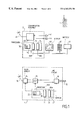
- FIG. 1 diagrammatically shows an example of a telephone according to the invention
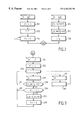
- FIG. 2 diagrammatically shows the operation of a handset according to the invention as regards the clock management in the first embodiment of the invention
- FIG. 3 diagrammatically shows the operation of a base station according to the invention as regards the clock management in the first embodiment of the invention
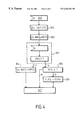
- FIG. 4 diagrammatically shows the operation of a handset according to the invention as regards the clock management in the second embodiment of the invention
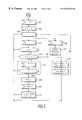
- FIG. 5 diagrammatically shows the operation of a base station according to the invention as regards the clock management in the second embodiment of the invention.
- the cordless telephone shown is a telephone meeting the DECT standards.
- Reference 1 shows a base station to which one or various handsets 2 , 3 . . . are connected by radio.
- This base station 1 notably comprises a line circuit 10 which enables the base station to be connected to the switched circuit via a telephone line 12 and a radio circuit 14 , which authorizes the dialogue with the various handsets 2 , 3 , . . . , by transmitting and receiving waves via an antenna 16 .
- the circuits 10 and 14 are connected via a signal processing circuit 15 formed around a signal processor DSP.
- a microprocessor assembly 20 which is usually notably formed by a random-access memory 24 , a read-only memory 26 which contains operating instructions of the telephone and by a management processor 28 which contains a time base 29 .
- the microprocessor assembly 20 moreover includes a non-volatile memory 27 , for example, a FLASH memory or an EEPROM memory.
- the handset 2 is shown in detail in FIG. 1, as the handsets 3 , . . . can have an identical structure. It comprises a communication assembly 40 having an antenna 41 which enables it to communicate with the base station 1 . This assembly processes the information coming from the microphone 42 and also produces signals for an earphone 44 .
- the handset 2 also includes a display 60 on which some information can be displayed, a keyboard 61 and a power supply battery 63 .
- a management element 70 is also included. Just like assembly 20 , it is formed by a random-access memory 74 , a read-only memory 76 which contains operating instructions and a management processor 78 which contains a time base 79 .
- clock recovery information is transmitted to the base station 1 by the handsets 2 , 3 , . . . when they detect that the base station has lost its time.
- a loss is detected when there is a desynchronization of base station and handset.
- the power cuts are one of the causes of a loss of synchronization of base station and handset. The choice of this criterion enables to maximize the limitation of unwanted transmissions of recovery information from the handset to the base station.
- FIG. 2 diagrammatically shows the operation of the handset as regards the clock management.
- a handset When a handset loses the synchronization with the base station (box 101 ), it knows that this is no longer provided and thus that there is a risk of losing its time. The handset thus keeps this information updated for the base station: in box 102 it initializes a variable X 2 (called recovery information) and in box 103 it starts counting the time T that elapses.
- the variable X 2 is regularly updated, for example, every second, whereas the synchronization of base station and handset is not re-established (this is symbolized for box 104 by the arrow t).
- the handset sets up a link (called proprietary link) to the base station in box 106 . By this proprietary link it transmits the recovery information X 2 to the base station (box 107 ). And in box 108 it stops counting. The operation is terminated in box 109 .
- FIG. 3 diagrammatically shows the operation of the base station as regards the clock management.
- the base station In box 200 the base station is switched off. In box 201 it is switched on. In box 202 the base station carries out various initialization operations, notably the initialization of a variable X 1 which indicates the need to set the clock of the base station. Then, in box 203 , the base station goes to the standby mode.
- the base station When a proprietary link is set up (box 204 ), the base station tests the nature of this link (box 205 ). If it is a link dedicated to the clock management (branch Y 1 in the Figure), the base station tests the variable X 1 (box 206 ). And if the contents of the variable X 1 are equal to 1 (branch Y 2 in the Figure), it updates its clock CLK stored in the non-volatile memory 27 on the basis of the recovery information X 2 which the handset has transmitted to the base station by the proprietary link (box 207 ). Then, in box 208 , the base station sets the variable X 1 to zero.
- the base station updates its clock CLK stored in the non-volatile memory 27 (box 211 ).
- the clock of the base station is then kept updated thanks to the time base 29 of the processor 28 .
- This clock is periodically backed up in the non-volatile memory 27 .
- the contents of the non-volatile memory are not erased when there is a power cut, so that it will thus be sufficient to add thereto the contents of the variable X 2 transmitted by one of the handsets for restoring a calendar.
- the second embodiment of the present invention enables to do without the use of a non-volatile memory. Therefore, both the handset and the base station have a simple memory for backing up its clock, and counting means for keeping the information backed up every day. When the handset has lost its clock, the base station will transmit its clock thereto and vice versa. In this embodiment, the recovery information is formed by the clock itself.
- FIG. 4 diagrammatically shows the operation of the handset as regards the clock management in this second embodiment.
- the handset detects a resynchronization of base station and handset.
- it thus sets up a link (called proprietary link) to the base station.
- MES 1 a request for a clock
- the handset tests the type of this response.
- it tests whether the response from the base station is a clock request (RES 1 ). In that case, the handset transmits its own clock (MES 2 ) to the base station in box 304 by the proprietary link set up earlier. If not, it tests in box 305 whether the response from the base station is a message (RES 2 ) containing recovery information. If that is the case, it updates its own clock CLKc based on the recovery information received CLKb (box 306 ).
- the operation is terminated in box 307 .
- FIG. 5 diagrammatically shows the operation of the base station as regards the clock management in this second embodiment.
- the base station is switched off. In box 401 it is switched on. In box 402 the base station carries out various initialization operations, notably the initialization of a variable X 1 that indicates the need to set the time of the base station. Then, in box 403 , the base station goes to the standby mode.
- the base station tests the type of this link (box 405 ). If this is a link dedicated to the clock management (branch Y 1 in the Figure), the base station tests the variable X 1 in box 406 (if not, the operation is resumed in box 403 ):
- the base station tests the type of this message (box 407 ). If this is a message asking for the time (MES 1 ), it sends a message (RES 1 ) asking for the time back to the handset (box 408 ), and goes to the standby mode to receive a message containing recovery information (MES 2 ).
- the base station receives this message (box 409 )
- variable X 1 If the contents of the variable X 1 are equal to 0 (branch N 2 in the Figure), when it receives a message coming from a handset and asking for the time (MES 1 ), the base station returns a message (RES 2 ) containing recovery information formed by its own clock (box 411 ) to the handset.
- MES 1 the contents of the variable X 1 are equal to 0 (branch N 2 in the Figure)
- the base station when it receives a message coming from a handset and asking for the time (MES 1 ), the base station returns a message (RES 2 ) containing recovery information formed by its own clock (box 411 ) to the handset.
- RES 2 recovery information formed by its own clock
- the base station updates its clock CLKb, sets the variable X 1 to zero, and broadcasts the new time to all the handsets, for example, by setting up a clock broadcasting proprietary link (box 421 ).
- a handset sends to the base station a message ⁇ CC-SETUP ⁇ whose information element ⁇ BASIC-SERVICE>> indicates a “service call set-up” (for more information the reader be referred to paragraphs 9.3.3.1 case D, 6.3.2.1 and 7.6.4 of part 5 of the standard);
- the base station responds by sending back a message ⁇ CC-SETUP-ACK ⁇ (paragraph 6.3.2.3 of part 5 of the standard);
- messages ⁇ CC-INFO ⁇ can be exchanged between them.
- These messages contain, for example, a first reference which indicates the type of link (a clock management link or clock broadcasting link, for example), a second reference which indicates the type of message (messages MES 1 and RES 1 asking for the time or messages MES 2 and RES 2 for transmitting recovery information), and a data field containing the message itself, for example, the recovery information in the first embodiment and in the case of the messages MES 2 and RES 2 (paragraph 6.3.2.2 of part 5 of the standard).
- part 3 of the DECT standard describes in paragraph 11.3.2 an “Idle-Locked” state which is the most neutral state in which the handset can be when it is located within the coverage area of the base station.
- the object of this state is to maintain the synchronization of base station and handset.
- a leaving of the “Idle-Locked” state corresponds to a loss of synchronization and that, when the “Idle-Locked” state is entered, this corresponds to a resynchronization.
Landscapes
- Engineering & Computer Science (AREA)
- Computer Networks & Wireless Communication (AREA)
- Signal Processing (AREA)
- Physics & Mathematics (AREA)
- General Physics & Mathematics (AREA)
- Mobile Radio Communication Systems (AREA)
- Transceivers (AREA)
- Synchronisation In Digital Transmission Systems (AREA)
Applications Claiming Priority (4)
| Application Number | Priority Date | Filing Date | Title |
|---|---|---|---|
| FR9715877 | 1997-12-15 | ||
| FR9715877 | 1997-12-15 | ||
| FR9800081 | 1998-01-07 | ||
| FR9800081A FR2773429A1 (fr) | 1998-01-07 | 1998-01-07 | Telephone sans fil et procede de gestion d'horloge |
Publications (1)
| Publication Number | Publication Date |
|---|---|
| US6363256B1 true US6363256B1 (en) | 2002-03-26 |
Family
ID=26233993
Family Applications (1)
| Application Number | Title | Priority Date | Filing Date |
|---|---|---|---|
| US09/211,150 Expired - Fee Related US6363256B1 (en) | 1997-12-15 | 1998-12-14 | Cordless telephone and clock management method |
Country Status (6)
| Country | Link |
|---|---|
| US (1) | US6363256B1 (fr) |
| EP (1) | EP0924581B1 (fr) |
| JP (1) | JP4094142B2 (fr) |
| KR (1) | KR100599871B1 (fr) |
| CN (1) | CN1134146C (fr) |
| DE (1) | DE69813742T2 (fr) |
Cited By (6)
| Publication number | Priority date | Publication date | Assignee | Title |
|---|---|---|---|---|
| US20020111190A1 (en) * | 2001-01-24 | 2002-08-15 | Harrison Keith Alexander | Base station/data storage |
| US20030105803A1 (en) * | 2000-08-25 | 2003-06-05 | Wolfgang Daum | Arbitrating clock synchronization system |
| US20040057395A1 (en) * | 2002-07-29 | 2004-03-25 | Nec Corporation | Channel recovery method and mobile communication system |
| WO2004004286A3 (fr) * | 2002-06-29 | 2004-08-19 | Inter Continental Hotels Corp | Dispositif de telecommunications |
| US20040242283A1 (en) * | 2003-04-07 | 2004-12-02 | Flores Edwin S. | Teleclock |
| US9191479B2 (en) | 2005-12-05 | 2015-11-17 | Inventel | Telephone handset, base and associated method for updating the software of the handset |
Families Citing this family (5)
| Publication number | Priority date | Publication date | Assignee | Title |
|---|---|---|---|---|
| FR2788916A1 (fr) * | 1999-01-22 | 2000-07-28 | Sagem | Reseau local a horloge sauvegardee |
| DE19913885C2 (de) * | 1999-03-26 | 2001-02-08 | Siemens Ag | Schnurlostelefon |
| CN1331372C (zh) * | 2005-01-20 | 2007-08-08 | 展讯通信(上海)有限公司 | 一种手机时间校准方法 |
| CN100455051C (zh) * | 2006-01-20 | 2009-01-21 | 华为技术有限公司 | 一种校正终端设备本地时间的方法及终端设备 |
| CN103259607A (zh) * | 2012-02-21 | 2013-08-21 | 中兴通讯股份有限公司 | 时钟同步方法及装置 |
Citations (5)
| Publication number | Priority date | Publication date | Assignee | Title |
|---|---|---|---|---|
| JPH06120881A (ja) | 1992-10-06 | 1994-04-28 | Fujitsu Ltd | コードレス電話装置のカレンダ修正方法 |
| US5619553A (en) * | 1993-06-02 | 1997-04-08 | Vtech Communications, Ltd. | Method of conducting an intercom communication between two cordless telephone handsets |
| US5682605A (en) * | 1994-11-14 | 1997-10-28 | 989008 Ontario Inc. | Wireless communication system |
| US5805530A (en) * | 1995-09-05 | 1998-09-08 | Youngberg; C. Eric | System, method, and device for automatic setting of clocks |
| US5825648A (en) * | 1996-03-26 | 1998-10-20 | Casio Phonemate, Inc. | Backup system for a time of day clock in an electronic device |
Family Cites Families (8)
| Publication number | Priority date | Publication date | Assignee | Title |
|---|---|---|---|---|
| FI920976A0 (fi) * | 1992-03-05 | 1992-03-05 | Tecnomen Oy | Radiosynkroniseringsfoerfarande foer stoedstationer i ett simulcastingnaet. |
| GB9221438D0 (en) * | 1992-10-13 | 1992-11-25 | Philips Electronics Nv | Time management for cordless telephone |
| JPH07322346A (ja) * | 1994-05-25 | 1995-12-08 | Murata Mach Ltd | 携帯電話機 |
| JP3507552B2 (ja) * | 1994-06-23 | 2004-03-15 | シャープ株式会社 | 構内交換機の網同期クロック選択回路 |
| JPH08186868A (ja) * | 1994-12-27 | 1996-07-16 | Casio Comput Co Ltd | 携帯通信システム |
| JPH0969811A (ja) * | 1995-08-30 | 1997-03-11 | Kyocera Corp | 基地局間同期信号の補正方法 |
| DE19536580A1 (de) * | 1995-09-29 | 1997-04-03 | Siemens Ag | Telekommunikationsendgerät |
| JPH09139989A (ja) * | 1995-11-16 | 1997-05-27 | Oki Electric Ind Co Ltd | 網クロック同期回路 |
-
1998
- 1998-12-10 DE DE69813742T patent/DE69813742T2/de not_active Expired - Lifetime
- 1998-12-10 EP EP98204199A patent/EP0924581B1/fr not_active Expired - Lifetime
- 1998-12-14 JP JP35491698A patent/JP4094142B2/ja not_active Expired - Lifetime
- 1998-12-14 KR KR1019980054883A patent/KR100599871B1/ko not_active Expired - Fee Related
- 1998-12-14 US US09/211,150 patent/US6363256B1/en not_active Expired - Fee Related
- 1998-12-15 CN CNB981269974A patent/CN1134146C/zh not_active Expired - Fee Related
Patent Citations (5)
| Publication number | Priority date | Publication date | Assignee | Title |
|---|---|---|---|---|
| JPH06120881A (ja) | 1992-10-06 | 1994-04-28 | Fujitsu Ltd | コードレス電話装置のカレンダ修正方法 |
| US5619553A (en) * | 1993-06-02 | 1997-04-08 | Vtech Communications, Ltd. | Method of conducting an intercom communication between two cordless telephone handsets |
| US5682605A (en) * | 1994-11-14 | 1997-10-28 | 989008 Ontario Inc. | Wireless communication system |
| US5805530A (en) * | 1995-09-05 | 1998-09-08 | Youngberg; C. Eric | System, method, and device for automatic setting of clocks |
| US5825648A (en) * | 1996-03-26 | 1998-10-20 | Casio Phonemate, Inc. | Backup system for a time of day clock in an electronic device |
Cited By (8)
| Publication number | Priority date | Publication date | Assignee | Title |
|---|---|---|---|---|
| US20030105803A1 (en) * | 2000-08-25 | 2003-06-05 | Wolfgang Daum | Arbitrating clock synchronization system |
| US6968471B2 (en) * | 2000-08-25 | 2005-11-22 | General Electric Company | System for arbitrating clock synchronization among networked devices |
| US20020111190A1 (en) * | 2001-01-24 | 2002-08-15 | Harrison Keith Alexander | Base station/data storage |
| WO2004004286A3 (fr) * | 2002-06-29 | 2004-08-19 | Inter Continental Hotels Corp | Dispositif de telecommunications |
| GB2406003A (en) * | 2002-06-29 | 2005-03-16 | Inter Continental Hotels Corp | Telecommunications device |
| US20040057395A1 (en) * | 2002-07-29 | 2004-03-25 | Nec Corporation | Channel recovery method and mobile communication system |
| US20040242283A1 (en) * | 2003-04-07 | 2004-12-02 | Flores Edwin S. | Teleclock |
| US9191479B2 (en) | 2005-12-05 | 2015-11-17 | Inventel | Telephone handset, base and associated method for updating the software of the handset |
Also Published As
| Publication number | Publication date |
|---|---|
| JPH11252007A (ja) | 1999-09-17 |
| CN1134146C (zh) | 2004-01-07 |
| JP4094142B2 (ja) | 2008-06-04 |
| EP0924581A1 (fr) | 1999-06-23 |
| DE69813742T2 (de) | 2003-12-24 |
| EP0924581B1 (fr) | 2003-04-23 |
| CN1228658A (zh) | 1999-09-15 |
| KR19990063042A (ko) | 1999-07-26 |
| KR100599871B1 (ko) | 2006-10-24 |
| DE69813742D1 (de) | 2003-05-28 |
Similar Documents
| Publication | Publication Date | Title |
|---|---|---|
| JP3193380B2 (ja) | モービル通信受信機における電力消費を減少する装置および方法 | |
| US5375163A (en) | Multi-channel cordless telephone system for maintaining master-slave communication | |
| US20010046872A1 (en) | Time correction method and mobile communication apparatus using such method | |
| JP4094142B2 (ja) | コードレス電話機及びクロック管理方法 | |
| EP0891065B1 (fr) | Terminal portatif | |
| JPH08126052A (ja) | 緊急通報制御方法 | |
| WO1995020851A1 (fr) | Commande automatique de frequences dans un recepteur de radiocommunications | |
| JPH08182052A (ja) | 無線通信システム、無線通信携帯情報端末および無線基地局 | |
| KR100303877B1 (ko) | 휴대용단말기의시간보호장치및그방법 | |
| JP2000224087A (ja) | 移動体衛星通信用移動局の自動送信回路とその方法 | |
| JP3754814B2 (ja) | 移動体通信端末の着信通知同期方式 | |
| JP3148628B2 (ja) | 携帯型通信装置 | |
| US5956623A (en) | Radio selective calling receiver | |
| JPH0879854A (ja) | 検針システム | |
| JP3241865B2 (ja) | 多チャンネルアクセス式無線通信システム及びその間欠通信方法 | |
| KR20030050871A (ko) | Gps를 이용한 이동 통신 동기 클럭 발생 장치 및 그장치에서의 위성 수신률 개선 방법 | |
| JPH07154854A (ja) | 無線電話装置 | |
| JPH0616606B2 (ja) | 無線電話機 | |
| JP2586440B2 (ja) | 移動体通信システム | |
| JPH0993313A (ja) | 無線電話装置 | |
| JPH03216029A (ja) | 表示付き無線選択呼び出し受信機 | |
| JP2512244B2 (ja) | コ―ドレス電話機 | |
| JPH0229130A (ja) | 無線通信機 | |
| KR100801101B1 (ko) | 전원 오프시 수신 메시지 확인 방법 및 그 단말기 | |
| JPH09167991A (ja) | ディジタル移動通信装置 |
Legal Events
| Date | Code | Title | Description |
|---|---|---|---|
| AS | Assignment |
Owner name: U.S. PHILIPS CORPORATION, NEW YORK Free format text: ASSIGNMENT OF ASSIGNORS INTEREST;ASSIGNORS:MULLER, NICOLAS J-P.;LORIEAU, CHRISTOPHE;REEL/FRAME:009818/0481;SIGNING DATES FROM 19990203 TO 19990204 |
|
| FPAY | Fee payment |
Year of fee payment: 4 |
|
| FPAY | Fee payment |
Year of fee payment: 8 |
|
| REMI | Maintenance fee reminder mailed | ||
| LAPS | Lapse for failure to pay maintenance fees | ||
| STCH | Information on status: patent discontinuation |
Free format text: PATENT EXPIRED DUE TO NONPAYMENT OF MAINTENANCE FEES UNDER 37 CFR 1.362 |
|
| FP | Lapsed due to failure to pay maintenance fee |
Effective date: 20140326 |