US4421571A - Process for making high strength deep well casing and tubing having improved resistance to stress-corrosion cracking - Google Patents
Process for making high strength deep well casing and tubing having improved resistance to stress-corrosion cracking Download PDFInfo
- Publication number
- US4421571A US4421571A US06/389,568 US38956882A US4421571A US 4421571 A US4421571 A US 4421571A US 38956882 A US38956882 A US 38956882A US 4421571 A US4421571 A US 4421571A
- Authority
- US
- United States
- Prior art keywords
- alloy
- temperature
- content
- reduction
- thickness
- Prior art date
- Legal status (The legal status is an assumption and is not a legal conclusion. Google has not performed a legal analysis and makes no representation as to the accuracy of the status listed.)
- Expired - Lifetime
Links
Images



Classifications
-
- C—CHEMISTRY; METALLURGY
- C21—METALLURGY OF IRON
- C21D—MODIFYING THE PHYSICAL STRUCTURE OF FERROUS METALS; GENERAL DEVICES FOR HEAT TREATMENT OF FERROUS OR NON-FERROUS METALS OR ALLOYS; MAKING METAL MALLEABLE, e.g. BY DECARBURISATION OR TEMPERING
- C21D8/00—Modifying the physical properties of ferrous metals or ferrous alloys by deformation combined with, or followed by, heat treatment
- C21D8/10—Modifying the physical properties of ferrous metals or ferrous alloys by deformation combined with, or followed by, heat treatment during manufacturing of tubular bodies
-
- C—CHEMISTRY; METALLURGY
- C22—METALLURGY; FERROUS OR NON-FERROUS ALLOYS; TREATMENT OF ALLOYS OR NON-FERROUS METALS
- C22C—ALLOYS
- C22C19/00—Alloys based on nickel or cobalt
- C22C19/03—Alloys based on nickel or cobalt based on nickel
- C22C19/05—Alloys based on nickel or cobalt based on nickel with chromium
-
- C—CHEMISTRY; METALLURGY
- C22—METALLURGY; FERROUS OR NON-FERROUS ALLOYS; TREATMENT OF ALLOYS OR NON-FERROUS METALS
- C22C—ALLOYS
- C22C38/00—Ferrous alloys, e.g. steel alloys
- C22C38/18—Ferrous alloys, e.g. steel alloys containing chromium
- C22C38/40—Ferrous alloys, e.g. steel alloys containing chromium with nickel
- C22C38/44—Ferrous alloys, e.g. steel alloys containing chromium with nickel with molybdenum or tungsten
Definitions
- This invention relates to a process for making deep well casing and/or tubing having high strength as well as improved resistance to stress corrosion cracking and is especially useful for manufacturing casing, tubing and drill pipes for use in deep wells for producing oil, natural gas, or geothermal water (hereunder referred to as "deep well” collectively).
- Oil-wells 6000 meters or more are no longer unusual, and oil-wells 10,000 meters or more deep have been reported.
- a deep well therefore, is inevitably exposed to a severe environment.
- the environment of a deep well contains corrosive materials such as carbon dioxide and chlorine ions as well as wet hydrogen sulfide under high pressure.
- casing and tubing which mean, in general, oil country tubular goods
- casing and tubing which mean, in general, oil country tubular goods
- casing and tubing for use in oil-wells under such severe conditions must have high strength and improved resistance to stress corrosion cracking.
- a corrosion-suppressing agent called “inhibitor” is injected into the well.
- this measure to prevent corrosion cannot be used in all cases; for example it is not applicable to offshore oil-wells.
- U.S. Pat. No. 4,168,188 to Asphahani discloses a nickel base alloy containing 12-18% of molybdenum, 10-20% of chromium and 10-20% of iron for use in manufacturing well pipes and tubing.
- U.S. Pat. No. 4,171,217 to Asphahani et al also discloses a similar alloy composition in which this time the carbon content is limited to 0.030% maximum.
- U.S. Pat. No. 4,245,698 to Berkowitz et al discloses a nickel base superalloy containing 10-20% of molybdenum for use in sour gas or oil wells.
- the object of this invention is to provide a process for manufacturing deep well casing and tubing which will have sufficient strength and high enough resistance to stress corrosion cracking to endure deep well drilling and/or a severely corrosive environment, especially that including H 2 S-CO 2 -Cl - system (hereunder referred to as "H 2 S-CO 2 -Cl - -containing environment", or merely as “H 2 S-CO 2 -Cl - -environment").
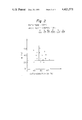
- FIGS. 1 through 3 show the relationship between the Ni content and the value of the equation: Cr(%)+10Mo(%)+5W(%) with respect to the resistance to stress corrosion cracking at the respective bath temperatures indicated;
- FIG. 4 is a schematic view of a specimen held by a three-point supporting beam-type jig.
- FIG. 5 is a schematic view of a testing sample put under tension by using a bolt and nut.
- the corrosion rate of an alloy in a corrosive H 2 S-CO 2 -Cl - -environment depends on the Cr, Ni, Mo and W content of the alloy. If the casing or tubing has a surface layer comprised of these elements, the alloy not only has better resistance to corrosion in general, but also it has improved resistance to stress corrosion cracking even under the corrosive environment found in deep oil wells. Specifically as to the resistance against stress corrosion cracking, we found that molybdenum is 10 times as effective as chromium, and molybdenum is twice as effective as tungsten. Thus, we found chromium (%), tungsten (%) and molybdenum (%) are satisfied by the equations:
- the Ni content is within the range of 35-60% and the chromium content is within the range of 22.5-35%. Then even after having been subjected to cold working, the resulting alloy surface layer retains markedly improved resistance to corrosion in a H 2 S-CO 2 -Cl - -environment, particularly one containing concentrated H 2 S at a temperature of 150° C. or less.
- Ni content is within the range of 25-60% and the Cr content is within the range of 22.5-30%.
- the Ni content is within the range of 30-60% and the Cr content is within the range of 15-30%.
- Sulfur is an incidental impurity, and when the S content is not more than 0.0007%, hot workability of the resulting alloy is markedly improved.
- the alloys having such compositions as mentioned above are preferably subjected to solid solution treatment at a temperature of from the lower limit temperature (°C.) defined by the following empirical formula: 260 log C(%)+1300 to the upper limit temperature (°C.) defined by the following empirical formula: 16Mo(%)+10W(%)+10Cr(%)+777 for a period of time of not longer than 2 hours to completely dissolve the carbides therein, and then subjected to cold working with a reduction in thickness of from 10-60%.
- the lower limit temperature defined by the following empirical formula: 260 log C(%)+1300
- the upper limit temperature (°C.) defined by the following empirical formula: 16Mo(%)+10W(%)+10Cr(%)+777 for a period of time of not longer than 2 hours to completely dissolve the carbides therein, and then subjected to cold working with a reduction in thickness of from 10-60%.
- the alloys having such alloy compositions mentioned above be subjected to solid solution treatment preferably at a temperature of 1050°-1250° C. so that intermetallic compounds and carbides may all be dissolved, and then subjected to hot working with the reduction in thickness for the temperature range of not higher than the recrystallizing temperature thereof being 10% or more.
- the purpose of the hot working is to assure that the succeeding heat treatment can provide recrystallized fine grains, which result in a high degree of strength and good ductility.
- the alloy is subjected to solid solution treatment at a temperature of from the lower limit temperature (°C.) defined by the following empirical formula: 260 log C(%)+1300 to the upper limit temperature (°C.) defined by the following empirical formula: 16Mo(%)+ 10W(%)+10Cr(%)+777 for a period of time of not longer than 2 hours to provide such recrystallized fine grains as mentioned above and simultaneously to dissolve precipitated carbides, if any, resulting in highly improved resistance to corrosion.
- the thus heat-treated alloys are subjected to cold working with a reduction in thickness of 10-60% contributing to the work hardening.
- the alloys mentioned above may be subjected to solid solution treatment preferably at a temperature of 1050°-1250° C. to dissolve intermetallic compounds and carbides thoroughly, and then the alloys may be subjected to hot working with a reduction in thickness of 10% or more for the temperature range of not higher than 1000° C., and the finishing temperature being 800° C. or higher.
- the precipitation of intermetallic compounds and carbides which would result in deterioration in corrosion-resistant properties of the alloy may successfully be avoided to provide fine crystal grains.
- a high level of strength and ductility can be obtained due to the formation of such fine crystal grains.
- the alloys are subjected to cold working with a reduction in thickness of 10-60% so as to achieve work hardening.
- the alloy composition to be employed in this invention is preferably selected from the group consisting of:
- Ni 25-60%, preferably 35-60%
- the alloy of this invention may further comprise any combination of the following:
- Nitrogen in an amount of 0.05-0.30%, preferably 0.05-0.25% may be intentionally added to the alloy.
- an alloy having such an alloy composition as mentioned above is, after hot working, subjected to solid solution treatment at a temperature of from the lower limit temperature (°C.) defined by the following empirical formula: 260 log C(%)+1300 to the upper limit temperature (°C.) defined by the following empirical formula: 16Mo(%)+10W(%)+10Cr(%)+777 for a period of time of not longer than 2 hours to dissolve the carbides therein, and then subjected to cold working with a reduction in thickness of 10-60%.
- the alloy is subjected to hot working with a reduction in thickness of 10% or more for the temperature range of not higher than the recrystallizing temperature thereof; then the resulting alloy is subjected to solid solution treatment at a temperature of from the lower limit temperature (°C.) defined by the following empirical formula:
- the thus heat-treated alloy is subjected to cold working with a reduction in thickness of 10-60%.
- the alloy prior to the hot working, the alloy may be subjected to solid solution treatment at a temperature of from 1050°-1250° C.
- the alloy is subjected to hot working with a reduction in thickness of 10% or more for the temperature range of not higher than 1000° C., and the finishing temperature being 800° C. or higher, and then the alloy is subjected to cold working with a reduction in thickness of 10-60%.
- the alloy prior to the hot working, the alloy may be subjected to solid solution treatment at a temperature of from 1050°-1250° C.
- this invention resides in a process for manufacturing high strength deep well casing and tubing having improved resistance to stress corrosion cracking, which comprises the steps of preparing an alloy having the alloy composition which comprises:
- the process of this invention comprises applying hot working to the alloy prior to said solid solution treatment with a reduction in thickness of 10% or more for the temperature range of not higher than the recrystallizing temperature thereof, and then applying said solid solution treatment and cold working in the same manner.
- the alloy prior to the hot working, the alloy may be subjected to heating at a temperature of from 1050° to 1250° C.
- the process of this invention comprises applying hot working to the alloy with a reduction in thickness of 10% or more for the temperature range of not higher than 1000° C. and the finishing temperature being 800° C. or higher, and applying cold working to the resulting hot worked alloy with a reduction in thickness of 10-60%.
- a solid solution treatment may be applied prior to either hot working or cold working.
- the solid solution treatment to be carried out at a temperature of from the lower limit temperature (°C.) defined by the following empirical formula: 260 log C(%)+1300 to the upper limit temperature (°C.) defined by the following empirical formula: 16Mo(%)+10W(%)+10Cr(%)+777 for a period of time of not longer than 2 hours should be applied prior to the cold working when such solid solution treatment is employed.
- Si is a necessary element as a deoxidizing agent. However, when it is more than 1.0%, hot workability of the resulting alloy deteriorates. The upper limit thereof is defined as 1.0%.
- Mn is also a deoxidizing agent like Si. It is to be noted that the addition of Mn has substantially no effect on the resistance to stress corrosion cracking. Thus, the upper limit thereof has been restricted to 2.0%.
- P is present in the alloy as an impurity.
- the presence of P in an amount of more than 0.030% causes the resulting alloy to be susceptible to hydrogen embrittlement. Therefore, the upper limit of P is defined as 0.030%, so that susceptibility to hydrogen embrittlement may be kept at a lower level. It is to be noted that when the P content is reduced beyond the point of 0.003%, the susceptibility to hydrogen embrittlement is drastically improved. Therefore, it is highly desirable to reduce the P content to 0.003% or less when it is desired to obtain an alloy with remarkably improved resistance to hydrogen embittlement.
- the amount of S, which is present in alloy as an incidental impurity is over 0.005%, the hot workability deteriorates. So, the amount of S in alloy is restricted to not more than 0.005% in order to prevent deterioration in hot workability.
- the amount of S is reduced to 0.0007% or less, the hot workability is dramatically improved. Therefore, where hot working under severe conditions is required, it is desirable to reduce the S content to 0.0007% or less.
- Al like Si and Mn, is effective as a deoxidizing agent.
- Al since Al does not have any adverse effect on properties of the alloy, the presence of Al in an amount of up to 0.5%, as sol. Al may be allowed.
- Ni is effective to improve the resistance to stress corrosion cracking.
- nickel is added in an amount of less than 25%, however, it is impossible to impart a sufficient degree of resistance to stress corrosion cracking.
- it is added in an amount of more than 60%, the resistance to stress corrosion cracking cannot be further improved.
- the nickel content is restricted to 25-60% in its broad aspect.
- the nickel content is preferably from 40-60% in order to further improve toughness.
- Cr is effective to improve the resistance to stress corrosion in the presence of Ni, Mo and W.
- less than 15% of Cr does not contribute to improvement in hot workability, and it is necessary to add such other elements as Mo and W in order to keep a desired level of resistance to stress corrosion cracking. From the viewpoint of economy, therefore, it is not desirable to reduce the amount of Cr so much.
- the lower limit of the Cr content is defined as 15%.
- Cr is added in an amount of more than 35%, hot workability deteriorates, even when the amount of S is reduced to less than 0.0007%.
- both elements are effective to improve the resistance to stress corrosion cracking in the presence of Ni and Cr.
- Mo and W are respectively added in amounts of more than 12% and more than 24%, the corrosion resistance properties cannot be improved any more under the H 2 S-CO 2 -Cl - environment. More particularly, the addition of Mo and W in amounts of more than 12% and more than 24%, respectively does not result in any additional improvement at a temperature of 200° C. or higher; more than 8% and more than 16%, respectively, at a temperature of 200° C. or lower; and more than 4% and more than 8%, respectively at a temperature of 150° C. or lower.
- Mo may be added in an amount of not more than 12%, or less than 8%, or less than 4%
- W may be added in an amount of not more than 24%, or less than 16%, or less than 8% depending on the severity of the corrosive environment in which the casing and/or tubing produced in accordance with this invention is used.
- the N content when it is added, is defined as within the range of 0.05-0.30%, preferably 0.05-0.25%.
- Cu and Co are effective to improve corrosion resistance of the alloy used in this invention. Therefore, Cu and/or Co may be added when especially high corrosion resistance is required. However, the addition of Cu in an amount of more than 2.0% tends to lower the hot workability. The addition of Co in an amount of more than 2.0% does not provide any additional improvement. The upper limit each of them is 2.0%.
- the addition of these elements is limited to not more than 0.10%, for rare earths, 0.20% for Y, 0.10% for Mg, 0.5% for Ti and 0.10% for Ca.
- FIGS. 1-3 show the relationship between Cr(%)+10Mo(%)+5W(%) and Ni(%) with respect to the resistance to stress corrosion cracking under severe corrosive conditions.
- each of these specimens was held on a three-point supporting beam-type jig as shown in FIG. 4.
- the specimen S under tension at a level of a tensile strength corresponding to 0.2% offset yield strength was subjected to the stress corrosion cracking test.
- the specimen together with said jig were soaked in a 20% NaCl solution (bath temperature 150° C.) saturated by H 2 S and CO 2 at a pressure of 10 atms, respectively, for 1000 hours.
- the alloy composition to be employed in this invention may include as incidental impurities B, Sn, Pb, Zn, etc. each in an amount of less than 0.1% without rendering any adverse effect on the properties of the alloy.
- a satisfactory level of strength of the casing and tubing is obtained not only by optimizing the alloy composition but also by applying cold working after thoroughly dissolving the precipitated carbides.
- the carbides are thoroughly dissolved by keeping the alloy at a temperature of from the lower limit temperature (°C.) defined by the formula: 260 log C(%)+1300 to the upper limit temperature (°C.) defined by the formula: 16Mo(%)+10W(%)+10Cr(%)+777 for a period of time of 2 hours or less.
- the solid solution treatment temperature and residing period of time therefor have been defined as in the above.
- this invention employs cold working following the solid solution treatment in order to increase the level of strength of the alloy.
- the reduction in thickness in the cold working is less than 10%, a desired level of strength cannot be obtained.
- the reduction in thickness is more than 60%, a notable degree of deterioration in ductility and toughness is found. Therefore, according to this invention, the reduction in thickness during cold working is fixed within the range of from 10% to 60%.
- hot working is carried out with a reduction in thickness of 10% or more for the temperature area of the recrystallizing point or below.
- the reduction in thickness is less than 10%, it is not possible to provide a sufficient amount of recrystallized fine crystal grains, which will be essential to provide casing and tubing with a desired level of strength and ductility in the following heat treatment.
- preheating at a temperature of 1050°-1250° C. is applied prior to the hot working.
- the temperature is below 1050° C.
- the resistance of alloy to deforming is still high, and it is rather difficult to carry out working.
- a significant amount of intermetallic compounds and carbides remains undissolved, causing the toughness and corrosion resistance of the alloy to be decreased.
- the temperature is higher than 1250° C., deforming in the hot working is so markedly decreased that it is rather difficult to apply hot working.
- the alloy is hot worked with a reduction in thickness of 10% or more for the temperature range of from the recrystallizing point, usually approximately 1000° C. to the finishing temperature which is 800° C. or higher.
- the finishing temperature is below 800° C., carbides tend to precipitate during hot working, resulting in deterioration in corrosion resistance.
- the hot working may be followed by the heat treatment, i.e. solid solution treatment already detailed hereinbefore.
- Molten alloys each having respective alloy compositions shown in the following Tables were prepared by using a combination of a conventional electric arc furnace, an Ar-Oxygen decarburizing furnace (AOD furnace) when it is necessary to carry out desulfurization and nitrogen addition, and an electro-slag remelting furnace (ESR furnace) when it is necessary to carry out dephosphorization.
- AOD furnace Ar-Oxygen decarburizing furnace
- ESR furnace electro-slag remelting furnace
- pipes of this invention alloy comparative ones in which some of their alloying elements are outside the range of this invention, and conventional ones were prepared.
- the conventional alloy Nos. 1-4 correspond to SUS 316 (JIS), SUS 310 S (JIS), Incoloy 800 and SUS 329 J1 (JIS), respectively.
- a ring-shaped specimen 20 mm long was cut from each of those pipes and then a portion of the circumferential length of the ring corresponding to the angle of 60° was cut off as shown in FIG. 5.
- the thus obtained test specimen was put under tension on the surface thereof at a tensile stress level corresponding to 0.2% off-set yield strength by means of a bolt and nut provided through the opposite wall portions of the ring.
- the specimen together with the bolt and nut was soaked in a 20% NaCl solution (bath temp. 150° C., 200° C., 300° C.) for 1000 hours.
- the solution was kept in equilibrium with the atmosphere wherein the H 2 S partial pressure was 0.1 atm., or 1 atm., or 15 atms.
- the comparative pipes do not meet the standards for any one of hot workability, tensile strength and stress corrosion cracking resistance.
- the pipes made by this invention are satisfactory with respect to all these properties. Namely, the pipes made by this invention have a desired level of mechanical strength and resistance to stress corrosion cracking as well as satisfactory hot workability, and with respect to these properties are also superior to those of the conventional pipes made of conventional alloys.
- the production of this invention is superior in its high level of mechanical strength and resistance to stress corrosion cracking and is especially useful for manufacturing casing and/or tubing and/or liners and/or drill pipes for use in deep walls for producing petroleum crude oil, natural gas and geothermal water and other purposes.
Landscapes
- Chemical & Material Sciences (AREA)
- Engineering & Computer Science (AREA)
- Mechanical Engineering (AREA)
- Materials Engineering (AREA)
- Metallurgy (AREA)
- Organic Chemistry (AREA)
- Manufacturing & Machinery (AREA)
- Physics & Mathematics (AREA)
- Thermal Sciences (AREA)
- Crystallography & Structural Chemistry (AREA)
- Heat Treatment Of Steel (AREA)
- Heat Treatment Of Articles (AREA)
Applications Claiming Priority (18)
| Application Number | Priority Date | Filing Date | Title |
|---|---|---|---|
| JP56104111A JPS586927A (ja) | 1981-07-03 | 1981-07-03 | 耐応力腐食割れ性に優れた高強度油井管の製造法 |
| JP56-104111 | 1981-07-03 | ||
| JP56-104113 | 1981-07-03 | ||
| JP56104112A JPS586928A (ja) | 1981-07-03 | 1981-07-03 | 耐応力腐食割れ性に優れた高強度油井管の製造法 |
| JP56-104112 | 1981-07-03 | ||
| JP56104113A JPS586929A (ja) | 1981-07-03 | 1981-07-03 | 耐応力腐食割れ性に優れた高強度油井管の製造法 |
| JP56106915A JPS589924A (ja) | 1981-07-10 | 1981-07-10 | 耐応力腐食割れ性に優れた高強度油井管の製造法 |
| JP56-106913 | 1981-07-10 | ||
| JP56-106914 | 1981-07-10 | ||
| JP56106914A JPS589923A (ja) | 1981-07-10 | 1981-07-10 | 耐応力腐食割れ性に優れた高強度油井管の製造法 |
| JP56106913A JPS589922A (ja) | 1981-07-10 | 1981-07-10 | 耐応力腐食割れ性に優れた高強度油井管の製造法 |
| JP56-106915 | 1981-07-10 | ||
| JP56-108986 | 1981-07-13 | ||
| JP56108985A JPS5811735A (ja) | 1981-07-13 | 1981-07-13 | 耐応力腐食割れ性に優れた高強度油井管の製造法 |
| JP56108986A JPS5811736A (ja) | 1981-07-13 | 1981-07-13 | 耐応力腐食割れ性に優れた高強度油井管の製造法 |
| JP56108987A JPS5811737A (ja) | 1981-07-13 | 1981-07-13 | 耐応力腐食割れ性に優れた高強度油井管の製造法 |
| JP56-108987 | 1981-07-13 | ||
| JP56-108985 | 1981-07-13 |
Publications (1)
| Publication Number | Publication Date |
|---|---|
| US4421571A true US4421571A (en) | 1983-12-20 |
Family
ID=27577327
Family Applications (1)
| Application Number | Title | Priority Date | Filing Date |
|---|---|---|---|
| US06/389,568 Expired - Lifetime US4421571A (en) | 1981-07-03 | 1982-06-17 | Process for making high strength deep well casing and tubing having improved resistance to stress-corrosion cracking |
Country Status (5)
| Country | Link |
|---|---|
| US (1) | US4421571A (enExample) |
| DE (1) | DE3224865C2 (enExample) |
| FR (1) | FR2508930A1 (enExample) |
| GB (1) | GB2104100B (enExample) |
| SE (2) | SE461986C (enExample) |
Cited By (38)
| Publication number | Priority date | Publication date | Assignee | Title |
|---|---|---|---|---|
| DE3609132A1 (de) * | 1986-03-19 | 1987-09-24 | Winkelstroeter Dentaurum | Dentallegierung |
| US4755240A (en) * | 1986-05-12 | 1988-07-05 | Exxon Production Research Company | Nickel base precipitation hardened alloys having improved resistance stress corrosion cracking |
| US4840768A (en) * | 1988-11-14 | 1989-06-20 | The Babcock & Wilcox Company | Austenitic Fe-Cr-Ni alloy designed for oil country tubular products |
| US4908069A (en) * | 1987-10-19 | 1990-03-13 | Sps Technologies, Inc. | Alloys containing gamma prime phase and process for forming same |
| US4997623A (en) * | 1989-03-09 | 1991-03-05 | Vdm Nickel-Technologie Ag | Heat-deformable, austenitic nickel-chromium-iron alloy with high oxidation resistance and thermal strength |
| US5122206A (en) * | 1989-05-16 | 1992-06-16 | Mitsubishi Metal Corporation | Precipitation hardening nickel base single crystal cast alloy |
| US5169463A (en) * | 1987-10-19 | 1992-12-08 | Sps Technologies, Inc. | Alloys containing gamma prime phase and particles and process for forming same |
| US5429690A (en) * | 1988-03-26 | 1995-07-04 | Heubner; Ulrich | Method of precipitation-hardening a nickel alloy |
| EP0693566A3 (en) * | 1994-07-19 | 1996-10-16 | Carondelet Foundry Co | Weldable and heat-resistant alloy |
| US5820700A (en) * | 1993-06-10 | 1998-10-13 | United Technologies Corporation | Nickel base superalloy columnar grain and equiaxed materials with improved performance in hydrogen and air |
| US5827377A (en) * | 1996-10-31 | 1998-10-27 | Inco Alloys International, Inc. | Flexible alloy and components made therefrom |
| DE19748205A1 (de) * | 1997-10-31 | 1999-05-06 | Abb Research Ltd | Verfahren zur Herstellung eines Werkstückes aus einer Chromlegierung und dessen Verwendung |
| US6010581A (en) * | 1994-05-18 | 2000-01-04 | Sandvik Ab | Austenitic Ni-based alloy with high corrosion resistance, good workability and structure stability |
| US6355117B1 (en) | 1992-10-30 | 2002-03-12 | United Technologies Corporation | Nickel base superalloy single crystal articles with improved performance in air and hydrogen |
| EP1201775A1 (de) * | 2000-10-24 | 2002-05-02 | Böhler Edelstahl GmbH & Co KG | Verfahren zur Herstellung zylindrischer Hohlkörper und Verwendung derselben |
| US6482275B1 (en) | 1998-01-28 | 2002-11-19 | L. E. Jones Company | Nickel based alloys for internal combustion engine valve seat inserts, and the like |
| US6519847B1 (en) | 1998-06-12 | 2003-02-18 | L. E. Jones Company | Surface treatment of prefinished valve seat inserts |
| US20030231977A1 (en) * | 2002-06-13 | 2003-12-18 | Paul Crook | Ni-Cr-Mo-Cu alloys resistant to sulfuric acid and wet process phosphoric acid |
| US6764647B2 (en) | 2000-06-30 | 2004-07-20 | Choeller-Bleckmann Oilfield Technology Gmbh & Co. Kg | Corrosion resistant material |
| US20070020137A1 (en) * | 2005-07-20 | 2007-01-25 | Cokain Thomas W | Nickel-base alloy and articles made therefrom |
| DE102007029400A1 (de) * | 2007-06-26 | 2009-01-02 | Thyssenkrupp Vdm Gmbh | Eisen-Nickel-Chrom-Silizium-Legierung |
| US20090285717A1 (en) * | 2007-01-31 | 2009-11-19 | Heike Hattendorf | Iron-Nickel-Chrome-Silicon-Alloy |
| WO2010070990A1 (ja) | 2008-12-18 | 2010-06-24 | 住友金属工業株式会社 | 高合金管の製造方法 |
| US20100170320A1 (en) * | 2007-07-02 | 2010-07-08 | Masayuki Sagara | Method for manufacturing a high alloy pipe |
| US20100272597A1 (en) * | 2009-04-24 | 2010-10-28 | L. E. Jones Company | Nickel based alloy useful for valve seat inserts |
| CN102397889A (zh) * | 2010-09-15 | 2012-04-04 | 中国科学院金属研究所 | 一种gh4145合金管材的制备工艺 |
| DE102010049781A1 (de) * | 2010-10-29 | 2012-05-03 | Thyssenkrupp Vdm Gmbh | Ni-Fe-Cr-Mo-Legierung |
| EP2666879A1 (en) * | 2012-05-21 | 2013-11-27 | Nippon Yakin Kogyo Co., Ltd. | Austenitic Fe-Ni-Cr alloy |
| EP2314392A4 (en) * | 2008-06-13 | 2015-06-10 | Nippon Steel & Sumitomo Metal Corp | METHOD FOR PRODUCING A HIGH-ALLOY SEAMLESS TUBE |
| RU2613805C1 (ru) * | 2016-02-17 | 2017-03-21 | Дмитрий Леонидович Михайлов | Коррозионно-стойкий сплав на основе никеля |
| EP3070184A4 (en) * | 2013-11-12 | 2017-06-28 | Nippon Steel & Sumitomo Metal Corporation | Ni-Cr ALLOY MATERIAL AND OIL WELL SEAMLESS PIPE USING SAME |
| EP3158097A4 (en) * | 2014-06-20 | 2018-02-28 | Huntington Alloys Corporation | Nickel-chromium-iron-molybdenum corrosion resistant alloy and article of manufacture and method of manufacturing thereof |
| CN108138295A (zh) * | 2015-10-19 | 2018-06-08 | 山特维克知识产权股份有限公司 | 新型奥氏体不锈合金 |
| CN108884529A (zh) * | 2016-03-30 | 2018-11-23 | 株式会社日立制作所 | Cr基二相合金及其制造物 |
| WO2019224287A1 (en) * | 2018-05-23 | 2019-11-28 | Ab Sandvik Materials Technology | New austenitic alloy |
| US11286545B2 (en) | 2018-01-26 | 2022-03-29 | Nippon Steel Corporation | Cr-Ni alloy and seamless steel pipe made of Cr-Ni alloy |
| CN114472524A (zh) * | 2022-01-26 | 2022-05-13 | 江苏银环精密钢管有限公司 | 一种铁镍基合金油井管的制备方法 |
| WO2022218444A1 (zh) * | 2021-05-24 | 2022-10-20 | 大冶特殊钢有限公司 | 超高n含量高温合金的vim炉冶炼方法 |
Families Citing this family (2)
| Publication number | Priority date | Publication date | Assignee | Title |
|---|---|---|---|---|
| US4489040A (en) * | 1982-04-02 | 1984-12-18 | Cabot Corporation | Corrosion resistant nickel-iron alloy |
| EP0235075B1 (en) * | 1986-01-20 | 1992-05-06 | Mitsubishi Jukogyo Kabushiki Kaisha | Ni-based alloy and method for preparing same |
Citations (3)
| Publication number | Priority date | Publication date | Assignee | Title |
|---|---|---|---|---|
| US4168188A (en) * | 1978-02-09 | 1979-09-18 | Cabot Corporation | Alloys resistant to localized corrosion, hydrogen sulfide stress cracking and stress corrosion cracking |
| US4171217A (en) * | 1978-02-21 | 1979-10-16 | Cabot Corporation | Corrosion-resistant nickel alloy |
| US4245698A (en) * | 1978-03-01 | 1981-01-20 | Exxon Research & Engineering Co. | Superalloys having improved resistance to hydrogen embrittlement and methods of producing and using the same |
Family Cites Families (4)
| Publication number | Priority date | Publication date | Assignee | Title |
|---|---|---|---|---|
| FR1309587A (fr) * | 1961-12-22 | 1962-11-16 | Basf Ag | Alliage de nickel-chrome-molybdène d'une haute résistance à la corrosion, notamment à la corrosion intercristalline |
| GB1210607A (en) * | 1967-07-17 | 1970-10-28 | Int Nickel Ltd | Articles or parts of nickel-chromium or nickel-chromium-iron alloys |
| BE795564A (fr) * | 1972-02-16 | 1973-08-16 | Int Nickel Ltd | Alliage de nickel-fer resistant a la corrosion |
| US4172716A (en) * | 1973-05-04 | 1979-10-30 | Nippon Steel Corporation | Stainless steel having excellent pitting corrosion resistance and hot workabilities |
-
1982
- 1982-06-17 US US06/389,568 patent/US4421571A/en not_active Expired - Lifetime
- 1982-06-21 GB GB08217860A patent/GB2104100B/en not_active Expired
- 1982-07-02 FR FR8211645A patent/FR2508930A1/fr active Granted
- 1982-07-02 SE SE8204121A patent/SE461986C/sv not_active IP Right Cessation
- 1982-07-02 DE DE3224865A patent/DE3224865C2/de not_active Expired
-
1989
- 1989-05-09 SE SE8901647A patent/SE502102C2/sv not_active IP Right Cessation
Patent Citations (3)
| Publication number | Priority date | Publication date | Assignee | Title |
|---|---|---|---|---|
| US4168188A (en) * | 1978-02-09 | 1979-09-18 | Cabot Corporation | Alloys resistant to localized corrosion, hydrogen sulfide stress cracking and stress corrosion cracking |
| US4171217A (en) * | 1978-02-21 | 1979-10-16 | Cabot Corporation | Corrosion-resistant nickel alloy |
| US4245698A (en) * | 1978-03-01 | 1981-01-20 | Exxon Research & Engineering Co. | Superalloys having improved resistance to hydrogen embrittlement and methods of producing and using the same |
Cited By (59)
| Publication number | Priority date | Publication date | Assignee | Title |
|---|---|---|---|---|
| DE3609132A1 (de) * | 1986-03-19 | 1987-09-24 | Winkelstroeter Dentaurum | Dentallegierung |
| US4755240A (en) * | 1986-05-12 | 1988-07-05 | Exxon Production Research Company | Nickel base precipitation hardened alloys having improved resistance stress corrosion cracking |
| US4908069A (en) * | 1987-10-19 | 1990-03-13 | Sps Technologies, Inc. | Alloys containing gamma prime phase and process for forming same |
| US5169463A (en) * | 1987-10-19 | 1992-12-08 | Sps Technologies, Inc. | Alloys containing gamma prime phase and particles and process for forming same |
| US5429690A (en) * | 1988-03-26 | 1995-07-04 | Heubner; Ulrich | Method of precipitation-hardening a nickel alloy |
| US4840768A (en) * | 1988-11-14 | 1989-06-20 | The Babcock & Wilcox Company | Austenitic Fe-Cr-Ni alloy designed for oil country tubular products |
| US4997623A (en) * | 1989-03-09 | 1991-03-05 | Vdm Nickel-Technologie Ag | Heat-deformable, austenitic nickel-chromium-iron alloy with high oxidation resistance and thermal strength |
| US5122206A (en) * | 1989-05-16 | 1992-06-16 | Mitsubishi Metal Corporation | Precipitation hardening nickel base single crystal cast alloy |
| US6355117B1 (en) | 1992-10-30 | 2002-03-12 | United Technologies Corporation | Nickel base superalloy single crystal articles with improved performance in air and hydrogen |
| US5820700A (en) * | 1993-06-10 | 1998-10-13 | United Technologies Corporation | Nickel base superalloy columnar grain and equiaxed materials with improved performance in hydrogen and air |
| US6010581A (en) * | 1994-05-18 | 2000-01-04 | Sandvik Ab | Austenitic Ni-based alloy with high corrosion resistance, good workability and structure stability |
| EP0693566A3 (en) * | 1994-07-19 | 1996-10-16 | Carondelet Foundry Co | Weldable and heat-resistant alloy |
| US5827377A (en) * | 1996-10-31 | 1998-10-27 | Inco Alloys International, Inc. | Flexible alloy and components made therefrom |
| DE19748205A1 (de) * | 1997-10-31 | 1999-05-06 | Abb Research Ltd | Verfahren zur Herstellung eines Werkstückes aus einer Chromlegierung und dessen Verwendung |
| US6616779B2 (en) | 1997-10-31 | 2003-09-09 | Alstom | Workpiece made from a chromium alloy |
| US6406572B1 (en) | 1997-10-31 | 2002-06-18 | Abb Research Ltd | Process for the production of a workpiece from a chromium alloy, and its use |
| US6482275B1 (en) | 1998-01-28 | 2002-11-19 | L. E. Jones Company | Nickel based alloys for internal combustion engine valve seat inserts, and the like |
| US7216427B2 (en) | 1998-06-12 | 2007-05-15 | L. E. Jones Company | Surface treatment of prefinished valve seat inserts |
| US6519847B1 (en) | 1998-06-12 | 2003-02-18 | L. E. Jones Company | Surface treatment of prefinished valve seat inserts |
| US6764647B2 (en) | 2000-06-30 | 2004-07-20 | Choeller-Bleckmann Oilfield Technology Gmbh & Co. Kg | Corrosion resistant material |
| US7181847B2 (en) | 2000-10-24 | 2007-02-27 | Boehler Edelstahl Gmbh & Co. Kg | Process for manufacturing a cylindrical hollow body and hollow body made thereby |
| US20020104213A1 (en) * | 2000-10-24 | 2002-08-08 | Bohler Edelstahl Gmbh & Co., Kg. | Process for manufacturing a cylindrical hollow body and hollow body made thereby |
| EP1201775A1 (de) * | 2000-10-24 | 2002-05-02 | Böhler Edelstahl GmbH & Co KG | Verfahren zur Herstellung zylindrischer Hohlkörper und Verwendung derselben |
| US20030231977A1 (en) * | 2002-06-13 | 2003-12-18 | Paul Crook | Ni-Cr-Mo-Cu alloys resistant to sulfuric acid and wet process phosphoric acid |
| US6764646B2 (en) * | 2002-06-13 | 2004-07-20 | Haynes International, Inc. | Ni-Cr-Mo-Cu alloys resistant to sulfuric acid and wet process phosphoric acid |
| US7803237B2 (en) * | 2005-07-20 | 2010-09-28 | Damascus Steel Casting Company | Nickel-base alloy and articles made therefrom |
| US20070020137A1 (en) * | 2005-07-20 | 2007-01-25 | Cokain Thomas W | Nickel-base alloy and articles made therefrom |
| US20090285717A1 (en) * | 2007-01-31 | 2009-11-19 | Heike Hattendorf | Iron-Nickel-Chrome-Silicon-Alloy |
| DE102007029400A1 (de) * | 2007-06-26 | 2009-01-02 | Thyssenkrupp Vdm Gmbh | Eisen-Nickel-Chrom-Silizium-Legierung |
| DE102007029400B4 (de) * | 2007-06-26 | 2014-05-15 | Outokumpu Vdm Gmbh | Eisen-Nickel-Chrom-Silizium-Legierung |
| US20100172790A1 (en) * | 2007-06-26 | 2010-07-08 | Heike Hattendorf | Iron-nickel-chromium-silicon alloy |
| US20100170320A1 (en) * | 2007-07-02 | 2010-07-08 | Masayuki Sagara | Method for manufacturing a high alloy pipe |
| US8701455B2 (en) * | 2007-07-02 | 2014-04-22 | Nippon Steel & Sumitomo Metal Corporation | Method for manufacturing a high alloy pipe |
| EP2314392A4 (en) * | 2008-06-13 | 2015-06-10 | Nippon Steel & Sumitomo Metal Corp | METHOD FOR PRODUCING A HIGH-ALLOY SEAMLESS TUBE |
| US8312751B2 (en) | 2008-12-18 | 2012-11-20 | Sumitomo Metal Industries, Ltd. | Method for producing high alloy pipe |
| EP2380998A4 (en) * | 2008-12-18 | 2016-11-30 | Nippon Steel & Sumitomo Metal Corp | Method for producing high alloy steel pipe |
| WO2010070990A1 (ja) | 2008-12-18 | 2010-06-24 | 住友金属工業株式会社 | 高合金管の製造方法 |
| US20100272597A1 (en) * | 2009-04-24 | 2010-10-28 | L. E. Jones Company | Nickel based alloy useful for valve seat inserts |
| CN102397889A (zh) * | 2010-09-15 | 2012-04-04 | 中国科学院金属研究所 | 一种gh4145合金管材的制备工艺 |
| CN102397889B (zh) * | 2010-09-15 | 2014-03-12 | 中国科学院金属研究所 | 一种gh4145合金管材的制备工艺 |
| US9228250B2 (en) | 2010-10-29 | 2016-01-05 | VDM Metals GmbH | Ni—Fe—Cr—Mo alloy |
| DE102010049781A1 (de) * | 2010-10-29 | 2012-05-03 | Thyssenkrupp Vdm Gmbh | Ni-Fe-Cr-Mo-Legierung |
| CN103422028B (zh) * | 2012-05-21 | 2016-05-25 | 日本冶金工业株式会社 | 奥氏体系Fe-Ni-Cr合金 |
| CN103422028A (zh) * | 2012-05-21 | 2013-12-04 | 日本冶金工业株式会社 | 奥氏体系Fe-Ni-Cr合金 |
| EP2666879A1 (en) * | 2012-05-21 | 2013-11-27 | Nippon Yakin Kogyo Co., Ltd. | Austenitic Fe-Ni-Cr alloy |
| EP2910660A1 (en) * | 2012-05-21 | 2015-08-26 | Nippon Yakin Kogyo Co., Ltd. | Austenitic Fe-Ni-Cr alloy |
| US9777356B2 (en) | 2012-05-21 | 2017-10-03 | Nippon Yakin Kogyo Co., Ltd. | Austenitic Fe—Ni—Cr alloy |
| US10557574B2 (en) | 2013-11-12 | 2020-02-11 | Nippon Steel Corporation | Ni—Cr alloy material and seamless oil country tubular goods using the same |
| EP3070184A4 (en) * | 2013-11-12 | 2017-06-28 | Nippon Steel & Sumitomo Metal Corporation | Ni-Cr ALLOY MATERIAL AND OIL WELL SEAMLESS PIPE USING SAME |
| EP3158097A4 (en) * | 2014-06-20 | 2018-02-28 | Huntington Alloys Corporation | Nickel-chromium-iron-molybdenum corrosion resistant alloy and article of manufacture and method of manufacturing thereof |
| CN108138295A (zh) * | 2015-10-19 | 2018-06-08 | 山特维克知识产权股份有限公司 | 新型奥氏体不锈合金 |
| WO2017142441A1 (ru) * | 2016-02-17 | 2017-08-24 | Дмитрий Леонидович МИХАЙЛОВ | Коррозионностойкий сплав на основе никеля |
| RU2613805C1 (ru) * | 2016-02-17 | 2017-03-21 | Дмитрий Леонидович Михайлов | Коррозионно-стойкий сплав на основе никеля |
| CN108884529A (zh) * | 2016-03-30 | 2018-11-23 | 株式会社日立制作所 | Cr基二相合金及其制造物 |
| US11286545B2 (en) | 2018-01-26 | 2022-03-29 | Nippon Steel Corporation | Cr-Ni alloy and seamless steel pipe made of Cr-Ni alloy |
| WO2019224287A1 (en) * | 2018-05-23 | 2019-11-28 | Ab Sandvik Materials Technology | New austenitic alloy |
| WO2022218444A1 (zh) * | 2021-05-24 | 2022-10-20 | 大冶特殊钢有限公司 | 超高n含量高温合金的vim炉冶炼方法 |
| US12258652B2 (en) | 2021-05-24 | 2025-03-25 | Daye Special Steel Co., Ltd. | Method for smelting high-temperature alloy with ultrahigh N content in VIM furnace |
| CN114472524A (zh) * | 2022-01-26 | 2022-05-13 | 江苏银环精密钢管有限公司 | 一种铁镍基合金油井管的制备方法 |
Also Published As
| Publication number | Publication date |
|---|---|
| DE3224865C2 (de) | 1986-03-06 |
| GB2104100A (en) | 1983-03-02 |
| SE461986B (sv) | 1990-04-23 |
| SE461986C (sv) | 1990-08-23 |
| GB2104100B (en) | 1985-05-30 |
| DE3224865A1 (de) | 1983-01-20 |
| SE8901647D0 (sv) | 1989-05-09 |
| SE8204121D0 (sv) | 1982-07-02 |
| SE502102C2 (sv) | 1995-08-14 |
| FR2508930B1 (enExample) | 1985-05-24 |
| SE8901647L (sv) | 1989-05-09 |
| SE8204121L (sv) | 1983-01-04 |
| FR2508930A1 (fr) | 1983-01-07 |
Similar Documents
| Publication | Publication Date | Title |
|---|---|---|
| US4421571A (en) | Process for making high strength deep well casing and tubing having improved resistance to stress-corrosion cracking | |
| US4400349A (en) | Alloy for making high strength deep well casing and tubing having improved resistance to stress-corrosion cracking | |
| US4400211A (en) | Alloy for making high strength deep well casing and tubing having improved resistance to stress-corrosion cracking | |
| US4400210A (en) | Alloy for making high strength deep well casing and tubing having improved resistance to stress-corrosion cracking | |
| US4400209A (en) | Alloy for making high strength deep well casing and tubing having improved resistance to stress-corrosion cracking | |
| US4245698A (en) | Superalloys having improved resistance to hydrogen embrittlement and methods of producing and using the same | |
| US8454765B2 (en) | Corrosion-resistant austenitic steel alloy | |
| KR100613943B1 (ko) | 시효-경화가능 내식성 Ni-Cr-Mo 합금 | |
| JP7830337B2 (ja) | 耐食性ニッケル基合金 | |
| WO2006003954A1 (ja) | Ni基合金素管及びその製造方法 | |
| US4489040A (en) | Corrosion resistant nickel-iron alloy | |
| JPS625977B2 (enExample) | ||
| US4591393A (en) | Alloys having improved resistance to hydrogen embrittlement | |
| JPH10121202A (ja) | 耐硫化物応力割れ性を必要とする環境で使用される高強度鋼材およびその製造方法 | |
| JPS6362569B2 (enExample) | ||
| US12138674B2 (en) | High performance alloy for corrosion resistance | |
| JPS6363608B2 (enExample) | ||
| JPS6363610B2 (enExample) | ||
| JPS6144135B2 (enExample) | ||
| JPH0371506B2 (enExample) | ||
| WO2016052271A1 (ja) | 鋼材および拡管用油井鋼管 | |
| JPS6363609B2 (enExample) | ||
| JP2025513023A (ja) | 新しい二相ステンレス鋼 | |
| JPH0450366B2 (enExample) | ||
| JPS6363606B2 (enExample) |
Legal Events
| Date | Code | Title | Description |
|---|---|---|---|
| AS | Assignment |
Owner name: SUMITOMO METAL INDUSTRIES, LTD. 15 KITAHAMA 5-CHOM Free format text: ASSIGNMENT OF ASSIGNORS INTEREST.;ASSIGNORS:KUDO, TAKEO;OKADA, YASUTAKA;MOROISHI, TAISHI;AND OTHERS;REEL/FRAME:004025/0378 Effective date: 19820517 |
|
| STCF | Information on status: patent grant |
Free format text: PATENTED CASE |
|
| MAFP | Maintenance fee payment |
Free format text: PAYMENT OF MAINTENANCE FEE, 4TH YEAR, PL 96-517 (ORIGINAL EVENT CODE: M170); ENTITY STATUS OF PATENT OWNER: LARGE ENTITY Year of fee payment: 4 |
|
| MAFP | Maintenance fee payment |
Free format text: PAYMENT OF MAINTENANCE FEE, 8TH YEAR, PL 96-517 (ORIGINAL EVENT CODE: M171); ENTITY STATUS OF PATENT OWNER: LARGE ENTITY Year of fee payment: 8 |
|
| MAFP | Maintenance fee payment |
Free format text: PAYMENT OF MAINTENANCE FEE, 12TH YEAR, LARGE ENTITY (ORIGINAL EVENT CODE: M185); ENTITY STATUS OF PATENT OWNER: LARGE ENTITY Year of fee payment: 12 |