EP4371702A1 - Werkzeugmaschinensystem - Google Patents
Werkzeugmaschinensystem Download PDFInfo
- Publication number
- EP4371702A1 EP4371702A1 EP22841983.4A EP22841983A EP4371702A1 EP 4371702 A1 EP4371702 A1 EP 4371702A1 EP 22841983 A EP22841983 A EP 22841983A EP 4371702 A1 EP4371702 A1 EP 4371702A1
- Authority
- EP
- European Patent Office
- Prior art keywords
- tool
- information
- shape
- headstock
- measuring apparatus
- Prior art date
- Legal status (The legal status is an assumption and is not a legal conclusion. Google has not performed a legal analysis and makes no representation as to the accuracy of the status listed.)
- Pending
Links
Images





Classifications
-
- G—PHYSICS
- G05—CONTROLLING; REGULATING
- G05B—CONTROL OR REGULATING SYSTEMS IN GENERAL; FUNCTIONAL ELEMENTS OF SUCH SYSTEMS; MONITORING OR TESTING ARRANGEMENTS FOR SUCH SYSTEMS OR ELEMENTS
- G05B19/00—Program-control systems
- G05B19/02—Program-control systems electric
- G05B19/18—Numerical control [NC], i.e. automatically operating machines, in particular machine tools, e.g. in a manufacturing environment, so as to execute positioning, movement or co-ordinated operations by means of program data in numerical form
- G05B19/4093—Numerical control [NC], i.e. automatically operating machines, in particular machine tools, e.g. in a manufacturing environment, so as to execute positioning, movement or co-ordinated operations by means of program data in numerical form characterised by part programming, e.g. entry of geometrical information as taken from a technical drawing, combining this with machining and material information to obtain control information, named part program, for the NC machine
- G05B19/40937—Numerical control [NC], i.e. automatically operating machines, in particular machine tools, e.g. in a manufacturing environment, so as to execute positioning, movement or co-ordinated operations by means of program data in numerical form characterised by part programming, e.g. entry of geometrical information as taken from a technical drawing, combining this with machining and material information to obtain control information, named part program, for the NC machine concerning programming of machining or material parameters, pocket machining
- G05B19/40938—Tool management
-
- B—PERFORMING OPERATIONS; TRANSPORTING
- B23—MACHINE TOOLS; METAL-WORKING NOT OTHERWISE PROVIDED FOR
- B23Q—DETAILS, COMPONENTS, OR ACCESSORIES FOR MACHINE TOOLS, e.g. ARRANGEMENTS FOR COPYING OR CONTROLLING; MACHINE TOOLS IN GENERAL CHARACTERISED BY THE CONSTRUCTION OF PARTICULAR DETAILS OR COMPONENTS; COMBINATIONS OR ASSOCIATIONS OF METAL-WORKING MACHINES, NOT DIRECTED TO A PARTICULAR RESULT
- B23Q17/00—Arrangements for observing, indicating or measuring on machine tools
- B23Q17/22—Arrangements for observing, indicating or measuring on machine tools for indicating or measuring existing or desired position of tool or work
- B23Q17/2216—Arrangements for observing, indicating or measuring on machine tools for indicating or measuring existing or desired position of tool or work for adjusting the tool into its holder
- B23Q17/2225—Arrangements for observing, indicating or measuring on machine tools for indicating or measuring existing or desired position of tool or work for adjusting the tool into its holder with the toolholder as reference-element
-
- B—PERFORMING OPERATIONS; TRANSPORTING
- B23—MACHINE TOOLS; METAL-WORKING NOT OTHERWISE PROVIDED FOR
- B23B—TURNING; BORING
- B23B25/00—Accessories or auxiliary equipment for turning-machines
- B23B25/06—Measuring, gauging, or adjusting equipment on turning-machines for setting-on, feeding, controlling, or monitoring the cutting tools or work
-
- B—PERFORMING OPERATIONS; TRANSPORTING
- B23—MACHINE TOOLS; METAL-WORKING NOT OTHERWISE PROVIDED FOR
- B23Q—DETAILS, COMPONENTS, OR ACCESSORIES FOR MACHINE TOOLS, e.g. ARRANGEMENTS FOR COPYING OR CONTROLLING; MACHINE TOOLS IN GENERAL CHARACTERISED BY THE CONSTRUCTION OF PARTICULAR DETAILS OR COMPONENTS; COMBINATIONS OR ASSOCIATIONS OF METAL-WORKING MACHINES, NOT DIRECTED TO A PARTICULAR RESULT
- B23Q11/00—Accessories fitted to machine tools for keeping tools or parts of the machine in good working condition or for cooling work; Safety devices specially combined with or arranged in, or specially adapted for use in connection with, machine tools
- B23Q11/10—Arrangements for cooling or lubricating tools or work
-
- B—PERFORMING OPERATIONS; TRANSPORTING
- B23—MACHINE TOOLS; METAL-WORKING NOT OTHERWISE PROVIDED FOR
- B23Q—DETAILS, COMPONENTS, OR ACCESSORIES FOR MACHINE TOOLS, e.g. ARRANGEMENTS FOR COPYING OR CONTROLLING; MACHINE TOOLS IN GENERAL CHARACTERISED BY THE CONSTRUCTION OF PARTICULAR DETAILS OR COMPONENTS; COMBINATIONS OR ASSOCIATIONS OF METAL-WORKING MACHINES, NOT DIRECTED TO A PARTICULAR RESULT
- B23Q11/00—Accessories fitted to machine tools for keeping tools or parts of the machine in good working condition or for cooling work; Safety devices specially combined with or arranged in, or specially adapted for use in connection with, machine tools
- B23Q11/10—Arrangements for cooling or lubricating tools or work
- B23Q11/1076—Arrangements for cooling or lubricating tools or work with a cutting liquid nozzle specially adaptable to different kinds of machining operations
-
- B—PERFORMING OPERATIONS; TRANSPORTING
- B23—MACHINE TOOLS; METAL-WORKING NOT OTHERWISE PROVIDED FOR
- B23Q—DETAILS, COMPONENTS, OR ACCESSORIES FOR MACHINE TOOLS, e.g. ARRANGEMENTS FOR COPYING OR CONTROLLING; MACHINE TOOLS IN GENERAL CHARACTERISED BY THE CONSTRUCTION OF PARTICULAR DETAILS OR COMPONENTS; COMBINATIONS OR ASSOCIATIONS OF METAL-WORKING MACHINES, NOT DIRECTED TO A PARTICULAR RESULT
- B23Q15/00—Automatic control or regulation of feed movement, cutting velocity or position of tool or work
- B23Q15/007—Automatic control or regulation of feed movement, cutting velocity or position of tool or work while the tool acts upon the workpiece
- B23Q15/013—Control or regulation of feed movement
-
- B—PERFORMING OPERATIONS; TRANSPORTING
- B23—MACHINE TOOLS; METAL-WORKING NOT OTHERWISE PROVIDED FOR
- B23Q—DETAILS, COMPONENTS, OR ACCESSORIES FOR MACHINE TOOLS, e.g. ARRANGEMENTS FOR COPYING OR CONTROLLING; MACHINE TOOLS IN GENERAL CHARACTERISED BY THE CONSTRUCTION OF PARTICULAR DETAILS OR COMPONENTS; COMBINATIONS OR ASSOCIATIONS OF METAL-WORKING MACHINES, NOT DIRECTED TO A PARTICULAR RESULT
- B23Q17/00—Arrangements for observing, indicating or measuring on machine tools
- B23Q17/002—Arrangements for observing, indicating or measuring on machine tools for indicating or measuring the holding action of work or tool holders
- B23Q17/003—Arrangements for observing, indicating or measuring on machine tools for indicating or measuring the holding action of work or tool holders by measuring a position
-
- B—PERFORMING OPERATIONS; TRANSPORTING
- B23—MACHINE TOOLS; METAL-WORKING NOT OTHERWISE PROVIDED FOR
- B23Q—DETAILS, COMPONENTS, OR ACCESSORIES FOR MACHINE TOOLS, e.g. ARRANGEMENTS FOR COPYING OR CONTROLLING; MACHINE TOOLS IN GENERAL CHARACTERISED BY THE CONSTRUCTION OF PARTICULAR DETAILS OR COMPONENTS; COMBINATIONS OR ASSOCIATIONS OF METAL-WORKING MACHINES, NOT DIRECTED TO A PARTICULAR RESULT
- B23Q17/00—Arrangements for observing, indicating or measuring on machine tools
- B23Q17/007—Arrangements for observing, indicating or measuring on machine tools for managing machine functions not concerning the tool
-
- B—PERFORMING OPERATIONS; TRANSPORTING
- B23—MACHINE TOOLS; METAL-WORKING NOT OTHERWISE PROVIDED FOR
- B23Q—DETAILS, COMPONENTS, OR ACCESSORIES FOR MACHINE TOOLS, e.g. ARRANGEMENTS FOR COPYING OR CONTROLLING; MACHINE TOOLS IN GENERAL CHARACTERISED BY THE CONSTRUCTION OF PARTICULAR DETAILS OR COMPONENTS; COMBINATIONS OR ASSOCIATIONS OF METAL-WORKING MACHINES, NOT DIRECTED TO A PARTICULAR RESULT
- B23Q17/00—Arrangements for observing, indicating or measuring on machine tools
- B23Q17/22—Arrangements for observing, indicating or measuring on machine tools for indicating or measuring existing or desired position of tool or work
-
- B—PERFORMING OPERATIONS; TRANSPORTING
- B23—MACHINE TOOLS; METAL-WORKING NOT OTHERWISE PROVIDED FOR
- B23Q—DETAILS, COMPONENTS, OR ACCESSORIES FOR MACHINE TOOLS, e.g. ARRANGEMENTS FOR COPYING OR CONTROLLING; MACHINE TOOLS IN GENERAL CHARACTERISED BY THE CONSTRUCTION OF PARTICULAR DETAILS OR COMPONENTS; COMBINATIONS OR ASSOCIATIONS OF METAL-WORKING MACHINES, NOT DIRECTED TO A PARTICULAR RESULT
- B23Q17/00—Arrangements for observing, indicating or measuring on machine tools
- B23Q17/24—Arrangements for observing, indicating or measuring on machine tools using optics or electromagnetic waves
-
- B—PERFORMING OPERATIONS; TRANSPORTING
- B23—MACHINE TOOLS; METAL-WORKING NOT OTHERWISE PROVIDED FOR
- B23Q—DETAILS, COMPONENTS, OR ACCESSORIES FOR MACHINE TOOLS, e.g. ARRANGEMENTS FOR COPYING OR CONTROLLING; MACHINE TOOLS IN GENERAL CHARACTERISED BY THE CONSTRUCTION OF PARTICULAR DETAILS OR COMPONENTS; COMBINATIONS OR ASSOCIATIONS OF METAL-WORKING MACHINES, NOT DIRECTED TO A PARTICULAR RESULT
- B23Q17/00—Arrangements for observing, indicating or measuring on machine tools
- B23Q17/24—Arrangements for observing, indicating or measuring on machine tools using optics or electromagnetic waves
- B23Q17/2428—Arrangements for observing, indicating or measuring on machine tools using optics or electromagnetic waves for measuring existing positions of tools or workpieces
-
- B—PERFORMING OPERATIONS; TRANSPORTING
- B23—MACHINE TOOLS; METAL-WORKING NOT OTHERWISE PROVIDED FOR
- B23Q—DETAILS, COMPONENTS, OR ACCESSORIES FOR MACHINE TOOLS, e.g. ARRANGEMENTS FOR COPYING OR CONTROLLING; MACHINE TOOLS IN GENERAL CHARACTERISED BY THE CONSTRUCTION OF PARTICULAR DETAILS OR COMPONENTS; COMBINATIONS OR ASSOCIATIONS OF METAL-WORKING MACHINES, NOT DIRECTED TO A PARTICULAR RESULT
- B23Q17/00—Arrangements for observing, indicating or measuring on machine tools
- B23Q17/24—Arrangements for observing, indicating or measuring on machine tools using optics or electromagnetic waves
- B23Q17/2452—Arrangements for observing, indicating or measuring on machine tools using optics or electromagnetic waves for measuring features or for detecting a condition of machine parts, tools or workpieces
- B23Q17/2457—Arrangements for observing, indicating or measuring on machine tools using optics or electromagnetic waves for measuring features or for detecting a condition of machine parts, tools or workpieces of tools
-
- B—PERFORMING OPERATIONS; TRANSPORTING
- B23—MACHINE TOOLS; METAL-WORKING NOT OTHERWISE PROVIDED FOR
- B23Q—DETAILS, COMPONENTS, OR ACCESSORIES FOR MACHINE TOOLS, e.g. ARRANGEMENTS FOR COPYING OR CONTROLLING; MACHINE TOOLS IN GENERAL CHARACTERISED BY THE CONSTRUCTION OF PARTICULAR DETAILS OR COMPONENTS; COMBINATIONS OR ASSOCIATIONS OF METAL-WORKING MACHINES, NOT DIRECTED TO A PARTICULAR RESULT
- B23Q3/00—Devices holding, supporting, or positioning work or tools, of a kind normally removable from the machine
- B23Q3/155—Arrangements for automatic insertion or removal of tools, e.g. combined with manual handling
- B23Q3/1552—Arrangements for automatic insertion or removal of tools, e.g. combined with manual handling parts of devices for automatically inserting or removing tools
- B23Q3/15546—Devices for recognizing tools in a storage device, e.g. coding devices
-
- B—PERFORMING OPERATIONS; TRANSPORTING
- B23—MACHINE TOOLS; METAL-WORKING NOT OTHERWISE PROVIDED FOR
- B23Q—DETAILS, COMPONENTS, OR ACCESSORIES FOR MACHINE TOOLS, e.g. ARRANGEMENTS FOR COPYING OR CONTROLLING; MACHINE TOOLS IN GENERAL CHARACTERISED BY THE CONSTRUCTION OF PARTICULAR DETAILS OR COMPONENTS; COMBINATIONS OR ASSOCIATIONS OF METAL-WORKING MACHINES, NOT DIRECTED TO A PARTICULAR RESULT
- B23Q5/00—Driving or feeding mechanisms; Control arrangements therefor
- B23Q5/22—Feeding members carrying tools or work
- B23Q5/34—Feeding other members supporting tools or work, e.g. saddles, tool-slides, through mechanical transmission
- B23Q5/38—Feeding other members supporting tools or work, e.g. saddles, tool-slides, through mechanical transmission feeding continuously
- B23Q5/40—Feeding other members supporting tools or work, e.g. saddles, tool-slides, through mechanical transmission feeding continuously by feed shaft, e.g. lead screw
- B23Q5/42—Mechanism associated with headstock
-
- G—PHYSICS
- G05—CONTROLLING; REGULATING
- G05B—CONTROL OR REGULATING SYSTEMS IN GENERAL; FUNCTIONAL ELEMENTS OF SUCH SYSTEMS; MONITORING OR TESTING ARRANGEMENTS FOR SUCH SYSTEMS OR ELEMENTS
- G05B19/00—Program-control systems
- G05B19/02—Program-control systems electric
- G05B19/18—Numerical control [NC], i.e. automatically operating machines, in particular machine tools, e.g. in a manufacturing environment, so as to execute positioning, movement or co-ordinated operations by means of program data in numerical form
-
- G—PHYSICS
- G05—CONTROLLING; REGULATING
- G05B—CONTROL OR REGULATING SYSTEMS IN GENERAL; FUNCTIONAL ELEMENTS OF SUCH SYSTEMS; MONITORING OR TESTING ARRANGEMENTS FOR SUCH SYSTEMS OR ELEMENTS
- G05B19/00—Program-control systems
- G05B19/02—Program-control systems electric
- G05B19/18—Numerical control [NC], i.e. automatically operating machines, in particular machine tools, e.g. in a manufacturing environment, so as to execute positioning, movement or co-ordinated operations by means of program data in numerical form
- G05B19/406—Numerical control [NC], i.e. automatically operating machines, in particular machine tools, e.g. in a manufacturing environment, so as to execute positioning, movement or co-ordinated operations by means of program data in numerical form characterised by monitoring or safety
- G05B19/4061—Avoiding collision or forbidden zones
-
- G—PHYSICS
- G05—CONTROLLING; REGULATING
- G05B—CONTROL OR REGULATING SYSTEMS IN GENERAL; FUNCTIONAL ELEMENTS OF SUCH SYSTEMS; MONITORING OR TESTING ARRANGEMENTS FOR SUCH SYSTEMS OR ELEMENTS
- G05B19/00—Program-control systems
- G05B19/02—Program-control systems electric
- G05B19/18—Numerical control [NC], i.e. automatically operating machines, in particular machine tools, e.g. in a manufacturing environment, so as to execute positioning, movement or co-ordinated operations by means of program data in numerical form
- G05B19/406—Numerical control [NC], i.e. automatically operating machines, in particular machine tools, e.g. in a manufacturing environment, so as to execute positioning, movement or co-ordinated operations by means of program data in numerical form characterised by monitoring or safety
- G05B19/4068—Verifying part program on screen, by drawing or other means
-
- G—PHYSICS
- G05—CONTROLLING; REGULATING
- G05B—CONTROL OR REGULATING SYSTEMS IN GENERAL; FUNCTIONAL ELEMENTS OF SUCH SYSTEMS; MONITORING OR TESTING ARRANGEMENTS FOR SUCH SYSTEMS OR ELEMENTS
- G05B19/00—Program-control systems
- G05B19/02—Program-control systems electric
- G05B19/18—Numerical control [NC], i.e. automatically operating machines, in particular machine tools, e.g. in a manufacturing environment, so as to execute positioning, movement or co-ordinated operations by means of program data in numerical form
- G05B19/406—Numerical control [NC], i.e. automatically operating machines, in particular machine tools, e.g. in a manufacturing environment, so as to execute positioning, movement or co-ordinated operations by means of program data in numerical form characterised by monitoring or safety
- G05B19/4069—Simulating machining process on screen
-
- B—PERFORMING OPERATIONS; TRANSPORTING
- B23—MACHINE TOOLS; METAL-WORKING NOT OTHERWISE PROVIDED FOR
- B23Q—DETAILS, COMPONENTS, OR ACCESSORIES FOR MACHINE TOOLS, e.g. ARRANGEMENTS FOR COPYING OR CONTROLLING; MACHINE TOOLS IN GENERAL CHARACTERISED BY THE CONSTRUCTION OF PARTICULAR DETAILS OR COMPONENTS; COMBINATIONS OR ASSOCIATIONS OF METAL-WORKING MACHINES, NOT DIRECTED TO A PARTICULAR RESULT
- B23Q2717/00—Arrangements for indicating or measuring
- B23Q2717/003—Arrangements for indicating or measuring in lathes
-
- B—PERFORMING OPERATIONS; TRANSPORTING
- B23—MACHINE TOOLS; METAL-WORKING NOT OTHERWISE PROVIDED FOR
- B23Q—DETAILS, COMPONENTS, OR ACCESSORIES FOR MACHINE TOOLS, e.g. ARRANGEMENTS FOR COPYING OR CONTROLLING; MACHINE TOOLS IN GENERAL CHARACTERISED BY THE CONSTRUCTION OF PARTICULAR DETAILS OR COMPONENTS; COMBINATIONS OR ASSOCIATIONS OF METAL-WORKING MACHINES, NOT DIRECTED TO A PARTICULAR RESULT
- B23Q5/00—Driving or feeding mechanisms; Control arrangements therefor
- B23Q5/02—Driving main working members
- B23Q5/04—Driving main working members rotary shafts, e.g. working-spindles
- B23Q5/043—Accessories for spindle drives
- B23Q5/045—Angle drives
-
- G—PHYSICS
- G05—CONTROLLING; REGULATING
- G05B—CONTROL OR REGULATING SYSTEMS IN GENERAL; FUNCTIONAL ELEMENTS OF SUCH SYSTEMS; MONITORING OR TESTING ARRANGEMENTS FOR SUCH SYSTEMS OR ELEMENTS
- G05B2219/00—Program-control systems
- G05B2219/30—Nc systems
- G05B2219/35—Nc in input of data, input till input file format
- G05B2219/35316—Interference checking between tool, machine, part, chuck, machining range
-
- Y—GENERAL TAGGING OF NEW TECHNOLOGICAL DEVELOPMENTS; GENERAL TAGGING OF CROSS-SECTIONAL TECHNOLOGIES SPANNING OVER SEVERAL SECTIONS OF THE IPC; TECHNICAL SUBJECTS COVERED BY FORMER USPC CROSS-REFERENCE ART COLLECTIONS [XRACs] AND DIGESTS
- Y02—TECHNOLOGIES OR APPLICATIONS FOR MITIGATION OR ADAPTATION AGAINST CLIMATE CHANGE
- Y02P—CLIMATE CHANGE MITIGATION TECHNOLOGIES IN THE PRODUCTION OR PROCESSING OF GOODS
- Y02P90/00—Enabling technologies with a potential contribution to greenhouse gas [GHG] emissions mitigation
- Y02P90/02—Total factory control, e.g. smart factories, flexible manufacturing systems [FMS] or integrated manufacturing systems [IMS]
Definitions
- the present invention relates to a machine tool system provided with a measuring apparatus.
- a machine tool is provided with a control apparatus adapted to control a movement of a moving member such as a tool post and a rotation of a spindle and a rotary tool according to an NC (numerically control) program to machine a workpiece into a desired shape.
- the NC program is prepared by an operator of the machine tool or by a CAM (Computer Aided Manufacturing).
- the operator Whenever exchanging the workpiece or the machining shape for another, the operator necessarily performs a set-up operation, including a preparation of the NC program and an exchange of the tools and the chucks.
- the operator inputs information of a new tool in the control apparatus, including the type and the projecting length, or the rotation direction of a rotary tool.
- the operator then operates the machine tool at a low speed without inserting the workpiece to check whether any moving member interferes with an inner wall of a machining chamber (cutting chamber) or with any structure inside the machining chamber.
- the operator then performs a trial machining and inputs a correction value of a tool edge position in the control apparatus according to a measurement result of the machined workpiece.
- Patent Document 1 There is known another machine tool capable of performing an interference check by using an imaginary three-dimensional model (See Patent Document 1).
- the moving member is provided with a measuring apparatus that measures a distance to the workpiece as the moving member moves.
- the machine tool thereby recognizes the shape of the workpiece and generates an imaginary three-dimensional model according to the recognized shape to check whether the moving member interferes with the workpiece.
- the operator possibly selects a wrong tool in the interferene check or there possibly happens a difference of the attaching positions between the tool in the check and the tool actually attached to the moving member.
- the operator operates the machine tool at low speed according to the NC program to verify the check result. It is very inconvenient for the operator.
- the present invention provides a highly convenient machine tool system.
- the measuring apparatus measures the position and the shape of the tool attached to the tool post.
- the machine tool system can utilize the tool position information and the tool shape information of the tool actually attached to the tool post. Applying such information in the interference check process using the imaginary three-dimensional model generates no difference of the position and the shape between the tool in the check and the tool actually attached to the tool post. That eliminates the need of verifying the check result on the actual machine, thus improving the convenience.
- the measurement of the tool position and the tool shape allows an acquisition of a tool edge position information, from which a correction value information thereof can be generated and automatically stored in the machine tool. That eliminates the need of manually storing the correction value, thus preventing a human error and improving the convenience.
- the machine tool system may include the machine tool alone and the machine tool system including a computer connected to the machine tool.
- the measuring apparatus further measures a shape of a tool holder for attaching the tool to the tool post, the machine tool system further comprising:
- the machine tool system of the invention further includes:
- the operator can readily check whether the tool type and the tool attaching position is correct when he is trying the same machining as previously done. Especially, once a skilled operator has stored the tool position and the tool shape in the attaching tool information storing unit, another unskilled operator can conveniently verify that the tool is correct and that the tool is attached in the same manner as the skilled operator, thus improving the convenience.
- the measuring apparatus further measures a position and a shape of a coolant nozzzle whose position and a coolant discharging angle is adjustable, the machine tool system further comprising: an interference check unit adapted to generate an imaginary three-dimensional model by using the position and the shape of the coolant nozzle measured by the measuring apparatus and the position and the shape of the tool measured by the measuring apparatus to perform an interference check between the tool and the coolant nozzle by moving the tool post of the imaginary three-dimensional model according to the numerical control program.
- the interference check can determine whether any interference affects the coolant discharging angle and the coolant nozzle position.
- the machine tool system of the invention further includes a first spindle gripping the workpiece and rotatable around a spindle axis;
- the measuring apparatus can measure the position and the shape of the tool attached to the tool post and a major structure of the machine tool system when it is mounted on the headstock provided with the second spindle.
- the measuring apparatus can measure a wide range while the headstock moves in the direction perpendicular to the spindle axis.
- the measuring apparatus is removably mounted on the headstock, and when the measuring apparatus is mounted on the headstock, it sends a signal representing that the measuring apparatus is mounted on the headstock.
- Removal of the measuring apparatus from the headstock prevents coolant and chips falling on the measuring apparatus.
- the measuring apparatus is mounted on the headstock, it is possible to determine that the measuring apparatus is mounted on the headstock upon receipt of the signal.
- the measuring apparatus may be removably mounted on the tool post.
- the measuring apparatus may send a signal representing that it is mounted on the tool post.
- the invention provides a highly convenient machine tool system.
- FIG. 1 is a top view of an internal configuration of the NC lathe 1 of the embodiment.
- FIG. 1 also shows a control apparatus 2 provided in the NC lathe 1.
- a cutting chamber 11 is enclosed by a square of a fine two-dot chain line.
- the NC lathe 1 internally includes a first headstock 3, a guide bush 4, a first tool post 5, a second headstock 6, and a second tool post 7.
- the NC lathe 1 corresponds to the machine tool and also to the machine tool system.
- the first headstock 3, the guide bush 4, the first tool post 5, the second headstock 6, and the second tool post 7 are mounted on a leg 10 as a base ( FIG. 2 ).
- the first headstock 3, the first tool post 5, the second headstock 6, and the second tool post 7 are controlled by the control apparatus 2.
- the control apparatus 2 may be a computer that numerically controls the first headstock 3, the first tool post 5, the second headstock 6, and the second tool post 7 mainly according to an NC program.
- the control apparatus 2 controls a rotation of a first spindle 31 and a second spindle 61.
- the control apparatus 2 may control a rotation of a rotary tool when it is attached to the first tool post 5 or the second tool post 7.
- the front tool unit may be a throw-away tool, in which a tip or an edge of the tool corresponds to the first tool T1 while a shank to which the tip is attached corresponds to the first tool holder TH1.
- the front tool unit may be a brazed tool or a solid tool, which is an integrated tool unit that the first tool T1 and the first tool holder TH1 are substantially integrated.
- the front tool unit is disposed in the cutting chamber 11.
- the first tool post 5 has a plurality of front tool units arranged comb-like in the Y1-axis direction including a turning front tool unit and a cut-off front tool unit. The movement of the first tool unit 5 in the Y1-axis direction allows a selection of any one of the plurality of front tool units.
- a second spindle axis CL2, which is a rotation axis of the second spindle 61 is on the same line as the first spindle axis CL1.
- the direction of the second spindle axis CL2 matches the Z2-axis direction.
- the second spindle 61 receives the end portion of the workpiece W cut off by the first tool T1 upon completion of machining by using the first spindle 31.
- the end portion of the workpiece W delivered to the second spindle 61 is called a cut-off workpiece.
- the second spindle 61 releasably grips the cut-off workpiece delivered from the first spindle 31.
- the first tool holder TH1 and the second tool holder TH2 may be respectively called a tool holder.
- the back tool unit is arranged in the Y2-axis direction as well as in the X2-axis direction though not illustrated.
- the movement of the second headstock 6 in the X2-axis direction and the movement of the second tool post 7 in the Y2-axis direction allow a selection of any one of the plurality of the back tool units.
- the movement of the second headstock 6 in the Z2-axis direction allows the tool to cut into a cut-end of the cut-off workpiece gripped by the second spindle 61.
- FIG. 2 is a perspective view of the internal configuration of the NC lathe shown in FIG. 1 .
- a scanner 9 is removably mounted on the second headstock 6 to measure a position and a shape of a structure inside the cutting chamber 11 ( FIG. 1 ).
- the scanner 9 corresponds to the measuring apparatus.
- the scanner 9 may be a two-dimensional scanner consisting of an infrared laser generating device and a motor-driven polygon mirror.
- the scanner 9 spreads an infrared laser over the Y1-axis direction by the polygon mirror and linearly radiates the infrared laser to the object on the first spindle 31 side to measure the distance to the object according to a degree of reflection of the infrared laser.
- the infrared laser generating device and the mirror driving motor are controlled by the control apparatus 2 to which the scanner 9 is connected.
- the infrared radiation from the scanner 9 mounted on the second headstock 6 moving in the X2-axis direction allows an acquisition of information regarding the position and the shape of the object with respect to each of the X, Y, and Z directions.
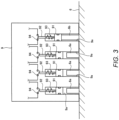
- FIG. 3 is a sectional view showing a connection between the scanner and the headstock shown in FIG. 2 .
- the second headstock 6 has three short pins 6a and a single long pin 6b to mount the scanner 9 thereon.
- the short pins 6a and the long pin 6b are columnar pins of the same diameter.
- the scanner 9 has four holes 9a in positions corresponding to the short pins 6a and the long pin 6b of the second headstock 6.
- FIG. 3 shows bigger gaps between the pins 6a, 6b and the holes 9a. Actually, one of the combinations of the pins 6a, 6b and the holes 9a has little gap therebetween.
- One of the holes 9a is a long hole whose longitudinal side extending in the right-left direction in FIG. 3 .
- the first tool post 5 may have similar pins and screw holes to mount the scanner 9 thereon.
- the second tool post 7 may have similar pins and screw holes to mount the scanner 9 thereon.
- a robot arm may be disposed in the cutting chamber 11 and the robot arm may have similar pins and screw holes to mount the scanner 9 thereon.
- the first spindle 31 is provided with a first spindle driving motor 311 such as a built-in motor.
- the first spindle driving motor 311 rotates under control of the control apparatus 2 to rotate the first spindle 31 around the first spindle axis CL1 ( FIG. 1 ).
- the workpiece W gripped by the first spindle 31 thereby rotates around the first spindle axis CL1.
- the first headstock 3 is provided with a Z1 linear mechanism driven by a Z1-axis motor 32.
- the Z1-axis motor 32 rotates under control of the control apparatus 2 to move the first headstock 3 in the Z1-axis direction.
- the second headstock 6 is provided with a second spindle driving motor 611 such as a built-in motor.
- the second spindle driving motor 611 rotates under control of the control apparatus 2 to rotate the second spindle 61 around the second spindle axis CL2 ( FIG. 1 ).
- the cut-off workpiece gripped by the second spindle 61 thereby rotates around the second spindle axis CL2.
- the second headstock 6 is provided with an X2 linear mechanism driven by an X2-axis motor 62 and a Z2 linear mechanism driven by a Z2-axis motor 63.
- the X2-axis motor 62 and the Z2-axis motor 63 may be a servo motor.
- the second tool post 7 is provided with a second rotary tool driving motor 71.
- the second rotary tool driving motor 71 rotates in a specified direction under control of the control apparatus 2 to rotate the rotary tool attached to the second tool post 7 to rotate in a rotation direction according to the rotation direction of the second rotary tool driving motor 71.
- the second tool post 7 is provided with a Y2 linear mechanism driven by a Y2-axis motor 72.
- the Y2-axis motor 72 may be a servo motor.
- the Y2-axis motor 72 rotates under control of the control apparatus 2 to move the second tool post 7 in the Y2-axis direction.
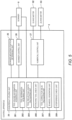
- the control apparatus 2 includes a CPU (Central Processing Unit) 21, an operating unit 22, a display unit 23, and a storage unit 24.
- the scanner 9 is connected to the control apparatus 2.
- the infrared laser generating device and the scanner driving motor is thereby controlled by the control apparatus 2.
- the CPU 21 executes a processing and a calculation according to a program stored in the storage unit 24.
- the operating unit 22 includes a plurality of buttons and keys accepting an input operation by the operator of the NC lathe 1.
- the operating unit 22 may be a touch panel integrated with the display unit 23.
- the operator can store the NC program in the storage unit 24 by using the operating unit 22 and an external computer.
- the operator may modify the NC program and store the modified program in the storage unit 24 through the operating unit 22.
- the display unit 23 displays the NC program stored in the storage unit 24 and various settings and information of the NC lathe 1.
- the storage unit 24 includes an NC program storage unit 241, a tool holder information storage unit 242, a tool information storage unit 243, an attaching tool information storage unit 244, a tool correction information storage unit 245, a measuring program storage unit 246, an interference check program storage unit 247, and a machine type information storage unit 248.
- the NC program storage unit 241 stores the NC program.
- the tool holder information storage unit 242 stores many sets of a tool holder type information and a tool holder shape information in association with a tool holder property information for each and every tool holder applicable in the NC lathe 1 and attachable to the first tool post 5 or the second tool post 7.
- the tool holder property information includes a rotary tool holder information representing the tool holder is a rotary tool holder, a projecting height of the rotary tool holder from the end surface of the tool post, and a rotation direction information of the rotary tool holder whose rotation direction is restricted.
- the tool information storage unit 243 stores many sets of a tool type information in association with a tool shape information for each and every tool applicable in the NC lathe 1 and attachable to the first tool post 5 or the second tool post 7.
- the attaching tool information storage unit 244 stores a plurality of attaching tool information acquired based on the position and the shape of the tool measured in a set-up check process.
- the attaching tool information may include the tool information denoted by A2 to A5 in FIG. 8A described below, which is the information of the tool actually attached to the first tool post 5 or the second tool post 7 whose position and shape was measured in any past set-up check process.
- the operator can store the information in the attaching tool information storage unit 244 in the set-up check process.
- the attaching tool information may include any information directly input by the operator through the operating unit 22.
- the attaching tool information storage unit 244 may further store a tool holder information of a tool holder to which the tool is attached in association with the tool information.
- the tool correction information storage unit 245 stores a tool correction value information representing an offset amount from a tool edge reference position for every tool attached to the first tool post 5 and the second tool post 7.
- the tool correction value information is used to adjust a relative position between the tool and the workpiece W in machining the workpiece W according to the NC program.
- the tool correction value information may include a plurality of information such as a shape offset, a wear offset, and a thermal correction offset for every tool. In this embodiment, however, a single tool correction value information is stored for every tool for the purpose of explanation.
- the tool correction value information may be automatically stored in the tool correction information storage unit 245 upon execution of a correction input mode described below. The operator can input the information through the operating unit 22.
- FIG. 5 is a functional block diagram showing a functional configuration of the NC lathe shown in FIG. 1 .
- FIG. 5 shows the configuration of high relevancy to the invention.
- the other functional configuration of the control apparatus 2 is not shown.
- the control apparatus 2 includes the scanner mounting position determining unit 25, a scanner control unit 26, a numerical control unit 27, and a scan result utilizing unit 28. These units 25, 26, 27, and 28 are implemented mainly by the CPU 21 and the storage unit 24 shown in FIG. 4 .
- the scanner mounting position determining unit 25 receives a mounting position signal from the scanner 9. The signal may depend on the moving member the scanner 9 is mounted as described above referring to FIG. 3 .
- the scanner mounting position determining unit 25 can determine on which moving member the scanner 9 is mounted.
- the scanner control unit 26 controls the operation of the scanner 9. Specifically, the scanner control unit 26 controls infrared radiation from the infrared laser generating device and the number of rotations of the polygon mirror.
- the numerical control unit 27 controls the movement of the moving member such as the first tool post 5, the second headstock 6 ( FIG. 1 ), and the second tool post 7 and also controls the rotation of the rotating member such as the first spindle 31 ( FIG. 1 ).
- the scan result utilizing unit 28 receives a scanner control information from the scanner control unit 26 and a motor control information of the X2-axis motor 62 and the Z2-axis motor 63 from the numerical control unit 27. The scan result utilizing unit 28 can thereby recognize the target of infrared radiation and the location of the scanner 9 inside the cutting chamber 11.
- the scan result utilizing unit 28 includes a tool holder information acquiring unit 281, a tool information acquiring unit 282, a tool projecting length calculating unit 284, an attaching tool check unit 286, a tool correction value calculating unit 287, a 3D-model generating unit 288, and an interference check unit 289.
- the tool holder information acquiring unit 281 compares the tool holder shape information acquired from the measurement by the scanner 9 and the tool holder shape information acquired from the tool holder information storage unit 242 ( FIG. 4 ) to identify what tool holder is mounted.
- the tool holder information acquiring unit 281 then acquires the tool holder type, the tool holder shape, and the tool holder property of the identified tool holder from the tool holder information storage unit 242.
- the tool information acquiring unit 282 compares the tool shape information acquired from the measurement by the scanner 9 and the tool shape information acquired from the tool information storage unit 243 ( FIG. 4 ) to identify what tool is mounted. The tool information acquiring unit 282 then acquires the tool type and the tool shape of the identified tool from the tool information storage unit 243.
- the tool projecting length calculating unit 284 calculates the projecting length of the tool. When the tool is a turning tool, the tool projecting length calculating unit 284 calculates a distance from the tool attaching surface of the first tool post 5 or second tool post 7 to the edge of the tool.
- the tool projecting length calculating unit 284 calculates the projecting length of the tool from the tool holder and the tool diameter of the rotary tool totally from the projecting height of the tool holder from the tool attaching surface, the tool shape information, and the measurement result by the scanner 9.
- the tool projecting length calculating unit 284 may use only the measurement result when the measurement is highly accurate with regard to the position and the shape of the tool and the tool holder.
- the attaching tool check unit 286 acquires a specified attaching tool information from the attaching tool information storage unit 244 ( FIG. 4 ) among the plurality of attaching tool information. The attaching tool check unit 286 then compares the past attaching tool information stored in the attaching tool information storage unit 244 with the tool type information acquired by the tool information storage unit 282 and the tool projecting length calculated by the tool projecting length calculating unit 286. The attaching tool check unit 286 thereby check whether the specified past attaching tool information matches the current attaching tool information.
- the tool correction value calculating unit 287 calculates an edge position of the tool according to the tool position information and the tool shape information acquired from the measurement by the scanner 9 and the tool type information identified by the tool information acquiring unit 282. The tool correction value calculating unit 287 then calculates a tool correction value according to the calculated edge position of the tool and stores the calculated tool correction value in the tool correction information storage unit 245 ( FIG. 4 ).
- the 3D-model generating unit 288 generates an imaginary three-dimensional model of the structure inside the cutting chamber 11 in an imaginary space according to the measurement by the scanner 9.
- the interference check unit 289 performs an interference check of the structure by operating the imaginary three-dimensional model according to the NC program.
- FIG. 6 is a flowchart of the measurement of the structure inside the cutting chamber of the NC lathe shown in FIG. 1 .
- the measurement processes are being described sequentially referring to FIG. 6 to FIG. 11 and basically to FIG. 1 to FIG. 5 .
- the description relates to an example that the scanner 9 is mounted on the second headstock 6.
- the measurement process starts upon receipt of a starting operation by the operator in a measurement mode specified through the operating unit 22.
- the control apparatus 2 executes the process including a calculation while controlling the operation of the moving members and the scanner according to a measurement program stored in the measurement program storage unit 246. As shown in FIG. 6 , the control apparatus 2 first acquires the machine type of the NC lathe 1, the object to be measured, and the moving members that the scanner 9 can be mounted from the machine type information storage unit 248 (Step S10).
- the numerical control unit 27 controls the movement of the first headstock 3, the first tool post 5, the second headstock 6, and the second tool post 7 respectively to predetermined positions suitable for the measurement (Step S11).
- the control apparatus 2 determines whether the scanner 9 is connected to the control apparatus 2 by exchanging scanner mounting position signals with the scanner 9 (Step S12). In the case that the scanner 9 is not connected to the control apparatus 2 (NO in Step S12), the control apparatus 2 stands by until the scanner 9 is connected. In the case that the scanner 9 is connected to the control apparatus 2 (YES in Step S12), the control apparatus 2 determines on which moving member the scanner 9 is mounted according to the scanner mounting position signal sent from the scanner 9 (Step S13). In this embodiment, the control apparatus 2 determines that the scanner 9 is mounted on the second headstock 6.
- the control apparatus 2 determines whether the measurement mode specified by the operator is the set-up check mode (Step S14). In the case that the measurement mode is the set-up check mode (YES in Step S14), the control apparatus 2 performs the set-up check process in a manner described below (Step S15). In the case that the measurement mode is not the set-up check mode (NO in Step S14), the control apparatus 2 determines whether the measurement mode is a correction input mode (Step S16). In the case that the measurement mode is the correction input mode (YES in Step S16), the control apparatus 2 performs the correction input process in a manner described below (Step S17).
- the control apparatus 2 performs the interference check process in a manner described below (Step S18). Upon completion of each process, the control apparatus 2 terminates the measurement process. The operator removes the scanner 9 from the second headstock 6 and takes it outside the cutting chamber 11 before starting machining of the workpiece W according to the NC program.
- FIG. 7 is a flowchart of the set-up check process shown in FIG. 6 .
- FIG. 8A shows a selection menu of a check target along with the attaching tool information acquired in the set-up check process.
- the check target is the first tool T1 attached to the first tool post 5.
- the check target may be the second tool T2 or may be both.
- the control apparatus 2 displays the dates of all the previous set-up check processes stored in the attaching tool information storage unit 244 on the display unit 23. Any other information such as a reference number, a title and a comment stored in association with the previous set-up check processes may be also displayed.
- the operator may select a desired one of the displayed previous attaching tool information through the operating unit 22 for comparison use in the current set-up check process. The operator may input otherwise through the operating unit 22 when he is interested in nothing of the displayed previous attaching tool information. In the case the operator selects a desired one, the selected information is displayed on the display unit 23 as shown in FIG. 8A .
- the columns A2 to A5 show the attaching tool information according to the past measurement.
- the column A1 shows a YES or NO selection menu, in which YES represents that the operator selects it as the check target in the current set-up check process.
- the column A2 shows the tool number representing on what position on the first tool post 5 or the second tool post 7 the tool is attached.
- the operator may switch YES or NO in the column A1 through the operating unit 22 to select the check target in the current set-up check process.
- the display unit 23 may actually show so many tools as corresponding to the tool attaching positions of the first tool post 5 and the second tool post 7. FIG. 8A simply shows part of them.
- the numerical control unit 27 controls the movement of the second headstock 6 to bring the scanner 9 in front of a reference object.
- the scanner 9 measures the position and the shape of the object while the second headstock 6 moves.
- the control apparatus 2 acquires a reference position information of a particular reference position of the reference object (Step S21).
- the reference object and the reference position are specified in the measurement program.
- the plurality of first tools T1 attached to the first tool post 5 is selected as the check target while the first tool post 5 is specified as the reference object and a particular point of the first tool post 5 is specified as the reference position.
- the second tool T2 attached to the second tool post 7 is selected as the check target, the set-up check process for the second tool T2 is performed, too.
- the numerical control unit 27 controls the movement of the second headstock 6 at least in the X2-axis direction while operating the scanner 9.
- the control apparatus 2 thereby acquires a relative position information between the reference position and each of the first tools T1 selected as the check target, the tool shape information of the first tool T1, a relative position information between the reference position and the first tool holder TH1 to which the first tool T1 is attached, and the holder shape information of the first tool holder TH1 (Step S22).
- the movement of the second headstock 6 can be controlled at higher speed since the set-up check process does not require high accuracy of the tool position information and the tool shape information of the first tool T1.
- the control apparatus 2 determines whether the second headstock 6 normally moves as specified in the measurement program and the measurement data is normal (Step S23). In the case that the second headstock 6 abnormally moves or any abnormal data exists such as a skip, a lack, and an abnormal irregularity (NO in Step S23), the control apparatus 2 displays an error message on the display unit 23 (Step S231) and terminates the set-up check process. Alternatively, the control apparatus 2 may repeat Steps S21 and S22 by the number of repeats specified in the measurement program. When the "NO" in Step S23 exceeds the specified number of repeats, the control apparatus 2 may display the error message on the display unit 23.
- the tool holder information acquiring unit 281 identifies the holder type of the first tool holder TH1 to which the first tool T1 is attached according to the holder position information and the holder shape information of the first tool holder TH1 acquired by the measurement.
- the tool information acquiring unit 282 identifies the tool type of the first tool T1 and the tool number, which is the tool attaching position information, according to the tool position information and the tool shape information of the first tool T1 acquired by the measurement (Step S24).
- the tool holder information acquiring unit 281 acquires the holder type information, the holder shape information, and the holder property information of the identified first tool holder TH1 from the tool holder information storage unit 242.
- the tool information acquiring unit 282 acquires the tool type information and the tool shape information of the identified first tool T1 from the tool information storage unit 243.
- the tool projecting length calculating unit 284 calculates a distance from the tool attaching surface of the first tool post 5 or second tool post 7 to the edge of the tool.
- the tool projecting length calculating unit 284 calculates the projecting length of the rotary tool from the first tool holder TH1 and the tool diameter of the rotary tool totally from the holder property information acquired by the tool holder information acquiring unit 281, the tool shape information acquired by the tool information acquiring unit 282, and the position information and the shape information acquired in Step S22 (Step S25).
- the attaching tool check unit 286 compares the attaching tool information of the first tool T1 according to the past measurement result with the attaching tool information of the first tool T1 according to the current measurement result (Step S26). In other words, the attaching tool check unit 286 checks whether the tool type information, the projecting length, and the tool diameter of the past measurement result matches those of the current measurement result regarding the first tool T1 having the same tool number. The attaching tool check unit 286 performs the check on all of the first tools T1 that the operator has selected as the check target.
- the control apparatus 2 displays an error message on the display unit 23 (Step S 261) identifying the tool along with mismatch information, and then terminates the set-up check process.
- the control apparatus 2 displays a success message on the display unit 23 along with an inquiry whether to save the attaching tool information of the current measurement (Step S27).
- the control apparatus 2 stores the current information in the attaching tool information storage unit 244 (Step S29) and then terminates the set-up check process.
- the control apparatus 2 immediately terminates the set-up check process without storing the current information.
- FIG. 9 is a flowchart of the correction input process shown in FIG. 6 .
- FIG. 8B is a list of a tool correction value acquired in the correction input process.
- the tool correction information storage unit 245 may actually store the correction values of so many tools as corresponding to the tool attaching positions of the first tool post 5 and the second tool post 7.
- FIG. 8B simply shows part of them.
- the numerical control unit 27 controls the movement of the second headstock 6 to bring the scanner 9 in front of the reference object.
- the scanner 9 measures the position and the shape of the object while the second headstock 6 moves.
- the control apparatus 2 acquires a reference position information of a particular reference position of the reference object (Step S31).
- the reference object and the reference position are specified in the measurement program.
- the guide bush 4 is specified as the reference object.
- An intersection point of the first spindle axis CL1 and an end surface of the guide bush 4 exposed in the cutting chamber 11 is specified as the reference position.
- the guide bush does not move in the X-axis, the Y-axis, nor Z-axis direction.
- the reference position can be of higher accuracy compared with the case that the moving member such as the tool post is specified as the reference object.
- the numerical control unit 27 controls the movement of the second headstock 6 at least in the X2-axis direction while operating the scanner 9.
- the control apparatus 2 thereby acquires a relative position information between the reference position and each of the first tool posts T1 and the tool shape information (Step S32).
- the movement of the second headstock 6 is controlled at lower speed to acquire the tool position information and the tool shape information with higher accuracy.
- the control apparatus 2 determines whether the second headstock 6 normally moves as specified in the measurement program and the measurement data is normal (Step S33). In the case that the second headstock 6 abnormally moves or any abnormal data exists such as a skip, a lack, and an abnormal irregularity (NO in Step S33), the control apparatus 2 displays an error message on the display unit 23 (Step S331) and terminates the correction input process. Alternatively, the control apparatus 2 may repeat Steps S31 and S32 by the number of repeats specified in the measurement program. When the "NO" in Step S33 exceeds the specified number of repeats, the control apparatus 2 may display the error message on the display unit 23.
- the tool information acquiring unit 282 identifies the tool type of the attaching tool and the tool number, which is the tool attaching position information, according to the tool position information and the tool shape information acquired by the measurement (Step S34).
- the tool correction value calculating unit 287 calculates the tool edge position according to the tool position information and the tool shape information measured by the scanner 9 and the tool type information identified by the tool information acquiring unit 282.
- the tool correction value calculating unit 287 then calculates the tool correction value according to the calculated tool edge position (Step S35).
- the tool information storage unit 243 stores a reference edge position information in association with the tool type information.
- the tool correction value calculating unit 287 compares the calculated tool edge position with the stored reference tool edge position to calculate the tool correction value. Finally, the tool correction value calculating unit 287 stores the calculated tool correction value in the tool correction information storage unit 245 in association with the tool number (Step S36), displays the message representing completion of storage on the display unit 23, and then terminates the correction input process. As shown in FIG. 8B , the tool correction information storage unit 245 stores the X-axis, the Y-axis, and the Z-axis tool correction values in B2 to B4 columns respectively for every tool number in B 1 column.
- FIG. 10 is a flowchart of the interference check process shown in FIG. 6 .
- FIG. 11 is a perspective view of the imaginary three-dimensional model generated in the imaginary space.
- the numerical control unit 27 controls the movement of the second headstock 6 to bring the scanner 9 in front of the reference object.
- the scanner 9 measures the position and the shape of the object while the second headstock 6 moves.
- the control apparatus 2 acquires a reference position information of a particular reference position of the reference object (Step S41).
- the reference object and the reference position are specified in the measurement program.
- the guide bush 4 is specified as the reference object.
- An intersection point of the first spindle axis CL1 and an end surface of the guide bush 4 exposed in the cutting chamber 11 is specified as the reference position.
- the numerical control unit 27 controls the movement of the second headstock 6 at least in the X2-axis direction while operating the scanner 9.
- the control apparatus 2 thereby acquires a relative position information of the structures in the cutting chamber 11 such as the tool and the first tool post 5 and the structure shape information (Step S42).
- the movement of the second headstock 6 is controlled at lower speed than in the correction input process and at higher speed than in the set-up check process to acquire the structure position information and the structure shape information with rather higher accuracy.
- the control apparatus 2 determines whether the second headstock 6 normally moves as specified in the measurement program and the measurement data is normal (Step S43). In the case that the second headstock 6 abnormally moves or any abnormal data exists such as a skip, a lack, and an abnormal irregularity (NO in Step S43), the control apparatus 2 displays an error message on the display unit 23 (Step S431) and terminates the interference check process. Alternatively, the control apparatus 2 may repeat Steps S41 and S42 by the number of repeats specified in the measurement program. When the "NO" in Step S43 exceeds the specified number of repeats, the control apparatus 2 may display the error message on the display unit 23.
- the 3D-model generating unit 288 In the case that the second headstock 6 normally moves as specified and the measurement data is normal (YES in Step S43), the 3D-model generating unit 288 generates the imaginary three-dimensional model of the structure in the imaginary space according to the structure position information and the structure shape information acquired in Step S42 (Step S44). As shown in FIG. 11 , the 3D-model generating unit 288 generates the imaginary three-dimensional model of the structure within the infrared radiation range of the scanner 9 mounted on the second headstock 6.
- the structure may include the guide bush 4, the first tool post 5 and the front tool unit, the second tool post 7 and the back tool unit, the coolant discharging unit 8, and part of the inner wall of the cutting chamber 11 ( FIG. 1 ).
- the 3D-model generating unit 288 can generate the imaginary three-dimensional model of the workpiece W according to the inner diameter of the guide bush 4. Furthermore, the scanner 9 may be mounted on another moving member such as the first tool post 5 to acquire the structure position information and the structure shape information of the structure in the cutting chamber 11. The 3D-model generating unit 288 may generate the imaginary three-dimensional model from a combination of information provided from the scanner 9 mounted on the second headstock 6 and from another scanner 9 mounted on another moving member. The 3D-model generating unit 288 can then generate the imaginary three-dimensional model of the second headstock 6.
- the interference check unit 289 moves the moving member such as the first tool post 5 of the imaginary three-dimensional model according to the NC program for use in an actual operation to check if an interference occurs between the moving members, between the moving member and the workpiece W, between the moving member and the coolant discharging unit 8, and between the moving member and the inner wall of the cutting chamber 11 (Step S45).
- the moving member may include the tool and the tool holder attached to any of the moving members.
- control apparatus 2 may display a message representing no-interference on the display unit 23 (Step S47) and then terminate the interference check process.
- control apparatus 2 may display a message representing the details of the interference (Step S48) and then terminate the interference check process.
- the scanner 9 can measure the tool position and the tool shape actually attached to the first tool post 5 or the second tool post 7.
- the acquired tool position information and the acquired tool shape information can be utilized in the various processes including the interference check process. That removes a mismatch of the tool position and the tool shape between the check tool and the actual tool attached to the first tool post 5 or the second tool post 7, thus eliminating the need of verifying the check result with the tool actually attached to the first tool post 5 or the second tool post 7.
- the NC lathe 1 of the invention also generates the correction value information of the tool edge position from the tool position information and the tool shape information.
- the generated correction value information is automatically stored in the tool correction information storage unit 245, which reduces burden on the operator and also prevents a human input error.
- the scanner 9 can measure the tool holder shape, too.
- the NC lathe 1 of the embodiment can accurately calculate the projecting length of the tool by using the property information of the tool holder.
- the NC lathe 1 can acquire the rotation direction of the rotary tool and check if the direction specified in the NC program is correct.
- the attaching tool check unit 286 compares the past attaching tool information with the current attaching tool information to check if a desired tool is attached in a desired state. That facilitates the verification of the tool type and the tool attaching position.
- the interference check process Step S 17, FIG.
- the NC lathe 1 generates the imaginary three-dimensional model from the measurement of the position and the shape of the coolant discharging unit 8 having the coolant nozzle 81. That facilitates the interference check between the moving member and the coolant discharging unit 8 to prevent an influence on the discharging angle and the position of the coolant nozzle 81.
- the scanner 9 mounted on the second headstock 6 movable in the X2-axis direction can measure the wide range. The scanner 9 can be removed from the second headstock 6 to prevent a failure of the scanner due to scattered coolant and chips during machining.
- the operation of the switch 94 allows the scanner 9 to send a signal representing on what moving member the scanner is mounted.
- the control apparatus 2 can thereby automatically determine on which moving member the scanner 9 is mounted.
- FIG. 12 is a perspective view similar to FIG. 2 showing the internal configuration of the NC lathe of the modified embodiment. The leg 10 is not shown.
- the scanner 9 of the modified embodiment can make infrared radiation in three directions to measure the distances in the three directions, respectively.
- FIG. 12 shows the radiation ranges by three outlined fan shapes.
- the direction of radiation in the first embodiment is a single direction from the second headstock 6 toward the first headstock 3. Then, the measurement of an object outside the radiation range is only available when the scanner 9 is mounted on another moving member such as the first tool post 5 or the second tool post 7 or when a plurality of scanners 9 are mounted on a plurality of moving members to make infrared radiation in different directions, respectively.
- the tri-directional infrared radiation of the modified embodiment can measure the range even outside the uni-directional radiation range without re-mounting the scanner or mounting a plurality of scanners.
- the invention can be embodied in various modifications within the scope of the invention.
- the invention may be applied to another machine tool such as a machining center.
- the scan result utilizing unit 28 may be entirely or partially provided in the computer connected to the NC lathe 1 by wire or wirelessly.
- the scanner 9 may be a three-dimensional scanner or a camera.
- the NC lathe 1 may be provided with an information delivering unit capable of delivering the attaching tool information and the tool correction value information to the CAM to prevent an input error when the operator uses the CAM.
- the CAM may include an interactive programming software, an automatic programing generating software, and any programming supporting software.
- the NC lathe 1 may further measure the position and the shape of the coolant nozzle 81 in Step S29 and store the measurement in the storage unit 24 in association with the attaching tool information.
- the NC lathe 1 may then compare and check the measurement of the coolant nozzle 81 in the set-up check process and display the result in the display unit 23.
- the tool type, the tool projecting length, and a threshold for determining a match of the tool diameter may be manually input through the operating unit 22.
- a threshold for determining a match of the position and the shape of the coolant nozzle 81 may be manually input through the operating unit 22. The operator can thereby set a desired threshold for determination.
Landscapes
- Engineering & Computer Science (AREA)
- Mechanical Engineering (AREA)
- Physics & Mathematics (AREA)
- Manufacturing & Machinery (AREA)
- Human Computer Interaction (AREA)
- General Physics & Mathematics (AREA)
- Automation & Control Theory (AREA)
- Optics & Photonics (AREA)
- Geometry (AREA)
- Numerical Control (AREA)
- Machine Tool Sensing Apparatuses (AREA)
- Automatic Control Of Machine Tools (AREA)
Applications Claiming Priority (2)
| Application Number | Priority Date | Filing Date | Title |
|---|---|---|---|
| JP2021116566A JP7741367B2 (ja) | 2021-07-14 | 2021-07-14 | 工作機械システム |
| PCT/JP2022/026450 WO2023286639A1 (ja) | 2021-07-14 | 2022-07-01 | 工作機械システム |
Publications (2)
| Publication Number | Publication Date |
|---|---|
| EP4371702A1 true EP4371702A1 (de) | 2024-05-22 |
| EP4371702A4 EP4371702A4 (de) | 2025-02-26 |
Family
ID=84920068
Family Applications (1)
| Application Number | Title | Priority Date | Filing Date |
|---|---|---|---|
| EP22841983.4A Pending EP4371702A4 (de) | 2021-07-14 | 2022-07-01 | Werkzeugmaschinensystem |
Country Status (6)
| Country | Link |
|---|---|
| US (1) | US20240139898A1 (de) |
| EP (1) | EP4371702A4 (de) |
| JP (1) | JP7741367B2 (de) |
| KR (1) | KR20240016430A (de) |
| CN (1) | CN117642251A (de) |
| WO (1) | WO2023286639A1 (de) |
Families Citing this family (3)
| Publication number | Priority date | Publication date | Assignee | Title |
|---|---|---|---|---|
| DE112021007297T5 (de) * | 2021-03-17 | 2024-01-25 | Fuji Corporation | Prüfvorrichtung |
| US12111631B1 (en) * | 2023-04-19 | 2024-10-08 | Product Development Factory, Inc. | Systems and methods for computer aided manufacturing using an integrated scanner |
| WO2025057383A1 (ja) * | 2023-09-14 | 2025-03-20 | ファナック株式会社 | 実行装置、判断システム、及びコンピュータが読み取り可能な記憶媒体 |
Family Cites Families (19)
| Publication number | Priority date | Publication date | Assignee | Title |
|---|---|---|---|---|
| JPS5023508Y2 (de) | 1971-04-20 | 1975-07-15 | ||
| JPH0241856A (ja) * | 1988-07-28 | 1990-02-13 | Toyoda Mach Works Ltd | 刃具形状測定機能を備えた工作機械 |
| JPH04256550A (ja) * | 1991-02-08 | 1992-09-11 | Seibu Electric & Mach Co Ltd | 切削工具刃先検出装置 |
| JPH10286746A (ja) * | 1997-04-11 | 1998-10-27 | Mori Seiki Co Ltd | Nc工作機械における工具刃先測定装置 |
| CN1236883C (zh) * | 2000-09-22 | 2006-01-18 | 时至准钟表股份有限公司 | 数控车床及运用该数控车床对产品的加工方法 |
| JP4180469B2 (ja) | 2003-08-11 | 2008-11-12 | 東芝機械株式会社 | 工作機械の加工適否チェック方法 |
| JP4456455B2 (ja) | 2004-10-08 | 2010-04-28 | 中村留精密工業株式会社 | 旋盤における機械稼働部の衝突防止方法 |
| JP4658734B2 (ja) * | 2005-08-12 | 2011-03-23 | 中村留精密工業株式会社 | 旋盤における機械稼動部の衝突防止方法 |
| JP2008305237A (ja) | 2007-06-08 | 2008-12-18 | Jtekt Corp | 加工装置 |
| JP4727689B2 (ja) | 2008-04-28 | 2011-07-20 | 三菱重工業株式会社 | ワーク計測装置、衝突防止装置および工作機械 |
| JP5411657B2 (ja) * | 2009-10-28 | 2014-02-12 | 株式会社豊田中央研究所 | 加工シミュレーション装置、加工シミュレーション方法、プログラム、記録媒体 |
| JP5383853B2 (ja) | 2012-04-04 | 2014-01-08 | 三菱重工業株式会社 | 工具形状測定装置、及び工具形状測定方法 |
| JP6297283B2 (ja) | 2013-09-06 | 2018-03-20 | 中村留精密工業株式会社 | 工作機械の工具オフセット値の自動設定装置及び自動設定方法 |
| KR101507683B1 (ko) * | 2014-02-19 | 2015-04-07 | (주) 엔씨비 | 스마트 수치제어 시스템 및 그 방법 |
| JP6588704B2 (ja) | 2015-01-15 | 2019-10-09 | 中村留精密工業株式会社 | 工具刃先の検出方法及び装置並びに工具補正値の設定装置 |
| JP6208701B2 (ja) * | 2015-02-16 | 2017-10-04 | ファナック株式会社 | クーラントノズルの位置を調整するためのロボットシステム、およびロボット制御方法 |
| JP7001493B2 (ja) * | 2018-02-26 | 2022-01-19 | 株式会社ディスコ | 撮像画像形成ユニット |
| CN112384328A (zh) * | 2018-07-10 | 2021-02-19 | 株式会社牧野铣床制作所 | 机床系统及刀具的判定方法 |
| CN112045496A (zh) | 2020-10-09 | 2020-12-08 | 程泰机械(吴江)有限公司 | 一种刀具自动调节数控车床 |
-
2021
- 2021-07-14 JP JP2021116566A patent/JP7741367B2/ja active Active
-
2022
- 2022-07-01 CN CN202280048899.7A patent/CN117642251A/zh active Pending
- 2022-07-01 KR KR1020247000252A patent/KR20240016430A/ko active Pending
- 2022-07-01 WO PCT/JP2022/026450 patent/WO2023286639A1/ja not_active Ceased
- 2022-07-01 EP EP22841983.4A patent/EP4371702A4/de active Pending
-
2024
- 2024-01-09 US US18/408,192 patent/US20240139898A1/en active Pending
Also Published As
| Publication number | Publication date |
|---|---|
| US20240139898A1 (en) | 2024-05-02 |
| JP2023012847A (ja) | 2023-01-26 |
| WO2023286639A1 (ja) | 2023-01-19 |
| JP7741367B2 (ja) | 2025-09-18 |
| CN117642251A (zh) | 2024-03-01 |
| KR20240016430A (ko) | 2024-02-06 |
| TW202303094A (zh) | 2023-01-16 |
| EP4371702A4 (de) | 2025-02-26 |
Similar Documents
| Publication | Publication Date | Title |
|---|---|---|
| EP4371702A1 (de) | Werkzeugmaschinensystem | |
| US7089836B2 (en) | Hale-machining method and apparatus | |
| JP6584488B2 (ja) | 工作機械の制御方法および工作機械の制御装置 | |
| RU2293011C2 (ru) | Определение фазы заготовки для станка со шпинделем и устройство для его осуществления | |
| JP3246961B2 (ja) | クランクシャフトミラーの制御装置 | |
| CN113547174B (zh) | 齿轮加工装置 | |
| JP5726791B2 (ja) | 工具ホルダおよび旋盤装置 | |
| JP2002304203A (ja) | Nc工作機械および加工方法 | |
| JP3283278B2 (ja) | 自動旋盤 | |
| JP3459847B2 (ja) | ツールプリセッタによる工具補正量再設定方法およびその装置 | |
| EP3715025B1 (de) | Bearbeitungswerkzeug und werkstückmessverfahren | |
| US6810600B1 (en) | Apparatus and method for monitoring alignment of a CNC machine spindle trunnion axis A | |
| JP2006163665A (ja) | 数値制御加工機の数値制御情報確認装置および方法 | |
| TWI918964B (zh) | 工具機系統 | |
| JP3640618B2 (ja) | 櫛刃形の対向刃物台を有する数値制御旋盤、この数値制御旋盤によるワークの加工方法及びそのプログラム | |
| JPH1142535A (ja) | 内径加工寸法の補正方法及びこの補正方法を実施可能なnc旋盤 | |
| JP4509348B2 (ja) | 数値制御旋盤における工具位置補正方法及び制御装置 | |
| JPH08112701A (ja) | Nc旋盤による加工方法及びバックアップ加工可能なnc旋盤 | |
| JP2007203392A (ja) | Nc旋盤における刃物の位置合わせ方法 | |
| JP2001259970A (ja) | ツールプリセッタ組込型工作機械 | |
| JP2021171864A (ja) | 歯車加工装置 | |
| KR102827610B1 (ko) | 캡토툴홀더를 사용하는 공작기계의 공구 옵셋 관리방법 | |
| JP2003225804A (ja) | 数値制御工作機械と棒材供給装置および工作機械システムとその制御方法 | |
| TWM558682U (zh) | 隨刀具自動更換的加工系統 | |
| JPS61249249A (ja) | U軸制御における位置決め方法 |
Legal Events
| Date | Code | Title | Description |
|---|---|---|---|
| STAA | Information on the status of an ep patent application or granted ep patent |
Free format text: STATUS: THE INTERNATIONAL PUBLICATION HAS BEEN MADE |
|
| PUAI | Public reference made under article 153(3) epc to a published international application that has entered the european phase |
Free format text: ORIGINAL CODE: 0009012 |
|
| STAA | Information on the status of an ep patent application or granted ep patent |
Free format text: STATUS: REQUEST FOR EXAMINATION WAS MADE |
|
| 17P | Request for examination filed |
Effective date: 20240110 |
|
| AK | Designated contracting states |
Kind code of ref document: A1 Designated state(s): AL AT BE BG CH CY CZ DE DK EE ES FI FR GB GR HR HU IE IS IT LI LT LU LV MC MK MT NL NO PL PT RO RS SE SI SK SM TR |
|
| DAV | Request for validation of the european patent (deleted) | ||
| DAX | Request for extension of the european patent (deleted) | ||
| RIC1 | Information provided on ipc code assigned before grant |
Ipc: G05B 19/4069 20060101ALI20240924BHEP Ipc: G05B 19/18 20060101ALI20240924BHEP Ipc: B23Q 17/22 20060101ALI20240924BHEP Ipc: B23Q 17/00 20060101ALI20240924BHEP Ipc: B23B 25/06 20060101ALI20240924BHEP Ipc: B23Q 17/24 20060101AFI20240924BHEP |
|
| A4 | Supplementary search report drawn up and despatched |
Effective date: 20250127 |
|
| RIC1 | Information provided on ipc code assigned before grant |
Ipc: G05B 19/4069 20060101ALI20250121BHEP Ipc: G05B 19/18 20060101ALI20250121BHEP Ipc: B23Q 17/22 20060101ALI20250121BHEP Ipc: B23Q 17/00 20060101ALI20250121BHEP Ipc: B23B 25/06 20060101ALI20250121BHEP Ipc: B23Q 17/24 20060101AFI20250121BHEP |