EP4299760B1 - Probes for improved melt discrimination and multiplexing in nucleic acid assays - Google Patents
Probes for improved melt discrimination and multiplexing in nucleic acid assays Download PDFInfo
- Publication number
- EP4299760B1 EP4299760B1 EP23194986.8A EP23194986A EP4299760B1 EP 4299760 B1 EP4299760 B1 EP 4299760B1 EP 23194986 A EP23194986 A EP 23194986A EP 4299760 B1 EP4299760 B1 EP 4299760B1
- Authority
- EP
- European Patent Office
- Prior art keywords
- probe
- sequence
- nucleic acid
- probes
- region
- Prior art date
- Legal status (The legal status is an assumption and is not a legal conclusion. Google has not performed a legal analysis and makes no representation as to the accuracy of the status listed.)
- Active
Links
Images








Classifications
-
- C—CHEMISTRY; METALLURGY
- C12—BIOCHEMISTRY; BEER; SPIRITS; WINE; VINEGAR; MICROBIOLOGY; ENZYMOLOGY; MUTATION OR GENETIC ENGINEERING
- C12Q—MEASURING OR TESTING PROCESSES INVOLVING ENZYMES, NUCLEIC ACIDS OR MICROORGANISMS; COMPOSITIONS OR TEST PAPERS THEREFOR; PROCESSES OF PREPARING SUCH COMPOSITIONS; CONDITION-RESPONSIVE CONTROL IN MICROBIOLOGICAL OR ENZYMOLOGICAL PROCESSES
- C12Q1/00—Measuring or testing processes involving enzymes, nucleic acids or microorganisms; Compositions therefor; Processes of preparing such compositions
- C12Q1/68—Measuring or testing processes involving enzymes, nucleic acids or microorganisms; Compositions therefor; Processes of preparing such compositions involving nucleic acids
- C12Q1/6813—Hybridisation assays
- C12Q1/6816—Hybridisation assays characterised by the detection means
- C12Q1/6818—Hybridisation assays characterised by the detection means involving interaction of two or more labels, e.g. resonant energy transfer
-
- C—CHEMISTRY; METALLURGY
- C12—BIOCHEMISTRY; BEER; SPIRITS; WINE; VINEGAR; MICROBIOLOGY; ENZYMOLOGY; MUTATION OR GENETIC ENGINEERING
- C12Q—MEASURING OR TESTING PROCESSES INVOLVING ENZYMES, NUCLEIC ACIDS OR MICROORGANISMS; COMPOSITIONS OR TEST PAPERS THEREFOR; PROCESSES OF PREPARING SUCH COMPOSITIONS; CONDITION-RESPONSIVE CONTROL IN MICROBIOLOGICAL OR ENZYMOLOGICAL PROCESSES
- C12Q1/00—Measuring or testing processes involving enzymes, nucleic acids or microorganisms; Compositions therefor; Processes of preparing such compositions
- C12Q1/68—Measuring or testing processes involving enzymes, nucleic acids or microorganisms; Compositions therefor; Processes of preparing such compositions involving nucleic acids
- C12Q1/6813—Hybridisation assays
- C12Q1/6816—Hybridisation assays characterised by the detection means
-
- C—CHEMISTRY; METALLURGY
- C12—BIOCHEMISTRY; BEER; SPIRITS; WINE; VINEGAR; MICROBIOLOGY; ENZYMOLOGY; MUTATION OR GENETIC ENGINEERING
- C12Q—MEASURING OR TESTING PROCESSES INVOLVING ENZYMES, NUCLEIC ACIDS OR MICROORGANISMS; COMPOSITIONS OR TEST PAPERS THEREFOR; PROCESSES OF PREPARING SUCH COMPOSITIONS; CONDITION-RESPONSIVE CONTROL IN MICROBIOLOGICAL OR ENZYMOLOGICAL PROCESSES
- C12Q1/00—Measuring or testing processes involving enzymes, nucleic acids or microorganisms; Compositions therefor; Processes of preparing such compositions
- C12Q1/68—Measuring or testing processes involving enzymes, nucleic acids or microorganisms; Compositions therefor; Processes of preparing such compositions involving nucleic acids
- C12Q1/6813—Hybridisation assays
- C12Q1/6816—Hybridisation assays characterised by the detection means
- C12Q1/6823—Release of bound markers
-
- C—CHEMISTRY; METALLURGY
- C12—BIOCHEMISTRY; BEER; SPIRITS; WINE; VINEGAR; MICROBIOLOGY; ENZYMOLOGY; MUTATION OR GENETIC ENGINEERING
- C12Q—MEASURING OR TESTING PROCESSES INVOLVING ENZYMES, NUCLEIC ACIDS OR MICROORGANISMS; COMPOSITIONS OR TEST PAPERS THEREFOR; PROCESSES OF PREPARING SUCH COMPOSITIONS; CONDITION-RESPONSIVE CONTROL IN MICROBIOLOGICAL OR ENZYMOLOGICAL PROCESSES
- C12Q1/00—Measuring or testing processes involving enzymes, nucleic acids or microorganisms; Compositions therefor; Processes of preparing such compositions
- C12Q1/68—Measuring or testing processes involving enzymes, nucleic acids or microorganisms; Compositions therefor; Processes of preparing such compositions involving nucleic acids
- C12Q1/6813—Hybridisation assays
- C12Q1/6834—Enzymatic or biochemical coupling of nucleic acids to a solid phase
-
- C—CHEMISTRY; METALLURGY
- C12—BIOCHEMISTRY; BEER; SPIRITS; WINE; VINEGAR; MICROBIOLOGY; ENZYMOLOGY; MUTATION OR GENETIC ENGINEERING
- C12Q—MEASURING OR TESTING PROCESSES INVOLVING ENZYMES, NUCLEIC ACIDS OR MICROORGANISMS; COMPOSITIONS OR TEST PAPERS THEREFOR; PROCESSES OF PREPARING SUCH COMPOSITIONS; CONDITION-RESPONSIVE CONTROL IN MICROBIOLOGICAL OR ENZYMOLOGICAL PROCESSES
- C12Q2521/00—Reaction characterised by the enzymatic activity
- C12Q2521/30—Phosphoric diester hydrolysing, i.e. nuclease
- C12Q2521/301—Endonuclease
-
- C—CHEMISTRY; METALLURGY
- C12—BIOCHEMISTRY; BEER; SPIRITS; WINE; VINEGAR; MICROBIOLOGY; ENZYMOLOGY; MUTATION OR GENETIC ENGINEERING
- C12Q—MEASURING OR TESTING PROCESSES INVOLVING ENZYMES, NUCLEIC ACIDS OR MICROORGANISMS; COMPOSITIONS OR TEST PAPERS THEREFOR; PROCESSES OF PREPARING SUCH COMPOSITIONS; CONDITION-RESPONSIVE CONTROL IN MICROBIOLOGICAL OR ENZYMOLOGICAL PROCESSES
- C12Q2525/00—Reactions involving modified oligonucleotides, nucleic acids, or nucleotides
- C12Q2525/10—Modifications characterised by
- C12Q2525/161—Modifications characterised by incorporating target specific and non-target specific sites
-
- C—CHEMISTRY; METALLURGY
- C12—BIOCHEMISTRY; BEER; SPIRITS; WINE; VINEGAR; MICROBIOLOGY; ENZYMOLOGY; MUTATION OR GENETIC ENGINEERING
- C12Q—MEASURING OR TESTING PROCESSES INVOLVING ENZYMES, NUCLEIC ACIDS OR MICROORGANISMS; COMPOSITIONS OR TEST PAPERS THEREFOR; PROCESSES OF PREPARING SUCH COMPOSITIONS; CONDITION-RESPONSIVE CONTROL IN MICROBIOLOGICAL OR ENZYMOLOGICAL PROCESSES
- C12Q2525/00—Reactions involving modified oligonucleotides, nucleic acids, or nucleotides
- C12Q2525/30—Oligonucleotides characterised by their secondary structure
- C12Q2525/301—Hairpin oligonucleotides
-
- C—CHEMISTRY; METALLURGY
- C12—BIOCHEMISTRY; BEER; SPIRITS; WINE; VINEGAR; MICROBIOLOGY; ENZYMOLOGY; MUTATION OR GENETIC ENGINEERING
- C12Q—MEASURING OR TESTING PROCESSES INVOLVING ENZYMES, NUCLEIC ACIDS OR MICROORGANISMS; COMPOSITIONS OR TEST PAPERS THEREFOR; PROCESSES OF PREPARING SUCH COMPOSITIONS; CONDITION-RESPONSIVE CONTROL IN MICROBIOLOGICAL OR ENZYMOLOGICAL PROCESSES
- C12Q2527/00—Reactions demanding special reaction conditions
- C12Q2527/101—Temperature
-
- C—CHEMISTRY; METALLURGY
- C12—BIOCHEMISTRY; BEER; SPIRITS; WINE; VINEGAR; MICROBIOLOGY; ENZYMOLOGY; MUTATION OR GENETIC ENGINEERING
- C12Q—MEASURING OR TESTING PROCESSES INVOLVING ENZYMES, NUCLEIC ACIDS OR MICROORGANISMS; COMPOSITIONS OR TEST PAPERS THEREFOR; PROCESSES OF PREPARING SUCH COMPOSITIONS; CONDITION-RESPONSIVE CONTROL IN MICROBIOLOGICAL OR ENZYMOLOGICAL PROCESSES
- C12Q2563/00—Nucleic acid detection characterized by the use of physical, structural and functional properties
- C12Q2563/107—Nucleic acid detection characterized by the use of physical, structural and functional properties fluorescence
Definitions
- PCR Polymerase chain reaction
- PCR is a molecular biology technique for enzymatically replicating DNA without using a living organism.
- PCR is commonly used in medical and biological research labs for a variety of tasks, such as the detection of hereditary diseases, the identification of genetic fingerprints, the diagnosis of infectious diseases, the cloning of genes, paternity testing, and DNA computing.
- PCR has been accepted by molecular biologists as the method of choice for nucleic acid detection because of its unparalleled amplification and precision capability.
- DNA detection is typically performed at the end-point, or plateau phase of the PCR reaction, making it difficult to quantify the starting template.
- Real-time PCR or kinetic PCR advances the capability of end-point PCR analysis by recording the amplicon concentration as the reaction progresses.
- Amplicon concentration is most often recorded via a fluorescent signal change associated with the amplified target.
- Real-time PCR is also advantageous over end-point detection in that contamination is limited because it can be performed in a closed system. Other advantages include greater sensitivity, dynamic range, speed, and fewer processes required.
- composition comprising a first cleavable probe, said probe comprising, from 5' to 3', (i) a first sequence region comprising at least one non-natural nucleotide labeled with a first member of a reporter-quenched pair; (ii) a second sequence region; (iii) a sequence that is the reverse complement of the second sequence region; and (iv) a sequence comprising one or more ribonucleotide base(s) that is complementary to a first region on a first strand of a target nucleic acid.
- a kit comprising: (a) a first cleavable probe, said probe comprising, from 5' to 3', (i) a first sequence region comprising at least one non-natural nucleotide labeled with a first member of a reporter-quencher pair; (ii) a second sequence region; (iii) a sequence that is the reverse complement of the second sequence region; and (iv) a sequence comprising one or more ribonucleotide base(s) that is complementary to a first region on a first strand of a target nucleic acid; and (b) a reporter-labeled non-natural nucleotide; a quencher-labeled non-natural nucleotide; or an endoribonuclease enzyme.
- a method for detecting the presence of a target nucleic acid comprising: (a) contacting a sample with a cleavable probe, said probe comprising, from 5' to 3', (i) a first sequence region comprising a label; (ii) a second sequence region; (iii) a sequence that is the reverse complement of the second sequence region; and (iv) a sequence comprising one or more ribonucleotide base that is complementary to a first region on a first strand of the target nucleic acid; (b) contacting the cleavable probe with an endoribonuclease, thereby cleaving probe that is hybridized with target nucleic acid to form a truncated cleavable probe; (c) allowing the truncated cleavable probe to hybridize to itself to form a hairpin probe; (d) extending the hairpin probe; and (e) detecting
- the label in first sequence region (i) is: a reporter-quencher pair and extension of the hairpin probe on the first sequence region changes the distance between the reporter and quencher; or at least one non-natural nucleotide labeled with a first member of a reporter-quencher pair and extension of the hairpin probe on the first sequence region results in the incorporation of a complementary non-natural nucleotide labeled with a second member of the reporter-quencher pair.
- all of, a portion of, or none of the sequence that is the reverse complement of the second sequence region (iii) may be complementary to a first region on a first strand of the target nucleic acid.
- the method further comprises performing a melt analysis on the hairpin probe.
- a method for detecting the presence of a target nucleic acid comprising: (a) contacting the sample with a cleavable probe, said probe comprising, from 5' to 3', (i) a first sequence region comprising at least one non-natural nucleotide labeled with a first member of a reporter-quencher pair; (ii) a second sequence region; (iii) a sequence that is the reverse complement of the second sequence region; and (iv) a sequence comprising one or more ribonucleotide base that is complementary to a first region on a first strand of the target nucleic acid; (b) contacting the cleavable probe with an endoribonuclease, thereby cleaving probe that is hybridized with target nucleic acid to form a truncated cleavable probe; (c) allowing the truncated cleavable probe to hybridize to itself
- a portion of the sequence that is the reverse complement of the second sequence region (iii) may be complementary to a first region on a first strand of the target nucleic acid.
- the method further comprises performing a melt analysis on the hairpin probe.
- a method for detecting the presence of a target nucleic acid comprising: (a) contacting a sample with a cleavable probe, said probe comprising, from 5' to 3', (i) a first sequence region labeled with a reporter-quencher pair; (ii) a second sequence region; (iii) a sequence that is the reverse complement of the second sequence region; and (iv) a sequence comprising one or more ribonucleotide base that is complementary to a first region on a first strand of the target nucleic acid; (b) contacting the cleavable probe with an endoribonuclease, thereby cleaving the cleavable probe that is hybridized with the target nucleic acid to form a truncated probe; (c) allowing the truncated probe to hybridize to itself to form a hairpin probe; (d) extending the hairpin probe onto the first sequence
- Carbon spacers may include spacers that may be 3 to 36 carbon atoms in length. Common examples of internal oligonucleotide carbon spacers include spacers that are 3, 9, and 18 carbon atoms in length. Carbon spacers may be used to prevent the cleavable probes from forming non-specific double stranded PCR products. Carbon spacers may also be used to adjust the melt temperature (Tm) of the hairpin probe. Other polymerase extension blocking moieties may include non-natural nucleotides, ribonucleotides, or any other non-nucleotide chemical moiety.
- the at least a one non-natural nucleotide labeled with a first member of a reporter-quencher pair may be positioned at the 5' end of the cleavable probe.
- the cleavable probe may comprise an extension-blocking modification at the 3' end.
- the second sequence region of the cleavable probe may comprise a G/C content of at least 50%. In certain aspects, the second sequence region of the cleavable probe may be 6-15 nucleotides in length.
- composition comprising a cleavable probe, said probe comprising, from 5' to 3', (i) a first sequence region labeled with a fluorophore-quencher pair; (ii) a second sequence region; (iii) a sequence that is the reverse complement of the second sequence region; and (iv) a sequence comprising one or more ribonucleotide base that is complementary to a first region on a first strand of the target nucleic acid.
- the first and second probes may comprise distinguishable reporters and/or form hairpins having distinguishable melt points.
- the cleavable probe may further comprise (v) a loop sequence as discussed above.
- the composition comprises 2, 3, 4, 5, 6, 7, 8, 9, 10, 11, 12, 13, 14, 15, 16, 17, 18, 19, 20, 21, 22, 23, 24, 25, 26, 27, 28, 29, 30, 31, 32, 33, 34, 35, 36 or more probes.
- a method may further comprise quantifying the amount of the target nucleic acid in the sample.
- quantifying the amount of the target nucleic acid in the sample may comprise: using a standard curve; determining a relative amount of the nucleic acid target; using end-point quantitation; or determining an amount of the nucleic acid target by relating the PCR cycle number at which the signal is detectable over background to the amount of target present.
- kits comprising one or more of the compositions disclosed herein.
- a kit comprising: (a) a first cleavable probe, said probe comprising, from 5' to 3', (i) a first sequence region comprising at least a one non-natural nucleotide labeled with a first member of a reporter-quencher pair; (ii) a second sequence region; (iii) a sequence that is the reverse complement of the second sequence region; and (iv) a sequence comprising one or more ribonucleotide base that is complementary to a first region on a first strand of the target nucleic acid; and (b) a reporter-labeled non-natural nucleotide; a quencher-labeled non-natural nucleotide; or an endoribonuclease enzyme.
- the kit comprises at least two, three, four, five or six probes.
- the probes may further comprise (v) a loop sequence as discussed above.
- the probes may comprise distinguishable reporters or form hairpins with distinguishable melt points.
- the kit may further comprise a polymerase, a reference probe, free nucleotides, or instructions for use of the kit.
- a method comprising (a) contacting the sample with a second set of probes, said set of probes comprising a cleavable probe comprising, from 5' to 3', (i) a sequence region comprising at least a one non-natural nucleotide labeled with a first member of a reporter-quencher pair; (ii) a capture sequence; and (iii) a sequence comprising one or more ribonucleotide base that is complementary to a first region on a first strand of a second target nucleic acid; and a capture probe comprising, from 5' to 3', (i) a sequence region identical to the sequence region from the cleavable probe and comprising at least one un-labeled non-natural nucleotide identical to the at least one non-natural nucleotide from the cleavable probe; and (ii) a sequence complementary to capture sequence of the cleavable probe
- the cleavable probe may comprise a sequence comprising 1 to 5 ribonucleotide bases that is complementary to a first region on a first strand of the target nucleic acid sequence. In some aspects, the cleavable probe may comprise a sequence comprising 3 to 5 ribonucleotide bases that is complementary to a first region on a first strand of the target nucleic acid sequence.
- a multiplex method comprising (a) contacting the sample with a third, fourth, fifth or sixth set of probes, said set of probes comprising a cleavable probe comprising, from 5' to 3', (i) a sequence region comprising at least a one non-natural nucleotide labeled with a first member of a reporter-quencher pair; (ii) a capture sequence; and (iii) a sequence comprising one or more ribonucleotide base that is complementary to a first region on a first strand of a third, fourth, fifth or sixth target nucleic acid; and a capture probe comprising, from 5' to 3', (i) a sequence region identical to the sequence region from the cleavable probe and comprising at least one un-labeled non-natural nucleotide identical to the at least one non-natural nucleotide from the cleavable probe; and (ii)
- detecting the presence of the first and/or second target nucleic acid may be performed sequentially or essentially simultaneously.
- the first and second set of probes may comprise distinguishable reporters.
- the first and second set of probes may comprise the same reporter and, in some cases, the hairpin probes formed by the first and second probes may comprise distinguishable melt points (e.g., melt points that differ by 1, 2, 3, 4, 5, 6, 7, 8, 9, 10, 11, 12, 13, 14, 15, 16, 17, 18, 19, 20, 21, 22, 23, 24, 25, 26, 27, 28, 29, or 30 °C from one another, or any range derivable therein).
- the hairpin probes formed by the first, second, third, fourth, fifth, and/or sixth set of probes each may comprise a distinguishable label or a distinguishable melt point.
- a multiplex method according to the embodiments can comprise the use of at least 2, 3, 4, 5, 6, 7, 8, 9, 10, 11, 12, 13, 14, 15, 16, 17, 18, 19, 20, 21, 22, 23, 24, 25, 26, 27, 28, 29, 30, 31, 32, 33, 34, 35, 36 or more distinct set of probes wherein each probe comprises either (1) a distinguishable melt point or (2) a distinguishable label, such that the signal from each distinct probe may be individually discerned.
- the second sequence region of the cleavable probe may comprise one or more non-natural bases.
- the truncated cleavable probe and the target nucleic acid may have a melt point of less than 55 °C.
- the first member of a reporter-quencher pair may be a reporter, such as, for example, a fluorophore.
- the change in the signal may be a decrease in a fluorescent signal.
- detecting a change in signal from the label may comprise detecting a change in signal from a reporter as the temperature of the sample is changed. In some aspects, detecting a change in signal from the reporter may comprise detecting a change in signal from the reporter as the temperature of the sample is increased above the melt point of hairpin probe.
- the cleavable probe and/or the capture probe may be attached to a solid support.
- composition comprising a first set of probes, said set of probes comprising a cleavable probe comprising, from 5' to 3', (i) a sequence region comprising at least a one non-natural nucleotide labeled with a first member of a reporter-quencher pair; (ii) a capture sequence; and (iii) a sequence comprising one or more ribonucleotide base that is complementary to a first region on a first strand of the target nucleic acid; and a capture probe comprising, from 5' to 3', (i) a sequence region identical to the sequence region from the cleavable probe and comprising at least one un-labeled non-natural nucleotide identical to the at least one non-natural nucleotide from the cleavable probe; and (ii) a sequence complementary to capture sequence of the cleavable probe.
- the comprising may further comprise a reporter-labeled or quencher-
- the composition may further comprise a second set of probes comprising a cleavable probe comprising, from 5' to 3', (i) a sequence region comprising at least a one non-natural nucleotide labeled with a first member of a reporter-quencher pair; (ii) a capture sequence; and (iii) a sequence comprising one or more ribonucleotide base that is complementary to a first region on a first strand of a second target nucleic acid; and a capture probe comprising, from 5' to 3', (i) a sequence region identical to the sequence region from the cleavable probe and comprising at least one un-labeled non-natural nucleotide identical to the at least one non-natural nucleotide from the cleavable probe; and (ii) a sequence complementary to capture sequence of the cleavable probe.
- a second set of probes comprising a cleavable probe comprising, from 5' to 3'
- the first and second set of probes may comprise distinguishable reporters and/or form hairpins having distinguishable melt points.
- the composition comprises 4, 5, 6, 7, 8, 9, 10, 11, 12, 13, 14, 15, 16, 17, 18, 19, 20, 21, 22, 23, 24, 25, 26, 27, 28, 29, 30, 31, 32, 33, 34, 35, 36 or more sets of probes.
- kit comprising (a) a first set of probes, said set of probes comprising a cleavable probe comprising, from 5' to 3', (i) a sequence region comprising at least a one non-natural nucleotide labeled with a first member of a reporter-quencher pair; and (iii) a sequence comprising one or more ribonucleotide base that is complementary to a first region on a first strand of the target nucleic acid; and a capture probe comprising, from 5' to 3', (i) a sequence region identical to the sequence region from the cleavable probe and comprising at least one un-labeled non-natural nucleotide identical to the at least one non-natural nucleotide from the cleavable probe; and (ii) a sequence complementary to capture sequence of the cleavable probe; and (b) a reporter-labeled non-natural nucleotide; a quencher-labele
- the kit comprises at least four sets of probes.
- the sets of probes may comprise distinguishable reporters or form hairpins with distinguishable melt points.
- the kit may further comprise a polymerase, a reference probe, free nucleotides, a reference sample, or instructions for use of the kit.
- a method comprising (a) contacting the sample with a second set of probes, said set of probes comprising a cleavable probe comprising, from 5' to 3', (i) a sequence region comprising at least a one non-natural nucleotide labeled with a first member of a reporter-quencher pair; (ii) a capture sequence; and (iii) a sequence comprising one or more ribonucleotide base that is complementary to a first region on a first strand of a second target nucleic acid; and a capture probe comprising, from 5' to 3', (i) a sequence region identical to a part of the sequence region from the cleavable probe and (ii) a sequence complementary to capture sequence of the cleavable probe; (b) contacting the cleavable probe with an endoribonuclease, thereby cleaving the cleavable probe
- the cleavable probe may comprise a sequence comprising 1 to 5 ribonucleotide bases that is complementary to a first region on a first strand of the target nucleic acid sequence. In some aspects, the cleavable probe may comprise a sequence comprising 3 to 5 ribonucleotide bases that is complementary to a first region on a first strand of the target nucleic acid sequence.
- a multiplex method comprising (a) contacting the sample with a third, fourth, fifth or sixth set of probes, said set of probes comprising a cleavable probe comprising, from 5' to 3', (i) a sequence region comprising at least a one non-natural nucleotide labeled with a first member of a reporter-quencher pair; (ii) a capture sequence; and (iii) a sequence comprising one or more ribonucleotide base that is complementary to a first region on a first strand of a third, fourth, fifth or sixth target nucleic acid; and a capture probe comprising, from 5' to 3', (i) a sequence region identical to a part of the sequence region from the cleavable probe and (ii) a sequence complementary to capture sequence of the cleavable probe; (b) contacting the cleavable probe with an endoribonuclease
- the embodiments concern endoribonuclease enzymes and use of such enzymes to specifically cleave probes having a ribonucleotide (RNA) position when the probe is hybridized to a DNA target sequence.
- the endoribonuclease is an RNAse H, such as RNase HII.
- the endoribonuclease is a thermostable enzyme or a thermophilic, hotstart enzyme (e.g., a thermostable RNase HII enzyme and a thermophilic, hotstart RNaseHII enzyme).
- oligonucleotide that is specific for a target nucleic acid will "hybridize” to the target nucleic acid under suitable conditions.
- hybridization or “hybridizing” refers to the process by which an oligonucleotide single strand anneals with a complementary strand through base pairing under defined hybridization conditions.
- Specific hybridization is an indication that two nucleic acid sequences share a high degree of complementarity. Specific hybridization complexes form under permissive annealing conditions and remain hybridized after any subsequent washing steps.
- RNA equivalent in reference to a DNA sequence, is composed of the same linear sequence of nucleotides as the reference DNA sequence with the exception that all occurrences of the nitrogenous base thymine are replaced with uracil, and the sugar backbone is composed of ribose instead of deoxyribose.
- RNA may be used in the methods described herein and/or may be converted to cDNA by reverse transcription for use in the methods described herein.
- amplification or “amplifying” refers to the production of additional copies of a nucleic acid sequence. Amplification is generally carried out using polymerase chain reaction (PCR) technologies known in the art.
- PCR polymerase chain reaction
- the term “amplification reaction system” refers to any in vitro means for multiplying the copies of a target sequence of nucleic acid.
- amplification reaction mixture refers to an aqueous solution comprising the various reagents used to amplify a target nucleic acid.
- thermostable polymerase e.g., a thermostable polymerase
- aqueous buffers e.g., aqueous buffers, salts, amplification primers, target nucleic acid, nucleoside triphosphates, and optionally, at least one labeled probe and/or optionally, at least one agent for determining the melting temperature of an amplified target nucleic acid (e.g., a fluorescent intercalating agent that exhibits a change in fluorescence in the presence of double-stranded nucleic acid).
- enzymes e.g a thermostable polymerase
- aqueous buffers e.g., salts, amplification primers, target nucleic acid, nucleoside triphosphates, and optionally, at least one labeled probe and/or optionally, at least one agent for determining the melting temperature of an amplified target nucleic acid (e.g., a fluorescent intercalating agent that exhibits a change in fluorescence in
- the amplification methods described herein may include "real-time monitoring” or “continuous monitoring.” These terms refer to monitoring multiple times during a cycle of PCR, preferably during temperature transitions, and more preferably obtaining at least one data point in each temperature transition.
- the term “homogeneous detection assay” is used to describe an assay that includes coupled amplification and detection, which may include “real-time monitoring” or “continuous monitoring.”
- Amplification of nucleic acids may include amplification of nucleic acids or subregions of these nucleic acids.
- amplification may include amplifying portions of nucleic acids between 30 and 50, between 50 and 100, or between 100 and 300 bases long by selecting the proper primer sequences and using PCR.
- amplification can be achieved using an isothermal amplification technique (i.e ., without the need for thermal cycling).
- isothermal nucleic acid amplification such as loop mediated isothermal amplification (LAMP), are provided in U.S. Patent 6,410,278 , and US. Patent Publn. 20080182312 .
- the disclosed methods may include amplifying at least one or more nucleic acids in the sample.
- amplification may be monitored using real-time methods.
- Amplification mixtures may include natural nucleotides (including A, C, G, T, and U) and non-natural or non-standard nucleotides (e.g., including iC and iG).
- DNA and RNA oligonucleotides include deoxyriboses or riboses, respectively, coupled by phosphodiester bonds. Each deoxyribose or ribose includes a base coupled to a sugar.
- the bases incorporated in naturally-occurring DNA and RNA are adenosine (A), guanosine (G), thymidine (T), cytosine (C), and uridine (U).
- Each of the bases includes two or three hydrogen bond donor(s) and hydrogen bond acceptor(s).
- the hydrogen bonds of the base pair are each formed by the interaction of at least one hydrogen bond donor on one base with a hydrogen bond acceptor on the other base.
- Hydrogen bond donors include, for example, heteroatoms ( e.g ., oxygen or nitrogen) that have at least one attached hydrogen.
- Hydrogen bond acceptors include, for example, heteroatoms ( e.g ., oxygen or nitrogen) that have a lone pair of electrons.
- the natural or non-natural nucleotides used herein can be derivatized by substitution at non-hydrogen bonding sites to form modified natural or non-natural nucleotides.
- a natural nucleotide can be derivatized for attachment to a support by coupling a reactive functional group (for example, thiol, hydrazine, alcohol, amine, and the like) to a non-hydrogen bonding atom of the nucleotide.
- a reactive functional group for example, thiol, hydrazine, alcohol, amine, and the like
- Other possible substituents include, for example, biotin, digoxigenin, fluorescent groups, alkyl groups ( e.g ., methyl or ethyl), and the like.
- non-natural nucleotides can be recognized by many enzymes that catalyze reactions associated with nucleic acids. While a polymerase requires a complementary nucleotide to continue polymerizing and extending an oligonucleotide chain, other enzymes do not require a complementary nucleotide.
- a polymerase will typically stall (or, in some instances, misincorporate a base when given a sufficient amount of time) when attempting to extend an elongating primer past the non-natural nucleotide.
- other enzymes that catalyze reactions associated with nucleic acids such as ligases, kinases, nucleases, polymerases, topoisomerases, helicases, and the like can catalyze reactions involving non-natural nucleotides.
- Such features of non-natural nucleotides can be taken advantage of, and are within the scope of the presently disclosed methods and kits.
- nucleotides disclosed herein may be coupled to a label (e.g., a quencher or a fluorophore). Coupling may be performed using methods known in the art.
- a label e.g., a quencher or a fluorophore
- the oligonucleotides of the present methods may function as primers.
- the oligonucleotides are labeled.
- the oligonucleotides may be labeled with a reporter that emits a detectable signal (e.g., a fluorophore).
- the oligonucleotides may include at least one non-natural nucleotide.
- the oligonucleotides may include at least one nucleotide having a base that is not A, C, G, T, or U ( e.g., iC or iG).
- the amplification mixture may include at least one nucleotide that is labeled with a quencher (e.g ., Dabcyl).
- the labeled nucleotide may include at least one non-natural or non-standard nucleotide.
- the labeled nucleotide may include at least one nucleotide having a base that is not A, C, G, T, or U ( e.g., iC or iG).
- the oligonucleotide may be designed not to form an intramolecular structure, such as a hairpin. In other embodiments, the oligonucleotide may be designed to form an intramolecular structure, such as a hairpin. For example, the oligonucleotide may be designed to form a hairpin structure that is altered after the oligonucleotide hybridizes to a target nucleic acid, and optionally, after the target nucleic acid is amplified using the oligonucleotide as a primer.
- the oligonucleotide may be labeled with a fluorophore that exhibits quenching when incorporated in an amplified product as a primer.
- the oligonucleotide may emit a detectable signal after the oligonucleotide is incorporated in an amplified product as a primer (e.g ., inherently, or by fluorescence induction or fluorescence dequenching).
- primers are known in the art (e.g ., LightCycler primers, Amplifluor TM primers, Scorpion TM primers, and Lux TM primers).
- the fluorophore used to label the oligonucleotide may emit a signal when intercalated in double-stranded nucleic acid.
- the fluorophore may emit a signal after the oligonucleotide is used as a primer for amplifying the nucleic acid.
- the oligonucleotides that are used in the disclosed methods may be suitable as primers for amplifying at least one nucleic acid in the sample and as probes for detecting at least one nucleic acid in the sample.
- the oligonucleotides are labeled with at least one fluorescent dye, which may produce a detectable signal.
- the fluorescent dye may function as a fluorescence donor for fluorescence resonance energy transfer (FRET).
- FRET fluorescence resonance energy transfer
- the detectable signal may be quenched when the oligonucleotide is used to amplify a target nucleic acid.
- the amplification mixture may include nucleotides that are labeled with a quencher for the detectable signal emitted by the fluorophore.
- each different fluorescent dye emits a signal that can be distinguished from a signal emitted by any other of the different fluorescent dyes that are used to label the oligonucleotides.
- the different fluorescent dyes may have wavelength emission maximums all of which differ from each other by at least about 5 nm (preferably by least about 10 nm).
- each different fluorescent dye is excited by different wavelength energies.
- the different fluorescent dyes may have wavelength absorption maximums all of which differ from each other by at least about 5 nm (preferably by at least about 10 nm).
- dPCR diffraction-based reverse transcriptase kinase
- a DNA sample is diluted to an appropriate concentration, mixed with PCR reagents (primers, dNTPs, etc.) and encapsulated in droplets in an emulsion as described above, resulting in a number of discrete reaction samples.
- the droplets are subjected to PCR thermal cycling and the amplicons detected by florescence (or other suitable reporter) imaging as described above.
- the amplicons are detected by florescence (or other suitable reporter) of the probes.
- the thermal cycling of the droplets may be performed by any suitable technique known in the art.
- the droplets may be thermal cycled in a tube or chamber than can be heated and cooled.
- the methods employ continuous-flow amplification to amplify the nucleic acid template.
- Various methods of continuous flow amplification have been reported.
- U.S. Patent No. 7,927,797 describes a water-in-oil emulsion used in conjunction with a continuous flow PCR. Isothermal reactions (e.g ., rolling circle amplification, whole genome amplification, NASBA, or strand displacement amplification) may also be performed in droplets.
- Solution phase multiplexing strategies for molecular assays rely on the use of multiple fluorophores in conjunction with generation of multiple fluorescence melt curves for detection of >10 targets.
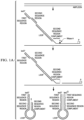
- Various embodiments disclosed herein provide a real time probe based chemistry that allows higher multiplexing capabilities to be achieved by utilizing extendable hairpin probes to create multiple melt curves per channel. An example of probes for use in this system is shown in FIG. 1A .
- the cleavable probe comprises a reporter-labeled isoG nucleotide ("isoG*") at its 5' end, a first sequence region ("Tag A”), a second sequence region ("Tag B"), a loop sequence, a sequence region that is the reverse complement of Tag B (“Tag B complement”); and a sequence complementary to the target amplicon (indicated as "A").
- the cleavable probe also comprises one or more ribonucleotides
- the resulting hairpin probe quenches the fluorescence of the labeled isoG.
- the probes can be designed to have unique melt temperatures (T m ), such as by adjusting the sequence and length of the first and second sequence regions.
- T m unique melt temperatures
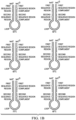
- the composition and length of the Tag A and Tag B stem structures can be varied to resolve in any desired melt temperature for the hairpin probe (see,
- FIG. 1B is a diagrammatic representation of FIG. 1B .
- cleavable probes were designed without a target sequence specific tail (post cleavage) to determine optimal design parameters for an extendable hairpin.
- the targeted T m for the sequence specific tail was 10 °C above the reaction temperature ( ⁇ 58 °C).
- the hairpin constructs were designed to have a T m > 60°C to allow for the formation of the unimolecular structure post cleavage of RNA/DNA hybrid.
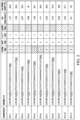
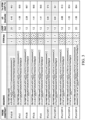
- These constructs were designed to determine requirements for loop size (number of bases), stem size, Gibbs free energy and T m of the hairpin post cleavage. Examples of specific probes that were constructed are shown ( FIG. 2 ). For these proof of concept experiments, a loop of multi-adenine residues ending with two cytosine "clamps" at each side of the loop was used (sequence between the font in italics).
- the efficiency of the hairpin formation was evaluated by measuring rate of quenching of each construct at 3 temperatures.
- Constructs of FIG. 2 were added to a reaction mixture containing BTP-KCl pH 9.1 buffer, 2.5 mM dNTPs, 1mM isoG-dabcyl- and Titanium Taq enzyme ( Clontech ) . After 2 minutes of activation step at 95° C, the reaction was incubated at 50° C, 62° C and 68° C for 30 minutes to allow for hairpins to fold, extend and incorporate isoG-dabcyl . This was followed by a melt curve cycling protocol of 60° C 30 s and incremental increase to 95 ° C. The efficiency of the reaction was determined by the Ct values generated when quenching was achieved.
- PCR primers forward 180 nM, reverse 60 nM
- probe 120 nM
- BTP-KCl pH 9.1 buffer 2.5 mM dNTPs, 2.5 mM MgCl 2 , 1mM Dabcyl-isoG, Titanium Taq enzyme ( Clontech ) and MMLV (Promega) and RNase H (IDT).
- the following cycling conditions were used for amplification and melt curve analysis: 50 ° C , 5 minutes; 95° C for 10 minutes; 95° C for 10s, 58° C for 20s for 45 cycles followed by a melt program of 60 ° C for 30s and 95° C 1s ending with a cooling step at 40 ° C.
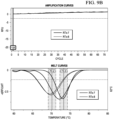
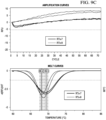
- Hairpin constructs RTx-4, 9 and 10 are quenched by the 62 °C and hairpin RTx-11 at 41 ° C.
- Table 2 Summary of folding temperature for various hairpin probes. Construct Folding Temperature (° C) Stem (bp) loop (bp) deltaG (kcal.mole-1) Tm stem loop (° C) % GC RTx-1 71 8 7 -1.27 64.8 50 RTx-2 8 12 -1.06 63.6 50 RTx-3 7 7 -0.87 63.3 57 RTx-5 9 7 -1.62 65.7 44 RTx-6 9 12 -1.41 64.6 44 RTx-7 8 7 -0.93 62.9 50 RTx-8 8 12 -0.72 61.8 50 RTx-4 62 7 12 -0.66 62 57 RTx-9 6 7 -0.26 59.8 67 RTx-10 6 7 -0.53 61.7 67 RTx-11 41 5 7 -0.5 62 80
- the main factor influencing the formation of the hairpin is the number of bases in the stem.
- the secondary factor may be the Gibbs Free energy associated with the folding of the hairpin as the delta G of the constructs with the correct folding T m are lower than the constructs with T m 's of 62° C and 41° C.
- the hairpin constructs from FIG. 2 were used to determine the efficiency of hairpin formation at various temperatures. The results confirm the observations made in above.
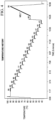
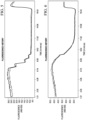
- the reaction rates are very fast for probes RT-x 1, 2, 7, and 8 ( FIG. 8 and FIG. 9 ). Slower reaction rates were observed for probes RTx-9 and 10, Ct values ranged from 5-10 and the highest Ct value recorded for complete quenching was for RTx 11, 30-35 ( FIG. 10 ). These hairpins require lower temperatures to form and extend, which translates into longer times required for folding.
- the calculated hairpin loop T m of these probes is very close to the reaction temperature (58 ° C). Reducing the reaction temperature may improve the number of hairpin molecules formed and provide better detection.
- the reporter probe comprises a reporter-labeled isoC nucleotide ("isoC*") at its 5' end, a first sequence region ("region 1"), a sequence that includes isoG and/or isoC positions (the "isoprimer”); and a sequence complementary to the amplicon (indicated as "A").
- the sequence that is complementary to the amplicon also includes at least one ribonucleotide position.
- the reporter probe hybridizes to the amplicon and is cleaved at the ribonucleotide position by RNase H.
- the reporter probe can hybridize to a capture oligonucleotide ("capture oligo"), which comprises a capture segment complimentray to the isoprimer and, optionally, a portion that "A" sequence, followed by a mirror region 1 and a 3' unlabeled isoC.
- capture oligo a capture oligonucleotide
- Extension of the reporter probe will synthesize sequences complementary to the mirror tag on the capture oligo and will incorporate a quencher labeled isoG ("isoG Q ").
- the extended reporter probe now includes a tag and tag complement sequence, which allows the probe to form a hairpin and thereby quench the fluorescence of the labeled isoC.
- the probes can be designed to have unique melt temperatures (T m ), such as by adjusting the sequence and length of the first sequence region. Thus, a melt analysis can be performed to differentiation probes having different melt temperatures (and thus unquenching at different temperatures).
- Extension of the 3' end of the cleaved probe onto the first sequence region creates a double-stranded molecule having a conformation that places the fluorophore at a greater distance from the quencher such that a detectable change in the signal can be observed.
- FIG. 17 shows an embodiment in which the probe comprises one member of a reporter-quencher pair, in this particular case it is a fluorophore (F).
- the probe comprises a first sequence region, a second sequence region, a loop region, a second sequence region complement, one or more ribonucleotide(s), and a target specific region 3' of the ribonucleotide(s).
- the loop region, the second sequence region complement, the ribonucleotide(s), and the target specific region 3' of the ribonucleotide(s) are complementary to the target.
- Reverse transcription PCR was performed without template to monitor for non-specific interactions that would cause a change in signal during a melt analysis.
- the below PCR master mix was created for a 25 ⁇ L reaction and run on an ABI Fast 7500 real-time thermal cycler.
- the thermal profile included 50°C hold for 5m., 95°C hold for 2m. 20s., 44cycles of 95°C for 10s. and 57°C for 23s.
- the melt analysis included ramping from 60 to 95°C and reading at every 0.5°C.
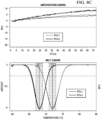
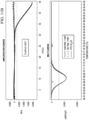
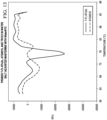
- FIG. 13 shows the inverted derivative of the data obtained during the melt analysis.
- a non-specific melt peak at 77°C is present for the T-FL-RTx2c probe, which lacks the 3-carbon spacer in the loop region.
- the extension blocker prevents the non-specific extension of the primer across the loop region, which not only prevents the formation of a quencher/fluorophore pair, but also prevents a double stranded product with sufficient Tm to be amplified during the 58°C annealing steps in PCR.
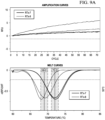
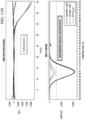
- FIG. 14 shows melt profile data for 6 individual reactions (1 positive for each of the three targets at 1000 copies/reaction, and 3 No Template Control (NTC) samples) using the same multiplex PCR reaction mix.
- NTC No Template Control
Landscapes
- Chemical & Material Sciences (AREA)
- Organic Chemistry (AREA)
- Life Sciences & Earth Sciences (AREA)
- Health & Medical Sciences (AREA)
- Zoology (AREA)
- Engineering & Computer Science (AREA)
- Wood Science & Technology (AREA)
- Proteomics, Peptides & Aminoacids (AREA)
- Molecular Biology (AREA)
- Immunology (AREA)
- Bioinformatics & Cheminformatics (AREA)
- Genetics & Genomics (AREA)
- General Health & Medical Sciences (AREA)
- Biotechnology (AREA)
- General Engineering & Computer Science (AREA)
- Biochemistry (AREA)
- Microbiology (AREA)
- Analytical Chemistry (AREA)
- Physics & Mathematics (AREA)
- Biophysics (AREA)
- Measuring Or Testing Involving Enzymes Or Micro-Organisms (AREA)
- Chemical Kinetics & Catalysis (AREA)
- Enzymes And Modification Thereof (AREA)
- Apparatus Associated With Microorganisms And Enzymes (AREA)
Priority Applications (1)
| Application Number | Priority Date | Filing Date | Title |
|---|---|---|---|
| EP25187915.1A EP4613872A3 (en) | 2014-08-11 | 2015-08-11 | Probes for improved melt discrimination and multiplexing in nucleic acid assays |
Applications Claiming Priority (5)
| Application Number | Priority Date | Filing Date | Title |
|---|---|---|---|
| US201462035783P | 2014-08-11 | 2014-08-11 | |
| EP19201667.3A EP3653726B1 (en) | 2014-08-11 | 2015-08-11 | Probes for improved melt discrimination and multiplexing in nucleic acid assays |
| EP21203885.5A EP3967771B1 (en) | 2014-08-11 | 2015-08-11 | Probes for improved melt discrimination and multiplexing in nucleic acid assays |
| EP15832414.5A EP3180449B1 (en) | 2014-08-11 | 2015-08-11 | Probes for improved melt discrimination and multiplexing in nucleic acid assays |
| PCT/US2015/044609 WO2016025452A1 (en) | 2014-08-11 | 2015-08-11 | Probes for improved melt discrimination and multiplexing in nucleic acids assays |
Related Parent Applications (3)
| Application Number | Title | Priority Date | Filing Date |
|---|---|---|---|
| EP19201667.3A Division EP3653726B1 (en) | 2014-08-11 | 2015-08-11 | Probes for improved melt discrimination and multiplexing in nucleic acid assays |
| EP15832414.5A Division EP3180449B1 (en) | 2014-08-11 | 2015-08-11 | Probes for improved melt discrimination and multiplexing in nucleic acid assays |
| EP21203885.5A Division EP3967771B1 (en) | 2014-08-11 | 2015-08-11 | Probes for improved melt discrimination and multiplexing in nucleic acid assays |
Related Child Applications (1)
| Application Number | Title | Priority Date | Filing Date |
|---|---|---|---|
| EP25187915.1A Division EP4613872A3 (en) | 2014-08-11 | 2015-08-11 | Probes for improved melt discrimination and multiplexing in nucleic acid assays |
Publications (3)
| Publication Number | Publication Date |
|---|---|
| EP4299760A2 EP4299760A2 (en) | 2024-01-03 |
| EP4299760A3 EP4299760A3 (en) | 2024-02-21 |
| EP4299760B1 true EP4299760B1 (en) | 2025-07-09 |
Family
ID=55266966
Family Applications (5)
| Application Number | Title | Priority Date | Filing Date |
|---|---|---|---|
| EP23194986.8A Active EP4299760B1 (en) | 2014-08-11 | 2015-08-11 | Probes for improved melt discrimination and multiplexing in nucleic acid assays |
| EP25187915.1A Pending EP4613872A3 (en) | 2014-08-11 | 2015-08-11 | Probes for improved melt discrimination and multiplexing in nucleic acid assays |
| EP15832414.5A Active EP3180449B1 (en) | 2014-08-11 | 2015-08-11 | Probes for improved melt discrimination and multiplexing in nucleic acid assays |
| EP19201667.3A Active EP3653726B1 (en) | 2014-08-11 | 2015-08-11 | Probes for improved melt discrimination and multiplexing in nucleic acid assays |
| EP21203885.5A Active EP3967771B1 (en) | 2014-08-11 | 2015-08-11 | Probes for improved melt discrimination and multiplexing in nucleic acid assays |
Family Applications After (4)
| Application Number | Title | Priority Date | Filing Date |
|---|---|---|---|
| EP25187915.1A Pending EP4613872A3 (en) | 2014-08-11 | 2015-08-11 | Probes for improved melt discrimination and multiplexing in nucleic acid assays |
| EP15832414.5A Active EP3180449B1 (en) | 2014-08-11 | 2015-08-11 | Probes for improved melt discrimination and multiplexing in nucleic acid assays |
| EP19201667.3A Active EP3653726B1 (en) | 2014-08-11 | 2015-08-11 | Probes for improved melt discrimination and multiplexing in nucleic acid assays |
| EP21203885.5A Active EP3967771B1 (en) | 2014-08-11 | 2015-08-11 | Probes for improved melt discrimination and multiplexing in nucleic acid assays |
Country Status (7)
| Country | Link |
|---|---|
| US (5) | US9982291B2 (enExample) |
| EP (5) | EP4299760B1 (enExample) |
| JP (4) | JP6664381B2 (enExample) |
| KR (3) | KR20220155394A (enExample) |
| CN (2) | CN106715720B (enExample) |
| CA (1) | CA2956812C (enExample) |
| WO (1) | WO2016025452A1 (enExample) |
Families Citing this family (32)
| Publication number | Priority date | Publication date | Assignee | Title |
|---|---|---|---|---|
| WO2013049613A1 (en) * | 2011-09-29 | 2013-04-04 | Luminex Corporation | Hydrolysis probes |
| EP4321867B1 (en) | 2013-08-09 | 2025-10-01 | Luminex Corporation | Probes for improved melt discrimination and multiplexing in nucleic acid assays |
| KR20220155394A (ko) * | 2014-08-11 | 2022-11-22 | 루미넥스 코포레이션 | 핵산 검정에서 개선된 용융 판별 및 멀티플렉싱을 위한 프로브 |
| JP6740242B2 (ja) * | 2014-12-15 | 2020-08-12 | ルミネックス コーポレーション | 詳細検定プロトコル仕様 |
| WO2017214561A1 (en) * | 2016-06-10 | 2017-12-14 | Life Technologies Corporation | Methods and compositions for nucleic acid amplification |
| JP7221199B2 (ja) * | 2016-09-15 | 2023-02-20 | エフ. ホフマン-ラ ロシュ エージー. | マルチプレックスpcrの実施方法 |
| JP6754301B2 (ja) * | 2017-01-05 | 2020-09-09 | 株式会社日立製作所 | ドロップレットデジタルpcrの測定方法および測定装置 |
| CN108823287B (zh) | 2017-04-28 | 2019-04-12 | 厦门大学 | 一种检测靶核酸序列的方法 |
| WO2019028361A1 (en) * | 2017-08-04 | 2019-02-07 | Stratos Genomics Inc. | SINGLE MOLECULE NUCLEIC ACID DETECTION BY CLEARING MESAPPARITIONS |
| KR102237237B1 (ko) * | 2017-11-28 | 2021-04-07 | 에스에프씨 주식회사 | 소광자 및 이의 용도 |
| AU2019209444A1 (en) * | 2018-01-22 | 2020-07-30 | Luminex Corporation | Methods and compositions for discrete melt analysis |
| KR102098710B1 (ko) * | 2018-01-31 | 2020-04-08 | 한국과학기술원 | 헤어핀 프로브 기반 등온 핵산 증폭을 이용한 표적핵산 검출 방법 |
| US20190284609A1 (en) | 2018-03-14 | 2019-09-19 | Luminex Corporation | Fast, multiplex amplification of nucleic acids |
| CN108504655B (zh) * | 2018-03-27 | 2020-10-20 | 浙江大学 | 一种用于制备DNA Ladder的引物对、DNA片段及方法 |
| SG11202101140TA (en) * | 2018-08-09 | 2021-03-30 | Speedx Pty Ltd | Multiplex detection of nucleic acids |
| US11371080B2 (en) | 2018-11-30 | 2022-06-28 | Luminex Corporation | Methods and probes for performing PCR with melt analysis for increased multiplexing |
| WO2020139671A1 (en) | 2018-12-28 | 2020-07-02 | Luminex Corporation | Methods for detecting variant nucleotides |
| WO2020218831A1 (ko) * | 2019-04-22 | 2020-10-29 | 포항공과대학교 산학협력단 | 신규한 등온 단일 반응용 프로브 세트 및 이의 용도 |
| WO2020256378A1 (ko) * | 2019-06-17 | 2020-12-24 | 강릉원주대학교산학협력단 | 핵산 검출 방법 |
| CN112921117B (zh) * | 2019-12-06 | 2022-10-14 | 杭州百殷生物科技有限公司 | 一种用于检测多种人乳头状瘤病毒分型的试剂盒及操作方法 |
| CN115943218B (zh) * | 2020-03-03 | 2025-05-09 | 根特大学 | 基于水解的探针和str基因分型的方法 |
| CN112329936B (zh) * | 2020-11-05 | 2023-03-24 | 西北工业大学 | 一种基于多种群遗传算法和相似性计算的信号延拓方法 |
| US20240327933A1 (en) * | 2020-12-16 | 2024-10-03 | The Broad Institute, Inc. | Coronavirus rapid diagnostics |
| CN113073152A (zh) * | 2021-05-12 | 2021-07-06 | 广州普世利华科技有限公司 | 一种用于检测乙型流感病毒的lamp引物、探针、试剂盒 |
| CN113201593B (zh) * | 2021-05-25 | 2024-01-23 | 广州盛世中豪运动科技有限公司 | 用于检测actn3基因型的引物探针组合产品 |
| AU2022346850A1 (en) * | 2021-09-16 | 2024-03-28 | Cepheid | Echo amplification: a comprehensive system of chemistry and methods for amplification and detection of specific nucleic acid sequences |
| WO2023108014A1 (en) | 2021-12-07 | 2023-06-15 | Luminex Corporation | Methods and compositions for nucleic acid analysis |
| EP4547861A1 (en) * | 2022-06-29 | 2025-05-07 | Life Technologies Corporation | Compositions, kits, and methods for detecting nucleic acids using intra-channel multiplexing |
| WO2024101758A1 (ko) * | 2022-11-09 | 2024-05-16 | 고려대학교 산학협력단 | 연장 매개 자가 접힘을 이용한 새로운 핵산 등온 증폭 방법 |
| CN115896250A (zh) * | 2023-02-23 | 2023-04-04 | 武汉大学 | 用于检测目标rna或单链dna的组合物及其应用 |
| WO2025053620A1 (ko) * | 2023-09-08 | 2025-03-13 | 주식회사 씨젠 | 3개의 프로브를 이용하여 타겟 핵산을 검출하는 방법 |
| CN118879840B (zh) * | 2024-08-19 | 2025-10-21 | 福州共荧生物科技有限公司 | 一种基于pcr的多色荧光通道检测方法及应用 |
Family Cites Families (84)
| Publication number | Priority date | Publication date | Assignee | Title |
|---|---|---|---|---|
| US4284412A (en) | 1979-07-13 | 1981-08-18 | Ortho Diagnostics, Inc. | Method and apparatus for automated identification and enumeration of specified blood cell subclasses |
| US4498766A (en) | 1982-03-25 | 1985-02-12 | Becton, Dickinson And Company | Light beam focal spot elongation in flow cytometry devices |
| US4661913A (en) | 1984-09-11 | 1987-04-28 | Becton, Dickinson And Company | Apparatus and method for the detection and classification of articles using flow cytometry techniques |
| US4767206A (en) | 1984-12-24 | 1988-08-30 | Flow Cytometry Standards Corporation | Calibration method for flow cytometry using fluorescent microbeads and synthesis thereof |
| US4857451A (en) | 1984-12-24 | 1989-08-15 | Flow Cytometry Standards Corporation | Method of compensating and calibrating a flow cytometer, and microbead standards kit therefor |
| US4774189A (en) | 1984-12-24 | 1988-09-27 | Flow Cytometry Standards Corp. | Fluorescent calibration microbeads simulating stained cells |
| US5656493A (en) | 1985-03-28 | 1997-08-12 | The Perkin-Elmer Corporation | System for automated performance of the polymerase chain reaction |
| US4989977A (en) | 1985-07-29 | 1991-02-05 | Becton, Dickinson And Company | Flow cytometry apparatus with improved light beam adjustment |
| US4714682A (en) | 1985-12-11 | 1987-12-22 | Flow Cytometry Standards Corporation | Fluorescent calibration microbeads simulating stained cells |
| US4942124A (en) | 1987-08-11 | 1990-07-17 | President And Fellows Of Harvard College | Multiplex sequencing |
| US5160974A (en) | 1990-06-25 | 1992-11-03 | Flow Science, Inc. | Closed sample cell for use in flow cytometry |
| US6140496A (en) | 1990-10-09 | 2000-10-31 | Benner; Steven Albert | Precursors for deoxyribonucleotides containing non-standard nucleosides |
| US5432272A (en) | 1990-10-09 | 1995-07-11 | Benner; Steven A. | Method for incorporating into a DNA or RNA oligonucleotide using nucleotides bearing heterocyclic bases |
| US6037120A (en) | 1995-10-12 | 2000-03-14 | Benner; Steven Albert | Recognition of oligonucleotides containing non-standard base pairs |
| US5965364A (en) | 1990-10-09 | 1999-10-12 | Benner; Steven Albert | Method for selecting functional deoxyribonucleotide derivatives |
| US5478722A (en) | 1991-02-17 | 1995-12-26 | The Curators Of The University Of Missouri | Preserved cell preparations for flow cytometry and immunology |
| US5994056A (en) | 1991-05-02 | 1999-11-30 | Roche Molecular Systems, Inc. | Homogeneous methods for nucleic acid amplification and detection |
| ATE278807T1 (de) | 1992-02-19 | 2004-10-15 | New York Health Res Inst | Neue anordnungen von oligonukleotiden und ihr nutzen zum sortieren, isolieren, sequenzierung und manipulieren von nukleinsäuren |
| US5837832A (en) | 1993-06-25 | 1998-11-17 | Affymetrix, Inc. | Arrays of nucleic acid probes on biological chips |
| US5538848A (en) | 1994-11-16 | 1996-07-23 | Applied Biosystems Division, Perkin-Elmer Corp. | Method for detecting nucleic acid amplification using self-quenching fluorescence probe |
| US5604097A (en) | 1994-10-13 | 1997-02-18 | Spectragen, Inc. | Methods for sorting polynucleotides using oligonucleotide tags |
| US5736330A (en) | 1995-10-11 | 1998-04-07 | Luminex Corporation | Method and compositions for flow cytometric determination of DNA sequences |
| US5981180A (en) | 1995-10-11 | 1999-11-09 | Luminex Corporation | Multiplexed analysis of clinical specimens apparatus and methods |
| EP0852004B1 (en) | 1995-10-11 | 2011-01-19 | Luminex Corporation | Multiplexed analysis of clinical specimens |
| US6913881B1 (en) * | 1996-01-24 | 2005-07-05 | Third Wave Technologies, Inc. | Methods and compositions for detecting target sequences |
| US5716784A (en) | 1996-02-05 | 1998-02-10 | The Perkin-Elmer Corporation | Fluorescence detection assay for homogeneous PCR hybridization systems |
| ATE318327T1 (de) | 1996-06-04 | 2006-03-15 | Univ Utah Res Found | Fluoreszenz-donor-akzeptor paar |
| US5853990A (en) | 1996-07-26 | 1998-12-29 | Edward E. Winger | Real time homogeneous nucleotide assay |
| US6449562B1 (en) | 1996-10-10 | 2002-09-10 | Luminex Corporation | Multiplexed analysis of clinical specimens apparatus and method |
| US5837860A (en) | 1997-03-05 | 1998-11-17 | Molecular Tool, Inc. | Covalent attachment of nucleic acid molecules onto solid-phases via disulfide bonds |
| US6139800A (en) | 1997-06-23 | 2000-10-31 | Luminex Corporation | Interlaced lasers for multiple fluorescence measurement |
| US6274316B1 (en) | 1997-07-03 | 2001-08-14 | Id Biomedical Corporation | Compositions and methods for detecting vancomycin resistant enterococci by cycling probe reactions |
| US20020102571A1 (en) * | 1997-07-24 | 2002-08-01 | Jane Theaker | Use of 2'-O-methyl RNA as hybridisation probe |
| KR20010031140A (ko) | 1997-10-14 | 2001-04-16 | 루미넥스 코포레이션 | 정밀 형광염료 입자 및 그의 제조방법 그리고 그의 사용 |
| AU2464299A (en) | 1998-01-22 | 1999-08-09 | Luminex Corporation | Microparticles with multiple fluorescent signals |
| AU3996299A (en) | 1998-05-14 | 1999-11-29 | Luminex Corporation | Diode laser based measurement apparatus |
| US6592822B1 (en) | 1998-05-14 | 2003-07-15 | Luminex Corporation | Multi-analyte diagnostic system and computer implemented process for same |
| CA2328408C (en) | 1998-05-14 | 2005-02-15 | Luminex Corporation | Zero dead time architecture and method for flow cytometer |
| WO2000028082A1 (fr) | 1998-11-09 | 2000-05-18 | Eiken Kagaku Kabushiki Kaisha | Procede de synthese d'acide nucleique |
| US6951722B2 (en) | 1999-03-19 | 2005-10-04 | Takara Bio Inc. | Method for amplifying nucleic acid sequence |
| ATE324588T1 (de) | 1999-08-17 | 2006-05-15 | Luminex Corp | Verkapselung von fluoreszierenden partikeln |
| CN1592792B (zh) | 2000-05-19 | 2010-12-01 | 伊拉根生物科学公司 | 检测核酸的材料和方法 |
| JP4499987B2 (ja) | 2000-10-14 | 2010-07-14 | エラジェン バイオサイエンシズ インコーポレイテッド | 非−標準塩基を使用する固体支持体アッセイ系及び方法 |
| WO2002059355A2 (en) | 2001-01-25 | 2002-08-01 | Tm Bioscience Corporation | Polynucleotides for use as tags and tag complements, manufacture and use thereof |
| US7226737B2 (en) | 2001-01-25 | 2007-06-05 | Luminex Molecular Diagnostics, Inc. | Polynucleotides for use as tags and tag complements, manufacture and use thereof |
| DE602004026033D1 (de) | 2003-01-29 | 2010-04-29 | 454 Corp | Zweiendige sequenzierung |
| EP1641809B2 (en) | 2003-07-05 | 2018-10-03 | The Johns Hopkins University | Method and compositions for detection and enumeration of genetic variations |
| US7927797B2 (en) | 2004-01-28 | 2011-04-19 | 454 Life Sciences Corporation | Nucleic acid amplification with continuous flow emulsion |
| CN101238221B (zh) * | 2005-04-12 | 2011-11-16 | Novia公司名下的现场Rcp公司 | 新型环形探针及其在鉴定生物分子中的用途 |
| AU2006244035A1 (en) * | 2005-05-11 | 2006-11-16 | Stratagene California | Snapback oligonucleotide probe |
| CN101268199A (zh) * | 2005-07-15 | 2008-09-17 | 阿普尔拉股份有限公司 | 核酸扩增的检测 |
| JP4898210B2 (ja) * | 2005-08-09 | 2012-03-14 | 株式会社ビー・エム・エル | サポウイルスの検出方法 |
| US20090068643A1 (en) * | 2005-11-23 | 2009-03-12 | Integrated Dna Technologies, Inc. | Dual Function Primers for Amplifying DNA and Methods of Use |
| US20120122095A1 (en) * | 2006-01-12 | 2012-05-17 | Eragen Biosciences, Inc. | Materials and methods for the detection of anthrax related toxin genes |
| WO2007127935A1 (en) * | 2006-04-27 | 2007-11-08 | J. David Gladstone Institutes | Dephosphorylation of hdac7 by myosin phosphatase |
| US8296088B2 (en) | 2006-06-02 | 2012-10-23 | Luminex Corporation | Systems and methods for performing measurements of one or more materials |
| WO2008070352A2 (en) * | 2006-10-27 | 2008-06-12 | Complete Genomics, Inc. | Efficient arrays of amplified polynucleotides |
| KR101433208B1 (ko) | 2006-12-13 | 2014-08-22 | 루미넥스 코포레이션 | 실시간으로 pcr의 다중 분석을 위한 시스템과 방법 |
| AU2008206221A1 (en) | 2007-01-17 | 2008-07-24 | Meridian Bioscience, Inc. | Stable reagents and kits useful in loop-mediated isothermal amplification (LAMP) |
| CN101918587B (zh) | 2007-03-08 | 2013-03-27 | 拜欧法诊断有限公司 | 用于熔解分析的引物 |
| JP2009050217A (ja) * | 2007-08-28 | 2009-03-12 | Olympus Corp | 標的dnaを検出する方法 |
| WO2009074882A2 (en) | 2007-11-02 | 2009-06-18 | Luminex Molecular Diagnostics, Inc. | One-step target detection assay |
| DK2644707T3 (en) | 2008-04-30 | 2015-06-29 | Integrated Dna Tech Inc | RNase-H-based assays using modified RNA monomers. |
| US8911948B2 (en) | 2008-04-30 | 2014-12-16 | Integrated Dna Technologies, Inc. | RNase H-based assays utilizing modified RNA monomers |
| US9434988B2 (en) | 2008-04-30 | 2016-09-06 | Integrated Dna Technologies, Inc. | RNase H-based assays utilizing modified RNA monomers |
| US10227641B2 (en) * | 2008-04-30 | 2019-03-12 | Integrated Dna Technologies, Inc. | RNase H-based assays utilizing modified RNA monomers |
| WO2010013017A1 (en) | 2008-07-31 | 2010-02-04 | Oxitec Limited | Multiplex amplification and detection |
| GB0909333D0 (en) | 2009-06-01 | 2009-07-15 | Fu Guoliang | Multiplex amplification and detection |
| WO2010036359A2 (en) | 2008-09-25 | 2010-04-01 | Allelogic Biosciences Corporation | Methods of polymerase activity assay |
| EP2491146B1 (en) | 2009-10-23 | 2017-09-20 | Luminex Corporation | Amplification primers with non-standard bases for increased reaction specificity |
| WO2011063388A2 (en) * | 2009-11-23 | 2011-05-26 | Becton, Dickinson And Company | Assay method for target nucleic acid by signal amplification using probe hybridization and restriction |
| GB201004292D0 (en) * | 2010-03-15 | 2010-04-28 | Olink Ab | Assay for localised detection of analytes |
| US8859266B2 (en) * | 2010-04-28 | 2014-10-14 | University Of Central Florida Research Foundation, Inc. | Binary probe system for sensitive detection of target analytes |
| CN101871007B (zh) * | 2010-05-07 | 2014-04-30 | 无锡锐奇基因生物科技有限公司 | 用标记探针进行检测和熔解曲线分析的方法 |
| SG185543A1 (en) * | 2010-05-14 | 2012-12-28 | Fluidigm Corp | Assays for the detection of genotype, mutations, and/or aneuploidy |
| WO2012024639A1 (en) * | 2010-08-20 | 2012-02-23 | Life Technologies Corporation | Polymerase assay with a fret substrate |
| US20120052492A1 (en) * | 2010-08-30 | 2012-03-01 | Samsung Techwin Co., Ltd. | Oligonucleotides for detecting listeria spp. and use thereof |
| MX340258B (es) | 2011-01-11 | 2016-07-01 | Seegene Inc | Detección de secuencias de ácido nucleico objetivo mediante ensayo de escisión y extensión del pto. |
| MX342067B (es) * | 2011-05-04 | 2016-09-09 | Seegene Inc | Detección de secuencias de ácido nucleico objetivo por desdoblamiento e hibridización de oligonucleótido de sonda. |
| CN104023834B (zh) | 2011-05-04 | 2016-09-28 | 卢米耐克斯公司 | 用于集成的样品制备、反应和检测的设备与方法 |
| US20130310269A1 (en) * | 2012-05-04 | 2013-11-21 | Austin So | Hot-start digital pcr |
| JP6200948B2 (ja) * | 2012-05-25 | 2017-09-20 | ザ・ユニヴァーシティ・オヴ・ノース・キャロライナ・アト・チャペル・ヒル | マイクロ流体デバイス |
| EP4321867B1 (en) | 2013-08-09 | 2025-10-01 | Luminex Corporation | Probes for improved melt discrimination and multiplexing in nucleic acid assays |
| KR20220155394A (ko) * | 2014-08-11 | 2022-11-22 | 루미넥스 코포레이션 | 핵산 검정에서 개선된 용융 판별 및 멀티플렉싱을 위한 프로브 |
-
2015
- 2015-08-11 KR KR1020227038647A patent/KR20220155394A/ko not_active Ceased
- 2015-08-11 CN CN201580050926.4A patent/CN106715720B/zh active Active
- 2015-08-11 JP JP2017507861A patent/JP6664381B2/ja active Active
- 2015-08-11 EP EP23194986.8A patent/EP4299760B1/en active Active
- 2015-08-11 CA CA2956812A patent/CA2956812C/en active Active
- 2015-08-11 KR KR1020217012283A patent/KR102465287B1/ko active Active
- 2015-08-11 EP EP25187915.1A patent/EP4613872A3/en active Pending
- 2015-08-11 EP EP15832414.5A patent/EP3180449B1/en active Active
- 2015-08-11 WO PCT/US2015/044609 patent/WO2016025452A1/en not_active Ceased
- 2015-08-11 KR KR1020177006896A patent/KR102246600B1/ko active Active
- 2015-08-11 EP EP19201667.3A patent/EP3653726B1/en active Active
- 2015-08-11 EP EP21203885.5A patent/EP3967771B1/en active Active
- 2015-08-11 US US14/823,288 patent/US9982291B2/en active Active
- 2015-08-11 CN CN202110819656.6A patent/CN113637728B/zh active Active
-
2017
- 2017-07-21 US US15/656,541 patent/US10752939B2/en active Active
-
2018
- 2018-04-25 US US15/962,077 patent/US10975419B2/en active Active
-
2020
- 2020-02-18 JP JP2020024843A patent/JP6929398B2/ja active Active
- 2020-08-03 US US16/983,015 patent/US20200362396A1/en not_active Abandoned
-
2021
- 2021-03-09 US US17/196,200 patent/US12480152B2/en active Active
- 2021-08-10 JP JP2021130466A patent/JP7231680B2/ja active Active
-
2023
- 2023-02-16 JP JP2023022049A patent/JP2023053361A/ja active Pending
Also Published As
Similar Documents
| Publication | Publication Date | Title |
|---|---|---|
| US12480152B2 (en) | Probes for improved melt discrimination and multiplexing in nucleic acid assays | |
| US20220154257A1 (en) | Probes for improved melt discrimination and multiplexing in nucleic acid assays | |
| HK40070845A (en) | Probes for improved melt discrimination and multiplexing in nucleic acid assays | |
| CA3190291C (en) | Probes for improved melt discrimination and multiplexing in nucleic acid assays | |
| HK40029959B (en) | Probes for improved melt discrimination and multiplexing in nucleic acid assays | |
| HK40029959A (en) | Probes for improved melt discrimination and multiplexing in nucleic acid assays | |
| HK1236579A1 (en) | Probes for improved melt discrimination and multiplexing in nucleic acid assays |
Legal Events
| Date | Code | Title | Description |
|---|---|---|---|
| PUAI | Public reference made under article 153(3) epc to a published international application that has entered the european phase |
Free format text: ORIGINAL CODE: 0009012 |
|
| STAA | Information on the status of an ep patent application or granted ep patent |
Free format text: STATUS: THE APPLICATION HAS BEEN PUBLISHED |
|
| AC | Divisional application: reference to earlier application |
Ref document number: 3180449 Country of ref document: EP Kind code of ref document: P Ref document number: 3653726 Country of ref document: EP Kind code of ref document: P Ref document number: 3967771 Country of ref document: EP Kind code of ref document: P |
|
| AK | Designated contracting states |
Kind code of ref document: A2 Designated state(s): AL AT BE BG CH CY CZ DE DK EE ES FI FR GB GR HR HU IE IS IT LI LT LU LV MC MK MT NL NO PL PT RO RS SE SI SK SM TR |
|
| REG | Reference to a national code |
Ref country code: DE Ref legal event code: R079 Free format text: PREVIOUS MAIN CLASS: C12Q0001682300 Ipc: C12Q0001680000 Ref country code: DE Ref legal event code: R079 Ref document number: 602015091997 Country of ref document: DE Free format text: PREVIOUS MAIN CLASS: C12Q0001682300 Ipc: C12Q0001680000 |
|
| PUAL | Search report despatched |
Free format text: ORIGINAL CODE: 0009013 |
|
| AK | Designated contracting states |
Kind code of ref document: A3 Designated state(s): AL AT BE BG CH CY CZ DE DK EE ES FI FR GB GR HR HU IE IS IT LI LT LU LV MC MK MT NL NO PL PT RO RS SE SI SK SM TR |
|
| RIC1 | Information provided on ipc code assigned before grant |
Ipc: C12Q 1/6823 20180101ALI20240115BHEP Ipc: C07H 21/04 20060101ALI20240115BHEP Ipc: C12Q 1/68 20180101AFI20240115BHEP |
|
| STAA | Information on the status of an ep patent application or granted ep patent |
Free format text: STATUS: REQUEST FOR EXAMINATION WAS MADE |
|
| STAA | Information on the status of an ep patent application or granted ep patent |
Free format text: STATUS: EXAMINATION IS IN PROGRESS |
|
| 17P | Request for examination filed |
Effective date: 20240820 |
|
| RBV | Designated contracting states (corrected) |
Designated state(s): AL AT BE BG CH CY CZ DE DK EE ES FI FR GB GR HR HU IE IS IT LI LT LU LV MC MK MT NL NO PL PT RO RS SE SI SK SM TR |
|
| 17Q | First examination report despatched |
Effective date: 20240910 |
|
| GRAP | Despatch of communication of intention to grant a patent |
Free format text: ORIGINAL CODE: EPIDOSNIGR1 |
|
| STAA | Information on the status of an ep patent application or granted ep patent |
Free format text: STATUS: GRANT OF PATENT IS INTENDED |
|
| INTG | Intention to grant announced |
Effective date: 20250129 |
|
| GRAS | Grant fee paid |
Free format text: ORIGINAL CODE: EPIDOSNIGR3 |
|
| GRAA | (expected) grant |
Free format text: ORIGINAL CODE: 0009210 |
|
| STAA | Information on the status of an ep patent application or granted ep patent |
Free format text: STATUS: THE PATENT HAS BEEN GRANTED |
|
| AC | Divisional application: reference to earlier application |
Ref document number: 3180449 Country of ref document: EP Kind code of ref document: P Ref document number: 3653726 Country of ref document: EP Kind code of ref document: P Ref document number: 3967771 Country of ref document: EP Kind code of ref document: P |
|
| AK | Designated contracting states |
Kind code of ref document: B1 Designated state(s): AL AT BE BG CH CY CZ DE DK EE ES FI FR GB GR HR HU IE IS IT LI LT LU LV MC MK MT NL NO PL PT RO RS SE SI SK SM TR |
|
| REG | Reference to a national code |
Ref country code: GB Ref legal event code: FG4D |
|
| REG | Reference to a national code |
Ref country code: CH Ref legal event code: EP |
|
| REG | Reference to a national code |
Ref country code: IE Ref legal event code: FG4D |
|
| REG | Reference to a national code |
Ref country code: DE Ref legal event code: R096 Ref document number: 602015091997 Country of ref document: DE |
|
| REG | Reference to a national code |
Ref country code: NL Ref legal event code: FP |
|
| P01 | Opt-out of the competence of the unified patent court (upc) registered |
Free format text: CASE NUMBER: UPC_APP_0823_4299760/2025 Effective date: 20250723 |
|
| PGFP | Annual fee paid to national office [announced via postgrant information from national office to epo] |
Ref country code: NL Payment date: 20250825 Year of fee payment: 11 |
|
| PGFP | Annual fee paid to national office [announced via postgrant information from national office to epo] |
Ref country code: DE Payment date: 20250827 Year of fee payment: 11 |
|
| PGFP | Annual fee paid to national office [announced via postgrant information from national office to epo] |
Ref country code: GB Payment date: 20250815 Year of fee payment: 11 |
|
| PGFP | Annual fee paid to national office [announced via postgrant information from national office to epo] |
Ref country code: FR Payment date: 20250819 Year of fee payment: 11 |
|
| PG25 | Lapsed in a contracting state [announced via postgrant information from national office to epo] |
Ref country code: PT Free format text: LAPSE BECAUSE OF FAILURE TO SUBMIT A TRANSLATION OF THE DESCRIPTION OR TO PAY THE FEE WITHIN THE PRESCRIBED TIME-LIMIT Effective date: 20251110 |
|
| REG | Reference to a national code |
Ref country code: AT Ref legal event code: MK05 Ref document number: 1811873 Country of ref document: AT Kind code of ref document: T Effective date: 20250709 |