EP4247881B1 - Thermoformed packaging and methods of forming the same - Google Patents
Thermoformed packaging and methods of forming the same Download PDFInfo
- Publication number
- EP4247881B1 EP4247881B1 EP21847553.1A EP21847553A EP4247881B1 EP 4247881 B1 EP4247881 B1 EP 4247881B1 EP 21847553 A EP21847553 A EP 21847553A EP 4247881 B1 EP4247881 B1 EP 4247881B1
- Authority
- EP
- European Patent Office
- Prior art keywords
- polymer film
- thermoformed
- residues
- thermoformed web
- web
- Prior art date
- Legal status (The legal status is an assumption and is not a legal conclusion. Google has not performed a legal analysis and makes no representation as to the accuracy of the status listed.)
- Active
Links
Images

Classifications
-
- C—CHEMISTRY; METALLURGY
- C08—ORGANIC MACROMOLECULAR COMPOUNDS; THEIR PREPARATION OR CHEMICAL WORKING-UP; COMPOSITIONS BASED THEREON
- C08G—MACROMOLECULAR COMPOUNDS OBTAINED OTHERWISE THAN BY REACTIONS ONLY INVOLVING UNSATURATED CARBON-TO-CARBON BONDS
- C08G63/00—Macromolecular compounds obtained by reactions forming a carboxylic ester link in the main chain of the macromolecule
- C08G63/66—Polyesters containing oxygen in the form of ether groups
- C08G63/668—Polyesters containing oxygen in the form of ether groups derived from polycarboxylic acids and polyhydroxy compounds
- C08G63/672—Dicarboxylic acids and dihydroxy compounds
-
- C—CHEMISTRY; METALLURGY
- C08—ORGANIC MACROMOLECULAR COMPOUNDS; THEIR PREPARATION OR CHEMICAL WORKING-UP; COMPOSITIONS BASED THEREON
- C08J—WORKING-UP; GENERAL PROCESSES OF COMPOUNDING; AFTER-TREATMENT NOT COVERED BY SUBCLASSES C08B, C08C, C08F, C08G or C08H
- C08J5/00—Manufacture of articles or shaped materials containing macromolecular substances
- C08J5/18—Manufacture of films or sheets
-
- B—PERFORMING OPERATIONS; TRANSPORTING
- B29—WORKING OF PLASTICS; WORKING OF SUBSTANCES IN A PLASTIC STATE IN GENERAL
- B29C—SHAPING OR JOINING OF PLASTICS; SHAPING OF MATERIAL IN A PLASTIC STATE, NOT OTHERWISE PROVIDED FOR; AFTER-TREATMENT OF THE SHAPED PRODUCTS, e.g. REPAIRING
- B29C33/00—Moulds or cores; Details thereof or accessories therefor
- B29C33/42—Moulds or cores; Details thereof or accessories therefor characterised by the shape of the moulding surface, e.g. ribs or grooves
-
- B—PERFORMING OPERATIONS; TRANSPORTING
- B29—WORKING OF PLASTICS; WORKING OF SUBSTANCES IN A PLASTIC STATE IN GENERAL
- B29C—SHAPING OR JOINING OF PLASTICS; SHAPING OF MATERIAL IN A PLASTIC STATE, NOT OTHERWISE PROVIDED FOR; AFTER-TREATMENT OF THE SHAPED PRODUCTS, e.g. REPAIRING
- B29C48/00—Extrusion moulding, i.e. expressing the moulding material through a die or nozzle which imparts the desired form; Apparatus therefor
- B29C48/03—Extrusion moulding, i.e. expressing the moulding material through a die or nozzle which imparts the desired form; Apparatus therefor characterised by the shape of the extruded material at extrusion
- B29C48/07—Flat, e.g. panels
- B29C48/08—Flat, e.g. panels flexible, e.g. films
-
- B—PERFORMING OPERATIONS; TRANSPORTING
- B29—WORKING OF PLASTICS; WORKING OF SUBSTANCES IN A PLASTIC STATE IN GENERAL
- B29C—SHAPING OR JOINING OF PLASTICS; SHAPING OF MATERIAL IN A PLASTIC STATE, NOT OTHERWISE PROVIDED FOR; AFTER-TREATMENT OF THE SHAPED PRODUCTS, e.g. REPAIRING
- B29C48/00—Extrusion moulding, i.e. expressing the moulding material through a die or nozzle which imparts the desired form; Apparatus therefor
- B29C48/16—Articles comprising two or more components, e.g. co-extruded layers
- B29C48/18—Articles comprising two or more components, e.g. co-extruded layers the components being layers
-
- C—CHEMISTRY; METALLURGY
- C08—ORGANIC MACROMOLECULAR COMPOUNDS; THEIR PREPARATION OR CHEMICAL WORKING-UP; COMPOSITIONS BASED THEREON
- C08G—MACROMOLECULAR COMPOUNDS OBTAINED OTHERWISE THAN BY REACTIONS ONLY INVOLVING UNSATURATED CARBON-TO-CARBON BONDS
- C08G63/00—Macromolecular compounds obtained by reactions forming a carboxylic ester link in the main chain of the macromolecule
- C08G63/02—Polyesters derived from hydroxycarboxylic acids or from polycarboxylic acids and polyhydroxy compounds
- C08G63/12—Polyesters derived from hydroxycarboxylic acids or from polycarboxylic acids and polyhydroxy compounds derived from polycarboxylic acids and polyhydroxy compounds
- C08G63/16—Dicarboxylic acids and dihydroxy compounds
- C08G63/18—Dicarboxylic acids and dihydroxy compounds the acids or hydroxy compounds containing carbocyclic rings
- C08G63/181—Acids containing aromatic rings
- C08G63/183—Terephthalic acids
-
- C—CHEMISTRY; METALLURGY
- C08—ORGANIC MACROMOLECULAR COMPOUNDS; THEIR PREPARATION OR CHEMICAL WORKING-UP; COMPOSITIONS BASED THEREON
- C08G—MACROMOLECULAR COMPOUNDS OBTAINED OTHERWISE THAN BY REACTIONS ONLY INVOLVING UNSATURATED CARBON-TO-CARBON BONDS
- C08G63/00—Macromolecular compounds obtained by reactions forming a carboxylic ester link in the main chain of the macromolecule
- C08G63/02—Polyesters derived from hydroxycarboxylic acids or from polycarboxylic acids and polyhydroxy compounds
- C08G63/12—Polyesters derived from hydroxycarboxylic acids or from polycarboxylic acids and polyhydroxy compounds derived from polycarboxylic acids and polyhydroxy compounds
- C08G63/52—Polycarboxylic acids or polyhydroxy compounds in which at least one of the two components contains aliphatic unsaturation
- C08G63/54—Polycarboxylic acids or polyhydroxy compounds in which at least one of the two components contains aliphatic unsaturation the acids or hydroxy compounds containing carbocyclic rings
- C08G63/553—Acids or hydroxy compounds containing cycloaliphatic rings, e.g. Diels-Alder adducts
-
- C—CHEMISTRY; METALLURGY
- C08—ORGANIC MACROMOLECULAR COMPOUNDS; THEIR PREPARATION OR CHEMICAL WORKING-UP; COMPOSITIONS BASED THEREON
- C08L—COMPOSITIONS OF MACROMOLECULAR COMPOUNDS
- C08L67/00—Compositions of polyesters obtained by reactions forming a carboxylic ester link in the main chain; Compositions of derivatives of such polymers
- C08L67/02—Polyesters derived from dicarboxylic acids and dihydroxy compounds
-
- A—HUMAN NECESSITIES
- A61—MEDICAL OR VETERINARY SCIENCE; HYGIENE
- A61J—CONTAINERS SPECIALLY ADAPTED FOR MEDICAL OR PHARMACEUTICAL PURPOSES; DEVICES OR METHODS SPECIALLY ADAPTED FOR BRINGING PHARMACEUTICAL PRODUCTS INTO PARTICULAR PHYSICAL OR ADMINISTERING FORMS; DEVICES FOR ADMINISTERING FOOD OR MEDICINES ORALLY; BABY COMFORTERS; DEVICES FOR RECEIVING SPITTLE
- A61J1/00—Containers specially adapted for medical or pharmaceutical purposes
- A61J1/03—Containers specially adapted for medical or pharmaceutical purposes for pills or tablets
- A61J1/035—Blister-type containers
-
- B—PERFORMING OPERATIONS; TRANSPORTING
- B29—WORKING OF PLASTICS; WORKING OF SUBSTANCES IN A PLASTIC STATE IN GENERAL
- B29K—INDEXING SCHEME ASSOCIATED WITH SUBCLASSES B29B, B29C OR B29D, RELATING TO MOULDING MATERIALS OR TO MATERIALS FOR MOULDS, REINFORCEMENTS, FILLERS OR PREFORMED PARTS, e.g. INSERTS
- B29K2067/00—Use of polyesters or derivatives thereof, as moulding material
- B29K2067/003—PET, i.e. poylethylene terephthalate
-
- B—PERFORMING OPERATIONS; TRANSPORTING
- B29—WORKING OF PLASTICS; WORKING OF SUBSTANCES IN A PLASTIC STATE IN GENERAL
- B29K—INDEXING SCHEME ASSOCIATED WITH SUBCLASSES B29B, B29C OR B29D, RELATING TO MOULDING MATERIALS OR TO MATERIALS FOR MOULDS, REINFORCEMENTS, FILLERS OR PREFORMED PARTS, e.g. INSERTS
- B29K2105/00—Condition, form or state of moulded material or of the material to be shaped
- B29K2105/25—Solid
- B29K2105/253—Preform
- B29K2105/256—Sheets, plates, blanks or films
-
- B—PERFORMING OPERATIONS; TRANSPORTING
- B29—WORKING OF PLASTICS; WORKING OF SUBSTANCES IN A PLASTIC STATE IN GENERAL
- B29L—INDEXING SCHEME ASSOCIATED WITH SUBCLASS B29C, RELATING TO PARTICULAR ARTICLES
- B29L2031/00—Other particular articles
- B29L2031/712—Containers; Packaging elements or accessories, Packages
- B29L2031/7162—Boxes, cartons, cases
- B29L2031/7164—Blister packages
-
- C—CHEMISTRY; METALLURGY
- C08—ORGANIC MACROMOLECULAR COMPOUNDS; THEIR PREPARATION OR CHEMICAL WORKING-UP; COMPOSITIONS BASED THEREON
- C08J—WORKING-UP; GENERAL PROCESSES OF COMPOUNDING; AFTER-TREATMENT NOT COVERED BY SUBCLASSES C08B, C08C, C08F, C08G or C08H
- C08J2367/00—Characterised by the use of polyesters obtained by reactions forming a carboxylic ester link in the main chain; Derivatives of such polymers
- C08J2367/02—Polyesters derived from dicarboxylic acids and dihydroxy compounds
- C08J2367/03—Polyesters derived from dicarboxylic acids and dihydroxy compounds the dicarboxylic acids and dihydroxy compounds having the hydroxy and the carboxyl groups directly linked to aromatic rings
-
- Y—GENERAL TAGGING OF NEW TECHNOLOGICAL DEVELOPMENTS; GENERAL TAGGING OF CROSS-SECTIONAL TECHNOLOGIES SPANNING OVER SEVERAL SECTIONS OF THE IPC; TECHNICAL SUBJECTS COVERED BY FORMER USPC CROSS-REFERENCE ART COLLECTIONS [XRACs] AND DIGESTS
- Y02—TECHNOLOGIES OR APPLICATIONS FOR MITIGATION OR ADAPTATION AGAINST CLIMATE CHANGE
- Y02W—CLIMATE CHANGE MITIGATION TECHNOLOGIES RELATED TO WASTEWATER TREATMENT OR WASTE MANAGEMENT
- Y02W30/00—Technologies for solid waste management
- Y02W30/50—Reuse, recycling or recovery technologies
- Y02W30/62—Plastics recycling; Rubber recycling
Definitions
- Thermoformed packaging is commonly used for the packaging of consumable products including pharmaceuticals, food products, and chewing gum, as well as medical devices, among others.
- Blister packaging is a particular form of thermoformed packaging that serves important societal needs.
- blister packaging is particularly useful for pharmaceuticals because it ensures a sterile environment for each dose and helps protect the packaged drugs from degradation and physical damage which improves the efficacy of the drugs.
- Blister packaging can also keep multiple dose forms from adhering to one another and is aesthetically pleasing.
- the format of the blister package, where dosage forms can be individually packaged and are visible, further provides a psychological benefit, as studies have shown that patients comply with prescription instructions better and complete their prescribed dose when the dosage forms are packaged in blisters as opposed to being placed in vials.
- Thermoformed packaging is useful for medical devices because it ensures a sterile environment for the medical device(s) that are packaged therein, helps protect the packaged medical device(s) from physical damage, protects against environmental hazards, and provides a convenient kit format to assist in organizing the medical procedure being performed.
- Blister packaging and medical device packaging are mature technologies that have traditionally used polyvinyl chloride (PVC) film and its various laminates. Films comprising PVC, known as "mono PVC films,” are widely used today and account for more than 50% of the pharmaceutical blister packages and a significant percentage of the medical device packages in the world. PVC-based films are easily thermoformed, have a sharp softening point, can be made with low residual shrinkage, and cut easily. Blister and medical device packaging machines were designed specifically for these attributes. Thus, the large infrastructure of machines which exists today are suitable for films with PVC-like performance attributes. Although PVC is recyclable, there is no widespread infrastructure in place to collect, separate, and mechanically recycle PVC packages. In the standard plastic waste stream, PVC articles generally end up incinerated or landfilled.
- a non-PVC film which can run on existing machine lines.
- non-PVC film which can be recycled in traditional mechanical recycling streams.
- One such recycling stream known as ASTM International Resin Identification Coding System (RIC) stream #1 (RIC 1), applies to products that contain amorphous polyethylene terephthalate (APET).
- RIC ASTM International Resin Identification Coding System
- APET amorphous polyethylene terephthalate
- standard or neat APET films are not ideal for use in pharmaceutical blister packages and medical device packages, especially those films developed for supported web machines.
- thermoformed webs that comprise a polymer film, the thermoformed webs having one or more thermoformed cavities contained therein.
- thermoformed web comprising a polymer film and having an array of thermoformed cavities contained therein, wherein the polymer film comprises a polymer blend of amorphous polyethylene terephthalate (APET) and a copolyester that comprises (a) dicarboxylic acid residues comprising polyethylene terephthalate residues and (b) diol residues comprising (i) ethylene glycol residues and (ii) one or more additional diol monomer residues, wherein the polymer film has a crystallization time of at least 2.5 minutes at an isothermal crystallization temperature of 120°C as measured by a DSC method as defined in the description, wherein the polymer film exhibits a shrinkage of less than 4% at temperatures up to 120°C.
- APET amorphous polyethylene terephthalate
- thermoformed web as described hereinabove, comprising heating the polymer film to a temperature whereby a softened polymer film is formed and forcing the softened film into one or more mold cavities of a mold.
- thermoformed web as described hereinabove
- lidding applied to the thermoformed web
- one or more products positioned in the one or more thermoformed cavities and between the lidding and the thermoformed web.
- thermoformed cavities of the thermoformed web and sealing lidding to the thermoformed web thereby enclosing the one or more products in the one or more thermoformed cavities.
- a method of recycling comprising (a) combining (i) polyethylene terephthalate flakes and/or pellets and (ii) and flakes of a thermoformed web as described hereinabove and/or pellets formed from flakes of a thermoformed web as described hereinabove to form a mixture and (b) crystallizing the mixture at elevated temperature to form a free-flowing crystallized mixture.
- a recycle stream comprising (a) recycled polyethylene terephthalate flakes and/or pellets and (b) recycled flakes of a thermoformed web as described hereinabove and/or pellets formed from flakes of a thermoformed web as described hereinabove.
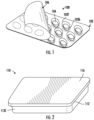
- a blister package 100 typically includes a polymer film 102 containing an array of thermoformed cavities, known as blisters 102b, which contain a consumable product 104 of interest (e.g., pharmaceutical dosage forms, food products, tobacco products, cannabis products, chewing gums, etc.) and onto which a cover 106, also known as a lidding, is applied.
- the lidding 106 can be formed from one or more materials known in the art such as foils, polymer films and/or paper.
- the lidding 106 is generally scaled to the flat portion 102f of the polymer film 102 that remains as a sealing-area outside and between the blisters 102b, often with a heat seal lacquer.
- thermoforming the polymer film 102 is heated to a softening temperature and blisters 102b of a given shape are thermoformed across the film.
- the resulting product i.e., the polymer film 102 with blister cavities 102b formed therein, is also referred to herein as a thermoformed web.
- Most blister packaging machines use heat and gas pressure (with or without plug assist) to form blisters in a polymer film obtained from a roll or in the form of a sheet.
- a polymer film is unwound from a roll and guided through the blister packaging machine.
- the polymer film 200 passes through contact heaters (or radiant heaters) to reach an elevated temperature such that the polymer film will soften and become pliable.
- the softened polymer film is then blown into cavities in a mold by using a pressurized gas (e.g., compressed air, etc.), with or without plug assist, which will form blisters in the polymer film, thus creating a thermoformed web.
- a pressurized gas e.g., compressed air, etc.
- the mold is typically cooled such that the polymer film becomes sufficiently rigid so that the thermoformed web maintains its shape, allowing the thermoformed web to be removed from the mold.
- Blister packaging machines are commonly unsupported web machines, meaning that the polymer film is pulled through the machine without the sides of the film being clamped, pinned, or otherwise supported. A filling device is then used to place the desired product into the blisters.
- a sealing station is used to seal the lidding onto the surface of the thermoformed web at a suitable temperature and pressure, which seals the desired product in the blisters.
- Polymer film thicknesses for processing into blister packaging machines typically range from 100 microns or less to 550 microns or more, for example ranging from 100 to 150 to 200 to 250 to 300 to 350 to 400 to 450 to 500 to 550 microns (in other words, ranging between any two of the preceding values).
- a medical device package 110 commonly includes a polymer film 112 containing one or more thermoformed cavities 112c, which contain, for example, one or more medical devices, medical device components, and/or medical device accessories, and onto which a cover 116, also known as lidding is applied.
- the lidding 116 can be formed from one or more materials known in the medical device packaging art, for example, polymeric lidding materials such as TYVEK ® (a spun bonded material formed from high-density polyethylene fibers, available from DuPont de Nemours, Inc., Wilmington, DE, USA) and/or paper.
- the lidding 116 is generally scaled to the flat portion of the polymer film 112 that remains as a sealing-area outside the one or more thermoformed cavities 112c (as well as between the one or more thermoformed cavities 112c, in the event there are multiple cavities).
- the medical device package 110 may be enclosed and sealed within an outer foil pouch.
- thermoforming of medical device packaging the polymer film 112 is heated to a softening temperature (e.g., with contact or radiant heaters) and one or more thermoformed cavities 112c of a given shape are thermoformed across the film.
- a softening temperature e.g., with contact or radiant heaters
- thermoformed cavities 112c of a given shape are thermoformed across the film.
- the resulting product i.e., the polymer film 112 with one or more cavities 112c formed therein
- a thermoformed web is also referred to herein as a thermoformed web.
- a polymer film is unwound from a roll and guided through a medical device packaging machine.
- the polymer film is heated to reach an elevated temperature such that the polymer film will soften and become pliable.
- the softened polymer film is then blown or drawn into cavities in a mold by using a pressurized gas (e.g., compressed air, etc.) or vacuum, with or without plug assist, which will form one or more cavities in the polymer film, thus creating a thermoformed web.
- the mold is typically cooled such that the polymer film becomes sufficiently rigid so that the thermoformed web maintains its shape, allowing the thermoformed web to be removed from the mold.
- Medical device packaging machines are commonly supported web machines, meaning that the sides of the polymer film are supported at points during the process, for example, with clamps or pins or other supports.
- One or more medical devices, medical device components, and/or medical device accessories are then placed into the one or more cavities.
- a sealing station is used to seal the lidding onto the surface of the thermoformed web at a suitable temperature and pressure, which seals the desired product in the cavities.
- Polymer film thicknesses for processing into medical device packaging machines typically range from 200 microns or less to 1800 microns or more, for example, ranging from 200 to 400 to 600 to 800 to 1000 to 1200 to 1400 microns.
- thermoformed articles like medical device packaging, are commonly performed on a supported web machine. Heating may be performed, for example, using radiant heat.
- thermoformed webs that comprise a polymer film having one or more thermoformed cavities contained therein, wherein the polymer film comprises a polymer blend of amorphous polyethylene terephthalate (APET) and a copolyester that comprises (a) dicarboxylic acid residues (e.g., dicarboxylic acid residues that comprise terephthalic acid residues and, optionally, one or more additional dicarboxylic acid residues) and (b) diol residues (e.g., diol residues comprising ethylene glycol residues and, optionally, one or more additional diol monomer residues).
- APET amorphous polyethylene terephthalate
- a copolyester that comprises (a) dicarboxylic acid residues (e.g., dicarboxylic acid residues that comprise terephthalic acid residues and, optionally, one or more additional dicarboxylic acid residues) and (b) diol residues (e.g., di
- the polymer film comprises a polymer blend of amorphous polyethylene terephthalate (APET) and a copolyester that comprises (a) dicarboxylic acid residues comprising polyethylene terephthalate residues and (b) diol residues comprising (i) ethylene glycol residues and (ii) one or more additional diol monomer residues selected from neopentyl glycol residues, 1,4-cyclohexanedimethanol residues, diethylene glycol residues, or triethylene glycol residues.
- APET amorphous polyethylene terephthalate
- the polymer film comprises a polymer blend of 50 wt% to 95 wt% of amorphous polyethylene terephthalate (APET) and 5 wt% to 50 wt% of a copolyester that comprises (a) dicarboxylic acid residues (e.g., dicarboxylic acid residues that comprise terephthalic acid residues and, optionally, one or more additional dicarboxylic acid residues) and (b) diol residues (e.g., diol residues comprising ethylene glycol residues and, optionally, one or more additional diol monomer residues, for example, one or more additional diol monomer residues selected from neopentyl glycol residues, 1,4-cyclohexanedimethanol residues, or diethylene glycol residues).
- APET amorphous polyethylene terephthalate
- the polymer film will comprise a polymer blend of 50 wt% or less to 95 wt% or more of amorphous polyethylene terephthalate, for example, ranging from 50 wt% to 55 wt% to 60 wt% to 65 wt% to 70 wt% to 75 wt% to 80 wt% to 85 wt% to 87.5 wt% to 90 wt% to 92.5 wt% to 95 wt% amorphous polyethylene terephthalate, and 5 wt% or less to 50 wt% or more the copolyester, for example, ranging from 5 wt% to 7.5 wt% to 10 wt% to 12.5 wt% to 15 wt% to 20 wt% to 25 wt% to 30 wt% to 35 wt% to 40 wt% to 45 wt% to 50 wt% of the copolyester.
- amorphous polyethylene terephthalate
- the dicarboxylic acid residues of the copolyester will comprise 70 mol% or more of terephthalic acid residues.
- the dicarboxylic acid residues of the copolyester may comprise from 70 mol% to 75 mol% to 80 mol% to 85 mol% to 90 mol% to 95 or 97.5 mol% to 99 mol% to 100 mol% of terephthalic acid residues.
- the dicarboxylic acid residues of the copolyester may further comprise 30 mol% or less of additional dicarboxylic acid residues selected from aromatic dicarboxylic acid residues (other than terephthalic acid residues), aliphatic dicarboxylic acid residues having up to 20 carbon atoms, or both.
- the additional dicarboxylic acid residues of the copolyester may comprise from 30 mol% to 25 mol% to 20 mol% to 15 mol% to 5 mol% to 2.5 mol% to 1 mol% to 0 mol% of additional dicarboxylic acid residues.
- additional dicarboxylic acid residues include isophthalic acid, biphenyldicarboxylic acid, naphthalenedicarboxylic acid, stilbenedicarboxylic acid, cyclohexanedicarboxylic, malonic acid, succinic acid, glutaric acid, adipic acid, pimelic acid, suberic acid, azelaic acid, and/or dodecanedioic dicarboxylic acid, among others.
- the diol residues of the copolyester will comprise 70 mol% or more of ethylene glycol residues.
- the diol residues of the copolyester may comprise from 70 mol% to 75 mol% to 80 mol% to 85 mol% to 90 mol% to 95 mol% to 97.5 mol% to 99 mol% ethylene glycol residues.
- the diol residues of the copolyester will comprise from 30 mol% or less of the additional diol residues.
- the additional diol residues may comprise from 30 mol% to 25 mol% to 20 mol% to 15 mol% to 5 mol% to 2.5 mol% to 1 mol% of additional diol residues.
- the additional diol residues of the copolyester may comprise 30 mol% or less of neopentyl glycol residues, for example, from 30 mol% to 25 mol% to 20 mol% to 15 mol% to 5 mol% to 2.5 mol% to 1 mol% to 0 mol% of neopentyl glycol residues.
- the additional diol residues of the copolyester may comprise 30 mol% or less of 1,4-cyclohexanedimethanol residues, for example, from 30 mol% to 25 mol% to 20 mol% to 15 mol% to 5 mol% to 2.5 mol% to 1 mol% to 0 mol% of 1,4-cyclohexanedimethanol residues.
- the additional diol residues may comprise 30 mol% or less of diethylene glycol residues, for example, from 30 mol% to 25 mol% to 20 mol% to 15 mol% to 5 mol% to 2.5 mol% to 1 mol% to 0 mol% of diethylene glycol residues.
- the additional diol residues may comprise 30 mol% or less of triethylene glycol residues, for example, from 30 mol% to 25 mol% to 20 mol% to 15 mol% to 5 mol% to 2.5 mol% to 1 mol% to 0 mol% of triethylene glycol residues.
- APET and the copolyester are miscible and the blend is homogeneous.
- the polymer film will typically range from 100 microns or less to 550 microns or more, for example ranging from 100 to 150 to 200 to 250 to 300 to 350 to 400 to 450 to 500 to 550 microns, in thickness.
- the polymer film will typically range from 200 microns or less to 1800 microns or more, for example, ranging from 200 to 400 to 600 to 800 to 100 to 1200 to 1400 microns, in thickness.
- the polymer film has a melting point ranging from 225 to 255°C for example, ranging from 225°C to 230°C to 235°C to 240°C to 245°C to 250°C to 255°C.
- the polymer film has a glass transition temperature ranging from 65-90°C as measured by DSC, for example, ranging from 65°C to 70°C to 75°C to 80°C to 90°C to 95°C.
- the polymer film has crystallization temperature ranging from 130 to 160°C, for example, ranging from 130°C to 135°C to 140°C to 145°C to 150°C to 155°C to 160°C.
- the polymer film will further comprise pigments in an amount sufficient to give the film color. These include transparent colors such as transparent blue and transparent green colors.
- the polymer film will comprise a core layer of the polymer blend between two outer skin layers to which a small amount (e.g., from 0.05 to 10 wt%) of inorganic particles such as mineral particles are added to the blend, which will improve the ease at which layers of the thermoformed web can be separated from one another when stacked.
- a small amount e.g., from 0.05 to 10 wt%
- inorganic particles such as mineral particles are added to the blend, which will improve the ease at which layers of the thermoformed web can be separated from one another when stacked.
- each skin layer will comprise between 2.5 to 20% of the overall fill thickness and the core layer will comprise between 60 to 95% of the overall fill thickness.
- the present disclosure pertains to methods of forming a thermoformed web that has one or more thermoformed cavities contained therein.
- the thermoformed web is formed from a polymer film that comprises a blend of amorphous polyethylene terephthalate and a copolyester as detailed elsewhere herein.
- the methods comprise heating the polymer film to a temperature whereby a softened polymer film is formed, and forcing the softened film into one or more cavities in a mold (e.g., by blowing the softened film into the one or more cavities using positive pressure, by drawing the softened film into the one or more cavities using a vacuum, with or without plug assist, etc.), thereby forming the one or more cavities.
- the polymer film is then cooled and removed from the mold.
- the thermoforming temperature of the polymer film ranges from 70°C to 150°C (e.g., ranging from 70°C to 80°C to 90°C to 100°C to 110°C to 120°C to 130°C to 140°C to 150°C), and preferably from 100 to 125 °C in certain embodiments.
- the polymer film is formed on an unsupported web machine and has a maximum shrinkage in any direction during processing in the range of +/-1%, +/-2%, +/-3%, +/-4%, or +/-5%. In some embodiments, the polymer film is formed on a supported web machine and has a maximum shrinkage in any direction during processing in the range of +/-1%, +/-2%, +/-3%, +/-4%, +/-5%, +/-6%, +/-7%, or +/-8%. As discussed below, the direction of greatest shrinkage is typically the direction transverse to the unwind, or machine, direction of the film.
- the present disclosure pertains to processes for forming a polymer film that can subsequently be used to create a thermoformed web that has one or more thermoformed cavities.
- the processes may comprise drying pieces (e.g., flakes and/or pellets) of an amorphous polyethylene terephthalate and of a copolyester as detailed elsewhere herein until the residual moisture level is below 100 ppm (preferably as low as possible), and extruding a mixture of the amorphous polyethylene terephthalate and the copolyester to form a polymer film.
- the polymer film is calendared.
- the amorphous polyethylene terephthalate is dried at a temperature ranging from 120 to 140 °C for a period ranging from 8 to 12 hours and the copolyester is dried at a temperature ranging from 60 to 72 °C for a period ranging from 12 to 16 hours.
- the extrusion is performed using an extruder that comprises at least one extruder barrel, screw and feed system, a feed block (e.g., a two-layer feed block, three-layer feed block, etc.) and a die or a multi-manifold die .
- a feed block e.g., a two-layer feed block, three-layer feed block, etc.
- a die or a multi-manifold die e.g., a two-layer feed block, three-layer feed block, etc.
- Each layer type will have its own extruder barrel, screw and feeder (for example, an A/B/A tri-layer film has two extruders) and there can be screen changers and melt pumps on commercial equipment. All of the extrusion materials will flow into a feed block followed by a die or a multi-manifold die.
- the polymer blend can be extruded under conditions where the extruder that is operated at a barrel temperature ranging from 235 to 290°C, at a feed block temperature ranging from 235 to 290°C, and at a die temperature ranging from 230 to 270°C.
- the present disclosure pertains to blister packages that include (a) a thermoformed web that has one or more thermoformed blister cavities contained therein and is formed from a polymer film that comprises a blend of amorphous polyethylene terephthalate and a copolyester as described in more detail elsewhere herein, (b) lidding applied to the thermoformed web, and (c) one or more consumable products positioned in the one or more thermoformed blister cavities and between the lidding and the thermoformed web.
- the lidding is laid over and bonded to an area of the thermoformed web surrounding each blister cavity with a heat seal lacquer.
- the lidding comprises a rupturable layer such as a rupturable foil layer, one or more layers of polymers, or paper, among others, which may be scored in some cases to enhance rupturability.
- the lidding may also contain a burst resistant layer that provides burst security until it is removed.
- the burst resistant layer may be a label adhered to an external surface of the rupturable layer.
- the present disclosure pertains to medical device packages that include (a) a thermoformed web that has one or more thermoformed cavities contained therein and is formed from a polymer film that comprises a blend of amorphous polyethylene terephthalate and a copolyester as described in more detail elsewhere herein, (b) lidding applied to the thermoformed web, and (c) one or more medical devices, medical device components and/or medical device accessories positioned in the one or more thermoformed cavities and between the lidding and the thermoformed web.
- medical devices include, for example, orthopedic devices, catheters, injectables, surgical kits, and inhalers, among many others.
- the lidding is laid over and bonded to an area of the thermoformed web surrounding each cavity with a heat seal lacquer.
- the lidding comprises polymeric material and/or paper.
- Commonly used lidding materials are those that let gases pass but not a pathogenic agent (e.g., a bacterial or viral microorganism). These materials include a spun bonded material formed from high-density polyethylene fibers (e.g., TYVEK ® ) and special paper grades. The porosity of these materials enables sterilization by ethylene oxide and works by penetration of this gas through the lidding.
- a peelable adhesive is typically used on the lidding, which is grid coated to let the gas pass as well.
- polymeric films are also available that can be sterilized by e-beam or gamma radiation. In some cases the medical device package may be enclosed and sealed within an outer foil pouch.
- the present disclosure is directed to processes that comprise (a) placing a product (e.g., consumer product, medical device, medical device component, medical device accessory, etc.) in a cavity of a thermoformed web that is formed from a polymer film that comprises a blend of amorphous polyethylene terephthalate and a copolyester as described elsewhere herein, and (b) sealing a lidding to the thermoformed web.
- a product e.g., consumer product, medical device, medical device component, medical device accessory, etc.
- sealing a lidding to the thermoformed web.
- the lidding is sealed to the thermoformed web at an elevated sealing temperature.
- the lidding may be attached to the thermoformed web at a sealing temperature ranging from 110 to 210°C, for example, ranging from 110°C to 120°C to 130°C to 140°C to 150°C to 160°C to 170°C to 180°C to 190°C to 200°C to 210°C.
- compositions of the present disclosure pertain to methods of recycling that comprise (a) combining (i) polyethylene terephthalate flakes and/or polyethylene terephthalate pellets and (ii) flakes of a thermoformed web that has one or more thermoformed cavities contained therein and that is formed from a polymer film that comprises a blend of amorphous polyethylene terephthalate and a copolyester as detailed elsewhere herein and/or pellets formed from such flakes of thermoformed web to form a mixture of flakes and/or pellets.
- the mixture is crystallized at elevated temperature for a suitable time (e.g., 160 to 170 °C for 15 to 45 minutes) to form a crystallized mixture.
- the crystallized mixture can then be fed into further process streams.
- the crystallized mixture may be dried and be fed into an extruder to form an extruded product (e.g., film, pellets, or strand).
- recycle streams that comprise (a) recycled polyethylene terephthalate flakes and/or pellets and having admixed therewith (b) recycled flakes of a thermoformed web that has one or more thermoformed cavities contained therein and that is formed from polymer film that comprises a blend of amorphous polyethylene terephthalate and a copolyester as detailed elsewhere herein and/or pellets formed from such recycled flakes of thermoformed web.
- Table 1 Sample # Copolyester wt% APET wt% 1* 100 0 2* 0 100 3 15 85 4 20 80 5 25 75 6 30 70 7 35 65 * Neat resin used as a standard for this testing
- Pellets of the copolyester include Embrace TM LV (CHDM based copolyester), Eastman TM Developmental Copolyester D39251 Natural (Eastman Chemical Company, Kingsport, TN, USA), Huahong WS-501 (NPG based copolyester) (Jiangyin Huahong Chemical Fiber Co., Ltd., Jiangsu China), Selenis HS420 (CHDM based copolyester), Selenis 80M (NPG based copolyester), Selenis HS310 (NPG based copolyester) (Compagnie Selenis Canada, Montreal, Canada), SK chemical SF 700 (CHDM based copolyester) (SK Chemicals, Bundang-gu, Seongnam-si, Gyeonggi-do, South Korea), and Yixing Guanghui HSF (NPG based copolyester) (Yixing Guanghui Package Co.,Ltd., Jiangsu, China).
- Pellets of the APET include DAK Laser TM + C9921 (DAK Americas LLC, Chadds Ford, PA, USA), Indorama Preformance ® SG08, Indorama Polyclear ® PET, Indorama FuTuRe-PET ® , (Indorama Ventures USA LLC, Asheboro, NC, USA), 0.80 IV Food grade APET, specifically, StarPet Performance ® PET 1708 (StarPet/Indorama Ventures, Asheboro, NC, USA), and Selenis Infinite TM S 80.
- Pellets of copolyester and APET were blended and extruded to form three-layer films (5-10% Skin / 80-90% Core / 5-10% Skin, based on the overall thickness of the films), with each of the three layers having the same polymer content, but with the outer skin layers containing 1.5% mineral surface modifier.
- the films tested were prepared using a lab-scale coextrusion setup that included two C.W. Brabender (Southhackensack, NJ, USA) 3/4" single screw extruders with an L/D of 25: 1.
- a C.W. Brabender Intelli-Torque Plasti Corder torque rheometer was used as the drive unit on the main (core) extruder, while a C.W.
- Brabender ATR Plasti-Corder was used as the secondary (skin) extruder drive unit.
- the blend from the extruders was fed into an A/B/A feed block from C.W. Brabender which is then fed into a custom EDI ® 12" fish tail flex lip sheet die from Nordson Corp. Westlake, OH, USA.
- the films are sent through a LabTech LCR-350-HD three roll stack (Labtech Engineering Company Ltd., Muang, Samutprakarn, Thailand) for gauge control and winding. Final thickness of the films ranged from 8 to 10 mil (203 to 305 micron).
- the films were then run on an Uhlmann B 1240 blister thermoforming line (Uhlmann Pac-Systeme GmbH & Co. KG, Laupheim, Germany) to quantify the performance of each film.
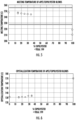
- the post-formation transverse direction (TD) shrinkage was recorded at several temperatures to measure dimensional stability of each film.
- thermoforming process which is an unsupported web process
- films are heated and subsequently formed into the desired shape.
- This heating allows for the relaxation of the imparted thermal stresses which can result in shrinkage in the transverse direction (perpendicular to unwind direction).
- the tension from the thermoforming line on the heated film can also cause mechanical distortion which is exhibited by all thermoformable solids. This distortion usually results in elongation in the machine direction (parallel to the unwind direction) and, consequently, shrinkage in the transverse direction.
- tension contributes to transverse direction shrinkage, there is little tension on the film prior to shrinkage measurements, therefore the main driver is the relaxation of thermal stresses.
- film can have a bias or asymmetric shrinkage which may cause the film to shift to one side or the other when processed on a blister line.
- This shifting on the blister line can lead to defects in final parts and processing issues such as unformed cavities, "haloing", and misalignment between forming, sealing, and cutting stations.
- the shrinkage is great enough that the tooling cannot clamp properly none of the cavities will form, as air will escape from the areas where the film has receded due to shrinkage.
- a film that shrinks past the clamping area can have the same effect. This means entire rolls could be unusable if the film shows consistent asymmetric shrinkage or disproportionate shrinkage.
- thermoforming window As shown in FIG. 3 , all blends exhibited an overall low shrinkage from the start of their thermoforming window up to a temperature of 110°C. Generally, in the development work, a shrinkage of greater than 4% causes issues on the Uhlmann B 1240 blister thermoforming line, making it unable to consistently produce blister cards, although this shrinkage value will greatly vary across lines (size, manufacturer, etc.). The average thermoforming window exhibited by the samples in this study was 90 to 120 °C. For comparison, a standard PVC film (Pentapharm ® PH-M570/01 at 250 microns, Klöckner Pentaplast Group, London, England) would possess a typical thermoforming window of approximately 110 to 130 °C.
- thermoforming window was shifted upward relative to the pure APET and the pure copolyester samples.
- the pure (neat) resin samples were not able to be run above 110 °C, while the blended samples remained stable ( ⁇ 4% shrinkage) to 120 °C. This puts the resin mixtures closer to the standard PVC thermoforming window (approximately 110 °C to 130 °C).
- Tensile testing is used to measure the strength, toughness, and elongation of a material. These physical properties provide insight into a material's performance for numerous applications. For thermoforming packaging films, tensile properties may give insight to rigidity of the formed cavity and cuttability of the film. Materials that tend to have higher yield strength will tend to form more rigid cavities, because the force required to deform them is higher whereas materials that exhibit greater elongation will be more difficult to cut due to their tendency to deform before failing, resulting in a poor cut and increased blade wear, though these tendencies may have exceptions.
- the elongation at break test method (ASTM D-638) was used in an effort to correlate the elasticity of the polymer matrix to the relative toughness as pertains to cut propagation, with results shown in FIG. 4 . It is hypothesized that notch sensitivity will also play a crucial role in this value, as in the absence of notch sensitivity, the blade will require more force to cut through the matrix. Moreover, with minimal crack propagation due to the lack of notch sensitivity in APET materials, the cutting implement will face a longer path under load for the same thickness of matrix when compared with a notch sensitive material. It has been found that the crosshead plays a large role in the results, with the fastest setting (500mm/min) outlined in the ASTM standard producing the most discernible difference between the samples.
- the tensile testing shows that pure APET exhibits significantly greater toughness than pure copolyester or any of the copolyester/APET blends which may explain the difficulty typically experienced while cutting APET. Although the increased toughness of APET is expected, the toughness of the copolyester/APET blends may have been reduced due to the shear experienced by the blends during the compounding process.
- DSC Differential Scanning Calorimetry
- the glass transition temperature is the temperature at which the free volume between the polymer chains increases to the point that the polymer matrix allows the polymer chains to oscillate, with the volume of atoms being independent of temperature. From a practical standpoint, the glass transition temperature is the temperature at which amorphous regions of a polymer soften and are easily deformed. This softening caused by the glass transition signifies the start of the thermoforming range in amorphous polymers, including polyethylene-terephthalate-based polymers (PET-based polymers).
- PET-based polymers polyethylene-terephthalate-based polymers
- the melting temperature of a PET-based polymer is the temperature at which the crystal domains melt, and the solid material becomes a liquid.
- the melting temperature of the PET-based polymer influences various processes, including extrusion, compounding, drying, and recycling.
- the melt temperature is so important to the recycling process that the acceptable range of melting temperatures (225-255°C) for a PET-based polymer to be labeled as a RIC #1 material is specified by law in the state of California.
- FIG. 5 shows that the melting temperature of the PET blends tend to decrease as the copolyester content increases.
- FIG. 5 also shows that 100% copolyester film does not fall within the specified melting temperature range requirements to be labeled with a RIC #1 in the state of California (i.e., 225 to 255 °C, which is denoted by the horizontal lines in FIG. 5 ).
- 100% copolyester resin does not fall within the required melting range for recyclability, the blends of APET and copolyester appear to show a singular melting peak within the temperature range required for recyclability.
- the crystallization temperatures measured using DSC while heating are shown for various blends of copolyester and APET.
- the crystallization temperatures while heating tend to increase with increasing copolyester content (although not shown, it is further noted that the crystallization temperature measured as the resin is cooled from the melt tends to decrease with copolyester content).
- the differences in the crystallization temperatures between the copolyester/APET blends show that APET will more readily crystallize regardless of whether the resin is being crystallized by being heated in a solid state or by cooling from a molten state.
- These crystallization trends also show that the blends with higher copolyester loading levels have a greater propensity towards being in an amorphous phase than blends with higher APET loadings.
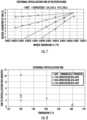
- Fig. 7 show isothermal crystallization data for the following polymer films: (a) a neat copolyester film, (b) a neat APET film, (c) a 15/85 copolyester/APET film, and (d) a 35/65 copolyester/APET film. All films were produced on commercial equipment having an A/B/A layout with two extruders and accompanying auxiliary equipment (dryers, feeders, hoppers, etc.), along with melt pumps and screen packs for each extruder which flow into a feed block and die, followed by a roll stack and a take-off roll.
- the crystallization rates of the films were measured through heat flow into the polymer using DSC.
- the crystallization times recorded are the time at which each sample reaches its peak crystallization rate (measured by heat flow into the polymer) at a given temperature.
- the relationship between crystallization time and temperature follows the Arrhenius equation with the inverse of temperature being linear with logarithm of crystallization time. Additionally Fig. 7 also shows that crystallization time increases as copolyester content increases for all temperatures tested. This relationship between copolyester content and crystallization time shows that the crystallization time may be tailored to specific applications through the modification of copolyester content in the blend.
- Fig. 8 shows the isothermal crystallization delay, as tested by DSC, present with various samples at differing temperatures.
- Fig. 8 show isothermal crystallization data for the following polymer films: (a) a neat APET film, (b) a 15/85 copolyester/APET film formed in a first extrusion run, (c) an additional 15/85 copolyester/APET film formed in a second extrusion run, and (d) a 35/65 copolyester/APET film.
- All films were formed on commercial equipment having an A/B/A layout with two extruders and accompanying auxiliary equipment (dryers, feeders, hoppers, etc.), along with melt pumps and screen packs for each extruder which flow into a feed block and die, followed by a roll stack and a take-off roll.
- auxiliary equipment dryers, feeders, hoppers, etc.
- APR PET Flake Clumping Evaluation (APR Doc. #PET-S-08) specifies a crystallization procedure consisting of a 30 minute hold at 165 °C. The materials must crystallize in this timeframe or will have a high likelihood to fail the clumping evaluation.
- the crystallization rate is a non-trivial component of thermoforming thicker (>508 micron) films as well as sealing for all crystallizable polyester film thicknesses. This is related to the inherent low thermal conductivity present in the polymer matrix. The low thermal conductivity forces more energy to be introduced on the surface of the film in order to create a material uniformly above the glass transition temperature, especially within the cycle time constraints present in the industry. This can lead to crystallization with associated undesirable changes in visual and physical properties. A lower thermal load on the matrix would provide a more uniform temperature across the matrix but would require exponentially more time. Likewise, sealing is typically conducted at temperatures in excess of the crystallization point of the films and can cause similar visual and physical property issues. Crystallization issues can also occur during changeover or stoppages in the thermoforming which are detrimental to line performance across the array of film thicknesses as well.
- the copolyester/APET blends exhibit a balance of thermal properties and are more useful for certain applications, than the properties of the neat copolyester or neat APET resins.
- the slower crystallization rates of the copolyester/APET blends improves the thermoforming and extrusion windows by helping to keep the film in the amorphous state which, as noted above, is desired for thermoforming applications and also for aesthetic reasons.
- the slower crystallization rates improve the crystallization properties by delaying the crystallization and allowing more freedom in the operating window, especially in thicker samples (for example, medical device packaging).
- Films in accordance with the present disclosure have been produced that have a 10 minute or greater crystallization time at a temperature of 120°C for the 35/65 copolyester/APET film and a 2.5 or greater minute crystallization time at a temperature of 120°C for the 15/85 copolyester/APET film. Crystallization time for pure APET at this temperature is 2 minutes.
- Recyclability is also an important property of a material. It is becoming more common to solid state washed PET-based polymer flake prior to extrusion, rather than the more traditional method of solid stating pelletized PET-based polymer. In solid stating of washed PET-based polymer flake, the polymer flake can be exposed to heat of over 190°C up to 220° C, as well as pressure in a loaded hopper. It is important that the polymer flakes do not stick together to form hard clumps when exposed to high temperatures and compaction. Clumps of polymer flakes can cause bridging in feed systems that prevent material flow.
- APR Association of Plastics Recyclers
- APR Document Number PET-CG-01 The sample passed all required evaluations including: PET Flake Clump Screening (APR Doc. #PET-S-08), IV Loss (ASTM D4603), Fuming Sticking, Hazard Evaluation (APR Doc. #PET-P-06) IV Build Screening (APR Doc. #PET-S-07), Melting Point (ASTM D3418), Stick and Residue (APR Doc. #PET-P-06), and Plaque Color Screening (APR Doc. #PET-S-09).
Landscapes
- Chemical & Material Sciences (AREA)
- Engineering & Computer Science (AREA)
- Health & Medical Sciences (AREA)
- Chemical Kinetics & Catalysis (AREA)
- Medicinal Chemistry (AREA)
- Polymers & Plastics (AREA)
- Organic Chemistry (AREA)
- Mechanical Engineering (AREA)
- Manufacturing & Machinery (AREA)
- Materials Engineering (AREA)
- Manufacture Of Macromolecular Shaped Articles (AREA)
- Packages (AREA)
- Wrappers (AREA)
- Separation, Recovery Or Treatment Of Waste Materials Containing Plastics (AREA)
- Compositions Of Macromolecular Compounds (AREA)
- Extrusion Moulding Of Plastics Or The Like (AREA)
- Blow-Moulding Or Thermoforming Of Plastics Or The Like (AREA)
Applications Claiming Priority (2)
| Application Number | Priority Date | Filing Date | Title |
|---|---|---|---|
| US202063115297P | 2020-11-18 | 2020-11-18 | |
| PCT/US2021/059723 WO2022109025A1 (en) | 2020-11-18 | 2021-11-17 | Thermoformed packaging and methods of forming the same |
Publications (2)
| Publication Number | Publication Date |
|---|---|
| EP4247881A1 EP4247881A1 (en) | 2023-09-27 |
| EP4247881B1 true EP4247881B1 (en) | 2025-01-29 |
Family
ID=79831532
Family Applications (1)
| Application Number | Title | Priority Date | Filing Date |
|---|---|---|---|
| EP21847553.1A Active EP4247881B1 (en) | 2020-11-18 | 2021-11-17 | Thermoformed packaging and methods of forming the same |
Country Status (5)
| Country | Link |
|---|---|
| US (3) | US11603432B2 (enExample) |
| EP (1) | EP4247881B1 (enExample) |
| JP (1) | JP2023551656A (enExample) |
| CA (1) | CA3196216A1 (enExample) |
| WO (1) | WO2022109025A1 (enExample) |
Families Citing this family (2)
| Publication number | Priority date | Publication date | Assignee | Title |
|---|---|---|---|---|
| US20230265281A1 (en) * | 2022-02-22 | 2023-08-24 | Klöckner Pentaplast Of America, Inc. | Bio-based thermoformed packaging and methods of forming the same |
| KR20260125793A (ko) * | 2023-12-21 | 2026-08-19 | 필립모리스 프로덕츠 에스.에이. | 복수의 평면형 에어로졸 발생 물품용 프레임 조립체, 및 프레임 조립체를 함유하는 번들 및 용기 |
Family Cites Families (117)
| Publication number | Priority date | Publication date | Assignee | Title |
|---|---|---|---|---|
| US4681723A (en) | 1985-11-01 | 1987-07-21 | American Hoechst Corporation | Calender band stripping section and process for stripping calendered sheet |
| US4740400A (en) | 1986-03-27 | 1988-04-26 | Viskase Corporation | Tinted heat-shrinkable multilayer films comprising a vinylidene chloride-vinyl chloride copolymer |
| JPS63251234A (ja) | 1987-04-07 | 1988-10-18 | 呉羽化学工業株式会社 | 錠剤包装材料 |
| JPH01110953A (ja) | 1987-10-26 | 1989-04-27 | Daicel Chem Ind Ltd | 高防湿積層フイルム |
| US4883694A (en) | 1987-12-18 | 1989-11-28 | Century Adhesives Corp. | Method of forming flexible packages and novel flexible packages |
| JPH02116546A (ja) | 1988-10-26 | 1990-05-01 | Sumitomo Bakelite Co Ltd | ブリスター包装用高防湿積層フィルム |
| CA2010320C (en) | 1989-02-20 | 2001-04-17 | Yohzoh Yamamoto | Sheet or film of cyclo-olefin polymer |
| US5532058A (en) | 1990-12-10 | 1996-07-02 | H. B. Fuller Licensing & Financing, Inc. | Dry-bonded film laminate employing polyurethane dispersion adhesives with improved crosslinkers |
| US5968663A (en) | 1991-07-24 | 1999-10-19 | Alusuisse Technology & Management Ltd. | Stretch-formable laminate |
| KR100235089B1 (en) | 1992-05-14 | 1999-12-15 | Mitsui Chemicals Inc | Ptp or blister packaging articles and packaging material therefor |
| AU658078B2 (en) | 1992-09-08 | 1995-03-30 | Kureha Corporation | Divided package of adsorbent for internal use and process for producing the same |
| JP3140252B2 (ja) | 1992-10-12 | 2001-03-05 | 株式会社にんべん | 包装容器 |
| US5972445A (en) | 1996-01-17 | 1999-10-26 | Mitsubishi Chemical Corporation | Multilayer polyester sheet |
| KR100220961B1 (ko) | 1996-04-11 | 1999-09-15 | 사또 아끼오 | 적층 필름 및 포장재 |
| US5874035A (en) | 1996-06-20 | 1999-02-23 | Alliedsignal Inc. | Highly oriented fluoropolymer films |
| JPH10193490A (ja) | 1997-01-06 | 1998-07-28 | Mitsubishi Gas Chem Co Inc | 水性液状物質の包装方法 |
| US6306503B1 (en) | 1997-06-11 | 2001-10-23 | Alliedsignal Inc. | Multilayer fluoropolymer films with improved adhesion |
| DE19751817A1 (de) | 1997-11-21 | 1999-05-27 | Kalle Pentaplast Gmbh | Verfahren zur kontinuierlichen Steuerung des Schrumpfes einer amorphen Folie und eine Anordnung hierfür |
| ES2219929T3 (es) | 1997-12-05 | 2004-12-01 | ROHM GMBH & CO. KG | Procedimiento para la fabricacion de hojas de pmma, exentas de cuerpos de gel, de brillo elevado por los dos lados, manipulable en el procedimiento de moldeo de insercion de pelicula, duras en la superficie. |
| US6099682A (en) | 1998-02-09 | 2000-08-08 | 3M Innovative Properties Company Corporation Of Delaware | Cold seal package and method for making the same |
| AR024246A1 (es) | 1999-03-01 | 2002-09-25 | Johnson & Johnson Vision Care | Contenedor para dispositivo medico. |
| JP4261680B2 (ja) | 1999-05-07 | 2009-04-30 | 株式会社クレハ | 防湿性多層フィルム |
| US6218024B1 (en) | 1999-06-04 | 2001-04-17 | Macro Engineering & Technology Inc. | Multilayer plastic film |
| ATE330789T1 (de) | 2000-06-23 | 2006-07-15 | Honeywell Int Inc | Hochfeuchtigkeitsperrende folien |
| US6802422B2 (en) | 2000-12-12 | 2004-10-12 | Multi-Comp, Inc. | Sealed blister assembly |
| JP2002234571A (ja) | 2001-02-08 | 2002-08-20 | Toyobo Co Ltd | 耐熱ブリスターパック |
| US20030017326A1 (en) | 2001-06-01 | 2003-01-23 | 3M Innovative Properties Company | Color stable pigmented polymeric films having dyes for color adjustment |
| JP3692976B2 (ja) * | 2001-07-11 | 2005-09-07 | 東洋紡績株式会社 | 熱収縮性ポリエステル系フィルム |
| US6881788B2 (en) | 2001-08-21 | 2005-04-19 | Mitsui Takeda Chemicals, Inc. | Polyurethane resin water dispersion and aqueous polyurethane adhesive |
| US6673406B2 (en) | 2001-10-15 | 2004-01-06 | Cryovac, Inc. | High barrier polyvinylidene chloride composition and film |
| US6589642B1 (en) | 2001-12-21 | 2003-07-08 | Kloeckner Pentaplast Of America, Inc. | Three part high moisture barrier for packages |
| US6902645B2 (en) | 2002-02-01 | 2005-06-07 | Kloeckner Pentaplast Of America, Inc. | Three part high moisture barrier for packages |
| US6592978B1 (en) | 2002-02-01 | 2003-07-15 | Kloeckner Pentaplast Of America, Inc. | Three part high moisture barrier for packages |
| AU2003207216A1 (en) | 2002-02-21 | 2003-09-09 | Teijin Limited | Multilayered polyester film and process for producing the same |
| US20030203141A1 (en) | 2002-04-25 | 2003-10-30 | Blum John B. | Blister package |
| DE10242730A1 (de) | 2002-09-13 | 2004-03-25 | Ticona Gmbh | Thermoformbare Folie mit hoher Wärmeformbeständigkeit und Wasserdampfbarriere |
| GB0301034D0 (en) | 2003-01-16 | 2003-02-19 | Dupont Teijin Films Us Ltd | Polymeric film and coating |
| JP4184991B2 (ja) | 2003-02-05 | 2008-11-19 | 株式会社神戸製鋼所 | 表面処理金属板 |
| EP1468817A1 (de) | 2003-04-16 | 2004-10-20 | Alcan Technology & Management Ltd. | Deckfolie für Blisterverpackungen |
| EP1468935A1 (de) | 2003-04-16 | 2004-10-20 | Alcan Technology & Management Ltd. | Blisterverpackung |
| US7000769B2 (en) | 2003-05-20 | 2006-02-21 | Smithkline Beecham Corporation | Child resistant blister packages utilizing walled structures enclosing medicament therein |
| KR101036775B1 (ko) | 2003-07-07 | 2011-05-25 | 데이진 화이바 가부시키가이샤 | 정색된 폴리에스테르 수지 조성물 및 그 성형 가공 제품 |
| US20050017013A1 (en) | 2003-07-24 | 2005-01-27 | Alberto Peisach | Container for hot fill food packaging applications |
| JP4529072B2 (ja) * | 2003-09-02 | 2010-08-25 | 東洋紡績株式会社 | 成型用ポリエステルフィルム及びそれを成型してなる成形部材 |
| US20050139505A1 (en) | 2003-12-15 | 2005-06-30 | Miller Mark R. | Child-resistant blister package |
| US7569276B2 (en) | 2003-12-22 | 2009-08-04 | Dupont Teijin Films U.S. Limited Partnership | Thermoformable polyester-containing laminates |
| AU2005206500B2 (en) | 2004-01-08 | 2010-05-20 | E.I. Dupont De Nemours And Company | Composition comprising ethylene copolymers and polyolefin |
| EP1733874A4 (en) | 2004-03-31 | 2008-11-05 | Mitsubishi Plastics Inc | HEAT SHRINKABLE POLYOLEFIN LAYERING FOIL, HEAT SHRINKABLE LABEL AND CONTAINER WITH THE LABEL THEREOF APPLIED |
| JP4754181B2 (ja) | 2004-05-14 | 2011-08-24 | 東洋紡績株式会社 | ブリスターパック包装用蓋材 |
| JP2005324834A (ja) * | 2004-05-14 | 2005-11-24 | Toyobo Co Ltd | ブリスターパック包装用蓋材 |
| US7819849B2 (en) | 2004-06-04 | 2010-10-26 | Hollister Incorporated | Laminated material and body wearable pouch formed therefrom |
| DE102004030981A1 (de) | 2004-06-26 | 2006-01-12 | Klöckner Pentaplast GmbH & Co. KG | Beschichtung auf Basis von Polyvinylidenchlorid, Verfahren zur Herstellung einer Beschichtung und ihre Verwendung |
| US7763265B2 (en) | 2004-06-30 | 2010-07-27 | Dak Americas, Llc | UV barrier formulation for polyesters |
| US20060040076A1 (en) | 2004-08-18 | 2006-02-23 | Franzyshen Stephen K | Formable film for cold-form, blister-type pharmaceutical packaging |
| EP1655237A1 (de) | 2004-11-08 | 2006-05-10 | Alcan Technology & Management Ltd. | Deckfolie für Blisterverpackungen |
| JP2006313303A (ja) | 2004-11-24 | 2006-11-16 | Dainippon Printing Co Ltd | 光学フィルタおよびこれを用いたディスプレイ |
| US20060121392A1 (en) | 2004-11-24 | 2006-06-08 | Dai Nippon Printing Co., Ltd. | Optical filter and display using the same |
| WO2007053550A1 (en) | 2005-10-28 | 2007-05-10 | Eastman Chemical Company | Polyester compositions containing cyclobutanediol having high glass transition temperature and articles made therefrom |
| US20060287485A1 (en) | 2005-06-17 | 2006-12-21 | Crawford Emmett D | Sound barriers comprising polyester compositions formed from 2,2,4,4-tetramethyl-1,3-cyclobutanediol and 1,4-cyclohexanedimethanol |
| JP4659523B2 (ja) | 2005-04-26 | 2011-03-30 | 共同印刷株式会社 | ブリスター用フィルム及びブリスター用包装容器 |
| EP1971485B1 (en) | 2005-12-29 | 2018-04-11 | Arkema Inc. | Multi-layer fluoropolymer films |
| EP1834986A1 (en) | 2006-03-13 | 2007-09-19 | Borealis Technology Oy | High density polyethylene |
| JP5050470B2 (ja) | 2006-04-24 | 2012-10-17 | 住友金属鉱山株式会社 | 日射遮蔽分散体、日射遮蔽体、および、それらの製造方法 |
| DE602007008888D1 (de) | 2006-05-16 | 2010-10-14 | Basf Se | Ein- und mehrlagige blasgeformte folien |
| US20070284280A1 (en) | 2006-06-12 | 2007-12-13 | Patrick Henry Young | Child-resistant blister package |
| JP2008026881A (ja) | 2006-06-19 | 2008-02-07 | Fujifilm Corp | 光学フィルム、光学フィルムの製造方法、光学補償フィルム、偏光板および液晶表示装置。 |
| US8350995B2 (en) | 2006-06-19 | 2013-01-08 | Fujifilm Corporation | Optical film, production method of optical film, optically-compensatory film, polarizing plate and liquid crystal display device |
| JP4964529B2 (ja) | 2006-07-28 | 2012-07-04 | 三井化学株式会社 | 成形体 |
| EP2046662A1 (de) | 2006-08-03 | 2009-04-15 | Merck Patent GmbH | Packung enthaltend pharmazeutische darreichungsformen |
| US20080058495A1 (en) | 2006-09-05 | 2008-03-06 | Donna Rice Quillen | Polyester polymer and copolymer compositions containing titanium and yellow colorants |
| US20080067099A1 (en) | 2006-09-14 | 2008-03-20 | Patrick Henry Young | Child resistant blister package |
| WO2008148176A1 (en) | 2007-06-08 | 2008-12-11 | Tekni-Plex Europe, Naamloze Vennootschap | Multi-layer high moisture barrier film for use in the production of pharmaceutical or medical thermoformed blister packs and a method for manufacturing such a film |
| JPWO2008156039A1 (ja) | 2007-06-20 | 2010-08-26 | 塩野義製薬株式会社 | ブリスターパック形成用樹脂積層フィルムおよびブリスターパック |
| AU2008280173B2 (en) | 2007-07-25 | 2013-06-06 | Cryovac, Llc | Heat-shrinkable polyester film |
| EP2033775A1 (de) | 2007-09-10 | 2009-03-11 | Alcan Technology & Management Ltd. | Thermoformbares Laminat für Blisterbodentelle |
| US20090227735A1 (en) * | 2008-03-07 | 2009-09-10 | Eastman Chemical Company | Miscible polyester blends and shrinkable films prepared therefrom |
| JP5372408B2 (ja) | 2008-05-30 | 2013-12-18 | ユニチカ株式会社 | 水性接着剤および積層体 |
| US20110073901A1 (en) | 2008-06-02 | 2011-03-31 | Jun Fujita | Adhesive encapsulating composition and electronic devices made therewith |
| DE102008044487A1 (de) | 2008-08-29 | 2010-03-04 | Lurgi Zimmer Gmbh | Verfahren zur Herstellung von Polymeren mit neutralem Farbton |
| DE102008056123B4 (de) | 2008-11-06 | 2017-11-16 | Klöckner Pentaplast Gmbh | Mehrschichtfolie und Blisterverpackung |
| US20120019906A1 (en) | 2009-02-09 | 2012-01-26 | Van Nuffel Claude T E | Transparent Multilayered Carbonate Articles and Method to Manufacture Thereof |
| US9511914B2 (en) | 2009-09-01 | 2016-12-06 | Philip Morris Usa Inc. | Thermoformable multilayer films and blister packs produced therefrom |
| EP2491067B1 (en) * | 2009-10-19 | 2015-09-09 | Eastman Chemical Company | Radio-frequency sealable polymer and articles thereof |
| KR100981129B1 (ko) * | 2010-03-09 | 2010-09-10 | 에스케이씨 주식회사 | 열수축성 폴리에스터계 필름 |
| CN103153619B (zh) * | 2010-09-14 | 2015-11-25 | 杜邦泰吉恩胶卷美国有限公司 | 可热成型的共聚多酯层合物 |
| WO2012037180A1 (en) | 2010-09-16 | 2012-03-22 | Dow Global Technologies Llc | Coextruded multilayer film structure |
| CN102199338B (zh) | 2011-04-08 | 2012-12-19 | 扬州三星塑胶有限公司 | 一种apet/petg复合片材及其生产工艺 |
| US8365910B2 (en) | 2011-06-02 | 2013-02-05 | Cook Medical Technologies Llc | Medical device packaging |
| CN104080603B (zh) | 2012-01-31 | 2018-04-06 | 纳幕尔杜邦公司 | 包含环烯烃共聚物的多层膜 |
| US20130217830A1 (en) | 2012-02-16 | 2013-08-22 | Eastman Chemical Company | Clear Semi-Crystalline Articles with Improved Heat Resistance |
| US9127122B2 (en) | 2012-10-23 | 2015-09-08 | Eastman Chemical Company | Copolyesters containing neopentyl glycol and 2,2,4,4-tetraalkyl 1,3-cyclobutanediol |
| CN104837620A (zh) | 2012-12-07 | 2015-08-12 | 比密斯公司 | 多层膜 |
| WO2014100254A1 (en) | 2012-12-20 | 2014-06-26 | Dow Global Technologies Llc | Barrier films of fdca-based polyesters |
| KR101495211B1 (ko) | 2013-01-08 | 2015-02-24 | 한화케미칼 주식회사 | 블리스터 포장용 수지 및 이의 제조 방법 |
| US9937099B2 (en) | 2013-03-11 | 2018-04-10 | Sio2 Medical Products, Inc. | Trilayer coated pharmaceutical packaging with low oxygen transmission rate |
| EP3000750B1 (en) | 2013-05-20 | 2026-07-01 | ZACROS Corporation | LIGHTPROOF SHEET AND CONTAINER |
| US10556410B2 (en) | 2013-07-12 | 2020-02-11 | Upm Raflatac Oy | Multilayer film for label and a method for providing such |
| US20150225151A1 (en) | 2014-02-11 | 2015-08-13 | Christopher L. Osborn | Anti-Scalping Transdermal Patch Packaging Film |
| CA2947478C (en) | 2014-05-16 | 2022-09-13 | Carbios | Process of recycling mixed pet plastic articles |
| WO2015187173A1 (en) | 2014-06-06 | 2015-12-10 | Perfecseal, Inc. | Blister packaging components |
| EP3152129B1 (en) | 2014-06-06 | 2023-12-20 | Amcor Flexibles North America, Inc. | Blister packaging components |
| JP2016020419A (ja) | 2014-07-14 | 2016-02-04 | 大日精化工業株式会社 | 青味を有する黒色の透明フィルム |
| EP3310577A4 (en) | 2015-06-18 | 2019-03-20 | Flex Films (USA) Inc. | FORMABLE FILMS, LAMINATE STRUCTURES AND RELATED METHODS |
| CN205060393U (zh) | 2015-10-14 | 2016-03-02 | 霍尼韦尔国际公司 | 包装体膜和包装体 |
| DK3544785T3 (da) | 2016-11-28 | 2021-09-13 | Furanix Technologies Bv | Termoformet artikel af poly(ethylen-2,5 furandicarboxylat)-polyester |
| US10639873B1 (en) | 2017-07-26 | 2020-05-05 | Toray Plastics (America), Inc. | Heat sealing polyester films with low coefficient of friction |
| KR102574208B1 (ko) | 2017-09-08 | 2023-09-04 | 삼성전자주식회사 | 폴리(아미드-이미드) 코폴리머, 폴리(아미드-이미드) 코폴리머 제조용 조성물, 폴리(아미드-이미드) 코폴리머를 포함하는 성형품 및 표시 장치 |
| KR102470432B1 (ko) * | 2017-10-30 | 2022-11-23 | 이스트만 케미칼 컴파니 | 저밀도 공극-함유 필름 |
| KR102476708B1 (ko) | 2017-11-01 | 2022-12-09 | 삼성전자주식회사 | 광학 필터, 및 이를 포함하는 카메라 모듈 및 전자 장치 |
| DE102018215422A1 (de) * | 2018-09-11 | 2020-03-12 | Mitsubishi Polyester Film Gmbh | Heißsiegelbare Polyesterfolie für die Herstellung von Menüschalen, Verfahren zu ihrer Herstellung und ihre Verwendung |
| KR20210070360A (ko) | 2018-10-08 | 2021-06-14 | 이스트만 케미칼 컴파니 | 반응기 등급 수지로부터 제조된 결정화가능한 수축성 필름 및 열성형성 시트 |
| EP3863832A1 (en) * | 2018-10-08 | 2021-08-18 | Eastman Chemical Company | Crystallizable shrinkable films and thermoformable sheets made from resin blends |
| DK3808680T3 (da) | 2019-10-14 | 2023-08-07 | Gsk Consumer Healthcare Sarl | Blisterpakning, indpakket medicinal- eller ernæringsprodukt og fremgangsmåde til fremstilling af sådan et produkt |
| KR102976709B1 (ko) | 2019-10-25 | 2026-06-12 | 이스트만 케미칼 컴파니 | 재활용된 코폴리에스터로부터 생산된 코폴리에스터 |
| US11643531B2 (en) | 2020-10-01 | 2023-05-09 | Nova Chemicals (International) S.A. | Thermoformable film |
| US11560468B2 (en) | 2020-10-01 | 2023-01-24 | Nova Chemicals (International) S.A. | Thermoformable film |
| WO2022256474A1 (en) | 2021-06-03 | 2022-12-08 | Tekni-Plex, Inc. | Recyclable blister package |
-
2021
- 2021-11-17 CA CA3196216A patent/CA3196216A1/en active Pending
- 2021-11-17 JP JP2023530075A patent/JP2023551656A/ja active Pending
- 2021-11-17 WO PCT/US2021/059723 patent/WO2022109025A1/en not_active Ceased
- 2021-11-17 US US17/528,980 patent/US11603432B2/en active Active
- 2021-11-17 EP EP21847553.1A patent/EP4247881B1/en active Active
-
2023
- 2023-02-13 US US18/168,238 patent/US11891479B2/en active Active
- 2023-12-21 US US18/392,861 patent/US12312441B2/en active Active
Also Published As
| Publication number | Publication date |
|---|---|
| US12312441B2 (en) | 2025-05-27 |
| US11603432B2 (en) | 2023-03-14 |
| WO2022109025A1 (en) | 2022-05-27 |
| JP2023551656A (ja) | 2023-12-12 |
| US11891479B2 (en) | 2024-02-06 |
| US20230183422A1 (en) | 2023-06-15 |
| US20220153928A1 (en) | 2022-05-19 |
| EP4247881A1 (en) | 2023-09-27 |
| US20240199799A1 (en) | 2024-06-20 |
| CA3196216A1 (en) | 2022-05-27 |
Similar Documents
| Publication | Publication Date | Title |
|---|---|---|
| US12312441B2 (en) | Thermoformed packaging and methods of forming the same | |
| CN1145663C (zh) | 从全芳香的无定形的可拉伸的液晶体聚合物和非液晶体聚酯形成的层压品及其形成方法 | |
| AU2007233913B2 (en) | Peelable sealable PLA film | |
| JP7745163B2 (ja) | 樹脂フィルム、積層体および袋 | |
| CN114746247B (zh) | 双轴取向聚酯薄膜和其制造方法 | |
| JPWO2018225559A1 (ja) | 二軸配向ポリエステルフィルム | |
| EP3636694A1 (en) | Biaxially oriented polyester film | |
| JP2023153131A (ja) | 多層フィルム、包装材及び包装体 | |
| CA3142245A1 (en) | Formable films, laminate structures, and related methods | |
| JP7700503B2 (ja) | 多層フィルム、包装材及び包装体 | |
| US20220388748A1 (en) | Thermoformable film for barrier packaging and methods of forming the same | |
| JP7662011B2 (ja) | 熱収縮性ラベルロール | |
| CN1295516A (zh) | 包装物品的薄膜 | |
| JPWO2005105440A1 (ja) | 易引裂き性2軸延伸ポリエステル系フィルム | |
| AU2010336954A1 (en) | Process for packaging tacky polyester resins | |
| US20230265281A1 (en) | Bio-based thermoformed packaging and methods of forming the same | |
| JP4754181B2 (ja) | ブリスターパック包装用蓋材 | |
| JP2004299231A (ja) | 延伸ポリエステルフィルム | |
| WO2008030202A1 (en) | Non-oriented barrier polymeric films for in-mould (iml) applications | |
| WO2024005125A1 (ja) | 二軸延伸フィルム及び保護フィルム | |
| JP2005263938A (ja) | 熱収縮性ポリエステル系フィルム |
Legal Events
| Date | Code | Title | Description |
|---|---|---|---|
| STAA | Information on the status of an ep patent application or granted ep patent |
Free format text: STATUS: UNKNOWN |
|
| STAA | Information on the status of an ep patent application or granted ep patent |
Free format text: STATUS: THE INTERNATIONAL PUBLICATION HAS BEEN MADE |
|
| PUAI | Public reference made under article 153(3) epc to a published international application that has entered the european phase |
Free format text: ORIGINAL CODE: 0009012 |
|
| STAA | Information on the status of an ep patent application or granted ep patent |
Free format text: STATUS: REQUEST FOR EXAMINATION WAS MADE |
|
| 17P | Request for examination filed |
Effective date: 20230517 |
|
| AK | Designated contracting states |
Kind code of ref document: A1 Designated state(s): AL AT BE BG CH CY CZ DE DK EE ES FI FR GB GR HR HU IE IS IT LI LT LU LV MC MK MT NL NO PL PT RO RS SE SI SK SM TR |
|
| DAV | Request for validation of the european patent (deleted) | ||
| DAX | Request for extension of the european patent (deleted) | ||
| STAA | Information on the status of an ep patent application or granted ep patent |
Free format text: STATUS: EXAMINATION IS IN PROGRESS |
|
| 17Q | First examination report despatched |
Effective date: 20240425 |
|
| GRAP | Despatch of communication of intention to grant a patent |
Free format text: ORIGINAL CODE: EPIDOSNIGR1 |
|
| STAA | Information on the status of an ep patent application or granted ep patent |
Free format text: STATUS: GRANT OF PATENT IS INTENDED |
|
| INTG | Intention to grant announced |
Effective date: 20241029 |
|
| GRAS | Grant fee paid |
Free format text: ORIGINAL CODE: EPIDOSNIGR3 |
|
| GRAA | (expected) grant |
Free format text: ORIGINAL CODE: 0009210 |
|
| STAA | Information on the status of an ep patent application or granted ep patent |
Free format text: STATUS: THE PATENT HAS BEEN GRANTED |
|
| AK | Designated contracting states |
Kind code of ref document: B1 Designated state(s): AL AT BE BG CH CY CZ DE DK EE ES FI FR GB GR HR HU IE IS IT LI LT LU LV MC MK MT NL NO PL PT RO RS SE SI SK SM TR |
|
| REG | Reference to a national code |
Ref country code: GB Ref legal event code: FG4D |
|
| REG | Reference to a national code |
Ref country code: CH Ref legal event code: EP |
|
| REG | Reference to a national code |
Ref country code: DE Ref legal event code: R096 Ref document number: 602021025641 Country of ref document: DE |
|
| REG | Reference to a national code |
Ref country code: IE Ref legal event code: FG4D |
|
| P01 | Opt-out of the competence of the unified patent court (upc) registered |
Free format text: CASE NUMBER: APP_6299/2025 Effective date: 20250206 |
|
| REG | Reference to a national code |
Ref country code: NL Ref legal event code: MP Effective date: 20250129 |
|
| PG25 | Lapsed in a contracting state [announced via postgrant information from national office to epo] |
Ref country code: NL Free format text: LAPSE BECAUSE OF FAILURE TO SUBMIT A TRANSLATION OF THE DESCRIPTION OR TO PAY THE FEE WITHIN THE PRESCRIBED TIME-LIMIT Effective date: 20250129 |
|
| PG25 | Lapsed in a contracting state [announced via postgrant information from national office to epo] |
Ref country code: RS Free format text: LAPSE BECAUSE OF FAILURE TO SUBMIT A TRANSLATION OF THE DESCRIPTION OR TO PAY THE FEE WITHIN THE PRESCRIBED TIME-LIMIT Effective date: 20250429 |
|
| PG25 | Lapsed in a contracting state [announced via postgrant information from national office to epo] |
Ref country code: FI Free format text: LAPSE BECAUSE OF FAILURE TO SUBMIT A TRANSLATION OF THE DESCRIPTION OR TO PAY THE FEE WITHIN THE PRESCRIBED TIME-LIMIT Effective date: 20250129 |
|
| PG25 | Lapsed in a contracting state [announced via postgrant information from national office to epo] |
Ref country code: PL Free format text: LAPSE BECAUSE OF FAILURE TO SUBMIT A TRANSLATION OF THE DESCRIPTION OR TO PAY THE FEE WITHIN THE PRESCRIBED TIME-LIMIT Effective date: 20250129 |
|
| PG25 | Lapsed in a contracting state [announced via postgrant information from national office to epo] |
Ref country code: ES Free format text: LAPSE BECAUSE OF FAILURE TO SUBMIT A TRANSLATION OF THE DESCRIPTION OR TO PAY THE FEE WITHIN THE PRESCRIBED TIME-LIMIT Effective date: 20250129 |
|
| REG | Reference to a national code |
Ref country code: LT Ref legal event code: MG9D |
|
| PG25 | Lapsed in a contracting state [announced via postgrant information from national office to epo] |
Ref country code: IS Free format text: LAPSE BECAUSE OF FAILURE TO SUBMIT A TRANSLATION OF THE DESCRIPTION OR TO PAY THE FEE WITHIN THE PRESCRIBED TIME-LIMIT Effective date: 20250529 Ref country code: NO Free format text: LAPSE BECAUSE OF FAILURE TO SUBMIT A TRANSLATION OF THE DESCRIPTION OR TO PAY THE FEE WITHIN THE PRESCRIBED TIME-LIMIT Effective date: 20250429 |
|
| REG | Reference to a national code |
Ref country code: AT Ref legal event code: MK05 Ref document number: 1763410 Country of ref document: AT Kind code of ref document: T Effective date: 20250129 |
|
| PG25 | Lapsed in a contracting state [announced via postgrant information from national office to epo] |
Ref country code: HR Free format text: LAPSE BECAUSE OF FAILURE TO SUBMIT A TRANSLATION OF THE DESCRIPTION OR TO PAY THE FEE WITHIN THE PRESCRIBED TIME-LIMIT Effective date: 20250129 |
|
| PG25 | Lapsed in a contracting state [announced via postgrant information from national office to epo] |
Ref country code: PT Free format text: LAPSE BECAUSE OF FAILURE TO SUBMIT A TRANSLATION OF THE DESCRIPTION OR TO PAY THE FEE WITHIN THE PRESCRIBED TIME-LIMIT Effective date: 20250529 Ref country code: LV Free format text: LAPSE BECAUSE OF FAILURE TO SUBMIT A TRANSLATION OF THE DESCRIPTION OR TO PAY THE FEE WITHIN THE PRESCRIBED TIME-LIMIT Effective date: 20250129 |
|
| PG25 | Lapsed in a contracting state [announced via postgrant information from national office to epo] |
Ref country code: BG Free format text: LAPSE BECAUSE OF FAILURE TO SUBMIT A TRANSLATION OF THE DESCRIPTION OR TO PAY THE FEE WITHIN THE PRESCRIBED TIME-LIMIT Effective date: 20250129 Ref country code: GR Free format text: LAPSE BECAUSE OF FAILURE TO SUBMIT A TRANSLATION OF THE DESCRIPTION OR TO PAY THE FEE WITHIN THE PRESCRIBED TIME-LIMIT Effective date: 20250430 |
|
| PG25 | Lapsed in a contracting state [announced via postgrant information from national office to epo] |
Ref country code: AT Free format text: LAPSE BECAUSE OF FAILURE TO SUBMIT A TRANSLATION OF THE DESCRIPTION OR TO PAY THE FEE WITHIN THE PRESCRIBED TIME-LIMIT Effective date: 20250129 |
|
| PG25 | Lapsed in a contracting state [announced via postgrant information from national office to epo] |
Ref country code: SE Free format text: LAPSE BECAUSE OF FAILURE TO SUBMIT A TRANSLATION OF THE DESCRIPTION OR TO PAY THE FEE WITHIN THE PRESCRIBED TIME-LIMIT Effective date: 20250129 |
|
| PG25 | Lapsed in a contracting state [announced via postgrant information from national office to epo] |
Ref country code: SM Free format text: LAPSE BECAUSE OF FAILURE TO SUBMIT A TRANSLATION OF THE DESCRIPTION OR TO PAY THE FEE WITHIN THE PRESCRIBED TIME-LIMIT Effective date: 20250129 |
|
| PG25 | Lapsed in a contracting state [announced via postgrant information from national office to epo] |
Ref country code: DK Free format text: LAPSE BECAUSE OF FAILURE TO SUBMIT A TRANSLATION OF THE DESCRIPTION OR TO PAY THE FEE WITHIN THE PRESCRIBED TIME-LIMIT Effective date: 20250129 |
|
| PG25 | Lapsed in a contracting state [announced via postgrant information from national office to epo] |
Ref country code: CZ Free format text: LAPSE BECAUSE OF FAILURE TO SUBMIT A TRANSLATION OF THE DESCRIPTION OR TO PAY THE FEE WITHIN THE PRESCRIBED TIME-LIMIT Effective date: 20250129 Ref country code: EE Free format text: LAPSE BECAUSE OF FAILURE TO SUBMIT A TRANSLATION OF THE DESCRIPTION OR TO PAY THE FEE WITHIN THE PRESCRIBED TIME-LIMIT Effective date: 20250129 |
|
| PG25 | Lapsed in a contracting state [announced via postgrant information from national office to epo] |
Ref country code: RO Free format text: LAPSE BECAUSE OF FAILURE TO SUBMIT A TRANSLATION OF THE DESCRIPTION OR TO PAY THE FEE WITHIN THE PRESCRIBED TIME-LIMIT Effective date: 20250129 |
|
| PG25 | Lapsed in a contracting state [announced via postgrant information from national office to epo] |
Ref country code: SK Free format text: LAPSE BECAUSE OF FAILURE TO SUBMIT A TRANSLATION OF THE DESCRIPTION OR TO PAY THE FEE WITHIN THE PRESCRIBED TIME-LIMIT Effective date: 20250129 |
|
| REG | Reference to a national code |
Ref country code: DE Ref legal event code: R097 Ref document number: 602021025641 Country of ref document: DE |
|
| REG | Reference to a national code |
Ref country code: CH Ref legal event code: U11 Free format text: ST27 STATUS EVENT CODE: U-0-0-U10-U11 (AS PROVIDED BY THE NATIONAL OFFICE) Effective date: 20251201 |
|
| PLBE | No opposition filed within time limit |
Free format text: ORIGINAL CODE: 0009261 |
|
| STAA | Information on the status of an ep patent application or granted ep patent |
Free format text: STATUS: NO OPPOSITION FILED WITHIN TIME LIMIT |
|
| 26N | No opposition filed |
Effective date: 20251030 |
|
| PGFP | Annual fee paid to national office [announced via postgrant information from national office to epo] |
Ref country code: DE Payment date: 20251124 Year of fee payment: 5 |
|
| PGFP | Annual fee paid to national office [announced via postgrant information from national office to epo] |
Ref country code: GB Payment date: 20251127 Year of fee payment: 5 |
|
| PGFP | Annual fee paid to national office [announced via postgrant information from national office to epo] |
Ref country code: IT Payment date: 20251124 Year of fee payment: 5 |
|
| PGFP | Annual fee paid to national office [announced via postgrant information from national office to epo] |
Ref country code: FR Payment date: 20251127 Year of fee payment: 5 |
|
| PGFP | Annual fee paid to national office [announced via postgrant information from national office to epo] |
Ref country code: CH Payment date: 20251201 Year of fee payment: 5 |
|
| PGFP | Annual fee paid to national office [announced via postgrant information from national office to epo] |
Ref country code: IE Payment date: 20251023 Year of fee payment: 5 |
|
| PG25 | Lapsed in a contracting state [announced via postgrant information from national office to epo] |
Ref country code: LT Free format text: LAPSE BECAUSE OF FAILURE TO SUBMIT A TRANSLATION OF THE DESCRIPTION OR TO PAY THE FEE WITHIN THE PRESCRIBED TIME-LIMIT Effective date: 20250129 |
|
| PG25 | Lapsed in a contracting state [announced via postgrant information from national office to epo] |
Ref country code: MC Free format text: LAPSE BECAUSE OF FAILURE TO SUBMIT A TRANSLATION OF THE DESCRIPTION OR TO PAY THE FEE WITHIN THE PRESCRIBED TIME-LIMIT Effective date: 20250129 |
|
| PG25 | Lapsed in a contracting state [announced via postgrant information from national office to epo] |
Ref country code: LU Free format text: LAPSE BECAUSE OF NON-PAYMENT OF DUE FEES Effective date: 20251117 |
|
| REG | Reference to a national code |
Ref country code: BE Ref legal event code: MM Effective date: 20251130 |
|
| PG25 | Lapsed in a contracting state [announced via postgrant information from national office to epo] |
Ref country code: TR Free format text: LAPSE BECAUSE OF FAILURE TO SUBMIT A TRANSLATION OF THE DESCRIPTION OR TO PAY THE FEE WITHIN THE PRESCRIBED TIME-LIMIT Effective date: 20250129 |