EP4177335A1 - Methods for the in vitro manufacture of gastric fundus tissue and compositions related to same - Google Patents
Methods for the in vitro manufacture of gastric fundus tissue and compositions related to same Download PDFInfo
- Publication number
- EP4177335A1 EP4177335A1 EP22189427.2A EP22189427A EP4177335A1 EP 4177335 A1 EP4177335 A1 EP 4177335A1 EP 22189427 A EP22189427 A EP 22189427A EP 4177335 A1 EP4177335 A1 EP 4177335A1
- Authority
- EP
- European Patent Office
- Prior art keywords
- cell
- period
- cells
- wnt
- gastric
- Prior art date
- Legal status (The legal status is an assumption and is not a legal conclusion. Google has not performed a legal analysis and makes no representation as to the accuracy of the status listed.)
- Withdrawn
Links
Images








Classifications
-
- C—CHEMISTRY; METALLURGY
- C12—BIOCHEMISTRY; BEER; SPIRITS; WINE; VINEGAR; MICROBIOLOGY; ENZYMOLOGY; MUTATION OR GENETIC ENGINEERING
- C12N—MICROORGANISMS OR ENZYMES; COMPOSITIONS THEREOF; PROPAGATING, PRESERVING, OR MAINTAINING MICROORGANISMS; MUTATION OR GENETIC ENGINEERING; CULTURE MEDIA
- C12N5/00—Undifferentiated human, animal or plant cells, e.g. cell lines; Tissues; Cultivation or maintenance thereof; Culture media therefor
- C12N5/06—Animal cells or tissues; Human cells or tissues
- C12N5/0602—Vertebrate cells
- C12N5/0679—Cells of the gastro-intestinal tract
-
- C—CHEMISTRY; METALLURGY
- C12—BIOCHEMISTRY; BEER; SPIRITS; WINE; VINEGAR; MICROBIOLOGY; ENZYMOLOGY; MUTATION OR GENETIC ENGINEERING
- C12N—MICROORGANISMS OR ENZYMES; COMPOSITIONS THEREOF; PROPAGATING, PRESERVING, OR MAINTAINING MICROORGANISMS; MUTATION OR GENETIC ENGINEERING; CULTURE MEDIA
- C12N5/00—Undifferentiated human, animal or plant cells, e.g. cell lines; Tissues; Cultivation or maintenance thereof; Culture media therefor
- C12N5/06—Animal cells or tissues; Human cells or tissues
- C12N5/0602—Vertebrate cells
- C12N5/0603—Embryonic cells ; Embryoid bodies
- C12N5/0606—Pluripotent embryonic cells, e.g. embryonic stem cells [ES]
-
- C—CHEMISTRY; METALLURGY
- C12—BIOCHEMISTRY; BEER; SPIRITS; WINE; VINEGAR; MICROBIOLOGY; ENZYMOLOGY; MUTATION OR GENETIC ENGINEERING
- C12N—MICROORGANISMS OR ENZYMES; COMPOSITIONS THEREOF; PROPAGATING, PRESERVING, OR MAINTAINING MICROORGANISMS; MUTATION OR GENETIC ENGINEERING; CULTURE MEDIA
- C12N5/00—Undifferentiated human, animal or plant cells, e.g. cell lines; Tissues; Cultivation or maintenance thereof; Culture media therefor
- C12N5/06—Animal cells or tissues; Human cells or tissues
- C12N5/0602—Vertebrate cells
- C12N5/0607—Non-embryonic pluripotent stem cells, e.g. MASC
-
- C—CHEMISTRY; METALLURGY
- C12—BIOCHEMISTRY; BEER; SPIRITS; WINE; VINEGAR; MICROBIOLOGY; ENZYMOLOGY; MUTATION OR GENETIC ENGINEERING
- C12N—MICROORGANISMS OR ENZYMES; COMPOSITIONS THEREOF; PROPAGATING, PRESERVING, OR MAINTAINING MICROORGANISMS; MUTATION OR GENETIC ENGINEERING; CULTURE MEDIA
- C12N5/00—Undifferentiated human, animal or plant cells, e.g. cell lines; Tissues; Cultivation or maintenance thereof; Culture media therefor
- C12N5/06—Animal cells or tissues; Human cells or tissues
- C12N5/0602—Vertebrate cells
- C12N5/0608—Germ cells
- C12N5/0609—Oocytes, oogonia
-
- C—CHEMISTRY; METALLURGY
- C12—BIOCHEMISTRY; BEER; SPIRITS; WINE; VINEGAR; MICROBIOLOGY; ENZYMOLOGY; MUTATION OR GENETIC ENGINEERING
- C12N—MICROORGANISMS OR ENZYMES; COMPOSITIONS THEREOF; PROPAGATING, PRESERVING, OR MAINTAINING MICROORGANISMS; MUTATION OR GENETIC ENGINEERING; CULTURE MEDIA
- C12N2501/00—Active agents used in cell culture processes, e.g. differentation
- C12N2501/10—Growth factors
- C12N2501/11—Epidermal growth factor [EGF]
-
- C—CHEMISTRY; METALLURGY
- C12—BIOCHEMISTRY; BEER; SPIRITS; WINE; VINEGAR; MICROBIOLOGY; ENZYMOLOGY; MUTATION OR GENETIC ENGINEERING
- C12N—MICROORGANISMS OR ENZYMES; COMPOSITIONS THEREOF; PROPAGATING, PRESERVING, OR MAINTAINING MICROORGANISMS; MUTATION OR GENETIC ENGINEERING; CULTURE MEDIA
- C12N2501/00—Active agents used in cell culture processes, e.g. differentation
- C12N2501/10—Growth factors
- C12N2501/115—Basic fibroblast growth factor (bFGF, FGF-2)
-
- C—CHEMISTRY; METALLURGY
- C12—BIOCHEMISTRY; BEER; SPIRITS; WINE; VINEGAR; MICROBIOLOGY; ENZYMOLOGY; MUTATION OR GENETIC ENGINEERING
- C12N—MICROORGANISMS OR ENZYMES; COMPOSITIONS THEREOF; PROPAGATING, PRESERVING, OR MAINTAINING MICROORGANISMS; MUTATION OR GENETIC ENGINEERING; CULTURE MEDIA
- C12N2501/00—Active agents used in cell culture processes, e.g. differentation
- C12N2501/10—Growth factors
- C12N2501/155—Bone morphogenic proteins [BMP]; Osteogenins; Osteogenic factor; Bone inducing factor
-
- C—CHEMISTRY; METALLURGY
- C12—BIOCHEMISTRY; BEER; SPIRITS; WINE; VINEGAR; MICROBIOLOGY; ENZYMOLOGY; MUTATION OR GENETIC ENGINEERING
- C12N—MICROORGANISMS OR ENZYMES; COMPOSITIONS THEREOF; PROPAGATING, PRESERVING, OR MAINTAINING MICROORGANISMS; MUTATION OR GENETIC ENGINEERING; CULTURE MEDIA
- C12N2501/00—Active agents used in cell culture processes, e.g. differentation
- C12N2501/30—Hormones
- C12N2501/38—Hormones with nuclear receptors
- C12N2501/385—Hormones with nuclear receptors of the family of the retinoic acid recptor, e.g. RAR, RXR; Peroxisome proliferator-activated receptor [PPAR]
-
- C—CHEMISTRY; METALLURGY
- C12—BIOCHEMISTRY; BEER; SPIRITS; WINE; VINEGAR; MICROBIOLOGY; ENZYMOLOGY; MUTATION OR GENETIC ENGINEERING
- C12N—MICROORGANISMS OR ENZYMES; COMPOSITIONS THEREOF; PROPAGATING, PRESERVING, OR MAINTAINING MICROORGANISMS; MUTATION OR GENETIC ENGINEERING; CULTURE MEDIA
- C12N2501/00—Active agents used in cell culture processes, e.g. differentation
- C12N2501/40—Regulators of development
- C12N2501/415—Wnt; Frizzeled
-
- C—CHEMISTRY; METALLURGY
- C12—BIOCHEMISTRY; BEER; SPIRITS; WINE; VINEGAR; MICROBIOLOGY; ENZYMOLOGY; MUTATION OR GENETIC ENGINEERING
- C12N—MICROORGANISMS OR ENZYMES; COMPOSITIONS THEREOF; PROPAGATING, PRESERVING, OR MAINTAINING MICROORGANISMS; MUTATION OR GENETIC ENGINEERING; CULTURE MEDIA
- C12N2506/00—Differentiation of animal cells from one lineage to another; Differentiation of pluripotent cells
- C12N2506/02—Differentiation of animal cells from one lineage to another; Differentiation of pluripotent cells from embryonic cells
- C12N2506/025—Differentiation of animal cells from one lineage to another; Differentiation of pluripotent cells from embryonic cells from extra-embryonic cells, e.g. trophoblast, placenta
-
- C—CHEMISTRY; METALLURGY
- C12—BIOCHEMISTRY; BEER; SPIRITS; WINE; VINEGAR; MICROBIOLOGY; ENZYMOLOGY; MUTATION OR GENETIC ENGINEERING
- C12N—MICROORGANISMS OR ENZYMES; COMPOSITIONS THEREOF; PROPAGATING, PRESERVING, OR MAINTAINING MICROORGANISMS; MUTATION OR GENETIC ENGINEERING; CULTURE MEDIA
- C12N2506/00—Differentiation of animal cells from one lineage to another; Differentiation of pluripotent cells
- C12N2506/03—Differentiation of animal cells from one lineage to another; Differentiation of pluripotent cells from non-embryonic pluripotent stem cells
-
- C—CHEMISTRY; METALLURGY
- C12—BIOCHEMISTRY; BEER; SPIRITS; WINE; VINEGAR; MICROBIOLOGY; ENZYMOLOGY; MUTATION OR GENETIC ENGINEERING
- C12N—MICROORGANISMS OR ENZYMES; COMPOSITIONS THEREOF; PROPAGATING, PRESERVING, OR MAINTAINING MICROORGANISMS; MUTATION OR GENETIC ENGINEERING; CULTURE MEDIA
- C12N2506/00—Differentiation of animal cells from one lineage to another; Differentiation of pluripotent cells
- C12N2506/45—Differentiation of animal cells from one lineage to another; Differentiation of pluripotent cells from artificially induced pluripotent stem cells
-
- C—CHEMISTRY; METALLURGY
- C12—BIOCHEMISTRY; BEER; SPIRITS; WINE; VINEGAR; MICROBIOLOGY; ENZYMOLOGY; MUTATION OR GENETIC ENGINEERING
- C12N—MICROORGANISMS OR ENZYMES; COMPOSITIONS THEREOF; PROPAGATING, PRESERVING, OR MAINTAINING MICROORGANISMS; MUTATION OR GENETIC ENGINEERING; CULTURE MEDIA
- C12N2513/00—3D culture
Definitions
- hFGOs human fundic-type gastric organoids
- the instant disclosure relates to methods for converting mammalian definitive endoderm (DE) cells into specific tissue(s) or organ(s) through directed differentiation.
- the disclosure relates to formation of gastric fundus tissue and/or organoids formed from differentiated definitive endoderm.
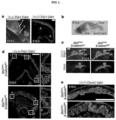
- FIG 1 Wnt/ ⁇ -catenin signaling is required for specification of the embryonic fundus in mice, a, Pdx1 and Sox2 were expressed in the antrum (a), whereas Pdx1 was absent in the fundus (f), identified by Atp4b-expressing parietal cells at E18.5. b, X-gal staining of an E10.5 foregut from an Axin2:LacZ reporter embryo showed that Wnt activity was restricted to the anterior domain of the stomach but excluded from the posterior stomach. c, Deletion of ⁇ -catenin in the gastric epithelium caused an anterior expansion of Pdx1 into the fundic region of the stomach.
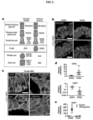
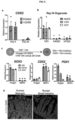
- FIG 2 ⁇ -catenin activation promotes fundus development from human foregut progenitor spheroids.
- a Schematized diagram of differentiation protocol for both fundic and antral hGOs.
- b c, At day 9, CHIR-treated organoids exhibited reduction in PDX1, increase in IRX2, IRX3, and IRX5, and no change in gastric markers SOX2 or GATA4.
- hFGOs grew comparably to hAGOs, but also exhibited glandular budding morphogenesis (white arrowheads).
- hGOs contained epithelium that expressed CDH1, KRT8, and CTNNB1, as well as gastric markers GATA4 and CLDN18.
- hAGOs exhibited nearly ubiquitous PDX1 expression while hFGOs did not.
- Scale bars 50 ⁇ m (c), 500 ⁇ m (d) and 100 ⁇ m (e). Error bars represent s.e.m.
- FIG 3 Differentiation of mucous and endocrine cell lineages in hGOs.
- a Schematic of the shared and distinct lineages found in fundic and antral glands of the stomach.
- b Both antral and fundic hGOs contained MUC5AC-positive surface mucous cells and MUC6-positive mucous neck cells, c, d, hFGOs contained endocrine cells expressing the pan-endocrine marker SYP. Diverse hormone cell types were identified in hFGOs, including GHRL-, SST-, and histamine-expressing endocrine cells.
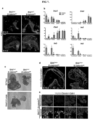
- FIG 4 Formation of chief cells in hFGOs.
- a hFGOs had a both MIST1 and Pepsinogen C (PGC) positive cells
- PPC Pepsinogen C
- b High magnification of boxed region in panel (a) showing a gland with a cluster of cells with apical PGC staining
- d Transmission electron micrograph of an hFGO cell containing dense zymogen granules, indicative of a chief cell.
- Scale bars 200 ⁇ m (a), 25 ⁇ m (b), and 10 ⁇ m (d). Error bars represent s.e.m.
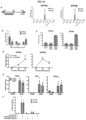
- FIG 5 Identification of pathways that drive differentiation of functional parietal cells in hFGOs.
- b Stimulated differentiation of ATP4B-expressing parietal cells following treatment with PD03/BMP4.
- hFGO-derived parietal cells resembled those found in the maturing mouse fundic epithelium in vivo.
- d Transmission electron micrograph of an hFGO cell with canalicular structure reminiscent of parietal cells.
- e The epithelium of human fundic glands and hFGO epithelium were organized into MUC5AC-expressing cells in the surface epithelium and ATP4B-expressing parietal cells in the glandular units
- f Analysis of luminal pH in organoids in response to histamine by luminal injection of SNARF-5F. The luminal pH in hFGOs rapidly dropped, while hAGOs exhibited no response.
- n 9, 9, 7, and 4 biological replicates in hFGOs (histamine), hFGOs (histamine and famotidine), hFGOs (histamine and omeprazole), and hAGOs (histamine), respectively; data representative of three independent experiments.
- AO Histamine induced acridine orange
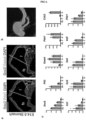
- FIG 6 Defining molecular domains in the developing stomach in vivo.
- a Analysis of Sox2, Pdx1, and Gata4 in the embryonic mouse stomach (E14.5) showed that the fundus (f) was Sox2+Gata4+Pdx1-, whereas the antrum (a) was Sox2+Gata4+Pdx1+.
- the forestomach (fs) expressed Sox2 but neither Gata4 nor Pdx1.
- Brightfield stereomicrograph showing dissected regions of the E14.5 mouse stomach that were analyzed by qPCR.
- fs forestomach
- f fundus
- a antrum
- d duodenum
- c Dissected regions in b were analyzed by qPCR for known regionally expressed markers (Sox2, P63, Gata4, Pdx1, and Cdx2) to validate the accuracy of micro-dissection.
- qPCR analysis of the dissected E14.5 stomach regions showed that putative fundus markers Irx1, Irx2, Irx3, Irx5, and Pitx1 were enriched in the fundus compared to the antrum.
- n 4 biological replicates per dissected region. Scale bar, 500 ⁇ m. Error bars represent s.d.
- FIG 8 Stable induction of fundic fate in hGOs and efficiency of protocol, a, Applicant investigated how long CHIR treatment was necessary to establish fundus identity. Brief CHIR treatment (d6-9) and subsequent growth of organoids in control growth medium until day 34 resulted in fundic organoids expressing the antral marker PDX1, suggesting that short CHIR treatment did not produce a stable fundic fate. Applicant then tested whether longer exposures to CHIR were required to retain fundic fate and found that only continuous treatment through at least day 29 could maintain low expression of the antral marker PDX1.
- FIG 9 BMP-dependence of Wnt/ ⁇ -catenin activation to induce intestinal fate from foregut progenitors, a, The intestine-specific transcription factor CDX2 was not significantly induced in CHIR-treated hGOs at either day 9 or day 20.
- c Anterior-posterior fate is coordinately controlled by WNT and BMP activity.
- FIG 10 hFGOs contain organized glands supported by associated mesenchymal layer, a, Transmission electron micrographs demonstrated that hFGO glands exhibited organized architecture with narrow apical membranes. b, Both hFGOs and hAGOs contained a supporting layer FOXF1+/VIM+ undifferentiated fibroblasts. Scale bars, 5 ⁇ m (a) and 100 ⁇ m (b).
- FIG 11 Region-specific cytodifferentiation in human gastric organoids.
- a Antral and fundic hGOs exhibited comparable expression of mucous cell markers MUC5AC and MUC6.
- b As shown in transmission electron micrograph, hFGOs contained abundant cells exhibiting granule pattern consistent with mucous neck cells, the precursors to differentiated chief cells,
- c Exogenous expression of NEUROG3 in hGOs derived from NEUROG3-deficient hESC line induced robust differentiation of SYP-positive endocrine cells. While both hAGOs and hFGOs formed GHRL- and SST-expressing endocrine cells, specification of GAST+ G-cells was observed only in hAGOs.
- FIG 12 Analysis of murine chief cell development.
- a Unlike parietal cells, which expressed functional markers ( Atp4b ) as early as late embryonic stages, chief cell gene products were not detectable until much later stages of development.
- E18.5 and juvenile (P12) stomach Gif and Pgc were not yet expressed, indicating that chief cells mature much later in development than other lineages in the gastric epithelium.
- Pgc the P12 mouse stomach did contain abundant glandular cells expressing nuclear Mist1, a chief cell-specific marker. Thus, chief cells were indeed specified earlier but took several weeks to develop robust expression of terminal differentiation markers. Scale bars, 100 ⁇ m (a) and 200 ⁇ m (b).
- FIG 13 Screen for pathways that promote differentiation of parietal cells in fundic hGOs.
- a To test for growth factors/small molecules capable of inducing parietal cell differentiation, hFGOs were exposed for two days (30-32) to the indicated agonist or antagonist and then analyzed at day 34. In a screening experiment of different pathways, only MEK inhibition with PD03 was found to robustly induce expression of ATP4A / B.
- b Reduction or removal of EGF from the culture medium was not sufficient to reproduce the effect of MEK inhibition
- c The ability of PD03/BMP4 to induce parietal cell development was exclusive to fundic hGOs, as antral hGOs did not express fundic markers in response to PD03/BMP4.
- FIG 14 Live in vitro pH monitoring in gastric organoids.
- a The dye SNAFR5F exhibits responsiveness over pH range of 5-8, which makes it well suited to detect physiologic changes in response to parietal cell-mediated acid secretion.
- b Media and luminal pH measurements recorded before (closed circles) and 60 minutes following addition of histamine (open circles). Antral hGOs did not respond, while the fundic hGO luminal pH decreased in response to histamine.
- the acidification was inhibited by pre-treatment of organoids with either famotidine or omeprazole. Further, omeprazole was sufficient to raise the pH in fundic organoids prior to histamine exposure, suggesting a baseline acid secretion in the fundic organoids.
- hFGOs contained parietal cell-dense glands in which acridine orange (AO) accumulated in nearly all of the cells lining the lumen of the gland.
- AO accumulation was observed in a canalicular-type pattern in parietal cells in hFGOs. Scale bars, 10 ⁇ m. Error bars represent s.d.
- FIG 15 Serial passaging of human gastric organoids.
- a Schematic representation of experiments to determine the presence of gastric stem cells in hGOs.
- b When fragments were grown in culture medium containing only EGF, they did not grow or expand to form new organoids. However, addition of CHIR and FGF10 to the culture medium was sufficient to support the growth of individual fragments into newly formed organoids.
- c Following two passages, hFGOs still expressed genes consistent with a gastric phenotype, including PGC, MUC6, MUC5AC, and GHRL.
- hFGOs contain cells with properties analogous to those of adult gastric stem cells, d, Although passaged hFGOs expressed markers associated with several differentiated gastric cell types, they did not express genes associated with parietal cells such as ATP4B. Further, differentiation of parietal cells could not be induced through MEK inhibition as they could prior to passaging. Error bars represent s.d.
- gastric fundus tissue means a fundic type of gastric epithelium found in the corpus that contains fundic cell types, including but not limited to acid-producing parietal cells and protease-producing chief cells.
- DE cell means one of the three primary germ layers produced by the process of gastrulation.
- wnt signalling pathway means the wnt/beta-catenin pathway and is a signal transduction pathway that is mediated by Wnt ligands and frizzled cell surface receptors that acts through the beta-catenin protein.
- activator with respect to a pathway, such as a "wnt pathway” means a substance that activates the Wnt/beta-catenin pathway such that Wnt/beta-catenin targets are increased.
- FGF signaling pathway activator means a substance that activates the FGF pathway such that FGF targets are increased.
- BMP signalling pathway inhibitor a substance that interferes with the BMP pathway and causes BMP targets to be decreased.
- growth factor means a substance capable of stimulating cellular processes including but not limited to growth, proliferation, morphogenesis or differentiation.
- fundic lineage means cell types found in fundic epithelium in the corpus stomach.
- SOX2+GATA+PDX1- epithelium means epithelium that expresses the listed proteins.
- stable expression of a marker means expression that does not change upon modification of the growth environment.
- totipotent stem cells are stem cells that can differentiate into embryonic and extra-embryonic cell types. Such cells can construct a complete, viable, organism. These cells are produced from the fusion of an egg and sperm cell. Cells produced by the first few divisions of the fertilized egg are also totipotent.
- pluripotent stem cells encompasses any cells that can differentiate into nearly all cells, i.e., cells derived from any of the three germ layers (germinal epithelium), including endoderm (interior stomach lining, gastrointestinal tract, the lungs), mesoderm (muscle, bone, blood, urogenital), and ectoderm (epidermal tissues and nervous system).
- PSCs can be the descendants of totipotent cells, derived from embryos (including embryonic germ cells) or obtained through induction of a non-pluripotent cell, such as an adult somatic cell, by forcing the expression of certain genes.
- iPSCs induced pluripotent stem cells
- iPS cells also commonly abbreviated as iPS cells
- iPS cells refers to a type of pluripotent stem cells artificially derived from a normally non-pluripotent cell, such as an adult somatic cell, by inducing a "forced" expression of certain genes.
- a precursor cell encompasses any cells that can be used in methods described herein, through which one or more precursor cells acquire the ability to renew itself or differentiate into one or more specialized cell types.
- a precursor cell is pluripotent or has the capacity to becoming pluripotent.
- the precursor cells are subjected to the treatment of external factors (e.g., growth factors) to acquire pluripotency.
- a precursor cell can be a totipotent stem cell; a pluripotent stem cell (induced or non-induced); a multipotent stem cell; and a unipotent stem cell.
- a precursor cell can be from an embryo, an infant, a child, or an adult.
- a precursor cell can be a somatic cell subject to treatment such that pluripotency is conferred via genetic manipulation or protein/peptide treatment.
- cellular differentiation is the process by which a less specialized cell becomes a more specialized cell type.
- directed differentiation describes a process through which a less specialized cell becomes a particular specialized target cell type.
- the particularity of the specialized target cell type can be determined by any applicable methods that can be used to define or alter the destiny of the initial cell. Exemplary methods include but are not limited to genetic manipulation, chemical treatment, protein treatment, and nucleic acid treatment.
- cellular constituents are individual genes, proteins, mRNA expressing genes, and/or any other variable cellular component or protein activities such as the degree of protein modification (e.g., phosphorylation), for example, that is typically measured in biological experiments (e.g., by microarray or immunohistochemistry) by those skilled in the art.
- Significant discoveries relating to the complex networks of biochemical processes underlying living systems, common human diseases, and gene discovery and structure determination can now be attributed to the application of cellular constituent abundance data as part of the research process.
- Cellular constituent abundance data can help to identify biomarkers, discriminate disease subtypes and identify mechanisms of toxicity.
- pluripotent stem cells are derived from embryonic stem cells, which are in turn derived from totipotent cells of the early mammalian embryo and are capable of unlimited, undifferentiated proliferation in vitro.
- Embryonic stem cells are pluripotent stem cells derived from the inner cell mass of the blastocyst, an early-stage embryo. Methods for deriving embryonic stem cells from blastocytes are well known in the art. Human embryonic stem cells H9 (H9-hESCs) are used in the exemplary embodiments described in the present application, but it would be understood by one of skill in the art that the methods and systems described herein are applicable to any stem cells.
- Additional stem cells that can be used in embodiments in accordance with the present invention include but are not limited to those provided by or described in the database hosted by the National Stem Cell Bank (NSCB), Human Embryonic Stem Cell Research Center at the University of California, San Francisco (UCSF); WISC cell Bank at the Wi Cell Research Institute; the University of Wisconsin Stem Cell and Regenerative Medicine Center (UW-SCRMC); Novocell, Inc. (San Diego, Calif.); Cellartis AB (Goteborg, Sweden); ES Cell International Pte Ltd (Singapore); Technion at the Israel Institute of Technology (Haifa, Israel); and the Stem Cell Database hosted by Princeton University and the University of Pennsylvania.
- NSCB National Stem Cell Bank
- UW-SCRMC University of Wisconsin Stem Cell and Regenerative Medicine Center
- UW-SCRMC University of Wisconsin Stem Cell and Regenerative Medicine Center
- Novocell, Inc. San Diego, Calif.
- Cellartis AB Goteborg, Sweden
- Exemplary embryonic stem cells that can be used in embodiments in accordance with the present invention include but are not limited to SA01 (SA001); SA02 (SA002); ES01 (HES-1); ES02 (HES-2); ES03 (HES-3); ES04 (HES-4); ES05 (HES-5); ES06 (HES-6); BG01 (BGN-01); BG02 (BGN-02); BG03 (BGN-03); TE03 (13); TE04 (14); TE06 (16); UC01 (HSF1); UC06 (HSF6); WA01 (H1); WA07 (H7); WA09 (H9); WA13 (H13); WA14 (H14).
- embryonic stem cells More details on embryonic stem cells can be found in, for example, Thomson et al., 1998, "Embryonic Stem Cell Lines Derived from Human Blastocysts," Science 282 (5391):1145-1147 ; Andrews et al., 2005, “Embryonic stem (ES) cells and embryonal carcinoma (EC) cells: opposite sides of the same coin,” Biochem Soc Trans 33:1526-1530 ; Martin 1980, “Teratocarcinomas and mammalian embryogenesis,”.
- ES Embryonic Stem Cell Lines Derived from Human Blastocysts
- EC embryonal carcinoma
- iPSCs Induced Pluripotent Stem Cells
- iPSCs are derived by transfection of certain stem cell-associated genes into non-pluripotent cells, such as adult fibroblasts. Transfection is typically achieved through viral vectors, such as retroviruses. Transfected genes include the master transcriptional regulators Oct-3/4 (Pouf51) and Sox2, although it is suggested that other genes enhance the efficiency of induction. After 3-4 weeks, small numbers of transfected cells begin to become morphologically and biochemically similar to pluripotent stem cells, and are typically isolated through morphological selection, doubling time, or through a reporter gene and antibiotic selection.
- iPSCs include but are not limited to first generation iPSCs, second generation iPSCs in mice, and human induced pluripotent stem cells.
- a retroviral system is used to transform human fibroblasts intopluripotent stem cells using four pivotal genes: Oct3/4, Sox2, Klf4, and c-Myc.
- a lentiviral system is used to transform somatic cells with OCT4, SOX2, NANOG, and LIN28.
- Genes whose expression are induced in iPSCs include but are not limited to Oct-3/4 (e.g., Pou5fl); certain members of the Sox gene family (e.g., Sox1, Sox2, Sox3, and Sox15); certain members of the Klf family (e.g., Klf1, Klf2, Klf4, and Klf5), certain members of the Myc family (e.g., C-myc, L-myc, and N-myc), Nanog, and LIN28.
- Oct-3/4 e.g., Pou5fl
- Sox gene family e.g., Sox1, Sox2, Sox3, and Sox15
- Klf family e.g., Klf1, Klf2, Klf4, and Klf5
- Myc family e.g., C-myc, L-myc, and N-myc
- Nanog LIN28.
- non-viral based technologies are employed to generate iPSCs.
- an adenovirus can be used to transport the requisite four genes into the DNA of skin and liver cells of mice, resulting in cells identical to embryonic stem cells. Since the adenovirus does not combine any of its own genes with the targeted host, the danger of creating tumors is eliminated.
- reprogramming can be accomplished via plasmid without any virus transfection system at all, although at very low efficiencies.
- direct delivery of proteins is used to generate iPSCs, thus eliminating the need for viruses or genetic modification.
- generation of mouse iPSCs is possible using a similar methodology: a repeated treatment of the cells with certain proteins channeled into the cells via poly-arginine anchors was sufficient to induce pluripotency.
- the expression of pluripotency induction genes can also be increased by treating somatic cellswith FGF2 under low oxygen conditions.
- embryonic stem cells More details on embryonic stem cells can be found in, for example, Kaji et al., 2009, "Virus free induction of pluripotency and subsequent excision of reprogramming factors," Nature 458:771-775 ; Woltjen et al., 2009, "piggyBac transposition reprograms fibroblasts to induced pluripotent stem cells," Nature 458:766-770 ; Okita et al., 2008, “Generation of Mouse Induced Pluripotent Stem Cells Without Viral Vectors," Science 322(5903):949-953 ; Stadtfeld et al., 2008, “Induced Pluripotent Stem Cells Generated without Viral Integration,” Science 322(5903):945-949 ; and Zhou et al., 2009, “Generation of Induced Pluripotent Stem Cells Using Recombinant Proteins," Cell Stem Cell 4(5):381-384 ; each of which is hereby
- exemplary iPS cell lines include but not limited to iPS-DF19-9; iPS-DF19-9; iPS-DF4-3; iPS-DF6-9; iPS(Foreskin); iPS(IMR90); and iPS(IMR90).
- pluripotent cells are derived from a morula.
- pluripotent stem cells are stem cells.
- Stem cells used in these methods can include, but are not limited to, embryonic stem cells.
- Embryonic stem cells can be derived from the embryonic inner cell mass or from the embryonic gonadal ridges.
- Embryonic stem cells or germ cells can originate from a variety of animal species including, but not limited to, various mammalian species including humans.
- human embryonic stem cells are used to produce definitive endoderm.
- human embryonic germ cells are used to produce definitive endoderm.
- iPSCs are used to produce definitive endoderm.
- hPSCs pluripotent stem cells
- Applicant first identified, and then recapitulated key events in embryonic fundus development to arrive at the claimed compositions.
- Applicant found that disruption of Wnt/ ⁇ -catenin signaling in mouse embryos led to conversion of fundic to antral epithelium, while ⁇ -catenin activation in hPSC-derived foregut progenitors promoted the development of human fundic-type gastric organoids (hFGOs).
- Applicant then used hFGOs to identify temporally distinct roles for multiple signaling pathways in epithelial morphogenesis and differentiation of fundic cell types, including chief cells and functional parietal cells. While hFGOs are a powerful new model for studying the development of the human fundus and its lineages, they also represent a critical new model system to study the molecular basis of human gastric physiology, pathophysiology, and drug discovery.
- an in vitro method of inducing formation of a gastric fundus tissue is disclosed.
- the method may comprise the steps of:
- step e) may further comprise the step of contacting the fundal hGOs with an activator of BMP4 signalling.
- step e may be carried out for a period of time sufficient to develop SOX2+GATA+PDX1- epithelium.
- the functional fundic cell type may be a parietal cell that expresses proton pump proteins and secretes acid. In one aspect, the functional fundic cell type may be a chief cell that secretes pepsinogen.
- step d and step e are carried out for a period of time sufficient to confer stable expression of lineage markers MUC5AC, MUC6, PGC, and GHRL.
- the definitive endoderm may be derived from a precursor cell selected from an embryonic stem cell, an embryonic germ cell, an induced pluripotent stem cell, a mesoderm cell, a definitive endoderm cell, a posterior endoderm cell, a posterior endoderm cell, and a hindgut cell, a definitive endoderm derived from a pluripotent stem cell, a definitive endoderm derived from a pluripotent stem cell selected from an embryonic stem cell, an adult stem cell, or an induced pluripotent stem cell.
- the definitive endoderm may be derived from contacting a pluripotent stem cell with one or more molecules selected from Activin, the BMP subgroups of the TGF-beta superfamily of growth factors; Nodal, Activin A, Activin B, BMP4, Wnt3a, and combinations thereof.
- Some existing wnt signalling pathway activators include but are not limited to:
- Wnt ligands including but not limited to Wnt1, Wnt2, Wnt2b, Wnt3, Wnt3a, Wnt8, et al; modifiers of Wnt ligand activity including but not limited to activated Wnt frizzled receptors, (LRP) co-receptors, R-spondin proteins, Dkk proteins, regulators of Wnt ligand secretion and trafficking (Wntless, Porcupine), inhibiting beta-catenin degredation APC and GSK3beta inhibition, activated beta-catenin, constitutively active TCF/Lef proteins.
- LRP activated Wnt frizzled receptors
- R-spondin proteins R-spondin proteins
- Dkk proteins regulators of Wnt ligand secretion and trafficking
- beta-catenin degredation APC and GSK3beta inhibition activated beta-catenin, constitutively active TCF/Lef proteins.
- Chemical activators there are over 28 known chemicals that either activate or inhibit Wnt/beta-catenin signaling. Some activators include but are not limited to GSK3-beta inhibitors CHIR99021, BIO, LY2090314, SB-216763, lithium, porcupine inhibitors IWP, LGK974, C59, SFRP inhibitor WAY-316606, beta-catenin activator DCA.
- the WNT pathway activator may be one or more molecules selected from Wnt1, Wnt2, Wnt2b, Wnt3, Wnt3a, Wnt4, Wnt5a, Wnt5b, Wnt6, Wnt7a, Wnt7b, Wnt8a, Wnt8b, Wnt9a, Wnt9b, WntlOa, Wnt10b, Wnt11, and Wnt16, for example, Wnt3a, or for example, Wnt3a at a concentration between about 50 to about 1500 ng/ml.
- Suitable FGF signalling pathway activators include: FGF ligands FGF2, 4, 5, 8, et al.. Activated forms of FGF receptors. Proteins and chemicals that stimulate the FGF receptor and signaling components downstream of the receptors including MAPK, MEK, ERK proteins and chemicals that modulate their activity. FGF signaling can be activated by inhibiting inhibitors of FGF signaling pathways including but not limited to Sprouty protein family members.
- the BMP signalling pathway inhibitor may be selected from Noggin, Dorsomorphin, LDN189, DMH-1, and combinations thereof, for example, wherein said precursor cell may be contacted with a BMP inhibitor at a concentration between about 50 to about 1500 ng/ml.
- the steps are conducted in vitro.
- a composition comprising gastric tissue produced according to the aforementioned method(s) is disclosed.
- the gastric tissue may be characterized, for example, by being free of innervation and/or blood vessels.
- an in vitro method of inducing formation of a gastric fundus tissue may comprise the steps of contacting a fundal hGO (hFGO) with a wnt pathway activating agent and an EGF signalling pathway activating agent for a first period, and a MEK inhibitor for a second period, (wherein said MEK inhibitor may be PD0325901), wherein said first and second periods are carried out for a period of time sufficient to form a functional fundic cell type;
- hFGO fundal hGO
- MEK inhibitor may be PD0325901
- hFGO are obtained by contacting a three-dimensional posterior foregut spheroid in a basement membrane matrix with a growth factor, a wnt pathway activating agent, an EGF signalling pathway activator, a BMP signalling pathway inhibitor, and retinoic acid for a period of time sufficient to convert said three-dimensional posterior foregut spheroid to said hFGO;
- said three-dimensional posterior foregut spheroids are obtained by contacting a mammalian definitive endoderm (DE) cells with a wnt pathway activating agent, an FGF signaling pathway activating agent, a BMP signalling pathway inhibitor, and retinoic acid.
- DE definitive endoderm
- Organoids have proven to be powerful experimental models that combine architectural complexity and cellular diversity with the tractability and scalability of traditional cell culture methods.
- Organoid generation through directed differentiation of pluripotent stem cells (PSCs; comprising both embryonic stem cells and induced PSCs) offers several advantages over other approaches including an unlimited source of starting material, no requirement for surgical acquisition of tissue, and ease of genetic manipulations. Further, PSC-based methods permit direct investigation of mechanisms underlying normal and aberrant human development 3 .
- PSCs pluripotent stem cells
- differentiating PSCs into specific organoid types depends on a robust molecular knowledge of normal organ development. For some organs, such as the stomach, there are large gaps in understanding of molecular pathways that drive embryonic development.
- the stomach is one of the most structurally diverse organs among mammals 4 .
- the gastric mucosa generally consists of two types of epithelial glands 5,6 .
- oxyntic glands Located in the more proximal anatomic domains - the corpus and fundus - of the stomach, oxyntic glands comprise acid-secreting parietal cells, protease-producing chief cells, mucus-producing cells, and endocrine cells.
- hPSCs human gastric organoids
- hAGOs antral hGOs
- hAGOs antral hGOs
- Noguchi et. al. successfully differentiated mouse ESCs into organoids comprising various types of mouse gastric tissue 8 .
- Embryonic organ development is guided by a series of instructive cues between neighboring tissues 10,11 , and differentiation of hPSCs into specific lineages has relied heavily on use of these signals to direct differentiation in vitro.
- Applicant previously identified a step-wise differentiation approach to generate hAGOs, whereby hPSCs were differentiated into definitive endoderm, patterned to posterior foregut, then specified into presumptive antral epithelium 7 .
- Applicant hypothesized that the fundus and antrum derive from a common population of posterior foregut progenitors, which could be directed toward the fundic lineage if provided with the appropriate signals.
- Applicant first had to identify signaling pathways that pattern the embryonic stomach along the proximal-distal axis.
- Applicant analyzed mouse embryos to identify molecular markers that could distinguish between presumptive fundus, antrum and forestomach.
- Sox2 was expressed in all foregut organ lineages while Gata4 was restricted to the glandular stomach epithelium.
- Pdx1 was specific to the presumptive antral region ( FIG 6, a ); thus, the embryonic fundus domain is believed to be Sox2+Gata+Pdx1-.
- Applicant analyzed published microarray datasets (GSM326648-GSM32665012 and GSM80809-GMS8081613) and dissected regions of the E14.5 foregut to demonstrate that expression of the transcription factors Irx2, Irx3, and Irx5 was greater than tenfold enriched in the embryonic fundus compared to antrum ( FIG 6 , b-c), indicating that their expression can further distinguish between regions of the glandular gastric epithelium.
- Ectopic Pdx1 was initially restricted to the ventral half of the fundic epithelium, consistent with previously reported recombination activity using this Shh-cre line 16 , but it then expanded over time to include a majority of the proximal stomach and greater curvature by E14.5 ( FIG 7, a ). Additionally, expression of the fundus markers Irx2, Irx3, and Irx5 were dramatically reduced in the cKO embryos ( FIG 7, b ).
- Parietal cells a fundic cell type marked by expression of Atp4b , were reduced in the CKO stomach ( FIG 1, d ) and completely absent in ⁇ -catenin deficient epithelium ( FIG 1, e ). In contrast, the parietal cells that did develop were only observed in ⁇ -catenin-expressing epithelium ( FIG 1 , e and FIG 7 , d-e). Taken together, these in vivo data support a model by which Wnt/p-catenin signaling induces fundus specification and inhibits antral identity. Further, disruption of this early patterning coincides with subsequent cell autonomous loss of parietal cells, suggesting that cytodifferentiation is impaired secondary to developmental patterning defects.
- Applicant next investigated the role of Wnt/ ⁇ -catenin signaling in establishing fundic-antral pattern of the developing human stomach.
- Applicant started with a previously described protocol for differentiating hPSCs into antrum-like gastric organoids, which recapitulates the normal stages of early gastric development with high fidelity 7 .
- Applicant then sought to determine whether CHIR-treated spheroids would further develop into more mature hGOs containing a fundus-like epithelium.
- a three-day pulse of CHIR from days 6-9 was not sufficient to irreversibly specify a fundic identity, as the hGOs ultimately reverted to a PDX1+ antral phenotype at later stages.
- continued Wnt stimulation via CHIR treatment through at least day 29 led to stable induction of fundic gene expression ( FIG 8, a ). This was consistent with the prolonged activity of Wnt/ ⁇ -catenin signaling during embryonic stomach development in vivo.
- the organoids maintained their respective gastric identities throughout their development ( FIG 8 , b-c).
- hFGOs and hAGOs comprised CDH1+CTNNB1+KRT8+ polarized, columnar epithelia that ubiquitously expressed the gastric-specific 17 claudin CLDN 18 ( FIG 2, e and FIG 9, d ), as well as comparable undifferentiated mesenchymal cells ( FIG 10, b ).
- hFGOs had a distinctive architecture with organized glands that bud from the organoid epithelium ( FIG 2 , d-e and FIG 10, a ), while hAGOs had complex folding and primitive gland-like organization but rarely glandular buds 7 .
- the novel Wnt/ ⁇ -catenin dependent mechanism of specifying fundus is conserved in humans and can be manipulated to generate three-dimensional hFGOs with a glandular epithelium that molecularly resembles the developing fundus.
- hFGOs Differentiated antral gastric cell types were first detected in hAGOs around day 27 and then increased by day 34 7 , analogous to the first few weeks of postnatal development in the mouse stomach 18 .
- hFGOs contained both MUC5AC+ surface mucous cells and MUC6+ mucous neck cells as expected, similar to the hAGOs ( FIG 3 , a-b and FIG 11, a ).
- hFGOs also formed a variety of endocrine cell types ( FIG 3, c ), but expression of the hormone GAST was specific to hAGOs while GHRL was enriched 10-fold in hFGOs ( FIG 3, d ), consistent with the normal gastroendocrine pattern 19 .
- hFGOs exhibited epithelial expression of the chief cell-specific 21 transcription factor MIST1 ( FIG 4, a ), had 100-1,000-fold increases in transcripts for the proenzymes PGA5 and PGC ( FIG 4, c ), and contained significantly increased pepsinogen content measured by ELISA ( FIG 4, e ).
- the transcript levels were less than 1% those found in the adult human stomach ( FIG 11, d ) and pepsinogen-positive cells were only rarely detectable by immunohistochemistry ( FIG 4 , b-c).
- zymogen granule-containing cells 22 were identified by TEM ( FIG 4, d ) but were rare. In contrast, cells with a more immature mucous granule pattern were abundant ( FIG 11, b ). Since chief cells in vivo do not exhibit robust pepsinogen expression for the first few weeks of life ( FIG 12 , a-b), Applicant concluded that the chief cells were present in hFGOs but were immature. hFGOs therefore represent a robust platform to dissect the intrinsic and extrinsic mechanisms that regulate chief cell maturation.
- hFGOs contained only a small number of parietal cells (PCs; FIG 5 , a-b), the defining cell type of fundic glands that acidify the gastric lumen via the proton pump (consisting of ATP4A and ATP4B subunits).
- PCs parietal cells
- FIG 5 , a-b the defining cell type of fundic glands that acidify the gastric lumen via the proton pump
- PSC-derived hFGOs as a platform to functionally screen candidate signaling pathways for a role in regulating PC differentiation.
- Applicant exposed day 30 hFGOs to signaling agonists or antagonists for two days and analyzed PC differentiation at day 34.
- hFGOs produced a swift and marked decrease in luminal pH in response to histamine that was blocked by either the H2 antagonist famotidine or the H+K+-ATPase antagonist omeprazole ( FIG 5, f and FIG 14, b ).
- AO acridine orange
- hFGOs Regrowth of organoids from passaged hFGOs was dependent on high Wnt and high FGF culture medium, similar to what is used to grow primary gastric tissue organoids 24,25 .
- hFGOs maintained expression of lineage markers MUC5AC, MUC6, PGC, and GHRL; however, they did not contain PCs and were refractory to PD03/BMP4-mediated induction of the parietal lineage ( FIG 15 , c-d). This finding was similar to what has been observed in adult stem cell-derived gastric organoids, which do not robustly produce PCs despite being derived from the bona fide oxyntic mucosa 20,26 . Thus it will be important to identify conditions that preserve PC competence in long-term cultures of hGOs and adult gastric organoids.
- Applicant has directly applied in vivo and in vitro discovery-based studies towards the differentiation of hPSCs into a new tissue type.
- Applicant has defined a novel function of Wnt/ ⁇ -catenin signaling in specifying the fundic domain during stomach development in mice, and used Wnt modulation as the mechanistic basis to direct differentiation of hPSCs into three-dimensional human fundic organoids.
- Wnt-mediated fundus specification was led to the subsequent formation of PCs.
- the mesenchymal role for Wnt/ ⁇ -catenin could modulate other signaling pathways such as BMP 27 , which our data show synergizes with Wnt to promote intestinal specification from early endoderm ( FIG 7 and FIG 9, c )
- BMP 27 signaling pathways
- the human gastric organoid systems might be useful, in combination with animal models, to dissect how these signaling pathways interact in the mesenchyme and epithelium to coordinate early embryonic gastrointestinal development.
- hGOs are a new and tractable human model system to identify and study signaling mechanisms involved in normal cellular homeostasis in the fundus and antrum.
- the following genetic mouse strains were obtained from The Jackson Laboratory, housed at Cincinnati Children's Hospital Research Foundation animal facility, and maintained according to IACUC protocol (0B09074): Axin2:LacZ (stock no. 009120), Shh:Cre (stock no. 005622), and ⁇ -cateninfloxed (stock no. 004152).
- Human embryonic stem cell line WA01 (H1; obtained from WiCell) was supplied by the Pluripotent Stem Cell Facility at Cincinnati Children's Hospital Medical Center. Cell identity was confirmed by short tandem repeat analysis (Microsatellite STR Analysis; Applied Biosystems), and cells were routinely tested for mycoplasma contamination (MycoAlert Mycoplasma Detection Kit; Lonza). Pluripotent cells were maintained in feeder-free conditions on HESC-qualified Matrigel (BD Biosciences) in mTesR1 media (Stem Cell Technologies). Colonies were passaged every four days using dispase (Invitrogen).
- hPSCs were dissociated into single cells using Accutase (Stem Cell Technologies) and plated into 24-well plates at a density of roughly 200,000 cells per well in mTesR1 with Y-27632 (10 ⁇ M; Stemgent). The following day, cells were differentiated into definitive endoderm (DE) by adding Activin A (100 ng/ml; Cell Guidance Systems) in RPMI 1640 media (Invitrogen) for three days.
- DE definitive endoderm
- Activin A 100 ng/ml
- RPMI 1640 media Invitrogen
- NEAA (1X; Gibco) and defined FBS (dFBS; Invitrogen) at 0%, 0.2%, and 2.0% on days 1, 2, and 3, respectively.
- BMP4 50 ng/ml; R&D Systems
- DE was differentiated to posterior foregut endoderm by exposing cells to CHIR99021 (2 ⁇ M; Stemgent), FGF4 (500 ng/ml; R&D Systems), and Noggin (200 ng/ml; R&D systems) for three days in RPMI 1640 supplemented with NEAA and 2.0% dFBS.
- Retinoic acid (2 ⁇ M; Sigma Aldrich) was added for the final day. Media was changed every day. This process resulted in the spontaneous formation of three-dimensional posterior foregut spheroids.
- Posterior foregut spheroids were collected and transferred to a three-dimensional culture system as previously described 36 . Briefly, spheroids were suspended in 50 ⁇ l Matrigel (BD Biosciences) and plated as a droplet into 24-well plates. The matrigel was allowed to solidify for 10 minutes in the tissue culture incubator, then overlayed with basic gut media (BGM) containing growth factors and/or small molecule agonsists.
- BGM basic gut media
- BGM consisted of Advanced DMEM/F12 media (Gibco) supplemented with N2 (1X; Invitrogen), B27 (1X; Invitrogen), HEPES (10 ⁇ M; Gibco), L-glutamine, penicillin/streptomycin, and EGF (100 ng/ml; R&D Systems).
- N2 (1X; Invitrogen
- B27 (1X; Invitrogen
- HEPES 10 ⁇ M
- L-glutamine penicillin/streptomycin
- EGF 100 ng/ml
- R&D Systems EGF
- FGF10 50 ng/ml; R&D Systems
- FGF10 50 ng/ml; R&D Systems
- CHIR glandular morphogenesis driven by CHIR (data not shown).
- organoids were collected and re-plated at a dilution of 1:10-1:20.
- hFGOs were grown to day 30, then exposed for two days to individual signaling pathway agonists and antagonists: DAPT (1 ⁇ M; Stemgent), SB431542 (10 ⁇ M; Stemgent), BMP4 (50 ng/ml; R&D Systems), PD0325901 (2 ⁇ M; Stemgent), Gastrin (10 nM; Sigma Aldrich), Dexamethasone (50 nM; Sigma Aldrich), and Wnt5a (50 ng/ml; R&D Systems). Following treatment, hFGOs were grown for two more days to day 34, then analyzed by qPCR.
- Tissues were fixed in 4% paraformaldehyde overnight at 4°C, then washed thoroughly in PBS.
- embryos were processed as previously described37. Briefly, they were permeabilized in Dent's Bleach (4:1:1 EtOH: DMSO: 30% H2O2) for two hours at room temperature and rehydrated through series of methanol washes. Embryos were then blocked for one hour, incubated in primary antibody overnight at 4°C, washed in PBS, incubated in primary antibody overnight at 4°C, and thoroughly washed.
- For paraffin embedding tissues were dehydrated through series of ethanol washes, washed in xylene, then embedded in paraffin.
- slides were deparaffinized and rehydrated. Antigen retrieval was performed in citrate buffer for 45 minutes in steamer. Primary antibodies were incubated overnight at 4°C. Following primary antibody, slides were washed in PBS then incubated with secondary antibody (at dilution of 1:500) for one hour at room temperature. Secondary antibodies (Jackson ImmunoResearch Laboratories) were made in donkey and conjugated to Alexa Fluor 488, 594, or 647.
- Antibodies used for immunofluorescent staining are listed with antigen, host species, manufacturer and catalogue number, and dilution used for staining.
- Atp4b rabbit, Santa Cruz sc84304, 1:500; Cdh1, goat, R&D Systems AF648, 1:500; Cdh1, mouse, BD Biosciences 610182, 1:500; Cdx2, mouse, Biogenex MU392A, 1:500, Cldnl8, rabbit, Sigma HPA018446, 1:200; Ctnnb1, rabbit, Santa Cruz sc7190, 1:100; FoxF1, goat, R&D Systems F4798, 1:500, Gastrin, rabbit, Dako A0568, 1:1,000; Gata4, goat, Santa Cruz sc1237, 1:200; Gif, rabbit, Sigma HPA040774, 1:100; Ghrl, goat, Santa Cruz sc10368, 1:200; Histamine, rabbit, Immunostar 22939, 1:1,000; K
- Confocal imaging was performed on Nikon A1Rsi inverted confocal microscope.
- embryos were dehydrated in methanol and cleared in Murray's clear (2:1 benzyl benzoate: benzyl alcohol) just prior to imaging. After staining, slides were mounted with Fluoromount G (SouthernBiotech), and air-dried overnight at room temperature.
- hGOs were processed as previously described7. Briefly, organoids were fixed in 3% glutaraldehyde, washed in 0.1 M sodium cacodylate buffer, and incubated for one hour 4% osmium tetroxide. They were subsequently washed then dehydrated in ethanol series, and finally embedded in propylene oxide/LX112. Tissue was then sectioned and stained with 2% uranyl acetate followed by lead citrate. Images were visualized on Hitachi transmission electron microscope.
- ELISA was performed using the Human Pepsinogen I (PGI) ELISA Kit (Thermo Scientific, EHPGI) according to manufacturer's instructions. Briefly, day 34 hGOs were collected and incubated in Cell Recovery Solution (Corning) for one hour at 4°C then washed in PBS. Organoids were lysed with RIPA buffer followed by vigorous vortexing at high velocity for 30 minutes at room temperature. Lysates were pelleted and supernatant was collected and stored at -80°C. For ELISA, the samples and standards were performed in technical replicates. The reactions were measured on ⁇ Quant microplate plate reader (Bio Tek). Absorbance at 450 nm was measured, and the 570 nm absorbance was subtracted.
- PGI Human Pepsinogen I
- Acid secretion assays were performed as previously described (Schumacher et al., 2015). hGOs were grown in the chambered coverglass (Thermo Scientific) and the chamber was placed on an inverted confocal microscope (Zeiss LSM 710), and experiments were performed under 5% CO2 and 37°C conditions (incubation chamber, PeCon, Erbach, Germany).
- Freshly isolated mouse gastric fundic glands or cultured hGO were incubated with acridine orange (10 ⁇ M), then acridine orange fluorescence was excited at 458 nm or 488 nm and images were collected at 600-650 nm (Red) or 500-550 nm (Green), respectively.
- the ratiometric pH sensitive dye, 5-(and-6)-carboxy SNARF-5F was microinjected (46-92 nl) into the lumen and monitored. Fluorescent dye also added into medium.
- Histamine 100 ⁇ M; Sigma was added to media, while famotidine (100 ⁇ M; Sigma) or omeprazole (100 ⁇ M; Sigma) were pre-incubated at least 30 min before histamine. Images were analyzed using MetaMorph software (Molecular Devices, Downingtown, PA). Background corrected 620-680/565-605 nm ratio values were converted to pH using a standard curve.
- a gastric fundus tissue is generated in vitro, comprising the following steps:
- Example 2 The method of Example 1, wherein said first period is three days ⁇ 24 hours and wherein said retinoic acid is added for the third day of said period ⁇ 24 hours
- Example 3 The method of any preceding example, wherein said second period is three days ⁇ 24 hours
- Example 4 The method of any preceding example, wherein said third period is 11 days ⁇ 24 hours
- Example 5 The method of any preceding example, wherein said fourth period is 10 days ⁇ 24 hours
- Example 6 The method of any preceding example, wherein said fifth period is a two day period ⁇ 24 hours
- Example 7 The method of any preceding example, wherein step e) further comprises the step of contacting said fundal hGOs with an activator of BMP4 signalling.
- Example 8 The method of any preceding example, wherein said functional fundic cell type is a parietal cell that expresses proton pump proteins and secretes acid.
- Example 9 The method of any preceding example, wherein said functional fundic cell type is a chief cell that secretes pepsinogen.
- Example 10 The method of any preceding example, wherein said step e is carried out for a period of time sufficient to develop SOX2+GATA+PDX1- epithelium.
- Example 11 The method of any preceding example, wherein said step d and step e are carried out for a period of time sufficient to confer stable expression of lineage markers MUC5AC, MUC6, PGC, and GHRL.
- Example 12 The method of any preceding example, wherein said definitive endoderm is derived from a precursor cell selected from an embryonic stem cell, an embryonic germ cell, an induced pluripotent stem cell, a mesoderm cell, a definitive endoderm cell, a posterior endoderm cell, a posterior endoderm cell, and a hindgut cell, a definitive endoderm derived from a pluripotent stem cell, a definitive endoderm derived from a pluripotent stem cell selected from an embryonic stem cell, an adult stem cell, or an induced pluripotent stem cell.
- a precursor cell selected from an embryonic stem cell, an embryonic germ cell, an induced pluripotent stem cell, a mesoderm cell, a definitive endoderm cell, a posterior endoderm cell, a posterior endoderm cell, and a hindgut cell, a definitive endoderm derived from a pluripotent stem cell, a definitive endoderm derived from a pluripotent stem cell selected
- Example 13 The method of any preceding example, wherein said definitive endoderm is derived from contacting a pluripotent stem cell with one or more molecules selected from Activin, the BMP subgroups of the TGF-beta superfamily of growth factors; Nodal, Activin A, Activin B, BMP4, Wnt3a, and combinations thereof.
- Activin the BMP subgroups of the TGF-beta superfamily of growth factors
- Example 14 The method of any preceding example, wherein said WNT pathway activator is one or more molecules selected from Wnt1, Wnt2, Wnt2b, Wnt3, Wnt3a, Wnt4, Wnt5a, Wnt5b, Wnt6, Wnt7a, Wnt7b, Wnt8a, Wnt8b, Wnt9a, Wnt9b, Wnt10a, Wnt10b, Wnt11, and Wnt16, for example, Wnt3a, or for example, Wnt3a at a concentration between about 50 to about 1500 ng/ml.
- Wnt3a or for example, Wnt3a at a concentration between about 50 to about 1500 ng/ml.
- Example 15 The method of any preceding example, wherein said BMP signalling pathway inhibitor is selected from Noggin, Dorsomorphin, LDN189, DMH-1, and combinations thereof, for example, wherein said precursor cell is contacted with a BMP inhibitor at a concentration between about 50 to about 1500 ng/ml.
- the BMP inhibitor may be a protein and/or chemical capable of inhibiting the BMP signalling pathway.
- Example 16 The method of any preceding example, wherein said steps are conducted in vitro.
- Example 17 A composition comprising gastric tissue is produced according to any preceding Example.
- the gastric tissue is characterized by being free of innervation and/or blood vessels.
- a gastric fundus tissue is formed via the following steps: contacting a fundal hGO (hFGO) with a wnt pathway activating agent and an EGF signalling pathway activating agent for a first period, and a MEK inhibitor for a second period, (wherein said MEK inhibitor may be, for example, PD0325901), wherein the first and second periods are carried out for a period of time sufficient to form a functional fundic cell type;
- hFGO are obtained by contacting a three-dimensional posterior foregut spheroid in a basement membrane matrix with a growth factor, a wnt pathway activating agent, an EGF signalling pathway activator, a BMP signalling pathway inhibitor, and retinoic acid for a period of time sufficient to convert said three-dimensional posterior foregut spheroid to said hFGO;
- said three-dimensional posterior foregut spheroids are obtained by contacting a mammalian definitive endoderm (DE) cells with a wnt pathway activating agent, an FGF signaling pathway activating agent, a BMP signalling pathway inhibitor, and retinoic acid.
- DE definitive endoderm
Landscapes
- Health & Medical Sciences (AREA)
- Engineering & Computer Science (AREA)
- Life Sciences & Earth Sciences (AREA)
- Biomedical Technology (AREA)
- Genetics & Genomics (AREA)
- Zoology (AREA)
- Organic Chemistry (AREA)
- Biotechnology (AREA)
- Chemical & Material Sciences (AREA)
- Bioinformatics & Cheminformatics (AREA)
- Wood Science & Technology (AREA)
- Microbiology (AREA)
- Cell Biology (AREA)
- Biochemistry (AREA)
- General Engineering & Computer Science (AREA)
- General Health & Medical Sciences (AREA)
- Developmental Biology & Embryology (AREA)
- Reproductive Health (AREA)
- Gynecology & Obstetrics (AREA)
- Gastroenterology & Hepatology (AREA)
- Micro-Organisms Or Cultivation Processes Thereof (AREA)
- Medicines Containing Material From Animals Or Micro-Organisms (AREA)
- Measuring Or Testing Involving Enzymes Or Micro-Organisms (AREA)
Applications Claiming Priority (3)
| Application Number | Priority Date | Filing Date | Title |
|---|---|---|---|
| US201662332194P | 2016-05-05 | 2016-05-05 | |
| PCT/US2017/031309 WO2017192997A1 (en) | 2016-05-05 | 2017-05-05 | Methods for the in vitro manufacture of gastric fundus tissue and compositions related to same |
| EP17793451.0A EP3452578B1 (en) | 2016-05-05 | 2017-05-05 | Methods for the in vitro manufacture of gastric fundus tissue and compositions related to same |
Related Parent Applications (1)
| Application Number | Title | Priority Date | Filing Date |
|---|---|---|---|
| EP17793451.0A Division EP3452578B1 (en) | 2016-05-05 | 2017-05-05 | Methods for the in vitro manufacture of gastric fundus tissue and compositions related to same |
Publications (1)
| Publication Number | Publication Date |
|---|---|
| EP4177335A1 true EP4177335A1 (en) | 2023-05-10 |
Family
ID=60203655
Family Applications (2)
| Application Number | Title | Priority Date | Filing Date |
|---|---|---|---|
| EP22189427.2A Withdrawn EP4177335A1 (en) | 2016-05-05 | 2017-05-05 | Methods for the in vitro manufacture of gastric fundus tissue and compositions related to same |
| EP17793451.0A Active EP3452578B1 (en) | 2016-05-05 | 2017-05-05 | Methods for the in vitro manufacture of gastric fundus tissue and compositions related to same |
Family Applications After (1)
| Application Number | Title | Priority Date | Filing Date |
|---|---|---|---|
| EP17793451.0A Active EP3452578B1 (en) | 2016-05-05 | 2017-05-05 | Methods for the in vitro manufacture of gastric fundus tissue and compositions related to same |
Country Status (7)
| Country | Link |
|---|---|
| US (2) | US11066650B2 (https=) |
| EP (2) | EP4177335A1 (https=) |
| JP (3) | JP6963882B2 (https=) |
| CN (2) | CN109415685B (https=) |
| CA (1) | CA3016641A1 (https=) |
| ES (1) | ES2929758T3 (https=) |
| WO (1) | WO2017192997A1 (https=) |
Families Citing this family (15)
| Publication number | Priority date | Publication date | Assignee | Title |
|---|---|---|---|---|
| US9719068B2 (en) | 2010-05-06 | 2017-08-01 | Children's Hospital Medical Center | Methods and systems for converting precursor cells into intestinal tissues through directed differentiation |
| CN106661548B (zh) | 2014-05-28 | 2020-12-11 | 儿童医院医疗中心 | 用于经由定向分化将前体细胞转化为胃组织的方法和系统 |
| JP6804438B2 (ja) | 2014-10-17 | 2020-12-23 | チルドレンズ ホスピタル メディカル センター | 多能性幹細胞を使用するヒト小腸のin vivoモデル、並びにそれを作製、及び使用する方法 |
| ES2929758T3 (es) | 2016-05-05 | 2022-12-01 | Childrens Hospital Med Ct | Métodos para la fabricación in vitro de tejido del fondo gástrico y composiciones relacionadas con el mismo |
| KR102729404B1 (ko) | 2016-11-04 | 2024-11-14 | 칠드런즈 호스피탈 메디칼 센터 | 간 유사 장기 조성물 및 이를 제조 및 사용하는 방법 |
| JP7068305B2 (ja) | 2016-12-05 | 2022-05-16 | チルドレンズ ホスピタル メディカル センター | 結腸オルガノイドならびにその作製方法および使用方法 |
| US12281334B2 (en) | 2017-04-14 | 2025-04-22 | Children's Hospital Medical Center | Multi donor stem cell compositions and methods of making same |
| EP3694603B1 (en) | 2017-10-10 | 2026-04-08 | Children's Hospital Medical Center | Esophageal tissue and/or organoid compositions and methods of making same |
| US12379372B2 (en) | 2017-12-21 | 2025-08-05 | Children's Hospital Medical Center | Digitalized human organoids and methods of using same |
| KR102887406B1 (ko) | 2018-07-26 | 2025-11-19 | 칠드런즈 호스피탈 메디칼 센터 | 간-담도-췌장 조직 및 이를 제조하는 방법 |
| AU2019339410A1 (en) | 2018-09-12 | 2021-04-15 | Children's Hospital Medical Center | Organoid compositions for the production of hematopoietic stem cells and derivatives thereof |
| WO2020160371A1 (en) | 2019-02-01 | 2020-08-06 | The University Of Hong Kong | Innervated organoid compositions and methods of making same |
| WO2020243633A1 (en) | 2019-05-31 | 2020-12-03 | Children's Hospital Medical Center | Shaped organoid compositions and methods of making same |
| WO2020243613A1 (en) | 2019-05-31 | 2020-12-03 | Children's Hospital Medical Center | Methods of generating and expanding hematopoietic stem cells |
| WO2025072803A1 (en) | 2023-09-29 | 2025-04-03 | Children's Hospital Medical Center | Ntrk2 signaling-mediated alveolar capillary injury and repair |
Citations (3)
| Publication number | Priority date | Publication date | Assignee | Title |
|---|---|---|---|---|
| DK92456C (da) | 1957-08-22 | 1961-12-27 | Chemiewerk Homburg Zweignieder | Fremgangsmåde til fremstilling af koncentrerede og holdbare vandige opløsninger af digoxin. |
| WO2012178215A1 (en) * | 2011-06-23 | 2012-12-27 | The Children's Hospital Of Philadelphia | Self-renewing endodermal progenitor lines generated from human pluripotent stem cells and methods of use thereof |
| WO2015183920A2 (en) * | 2014-05-28 | 2015-12-03 | Children's Hospital Medical Center | Methods and systems for converting precursor cells into gastric tissues through directed differentiation |
Family Cites Families (286)
| Publication number | Priority date | Publication date | Assignee | Title |
|---|---|---|---|---|
| WO1992007615A1 (en) | 1990-10-29 | 1992-05-14 | Regents Of The University Of Minnesota | A bioartificial liver |
| US5523226A (en) | 1993-05-14 | 1996-06-04 | Biotechnology Research And Development Corp. | Transgenic swine compositions and methods |
| US5912227A (en) | 1995-01-27 | 1999-06-15 | North Carolina State University | Method of enhancing nutrient uptake |
| WO1998021312A1 (en) | 1996-11-08 | 1998-05-22 | Rpms Technology Limited | Human hepatocytes in three-dimensional support systems |
| US7291626B1 (en) | 1998-04-09 | 2007-11-06 | John Hopkins University School Of Medicine | Inhibitors of hedgehog signaling pathways, compositions and uses related thereto |
| US20020035459A1 (en) | 1998-09-14 | 2002-03-21 | George M. Grass | Pharmacokinetic-based drug design tool and method |
| US7759113B2 (en) | 1999-04-30 | 2010-07-20 | The General Hospital Corporation | Fabrication of tissue lamina using microfabricated two-dimensional molds |
| US6607501B2 (en) | 2001-05-14 | 2003-08-19 | Reynolds G. Gorsuch | Process and apparatus for utilization of in vivo extracted plasma with tissue engineering devices, bioreactors, artificial organs, and cell therapy applications |
| US20030129751A1 (en) | 2001-05-16 | 2003-07-10 | Grikscheit Tracy C. | Tissue-engineered organs |
| CA2470539C (en) | 2001-12-07 | 2011-10-04 | Geron Corporation | Islet cells from human embryonic stem cells |
| US20050170506A1 (en) | 2002-01-16 | 2005-08-04 | Primegen Biotech Llc | Therapeutic reprogramming, hybrid stem cells and maturation |
| US20030187515A1 (en) | 2002-03-26 | 2003-10-02 | Hariri Robert J. | Collagen biofabric and methods of preparing and using the collagen biofabric |
| US7160719B2 (en) | 2002-06-07 | 2007-01-09 | Mayo Foundation For Medical Education And Research | Bioartificial liver system |
| JP4187167B2 (ja) | 2002-08-28 | 2008-11-26 | 和守 船津 | 異形断面中空糸膜型細胞含有デバイス |
| TW571101B (en) | 2003-01-21 | 2004-01-11 | Ind Tech Res Inst | Fluid analysis apparatus |
| WO2004071573A2 (en) | 2003-02-07 | 2004-08-26 | The Johns Hopkins University | Hypoxia induced mitogenic factor |
| US7727998B2 (en) | 2003-02-10 | 2010-06-01 | Banyu Pharmaceutical Co., Ltd. | Melanin-concentrating hormone receptor antagonists containing piperidine derivatives as the active ingredient |
| DE10362002B4 (de) | 2003-06-23 | 2006-10-12 | Fraunhofer-Gesellschaft zur Förderung der angewandten Forschung e.V. | Adulte pluripotente Stammzellen |
| US7985585B2 (en) | 2004-07-09 | 2011-07-26 | Viacyte, Inc. | Preprimitive streak and mesendoderm cells |
| US7625753B2 (en) | 2003-12-23 | 2009-12-01 | Cythera, Inc. | Expansion of definitive endoderm cells |
| CN103898047B (zh) | 2003-12-23 | 2020-03-03 | 维亚希特公司 | 定形内胚层 |
| US20050266554A1 (en) | 2004-04-27 | 2005-12-01 | D Amour Kevin A | PDX1 expressing endoderm |
| US7541185B2 (en) | 2003-12-23 | 2009-06-02 | Cythera, Inc. | Methods for identifying factors for differentiating definitive endoderm |
| WO2007059007A2 (en) | 2005-11-14 | 2007-05-24 | Cythera, Inc. | Markers of definitive endoderm |
| US8647873B2 (en) | 2004-04-27 | 2014-02-11 | Viacyte, Inc. | PDX1 expressing endoderm |
| WO2005081970A2 (en) | 2004-02-24 | 2005-09-09 | The Curators Of The University Of Missouri | Self-assembling cell aggregates and methods of making engineered tissue using the same |
| DE102004017476B4 (de) | 2004-04-08 | 2009-03-26 | Fraunhofer-Gesellschaft zur Förderung der angewandten Forschung e.V. | Verfahren zur Herstellung einer Epithelzellen enthaltenden Zellzusammensetzung |
| CA2564114C (en) | 2004-04-27 | 2018-10-09 | Cythera, Inc. | Pdx1 expressing endoderm |
| JP4650608B2 (ja) | 2004-05-18 | 2011-03-16 | 信越化学工業株式会社 | フォトマスクブランク及びフォトマスクの製造方法 |
| US9375514B2 (en) | 2004-05-21 | 2016-06-28 | Fraunhofer-Gesellschaft Zur Forderung Der Angewandten Forschung E.V. | Multicellular tissue and organ culture systems |
| JP4971149B2 (ja) | 2004-06-17 | 2012-07-11 | スラソス セラピューティックス インコーポレーテッド | Tdf関連化合物およびその類似体 |
| CA2573283C (en) | 2004-07-09 | 2023-03-14 | Cythera, Inc. | Methods for identifying factors for differentiating definitive endoderm |
| US9399054B2 (en) | 2004-07-12 | 2016-07-26 | Emisphere Technologies, Inc. | Compositions for delivering peptide YY and PYY agonists |
| JP2008507280A (ja) | 2004-07-21 | 2008-03-13 | アンブレツクス・インコーポレイテツド | 非天然コードアミノ酸を用いた生合成ポリペプチド |
| EP1791952A4 (en) | 2004-08-13 | 2008-06-11 | Univ Georgia Res Found | COMPOSITIONS AND METHODS OF SELF-RENEWAL AND DIFFERENTIATION IN HUMAN EMBRYONAL STEM CELLS |
| US20060236415A1 (en) | 2005-03-09 | 2006-10-19 | Silversides David W | Neural crest cells specific promoters; isolated neural crest cells; and methods of isolating and of using same |
| US7604929B2 (en) | 2005-04-21 | 2009-10-20 | In Vitro Technologies, Inc. | Cellular compositions and methods for their preparation |
| WO2006126219A1 (en) | 2005-05-26 | 2006-11-30 | Fresenius Medical Care Deutschland G.M.B.H. | Liver progenitor cells |
| GB0517382D0 (en) | 2005-08-26 | 2005-10-05 | Plasticell Ltd | Cell culture |
| US7776592B2 (en) | 2005-08-31 | 2010-08-17 | Stc.Unm | Human renal stem cells |
| AU2006305879B2 (en) | 2005-10-27 | 2012-05-10 | Viacyte, Inc. | PDX1-expressing dorsal and ventral foregut endoderm |
| US7927869B2 (en) | 2005-11-29 | 2011-04-19 | Spencer Z Rosero | System and method for supporting a biological chip device |
| US20070239083A1 (en) | 2006-01-18 | 2007-10-11 | Axel Voss | Shock wave generators |
| US20070238169A1 (en) | 2006-04-11 | 2007-10-11 | The Board Of Trustees Of The Leland Stanford Junior University | Cell sorter and culture system |
| US8685730B2 (en) | 2006-05-02 | 2014-04-01 | Wisconsin Alumni Research Foundation | Methods and devices for differentiating pluripotent stem cells into cells of the pancreatic lineage |
| WO2007136707A2 (en) | 2006-05-17 | 2007-11-29 | University Of Utah Research Foundation | Methods and compositions related to eosinophil regulation |
| US7932244B2 (en) | 2006-06-27 | 2011-04-26 | Intercept Pharmaceuticals, Inc. | Bile acid derivatives as FXR ligands for the prevention or treatment of FXR-mediated diseases or conditions |
| CA2658768C (en) | 2006-07-21 | 2016-05-17 | Massachusetts Institute Of Technology | End-modified poly(beta-amino esters) and uses thereof |
| US8497240B2 (en) | 2006-08-17 | 2013-07-30 | Amylin Pharmaceuticals, Llc | DPP-IV resistant GIP hybrid polypeptides with selectable properties |
| AU2007335753B2 (en) | 2006-12-18 | 2013-12-05 | Ben Gurion University Of The Negev | Scaffolding for tissue regeneration or repair |
| FR2917425B1 (fr) | 2007-06-18 | 2010-11-19 | Univ Nancy 1 Henri Poincare | Procede de proliferation de cellules sur des multicouches de polyelectrolytes et son application, notamment a la preparation de biomateriaux cellularises |
| EP2022848A1 (en) | 2007-08-10 | 2009-02-11 | Hubrecht Institut | A method for identifying, expanding, and removing adult stem cells and cancer stem cells |
| US7695963B2 (en) | 2007-09-24 | 2010-04-13 | Cythera, Inc. | Methods for increasing definitive endoderm production |
| CA2708780A1 (en) | 2007-12-11 | 2009-06-18 | Research Development Foundation | Small molecules for neuronal differentiation of embryonic stem cells |
| CA2711549C (en) | 2008-01-08 | 2016-08-23 | The University Of Queensland | Method of producing a population of cells |
| US20110218512A1 (en) | 2008-06-03 | 2011-09-08 | Aethlon Medical, Inc. | Enhanced antiviral therapy methods and devices |
| WO2009146911A2 (en) | 2008-06-04 | 2009-12-10 | Uwe Marx | Organ-on-a-chip-device |
| KR101711354B1 (ko) | 2008-06-24 | 2017-02-28 | 더 큐레이터스 오브 더 유니버시티 오브 미주리 | 자가-조립가능 다세포체 및 이들을 이용하여 3차원 생물학적 구조체를 생산하는 방법 |
| US20130115673A1 (en) | 2008-07-16 | 2013-05-09 | Biotime, Inc. | Methods of Screening Embryonic Progenitor Cell Lines |
| WO2010053830A1 (en) | 2008-11-05 | 2010-05-14 | Merck Sharp & Dohme Corp. | Mechanism of neuromedin u action and uses thereof |
| JP5351601B2 (ja) | 2008-12-26 | 2013-11-27 | 矢崎総業株式会社 | 絶縁キャップの製造方法及び絶縁キャップの製造装置 |
| US9752124B2 (en) | 2009-02-03 | 2017-09-05 | Koninklijke Nederlandse Akademie Van Wetenschappen | Culture medium for epithelial stem cells and organoids comprising the stem cells |
| ES2579909T3 (es) | 2009-02-03 | 2016-08-17 | Koninklijke Nederlandse Akademie Van Wetenschappen | Medio de cultivo para células madre epiteliales y organoides que comprenden dichas células madre |
| GB201111244D0 (en) | 2011-06-30 | 2011-08-17 | Konink Nl Akademie Van Wetenschappen Knaw | Culture media for stem cells |
| EP2412800A1 (en) | 2010-07-29 | 2012-02-01 | Koninklijke Nederlandse Akademie van Wetenschappen | Liver organoid, uses thereof and culture method for obtaining them |
| WO2010094694A1 (en) | 2009-02-23 | 2010-08-26 | F. Hoffmann-La Roche Ag | Assays to predict cardiotoxicity |
| WO2010105204A2 (en) | 2009-03-13 | 2010-09-16 | Mayo Foundation For Medical Education And Research | Bioartificial liver |
| KR20120008034A (ko) | 2009-03-17 | 2012-01-25 | 엡탈리스 파마 캐나다 아이엔씨. | 우르소데옥시콜산의 증가된 투여량으로 비알콜성 지방간염을 치료하는 방법 |
| WO2010127399A1 (en) | 2009-05-06 | 2010-11-11 | Walter And Eliza Hall Institute Of Medical Research | Gene expression profiles and uses thereof |
| US12371522B2 (en) | 2011-10-12 | 2025-07-29 | The Johns Hopkins University | Bioreducible poly (beta-amino ester)s for siRNA delivery |
| AU2010251151B2 (en) | 2009-05-20 | 2015-08-20 | Cardio3 Biosciences S.A. | Pharmaceutical Composition for the Treatment of Heart Diseases |
| US20120135519A1 (en) | 2009-05-29 | 2012-05-31 | Cellartis Ab | INDUCED DERIVATION OF SPECIFIC ENDODERM FROM hPS CELL-DERIVED DEFINITIVE ENDODERM |
| WO2010143747A1 (ja) | 2009-06-10 | 2010-12-16 | 公立大学法人奈良県立医科大学 | 人工腸管の作製法 |
| CN105796601A (zh) | 2009-07-16 | 2016-07-27 | 生物时代股份有限公司 | 用于体外和体内软骨发生的方法和组合物 |
| EP3284494A1 (en) | 2009-07-30 | 2018-02-21 | Tandem Diabetes Care, Inc. | Portable infusion pump system |
| US8501476B2 (en) | 2009-10-07 | 2013-08-06 | Brown University | Assays and methods for fusing cell aggregates to form proto-tissues |
| EP2504424A1 (en) | 2009-11-25 | 2012-10-03 | Institut National De La Sante Et De La Recherche Medicale (Inserm) | Method for hepatic differentiation of definitive endoderm cells |
| CA2784425A1 (en) | 2009-12-23 | 2011-06-30 | Centocor Ortho Biotech Inc. | Differentiation of human embryonic stem cells |
| EP2550355B1 (en) | 2010-03-22 | 2016-11-16 | Takara Bio Europe AB | Directed differentiation and maturation of pluripotent cells into hepatocyte like cells by modulation of wnt-signalling pathway |
| EP2380920A1 (en) | 2010-04-22 | 2011-10-26 | QGel SA | Hydrogel precursor formulation and production process thereof |
| EP2563908B1 (en) | 2010-04-25 | 2019-01-09 | Icahn School of Medicine at Mount Sinai | Generation of anterior foregut endoderm from pluripotent cells |
| US9719068B2 (en) | 2010-05-06 | 2017-08-01 | Children's Hospital Medical Center | Methods and systems for converting precursor cells into intestinal tissues through directed differentiation |
| EP2609191B1 (en) | 2010-08-24 | 2017-11-22 | Regents Of The University Of Minnesota | Non-static suspension culture of cell aggregates |
| EP2611907B1 (en) | 2010-08-31 | 2016-05-04 | Janssen Biotech, Inc. | Differentiation of pluripotent stem cells |
| WO2012068170A2 (en) | 2010-11-15 | 2012-05-24 | Jau-Nan Lee | Generation of neural stem cells from human trophoblast stem cells |
| PT2658965E (pt) | 2010-12-31 | 2016-06-06 | Universität Für Bodenkultur Wien | Método para a generação de células induzidas e células diferenciadas |
| US8951781B2 (en) | 2011-01-10 | 2015-02-10 | Illumina, Inc. | Systems, methods, and apparatuses to image a sample for biological or chemical analysis |
| US9200258B2 (en) | 2011-01-27 | 2015-12-01 | University Of Maryland, Baltimore | Multicellular organotypic model of human intestinal mucosa |
| EP2484750A1 (en) | 2011-02-07 | 2012-08-08 | Ecole Polytechnique Fédérale de Lausanne (EPFL) | Monitoring system for cell culture |
| KR102117921B1 (ko) | 2011-02-28 | 2020-06-03 | 프레지던트 앤드 펠로우즈 오브 하바드 칼리지 | 세포 배양 시스템 |
| GB201106395D0 (en) | 2011-04-14 | 2011-06-01 | Hubrecht Inst | Compounds |
| US20140158233A1 (en) | 2011-05-09 | 2014-06-12 | President And Fellows Of Harvard College | Aerosol delivery to a microfluidic device |
| US10260039B2 (en) | 2011-05-11 | 2019-04-16 | Massachusetts Institute Of Technology | Microgels and microtissues for use in tissue engineering |
| KR101970634B1 (ko) | 2011-06-02 | 2019-04-19 | 프레지던트 앤드 펠로우즈 오브 하바드 칼리지 | 생체외 조직 배양 시스템을 위한 방법 및 용도 |
| AU2012308724A1 (en) | 2011-09-12 | 2014-04-24 | Organovo, Inc. | Platform for engineered implantable tissues and organs and methods of making the same |
| JP2013066414A (ja) | 2011-09-22 | 2013-04-18 | National Institute Of Advanced Industrial Science & Technology | 胃前駆細胞の表面マーカー |
| US20140302491A1 (en) * | 2011-10-28 | 2014-10-09 | The Board Of Trustees Of The Leland Stanford Junior University | Ex Vivo Culture, Proliferation and Expansion of Primary Tissue Organoids |
| ES2689265T3 (es) | 2011-11-04 | 2018-11-12 | Inregen | Cribado de fármacos y ensayos de potencia |
| US9725687B2 (en) | 2011-12-09 | 2017-08-08 | President And Fellows Of Harvard College | Integrated human organ-on-chip microphysiological systems |
| WO2013086502A1 (en) | 2011-12-09 | 2013-06-13 | President And Fellows Of Harvard College | Organ chips and uses thereof |
| US10006904B2 (en) | 2011-12-19 | 2018-06-26 | Umc Utrecht Holding B.V. | Rapid quantitative assay to measure CFTR function in a primary intestinal culture model |
| CN104411318A (zh) | 2011-12-23 | 2015-03-11 | 人类起源公司 | 包含脱细胞并再群体化的胎盘血管支架的类器官 |
| US9828583B2 (en) | 2012-01-13 | 2017-11-28 | The General Hospital Corporation | Isolated human lung progenitor cells and uses thereof |
| US9675646B2 (en) | 2012-01-31 | 2017-06-13 | Wake Forest University Health Sciences | Tubular bioengineered smooth muscle structures |
| EP2816893A1 (en) | 2012-02-22 | 2014-12-31 | Amgen Inc. | Autologous mammalian models derived from induced pluripotent stem cells and related methods |
| EP2634251A1 (en) | 2012-02-29 | 2013-09-04 | Technische Universität Berlin | 3D in vitro bi-phasic cartilage-bone construct |
| AU2013246084B2 (en) | 2012-04-09 | 2018-03-29 | Thomas J. Goodwin | Alternating ionic magnetic resonance (AIMR) multiple-chambered culture apparatus and methods of use |
| JP6301316B2 (ja) | 2012-05-23 | 2018-03-28 | エフ.ホフマン−ラ ロシュ アーゲーF. Hoffmann−La Roche Aktiengesellschaft | 内胚葉細胞および肝実質細胞の組成物ならびにそれらの細胞を入手および使用する方法 |
| SI3336097T1 (sl) | 2012-06-19 | 2021-07-30 | Intercept Pharmaceuticals, Inc. | Priprava nekristalinične oblike obetiholne kisline |
| US20140099709A1 (en) | 2012-06-19 | 2014-04-10 | Organovo, Inc. | Engineered three-dimensional connective tissue constructs and methods of making the same |
| DE102012105540A1 (de) | 2012-06-26 | 2014-04-24 | Karlsruher Institut für Technologie | Gefäßmodell, Verfahren zu seiner Herstellung und seine Verwendung |
| EP2875360B1 (en) | 2012-07-20 | 2018-08-08 | Agency For Science, Technology And Research | In vitro assay for predicting renal proximal tubular cell toxicity |
| GB201216796D0 (en) | 2012-09-20 | 2012-11-07 | Cambridge Entpr Ltd | In vitro pancreatic differentiation |
| EP2712918B1 (en) | 2012-09-28 | 2014-11-12 | TissUse GmbH | Multi-organ-chip with improved life time and homoeostasis |
| EP2716298A1 (en) | 2012-10-03 | 2014-04-09 | Institut Pasteur | A nod2-dependant pathway of cytoprotection of stem cells |
| ES2625510T3 (es) | 2012-11-26 | 2017-07-19 | Gambro Lundia Ab | Sistema de soporte hepático |
| WO2014082096A1 (en) | 2012-11-26 | 2014-05-30 | The Trustees Of Columbia University In The City Of New York | Method for culture of human and mouse prostate organoids and uses thereof |
| DK2931897T3 (en) | 2012-12-12 | 2018-02-05 | Broad Inst Inc | CONSTRUCTION, MODIFICATION AND OPTIMIZATION OF SYSTEMS, PROCEDURES AND COMPOSITIONS FOR SEQUENCE MANIPULATION AND THERAPEUTICAL APPLICATIONS |
| EP2743345A1 (en) | 2012-12-13 | 2014-06-18 | IMBA-Institut für Molekulare Biotechnologie GmbH | Three dimensional heterogeneously differentiated tissue culture |
| WO2014121083A1 (en) | 2013-01-31 | 2014-08-07 | President And Fellows Of Harvard College | Methods of increasing neuronal connectivity and/or treating a neurodegenerative condition |
| EP2956538B1 (en) | 2013-02-13 | 2018-11-14 | Wake Forest University Health Sciences | Bioengineered liver constructs and methods relating thereto |
| GB201304245D0 (en) | 2013-03-08 | 2013-04-24 | Inst Quimic De Sarria | Chemical compounds |
| WO2014165056A1 (en) | 2013-03-12 | 2014-10-09 | Board Of Regents, The University Of Texas System | High throughput mechanical strain generating system for cell cultures and applications thereof |
| JP6677631B2 (ja) | 2013-03-13 | 2020-04-08 | ウイスコンシン アラムナイ リサーチ ファウンデーシヨンWisconsin Alumni Research Foundation | 定義された条件下におけるヒト多能性幹細胞の造血内皮分化のための方法及び材料 |
| WO2014152906A2 (en) | 2013-03-14 | 2014-09-25 | Research Institute At Nationwide Children's Hospital, Inc. | Tissue engineered intestine |
| CN105431522B (zh) | 2013-03-14 | 2021-08-03 | 加利福尼亚大学董事会 | 内侧神经节隆起前体细胞的体外产生 |
| LT2970890T (lt) * | 2013-03-14 | 2020-07-10 | The Brigham And Women`S Hospital, Inc. | Kompozicijos ir būdai, skirti epitelinių kamieninių ląstelių padauginimui ir kultivavimui |
| US20160237400A1 (en) | 2013-03-15 | 2016-08-18 | The Jackson Laboratory | Isolation of non-embryonic stem cells and uses thereof |
| US9442105B2 (en) | 2013-03-15 | 2016-09-13 | Organovo, Inc. | Engineered liver tissues, arrays thereof, and methods of making the same |
| WO2014153294A1 (en) | 2013-03-17 | 2014-09-25 | The Regents Of The University Of California | Method to expand and transduce cultured human small and large intestinal stem cells |
| WO2014153346A1 (en) | 2013-03-18 | 2014-09-25 | Massachusetts Institute Of Technology | Engineering a heterogeneous tissue pluripotent stem cells |
| EP2796873A1 (en) | 2013-04-25 | 2014-10-29 | QGel SA | Method for a cell-based drug screening assay and the use thereof |
| US20160245653A1 (en) | 2013-04-30 | 2016-08-25 | Sangtae Park | Cylindrical resonator gyroscope |
| EP4299721A3 (en) | 2013-05-08 | 2024-04-24 | ProKidney | Organoids comprising isolated renal cells and uses thereof |
| US10545133B2 (en) | 2013-05-13 | 2020-01-28 | The Johns Hopkins University | Molecular signatures of invasive cancer subpopulations |
| PL3009506T3 (pl) | 2013-06-10 | 2020-06-29 | Corning Incorporated | Struktura tkankowa i sposób jej wytwarzania |
| RU2016100232A (ru) | 2013-06-14 | 2017-07-17 | Дзе Юниверсити Оф Квинсленд | Почечные клетки-предшественники |
| US20160177270A1 (en) | 2013-07-23 | 2016-06-23 | Public University Corporation Yokohama City- University | Method for integrating biological tissues with a vascular system |
| KR102456567B1 (ko) | 2013-08-09 | 2022-10-19 | 알데릭스, 인코포레이티드 | 인산염 수송을 억제하기 위한 화합물 및 방법 |
| DK3039123T3 (da) | 2013-08-28 | 2020-01-20 | Promethera Biosciences S A / N V | Fremgangsmåde til at fremstille voksne leverprogenitorceller |
| GB201317869D0 (en) | 2013-10-09 | 2013-11-20 | Cambridge Entpr Ltd | In vitro production of foregut stem cells |
| CN105849252B (zh) | 2013-10-25 | 2020-03-17 | 新加坡科技研究局 | 培养多能干细胞 |
| US10357515B2 (en) | 2013-11-22 | 2019-07-23 | Cellectis | Method for generating batches of allogeneic T-cells with averaged potency |
| JP6499084B2 (ja) | 2013-11-22 | 2019-04-10 | 国立研究開発法人理化学研究所 | 終脳又はその前駆組織の製造方法 |
| EP2876441B1 (en) | 2013-11-26 | 2017-10-25 | Bergen Teknologioverforing AS | Quantitative analysis of contact-depending cell-to-cell transfer and disease transmission |
| GB2583047B (en) | 2013-12-20 | 2021-03-24 | Harvard College | Organomimetic devices and methods of use and manufacturing thereof |
| JP6702876B2 (ja) | 2014-01-14 | 2020-06-03 | イエール ユニバーシティ | 気道細胞を作製するための組成物および方法 |
| US11648335B2 (en) | 2014-01-31 | 2023-05-16 | Wake Forest University Health Sciences | Organ/tissue decellularization, framework maintenance and recellularization |
| JP2017507935A (ja) | 2014-02-11 | 2017-03-23 | アントフロゲネシス コーポレーション | マイクロオルガノイド、並びにその製造方法及び使用方法 |
| US10369254B2 (en) | 2014-02-26 | 2019-08-06 | The Regents Of The University Of California | Method and apparatus for in vitro kidney organogenesis |
| SG10202107992XA (en) | 2014-02-27 | 2021-09-29 | Public Univ Corp Yokohama City Univ | Method for generating cell condensate for self-organization |
| DE102014003465A1 (de) | 2014-03-11 | 2015-09-17 | NeuroProof GmbH | Gewinnung von Gehirnregion-spezifischen neuronalen Kulturen aus dreidimensionalen Gewebekulturen von Stammzellen |
| WO2015140257A1 (en) | 2014-03-19 | 2015-09-24 | INSERM (Institut National de la Santé et de la Recherche Médicale) | A method for inducing human cholangiocyte differentiation |
| HK1232147A1 (zh) | 2014-03-21 | 2018-01-05 | Tobira Therapeutics, Inc. | 用於治疗纤维化的赛尼克韦罗 |
| CN106536720B (zh) | 2014-04-04 | 2021-04-30 | 奥加诺沃公司 | 工程化的三维乳腺组织,脂肪组织和肿瘤疾病模型 |
| WO2015156929A1 (en) | 2014-04-07 | 2015-10-15 | The Trustees Of Columbia University In The City Of New York | Method for culture of human bladder cell lines and organoids and uses thereof |
| WO2015157163A1 (en) | 2014-04-07 | 2015-10-15 | Rush University Medical Center | Screening assay for choice of prebiotic to prevent/treat gastrointestinal and systemic diseases |
| BR112016023269A8 (pt) | 2014-04-11 | 2021-06-29 | Cymabay Therapeutics Inc | uso de ácido (r)-2-(4-((2-etóxi-3-(4-(trifluormetil)fenóxi)propil)-tio)-2-metilfenóxi)-acético ou sal do mesmo na fabricação de um medicamento para tratar doença hepática gordurosa não alcoólica ou esteato-hepatite não alcoólica |
| MX388202B (es) | 2014-04-27 | 2025-03-19 | Univ New York State Res Found | Métodos para generar productos de esmalte in vitro. |
| AU2015261380B2 (en) | 2014-05-16 | 2021-04-15 | Koninklijke Nederlandse Akademie Van Wetenschappen | Improved culture method for organoids |
| CN106536707B (zh) | 2014-05-29 | 2018-12-25 | 西奈山伊坎医学院 | 在生物反应器系统中制造心脏类器官的方法和装置 |
| WO2015184375A2 (en) | 2014-05-29 | 2015-12-03 | Whitehead Institute For Biomedical Research | Compositions and methods for promoting intestinal stem cell and/or non-stem progenitor cell function |
| US20170107498A1 (en) | 2014-06-05 | 2017-04-20 | Cedars-Sinai Medical Center | Novel and efficient method for reprogramming immortalized lymphoblastoid cell lines to induced pluripotent stem cells |
| ES2897553T3 (es) | 2014-06-06 | 2022-03-01 | Univ Brussel Vrije | Modelo de cocultivo 3D hepático humano y usos del mismo |
| FR3022110B1 (fr) | 2014-06-13 | 2016-07-01 | Liphatech Inc | Appat rodonticide et procede de lutte contre des rongeurs cibles nuisibles mettant en œuvre un tel appat |
| EP3158056B1 (en) | 2014-06-20 | 2021-10-06 | Rutgers, the State University of New Jersey | Single cell-derived organoids |
| EP3160503B1 (en) | 2014-06-26 | 2021-02-17 | The Trustees of Columbia University in the City of New York | Inhibition of serotonin expression in gut enteroendocrine cells results in conversion to insulin-positive cells |
| SG11201700303UA (en) | 2014-07-17 | 2017-02-27 | Celmatix Inc | Methods and systems for assessing infertility and related pathologies |
| CA2945609C (en) | 2014-07-29 | 2023-05-23 | Shenzhen Hightide Biopharmaceutical, Ltd. | Berberine-ursodeoxycholic salt, method of preparation and application therof |
| US12247224B2 (en) | 2014-07-30 | 2025-03-11 | Senthil Muthuswamy | Organoids for drug screening and personalized medicine |
| EP3183336B2 (en) | 2014-08-22 | 2025-07-09 | Cambridge Enterprise Limited | Resetting pluripotent stem cells |
| MA39959A (fr) | 2014-08-28 | 2017-03-15 | Promethera Biosciences S A /N V | Procédé de production de cellules progénitrices de foie adulte |
| WO2016033163A1 (en) | 2014-08-29 | 2016-03-03 | Immunomedics, Inc. | Identification of cancer genes by in-vivo fusion of human cancer cells and animal cells |
| BR112017004708A2 (pt) | 2014-09-12 | 2017-12-05 | Tobira Therapeutics Inc | terapia de combinação de cenicriviroc para o tratamento de fibrose |
| MA40495A (fr) | 2014-10-06 | 2016-04-14 | Organovo Inc | Tissus rénaux produits par génie génétique, réseaux correspondants, et procédés de production |
| CN107075471A (zh) | 2014-10-08 | 2017-08-18 | 新加坡科技研究局 | 将干细胞分化为肝细胞谱系的方法 |
| EP3207122B1 (en) | 2014-10-14 | 2019-05-08 | FUJIFILM Cellular Dynamics, Inc. | Generation of keratinocytes from pluripotent stem cells and maintenance of keratinocyte cultures |
| JP6804438B2 (ja) | 2014-10-17 | 2020-12-23 | チルドレンズ ホスピタル メディカル センター | 多能性幹細胞を使用するヒト小腸のin vivoモデル、並びにそれを作製、及び使用する方法 |
| US20160121023A1 (en) | 2014-10-30 | 2016-05-05 | Massachusetts Institute Of Technology | Materials and Methods for Rescue of Ischemic Tissue and Regeneration of Tissue Integrity During Resection, Engraftment and Transplantation |
| WO2016073989A2 (en) | 2014-11-07 | 2016-05-12 | The Trustees Of Columbia University In The City Of New York | Osteochondroreticular stem cells for bone and cartilage regeneration |
| EP3223831B1 (en) | 2014-11-25 | 2020-06-24 | President and Fellows of Harvard College | Methods for generation of podocytes from pluripotent stem cells and cells produced by the same |
| US20170260501A1 (en) | 2014-11-25 | 2017-09-14 | International Stem Cell Corporation | Derivation of neural crest stem cells and uses thereof |
| GB201421094D0 (en) | 2014-11-27 | 2015-01-14 | Koninklijke Nederlandse Akademie Van Wetenschappen | Culture medium |
| GB201421092D0 (en) | 2014-11-27 | 2015-01-14 | Koninklijke Nederlandse Akademie Van Wetenschappen | Culture medium |
| AU2014277667B2 (en) | 2014-12-15 | 2022-07-14 | The University Of Queensland | Differentiation of pluripotent stem cells to form renal organoids |
| US11583860B2 (en) | 2014-12-22 | 2023-02-21 | Ecole Polytechnique Federale De Lausanne (Epfl) | Microstructured thin hydrogel films |
| WO2016103269A1 (en) | 2014-12-23 | 2016-06-30 | Ramot At Tel-Aviv University Ltd. | Populations of neural progenitor cells and methods of producing and using same |
| JP2018501276A (ja) | 2015-01-09 | 2018-01-18 | ギリアド アポロ, エルエルシー | 非アルコール性脂肪肝疾患の処置のためのacc阻害剤併用療法 |
| WO2016121512A1 (ja) | 2015-01-28 | 2016-08-04 | 公立大学法人横浜市立大学 | 骨髄細胞凝集体の作製方法 |
| US20160256672A1 (en) | 2015-02-10 | 2016-09-08 | Cedars-Sinai Medical Center | Induced pluripotent stem cell-derived hepatocyte based bioartificial liver device |
| CN105985395A (zh) | 2015-02-13 | 2016-10-05 | 江苏奥赛康药业股份有限公司 | 一种奥贝胆酸化合物及含有该化合物的药物组合物 |
| WO2016140716A1 (en) | 2015-03-02 | 2016-09-09 | The Trustees Of Columbia University In The City Of New York | Injectable microtissue systems, devices, and methods |
| JP6807853B2 (ja) | 2015-03-03 | 2021-01-06 | プレジデント アンド フェローズ オブ ハーバード カレッジ | 機能的ヒト組織の作製方法 |
| GB2554181B (en) | 2015-03-06 | 2021-09-08 | Micromass Ltd | Inlet instrumentation for ion analyser coupled to rapid evaporative ionisation mass spectrometry ("REIMS") device |
| EP3265180A4 (en) | 2015-03-06 | 2019-04-24 | The University of North Carolina at Chapel Hill | HUMAN FIBROLAMELLAR Liver Cell Carcinomas (HFL-HCCS) |
| EA201791982A1 (ru) | 2015-03-09 | 2020-02-17 | Интекрин Терапьютикс, Инк. | Способы лечения неалкогольной жировой болезни печени и/или липодистрофии |
| US10023922B2 (en) | 2015-03-23 | 2018-07-17 | Whitehead Institute For Biomedical Research | Reporter of genomic methylation and uses thereof |
| US10894054B2 (en) | 2015-04-07 | 2021-01-19 | Intercept Pharmaceuticals, Inc. | FXR agonist compositions for combination therapy |
| US10087417B2 (en) | 2015-04-22 | 2018-10-02 | William J. Freed | Three-dimensional model of human cortex |
| US10557124B2 (en) | 2015-04-22 | 2020-02-11 | The Regents Of The University Of Michigan | Compositions and methods for obtaining stem cell derived lung tissue, and related uses thereof |
| CN104877964A (zh) | 2015-04-24 | 2015-09-02 | 赵振民 | 一种唾液腺类器官和类腺泡的体外构建方法 |
| PE20180690A1 (es) | 2015-04-27 | 2018-04-23 | Intercept Pharmaceuticals Inc | Composiciones de acido obeticolico y metodos de uso |
| EP3289072B1 (en) | 2015-04-30 | 2023-08-16 | Helmholtz Zentrum München - Deutsches Forschungszentrum für Gesundheit und Umwelt (GmbH) | Means and methods for generation of breast stem cells |
| US11299714B2 (en) | 2015-05-11 | 2022-04-12 | The Trustees Of Columbia University In The City Of New York | Engineered adult-like human heart tissue |
| EP3303566B1 (en) | 2015-06-03 | 2020-10-14 | Takara Bio Europe AB | Maturation of mammalian hepatocytes |
| GB201510950D0 (en) | 2015-06-22 | 2015-08-05 | Cambridge Entpr Ltd | In vitro Production of Cholangiocytes |
| US11136548B2 (en) | 2015-06-24 | 2021-10-05 | Whitehead Institute For Biomedical Research | Culture medium for generating microglia from pluripotent stem cells and related methods |
| EP3313416A4 (en) | 2015-06-26 | 2019-02-20 | The Trustees of Columbia University in the City of New York | GENETICALLY MODIFIED IPS CELLS WITH A MARKER FOR THE EXPRESSION OF NEUROGENIN3, TPH2, FOXO1 AND / OR INSULINGENES |
| WO2017009263A1 (en) | 2015-07-10 | 2017-01-19 | Etablissement Francais Du Sang | Method for obtaining human brown/beige adipocytes |
| US10449221B2 (en) | 2015-07-29 | 2019-10-22 | Trustees Of Boston University | Differentiation of stem cells into thyroid tissue |
| WO2017041041A1 (en) | 2015-09-03 | 2017-03-09 | The Brigham And Women's Hospital, Inc. | Three-dimensional differentiation of epiblast spheroids to kidney organoids models stage-specific epithelial physiology, morphogenesis, and disease |
| WO2017036533A1 (en) | 2015-09-03 | 2017-03-09 | Ecole Polytechnique Federale De Lausanne (Epfl) | Three-dimensional hydrogels for culturing adult epithelial stem cells and organoids |
| WO2017048193A1 (en) | 2015-09-15 | 2017-03-23 | Agency For Science, Technology And Research (A*Star) | Derivation of liver organoids from human pluripotent stem cells |
| US20180360846A1 (en) | 2015-09-16 | 2018-12-20 | Tobira Therapeutics, Inc. | Cenicriviroc combination therapy for the treatment of fibrosis |
| JP2018527007A (ja) | 2015-09-17 | 2018-09-20 | ザ ブリガム アンド ウィメンズ ホスピタル インコーポレイテッドThe Brigham and Women’s Hospital, Inc. | ヒト多能性幹細胞からネフロンを生成する方法 |
| KR20180055894A (ko) | 2015-10-02 | 2018-05-25 | 웨이크 포리스트 유니버시티 헬스 사이언시즈 | 자발적으로 박동하는 심장 오르가노이드 구조체 및 그를 포함하는 통합된 바디-온-칩 장치 |
| LU92845B1 (en) | 2015-10-08 | 2017-05-02 | Univ Du Luxembourg Campus Belval | Means and methods for generating midbrain organoids |
| US10993433B2 (en) | 2015-10-15 | 2021-05-04 | Wake Forest University Health Sciences | Method of producing in vitro testicular constructs and uses thereof |
| AU2016340819B2 (en) | 2015-10-15 | 2023-04-06 | Wake Forest University Health Sciences | Methods of producing in vitro liver constructs and uses thereof |
| WO2017066659A1 (en) | 2015-10-16 | 2017-04-20 | The Trustees Of Columbia University In The City Of New York | Jag1 expression predicts therapeutic response in nash |
| CA3001342A1 (en) | 2015-10-16 | 2017-04-20 | Wake Forest University Health Sciences | Multi-layer airway organoids and methods of making and using the same |
| US12209253B2 (en) | 2016-08-29 | 2025-01-28 | EMULATE, Inc. | Development of spinal cord on a microfluidic chip |
| AU2016341880B2 (en) | 2015-10-19 | 2021-01-21 | Cedars-Sinai Medical Center | Microfluidic model of the blood brain barrier |
| CN108431211B (zh) | 2015-10-20 | 2026-03-24 | 富士胶片细胞动力公司 | 通过遗传编程的多谱系造血前体细胞产生 |
| US20190093072A1 (en) | 2015-10-21 | 2019-03-28 | Indiana University Research And Technology Corporation | Methods of generating human inner ear sensory epithelia and sensory neurons |
| JP7018875B2 (ja) | 2015-10-21 | 2022-02-14 | インディアナ ユニバーシティー リサーチ アンド テクノロジー コーポレーション | 多能性幹細胞からのヒト皮膚オルガノイドの誘導 |
| MX2018005274A (es) | 2015-10-30 | 2019-09-19 | The Regents Of The Universtiy Of California | Metodos para la generacion de celulas-t a partir de celulas madre y metodos inmunoterapeuticos que utilizan las celulas-t. |
| US11866409B2 (en) | 2015-11-02 | 2024-01-09 | Carmel-Haifa University Economic Corporation Ltd. | Apoptosis related protein in the tgf-beta signaling pathway (ARTS) mimetic compounds, compositions, methods and uses thereof in induction of differentiation and/or apoptosis of premalignant and malignant cells, thereby restoring their normal-like phenotype |
| WO2017079632A1 (en) | 2015-11-04 | 2017-05-11 | Cedars-Sinai Medical Center | Patient-derived ctc-xenograft models |
| AU2016348638A1 (en) | 2015-11-06 | 2018-06-07 | Gemphire Therapeutics Inc. | Gemcabene combinations for the treatment of cardiovascular disease |
| JP7209541B2 (ja) | 2015-11-12 | 2023-01-20 | バイオステージ,インコーポレーテッド | 胃腸組織の生成のためのシステムおよび方法 |
| WO2017083705A1 (en) | 2015-11-13 | 2017-05-18 | The Johns Hopkins University | Cell culture system and method of use thereof |
| WO2017096282A1 (en) | 2015-12-04 | 2017-06-08 | EMULATE, Inc. | Devices and methods for simulating a function of a liver tissue |
| CA3013309A1 (en) | 2015-12-04 | 2017-06-08 | President And Fellows Of Harvard College | Devices for simulating a function of a liver tissue and methods of use and manufacturing thereof |
| CN108699528A (zh) | 2015-12-23 | 2018-10-23 | 纪念斯隆-凯特琳癌症中心 | 在先天性巨结肠症中通过衍生自多能干细胞的人肠神经嵴谱系可行的基于细胞的治疗和药物开发 |
| KR101733137B1 (ko) | 2015-12-30 | 2017-05-08 | (주)엑셀세라퓨틱스 | 연골조직 제조를 위한 3차원 오가노이드 블록 제작 방법 |
| JP6694512B2 (ja) | 2015-12-30 | 2020-05-13 | フジフィルム セルラー ダイナミクス,インコーポレイテッド | 幹細胞由来ヒト肝細胞を使用した微小組織形成 |
| US20190367868A1 (en) | 2015-12-31 | 2019-12-05 | President And Fellows Of Harvard College | Neurons and compositions and methods for producing the same |
| WO2017117547A1 (en) | 2015-12-31 | 2017-07-06 | President And Fellows Of Harvard College | Methods for generating neural tissue and uses thereof |
| CN108779437A (zh) | 2016-01-08 | 2018-11-09 | 麻省理工学院 | 分化的肠内分泌细胞和胰岛素产生细胞的制备 |
| EP3190176A1 (en) | 2016-01-11 | 2017-07-12 | IMBA-Institut für Molekulare Biotechnologie GmbH | Method for tissue culture development on scaffold and differentiated tissue culture |
| CN108883137A (zh) | 2016-01-14 | 2018-11-23 | 俄亥俄州国家创新基金会 | 神经类器官组合物及使用方法 |
| US20170205396A1 (en) | 2016-01-15 | 2017-07-20 | Salk Institute For Biological Studies | Systems and methods for culturing nephron progenitor cells |
| US11473061B2 (en) | 2016-02-01 | 2022-10-18 | Cedars-Sinai Medical Center | Systems and methods for growth of intestinal cells in microfluidic devices |
| WO2017139455A1 (en) | 2016-02-10 | 2017-08-17 | Wake Forest University Health Sciences | Model system of liver fibrosis and method of making and using the same |
| WO2017139638A1 (en) | 2016-02-11 | 2017-08-17 | The Johns Hopkins University | Compositions and methods for neuralgenesis |
| US10179176B2 (en) | 2016-02-16 | 2019-01-15 | The Board Of Trustees Of The Leland Stanford Junior University | Recombinant adeno-associated virus capsids resistant to pre-existing human neutralizing antibodies |
| WO2017142069A1 (ja) | 2016-02-18 | 2017-08-24 | 学校法人慶應義塾 | 細胞培養培地、培養方法、及びオルガノイド |
| PT3417073T (pt) | 2016-02-19 | 2023-10-26 | Procella Therapeutics Ab | Marcadores genéticos para enxerto de células progenitoras ventriculares cardíacas humanas |
| US20170267970A1 (en) | 2016-02-29 | 2017-09-21 | Whitehead Institute For Biomedical Research | Three-Dimensional Hydrogels that Support Growth of Physiologically Relevant Tissue and Methods of Use Thereof |
| GB201603569D0 (en) | 2016-03-01 | 2016-04-13 | Koninklijke Nederlandse Akademie Van Wetenschappen | Improved differentiation method |
| EP3426766B1 (en) | 2016-03-08 | 2022-12-28 | Yissum Research and Development Company of the Hebrew University of Jerusalem Ltd. | Method for continuous biosensing |
| SG11201807487WA (en) | 2016-03-14 | 2018-09-27 | Agency Science Tech & Res | Generation of midbrain-specific organoids from human pluripotent stem cells |
| US10772863B2 (en) | 2016-03-15 | 2020-09-15 | Yissum Research Development Company Of The Hebrew University Of Jerusalem Ltd | Methods of inducing metabolic maturation of human pluripotent stem cells— derived hepatocytes |
| US20190076482A1 (en) | 2016-03-15 | 2019-03-14 | The Johns Hopkins University | Enhanced organoid formation and intestinal stem cell renewal |
| US20170285002A1 (en) | 2016-03-16 | 2017-10-05 | Public University Corporation Yokohama City University | Method for reconstituting tumor with microenvironment |
| WO2017172638A1 (en) | 2016-03-29 | 2017-10-05 | Smsbiotech, Inc. | Compositions and methods for using small mobile stem cells |
| CA3019357A1 (en) | 2016-04-04 | 2017-10-12 | Biotime, Inc. | Pluripotent stem cell-derived 3d retinal tissue and uses thereof |
| AU2017245629A1 (en) | 2016-04-04 | 2018-11-22 | Humeltis | Diagnostic methods for patient specific therapeutic decision making in cancer care |
| EP3228306A1 (en) | 2016-04-04 | 2017-10-11 | ratiopharm GmbH | Complex compound comprising obeticholic acid and cyclodextrin and pharmaceutical formulation comprising the complex compound |
| JP6935101B2 (ja) | 2016-04-05 | 2021-09-15 | 学校法人自治医科大学 | 幹細胞を再樹立する方法 |
| WO2017184586A1 (en) | 2016-04-18 | 2017-10-26 | The Trustees Of Columbia University In The City Of New York | Therapeutic targets involved in the progression of nonalcoholic steatohepatitis (nash) |
| EP3445363A1 (en) | 2016-04-22 | 2019-02-27 | Taiwanj Pharmaceuticals Co., Ltd. | Nalmefene, naltrexone or derivatives thereof for use in treating (non)-alcoholic steatohepatitis or non-alcoholic fatty liver disease |
| US20170321188A1 (en) | 2016-05-04 | 2017-11-09 | The Research Foundation For The State University Of New York | Methods of generating retinal progenitor cell preparations and uses thereof |
| ES2929758T3 (es) | 2016-05-05 | 2022-12-01 | Childrens Hospital Med Ct | Métodos para la fabricación in vitro de tejido del fondo gástrico y composiciones relacionadas con el mismo |
| AU2017269364B2 (en) | 2016-05-25 | 2023-08-31 | Salk Institute For Biological Studies | Compositions and methods for organoid generation and disease modeling |
| US20170349659A1 (en) | 2016-06-03 | 2017-12-07 | The Board Of Trustees Of The Leland Stanford Junior University | Wnt signaling agonist molecules |
| WO2017218287A1 (en) | 2016-06-15 | 2017-12-21 | Children's Medical Center Corporation | Methods and compositions relating to lung cell differentiation |
| GB201610748D0 (en) | 2016-06-20 | 2016-08-03 | Koninklijke Nederlandse Akademie Van Wetenschappen | Improved diffrentation method |
| GB201611982D0 (en) | 2016-07-11 | 2016-08-24 | Cellesce Ltd | Cell culture |
| EP3275997A1 (en) | 2016-07-28 | 2018-01-31 | QGel SA | Hydrogel precursor formulation and the use thereof |
| CA3029653A1 (en) | 2016-08-02 | 2018-02-08 | Memorial Sloan-Kettering Cancer Center | Treating metastatic cancer and model systems for metastatic disease |
| EP4478049A3 (en) | 2016-08-03 | 2024-12-25 | Wake Forest University Health Sciences | Cancer modeling platforms and methods of using the same |
| WO2018027112A1 (en) | 2016-08-04 | 2018-02-08 | Wake Forest University Health Sciences | Blood brain barrier model and methods of making and using the same |
| KR102417262B1 (ko) | 2016-08-24 | 2022-07-07 | 각고호우징 게이오기주크 | 인간 설사병 바이러스의 감염·증식 배양용 2d 오가노이드 및 그 사용 |
| JP7262385B2 (ja) | 2016-08-26 | 2023-04-21 | ザ・カウンシル・オブ・ザ・クィーンズランド・インスティテュート・オブ・メディカル・リサーチ | 心筋細胞の成熟 |
| EP3503902A4 (en) | 2016-08-28 | 2020-04-22 | Baylor College of Medicine | A novel chicken egg-based metastasis model for cancer |
| JP2019530733A (ja) | 2016-08-30 | 2019-10-24 | ベス イスラエル デアコネス メディカル センター インコーポレイティッド | 腫瘍抑制因子欠損がんを処置するための組成物および方法 |
| EP3507360A4 (en) | 2016-08-30 | 2020-07-29 | Beth Israel Deaconess Medical Center Inc. | COMPOSITIONS AND TREATMENT METHODS FOR TUMOR SUPPRESSOR-DEFICIENT CANCER |
| KR102729404B1 (ko) | 2016-11-04 | 2024-11-14 | 칠드런즈 호스피탈 메디칼 센터 | 간 유사 장기 조성물 및 이를 제조 및 사용하는 방법 |
| WO2018094522A1 (en) | 2016-11-23 | 2018-05-31 | Valorisation-Hsj, Limited Partnership | Encapsulated liver tissue |
| JP7068305B2 (ja) | 2016-12-05 | 2022-05-16 | チルドレンズ ホスピタル メディカル センター | 結腸オルガノイドならびにその作製方法および使用方法 |
| GB201622222D0 (en) | 2016-12-23 | 2017-02-08 | Cs Genetics Ltd | Reagents and methods for molecular barcoding of nucleic acids of single cells |
| US12281334B2 (en) | 2017-04-14 | 2025-04-22 | Children's Hospital Medical Center | Multi donor stem cell compositions and methods of making same |
| EP3395942A1 (en) | 2017-04-25 | 2018-10-31 | IMBA-Institut für Molekulare Biotechnologie GmbH | Bi- or multi-differentiated organoid |
| EP3694603B1 (en) | 2017-10-10 | 2026-04-08 | Children's Hospital Medical Center | Esophageal tissue and/or organoid compositions and methods of making same |
-
2017
- 2017-05-05 ES ES17793451T patent/ES2929758T3/es active Active
- 2017-05-05 CN CN201780024903.5A patent/CN109415685B/zh not_active Expired - Fee Related
- 2017-05-05 WO PCT/US2017/031309 patent/WO2017192997A1/en not_active Ceased
- 2017-05-05 US US16/084,599 patent/US11066650B2/en active Active
- 2017-05-05 JP JP2018550724A patent/JP6963882B2/ja active Active
- 2017-05-05 EP EP22189427.2A patent/EP4177335A1/en not_active Withdrawn
- 2017-05-05 CN CN202310699246.1A patent/CN116790476A/zh active Pending
- 2017-05-05 CA CA3016641A patent/CA3016641A1/en active Pending
- 2017-05-05 EP EP17793451.0A patent/EP3452578B1/en active Active
-
2021
- 2021-07-14 US US17/375,293 patent/US20220064602A1/en not_active Abandoned
- 2021-10-15 JP JP2021169192A patent/JP7463326B2/ja active Active
-
2024
- 2024-03-27 JP JP2024050953A patent/JP2024095710A/ja active Pending
Patent Citations (3)
| Publication number | Priority date | Publication date | Assignee | Title |
|---|---|---|---|---|
| DK92456C (da) | 1957-08-22 | 1961-12-27 | Chemiewerk Homburg Zweignieder | Fremgangsmåde til fremstilling af koncentrerede og holdbare vandige opløsninger af digoxin. |
| WO2012178215A1 (en) * | 2011-06-23 | 2012-12-27 | The Children's Hospital Of Philadelphia | Self-renewing endodermal progenitor lines generated from human pluripotent stem cells and methods of use thereof |
| WO2015183920A2 (en) * | 2014-05-28 | 2015-12-03 | Children's Hospital Medical Center | Methods and systems for converting precursor cells into gastric tissues through directed differentiation |
Non-Patent Citations (55)
| Title |
|---|
| AHNFELT-RONNE, J ET AL.: "An improved method for three-dimensional reconstruction of protein expression patterns in intact mouse and chicken embryos and organs", J. HISTOCHEM. CYTOCHEM., vol. 55, 2007, pages 925 - 930 |
| ANDREWS ET AL.: "Embryonic stem (ES) cells and embryonal carcinoma (EC) cells: opposite sides of the same coin", BIOCHEM SOC TRANS, vol. 33, 2005, pages 1526 - 1530, XP009082531, DOI: 10.1042/BST20051526 |
| BARKER, N. ET AL.: "Lgr5(+ve) stem cells drive self-renewal in the stomach and build long-lived gastric units in vitro", CELL STEM CELL, vol. 6, 2010, pages 25 - 36, XP055210573, DOI: 10.1016/j.stem.2009.11.013 |
| BARTFELD, S. ET AL.: "In vitro expansion of human gastric epithelial stem cells and their responses to bacterial infection", GASTROENTEROLOGY, vol. 148, 2015, pages 126 - 136 |
| BRODA TAYLOR R ET AL: "Generation of human antral and fundic gastric organoids from pluripotent stem cells", NATURE PROTOCOLS, NATURE PUBLISHING GROUP, GB, vol. 14, no. 1, 23 November 2018 (2018-11-23), pages 28 - 50, XP036660403, ISSN: 1754-2189, [retrieved on 20181123], DOI: 10.1038/S41596-018-0080-Z * |
| CHOI, E. ET AL.: "Cell lineage distribution atlas of the human stomach reveals heterogeneous gland populations in the gastric antrum", GUT, vol. 63, 2014, pages 1711 - 1720 |
| CHOI, E.HENDLEY, A. M.BAILEY, J. M.LEACH, S. D.GOLDENRING, J. R.: "Expression of Activated Ras in Gastric Chief Cells of Mice Leads to the Full Spectrum of Metaplastic Lineage Transitions", GASTROENTEROLOGY, 2015 |
| DE SANTA BARBARA ET AL.: "Development and differentiation of the intestinal epithelium", CELL MOL LIFE SCI, vol. 60, no. 7, 2003, pages 1322 - 1332 |
| DESSIMOZ ET AL.: "FGF signaling is necessary for establishing gut tube domains along the anterior-posterior axis in vivo", MECH DEV, vol. 123, 2006, pages 42 - 55 |
| EVANSKAUFMAN: "Establishment in culture of pluripotent cells from mouse embryos", NATURE, vol. 292, no. 5819, 1981, pages 154 - 156, XP000941713, DOI: 10.1038/292154a0 |
| GOLDENRING, J. R. ET AL.: "Overexpression of transforming growth factor-alpha alters differentiation of gastric cell lineages", DIG. DIS. SCI., vol. 41, 1996, pages 773 - 784 |
| GOLDENRING, J. R., NOMURA, S.: " Differentiation of the gastric mucosa III. Animal models of oxyntic atrophy and metaplasia", GASTROINTESTINAL AND LIVER PHYSIOLOGY, vol. 291, 2006, pages G999 - 1004 |
| HOFFMANN, W.: "Current Status on Stem Cells and Cancers of the Gastric Epithelium", IJMS, vol. 16, 2015, pages 19153 - 19169 |
| HUCH, M.KOO, B.-K.: "Modeling mouse and human development using organoid cultures", DEVELOPMENT, vol. 142, 2015, pages 3113 - 3125, XP009188081, DOI: 10.1242/dev.118570 |
| HUH, W. J.COFFEY, R. J.WASHINGTON, M. K.: "Menetrier's Disease: Its Mimickers and Pathogenesis", J PATHOL TRANSL MED, vol. 50, 2016, pages 10 - 16 |
| KAJI ET AL.: "Virus free induction of pluripotency and subsequent excision of reprogramming factors", NATURE, vol. 458, 2009, pages 771 - 775, XP002568858, DOI: 10.1038/nature07864 |
| KEELEY, T. M.SAMUELSON, L. C.: "Cytodifferentiation of the postnatal mouse stomach in normal and Huntingtin-interacting protein 1-related-deficient mice", AM. J. PHYSIOL. GASTROINTEST. LIVER PHYSIOL., vol. 299, 2010, pages G1241 - 51 |
| KIM, B.-M.BUCHNER, G.MILETICH, I.SHARPE, P. T.SHIVDASANI, R. A.: "The stomach mesenchymal transcription factor Barxl specifies gastric epithelial identity through inhibition of transient Wnt signaling", DEVELOPMENTAL CELL, vol. 8, 2005, pages 611 - 622 |
| KIM, B.-M.WOO, J.KANELLOPOULOU, C.SHIVDASANI, R. A.: "Regulation of mouse stomach development and Barxl expression by specific microRNAs", DEVELOPMENT, vol. 138, 2011, pages 1081 - 1086 |
| KIM, T.-H.SHIVDASANI, R. A.: "Stomach development, stem cells and disease", DEVELOPMENT, vol. 143, 2016, pages 554 - 565 |
| KLIMANSKAYA ET AL.: "Human embryonic stem cells derived without feeder cells", LANCET, vol. 365, no. 9471, 2005, pages 1636 - 1641, XP025276910, DOI: 10.1016/S0140-6736(05)66473-2 |
| KRAUS, M. R.-C.GRAPIN-BOTTON, A.: "Patterning and shaping the endoderm in vivo and in culture", CURR. OPIN. GENET. DEV., vol. 22, 2012, pages 347 - 353 |
| KYLE W. MCCRACKEN ET AL: "Modelling human development and disease in pluripotent stem-cell-derived gastric organoids", NATURE, vol. 516, no. 7531, 29 October 2014 (2014-10-29), pages 400 - 404, XP055210509, ISSN: 0028-0836, DOI: 10.1038/nature13863 * |
| LAMBRECHT, N. W. G.YAKUBOV, I.SCOTT, D.SACHS, G.: "Identification of the K efflux channel coupled to the gastric H-K-ATPase during acid secretion", PHYSIOLOGICAL GENOMICS, vol. 21, 2005, pages 81 - 91 |
| LAMERIS, A. L. ET AL.: "Expression profiling of claudins in the human gastrointestinal tract in health and during inflammatory bowel disease", SCAND. J. GASTROENTEROL., vol. 48, 2013, pages 58 - 69 |
| LANCASTER, M. A., KNOBLICH, J. A.: "Organogenesis in a dish: modeling development and disease using organoid technologies", SCIENCE, vol. 345, 2014, pages 1247125 - 1247125 |
| LENNERZ, J. K. M. ET AL.: "The transcription factor MIST1 is a novel human gastric chief cell marker whose expression is lost in metaplasia, dysplasia, and carcinoma", AM. J. PATHOL., vol. 177, 2010, pages 1514 - 1533 |
| MARTIN: "Teratocarcinomas and mammalian embryogenesis", SCIENCE, vol. 209, no. 4458, 1980, pages 768 - 776 |
| MCCRACKEN ET AL: "Mechanisms of endoderm patterning and directed differentiation of human stem cells into foregut tissues", 9 June 2014 (2014-06-09), pages 1 - 184, XP009516541, Retrieved from the Internet <URL:https://etd.ohiolink.edu/pg_10?0::NO:10:P10_ACCESSION_NUM:ucin1406819241#abstract-files> [retrieved on 20191008] * |
| MCCRACKEN, K. W. ET AL.: "Modelling human development and disease in pluripotent stem-cell-derived gastric organoids", NATURE, vol. 516, 2014, pages 400 - 404, XP055210509, DOI: 10.1038/nature13863 |
| MCCRACKEN, KWHOWELL JCWELLS, JMSPENCE, JR: "Generating human intestinal tissue from pluripotent stem cells in vitro", NAT. PROTOCOLS, vol. 6, 2011, pages 1920 - 1928, XP055210541, DOI: 10.1038/nprot.2011.410 |
| MCLIN ET AL.: "Repression of Wnt/p-catenin signaling in the anterior endoderm is essential for liver and pancreas development", DEVELOPMENT, vol. 134, 2007, pages 2207 - 2217, XP002505149 |
| MILLS, J. C.SHIVDASANI, R. A.: "Gastric epithelial stem cells", GASTROENTEROLOGY, vol. 140, 2011, pages 412 - 424, XP028177878, DOI: 10.1053/j.gastro.2010.12.001 |
| NIELSEN, C.MURTAUGH, L. C.CHYUNG, J. C.LASSAR, A.ROBERTS, D. J.: "Gizzard Formation and the Role of Bapxl", DEVELOPMENTAL BIOLOGY, vol. 231, 2001, pages 164 - 174 |
| NOGUCHI, T.-A. K. ET AL.: "Generation of stomach tissue from mouse embryonic stem cells", NATURE CELL BIOLOGY, vol. 17, 2015, pages 984 - 993, XP055225165, DOI: 10.1038/ncb3200 |
| NOMURA, S. ET AL.: "Evidence for Repatterning of the Gastric Fundic Epithelium Associated With Menetrier's Disease and TGFa Overexpression", GASTROENTEROLOGY, vol. 128, 2005, pages 1292 - 1305 |
| OKITA ET AL.: "Generation of Mouse Induced Pluripotent Stem Cells Without Viral Vectors", SCIENCE, vol. 322, no. 5903, 2008, pages 949 - 953, XP002571322, DOI: 10.1126/science.1164270 |
| PARK, Y. H.KIM, N.: "Review of atrophic gastritis and intestinal metaplasia as a premalignant lesion of gastric cancer", J CANCER PREV, vol. 20, 2015, pages 25 - 40 |
| PEEK, R. M.: "Helicobacter pylori infection and disease: from humans to animal models", DISEASE MODELS & MECHANISMS, vol. 1, 2008, pages 50 - 55 |
| RAMSEY, V. G. ET AL.: "The maturation of mucus-secreting gastric epithelial progenitors into digestive-enzyme secreting zymogenic cells requires Mistl", DEVELOPMENT, vol. 134, 2007, pages 211 - 222 |
| RODRIGUEZ, P. ET AL.: "BMP signaling in the development of the mouse esophagus and forestomach", DEVELOPMENT, vol. 137, 2010, pages 4171 - 4176 |
| ROTH, R. B. ET AL.: "Gene expression analyses reveal molecular relationships among 20 regions of the human CNS", NEUROGENETICS, vol. 7, 2006, pages 67 - 80, XP019385847, DOI: 10.1007/s10048-006-0032-6 |
| SCHUMACHER, M. A. ET AL.: "The use of murine-derived fundic organoids in studies of gastric physiology", J. PHYSIOL. (LOND., vol. 593, 2015, pages 1809 - 1827, XP055577918, DOI: 10.1113/jphysiol.2014.283028 |
| SHERWOOD, R. I.CHEN, T.-Y. A.MELTON, D. A., TRANSCRIPTIONAL DYNAMICS OF ENDODERMAL ORGAN FORMATION, vol. 238, 2009, pages 29 - 42 |
| SPEER, A. L. ET AL.: "Fibroblast growth factor 10-fibroblast growth factor receptor 2b mediated signaling is not required for adult glandular stomach homeostasis", PLOS ONE, vol. 7, 2012, pages e49127 |
| STADTFELD ET AL.: "Induced Pluripotent Stem Cells Generated without Viral Integration", SCIENCE, vol. 322, no. 5903, 2008, pages 945 - 949, XP002531345, DOI: 10.1126/science.1162494 |
| STANGE, D. E. ET AL.: "Differentiated Troy+ chief cells act as reserve stem cells to generate all lineages of the stomach epithelium", CELL, vol. 155, 2013, pages 357 - 368 |
| THOMSON ET AL.: "Embryonic Stem Cell Lines Derived from Human Blastocysts", SCIENCE, vol. 282, no. 5391, 1998, pages 1145 - 1147, XP002933311, DOI: 10.1126/science.282.5391.1145 |
| WEIS, V. G.GOLDENRING, J. R.: "Current understanding of SPEM and its standing in the preneoplastic process", GASTRIC CANCER, vol. 12, 2009, pages 189 - 197, XP019763860 |
| WELLSMELTON, DEVELOPMENT, vol. 127, 2000, pages 1563 - 1572 |
| WOLTJEN ET AL.: "piggyBac transposition reprograms fibroblasts to induced pluripotent stem cells", NATURE, vol. 458, 2009, pages 766 - 770, XP009139776 |
| ZHOU ET AL.: "Generation of Induced Pluripotent Stem Cells Using Recombinant Proteins", CELL STEM CELL, vol. 4, no. 5, 2009, pages 381 - 384 |
| ZHU, Z.HUANGFU, D.: "Human pluripotent stem cells: an emerging model in developmental biology", DEVELOPMENT, vol. 140, 2013, pages 705 - 717 |
| ZORN, A. M.WELLS, J. M.: "Vertebrate Endoderm Development and Organ Formation", ANNU. REV. CELL DEV. BIOL., vol. 25, 2009, pages 221 - 251, XP002713715, DOI: 10.1146/ANNUREV.CELLBIO.042308.113344 |
| ZORNWELLS: "Vertebrate endoderm development and organ formation", ANNU REV CELL DEV BIOL, vol. 25, 2009, pages 221 - 251, XP002713715, DOI: 10.1146/ANNUREV.CELLBIO.042308.113344 |
Also Published As
| Publication number | Publication date |
|---|---|
| WO2017192997A1 (en) | 2017-11-09 |
| JP7463326B2 (ja) | 2024-04-08 |
| JP6963882B2 (ja) | 2021-11-10 |
| EP3452578A4 (en) | 2019-12-04 |
| US20220064602A1 (en) | 2022-03-03 |
| JP2022025087A (ja) | 2022-02-09 |
| US20190078055A1 (en) | 2019-03-14 |
| CN109415685B (zh) | 2023-07-04 |
| CN116790476A (zh) | 2023-09-22 |
| US11066650B2 (en) | 2021-07-20 |
| CA3016641A1 (en) | 2017-11-09 |
| ES2929758T3 (es) | 2022-12-01 |
| JP2019514354A (ja) | 2019-06-06 |
| EP3452578B1 (en) | 2022-08-10 |
| CN109415685A (zh) | 2019-03-01 |
| JP2024095710A (ja) | 2024-07-10 |
| EP3452578A1 (en) | 2019-03-13 |
Similar Documents
| Publication | Publication Date | Title |
|---|---|---|
| US20220064602A1 (en) | Methods for the in vitro manufacture of gastric fundus tissue and compositions related to same | |
| JP7698080B2 (ja) | 前駆細胞を指向性分化によって胃組織に変換するための方法及びシステム | |
| US12297457B2 (en) | Esophageal tissue and/or organoid compositions and methods of making same | |
| KR102887406B1 (ko) | 간-담도-췌장 조직 및 이를 제조하는 방법 | |
| CN116981768A (zh) | 将人类体细胞化学重编程为多能细胞 | |
| EP4363556A1 (en) | Structurally complete organoids | |
| McCracken | Mechanisms of endoderm patterning and directed differentiation of human stem cells into foregut tissues | |
| HK40092378A (en) | Methods for the in vitro manufacture of gastric fundus tissue and compositions related to same | |
| HK40006077B (en) | Methods for the in vitro manufacture of gastric fundus tissue and compositions related to same | |
| HK40006077A (en) | Methods for the in vitro manufacture of gastric fundus tissue and compositions related to same | |
| HK40001580B (en) | Methods for the in vitro manufacture of gastric fundus tissue and compositions related to same | |
| HK40001580A (en) | Methods for the in vitro manufacture of gastric fundus tissue and compositions related to same | |
| Rattier | Deciphering the Interplay Between Epithelial Integrity and Signaling During Differentiation of Human Induced Pluripotent Stem Cells Into Primitive Streak | |
| HK40057032B (zh) | 用於经由定向分化将前体细胞转化为胃组织的方法和系统 | |
| Sharma | Lineage commitment and specification of progenitors of the caudal mesoderm |
Legal Events
| Date | Code | Title | Description |
|---|---|---|---|
| PUAI | Public reference made under article 153(3) epc to a published international application that has entered the european phase |
Free format text: ORIGINAL CODE: 0009012 |
|
| STAA | Information on the status of an ep patent application or granted ep patent |
Free format text: STATUS: THE APPLICATION HAS BEEN PUBLISHED |
|
| AC | Divisional application: reference to earlier application |
Ref document number: 3452578 Country of ref document: EP Kind code of ref document: P |
|
| AK | Designated contracting states |
Kind code of ref document: A1 Designated state(s): AL AT BE BG CH CY CZ DE DK EE ES FI FR GB GR HR HU IE IS IT LI LT LU LV MC MK MT NL NO PL PT RO RS SE SI SK SM TR |
|
| STAA | Information on the status of an ep patent application or granted ep patent |
Free format text: STATUS: REQUEST FOR EXAMINATION WAS MADE |
|
| 17P | Request for examination filed |
Effective date: 20231109 |
|
| RBV | Designated contracting states (corrected) |
Designated state(s): AL AT BE BG CH CY CZ DE DK EE ES FI FR GB GR HR HU IE IS IT LI LT LU LV MC MK MT NL NO PL PT RO RS SE SI SK SM TR |
|
| REG | Reference to a national code |
Ref country code: HK Ref legal event code: DE Ref document number: 40092378 Country of ref document: HK |
|
| STAA | Information on the status of an ep patent application or granted ep patent |
Free format text: STATUS: EXAMINATION IS IN PROGRESS |
|
| 17Q | First examination report despatched |
Effective date: 20240408 |
|
| STAA | Information on the status of an ep patent application or granted ep patent |
Free format text: STATUS: THE APPLICATION IS DEEMED TO BE WITHDRAWN |
|
| 18D | Application deemed to be withdrawn |
Effective date: 20251202 |