EP4016000B1 - Elektronische vorrichtung, drahtloskommunikationsverfahren und computerlesbares speichermedium - Google Patents
Elektronische vorrichtung, drahtloskommunikationsverfahren und computerlesbares speichermedium Download PDFInfo
- Publication number
- EP4016000B1 EP4016000B1 EP20880732.1A EP20880732A EP4016000B1 EP 4016000 B1 EP4016000 B1 EP 4016000B1 EP 20880732 A EP20880732 A EP 20880732A EP 4016000 B1 EP4016000 B1 EP 4016000B1
- Authority
- EP
- European Patent Office
- Prior art keywords
- vehicle
- information
- motorcade
- road
- electronic device
- Prior art date
- Legal status (The legal status is an assumption and is not a legal conclusion. Google has not performed a legal analysis and makes no representation as to the accuracy of the status listed.)
- Active
Links
Images



Classifications
-
- G—PHYSICS
- G01—MEASURING; TESTING
- G01C—MEASURING DISTANCES, LEVELS OR BEARINGS; SURVEYING; NAVIGATION; GYROSCOPIC INSTRUMENTS; PHOTOGRAMMETRY OR VIDEOGRAMMETRY
- G01C21/00—Navigation; Navigational instruments not provided for in groups G01C1/00 - G01C19/00
- G01C21/26—Navigation; Navigational instruments not provided for in groups G01C1/00 - G01C19/00 specially adapted for navigation in a road network
- G01C21/34—Route searching; Route guidance
- G01C21/3453—Special cost functions, i.e. other than distance or default speed limit of road segments
-
- H—ELECTRICITY
- H04—ELECTRIC COMMUNICATION TECHNIQUE
- H04Q—SELECTING
- H04Q9/00—Arrangements in telecontrol or telemetry systems for selectively calling a substation from a main station, in which substation desired apparatus is selected for applying a control signal thereto or for obtaining measured values therefrom
-
- B—PERFORMING OPERATIONS; TRANSPORTING
- B60—VEHICLES IN GENERAL
- B60C—VEHICLE TYRES; TYRE INFLATION; TYRE CHANGING; CONNECTING VALVES TO INFLATABLE ELASTIC BODIES IN GENERAL; DEVICES OR ARRANGEMENTS RELATED TO TYRES
- B60C23/00—Devices for measuring, signalling, controlling, or distributing tyre pressure or temperature, specially adapted for mounting on vehicles; Arrangement of tyre inflating devices on vehicles, e.g. of pumps or of tanks; Tyre cooling arrangements
- B60C23/02—Signalling devices actuated by tyre pressure
-
- B—PERFORMING OPERATIONS; TRANSPORTING
- B60—VEHICLES IN GENERAL
- B60W—CONJOINT CONTROL OF VEHICLE SUB-UNITS OF DIFFERENT TYPE OR DIFFERENT FUNCTION; CONTROL SYSTEMS SPECIALLY ADAPTED FOR HYBRID VEHICLES; ROAD VEHICLE DRIVE CONTROL SYSTEMS FOR PURPOSES NOT RELATED TO THE CONTROL OF A PARTICULAR SUB-UNIT
- B60W60/00—Drive control systems specially adapted for autonomous road vehicles
- B60W60/001—Planning or execution of driving tasks
-
- G—PHYSICS
- G01—MEASURING; TESTING
- G01B—MEASURING LENGTH, THICKNESS OR SIMILAR LINEAR DIMENSIONS; MEASURING ANGLES; MEASURING AREAS; MEASURING IRREGULARITIES OF SURFACES OR CONTOURS
- G01B21/00—Measuring arrangements or details thereof, where the measuring technique is not covered by the other groups of this subclass, unspecified or not relevant
-
- G—PHYSICS
- G01—MEASURING; TESTING
- G01C—MEASURING DISTANCES, LEVELS OR BEARINGS; SURVEYING; NAVIGATION; GYROSCOPIC INSTRUMENTS; PHOTOGRAMMETRY OR VIDEOGRAMMETRY
- G01C21/00—Navigation; Navigational instruments not provided for in groups G01C1/00 - G01C19/00
- G01C21/26—Navigation; Navigational instruments not provided for in groups G01C1/00 - G01C19/00 specially adapted for navigation in a road network
- G01C21/34—Route searching; Route guidance
- G01C21/3407—Route searching; Route guidance specially adapted for specific applications
-
- G—PHYSICS
- G01—MEASURING; TESTING
- G01C—MEASURING DISTANCES, LEVELS OR BEARINGS; SURVEYING; NAVIGATION; GYROSCOPIC INSTRUMENTS; PHOTOGRAMMETRY OR VIDEOGRAMMETRY
- G01C21/00—Navigation; Navigational instruments not provided for in groups G01C1/00 - G01C19/00
- G01C21/26—Navigation; Navigational instruments not provided for in groups G01C1/00 - G01C19/00 specially adapted for navigation in a road network
- G01C21/34—Route searching; Route guidance
- G01C21/3407—Route searching; Route guidance specially adapted for specific applications
- G01C21/3415—Dynamic re-routing, e.g. recalculating the route when the user deviates from calculated route or after detecting real-time traffic data or accidents
-
- G—PHYSICS
- G01—MEASURING; TESTING
- G01C—MEASURING DISTANCES, LEVELS OR BEARINGS; SURVEYING; NAVIGATION; GYROSCOPIC INSTRUMENTS; PHOTOGRAMMETRY OR VIDEOGRAMMETRY
- G01C21/00—Navigation; Navigational instruments not provided for in groups G01C1/00 - G01C19/00
- G01C21/26—Navigation; Navigational instruments not provided for in groups G01C1/00 - G01C19/00 specially adapted for navigation in a road network
- G01C21/34—Route searching; Route guidance
- G01C21/3446—Details of route searching algorithms, e.g. Dijkstra, A*, arc-flags or using precalculated routes
-
- G—PHYSICS
- G01—MEASURING; TESTING
- G01C—MEASURING DISTANCES, LEVELS OR BEARINGS; SURVEYING; NAVIGATION; GYROSCOPIC INSTRUMENTS; PHOTOGRAMMETRY OR VIDEOGRAMMETRY
- G01C21/00—Navigation; Navigational instruments not provided for in groups G01C1/00 - G01C19/00
- G01C21/26—Navigation; Navigational instruments not provided for in groups G01C1/00 - G01C19/00 specially adapted for navigation in a road network
- G01C21/34—Route searching; Route guidance
- G01C21/3453—Special cost functions, i.e. other than distance or default speed limit of road segments
- G01C21/3461—Preferred or disfavoured areas, e.g. dangerous zones, toll or emission zones, intersections, manoeuvre types or segments such as motorways, toll roads or ferries
-
- G—PHYSICS
- G01—MEASURING; TESTING
- G01G—WEIGHING
- G01G19/00—Weighing apparatus or methods adapted for special purposes not provided for in the preceding groups
- G01G19/08—Weighing apparatus or methods adapted for special purposes not provided for in the preceding groups for incorporation in vehicles
-
- G—PHYSICS
- G01—MEASURING; TESTING
- G01L—MEASURING FORCE, STRESS, TORQUE, WORK, MECHANICAL POWER, MECHANICAL EFFICIENCY, OR FLUID PRESSURE
- G01L17/00—Devices or apparatus for measuring tyre pressure or the pressure in other inflated bodies
-
- G—PHYSICS
- G06—COMPUTING OR CALCULATING; COUNTING
- G06Q—INFORMATION AND COMMUNICATION TECHNOLOGY [ICT] SPECIALLY ADAPTED FOR ADMINISTRATIVE, COMMERCIAL, FINANCIAL, MANAGERIAL OR SUPERVISORY PURPOSES; SYSTEMS OR METHODS SPECIALLY ADAPTED FOR ADMINISTRATIVE, COMMERCIAL, FINANCIAL, MANAGERIAL OR SUPERVISORY PURPOSES, NOT OTHERWISE PROVIDED FOR
- G06Q50/00—Information and communication technology [ICT] specially adapted for implementation of business processes of specific business sectors, e.g. utilities or tourism
- G06Q50/40—Business processes related to the transportation industry
-
- G—PHYSICS
- G07—CHECKING-DEVICES
- G07C—TIME OR ATTENDANCE REGISTERS; REGISTERING OR INDICATING THE WORKING OF MACHINES; GENERATING RANDOM NUMBERS; VOTING OR LOTTERY APPARATUS; ARRANGEMENTS, SYSTEMS OR APPARATUS FOR CHECKING NOT PROVIDED FOR ELSEWHERE
- G07C5/00—Registering or indicating the working of vehicles
- G07C5/008—Registering or indicating the working of vehicles communicating information to a remotely located station
-
- G—PHYSICS
- G08—SIGNALLING
- G08C—TRANSMISSION SYSTEMS FOR MEASURED VALUES, CONTROL OR SIMILAR SIGNALS
- G08C17/00—Arrangements for transmitting signals characterised by the use of a wireless electrical link
- G08C17/02—Arrangements for transmitting signals characterised by the use of a wireless electrical link using a radio link
-
- G—PHYSICS
- G08—SIGNALLING
- G08G—TRAFFIC CONTROL SYSTEMS
- G08G1/00—Traffic control systems for road vehicles
- G08G1/09—Arrangements for giving variable traffic instructions
- G08G1/0962—Arrangements for giving variable traffic instructions having an indicator mounted inside the vehicle, e.g. giving voice messages
- G08G1/0967—Systems involving transmission of highway information, e.g. weather, speed limits
- G08G1/096708—Systems involving transmission of highway information, e.g. weather, speed limits where the received information might be used to generate an automatic action on the vehicle control
- G08G1/096725—Systems involving transmission of highway information, e.g. weather, speed limits where the received information might be used to generate an automatic action on the vehicle control where the received information generates an automatic action on the vehicle control
-
- G—PHYSICS
- G08—SIGNALLING
- G08G—TRAFFIC CONTROL SYSTEMS
- G08G1/00—Traffic control systems for road vehicles
- G08G1/09—Arrangements for giving variable traffic instructions
- G08G1/0962—Arrangements for giving variable traffic instructions having an indicator mounted inside the vehicle, e.g. giving voice messages
- G08G1/0967—Systems involving transmission of highway information, e.g. weather, speed limits
- G08G1/096733—Systems involving transmission of highway information, e.g. weather, speed limits where a selection of the information might take place
- G08G1/096741—Systems involving transmission of highway information, e.g. weather, speed limits where a selection of the information might take place where the source of the transmitted information selects which information to transmit to each vehicle
-
- G—PHYSICS
- G08—SIGNALLING
- G08G—TRAFFIC CONTROL SYSTEMS
- G08G1/00—Traffic control systems for road vehicles
- G08G1/09—Arrangements for giving variable traffic instructions
- G08G1/0962—Arrangements for giving variable traffic instructions having an indicator mounted inside the vehicle, e.g. giving voice messages
- G08G1/0967—Systems involving transmission of highway information, e.g. weather, speed limits
- G08G1/096766—Systems involving transmission of highway information, e.g. weather, speed limits where the system is characterised by the origin of the information transmission
- G08G1/096775—Systems involving transmission of highway information, e.g. weather, speed limits where the system is characterised by the origin of the information transmission where the origin of the information is a central station
-
- G—PHYSICS
- G08—SIGNALLING
- G08G—TRAFFIC CONTROL SYSTEMS
- G08G1/00—Traffic control systems for road vehicles
- G08G1/09—Arrangements for giving variable traffic instructions
- G08G1/0962—Arrangements for giving variable traffic instructions having an indicator mounted inside the vehicle, e.g. giving voice messages
- G08G1/0967—Systems involving transmission of highway information, e.g. weather, speed limits
- G08G1/096766—Systems involving transmission of highway information, e.g. weather, speed limits where the system is characterised by the origin of the information transmission
- G08G1/096783—Systems involving transmission of highway information, e.g. weather, speed limits where the system is characterised by the origin of the information transmission where the origin of the information is a roadside individual element
-
- G—PHYSICS
- G08—SIGNALLING
- G08G—TRAFFIC CONTROL SYSTEMS
- G08G1/00—Traffic control systems for road vehicles
- G08G1/09—Arrangements for giving variable traffic instructions
- G08G1/0962—Arrangements for giving variable traffic instructions having an indicator mounted inside the vehicle, e.g. giving voice messages
- G08G1/0968—Systems involving transmission of navigation instructions to the vehicle
-
- G—PHYSICS
- G08—SIGNALLING
- G08G—TRAFFIC CONTROL SYSTEMS
- G08G1/00—Traffic control systems for road vehicles
- G08G1/20—Monitoring the location of vehicles belonging to a group, e.g. fleet of vehicles, countable or determined number of vehicles
- G08G1/207—Monitoring the location of vehicles belonging to a group, e.g. fleet of vehicles, countable or determined number of vehicles with respect to certain areas, e.g. forbidden or allowed areas with possible alerting when inside or outside boundaries
-
- G—PHYSICS
- G08—SIGNALLING
- G08G—TRAFFIC CONTROL SYSTEMS
- G08G1/00—Traffic control systems for road vehicles
- G08G1/22—Platooning, i.e. convoy of communicating vehicles
-
- H—ELECTRICITY
- H04—ELECTRIC COMMUNICATION TECHNIQUE
- H04W—WIRELESS COMMUNICATION NETWORKS
- H04W4/00—Services specially adapted for wireless communication networks; Facilities therefor
- H04W4/30—Services specially adapted for particular environments, situations or purposes
- H04W4/40—Services specially adapted for particular environments, situations or purposes for vehicles, e.g. vehicle-to-pedestrians [V2P]
-
- H—ELECTRICITY
- H04—ELECTRIC COMMUNICATION TECHNIQUE
- H04W—WIRELESS COMMUNICATION NETWORKS
- H04W4/00—Services specially adapted for wireless communication networks; Facilities therefor
- H04W4/30—Services specially adapted for particular environments, situations or purposes
- H04W4/40—Services specially adapted for particular environments, situations or purposes for vehicles, e.g. vehicle-to-pedestrians [V2P]
- H04W4/44—Services specially adapted for particular environments, situations or purposes for vehicles, e.g. vehicle-to-pedestrians [V2P] for communication between vehicles and infrastructures, e.g. vehicle-to-cloud [V2C] or vehicle-to-home [V2H]
-
- B—PERFORMING OPERATIONS; TRANSPORTING
- B60—VEHICLES IN GENERAL
- B60W—CONJOINT CONTROL OF VEHICLE SUB-UNITS OF DIFFERENT TYPE OR DIFFERENT FUNCTION; CONTROL SYSTEMS SPECIALLY ADAPTED FOR HYBRID VEHICLES; ROAD VEHICLE DRIVE CONTROL SYSTEMS FOR PURPOSES NOT RELATED TO THE CONTROL OF A PARTICULAR SUB-UNIT
- B60W2530/00—Input parameters relating to vehicle conditions or values, not covered by groups B60W2510/00 or B60W2520/00
- B60W2530/10—Weight
-
- B—PERFORMING OPERATIONS; TRANSPORTING
- B60—VEHICLES IN GENERAL
- B60W—CONJOINT CONTROL OF VEHICLE SUB-UNITS OF DIFFERENT TYPE OR DIFFERENT FUNCTION; CONTROL SYSTEMS SPECIALLY ADAPTED FOR HYBRID VEHICLES; ROAD VEHICLE DRIVE CONTROL SYSTEMS FOR PURPOSES NOT RELATED TO THE CONTROL OF A PARTICULAR SUB-UNIT
- B60W2530/00—Input parameters relating to vehicle conditions or values, not covered by groups B60W2510/00 or B60W2520/00
- B60W2530/20—Tyre data
-
- B—PERFORMING OPERATIONS; TRANSPORTING
- B60—VEHICLES IN GENERAL
- B60W—CONJOINT CONTROL OF VEHICLE SUB-UNITS OF DIFFERENT TYPE OR DIFFERENT FUNCTION; CONTROL SYSTEMS SPECIALLY ADAPTED FOR HYBRID VEHICLES; ROAD VEHICLE DRIVE CONTROL SYSTEMS FOR PURPOSES NOT RELATED TO THE CONTROL OF A PARTICULAR SUB-UNIT
- B60W2530/00—Input parameters relating to vehicle conditions or values, not covered by groups B60W2510/00 or B60W2520/00
- B60W2530/201—Dimensions of vehicle
-
- G—PHYSICS
- G01—MEASURING; TESTING
- G01G—WEIGHING
- G01G19/00—Weighing apparatus or methods adapted for special purposes not provided for in the preceding groups
- G01G19/08—Weighing apparatus or methods adapted for special purposes not provided for in the preceding groups for incorporation in vehicles
- G01G19/10—Weighing apparatus or methods adapted for special purposes not provided for in the preceding groups for incorporation in vehicles having fluid weight-sensitive devices
-
- G—PHYSICS
- G08—SIGNALLING
- G08G—TRAFFIC CONTROL SYSTEMS
- G08G1/00—Traffic control systems for road vehicles
- G08G1/09—Arrangements for giving variable traffic instructions
- G08G1/0962—Arrangements for giving variable traffic instructions having an indicator mounted inside the vehicle, e.g. giving voice messages
- G08G1/0968—Systems involving transmission of navigation instructions to the vehicle
- G08G1/096805—Systems involving transmission of navigation instructions to the vehicle where the transmitted instructions are used to compute a route
- G08G1/096811—Systems involving transmission of navigation instructions to the vehicle where the transmitted instructions are used to compute a route where the route is computed offboard
-
- G—PHYSICS
- G08—SIGNALLING
- G08G—TRAFFIC CONTROL SYSTEMS
- G08G1/00—Traffic control systems for road vehicles
- G08G1/16—Anti-collision systems
- G08G1/164—Centralised systems, e.g. external to vehicles
-
- H—ELECTRICITY
- H04—ELECTRIC COMMUNICATION TECHNIQUE
- H04L—TRANSMISSION OF DIGITAL INFORMATION, e.g. TELEGRAPHIC COMMUNICATION
- H04L67/00—Network arrangements or protocols for supporting network services or applications
- H04L67/01—Protocols
- H04L67/12—Protocols specially adapted for proprietary or special-purpose networking environments, e.g. medical networks, sensor networks, networks in vehicles or remote metering networks
-
- H—ELECTRICITY
- H04—ELECTRIC COMMUNICATION TECHNIQUE
- H04Q—SELECTING
- H04Q2209/00—Arrangements in telecontrol or telemetry systems
- H04Q2209/40—Arrangements in telecontrol or telemetry systems using a wireless architecture
-
- H—ELECTRICITY
- H04—ELECTRIC COMMUNICATION TECHNIQUE
- H04Q—SELECTING
- H04Q2209/00—Arrangements in telecontrol or telemetry systems
- H04Q2209/80—Arrangements in the sub-station, i.e. sensing device
- H04Q2209/82—Arrangements in the sub-station, i.e. sensing device where the sensing device takes the initiative of sending data
- H04Q2209/826—Arrangements in the sub-station, i.e. sensing device where the sensing device takes the initiative of sending data where the data is sent periodically
Definitions
- Embodiments of the present disclosure generally relate to the field of wireless communication, and in particular to an electronic device, a wireless communication method, and a computer-readable storage medium. More specifically, the present disclosure relates to an electronic device for a vehicle, an electronic device for a server, a wireless communication method performed by an electronic device for a vehicle, a wireless communication method performed by an electronic device for a server, and a computer-readable storage medium.
- the navigation system may plan a route for the vehicle based on a current location of the vehicle, a destination location, road condition information, and the like.
- the autonomous vehicle may send, to the RSS, vehicle driving information including real-time operating information of the vehicle (location, travel direction, travel route, speed and acceleration, operating status), auxiliary planning information (driving intention, planned travel route, allowable maximum speed and acceleration, requirements on right level of way), vehicle body information (vehicle type), vehicle perception information (vehicle perception on a surrounding vehicle and object in view of type, location, size, speed, and the like), and the like; and the RSS may generate, based on the information reported from the autonomous vehicle and road condition information obtained by a road side unit (RSU), decision planning information for passing through an intersection, including a behavioral decision (to travel forward, stop, turn left, turn right, change a lane, and the like), a corresponding lane, an action decision (path planning, speed, angle, and the like), and a moving track point and a time for arriving the track point.
- RSU road side unit
- weight information of the vehicle is not considered when determining the road planning information for either the non-autonomous vehicle or the autonomous vehicle, and therefore weight of the vehicle cannot be better managed, which also affects rationality of a road planning.
- Prior Art Includes: DE 202019 101660 U1 .
- This prior art disclosure describes a system comprising an electronic device for a transport vehicle and a server, wherein the system is configured to determine route planning information for the transport vehicle based on vehicle information including a weight of the transport vehicle, and, optionally, also based on a weight of accompanying vehicles.
- An objective of the present disclosure is to provide a system and a wireless communication method, in order to take weight information of a head vehicle of a motorcade, weight information of other vehicles of the motorcade, and a total length, a maximum width, and a maximum height of the motorcade into consideration during a road planning and decision planning, and thereby perform the road planning more rationally
- a wireless communication method according to claim 11 is provided.
- Example embodiments are provided so that the present disclosure will be thorough and fully convey the scope to those skilled in the art. Numerous specific details such as examples of specific components, devices, and methods are set forth to provide a thorough understanding of the embodiments of the present disclosure. It will be apparent to those skilled in the art that the example embodiments may be implemented in many different forms without using specific details, none of which should be construed as limiting the scope of the present disclosure. In some example embodiments, well-known processes, well-known structures, and well-known technologies are not described in detail.
- FIG. 1 is a block diagram showing an exemplary configuration of an electronic device 100 according to an embodiment of the present disclosure.
- the electronic device 100 is an electronic device for a vehicle, such as a terminal device placed or integrated in the vehicle. Further, the electronic device 100 communicates with a server that services the electronic device 100.
- the server is located in an RSS, and the electronic device 100 may communicate with the server in the RSS via an RSU. Communication between the electronic device 100 and the RSU may be in a broadcast manner, and communication between the RSU and the RSS may be in a unicast or multicast manner.
- the electronic device 100 includes a weight determining unit 110, a generating unit 120, and a communication unit 130.
- each unit of the electronic device 100 is included in a processing circuit.
- the electronic device 100 may include a single processing circuit or multiple processing circuits.
- the processing circuit may include various discrete functional units to perform various different functions and/or operations. It should be noted that these functional units may be physical entities or logical entities, and units with different titles may be implemented by a same physical entity.
- the weight determining unit 110, the generating unit 120, a tire pressure determining unit 140, a size determining unit 150, a determining unit 160, and a generating unit 170 of the electronic device 100 may be integrated in a smart vehicle-side computing control unit of the autonomous vehicle, and the communication unit 130 may be implemented by an on-board unit (OBU).
- OBU on-board unit
- the weight determining unit 110 determines weight information of the vehicle.
- the generating unit 120 generates vehicle information which includes the weight information of the vehicle
- the electronic device 100 sends the vehicle information to the server via the communication unit 130, for the server to determine road planning information for the vehicle based on the vehicle information.
- the electronic device 100 sends the vehicle information including weight information of the vehicle to the server, so that the server may determine road planning information based on the vehicle information.
- the weight information of the vehicle is considered by the server during road planning and decision planning, and therefore a weight of the vehicle may be better managed and a road planning may be carried out more reasonably.
- the weight information determined by the weight determining unit 110 may include a current weight of the vehicle and/or a maximum weight of the vehicle.
- the maximum weight of the vehicle may be a parameter set when the vehicle is delivered from the factory, and may be directly obtained by the weight determining unit 110.
- the current weight of the vehicle may be sensed by an onboard pressure sensor and determined by the weight determining unit 110 based on a sensing result from the pressure sensor, for example.
- the pressure sensor may sense the current weight of the vehicle in real time to ensure that the weight determined by the weight determining unit 110 is a latest value.
- the electronic device 100 may further include a tire pressure determining unit 140 configured to determine tire pressure information of the vehicle.
- the tire pressure determining unit 140 may determine the tire pressure information of the vehicle through any method known in the art, which is not limited herein.
- the generating unit 120 may include tire pressure information of the vehicle into the generated vehicle information.
- the vehicle information generated by the generating unit 120 includes the weight information of the vehicle, and may further include the tire pressure information of the vehicle, and the size information of the vehicle.
- the generating unit 120 may carry the vehicle information using a Basic Safety Message (BSM).
- BSM Basic Safety Message
- a content of a modified BSM message is illustrated below.
- size represents a parameter of the size information of the vehicle added in the BSM
- VehicleSize represents a size of the vehicle
- weight represents a parameter of the weight information of the vehicle added to the BSM
- VehicleWeight represents a weight of the vehicle
- tirepressure represents a parameter of the tire pressure information of the vehicle added in the BSM
- Pressure represents a tire pressure of the vehicle.
- a content of the VehicleSize representing a size of the vehicle is illustrated bellow.
- the size information of the vehicle includes a length, a width and a height of the vehicle.
- length represents a parameter of a length of the vehicle, and Length represents the length of the vehicle, which is in a data type of floating point and with a step of 0.1 meters
- width represents a parameter of a width of the vehicle
- Width represents the width of the vehicle, which is in a data type of floating point and with a step of is 0.1 meters
- height represents a parameter of a height of the vehicle, and Height represents the height of the vehicle, which is in a data type of floating point and with a step of 0.1 meters.
- the weight information of the vehicle includes a current weight of the vehicle and a maximum weight of the vehicle.
- currentweight represents a parameter of a current weight of the vehicle
- CurrentWeight represents the current weight of the vehicle, which is in a data type of integer and with a step of 1 ton
- max-weight represents a parameter of a maximum weight of the vehicle
- MaxWeight represents the maximum weight of the vehicle, which is in a data type of integer and with a step of 1 ton.
- a content of the Pressure representing the tire pressure of the vehicle is illustrated bellow.
- Pressure represents a tire pressure of the vehicle, which is in a data type of floating point and with a step of 0.1 bars.
- Described above is an embodiment in which the weight information of the vehicle, the size information of the vehicle, and the tire pressure information of the vehicle are added to the BSM. It is to be noted that it is also possible to add only one or two of the above information in the BSM.
- the BSM reported by the electronic device 100 may further include other information such as vehicle type information (car, passenger car, truck, and the like).
- the electronic device 100 may periodically send the vehicle information to the server.
- the electronic device 100 may periodically send the BSM including the vehicle information to the server via the communication unit 130.
- the electronic device 100 may periodically send the BSM including the vehicle information to an RSU (in a broadcast manner, for example), and then the RSU forwards the BSM to the server.
- the electronic device 100 may receive, from the server via the communication unit 130, request information for acquiring the vehicle information, and the generating unit 120 may generate the vehicle information in response to the request information and send the vehicle information to the server via the communication unit 130.
- the electronic device 100 may receive the request information forwarded from the RSU, and send the BSM including the vehicle information to the RSU (in a broadcast manner, for example), so then the RSU forwards the BSM to the server.
- the electronic device 100 for a vehicle sends the vehicle information to the server, so that the server determines road planning information based on the vehicle information.
- the weight information, and optionally the size information and/or the tire pressure information of the vehicle are considered by the server during road planning and decision planning, and therefore the road planning may be carried out more reasonably.
- the electronic device 100 may receive, from the server via the communication unit 130, limitation condition information of respective roads within coverage of the server.
- the server may broadcast the limitation condition information of respective roads.
- the server may send the limitation condition information of respective roads to respective RSUs, and the RSUs broadcast the limitation condition information of respective roads, so that the electronic device 100 can receive the limitation condition information from the RSUs.
- the coverage of the electronic device 100 includes multiple roads, and the limitation condition information of a road may include a limitation condition about at least one parameter of the road.
- the parameter of a road includes, but is not limited to the length, width, height, weight, travel time, and travel speed.
- the limitation condition on the length for a road may include a maximum length of a vehicle allowed to travel on the road;
- the limitation condition on the width for a road may include a maximum width of a vehicle allowed to travel on the road;
- the limitation condition on the height for a road may include a maximum height of a vehicle allowed to travel on the road;
- the limitation condition on the weight for a road may include a maximum weight of a vehicle allowed to travel on the road;
- the limitation condition on the travel time for a road may include allowable travel time for various types of vehicles to travel on the road;
- the limitation condition on the speed for a road may include a maximum speed of a vehicle allowed to travel on the road.
- the road here shall be considered in a broad definition, and bridges are also within the scope of the road.
- the electronic device 100 may further include a determining unit 160 configured to determine, based on the received limitation condition information of respective roads, whether the vehicle exceeds the limitation condition on a currently planned road.
- the electronic device 100 may determine the vehicle information through the weight determining unit 110, the tire pressure determining unit 140, and the size determining unit 150, and may determine whether the vehicle exceeds the limitation condition on a currently planned road based on the vehicle information. In other words, the electronic device 100 may not send the vehicle information to the server, but determine, based on the information, whether the vehicle exceeds the limitation condition on respective roads.
- the determining unit 160 may determine, based on the vehicle information, whether the vehicle exceeds the limitation condition on each parameter of each currently planned road.
- the weight determining unit 110 may determine a current weight of the vehicle, and the determining unit 160 may determine that the vehicle exceeds the limitation condition for a certain road in a currently planned road in a case where the current weight of the vehicle exceeds a limitation condition on the weight for the rode.
- the size determining unit 150 may determine a length, a width, and a height of the vehicle, and the determining unit 160 may determine that the vehicle exceeds the limitation condition for a road in a case where the length, width, or height of the vehicle exceeds the limitation condition on the length, width, or height for the rode.
- the electronic device 100 may also predict the travel time and travel speed of the vehicle on respective roads, and the determining unit 160 may determine whether the travel time or travel speed of the vehicle exceeds the limitation conditions on the travel time or the travel speed for respective roads.
- the electronic device 100 may further include a generating unit 170 configured to generate over-limit information in a case where the vehicle exceeds the limit condition on a currently planned road.
- the over-limit information may include, for example, roads on which the vehicle exceeds the limit condition.
- the over-limit information may further include a parameter that exceeds the limit condition.
- the over-limit information may further include a current value of the parameter that exceeds the limitation condition.
- the over-limit information may include an identifier of the road A.
- the over-limit information may further include information indicating a weight parameter.
- the over-limit information may further include the current weight of the vehicle.
- the electronic device 100 may send the over-limit information to the server via the communication unit 130, so that the server re-determines the road planning information for the vehicle. For example, the server may re-plan a road to avoid the road on which the vehicle exceeds the limitation condition. Further, the server may re-plan a road using a current value of the parameter of the vehicle that exceeds the limitation condition.
- the electronic device 100 for a vehicle may determine the vehicle information, and determine, based on the limitation condition information of respective roads sent from the server, whether the vehicle exceeds the limitation condition of a road on the planned route.
- the vehicle may send the over-limit information to the server in a case where the vehicle exceeds the limitation condition of a road on the planned route, and the server may re-determine the road planning information.
- the server may re-determine the road planning information. In this way, a situation in which the vehicle exceeds the limitation condition of a road may be avoided, and therefore the road planning and decision planning may be carried out more reasonably.
- a head vehicle collects vehicle information of each vehicle in a motorcade and interacts with the server, which is described in detail below.
- the electronic device 100 is applied to a head vehicle in a motorcade.
- the electronic device 100 receives vehicle information of other vehicles in the motorcade from the other vehicles via the communication unit 130.
- the vehicle information of the other vehicles includes weight information of the other vehicles.
- the weight information of the other vehicles may include current weight of the other vehicles and/or maximum weights of the other vehicles.
- the generating unit 120 generates vehicle information of the motorcade.
- the vehicle information of the motorcade includes the weight information of respective vehicles in the motorcade.
- the electronic device 100 sends the vehicle information of the motorcade to the server via the communication unit 130, for the server to determine road planning information for the motorcade based on the vehicle information of the motorcade.
- the vehicle information of the other vehicles may further include tire pressure information of the other vehicles
- the vehicle information of the motorcade generated by the generating unit 120 may further include the tire pressure information of respective vehicles in the motorcade.
- the vehicle information of the other vehicles further includes size information of the other vehicles, including lengths, widths, and heights of the other vehicles.
- the vehicle information of the motorcade generated by the generating unit 120 further includes size information of the motorcade, and the size information of the motorcade may include the size information of respective vehicles in the motorcade.
- the size information of the motorcade may include the size information of respective vehicles in the motorcade and a gap between two adjacent vehicles.
- the size information of the motorcade includes a length of the motorcade, a width of the motorcade, and a height of the motorcade.
- the length of the motorcade refers to a total length of the motorcade (including the gap between vehicles)
- the width of the motorcade refers to the width of the vehicle with the largest width in the motorcade
- the height of the motorcade refers to the height of the vehicle with the largest height in the motorcade.
- the vehicle information of the motorcade generated by the generating unit 120 includes the weight information of the head vehicle of the motorcade and the weight information of respective vehicles in the motorcade, a total length of the motorcade, a maximum width of the motorcade, and a maximum height of the motorcade.
- the electronic device 100 sends the vehicle information of the motorcade to the server, so that the server determines road planning information based on the vehicle information of the motorcade.
- the server determines road planning information based on the vehicle information of the motorcade.
- the weight information and size information of the entire motorcade are considered by the server during road planning, and thereby the road planning may be carried out more reasonably.
- the determining unit 160 may determine whether the motorcade exceeds a limitation conditions on a currently planned road based on the received limitation condition information of respective roads. For example, the determining unit 160 may determine whether each vehicle in the motorcade exceeds the limitation condition of respective roads. Further, in a case where any vehicle in the motorcade exceeds the limitation condition of a road, the generating unit 170 may generate and send the over-limit information to the server, so that the server re-determines the road planning information for the motorcade.
- the determining unit 160 may determine a total weight and the number of vehicles traveling on a certain road at the same time based on the gap between the vehicles, and thereby determine whether the total weight of the vehicles traveling at the same time exceeds the limitation condition on the weight for the road. Further, in a case where the weight of each vehicle does not exceed the limitation condition on the weight for the road, and the total weight of the vehicles traveling at the same time exceeds limitation condition on the weight for the road, the electronic device 100 may adjust the gap between the vehicles in order to solve the problem.
- the electronic device 100 applied to the head vehicle may determine the vehicle information of the motorcade, and determine, based on the limitation condition information of respective roads sent from the server, whether the motorcade exceeds a limitation condition on a road in the planned route. In this way, in a case where a vehicle in the motorcade exceeds the limitation condition on the road in the planned route, the vehicle may send over-limit information to the server, and the server may re-determine the road planning information. In this way, a situation in which a vehicle exceeds the limitation condition on a road may be avoided, and therefore the road planning may be carried out more reasonably.
- FIG. 2 is a block diagram showing a structure of an electronic device 200 for a server in a wireless communication system according to an embodiment of the present disclosure.
- the electronic device 200 may be located on a network side or in the cloud.
- the electronic device 200 may be located in an RSS, and may communicate with the vehicle via the RSU.
- the RSS is arranged on a roadside or a remote computer room, and the RSU is arranged on the roadside.
- the electronic device 200 includes a communication unit 210 and a planning unit 220.
- each unit of the electronic device 200 is included in a processing circuit.
- the electronic device 200 may include a single processing circuit or multiple processing circuits.
- the processing circuit may include various discrete functional units to perform various different functions and/or operations. It should be noted that these functional units may be physical entities or logical entities, and units with different titles may be implemented by a same physical entity.
- the planning unit 220, a determining unit 230, an over-limit determining unit 240, an estimating unit 250, an overweight determining unit 260, and a generation unit 270 of the electronic device 200 may be integrated in a roadside computing control unit of the RSS.
- the electronic device 200 receives vehicle information from a vehicle via the communication unit 210.
- vehicle information includes weight information of the vehicle.
- the planning unit 220 determines road planning information for the vehicle based on the vehicle information.
- the road planning information includes a route planning for the vehicle, for example, the route traveled from the current location to a destination location.
- the road planning information may further include decision planning, which may include behavioral decisions (to travel forward, stop, turn left, turn right, change a lane, and the like), a corresponding lane, an action decision (path planning, speed, angle, and the like), moving track point and a time for arriving the track point, and other information.
- the electronic device 200 sends the road planning information for the vehicle to the vehicle via the communication unit 210.
- the electronic device 200 receives from a vehicle, vehicle information including weight information of the vehicle, and determines road planning information based on the vehicle information.
- vehicle information including weight information of the vehicle
- road planning information based on the vehicle information.
- the weight information of the vehicle is considered during road planning, and thereby weight of the vehicle may be better managed and the road planning may be carried out more reasonably.
- the electronic device 200 may receive, from the vehicle, a BSM carrying the vehicle information.
- the weight information may include a current weight of the vehicle and/or a maximum weight of the vehicle.
- the vehicle information may include tire pressure information of the vehicle and/or size information of the vehicle.
- the size information of the vehicle includes a length, a width, and a height of the vehicle.
- the electronic device 200 may periodically receive the BSM including the vehicle information from the vehicle via the communication unit 210.
- the electronic device 200 may send request information for acquiring the vehicle information to the vehicle when need to obtain the vehicle information or BSM, and receive, via the communication unit 210, the vehicle information sent from the vehicle in response to the request information.
- the electronic device 200 may send request information to the vehicle via the RSU, and receive the BSM from the vehicle via the RSU.
- the electronic device 200 may further include a determining unit 230 configured to determine limitation condition information of respective roads within coverage of the electronic device 200.
- the limitation condition information of a road includes a limitation condition about at least one parameter of the road.
- the determining unit 230 may determine the limitation condition information of each of multiple roads within the coverage of the electronic device 200, and the limitation condition information of each road may include limitation condition about one or more parameters of the road.
- the parameter of a road includes, but is not limited to the length, width, height, weight, travel time, and travel speed.
- the limitation condition on the length for a road may include a maximum length of a vehicle allowed to travel on the road;
- the limitation condition on the width for a road may include a maximum width of a vehicle allowed to travel on the road;
- the limitation condition on the height for a road may include a maximum height of a vehicle allowed to travel on the road;
- the limitation condition on the weight for a road may include a maximum weight of a vehicle allowed to travel on the road;
- the limitation condition on the travel time for a road may include allowable travel time for various types of vehicles to travel on the road;
- the limitation condition on the speed for a road may include a maximum speed of a vehicle allowed to travel on the road.
- the road here shall be considered in a broad definition, and bridges are also within the scope of the road.
- the electronic device 200 may further include an over-limit determining unit 240 configured to determine whether the vehicle exceeds the limitation condition of respective roads based on the received vehicle information.
- the over-limit determining unit 240 may determine whether the vehicle exceeds respective limitation conditions of respective roads. For example, the over-limit determining unit 240 may determine whether the vehicle exceeds the limitation condition on the weight for a road based on the current weight of the vehicle included in the vehicle information. Furthermore, the over-limit determining unit 240 may determine the current weight of the vehicle based on the tire pressure information included in the vehicle information, and thereby determine whether the vehicle exceeds the limitation condition on the weight for respective roads.
- tire pressure is an auxiliary means for determining the weight
- the over-limit determining unit 240 may determine the current weight of the vehicle based on a combination of the received current weight and tire pressure, in order to avoid inaccuracy of information due to poor channel quality, concealment by a driver, or the like.
- the over-limit determining unit 240 may determine whether the vehicle exceeds the limitation on the length for a road based on the length of the vehicle included in the vehicle information, and determine whether the vehicle exceeds the limitation on the length for the road based on the width of the vehicle included in the vehicle information, and determine whether the vehicle exceeds the limitation on the height for the road based on the height of the vehicle included in the vehicle information, and the like.
- the planning unit 220 may determine, based on a determination result by the over-limit determining unit 240, road planning information for the vehicle to avoid a road on which the vehicle exceeds the limitation condition for the road. For example, in a case where the over-limit determining unit 240 determines that the vehicle exceeds the limitation condition on any parameter of a road, the planning unit 220 may perform road planning to exclude the road from a route for the vehicle.
- the electronic device 200 may further include an overweight determining unit 260 configured to determine whether the vehicle is overweight based on the current weight of the vehicle and the maximum weight of the vehicle.
- the overweight determining unit 260 may determine the current weight of the vehicle in combination with the tire pressure information included in the vehicle information, in order to avoid inaccuracy of the current weight due to poor channel quality, concealment by the driver, or the like.
- the electronic device 200 may further include a generating unit 270 configured to generate warning information in a case where the overweight determining unit 260 determines that the vehicle is overweight.
- the warning information may include an illegal behavior (overweight) of the vehicle and identification information (license number) of the vehicle.
- the warning information may further include current location information and/or travel route information of the vehicle.
- the electronic device 200 may send the generated warning information to a traffic management department via the communication unit 210.
- the electronic device 200 may determine whether the vehicle has illegal behaviors in addition to being overweight. For example, the electronic device 200 may determine whether the vehicle is speeding based on a current speed of the vehicle, determine whether the vehicle has travelling in a dangerous manner based on the tire pressure of tires of the vehicle, and determine, based on the height of the vehicle, whether the vehicle exceeds a safety height regarding a type of vehicles and thereby is dangerous, and the like. In a case where the electronic device 200 determines that the vehicle has an illegal behavior, the electronic device 200 may generate the warning information and send it to a traffic management department.
- the electronic device 200 determines the road planning information based on the received vehicle information, so that the weight, and optionally the size, and tire pressure of the vehicle may be considered during road planning, and thereby the road planning and decision planning may be carried out more reasonably. Furthermore, the electronic device 200 may further determine whether the vehicle has an illegal behavior based on the received vehicle information, and report the illegal behavior of the vehicle to a traffic management department for processing, in order to better regulate driving of the vehicle.
- the electronic device 200 further includes an estimating unit 250 configured to estimate the vehicle information of the vehicle.
- the vehicle information includes the weight information of the vehicle, and may further include the size information of the vehicle and the tire pressure information of the vehicle.
- the electronic device 200 may obtain information of the vehicle through a sensing device, and estimate the vehicle information based on the sensed information.
- the sensing device refers to a device capable of sensing, such as a roadside sensing device in the RSS system, which includes but is not limited to laser radar, camera, millimeter wave radar and other devices.
- the sensing device may collect raw perception data, such as an image, video, point cloud, rain and fog condition, and the like, within current coverage in real time, and transmit the data to the electronic device 200.
- the size of the vehicle including a length, width, and height, may be sensed through the sensing device.
- images of tires of the vehicle may be captured by a camera, so as to determine the tire pressure information of the tires.
- the estimating unit 250 may estimate the current weight of the vehicle based on the tire pressure information of respective tires.
- the estimating unit 250 may estimate a model of the vehicle based on the size of the vehicle and the image of the vehicle, and thereby estimate the maximum weight of the vehicle, and so on.
- the over-limit determining unit 240 may determine whether the vehicle exceeds the limitation condition of respective roads based on the estimated vehicle information.
- the overweight determining unit 260 may determine whether the vehicle has an illegal behavior based on the estimated vehicle information, for example, determine whether the vehicle is overweight based on the current weight of the vehicle and the maximum weight of the vehicle. Therefore, the planning unit 220 may determine the road planning information based on the determination result by the overweight determining unit 240, and the generating unit 270 may generate warning information based on the determination result by the overweight determining unit 260.
- the electronic device 200 may estimate the vehicle information and perform road planning more reasonably considering one or more of the estimated weight, size and tire pressure. Furthermore, the electronic device 200 may further determine whether the vehicle has an illegal behavior based on the estimated vehicle information, and report the illegal behavior of the vehicle to a traffic management department for processing, in order to better regulate driving of the vehicle.
- the electronic device 200 may estimate the vehicle information and determine a final vehicle information based on the received vehicle information and the estimated vehicle information, so that the determined vehicle information is more accurate, which may avoid inaccuracy of the vehicle information due to poor channel quality, concealment by the driver, or the like.
- the electronic device 200 may send the limitation condition information of respective roads within coverage of the electronic device 200 via the communication unit 210.
- the electronic device 200 may send the limitation condition information of respective roads in a broadcast manner.
- the electronic device 200 may send the limitation condition information of respective roads to RSUs, so that the RSUs may broadcast the limitation condition information of respective roads.
- the vehicle may determine whether the vehicle exceeds a limitation condition on a currently planned road based on the limitation condition information of the road, and may send over-limit information to the electronic device 200 in a case where the vehicle exceeds the limitation condition on the currently planned road.
- the electronic device 200 may receive, from the vehicle via the communication unit 210, over-limit information indicating that the vehicle exceeds the limitation condition on a currently planned road.
- the over-limit information may include, for example, identification of the road on which the vehicle exceeds the limit condition.
- the over-limit information may further include the parameter that exceeds the limit condition.
- the over-limit information may further include a current value of the parameter that exceeds the limit condition.
- the over-limit information received by the electronic device 200 may include an identification of road A; in an embodiment, the over-limit information may further include information indicating the weight parameter; and in an embodiment, the over-limit information may further include a current weight of the vehicle.
- the planning unit 220 may re-determine the road planning information for the vehicle based on the received over-limit information. For example, the planning unit 220 may re-plan roads for the vehicle to avoid a road on which the vehicle exceeds the limitation condition.
- the electronic device 200 may send the limitation condition information of respective roads, and thereby determine, on a vehicle side, whether the vehicle exceeds a limitation condition of respective roads. In this case, it is less possible for the vehicle to determine whether the vehicle has an illegal behavior and report the illegal behavior, if any, to a traffic management department, and therefore the electronic device 200 may also determine whether the vehicle has an illegal behavior by estimating the vehicle information.
- the electronic device 200 receives vehicle information of a motorcade from a head vehicle via the communication unit 210.
- the vehicle information of the motorcade includes weight information of respective vehicles in the motorcade.
- the planning unit 220 determines road planning information for the motorcade based on the vehicle information of the motorcade, and sends the road planning information for the vehicle to the head vehicle via the communication unit 210.
- the vehicle information of the motorcade may further include tire pressure information of respective vehicles in the motorcade. In an embodiment, the vehicle information of the motorcade further includes size information of the motorcade.
- the size information of the motorcade may include the size information of respective vehicles in the motorcade. In an embodiment, the size information of the motorcade may include the size information of respective vehicles in the motorcade and a gap between two adjacent vehicles. According to the invention, the size information of the motorcade includes a length, a width, and a height of the motorcade.
- the length of the motorcade refers to a total length of the motorcade (including the gap between vehicles)
- the width of the motorcade refers to the width of the vehicle with the largest width in the motorcade
- the height of the motorcade refers to the height of the vehicle with the largest height in the motorcade.
- the vehicle information of the motorcade includes the weight information of the head vehicle of the motorcade and the weight information of respective vehicles in the motorcade, a total length of the motorcade, a maximum width of the motorcade, and a maximum height of the motorcade.
- the electronic device 200 may determine whether respective vehicles in the motorcade has an illegal behavior, and send warning information to a traffic management department if any one of the vehicles has an illegal behavior.
- the electronic device 200 may determine whether a vehicle in the motorcade exceeds a limitation condition of respective roads, and avoid the road during planning in a case where any one of the vehicles exceeds the limitation condition of the road.
- the electronic device 200 may determine, according to the gap between the vehicles, the number of the vehicles traveling on a certain road at a same time and a total weight of such vehicles, and thereby determine whether the total weight of the vehicles traveling at the same time exceeds the limitation on the weight for the road.
- the electronic device 200 may send to the head vehicle a notification of adjusting the gap between the vehicles.
- the electronic device 200 may determine whether a vehicle in the motorcade exceeds the limitation condition of respective roads, and thereby determine road planning information. In this way, a situation in which the vehicle exceeds the limitation condition of a road may be avoided, and thereby the road planning and decision planning may be carried out more reasonably.
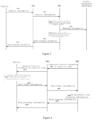
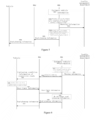
- Figure 3 to Figure 6 are signaling flowcharts each illustrating a road planning process according to an embodiment of the present disclosure.
- the vehicle may include the electronic device 100
- the RSS may include the electronic device 200
- the vehicle and the RSS may communicate via the RSU.
- the electronic device 100 in the vehicle may directly communicate with the electronic device 200.
- step S301 vehicle information is sent from the vehicle to the RSU.
- step S302 the vehicle information is forwarded by the RSU to the RSS.
- step S303 it is determined, by the RSS, whether the vehicle has an illegal behavior such as overweight, speeding, or dangerous driving, based on the received vehicle information.
- warning information is sent in step S304 by the RSS to a traffic management department.
- step S305 it may be determined, by the RSS, whether the vehicle exceeds a limitation condition of respective roads based on the received vehicle information, and a road planning is performed by the RSS to avoid the road on which the vehicle exceeds the limitation condition.
- step S306 road planning information is send by the RSS to the RSU.
- step S307 the road planning information is forwarded from the RSU to the vehicle.
- the RSS may determine, based on the vehicle information reported from the vehicle, whether the vehicle has an illegal behavior and whether the vehicle exceeds the limitation condition of respecive roads, and thereby perform a road planning.
- step S303 and step S305 may be performed in parallel.
- step S401 limitation condition information of respective roads within coverage of the RSS is send by the RSS to the RSU.
- step S402 the limitation condition information of respective roads is sent by the RSU in a broadcast manner.
- step S403 it is determined, by the vehicle, whether the vehicle exceeds a limitation condition of respective roads on a currently planned road based on the received limitation condition information of respective roads and the vehicle information.
- over-limit information is sent by the vehicle to the RSU in step S404.
- step S405 the over-limit information is sent by the RSU to the RSS.
- step S406 the road planning information is re-determined by the RSS based on the received over-limit information.
- step S407 the road planning information is sent by the RSS to the RSU.
- step S408 the road planning information is forwarded by the RSU to the vehicle. Therefore, according to the embodiment of the present disclosure, the vehicle may determine whether a vehicle exceeds a limitation condition of a road based on the received limitation condition information of respective roads, report to the RSS in a case where a limitation condition of a road is exceeded, and thereby re-perform a road planning.
- step S501 vehicle information is estimated by an RSS in step S501.
- step S502 it is determined, by the RSS, whether the vehicle has an illegal behavior such as overweight, speeding, or dangerous driving, based on the estimated vehicle information.
- warning information is sent by the RSS to a traffic management department in step S503.
- step S504 it is determined, by the RSS based on the estimated vehicle information, whether the vehicle exceeds a limitation condition of respective roads, and a road planning is carried out by the RSS in order to avoid the roads on which the vehicle exceeds the limitation condition.
- step S505 road planning information is sent by the RSS to the RSU.
- step S506 the road planning information is forwarded by the RSU to the vehicle.
- the RSS may estimate vehicle information, and determine, based on the estimated vehicle information, whether the vehicle has an illegal behavior and whether the vehicle exceeds a limitation condition of respective roads, and thereby perform a road planning.
- step S502 and step S504 may be performed in parallel.
- step S602 vehicle information is estimated by the RSS in step S601.
- step S602 it is determined, by the RSS, whether the vehicle has an illegal behavior such as overweight, speeding, or dangerous driving, based on the estimated vehicle information.
- warning information is sent by the RSS to a traffic management department in step S603.
- step S604 limitation condition information of respective roads within coverage of the RSS is sent by the RSS to the RSU.
- step S605 the limitation condition information of respective roads is broadcasted by RSU.
- step S606 it is determined, by the vehicle based on the received limitation condition information of respective roads and the vehicle information, whether the vehicle exceeds a limitation condition of respective roads on a currently planned road.
- over-limit information is sent by the vehicle to the RSU in step S607.
- step S608 the over-limit information is sent by the RSU to the RSS.
- step S609 road planning information is re-determined by the RSS based on the received over-limit information.
- step S610 the road planning information is sent by the RSS to the RSU.
- step S611 the road planning information is forwarded by the RSU to the vehicle.
- the vehicle may determine whether the vehicle exceeds a limitation condition of a road based on the received limitation condition information of respective roads, and report to the RSS in a case where the vehicle exceeds the limitation condition of a road, and the RSS may perform the road planning again.
- the RSS may determine whether the vehicle has an illegal behavior based on the estimated vehicle information and report to a traffic management department if the vehicle has an illegal behavior.
- step S602 and step S606 may be performed in parallel.
- the electronic device 200 according to the embodiments of the present disclosure is described in detail as above.
- the electronic device 100 according to the embodiments of the present disclosure may be applied to a vehicle, that is, the electronic device 200 may service the electronic device 100. Therefore, all the embodiments about the electronic device 100 described before are applicable thereto.
- a wireless communication method performed by the electronic device 100 in a wireless communication system is described in detail as follows.
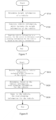
- Figure 7 is a flowchart illustrating a wireless communication method performed by the electronic device 100 in a wireless communication system according to an embodiment of the present disclosure.
- step S710 weight information of a vehicle is determined.
- step S720 vehicle information is generated, including the weight information of the vehicle.
- step S730 the vehicle information is sent to a server, for the server to determine road planning information for the vehicle based on the vehicle information.
- the weight information includes a current weight of the vehicle and/or a maximum weight of the vehicle.
- the wireless communication method further includes: determining tire pressure information of the vehicle; and including the tire pressure information of the vehicle in the vehicle information.
- the wireless communication method further includes: determining size information of the vehicle, which includes a length, a width, and a height of the vehicle; and including the size information of the vehicle in the vehicle information.
- the wireless communication method further includes: carrying the vehicle information using a basic safety messages.
- the wireless communication method further includes: periodically sending the vehicle information to the server.
- the wireless communication method further includes: receiving, from the server, request information for acquiring the vehicle information; and sending the vehicle information to the server in response to the request information.
- the wireless communication method further includes: receiving, from the server, limitation condition information of respective roads within coverage of the server, where the limitation condition information of respective roads includes limitation information about at least one parameter of the road; and determining, based on the limitation condition information of respective roads, whether the vehicle exceeds a limitation condition on a currently planned road.
- the wireless communication method further includes: sending over-limit information to the server in a case where the vehicle exceeds the limitation condition on the currently planned road, such that the server re-determines road planning information for the vehicle.
- the wireless communication method further includes: receiving, from other vehicles in a motorcade where the vehicle is used as a head vehicle, weight information of the other vehicles; generating vehicle information of the motorcade, which includes weight information of the head vehicle of the motorcade and weight information of the of respective vehicles in the motorcade; and sending the vehicle information of the motorcade to the server, for the server to determine road planning information for the motorcade according to the vehicle information of the motorcade.
- the wireless communication method further includes: receiving, from the other vehicles, tire pressure information of the other vehicles; and including the tire pressure information of respective vehicles in the motorcade in the vehicle information of the motorcade.
- the wireless communication method further includes: receiving, from the other vehicles, size information of the other vehicles, which includes the length, width, and height of each of the other vehicles; and including, in the vehicle information of the motorcade, a total length of the motorcade, a maximum width of the motorcade, and a maximum height of the motorcade.
- the vehicle is an autonomous vehicle
- the server is located in a road sub-system RSS
- the wireless communication method further includes communicating with the server via an RSU.
- the subject that performs the above-mentioned method may be the electronic device 100 according to the embodiments of the present disclosure, and thus the embodiments regarding the electronic device 100 are all applicable thereto.
- a wireless communication method performed by the electronic device 200 in a wireless communication system according to an embodiment of the present disclosure is described in detail below.
- Figure 8 is a flowchart illustrating a wireless communication method performed by the electronic device 200 in a wireless communication system according to an embodiment of the present disclosure.
- step S810 vehicle information is received from a vehicle, and the vehicle information includes weight information of the vehicle.
- step S820 road planning information for the vehicle is determined based on the vehicle information.
- step S830 the road planning information for the vehicle is sent to the vehicle.
- the weight information includes a current weight of the vehicle and/or a maximum weight of the vehicle.
- the vehicle information further includes tire pressure information of the vehicle and/or size information of the vehicle, and the size information of the vehicle includes a length, width, and height of the vehicle.
- the wireless communication method further includes: periodically receiving vehicle information from the vehicle.
- the wireless communication method further includes: sending, to the vehicle, request information for acquiring the vehicle information; and receiving the vehicle information sent from the vehicle in response to the request information.
- the wireless communication method further includes: determining limitation condition information of respective roads within coverage of the electronic device, where the limitation condition information of a road includes a limitation condition about at least one parameter of the road; determining, based on the received vehicle information, whether the vehicle exceeds the limitation condition of a road; and determining road planning information for vehicles to avoid a road on which the vehicle exceeds the limitation condition.
- the wireless communication method further includes: determining limitation condition information of respective roads within coverage of the electronic device, where the limitation condition information of a road includes a limitation condition about at least one parameter of the road; estimating the vehicle information of the vehicle, where the vehicle information includes at least one of the weight information of the vehicle, size information of the vehicle, and tire pressure information of the vehicle; determining, based on the estimated vehicle information, whether the vehicle exceeds the limitation condition of a road; and determining the road planning information for the vehicle to avoid a road on which the vehicle exceeds the limitation condition.
- the wireless communication method further includes: determining that the vehicle exceeds the limitation condition of a road in a case where a current weight of the vehicle exceeds the limitation condition of the weight on the road.
- the wireless communication method further includes: determining whether the vehicle is overweight based on the received current weight of the vehicle and the maximum weight of the vehicle; and generating warning information in a case where the vehicle is overweight.
- the wireless communication method further includes: estimating a current weight of the vehicle and a maximum weight of the vehicle; determining whether the vehicle is overweight based on the estimated current weight of the vehicle and the maximum weight of the vehicle; and generating warning information in a case where the vehicle is overweight.
- the wireless communication method further includes: sending limitation condition information of respective roads within coverage of the electronic device, for the vehicle to determine whether the vehicle exceeds a limitation condition on a currently planned road according to the limitation condition information of respective roads, where the limitation condition information of a road includes a limitation condition about at least one parameter of the road.
- the wireless communication method further includes: receiving, from the vehicle, over-limit information indicating that the vehicle exceeds the limit condition on the currently planned road; and re-determining the road planning information for the vehicle based on the over-limit information.
- the wireless communication method further includes: receiving vehicle information of a motorcade from a head vehicle in the motorcade, where the vehicle information of the motorcade includes weight information of the head vehicle of the motorcade and weight information of the respective vehicles in the motorcade; determining road planning information for the motorcade based on the vehicle information of the motorcade; and sending the road planning information for the vehicle to the head vehicle.
- the vehicle information of the motorcade further includes tire pressure information of respective vehicles in the motorcade; and/or a total length of the motorcade, a maximum width of the motorcade, and a maximum height of the motorcade.
- the electronic device is located in an RSS
- the vehicle is an autonomous vehicle
- the wireless communication method further includes communicating with the vehicle via an RSU.
- the subject that performs the above-mentioned method may be the electronic device 200 according to the embodiments of the present disclosure, and therefore the foregoing embodiments regarding the electronic device 200 are all applicable thereto.
- the technology in the present disclosure may be applied to various products.
- the electronic device 200 may be implemented as any type of server, such as a tower server, a rack server, and a blade server.
- the electronic device 200 may be a control module mounted on a server (such as an integrated circuitry module including a single die, and a card or blade inserted into a slot of a blade server).
- the electronic device 200 may be located in an RSS, and may be implemented through a roadside computing control unit in the RSS, for example.
- the electronic device 100 may be implemented as being used for a vehicle, such as a terminal device arranged or integrated in the vehicle.
- the terminal device may be implemented as a mobile terminal (such as a smart phone, a tablet personal computer (PC), a notebook PC, a portable game terminal, a portable/dongle mobile router, and a digital camera device), or an in-vehicle terminal (such as a car navigation apparatus).
- the terminal device may be a wireless communication module (such as an integrated circuit module including a single wafer) mounted on each of the above terminal devices.
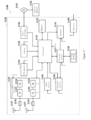
- FIG. 9 is an exemplary block diagram of a server 900 to which the technology according to the present disclosure may be applied.
- the server 900 includes a processor 901, a memory 902, a storage 903, a network interface 904, and a bus 906.
- the processor 901 may be, for example, a central processing unit (CPU) or a digital signal processor (DSP), and controls functions of the server 900.
- the memory 902 includes a random access memory (RAM) and a read-only memory (ROM), and stores data and a program executed by the processor 901.
- the storage 903 may include a storage medium, such as a semiconductor memory and a hard disk.
- the network interface 904 is a wired communication interface for connecting the server 900 to a wired communication network 905.
- the wired communication network 905 may be a core network such as an Evolved Packet Core (EPC), or a packet data network (PDN) such as the Internet.
- EPC Evolved Packet Core
- PDN packet data network
- the bus 906 connects the processor 901, the memory 902, the storage 903, and the network interface 904 to each other.
- the bus 906 may include two or more buses having different speeds (such as a high-speed bus and a low-speed bus).
- the planning unit 220, the determining unit 230, the over-limit determining unit 240, the estimating unit 250, the overweight determining unit 260 and the generating unit 270 described with reference to Figure 2 may be implemented by the processor 901, and the communication unit 210 described with reference to Figure 2 may be implemented by the network interface 904.
- the processor 901 may perform functions of road planning and decision making, determining limitation conditions of respective roads, determining whether a vehicle exceeds a limitation condition of a road, estimating vehicle information, determining whether a vehicle has an illegal behavior such as being overweight, and generating warning information, by executing instructions stored in the memory 902 or storage 903.
- FIG. 10 is a block diagram showing an example of a schematic configuration of a smartphone 1000 to which the technique of the present disclosure may be applied.
- the smartphone 1000 includes a processor 1001, a memory 1002, a storage 1003, an external connection interface 1004, a camera 1006, a sensor 1007, a microphone 1008, an input device 1009, a display device 1010, a speaker 1011, a wireless communication interface 1012, a single or multiple antenna switches 1015, a single or multiple antennas 1016, a bus 1017, a battery 1018 and an auxiliary controller 1019.
- the processor 1001 may be, for example, a CPU or a system on chip (SoC), and control functions of an application layer and other layers of the smartphone 1000.
- the memory 1002 includes an RAM and an ROM, and stores data and programs executed by the processor 1001.
- the storage 1003 may include a storage medium such as a semiconductor memory and a hard disk.
- the external connection interface 1004 is an interface for connecting an external device (such as a memory card and a universal serial bus (USB) device) to the smartphone 1000.
- an external device such as a memory card and a universal serial bus (USB) device
- the camera 1006 includes an image sensor (such as a charge coupled device (CCD) and a complementary metal oxide semiconductor (CMOS)) and generates a captured image.
- the sensor 1007 may include a group of sensors such as a measurement sensor, a gyro sensor, a geomagnetic sensor, and an acceleration sensor.
- the microphone 1008 converts sounds inputted to the smartphone 1000 into audio signals.
- the input device 1009 includes, for example, a touch sensor configured to detect touch onto a screen of the display device 1010, a keypad, a keyboard, a button, or a switch, and receives an operation or information inputted by a user.
- the display device 1010 includes a screen such as a liquid crystal display (LCD) and an organic light-emitting diode (OLED) display, and displays an output image of the smartphone 1000.
- the speaker 1011 converts the audio signal outputted from the smartphone 1000 into sound.
- the wireless communication interface 1012 supports any cellular communication scheme (such as LTE, LTE-Advanced and NR), and performs wireless communication.
- the wireless communication interface 1012 may typically include, for example, a BB processor 1013 and an RF circuit 1014.
- the BB processor 1013 may perform for example coding/decoding, modulation/demodulation and multiplexing/de-multiplexing, and perform various types of signal processes for wireless communication.
- the RF circuit 1014 may include, for example, a frequency mixer, a filter and an amplifier, and transmits and receives wireless signals via the antenna 1016.
- the wireless communication interface 1012 may be a chip module having the BB processor 1013 and the RF circuit 1014 integrated thereon.
- the wireless communication interface 1012 may include multiple BB processors 1013 and multiple RF circuits 1014.
- Figure 10 shows an example in which the wireless communication interface 1012 includes multiple BB processors 1013 and multiple RF circuits 1014, the wireless communication interface 1012 may include a single BB processor 1013 and a single RF circuit 1014.
- the wireless communication interface 1012 may support another type of wireless communication scheme such as a short-range wireless communication scheme, a near field communication scheme, and a radio local area network (LAN) scheme.
- the wireless communication interface 1012 may include the BB processor 1013 and the RF circuit 1014 for each wireless communication scheme.
- Each of the antenna switches 1015 switches connection destinations of the antennas 1016 among multiple circuits (such as circuits for different wireless communication schemes) included in the wireless communication interface 1012.
- Each of the antennas 1016 includes a single or multiple antenna elements (such as the multiple antenna elements included in an MIMO antenna), and is used for the wireless communication interface 1012 to transmit and receive wireless signals.
- the smartphone 1000 may include the multiple antennas 1016, as shown in Figure 10 .
- Figure 10 shows the example in which the smartphone 1900 includes the multiple antennas 1016, the smartphone 1000 may include a single antenna 1016.
- the smartphone 1000 may include the antenna 1016 for each wireless communication scheme.
- the antenna switch 1015 may be omitted from the configuration of the smartphone 1000.
- the bus 1017 connects the processor 1001, the memory 1002, the storage 1003, the external connection interface 1004, the camera 1006, the sensor 1007, the microphone 1008, the input device 1009, the display device 1010, the speaker 1011, the wireless communication interface 1012, and the auxiliary controller 1019 to each other.
- the battery 1018 supplies power to the various modules of the smartphone 1000 shown in Figure 10 via a feeder line, which is partially shown as a dashed line in Figure 10 .
- the auxiliary controller 1019 operates a minimum necessary function of the smartphone 1000, for example, in a sleep mode.
- the weight determining unit 110, the generating unit 120, the tire pressure determining unit 140, the size determining unit 150, the determining unit 160, and the generating unit 170 described with reference to Figure 1 may be implemented by the processor 1001 or the auxiliary controller 1019. At least a part of the functions may be implemented by the processor 1001 or the auxiliary controller 1019.
- the processor 1001 or the auxiliary controller 1019 may perform the functions of determining weight information of a vehicle, generating vehicle information, determining tire pressure information of a vehicle, determining size information of a vehicle, determining whether a vehicle exceeds a limitation condition of a road, and generating over-limit information, by executing instructions stored in the memory 1002 or the storage 1003.
- FIG. 11 is a block diagram showing an example of a schematic configuration of a car navigation device 1120 to which the technique of the present disclosure may be applied.
- the car navigation device 1120 includes a processor 1121, a memory 1122, a global positioning system (GPS) module 1124, a sensor 1125, a data interface 1126, a content player 1127, a storage medium interface 1128, an input device 1129, a display device 1130, a speaker 1131, a wireless communication interface 1133, a single or multiple antenna switches 1136, a single or multiple antennas 1137 and a battery 1138.
- GPS global positioning system
- the processor 1121 may be, for example, a CPU or SoC, and controls the navigation function and additional functions of the car navigation device 1120.
- the memory 1122 includes an RAM and an ROM, and stores data and programs executed by the processor 1121.
- the GPS module 1124 measures a location of the car navigation device 1120 (such as a latitude, a longitude and a height) using a GPS signal received from a GPS satellite.
- the sensor 1125 may include a group of sensors such as a gyroscope sensor, a geomagnetic sensor and an air pressure sensor.
- the data interface 1126 is connected to, for example, an in-vehicle network 1141 via a terminal that is not shown, and obtains data generated by the vehicle (such as vehicle speed data).
- the content player 1127 reproduces content stored in a storage medium (such as a CD and a DVD) that is inserted into the storage medium interface 1128.
- the input device 1129 includes, for example, a touch sensor configured to detect touch onto a screen of a display device 1130, a button, or a switch, and receives an operation or information inputted by a user.
- the display device 1130 includes a screen such as a LCD or an OLED display, and displays an image for the navigation function or reproduced content.
- the speaker 1131 outputs sounds for the navigation function or the reproduced content.
- the wireless communication interface 1133 supports any cellular communication scheme (such as LTE, LTE-advanced and NR), and performs wireless communication.
- the wireless communication interface 1133 may typically include, for example, a BB processor 1134 and an RF circuit 1135.
- the BB processor 1134 may perform, for example, coding/decoding, modulating/demodulating and multiplexing/de-multiplexing, and perform various types of signal processes for wireless communication.
- the RF circuit 1135 may include, for example, a frequency mixer, a filter and an amplifier, and transmits and receives wireless signals via the antenna 1137.
- the wireless communication interface 1133 may also be a chip module having the BB processor 1134 and the RF circuit 1135 integrated thereon.
- the wireless communication interface 1133 may include multiple BB processors 1134 and multiple RF circuits 1135.
- Figure 11 shows the example in which the wireless communication interface 1133 includes the multiple BB processors 1134 and the multiple RF circuits 1135, the wireless communication interface 1133 may include a single BB processor 1134 or a single RF circuit 1135.
- the wireless communication interface 1133 may support another type of wireless communication scheme such as a short-range wireless communication scheme, a near field communication scheme, and a wireless LAN scheme.
- the wireless communication interface 1133 may include the BB processor 1134 and the RF circuit 1135 for each wireless communication scheme.
- Each of the antenna switches 1136 switches connection destinations of the antenna 1137 among multiple circuits (such as circuits for different wireless communication schemes) included in the wireless communication interface 1133.
- Each of the antennas 1137 includes a single or multiple antenna elements (such as the multiple antenna elements included in a MIMO antenna) and is used for the wireless communication interface 1133 to transmit and receive wireless signals.
- the car navigation device 1120 may include multiple antennas 1137, as shown in Figure 11 . Although Figure 11 shows the example in which the car navigation device 1120 includes the multiple antennas 1137, the car navigation device 1120 may include a single antenna 1137.
- the car navigation device 1120 may include the antenna 1137 for each wireless communication scheme.
- the antenna switch 1136 may be omitted from the configuration of the car navigation device 1120.
- the battery 1138 supplies power to the various modules of the car navigation device 1120 shown in Figure 11 via a feeder line, which is partially shown as a dashed line in Figure 11 .
- the battery 1138 accumulates power supplied from the vehicle.
- the determining unit 110, the generating unit 120, the tire pressure determining unit 140, the size determining unit 150, the determining unit 160, and the generating unit 170 described with reference to Figure 1 may be implemented by the processor 1121. At least a part of the functions may be implemented by the processor 1121.
- the processor 1121 may perform the functions of determining weight information of a vehicle, generating vehicle information, determining tire pressure information of a vehicle, determining size information of a vehicle, determining whether a vehicle exceeds a limitation condition of a road, and generating over-limit information, by executing instructions stored in the memory 1122.
- the technique of the present disclosure may also be implemented as an in-vehicle system (or a vehicle) 1140 including one or more of the car navigation device 1120, an in-vehicle network 1141 and a vehicle module 1142.
- the vehicle module 1142 generates vehicle data (such as a vehicle speed, a motor speed and failure information), and outputs the generated data to the in-vehicle network 1141.
- a unit shown by a dashed box in the functional block diagram shown in the drawings indicates that the functional unit is optional in the corresponding device, and the optional functional units may be combined in an appropriate manner to achieve a desired function.
- multiple functions included in one unit in the above embodiments may be implemented by separate devices.
- multiple functions implemented by multiple units in the above embodiments may be implemented by separate devices, respectively.
- one of the above functions may be implemented by multiple units.
- the steps described in the flowchart include not only processes performed in time series as the order described, but also processes performed in parallel or individually instead of having to be performed in time series. Further, even in the steps processed in time series, the order can be appropriately changed.
Landscapes
- Engineering & Computer Science (AREA)
- Physics & Mathematics (AREA)
- General Physics & Mathematics (AREA)
- Radar, Positioning & Navigation (AREA)
- Remote Sensing (AREA)
- Computer Networks & Wireless Communication (AREA)
- Automation & Control Theory (AREA)
- Signal Processing (AREA)
- Life Sciences & Earth Sciences (AREA)
- Atmospheric Sciences (AREA)
- Health & Medical Sciences (AREA)
- General Health & Medical Sciences (AREA)
- Mechanical Engineering (AREA)
- Medical Informatics (AREA)
- Computing Systems (AREA)
- Business, Economics & Management (AREA)
- Human Computer Interaction (AREA)
- Transportation (AREA)
- Tourism & Hospitality (AREA)
- Human Resources & Organizations (AREA)
- Marketing (AREA)
- Primary Health Care (AREA)
- Strategic Management (AREA)
- Economics (AREA)
- General Business, Economics & Management (AREA)
- Theoretical Computer Science (AREA)
- Traffic Control Systems (AREA)
- Operations Research (AREA)
Claims (11)
- System, umfassend eine elektronische Vorrichtung (100) für ein Fahrzeug und einen Server (200), wobei die elektronische Vorrichtung für das Fahrzeug einen Verarbeitungsschaltkreis (110, 120, 130) umfasst, der konfiguriert ist zum:Bestimmen von Gewichtsinformationen des Fahrzeugs;Empfangen, von anderen Fahrzeugen in einer Fahrzeugkolonne, in der das Fahrzeug als ein Führungsfahrzeug verwendet wird, von Gewichtsinformationen der anderen Fahrzeuge,Erzeugen von Fahrzeuginformationen, die die Gewichtsinformationen des Fahrzeugs und Gewichtsinformationen der jeweiligen Fahrzeuge in der Fahrzeugkolonne umfassen;Empfangen, von den anderen Fahrzeugen, von Größeninformationen der anderen Fahrzeuge, die eine Länge, eine Breite und eine Höhe jedes der anderen Fahrzeuge umfassen;Einschließen, in den Fahrzeuginformationen, einer Gesamtlänge der Fahrzeugkolonne, einer maximalen Breite der Fahrzeugkolonne und einer maximalen Höhe der Fahrzeugkolonne; undSenden der Fahrzeuginformationen an den Server; undEmpfangen von Straßenplanungsinformationen für die Fahrzeugkolonne von dem Server;und wobei der Server einen Schaltkreis (210, 220, 230) umfasst, der konfiguriert ist zum:Empfangen, von der elektronischen Vorrichtung, der Fahrzeuginformationen, umfassend Gewichtsinformationen des Fahrzeugs, Gewichtsinformationen der jeweiligen Fahrzeuge in der Fahrzeugkolonne, eine Gesamtlänge der Fahrzeugkolonne, eine maximale Breite der Fahrzeugkolonne und eine maximale Höhe der Fahrzeugkolonne;Bestimmen von Straßenplanungsinformationen für die Fahrzeugkolonne basierend auf den Fahrzeuginformationen der Fahrzeugkolonne, wobei die Straßenplanungsinformationen Routenplanungsinformationen für das Fahrzeug einschließen; undSenden der Straßenplanungsinformationen für die Fahrzeugkolonne an die elektronische Vorrichtung.
- System nach Anspruch 1, wobei der Verarbeitungsschaltkreis der elektronischen Vorrichtung (100) ferner konfiguriert ist zum:Empfangen, von dem Server, von Begrenzungsbedingungsinformationen jeweiliger Straßen innerhalb einer Reichweite des Servers, die Begrenzungsbedingungsinformationen einer Straße umfassend eine Begrenzungsbedingung bezüglich mindestens eines Parameters der Straße; undBestimmen, gemäß den Begrenzungsbedingungsinformationen der jeweiligen Straßen, ob das Fahrzeug eine Begrenzungsbedingung auf einer aktuell geplanten Straße überschreitet.
- System nach Anspruch 2, wobei der Verarbeitungsschaltkreis der elektronischen Vorrichtung ferner konfiguriert ist zum:
Senden von Informationen über eine Überschreitung der Fahrbegrenzung an den Server, in einem Fall, in dem das Fahrzeug die Begrenzungsbedingung auf der aktuell geplanten Straße überschreitet, sodass der Server die Straßenplanungsinformationen für das Fahrzeug neu bestimmt. - System nach Anspruch 1, wobei der Verarbeitungsschaltkreis der elektronischen Vorrichtung ferner konfiguriert ist zum:Empfangen, von den anderen Fahrzeugen, von Reifendruckinformationen der anderen Fahrzeuge; undEinschließen, in die Fahrzeuginformationen der Fahrzeugkolonne, der Reifendruckinformationen der jeweiligen Fahrzeuge in der Fahrzeugkolonne.
- System nach Anspruch 1, wobei der Verarbeitungsschaltkreis des Servers ferner konfiguriert ist zum:Bestimmen von Begrenzungsbedingungsinformationen jeweiliger Straßen innerhalb der Reichweite der elektronischen Vorrichtung, wobei die Begrenzungsbedingungsinformationen einer Straße eine Begrenzungsbedingung bezüglich mindestens eines Parameters der Straße umfassen;Bestimmen, basierend auf den empfangenen Fahrzeuginformationen, ob das Fahrzeug die Begrenzungsbedingung der jeweiligen Straßen überschreitet; undBestimmen von Straßenplanungsinformationen für das Fahrzeug, um eine Straße zu vermeiden, auf der das Fahrzeug die Begrenzungsbedingung der Straße überschreitet.
- System nach Anspruch 1, wobei der Verarbeitungsschaltkreis des Servers ferner konfiguriert ist zum:Bestimmen von Begrenzungsbedingungsinformationen jeweiliger Straßen innerhalb der Reichweite der elektronischen Vorrichtung, wobei die Begrenzungsbedingungsinformationen einer Straße eine Begrenzungsbedingung bezüglich mindestens eines Parameters der Straße umfassen;Schätzen der Fahrzeuginformationen des Fahrzeugs, wobei die Fahrzeuginformationen mindestens eines umfassen von den Gewichtsinformationen des Fahrzeugs, Größeninformationen des Fahrzeugs und Reifendruckinformationen des Fahrzeugs;Bestimmen, gemäß der geschätzten Fahrzeuginformationen, ob das Fahrzeug die Begrenzungsbedingung der jeweiligen Straßen überschreitet; undBestimmen von Straßenplanungsinformationen für das Fahrzeug, um eine Straße zu vermeiden, auf der das Fahrzeug die Begrenzungsbedingung der Straße überschreitet.
- System nach Anspruch 6, wobei der Verarbeitungsschaltkreis des Servers ferner konfiguriert ist zum:
Bestimmen, dass das Fahrzeug die Beschränkungsbedingung einer Straße überschreitet, in einem Fall, in dem ein aktuelles Gewicht des Fahrzeugs die Begrenzungsbedingung des Gewichts auf der Straße überschreitet. - System nach Anspruch 1, wobei der Verarbeitungsschaltkreis des Servers ferner konfiguriert ist zum:Bestimmen, ob das Fahrzeug übergewichtig ist, basierend auf einem empfangenen aktuellen Gewicht des Fahrzeugs und einem Maximalgewicht des Fahrzeugs; undErzeugen von Warninformationen in einem Fall, in dem das Fahrzeug übergewichtig ist.
- System nach Anspruch 1, wobei der Verarbeitungsschaltkreis ferner konfiguriert ist zum:Schätzen eines aktuellen Gewichts des Fahrzeugs und eines Maximalgewichts des Fahrzeugs;Bestimmen, ob das Fahrzeug übergewichtig ist, basierend auf einem geschätzten aktuellen Gewicht des Fahrzeugs und einem Maximalgewicht des Fahrzeugs; undErzeugen von Warninformationen in einem Fall, in dem das Fahrzeug übergewichtig ist.
- System nach Anspruch 6, wobei die Fahrzeuginformationen der Fahrzeugkolonne ferner umfassen:
Reifendruckinformationen jeweiliger Fahrzeuge in der Fahrzeugkolonne. - Drahtloskommunikationsverfahren, das durch eine elektronische Vorrichtung für ein Fahrzeug und einen Server durchgeführt wird, wobei die elektronische Vorrichtung die Verfahrensschritte durchführt:Bestimmen (S710) von Gewichtsinformationen des Fahrzeugs;Empfangen, von anderen Fahrzeugen in einer Fahrzeugkolonne, in der das Fahrzeug als ein Führungsfahrzeug verwendet wird, von Gewichtsinformationen der anderen Fahrzeuge;Erzeugen (S720) von Fahrzeuginformationen, umfassend die Gewichtsinformationen des Fahrzeugs und Gewichtsinformationen der jeweiligen Fahrzeuge in der Fahrzeugkolonne;Empfangen, von den anderen Fahrzeugen, von Größeninformationen der anderen Fahrzeuge, die eine Länge, eine Breite und eine Höhe jedes der anderen Fahrzeuge umfassen; undEinschließen, in den Fahrzeuginformationen, einer Gesamtlänge der Fahrzeugkolonne, einer maximalen Breite der Fahrzeugkolonne und einer maximalen Höhe der Fahrzeugkolonne, undSenden (S730) der Fahrzeuginformationen an den Server;
undEmpfangen von Straßenplanungsinformationen für die Fahrzeugkolonne von dem Server;und wobei der Server die Verfahrensschritte durchführt:Empfangen, von der elektronischen Vorrichtung, der Fahrzeuginformationen, umfassend Gewichtsinformationen des Fahrzeugs, Gewichtsinformationen der jeweiligen Fahrzeuge in der Fahrzeugkolonne, eine Gesamtlänge der Fahrzeugkolonne, eine maximale Breite der Fahrzeugkolonne und eine maximale Höhe der Fahrzeugkolonne;Bestimmen von Straßenplanungsinformationen für die Fahrzeugkolonne basierend auf den Fahrzeuginformationen der Fahrzeugkolonne, wobei die Straßenplanungsinformationen Routenplanungsinformationen für das Fahrzeug einschließen; undSenden der Straßenplanungsinformationen für die Fahrzeugkolonne an die elektronische Vorrichtung.
Applications Claiming Priority (2)
| Application Number | Priority Date | Filing Date | Title |
|---|---|---|---|
| CN201911059871.XA CN112770289A (zh) | 2019-11-01 | 2019-11-01 | 电子设备、无线通信方法和计算机可读存储介质 |
| PCT/CN2020/123493 WO2021083063A1 (zh) | 2019-11-01 | 2020-10-26 | 电子设备、无线通信方法和计算机可读存储介质 |
Publications (3)
| Publication Number | Publication Date |
|---|---|
| EP4016000A1 EP4016000A1 (de) | 2022-06-22 |
| EP4016000A4 EP4016000A4 (de) | 2022-10-12 |
| EP4016000B1 true EP4016000B1 (de) | 2024-12-18 |
Family
ID=75692136
Family Applications (1)
| Application Number | Title | Priority Date | Filing Date |
|---|---|---|---|
| EP20880732.1A Active EP4016000B1 (de) | 2019-11-01 | 2020-10-26 | Elektronische vorrichtung, drahtloskommunikationsverfahren und computerlesbares speichermedium |
Country Status (5)
| Country | Link |
|---|---|
| US (1) | US11946759B2 (de) |
| EP (1) | EP4016000B1 (de) |
| KR (1) | KR20220088422A (de) |
| CN (2) | CN112770289A (de) |
| WO (1) | WO2021083063A1 (de) |
Families Citing this family (6)
| Publication number | Priority date | Publication date | Assignee | Title |
|---|---|---|---|---|
| CN112166307B (zh) * | 2018-05-08 | 2022-05-24 | 莫图斯计量公司 | 用于车辆动态称重的称重系统的通信装置及服务器 |
| US12291215B2 (en) | 2021-11-16 | 2025-05-06 | Geotab Inc. | Systems and methods for determining an estimated weight of a vehicle |
| CN114872623B (zh) * | 2022-06-02 | 2024-07-05 | 天津主线科技有限公司 | 一种车辆控制方法、装置、设备及介质 |
| US12036998B2 (en) | 2022-10-04 | 2024-07-16 | Geotab Inc. | Systems and methods for determining an estimated weight of a vehicle |
| CN119544720A (zh) * | 2023-08-30 | 2025-02-28 | 中国联合网络通信集团有限公司 | 数据请求的处理方法、装置、设备及存储介质 |
| US12473000B2 (en) * | 2024-02-28 | 2025-11-18 | Transportation Ip Holdings, Llc | Vehicle control systems and methods |
Family Cites Families (26)
| Publication number | Priority date | Publication date | Assignee | Title |
|---|---|---|---|---|
| US4956999A (en) * | 1988-11-30 | 1990-09-18 | Gp Taurio, Inc. | Methods and apparatus for monitoring structural members subject to transient loads |
| ATE527520T1 (de) * | 2006-03-08 | 2011-10-15 | Harman Becker Automotive Sys | Verfahren und system zur routenbestimmung und fahrerwarnung |
| US8909466B2 (en) | 2008-08-01 | 2014-12-09 | Environmental Systems Research Institute, Inc. | System and method for hybrid off-board navigation |
| US9253753B2 (en) * | 2012-04-24 | 2016-02-02 | Zetta Research And Development Llc-Forc Series | Vehicle-to-vehicle safety transceiver using time slots |
| CN103542859A (zh) | 2013-10-22 | 2014-01-29 | 深圳市凯立德科技股份有限公司 | 一种路径规划方法及定位导航设备 |
| US9751527B2 (en) * | 2014-07-09 | 2017-09-05 | Alcatel-Lucent Usa Inc. | In-the-road, passable obstruction avoidance arrangement |
| JP2016043747A (ja) * | 2014-08-21 | 2016-04-04 | パナソニックIpマネジメント株式会社 | 走行指示情報生成装置、車両、および、走行指示情報生成方法 |
| US10386835B2 (en) * | 2016-01-04 | 2019-08-20 | GM Global Technology Operations LLC | System and method for externally interfacing with an autonomous vehicle |
| US9792575B2 (en) * | 2016-03-11 | 2017-10-17 | Route4Me, Inc. | Complex dynamic route sequencing for multi-vehicle fleets using traffic and real-world constraints |
| CN106503868A (zh) * | 2016-11-15 | 2017-03-15 | 佛山市络思讯科技有限公司 | 一种车队线路规划方法及相关设备 |
| SE541478C2 (en) * | 2016-12-16 | 2019-10-15 | Scania Cv Ab | Method and control unit for adjusting an inter vehicular distance between vehicles in a platoon |
| CN108877199A (zh) * | 2017-05-15 | 2018-11-23 | 华为技术有限公司 | 车队的控制方法、设备及车联网系统 |
| CN108011947B (zh) * | 2017-11-30 | 2020-11-24 | 湖北汽车工业学院 | 一种车辆协作式编队行驶系统 |
| CN107798861B (zh) * | 2017-11-30 | 2021-03-02 | 湖北汽车工业学院 | 一种车辆协作式编队行驶方法及系统 |
| CN108037760A (zh) * | 2017-12-12 | 2018-05-15 | 成都育芽科技有限公司 | 一种无人自动驾驶汽车自主运行控制方法 |
| CN109979239A (zh) * | 2017-12-28 | 2019-07-05 | 北京百度网讯科技有限公司 | 违规车辆提醒方法、装置及设备 |
| US11113960B2 (en) * | 2018-03-30 | 2021-09-07 | Intel Corporation | Intelligent traffic management for vehicle platoons |
| CN108680180A (zh) * | 2018-03-30 | 2018-10-19 | 斑马网络技术有限公司 | 路况信息车辆导航系统及其导航方法 |
| US11385633B2 (en) * | 2018-04-09 | 2022-07-12 | Diveplane Corporation | Model reduction and training efficiency in computer-based reasoning and artificial intelligence systems |
| DE102018114293A1 (de) * | 2018-06-14 | 2019-12-19 | Helga Sommer | Computerimplementiertes Verfahren für die Erstellung einer Route für Transport und Durchführung von Transport |
| CN109147370A (zh) * | 2018-08-31 | 2019-01-04 | 南京锦和佳鑫信息科技有限公司 | 一种智能网联车的高速公路控制系统和特定路径服务方法 |
| CN109506667A (zh) * | 2018-11-28 | 2019-03-22 | 上海智能交通有限公司 | 一种用于重载大型车辆的智能出行的信息交互方法 |
| CN110337088A (zh) * | 2019-03-18 | 2019-10-15 | 北京千方科技股份有限公司 | 车辆编队通信系统及方法 |
| CN110310480B (zh) * | 2019-06-25 | 2021-12-03 | 电子科技大学 | 一种基于拥塞控制的实时路径规划方法 |
| CN110364009A (zh) * | 2019-07-16 | 2019-10-22 | 华人运通(上海)自动驾驶科技有限公司 | 基于路侧设备的行驶规划方法、装置、路侧设备和存储介质 |
| CN115698636A (zh) * | 2020-04-23 | 2023-02-03 | 动态清晰公司 | 基于地形的车辆导航与控制 |
-
2019
- 2019-11-01 CN CN201911059871.XA patent/CN112770289A/zh active Pending
-
2020
- 2020-10-26 WO PCT/CN2020/123493 patent/WO2021083063A1/zh not_active Ceased
- 2020-10-26 KR KR1020227012631A patent/KR20220088422A/ko active Pending
- 2020-10-26 US US17/762,368 patent/US11946759B2/en active Active
- 2020-10-26 CN CN202080064247.3A patent/CN114424026A/zh active Pending
- 2020-10-26 EP EP20880732.1A patent/EP4016000B1/de active Active
Also Published As
| Publication number | Publication date |
|---|---|
| US11946759B2 (en) | 2024-04-02 |
| EP4016000A1 (de) | 2022-06-22 |
| CN114424026A (zh) | 2022-04-29 |
| US20220381570A1 (en) | 2022-12-01 |
| WO2021083063A1 (zh) | 2021-05-06 |
| EP4016000A4 (de) | 2022-10-12 |
| CN112770289A (zh) | 2021-05-07 |
| KR20220088422A (ko) | 2022-06-27 |
Similar Documents
| Publication | Publication Date | Title |
|---|---|---|
| EP4016000B1 (de) | Elektronische vorrichtung, drahtloskommunikationsverfahren und computerlesbares speichermedium | |
| TWI879921B (zh) | 側行鏈路定位:在往返時間定位與單程時間定位之間切換 | |
| JP4422564B2 (ja) | 臨時無線ネットワークを用いた交通情報システム及び方法 | |
| JP6699230B2 (ja) | 道路異常警告システム及び車載機 | |
| JP6913649B2 (ja) | 電子装置、車上装置及び無線通信方法 | |
| US20140045556A1 (en) | Methods and apparatus for controlling the transmission and/or reception of safety messages by portable wireless user devices | |
| JP2019074853A (ja) | 車載通信装置、通信制御方法、及び車両 | |
| WO2013112565A1 (en) | Methods and apparatus for controlling the transmission and/or reception of safety messages by portable wireless user devices | |
| WO2019159494A1 (ja) | 情報生成装置、情報生成方法、コンピュータプログラムおよび車載装置 | |
| CN108353252B (zh) | 提供通信网络中的终端的位置信息的方法、节点和终端 | |
| KR101850254B1 (ko) | 커넥티드 카 환경을 지원하기 위한 차량간 통신 시스템 | |
| JP2019079454A (ja) | 車両制御システム、機能通知装置、機能通知方法およびコンピュータプログラム | |
| US20230421242A1 (en) | Relay base station, and method and computer program for relaying communication | |
| US11210943B2 (en) | Edge computing aided radio congestion mitigation | |
| JP2022116614A (ja) | 車両用通信システム、通信制御方法、車両用通信装置 | |
| JP5056330B2 (ja) | 道路交通情報提供システム、道路交通情報提供装置、道路交通情報提供方法 | |
| JP2017073023A (ja) | 交通事象情報提供システム、中央装置、無人飛行体および交通事象情報提供プログラム | |
| CN116569606A (zh) | 电波图提供装置以及电波图获取利用装置 | |
| US12335839B2 (en) | Electronic device, wireless communication method and computer-readable storage medium | |
| JP7367043B2 (ja) | 交通通信システム、路側機、サーバ、及び交通通信方法 | |
| CN116195279A (zh) | 数据发送装置、数据发送方法、以及数据发送程序 | |
| KR20210131400A (ko) | 정보 수집 단말 장치, 정보 수집 방법 및 정보 수집 프로그램 | |
| KR102639177B1 (ko) | 차량 경로 제공 방법 및 이를 지원하는 전자 장치 | |
| JP7637728B2 (ja) | 処理装置および処理プログラム | |
| JP7563579B2 (ja) | 路側通信装置、路側通信方法及びプログラム |
Legal Events
| Date | Code | Title | Description |
|---|---|---|---|
| STAA | Information on the status of an ep patent application or granted ep patent |
Free format text: STATUS: THE INTERNATIONAL PUBLICATION HAS BEEN MADE |
|
| PUAI | Public reference made under article 153(3) epc to a published international application that has entered the european phase |
Free format text: ORIGINAL CODE: 0009012 |
|
| STAA | Information on the status of an ep patent application or granted ep patent |
Free format text: STATUS: REQUEST FOR EXAMINATION WAS MADE |
|
| 17P | Request for examination filed |
Effective date: 20220316 |
|
| AK | Designated contracting states |
Kind code of ref document: A1 Designated state(s): AL AT BE BG CH CY CZ DE DK EE ES FI FR GB GR HR HU IE IS IT LI LT LU LV MC MK MT NL NO PL PT RO RS SE SI SK SM TR |
|
| A4 | Supplementary search report drawn up and despatched |
Effective date: 20220912 |
|
| RIC1 | Information provided on ipc code assigned before grant |
Ipc: H04W 4/44 20180101ALI20220906BHEP Ipc: G01C 21/34 20060101AFI20220906BHEP |
|
| DAV | Request for validation of the european patent (deleted) | ||
| DAX | Request for extension of the european patent (deleted) | ||
| STAA | Information on the status of an ep patent application or granted ep patent |
Free format text: STATUS: EXAMINATION IS IN PROGRESS |
|
| 17Q | First examination report despatched |
Effective date: 20231030 |
|
| GRAP | Despatch of communication of intention to grant a patent |
Free format text: ORIGINAL CODE: EPIDOSNIGR1 |
|
| STAA | Information on the status of an ep patent application or granted ep patent |
Free format text: STATUS: GRANT OF PATENT IS INTENDED |
|
| RIC1 | Information provided on ipc code assigned before grant |
Ipc: G08G 1/00 20060101ALI20240607BHEP Ipc: H04W 4/44 20180101ALI20240607BHEP Ipc: G01C 21/34 20060101AFI20240607BHEP |
|
| INTG | Intention to grant announced |
Effective date: 20240716 |
|
| GRAS | Grant fee paid |
Free format text: ORIGINAL CODE: EPIDOSNIGR3 |
|
| GRAA | (expected) grant |
Free format text: ORIGINAL CODE: 0009210 |
|
| STAA | Information on the status of an ep patent application or granted ep patent |
Free format text: STATUS: THE PATENT HAS BEEN GRANTED |
|
| P01 | Opt-out of the competence of the unified patent court (upc) registered |
Free format text: CASE NUMBER: APP_58843/2024 Effective date: 20241028 |
|
| AK | Designated contracting states |
Kind code of ref document: B1 Designated state(s): AL AT BE BG CH CY CZ DE DK EE ES FI FR GB GR HR HU IE IS IT LI LT LU LV MC MK MT NL NO PL PT RO RS SE SI SK SM TR |
|
| REG | Reference to a national code |
Ref country code: CH Ref legal event code: EP |
|
| REG | Reference to a national code |
Ref country code: DE Ref legal event code: R096 Ref document number: 602020043518 Country of ref document: DE |
|
| REG | Reference to a national code |
Ref country code: IE Ref legal event code: FG4D |
|
| REG | Reference to a national code |
Ref country code: LT Ref legal event code: MG9D |
|
| PG25 | Lapsed in a contracting state [announced via postgrant information from national office to epo] |
Ref country code: HR Free format text: LAPSE BECAUSE OF FAILURE TO SUBMIT A TRANSLATION OF THE DESCRIPTION OR TO PAY THE FEE WITHIN THE PRESCRIBED TIME-LIMIT Effective date: 20241218 |
|
| PG25 | Lapsed in a contracting state [announced via postgrant information from national office to epo] |
Ref country code: FI Free format text: LAPSE BECAUSE OF FAILURE TO SUBMIT A TRANSLATION OF THE DESCRIPTION OR TO PAY THE FEE WITHIN THE PRESCRIBED TIME-LIMIT Effective date: 20241218 |
|
| PG25 | Lapsed in a contracting state [announced via postgrant information from national office to epo] |
Ref country code: BG Free format text: LAPSE BECAUSE OF FAILURE TO SUBMIT A TRANSLATION OF THE DESCRIPTION OR TO PAY THE FEE WITHIN THE PRESCRIBED TIME-LIMIT Effective date: 20241218 |
|
| PG25 | Lapsed in a contracting state [announced via postgrant information from national office to epo] |
Ref country code: NO Free format text: LAPSE BECAUSE OF FAILURE TO SUBMIT A TRANSLATION OF THE DESCRIPTION OR TO PAY THE FEE WITHIN THE PRESCRIBED TIME-LIMIT Effective date: 20250318 |
|
| REG | Reference to a national code |
Ref country code: NL Ref legal event code: MP Effective date: 20241218 |
|
| PG25 | Lapsed in a contracting state [announced via postgrant information from national office to epo] |
Ref country code: LV Free format text: LAPSE BECAUSE OF FAILURE TO SUBMIT A TRANSLATION OF THE DESCRIPTION OR TO PAY THE FEE WITHIN THE PRESCRIBED TIME-LIMIT Effective date: 20241218 Ref country code: GR Free format text: LAPSE BECAUSE OF FAILURE TO SUBMIT A TRANSLATION OF THE DESCRIPTION OR TO PAY THE FEE WITHIN THE PRESCRIBED TIME-LIMIT Effective date: 20250319 |
|
| PG25 | Lapsed in a contracting state [announced via postgrant information from national office to epo] |
Ref country code: RS Free format text: LAPSE BECAUSE OF FAILURE TO SUBMIT A TRANSLATION OF THE DESCRIPTION OR TO PAY THE FEE WITHIN THE PRESCRIBED TIME-LIMIT Effective date: 20250318 |
|
| PG25 | Lapsed in a contracting state [announced via postgrant information from national office to epo] |
Ref country code: NL Free format text: LAPSE BECAUSE OF FAILURE TO SUBMIT A TRANSLATION OF THE DESCRIPTION OR TO PAY THE FEE WITHIN THE PRESCRIBED TIME-LIMIT Effective date: 20241218 |
|
| REG | Reference to a national code |
Ref country code: AT Ref legal event code: MK05 Ref document number: 1752550 Country of ref document: AT Kind code of ref document: T Effective date: 20241218 |
|
| PG25 | Lapsed in a contracting state [announced via postgrant information from national office to epo] |
Ref country code: SM Free format text: LAPSE BECAUSE OF FAILURE TO SUBMIT A TRANSLATION OF THE DESCRIPTION OR TO PAY THE FEE WITHIN THE PRESCRIBED TIME-LIMIT Effective date: 20241218 |
|
| PG25 | Lapsed in a contracting state [announced via postgrant information from national office to epo] |
Ref country code: PL Free format text: LAPSE BECAUSE OF FAILURE TO SUBMIT A TRANSLATION OF THE DESCRIPTION OR TO PAY THE FEE WITHIN THE PRESCRIBED TIME-LIMIT Effective date: 20241218 |
|
| PG25 | Lapsed in a contracting state [announced via postgrant information from national office to epo] |
Ref country code: ES Free format text: LAPSE BECAUSE OF FAILURE TO SUBMIT A TRANSLATION OF THE DESCRIPTION OR TO PAY THE FEE WITHIN THE PRESCRIBED TIME-LIMIT Effective date: 20241218 |
|
| PG25 | Lapsed in a contracting state [announced via postgrant information from national office to epo] |
Ref country code: IS Free format text: LAPSE BECAUSE OF FAILURE TO SUBMIT A TRANSLATION OF THE DESCRIPTION OR TO PAY THE FEE WITHIN THE PRESCRIBED TIME-LIMIT Effective date: 20250418 |
|
| PG25 | Lapsed in a contracting state [announced via postgrant information from national office to epo] |
Ref country code: PT Free format text: LAPSE BECAUSE OF FAILURE TO SUBMIT A TRANSLATION OF THE DESCRIPTION OR TO PAY THE FEE WITHIN THE PRESCRIBED TIME-LIMIT Effective date: 20250421 |
|
| PG25 | Lapsed in a contracting state [announced via postgrant information from national office to epo] |
Ref country code: EE Free format text: LAPSE BECAUSE OF FAILURE TO SUBMIT A TRANSLATION OF THE DESCRIPTION OR TO PAY THE FEE WITHIN THE PRESCRIBED TIME-LIMIT Effective date: 20241218 |
|
| PG25 | Lapsed in a contracting state [announced via postgrant information from national office to epo] |
Ref country code: AT Free format text: LAPSE BECAUSE OF FAILURE TO SUBMIT A TRANSLATION OF THE DESCRIPTION OR TO PAY THE FEE WITHIN THE PRESCRIBED TIME-LIMIT Effective date: 20241218 Ref country code: RO Free format text: LAPSE BECAUSE OF FAILURE TO SUBMIT A TRANSLATION OF THE DESCRIPTION OR TO PAY THE FEE WITHIN THE PRESCRIBED TIME-LIMIT Effective date: 20241218 |
|
| PG25 | Lapsed in a contracting state [announced via postgrant information from national office to epo] |
Ref country code: SK Free format text: LAPSE BECAUSE OF FAILURE TO SUBMIT A TRANSLATION OF THE DESCRIPTION OR TO PAY THE FEE WITHIN THE PRESCRIBED TIME-LIMIT Effective date: 20241218 |
|
| PG25 | Lapsed in a contracting state [announced via postgrant information from national office to epo] |
Ref country code: CZ Free format text: LAPSE BECAUSE OF FAILURE TO SUBMIT A TRANSLATION OF THE DESCRIPTION OR TO PAY THE FEE WITHIN THE PRESCRIBED TIME-LIMIT Effective date: 20241218 |
|
| PG25 | Lapsed in a contracting state [announced via postgrant information from national office to epo] |
Ref country code: IT Free format text: LAPSE BECAUSE OF FAILURE TO SUBMIT A TRANSLATION OF THE DESCRIPTION OR TO PAY THE FEE WITHIN THE PRESCRIBED TIME-LIMIT Effective date: 20241218 |
|
| PG25 | Lapsed in a contracting state [announced via postgrant information from national office to epo] |
Ref country code: SE Free format text: LAPSE BECAUSE OF FAILURE TO SUBMIT A TRANSLATION OF THE DESCRIPTION OR TO PAY THE FEE WITHIN THE PRESCRIBED TIME-LIMIT Effective date: 20241218 |
|
| REG | Reference to a national code |
Ref country code: DE Ref legal event code: R097 Ref document number: 602020043518 Country of ref document: DE |
|
| PG25 | Lapsed in a contracting state [announced via postgrant information from national office to epo] |
Ref country code: DK Free format text: LAPSE BECAUSE OF FAILURE TO SUBMIT A TRANSLATION OF THE DESCRIPTION OR TO PAY THE FEE WITHIN THE PRESCRIBED TIME-LIMIT Effective date: 20241218 |
|
| PGFP | Annual fee paid to national office [announced via postgrant information from national office to epo] |
Ref country code: FR Payment date: 20250924 Year of fee payment: 6 |
|
| PLBE | No opposition filed within time limit |
Free format text: ORIGINAL CODE: 0009261 |
|
| STAA | Information on the status of an ep patent application or granted ep patent |
Free format text: STATUS: NO OPPOSITION FILED WITHIN TIME LIMIT |
|
| 26N | No opposition filed |
Effective date: 20250919 |
|
| PGFP | Annual fee paid to national office [announced via postgrant information from national office to epo] |
Ref country code: DE Payment date: 20250923 Year of fee payment: 6 |