EP3916099B1 - Genome engineering - Google Patents
Genome engineering Download PDFInfo
- Publication number
- EP3916099B1 EP3916099B1 EP21176056.6A EP21176056A EP3916099B1 EP 3916099 B1 EP3916099 B1 EP 3916099B1 EP 21176056 A EP21176056 A EP 21176056A EP 3916099 B1 EP3916099 B1 EP 3916099B1
- Authority
- EP
- European Patent Office
- Prior art keywords
- dna
- cell
- rna
- nucleic acid
- cas9
- Prior art date
- Legal status (The legal status is an assumption and is not a legal conclusion. Google has not performed a legal analysis and makes no representation as to the accuracy of the status listed.)
- Active
Links
Images












Classifications
-
- C—CHEMISTRY; METALLURGY
- C12—BIOCHEMISTRY; BEER; SPIRITS; WINE; VINEGAR; MICROBIOLOGY; ENZYMOLOGY; MUTATION OR GENETIC ENGINEERING
- C12N—MICROORGANISMS OR ENZYMES; COMPOSITIONS THEREOF; PROPAGATING, PRESERVING, OR MAINTAINING MICROORGANISMS; MUTATION OR GENETIC ENGINEERING; CULTURE MEDIA
- C12N15/00—Mutation or genetic engineering; DNA or RNA concerning genetic engineering, vectors, e.g. plasmids, or their isolation, preparation or purification; Use of hosts therefor
- C12N15/09—Recombinant DNA-technology
- C12N15/87—Introduction of foreign genetic material using processes not otherwise provided for, e.g. co-transformation
- C12N15/90—Stable introduction of foreign DNA into chromosome
- C12N15/902—Stable introduction of foreign DNA into chromosome using homologous recombination
- C12N15/907—Stable introduction of foreign DNA into chromosome using homologous recombination in mammalian cells
-
- C—CHEMISTRY; METALLURGY
- C12—BIOCHEMISTRY; BEER; SPIRITS; WINE; VINEGAR; MICROBIOLOGY; ENZYMOLOGY; MUTATION OR GENETIC ENGINEERING
- C12N—MICROORGANISMS OR ENZYMES; COMPOSITIONS THEREOF; PROPAGATING, PRESERVING, OR MAINTAINING MICROORGANISMS; MUTATION OR GENETIC ENGINEERING; CULTURE MEDIA
- C12N15/00—Mutation or genetic engineering; DNA or RNA concerning genetic engineering, vectors, e.g. plasmids, or their isolation, preparation or purification; Use of hosts therefor
- C12N15/09—Recombinant DNA-technology
-
- C—CHEMISTRY; METALLURGY
- C07—ORGANIC CHEMISTRY
- C07H—SUGARS; DERIVATIVES THEREOF; NUCLEOSIDES; NUCLEOTIDES; NUCLEIC ACIDS
- C07H21/00—Compounds containing two or more mononucleotide units having separate phosphate or polyphosphate groups linked by saccharide radicals of nucleoside groups, e.g. nucleic acids
- C07H21/02—Compounds containing two or more mononucleotide units having separate phosphate or polyphosphate groups linked by saccharide radicals of nucleoside groups, e.g. nucleic acids with ribosyl as saccharide radical
-
- C—CHEMISTRY; METALLURGY
- C07—ORGANIC CHEMISTRY
- C07H—SUGARS; DERIVATIVES THEREOF; NUCLEOSIDES; NUCLEOTIDES; NUCLEIC ACIDS
- C07H21/00—Compounds containing two or more mononucleotide units having separate phosphate or polyphosphate groups linked by saccharide radicals of nucleoside groups, e.g. nucleic acids
- C07H21/04—Compounds containing two or more mononucleotide units having separate phosphate or polyphosphate groups linked by saccharide radicals of nucleoside groups, e.g. nucleic acids with deoxyribosyl as saccharide radical
-
- C—CHEMISTRY; METALLURGY
- C07—ORGANIC CHEMISTRY
- C07K—PEPTIDES
- C07K14/00—Peptides having more than 20 amino acids; Gastrins; Somatostatins; Melanotropins; Derivatives thereof
- C07K14/195—Peptides having more than 20 amino acids; Gastrins; Somatostatins; Melanotropins; Derivatives thereof from bacteria
- C07K14/315—Peptides having more than 20 amino acids; Gastrins; Somatostatins; Melanotropins; Derivatives thereof from bacteria from Streptococcus (G), e.g. Enterococci
-
- C—CHEMISTRY; METALLURGY
- C12—BIOCHEMISTRY; BEER; SPIRITS; WINE; VINEGAR; MICROBIOLOGY; ENZYMOLOGY; MUTATION OR GENETIC ENGINEERING
- C12N—MICROORGANISMS OR ENZYMES; COMPOSITIONS THEREOF; PROPAGATING, PRESERVING, OR MAINTAINING MICROORGANISMS; MUTATION OR GENETIC ENGINEERING; CULTURE MEDIA
- C12N15/00—Mutation or genetic engineering; DNA or RNA concerning genetic engineering, vectors, e.g. plasmids, or their isolation, preparation or purification; Use of hosts therefor
- C12N15/09—Recombinant DNA-technology
- C12N15/11—DNA or RNA fragments; Modified forms thereof; Non-coding nucleic acids having a biological activity
- C12N15/113—Non-coding nucleic acids modulating the expression of genes, e.g. antisense oligonucleotides; Antisense DNA or RNA; Triplex- forming oligonucleotides; Catalytic nucleic acids, e.g. ribozymes; Nucleic acids used in co-suppression or gene silencing
-
- C—CHEMISTRY; METALLURGY
- C12—BIOCHEMISTRY; BEER; SPIRITS; WINE; VINEGAR; MICROBIOLOGY; ENZYMOLOGY; MUTATION OR GENETIC ENGINEERING
- C12N—MICROORGANISMS OR ENZYMES; COMPOSITIONS THEREOF; PROPAGATING, PRESERVING, OR MAINTAINING MICROORGANISMS; MUTATION OR GENETIC ENGINEERING; CULTURE MEDIA
- C12N15/00—Mutation or genetic engineering; DNA or RNA concerning genetic engineering, vectors, e.g. plasmids, or their isolation, preparation or purification; Use of hosts therefor
- C12N15/09—Recombinant DNA-technology
- C12N15/63—Introduction of foreign genetic material using vectors; Vectors; Use of hosts therefor; Regulation of expression
- C12N15/79—Vectors or expression systems specially adapted for eukaryotic hosts
- C12N15/85—Vectors or expression systems specially adapted for eukaryotic hosts for animal cells
-
- C—CHEMISTRY; METALLURGY
- C12—BIOCHEMISTRY; BEER; SPIRITS; WINE; VINEGAR; MICROBIOLOGY; ENZYMOLOGY; MUTATION OR GENETIC ENGINEERING
- C12N—MICROORGANISMS OR ENZYMES; COMPOSITIONS THEREOF; PROPAGATING, PRESERVING, OR MAINTAINING MICROORGANISMS; MUTATION OR GENETIC ENGINEERING; CULTURE MEDIA
- C12N15/00—Mutation or genetic engineering; DNA or RNA concerning genetic engineering, vectors, e.g. plasmids, or their isolation, preparation or purification; Use of hosts therefor
- C12N15/09—Recombinant DNA-technology
- C12N15/63—Introduction of foreign genetic material using vectors; Vectors; Use of hosts therefor; Regulation of expression
- C12N15/79—Vectors or expression systems specially adapted for eukaryotic hosts
- C12N15/85—Vectors or expression systems specially adapted for eukaryotic hosts for animal cells
- C12N15/86—Viral vectors
-
- C—CHEMISTRY; METALLURGY
- C12—BIOCHEMISTRY; BEER; SPIRITS; WINE; VINEGAR; MICROBIOLOGY; ENZYMOLOGY; MUTATION OR GENETIC ENGINEERING
- C12N—MICROORGANISMS OR ENZYMES; COMPOSITIONS THEREOF; PROPAGATING, PRESERVING, OR MAINTAINING MICROORGANISMS; MUTATION OR GENETIC ENGINEERING; CULTURE MEDIA
- C12N15/00—Mutation or genetic engineering; DNA or RNA concerning genetic engineering, vectors, e.g. plasmids, or their isolation, preparation or purification; Use of hosts therefor
- C12N15/09—Recombinant DNA-technology
- C12N15/87—Introduction of foreign genetic material using processes not otherwise provided for, e.g. co-transformation
- C12N15/90—Stable introduction of foreign DNA into chromosome
-
- C—CHEMISTRY; METALLURGY
- C12—BIOCHEMISTRY; BEER; SPIRITS; WINE; VINEGAR; MICROBIOLOGY; ENZYMOLOGY; MUTATION OR GENETIC ENGINEERING
- C12N—MICROORGANISMS OR ENZYMES; COMPOSITIONS THEREOF; PROPAGATING, PRESERVING, OR MAINTAINING MICROORGANISMS; MUTATION OR GENETIC ENGINEERING; CULTURE MEDIA
- C12N5/00—Undifferentiated human, animal or plant cells, e.g. cell lines; Tissues; Cultivation or maintenance thereof; Culture media therefor
- C12N5/06—Animal cells or tissues; Human cells or tissues
- C12N5/0602—Vertebrate cells
- C12N5/0696—Artificially induced pluripotent stem cells, e.g. iPS
-
- C—CHEMISTRY; METALLURGY
- C12—BIOCHEMISTRY; BEER; SPIRITS; WINE; VINEGAR; MICROBIOLOGY; ENZYMOLOGY; MUTATION OR GENETIC ENGINEERING
- C12N—MICROORGANISMS OR ENZYMES; COMPOSITIONS THEREOF; PROPAGATING, PRESERVING, OR MAINTAINING MICROORGANISMS; MUTATION OR GENETIC ENGINEERING; CULTURE MEDIA
- C12N5/00—Undifferentiated human, animal or plant cells, e.g. cell lines; Tissues; Cultivation or maintenance thereof; Culture media therefor
- C12N5/10—Cells modified by introduction of foreign genetic material
-
- C—CHEMISTRY; METALLURGY
- C12—BIOCHEMISTRY; BEER; SPIRITS; WINE; VINEGAR; MICROBIOLOGY; ENZYMOLOGY; MUTATION OR GENETIC ENGINEERING
- C12N—MICROORGANISMS OR ENZYMES; COMPOSITIONS THEREOF; PROPAGATING, PRESERVING, OR MAINTAINING MICROORGANISMS; MUTATION OR GENETIC ENGINEERING; CULTURE MEDIA
- C12N9/00—Enzymes; Proenzymes; Compositions thereof; Processes for preparing, activating, inhibiting, separating or purifying enzymes
- C12N9/14—Hydrolases (3)
- C12N9/16—Hydrolases (3) acting on ester bonds (3.1)
- C12N9/22—Ribonucleases [RNase]; Deoxyribonucleases [DNase]
-
- C—CHEMISTRY; METALLURGY
- C12—BIOCHEMISTRY; BEER; SPIRITS; WINE; VINEGAR; MICROBIOLOGY; ENZYMOLOGY; MUTATION OR GENETIC ENGINEERING
- C12N—MICROORGANISMS OR ENZYMES; COMPOSITIONS THEREOF; PROPAGATING, PRESERVING, OR MAINTAINING MICROORGANISMS; MUTATION OR GENETIC ENGINEERING; CULTURE MEDIA
- C12N15/00—Mutation or genetic engineering; DNA or RNA concerning genetic engineering, vectors, e.g. plasmids, or their isolation, preparation or purification; Use of hosts therefor
- C12N15/09—Recombinant DNA-technology
- C12N15/63—Introduction of foreign genetic material using vectors; Vectors; Use of hosts therefor; Regulation of expression
-
- C—CHEMISTRY; METALLURGY
- C12—BIOCHEMISTRY; BEER; SPIRITS; WINE; VINEGAR; MICROBIOLOGY; ENZYMOLOGY; MUTATION OR GENETIC ENGINEERING
- C12N—MICROORGANISMS OR ENZYMES; COMPOSITIONS THEREOF; PROPAGATING, PRESERVING, OR MAINTAINING MICROORGANISMS; MUTATION OR GENETIC ENGINEERING; CULTURE MEDIA
- C12N2310/00—Structure or type of the nucleic acid
- C12N2310/10—Type of nucleic acid
- C12N2310/20—Type of nucleic acid involving clustered regularly interspaced short palindromic repeats [CRISPR]
-
- C—CHEMISTRY; METALLURGY
- C12—BIOCHEMISTRY; BEER; SPIRITS; WINE; VINEGAR; MICROBIOLOGY; ENZYMOLOGY; MUTATION OR GENETIC ENGINEERING
- C12N—MICROORGANISMS OR ENZYMES; COMPOSITIONS THEREOF; PROPAGATING, PRESERVING, OR MAINTAINING MICROORGANISMS; MUTATION OR GENETIC ENGINEERING; CULTURE MEDIA
- C12N2510/00—Genetically modified cells
-
- C—CHEMISTRY; METALLURGY
- C12—BIOCHEMISTRY; BEER; SPIRITS; WINE; VINEGAR; MICROBIOLOGY; ENZYMOLOGY; MUTATION OR GENETIC ENGINEERING
- C12N—MICROORGANISMS OR ENZYMES; COMPOSITIONS THEREOF; PROPAGATING, PRESERVING, OR MAINTAINING MICROORGANISMS; MUTATION OR GENETIC ENGINEERING; CULTURE MEDIA
- C12N2740/00—Reverse transcribing RNA viruses
- C12N2740/00011—Details
- C12N2740/10011—Retroviridae
- C12N2740/15011—Lentivirus, not HIV, e.g. FIV, SIV
- C12N2740/15041—Use of virus, viral particle or viral elements as a vector
- C12N2740/15043—Use of virus, viral particle or viral elements as a vector viral genome or elements thereof as genetic vector
-
- C—CHEMISTRY; METALLURGY
- C12—BIOCHEMISTRY; BEER; SPIRITS; WINE; VINEGAR; MICROBIOLOGY; ENZYMOLOGY; MUTATION OR GENETIC ENGINEERING
- C12N—MICROORGANISMS OR ENZYMES; COMPOSITIONS THEREOF; PROPAGATING, PRESERVING, OR MAINTAINING MICROORGANISMS; MUTATION OR GENETIC ENGINEERING; CULTURE MEDIA
- C12N2800/00—Nucleic acids vectors
- C12N2800/90—Vectors containing a transposable element
-
- C—CHEMISTRY; METALLURGY
- C12—BIOCHEMISTRY; BEER; SPIRITS; WINE; VINEGAR; MICROBIOLOGY; ENZYMOLOGY; MUTATION OR GENETIC ENGINEERING
- C12N—MICROORGANISMS OR ENZYMES; COMPOSITIONS THEREOF; PROPAGATING, PRESERVING, OR MAINTAINING MICROORGANISMS; MUTATION OR GENETIC ENGINEERING; CULTURE MEDIA
- C12N2830/00—Vector systems having a special element relevant for transcription
- C12N2830/001—Vector systems having a special element relevant for transcription controllable enhancer/promoter combination
- C12N2830/002—Vector systems having a special element relevant for transcription controllable enhancer/promoter combination inducible enhancer/promoter combination, e.g. hypoxia, iron, transcription factor
- C12N2830/003—Vector systems having a special element relevant for transcription controllable enhancer/promoter combination inducible enhancer/promoter combination, e.g. hypoxia, iron, transcription factor tet inducible
Definitions
- dsDNA double-stranded DNA
- NHEJ Non-Homologous End Joining
- Indels non-specific insertions and deletions
- HDR homology directed repair
- ssODNs single stranded oligodeoxyribonucleotides
- TALENs Transcription Activator-Like Effectors Nucleases target particular DNA sequences with tandem copies of Repeat Variable Diresidue (RVD) domains. See reference 6. While the modular nature of RVDs simplifies TALEN design, their repetitive sequences complicate methods for synthesizing their DNA constructs (see references 2, 9, and 15-19) and also impair their use with lentiviral gene delivery vehicles. See reference 13.
- NHEJ and HDR are frequently evaluated using separate assays.
- Mismatch-sensitive endonuclease assays (see reference 14) are often used for assessing NHEJ, but the quantitative accuracy of this method is variable and the sensitivity is limited to NHEJ frequencies greater than-3%.
- HDR is frequently assessed by cloning and sequencing, a completely different and often cumbersome procedure. Sensitivity is still an issue because, while high editing frequencies on the order of 50% are frequently reported for some cell types, such as U2OS and K562 (see references 12 and 14), frequencies are generally lower in hiPSCs. See reference 10.
- CRISPR-Cas systems rely on short guide RNAs in complex with Cas proteins to direct degradation of complementary sequences present within invading foreign nucleic acid. See Deltcheva, E. et al. CRISPR RNA maturation by trans-encoded small RNA and host factor RNase III. Nature 471, 602-607 (2011 ); Gasiunas, G., Barrangou, R., Horvath, P. & Siksnys, V. Cas9-crRNA ribonucleoprotein complex mediates specific DNA cleavage for adaptive immunity in bacteria. Proceedings of the National Academy of Sciences of the United States of America 109, E2579-2586 (2012 ); Jinek, M.
- CRISPR RNA crRNA fused to a normally trans-encoded tracrRNA
- trans-activating CRISPR RNA is sufficient to direct Cas9 protein to sequence-specifically cleave target DNA sequences matching the crRNA.
- CRISPR RNA a normally trans-encoded tracrRNA
- trans-activating CRISPR RNA is sufficient to direct Cas9 protein to sequence-specifically cleave target DNA sequences matching the crRNA.
- gRNA homologous to a target site results in Cas9 recruitment and degradation of the target DNA.
- Reference 50 discloses the use of multiple guide RNAs but also requires the co-administration of Cas9 mRNA.
- WO 2013/098244 A1 discloses the use of Cas in targeting a DNA sequence in a stem cell, wherein the Cas protein is encoded on an expression vector.
- the present invention provides an in vitro or ex vivo method for altering target DNA in a eukaryotic cell as set out in the appended claims.
- TALEN that lacks certain repeat sequences, for nucleic acid engineering, for example by cutting double stranded nucleic acid.
- the use of the TALEN to cut double stranded nucleic acid can result in nonhomologous end joining (NHEJ) or homologous recombination (HR).
- NHEJ nonhomologous end joining
- HR homologous recombination
- aspects of the present disclosure also contemplate the use of a TALEN that lacks repeat sequences for nucleic acid engineering, for example by cutting double stranded nucleic acid, in the presence of a donor nucleic acid and insertion of the donor nucleic acid into the double stranded nucleic acid, such as by nonhomologous end joining (NHEJ) or homologous recombination (HR).
- NHEJ nonhomologous end joining
- HR homologous recombination
- Transcription activator-like effector nucleases are known in the art and include artificial restriction enzymes generated by fusing a TAL effector DNA binding domain to a DNA cleavage domain. Restriction enzymes are enzymes that cut DNA strands at a specific sequence. Transcription activator-like effectors (TALEs) can be engineered to bind to a desired DNA sequence. See Boch, Jens (February 2011). "TALEs of genome targeting”. Nature Biotechnology 29 (2): 135-6 . By combining such an engineered TALE with a DNA cleavage domain (which cuts DNA strands), a TALEN is produced which is a restriction enzyme that is specific for any desired DNA sequence. According to certain aspects, the TALEN is introduced into a cell for target nucleic acid editing in situ, such as genome editing in situ.
- the non-specific DNA cleavage domain from the end of the FokI endonuclease can be used to construct hybrid nucleases that are active in yeast cells, plant cells and animal cells.
- the FokI domain functions as a dimer, requiring two constructs with unique DNA binding domains for sites in the target genome with proper orientation and spacing. Both the number of amino acid residues between the TALE DNA binding domain and the FokI cleavage domain and the number of bases between the two individual TALEN binding sites affect activity.
- TALENs as described herein can be used to edit target nucleic acids, such as genomes, by inducing double-strand breaks (DSB), which cells respond to with repair mechanisms.
- DSB double-strand breaks
- exemplary repair mechanisms include non-homologous end joining (NHEJ) which reconnects DNA from either side of a double-strand break where there is very little or no sequence overlap for annealing.
- This repair mechanism induces errors in the genome via insertion or deletion (indels), or chromosomal rearrangement; any such errors may render the gene products coded at that location non-functional.
- indels insertion or deletion
- chromosomal rearrangement any such errors may render the gene products coded at that location non-functional.
- a TALE nuclease architecture for efficient genome editing Nature Biotechnology 29 (2): 143-8 . Because this activity can vary depending on the species, cell type, target gene, and nuclease used, the activity can be monitored by using a heteroduplex cleavage assay which detects any difference between two alleles amplified by PCR. Cleavage products can be visualized on simple agarose gels or slab gel systems.
- DNA can be introduced into a genome through NHEJ in the presence of exogenous double-stranded DNA fragments.
- Homology directed repair can also introduce foreign DNA at the DSB as the transfected double-stranded sequences are used as templates for the repair enzymes.
- the TALENs described herein can be used to generate stably modified human embryonic stem cell and induced pluripotent stem cell (IPSCs) clones.
- the TALENs described herein can be used to generate knockout species such as C. elegans, knockout rats, knockout mice or knockout zebrafish.
- embodiments are directed to the use of exogenous DNA, nuclease enzymes such as DNA binding proteins and guide RNAs to co-localize to DNA within a stem cell and digest or cut the DNA with insertion of the exogenous DNA.
- DNA binding proteins are readily known to those of skill in the art to bind to DNA for various purposes. Such DNA binding proteins may be naturally occurring.
- DNA binding proteins included within the scope of the present disclosure include those which may be guided by RNA, referred to herein as guide RNA. According to this aspect, the guide RNA and the RNA guided DNA binding protein form a co-localization complex at the DNA.
- DNA binding proteins having nuclease activity are known to those of skill in the art, and include naturally occurring DNA binding proteins having nuclease activity, such as Cas9 proteins present, for example, in Type II CRISPR systems.
- Cas9 proteins and Type II CRISPR systems are well documented in the art. See Makarova et al., Nature Reviews, Microbiology, Vol. 9, June 2011, pp. 467-477 including all supplementary information.
- Exemplary DNA binding proteins having nuclease activity function to nick or cut double stranded DNA. Such nuclease activity may result from the DNA binding protein having one or more polypeptide sequences exhibiting nuclease activity. Such exemplary DNA binding proteins may have two separate nuclease domains with each domain responsible for cutting or nicking a particular strand of the double stranded DNA.
- Exemplary polypeptide sequences having nuclease activity known to those of skill in the art include the McrA-HNH nuclease related domain and the RuvC-like nuclease domain. Accordingly, exemplary DNA binding proteins are those that in nature contain one or more of the McrA-HNH nuclease related domain and the RuvC-like nuclease domain.
- the DNA binding protein is an RNA guided DNA binding protein of a Type II CRISPR System.
- An exemplary DNA binding protein is a Cas9 protein.
- Cas9 In S. pyogenes, Cas9 generates a blunt-ended double-stranded break 3bp upstream of the protospacer-adjacent motif (PAM) via a process mediated by two catalytic domains in the protein: an HNH domain that cleaves the complementary strand of the DNA and a RuvC-like domain that cleaves the non-complementary strand.
- PAM protospacer-adjacent motif
- the Cas9 protein may be referred by one of skill in the art in the literature as Csn1.
- the S. pyogenes Cas9 protein is shown below. See Deltcheva et al., Nature 471, 602-607 (2011 ).
- the RNA guided DNA binding protein includes homologs and orthologs of Cas9 which retain the ability of the protein to bind to the DNA, be guided by the RNA and cut the DNA.
- the Cas9 protein includes the sequence as set forth for naturally occurring Cas9 from S. pyogenes and protein sequences having at least 30%, 40%, 50%, 60%, 70%, 80%, 90%, 95%, 98% or 99% homology thereto and being a DNA binding protein, such as an RNA guided DNA binding protein.
- an engineered Cas9-gRNA system which enables RNA-guided genome cutting in a site specific manner in a stem cell, if desired, and modification of the stem cell genome by insertion of exogenous donor nucleic acids.
- the guide RNAs are complementary to target sites or target loci on the DNA.
- the guide RNAs can be crRNA-tracrRNA chimeras.
- the guide RNAs can be introduced from media surrounding the cell. In this manner a method of continuously modifying a cell is provided to the extent that various guide RNAs are provided to surrounding media and with the uptake by the cell of the guide RNAs and with supplementation of the media with additional guide RNAs. Supplementation may be in a continuous manner.
- the Cas9 binds at or near target genomic DNA.
- the one or more guide RNAs bind at or near target genomic DNA.
- the Cas9 cuts the target genomic DNA and exogenous donor DNA is inserted into the DNA at the cut site.
- methods are directed to the use of a guide RNA with a Cas9 protein and an exogenous donor nucleic acid to multiplex insertions of exogenous donor nucleic acids into DNA within a stem cell expressing Cas9 by cycling the insertion of nucleic acid encoding the RNA (or providing RNA from the surrounding media) and exogenous donor nucleic acid, expressing the RNA (or uptaking the RNA), colocalizing the RNA, Cas9 and DNA in a manner to cut the DNA, and insertion of the exogenous donor nucleic acid.
- the method steps can be cycled in any desired number to result in any desired number of DNA modifications.
- Methods of the present disclosure are accordingly directed to editing target genes using the Cas9 proteins and guide RNAs described herein to provide multiplex genetic and epigenetic engineering of stem cells.
- DNA binding proteins or systems such as Cas9 described herein
- DNA binding proteins or systems such as Cas9 described herein
- a stem cell such as a human stem cell.
- Cells according to the present disclosure include any cell into which foreign nucleic acids can be introduced and expressed as described herein. It is to be understood that the basic concepts of the present disclosure described herein are not limited by cell type.
- Cells according to the present disclosure include somatic cells, stem cells, eukaryotic cells, prokaryotic cells, animal cells, plant cells, fungal cells, archael cells, eubacterial cells and the like.
- Cells include eukaryotic cells such as yeast cells, plant cells, and animal cells. Particular cells include mammalian cells, such as human cells. Further, cells include any in which it would be beneficial or desirable to modify DNA.
- Target nucleic acids include any nucleic acid sequence to which a TALEN or RNA guided DNA binding protein having nuclease activity as described herein can be useful to nick or cut.
- Target nucleic acids include any nucleic acid sequence to which a co-localization complex as described herein can be useful to nick or cut.
- Target nucleic acids include genes.
- DNA such as double stranded DNA, can include the target nucleic acid and a co-localization complex can bind to or otherwise co-localize with the DNA or a TALEN can otherwise bind with the DNA at or adjacent or near the target nucleic acid and in a manner in which the co-localization complex or the TALEN may have a desired effect on the target nucleic acid.
- target nucleic acids can include endogenous (or naturally occurring) nucleic acids and exogenous (or foreign) nucleic acids.
- One of skill based on the present disclosure will readily be able to identify or design guide RNAs and Cas9 proteins which co-localize to a DNA or a TALEN which binds to a DNA, including a target nucleic acid.
- One of skill will further be able to identify transcriptional regulator proteins or domains, such as transcriptional activators or transcriptional repressors, which likewise co-localize to a DNA including a target nucleic acid.
- DNA includes genomic DNA, mitochondrial DNA, viral DNA or exogenous DNA.
- materials and methods useful in the practice of the present disclosure include those described in Di Carlo, et al., Nucleic Acids Research, 2013, vol. 41, No. 7 4336-4343 including exemplary strains and media, plasmid construction, transformation of plasmids, electroporation of transcient gRNA cassette and donor nucleic acids, transformation of gRNA plasmid with donor DNA into Cas9-expressing cells, galactose induction of Cas9, identification of CRISPR-Cas targets in yeast genome, etc.
- Foreign nucleic acids i.e. those which are not part of a cell's natural nucleic acid composition
- Methods include transfection, transduction, viral transduction, microinjection, lipofection, nucleofection, nanoparticle bombardment, transformation, conjugation and the like.
- transfection transduction, viral transduction, microinjection, lipofection, nucleofection, nanoparticle bombardment, transformation, conjugation and the like.
- Donor nucleic acids include any nucleic acid to be inserted into a nucleic acid sequence as described herein.
- 19bp of the selected target sequence i.e. 5'-N19 of 5'-N19-NGG-3'
- two complementary 100mer oligonucleotides TTCTTGGCTTTATATATCTTGTGGAAAGGACGAAACACCGN19GTTTTAGAGCTAGAA ATAGCAAGTTAAAATAAGGCTAGTCC.
- Each 100mer oligonucleotide was suspended at 100mM in water, mixed with equal volume and annealed in thermocycle machine (95°C, 5min; Ramp to 4°C, 0.1°C/sec).
- the gRNA cloning vector (Addgene plasmid ID 41824) was linearized using AfIII and the vector was purified.
- the (10ul) gRNA assembly reaction was carried out with 10ng annealed 100bp fragment, 100ng destination backbone, 1X Gibson assembly reaction mix (New England Biolabs) at 50°C for 30min.
- the reaction can be processed directly for bacterial transformation to colonize individual assemblies.
- re-TALEs were optimized at different levels to facilitate assembly, and improve expression.
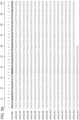
- re-TALE DNA sequences were first co-optimized for a human codon-usage, and low mRNA folding energy at the 5' end (GeneGA, Bioconductor). The obtained sequence was evolved through several cycles to eliminate repeats (direct or inverted) longer than 11 bp (See Fig. 12 ). In each cycle, synonymous sequences for each repeat are evaluated. Those with the largest hamming distance to the evolving DNA are selected.
- the sequence of one of re-TALE possessing 16.5 monomers as follows
- TALEs may be used having at least 80% sequence identity, at least 85% sequence identity, at least 90% sequence identity, at least 95% sequence identity, at least 98% sequence identity, or at least 99% sequence identity to the above sequence.
- One of skill will readily understand where the above sequence may vary while still maintaining the DNA binding activity of the TALE.
- re-TALE dimer blocks encoding two RVDs were generated by two rounds of PCR under standard Kapa HIFI (KPAP) PCR conditions, in which the first round of PCR introduced the RVD coding sequence and the second round of PCR generated the entire dimer blocks with 36bp overlaps with the adjacent blocks.
- PCR products were purified using QIAquick 96 PCR Purification Kit (QIAGEN) and the concentrations were measured by Nano-drop.
- the primer and template sequences are listed in Table 1 and Table 2 below. Table 1.
- re-TALE blocks primer sequences block0-F block0-R block 1'-F TGGCGCAATGCGCTCACGGGAGCACCCCTCA ⁇ A ⁇ C block1-F block 1-R/block 1'-R TAACCCATGTGCTTGGCACAGAACGGGCAACAACCTTTGAACCG ⁇ T ⁇ T block2-F AGGTTGTTGCCCGTTCTGTGCCAAGCACATGGGTTAACACCCgaac ⁇ a ⁇ a blcok2-R block3-F AGACTCCTTCCTGTTTTGTGTCAAGCCCACGGCTTGACGCCTG ⁇ A ⁇ G block3-R TAGACCGTGTGCCTGACAGAGTACCGGGAGCAAGCGCT ⁇ G ⁇ A block4-F CGCTTGCTCCCGGTACTCTGTCAGGCACACGGTCTAA ⁇ C ⁇ T block4-R CAGTCCATGAGCTTGACATAGGACTGGCAACAGCCGTT ⁇ G ⁇ T block5-F CGGCTGTTGCCAG
- re-TALENs and re-TALE-TF destination vectors were constructed by modifying the TALE-TF and TALEN cloning backbones (see reference 24).
- the 0.5 RVD regions on the vectors were re-coded and SapI cutting site was incorporated at the designated re-TALE cloning site.
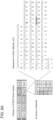
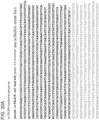
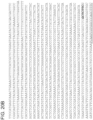
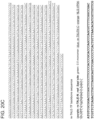
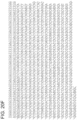
- the sequences of re-TALENs and re-TALE-TF backbones are provided in Fig. 20 . Plasmids can be pre-treated with SapI (New England Biolabs) with manufacturer recommended conditions and purified with QIAquick PCR purification kit (QIAGEN).
- TASA assembly reaction was carried out with 200ng of each block, 500ng destination backbone, 1X TASA enzyme mixture (2U SapI, 100U Ampligase (Epicentre), 10mU T5 exonuclease (Epicentre), 2.5U Phusion DNA polymerase (New England Biolabs)) and 1X isothermal assembly reaction buffer as described before (see reference 25) (5% PEG-8000, 100 mM Tris-HCl pH 7.5, 10 mM MgCl2, 10 mM DTT, 0.2 mM each of the four dNTPs and 1 mM NAD). Incubations were performed at 37°C for 5min and 50 °C for 30 min.
- TASA assembly reaction can be processed directly for bacterial transformation to colonize individual assemblies.
- the efficiency of obtaining full length construct is ⁇ 20% with this approach.
- >90% efficiency can be achieved by a three-step assembly.
- 10ul re-TALE assembly reactions are performed with 200ng of each block, 1X re-TALE enzyme mixture (100U Ampligase, 12.5mU T5 exonuclease, 2.5U Phusion DNA polymerase) and 1X isothermal assembly buffer at 50°C for 30min, followed by standardized Kapa HIFI PCR reaction, agarose gel electrophoresis, and QIAquick Gel extraction (Qiagen) to enrich the full length re-TALEs.
- 1X re-TALE enzyme mixture 100U Ampligase, 12.5mU T5 exonuclease, 2.5U Phusion DNA polymerase
- 1X isothermal assembly buffer at 50°C for 30min
- 200ng re-TALE amplicons can then be mixed with 500ng Sap1-pre-treated destination backbone, 1X re-TALE assembly mixture and 1X isothermal assembly reaction buffer and incubated at 50 °C for 30 min.
- the reTALE final assembly reaction can be processed directly for bacterial transformation to colonize individual assemblies.
- endonucleases, exonucleases, polymerases and ligases from among those known to practice the methods described herein.
- type 11s endonucleases can be used, such as: Fok 1, Bts I, Ear I, Sap I.
- Exonucleases which are titralable can be used, such as lamda exonuclease, T5 exonuclease and Exonuclease III.
- Non-hotstart polymerases can be used, such as phusion DNA polymerase, Taq DNA polymerase and VentR DNA polymerase.
- Thermostable ligases can be used in this reaction, such as Ampligase, pfu DNA ligase, Taq DNA ligase.
- different reaction conditions can be used to activate such endonucleases, exonucleases, polymerases and ligases depending on the particular species used.
- PGP1 iPS cells were maintained on Matrigel (BD Biosciences)-coated plates in mTeSR1 (Stemcell Technologies). Cultures were passaged every 5-7 days with TrypLE Express (Invitrogen). 293T and 293FT cells were grown and maintained in Dulbecco's modified Eagle's medium (DMEM, Invitrogen) high glucose supplemented with 10% fetal bovine serum (FBS, Invitrogen), penicillin/streptomycin (pen/strep, Invitrogen), and non-essential amino acids (NEAA, Invitrogen).
- DMEM Dulbecco's modified Eagle's medium
- FBS fetal bovine serum
- pen/streptomycin penicillin/streptomycin
- NEAA non-essential amino acids
- K562 cells were grown and maintained in RPMI (Invitrogen) supplemented with 10% fetal bovine serum (FBS, Invitrogen 15%) and penicillin/streptomycin (pen/strep, Invitrogen). All cells were maintained at 37°C and 5% CO2 in a humidified incubator.
- RPMI Invitrogen
- pen/strep penicillin/streptomycin
- a stable 293T cell line for detecting HDR efficiency was established as described in reference 26.
- the reporter cell lines bear genomically integrated GFP coding sequences disrupted by the insertion of a stop codon and a 68bp genomic fragment derived from the AAVS1 locus.
- 293T reporter cells were seeded at densities of 2 ⁇ 105 cells per well in 24-well plate and transfected them with 1 ⁇ g of each re-TALENs plasmid and 2 ⁇ g DNA donor plasmid using Lipofectamine 2000 following the manufacturer's protocols.
- Cells were harvested using TrypLE Express (Invitrogen) ⁇ 18 h after transfection and resuspended in 200 ⁇ l of media for flow cytometry analysis using an LSRFortessa cell analyzer (BD Biosciences). The flow cytometry data were analyzed using FlowJo (FlowJo). At least 25,000 events were analyzed for each transfection sample.
- the transfection procedures were identical as described above and puromycin selection was conducted with drug concentration at 3 ⁇ g/ml 1 week after transfection.
- the lentiviral vectors were created by standard PCR and cloning techniques.
- the lentiviral plasmids were transfected by Lipofectamine 2000 with Lentiviral Packaging Mix (Invitrogen) into cultured 293FT cells (Invitrogen) to produce lentivirus.
- Supernatant was collected 48 and 72h post-transfection, sterile filtered, and 100ul filtered supernatant was added to 5 ⁇ 105 fresh 293T cells with polybrene.
- lentivirus transduced 293T cells were transfected with 30 ng plasmids carrying mCherry reporter and 500ng pUC19 plasmids using Lipofectamine 2000 (Invitrogen).
- Cell images were analyzed using Axio Observer Z.1 (Zeiss) 18 hours after transfection and harvested using TrypLE Express (Invitrogen) and resuspended in 200 ⁇ l of media for flow cytometry analysis using a LSRFortessa cell analyzer (BD Biosciences). The flow cytometry data were analyzed using BD FACSDiva (BD Biosciences).
- PGP1 iPSCs were cultured in Rho kinase (ROCK) inhibitor Y-27632 (Calbiochem) 2h before nucleofection. Transfections were done using P3 Primary Cell 4D-Nucleofector X Kit (Lonza). Specifically, cells were harvested using TrypLE Express (Invitrogen) and 2 ⁇ 106 cells were resuspended in 20 ⁇ l nucleofection mixture containing 16.4 ⁇ l P3 Nucleofector solution, 3.6 ⁇ l supplement, 1 ⁇ g of each re-TALENs plasmid or 1ug Cas9 and 1ug gRNA construct, 2 ⁇ l of 100 ⁇ M ssODN.
- ROCK Rho kinase
- reaction products were then added to 20 ⁇ l of PCR mix containing 12.5 ⁇ l 2X KAPA HIFI Hotstart Readymix (KAPA Biosystems) and 200 nM primers carrying Illumina sequence adaptors. Reactions were incubated at 95°C for 5min followed by 25 cycles of 98°C, 20s; 65°C, 20s and 72°C, 20s.
- PCR products were purified by QIAquick PCR purification kit, mixed at roughly the same concentration, and sequenced with MiSeq Personal Sequencer. The PCR primers are listed in Table 5 below. Table 5.
- Barcode splitting Groups of samples were pooled together and sequenced using MiSeq 150bp paired end (PE150) (Illumina Next Gen Sequencing), and later separated based on DNA barcodes using FASTX Toolkit.
- BLAT was used to map the paired reads independently to the reference genome and .psl files were generated as output.
- Indels were defined as the full length reads containing 2 blocks of matches in the alignment. Only reads following this pattern in both paired end reads were considered. As a quality control, the indel reads were required to possess minimal 70nt matching with the reference genome and both blocks to be at least 20 nt long. Size and position of indels were calculated by the positions of each block to the reference genome.
- NHEJ Non-homologous end joining
- HDR Homology directed recombination
- iPS cells on feeder-free cultures were pre-treated with mTesr-1 media supplemented with SMC4 (5 uM thiazovivin,1 uM CHIR99021, 0.4 uM PD0325901, 2 uM SB431542) (see reference 23) for at least 2 hrs prior to FACS sorting.
- Cultures were dissociated using Accutase (Millipore) and resuspended in mTesr-1 media supplemented with SMC4 and the viability dye ToPro-3 (Invitrogen) at concentration of 1 ⁇ 2 X10⁷ /mL.
- Live hiPS cells were single-cell sorted using a BD FACSAria II SORP UV (BD Biosciences) with 100um nozzle under sterile conditions into 96-well plates coated with irradiated CF-1 mouse embryonic fibroblasts (Global Stem). Each well contained hES cell medium (see reference 31) with 100 ng / ml recombinant human basic Fibroblast Growth Factor (bFGF) (Millipore) supplemented with SMC4 and 5 ug / ml fibronectin (Sigma). After sorting, plates were centrifuged at 70 x g for 3 min. Colony formation was seen 4 days post sorting, and the culture media was replaced with hES cell medium with SMC4. SMC4 can be removed from hES cell medium 8 days after sorting.
- bFGF human basic Fibroblast Growth Factor
- human iPSCs were harvested using collagenase type IV (Invitrogen) and the cells were resuspended into 200 ⁇ l of Matrigel and injected intramuscularly into the hind limbs of Rag2gamma knockout mice. Teratomas were isolated and fixed in formalin between 4 - 8 weeks after the injection. The teratomas were subsequently analyzed by hematoxylin and eosin staining.
- TALEs known to those of skill in the art are modified or re-coded to eliminate repeat sequences.
- TALEs suitable for modification and use in the genome editing methods in viral delivery vehicles and in various cell lines and organisms described herein are disclosed in references 2, 7-12.
- Several strategies have been developed to assemble the repetitive TALE RVD array sequences (see references 14 and 32-34.
- the TALE sequence repeats remain unstable, which limits the wide utility of this tool, especially for viral gene delivery vehicles (see references 13 and 35.
- one aspect of the present disclosure is directed to TALEs lacking repeats, such as completely lacking repeats.
- Such a recoded TALE is advantageous because it enables faster and simpler synthesis of extended TALE RVD arrays.
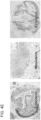
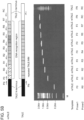
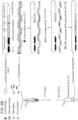
- Re-coded TALE encoding 16 tandem RVD DNA recognition monomers, plus the final half RVD repeat, are devoid of any 12bp repeats (see Fig. 5a ). Notably, this level of recoding is sufficient to allow PCR amplification of any specific monomer or subsection from a full-length re-TALE construct (see Fig. 5b ).
- the improved design of re-TALEs may be synthesized using standard DNA synthesis technology (see reference 36) without incurring the additional costs or procedures associated with repeat-heavy sequences.
- the recoded sequence design allows efficient assembly of re-TALE constructs using a modified isothermal assembly reaction as described in the methods herein and with reference to Fig. 6 .
- Genome editing NGS data was statistically analyzed as follows.
- HDR specificity analysis an exact binomial test was used to compute the probabilities of observing various numbers of sequence reads containing the 2bp mismatch. Based on the sequencing results of 10bp windows before and after the targeting site, the maximum base change rates of the two windows (P1 and P2) were estimated. Using the null hypothesis that the changes of each of the two target bp were independent, the expected probability of observing 2bp mismatch at the targeting site by chance as the product of these two probabilities (P1*P2) was computed. Given a dataset containing N numbers of total reads and n number of HDR reads, we calculated the p-value of the observed HDR efficiency was calculated.
- the ssODN DNA donors contained a 2bp mismatch against the targeting genome, which made likely the co-presence of the base changes in the two target bp if the ssODN was incorporated into the targeting genome.
- Other nonintended observed sequence changes would not likely change at the same time. Accordingly, nonintended changes were much less interdependent.
- MI mutual information
- reTALEN The function of reTALEN in comparison with the corresponding non-recoded TALEN in human cells was determined.
- a HEK 293 cell line containing a GFP reporter cassette carrying a frame-shifting insertion was used as described in reference 37. See also Fig. 1a .
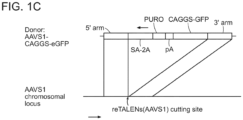
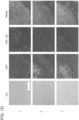
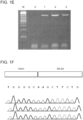
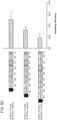
- reTALENs The activity of reTALENs at the AAVS1 locus in PGP1 hiPSCs was tested (see Fig. 1c ) and successfully recovered cell clones containing specific insertions (see Fig. 1d , e ), confirming that reTALENs are active in both somatic and pluripotent human cells.
- lentiviral particles were packaged encoding re-TALE-2A-GFP and were tested for activity of the re-TALE-TF encoded by viral particles by transfecting a mCherry reporter into a pool of lenti-reTALE-2A-GFP infected 293T cells.
- 293T cells transduced by lenti-re-TALE-TF showed 36X reporter expression activation compared with the reporter only negative (see Fig. 7a,b , c ).
- the sequence integrity of the re-TALE-TF in the lentiviral infected cells was checked and full-length reTALEs in all 10 of the clones tested were detected. (see Fig. 7d ).
- a next-generation sequencing platform (Genome Editing Assessment System) was developed to identify and quantify both NHEJ and HDR gene editing events.
- a re-TALEN pair and a Cas9-gRNA were designed and constructed, both targeting the upstream region of CCR5 (re-TALEN, Cas9-gRNA pair #3 in Table 3), along with a 90nt ssODN donor identical to the target site except for a 2bp mismatch (see Fig. 2a ).
- the nuclease constructs and donor ssODN were transfected into hiPSCs.
- HDR efficiency was measured by the percentage of reads containing the precise 2bp mismatch.
- NHEJ efficiency was measured by the percentage of reads carrying indels.
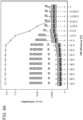
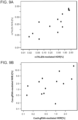
- re-TALEN pairs and Cas9-gRNAs targeted to fifteen sites at the CCR5 genomic locus were built to determine editing efficiency (see Fig. 2c , see Table 3). These sites were selected to represent a wide range of DNaseI sensitivities (see reference 39).
- the nuclease constructs were transfected with the corresponding ssODNs donors (see Table 3) into PGP1 hiPSCs. Six days after transfection, the genome editing efficiencies at these sites were profiled (Table 6). For 13 out of 15 re-TALEN pairs with ssODN donors, NHEJ and HDR was detected at levels above statistical detection thresholds, with an average NHEJ efficiency of 0.4% and an average HDR efficiency of 0.6% (see Fig. 2c ).
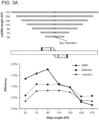
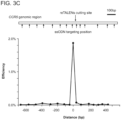
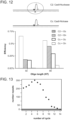
- Highly-performing ssODNs in hiPSCs were designed as follows. A set of ssODNs donors of different lengths (50-170nt), all carrying the same 2bp mismatch in the middle of the spacer region of the CCR5 re-TALEN pair #3 target sites was designed. HDR efficiency was observed to vary with ssODN length, and an optimal HDR efficiency of -1.8% was observed with a 90 nt ssODN, whereas longer ssODNs decreased HDR efficiency (see Fig. 3a ).
- the low level of incorporation that was observed may be due to processes unrelated to the dsDNA cut, as seen in experiments in which genomes are altered by a ssDNA donor alone see reference 42. Meanwhile, the low level of HDR present when the ssODN is ⁇ 40bp away may be due to a combination of weakened homology on the mismatch-containing side of the dsDNA cut along with insufficient ssODN oligo length on the other side of the dsDNA break.
- the ssODNs DNA donor design for Cas9-gRNA mediated targeting was tested.
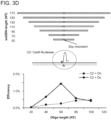
- Cas9-gRNA (C2) targeting the AAVS1 locus was constructed and ssODN donors of variable orientations (Oc: complementary to the gRNA and On: non-complementary to the gRNA) and lengths (30, 50, 70, 90, 110 nt) were designed.
- Oc achieved better efficiency than On, with a 70mer Oc achieving an optimal HDR rate of 1.5%.
- GEAS revealed that re-TALEN pair #3 achieved precise genome editing with an efficiency of ⁇ 1% in hiPSCs, a level at which correctly edited cells can usually be isolated by screening clones.
- HiPSCs have poor viability as single cells.
- Optimized protocols described in reference 23 along with a single-cell FACS sorting procedure was used to establish a robust platform for single hiPSCs sorting and maintenance, where hiPSC clones can be recovered with survival rates of >25%.
- This method was combined with a rapid and efficient genotyping system to conduct chromosomal DNA extraction and targeted genome amplification in 1-hour single tube reactions, enabling large scale genotyping of edited hiPSCs. Together, these methods comprise a pipeline for robustly obtaining genome-edited hiPSCs without selection.
- a method for genome editing in cells including a human cell, for example a human stem cell, wherein the cell is genetically modified to include a nucleic acid encoding an enzyme that forms a co-localization complex with RNA complementary to the target DNA and that cleaves the target DNA in a site specific manner.
- an enzyme includes an RNA guided DNA binding protein, such as an RNA-guided DNA binding protein of a Type II CRISPR system.
- An exemplary enzyme is Cas9.
- the cell expresses the enzyme and guide RNA is provided to the cell from the media surrounding the cell. The guide RNA and the enzyme form a co-localization complex at target DNA where the enzyme cuts the DNA.
- a donor nucleic acid may be present for insertion into the DNA at the cut site, for example by nonhomologous end joining or homologous recombination.
- the nucleic acid encoding an enzyme that forms a co-localization complex with RNA complementary to the target DNA and that cleaves the target DNA in a site specific manner, such as Cas9 is under the influence of a promoter, such as the nucleic acid can be activated and silenced.
- a promoter such as the nucleic acid can be activated and silenced.
- promoters are well known to those of skill in the art.
- One exemplary promoter is the dox inducible promoter.
- the cell is genetically modified by having reversibly inserted into its genome the nucleic acid encoding an enzyme that forms a co-localization complex with RNA complementary to the target DNA and that cleaves the target DNA in a site specific manner.
- the nucleic acid can be removed by use of a reagent, such as a transposase. In this manner, the nucleic acid can be easily removed after use.
- a continuous genome editing system in human induced pluripotent stem cells (hiPSCs) using a CRISPR system includes use of a hiPSC line with Cas9 reversibly inserted in the genome (Cas9-hiPSCs); and gRNAs which have been modified from their native form to allow their passage from media surrounding the cells into the cells for use with the Cas9.
- Cas9-hiPSCs Cas9 reversibly inserted in the genome
- gRNAs which have been modified from their native form to allow their passage from media surrounding the cells into the cells for use with the Cas9.
- Such gRNA has been treated with a phosphatase in a manner to remove phosphate groups.
- Genome editing in the cell is carried out with Cas9 by supplementing phosphatase treated gRNA in the tissue culture media.
- Embodiments of the present disclosure include single editing of hiPSCs for biological research and therapeutic applications, multiplex editing of hiPSCs for biological research and therapeutic applications, directional hiPSCs evolution and phenotype screening of hiPSCs and its derivative cells.
- other cell lines and organisms described herein can be used in addition to stem cells.
- the method described herein can be used to animal cells such as mouse or rat cells so that stable Cas9 integrated mouse cells and rat cells can be generated and tissue specific genome editing can be conducted by locally introducing phosphatase treated gRNA from media surrounding the cells.
- other Cas9 derivatives can be inserted into many cell lines and organisms, and targeted genomic manipulations, such as sequence specific nicking, gene activation, suppression and epigenetic modification can be conducted.
- aspects of the present disclosure are directed to making stable hiPSCs with Cas9 inserted into the genome.
- aspects of the present disclosure are directed to modifying RNA to enable entry into a cell through the cell wall and co-localization with Cas9 while avoiding the immune response of the cell.
- Such modified guide RNA can achieve optimal transfection efficiencies with minimal toxicity.
- aspects of the present disclosure are directed to optimised genome editing in Cas9-hiPSCs using phosphatase treated gRNA.
- aspects of the present disclosure include eliminating Cas9 from hiPSCs to achieve scarless genome editing, where the nucleic acid encoding Cas9 has been reversibly placed into the cell genome.
- aspects of the present disclosure include biomedical engineering using hiPSCs with Cas9 inserted into the genome to create desired genetic mutations.
- Such engineered hiPSCs maintain pluripotency and can be successfully differentiated into various cell types, including cardiomyocyte, which fully recapitulate the phenotype of patient cell lines.
- aspects of the present disclosure include libraries of phosphatase treated gRNAs for multiplex genome editing. Aspects of the present disclosure include generating a library of PGP cell lines with each one carrying 1 to a few designated mutations in the genome, which can serve as resource for drug screening. Aspects of the present disclosure include generating PGP1 cell lines with all the retrotranselements barcoded with different sequences to track the location and activity of this element.
- Cas9 was encoded under the dox inducible promoter and the construct was placed into a Piggybac vector which can be inserted into and removed out of the genome with the help of Piggybac transposase. PCR reaction validated the stable insertion of the vector (see Fig. 14 ). The inducible Cas9 expression was determined via RT-QPCR. The mRNA level of Cas9 increased 1000X after 8 hours of 1ug/mL DOX supplementation in the culture media and the level of Cas9 mRNA dropped to normal level ⁇ 20 hours after withdrawal of the DOX. (See Fig. 15 ).
- the Cas9-hiPSC system based genome editing bypasses the transfection procedure of Cas9 plasmid/RNA, a large construct usually with ⁇ 1% transfection efficiency in hiPSCs.
- the present Cas9-hiPSC system can serve as a platform to perform high efficient genomic engineering in human stem cells.
- the Cas9 cassette introduced into the hiPSCs using Piggybac system can be removed out from the genome easily upon introducing of transposases.
- RNA encoding gRNA was generated and supplemented into Cas9-iPS culture medium in complex with liposome.
- Phosphatase treated native RNA without any capping achieved the optimal HDR efficiency of 13%, 30X more than previously reported 5'Cap-Mod RNA (see Fig. 16 ).
- guide RNA is physically attached to the donor DNA.
- a method is provided of coupling Cas9 mediated genomic cutting and ssODN-mediated HDR, thus stimulating sequence specific genomic editing.
- gRNA linked with DNA ssODN donor with optimized concentration achieved 44% HDR and unspecific NHEJ 2% (see Fig. 17 ).
- this procedure does not incurred visible toxicity as observed with nucleofection or electroporation.
- the present disclosure provides an in vitro engineered RNA structure encoding gRNA, which achieved high transfection efficiency, genome editing efficiency in collaboration with genomically inserted Cas9.
- the present disclosure provides a gRNA-DNA chimeric construct to couple a genomic cutting event with the homology directed recombination reaction.
- a Cas9 cassette is inserted into the genome of hiPSC cells using a reversible vector. Accordingly, a Cas9 cassette was reversibly inserted into the genome of hiPSC cells using a PiggyBac vector. The Cas9 cassette was removed from the genome edited hiPSCs by transfecting the cell with transposase-encoding plasmid. Accordingly, aspects of the present disclosure include use of a reversible vector, which is known to those of skill in the art.
- a reversible vector is one which can be inserted into a genome, for example, and then removed with a corresponding vector removal enzyme. Such vectors and corresponding vector removal enzymes are known to those of skill in the art.
- a screen was performed on colonized iPS cells and colonies devoid of Cas9-cassette were recovered as confirmed by PCR reaction. Accordingly, the present disclosure provides method of genome editing without affecting the rest of the genome by having a permanent Cas9 cassette present in the cell.
- iPSCs patient-derived induced pluripotent stem cells
- Cas9-iPGP1 cell lines and phosphatase treated guide RNA bound to DNA were used to generated three iPSC lines that are isogenic except for the sequence at TAZ exon 6, which was identified to carry single nucleotide deletion in Earth syndrome patients. Single round of RNA transfection achieved ⁇ 30% HDR efficiency.
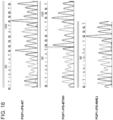
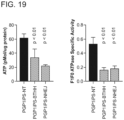
- Modified Cas9-iPGP1 cells with desired mutations were colonized (see Fig. 18 ) and the cell lines were differentiated into cardiomyocyte. Cardiomyocyte derived from the engineered Cas9-iPGP1 fully recapitulated the cardiolipin, mitochondrial, and ATP deficits observed in patient-derived iPSCs and in the neonatal rat TAZ knockdown model (see Fig. 19 ). Accordingly, methods are provided for correcting mutations causing diseases in pluripotent cells followed by differentiation of the cells into desired cell types.
Landscapes
- Health & Medical Sciences (AREA)
- Life Sciences & Earth Sciences (AREA)
- Genetics & Genomics (AREA)
- Engineering & Computer Science (AREA)
- Chemical & Material Sciences (AREA)
- Organic Chemistry (AREA)
- Biomedical Technology (AREA)
- Biotechnology (AREA)
- Zoology (AREA)
- Wood Science & Technology (AREA)
- Bioinformatics & Cheminformatics (AREA)
- General Engineering & Computer Science (AREA)
- Molecular Biology (AREA)
- Biochemistry (AREA)
- General Health & Medical Sciences (AREA)
- Microbiology (AREA)
- Biophysics (AREA)
- Plant Pathology (AREA)
- Physics & Mathematics (AREA)
- Cell Biology (AREA)
- Mycology (AREA)
- Developmental Biology & Embryology (AREA)
- Transplantation (AREA)
- Virology (AREA)
- Medicinal Chemistry (AREA)
- Proteomics, Peptides & Aminoacids (AREA)
- Gastroenterology & Hepatology (AREA)
- Micro-Organisms Or Cultivation Processes Thereof (AREA)
- Enzymes And Modification Thereof (AREA)
- Preparation Of Compounds By Using Micro-Organisms (AREA)
- Peptides Or Proteins (AREA)
- Saccharide Compounds (AREA)
Priority Applications (1)
| Application Number | Priority Date | Filing Date | Title |
|---|---|---|---|
| EP23164284.4A EP4234703A3 (en) | 2013-07-26 | 2014-07-25 | Genome engineering |
Applications Claiming Priority (4)
| Application Number | Priority Date | Filing Date | Title |
|---|---|---|---|
| US201361858866P | 2013-07-26 | 2013-07-26 | |
| PCT/US2014/048140 WO2015013583A2 (en) | 2013-07-26 | 2014-07-25 | Genome engineering |
| EP14829377.2A EP3024964B1 (en) | 2013-07-26 | 2014-07-25 | Genome engineering |
| EP18212761.3A EP3483277B1 (en) | 2013-07-26 | 2014-07-25 | Genome engineering |
Related Parent Applications (3)
| Application Number | Title | Priority Date | Filing Date |
|---|---|---|---|
| EP18212761.3A Division-Into EP3483277B1 (en) | 2013-07-26 | 2014-07-25 | Genome engineering |
| EP18212761.3A Division EP3483277B1 (en) | 2013-07-26 | 2014-07-25 | Genome engineering |
| EP14829377.2A Division EP3024964B1 (en) | 2013-07-26 | 2014-07-25 | Genome engineering |
Related Child Applications (1)
| Application Number | Title | Priority Date | Filing Date |
|---|---|---|---|
| EP23164284.4A Division EP4234703A3 (en) | 2013-07-26 | 2014-07-25 | Genome engineering |
Publications (2)
| Publication Number | Publication Date |
|---|---|
| EP3916099A1 EP3916099A1 (en) | 2021-12-01 |
| EP3916099B1 true EP3916099B1 (en) | 2023-04-12 |
Family
ID=52390824
Family Applications (4)
| Application Number | Title | Priority Date | Filing Date |
|---|---|---|---|
| EP21176056.6A Active EP3916099B1 (en) | 2013-07-26 | 2014-07-25 | Genome engineering |
| EP23164284.4A Pending EP4234703A3 (en) | 2013-07-26 | 2014-07-25 | Genome engineering |
| EP14829377.2A Active EP3024964B1 (en) | 2013-07-26 | 2014-07-25 | Genome engineering |
| EP18212761.3A Active EP3483277B1 (en) | 2013-07-26 | 2014-07-25 | Genome engineering |
Family Applications After (3)
| Application Number | Title | Priority Date | Filing Date |
|---|---|---|---|
| EP23164284.4A Pending EP4234703A3 (en) | 2013-07-26 | 2014-07-25 | Genome engineering |
| EP14829377.2A Active EP3024964B1 (en) | 2013-07-26 | 2014-07-25 | Genome engineering |
| EP18212761.3A Active EP3483277B1 (en) | 2013-07-26 | 2014-07-25 | Genome engineering |
Country Status (13)
| Country | Link |
|---|---|
| US (4) | US11306328B2 (enExample) |
| EP (4) | EP3916099B1 (enExample) |
| JP (4) | JP6739335B2 (enExample) |
| KR (2) | KR102773555B1 (enExample) |
| CN (3) | CN105473773B (enExample) |
| AU (4) | AU2014293015B2 (enExample) |
| BR (1) | BR112016001721B1 (enExample) |
| CA (1) | CA2918540A1 (enExample) |
| ES (1) | ES2715666T3 (enExample) |
| IL (2) | IL243560B (enExample) |
| RU (2) | RU2764757C2 (enExample) |
| SG (3) | SG10201800259WA (enExample) |
| WO (1) | WO2015013583A2 (enExample) |
Families Citing this family (140)
| Publication number | Priority date | Publication date | Assignee | Title |
|---|---|---|---|---|
| JP6261500B2 (ja) | 2011-07-22 | 2018-01-17 | プレジデント アンド フェローズ オブ ハーバード カレッジ | ヌクレアーゼ切断特異性の評価および改善 |
| KR101904508B1 (ko) | 2012-04-25 | 2018-10-04 | 리제너론 파마슈티칼스 인코포레이티드 | 큰 표적화 벡터를 사용한 뉴클레아제-중재된 표적화 |
| EP4481048A3 (en) | 2012-12-17 | 2025-02-26 | President and Fellows of Harvard College | Rna-guided human genome engineering |
| WO2014165825A2 (en) | 2013-04-04 | 2014-10-09 | President And Fellows Of Harvard College | Therapeutic uses of genome editing with crispr/cas systems |
| RS62263B1 (sr) | 2013-04-16 | 2021-09-30 | Regeneron Pharma | Ciljana modifikacija genoma pacova |
| JP2016528890A (ja) | 2013-07-09 | 2016-09-23 | プレジデント アンド フェローズ オブ ハーバード カレッジ | CRISPR/Cas系を用いるゲノム編集の治療用の使用 |
| US20150044192A1 (en) | 2013-08-09 | 2015-02-12 | President And Fellows Of Harvard College | Methods for identifying a target site of a cas9 nuclease |
| US9359599B2 (en) | 2013-08-22 | 2016-06-07 | President And Fellows Of Harvard College | Engineered transcription activator-like effector (TALE) domains and uses thereof |
| US9228207B2 (en) | 2013-09-06 | 2016-01-05 | President And Fellows Of Harvard College | Switchable gRNAs comprising aptamers |
| US9737604B2 (en) | 2013-09-06 | 2017-08-22 | President And Fellows Of Harvard College | Use of cationic lipids to deliver CAS9 |
| US9322037B2 (en) | 2013-09-06 | 2016-04-26 | President And Fellows Of Harvard College | Cas9-FokI fusion proteins and uses thereof |
| WO2015040402A1 (en) | 2013-09-18 | 2015-03-26 | Kymab Limited | Methods. cells & organisms |
| PT3066201T (pt) | 2013-11-07 | 2018-06-04 | Massachusetts Inst Technology | Métodos e composições relacionadas com crispr com arng reguladores |
| RU2725520C2 (ru) | 2013-12-11 | 2020-07-02 | Регенерон Фармасьютикалс, Инк. | Способы и композиции для направленной модификации генома |
| US9068179B1 (en) | 2013-12-12 | 2015-06-30 | President And Fellows Of Harvard College | Methods for correcting presenilin point mutations |
| CA2938456C (en) | 2014-02-11 | 2022-06-21 | The Regents Of The University Of Colorado, A Body Corporate | Crispr enabled multiplexed genome engineering |
| EP3114227B1 (en) | 2014-03-05 | 2021-07-21 | Editas Medicine, Inc. | Crispr/cas-related methods and compositions for treating usher syndrome and retinitis pigmentosa |
| US11141493B2 (en) | 2014-03-10 | 2021-10-12 | Editas Medicine, Inc. | Compositions and methods for treating CEP290-associated disease |
| EP3116997B1 (en) | 2014-03-10 | 2019-05-15 | Editas Medicine, Inc. | Crispr/cas-related methods and compositions for treating leber's congenital amaurosis 10 (lca10) |
| US11339437B2 (en) | 2014-03-10 | 2022-05-24 | Editas Medicine, Inc. | Compositions and methods for treating CEP290-associated disease |
| US11242525B2 (en) | 2014-03-26 | 2022-02-08 | Editas Medicine, Inc. | CRISPR/CAS-related methods and compositions for treating sickle cell disease |
| EP3126495A1 (en) | 2014-04-02 | 2017-02-08 | Editas Medicine, Inc. | Crispr/cas-related methods and compositions for treating primary open angle glaucoma |
| WO2015191693A2 (en) * | 2014-06-10 | 2015-12-17 | Massachusetts Institute Of Technology | Method for gene editing |
| US10077453B2 (en) | 2014-07-30 | 2018-09-18 | President And Fellows Of Harvard College | CAS9 proteins including ligand-dependent inteins |
| AU2015330699B2 (en) | 2014-10-10 | 2021-12-02 | Editas Medicine, Inc. | Compositions and methods for promoting homology directed repair |
| KR20170070136A (ko) | 2014-10-15 | 2017-06-21 | 리제너론 파마슈티칼스 인코포레이티드 | 만능성 세포를 생성하거나 유지하는 방법 및 조성물 |
| US20170306306A1 (en) * | 2014-10-24 | 2017-10-26 | Life Technologies Corporation | Compositions and Methods for Enhancing Homologous Recombination |
| WO2016073955A2 (en) | 2014-11-06 | 2016-05-12 | President And Fellows Of Harvard College | Cells lacking b2m surface expression and methods for allogeneic administration of such cells |
| AU2015342749B2 (en) | 2014-11-07 | 2022-01-27 | Editas Medicine, Inc. | Methods for improving CRISPR/Cas-mediated genome-editing |
| IL301900A (en) | 2014-11-21 | 2023-06-01 | Regeneron Pharma | Methods and compositions for targeted genetic modification using paired guide rnas |
| EP4400584A3 (en) | 2014-12-03 | 2024-10-16 | Agilent Technologies, Inc. | Guide rna with chemical modifications |
| AU2015360502A1 (en) | 2014-12-10 | 2017-06-29 | Regents Of The University Of Minnesota | Genetically modified cells, tissues, and organs for treating disease |
| EP3271461A1 (en) * | 2015-03-20 | 2018-01-24 | Danmarks Tekniske Universitet | Crispr/cas9 based engineering of actinomycetal genomes |
| US20180112213A1 (en) * | 2015-03-25 | 2018-04-26 | Editas Medicine, Inc. | Crispr/cas-related methods, compositions and components |
| EP3280803B1 (en) | 2015-04-06 | 2021-05-26 | The Board of Trustees of the Leland Stanford Junior University | Chemically modified guide rnas for crispr/cas-mediated gene regulation |
| WO2016172727A1 (en) | 2015-04-24 | 2016-10-27 | Editas Medicine, Inc. | Evaluation of cas9 molecule/guide rna molecule complexes |
| JP2018515139A (ja) | 2015-05-08 | 2018-06-14 | プレジデント アンド フェローズ オブ ハーバード カレッジ | 万能ドナー幹細胞および関連する方法 |
| CA2986310A1 (en) * | 2015-05-11 | 2016-11-17 | Editas Medicine, Inc. | Optimized crispr/cas9 systems and methods for gene editing in stem cells |
| WO2016196539A2 (en) | 2015-06-01 | 2016-12-08 | Temple University - Of The Commonwealth System Of Higher Education | Methods and compositions for rna-guided treatment of hiv infection |
| CN108368502B (zh) | 2015-06-03 | 2022-03-18 | 内布拉斯加大学董事委员会 | 使用单链dna的dna编辑 |
| EP3307887A1 (en) | 2015-06-09 | 2018-04-18 | Editas Medicine, Inc. | Crispr/cas-related methods and compositions for improving transplantation |
| US9790490B2 (en) | 2015-06-18 | 2017-10-17 | The Broad Institute Inc. | CRISPR enzymes and systems |
| AU2016279062A1 (en) | 2015-06-18 | 2019-03-28 | Omar O. Abudayyeh | Novel CRISPR enzymes and systems |
| KR102840885B1 (ko) | 2015-06-18 | 2025-07-30 | 더 브로드 인스티튜트, 인코퍼레이티드 | 표적외 효과를 감소시키는 crispr 효소 돌연변이 |
| WO2017023803A1 (en) | 2015-07-31 | 2017-02-09 | Regents Of The University Of Minnesota | Modified cells and methods of therapy |
| KR102691636B1 (ko) | 2015-08-31 | 2024-08-02 | 애질런트 테크놀로지스, 인크. | 상동 재조합에 의한 crispr/cas-기반 게놈 편집을 위한 화합물 및 방법 |
| WO2017053879A1 (en) | 2015-09-24 | 2017-03-30 | Editas Medicine, Inc. | Use of exonucleases to improve crispr/cas-mediated genome editing |
| EP3365356B1 (en) | 2015-10-23 | 2023-06-28 | President and Fellows of Harvard College | Nucleobase editors and uses thereof |
| ES2953925T3 (es) * | 2015-11-04 | 2023-11-17 | Fate Therapeutics Inc | Ingeniería genómica de células pluripotentes |
| KR101885901B1 (ko) * | 2015-11-13 | 2018-08-07 | 기초과학연구원 | 5' 말단의 인산기가 제거된 rna를 포함하는 리보핵산단백질 전달용 조성물 |
| AU2016355178B9 (en) | 2015-11-19 | 2019-05-30 | Massachusetts Institute Of Technology | Lymphocyte antigen CD5-like (CD5L)-interleukin 12B (p40) heterodimers in immunity |
| US11085057B2 (en) | 2015-12-02 | 2021-08-10 | The Regents Of The University Of California | Compositions and methods for modifying a target nucleic acid |
| US11441146B2 (en) * | 2016-01-11 | 2022-09-13 | Christiana Care Health Services, Inc. | Compositions and methods for improving homogeneity of DNA generated using a CRISPR/Cas9 cleavage system |
| CN106957856B (zh) * | 2016-01-12 | 2020-07-28 | 中国科学院广州生物医药与健康研究院 | 无毛模型猪的重构卵及其构建方法和模型猪的构建方法 |
| EP3433364A1 (en) | 2016-03-25 | 2019-01-30 | Editas Medicine, Inc. | Systems and methods for treating alpha 1-antitrypsin (a1at) deficiency |
| EP3433363A1 (en) | 2016-03-25 | 2019-01-30 | Editas Medicine, Inc. | Genome editing systems comprising repair-modulating enzyme molecules and methods of their use |
| US11236313B2 (en) | 2016-04-13 | 2022-02-01 | Editas Medicine, Inc. | Cas9 fusion molecules, gene editing systems, and methods of use thereof |
| US12410416B2 (en) | 2016-04-19 | 2025-09-09 | The Broad Institute, Inc. | CRISPR enzymes and systems with modified pam specificity |
| EP3445853A1 (en) | 2016-04-19 | 2019-02-27 | The Broad Institute, Inc. | Cpf1 complexes with reduced indel activity |
| DK3448990T5 (da) * | 2016-04-29 | 2021-09-27 | Basf Plant Science Co Gmbh | Fremgangsmåder til modifikation af målnukleinsyrer ved anvendelse af et fusionsmolekyle bestående af guide- og donor-dna, rna-fusionsmolekyle og vektorsystemer, der koder for rna-fusionsmolekylet |
| AU2017272623A1 (en) * | 2016-06-01 | 2018-11-29 | Kws Saat Se | Hybrid nucleic acid sequences for genome engineering |
| US10767175B2 (en) | 2016-06-08 | 2020-09-08 | Agilent Technologies, Inc. | High specificity genome editing using chemically modified guide RNAs |
| ES2915562T3 (es) | 2016-06-24 | 2022-06-23 | Univ Colorado Regents | Métodos para generar bibliotecas combinatorias con código de barras |
| EP3474849B1 (en) | 2016-06-27 | 2025-05-21 | The Broad Institute, Inc. | Compositions and methods for detecting and treating diabetes |
| US11359234B2 (en) | 2016-07-01 | 2022-06-14 | Microsoft Technology Licensing, Llc | Barcoding sequences for identification of gene expression |
| US20180004537A1 (en) | 2016-07-01 | 2018-01-04 | Microsoft Technology Licensing, Llc | Molecular State Machines |
| US10669558B2 (en) | 2016-07-01 | 2020-06-02 | Microsoft Technology Licensing, Llc | Storage through iterative DNA editing |
| EP3494220A1 (en) | 2016-08-02 | 2019-06-12 | Editas Medicine, Inc. | Compositions and methods for treating cep290 associated disease |
| JP7231935B2 (ja) | 2016-08-03 | 2023-03-08 | プレジデント アンド フェローズ オブ ハーバード カレッジ | アデノシン核酸塩基編集因子およびそれらの使用 |
| EP3497214B1 (en) | 2016-08-09 | 2023-06-28 | President and Fellows of Harvard College | Programmable cas9-recombinase fusion proteins and uses thereof |
| EP3500669A4 (en) * | 2016-08-16 | 2020-01-22 | The Regents of the University of California | METHOD FOR SEARCHING FOR LOW ABUNDANCE SEQUENCES BY HYBRIDIZATION (FLASH) |
| WO2018039438A1 (en) | 2016-08-24 | 2018-03-01 | President And Fellows Of Harvard College | Incorporation of unnatural amino acids into proteins using base editing |
| ES2985812T3 (es) * | 2016-09-09 | 2024-11-07 | The Board Of Trustees Of The Leland Stanfordjunior Univ | Edición genómica de precisión de alto rendimiento |
| US12499971B2 (en) | 2016-09-28 | 2025-12-16 | The Broad Institute, Inc. | Systematic screening and mapping of regulatory elements in non-coding genomic regions, methods, compositions, and applications thereof |
| EP3526320A1 (en) | 2016-10-14 | 2019-08-21 | President and Fellows of Harvard College | Aav delivery of nucleobase editors |
| CA3041068A1 (en) | 2016-10-18 | 2018-04-26 | Regents Of The University Of Minnesota | Tumor infiltrating lymphocytes and methods of therapy |
| WO2018089386A1 (en) | 2016-11-11 | 2018-05-17 | The Broad Institute, Inc. | Modulation of intestinal epithelial cell differentiation, maintenance and/or function through t cell action |
| EP3541945A4 (en) * | 2016-11-18 | 2020-12-09 | Genedit Inc. | COMPOSITIONS AND METHODS OF MODIFICATION OF TARGET NUCLEIC ACIDS |
| WO2018119010A1 (en) | 2016-12-19 | 2018-06-28 | Editas Medicine, Inc. | Assessing nuclease cleavage |
| US10745677B2 (en) | 2016-12-23 | 2020-08-18 | President And Fellows Of Harvard College | Editing of CCR5 receptor gene to protect against HIV infection |
| JP7229923B2 (ja) | 2017-01-06 | 2023-02-28 | エディタス・メディシン、インコーポレイテッド | ヌクレアーゼ切断を評価する方法 |
| AU2018220843B2 (en) * | 2017-02-14 | 2023-09-21 | University Of Pittsburgh - Of The Commonwealth System Of Higher Education | Methods of engineering human induced pluripotent stem cells to produce liver tissue |
| WO2018165504A1 (en) | 2017-03-09 | 2018-09-13 | President And Fellows Of Harvard College | Suppression of pain by gene editing |
| WO2018165631A1 (en) | 2017-03-09 | 2018-09-13 | President And Fellows Of Harvard College | Cancer vaccine |
| KR20190127797A (ko) | 2017-03-10 | 2019-11-13 | 프레지던트 앤드 펠로우즈 오브 하바드 칼리지 | 시토신에서 구아닌으로의 염기 편집제 |
| EP3596217A1 (en) | 2017-03-14 | 2020-01-22 | Editas Medicine, Inc. | Systems and methods for the treatment of hemoglobinopathies |
| KR20240116572A (ko) | 2017-03-23 | 2024-07-29 | 프레지던트 앤드 펠로우즈 오브 하바드 칼리지 | 핵산 프로그램가능한 dna 결합 단백질을 포함하는 핵염기 편집제 |
| WO2018191520A1 (en) | 2017-04-12 | 2018-10-18 | The Broad Institute, Inc. | Respiratory and sweat gland ionocytes |
| CN116555353A (zh) | 2017-04-20 | 2023-08-08 | E开创生物技术股份有限公司 | 产生基因修改的动物的方法 |
| WO2018195486A1 (en) | 2017-04-21 | 2018-10-25 | The Broad Institute, Inc. | Targeted delivery to beta cells |
| WO2018201086A1 (en) | 2017-04-28 | 2018-11-01 | Editas Medicine, Inc. | Methods and systems for analyzing guide rna molecules |
| US11591601B2 (en) | 2017-05-05 | 2023-02-28 | The Broad Institute, Inc. | Methods for identification and modification of lncRNA associated with target genotypes and phenotypes |
| WO2018209158A2 (en) | 2017-05-10 | 2018-11-15 | Editas Medicine, Inc. | Crispr/rna-guided nuclease systems and methods |
| US11560566B2 (en) | 2017-05-12 | 2023-01-24 | President And Fellows Of Harvard College | Aptazyme-embedded guide RNAs for use with CRISPR-Cas9 in genome editing and transcriptional activation |
| MX2019014640A (es) | 2017-06-09 | 2020-10-05 | Editas Medicine Inc | Nucleasas de repeticiones palíndromicas agrupadas y regularmente interespaciadas de proteina asociada 9 (cas9) genomanipuladas. |
| US10011849B1 (en) | 2017-06-23 | 2018-07-03 | Inscripta, Inc. | Nucleic acid-guided nucleases |
| US9982279B1 (en) | 2017-06-23 | 2018-05-29 | Inscripta, Inc. | Nucleic acid-guided nucleases |
| JP2020530307A (ja) | 2017-06-30 | 2020-10-22 | インティマ・バイオサイエンス,インコーポレーテッド | 遺伝子治療のためのアデノ随伴ウイルスベクター |
| US11866726B2 (en) | 2017-07-14 | 2024-01-09 | Editas Medicine, Inc. | Systems and methods for targeted integration and genome editing and detection thereof using integrated priming sites |
| WO2019023680A1 (en) | 2017-07-28 | 2019-01-31 | President And Fellows Of Harvard College | METHODS AND COMPOSITIONS FOR EVOLUTION OF BASIC EDITORS USING PHAGE-ASSISTED CONTINUOUS EVOLUTION (PACE) |
| CA3067872A1 (en) | 2017-07-31 | 2019-02-07 | Regeneron Pharmaceuticals, Inc. | Cas-transgenic mouse embryonic stem cells and mice and uses thereof |
| EP3676376B1 (en) | 2017-08-30 | 2025-01-15 | President and Fellows of Harvard College | High efficiency base editors comprising gam |
| US12416015B2 (en) | 2017-09-15 | 2025-09-16 | The Board Of Trustees Of The Leland Stanford Junior University | Multiplex production and barcoding of genetically engineered cells |
| CN111757937A (zh) | 2017-10-16 | 2020-10-09 | 布罗德研究所股份有限公司 | 腺苷碱基编辑器的用途 |
| US11634725B2 (en) | 2017-11-03 | 2023-04-25 | University Of Florida Research Foundation, Inc. | Methods and compositions for plant pathogen resistance in plants |
| WO2019118949A1 (en) | 2017-12-15 | 2019-06-20 | The Broad Institute, Inc. | Systems and methods for predicting repair outcomes in genetic engineering |
| US11268092B2 (en) | 2018-01-12 | 2022-03-08 | GenEdit, Inc. | Structure-engineered guide RNA |
| JP7706888B2 (ja) | 2018-03-14 | 2025-07-14 | エディタス・メディシン、インコーポレイテッド | 異常ヘモグロビン症の治療のためのシステム及び方法 |
| US20210155959A1 (en) | 2018-04-06 | 2021-05-27 | Children's Medical Center Corporation | Compositions and methods for somatic cell reprogramming and modulating imprinting |
| CN112654710A (zh) | 2018-05-16 | 2021-04-13 | 辛瑟高公司 | 用于指导rna设计和使用的方法和系统 |
| US12157760B2 (en) | 2018-05-23 | 2024-12-03 | The Broad Institute, Inc. | Base editors and uses thereof |
| WO2019246553A1 (en) * | 2018-06-21 | 2019-12-26 | Memorial Sloan Kettering Cancer Center | Compositions & methods for monitoring dna repair |
| CA3104856A1 (en) | 2018-06-29 | 2020-01-02 | Editas Medicine, Inc. | Synthetic guide molecules, compositions and methods relating thereto |
| AU2019314433A1 (en) | 2018-07-31 | 2021-03-25 | Massachusetts Institute Of Technology | Novel CRISPR enzymes and systems |
| US12281338B2 (en) | 2018-10-29 | 2025-04-22 | The Broad Institute, Inc. | Nucleobase editors comprising GeoCas9 and uses thereof |
| LT3894549T (lt) | 2018-12-10 | 2024-09-25 | Amgen Inc. | Mutuota piggybac transpozazė |
| WO2020154500A1 (en) | 2019-01-23 | 2020-07-30 | The Broad Institute, Inc. | Supernegatively charged proteins and uses thereof |
| MX2021011426A (es) | 2019-03-19 | 2022-03-11 | Broad Inst Inc | Metodos y composiciones para editar secuencias de nucleótidos. |
| EP3956349A1 (en) | 2019-04-17 | 2022-02-23 | The Broad Institute, Inc. | Adenine base editors with reduced off-target effects |
| CA3144106A1 (en) | 2019-07-03 | 2021-01-07 | Integrated Dna Technologies, Inc. | Identification, characterization, and quantitation of crispr-introduced double-stranded dna break repairs |
| EP4031660A1 (en) | 2019-09-20 | 2022-07-27 | The Broad Institute, Inc. | Novel type vi crispr enzymes and systems |
| US12435330B2 (en) | 2019-10-10 | 2025-10-07 | The Broad Institute, Inc. | Methods and compositions for prime editing RNA |
| US12123033B2 (en) | 2019-10-24 | 2024-10-22 | Integrated Dna Technologies, Inc. | Modified double-stranded donor templates |
| WO2021224633A1 (en) | 2020-05-06 | 2021-11-11 | Orchard Therapeutics (Europe) Limited | Treatment for neurodegenerative diseases |
| MX2022014008A (es) | 2020-05-08 | 2023-02-09 | Broad Inst Inc | Métodos y composiciones para la edición simultánea de ambas cadenas de una secuencia de nucleótidos de doble cadena objetivo. |
| CN116419975A (zh) | 2020-10-21 | 2023-07-11 | 麻省理工学院 | 使用以位点特异性靶向元件实现的可编程添加(paste)来进行位点特异性遗传改造的系统、方法和组合物 |
| TW202233660A (zh) | 2020-10-30 | 2022-09-01 | 美商安進公司 | 過表現胰島素樣生長因子受體突變體以調節igf補充 |
| KR20240055811A (ko) | 2021-09-10 | 2024-04-29 | 애질런트 테크놀로지스, 인크. | 프라임 편집을 위한 화학적 변형을 갖는 가이드 rna |
| CA3237300A1 (en) | 2021-11-01 | 2023-05-04 | Tome Biosciences, Inc. | Single construct platform for simultaneous delivery of gene editing machinery and nucleic acid cargo |
| WO2023122764A1 (en) | 2021-12-22 | 2023-06-29 | Tome Biosciences, Inc. | Co-delivery of a gene editor construct and a donor template |
| WO2023205744A1 (en) | 2022-04-20 | 2023-10-26 | Tome Biosciences, Inc. | Programmable gene insertion compositions |
| WO2023225670A2 (en) | 2022-05-20 | 2023-11-23 | Tome Biosciences, Inc. | Ex vivo programmable gene insertion |
| WO2024020587A2 (en) | 2022-07-22 | 2024-01-25 | Tome Biosciences, Inc. | Pleiopluripotent stem cell programmable gene insertion |
| EP4619513A1 (en) | 2022-11-18 | 2025-09-24 | Kyoto Prefectural Public University Corporation | Compositions for mitophagy induction and uses thereof |
| WO2024138194A1 (en) | 2022-12-22 | 2024-06-27 | Tome Biosciences, Inc. | Platforms, compositions, and methods for in vivo programmable gene insertion |
| WO2024234006A1 (en) | 2023-05-11 | 2024-11-14 | Tome Biosciences, Inc. | Systems, compositions, and methods for targeting liver sinusodial endothelial cells (lsecs) |
| WO2025050069A1 (en) | 2023-09-01 | 2025-03-06 | Tome Biosciences, Inc. | Programmable gene insertion using engineered integration enzymes |
| WO2025064408A1 (en) | 2023-09-18 | 2025-03-27 | The Broad Institute, Inc. | Compositions and methods for treating cardiovascular disease |
| WO2025224107A1 (en) | 2024-04-22 | 2025-10-30 | Basecamp Research Ltd | Method and compositions for detecting off-target editing |
| WO2025224182A2 (en) | 2024-04-23 | 2025-10-30 | Basecamp Research Ltd | Single construct platform for simultaneous delivery of gene editing machinery and nucleic acid cargo |
Family Cites Families (43)
| Publication number | Priority date | Publication date | Assignee | Title |
|---|---|---|---|---|
| US5641670A (en) * | 1991-11-05 | 1997-06-24 | Transkaryotic Therapies, Inc. | Protein production and protein delivery |
| KR20020086508A (ko) | 2000-02-08 | 2002-11-18 | 상가모 바이오사이언스 인코포레이티드 | 약물 발견용 세포 |
| AU2001261358B2 (en) * | 2000-05-10 | 2006-07-13 | Board Of Supervisors Of Louisiana State University And Agricultural And Mechanical College | Resistance to acetohydroxyacid synthase-inhibiting herbicides |
| WO2003087341A2 (en) * | 2002-01-23 | 2003-10-23 | The University Of Utah Research Foundation | Targeted chromosomal mutagenesis using zinc finger nucleases |
| US20060251643A1 (en) | 2002-12-09 | 2006-11-09 | Toolgen, Inc. | Regulatory zinc finger proteins |
| CN1942584B (zh) | 2004-02-13 | 2011-07-27 | 诺维信公司 | 蛋白酶变体 |
| DE102005062662A1 (de) | 2005-12-23 | 2007-06-28 | Basf Ag | Verfahren zur Herstellung optisch aktiver Alkohole |
| NZ579002A (en) | 2007-03-02 | 2012-03-30 | Danisco | Cultures with improved phage resistance |
| US8546553B2 (en) | 2008-07-25 | 2013-10-01 | University Of Georgia Research Foundation, Inc. | Prokaryotic RNAi-like system and methods of use |
| US20100076057A1 (en) | 2008-09-23 | 2010-03-25 | Northwestern University | TARGET DNA INTERFERENCE WITH crRNA |
| US9404098B2 (en) | 2008-11-06 | 2016-08-02 | University Of Georgia Research Foundation, Inc. | Method for cleaving a target RNA using a Cas6 polypeptide |
| PH12012500097A1 (en) * | 2009-07-21 | 2011-01-27 | Shanghai Inst Organic Chem | Potent small molecule inhibitors of autophagy, and methods of use thereof |
| ES2696825T3 (es) | 2009-12-10 | 2019-01-18 | Univ Minnesota | Modificación del ADN inducida por el efector TAL |
| NO332016B1 (no) | 2009-12-29 | 2012-05-21 | Stiftelsen Sintef | Prøvebehandlingskassett og fremgangsmåte for å behandle og/eller analysere en prøve under sentrifugalkraft |
| GB201000591D0 (en) | 2010-01-14 | 2010-03-03 | Ucb Pharma Sa | Bacterial hoist strain |
| CA2787785C (en) * | 2010-01-28 | 2018-03-06 | President And Fellows Of Harvard College | Compositions and methods for enhancing proteasome activity |
| US10087431B2 (en) | 2010-03-10 | 2018-10-02 | The Regents Of The University Of California | Methods of generating nucleic acid fragments |
| EP2569425B1 (en) | 2010-05-10 | 2016-07-06 | The Regents of The University of California | Endoribonuclease compositions and methods of use thereof |
| EP2571512B1 (en) | 2010-05-17 | 2017-08-23 | Sangamo BioSciences, Inc. | Novel dna-binding proteins and uses thereof |
| US20140113376A1 (en) | 2011-06-01 | 2014-04-24 | Rotem Sorek | Compositions and methods for downregulating prokaryotic genes |
| JP6072788B2 (ja) | 2011-07-25 | 2017-02-01 | サンガモ バイオサイエンシーズ, インコーポレイテッド | 嚢胞性線維症膜コンダクタンス制御因子(cftr)遺伝子を改変するための方法および組成物 |
| US8450107B1 (en) | 2011-11-30 | 2013-05-28 | The Broad Institute Inc. | Nucleotide-specific recognition sequences for designer TAL effectors |
| GB201122458D0 (en) | 2011-12-30 | 2012-02-08 | Univ Wageningen | Modified cascade ribonucleoproteins and uses thereof |
| SG11201405103SA (en) | 2012-02-24 | 2014-09-26 | Hutchinson Fred Cancer Res | Compositions and methods for the treatment of hemoglobinopathies |
| HK1203566A1 (zh) | 2012-02-29 | 2015-10-30 | 桑格摩生物科学股份有限公司 | 治療亨廷頓氏病的方法和組合物 |
| WO2013141680A1 (en) | 2012-03-20 | 2013-09-26 | Vilnius University | RNA-DIRECTED DNA CLEAVAGE BY THE Cas9-crRNA COMPLEX |
| US9637739B2 (en) | 2012-03-20 | 2017-05-02 | Vilnius University | RNA-directed DNA cleavage by the Cas9-crRNA complex |
| MY189533A (en) | 2012-05-25 | 2022-02-16 | Univ California | Methods and compositions for rna-directed target dna modification and for rna-directed modulation of transcription |
| HK1207111A1 (en) | 2012-08-03 | 2016-01-22 | 加利福尼亚大学董事会 | Methods and compositions for controlling gene expression by rna processing |
| WO2014065596A1 (en) | 2012-10-23 | 2014-05-01 | Toolgen Incorporated | Composition for cleaving a target dna comprising a guide rna specific for the target dna and cas protein-encoding nucleic acid or cas protein, and use thereof |
| AU2013355214B2 (en) | 2012-12-06 | 2017-06-15 | Sigma-Aldrich Co. Llc | Crispr-based genome modification and regulation |
| EP4299741A3 (en) | 2012-12-12 | 2024-02-28 | The Broad Institute, Inc. | Delivery, engineering and optimization of systems, methods and compositions for sequence manipulation and therapeutic applications |
| CN105209621B (zh) | 2012-12-12 | 2021-05-25 | 布罗德研究所有限公司 | 对用于序列操纵的改进的系统、方法和酶组合物进行的工程化和优化 |
| US8697359B1 (en) * | 2012-12-12 | 2014-04-15 | The Broad Institute, Inc. | CRISPR-Cas systems and methods for altering expression of gene products |
| WO2014150624A1 (en) | 2013-03-14 | 2014-09-25 | Caribou Biosciences, Inc. | Compositions and methods of nucleic acid-targeting nucleic acids |
| US9234213B2 (en) | 2013-03-15 | 2016-01-12 | System Biosciences, Llc | Compositions and methods directed to CRISPR/Cas genomic engineering systems |
| US20140349400A1 (en) | 2013-03-15 | 2014-11-27 | Massachusetts Institute Of Technology | Programmable Modification of DNA |
| WO2014165825A2 (en) | 2013-04-04 | 2014-10-09 | President And Fellows Of Harvard College | Therapeutic uses of genome editing with crispr/cas systems |
| WO2014190181A1 (en) | 2013-05-22 | 2014-11-27 | Northwestern University | Rna-directed dna cleavage and gene editing by cas9 enzyme from neisseria meningitidis |
| US11685935B2 (en) | 2013-05-29 | 2023-06-27 | Cellectis | Compact scaffold of Cas9 in the type II CRISPR system |
| WO2014198911A1 (en) | 2013-06-14 | 2014-12-18 | Cellectis | Improved polynucleotide sequences encoding tale repeats |
| CN105492611A (zh) | 2013-06-17 | 2016-04-13 | 布罗德研究所有限公司 | 用于序列操纵的优化的crispr-cas双切口酶系统、方法以及组合物 |
| CA2933134A1 (en) | 2013-12-13 | 2015-06-18 | Cellectis | Cas9 nuclease platform for microalgae genome engineering |
-
2014
- 2014-06-30 US US14/319,498 patent/US11306328B2/en active Active
- 2014-06-30 US US14/319,380 patent/US10563225B2/en active Active
- 2014-07-25 EP EP21176056.6A patent/EP3916099B1/en active Active
- 2014-07-25 SG SG10201800259WA patent/SG10201800259WA/en unknown
- 2014-07-25 CN CN201480042306.1A patent/CN105473773B/zh active Active
- 2014-07-25 EP EP23164284.4A patent/EP4234703A3/en active Pending
- 2014-07-25 US US14/907,605 patent/US9914939B2/en active Active
- 2014-07-25 SG SG10201913000PA patent/SG10201913000PA/en unknown
- 2014-07-25 BR BR112016001721-8A patent/BR112016001721B1/pt active IP Right Grant
- 2014-07-25 JP JP2016530062A patent/JP6739335B2/ja active Active
- 2014-07-25 WO PCT/US2014/048140 patent/WO2015013583A2/en not_active Ceased
- 2014-07-25 AU AU2014293015A patent/AU2014293015B2/en active Active
- 2014-07-25 CN CN202410183863.0A patent/CN118028379A/zh active Pending
- 2014-07-25 KR KR1020167004663A patent/KR102773555B1/ko active Active
- 2014-07-25 EP EP14829377.2A patent/EP3024964B1/en active Active
- 2014-07-25 SG SG11201600217QA patent/SG11201600217QA/en unknown
- 2014-07-25 CN CN202010094041.7A patent/CN111304230B/zh active Active
- 2014-07-25 RU RU2019114217A patent/RU2764757C2/ru active
- 2014-07-25 KR KR1020237020511A patent/KR20230096134A/ko active Pending
- 2014-07-25 EP EP18212761.3A patent/EP3483277B1/en active Active
- 2014-07-25 ES ES14829377T patent/ES2715666T3/es active Active
- 2014-07-25 RU RU2016106649A patent/RU2688462C2/ru active
- 2014-07-25 CA CA2918540A patent/CA2918540A1/en active Pending
-
2016
- 2016-01-11 IL IL243560A patent/IL243560B/en active IP Right Grant
-
2018
- 2018-12-12 AU AU2018278911A patent/AU2018278911C1/en active Active
-
2020
- 2020-01-22 IL IL272193A patent/IL272193B/en unknown
- 2020-02-21 JP JP2020028641A patent/JP6993063B2/ja active Active
-
2021
- 2021-04-27 AU AU2021202581A patent/AU2021202581B2/en active Active
- 2021-12-07 JP JP2021198648A patent/JP7419328B2/ja active Active
-
2022
- 2022-04-07 US US17/715,177 patent/US12473575B2/en active Active
-
2023
- 2023-10-13 AU AU2023248167A patent/AU2023248167A1/en active Pending
-
2024
- 2024-01-10 JP JP2024002064A patent/JP2024029218A/ja active Pending
Also Published As
Similar Documents
| Publication | Publication Date | Title |
|---|---|---|
| AU2021202581B2 (en) | Genome engineering | |
| HK40097139A (en) | Genome engineering | |
| RU2812848C2 (ru) | Геномная инженерия | |
| HK40008471A (en) | Genome engineering | |
| HK1218940B (en) | Genome engineering | |
| NZ754903A (en) | Genome engineering | |
| NZ754903B2 (en) | Genome engineering | |
| NZ754904B2 (en) | Genome engineering | |
| NZ716606B2 (en) | Genome engineering | |
| NZ754902B2 (en) | Genome engineering | |
| BR122022013043B1 (pt) | COMBINAÇÃO COMPREENDENDO UMA CÉLULA-TRONCO GENETICAMENTE MODIFICADA PARA INCLUIR UM ÁCIDO NUCLEICO QUE CODIFICA UMA ENZIMA Cas9, UM RNA GUIA COMPLEMENTAR AO DNA-ALVO E UMA SEQUÊNCIA DE ÁCIDO NUCLEICO DOADOR |
Legal Events
| Date | Code | Title | Description |
|---|---|---|---|
| PUAI | Public reference made under article 153(3) epc to a published international application that has entered the european phase |
Free format text: ORIGINAL CODE: 0009012 |
|
| STAA | Information on the status of an ep patent application or granted ep patent |
Free format text: STATUS: THE APPLICATION HAS BEEN PUBLISHED |
|
| AC | Divisional application: reference to earlier application |
Ref document number: 3024964 Country of ref document: EP Kind code of ref document: P Ref document number: 3483277 Country of ref document: EP Kind code of ref document: P |
|
| AK | Designated contracting states |
Kind code of ref document: A1 Designated state(s): AL AT BE BG CH CY CZ DE DK EE ES FI FR GB GR HR HU IE IS IT LI LT LU LV MC MK MT NL NO PL PT RO RS SE SI SK SM TR |
|
| B565 | Issuance of search results under rule 164(2) epc |
Effective date: 20211015 |
|
| STAA | Information on the status of an ep patent application or granted ep patent |
Free format text: STATUS: REQUEST FOR EXAMINATION WAS MADE |
|
| 17P | Request for examination filed |
Effective date: 20211221 |
|
| RBV | Designated contracting states (corrected) |
Designated state(s): AL AT BE BG CH CY CZ DE DK EE ES FI FR GB GR HR HU IE IS IT LI LT LU LV MC MK MT NL NO PL PT RO RS SE SI SK SM TR |
|
| STAA | Information on the status of an ep patent application or granted ep patent |
Free format text: STATUS: EXAMINATION IS IN PROGRESS |
|
| 17Q | First examination report despatched |
Effective date: 20220315 |
|
| GRAP | Despatch of communication of intention to grant a patent |
Free format text: ORIGINAL CODE: EPIDOSNIGR1 |
|
| STAA | Information on the status of an ep patent application or granted ep patent |
Free format text: STATUS: GRANT OF PATENT IS INTENDED |
|
| INTG | Intention to grant announced |
Effective date: 20221031 |
|
| RIN1 | Information on inventor provided before grant (corrected) |
Inventor name: CARGOL, MARC, GUELL Inventor name: YANG, LUHAN Inventor name: CHURCH, GEORGE Inventor name: YANG, JOYCE, LICHI |
|
| GRAS | Grant fee paid |
Free format text: ORIGINAL CODE: EPIDOSNIGR3 |
|
| GRAA | (expected) grant |
Free format text: ORIGINAL CODE: 0009210 |
|
| STAA | Information on the status of an ep patent application or granted ep patent |
Free format text: STATUS: THE PATENT HAS BEEN GRANTED |
|
| AC | Divisional application: reference to earlier application |
Ref document number: 3024964 Country of ref document: EP Kind code of ref document: P Ref document number: 3483277 Country of ref document: EP Kind code of ref document: P |
|
| AK | Designated contracting states |
Kind code of ref document: B1 Designated state(s): AL AT BE BG CH CY CZ DE DK EE ES FI FR GB GR HR HU IE IS IT LI LT LU LV MC MK MT NL NO PL PT RO RS SE SI SK SM TR |
|
| REG | Reference to a national code |
Ref country code: GB Ref legal event code: FG4D |
|
| REG | Reference to a national code |
Ref country code: CH Ref legal event code: EP |
|
| REG | Reference to a national code |
Ref country code: DE Ref legal event code: R096 Ref document number: 602014086704 Country of ref document: DE |
|
| REG | Reference to a national code |
Ref country code: IE Ref legal event code: FG4D |
|
| REG | Reference to a national code |
Ref country code: AT Ref legal event code: REF Ref document number: 1559812 Country of ref document: AT Kind code of ref document: T Effective date: 20230515 |
|
| P01 | Opt-out of the competence of the unified patent court (upc) registered |
Effective date: 20230509 |
|
| REG | Reference to a national code |
Ref country code: LT Ref legal event code: MG9D |
|
| REG | Reference to a national code |
Ref country code: NL Ref legal event code: MP Effective date: 20230412 |
|
| REG | Reference to a national code |
Ref country code: AT Ref legal event code: MK05 Ref document number: 1559812 Country of ref document: AT Kind code of ref document: T Effective date: 20230412 |
|
| PG25 | Lapsed in a contracting state [announced via postgrant information from national office to epo] |
Ref country code: NL Free format text: LAPSE BECAUSE OF FAILURE TO SUBMIT A TRANSLATION OF THE DESCRIPTION OR TO PAY THE FEE WITHIN THE PRESCRIBED TIME-LIMIT Effective date: 20230412 |
|
| PG25 | Lapsed in a contracting state [announced via postgrant information from national office to epo] |
Ref country code: SE Free format text: LAPSE BECAUSE OF FAILURE TO SUBMIT A TRANSLATION OF THE DESCRIPTION OR TO PAY THE FEE WITHIN THE PRESCRIBED TIME-LIMIT Effective date: 20230412 Ref country code: PT Free format text: LAPSE BECAUSE OF FAILURE TO SUBMIT A TRANSLATION OF THE DESCRIPTION OR TO PAY THE FEE WITHIN THE PRESCRIBED TIME-LIMIT Effective date: 20230814 Ref country code: NO Free format text: LAPSE BECAUSE OF FAILURE TO SUBMIT A TRANSLATION OF THE DESCRIPTION OR TO PAY THE FEE WITHIN THE PRESCRIBED TIME-LIMIT Effective date: 20230712 Ref country code: ES Free format text: LAPSE BECAUSE OF FAILURE TO SUBMIT A TRANSLATION OF THE DESCRIPTION OR TO PAY THE FEE WITHIN THE PRESCRIBED TIME-LIMIT Effective date: 20230412 Ref country code: AT Free format text: LAPSE BECAUSE OF FAILURE TO SUBMIT A TRANSLATION OF THE DESCRIPTION OR TO PAY THE FEE WITHIN THE PRESCRIBED TIME-LIMIT Effective date: 20230412 |
|
| PG25 | Lapsed in a contracting state [announced via postgrant information from national office to epo] |
Ref country code: RS Free format text: LAPSE BECAUSE OF FAILURE TO SUBMIT A TRANSLATION OF THE DESCRIPTION OR TO PAY THE FEE WITHIN THE PRESCRIBED TIME-LIMIT Effective date: 20230412 Ref country code: PL Free format text: LAPSE BECAUSE OF FAILURE TO SUBMIT A TRANSLATION OF THE DESCRIPTION OR TO PAY THE FEE WITHIN THE PRESCRIBED TIME-LIMIT Effective date: 20230412 Ref country code: LV Free format text: LAPSE BECAUSE OF FAILURE TO SUBMIT A TRANSLATION OF THE DESCRIPTION OR TO PAY THE FEE WITHIN THE PRESCRIBED TIME-LIMIT Effective date: 20230412 Ref country code: LT Free format text: LAPSE BECAUSE OF FAILURE TO SUBMIT A TRANSLATION OF THE DESCRIPTION OR TO PAY THE FEE WITHIN THE PRESCRIBED TIME-LIMIT Effective date: 20230412 Ref country code: IS Free format text: LAPSE BECAUSE OF FAILURE TO SUBMIT A TRANSLATION OF THE DESCRIPTION OR TO PAY THE FEE WITHIN THE PRESCRIBED TIME-LIMIT Effective date: 20230812 Ref country code: HR Free format text: LAPSE BECAUSE OF FAILURE TO SUBMIT A TRANSLATION OF THE DESCRIPTION OR TO PAY THE FEE WITHIN THE PRESCRIBED TIME-LIMIT Effective date: 20230412 Ref country code: GR Free format text: LAPSE BECAUSE OF FAILURE TO SUBMIT A TRANSLATION OF THE DESCRIPTION OR TO PAY THE FEE WITHIN THE PRESCRIBED TIME-LIMIT Effective date: 20230713 Ref country code: AL Free format text: LAPSE BECAUSE OF FAILURE TO SUBMIT A TRANSLATION OF THE DESCRIPTION OR TO PAY THE FEE WITHIN THE PRESCRIBED TIME-LIMIT Effective date: 20230412 |
|
| PG25 | Lapsed in a contracting state [announced via postgrant information from national office to epo] |
Ref country code: FI Free format text: LAPSE BECAUSE OF FAILURE TO SUBMIT A TRANSLATION OF THE DESCRIPTION OR TO PAY THE FEE WITHIN THE PRESCRIBED TIME-LIMIT Effective date: 20230412 |
|
| REG | Reference to a national code |
Ref country code: DE Ref legal event code: R097 Ref document number: 602014086704 Country of ref document: DE |
|
| PG25 | Lapsed in a contracting state [announced via postgrant information from national office to epo] |
Ref country code: SK Free format text: LAPSE BECAUSE OF FAILURE TO SUBMIT A TRANSLATION OF THE DESCRIPTION OR TO PAY THE FEE WITHIN THE PRESCRIBED TIME-LIMIT Effective date: 20230412 |
|
| PG25 | Lapsed in a contracting state [announced via postgrant information from national office to epo] |
Ref country code: SM Free format text: LAPSE BECAUSE OF FAILURE TO SUBMIT A TRANSLATION OF THE DESCRIPTION OR TO PAY THE FEE WITHIN THE PRESCRIBED TIME-LIMIT Effective date: 20230412 Ref country code: SK Free format text: LAPSE BECAUSE OF FAILURE TO SUBMIT A TRANSLATION OF THE DESCRIPTION OR TO PAY THE FEE WITHIN THE PRESCRIBED TIME-LIMIT Effective date: 20230412 Ref country code: RO Free format text: LAPSE BECAUSE OF FAILURE TO SUBMIT A TRANSLATION OF THE DESCRIPTION OR TO PAY THE FEE WITHIN THE PRESCRIBED TIME-LIMIT Effective date: 20230412 Ref country code: EE Free format text: LAPSE BECAUSE OF FAILURE TO SUBMIT A TRANSLATION OF THE DESCRIPTION OR TO PAY THE FEE WITHIN THE PRESCRIBED TIME-LIMIT Effective date: 20230412 Ref country code: DK Free format text: LAPSE BECAUSE OF FAILURE TO SUBMIT A TRANSLATION OF THE DESCRIPTION OR TO PAY THE FEE WITHIN THE PRESCRIBED TIME-LIMIT Effective date: 20230412 Ref country code: CZ Free format text: LAPSE BECAUSE OF FAILURE TO SUBMIT A TRANSLATION OF THE DESCRIPTION OR TO PAY THE FEE WITHIN THE PRESCRIBED TIME-LIMIT Effective date: 20230412 |
|
| PLBE | No opposition filed within time limit |
Free format text: ORIGINAL CODE: 0009261 |
|
| STAA | Information on the status of an ep patent application or granted ep patent |
Free format text: STATUS: NO OPPOSITION FILED WITHIN TIME LIMIT |
|
| PG25 | Lapsed in a contracting state [announced via postgrant information from national office to epo] |
Ref country code: MC Free format text: LAPSE BECAUSE OF FAILURE TO SUBMIT A TRANSLATION OF THE DESCRIPTION OR TO PAY THE FEE WITHIN THE PRESCRIBED TIME-LIMIT Effective date: 20230412 |
|
| PG25 | Lapsed in a contracting state [announced via postgrant information from national office to epo] |
Ref country code: MC Free format text: LAPSE BECAUSE OF FAILURE TO SUBMIT A TRANSLATION OF THE DESCRIPTION OR TO PAY THE FEE WITHIN THE PRESCRIBED TIME-LIMIT Effective date: 20230412 |
|
| REG | Reference to a national code |
Ref country code: CH Ref legal event code: PL |
|
| REG | Reference to a national code |
Ref country code: BE Ref legal event code: MM Effective date: 20230731 |
|
| 26N | No opposition filed |
Effective date: 20240115 |
|
| PG25 | Lapsed in a contracting state [announced via postgrant information from national office to epo] |
Ref country code: LU Free format text: LAPSE BECAUSE OF NON-PAYMENT OF DUE FEES Effective date: 20230725 |
|
| PG25 | Lapsed in a contracting state [announced via postgrant information from national office to epo] |
Ref country code: LU Free format text: LAPSE BECAUSE OF NON-PAYMENT OF DUE FEES Effective date: 20230725 |
|
| REG | Reference to a national code |
Ref country code: IE Ref legal event code: MM4A |
|
| PG25 | Lapsed in a contracting state [announced via postgrant information from national office to epo] |
Ref country code: CH Free format text: LAPSE BECAUSE OF NON-PAYMENT OF DUE FEES Effective date: 20230731 |
|
| PG25 | Lapsed in a contracting state [announced via postgrant information from national office to epo] |
Ref country code: SI Free format text: LAPSE BECAUSE OF FAILURE TO SUBMIT A TRANSLATION OF THE DESCRIPTION OR TO PAY THE FEE WITHIN THE PRESCRIBED TIME-LIMIT Effective date: 20230412 |
|
| PG25 | Lapsed in a contracting state [announced via postgrant information from national office to epo] |
Ref country code: SI Free format text: LAPSE BECAUSE OF FAILURE TO SUBMIT A TRANSLATION OF THE DESCRIPTION OR TO PAY THE FEE WITHIN THE PRESCRIBED TIME-LIMIT Effective date: 20230412 Ref country code: IT Free format text: LAPSE BECAUSE OF FAILURE TO SUBMIT A TRANSLATION OF THE DESCRIPTION OR TO PAY THE FEE WITHIN THE PRESCRIBED TIME-LIMIT Effective date: 20230412 Ref country code: BE Free format text: LAPSE BECAUSE OF NON-PAYMENT OF DUE FEES Effective date: 20230731 |
|
| PG25 | Lapsed in a contracting state [announced via postgrant information from national office to epo] |
Ref country code: IE Free format text: LAPSE BECAUSE OF NON-PAYMENT OF DUE FEES Effective date: 20230725 |
|
| PG25 | Lapsed in a contracting state [announced via postgrant information from national office to epo] |
Ref country code: IE Free format text: LAPSE BECAUSE OF NON-PAYMENT OF DUE FEES Effective date: 20230725 |
|
| PG25 | Lapsed in a contracting state [announced via postgrant information from national office to epo] |
Ref country code: BG Free format text: LAPSE BECAUSE OF FAILURE TO SUBMIT A TRANSLATION OF THE DESCRIPTION OR TO PAY THE FEE WITHIN THE PRESCRIBED TIME-LIMIT Effective date: 20230412 |
|
| PG25 | Lapsed in a contracting state [announced via postgrant information from national office to epo] |
Ref country code: BG Free format text: LAPSE BECAUSE OF FAILURE TO SUBMIT A TRANSLATION OF THE DESCRIPTION OR TO PAY THE FEE WITHIN THE PRESCRIBED TIME-LIMIT Effective date: 20230412 |
|
| PG25 | Lapsed in a contracting state [announced via postgrant information from national office to epo] |
Ref country code: CY Free format text: LAPSE BECAUSE OF FAILURE TO SUBMIT A TRANSLATION OF THE DESCRIPTION OR TO PAY THE FEE WITHIN THE PRESCRIBED TIME-LIMIT; INVALID AB INITIO Effective date: 20140725 |
|
| PG25 | Lapsed in a contracting state [announced via postgrant information from national office to epo] |
Ref country code: HU Free format text: LAPSE BECAUSE OF FAILURE TO SUBMIT A TRANSLATION OF THE DESCRIPTION OR TO PAY THE FEE WITHIN THE PRESCRIBED TIME-LIMIT; INVALID AB INITIO Effective date: 20140725 |
|
| PGFP | Annual fee paid to national office [announced via postgrant information from national office to epo] |
Ref country code: DE Payment date: 20250729 Year of fee payment: 12 |
|
| PGFP | Annual fee paid to national office [announced via postgrant information from national office to epo] |
Ref country code: GB Payment date: 20250728 Year of fee payment: 12 |
|
| PGFP | Annual fee paid to national office [announced via postgrant information from national office to epo] |
Ref country code: FR Payment date: 20250725 Year of fee payment: 12 |
|
| PG25 | Lapsed in a contracting state [announced via postgrant information from national office to epo] |
Ref country code: TR Free format text: LAPSE BECAUSE OF FAILURE TO SUBMIT A TRANSLATION OF THE DESCRIPTION OR TO PAY THE FEE WITHIN THE PRESCRIBED TIME-LIMIT Effective date: 20230412 |